Expressing the grave concern of Congress regarding the recent passage of the anti-secession law by the National People's Congress of the People's Republic of China.
Legislative Activity
Stay on top of the latest movement without scrolling through every action
Received in the Senate and referred to the Committee on Foreign Relations.
March 17, 2005
View full timeline
Introduced in House
March 15, 2005
Referred to the House Committee on International Relations.
March 15, 2005
Mr. Smith (NJ) moved to suspend the rules and agree to the resolution.
March 16, 2005 • 12:05 PM
Considered under suspension of the rules. (consideration: CR H1527-1529)
March 16, 2005 • 12:05 PM
DEBATE - The House proceeded with forty minutes of debate on H. Con. Res. 98.
March 16, 2005 • 12:05 PM
At the conclusion of debate, the Yeas and Nays were demanded and ordered. Pursuant to the provisions of clause 8, rule XX, the Chair announced that further proceedings on the motion would be postponed.
March 16, 2005 • 12:17 PM
Considered as unfinished business. (consideration: CR H1546)
March 16, 2005 • 2:57 PM
Passed/agreed to in House: On motion to suspend the rules and agree to the resolution Agreed to by the Yeas and Nays: (2/3 required): 424 - 4 (Roll no. 81).(text: CR H1527-1528)
March 16, 2005 • 3:04 PM
On motion to suspend the rules and agree to the resolution Agreed to by the Yeas and Nays: (2/3 required): 424 - 4 (Roll no. 81). (text: CR H1527-1528)
March 16, 2005 • 3:04 PM
Motion to reconsider laid on the table Agreed to without objection.
March 16, 2005 • 3:04 PM
Received in the Senate and referred to the Committee on Foreign Relations.
March 17, 2005
Voting History
1 vote recorded • Roll call available
Floor Debate
16 membersWhat members said about H.Con.Res. 98 on the floor
 AHP
AHP DD
DD JPM
JPM LMS
LMS CHS+11
Floor Debate
16 membersWhat members said about H.Con.Res. 98 on the floor
Mr. Speaker, by direction of the Committee on Rules, I call up House Resolution 154 and ask for its immediate consideration. Mr. Speaker, for the purpose of debate only, I yield the customary 30…
Mr. Speaker, by direction of the Committee on Rules, I call up House Resolution 154 and ask for its immediate consideration.
Mr. Speaker, for the purpose of debate only, I yield the customary 30 minutes to the gentlewoman from New York (Ms. Slaughter), pending which I yield myself such time as I may consume. During consideration of this resolution, all time yielded is for the purpose of debate only.
(Mr. PUTNAM asked and was given permission to revise and extend his remarks.)
Mr. Speaker, it is a great day in our great Nation, and it is an honor to be here to begin the debate about the fiscal blueprint for our Nation, the priorities of our Nation.
House Resolution 154 is a structured rule that provides for consideration of House Concurrent Resolution 95, establishing the congressional budget for the United States Government for fiscal year 2006 and setting forth appropriate budgetary levels for fiscal years 2007 through 2010.
Mr. Speaker, as a member of both the Committee on Rules and the Committee on the Budget, I am pleased to bring this resolution to the floor for its consideration. This rule provides for 5 hours of general debate with 4 hours equally divided and controlled by the chairman and ranking minority member of the Committee on the Budget, and 1 hour on the subject of economic goals and policies equally divided and controlled by the gentleman of New Jersey (Mr. Saxton) and the gentlewoman from New York (Mrs. Maloney) or their designees.
The rule waives all points of order against consideration of the concurrent resolution.
This rule makes in order four amendments which are printed in the Committee on Rules report accompanying the resolution. Each is debatable for 40 minutes, the time equally divided and controlled by the proponent and the opponent.
The rule waives all points of order against the amendments printed in the report, except that the adoption of the amendment in the nature of a substitute shall constitute the conclusion of consideration of the concurrent resolution for amendment. It also permits the chairman of the Committee on the Budget to offer amendments in the House to achieve mathematical consistency.
This is a fair rule. The Committee on Rules has allowed substitute budgets to be considered on the House floor. They range across the political spectrum affording Members of varying philosophies within each political party and across political parties an opportunity to support the budget they deem appropriate for our Nation.
Since before my time in this body, the Committee on Rules has consistently afforded the minority the opportunity for its alternative to be heard, with the only exception being the fiscal year 2003 budget when there was not a budget alternative offered. I am pleased this rule provides a chance for all our Members to express their views on how our Nation should prioritize its spending.
The congressional budget is an important tool of the Congress, allowing us to set priorities for the coming fiscal year. Therefore, this budget provides for America's most urgent needs. The driving forces behind this budget are continued strength, continued growth, and restrained spending.
The congressional budget is the ultimate enforcement tool, allowing Congress to clearly identify its priorities for how taxpayer dollars should be spent. It allows us in a time of war to ensure that our Nation's soldiers are sufficiently equipped. Prioritizing guarantees that our economy continues to expand, providing jobs and opportunities for more Americans each and every day.
Finally, this tool allows us to make certain that our government acts in a fiscally responsible manner to ensure opportunities and safety for future generations of Americans. This budget ensures that our Nation remains strong in the face of terror. We continue the multiyear plan to enable the military to fight the war on terrorism now and to transform itself to counter unconventional threats in the future. This budget works to prevent attacks, reduce vulnerabilities, and improve readiness.
Continued economic growth is vital for our Nation to fund her priorities and give opportunity to her people. Today, the general consensus of both private and public forecasters is that the U.S. economy is in a sustained expansion with solid growth of real GDP and payroll jobs and with low unemployment and low inflation.
The speed and strength of the economic recovery of the last several years has been due in large part to the tax relief packages given to the American people along with the extension of that tax relief passed last year. These policies continue to promote sustained economic growth and job creation.
I am proud to be a member of the Committee on the Budget that this year reported out a historic budget that sets in motion a glidepath to cut the deficit in half both in dollars and as a percentage of gross domestic product in 5 years. This budget wisely targets both discretionary and mandatory spending in an effort to set priorities.
The Committee on the Budget calls for a reduction in total nondefense, nonhomeland security discretionary spending. And for the first time since 1997, the budget includes reconciliation instructions to authorizing committees calling for the slowed growth of mandatory programs.
Mandatory spending is the guaranteed spending that grows each and every year, mostly without reform or review. It currently consumes 55 percent of the budget; and if it continues unchecked, it will reach 61 percent of the budget by 2015.
More than half of the government's spending today is on automatic pilot. This is neither sound policy nor sustainable fiscal policy. Congress is on its way to losing control over spending priorities as entitlements squeeze the budget more and more. Reconciliation instructions are the critical step to begin the process of getting our mandatory spending back to a sustainable level.
I am hopeful that while the authorizing committees are reviewing their programs they may also conclude that many of these mandatory programs would be better suited as discretionary and, therefore, subject to greater oversight by the Congress.
I am proud of the work the Committee on the Budget has put forward this year. I thank the gentleman from Iowa (Chairman Nussle), the chairman of that committee, for pushing forward with fiscal discipline and bringing us this outstanding budget for consideration.
I urge Members to support the rule and the underlying bill.
Mr. Speaker, I reserve the balance of my time.
Mr. Speaker, I am pleased to yield 3 minutes to the gentlewoman from West Virginia (Mrs. Capito), my distinguished colleague on the Committee on Rules.
Mr. Speaker, I yield myself such time as I may consume.
Mr. Speaker, I appreciate the concern of the ranking member of the Committee on Ways and Means in regard to the alternative minimum tax. The gentleman will be delighted to learn that this budget makes accommodation for a further AMT extension of relief so that middle- class Americans are not impacted by that AMT provision that originated in the Committee on Ways and Means. The gentleman from New York will be further delighted to know that the budget process allows the flexibility and the discretion for that authorizing committee to make those changes rather than having the Committee on the Budget direct them for them.
Mr. Speaker, I yield such time as he may consume to the gentleman from California (Mr. Dreier), chairman of the Committee on Rules.
(Mr. DREIER asked and was given permission to revise and extend his remarks.)
Mr. Speaker, I yield myself such time as I may consume.
I thank the gentleman and the previous speakers for drawing attention to the looming crisis that impacts people my age in Social Security, the people who frankly have come to the conclusion that unless Congress acts sooner rather than later, there will not be that program and that dramatic and important action is needed. But coming back to the rule on the budget, which is the order of the day, it is also good to know that it is more about what reforms we will be taking up later this year are dominating the discussion, which I take to mean and assume to mean that the overall and underlying budget itself is a sound one and that the rule is fair.
Mr. Speaker, I reserve the balance of my time.
Mr. Speaker, I yield myself such time as I may consume.
This is a vigorous debate about the priorities that are embodied in our budget blueprint. But for the second day in a row now, we have had this characterized as a government without a conscience. Yet since 1995, we have seen dramatic and historic increases to IDEA, Individuals with Disabilities Education Act. Title I, historically high numbers. Veterans health care, $18.9 billion in fiscal year 2000, $30 billion today. Education numbers, up in double digits. HHS and NIH, doubled. That is not a government without a conscience. That is a government that has seen unsustainable rates of increases to discretionary domestic spending. This budget turns that corner and begins the process of slowing the growth in mandatory and discretionary but continuing to provide for those priorities, continuing to make those tough decisions in ways that have been avoided by prior Congresses.
Mr. Speaker, I reserve the balance of my time.
Mr. Speaker, I yield myself such time as I may consume.
I am delighted to provide the gentleman some facts. Fact number one, title I has grown 10 percent per year since 2000. Pell grant funding, grown 10.3 percent per year since 2000. No Child Left Behind funding, grown 40 percent. Special education since 1996 has more than quadrupled. Funding for IDEA has quadrupled since 1996. IDEA funded only 8 percent of the per pupil expenditure in 1994 and 1995. Now it is nearly 20 percent. The Education Department discretionary budget authority has increased 146 percent since 1995. Those are the facts.
Was there not a conscience in the Congress prior to 1995? Is a 146 percent increase unconscionable? The commitment to education, the commitment to health care, the commitment to the NIH, the commitment to defense and the commitment to policies that expand and grow our economy and give Americans tremendous opportunities have been embodied in our budgets and are embodied in this budget.
Mr. Speaker, I reserve the balance of my time.
Mr. Speaker, I yield myself such time as I may consume.
There will be that opportunity, this being the rule on the budget; but I will engage in a bit of discussion about the Social Security because I am one who will gain or lose a great deal, being someone who will reach that retirement age at that year of insolvency. And it is shocking to me that the party who gave us Social Security, and should be very proud of it and are, are almost in complete denial about the looming crisis that it faces and refuse to accept the fact that, regardless of which option we choose to solve the problem, that it is something that should be kicked down the road to future generations, to future Congresses, to future years.
And there is a stone wall of resistance to any discussion at all about for once Congress getting ahead of a big issue, for once Congress actually dealing with the problem before it is crashing down around our heads, for once Congress actually being bold and looking into the future beyond the next budget cycle, beyond the next election, beyond the next short-term problem and actually tackling it and dealing with it.
Anyone who has been through their freshman orientation upon being elected has a bipartisan group give them the long-term unfunded liabilities of this government, and we acknowledge that there are vast differences in the approach to saving Social Security. But, unfortunately, largely with one bold, brave exception in the gentleman from Florida (Mr. Boyd), there has been total resistance to have any constructive effort to bring about a solution to this problem.
I yield to the gentleman from North Dakota.
Mr. Speaker, reclaiming my time, I appreciate the gentleman's comments. I look forward to that constructive effort because we share that passion that those 55 and older, those at or near retirement, will not be impacted. But by golly, we have got an obligation to those people who are under 35 or under 45 or whatever number we finally arrive at, people who have time to plan and people who know, and all of us know, of all stripes, that there will be a problem in either 2040 or 2041 or 2042. We can argue over months and weeks all day long, but the point is we are not doing anything to take care of that first-year teacher, that first-year firefighter, that first-year soldier that all of us stand up on a regular basis and claim to speak for.
Mr. Speaker, I reserve the balance of my time.
Mr. Speaker, I yield myself such time as I may consume.
I would respectfully request that the gentleman give us the page number and paragraph of this budget blueprint that cuts the Witness Protection Program.
As the gentleman knows, the budget document is a broad blueprint for spending that directs the authorizing committees, those committees of members who have developed expertise in their areas, to find savings through reconciliation instructions. It allows Members like the gentleman from New York (Mr. Rangel) on the Committee on Ways and Means to best formulate those revenue measures that avoid AMT taxing; that allows members of the Committee on Energy and Commerce to deal with the issues facing Medicaid program, which all of the Governors acknowledge is swallowing up State budgets; that allows the Committee on Agriculture to fund within their committee's jurisdiction those savings in a variety of programs.
This budget blueprint is a sound document that sets the course for our Congress and for our Nation for the coming year; and the cuts that the gentleman refers to are reductions in the rate of growth in those programs, with the exception of the reconciliation instructions, which are a remarkable and historic first step to this Congress restraining spending and funding priorities and simultaneously getting our arms around the deficit that both parties are understandably concerned about.
Mr. Speaker, I reserve the balance of my time.
Mr. Speaker, I yield myself the balance of my time.
The untrained observer would believe that we were debating a Social Security bill here this afternoon. In fact, it is the rule on the budget blueprint for this country for fiscal year 2006, a budget blueprint that does a number of things important to the American people.
It puts our soldiers and sailors and airmen and Marines and Coast Guard and Reservists and Guardsmen foremost, fully funding the President's defense request, budgeting for the continued global war on terror to the tune of $50 billion; prioritizing, even making tough divisions, something that we are loathe to do often in this process, but it is what we are here for, making tough decisions about priorities, priorities in government, priorities in households, priorities in our individual lives, something every American is accustomed to.
It continues to invest heavily in our Nation's defense and homeland security. But it also recognizes that these challenges that have come about since 2001 have also required us as a Nation to make some tradeoffs. And so for the first time since the Reagan administration, it calls for an eight-tenths of a percent reduction in nonsecurity discretionary spending. It directs the authorizing committees to find savings on the mandatory side of spending, discretionary being just over a third of the budget anymore; mandatory nearing two thirds, essentially on auto pilot.
So a balanced approach to finding savings in our government such that we may begin to get our arms around the deficits and cut the deficit in half in 5 years so that we do not shoulder young people just entering the workforce, school-age children, children not yet born with these massive debts. We begin the difficult process of fiscal restraint, something that is anathema to this body oftentimes, all too often.
It has been said in the context of the Social Security debate that the other side does not believe the solution to solving Social Security's problems is to privatize it. We do not believe the solution to Social Security's problems is to do nothing. We have led with our chin on this issue, and I am very proud of that effort; and I am proud of the manner in which we have conducted this debate because it will undoubtedly be an extensive debate occupying a good part of the 109th Congress.
It is an opportunity for this Congress to lead, to lead the American people to an understanding of an issue that is at a total insolvency point occurring in 2042, but its impacts on the Federal budget beginning as soon as 2008. And as a young person who will be impacted by that, it gives us an opportunity to look beyond the short term and be truly visionary in the great ways that this Congress is capable of being.
We have done a lot of great things over the past several years: doubling NIH, continuing to invest in research and cures and trials to make the human condition better. And, frankly, we have succeeded to the point that the reason why Social Security faces insolvency is because the life expectancy of Americans continues to grow. Every 5 years that pass, life expectancy goes up a year. This budget continues to fund our priorities, continues to invest in people, and continues to lay the groundwork for policies that allow people to pursue their own version of the American Dream, to find opportunity in a growing, expanding economy; that allows for job creation, that does not punish entrepreneurial spirit, that allows people to continue to invest in their businesses, to have more money in their own pocket to make decisions about their own children's future, about their own opportunities, and about their own hopes and dreams.
And with that I urge my colleagues to support the rule, which is a very fair and balanced rule, and to support the underlying budget produced by the committee.
Mr. Speaker, I yield back the balance of my time, and I move the previous question on the resolution.
Mr. Speaker, I rise in strong support of this rule. I would like to congratulate the gentleman from Florida (Mr. Putnam) who is doing a superb job, along with our colleague from Dallas, the gentleman…
Mr. Speaker, I rise in strong support of this rule. I would like to congratulate the gentleman from Florida (Mr. Putnam) who is doing a superb job, along with our colleague from Dallas, the gentleman from Texas (Mr. Sessions). As members of the Committee on Rules, they are also serving in the very important capacity on the Committee on the Budget where they have played a key role in fashioning this work product that we are going to see.
Let me speak about the rule itself. I am happy to see the gentlewoman from New York (Ms. Slaughter), the distinguished ranking minority member from Rochester, New York. I am happy this rule has been able to report out every single substitute that was submitted to the Committee on Rules calling for an opportunity to be considered here in the House. I am also happy we have been able to include an additional amendment which is unusual in that as Members know from the perspective of both sides of the aisle, when Democrats were in the majority here, Republicans in the majority, we have traditionally only made substitutes in order. But out of deference to the distinguished ranking minority member of the Committee on Appropriations, we have chosen to make in order an amendment offered by the gentleman from Wisconsin (Mr. Obey).
I believe this rule is extraordinarily fair, extraordinarily balanced and will provide an opportunity for a wide range of public policy discussions to take place as we move ahead with consideration.
Let me say when it comes to the budget itself, I think we have a clear choice. The gentleman from South Carolina (Mr. Spratt) came before us and discussed the questions that relate to the budget proposal that have been assembled by the members of the committee under the very able leadership of the gentleman from Iowa (Mr. Nussle). I know the gentlewoman from New York (Ms. Slaughter), as we proceeded with questions in the Committee on Rules, talked about the gentlewoman's concern over things like tax cuts.
I will say it is very important as we proceed with this budget for us to recognize what it is that tax cuts have brought about. I know in the eyes of many people it is counterintuitive in a sense that if we reduce tax rates, we can somehow increase the flow of revenues to the Federal Treasury and reduce the size of the Federal deficit. I know it is counterintuitive because there are many who unfortunately are stuck with this notion that the way to deal with the deficit problem, the way to increase revenues to the Treasury is to dramatically increase taxes.
One of the points that I think is important for us to make, and I mentioned this yesterday in the Committee on Rules, the director of the Office of Management and Budget, Joshua Bolton, has on more than a few occasions reminded me, and I am sure he has said this to other groups, that if we did not have the tragic attack on September 11 against our Nation, September 11, 2001, if we did not have the horrendous cost of the war in Iraq with which we have had to contend, we would still have a Federal deficit.
We often hear during this debate that we saw under President Clinton a dramatic improvement in the budget and a surplus created. It was during the leadership provided by a Republican Congress that we got to that point, but the issue that needs to be brought to the forefront was that it was the economic slowdown, not the attack of September 11, not the war in Iraq, as painful as that has been, that led to the deficit itself.
It is the economic slowdown that began the last two quarters of the year 2000. The recession, the slowdown that we saw in early 2001, of course exacerbated as is regularly said by the attacks of September 11, by the corporate scandals we have seen, and the other challenges we have had to contend, but that economic slowdown is what led to the deficit itself.
So the single most important thing that we can do is to ensure that we expand our economy. That is the best way to deal with the deficit. That is not to say we should not be reining in Federal spending. I believe at my core as a Republican that the reach of the Federal Government impinges on individual initiative and responsibility, two very, very important things that need to be encouraged. If we can couple focusing on economic growth with responsibly reining in Federal spending, it is very clear that is the most effective way to deal with the deficit.
So what have we seen? When we had the debates in 2001 and then in 2002 and 2003 and 2004 on the issue of tax cuts, we constantly heard the argument from our very distinguished friends on the other side of the aisle that the Bush tax cut would ruin the country. It would dramatically increase the deficit itself. I am very happy to report, as I know most of my colleagues know, based on the projections we had for the last fiscal year, because of the economic growth that we saw, because of the unanticipated revenues that came into the Federal Treasury, because of the tax reduction that brought about that economic growth, we have seen the deficit itself actually reduced by $109 billion over what had been projected. That reduction in the anticipated level of the Federal deficit demonstrates that reducing rates is, in fact, the best way for us to deal with this. That is just a philosophical difference that we have between the two political parties.
Mr. Speaker, I happen to believe a Democrat, John F. Kennedy, was absolutely right when he argued this in the early part of the 1960s. It was successful. We saw dramatic economic growth as President Kennedy brought about a dramatic reduction on capital gains in the early 1960s. We have empirical evidence. It happened during the 1980s when we saw a doubling of the flow of revenues to the Federal Treasury following the implementation of the Economic Recovery Tax Act of 1981.
Mr. Speaker, I think it is important for us to recognize that this package is one which is deserving of bipartisan support. It is a responsible budget which will rein in the kind of profligate Federal spending that we have seen in the past and which we know is very easy to engage in, regardless of political party. Under Republican leadership, we are reining in that growth in Federal spending and at the same time we are focused on very important priorities.
Last night in a speech the President gave to an event we had, he talked about the importance of an ownership society, how homeownership is at an all-time high. It is approaching 70 percent. Minority homeownership is at an all-time high.
One of the things we want to do, we want to make sure that younger workers have an opportunity to have confidence in the Social Security system. We have all been forced to pay into the Social Security system. Anyone who has been around since 1937 when it was implemented has been forced to pay into that system. We need to make sure that it is solvent.
We know in 13 very short years more will be going out of Social Security than is coming into Social Security through the FICA taxes. We also know while people talk about the so-called $2 trillion hole, the other night the Treasury Secretary told me if nothing is done on Social Security, that borrowing level will be even greater than the $2 trillion that those who are critical of the President's proposal argue is out there on the horizon.
I think if Members look at these very important issues and then focus on what is our number one priority, the national security of the United States, this budget is one which should enjoy broad support across the board from Democrats and Republicans alike. I urge support of this rule which allows alternative proposals, those that I have just discussed, to be considered. I think the rule itself is one which is modeled after the rules that our friends when they were in the majority put together for consideration of the budget.
I look forward to strong support for the rule, and I hope at the end of the day there is strong bipartisan support for the budget resolution.
Mr. Speaker, I yield 2 minutes to the gentleman from Colorado (Mr. Salazar). Mr. Speaker, I yield myself 4 minutes. (Mr. McGOVERN asked and was given permission to revise and extend his remarks.) Mr.…
Mr. Speaker, I yield 2 minutes to the gentleman from Colorado (Mr. Salazar).
Mr. Speaker, I yield myself 4 minutes.
(Mr. McGOVERN asked and was given permission to revise and extend his remarks.)
Mr. Speaker, the budget resolution sets the priorities of the Congress. It is a moral compass for what we stand for, what we believe in. It shows if our priorities are in the right place. It shows whether we are going to provide for the less fortunate or if we will continue to reward the rich and the powerful at the expense of people in need. The mundane minutia that are detailed as budget authority and outlays are actually the blueprints of our Nation. I do not like what the Republicans are building. They are creating a government without a conscience.
The Republicans control the White House, they control the Senate, and they control the House of Representatives. It is their agenda that determines the future direction of this country. That agenda includes slashing Medicaid, food stamps, education programs and veterans benefits. That agenda includes protecting tax breaks for the very wealthy in this country. That agenda also includes privatizing Social Security. Today, they will have an opportunity to put their vote where their rhetoric is. As we just heard, the gentleman from Colorado (Mr. Salazar) has introduced a bill that frames this issue plainly, that no payroll taxes may be diverted to privatize Social Security.
Mr. Speaker, I oppose privatization as do most if not all of my Democratic colleagues. The position of our Republican friends is not quite as clear. They say that all options are on the table and that they are open to listening to various ideas. They talk about the impending doom facing Social Security, creating a crisis out of thin air. They extol the virtues of Wall Street. They are desperately trying to find a way to make Social Security privatization more palatable. Their problem is that the more the American people learn about privatization, the less they like it. I believe that Social Security is a sacred compact between the Federal Government and senior citizens. It is an insurance program, a safety net intended to keep our senior citizens out of poverty. It has worked for 60 years. The privatizers want to unravel that safety net. They want to slash guaranteed benefits, run up trillions of dollars in debt and decrease the solvency of the trust fund. That is their plan.
Today we will have a chance to see if those privatizers have the courage of their convictions. So far, we have not seen that courage, because the budget resolution before us does not include the trillions of dollars in transition costs required to privatize Social Security. The Republican majority claims to support the President's privatization scheme. They say they want to do it this Congress. But they are not willing to put it in a budget.
Maybe the vote on the previous question will help them. If you believe as I do that we must not privatize Social Security, then you must vote ``no'' on the previous question. If you believe in privatizing Social Security, then you will vote ``yes'' on the previous question. It is that simple.
Social Security does face long-term funding challenges. Everyone recognizes that. As Democrats, we stand willing to work in a bipartisan way to meet those challenges. But we will not stand idly by and let the Republican majority destroy Social Security in the name of saving it. I urge my colleagues to say no to privatizing Social Security by voting ``no'' on the previous question.
Mr. Speaker, I reserve the balance of my time.
Mr. Speaker, I yield 3 minutes to the gentleman from California (Mr. Becerra).
Mr. Speaker, I yield 3 minutes to the gentleman from North Dakota (Mr. Pomeroy).
Mr. Speaker, I yield myself such time as I may consume.
Let me just say to the gentleman from Florida that we do not believe that the way to increase the solvency of Social Security is to decrease the solvency of Social Security. Everybody on our side of the aisle is prepared to work in a bipartisan way to increase the solvency of Social Security. What we are objecting to is this privatization scheme.
Let me also say to the gentleman, because he questioned why I said that the Republican majority of this Congress has a budget that will create a government without a conscience, the reason why I say that is because this budget would cut $5.3 billion from the Department of Agriculture, cutting food stamps and other programs that are vital to America's farmers. This budget would cut 21.4 billion from education, cutting student loans and higher education spending.
He brags about the increase in money for No Child Left Behind, but we never properly funded No Child Left Behind. And our teachers and our principals and our superintendents are screaming about the fact that we have passed an unfunded mandate to them.
This bill would cut $20 billion, mostly from the Medicaid program. It would cut $270 million in spending from section 8 and other housing and homelessness programs. It would cut money from the Witness Protection Program, $103 million from transportation. It would cut $798 million for veterans health care. It would cut the earned income tax credit. It would cut money for unemployment insurance programs.
I mean, this is why I say that this is a budget that creates a government without a conscience. We are turning our backs on people who need our help, and I think that is wrong.
Mr. Speaker, I reserve the balance of my time.
Mr. Speaker, I yield myself the balance of my time.
Let me first say to the gentleman that only in Washington would one call a cut a reduction in the rate of increase in spending. The bottom line is that this budget is more than just a general blueprint. There are specific directions in this budget that not only cut to the bone but cut through the bone. And, again, I repeat that this is a budget that creates a government that will have no conscience, and it needs to be defeated.
Mr. Speaker, if the previous question is defeated, I will modify this rule to provide that immediately after the House passes the budget resolution, it will take up H.R. 1330, the Social Security Trust Fund Protection Act. This legislation, introduced by the gentleman from Colorado (Mr. Salazar), would ensure that Social Security contributions are used to protect Social Security solvency by mandating that trust fund moneys cannot be diverted to create private accounts.
Mr. Speaker, while Members of this House may differ on what is the best long-term solution to ensure solvency of Social Security, I think we probably all agree that we need to protect the money that goes into the trust fund and that any diversion of these funds must be undertaken with great care. Private accounts do not help the trust fund solvency. In fact, it is estimated that they would cost the system more than $5 trillion. H.R. 1330 will give us an opportunity to vote up or down on whether we want the Social Security trust fund to be used to pay for these fiscally irresponsible private accounts.
Let me make it very clear that a ``no'' vote on the previous question will not stop consideration of the budget resolution, nor will it change the process by which it is to be considered. But a ``no'' vote will allow the House to vote to prevent the siphoning off of the Social Security trust fund to pay for private accounts.
So, Mr. Speaker, I urge a ``no'' vote on the previous question.
Mr. Speaker, I ask unanimous consent that the text of the amendment be printed in the Record immediately before the vote on the previous question.
Mr. Speaker, I yield back the balance of my time.
Mr. Speaker, I object to the vote on the ground that a quorum is not present and make the point of order that a quorum is not present.
Mr. Speaker, I demand a recorded vote.
Mr. Speaker, I yield myself such time as I may consume. (Ms. SLAUGHTER asked and was given permission to revise and extend her remarks.) Mr. Speaker, I thank the gentleman from Florida (Mr. Putnam),…
Mr. Speaker, I yield myself such time as I may consume.
(Ms. SLAUGHTER asked and was given permission to revise and extend her remarks.)
Mr. Speaker, I thank the gentleman from Florida (Mr. Putnam), my colleague, for yielding me the customary 30 minutes.
Mr. Speaker, every day from this floor we hear our Members talk about values and morals that guide our Nation, but nothing reveals our true values as legislators more than how we choose to spend the American taxpayers' money. Each decision to fund a program or not to fund another is a conscious choice that we make.
These choices have real consequences for the hardworking Americans we serve, and so, really, those choices are about our values and our morality. We, as legislators, choose to fund what is most important, what has the most value. That is why the Federal budget of the United States is a moral document.
When we establish the financial priorities of the government each year, we show the American people in black and white what and who we value most.
As the budget resolution we debate today shows with startling clarity, the majority's priorities I think are out of step with the values of the American people.
The majority's budget resolution throws an additional $106 billion in tax cuts to the Nation's wealthiest, while cutting billions in crucial funding for health care, education and housing programs; programs that help the hardworking Americans get by from day-to-day; programs that give hope to mothers and fathers that they, too, may one day share in the American dream.
I believe this budget resolution sends the wrong message, values the wrong priorities and shortchanges too many of our hardworking taxpayers that we should, in fact, be helping.
What message are we sending about the values of this House when we cut more than $20 billion from Medicaid, threatening the health care of millions of children, seniors and disabled Americans?
What message are we sending about the values of this House when we cut student loans, Pell grants and other educational spending by more than $21 billion?
What message are we sending about this House when we cut more than $5 billion from farm and nutrition programs, slashing the food stamp program that so many Americans depend on to feed their children?
How can we hurt all these people, cut all this funding, slash all these programs and still afford $106 billion in
tax cuts for our wealthiest, a tax cut that balloons the deficit and shifts the financial burden to pay those taxes to our grandchildren and our children?
That is right. Every penny we give away in this budget's massive tax cut to the wealthy shifts the burden of those taxes to the middle class and to the working poor who cannot even get unemployment benefits extended or an increase in the minimum wage out of this Congress.
What will it take for this House to get its priorities in order? How much debt will we strap to the backs of our future generations before we get smarter? How much must we borrow from foreign countries to feed the majority's insatiable appetite for economic Darwinism?
In 5 short years paying the interest, and this is so important I want to repeat this, by 2009, the interest that we pay on the Nation's debt will cost by itself more than all the domestic, non-defense, discretionary spending combined. That is very close by. Simply put, for every dollar we could be spending on roads and schools and putting more cops on the street, fifty cents of it will be passed on to foreign countries to finance the deepening debt with which this majority continues to encumber us. That is on top of the debt we incurred earlier today of $80 billion that we are hoping the Chinese will finance.
If the majority had its way our grandchildren would end up having to use those privatized Social Security accounts they have been pushing for the past few weeks to pay off this massive new debt that Congress keeps throwing at them. What is the problem?
What is included in this budget is just as horrifying as what is excluded from it.
In a disingenuous attempt to conceal their own economic short- sightedness, this majority has purposely hidden the harmful effects of their Social Security privatization plan, a plan that could cost the taxpayers trillions over the next 10 years, from this budget resolution.
They have low-balled the cost of the war in Iraq, spending only $50 billion over the next year, which just today we voted for $80 billion. Let me compliment the gentleman from Iowa (Chairman Nussle) because if he had not put $50 billion in, there would have been nothing because the President did not include it at all in his budget. I call on any Member of the majority to stand here today and tell me we will spend just $50 billion and $50 billion alone next year.
Rather than show the true cost of their budgetary unmindfulness, the majority has chosen to conceal from the public the true cost of their plans, and as they prepare to pass this resolution and further cripple the financial viability of our Nation, the real knockout punch looms on the horizon.
Social Security privatization, while not detailed in this budget, would have disastrous, long-term, far-reaching impacts on the budget. The plan would cut Social Security benefits, make solvency problems worse and require massive borrowing, mostly again from the foreign countries, to the tune of $4 to $5 trillion over the next 10 years, and we have no less authority than Vice President Cheney who verifies this.
In order to make certain that we are able to meet future budget obligations for the health and well-being of our children, our seniors, our veterans and disabled, we must protect Social Security from privatization.
Therefore, at the end of this debate, I will be asking for a ``no'' vote on the previous question so that we can consider legislation by the gentleman from Colorado (Mr. Salazar), our colleague, that will prohibit the use of the Social Security Trust Fund to pay for the administration's ill-advised private accounts plan.
Whether my friends on the other side of the aisle want to admit it or not, the administration plan to divert Social Security payroll taxes to private accounts will cut future Social Security benefits and make it nearly impossible to meet the future needs of so many Americans. That is why it is so important to stop this potential hemorrhage of Social Security in its tracks. The Salazar bill is a good step to show the American people that we will not allow their retirement checks to be slashed to pay for private accounts.
It is time for this House to show the American people what we truly value. This is our choice today. Will we stand with the people we represent or with the CEOs, corporations and special interests that stand to gain from the tax cut and the plan to privatize Social Security?
Mr. Speaker, I reserve the balance of my time.
Mr. Speaker, I yield 5 minutes to the gentleman from New York (Mr. Rangel), the ranking member on the Committee on Ways and Means.
(Mr. RANGEL asked and was given permission to revise and extend his remarks.)
Mr. Speaker, I yield 3 minutes to the gentleman from Michigan (Mr. Levin).
(Mr. LEVIN asked and was given permission to revise and extend his remarks.)
Mr. Speaker, I move to suspend the rules and agree to the concurrent resolution (H. Con. Res. 98) expressing the grave concern of Congress regarding the recent passage of the anti- secession law by…
Mr. Speaker, I move to suspend the rules and agree to the concurrent resolution (H. Con. Res. 98) expressing the grave concern of Congress regarding the recent passage of the anti- secession law by the National People's Congress of the People's Republic of China.
Mr. Speaker, I ask unanimous consent that all Members may have 5 legislative days within which to revise and extend their remarks and include extraneous material on the concurrent resolution under consideration.
Mr. Speaker, I yield myself such time as I may consume.
Mr. Speaker, I rise today to voice strong support for a resolution authored by the gentleman from Illinois (Mr. Hyde) which expresses the grave concern of the Congress over the adoption by the National People's Congress of the People's Republic of China on March 14 of an anti-secession law. Beijing's ill-advised action constitutes not only a unilateral change in the current status quo in the Taiwan Strait, but also provides a legal framework for military action against Taiwan when ``possibilities for a peaceful reunification have been completely exhausted.''
Adoption of this law followed upon by a threat, made in China's Defense Policy White Paper, released on December 17, 2004, to ``crush'' any attempt to split Taiwan from China, noting its ``sacred responsibility'' of the People's Liberation Army to stop any attempt at splitting the country.
We are all aware as to how seriously the PLA takes its ``sacred responsibility'' to further the goals dictated by the Communist regime in Beijing. When the PLA was presented with a clear choice between serving the people or obeying the orders of the leaders of the Communist party on June 4, 1989, a day of infamy, the tanks rolled into Tiananmen Square and Chinese blood was spilled by fellow Chinese.
Thus, we should not assume that the attempt in the anti-secession law to provide a legal justification for the use of force against the people of Taiwan is an idle threat. History shows that this is not the case.
Mr. Speaker, President Bush, in welcoming the Chinese Premier to Washington on December 9, 2003, made Chinese policy crystal clear with regard to this issue. President Bush stated, ``We oppose any unilateral decision by either China or Taiwan to change the status quo.'' At the time the President spoke firmly concerning attempts by Taiwan's President to unilaterally change the status quo.
Well, what is good for the goose is good for the gander. Beijing's unilateral attempt to change the status quo must be vigorously opposed by both the administration and the Congress. The Congress, in particular, is obliged, under commitments made in the Taiwan Relations Act, not to remain silent when confronted by this challenge from Beijing. The Taiwan Relations Act clearly and unequivocally states: ``It is the policy of the United States to consider any effort to determine the future of Taiwan by other than peaceful means a threat to the peace and security of the Western Pacific area and of grave concern to the United States.''
Beijing's new anti-secession law clearly qualifies as such an effort to determine the future of Taiwan by other than peaceful means and thus represents a grave concern to the United States of America.
Mr. Speaker, Beijing's reckless action comes at a time when there were signs of renewed thawing in the cross-strait relations which gave some cause for optimism over the ultimate peaceful resolution of this issue.
The commencement of the Lunar New Year's holiday of cross-strait charter flights, the continued movement of Taiwanese to the mainland, increasing cross-strait commercial investment, and the arrival of mainland representatives in Taipei to attend the funeral of a leading negotiator for Taiwan on cross-strait issues were all extremely positive signs.
It is unfortunate, however, that Beijing has chosen once again to be its own worst enemy by dissipating all the goodwill generated through such gestures by stubbornly pursuing this provocative and ill-timed measure.
Contrary to the observation of Chairman Mao, cross-strait issues will never be solved by resorting to the barrel of a gun.
Mr. Speaker, I reserve the balance of my time.
Mr. Speaker, I yield such time as he may consume to the gentleman from Ohio (Mr. Chabot), a distinguished member of the Committee on International Relations, chairman of the Subcommittee on the Constitution of the Committee on the Judiciary, and cochair of the House Taiwan Caucus.
Mr. Speaker, I yield myself 30 seconds to thank the committee members and the staff, especially Dennis Halpin, Sarah Tillemann and Peter Yeo, for their work on this resolution and Dan Freeman, who is our counsel and parliamentarian, for his work, and his expertise on this and so many other resolutions. We are so grateful for them.
Mr. Speaker, I yield back the balance of my time.
Show 8 more
Mr. Speaker, let me thank my New York colleague for extending me the 5 minutes. I rise in opposition to the rule because it appears to be inconsistent with all of the things that the President is…
Mr. Speaker, let me thank my New York colleague for extending me the 5 minutes.
I rise in opposition to the rule because it appears to be inconsistent with all of the things that the President is talking about.
The President is talking about relieving the tax burdens of working Americans, and yet there is no provision at all for the alternative minimum tax that is going to grab the middle income people with a tax that they do not deserve, and the Committee on Ways and Means and this Congress never intended that they have to carry this burden.
I am glad that the gentleman from Iowa (Chairman Nussle) saw fit to put the $50 billion in because it is an indication that they know that a war is going on, and I only wish that they would put something in there to help those veterans that are fighting the war.
Lastly, if the President is going around the country selling this concept that we ought to eliminate this Social Security system and set up a new system, everyone agrees that it is going to cost a lot of money to do this. The transition is very, very costly. It runs into trillions of dollars, and yet there is not one scintilla of evidence that the President's legislative ideas are considered by the House in this budget.
The President had a press conference today, and he has indicated that the personal accounts, as he called them, and private accounts, as we called them, actually will not do anything to make the Social Security system solvent. So, in support of the President's position, what we are saying here in defeating the rule, give us the opportunity to bring legislation to my colleagues that would prohibit us from taking the contributions that are made to the Social Security fund out of that and putting it into a private fund, which the President agrees with us has nothing to do with saving Social Security.
As a matter of fact, he says that personal accounts will make sure that individual workers get a better deal in whatever emerges as a Social Security system, which means that if it is separate and just to make someone feel good because they have private investments, then come, Mr. President and my fellow colleagues of the other side of the aisle, and let us talk about it by taking personal private accounts off of the table and, in a bipartisan way, help us to get something that emerges out of Social Security.
Then, if we want to encourage incentives for savings, since the third rail that the President has grabbed is changing the income tax system, then let us work together and put incentives in the tax system that would encourage low and middle income workers to have a savings.
It just seems to me to have a budget today that excludes the real cost of the war, that punishes veterans that suffered in the war, that makes no provisions for relieving the economic pain that is going to be caused by the alternative minimum tax, and to act like the President going for 60 cities in 60 days will have no legislative impact, then let us save a lot of money and say that we cannot deal with Social Security reform today, not because we do not have a problem, but the President is committed in making certain that we do not find a bipartisan solution.
But the President going into districts knocking Democrats because they are not coming forward to work with him is inconsistent with what our President has said when he brought this subject up, and that is keep your powder dry, do not be critical because I will be coming up with a bill, and then after that come to us.
The President has changed his position three times. First, he says there is no crisis; and we agree with him that there is a problem. Two, he indicates that the personal accounts really are not the solution and have nothing to do with the solution of solvency. And, three, he is now saying he wants ideas instead of coming up with what he thinks should be the solution.
It just seems to me that it is up to us to make certain that we still work for a bipartisan solution; and if the President does not believe that his personal and our private accounts are going to help us in resolving this problem, then for God's sake let us get on with Social Security and with the help of the gentleman from California (Mr. Dreier), a personal friend of the President who listens to him, tell him we agree with the President that if it does not solve the problem, get out of the way and let us together, Republicans and Democrats, solve this problem.
Mr. Speaker, I thank the gentleman for yielding me this time. First, I must comment on the gentleman's remarks that if things were so good, then why is it that we have parents of children with…
Mr. Speaker, I thank the gentleman for yielding me this time. First, I must comment on the gentleman's remarks that if things were so good, then why is it that we have parents of children with special needs decrying these budgets? Why is it that we have firefighters coming to us decrying this budget? Why are we seeing so many people saying that we have our priorities in the wrong place? Certainly we should look at this budget resolution because it should be defeated.
Even though Social Security privatization is the President's number one priority, this Republican budget resolution hides the cost of the harmful effects of Social Security privatization. It refuses to include any details on the President's privatization plan and it further continues to spend every single cent of the Social Security surplus reserve on things other than Social Security. That means over the next 10 years under this budget that we have before us, $2.6 trillion of worker contributions that are supposed to be dedicated to Social Security will be spent on something other than Social Security. Like what? To pay for these tax cuts that are going principally to the wealthiest Americans in this country.
Even with that being done, using all the Social Security surplus moneys, we still have deficits never seen before in this country. This year alone we will have the biggest deficit this country has ever seen, more than $400 billion. That is more than $1,000 on the head of each and every man and woman in this country. They are gleeful. They believe that that is what we should do.
Mr. Speaker, many of us believe that we should have a plan as the Salazar legislation would propose that we save every single cent of the Social Security surplus which this year alone the surplus in Social Security contributions that will not be needed to spend for benefits to Social Security recipients will equal $169 billion. We can start by saying that $169 billion of Social Security moneys will not be spent, because this budget spends every single cent of the $169 billion coming in this year for Social Security on something other than Social Security. That is why so many Americans are so insecure about
Social Security and insecure about what the President proposes to do about Social Security.
Not more than 2 hours ago, one of the President's Cabinet secretaries, Secretary Elaine Chao of the Department of Labor, said before the committee, Social Security is not guaranteed.
I asked the Secretary, ``Can you clarify? Do you mean in the future perhaps if we don't do something to make it stronger, it won't be guaranteed?''
She just continued to say, ``It is not guaranteed.'' That is why people today feel so insecure about what the President is proposing, especially with privatization, because he will not tell us what it will cost. We know it could end up costing some 46 percent in benefit cuts if we privatize. We also know that it would require massive government borrowing, some $5 trillion over the next 20 years, if you try to privatize the system.
Where does all that money come from? Mr. Speaker, the reason people are so insecure about Social Security is not because the system is not there for them, it is because we have leaders talking about changing it without giving us the facts. Mr. Speaker, it is time for us in our budget documents to speak to the people, to give them the facts. This budget resolution does not do it. We should defeat it.

Mr. Speaker, I am going to urge a ``no'' vote on the previous question and a ``no'' vote on the rule. The minority has an issue we want to discuss in the course of this budget. That issue is whether…
Mr. Speaker, I am going to urge a ``no'' vote on the previous question and a ``no'' vote on the rule. The minority has an issue we want to discuss in the course of this budget. That issue is whether or not we should stand by and allow the continued diversion of revenue assessed taxpayers for the specific purpose of Social Security.
Social Security means a lot to me. I have received a Social Security check. I have received that survivors benefit when my dad died. It meant so incredibly much to our family. One in six North Dakotans that I represent, 114,000, get a Social Security check every month. Well over half of North Dakotans pay into Social Security. They say what we have heard all across the country, and that is, ``My Social Security taxes are for Social Security. Don't raid those Social Security dollars.''
Now, of course, given the discussion on this radical overhaul of Social Security, we have the other prospect that these dollars will be taken away from Social Security and placed into private accounts, resulting in either massive additional borrowing to continue Social Security benefits or very draconian budget cuts. Massive additional borrowing or budget cuts if the revenue coming into Social Security is diverted into private accounts.
We think right now is the time to have this discussion. I support so much the amendment brought up by my friend from Colorado (Mr. Salazar), a new Member.
He wants to have this body move immediately to a debate on his amendment which would prohibit the diversion of Social Security money upon our completion of the budget. I think this is a good idea. I would like to hear one reason why we ought not move to discussing this diversion of Social Security money away from the Social Security trust fund, why we should not discuss today the prospects of massive additional Federal borrowing if we divert the Social Security money, why we should not discuss today the Draconian budget cuts that would reduce benefits potentially to people who desperately need them if we divert money that is coming in to pay benefits into private accounts.
There is a lot of explaining to do, in my opinion, for those who are advancing this privatization scheme on Social Security; and I know the Nation would feel an awful lot better, certainly those I represent, if we conduct this debate having first adopted the preservation of Social Security. Let us move to the discussion on how we shore up and maintain and strengthen Social Security, but not in ways that would cause massive additional borrowing, massive benefit cuts.
Vote ``no'' on the previous question. Support this opportunity to debate the Salazar amendment.
Mr. Speaker, will the gentleman yield?
Mr. Speaker, I appreciate the gentleman's yielding to me and very much appreciate the constructive tone of his debate.
We actually have advanced provisions for the safeguarding of Social Security. This Democratic Party which stood so strongly in preserving surplus dollars saved Social Security first, walling them off, the lockbox. We saved Social Security revenues for Social Security. And it is the Democrat Members of this body who are prepared to enter discussions when going-in principles are agreed to. Those principles: there shall be no insecurity added into Social Security and that there should be no additional Federal borrowing, no vast amounts of Federal borrowing.

Mr. Speaker, I yield myself such time as I may consume. Mr. Speaker, I rise in strong support of this resolution, and first I would like to express my appreciation to the gentleman from Illinois (Mr.…
Mr. Speaker, I yield myself such time as I may consume.
Mr. Speaker, I rise in strong support of this resolution, and first I would like to express my appreciation to the gentleman from Illinois (Mr. Hyde) for introducing this important and timely resolution and for moving it so expeditiously to the floor. I also want to express my gratitude for his support to the gentleman from New Jersey (Mr. Smith). I am proud to be the lead Democratic sponsor of this important measure.
Mr. Speaker, I just returned from visiting both China and Taiwan a few weeks ago. I cautioned in both places prudence, moderation, stability, no precipitous action, no turmoil. The lives of the people of Taiwan and the People's Republic of China are increasingly intertwined. More than half a million Taiwanese now live on the mainland. Nonstop charter flights between Taiwan and the mainland were launched during the Lunar New Year, and both sides are actively exploring new options for a variety of exchanges across the Taiwan Strait.
This is the main reason why the Chinese Government's decision to move forward with the so-called anti-secession law is so profoundly unfortunate. By codifying the potential use of force against Taiwan, Beijing has thrown a bucket of ice water on the warming relations that had been developing between the people of China and Taiwan.
The Chinese Government should be using their best and brightest young leaders to build new bridges between the people of China and Taiwan. Instead, the government has bowed to pressure from hard-line elements in the Chinese military to ratchet up the pressure on Taipei.
Passage of this law, Mr. Speaker, is a wasted opportunity. The anti- secession
law mandates military action against Taiwan when ``the possibilities for a peaceful reunification would be completely exhausted.'' In other words, whenever Beijing decides there is no longer any point in talking to Taipei, the new anti-secession law requires the Chinese military to take action against Taiwan.
Mr. Speaker, the passage of the anti-secession law is a threatening move by Beijing which will undoubtedly heighten tensions across the Taiwan Strait. It will decrease the chance that either side will be willing to resolve differences peacefully. The law is reprehensible, and it should be reconsidered by the National People's Congress in Beijing.
Mr. Speaker, both Taipei and Beijing have a paramount responsibility to maintain restraint and to avoid any action which could increase tensions across the Taiwan straits. With passage of this law, Beijing has failed this critically important duty, and it is my profound hope that China's top leaders will find a way to repair the damage that the law's adoption has caused.
I strongly urge my colleagues to vote for this resolution.
Mr. Speaker, I reserve the balance of my time.
Mr. Speaker, I have no further requests for time, and I yield back the balance of my time.
Mr. Speaker, on that I demand the yeas and nays.
Mr. Speaker, I would like to thank my good friend and colleague, the gentleman from Florida, for yielding me time. Mr. Speaker, I rise in support of the rule and the budget resolution. The rule…
Mr. Speaker, I would like to thank my good friend and colleague, the gentleman from Florida, for yielding me time.
Mr. Speaker, I rise in support of the rule and the budget resolution. The rule allows for debate, along with three substitutes, two of which were offered by the minority. I think it is a good rule.
I commend the gentleman from Iowa (Chairman Nussle) and members of the Committee on the Budget on a good product that addresses several of the concerns that I have had with President Bush's budget.
I am pleased that the budget provides for extension of tax cuts that have brought 20 months of job growth to our Nation's economy. I also agree with the increases for our national defense and homeland security to provide for our troops fighting the war on terror and to keep our communities safe.
One source of concern for me was the Community Development Block Grant program. It is crucial to city and rural areas across my district. The President's budget proposed reducing funds to the CDBG and 17 other economic development programs from $5.31 billion to $3.71 billion. I am pleased that the Committee on the Budget added an additional $1.1 billion to the President's request for the functional category encompassing these programs. This budget resolution makes no assumption on the President's proposed Communities Initiative.
Our veterans deserve the very best health care and services our Nation can offer them. Funding for veterans have increased by 47 percent over the past 4 years, and I am pleased that the committee added $297 million this year to the President's budget proposal for veterans, and I will continue to seek further and additional funding for our veterans and their health care.
I continue to have some concerns with the budget. I am a strong supporter of vocational education and TRIO programs. The President's budget proposal would combine these into a high school intervention initiative and reduce funding. TRIO programs are very successful. I actually worked in one in helping low income students with their transition to college.
Vocational ed programs offer many high school students the motivation to work hard in all of their classes and provide job skills who do not go on to college. I look forward to working with appropriators to ensure adequate funding levels for both TRIO and vocational ed.
Medicaid funds are very important also to all West Virginians, particularly low income West Virginians, and I urge my colleagues to avoid cuts to Medicaid as the reconciliation instructions found in this resolution are implemented.
I look forward to working with my colleagues to ensure that these priorities like veterans education, economic development and Medicaid are adequately funded as the process continues.
I support the rule and the resolution.

Mr. Speaker, just a brief word about the gentleman from California's remarks about unprecedented deficits. The gentleman points to 9/11, it was one of the causes; so was the recession that occurred…
Mr. Speaker, just a brief word about the gentleman from California's remarks about unprecedented deficits. The gentleman points to 9/11, it was one of the causes; so was the recession that occurred under the Bush administration, and also policies that were adopted by this Congress and the President and the tax cuts that went predominantly to the very wealthy. When Mr. Greenspan was confronted with this, he said, ``I relied on the projections that most people made,'' but he was reminded he was wrong. A lot of us here said that at the time.
I want to say now a word about this rule. It completely ducks the issue of Social Security and what the costs would be if privatized. The President said just a few hours ago, ``personal accounts do not solve the issue.'' I am glad that the President acknowledged that privatization does not solve the issue. What he did not say is it makes it worse, far worse if it were to occur.
When we take their own figures and project them through the first 20 years if privatization were to occur, and we are going to make sure it does not, it would mean that this 2042 shortfall year, 2052 according to CBO, but take 2042, the shortfall would occur 11 years early. It is fiscally irresponsible.
Secondly, the President said, ``I have not laid out a plan yet intentionally; I have laid out principles.'' But they have also had briefings and endorsed plans and called them a good blueprint, and the impact would mean, it would mean there would be a deduction from Social Security benefits of 70 to 100 percent what would be in private accounts.
What it also means is that there would be a mammoth cut in benefits under Social Security, worse and worse the younger you were, $152,000 for a younger worker over their lifetime. We know enough about these proposals that come out of the White House, come out of their briefings or words of the President to know massive debt, major benefit cuts, and they would not, for most younger workers, help but hurt.
The President also said, ``A nest egg you could call your own.'' Those are his words. No, that is not correct. Because it would be under a government managed account and most workers would have to annuitize what was left in their private accounts and there would be nothing to pass on. No, it would not be a nest egg. It would be, for most people, an empty egg.
Mr. Speaker, last spring, China passed the anti- secession law to give Chinese leaders the right to use force against Taiwan if they suspect separatist activities in Taiwan. In addition to the…
Mr. Speaker, last spring, China passed the anti- secession law to give Chinese leaders the right to use force against Taiwan if they suspect separatist activities in Taiwan. In addition to the enactment of the anti-secession law, China's rapid military build- up has given the Taiwanese people a sense of fear. China's deployment of more than 700 missiles along the southeast coast indicates that China still stubbornly clings to a military solution of the Taiwan issue. In response to China's provocative actions, we need to emphasize that military intimidation over Taiwan is not a solution to the cross strait relations.
China must respect the aspirations of Taiwan's 23 million people who want the freedom to determine their own future. China has no justification to change the status quo either through the anti- secession law or military intimidation. Last spring, the House of Representatives went on record in expressing our grave concern over China's anti-secession law by passing H. Con. Res. 98 authored by Chairman Hyde in a vote of 424-4. I was proud to vote for this legislation, and I commend my fellow colleagues for the overwhelming decisive nature of the vote in demonstrating the House's sincere interest in preserving peace in the Taiwan Straits through the ending of the anti-secession law.
In other important issues, China must not block Taiwan's attempts to gain international recognition or return to international organizations such as the United Nations and the World Health Organization. Taiwan is a free and democratic nation and deserves to be treated properly and with respect by the international community. Taiwan's exclusion from the United Nations has deprived the identity of 23 million people.
President Chen is a man of peace and he has reaffirmed his commitment to maintain the status quo on many occasions. In the last six years, he has kept his pledges and offered many goodwill gestures to China. His goal of reducing tension between Taiwan and China remains unchanged. Let us hope that China will reciprocate Chen's olive branch by renouncing the use of force against Taiwan and resuming dialogue on an equal footing and without pre-conditions.
Mr. Speaker, I rise today to express my distress over anti-secession legislation recently passed by the National People's Congress of the People's Republic of China (PRC). The new law reaffirms the…
Mr. Speaker, I rise today to express my distress over anti-secession legislation recently passed by the National People's Congress of the People's Republic of China (PRC). The new law reaffirms the PRC's sovereignty over Taiwan and threatens peaceful and non- peaceful means to defend its ``One China'' policy. In passing this law, the PRC imperils the status quo and durability of the delicate cross- strait truce that has been established.
The United States has consistently maintained that differences between Taipei and Beijing should be resolved diplomatically and with the full involvement of the people of Taiwan and China. I subscribe to this position and the view that the status quo must be preserved until a peaceful resolution can be achieved. The anti-secession law disturbs the status quo and creates and unnecessarily tense situation that may lead to an escalation of hostilities.
While the anti-secession law may have originated as a reaction to political rhetoric in Taiwan, the Taiwanese government supports the status quo, further obviating the need for the anti-cession law. The new law also seems at odds with recent positive developments between China and Taiwan that seem to signal closer relations. For example, direct flights between Taiwan and mainland China were initiated during the Chinese New Year holidays and two senior representatives from the People's Republic of China attended the memorial services for Koo Chen- fu who was instrumental in moving cross-strait dialogue forward 10 years ago.
Mr. Speaker, in light of these positive events, it is unfortunate that the PRC has chosen to take a step backwards in the effort to improve cross-strait relations. The anti-secession law has made it necessary for us today to pass this resolution, which expresses the Congress' grave concern that China is establishing legal justification for the use of force against Taiwan. The resolution rightly urges U.S. officials, through appropriate diplomatic channels, to express our nation's grave concern to the PRC, and it reaffirms U.S. support for fostering cross-strait dialogue in an effort to resolve this international issue peacefully.
Show 3 more
I thank the gentleman from Massachusetts for yielding me this time. Mr. Speaker, I rise today in support of the effort to defeat the previous question. If the previous question is defeated, my bill,…
I thank the gentleman from Massachusetts for yielding me this time.
Mr. Speaker, I rise today in support of the effort to defeat the previous question. If the previous question is defeated, my bill, H.R. 1330, the Social Security Trust Funds Protection Act, will be brought before the House for debate and a vote.
My bill would ensure that Social Security payroll contributions cannot be diverted to establish private accounts. I know that people say that Social Security was not meant to be the only source of retirement income, but the sad reality is that for too many people it is the only source of retirement.
Amelia Valdez from Pueblo, Colorado, gave me this photograph about 2 weeks ago. As she gave it to me, she looked up into my eyes with tears as she said, ``This is a photograph of Franklin D. Roosevelt signing the Social Security Act in 1935. Please hang it in your office as a reminder.'' She continued and said, ``Please do not let them dismantle my only source of income.''
In rural America, Social Security keeps tens of thousands of people from falling into poverty. My Democratic colleagues and I are committed to keeping our promises to American workers. We will fight to strengthen
Social Security so that American worker gets the benefits that they were promised.
Creating private accounts will only hasten the demise of Social Security by draining trillions of dollars from the Social Security Trust Fund. We cannot forget the lessons that we learned from Enron. A retirement fund that relies on the stock market is simply not a secure benefit. The proposal to privatize Social Security would mean a 40 percent cut in benefits. It simply does not make sense to change the Social Security system program so that it cuts benefits. The first step towards saving Social Security is to make sure that the payroll moneys are only used to pay Social Security benefits.
I urge my colleagues to vote ``no'' on the previous question so that we can protect the retirement security of every American.
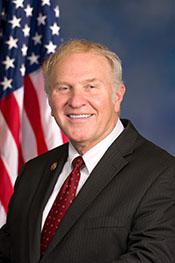
I very much thank the gentleman for yielding me this time. I want to first, Mr. Speaker, commend the distinguished gentleman from Illinois (Mr. Hyde), chairman of the full committee, for bringing…
I very much thank the gentleman for yielding me this time.
I want to first, Mr. Speaker, commend the distinguished gentleman from Illinois (Mr. Hyde), chairman of the full committee, for bringing this timely and important resolution to the floor. The so-called anti- secession legislation adopted by the National People's Congress of the People's Republic of China will unilaterally change the status quo in the Taiwan Strait, in direct contradiction of the policy of the United States Government.
The Taiwan Relations Act, enacted by this Congress in 1979, declares that peace and stability in the Taiwan Strait are in the political, security and economic interests of the United States. The legislation adopted by the Chinese People's Congress which states that China ``shall employ nonpeaceful means'' in the event of Taiwan's moving toward independence clearly threatens that peace and stability.
The people of Taiwan want peace. Taiwan's democratically elected President, Chen Shui-bian, whom I have met with many times, has repeatedly shown his determination to maintaining peace, stability and the status quo across the Taiwan Strait, and the Beijing dictatorship has responded by pointing over 600 missiles at Taiwan, and now by enacting a threatening anti-secession law.
The future of Taiwan should be determined by the people of Taiwan. Any effort by the Communist leadership in the People's Republic of China to deny a free people in Taiwan a safe, prosperous and democratic future should be condemned.
Mr. Speaker, this is a very important issue. I am very pleased that it is being taken up by the Congress here today. It deserves the utmost attention. I want to thank again the gentleman from Illinois (Mr. Hyde) for bringing this forward. I also want to thank the gentleman from California (Mr. Lantos) for whom I have great respect and has been a leader in this area for many years and the gentleman from New Jersey (Mr. Smith) as well.
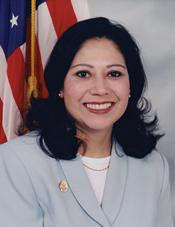
Mr. Speaker, I rise today in support of the resolution, House Concurrent Resolution 98, which expresses the concern of the U.S. House of Representatives regarding China's Anti-Secession Law. This…
Mr. Speaker, I rise today in support of the resolution, House Concurrent Resolution 98, which expresses the concern of the U.S. House of Representatives regarding China's Anti-Secession Law. This misguided law effectively authorizes use of military force against Taiwan if Taiwan moves toward formal independence.
I believe the anti-secession law is a dangerous and unnecessary escalation of tensions between China and Taiwan. The future of Taiwan should be resolved by peaceful means and with the consent of the people of Taiwan. The United States should continue to encourage dialogue between Taiwan and China. In today's world, we should strive to ensure peace, liberty and democracy. I am proud to join my colleagues in support of this resolution.
Bill Text
3 versions available
        [Congressional Bills 109th Congress]
[From the U.S. Government Publishing Office]
[H. Con. Res. 98 Referred in Senate (RFS)]

1st Session
H. CON. RES. 98

_______________________________________________________________________

IN THE SENATE OF THE UNITED STATES

March 17, 2005

Received and referred to the Committee on Foreign Relations

_______________________________________________________________________

CONCURRENT RESOLUTION

Expressing the grave concern of Congress regarding the recent passage
of the anti-secession law by the National People's Congress of the
People's Republic of China.

Whereas on December 9, 2003, President George W. Bush stated it is the policy of
the United States to ``oppose any unilateral decision, by either China
or Taiwan, to change the status quo'';
Whereas in the past few years, the Government of the United States has urged
both Taiwan and the People's Republic of China to maintain restraint;
Whereas the National People's Congress of the People's Republic of China passed
its anti-secession law on March 14, 2005, which constitutes a unilateral
change to the status quo in the Taiwan Strait;
Whereas the passage of China's anti-secession law escalates tensions between
Taiwan and the People's Republic of China and is an impediment to cross-
strait dialogue;
Whereas the purpose of China's anti-secession law is to create a legal framework
for possible use of force against Taiwan and mandates Chinese military
action under certain circumstances, including when ``possibilities for a
peaceful reunification should be completely exhausted'';
Whereas the Department of Defense's Report on the Military Power of the People's
Republic of China for Fiscal Year 2004 documents that, as of 2003, the
Government of the People's Republic of China had deployed approximately
500 short-range ballistic missiles against Taiwan;
Whereas the escalating arms buildup of missiles and other offensive weapons by
the People's Republic of China in areas adjacent to the Taiwan Strait is
a threat to the peace and security of the Western Pacific area;
Whereas given the recent positive developments in cross-strait relations,
including the Lunar New Year charter flights and new proposals for
cross-strait exchanges, it is particularly unfortunate that the National
People's Congress adopted this legislation;
Whereas since its enactment in 1979, the Taiwan Relations Act (22 U.S.C. 3301 et
seq.), which codified in law the basis for continued commercial,
cultural, and other relations between the people of the United States
and the people of Taiwan, has been instrumental in maintaining peace,
security, and stability in the Taiwan Strait;
Whereas section 2(b)(2) of the Taiwan Relations Act declares that ``peace and
stability in the area are in the political, security, and economic
interests of the United States, and are matters of international
concern'';
Whereas, at the time the Taiwan Relations Act was enacted into law, section
2(b)(3) of such Act made clear that the United States decision to
establish diplomatic relations with the People's Republic of China
rested upon the expectation that the future of Taiwan would be
determined by peaceful means;
Whereas section 2(b)(4) of the Taiwan Relations Act declares it the policy of
the United States ``to consider any effort to determine the future of
Taiwan by other than peaceful means, including by boycotts or embargoes,
a threat to the peace and security of the Western Pacific area and of
grave concern to the United States'';
Whereas section 2(b)(6) of the Taiwan Relations Act declares it the policy of
the United States ``to maintain the capacity of the United States to
resist any resort to force or other forms of coercion that would
jeopardize the security, or the social or economic system, of the people
on Taiwan''; and
Whereas any attempt to determine Taiwan's future by other than peaceful means
and other than with the express consent of the people of Taiwan would be
considered of grave concern to the United States: Now, therefore, be it
Resolved by the House of Representatives (the Senate concurring),
That it is the sense of the Congress that--
(1) the anti-secession law of the People's Republic of
China provides a legal justification for the use of force
against Taiwan, altering the status quo in the region, and thus
is of grave concern to the United States;
(2) the President of the United States should direct all
appropriate officials of the United States Government to
reflect the grave concern with which the United States views
the passage of China's anti-secession law in particular, and
the growing Chinese military threats to Taiwan in general, to
their counterpart officials in the Government of the People's
Republic of China;
(3) the Government of the United States should reaffirm its
policy that the future of Taiwan should be resolved by peaceful
means and with the consent of the people of Taiwan; and
(4) the Government of the United States should continue to
encourage dialogue between Taiwan and the People's Republic of
China.

Passed the House of Representatives March 16, 2005.

Attest:

JEFF TRANDAHL,

Clerk.