Mr. Speaker, I yield myself such time as I may consume. (Ms. SLAUGHTER asked and was given permission to revise and extend her remarks.) Mr. Speaker, I thank my colleague, the gentleman the Florida…
Mr. Speaker, I yield myself such time as I may consume.
(Ms. SLAUGHTER asked and was given permission to revise and extend her remarks.)
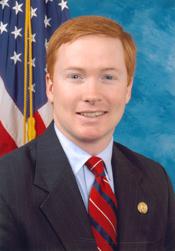
Mr. Speaker, I thank my colleague, the gentleman the Florida (Mr. Putnam), for yielding me the customary 30 minutes.
Mr. Speaker, as the gentleman from Florida has explained, this rule would do two things. It would allow the House to consider legislation under suspension of the rules, and it would waive a provision in the Congressional Budget Act that prohibits the House from adjourning for more than 3 days unless it has completed consideration on reconciliation.
Mr. Speaker, in general, I think far too much of the legislation passed around here is done by suspension, a process that waives all House rules and prohibits all amendments, and even precludes a motion to recommit. Having that said, however, I must add that tonight is somewhat different.
I would ordinarily have more concern about allowing yet another day for considering legislation in this manner, but I do realize that in limited instances, it may be necessary to waive this rule in order to expedite legislation that is truly emergency in nature. It is evident today that two of the four items which are to be considered under suspension are indeed particularly urgent.
One is the temporary extension of the highway bill. Without this legislation, the highway programs will be shut down and significant layoffs will occur. I am hopeful, as I am sure many of my colleagues are as well, that this will be the last time that we will have to pass a short-term extension of this bill. The conferees must finish their work on the highway authorization bill quickly so we can begin building and repairing our Nation's decaying highways and infrastructure.
The other critical bill before us today is the emergency supplemental bill for veterans medical care. We Democrats attempted to address this emerging veterans crisis earlier this week when we advocated for the Edwards amendment and also in March when the gentlewoman from Oregon (Ms. Hooley) and the gentleman from Washington (Mr. Baird) brought in a resolution asking for an amendment to be approved by the Committee on Rules to include $1.3 billion more. They were turned down.
The Department of Veterans Affairs is being flooded with veterans from the wars in Iraq and Afghanistan, four times as many as had originally been budgeted for. Trying to help 103,000 of our brave men and women with a budget designed to assist just over 25,000 has produced a shortfall in the Veterans Department funds of more than $1 billion this year, a staggering sum.
The gentleman from Texas' (Mr. Edwards) amendment would have filled in a shameful gap between our Nation's professed support for its veterans and its actual action on their behalf; but, Mr. Speaker, the Republican majority in our House was not concerned with this chasm separating rhetoric from reality.
As I said, the Edwards amendment was voted down on a party-line vote. Not a single Republican voted for the necessary health care for our wounded veterans; and on the emergency supplemental bill, as I mentioned before, the Baird-Hooley amendment to provide $1.3 billion that was in March was not allowed by the Committee on Rules on a party- line vote.
This issue is not about Republicans or Democrats. It is about our soldiers. We have a patriotic duty to uphold our end of the bargain and properly care for the fighting men and women of this country.
This is a sacred bond of trust, a contract that the majority has violated; but my fellow Americans believe that refusing to care for our veterans after having voted to send them to war is the height of hypocrisy, and the public is outraged.
As a result, House Republicans have reversed course. They received the wake-up call. They have come back to the table so we can hammer out the funding we need to care for our troops, as we should have earlier this week and in March.
This is a pattern that has become all too familiar. The majority does something unpopular, the public gets incensed, and the majority backs off. It has happened over and over with the ethics crisis in the House. It happened with the recent Republican attempt to kill public broadcasting in America; and now less than 7 days later, they are at it again, having to fess up to the fact that their priorities are out of step with the American people, their values are out of the mainstream.
Have they had a change of heart regarding the issue before us? Perhaps, or perhaps they just do not want to go home to July 4th parades in their districts before they have dealt with the tangible and pressing need of the veterans they will be saluting.
Let me say I find it absolutely scandalous that the Veterans Administration failed to tell us of this shortfall.
Now, Mr. Speaker, while I give my friends on the right credit for admitting their error and working to fix it, I regret to report that their proposed solution is just not good enough.
They have proposed increasing veterans spending by $975 million, which is still $25 million short of what the Veterans Affairs Department says it needs just this year, and more than half a billion dollars short of what the Senate pledged yesterday. Their bill does nothing to address the issue of veterans funding in 2006, where we are told there will be another more than $1 billion deficit.
I hope and pray we do not have to have this embarrassing debate again next year and can instead solve this problem now. We should always remember, Mr. Speaker, that it is easy to make the right decision when the whole world is watching, but what defines our character is what we do when no one is watching.
The Members of the majority have repeatedly been coerced by popular pressure into doing what is right when all eyes are on them. Now, both I and my colleagues on the Democratic side implore them to do something more: to summon the courage and the wisdom to do what is right when the only eyes on them are their own.
Mr. Speaker, I reserve the balance of my time.
Mr. Speaker, I am pleased to yield 3 minutes to the gentleman from Washington (Mr. Baird).
Mr. Speaker, I yield to the gentleman from Washington (Mr. Baird) for a unanimous consent request.
(Mr. BAIRD asked and was given permission to revise and extend his remarks, and include extraneous material.)
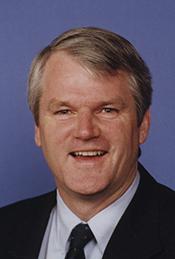
Mr. Speaker, I yield 5 minutes to the gentleman from Wisconsin (Mr. Obey).
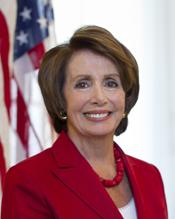
Mr. Speaker, I am pleased to yield 1 minute to the gentlewoman from California (Ms. Pelosi), the minority leader.
Mr. Speaker, I yield 2 minutes to the gentleman from Washington (Mr. Baird).
Mr. Speaker, I yield myself such time as I may consume.
Mr. Speaker, I want to point out that if we pass $1.5 billion, we can do the same thing, take the Senate bill and get it finished tomorrow.
Mr. Speaker, I yield 2 minutes to the gentlewoman from Florida (Ms. Corrine Brown).
(Ms. CORRINE BROWN of Florida asked and was given permission to revise and extend her remarks.)
Mr. Speaker, I yield 4 minutes to the gentleman from Texas (Mr. Edwards).
Mr. Speaker, I yield 3 minutes to the gentleman from Colorado (Mr. Salazar).
Mr. Speaker, I yield 30 seconds to the gentleman from Texas (Mr. Edwards).
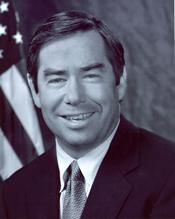
Mr. Speaker, I yield 1 minute to the gentleman from South Carolina (Mr. Spratt).
Mr. Speaker, I yield 15 seconds to the gentleman from Washington (Mr. Baird).
Mr. Speaker, I yield myself such time as I may consume.
Before I start, I will insert in the Record the news release from Senator Craig, Committee on Veterans' Affairs chairman, and the New York Times editorial today called ``The True Cost of War.''
Senate to Quickly Take Up $1.5 Billion Measure for Veterans If Sent
From the House
Washington, DC--The U.S. Senate Appropriations Committee
retreated its position today that the Department of Veterans
Affairs need $1.5 billion to fill a spending gap for the
Department of Veterans Affairs. In a unanimous vote, the
appropriators voted to authorize the Senate to quickly take
up a $1.5 billion emergency supplemental if the House
approves such a measure.
That action came after the Bush Administration indicated
earlier today that the agency needs $975 million.
``Clearly there is disagreement here on the number, but
it's clear that we all want to do the right thing for
veterans. We do not want to leave the Department of Veterans
Affairs short of funds,'' said Sen. Larry Craig who serves on
the Appropriations Committee and is Chairman of the Senate
Committee on Veterans' Affairs. ``Working with our colleagues
in the House, I'm sure we can achieve that objective.''
[From the New York Times, Jun. 30, 2005]
The True Cost of War
In anger and embarrassment, Congressional Republicans are
scrambling to repair a budget shortfall in veterans' medical
care now that the Bush administration has admitted it vastly
underestimated the number of returning Iraq and Afghanistan
personnel needing treatment. The $1 billion-plus gaffe is
considerable, with the original budget estimate of 23,553
returned veterans needing care this year now ballooning to
103,000. American taxpayers should be even more furious than
Congress.
The Capitol's Republican majorities have shown no
hesitation in signing the president's serial blank-check
supplemental budgets for waging the war, yet they repeatedly
ignored months of warnings from Democrats
that returning veterans were being shortchanged. One
Republican who warned of the problem--Representative
Christopher Smith of New Jersey--lost his chairmanship of the
Veterans' Affairs Committee after pressing his plea too
boldly before the House leadership.
But partisan resistance melted in a flood of political
chagrin once the administration admitted the budget error,
which was first discovered in April but only now disclosed.
The explanation offered--the gaffe was due to using dated
formulas based on prewar calculations--left Republicans
sputtering all the more.
All wars necessarily involve mismanagement, even successful
ones. But there is no excuse for treating the needs of
wounded and damaged warriors as a budgetary afterthought.
Congressional Republicans were far from innocent victims of
administrative ineptitude or deception. After years of
approving record tax cuts and budget deficits, they stuck to
this year's pre-election script of fictitious ``budget
tightening'' that underestimated inevitable expenses and
shortchanged returning veterans with higher health care
enrollment fees and drug co-payments. The only comfort for
the American public is that unlike many of the war's
problems, this one can be repaired, providing partisan combat
is suspended in the Capitol.
Mr. Speaker, I am going to be asking Members to vote ``no'' on the previous question. If the previous question is defeated, I will offer an amendment to the rule that will allow the House to immediately consider H.R. 3136, legislation introduced by the gentleman from Texas (Mr. Edwards) and the gentleman from Wisconsin (Mr. Obey) that provides an immediately desperately needed $1.5 billion in funding for veterans medical service. This amount is the same level that was approved by the Senate last night and is what is needed to fully care for our Nation's veterans.
Mr. Speaker, it is too bad that the White House and the VA were not honest about this shortfall in the first place because if they had been, as the gentleman from South Carolina (Mr. Spratt) said, we would not need to be here tonight. But I think now even the most skeptical of my colleagues in the House realize that our veterans' health care system is in a serious crisis. And while it is encouraging that after feeling the pressure brought to bear by the American people that the Republican leadership has reversed course and agreed to take some action, it is unclear to me why they are providing only $975 million instead of the full amount needed. How can we believe the same people who told us there was no problem?
Senator Craig is asking the leadership of this body to pass a bill and let him have that $1.5 billion out of here so they can finish work on this in the morning. Clearly, clearly, we must do that for our veterans. Remember, we have a contract with them. When we sent them off to war, we guaranteed that we will meet their needs.
So please vote ``no'' on the previous question, and we can vote today for full funding of our veterans.
Mr. Speaker, I ask unanimous consent that the text of the amendment be printed in the Record immediately prior to the vote on the previous question.
Mr. Speaker, I yield back the balance of my time.