Terrorist Rewards Enhancement Act

Legislative Activity
Stay on top of the latest movement without scrolling through every action
Read twice and referred to the Committee on Foreign Relations.
January 27, 2006
View full timeline
Introduced in House
May 12, 2005
Referred to the House Committee on International Relations.
May 12, 2005
Sponsor introductory remarks on measure. (CR E963-964)
May 13, 2005
Ms. Ros-Lehtinen moved to suspend the rules and pass the bill.
December 18, 2005 • 2:32 PM
Considered under suspension of the rules. (consideration: CR H12183-12184)
December 18, 2005 • 2:32 PM
DEBATE - The House proceeded with forty minutes of debate on H.R. 2329.
December 18, 2005 • 2:32 PM
Passed/agreed to in House: On motion to suspend the rules and pass the bill Agreed to by voice vote.(text: CR H12183-12184)
December 18, 2005 • 2:42 PM
On motion to suspend the rules and pass the bill Agreed to by voice vote. (text: CR H12183-12184)
December 18, 2005 • 2:42 PM
Motion to reconsider laid on the table Agreed to without objection.
December 18, 2005 • 2:42 PM
Received in the Senate.
December 18, 2005
Read twice and referred to the Committee on Foreign Relations.
January 27, 2006
Floor Debate
7 membersWhat members said about H.R. 2329 on the floor
 PS
 JPM
 DJK
 IRMK+2
Floor Debate
7 membersWhat members said about H.R. 2329 on the floor
Mr. Speaker, by direction of the Committee on Rules, I call up House Resolution 631 and ask for its immediate consideration. Mr. Speaker, for the purpose of debate only, I yield the customary 30…
Mr. Speaker, by direction of the Committee on Rules, I call up House Resolution 631 and ask for its immediate consideration.
Mr. Speaker, for the purpose of debate only, I yield the customary 30 minutes to the gentleman from Massachusetts (Mr. McGovern), pending which I yield myself such time as I may consume. During consideration of this resolution, all time yielded is for the purpose of debate only.
This resolution provides that certain specified measures may be considered under suspension of the rules at any time on the legislative day of Sunday, December 18, 2005.
Mr. Speaker, we are gathered here on a beautiful Sunday afternoon in Washington, D.C., December 18, 2005. We have had our priest to open up this beautiful House today, asking that America and Americans understand our responsibilities. We are here today because we still have work yet to be done, but there are people that we need to give thanks to.
Mr. Speaker, our families expected us home weeks ago, but we are here because we have an obligation and a duty.
Mr. Speaker, we are here today under protection of members of the Capitol
Hill Police Department, members of the United States military who protect our great country, our staffs, as well as the people who work for the United States House of Representatives who serve with honor and distinction. We deserve to give them thanks for all that they have done on what surely will be the last day of this first session of Congress. But there is still much work left to be done, and we recognize that we are here to do that.
The Republican leadership of this House has set forth yet again a positive legislative agenda for the remainder of this week and the balance of this first session of the 109th Congress. The goal of this plan is to address a number of outstanding issues that still remain on Congress' calendar before we adjourn, and we must utilize this schedule to make sure we maintain our commitment to improving America's economic and national security.
One of the things, Mr. Speaker, that sets America apart from other nations is that we do not expect others to do the work for us. We take part and get it done ourselves, and that is what this Congress is doing.
Over the past year, we have passed a number of important new education, health care, trade, tax and national security bills that will keep America safer and healthier, create new jobs and improve our economy. This rule will allow the House to consider a number of additional bills today under suspension of the rules that will ensure that Congress can complete more additional work necessary before we go home for the holidays.
This rule makes in order the consideration of eight bills under suspension of the rules. These bills will accomplish important domestic goals such as reforming the Federal deposit insurance system and reauthorizing the Temporary Assistance for Needy Families block grant program through March 31, 2006.
The suspension authority allows us to consider necessary and noncontroversial items such as H.R. 4501, which amends the Passport Act in order to comply with the Intelligence Reform and Terrorism Prevention Act of 2004; a bill to authorize the transfer of items in the War Reserves Stockpile; and H.R. 2329, to allow an officer of a foreign government to receive an award under the Department of State Rewards Program under certain circumstances.
This rule also recognizes the importance of democracy throughout the world. H. Con. Res. 284 expresses the sense of Congress with respect to the 2005 presidential and parliamentary elections in Egypt. Another resolution, H. Res. 545, expresses the sense of the House of Representatives on the arrest of Sanjar Umarov in Uzbekistan.
Finally, we have a great opportunity today to honor a very dear friend of mine and a friend of this House, Helen Sewell, as part of the suspension calendar today. This resolution honors Helen for her outstanding service to the United States House of Representatives throughout her work in the Republican cloakroom. During this time, Helen has not only touched the lives of countless Members who have served in this body but also counts President Ford, former President George Herbert Walker Bush and George W. Bush as good friends. It is an honor to stand here today and to join my colleagues in recognizing Helen Sewell for her over 70 years of service in the United States Congress.
All of these bills scheduled for consideration today by the House leadership are on behalf of the American public who enjoy broad support from both Members of the majority and the minority parties.
This rule simply provides us with the tools needed to ensure that all of this important work is completed before we adjourn and leave Washington to join our families and our communities to celebrate the holidays. Mr. Speaker, I encourage my colleagues on both sides of the aisle to support this noncontroversial and balanced bill.
Mr. Speaker, I reserve the balance of my time.
Mr. Speaker, I thank my colleague, the gentleman from Massachusetts, who has very well articulated some of the differences that exist in this body. Our ability to work through those differences is why we come to work.
We recognize and know that we began this year with a presentation of the State of the Union by the President of the United States who clearly outlined those things which would be important goals for the year, not only for Congress but for the American people and certainly those things that deal with the war in Iraq.
My party, the Republican Party, has been very conscientious about those things which we believe we told the American people that we would do last November. We reiterated we would not raise taxes, as the Democrat Party wanted to do. We indicated that we would not cut and run from the war, which is what many people in the Democrat Party want to do. We recognize that those things that are ahead of us are very difficult choices that have to be made.
We have concentrated our activities on an attempt to streamline the budget process and make ourselves available to working with government for more efficiency. We accomplished for the first time this year a chance for all of our appropriations bills to be done by the July 4 break. Given the world as it was, that was a great idea. But we then were struck with a number of the largest hurricanes that have ever hit the United States of America, the largest storms in the history of the world.
We have worked through adversity. It has not been easy. It has caused great consternation throughout the United States. But I am pleased to tell you that this Congress has still come to work, we have debated the ideas, and it is the Republican Party that has the responsibility as a result of our being the majority party to come up with a plan of how to lead.
We have attempted to work as much as possible with the President of the United States and with our colleagues on the other side of the Capitol in the United States Senate on those things that would empower America. One of those things which we think we have done a very good job on is to say that we disagree with the rhetoric that says we have to raise taxes; that we have to increase spending; that we have to have government to be the answer.
We still reject those ideas here on what we think will be the last day of the first session of the 109th Congress; I still reject that in the face of adversity from the Democrat Party and those elements today who bring their case forward. We respect those thoughts and ideas. I respect very much the disagreement that we have in the Rules Committee on a regular basis. The articulation not only by the gentleman from Massachusetts but by others is very measured and very well said. However, we simply disagree with that; and that is why we will proceed the way in which we do. I respect our colleagues who bring adversity and their thoughts to the floor, and we will continue to do that today.
Mr. Speaker, I reserve the balance of my time.
Mr. Speaker, we have had an opportunity again today to hear wonderful debate on the floor of the House of Representatives, the gentleman from Cleveland, speaking about some of those things which he deeply believes in. I also have a deep belief that we should be drilling in the Arctic National Wildlife Refuge.
The American way of life, our ability to have energy independence, the opportunity for us to be able to explore for and find energy will determine, in my opinion, the success or failure of the economy of the United States. I do understand that many people who talk about this new way of life simply want us to ride bicycles and to destroy our economy to where we are no better or no worse than a Third World nation.
America, I believe, has set itself on a course where we believe that there is no problem bigger than a solution, and that we will find those avenues through research and development that can lead us on. An example of this would be we have utilized technology in our past for some 25 years. We have used about 21 million barrels of oil a day. It has been about constant what our utilization has been in the United States, and yet we continue to grow our economy. We continue to utilize these things with an increased population through efficiency.
The gentleman from Ohio had a chance to vote for a comprehensive energy bill just this year, a comprehensive energy bill that would put the Federal Government at the apex, at the forefront of making sure that we would lead the way through the government of finding and utilizing new technologies. The government will create a critical mass as a result of the spending which we will do to change government buildings and the way we do business to the most efficient forms that are available to us now and to create the future.
But I would say that this body, Mr. Speaker, needs to be mindful of a future that we are not afraid of, that the past which some of our Members would want us to go to find this opportunity for a new world with tribes and with global people who have been incapable of solving their own problems and addressing change is not the direction we should go.
We need to support an economy. We need to move forward to make sure we are solving the world's problems. Poverty and hunger are still problems in this world. We have opportunity today, as we handle bills, to solve some of the most basic problems through research and development, through medicine, and the opportunity for us to go to world leaders like Johns Hopkins University Medical Center, a leading edge in technologists and research and development people, people out at Stanford University Medical Center, like Dr. Bill Mobley, who are looking at genes and gene therapy and the opportunity through research and development to solve problems.
These problems, Mr. Speaker, are what America develops and spends their precious resources on to help the people of the world.
Yes, we know that there are people who want to go back and who want us to ride bicycles everywhere we go and to have an economy that is far different and do not do trade with the world, and isolate America, and cut and run from the war, and do not accept the responsibilities of the world leadership.
Mr. Speaker, I reject that thought process. I believe it will be done through the constant prodding and leadership of this House of Representatives, through our Speaker, Dennis Hastert, and through committee chairman like David Dreier from the Rules Committee, who give of themselves some 27 years of service as Mr. Dreier has given. Yes, we will even talk about years of service for Helen Sewell, who for over 70 years came to work almost every day for the benefit of America's future.
This is simply an experiment that we are engaged in, Mr. Speaker. There is no blueprint. There is no direction to say how we will handle things in the future, for we know not, any of us, what lies ahead of us.
But I have the confidence that the Republican Party and the things which we have done and will do will lead this great Nation, and the people will understand a vision, and we shall not perish. In God we trust.
Mr. Speaker, I reserve the balance of my time.
Mr. Speaker, I thank the gentleman from Massachusetts for the opportunity for us to be here today and his collegial support of this rule. The gentleman very clearly understands as a result of his career that he has spent not only serving as a member of professional staff but also as a Member of Congress that Congress does engage in a lot of issues and ideas.
I would submit to him two things: Number one, that the process that we are going through is not perfect. It has existed this way because we have chosen the form of government that we have whereby two bodies get together on pieces of legislation that are of importance. This is something that we have lived through for a long period of time.
I would say to the gentleman that I respect his disagreement about how we should do everything in the day, and in the light of day and hold everything for days and let everybody know. In fact, almost every single piece of any bill has been debated and voted on. There are positions that Senators and Members of this House have taken that I hope are included. I hope that even though they may not be something that was completely understood by one body or another, they were well thought through thoughts and ideas that would be contained.
I believe that the idea of the Arctic National Wildlife Refuge is one that has been debated in this country for over 10 or 12 years. It is time for resolution. For someone that does not understand that putting this on the DOD bill would be appropriate, I wonder who uses more energy than anyone, and it would probably be the Department of Defense. I think there is an intrinsic interest in us making sure that our own security of this country is participated in by and as a result of this being on the bill.
Mr. Speaker, lastly, I disagree with those who say that we need a change of leadership.
I do recognize that the other side, the Democrat Party, has different ideas about how to do things. But I am proud of my leadership, and I believe that the service of Dennis Hastert and those that are committee chairmen and those that are part of our leadership have stood the test of time to make sure that we are open and ready to do business, that we have the leading-edge thought process of this great Nation, that we are open to hearing from those who can help lead us to the greater pathways, and lastly, that we work with those constitutionally elected officials in a process to make sure that our Constitution is alive and well and a model to the world.
Mr. Speaker, I am proud of Dennis Hastert and his leadership of this House of Representatives and those Members, whether they be from Iowa, Texas, California or Massachusetts, who come to this great body for service to this great Nation. Once again, I am proud of that which we do.
Amendment Offered by Mr. Sessions
Mr. Speaker, I offer an amendment.
Mr. Speaker, again I urge my colleagues to join me in supporting this rule to provide that suspensions will be in order at any time on the legislative day of December 18, 2005.
Mr. Speaker, I yield back the balance of my time, and I move the previous question on the amendment and on the resolution.
The previous question was ordered.
Mr. Speaker, I thank the gentleman from Texas (Mr. Sessions) for yielding me the customary 30 minutes, and I yield myself such time as I may consume. (Mr. McGOVERN asked and was given permission to…
Mr. Speaker, I thank the gentleman from Texas (Mr. Sessions) for yielding me the customary 30 minutes, and I yield myself such time as I may consume.
(Mr. McGOVERN asked and was given permission to revise and extend his remarks.)
Mr. Speaker, I do not object to this rule that will allow for the consideration of a number of suspension bills, and I expect that these bills, all of them, will be approved if not unanimously certainly overwhelmingly by this House.
As we gather here today, the Sunday before Christmas and Chanukah, it is the process and the way the Republican leadership are running this House that I strongly object to. These last few days, in fact the entire year, I think is a great example of how not to run a government.
Sometime today we expect to consider and vote on the Defense appropriations bill. No one will have time to read and examine the final product. We will not know what last-minute goodies are tucked into the bill. Mr. Speaker, we read news reports that drilling in the Arctic will be in the bill, but we do not know if ANWR is included because we have not yet seen it. And what drilling in Alaska's wilderness has to do with the Pentagon is beyond my comprehension, but there are some in the Republican leadership who do not care about the regular process and want to tuck this in the Defense bill because they know it cannot be enacted on its own.
We also do not know exactly what else is attached to the Defense appropriations bill. Is there funding for Hurricanes Katrina, Rita, and Wilma? And if so, what are the details? Will there be funding for the prevention of a possible avian flu pandemic? Are there campaign finance reform provisions included in any of these bills? And if so, who approved them?
And then there is the Defense authorization bill, which has been held up for much time because the White House did not want language in it that banned torture. This is the United States of America, Mr. Speaker. If we stand for anything, it is out loud and foursquare for human rights. And torture is something that we, as a civilized society and as a decent people, should reject.
Now, the President, from news reports, has apparently now accepted the language by Senator McCain which would ban torture, which is a good thing. But some suspect that it is only because the Justice Department has assured him that he can get around the language banning torture, and that is a bad thing. But despite the apparent capitulation of the White House on the issue of torture, we still do not have a Defense authorization bill, and nobody can tell us why.
We are also told a budget reconciliation bill will come up today. Does anyone have a clue what will be in that bill? This is a bill that will impact all of our citizens and could potentially have an adverse impact on the most vulnerable of our citizens.
Mr. Speaker, whether you are a liberal, a conservative, or whether you want more government or less, I think most of us would agree that whatever government we have must be competent and responsive to the people. Now, the Republicans control all of government. They control the House of Representatives, they control the Senate, and they control the White House. It is clear that they are unable to be effective stewards of our government.
Now, putting aside the corruption scandals that hang like a dark cloud over the Congress and the White House, what we see is an inability to govern. When Hurricane Katrina hit the gulf coast, the Federal Government responded miserably. The President put a political appointee in charge of FEMA who was incompetent. The President took responsibility, but ultimately the incompetence and cronyism of his administration led to a disaster that included the loss of many lives.
On the war in Iraq: no weapons of mass destruction, no ties between the Iraqi government and al Qaeda, and no imminent threat to the security of the United States of America; yet we rushed into war. Whether the intelligence was manipulated or not, clearly this government did not do its job. It failed, and over 2,100 Americans are now dead.
But now we are in Iraq, Mr. Speaker. We were there with no post- invasion plan, we are there with no-bid contracts that have led to massive corruption and fraud, our soldiers lack the most basic protective equipment, and
with a chain of command that resulted in grave abuses of human rights by some of our own uniformed men and women and some of our Iraqi allies. Ultimately, the President again took responsibility. But, Mr. Speaker, with all due respect, I am tired of the speeches. I, like so many others, want genuine reform and change. I want accountability.
This all brings me to this Congress. There is a reason why this Congress has only a 25 percent approval rating. It is because you are doing a lousy job. You are trashing the rules and regular order. The selling of legislation to the highest bidder, the hard-ball tactics against your own Members to win votes, your lack of oversight and demand for accountability from this administration, all that and more is catching up to you. People are watching. People do care. They believe that you cannot competently run this government, and they want the government back.
The mess that we have before us cannot be blamed on Democrats. After all, as I have said, Republicans control everything. You cannot blame this on Bill Clinton, even though some of you try, because he has been gone now for a full 5 years. This is your fault. The battles going on behind closed doors are between your right wing and your far right wing. For those of us in the minority, and many on your side who want good government, this is a frustrating period.
Mr. Speaker, nobody denies that leadership of Congress is a hard task, but either you live up to the responsibilities or you acknowledge it is time for a change. After this sorry year, it is time for a change.
Mr. Speaker, I reserve the balance of my time.
Mr. Speaker, before I yield to the gentleman from Ohio (Mr. Kucinich), I just want to say a couple of things.
First of all, we are here 3 weeks after the Republican majority said we were to adjourn, in part because they have not done a very good job of getting our business done.
Secondly, we can argue about priorities and we can argue about policies, and that is all fine and good; but one of the issues that I raised is the issue of competence. When we have disasters in this country, like Hurricane Katrina, the response of the Federal Government was miserable. It demonstrated a stunning incompetence that I am not sure has been fixed yet. People are still not getting response from the Federal Government in the Gulf States that they, quite frankly, deserve.
Thirdly, in terms of debate and how legislation is brought to the floor, I think that is another failure of this Congress. We do have debates in the Rules Committee, sometimes at weird hours, where not a lot of people get to hear them. But routinely, on major pieces of legislation, they are brought to the floor with very little advanced notice. Oftentimes, people do not have a chance to review what is in the legislation.
That is going to happen today with the Defense appropriations bill. No one will have an opportunity to review it. We will find out in a week or 2 weeks from now, because some Washington Post reporter or New York Times reporter or L.A. Times reporter will dig into it and find all these little goodies that none of us have a chance to know about in advance. That is not the way things should be done.
The Rules Committee, for example, routinely shuts us out of offering amendments to important pieces of legislation. We had a controversial resolution on Iraq that was on the floor the other day, and yet an alternative that was proposed by the ranking member of the International Relations Committee was deemed out of order. We had a pension reform bill that some of us had issues with, and we were denied a substitute.
On major bills that matter, we are shut out; and we are oftentimes not allowed the opportunity to try to get our points of view across on the House floor. And I would say that I think the American people are starting to catch on to that, and they do not like that form of government. This is supposed to be a deliberative body where important issues get debated.
Again, I have no problem with the suspensions that are being brought up here today. But in comparison to some of the issues that are facing this country, from poverty to the war in Iraq, to health insurance and the high price of gas, what we are talking about now is killing time with some relatively trivial matters. There are more important issues before us.
The deficit. You have accumulated the biggest deficit in the history of the United States of America as a result of your policies. That is not a success story, in my opinion. Again, we can differ on policies, but let us approach this legislation in a responsible way, and that means giving all sides, including people on your side, who have differences of opinion the opportunity to be able to debate these things fully on the House floor.
Mr. Speaker, I yield 6 minutes to the gentleman from Ohio (Mr. Kucinich).
Mr. Speaker, I yield 1 minute to the gentleman from Ohio (Mr. Kucinich).
Mr. Speaker, let me end as I began here with a plea that we strive for a better process. This is not the way we should be running our government, bringing bills to the floor at the last minute without having given people the opportunity to read what is in them. We should have learned last year. When the Republican majority brought a bill to the floor, we had to meet again and fix it because someone snuck a provision in there that would allow certain Members of the Congress and their staffs to be able to review people's IRS records. We went back and quickly fixed that after it became public that it was in the bill.
We can do so much better than what we see going on right here at this present time. I think this more than anything else is one of the reasons why I think we need a change of leadership in the Congress. I think there needs to be checks and balances. There aren't checks and balances right now. There needs to be oversight, there needs to be accountability.
We need to do the people's business in a more deliberative way. We have to move away from this pattern of locking people out of opportunities to be able to participate in debates and offer their amendments.
Mr. Speaker, having said all of that, we have no objection to this rule that will allow for filler between now and the time that some of these important conference reports come to the floor.
I will close with this. I think every one of our colleagues needs to know that you are not going to know what is in any of these bills that are coming to the floor. You will find out in the newspapers. That is not the way this government should run.
Having said that, we have no problem with the rule.
Mr. Speaker, I yield back the balance of my time.
Mr. Speaker, I thank my friend from Massachusetts for yielding me this time, and I continue invoking this question about rules and the climate that exists in this House where on one hand we feel we…
Mr. Speaker, I thank my friend from Massachusetts for yielding me this time, and I continue invoking this question about rules and the climate that exists in this House where on one hand we feel we can come together on some things by unanimous consent and by facilitating the work of this House, and sometimes it is the right thing to do; and other times on rules we understand, and we are still
waiting for a rule which would facilitate including the Arctic National Wildlife Refuge in a Defense appropriations bill, and that would be a distortion of the purpose of the rules of the House.
It leads to the greatest fears of the American people that they cannot get an up-or-down vote on something of a critical policy nature which relates to not only the past but the future of this country.
I want to say that as we stand here in this season of peace and goodwill towards all, we need to reflect on how rules create a climate that can either achieve peace or go in the opposite direction. I agree with my colleague from Massachusetts that war is an issue here.
Now, there are some who say we are not in Iraq for oil. I would take issue with that. The drilling for oil in the Arctic National Wildlife Refuge makes the connection between war and energy policies and exploitation. I would suggest we need to move to a new paradigm, where we can achieve peace through alternative energies through wind and solar and geothermal and biomass and green hydrogen, where we can achieve peace through conservation.
Yet today, through a change in the rules, we will see a bill brought before us that will enable drilling in the Arctic National Wildlife Refuge. It is not only not necessary that we do that, because we all understand that this is a nonrenewable source of energy, there is an endpoint, but we also need to understand there are moral implications. There is a moral dimension to the plan to drill in the Arctic National Wildlife Refuge. This plan will lead to the destruction of the humble, natural way of life, the religion, the culture and the health of the Gwich'in Tribe, which for more than 20,000 years has lived on their ancestral lands in harmony with the natural world.
Now, many of us observed our religious traditions today. Every day the Gwich'in observes their religious traditions in the Arctic in harmony with the natural world. The drilling for oil in the coastal plain of the Arctic Refuge called by Gwich'in the sacred place where all life begins will disrupt the caribou calving grounds, and it will lead to long-term decline not only of the herd but of the Gwich'in Tribe, which depends on that porcupine caribou for its survival.
We cannot minimize this. The Gwich'in have a basic human right to survive. We hold these truths to be self-evident that all men and women are created equal, endowed by our Creator with certain inalienable rights, the right to life, liberty and the pursuit of happiness.
Well, the bill to drill in the Arctic Refuge will deprive the Gwich'in of their right to life, liberty and the pursuit of happiness. Christian teaching tells us to do unto others as we would have them do unto ourselves. We learn from other spiritual insights that what we do unto others we actually do to ourselves.
We cannot in the consciousness of the true American spirit, of everything this country is said to stand for from its inception, return to a history of exploitation of native peoples any more than we could return to a history of slavery or a history of exploiting women where women had no rights.
We must take our stand now. Now we have to change the path we are on by changing who we are. When we perpetrate acts of violence unto others, we are damaging ourselves as humans. We cannot do this to the Gwich'in Tribe. We cannot do this to the Arctic Refuge because it will destroy the land, it will destroy their herd, it will destroy the Gwich'in Tribe, and another part of the true America will die.
Mr. Speaker, we must not only be in the search for alternative energy, we must begin a search for an alternative way to live. We have to escape this cycle of destruction. It is time for us to reconcile nature.
Here we are in a season of peace and goodwill towards all. We must begin today to find a new path to peace on Earth with our native brothers and sisters, with the Gwich'in and with ourselves.
I would respectfully suggest to my friend, this isn't about returning to just riding bicycles. This is about getting off a treadmill, a treadmill of dependence on oil, which leads us inevitably to war, which leads us to the destruction of the global climate, which leads us to separation from each other.
We are in a moment right now where we are going to determine the future of this country and we cannot maintain our economic power in the world if we continue to rely on oil, because it is a nonrenewable source of energy. That is why drilling in the Alaskan National Wildlife Refuge is a false solution, in addition to being a violation of the human rights of the Gwich'in. There is no need to distort what this debate is about.
You know, we are in Iraq because of oil. We are not signing the Kyoto Climate Change Treaty because of oil. We ought to realize this world is interconnected and interdependent, that we are one with the world. The sooner we understand that, the sooner we end this separation, which puts us in a position where we have our troops right now the Middle East at war. We need to change our direction.
Mr. Speaker, I move to suspend the rules and pass the bill (H.R. 2329) to permit eligibility in certain circumstances for an officer or employee of a foreign government to receive a reward under the…
Mr. Speaker, I move to suspend the rules and pass the bill (H.R. 2329) to permit eligibility in certain circumstances for an officer or employee of a foreign government to receive a reward under the Department of State Rewards Program.
Mr. Speaker, I ask unanimous consent that all Members may have 5 legislative days within which to revise and extend their remarks and include extraneous material on the bill under consideration.
Mr. Speaker, I yield myself such time as I may consume.
Mr. Speaker, I am very pleased to support the suspension of the rules to bring Representative Kirk's bill, the Terrorist Rewards Enhancement Act, House Resolution 2329, to the floor, and I strongly support its passage.
The bill has Chairman Hyde's full and vigorous support, and is much needed in the hunt for Osama bin Laden and other terrorists around the globe.
The International Relations Committee has long worked with Congressman Kirk, a member of the Foreign Operations Appropriations Subcommittee, in promoting needed reform and practical changes to the State Department's Justice Rewards program. This program has in the past helped to lead to the capture of key global terrorists like Ramzi Yousef and Amil Kanzi, the fugitive killer of the CIA's several employees, and others.
The latest reform is one that Representative Kirk and the International Relations Committee developed after a visit to a very remote part of Pakistan and the Afghan border earlier this year where bin Laden and other radical Islamic terrorists operate and hide.
This bill is very simple, Mr. Speaker. It provides authorization for the payment of terrorist rewards by the State Department to those entities of foreign governments who might assist us in finding these terrorists under extraordinary circumstances and when the payment of the reward may lead to the capture of other key terrorists as well. We need the help of agencies of government and foreign agencies around the globe to do this difficult job, especially considering the limits on our own human intelligence sources.
In addition, the reward payment must be requested formally in writing by foreign governments and the Secretary of State has complete discretion as to whether to grant it, and the decision is not subject to judicial challenge. It is meant for limited and rare circumstances.
Let us give our frontline U.S. agencies and law enforcement personnel around the globe yet one more tool needed to capture and to bring to justice these global terrorists who mean us evil and great harm. I ask for the adoption of the Terrorist Rewards Enhancement Act.
Mr. Speaker, I reserve the balance of my time.
Mr. Speaker, I am pleased to yield such time as he may consume to the gentleman from Illinois (Mr. Kirk), the original sponsor of the bill.
Mr. Speaker, I have no further requests for time, and I yield back the balance of my time.
Mr. Speaker, the State Department's Terrorist Rewards Program is one of the most successful and inexpensive programs against international terrorists. As a staff member to Chairman Gilman, I drafted…
Mr. Speaker, the State Department's Terrorist Rewards Program is one of the most successful and inexpensive programs against international terrorists.
As a staff member to Chairman Gilman, I drafted the enhancements to this program that made it a very successful program in the arrest of United Nations war criminals in Yugoslavia. Chairman Hyde, Chairwoman Ros-Lehtinen, and Ranking Member Lantos joined me several years ago in increasing this rewards program to a total offer of $50 million. We also enacted more important reforms that authorize brand new newspaper, radio, and TV ads to increase the impact of this program.
Mr. Amil Sanzi killed Americans outside CIA headquarters before fleeing to Pakistan. Matchbox covers with his face on them provided the impetus for the key tip that led to his arrest, conviction, and execution. Uday and Qusay Hussein, the murderous sons of Saddam Hussein, were found and cornered by a tip from this program. Today, we are hunting down Osama bin Laden, Ayman Zawahiri, and Mullah Omar, the leaders of al Qaeda and the Taliban dictatorship.
I have conducted two official missions to the Afghan-Pakistan border where conventional wisdom has located the probable sites of the al Qaeda core leadership. I assessed this rewards program and proposed improvements to change its effectiveness. We found that the radio, newspaper, and TV ads in Pakistan are working. Under Richard Griffin, the Assistant Secretary of State for Diplomatic Security; Ryan Crocker, our very able Ambassador to Pakistan; and David Noordelas, a very able diplomatic security professional, we executed a $200,000 TV and radio campaign that led to dozens of new tips against leaders of the al Qaeda core.
We are about to relaunch this program, and it will be even more successful.
But there is one problem. Many officials in this part of the world make only $200 or $300 a year. This bill gives the President and Secretary of State the flexibility to authorize rewards for the arrest of the top, key, high-value targets: bin Laden, Zawahiri, Zarqawi, people who lead al Qaeda and its war on Americans. We need this flexibility to grant such rewards.
The arrest of Osama bin Laden is a mission of near messianic importance to the American people, and we have a winner here in the rewards program. With the reforms the House passes today, we increase the odds that we will crush the al Qaeda core in some of the most remote parts of the Earth.
I want to thank Chairwoman Ros-Lehtinen, Ranking Member Lantos, and John Mackay of the International Relations staff for his particular help on this key issue that will add enhancements to one of the most successful anti-terror programs in the United States.
Show 2 more
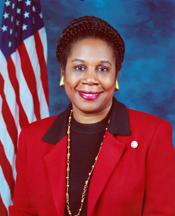
Mr. Speaker, I rise in support of Mr. Kirk's ``Terrorist Rewards Enhancement Act of 2005,'' H.R. 2329, which would permit those eligible in certain circumstances such as an officer or employee of a…
Mr. Speaker, I rise in support of Mr. Kirk's ``Terrorist Rewards Enhancement Act of 2005,'' H.R. 2329, which would permit those eligible in certain circumstances such as an officer or employee of a foreign government to receive a cash reward under the Department of State Rewards program. The value of this rewards program in dealing with terrorists is beyond dispute.
I have introduced a bill that would use a virtually identical rewards program for dealing with commercial alien smuggling operations, the ``Commercial Alien Smuggling Elimination Act of 2005,'' the CASE Act, H.R. 255. It would provide for cash rewards to facilitate the investigation and prosecution, or disruption, of reckless commercial alien smuggling operations.
This is not a controversial idea. The Rewards for Justice Program that was established by the 1984 Act to Combat International Terrorism, Public Law 98-533, has been very successful. The Rewards for Justice Program is administered by the U.S. Department of State's Bureau of Diplomatic Security. It authorizes the Secretary of State to offer rewards for information that prevents or favorably resolves acts of international terrorism against U.S. persons or property worldwide. Rewards also may be paid for information leading to the arrest or conviction of terrorists attempting, committing, conspiring to commit, or aiding and abetting in the commission of such acts. The USA PATRIOT Act of 2001 authorizes the Secretary to offer or pay rewards of greater than $5 million if he determines that a greater amount is necessary to combat terrorism or to defend the United States against terrorist acts.
A well known success of this program occurred a few years ago when a $30 million reward was given for critical information that led to the location of Uday and Qusay Hussein. Rewards under the CASE Act, however, would be limited to $100,000, except as personally authorized by the Secretary of the Homeland Security Department.
I urge you to expand the use of this effective tool to include cash rewards to facilitate the investigation and prosecution, or disruption, of reckless commercial alien smuggling operations.

Mr. Speaker, I rise in support of this measure, and I yield myself such time as I may consume. Mr. Speaker, I want to commend my good friend from Florida (Ms. Ros- Lehtinen) and my good friend from…
Mr. Speaker, I rise in support of this measure, and I yield myself such time as I may consume.
Mr. Speaker, I want to commend my good friend from Florida (Ms. Ros- Lehtinen) and my good friend from Illinois (Mr. Kirk) for introducing this legislation.
Mr. Speaker, the United States must do all that is legal and ethically appropriate to bring to justice terrorists who have committed heinous acts against the United States and our citizens. An important tool to achieve this objective is the Department of State's Rewards Program. By giving our Secretary of State the authority to offer a significant cash reward for information leading to the arrest and conviction of terrorists, we recruit additional agents in the fight against global terrorism, ordinary people who may obtain extraordinary information that would allow the United States or a foreign country to apprehend terrorists.
Mr. Speaker, over 4 years after 9/11, Osama bin Laden is still at large, and apparently no closer to being in our custody today than he was on September 12, 2001. The United States obviously must do more to bring this monstrous man to justice. Our bill would take another small, but potentially important step in that direction. It would allow our Secretary of State in extraordinary circumstances to authorize a cash reward to a foreign government official who may have provided critical information resulting in the arrest and conviction of such a terrorist. I stress to all of my colleagues that this authority is to be used only where the information is critical to the capture of a key terrorist figure at severe risk or of severe harm to the informant.
Will this authority provide additional incentive for a foreign government official to provide us with this information perhaps with regard to Osama bin Laden? We cannot know that today, Mr. Speaker; but if it might, then we must proceed to provide the Secretary of State with this new authority.
I urge support for this resolution.
Mr. Speaker, I yield back the balance of my time.
Bill Text
3 versions available
        [Congressional Bills 109th Congress]
[From the U.S. Government Publishing Office]
[H.R. 2329 Referred in Senate (RFS)]

109th CONGRESS
2d Session
H. R. 2329

_______________________________________________________________________

IN THE SENATE OF THE UNITED STATES

December 18, 2005

Received

January 27, 2006

Read twice and referred to the Committee on Foreign Relations

_______________________________________________________________________

AN ACT

To permit eligibility in certain circumstances for an officer or
employee of a foreign government to receive a reward under the
Department of State Rewards Program.

Be it enacted by the Senate and House of Representatives of the
United States of America in Congress assembled,

SECTION 1. SHORT TITLE.

This Act may be cited as the ``Terrorist Rewards Enhancement Act''.

SEC. 2. ELIGIBILITY IN CERTAIN CIRCUMSTANCES FOR AN AGENCY OF A FOREIGN
GOVERNMENT TO RECEIVE A REWARD UNDER THE DEPARTMENT OF
STATE REWARDS PROGRAM.

(a) Eligibility.--Subsection (f) of section 36 of the State
Department Basic Authorities Act of 1956 (22 U.S.C. 2708(f)) is
amended--
(1) by striking ``(f) Ineligibility.--An officer'' and
inserting the following:
``(f) Ineligibility.--
``(1) In general.--Except as provided in paragraph (2), an
officer''; and
(2) by adding at the end the following new paragraph:
``(2) Exception in certain circumstances.--The Secretary
may pay a reward to an officer or employee of a foreign
government (or any entity thereof) who, while in the
performance of his or her official duties, furnishes
information described in such subsection, if the Secretary
determines that such payment satisfies the following
conditions:
``(A) Such payment is appropriate in light of the
exceptional or high-profile nature of the information
furnished pursuant to such subsection.
``(B) Such payment may aid in furnishing further
information described in such subsection.
``(C) Such payment is formally requested by such
agency.''.
(b) Conforming Amendment.--Subsection (b) of such section (22
U.S.C. 2708(b)) is amended in the matter preceding paragraph (1) by
inserting ``or to an officer or employee of a foreign government in
accordance with subsection (f)(2)'' after ``individual''.

Passed the House of Representatives December 18, 2005.

Attest:

KAREN L. HAAS,

Clerk.