United States-Israel Energy Cooperation Act
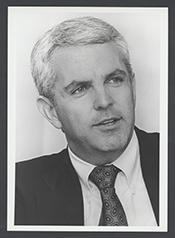 Rep. John B. Shadegg (R-AZ)
Legislative Activity
Stay on top of the latest movement without scrolling through every action
Received in the Senate and Read twice and referred to the Committee on Energy and Natural Resources.
July 27, 2006
View full timeline
Introduced in House
May 26, 2005
Referred to the House Committee on Energy and Commerce.
May 26, 2005
Referred to the Subcommittee on Energy and Air Quality.
June 3, 2005
Committee Consideration and Mark-up Session Held.
June 20, 2006
Reported by the Committee on Energy and Commerce. H. Rept. 109-543.
June 29, 2006
Placed on the Union Calendar, Calendar No. 305.
June 29, 2006
Mr. Shadegg moved to suspend the rules and pass the bill, as amended.
July 26, 2006 • 1:30 PM
Considered under suspension of the rules. (consideration: CR H5874-5878)
July 26, 2006 • 1:30 PM
DEBATE - The House proceeded with forty minutes of debate on H.R. 2730.
July 26, 2006 • 1:30 PM
Passed/agreed to in House: On motion to suspend the rules and pass the bill, as amended Agreed to by voice vote.(text: CR H5874-5875)
July 26, 2006 • 1:56 PM
On motion to suspend the rules and pass the bill, as amended Agreed to by voice vote. (text: CR H5874-5875)
July 26, 2006 • 1:56 PM
Motion to reconsider laid on the table Agreed to without objection.
July 26, 2006 • 1:56 PM
The title of the measure was amended. Agreed to without objection.
July 26, 2006 • 1:56 PM
Received in the Senate and Read twice and referred to the Committee on Energy and Natural Resources.
July 27, 2006
Floor Debate
8 membersWhat members said about H.R. 2730 on the floor

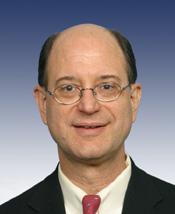

 +3
+3
Floor Debate
8 membersWhat members said about H.R. 2730 on the floor
Mr. Speaker, I move to suspend the rules and pass the bill (H.R. 2730) to establish a grant program to fund eligible joint ventures between United States and Israeli businesses and academic persons,…
Mr. Speaker, I yield myself as much time as I may consume. I want to commend my friend from Arizona for his remarks. I certainly concur with everything he said. Mr. Speaker, I rise today in strong…
Mr. Speaker, there is no greater problem in this world than our dependence on petroleum. There is no greater problem for our Nation. There is no greater problem for our economy than the fact that we…
Mr. Speaker, I thank the gentleman for yielding me time. I rise today in strong support of this bill introduced by my distinguished colleague and friend, Mr. Shadegg of Arizona. This measure…
Mr. Speaker, I rise today to support H.R. 2730, the United States-Israel Energy Cooperation Act, introduced by my colleagues Congressman Sherman and Congressman Shadegg. The bill uses two existing…
Show 3 more
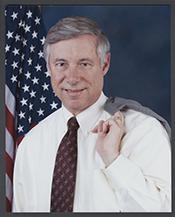
Mr. Speaker, I thank the gentleman from Arizona for yielding. I rise in strong support of this legislation. I would note that it passed without dissent in the Energy and Commerce Committee some time…
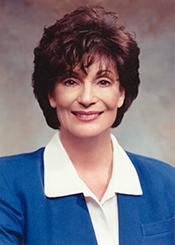
Mr. Speaker, I would like to thank the gentleman from New York, Mr. Eliot Engel, not only for yielding but for being a leader on this issue and so many others. Mr. Speaker, I rise in strong support…
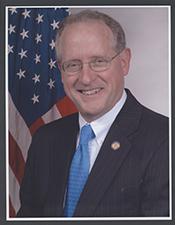
Mr. Speaker, I thank the chairman for yielding. I want to support this bill, H.R. 2730, for four reasons. One, it strengthens our ties between our Nation and Israel. These are mutually beneficial…
Bill Text
4 versions available
        [Congressional Bills 109th Congress]
[From the U.S. Government Publishing Office]
[H.R. 2730 Referred in Senate (RFS)]

109th CONGRESS
2d Session
H. R. 2730

_______________________________________________________________________

IN THE SENATE OF THE UNITED STATES

July 27 (legislative day, July 26), 2006

Received; read twice and referred to the Committee on Energy and
Natural Resources

_______________________________________________________________________

AN ACT

To authorize funding for eligible joint ventures between United States
and Israeli businesses and academic persons, to establish the
International Energy Advisory Board, and for other purposes.

Be it enacted by the Senate and House of Representatives of the
United States of America in Congress assembled,

SECTION 1. SHORT TITLE.

This Act may be cited as the ``United States-Israel Energy
Cooperation Act''.

SEC. 2. FINDINGS.

Congress finds that--
(1) it is in the highest national security interests of the
United States to ensure secure access to reliable energy
sources;
(2) the United States relies heavily on the foreign supply
of crude oil to meet the energy needs of the United States,
currently importing 58 percent of the total oil requirements of
the United States, of which 45 percent comes from member states
of the Organization of Petroleum Exporting Countries (OPEC);
(3) revenues from the sale of oil by some of these
countries directly or indirectly provide funding for terrorism
and propaganda hostile to the values of the United States and
the West;
(4) in the past, these countries have manipulated the
dependence of the United States on the oil supplies of these
countries to exert undue influence on United States policy, as
during the embargo of OPEC during 1973 on the sale of oil to
the United States, which became a major factor in the ensuing
recession;
(5) research by the Energy Information Administration of
the Department of Energy has shown that the dependence of the
United States on foreign oil will increase by 33 percent over
the next 20 years;
(6) a rise in the price of imported oil sufficient to
increase gasoline prices by 10 cents per gallon at the pump
would result in an additional outflow of $18,000,000,000 from
the United States to oil-exporting nations;
(7) for economic and national security reasons, the United
States should reduce, as soon as practicable, the dependence of
the United States on nations that do not share the interests
and values of the United States;
(8) the State of Israel has been a steadfast ally and a
close friend of the United States since the creation of Israel
in 1948;
(9) like the United States, Israel is a democracy that
holds civil rights and liberties in the highest regard and is a
proponent of the democratic values of peace, freedom, and
justice;
(10) cooperation between the United States and Israel on
such projects as the development of the Arrow Missile has
resulted in mutual benefits to United States and Israeli
security;
(11) the special relationship between Israel and the United
States has been and continues to be manifested in a variety of
jointly-funded cooperative programs in the field of scientific
research and development, such as--
(A) the United States-Israel Binational Science
Foundation (BSF);
(B) the Israel-United States Binational
Agricultural Research and Development Fund (BARD); and
(C) the Israel-United States Binational Industrial
Research and Development (BIRD) Foundation;
(12) these programs, supported by the matching
contributions from the Government of Israel and the Government
of the United States and directed by key scientists and
academics from both countries, have made possible many
scientific breakthroughs in the fields of life sciences,
medicine, bioengineering, agriculture, biotechnology,
communications, and others;
(13) on February 1, 1996, United States Secretary of Energy
Hazel R. O'Leary and Israeli Minister of Energy and
Infrastructure Gonen Segev signed the Agreement Between the
Department of Energy of the United States of America and the
Ministry of Energy and Infrastructure of Israel Concerning
Energy Cooperation, to establish a framework for collaboration
between the United States and Israel in energy research and
development activities;
(14) Israeli scientists and researchers have long been at
the forefront of research and development in the field of
alternative renewable energy sources;
(15) many of the top corporations of the world have
recognized the technological and scientific expertise of Israel
by locating important research and development facilities in
Israel;
(16) among the technological breakthroughs made by Israeli
scientists and researchers in the field of alternative,
renewable energy sources are--
(A) the development of a cathode that uses
hexavalent iron salts that accept 3 electrons per ion
and enable rechargeable batteries to provide 3 times as
much electricity as existing rechargeable batteries;
(B) the development of a technique that vastly
increases the efficiency of using solar energy to
generate hydrogen for use in energy cells; and
(C) the development of a novel membrane used in new
and powerful direct-oxidant fuel cells that is capable
of competing favorably with hydrogen fuel cells and
traditional internal combustion engines; and
(17) cooperation between the United States and Israel in
the field of research and development of alternative renewable
energy sources would be in the interests of both countries, and
both countries stand to gain much from such cooperation.

SEC. 3. GRANT PROGRAM.

(a) Authority.--Pursuant to the responsibilities described in
section 102(10), (14), and (17) of the Department of Energy
Organization Act (42 U.S.C. 7112(10), (14), and (17)) and section
103(9) of the Energy Reorganization Act of 1974 (42 U.S.C. 5813(9)),
the Secretary, in consultation with the BIRD or BSF, shall award grants
to eligible entities.
(b) Application.--
(1) Submission of applications.--To receive a grant under
this section, an eligible entity shall submit an application to
the Secretary containing such information and assurances as the
Secretary, in consultation with the BIRD or BSF, may require.
(2) Selection of eligible entities.--The Secretary, in
consultation with the Directors of the BIRD and BSF, may review
any application submitted by any eligible entity and select any
eligible entity meeting criteria established by the Secretary,
in consultation with the Advisory Board, for a grant under this
section.
(c) Amount of Grant.--The amount of each grant awarded for a fiscal
year under this section shall be determined by the Secretary, in
consultation with the BIRD or BSF.
(d) Recoupment.--
(1) In general.--Not later than 180 days after the date of
enactment of this Act, the Secretary shall establish procedures
and criteria for recoupment in connection with any eligible
project carried out by an eligible entity that receives a grant
under this section, which has led to the development of a
product or process which is marketed or used.
(2) Amount required.--
(A) Except as provided in subparagraph (B), such
recoupment shall be required as a condition for award
and be proportional to the Federal share of the costs
of such project, and shall be derived from the proceeds
of royalties or licensing fees received in connection
with such product or process.
(B) In the case where a product or process is used
by the recipient of a grant under this section for the
production and sale of its own products or processes,
the recoupment shall consist of a payment equivalent to
the payment which would be made under subparagraph (A).
(3) Waiver.--The Secretary may at any time waive or defer
all or some of the recoupment requirements of this subsection
as necessary, depending on--
(A) the commercial competitiveness of the entity or
entities developing or using the product or process;
(B) the profitability of the project; and
(C) the commercial viability of the product or
process utilized.
(e) Private Funds.--The Secretary may accept contributions of funds
from private sources to carry out this Act.
(f) Office of Energy Efficiency and Renewable Energy.--The
Secretary shall carry out this section through the existing programs at
the Office of Energy Efficiency and Renewable Energy.
(g) Report.--Not later than 180 days after receiving a grant under
this section, each recipient shall submit a report to the Secretary--
(1) documenting how the recipient used the grant funds; and
(2) evaluating the level of success of each project funded
by the grant.

SEC. 4. INTERNATIONAL ENERGY ADVISORY BOARD.

(a) Establishment.--There is established in the Department of
Energy an International Energy Advisory Board.
(b) Duties.--The Advisory Board shall advise the Secretary on--
(1) criteria for the recipients of grants awarded under
section 3(a);
(2) the total amount of grant money to be awarded to all
grantees selected by the Secretary, in consultation with the
BIRD; and
(3) the total amount of grant money to be awarded to all
grantees selected by the Secretary, in consultation with the
BSF, for each fiscal year.
(c) Membership.--
(1) Composition.--The Advisory Board shall be composed of--
(A) 1 member appointed by the Secretary of
Commerce;
(B) 1 member appointed by the Secretary of Energy;
and
(C) 2 members who shall be Israeli citizens,
appointed by the Secretary of Energy after consultation
with appropriate officials in the Israeli Government.
(2) Deadline for appointments.--The initial appointments
under paragraph (1) shall be made not later than 60 days after
the date of enactment of this Act.
(3) Term.--Each member of the Advisory Board shall be
appointed for a term of 4 years.
(4) Vacancies.--A vacancy on the Advisory Board shall be
filled in the manner in which the original appointment was
made.
(5) Basic pay.--
(A) Compensation.--A member of the Advisory Board
shall serve without pay.
(B) Travel expenses.--Each member of the Advisory
Board shall receive travel expenses, including per diem
in lieu of subsistence, in accordance with applicable
provisions of subchapter I of chapter 57 of title 5,
United States Code.
(6) Quorum.--Three members of the Advisory Board shall
constitute a quorum.
(7) Chairperson.--The Chairperson of the Advisory Board
shall be designated by the Secretary of Energy at the time of
the appointment.
(8) Meetings.--The Advisory Board shall meet at least once
annually at the call of the Chairperson.
(d) Termination.--Section 14(a)(2)(B) of the Federal Advisory
Committee Act (5 U.S.C. App.) shall not apply to the Advisory Board.

SEC. 5. DEFINITIONS.

In this Act:
(1) Advisory board.--The term ``Advisory Board'' means the
International Energy Advisory Board established by section
4(a).
(2) BIRD.--The term ``BIRD'' means the Israel-United States
Binational Industrial Research and Development Foundation.
(3) BSF.--The term ``BSF'' means the United States-Israel
Binational Science Foundation.
(4) Eligible entity.--The term ``eligible entity'' means a
joint venture comprised of both Israeli and United States
private business entities or a joint venture comprised of both
Israeli academic persons (who reside and work in Israel) and
United States academic persons, that--
(A) carries out an eligible project; and
(B) is selected by the Secretary, in consultation
with the BIRD or BSF, using the criteria established by
the Secretary, in consultation with the Advisory Board.
(5) Eligible project.--The term ``eligible project'' means
a project to encourage cooperation between the United States
and Israel on research, development, or commercialization of
alternative energy, improved energy efficiency, or renewable
energy sources.
(6) Secretary.--The term ``Secretary'' means the Secretary
of Energy, acting through the Assistant Secretary of Energy for
Energy Efficiency and Renewable Energy.

SEC. 6. TERMINATION.

The grant program authorized under section 3 and the Advisory Board
shall terminate upon the expiration of the 7-year period which begins
on the date of the enactment of this Act.

SEC. 7. AUTHORIZATION OF APPROPRIATIONS.

The Secretary is authorized to expend not more than $20,000,000 to
carry out this Act for each of fiscal years 2006 through 2012 from
funds previously authorized to the Office of Energy Efficiency and
Renewable Energy.

SEC. 8. CONSTITUTIONAL AUTHORITY.

The Constitutional authority on which this Act rests is the power
of Congress to regulate commerce with foreign nations as enumerated in
Article I, Section 8 of the United States Constitution.

Passed the House of Representatives July 26, 2006.

Attest:

KAREN L. HAAS,

Clerk.