Broadcast Decency Enforcement Act of 2005
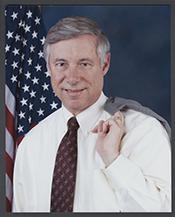 Rep. Fred Upton (R-MI)
Legislative Activity
Stay on top of the latest movement without scrolling through every action
Read the second time. Placed on Senate Legislative Calendar under General Orders. Calendar No. 17.
February 18, 2005
View full timeline
Introduced in House
January 25, 2005
Referred to the House Committee on Energy and Commerce.
January 25, 2005
Referred to the Subcommittee on Telecommunications and the Internet.
February 2, 2005
Subcommittee on Telecommunications and the Internet Discharged.
February 2, 2005
Committee Consideration and Mark-up Session Held.
February 9, 2005
Ordered to be Reported by the Yeas and Nays: 46 - 2.
February 9, 2005
Reported by the Committee on Energy and Commerce. H. Rept. 109-5.
February 14, 2005
Placed on the Union Calendar, Calendar No. 2.
February 14, 2005
Rules Committee Resolution H. Res. 95 Reported to House. Rule provides for consideration of H.R. 310 with 1 hour of general debate. Previous question shall be considered as ordered without intervening motions except motion to recommit with or without instructions. Measure will be considered read. A specified amendment is in order.
February 15, 2005 • 7:39 PM
Rule H. Res. 95 passed House.
February 16, 2005 • 12:39 PM
Considered under the provisions of rule H. Res. 95. (consideration: CR H653-664)
February 16, 2005 • 12:40 PM
Rule provides for consideration of H.R. 310 with 1 hour of general debate. Previous question shall be considered as ordered without intervening motions except motion to recommit with or without instructions. Measure will be considered read. A specified amendment is in order.
February 16, 2005 • 12:40 PM
DEBATE - The House proceeded with one hour of debate on H.R. 310.
February 16, 2005 • 12:40 PM
DEBATE - Pursuant to the provisions of H. Res. 95 the House proceeded with twenty minutes of debate on the Upton amendment.
February 16, 2005 • 1:15 PM
The previous question was ordered pursuant to the rule. (consideration: CR H664)
February 16, 2005 • 1:29 PM
Passed/agreed to in House: On passage Passed by the Yeas and Nays: 389 - 38 (Roll no. 35).
February 16, 2005 • 1:57 PM
On passage Passed by the Yeas and Nays: 389 - 38 (Roll no. 35).
February 16, 2005 • 1:57 PM
Motion to reconsider laid on the table Agreed to without objection.
February 16, 2005 • 1:57 PM
Received in the Senate.
February 16, 2005
Read the first time. Placed on Senate Legislative Calendar under Read the First Time.
February 17, 2005
Read the second time. Placed on Senate Legislative Calendar under General Orders. Calendar No. 17.
February 18, 2005
Voting History
1 vote recorded • Roll call available
Floor Debate
21 membersWhat members said about H.R. 310 on the floor


 +16
+16
Floor Debate
21 membersWhat members said about H.R. 310 on the floor
Mr. Speaker, I yield myself 5 minutes. Mr. Speaker, I rise in support of this legislation. I want to particularly thank a number of Members. I want to thank the gentleman from Texas (Mr. Barton).…
Mr. Speaker, will the gentlewoman yield? Mr. Speaker, will the gentlewoman help us define what inappropriate is? Does the gentlewoman think that the film ``Saving Private Ryan,'' which depicted the…
Mr. Speaker, I yield myself such time as I may consume. Mr. Speaker, I thank my colleague from West Virginia and congratulate her on her first rule. Mr. Speaker, I rise today in support of the…
Mr. Speaker, Americans are right to be outraged at much of the content of broadcast television and radio today. Too many television and radio programs regularly mock the values of millions of…
Mr. Speaker, by direction of the Committee on Rules, I call up House Resolution 95 and ask for its immediate consideration. Mr. Speaker, for the purpose of debate only, I yield the customary 30…
Show 8 more
Mr. Speaker, I move to suspend the rules and pass the Senate bill (S. 193) to increase the penalties for violations by television and radio broadcasters of the prohibitions against transmission of…
Mr. Speaker, the comments from the floor manager of the bill made clear one of the major goals of the Republican Party. It is to shorten the attention span of the American people. Among the things…

Mr. Speaker, I yield to my friend, the majority leader, the gentleman from Texas (Mr. DeLay), for the purposes of informing us of the schedule. I thank the gentleman for that information. With…
Mr. Speaker, I yield myself such time as I may consume. Mr. Speaker, I want to commend the gentleman from Michigan (Mr. Upton) for this legislation and commend as well the gentleman from Texas (Mr.…

Mr. Speaker, pursuant to House Resolution 95, I call up the bill (H.R. 310) to increase the penalties for violations by television and radio broadcasters of the prohibitions against transmission of…
I thank the gentleman for yielding me this time. Mr. Speaker, this is a bad bill. It is a dangerous bill. I get a little bit tired of people in Congress talking about freedom, freedom, freedom. But…
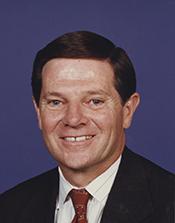
Mr. Speaker, I thank the gentleman for yielding to me. Mr. Speaker, the House will convene on Tuesday at 2 p.m. for legislative business. We will consider several measures under suspension of the…
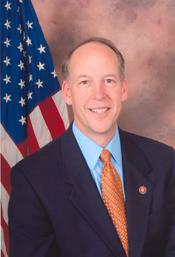
Mr. Speaker, I plan to support this legislation, as I supported the House legislation, to clear up the public's airwaves and punish those broadcasters who violate the law and the standards of the…
Show 11 more
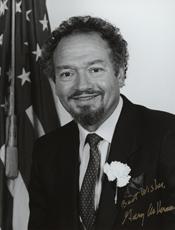
Mr. Speaker, I am continually amazed that defending our Constitutionally guaranteed freedom of speech is such a lonely job in the House of Representatives. I believe in decency and protecting…

Mr. Speaker, it has been over a year since the infamous Super Bowl incident where a supposed ``wardrobe malfunction'' set this Nation spinning backwards wondering why our children were exposed to a…
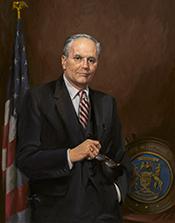
Mr. Speaker, I rise in support of H.R. 310, the Broadcast Decency Enforcement Act of 2005. I commend my full committee and subcommittee chairmen, Representatives Barton and Upton, and Subcommittee…

Mr. Speaker, I rise in support of the Broadcast Decency Enforcement Act (H.R. 310). Like many Americans, I have been personally offended by the crudeness and licentiousness of some material that has…
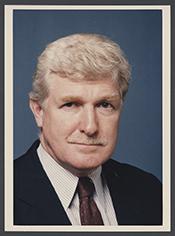
I thank my friend and colleague from New York (Ms. Slaughter) for yielding the time. Mr. Speaker, I plan on voting for this bill because I think it is about doing the right thing for the public…
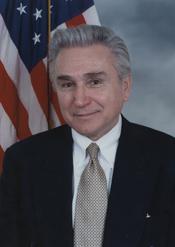
Mr. Speaker, this bill and the rule really missed the point. The point is that we are experiencing here in this House and across this country limitations on political debate, and that is the way this…
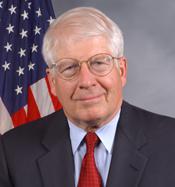
Mr. Speaker, a year ago I stood before this Chamber during debate of this same legislation and remarked that by increasing fines for indecency violations we were addressing the symptoms of a problem…

Mr. Speaker, I thank the gentleman for yielding me this time. I rise in opposition to H.R. 310, the Broadcast Decency Act. While I acknowledge and appreciate that this is a bipartisan effort in…
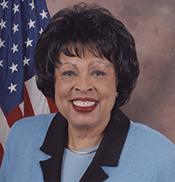
Mr. Speaker, I rise today for the third time in 3 years to speak out against what I consider the wrong approach to media indecency, and that is increasing FCC fines. S. 193, the Broadcast Decency…
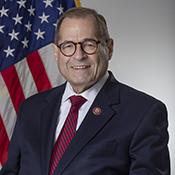
Mr. Speaker, I do not oppose this amendment, but I do oppose this bill. Like many Americans, I exercise my right not to view programming I find offensive by using that miracle of modern technology,…
Mr. Speaker, I rise to express my opposition to the passage of S. 193, the Broadcast Decency Enforcement Act. I object to the passage of this bill because of my strong belief that in any legislative…
Bill Text
4 versions available
        [Congressional Bills 109th Congress]
[From the U.S. Government Publishing Office]
[H.R. 310 Placed on Calendar Senate (PCS)]

Calendar No. 17
109th CONGRESS
1st Session
H. R. 310

_______________________________________________________________________

IN THE SENATE OF THE UNITED STATES

February 16, 2005

Received

February 17, 2005

Read the first time

February 18, 2005

Read the second time and placed on the calendar

_______________________________________________________________________

AN ACT

To increase the penalties for violations by television and radio
broadcasters of the prohibitions against transmission of obscene,
indecent, and profane material, and for other purposes.

Be it enacted by the Senate and House of Representatives of the
United States of America in Congress assembled,

SECTION 1. SHORT TITLE.

This Act may be cited as the ``Broadcast Decency Enforcement Act of
2005''.

SEC. 2. INCREASE IN PENALTIES FOR OBSCENE, INDECENT, AND PROFANE
BROADCASTS.

Section 503(b)(2) of the Communications Act of 1934 (47 U.S.C.
503(b)(2)) is amended--
(1) by redesignating subparagraphs (C) and (D) as
subparagraphs (D) and (E), respectively;
(2) by inserting after subparagraph (B) the following new
subparagraph:
``(C) Notwithstanding subparagraph (A), if the violator is (i) a
broadcast station licensee or permittee, or (ii) an applicant for any
broadcast license, permit, certificate, or other instrument or
authorization issued by the Commission, and the violator is determined
by the Commission under paragraph (1) to have broadcast obscene,
indecent, or profane material, the amount of any forfeiture penalty
determined under this section shall not exceed $500,000 for each
violation.''; and
(3) in subparagraph (D), as redesignated by paragraph (1)
of this subsection--
(A) by striking ``subparagraph (A) or (B)'' and
inserting ``subparagraph (A), (B), or (C)''; and
(B) by adding at the end the following:
``Notwithstanding the preceding sentence, if the
violator is determined by the Commission under
paragraph (1) to have uttered obscene, indecent, or
profane material (and the case is not covered by
subparagraph (A), (B), or (C)), the amount of any
forfeiture penalty determined under this section shall
not exceed $500,000 for each violation.''.

SEC. 3. ADDITIONAL FACTORS IN INDECENCY PENALTIES; EXCEPTION.

Section 503(b)(2) of the Communications Act of 1934 (47 U.S.C.
503(b)(2)) is further amended by adding at the end (after subparagraph
(E) as redesignated by section 2(1) of this Act) the following new
subparagraphs:
``(F) In the case of a violation in which the violator is
determined by the Commission under paragraph (1) to have uttered
obscene, indecent, or profane material, the Commission shall take into
account, in addition to the matters described in subparagraph (E), the
following factors:
``(i) With respect to the degree of culpability of the
violator, the following:
``(I) whether the material uttered by the violator
was live or recorded, scripted or unscripted;
``(II) whether the violator had a reasonable
opportunity to review recorded or scripted programming
or had a reasonable basis to believe live or unscripted
programming may contain obscene, indecent, or profane
material;
``(III) if the violator originated live or
unscripted programming, whether a time delay blocking
mechanism was implemented for the programming;
``(IV) the size of the viewing or listening
audience of the programming; and
``(V) whether the programming was part of a
children's television program as described in the
Commission's children's television programming policy
(47 CFR 73.4050(c)).
``(ii) With respect to the violator's ability to pay, the
following:
``(I) whether the violator is a company or
individual;
``(II) if the violator is a company, the size of
the company and the size of the market served; and
``(III) if the violator is an individual, the
financial impact of a forfeiture penalty on that
individual.
``(G) A broadcast station licensee or permittee that receives
programming from a network organization, but that is not owned or
controlled, or under common ownership or control with, such network
organization, shall not be subject to a forfeiture penalty under this
subsection for broadcasting obscene, indecent, or profane material,
if--
``(i) such material was within live or recorded programming
provided by the network organization to the licensee or
permittee; and
``(ii)(I) the programming was recorded or scripted, and the
licensee or permittee was not given a reasonable opportunity to
review the programming in advance; or
``(II) the programming was live or unscripted, and the
licensee or permittee had no reasonable basis to believe the
programming would contain obscene, indecent, or profane
material.
The Commission shall by rule define the term `network organization' for
purposes of this subparagraph.''.

SEC. 4. INDECENCY PENALTIES FOR NONLICENSEES.

Section 503(b)(5) of the Communications Act of 1934 (47 U.S.C.
503(b)(5)) is amended--
(1) by redesignating subparagraphs (A), (B), and (C) as
clauses (i), (ii), and (iii), respectively;
(2) by inserting ``(A)'' after ``(5)'';
(3) by redesignating the second sentence as subparagraph
(B);
(4) in such subparagraph (B) as redesignated--
(A) by striking ``The provisions of this paragraph
shall not apply, however,'' and inserting ``The
provisions of subparagraph (A) shall not apply (i)'';
(B) by striking ``operator, if the person'' and
inserting ``operator, (ii) if the person'';
(C) by striking ``or in the case of'' and inserting
``(iii) in the case of''; and
(D) by inserting after ``that tower'' the
following: ``, or (iv) in the case of a determination
that a person uttered obscene, indecent, or profane
material that was broadcast by a broadcast station
licensee or permittee, if the person is determined to
have willfully and intentionally made the utterance,
knowing or having reason to know that the utterance
would be broadcast''; and
(5) by redesignating the last sentence as subparagraph (C).

SEC. 5. DEADLINES FOR ACTION ON COMPLAINTS.

Section 503(b) of the Communications Act of 1934 (47 U.S.C. 503(b))
is amended by adding at the end thereof the following new paragraph:
``(7) In the case of an allegation concerning the utterance of
obscene, indecent, or profane material that is broadcast by a station
licensee or permittee--
``(A) within 180 days after the date of the receipt of such
allegation, the Commission shall--
``(i) issue the required notice under paragraph (3)
to such licensee or permittee or the person making such
utterance;
``(ii) issue a notice of apparent liability to such
licensee or permittee or person in accordance with
paragraph (4); or
``(iii) notify such licensee, permittee, or person
in writing, and any person submitting such allegation
in writing or by general publication, that the
Commission has determined not to issue either such
notice; and
``(B) if the Commission issues such notice and such
licensee, permittee, or person has not paid a penalty or
entered into a settlement with the Commission, within 270 days
after the date of the receipt of such allegation, the
Commission shall--
``(i) issue an order imposing a forfeiture penalty;
or
``(ii) notify such licensee, permittee, or person
in writing, and any person submitting such allegation
in writing or by general publication, that the
Commission has determined not to issue either such
order.''.

SEC. 6. ADDITIONAL REMEDIES FOR INDECENT BROADCAST.

Section 503 of the Communications Act of 1934 (47 U.S.C. 503) is
further amended by adding at the end the following new subsection:
``(c) Additional Remedies for Indecent Broadcasting.--In any
proceeding under this section in which the Commission determines that
any broadcast station licensee or permittee has broadcast obscene,
indecent, or profane material, the Commission may, in addition to
imposing a penalty under this section, require the licensee or
permittee to broadcast public service announcements that serve the
educational and informational needs of children. Such announcements may
be required to reach an audience that is up to 5 times the size of the
audience that is estimated to have been reached by the obscene,
indecent, or profane material, as determined in accordance with
regulations prescribed by the Commission.''.

SEC. 7. LICENSE DISQUALIFICATION FOR VIOLATIONS OF INDECENCY
PROHIBITIONS.

Section 503 of the Communications Act of 1934 (47 U.S.C. 503) is
further amended by adding at the end (after subsection (c) as added by
section 6) the following new subsection:
``(d) Consideration of License Disqualification for Violations of
Indecency Prohibitions.--If the Commission issues a notice under
paragraph (3) or (4) of subsection (b) to a broadcast station licensee
or permittee looking toward the imposition of a forfeiture penalty
under this Act based on an allegation that the licensee or permittee
broadcast obscene, indecent, or profane material, and either--
``(1) such forfeiture penalty has been paid, or
``(2) a court of competent jurisdiction has ordered payment
of such forfeiture penalty, and such order has become final,
then the Commission shall, in any subsequent proceeding under section
308(b) or 310(d), take into consideration whether the broadcast of such
material demonstrates a lack of character or other qualifications
required to operate a station.''.

SEC. 8. LICENSE RENEWAL CONSIDERATION OF VIOLATIONS OF INDECENCY
PROHIBITIONS.

Section 309(k) of the Communications Act of 1934 (47 U.S.C. 309(k))
is amended by adding at the end the following new paragraph:
``(5) License renewal consideration of violations of
indecency prohibitions.--If the Commission has issued a notice
under paragraph (3) or (4) of section 503(b) to a broadcast
station licensee or permittee with respect to a broadcast
station looking toward the imposition of a forfeiture penalty
under this Act based on an allegation that such broadcast
station broadcast obscene, indecent, or profane material, and--
``(A) such forfeiture penalty has been paid, or
``(B) a court of competent jurisdiction has ordered
payment of such forfeiture penalty, and such order has
become final,
then such violation shall be treated as a serious violation for
purposes of paragraph (1)(B) of this subsection with respect to
the renewal of the license or permit for such station.''.

SEC. 9. LICENSE REVOCATION FOR VIOLATIONS OF INDECENCY PROHIBITIONS.

Section 312 of the Communications Act of 1934 (47 U.S.C. 312) is
amended by adding at the end the following new subsection:
``(h) License Revocation for Violations of Indecency
Prohibitions.--
``(1) Consequences of multiple violations.--If, in each of
3 or more proceedings during the term of any broadcast license,
the Commission issues a notice under paragraph (3) or (4) of
section 503(b) to a broadcast station licensee or permittee
with respect to a broadcast station looking toward the
imposition of a forfeiture penalty under this Act based on an
allegation that such broadcast station broadcast obscene,
indecent, or profane material, and in each such proceeding
either--
``(A) such forfeiture penalty has been paid, or
``(B) a court of competent jurisdiction has ordered
payment of such forfeiture penalty, and such order has
become final,
then the Commission shall commence a proceeding under
subsection (a) of this section to consider whether the
Commission should revoke the station license or construction
permit of that licensee or permittee for such station.
``(2) Preservation of authority.--Nothing in this
subsection shall be construed to limit the authority of the
Commission to commence a proceeding under subsection (a).''.

SEC. 10. REQUIRED CONTENTS OF ANNUAL REPORTS OF THE COMMISSION.

(a) Required Contents.--Each calendar year beginning after the date
of enactment of this Act, the Federal Communications Commission shall
submit to the Congress an annual report that includes the following:
(1) The number of complaints received by the Commission
during the years covered by the report alleging that a
broadcast contained obscene, indecent, or profane material, and
the number of programs to which such complaints relate.
(2) The number of those complaints that have been dismissed
or denied by the Commission.
(3) The number of complaints that have remained pending at
the end of the years covered by the annual report.
(4) The number of notices issued by the Commission under
paragraph (3) or (4) of section 503(b) of the Communications
Act of 1934 (47 U.S.C. 503(b)) during the years covered by the
report to enforce the statutes, rules, and policies prohibiting
the broadcasting of obscene, indecent, or profane material.
(5) For each such notice, a statement of--
(A) the amount of the proposed forfeiture;
(B) the program, station, and corporate parent to
which the notice was issued;
(C) the length of time between the date on which
the complaint was filed and the date on which the
notice was issued; and
(D) the status of the proceeding.
(6) The number of forfeiture orders issued pursuant to
section 503(b) of such Act during the years covered by the
report to enforce the statutes, rules, and policies prohibiting
the broadcasting of obscene, indecent, or profane material.
(7) For each such forfeiture order, a statement of--
(A) the amount assessed by the final forfeiture
order;
(B) the program, station, and corporate parent to
which it was issued;
(C) whether the licensee has paid the forfeiture
order; and
(D) the amount paid by the licensee.
(8) In instances where the licensee has refused to pay,
whether the Commission referred such order to the Department of
Justice to collect the penalty.
(9) In cases where the Commission referred such order to
the Department of Justice--
(A) the number of days from the date the Commission
issued such order to the date the Commission referred
such order to the Department;
(B) whether the Department has commenced an action
to collect the penalty, and if such action was
commenced, the number of days from the date the
Commission referred such order to the Department to the
date the action by the Department commenced; and
(C) whether the collection action resulted in a
payment, and if such action resulted in a payment, the
amount of such payment.
(b) Years Covered.--For purposes of this section, the ``years
covered'' by the report required under this section shall be the years
beginning with calendar year 2000 through the calendar year preceding
the year in which the report is submitted.

SEC. 11. UPDATING GUIDANCE TO THE BROADCAST INDUSTRY REGARDING
INDECENCY.

Within 9 months after the date of enactment of this Act, and at
least once every 3 years thereafter, the Federal Communications
Commission shall revise, on the basis of recent developments in the
Commission indecency case law, the Commission's policy statement to
provide industry guidance on the Commission's interpretation of, and
enforcement policies regarding, the laws and regulations concerning
broadcast indecency, as contained in the policy statement adopted March
14, 2001, and released April 6, 2001 (FCC 01-90).

SEC. 12. GAO STUDY OF INDECENT BROADCASTING COMPLAINTS.

(a) Inquiry and Report Required.--The Government Accountability
Office shall conduct a study examining, with respect to calendar year
2000 through the calendar year preceding the year in which the report
is submitted--
(1) the number of complaints concerning the broadcasting of
obscene, indecent, and profane material to the Federal
Communications Commission;
(2) the number of such complaints that result in final
agency actions by the Commission;
(3) the length of time taken by the Commission in
responding to such complaints;
(4) what mechanisms the Commission has established to
receive, investigate, and respond to such complaints; and
(5) whether complainants to the Commission are adequately
informed by the Commission of the responses to their
complaints.
(b) Submission of Report.--The Government Accountability Office
shall submit a report on the results of such study within one year
after the date of enactment of this Act to the Committee on Commerce,
Science, and Transportation of the Senate and the Committee on Energy
and Commerce of the House of Representatives.

SEC. 13. SENSE OF THE CONGRESS.

(a) Reinstatement of Policy.--It is the sense of the Congress that
the broadcast television station licensees should reinstitute a family
viewing policy for broadcasters.
(b) Definition.--For purposes of this section, a family viewing
policy is a policy similar to the policy that existed in the United
States from 1975 to 1983, as part of the National Association of
Broadcaster's code of conduct for television, and that included the
concept of a family viewing hour.

SEC. 14. IMPLEMENTATION.

(a) Regulations.--The Commission shall prescribe regulations to
implement the amendments made by this Act within 180 days after the
date of enactment of this Act.
(b) Prospective Application.--This Act and the amendments made by
this Act shall not apply with respect to material broadcast before the
date of enactment of this Act.
(c) Separability.--Section 708 of the Communications Act of 1934
(47 U.S.C. 608) shall apply to this Act and the amendments made by this
Act.

Passed the House of Representatives February 16, 2005.

Attest:

JEFF TRANDAHL,

Clerk.

Calendar No. 17

109th CONGRESS

1st Session

H. R. 310

_______________________________________________________________________

AN ACT

To increase the penalties for violations by television and radio
broadcasters of the prohibitions against transmission of obscene,
indecent, and profane material, and for other purposes.

_______________________________________________________________________

February 18, 2005

Read the second time and placed on the calendar