Making supplemental appropriations for fiscal year 2005 for veterans medical services.
Legislative Activity
Stay on top of the latest movement without scrolling through every action
Read twice and referred to the Committee on Appropriations.
July 1, 2005
View full timeline
Introduced in House
June 30, 2005
Referred to the House Committee on Appropriations.
June 30, 2005
Mr. Walsh moved to suspend the rules and pass the bill.
June 30, 2005 • 10:17 PM
Considered under suspension of the rules. (consideration: CR H5585-5591)
June 30, 2005 • 10:18 PM
DEBATE - The House proceeded with forty minutes of debate on H.R. 3130.
June 30, 2005 • 10:18 PM
At the conclusion of debate, the Yeas and Nays were demanded and ordered. Pursuant to the provisions of clause 8, rule XX, the Chair announced that further proceedings on the motion would be postponed.
June 30, 2005 • 11:01 PM
Considered as unfinished business. (consideration: CR H5593-5594)
June 30, 2005 • 11:34 PM
Passed/agreed to in House: On motion to suspend the rules and pass the bill Agreed to by the Yeas and Nays: (2/3 required): 419 - 0 (Roll no. 362).(text as passed House: CR H5585)
June 30, 2005 • 11:42 PM
On motion to suspend the rules and pass the bill Agreed to by the Yeas and Nays: (2/3 required): 419 - 0 (Roll no. 362). (text as passed House: CR H5585)
June 30, 2005 • 11:42 PM
Motion to reconsider laid on the table Agreed to without objection.
June 30, 2005 • 11:42 PM
Received in the Senate.
June 30, 2005
Read twice and referred to the Committee on Appropriations.
July 1, 2005
Voting History
1 vote recorded • Roll call available
Floor Debate
16 membersWhat members said about H.R. 3130 on the floor
 LMS
LMS CE
CE AHP
AHP BB
BB SB+11
SB+11
Floor Debate
16 membersWhat members said about H.R. 3130 on the floor
Mr. Speaker, I yield myself such time as I may consume. (Ms. SLAUGHTER asked and was given permission to revise and extend her remarks.) Mr. Speaker, I thank my colleague, the gentleman the Florida…
Mr. Speaker, I yield myself such time as I may consume.
(Ms. SLAUGHTER asked and was given permission to revise and extend her remarks.)
Mr. Speaker, I thank my colleague, the gentleman the Florida (Mr. Putnam), for yielding me the customary 30 minutes.
Mr. Speaker, as the gentleman from Florida has explained, this rule would do two things. It would allow the House to consider legislation under suspension of the rules, and it would waive a provision in the Congressional Budget Act that prohibits the House from adjourning for more than 3 days unless it has completed consideration on reconciliation.
Mr. Speaker, in general, I think far too much of the legislation passed around here is done by suspension, a process that waives all House rules and prohibits all amendments, and even precludes a motion to recommit. Having that said, however, I must add that tonight is somewhat different.
I would ordinarily have more concern about allowing yet another day for considering legislation in this manner, but I do realize that in limited instances, it may be necessary to waive this rule in order to expedite legislation that is truly emergency in nature. It is evident today that two of the four items which are to be considered under suspension are indeed particularly urgent.
One is the temporary extension of the highway bill. Without this legislation, the highway programs will be shut down and significant layoffs will occur. I am hopeful, as I am sure many of my colleagues are as well, that this will be the last time that we will have to pass a short-term extension of this bill. The conferees must finish their work on the highway authorization bill quickly so we can begin building and repairing our Nation's decaying highways and infrastructure.
The other critical bill before us today is the emergency supplemental bill for veterans medical care. We Democrats attempted to address this emerging veterans crisis earlier this week when we advocated for the Edwards amendment and also in March when the gentlewoman from Oregon (Ms. Hooley) and the gentleman from Washington (Mr. Baird) brought in a resolution asking for an amendment to be approved by the Committee on Rules to include $1.3 billion more. They were turned down.
The Department of Veterans Affairs is being flooded with veterans from the wars in Iraq and Afghanistan, four times as many as had originally been budgeted for. Trying to help 103,000 of our brave men and women with a budget designed to assist just over 25,000 has produced a shortfall in the Veterans Department funds of more than $1 billion this year, a staggering sum.
The gentleman from Texas' (Mr. Edwards) amendment would have filled in a shameful gap between our Nation's professed support for its veterans and its actual action on their behalf; but, Mr. Speaker, the Republican majority in our House was not concerned with this chasm separating rhetoric from reality.
As I said, the Edwards amendment was voted down on a party-line vote. Not a single Republican voted for the necessary health care for our wounded veterans; and on the emergency supplemental bill, as I mentioned before, the Baird-Hooley amendment to provide $1.3 billion that was in March was not allowed by the Committee on Rules on a party- line vote.
This issue is not about Republicans or Democrats. It is about our soldiers. We have a patriotic duty to uphold our end of the bargain and properly care for the fighting men and women of this country.
This is a sacred bond of trust, a contract that the majority has violated; but my fellow Americans believe that refusing to care for our veterans after having voted to send them to war is the height of hypocrisy, and the public is outraged.
As a result, House Republicans have reversed course. They received the wake-up call. They have come back to the table so we can hammer out the funding we need to care for our troops, as we should have earlier this week and in March.
This is a pattern that has become all too familiar. The majority does something unpopular, the public gets incensed, and the majority backs off. It has happened over and over with the ethics crisis in the House. It happened with the recent Republican attempt to kill public broadcasting in America; and now less than 7 days later, they are at it again, having to fess up to the fact that their priorities are out of step with the American people, their values are out of the mainstream.
Have they had a change of heart regarding the issue before us? Perhaps, or perhaps they just do not want to go home to July 4th parades in their districts before they have dealt with the tangible and pressing need of the veterans they will be saluting.
Let me say I find it absolutely scandalous that the Veterans Administration failed to tell us of this shortfall.
Now, Mr. Speaker, while I give my friends on the right credit for admitting their error and working to fix it, I regret to report that their proposed solution is just not good enough.
They have proposed increasing veterans spending by $975 million, which is still $25 million short of what the Veterans Affairs Department says it needs just this year, and more than half a billion dollars short of what the Senate pledged yesterday. Their bill does nothing to address the issue of veterans funding in 2006, where we are told there will be another more than $1 billion deficit.
I hope and pray we do not have to have this embarrassing debate again next year and can instead solve this problem now. We should always remember, Mr. Speaker, that it is easy to make the right decision when the whole world is watching, but what defines our character is what we do when no one is watching.
The Members of the majority have repeatedly been coerced by popular pressure into doing what is right when all eyes are on them. Now, both I and my colleagues on the Democratic side implore them to do something more: to summon the courage and the wisdom to do what is right when the only eyes on them are their own.
Mr. Speaker, I reserve the balance of my time.
Mr. Speaker, I am pleased to yield 3 minutes to the gentleman from Washington (Mr. Baird).
Mr. Speaker, I yield to the gentleman from Washington (Mr. Baird) for a unanimous consent request.
(Mr. BAIRD asked and was given permission to revise and extend his remarks, and include extraneous material.)
Mr. Speaker, I yield 5 minutes to the gentleman from Wisconsin (Mr. Obey).
Mr. Speaker, I am pleased to yield 1 minute to the gentlewoman from California (Ms. Pelosi), the minority leader.
Mr. Speaker, I yield 2 minutes to the gentleman from Washington (Mr. Baird).
Mr. Speaker, I yield myself such time as I may consume.
Mr. Speaker, I want to point out that if we pass $1.5 billion, we can do the same thing, take the Senate bill and get it finished tomorrow.
Mr. Speaker, I yield 2 minutes to the gentlewoman from Florida (Ms. Corrine Brown).
(Ms. CORRINE BROWN of Florida asked and was given permission to revise and extend her remarks.)
Mr. Speaker, I yield 4 minutes to the gentleman from Texas (Mr. Edwards).
Mr. Speaker, I yield 3 minutes to the gentleman from Colorado (Mr. Salazar).
Mr. Speaker, I yield 30 seconds to the gentleman from Texas (Mr. Edwards).
Mr. Speaker, I yield 1 minute to the gentleman from South Carolina (Mr. Spratt).
Mr. Speaker, I yield 15 seconds to the gentleman from Washington (Mr. Baird).
Mr. Speaker, I yield myself such time as I may consume.
Before I start, I will insert in the Record the news release from Senator Craig, Committee on Veterans' Affairs chairman, and the New York Times editorial today called ``The True Cost of War.''
Senate to Quickly Take Up $1.5 Billion Measure for Veterans If Sent
From the House
Washington, DC--The U.S. Senate Appropriations Committee
retreated its position today that the Department of Veterans
Affairs need $1.5 billion to fill a spending gap for the
Department of Veterans Affairs. In a unanimous vote, the
appropriators voted to authorize the Senate to quickly take
up a $1.5 billion emergency supplemental if the House
approves such a measure.
That action came after the Bush Administration indicated
earlier today that the agency needs $975 million.
``Clearly there is disagreement here on the number, but
it's clear that we all want to do the right thing for
veterans. We do not want to leave the Department of Veterans
Affairs short of funds,'' said Sen. Larry Craig who serves on
the Appropriations Committee and is Chairman of the Senate
Committee on Veterans' Affairs. ``Working with our colleagues
in the House, I'm sure we can achieve that objective.''
[From the New York Times, Jun. 30, 2005]
The True Cost of War
In anger and embarrassment, Congressional Republicans are
scrambling to repair a budget shortfall in veterans' medical
care now that the Bush administration has admitted it vastly
underestimated the number of returning Iraq and Afghanistan
personnel needing treatment. The $1 billion-plus gaffe is
considerable, with the original budget estimate of 23,553
returned veterans needing care this year now ballooning to
103,000. American taxpayers should be even more furious than
Congress.
The Capitol's Republican majorities have shown no
hesitation in signing the president's serial blank-check
supplemental budgets for waging the war, yet they repeatedly
ignored months of warnings from Democrats
that returning veterans were being shortchanged. One
Republican who warned of the problem--Representative
Christopher Smith of New Jersey--lost his chairmanship of the
Veterans' Affairs Committee after pressing his plea too
boldly before the House leadership.
But partisan resistance melted in a flood of political
chagrin once the administration admitted the budget error,
which was first discovered in April but only now disclosed.
The explanation offered--the gaffe was due to using dated
formulas based on prewar calculations--left Republicans
sputtering all the more.
All wars necessarily involve mismanagement, even successful
ones. But there is no excuse for treating the needs of
wounded and damaged warriors as a budgetary afterthought.
Congressional Republicans were far from innocent victims of
administrative ineptitude or deception. After years of
approving record tax cuts and budget deficits, they stuck to
this year's pre-election script of fictitious ``budget
tightening'' that underestimated inevitable expenses and
shortchanged returning veterans with higher health care
enrollment fees and drug co-payments. The only comfort for
the American public is that unlike many of the war's
problems, this one can be repaired, providing partisan combat
is suspended in the Capitol.
Mr. Speaker, I am going to be asking Members to vote ``no'' on the previous question. If the previous question is defeated, I will offer an amendment to the rule that will allow the House to immediately consider H.R. 3136, legislation introduced by the gentleman from Texas (Mr. Edwards) and the gentleman from Wisconsin (Mr. Obey) that provides an immediately desperately needed $1.5 billion in funding for veterans medical service. This amount is the same level that was approved by the Senate last night and is what is needed to fully care for our Nation's veterans.
Mr. Speaker, it is too bad that the White House and the VA were not honest about this shortfall in the first place because if they had been, as the gentleman from South Carolina (Mr. Spratt) said, we would not need to be here tonight. But I think now even the most skeptical of my colleagues in the House realize that our veterans' health care system is in a serious crisis. And while it is encouraging that after feeling the pressure brought to bear by the American people that the Republican leadership has reversed course and agreed to take some action, it is unclear to me why they are providing only $975 million instead of the full amount needed. How can we believe the same people who told us there was no problem?
Senator Craig is asking the leadership of this body to pass a bill and let him have that $1.5 billion out of here so they can finish work on this in the morning. Clearly, clearly, we must do that for our veterans. Remember, we have a contract with them. When we sent them off to war, we guaranteed that we will meet their needs.
So please vote ``no'' on the previous question, and we can vote today for full funding of our veterans.
Mr. Speaker, I ask unanimous consent that the text of the amendment be printed in the Record immediately prior to the vote on the previous question.
Mr. Speaker, I yield back the balance of my time.
Mr. Speaker, I yield myself such time as I may consume. Mr. Speaker, I will vote for this emergency funding bill for veterans health care for two reasons: first, the VA desperately needs the $975…
Mr. Speaker, I yield myself such time as I may consume.
Mr. Speaker, I will vote for this emergency funding bill for veterans health care for two reasons: first, the VA desperately needs the $975 million right now to address a very serious shortfall in VA health care funding, a shortfall that I wish had never occurred; second, unfortunately, the House Republican leadership decided earlier this evening that the House, Republicans and Democrats alike, would not even be allowed to vote on the $1.5 billion emergency funding bill for VA health care that the Senate has already passed on a unanimous basis 96 to zero earlier this week.
For the record, I want to say that I believe the $975 million probably will not cover all of the hole that has been dug for veterans health care for this year. I hope I am wrong; but I was not wrong earlier this year, and I was not wrong last year when I said that the present VA budget would provide cuts in real health care services to veterans during a time of war.
Also I want to say for the record that I appreciate very much the leadership of the gentleman from New York (Mr. Walsh), whose commitment to America's veterans is genuine, deep, and consistent. Had he not called hearings this week and brought the VA leadership before the House in his Subcommittee on Military Quality of Life and Veterans Affairs, and Related Agencies of the Committee on Appropriations, I do not think we would be here on this floor tonight debating additional emergency money for VA health care spending.
I want to commend my friend and colleague, the gentleman from Indiana (Mr. Buyer), who worked very hard to bring to light this immediate crisis that we are facing. His leadership on the House Committee on Veterans' Affairs was instrumental in us being here today.
Having said that, I believe the American people and America's veterans, Mr. Speaker, have a right to know how we got into this $1 billion hole for veterans health care during a time of war, and, most importantly, need to help us understand how not to get into this hole again.
This issue did not just come up. This problem did not just pop up overnight or this week or last week. For 2 years, respected national veterans organizations have been pleading with the administration and Congress to provide adequate funding for the VA health care system. Unfortunately, their pleas were often ignored by the Republican leadership in the House.
As far back as February of 2004, the Republican chairman of the House Committee on Veterans' Affairs, then the gentleman from New Jersey (Mr. Smith), signed a bipartisan letter saying that unless we funded $2.5 billion more than the administration budget request for VA health care, real services for real veterans would have to be cut this year during a time of war. Did the House leadership salute the gentleman from New Jersey (Mr. Smith) for standing up for veterans? No. In fact, they fired him. They did not just take away his chairmanship of the VA committee; they took him off the committee itself.
What was the crime of the gentleman from New Jersey (Mr. Smith)? He refused to support an inadequate budget resolution for VA health care for 2005 which the Republican leadership had endorsed. He put his loyalty to America's veterans above blind partisan loyalty to the House leadership, and he was right to do so.
While America's veterans were honoring the gentleman from New Jersey (Mr. Smith), the House Republican leadership was punishing him.
In the spring of 2004, House Republicans passed a fiscal year 2005 budget on a partisan basis, a budget that veterans groups, Democrats, and the gentleman from New Jersey (Mr. Smith) had said would require more than $1 billion in cuts to veterans health care services this year. The insight of time has proven that Democrats, veterans groups, including the DAV, American Legion and VFW, were right. The House Republican leadership was wrong: wrong on veterans health care budget resolutions and wrong to put partisanship above loyalty to veterans and veterans health care.
Repeatedly over the past 2 years, House Democrats, myself included, have asked the Republican leadership to join on a bipartisan basis to stop real cuts in veterans health care services during a time of war. Over a year ago, we tried genuinely to increase the veterans health care budget for 2005. The leadership said no.
This year, veterans groups and Democrats pleaded with the Republican leadership to provide more adequate funding for veterans health care. On the 2006 budget resolution, they said no.
Then in May of this year, Democrats and veterans groups pleaded with the Republican leadership one more time to add additional VA health care spending to the Iraqi war supplemental appropriations bill. Once again, the leadership said no.
That was not the last time they said no. The gentleman from Wisconsin (Mr. Obey) tried to add an amendment in the Committee on Appropriations increasing funding for VA health care so we would not get into this hole, cutting services for veterans during a time of war. Again, the answer was no.
That is not even the worst of it. The House leadership on a partisan basis pressured Republican colleagues of mine this year to vote for a House budget resolution, and, listen to this, vote for a House budget resolution that would cut present services for veterans by $14 billion over the next 5 years.
Let me repeat that in case anybody did not hear it or believe it, because it is a fact: the House leadership passed a budget resolution in this very room earlier this year that would require a $14 billion cut in present health care services to veterans. And, by the way, that includes over 100,000 veterans of the Iraqi and Afghanistan wars who have needed VA health care. I must wonder which Members of the House leadership will include in their Fourth of July speeches the fact that they pushed through this House a budget resolution this year to cut veterans' health care services by $14 billion over the next 5 years. I hope to join with my colleagues on a bipartisan basis in the years ahead to undo what would be a terribly harmful cut to our veterans and send a destructive message to our active duty servicemen and women serving in Iraq and Afghanistan.
Having said all of that, we come today to face a shortfall that the gentleman from New Jersey (Mr. Smith),
the Republican chairman of the House Committee on Veterans Affairs predicted a year ago, and the VA, American Legion, VFW, and Democrats predicted a year ago. I wish we were voting for a $1.5 billion increase in emergency funding. I think our veterans deserve it. Certainly, the Senate, on a unanimous vote, 96 to 0, endorsed that level of funding.
But, thanks to the goodwill and the genuine leadership of people such as my colleague and friend, the gentleman from New York (Mr. Walsh), we have a chance to take a step forward today, an important step forward, in funding, more adequately funding veterans' health care, and for that I am grateful. I hope we can work together, as the gentleman mentioned a few minutes ago, on a bipartisan basis to see that we never, ever again dig this kind of a hole for veterans' health care in time of war or peace, but certainly we should never do it in time of war.
Mr. Speaker, I reserve the balance of my time.
Mr. Speaker, I yield 2 minutes to the distinguished gentleman from Illinois (Mr. Evans), the ranking member of the Committee on Veterans' Affairs.
Mr. Speaker, I yield 2 minutes to the gentleman from Texas (Mr. Reyes), a member of the Committee on Veterans' Affairs.
Mr. Speaker, I yield 2\1/2\ minutes to the gentleman from Maine (Mr. Michaud), a member of the House Committee on Veterans' Affairs.
Mr. Speaker, I yield 1 minute to the gentlewoman from Oregon (Ms. Hooley), also a member of the House Veterans Affairs' Committee.
Mr. Speaker, I yield 1 minute to the gentlewoman from California (Mrs. Davis).
Mr. Speaker, I yield myself the balance of my time.
Mr. Speaker, we should not be in this hole. We did not have to be in this hole. I am glad we are taking a partial step to get out of this hole, a hole that we put veterans in, veterans who have served our country in combat, veterans who have been unfortunately denied care this year that they had a right to receive because of inadequate funding in the past. I am glad we are moving forward.
I wish we were moving forward with a $1.5 billion emergency funding bill passed unanimously by the United States Senate. I do not know why the House leadership felt 96 Members of the Senate, including the Senate Republican leadership, were being too generous to veterans. I do not think they were being too generous to veterans. But I am glad we are taking a step forward. And I do genuinely appreciate the gentleman from New York (Mr. Walsh) and the gentleman from Indiana's (Mr. Buyer) work on this effort.
The most important thing we need to do tonight is learn the lesson of how we got in this hole and how not to get into it again. I have heard some say, well, we have increased veterans funding over the last few years so we should be happy with that and veterans should not complain about it, in effect. But the fact is that there has been an increase of 250,000 veterans a year each year for the last 4 or 5 years into the VA health care system.
You add that to VA health care inflation, drug cost inflation, and the fact is that we have not kept up with even current services for veterans in the budgets we have passed in the last 2 years. For some, not so much in tonight's debate, but in other debates this week, who have suggested, well, these are Democrats being partisan, well, some of those charges were leveled when we said a year ago and 5 months ago and 2 months ago that this budget was going to provide a shortfall for funding.
But let us take it out of the debate of Republicans versus Democrats. Let us go to the respected Disabled American Veterans. Alan Bowers, the national commander of the DAV said, not last week or last month, he said on March 23 of 2004 about the 2005 budget resolution, ``The VA will be required to delay medical care for some veterans and deny it all together for other sick and disabled veterans just to enable it to meet inflationary costs.''
To the veterans of this Nation it is incomprehensible that our government cannot afford to fund their medical care and benefit programs at a time it can afford generous tax cuts costing hundreds of billions of dollars more.
Let us go beyond the Disabled American Veterans. Let us look at the legislative directors of Paralyzed Veterans of America, the AMVETS, the Veterans of Foreign Wars. This is what they said about the 2005 budget resolution passed on a partisan basis in this House over the objection of Democrats. They said passage of the budget resolution as presented ``would be a disservice to those men and women who serve this country and who are currently serving in Iraq, Afghanistan and around the world in our fight against terrorism.''
No Member of this House questions any other Member's respect for veterans. But we are not talking about good feelings tonight. Good feelings and good intentions do not fund veterans health care. We are talking about budget priorities. And we on the Democratic side of this House believe that adequate funding for veterans health care should trump tax cuts for billionaires. It seems to me that the leadership of America's major veterans organizations agree with us.
I hope, perhaps, from this day forward we can go together on a bipartisan basis to see that we do not ever, ever, ever again cut real services for America's veterans during a time of war.
I encourage my colleagues to vote for this resolution, despite my deep disappointment that the House Republican leadership would deny us even the right to vote on the $1.5 billion emergency funding for veterans hospitals that 96 Senators in a unanimous vote said was needed by our Nation's former service men and women.
Mr. Speaker, by direction of the Committee on Rules, I call up House Resolution 345 and ask for its immediate consideration. Mr. Speaker, for the purpose of debate only, I yield the customary 30…
Mr. Speaker, by direction of the Committee on Rules, I call up House Resolution 345 and ask for its immediate consideration.
Mr. Speaker, for the purpose of debate only, I yield the customary 30 minutes to the gentlewoman from New York (Ms. Slaughter), pending which I yield myself such time as I may consume. During consideration of this resolution, all time yielded is for the purpose of debate only.
(Mr. PUTNAM asked and was given permission to revise and extend his remarks.)
Mr. Speaker, House Resolution 345 provides that suspensions will be in order at any time on this legislative day. The resolution also provides that the Speaker or his designee shall consult with the minority leader, or her designee, on any suspension considered under the rule. Additionally, the rule provides that it shall be in order, any rule of the House to the contrary notwithstanding, to consider concurrent resolutions providing for adjournment of the House and Senate during the month of July.
Mr. Speaker, the leadership of this House set out a positive and aggressive legislative plan for this week on behalf of the American people. The goal of this plan has been to pass a number of bills that will allow for USAID to foreign nations, transportation and infrastructure improvements for our Nation, improved housing for those in need, and important funding for executive agencies and our judiciary along with the District of Columbia.
I want to particularly commend the gentleman from California (Mr. Lewis) and his Committee on Appropriations and the staff for sticking to the time table that they laid out at the start of this session. As of today, the House has passed all 11 appropriations bills prior to the July 4 district work period. And I note that the ranking member of the Committee on Appropriations is also on the floor and we certainly appreciate the work that he and his committee members and staff have also put into that. It is a tremendous accomplishment that the House has completed its appropriations work prior to the July 4 work period.
We now await action from the Senate so that we may finish the appropriations process and avoid a cumbersome omnibus funding bill at the end of the year.
This week we have spirited debate, particularly on the previous two appropriations bills, the Foreign Operations appropriations bill and Transportation, Treasury, Housing and Urban Development appropriations bill.
I understand that Members on both sides of the aisle have differing viewpoints on how to address these issues, and we have had the opportunity to hear that spirited debate from both sides of the aisle on all of these issues. But some of this legislation that also needs to be considered this week has broad support among Members of both the majority and minority. In an attempt to make sure that this important work is completed by the end of this legislative week, we are here today
to pass a rule to provide a process for consideration of these bills under rules that would require them to pass by a two-thirds majority. This will allow us to consider items in a timely manner and ensure that last minute issues are resolved prior to adjournment for the Fourth of July work period.
This balanced rule provides the minority with the ability to consult with the Speaker on any suspension bill offered, ensuring that input and views are duly considered before any legislation considered under the rule is brought to the floor.
I am proud of the accomplishments of this House over the last weeks and months. I now ask my colleagues to support this rule so that we may continue the work of the American people in a timely fashion this evening. Completing consideration of these suspensions ensures that Congress may accomplish as much as possible before we return to work in our home States and districts and observe our Nation's birthday.
Mr. Speaker, I encourage my colleagues on both sides of the aisle to support this balanced rule.
Mr. Speaker, I reserve the balance of my time.
Mr. Speaker, I yield myself such time as I may consume.
I appreciate the gentlewoman's comments and certainly understand the importance that she has placed on us rectifying the situation with regard to veterans funding and as it relates to highway spending.
I am glad that the House by unanimous consent, before we took this rule up, adopted the extension of the existing highway authorization. So I am glad we have taken that off the table. It is precisely the type of immediate action that we need to take before we go home for the district work period.
Mr. Speaker, I yield 2 minutes to the gentleman from Nebraska (Mr. Osborne).
Mr. Speaker, I yield myself such time as I may consume.
The gentleman attempted to give his version of the history. The history speaks for itself.
Concurrent receipts is an issue that was never brought to the floor under the Democratic majority. The gentleman from Florida (Mr. Bilirakis), a champion for veterans, filed that bill year after year after year for over a decade. It did not get a hearing until the Republicans took over. It was the Republican majority that passed it. It is under Republican leadership that funding per veteran has nearly doubled.
Where the rubber meets the road, as the gentleman put it, has been in funding and support for America's soldiers, sailors, airmen and Marines and our veterans; and it is unfortunate that we had this actuarial model problem, but the fact of the matter is this rule allows us to fix it tonight. I hope my colleagues will support that rule. Because of that fact, it is freeing up those funds for our veterans to correct this problem. It is also allowing us to move forward on other issues before we go home for the 4th of July work period.
Mr. Speaker, I reserve the balance of my time.
Mr. Speaker, I yield myself such time as I may consume to comment, as the gentleman is aware, that this rule allows us to move that funding as expeditiously as possible. It requires a two-thirds vote from the House to move forward. I am hopeful that he and the rest of his side will support us on this rule so that we can get that fix through. We can then restore the full funding to the veterans that they require.
Mr. Speaker, I am pleased to yield 5 minutes to the gentleman from New York (Mr. Walsh), the distinguished chairman of the Subcommittee on Military Quality of Life and Veterans Affairs, and Related Agencies of the Committee on Appropriations.
Mr. Speaker, I yield myself such time as I may consume.
I thank the gentleman from New York for pointing out the flaws in the argument. If we pass the $975 million tonight, the Senate can take it up tomorrow. The relief is there immediately. It is not a game of political one-upsmanship or the Polk County fair where we have this bidding contest going on.
The $975 million is out there before the July 4 break. It will be on the Senate's desk for them to take up. That is the responsible approach for this House to adopt at this point in the week as we continue to work through all of our avenues of support to get all of this assistance and help and rehabilitation to the veterans in need.
Mr. Speaker, I yield myself such time as I may consume.
The gentleman continues to say this is a partisan issue. I would venture to agree with the gentleman from New York (Mr. Walsh): the vote on this will be anything but partisan. I would venture to say that the support for restoring the $975 million mistake that the VA made will be a very broad, bipartisan, nonpartisan vote because I cannot imagine that anybody would stand in the way of that money finding its way into the veterans' hands, and the medical clinics and hospitals that so desperately need it.
The gentleman from Texas (Mr. Edwards) has identified the need as being $1.5 billion. The gentlewoman from Florida (Ms. Corrine Brown) has identified the need as being $3 billion. The VA and the administration has said it is $975 million. If we as a House pass that $975 million, get it into the hands of the people who need it, if we find between now and the end of the fiscal year, because that is the number that has been stated that is needed for the remainder of the fiscal year, but we will be back here in a week, and if we find that more is needed, without question it would be given again on a broad bipartisan vote.
But we believe that the correct number based on the new actuarial study, based on the request of the Secretary, based on the request of the administration is $975 million. The gentlewoman from Florida (Ms. Corrine Brown) believes it is $3 billion, but she is only willing to put half of that up by asking for $1.5 billion. We are willing to fund all that we believe the VA has requested to get them through the remainder of this fiscal year. This is not a partisan issue. This is an issue of huge importance to all of our veterans. I think that all of us on a broad bipartisan basis should pass this rule which allows us to get this money to them.
I want to correct another issue that continues to be repeated by the other side of the aisle. The Senate has not passed a penny for the veterans. It has been reported out of their committee. What we are doing here tonight allows the entire House to act on this appropriations request and get it over there to the Senate as quickly as possible.
As usual, we are ahead of the Senate on this issue, and we are acting as quickly as possible to get them the request the administration has made for the remainder of the fiscal year. It has not been taken up by the Senate. It has not passed out of the Senate, it has only come out of committee. We have put this thing on the fast track to get veterans the help they need.
Mr. Speaker, I yield myself such time as I may consume.
Mr. Speaker, the gentleman from Texas is a champion for veterans and has been for years, and I do not take anything away from him on that. But the fact of the matter is that for the last 10 years, veterans funding per veteran has doubled under Republican leadership. The funding overall has continued to grow. It has grown, as the gentleman from New York (Mr. Walsh) pointed out, at the highest rate of any agency in the government. As I said earlier, the vote on this issue will not be a partisan one. Every Member is committed to move this funding to the veterans as quickly as possible.
Mr. Speaker, I reserve the balance of my time.
Mr. Speaker, I yield 2 minutes to the gentleman from Florida (Mr. Weldon).
Mr. Speaker, for the purpose of closing, I yield the balance of my time to the gentleman from New York (Mr. Walsh), distinguished chairman of the Military Quality of Life and Veterans Affairs, and Related Agencies Subcommittee of the Committee on Appropriations; who has been a champion for veterans funding, who has been there year in and year out. He shepherded, along with the gentleman from Florida (Mr. Bilirakis) and other Members of this House, the first concurrent receipt bill in the history of this country, double-digit funding increases for veterans, a doubling of funding for veterans over the last decade, a real champion for the veterans.
Mr. Speaker, I yield back the balance of my time, and I move the previous question on the resolution.
Mr. Speaker, I object to the vote on the ground that a quorum is not present and make the point of order that a quorum is not present.
Mr. Speaker, I would like to point out two things: first of all, in response to my dear friend from Nebraska, when he mentioned that the majority, or that this body, had passed or fixed concurrent…
Mr. Speaker, I would like to point out two things: first of all, in response to my dear friend from Nebraska, when he mentioned that the majority, or that this body, had passed or fixed concurrent receipt, he neglected to mention that was following a Democratic discharge petition that essentially shamed the majority into doing something that the administration had opposed, the Republican majority had opposed. They finally did it in the late term of the last Congress, just in time for an election; but they still did not put in a permanent fix for it.
When the gentleman talked about the other things that the majority party has supposedly done for veterans, he neglected that just a couple of weeks ago, right here on this floor, the majority party rejected the gentleman from Mississippi's (Mr. Taylor) passionate request that we provide additional TRIO health care access to Guardsmen and Reservists. They rejected that.
So to come here and say look at what all we have done for veterans is mighty hypocritical when you know the full record.
Let me talk about what happened this past March. I have worked in VA hospitals as a clinical psychologist with returning veterans. We had Task Force Olympia coming back to my region, and I said we have got thousands of soldiers coming back and it is a logical, reasonable question to say do we have the resources in place to treat those soldiers and their families when they come back.
I worked with the gentlewoman from Oregon (Ms. Hooley), and we held a whole series of meetings with veterans and their families, and the veterans said, we are not getting the care already that we need. We talked to staff within the veterans hospital, and they told us, we are not meeting the demands of the people already back home, let alone do we have the capacity to meet the demands of thousands coming back.
Based on that information and other information we had gleaned from prior hearings within this Congress, the gentlewoman from Oregon (Ms. Hooley) and I offered an amendment to the supplemental appropriations bill to provide $1.3 billion to make sure that those veterans came back and got the care they needed.
The distinguished gentleman from Florida was part of the Committee on Rules that voted unanimously to not allow that amendment to be brought to the floor. Had we brought that amendment to the floor and passed it as part of the emergency supplemental, we would not be having this debate, veterans would not be waiting in lines, their families would be receiving the services they need, and we would be honoring our commitments to the men and women who served.
Instead, what we are doing now months later is trying to jerryrig something that we could have solved. You have let the veterans and their families down. It is a historical fact. It is a current reality, and it is shameful.
The President in his speech the other night said let us all wave flags on July 4th. We are all for the flag and we are all for our soldiers; but when the rubber meets the road, when the time comes to armor the Humvees, to equip our soldiers, to adequately provide for their health care before they deploy, to take care of them when they come back, you folks are AWOL.
We could do the right thing tonight. We could do the right thing tonight, pass a bill through the House that would immediately be taken up by the Senate and immediately pass and get the money into the system that it needs. We are not going to do that; and, yet again, we are not going to do the right thing because of the opposition of the majority party which will then somehow claim that they stood up for veterans, and I think that is a disgrace, and it is inaccurate compared to the historical record.
Mr. Speaker, I include for the Record the report from the Committee on the Budget hearing in which the majority denied our efforts to add the $1.3 billion back in March.
The rule waives all points of order against consideration
of the bill. The Committee anticipates that the waiver
includes: Rule XIII, clause 4 of House rules (requiring a
three-day layover of the committee report and requiring the
three-day availability of printed hearings on a general
appropriation bill); Section 306 of the Congressional Budget
Act (prohibiting consideration of legislation within the
jurisdiction of the Committee on the Budget unless reported
by the Budget Committee); and Section 401 of the
Congressional Budget Act (prohibiting consideration of
budget-related legislation, as reported, that is not subject
to annual appropriations).
committee votes
Pursuant to clause 3(b) of House rule XIII the results of
each record vote on an amendment or motion to report,
together with the names of those voting for and against, are
printed below:
Rules Committee Record Vote No. 10
Date: March 14, 2005.
Measure: H.R. 1268, Making emergency supplemental
appropriations for the fiscal year ending September 30, 2005,
and for other purposes.
Motion by: Mrs. Slaughter.
Summary of motion: To make in order and provide the
appropriate waivers to the amendment offered by Rep. Hooley
to add $1.3 billion in funding to the FY06 Supplemental
Appropriations bill to provide health care and readjustment
assistance to the veterans of Iraq and the War on Terror.
Specifically, the amendment would provide $1.2 billion for
the Veterans Health Administration and $100 million for the
reintegration of Army National Guard members being released
from active duty.
Results: Defeated 3 to 9.
Vote by Members: Diaz-Balart--Nay; Hastings (WA)--Nay;
Sessions--Nay; Putnam--Nay; Capito--Nay; Cole--Nay; Bishop--
Nay; Gingrey--Nay; Slaughter--Yea; McGovern--Yea; Hastings
(FL)--Yea; Dreier--Nay.
Rules Committee Record Vote No. 11
Date: March 14, 2005.
Measure: H.R. 1268, Making emergency supplemental
appropriations for the fiscal year ending September 30, 2005,
and for other purposes.
Motion by: Mr. McGovern
Summary of motion: To make in order and provide the
appropriate waivers to the amendment offered by Rep. Tierney
to establish a select committee to study, among other things,
the bidding, contracting, and auditing standards in the
issuance of government contracts; the oversight procedures
and forms of payment and safeguards against money laundering;
the accountability of contractors and government officials
involved in procurement; and the allocation of contracts to
foreign companies and small businesses.
Results: Defeated 3 to 9.
Vote by Members: Diaz-Balart--Nay; Hastings (WA)--Nay;
Sessions--Nay; Putnam--Nay; Capito--Nay; Cole--Nay; Bishop--
Nay; Gingrey--Nay; Slaughter--Yea; McGovern--Yea; Hastings
(FL)--Yea; Dreier--Nay.
Mr. Speaker, I thank the gentlewoman for yielding me this time.
Mr. Speaker, my friend from New York called this frustration bellyaching. It is not. In my office last month was a wounded veteran from Iraqi Freedom. His leg had been nearly blown off by an IED. He had been repeatedly and routinely denied care just as a default to say ``you are not service-connected here.'' I saw the leg. It was damn near blown off.
Because of shortfalls in funding, the people who have served this country and nearly gave their lives, but did give their limbs, are not getting the care they need. It is more than bellyaching to stand up for them. I would invite the gentleman from New York to do something we do not do very often here. Let us step out of the box and stop the partisan fighting.
Here is the situation here today. If we pass the $975 million that the majority is putting forward, there is no way the Senate can conference that before the July 4th recess. The other body has said that if we pass $1.5 billion in the House, the same bill as theirs, it will be on the President's desk and can be signed and we can do something substantive rather than symbolic before July 4th. What is wrong with doing that for our veterans?
I yield to the gentleman from New York.
Mr. Speaker, my understanding is different. The gentleman may be right.
My point is we have tried repeatedly on our side of the aisle to get additional funding for the veterans. We had hearings before the Committee on the Budget. The $1.3 billion figure that the gentlewoman from Oregon (Ms. Hooley) and I tried to add and were defeated by the majority, we did not draw out of thin air. It came from hearings before the Committee on the Budget. Veterans groups, as the gentlemen know, roundly criticized the majority budget as woefully underfunding veterans' needs. This did not come as a surprise. We saw it coming. We tried to tell you it was coming. You denied it repeatedly; and the sad part is for all of our bickering and complaining here, the people who suffered were the soldiers, and they are suffering today. We need to solve this problem.
Mr. Speaker, the gentleman from Florida and the gentleman from New York have repeatedly said that this will be a nearly unanimous passage. That may be true because the only thing we can unanimously agree on is the lower number. The Republicans will not agree on the higher number, which is what the veterans need. The Democrats will agree on the lower number because it is all they are really willing to give us. But if they truly cared for the veterans, they would agree with us and we would have unanimous vote on the $1.5 billion.
Mr. Speaker, I rise today in support of the motion to instruct conferees on H.R. 2361, Department of Interior, Environment and Related Agencies Appropriations Act for Fiscal Year 2006. This bill will…
Mr. Speaker, I rise today in support of the motion to instruct conferees on H.R. 2361, Department of Interior, Environment and Related Agencies Appropriations Act for Fiscal Year 2006.
This bill will provide the Department of Veterans Affairs with supplemental funding of approximately $1.5 billion for fiscal year 2005. Several weeks ago, the House of Representatives unanimously passed H.R. 3130 which provided $975 million in health care funding for the fiscal year. We did that in response to revelations at the time to a line of questioning that I had with Dr. Perlin of VHA at a full committee hearing on health care modeling and forecasting.
We learned that since the spring of this year VA hospitals and clinics were shifting significant amounts of funds into medical services from maintenance and capital equipment accounts. This shifting was driven by underestimates of long-term care requirements and increased use of VA facilities by returning Operations Enduring Freedom and Operation Iraqi Freedom veterans to also include a surge of veterans in categories 1 through 6 and category 7 for health care.
I directed Secretary Nicholson to tell us what additional funds he needed for 2005. I also then immediately informed the Speaker of the House and the majority leader of this issue.
The Secretary returned from meetings with his staff on June 30, bringing to us a number of $975 million. This House acted the very same day in which the Secretary made his request through the President of the United States approving to the penny the VA's request. Yet the number was not even dry on the paper when, in fact, days later we were then informed that number was really $1.275 billion, and they needed an additional $300 million.
The $300 million is for a carryover account which we in Congress permit the VA to utilize. So you will hear this number. What is really important is the $975 million number; and as a matter of fact, just last week the VA said they hold to the number. The additional $300 million is for the carryover account.
The Republican Senate leadership offered a number of $1.5 billion. Now the challenge we have is they passed a number on the Senate interior appropriations bill of emergency supplemental. The House passed a $975 million number that was paid for out of the 2005 budget. As Members go to the interior conference, we have a challenge. We have got moneys which were paid for, the Senate asks for emergency. Now I suppose we are asking for an instruction that is saying make it an emergency supplemental.
So what we are doing is rolling one on top of another. We have $975 million which was paid for out of the 2005 budget. Now we are going to vote for an instruction to the conferees on $1.5 billion on emergency supplemental. So these are issues that conferees are going to have to work out at conference.
But when we look at VHA's forecasting performance which has been the focus at some of our animated hearings in the House, 3 over the last several weeks, in April they provide notice to the Committee on Appropriations that they are going to reprogram $600 million. Then in the latter part of June when we hold our hearing, they testify they are short $975 million, but they have ``work-around solutions.''
Then a few days later while we are on our July break, we learn that the number was short $300 million. They are going to spend down the $975, and the $300 million is the carryover account. We either take care of that in 2005, or we have to include it in the 2006 budget amendment.
If Members watch this, we go from $600 million to $975 million to $1.275 billion. What is it going to be in August? I think that is what the gentleman from Wisconsin (Mr. Obey) and the gentleman from New York (Mr. Walsh) are indicating. So that is why I am going to support the motion to instruct, because there is a loss of confidence here in the House with regard to the number that has been given to us. Patience with the VHA bureaucracy has run out.
I yield to the gentleman from Washington.
We have. We have held three hearings. Part of the reason dealt with their modeling and their forecasting. For the 2005 budget, they used 2002 data, and they also had false assumptions. So we have informed them that they have every opportunity to get right the 2007 budget because now they tell us about the use of old data and poor measuring criteria. So they have every reason now to get it right. So what are they changing with regard to their assumptions and how are they improving the data with regard to the 2007, because that is what they are doing right now.
So what has occurred is we get the 2005 right. They come with a 2006 budget amendment. We just held a hearing on the 2006 budget amendment, which is just under $2 billion; and then we told them that we are going to do some handholding as they prepare the 2007 budget.
Mr. Speaker, I would say everyone wants the modeling to be correct and for us to reestablish trust and confidence on our predictability of a budget number. When we do that, we bring purity to the process and OMB also brings trust and confidence. I think there is lack of trust and confidence under the budget number, and OMB has proven they are not as good of a caretaker here as they think they are. We will work cooperatively with OMB because they also are part of this process of the pain.
Mr. Speaker, the issue is accountability. The gentleman from New York (Mr. Walsh) touched on it and so did the gentleman from Tennessee (Mr. Wamp). The credibility must be rebuilt, and OMB is integral to this process.
I have asked Secretary Nicholson to review the leadership of the VHA bureaucracy to ensure that the right people are running it, and also its finances and some within the health network.
In particular, I am greatly disappointed and have lost confidence in the leadership and management of the Deputy Under Secretary for Health, for Operations and for Management. In the meantime, Congress will ensure that veterans health care is funded. We will hold VA accountable for its use of these dollars in the performance of its mission.
Over the recess, other Committee on Veterans' Affairs members, staff, and I will personally visit VA health care facilities because there is no substitute for boots-on-the-ground examination.
I will specifically visit a polytrauma center in Minneapolis.
One of the harshest realities of combat in Iraq and Afghanistan is the number of servicemembers returning from Iraq and Afghanistan with loss of limbs and other severe and lasting injuries. With the body armor which we are providing to our soldiers, they can turn that up, and what is happening is it protects the torso, and they are having now loss of limbs and traumatic brain injuries.
VA has four regional traumatic brain injury rehabilitation centers. One of them is in Minneapolis, one is in Palo Alto, another one is in Richmond, and one is in Tampa. These are very important regional referral centers for individuals who have sustained these serious disabling conditions due to combat. VSOs and others are saying that these individual veterans are not being seen because of cuts in the VA. I find that challenging. I want to make sure these allegations are correct, so I am going to go on the ground to see if it is true.
I have also asked the GAO to review the VA's budget process, and I think that will be very important for some other eyes on this issue.
Mr. Speaker, America's veterans will receive the health care they have earned. $1.5 billion is a significant number for an important constituency, and I anticipate that we will act quickly to provide it. We can all see that only 2 months remain in the fiscal year. Unspent funds from this appropriation will be available for their use as down payments on the 2006 budget supplemental so that all funds will be put to good use.
I would like to thank the gentleman from Illinois (Mr. Evans) for his work. I would like to thank the gentleman from Wisconsin (Mr. Obey) for this motion. I also commend my colleagues in the Senate for their willingness to act quickly to Secretary Nicholson's request and to resolve this matter. I also want to thank the President, because when this was alerted to everyone's attention, the President acted and sent over a number. He also did the 2006 budget amendment.
In the end, those of us who exercise great care to raise and support the military know that our obligation does not end upon one's discharge. We care for the wounds and the injuries. We care for those who are left behind. We care for them to make as whole as possible and to create a climate so that one may take advantage of economic opportunities to live beyond a disability paycheck so that the defenders of liberty may also enjoy the bounties of the liberty for which they fight. I urge my colleagues to support the motion to instruct conferees in order to ensure that the veterans' funding can be done as quickly as possible.
Show 8 more

Mr. Speaker, I offer a motion to instruct. Mr. Speaker, I yield myself 5 minutes. Mr. Speaker, for the past 3 years, a number of us on this side of the aisle, including the gentleman from Texas (Mr.…
Mr. Speaker, I offer a motion to instruct.
Mr. Speaker, I yield myself 5 minutes.
Mr. Speaker, for the past 3 years, a number of us on this side of the aisle, including the gentleman from Texas (Mr. Edwards), myself and several others, have tried to bring the administration to the realization that we needed many more dollars in the veterans health care funds than, in fact, they requested each year. And each year we have been able to drag them a little bit towards that goal, but we have not been able to drag them far enough.
As a result, we have heard many, many horror stories. We have heard that thousands of patients have had to wait more than 3 months for appointments in California. We have heard that in States like Arkansas and Oklahoma and Mississippi and Louisiana, the VA has stopped scheduling appointments for many veterans who are eligible for care. We have heard of 6-month delays in emergency surgery in Oregon. We have heard that facilities have had to erect scaffolding to protect patients and staff from falling bricks in Maine. We have heard that a medical center in Vermont has major shortfalls in their prosthetics budget. We have been told that doctors have had to pilfer supplies from neighboring hospitals to carry out routine procedures in Illinois. And we have been told that life safety improvements like replacing fire alarm systems have been postponed as the funds are used to cover operating expenses in States like California.
Yet, in the face of stories like that, in April VA Secretary Nicholson told the Congress that no additional funds would be needed for fiscal year 2005. But by the end of June he had to admit that there was a big problem, and he then testified that an additional $975 million was needed. Two weeks later, the problem in their eyes got even bigger. OMB asked for yet another $300 million for fiscal year 2005, so they are admitting a $1.3 billion shortfall right now; and the numbers look worse for the coming fiscal year.
The VA has already amended their $20 billion medical care budget request for an additional $1.7 billion, and that does not count the additional $500 million they are going to need, because I doubt that many Members want to go along with the administration's proposal to raise the veterans health care fees and co-op pays as has been suggested by the administration.
I would hope that by now every Member realizes that we have a VA health care crisis and we have to deal with it right now. The other body did the right thing in the interior bill. They provided $1.5 billion of emergency money for the VA. That would cover the immediate $975 million shortfall and provide an additional $525 million that could be distributed among the VA regions to take care of the source of problems that each of us has been hearing about.
I would point out also that in my view some Members of this House have paid a very high price for speaking out on behalf of our veterans. We saw earlier this year news stories which reported the fact that the majority caucus not only removed from his chairmanship but removed from the committee itself the Member on the other side of the aisle who chaired the committee in charge of veterans funding because he had been too insistent in agreeing with those of us on this side of the aisle who kept insisting that we needed more funding for veterans health care.
I would hope that it would be recognized that he was right, that we were right, not just about yesterday's problems but about today's and tomorrow's with respect to this account.
So I would simply urge each and every Member of this House to vote for this motion. This money is going to be provided. It is just a question of how many times we have to hit the House along side the head before, like a stubborn donkey, they finally recognize that something needs to be done.
Reality is here. It would be nice if we faced up to it. I would hope this would receive the unanimous support of the Members of the House.
Mr. Speaker, I reserve the balance of my time.
Mr. Speaker, I yield 3 minutes to the distinguished ranking member of the subcommittee, the gentleman from Washington (Mr. Dicks).
Mr. Speaker, I yield 3 minutes to the distinguished gentleman from Texas (Mr. Edwards), who has been a key leader on this issue as the ranking member of the Subcommittee on Military Quality of Life and Veterans Affairs, and Related Agencies.
Mr. Speaker, how much time do we have remaining on each side?
Mr. Speaker, I yield 3 minutes to the distinguished gentleman from California (Mr. Filner).
Mr. Speaker, I yield 2 minutes to the gentlewoman from Florida (Ms. Corrine Brown).
Mr. Speaker, let me conclude on this side by making four simple points. First of all, one of the previous speakers tried to suggest that, in fact, the gentleman from New Jersey (Mr. Smith) had not been fired by the majority party caucus because he had been too willing to speak his own mind about the needs that he saw for veterans' health care. I would simply say that I am perfectly happy to believe that if the House is ready to believe that my grandmother is an astronaut and that the Cubs are going to win the pennant this year. The fact is that we know what the facts are, or were, I should say, with respect to the removal of the gentleman from New Jersey from office. He simply did not follow the party line and paid a price. So did the veterans. And now this bill is trying to help meet those costs.
Secondly, the gentleman from New York indicated that there had been a variety of estimates about what would be needed for veterans health care funding this year. The fact is that the Democratic estimates that we offered were consistent, and the bipartisan estimates that were offered by the gentleman from New Jersey (Mr. Smith) and the gentleman from Illinois (Mr. Evans) were consistently that we needed $2.5 billion in this account over the budget request. The House earlier enacted a $1 billion increase. This $1.5 billion in this motion now brings us to the $2.5 billion that we have been saying all along was needed and that the gentleman from New Jersey and the gentleman from Illinois were saying all along was needed.
Thirdly, I would simply say that the administration's denial of the truth on this matter follows a pattern. We saw earlier over the past year and a half when the Veterans' Administration was discouraging outreach, because if veterans knew what they were entitled to, it would cost more money, and that would impact the budget. So we have already seen that effort to not fully explain to the American veterans what they were entitled to. In that sense, it is very similar to the action of the administration in threatening to fire the government official who tried to tell Congress what the true cost of the prescription drugs under Medicare proposal was that the administration proposed last year.
Lastly, I would simply say one of the previous speakers raised the question as to why we were providing this money as an emergency. It is very simple: because it is an emergency for each and every veteran who otherwise will not be adequately served. We have a war going on. It would be nice if during that war we had a sense of shared sacrifice that was conveyed to each and every citizen of this country. But we really do not. We have a narrow band of people, those in the uniformed services of the United States, who are being asked to sacrifice virtually everything while 90 percent of American society is making no sacrifice about the war. They are getting tax cuts. They are able to be comfortable in their homes. It is only a precious few military families who are bearing the entire burden of that war.
It is human nature, I guess, for Americans, when our soldiers go off to war, to cheer and to have the bands playing, but it would be nice if we had that same enthusiasm for veterans when Johnny comes marching home again. Unfortunately, we have not demonstrated that because of the shortfalls that we have seen in the veterans' health care budget.
I would hope that we would adopt an understanding that if we ask someone to put his very life at risk, to put his family's future at risk and go to war to defend an action of the President of the United States, I would hope that we would recognize that we have a concurrent and permanent obligation to each and every one of those soldiers to meet the full cost of meeting their health care needs, their education needs, and their economic readjustment needs when they return to this country. That is the very least that we ought to do. This amendment tries to measure up to that standard. I would urge a unanimous ``yes'' vote.
Mr. Speaker, I yield back the balance of my time.
Mr. Speaker, on that I demand the yeas and nays.
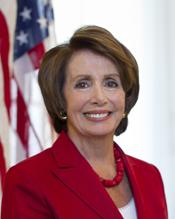
Mr. Speaker, I thank the gentlewoman for yielding me this time and for her leadership on this important issue. I also want to acknowledge the gentleman from Wisconsin (Mr. Obey). He and the gentleman…
Mr. Speaker, I thank the gentlewoman for yielding me this time and for her leadership on this important issue. I also want to acknowledge the gentleman from Wisconsin (Mr. Obey). He and the gentleman from Texas (Mr. Edwards) have been such champions for America's veterans.
Mr. Speaker, as we approach this 4th of July, we remember the sacrifice, the vision of our Founding Fathers, the courage, the imagination, and the intellect and values they presented in the Declaration of Independence. Since then, our country has always been about shared sacrifice in time of war and in time of peace. That is, up until now.
As Americans, we make a simple yet sacred promise to our veterans: You take care of us and we will take care of you. How we repay the service of our veterans speaks volumes about the character of our country. Unfortunately, under Republican leadership, the Congress is failing to keep faith with the veterans who have defended our freedom with their very lives.
Veterans of this country deserve some answers. Why does the Republican leadership in Congress find billions of dollars of tax cuts for the wealthiest Americans but does not find enough money for the veterans who risk their lives for our Nation? Why are veterans' affairs initiatives consistently underfunded and shortchanged, forcing thousands of veterans to wait months for health care? Why did the Bush administration suddenly discover a shortfall when we had been talking about this for months? Democrats and veterans organizations have been saying that the VA has been underfunded for more than 2 years now.
The answer is simple: The shortfall is the direct result of the failed budget policies and misplaced priorities of the Bush administration and the Republican Congress. Republicans here have either been in denial about the plight of our veterans or it simply has not been a priority for them.
This did not have to happen. Veterans across our country did not have to hear that the government had underfunded their health care. Our veterans did not have to give up only part of their patriotism and bravery in defending our Nation. Let today be the day when we begin to enact a GI Bill of Rights, and we can begin by responding to the call from the Senate.
The reason that we are here this evening, and the effect of the motion that is made to the Committee on Rules on the previous question, would say that if we defeat the previous question, the resolution offered by the gentleman from Texas (Mr. Edwards) would come to the floor and would fund by $1.5 billion the needs for veterans' health care.
Senator Craig said in a unanimous vote that the appropriators in the Senate voted to authorize the Senate to quickly take up the $1.5 billion emergency supplemental if the House approves such a measure. So a vote ``no'' on the previous question says ``yes'' to bringing up the Edwards resolution, which would immediately send it to the Senate, where they would take it up immediately, pass it, and send it to the President's desk.
Instead, the Republicans are advocating a different position, which is to once again shortchange America's veterans. On a battlefield, Mr. Speaker, the military pledges to leave no soldier behind. As a Nation, let our pledge be that when they return home, we leave no veteran behind. We can support our veterans with a ``no'' vote on the previous question, and a 'yes' on the Edwards resolution, and a ``yes'' for our veterans. That would be the appropriate observation of the 4th of July.
Mr. Speaker, I support the President's call for flying the flag on the 4th of July. Let us fly the flag and fund veterans' benefits.
Mr. Speaker, as we approach this Fourth of July, we remember the sacrifice of our Founding Fathers--the courage, the imagination, the intellect, and the values they presented in the Declaration of Independence. And since then, our country has always been about shared sacrifice--when it came to war, and when it came to peace. That is, up until now.
As Americans, we make a simple yet sacred promise to our veterans: ``You have taken care of us, so we will take care of you.'' How we repay the service of our veterans speaks volumes about our national character. Unfortunately under Republican leadership, the Congress is failing to keep faith with the veterans who have defended our freedom with their very lives.
Veterans in this country deserve some answers. Why does the Republican leadership in Congress find billions in tax cuts for the wealthiest Americans, but does not find enough money for the veterans who risked their lives for our Nation? Why are Veterans Affairs initiatives consistently underfunded, forcing thousands of veterans to wait months for health care? Why did the Bush Administration suddenly discover a shortfall, when Democrats and veterans have been saying that the VA was underfunded for more than 2 years now?
The answer is simple: this shortfall is the direct result of the failed budget policies and misplaced priorities of the Bush Administration and the Republican Congress.
This did not have to happen. Veterans across our Nation did not have to hear that their government had under funded their health care; our veterans did not give only part of their patriotism and bravery in defending our Nation.
For more than two years, Democrats and veterans' organizations have stood together, calling for adequate funding.
We have sent letters, we have offered amendments, and we have launched a discharge petition to try to force a vote on additional funding for veterans' health care. We have tried time and time again, only to be rebuffed by the Republicans in Congress every step of the way. Vote after vote failed on the party line.
For our latest attempt, we sent a letter, signed by every single Democrat, to President Bush calling for an emergency supplemental to fund VA health care.
It seems that our voices were finally heard. Democrats have made this too hot for the Republicans to handle.
The truth has come out. The Bush Administration and the Republicans in Congress are finally admitting to what we've been saying for 2 years.
And today we have a chance in taking the first step in righting a wrong. The problem is that once again, the Republicans are a day late and dollar short.
The Senate Appropriations Committee has authorized the Senate to quickly take up a
$1.5 billion emergency supplemental if the House passes the same.
The Chairman of the Senate Veteran's Committee has stated, and I quote, ``Clearly there is a disagreement here on the number, but it's clear that we all want to do the right thing for our veterans. We do not want to leave the Department of Veterans Affairs short of funds. Working with our colleagues in the House, I'm sure we can achieve that objective.''
The VA desperately needs this funding. And to get it done today the House must pass $1.5 billion for our veterans.
The ultimate fix would be what veterans and the Ranking Democrat on the Veterans Affairs Committee, Lane Evans, have been calling for. They are correct, the only way to assure funding for VA health care: make it mandatory.
But let us start today by voting no on the previous question, so we can offer an amendment that would increase the amount for veterans to $1.5 billion to match the Senate amount.
Caring for our veterans shouldn't be a partisan issue. It should be our number one priority. Our veterans deserve better.
We must fulfill our sacred obligations to those who have worn this Nation's uniform.
My wish is that today's vote will lead to a renewed bipartisan commitment for our veterans.
Let today be the beginning of a new chapter, let today be the day when this government no longer ignores the promises we've made, and provide the support our veterans have earned and deserve.
Let today be the day when we begin ending the Disabled Veterans' Tax for every single veteran.
Let today be the day when we begin fully ending the Military Families Tax.
Let today be the day when we begin to enact a new GI Bill of Rights for the 21st Century.
On the battlefield, the military pledges to leave no soldier behind. As a Nation, let it be our pledge that when they return home, we leave no veteran behind.
Mr. Speaker, I thank the gentleman from New York (Mr. Walsh) for his leadership in bringing this supplemental, being responsive to the administration's requests. I would also like to thank the…
Mr. Speaker, I thank the gentleman from New York (Mr. Walsh) for his leadership in bringing this supplemental, being responsive to the administration's requests. I would also like to thank the gentleman from Texas (Mr. Edwards), the ranking member, for working cooperatively with the gentleman from New York as he has done since he assumed this position. The gentleman's leadership is important and it is valuable.
Yesterday, the gentleman from Texas (Mr. Edwards) and I kind of joked with each other when I came up to the gentleman and I said, what is the powerball? And the gentleman looked at me and said, what? And I said what is the powerball, because if the gentleman could actually guess what the number should be for the veterans budget, the gentleman should also know what the powerball is. We kind of had fun, we had some laughter amongst each other because what we are dealing with is hard. It is difficult. There are people that are a lot smarter than me and that have Ph.D.s in how to do the actuarial studies.
And it is rather interesting that the VA, for the longest time, I want to share with my colleagues what had been done was that the VA would formulate the health care portion of their budgets using historical trend analysis, inflation, and then they would also take into consideration new initiatives. Then the VA said, well, we ought to change that. Let us improve workload projection capabilities, and let us do some better forecasting.
And so they go out and they hire Milliman Incorporated, which is an outside actuarial firm that provides expertise and guidance to the top private health companies in America. Well, that sounded like a pretty good idea to do. Then what we learned on June 23 in the Full Committee on Veterans' Affairs as we get into the issue on health care modeling, I know you say, my gosh, why are you talking about this? This is pretty important. What we learn about the modeling is, is that
model wrong that the VA is using to protect the budgets? How come we get into these positions? What we learned is it is not necessarily that the model is in error. The model that is used in the private sector and that is used to guide the VA is adjusted for these private firms on an annual basis.
The VA uses this model and stresses it. They stress the model to project between 2.5 and 3.5 years out. Now, that is not right. So what we are going to do, and the gentlemen from New York (Mr. Walsh) and the gentleman from Texas (Mr. Edwards) and myself and the gentleman from South Carolina (Mr. Brown) and the gentleman from Maine (Mr. Michaud), we are going to work together here because we are going to stop this stuff going on. If they recognize that the data is old and stale and that their assumptions are not right and they are not doing annual risk adjustments, then we are going to have to do it for them. Right?
So it is important for us to continue our oversight. So when this was brought out in the hearing last week, the administration, the testimony of Dr. Perlin was we have some work around solutions. Well, we listened to it. And then we began to talk among ourselves, Republicans and Democrats alike, listening to evidence and stories from our own districts and said, you know, this does not feel right and we should take some action.
The administration responded. What we said to the administration was, and I share with my colleagues in the Senate because their immediate response, we were not even done with our hearing in the House and the Senate calls a press conference and says we are going to fund it at 1.5 or 1.6.
They are making up numbers over in the Senate. We are not going to make up numbers here in the House. I have heard some of my dear friends on the Democrat side say, I am really disappointed it is not $1.5 billion. Where do you get $1.5 billion? We cannot make it up.
If our responsibility to the taxpayer is to get the number right, then let us get the number right. So when we asked the Secretary to come over and testify and he did this morning, we said we want an exact number and that is exactly what he delivered to us.
So of the $975 million supplemental, this morning he said I need $273 million to fund health care for returning Operation Iraqi Freedom, Operation Enduring Freedom veterans, including members of the Guard and Reserve. They also needed $226 million to continue funding of the shared Federal and State VA long-term care nursing home program. They need another $200 million to fund unanticipated increases in the health care for priorities 1 through 6 veterans. He needed $95 million to fund unanticipated energy, fuel, and utility costs. He needed $84 million to buy emergency medical equipment and $39 million to pay for the increase in health care benefits for dependents of 100 percent service connected veterans as the need has increased at a rate greater than expect.
And there is another number that no one has talked about. You know what it is? Accounts receivables. So I asked the VA, you came and told us you need $975 million. What is your accounts receivables? What in the final quarter of 2005 do you anticipate that you are going to collect? $325 million.
So basically what we have, if you are in business we have a cashflow problem. We also have a shortfall. So they have accounts receivables out there and they have a bogey, a deficit. So when we say okay, we are going to do an infusion. So we do an infusion of $975 million, you know what? The number is higher than that. Because it is $975 million plus the $325 million of accounts receivables. It is $1.3 billion is the infusion. That is the monies available for the VA in the final quarter. That is the exact number.
So I am hopeful that when we pass this bill, and I agree with the gentleman from New York (Chairman Walsh). I do not think there is going to be one vote against this because we will all speak together in a unified voice. We will send this to the other body and say this bill comes to a total of $1.3 billion in available resources that the VA can use in the final quarter and those monies that you cannot use we will move over into 2006. We will continue to work on the 2006 number. We will work on that budget amendment.
The next thing we will do is the VA is working on the 2007 budget because they have responsibilities to get that transferred soon to OMB. We will get all this worked out because this Secretary owns that 2007 budget and he owns the 2006 budget and he owns this mistake and he understands that.
I urge all of my colleagues in a bipartisan fashion and in a big voice, let us wake up the other body. We pass it tonight. They can pass exactly what we have here, and we can make a tremendous impact on the veterans community. Let us pass this bill.
I congratulate the gentleman from New York (Mr. Walsh).
Mr. Speaker, I thank the gentleman from Florida for his leadership in bringing this rule to the floor that provides for consideration of several suspension bills, including a very important one. I…
Mr. Speaker, I thank the gentleman from Florida for his leadership in bringing this rule to the floor that provides for consideration of several suspension bills, including a very important one.
I have heard a lot of bellyaching tonight about what happened before and why we should have done something else, and why did we not do something this way and why did we not do it that way. I suspect that when all the bellyaching is over, that we will have a near unanimous, if not unanimous, vote, at least I hope we do, to provide these resources.
We have a very logical process that we follow. It is according to our rules and according to our traditions. In the Committee on Appropriations we hold hearings in the spring, we take testimony, we provide oversight, we then receive our allocation, and provide the resources every year to meet the needs of our Nation. Again this year, as we did last year, and the year before, and the year before, and the year before, and the year before, the Veterans Administration receives the highest increase of any budget within the entire Federal budget. Year after year after year.
The House has the power of the purse. We set our priorities with the money that we have. Clearly, year after year this budget, the Veterans Administration budget, has been our highest priority. Whether you are a Republican or you are a Democrat, that is the way most Members believe. I feel that. I hear that from my colleagues, both sides of the aisle, members of my subcommittee and members of the full committee. And that is the way we have proceeded. It is not a partisan issue, and I hope we will not make it one tonight. Because at the end of the day, literally, that will be your last vote, and I hope we are all together on it.
What has happened since we had these hearings is that we move rapidly. I think everybody noticed that tonight. The appropriation bills for 2006 are complete. We moved rapidly. But the Veterans Administration has a midyear annual review, which they had just recently. Ensuing hearings by the Committee on Veterans' Affairs, providing oversight, determined that there was a shortfall. The Veterans Administration brought that forward, about $1 billion, or $975 million. They also explained that they had a work-around solution, $600 million out of capital and $375 million in anticipated reserve that they would utilize to fill that void.
We then held additional hearings, the subcommittee and the Senate authorization committee and the House authorization committee, and what we
have found is that we have an accurate picture now of what that shortfall is. We also have an accurate sense of the Congress that we do not want to work-around solution. We want to provide those resources so that the Veterans Administration does not have to set aside repair and maintenance and acquisition of equipment, MRIs or computers or research equipment or laboratory equipment. We do not want them to have to do that.
So we are going through our normal procedure. And parts of that procedure, when you have to go back and take a look-back at a budget, is a supplemental budget request. This supplemental budget request will be presented for the consideration of the House tonight. The request is to provide that shortfall, $975 million, to the Veterans Administration to meet the needs to complete 3 more months of this year.
Now, people say, well, $1 billion, how could they be off $1 billion? My colleagues, this is a $30 billion-plus budget. This $1 billion means they were off by 3 percent, 3 percent, in their estimation. Now, is that unforgivable? Of course not. Is it a mistake? It sure is. And we have a way to resolve that mistake, to fix it, to correct it, and again to show our commitment to our Nation's veterans, especially in a time of war.
We are sending a signal not only to our current veterans, but we are sending a signal to those heroes that are out there in the field today, in Iraq and Afghanistan and around the globe. We want them to know that the commitments we have made to them we will keep, even if it has to be in an extraordinary measure like this.
So I would welcome additional comment. I would welcome the opportunity of those individuals who looked ahead and offered additional resources. But I would ask you to look at the logic of what we are doing. Look at the thread of logic through this whole process. We want to do this right, and I think we have done it right. So let us have the debates tonight. If you feel compelled to say ``I told you so,'' go ahead. But stick with us and vote for this bill and support our veterans in a process that is reliable and is predictable and has a thread of logic all the way through it.
Mr. Speaker, will the gentleman yield?
Mr. Speaker, the Senate attached this 2005 funding to an 2006 bill, which will not take effect within the 2005 year. If they take up this bill on a stand-alone basis, the President can sign it tomorrow.
Mr. Speaker, I thank the gentleman for yielding me this time.
After all the speeches and the rhetoric, really the big difference here is the dollar amount. We all realize there is a shortfall. We all support closing the gap. So the issue is $1.5 billion that the Senate acted on. One Member said it was 3, but I think most people, at least on the opposite side of the aisle, agree that it is $1.5 billion. We believe it is $975 million. So everything else really at this point is rhetoric. We just need to try to address that. And I tried for the life of me to figure out where this $1.5 billion figure came from. I know the Senate is working with that figure, because everything we have heard from the Veterans Administration was that they had a work-around solution to come up with $600 million out of their capital fund and $375 million out of their reserve fund to close this gap in different lines of health care within the hospital system, and that would add up to that $975 million.
The $1.5 million is still a big question mark, and the only thing I can come up with is that, in a conversation I had with OMB Director Bolten, he mentioned that there may be, they do not know but they are working on it, a shortfall in 2006, in 2006, of somewhere between $1.1 and $1.6 billion. And that is 2006. No one, no one, has ever mentioned the fact that there is a shortfall in 2005 of $1.5 billion. So we have what I think is a number that is provided through a logical process, through testimony in the hearings presented by the head of the health administration and the Department of Veterans Affairs Secretary.
This, I believe, is as close to what we can get as what the gap is. Let us support it on a bipartisan basis. Let us support the rule and consider the bill.
Mr. Speaker, I move to suspend the rules and pass the bill (H.R. 3130) making supplemental appropriations for fiscal year 2005 for veterans medical services. Mr. Speaker, I yield myself such time as…
Mr. Speaker, I move to suspend the rules and pass the bill (H.R. 3130) making supplemental appropriations for fiscal year 2005 for veterans medical services.
Mr. Speaker, I yield myself such time as I may consume.
Mr. Speaker, this evening I bring to the floor a bill to provide urgently needed funding for the Department of Veterans Affairs. During the last week, it has become known to most of us that the Department is in dire straits with regard to funding for medical services. It has been pointed out to us in hearings that funding originally allocated for capital expenditures is being diverted to pay for medical services, and reserves which were intended to cover future requirements were instead needed this year.
Based upon information provided by the Secretary of Veterans Affairs in a hearing today before the Committee on
Veterans' Affairs, as well as information provided on Tuesday when he appeared before the Committee on Appropriations, I am asking the House to pass this supplemental appropriations bill today in the amount of $975 million. This amount is within the 302(a) allocation for 2005 available to the committee and therefore does not need to be offset.
In the coming weeks, the committee will work with the Department to determine the implications for fiscal year 2006 of their recent changes in workload and utilization. This will allow us to use the most accurate information available to ensure that sufficient funding is also provided when we complete the 2006 bill later this year.
To make it clear, this funding we are talking about tonight in this supplemental is just for 2005. I expect full cooperation and disclosure by the Department as we develop the final number for fiscal year 2006. I do not expect, nor will I accept, partial or vague information or misinformation. This process can only work well if we all work together. That is what I expect of everyone involved in solving this problem.
For today, the bill I bring to the floor provides the necessary resources to ensure that all veterans receive the medical care promised. This funding will also allow the Department to restore funding to its capital accounts to ensure that maintenance and repairs are completed and necessary equipment procured so that future care will not be placed in jeopardy nor held in abeyance.
I regret that the Congress and the committee was not informed of the very real problems at the Department earlier in the process. Having said that, I look forward to working together with my friend and colleague, the ranking member, the gentleman from Texas (Mr. Edwards); the Department of Veterans Affairs; the Office of Management and Budget; and the Members of the other body to be sure that we do not run into this situation again.
Mr. Speaker, I reserve the balance of my time.
Mr. Speaker, I yield 3 minutes to the distinguished gentlewoman from Florida (Ms. Ginny Brown-Waite).
Mr. Speaker, I yield 3 minutes to the gentleman from South Carolina (Mr. Brown), a member of the Committee on Veterans' Affairs.
Mr. Speaker, I yield myself such time as I may consume.
I just am thunderstruck by the rhetoric that I just heard. Stomping and trampling on the rights of our veterans? That is really beneath the dignity of this institution. Everyone I
know, and I know most Members in this body, has the greatest respect for our veterans, the greatest respect. The gentleman asked the rhetorical question, I believe it was a rhetorical question, where were we last year when Secretary Principi asked for an additional $1.3 billion? Mr. Speaker, we were there. When we completed our budget, our appropriation for 2005, we put an additional $1.3 billion in, based on that request.
So let us try to dampen the rhetoric and stick to the facts.
Mr. Speaker, I yield 1 minute to the gentleman from Maryland (Mr. Gilchrest), one of our Nation's veterans.
Mr. Speaker, I yield myself such time as I may consume.
I would just like to respond to a couple of the points made by the gentleman who just spoke. The first is that we have provided in the 2005 bill $2.11 billion for mental health for our veterans. That is a very substantial amount of money. And in the 2006 budget, we have proposed $2.2 billion, and we fenced it so that that money cannot be used for any other purpose. That has never been done before in a veterans appropriations bill. And I am very proud that our subcommittee took that action, and it was a bipartisan action.
The second point is that we have before us a straightforward stand- alone supplemental bill that provides just under $1 billion for the Veterans Administration health administration for this year, for 2005, only for 2005. And so it is very simple. If we pass it, and send it to the Senate they can act on it tonight or tomorrow as a stand-alone bill, identical bill, and the President could sign it tomorrow before the Fourth of July, and that is what I hope happens because I believe we will get broad support. I cannot imagine anyone voting against this bill.
But the Senate bill, and the Senate has not passed a bill that includes this funding. They have not. Out of committee they have passed an interior appropriations bill for the 2006 fiscal year that has a $1.5 billion attachment to it for veterans affairs. That bill is a 2006 bill. It will not even take effect in law until 2006, which will not help the 2005 budget at all. This is the vehicle to use. And I am very hopeful that once we pass it and send it to the Senate with a strong unanimous or bipartisan voice from the House that it will become law.
Mr. Speaker, I reserve the balance of my time.
Mr. Speaker, I yield the balance of my time to the gentleman from Indiana (Mr. Buyer), the distinguished chairman of the Veterans Affairs' Committee and himself a veteran of the Gulf War.
Mr. Speaker, I yield back the balance of my time.
Mr. Speaker, on that I demand the yeas and nays.
Mr. President, today, we return to the consideration of the Foreign Operations appropriations bill. We began that bill last Friday with opening statements. Senators McConnell and Leahy are ready for…
Mr. President, today, we return to the consideration of the Foreign Operations appropriations bill. We began that bill last Friday with opening statements. Senators McConnell and Leahy are ready for Members to offer their amendments during today's session. They are not encouraging amendments, but if Senators do want to offer amendments, we do ask they come forward as soon as possible. I am very hopeful we can complete this bill tomorrow. I think it is likely we can do that if Senators will come forward today and offer amendments, if they have any.
We will be voting this afternoon at about 5:30, and we will be announcing a little bit later today what the nature of that vote will be. Senators will be notified once we lock in the time. It will be around 5:30 today.
As a reminder, tomorrow, at 10 o'clock in the morning, there will be a joint meeting with the House of Representatives. The Prime Minister of India, Manmohan Singh, will be speaking to both Houses of Congress at that joint meeting.
We have 2 weeks remaining before our next recess. We have a lot of business over the next 2 weeks to conduct. The Democratic leader and I were just talking, going through our objectives, and will be sharing that and consulting with our colleagues as to how these next 2 weeks will play out. The floor schedule is going to be very busy. It will take precedence over other schedules, so we do ask Senators to keep their schedules flexible so we can accomplish the many tasks before us.
Health Information Technology
Mr. President, on another issue, briefly--but it is an issue that means a lot to me as one who sees the real advantage in legislating in this arena--I want to comment on the issue of electronic medical records and the increasing necessity, if we are going to eliminate the waste and abuse in our health care system today, of focusing on ways to share information throughout our health care system, which has been too fragmented and too disjointed in terms of communication.
I want to share with our colleagues that we have worked a lot on this issue over the last 4 to 5 days, including the weekend, and that we have made real progress and have come very close to achieving the goal of having privacy-protected electronic health records legislation come before this body.
Senator Clinton and I introduced legislation last June. Senators Enzi and Kennedy have been working on legislation. Our goal has been to pull this legislation together. Indeed, we have made real progress in agreeing to outlines of strong legislation, which I am absolutely convinced will eliminate a lot of waste in the system, will improve quality, will increase efficiencies in the delivery of health care, will empower payments, and will improve patient safety throughout our health care system. So I am very excited about it.
We promote the use of electronic health records by adopting standards. You have to have similar standards throughout the system if people are going to come in and participate and share information. So we approached standards. We ensure quality measurement. We eliminate barriers to the adoption of this technology of electronic health records. And we incentivize providers and those throughout the system who use this information to actually adopt the standards with lowered barriers so the advantages can be realized.
I thank Senators Clinton, Enzi, and Kennedy for all of their tremendous work. Chairman Enzi plans to take that legislation to the HELP Committee, I believe, on Wednesday morning. Following that, I look forward to working with my colleagues for Senate passage.
Mr. President, we have a very busy week before us. Again, we will be turning to the foreign operations legislation shortly.
Mr. President, I yield the floor.
Recognition of the Minority Leader
Mr. President, reserving the right to object.
Mr. President, we have been here before. Indeed, the Senate has voted twice, most recently on the Homeland Security appropriations bill we finished last week, and then a week before that on the Interior appropriations bill, to provide $1.5 billion for veterans health programs for the current fiscal year, with the remainder of it to be used until expended.
I supported those amendments, as did the Democratic leader.
The conference on the Interior bill, I understand, is well underway and will be completed by the end of this week. I fully expect that the $1.5 billion in additional funding for veterans health care will be on the President's desk for his signature before we leave in 2 weeks for the August recess.
In addition, I should also mention it is important that no veteran right now--no single veteran--is being denied needed health care. The other thing I want to mention to the Democratic leader, because I have not mentioned it before, is that if, for some unexpected reason, the Interior appropriations conference report is not finished, then I think he and I could join together and sponsor legislation, stand-alone legislation if need be, to accomplish the same thing that he requests. I do not believe it is necessary today because we will accomplish this goal before we leave. The conference on the Interior bill is underway and will provide that funding.
Therefore, I object to the unanimous consent request by the minority leader.
Mr. President, I suggest the absence of a quorum.
Mr. President, in response, I will check with Chairman Burns to see where specifically the money comes from. I am not exactly aware where the money comes from.
Mr. President, it is all new money. It is not being taken from other programs.
Mr. President, I ask unanimous consent that the order for the quorum call be rescinded.
Mr. President, today, we return to the consideration of the Foreign Operations appropriations bill. We began that bill last Friday with opening statements. Senators McConnell and Leahy are ready for…
Mr. President, today, we return to the consideration of the Foreign Operations appropriations bill. We began that bill last Friday with opening statements. Senators McConnell and Leahy are ready for Members to offer their amendments during today's session. They are not encouraging amendments, but if Senators do want to offer amendments, we do ask they come forward as soon as possible. I am very hopeful we can complete this bill tomorrow. I think it is likely we can do that if Senators will come forward today and offer amendments, if they have any.
We will be voting this afternoon at about 5:30, and we will be announcing a little bit later today what the nature of that vote will be. Senators will be notified once we lock in the time. It will be around 5:30 today.
As a reminder, tomorrow, at 10 o'clock in the morning, there will be a joint meeting with the House of Representatives. The Prime Minister of India, Manmohan Singh, will be speaking to both Houses of Congress at that joint meeting.
We have 2 weeks remaining before our next recess. We have a lot of business over the next 2 weeks to conduct. The Democratic leader and I were just talking, going through our objectives, and will be sharing that and consulting with our colleagues as to how these next 2 weeks will play out. The floor schedule is going to be very busy. It will take precedence over other schedules, so we do ask Senators to keep their schedules flexible so we can accomplish the many tasks before us.
Health Information Technology
Mr. President, on another issue, briefly--but it is an issue that means a lot to me as one who sees the real advantage in legislating in this arena--I want to comment on the issue of electronic medical records and the increasing necessity, if we are going to eliminate the waste and abuse in our health care system today, of focusing on ways to share information throughout our health care system, which has been too fragmented and too disjointed in terms of communication.
I want to share with our colleagues that we have worked a lot on this issue over the last 4 to 5 days, including the weekend, and that we have made real progress and have come very close to achieving the goal of having privacy-protected electronic health records legislation come before this body.
Senator Clinton and I introduced legislation last June. Senators Enzi and Kennedy have been working on legislation. Our goal has been to pull this legislation together. Indeed, we have made real progress in agreeing to outlines of strong legislation, which I am absolutely convinced will eliminate a lot of waste in the system, will improve quality, will increase efficiencies in the delivery of health care, will empower payments, and will improve patient safety throughout our health care system. So I am very excited about it.
We promote the use of electronic health records by adopting standards. You have to have similar standards throughout the system if people are going to come in and participate and share information. So we approached standards. We ensure quality measurement. We eliminate barriers to the adoption of this technology of electronic health records. And we incentivize providers and those throughout the system who use this information to actually adopt the standards with lowered barriers so the advantages can be realized.
I thank Senators Clinton, Enzi, and Kennedy for all of their tremendous work. Chairman Enzi plans to take that legislation to the HELP Committee, I believe, on Wednesday morning. Following that, I look forward to working with my colleagues for Senate passage.
Mr. President, we have a very busy week before us. Again, we will be turning to the foreign operations legislation shortly.
Mr. President, I yield the floor.
Recognition of the Minority Leader
Mr. President, reserving the right to object.
Mr. President, we have been here before. Indeed, the Senate has voted twice, most recently on the Homeland Security appropriations bill we finished last week, and then a week before that on the Interior appropriations bill, to provide $1.5 billion for veterans health programs for the current fiscal year, with the remainder of it to be used until expended.
I supported those amendments, as did the Democratic leader.
The conference on the Interior bill, I understand, is well underway and will be completed by the end of this week. I fully expect that the $1.5 billion in additional funding for veterans health care will be on the President's desk for his signature before we leave in 2 weeks for the August recess.
In addition, I should also mention it is important that no veteran right now--no single veteran--is being denied needed health care. The other thing I want to mention to the Democratic leader, because I have not mentioned it before, is that if, for some unexpected reason, the Interior appropriations conference report is not finished, then I think he and I could join together and sponsor legislation, stand-alone legislation if need be, to accomplish the same thing that he requests. I do not believe it is necessary today because we will accomplish this goal before we leave. The conference on the Interior bill is underway and will provide that funding.
Therefore, I object to the unanimous consent request by the minority leader.
Mr. President, I suggest the absence of a quorum.
Mr. President, in response, I will check with Chairman Burns to see where specifically the money comes from. I am not exactly aware where the money comes from.
Mr. President, it is all new money. It is not being taken from other programs.
Mr. President, I ask unanimous consent that the order for the quorum call be rescinded.
Mr. Speaker, we are asking young Americans, men and women alike, to fight a war in Iraq, a war in Afghanistan. As we debate funding for veterans tonight, if the Congress is going to err, should we…
Mr. Speaker, we are asking young Americans, men and women alike, to fight a war in Iraq, a war in Afghanistan. As we debate funding for veterans tonight, if the Congress is going to err, should we not err a little bit on the side of veterans rather than erring on the side of shortchanging them?
I must say I appreciate the gentleman from New York (Mr. Walsh) and his effort in this process to fix a hole in veterans funding that I believe was created by repeated denials of the Republican House leadership at a real cost of providing quality health care for our veterans. It has been going on for 2 years, not 1 or 2 weeks, but 2 years.
I thank the gentleman from New York (Mr. Walsh) for his efforts this week. This bill would move it a step forward. But why in the world would the House Republican leadership refuse to even consider the $1.5 billion funding level that I think is needed to adequately fund VA health care during a time of war?
Let me put this debate in perspective. Over a year ago, the Republican chairman of the VA committee, the gentleman from New Jersey (Mr. Smith), stood up and said in a bipartisan letter to the House Committee on the Budget that if you do not add $2.5 billion in 2005 to the VA health care budget, we are going to have to cut veterans services during a time of war, and the gentleman from New Jersey (Mr. Smith) said that was wrong, and he was right to say it would be wrong.
How did the House Republican leadership honor the gentleman from New Jersey (Mr. Smith) for standing up for veterans? Did they salute him? No, they fired him. They not only fired him from his position as chairman of the House Committee on Veterans' Affairs, took him off the Committee on Veterans Affairs' altogether.
Now the same leadership that punished a Member of the House for standing up for veterans during a time of war is asking us on a few minutes' notice to support the funding level for the VA health care crisis that is nearly $600 million less than that approved on a bipartisan basis by the United States Senate.
If we are going to err, why not err on the side of veterans? The same people who provided the numbers that put together this bill, it was put together on a partisan basis. I was not approached as ranking member of the Subcommittee on Military Quality of Life and Veterans Affairs to help determine what the number should be.
If this had been done on a bipartisan basis today, perhaps we could have all come up with a number that we all could have agreed upon.
If the gentleman from New York (Mr. Walsh) had his way, I think it would have been done in a bipartisan way. But the decision to make this a partisan bill tonight was made by the same House Republican leadership that chose a year ago to turn its back on veterans when it fired the gentleman from New Jersey (Mr. Smith) for saying we should adequately fund veterans health care.
Let us err on the side of honoring our veterans tonight, not shortchanging them. And the Senate, the other body, has made it perfectly clear that it would take up immediately the bill that we would like to have voted on the House tonight to add $1.5 billion to VA health care spending for the year 2005.
It is a sad day when Members of this House are punished for standing up for veterans. Let no one on the Republican side of the aisle say these are just Democrats making partisan fights. We have been accused of that for the last 2 years by some who now want to say you were right, our numbers were wrong.
We should come together tonight. I would plead on a bipartisan basis to support the $1.5 billion funding level for veterans health care that the Senate has already adopted on a bipartisan basis. I would urge the House Republican leadership to stop punishing and intimidating Members of this House who will put their loyalty to veterans above their loyalty to partisanship. Let us do the right thing.
Mr. Speaker, I would just like to say in response to the comments of the gentleman from Florida (Mr. Putnam), he cannot name one Democrat in this House that was approached in putting together this bill dealing with veterans health care. If that is not partisan, I do not know what is.
What were the Republicans afraid of in working with Democrats to come up with a bill to fix the problem that the Republican leadership created? By the way, the same leadership passed a budget resolution this year cutting veterans health care benefits by $14 billion over the next 5 years. Forgive me if I do not trust that same leadership coming forward with this bill tonight.
Show 11 more
Mr. Speaker, I rise today to discuss funding for veterans' healthcare. As the son, grandson, and brother of veterans, I understand just how important this funding is to our brave men and women who…
Mr. Speaker, I rise today to discuss funding for veterans' healthcare. As the son, grandson, and brother of veterans, I understand just how important this funding is to our brave men and women who have answered the call of duty to serve their country. Since coming to Congress, it has been one of my greatest pleasures to be able to provide our veterans with the care and the treatment they deserve.
Since 1995, Congress has increased spending on veterans by more than 59 percent--an average increase of 6.9 percent per year. During this Congress alone we have increased the death benefits and life insurance coverage of our Armed Services personnel. We have also provided funding for specialty mental health care for the first time ever, increased funding for the treatment of conditions like Post Traumatic Stress Syndrome, and doubled funding for mental health care issues. This is indeed a record to which we can all be proud.
I was also proud to cosponsor H.R. 303, the Retired Pay Restoration Act, in the 108th Congress. With the agreement of the House and Senate, another version of this bill was passed and signed by President Bush in order to allow certain military retirees to receive both their longevity retired pay and veterans disability compensation. As Speaker of the House J. Dennis Hastert noted, ``Congressman Hensarling's strong support for our nation's veterans and concurrent receipt legislation was critical to ensuring that we achieved the most significant, positive step forward for veterans in our nation's history.''
Unfortunately, sometimes Congress can fall short. For instance, the Fiscal Year 2004 Veterans Affairs and Housing and Urban Development Appropriations bill, fell $1.8 billion short of what was agreed to in that year's budget resolution. This inadequate level for funding for veterans healthcare greatly concerned me, and that is why I voted against the bill. When thousands of veterans were waiting 6 months or longer for healthcare, I did not believe that it was the time to skimp on needed resources.
Mr. Speaker, yesterday, the House of Representatives voted on the Fiscal Year 2006 Department of the Interior, Environment, and Related Agencies Appropriations bill. Included as part of this legislation was $1.5 billion in funding for the Department of Veterans Affairs to cover an anticipated budgetary shortfall for the current fiscal year. I am very pleased that the House of Representatives has approved the funding necessary to ensure that they receive the medical care they deserve. However, because the underlying legislation to which we attached this important provision violated the budget we agree to abide by earlier this year, I found myself in the difficult position of having to vote against this legislation.
There were a number of alternative methods that could have been used to alleviate this problem--methods that would not have violated the budget. Most notably, we could have amended H.R. 3130, which was approved unanimously by the House of Representatives on June 30, 2005, to provide the necessary funding levels. This broadly supported measure would have demonstrated our firm commitment to our veterans, and it is unfortunate this alternative was not utilized.
Mr. Speaker, in the end the greatest threat to adequately funding the needs of our veterans is Congress' seemingly inherent inability to control runaway wasteful spending in our budget. Each and every time we spend another dollar on wasteful measures like bulletproof vests for K- 9s, bridges to nowhere, or an underground cafeteria in the Carlsbad Caverns, is a dollar that is not available for our veterans.
One of Congress's most solemn obligations is to care for our veterans. I remain committed to funding 100 percent of the benefits veterans have earned through their service and sacrifice to our country. I will continue to work with Members of Congress to explore ways to ensure that the Department of Veterans Affairs gets the money they need within the rules of our budget agreement. I will not however, support legislation to grow the budget of another department, such as this bill would have done with the Department of the Interior, at the expense of our veteran's and our children's future.
Mr. Speaker, I have been on the Committee on Veterans' Affairs for 13 years, and let me say one thing: we do not have a shortage of money here in this Congress. We pass whatever we want whenever we…
Mr. Speaker, I have been on the Committee on Veterans' Affairs for 13 years, and let me say one thing: we do not have a shortage of money here in this Congress. We pass whatever we want whenever we want. The problem is, and I rise on behalf of all of the veterans, the problem is that there is not the will. The veterans are not the priority.
What I said in committee I say on this floor today. We can send $1.5 billion over to the Senate. They can pick it up, pass it, and tomorrow morning the President will be taking pictures, taking credit for it; but who wins will be the veterans.
I am reminded of the words of the first President of the United States, George Washington, whose words are worth repeating at this time: ``The willingness with which our young people are likely to serve in any war, no matter how justifiable,'' and we are going to question that, ``will be directly proportionate as to how they perceive the veterans of earlier wars were treated and appreciated.''
Now let us not sham them. Everybody knows that the veterans need $3 billion; not $1 billion, $3 billion. That is what the independent budget says. The other side of the aisle is not surprised. They know what they need.
Why is it we cannot come together and give them something more than this lip service? You all talk a great talk. Let us all come together and walk the walk for the veterans tonight.
Mr. Speaker, I rise in support of veterans everywhere. What has been introduced here today is a sham. The emergency supplemental sent over by the President and accepted by the Republican leadership is wholly inadequate. This $975 million breaks down with money for many needed accounts; however, why should we believe their numbers now?
They lied to us when submitting their budget in February, they lied to us when they came to our committees in April, they did not discuss any issues with the minority members of the Veterans Committee. What do we know that the Senate does not? Why is there more than $500 million less for veterans in this bill? Why are we still trying to balance the budget on the backs of the veterans?
The 3 surgical operating rooms at the White River Junction VA Medical Center in Vermont had to be closed on June 27 because the heating, ventilation, and air conditioning system was broken and had not been repaired due to the siphoning of maintenance funds to cover the budget shortfall.
The Community Based Outpatient Clinics needed to meet veterans' increased demand for care in the North Florida/South Georgia VA Healthcare System have been delayed due to fiscal constraints. As of April, the Gainesville facility has nearly 700 service-connected veterans waiting for more than 30 days for an appointment. As a result of cost cutting measures to make up for the shortfall in FY 2005, the Portland, Oregon, VA Medical Center is delaying all non-emergent surgery by at least six months. Veterans in need of knee replacement surgery won't be treated because of the budget shortfall.
The goal of the Republicans and President Bush is to delay funding to veterans health. By passing this level of funding, we are guaranteed a conference. That will delay funding. Our veterans cannot wait! Support our Veterans! Defeat the Previous Question and fully fund veterans health care! I am reminded of the words of the first President of the United States, George Washington, whose words are worth repeating at this time:
The willingness with which our young people are likely to
serve in any war, no matter how justified, shall be directly
proportional as to how they perceive the veterans of earlier
wars were treated and appreciated by their country.
Mr. Speaker, all I can say to our Republican friends on the other side of the aisle is: ``Welcome Aboard,'' even if you are a little short and even if you are a little late. The fact is that for the…
Mr. Speaker, all I can say to our Republican friends on the other side of the aisle is: ``Welcome Aboard,'' even if you are a little short and even if you are a little late.
The fact is that for the last 3 years we have had a history of resistance by the majority party in this House to efforts by the gentleman from Texas (Mr. Edwards) and me to add funding for veterans health care above the amounts that the Republican majority saw fit to provide.
Example: fiscal 2005, the budget resolution. We asked that $1.3 billion more be made available for veterans health care. We were turned down. In a continuing resolution for fiscal 2005, we tried to add $2.5 billion for veterans health care. We were turned down.
As recently as a month ago, the gentleman from Texas (Mr. Edwards) was called a demagogue by a member of the majority party because he was insisting that the VA estimates were too low and that we needed more money.
Now the VA belatedly admits that they have found a problem. The only problem is even under their story they found it in April and they did not reveal it until now. I would suggest that the VA also has a history of trying to chisel on veterans' benefits. Three years ago, they sent out instructions to veterans' service officers not to engage in outreach in order to inform veterans what they were entitled to, and we had to scold them day by day on this House floor to try to get them to back off, and they are still being penurious about it.
The sad fact is that tonight what we ought to do is to take what the Senate did. We ought to take the $1.5 billion that the Senate Appropriations Committee reported out unanimously, every Republican, every Democrat, $1.5 billion, and they suggested that if we passed that, we could pass it immediately, no need for a conference, and we would be in great shape.
We were told yesterday we should not bother with bringing funding up on the Treasury Transport bill because we wanted to rush bills through that could be signed faster. Well, the best way to get a bill through this place immediately is to take the same number the Senate is taking and pass it.
Let me also simply say that I find amusing this scramble by the majority party leadership to finally get on board in a recognition that veterans need more funding. It was just 6 months ago that the majority party dumped the gentleman from New Jersey (Mr. Smith) from his chairmanship of the Committee on Veterans' Affairs because he had been too insistent on adding money for veterans' health care. So when he got out of line, you dumped him and you substituted someone you thought would be more compliant with party leadership.
The gentlewoman from Oregon (Ms. Hooley) pointed out to me that this message was on a billboard in a veterans hospital in her district. It reads: ``Important: We regret to inform you that, due to budget issues, we can no longer supply meals to patients. Please bring a meal from home if you are going to be in the short-stay unit. We apologize for any inconvenience.''
Well, I think this Congress ought to apologize for the inconvenience that they have caused veterans for the past 3 years by refusing to recognize that these budgets are inadequate. We are oh so good at praising the soldiers when the bands are playing and they are going off to war. We have an obligation to be just as enthusiastic in meeting their needs when they come home.
I thank the gentlewoman for yielding me this time, and I hope we would vote against the previous question so we can adopt the $1.5 billion solution which the Senate, on a unanimous basis in the Senate Appropriations Committee, indicated was necessary.

Mr. Speaker, I rise in support of the supplemental appropriation of $975,000,000 that will fill the huge gap that was left by the Administration's FY 2005 request for the Veteran's Administration…
Mr. Speaker, I rise in support of the supplemental appropriation of $975,000,000 that will fill the huge gap that was left by the Administration's FY 2005 request for the Veteran's Administration health care system. While my veteran constituents such as a 23-year old male who now suffers from kidney and liver failure due in part to administrative failings in the Veterans Healthcare Administration. The paltry funding levels set by the Administration and codified by the Republican Congressional Leadership have caused young soldiers like my constituent to suffer unnecessarily and cause their parents to shed tears. I just visited this young man at the Walter Reed Medical Center last week, and his condition reminded me of the very irresponsible work of this Administration.
Hundreds of thousands of veterans just like my young constituent are being told that they cannot enroll in VA health care. When the current Administration decided to ban new Priority 8 veterans from enrolling in January 2003, it estimated that by 2005 the number of affected veterans would be 522,000. Some veterans' hospitals are reporting shortages of medical supplies. Furthermore, the number of Operation Iraqi Freedom veterans lined up for treatment is expected to rise dramatically as the poorly managed war effort causes physical and mental ailments to increase exponentially.
In the 18th Congressional district of Texas alone there are more than 38,000 veterans and they make up almost ten percent of this district's civilian population over the age of 18. Yet, despite these large numbers we often forget about our veterans. We do this in part because our men and women of the armed services come home from war and lead normal productive lives; often our veterans go unnoticed in the general population. However, our veterans are not normal people; they are truly extraordinary individuals who have changed the course of our lives in ways that we may not even realize. I hope we will always keep this thought in mind; we cannot forget to celebrate our veterans, for if we forget to honor them, we forget all that makes this nation truly great.
There are over 26,550,000 veterans in the United States, the great majority of whom rely upon these services to maintain a healthy standard of living. In the 18th Congressional District alone there are there are more than 38,000 veterans and they make up almost ten percent of the district's civilian population over the age of 18. These veterans rely upon the great services offered at the Michael E. DeBakey VA Medical Center in Houston. Of course any great medical facility is only as good as its health care personnel.
Mr. Speaker, today's vote is the first step to correcting an enormous underfunding of our veterans. However, this amount does not match that offered by the other body--therefore, the problem has not been solved, and soldiers like my young constituent at Walter Reed will continue to suffer the dire and potentially fatal consequences.
This body must increase funding to $1.5 billion so that our debt to those who have sacrificed for us is paid. Even if my colleagues pass this measure, these men and women will not receive the benefits before July 4! The amount offered by the House Republicans did not match the figure that passed in the other body. It is truly shameful that we must watch our Republican colleagues give piecemeal care to our veterans when the needs are so urgent.
For the reasons above stated, I support this measure, but I ask that my colleagues continue to press for full funding at the level passed in the other body
Mr. Speaker, I thank the gentleman for yielding who has been such a champion of veterans. Mr. Speaker, veterans care is in a state of crisis. As the gentleman from Wisconsin (Mr. Obey) pointed out…
Mr. Speaker, I thank the gentleman for yielding who has been such a champion of veterans.
Mr. Speaker, veterans care is in a state of crisis. As the gentleman from Wisconsin (Mr. Obey) pointed out earlier in the evening, veterans at the Portland VA Medical Center in Oregon have arrived at the short- stay unit only to see this sign which says, ``We regret to inform you that due to budget issues, we can no longer supply meals to patients. Please bring a meal from home if you are going to be in the short-stay unit. We apologize for any inconvenience.''
Well, this is not about the food. But it is about our health care for veterans. We have had to close beds because we are 150 people short at the VA hospital. This is no way to treat our heroes. The Portland VA does a wonderful job. It is not their fault. This is our responsibility.
I have been working on this issue for years calling for more funding for VA health care. If the leadership had allowed a vote on an amendment I tried to offer with the gentleman from Washington (Mr. Baird) to add $1.3 billion to the supplemental for VA health care, we would have dealt with this issue months ago. This did not have to happen. Not one soldier who puts his or her life on the line should have to worry about health care.
While I am glad that we are finally acknowledging the financial needs of the VA, I cannot help but be disappointed that even now, when we know they are desperate for additional funding, we are still not giving them all of the money they need to serve our veterans.
As a result of this budget shortfall, the Portland VA Medical Center is delaying all non-emergency surgery by at least six months. For example, veterans in need of knee replacement surgery won't be treated because of the budget shortfall. Recent visitors to the short care stay unit were surprised to see a handwritten sign declaring that ``due to budget issues, we can no longer supply meals to patients,'' and asking patients to bring a meal from home.
The facility is reducing staff as a cost-cutting measure and is now short at least 150 hospital staff, including nurses, physicians, and social workers. As a result of budget cuts for staffing, the VA has cut the number of medical
beds available to care for veterans. And for fiscal year 2005, the facility needed $13 million for medical and clinical equipment but only received $2 million.
But this should not come as a surprise to us. All you have to do is visit the VA health care facilities to see the overcrowded waiting rooms, the worn equipment, to know that they need additional funding. And we've been saying this for years.
Just this March, the Republican leadership of the House refused to allow us to debate and vote on an amendment that I tried to offer that would have added $1.3 billion to the Supplemental Appropriations bill specifically for Veterans Health Care. Had we been allowed to debate whether the VA needed supplemental funding in March, or any of the numerous other times that House Democrats have tried to raise the issue, we could have dealt with this problem long before it became a crisis.
Not one soldier who puts his or her life on the line should have to worry about getting health care when he or she returns from battle. But how are we supposed to provide adequate health care to these new veterans when we can't even meet the needs of our current veterans? Our veterans deserve better.

Mr. Speaker, I thank the gentleman from Wisconsin for yielding me this time and for his leadership on behalf of our Nation's veterans, leadership which has sorely been lacking in this House. This…
Mr. Speaker, I thank the gentleman from Wisconsin for yielding me this time and for his leadership on behalf of our Nation's veterans, leadership which has sorely been lacking in this House.
This administration and this Congress has insulted our veterans community repeatedly in the last few months, insults which I hope we will remedy with today's motion. The head of the Office of Management and Budget actually had the nerve to testify before the Committee on the Budget that over the last 3 years the Veterans Administration had received $.5 billion more than it actually needed, more than it actually needed, when we have waiting lists which the gentleman outlined, when we have nursing and medical vacancies, when we have maintenance backlogs, when we have people waiting a year for an appointment for a dentist, and months and months for surgeries that are needed. OMB told the veterans that we have more than what was needed!
Then the Secretary of our Veterans Administration testified before committees of this Congress that we got it wrong because we had a bad mathematical model. We had a mathematical model that did not take into account the fact that there was a war going on and thousands of troops were coming back with significant injuries and with post-traumatic stress disorder. We did not know a war was going on, so we underfunded the VA. That is an insult to our Nation's veterans, that we did not know a war was going on, and we did not provide the money. Many are suffering today as a result of that decision.
And, Mr. Speaker, when we had a chance to help the veterans before our last recess, the chairman of the Committee on Veterans' Affairs said, we can only give $975 million, that that was the right number, while the Senate did $1.5 billion, which we are now instructing our House to accept today.
We could have had this money flowing to our veterans' centers weeks ago. This could have been signed by the President several weeks ago, yet in my hometown of San Diego, we have 1,000 people on a waiting list just to have their first appointment. We have maintenance backlogs and nursing shortages, and we cannot get them the money because we did not have the right numbers, said the veterans chairman.
Well, we had the right number all along, my colleagues. The Independent Budget, a professional document prepared by our veterans' service organizations, had the numbers exactly right. The mathematical model could have been tested against this, and we could have had the proper support for our Nation's veterans. So everybody who talked about our Nation's veterans when we had Memorial Day, when we had our July 4th celebrations, and we will hear it on November 11th as we have heard today, that we all support our veterans. Well, let us show it by the proper votes!
The Democrats in this Congress have tried at every level, on the Committee on the Budget, on the Committee on Appropriations, in the Senate, in the House, and we tried on the floor of this House to give the Independent Budget numbers the force of law, but we were voted down on pure party-line votes. So I hear that everybody supports our veterans, but when the votes come, the majority party is not supporting our Nation's veterans.
Let us pass this instruction motion. Let us honor our veterans and give the veterans the support they need, especially when they come home from war.

Mr. Speaker, I rise today in support of this supplemental, but not of the process that brought it to the floor. Last Friday, the Washington Post reported that the Bush Administration acknowledged…
Mr. Speaker, I rise today in support of this supplemental, but not of the process that brought it to the floor.
Last Friday, the Washington Post reported that the Bush Administration acknowledged that it is short $1 billion for covering current needs at the Department of Veterans Affairs this year, despite repeated efforts by House Democrats to fund VA healthcare. In response, the Senate voted unanimously on Wednesday to give the VA an extra $1.5 billion this year to cover the health care shortfall. But House Republicans today offered just $975 million, meaning additional work will have to be done to correct this serious problem.
But the problem we face is larger than dollars and cents. There is an emerging credibility gap, one that Secretary of Veterans Affairs Nicholson would do well to address and quickly. It simply strains credulity to suggest, as some in the House have this week, that neither the Secretary nor his staff could have foreseen this problem. Mr. Nicholson's predecessor, former VA Secretary Anthony Principi, who is currently chairing the Base Realignment and Closure Commission, certainly had no difficulty giving the Congress honest assessments on the VA's needs. Indeed, Secretary Principi was too forthright for White House officials, who were undoubtedly both embarrassed and angered by his candor during the last Congress.
You remember the story, I'm sure. At the annual VA budget hearing on February 4, 2004, in response to a question by my friend and colleague from Illinois, Mr. Evans, then-
Secretary Principi acknowledged that he needed at least $1.2 billion more to meet the medical needs of America's veterans than President Bush had requested in his Fiscal Year 2005 budget submission to Congress. My friend from Illinois showed his usual courage and tenacity, and fought to get Secretary Principi the money they both knew--the money we all knew--was needed to properly care for our veterans. And even if this supplemental funding is provided, there will still be at least a $600 million shortfall in VA funding this fiscal year.
What does this shortfall mean in human terms? It means not enough psychiatric nurses to care for veterans with post-traumatic stress disorder (PTSD) and other psychiatric disorders. It means some veterans will not get prosthetic devices they need to function in the real world. It means that hospital administrators will have to raid medical care accounts in order to pay for equipment repairs to keep air conditioners functioning and electrical systems working. It means longer clinic waiting times for veterans seeking appointments. All of these shortages are both unacceptable and avoidable.
If we can find the money to buy the hardware to send our men and women into battle, there's no excuse for us not to find the money to pay for their wounds of war after they come home. Shortchanging America's veterans on America's birthday is truly a manifestation of Tom Paine's sunshine patriotism. I urge my colleagues to not only support this supplemental, but to demand that the President and the House leadership provide the full funds the VA needs to care for our wounded warriors.
Mr. Speaker, I thank the gentleman for yielding me this time, and I want to compliment the gentleman from Wisconsin (Mr. Obey), the gentleman from Texas (Mr. Edwards), and all the Members who deeply…
Mr. Speaker, I thank the gentleman for yielding me this time, and I want to compliment the gentleman from Wisconsin (Mr. Obey), the gentleman from Texas (Mr. Edwards), and all the Members who deeply care about our veterans in this body.
I am always surprised that this issue takes on a partisan tone, because I really believe each Member cares about veterans. It is just that there seems to be an unwillingness on the part of this administration to face up to the reality of how much money is needed to take care of the veterans. And with the war raging in Iraq, and with the seriousness of the injuries, any of us who have been out to Walter Reed or to Bethesda to see these heroic young men and women who have come back with these very severe wounds, I think all of us want to see the best care given to our veterans.
We have been reading about post-traumatic stress syndrome and the consequences and the effect on the lives of these soldiers and sailors and marines when they come home after having been involved in the kind of violent combat that is being seen in Iraq. I had a chance to visit the VA Hospital in Seattle recently, and I was told by the people there that they still have a backlog, a waiting list of 2,500 people waiting to get their appointments at the Seattle VA. Now, that is just unacceptable. I hope that that has been reduced.
Mr. Speaker, I want to say that I believe the other body was correct in adding this money, but this is not something that normally would be part of the Interior appropriations bill. This is not within our jurisdiction. This is just something that happened--we were the first bill moving through, and it became a convenient vehicle in the other body to put this $1.5 billion onto.
There was an effort here to put some money, I think it was, what, $975 million--or thereabouts, which the House adopted, I believe, overwhelmingly, maybe unanimously, but it is simply not enough. I think Mr. Nicholson has not been as forthright as he should have been in telling the various committees on the Hill what was needed. But in my mind there is absolutely no excuse for not approving this $1.5 billion.
I hope that it will be unanimous that every Member of the House will vote for this because I think we should do as much as we can to take care of the legitimate needs of these people. As I said, this should not be a partisan issue. I just regret that the administration continues to underfund this important priority.
Mr. Speaker, will the gentleman yield?
Mr. Speaker, I appreciate the gentleman's efforts and he is sincere in everything he says.
Has the committee held any hearings on why they are having all of these financial difficulties? What is driving this increase?
Mr. Speaker, if the gentleman will continue to yield, are you able to get OMB to cooperate, because sometimes the agencies try their best to do the right thing, but then they are told by OMB they cannot do that because we are trying to fight the deficit. Is OMB being helpful here or not?
Mr. Speaker, I thank the gentleman for that explanation.
Mr. Speaker, for 2 years, our Nation's respected veterans' organizations, along with Democrats in Congress, have been predicting cuts in veterans' health care services due to inadequate VA health…
Mr. Speaker, for 2 years, our Nation's respected veterans' organizations, along with Democrats in Congress, have been predicting cuts in veterans' health care services due to inadequate VA health care budgets. In February, in fact, of 2004, nearly a year and a half ago, Republican chairman of the House Committee on Veterans' Affairs, the gentleman from New Jersey (Mr. Smith), and his Democratic ranking member, the gentleman from Illinois (Mr. Evans), in a bipartisan letter predicted the administration request for VA health care for this year would be $2.5 billion short.
Now, Mr. Speaker, what was the reaction of the House Republican leadership? Did they stand up for veterans' health care needs in funding? No. They fired the gentleman from New Jersey (Mr. Smith) from his job as chairman of the House Committee on Veterans' Affairs and even took him completely off the committee. That may be hard to believe, but it is true. The House Republican leadership punished a Member of Congress, a member of its own party, for putting loyalty to veterans above loyalty to the House leadership during a time of war. It is not only true, it is sad.
To make matters worse, the gentleman from New Jersey (Mr. Smith), House Democrats, and veterans' organizations were right in saying veterans' health care services were underfunded and the House leadership was wrong. At every step of the way over the past 2 years, in the Committee on the Budget, in amendments there; in the Committee on Appropriations, in amendments there; in the 302(b) allocation, the amount of money for veterans' care in the Committee on Appropriations, in all of these places and on this House floor repeatedly the House leadership has fought against the money needed to adequately support our veterans' health care needs during a time of our war on terrorism.
Even after it became public that the VA has a $1 billion shortfall, a $1 billion-plus shortfall this year, even after that, the House leadership dragged its feet. They are still dragging their feet in trying to adequately fund veterans' health care needs.
It is time for Republicans and Democrats alike, today, to do the right thing and to instruct the conferees on the Interior appropriations bill to support the same $1.5 billion emergency veterans' health care funding that was approved by a bipartisan vote of 96 to 0 weeks ago in the Senate.
It is morally wrong for our Nation to ask young troops to go into combat and then shortchange their health care when they return home as veterans. Supporting veterans' health care may be costly, but it is the right thing to do. Standing up for veterans may have cost the gentleman from New Jersey (Mr. Smith) his job as chairman of the House Committee on Veterans' Affairs, but it was the right thing to do.
The right thing to do now is to send a message to this House leadership, that has opposed adequate funding for veterans' health care for 2 years now, that supporting veterans is more important than misplaced partisan loyalty.
Mr. Speaker, I thank the chairman of the Subcommittee on Interior, Environment, and Related Agencies of the Committee on Appropriations for calling for this motion to instruct conferees, and I rise…
Mr. Speaker, I thank the chairman of the Subcommittee on Interior, Environment, and Related Agencies of the Committee on Appropriations for calling for this motion to instruct conferees, and I rise in support of that motion, and I thank him for his hard work and support on this issue.
Mr. Speaker, we have come to this point through a fairly long circuitous route this year. There has been a number of different estimates as to what the actual needs of the Veterans' Health Administration are. We conducted lengthy, extensive hearings, as did the authorizing committee, the Committee on Veterans' Affairs, and we have been receiving different information all the way along.
It is our best determination that the $1.5 billion figure will provide us the funds that we need to complete this fiscal year, the 2005 fiscal year, and the funds that are not utilized in 2005 will be available in 2006. We are also working with our Senate counterparts to make sure that the 2006 figure is correct.
This has all been done with the very best intention of providing the Veterans Administration and our veterans with the resources they need to meet the demands of the patients of the hospitals of the Veterans Administration.
I think the Secretary of Veterans Affairs, Mr. Nicholson, has an opportunity here as the new Secretary. And he did not develop the budget; the budget was developed by his predecessor with the advice and counsel of the Office of Management and Budget.
Mr. Nicholson now has an opportunity to make his impression on the Veterans Administration, and the key here is accountability. Making sure that the people who provide Congress with the cost estimates to tell us how we can best serve our veterans and keep our promises, those individuals need to be accountable to the Secretary of the Veterans Administration. I know he is setting about doing that, and hopefully this difficult process that we have had this year will not be repeated.
I might add we have had estimates from the veterans service organizations in each of the 6 years that I have been chairman responsible for the appropriations for Veterans Affairs. We have been right, and I think they have been wrong; and this year their estimate was higher than ours. Who is closer, we will see at the end of the process. But to cite the estimates this year, we need to reflect those against all of the preceding years, and I think by and large we have been on the money.
By the way, we have increased this Veterans Administration budget each year in the neighborhood of double digits. No other budget within the Federal Government other than perhaps defense health has had those kinds of increases.
The House has the power of the purse. We establish our priorities with that purse, and clearly the Veterans Administration is the priority of the House of Representatives. I stand on that record.
Mr. Speaker, I rise today in support of the Motion to Instruct Conferees to accept the Senate position to provide an additional $1.5 billion for Veteran's Medical care under H.R. 2361 the Interior…
Mr. Speaker, I rise today in support of the Motion to Instruct Conferees to accept the Senate position to provide an additional $1.5 billion for Veteran's Medical care under H.R. 2361 the Interior Appropriations Bill. This motion to instruct will remedy the shortfall in veterans' health care for this year. Clearly, we have an obligation to our veterans that is not being met and can not go another day allowing this deficiency in Veteran's Medical care to continue.
The sad fact is that it has been 33 days since the Bush Administration acknowledged a $1 billion shortfall in Veteran's Medical care for FY 2005. Every day we see more and more veterans turned away and health care rationed across the country because the VA lacks the resources it needs to care for veterans. Every day we don't act, is another day that a veteran who bravely served our Nation is shortchanged.
To remedy this situation more than three weeks ago, the Senate unanimously passed a $1.5 billion bill. But the amount offered by House Republicans did not match that passed in the Senate, meaning money has not gotten to VA medical facilities and veterans will continue to wait in lines for health care. It has been nearly one month since this shortfall was first acknowledged, and yet Republicans continue to fail our veterans. Veterans and this Nation as a whole can not wait another day for this shortfall to be addressed; waiting any longer would be a travesty.
The truly sad facts demonstrate that the shortfall in veterans health care funding has resulted in some VA medical facilities no longer scheduling appointments for veterans, others not filling vacancies of medical and nursing staff, and others having to close operating rooms or not replacing basic medical equipment, such as hospital beds. Right now, there are more than 50,000 waiting in line for medical appointments, with more than 100,000 veterans from Iraq and Afghanistan seeking health care. But instead of remedying this situation as quickly as possible, Republicans continue to reject proposals that would give veterans the resources they so desperately need.
This spring, Democrats attempted to add $1.2 billion for veterans' health care on the $82 billion Iraqi supplemental. And last September, Democrats sought to provide a $2.5 billion increase over the Bush budget for veterans' health care. Over the last month, House Republicans have voted four times to block consideration of amendments offered by Democrats to add the needed funds for VA health care. It is time that we as a body unite to defend those brave Americans who risked their lives to defend our great nation. I urge all Members to support the Motion to Instruct.
Bill Text
3 versions available
        [Congressional Bills 109th Congress]
[From the U.S. Government Publishing Office]
[H.R. 3130 Referred in Senate (RFS)]

1st Session
H. R. 3130

_______________________________________________________________________

IN THE SENATE OF THE UNITED STATES

June 30, 2005

Received

July 1, 2005

Read twice and referred to the Committee on Appropriations

_______________________________________________________________________

AN ACT

Making supplemental appropriations for fiscal year 2005 for veterans
medical services.

Be it enacted by the Senate and House of Representatives of the
United States of America in Congress assembled, That the following sums
are appropriated, out of any
money in the Treasury not otherwise appropriated, for fiscal year 2005:

DEPARTMENT OF VETERANS AFFAIRS

Veterans Health Administration

medical services

For an additional amount for ``Medical Services'', $975,000,000, to
remain available until September 30, 2006.

Passed the House of Representatives June 30, 2005.

Attest:

JEFF TRANDAHL,

Clerk.