Student Grant Hurricane and Disaster Relief Act
Legislative Activity
Stay on top of the latest movement without scrolling through every action
Became Public Law No: 109-67.
September 21, 2005
View full timeline
Introduced in House
September 7, 2005
Referred to the House Committee on Education and the Workforce.
September 7, 2005
Mr. Boustany moved to suspend the rules and pass the bill.
September 8, 2005 • 12:26 PM
Considered under suspension of the rules. (consideration: CR H7763-7766)
September 8, 2005 • 12:26 PM
DEBATE - The House proceeded with forty minutes of debate on H.R. 3668.
September 8, 2005 • 12:26 PM
At the conclusion of debate, the Yeas and Nays were demanded and ordered. Pursuant to the provisions of clause 8, rule XX, the Chair announced that further proceedings on the motion would be postponed.
September 8, 2005 • 12:54 PM
Considered as unfinished business. (consideration: CR H7786-7787)
September 8, 2005 • 3:55 PM
Passed/agreed to in House: On motion to suspend the rules and pass the bill Agreed to by the Yeas and Nays: (2/3 required): 414 - 0 (Roll no. 462).(text: CR H7763)
September 8, 2005 • 4:04 PM
On motion to suspend the rules and pass the bill Agreed to by the Yeas and Nays: (2/3 required): 414 - 0 (Roll no. 462). (text: CR H7763)
September 8, 2005 • 4:04 PM
Motion to reconsider laid on the table Agreed to without objection.
September 8, 2005 • 4:04 PM
Received in the Senate, read twice.
September 8, 2005
Passed Senate without amendment by Unanimous Consent. (consideration: CR S10149)
September 15, 2005
Cleared for White House.
September 15, 2005
Message on Senate action sent to the House.
September 16, 2005
Message on Senate action sent to the House.
September 19, 2005
Presented to President.
September 19, 2005
Signed by President.
September 21, 2005
Became Public Law No: 109-67.
September 21, 2005
Voting History
1 vote recorded • Roll call available
Floor Debate
23 membersWhat members said about H.R. 3668 on the floor
 TD
TD NPBJ
NPBJ JL
JL JLO+18
Floor Debate
23 membersWhat members said about H.R. 3668 on the floor
Mr. Speaker, I thank the gentleman for yielding me time, and I appreciate him and the gentleman from Wisconsin working together on this package and bringing it to the floor. It is incredibly…
Mr. Speaker, I thank the gentleman for yielding me time, and I appreciate him and the gentleman from Wisconsin working together on this package and bringing it to the floor. It is incredibly important to a lot of people that are suffering.
I have to begin my remarks by telling a little bit about myself and what I have been doing, to give you an idea that I know from what I speak. I was raised on the gulf coast. I have been through many hurricanes. I have watched responses to many hurricanes. I have watched the ability to respond to many hurricanes. I understand what the response is supposed to be.
I also in this particular case come from Houston, Texas, and I am incredibly proud of my fellow citizens in the Houston-Galveston region in opening their arms and their compassion and wallets and resources and homes to those that are in need, especially our brothers and sisters from Louisiana.
But we also consider that the third disaster. The first disaster was the hurricane, the second disaster was the floods in New Orleans, and the third disaster was what do you do with over 2 million people in a very short period of time? And in just days, Houston put together a virtual city for 60,000 people.
Then I went through the same frustrations that many of those on the ground in New Orleans and Mississippi and Louisiana and Alabama went through, because you are dealing with the same things; you are dealing with the same people, FEMA, the Federal Government, State government, city government, all governments, and you run into the same frustrations.
So, as is normal about me, I decided to do something about these frustrations, and I went to Baton Rouge where the control center was. I wanted to see the organization, the system, how was it working, what was going on on the ground.
I get into Baton Rouge, and I quickly realize that Baton Rouge was the biggest brunt of the third disaster because Baton Rouge, which I think is a city of about 500,000 people, all of a sudden saw within one day their population double. Double. And yet they were able to handle it. Sure, there were problems. Sure, there was suffering. But Baton Rouge citizens opened their arms and brought these people in. That was the first place that people could come, coming out of New Orleans.
Then from there they went to Lafayette, and they received another big brunt of the third disaster, and they handled it. Sure, there were frustrations all over the place and there was, frankly, a breakdown in the system.
The system is designed, if it works properly, from the bottom up. The system depends on the local government, whether it be mayor or county, dealing with whatever disaster problem they have; and when they find out they cannot deal with it, they go to the next level of government, to the Governor and to the State to help them out. And then when neither the State nor the locals can deal with it, they come to the Federal Government.
That is how the system is supposed to work. That is how it is set up. And when that breaks down, everything breaks down because we have to realize that every hour is absolutely precious after a disaster. I have seen this my entire life. Every hour certain things have to happen. But when we have a situation where people will not make a decision, we have lost that hour and we are into the next hour, and then we have to circle around and come back into the first hour to clean up the mess while we are trying to handle and catch up to the other hours. And then when it really starts breaking down, entire chaos happens. And in this case, it was not entire chaos. I would describe it as organized chaos. It was pretty messy.
Now, you can look at this disaster two different ways. You can offer nothing constructive except blaming when people need services at the moment and you spend your time and your caring time pointing fingers or making assumptions or calling for complete changes in government, and you spend all your time and energy focused on that.
Or you can understand that there are problems when we have 2 million people or we have three States in dire need as if they were at war and deal with the problems and the frustrations at that time that we find them and find answers immediately and move forward and find ways to fix them and find ways to take care of these people, find them the clothes, the shoes, the diapers, the food, the water, find them the cots that they need, find them the health care system that they need, find them a military officer or a wonderful soldier to go down and pull them out of a house, find them the Coast Guard helicopter to go and pull them off the top of the house, find the wherewithal in just a day or so to plug up the levees. I mean, you can either point your finger or you can see what happened.
The mirror of America that I saw was the most incredible outpouring of America that I have seen in my lifetime. All over this country, all over this country, people immediately got trucks and filled them up and drove 2,000 miles. One of our own Members did that from Nevada. Two thousand miles. This happened all over the country. Bringing supplies, bringing their hearts, bringing themselves and putting themselves in harm's way, especially in the case of New Orleans. I mean, it was unbelievable.
Our first responders from all over the Nation are down in Mississippi and Louisiana and Alabama. People are opening their doors to the people that need it. Can the Members imagine, and I do not know exactly what the total population of the disaster is, but I would imagine it is around 4 million people, 4 or 5 million people, but this country absorbed 4 to 5 million people overnight. That is an incredible accomplishment. And we ought to be proud of that. And what are we doing in Washington? We are pointing fingers. We are talking about process. We are doing the things that, frankly, disgust people when they see it on television.
Now, we have chosen to push that all aside because there is plenty of time for that later. What is important right now, I mean we are not even out of the save-the-life phase. We still have people in New Orleans that we are finding and pulling out of these houses.
The next phase is called the recovery phase, and we are sort of in that in certain parts of the country, especially in Mississippi and in Alabama. We ought to be focused on that. These people are out in these shelters. Can the Members imagine, in the Astrodome. Look at your television. There are 10,000 people or more on the floor of the Astrodome living next to each other. That is unsustainable. We have to do something with these people. We have to give them hope for the rest of their lives. They are asking the question, What do I do tomorrow? And we have to give them that answer. What do I do next week? What do I do a month from now? How do I get my kids in school? Where do I find my wife? In some cases, where do I find my pet, my dog? What do I do tomorrow? I have no money. My bank is closed. This hit me at the end of the month, and I am out of money. What do I do?
We have got the answer because we are focused on answering those questions. We are focused on giving them
the relief that they need. We have to give them the relief they need so that they can start planning their lives. One does not sit around after a disaster and not have some way of knowing how they are going to get back into a house, how they are going to be able to have a little privacy.
They are living on the floor of the Astrodome with 16,000 other people. There is no privacy on the floor of the Astrodome. They have got to have some way of knowing what is going to happen to them tomorrow. We have focused on that. And bringing this bill to the floor pays for a lot of it.
I know the American people, some of them, are worrying about all this money. Mr. Speaker, 5 million people, 5 million Americans, deserve our finding a way to make them whole. We are not even asking to make them whole. That was a misstatement. What we are asking is to give them a little hope over the next few weeks so that we can take care of their needs and get them back up and running again.
Now, some would say we need to take over their lives and dictate to them and tell them what to do and put them back. That is not what we are talking about here. We are talking about the very essentials that we need for the recovery process and the beginning of the rebuilding process. And it is expensive because there are a lot of people, and there was an incredible amount of damage.
We are not just writing a blank check. We have got some safeguards. We have got safeguards built into this bill, and we have got safeguards built into the law that already exists so that they can only spend money on things that should be spent on and not be frivolous about it and throw it away. Sure, there is going to be wasted money. We cannot deal with 5 million people and not waste some money. But the bulk of the money is going to go to the people and the process and the property that deserve it to get back on their feet.
This is incredibly important, and it is too important to play politics with. It is too important to point fingers at. It is too important to second-guess. It is easy to be a Monday morning quarterback, but you should have been in that control room where those people were making life and death decisions, people that stayed up and got no sleep and very little food for 5 to 6 days straight trying to make the right decisions to save people.
And what happens when we come up here? They point the finger. You did not make the right decision here. You did not take care of needs there. You did not do this; you did not do that. The point is if we look at the big picture, it is a phenomenal accomplishment by everybody involved. It is unbelievable. I am constantly struck by where we are today, just a little over a week from the worst catastrophe that this country has seen, I guess, certainly in recent history. We ought to be proud about that; and, most importantly, we should be proud of ourselves. We should be proud of our American brothers and sisters.
Mr. Speaker, this is indeed a solemn occasion for Congress, when we come together to help people in our country who have suffered greatly in a way that will take a very long time to repair. What they…
Mr. Speaker, this is indeed a solemn occasion for Congress, when we come together to help people in our country who have suffered greatly in a way that will take a very long time to repair. What they expect of us is for us to perform our Federal role in a manner that would honor the social compact between the Federal Government and the people in need in our country.
I just heard on the news, and it is very sobering, that about 14 bodies were found at Memorial Hospital in New Orleans. Last night we heard that 30 bodies were found at the nursing home there as well. These, and many, many other deaths, are a sad tragedy for our country, for those people, of course, and for their families. So it would be my hope that we could send out the best possible message to the people of our country, that the Congress is coming together in the manner that we did after 9/11 to work in a nonpartisan way, a bipartisan way, to help meet their needs.
We had an opportunity to do that today. Sadly, it was a missed opportunity, because there was not a chance for amendment to the legislation that is on the floor now. The opportunity would have been there to subject FEMA to the scrutiny that it should be subjected to and to take action to correct the situation.
FEMA is the link between the Federal Government and the American people and the social compact. Unfortunately, this time it was a weak link. But there is something that can be done about it. It can be moved from the Department of Homeland Security to be an independent agency, as it was before; and it could have the proper leadership running FEMA.
I call upon the President to remove Michael Brown, the current director, and put in there a person of capability and credentials, perhaps someone from the military who knows organization and leadership, not someone who has absolutely no credentials for the job. This is important. It is not a question of criticizing, it is a question of changing the situation so that we can better meet the needs of the people who are suffering out there, and to do it before we have more unnecessary suffering.
I believe that we had two disasters: one, a natural one; the second one, a man-made disaster, a disaster made by the mistakes of FEMA following Hurricane Katrina.
This is something we can do immediately. This is something we can do immediately because here we are on the floor of Congress appropriating $50 billion to an agency which has a record of poor performance and a leadership without qualifications for the job. If you need any further evidence of the lack of performance, you need only look to last week.
So why could we not have had legislation come to the committee of jurisdiction, the committee of the gentleman from California (Mr. Lewis), and the ranking member, the gentleman from Wisconsin (Mr. Obey), where the considerable talent on both sides of the aisle could have subjected this request to scrutiny, how is this money being sent, what is the accountability of it?
This is $50 billion on top of $10.5 billion last week, which was brought to the floor with 5 minutes of debate on each side. That is all that was allowed before the bill was voted on. What are we afraid of? What are we afraid of? What is this Congress afraid of, that we will not allow our congressional committees to review the request, to establish accountability, to bring its expertise to bear on it?
So, obviously we are all going to vote for this. It is very, very important for people to understand that whatever our differences on how the money gets to them that those differences do not stand in the way of probably what will be a unanimous vote in this House. But it is a lot of money, and it is not the end. We will be having more requests from the administration, I am sure, and when we do, I hope that they will have the confidence in their request to send their request to the committee of jurisdiction, so that there can be appropriate congressional review, public comment and, again, the accountability and oversight that Congress has the responsibility to perform.
This is a democracy, the United States of America, the greatest democracy in the history of the world, and we are being governed by decree. The President decides on a figure, he sends it over, we do not even get a chance to look at it much before we are called upon to vote on it, again bypassing the committees of jurisdiction. I cannot imagine that is okay with the Committee on Appropriations. As a long-time member of the committee, I certainly hope it is not.
But the bigger issue, the bigger issue, is how we do the job for the American people. In order to do that job, there are so many people who are so much more important than Members of Congress in all of this: public employees, firefighters, police officers, health care professionals, public and private sector people out there, who are great heroes, great heroes. They saved lives, and some of them gave their lives to help others.
Responding to the Gospel of this past Sunday, the 23rd Sunday after Easter, the Gospel of Matthew about the commandment where Matthew says, ``the greatest of these is love, to love thy neighbor as thyself.'' We will be tested on these as we go ahead to see if we are smart enough to help people in a way that enables them to take control of their lives as soon as possible.
We have proposals the Democrats would have liked to offer today to cut the red tape, to improve the performance of FEMA, for there to be job creation in the region, to stop price gouging at the pump for gasoline and to have qualified, qualified, leadership in the roles.
So this is all a question of our judgment. Is the performance that we saw last week up to standard for us? I do not think so, because it did not meet the needs of the American people.
When we are little, I think it was high school, but now it is probably grade school, that children are reading John Donne, ``No Man is an Island,'' ``For Whom the Bell Tolls.'' But I thought of it so much as we see these lasting impressions of Mississippi, just obliterated on its coastline, and New Orleans inundated and Alabama so affected, and even parts of Florida, and the incredible generosity of all of the States receiving evacuees as guests in their State.
I think the optimism, the goodness, the compassion of the American people is the greatest force for good in our country, and God bless them for their goodness.
But, again, for whom the bell tolls, as we look at the tragedy in the gulf coast States, it is clear that we are seeing a mirror of our country; and if ever there was an occasion where the bell was tolling and we would ask the question for whom the bell tolls, it does toll for each and every one of us, because every one of those deaths does diminish, as the poem goes, every one of us.
So I hope the families in America know that the staggering numbers are just appalling to us, but we think of them one family at a time and want to make decisions that address their needs one family at a time.
Mr. Speaker, with that, I will vote for this. I would hope, again, that future appropriations requests for Katrina will be presented in a timely fashion that will enable us to review them, to have some accountability from FEMA on how this money is spent, so that we can honor our oath of office that we take to protect and defend the Constitution, yes, but to provide for the safety of the American people.
Mr. Speaker, I want to thank the gentleman from Louisiana (Mr. Boustany) and the gentleman from Ohio (Mr. Boehner) for allowing this bill to move so quickly and their time today. An awful thing…
Mr. Speaker, I want to thank the gentleman from Louisiana (Mr. Boustany) and the gentleman from Ohio (Mr. Boehner) for allowing this bill to move so quickly and their time today.
An awful thing happened in my district and an awful thing happened in Louisiana, in Mississippi, and in Alabama. The people of my district, the people of my State, the people of the Gulf Coast have been hit not once but three different times. Many of them that survived the original Hurricane Katrina were then hit by the rising flood waters due to a levee that broke, a levee that is actually located within my district and just a few miles from my home.
Many people that survived the rising flood waters were then victimized a third time by the awful acts of a small number of looters, of people committing violence, and also a lack of basic food, shelter and medicines. We, as a body, owe it to these people to make sure they are not victimized yet again, a fourth time.
That is why I am so proud to be able to sponsor this legislation with so many co-sponsors. That is why I am so proud of my chairman, of the gentleman from Louisiana (Mr. Boustany), and the others that have seen and understood the potentially devastating impact this hurricane might have on thousands of students and their families.
Many students attending colleges and universities when the hurricane hit have now found it necessary to withdraw from college due to the impact the storm has had on their homes, job, and families. Indeed, many universities in the city of New Orleans are still struggling to figure out how or whether they are going to resume classes in the fall. Not every institution has decided to offer fall classes. So not only are families displaced, not only are many families without their homes, their possessions, many universities and colleges have not yet figured out how they are going to resume or when they are going to resume their instructions.
Indeed, many of these institutions, many of these administrators have not been able to go back and inspect their buildings, inspect the damage, to even know what is left. The records, the buildings, the facilities, many of them are still unreachable and still inaccessible.
Under current law, the Higher Education Act and our Federal financial aid regulations require the schools determine whether students need to refund a portion of the Federal aid they receive in the case of a withdrawal. Our current regulations certainly did not anticipate I think this kind of catastrophe.
The rationale behind the bill we have crafted, my bill, was to do it narrowly and responsibly to protect low-income students who are forced to withdraw from school because of a federally declared natural disaster. My bill would grant the Secretary of Education the waiver authority for purposes of the return of title IV formula funds in the case of a natural disaster in case that natural disaster adversely impacts title IV grant and scholarship recipients and forces them to withdraw from their institution of higher education.
Yesterday, I was proud of this House for passing the Keller bill that grants similar waiver authority for the return of Pell grant funds also in the case of a natural disaster. This bill goes a step further. That is a great first step. This bill builds on that bill. This bill allows us to go a step further and provides waiver authority for additional scholarship and grant funds under title IV.
What do I mean by that? This includes funds like TRIO scholarships, GEAR UP money, Byrd Scholarships, LEAP funds. This bill, in essence, gives the Secretary of Education the ability to exercise the waiver authority in the event of a natural disaster declared by the President. It is the same authority that exists for the student loan program. This waiver authority also exists currently for institutions of higher education; similar waiver authority exists for institutions of higher education that are adversely impacted by natural disasters.
However, even though there is waiver authority for loans, even though there is waiver authority for the institutions, there is currently no authority for the Secretary of Education to work with the Nation's neediest students in times of catastrophe caused by natural disasters. This authority is important.
It allows the Secretary of Education to ensure that our Nation's neediest students are not put in a worse financial situation where they are forced to withdraw from a natural disaster.
In a previous position, I actually served as the President of the University of Louisiana, the University of Louisiana system. In that system was Delgado Community College. Delgado was located in one of the areas most severely impacted, quite literally in the heart of New Orleans, most severely impacted by the rising waters, by the hurricane.
Also in my system was the Southeastern University, Southeastern Louisiana University, another university located in a region that was hit fairly hard. To their credit, the faculty, the president, the staff have been focused on rescue and recovery efforts. Southeastern has opened up its dorms to house those that had nowhere else to go. They are working with students to welcome them back to campus, sometimes allowing them to bring their families who are otherwise homeless, allowing them to bend the rules to meet human needs.
I think we as a body have an obligation to do the same thing. Instead of just sticking to the red tape, sticking to the rules, we have an obligation to be flexible, to be responsive, to help these neediest students in their time of need.
I am proud of the chairman. I am proud of the different cosponsors. I certainly hope that this passes later today with a unanimous vote from this body to send a strong bipartisan message that we want to help students in need; we do not want them to be victims again. They have suffered through a hurricane. They have suffered through a flood. They have suffered enough. Let us not make them victims a fourth time.
Mr. Speaker, I move to suspend the rules and pass the bill (H.R. 3673) making further emergency supplemental appropriations to meet immediate needs arising from the consequences of Hurricane Katrina,…
Mr. Speaker, I move to suspend the rules and pass the bill (H.R. 3673) making further emergency supplemental appropriations to meet immediate needs arising from the consequences of Hurricane Katrina, for the fiscal year ending September 30, 2005, and for other purposes.
Mr. Speaker, I yield myself such time as I may consume.
Mr. Speaker, it was less than 1 week ago that Congress approved $10.5 billion in disaster aid to begin providing immediate assistance to the people of the gulf coast. That emergency supplemental bill was the first of what will likely be several supplementals addressing the urgent needs of our citizens affected by Hurricane Katrina.
I plan to be very brief in my remarks.
The human needs in the gulf region are all too apparent. The President has promised an unprecedented level of assistance and, once again, Congress is backing that promise with the funding and resources to keep the aid flowing.
This is a straightforward supplemental providing $51.8 billion for emergency response and recovery needs associated with this disaster. Our effort today will ensure that there is no disruption in funding for needed relief efforts. We fully expect to be approving still more assistance once we have an assessment of the full scope and costs of this disaster.
It is important for our Members to know that we are insisting on proper oversight for those appropriated dollars to ensure that funds are being spent wisely. Specifically, we have added a provision allowing the transfer of up to $15 million from FEMA's Disaster Relief Fund to the Homeland Security inspector general. Congress also will provide that every dollar needed is spent to rebuild, but we will require accountability for every dollar that is spent.
The destruction along the gulf coast will require months and even years of intense effort to recover and rebuild. Congress and the Bush administration are fully committed to the rebuilding process.
One final thought in closing. I recall vividly the scene of Republicans and Democrats standing on the steps of the Capitol singing ``God Bless America'' on the evening of September 11, 2001. We stood not as partisans or political opponents, but as American citizens united in our grief and resolve. We would all do well to follow that model of comity and civility. Our success in rebuilding in the wake of this natural disaster demands that we tone down our political rhetoric and weigh our words and actions carefully.
The lives and livelihoods of hundreds of thousands of people are at stake. The temptation to point fingers is great in the aftermath of a tragedy of this magnitude. Regardless of party affiliation, we must all resist this temptation to point fingers when our citizens are suffering and in need. There will be plenty of time to assess how and why this disaster occurred, but not today, not now. We must stand together as we did on 9/11, united as Americans, to assist our citizens in need.
Mr. Speaker, I reserve the balance of my time.
Mr. Speaker, I yield 1 minute to the gentleman from Louisiana (Mr. Alexander).
Mr. Speaker, I yield 2 minutes to the gentleman from Louisiana (Mr. Boustany).
Mr. Speaker, I yield 1 minute to the gentleman from Illinois (Mr. Kirk), a member of our committee.
Mr. Speaker, I yield 3 minutes to the gentleman from Alabama (Mr. Bonner).
Mr. Speaker, I yield 2 minutes to the gentleman from Kentucky (Mr. Rogers), the chairman of the Subcommittee on Homeland Security.
Mr. Speaker, I reserve the balance of my time.
Mr. Speaker, I yield myself such time as I may consume to mention, as I did in my opening statement, that we have changed this a bit by adding $15 million to make sure our inspector general is assisting us in making sure that every dollar that will be spent, and it is necessary to help those people who have been affected by this tragedy, that indeed it is our intention to ensure to the American public that every dollar is spent well.
Mr. Speaker, I reserve the balance of my time.
Mr. Speaker, I yield 1 minute to the gentleman from Illinois (Mr. Manzullo).
Mr. Speaker, will the gentleman yield?
Mr. Speaker, I first want to say that I appreciate the gentleman bringing this to our attention, as chairman of the Committee on Small Business. Indeed, I will be happy to continue working with the gentleman over time regarding this matter, and I look forward to that effort.
Mr. Speaker, I yield 1 minute to the gentleman from Pennsylvania (Mr. Fattah), a member of the committee.
Mr. Speaker, I yield for the purpose of making a unanimous consent request to the gentleman from Georgia (Mr. Gingrey).
(Mr. GINGREY asked and was given permission to revise and extend his remarks.)
Mr. Speaker, I yield myself such time as I may consume.
Mr. Speaker, as I go about introducing my final speaker, I was very impressed by the gentlewoman's comments and her willingness to work in a bipartisan way regarding the challenge ahead of us.
I wanted to mention to her we have been looking very seriously at the problems in the region of the gulf for a long time. In the last 5 years, the Congress has appropriated some $1.9 billion for flood control in Louisiana. I might mention only $1.4 billion has been appropriated for all of California, seven times the population. So we have been truly focusing upon that region.
Just last Friday, as you know, we passed a $10.5 billion package for this immediate crisis, and today we have over a $50 billion package before us. So the Congress is attempting to focus upon this very real challenge.
I am very happy that the gentlewoman recognizes that we do need to work together in terms of finding the why of all of this, but right now it is most important to respond to the challenges and needs of the American people in danger.
Mr. Speaker, I yield 1 minute to the gentleman from Texas (Mr. DeLay), the majority leader of the House.
Mr. Speaker, I have no further requests for time, and I yield back the balance of my time.
Mr. Speaker, I thank the gentleman for yielding me this time. My colleague from Minnesota (Mr. Sabo) a moment ago cited the plight of elementary and secondary schoolchildren and the need to invest in…
Mr. Speaker, I thank the gentleman for yielding me this time.
My colleague from Minnesota (Mr. Sabo) a moment ago cited the plight of elementary and secondary schoolchildren and the need to invest in education requirements to help them through this traumatic period. My area in our Committee on Transportation and Infrastructure is the highways, the bridges, the water and sewer systems, the port facilities, the Coast Guard and, indeed, FEMA itself. We should understand, as I said last Friday on passage of the first increment, that this is a down payment. That $10.5 billion was a down payment. This $52 billion is a down payment on the needs of the gulf, the need for restoration of the wetlands, the buffers that slow the advance of storms, that prevent the erosion of the coastline.
But there is also a need to restore the buoys in the harbor, to replot the sandbars and the channels in the harbor and the riverway. There is a need to invest more in the Corps of Engineers to reevaluate the levees and the protective systems, the riprap along the coast of the river banks of the Mississippi River and Lake Pontchartrain.
The causeway is under severe difficulty. The roadways throughout the Louisiana, Mississippi, and Alabama gulf areas are in serious difficulty. The storm surge has taken those out. We are going to need a huge investment in highways, bridges, water and sewer and sewage treatment facilities in the city of New Orleans and in other communities.
Our committee stands ready to address those issues, but we will need a comprehensive plan to address these issues, and I urge the Committee on Appropriations and the Office of Management and Budget to address that very issue of laying out a plan, so we think constructively into the future.
Parallel to the tragedy of human and physical disruption in the aftermath of Katrina, is the obvious disarray of the Federal Government's response. FEMA should have been in charge--but they didn't seem to be. For a long while, no Federal agency appeared to be in charge, coordinating the recovery efforts.
I predicted that this would happen when the Department of Homeland Security was created, with FEMA included in it. I argued against the inclusion of FEMA and offered an amendment to delete FEMA from the proposed new department during floor consideration of the DOHS bill.
I include at this point in the Record my remarks from the Record of July 25, 2002, in support of my amendment.
Mr. OBERSTAR. Mr. Chairman, I yield myself the balance of
my time.
Mr. Chairman, the Brookings Institution studied this
proposal for a Department of Homeland Security and reached
the same conclusion as former FEMA Director James Lee With
with this observation:
``There is very little day-to-day synergy between the
preventive and protective functions of the border and
transportation security entities in the Department and the
emergency preparedness and response functions a consolidated
FEMA contributes. There is, therefore, little to be gained in
bringing these very different entities under the same
organizational roof. And the costs are not insignificant.
``FEMA,'' the report says, ``would likely become less
effective in performing its current mission in case of
natural disasters, as time, effort, and attention are
inevitably diverted to other tasks within the larger
organization.''
Prior to the time when we enacted the Stafford Act which
statutorily established FEMA in 1979, after we had shed its
disaster, civil defense role, the Federal Government had had
no coordinated or effective response to natural disasters,
but FEMA became that response agency.
Now, if we move this really effective agency into a big
bureaucracy, we know what happens. We all know in this
Chamber what happens when a small agency gets into a big
department and the big appetite for more money to be shuffled
around with fungible dollars that can go from one agency to
the next and suddenly, FEMA's will just dissipate and fritter
away.
Mr. Chairman, I am in the enviable position of rising in
support of the unanimous position of the Committee on
Transportation and Infrastructure in reporting out our
responsibilities toward homeland security, and that is the
committee reported out recommendation to keep FEMA as an
independent agency.
All right. This is July 2002. Let us fast forward to July
2003. The majority has prevailed. FEMA is a box in the
mammoth bureaucracy of the Department of Homeland Security.
Flood waters are swirling around your city. You call for
help. You get the Department of Homeland Security. The
switchboard sends your call to the Under Secretary's office
which looks up ``disaster'' on their organizational chart and
sends you to the Congressional Liaison Office, which then
promises to get a message back to you in 24 hours.
Eventually, they find FEMA, by which time you are stranded on
the roof of your house waving a white handkerchief and
screaming for help. FEMA, the word comes back, sorry, is
looking for suspected terrorists some place in the hinterland
of America and will get back to you as soon as we can.
This Department of Homeland Security is a bureaucracy in
search of a mission. Do not give them FEMA's mission. It is
too important to waste on this misguided department. There is
that old barnyard saying, ``if it ain't broke, don't fix
it.'' FEMA ain't broke. Don't fix it by ruining it and
sending it into the Department of Homeland Sccurity. It is
nimble, quick, lean, effective as an independent agency
today. Keep it that way. Help your city, help your State,
help yourself, help your firefighter by keeping FEMA as an
independent. agency where it belongs and has been effective.
Show 8 more

Mr. Speaker, I yield myself 4 minutes. Mr. Speaker, 19 times this year the majority party has asked me as the ranking member of the Committee on Appropriations to help them with procedural waivers of…
Mr. Speaker, I yield myself 4 minutes.
Mr. Speaker, 19 times this year the majority party has asked me as the ranking member of the Committee on Appropriations to help them with procedural waivers of House rules so they could accelerate the passage of their appropriations bills, and we provided that cooperation.
Today, under consideration of this bill we on the minority side asked for three things. We asked, first of all, that since the last money that was provided to the hurricane region was provided with virtually no real debate, we asked that this bill be brought to the floor under an open rule so that Members could offer amendments trying to increase the efficiency of the money which is going to be delivered to the stricken area. The majority party said ``no.''
The majority party then insisted on bringing this bill up under suspension despite the fact that their own caucus rules indicate that no bill should be brought to the floor under suspension, which means no Member has a right to amend. Their own rules say that they should not be brought to the House floor unless the bill is under $100 million. This is a $50 billion bill.
Thirdly, because we had 17 Members who wanted to comment or ask questions about it, we asked if they were going to consider it under a closed rule that they give each side of House 1 hour to discuss the matter. We have been turned down.
Lastly, we asked the majority to provide for us an opportunity for at least one amendment so that we can correct the fact that right now FEMA has been used as a political dumping ground for patronage by the White House, and as a result we have a dysfunctional and chaotic agency. We were not even allowed to offer that amendment.
So I simply want to put the gentleman from California (Mr. Lewis) on notice. He need not bother me asking me for any further procedural considerations for the rest of the session. If the gentleman wants to stick to the rules, we are going to stick to the rules.
I agree with the gentleman that it would be nice if we could follow on the model of 9/11 when we had bipartisan consideration of these matters. The reason we had bipartisanship is because the gentleman from Florida (Mr. Young) and I worked together. We were consulted equally. We met in the Speaker's office and the minority had some opportunity for input in the product.
We have been given no such opportunity by the White House, by your leadership, or by you yourself under those circumstances. I think the gentleman needs to expect to receive the same kind of cooperation which he has extended.
Mr. Speaker, I reserve the balance of my time.
Mr. Speaker, I yield 1\1/2\ minutes to the gentleman from Rhode Island (Mr. Kennedy).
Mr. Speaker, I yield 3 minutes to the distinguished gentleman from Minnesota (Mr. Sabo), the ranking member on the Subcommittee on Homeland Security.
Mr. Speaker, I yield 3 minutes to the distinguished gentleman from Louisiana (Mr. Melancon). We have seen him in his efforts in his own district after this disaster.
Mr. Speaker, I yield 2\3/4\ minutes to the distinguished gentleman from Maryland (Mr. Hoyer), the minority whip.
Mr. Speaker, I yield 1\3/4\ minutes to the gentleman from Minnesota (Mr. Oberstar).
(Mr. OBERSTAR asked and was given permission to revise and extend his remarks.)
Mr. Speaker, I yield myself 2 minutes.
Mr. Speaker, we have all seen the damage done when FEMA is run by incompetence and when FEMA itself is a disabled agency. We must depoliticize and professionalize the leadership at FEMA, and I hope we will have an opportunity to do that very soon, because until we do, this money is being spent by a disabled agency.
One other point. The news media has talked often about those who were left behind in New Orleans. They are easy to see because the cameras are there and we can see the dead bodies floating in the water. But there are millions of other Americans in and outside of the region who are also being left behind in our schools. They are being left behind in health care. They are being left behind on Medicaid.
I would hope that this Congress would have the decency to set aside its plans to provide billions of dollars in additional tax cuts for the most wealthy and the most prosperous and comfortable among us while the needs of so many are so apparent and while so many Americans are indeed still being left behind in the affected area and in other regions of our country.
Mr. Speaker, I would also hope that we could come to an agreement that in a matter this serious, the most serious disaster that has ever affected this country, this Congress would find a way to deal with these issues in a bipartisan and consultive fashion. If you want cooperation, you need to extend cooperation. This is too important for this business to be handled any other way.
Mr. Speaker, I reserve the balance of my time.
Mr. Speaker, I yield 2 minutes to the distinguished gentleman from Louisiana (Mr. Jefferson).
Mr. Speaker, I yield the balance of my time to the gentlewoman from California (Ms. Pelosi), the distinguished minority leader.
Mr. Speaker, I object to the vote on the ground that a quorum is not present and make the point of order that a quorum is not present.

Mr. Speaker, I thank the distinguished gentleman from Michigan for the time. I might want to take a moment just to say that I cannot thank the gentleman from Michigan (Mr. Kildee) enough for his…
Mr. Speaker, I thank the distinguished gentleman from Michigan for the time. I might want to take a moment just to say that I cannot thank the gentleman from Michigan (Mr. Kildee) enough for his commitment to education.
I thank my good friend from Louisiana. It looks like we meet again, trying to improve the lives of so many that I know that you wish we in Texas were not housing, but we thank you so very much for sharing some of the very best people that we have ever had an opportunity to meet.
I want to say that particularly because this legislation is the kind of legislation that I believe should be on the floor every single day as we move toward Thanksgiving. Just imagine what life will be like for these survivors. Thanksgiving, the Christmas holiday, religious holidays that are coming, and literally the town of New Orleans, Biloxi, and places in Alabama have been obliterated by this horrific tragedy.
Many of us have spoken to the issues of an inquiry that we support to find out what happened and when. Many of us have spoken about issues dealing with first responders and why and when and how they could have performed. Many of us have discussed FEMA and discussed the idea of the impact of the military, but all of us are committed to the lives of the victims, those who live, those who have survived; and each step of the way we must move expeditiously to make them the focal point of this business of this Congress.
We may disagree and my colleagues will see us vigorously disagree on the performance of this government, whether or not it collapsed, whether or not we should apologize to the American people; but today, we are going to continue to stand here and unite around a solution.
The Katrina College Relief Act is that solution. It helps the very colleges that are impacted ultimately and the families. We know there are an array of universities in the region. I know of two in particular that impact my community, Dillard and Southern University in New Orleans. We are finding that my university, one of my universities, Texas Southern University, will
be taking in students. The University of Houston will be taking in Tulane students, and others are finding their way across our cities and States across America.
So giving the Secretary of Education authority to waive the amounts of student grants such as Pell and TRIO will be vital in terms of students who have to withdraw from school. Directing the Secretary of Education to immediately readjust how much these families are expected to pay will be vital toward continuing a child's education. Providing student borrowers who live in the affected areas with 6 months of deferment is vital for the survival of these families.
Might I say that I hope we will come to the floor again dealing with the under-21 age group. We know that there are thousands of children in the Texas area, in the Houston area under the age of 15. We have visited in those respective shelters, late into the night, visiting with families, with babies as young as 1 month old, children who are 9 and 10, 13, 14, and 15, who are now living their lives in temporary housing and/or in shelters.
There has to be a focus, possibly of a one-time grant, for the enormous impact on the children of this region, on the children of America.
So this first step dealing with the Katrina College Relief Act, and I applaud the sponsors of this legislation, leaders of this legislation, is just one statement that we are focused on America's children and America's future and that, in fact, those located in Louisiana, Mississippi, and Alabama and the impact regions have our attention. We will not only address the questions of education but we will also fix the provisions that will allow us to directly pay those victims so they can get housing under FEMA and Housing and Urban Development.
This is a good start. It is a plus direction for us to take. It is a unifying direction for us to take; but Mr. Speaker, we have many miles to travel, and I would like to be able to offer ultimately legislation dealing with the children who have been impacted by Katrina.
Mr. Speaker, will the gentleman yield?
Mr. Speaker, I ask to be added as a sponsor of this legislation, and I have to ask before the gentleman finally closes it out, as a cosponsor.
I thank the gentleman for yielding.
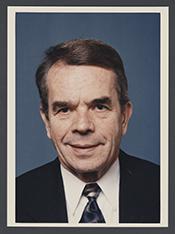
Mr. Speaker, I yield myself such time as I may consume. Mr. Speaker, yesterday I supported the Keller bill to offer relief to Pell grant recipients affected by natural disasters. I rise today to…
Mr. Speaker, I yield myself such time as I may consume.
Mr. Speaker, yesterday I supported the Keller bill to offer relief to Pell grant recipients affected by natural disasters. I rise today to support the Jindal bill to offer relief to those benefiting from other Title IV grant programs like TRIO, LEAP and HEP/CAMP.
It is vital that grant recipients affected by this tragedy be spared the further hardship of repaying a grant they were never able to benefit from. This bill represents a good first step and I am pleased to be a cosponsor.
There is no question that we need to reassess what students and families can actually pay for college after the disaster, since many have lost jobs, homes, resources and valuables. In addition, we must also address the needs of student borrowers stuck paying loans despite job loss, lost income, and other financial hardship.
The 100,000 low- and middle-income students who depend on loans will feel the financial crunch of Katrina. Furthermore, we must address the needs of students with parents in the affected area, but who are attending schools in other parts of the country. Thousands of affected students and graduates will be unable to make payments on their Stafford or Perkins loans.
Currently, Mr. Speaker, students in repayment who are suffering from economic hardship can seek deferment, but we must cut the red tape by allowing any student impacted by a natural disaster to receive an automatic deferment of both the accumulation of interest and the payments.
The Miller/Kildee Katrina College Relief Act does just that. This change would save the average borrower much over the life of their loan.
Graduates already struggling to dig themselves out of their student loan debt must not be penalized because of this tragedy. Enrolled students who are currently receiving Federal aid had their financial aid package calculated based on their expected family contributions, the so-called EFC, which includes parent contributions and contributions of working students. With hundreds of thousands unemployed, including the one in five undergraduates
who were working more than 30 hours a week to support themselves, the calculated expected family contribution may no longer be realistic.
The Miller/Kildee Katrina College Relief Act allows these students to have their EFC student aid packages readjusted to reflect the financial changes the family may have suffered. Affected families have limited resources to aid their recovery.
The little that they do have needs to go toward rebuilding their homes and lives, Mr. Speaker, but this should not mean that their children should have to put their education on the back burner.
Mr. Speaker, I am pleased that the majority leadership has decided to take up the issue of college students impacted by this tragedy. Yet, comprehensive relief is necessary for all students with the financial hardship.
While I support these efforts and commend the majority for doing this, I hope Congress will soon consider a more comprehensive package like the Miller/Kildee Katrina College Relief Act. An extraordinary catastrophe, and this indeed is extraordinary, demands an extraordinary solution. With over 100,000 students from many institutions displaced, Congress must do more.
Mr. Speaker, I reserve the balance of my time.
Mr. Speaker, I commend the gentleman from Louisiana (Mr. Jindal) for his bill and I look forward to working with him on even broader relief.
Mr. Speaker, I yield 3 minutes to the gentleman from Illinois (Mr. Davis).
Mr. Speaker, I yield 2 minutes to the gentleman from New Jersey (Mr. Holt).
Mr. Speaker, I yield 4 minutes to the gentlewoman from Texas (Ms. Jackson-Lee).
Mr. Speaker, I yield myself such time as I may consume.
First of all, I appreciate very much the very expeditious way in which the majority has approached this problem and look forward to working with them to seek an even more comprehensive way.
Mr. Speaker, I have no further requests for time, and I yield back the balance of my time.
Mr. Speaker, on that I demand the yeas and nays.

Mr. Speaker, I move to suspend the rules and pass the bill (H.R. 3668) to provide the Secretary of Education with waiver authority for students who are eligible for Federal student grant assistance…
Mr. Speaker, I move to suspend the rules and pass the bill (H.R. 3668) to provide the Secretary of Education with waiver authority for students who are eligible for Federal student grant assistance who are adversely affected by a major disaster.
Mr. Speaker, I ask unanimous consent that all Members may have 5 legislative days within which to revise and extend their remarks and include extraneous material on H.R. 3668.
Mr. Speaker, I yield myself such time as I may consume.
Mr. Speaker, I rise in support of this bill to provide additional relief to students whose higher education plans have been put on hold as a result of the devastation caused by Hurricane Katrina.
Yesterday, the House unanimously approved a bill to ensure that students who were forced to withdraw from college because of a natural disaster are not forced to repay Pell grant aid. I think that bill will provide critical relief to students who are already facing tremendous hardships as a result of this tragedy.
I am pleased today to be taking the next critical step by providing this type of flexibility and protection for students receiving all types of grant aid under title IV of the Higher Education Act.
We need to provide the Secretary of Education the utmost flexibility to meet the needs of students who have lost their homes and communities, and that is exactly what this bill will do.
Each year millions of American students gain access to higher education with the help of Federal student aid. The Federal Government is providing more than $73 billion in direct financial aid to students for fiscal year 2005 in order to ensure college access for students from all walks of life. I am proud of our tremendous investment in higher education.
Unfortunately, the tragic events of the scope like that which we are seeing on the Gulf Coast were not anticipated in the structure of the Federal student aid programs. The Department of Education lacks the flexibility to waive student aid repayment requirements for students who are forced to withdraw from higher education as a result of a natural disaster.
Waiver authority does exist within student loan programs, and yesterday we provided similar flexibility within the Pell grant program. Today, we are addressing the remaining discrepancy for other types of student financial aid that play a critical role in providing college access to low- and middle-income students.
The bill will protect students from being forced to repay other types of grant aid under title IV of the Higher Education Act. Some examples of the types of programs protected under this bill would be TRIO, GEAR UP, and the Supplemental Educational Opportunity grants.
Mr. Speaker, this bill is but one small step in what will be a comprehensive, long-term relief effort. However, for many students and families this bill will provide critical relief as they work to rebuild their homes and lives and, ultimately, as they do return to higher education in the future.
Mr. Speaker, I urge my colleagues to join me in support of this bill.
Mr. Speaker, I reserve the balance of my time.
Mr. Speaker, I yield 5 minutes to the gentleman from Louisiana (Mr. Jindal).
Mr. Speaker, I yield such time as he may consume to the distinguished gentleman from Ohio (Mr. Boehner), the chairman of the Committee on Education and the Workforce.
Mr. Speaker, I yield myself such time as I may consume.
I thank the gentleman from Michigan for his cooperation in this. This bill represents a small, but certain, step toward comprehensive recovery; and I urge its passage.
I yield to the gentlewoman from Texas.
Yes.
Mr. Speaker, I yield back the balance of my time.
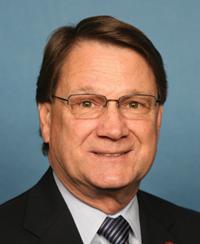
Mr. Speaker, after a week and a half of difficult days, today is one of the toughest for me. This morning I had to leave the devastation and overwhelming need of the people that were affected by…
Mr. Speaker, after a week and a half of difficult days, today is one of the toughest for me.
This morning I had to leave the devastation and overwhelming need of the people that were affected by Katrina to come to the House to do my duty as a Member of Congress, to see that they are taken care of in the near term and in the long term. I hope we can bring some real help to Louisiana and the gulf region.
First, we can make a difference in the form of today's supplemental appropriations to provide immediate relief for all that have suffered directly in this tragedy.
Second, we can commit today that the problems that plagued the Katrina response will never happen again in future disasters.
Beginning today, we can start a tough and honest assessment of our emergency response capability and how we deal with disasters like Katrina. With new legislation I have introduced, I am calling for creation of the Katrina Commission, an independent and bipartisan commission that will cut through the partisan finger-pointing and give us some real answers.
We all need answers, Mr. Speaker. Louisianans, and my district in particular, need answers to what went wrong; and the rest of America needs answers to how we are going to better be prepared in the future in the case disaster hits them.
We need to know why, when New Orleans was a nightmare, we sat and watched instead of helping the places we could help. I can tell my colleagues, because I have been there, that some of the hardest hit places were ignored and abandoned and even now are not getting the attention they need.
There is a sense in my district, in places like St. Bernard and Plaquemines Parishes, that the Federal Government, our government, Mr. Speaker, has completely failed them. It is this point I have a lot of trouble telling them that they are wrong.
As their Congressman, it is painfully ironic that the help I have been able to give them has not been from the Federal Government at all. I have had to work around the system, identifying needs and coordinating resources myself, much of it from private and unofficial sources.
The system was broken long before Katrina hit, and just because we can turn on the television today and no longer see thousands of people in immediate peril does not mean we have somehow fixed it.
As we move forward, we must remember that there are success stories in all of this, and there is much to be proud of. First responders, charitable groups, thousands of volunteers have given more than we could have ever asked.
Local officials like State Senator Walter Boasso of St. Bernard Parish and the Plaquemines Parish sheriff and parish president worked together as a team on the ground to deliver for their people and protect their property. Why on their own? Because for days there was no help coming from the Federal Government.
In the last week, Louisiana has had help and had support from all over the country. We have been grateful for law enforcement from New York, food and clothing donations from Phoenix, and so much more from everywhere else in this country.
We also owe a debt of gratitude to the States and cities that have opened their doors to hundreds of thousands of Louisiana citizens who have had to flee their homes. Your generosity is a testament to the strength of our American spirit, and your support has allowed us to continue on when we were not sure we could.
I thank America, and I particularly thank this body for the support that I have received from its Members through calls and shipments.

Mr. Speaker, the events we have witnessed during the past 2 weeks on the gulf coast have been nothing short of tragic. Never in my life could I have imagined the scale of devastation which has come…
Mr. Speaker, the events we have witnessed during the past 2 weeks on the gulf coast have been nothing short of tragic. Never in my life could I have imagined the scale of devastation which has come to pass in Alabama, Mississippi and Louisiana as a result of Hurricane Katrina.
The endless stream of video on national television networks and cable stations has provided us with images that until recently we had only seen in devastated Third World countries in other parts of the world.
My district in south Alabama was severely impacted by this monstrous storm. In some areas, such as Bayou La Batre and Dauphin Island, entire neighborhoods and businesses have simply been washed away. As horrific as this impact has been on my constituents, it is only a small part of the overwhelming destruction covering 90,000 square miles along America's gulf coast.
Ninety thousand square miles. To put that in perspective, in the area commonly known as Ground Zero in New York City affected by the terrorists on September 11, it totaled just 16 acres.
As everyone in this Chamber is aware, particularly our friends in Louisiana and Mississippi, the recovery time facing us will be long and difficult. It will require determination, strength of mind, spirit and body; and it will require a sense of unity.
In the days since the storm, we have seen all of these qualities in great abundance, in the people doing such large things as providing housing, jobs and hot meals for displaced families, and those doing such small things as providing a hug to someone in need.
But this recovery will also require one other thing. It will require a tremendous amount of funding. The emergency supplemental measure under consideration here today will provide much-needed funding from local, State, and Federal agencies to continue the seemingly insurmountable task of rebuilding lives, communities, and States.
It is difficult to know what the final cost will be in rebuilding after Hurricane Katrina. However, the $10.5 billion in emergency funding approved by this body last week was a good start, and the $51.8 billion measure we are considering today will provide even more vital funding for the rebuilding of America's gulf coast.
I thank the gentleman from California (Mr. Lewis) for his leadership in this very difficult, yet important, matter. On behalf of my home State of Alabama, I want to especially thank President Bush for his assistance to the impacted region and for his tremendous display of support to those affected by this storm. I am also most grateful to the leadership of this House for responding so rapidly to the great challenges that this emergency funding will help address.
Let me close by urging my colleagues to support this measure and, in so doing, show their support and compassion for the millions of women, men and children impacted in countless ways, both great and small, by this storm. Hope is something Americans should never lose. Let us, by both our words and actions, continue to provide that hope.
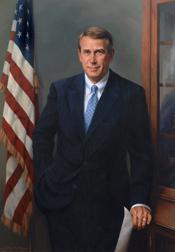
Mr. Speaker, let me thank my colleague from Louisiana (Mr. Boustany) for yielding me time. I rise in strong support of this bill to provide additional relief to the victims of Hurricane Katrina who…
Mr. Speaker, let me thank my colleague from Louisiana (Mr. Boustany) for yielding me time.
I rise in strong support of this bill to provide additional relief to the victims of Hurricane Katrina who have been forced to withdraw from institutions of higher education as they work to rebuild their homes and their community.
The tragedy that has befallen the Gulf Coast region in the wake of Hurricane Katrina, the level of devastation and its impact on American families is truly staggering; and our prayers remain with the residents of that region as well as those who are working on relief and this recovery effort.
We are working closely with the Department of Education to determine how we can best meet the needs of the children, families, teachers, and schools that have been impacted by this tragedy. We have identified an immediate need for action to assist students pursuing higher education who are forced to withdraw because of the devastation caused by the hurricane, and that is why we are taking action today.
I want to thank the gentleman from Louisiana (Mr. Jindal) for introducing this bill to provide additional flexibility for students struggling to cope with this unprecedented natural disaster. The bill complements the measure offered yesterday by the gentleman from Florida (Mr. Keller) to protect students forced to withdraw from higher education as a result of a natural disaster.
This bill will give the Secretary of Education a new flexibility to waive burdensome requirements on students impacted by this or other natural disasters. The bill would ensure students forced to withdraw from higher education because of natural disaster would not be forced to repay their Federal student grant aid, alleviating what could be a major burden for students already coping with this disaster.
This type of waiver authority that we granted yesterday and then again today already exists for the student loan programs and is being provided yesterday by the gentleman from Florida's (Mr. Keller) bill for Pell grants and then today by the gentleman from Louisiana's (Mr. Jindal) bill that would allow the Secretary waiver authority for those who may receive grant programs and scholarship programs such as GEAR UP, TRIO, and Supplemental Educational Opportunity Grants.
As we assess the damage in the weeks and months ahead, we will be working with our leadership and our colleagues across the aisle to provide additional resources and additional flexibility to the communities impacted by this tragedy to make sure that all the resources of the Federal Government are available to help each and every American that has been affected.
So, once again, I want to thank the gentleman from Louisiana (Mr. Jindal), the bill's sponsor, for his work and urge my colleagues to support the bill today.
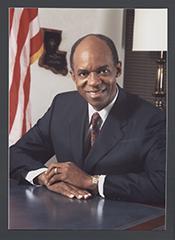
Mr. Speaker, I thank the gentleman for yielding me this time, and I thank the gentleman from California (Mr. Lewis) for his fine gesture and for the work they have done on this appropriations matter.…
Mr. Speaker, I thank the gentleman for yielding me this time, and I thank the gentleman from California (Mr. Lewis) for his fine gesture and for the work they have done on this appropriations matter.
We have all seen the devastation in the news of my home district and my State of Louisiana and the gulf coast, but that is only a pale reflection of the destruction my constituents have experienced. Hundreds of thousands of my constituents have been uprooted from their homes. More than 100,000 businesses have been shuttered. And hundreds, possibly thousands, of lives have been lost due to the ravages of Hurricane Katrina. So words do not describe the damage.
Just last week, this House convened in emergency session and appropriated $10.5 billion to begin the recovery from this natural disaster. And, remarkably, less than a week later, most of that has been spent or committed. Accordingly, we come together today for another $50 billion or so to continue what is a long, hard recovery throughout the gulf coast, but particularly in my hometown of New Orleans.
With the passage of this supplemental appropriation bill, we have committed almost $63 billion to the recovery and reconstruction efforts. But I want to sound the alarm today, lest the House become the victim of Hurricane recovery fatigue.
In normal circumstances, $63 billion would be a lot of money for recovery and reconstruction. But Hurricane Katrina was no normal hurricane, and her effects are unprecedented. So I want to make sure that this House and this Congress understand that these monies are just the beginning, what the President has called a down payment on the long-term commitment to the recovery and revival of the areas decimated by Hurricane Katrina.
Reliable economic estimates suggest that the total Federal cost of the reconstruction and recovery of the affected areas will be in the neighborhood of $225 billion, with $100 billion required to clean up, reconstruct, resettle and revive my hometown of New Orleans. In other words, the almost $52 billion we are allocating today, while needed and wonderful, and we are grateful that we are doing it, and I appreciate everything that is being done here, it is just a down payment.
I wanted to say one other thing today that concerns me, and I hope we can fix it up later. The bill, as it is presently set up, raises the cap on government emergency micropurchases from $15 million to $250 million. This may work to the detriment of small businesses and prevent them from participating in this program. This is something we cannot let happen, and I hope we will fix this up as the bill moves along.
But I am grateful to the House for its quick action on this matter. Our people need it.
Show 11 more

Mr. Speaker, I thank the gentleman for yielding me time, and I rise in strong support for this bill and this supplemental appropriation. The Congress clearly needs to pass it as quickly as we can,…
Mr. Speaker, I thank the gentleman for yielding me time, and I rise in strong support for this bill and this supplemental appropriation. The Congress clearly needs to pass it as quickly as we can, but let me make just a few random comments.
I think it is obvious to most of us, or at least to me and some others, that the Federal Government probably would have responded more quickly and in a more professional manner to this crisis if FEMA existed as it existed before the creation of the Department of Homeland Security, and I think that is an issue at some point we have to deal with.
Secondly, I think it is appropriate that we deal with this bill quickly and as a supplemental appropriation today and do it quickly so we can meet real
urgent, current needs. However, at some point, as this need and the need for a supplemental grows, at some point we should follow regular order and have the administration respond to our committees and respond to questions and to build their case for what their plans are on what I expect will be a significantly larger amount of money that is being spent.
So while we proceed today, clearly we should plan, I would hope, the next time we face a bill, at least some committee hearings where Members can ask questions and the administration is required to provide some more detailed plans.
Thirdly, clearly the administration, we and everyone is guessing at what some of the needs are going to be, but one concern I have, what is lacking and that I have heard no discussion of, is we have dealt with kids in college, but we have thousands of kids in elementary and secondary education who have been uprooted from their homes, been uprooted from where they were planning to go to school a very short time ago and scattered throughout the country. They are going to have some very unique problems, and I have heard no discussion by the Department of Education of providing any additional funding for these kids in whatever school districts they end up around the country.
I think that clearly should be the responsibility of the Federal Government. I think they are going to have unique needs in terms of counseling, and it is going to put additional burdens for additional students on school districts; but if there are any plans for doing it, they have escaped me. So I would hope the administration, the Department of Education would move very quickly to develop some realistic plans on how we deal with kids who are going through great turmoil and are going to face the uncertainty of being in schools that they were not planning on.
So we need to pass this bill, but we have got lots more work to do.
Mr. Speaker, I thank the gentleman for yielding me time. Mr. Speaker, we are now entering a new phase of this recovery effort. Although my Louisiana district did not suffer significant damage from…
Mr. Speaker, I thank the gentleman for yielding me time.
Mr. Speaker, we are now entering a new phase of this recovery effort. Although my Louisiana district did not suffer significant damage from the hurricane, we now face the enormous challenge of sheltering and supporting numerous evacuees now in southwest Louisiana.
In Lake Charles, Louisiana, a small community, we have an estimated 25,000 evacuees in need. In Lafayette, my hometown, there are an estimated 40,000 evacuees. We basically doubled our population. Funding appropriated in this installment today is critically needed to begin the transition from emergency shelter to a more permanent solution for housing of families of the gulf coast that are affected by this disaster.
The resources of local communities providing for these evacuees are being stretched ever so thinly now. The Cajundome in Lafayette, my hometown, continues to house nearly 5,000 individuals at a cost of nearly $60,000
per day. In a mere 30 days we will deplete the budget allocated for that facility for the entire year, so we need help.
Local community organizations are stepping up to help, but have limited resources. The recovery process will be long and expensive. The Federal Government must continue to step in and bring its full resources to the effort and Congress must provide proper oversight.
The visual images of all of this have been just horrific and the human stories are unbelievable to hear. And I have been frustrated with some of the delays, but we must get the job done.
This is not the time to point fingers. This is not the time to cast blame. This is the time to get to work. We have an enormous amount of work to do in front of us, and it has to be done in a bipartisan fashion. I ask Members on both sides to use restraint in the debate. Accountability will come as we move forward.
I know Congress will look into the disaster, and I urge my colleagues to rise above the vicious rhetoric that does not provide for the thousands of children in my district who need school supplies and uniforms.
Displaced small businesses with help to get back on their feet; opportunities for families to reunite; housing for those without, or, seniors with medical care and comfort.
This emergency supplemental is the next installment in the long road to establishing the industries and communities of the Gulf Coast. I would like to thank the House leadership and my colleagues for their continued support.
Mr. Speaker, I urge passage of the supplemental.

Mr. Speaker, I thank the gentleman for yielding me this time. Mr. Speaker, hundreds of thousands of our fellow citizens in our gulf coast region have been devastated and displaced by the worst…
Mr. Speaker, I thank the gentleman for yielding me this time.
Mr. Speaker, hundreds of thousands of our fellow citizens in our gulf coast
region have been devastated and displaced by the worst natural disaster in our Nation's history. The needs of the survivors and affected communities are great and our willingness to respond must match the challenge. This great Nation must respond in a manner that the American people expect and demand.
I have every expectation that every Member of this House will vote today for this emergency supplemental appropriation because our paramount concern must be to assist the victims of this catastrophe, our brothers and sisters in the gulf States. But it pains me to say, Mr. Speaker, that once again we have abrogated our obligation to conduct real, meaningful, effective legislative oversight of the executive branch. We want to help, but we have an obligation to assure ourselves that the help is going where it is needed.
Ten and one-half billion dollars by unanimous consent; I was for that. Fifty-two billion, plus; I am for that. No hearings, no oversight, no questions. No examination of when and how and where and who will spend the money and who will get it. As I understand it, neither the chairman nor the ranking member of the Committee on Appropriations was consulted in the drafting of this legislation.
The unfortunate truth is, Mr. Speaker, this compliant Congress has acted more like an adjunct to this administration than the co-equal branch that the Constitution demands we be.
Now, more than ever, the American people deserve honest answers to hard questions about the inadequate Federal response to this disaster. For example, why did Federal agencies and officials fail to appreciate the magnitude of this disaster, even as they were being warned by hurricane experts of the potential devastation? We all watched it on television being reported to us. Why was the Federal response too slow and initially too inadequate?
As the columnist David Broder wrote on Sunday, ``The majority of Republicans see themselves first and foremost as Members of the Bush team and do not want to make trouble by asking hard questions.''
I close, Mr. Speaker, by simply saying that, of course, we are going to support this, but, Mr. Speaker, I urge us to have oversight. Fifty- two billion dollars is a lot of money, and we are going to spend whatever is needed, but let us make sure we spend it right and let us make sure the right people get the money.
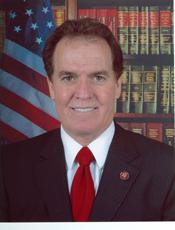
Mr. Speaker, I rise today to express my serious concerns for the process, let me repeat, the process under which these supplemental appropriations are being considered. First, I want to emphatically…
Mr. Speaker,
I rise today to express my serious concerns for the process, let me repeat, the process under which these supplemental appropriations are being considered.
First, I want to emphatically express my full support for aiding those lives and those cities devastated by Hurricane Katrina. Having been to Baton Rouge, having physically worked with the victims, there is no doubt in my mind that these people need our help.
However, Mr. Speaker, we should help them in a responsible and thoughtful manner. There is no question that time is of the essence, but we are not talking about pocket change, $50 billion is not pocket change, Mr. Speaker, and fellow members of this body, we have a Constitutional duty to spend the people's money very carefully and with deliberate consideration. Even in times of crisis, a blank check does not guarantee results and can often lead to wasteful spending. Wasteful spending will not save one life. Wasteful spending will not rebuild one destroyed house, will not clear one single road, and will not feed one starving child.
Furthermore, Mr. Speaker, I urge my colleagues in both this House and especially in the Senate to refrain from tacking on any pork. This supplemental should not be a gravy train for any special or individual interests.
Every member of this body should condition their support of this supplemental upon strict oversight and follow up with sound policy
changes. We cannot just throw billions of dollars at this catastrophe or any catastrophe for that matter.
Mr. Speaker, we need to follow-up these dollars with thorough oversight and investigation to make sure that every penny, I repeat, every penny goes to help the victims. And, we need to cut down every unnecessary piece of red tape in the process, such as suspending the requirements of the Davis-Bacon Act to help the reconstruction of this devastated area. Let's untie the hands of those who are ready to help and rebuild. We have enough obstacles to overcome as it is. We don't need any kind of bureaucratic surcharge on saving lives.
Mr. Speaker, I want to again caution my colleagues. Let's get help to the people in need but let's do so in a responsible and sound manner. The American people expect no less of us, and we owe them no less.
Mr. Speaker, I thank the gentleman from Michigan (Mr. Kildee) for yielding me time. I also want to commend the gentleman from Louisiana (Mr. Jindal) for his introduction of this bill, which allows…
Mr. Speaker, I thank the gentleman from Michigan (Mr. Kildee) for yielding me time. I also want to commend the gentleman from Louisiana (Mr. Jindal) for his introduction of this bill, which allows the Secretary of Education to waive grant and scholarships awarded under title IV of the Higher Education Act for students forced to withdraw from classes due to a natural disaster.
By applying to title IV, the bill grants relief to students in the greatest need of financial support in assessing higher education. It also covers students receiving Pell grants, TRIO scholarships, Supplemental Educational Opportunities grants, GEAR UP grants, Byrd scholarships and LEAP funds.
Without action, these students would face incredible financial hardship because they would be responsible for repaying funds at a time of incredible economic and personal difficulty. Without action, we would be erecting barriers in their pursuit of their education.
We need to promote education in every way that we can. And I also support this bill as a first step to helping students overcome the barriers to education imposed by the horrific storm.
In addition, I strongly encourage my colleagues to take additional steps to ease the educational burdens of Katrina. The Miller/Kildee Katrina College Relief Act also grants, and I think it gives us an opportunity to go even further, 6-month deferments to students, and directs the Secretary to recalculate the expected family income that they could contribute to college in light of the catastrophe. These are excellent provisions that would greatly assist the hundreds of thousands of students and families struggling after Katrina.
Again, I want to commend the gentleman from Louisiana (Mr. Boustany) for his introduction of this legislation. I also want to commend the gentleman from Ohio (Mr. Boehner), the chairman of the Committee on Education and the Workforce and the ranking member, the gentleman from California (Mr. George Miller), for the expeditious manner in which the Committee on Education and the Workforce has addressed the educational needs of students who have been affected by Katrina.
It is a good bill. I support it.
Mr. Speaker, I strongly support H.R. 3169, the Pell Grant Hurricane and Disaster Relief Act, and H.R. 3668, the Student Grant Hurricane and Disaster Relief Act, introduced by my colleagues,…
Mr. Speaker, I strongly support H.R. 3169, the Pell Grant Hurricane and Disaster Relief Act, and H.R. 3668, the Student Grant Hurricane and Disaster Relief Act, introduced by my colleagues, Congressmen Keller and Jindal, respectively.
H.R. 3169 would waive Pell grant repayment requirements for students that were impacted by natural disasters, such as Hurricane Katrina. Mr. Keller, who serves with me on the 21st Century Competitiveness Subcommittee on Education and the Workforce, has been advocating for this change in the law since his State of Florida was hit by four hurricanes last year, and he saw how students' lives were impacted by the devastation wrought by the hurricanes.
The Pell Grant Hurricane and Disaster Relief Act will ensure that Hurricane Katrina does not derail the educational dreams of our neediest students. I am pleased to co-sponsor this bill and appreciate its speedy consideration by our leadership.
H.R. 3668 complements Mr. Keller's bill by waiving repayment requirements for other Federal student grant aid programs that were affected by a natural disaster. I know that this is a difficult time for Mr. Jindal, his family, and his constituents whose homes have been destroyed and their families scattered across the country. I applaud Congressman Jindal for his leadership on this bill, and for his ongoing courage and strength throughout this difficult time.
This legislation is the right thing to do because it helps increase assistance and flexibility for students and families impacted by Hurricane Katrina. Students affected by this devastating natural disaster will be able to focus on rebuilding their lives without an additional burden on their backs.
In the coming days and weeks, I will continue to work with my colleagues and with the administration and governmental agencies to examine the areas that have been impacted by this terrible tragedy and what additional flexibility and assistance we may be able to provide to help restore normalcy to students and their families.
I thank Mr. Keller and Mr. Jindal for their leadership on these bills, and I gladly support their efforts.
Mr. Speaker, I thank the chairman for yielding time and, more importantly, for the work that he has been doing these past several days trying to come to the aid of colleagues in the South. One year…
Mr. Speaker, I thank the chairman for yielding time and, more importantly, for the work that he has been doing these past several days trying to come to the aid of colleagues in the South.
One year ago, this Congress responded to an unprecedented event, four hurricanes striking a State within 2 months in Florida. Little did we know that a year later this Nation would be tested beyond what we saw in Florida. Not quite 2 weeks ago now, we saw the fury and destruction that Mother Nature can unleash; and we all watched as not just homes and communities were destroyed but entire cities.
The images on television were horrific. I do not know a single heart in America that is not breaking as we watch hundreds of thousands of our fellow citizens become victims to the worst natural disaster in the Nation's history.
There has been much debate, finger-pointing in the press about who is to blame for problems with relief efforts, about who allowed such a human disaster to happen. This is an important question and one to which we must find answers, but at the appropriate time. Right now, it is time to finish the job of rescuing human beings from harm's way, to comfort those that have lost all of their possessions, and to help them find a sense of comfort and normalcy.
This bill will provide the beginnings to do just that. We do not know yet what the total disaster costs will be, but we want to assure the victims and the Nation that we will do everything in our power to help them recover.
Just an idea, Mr. Speaker, in World War I we had a thing called Liberty Bonds. I think it is time we thought about perhaps having Katrina Bonds. A lot of people are wanting to help across the Nation. This would be a way for every individual, if they chose, to find a way to help the victims of this great, horrible disaster. So I recommend that we think of that, establishment of K savings bonds.
Mr. Speaker, due to a death in the family, I missed rollcall votes on September 6th, 7th, and 8th. Had I been in Washington, I would have voted: ``Yea,'' on rollcall No. 454, H. Res. 360,…
Mr. Speaker, due to a death in the family, I missed rollcall votes on September 6th, 7th, and 8th. Had I been in Washington, I would have voted:
``Yea,'' on rollcall No. 454, H. Res. 360, commemorating the 60th anniversary of V-J Day and the end of World War II in the Pacific.
``Yea,'' on rollcall No. 455, S.J. Res. 19, calling upon the President to issue a proclamation recognizing the 30th anniversary of the Helsinki Final Act.
``Yea,'' on rollcall No. 456, H.R. 365, to allow United States Courts to conduct business during emergency conditions, and for other purposes.
``Yea,'' on rollcall No. 457, H.R. 3169, to provide the Secretary of Education with waiver authority for students who are eligible for Pell Grants who are adversely affected by a natural disaster.
``Yea,'' on rollcall No. 460, H.R. 3673, further Emergency Supplemental Appropriations, Hurricane Katrina, 2005.
``Yea,'' on rollcall No. 461, H.R. 3669, to temporarily increase the borrowing authority of the Federal Emergency Management Agency for carrying out the national flood Insurance program.
``Yea,'' on rollcall No. 462, H.R. 3668, student Grant Hurricane and Disaster Relief Act.
``Yea,'' on rollcall No. 463, H. Res. 428, expressing the sincere gratitude of the House of Representatives to the foreign individuals, organizations, and governments that have offered material assistance and other forms of support to those who have been affected by Hurricane Katrina.
``Yea,'' on rollcall No. 464, H. Res. 427, relating to the terrorist attacks against the United States on September 11, 2001.

Mr. Speaker, I thank my friend from Michigan for the time. As we look at repairs of levees and improving public health mechanisms and so forth, many Americans might not realize that there are other…
Mr. Speaker, I thank my friend from Michigan for the time.
As we look at repairs of levees and improving public health mechanisms and so forth, many Americans might not realize that there are other things we must tend to. I applaud the gentleman from Louisiana (Mr. Jindal) for recognizing that we need to help those who are in the midst of their education. This legislation is a good first step on the floor.
I think that the legislation offered by the gentleman from Michigan (Mr. Kildee) and the gentleman from California (Mr. George Miller) and others of us that deals with readjusting what families are expected to pay for college for the current term and making it more than optional for a university to recalculate families contributions and providing deferment of 6 months for student borrowers, those additional steps I think would be very important. I particularly commend to this body the legislation that is offered by the gentleman from Michigan (Mr. Kildee) and the gentleman from California (Mr. George Miller) and others of us, and I hope that those provisions can be added.
I nevertheless want to strongly support what the gentleman from Louisiana (Mr. Jindal) has done. It will help many students who are disrupted, whose education would otherwise be disrupted by these activities.
Mr. Speaker, I support this bill. Hurricane Katrina has devastated children, parents, teachers and schools from all over our country. The school year has just started, and now thousands upon…
Mr. Speaker, I support this bill.
Hurricane Katrina has devastated children, parents, teachers and schools from all over our country.
The school year has just started, and now thousands upon thousands of students have been displaced.
Those which are lucky enough to have been able to begin school in other locations are still dealing with the turmoil of being uprooted not only from their homes but also their community, friends, and classmates.
The instability of their situations must be incredibly difficult and painful to deal with.
Education is one of the most important things we can provide our students with, and it is so important to take care of our young people in this horrible time.
Yesterday we passed a bill which would provide a waiver for Pell Grants.
Today we are going to pass a bill which will waive other Title IV requirements to other programs such as TRIO, Academic Achievement Incentive Scholarship, Child Care Access Means Parents in School (CAMPIS), Supplemental Educational Opportunity Grants (SEOG), Leveraging Educational Assistance Partnership (LEAP/SLEAP), High School Equivalency Program (HEP), College Assistance Migrant Program (CAMP), and the Robert Byrd Scholarship Program.
These are good first starts, but in the coming days we need to do even more.

Mr. Speaker, we have talked a lot about making sure that we not overlook those who have been affected by this terrible tragedy. Today, Mr. Speaker, I rise to support this bill, but also just to say…
Mr. Speaker, we have talked a lot about making sure that we not overlook those who have been affected by this terrible tragedy. Today, Mr. Speaker, I rise to support this bill, but also just to say we should make sure that we do not overlook those significant numbers of people that have been traumatized by this terrible event.
The mental health impact of this horrifying event, it cannot be measured in dollars. If trauma can disable even those who are trained for battle, we have seen police officers commit suicide already because of what they have witnessed, who can begin to even calculate the fallout on those who are most vulnerable, those who suffered trauma in the past, those who deal with mental illness every single day?
In addition, there is an extreme need for those with mental illnesses who have become evacuees themselves. Untreated, their diseases can be debilitating or even fatal under extreme stress. I know that efforts are under way by SAMPHSA and FEMA and many private organizations to meet the mental health needs today and in the future, but I also know that there are never enough resources when it comes to mental health, even in the best of times.
So I look forward to working with the committee to make sure that these and other needs are met in this bill.
Bill Text
5 versions available
        [Congressional Bills 109th Congress]
[From the U.S. Government Publishing Office]
[H.R. 3668 Enrolled Bill (ENR)]

H.R.3668

One Hundred Ninth Congress

of the

United States of America

AT THE FIRST SESSION

Begun and held at the City of Washington on Tuesday,
the fourth day of January, two thousand and five

An Act

To provide the Secretary of Education with waiver authority for students
who are eligible for Federal student grant assistance who are adversely
affected by a major disaster.

Be it enacted by the Senate and House of Representatives of the
United States of America in Congress assembled,

SECTION 1. SHORT TITLE.

This Act may be cited as the ``Student Grant Hurricane and Disaster
Relief Act''.

SEC. 2. WAIVERS OF STUDENT GRANT ASSISTANCE REPAYMENT BY STUDENTS
AFFECTED BY DISASTERS.

Section 484B(b)(2) of the Higher Education Act of 1965 (20 U.S.C.
1091b(b)(2)) is amended by adding at the end the following new
subparagraph:
``(E) Waivers of grant assistance repayment by students
affected by disasters.--In addition to the waivers authorized
by subparagraph (D), the Secretary may waive the amounts that
students are required to return under this section with respect
to any other grant assistance under this title if the
withdrawals on which the returns are based are withdrawals by
students--
``(i) who were residing in, employed in, or attending
an institution of higher education that is located in an
area in which the President has declared that a major
disaster exists, in accordance with section 401 of the
Robert T. Stafford Disaster Relief and Emergency Assistance
Act (42 U.S.C. 5170);
``(ii) whose attendance was interrupted because of the
impact of the disaster on the student or the institution;
and
``(iii) whose withdrawal ended within the academic year
during which the designation occurred or during the next
succeeding academic year.''.

Speaker of the House of Representatives.

Vice President of the United States and
President of the Senate.