Mr. Speaker, what an honor it is to come before my colleagues tonight to talk about some of the most important aspects of all of our lives, and that is our jobs and our health and how they are tied…
Mr. Speaker, what an honor it is to come before my colleagues tonight to talk about some of the most important aspects of all of our lives, and that is our jobs and our health and how they are tied together.
I think it is helpful to begin this by answering the question, how did we get to this point? Why do most Americans receive their health insurance from their employer? Did you ever think about that? Whether it is good or bad. You think about other kinds of insurance. Car insurance does not come from your employer necessarily. Certainly, health insurance does, and that is so incredibly important. Your home insurance does not come from your employer. Why health? Like most things, it has a long and a curious and sometimes a colorful history.
By way of introduction, and I will be brief, but I think it is important to review kind of how we got to where we are right now. Actually it begins during World War II when employers were short on employees, and they were attempting to attract employees, and so they offered a health benefit to try to encourage some folks to come and work at their place of business. The government at that time had to decide whether it was going to treat that health benefit as a taxable benefit or whether it was going to be a nontaxable benefit. Were they going to tax the employee for getting that benefit or not? What the government at that time elected to do is to treat it as a nontaxable benefit. And so began this incentive that we now have and have lived with for the past 60 years or so for employer-based health care.
During the 1950s, there was a period of significant collective bargaining in our Nation, and many individuals got their health insurance with what is called first dollar coverage, meaning that every single dollar of their health care was paid for by somebody else. In the 1960s, the government got involved with Medicare and Medicaid and instituted Medicare as a program that was a cost-plus program, meaning that those individuals that were providing the care were paid for the cost for providing it plus some. And so what you had over a period of the next 10 or 12 years or so was a significant increase in the cost of health care. Businesses said, Hey, wait a minute, what's going on here? We've got to have some help. And so instead of looking at that situation then and moving toward a system that allowed individuals greater choice and greater opportunity for their selection in health care, what happened was an increasing regulation of both the insurance industry and the beginning of HMOs and the managed care as we know it. All of this began basically with the tax favorability for employers to purchase health insurance. And so that system flourished.
Now, tying health care to jobs has had many unintended consequences and many that have adversely affected those who can get insurance. As a legislature, as a Congress, as leaders and decisionmakers, we need to make it easier for businesses to provide health insurance. One person who knows firsthand about that and about how to make that happen is the gentlewoman from Tennessee (Mrs. Blackburn). The gentlewoman from Tennessee is a small business owner herself and represents a district that is heavily dependent on small businesses and the jobs that they generate. She understands this issue as few do and has been a great leader in our Congress in an effort to pass both the health savings accounts and associated health plans. I am proud to yield to my colleague as she discusses the issue of small business and health care for a few moments.
Mr. Speaker, reclaiming my time, I thank the gentlewoman so much for her comments. I appreciate her leadership in this issue and so many other issues in our Congress, and I thank her for her perspective as a small business owner and somebody who has been a real advocate for increasing choices for patients and opportunities to purchase health insurance.
I mentioned briefly before the tax treatment of health insurance and why we seem to be in a situation now where there is this remarkable incentive for employers to purchase health insurance, and that again is because of the tax treatment. And nobody understands that better than the next individual whom I have asked to join me today. Because of this tax incentive, solutions to our current situation must address the taxes and how they affect decisions about the purchase of health care.
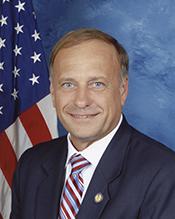
And one person who understands this as well as anybody and is a good friend and legislator is the gentleman from Iowa (Mr. King). The gentleman from Iowa (Mr. King) is working to fight burdensome government regulation and red tape. He truly understands the challenges of starting and operating a business first hand as a successful agri- businessman. He brings 28 years of business know-how with him to Congress, and he has introduced a very exciting piece of legislation that talks about the tax treatment of the purchase of health insurance.
I yield to the gentleman from Iowa (Mr. King).
Mr. Speaker, reclaiming my time, I thank the gentleman from Iowa (Mr. King) so very much for his comments.
When I first started looking into this issue of health insurance and why it seemed that employers had this remarkable incentive and I looked back and looked back and tried to figure out where it began and I got to the discussion about World War II and I talked to some of my friends about it and they would say it could not have started back then, I appreciate his perspective on it and his knowledge and expertise in appreciating that the tax treatment of the purchase of health insurance is so important, so incredibly important, as we try to solve the challenges of the increased cost of health insurance and health care. I thank him so much for joining me tonight. He was very kind to participate and bring focus to those issues.
I touched a little earlier on that association between jobs and health care and how jobs are so important to health care because of the tax treatment. And so it is important that we talk about jobs and small businesses; and this Congress has worked incredibly hard, incredibly hard, to create jobs, especially in the area of small business; and it is important. We keep talking about small business because that is the engine, that is the engine that drives our economy.
Ninety-nine percent of all businesses in this Nation are small businesses, and 75 percent of all new jobs that have been created have been jobs that are added in the area of small business. And this Congress has been incredibly diligent in making certain that we have the right incentives to create jobs. And they have been mentioned earlier, but I would like to touch on a couple of them.
The Energy Policy Act that we passed will create nearly \1/2\ million new jobs in the manufacturing and construction and agriculture and technology sectors, \1/2\ million jobs. The Death Tax Repeal Permanency Act, that is not only an unfair tax, but it is also taking money out of the pockets of individuals, especially small business individuals, that they could use to instead grow their businesses. The Class Action Fairness Act that we passed, some legal reform. It is estimated that $88 billion a year, $88 billion a year, is spent on lawsuits; and if that money is not needed on inappropriate lawsuits, then where can that money go? To small business and to jobs, create jobs, hire more workers. So this was an important bill that was passed and signed into law by the President.
The highway bill, the Transportation Reauthorization bill, not only will it increase the quality of our transportation infrastructure across this Nation, but it is estimated that for every $1 billion that is spent to improve our highways, 40,000 jobs are created, 40,000 jobs: $1 billion, 40,000 jobs.
Do we know what that means for a bill that has a price tag of about $280 billion? That is 15 million jobs. You talk about a Congress that is serious about putting people to work, this is that Congress. And the Job Training Improvement Act that we passed breaks down the barriers for millions, millions of job-seekers.
So this Congress has actively worked to expand small business which, again, is the engine, the engine of our economy, and it is working. We see the results already. Mr. Speaker, 146,000 jobs were created in the month of June with the unemployment rate dropping to 5 percent, the lowest unemployment rate since September of 2001. Steady growth
has taken place each of the last 25 months with more Americans working than ever before.
This chart shows the declining unemployment rate and the number of jobs that have been created, and we see each month for the past, on this chart, 13 months, but it has been 25 months in a row, each month we have created jobs in this Nation, across the Nation. The economic indicators show strong and sustained growth with real gross domestic product and real income revised up for the first quarter, and inflation down. Listen to this: profits as a share of gross domestic product are up to their highest level since 1967, profits up to their highest levels since 1967. What does that do? It allows businesses to reinvest and create more jobs.
Mr. Speaker, durable goods orders are on the rise with new orders for durable goods increased by 5.5 percent in May. That is the largest increase in 14 months. U.S. manufacturing continues to expand. Again, for the 25th consecutive month, manufacturing expanded again in June. And we see it in the private sector as well, with consumer confidence rising nearly 3 points in June to its highest level in 3 years.
Mr. Speaker, I am telling my colleagues, the improving economy that we have talked about and the jobs that have been created, it is not empty rhetoric, it is not just words. The policies of this Congress and this administration, they are pro-growth, and they are leading the charge, and they are indeed succeeding in the challenges that we have before us in creating jobs.
But when I go home, when I talk to folks at home who are small business owners, who create the jobs in this Nation, and when I talk to them and I ask them, what is the biggest challenge that you have? I do not care what kind of small business it is, whether it is a restaurant owner or gas station folks or a small business owner or lawn care people, real estate, shoe repair, I do not care what it is, their biggest challenge, they will tell you that their biggest challenge is the health care, providing health care for their employees, and many, many simply stop. They are unable to provide health care any longer for their employees, whether it is that extra dollar that the health insurance costs or whether it is the undue burden of the regulation that pushes them over the top. And they say, as much as I would like to, I am just unable to do so from a financial standpoint.
So it is imperative; remember, most employees, most people get their health insurance through their employer, again, because of the things we were talking about before, but it is imperative that we work on those constraints that make it so that it is difficult for employers to purchase that health insurance.
The unemployment rate is coming down with all of the work that we have done, now down to, as the gentlewoman from Tennessee (Mrs. Blackburn) mentioned, 5 percent, a remarkable, remarkable improvement in our economy.
I want to talk about small business and health care facts. I want to talk about the problem as it relates to the rising cost of health care and how it affects jobs and the provision of that health care. As health care premiums continue to increase or as they increase, employers are forced to pass that expense on to their workers in the form of higher copayments or deductibles, and oftentimes, they have to reduce coverage. They are not able to provide the same kind of coverage that they have in the past. It is not because they want to; it is because they are being constrained from a financial standpoint. Employers this year will pay an estimated 12 percent more for employee health care than benefits in 2003, 12 percent more, marking the fifth consecutive year of double-digit increases and a doubling of employer health care costs since 1999.
This graph is so incredibly poignant, and it just shows the continuing increase of the cost of health care. The cost for employers is the lower bar. The middle bar is the cost for employees. And then the upper bar is the out-of-pocket costs for employees, and we see those continue to rise over the years. Decreasing these costs to American businesses is imperative, because what it will allow them to do is to spend more money on expanding their operations and hiring workers, more jobs.
It has been shown that each percentage point increase, this is a phenomenal statistic, each percentage point increase in health insurance costs increases the number of uninsured by 300,000 people. Think about that. Each single percent of increase in health insurance costs increases the number of uninsured by 300,000 people. This is an issue that is imperative, imperative for us to tackle as a Congress.
Then we have heard about the need for legal reform, what kind of challenges we have in the area of liability insurance that physicians and hospitals and others have. Those premiums for medical liability insurance have increased 500 percent, 500 percent since 1976, and what that has done is driven many doctors out of the profession, many of them closing their practices or decreasing the high-risk procedures that they do. I had one fellow physician tell me that they had to stop one of their high-risk procedures, and I said, what was that? And they said, delivering babies. An obstetrician, they could no longer deliver babies because that is defined as a high-risk procedure. In fact, in our State, over a third of the obstetricians have stopped delivering babies because it is a high-risk procedure because of the cost of liability insurance. The average jury award in a medical malpractice case is now up to $3.5 million, up more than 70 percent since 1995. This cost of insuring doctors against oftentimes petty and frivolous lawsuits is reducing the quality and access of Americans to top-rate health care.
Now, there are a number of solutions that have been put on the table, and I want to talk about three of them in kind of a larger principled way. The first is about pooling resources. The second is about the tax treatment that we have talked about, and the third is about liability reform.
Associated health plans, which the gentlewoman from Tennessee (Mrs. Blackburn) mentioned, are incredibly important, and they work because what they allow people to do is to pool larger numbers to purchase health insurance. Remember that 60 percent, 60 percent of the 44 million uninsured Americans are employed by small businesses or are dependents of someone who is employed by a small business. Some people estimate that that number is as high as 85 percent, meaning that 85 percent of the folks that are either employed or live in the home of somebody who is employed by a small business do not have health insurance, of the 44 million who are uninsured. Phenomenal when you think about it.
What do associated health plans allow you to do? They allow you to buy in bulk. They allow one small business, a group of employees, say three or five folks to join with three or five folks from some other businesses to pool with eight or ten somewhere else, and before you know it, you have hundreds and thousands and sometimes millions of individuals who then use that purchasing power to purchase health insurance. It allows them to get health insurance at the cost that some of the larger employers do. Associated health plans would be required to offer fully-insured or self-insured benefits that are certified by the United States Department of Labor. There has been some discussion about whether or not people could provide cut-rate health insurance. Well, that is not the case. It encourages broad participation in coverage by prohibiting discrimination of any kind against certain high-risk individuals. Again, if you pool numbers of folks together, if you allow them to join together and use their power to purchase insurance, then they will be able to do so in a very competitive way. It increases the bargaining power.
So the first area is allowing folks to get together as groups, large groups, thousands, hundreds of thousands, millions of people to have the benefit of purchasing insurance.
The second issue I want to bring to the fore that would allow for a real solution has to do with the tax treatment and flexible spending accounts. Now, the gentleman from Iowa (Mr. King) talked about his idea for health savings accounts and the equal tax treatment for individuals to purchase health savings accounts. Great idea. Works splendidly to move some of those incentives so that people who are employed by a small business or are self-employed or are unable to get their insurance in another way will have an incentive to
purchase health insurance. And what flexible spending accounts do is that they allow workers to direct their employers to deduct money from their paychecks to be placed in this flexible spending account, tax- free--tax-free. That is the key. That is the incentive: to pay for health care expenses that they may incur during the course of the year. It is a tax benefit to employees. Workers could save on their taxes for the purchase of health insurance.
It also provides for long-term coverage advantages, because 37 million employees right now in America have access to these accounts, but few of them take advantage of it because there is a use-it-or-lose- it rule. Now, what is the use-it-or-lose-it rule? Well, currently, if you do not use the money by the end of the year that you have put into a flexible savings spending account for health care, then that money is forfeited. It goes away. It goes back to the employer.
This rule is a huge disincentive for participating in a flexible spending account, and it probably drives up health care costs itself because it encourages individuals to spend money on health care at the end of the year that may not necessarily be needed, but you have three weeks left, and you have this money in your account, so you might as well go do that. So it has that adverse incentive for the purchase of appropriate health insurance.
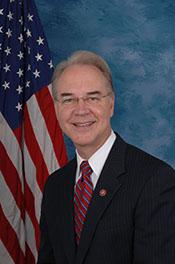
So flexible spending accounts, allowing you to have equal tax protection, tax-free purchase of health insurance or health care, in addition to the pooling that we talked about. Those are the first two. And the final one is medical liability reform. As the gentleman from Iowa (Mr. King) mentioned, I am a physician, an orthopedic surgeon; spent nearly 20 years in private practice of health care and saw during that period of time an incredible explosion in the cost of liability insurance, for somebody that was never sued, never had a suit. And whether or not you do, the real cost of the current crisis that we have as it relates to medical liability reform is not the cost of the purchase of the insurance for the doctor; that is not the real cost. Those costs are going up, certainly, but that is not the real cost. But those are millions and millions of dollars.
The real cost, the real reason that we need liability reform in the area of health care is because of the practice of defensive medicine. You may have heard about this. What is defensive medicine? Well, when you go to your doctor and you tell your doctor what your symptoms are, what you think is wrong, your doctor, he or she, will run through in their mind or look through their resources to be able to determine what kind of tests or studies ought to be done to make an appropriate diagnosis.
Now, the practice of defensive medicine says to the doctor that we ought to do virtually everything that we can do to make that diagnosis as rapidly and as accurately as possible, even though those tests may not be absolutely imperative to do to make that diagnosis. The example that I like to use is, if you have back pain and you came into my office, 90 percent of back pain, 90 percent of back pain is what is called functional back pain. It means that you hurt your back, and you strained it, and it will go away, given a little rest and therapy and exercise and sometimes some medication, 90 percent. But I promise you that everybody that comes into the doctor's office with back pain, what do they get? They get an x-ray. Now, they do not get an x-ray because you can diagnose functional back pain on an x-ray; they get an x-ray because if something is not picked up immediately on that x-ray, then they are liable. They are liable to be sued for not picking it up in 1 week when they may have picked it up in 3 weeks if the back pain did not get any better. That is the kind of thing that goes into the practice of defensive medicine. It has to do with blood tests. It has to do with heart tracings. It has to do with extremely expensive tests and studies that we have available to us that are wonderful. They allow us to have the kind of quality health care that we have as a Nation. But what happens is that they drive up the cost of health care to an incredible degree and frankly do not increase the quality of care that is being provided.
How much money is that? The estimates vary because you cannot get a firm figure on that. No doctor orders a test and says, this test is unnecessary. So the cost is likely to be somewhere in the range of $250 billion to $500 billion, that is with a B, $250 billion to $500 billion in the cost of health care each year in our Nation.
That is why, that is why it is imperative that we have medical liability reform. So the cost of the insurance itself is significant. But that is not the real reason.
Now, there are a number of ways that you can institute appropriate health care reform. I believe that we must give States as much flexibility as possible. I think that there are a number of good solutions on the table. I believe that we have got to adopt one of those solutions that will have true and real and honest effect on the medical liability crisis that we face.
So lots of solutions. Three that I have put out on the table tonight: one is to allow individuals to pool together, to be able to use the power of many people for the purchase of health insurance; second it is imperative to allow individuals to have that equal tax treatment for the purchase of health insurance that the employer has. We need to make it so that all individuals have an incentive to be able to purchase and have health insurance; and then the third issue is the one that I touched on at the end there, that is, the extreme importance of reforming our crisis in lawsuit abuse. It is imperative that that happen. If we do not do that, we do all of the other things, it is not likely that we will be able to get our handle on the increase of health care costs.
So, finally, what three things drive up the cost of business for any business, be it large or small? There is a common denominator to those things that drive up costs. They are taxation, they are litigation, and they are regulation.
The problem with the area of health care is that all of those costs for the provision of health care for our entire Nation are passed on to somebody else. They are passed on in this instance to the employer, by and large, who provides again the majority of health insurance.
When they are passed on to the employer, what is the employer bound to do? They must pass them on to the employee, to the worker. So the worker is hit twice. It is a double jeopardy as it relates to the ability to obtain health insurance.
So hopefully what we have been able to do tonight is to bring some clarity and some focus to how jobs and how health insurance are related, why it is important to concentrate on the cost drivers for health care, taxation litigation, regulation, and why it is important to provide options and opportunities for both individuals and businesses to purchase health insurance and to provide health insurance for their employees.
So with that, Mr. Speaker, I am honored to have had the opportunity to address the House tonight; and once again I want to thank my colleagues, the gentlewoman from Tennessee (Mrs. Blackburn) and the gentleman from Iowa (Mr. King) who were so very helpful in bringing clarity to those issues.
And I look forward to garnering the support of my friends on both sides of the aisle, because this is not a Republican issue, it is not a Democrat issue. It is an American issue. It is an issue that is important for all of our constituents across this Nation.
I look forward to working with all Members of this House to solve the challenges that we have.