To authorize the Secretary of the Interior to designate the President William Jefferson Clinton Birthplace Home in Hope, Arkansas, as a National Historic Site and unit of the National Park System, and for other purposes.
Legislative Activity
Stay on top of the latest movement without scrolling through every action
Subcommittee on National Parks. Hearings held.
May 16, 2006
View full timeline
Introduced in House
November 1, 2005
Referred to the House Committee on Resources.
November 1, 2005
Referred to the Subcommittee on National Parks.
November 2, 2005
Subcommittee on National Parks Discharged.
November 16, 2005
Committee Consideration and Mark-up Session Held.
November 16, 2005
Ordered to be Reported by Unanimous Consent.
November 16, 2005
Reported by the Committee on Resources. H. Rept. 109-322.
December 6, 2005
Placed on the Union Calendar, Calendar No. 176.
December 6, 2005
Mr. Gohmert moved to suspend the rules and pass the bill.
March 8, 2006 • 10:38 AM
Considered under suspension of the rules. (consideration: CR H653-657)
March 8, 2006 • 10:38 AM
DEBATE - The House proceeded with forty minutes of debate on H.R. 4192.
March 8, 2006 • 10:38 AM
At the conclusion of debate, the Yeas and Nays were demanded and ordered. Pursuant to the provisions of clause 8, rule XX, the Chair announced that further proceedings on the motion would be postponed.
March 8, 2006 • 11:06 AM
Considered as unfinished business. (consideration: CR H736-737)
March 8, 2006 • 3:48 PM
Passed/agreed to in House: On motion to suspend the rules and pass the bill Agreed to by the Yeas and Nays: (2/3 required): 409 - 12 (Roll no. 23).(text: CR H653-654)
March 8, 2006 • 3:54 PM
On motion to suspend the rules and pass the bill Agreed to by the Yeas and Nays: (2/3 required): 409 - 12 (Roll no. 23). (text: CR H653-654)
March 8, 2006 • 3:54 PM
Motion to reconsider laid on the table Agreed to without objection.
March 8, 2006 • 3:54 PM
Received in the Senate and Read twice and referred to the Committee on Energy and Natural Resources.
March 9, 2006
Subcommittee on National Parks. Hearings held.
May 16, 2006
Voting History
1 vote recorded • Roll call available
Floor Debate
23 membersWhat members said about H.R. 4192 on the floor
 PG
PG LMSMR
LMSMR HAW
HAW GHS+18
Floor Debate
23 membersWhat members said about H.R. 4192 on the floor
Mr. Speaker, by direction of the Committee on Rules, I call up House Resolution 710 and ask for its immediate consideration. Mr. Speaker, for the purpose of debate only, I yield the customary 30…
Mr. Speaker, by direction of the Committee on Rules, I call up House Resolution 710 and ask for its immediate consideration.
Mr. Speaker, for the purpose of debate only, I yield the customary 30 minutes to the gentlewoman from New York (Ms. Slaughter), pending which I yield myself such time as I may consume. During consideration of this resolution, all time yielded is for the purpose of debate only.
(Mr. GINGREY asked and was given permission to revise and extend his remarks.)
Mr. Speaker, House Resolution 710 provides for further consideration of the bill under a structured rule. Having discussed this last week on general debate, it provides that no further general debate shall be in order, it makes in order only those amendments that are printed in the report, it provides that the amendments printed in the report may be offered only in the order that they are printed in the report, may be offered only by a Member designated in the report, and shall be considered as read, shall be debatable for the time specified in the report equally divided and controlled by the proponent and an opponent, shall not be subject to an amendment, and shall not be subject to a demand for division of the question in the House or in the Committee of the Whole. The rule waives all points of order against the amendments printed in the report and provides one motion to recommit with or without instructions.
Mr. Speaker, I rise in support of House Resolution 710 and the underlying bill, H.R. 4167, the National Food Uniformity Act of 2005.
Mr. Speaker, today the House will resume consideration of the National Food Uniformity Act of 2005 after having conducted general debate on the overall bill last Thursday, and this rule will allow us to move forward with the consideration of several amendments, most which are Democratic-sponsored amendments.
As I mentioned last week, currently food regulation is composed of a variety of different and sometimes inconsistent State requirements. Collectively, this hodgepodge of regulations not only inhibits interstate commerce, but it also drives up the cost for consumers.
Mr. Speaker, these different regulations from State to State for the same product create too many unnecessary costs and they jeopardize the well-being of consumers nationwide. Make no mistake, businesses cannot simply and completely absorb these unnecessary and additional costs, and therefore the consumers across this Nation, they are the ones who absorb the expense for labeling inconsistencies.
Without question, lower-income citizens truly feel the brunt of any additional cost to their food bill. Feeding one's family is not optional, and therefore any reduction to the cost of food will lower the cost of food products and help to ensure food on every table regardless of income.
Additionally, Mr. Speaker, this bill is not designed to deprive the public of life- or health-saving knowledge but, rather, to ensure that all consumers regardless of geography have this knowledge. If the Department of Health, as an example, in New York learns that a candy bar a day can give you tooth decay, then the citizens of Georgia as well as the citizens from each and every State should have access to that same knowledge through the FDA. This simply makes sense and has the potential to prevent future illnesses and save lives.
Further, while I have already spoken at length about the overall benefits of this bill, I would like to discuss one particular criticism made by the opponents. I have heard some say this bill is an assault on States rights. Well, I am an ardent supporter of States rights and I can attest this legislation is not designed to step on any State's toes. This bill does, however, guarantee all citizens access to the same information and warnings concerning their food while ensuring States not only can petition for their labeling requirement to be made part of the national standard, but they also can obtain a waiver for their State's requirement even though it need not be applicable to the other 49.
Mr. Speaker, H.R. 4167 is a commonsense piece of legislation that not only seeks to ensure nationwide knowledge of potentially lifesaving information but also to drive down costs for all consumers.
I urge my colleagues on both sides of the aisle to support the rule and move forward with a thoughtful debate on the amendments and support final passage of the underlying legislation.
Mr. Speaker, I reserve the balance of my time.
Mr. Speaker, I yield myself such time as I may consume.
Mr. Speaker, I want to point out to the gentlewoman in regard to the amendment process, there are six amendments made in order. One, of course, is a manager's amendment which just makes very technical changes, as everybody knows. So really four out of five of the amendments that the Rules Committee have made in order on this bill are Democratic amendments.
The gentlewoman brought up the issue about Mr. Stupak's amendment and the use of carbon monoxide in regard to making meat continue to have a fresh appearance. Carbon monoxide has been used for 4 years in not only meats but other processed foods. It is perfectly safe. There is an herbal food company that has some other process that they use to do the same thing, to make food products, in particular, meat, maintain their redness and fresh appearance for a longer period of time. There is absolutely, absolutely no evidence whatsoever that the process that has been in place and approved by the FDA for more than 4 years in any way, shape or form is harmful. So that is the reason why that particular amendment was not made in order.
Mr. Speaker, I reserve the balance of my time.
Mr. Speaker, I yield myself 45 seconds just in response to the gentleman from Tennessee.
The gentleman acknowledged, Mr. Speaker, that he is a cosponsor on the bill and in all probability will vote to support the bill. I know he has some concerns over process, but he used the phrase ``coverup,'' and I noticed the gentleman is very intelligent. If there were any coverup involved in this bill, he certainly would not have his name attached to it, nor would he be acknowledging that he would probably support it.
Mr. Speaker, I continue to reserve the balance of my time.
Mr. Speaker, I yield myself such time as I may consume.
Mr. Speaker, last week it was brought up about the number of organizations that were opposed to this bill. I want to submit for the Record at this point a list of 119 from all 50 States across the Nation that support this, small businessmen and women, large businesses, including the H.J. Heinz Company and many, many others.
Groups Supporting H.R. 4167--The National Uniformity for Food Act of
2005
Last Updated: February 27, 2006.
Ahold, Albertson's, Altria Group, Inc., American Bakers
Association, American Beverage Association, American Feed
Industry Association, American Frozen Food Institute,
American Plastics Council, American Meat Institute, American
Spice Trade Association, and Animal Health Institute.
Apple Products Research and Education Council Association
for Dressings and Sauces, Biscuit and Cracker Manufacturers
Association, Bush Brothers & Company, Business Roundtable,
Cadbury Schweppes plc, California Farm Bureau Federation,
California Grocers Association, California League of Food
Processors, California Manufacturers & Technoloy Association,
Calorie Control Council, and Campbell Soup Company.
Cargill, Incorporated, Chocolate Manufacturers Association,
The Coca-Cola Company, Coca-Cola Enterprises Inc., ConAgra
Foods, Inc., Council for Citizens Against Government Waste,
Dean Foods Company, Del Monte Foods, Diamond Foods, Inc.,
Flavor & Extract Manufacturers Association, and Flowers
Foods, Inc.
Food Marketing Institute, Food Products Association, Frito-
Lay, Frozen Potato Products Institute, General Mills, Inc.,
Gerber Products Company, Glass Packaging Institute, Godiva
Chocolatier Inc., Grain Foods Foundation, Grocery
Manufacturers Association, and H.J. Heinz Company.
The Hershey Company, Hoffmann-La Roche Inc., Hormel Foods
Corporation, Independent Bakers Association, Institute of
Shortening and Edible Oils, International Association of
Color Manufacturers, International Bottled Water Association,
International Dairy Foods Association, International Food
Additives Council, International Foodservice Distributors
Association, and International Formula Council.
International Ice Cream Association, International Jelly
and Preserves Association, The J.M. Smucker Company, Jewel-
Osco, Kellogg Company, Kraft Foods, Inc., Land O' Lakes,
Inc., Maine Potato Board, Masterfoods USA, McCormick &
Company, Inc., and McKee Foods Corporation.
Milk Industry Foundation, The Minute Maid Company, National
Association of Convenience Stores, National Association of
Manufacturers, National Association of Margarine
Manufacturers, National Association of Wheat Growers,
National Association of Wholesaler-Distributors, National
Cattlemen's Beef Association, National Cheese Institute,
National Chicken Council, and National Coffee Association of
I yield to the gentleman from Michigan.
Mr. Speaker, reclaiming my time, as I say, this process has been going on for over 4 years. I do not know that there have been any reports of people harmed in any way by the process, and, again, I think this is just a competitive issue between a company that has herbal food or herbal products they are using and they would rather those be used, and, sure, ban the other process and remove competition.
Mr. Speaker, I continue to reserve the balance of my time.
Mr. Speaker, I am happy to yield 3 minutes to the gentleman from Iowa (Mr. King), my friend.
Mr. Speaker, I yield myself 3 minutes. In response to the gentleman from California, in regard to those 200 State laws that, as he said, protect our food supply, Mr. Speaker, many if not most, maybe not all, but
many if not most of those State laws would be incorporated in the national food label that is allowed by the FDA.
And in this bill in particular, and I know the gentleman is very familiar with the bill, but let me just read a couple of provisions. The provision allows both exemptions from national uniformity and the adoption of a State requirement as a uniformed national standard, one of those 200 he mentioned, any State may petition the FDA to obtain an exemption from the requirement of national uniformity for a particular requirement. The FDA may grant the exemption if the State or local requirement protects an important public interest that would otherwise be unprotected.
Furthermore, Mr. Speaker, this provision recognizes that special circumstances may justify a warning requirement in a particular State like California, or a locality, even though that requirement should not apply throughout the country. Thus, the need for local protection is fully recognized under the legislation.
I yield to the gentleman from California.
Reclaiming my time, Mr. Speaker, and certainly the gentleman is right, I do honor and respect States rights, but the fact that there are 200 laws today in the 50 States, there could be 800 a year from now and there could be no end to this process.
I think in further responding to the gentleman's inquiry, certainly it is appropriate that States in these situations would appeal to the Federal Government, if you will, the FDA. And the decision to either grant or not grant is not going to be based on anything but solid science, on sound facts and not scare issues, like this issue over the way meats or other foods are processed in a low-oxygen environment to maintain their fresh appearance and their red color, that we have been doing for 4 years in a perfectly safe manner.
Mr. Speaker, I continue to reserve the balance of my time.
Mr. Speaker, I continue to reserve the balance of my time.
Mr. Speaker, I yield myself 2 minutes.
Mr. Speaker, the point is, as we have stated repeatedly in regard to this bill, if a State does appeal to the Federal Government, to the FDA, for a labeling requirement that they have concerns about in their particular State, no matter how long it takes the Federal Government to respond, indeed if they do not respond, then that label requirement will be applicable to that unique problem that that State has recognized.
Mr. Speaker, reclaiming my time, it is a 180-day appeal process, but if the Federal Government does not respond, it is my understanding, and I will be glad to talk to the gentleman later if he still thinks I am in error in my interpretation of this bill, but I think the point that I made was an accurate statement with regard to that.
Mr. Speaker, I reserve the balance of my time.
Mr. Speaker, I yield myself the balance of my time.
Mr. Speaker, I will draw this debate to a close so we can move forward with consideration of the amendments to H.R. 4167.
This bill should receive wide and bipartisan support because it does ensure everyone has access to the same food labeling information. Why would we want to deprive anyone of life- or health-saving information while driving down the cost of products for all consumers?
Mr. Speaker, as I have previously mentioned, there is no reason, nor is there any excuse to allow regulatory inconsistency to drive up cost and keep some consumers in the dark on matters that may affect their health.
As a physician Member of Congress, I have been and will remain committed to supporting legislation that will prevent illness and save lives.
Mr. Speaker, let me conclude my remarks by reminding my colleagues that defeating the previous question that the other side of the aisle is talking about, in fact used probably half of their allotted time to discuss. This is an exercise in futility because the minority wants to offer an amendment that otherwise would be ruled out of order, as they know, as nongermane. So the vote is totally without substance.
The leadership of this House has already committed to bring forward legislation next week in regard to this very sensitive issue that we share on both sides of the aisle regarding port security. The previous question vote itself is simply a procedural motion to close debate on this rule and proceed to a vote on its adoption. The vote has no substantive policy implications whatsoever.
Mr. Speaker, at this point I include for the Record an explanation of the previous question.
The Previous Question Vote: What Does It Mean?
House Rule XIX (``Previous Question'') provides in part
that:
There shall be a motion for the previous question, which,
being ordered, shall have the effect of cutting off all
debate and bringing the House to a direct vote on the
immediate question or questions on which it has been ordered.
In the case of a special rule or order of business
resolution reported from the House Rules Committee, providing
for the consideration of a specified legislative measure, the
previous question is moved following the one hour of debate
allowed for under House Rules.
The vote on the previous question is simply a procedural
vote on whether to proceed to an immediate vote on adopting
the resolution that sets the ground rules for debate and
amendment on the legislation it would make in order.
Therefore, the previous question has no substantive
legislative or policy implications whatsoever.
In closing, I want to encourage my colleagues on both sides of the aisle to support the rule, and let us move forward with debate on several thoughtful amendments from both parties and ultimately supporting the underlying bill.
Mr. Speaker, I yield back the balance of my time, and I move the previous question on the resolution.
Mr. Speaker, I yield myself such time as I may consume. Mr. Speaker, the bill before us addresses a fictional problem. Simply put, the Nation's largest food companies think that States are giving…
Mr. Speaker, I yield myself such time as I may consume.
Mr. Speaker, the bill before us addresses a fictional problem. Simply put, the Nation's largest food companies think that States are giving consumers too much information about the food they use to feed their families.
Along with the corporate lobbyists who wrote this bill, and we all know who they were because the paper printed them this week, these companies think it is wrong that States tell people when the bottled water on their supermarket shelves has high levels of arsenic.
They think it is wrong to inform a pregnant woman that eating mercury-laden fish could do serious damage to a fetus. And what about letting people know that their ground beef was treated with carbon monoxide? That apparently is wrong too. And I want to elaborate on that for just a moment. Many stores now buy their meat from common suppliers instead of having their own butchers at hand. In order to keep it looking fresh and looking better for a longer time, they treat it with carbon monoxide. You know, if you die from carbon monoxide poisoning, you turn a nice, bright, pink-red, which is what their meat does, and then they can keep it even for months. I saw a picture of one from November that it looked like it had just been butchered yesterday.
That is apparently wrong too. Do you want to eat that?
They want us to buy more and think less about health and safety and that alone is the motivation behind this bill. Supporters of the bill claim all they want to do is to make consumer protections the same for all Americans. But that is not what this bill will do. Most States already give their citizens much more information about the food than the Food and Drug Administration even requires. In fact, 80 percent of the food safety work performed in the United States is done by State and local officials. They are the ones with the expertise, the on-the- ground experience, and are needed to keep consumers safe, and they have been doing a good job. But this law will allow the FDA to invalidate State labeling laws and apply their own lower standards nationwide.
Listen, mothers, this is important. The consequences of this bill are going to be drastic. Within a matter of months, 200 State food safety laws will be wiped off the books. Will they be the ones that protect your child from an asthma attack or from dyes that would hurt them?
The experienced State health officials who want their regulations back are going to have to come, hat in hand, to the FDA and ask for permission to give their States more information than the Federal Government requires, which is paltry. They will have to plead with the FDA bureaucrats to keep the food safety laws in place, laws that their own legislatures and citizens have already established. In other words, they would have to seek approval from an agency that does not keep us safe anymore, an agency that cannot meet its current workload, and that, as we all know, has been in the business of approving drugs that turned out to be killing people and had to be removed from the market.
Now, I grew up believing that the FDA took care of me. And that was a lot like believing in the Tooth Fairy and Santa Claus, because if I have learned one thing in the last 5 years, it is the FDA cannot do that. But suddenly the party of States' rights and small government wants to forget about both. Instead, it wants to send quality State regulations that are protecting Americans into a bureaucratic black hole.
Mr. Speaker, the people and organizations most concerned about the safety of our Nation's food stand in strong opposition to this bill. Attorneys General and public health and safety officials from all over the United States, in fact most of them, if not all of them, have come out against it and begged us not to pass it. In fact, the Association of Food and Drug Officials recently wrote a letter to the Representative who sponsored this bill, asking him to reconsider his own legislation.
He said, ``Members of the AFDO are State and local governments with no profit motive.'' That is the key here. These people have no profit motive, merely a public health concern, who feel strongly that the legislation will gravely impair State and local authorities' ability to protect their constituents.
Mr. Speaker, that letter is as follows:
The National Association of State Departments of
Agriculture,
Washington, DC, February 27, 2006.
Dear Members of Congress: The National Association of State
Departments of Agriculture (NASDA) is writing to reiterate
our concern and strong opposition to H.R. 4167, the National
Uniformity for Foods Act. NASDA represents the commissioners,
secretaries and directors of the state departments of
agriculture in the fifty states and four territories.
The House is scheduled to vote on H.R. 4167 this week and
we urge you to oppose this legislation. The state departments
of agriculture are very concerned that this bill goes far
beyond its stated purpose of providing uniform food safety
warning notification requirements and greatly expands federal
preemption under the Food, Drug and Cosmetics Act. Such
additional preemptions would seriously compromise our ability
to enact laws and issue rules in numerous areas of food
safety. Specifically, we believe the bill as currently
written threatens existing state food safety programs and
jeopardizes state/
federal food safety cooperative programs such as those
related to Grade A milk, retail food protection and shellfish
sanitation.
As you know, the current food safety regulatory system in
the United States is the shared responsibility of local,
state and federal partners. Approximately 80% of food safety
inspections in the nation are completed at state and local
levels. It is imperative that states have the right to act
quickly to address local and statewide public health concerns
that cannot be anticipated or are not adequately addressed
nationally. In addition, our existing food safety system
forms the first line of defense against the threat of a
terrorist attack against our nation's food supply. Passage of
this legislation will undermine the authority of state laws
and programs that address adulterated foods, including animal
feed, commodity laws and other food defense programs.
NASDA firmly believes the preemption of state and local
food safety programs would leave a critical gap in the safety
net that protects consumers. We call on Congress to hold
hearings to discuss these critical issues and seek full input
from state and local partners in the food safety system.
NASDA would welcome the opportunity to discuss ways the bill
could be amended to achieve its intent while limiting the
impact on critical food safety regulatory programs at the
local and state levels.
Now is not the time to pass H.R. 4167 and we urge you to
oppose this legislation until these important issues are
addressed.
Sincerely,
J. Carlton Courter III,
President.
As is often the case, the bill before us does more than provide just another example of how private interests trumped the public good in today's Congress. It also shows us how broken and undemocratic our political system has become. No hearings were held on this legislation. No State and no local public health officials were called to testify about it, even though they offered.
Both the National Association of State Departments of Agriculture and the Association of Food and Drug Officials expressed their willingness to talk to Congress about the issue, but they were turned away. These dedicated public servants were ignored because this legislation could never have withstood proper scrutiny. It was written with special interests in mind, not the public interests, pure and simple.
Last year the majority pledged honest and immediate reform of the way Congress wrote its bills, because when the public caught on to what was going on here, there was a great outcry. And yet here we are, in a new year, doing the very same thing: handing over the public interests to private corporations.
I wish we had an open and democratic process in this House. We need to stop passing bills that hold the public interest in contempt, and we need to start today. I urge my colleagues to oppose this bill.
Mr. Speaker, I reserve the balance of my time.
Mr. Speaker, I yield 1 minute to the gentleman from Tennessee (Mr. Cooper).
Mr. Speaker, I am pleased to yield 3 minutes to the gentleman from Michigan (Mr. Stupak).
Mr. Speaker, I yield myself 30 seconds to say to my friend that there is a far cry between lemon juice, as Mr. Stupak said, and carbon monoxide. Let me tell you, if you believe the FDA, ask the people who took Vioxx. They do not have a very good record over there.
But the idea of putting carbon monoxide on there is to hide the fact that the meat is on the verge of spoilage. I do not want to feed it to my family, nor should you want to feed it to yours.
His list of people who support it have the profit motive that the attorneys general and the State consumer representatives all told us was the difference between them and his supporters.
Mr. Speaker, I yield 3 minutes to the gentleman from Maryland (Mr. Hoyer).
(Mr. HOYER asked and was given permission to revise and extend his remarks.)
Mr. Speaker, I am pleased to yield 3\1/2\ minutes to the gentleman from California (Mr. Waxman).
Mr. Speaker, I yield 30 seconds to the gentleman from California (Mr. Waxman).
Mr. Speaker, I yield 2 minutes to the gentleman from New York (Mr. Hinchey).
Mr. Speaker, I yield 2 minutes to the gentleman from New Jersey (Mr. Andrews).
(Mr. ANDREWS asked and was given permission to revise and extend his remarks.)
Mr. Speaker, I am pleased to yield 3 minutes to the gentlewoman from Pennsylvania (Ms. Schwartz).
Mr. Speaker, I yield 1\1/2\ minutes to the gentleman from California (Mr. Waxman).
Mr. Speaker, I yield myself the balance of my time.
Mr. Speaker, I will be asking for a ``no'' vote on the previous question, so that I can amend the rule to give the House an opportunity to vote today, up or down, to block the President's plan to turn over our Nation's ports to a government run by the country of Dubai.
Mr. Speaker, I ask unanimous consent to insert the text of the amendment and extraneous materials immediately prior to the vote on the previous question.
Mr. Speaker, my amendment provides that immediately after the House adopts this rule, it will bring up legislation that stops the President from moving forward with his deal to transfer operations at a number of our Nation's busiest ports to a company owned by the United Arab Emirates.
Mr. Speaker, now more than ever, we need to ensure that Congress has a voice in the outcome of this potentially dangerous and secretive deal.
On Monday of this week, Great Britain's highest court refused to consider an objection to the purchase of the British shipping company by Dubai, thus clearing the way for the sale and potential takeover of American ports by this company. Additionally, and many people may not know this, news reports this week have revealed that the contract negotiated by the Bush administration would impact more than just the six ports mentioned in
the initial reports. It would affect at least 22 ports in the United States.
The more we learn about the agreement, the worse it gets, and the clock is ticking on this deal and we must not allow more time to go by without taking any action in this body.
Mr. Speaker, I include for the Record a listing of ports that make up the 22 ports.
Dubai Deal Now Includes 22 Ports
Washington.--The $6.8 billion deal British courts approved
today putting a Dubai-owned company in charge of significant
operations at six U.S. ports, also gives the company a lesser
role in other dockside activities at 16 other American
seaports. By purchasing London-based Peninsular and Oriental
Steam Navigation, DP World bought the publicly traded British
firm's concessions to manage and operate some cargo or
passenger terminal facilities in New York, New Jersey,
Baltimore, New Orleans, Miami and Philadelphia.
The Department of Homeland Security has said DP World would
only operate and manage specific, individual terminals
located within six ports. Homeland Security says DP World
would operate one of Philadelphia's five terminals, not
including the port's single cruise ship terminal.
Last week, DP World formally submitted to an unusual,
broader security examination by the Bush administration over
the ports deal. Among the new cities included in the deal are
Camden, N.J. and Wilmington, Del.
Here is a list of all U.S. ports affected by the pending
sale of London-based Peninsular & Oriental Steam Navigation
Co. to Dubai-owned DP World:
BALTIMORE: Would manage and operate two of the port's 14
terminals.
BATON ROUGE, LA: DP Would run some stevedoring operations
at port's general cargo dock.
BEAMONT, TEXAS: Would run one of about six stevedoring
operations.
BOSTON: Operate Black Falcon Cruise Terminal with
Massachusetts Port Authority; would run stevedoring
operations at the Moran Automobile Terminal.
CAMDEN, N.J: Run some stevedoring operations, part owners
Delaware River Stevedores.
CORPUS CHRISTI, TEXAS: Operate some stevedoring operations,
part of joint venture, Dix-Fairway.
DAVISVILLE, R.I: Run some stevedoring operations.
FREEPORT, TEXAS: Run some stevedoring operations.
GALVESTON, TEXAS: Run stevedoring operations at one
terminal.
GULFPORT, MISS: Would become one of two stevedoring
companies.
HOUSTON: Work with stevedoring contractors at three of
port's 12 terminals.
LAKE CHARLES, LA: Operate some stevedoring operations.
MIAMI: Operate/manage with Eller & Company Inc., one of
three terminals; doesn't include Miami's seven cruise ship
terminals and would operate some stevedoring services.
NEWARK: Operate and manage one of the port's four
terminals.
NEW ORLEANS: Manage and operate two of the port's five
terminals and doesn't include chemical-plant terminals along
the Mississippi River.
NEW YORK: Manage and operate the New York Cruise Terminal.
NORFOLK, VA: Involved with stevedoring activities at all
five port terminals and would not manage any of the
terminals.
PHILADELPHIA: Operate one of five terminals and doesn't
include the port's single cruise ship terminal.
PORT ARTHUR, TEXAS: Operate as one of three stevedoring
companies.
PORTLAND, MAINE: Operate as one of stevedoring companies
serving Portland's terminals and take over crane maintenance
at one terminal.
TAMPA, FLA: Operate/manage terminals under pending contract
negotiated Feb. 21; Port authority says will reconsider deal
if DP World deal is finalized; also provide some stevedoring
services.
WILMINGTON, DEL: Run some stevedoring operations as part
owners Delaware River Stevedores, one of two stevedoring
companies at the port.
Mr. Speaker, I urge all Members to vote ``no'' on the previous question and then we can deal with this matter which has an urgency to everyone in this country.
Mr. Speaker, I yield back the balance of my time.
Mr. Speaker, I object to the vote on the ground that a quorum is not present and make the point of order that a quorum is not present.
Madam Speaker, as the sponsor of this legislation, I rise in support of H.R. 4192, a bill to designate the William Jefferson Clinton birthplace home located in my hometown of Hope, Arkansas, as a…
Madam Speaker, as the sponsor of this legislation, I rise in support of H.R. 4192, a bill to designate the William Jefferson Clinton birthplace home located in my hometown of Hope, Arkansas, as a national historic site and unit of the National Park System.
First, I would like to thank Chairman Pombo, Chairman Saxton and Ranking Member Rahall and Ranking Member Christensen for their support and their assistance in moving this bill from the Resources Committee in a bipartisan manner to the floor of the United States House of Representatives.
Madam Speaker, what we have just witnessed from the gentlewoman from Florida is an example of the kind of partisan bickering that the people back home are sick and tired of. This is not a Democrat or Republican issue. This is about America, and it is about our Nation's history.
Madam Speaker, what the gentlewoman from Florida obviously does not get is the fact that this is about history. We have only had 42 Presidents in the history of this Nation; and I believe all of them, Democrat and Republican alike, if their birthplace home is still standing, it should be an historic site because it is a part of history.
I am pleased to have the entire Arkansas congressional delegation supporting this bill in a bipartisan manner including Congressman Boozman from Arkansas, Congressman Berry from Arkansas, Congressman Snyder from Arkansas; and I am proud that this bill was passed out of the Resources Committee and placed on the suspension
calendar by our leaders in both parties that recognized it for what it is, about history, not about politics. So I am deeply, deeply saddened that one Member out of 435 has chosen to try to divide us once again by taking a history lesson and turning it into a partisan ball game.
In my mind and in the minds of my colleagues from Arkansas there is no doubt this important property in Hope, Arkansas deserves Federal recognition. I believe the preservation of properties of historical significance is a necessary and important function of our government. The designation as a national historic site and unit of the National Park System will open the doors for further economic opportunities and prosperity for the city of Hope and all of southwest Arkansas. This site will celebrate, it will celebrate the history and educate thousands of visitors on the early life of our 42nd President of the United States of America, President William Jefferson Clinton, who came into this world on August 19, 1946, as William Jefferson Blythe, III, in Hope, Arkansas, just 3 months after his father tragically died in a car accident.
I mentioned that this has bipartisan support, Madam Speaker. This is about economic development. It is about tourism. It is about history. It is about maintaining and protecting and preserving an historic site, the birthplace home of the 42nd President of the United States of America.
Our Republican Governor in Arkansas gets it. And I want to thank him for that, and I want to share with my colleagues and make a part of the Record a letter I received dated yesterday from our Republican Governor, Mike Huckabee who, too, grew up in Hope, Arkansas.
It says: ``Dear Congressman Ross: Thank you for your efforts to honor and recognize the birthplace of our 42nd President, William Jefferson Clinton, by naming his birthplace in Hope, Arkansas a national historic site. As is customary in this country to honor our former Presidents with libraries and other accolades, I cannot think of a better tribute to President Clinton than this recognition. The lasting impact this will have for the State and country is immeasurable. Not only would it provide future generations an educational look into our 42nd President and the times he lived in, but it will provide the region of our State, and specifically my native home of Hope, Arkansas, added economic opportunity and prosperity.
``H.R. 4192 is an important piece of legislation for not only the reasons mentioned above, but also for the preservation and protection of this historical site which is currently reliant upon private donations. President Clinton will forever be a true Arkansan, and this piece of legislation will allow not only Arkansas but the country the ability to properly honor him and his service.
``Again, thank you for your work on this legislation. I look forward to working with you to see its passage out of Congress this year.
``Sincerely yours, Mike Huckabee, Governor of the State of Arkansas.''
Might I add, a Republican Governor, who like myself, grew up in Hope, Arkansas.
Finally, Madam Speaker, I would like to at least read a part of a letter from Mack McLarty who was President Clinton's first White House Chief of Staff and someone who commanded respect from both sides of the aisle during those early Clinton years.
``Dear Mike: I'm writing today in support of H.R. 4192, your bill authorizing the Secretary of the Interior to designate President William Jefferson Clinton's birthplace home in Hope, Arkansas as a national historic site and unit of the National Park System. This step would be a fitting recognition of President Clinton's birthplace home in our Nation's Presidential history and ensure the preservation of the site for future generations. This site will celebrate history and educate thousands of visitors and perhaps, most importantly, it will bring jobs and economic development opportunities to southwest Arkansas.
``As you know, I was born and raised in Hope myself. My lifelong friendship with President Clinton dates back to Miss Mary's kindergarten. Not surprisingly, then, my attachment to 117 South Hervey Street is personal and heartfelt, but, more than that, I believe the Clinton birthplace stands for something larger than itself.''
Mack McLarty goes on to write that, ``As I wrote some years ago in an essay for the Arkansas Historic Preservation Program, I believe that white frame house is worthy of more than a nod of nostalgia because the values President Clinton learned there and in Hope formed the core of his political philosophy.
``In 1946 when President Clinton and I were born, Hope was the essence of small-town America. Family and faith were at the center of people's lives. Commitment to work was expected. From the schools to the churches, local businesses and charities, knowing and caring for one another was part of daily life. And as our friend, Joe Purvis, later wrote, `It bred a sense of responsibility, because if you misbehaved, your mama knew about it before you got home.' ''
Mack McLarty continues in his letter, ``For a small boy growing up in that era, Hope lived up to its name. We had won the war. The economy was booming. The American Dream was alive. People had confidence in a future they believed was theirs to shape. It was a time of infectious optimism and seemingly limitless potential.
``I do not mean to suggest that our hometown was perfect. We never thought it was even then. Hope was segregated like the rest of the South. It had its share of human frailty and vice, but kids were taught, growing up, to respect the dignity of each individual. There was a genuine sense of community in Hope that crossed income lines and, in many ways, race as well.''
Mack McLarty continues in his letter in support of this bill, ``The young Bill Clinton, who was then Billy Blythe, understood this perhaps better than most. His father had died before he was born. His mother, determined to provide for her son, was in nurse anesthetist school in New Orleans, a brave step in an era when single mothers and working women were uncommon. Young Billy was raised those first few years primarily by his grandparents who owned a grocery on North Hazel Street across from Rose Hill Cemetery.''
I could continue, Madam Speaker, but there are others who want to speak in support of this bill on both sides of the aisle, and I applaud them and thank them for helping me restore and maintain and preserve this piece of history, as we should do for all 42 former Presidents, Democrat and Republican alike.
State of Arkansas,
State Capitol Building,
Little Rock, AR, March 7, 2006.
Hon. Mike Ross,
House of Representatives, Cannon House Office Building,
Washington, DC.
Dear Congressman Ross: Thank you for your efforts to honor
and recognize the birthplace of our 42nd President, William
Jefferson Clinton, by naming his birthplace home in Hope,
Arkansas a National Historic Site. As is customary in this
country to honor our former Presidents with libraries and
other accolades, I can not think of a better tribute to
President Clinton than this recognition. The lasting impact
this will have for the state and country is immeasurable. Not
only will it provide future generations an educational look
into our 42nd President and the times he lived in, but it
will provide this region of our state and specifically my
native home of Hope added economic opportunity and
prosperity.
H.R. 4192 is an important piece of legislation for not only
the reasons mentioned above, but also for the preservation
and protection of this historical site, which is currently
reliant upon private donations. President Clinton will
forever be a true Arkansan and this piece of legislation will
allow not only Arkansas but the country the ability to
properly honor him and his service.
Again thank you for your work on this legislation and I
look forward to working with you to see its passage out of
Congress this year.
Sincerely yours,
Mike Huckabee,
Governor.
Mr. Speaker, after hearing the last speaker on the other side of the aisle on this rule, he claimed this is a bill that is well- balanced, thought through; it would lead to national regulations based…
Mr. Speaker, after hearing the last speaker on the other side of the aisle on this rule, he claimed this is a bill that is well- balanced, thought through; it would lead to national regulations based on science. That all sounds well and good, but it is just not true.
This bill has never had a day of hearings. We don't know all that is in this bill. You wonder why the Congress would do its work in this way: a bill that has never had a hearing in the committee, even though it has been around for three Congresses. Those who favor it have never made a record of why they think it is necessary. The opponents from most of the States, if you look at this map there are a few States we have not heard from, but almost all the States attorneys general and Governors and agriculture commissioners and the food and drug people in those States oppose it, but they have never been able to come in and tell the Congress why. So the other side has never had a chance, nor has our side of the aisle, to hear testimony and to make a record, and yet we are told this bill is well balanced.
Let me point out that the proponents of this legislation have said a lot of different things. It has been almost like a covert legislative campaign. They have sent people in from the districts, from some trade association or other, and said to Members, this is a national uniformity bill. It is just going to clarify the law. It is going to require all the States to have the same rules so that we will not have the burden on interstate commerce.
Well, they have never shown there is any burden on interstate commerce. But it sounded so good that many Members cosponsored the bill without fully understanding that this bill is going to overturn 200 State laws that protect our food supply. Why are we doing that? What is broken about our system of federalism that allows the States to pass laws to protect their own people? And now the proponents of this bill want States to come, hat in hand, to the Food and Drug Administration, a wonderful bureaucracy at the Federal level, not even elected people, and that agency will decide whether the State laws can continue in effect? They will have higher power than the States legislatures and Governors?
That is not a well-balanced or well-thought-through piece of legislation. And now we are on the floor arguing a rule that would so severely limit the time for debate on all the amendments and this bill that you have to ask yourself: Why is this going on? What are they hiding from us? Why don't they want this bill to be held up to public scrutiny through hearings? And why won't they let this bill be fully debated on the floor of the House of Representatives by the people's elected Representatives? Why do they have to rush this through?
Mr. Speaker, this is the early part of March. We have barely been in session. We have been meeting 2\1/2\ days out of each week as we go from recess in January to recess in February to recess in March. Let us have another day. Congress can do its work. We don't have to rush out to another CODEL or another junket. We ought to do our job and let people come in and tell us what they think of bills and not get steamrolled into something that no one has fully examined and that would repeal State laws. So let us vote against this legislation.
Mr. Speaker, will the gentleman yield?
The problem I have with what you are saying is that a State has to go to the Food and Drug Administration and argue that case, and they may then be allowed to continue their laws. But even if there is no Federal law on the subject, the States may be stopped from enforcing or even legislating in an area to give warnings or set up standards for the safety of the food.
Why should States be required to go to a bureaucratic agency to have permission to do what the Constitution of the United States permits them to do, which is to police powers for the safety and health and well-being of their own citizens? You, particularly from Georgia, ought to appreciate States rights.
Mr. Speaker, the standard in this bill is not sound science. The standard is for the FDA to decide if it unduly burdens interstate commerce to allow a State to have its own law. Now, I do not know how the FDA makes those kinds of decisions. They are a scientific agency, but they are going to make one on interstate commerce? And I suspect they will be influenced by the lobbyists, just like this whole process has been influenced by the special interests and the lobbyists that want to keep the States from protecting citizens in those States from unsafe and unhealthy food.
Mr. Speaker, I think we have so little time to talk about this bill on the House floor, I wanted some of our colleagues to understand what kind of laws we are talking about: State laws dealing with adulterated food, emergency permit controls, unsafe food additives, unsafe color additives, new animal drugs, animal feeds, poisonous ingredients in food. These are laws that States have adopted over the years and they are going to be swept away.
It is so inexplicable to me why we would want to do that. States currently carry out 80 percent of food safety protection. There is no evidence they have been acting irresponsibly or incompetently. And in many cases, the Federal Government has never gotten around to looking at these issues because they have deferred to the States on them. So now the State laws will be struck unless the Federal Government allows those State laws to stay in effect and that could mean, even though there is no Federal warning law, for example, that would take its place. We would have no law at the local or State level, or at the Federal level. I guess the purpose of some of this legislation is to keep the public from knowing about the harm that they may be exposed to in food.
Now Mrs. Capps and a number of others are going to be offering an amendment, the Capps-Stupak-Eshoo-Waxman amendment, that would say that State laws that require notification of substances that may cause cancer and birth defects in reproductive health all ought to be permitted. I hope Members will vote for that amendment and vote against this bill.
It gives 180 days for the FDA to act. They do not have the resources to do it, but they can simply say this is a burden on interstate commerce, the State law is gone. It does not mean that the State law stays in effect until the Federal Government establishes a national standard. It could strike the State law and have no national standard to replace it.
Mr. President, I ask unanimous consent that the Committee on Banking, Housing, and Urban Affairs be authorized to meet during the session of the Senate on May 16, 2006, at 10 a.m., to conduct a…
Mr. President, I ask unanimous consent that the Committee on Banking, Housing, and Urban Affairs be authorized to meet during the session of the Senate on May 16, 2006, at 10 a.m., to conduct a hearing on the nominations of Mr. James Lambright, of Missouri, to be President, Export-Import Bank of the United States; Mr. Armando J. Bucelo, Jr., of Florida, to be a member of the Board of Directors of the Securities Investor Protection Corporation; Mr.
Todd S. Farha, of Florida, to be a member of the Board of Directors of the Securities Investor Protection Corporation; Mr. Jon T. Rymer, of Tennessee, to be Inspector General, Federal Deposit Insurance Corporation; Mr. John Cox, of Texas, to be Chief Financial Officer, U.S. Department of Housing and Urban Development; and Mr. William Hardiman, of Michigan, to be a member of the Board of Directors of the National Institute of Building Sciences.
Mr. President, I ask unanimous consent that the Committee on Banking, Housing, and Urban Affairs be authorized to meet during the session of the Senate on May 16, 2006, at 2 p.m., to conduct a hearing on the ``Role of Hedge Funds in our Capital Markets.''
Mr. President, I ask unanimous consent that the Senate Committee on Commerce, Science, and Transportation be authorized to meet on Tuesday, May 16, 2006, at 10 a.m., on the Transportation Security Administration's Transportation Worker Identification Credential--TWIC--Program.
Mr. President, I ask unanimous consent that the Committee on Energy and Natural Resources be authorized to meet during the session of the Senate on Tuesday, May 16 at 10 a.m. The purpose of this hearing is to receive testimony regarding the status of the Yucca Mountain Repository Project within the Office of Civilian Radioactive Waste Management at the Department of Energy.
Mr. President, I ask unanimous consent that the Committee on Finance be authorized to meet during the session on Tuesday, May 16, 2006, at 10 a.m., in 215 Dirksen Senate Office Building, to consider the nomination of Susan C. Schwab to be United States Trade Representative, with the rank of Ambassador Extraordinary and Plenipotentiary, Executive Office of the President, vice Robert J. Portman.
Mr. President, I ask unanimous consent that the Committee on Finance be authorized to meet in Open Executive Session on Tuesday, May 16, 2006, in 215 Dirksen Senate Office Building, to consider favorably reporting the nomination of W. Ralph Basham, of Virginia, to be Commissioner of Customs, Department of Homeland Security, vice Robert C. Bonner, resigned.
Mr. President, I ask unanimous consent that the Committee on Foreign Relations be authorized to meet during the session of the Senate on Tuesday, May 16, 2006, at 9:30 a.m. to hold a hearing on Energy Security and Oil Dependence.
Mr. President, I ask unanimous consent that the Committee on Finance be authorized to meet in Open Executive Session on Tuesday, May 16, 2006, to review and make recommendations on proposed legislation implementing the U.S.-Oman Free Trade Agreement.
Mr. President, I ask unanimous consent that the Committee on Health, Education, Labor, and Pensions, Subcommittee on Retirement Security and Aging, be authorized to hold a hearing during the session of the Senate on Tuesday, May 16, 2006 at 10 a.m. in SD-430.
Mr. President, I ask unanimous consent that the Senate Committee on the Judiciary be authorized to meet Tuesday, May 16, 2006, at 9:30 a.m. in Room 226 of the Dirksen Senate Office Building.
Witness List
Panel I: Anita S. Earls, Director of Advocacy, University of North Carolina Center for Civil Rights, Chapel Hill, North Carolina; Pamela S. Karlan, Kenneth and Harle Montgomery Professor of Public Interest Law, and Associate Dean for Research and Academics, Stanford University School of Law, Stanford, California; Keith Gaddie, Professor, Department of Political Science, University of Oklahoma, Norman, Oklahoma; Theodore S. Arrington, Chair, Department of Political Science, University of North Carolina, Charlotte, Charlotte, North Carolina; and Richard H. Pildes, Sudler Family Professor of Law, New York University School of Law, New York, New York.
select committee on intelligence
Mr. President, I ask unanimous consent that the Select Committee on Intelligence be authorized to meet during the session of the Senate on May 16, 2006 at 10:30 a.m. to hold a confirmation hearing on Kenneth Wainstein to be Assistant Attorney General for National Security.
Mr. President, I ask unanimous consent that the Subcommittee on National Parks of the Committee on Energy and Natural Resources be authorized to meet during the session of the Senate on Tuesday, May 16, at 2:30 p.m.
The purpose of the hearings is to receive testimony on the following bills: S. 1686, a bill to amend the Constitution Heritage Act of 1988 to provide for the operation of the National Constitution Center; S. 2417 and H.R. 4192, bills to authorize the secretary of the Interior to designate the President William Jefferson Clinton birthplace home in Hope, Arkansas, as a national historic site and unit of the National Park System, and for other purposes; S. 2419 and H.R. 4882, bills to ensure the proper remembrance of Vietnam Veterans and the Vietnam War by providing a deadline for the designation of a visitor center for the Vietnam Veterans Memorial; S. 2568, a bill to amend the National Trails System Act to designate the Captain John Smith Chesapeake National Historic Trail; S. 2627, a bill to amend the Act of August 21, 1935, to extend the authorization for the National Park System Advisory Board, and for other purposes; and S. Res. 468, a resolution supporting the continued administration of Channel Islands National Park, including Santa Rosa Island, in accordance with the laws (including regulations) and policies of the National Park Service.
Show 8 more
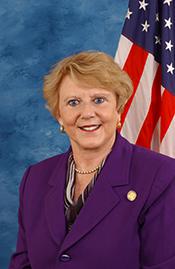
Madam Speaker, I thank the gentleman for yielding me time. Madam Speaker, I rise in opposition to this bill. I do not object to the bill on its merits, and when I first knew that the bill was coming…
Madam Speaker, I thank the gentleman for yielding me time.
Madam Speaker, I rise in opposition to this bill. I do not object to the bill on its merits, and when I first knew that the bill was coming up, it was not a problem.
However, upon reading various articles, I do have concerns, and my constituents have concerns. I have heard from several of them. Let me make it clear that my opposition is not partisan, it is not a Republican, it is not a Democratic issue.
Regardless of your personal view of him, Mr. Clinton served this country as President for 8 years and should have his birthplace properly designated as a place in American history. However, before this Congress moves to honor the former President, I think that he has some explaining to do.
You know, most Americans are very outraged over the Dubai Ports deal with the United States, and I am even more outraged when I hear that he may have consulted with the Crown Sheik of Dubai on this deal. So let me get this straight. Not only a U.S. citizen, but also a former President gives advice.
Madam Speaker, how do Republicans or Democrats explain this to our constituents? How do we possibly show that we are serious about protecting the United States from terrorist nations when we are proceeding to possibly honor the birthplace of someone who may have brokered this deal?
Madam Speaker, I cannot support this bill at this time until Mr. Clinton explains his role in the Dubai Ports deal. Reportedly Mr. Clinton has accepted nearly $1 million from the UAE for strategic advice. He is not a registered foreign agent. He also tried to get his former press secretary signed as a spokesman for the UAE. When they did not hire him, Mr. Clinton turned around and spoke against the port deal, and yet there was a reported million dollars here.
Madam Speaker, I think we need to take some time and review this very, very carefully.
Madam Speaker, the nexus to the bill is whether or not this is the time to proceed with this bill.
And so that individuals have an opportunity actually to respond, I am going ask for a recorded vote. It is directly related to the bill. It is directly related to the security of our Nation.
Madam Speaker, will the gentleman yield?
Madam Speaker, I thank the gentleman for yielding.
As I said before, my decision to call for a recorded vote is based on the future of our country and the fact that we need to have the information out there about Mr. Clinton's involvement in the Dubai port, the whole issue.
It is about hope, certainly about Hope, Arkansas. I hope to vote for this bill. I had hoped to vote for the bill because I had hoped that Mr. Clinton would do the right thing and register as a foreign agent. That not happening is the reason why I am objecting to the bill at this time.
I also believe that we need to preserve birthplaces of our Presidents, and had we had enough time, I just would have asked the leadership to postpone this vote. I wanted to vote for this bill, but the more information that comes out about the millions of dollars that have been paid by the UAE to Mr. Clinton just gives many Americans the lack of hope for our security. That is exactly why I am going to call for the yeas and nays.
It is not against President Clinton. It is not against him, but rather, I wish we had more time so that the public would know exactly how involved he was in what that million dollars bought when it came to the Dubai port issue.
Madam Speaker, on that I demand the yeas and nays.
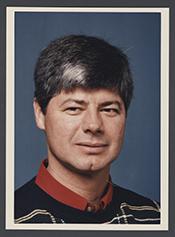
Mr. Speaker, I rise today in strong opposition to H.R. 4167, the National Food Uniformity for Food Act, and the rule under which this bill is being considered. If passed, this bill will be a huge…
Mr. Speaker, I rise today in strong opposition to H.R. 4167, the National Food Uniformity for Food Act, and the rule under which this bill is being considered. If passed, this bill will be a huge setback to consumer safety, public health, and America's war on terror.
This bill wipes out 200 food safety laws and puts our Nation's food supply squarely in the hands of the FDA. State laws that will be overturned include warnings regarding the risk of cancer, birth defects, reproductive health issues, and allergic reactions associated with sulfating agents in bulk foods. That is why 37 bipartisan State attorneys general and the Association of State Food and Drug Officials oppose this legislation.
The bill would also prevent States from passing laws regarding the safety of packaged meat.
Mr. Speaker, I would like to direct your attention to these pictures. Which meat do you think is older, the red meat on the top or the brown on the bottom? Both are the same age. Both have been sitting in a refrigerator side by side for 5 months.
The meat on the top has been packaged with carbon monoxide, which causes the meat to look red and fresh long into the future. The meat on the bottom has not. It is brown and slimy. Like I said, the meat on the top is 5 months old and looks as good as new, but it is not. If consumed, you could become severely ill from a food-borne pathogen like e. coli and possibly die.
The FDA, without any independent studies, states it has ``no objection'' to allowing meat to be packaged in carbon monoxide. The FDA merely reviewed the meat industry carbon monoxide proposal. Review is not the same as independent research and studies.
By allowing the injection of carbon monoxide in meat and seafood packaging, the meat industry stands to gain $1 billion a year because meat, as it turns brown, consumers reject it.
Numerous studies from 1972 through 2003 cite that color is the most important factor that consumers rely on to determine freshness in whether or not to buy the meat. The whole purpose behind this carbon monoxide package is to extend the shelf life of meat and seafood and to deceive the consumer into thinking it is fresh and safe.
Today States may pass their own laws to label meat that has been packaged with carbon monoxide, but these laws will be overturned if H.R. 4167 becomes law. My commonsense amendment would have allowed States to
label carbon monoxide-packaged meat so consumers would know that their meat may not be as fresh as it looks. Unfortunately, my amendment was rejected by the Rules Committee. This is what consumers have to work with now. This will be the standard if H.R. 4167 passes.
Just as the FDA caved in to the meat industry in approving this practice, the majority has caved in to the meat industry in blocking a vote on my amendment. The House deserves a full and open and fair debate on this issue and on my amendment.
I urge a ``no'' vote on the rule and a ``no'' vote on H.R. 4167.
Mr. Speaker, will the gentleman yield?
Mr. Speaker, as to meat and fish, as the gentleman knows, the FDA just issued their rule not even 3 weeks ago, 4 weeks ago, and they did it without any independent studies. They just said they just reviewed it, no study, no research, no nothing.
So what you may use lemon juice on apples is a far cry different than carbon monoxide on meat and seafood, and especially tuna, which most people consume in a raw state.
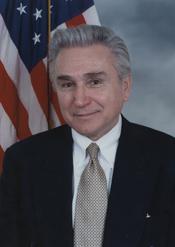
Mr. Speaker, this bill is just another example of why the people of this country need to fear this Congress and the people who lead it. What this bill does is preempt State laws on food safety. We…
Mr. Speaker, this bill is just another example of why the people of this country need to fear this Congress and the people who lead it. What this bill does is preempt State laws on food safety.
We have people who come down here to the floor of the House and argue for States rights. Now they present to us a bill which denies States rights; denies the States the ability to protect their citizens by watching the food that they eat. All of those State laws are going to be washed away by this legislation. It is probably even unconstitutional. The Constitution provides the States with the authority to protect its citizens. But we are now hearing from the majority party that they want to pass a law which denies States that right. No longer will they be able to protect their citizens.
Eighty percent of our Nation's food safety inspection is regulated by State and local entities. As we have heard, there are 200 laws. It has taken us more than 200 years to get those 200 laws in almost 50 States. Those laws protect our people. Now they are going to turn that over to the Food and Drug Administration. The FDA is not adequately protecting the people of our country today with regard to drug safety. The FDA is too close to the pharmaceutical companies. Yet now they are going to pass a bill which stops the States from protecting citizens, whether they are eating in a cafeteria, a lunchroom, a hospital, or some other situation, from passing a law that is going to make certain that the food that they are eating there is not going to cause them to be ill, maybe poison them in some way.
That is what they want to do, have the Federal Government step in here on top of the States, deny the States the right that they have under the Constitution to protect the health and safety and welfare of their citizens by passing legislation which preempts all of those State laws. This is a very bad idea and it must be defeated.
The National Uniformity for Food Act is poorly-drafted legislation that would preempt state law on food safety.
From Consumer's Union: ``This bill would eliminate critical state laws that protect consumer health while leaving in place an inadequate federal system based on the lowest common denominator of protection.
Eighty percent of our nation's food safety inspection is regulated on the state and local levels.
If enacted, the measure would essentially abrogate at least 200 state laws that build on federal law, as well as state laws that exist in the absence of any federal regulation (such as state laws on items including shellfish and smoked fish safety, milk, nursing home food, and cafeteria food).
If states wished to continue enforcement of their laws, they would need to petition FDA for permission.
The Congressional Budget Office estimates that the FDA could spend upwards of $100 million over the next five years on those petitions.
The measure would also stop states from creating food labels if they are not identical to federal labels.
The measure is opposed by the National Association of State District Attorneys, the Center for Science in the Public Interest, the Humane Society, and Physicians for Social Responsibility, which calls this a ``major health threat.''
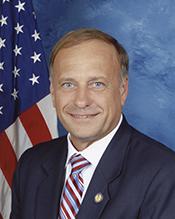
Mr. Speaker, I thank the gentleman from Georgia (Mr. Gingrey) and appreciate you yielding me time, and I rise in support of H.R. 4167, the National Uniformity for Food Act and in support of this…
Mr. Speaker, I thank the gentleman from Georgia (Mr. Gingrey) and appreciate you yielding me time, and I rise in support of H.R. 4167, the National Uniformity for Food Act and in support of this rule.
Ensuring food safety is a partnership between the Federal Government and the States. However, while it is a partnership, a national food supply requires a national approach to food safety. H.R. 4167 would allow for an orderly review of existing State regulations that may differ from Federal regulations. The legislation carefully balances the need for uniformity, while respecting the important role State and local governments have in making sure our food supply is safe.
Under the current system States may impose contradictory regulations, imposing unnecessary complexity and cost on food processors, manufacturers and wholesalers throughout the United States. That translates into costs that are passed on to the consumers, not to mention the tax burden, Mr. Speaker, for administration of different and duplicative regulations.
Science-based food warnings should be applied uniformly. If a warning about food is supported by science, then consumers in all 50 States should have the benefit of this warning. Inconsistent warning requirements confuse consumers, which does not lead to sound decisionmaking.
This bill will result in allowing States and the Federal Government to work together in establishing science-based food safety policies. Consumers are not protected well under a system where States adopt different regulatory requirements on the same food products. Consumers deserve a commonsense approach, a clear, single standard.
To speak to an example, a 2002 study conducted by Swedish scientists that provided evidence to support that a substance with cancer-causing properties called acrylamide was formed in some snacks and other foods when fired or baked at very high temperatures, but since 2002 some additional studies have confirmed these results, causing some States to consider warning label requirements for foods containing acrylamide.
Specifically, in August of 2005, the California attorney general filed a lawsuit against several different manufacturers of potato chips and French fries and has requested a court order requiring companies to label certain food products containing acrylamide with a warning of the agent and its cancer-causing properties.
The Food and Drug Administration does not currently require States to place a warning label on products which contain acrylamide after the baking process. Therefore, enactment of H.R. 4167 would, for all practical purposes, prohibit the State of California from requiring food manufacturers to place an acrylamide warning on their products unless the State filed a petition for exemption with the Secretary of Health and Human Services, or unless the FDA decided to set California as a requirement for the country as a whole.
This is a well-balanced bill, Mr. Speaker. It brings good, sound science to the table, and it provides for a regulation and a means for the States to make their case with the FDA so that the entire United States of America can benefit from the wisdom of the Californians.
Mr. Speaker, I agree with the gentlewoman and the gentleman from Michigan, but I want to speak about the previous question, which the general public really does not understand. But if we defeat the…
Mr. Speaker, I agree with the gentlewoman and the gentleman from Michigan, but I want to speak about the previous question, which the general public really does not understand.
But if we defeat the previous question, we get an opportunity to offer an amendment to this piece of legislation. Because so few pieces of legislation are passing this body, we have to take the opportunities you get, and I appreciate that the chairman of the Appropriations Committee Mr. Lewis has stated that he will insert language in the supplemental appropriation bill this afternoon, a supplemental for the war in Iraq and hurricane recovery, that will block the takeover of major American seaports by a Dubai company owned by the United Arab Emirates.
The Appropriations Committee will mark up that supplemental spending bill today, and it may be considered on the House floor next week, but the American people should harbor no illusions. We have absolutely no idea when the other body will take up this spending bill. Moreover, we have no idea of whether the Senate bill will even include a provision that addresses the vital national security issue of who owns our ports.
In fact, just today, Senator Stevens, who chairs the Defense Appropriations Subcommittee, is quoted as saying, ``I believe it ought to go through the 45-day review.'' So they are not going to take it up very soon.
Mr. Speaker, every Member of this House has the opportunity right now today to go on record as opposing the management of American seaports by a company owned by a foreign government. Now, it is not owning the seaports, but managing those seaports, and there is no excuse for not doing so. We have the opportunity.
If we defeat the previous question, that will be our intent, to offer an
amendment to this bill, send it to the Senate, which will preclude ownership of the management of the ports of America by the Dubai corporation owned by the state. I urge every Member, oppose the previous question on the rule in order to allow consideration of language blocking the port deal.
Furthermore, I urge the American people to not lose sight of the bigger issue. This administration and this Republican Congress have failed to do what is necessary to protect our homeland and our people from attack. Just last week Steven Flynn, a former Commander of the Coast Guard and an expert on homeland security, testified before the House Armed Services Committee, ``My assessment,'' this is the Commander of the Coast Guard, now retired, ``My assessment is that the security measures that are currently in place do not provide an effective deterrent for a determined terrorist organization intent on exploiting or targeting the maritime transportation system to strike at the United States.''
Five years after the catastrophic attacks of September 11, there is simply no excuse for these continuing vulnerabilities to our national security. Today, by voting ``no'' on the previous question, we have an opportunity to say no to the management of America's ports by government-owned entities. Vote ``no'' on the previous question.
Madam Speaker, I yield myself such time as I may consume. (Mrs. CHRISTENSEN asked and was given permission to revise and extend her remarks.) Madam Speaker, H.R. 4192 was introduced by my colleague…
Madam Speaker, I yield myself such time as I may consume.
(Mrs. CHRISTENSEN asked and was given permission to revise and extend her remarks.)
Madam Speaker, H.R. 4192 was introduced by my colleague from Arkansas Mr. Ross. Although former President Clinton lived in several other homes during his childhood, this home in Hope, Arkansas, is the one most closely identified with his youth and early development.
Former President Clinton's upbringing in Hope played a prominent role in his political campaigns. He summed up his sense of the community with the well-known phrase, ``I still believe in a place called Hope.''
Madam Speaker, inclusion of this site within the National Park System is consistent with numerous Presidential sites previously authorized, including that of the Ronald Reagan Boyhood Home in 2002.
Madam Speaker, I would also note that H.R. 4192 is supported by the entire Arkansas congressional delegation, and also has the support of State and local officials. We support H.R. 4192 and urge the adoption of this legislation by the House today.
Madam Speaker, I reserve the balance of my time.
Madam Speaker, I make a point of order.
Madam Speaker, I would state that the gentlewoman from Florida should confine her comments to the subject matter of the bill before us.
Madam Speaker, the gentlewoman has strayed again from the subject matter of the bill before us. I would ask that she confine her remarks to the subject matter of the bill before us at this time.
Madam Speaker, I yield such time as he may consume to the gentleman from Arkansas (Mr. Ross).
Madam Speaker, how much time do I have remaining?
Madam Speaker, I yield 2 minutes to the gentleman from California (Mr. Cardoza).
Madam Speaker, I yield 2 minutes to the gentleman from Arkansas (Mr. Snyder), my colleague.
Madam Speaker, I yield myself such time as I may consume.
This bill, H.R. 4192, would give the home most closely associated with the 42nd President of the United States the designation that other Presidents have had. It is about naming this boyhood home as a national historic site. It is not about policy, and in 2002, Members on both sides of the aisle, regardless of any disagreements they may have had over any of President Reagan's policies, came together and wholeheartedly supported the designation of the Ronald Reagan Boyhood Home as a national historic site.
In his Presidency, William Jefferson Clinton gave many Americans who were at that time left behind and left out and left on the fringes of American society reasons to hope. It is fitting that we recognize his 8 years of service to this country as our President and designate his home in Hope, Arkansas, as the Clinton Boyhood Home National Historic Site.
I would urge all of my colleagues on both sides of the aisle to support this bill, as we have supported so many others for Presidents in the past.
Madam Speaker, I yield back the balance of my time.

Mr. Speaker, on Monday, I was briefed on current security and commerce issues by the executives of the Port of Philadelphia. These men and women operate the world's largest freshwater port and one of…
Mr. Speaker, on Monday, I was briefed on current security and commerce issues by the executives of the Port of Philadelphia. These men and women operate the world's largest freshwater port and one of the Nation's strategic military seaports.
While there, we discussed the key role the Philadelphia and other U.S. ports play in our national and global economy, the fact that the United States is the leading maritime trading Nation in the world, and how last year more than 11 million containers, carrying our basic necessities and supplies, came to our Nation's ports and how our seaports account for 75 percent of international commerce.
We also talked about how a significant disruption in our port system would be devastating to our economy, causing massive shortages of food, oil, and other vital commodities. Yet despite these facts and despite universal agreement that our vessels, our containers, and ports are potential terrorist targets, this administration approved a deal allowing a United Arab Emirates-controlled company to oversee operations at six major U.S. ports, including the Port of Philadelphia.
My colleagues, this administration quietly tried to move this deal forward without informing Congress or without informing the American public. Even knowing the serious threats against us, this administration relinquished its right to conduct an in-depth national security investigation of this proposed acquisition and, instead, approved the deal. It is unacceptable that this administration was prepared to allow a country whose key agencies, including security and monetary agencies, have allegedly been infiltrated by al Qaeda; and in fact, this was a country which was the port of origin for two of September 11's hijackers, and they want this company controlled by this country to operate vital U.S. ports.
This administration has behaved with no accountability and no responsibility regarding U.S. oversight and control of our ports. For years, despite knowing the needs and the threats, this administration repeatedly turned a blind eye to port security. Since September 11, this administration has provided only 16 percent of the funds needed to secure our ports, and has neglected to issue security standards for our ports, including a long delay on important port worker ID cards. These failures are outrageous and unacceptable.
So today, my Democratic colleagues and I are calling on Congress to address one of the most immediate national security issues facing our Nation and the American people today: Dubai Ports World deal. Clearly we should take up this matter immediately before considering the National Food Uniformity Act, legislation that tramples on our States rights and fails to improve the health of our Nation's food supply.
I urge a ``no'' vote on the previous question.

Mr. Speaker, I move to suspend the rules and pass the bill (H.R. 4192) to authorize the Secretary of the Interior to designate the President William Jefferson Clinton Birthplace Home in Hope,…
Mr. Speaker, I move to suspend the rules and pass the bill (H.R. 4192) to authorize the Secretary of the Interior to designate the President William Jefferson Clinton Birthplace Home in Hope, Arkansas, as a National Historic Site and unit of the National Park System, and for other purposes.
Madam Speaker, I ask unanimous consent that all Members may have 5 legislative days within which to revise and extend their remarks and include extraneous material on the bill under consideration.
Madam Speaker, I reserve the balance of my time.
Madam Speaker, I yield such time as she may consume to the gentlewoman from Florida (Ms. Ginny Brown-Waite).
Madam Speaker, I yield such time as he may consume to the gentleman from Arkansas (Mr. Boozman).
Madam Speaker, I yield such time as he may consume to the gentleman from Florida (Mr. Keller), my friend.
Madam Speaker, I yield myself such time as I may consume.
I appreciate my colleagues across the aisle. You are right, this is not a partisan issue when we are talking about the birthplace of a President. Frankly, here I am making the motion, and I never voted for President Clinton. I was not a big fan of President Clinton, but you are right, also: he came from extraordinary circumstances and rose to the highest position in this country.
I mean, he and I apparently had very different lifestyles growing up. I never consumed a drop of alcohol, and when I was underage, I never not only did not inhale, I never smoked.
There are so many things different in our backgrounds, and he ought to be an inspiration to every child out there, whether leaning toward being Republican or Democrat. That President Bill Clinton, with the things that he had in his background, could reach the Nation's highest office. I mean, any of you should know that it is not out of your reach either. It is extraordinary what he accomplished.
But there is an old political adage that says, democracy ensures that a people govern no better than they deserve. In 1992 and 1996, whether any of us like it or not, America deserved Bill Clinton, and that is who we elected. It is now a fact he has been a President. It is now a fact that his birthplace should be a historical site, and I understand the concerns of the gentlewoman from Florida (Ms. Ginny Brown-Waite), my friend. Maybe there will be a room dedicated to all the money made from the UAE, but that is someone else's determination.
The fact is it is a historical place. It deserves that designation, and, hopefully, people will be inspired for years to come that this is America. It does not matter what your background is; you can rise to the highest office in the land, and you should be inspired by that.
For that reason, I would urge the passage of this bill.
Madam Speaker, I yield back the balance of my time.
Show 10 more
Madam Speaker, I thank Congressman Ross and Chairman Pombo. Congressman Ross for introducing the bill, and then Chairman Pombo for getting it to the floor. I rise in strong support of this bill. The…
Madam Speaker, I thank Congressman Ross and Chairman Pombo. Congressman Ross for introducing the bill, and then Chairman Pombo for getting it to the floor.
I rise in strong support of this bill. The reason that I do, before I was elected to Congress I had never been to Washington, D.C, and I came up here, I can still remember the excitement of seeing all the structures and things; and then now, as my constituents come up, taking them around, showing them the different areas, the different things of history that we preserved.
Preserving Presidential birthplaces is very, very important. It is something that we need to do. We need to do a much better job, I think, in this country of preserving structures like this in general that are so important, that tell the story of America.
One of the things that I really enjoy doing is going out to schools and I visit with the kids. I was on the school board for 7 years, and I sit down and visit with them, and one of the main reasons I am there is I want them to understand that a guy like me that was on the school board, had a small business, was on the school board, grew up very much like they did, in western Arkansas, that the sky is the limit, that they can work hard and basically achieve anything they want.
Bill Clinton is truly an example of that. And certainly as they go through the structure that we are trying to preserve, I think it really shows that a young guy that grew up as much of America is growing up, maybe at some times maybe a little bit worse than much of America is growing up, but growing up in humble circumstances, having a dream, able to achieve the governorship of Arkansas, and then go on to become the most powerful man in the world. I think it is a great story. I think it is one that kids will be able to relate to and certainly show that, again, if they step forward that the sky is the limit.
As Mike said, this has great support from the State of Arkansas, great support from our congressional delegation, and then also from our Governor, Governor Huckabee, that we would like to do what President Clinton did in the future, also from Hope, and he was very, very supportive as the letter indicates.
Again, I speak in strong support of this bill and I urge its adoption.
Mr. Speaker, in this debate we see the irony of the majority leadership of the House of Representatives in a rather strange way. They are rushing to get to the floor a provision that has barely been…
Mr. Speaker, in this debate we see the irony of the majority leadership of the House of Representatives in a rather strange way. They are rushing to get to the floor a provision that has barely been debated and discussed, that is highly controversial, highly technical, and not very well understood by a lot of people. An absolute rush to get this to the floor.
The number one issue, I trust in most Members' districts, it sure is in mine, is the urgent pendency of a deal that would turn over major port operations throughout this country to a company wholly owned by the United Arab Emirates, an ally of rather questionable and debatable standing with the United States.
Now, this is going to happen, this port deal, if Congress does not act. The President has made that very clear. And many of us believe that we need to get to this floor right now, not later, legislation on this issue so that the majority can work its will. Members on both sides of the aisle have said this is what we need to be doing right now. But there is nothing on the agenda to do anything about that. Nothing.
We are going to go off for another recess, and who knows what is going to be negotiated on this deal when we are gone? My sense is this is what our constituents want us to debate and legislate on, the wisdom or lack thereof of this port takeover deal.
We will have an opportunity by voting ``no'' on moving the previous question to bring to this floor a piece of legislation the American people really do want debated right now; don't want sent back to committee for further hearings or further consideration.
This is just bizarre. It is bizarre. A piece of legislation that appears to be a solution in search of a problem is rushed to the floor so it can be considered, and something that is acknowledged from coast to coast by both parties in both Chambers as a huge problem cannot make it to the floor at all.
Well, we have a chance to do something about that. Vote ``no'' on the previous question and make the people's House reflect the people's business.
Mr. Speaker, I rise to offer a personal explanation of the reason I missed rollcall votes 19 through 38. Due to an emergency appendectomy I was unable to be present for votes the week of March 6th. I…
Mr. Speaker, I rise to offer a personal explanation of the reason I missed rollcall votes 19 through 38. Due to an emergency appendectomy I was unable to be present for votes the week of March 6th. I respectfully request that it be entered into the Congressional Record that if present, I would have voted on rollcall 19 (H.R. 4054 Designating the Dewey Bartlett Post Office), ``aye''; rollcall 20 (S. 2771--Reauthorization of the Patriot Act), ``no''; rollcall 21 (Previous Question to H.R. Res 710 Providing for Consideration of the Food Uniformity Bill), ``no''; rollcall 22 (Motion to Instruct Conferees to H.R. 2830), ``aye''; rollcall 23 (H.R. 4192 designating Hope Arkansas as the President Clinton Birthplace), ``yea''; rollcall 24 (H.R. 1053 Extending Normal Trade Relations to the Ukraine), ``aye''; rollcall 25 (H. Res. 673 Expressing Support for the People of Belarus to Establish a Full Democracy), ``aye''; rollcall 26 (H.R. 3505 to Provide Regulatory Relief for Insured Depository Institutions), `` aye''; rollcall 27 (Cardoza Amendment to H.R. 4167--To Amend the Federal Food, Drug and Cosmetic Act to Provide for Uniform Food Safety Warnings), ``aye''; rollcall 28 (Waxman Amendment to H.R. 4167), ``aye'; rollcall 29 (Capps Amendment to H.R. 4167), ``aye''; rollcall 30 (Wasserman Shultz Amendment to H.R. 4167), ``aye''; rollcall 31 (Stupak Motion to Recommit to H.R. 4167), ``aye''; rollcall 32 (Final Passage of H.R. 4167), ``no''; rollcall 33 (Previous Question of H.R. 2829 Reauthorize the National Drug Control Policy Act), ``no''; rollcall 34 (Chabot Amendment to H.R. 2829), ``aye''; rollcall 35 (Hooley Amendment to H.R. 2829), ``aye''; rollcall 36 (Paul Amendment to H.R. 2829), ``no''; rollcall 37 (Rehberg Amendment to H.R. 2829), ``aye''; rollcall 38 (Final Passage of H.R. 2829), ``aye''.
Madam Speaker, I am pleased to rise in support of H.R. 4192, to designate the birthplace of our 42nd President, William Jefferson Clinton, as a national historic site and a unit of the National Park…
Madam Speaker, I am pleased to rise in support of H.R. 4192, to designate the birthplace of our 42nd President, William Jefferson Clinton, as a national historic site and a unit of the National Park System.
Currently, the Clinton birthplace home is owned and operated by a nonprofit Clinton birthplace foundation. While they are doing an excellent job of maintaining this site for the public viewing and educational purposes, by becoming part of the National Park System the Clinton birthplace will now be able to take full advantage of the National Park Service's vast resources.
As a member of the Committee on Resources and at Mr. Ross' request, I have been down to southwest Arkansas to see the Clinton birthplace for myself, and I can personally attest to the great pride that fellow Arkansans feel for this site.
Not only is Mr. William Jefferson Clinton a source of pride for the folks in his home State of Arkansas, but he is also a representative of the symbol of hope for millions of both Americans and those throughout the world who have seen his work. And you just need to tour the Clinton library to see the respect he received throughout the globe by the tributes housed at the library.
I believe every Presidential birthplace should be preserved and protected as part of our Nation's history regardless of political party.
I would like to also recognize that Speaker Hastert and Chairman Pombo have brought this bill to the floor. And I want to commend them for doing so in a nonpartisan manner, not treating this issue as a political football, but one of worthy legislation that deserves our support.
I urge my colleagues to support H.R. 4192.
Madam Speaker, it is starting to be a pattern here of the Arkansans lining up here in support of this bill, both Republican and Democrat, but it is the kind of bill that in any State we would all do…
Madam Speaker, it is starting to be a pattern here of the Arkansans lining up here in support of
this bill, both Republican and Democrat, but it is the kind of bill that in any State we would all do the same thing, Republican or Democrat, to preserve this kind of a historic place.
Obviously, we are all very much aware that during his time in office President Clinton was a controversial figure. Any President is these days, but what we are talking about is preserving the childhood home, the birthplace home, of this President.
As a person who is the child of a single-parent household, I think it is important that we enrich those sites that have been preserved so this story can be told also, that no longer are our Presidents, like Abraham Lincoln, reading by firelight because there was no electricity in those days, but in this modern era that any child in America, regardless of background, can rise above that background, take those values that he learns and, regardless of party affiliation, go on to achieve great things in this country.
So I think this is very important. I am very much appreciative of Mr. Hastert and Mr. Pombo for allowing this bill to come to the floor. Our Republican Governor, Governor Huckabee, is also supportive. And also, thanks today to the people of Hope who have kept this site in a state of suspended animation and preserved it while their Federal Government catches up with them in recognizing the significance of preserving and maintaining for all time this modest home.
Mr. Speaker, I have never made a speech like this before. I am cosponsor of this bill. I think like a businessman, because our companies do need uniformity and simplicity. But I am outraged that a…
Mr. Speaker, I have never made a speech like this before. I am cosponsor of this bill. I think like a businessman, because our companies do need uniformity and simplicity. But I am outraged that a bill like this would come through the House of Representatives without a single hearing. That is the job of Congress, to hold hearings, to find out the facts, to listen to the debate, to sometimes participate in the debate to hear the pros and cons.
I am wondering right now what the food industry is afraid of. Why are they trying to ram this piece of legislation through this House?
Now, if we were to have hearings, I may well vote for the bill because I am predisposed that way. It makes sense to me. But I am not for a cover-up, and that is exactly what you get when you have no hearings on legislation.
This body needs to do its job. So I would urge my colleagues and staff who are watching on television, reconsider, even if your boss has cosponsored this bill. Because what are we afraid of? We need hearings on this bill.
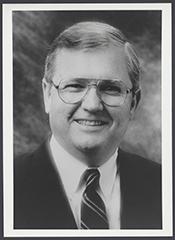
Mr. Speaker, though I was absent on Wednesday, March 8, 2006 for personal reasons, I wish to have my intended votes recorded in the Congressional Record for the following series: Rollcall vote 21 on…
Mr. Speaker, though I was absent on Wednesday, March 8, 2006 for personal reasons, I wish to have my intended votes recorded in the Congressional Record for the following series:
Rollcall vote 21 on ordering the previous question for H.R. 710-- ``aye''; rollcall vote 22 on the motion to instruct conferees on H.R. 2830--``no''; rollcall vote 23 on H.R. 4192--``aye''; rollcall vote 24 on H.R. 1053--``aye''; rollcall vote 25 on H. Res 673--``aye''; rollcall vote 26 on H.R. 3505--``aye.''
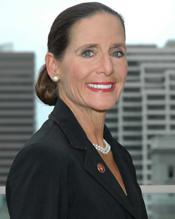
Mr. Speaker, on rollcall No. 21, legislative bells failed to go off in my office. I came to the floor as soon as I was notified of the vote, but arrived after the vote had closed. Had I been present,…
Mr. Speaker, on rollcall No. 21, legislative bells failed to go off in my office. I came to the floor as soon as I was notified of the vote, but arrived after the vote had closed. Had I been present, I would have voted ``yea''.
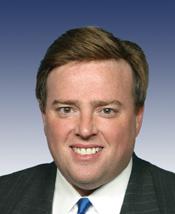
Madam Speaker, I thank the gentleman for yielding me the time, and I just want to say I intend to vote for this. I think it is worthy of being designated as an historic site. I yield to the…
Madam Speaker, I thank the gentleman for yielding me the time, and I just want to say I intend to vote for this. I think it is worthy of being designated as an historic site.
I yield to the gentlewoman from Florida.
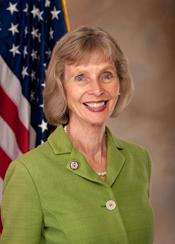
Mr. Speaker, on rollcall No. 23, had I been present, I would have voted ``yea.''
Mr. Speaker, on rollcall No. 23, had I been present, I would have voted ``yea.''
Bill Text
4 versions available
        [Congressional Bills 109th Congress]
[From the U.S. Government Publishing Office]
[H.R. 4192 Referred in Senate (RFS)]

109th CONGRESS
2d Session
H. R. 4192

_______________________________________________________________________

IN THE SENATE OF THE UNITED STATES

March 9, 2006

Received; read twice and referred to the Committee on Energy and
Natural Resources

_______________________________________________________________________

AN ACT

To authorize the Secretary of the Interior to designate the President
William Jefferson Clinton Birthplace Home in Hope, Arkansas, as a
National Historic Site and unit of the National Park System, and for
other purposes.

Be it enacted by the Senate and House of Representatives of the
United States of America in Congress assembled,

SECTION 1. WILLIAM JEFFERSON CLINTON BIRTHPLACE HOME NATIONAL HISTORIC
SITE.

(a) Acquisition of Property; Establishment of Historic Site.--
Should the Secretary of the Interior acquire, by donation only from the
Clinton Birthplace Foundation, Inc., fee simple, unencumbered title to
the William Jefferson Clinton Birthplace Home site located at 117 South
Hervey Street, Hope, Arkansas, 71801, and to any personal property
related to that site, the Secretary shall designate the William
Jefferson Clinton Birthplace Home site as a National Historic Site and
unit of the National Park System, to be known as the ``President
William Jefferson Clinton Birthplace Home National Historic Site''.
(b) Applicability of Other Laws.--The Secretary shall administer
the President William Jefferson Clinton Birthplace Home National
Historic Site in accordance with the laws generally applicable to
national historic sites, including the Act entitled ``An Act to
establish a National Park Service, and for other purposes'', approved
August 25, 1916 (16 U.S.C. 1-4), and the Act entitled ``An Act to
provide for the preservation of historic American sites, buildings,
objects and antiquities of national significance, and for other
purposes'', approved August 21, 1935 (16 U.S.C. 461 et seq.).

Passed the House of Representatives March 8, 2006.

Attest:

KAREN L. HAAS,

Clerk.