Lawsuit Abuse Reduction Act of 2005
Legislative Activity
Stay on top of the latest movement without scrolling through every action
Received in the Senate and Read twice and referred to the Committee on the Judiciary.
October 31, 2005
View full timeline
Introduced in House
January 26, 2005
Referred to the House Committee on the Judiciary.
January 26, 2005
Sponsor introductory remarks on measure. (CR H633-634)
February 16, 2005
Referred to the Subcommittee on Courts, the Internet, and Intellectual Property.
March 2, 2005
Subcommittee on Courts, the Internet, and Intellectual Property Discharged.
May 20, 2005
Ordered to be Reported (Amended) by the Yeas and Nays: 19 - 11.
May 25, 2005
Reported (Amended) by the Committee on Judiciary. H. Rept. 109-123.
June 14, 2005
Placed on the Union Calendar, Calendar No. 69.
June 14, 2005
Rules Committee Resolution H. Res. 508 Reported to House. Rule provides for consideration of H.R. 420 with 1 hour of general debate. Previous question shall be considered as ordered without intervening motions except motion to recommit with or without instructions. Measure will be considered read. Specified amendments are in order.
October 25, 2005 • 8:30 PM
Rule H. Res. 508 passed House.
October 27, 2005 • 10:51 AM
Considered under the provisions of rule H. Res. 508. (consideration: CR H9312-9329)
October 27, 2005 • 1:42 PM
Rule provides for consideration of H.R. 420 with 1 hour of general debate. Previous question shall be considered as ordered without intervening motions except motion to recommit with or without instructions. Measure will be considered read. Specified amendments are in order.
October 27, 2005 • 1:42 PM
House resolved itself into the Committee of the Whole House on the state of the Union pursuant to H. Res. 508 and Rule XVIII.
October 27, 2005 • 1:42 PM
The Speaker designated the Honorable Tom Latham to act as Chairman of the Committee.
October 27, 2005 • 1:42 PM
GENERAL DEBATE - The Committee of the Whole proceeded with one hour of general debate on H.R. 420.
October 27, 2005 • 1:43 PM
DEBATE - Pursuant to H. Res. 508, the Committee of the Whole proceeded with 10 minutes of debate on the Smith (TX) amendment.
October 27, 2005 • 2:28 PM
DEBATE - Pursuant to H. Res. 508, the Committee of the Whole proceeded with 40 minutes of debate on the Schiff amendment in the nature of a substitute.
October 27, 2005 • 2:34 PM
The House rose from the Committee of the Whole House on the state of the Union to report H.R. 420.
October 27, 2005 • 3:35 PM
The previous question was ordered pursuant to the rule. (consideration: CR H9327)
October 27, 2005 • 3:36 PM
The House adopted the amendment as agreed to by the Committee of the Whole House on the state of the Union. (text: CR H9319)
October 27, 2005 • 3:36 PM
Mr. Barrow moved to recommit with instructions to Judiciary.
October 27, 2005 • 3:37 PM
Floor summary: DEBATE - The House proceeded with 10 minutes of debate on the Barrow motion to recommit.
October 27, 2005 • 3:38 PM
The previous question on the motion to recommit with instructions was ordered without objection.
October 27, 2005 • 3:44 PM
On motion to recommit with instructions Failed by recorded vote: 196 - 217 (Roll no. 552). (consideration: CR H9327-9329; text: CR H9327)
October 27, 2005 • 4:03 PM
Passed/agreed to in House: On passage Passed by recorded vote: 228 - 184 (Roll no. 553).
October 27, 2005 • 4:14 PM
Motion to reconsider laid on the table Agreed to without objection.
October 27, 2005 • 4:14 PM
On passage Passed by recorded vote: 228 - 184 (Roll no. 553).
October 27, 2005 • 4:14 PM
Received in the Senate and Read twice and referred to the Committee on the Judiciary.
October 31, 2005
Voting History
3 votes recorded • Roll call available
HOUSE
Roll Call AvailableOctober 27, 2005 at 4:15 PM
On Passage
Majority required: 1/2 (50%)
228 - 184
HOUSE
Roll Call AvailableOctober 27, 2005 at 4:05 PM
On Motion to Recommit with Instructions
Majority required: 1/2 (50%)
196 - 217
HOUSE
Roll Call AvailableOctober 27, 2005 at 3:36 PM
On Agreeing to the Amendment
Majority required: 1/2 (50%)
184 - 226
Floor Debate
22 membersWhat members said about H.R. 420 on the floor
LS PG
PG JN
JN SJL
SJL ABS+17
Floor Debate
22 membersWhat members said about H.R. 420 on the floor
Mr. Chairman, I yield myself such time as I may consume. Mr. Chairman, I support H.R. 420, the Lawsuit Abuse Reduction Act of 2005. Frivolous lawsuits bankrupt individuals, ruin reputations, drive up…
Mr. Chairman, I yield myself such time as I may consume.
Mr. Chairman, I support H.R. 420, the Lawsuit Abuse Reduction Act of 2005.
Frivolous lawsuits bankrupt individuals, ruin reputations, drive up insurance premiums, increase health care costs, and put a drag on the economy.
Frivolous lawsuits are brought, for example, when there is no evidence that shows negligence on the part of the defendant. These nuisance lawsuits make a mockery of our legal system.
Of course, many Americans have legitimate legal grievances, from someone wrongly disfigured during an operation to a company responsible for contaminating a community's water supply. No one who deserves justice should be denied justice; however, gaming of the system by a few lawyers drives up the cost of doing business and drives down the integrity of the judicial system.
Let me give some examples. The chief executive officer of San Antonio's Methodist Children's Hospital was sued after he stepped into a plaintiff's hospital room and asked how the patient was doing. Of course, a jury cleared him of any wrongdoing.
A Pennsylvania man sued the Frito-Lay Company claiming that Doritos chips were ``inherently dangerous'' after one stuck in his throat. After 8 years of costly litigation, the Pennsylvania Supreme Court threw out the case, writing that there is ``a commonsense notion that it is necessary to properly chew hard foodstuffs prior to swallowing.'' But, of course, the defendants had to absorb hundreds of thousands of dollars in legal fees.
In a New Jersey Little League game, a player lost sight of a fly ball hit because of the sun. He was injured when the ball struck him in the eye. The coach, who was forced to hire a lawyer after the boy's parents sued, had to settle the case for $25,000.
Today almost any party can bring any suit in almost any jurisdiction. That is because plaintiffs and their attorneys have nothing to lose. All they
want is for the defendant to settle. This is legalized extortion. It is lawsuit lottery.
Defendants, on the other hand, can unfairly lose their lifetime savings, their careers, their businesses, and their reputations. This is simply not justice.
There is a remedy: the Lawsuit Abuse Reduction Act. It passed the House last year by a margin of almost 60 votes. The bill applies to both plaintiffs who file frivolous lawsuits to extort financial settlements and to defendants who unnecessarily prolong the legal process. If a judge determines that a claim is frivolous, they can order the plaintiff to pay the attorneys' fees of the defendant who was victim of their frivolous claim. This will make a lawyer think twice before filing a frivolous lawsuit.
It is a problem that even the American Trial Lawyers Association has tried to address in its own code of conduct by declaring, ``No American Trial Lawyers Association member shall file or maintain a frivolous suit, issue, or position.'' However, ATLA has not disciplined a single attorney for violation of this code of conduct in the last 2 years.
This legislation also prevents forum shopping. It requires that personal injury claims be filed only where the plaintiff resides, where the injury occurred, or the defendant's principal place of business is located. This provision addresses the growing problem of attorneys who shop around the country for judges who routinely award excessive amounts.
One of the Nation's wealthiest trial lawyers, Dickie Scruggs, has told us exactly how this abuse occurs. Here is what he says about forum shopping:
``What I call the magic jurisdiction . . . is where the judiciary is elected with verdict money. The trial lawyers have established relationships with the judges that are elected; they're State Court judges; they're populists. They've got large populations of voters who are in on the deal. They're getting their piece in many cases. And so it's a political force in their jurisdiction, and it's almost impossible to get a fair trial if you're a defendant in some of these places. The plaintiff lawyer walks in there and writes the number on the blackboard, and the first juror meets the last one coming out the door with that amount of money . . . Any lawyer fresh out of law school can walk in there and win the case, so it doesn't matter what the evidence or law is.''
Forum shopping is a part of lawsuit abuse, and we must pass legislation to stop it from occurring. Even several largely recognized Democrats have acknowledged the need to end frivolous lawsuits. For instance, the John Kerry for President campaign endorsed national legislation in which ``lawyers who file frivolous cases would face tough mandatory sanctions.'' And former Vice Presidential candidate Senator Edwards stated, ``Lawyers who bring frivolous cases should face tough, mandatory sanctions.''
The Lawsuit Abuse Reduction Act is sensible reform that will help restore confidence to America's justice system.
Mr. Chairman, the following organizations support H.R. 420: American Tort Reform Association, National Association of Home Builders, National Association of Manufacturers, National Restaurant Association, American Insurance Association, and the United States Chamber of Commerce. And this legislation is the top legislative priority of the National Federation of Independent Businesses.
Mr. Chairman, I reserve the balance of my time.
Mr. Chairman, I yield 5 minutes to the gentleman from Florida (Mr. Keller), a member of the Judiciary Committee.
Mr. Chairman, I yield 4 minutes to the gentleman from Ohio (Mr. Chabot), the chairman of the Constitutional Law Subcommittee of the Judiciary Committee.
Mr. Chairman, I yield myself such time as I may consume.
Mr. Chairman, the scourge of frivolous litigation mars the fabric of our legal system and undermines the vitality of our economy. As President Bush has stated, ``We have a responsibility to confront frivolous litigation head on.'' H.R. 420 would do exactly that.
Frivolous lawsuits have become a form of legalized extortion. Without the serious threat of certain punishment for filing frivolous claims, innocent people and small businesses will continue to confront the stark economic reality that simply paying off frivolous claims through monetary settlements is always cheaper than litigating the case until no fault is found. Frivolous lawsuits subvert the proper role of the tort system and affront fundamental notions of fairness that are central to our system of justice.
The effects of frivolous litigation are both clear and widespread. Churches are discouraging counseling by ministers. Children have learned to threaten teachers with lawsuits. Youth sports are shutting down in the face of lawsuits for injuries and even hurt feelings. Common playground equipment is now an endangered species. The Girl Scouts in the metro Detroit area alone have to sell 36,000 boxes of cookies each year just to pay for their liability insurance. Good Samaritans are discouraged. When one man routinely cleared a trail after snowstorms, the county had to ask him to stop. The supervisor of district operations wrote, ``If a person falls, you are more liable than if you had never plowed at all.''
Unfortunately, the times we are in allow for a much more litigious environment than common sense would dictate. A Federal lawsuit has even been filed against U.S. weather forecasters after the South Asian tsunami disaster.
Today results of frivolous lawsuits are written on all manner of product warnings that aim to prevent obvious misuse. A warning label on a baby stroller cautions, ``Remove child before folding.'' A five-inch brass fishing lure with three hooks is labeled, ``Harmful if swallowed.'' And household irons warn, ``Never iron clothes while they are being worn.''
Small businesses and workers suffer the most. The Nation's oldest ladder manufacturer, family-owned John S. Tilley Ladders Company near Albany, New York, recently filed for bankruptcy protection and sold off most of its assets due to litigation costs. Founded in 1855, the Tilley firm could not handle the cost of liability insurance, which had risen from 6 percent of sales a decade ago to 29 percent, while never losing an actual court judgment. The workers of John S. Tilley Ladders never faced a competitor they could not beat in the marketplace, but they were no match for frivolous lawsuits.
When Business Week published an extensive article on what the most effective legal reforms would be, it stated that what is needed are ``Penalties That Sting.'' As Business Week recommends, ``Give judges stronger tools to punish renegade lawyers.''
Before 1993, it was mandatory for judges to impose sanctions such as public censures, fines, or orders to pay for the other side's legal expenses. Then the Civil Rules Advisory Committee, an obscure branch of the courts, made penalties optional. This needs to be reversed by Congress. Today, H.R. 420 would do exactly that.
Rule 11 of the Federal Rules of Civil Procedure presently does not require sanctions against parties who bring frivolous lawsuits. Without certain punishment for those who bring these suits and the threat of serious monetary penalties to compensate the victims of frivolous lawsuits, there is little incentive for lawsuit victims to spend time and money seeking sanctions for lawsuit abuse. In fact, as currently written, Rule 11 allows lawyers to entirely avoid sanctions for filing frivolous claims by withdrawing them within 3 weeks. Such a rule actually encourages frivolous claims because personal injury attorneys can file harassing pleadings secure in the knowledge that they have nothing to lose. If someone objects, they can always retreat without penalty.
H.R. 420 would restore mandatory sanctions and monetary penalties under Federal Rule 11 for filing frivolous lawsuits and abusing the litigation process. It would also extend these same protections to cover State cases that a State judge determines have interstate implications and close the loopholes of a tort system that often resembles a tort lottery.
The legislation applies to frivolous lawsuits brought by businesses as well as individuals, and it expressly precludes application of the bill to civil rights cases if applying the bill to such cases would bar or impede the assertion or development of new claims or remedies under Federal, State, or local civil rights law. The Class Action Fairness Act, which was recently signed into law after receiving broad support in both Houses, prohibits the unfair practice of forum shopping for favorable courts when the case is styled as a class action. The same policy should apply to individual lawsuits as well.
One of the Nation's wealthiest personal injury attorneys, Richard ``Dickie'' Scruggs, and I quoted him at length a while ago, but I will quote him a little bit shorter right now, described what he calls ``magic jurisdictions'' as ``What I call the `magic jurisdictions' is where it is almost impossible to get
a fair trial if you are a defendant. Any lawyer fresh out of law school can walk in there and win the case, so it does not matter what the evidence or the law is.''
America's system of justice deserves better, much better. H.R. 420 prevents the unfair practice of forum shopping by requiring that personal injury cases be brought only where there is some reasonable connection to the case; namely, where the plaintiff lives or was allegedly injured, where the defendant's principal place of business is located, or where the defendant resides.
The time for congressional action to close the loopholes that create incentives for frivolous lawsuits is now. Too many jobs have been lost and more will not be created if this legislation is not enacted into law.
I urge my colleagues to return a measure of fairness to America's legal system by passing the Lawsuit Abuse Reduction Act.
Mr. Chairman, I yield back the balance of my time.
Mr. Chairman, I offer an amendment.
Mr. Chairman, I yield myself such time as I may consume.
Mr. Chairman, the bipartisan manager's amendment I am offering today reflects the important contributions of the gentleman from New York (Mr. Nadler) and the gentleman from Virginia (Mr. Scott). It incorporates into the base bill provisions imposing sanctions for the destruction of relevant documents in a pending Federal court proceeding, an amendment setting standards for a court's determination that certain court records should be sealed, and an amendment providing for a presumption on a Rule 11 violation when the same issue is repeatedly relitigated.
This manager's amendment also makes clear that in the antiforum- shopping provisions, if there is no State court in the county in which the injury occurred, the case can be brought in the nearest adjacent county where a court of general jurisdiction is located.
Finally, the manager's amendment makes clear that the legislation does not affect personal injury claims that Federal bankruptcy law requires to be heard in a Federal bankruptcy court. This reasonable request was made by the National Bankruptcy Conference Committee on Legislation.
I urge my colleagues to join me in supporting this bipartisan manager's amendment.
Mr. Chairman, I yield back the balance of my time.
Mr. Chairman, I yield myself such time as I may consume.
Mr. Chairman, I rise in opposition to this substitute amendment. And I have to point out that this same substitute amendment was defeated in the last Congress. Mr. Chairman, where to begin. I will begin with the title of the first section of the substitute. It is entitled, ``Three Strikes and You're Out.'' But the title of section 1 does not reflect the text it contains.
In fact, the substitute provides that following three violations of its provisions: ``The court shall refer each such attorney to one or more appropriate State bar associations for disciplinary proceedings.''
The substitute does not say the attorney shall be suspended from the practice of law. However, the base bill explicitly provides for such a sanction. Specifically, the base bill states that after three strikes: ``The Federal district court shall suspend that attorney from the practice of law in that Federal district court.''
The base bill contains a substantive three-strikes-and-you-are-out provision that will prevent attorneys who file frivolous lawsuits from getting into the courtroom. The substitute merely requires that repeat offenders be reported to State bar associations.
But it gets worse. Not only are filers of frivolous lawsuits not out after three strikes under the substitute, but the substitute even changes what constitutes a strike under existing law. Currently, Rule 11 contains four criteria that can lead to a Rule 11 violation.
The substitute references only three. Currently, Rule 11 allows sanctions against frivolous filers whose denials of factual contentions are not warranted on the evidence or are not reasonably based on a lack of information or belief.
The substitute removes this protection for victims of frivolous pleadings under existing law. In addition, the substitute for the first time without penalty allows defendants to file papers with the court that include factual denials of the allegations against them that are not warranted by the evidence and not reasonably based.
Instead, the substitute provides additional protection for defendants filing frivolous defenses that are not warranted by the evidence and not reasonably based.
This is a step backward for victims of frivolous lawsuits under both State and Federal law. So the substitute not only undermines the clarity of the three strikes and you're out rule, it purports to establish, it dramatically expands the potential for even more frivolous lawsuits.
Furthermore, the base bill provides that those who file frivolous lawsuits can be made to pay all costs and attorneys' fees that are ``incurred as a direct result of the filing of the pleading, motion, or other paper that is the subject of the violation.'' The substitute does not include that critical language which is necessary to make clear that those filing frivolous lawsuits must be made to pay the full costs imposed on their victim by the frivolous lawsuit.
The proponent of this amendment claims that the anti-forum shopping standards in H.R. 420 regarding where a personal injury lawsuit can be brought are somehow unfair, even though they are the very same standards contained in the vast majority of State venue laws. In fact, the gentleman from California's own State venue law provides as follows: ``If the action is for injury to person or personal property or for death from wrongful act or negligence, the superior court in either the county where the injury occurs or the injury causing death occurs or the county where the defendants, or some of them reside at the commencement of the action, is the proper court for the trial of the action.''
Insofar as foreign corporations cannot be sued in some limited circumstances in this country, that is not the fault of H.R. 420, nor is it the fault of California's venue law. It is a result of the Supreme Court's interpretation of the Due Process Clause.
Mr. Chairman, the substitute does not provide for three strikes and you're out. It provides for three strikes and you get referred to a State bar association that can continue to let the offending attorney practice law.
The Democratic substitute weakens existing law that protects plaintiffs from defendants that file frivolous denials that are not warranted by the evidence and not reasonably based. This substitute amendment includes provisions that are unconstitutional and penalizes those who would challenge those unconstitutional rules. That is more than three strikes against the substitute, Mr. Chairman, and I urge my colleagues to return it to the bench and vote yes for the job- protecting and job-creating Lawsuit Abuse Reduction Act when it gets to final passage.
Mr. Chairman, I reserve the balance of my time.
Mr. Chairman, I yield myself 30 seconds.
Mr. Chairman, I want to point out to the gentleman from Wisconsin who just spoke that I could have saved him a lot of time. And I would like to remind him that he might want to take a look at the language of H.R. 420, that it applies just as much to businesses as it does individuals, despite statements to the contrary.
Mr. Chairman, I yield 3 minutes to the gentleman from Utah (Mr. Cannon), the chairman of the Administrative Law Subcommittee of the Judiciary Committee.
Mr. Chairman, I believe I have the right to close, and I am the remaining speaker on this side, so I will reserve the balance of my time.
Mr. Chairman, I yield myself such time as I may consume.
Mr. Chairman, the gentlewoman from California who spoke previously to the gentleman from California who just finished used a couple of words that I would like to return to and clarify. She used the word ``madness,'' but anyone listening to this debate or anyone having a firsthand knowledge of frivolous
lawsuits knows that the real madness is the filing of thousands of frivolous lawsuits across this country that unfairly tarnish the reputations of innocent citizens, that unfairly destroy the businesses of small business owners across the country. That is the type of madness that this bill addresses.
She also used the phrase ``special interests,'' but again, I think anyone listening to this debate today and anyone knowing firsthand the agony and the losses and the destruction caused by frivolous lawsuits realizes that the special interests that this bill hopes to protect are really the special interests of the American people who have stuttered and staggered and been burdened by frivolous lawsuits too many times and much too often in our history.
The special interests, if there are any, involved in this legislation again are obvious to those who listened to the debate, the trial lawyers of America; and, Mr. Chairman, let me take a minute here just to dwell on that subject because I happen to believe the vast majority of trial lawyers or personal injury lawyers are honorable people and they are members of an honorable profession.
I think one of the aspects of the debate that most troubles me is, in fact, the lack of sanctioning lawyers who engage in frivolous lawsuits by the Trial Lawyers of America. Their own code of conduct reads as follows: ``No ATLA member shall file or maintain a frivolous suit, issue or position.'' We checked and not a single member of the Trial Lawyers Association, not a single lawyer, had been sanctioned in the last 2 years; and, in fact, no one can even tell us when the last time any attorney was sanctioned for filing a frivolous lawsuit.
I think the trial lawyers would have a lot more credibility on this subject if, in fact, they had monitored their own ranks and, in fact, had sanctioned just a single trial lawyer for filing one of those tens of thousands of frivolous lawsuits that have been filed.
That, as I say, is discouraging; and I hope the Trial Lawyers of America will see fit in the future to sanction some attorney somewhere, somehow who has filed a frivolous lawsuit.
Mr. Chairman, anyone who is worried about what frivolous lawsuits will do to them, their family, their friends or their businesses ought to oppose this substitute amendment. It is an amendment that would do very little to prevent frivolous lawsuits. The underlying bill, however, will deter lawyers from filing those frivolous lawsuits.
Let me give some examples of actual suits that are frivolous, but that would be allowed under the Democratic substitute amendment.
A New Jersey man filed suit against Galloway Township School District claiming that assigned seating in a school lunchroom violated his 12- year-old daughter's right to free speech.
A Florida high school senior filed suit after her picture was left out of the school's yearbook.
An Arizona man filed suit against his hometown after he broke his leg sliding into third base during a softball tournament.
An Alabama person sued the school district after his daughter did not make the cheerleading squad, claiming that the rejection caused her humiliation and mental anguish.
The families of two North Haven, Connecticut, sophomores filed suit because of the school's decision to drop the students from the drum majorette squad.
A Pennsylvania teenager sued her former softball coach, claiming that the coach's incorrect teaching style ruined her chances for an athletic scholarship.
After a wreck in which an Indiana man collided with a woman who was talking on her cell phone, the man sued the cell phone manufacturer.
A Knoxville, Tennessee, woman sued McDonald's, alleging that a hot pickle dropped from a hamburger burned her chin and caused her mental injury.
A Michigan man filed suit claiming that television ads that showed Bud Light as the source of fantasies involving tropical settings and beautiful women misled him and caused him physical and mental injury, emotional distress, and financial loss.
A woman sued Universal Studios trying to get damages because the theme park's haunted house was too scary.
In every one of these instances and in thousands of others, the individuals sued were forced to spend considerable amounts of money, time and effort to defend themselves. This is a travesty of justice, and it is simply wrong.
H.R. 420 will end the filing of frivolous lawsuits. Unfortunately, the substitute amendment will still allow small businesses, churches, schools, hospitals, sports leagues, cities and others to be burdened with these meritless and frivolous claims.
This substitute amendment provides no disincentive to file a frivolous lawsuit. It would still subject small business owners to the cost of frivolous lawsuits and subject individuals to the cost of rising insurance premiums and health care costs that result from frivolous lawsuits.
In other words, Mr. Chairman, this substitute amendment does not provide any relief to those who would be unfairly targeted by frivolous lawsuits. The underlying bill would.
The substitute includes no real consequences for the attorney who repeatedly files frivolous lawsuits. The underlying bill does.
The substitute includes nothing to address the problem of forum shopping which is also a large part of the problem. The underlying bill does.
Mr. Chairman, I urge my colleagues to oppose the substitute amendment and vote ``yes'' on the underlying bill, which, in fact, would deter lawsuit abuse.
Mr. Chairman, I yield back the balance of my time.
Mr. Speaker, I rise in opposition to the motion to recommit.
Mr. Speaker, I oppose this completely irrelevant motion to recommit. First, nothing in H.R. 420, the Lawsuit Abuse Reduction Act, prohibits anyone from being sued for fraud to the full extent of Federal law. Second, the motion to recommit relates to contract claims when the section of the bill that it modifies relates only to personal injury claims.
There is no flaw in the bill that needs to be corrected, but even if there were, the motion to recommit fails to correct it because it relates to contract claims rather than personal injury claims.
Mr. Speaker, I just received a statement of administration policy from the executive office of the President which I would like to read, because it provides a good summary of H.R. 420, the Lawsuit Abuse Reduction Act of 2005. This statement reads as follows:
``The administration supports House passage of H.R. 420 in order to address the growing problem of frivolous litigation. H.R. 420 would rein in the negative impact of frivolous lawsuits on the Nation's economy by establishing a strong disincentive to file such suits in Federal and State courts. Junk lawsuits are expensive to fight and often force innocent small businesses to pay exorbitant costs to make these claims go away. These costs hurt the economy, clog our courts, and are burdening the American businesses of America. The administration believes the bill is a step in the right direction toward the goal of ending lawsuit abuse.''
Mr. Speaker, I urge my colleagues to oppose this absolutely irrelevant motion to recommit and support the underlying bill.
Mr. Speaker, I yield back the balance of my time.
Mr. Speaker, I demand a recorded vote.
Madam Speaker, by direction of the Committee on Rules, I call up H. Res. 508 and ask for its immediate consideration. Madam Speaker, for the purpose of debate only, I yield the customary 30 minutes…
Madam Speaker, by direction of the Committee on Rules, I call up H. Res. 508 and ask for its immediate consideration.
Madam Speaker, for the purpose of debate only, I yield the customary 30 minutes to the gentleman from Massachusetts (Mr. McGovern), pending which I yield myself such time as I may consume. During consideration of this resolution, all time yielded is for the purpose of debate only.
Madam Speaker, House Resolution 508 is a structured rule. It provides for 1 hour of general debate, equally divided and controlled by the chairman and the ranking minority member of the Committee on the Judiciary. It waives all points of order against consideration of the bill, and it provides that the amendment in the nature of a substitute recommended by the Committee on the Judiciary now printed in the bill shall be considered as an original bill for the purpose of amendment and shall be considered as read.
It makes in order only those amendments printed in the Rules Committee report accompanying the resolution. It provides that the amendments printed in the report may be offered only in the order printed, may be offered only by the Member designated in the report, shall be considered as read, shall be debatable for the time specified in the report, equally divided and controlled by the proponent and an opponent, shall not be subject to amendment, and shall not be subject to a demand for division of the question in the House or in the Committee of the Whole.
This resolution waives all points of order against the amendments printed in the report, and it provides one motion to recommit, with or without instructions.
Madam Speaker, I rise today in support of House Resolution 508 and the underlying legislation, H.R. 420, the Lawsuit Abuse Reduction Act of 2005.
First, I want to commend the gentleman from Wisconsin (Mr. Sensenbrenner), the distinguished chairman of the Committee on the Judiciary, not just for the underlying bill but for a number of recent bills aimed at strengthening our legal system by protecting people's rights under the law and shielding them from frivolous proceedings. Additionally, I want to thank the gentleman from Texas (Mr. Smith), the chairman of the Subcommittee on the Courts, the Internet, and Intellectual Property, for sponsoring H.R. 420.
Madam Speaker, over the past couple of weeks, this House has taken several important steps to reform our legal system, to relieve our overburdened court dockets and drastically reduce the number of costly frivolous claims against innocent and legitimate businesses.
On October 24, we passed and sent to the President's desk S. 397, the Lawful Commerce in Arms Act of 2005, by a vote of 283 to 144 in the House. I might add that in the spirit of bipartisanship, 59 Democrats and one Independent joined 223 Republicans in passing this landmark legislation that refocuses liability for gun violence on the actual criminal, the person who pulled the trigger.
Additionally in this House, 226 Republicans, along with 80 Democrats, passed H.R. 554, the Personal Responsibility in Food Consumption Act of 2005. This bill also reaffirms the need for individuals to take responsibility for their own actions and not expect someone else to foot the bill for the adverse health consequences of their own gluttony.
Today, Madam Speaker, we have another prime opportunity to pass meaningful legislation to strengthen our court system even further and to protect the falsely accused.
The Lawsuit Abuse Reduction Act of 2005 will go a long way to curb the actions of individuals who would seek to abuse our courts by gaming the judicial system. Last week, there were probably millions of people across this country who tuned in, ticket in hand, to see if they had won a $340 million Powerball jackpot. Unfortunately, there are also people who look to the courts, legal briefs in hand, as if it were the Powerball lottery.
However, Madam Speaker, it is the American people and small businesses that pay the ultimate price for frivolous lawsuits and this type of jackpot justice. They pay for it through higher prices for goods and services, they pay for it through diminished quality of products, they pay for it through loss of economic freedom, and they pay for it through a clogged court system that has been turned into an ATM for junk lawsuits. In fact, the current tort system is estimated to cost American people well over $200 billion per year.
Clearly, the Lawsuit Abuse Reduction Act of 2005 is a bill that is sorely overdue, sorely needed and, I might add, was approved by this House in the last Congress by a vote of 229 to 174.
With respect to the underlying bill, it would amend Rule 11 of the Federal Rules of Civil Procedure by restoring the mandatory sanctions for the filing of frivolous lawsuits. This bill would require that courts impose an appropriate penalty on attorneys, law firms, or parties who continue to file frivolous lawsuits. Also this bill would eliminate the ``free pass'' provision that allows attorneys to avoid sanctions if they withdraw their frivolous claim after a motion for sanctions has been filed.
Madam Speaker, H.R. 420 also would prevent forum shopping by requiring that personal injury cases only be brought in those jurisdictions either where the plaintiff, the defendant or a related business resides, or where the alleged injury or surrounding circumstances occurred.
This act would also institute a three-strikes-and-you're-out sanction that would suspend an attorney from practicing in Federal court if a Federal judge determines the lawyer has violated Rule 11 on three or more occasions.
H.R. 420 clearly emphasizes that personal responsibility is not just some catch phrase that applies only to some people, such as a fast-food connoisseur, a firearms owner, a consumer or, indeed, a doctor. Personal responsibility and professional accountability should be the rule for those in the legal field, too, and that is why this House should pass this bill.
In closing, Madam Speaker, I would just emphasize that House Resolution 508 is a straightforward rule and H.R. 420 is a straightforward bill. Simply put, it just makes sense to stop and punish the willful abuse of our legal system by the slash-and-burn tactics of frivolous lawsuits.
As always, I look forward to the consideration of this rule, and I ask my colleagues to support it and the underlying bill.
Madam Speaker, I reserve the balance of my time.
Madam Speaker, in response to some of the comments that were made, I just want to hold up this document that lists over 300 groups in support of LARA, the Lawsuit Abuse Reduction Act of 2005, and I will include them in the Record.
I would like to also point out that the Federal Judicial Center was in opposition to class action reform, which we passed in the previous Congress and in the 108th by a vote in this body of 279 to 149.
Groups Supporting H.R. 420--The Lawsuit Abuse Reduction Act of 2005
Advanced Medical Technology Association.
Air Conditioning Contractors of America.
Alabama Civil Justice Reform Committee.
Alabama Restaurant Association.
Alabama Trucking Association, Inc.
Alaska Cabaret, Hotel, Restaurant and Retailers
Association.
Alliance of Automotive Service Providers of Minnesota.
Alliance of Automotive Service Providers of Pennsylvania.
America Chamber of Commerce (NV).
American Apparel and Footwear Association.
American Automotive Leasing Association.
American Bakers Association.
American Boiler Manufacturers Association.
American Business Conference.
American Chemistry Council.
American Council of Engineering Companies.
American Health Care Association.
American Home Furnishing Alliance.
American Insurance Association.
American International Automobile Dealers Association.
American Legislative Exchange Council.
American Machine Tool Distributors Association.
American Petroleum Institute.
American Rental Association.
American Road & Transportation Builders Association.
American Supply Association.
American Trucking Associations.
American Tort Reform Association.
American Veterinary Distributors Association.
American Wholesale Marketers Association.
Antelope Valley Chamber of Commerce (CA).
Ardmore Chamber of Commerce (OK).
Arkansas Chapter, National Electrical Contractors
Association.
Arkansas Hospitality Association.
Arizona Chapter, National Electrical Contractors
Association.
Arizona Restaurant & Hospitality Association.
Associated Builders & Contractors.
Associated General Contractors of America.
Associated Equipment Distributors.
ASFE--Associated Soil & Foundation Engineers.
Associated Wire Rope Fabricators.
Association for High Technology Distribution.
Association of Equipment Manufacturers.
Association of Pool & Spa Professionals.
AMT--The Association for Manufacturing Technology.
Automotive Aftermarket Industry Association.
Automotive Parts Remanufacturers Association.
Automotive Parts & Service Association of Illinois.
Aviation Distributors & Manufacturers Association.
Bay Area Citizens Against Lawsuit Abuse.
Bearing Specialists Association.
Brunswick-Golden Isles Chamber of Commerce (GA).
Business Council of New York State, Inc.
Business Roundtable.
California Central Coast Chapter, National Electrical
Contractors Association.
California Restaurant Association.
California/Nevada Automotive Wholesalers Association.
Central California Citizens Against Lawsuit Abuse.
Central Illinois, National Electrical Contractors
Association.
Chamber of Business and Industry of Centre County (PA).
Chamber of Commerce for Anderson & Madison County (IN).
Chamber of Commerce of the Mid-Ohio Valley (WV).
Citizens Against Lawsuit Abuse of Central Texas.
Citizens for Civil Justice Reform.
City of Chicago, National Electrical Contractors
Association.
Civil Justice Association of California.
Cleaning Equipment Trade Association.
Cleveland Chapter, National Electrical Contractors
Association.
Coalition for Uniform Product Liability Law.
Colorado Civil Justice League.
Colorado Motor Carriers Association.
Colorado Restaurant Association.
Connecticut Restaurant Association.
Construction Industry Round Table.
Copper & Brass Service Center Association.
Council of Insurance Agents and Brokers.
Crawfordsville/Montgomery Chamber of Commerce (IN).
Dayton Area Chamber of Commerce (OH).
Delaware Motor Transport Association.
Delaware Restaurant Association.
East Texans Against Lawsuit Abuse.
The Employers Association.
Electrical Manpower Development Trust.
Equipment Leasing Association.
Florida Chamber of Commerce.
Florida Restaurant Association.
Food Industry Suppliers Association.
Gas Appliance Manufacturers Association.
Gases and Welding Distributors Association.
General Aviation Manufacturers Association.
Georgia Association of Petroleum Retailers, Inc.
Georgia Industry Association.
Georgia Restaurant Association.
Great Lakes Petroleum Retailers & Allied Trades
Association.
Georgia Motor Trucking Association.
Hawaii Restaurant Association.
Hawaii Transportation Association.
Health Industry Distributors Association.
Healthcare Distribution Management Association.
Heating, Air Conditioning & Refrigeration Distributors
International Association.
Hobbs Chamber of Commerce (NM).
Hospitality Association of South Carolina.
Hospitality Minnesota--Minnesota's Restaurant, Hotel &
Lodging and Resort & Campground Associations.
Hudson Valley Chapter, National Electrical Contractors
Association (NY).
Humble Area Chamber of Commerce (TX).
Idaho Lodging and Restaurant Association.
Illinois Chapter, National Electrical Contractors
Association.
Illinois Civil Justice League.
Illinois Lawsuit Abuse Watch.
Illinois Quad City Chamber.
Illinois Restaurant Association.
Independent Electrical Contractors.
Independent Insurance Agents & Brokers of America, Inc.
Independent Sealing Distributors.
Industrial Compressor Distributor Association.
Industrial Supply Association.
International Association of Plastics Distributors.
International Foodservice Distributors Association.
International Franchise Association.
International Furniture Suppliers Association.
International Housewares Association.
International Safety Equipment Association.
International Sanitary Supply Association.
International Sign Association.
International Sleep Products Association.
International Truck Parts Association.
Iowa Hospitality Association.
Iowa Motor Truck Association.
Jackson Area Manufacturers Association.
Kansas Chamber of Commerce.
Kansas City Chapter, National Electrical Contractors
Association.
Kansas Restaurant and Hospitality Association.
Kentucky Motor Transport Association.
Kentucky Restaurant Association.
Kern County Chapter, National Electrical Contractors
Association (CA).
Kingman Area Chamber of Commerce (AZ).
Lakewood Chamber of Commerce (WA).
Latrobe Area Chamber of Commerce (PA).
Lawn and Garden Marketing and Distribution Association.
Lebanon Valley Chamber of Commerce (PA).
Los Angeles Citizens Against Lawsuit Abuse.
Los Angeles Fastener Association.
Louisiana Motor Transport Association.
Louisiana Restaurant Association.
Maine Liability Crisis Alliance.
Maine Restaurant Association.
Manufactured Housing Institute.
Manufacturers' Association of Northwest Pennsylvania.
Marion Area Chamber of Commerce (IL).
Maryland Business for Responsive Government.
Maryland Chapter, National Electrical Contractors
Association.
Massachusetts Restaurant Association.
Material Handling Equipment Distributors Association.
Mechanical Contractors Association of America.
Memphis Chapter, National Electrical Contractors
Association.
Metals Service Center Institute.
Mason Contractors Association of America.
Michigan Chamber of Commerce.
Michigan Lawsuit Abuse Watch.
Michigan Restaurant Association.
Minnesota Trucking Association.
Mississippi Hospitality and Restaurant Association.
Mississippi Manufacturers Association.
Mississippi Trucking Association.
Mississippians for Economic Progress.
Missouri Motor Carriers Association.
Missouri Restaurant Association.
Montana Chamber of Commerce/Montana Liability Coalition.
Montana Motor Carriers Association.
Montana Restaurant Association.
Motor & Equipment Manufacturers Association.
Motorcycle Industry Council.
National Association of Chemical Distributors.
National Association of Convenience Stores.
National Association of Electrical Distributors.
National Association of Home Builders.
National Association of Manufacturers.
National Association of Mutual Insurance Companies.
National Association of Sign Supply Distributors.
National Association of Wholesaler-Distributors.
National Concrete Masonry Association.
National Council of Chain Restaurants of the National
Retail Federation.
National Electrical Contractors Association.
National Federation of Independent Business.
National Lumber & Building Materials Dealers Association.
National Marine Distributors Association.
National Paint & Coatings Association.
National Pest Management Association.
National Propane Gas Association.
National Restaurant Association.
NRF--The National Retail Federation.
National Roofing Contractors Association.
National School Supply & Equipment Association.
National Shooting Sports Foundation.
NAHAD--The Association for Hose & Accessories Distributors
NPES--The Association for Suppliers of Printing, Publishing
and Converting Technologies.
National Small Business Association.
Nebraska Restaurant Association.
Nebraska Trucking Association.
Nevada State Medical Association.
New Hampshire Lodging and Restaurant Association.
New Jersey Automobile Wholesalers Association.
New Jersey Business & Industry.
New Jersey Motor Truck Association.
New Jersey Restaurant Association.
New Mexico Alliance for Legal Reform.
New Mexico Chapter, National Electrical Contractors
Association.
New Mexico Restaurant Association.
Nevada Restaurant Association.
New York State Automotive Aftermarket Association.
New York State Motor Truck Association.
New York State Restaurant Association.
North American Horticultural Supply Association.
North Carolina Citizens for Business and Industry.
North Carolina Restaurant Association.
North Carolina Trucking Association.
North Dakota State Hospitality Association.
North Florida Chapter, National Electrical Contractors
Association.
North Louisiana Chapter, National Electrical Contractors
Association.
North Texas Chapter, National Electrical Contractors
Association.
Northeastern Illinois Chapter, National Electrical
Contractors Association.
Northern California Citizens Against Lawsuit Abuse.
Northern Illinois Chapter, National Electrical Contractors
Association.
Northern New York Chapter, National Electrical Contractors
Association.
Northern Rhode Island Chamber of Commerce.
Office Products Wholesalers Association.
Ohio Association of Wholesaler-Distributors.
Ohio Manufacturers Association.
Ohio Restaurant Association.
Ohio Trucking Association.
Oklahoma Restaurant Association.
Orange Chamber of Commerce (CA).
Orange County Citizens Against Lawsuit Abuse.
Oregon Restaurant Association.
Outdoor Power Equipment & Engine Service Association.
Outdoor Power Equipment Institute.
Outdoor Power Equipment Aftermarket Association.
Pacific Printing & Imaging Association (AK, HI, ID, MT, OR,
To the gentleman from Massachusetts, we do not actually have any additional speakers at this time, so right now I am reserving the balance of my time for the purpose of closing, unless another speaker comes.
Madam Speaker, I might point out that the people that oppose this legislation, as the gentleman from Massachusetts mentioned earlier, are the very ones that support his party. So I think that there is a little balance there, if that be true in either instance.
Madam Speaker, I would first like to close this debate by thanking my colleagues for a very productive discussion of both the rule and H.R. 420. The opportunity before this House today is another example of how this Congress has improved our legal system and preventing frivolous lawsuits from closing the doors of justice for those who have truly been harmed.
Contrary to what the opponents of legal reform might say, the underlying bill, as well as other recent bills, do not demonstrate contempt for our legal system or the esteemed profession of attorneys, but rather demonstrate respect for the important and historic role of our judicial system in defending the rights and ensuring the constitutional application of the laws. Frivolous lawsuits have not only driven up costs and destroyed economic opportunity for the American people, but they have also damaged the image of the courts. When the American people stop respecting the decisions of the judiciary, the courts begin to lose their effectiveness, and they cease to perform their constitutionally mandated role.
For the sake of the courts and for the sake of the American people, we in this House need to push forward with this additional meaningful and genuine reform. Therefore, I would like to urge all of my colleagues on both sides of the center aisle to support this rule and the underlying bill.
Madam Speaker, I yield back the balance of my time, and I move the previous question on the resolution.
The previous question was ordered.
Mr. Chairman, I yield myself such time as I may consume. Mr. Chairman, I oppose this bill because it will not reduce frivolous lawsuits, but will instead increase the cost of litigation at the State…
Mr. Chairman, I yield myself such time as I may consume.
Mr. Chairman, I oppose this bill because it will not reduce frivolous lawsuits, but will instead increase the cost of litigation at the State and Federal level, set back the fairness of civil rights litigation, and favor foreign corporate defendants at the expense of their domestic competitors. As a result of this misguided legislation, satellite litigation, costs and delays will result, and litigation abuses will not be reduced.
H.R. 420 makes significant changes to Rule 11 sanctions without following the statutory rulemaking process. The Association of Chief Justices of the States and the Federal Judicial Council have both criticized skipping the statutory rulemaking process. This bill would revert Rule 11 back to the 1983 version and unduly affects plaintiffs in civil rights cases. The current Rule 11 was adopted in 1993 specifically to correct abuses by defendants in civil rights cases. By rolling back this rule and requiring a mandatory sanctions system to civil rights cases, H.R. 420 will chill many legitimate and important civil rights actions.
Although the bill states that the proposed Rule 11 changes shall not be construed to ``bar or impede the assertion or development of new claims or remedies under Federal, State, or local civil rights law,'' the language does not clearly and simply exempt civil rights and discrimination cases, as it should. Determining what a new claim or remedy is will be a daunting and complex issue for most courts and clearly does not cover all civil rights cases.
The Honorable Robert Carter, United States District Court Judge for the Southern District of New York, who was one of the pioneers in civil rights legislation and worked on the Brown v. Board of Education case, stated, ``I have no doubt that the Supreme Court's opportunity to pronounce separate schools inherently unequal in Brown v. Board of Education would have been delayed for a decade had my colleagues and I been required, upon pain of potential sanctions, to plead our legal theory explicitly from the start.'' This is a good example of the dreadfully detrimental effect of this rule on civil rights cases.
Furthermore, this bill will operate to benefit foreign corporate defendants at the expense of their domestic counterparts. Section 4, the ``forum shopping'' provision, would operate to provide a litigation and financial windfall to foreign corporations at the expense of their domestic competitors. This is because instead of permitting claims to be filed wherever a corporation does business or has minimum contacts, as most State long-arm statutes provide, the bill permits the suit to be brought only where the defendant's principal place of business is located. In the case of a foreign corporation, that does not exist in the United States. If a U.S. citizen is harmed by a product manufactured by a foreign competitor, under this bill the injured U.S. citizen would have no recourse against a foreign corporation, whereas he or she would have recourse against the comparable U.S. corporation. This is unfair to both the U.S. citizen with no recourse and to all U.S. companies that must compete against the foreign firm. Consequently American employers and employees would be put at an unfair disadvantage vis-a-vis their foreign counterparts, not exactly what we would want to be doing not only from a standpoint of fairness, but from a standpoint of our economy.
Mr. Chairman, this bill has another deleterious effect. Because it provides for reasonable attorneys' fees in the case of a sanction, because many Rule 11 sanctions are minor, and in any complex case there are almost invariably going to be some, the current law, first of all, permits the judge discretion whether to impose sanctions or not. This makes it mandatory for even the most picayune infractions.
Second of all, the current law says that if it is pointed out to an attorney that he has done something that would fall under Rule 11, he has 21 days to correct it. If he does not correct it, he is subject to sanctions. This would say they have no time to correct it. They get automatic sanctions. That is unfair.
Thirdly, because under those circumstances this bill provides for attorneys' fees, they had better have their head examined if they want to sue a large corporation, because if they are the little guy, and they have one attorney, and he is paid a reasonable fee, and they can afford the litigation, they hope; but if they are suing the big company, and General Motors has 32 attorneys lined up over there, and they are all charging $800 an hour, then reasonable attorneys' fees are going to be a lot of money, and they have to anticipate, if they file that suit, that because of the mandatory nature of the Rule 11 sanctions that this bill would impose, because of the lack of an ability to correct it, because of the automatic sanctions and mandatory sanctions, they have to assume that they are going to have to pay those sanctions, and they are going to have to pay the mandatory attorneys' fees, so they had better not sue the big boys.
What this bill is really saying is big corporations shall be exempt from lawsuits by people who cannot afford to pay huge attorneys' fees of the big corporations, because we have to assume that will happen, and because this bill leaves no discretion to the judge.
It is no surprise that the United States Judicial Conference, the National Association for the Advancement of Colored People, the Alliance for Justice, Public Citizen, People for the American Way, the American Association of People with Disabilities, the Lawyers Committee for Civil Rights in Law, the American Bar Association, the National Conference of State Legislatures, National Partnership for Women, National Women's Law Center, the Center for Justice and Democracy, Consumers Union, the National Association of Consumer Advocates, and the NAACP Legal Defense Fund all oppose the bill.
In other words, if Members care about civil rights, if they care about the ability of the consumer to have justice with a large corporation, if they care about civil liberties, if they care about people being able to use the Federal or State courts, they must vote against this bill.
I urge my colleagues to vote against this poorly drafted and unfair legislation.
Mr. Chairman, I reserve the balance of my time.
Announcement by the Chairman
Mr. Chairman, I observe the gentleman tells us that President Bush assures us of the problem of frivolous lawsuits. President Bush assured us there were weapons of mass destruction in Iraq and a lot of other nonsense. So I do not give that too much credence.
Mr. Chairman, I yield 5 minutes to the distinguished gentlewoman from Texas (Ms. Jackson-Lee).
Mr. Chairman, I yield 3 minutes to the gentlewoman from Ohio (Mrs. Jones).
Mr. Chairman, I yield myself such time as I may consume.
I will summarize in a few words what we are really talking about. There are frivolous lawsuits. There are also novel legal claims which some may consider frivolous, but which, in the fullness of time, yield legal progress. The claims against Plessy v. Ferguson were considered frivolous at first, but eventually the courts accepted them, and so with many other arguments.
The courts have Rule 11 sanctions available at their discretion. Any judge who thinks an attorney is being frivolous, is wasting the court's time, is wasting his adversary's time, can impose the sanctions today. The courts have not asked for further power. The courts have certainly not asked us to tie their hands and to mandate that they impose sanctions whenever they are requested and a technicality may have been violated. That is not justice, to enforce technicalities against the discretion of the judge.
The Association of State Chief Justices are not in favor of this. The Judicial Council of the United States is not in favor of this.
To mandate that attorneys be sanctioned on any technicality, to say that an attorney may not correct his own mistake, you must sanction him; to say that three sanctions on three technicalities means he cannot practice anymore is to tell attorneys, do not try novel legal arguments, do not argue new claims. To say that attorneys' fees, reasonable attorneys' fees, will be assessed mandatorily, whatever the judge thinks, whether he thinks or she thinks it is reasonable or not, is to say that you better not sue the big boys, that you better not sue General Motors, and a small business, a supplier cannot sue Wal-Mart lest the attorney violate some technicality and the attorneys' fees of Wal-Mart, with their 45 attorneys sitting there, be assessed against the small supplier.
This is not justice. What this bill is, Mr. Chairman, is another attempt, another in a series of attempts, the class action bills, the various other bills we have had here, to close the courts, to close the courts to anyone who would try to hold giant corporations accountable. That is what this is. This is a bill
that says, do not try to use the courts for civil rights, do not try to use the courts to sue large corporations. We are going to make sure you do not. We are going to punish you if you do, and we are going to make sure you cannot find an attorney who will take the case because they are worried about draconian imposition of draconian attorneys' fees.
So I urge my colleagues to reject this bill. It should be rejected, because the courts ought to be opened to all people who need to use them. Otherwise there is no justice.
I yield to the gentlewoman from Texas.
Mr. Chairman, reclaiming my time, I thank the gentlewoman.
I think the gentlewoman has established not only that the system is not broken, but that any claim of an avalanche of frivolous litigation is absurd for these kinds of statistics of declining use of the courts, of declining caseloads, of declining filings. Again, the courts have not requested this, they have not said that there is any problem, there is any problem existing. This is an attempt again to shut the courthouse doors to people who need access to the courts, and on the most fundamental grounds of justice, this bill ought to be soundly rejected.
Mr. Chairman, I yield back the balance of my time.
Mr. Chairman, I do not seek recognition in opposition to the amendment.
Mr. Chairman, I am pleased that Chairman Sensenbrenner has included in the manager's amendment two provisions that I offered in the Judiciary Committee markup of the bill, and I thank the chairman for his support.
The first amendment included in the manager's amendment provides for mandatory sanctions for destroying documents relating to a court proceeding. Delays during litigation provide ample opportunities for wrongdoers to destroy incriminating documents. Because this can result in the complete inability to hold these defendants accountable for their wrongful acts, parties who knowingly destroy relevant and incriminating documents should be severely sanctioned.
Secondly, the second amendment bans the concealment of unlawful conduct when the interests of public health and safety outweigh the interest of litigating parties in concealment. Very often in civil litigation, a company producing an unsafe product or an unsafe procedure will settle with the plaintiff.
The settlement will include a payment of a sum to the defendant, but will also often include an agreement that the records will be sealed and no one will ever talk about it. That is the condition that the defendant company puts on it.
So the defendant pays the money, the plaintiff gets the settlement, everybody keeps quiet. But meanwhile, hundreds of thousands of people may continue to be injured by that product in the future.
The defendant company forces the plaintiffs never to discuss the problems with anyone else, no one knows about it, and more people keep getting hurt because the product remains on the market.
When it comes to public health and safety, people must have access to information about an unsafe product, not only to protect themselves but also to serve as a deterrent against companies that may continue to place the public in harm's way.
Secrecy agreements should not be enforced unless they meet stringent standards to protect the public interest and the public health. This amendment prevents this harmful practice. The amendment says that an agreement to keep a settlement secret, the terms and conditions of settlement secret, cannot be approved by the court unless the court determines that the interests of the parties in secrecy, perhaps legitimate interests outweigh the interests of the public in knowledge of whatever it is.
If the court so determines, the court can order the secrecy upheld. But if the court determines that the interest and the public knowledge outweigh the secrecy, then the court must say that and disapprove the concealment agreement.
I support the manager's amendment because it includes these two amendments and other good ideas. But these changes are not enough for me to support final passage of what is still an egregious bill.
Again, I would like to thank Chairman Sensenbrenner for working together in addressing these issues. I believe the manager's amendment provides some positive changes in what is otherwise an egregious bill.
I urge my colleagues to vote for the manager's amendment, but against the final bill.
Mr. Chairman, I yield back the balance of my time.
Mr. Chairman, I thank the ranking member, and I thank my good friend and colleague from Texas (Mr. Smith). There are many opportunities that we have to agree. I believe in his unabiding commitment to…
Mr. Chairman, I thank the ranking member, and I thank my good friend and colleague from Texas (Mr. Smith). There are many opportunities that we have to agree. I believe in his unabiding commitment to the integrity to the judicial system. That is why I rise to quote him when he says that there is a premise that we all deserve justice and that justice, in essence, should not be denied. He agrees with that, and I agree with that. Frankly, however, this legislation is not merely a denial of justice. It is an obliteration, a complete destruction of justice.
It is interesting in the backdrop of the United States promoting democratization in Iraq, challenging Iran, and now with the proceedings against Saddam Hussein and the very basis of our dependence upon a fair and impartial judicial system that will allow lawyers to be able to petition for their client or defend their client, that we would stand here on the floor of the House today and in essence create the lawsuit elimination legislation rather than the suggestion that we are preventing abuse.
Let me tell you what this legislation intends to do. This legislation intends
to ride roughshod over States' rights, forcing State courts to enact burdensome procedures and even stripping their jurisdiction over certain cases. That means that, in essence, it forces State judges within 30 days of a case being filed to conduct an extensive and lengthy pretrial hearing to determine whether Federal Rule 10 must be imposed. We already know that Federal Rule 11 has given the court system an effective tool to ensure, if you will, that if there is frivolous activity in the courthouse, or a lawyer files a frivolous case, that lawyer can be sanctioned.
This now protects foreign corporations at the expense of consumers. Why? Because you may be able to sue in a State court, but the State court may not have jurisdiction over that foreign corporation, leaving the victim of products liability, the victim of a terrible heinous accident left without remedy in a State court.
It makes sanctions mandatory rather than discretionary. It undermines the Federal judiciary system and the court system. It says to our judges that although you have gone to the highest litmus test, confirmation on the Federal bench, elections and bar scrutiny, we are telling you that we are going to pierce your courtroom and we are going to take away the rights of Rule 11 where you have discretion and we are going to simply tell you to throw a lawyer out.
Then for myself as an African American and someone whose very existence is based upon the privileges that Thurgood Marshall had, and many other lawyers, to go into the courthouse, and at that time and era in the early 1940s and 1950s, speak language that could have been considered frivolous, I would suggest that just in a general sense, whether or not this particular legislation speaks particularly to that issue, there are many times in our history where lawyers may be considered frivolous because they are speaking a language that opposes society.
The question of an equal education under Brown v. Topeka might have been frivolous. I do not want to have a Federal law that suggests that you cannot go into the courthouse. This bill allows judges to order individuals to reimburse litigation costs, including attorneys' fees, by specifically stating that reasonable attorneys' fees should be taken into account when assessing the amount of the sanction. That means that the poorer client is going to be thrown out.
This is supposed to help small businesses. At the same time, it may be the small business that is a petitioner. They may think their case is legitimate.
For example, what about this lawsuit for one business against another. That is frivolous lawsuits, when you had Enterprise, a very big company, filed a lawsuit against Rent-A-Wreck of America, a tiny rental company, and Hertz Corporation and threatened to file lawsuits against several other rental car companies that used the phrase, ``pick you up,'' claiming that ``We'll pick you up'' is Enterprise's slogan. Then there was a whole bunch of other lawsuits around who will pick you up, and who is not picking you up and why you are being picked up.
We could label frivolous lawsuits across the board. It should be left to the judges in Rule 11. This legislation removes the safe harbor provision of the rule which allows an attorney a period of 21 days to withdraw an objectionable pleading. That undermines justice. Maybe the lawyer made a mistake and therefore we do not have that opportunity.
Mr. Chairman, I would simply say this is a bill that has no basis in need, and we should unanimously defeat it.
Mr. Chairman, I rise in opposition to the base bill before the Committee of the Whole H.R. 4571, the Lawsuit Abuse Reduction Act of 2005 and state my support for the substitute offered by the Gentleman from as California, Mr. Schiff.
As I mentioned during the Committee on the Judiciary's oversight hearing on this legislation during its iteration in the 108th Congress and reiterated in my statement for the markup, one of the main functions of the Congress before it passes legislation is to analyze potentially negative impact against the benefits that it might have on those affected. The base bill before the House today does not represent the product of careful analysis.
In the case of H.R. 4571, the Lawsuit Abuse Reduction Act, the oversight functions of the Judiciary Committee allowed us to craft a bill that will protect those affected from negative impacts of the shield from liability that it proposes. This legislation required an overhaul in order to make it less of a misnomer--to reduce abuse rather than encourage it.
The goal of the tort reform legislation is to allow businesses to externalize, or shift, some of the cost of the injuries they cause to others. Tort law always assigns liability to the party in the best position to prevent an injury in the most reasonable and fair manner. In looking at the disparate impact that the new tort reform laws will have on ethnic minority groups, it is unconscionable that the burden will be placed on these groups--that are in the worst position to bear the liability costs.
When Congress considers pre-empting State laws, it must strike the appropriate balance between two competing values--local control and national uniformity. Local control is extremely important because we all believe, as did the Founders two centuries ago, that state governments are closer to the people and better able to assess local needs and desires. National uniformity is also an important consideration In federalism--Congress' exclusive jurisdiction over interstate commerce has allowed our economy to grow dramatically over the past 200 years.
This legislation would reverse the changes to Rule 11 of the Federal Rules of Civil Procedure, FRCP, that were made by the Judicial Conference in 1993 such that (1) sanctions against an attorney whose litigation tactics are determined to harass or cause unnecessary delay or cost or who has been determined to have made frivolous legal arguments or unwarranted factual assertions would become mandatory rather than discretionary to the court, (2) discovery-related activity would be included within the scope of the Rule, and (3) the Rule would be extended to state cases affecting interstate commerce so that if a state judge decides that a case affects interstate commerce, he or she must apply Rule 11 if violations are found.
This legislation strips State and Federal judges of their discretion in the area of applying Rule 11 sanctions. Furthermore, it infringes States' rights by forcing state courts to apply the rule if interstate commerce is affected. Why is the discretion of the judge not sufficient in discerning whether Rule 11 sanctions should be assessed?
If this legislation moves forward in this body, it will be important for us to find out its effect on indigent plaintiffs or those who must hire an attorney strictly on a contingent-fee basis. Because the application of Rule 11 would be mandatory, attorneys will pad their legal fees to account for the additional risk that they will have to incur in filing lawsuits and the fact that they will have no opportunity to withdraw the suit due to a mistake. Overall, this legislation will deter indigent plaintiffs from seeking counsel to file meritorious claims given the extremely high legal fees.
Furthermore, H.R. 4571, as drafted, would allow corporations that perform sham and non-economic transactions in order to enjoy economic benefits in this country. Therefore, I planned to offer an amendment that would preclude these entities from so benefiting.
The text of the amendment defined the term ``Benedict Arnold Corporation'' and proposed to prevent such companies from benefiting from the legal remedies that H.R. 4571 purports to offer.
The ``Benedict Arnold Corporation'' refers to a company that, in bad faith, takes advantage loopholes in our tax code to establish bank accounts or to ship jobs abroad for the main purpose of tax avoidance. A tax-exempt group that monitors corporate influence called ``Citizen Works'' has compiled a list of 25 Fortune 500 Corporations that have the most offshore tax-haven subsidiaries. The percentage of increase in the number of tax havens held by these corporations since between 85.7 percent and 9,650 percent.
This significant increase in the number of corporate tax havens is no coincidence when we look at the benefits that can be fund in doing sham business transactions. Some of these corporations are ``Benedict Arnolds'' because they have given up their American citizenship; however, they still conduct a substantial amount of their business in the United States and enjoy tax deductions of domestic corporations.
Such an amendment would preclude these corporations from enjoying the benefit of mandatory attorney sanctions for a Rule 11 violation. By forcing these corporate entities to fully litigate matters brought helps to put their true corporate identity into light and discourages them from performing as many domestic transactions that may be actionable for a claimant.
In the context of the Judiciary's consideration of the Terrorist Penalties Enhancement Act, H.R. 2934, my colleagues accepted an amendment that I offered that ensured that corporate felons were included in the list of individuals eligible for prosecution for committing
terrorist offenses. The amendment that I would have offered for this bill has the same intent--to increase corporate accountability and to encourage corporate activity with integrity.
I ask that my colleagues support the Substitute offered by Mr. Schiff and defeat the base bill. We must carefully consider the long-term implications that this bill, as drafted, will have on indigent claimants, the trial attorney community, and facilitation of corporate fraud.
Mr. Chairman, will the gentleman yield?
Mr. Chairman, I was listening to the gentleman framing the question, and the gentleman framed the question I think in the way that we should ask our colleagues for them to give us an answer. I think what the gentleman has suggested in his very detailed and eloquent presentation, there is a judicial system in place that is functioning and functional. We should take the Boy Scouts' oath, make your camp better than you found it. Therefore, if there are issues that we can improve in the judiciary, let us do it.
But I am just looking at some information here that tells me that Federal litigation is, in fact, decreasing. A 2005 report issued by the U.S. Department of Justice says that the U.S. district courts in some areas, of course, fell 79 percent, fell 79 percent, the cases, the tort cases, between 1985 and 2003. According to the Administrative Office of the U.S. Courts, tort actions in the U.S. district courts went down from 29 percent from 2002 to 2003, so it fell 28 percent. In addition, over the last 5 years, Federal civil filings have not only decreased 8 percent, but the prefilings that are personal injury cases has also declined. State litigation is decreasing. The numbers show they are decreasing. Lawsuit filings are decreasing. As I said, tort filings have declined 5 percent since 1993. Contract filings have declined.
I do not particularly consider that a good omen. I would like people to legitimately feel they can go into the courts for their remedies. But the question is, it is not broken, and here we are putting heavier burdens on the court system that literally shuts the door closed to a number of individuals, and I think that is completely unacceptable for the responsibility of this Congress.
Mr. Chairman, I offer an amendment in the nature of a substitute. Mr. Chairman, I yield myself such time as I may consume. I rise today to offer an amendment in the nature of a substitute to H.R.…
Mr. Chairman, I offer an amendment in the nature of a substitute.
Mr. Chairman, I yield myself such time as I may consume.
I rise today to offer an amendment in the nature of a substitute to H.R. 420, the Lawsuit Abuse Reduction Act of 2005, with the gentleman from Wisconsin (Mr. Kind).
I thank the Rules Committee for affording us this opportunity to offer and debate our substitute amendment on the floor today.
Mr. Chairman, the base bill certainly has an important and worthy stated goal of cracking down on the filing of frivolous lawsuits. As a former Federal prosecutor and a member of the bar, I strongly support this meritorious goal, as any responsible attorney should.
However, I am forced to oppose the legislation in its current form as it contains a number of serious deficiencies which I believe the substitute amendment will remedy. First, the legislation would revert to a failed regime that has been soundly criticized by those best equipped to comment on the proposed changes, the Federal judiciary.
Second, the legislation would inappropriately involve the States in the application of the Federal Rules of Civil Procedure. And, third, the legislation's forum-shopping provisions drastically change State venue laws to benefit foreign corporations over domestic corporations and victims, to say nothing of doing a great deal to damage States' rights.
Finally, the legislation would harm those seeking relief from civil rights violations. Instead, I ask my colleagues to support the Schiff- Kind substitute amendment, a proposal that would crack down vigorously on frivolous lawsuits. Members on both sides of the aisle agree that our laws and rules of procedure must prohibit frivolous litigation.
Our substitute amendment has a strong three-strikes-and-you-are-out provision for attorneys who file frivolous lawsuits. Unlike the base bill, these frivolous proceedings and pleadings could have been filed in any court. The mandatory sanctions begin after the very first violation; but after the third, the attorney shall be found in contempt of court and referred to the appropriate State bar associations for disciplinary proceedings, including suspension.
Unlike the base bill, the third sanction can also include disbarment.
Our substitute amendment also has strong three-strikes-and-you-are- out provisions for attorneys who engage in frivolous conduct during discovery, including causing unnecessary delay or needless increases in the costs of litigation. Again, mandatory sanctions begin after the first violation, and a third violation in any Federal court can include suspension and even disbarment.
Our substitute also limits the ability of wrongdoers to conceal any conduct harmful to the public welfare by requiring that such court records not be sealed unless the court finds that a sealing is justified. This important provision will help ensure that information on dangerous products and actions is made available to the public.
The Schiff-Kind substitute also includes tough enhanced sanctions for document destruction by parties punishable by mandatory sanctions under Rule 11 and referral to the appropriate State bars for disciplinary proceedings, including disbarment. We also include strong language to provide a presumption of a Rule 11 violation for repeatedly relitigating the same issue.
I am pleased that some of these important provisions have recently been added to the base bill. The venue provisions, however, in section 4 of the base bill would recast State and Federal court jurisdiction and venue in personal injury cases.
This section would actually operate to provide a litigation and financial windfall to foreign corporations at the expense of their domestic competitors. Instead of permitting claims to be filed wherever a corporation does business or has minimum contacts, as most State long-arm jurisdiction statutes provide, section 4 only permits the suit to be brought where the defendant's principal place of business is located.
This means that it would be far more difficult to pursue a personal injury or product liability action against a foreign corporation in the United States. In fact, this section could operate to make it impossible to sue a foreign corporation in this country, only further promoting the disturbing process of corporations in our country relocating their headquarters overseas to avoid U.S. taxes.
This is bad policy. And our substitute amendment includes language to ensure that jurisdiction for such legal actions is not limited in this manner.
Finally, by requiring a mandatory sanctions regime that would apply to civil rights cases, the base bill will chill many legitimate and important civil rights actions. This is due to the fact that much, if not most, of the impetus for the 1993 changes stemmed from abuses by defendants in civil rights cases, namely, the civil rights defendants were choosing to harass civil rights plaintiffs by filing a series of Rule 11 motions intended to slow down and impede meritorious civil rights cases.
A 1991 Federal judicial study found that the incidence of Rule 11 sanctions or sua sponte orders is higher in civil rights cases than in some other types of cases. Another study found that there is ample evidence to suggest that plaintiffs in civil rights cases, plaintiffs in particular, were far more likely than defendants to be the target of Rule 11 motions and the recipient of sanctions.
While the base bill purports to encourage that the provisions not be applied to civil rights cases, the fact of the matter is it does not explicitly exempt civil rights cases as our substitute does.
Mr. Chairman, this is a commonsense substitute. It cracks down on frivolous lawsuits in a tough fashion, but without jeopardizing civil rights claims or providing unnecessary shields to foreign corporations. It is a better bill,
and I urge the House to adopt the substitute rather than the base proposal.
Mr. Chairman, I reserve the balance of my time.
Mr. Chairman, I yield 4 minutes to the gentleman from Wisconsin (Mr. Kind).
Mr. Chairman, before I recognize my colleague from Texas, I want to respond to a couple of points made by my other colleague from Texas; that is, comparing the strength of the three strikes and you're out provisions in the substitute and base bill. The three strikes language in the Democratic substitute would apply to frivolous proceedings that are filed in any court. The base bill, on the other hand, would apply the three strikes provision only to the specific court in which the violation occurred. That is a narrower provision of the base bill.
Similarly, my substitute provides for the referral to the appropriate State bars for disciplinary proceedings, including disbarment after the third strike. With the first violation there is the required payment of costs and attorneys' fees. With the second, the attorney is held in contempt with a monetary fine. And then the third provision of referral to the State bar for possible disbarment, compared to the base bill which calls for a 1-year suspension only in the specific court where the three violations occurred. The violations have to occur in the same court. If you move from one court where you are sanctioned to another to another, the base bill seems to have far less strength and applicability than the substitute.
Second, I wanted to rebut the claim that the substitute will somehow promote litigation more than the base bill. In fact, when you ask the judges who have operated under both systems, the one that is proposed by the base bill and the one that is proposed by the substitute, the courts were quite clear that the earlier form of Rule 11, which we would go back to in the base bill, spawned a cottage industry where someone would file a Rule 11 motion, the opposing counsel would file a Rule 11 motion on the Rule 11 motion, and then you would have litigation over whose Rule 11 motion should succeed.
In fact, in 1993, the Judicial Conference remarked that the experience with the amended rule since 1993, since we got away from what the base bill would take us back to, has demonstrated a marked decline to Rule 11 satellite litigation without any noticeable increase in the number of frivolous filings.
Mr. Chairman, I yield 2 minutes to the gentleman from Texas (Mr. Gene Green).
Mr. Chairman, it gives me great pleasure to yield such time as she may consume to the gentlewoman from California (Ms. Pelosi), our minority leader.
Mr. Chairman, I have no further speakers, and I reserve the balance of my time.
Mr. Chairman, I just have a parliamentary inquiry. Does my colleague have the opportunity to close or does the offerer of the amendment?
Mr. Chairman, I know my colleague will close very well. How much time do I have remaining?
Mr. Chairman, I yield myself such time as I may consume.
In my concluding comments I want to reiterate some of the points that have been made with respect to the civil rights provisions and quote from the testimony of Professor Theodore Eisenberg, who testified before the House Committee on the Judiciary in the 108th Congress and said: ``A Congress considering reinstating the fee-shifting aspect of Rule 11 in the name of tort reform should understand what it will be doing. It will be discouraging the civil rights cases disproportionately affected by the old Rule 11 in the name of addressing purported abuse in an area of law, personal injury tort, found to have less abuse than other areas.''
I would also like to cite the testimony of the Honorable Robert L. Carter, U.S. District Judge for the Southern District of New York when he stated: ``I have no doubt that the Supreme Court's opportunity to pronounce separate schools inherently unequal in Brown v. Board of Education would have been delayed for a decade had my colleagues and I been required, upon pain of potential sanctions, to plead our legal theory explicitly from the start.''
We do not want to put off a Brown v. Board of Education civil rights case like that for a decade because of a Rule 11 that has been rejected by the Federal courts already.
The language in the substitute makes it clear that neither the sanctions approach we have taken in the substitute nor the sanctions approach taken in the base bill would apply in civil rights cases; and while there is some language of suggestion in the base bill, it is not definitive.
In fact, the NAACP wrote in respect to the language in the base bill: ``While language nominally intended to mitigate the damage that this bill will cause to civil rights cases has been added, it is vague and simply insufficient in addressing our concerns.''
So on the basis of a need not to chill civil rights legislation, which I think we have only seen the greater importance with, as Katrina ripped off the veneer of poverty and inequality in the country once again for all to see, as we consider that the base bill would implement a change that the courts themselves have rejected and found spawned a cottage industry in meritless Rule 11 litigation, and as the base bill has a stronger and I think more sensible three-strikes-and-you-are-out provision, I would urge my colleagues to support the Democratic substitute in preference to the flawed base bill.
Mr. Chairman, I yield back the balance of my time.
Mr. Chairman, I demand a recorded vote.
Show 8 more
Mr. Speaker, by direction of the Committee on Rules, I call up House Resolution 540 and ask for its immediate consideration. Mr. Speaker, for purposes of debate only, I yield 30 minutes to the…
Mr. Speaker, by direction of the Committee on Rules, I call up House Resolution 540 and ask for its immediate consideration.
Mr. Speaker, for purposes of debate only, I yield 30 minutes to the gentlewoman from California (Ms. Matsui), pending which I yield myself such time as I may consume. During consideration of this resolution, all time yielded is for purposes of debate only.
Mr. Speaker, House Resolution 540 is a structured rule which provides 1 hour of general debate equally divided and controlled by the chairman and the ranking minority member of the Committee on the Judiciary. It waives all points of order against consideration of the bill. It provides that the amendment in the nature of a substitute recommended by the Committee on the Judiciary and now printed in the bill shall be considered as an original bill for the purpose of amendment and shall be considered as read. It waives all points of order against the committee amendment in the nature of a substitute.
It makes in order only those amendments printed in the Rules Committee report accompanying this resolution. It provides that the amendments made in order may be offered only by a Member designated in the report, shall be considered as read, shall be debatable for the time specified in the report, equally divided and controlled by the proponent and an opponent. It shall not be subject to amendment or a demand for division of the question in the House or in the Committee of the Whole. It waives all points of order against the amendments printed in the report and provides one motion to recommit with or without instructions.
Mr. Speaker, I rise today to speak on behalf of House Resolution 540 and the underlying bill, H.R. 1751, the Secure Access to Justice and Court Protection Act of 2005.
First, I want to extend my gratitude to the gentleman from Wisconsin (Chairman Sensenbrenner) of the Committee on the Judiciary. I also would like to thank the ranking member, the gentleman from Michigan (Mr. Conyers) as well as the gentleman from Texas (Mr. Gohmert), the author of this important piece of legislation.
As I previously noted in my opening statement for the rule on H.R. 420, the Lawsuit Abuse Reduction Act of 2005, this past month has ushered in the passage of very meaningful and very significant legislation to reform and strengthen our courts both procedurally and substantively. Today we have an opportunity to strengthen our courts in a more literal sense by protecting them against a rising tide of violence that has harmed and claimed the lives of innocent individuals charged with enforcing and upholding our laws.
It was only a number of months ago that tragedy struck the Fulton County courthouse in Atlanta, my home State of Georgia. There, as most of America watched and sorrowfully remember, on March 13 a cold-blooded killer took the lives of four innocent people, forever robbing their families and depriving our legal system of the distinguished service of Fulton County Superior Court Judge Rowland Barnes, age 64; his court reporter, Julie Anne Brandau, age 46; Fulton County Sheriff Deputy Hoyt Teasley, age 43; and Federal agent David Wilhelm, age 40.
Mr. Speaker, law and order, not violence, should permeate our courts. Accordingly, H.R. 1751 would take important steps to deter and punish those who would exact revenge because they were caught in a criminal activity.
First, this bill will further punish any individual who would seek to influence, impede, or retaliate against a judge, a prosecutor, a law enforcement officer, or their families by increasing the penalties and providing new mandatory minimums such as 30-years-to-life mandatory minimum for kidnapping.
Additionally, each and every day men and women in law enforcement and public safety across this country proudly don their uniforms, fully recognizing that they represent their cities, States and their country; and they
proudly assume a substantial amount of personal risk to do so.
Therefore, H.R. 1751 would establish as a new category of criminal offense the killing, the attempted killing, or conspiracy to kill any public safety officer for a federally funded public agency. This legislation defines ``public safety officer'' as an employee or officer of the judiciary, a firefighter, a law enforcement officer, or any other State or local employee.
This bill would also crack down on the disclosure on the Internet of personal information of judges, court personnel, law enforcement and safety officers, jurors, and witnesses.
Mr. Speaker, I would also like to emphasize H.R. 1751's protections for jurors, witnesses, victims, and informants. The reality is that criminals or their associates can have the means to intimidate victims, and especially witnesses, essentially muscling them out of the courtroom. Accordingly, this bill goes a long way to ensuring the safety of witnesses and victims in order to keep their testimony in the court and keep the criminals behind bars.
This legislation expands the current framework between the United States Marshals Service and the Administrative Office of the United States Courts to facilitate consultation and cooperation in the development of security standards and requirements for our courthouses. It prohibits the possession of a dangerous weapon, including a firearm, in a Federal court facility; and it creates opportunities for State courts to improve security through discretionary Byrne grants.
Mr. Speaker, in recent debates, some of my colleagues have unfortunately called into question the importance of legal reform in this country to the point of insinuating that such reforms are not worth this House's time for consideration.
Well, Mr. Speaker, the judicial branch affects the lives of every single American and almost every aspect of American life from conception to natural death, and sometimes even after death. Therefore, I think legal reform has and will continue to be a very appropriate matter for consideration and a good use of this Congress' time, especially when we are dealing with the safety of those men and women involved with our all-important third branch of government.
Again, Mr. Speaker, I look forward to the consideration of this rule. I ask my colleagues to support it and the underlying bill.
Mr. Speaker, I reserve the balance of my time.
Mr. Speaker, I yield such time as he may consume to the gentleman from California (Mr. Dreier), the chairman of the Rules Committee.
(Mr. DREIER asked and was given permission to revise and extend his remarks.)
Mr. Speaker, I would like to close in celebration of the men and women who put their lives on the line every day, whether by working the beat, extinguishing a four-alarm fire, or ensuring equal justice under the law by means of the gavel.
As I mentioned earlier, when these individuals put on their uniforms, they become representatives of the community in service of the community. They are not enforcing their own will; but they are, rather, seeking guidance from and working to uphold the laws of the land.
Mr. Speaker, while there are some individuals who are occasionally accused of abusing their power, the vast majority, the vast majority, of these civil servants are only doing their job admirably; and, therefore, there is absolutely no justification for an accused or guilty individual to ever attach their anger to or seek revenge against these individuals who are only doing their duty.
Unfortunately, the increase of violent activities against judges, and we talked about that here during this hour, court officers, witnesses, victims, and law enforcement has made this bill not only necessary but also a top priority in the preservation of our system of law and justice.
Mr. Speaker, I look forward to the discussion of H.R. 1751 and the numerous amendments this rule has made in order. As always, I urge my colleagues to support the rule and the underlying bill.
Mr. Speaker, I have no further requests for time, I yield back the balance of my time, and I move the previous question on the resolution.
The previous question was ordered.
Mr. Speaker, on that I demand the yeas and nays.
Madam Speaker, I want to thank the gentleman from Georgia (Mr. Gingrey) for yielding me the customary 30 minutes, and I yield myself such time as I may consume. (Mr. McGOVERN asked and was given…
Madam Speaker, I want to thank the gentleman from Georgia (Mr. Gingrey) for yielding me the customary 30 minutes, and I yield myself such time as I may consume.
(Mr. McGOVERN asked and was given permission to revise and extend his remarks.)
Madam Speaker, here we go again. Whenever the Republican leadership appears to be floundering or simply needs some legislative
filler, they turn to the Judiciary Committee for some kind of anti- lawyer, anti-lawsuit bill.
We recently considered a bill to ban lawsuits against people who want to sue fast food companies, even though these cases are nonexistent. Now we are here considering another bill that will pass the House and go nowhere in the Senate.
The fact is that the Republican leadership has run out of meaningful legislation to consider. They have run out of ideas. So here we are once again considering another bill that attacks America's judicial system and takes away rights from our fellow citizens.
Time after time, the Republican leadership refuses to bring necessary legislation to the floor. Where, Madam Speaker, is the legislation combating poverty or ending hunger or increasing access to affordable and comprehensive health care? Where are their priorities? There are 45 million Americans who have no health insurance in this country. Where is the increase in the minimum wage? Where is the legislation to lower gas and oil prices?
It was comical to see the Republican leadership gather at a press conference the other day in reaction to the news that oil companies are making record profits. And what was their response? They very nicely asked the oil companies to do more. Why should the oil companies do more when they have passed legislation to give oil companies more tax breaks and more oil subsidies?
Where, Madam Speaker, is the oversight into the Iraq war? Over 2,000 Americans have lost their lives in Iraq, and all we get from this leadership and all we get from this White House is ``stay the course.'' Well, stay the course is not a policy; it is a sound bite. We owe our young men and women more than just a sound bite.
Where is the genuinely independent 9/11-style commission to investigate the botched response to Hurricane Katrina and to make recommendations on how to prevent such another tragedy in the future? Where is the fully constituted, functioning Ethics Committee to look into the numerous ethics charges that are mounting in this body?
No, here we are dealing with legislation that we dealt with last year that is going nowhere.
The fact is, the Republican leadership does not care much about these issues, and I know they are out of step with the American people on these issues. So, instead, they bring us the Lawsuit Abuse Reduction Act once again. This is like watching a bad TV rerun. It was not good the first time; it is even worse the second time.
Remember, we considered this bill last year, and just like last year, it will pass this Republican-controlled Congress. They will do their press releases, they will send it over to the Senate, and it will go nowhere.
Later today we will hear from members of the House Judiciary Committee who have particular subject expertise on the specifics of this legislation. I will leave it to these Members to explain the intricacies of the Federal Code and the Rules of Civil Procedure and how Rule 11 fits in. I would like for a few minutes, however, to talk about the continued abuse of power that the Republican majority takes to a new level today.
Under this rule and under this bill, Republican fund-raisers are rewarded, while the majority party continues its unabashed assault on the judicial branch of this Nation. Do not just take my word for it, Madam Speaker. One of the broadest arrays of groups that I have ever seen has come together to oppose this misguided, short-sighted, mean- spirited legislation. These groups include, but are certainly not limited to, the NAACP, the Legal Defense Fund, the American Bar Association, the National Conference of State Legislatures, the National Women's Law Center, and the Consumers Union.
The one that stands out the most, however, is the opposition from the Judicial Conference of the United States. Now, what is that? What is this conference that opposes what my Republican friends will describe as a critically important piece of legislation?
The Judicial Conference was created by this very Congress in 1922. Their congressionally mandated mission is to be the principal policymaking body concerned with the administration of the United States courts. The presiding officer of this organization is none other than the Chief Justice of the Supreme Court. You know what the Judicial Conference has to say about this legislation? In a three-page letter to Chairman Sensenbrenner, in short, they say it is unnecessary and it is harmful. If they were less judicious in their choice of words, they would say what I say: It stinks.
But what they say, Madam Speaker, this group representing the Federal judges of this country, is that this legislation is fatally flawed. They say that Rule 11 of the Federal Rules of Civil Procedure, what the underlying legislation aims to fix, is working better today than ever before. In fact, in their letter to the Judiciary Committee chairman, they say that Federal district judges are united in their opposition to any legislation which seeks to amend rule 11. They specifically urge Congress to reject this legislation.
Now, Madam Speaker, let us think this through for just a second, shall we? The organization representing President-appointed, Senate- confirmed judges thinks this legislation is unwise. Why do we think we know better than our Federal judges how to operate the Federal judiciary? Frankly, I would laugh if I did not think that the majority was so sincere in their attempts to undermine the constitutional rights of every single American. Shame on you. Shame on all of you for trying to eviscerate the Constitution, all for a few extra campaign dollars, because that is what this is about.
The underlying legislation is not sound public policy, plain and simple. On the contrary, it is outright political grandstanding. So let us be honest and let us call this bill and this debate what they really are: legislative abuse and a political charade.
The majority's reckless disregard for judicial integrity mocks our Constitution's separation of powers doctrine, and I implore my colleagues to reject this rule and the underlying legislation.
Madam Speaker, I reserve the balance of my time.
Madam Speaker, if I could inquire from the gentleman how many more speakers he has, because I am the last speaker on my side.
Madam Speaker, I would like to enter into the Record as well another letter signed by a number of groups urging a vote against
Madam Speaker, I think the reason why we have no other speakers on this side is because everything that possibly could be said was said last year. So all we need to do is just replay the tape recorder and listen to all the arguments. We just seem to be repeating the same debates over and over and over again.
Again, I would urge my colleagues to vote against this legislation. This is unwise policy. I understand that the genesis of this legislation is to appeal to those who like to contribute lots of money to particular campaigns, but, quite frankly, I think that is not a sound reason to pass this legislation.
As I mentioned before, the Judicial Conference of the United States has outlined very clearly why this is a bad bill. I would hope that my colleagues would listen to some of the experts and do what is right and reject this legislation.
Madam Speaker, I yield back the balance of my time.
Mr. Speaker, I rise in strong support of this rule and the underlying legislation. I want to congratulate my friend from Georgia and my friend from California for their management of this issue. I…
Mr. Speaker, I rise in strong support of this rule and the underlying legislation. I want to congratulate my friend from Georgia and my friend from California for their management of this issue.
I would like to say that the rule itself provides by a 2-1 ratio more amendments offered by Democrats than Republicans. Not every single amendment was made in order, as I see my friend, Mrs. McCarthy, here. I will say, as we regularly hear people say that the amendments the Democrats proposed are not given an opportunity to be heard on the floor, by a 2-1 margin, Mr. Speaker, we are seeing amendments made in order by Democrats over Republicans.
Specifically to the concern I know will be raised by the gentlewoman from New York (Mrs. McCarthy), we frankly upstairs had been under the impression that the language that she and the gentleman from Michigan (Mr. Dingell) had proceeded through consideration, and I was wrong on that. I had gotten some incorrect information.
But I have talked with staff members of the Judiciary Committee; and I have an assurance, and while I know this amendment will not be made in order today, when it comes to looking at background checks and the history of individuals, this is a priority that the committee will put forward. They have assured me that they will proceed with hearings on this issue. I would like to say to my friend from New York who will raise concerns about this that is a priority that we have and we hope very much to address it.
Mr. Speaker, I would like to take a few minutes to talk about the legislation itself. I would like to begin by congratulating Chairman Sensenbrenner and the gentleman from Texas (Mr. Gohmert), who as a former judge is obviously concerned about the threats that have been out there for his former colleagues. I believe it is very important, when we think about the importance of the rule of law, which is absolutely essential, absolutely essential for the success of liberty, ensuring the safety of these judges who have continued to face threats, is very, very important for us to do.
Last night in the Rules Committee, our colleague from Texas (Mr. Sessions) referred to his father who was a judge, and as we all know, former director of the Federal Bureau of Investigation. He talked about those threats. He told me repeatedly about the threats that existed. This legislation, I believe, that Mr. Gohmert has put together will go a long way towards addressing that concern.
I would like to talk about a very important provision that is included in this bill that enjoys strong bipartisan support. One of the serious problems with which we are all dealing is the issue of illegal immigration and the
problem we have of people who are in this country. We know 98 percent of them are here to simply feed their families, but we know there are people here in this country who perpetrate crime against our fellow citizens. We know there continues to be the existence of a threat that a terrorist could come here. We know that Mohammed Atta, one of those who flew a plane into the World Trade Center Tower on September 11, 2001, was, in fact, here illegally. So as we look at the issue of illegal immigration, focusing on criminals and potential terrorists is a very high priority.
One of the worst days for law enforcement in the Los Angeles County Sheriff's Department was April 29, 2002. That is 3\1/2\ years ago. On that day, Deputy Sheriff David March was on patrol. He pulled over for a traffic violation an individual who ended up putting a gun to Deputy March's head and brutally killing him.
The alleged killer, Armando Garcia, fled to Mexico, and it has been 3\1/2\ years, and we have not resolved that case.
Within just a few weeks of that April 29 killing in 2002, upstairs in the Rules Committee I convened a meeting of my colleagues, Buck McKeon, who represented the March family; Ken Calvert, who was very involved in this issue and concerned about it. On the other side of the aisle, Howard Berman and Adam Schiff, and we also had at that meeting, Mr. Speaker, representatives from the Mexican Embassy's judicial department within the embassy here; and we also had representatives from our Department of Justice.
Now, our concern has been a terrible provision that exists in Mexican law. It is actually constitutional, saying that the Mexican Government refuses to extradite a criminal who potentially could face the death penalty, and this is something that has existed for a long period of time. Something that was very unfortunate was that in September of 2001, the Mexican Supreme Court took steps to say that they refused to extradite an alleged criminal to a country or a state or a jurisdiction that had life imprisonment as the punishment because they considered that to be cruel and unusual punishment.
Mr. Speaker, it is horrible that they have that policy, and we need to do everything we can to change that policy. We need to encourage the Mexican Government to change that policy. Why? This does not have to do with something that took place in their country. It has to do with a crime perpetrated on U.S. soil. So I believe the Mexican Government should, in fact, extradite an alleged criminal who has perpetrated a crime here in the United States to face the punishment in the jurisdiction where the crime was perpetrated.
So what has happened here, Mr. Speaker, is that we want to ensure that we never see happen again what happened on April 29, 2002. And I should add that is not the only instance. We all know of many other instances where law enforcement officers have been killed and people have fled the country. But this case has become a very prominent one.
So I was approached by Los Angeles County Sheriff Lee Baca, and I was joined by my colleague Mr. Schiff, who serves on the Judiciary Committee; and we were asked to introduce legislation that would make it a Federal crime to kill a law enforcement officer and flee the country. We spent a great deal of time working with a wide range of organizations, and we have put together a package which I believe can allow us to do that without impinging on the local jurisdiction that we believe district attorneys should have in dealing with this issue. It does not in any way diminish the level of punishment. But what it does do, Mr. Speaker, is it puts the full force of the Federal Government behind an effort to ensure that we do not have happen again what happened on April 29 of 2002.
One of the things that I believe is important is to recognize that there are families that have suffered, and I have had the opportunity, through Sheriff Baca and through others, to get to know the family members of Deputy Sheriff David March. So, Mr. Speaker, H.R. 3900 is the legislation that Adam Schiff and I introduced, and it is included as part of this very important court security measure that Mr. Gohmert has offered, and I would like to name the provisions that are included calling for making it a Federal crime to kill a law enforcement officer in the name of Deputy Sheriff David March. And I spoke with Sheriff Lee Baca this morning about that, and I really feel that we are doing this in the name of David March to keep the memory of his life alive, the memory alive so that we can send a signal that we are not going to tolerate this kind of act in the future.
So, Mr. Speaker, we have here, again, a very important measure included in critical must-pass legislation, and I hope that my colleagues will join in providing bipartisan support for this measure.
Mr. Chairman, I thank the gentleman for yielding me this time. Mr. Chairman, I rise today as a cosponsor and strong supporter of the Lawsuit Abuse Reduction Act. I am going to tell the Members why I…
Mr. Chairman, I thank the gentleman for yielding me this time.
Mr. Chairman, I rise today as a cosponsor and strong supporter of the Lawsuit Abuse Reduction Act. I am going to tell the Members why I support this legislation and what the key components of this legislation is.
First, why do we need this legislation? We need tough mandatory sanctions to crack down on frivolous lawsuits. We need to care about each other more and sue each other less. We need to get back to the old-fashioned principles of personal responsibility and get away from this new culture where people play the victim and blame others for their problems. Most importantly, we need to protect those small business people who are out there creating 70 percent of all new jobs in America. These small business people work hard and play by the rules, but they cannot afford to defend themselves from meritless litigation.
For example, if they have a suit brought against them, to take it to trial to successfully win the suit, they often have to pay over $100,000 to a defense attorney. So what do they do? They have to pay about 10 grand to settle the case to get rid of it for strictly business reasons even though they did nothing wrong.
This bill will help crack down on these frivolous suits by doing three key things. First, it provides tough mandatory sanctions, not discretionary sanctions, if a judge finds that we have a violation of Rule 11, which may include the payment of the other side's attorneys' fees. Second, this bill has teeth in it by having a three-strikes-and- you're-out penalty. Three strikes and you're out means if a judge finds that they have violated Rule 11 bringing a frivolous claim on three separate occasions, they will be suspended from practicing law in that particular Federal court for 1 year and will have to reapply for practice there. That is a tough sanction. I happen to be the author of it. But it is key for Members to know that there is a bipartisan idea, three strikes and you're out.
To my left here, you see a quote from Senator John Edwards, himself a lifelong well-known personal injury lawyer, a former Senator from North Carolina and former Vice Presidential candidate. He said in Newsweek magazine, December 15, 2003, ``Frivolous lawsuits waste good people's time and hurt the real victims. Lawyers who bring frivolous cases should face tough mandatory sanctions with a three-strikes penalty.''
Senator Edwards is not the only one who holds that view. You will see that Senator Edwards' running mate, Senator John Kerry, told the Associated Press on October 10, 2004, ``Lawyers who file frivolous cases would face tough mandatory sanctions, including a three-strikes- and-you're-out provision that forbids lawyers who file frivolous cases from bringing another suit for the next 10 years.''
President George W. Bush, back when he was a candidate, February 9, 2000 said, ``As President, I will bring common sense to our courts and curb frivolous lawsuits. If a lawyer files three junk lawsuits, he will lose the right to appear in Federal Court for 3 years. Three strikes and you're out.''
The Austin American Statesman summarized President Bush's plan as saying, ``Bush's plan includes stiffer penalties for lawsuits determined by judges to be frivolous, including a three-strikes-and- you're-out rule for lawyers who repeatedly file such claims.''
On the day before we marked up this bill in the Judiciary Committee, May 24, 2005, I visited with President Bush in his personal residence and asked him, Mr. President, do you still stand by this policy that we need three strikes and you're out to crack down on frivolous lawsuits? He said, I absolutely do. That is the policy of the White House.
So we have the Democrat Presidential candidate, Mr. Kerry; the Democrat Vice Presidential candidate, Mr. Edwards; the President of the United States; and the Judiciary Committee on a voice vote adopted this three-strikes-and-you're-out provision.
The third key element of this Lawsuit Abuse Reduction Act is language to avoid forum shopping. It is the same language that we had in the class action legislation, which was approved on a bipartisan basis by both the House and the Senate and signed into law. Essentially, if there is an accident, the claim will be brought where the accident is or where the plaintiff resides or where the defendant resides.
For example, if you lived in Orlando, Florida, like I do, and you went to your local McDonald's and you slipped on a puddle of water, you could bring your suit in Orlando, where it should be. What you could not do is say, well, I know that Madison County, Illinois is a judicial hellhole, and there are lots of plaintiff-friendly judges, and McDonald's does business up in Madison County, Illinois. We are going to go file our suit there and do a little forum shopping. That is the kind of thing that is not going to be allowed here.
In short, this is a commonsense bill that provides tough mandatory sanctions to crack down on frivolous suits and includes provisions that enjoy bipartisan support. This bill has already passed the House. I urge my colleagues to vote ``yes'' on this important legislation.
Mr. Chairman, I thank the gentleman from California for yielding me this time and for the leadership that he has shown on the issue. I also commend the gentleman from New York (Mr. Nadler) for the…
Mr. Chairman, I thank the gentleman from California for yielding me this time and for the leadership that he has shown on the issue. I also commend the gentleman from New York (Mr. Nadler) for the important issues that he has raised in regards to this important legislation.
Mr. Chairman, I think we can all concede or stipulate that no one is in favor of frivolous lawsuits in this country. As a former special prosecutor, State prosecutor in Wisconsin, and as a young lawyer who used to handle corporate litigation in a large law firm, I saw firsthand some of the abuses that take place in the judicial process. But I believe that there is a right and a wrong way of moving forward in dealing with the frivolous lawsuit situation in the country.
Unfortunately, the majority base bill today, I think, is the wrong approach, whereas the substitute that we are offering here cures a lot of defects that the majority is offering and would put some substance behind cracking down on the filing of frivolous lawsuits. But first let us correct some of the facts.
There has been a lot of rhetoric from some of our colleagues here claiming that the real bane of the judicial system today are a bunch of trial attorneys running around chasing ambulances, filing needless personal injury cases, clogging the court system, driving up litigation costs, increasing the expenses of corporations, and that is what is to be blamed in regards to dealing with frivolous lawsuits, when, in fact, the facts indicate just the opposite.
A recent comprehensive study by Public Citizen has shown that the explosion in the filing of lawsuits has really rested with the corporations of this country, who have been filing four to five times more claims and lawsuits than individual plaintiffs in this country. Furthermore, when Rule 11 sanctions have been applied, they have been applied in 69 percent of the cases against corporations that are abusing the discovery process or filing needless lawsuits. So it is not these money-grubbing trial attorneys that so many want to believe that exist out there that are causing a lot of the problem in the judicial system; it is rather corporations that are increasing it. It is those who are most eager to support the majority base bill who are most likely to take advantages of the opportunities of filing lawsuits in our country. I find that a bit ironic.
But we are also today, and both of us, the majority and the substitute, is really usurping the Rules Enabling Act. When Congress passed that, it was a recognition that we here really do not have a lot of good expertise, and we are not in the trenches dealing with these rules every day. That is why the Judicial Conference looks at rules changes. They submit it to the Supreme Court for approval, who then finally submits it to Congress for our consideration to adopt or to revise at the end of the day. That whole process is being usurped.
Finally, and as the gentleman from California indicated, we have a short-term memory problem in this Congress. This has been tried between 1983 and 1993, and the rules were changed because it was not working, because we were taking away too much discretion from the judges in the application of Rule 11. It had a disproportionate impact on the filing of civil rights actions in this country. Our substitute bill
cures that by exempting the filing of civil rights under this legislation.
This is significant, because as the gentleman from California pointed out that when there were attempts to stifle meritorious claims from going forward or increasing the litigation costs in lawsuits, it was usually in the civil rights actions that were taken during this period which led to the change and the reform of mandatory sanctions back to a discretionary system, allowing the judges to decide the application of the appropriate penalties based on the facts and circumstances of the case.
What is this debate about today? I would commend a recently released movie called ``North Country'' to all of my colleagues before they consider the final passage of this legislation. It is about a young mother of two who took a job in the Taconite Mining Company in northern Minnesota and entered an atmosphere and environment of pervasive sexual harassment that not only applied to her, but all the women that were working in that company. She was the first to file a class action suit on behalf of herself and the other women in the country and the Nation. Because she was meritorious, she prevailed in that lawsuit that lead to incredible changes in regards to the treatment of women in the modern workplace.
That is what is at stake in allowing the civil rights actions to at least go through. We allow that in the substitute, and I ask adoption of the substitute.
Mr. Speaker, while the Committee on Rules reported out a rule that made in order a substantive amendment offered by the Gentleman from California, Mr. Schiff, I rise in opposition to it, H. Res. 508…
Mr. Speaker, while the Committee on Rules reported out a rule that made in order a substantive amendment offered by the Gentleman from California, Mr. Schiff, I rise in opposition to it, H. Res. 508 because the legislation underlying is pernicious.
As I mentioned during the Committee on the Judiciary's oversight hearing on this legislation during its first iteration in the 108th Congress and reiterated in my statement for the markup, one of the main functions of that body's oversight is to analyze potentially negative impact against the benefits that a legal process or piece of legislation will have on those affected. The base bill before the House today does not represent the product of careful analysis and
therefore, it is critical that Members be given the ability to offer amendments to improve its provisions.
In the case of H.R. 4571, the Lawsuit Abuse Reduction Act the oversight functions of the Judiciary Committee allowed us to craft a bill that will protect those affected from negative impacts of the shield from liability that it proposes. This legislation requires an overhaul in order to make it less of a misnomer--to reduce abuse rather than encourage it.
The goal of the tort reform legislation is to allow businesses to externalize, or shift, some of the cost of the injuries they cause to others. Tort law always assigns liability to the party in the best position to prevent an injury in the most reasonable and fair manner. In looking at the disparate impact that the new tort reform laws will have on ethnic minority groups, it is unconscionable that the burden will be placed on these groups--that are in the worst position to bear the liability costs.
When Congress considers pre-empting state laws, it must strike the appropriate balance between two competing values--local control and national uniformity. Local control is extremely important because we all believe, as did the Founders two centuries ago, that State governments are closer to the people and better able to assess local needs and desires. National uniformity is also an important consideration in federalism--Congress' exclusive jurisdiction over interstate commerce has allowed our economy to grow dramatically over the past 200 years.
This legislation would reverse the changes to Rule 11 of the Federal Rules of Civil Procedure, FRCP, that were made by the Judicial Conference in 1993 such that (1) sanctions against an attorney whose litigation tactics are determined to harass or cause unnecessary delay or cost or who has been determined to have made frivolous legal arguments or unwarranted factual assertions would become mandatory rather than discretionary to the court, (2) discovery-related activity would be included within the scope of the Rule, and (3) the Rule would be extended to state cases affecting interstate commerce so that if a state judge decides that a case affects interstate commerce, he or she must apply Rule 11 if violations are found.
This legislation strips State and Federal judges of their discretion in the area of applying Rule 11 sanctions. Furthermore, it infringes States' rights by forcing State courts to apply the rule if interstate commerce is affected. Why is the discretion of the judge not sufficient in discerning whether Rule 11 sanctions should be assessed?
If this legislation moves forward in this body, it will be important for us to find out its effect on indigent plaintiffs or those who must hire an attorney strictly on a contingent--fee basis. Because the application of Rule 11 would be mandatory, attorneys will pad their legal fees to account for the additional risk that they will have to incur in filing lawsuits and the fact that they will have no opportunity to withdraw the suit due to a mistake. Overall, this legislation will deter indigent plaintiffs from seeking counsel to file meritorious claims given the extremely high legal fees.
Furthermore, H.R. 4571, as drafted, would allow corporations that perform sham and non-economic transactions in order to enjoy economic benefits in this country .
This is a bad rule that will have terrible implications on our legislative branch, and I ask that my colleagues to defeat the rule, defeat the bill, and support the Substitute offered by Mr. Schiff. We must carefully consider the long-term implications that this bill, as drafted, will have on indigent claimants, the trial attorney community, and facilitation of corporate fraud.
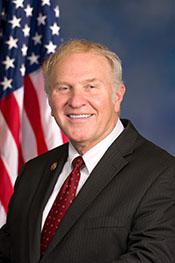
Mr. Chairman, I want to first of all commend the gentleman from Texas for his leadership in this area. This is a very important piece of legislation. I think he does us all proud by pushing for this…
Mr. Chairman, I want to first of all commend the gentleman from Texas for his leadership in this area. This is a very important piece of legislation. I think he does us all proud by pushing for this and ultimately, I believe, being successful in its passage.
I am pleased to be a cosponsor of H.R. 420, legislation that will help curtail frivolous lawsuits. It is reassuring to once again see that the Congress is taking measures to help rid our court system of lawsuits that are costly and hurt both consumers and businesses in our country. The legislation is aimed at enforcing the laws that govern attorneys in relation to filing frivolous lawsuits. The actual standard of what constitutes a frivolous lawsuit will not change. But consequences for such actions will.
In 1993, the Civil Rules advisory committee, an unelected body, decided that sanctions against attorneys who file frivolous lawsuits should be optional. Justice David Brewer once wrote: ``America is the paradise of lawyers.''
In my opinion, this ``paradise'' has resulted in increased prices for consumer goods and higher insurance premiums and a decrease in domestic manufacturing, which has been one of the things that we have heard more and more discussion about in this country, the loss of manufacturing jobs.
H.R. 420 seeks to rein in lawsuit-happy litigators by restoring mandatory sanctions for filing frivolous lawsuits, a violation of Rule 11 of the Federal Rules of Civil Procedure. This bill also prevents forum shopping by requiring that personal injury cases be brought only where the plaintiff resides, where the plaintiff was allegedly injured, or where the defendant's principal place of business is located.
Finally, the bill would apply a three-strikes-and-you-are-out rule, as we have heard, to attorneys who commit three or more Rule 11 violations in Federal district court. As a member of the House Judiciary Committee, as well as a member of the Small Business Committee, I have heard endless accounts of family-owned small businesses being led to financial ruin by the exorbitant cost of frivolous lawsuits.
According to the NFIB, the National Federation of Independent Businesses, small business owners ranked the cost and availability of liability insurance as the second most important problem facing small business owners today. Small business owners know that if they are sued, they are likely to have to choose between a long and costly trial or an expensive settlement. Either choice significantly impacts the operations of a business and the livelihood of its employees. This hurts the little guy because of these lawsuits.
Most business decisions today are made with this new reality in mind. This bill will help make American small businesses more competitive by lowering their unnecessary legal expenses, allowing business owners to focus on hiring new employees and expanding available products.
This bill will help make American businesses more competitive. It will allow business owners to focus on hiring new employees, which is really critical in this economy that we are faced with, and expanding the availability of products and services and improving the American economy.
Mr. Chairman, I again want to thank the gentleman from Texas for his leadership in introducing this important piece of legislation. It is time that we put an end to these frivolous lawsuits that are impacting the economy, that are hurting, especially, small businesses and are resulting in the loss of jobs of many, many Americans in this country.
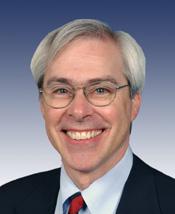
Mr. Speaker, I offer a motion to recommit. Yes, Mr. Speaker, in its present form. Mr. Speaker, if bills in this Chamber required names that accurately describe their consequences, this bill would…
Mr. Speaker, I offer a motion to recommit.
Yes, Mr. Speaker, in its present form.
Mr. Speaker, if bills in this Chamber required names that accurately describe their consequences, this bill would best be called the Frivolous Litigation Proliferation Act and not the Lawsuit Abuse Reduction Act.
Many of us who oppose the underlying bill do so because it will actually increase the volume of frivolous litigation. For example, some sort of Rule 11 procedure exists in virtually every State in the country. To impose a new Federal law in every State court action will make State courts conduct a minilawsuit on Federal validity before conducting a minilawsuit on State law validity, before they ever get to the merits of the case. A lawsuit within a lawsuit within a lawsuit. Mr. Speaker, that is as absurd as it sounds.
If Members think that there are too many frivolous lawsuits against good, honest corporations, and the only way to fix this is to make it harder for everyone to sue anyone, and that this bill is the only way to do it, then vote for the bill.
But if there is one area where we do not have a problem with too many frivolous lawsuits, it is with lawsuits against price gougers. And if there is any area where we want to make it easier to get to the merits of the underlying claim, not harder, it is an area of lawsuits against Federal contractors who are engaged in defrauding the public.
Right now the government is awash in government contracts awarded on a no-bid basis. Whether it is disaster relief or the war on terror, we have never done so much of the public's business on a no-bid basis. There has never been more opportunity for waste, fraud, and abuse in the conduct of the public's business than right now.
This motion to recommit gives us one opportunity to protect our constituents from price gougers. The motion to recommit is simple. It says that Federal contractors, engaged in price gouging in disaster relief work can still be sued anyplace where they can be sued now, in any State where both the laws of the State and the U.S. Constitution says it is okay to sue them.
The underlying bill gives price gougers extra protections, the same benefits that we are extending to honest corporations. One such protection, the only one addressed by this motion to
recommit, is the right to avoid lawsuits in States where the Constitution says it is okay to seek justice. Since price gougers do not deserve this protection, and since they do not need this protection, they should not get this protection.
This House has voted time and again to protect companies that are gouging consumers in the wake of natural disasters and national tragedies. If Members vote against this motion to recommit, they are voting to give the same special protections that we give to honest corporations to Federal contractors who are engaged in price gouging in public relief work.
Mr. Speaker, the folks I represent back home in Georgia want relief from price gougers, not relief for price gougers. For that reason I urge my colleagues to support this commonsense and limited motion to recommit.
Mr. Speaker, I demand a recorded vote.
Show 11 more
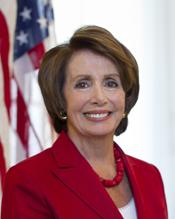
Mr. Chairman, I thank the gentleman for yielding me time, and I congratulate him and the gentleman from Wisconsin (Mr. Kind) for their leadership in proposing this good Democratic substitute. Mr.…
Mr. Chairman, I thank the gentleman for yielding me time, and I congratulate him and the gentleman from Wisconsin (Mr. Kind) for their leadership in proposing this good Democratic substitute.
Mr. Chairman, here we go again. The madness continues. Once again, the Republicans must prove that they are the handmaidens of the special interests by putting this bill on the floor today. Just when we should be talking about creating good jobs for the American people, expanding access to quality health care, broadening opportunity in education, having a strong national defense and doing it all in a fiscally sound way, the Republicans are wasting the time of this Congress and testing the patience of the American people with legislation that is frivolous. It is something that is, again, another reflection of the culture of cronyism that exists under the Republican leadership in Washington, DC.
This legislation before us again seeks to protect their friends. The outrageous venue provisions in the Republican bill give defendant corporations special advantages by overriding State minimum-contact provisions and limiting the locations in which a suit can be brought and could render foreign corporations out of reach of the American justice system.
Today, we will take the opportunity to address the Republican culture of cronyism. The gentleman from Georgia (Mr. Barrow) will be offering a motion to recommit to make sure that politically connected cronies and no-bid contractors that defraud and cheat the government in providing goods and service after a natural disaster will never again be able to use these special bids. They should never be used by government contractors that specifically intend to profit excessively from the disaster.
Mr. Chairman, I really want to congratulate the gentleman from Wisconsin (Mr. Kind) and the gentleman from California (Mr. Schiff) for putting together a really excellent substitute to get rid of loopholes in the Republican bill that favors big corporate interests and foreign corporations and to protect civil rights claims.
We all agree that if there are frivolous lawsuits, those who bring them should pay a price. That we will have three-strikes-you-are-out for doing that is a very important provision in the substitute. The substitute seeks to stop the madness that exists on the floor of this House when it is used as a venue to promote the special interests in our country.
We must stand up for the American people, not for the politically connected cronies who are getting a no-bid contract. Let us take a stand to end this culture of cronyism and corruption. Let us get back to the real issues that are affecting the American people.
We must vote for this substitute and send this bill back to ensure that no one who defrauds the American people during natural disasters is ever permitted to take undue advantage of our legal system.
We must, again, stop the madness by voting for the substitute that the gentleman from Wisconsin (Mr. Kind) and the gentleman from California (Mr. Schiff) have proposed. It has very excellent provisions and is worthy of the support of our colleagues.

Mr. Speaker, I yield myself such time as I may consume. (Ms. MATSUI asked and was given permission to revise and extend her remarks.) Mr. Speaker, I thank the gentleman from Georgia (Mr. Gingrey) for…
Mr. Speaker, I yield myself such time as I may consume.
(Ms. MATSUI asked and was given permission to revise and extend her remarks.)
Mr. Speaker, I thank the gentleman from Georgia (Mr. Gingrey) for yielding me this time.
Mr. Speaker, the rule, H. Res. 540, will allow the House to take up legislation to protect Federal judges, court employees, safety officers, jurors, and witnesses.
Unfortunately, we are all aware of the tragic violence committed against judges and their families this year. In one case this past February, Judge Joan Lefkow, a Federal judge from Chicago, returned home to find her husband and her mother murdered. We later learned it had been a retaliation for a earlier court ruling. It is hard to comprehend such a senseless loss.
Clearly, the additional steps we are taking today are important to protect judges and their family members. H.R. 1751, the Secure Access to Justice and Court Protection Act of 2005, increases the penalty for assaulting, kidnapping or murdering a Federal judge, other public officials, and their immediate family members. Further, the bill extends these protections to jurors and witnesses.
For our judicial system to function, the authority and safety of our Federal judges must be ensured. Judges, as well as jurors, should know they are free to make unbiased and sound decisions based on the facts and the rule of law and not on the fear that they may face retaliation for a decision they hand down.
It is equally important witnesses know they will also be secure when testifying. They must know that it is safe to do the right thing and testify before a court of law. For this reason, I appreciate that the Committee on the Judiciary included grants to assist States in operating the witness protection programs.
However, I do have some significant reservations about this legislation. Included in H.R. 1751 are over a dozen new mandatory minimum penalties.
Mr. Speaker, we must protect our judges from harm without impeding their judicial independence. It is the judges and juries who have the facts of each case before them, not Congress. And it is judges and juries who should be determining the proper and appropriate punishment.
Therefore, it should not surprise Members that the Judicial Conference of the United States, the body Congress turns to for nonpartisan recommendations on our Federal judiciary, has expressed a deep opposition to mandatory minimums on more than a dozen occasions in its communications to Congress.
Mr. Speaker, mandatory minimums simply do not work. Rather, they tie the hands of our judges, not allowing them to fit the best punishment to the crime.
I look forward to the debate on these amendments and the underlying legislation.
Mr. Speaker, I reserve the balance of my time.
Mr. Speaker, I yield 3 minutes to the gentlewoman from New York (Mrs. McCarthy).
Mr. Speaker, I have no further requests for time, and I yield back the balance of my time.
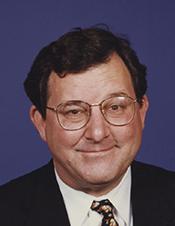
Mr. Chairman, I rise in support of H.R. 420, the Lawsuit Abuse and Reduction Act, LARA, and I oppose the substitute amendment. This bill, the underlying bill, continues the commitment of the House…
Mr. Chairman, I rise in support of H.R. 420, the Lawsuit Abuse and Reduction Act, LARA, and I oppose the substitute amendment.
This bill, the underlying bill, continues the commitment of the House Republicans to grow our economy, help small businesses, and put a stop to abusive lawsuits. This bill does that and will help millions of small businesses combat some of the worst abuses by frivolous lawsuits.
In particular, LARA would make mandatory the sanctions and monetary penalties under Federal Rule 11 of the Federal Rules of Civil Procedure for filing frivolous lawsuits and abusing the litigation process. Or it would also abolish the free pass provisions that allow parties and their attorneys to avoid sanctions by withdrawing a suit within 21 days after a motion for sanctions has been filed.
It would also permit monetary sanctions including reimbursement of reasonable attorneys' fees and litigation costs in connection with frivolous lawsuits.
It would extends Rule 11's provisions to include State cases in which the State judge finds the case substantially affects interstate commerce.
Frivolous lawsuits have discouraged and stifled American businesses long enough. The more we control lawsuit abuse, the stronger our businesses will be, and the more jobs will be created.
This legislation protects the integrity of the judicial system by penalizing the bad actors in litigation, both plaintiffs and defendants, I might say.
Civil litigation was once a last-resort remedy to settle limited disputes and quarrels, but recent years have brought a litigation explosion. The number of civil lawsuits has tripled since the 1960s and has gripped the American citizens and small businesses with a fear of costly and unwarranted lawsuits.
The threat of abusive litigation forces businesses to settle frivolous claims, rather than to go through the expensive and time- consuming process of defending lawsuits from the discovery process all the way to trial. This is, in essence, legal blackmail and needs to be ended.
While it costs the plaintiff only a little more than a small filing fee to begin a lawsuit, it costs much more for a small business to defend against it, jeopardizing its ability to survive. LARA tells those attorneys who are intent on filing a lawsuit to take the responsibility to review the case and make sure it is legitimate before filing, or be ready for sanctions.
I would like to thank the gentleman from Texas, the chairman of the Subcommittee on Courts, the Internet, and Intellectual Property, for having prepared this legislation and moved it forward as he has. I urge my colleagues to support this legislation and oppose the substitute amendment.

Mr. Chairman, I am not opposed to changing Federal court rules to try to make it less likely that small business owners or other Americans will be forced to defend themselves against frivolous…
Mr. Chairman, I am not opposed to changing Federal court rules to try to make it less likely that small business owners or other Americans will be forced to defend themselves against frivolous lawsuits. So, I could support many of the provisions of this bill. However, the bill has such serious flaws that I cannot support it in its current form.
Part of the bill would change Rule 11 of the Federal Rules of Civil Procedure in ways that would basically restore that rule as it was in 1992. As a result, lawyers filing frivolous lawsuits in Federal courts would face mandatory sanctions in the form of payments to those who were victimized by those lawsuits. I think that could be an effective deterrent, and can support it.
I also can support strong provisions to deter--and, if necessary punish--repeated violations of the rules against misuse of the courts through frivolous lawsuits. However, I am not enthusiastic about the idea of Congress's attempting to micro-manage the State courts or to take over the job of regulating the practice of law in State courts in the way that this bill would do.
And I am definitely opposed to changing the rules in ways that could make it impossible for people with valid claims to receive proper consideration of their cases.
For that reason, I must object to the provisions of the bill which, as the non-partisan Congressional Research Service explains, ``would preclude litigation in United States courts that would be authorized under current law. For instance, [under current law] . . . if a corporation has stores, factories, offices, or property anywhere in the United States . . . a Federal suit might be brought against it in one of the judicial districts where . . . [an objectionable] activity occurs or property [is located. But] . . . enactment of H.R. 420 apparently could result in a plaintiffs being left without a judicial forum in the United States for his or her tort claim.''
Leaving some Americans with no recourse to the courts even for valid claims would be bad enough. But I find it even more unacceptable that prime beneficiaries of these provisions could be American companies who have chosen to fly a foreign flag in order to escape paying their Federal taxes.
I voted for the Schiff-Kind amendment because I favor strong measures against frivolous lawsuits but oppose giving those fugitive corporations such an unfair advantage over truly American companies. Unfortunately, however, that amendment was not adopted--and as a result I must vote against this bill as it stands.
Mr. Chairman, I thank my colleague from California for yielding me time. I rise in opposition of H.R. 420 and in support of the substitute. This bill would not do anything to reduce frivolous…
Mr. Chairman, I thank my colleague from California for yielding me time.
I rise in opposition of H.R. 420 and in support of the substitute.
This bill would not do anything to reduce frivolous lawsuits. In fact, my concern about it is it is unnecessary, and it will infringe on States being able to manage their own court systems.
Rule 11 of the Federal Rules of Civil Procedure was amended in 1993 to its current state because it was being abused by defendants in civil rights cases who filed a series of Rule 11 motions to harass the men and women who challenged discrimination.
Until now there has been no demonstrated problems with the current version of the rule. Usually this type of change in civil procedure goes through a process of the Rules Enabling Act. But in this instance we have decided to circumvent the United States Judicial Conference and the United States Supreme Court. We have taken it upon ourselves to decide what is best for the judicial system.
The Lawsuit Reduction Act would amend Rule 11 of the Federal Rules of Civil Procedure and revert back to that pre-1993 status. By doing this, again, we take away States' discretion to impose sanctions on improper and frivolous pleadings.
This would eliminate the current safe harbor provision, permitting the attorneys to withdraw improper frivolous
motions within 21 days after they have been challenged by an opposing counsel. Additionally, this bill dictates where plaintiffs can file a personal injury lawsuit against a corporation in a State court. Do we really want to get into the jurisdictional battles in our States?
Reverting back to the previous Rule 11 would make people less likely to challenge unjust laws because they are putting themselves at risk for being harassed. At the time some people thought Brown v. Board of Education was a frivolous lawsuit, but it did not look like it had a chance until the Supreme Court recognized that separate was not equal.
If we had this strict version of Rule 11 back then, maybe Brown v. Board of Education would have never made it to the Supreme Court.
This bill is another example of Congress intruding on States' rights. Our system of government is designed to keep our judicial system separate, particularly our State judicial system.
We simply do not have the right to tell State and county courthouses across the Nation how to enforce sanctions in their courtrooms or where the plaintiff may file a lawsuit in the State courts.
Mr. Speaker, I thank the gentlewoman for yielding me this time. I am very happy to hear from my colleague from California explaining the move last night on not allowing my amendment to be put forth;…
Mr. Speaker, I thank the gentlewoman for yielding me this time.
I am very happy to hear from my colleague from California explaining the move last night on not allowing my amendment to be put forth; and I hope that, working with him and certainly Mr. Sensenbrenner on the Judiciary Committee, we can move this bill forward.
H.R. 1751 goes to great lengths to punish those who commit violence in our courthouses, and rightly so. However, this bill falls short when it comes to preventative measures that would stop these senseless attacks from happening in the first place.
As was mentioned, last night I offered such an amendment in the Rules Committee. It would automate the court records into the National Institute Background Check System so recently convicted individuals could not buy a gun. The reason we want to do that, basically, is if a person is convicted and still not going straight to jail to prevent them from going out and buying a gun and coming back and doing harm, whether it is to a judge, a family, or a court officer.
Many State courts fail to enter this data into the NICS System in a timely manner, if at all. For example, the subject of a restraining order stemming from spousal abuse can leave the courthouse, go to a gun store, make a purchase, and seek revenge on the court officers.
My amendment would require that court rulings be immediately entered into the NICS System. It would provide grants to State courts that do not have the resources to comply. But my amendment was the only amendment not to be accepted by the Rules Committee, and we heard that wrong information had been given to Mr. Dreier, and I accept that. Those things happen.
All of us here want to save lives. I mean, that is what we want to do. We want to protect our men and women in uniform. We want to protect our court officers, our judges. This amendment certainly could have helped that. It would have made a good bill, in my opinion, a better bill.
So with that I hope that we will be here down the road soon, be able to offer my full bill because, again, this does not infringe on second amendment rights. It is there to protect people. It is there to save lives, and that is my goal.

Mr. Speaker, I rise today in strong opposition to H.R. 420, the so- called Lawsuit Abuse Reduction Act. The legislation will have a significant, adverse impact on the ability of civil rights…
Mr. Speaker, I rise today in strong opposition to H.R. 420, the so-
called Lawsuit Abuse Reduction Act. The legislation will have a significant, adverse impact on the ability of civil rights plaintiffs to seek recourse in our courts.
This bill would remove a court's discretion to impose sanctions on attorneys for frivolous lawsuits under Rule 11 of the Federal Rules of Civil Procedure. By removing a court's discretion to impose sanctions, this bill would make Rule 11 sanctions mandatory.
Mandatory Rule 11 sanctions are a failed experiment. When they were mandatory--between 1983 until they were repealed in 1993--they were disproportionately used to harass civil rights plaintiffs bringing claims to enforce civil rights laws. It would be a mistake to turn back the clock on civil rights.
If such mandatory sanctions are reinstated, what can we expect? The movie, based on the first sexual harassment class action, North Country, perfectly illustrates the problem. North Country is based on the real life case of Lois Jensen, who in 1975 was a single mother on welfare and took a job working in the taconite mines of northern Minnesota. In that male-dominated work force, she endured extreme sexual harassment and her employer refused to do something about it. After 25 years and three trials, Jensen finally prevailed in 1998. Landmark litigation takes time. And landmark causes of action, often referred to as novel, should not be confused with frivolous claims.
If H.R. 420 passes, motions for Rule 11 sanctions will be disproportionately brought by big corporations against individual plaintiffs to harass, drag-out, and make the costs of their litigation more expensive.
It's important not to make landmark civil rights cases more difficult. Mandatory Rule 11 sanctions would make such compelling cases more difficult by allowing big companies even more opportunities to out-litigate the individual. H.R. 420 will require a mandatory sanctions regime that would apply to civil rights cases and massively skew the playing field against injured victims. I urge my colleagues to vote ``no'' on H.R. 420, and support the Democratic alternative.
Mr. Chairman, I thank my good friend from New York for yielding me the time. Mr. Chairman, I rise in opposition to H.R. 420, legislation that would have a chilling effect on a plaintiff's ability to…
Mr. Chairman, I thank my good friend from New York for yielding me the time.
Mr. Chairman, I rise in opposition to H.R. 420, legislation that would have a chilling effect on a plaintiff's ability to seek recourse in court. As I have listened to my colleagues on the floor talk about three-strikes-and-you-are-out with regard to a counsel, you would think this was a criminal situation. They took discretion away from judges with mandatory sentencing. They said, Judge, no matter what the facts are of the case, if this is the penalty, then you impose such penalty.
What is very interesting is, even though my colleague cited John Kerry, John Edwards, President Bush, and the Judiciary Committee, not one of them have sat as a judge in a case, making decisions about Rule 11 cases.
I am proud to say that I served as a judge for 10 years in the trial court in the State of Ohio and have had the ability to review complaints, review discovery decisions, review pleadings. And judges should be vested with the same discretion they are vested with in other situations and not be subjected to this Rule 11 sanctions piece that is being proposed by this legislation.
It is unconscionable that the claim that businesses get on with more business or they can hire more employees, to use that to play against the ability of a plaintiff to bring a lawsuit. What is going to make business do better in the United States of America is this country having a policy that encourages business. What is going to make people work better in the United States of America is having greater opportunity for business, and you cannot blame business not doing well on lawsuits, just as you cannot blame doctors running all over creation because of medical malpractice.
I encourage all of my colleagues to take a close look at what this legislation will do, to take a close look and listen to the arguments that are being made by my colleagues with regard to this legislation, and vote in opposition to H.R. 420.
Mr. Chairman, I rise in reluctant opposition to the Lawsuit Abuse Reduction Act. As an advocate for reasoned and balanced reform to our American judicial system, I am afraid that today's bill…
Mr. Chairman, I rise in reluctant opposition to the Lawsuit Abuse Reduction Act. As an advocate for reasoned and balanced reform to our American judicial system, I am afraid that today's bill overreaches and sets a dangerous precedent for future legislation. H.R. 420 treads unnecessarily on judicial independence and makes litigation overly burdensome for legitimate cases to have their fair day in court.
Primarily, this legislation encroaches on the judicial rulemaking process by changing the Federal Rules of Civil Procedure, over which Congress has no rightful jurisdiction. This rulemaking process is the responsibility of the Judicial Conference and the Supreme Court. Furthermore, the requirement that State courts apply these new Federal rules is an intrusion on State judicial authority.
I strongly believe that the integrity of the judiciary is in question if we impose our own set of rules on this independent body, particularly as Congress continues to limit judicial discretion. This action is wrong, and one of the reason that judges from across the Nation overwhelmingly oppose this legislation.
Furthermore, I believe this bill inhibits legitimate cases from having their day in court. Plaintiffs that have just cause for action, particularly in cases dealing with civil rights, may reconsider because of the threat of mandated sanctions and the elimination of the 21-day ``safe harbor'' rule. This chilling effect on meritorious legal claims does not offer honest Americans justice.
I also have concern that this bill will not deter frivolous lawsuits. Despite the anecdotes my colleagues have offered, there is no empirical evidence that Rule 11, which this bill seeks to change, is not working. In fact, recent studies indicate that frivolous litigation is declining.
Mr. Chairman, I will continue to approach tort reform with the objective of ensuring that any legitimate cases have their day in court. I don't believe the bill before us today meets this standard.
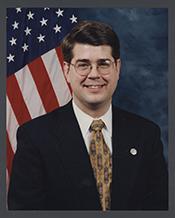
Mr. Chairman, I rise in opposition of H.R. 420, the Lawsuit Abuse Reduction Act of 2005. This legislation runs roughshod over States' rights, forcing State courts to enact onerous procedures and…
Mr. Chairman, I rise in opposition of H.R. 420, the Lawsuit Abuse Reduction Act of 2005. This legislation runs roughshod over States' rights, forcing State courts to enact onerous procedures and stripping States' jurisdiction in certain cases. This bill would also force restrictive venue provisions on all State courts, which essentially tells State courts they do not have jurisdiction over certain claims brought by its own citizens. Let State legislatures and State judiciaries set their own Rules. And, by the way, a frivolous, meritless lawsuit is damaging to the system and the offending parties should be punished.
This bill also protects foreign corporations at the expense of consumers in that it unfairly dictates to States where their citizens can enforce legal right against a corporation based outside of the United States. While H.R. 420 allows a victim to file a claim in a court in his or her home State, because of existing jurisdictional rules that State may be unable to exercise power over the foreign corporation.
For example, a corporation in Mexico sells cribs in the United States and those cribs are shipped to Kansas and sold in Nebraska. The cribs turn out to be defective and one collapses on a baby in Nebraska, killing it. It may be impossible, under this proposed bill, for that Nebraska family to file a lawsuit in Nebraska. The family may have to file the suit in Kansas but would have to take the case to Mexico under H.R. 420. I cannot in good conscience support a bill preventing a family in this situation from filing a lawsuit in its own State.
Mr. Chairman, I rise in opposition to the so-called Lawsuit Abuse Reduction Act because it would hurt all Americans by exposing them and their attorneys to motions intended to harass them and slow…
Mr. Chairman, I rise in opposition to the so-called Lawsuit Abuse Reduction Act because it would hurt all Americans by exposing them and their attorneys to motions intended to harass them and slow down the legal process, a tactic often used by wealthy defendants in civil rights trials.
Prior to 1993, defendants in civil rights cases would file a crushing number of motions alleging frivolous actions on the part of the plaintiff in a blatant attempt to delay the case. In 1993, the rules were changed and judges were empowered to determine sanctions for frivolous lawsuits on a case-by-case basis, removing this delay tactic from wealthy defendants. However, since the Republican Party doesn't think judges have any business deciding how to run their courts, they want to repeal this change and revert back to the days of delayed justice.
This is one of many reasons why the U.S. Judicial Conference, headed by Chief Justice John Roberts, opposes this bill. Further, H.R. 420 is unconstitutional because it forces every State court to implement new court rules and procedures, even though Congress has no jurisdiction over State courts.
Justice delayed is justice denied and I am proud to stand up for our Constitution, judicial system, and all Americans by voting no on this bill. If that makes me a friend of the trial lawyers, then I proudly stand with the brilliant litigators Thurgood Marshall and Abraham Lincoln in opposition to political hacks like Karl Rove and George W. Bush.
Bill Text
4 versions available
        [Congressional Bills 109th Congress]
[From the U.S. Government Publishing Office]
[H.R. 420 Referred in Senate (RFS)]

109th CONGRESS
1st Session
H. R. 420

_______________________________________________________________________

IN THE SENATE OF THE UNITED STATES

October 31, 2005

Received; read twice and referred to the Committee on the Judiciary

_______________________________________________________________________

AN ACT

To amend Rule 11 of the Federal Rules of Civil Procedure to improve
attorney accountability, and for other purposes.

Be it enacted by the Senate and House of Representatives of the
United States of America in Congress assembled,

SECTION 1. SHORT TITLE.

This Act may be cited as the ``Lawsuit Abuse Reduction Act of
2005''.

SEC. 2. ATTORNEY ACCOUNTABILITY.

Rule 11(c) of the Federal Rules of Civil Procedure is amended--
(1) by amending the first sentence to read as follows: ``If
a pleading, motion, or other paper is signed in violation of
this rule, the court, upon motion or upon its own initiative,
shall impose upon the attorney, law firm, or parties that have
violated this subdivision or are responsible for the violation,
an appropriate sanction, which may include an order to pay the
other party or parties for the reasonable expenses incurred as
a direct result of the filing of the pleading, motion, or other
paper, that is the subject of the violation, including a
reasonable attorney's fee.'';
(2) in paragraph (1)(A)--
(A) by striking ``Rule 5'' and all that follows
through ``corrected.'' and inserting ``Rule 5.''; and
(B) by striking ``the court may award'' and
inserting ``the court shall award''; and
(3) in paragraph (2), by striking ``shall be limited to
what is sufficient'' and all that follows through the end of
the paragraph (including subparagraphs (A) and (B)) and
inserting ``shall be sufficient to deter repetition of such
conduct or comparable conduct by others similarly situated, and
to compensate the parties that were injured by such conduct.
The sanction may consist of an order to pay to the party or
parties the amount of the reasonable expenses incurred as a
direct result of the filing of the pleading, motion, or other
paper that is the subject of the violation, including a
reasonable attorney's fee.''.

SEC. 3. APPLICABILITY OF RULE 11 TO STATE CASES AFFECTING INTERSTATE
COMMERCE.

In any civil action in State court, the court, upon motion, shall
determine within 30 days after the filing of such motion whether the
action substantially affects interstate commerce. Such court shall make
such determination based on an assessment of the costs to the
interstate economy, including the loss of jobs, were the relief
requested granted. If the court determines such action substantially
affects interstate commerce, the provisions of Rule 11 of the Federal
Rules of Civil Procedure shall apply to such action.

SEC. 4. PREVENTION OF FORUM-SHOPPING.

(a) In General.--Subject to subsection (b), a personal injury claim
filed in State or Federal court may be filed only in the State and,
within that State, in the county (or if there is no State court in the
county, the nearest county where a court of general jurisdiction is
located) or Federal district in which--
(1) the person bringing the claim, including an estate in
the case of a decedent and a parent or guardian in the case of
a minor or incompetent--
(A) resides at the time of filing; or
(B) resided at the time of the alleged injury;
(2) the alleged injury or circumstances giving rise to the
personal injury claim allegedly occurred;
(3) the defendant's principal place of business is located,
if the defendant is a corporation; or
(4) the defendant resides, if the defendant is an
individual.
(b) Determination of Most Appropriate Forum.--If a person alleges
that the injury or circumstances giving rise to the personal injury
claim occurred in more than one county (or Federal district), the trial
court shall determine which State and county (or Federal district) is
the most appropriate forum for the claim. If the court determines that
another forum would be the most appropriate forum for a claim, the
court shall dismiss the claim. Any otherwise applicable statute of
limitations shall be tolled beginning on the date the claim was filed
and ending on the date the claim is dismissed under this subsection.
(c) Definitions.--In this section:
(1) The term ``personal injury claim''--
(A) means a civil action brought under State law by
any person to recover for a person's personal injury,
illness, disease, death, mental or emotional injury,
risk of disease, or other injury, or the costs of
medical monitoring or surveillance (to the extent such
claims are recognized under State law), including any
derivative action brought on behalf of any person on
whose injury or risk of injury the action is based by
any representative party, including a spouse, parent,
child, or other relative of such person, a guardian, or
an estate;
(B) does not include a claim brought as a class
action; and
(C) does not include a claim against a debtor in a
case pending under title 11 of the United States Code
that is a personal injury tort or wrongful death claim
within the meaning of section 157(b)(5) of title 28,
United States Code.
(2) The term ``person'' means any individual, corporation,
company, association, firm, partnership, society, joint stock
company, or any other entity, but not any governmental entity.
(3) The term ``State'' includes the District of Columbia,
the Commonwealth of Puerto Rico, the United States Virgin
Islands, Guam, and any other territory or possession of the
United States.
(d) Applicability.--This section applies to any personal injury
claim filed in Federal or State court on or after the date of the
enactment of this Act.

SEC. 5. RULE OF CONSTRUCTION.

Nothing in section 3 or in the amendments made by section 2 shall
be construed to bar or impede the assertion or development of new
claims or remedies under Federal, State, or local civil rights law.

SEC. 6. THREE-STRIKES RULE FOR SUSPENDING ATTORNEYS WHO COMMIT MULTIPLE
RULE 11 VIOLATIONS.

(a) Mandatory Suspension.--Whenever a Federal district court
determines that an attorney has violated Rule 11 of the Federal Rules
of Civil Procedure, the court shall determine the number of times that
the attorney has violated that rule in that Federal district court
during that attorney's career. If the court determines that the number
is 3 or more, the Federal district court--
(1) shall suspend that attorney from the practice of law in
that Federal district court for 1 year; and
(2) may suspend that attorney from the practice of law in
that Federal district court for any additional period that the
court considers appropriate.
(b) Appeal; Stay.--An attorney has the right to appeal a suspension
under subsection (a). While such an appeal is pending, the suspension
shall be stayed.
(c) Reinstatement.--To be reinstated to the practice of law in a
Federal district court after completion of a suspension under
subsection (a), the attorney must first petition the court for
reinstatement under such procedures and conditions as the court may
prescribe.

SEC. 7. PRESUMPTION OF RULE 11 VIOLATION FOR REPEATEDLY RELITIGATING
SAME ISSUE.

Whenever a party presents to a Federal court a pleading, written
motion, or other paper, that includes a claim or defense that the party
has already litigated and lost on the merits in any forum in final
decisions not subject to appeal on 3 consecutive occasions, and the
claim or defense involves the same plaintiff and the same defendant,
there shall be a rebuttable presumption that the presentation of such
paper is in violation of Rule 11 of the Federal Rules of Civil
Procedure.

SEC. 8. ENHANCED SANCTIONS FOR DOCUMENT DESTRUCTION IN PENDING FEDERAL
COURT PROCEEDINGS.

Whoever willfully and intentionally influences, obstructs, or
impedes, or attempts to influence, or obstruct, or impede, a pending
Federal court proceeding through the willful and intentional
destruction of documents sought pursuant to the rules of such Federal
court proceeding and highly relevant to that proceeding--
(1) shall be punished with mandatory civil sanctions of a
degree commensurate with the civil sanctions available under
Rule 11 of the Federal Rules of Civil Procedure, in addition to
any other civil sanctions that otherwise apply; and
(2) shall be held in contempt of court and, if an attorney,
referred to one or more appropriate State bar associations for
disciplinary proceedings.

SEC. 9. BAN ON CONCEALMENT OF UNLAWFUL CONDUCT.

(a) In General.--In any Rule 11 of the Federal Rules of Civil
Procedure proceeding, a court may not order that a court record not be
disclosed unless the court makes a finding of fact that identifies the
interest that justifies the order and determines that that interest
outweighs any interest in the public health and safety that the court
determines would be served by disclosing the court record.
(b) Applicability.--This section applies to any record formally
filed with the court, but shall not include any records subject to--
(1) the attorney-client privilege or any other privilege
recognized under Federal or State law that grants the right to
prevent disclosure of certain information unless the privilege
has been waived; or
(2) applicable State or Federal laws that protect the
confidentiality of crime victims, including victims of sexual
abuse.

Passed the House of Representatives October 27, 2005.

Attest:

JEFF TRANDAHL,

Clerk.