Mr. Speaker, let me thank the distinguished gentlemen, the ranking member and the chairman of the Management Subcommittee on Homeland Security, that deal with these crucial issues. I rise to support…
Mr. Speaker, let me thank the distinguished gentlemen, the ranking member and the chairman of the Management Subcommittee on Homeland Security, that deal with these crucial issues.
I rise to support the Secure Border Initiative Financial Accountability Act and offer that there is an overall vision that this is a very important component of, and I hope that as we move this legislation along we still may have a window of opportunity to ensure that the Secure Border Initiative that Secretary Chertoff speaks of, that this is a major component of, is in place.
And I just want to thank both gentlemen for your leadership and acknowledge that, even with this Financial Accountability Act, we are still missing and need to move forward on: More agents to patrol our borders, secure our ports of entry and enforce immigration laws; expanded detention and removal capabilities to eliminate ``catch and release'' once and for all; a comprehensive and systematic upgrading of the technology used in controlling the border, including increased manned aerial assets, expanded use of UAVs, and next-generation detection technology; increased investment in infrastructure improvements at the border, providing additional physical security to sharply reduce illegal border crossings; and greatly increased interior enforcement of our immigration laws, including more robust work site enforcement; and, of course, an earned access to legalization.
We must not frighten America. Let them know that we are doing the job. But we can do both. We can account for everyone that is inside our borders, and we can work to protect and secure our northern and southern border. This initiative, the Financial Accountability, is crucial because it gives the Inspector General oversight and we, as the Management Subcommittee of the Homeland Security Committee, have seen the fractures in the oversight of spending money. This is an important way to provide the Department of Homeland Security's Inspector General to immediately review any Secure Border Initiative contract valued at $20 million or more.
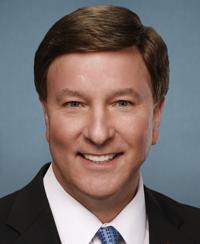
Let me thank the two gentlemen, Mr. Rogers and Mr. Meek, who spent hours and hours reviewing some of the mishaps that have occurred with contracts that have not fulfilled the responsibility of securing America, contracts that have violated our trust. They have not had the right equipment, the technology. It hasn't worked. They haven't had the right staff.
This way, the Inspector General can make findings, including cost overruns, delays in contract execution, lack of rigorous contract management, insufficient Department oversight, and limitations on small business participation, which now will be able to be reported under this particular bill. Within 30 days of receiving the Inspector General's report, the Secretary must submit a corrective action plan to Congress, and as well we must ensure open opportunity.
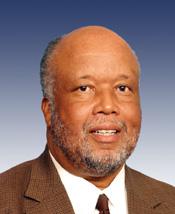
Let me congratulate the ranking member, Mr. Thompson, and I joined him on these amendments that will highlight small businesses, automatically triggers oversight based on the award of contracts once a certain monetary amount has been reached, requires that the Inspector General conduct a review during the pendency of the project and requires that the Inspector General assess the inclusion of small, minority, and women-owned businesses in the SBI subcontracting plans as a factor in its review.
If that is not one of the larger pieces, everywhere we go, as this Department grows larger and larger and larger, Homeland Security spends more and more money, the question is, why can't the homegrown people do the job, the small businesses, the women-owned businesses, the minority-owned businesses? And the answer is a blank. We don't have an answer.
This committee has been in the leadership realm, this subcommittee with Chairman Rogers and Ranking Member Meek. You have been in the driver's seat on pushing the Homeland Security Department and our subcommittee in ensuring that the little guys get the work.
We are now suffering in Louisiana and the Gulf Region because the little guys have been ignored, and the jurisdictions down there say we have got the little guys willing to work but the big guys have thrown us out the door and not allowed us to be able to do an efficient, cost- efficient, good job. It has been the layered contracts with multinationals, and it never gets down to small business persons.
So I rise to support this initiative, the Secure Border Initiative Financial Accountability Act, and I want to thank Cherri Branson and Rosaline Cohen for their leadership of staff.
I thank the ranking member for yielding to me, and I ask my colleagues to support it. But our work is yet undone until we finish comprehensive immigration reform.
Mr. Speaker, I rise today in support of H.R. 6162, requiring financial accountability with respect to certain contract actions related to the Secure Border Initiative (SBI) of the Department of Homeland Security .
The Secure Border Initiative, SBI, is a comprehensive multi-year plan to secure America's borders and reduce illegal migration.
Homeland Security Secretary Michael Chert-off has announced an overall vision for the SBI which includes: more agents to patrol our borders, secure our ports of entry and enforce immigration laws; expanded detention and removal capabilities to eliminate ``catch and release'' once and for all; a comprehensive and systemic upgrading of the technology used in controlling the border, including increased manned aerial assets, expanded use of UAVs, and next-generation detection technology; increased investment in infrastructure improvements at the border--providing additional physical security to sharply reduce illegal border crossings; and greatly increased interior enforcement of our immigration laws--including more robust work site enforcement.
Mr. Speaker, an earlier version of this important bill passed the House as part of a border security measure in December 2005. Furthermore, the language of this bill also appears in fiscal year 2007 DHS authorization measure that passed the Committee on Homeland Security in July 2006.
This bill requires the DHS's Inspector General to immediately and automatically review any Secure Border Initiative contract valued at more than $20 million. This review necessarily entails examining the cost requirements, performance objectives, and program timelines set by the Department for the SBI project and requires an assessment of the inclusion of small, minority and women-owned businesses in any subcontracting plans.
The Inspector General's review must be completed within 60 days after its initiation and reported to the Secretary of DHS. Within 30 days of receiving the Inspector General's report, the Secretary of DHS must submit to the Committee on Homeland Security a report on the Inspector General's findings and the corrective action plan the Secretary has taken and plans to take.
This automatic triggering of oversight by the Inspector General for contracts greater than $20 million is critical to minimize the waste, abuse, and fraud, which unfortunately has plagued many of DHS's contracts. In addition, this review will occur during the pendency of the project rather than at its termination to minimize waste and ensure redemptive steps are taken expeditiously. The Inspector General's findings will include cost overruns, delays in contract execution, lack of rigorous Department contract management, insufficient Department financial oversight, limitations on small business participation, and other high risk business practices.
Moreover, this bill requires that the Inspector General assess the inclusion of small, minority and women-owned businesses in the SBI subcontracting plans as a factor in its review. Historically, small, minority and women-owned businesses have been disadvantaged in seeking and winning these types of contracts. There may be inherent disadvantages for these businesses, but it is clear their potential is tremendous. It is critical that DHS ensures that these businesses have the ability to compete fairly for these lucrative opportunities.
I am very proud that my district, Harris County and Houston ranks sixth and Texas ranks fifth in the country for the largest number of African-American owned firms, following New York, California, Florida, and Georgia. Minority and women-owned businesses across the country will appreciate the effort to preserve their opportunity to compete for these contracts. I encourage my colleagues to remember that there are a great many barriers to minority and women business professionals, and provisions such as these preserve equal access and open opportunities.
In the aftermath of Hurricanes Katrina, Rita and Wilma, small, minority and disadvantaged businesses from the region were shut out of disaster-related contracts because goals and preferences were not in place. Since the late 1960s, it has been the policy of the Federal Government to assist small businesses owned by minorities and women to become fully competitive, viable business concerns. As a result, the Small Business Administration has set forth government-wide goals to level the playing field for small and minority businesses seeking Federal Government contracts. Leveling the playing field continues to be a central concern for me and should continue to be a central concern for this Congress.
The oversight required in this bill is integral because SBlnet is expected to be a $2.5 billion procurement and the contracts allocated through SBI will be substantial. For example, last week, DHS awarded a contract valued at $80 million to a team led by Boeing under the SBInet program. Furthermore, the predecessors to SBI--ISIS and American Shield--fell far short of expectations. The Department spent over $429 million and protected 4 percent of the border, which is about $100 million for every 1 percent of the border.
Similarly, the Inspector General has found that the Department's failure in these past programs has been due to poor planning, lax program management, inappropriate equipment purchases and spotty implementation.
This bill is the first step in requiring effective oversight. Realistically, effective oversight cannot be the sole province of Inspectors General. It is Congress's constitutional duty to conduct systematic oversight of the programs and activities of the executive branch. Just as the Department cannot contract out its responsibilities, neither can we.
Consequently, I urge my colleagues to support this important bill.