Fair and Responsible Lending Act
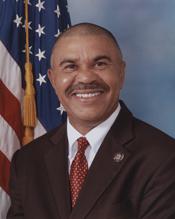 Rep. Wm. Lacy Clay (D-MO)
Legislative Activity
Stay on top of the latest movement without scrolling through every action
Referred to the House Committee on Financial Services.
December 8, 2005
View full timeline
Introduced in House
December 8, 2005
Referred to the House Committee on Financial Services.
December 8, 2005
Floor Debate
6 membersWhat members said about H.R. 4471 on the floor


 +1
+1
Floor Debate
6 membersWhat members said about H.R. 4471 on the floor
Mr. Speaker, I move to suspend the rules and pass the bill (H.R. 797) to amend the Native American Housing Assistance and Self- Determination Act of 1996 and other Acts to improve housing programs…
Mr. Speaker, I yield such time as she may consume to the gentlewoman from South Dakota (Ms. Herseth), who is a true leader on all Native American issues, and I know she has great concern on housing…
Mr. Speaker, I rise in strong support of H.R. 797, the Native American Housing Enhancement Act of 2005. I would like to thank my colleague and friend, Cong. Rick Renzi from Arizona, for his hard work…
Mr. Speaker, I rise in strong support of H.R. 797, the Native American Housing Enhancement Act of 2005 and want to commend the sponsor of the legislation, the gentleman from Arizona, Rick Renzi, for…
Mr. Speaker, I want to thank the distinguished gentleman from Utah (Mr. Matheson) for yielding me time to voice my support for the Native American Housing Enhancement Act of 2005, and I would like to…
Show 1 more

Mr. Speaker, I would be in trouble if I did not say Chickasaw Tribe. Mr. Speaker, I rise today in support of H.R. 797, the Native American Housing Enhancement Act of 2005. I commend the gentleman…
Bill Text
Latest available legislative text
        [Congressional Bills 109th Congress]
[From the U.S. Government Publishing Office]
[H.R. 4471 Introduced in House (IH)]

109th CONGRESS
1st Session
H. R. 4471

To amend the Home Ownership and Equity Protection Act of 1994 and other
sections of the Truth in Lending Act, so as to enact the ``Fair and
Responsible Lending Act;'' to provide for definitions; to provide for
prohibited practices and limitations relating to high-cost home loans;
to provide for prohibited practices and limitations relating to home
loans; to provide for penalties and remedies and enforcement; to
provide for corrections of certain unintentional violations; to provide
for coordination with state laws; to provide for related matters; to
provide for consumer counseling requirements; to expand housing
counseling opportunities; and for other purposes.

_______________________________________________________________________

IN THE HOUSE OF REPRESENTATIVES

December 8, 2005

Mr. Clay introduced the following bill; which was referred to the
Committee on Financial Services

_______________________________________________________________________

A BILL

To amend the Home Ownership and Equity Protection Act of 1994 and other
sections of the Truth in Lending Act, so as to enact the ``Fair and
Responsible Lending Act;'' to provide for definitions; to provide for
prohibited practices and limitations relating to high-cost home loans;
to provide for prohibited practices and limitations relating to home
loans; to provide for penalties and remedies and enforcement; to
provide for corrections of certain unintentional violations; to provide
for coordination with state laws; to provide for related matters; to
provide for consumer counseling requirements; to expand housing
counseling opportunities; and for other purposes.

Be it enacted by the Senate and House of Representatives of the
United States of America in Congress assembled,

SECTION 1. SHORT TITLE.

This Act may be cited as the ``Fair and Responsible Lending Act.''.

SEC. 2. TABLE OF CONTENTS.

Sec. 1. Short title.
Sec. 2. Table of contents.
TITLE I--HIGH-COST HOME LOANS

Sec. 101. Short title.
Sec. 102. Definitions relating to high-cost home loans.
Sec. 103. Amendments to requirements for high-cost home loans.
Sec. 104. Amendments relating to dispute and error resolution.
Sec. 105. Amendments to damages, rescission, liability, and rescission
provisions.
Sec. 106. Coordination with State law.
Sec. 107. Clarification of State enforcement authority.
Sec. 108. Requirements for Home Loans.
Sec. 109. Amendments to Disclosure Guidelines.
Sec. 110. Regulations.
Sec. 111. Effective dates.
TITLE II--HOUSING COUNSELING

Subtitle A--Consumer Counseling

Sec. 201. Consumer counseling requirements.
Subtitle B--Expanded Housing Counseling Opportunities

Sec. 211. Short title.
Sec. 212. Establishment of Office of Housing Counseling.
Sec. 213. Counseling procedures.
Sec. 214. Grants for housing counseling assistance.
Sec. 215. Requirements to use HUD-certified counselors under HUD
programs.
Sec. 216. Study of defaults and foreclosures.
Sec. 217. Definitions for counseling-related programs.
Sec. 218. Updating and simplification of mortgage information booklet.
Sec. 219. Option for notice of foreclosure prevention counseling
availability.

TITLE I--HIGH-COST LOANS

SEC. 101. SHORT TITLE.

This title may be cited as the ``Uniform National Mortgage Lending
Standards Act''.

SEC. 102. DEFINITIONS RELATING TO HIGH-COST HOME LOANS.

(a) High-Cost Home Loans Defined.--Section 103(aa) of the Truth in
Lending Act (15 U.S.C. 1602(aa)(1)) is amended--
(1) by striking all that precedes paragraph (2) and
inserting the following:
``(aa) High-Cost Home Loan Defined.--
``(1) In general.--The term `high-cost home loan' means a
consumer credit transaction that is secured by the consumer's
principal dwelling, other than a reverse mortgage transaction,
if any of the following apply with respect to such consumer
credit transaction:
``(A) The transaction is secured by a first
mortgage on the consumer's principal dwelling and the
annual percentage rate on the credit, at consummation
of the transaction, will exceed by more than 8
percentage points the yield on Treasury securities
having comparable periods of maturity on the 15th day
of the month immediately preceding the month in which
the application for the extension of credit is received
by the creditor.
``(B) The transaction is secured by a junior or
subordinate mortgage on the consumer's principal
dwelling and the annual percentage rate on the credit,
at consummation of the transaction, will exceed by more
than 10 percentage points the yield on Treasury
securities having comparable periods of maturity on the
15th day of the month immediately preceding the month
in which the application for the extension of credit is
received by the creditor.
``(C) The total loan amount exceeds $50,000 and
total points and fees payable on the transaction will
exceed 5 percent of the total loan amount.
``(D) The total loan amount is $50,000 or less and
total points and fees payable on the transaction will
exceed 7 percent of the total loan amount.
``(E) For purposes of computing the annual
percentage rate for this subsection, introductory rate
shall be not taken into account.''; and
(2) in paragraph (2)(B)(i), by striking ``that'' and
inserting ``than''.
(b) Points and Fees Defined.--
(1) In general.--Section 103(aa) of the Truth in Lending
Act (15 U.S.C. 1602(aa)) is amended--
(A) by striking paragraph (3);
(B) by striking paragraph (4) and inserting the
following new paragraph:
``(3) Points and fees defined.--
``(A) In general.--For purposes of subparagraphs
(C) and (D) of paragraph (1), the term `points and
fees' includes--
``(i) all items included in the finance
charge, except interest or the time-price
differential;
``(ii) all compensation paid directly to
mortgage brokers;
``(iii) all compensation paid indirectly by
a creditor to mortgage brokers, provided,
however, indirect compensation not in excess of
2 percent of the total loan amount may be
excluded if the new loan does not refinance a
previous loan that was consummated within the
prior 12 months and that was originated by the
same creditor;
``(iv) each of the charges listed in
section 106(e), except an escrow for future
payment of taxes or insurance, unless--
``(I) the charge is bona fide, and
reasonable;
``(II) the creditor receives no
direct compensation; and
``(III) the charge is paid to a
third party that is not under the
control of or controlled by the
creditor; and
``(v) all prepayment fees or penalties that
are incurred by the consumer on the previous
loan if the new loan refinances a previous loan
currently held by the same creditor or an
affiliate of the creditor, unless the loan is
held in a fiduciary or servicing capacity
only.''.
(2) Calculation of points and fees for open-end loans.--
Section 103(aa) of the Truth in Lending Act (15 U.S.C.
1602(aa)) is amended--
(A) by redesignating paragraph (5) as paragraph
(6); and
(B) by inserting after paragraph (3), as amended by
paragraph (1) above, the following new paragraph:
``(4) Calculation of points and fees for open-end loans.--
In the case of open-end loans, points and fees shall be
calculated, for purposes of this section and section 129, by
adding the total points and fees known at or before closing,
plus the minimum additional fees the consumer would be required
to pay to draw down an amount equal to the total credit
line.''.
(3) Exclusion of bona fide discount points.--Section
103(aa) of the Truth in Lending Act (15 U.S.C. 1602(aa)) is
amended by inserting after paragraph (4), as amended by
paragraph (2) above, the following new paragraph:
``(5) Exclusion of bona fide discount points.--
``(A) In general.--Not more than 2 bona fide loan
discount points shall be excluded from determining the
amounts of points and fees with respect to a high-cost
home loan for purposes of subsection (aa), but only if
the interest rate from which the loan's interest rate
will be discounted does not exceed by more than 3
percentage points the required net yield for a 90-day
standard mandatory delivery commitment for a reasonably
comparable loan from either the Federal National
Mortgage Association or the Federal Home Loan Mortgage
Corporation, whichever is greater.
``(B) Definition.--For purposes of paragraph (1),
the term `bona fide discount points' means loan
discount points which are knowingly paid by the
consumer to a creditor for the purpose of reducing, and
which in fact result in a bona fide reduction of, the
interest rate or time-price differential applicable to
the loan.
``(C) Exception for interest rate reductions
inconsistent with industry norms.--Paragraph (1) shall
not apply to discount points used to purchase an
interest rate reduction unless the amount of the
interest rate reduction purchased is reasonably
consistent with established industry norms and
practices for secondary mortgage market
transactions.''.
(c) Home Loan Defined.--Section 103 of the Truth in Lending Act (15
U.S.C. 1602) is amended by adding at the end the following subsection:
``(cc) the term `home loan' means any consumer credit transaction
that is secured by a dwelling that is, or upon the consummation of the
transaction is intended to be, occupied by the consumer as his
principal dwelling.''.
(d) Technical and Conforming Amendment.--
(1) Paragraph (2) of section 103(aa) of the Truth in
Lending Act (15 U.S.C. 1602(aa)(2)) is amended by striking
``specified in paragraph (1)(A)'' and inserting ``specified in
subparagraph (A) or (B) of paragraph (1)''.
(2) Subchapter I of chapter 41 of title 15 of the United
States Code is amended by striking ``a mortgage referred to in
this subsection'' and ``a mortgage referred to in section
129(aa)'' each place such term appears and inserting ``a high-cost home
loan'' in lieu thereof.
(3) The title of section 129 of the Truth in Lending Act
(15 U.S.C. 1639) is amended by striking ``Requirements for
Certain Mortgages'' and inserting ``Requirements for High-Cost
Home Loans''.

SEC. 103. AMENDMENTS TO REQUIREMENTS FOR HIGH-COST HOME LOANS.

(a) Prepayment Penalties.--Subsection (c) of section 129 of the
Truth in Lending Act (15 U.S.C. 1639(c)) is amended to read as follows:
``(c) [Repealed]''.
(b) Balloon Payments.--Subsection (e) of section 129 of the Truth
in Lending Act (15 U.S.C. 1639(e)) is amended--
(1) by striking ``Payments.--A mortgage referred to in
section 103(aa) of this title'' and inserting ``Payments.--
``(1) In general.--A high-cost home loan'';
(2) by striking ``having a term of less than 5 years''; and
(3) by adding at the end the following new paragraphs:
``(2) Exception.--
``(A) In general.--Paragraph (1) shall not apply--
``(i) when the payment schedule is adjusted
to account for the seasonal or irregular income
of the consumer;
``(ii) if the purpose of the loan is a
bridge loan; or
``(iii) if the unamortized amount is the
result of the creditor's deferral of the
consumer's delinquent payments and fees
relating to delinquent payments.
``(B) Bridge loan defined.--For purposes of this
subsection, the term `bridge loan' means a loan that--
``(i) has a period to maturity of 12 months
or less; and
``(ii) is made in connection with the
acquisition or construction of a dwelling.
``(3) Notice required.--A creditor that offers a high-cost
home loan having a balloon payment term that, in accordance
with paragraph (2), is not subject to paragraph (1) shall
clearly disclose to the consumer that--
``(A) the loan contains such a term;
``(B) the balloon payment amount that will be owed
by the consumer on the loan maturity date will be equal
to the initial principal loan amount, plus interest and
costs that may be due, minus any principal payments
that may have been made over the term of the loan; and
``(C) balloon payments are permissible under the
circumstances described in paragraph (2).''.
(c) Negative Amortization.--Subsection (f) of section 129 of the
Truth in Lending Act (15 U.S.C. 1639(f)) is amended--
(1) by striking ``Amortization.--A mortgage referred to in
section 103(aa) of this title'' and inserting ``Amortization.--
``(1) In general.--A high-cost home loan''; and
(2) by adding at the end the following new paragraph:
``(2) Exception for period of forbearance.--Paragraph (1)
shall not apply with respect to negative amortization resulting
from periods of temporary forbearance allowed by the
creditor.''.
(d) Financing of Points or Fees.--Section 129 of the Truth in
Lending Act (15 U.S.C. 1639) is amended by adding at the end the
following new subsection:
``(m) Restrictions on Financing of Points or Fees.--No creditor may
directly or indirectly finance, in connection with any high-cost home
loan, any of the following:
``(1) Any prepayment fee or penalty payable by the consumer
in a refinancing transaction if the creditor or an affiliate of
the creditor is the holder of the note being refinanced in
other than a fiduciary or servicing capacity.
``(2) Any points or fees in excess of 3 percent of the
total loan amount.''.
(e) Prohibition on Evasions.--Section 129 of the Truth in Lending
Act (15 U.S.C. 1639) is amended by inserting after subsection (n) (as
added by section 104(a) of this Act) the following new subsection:
``(o) Prohibition on Evasions.--A creditor may not take any action
in connection with a high-cost home loan with the intent of evading
provisions of this title.''.
(f) No Encouragement of Default on Prior Existing Loan.--Section
129 of the Truth in Lending Act (15 U.S.C. 1639) is amended by
inserting after subsection (o) (as added by subsection (e) of this
section) the following new subsection:
``(p) No Encouragement of Default.--No creditor shall recommend or
encourage default on an existing loan or other debt prior to and in
connection with the closing or planned closing of a high-cost home loan
that refinances all or any portion of such existing loan or debt.''.
(g) Ability To Repay.--Subsection (h) of section 129 of the Truth
in Lending Act (15 U.S.C. 1639(h)) is amended to read as follows:
``(1) In general.--A creditor may not extend credit to a
consumer under a high-cost home loan unless a reasonable
creditor would believe at the time the loan is closed that the
consumer or consumers that are residing or will reside in the
dwelling subject to the loan will be able to make the scheduled
payments associated with the loan, based upon a consideration
of the consumers' current and expected income, current
obligations, employment status, and other financial resources,
other than equity in the dwelling.
``(2) Presumption of ability.--For purposes of this
subsection, there shall be a rebuttable presumption that a
consumer is able to make the scheduled payments to repay the
obligation if, at the time the extension of credit is approved,
the consumer's total monthly debts due on outstanding
obligations, including amounts under the high-cost home loan,
do not exceed 50 percent of his or her monthly gross income as
verified by: (a) the consumer's credit application and a credit
report; and (b) tax returns, payroll receipts, or other third-
party income verification.''.
(h) Limitations on Refinancing.--Section 129 of the Truth in
Lending Act (15 U.S.C. 1639) is amended by inserting after subsection
(p) (as added by subsection (f) of this section) the following new
subsection:
``(q) Limitations on Refinancing.--
``(1) In general.--No creditor shall knowingly or
intentionally engage in the unfair act or practice of loan
flipping.
``(2) Flipping defined.--For purposes of this subsection,
the term `loan flipping' means the making of a high-cost home
loan to a consumer which refinances an existing home loan that
was consummated within the prior 36 months when the new high-
cost home loan does not have a reasonable tangible net benefit
to the consumer, considering all of the material circumstances
known to the creditor, including but not limited to, the terms
of both the new and the refinanced loans or credit, the cost of
the new loan or credit, and the consumer's known economic and
non-economic circumstances, the consumer's stated purpose of
and desire for the loan, and the benefits the consumer states
that he or she will receive from the refinancing.
``(3) Safe harbors.--A high-cost home loan shall be
presumed to provide a reasonable tangible net benefit to the
consumer if any of the following factors applies to the new
loan:
``(A) The interest rate on the new fixed-rate high-
cost home loan is lower than the interest rate on the
fixed-rate refinanced loan and it will take 4 years or
less for the consumer to recoup the costs of the points
and fees, and other closing costs that are required to
be paid by the consumer on the new high-cost home loan
through savings resulting from the lower interest rate.
``(B) The creditor makes a good-faith determination
that the consumer's monthly payment of principal and
interest required to be paid on the new high-cost home
loan is a minimum of 15 percent less than the
consolidated total of all minimum monthly payments on
the obligations being financed, and it will take 4
years or less for the consumer to recoup the costs of
the points and fees and other closing costs that are
required to be paid by the consumer on the new high-
cost home loan through savings resulting from the total
reduction in payments.
``(C) The consumer provides written confirmation to
the creditor from an independent housing or credit
counselor approved by the United States Department of
Housing and Urban Development, or by any State housing
authority, which states that the consumer has received
counseling regarding the advisability of refinancing
the existing loan with the high-cost home loan being
offered to the consumer by the creditor.
``(D) The refinancing is necessary under, or in
response to, any order or judgment of a court of
competent jurisdiction, or to avoid a filed foreclosure
action.
``(4) Rule of construction.--No negative inference may be
drawn from the absence of any factor or circumstance described
in any subparagraph of paragraph (2) with regard to any high-
cost home loan so as to create a presumption of a violation of
this subsection with regard to such high-cost home loan by
reason of such absence.
``(5) Limitation.--Notwithstanding section 130 or any other
provision of law, any suit instituted by a consumer who alleges
that a creditor violated this section shall be brought only in
an individual action, and the presiding judge may, in the
judge's discretion, allow reasonable attorneys' fees to be
taxed as a part of the court costs and payable by the losing
party, upon a finding by the court that:
``(A) The party charged with the violation has
willfully engaged in the act or practice, and there was
an unwarranted refusal by such party to fully resolve
the matter which constitutes the basis of such suit; or
``(B) The party instituting the action knew, or
should have known, that the action was frivolous and
malicious.
``(6) Regulations.--The Board may, by regulation or order,
add to, delete, or modify the factors listed in paragraph (3)
of this subsection.''.
(i) No Call Provision.--Section 129 of the Truth in Lending Act (15
U.S.C. 1639) is amended by inserting after subsection (q) (as added by
subsection (h) of this section) the following new subsection:
``(r) No Call Provision.--No high-cost home loan may contain a
provision which permits the creditor, in its sole discretion, to
accelerate the indebtedness. This provision shall not apply when
repayment of the loan has been accelerated by default, pursuant to a
due-on-sale provision, pursuant to a material violation of some other
provision of the loan documents unrelated to the payment schedule, or
due to any action or omission by the consumer that adversely affects
the creditor's security interest in the dwelling or any rights of the
creditor in such security.''.
(j) Modification and Deferral Fees Prohibited.--Section 129 of the
Truth in Lending Act (15 U.S.C. 1639) is amended by inserting after
subsection (r) (as added by subsection (i) of this section) the
following new subsection:
``(s) Modification and Deferral Fees Prohibited.--
``(1) In general.--A creditor may not charge a consumer any
fee to modify, renew, extend, or amend a high-cost home loan,
or to defer any payment due under the terms of such loan,
unless the modification, renewal, extension or amendment
results in a lower annual percentage rate on the loan for the
consumer and then only if the amount of the fee is comparable
to fees imposed for similar transactions in connection with
consumer credit transactions that are secured by a consumer's
principal dwelling and are not high-cost home loans.
``(2) Exception for certain workouts.--The restrictions in
paragraph (1) shall not apply in the case of an existing high-
cost home loan that is in default or more than 60 days
delinquent, if the modification, renewal, extension, or
amendment is part of the resolution or workout of the default
or delinquency.''.
(k) Increased Interest Rate Upon Default Prohibited.--Section 129
of the Truth in Lending Act (15 U.S.C. 1639) is amended by inserting
after subsection (s) (as added by subsection (j) of this section) the
following new subsection:
``(t) Increased Interest Rate Upon Default Permitted for Variable-
Rate High-Cost Home Loan.--In the case of a high-cost home loan that is
subject to a variable rate of interest, subsection (d) shall not apply
to changes in the rate of interest due to any change in the index rate,
to the extent the change of interest is not due in any part to a
default by the consumer or a permissible acceleration by the
creditor.''.
(l) Prepayment of Periodic Payments From Proceeds Prohibited.--
Subsection (g) of section 129 of the Truth in Lending Act (15 U.S.C.
1639) is amended to read as follows:
``(g) Prepayment of Periodic Payments From Proceeds Prohibited.--No
high-cost home loan may include terms under which more than 2 scheduled
payments of interest or principal due under such loan may be paid in
advance or otherwise deducted from the proceeds of the loan.''.
(m) Payoff Statements.--Section 129 of the Truth in Lending Act (15
U.S.C. 1639) is amended by inserting after subsection (t) (as added by
subsection (k) of this section) the following new subsection:
``(u) Payoff Statements.--
``(1) Fees.--
``(A) In general.--Except as provided in
subparagraph (B), no creditor or servicer may charge a
fee for informing or transmitting to any person the
balance due to pay off the outstanding balance on a
high-cost home loan.
``(B) Transaction fee.--When payoff information
referred to in subparagraph (A) is provided by
facsimile or electronic transmission, courier service
or other expedited means, a creditor or servicer may
charge a processing fee to cover the cost of such
transmission or service in an amount not to exceed an
amount that is comparable to fees imposed for similar
services provided in connection with consumer credit
transactions that are secured by the consumer's
principal dwelling and are not high-cost home loans.
``(C) Fee disclosure.--Prior to charging a
transaction fee as provided in subparagraph (B), a
creditor or servicer shall disclose that payoff
balances are available for free pursuant to
subparagraph (A).
``(D) Multiple requests.--If a creditor or servicer
has provided payoff information referred to in
subparagraph (A) without charge, other than the
transaction fee allowed by subparagraph (B), on 4
occasions during a calendar year, the creditor or
servicer may thereafter charge a reasonable fee for
providing such information during the remainder of the
calendar year.
``(2) Prompt delivery.--Payoff balances shall be provided
within a reasonable time but in any event no more than 10
business days after receiving a written request by a consumer
or a person authorized by the consumer to obtain such
information.''.
(n) Discretionary Regulatory Authority of the Board.--Subsection
(l) of section 129 of the Truth in Lending Act (15 U.S.C. 1639(l)) is
amended--
(1) by striking paragraph (2) and inserting the following
new paragraphs:
``(2) The Board, by regulation or order, shall prohibit
acts or practices in connection with--
``(A) mortgage loans that the Board finds to be
unfair, deceptive, abusive, or designed to evade the
provisions of this section; and
``(B) mortgage loans that the Board finds to be
associated with abusive lending practices, or that are
otherwise not in the interest of the borrower.
``(3) Notwithstanding paragraph (2), the Board shall not
have authority to adjust or modify the definitions contained in
section 103(aa) (15 U.S.C. 1602(aa)) of this title.
``(4) On a biannual basis, the Board shall hold a hearing
to solicit and consider input and recommendations from State
Attorneys General and other interested parties on whether new
regulations should be prescribed, or new legislation passed to
prevent further acts and practices in connection with mortgage
loans that are abusive or otherwise not in the interest of the
borrower.''.

SEC. 104. AMENDMENTS RELATING TO DISPUTE AND ERROR RESOLUTION.

(a) Prohibition on Arbitration Requirements.--Section 129 of the
Truth in Lending Act (15 U.S.C. 1639) is amended by inserting after
subsection (m) (as added by subsection (d) of section 103) the
following new subsection:
``(n) Arbitration.--
``(1) In general.--A high-cost home loan may not include
terms which require arbitration or any other nonjudicial
procedure as the method for resolving any controversy or
settling any claims arising out of the transaction.
``(2) Post-controversy agreements.--Subject to paragraph
(3), paragraph (1) shall not be construed as limiting the right
of the consumer and the creditor to agree to arbitration or any
other nonjudicial procedure as the method for resolving any
controversy at any time after a dispute or claim under the
transaction arises.
``(3) No waiver of statutory cause of action.--No provision
of any high-cost home loan and no other pre-controversy
agreement between the consumer and the creditor shall be
applied or interpreted so as to bar a consumer from bringing an
action in an appropriate district court of the United States,
or any other court of competent jurisdiction, pursuant to
section 130 or any other provision of law, for damages or other
relief in connection with any alleged violation of this
section, any other provision of this title, or any other
Federal law, provided that this section does not prohibit a
creditor from requiring a consumer to waive or release such
rights in connection with the settlement of a dispute.''.
(b) Correction of Errors.--Section 130 of the Truth in Lending Act
(15 U.S.C. 1640) is amended--
(1) by redesignating subsections (d) through (i) as
subsections (e) through (j);
(2) by adding the following sentence at the end of
subsection (b): ``This section does not apply to violations of
section 129 or section 129A.'';
(3) by adding the following sentence at the end of
subsection (c): ``This section does not apply to violations of
section 129 or section 129A.''; and
(4) by inserting the following new subsection (d):
``(d) Correction of Violations of Requirements for High-Cost Home
Loans and Home Loans.--
``(1) In general.--A creditor or assignee shall have no
liability under this section or section 108, 112, or 125 for
any failure to comply with any requirement imposed under
section 129 or 129A, except for knowing or intentional
violations, if--
``(A) before the end of the 45-day period beginning
on the date of consummation of a loan, the creditor or
assignee notifies the consumer of the error and makes
appropriate restitution to the consumer of any amounts
collected in error, and takes the necessary action to
make all appropriate adjustments to the credit
transaction to correct the error, including, if
applicable, that the consumer will not be required to
pay an amount in excess of the charge actually
disclosed, or the dollar equivalent of the annual
percentage rate actually disclosed, whichever is less;
or
``(B) before the end of the 60-day period beginning
on the date an error is discovered, whether pursuant to
a final examination report or notice issued under
section 108(e) of this title, or through the creditor's
or assignee's own procedures, or receipt of written
notice from the consumer or service upon the creditor
or assignee of the institution of an action, the
creditor or assignee notifies the consumer of the
error, makes appropriate restitution to the consumer of
any amounts collected in error, takes the necessary
action to make all appropriate adjustments to the
credit transaction to correct the error, including, if
applicable, that the consumer will not be required to
pay an amount in excess of the charge actually
disclosed, or the dollar equivalent of the annual
percentage rate actually disclosed, whichever is less,
pays the consumer an error penalty of $2,000 and the
consumer's reasonable attorney's fees, if any, except
that no error penalty or attorney's fees shall be
assessed if the creditor or assignee discovers the
error through the creditor's or assignee's own
procedures.
``(2) Modification of terms.--In the case of a high-cost
home loan, appropriate restitution for purposes of paragraph
(1) above may also include a creditor modifying the terms of
the credit transaction in such a way that the transaction is no
longer a high-cost home loan within the meaning of this title.
``(3) Consumer remedy.--If a creditor or assignee fails to
correct the error as provided for above in paragraph (1), the
consumer may file an action or proceed with an action already
filed.
``(4) Consumer rescission right unaffected.--This section
does not affect a consumer's right to rescind the transaction
in accordance with section 125.
``(5) Effective date of document revisions.--Any document
revisions necessitated by and made consistent with the
procedures set forth above in subparagraph (A) or (B) of
paragraph (1) shall be deemed legally effective for all
purposes as of the original date of the document that was
revised.''.
(b) Clarification Relating to State-Regulated Transactions.--
Section 123 of the Truth in Lending Act (15 U.S.C. 1633) is amended by
striking ``The Board'' and inserting ``Except with respect to section
129 and 129A, the Board''.

SEC. 105. AMENDMENTS TO DAMAGES, LIABILITY, AND RESCISSION PROVISIONS.

(a) Increase in Amount of Civil Money Penalties for Certain
Violations.--Section 130(a) of the Truth in Lending Act (15 U.S.C.
1640(a)) is amended--
(1) by redesignating paragraph (2)(A)(iii) as paragraph
(2)(A)(iii)(I);
(2) by inserting ``or'' at the end of paragraph
(2)(A)(iii)(I);
(3) by inserting at the end the following:
``(II) in the case of an individual
action relating to violations of
sections 129 or 129A, not less than
$500 or greater than $5,000'';
(4) by redesignating paragraph (2)(B) as paragraph
(2)(B)(i);
(5) by inserting ``or'' at the end of paragraph (2)(B)(i);
and
(6) by inserting at the end the following:
``(ii) in the case of a class action
relating to violations of sections 129 or 129A,
such amount as the court may allow, except that
as to each member of the class no minimum
recovery shall be applicable, and the total
recovery under this subparagraph in any class
action or series of class actions arising out
of the same failure to comply by the same
creditor shall not be more than the lesser of
$1,500,000 or 1 per centum of the net worth of
the creditor.''.
(b) Class-Actions Relating to High-Cost Home Loans.--Section 130 of
the Truth in Lending Act (15 U.S.C. 1640) is amended by adding at the
end the following new subsection:
``(j) Class Actions Relating to High-Cost Home Loans; Knowing or
Intentional Violations.--In determining the amount of any liability of
any person under subsection (a)(2)(B)(ii) for violations of section 129
in a class action, the court shall consider whether the person
knowingly or intentionally violated this part.''.
(c) Statute of Limitations Extended for Section 129 Violations.--
Section 130(e) of the Truth in Lending Act (15 U.S.C. 1640(e)) is
amended--
(1) in the first sentence, by striking ``Any action'' and
inserting ``Except as provided in the subsequent sentence, any
action'';
(2) by inserting after the first sentence the following new
sentence: ``Any action under this section with respect to any
violation of section 129 or 129A may be brought in any United
States district court, or in any other court of competent
jurisdiction, before the end of the 2-year period beginning on
the date of the occurrence of the violation, unless a shorter
time period is herein provided.''.
(d) Amendments Relating to Liability of Assignees.--
(1) In general.--Paragraph (4) of section 131(d) of the
Truth in Lending Act (15 U.S.C. 1641(d)) is amended by striking
``mortgage referred to in section 103(aa)'' and inserting
``high-cost home loan''.
(2) Rights upon assignment of high-cost home loans.--
Section 131(d) of the Truth in Lending Act (15 U.S.C. 1641(d))
is amended by striking paragraph (1) and inserting the
following new paragraph:
``(1) In general.--A borrower acting only in an individual
capacity may assert affirmative claims and any defenses with
respect to a high-cost home loan against any subsequent holder
or assignee of the high-cost home loan that the borrower could
assert against the original lender or broker of the loan,
provided that this paragraph shall not apply if the purchaser
or assignee demonstrates by a preponderance of the evidence
that it:
``(A) has in place at the time of the purchase or
assignment of the subject loan policies that expressly
prohibit its purchase or acceptance of assignment of
any high-cost home loans;
``(B) requires by contract that a seller or
assignor of home loans represents and warrants to the
purchaser or assignee that either--
``(i) the seller or assignor will not sell
or assign any high-cost home loans to the
purchaser or assignee; or
``(ii) that the seller or assignor is a
beneficiary of a representation and warranty
from a previous seller or assignor to that
effect; and
``(C) exercises reasonable due diligence at the
time of purchase or assignment of home loans or within
a reasonable period of time after the purchase or
assignment of the home loans, intended by the purchaser
or assignee to prevent the purchaser or assignee from
purchasing or taking assignment of any high-cost home
loans: Provided, however, That reasonable due diligence
may provide for sampling and shall not require loan by
loan review.''.
(e) Conforming Amendment Concerning Consumer's Right To Rescind in
Steering Cases.--Section 125(b) of the Truth in Lending Act (15 U.S.C.
1635(b)) is amended in the first sentence by inserting ``or subsection
(d) of section 129A'' after ``subsection (a) of this section''.

SEC. 106. COORDINATION WITH STATE LAW.

Section 111 of the Truth in Lending Act (15 U.S.C. 1610) is
amended--
(1) by adding at the end the following new subsection:
``(f) Home Loans and High-Cost Home Loans.--
``(1) In general.--The provisions of this title shall
supersede any provision of the law of any State, whether
enacted before, on, or after the effective date of this Act, to
the extent that such provision of law attempts, directly or
indirectly, to regulate, or has the effect of regulating,
mortgage lending activities by or through--
``(A) the imposition of a rate limitation,
including--
``(i) limitations or prohibitions in
connection with contracts for other business
with any such State or any political
subdivision of any such State;
``(ii) by making any conduct in connection
with any such activities subject to civil or
criminal penalties; or
``(iii) by making activities regulated
under real estate, foreclosure, or other laws
of such State or political subdivision
contingent upon the manner in which mortgage
lending activities are conducted; or
``(B) any requirement, including data collection,
or any limitation, or prohibition pertaining to--
``(i) unfair, deceptive or abusive mortgage
lending practices, or
``(ii) the subject matters contained in
sections 129 and 129A,
regardless of whether the consumer credit transaction
subject to such requirement, limitation, or prohibition
is a home loan or high-cost home loan.
``(2) Definitions.--For purposes of this subsection, the
following definitions shall apply:
``(A) Mortgage lending activities.--The term
`mortgage lending activities' includes any
advertisement, solicitation, offer, negotiation,
placement, application, processing, underwriting,
originating, closing, funding, recording, assignment,
purchase, pledge, securitization, holding, servicing,
collection, modification, satisfaction, or foreclosure
in connection with or arising out of a consumer credit
transaction secured by a lien against a consumer's
principal dwelling, by or on behalf of a broker,
creditor, secured creditor, purchaser, servicer,
trustee, certificate or securities holder, or any other
person or entity that may engage in any of the above
enumerated activities and their respective agents,
contractors, employees, officers, and directors.
``(B) Law of any state.--The term `law of any
State' includes any constitutional provision, statute,
rule, regulation, or ordinance of any State or any
political subdivision of any State, including any State
law as to which the Board has made a determination
under section 123, and any judicial decision or
determination rendered in connection therewith.
``(C) Rate limitation.--The term `rate limitation'
means any requirement, limitation, or prohibition on
any mortgage lending activities in connection with a
consumer credit transaction secured by a lien against a
consumer's principal dwelling when the applicability of
such requirement, limitation or prohibition is based in
whole or in part on whether the actual or contingent,
direct or indirect, interest rate, costs, fees, price
or finance charges to the consumer associated with such
consumer credit transaction exceed any particular
threshold, however such threshold may be defined,
without regard to whether the consumer credit
transaction subject to such requirement, limitation, or
prohibition is a high cost home loan.
``(3) Clarification of preemption.--Any law of any State
preempted under paragraph (1) of this subsection shall, without
in any way limiting the effect of paragraph (1) of this
subsection, include, but not be limited to, any law of any
State that directly or indirectly--
``(A) limits a creditor's ability to extend to a
consumer new consumer credit secured by a consumer's
principal dwelling;
``(B) limits the rights, claims, defenses, or other
remedies at law or equity available to a creditor,
secured creditor, servicer, assignee or other direct or
indirect holder, and their respective agents or
contractors, including without limitation, the right to
foreclose on the lien against the consumer's principal
dwelling in respect of a consumer's default under the related mortgage
loan documents; or
``(C) imposes legal liability on any party for the
violations of law by another party by virtue of such
first party's acquisition of any direct or indirect
right, title or interest in and to, or contractual
responsibility for the servicing or administration of,
a home loan or high cost home loan.
``(4) Exclusions.--The following laws are expressly excluded
from the preemption established under paragraph (1):
``(A) Any law of any State prohibiting a creditor
or broker from discriminating against any person in
making available a consumer credit transaction that is
secured by the consumer's principal dwelling because of
race, creed, color, religion, age, sex, handicap,
marital status, familial status, or national origin.
For the purpose of this section, the term
`discriminating' means engaging in any of the following
acts in a manner that is arbitrary or unsupported by a
reasonable analysis of the lending risks associated
with a particular consumer credit transaction:
``(i) failing to provide information or
services or providing different information or
services regarding any aspect of the mortgage
lending process, including credit availability,
application procedures, or mortgage lending
standards;
``(ii) discouraging or selectively
encouraging consumer credit transaction
applicant with respect to inquiries about or
applications for consumer credit;
``(iii) refusing to extend consumer credit
card or using different standards in
determining whether to extend consumer credit;
``(iv) varying the terms of consumer credit
offered, including the amount, interest rate,
duration, type, or other terms term or
condition of loan;
``(v) using different standards to evaluate
collateral; and
``(vi) treating a consumer differently in
servicing a loan or in invoking default
remedies.
``(B) Any law of any State, not otherwise preempted
under Federal law, limiting the rate of interest
reflected in the note or other instrument evidencing an
extension of consumer credit secured by a lien against
a consumer's principal dwelling, to the extent that
such law does not require compliance with any law that
is otherwise preempted under paragraphs (1), (2), and
(3) as a condition of contracting for, charging, or
collecting any rate of interest otherwise permitted by
such law;
``(C) Any law of any State requiring the licensing,
registration, or authorization of any person engaged in
mortgage-lending activities, except that the law of any
State will be preempted to the extent that such law
conditions the issuance or maintenance of such a
license, registration or other authorization, or the
authority granted thereby, on compliance with any law
that is otherwise preempted under paragraphs (1), (2),
and (3);
``(D) General contract and commercial law to the
extent that such law is not otherwise preempted under
paragraphs (1), (2), and (3);
``(E) Torts to the extent that such law is not
otherwise preempted under paragraphs (1), (2), and (3);
``(F) Real property law to the extent that such law
is not otherwise preempted under paragraphs (1), (2),
and (3);
``(G) Tax law to the extent that such law is not
otherwise preempted under paragraphs (1), (2), and (3);
and
``(H) Criminal law to the extent that such law is
not otherwise preempted under paragraphs (1), (2), and
(3).
``(5) Prompt determination by board of governors.--
``(A) In general.--In response to a bona fide
request from any person, the Board, or any official or
employee of the Board duly authorized by the Board,
shall--
``(i) promptly determine whether and to the
extent to which the specific law of any State
identified in such request is preempted by
operation of this subsection; and
``(ii) cause such determination to be
published in the Federal Register.
``(B) Effect of publication.--The preemption
provided under this section shall be self-executing,
and the publication of a finding or preemption by the
Board shall not be required in order for preemption to
occur in accordance with the terms of this section.
``(6) Effect on preemption by other federal laws.--Nothing
in this subsection shall narrow or limit the extent to which
another provision of Federal law preempts or validates any
State law to the extent such State law would be preempted or
validated in the absence of this subsection.
``(7) Prohibition on evasion.--No State or any political
subdivision of a State shall regulate mortgage lending
activities with the intent to circumvent or evade the
provisions of this title, or in a manner which has the effect
of circumventing or evading the provisions of this title.''.
(2) in subsection (a)(1), by striking the first sentence
and inserting the following new sentence: ``Except as provided
in subsections (3) and (f), no provision of chapter 1, 2, or 3
shall be construed as annulling, altering, or affecting the
laws of any State relating to the disclosure of information in
connection with credit transactions, except to the extent that
those laws are inconsistent with the provisions of this title,
and then only to the extent of the inconsistency.'',
(3) in subsection (b)--
(A) by striking ``section 129'' the first place
such terms appears and inserting ``subsection (f) and
sections 129 and 129A''; and
(B) by inserting ``, or 129A'' after ``section
129'' each place such term appears after the first
place; and
(4) in subsection (d), by striking ``sections 125, 130, and
166'' and inserting ``subsection (f) and sections 125, 130, and
166''.

SEC. 107. CLARIFICATION OF STATE ENFORCEMENT AUTHORITY.

Subsection (e) of section 130 of Truth in Lending Act (15 U.S.C.
1640(e)) (as amended by section 105(d) of this Act) is amended--
(1) by striking ``(e) Except as provided in the subsequent
sentence, any action'' and inserting ``(e) Jurisdiction;
Statute of Limitations.--
``(1) In general.--Except as provided in the subsequent
sentence, any action''; and
(2) by adding at the end the following new paragraph:
``(2) Clarification of primary enforcement authority with
respect to state-chartered or licensed entities.--In addition
to the authority provided under subsection (1), no provision of
this title shall be construed as limiting the authority of any
State to enforce the provisions of this title, as the primary
enforcement authority, with regard to any person licensed or
chartered by such State.''.

SEC. 108. REQUIREMENTS FOR HOME LOANS.

(a) In General.--Chapter 2 of the Truth in Lending Act (15 U.S.C.
1631 et seq.) is amended by inserting after section 129 the following
new section:
``Sec. 129A. Requirements for home loans
``(a) Restrictions on Prepayment Penalties.--Except as otherwise
provided by this title, any home loan may contain--
``(1) a provision for the imposition of a prepayment
penalty for the prepayment of the credit transaction, only if--
``(A) the penalty cannot be imposed if the debt is
accelerated solely as a result of default or any other
breach of the loan documents;
``(B) the penalty does not apply after the end of
the 36-month period beginning on the date the
transaction is consummated, or in the case of an
adjustable rate mortgage (ARM) where the first rate
adjustment date is earlier than the end of such 36-
month period, after the adjustment date;
``(C) the consumer is offered a choice of another
similar loan without a prepayment penalty and is
advised of the lower rate or other financial benefit
the consumer will receive, and the consequences the
consumer might encounter, for accepting a loan with the
prepayment penalty; and
``(D) the penalty does not exceed an amount equal
to the 2\1/2\ percent of the original principal amount
of the loan.
``(b) Single Premium Credit Insurance Prohibited.--
``(1) In general.--No creditor may finance, directly or
indirectly, in connection with any home loan, any credit life,
credit disability, credit unemployment or credit property
insurance, or any other credit insurance, or any payments
directly or indirectly for any debt cancellation or suspension
agreement or contract, except that insurance premiums or debt
cancellation or suspension fees calculated and paid in full on
a monthly basis shall not be considered financed by the
creditor.
``(2) Credit insurance defined.--For purposes of this
subsection, the term `credit insurance' means a policy of
insurance that insures, guarantees or indemnifies the creditor,
as the primary beneficiary, for the repayment of the
outstanding balance of the loan against death, illness,
accident, disability, loss of property, or unemployment of the
consumer.
``(c) Late Fees Prohibited.--
``(1) In general.--Except as otherwise provided by this
title, any home loan may contain a provision for the imposition
of unanticipated late payment, only if the late-payment fee--
``(A) is not in excess of 5 percent of the amount
of the scheduled payment past due;
``(B) may only be assessed on a payment past due
for 15 days or more; and
``(C) may not be charged more than once with
respect to a single late payment.''.
``(2) Limitations.--If a payment is otherwise a full
payment for the applicable period and is paid on its due date
or within an applicable grace period, and the only delinquency
or insufficiency of payment is attributable to any late fee or
delinquency charge assessed on any earlier payment, no late fee
or delinquency charge may be imposed on such payment.
``(d) Steering Prohibited.--
``(1) Creditors.--
``(A) In general.--A creditor who originates a home
loan shall not knowingly or intentionally steer or
direct a consumer to accept a home loan with a risk
grade less favorable than the risk grade that the
consumer would qualify for based on the then-current
underwriting guidelines of the creditor or its
affiliates, considering the information known to that
creditor, including, but not limited to, the consumer's
stated objectives and other information provided by the
consumer.
``(B) Exception.--A creditor does not violate this
section by offering the consumer a home loan for which
the price (including the rate) or the risk grade is
based on the particular origination channel used by the
consumer (e.g., internet, retail, broker, or
correspondent), even if the consumer might get a lower
price or a lower risk grade had the consumer used a
different origination channel of that creditor.
``(C) Definition.--For purposes of this section,
the term `risk grade' means the creditor's
determination of the risk involved in making the home
loan, considering both the credit risk related to the
consumer and the risk related to the specific loan
product.
``(D) Rescission or reformation.--
``(i) In general.--A creditor found by a
preponderance of the evidence to have violated
subparagraph (A) shall, if the creditor is the
holder of the obligation, at the consumer's
option--
``(I) rescind the loan in
accordance with the procedures
contained in section 125(b) and 125(f);
or
``(II) rewrite the loan into a loan
at the risk grade and pricing that the
consumer would have originally received
but for the violation.
``(ii) Restitution.--In addition to the
action required under clause (i)(II) with
respect to a creditor, or in the case of a
creditor who is not the holder of the
obligation and has been found by a
preponderance of the evidence to have violated
subparagraph (A), such creditor shall make
appropriate restitution to the consumer of all
fees, interest, or other charges paid by the
consumer above those that would have been paid
had the loan not been originated at the less
favorable risk grade.
``(2) Brokers.--
``(A) In general.--A broker who is not a creditor
shall not knowingly or intentionally steer or direct a
consumer to accept a home loan offered by a creditor
with a risk grade that is less favorable than the risk
grade that the consumer would qualify for on a home
loan offered by the creditors or their affiliates with
whom the broker regularly does business and for which
the consumer would qualify for based on the then-
current underwriting guidelines of such creditors or
their affiliates.
``(B) Creditor liability.--A creditor shall have no
liability under subparagraph (2) unless the creditor
had actual knowledge of the broker's violation.
``(C) Penalty.--A broker who knowingly or
intentionally violates this section shall be liable to
the consumer for an amount equal to the sum of $5,000
and the consumer's actual financial damages and
reasonable attorney's fees and court costs.
``(e) Credit Reporting Requirements.--
``(1) In general.--Each creditor who enters into a home
loan, and each successor, assignee or servicer to such creditor
with respect to such loan shall report monthly the complete
payment history, favorable and unfavorable, of the obligor with
respect to such transaction to a consumer reporting agency that
compiles and maintains files on consumers on a nationwide
basis, while such transaction is in effect.
``(2) Exception for short-term holders.--Paragraph (1)
shall not apply to any person who holds a home loan for less
than 90 days.
``(3) Exception for certain circumstances.--Paragraph (1)
shall not apply in connection with a loan forbearance or
workout of a loan in default or settlement of a dispute or
consumer complaint.
``(4) Regulations.--The Board may, by regulation or order,
exempt from or defer reporting by other entities not listed in
paragraph (2), and exempt or defer reporting under other
circumstances not listed in paragraph (3).''.
(b) Clerical Amendment.--The table of sections for chapter 2 of the
Truth in Lending Act is amended by inserting after the item relating to
section 129 the following new item:

``129A. Requirements for Home Loans.''.

SEC. 109. AMENDMENTS TO DISCLOSURE GUIDELINES.

Section 105 of the Truth in Lending Act (15 U.S.C. 1604) is amended
by striking paragraph (a) and inserting the following new paragraph:
``(a) The Board shall prescribe regulations to carry out the
purposes of this title. These regulations may contain such
classifications, differentiations, or other provisions, and may provide
for such adjustments and exceptions for any class of transactions, as
in the judgment of the Board are necessary or proper to effectuate the
purposes of this title, to prevent circumvention or evasion thereof, or
to facilitate compliance therewith.''.

SEC. 110. REGULATIONS.

Notwithstanding any provision of the Truth in Lending Act, the
Board of Governors of the Federal Reserve System shall--
(1) prescribe such regulations implementing this title and
the amendments made by this title as the Board may determine to
be appropriate; and
(2) publish such regulations in final form in the Federal
Register before the end of the 6-month period beginning on the
date of the enactment of this Act.

SEC. 111. EFFECTIVE DATES.

(a) In General.--This title, and the amendments made by this title,
shall take effect at the end of the 6-month period beginning on the
date of the enactment of this Act.
(b) Pending Applications.--This title, and the amendments made by
this title, shall not apply with respect to applications for consumer
credit transactions received prior to the effective date of this Act.

TITLE II--HOUSING COUNSELING

Subtitle A--Consumer Counseling

SEC. 201. CONSUMER COUNSELING REQUIREMENTS.

Section 129 of the Truth in Lending Act (15 U.S.C. 1639) is amended
byinserting after subsection (x) (as added by section 103(r) of this
Act) the following:
``(y) Consumer Counseling Requirements.--
``(1) In general.--A creditor may not extend any credit in
the form of a high-cost home loan to any consumer unless the
creditor has provided to the consumer, at such time before the
consummation of the mortgage and in such manner as the Board
shall provide by regulation--
``(A) a separate written statement recommending
that the consumer take advantage of available home
ownership or credit counseling services before agreeing
to the terms of any high-cost home loan; and
``(B) a written statement containing the names,
addresses and telephone numbers of counseling agencies
or programs reasonably available to the consumer that
have been certified or approved and made publicly
available by the Secretary of Housing and Urban
Development, a State housing finance authority (as
defined in section 1301 of the Financial Institutions
Reform, Recovery, and Enforcement Act of 1989), or the agency referred
to in subsection (a) or (c) of section 108 with jurisdiction over the
creditor as qualified to provide counseling on--
``(i) the advisability of a high-cost home
loan transaction; and
``(ii) the appropriateness of a high-cost
home loan for the consumer.
``(2) Complete and updated lists required.--A creditor
shall be deemed to be in compliance with the requirements of
this subsection if the creditor provides the consumer with a
reasonably complete or updated list of counseling agencies
required by section 5(a) of the Real Estate Settlement
Procedures Act of 1974.''.

Subtitle B--Expanded Housing Counseling Opportunities

SEC. 211. SHORT TITLE.

This subtitle may be cited as the ``Expanding Housing Opportunities
Through Education and Counseling Act''.

SEC. 212. ESTABLISHMENT OF OFFICE OF HOUSING COUNSELING.

Section 4 of the Department of Housing and Urban Development Act
(42 U.S.C. 3533) is amended by adding at the end the following new
subsection:
``(g) Office of Housing Counseling.--
``(1) Establishment.--There is established, in the Office
of the Secretary, the Office of Housing Counseling.
``(2) Director.--There is established the position of
Director of Housing Counseling. The Director shall be the head
of the Office of Housing Counseling and shall be appointed by
the Secretary. Such position shall be a career-reserved
position in the Senior Executive Service.
``(3) Functions.--
``(A) In general.--The Director shall have ultimate
responsibility within the Department, except for the
Secretary, for all activities and matters relating to
homeownership counseling and rental housing counseling,
including--
``(i) research, grant administration,
public outreach, and policy development
relating to such counseling; and
``(ii) establishment, coordination, and
administration of all regulations,
requirements, standards, and performance
measures under programs and laws administered
by the Department that relate to housing
counseling, homeownership counseling (including
maintenance of homes), mortgage-related
counseling (including home equity conversion
mortgages and credit protection options to
avoid foreclosure), and rental housing
counseling, including the requirements,
standards, and performance measures relating to
housing counseling.)
``(B) Specific functions.--The Director shall carry
out the functions assigned to the Director and the
Office under this section and any other provisions of
law. Such functions shall include establishing rules
necessary for--
``(i) the counseling procedures under
section 106(h)(1) of the Housing and Urban
Development Act of 1968 (12 U.S.C.
1701x(h)(1));
``(ii) carrying out all other functions of
the Secretary under section 106(h) of the
Housing and Urban Development Act of 1968,
including the establishment, operation, and
publication of the availability of the toll-
free telephone number under paragraph (2) of
such section;
``(iii) carrying out section 5 of the Real
Estate Settlement Procedures Act of 1974 (12
U.S.C. 2604) for home buying information
booklets prepared pursuant to such section;
``(iv) carrying out the certification
program under section 106(e) of the Housing and
Urban Development Act of 1968 (12 U.S.C.
1701x(e));
``(v) carrying out the assistance program
under section 106(a)(4) of the Housing and
Urban Development Act of 1968, including
criteria for selection of applications to
receive assistance;
``(vi) carrying out any functions regarding
abusive, deceptive, or unscrupulous lending
practices relating to residential mortgage
loans that the Secretary considers appropriate,
which shall include conducting the study under
section 216 of the Expanding Housing
Opportunities Through Education and Counseling
Act;
``(vii) providing for operation of the
advisory committee established under paragraph
(4) of this subsection; and
``(viii) collaborating with community-based
organizations with expertise in the field of
housing counseling.
``(4) Advisory committee.--
``(A) In general.--The Secretary shall appoint an
advisory committee to provide advice and oversight
regarding the carrying out of the functions of the
Director.
``(B) Members.--Such advisory committee shall
consist of not more than 12 individuals, and the
membership of the committee shall equally represent all
aspects of the mortgage and real estate industry,
including consumers.
``(C) Terms.--Except as provided in subparagraph
(D), each member of the advisory committee shall be
appointed for a term of three years. Members may be
reappointed at the discretion of the Secretary.
``(D) Terms of initial appointees.--As designated
by the Secretary at the time of appointment, of the
members first appointed to the advisory committee, four
shall be appointed for a term of one year and four
shall be appointed for a term of two years.
``(E) Prohibition of pay; travel expenses.--Members
of the advisory committee shall serve without pay, but
shall receive travel expenses, including per diem in
lieu of subsistence, in accordance with applicable provisions under
subchapter I of chapter 57 of title 5, United States Code.
``(F) Advisory role only.--The advisory committee
shall have no role in reviewing or awarding housing
counseling grants.
``(5) Scope of homeownership counseling.--In carrying out
the responsibilities of the Director, the Director shall ensure
that homeownership counseling provided by, in connection with,
or pursuant to any function, activity, or program of the
Department addresses the entire process of homeownership,
including the decision to purchase a home, the selection and
purchase of a home, issues arising during or affecting the
period of ownership of a home (including refinancing, default
and foreclosure, and other financial decisions), and the sale
or other disposition of a home.''.

SEC 213. COUNSELING PROCEDURES.

(a) In General.--Section 106 of the Housing and Urban Development
Act of 1968 (12 U.S.C. 1701x), as amended by the preceding provisions
of this title, is further amended by adding at the end the following
new subsection:
``(h) Procedures and Activities.--
``(1) Counseling procedures.--
``(A) In general.--The Secretary shall establish,
coordinate, and monitor the administration by the
Department of Housing and Urban Development of the
counseling procedures for homeownership counseling and
rental housing counseling provided in connection with
any program of the Department, including all
requirements, standards, and performance measures that
relate to homeownership and rental housing counseling.
``(B) Homeownership counseling.--For purposes of
this subsection and as used in the provisions referred
to in this subparagraph, the term `homeownership
counseling' means counseling related to homeownership
and residential mortgage loans. Such term includes
counseling related to homeownership and residential
mortgage loans that is provided pursuant to--
``(i) section 105(a)(20) of the Housing and
Community Development Act of 1974 (42 U.S.C.
5305(a)(20));
``(ii) in the United States Housing Act of
1937--
``(I) section 9(e) (42 U.S.C.
1437g(e));
``(II) section 8(y)(1)(D) (42
U.S.C. 1437f(y)(1)(D));
``(III) section 18(a)(4)(D) (42
U.S.C. 1437p(a)(4)(D));
``(IV) section 23(c)(4) (42 U.S.C.
1437u(c)(4));
``(V) section 32(e)(4) (42 U.S.C.
1437z-4(e)(4));
``(VI) section 33(d)(2)(B) (42
U.S.C. 1437z-5(d)(2)(B));
``(VII) sections 302(b)(6) and
303(b)(7) (42 U.S.C. 1437aaa-1(b)(6),
1437aaa-2(b)(7)); and
``(VIII) section 304(c)(4) (42
U.S.C. 1437aaa-3(c)(4));
``(iii) section 302(a)(4) of the American
Homeownership and Economic Opportunity Act of
2000 (42 U.S.C. 1437f note);
``(iv) sections 233(b)(2) and 258(b) of the
Cranston-Gonzalez National Affordable Housing
Act (42 U.S.C. 12773(b)(2), 12808(b));
``(v) this section and section 101(e) of
the Housing and Urban Development Act of 1968
(12 U.S.C. 1701x, 1701 w(e));
``(vi) section 220(d)(2)(G) of the Low-
Income Housing Preservation and Resident
Homeownership Act of 1990 (12 U.S.C.
4110(d)(2)(G));
``(vii) sections 422(b)(6), 423(b)(7),
424(c)(4), 442(b)(6), and 443(b)(6) of the
Cranston-Gonzalez National Affordable Housing
Act (42 U.S.C. 12872(b)(6), 12873(b)(7),
12874(c)(4), 12892(b)(6), and 12893(b)(6));
``(viii) section 491(b)(1)(F)(iii) of the
McKinney-Vento Homeless Assistance Act (42
U.S.C. 11408(b)(1)(F)(iii));
``(ix) sections 202(3) and 810(b)(2)(A) of
the Native American Housing and Self-
Determination Act of 1996 (25 U.S.C. 4132(3),
4229(b)(2)(A));
``(x) in the National Housing Act--
``(I) in section 203 (12 U.S.C.
1709), the penultimate undesignated
paragraph of paragraph (2) of
subsection (b), subsection (c)(2)(A),
and subsection (r)(4);
``(II) subsections (a) and (c)(3)
of section 237 (12 U.S.C. 1715z-2); and
``(III) subsections (d)(2)(B) and
(m)(1) of section 255 (12 U.S.C. 1715z-
20);
``(xi) section 502(h)(4)(B) of the Housing
Act of 1949 (42 U.S.C. 1472(h)(4)(B)); and
``(xii) section 508 of the Housing and
Urban Development Act of 1970 (12 U.S.C. 1701z-
7).
``(C) Rental housing counseling.--For purposes of
this subsection, the term `rental housing counseling'
means counseling related to rental of residential
property, which may include counseling regarding future
homeownership opportunities and providing referrals for
renters and prospective renters to entities providing
counseling and shall include counseling related to such
topics that is provided pursuant to--
``(i) section 105(a)(20) of the Housing and
Community Development Act of 1974 (42 U.S.C.
5305(a)(20));
``(ii) in the United States Housing Act of
1937--
``(I) section 9(e) (42 U.S.C.
1437g(e));
``(II) section 18(a)(4)(D) (42
U.S.C. 1437p(a)(4)(D));
``(III) section 23(c)(4) (42 U.S.C.
1437u(c)(4));
``(IV) section 32(e)(4) (42 U.S.C.
1437z-4(e)(4));
``(V) section 33(d)(2)(B) (42
U.S.C. 1437z-5(d)(2)(B)); and
``(VI) section 302(b)(6) (42 U.S.C.
1437aaa-1(b)(6));
``(iii) section 233(b)(2) of the Cranston-
Gonzalez National Affordable Housing Act (42
U.S.C. 12773(b)(2));
``(iv) section 106 of the Housing and Urban
Development Act of 1968 (12 U.S.C. 1701x);
``(v) section 422(b)(6) of the Cranston-
Gonzalez National Affordable Housing Act (42
U.S.C. 12872(b)(6));
``(vi) section 491(b)(1)(F)(iii) of the
McKinney-Vento Homeless Assistance Act (42
U.S.C. 11408(b)(1)(F)(iii));
``(vii) sections 202(3) and 810(b)(2)(A) of
the Native American Housing and Self-
Determination Act of 1996 (25 U.S.C. 4132(3),
4229(b)(2)(A)); and
``(viii) the rental assistance program
under section 8 of the United States Housing
Act of 1937 (42 U.S.C. 1437f).
``(2) Toll-free telephone number and web site.--The
Secretary shall provide for the establishment, operation, and
publication of a toll-free telephone number and a World Wide
Web site through which persons interested in homeownership or
rental housing counseling services may locate and obtain names
and contact information of persons and organizations certified
under section 106(e) of the Housing and Urban Development Act
of 1968 to provide such services.
``(3) Standards for materials.--The Secretary, in
conjunction with the advisory committee established under
subsection (g)(4), shall establish standards for materials and
forms to be used, as appropriate, by organizations providing
homeownership counseling services, including any recipients of
assistance pursuant to subsection (a)(4).
``(4) Mortgage software systems.--
``(A) Certification.--The Secretary shall provide
for the certification of various computer software
programs for consumers to use in evaluating different
residential mortgage loan proposals. The Secretary
shall require, for such certification, that the
mortgage software systems take into account--
``(i) the consumer's financial situation
and the cost of maintaining a home, including
insurance, taxes, and utilities;
``(ii) the amount of time the consumer
expects to remain in the home or expected time
to maturity of the loan;
``(iii) such other factors as the Secretary
considers appropriate to assist the consumer in
evaluating whether to pay points, to lock in an
interest rate, to select an adjustable or fixed
rate loan, to select a conventional or
government-insured or guaranteed loan and to
make other choices during the loan application
process.
If the Secretary determines that available existing
software is inadequate to assist consumers during the
residential mortgage loan application process, the
Secretary shall arrange for the development by private
sector software companies of new mortgage software
systems that met the Secretary's specifications.
``(B) Use and initial availability.--Such certified
computer software programs shall be used to supplement,
not replace, housing counseling. The Secretary shall
provide that such programs are initially used only in
connection with the assistance of housing counselors
certified pursuant to subsection (e).
``(C) Availability.--After a period of initial
availability under subparagraph (B) as the Secretary
considers appropriate, the Secretary shall take
reasonable steps to make mortgage software systems
certified pursuant to this paragraph widely available
through the Internet and at public locations, including
public libraries, senior-citizen centers, public
housing sites, offices of public housing agencies that
administer rental housing assistance vouchers, and
housing counseling centers.
``(5) Outreach to vulnerable populations.--The Secretary
shall develop a multimedia outreach program designed to make
elderly persons, persons who face language barriers, low-income
persons, and other potentially vulnerable consumers aware that
it is advisable, before seeking a residential mortgage loan, to
obtain homeownership counseling from an unbiased and reliable
source and that such homeownership counseling is available,
including through programs of the Department of Housing and
Urban Development.
``(6) Education programs.--The Secretary shall provide
advice and technical assistance to States, units of general
local government, and nonprofit organizations regarding the
establishment and operation of, including assistance with the
development of content and materials for, educational programs
to inform and educate consumers, particularly those most
vulnerable with respect to residential mortgage loans (such as
elderly persons, persons facing language barriers, low-income
persons, and other potentially vulnerable consumers), regarding
home mortgages, mortgage refinancing, home equity loans, and
home repair loans.''.
(b) Conforming Amendments to Grant Program for Homeownership
Counseling Organizations.--Section 106(c)(5)(A)(ii) of the Housing and
Urban Development Act of 1968 (12 U.S.C. 1701x(c)(5)(A)(ii)) is
amended--
(1) in subclause (II), by striking ``and'' at the end;
(2) in subclause (III) by striking the period at the end
and inserting ``; and''; and
(3) by inserting after subclause (III) the following new
subclause:
``(IV) notify the housing or
mortgage applicant of the availability
of mortgage software systems provided
pursuant to subsection (h)(4).''.

SEC. 214. GRANTS FOR HOUSING COUNSELING ASSISTANCE.

Section 106(a) of the Housing and Urban Development Act of 1968 (12
U.S.C. 1701x(a)(3)) is amended by adding at the end the following new
paragraph:
``(4) Homeownership and Rental Counseling Assistance.--
``(A) In general.--The Secretary shall make financial
assistance available under this paragraph to States,
units of general local governments, and nonprofit
organizations providing homeownership or rental
counseling (as such terms are defined in subsection
(h)(1)).
``(B) Qualified entities.--The Secretary shall
establish standards and guidelines for eligibility of
organizations (including governmental and nonprofit
organizations) to receive assistance under this
paragraph.
``(C) Distribution.--Assistance made available under
this paragraph shall be distributed a manner that
encourages efficient and successful counseling
programs.
``(D) Authorization of appropriations.--There are
authorized to be appropriated $75,000,000 for each of
fiscal years 2006 through 2009 for--
``(i) the operations of the Office of Housing
Counseling of the Department of Housing and
Urban Development;
``(ii) the responsibilities of the Secretary
under paragraphs (2) through (6) of subsection
(h); and
``(iii) assistance pursuant to this paragraph
for entities providing homeownership and rental
counseling.''.

SEC. 215. REQUIREMENTS TO USE HUD-CERTIFIED COUNSELORS UNDER HUD
PROGRAMS.

Section 106(e) of the Housing and Urban Development Act of 1968 (12
U.S.C. 1701x(e)) is amended--
(1) by striking paragraph (1) and inserting the following new
paragraph:
``(1) Requirement for assistance.--An organization may not
receive assistance for counseling activities under subsection
(a)(1)(iii), (a)(2), (a)(4), (c), or (d) of this section, or
under section 101(e), unless the organization, or the
individuals through which the organization provides such
counseling, has been certified by the Secretary under this
subsection as competent to provide such counseling.'';
(2) in paragraph (2)--
(A) by inserting ``and for certifying
organizations'' before the period at the end of
the first sentence; and
(B) in the second sentence by striking ``for
certification'' and inserting ``, for
certification of an organization, that each
individual through which the organization
provides counseling shall demonstrate, and, for
certification of an individual.'';
(3) in paragraph (3), by inserting ``organizations and''
before ``individuals'';
(4) by redesignating paragraph (3) as paragraph (5); and
(5) by inserting after paragraph (2) the following new
paragraphs:
``(3) Requirement under hud programs.--Any homeownership
counseling or rental housing counseling (as such terms are
defined in subsection (h)(1)) required under, or provided in
connection with, any program administered by the Department of
Housing and Urban Development shall be provided only by
organizations or counselors certified by the Secretary under
this subsection as competent to provide such counseling.
``(4) Outreach.--The Secretary shall take such actions as the
Secretary considers appropriate to ensure that individuals and
organizations providing homeownership or rental housing
counseling are aware of the certification requirements and
standards of this subsection and of the training and
certification programs under subsection (f).''.

SEC. 216. STUDY OF DEFAULTS AND FORECLOSURES.

The Secretary of Housing and Urban Development shall conduct an
extensive study of the primary causes of default and foreclosure of
home loans, using as much empirical data as are available. The study
shall also examine the role of escrow accounts in helping prime and
nonprime borrowers to avoid defaults and foreclosures. Not later than
12 months after the date of the enactment of this Act, the Secretary
shall submit to the Congress a preliminary report regarding the study.
Not later than 24 months after such date of enactment, the Secretary
shall submit a final report regarding the results of the study, which
shall include any recommended legislation relating to the study, and
recommendations for best practices and for a process to identify
populations that need counseling the most.

SEC. 217. DEFINITIONS FOR COUNSELING-RELATED PROGRAMS.

Section 106 of the Housing and Urban Development Act of 1968 (12
U.S.C.1701x), as amended by the preceding provisions of this title, is
further amended by adding at the end the following new subsection:
``(i) Definitions.--For purposes of this section:
``(1) Nonprofit organization.--The term ``nonprofit
organization'' has the meaning given such term in section
104(5) of the Cranston-Gonzalez National Affordable Housing Act
(42 U.S.C. 12704(5)), except that subparagraph (D) of such
section shall not apply for purposes of this section.
``(2) State.--The term `State' means each of the several
States, the Commonwealth of Puerto Rico, the District of
Columbia, the Commonwealth of the Northern Mariana Islands,
Guam, the Virgin Islands, American Samoa, the Trust Territories
of the Pacific, or any other possession of the United States.
``(3) Unit of general local government.--The term `unit of
general local government' means any city, county, parish, town,
township, borough, village, or other general purpose political
subdivision of a State.''.

SEC. 218. UPDATING AND SIMPLIFICATION OF MORTGAGE INFORMATION BOOKLET.

Section 5 of the Real Estate Settlement Procedures Act of 1974 (12
U.S.C. 2604) is amended--
(1) in the section heading, by striking ``SPECIAL'' and
inserting ``HOME BUYING'';
(2) by striking subsections (a) and (b) and inserting the
following new subsections:
``(a) Preparation and Distribution.--The Secretary shall prepare, at
least once every 5 years, a booklet to help consumers applying for
federally related mortgage loans to understand the nature and costs of
real estate settlement services. The Secretary shall prepare the
booklet in various languages and cultural styles, as the
Secretary determines to be appropriate, so that the booklet is
understandable and accessible to homebuyers of different ethnic and
cultural backgrounds. The Secretary shall distribute such booklets to
all lenders that make federally related mortgage loans. The Secretary
shall also distribute to such lenders lists, organized by location, of
homeownership counselors certified under section 106(e) of the Housing
and Urban Development Act of 1968 (12 U.S.C. 1701x(e)) for use in
complying with the requirement under subsection (c) of this section.
``(b) Contents.--Each booklet shall be in such form and detail as
the Secretary shall prescribe and, in addition to such other
information as the Secretary may provide, shall include in plain and
understandable language the following information:
``(1) A description and explanation of the nature and
purpose of the costs incident to a real estate settlement or a
federally related mortgage loan. The description and
explanation shall provide general information about the
mortgage process as well as specific information concerning, at
a minimum--
``(A) balloon payments;
``(B) prepayment penalties; and
``(C) the trade-off between closing costs and the
interest rate over the life of the loan.
``(2) An explanation and sample of the uniform settlement
statement required by section 4.
``(3) A list and explanation of lending practices,
including those prohibited by the Truth in Lending Act or other
applicable Federal law, and of other unfair practices and
unreasonable or unnecessary charges to be avoided by the
prospective buyer with respect to a real estate settlement.
``(4) A list and explanation of questions a consumer
obtaining a federally related mortgage loan should ask
regarding the loan, including whether the consumer will have
the ability to repay the loan, whether the consumer
sufficiently shopped for the loan, whether the loan terms
include prepayment penalties or balloon payments, and whether
the loan will benefit the borrower.
``(5) An explanation of the right of rescission as to
certain transactions provided by sections 125 and 129 of the
Truth in Lending Act.
``(6) A brief explanation of the nature of a variable rate
mortgage and a reference to the booklet entitled `Consumer
Handbook on Adjustable Rate Mortgages', published by the Board
of Governors of the Federal Reserve System pursuant to section
226.19(b)(1) of title 12, Code of Federal Regulations, or to
any suitable substitute of such booklet that such Board of
Governors may subsequently adopt pursuant to such section.
``(7) A brief explanation of the nature of a home equity
line of credit and a reference to the pamphlet required to be
provided under section 127A of the Truth in Lending Act.
``(8) Information about homeownership counseling services
made available pursuant to section 106(a)(4) of the Housing and
Urban Development Act of 1968 (12 U.S.C. 1701x(a)(4)), a
recommendation that the consumer use such services, and
notification that a list of certified providers of
homeownership counseling in the area, and their contact
information, is available.
``(9) An explanation of the nature and purpose of escrow
accounts when used in connection with loans secured by
residential real estate and the requirements under section 10
of this Act regarding such accounts.
``(10) An explanation of the choices available to buyers of
residential real estate in selecting persons to provide
necessary services incidental to a real estate settlement.
``(11) An explanation of a consumer's responsibilities,
liabilities, and obligations in a mortgage transaction.
``(12) An explanation of the nature and purpose of real
estate appraisals, including the difference between an
appraisal and a home inspection.
``(13) Notice that the Office of Housing of the Department
of Housing and Urban Development has made publicly available a
brochure regarding loan fraud and a World Wide Web address and
toll-free telephone number for obtaining the brochure.
The booklet prepared pursuant to this section shall take into
consideration differences in real estate settlement procedures that may
exist among the several States and territories of the United States and
among separate political subdivisions within the same State and
territory.'';
(3) in subsection (c), by striking the last sentence and
inserting the following new sentence: ``Each lender shall also
include with the booklet a reasonably complete or updated list
of homeownership counselors who are certified pursuant to
section 106(e) of the Housing and Urban Development Act of 1968
(12 U.S.C. 1701x(e)) and located in the area of the lender.'';
and
(4) in subsection (d), by inserting after the period at the
end of the first sentence the following: ``The lender shall
provide the HUD-issued booklet in the version that is most
appropriate for the person receiving it.''.

SEC. 219. OPTION FOR NOTICE OF FORECLOSURE PREVENTION COUNSELING
AVAILABILITY.

Section 4 of the Real Estate Settlement Procedures Act of 1974 (12
U.S.C. 2603) is amended by adding at the end the following new
subsection:
``(c) Option for Notice of Foreclosure Prevention Counseling
Availability.--
``(1) Option.--In connection with any federally related
mortgage loan, the mortgagee shall provide the borrower, at the
time of the execution of the mortgage, an optional written
agreement that, if signed by the borrower, allows, but does not
require, the mortgagee to provide the notice described in
paragraph (2) to a homeownership counseling entity that has
agreed to provide the notice and counseling required under
paragraph (3) and is approved by the Secretary.
``(2) Notice to counseling agency.--The notice described in
this paragraph, with respect to any federally related mortgage
loan, is notice, provided at the earliest time practicable
after the borrower becomes 60 days delinquent with respect to
any payment due under the mortgage, that the borrower is so
delinquent and of how to contact the borrower. Such notice may
only be provided once with respect to each delinquency period
for a mortgage.
``(3) Notice to mortgagor.--Upon notice from a mortgagee
that a borrower is 60 days delinquent with respect to payments
due under the mortgage, the homeownership counseling entity
shall at the earliest time practicable notify the borrower of
such delinquency, that the entity makes available foreclosure
prevention counseling that may assist the mortgagor in
resolving the delinquency, and of how to contact the entity to
arrange for such counseling.
``(4) Ability to cure.--Failure to provide the optional
written agreement required under paragraph (1) may be collected
by sending such agreement to the borrower not later than the
earliest time practicable after the mortgagor first becomes 60
days delinquent with respect to payments due under the
mortgage. Mortgage insurance, if any, provided in connection
with such federally related mortgage loan may not be terminated
and penalties for such failure may not be prospectively or
retroactively imposed if such failure is corrected in
accordance with this paragraph.
``(5) Limitation on liability of mortgagee.--A mortgagee
shall not incur any liability or penalties for any failure of a
homeownership counseling entity to provide notice under
paragraph (3).
``(6) No private right of action.--This subsection shall
not create any private right of action on behalf of the
borrower.
``(7) Definitions.--For purposes of this subsection, the
following definitions shall apply:
``(A) Delinquency period.--The term ``delinquency
period'' means, with respect to a mortgage, a period
that begins upon the borrower becoming delinquent with
respect to payments due under the mortgage and ends
upon the first subsequent occurrence of such payments
under the mortgage becoming current or the property
subject to the mortgage being foreclosed or otherwise
disposed of.
``(B) Homeownership counseling entity.--The term
`homeownership counseling entity' means any State, unit
of general local government, or nonprofit organization
that provides homeownership counseling (as defined in
section 106(h)(1)(B) of the Housing and Urban
Development Act of 1968).''.
<all>