Proficiency Testing Improvement Act of 2005
Legislative Activity
Stay on top of the latest movement without scrolling through every action
Read twice and referred to the Committee on Health, Education, Labor, and Pensions.
January 27, 2006
View full timeline
Introduced in House
December 16, 2005
Referred to the House Committee on Energy and Commerce.
December 16, 2005
Mr. Deal (GA) moved to suspend the rules and pass the bill.
December 17, 2005 • 3:19 PM
Considered under suspension of the rules. (consideration: CR H12059-12063)
December 17, 2005 • 3:19 PM
DEBATE - The House proceeded with forty minutes of debate on H.R. 4568.
December 17, 2005 • 3:19 PM
Passed/agreed to in House: On motion to suspend the rules and pass the bill Agreed to by voice vote.(text: CR H12059)
December 17, 2005 • 3:49 PM
On motion to suspend the rules and pass the bill Agreed to by voice vote. (text: CR H12059)
December 17, 2005 • 3:49 PM
Motion to reconsider laid on the table Agreed to without objection.
December 17, 2005 • 3:49 PM
Received in the Senate.
December 17, 2005
Read twice and referred to the Committee on Health, Education, Labor, and Pensions.
January 27, 2006
Floor Debate
15 membersWhat members said about H.R. 4568 on the floor
 PS
PS SB
SB DWND
DWND BF+10
BF+10
Floor Debate
15 membersWhat members said about H.R. 4568 on the floor
Mr. Speaker, by direction of the Committee on Rules, I call up House Resolution 623 and ask for its immediate consideration. Mr. Speaker, for the purpose of debate only, I yield the customary 30…
Mr. Speaker, by direction of the Committee on Rules, I call up House Resolution 623 and ask for its immediate consideration.
Mr. Speaker, for the purpose of debate only, I yield the customary 30 minutes to the gentleman from Florida (Mr. Hastings), my friend, pending which I yield myself such time as I may consume. During consideration of this resolution, all time yielded is for the purpose of debate only.
Mr. Speaker, this resolution provides that certain specified measures may be considered under suspension of the rules at any time on the legislative day of Saturday, December 17, 2005.
Mr. Speaker, the Republican leadership of this House has set forth a positive legislative agenda for the remainder of this week and the balance of the first session of the 109th Congress. The goal of this plan is to address a number of outstanding issues remaining on Congress's calendar before we adjourn that maintain our commitment to improving America's economy and national security.
Over the past year, we have passed a number of important new education, health care, tax, trade and national security bills that will keep Americans safer and healthier, create new jobs and improve our economy. This rule will allow the House to consider a number of additional bills today under suspension of the rules that will ensure that Congress can complete some additional important work before we adjourn for the holidays.
This rule makes in order the consideration of nine bills under suspension
of the rules. These bills accomplish necessary and noncontroversial goals, such as extending funding for the operation of State high-risk health insurance pools, providing for collection of human cord blood stem cells for medical treatment and research, and improving the proficiency testing of clinical laboratories.
The suspension authority will also allow us to consideration legislation to authorize appropriations for the Department of Justice, improve medical benefits for patients, extend important educational programs and help NASA to continue its human space flight, aeronautics and science programs.
Perhaps most notably, it provides for consideration of the conference report to extend the applicability of the Terrorism Risk Insurance Act. Extending TRIA is a goal upon which I have worked very closely with my friends and fellow House conferees, Chairman Mike Oxley and Chairman Richard Baker, and I commend them for their hard work in preparing this bill for President Bush's signature.
This legislation represents a fiscally responsible response to the threats that acts of terrorism pose to the American economy. It also includes important taxpayer protections and will ensure that this important program does not expire and leave the marketplace for terrorism insurance in uncertainty.
After the tragedy of September 11, the marketplace for terrorism insurance largely disappeared. This lack of terrorism coverage terminated or delayed billions of dollars in commercial property financing, threatening business operations and development and job creation and our overall economy.
TRIA has proven its ability to stabilize the market, and it will continue to provide essential protection for businesses of all sizes in our country. I urge my colleagues to take the opportunity later today to follow up on this program's successful record and to reauthorize TRIA so that the program does not lapse and hurt businesses and policyholders around this great Nation.
Like TRIA, all of the bills scheduled for consideration by the Republican House leadership on behalf of all Americans enjoy broad support from Members of both the majority and the minority parties. This rule simply provides us with the tools needed to ensure that all of the important work is completed before we adjourn to our families and communities to celebrate for the holidays.
Mr. Speaker, I encourage my colleagues on both sides of the aisle to support this uncontroversial and balanced rule.
Mr. Speaker, I reserve the balance of my time.
Mr. Speaker, I, like my wonderful colleague, Mr. Hastings, am here doing the work of the American people. We are proud of what we are doing. It is just 1 week before Christmas, and we have a lot of work left to do. That is why we are here. We are here to work.
There are a number of my colleagues who showed up for work today prepared and ready. We know they miss their family and friends. Nathan Deal of Georgia, Tom Price of Georgia, and John Shimkus of Illinois are just an example of three Members of Congress who, even on a weekend and even a week before Christmas, show up.
So it is my hope that this same spirit we all talk about today, of accomplishing our work on behalf of the American people, the importance of completing our work because we said we would do it, to be responsible to the people of this whole country, all the people, that that spirit will carry through because that is why we are here today.
Mr. Speaker, I reserve the balance of my time.
Mr. Speaker, the gentleman from Massachusetts has very appropriately talked about this important act, this TRIA legislation; and I would like to take time to thank the ranking member of the Financial Services Committee (Mr. Frank of Massachusetts) for not only his work for a long time on this bill but for working clearly and closely with industry and consumer groups to make sure that what we had control over of here in the House that we passed.
I do admit that there is frustration. There is frustration on my part, too, as the gentleman is well aware. And I will tell you that the process that has taken place may not be perfect, but I want to thank the gentleman not only for his support of the work that we were able to accomplish but for sticking with it.
The good part is there will be a process here today and the gentleman will be able to speak very clearly about his thoughts on that, and we will move forward.
Mr. Speaker, I continue to reserve the balance of my time.
Mr. Speaker, I offer an amendment.
Mr. Speaker, I want to thank my colleagues on both sides of the aisle for their thoughtful comments this morning about the circumstances, as we are here on December 17, almost a week before Christmas. I would like to thank all my colleagues for coming down and speaking clearly.
There is a lot of frustration, but I believe the process is important for us to follow through. I am proud of what we are doing. We can accomplish it all together.
Mr. Speaker, I yield back the balance of my time, and I move the previous question on the amendment and on the resolution.
The previous question was ordered.
Mr. Speaker, I yield myself such time as I may consume. Joining my friend from Georgia, Mr. Deal, I rise in support of H.R. 4568, the Proficiency Testing Improvement Act. It makes perfect sense to…
Mr. Speaker, I yield myself such time as I may consume.
Joining my friend from Georgia, Mr. Deal, I rise in support of H.R. 4568, the Proficiency Testing Improvement Act.
It makes perfect sense to take steps to ensure that women are receiving accurate results after they have had a Pap test. But it makes no sense to take false steps in that direction. Proficiency testing can be extremely useful, or it can make a bad situation worse. If the proficiency test itself is inaccurate, then both competence and incompetence get lost in the shuffle. It is almost worse than not knowing.
H.R. 4568 gives the Secretary of Health and Human Services authority to revise a 13-year-old regulation that CMS has only recently acted on. The regulation calls for a Federal program to test the proficiency of individual laboratory individuals who read Pap tests.
Since this rule was first proposed in 1992, significant advances, such as computer-assisted screening, location-guided screening, digital imaging, have made a positive impact on screening for cervical cancer.
The proficiency testing system embedded in the agency's rule has not been modified to reflect these significant advances. As a result, the system is rooted in outdated and obsolete medical standards and practices. In fact, the testing scheme adopted 13 years ago but just implemented by the Federal Government this year is based upon standards that go back to the late 1960s.
H.R. 4568 delays implementation of this testing program for 1 year so the agency can review and revise the program to reflect current medical practice. One can look at it from a quality perspective, a safety perspective, an access perspective or a fiscal perspective. From any of those angles, it is in no one's best interest to use the wrong test to evaluate proficiency. All they end up with are more questions.
I want to make clear the bill does not repeal this testing program. It simply puts the program on pause while the agency makes changes to reflect valid and up-to-date medicine and laboratory working conditions.
In September, I joined over 100 Members of the House, from both parties, in sending a letter to Secretary Leavitt, urging him to update the testing program before implementing it. The Secretary of HHS, for whatever reason, has not responded.
In February, the Clinical Laboratory Improvement Advisory Committee, which advises the Department of Health and Human Services, unanimously recommended that the agency revise and update this 13-year-old regulation; yet the agency continues to move forward with a January 1, 2006, implementation date.
If we are serious in this body about promoting quality health care, we should ensure that the Federal Government's regulations are keeping pace with 21st Century medicine. This bill will help do that. I urge my colleagues to support it.
Mr. Speaker, I reserve the balance of my time.
Mr. Speaker, I yield 3 minutes to the gentlewoman from South Dakota (Ms. Herseth), who has been a terrific advocate for women's health in our country.
Mr. Speaker, I yield 3 minutes to the gentleman from Maryland (Mr. Cummings).
Mr. Speaker, I yield myself such time as I may consume.
Mr. Speaker, I was just looking through the CMS informational supplement on this whole issue, and I just wanted to read the reason that CMS could not get its act together through Secretary Thompson and now Secretary Leavitt, that they have delayed this so much longer than it needed to, and this is their sort of double speak, if you will:
``Implementation of cytology proficiency testing has taken an extended period of time due to the absence of qualified national proficiency testing organizations and insufficient number of reference cytology testing materials and significant technical difficulties. Currently, there are two CMS-approved cytology proficiency testing programs in the country for 2005, and we anticipate the approval of additional programs in 2006.''
So the last 5 years both Secretary Thompson and Secretary Leavitt have not been able to get this whole program up and running. Now we have this same cast of characters telling the country that we have got to implement the Medicare bill right now when plenty of people in this body, led by Ms. Schakowsky of Illinois and Mr. Stark from California, it said on the Medicare bill that we should push back the deadline for people who want to benefit from the Medicare prescription drug benefit program, who want to benefit but cannot yet make their minds up because of the complexity of it. And they will be actually financially penalized if they do not make that decision more quickly than many seniors feel that they are capable of making.
At the same time, we are also doing nothing to allow the Secretary of CMS to bring down the price of prescription drugs. In fact, this institution, this body, prohibited the government from negotiating lower prices. So while Secretary Thompson and now Secretary Leavitt could not get their act together on this, they seem to want to move forward too quickly on Medicare, forcing seniors to make a choice prematurely in the minds of many seniors or pay an economic financial penalty for every month they delay, and at the same time doing nothing to bring the price of prescription drugs down.
It all fits together in a peculiar way, Mr. Speaker. That does not mean this bill is not important. I join my colleague, Mr. Deal, in support of it. As always, there is a little bigger picture here.
Mr. Speaker, I yield back the balance of my time.
Mr. Speaker, I thank the subcommittee chairman for his leadership on this issue. I am not an OB/GYN, but as a general internist, I performed numerous Pap smears. I was not here in 1992 when this…
Mr. Speaker, I thank the subcommittee chairman for his leadership on this issue.
I am not an OB/GYN, but as a general internist, I performed numerous Pap smears. I was not here in 1992 when this statute was put in place. If I had been, I would have voted against it. I do not think the Federal Government has any business being in this process.
I have to ask everybody in the Chamber a question: Why do we want to have a special test only for the pathologists? Why not a Federal test for the doctor performing the Pap smear? I frequently did breast exams at the same time. Why not a special test, a Federal test, for that? What about the mammogram? Why not a Federal exam for a mammogram?
We obviously do not do that for obvious reasons. Professional societies govern these issues. State statutes govern them, and this is just a huge area.
Physicians of various specialties perform a multitude of different tests. They review and do a multitude of different procedures, and it would virtually be impossible; it would involve a colossal expansion of the Federal Government into essentially an area traditionally of commerce.
Now, understanding, as I do, that this is in the law, another reason why this is a bad law is just the way it has played out. Thirteen years for the regulatory agency to finally bring regulations to the process, to put them forward, and, lo and behold, surprise, surprise, they are completely outdated. They are completely inconsistent with what has been going on.
Litigation forces and the College of American Pathology's policies have changed the landscape, and now you essentially have many pathologists, as my physician colleague Dr. Price said earlier, and I commend him for his leadership on this, many pathologists have abandoned this. And you literally have certain pathologists who are specializing in this. They read them all the time. They go to seminars all the time. When they get difficult smears, they take them to the university. They bring their colleagues in the room.
To me, this is a wasteful and inappropriate involvement of the Federal Government, and I am very, very pleased that the other side of the aisle is willing to go along with this 1-year delay. Hopefully, the Senate will approve this.
What I hope is, ultimately, we repeal this, because I believe it is completely unnecessary, and it is inserting the Federal Government in a place that I do not think the American public would really want us to be, and that is into the details of the practice of medicine, carving out one specific area of pathology. Why are we not credentialing pathologists who read thyroid biopsies? That can be very, very important. What about breast biopsies? So to single this out, to me it is almost bizarre.
Mr. Speaker, I commend the chairman of the subcommittee. I am certainly looking forward to working with him in the year ahead. I certainly commend the ranking member for his willingness to allow this to move forward, and I do hope the Senate concurs, and we are able to pass this.
What the bill does?
In 1992 CMS, HCFA, proposed regulations that would require proficiency testing of pathology labs for pap tests.
Those regs sat on the shelf for the past 13 years, until earlier this year CMS decided to implement these 13-year-old regs.
This bill simply delays for one more year the implementation of these regulations and asks CMS to update their regulations to reflect the practice of medicine today both within the pathology labs and in how clinicians respond to those lab tests.
Why is this bill necessary?
CMS dusted off 13-year-old regs that do not reflect the current practice of medicine.
CMS is requiring that pathologists examine these test exams in a vacuum; however, pathologists and cytologist practice in a team today. The CMS regulations don't reflect this change in practice; they are testing in a manner that does not reflect how a pathology is practiced today.
The test asks pathologists/cytologists to distinguish between high- and low-grade lesions.
In 1992 the standard of practice for low-grade lesions was to continue repeat cytology testing while colposcoply and biopsy were ordered for high-grade lesions.
The standard of practice today is to order colposcopy and biopsy for both high- and low-grade lesions.
The exam also applies a double standard for scoring--one test for cytologists and another higher standard for pathologists.
Who Has Asked CMS to Delay These Regs
Ten national pathology and cytology organizations; 49 State pathology medical societies; over 120 Members of Congress wrote CMS in October asking CMS to delay this testing; even CMS's own Clinical Laboratory Improvement Advisory Committee, CLIAC, unanimously moved that CMS revise the cytology PT regulations to reflect current practice, evidence based guidelines and antipated changes in technology.
Conclusion
This bill will provide for only a 1-year delay of these regulations so that CMS can update the regulations that they left sitting on the shelf for the past 13 years.
Mr. Speaker, I move to suspend the rules and pass the bill (H.R. 4568) to improve proficiency testing of clinical laboratories, as amended. Mr. Speaker, I ask unanimous consent that all Members may…
Mr. Speaker, I move to suspend the rules and pass the bill (H.R. 4568) to improve proficiency testing of clinical laboratories, as amended.
Mr. Speaker, I ask unanimous consent that all Members may have 5 legislative days within which to revise and extend their remarks and include extraneous material on the bill.
Mr. Speaker, I yield myself such time as I may consume.
Each year, the licensed physicians and cytotechnologists who screen and interpret Pap tests save the lives of thousands of women by detecting the
earliest signs of cervical cancer, a common cancer in women. Without question, these professionals serve a vital role in the health care delivery system of this Nation, and we owe them our sincere admiration and appreciation for the services they perform.
However, our Federal bureaucracy has let these professionals and their patients down by neglecting to develop an effective and appropriate proficiency test for these individuals as required by the Clinical Laboratory Improvement Amendments of 1998, commonly referred to as CLIA. Instead, the Centers for Medicare and Medicaid Services have recently chosen to implement an outdated and flawed testing system that was finalized over 13 years ago.
This situation is unacceptable, and these professionals who are performing vital services deserve better.
And that is why I have introduced this legislation. H.R. 4568 will place a hold on the current CMS testing system and require that a new rule be developed that accomplishes the following four goals: First, to reflect the collaborative clinical decision-making of laboratory personnel involved in screening or interpreting cytological preparations; second, to revise grading or scoring criteria to reflect current practice guidelines; and, third, to provide for such testing to be conducted no more often than every 2 years; and, fourth, to make such revisions to the standards for such testing as may be necessary to reflect changes in the laboratory operations and practices since the standards were promulgated originally in 1992.
This is the least we can do for these professionals. And I want to thank my colleagues Sue Myrick, Tom Price, John Shimkus and Sherrod Brown for joining me in sponsoring this legislation.
Mr. Speaker, I reserve the balance of my time.
Mr. Speaker, I yield 2 minutes to the gentleman from Illinois (Mr. Shimkus), a member of the Energy and Commerce Committee that has jurisdiction over this issue.
(Mr. SHIMKUS asked and was given permission to revise and extend his remarks.)
Mr. Speaker, I am pleased to yield 4 minutes to my colleague, the gentleman from Georgia (Mr. Price), and to thank him for his efforts in shepherding this bill to the floor today.
(Mr. PRICE of Georgia asked and was given permission to revise and extend his remarks.)
Mr. Speaker, I am pleased to yield 4 minutes to the gentleman from Florida (Mr. Weldon), a physician familiar with this issue.
(Mr. WELDON of Florida asked and was given permission to revise and extend his remarks.)
Mr. Speaker, I yield myself 15 seconds just to respond to the gentleman and assure him that we understand his concerns with the whistleblower, but this is a situation in which government does have a role, but we are trying to make sure that government does not impose outdated regulations that are 13 years old and do not associate themselves with the current realities of the practice.
Mr. Speaker, I yield 2 minutes to the gentleman from Pennsylvania (Mr. Shuster).
Mr. Speaker, I yield 2 minutes to the gentleman from Texas (Mr. Burgess), my colleague on the Health Subcommittee of Energy and Commerce.
Mr. Speaker, I yield myself such time as I may consume.
While my colleague, Mr. Brown of Ohio, is my copartner in the issue of health care and he and I share many things in common, this bill being one of them, and I would disagree with his comments with regard to Medicare part D, I for one am pleased that we are finally offering senior citizens of this country the opportunity to have a prescription drug benefit plan.
We can disagree on that, and we will probably have some disagreements in the future; but I do want to thank Mr. Brown of Ohio and his staff and the others on the minority side for their cooperation in dealing with this issue that is before us today on pathology licensure.
I think that it is a bill that we need to act on quickly, and hopefully our colleagues across the way will do likewise.
Mr. Speaker, I yield back the balance of my time.
Mr. Speaker, I have to say I was struck by the gentleman from Texas crediting his fellow Republicans for showing up. Because if it were not for the combination of institutional incompetence and…
Mr. Speaker, I have to say I was struck by the gentleman from Texas crediting his fellow Republicans for showing up. Because if it were not for the combination of institutional incompetence and ideological extremism that dominates the Republican Party, none of us would have had to be here. So I guess we all deserve recognition as victims of that.
I actually think this motion should have been retitled. It should have been called Subversion of the Rules, not Suspension of the Rules, because that is what is happening. We are being at almost gunpoint, the metaphorical, parliamentary equivalent of gunpoint, being asked to debate under very restrictive measures bills that deserve more.
Let me talk about one, the terrorism risk insurance. I think it is an important bill, and I agree substantively with what the gentleman from Texas said. Unfortunately, the right wingers who dominate this administration and much of the congressional leadership in both Houses do not agree. They tried to kill this thing, until finally, at the overwhelming insistence of people who are involved in the economy of this country said that that would be irresponsible, they did the next best thing. They have forced us to deal with it in a constricted and inappropriate way.
We did take it up in the House, and we had a full markup in our committee, and we voted on it on the floor. In the Senate, and let us praise the rule change that now allows us to tell the truth about what goes on in the Senate, the Senate passed a very restricted version of this. The Senate chairman of the banking committee then refused to appoint conferees.
Interestingly, we are going to have to amend this rule, because the rule, reasonably, said let us take up on suspension the conference report on TRIA. And then the Rules Committee had to be reminded that there is no conference report on TRIA, because the Republican Senate chairman, knowing that he would have been outvoted in the conference, refused to allow one and, instead, individually dictated what would be in it.
So we are going to have to amend it, because if we had a vote on a conference report on TRIA, we would have no TRIA. They would not have a conference. The regular order has been totally subverted. Unfortunately, we have to accommodate it because we are up against a December 31 extension.
By the way, if the House Republican leadership had not delayed consideration of this bill, we could have done it months ago and not been vulnerable to that kind of extortion.
What we have now is a bill that leaves out, for example, the commission on how to deal with terrorism insurance that the families of September
11 have asked for. We will go into that further when we debate it, but the families of September 11 asked for a commission. We included it in the House bill. Chairman Oxley and Chairman Baker accommodated that reasonable request. It is not in the Senate Bill. And because of this outrageously high-handed legislative procedure, we do not have a chance to include it.
An important provision was adopted here in the House, sponsored by the gentlewoman from Florida, to prevent people who are traveling to what some insurance companies think are dangerous areas, like Israel, from being denied life insurance. That is not in the bill. Maybe some people do not like it, but we should have been able to have had a forum in which it could be debated and decided.
Instead, we have the right wing that controls the executive branch and both Houses of Congress grudgingly allowing a bare bones and, I think, inadequate form of extension. It is better than nothing. It is important to the economy, and the gentleman from Texas is right. But here is a combination of ideological extremism and a refusal to recognize the legitimacy of a democratic process here.
As we salute democracy in Iraq, and I am glad we saw it yesterday, I guess I am starting to get jealous of the Iraqis, because as of now there is more democracy being practiced under American auspices in Iraq than the leadership here in the House of Representatives is allowing on the floor of this body.
Mr. Speaker, if the gentleman will yield for just a moment, I want to thank the gentleman for his graciousness on that, and I appreciate that.
Show 8 more

Mr. Speaker, I thank the gentleman for yielding me this time. I want to put the House on notice that I intend to ask for a rollcall on this rule. And if we do have a rollcall, I am going to vote…
Mr. Speaker, I thank the gentleman for yielding me this time. I want to put the House on notice that I intend to ask for a rollcall on this rule. And if we do have a rollcall, I am going to vote against it, and I want to explain why.
One of the bills that this rule makes in order is the continuing resolution. At this point, this Congress has not passed the defense bill. It has not passed the Labor, Health, Education and Social Services appropriations bill. Together that equals about 65 percent of all the discretionary spending in the budget. We still have not passed those bills almost 3 months into the fiscal year.
Now, this resolution will allow the continuing resolution, which expires today, to continue until February 15. Now, it also says that we will not be able to amend the CR. However, there is nothing to prevent the Senate from amending the CR when it goes over there, and I fully expect them to try because they have a different set of priorities than the Republican House leadership. If you do not believe that, just ask Mr. Stevens.
There is another problem with the CR, and that is that it funds both the Defense bill and the Labor, Health, and Education bill at a very much lower level and on a very much more restricted basis than I think is healthy. Example: on the Defense side, if the Defense appropriations bill does not pass, it means that money will trickle out to the military, but they will not be able to do the advanced procurement expenditures that they need if you are going to have intelligent planning.
On the Labor-Health side, what it means, and this is even more serious, I think, because I think there is a better chance that the defense bill may pass, but the Labor-Health bill right now is so inadequate that the majority leader in the Senate cannot get enough votes to pass it. And so now what they are doing is setting up this scenario: they are going to fund Labor-Health programs at a level $1.4 billion below the House-passed bill and $3 billion below last year. And because of the peculiarities of the formula, programs such as the Community Service Block Grants are going to be funded at a level 50 percent below last year. You might as well gut that program if you let that happen.
And why are they doing it? I think the reason they are doing it is because they know they cannot pass that turkey of a Labor-Health bill now as it is, so they are trying to set up a scenario in which in February Senators will have to vote for that inadequate bill in order to escape from the crisis which was manufactured by this inadequate and rigid CR.
I think House Members, if we are going to be asked to pass another CR, ought to have an opportunity to amend it. Coming from an agricultural State, I am told that the agreement just reached between the House and the Senate is going to allow Senator Cochran to put $2 billion wherever he wants it in agriculture, and I would kind of like to see some of that money going to the MILC program. But it is not going to under the way this is set up.
I would also like to amend the funding rate for a number of programs so that you do not indirectly, under the table, without a frontal vote, gut programs like the Community Services Block Grant.
So I want to put the House on notice, despite any agreement at the leadership level, I intend to ask for a rollcall vote because this is nuts.
Mr. Speaker, I object to the vote on the ground that a quorum is not present and make the point of order that a quorum is not present.
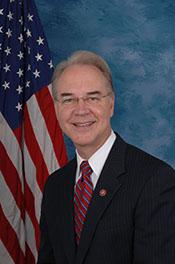
Mr. Speaker, first, I want to thank Chairman Deal for his leadership on this issue and Chairman Barton as well for allowing this to go forward and thank particularly Mr. Brown and Ms. Herseth and Mr.…
Mr. Speaker, first, I want to thank Chairman Deal for his leadership on this issue and Chairman Barton as well for allowing this to go forward and thank particularly Mr. Brown and Ms. Herseth and Mr. Dingell for working together to make certain that this issue is brought forward before we go home for the holiday.
Any testing, any testing, for quality in health care, must recognize and be tailored to real-life situations and the actual practice of medicine. As a physician, I have a real concern about quality health care and about how often government decisions may adversely affect that care.
In our State of Georgia, as the chairman knows, 40 percent of the pathologists in our State no longer read Pap smears. They no longer read Pap smears. The reason is not that they forgot how to read Pap smears. The reason is that the liability, the risk for reading a Pap smear at this point is greater than the benefit that they can derive themselves, and it is not worth putting their families at that personal financial risk to do so. If we go ahead with current CMS policy, I fear all across this Nation, we will see the remainder of the pathologists will no longer be able to read Pap smears, and consequently, the quality of care will be further diminished.
The reason that this test that has been proposed to move forward is flawed is because the practice of pathology is a collegial practice. If a pathologist is reading a slide to determine a diagnosis and he or she may have a question about it, they do not simply put it aside and not do anything about it. They call over Dr. Smith or Dr. Jones or one of the other personnel and ask them, what do you think? And they come to a decision together. Sometimes they may even take the specimen, that slide and the specimen they have, to a professor, to a university nearby or to a seminar that is being held and get other opinions. It is a collegial practice.
The test that is on the books right now and being proposed to be implemented January 1 on a mandatory basis does not recognize any of the collegiality of the practice of pathology or medicine for that matter.
So I believe that any testing that ought to be approved must be approved by the specialty society. The College of American Pathologists has wonderful individuals, scientists, individuals who understand the practice of medicine and also understand the science, and they must, they must, approve any test before it goes forward.
I also believe that any test that would be of benefit to us as citizens and truly increase the quality of care would be a test that measured the quality of the facility which recognizes the collegiality of the practice of pathology, and not be necessarily physician- specific, because that does not recognize how these things are done.
So, this bill, I commend the chairman once again for bringing it forward. I believe it is a commonsense measure. It is a measure that, ultimately, I believe, will result in a better rule and a better ability of pathologists and other physicians across this Nation to practice. I urge adoption of this bill.
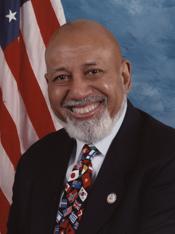
Mr. Speaker, I yield myself such time as I may consume, and I thank my friend from Texas (Mr. Sessions) for the time. Mr. Speaker, I guess it is appropriate that we are providing for suspension of…
Mr. Speaker, I yield myself such time as I may consume, and I thank my friend from Texas (Mr. Sessions) for the time.
Mr. Speaker, I guess it is appropriate that we are providing for suspension of the rules, since we learned yesterday that the President has suspended the law regarding spying on American citizens. I heard one of our colleagues earlier say that it was the law. I would remind him that this House has passed no such measure permitting spying on American citizens, even babies know that.
Mr. Speaker, as my colleague has already noted, this rule will permit the House to consider nine pieces of legislation under suspension of the rules. While I will not oppose this rule and intend to support the nine bills to which the rule applies, and I say that advisedly, taking into consideration the gentleman from Wisconsin (Mr. Obey), my distinguished colleague, who will explain in detail the circumstances regarding Labor-HHS and the drastic implications for the finances of certain agencies.
I am deeply concerned that the House is again operating outside the boundaries of regular order.
For the last year, my friends in the Republican leadership have consistently convened the House a mere 3 days a week, occasionally 4. They have regularly sent Members home earlier than anyone else in this country gets off work. Sure, I certainly, and I believe all of us, appreciate going home a few hours earlier during the week. But forgive me, Mr. Speaker, if I am not the most sympathetic Member when the leadership cries legislative crisis time and time again over situations that it created.
There is a better way to run this body, and the Republicans continue to show that they are incapable of leading the House in an efficient and regular manner.
Mr. Speaker, I reserve the balance of my time.
Mr. Speaker, I am pleased to yield 2\1/2\ minutes to the distinguished gentleman, my good friend from Massachusetts (Mr. Frank).
Mr. Speaker, at this particular moment I am privileged to yield such time as he may consume to my good friend, the gentleman from Wisconsin (Mr. Obey), the distinguished ranking member of the Appropriations Committee.
Mr. Speaker, I yield myself such time as I may consume.
I hope that the general body heard and understood Mr. Obey's explanation, the fact remains that it would devastate programs in this country that people are totally relying upon; and, more importantly, my friends who espouse their support of the military, put the military in a position of not being able to do advanced procurement and to live at restrictive levels. That is not right. Therefore, we need to pay particular attention to the continuing resolution.
I would urge Members to be prepared to come back for this particular measure, in light of the explanations offered by my colleagues Mr. Frank of Massachusetts and Mr. Obey.
Mr. Speaker, I yield back the balance of my time.
Amendment Offered by Mr. Sessions
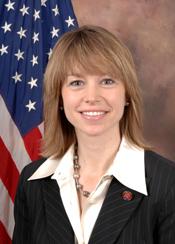
Mr. Speaker, I thank my friend from Ohio for yielding and for his long-standing commitment for health care issues facing this country. Mr. Speaker, I rise today in support of H.R. 4568, the…
Mr. Speaker, I thank my friend from Ohio for yielding and for his long-standing commitment for health care issues facing this country.
Mr. Speaker, I rise today in support of H.R. 4568, the Proficiency Testing Improvement Act of 2005, because this legislation reflects a thoughtful compromise, and I am extremely pleased we are going to have an opportunity to address the underlying issues concerning the clinical laboratory proficiency testing regime currently being implemented by the Centers for Medicare and Medicaid Services.
As I toured laboratories in South Dakota earlier this year and discussed the proficiency test with pathologists in my State, it has become clear to me that the science and practice guidelines for cytology have advanced substantially in the 13 years since the initial design of the proficiency testing program.
I have serious concerns with the possibility of qualified physicians and lab personnel being penalized as a result of a test based on outdated standards, and I have concerns about the access problems this may create in rural areas.
The Clinical Laboratory Improvement Advisory Committee, which is charged with advising the Secretary of Health and Human Services on the standards governing clinical laboratories, has recommended that the Department of Health and Human Services revise the outdated regulation to reflect the advances in the practice of cytology.
When it became clear that Secretary Leavitt intended to proceed with the January 1 implementation date, as Mr. Brown indicated, I joined with him and many others of this body to urge the Secretary to suspend the current testing program and make the necessary revisions to reflect the advances in science, technology and practice. But time grows short, and without any assurances that the flaws in the current regime will be addressed, it is necessary for us to act.
This legislation delays implementation of proficiency testing for 1 year to allow the Secretary to make the appropriate revisions and ensure a testing program that reflects medically and scientifically current standards for the
practice of cytology. This step is necessary to protect access to clinical laboratory services and to ensure the high quality of those services.
I want to express my sincere thanks to all those who have worked so hard in the last few weeks to bring this legislation to the floor before the end of the session. Ranking Members Dingell and Brown, Chairman Deal, Mr. Price, have all been diligent and thoughtful throughout this process. And I also want to extend my thanks to Chairman Barton for his flexibility and offer my prayers for his speedy recovery during the Christmas season.
I encourage my colleagues in the House to support H.R. 4568 and our colleagues in the Senate to act swiftly to pass this important legislation before we adjourn.
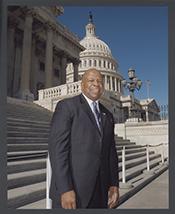
Mr. Speaker, I was just listening to the last speaker, and I just wanted to bring something to the attention of the House. In Maryland, we had a situation where we had Maryland General Hospital,…
Mr. Speaker, I was just listening to the last speaker, and I just wanted to bring something to the attention of the House.
In Maryland, we had a situation where we had Maryland General Hospital, which is in my district, as a matter of fact, within 6 blocks of my house, and one of the things that we discovered was that the hospital was providing tests whereby personnel in the hospital knew that these HIV and hepatitis tests, the results were the wrong results. In other words, there was some faulty machinery. There was some problem within the lab itself. And when the whistleblower went to blow the whistle, the whistleblower was fired.
Government does have a role in this. The government must have a role. Almost, not almost, every single person in this country at some point is subjected to some type of medical test. As a matter of fact, we in the State of Maryland, it was of such significance that we got the College of American Pathologists to revise their entire program so as to protect whistleblowers, to make sure that if there was retaliation against a whistleblower, that that clinical lab could lose its accreditation.
They also are spending $9 million over the next 2 years to revamp their whole process, because here is the College of American Pathologists who oversees some 6,000 clinical labs all around the world, and they realized that it was important that they give proper results and protect whistleblowers, have a better system. But I can tell you the thing that pushed them to do that was government intervention.
So I understand this particular piece of legislation. I think it makes sense. I wish we had a little bit more time to consider it. The fact is, I am not going to stand in the way of it, but I refuse to accept an argument that says that government has no role in this, because, again, the American public must, must, have confidence in medical tests, must be able to rely on them.
When we are talking about such subjects as medical malpractice, Mr. Speaker, if someone has the wrong results on a test, my God, it may result in all kinds of very unfortunate circumstances and expenses and pain and suffering to a family.

Mr. Speaker, I thank the gentleman for yielding me the time. Mr. Speaker, I rise today in support of H.R. 4568. This legislation will put in place a 1-year delay of a problematic cytology testing…
Mr. Speaker, I thank the gentleman for yielding me the time.
Mr. Speaker, I rise today in support of H.R. 4568. This legislation will put in place a 1-year delay of a problematic cytology testing program and will allow HHS to review and revise the program in order to better reflect current medical practice.
Numerous pathologists from my district in central and western Pennsylvania have expressed great concern over this testing program. I would like to share a portion of a letter I received from a well- respected pathologist from Roaring Springs, Pennsylvania, Dr. Bill Kirsch, regarding this issue. And I think it is extremely important to hear the words of a practicing pathologist and not just legislators on the floor of the House.
Dr. Kirsch first contacted me in August of this year saying the following:
``Although I have not received the survey material at this time, it was apparent when I read the initial introduction of this new testing procedure that it had little merit and was only vaguely related to the actual practice of cytopathology.
``My contention is this supposed proficiency examination will do little or nothing to improve the quality of the cytopathology services and only add to hospital expenses through fee and the paid time for the cytology tech staff and the pathologist forced to participate. There are other proficiency tests that I have subscribed to for a number of years and have helped me to become a better cytopathologist.
``The current proficiency testing by MIME has, in my opinion, no merit and does not deserve to be continued. It does not have the support of pathology or cytopathologist professionals and should not have even been initiated.''
Mr. Speaker, I respect the wisdom and experience of many of the doctors and laboratory professionals that have contacted me asking that we please ask HHS to step back and review this testing program. A vote for the commonsense legislation is just what the doctor ordered.
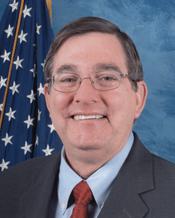
Mr. Speaker, I thank the chairman and the ranking member for bringing this relevant and important piece of legislation to the floor today. It is probably the cervical cytology that has been more…
Mr. Speaker, I thank the chairman and the ranking member for bringing this relevant and important piece of legislation to the floor today.
It is probably the cervical cytology that has been more responsible than any other medical test for the foundation of preventative medicine in the United States.
I cannot tell you of the change that has taken place in the science of cervical cytologies from 1988, when this language was first written, until the time I left practice in 2002. The change has been so rapid in the science of cytology; and the language in this legislation being over 10 years old, over a decade old, is inappropriate for the 21st century.
In this day and time, we now have thin-layer cytologies. We have liquid-based cytologies, none of which were available in the late 80s or early 90s. The accuracy of these tests is light years ahead of what it was. If you add to that the ability to do DNA typing on abnormal cells, a lot of problems with false negatives have been eliminated. The CLIA standards to affect this language at this point would be inappropriate. They would be draconian. In fact, they would be a big step backward.
I look forward to working with my chairman. I look forward to working with the committee with my fellow members to develop language that more accurately measures the performance of cytopathologists and pathologists.
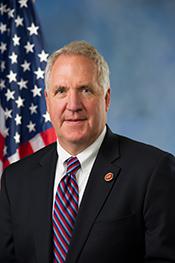
Mr. Speaker, I want to thank Chairman Deal of the subcommittee for his work on this legislation, also Ranking Member Brown, and I think they accurately have mentioned what this legislation does. It…
Mr. Speaker, I want to thank Chairman Deal of the subcommittee for his work on this legislation, also Ranking Member Brown, and I think they accurately have mentioned what this legislation does.
It wants to hold off these regulations that are decades old for new science and new technology and for safety and cost and efficiency and all those things.
I just want to take this time to thank Dr. James Miller, who runs a lab in Fayette County Hospital in Vandalia, Illinois, for always keeping me updated on issues facing the laboratory community.
In my district and across the country, we already have a shortage of medical lab technicians. These proficiency testing regulations would further reduce access to cytology services.
I urge my colleagues to support this legislation, H.R. 4568.
Show 2 more

Mr. Speaker, I support H.R. 4568, the ``Proficiency Testing Improvement Act of 2005,'' which requires the Secretary of the Department of Health and Human Services to update the federal program to…
Mr. Speaker, I support H.R. 4568, the ``Proficiency Testing Improvement Act of 2005,'' which requires the Secretary of the Department of Health and Human Services to update the federal program to test the proficiency of individual laboratory professionals who read Pap tests. This bill delays implementation of the program first proposed in 1992 so that revisions, including those recommended by the Clinical Laboratory Improvement Advisory Committee, can be made. Importantly, these revisions are required to be made within one year, and must be made before proficiency testing can resume.
This is a commonsense measure that will assure that regulations implemented by the Federal Government reflect current science, technology, and medical practice. I urge my colleagues to support it.
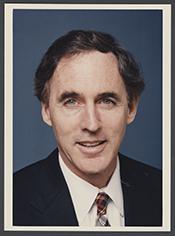
Mr. Speaker, on rollcall No. 663 I was unavoidably detained. Had I been present, I would have voted ``yes.''
Mr. Speaker, on rollcall No. 663 I was unavoidably detained. Had I been present, I would have voted ``yes.''
Bill Text
3 versions available
        [Congressional Bills 109th Congress]
[From the U.S. Government Publishing Office]
[H.R. 4568 Referred in Senate (RFS)]

109th CONGRESS
2d Session
H. R. 4568

_______________________________________________________________________

IN THE SENATE OF THE UNITED STATES

December 17, 2005

Received

January 27, 2006

Read twice and referred to the Committee on Health, Education, Labor,
and Pensions

_______________________________________________________________________

AN ACT

To improve proficiency testing of clinical laboratories.

Be it enacted by the Senate and House of Representatives of the
United States of America in Congress assembled,

SECTION 1. SHORT TITLE.

This Act may be cited as the ``Proficiency Testing Improvement Act
of 2005''.

SEC. 2. IMPROVEMENT OF PROFICIENCY TESTING OF CLINICAL LABORATORIES.

Notwithstanding any other provision of law, the Secretary of Health
and Human Services--
(1) may not, during the one-year period beginning on the
date of the enactment of this Act, conduct (or cause an entity
with which the Secretary contracts to conduct) the proficiency
testing referred to in section 353(f)(4)(B)(iv) of the Public
Health Service Act (42 U.S.C. 263a(f)(4)(B)(iv));
(2) shall revise such proficiency testing (or cause such
testing to be revised)--
(A) to reflect the collaborative clinical decision-
making of laboratory personnel involved in screening or
interpreting cytological preparations;
(B) to revise grading or scoring criteria to
reflect current practice guidelines;
(C) to provide for such testing to be conducted no
more often than every 2 years; and
(D) to make such other revisions to the standards
for such testing as may be necessary to reflect changes
in laboratory operations and practices since such
standards were promulgated in 1992; and
(3) shall make the revisions required by paragraph (2)
within one year after the date of the enactment of this Act and
before resuming proficiency testing referred to in such
section.

Passed the House of Representatives December 17, 2005.

Attest:

KAREN L. HAAS,

Clerk.