Methamphetamine Eradication Act
 Rep. James L. Oberstar (D-MN)
Legislative Activity
Stay on top of the latest movement without scrolling through every action
Referred to the Subcommittee on Education Reform.
May 1, 2006
View full timeline
Introduced in House
February 15, 2006
Referred to the Committee on the Judiciary, and in addition to the Committees on Energy and Commerce, Science, Education and the Workforce, and Transportation and Infrastructure, for a period to be subsequently determined by the Speaker, in each case for consideration of such provisions as fall within the jurisdiction of the committee concerned.
February 15, 2006
Referred to the Subcommittee on Economic Development, Public Buildings and Emergency Management.
February 16, 2006
Referred to the Subcommittee on Health, for a period to be subsequently determined by the Chairman.
February 17, 2006
Referred to the Subcommittee on Environment, Technology, and Standards.
February 24, 2006
Referred to the Subcommittee on Research.
February 24, 2006
Sponsor introductory remarks on measure. (CR H1499)
April 5, 2006
Referred to the Subcommittee on Education Reform.
May 1, 2006
Floor Debate
10 membersWhat members said about H.R. 4763 on the floor

 +5
+5
Floor Debate
10 membersWhat members said about H.R. 4763 on the floor
Mr. Speaker, I thank the gentleman from Illinois and the gentleman from Georgia as well. Mr. Speaker, I want to rise in strong support of H. Res. 556, a resolution I have introduced to establish…
I want to thank the gentleman for yielding, and I want to thank Mr. Baird for this resolution, which I strongly support. As the ranking member of the Drug Subcommittee of the Government Reform…
Mr. Speaker, I thank my colleague, the gentleman from Georgia, as well as my colleague, Representative Davis from Illinois, and I thank Representative Baird from Washington for bringing this bill up,…
Mr. Speaker, I rise today in support of H. Res. 556, a resolution expressing the sense of the House of Representatives that a National Methamphetamine Prevention Week should be established to…
Mr. Speaker, I too would like to add my congratulations to Congressman Baird for H.R. 556. First of all, the good news. In many parts of the country, cocaine and heroin are being diminished rather…
Show 5 more
Mr. Speaker, I move to suspend the rules and agree to the resolution (H. Res. 556) expressing the sense of the House of Representatives that a National Methamphetamine Prevention Week should be…

Mr. Speaker, I rise in support of H. Res. 556, a resolution expressing the sense of the House of Representatives that a National Methamphetamine Prevention Week should be established to increase…
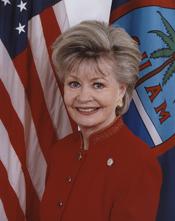
Mr. Speaker, I rise today in strong support of H. Res. 556. This resolution supports the establishment of a National Methamphetamine Prevention Week to increase public awareness throughout the…
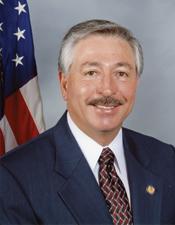
Mr. Speaker, I would like to thank the gentleman from Illinois (Mr. Davis) for giving me time to speak in favor of H.R. 556. I would like to especially thank one of my own constituents, way in the…
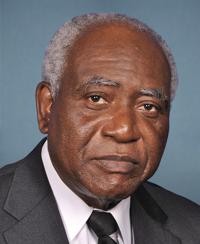
Mr. Speaker, I yield such time as he might consume to the gentleman from Washington (Mr. Baird), the author of this legislation. Mr. Speaker, it is my pleasure to yield such time as he might consume…
Bill Text
Latest available legislative text
        [Congressional Bills 109th Congress]
[From the U.S. Government Publishing Office]
[H.R. 4763 Introduced in House (IH)]

109th CONGRESS
2d Session
H. R. 4763

To provide a comprehensive Federal response to problems relating to
methamphetamine abuse.

_______________________________________________________________________

IN THE HOUSE OF REPRESENTATIVES

February 15, 2006

Mr. Oberstar introduced the following bill; which was referred to the
Committee on the Judiciary, and in addition to the Committees on Energy
and Commerce, Science, Education and the Workforce, and Transportation
and Infrastructure, for a period to be subsequently determined by the
Speaker, in each case for consideration of such provisions as fall
within the jurisdiction of the committee concerned

_______________________________________________________________________

A BILL

To provide a comprehensive Federal response to problems relating to
methamphetamine abuse.

Be it enacted by the Senate and House of Representatives of the
United States of America in Congress assembled,

SECTION 1. SHORT TITLE; TABLE OF CONTENTS.

(a) Short Title.--This Act may be cited as the ``Methamphetamine
Eradication Act''.
(b) Table of Contents.--The table of contents for this Act is as
follows:

Sec. 1. Short title; table of contents.
TITLE I--FIRE AND POLICE

Sec. 101. Requirement that firefighters receive methamphetamine
awareness training.
Sec. 102. Use of funds under Department of Homeland Security's
Assistance to Firefighters Grant Program
for rural fire departments.
Sec. 103. Requirement that law enforcement officers receive
methamphetamine awareness training.
Sec. 104. Reauthorization of COPS grant program.
Sec. 105. Use of funds under Department of Justice's COPS program for
rural police departments and drug task
forces.
Sec. 106. Reauthorization of Byrne Formula Grant Program.
Sec. 107. Use of funds under Department of Justice's Byrne Formula
Grant Program for rural police departments
and drug task forces.
Sec. 108. Requirement that Drug Enforcement Administration allocate, to
rural areas, 50 percent of the funding for
combating methamphetamine abuse.
Sec. 109. Requirement that Drug Enforcement Administration allocate, to
first responders from rural areas, 50
percent of the seats in each clan
laboratory training session.
Sec. 110. Reports by Director of Office of National Drug Control Policy
on methamphetamine abuse.
Sec. 111. Requirement that Attorney General provide training to local
prosecutors and law enforcement agents from
rural areas in how to investigate and
prosecute methamphetamine offenses.
Sec. 112. Department of Justice grants to rural areas for expenses
incurred by courts and jails relating to
methamphetamine offenses.
Sec. 113. Use of funds under National Drug Court Training and
Assistance Program to assist rural areas in
prosecuting methamphetamine offenses.
Sec. 114. Department of Justice program to assist rural areas in
processing child protection cases for
children of methamphetamine addicts.
Sec. 115. Regulation of retail sales of pseudoephedrine.
Sec. 116. Regulated transactions.
Sec. 117. Minimum mandatory penalty for manufacture of methamphetamine
on premises where children reside.
TITLE II--HEALTH

Sec. 201. Local grants for treatment of methamphetamine abuse and
related conditions.
Sec. 202. Enhanced residential substance abuse treatment programs for
State and Federal prisoners.
Sec. 203. Study regarding health effects on children of exposure to
process of unlawful manufacture of
methamphetamine.
Sec. 204. Grants for programs for drug-endangered children.
TITLE III--EDUCATION

Sec. 301. Grants for educational programs on prevention and treatment
of methamphetamine abuse.
TITLE IV--ENVIRONMENT

Sec. 401. Environmental Protection Agency.
Sec. 402.  First responder grants for rural areas.
Sec. 403. Use of funds under Drug Enforcement Administration's
Hazardous Waste Program to clean up
methamphetamine laboratories.

TITLE I--FIRE AND POLICE

SEC. 101. REQUIREMENT THAT FIREFIGHTERS RECEIVE METHAMPHETAMINE
AWARENESS TRAINING.

Section 33(b) of the Federal Fire Prevention and Control Act of
1974 (15 U.S.C. 2229(b)) is amended by adding at the end the following
new paragraph:
``(13) Eligibility.--The fire department shall be eligible
for a grant under this section only if it demonstrates to the
satisfaction of the Director that--
``(A) a portion of the grant funding will be used
to provide methamphetamine awareness training to
firefighters; or
``(B) the fire department has previously provided
methamphetamine awareness training to its
firefighters.''.

SEC. 102. USE OF FUNDS UNDER DEPARTMENT OF HOMELAND SECURITY'S
ASSISTANCE TO FIREFIGHTERS GRANT PROGRAM FOR RURAL FIRE
DEPARTMENTS.

Section 33(e) of the Federal Fire Prevention and Control Act of
1974 (15 U.S.C. 2229(e)) is amended by adding at the end the following
new paragraph:
``(3) Methamphetamine-related equipment.--At least
$25,000,000 of the amounts appropriated for carrying out this
section for each of fiscal years 2007 through 2009 shall be
made available to rural fire departments for the acquisition of
equipment appropriate to support a response action at a
location where methamphetamine is present or is suspected to be
present.''.

SEC. 103. REQUIREMENT THAT LAW ENFORCEMENT OFFICERS RECEIVE
METHAMPHETAMINE AWARENESS TRAINING.

As a condition of receiving grant amounts under any grant program
of the Department of Justice, a public entity must ensure, throughout
the jurisdiction of the entity, that each law enforcement officer
receives, as part of the basic or periodic training provided to that
officer, methamphetamine awareness training.

SEC. 104. REAUTHORIZATION OF COPS GRANT PROGRAM.

Section 1001 of the Omnibus Crime Control and Safe Streets Act of
1968 (42 U.S.C. 3793) is amended in subsection (a)(11)(A) by striking
``expended'' and all that follows through the period at the end and
inserting ``expended, $748,000,000 for each of fiscal years 2007, 2008,
and 2009.''.

SEC. 105. USE OF FUNDS UNDER DEPARTMENT OF JUSTICE'S COPS PROGRAM FOR
RURAL POLICE DEPARTMENTS AND DRUG TASK FORCES.

Section 1701 of the Omnibus Crime Control and Safe Streets Act of
1968 (42 U.S.C. 3796dd) is amended by adding at the end the following
new subsection:
``(l) Allocations for Methamphetamine Situations.--Of the amounts
available to carry out this chapter, not less than $25,000,000 shall be
available only for grants by the Attorney General to police departments
and drug task forces in rural areas, for use by the recipients to
purchase basic equipment to address situations involving
methamphetamines.''.

SEC. 106. REAUTHORIZATION OF BYRNE FORMULA GRANT PROGRAM.

There are authorized to be appropriated to carry out part E of the
Omnibus Crime Control and Safe Streets Act of 1968 (42 U.S.C. 500 et
seq.) $170,000,000 for each of fiscal years 2007 through 2009.

SEC. 107. USE OF FUNDS UNDER DEPARTMENT OF JUSTICE'S BYRNE FORMULA
GRANT PROGRAM FOR RURAL POLICE DEPARTMENTS AND DRUG TASK
FORCES.

Of the amounts available in a fiscal year to carry out part E of
the Omnibus Crime Control and Safe Streets Act of 1968 (42 U.S.C. 500
et seq.), not less than 50 percent of those amounts shall be available
only for grants by the Attorney General to police departments and drug
task forces in rural areas, for use by the recipients to purchase basic
equipment to address situations involving methamphetamines.

SEC. 108. REQUIREMENT THAT DRUG ENFORCEMENT ADMINISTRATION ALLOCATE, TO
RURAL AREAS, 50 PERCENT OF THE FUNDING FOR COMBATING
METHAMPHETAMINE ABUSE.

Of the amounts available in a fiscal year to the Drug Enforcement
Administration to combat methamphetamines, not less than 50 percent of
those amounts shall be available only for rural areas.

SEC. 109. REQUIREMENT THAT DRUG ENFORCEMENT ADMINISTRATION ALLOCATE, TO
FIRST RESPONDERS FROM RURAL AREAS, 50 PERCENT OF THE
SEATS IN EACH CLAN LABORATORY TRAINING SESSION.

Of the seats available in a clan laboratory training session of the
Drug Enforcement Administration, not less than 50 percent of those
seats shall be available only to first responders from rural areas.

SEC. 110. REPORTS BY DIRECTOR OF OFFICE OF NATIONAL DRUG CONTROL POLICY
ON METHAMPHETAMINE ABUSE.

(a) Report on Methamphetamine Problems.--Not later than September
30, 2007, the Director of National Drug Control Policy shall submit to
Congress a report on methamphetamine abuse. The report shall contain--
(1) a discussion of the areas in the United States where
the methamphetamine problem is the greatest (per capita);
(2) recommendations on the best methods for addressing the
methamphetamine epidemic in rural areas;
(3) a list of the amounts requested for each high intensity
drug trafficking area for the next fiscal year and a detailed
rationale for each such amount, including the manner in which
such funding is expected to ensure the achievement of each
area's goals and objectives; and
(4) such other findings and recommendations as the Director
considers appropriate.
(b) Report on Task Forces.--Not later than 180 days after the date
of the enactment of this Act, the Director of National Drug Control
Policy shall submit to Congress a report containing an assessment of
the number and operation of all Federal, State, and local task forces
within each high intensity drug trafficking area, including information
on intelligence sharing and coordination among the task forces.

SEC. 111. REQUIREMENT THAT ATTORNEY GENERAL PROVIDE TRAINING TO LOCAL
PROSECUTORS AND LAW ENFORCEMENT AGENTS FROM RURAL AREAS
IN HOW TO INVESTIGATE AND PROSECUTE METHAMPHETAMINE
OFFENSES.

There are authorized to be appropriated $15,000,000 for each of
fiscal years 2007 through 2009 to provide training to State and local
prosecutors and law enforcement agents in rural areas for the
investigation and prosecution of methamphetamine offenses.

SEC. 112. DEPARTMENT OF JUSTICE GRANTS TO RURAL AREAS FOR EXPENSES
INCURRED BY COURTS AND JAILS RELATING TO METHAMPHETAMINE
OFFENSES.

There are authorized to be appropriated $15,000,000 for each of
fiscal years 2007 through 2009 to provide grants to rural areas for
court costs (including additional staff and security costs) and county
jail costs (including jail days, drug testing, and health and treatment
costs) for expenses related to methamphetamine offenses.

SEC. 113. USE OF FUNDS UNDER NATIONAL DRUG COURT TRAINING AND
ASSISTANCE PROGRAM TO ASSIST RURAL AREAS IN PROSECUTING
METHAMPHETAMINE OFFENSES.

Of the amounts available in a fiscal year to carry out part EE of
the Omnibus Crime Control and Safe Streets Act of 1968 (42 U.S.C. 3796u
et seq.), not less than 25 percent of those amounts shall be available
only for grants by the Attorney General to entities in rural areas, for
use by the recipients for the costs of prosecuting (including costs of
investigation, costs of using crime laboratories, and costs of booking
suspects) cases involving methamphetamine offenses, cases involving
methamphetamine-related child protection, and cases involving
methamphetamine-related forfeitures.

SEC. 114. DEPARTMENT OF JUSTICE PROGRAM TO ASSIST RURAL AREAS IN
PROCESSING CHILD PROTECTION CASES FOR CHILDREN OF
METHAMPHETAMINE ADDICTS.

From amounts made available to the Attorney General for such
purpose, the Attorney General shall carry out a program under which the
Attoney General assists rural areas in processing child protection
cases for children of individuals addicted to methamphetamine.

SEC. 115. REGULATION OF RETAIL SALES OF PSEUDOEPHEDRINE.

(a) Requirements.--Section 310 of the Controlled Substances Act (21
U.S.C. 830) is amended by adding at the end the following subsection:
``(d)(1) Subject to paragraph (2), each regulated person who sells
at retail a list I pseudoephedrine product shall ensure that sales of
the product are made in accordance with the following requirements:
``(A) In offering the product for sale, the person places
the product such that customers do not have direct access to
the product before the sale is made (commonly referred to as
behind-the-counter placement).
``(B) The person delivers the product directly to the
purchaser.
``(C) The person maintains a written list of sales of such
products that identifies the products, the purchasers, and the
dates and times of the sales (which list is referred to in this
subsection as the `logbook)').
``(D) The person does not sell such a product unless--
``(i) the prospective purchaser--
``(I) presents an identification card that
provides a photograph and is issued by a State
or the Federal Government; and
``(II) signs the logbook and legibly prints
in the logbook his or her name, address, and
the date and time of the sale; and
``(ii) the person determines that the name signed
and printed in the logbook corresponds to the name
provided on such identification and that the date and
time entered are correct.
``(2) Paragraph (1) does not apply to a sale of a list I
pseudoephedrine product at retail if a report on the sale is required
to be submitted under subsection (b)(3)(B).''.
(b) Definition of List I Pseudoephedrine Product.--Section 102 of
the Controlled Substances Act (21 U.S.C. 802) is amended by inserting
after paragraph (44) the following paragraph:
``(45)(A) The term `list I pseudoephedrine product' means, subject
to subparagraph (B), a product that--
``(i) contains pseudoephedrine or any its salts, optical
isomers, or salts of optical isomers; and
``(ii) may be marketed or distributed lawfully in the
United States under the Federal, Food, Drug, and Cosmetic Act
as a nonprescription drug.
``(B) Such term does not include a product described in
subparagraph (A) if the product contains a chemical specified in clause
(i) of such subparagraph that the Attorney General has under section
201(a) added to any of the schedules under section 202(c).''.
(c) Enforcement.--Section 402(a) of the Controlled Substances Act
(21 U.S.C. 842(a)) is amended--
(1) in paragraph (10), by striking ``or'' after the
semicolon;
(2) in paragraph (11), by striking the period at the end
and inserting ``; or''; and
(3) by inserting after paragraph (11) the following
paragraph:
``(12) who is a regulated person to knowingly or
negligently sell at retail a list I pseudoephedrine product in
violation of a requirement under section 310(d).''.
(d) Study Regarding Electronic Data Base of Information on
Purchases.--The Attorney General shall conduct a study for the purpose
of determining the costs and feasibility of--
(1) monitoring the quantities of pseudoephedrine purchased
at retail, which monitoring is accomplished by--
(A) requiring persons who sell pseudoephedrine at
retail to submit to the Attorney General the
information contained in logbooks maintained under
section 310(d) of the Controlled Substances Act (as
added by subsection (a) of this section); and
(B) establishing an electronic database that
contains all such information; and
(2) restricting the amount of pseudoephedrine that
consumers may purchase at retail during a specified period of
time and using such database in the enforcement of such
restrictions.

SEC. 116. REGULATED TRANSACTIONS.

(a) Removal of Blister Pack Exemption.--Section 102 of the
Controlled Substances Act (21 U.S.C. 802), as amended by section 115(b)
of this Act, is amended--
(1) in paragraph (39)(A)(iv)(I)(aa), by striking ``, except
that'' and all that follows through ``1996)''; and
(2) by striking the paragraph (45) that relates to the term
``ordinary over-the-counter pseudoephedrine or
phenylpropanolamine product''.
(b) Single-Transaction Limits.--Section 102(39)(A)(iv)(II) of the
Controlled Substances Act (21 U.S.C. 802(39)(A)(iv)(II)) is amended by
striking ``shall be 9 grams'' and all that follows and inserting the
following: ``shall be any quantity of pseudoephedrine over 6.0 grams in
a single transaction, or any quantity of phenylpropanolamine over 6.0
grams in a single transaction, and in addition shall be--
``(aa) in the case of such
products in nonliquid form,
that the products be sold in
package sizes of not more than
3.0 grams of pseudoephedrine
base or 3.0 grams of
phenylpropanolamine base,
respectively, and packaged in
blister packs, each blister
containing not more than 2
dosage units, or where the use
of blister packs is technically
infeasible, packaged in unit
dose packets or pouches; and
``(bb) in the case of such
products in liquid form, that
the products be sold in package
sizes of not more than 3.0
grams of pseudoephedrine base,
or 3.0 grams of
phenylpropanolamine base,
respectively; or''.

SEC. 117. MINIMUM MANDATORY PENALTY FOR MANUFACTURE OF METHAMPHETAMINE
ON PREMISES WHERE CHILDREN RESIDE.

Whoever violates section 401(a)(1) by manufacturing methamphetamine
or its salts, isomers or salts of isomers on premises in which an
individual who is under the age of 18 years resides, shall, unless a
higher minimum mandatory imprisonment applies, be imprisoned for not
less than 20 years.

TITLE II--HEALTH

SEC. 201. LOCAL GRANTS FOR TREATMENT OF METHAMPHETAMINE ABUSE AND
RELATED CONDITIONS.

Subpart 1 of part B of title V of the Public Health Service Act
(42 U.S.C. 290bb et seq.) is amended--
(1) by redesignating the section 514 that relates to
methamphetamine and appears after section 514A as section 514B;
(2) in section 514B, as redesignated--
(A) by amending subsection (a)(1) to read as
follows:
``(1) Grants authorized.--The Secretary may award grants to
States, political subdivisions of States, American Indian
Tribes, and private, nonprofit entities to provide treatment
for methamphetamine abuse.'';
(B) by amending subsection (b) to read as follows:
``(b) Priority for Rural Areas.--In awarding grants under
subsection (a), the Secretary shall give priority to entities that will
serve rural areas experiencing an increase in methamphetamine abuse.'';
and
(C) in subsection (d)(1), by striking ``2000'' and
all that follows and inserting ``2007 and such sums as
may be necessary for each of fiscal years 2008 through
2009''; and
(3) by inserting after section 514B, as redesignated, the
following:

``SEC. 514C. METHAMPHETAMINE RESEARCH, TRAINING, AND TECHNICAL
ASSISTANCE CENTER.

``(a) Program Authorized.--The Secretary, acting through the
Administrator, and in consultation with the Director of the National
Institutes of Health, shall award grants to, or enter into contracts
with, public or private, nonprofit entities to establish a research,
training, and technical assistance center to carry out the activities
described in subsection (d).
``(b) Application.--A public or private, nonprofit entity seeking a
grant or contract under subsection (a) shall submit an application to
the Secretary at such time, in such manner, and containing such
information as the Secretary may require.
``(c) Condition.--In awarding grants or entering into contracts
under subsection (a), the Secretary shall ensure that not less than 1
of the centers will focus on methamphetamine abuse in rural areas.
``(d) Authorized Activities.--Each center established under this
section shall--
``(1) engage in research and evaluation of the
effectiveness of treatment modalities for the treatment of
methamphetamine abuse;
``(2) disseminate information to public and private
entities on effective treatments for methamphetamine abuse;
``(3) provide direct technical assistance to States,
political subdivisions of States, and private entities on how
to improve the treatment of methamphetamine abuse; and
``(4) provide training on the effects of methamphetamine
use and on effective ways of treating methamphetamine abuse to
substance abuse treatment professionals and community leaders.
``(e) Reports.--Each grantee or contractor under this section shall
annually submit a report to the Administrator that contains--
``(1) a description of the previous year's activities of
the center established under this section;
``(2) effective treatment modalities undertaken by the
center; and
``(3) evidence to demonstrate that such treatment
modalities were successful.
``(f) Authorization of Appropriations.--There are authorized to be
appropriated to carry out this section $3,000,000 for fiscal year 2007
and such sums as may be necessary for each of fiscal years 2008 and
2009.''.

SEC. 202. ENHANCED RESIDENTIAL SUBSTANCE ABUSE TREATMENT PROGRAMS FOR
STATE AND FEDERAL PRISONERS.

(a) Enhanced Residential Substance Abuse Treatment Program for
State Prisoners.--
(1) Enhanced drug screenings requirement.--Subsection (b)
of section 1902 of the Omnibus Crime Control and Safe Streets
Act of 1968 (42 U.S.C. 3796ff-1(b)) is amended to read as
follows:
``(b) Substance Abuse Testing Requirement.--To be eligible to
receive funds under this part, a State must agree--
``(1) to implement or continue to require urinalysis or
other proven reliable forms of testing, including both periodic
and random testing--
``(A) of an individual before the individual enters
a residential substance abuse treatment program and
during the period in which the individual participates
in the treatment program; and
``(B) of an individual released from a residential
substance abuse treatment program if the individual
remains in the custody of the State; and
``(2) to require, as a condition of participation in the
treatment program, that such testing indicate that the
individual has not used a controlled substance for at least the
three-month period prior to the date the individual receives
such testing to enter the treatment program.''.
(2) Aftercare services requirement.--Subsection (c) of such
section is amended--
(A) in paragraph (1), by striking ``To be eligible
for a preference under this part'' and inserting ``To
be eligible to receive funds under this part''; and
(B) by amending the heading to read as follows:
``(c) Aftercare Services Requirement.--''.
(3) Priority for partnerships with community-based drug
treatment programs.--Section 1903 of such Act (42 U.S.C.
3796ff-2) is amended by adding at the end the following new
subsection:
``(e) Priority for Partnerships With Community-Based Drug Treatment
Programs.--In considering an application submitted by a State under
section 1902, the Attorney General shall give priority to an
application that involves a partnership between the State and a
community-based drug treatment program within the State.''.
(4) Residential substance abuse treatment program
redefined.--Section 901(a)(25) of such Act (42 U.S.C.
3791(a)(25)) is amended by striking ``means a course of'' and
all that follows and inserting ``means a course of individual
and group activities and treatment, lasting at least six
months, in residential treatment facilities set apart from the
general prison population.''.
(b) Enhanced Residential Substance Abuse Treatment Program for
Federal Prisoners.--
(1) Substance abuse testing requirement.--
(A) Testing required as component of program.--
Subsection (b) of section 3621 of title 18, United
States Code, is amended by adding at the end the
following new sentence: ``Such treatment shall include
urinalysis or other proven reliable forms of testing,
including both periodic and random testing, of such a
prisoner before the prisoner enters the treatment
program and during the period in which the prisoner
participates in the treatment program.''.
(B) Passage of test as condition of
participation.--Subsection (e)(5)(B) of such section is
amended--
(i) in clause (i), by striking ``and'' at
the end; and
(ii) by inserting at the end the following
new clause:
``(iii) determined by the Director of the
Bureau of Prisons, through use of urinalysis or
other proven reliable forms of testing, to have
not used a controlled substance for at least
the three-month period prior to the date the
prisoner enters residential substance abuse
treatment; and''.
(2) Residential substance abuse treatment redefined.--
Paragraph (5)(A) of such section is amended by striking ``means
a course of'' and all that follows through the semicolon at the
end of clause (ii) and inserting ``means a course of individual
and group activities and treatment, lasting at least six
months, in residential treatment facilities set apart from the
general prison population;''.
(3) Authorization of appropriations.--Paragraph (4) of such
section is amended--
(A) in subparagraph (D), by striking ``and'' at the
end;
(B) in subparagraph (E), by striking the period at
the end and inserting ``; and''; and
(C) by adding at the end the following new
subparagraph:
``(F) and such sums as may be necessary in
subsequent fiscal years.''.

SEC. 203. STUDY REGARDING HEALTH EFFECTS ON CHILDREN OF EXPOSURE TO
PROCESS OF UNLAWFUL MANUFACTURE OF METHAMPHETAMINE.

(a) In General.--With respect to the unlawful manufacturing of
methamphetamine, the Secretary of Health and Human Services shall
conduct a study for the purpose of determining--
(1) to what extent food, water, air, soil, equipment, or
other matter becomes contaminated with methamphetamine or other
harmful substances as a result of the proximity of the matter
to the process of such manufacturing; and
(2) whether any adverse health conditions result from the
exposure of children to such process or to contaminated matter
within the meaning of paragraph (1).
(b) Report to Congress.--Not later than one year after the date of
the enactment of this Act, the Secretary of Health and Human Services
shall complete the study under subsection (a) and submit to the
Congress a report describing the findings of the study.

SEC. 204. GRANTS FOR PROGRAMS FOR DRUG-ENDANGERED CHILDREN.

(a) In General.--The Secretary of Health and Human Services, in
collaboration with the Attorney General of the United States, shall
make grants to eligible States for the purpose of carrying out programs
to provide a comprehensive response to the health and mental health
problems of children that are associated with living in a home in which
methamphetamine is unlawfully manufactured, administered, or
distributed. Such health problems include exposure to food, water, air,
soil, equipment, or other matter that has become contaminated with
methamphetamine or other harmful substances as a result of the
proximity of the matter to such unlawful manufacturing.
(b) Eligible State.--A State is an eligible State for purposes of
subsection (a) if the State had more than 200 methamphetamine
laboratory seizures in 2004, as reported by the National Clandestine
Laboratory Database.
(c) Certain Requirements.--The Secretary of Health and Human
Services shall ensure that the procedures and services of programs
carried out with grants under subsection (a) include the following:
(1) Coordination among law enforcement agencies,
prosecutors, child protective services, and health
professionals.
(2) Removal of children from toxic or drug-endangering
environments.
(3) Medical and dental health evaluation and services, drug
and toxic chemical exposure screening, and mental health
evaluation and services.
(d) Authorization of Appropriations.--For the purpose of carrying
out this section, there are authorized to be appropriated $20,000,000
for each of the fiscal years 2007 and 2008. Amounts appropriated under
the preceding sentence shall remain available until expended.

TITLE III--EDUCATION

SEC. 301. GRANTS FOR EDUCATIONAL PROGRAMS ON PREVENTION AND TREATMENT
OF METHAMPHETAMINE ABUSE.

Part A of title IV of the Elementary and Secondary Education Act of
1965 (20 U.S.C. 7101 et seq.) is amended--
(1) in section 4003--
(A) in paragraph (1), by striking ``and'' at the
end;
(B) in paragraph (2), by striking the period at the
end and inserting ``; and''; and
(C) by adding at the end the following new
paragraph:
``(3) $40,000,000 for fiscal year 2007, for grants under
subpart 4.'';
(2) by redesignating subpart 4 as subpart 5; and
(3) by inserting after subpart 3 the following new subpart:

``Subpart 4--Education on Prevention and Treatment of Methamphetamine
Abuse

``SEC. 4146. GRANT PROGRAM.

``(a) Grants.--From funds made available to carry out this subpart
under section 4003(3), the Secretary may make grants on a competitive
basis to State agencies, local educational agencies, and nonprofit
organizations to carry out programs to educate students on the mental,
physical, and behavioral effects of methamphetamine and on the
prevention and treatment of methamphetamine abuse.
``(b) Priority.--In making grants under subsection (a), the
Secretary shall ensure that not less than 50 percent of funds made
available to carry out this subpart under section 4003(3) for a fiscal
year are made available for programs in schools located in rural areas.
``(c) Applications.--To receive a grant under this section, an
applicant shall submit an application to the Secretary at such time, in
such manner, and containing such information as the Secretary may
require.''.

TITLE IV--ENVIRONMENT

SEC. 401. ENVIRONMENTAL PROTECTION AGENCY.

There are authorized to be appropriated to the Administrator of the
Environmental Protection Agency $90,000,000 for each of the fiscal
years 2007 through 2009 for the Local Governments Reimbursement Program
for methamphetamine laboratory cleanup reimbursement in rural areas.

SEC. 402. FIRST RESPONDER GRANTS FOR RURAL AREAS.

(a) Grant Authorization.--The Secretary of Transportation may
provide additional hazardous materials emergency preparedness grants to
local governments in rural areas to assist first responders in their
efforts to clean up clandestine methamphetamine laboratories.
(b) Authorization of Appropriations.--There is authorized to be
appropriated to carry out this section $70,000,000 for each of fiscal
years 2008 through 2009.

SEC. 403. USE OF FUNDS UNDER DRUG ENFORCEMENT ADMINISTRATION'S
HAZARDOUS WASTE PROGRAM TO CLEAN UP METHAMPHETAMINE
LABORATORIES.

(a) Program Required.--Subject to the availability of
appropriations, the Attorney General shall carry out a program under
which the Hazardous Waste Disposal Program of the Drug Enforcement
Administration provides, to each eligible State, not less than
$1,400,000 for each of the fiscal years 2007 through 2009, to be used
by the State for using private contractors to clean up clandestine
methamphetamine laboratories.
(b) Definition.--In this section, the term ``eligible State'' means
a State in which 50 or more clandestine methamphetamine laboratories
are known to exist.
<all>