Gang Elimination Act of 2006
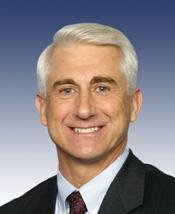
Legislative Activity
Stay on top of the latest movement without scrolling through every action
Referred to the House Committee on the Judiciary.
May 4, 2006
View full timeline
Introduced in House
May 4, 2006
Floor Debate
7 membersWhat members said about H.R. 5291 on the floor
 MK
MK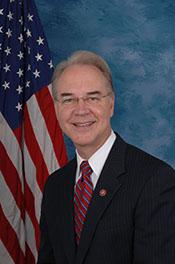 TP
TP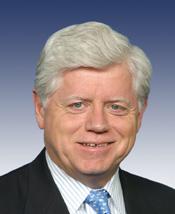 JBL
JBL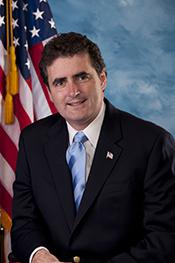 MGF
MGF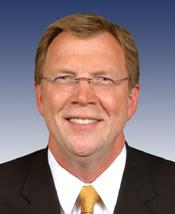 JCP+2
JCP+2
Floor Debate
7 membersWhat members said about H.R. 5291 on the floor
Mr. Speaker, I want to thank the House and my colleague from Georgia for arranging for this time to talk about a new suburban agenda for the country, one that addresses key issues before families in…
Mr. Speaker, I want to thank the House and my colleague from Georgia for arranging for this time to talk about a new suburban agenda for the country, one that addresses key issues before families in America and reflects the new suburban reality of the way we live our lives.
This Congress is well known for being home to a Rural Caucus and an Urban Affairs Caucus. But to date we have never had a Suburban Caucus addressing the needs of suburban families. For us at this time we should recognize not how Americans lived in the 20th century but how they live now in the 21st century.
In the most recent election, over half of all voters were from suburban families, and suburban communities are under attack. They are under attack from gangs moving to the suburbs and taking on suburban police departments. They are under attack from Internet predators. Over 50,000 of them online at any one time attempting to contact our kids. We see a growing wave, a disappearance of green and open space that need to be protected. And there is a general fear held by three- quarters of the American public that it may be more difficult for their kids to enter the middle class than it was for them.
Five dozen Members of Congress have gathered together to put together a suburban agenda to address these needs. And one of those Members is representing the Atlanta suburbs, Congressman Tom Price, and a member of Suburban Agenda Caucus, and I yield to him.
I thank the gentleman.
One of the critical problems we have is from powerful social networking sites like MySpace.com and other sites that have given online predators powerful tools to reach children. Our leader, the author of the Delete Online Predators Act, is a Congressman from Pennsylvania, Mike Fitzpatrick and I want to yield to him.
I thank the gentleman who has become the leader on protecting kids from these new powerful tools online.
Suburban families have told us consistently that they want congressional action on education, health care, conservation and the economy; and one of our big reforms in the area of health care is accelerating health care information technology. I yield to my colleague from Georgia to talk about that major piece of legislation.
Mr. Speaker, I thank the gentleman. We saw a dramatic testament to the value of fully electronic medical records when Hurricane Katrina hit New Orleans. The many civilian hospitals had not yet upgraded to fully electronic medical records, and their record rooms were flooded out. Many of those patients then lost their medical histories, but the veterans in New Orleans did not have that problem. Their records were already fully digitized, and so a veteran reporting to a VA hospital in Houston or in Baton Rouge had their complete medical history protected.
That is one key issue in the suburban agenda, but another is protecting kids from predators, especially in schools. We heard of the great tragedy of Jessica Lunsford, an example of inadequate screening for people who come in contact with kids, and one of our experts on this field is my colleague from the State of Florida, and I yield to her.
Mr. Speaker, I thank the gentlewoman who lost Jessica Lunsford in her own district.
Our leader on this issue is Congressman Jon Porter from Nevada, the author of the School Safety Acquiring Faculty Excellence Act, and I want to yield to him.
Mr. Speaker, I thank the gentleman from Nevada because he is the author of the lead bill of the suburban agenda, and that will be coming up shortly in the Congress here.
We know that, for example, in the State of Michigan, schools unwittingly hired 2,500 people convicted of sexual assault, murder and other felonies, exactly because these predators fell between the cracks of the various State registries which have been established and were not brought together in a single Federal register.
One of the great problems that we have is also the emergence of international drug gangs moving into suburban communities. There are over 800,000 members of drug gangs now in America. It would be the seventh largest army in the world, and we need action to make sure that these gangs, sometimes suppressed inside large urban cores by capable police departments like the Chicago Police Department, are now moving into the suburbs. This is a phenomenon that we are not immune to in Chicagoland. It is happening all over the country, and I yield to my colleague from Atlanta to talk about the law enforcement situation that they face with gangs in that community.
One of the critical problems we have, we have heard of gangs like the Latin Kings and the Vice Lords and the Gangster Disciples, but we have a new gang emerging called MS-13 that may have reported, we don't know, links to international terror groups coming out of drug activity south of the border that seem to have no compunction with killing police officers, both on the West and East coasts. This is not just a threat to kids in school, it is a homeland defense issue.
We all know Dave Reichert from Washington, who was the national hero who tracked down the Green River killer and is someone who understands well law enforcement challenges east of the Cascades in Seattle.
One of the big issues we are also dealing with is a fear among families in America that it may be more difficult for their children to reach the middle class than it was for them. Another key item of the suburban agenda would establish 401-kids, a tax-deferred savings account for each child.
I want to yield to my colleague who shares Florida with the author of that legislation, Clay Shaw.
I thank the gentlelady.
We have seen a number of gangs morph from the view that we had of them in the 1950s coming out of cartoon images like West Side Story of the Jets and the Sharks, a group of local toughs that no longer exist. These gangs are all connected to international drug cartels, many times having weapons and contacts far exceeding local law enforcement, especially suburban law enforcement.
And now the view that they have is that they merely need to move outside of cities where they take on smaller police departments or high school officials and security officials that are not well experienced with these groups to continue their operations.
Congressman Reichert's Gang Elimination Act of 2006 makes common sense. It simply says to the Attorney General, identify the top three national drug threat gangs and put forward a plan to the Congress to take them down within 4 years. It sets an example of those gangs that if you represent a near and present danger to kids and to the homeland security of the United States, that the U.S. Government is going to take effective action.
The suburban agenda is very much about the security of families from gang violence. It is also about financial security. It is building a nest egg for each child with 401-kids family savings accounts. The Congress should build success upon success. The creation of the 401(k) program transformed the culture of the country to promote much greater savings and investment for people's retirement. In 2001, the Congress created 529 college savings plans, and over 7 million Americans have saved over $75 billion in these accounts.
The 401-kids accounts expands the tax-free savings for each child's college education to also allow the first-time purchase of a home. This is something that much more greatly ensures access of our children into the middle class. That opportunity is not just to build a nest egg for the child, it also gives an opportunity for each parent to sit down with that child and review how their
account is being built, what is the difference between a stock and a bond and a regular savings account, how they did this year, to build a culture of savings and investment for the rest of the child's life.
I yield to my colleague from Georgia.
I would say that we welcome Republicans, Democrats, everyone, to join this agenda, because while this is popular, while people want this to happen, it hasn't happened yet. This is an incomplete agenda, where we have not set a national strategy to eliminate gangs; we have not established 401-kids programs; we have not interlinked the Federal databases on sexual predators; we have not taken sufficient action on social networking sites like myspace.com to protect kids.
All of this, then, builds up to a set of unfinished work which the Congress should now finish in order to protect the lives of Americans.
One of the other issues that we hear about very often from suburban families is that we need to take greater action for conservation, that we support the national park system, we want it to be healthy and we want it to grow, but we also want to protect green and open space right near home. Without action by the Federal and State governments, there might come a day when we would drive to work or school and see an unending series of strip malls and no green or open space taken to protect the environment in our local communities.
The suburban agenda also contains two pieces of legislation, one by Jim Gerlach and the other by Mike Fitzpatrick, both of Pennsylvania, that encourages donations of open space for conservation purposes and also protects farmland from being gobbled up in suburban communities. I think it is critical that we embrace a future in this country of rapidly expanding suburban communities in which families 10 and 20 years from now also see green and open space and that they do not let inaction by the government or a climate which does not encourage the donation of these areas, to let these key properties go.
I yield to my colleague from Georgia.
I thank the gentleman.
It was decisive action of this kind that saved the Wagner Farm in Glenview, Illinois. We still celebrate the cows in that suburban community, now intensely built up, but because of foresighted action by the local community, that farm was preserved and it is helping educate a number of kids in the area about different ways to live and to preserve green space in their community.
I want to speak for a second about another bill, a bill that is later on in the suburban agenda that defends the rights of teachers to be able to search a child to make sure that their classroom is gun and drug free.
A number of us, me included, hesitated seeing a child using our training and our instinct as teachers, knowing that we probably have an issue with a child, but under Federal law and current Supreme Court decisions, we have to show a specific suspicion toward that child before we can execute a search of their book bag, their clothes or their locker.
I think that the country is ready to trust teachers, especially people that are long-experienced, certified, full-time teachers, to use their intuition and experience to defend a fundamental value, which is that Americans have a right to a safe and drug-free school and that the teachers and the administrators in that school know best how to appreciate danger and handle it immediately.
I recently talked with two teachers at Stevenson High School in Lincolnshire, Illinois, where they said that they knew the children, where they had a problem of a weapon potentially coming into the school, but they hesitated. They hesitated because many families in the neighborhood were lawyers, and they would worry about a big lawsuit and jeopardizing their jobs. That hesitation so far in Lincolnshire, Illinois, has not led to a tragedy.
But we have seen other tragedies, like at Columbine High School or in my own district in Winnetka, Illinois, where Laurie Dann led an attack against school kids with a gun.
Defending the rights of teachers to ensure the safety of their classroom is what the Teacher Safety Act is all about from Congressman Geoff Davis, and I think this once again represents commonsense action.
Why do we need to take Federal action on what should be a local issue? Because the Federal courts have continually ruled on this issue, and it is only by action of the Federal legislature that we can define the rights of teachers to protect their classroom.
I yield to my colleague from Georgia.
What we want is to give a message to the country's teachers that when it comes to an issue of the safety and security of kids in the classroom, do not hesitate. Do not worry about some impending lawsuit. Make sure that your classroom is secure. We are going to trust your judgement as a certified teacher, as a full-time employee of the school, to make that call and to make sure the classroom is secure.
When you look at all of this, we know that the House has long been a forum for issues on rural issues, and those are very important issues. We have also been a forum for issues on urban communities, and those are vital to the future of the country.
But there is a reality in the 21st century and it is that Americans, a majority of them, live in suburbs. Suburban families face a number of critical problems. There are drug gangs moving into suburbs that are seeking to take on suburban law enforcement communities that do not have the experience of big-city departments.
There are thousands of online predators who are trying to contact our kids using powerful engines like MySpace.com.
We are watching as green and open space disappear in the suburbs. And millions of Americans worry that it may be tougher for their children to enter the middle class than it was for us.
Suburban families are under attack, and they need a voice in the Congress; and that is why this agenda is coming forward.
These are critical issues in my district of Libertyville, Illinois. They represent commonsense, practical, grass-roots solutions coming from the communities to the Congress in a way that we welcome Republicans and Democrats coming together to move this agenda forward.
We will be outlining all of this in detail tomorrow: a School Safety Acquiring Faculty Excellence Act, which helps us screen and make sure that everyone coming into contact with kids is safe and appropriate; a Delete OnLine Predators Act to make sure that these powerful search engines are not put in the service of online predators; a Gang Elimination Act, making the commonsense step forward of identifying the top gangs that are a threat to kids and the Homeland Security of the country and to take them down; a Health Information Technology Promotion Act to accelerate high technology, health information technology to make sure that your medical record, when appropriately available, is appropriate to every doctor that you see and is in a survivable form in case there is a fire or other catastrophe. And, last, a 401-Kids Tax Deferred Savings Account to have more guaranteed access of children, not just in the suburbs, but also in cities and in rural communities into the middle class with tax deferred savings from the day a child is born.
I yield to my colleague from Georgia to wrap up.
I thank the gentleman. Tomorrow, then, five dozen Members of Congress come together to unveil the suburban agenda, many of these pieces of legislation already with bipartisan support, and it represents commonsense solutions addressing real issues before the country, important issues for all families, and it represents a critical agenda of key items of legislation addressing problems before American families that can be done in this session of Congress.
I thank the gentleman for yielding. I thank the gentleman for his leadership. I appreciate the leadership allowing us to bring this agenda forward. When I go home, I am often times asked, How often…
I thank the gentleman for yielding. I thank the gentleman for his leadership. I appreciate the leadership allowing us to bring this agenda forward.
When I go home, I am often times asked, How often do you get back? How do you get that touchstone? How do you make certain that you are staying in touch with your district? And most Members do go home every weekend and that is important because it is important that we keep in touch with our constituents and hear their views and their concerns. Like most Members, I go home every week, most of us go home every weekend, to my district which is the Sixth District of Georgia. It is a wonderful place to represent. It is the northern suburban Atlanta area. It is kind of the quintessential suburban district. It is full of active and productive families, patriotic Americans, hardworking folks.
And when I am at home, yes, my constituents are concerned about the war on terror, and, yes, they are concerned about the crisis of illegal immigration; but, Mr. Speaker, they are also concerned about school safety; and they are also concerned about easing the difficulty of obtaining health care for themselves and their family and their parents. And they are also concerned about increasing conservation of our Nation's resources, and they are also concerned about being able to afford a college education for their children. So tonight I am honored to join the gentleman from Illinois. I appreciate his leadership in this area, for what has been coined the Suburban Agenda.
I am pleased to support this agenda and this activity. I look forward to assisting the gentleman from Illinois and others in shepherding this legislation through the House. I am so honored to work with him in this endeavor. I look forward to the discussion this evening.
I thank the gentleman from Illinois once again for his leadership and for yielding on this issue.
As you mentioned, right below those top button issues for folks all across this Nation, but especially in the suburban area, if you ask them what is important to them, education and health care are truly right there. They are concerned about being able to have access to health care. They are concerned about being able to afford health care. They are concerned about health care for their parents, and they are concerned about the accuracy of the records that are kept regarding health care and the portability, moving those records around.
As a physician, I practiced medicine for over 20 years; and so many things have changed in medicine, the different medications that we use, the different surgical procedures that we perform. The vast majority of those were not around 20 years ago, but what is around still, not just from 20 years ago but from 40 years ago and 60 years ago is the paper record of one's health care. Most of us go into the doctor and the paper chart shuffles through the office. That was not all bad in that time, but today we can cut down on the errors in health care. We can cut down on the cost of health care. We can improve health care access to folks, to go from a primary care physician to a special physician by the use of health information technology.
Our colleague, Nancy Johnson from Connecticut, is introducing, along with the Suburban Caucus, the Health Information Technology Promotion Act. It will result in a remarkable incentive to fully promote electronic medical records that will cut the costs and reduce medical errors by over 80 percent is what the statistics will tell you. Civilian patient records in New Orleans were wiped out. One of the things that made it so was that there was not the portability of health care for those individuals. But the electronic records for veterans were fully protected and available at any VA hospital.
This is just a case in point for how much advantage we could gain as a Nation having health records available in an electronic form. Over 60 percent of Americans support this, and it is imperative that we move in this direction for safety reasons, for access reasons, and for ease of availability of health care for all citizens across this Nation, and especially in our suburban areas.
So I look forward again to working with my colleague from Illinois and all members of the Suburban Caucus and the House to promote these positive, positive agenda items in the area of health and elsewhere.
Mr. Speaker, I thank my colleague for yielding. I tell you, one of the things that excites me so about this suburban agenda is that it addresses real issues of real people, in real life, in real-time. Oftentimes, we deal with issues and they seem kind of out there. They are far away, and they are issues that are difficult to get your arms around; but I tell you, in my community, the issue of gangs and gang violence has reared its head.
When we have neighborhood meetings or you get together with PTA groups and you talk about this, folks just shake their head. They say, It doesn't make any sense. How can this be going on?
That is why I am so excited about the suburban agenda because what it does is bring issues that people are talking about every single day in our districts back at home and saying, Why can't we do something about that? That is what Congressman Reichert has brought forward. H.R. 5291 is the Gang Elimination Act of 2006.
Will it eliminate gangs? No, but it will go a long, long way because what it does is charge the Attorney General with identifying those gangs that are the most egregious, that are the most violent, that are the most threatening to our communities all across this Nation, a lot of suburban areas, but all across this Nation and says, Let's get a strategy down to make certain that we address these and start knocking these gangs down, start making it so that these gangs are not able to function in the way that they are able to function right now and not able to threaten our families and our children.
You are absolutely right. Apparently, so many of these gangs have a rite of passage that they institute for their members. That rite of passage is often very violent. Sometimes it is the murder of a member of the police force or a member of the community.
And so this again is real-time issues, real issues that face our communities all across this Nation each day. I am proud again to stand with my colleagues here and I am so proud of Congressman Reichert for his leadership on this issue. We look forward to having it passed.
Thank you so much. So much of what you have just said makes sense. You talked about common sense. We could call this suburban agenda the common-sense agenda really, because when moms and dads sit at home and they try to figure out how to take care of their health or their child's safety or their child's college education, they want to know whether or not they are going to be able to make that happen. One of the ways to do that is obviously through increased savings.
When Congress finds something that works, we ought to do it, we ought to do more of it, especially when it results in greater savings and greater prosperity for so many individuals across our land. So with the success of retirement security and the 401(k) plans and the success of the 529 plans that you mentioned, we ought to build on that success.
That is exactly what the 401-kids family savings account does. I think it is important. Education really is a key to advancing in society.
But a college education isn't right for every single person. What the 401-kids family savings account recognizes is that that money may be best used for purchasing a first home, or for starting a new business for a child or with a child. That is expanding the success that we have had with the 529 plans, common-sense kinds of solutions that I think will be embraced by this entire House and, frankly, by all of America.
I thank the gentleman for yielding.
You are absolutely right. As the suburban areas expand, they often eat up the green land and the open space that is available. Before you know it, there is not enough parkland or open space that is left. And you can't get it back. It doesn't come back.
I, like so many of my colleagues here in Congress, had the privilege of serving in the State legislature. One of the bills that I was so very proud of in the State legislature in Georgia was called the Green Space bill. What it does is provide State resources to set aside on future developments a certain percentage of land for open space, green space.
I am so proud and privileged to be able to join my colleagues here in the Suburban Caucus and my two colleagues from Pennsylvania, Mr. Gerlach and Mr. Fitzpatrick, for promoting these bills that will provide encouragement for the purchase of conservation easements, as it does with Mr. Gerlach's bill, and increase tax easements to encourage charitable contributions of real property for conservation and open space purposes, which is Mr. Fitzpatrick's bill.
These are common-sense solutions. They are not mandates. They aren't requirements. They aren't the heavy hand of the law. But what they are are conservative principles being used for conservation.
I am so pleased to be able to stand with my colleagues and support these positive steps forward.
Thank you so much. This is another one of those items, as you mention, it is just common sense. When moms and dads at home wonder why their kids are subjected to the kinds of threats that they are at school, when a teacher stepping in at an appropriate time could have solved that problem, it just doesn't make any sense to them.
And you mention why it needs to be done at the Federal level. When individuals have access to Federal courts for these kinds of issues, then it is imperative that Congress step in and act because the threat of liability of a teacher ought not get in the way of the safety of our children.
When you and I were going to school, our parents would say, look, I don't care what you do, but you ought not upset the teacher. The teacher is right. The teacher is, in essence, your parent while at school, in loco parentis. I am not an attorney, but what that means is that the teacher can act as the parent while the child is at school. When
the child is at home, the parent certainly is able to search the child. So that ought to be the case at school as well. And it is important because of the day and time that we live in. Our children are subjected to risks that you and I never dreamed about, and so it is imperative that adults that are on the scene, the teachers in the classroom, administrators in the school, be trusted to make the right decisions in these areas and not be exposed to liability, not have to think in the back of their mind, if I do that, will I get sued. That's just foolishness, and it threatens our children.
So I am proud once again that you brought that forward.
I thank you so much for yielding and for your leadership on this issue. I want to also thank once again our leadership, the Speaker and majority leader, majority whip, conference Chair, for allowing us to share with the House and with the American people tonight this exciting, commonsense suburban agenda. And it's not just for the suburban area, but the problems and challenges that we have in suburban America oftentimes precede those that we see elsewhere. And so it is so very important that we move this forward, the commonsense suburban agenda.
As I mentioned before, folks in our districts are concerned about all the big issues, the huge issues, the war on terror, the crisis of illegal immigration; but they are also concerned about the issues of school safety. They are also concerned about the issues of making certain that their children are safe when they go on the Internet. They are also concerned about the importance of having private personal medical records and the ease of being able to take them from one doctor to another. They are terribly concerned about making certain that we preserve our Nation's open space and green space. And they are concerned about the ability that they have to assist their children in succeeding, whether it be through starting a business or providing a college education for them.
So I commend the gentleman from Illinois so highly for his leadership on this issue. He has been a champion for the entire length of time, short time, that I have been in the United States Congress. It is a privilege to stand with you this evening, and I look forward to shepherding with you these issues through the United States House and Congress.
Mr. Speaker, reserving the right to object, I yield to the distinguished gentleman from Ohio (Mr. Ney) to explain the purpose of the resolution. Mr. Speaker, further reserving my right to object, I…
Mr. Speaker, reserving the right to object, I yield to the distinguished gentleman from Ohio (Mr. Ney) to explain the purpose of the resolution.
Mr. Speaker, further reserving my right to object, I want to take a moment to both thank and applaud the gentleman from Ohio (Mr. Ney) for his diligence in determining the need for and pursuing the necessary funding for the authority for the new Committee of Homeland Security.
I think he has described amply the need and the necessity under which the circumstances arose and why this resolution is so important.
Third, I wanted to just take a brief moment to reflect on the extraordinary efforts of the gentleman from California (Mr. Cox) and the former ranking minority member, Jim Turner, who is no longer with us, who took a skeletal concept of a committee and have turned it into a robust working reality.
I would like to extend my own deep sense of appreciation to former representative Jim Turner for his extraordinary leadership and contributions on national security issues and, in particular, homeland security during the 108th Congress.
As the first ranking member of the Select Committee on Homeland Security, he vigorously pursued oversight
and legislation to enhance the security of the American people. His diligent and purposeful efforts have prompted the leadership of our country to move faster with a strong and smart sense of purpose to preserve and protect the security of our Nation.
During the first 2 years of the Select Committee on Homeland Security's existence, his work resulted in a number of significant initiatives and related efforts that we pause and honor today. In particular, in April of last year former Representative Turner released a 90-page comprehensive plan to eliminate the threat of al Qaeda to the United States. The report, which includes over a hundred specific recommendations, sets forth a strategy to win the current war against al Qaeda and like-minded groups. Produced with the assistance of Democratic leadership and other committees, winning the war on terror reaffirms the commitment and need to prevail in the U.S. struggle against terrorism.
The comprehensive plan played a large role in the introduction later in the 108th Congress of winning the War on Terror Act, H.R. 5291, designed to implement a series of initiatives and defeat terrorists and enemies.
Mr. Turner's accomplishments and what he was able to do in conjunction with the gentleman from California (Mr. Cox) serve as a standard for the way that committees should proceed in this area. I cannot commend him enough and will present further accolades attesting to the attributes of Mr. Turner and the outstanding job he did on behalf of the State of Texas and this great country of ours. His service was exemplary, and I think this body owes him a great deal of gratitude for the performance that he undertook, along with the gentleman from California (Mr. Cox) on this committee, and to see this committee today come to fruition as a full standing committee I think is a tribute to both of their hard work and zeal.
The gentleman from California (Mr. Cox) will continue on. Mr. Turner, of course, is no longer in this body but will long be remembered for his diligent effort, his straightforward manner, his gentleman-like way that he dealt with both sides of the issue and the manner in which he was able to bring these very important issues to the floor of this House to proceed in protecting this great Nation of ours from threat, from dangers abroad and here at home.
Mr. Speaker, I want to say three things. First, I want to thank Chairman Ney for his diligence in determining the need for, and in pursuing the necessary funding authority for the new Committee on Homeland Security.
Second, as the original co-sponsor of this resolution with Chairman Ney, I want to take a moment to ensure that Members understand its purpose. Although House rule X provides temporary interim funding for committees which existed in the 108th Congress, and which the House rules have recreated in the 109th Congress, this temporary interim funding provision only applies to committees which succeed themselves in the new Congress. The former Select Committee on Homeland Security no longer exists, and the House rules have created a new, permanent standing Committee on Homeland Security to take its place. Because of this change, and in the absence of this resolution, the new Committee on Homeland Security would not have resources to operate until the House adopts the Omnibus Committee Funding Resolution sometime in March.
By adopting the resolution, the House puts the new select committee on essentially the same temporary funding basis as other committees.
Third, I want to take a moment to reflect on the extraordinary efforts of Chairman Cox, and Ranking Minority Member Jim Turner, who took the skeletal concept of a committee, and turned it into a robust, working reality.
Mr. Speaker, I would like to extend my own deep sense of appreciation to Representative Jim Turner for his extraordinary leadership and contributions on national security issues and, in particular, homeland security during the 108th Congress. As the first ranking member of the Select Committee on Homeland Security, he vigorously pursued oversight and legislation to enhance the security of the American people. His diligent and purposeful efforts have prompted the leadership of our country to move faster, with a strong and smart sense of purpose, to preserve and protect the security of our nation. During the first 2 years of the Homeland Security Committee's existence, his work resulted in a number of significant initiatives and related efforts that I honor today. In particular:
In April of last year, Representative Turner released a 90-page comprehensive plan to eliminate the threat of al-Qaeda to the United States. The report, which includes over 100 specific recommendations, sets forth a strategy to win the current war against al-Qaeda and like- minded groups. Produced with the assistance of the Democratic leadership of other committees, Winning the War on Terror reaffirms the commitment needed to prevail in the U.S. struggle against terrorism. The comprehensive plan played a large role in the introduction later in the 108th Congress of the Winning the War on Terror Act, H.R. 5291, designed to implement a series of initiatives to defeat our terrorist enemies.
In February, 2004, Representative Turner, in concert with his Democratic colleagues on the Select Committee on Homeland Security, released a comprehensive report, entitled America at Risk: Closing the Security Gap, identifying the significant security gaps that continued to remain across the United States more than 2 years after the attacks of September 11. The comprehensive 135-page report identifies shortcomings in our homeland security efforts and recommends specific actions to ensure America is as safe as it needs to be from terrorist attack. An additional six oversight reports were subsequently issued on specific homeland security topics.
In September 2004, Representative Turner released a comprehensive 130-page report, entitled Transforming the Southern Border: Providing Security and Prosperity in the Post-9/11 World, calling for the transformation of the U.S. Southern Border to enhance security and promote economic prosperity. The result of a 6-month oversight effort, which included visits to multiple U.S. border communities, the report highlights the many security gaps that exist on the southern border and offers policy recommendations to close them. The comprehensive report was followed later in the 108th Congress with the introduction of the Secure Borders Act, H.R. 5130, to strengthen U.S. border security.
In addition to these efforts, Representative Turner, either alone or in concert with his Democratic colleagues, sponsored 12 homeland security legislative initiatives during the 108th Congress. Among other subjects, Representative Turner's efforts resulted in the introduction of the Prepare Act (H.R. 3158), containing unprecedented proposals to reform the U.S. first responder grant system by determining--for the first time--the essential capabilities needed to protect American communities; and the Rapid Cures Act (H.R. 4258), designed to develop a national plan to develop countermeasures to protect Americans against the threat of bioterrorism.
Mr. Speaker, these are only a few examples of the extraordinary contributions made by Representative Turner to our national homeland security effort. His leadership within the Democratic Caucus, and as a Member of the House on national security matters, has set a heightened standard for all of us to emulate. On the day that we create the first- ever permanent Committee on Homeland Security, it is fitting that we remember and honor the service and dedication of Representative Jim Turner.
Mr. Speaker, needless to say, as an original co-sponsor of this temporary funding resolution for the new Committee on Homeland Security, I urge each of my colleagues to support our country's continuing efforts to fight terrorism by voting in favor of this resolution.
I yield to the gentleman from Ohio.
Mr. Speaker, I withdraw my reservation of objection.
Mr. Speaker, I am proud to join my colleagues tonight as we unveil the Suburban Caucus' agenda for America. Tonight we bring to the House floor strong forward-looking legislation that would help…
Mr. Speaker, I am proud to join my colleagues tonight as we unveil the Suburban Caucus' agenda for America. Tonight we bring to the House floor strong forward-looking legislation that would help America's families in some of the fastest growing areas of our country.
I, along with our fellow caucus members, understand the issues that suburban families face each day because each one of us lives in the suburbs. I grew up in a place called Levittown, Pennsylvania, which sits just a few miles north of Philadelphia. The majority of my district is situated only 2 hours from New York City. My district borders the Delaware River right across from Trenton, New Jersey, and I am proud to represent neighborhoods in Northeast Philadelphia.
These are all suburban areas, places removed from cities, but impacted by them on a daily basis. The suburbs have held a sentimental sway in America since the fifties. Thousands of my constituents have migrated away from New York and Philadelphia to live in my district in search of a change of pace, the purchase of a new home, more space to raise a family, a new economic opportunity. However, increased urbanization has blurred the line between city and suburb, creating new challenges that were unheard of only a decade before.
My constituents, like millions of other suburbanites, face transportation challenges, threats from increased crime, environmental concerns, financial worries, and concern over the state of their children's education. In many ways they share the same concerns their neighboring cities have, and those concerns need to be met with attention from Congress.
The Suburban Caucus is dedicated to addressing these issues, and I am proud to be a member of the caucus and to take part in tonight's discussion.
Mr. Speaker, my most important job is my role as a father of six children. In a world that moves and changes at a dizzying pace, being a father gets harder all the time. Technology is one of the key concerns I have as a parent, specifically the Internet and the sites my kids visit, register with, and use on a daily basis.
The Internet is a wonderful invention. It has opened a window to the world right in our homes. However, with the limitless possibilities that window offers, we must be mindful of what we view and let into our homes. One of the most interest and worrying development of late has been the growth in what are called ``social networking sites.'' We have all heard of them in one way or another. Sites like MySpace, Friendster, and Face Book have literally exploded in popularity in just a few short years. MySpace alone has just over 76 million users and ranks as the sixth most popular English language Web site and the eighth most popular site in the world. Everyone can use these sites. Companies and colleges, teachers and students, young and old all make use of networking sites to connect with people electronically, to share pictures, information, course work, and common interests. These sites have torn down the geographical divide that once prevented long distance social relationships from forming, allowing instant communication and connections to take place and a virtual second life to take hold.
For adults, these sites are fairly benign. For children, they open the door to many dangers, including online bullying and exposure to child predators that have turned the Internet into a virtual hunting ground for children.
Mr. Speaker, the dangers our children are exposed to by these sites are clear and compelling. A Department of Justice survey found that one in five children have received an unwanted sexual solicitation from online interests in the past year alone. Mr. Speaker, one in five children.
The FBI reports that child pornography cases have increased more than 2,000 percent over the past decade. And MySpace, which is self- regulated, has removed an estimated 200,00 objectionable profiles since it started in 2003. Look closely at local and national news stories and you will see a troubling increase in cases of child sexual assault where sites like MySpace and Friendster were a key component in the crime.
That is why just this evening I introduced the Deleting Online Predators Act, H.R. 5319, as part of the Suburban
Caucus agenda. Parents have the ability to screen their children's Internet access at home, but this protection ends when their child leaves for school or for the library. The Deleting Online Predators Act requires schools and libraries to monitor the Internet activities and implement technology to protect children from accessing commercial networking sites like MySpace.com; and chat rooms which allow children to be preyed upon by individuals seeking to do harm to our children; and visual depictions that are obscene or child pornography.
Additionally, the legislation would require the Federal Trade Commission to design and publish a unique Web site to serve as a clearinghouse and resource for parents, teachers, and children for information on the dangers of surfing the Internet. The Web site would include detailed information about commercial networking sites like MySpace. The FTC would also be responsible for issuing consumer alerts to parents, teachers, school officials, and others regarding the potential dangers of Internet child predators and others and their ability to contact children through MySpace.com and other social networking sites.
In addition, the bill would require the Federal Communication Commission to establish an advisory board to review and report commercial social networking sites like MySpace.com and chat rooms that have shown to allow sexual predators easy access to personal information of and contact with our Nation's children.
Make no mistake, our children on the Internet are at risk. Predators will look for any way to talk to children online, whether through sites like MySpace, instant messaging, or even online games. The best defense against these people is to educate parents and children of the dangers that come along with the Internet and by protecting our children during the school day. There may be no one silver bullet solution to this problem, Mr. Speaker, but this legislation takes a strong step forward in deleting the presence of child predators online.
It is a step that must be taken and an action that families across the Nation expect and deserve from their United States Congress.
Mr. Speaker, I want to thank my colleague and friend from Illinois (Mr. Kirk) for bringing us to together as a caucus that is focused on, I think, issues that are impacting a lot of moms and dads…
Mr. Speaker, I want to thank my colleague and friend from Illinois (Mr. Kirk) for bringing us to together as a caucus that is focused on, I think, issues that are impacting a lot of moms and dads across this country, especially in a part of the country, suburbia, where a lot of these folks are busy taking their kids to school, getting off to work and do not necessarily have a lot of time to show up for congressional hearings.
If we look back through the history, our leadership has been very supportive. I appreciate Mr. Hastert and Mr. Boehner for allowing us this time tonight on these key issues.
If we look back in time, about 40-some years ago, when I was a young man in a small Catholic grade school in the Midwest, in the community of Humbolt, Ohio, a number of challenges for teachers and challenges for parents and students had a lot to do with spitwads. Maybe showing up on time for class, making sure we are on time and making sure we got good grades, of course, was a priority; but think how things have changed. In those days, in my little Catholic grade school, we could not wear blue jeans with rivets because we were afraid we would scratch the desks.
Let us fast forward today into suburbia. Today, we have children in the classroom that are trying to deal with drive-by shooting drills. They have drive-by shooting drills in certain schools across the country. We have children that need our special help more than ever, with an environment that is ever-changing, and it is not about rivets and blue jeans. It is about worrying about the Internet, worrying about predators, worrying about predators that stalk our students, that hang around the playgrounds.
If you look at suburbia and inner city and communities around the country, if you look at police files, you will see that on maps they put dots and marks where sexual predators live and they frequent schools and hang around classrooms and hang around the ball fields.
Well, being a parent myself, and having two children that graduated from the public school system in the community of Nevada and southern Nevada, I trust that when our schools open and when our schools hire teachers, that they are going to have the best tools available to screen teachers, to make sure that we hire the best and the brightest to take care of our children.
We are very fortunate that the bulk of all of our teachers across this country are absolutely some of the finest. They care about their children, they care about the school, and they care about educating our precious resource, that is, our kids.
I cannot imagine the pain of a parent or a child that has been molested or taken advantage of by a teacher or a faculty member at a school somewhere across the country. We pick up the paper every day, and there is a story about someone that slipped through the system, a teacher or a faculty member somewhere that has applied and has found a job and is employed with our children and teaching our children. I will be honest with you, I cannot imagine the pain if my child or a friend of mine's child was molested or assaulted.
In the late 1990s, 1998, this Congress in its wisdom passed legislation to allow for complete background checks on teachers. That was in 1998. Unfortunately, as we fast forward, that bill which was to provide, again, complete knowledge, complete background checks to make sure that our teachers are safe, to date, to 2006, only 26 States are able to use the law that we passed in 1998. Again, that law was passed as a reason to make sure our principals, our administrators have the right tools to check the backgrounds of teachers. Like I said, fortunately, 26 States today are using it; 24 are not. So almost half are not using this tool that is available.
We use Nevada as an example. Clark County School District in southern Nevada hires around 2,000 new teachers a year, another 3,000 or 4,000 faculty members, close to 6,000, 7,000 people a year. You go across the State, you look at our growth, we are one of the fastest growing States in the country. We need to build 2\1/2\ new schools each month. We also need about 2,500 new teachers, but we have run into some problems.
Unfortunately, since 1998 only 26 States are using the background check that is available due to constitutional challenges within their States, due to bureaucratic challenges in their States. We want to make sure in Nevada that when we check the background of a teacher that we have the most up-to-date, up-to-the-minute information without barriers.
Well, again, unfortunately, that tool has not been available to all the States. So I proposed legislation, and it is H.R. 4894, the School Safety Acquiring Faculty Excellence Act, and what it does is allows every State to have access to information, both Federal and State information, on criminal background checks on teachers. Again, unfortunately, some of the States that we checked with, and we are trying to hire new teachers, due to different reasons are not able to provide the information that we need. So I encourage that we pass H.R. 4894.
It does a couple of things. One, it gives the tools to all the States to check backgrounds through the Federal Bureau of Investigation, through all that information so they can feel comfortable that they are getting the latest up-to-date information. Number two, it streamlines the process. Some States now, although they are doing background checks, it could take weeks or months to get information on hiring a new teacher.
So the bill really does two things. It provides immediate access so there are fewer barriers so our administrators can have the proper information to make sure our students are safe, and it provides for those States that cannot currently follow the act of 1998 to gather that information.
Mr. Speaker, I appreciate this opportunity. There is no more precious resource than our children. We want to make sure that our parents, our administrators and our teachers and, most certainly, our children have the best available to them through the teachers that we are hiring; and with that, again, I appreciate the time.
Show 2 more
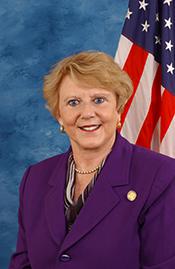
Mr. Speaker, thank you very much. First of all, I apologize. I have a little bit of laryngitis here, but I wanted to join you to express my support for the suburban agenda. You have done a great job,…
Mr. Speaker, thank you very much. First of all, I apologize. I have a little bit of laryngitis here, but I wanted to join you to express my support for the suburban agenda. You have done a great job, and I know I heard Dr. Price say that he goes home every weekend, as most of us do.
My district in Florida, the largest city I have is all of 21,000. I have a lot of suburban areas and areas that we call unincorporated areas, and the suburban agenda clearly is one that my constituents who are not city folk, maybe they used to be but they are not anymore, can really relate to. One of the concepts clearly is protecting our children. Whether it is a grandmother who lives in Florida or whether it is a young family that lives in Florida, they all want to make sure that children are protected.
February 23 marked the 1-year anniversary of Jessica Lunsford's death. Her dad, Mark, and her grandparents, Archie and Ruth Lunsford, live in Citrus County in my district. I actually lived less than 5 miles from Jessica at the time that she was murdered.
If she were still with us today, she would have been in the fifth grade, learning about decimals and fractions, the solar system and certainly American government. Instead, her life was taken by a sex offender who kidnapped, assaulted, and murdered her and then buried her in his backyard. This tragedy all of America grieved for.
The irony of it is that the perpetrator actually worked at her school. He was hired by a company that was doing some construction work at her school.
Congressman Porter introduced the School Safety Acquiring Faculty Excellence Act, which would permit school districts to access FBI criminal data before hiring new employees.
My bill, the Jessica Lunsford Act, requires offenders to wear ankle monitoring devices if they fail to report when they move from area to area. In addition to the current fines and jail time under the Jessica Lunsford Act, offenders would have to wear the GPS monitoring device for 5 years and predators for 10 years.
Probation officers right now are not provided with notification of a probationer's sex offender status from a previous crime. My legislation requires that that record be given to the probation officer. I am sure, Mr. Speaker,
that if the probation officer knew of this record that he never ever would have allowed the predator to work in that school.
We need to make sure that we have this information out there and available; and, certainly, protecting our children from those who would do them harm, those who really are the lowest of our society, is so very, very necessary; and I know that all of the members of the Suburban Caucus are very, very supportive of protecting our children.
Like Dr. Price and many of you all here tonight, I, too, go home every weekend. People are surprised to see me, but I tell them that I do not ever want to start thinking like the Beltway mentality up here. For that reason, I was delighted to participate and was a bit encouraged that the Senate passed a version of the bill that we passed here, actually that we passed to protect children. Whether there is a conference committee or whether it is just something that is worked out between the two chairmen of the Judiciary Committees, the Senate chairman and our chairman here, certainly remains to be seen. But let us make no mistake: we want to make sure that we protect our children.
I am so glad that you have included that issue in this suburban agenda. My hat is off to you, and I am sure that all of the suburban areas that we represent and yours will be very, very happy that we have taken these issues on.
I thank the gentleman for yielding.
Clay Shaw has introduced a bill called 401-kids. What it does is it gives young families the opportunity to save for college for the education expenses of their children tax-free. It is an awfully good idea and one that many, many people are looking forward to taking advantage of.
You know, when children are first born, you tend to think, Oh, it's going to be so long, but as those of us whose children have grown now, the time does fly by. So the best way to save, certainly whether it is a parent or a grandparent, is by using a system similar to that which many working people use, a 401(k) program.
Mr. Shaw's bill is one that allows you to set aside money tax-free so it can grow, so it can help to pay for the education of our children. And it is one that I have heard a lot of support for in my district. We want to make sure that not only parents, but grandparents also can participate in setting aside some money for the future education of the generation who will be in college 18 years from now, or sooner.
One of the things that I wanted to also comment on, if you would allow me, is if you put in the word ``gangs'' and your State into a search engine, it is absolutely astonishing. Coming from Florida, people may think that AARP is the only gang in town. I can assure you that it is not. When we put this information in, we got three-and-a- half pages of gangs that were listed. This is a problem for local law enforcement.
Yesterday, I actually spoke to a man whose son was killed by a gang in Pasco County. I assured him, and he hasn't heard anything from law enforcement, this happened within the last month, that law enforcement is not sitting by idly. Certainly they are involved with it, because it also goes over into the hate crimes area. And the sheriff and the FBI were all involved in this.
Unfortunately, these gangs have no morals, they have no respect for life, and they are taking the lives and terrorizing many, many communities. That is an area that the Suburban Caucus is also focusing on and one that is very, very long overdue.
As I say, if you put in your State and the word ``gangs,'' you would be absolutely amazed. Who would have thought that this would happen in Florida?
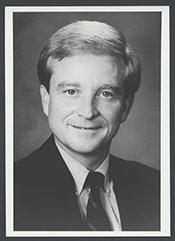
Mr. Speaker, I offer a resolution (H. Res. 10) and ask unanimous consent for its immediate consideration. Mr. Speaker, I want to thank the gentleman from Connecticut (Mr. Larson) for yielding to me.…
Mr. Speaker, I offer a resolution (H. Res. 10) and ask unanimous consent for its immediate consideration.
Mr. Speaker, I want to thank the gentleman from Connecticut (Mr. Larson) for yielding to me.
I rise today in support of the resolution to provide interim funding for the Committee on Homeland Security in the first session of the 109th Congress. The Committee on Homeland Security was not established as a permanent committee until this Congress. It was a select committee previously. Therefore, they did not fall under the House rules providing interim funding for other committees. We have a series of interim funding for our existing committees.
This resolution will provide the necessary funds for the committee to continue its work from January 3 through March 31. The committee will then receive funding, we hope, for the duration of the 109th Congress; and that is when we will attempt by that time to bring out a permanent funding resolution for all committees so it would then receive its funding for the duration of the 109th Congress, all the public committees of the House.
Once the committee funding resolution is adopted, then the system will go back to its regular order. I ask support for this legislation.
(Mr. LARSON of Connecticut asked and was given permission to revise and extend his remarks.)
Mr. Speaker, will the gentleman yield?
Mr. Speaker, I want to thank the gentleman from Connecticut, our ranking member, for supporting the resolution and also agree with his good and kind words about Mr. Turner.
Bill Text
Latest available legislative text
        [Congressional Bills 109th Congress]
[From the U.S. Government Publishing Office]
[H.R. 5291 Introduced in House (IH)]

109th CONGRESS
2d Session
H. R. 5291

To require the Attorney General to develop a national strategy to
eliminate the illegal operations of the top three international drug
gangs that present the greatest threat to law and order in the United
States.

_______________________________________________________________________

IN THE HOUSE OF REPRESENTATIVES

May 4, 2006

Mr. Reichert (for himself and Mr. Kirk) introduced the following bill;
which was referred to the Committee on the Judiciary

_______________________________________________________________________

A BILL

To require the Attorney General to develop a national strategy to
eliminate the illegal operations of the top three international drug
gangs that present the greatest threat to law and order in the United
States.

Be it enacted by the Senate and House of Representatives of the
United States of America in Congress assembled,

SECTION 1. SHORT TITLE.

This Act may be cited as the ``Gang Elimination Act of 2006''.

SEC. 2. FINDINGS.

The Congress finds the following:
(1) The number of documented members of gangs located in
the United States has grown to over 800,000. This number is
larger than all but six armies in the world.
(2) Gangs run by international drug cartels represent a
clear and present danger to the national security of the United
States.
(3) Drug gangs have become one of the principle means of
importing and distributing illegal narcotics in the United
States.
(4) Drug gangs are now operating within suburban
communities. Some police departments and some sheriffs' offices
located in such communities are less prepared than police
departments and sheriffs' offices located in urban communities
to reduce this threat.
(5) The average recruit into a gang is in the seventh
grade.
(6) Gangs run by international drug cartels now number in
the hundreds of thousands, across city, State, and national
boundaries.
(7) Current efforts by municipal and State law enforcement
communities have not eliminated this threat to the Nation, law
and order, or to children.
(8) Only the Federal Government can muster the strategy,
resources, and intelligence to remove this growing danger to
the people in the United States.

SEC. 3. NATIONAL STRATEGY TO ELIMINATE THE ILLEGAL OPERATIONS OF THE
THREE INTERNATIONAL DRUG GANGS THAT PRESENT THE BIGGEST
THREAT IN THE UNITED STATES.

(a) In General.--Not later than one year after the date of the
enactment of this Act, the Attorney General, in consultation with the
Secretary of Homeland Security, shall submit to Congress a report, in
both classified and unclassified form, setting forth a national
strategy to eliminate within the period that is four years after the
date of such submission the illegal operations of each National Threat
Drug Gang designated under subsection (b). In addition to such
strategy, the report shall include the following information:
(1) A list identifying each of such National Threat Drug
Gangs.
(2) A description of the composition, operations,
strengths, and weaknesses of each of such National Threat Drug
Gangs.
(b) Designation of National Threat Drug Gangs.--In developing the
national strategy under subsection (a), the Attorney General shall
identify the top three international drug gangs that present the
greatest threat to law and order in the United States and shall
designate each such gang as a ``National Threat Drug Gang''. For
purposes of identifying such gangs, the Attorney General shall
consider--
(1) the extent to which, for the purpose of committing a
drug-related offense, the gang conducts activities with any
international terrorist organization or state designated by the
Secretary of State as a state sponsor of terrorism, as compared
to the extent to which other international drug gangs conduct
such activities for such purpose;
(2) the volume of controlled substances (as defined in
section 102 of the Controlled Substance Act (21 U.S.C. 802))
that such gang imports to or distributes within the United
States, as compared to the volume of controlled substances that
other international drug gangs import to or distribute within
the United States; and
(3) the extent to which the gang is a threat to children
and schools within the United States, as compared to the extent
to which other international drug gangs are such a threat.
(c) Definitions.--For purposes of this Act:
(1) Drug gang.--The term ``drug gang'' means an ongoing
group, club, organization, or association of 50 or more
individuals--
(A) that has as one of its primary purposes the
commission of one or more drug-related offenses;
(B) the members of which engage, or have engaged
within the past five years, in a continuing series of
drug-related offenses; and
(C) the activities of which--
(i) include crimes of violence, as defined
in section 16 of title 18, United States Code
(including rape); and
(ii) affect interstate or foreign commerce.
(2) Drug-related offense.--The term ``drug-related
offense'' means--
(A) a Federal felony involving a controlled
substance (as defined in section 102 of the Controlled
Substances Act (21 U.S.C. 802)) for which the maximum
penalty is not less than 5 years, including a crime
involving the manufacturing, importing, distributing,
dispensing, or possessing with the intent to
manufacture, distribute, or dispense such a controlled
substance; and
(B) a conspiracy to commit an offense described in
subparagraph (A).
(3) International drug gang.--The term ``international drug
gang'' means a drug gang that--
(A) conducts activities that affect foreign
commerce; or
(B) conspires with another drug gang that conducts
activities that affect foreign commerce.
<all>