Government Efficiency Act of 2006
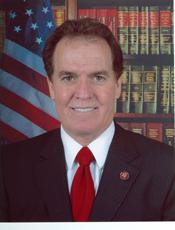
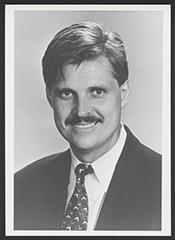 Rep. Todd Tiahrt (R-KS)
Legislative Activity
Stay on top of the latest movement without scrolling through every action
Placed on the Union Calendar, Calendar No. 344.
July 24, 2006
View full timeline
Introduced in House
July 12, 2006
Referred to the Committee on Government Reform, and in addition to the Committees on Rules, and the Budget, for a period to be subsequently determined by the Speaker, in each case for consideration of such provisions as fall within the jurisdiction of the committee concerned.
July 12, 2006
Committee Consideration and Mark-up Session Held.
July 20, 2006
Ordered to be Reported (Amended) by the Yeas and Nays: 15 - 12.
July 20, 2006
Reported (Amended) by the Committee on Government Reform. H. Rept. 109-594, Part I.
July 24, 2006
Placed on the Union Calendar, Calendar No. 344.
July 24, 2006
Floor Debate
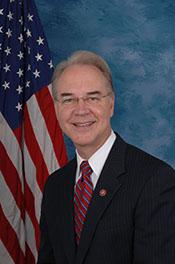
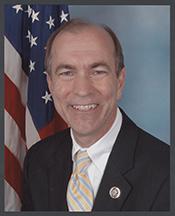
7 membersWhat members said about H.R. 5766 on the floor


 +2
+2
Floor Debate
7 membersWhat members said about H.R. 5766 on the floor
Mr. Speaker, what a pleasure it is to come back to the House floor this evening. On behalf of the Official Truth Squad, I want to thank the leadership and the conference for allowing me to host this…
Mr. Speaker, I thank the gentleman for handling this hour this evening and for inviting me to participate. I found what you just went over with your numbers very interesting, because in coming here…
Mr. Speaker, I ask unanimous consent to claim my time out of order. Mr. Speaker, I come to the floor of the House again this Tuesday evening as part of the weekly Congressional Constitution Caucus…
Mr. Speaker, I rise for the purpose of inquiring of the majority leader the schedule for the week to come; and at this time, I yield to my friend, the majority leader, Mr. Boehner of Ohio. Reclaiming…
I appreciate my colleague from Maryland for yielding. Mr. Speaker, the House will convene next Monday at 12:30 for morning hour and 2 p.m. for legislative business. We will consider a number of…
Show 2 more
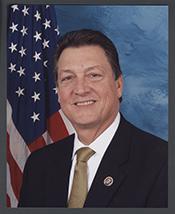
Thank you, Mr. Price, and I appreciate you doing this tonight. I have listened to the other side and your debate, and basically, Mr. Price, wouldn't you just assume that this basically comes down to…
Mr. Speaker, the Committee on Rules may meet later this week to grant a rule which could limit the amendment process for floor consideration of H.R. 5766, the Government Efficiency Act of 2006. The…
Bill Text
2 versions available
        [Congressional Bills 109th Congress]
[From the U.S. Government Publishing Office]
[H.R. 5766 Reported in House (RH)]

Union Calendar No. 344
109th CONGRESS
2d Session
H. R. 5766

[Report No. 109-594, Part I]

To provide for the establishment of Federal Review Commissions to
review and make recommendations on improving the operations,
effectiveness, and efficiency of Federal programs and agencies, and to
require a schedule for such reviews of all Federal agencies and
programs.

_______________________________________________________________________

IN THE HOUSE OF REPRESENTATIVES

July 12, 2006

Mr. Tiahrt (for himself, Mr. Tom Davis of Virginia, Mr. Porter, Ms.
Ginny Brown-Waite of Florida, Mr. Blunt, Mr. English of Pennsylvania,
Mr. Doolittle, Mr. Gingrey, Mrs. Jo Ann Davis of Virginia, Mr. Case,
Mr. Carter, Mr. Conaway, Mr. Mack, Mr. Norwood, Mr. Inglis of South
Carolina, Mr. Ryun of Kansas, Mr. Akin, Mr. Neugebauer, Mr. Oxley, and
Mr. Wilson of South Carolina) introduced the following bill; which was
referred to the Committee on Government Reform, and in addition to the
Committees on Rules and the Budget, for a period to be subsequently
determined by the Speaker, in each case for consideration of such
provisions as fall within the jurisdiction of the committee concerned

July 24, 2006

Additional sponsors: Mr. McKeon, Mr. Camp of Michigan, Mr. Boehner, Mr.
Otter, Mr. Bishop of Utah, Mr. Burton of Indiana, Mr. Cardoza, Mr.
McCotter, Mr. Hefley, Mr. Radanovich, Mr. Brady of Texas, Mr.
Hensarling, Mr. Reichert, Mr. Crenshaw, Mr. Pence, Mr. Calvert, Mr.
Herger, Mr. Sessions, Mr. Culberson, Ms. Hart, Ms. Harris, Mr. Garrett
of New Jersey, Mr. Wamp, Mr. Weldon of Florida, Mr. Bilbray, Mr.
Gerlach, Mr. Hayworth, Mr. Istook, Mr. Stearns, Mr. Renzi, Mr. Franks
of Arizona, Mr. Moran of Kansas, Mr. Hayes, Miss McMorris, Mr. Davis of
Kentucky, Mr. Campbell of California, Mr. Latham, Mr. Barrett of South
Carolina, Mr. McHenry, Mr. Rohrabacher, Mr. Feeney, Mr. Fortenberry,
Mrs. Myrick, Mr. King of Iowa, Mr. Cole of Oklahoma, Mr. Price of
Georgia, Mr. Terry, Ms. Granger, Mrs. Cubin, Mr. Fortuno, Mr. Hastings
of Washington, Mr. Green of Wisconsin, Mrs. Blackburn, Mr. Kennedy of
Minnesota, Mr. Pearce, Mr. Royce, Mr. Kuhl of New York, Mr. Sam Johnson
of Texas, Mr. Putnam, Mr. Pitts, Mr. Flake, and Mr. Smith of Texas

July 24, 2006

Reported from the Committee on Government Reform with an amendment
[Strike out all after the enacting clause and insert the part printed
in italic]

July 24, 2006

Committees on Rules and the Budget discharged; committed to the
Committee of the Whole House on the State of the Union and ordered to
be printed
[For text of introduced bill, see copy of bill as introduced on July
12, 2006]

_______________________________________________________________________

A BILL

To provide for the establishment of Federal Review Commissions to
review and make recommendations on improving the operations,
effectiveness, and efficiency of Federal programs and agencies, and to
require a schedule for such reviews of all Federal agencies and
programs.

Be it enacted by the Senate and House of Representatives of the
United States of America in Congress assembled,

SECTION 1. SHORT TITLE.

This Act may be cited as the ``Government Efficiency Act of
2006''.

SEC. 2. ESTABLISHMENT OF FEDERAL REVIEW COMMISSIONS.

(a) In General.--Part I of title 5, United States Code, is amended
by adding at the end the following new chapter:

``CHAPTER 10--FEDERAL REVIEW COMMISSIONS

``Sec.
``1001. Establishment of Federal Review Commissions.
``1002. Expedited Congressional consideration of Federal Review
Commission recommendations.
``1003. Schedule for review of all Federal agencies and programs.
``1004. Administrative matters.
``Sec. 1001. Establishment of Federal Review Commissions
``(a) In General.--A Federal Review Commission may be established
in accordance with this section with respect to a specific aspect of
Federal programs and agencies for purposes of reviewing and making
recommendations on how to improve the operations, effectiveness, and
efficiency of such Federal programs and agencies in order to determine
whether a reorganization, consolidation, abolishment, expansion, or
transfer of existing Federal programs and agencies is necessary to
carry out any policy set forth in section 901(a) of this title.
``(b) Method of Establishment.--A Federal Review Commission may be
established under subsection (a) only through the issuance of an
executive order or the enactment of a joint resolution that--
``(1) describes the Federal programs and agencies to be
reviewed by the Commission; and
``(2) provides that the Commission shall be subject to the
requirements of, and have the powers and authorities under,
this section.
``(c) Commencement of Operations.--Each Federal Review Commission
shall commence operations within 1 month after the establishment of the
Commission under subsection (a).
``(d) Duties of Federal Review Commissions.--
``(1) Review of programs and agencies.--In reviewing
Federal programs and agencies, a Federal Review Commission
established under this section shall consider--
``(A) whether the missions and goals of the
programs and agencies studied by the Commission are
being carried out as effectively and efficiently as
possible;
``(B) the extent to which the programs or agencies
duplicate or conflict with other Federal agencies,
State or local government, or the private sector;
``(C) whether a reorganization, consolidation,
abolishment, expansion, or transfer of the programs and
agencies reviewed by the Federal Review Commission
would better enable the Federal government to
accomplish its missions and goals;
``(D) with respect to existing rules promulgated by
the agencies to carry out the programs--
``(i) whether the agency has specific
legislative authority to promulgate the rules
and carry out the programs.
``(ii) whether the rules are being carried
out as efficiently as possible; and
``(iii) the extent to which the rules
duplicate or conflict with rules promulgated by
other Federal agencies; and
``(E) whether the agency or program has operated or
was authorized outside of an enumerated power under
Article I of the Constitution of the United States or
in any manner violates the separation of powers under
the Constitution.
``(2) Submission to president of assessment and legislative
proposal.--Not later than 1 year after the establishment of a
Federal Review Commission under this section, the Commission
shall submit to the President--
``(A) the Commission's assessment of the
operations, effectiveness, and efficiency of the
Federal programs and agencies reviewed by the
Commission; and
``(B) a legislative proposal, if appropriate, to
reorganize, consolidate, abolish, expand, or transfer
the Federal programs and agencies reviewed by the
Commission.
``(e) Transmission to Congress of Assessment and Legislative
Proposal.--Not later than 30 days after submission to the President of
an assessment and legislative proposal (if any) by a Federal Review
Commission, the President shall transmit to Congress the assessment and
any legislative proposal, along with the President's recommendations
regarding the assessment and proposal.
``(f) Membership.--
``(1) Number and appointment.--
``(A) In general.--Each Federal Review Commission
shall be composed of 7 members appointed by the
President as follows:
``(i) One in consultation with the Speaker
of the House of Representatives.
``(ii) One in consultation with the
minority leader of the House of
Representatives.
``(iii) One in consultation with the
majority leader of the Senate.
``(iv) One in consultation with the
minority leader of the Senate.
``(v) Three other members.
``(B) Ex officio members.--The President may
appoint up to four Members of Congress (up to 2 from
each House) as nonvoting ex officio members of a
Federal Review Commission.
``(2) Qualifications.--All members appointed by the
President to serve on a Federal Review Commission shall have
expertise and experience in the particular programmatic area
that the Federal Review Commission is established to review.
``(3) Terms.--
``(A) In general.--Each member of a Federal Review
Commission shall be appointed for the life of the
Commission.
``(B) Vacancies.--Any vacancy on a Federal Review
Commission shall be filled in the same manner as the
original appointment.
``(4) Basic pay.--
``(A) Rates of pay.--Members of a Federal Review
Commission shall serve without pay.
``(B) Travel expenses.--Each member of a Federal
Review Commission shall receive travel expenses,
including per diem in lieu of subsistence, in
accordance with applicable provisions under subchapter
I of chapter 57 of title 5, United States Code.
``(5) Quorum.--Four members of a Federal Review Commission
shall constitute a quorum but a lesser number may hold
hearings.
``(6) Chairman and vice chairman.--The President shall
designate one member of each Federal Review Commission to serve
as Chairman and one as Vice Chairman.
``(g) Director and Staff.--
``(1) Director.--Each Federal Review Commission shall have
a Director who shall be appointed by the Chairman without
regard to the provisions of title 5, United States Code,
governing appointments in the competitive service. The Director
shall be paid at a rate not to exceed the rate of basic pay for
level II of the Executive Schedule.
``(2) Staff.--The Director of a Federal Review Commission
may appoint and fix the pay of additional personnel as the
Director considers appropriate, in accordance with section 3161
of title 5, United States Code.
``(3) Applicability of certain civil service laws.--The
Director and any staff of each Federal Review Commission shall
be employees under section 2105 of title 5, United States Code,
for purposes of chapters 63, 81, 83, 84, 85, 87, 89, and 90 of
that title.
``(4) Procurement of temporary and intermittent services.--
The Chairman of each Federal Review Commission may procure
temporary and intermittent services under section 3109(b) of
title 5, United States Code, at rates for individuals which do
not exceed the daily equivalent of the annual rate of basic pay
for Level II of the Executive Schedule.
``(5) Staff of federal agencies.--Upon request of the
Chairman of a Federal Review Commission, the head of any
Federal department or agency may detail, on reimbursable basis,
any of the personnel of that department or agency to the
Commission to assist it in carrying out its duties.
``(h) Powers of Commission.--
``(1) Hearings and sessions.--Each Federal Review
Commission may, for the purpose of carrying out its duties,
hold hearings, sit and act at times and places, take testimony,
and receive evidence as the Commission considers appropriate.
``(2) Obtaining official data.--Each Federal Review
Commission may secure directly from any Federal department or
agency information necessary to enable it to carry out its
duties. Upon request of the Chairman of a Commission, the head
of that department or agency shall furnish that information to
the Commission.
``(3) Postal and printing services.--Each Federal Review
Commission may use the United States mail and obtain printing
and binding services in the same manner and under the same
conditions as other Federal departments and agencies.
``(4) Administrative support services.--Upon the request of
a Federal Review Commission, the Administrator of General
Services shall provide to the Federal Review Commission, on a
reimbursable basis, the administrative support services
necessary for the Federal Review Commission to carry out its
duties.
``(i) Authorization of Appropriations.--Such sums as may be
necessary are authorized to be appropriated for the purposes of
carrying out the duties of each Federal Review Commission. Such funds
shall remain available until expended.
``(j) Termination.--Each Federal Review Commission shall terminate
90 days after the date on which the Commission submits the assessment
and legislative proposal (if any) under subsection (d)
``(k) Definition.--In this section, the term `agency' has the
meaning provided in section 902(1) of this title.
``Sec. 1002. Expedited Congressional consideration of Federal Review
Commission recommendations
``(a) Introduction of Resolution.--The majority leader of each
House or his designee shall introduce a joint resolution as defined in
subsection (d) not later than the fifth day of session of that House
after the date of receipt of a legislative proposal transmitted from
the President to Congress under section 1001(e) of this title.
``(b) Consideration in the House of Representatives.--
``(1) Referral and reporting.--Any committee of the House
of Representatives to which a joint resolution is referred
shall report it to the House not later than 30 legislative days
after the date of its introduction. If a committee fails to
report the joint resolution within that period, it shall be in
order to move that the House discharge the committee from
further consideration of the joint resolution. Such a motion
shall be in order only at a time designated by the Speaker in
the legislative schedule within two legislative days after the
day on which the proponent announces his intention to offer the
motion. Notice of such intention may not be given on an
anticipatory basis. Such a motion shall not be in order after
the last committee authorized to consider the joint resolution
reports it to the House or after the House has disposed of a
motion to discharge a joint resolution. The previous question
shall be considered as ordered on the motion to its adoption
without intervening motion except 20 minutes of debate equally
divided and controlled by the proponent and an opponent. A
motion to reconsider the vote by which the motion is disposed
of shall not be in order.
``(2) Proceeding to consideration.--After each committee
authorized to consider a joint resolution favorably reports it
to the House without amendment or has been discharged from its
consideration, it shall be in order to move to proceed to
consider the joint resolution in the House. Such a motion shall
be in order only at a time designated by the Speaker in the
legislative schedule within two legislative days after the day
on which the proponent announces his intention to offer the
motion. Notice of such intention may not be given on an
anticipatory basis. Such a motion shall not be in order after
the House has disposed of a motion to proceed on the joint
resolution. The previous question shall be considered as
ordered on the motion to its adoption without intervening
motion. A motion to reconsider the vote by which the motion is
disposed of shall not be in order.
``(3) Consideration.--The joint resolution shall be
considered as read. All points of order against the joint
resolution and against its consideration are waived. The
previous question shall be considered as ordered on the joint
resolution to its passage without intervening motion except ten
hours of debate equally divided and controlled by the proponent
and an opponent and one motion to limit debate on the joint
resolution. The joint resolution shall not be subject to
amendment. A motion to reconsider the vote on passage of the
joint resolution shall not be in order.
``(c) Consideration in the Senate.--[Language to be provided.]
``(d) Definition.--In this section the term `joint resolution'
means only a joint resolution--
``(1) which does not have a preamble;
``(2) the title of which is as follows: `Joint resolution
relating to the legislative proposal prepared by the Federal
Review Commission established on ___, 20__.', the blank spaces
being filled in with the appropriate date;
``(3) the matter after the resolving clause of which is as
follows: `That Congress approves the legislative proposal
prepared by a Federal Review Commission and transmitted to
Congress by the President on ___, 20__ .', the blank spaces
being filled in with the appropriate date; and
``(4) the remaining text of which consists of the
legislative proposal prepared by the Federal Review Commission
concerned and transmitted to Congress by the President.
``(e) Rules of Senate and House of Representatives on Federal
Review Commission Recommendations.--This section is enacted by
Congress--
``(1) as an exercise of the rulemaking power of the Senate
and the House of Representatives, respectively, and as such
they are deemed a part of the rules of each House,
respectively, but applicable only with respect to the procedure
to be followed in that House in the case of resolutions with
respect to any legislative proposal transmitted to Congress (in
accordance with section 1001) after the date of enactment of
this section; and they supersede other rules only to the extent
that they are inconsistent therewith; and
``(2) with full recognition of the constitutional right of
either House to change the rules (so far as relating to the
procedure of that House) at any time, in the same manner and to
the same extent as in the case of any other rule of that House.
``Sec. 1003. Schedule for review of all Federal agencies and programs
``(a) Schedule for Review.--Not later than one year after the date
of the enactment of this chapter, the President shall submit to
Congress a schedule under which Federal Review Commissions shall be
established to review all Federal agencies and programs in order to
accomplish the goals of the policy set forth in section 901(a) of this
title.
``(b) Review of Agencies Performing Related Functions.--In
developing a schedule pursuant to subsection (a), the President shall
provide that agencies that perform similar or related functions be
reviewed at or near the same time.
``Sec. 1004. Administrative matters
``(a) Relocation of Federal Employees.--If the position of an
employee of an agency is eliminated as a result of a reorganization,
consolidation, abolishment, expansion, or transfer of existing Federal
programs or agencies pursuant to this chapter, the affected agency
shall make a reasonable effort to relocate such employee to a position
within another agency.
``(b) Deficit Reduction.--
``(1) Deficit reduction.--Any reduction in amounts of
discretionary budget authority or direct spending resulting
from enactment of legislation pursuant to this chapter shall be
dedicated only to deficit reduction and shall not be used as an
offset for other spending increases.
``(2) Adjustments to committee allocations.--Not later than
5 days after the enactment of legislation pursuant to this
chapter, the chairmen of the Committees on the Budget of the
Senate and the House of Representatives shall revise levels
under section 311(a) of the Congressional Budget Act of 1974
and adjust the committee allocations under section 302(a) of
the Congressional Budget Act of 1974 to reflect the reduction
in discretionary budget authority or direct spending, and the
appropriate committees shall report revised allocations
pursuant to section 302(b) of the Congressional Budget Act of
1974, as appropriate.
``(3) Adjustments to caps.--After the enactment of
legislation pursuant to this chapter, the Director of the
Office of Management and Budget shall revise applicable limits
under the Balanced Budget and Emergency Deficit Control Act, as
appropriate.''.
(b) Conforming Amendment.--The table of chapters for part I of
title 5, United States Code, is amended by inserting after the item
relating to chapter 9 the following:

``10. Federal Review Commissions............................    1001''.
Union Calendar No. 344

109th CONGRESS

2d Session

H. R. 5766

[Report No. 109-594, Part I]

_______________________________________________________________________

A BILL

To provide for the establishment of Federal Review Commissions to
review and make recommendations on improving the operations,
effectiveness, and efficiency of Federal programs and agencies, and to
require a schedule for such reviews of all Federal agencies and
programs.

_______________________________________________________________________

July 24, 2006

Committees on Rules and the Budget discharged; committed to the
Committee of the Whole House on the State of the Union and ordered to
be printed