Energy Policy Act of 2005
 Rep. Joe Barton (R-TX)
Legislative Activity
Stay on top of the latest movement without scrolling through every action
Became Public Law No: 109-58.
August 8, 2005
View full timeline
Introduced in House
April 18, 2005
Referred to the Subcommittee on Energy and Air Quality.
April 18, 2005
Referred to the Committee on Energy and Commerce, and in addition to the Committees on Education and the Workforce, Financial Services, Agriculture, Resources, Science, Ways and Means, and Transportation and Infrastructure, for a period to be subsequently determined by the Speaker, in each case for consideration of such provisions as fall within the jurisdiction of the committee concerned.
April 18, 2005
Rules Committee Resolution H. Res. 219 Reported to House. Rule provides for consideration of H.R. 6 with 1 hour and 30 minutes of general debate. Previous question shall be considered as ordered without intervening motions except motion to recommit with or without instructions. Measure will be considered read. Specified amendments are in order.
April 19, 2005 • 11:29 PM
Rule H. Res. 219 passed House.
April 20, 2005 • 2:54 PM
Considered under the provisions of rule H. Res. 219. (consideration: CR H2192-2366; text of measure as reported in House: CR H2210-2321)
April 20, 2005 • 2:54 PM
Rule provides for consideration of H.R. 6 with 1 hour and 30 minutes of general debate. Previous question shall be considered as ordered without intervening motions except motion to recommit with or without instructions. Measure will be considered read. Specified amendments are in order.
April 20, 2005 • 2:55 PM
House resolved itself into the Committee of the Whole House on the state of the Union pursuant to H. Res. 219 and Rule XVIII.
April 20, 2005 • 2:55 PM
The Speaker designated the Honorable Shelley Moore Capito to act as Chairwoman of the Committee.
April 20, 2005 • 2:55 PM
GENERAL DEBATE - The Committee of the Whole proceeded with one hour and thirty minutes of general debate on H.R. 6.
April 20, 2005 • 2:56 PM
DEBATE - Pursuant to the provisions of H. Res. 219, the Committee of the Whole proceeded with 10 minutes of debate on the Hall amendment.
April 20, 2005 • 4:59 PM
DEBATE - Pursuant to the provisions of H. Res. 219, the Committee of the Whole proceeded with 20 minutes of debate on the Dingell amendment.
April 20, 2005 • 5:12 PM
POSTPONED PROCEEDINGS - At the conclusion of debate on the Dingell amendment the Chair put the question on adoption of the amendment and by voice vote, announced that the noes had prevailed. Mr. Dingell demanded a recorded vote and pursuant to the rule, the Chair postponed further proceedings on the question of adoption of the Dingell amendment until later in the legislative day.
April 20, 2005 • 5:32 PM
DEBATE - Pursuant to the provisions of H. Res. 219, the Committee of the Whole proceeded with 30 minutes of debate on the Markey amendment.
April 20, 2005 • 5:34 PM
POSTPONED PROCEEDINGS - At the conclusion of debate on the Markey amendment the Chair put the question on adoption of the amendment and by voice vote, announced that the noes had prevailed. Mr. Markey demanded a recorded vote and pursuant to the rule, the Chair postponed further proceedings on the question of adoption of the Markey amendment until later in the legislative day.
April 20, 2005 • 6:11 PM
DEBATE - Pursuant to the provisions of H. Res. 219, the Committee of the Whole proceeded with 20 minutes of debate on the Boehlert amendment.
April 20, 2005 • 6:13 PM
Committee Consideration and Mark-up Session Held by Committee on Resources Prior to Introduction (April 13, 2005).
April 20, 2005
POSTPONED PROCEEDINGS - At the conclusion of debate on the Boehlert amendment the Chair put the question on adoption of the amendment and by voice vote, announced that the noes had prevailed. Mr. Boehlert demanded a recorded vote and pursuant to the rule, the Chair postponed further proceedings on the question of adoption of the Boehlert amendment until later in the legislative day.
April 20, 2005 • 6:43 PM
DEBATE - Pursuant to the provisions of H. Res. 219, the Committee of the Whole proceeded with 10 minutes of debate on the Johnson (CT) amendment.
April 20, 2005 • 6:44 PM
DEBATE - Pursuant to the provisions of H. Res. 219, the Committee of the Whole proceeded with 10 minutes of debate on the Rogers (MI) amendment.
April 20, 2005 • 6:51 PM
POSTPONED PROCEEDINGS - At the conclusion of debate on the Rogers (MI) amendment the Chair put the question on adoption of the amendment and by voice vote, announced that the ayes had prevailed. Mr. Holt demanded a recorded vote and pursuant to the rule, the Chair postponed further proceedings on the question of adoption of the Rogers (MI) amendment until later in the legislative day. Disposition of the underlying Johnson (CT) amendment remains pending subject to the final action on the perfecting Rogers (MI) amendment.
April 20, 2005 • 7:09 PM
DEBATE - Pursuant to the provisions of H. Res. 219, the Committee of the Whole proceeded with 30 minutes of debate on the Bishop (NY) amendment.
April 20, 2005 • 7:10 PM
POSTPONED PROCEEDINGS - At the conclusion of debate on the Bishop (NY) amendment the Chair put the question on adoption of the amendment and by voice vote, announced that the noes had prevailed. Mr. Bishop demanded a recorded vote and pursuant to the rule, the Chair postponed further proceedings on the question of adoption of the Bishop amendment until later in the legislative day.
April 20, 2005 • 7:42 PM
DEBATE - Pursuant to the provisions of H. Res. 219, the Committee of the Whole proceeded with 10 minutes of debate on the Slaughter amendment.
April 20, 2005 • 7:43 PM
Committee of the Whole House on the state of the Union rises leaving H.R. 6 as unfinished business.
April 20, 2005 • 7:54 PM
ORDER OF PROCEDURE - Mr. Waxman asked unanimous consent that his amendment numbered 9 printed in House Report 109-49, be made in order during the consideration of H.R. 6 in the Committee of the Whole at any time. Agreed to without objection.
April 20, 2005 • 7:54 PM
Considered as unfinished business. (consideration: CR H2366-2380)
April 20, 2005 • 7:57 PM
The House resolved into Committee of the Whole House on the state of the Union for further consideration.
April 20, 2005 • 7:57 PM
DEBATE - Pursuant to the provisions of H. Res. 219, the Committee of the Whole proceeded with 10 minutes of debate on the Waxman amendment.
April 20, 2005 • 7:58 PM
POSTPONED PROCEEDINGS - At the conclusion of debate on the Waxman amendment the Chair put the question on adoption of the amendment and by voice vote, announced that the noes had prevailed. Mr. Waxman demanded a recorded vote and pursuant to the rule, the Chair postponed further proceedings on the question of adoption of the Waxman amendment until later in the legislative day.
April 20, 2005 • 8:07 PM
DEBATE - Pursuant to the provisions of H. Res. 219, the Committee of the Whole proceeded with 10 minutes of debate on the Abercrombie amendment.
April 20, 2005 • 8:08 PM
DEBATE - Pursuant to the provisions of H. Res. 219, the Committee of the Whole proceeded with 10 minutes of debate on the Kaptur amendment.
April 20, 2005 • 8:21 PM
POSTPONED PROCEEDINGS - At the conclusion of debate on the Kaptur amendment the Chair put the question on adoption of the amendment and by voice vote, announced that the noes had prevailed. Ms. Kaptur demanded a recorded vote and pursuant to the rule, the Chair postponed further proceedings on the question of adoption of the Kaptur amendment until later in the legislative day.
April 20, 2005 • 8:31 PM
DEBATE - Pursuant to the provisions of H. Res. 219, the Committee of the Whole proceeded with 10 minutes on the Conaway amendment.
April 20, 2005 • 8:32 PM
DEBATE - Pursuant to the provisions of H. Res. 219, the Committee of the Whole proceeded with 10 minutes of debate on the Solis amendment.
April 20, 2005 • 8:40 PM
POSTPONED PROCEEDINGS - At the conclusion of debate on the Solis amendment the Chair put the question on adoption of the amendment and by voice vote, announced that the noes had prevailed. Ms. Solis demanded a recorded vote and pursuant to the rule, the Chair postponed further proceedings on the question of adoption of the Solis amendment until later in the legislative day.
April 20, 2005 • 8:50 PM
UNFINISHED BUSINESS - The Chair announced that the unfinished business was the question of adoption of specified amendments which were debated earlier in the legislative day and on which further proceedings had been postponed.
April 20, 2005 • 8:51 PM
Considered as unfinished business. (consideration: CR H2399-2450)
April 21, 2005 • 10:15 AM
The House resolved into Committee of the Whole House on the state of the Union for further consideration.
April 21, 2005 • 10:15 AM
DEBATE - Pursuant to H. Res. 219, the Committee of the Whole proceeded with 10 minutes of debate on the Udall (NM) amendment.
April 21, 2005 • 10:20 AM
POSTPONED PROCEEDINGS - At the conclusion of debate on the Udall (NM) amendment the Chair put the question on adoption of the amendment and by voice vote, announced that the noes had prevailed. Mr. Udall (NM) demanded a recorded vote and pursuant to the rule, the Chair postponed further proceedings on the question of adoption of the Udall (NM) amendment until later in the legislative day.
April 21, 2005 • 10:31 AM
DEBATE - Pursuant to H. Res. 219, the Committee of the Whole proceeded with 10 minutes of debate on the Ford amendment.
April 21, 2005 • 10:35 AM
DEBATE - Pursuant to H. Res. 219, the Committee of the Whole proceeded with 10 minutes of debate on the Kucinich amendment, as modified.
April 21, 2005 • 10:42 AM
DEBATE - Pursuant to H. Res. 219, the Committee of the Whole proceeded with 10 minutes of debate on the Millender-McDonald amendment.
April 21, 2005 • 10:46 AM
DEBATE - Pursuant to H. Res. 219, the Committee of the Whole proceeded with 10 minutes of debate on the Blumenauer amendment.
April 21, 2005 • 10:54 AM
DEBATE - Pursuant to H. Res. 219, the Committee of the Whole proceeded with 10 minutes of debate on the Jackson-Lee amendment.
April 21, 2005 • 11:02 AM
DEBATE - Pursuant to H. Res. 219, the Committee of the Whole proceeded with 10 minutes of debate on the Tom Davis (VA) amendment.
April 21, 2005 • 11:11 AM
EXTENSION OF DEBATE - By unanimous consent, debate on the Tom Davis (VA) amendment was extended by 2 minutes to be equally divided and controlled.
April 21, 2005 • 11:18 AM
DEBATE - Pursuant to H. Res. 219, the Committee of the Whole proceeded with 10 minutes of debate on the Walsh amendment.
April 21, 2005 • 11:26 AM
DEBATE - Pursuant to H. Res. 219, the Committee of the Whole proceeded with 10 minutes of debate on the Engel amendment.
April 21, 2005 • 11:34 AM
POSTPONED PROCEEDINGS - At the conclusion of debate on the Engel amendment the Chair put the question on adoption of the amendment and by voice vote, announced that the noes had prevailed. Mr. Engel demanded a recorded vote and pursuant to the rule, the Chair postponed further proceedings on the question of adoption of the Engel amendment until later in the legislative day.
April 21, 2005 • 11:44 AM
DEBATE - Pursuant to H. Res. 219, the Committee of the Whole proceeded with 10 minutes of debate on the Israel amendment.
April 21, 2005 • 11:46 AM
POSTPONED PROCEEDINGS - At the conclusion of debate on the Israel amendment the Chair put the question on adoption of the amendment and by voice vote, announced that the noes had prevailed. Mr. Israel demanded a recorded vote and pursuant to the rule, the Chair postponed further proceedings on the question of adoption of the Israel amendment until later in the legislative day.
April 21, 2005 • 11:51 AM
UNFINISHED BUSINESS - The Chair announced that the unfinished business was the question of adoption of the amendments which had been debated earlier and on which further proceedings had been postponed.
April 21, 2005 • 11:52 AM
ORDER OF PROCEDURE - Mr. Hall of Texas asked unanimous consent that a motion to strike offered by Mrs. Capps be debatable for not to exceed 30 minutes, equally divided and controlled. Agreed to without objection.
April 21, 2005 • 1:28 PM
DEBATE - Pursuant to the provisions of H. Res. 219, the Committee of the Whole proceeded with 10 minutes of debate on the Kucinich amendment.
April 21, 2005 • 1:30 PM
POSTPONED PROCEEDINGS - At the conclusion of debate on the Kucinich amendment the Chair put the question on adoption of the amendment and by voice vote, announced that the ayes had prevailed. Mr. Hall demanded a recorded vote and pursuant to the rule, the Chair postponed further proceedings on the question of adoption of the Kucinich amendment until later in the legislative day.
April 21, 2005 • 1:33 PM
DEBATE - Pursuant to the provisions of H. Res. 219, the Committee of the Whole proceeded with 10 minutes of debate on the Holt amendment.
April 21, 2005 • 1:35 PM
DEBATE - Pursuant to the provisions of H. Res. 219, the Committee of the Whole proceeded with 10 minutes of debate on the Grijalva amendment.
April 21, 2005 • 1:42 PM
POSTPONED PROCEEDINGS - At the conclusion of debate on the Grijalva amendment the Chair put the question on adoption of the amendment and by voice vote, announced that the noes had prevailed. Mr. Grijalva demanded a recorded vote and pursuant to the rule, the Chair postponed further proceedings on the question of adoption of the Grijalva amendment until later in the legislative day.
April 21, 2005 • 1:55 PM
DEBATE - The Committee of the Whole proceeded with 30 minutes of debate on the Capps amendment.
April 21, 2005 • 1:57 PM
POSTPONED PROCEEDINGS - At the conclusion of debate on the Capps amendment, the Chair put the question on adoption of the amendment and by voice vote, announced that the noes had prevailed. Mrs. Capps demanded a recorded vote and the Chair postponed further proceedings on the Capps amendment until later in the legislative day.
April 21, 2005 • 2:38 PM
DEBATE - Pursuant to the provisions of H. Res. 219, the Committee of the Whole proceeded with 10 minutes of debate on the Inslee amendment.
April 21, 2005 • 2:43 PM
DEBATE - Pursuant to the provisions of H. Res. 219, the Committee of the Whole proceeded with 10 minutes of debate on the Hastings (FL) amendment.
April 21, 2005 • 2:48 PM
POSTPONED PROCEEDINGS - At the conclusion of debate on the Hastings (FL) amendment the Chair put the question on adoption of the amendment and by voice vote, announced that the noes had prevailed. Mr. Hastings (FL) demanded a recorded vote and pursuant to the rule, the Chair postponed further proceedings on the question of adoption of the Hastings (FL) amendment until later in the legislative day.
April 21, 2005 • 2:57 PM
DEBATE - Pursuant to the provisions of H. Res. 219, the Committee of the Whole proceeded with 10 minutes of debate on the Castle amendment.
April 21, 2005 • 2:58 PM
DEBATE EXTENSION - By unanimous consent, debate on the Castle amendment was extended by 4 minutes, equally divided and controlled.
April 21, 2005 • 3:10 PM
POSTPONED PROCEEDINGS - At the conclusion of debate on the Castle amendment the Chair put the question on adoption of the amendment and by voice vote, announced that the noes had prevailed. Mr. Castle demanded a recorded vote and pursuant to the rule, the Chair postponed further proceedings on the question of adoption of the Castle amendment until later in the legislative day.
April 21, 2005 • 3:21 PM
UNFINISHED BUSINESS - The Chair announced that the unfinished business was the question of adoption of amendments which had been debated earlier and on which further proceedings had been postponed.
April 21, 2005 • 3:21 PM
The House rose from the Committee of the Whole House on the state of the Union to report H.R. 6.
April 21, 2005 • 4:20 PM
The previous question was ordered pursuant to the rule. (consideration: CR H2449)
April 21, 2005 • 4:21 PM
The House adopted the amendments en gross as agreed to by the Committee of the Whole House on the state of the Union.
April 21, 2005 • 4:22 PM
Passed/agreed to in House: On passage Passed by recorded vote: 249 - 183 (Roll no. 132).
April 21, 2005 • 4:38 PM
On passage Passed by recorded vote: 249 - 183 (Roll no. 132).
April 21, 2005 • 4:38 PM
Motion to reconsider laid on the table Agreed to without objection.
April 21, 2005 • 4:38 PM
The Clerk was authorized to correct section numbers, punctuation, and cross references, and to make other necessary technical and conforming corrections in the engrossment of H.R. 6.
April 21, 2005 • 4:39 PM
Received in the Senate.
April 26, 2005
Read twice. Placed on Senate Legislative Calendar under General Orders. Calendar No. 124.
June 9, 2005
Measure laid before Senate by unanimous consent. (consideration: CR S6439-6445, S6445-6467)
June 14, 2005
Considered by Senate. (consideration: CR S6601-6614, S6614-6641, S6642-6643)
June 15, 2005
Considered by Senate. (consideration: CR S6671-6711)
June 16, 2005
Considered by Senate. (consideration: CR S6786-6795, S6802-6810)
June 20, 2005
Considered by Senate. (consideration: CR S6871-6878, S6878-6896, S6897-6905)
June 21, 2005
Cloture motion on the bill presented in Senate.
June 21, 2005
Considered by Senate. (consideration: CR S6980-7063)
June 22, 2005
Considered by Senate. (consideration: CR S7204, S7208-7228, S7232-7233, S7236-7267, S7267-7283)
June 23, 2005
Cloture on the bill invoked in Senate by Yea-Nay Vote. 92 - 4. Record Vote Number: 152.
June 23, 2005
The bill was read the third time by Unanimous Consent.
June 23, 2005
Passed Senate with an amendment by Yea-Nay Vote. 85 - 12. Record Vote Number: 158. (consideration: CR S7451-7477)
June 28, 2005
Senate insists on its amendment, asks for a conference, appoints conferees Domenici; Craig; Thomas; Alexander; Murkowski; Burr; Bingaman; Akaka; Dorgan; Wyden; Johnson from the Committee on Energy and Natural Resources.
July 1, 2005
Senate appointed conferee(s) Grassley; Hatch; Baucus from the Committee on Finance.
July 1, 2005
Message on Senate action sent to the House.
July 11, 2005
Mr. Barton (TX) asked unanimous consent that the House disagree to the Senate amendment, and agree to a conference.
July 13, 2005 • 1:55 PM
On motion that the House disagree to the Senate amendment, and agree to a conference Agreed to without objection. (consideration: CR H5772-5777)
July 13, 2005 • 1:55 PM
Motion to reconsider laid on the table Agreed to without objection.
July 13, 2005 • 1:55 PM
Mrs. Capps moved that the House instruct conferees. (consideration: CR H5772; text: CR H5772)
July 13, 2005 • 1:56 PM
DEBATE - The House proceeded with one hour of debate on the Capps motion to instruct conferees. The instructions seek to direct the managers on the part of the House to not agree to the inclusion of any provisions in the conference report modifying the liability with respect to methyl tertiary butyl ether (MTBE).
July 13, 2005 • 1:56 PM
The previous question was ordered without objection. (consideration: CR H5777)
July 13, 2005 • 2:41 PM
POSTPONED PROCEEDINGS - At the conclusion of debate on the Capps motion to instruct conferees, the Chair put the question on adoption of the motion and by voice vote, announced that the noes had prevailed. Mrs. Capps demanded the yeas and nays and the Chair postponed further proceedings on the question of adoption of the motion until July 14, 2005.
July 13, 2005 • 2:41 PM
Considered as unfinished business. (consideration: CR H5807-5810)
July 14, 2005 • 10:31 AM
On motion that the House instruct conferees Failed by the Yeas and Nays: 201 - 217 (Roll no. 373). (consideration: CR H5807, H5809-1810)
July 14, 2005 • 10:56 AM
Motion to reconsider laid on the table Agreed to without objection.
July 14, 2005 • 10:56 AM
The Speaker appointed conferees - from the Committee on Energy and Commerce for consideration of the House bill and the Senate amendment, and modifications committed to conference: Barton (TX), Hall, Bilirakis, Upton, Stearns, Gillmor, Shimkus, Shadegg, Pickering, Blunt, Bass, Dingell, Waxman, Markey, Boucher, Stupak, Wynn, and Solis.
July 14, 2005 • 11:32 AM
The Speaker appointed conferees Provided that Mrs. Capps is appointed in lieu of Mr. Wynn for consideration of secs. 1501-1506 of the House bill, and secs. 221 and 223-225 of the Senate amendment, and modifications committed to conference.
July 14, 2005 • 11:32 AM
The Speaker appointed conferees - from the Committee on Agriculture for consideration of secs. 332, 344, 346, 1701, 1806, 2008, 2019, 2024, 2029, and 2030 of the House bill, and secs. 251-253, 264, 303, 319, 342, 343, 345, and 347 of the Senate amendment, and modifications committed to conference: Goodlatte, Lucas, and Peterson (MN).
July 14, 2005 • 11:32 AM
The Speaker appointed conferees - from the Committee on Armed Services for consideration of secs. 104, 231, 601-607, 609-612, and 661 of the House bill, and secs. 104, 281, 601-607, 609, 610, 625, 741-743, 1005, and 1006 of the Senate amendment, and modifications committed to conference: Hunter, Weldon (PA), and Skelton.
July 14, 2005 • 11:32 AM
The Speaker appointed conferees - from the Committee on Education and the Workforce for consideration of secs. 121, 632, 640, 2206, and 2209 of the House bill, and secs. 625, 1103, 1104, and 1106 of the Senate amendment, and modifications committed to conference: Norwood, Johnson, Sam, and Kind.
July 14, 2005 • 11:32 AM
The Speaker appointed conferees - from the Committee on Financial Services for consideration of secs. 141-149 of the House bill, and secs. 161-164 and 505 of the Senate amendment, and modifications committed to conference: Oxley, Ney, and Waters.
July 14, 2005 • 11:32 AM
The Speaker appointed conferees - from the Committee on Government Reform for consideration of secs. 102, 104, 105, 203, 205, 502, 624, 632, 701, 704, 1002, 1227, and 2304 of the House bill, and secs. 102, 104, 105, 108, 203, 502, 625, 701-703, 723-725, 741-743, 939, and 1011 of the Senate amendment, and modifications committed to conference: Davis, Tom, Issa, and Watson.
July 14, 2005 • 11:32 AM
The Speaker appointed conferees - from the Committee on the Judiciary for consideration of secs. 320, 377, 612, 625, 632, 663, 665, 1221, 1265, 1270, 1283, 1442, 1502, and 2208 of the House bill, and secs. 137, 211, 328, 384, 389, 625, 1221, 1264, 1269, 1270, 1275, 1280, and 1402 of the Senate amendment, and modifications committed to conference: Sensenbrenner, Chabot, and Conyers.
July 14, 2005 • 11:32 AM
The Speaker appointed conferees - from the Committee on Resources for consideration of secs. 204, 231, 330, 344, 346, 355, 358, 377, 379, Title V, secs. 969-976, 1701, 1702, Title XVIII, secs. 1902, 2001-2019, 2022-2031, 2033, 2041, 2042, 2051-2055, Title XXI, Title XXII, and Title XXIV of the House bill, and secs. 241-245, 252, 253, 261-270, 281, 311-317, 319-323, 326, 327, 342-346, 348, 371, 387, 391, 411-414, 416, and 501-506 of the Senate amendment, and modifications committed to conference: Pombo, Cubin, and Rahall.
July 14, 2005 • 11:32 AM
The Speaker appointed conferees - from the Committee on Rules for consideration of sec. 713 of the Senate amendment, and modifications committed to conference: Dreier, Diaz-Balart, L., and Slaughter.
July 14, 2005 • 11:32 AM
The Speaker appointed conferees - from the Committee on Science for consideration of secs. 108, 126, 205, 209, 302, 401-404, 411, 416, 441, 601-607, 609-612, 631, 651, 652, 661, 711, 712, 721-724, 731, 741-744, 751, 754, 757, 759, 801-811, Title IX, secs. 1002, 1225-1227, 1451, 1452, 1701, 1820, and Title XXIV of the House bill, and secs. 125, 126, 142, 212, 230-232, 251-253, 302, 318, 327, 346, 401-407, 415, 503, 601-607, 609, 610, 624, 631-635, 706, 721, 722, 725, 731, 734, 751, 752, 757, 801, Title IX, Title X, secs. 1102, 1103, 1105, 1106, 1224, Title XIV, secs. 1601, 1602, and 1611 of the Senate amendment, and modifications committed to conference: Boehlert, Biggert, and Gordon.
July 14, 2005 • 11:32 AM
Provided that Mr. Costello is appointed in lieu of Mr. Gordon for consideration of secs. 401-404, 411, 416, and 441 of the House bill, and secs. 401-407 and 415 of the Senate amendment, and modifications committed to conference
July 14, 2005 • 11:32 AM
The Speaker appointed conferees - from the Committee on Transportation and Infrastructure for consideration of secs. 101-103, 105, 108, 109, 137, 205, 208, 231, 241, 242, 320, 328-330, 377, 379, 721-724, 741-744, 751, 755, 756, 758, 811, 1211, 1221, 1231, 1234, 1236, 1241, 1281-1283, 1285, 1295, 1442, 1446, 2008, 2010, 2026, 2029, 2030, 2207, and 2210 of the House bill, and secs. 101-103, 105, 107, 108, 281, 325, 344, 345, 383, 731-733, 752, 1211, 1221, 1231, 1233, 1235, 1261, 1263, 1266, and 1291 of the Senate amendment, and modifications committed to conference: Young (AK), Petri, and Oberstar.
July 14, 2005 • 11:32 AM
The Speaker appointed conferees - from the Committee on Ways and Means for consideration of Title XIII of the House bill, and secs. 135, 405, Title XV, and sec. 1611 of the Senate amendment, and modifications committed to conference: Thomas, Camp, and Rangel.
July 14, 2005 • 11:32 AM
Conference committee actions: Conference held.
July 14, 2005 • 5:12 PM
Conference held.
July 14, 2005
Senate ordered measure printed as passed.
July 14, 2005
Conference committee actions: Conference held.
July 19, 2005 • 6:24 PM
Conference held.
July 19, 2005
Conference committee actions: Conference held.
July 21, 2005 • 8:43 PM
Conference held.
July 21, 2005
Conference committee actions: Conference held.
July 24, 2005 • 11:53 AM
Conference held.
July 24, 2005
Conference committee actions: Conferees agreed to file conference report.
July 26, 2005 • 12:59 PM
Conferees agreed to file conference report.
July 26, 2005
Conference report filed: Conference report H. Rept. 109-190 filed.(text of conference report: CR H6691-6836)
July 27, 2005 • 1:22 PM
Conference report H. Rept. 109-190 filed. (text of conference report: CR H6691-6836)
July 27, 2005 • 1:22 PM
Rules Committee Resolution H. Res. 394 Reported to House. Rule provides for consideration of the conference report to H.R. 6. All points of order against the conference report and against its consideration are waived. The conference report is considered as read.
July 27, 2005 • 10:21 PM
Rule H. Res. 394 passed House.
July 28, 2005 • 11:08 AM
Mr. Barton (TX) brought up conference report H. Rept. 109-190 for consideration under the provisions of H. Res. 394. (consideration: CR H6949-6973)
July 28, 2005 • 11:19 AM
DEBATE - The House proceeded with one hour of debate on the conference report to accompany H.R. 6.
July 28, 2005 • 11:20 AM
DEBATE - The House resumed debate on the conference report on H.R. 6.
July 28, 2005 • 11:38 AM
The previous question was ordered without objection. (consideration: CR H6972)
July 28, 2005 • 12:41 PM
Conference report agreed to in House: On agreeing to the conference report Agreed to by the Yeas and Nays: 275 - 156 (Roll no. 445).
July 28, 2005 • 1:08 PM
Motions to reconsider laid on the table Agreed to without objection.
July 28, 2005 • 1:08 PM
On agreeing to the conference report Agreed to by the Yeas and Nays: 275 - 156 (Roll no. 445).
July 28, 2005 • 1:08 PM
Conference papers: message on House action held at the desk in Senate.
July 28, 2005
Conference report considered in Senate by Unanimous Consent. (consideration: CR S9255-9273)
July 28, 2005
Conference report considered in Senate by Unanimous Consent. (consideration: CR S9335-9367, S9373-9374)
July 29, 2005
Point of order that the Conference Report violates Section 302(f) of the Congressional Budget Act against the measure raised in Senate.
July 29, 2005
Motion to waive the Budget Act with respect to the measure agreed to in Senate by Yea-Nay Vote. 71 - 29. Record Vote Number: 212.
July 29, 2005
Point of order fell when the motion to waive the Budget Act was agreed to in Senate.
July 29, 2005
Conference report agreed to in Senate: Senate agreed to conference report by Yea-Nay Vote. 74 - 26. Record Vote Number: 213.
July 29, 2005
Senate agreed to conference report by Yea-Nay Vote. 74 - 26. Record Vote Number: 213.
July 29, 2005
Message on Senate action sent to the House.
July 29, 2005
Cleared for White House.
July 29, 2005
Presented to President.
August 4, 2005
Signed by President.
August 8, 2005
Became Public Law No: 109-58.
August 8, 2005
Voting History
24 votes recorded • Roll call available
SENATE
Roll Call AvailableJuly 29, 2005 at 12:50 PM
On the Conference Report H.R. 6
Majority required: 1/2 (50%)
74 - 26
SENATE
Roll Call AvailableJuly 29, 2005 at 12:29 PM
On the Motion (Motion To Waive CBA Re: Conference Report To Accompany H. R. 6)
Majority required: 3/5 (60%)
71 - 29
HOUSE
Roll Call AvailableJuly 28, 2005 at 1:10 PM
On Agreeing to the Conference Report
Majority required: 1/2 (50%)
275 - 156
Show 21 more votes
HOUSE
Roll Call AvailableJuly 14, 2005 at 10:57 AM
On Motion to Instruct Conferees
Majority required: 1/2 (50%)
201 - 217
SENATE
Roll Call AvailableJune 28, 2005 at 10:00 AM
On Passage of the Bill H.R. 6
Majority required: 1/2 (50%)
85 - 12
SENATE
Roll Call AvailableJune 23, 2005 at 10:02 AM
On the Cloture Motion H.R. 6
Majority required: 3/5 (60%)
92 - 4
HOUSE
Roll Call AvailableApril 21, 2005 at 4:44 PM
On Passage
Majority required: 1/2 (50%)
249 - 183
HOUSE
Roll Call AvailableApril 21, 2005 at 4:26 PM
On Agreeing to the Amendment
Majority required: 1/2 (50%)
194 - 237
HOUSE
Roll Call AvailableApril 21, 2005 at 4:17 PM
On Agreeing to the Amendment
Majority required: 1/2 (50%)
185 - 243
HOUSE
Roll Call AvailableApril 21, 2005 at 4:10 PM
On Agreeing to the Motion to Strike
Majority required: 1/2 (50%)
213 - 219
HOUSE
Roll Call AvailableApril 21, 2005 at 4:01 PM
On Agreeing to the Amendment
Majority required: 1/2 (50%)
203 - 227
HOUSE
Roll Call AvailableApril 21, 2005 at 3:53 PM
On Agreeing to the Amendment
Majority required: 1/2 (50%)
259 - 171
HOUSE
Roll Call AvailableApril 21, 2005 at 1:33 PM
On Agreeing to the Amendment
Majority required: 1/2 (50%)
302 - 128
HOUSE
Roll Call AvailableApril 21, 2005 at 12:41 PM
On Agreeing to the Amendment
Majority required: 1/2 (50%)
239 - 190
HOUSE
Roll Call AvailableApril 21, 2005 at 12:22 PM
On Agreeing to the Amendment
Majority required: 1/2 (50%)
204 - 225
HOUSE
Roll Call AvailableApril 20, 2005 at 10:17 PM
On Agreeing to the Amendment
Majority required: 1/2 (50%)
188 - 243
HOUSE
Roll Call AvailableApril 20, 2005 at 10:09 PM
On Agreeing to the Amendment
Majority required: 1/2 (50%)
200 - 231
HOUSE
Roll Call AvailableApril 20, 2005 at 10:02 PM
On Agreeing to the Amendment
Majority required: 1/2 (50%)
177 - 254
HOUSE
Roll Call AvailableApril 20, 2005 at 9:56 PM
On Agreeing to the Amendment
Majority required: 1/2 (50%)
346 - 85
HOUSE
Roll Call AvailableApril 20, 2005 at 9:48 PM
On Agreeing to the Amendment
Majority required: 1/2 (50%)
259 - 172
HOUSE
Roll Call AvailableApril 20, 2005 at 9:41 PM
On Agreeing to the Amendment
Majority required: 1/2 (50%)
170 - 259
HOUSE
Roll Call AvailableApril 20, 2005 at 9:34 PM
On Agreeing to the Amendment
Majority required: 1/2 (50%)
166 - 262
HOUSE
Roll Call AvailableApril 20, 2005 at 9:26 PM
On Agreeing to the Amendment
Majority required: 1/2 (50%)
186 - 239
HOUSE
Roll Call AvailableApril 20, 2005 at 9:20 PM
On Agreeing to the Amendment
Majority required: 1/2 (50%)
182 - 248
Floor Debate
19 membersWhat members said about H.R. 6 on the floor



 +14
+14
Floor Debate
19 membersWhat members said about H.R. 6 on the floor
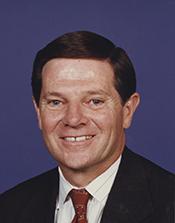
Mr. Speaker, I thank the gentleman for yielding me this time. I rise in opposition to this rule. The State of California sends $50 billion more to the Federal Government while getting nothing in…
Mr. Speaker, I yield myself such time as I may consume. (Mr. McGOVERN asked and was given permission to revise and extend his remarks.) Mr. Speaker, I thank the gentleman from Texas (Mr. Sessions)…
Mr. Speaker, I take this time for the purpose of inquiring of the majority leader the schedule for the coming week. Mr. Speaker, I yield to the distinguished majority leader, the gentleman from Texas…
I thank the distinguished whip for yielding to me. Mr. Speaker, the House will convene on Tuesday at 2 p.m. for legislative business. We will consider several measures under the suspension of the…
Mr. Speaker, I appreciate that we are debating a rule, for a change, that provides Members of the House a chance to offer their ideas about how we can improve the country's energy policies. We had…
Show 8 more

Mr. Speaker, for the purpose of debate only, I yield the customary 30 minutes to the gentleman from Massachusetts (Mr. McGovern), pending which I yield myself such time as I may consume. During…
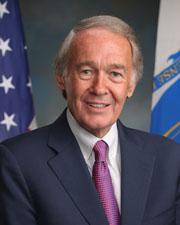
Mr. Chairman, this is truly a bad bill. Every day we have pictures on the screen of consumers pulling up to the gas pump, paying an arm and a leg for gasoline. We have 150,000 young men and women…
Mr. Speaker, I make a point of order. Mr. Speaker, pursuant to section 426 on the Congressional Budget Act of 1974, I make a point of order against consideration of the rule, H. Res. 219. Page 1,…
Mr. Chairman, I yield myself 2 minutes. Mr. Chairman, I rise in strong support of H.R. 6, the Energy Policy Act of 2005. Passage of this comprehensive bill will ensure a more affordable,…
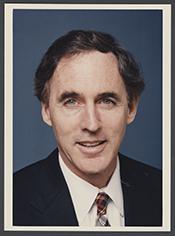
Mr. Speaker, as the summer driving season is set to begin, gasoline prices are at a record high. While some continue to blame the Bush administration and the Republicans in Congress, the truth is…
Mr. Speaker, by direction of the Committee on Rules, I call up House Resolution 219 and ask for its immediate consideration. Mr. Speaker, I yield myself such time as I may consume. Mr. Speaker, I…

Mr. Speaker, I thank the gentleman from Dallas for his very capable handling of this rule. We have to have this rule. This rule spawns H.R. 6, and I feel very strongly that the time has come and gone…

Mr. Chairman, I claim the time on the majority side for the Committee on Science. Mr. Chairman, I yield myself 3 minutes. As chairman of the Science Subcommittee on Energy, I rise today in strong…
Show 11 more

Mr. Chairman, with great regret, but with even greater conviction, I rise in opposition to this bill. While this bill certainly has some worthy provisions, including those reported out by our…

Mr. Chairman, I yield myself 3 minutes. (Mr. DINGELL asked and was given permission to revise and extend his remarks.) Mr. Chairman, we have a bad bill. It is represented as being something which is…
Mr. Speaker, of all the things to come on the floor of the House of Representatives and claim with a straight face that we should have a debate about, claiming that what is in the bill with regards…
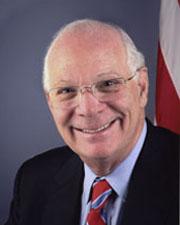
Mr. Speaker, will the gentleman yield? Mr. Speaker, let me thank the distinguished whip for yielding. And I have listened to this colloquy. And let me try to add a little bit to it, if I might.…

Mr. Chairman, I rise in opposition to the legislation. Mr. Chairman, protecting our environment and promoting energy independence are two of the most important jobs I have as a Member of Congress.…
Mr. Chairman, here we go again. As I said, this is the third time, and it should be a charm. We have passed this comprehensive legislation before; and I know I speak for a lot of my colleagues,…

Mr. Chairman, I want to thank the gentleman from Michigan for yielding this time to me and commend him on his outstanding leadership with regard to the energy bill now before us. I have supported the…

Mr. Chairman, I yield myself such time as I may consume. First I would like to thank the gentleman from New York (Mr. Boehlert), chairman of the Committee on Science, and the gentlewoman from…

Mr. Speaker, I thank the gentleman from Massachusetts for raising this point of order. I believe that it goes right to the heart of the problem with the MTBE provisions in this bill. They pass on…
I thank the gentleman for yielding me this time, and I appreciate his managing this rule. Mr. Speaker, gasoline prices, gasoline prices, gasoline prices. That is what my constituents are talking to…
Mr. Speaker, I thank the gentleman from Massachusetts (Mr. McGovern) for yielding me this time. This is a bad bill. It is a bad rule, unfair; and the procedure is unfair and bad. The rule does not…
Bill Text
7 versions available
        [Congressional Bills 109th Congress]
[From the U.S. Government Publishing Office]
[H.R. 6 Enrolled Bill (ENR)]

H.R.6

One Hundred Ninth Congress

of the

United States of America

AT THE FIRST SESSION

Begun and held at the City of Washington on Tuesday,
the fourth day of January, two thousand and five

An Act

To ensure jobs for our future with secure, affordable, and reliable
energy.

Be it enacted by the Senate and House of Representatives of the
United States of America in Congress assembled,

SECTION 1. SHORT TITLE; TABLE OF CONTENTS.

(a) Short Title.--This Act may be cited as the ``Energy Policy Act
of 2005''.
(b) Table of Contents.--The table of contents for this Act is as
follows:
Sec. 1. Short title; table of contents.

TITLE I--ENERGY EFFICIENCY

Subtitle A--Federal Programs

Sec. 101. Energy and water saving measures in congressional buildings.
Sec. 102. Energy management requirements.
Sec. 103. Energy use measurement and accountability.
Sec. 104. Procurement of energy efficient products.
Sec. 105. Energy savings performance contracts.
Sec. 106. Voluntary commitments to reduce industrial energy intensity.
Sec. 107. Advanced Building Efficiency Testbed.
Sec. 108. Increased use of recovered mineral component in federally
funded projects involving procurement of cement or concrete.
Sec. 109. Federal building performance standards.
Sec. 110. Daylight savings.
Sec. 111. Enhancing energy efficiency in management of Federal lands.

Subtitle B--Energy Assistance and State Programs

Sec. 121. Low-income home energy assistance program.
Sec. 122. Weatherization assistance.
Sec. 123. State energy programs.
Sec. 124. Energy efficient appliance rebate programs.
Sec. 125. Energy efficient public buildings.
Sec. 126. Low income community energy efficiency pilot program.
Sec. 127. State Technologies Advancement Collaborative.
Sec. 128. State building energy efficiency codes incentives.

Subtitle C--Energy Efficient Products

Sec. 131. Energy Star program.
Sec. 132. HVAC maintenance consumer education program.
Sec. 133. Public energy education program.
Sec. 134. Energy efficiency public information initiative.
Sec. 135. Energy conservation standards for additional products.
Sec. 136. Energy conservation standards for commercial equipment.
Sec. 137. Energy labeling.
Sec. 138. Intermittent escalator study.
Sec. 139. Energy efficient electric and natural gas utilities study.
Sec. 140. Energy efficiency pilot program.
Sec. 141. Report on failure to comply with deadlines for new or revised
energy
conservation standards.

Subtitle D--Public Housing

Sec. 151. Public housing capital fund.
Sec. 152. Energy-efficient appliances.
Sec. 153. Energy efficiency standards.
Sec. 154. Energy strategy for HUD.

TITLE II--RENEWABLE ENERGY

Subtitle A--General Provisions

Sec. 201. Assessment of renewable energy resources.
Sec. 202. Renewable energy production incentive.
Sec. 203. Federal purchase requirement.
Sec. 204. Use of photovoltaic energy in public buildings.
Sec. 205. Biobased products.
Sec. 206. Renewable energy security.
Sec. 207. Installation of photovoltaic system.
Sec. 208. Sugar cane ethanol program.
Sec. 209. Rural and remote community electrification grants.
Sec. 210. Grants to improve the commercial value of forest biomass for
electric energy, useful heat, transportation fuels, and other
commercial purposes.
Sec. 211. Sense of Congress regarding generation capacity of electricity
from renewable energy resources on public lands.

Subtitle B--Geothermal Energy

Sec. 221. Short title.
Sec. 222. Competitive lease sale requirements.
Sec. 223. Direct use.
Sec. 224. Royalties and near-term production incentives.
Sec. 225. Coordination of geothermal leasing and permitting on Federal
lands.
Sec. 226. Assessment of geothermal energy potential.
Sec. 227. Cooperative or unit plans.
Sec. 228. Royalty on byproducts.
Sec. 229. Authorities of Secretary to readjust terms, conditions,
rentals, and royalties.
Sec. 230. Crediting of rental toward royalty.
Sec. 231. Lease duration and work commitment requirements.
Sec. 232. Advanced royalties required for cessation of production.
Sec. 233. Annual rental.
Sec. 234. Deposit and use of geothermal lease revenues for 5 fiscal
years.
Sec. 235. Acreage limitations.
Sec. 236. Technical amendments.
Sec. 237. Intermountain West Geothermal Consortium.

Subtitle C--Hydroelectric

Sec. 241. Alternative conditions and fishways.
Sec. 242. Hydroelectric production incentives.
Sec. 243. Hydroelectric efficiency improvement.
Sec. 244. Alaska State jurisdiction over small hydroelectric projects.
Sec. 245. Flint Creek hydroelectric project.
Sec. 246. Small hydroelectric power projects.

Subtitle D--Insular Energy

Sec. 251. Insular areas energy security.
Sec. 252. Projects enhancing insular energy independence.

TITLE III--OIL AND GAS

Subtitle A--Petroleum Reserve and Home Heating Oil

Sec. 301. Permanent authority to operate the Strategic Petroleum Reserve
and other energy programs.
Sec. 302. National Oilheat Research Alliance.
Sec. 303. Site selection.

Subtitle B--Natural Gas

Sec. 311. Exportation or importation of natural gas.
Sec. 312. New natural gas storage facilities.
Sec. 313. Process coordination; hearings; rules of procedure.
Sec. 314. Penalties.
Sec. 315. Market manipulation.
Sec. 316. Natural gas market transparency rules.
Sec. 317. Federal-State liquefied natural gas forums.
Sec. 318. Prohibition of trading and serving by certain individuals.

Subtitle C--Production

Sec. 321. Outer Continental Shelf provisions.
Sec. 322. Hydraulic fracturing.
Sec. 323. Oil and gas exploration and production defined.

Subtitle D--Naval Petroleum Reserve

Sec. 331. Transfer of administrative jurisdiction and environmental
remediation, Naval Petroleum Reserve Numbered 2, Kern County,
California.
Sec. 332. Naval Petroleum Reserve Numbered 2 Lease Revenue Account.
Sec. 333. Land conveyance, portion of Naval Petroleum Reserve Numbered
2, to City of Taft, California.
Sec. 334. Revocation of land withdrawal.

Subtitle E--Production Incentives

Sec. 341. Definition of Secretary.
Sec. 342. Program on oil and gas royalties in-kind.
Sec. 343. Marginal property production incentives.
Sec. 344. Incentives for natural gas production from deep wells in the
shallow waters of the Gulf of Mexico.
Sec. 345. Royalty relief for deep water production.
Sec. 346. Alaska offshore royalty suspension.
Sec. 347. Oil and gas leasing in the National Petroleum Reserve in
Alaska.
Sec. 348. North Slope Science Initiative.
Sec. 349. Orphaned, abandoned, or idled wells on Federal land.
Sec. 350. Combined hydrocarbon leasing.
Sec. 351. Preservation of geological and geophysical data.
Sec. 352. Oil and gas lease acreage limitations.
Sec. 353. Gas hydrate production incentive.
Sec. 354. Enhanced oil and natural gas production through carbon dioxide
injection.
Sec. 355. Assessment of dependence of State of Hawaii on oil.
Sec. 356. Denali Commission.
Sec. 357. Comprehensive inventory of OCS oil and natural gas resources.

Subtitle F--Access to Federal Lands

Sec. 361. Federal onshore oil and gas leasing and permitting practices.
Sec. 362. Management of Federal oil and gas leasing programs.
Sec. 363. Consultation regarding oil and gas leasing on public land.
Sec. 364. Estimates of oil and gas resources underlying onshore Federal
land.
Sec. 365. Pilot project to improve Federal permit coordination.
Sec. 366. Deadline for consideration of applications for permits.
Sec. 367. Fair market value determinations for linear rights-of-way
across public lands and National Forests.
Sec. 368. Energy right-of-way corridors on Federal land.
Sec. 369. Oil shale, tar sands, and other strategic unconventional
fuels.
Sec. 370. Finger Lakes withdrawal.
Sec. 371. Reinstatement of leases.
Sec. 372. Consultation regarding energy rights-of-way on public land.
Sec. 373. Sense of Congress regarding development of minerals under
Padre Island National Seashore.
Sec. 374. Livingston Parish mineral rights transfer.

Subtitle G--Miscellaneous

Sec. 381. Deadline for decision on appeals of consistency determination
under the Coastal Zone Management Act of 1972.
Sec. 382. Appeals relating to offshore mineral development.
Sec. 383. Royalty payments under leases under the Outer Continental
Shelf Lands Act.
Sec. 384. Coastal impact assistance program.
Sec. 385. Study of availability of skilled workers.
Sec. 386. Great Lakes oil and gas drilling ban.
Sec. 387. Federal coalbed methane regulation.
Sec. 388. Alternate energy-related uses on the Outer Continental Shelf.
Sec. 389. Oil Spill Recovery Institute.
Sec. 390. NEPA review.

Subtitle H--Refinery Revitalization

Sec. 391. Findings and definitions.
Sec. 392. Federal-State regulatory coordination and assistance.

TITLE IV--COAL

Subtitle A--Clean Coal Power Initiative

Sec. 401. Authorization of appropriations.
Sec. 402. Project criteria.
Sec. 403. Report.
Sec. 404. Clean coal centers of excellence.

Subtitle B--Clean Power Projects

Sec. 411. Integrated coal/renewable energy system.
Sec. 412. Loan to place Alaska clean coal technology facility in
service.
Sec. 413. Western integrated coal gasification demonstration project.
Sec. 414. Coal gasification.
Sec. 415. Petroleum coke gasification.
Sec. 416. Electron scrubbing demonstration.
Sec. 417. Department of Energy transportation fuels from Illinois basin
coal.

Subtitle C--Coal and Related Programs

Sec. 421. Amendment of the Energy Policy Act of 1992.

Subtitle D--Federal Coal Leases

Sec. 431. Short title.
Sec. 432. Repeal of the 160-acre limitation for coal leases.
Sec. 433. Approval of logical mining units.
Sec. 434. Payment of advance royalties under coal leases.
Sec. 435. Elimination of deadline for submission of coal lease operation
and reclamation plan.
Sec. 436. Amendment relating to financial assurances with respect to
bonus bids.
Sec. 437. Inventory requirement.
Sec. 438. Application of amendments.

TITLE V--INDIAN ENERGY

Sec. 501. Short title.
Sec. 502. Office of Indian Energy Policy and Programs.
Sec. 503. Indian energy.
Sec. 504. Consultation with Indian tribes.
Sec. 505. Four Corners transmission line project and electrification.
Sec. 506. Energy efficiency in federally assisted housing.

TITLE VI--NUCLEAR MATTERS

Subtitle A--Price-Anderson Act Amendments

Sec. 601. Short title.
Sec. 602. Extension of indemnification authority.
Sec. 603. Maximum assessment.
Sec. 604. Department liability limit.
Sec. 605. Incidents outside the United States.
Sec. 606. Reports.
Sec. 607. Inflation adjustment.
Sec. 608. Treatment of modular reactors.
Sec. 609. Applicability.
Sec. 610. Civil penalties.

Subtitle B--General Nuclear Matters

Sec. 621. Licenses.
Sec. 622. Nuclear Regulatory Commission scholarship and fellowship
program.
Sec. 623. Cost recovery from Government agencies.
Sec. 624. Elimination of pension offset for certain rehired Federal
retirees.
Sec. 625. Antitrust review.
Sec. 626. Decommissioning.
Sec. 627. Limitation on legal fee reimbursement.
Sec. 628. Decommissioning pilot program.
Sec. 629. Whistleblower protection.
Sec. 630. Medical isotope production.
Sec. 631. Safe disposal of greater-than-Class C radioactive waste.
Sec. 632. Prohibition on nuclear exports to countries that sponsor
terrorism.
Sec. 633. Employee benefits.
Sec. 634. Demonstration hydrogen production at existing nuclear power
plants.
Sec. 635. Prohibition on assumption by United States Government of
liability for certain foreign incidents.
Sec. 636. Authorization of appropriations.
Sec. 637. Nuclear Regulatory Commission user fees and annual charges.
Sec. 638. Standby support for certain nuclear plant delays.
Sec. 639. Conflicts of interest relating to contracts and other
arrangements.

Subtitle C--Next Generation Nuclear Plant Project

Sec. 641. Project establishment.
Sec. 642. Project management.
Sec. 643. Project organization.
Sec. 644. Nuclear Regulatory Commission.
Sec. 645. Project timelines and authorization of appropriations.

Subtitle D--Nuclear Security

Sec. 651. Nuclear facility and materials security.
Sec. 652. Fingerprinting and criminal history record checks.
Sec. 653. Use of firearms by security personnel.
Sec. 654. Unauthorized introduction of dangerous weapons.
Sec. 655. Sabotage of nuclear facilities, fuel, or designated material.
Sec. 656. Secure transfer of nuclear materials.
Sec. 657. Department of Homeland Security consultation.

TITLE VII--VEHICLES AND FUELS

Subtitle A--Existing Programs

Sec. 701. Use of alternative fuels by dual fueled vehicles.
Sec. 702. Incremental cost allocation.
Sec. 703. Alternative compliance and flexibility.
Sec. 704. Review of Energy Policy Act of 1992 programs.
Sec. 705. Report concerning compliance with alternative fueled vehicle
purchasing requirements.
Sec. 706. Joint flexible fuel/hybrid vehicle commercialization
initiative.
Sec. 707. Emergency exemption.

Subtitle B--Hybrid Vehicles, Advanced Vehicles, and Fuel Cell Buses

Part 1--Hybrid Vehicles

Sec. 711. Hybrid vehicles.
Sec. 712. Efficient hybrid and advanced diesel vehicles.

Part 2--Advanced Vehicles

Sec. 721. Pilot program.
Sec. 722. Reports to Congress.
Sec. 723. Authorization of appropriations.

Part 3--Fuel Cell Buses

Sec. 731. Fuel cell transit bus demonstration.

Subtitle C--Clean School Buses

Sec. 741. Clean school bus program.
Sec. 742. Diesel truck retrofit and fleet modernization program.
Sec. 743. Fuel cell school buses.

Subtitle D--Miscellaneous

Sec. 751. Railroad efficiency.
Sec. 752. Mobile emission reductions trading and crediting.
Sec. 753. Aviation fuel conservation and emissions.
Sec. 754. Diesel fueled vehicles.
Sec. 755. Conserve by Bicycling Program.
Sec. 756. Reduction of engine idling.
Sec. 757. Biodiesel engine testing program.
Sec. 758. Ultra-efficient engine technology for aircraft.
Sec. 759. Fuel economy incentive requirements.

Subtitle E--Automobile Efficiency

Sec. 771. Authorization of appropriations for implementation and
enforcement of fuel economy standards.
Sec. 772. Extension of maximum fuel economy increase for alternative
fueled vehicles.
Sec. 773. Study of feasibility and effects of reducing use of fuel for
automobiles.
Sec. 774. Update testing procedures.

Subtitle F--Federal and State Procurement

Sec. 781. Definitions.
Sec. 782. Federal and State procurement of fuel cell vehicles and
hydrogen energy systems.
Sec. 783. Federal procurement of stationary, portable, and micro fuel
cells.

Subtitle G--Diesel Emissions Reduction

Sec. 791. Definitions.
Sec. 792. National grant and loan programs.
Sec. 793. State grant and loan programs.
Sec. 794. Evaluation and report.
Sec. 795. Outreach and incentives.
Sec. 796. Effect of subtitle.
Sec. 797. Authorization of appropriations.

TITLE VIII--HYDROGEN

Sec. 801. Hydrogen and fuel cell program.
Sec. 802. Purposes.
Sec. 803. Definitions.
Sec. 804. Plan.
Sec. 805. Programs.
Sec. 806. Hydrogen and Fuel Cell Technical Task Force.
Sec. 807. Technical Advisory Committee.
Sec. 808. Demonstration.
Sec. 809. Codes and standards.
Sec. 810. Disclosure.
Sec. 811. Reports.
Sec. 812. Solar and wind technologies.
Sec. 813. Technology transfer.
Sec. 814. Miscellaneous provisions.
Sec. 815. Cost sharing.
Sec. 816. Savings clause.

TITLE IX--RESEARCH AND DEVELOPMENT

Sec. 901. Short title.
Sec. 902. Goals.
Sec. 903. Definitions.

Subtitle A--Energy Efficiency

Sec. 911. Energy efficiency.
Sec. 912. Next Generation Lighting Initiative.
Sec. 913. National Building Performance Initiative.
Sec. 914. Building standards.
Sec. 915. Secondary electric vehicle battery use program.
Sec. 916. Energy Efficiency Science Initiative.
Sec. 917. Advanced Energy Efficiency Technology Transfer Centers.

Subtitle B--Distributed Energy and Electric Energy Systems

Sec. 921. Distributed energy and electric energy systems.
Sec. 922. High power density industry program.
Sec. 923. Micro-cogeneration energy technology.
Sec. 924. Distributed energy technology demonstration programs.
Sec. 925. Electric transmission and distribution programs.

Subtitle C--Renewable Energy

Sec. 931. Renewable energy.
Sec. 932. Bioenergy program.
Sec. 933. Low-cost renewable hydrogen and infrastructure for vehicle
propulsion.
Sec. 934. Concentrating solar power research program.
Sec. 935. Renewable energy in public buildings.

Subtitle D--Agricultural Biomass Research and Development Programs

Sec. 941. Amendments to the Biomass Research and Development Act of
2000.
Sec. 942. Production incentives for cellulosic biofuels.
Sec. 943. Procurement of biobased products.
Sec. 944. Small business bioproduct marketing and certification grants.
Sec. 945. Regional bioeconomy development grants.
Sec. 946. Preprocessing and harvesting demonstration grants.
Sec. 947. Education and outreach.
Sec. 948. Reports.

Subtitle E--Nuclear Energy

Sec. 951. Nuclear energy.
Sec. 952. Nuclear energy research programs.
Sec. 953. Advanced fuel cycle initiative.
Sec. 954. University nuclear science and engineering support.
Sec. 955. Department of Energy civilian nuclear infrastructure and
facilities.
Sec. 956. Security of nuclear facilities.
Sec. 957. Alternatives to industrial radioactive sources.

Subtitle F--Fossil Energy

Sec. 961. Fossil energy.
Sec. 962. Coal and related technologies program.
Sec. 963. Carbon capture research and development program.
Sec. 964. Research and development for coal mining technologies.
Sec. 965. Oil and gas research programs.
Sec. 966. Low-volume oil and gas reservoir research program.
Sec. 967. Complex well technology testing facility.
Sec. 968. Methane hydrate research.

Subtitle G--Science

Sec. 971. Science.
Sec. 972. Fusion energy sciences program.
Sec. 973. Catalysis research program.
Sec. 974. Hydrogen.
Sec. 975. Solid state lighting.
Sec. 976. Advanced scientific computing for energy missions.
Sec. 977. Systems biology program.
Sec. 978. Fission and fusion energy materials research program.
Sec. 979. Energy and water supplies.
Sec. 980. Spallation Neutron Source.
Sec. 981. Rare isotope accelerator.
Sec. 982. Office of Scientific and Technical Information.
Sec. 983. Science and engineering education pilot program.
Sec. 984. Energy research fellowships.
Sec. 984A. Science and technology scholarship program.

Subtitle H--International Cooperation

Sec. 985. Western Hemisphere energy cooperation.
Sec. 986. Cooperation between United States and Israel.
Sec. 986A. International energy training.

Subtitle I--Research Administration and Operations

Sec. 987. Availability of funds.
Sec. 988. Cost sharing.
Sec. 989. Merit review of proposals.
Sec. 990. External technical review of Departmental programs.
Sec. 991. National Laboratory designation.
Sec. 992. Report on equal employment opportunity practices.
Sec. 993. Strategy and plan for science and energy facilities and
infrastructure.
Sec. 994. Strategic research portfolio analysis and coordination plan.
Sec. 995. Competitive award of management contracts.
Sec. 996. Western Michigan demonstration project.
Sec. 997. Arctic Engineering Research Center.
Sec. 998. Barrow Geophysical Research Facility.

Subtitle J--Ultra-Deepwater and Unconventional Natural Gas and Other
Petroleum Resources

Sec. 999A. Program authority.
Sec. 999B. Ultra-deepwater and unconventional onshore natural gas and
other petroleum research and development program.
Sec. 999C. Additional requirements for awards.
Sec. 999D. Advisory committees.
Sec. 999E. Limits on participation.
Sec. 999F. Sunset.
Sec. 999G. Definitions.
Sec. 999H. Funding.

TITLE X--DEPARTMENT OF ENERGY MANAGEMENT

Sec. 1001. Improved technology transfer of energy technologies.
Sec. 1002. Technology Infrastructure Program.
Sec. 1003. Small business advocacy and assistance.
Sec. 1004. Outreach.
Sec. 1005. Relationship to other laws.
Sec. 1006. Improved coordination and management of civilian science and
technology programs.
Sec. 1007. Other transactions authority.
Sec. 1008. Prizes for achievement in grand challenges of science and
technology.
Sec. 1009. Technical corrections.
Sec. 1010. University collaboration.
Sec. 1011. Sense of Congress.

TITLE XI--PERSONNEL AND TRAINING

Sec. 1101. Workforce trends and traineeship grants.
Sec. 1102. Educational programs in science and mathematics.
Sec. 1103. Training guidelines for nonnuclear electric energy industry
personnel.
Sec. 1104. National Center for Energy Management and Building
Technologies.
Sec. 1105. Improved access to energy-related scientific and technical
careers.
Sec. 1106. National Power Plant Operations Technology and Educational
Center.

TITLE XII--ELECTRICITY

Sec. 1201. Short title.

Subtitle A--Reliability Standards

Sec. 1211. Electric reliability standards.

Subtitle B--Transmission Infrastructure Modernization

Sec. 1221. Siting of interstate electric transmission facilities.
Sec. 1222. Third-party finance.
Sec. 1223. Advanced transmission technologies.
Sec. 1224. Advanced Power System Technology Incentive Program.

Subtitle C--Transmission Operation Improvements

Sec. 1231. Open nondiscriminatory access.
Sec. 1232. Federal utility participation in Transmission Organizations.
Sec. 1233. Native load service obligation.
Sec. 1234. Study on the benefits of economic dispatch.
Sec. 1235. Protection of transmission contracts in the Pacific
Northwest.
Sec. 1236. Sense of Congress regarding locational installed capacity
mechanism.

Subtitle D--Transmission Rate Reform

Sec. 1241. Transmission infrastructure investment.
Sec. 1242. Funding new interconnection and transmission upgrades.

Subtitle E--Amendments to PURPA

Sec. 1251. Net metering and additional standards.
Sec. 1252. Smart metering.
Sec. 1253. Cogeneration and small power production purchase and sale
requirements.
Sec. 1254. Interconnection.

Subtitle F--Repeal of PUHCA

Sec. 1261. Short title.
Sec. 1262. Definitions.
Sec. 1263. Repeal of the Public Utility Holding Company Act of 1935.
Sec. 1264. Federal access to books and records.
Sec. 1265. State access to books and records.
Sec. 1266. Exemption authority.
Sec. 1267. Affiliate transactions.
Sec. 1268. Applicability.
Sec. 1269. Effect on other regulations.
Sec. 1270. Enforcement.
Sec. 1271. Savings provisions.
Sec. 1272. Implementation.
Sec. 1273. Transfer of resources.
Sec. 1274. Effective date.
Sec. 1275. Service allocation.
Sec. 1276. Authorization of appropriations.
Sec. 1277. Conforming amendments to the Federal Power Act.

Subtitle G--Market Transparency, Enforcement, and Consumer Protection

Sec. 1281. Electricity market transparency.
Sec. 1282. False statements.
Sec. 1283. Market manipulation.
Sec. 1284. Enforcement.
Sec. 1285. Refund effective date.
Sec. 1286. Refund authority.
Sec. 1287. Consumer privacy and unfair trade practices.
Sec. 1288. Authority of court to prohibit individuals from serving as
officers, directors, and energy traders.
Sec. 1289. Merger review reform.
Sec. 1290. Relief for extraordinary violations.

Subtitle H--Definitions

Sec. 1291. Definitions.

Subtitle I--Technical and Conforming Amendments

Sec. 1295. Conforming amendments.

Subtitle J--Economic Dispatch

Sec. 1298. Economic dispatch.

TITLE XIII--ENERGY POLICY TAX INCENTIVES

Sec. 1300. Short title; amendment to 1986 Code.

Subtitle A--Electricity Infrastructure

Sec. 1301. Extension and modification of renewable electricity
production credit.
Sec. 1302. Application of section 45 credit to agricultural
cooperatives.
Sec. 1303. Clean renewable energy bonds.
Sec. 1304. Treatment of income of certain electric cooperatives.
Sec. 1305. Dispositions of transmission property to implement FERC
restructuring policy.
Sec. 1306. Credit for production from advanced nuclear power facilities.
Sec. 1307. Credit for investment in clean coal facilities.
Sec. 1308. Electric transmission property treated as 15-year property.
Sec. 1309. Expansion of amortization for certain atmospheric pollution
control facilities in connection with plants first placed in
service after 1975.
Sec. 1310. Modifications to special rules for nuclear decommissioning
costs.
Sec. 1311. Five-year net operating loss carryover for certain losses.

Subtitle B--Domestic Fossil Fuel Security

Sec. 1321. Extension of credit for producing fuel from a nonconventional
source for facilities producing coke or coke gas.
Sec. 1322. Modification of credit for producing fuel from a
nonconventional source.
Sec. 1323. Temporary expensing for equipment used in refining of liquid
fuels.
Sec. 1324. Pass through to owners of deduction for capital costs
incurred by small refiner cooperatives in complying with
Environmental Protection Agency sulfur regulations.
Sec. 1325. Natural gas distribution lines treated as 15-year property.
Sec. 1326. Natural gas gathering lines treated as 7-year property.
Sec. 1327. Arbitrage rules not to apply to prepayments for natural gas.
Sec. 1328. Determination of small refiner exception to oil depletion
deduction.
Sec. 1329. Amortization of geological and geophysical expenditures.

Subtitle C--Conservation and Energy Efficiency Provisions

Sec. 1331. Energy efficient commercial buildings deduction.
Sec. 1332. Credit for construction of new energy efficient homes.
Sec. 1333. Credit for certain nonbusiness energy property.
Sec. 1334. Credit for energy efficient appliances.
Sec. 1335. Credit for residential energy efficient property.
Sec. 1336. Credit for business installation of qualified fuel cells and
stationary microturbine power plants.
Sec. 1337. Business solar investment tax credit.

Subtitle D--Alternative Motor Vehicles and Fuels Incentives

Sec. 1341. Alternative motor vehicle credit.
Sec. 1342. Credit for installation of alternative fueling stations.
Sec. 1343. Reduced motor fuel excise tax on certain mixtures of diesel
fuel.
Sec. 1344. Extension of excise tax provisions and income tax credit for
biodiesel.
Sec. 1345. Small agri-biodiesel producer credit.
Sec. 1346. Renewable diesel.
Sec. 1347. Modification of small ethanol producer credit.
Sec. 1348. Sunset of deduction for clean-fuel vehicles and certain
refueling property.

Subtitle E--Additional Energy Tax Incentives

Sec. 1351. Expansion of research credit.
Sec. 1352. National Academy of Sciences study and report.
Sec. 1353. Recycling study.

Subtitle F--Revenue Raising Provisions

Sec. 1361. Oil Spill Liability Trust Fund financing rate.
Sec. 1362. Extension of Leaking Underground Storage Tank Trust Fund
financing rate.
Sec. 1363. Modification of recapture rules for amortizable section 197
intangibles.
Sec. 1364. Clarification of tire excise tax.

TITLE XIV--MISCELLANEOUS

Subtitle A--In General

Sec. 1401. Sense of Congress on risk assessments.
Sec. 1402. Energy production incentives.
Sec. 1403. Regulation of certain oil used in transformers.
Sec. 1404. Petrochemical and oil refinery facility health assessment.
Sec. 1405. National Priority Project Designation.
Sec. 1406. Cold cracking.
Sec. 1407. Oxygen-fuel.

Subtitle B--Set America Free

Sec. 1421. Short title.
Sec. 1422. Purpose.
Sec. 1423. United States Commission on North American Energy Freedom.
Sec. 1424. North American energy freedom policy.

TITLE XV--ETHANOL AND MOTOR FUELS

Subtitle A--General Provisions

Sec. 1501. Renewable content of gasoline.
Sec. 1502. Findings.
Sec. 1503. Claims filed after enactment.
Sec. 1504. Elimination of oxygen content requirement for reformulated
gasoline.
Sec. 1505. Public health and environmental impacts of fuels and fuel
additives.
Sec. 1506. Analyses of motor vehicle fuel changes.
Sec. 1507. Additional opt-in areas under reformulated gasoline program.
Sec. 1508. Data collection.
Sec. 1509. Fuel system requirements harmonization study.
Sec. 1510. Commercial byproducts from municipal solid waste and
cellulosic biomass loan guarantee program.
Sec. 1511. Renewable fuel.
Sec. 1512. Conversion assistance for cellulosic biomass, waste-derived
ethanol, approved renewable fuels.
Sec. 1513. Blending of compliant reformulated gasolines.
Sec. 1514. Advanced biofuel technologies program.
Sec. 1515. Waste-derived ethanol and biodiesel.
Sec. 1516. Sugar ethanol loan guarantee program.

Subtitle B--Underground Storage Tank Compliance

Sec. 1521. Short title.
Sec. 1522. Leaking underground storage tanks.
Sec. 1523. Inspection of underground storage tanks.
Sec. 1524. Operator training.
Sec. 1525. Remediation from oxygenated fuel additives.
Sec. 1526. Release prevention, compliance, and enforcement.
Sec. 1527. Delivery prohibition.
Sec. 1528. Federal facilities.
Sec. 1529. Tanks on tribal lands.
Sec. 1530. Additional measures to protect groundwater.
Sec. 1531. Authorization of appropriations.
Sec. 1532. Conforming amendments.
Sec. 1533. Technical amendments.

Subtitle C--Boutique Fuels

Sec. 1541. Reducing the proliferation of boutique fuels.

TITLE XVI--CLIMATE CHANGE

Subtitle A--National Climate Change Technology Deployment

Sec. 1601. Greenhouse gas intensity reducing technology strategies.

Subtitle B--Climate Change Technology Deployment in Developing Countries

Sec. 1611. Climate change technology deployment in developing countries.

TITLE XVII--INCENTIVES FOR INNOVATIVE TECHNOLOGIES

Sec. 1701. Definitions.
Sec. 1702. Terms and conditions.
Sec. 1703. Eligible projects.
Sec. 1704. Authorization of appropriations.

TITLE XVIII--STUDIES

Sec. 1801. Study on inventory of petroleum and natural gas storage.
Sec. 1802. Study of energy efficiency standards.
Sec. 1803. Telecommuting study.
Sec. 1804. LIHEAP Report.
Sec. 1805. Oil bypass filtration technology.
Sec. 1806. Total integrated thermal systems.
Sec. 1807. Report on energy integration with Latin America.
Sec. 1808. Low-volume gas reservoir study.
Sec. 1809. Investigation of gasoline prices.
Sec. 1810. Alaska natural gas pipeline.
Sec. 1811. Coal bed methane study.
Sec. 1812. Backup fuel capability study.
Sec. 1813. Indian land rights-of-way.
Sec. 1814. Mobility of scientific and technical personnel.
Sec. 1815. Interagency review of competition in the wholesale and retail
markets for electric energy.
Sec. 1816. Study of rapid electrical grid restoration.
Sec. 1817. Study of distributed generation.
Sec. 1818. Natural gas supply shortage report.
Sec. 1819. Hydrogen participation study.
Sec. 1820. Overall employment in a hydrogen economy.
Sec. 1821. Study of best management practices for energy research and
development programs.
Sec. 1822. Effect of electrical contaminants on reliability of energy
production systems.
Sec. 1823. Alternative fuels reports.
Sec. 1824. Final action on refunds for excessive charges.
Sec. 1825. Fuel cell and hydrogen technology study.
Sec. 1826. Passive solar technologies.
Sec. 1827. Study of link between energy security and increases in
vehicle miles traveled.
Sec. 1828. Science study on cumulative impacts of multiple offshore
liquefied natural gas facilities.
Sec. 1829. Energy and water saving measures in congressional buildings.
Sec. 1830. Study of availability of skilled workers.
Sec. 1831. Review of Energy Policy Act of 1992 programs.
Sec. 1832. Study on the benefits of economic dispatch.
Sec. 1833. Renewable energy on Federal land.
Sec. 1834. Increased hydroelectric generation at existing Federal
facilities.
Sec. 1835. Split-estate Federal oil and gas leasing and development
practices.
Sec. 1836. Resolution of Federal resource development conflicts in the
Powder River Basin.
Sec. 1837. National security review of international energy
requirements.
Sec. 1838. Used oil re-refining study.
Sec. 1839. Transmission system monitoring.
Sec. 1840. Report identifying and describing the status of potential
hydropower facilities.

SEC. 2. DEFINITIONS.

Except as otherwise provided, in this Act:
(1) Department.--The term ``Department'' means the Department
of Energy.
(2) Institution of higher education.--
(A) In general.--The term ``institution of higher
education'' has the meaning given the term in section 101(a) of
the Higher Education Act of 1065 (20 U.S.C. 1001(a)).
(B) Inclusion.--The term ``institution of higher
education'' includes an organization that--
(i) is organized, and at all times thereafter operated,
exclusively for the benefit of, to perform the functions
of, or to carry out the functions of one or more
organizations referred to in subparagraph (A); and
(ii) is operated, supervised, or controlled by or in
connection with one or more of those organizations.
(3) National laboratory.--The term ``National Laboratory''
means any of the following laboratories owned by the Department:
(A) Ames Laboratory.
(B) Argonne National Laboratory.
(C) Brookhaven National Laboratory.
(D) Fermi National Accelerator Laboratory.
(E) Idaho National Laboratory.
(F) Lawrence Berkeley National Laboratory.
(G) Lawrence Livermore National Laboratory.
(H) Los Alamos National Laboratory.
(I) National Energy Technology Laboratory.
(J) National Renewable Energy Laboratory.
(K) Oak Ridge National Laboratory.
(L) Pacific Northwest National Laboratory.
(M) Princeton Plasma Physics Laboratory.
(N) Sandia National Laboratories.
(O) Savannah River National Laboratory.
(P) Stanford Linear Accelerator Center.
(Q) Thomas Jefferson National Accelerator Facility.
(4) Secretary.--The term ``Secretary'' means the Secretary of
Energy.
(5) Small business concern.--The term ``small business
concern'' has the meaning given the term in section 3 of the Small
Business Act (15 U.S.C. 632).

TITLE I--ENERGY EFFICIENCY
Subtitle A--Federal Programs

SEC. 101. ENERGY AND WATER SAVING MEASURES IN CONGRESSIONAL BUILDINGS.

(a) In General.--Part 3 of title V of the National Energy
Conservation Policy Act (42 U.S.C. 8251 et seq.) is amended by adding
at the end the following:

``SEC. 552. ENERGY AND WATER SAVINGS MEASURES IN CONGRESSIONAL
BUILDINGS.

``(a) In General.--The Architect of the Capitol--
``(1) shall develop, update, and implement a cost-effective
energy conservation and management plan (referred to in this
section as the `plan') for all facilities administered by Congress
(referred to in this section as `congressional buildings') to meet
the energy performance requirements for Federal buildings
established under section 543(a)(1); and
``(2) shall submit the plan to Congress, not later than 180
days after the date of enactment of this section.
``(b) Plan Requirements.--The plan shall include--
``(1) a description of the life cycle cost analysis used to
determine the cost-effectiveness of proposed energy efficiency
projects;
``(2) a schedule of energy surveys to ensure complete surveys
of all congressional buildings every 5 years to determine the cost
and payback period of energy and water conservation measures;
``(3) a strategy for installation of life cycle cost-effective
energy and water conservation measures;
``(4) the results of a study of the costs and benefits of
installation of submetering in congressional buildings; and
``(5) information packages and `how-to' guides for each Member
and employing authority of Congress that detail simple, cost-
effective methods to save energy and taxpayer dollars in the
workplace.
``(c) Annual Report.--The Architect of the Capitol shall submit to
Congress annually a report on congressional energy management and
conservation programs required under this section that describes in
detail--
``(1) energy expenditures and savings estimates for each
facility;
``(2) energy management and conservation projects; and
``(3) future priorities to ensure compliance with this
section.''.
(b) Table of Contents Amendment.--The table of contents of the
National Energy Conservation Policy Act is amended by adding at the end
of the items relating to part 3 of title V the following new item:

``Sec. 552. Energy and water savings measures in congressional
buildings.''.

(c) Repeal.--Section 310 of the Legislative Branch Appropriations
Act, 1999 (2 U.S.C. 1815), is repealed.

SEC. 102. ENERGY MANAGEMENT REQUIREMENTS.

(a) Energy Reduction Goals.--
(1) Amendment.--Section 543(a)(1) of the National Energy
Conservation Policy Act (42 U.S.C. 8253(a)(1)) is amended by
striking ``its Federal buildings so that'' and all that follows
through the end and inserting ``the Federal buildings of the agency
(including each industrial or laboratory facility) so that the
energy consumption per gross square foot of the Federal buildings
of the agency in fiscal years 2006 through 2015 is reduced, as
compared with the energy consumption per gross square foot of the
Federal buildings of the agency in fiscal year 2003, by the
percentage specified in the following table:

``Fiscal Year
Percentage reduction
2006..............................................
2
2007..............................................
4
2008..............................................
6
2009..............................................
8
2010..............................................
10
2011..............................................
12
2012..............................................
14
2013..............................................
16
2014..............................................
18
2015..............................................
20.''.

(2) Reporting baseline.--The energy reduction goals and
baseline established in paragraph (1) of section 543(a) of the
National Energy Conservation Policy Act (42 U.S.C. 8253(a)(1)), as
amended by this subsection, supersede all previous goals and
baselines under such paragraph, and related reporting requirements.
(b) Review and Revision of Energy Performance Requirement.--Section
543(a) of the National Energy Conservation Policy Act (42 U.S.C.
8253(a)) is further amended by adding at the end the following:
``(3) Not later than December 31, 2014, the Secretary shall review
the results of the implementation of the energy performance requirement
established under paragraph (1) and submit to Congress recommendations
concerning energy performance requirements for fiscal years 2016
through 2025.''.
(c) Exclusions.--Section 543(c)(1) of the National Energy
Conservation Policy Act (42 U.S.C. 8253(c)(1)) is amended by striking
``An agency may exclude'' and all that follows through the end and
inserting ``(A) An agency may exclude, from the energy performance
requirement for a fiscal year established under subsection (a) and the
energy management requirement established under subsection (b), any
Federal building or collection of Federal buildings, if the head of the
agency finds that--
``(i) compliance with those requirements would be
impracticable;
``(ii) the agency has completed and submitted all federally
required energy management reports;
``(iii) the agency has achieved compliance with the energy
efficiency requirements of this Act, the Energy Policy Act of 1992,
Executive orders, and other Federal law; and
``(iv) the agency has implemented all practicable, life cycle
cost-effective projects with respect to the Federal building or
collection of Federal buildings to be excluded.
``(B) A finding of impracticability under subparagraph (A)(i) shall
be based on--
``(i) the energy intensiveness of activities carried out in the
Federal building or collection of Federal buildings; or
``(ii) the fact that the Federal building or collection of
Federal buildings is used in the performance of a national security
function.''.
(d) Review by Secretary.--Section 543(c)(2) of the National Energy
Conservation Policy Act (42 U.S.C. 8253(c)(2)) is amended--
(1) by striking ``impracticability standards'' and inserting
``standards for exclusion'';
(2) by striking ``a finding of impracticability'' and inserting
``the exclusion''; and
(3) by striking ``energy consumption requirements'' and
inserting ``requirements of subsections (a) and (b)(1)''.
(e) Criteria.--Section 543(c) of the National Energy Conservation
Policy Act (42 U.S.C. 8253(c)) is further amended by adding at the end
the following:
``(3) Not later than 180 days after the date of enactment of this
paragraph, the Secretary shall issue guidelines that establish criteria
for exclusions under paragraph (1).''.
(f) Retention of Energy and Water Savings.--Section 546 of the
National Energy Conservation Policy Act (42 U.S.C. 8256) is amended by
adding at the end the following new subsection:
``(e) Retention of Energy and Water Savings.--An agency may retain
any funds appropriated to that agency for energy expenditures, water
expenditures, or wastewater treatment expenditures, at buildings
subject to the requirements of section 543(a) and (b), that are not
made because of energy savings or water savings. Except as otherwise
provided by law, such funds may be used only for energy efficiency,
water conservation, or unconventional and renewable energy resources
projects. Such projects shall be subject to the requirements of section
3307 of title 40, United States Code.''.
(g) Reports.--Section 548(b) of the National Energy Conservation
Policy Act (42 U.S.C. 8258(b)) is amended--
(1) in the subsection heading, by inserting ``the President
and'' before ``Congress''; and
(2) by inserting ``President and'' before ``Congress''.
(h) Conforming Amendment.--Section 550(d) of the National Energy
Conservation Policy Act (42 U.S.C. 8258b(d)) is amended in the second
sentence by striking ``the 20 percent reduction goal established under
section 543(a) of the National Energy Conservation Policy Act (42
U.S.C. 8253(a)).'' and inserting ``each of the energy reduction goals
established under section 543(a).''.

SEC. 103. ENERGY USE MEASUREMENT AND ACCOUNTABILITY.

Section 543 of the National Energy Conservation Policy Act (42
U.S.C. 8253) is further amended by adding at the end the following:
``(e) Metering of Energy Use.--
``(1) Deadline.--By October 1, 2012, in accordance with
guidelines established by the Secretary under paragraph (2), all
Federal buildings shall, for the purposes of efficient use of
energy and reduction in the cost of electricity used in such
buildings, be metered. Each agency shall use, to the maximum extent
practicable, advanced meters or advanced metering devices that
provide data at least daily and that measure at least hourly
consumption of electricity in the Federal buildings of the agency.
Such data shall be incorporated into existing Federal energy
tracking systems and made available to Federal facility managers.
``(2) Guidelines.--
``(A) In general.--Not later than 180 days after the date
of enactment of this subsection, the Secretary, in consultation
with the Department of Defense, the General Services
Administration, representatives from the metering industry,
utility industry, energy services industry, energy efficiency
industry, energy efficiency advocacy organizations, national
laboratories, universities, and Federal facility managers,
shall establish guidelines for agencies to carry out paragraph
(1).
``(B) Requirements for guidelines.--The guidelines shall--
``(i) take into consideration--

``(I) the cost of metering and the reduced cost of
operation and maintenance expected to result from
metering;
``(II) the extent to which metering is expected to
result in increased potential for energy management,
increased potential for energy savings and energy
efficiency improvement, and cost and energy savings due
to utility contract aggregation; and
``(III) the measurement and verification protocols
of the Department of Energy;

``(ii) include recommendations concerning the amount of
funds and the number of trained personnel necessary to
gather and use the metering information to track and reduce
energy use;
``(iii) establish priorities for types and locations of
buildings to be metered based on cost-effectiveness and a
schedule of one or more dates, not later than 1 year after
the date of issuance of the guidelines, on which the
requirements specified in paragraph (1) shall take effect;
and
``(iv) establish exclusions from the requirements
specified in paragraph (1) based on the de minimis quantity
of energy use of a Federal building, industrial process, or
structure.
``(3) Plan.--Not later than 6 months after the date guidelines
are established under paragraph (2), in a report submitted by the
agency under section 548(a), each agency shall submit to the
Secretary a plan describing how the agency will implement the
requirements of paragraph (1), including (A) how the agency will
designate personnel primarily responsible for achieving the
requirements and (B) demonstration by the agency, complete with
documentation, of any finding that advanced meters or advanced
metering devices, as defined in paragraph (1), are not
practicable.''.

SEC. 104. PROCUREMENT OF ENERGY EFFICIENT PRODUCTS.

(a) Requirements.--Part 3 of title V of the National Energy
Conservation Policy Act (42 U.S.C. 8251 et seq.), as amended by section
101, is amended by adding at the end the following:

``SEC. 553. FEDERAL PROCUREMENT OF ENERGY EFFICIENT PRODUCTS.

``(a) Definitions.--In this section:
``(1) Agency.--The term `agency' has the meaning given that
term in section 7902(a) of title 5, United States Code.
``(2) Energy star product.--The term `Energy Star product'
means a product that is rated for energy efficiency under an Energy
Star program.
``(3) Energy star program.--The term `Energy Star program'
means the program established by section 324A of the Energy Policy
and Conservation Act.
``(4) FEMP designated product.--The term `FEMP designated
product' means a product that is designated under the Federal
Energy Management Program of the Department of Energy as being
among the highest 25 percent of equivalent products for energy
efficiency.
``(5) Product.--The term `product' does not include any energy
consuming product or system designed or procured for combat or
combat-related missions.
``(b) Procurement of Energy Efficient Products.--
``(1) Requirement.--To meet the requirements of an agency for
an energy consuming product, the head of the agency shall, except
as provided in paragraph (2), procure--
``(A) an Energy Star product; or
``(B) a FEMP designated product.
``(2) Exceptions.--The head of an agency is not required to
procure an Energy Star product or FEMP designated product under
paragraph (1) if the head of the agency finds in writing that--
``(A) an Energy Star product or FEMP designated product is
not cost-effective over the life of the product taking energy
cost savings into account; or
``(B) no Energy Star product or FEMP designated product is
reasonably available that meets the functional requirements of
the agency.
``(3) Procurement planning.--The head of an agency shall
incorporate into the specifications for all procurements involving
energy consuming products and systems, including guide
specifications, project specifications, and construction,
renovation, and services contracts that include provision of energy
consuming products and systems, and into the factors for the
evaluation of offers received for the procurement, criteria for
energy efficiency that are consistent with the criteria used for
rating Energy Star products and for rating FEMP designated
products.
``(c) Listing of Energy Efficient Products in Federal Catalogs.--
Energy Star products and FEMP designated products shall be clearly
identified and prominently displayed in any inventory or listing of
products by the General Services Administration or the Defense
Logistics Agency. The General Services Administration or the Defense
Logistics Agency shall supply only Energy Star products or FEMP
designated products for all product categories covered by the Energy
Star program or the Federal Energy Management Program, except in cases
where the agency ordering a product specifies in writing that no Energy
Star product or FEMP designated product is available to meet the
buyer's functional requirements, or that no Energy Star product or FEMP
designated product is cost-effective for the intended application over
the life of the product, taking energy cost savings into account.
``(d) Specific Products.--(1) In the case of electric motors of 1
to 500 horsepower, agencies shall select only premium efficient motors
that meet a standard designated by the Secretary. The Secretary shall
designate such a standard not later than 120 days after the date of the
enactment of this section, after considering the recommendations of
associated electric motor manufacturers and energy efficiency groups.
``(2) All Federal agencies are encouraged to take actions to
maximize the efficiency of air conditioning and refrigeration
equipment, including appropriate cleaning and maintenance, including
the use of any system treatment or additive that will reduce the
electricity consumed by air conditioning and refrigeration equipment.
Any such treatment or additive must be--
``(A) determined by the Secretary to be effective in increasing
the efficiency of air conditioning and refrigeration equipment
without having an adverse impact on air conditioning performance
(including cooling capacity) or equipment useful life;
``(B) determined by the Administrator of the Environmental
Protection Agency to be environmentally safe; and
``(C) shown to increase seasonal energy efficiency ratio (SEER)
or energy efficiency ratio (EER) when tested by the National
Institute of Standards and Technology according to Department of
Energy test procedures without causing any adverse impact on the
system, system components, the refrigerant or lubricant, or other
materials in the system.
Results of testing described in subparagraph (C) shall be published
in the Federal Register for public review and comment. For purposes
of this section, a hardware device or primary refrigerant shall not
be considered an additive.
``(e) Regulations.--Not later than 180 days after the date of the
enactment of this section, the Secretary shall issue guidelines to
carry out this section.''.
(b) Conforming Amendment.--The table of contents of the National
Energy Conservation Policy Act is further amended by inserting after
the item relating to section 552 the following new item:
``Sec. 553. Federal procurement of energy efficient products.''.

SEC. 105. ENERGY SAVINGS PERFORMANCE CONTRACTS.

(a) Extension.--Section 801(c) of the National Energy Conservation
Policy Act (42 U.S.C. 8287(c)) is amended by striking ``2006'' and
inserting ``2016''.
(b) Extension of Authority.--Any energy savings performance
contract entered into under section 801 of the National Energy
Conservation Policy Act (42 U.S.C. 8287) after October 1, 2003, and
before the date of enactment of this Act, shall be considered to have
been entered into under that section.

SEC. 106. VOLUNTARY COMMITMENTS TO REDUCE INDUSTRIAL ENERGY INTENSITY.

(a) Definition of Energy Intensity.--In this section, the term
``energy intensity'' means the primary energy consumed for each unit of
physical output in an industrial process.
(b) Voluntary Agreements.--The Secretary may enter into voluntary
agreements with one or more persons in industrial sectors that consume
significant quantities of primary energy for each unit of physical
output to reduce the energy intensity of the production activities of
the persons.
(c) Goal.--Voluntary agreements under this section shall have as a
goal the reduction of energy intensity by not less than 2.5 percent
each year during the period of calendar years 2007 through 2016.
(d) Recognition.--The Secretary, in cooperation with other
appropriate Federal agencies, shall develop mechanisms to recognize and
publicize the achievements of participants in voluntary agreements
under this section.
(e) Technical Assistance.--A person that enters into an agreement
under this section and continues to make a good faith effort to achieve
the energy efficiency goals specified in the agreement shall be
eligible to receive from the Secretary a grant or technical assistance,
as appropriate, to assist in the achievement of those goals.
(f) Report.--Not later than each of June 30, 2012, and June 30,
2017, the Secretary shall submit to Congress a report that--
(1) evaluates the success of the voluntary agreements under
this section; and
(2) provides independent verification of a sample of the energy
savings estimates provided by participating firms.

SEC. 107. ADVANCED BUILDING EFFICIENCY TESTBED.

(a) Establishment.--The Secretary, in consultation with the
Administrator of General Services, shall establish an Advanced Building
Efficiency Testbed program for the development, testing, and
demonstration of advanced engineering systems, components, and
materials to enable innovations in building technologies. The program
shall evaluate efficiency concepts for government and industry
buildings, and demonstrate the ability of next generation buildings to
support individual and organizational productivity and health
(including by improving indoor air quality) as well as flexibility and
technological change to improve environmental sustainability. Such
program shall complement and not duplicate existing national programs.
(b) Participants.--The program established under subsection (a)
shall be led by a university with the ability to combine the expertise
from numerous academic fields including, at a minimum, intelligent
workplaces and advanced building systems and engineering, electrical
and computer engineering, computer science, architecture, urban design,
and environmental and mechanical engineering. Such university shall
partner with other universities and entities who have established
programs and the capability of advancing innovative building efficiency
technologies.
(c) Authorization of Appropriations.--There are authorized to be
appropriated to the Secretary to carry out this section $6,000,000 for
each of the fiscal years 2006 through 2008, to remain available until
expended. For any fiscal year in which funds are expended under this
section, the Secretary shall provide one-third of the total amount to
the lead university described in subsection (b), and provide the
remaining two-thirds to the other participants referred to in
subsection (b) on an equal basis.

SEC. 108. INCREASED USE OF RECOVERED MINERAL COMPONENT IN FEDERALLY
FUNDED PROJECTS INVOLVING PROCUREMENT OF CEMENT OR
CONCRETE.

(a) Amendment.--Subtitle F of the Solid Waste Disposal Act (42
U.S.C. 6961 et seq.) is amended by adding at the end the following:

``INCREASED USE OF RECOVERED MINERAL COMPONENT IN FEDERALLY FUNDED
PROJECTS INVOLVING PROCUREMENT OF CEMENT OR CONCRETE

``Sec. 6005. (a) Definitions.--In this section:
``(1) Agency head.--The term `agency head' means--
``(A) the Secretary of Transportation; and
``(B) the head of any other Federal agency that, on a
regular basis, procures, or provides Federal funds to pay or
assist in paying the cost of procuring, material for cement or
concrete projects.
``(2) Cement or concrete project.--The term `cement or concrete
project' means a project for the construction or maintenance of a
highway or other transportation facility or a Federal, State, or
local government building or other public facility that--
``(A) involves the procurement of cement or concrete; and
``(B) is carried out, in whole or in part, using Federal
funds.
``(3) Recovered mineral component.--The term `recovered mineral
component' means--
``(A) ground granulated blast furnace slag, excluding lead
slag;
``(B) coal combustion fly ash; and
``(C) any other waste material or byproduct recovered or
diverted from solid waste that the Administrator, in
consultation with an agency head, determines should be treated
as recovered mineral component under this section for use in
cement or concrete projects paid for, in whole or in part, by
the agency head.
``(b) Implementation of Requirements.--
``(1) In general.--Not later than 1 year after the date of
enactment of this section, the Administrator and each agency head
shall take such actions as are necessary to implement fully all
procurement requirements and incentives in effect as of the date of
enactment of this section (including guidelines under section 6002)
that provide for the use of cement and concrete incorporating
recovered mineral component in cement or concrete projects.
``(2) Priority.--In carrying out paragraph (1), an agency head
shall give priority to achieving greater use of recovered mineral
component in cement or concrete projects for which recovered
mineral components historically have not been used or have been
used only minimally.
``(3) Federal procurement requirements.--The Administrator and
each agency head shall carry out this subsection in accordance with
section 6002.
``(c) Full Implementation Study.--
``(1) In general.--The Administrator, in cooperation with the
Secretary of Transportation and the Secretary of Energy, shall
conduct a study to determine the extent to which procurement
requirements, when fully implemented in accordance with subsection
(b), may realize energy savings and environmental benefits
attainable with substitution of recovered mineral component in
cement used in cement or concrete projects.
``(2) Matters to be addressed.--The study shall--
``(A) quantify--
``(i) the extent to which recovered mineral components
are being substituted for Portland cement, particularly as
a result of procurement requirements; and
``(ii) the energy savings and environmental benefits
associated with the substitution;
``(B) identify all barriers in procurement requirements to
greater realization of energy savings and environmental
benefits, including barriers resulting from exceptions from the
law; and
``(C)(i) identify potential mechanisms to achieve greater
substitution of recovered mineral component in types of cement
or concrete projects for which recovered mineral components
historically have not been used or have been used only
minimally;
``(ii) evaluate the feasibility of establishing guidelines
or standards for optimized substitution rates of recovered
mineral component in those cement or concrete projects; and
``(iii) identify any potential environmental or economic
effects that may result from greater substitution of recovered
mineral component in those cement or concrete projects.
``(3) Report.--Not later than 30 months after the date of
enactment of this section, the Administrator shall submit to
Congress a report on the study.
``(d) Additional Procurement Requirements.--Unless the study
conducted under subsection (c) identifies any effects or other problems
described in subsection (c)(2)(C)(iii) that warrant further review or
delay, the Administrator and each agency head shall, not later than 1
year after the date on which the report under subsection (c)(3) is
submitted, take additional actions under this Act to establish
procurement requirements and incentives that provide for the use of
cement and concrete with increased substitution of recovered mineral
component in the construction and maintenance of cement or concrete
projects--
``(1) to realize more fully the energy savings and
environmental benefits associated with increased substitution; and
``(2) to eliminate barriers identified under subsection
(c)(2)(B).
``(e) Effect of Section.--Nothing in this section affects the
requirements of section 6002 (including the guidelines and
specifications for implementing those requirements).''.
(b) Conforming Amendment.--The table of contents of the Solid Waste
Disposal Act is amended by adding after the item relating to section
6004 the following:
``Sec. 6005. Increased use of recovered mineral component in federally
funded projects involving procurement of cement or
concrete.''.

SEC. 109. FEDERAL BUILDING PERFORMANCE STANDARDS.

Section 305(a) of the Energy Conservation and Production Act (42
U.S.C. 6834(a)) is amended--
(1) in paragraph (2)(A), by striking ``CABO Model Energy Code,
1992 (in the case of residential buildings) or ASHRAE Standard
90.1-1989'' and inserting ``the 2004 International Energy
Conservation Code (in the case of residential buildings) or ASHRAE
Standard 90.1-2004''; and
(2) by adding at the end the following:
``(3)(A) Not later than 1 year after the date of enactment of this
paragraph, the Secretary shall establish, by rule, revised Federal
building energy efficiency performance standards that require that--
``(i) if life-cycle cost-effective for new Federal buildings--
``(I) the buildings be designed to achieve energy
consumption levels that are at least 30 percent below the
levels established in the version of the ASHRAE Standard or the
International Energy Conservation Code, as appropriate, that is
in effect as of the date of enactment of this paragraph; and
``(II) sustainable design principles are applied to the
siting, design, and construction of all new and replacement
buildings; and
``(ii) if water is used to achieve energy efficiency, water
conservation technologies shall be applied to the extent that the
technologies are life-cycle cost-effective.
``(B) Not later than 1 year after the date of approval of each
subsequent revision of the ASHRAE Standard or the International Energy
Conservation Code, as appropriate, the Secretary shall determine, based
on the cost-effectiveness of the requirements under the amendment,
whether the revised standards established under this paragraph should
be updated to reflect the amendment.
``(C) In the budget request of the Federal agency for each fiscal
year and each report submitted by the Federal agency under section
548(a) of the National Energy Conservation Policy Act (42 U.S.C.
8258(a)), the head of each Federal agency shall include--
``(i) a list of all new Federal buildings owned, operated, or
controlled by the Federal agency; and
``(ii) a statement specifying whether the Federal buildings
meet or exceed the revised standards established under this
paragraph.''.

SEC. 110. DAYLIGHT SAVINGS.

(a) Amendment.--Section 3(a) of the Uniform Time Act of 1966 (15
U.S.C. 260a(a)) is amended--
(1) by striking ``first Sunday of April'' and inserting
``second Sunday of March''; and
(2) by striking ``last Sunday of October'' and inserting
``first Sunday of November''.
(b) Effective Date.--Subsection (a) shall take effect 1 year after
the date of enactment of this Act or March 1, 2007, whichever is later.
(c) Report to Congress.--Not later than 9 months after the
effective date stated in subsection (b), the Secretary shall report to
Congress on the impact of this section on energy consumption in the
United States.
(d) Right to Revert.--Congress retains the right to revert the
Daylight Saving Time back to the 2005 time schedules once the
Department study is complete.

SEC. 111. ENHANCING ENERGY EFFICIENCY IN MANAGEMENT OF FEDERAL LANDS.

(a) Sense of the Congress.--It is the sense of the Congress that
Federal agencies should enhance the use of energy efficient
technologies in the management of natural resources.
(b) Energy Efficient Buildings.--To the extent practicable, the
Secretary of the Interior, the Secretary of Commerce, and the Secretary
of Agriculture shall seek to incorporate energy efficient technologies
in public and administrative buildings associated with management of
the National Park System, National Wildlife Refuge System, National
Forest System, National Marine Sanctuaries System, and other public
lands and resources managed by the Secretaries.
(c) Energy Efficient Vehicles.--To the extent practicable, the
Secretary of the Interior, the Secretary of Commerce, and the Secretary
of Agriculture shall seek to use energy efficient motor vehicles,
including vehicles equipped with biodiesel or hybrid engine
technologies, in the management of the National Park System, National
Wildlife Refuge System, National Forest System, National Marine
Sanctuaries System, and other public lands and resources managed by the
Secretaries.

Subtitle B--Energy Assistance and State Programs

SEC. 121. LOW-INCOME HOME ENERGY ASSISTANCE PROGRAM.

(a) Authorization of Appropriations.--Section 2602(b) of the Low-
Income Home Energy Assistance Act of 1981 (42 U.S.C. 8621(b)) is
amended by striking ``and $2,000,000,000 for each of fiscal years 2002
through 2004'' and inserting ``and $5,100,000,000 for each of fiscal
years 2005 through 2007''.
(b) Renewable Fuels.--The Low-Income Home Energy Assistance Act of
1981 (42 U.S.C. 8621 et seq.) is amended by adding at the end the
following new section:

``RENEWABLE FUELS

``Sec. 2612. In providing assistance pursuant to this title, a
State, or any other person with which the State makes arrangements to
carry out the purposes of this title, may purchase renewable fuels,
including biomass.''.
(c) Report to Congress.--The Secretary shall report to Congress on
the use of renewable fuels in providing assistance under the Low-Income
Home Energy Assistance Act of 1981 (42 U.S.C. 8621 et seq.).

SEC. 122. WEATHERIZATION ASSISTANCE.

(a) Authorization of Appropriations.--Section 422 of the Energy
Conservation and Production Act (42 U.S.C. 6872) is amended by striking
``for fiscal years 1999 through 2003 such sums as may be necessary''
and inserting ``$500,000,000 for fiscal year 2006, $600,000,000 for
fiscal year 2007, and $700,000,000 for fiscal year 2008''.
(b) Eligibility.--Section 412(7) of the Energy Conservation and
Production Act (42 U.S.C. 6862(7)) is amended by striking ``125
percent'' both places it appears and inserting ``150 percent''.

SEC. 123. STATE ENERGY PROGRAMS.

(a) State Energy Conservation Plans.--Section 362 of the Energy
Policy and Conservation Act (42 U.S.C. 6322) is amended by inserting at
the end the following new subsection:
``(g) The Secretary shall, at least once every 3 years, invite the
Governor of each State to review and, if necessary, revise the energy
conservation plan of such State submitted under subsection (b) or (e).
Such reviews should consider the energy conservation plans of other
States within the region, and identify opportunities and actions
carried out in pursuit of common energy conservation goals.''.
(b) State Energy Efficiency Goals.--Section 364 of the Energy
Policy and Conservation Act (42 U.S.C. 6324) is amended to read as
follows:

``STATE ENERGY EFFICIENCY GOALS

``Sec. 364. Each State energy conservation plan with respect to
which assistance is made available under this part on or after the date
of enactment of the Energy Policy Act of 2005 shall contain a goal,
consisting of an improvement of 25 percent or more in the efficiency of
use of energy in the State concerned in calendar year 2012 as compared
to calendar year 1990, and may contain interim goals.''.
(c) Authorization of Appropriations.--Section 365(f) of the Energy
Policy and Conservation Act (42 U.S.C. 6325(f)) is amended by striking
``for fiscal years 1999 through 2003 such sums as may be necessary''
and inserting ``$100,000,000 for each of the fiscal years 2006 and 2007
and $125,000,000 for fiscal year 2008''.

SEC. 124. ENERGY EFFICIENT APPLIANCE REBATE PROGRAMS.

(a) Definitions.--In this section:
(1) Eligible state.--The term ``eligible State'' means a State
that meets the requirements of subsection (b).
(2) Energy star program.--The term ``Energy Star program''
means the program established by section 324A of the Energy Policy
and Conservation Act.
(3) Residential energy star product.--The term ``residential
Energy Star product'' means a product for a residence that is rated
for energy efficiency under the Energy Star program.
(4) State energy office.--The term ``State energy office''
means the State agency responsible for developing State energy
conservation plans under section 362 of the Energy Policy and
Conservation Act (42 U.S.C. 6322).
(5) State program.--The term ``State program'' means a State
energy efficient appliance rebate program described in subsection
(b)(1).
(b) Eligible States.--A State shall be eligible to receive an
allocation under subsection (c) if the State--
(1) establishes (or has established) a State energy efficient
appliance rebate program to provide rebates to residential
consumers for the purchase of residential Energy Star products to
replace used appliances of the same type;
(2) submits an application for the allocation at such time, in
such form, and containing such information as the Secretary may
require; and
(3) provides assurances satisfactory to the Secretary that the
State will use the allocation to supplement, but not supplant,
funds made available to carry out the State program.
(c) Amount of Allocations.--
(1) In general.--Subject to paragraph (2), for each fiscal
year, the Secretary shall allocate to the State energy office of
each eligible State to carry out subsection (d) an amount equal to
the product obtained by multiplying the amount made available under
subsection (f) for the fiscal year by the ratio that the population
of the State in the most recent calendar year for which data are
available bears to the total population of all eligible States in
that calendar year.
(2) Minimum allocations.--For each fiscal year, the amounts
allocated under this subsection shall be adjusted proportionately
so that no eligible State is allocated a sum that is less than an
amount determined by the Secretary.
(d) Use of Allocated Funds.--The allocation to a State energy
office under subsection (c) may be used to pay up to 50 percent of the
cost of establishing and carrying out a State program.
(e) Issuance of Rebates.--Rebates may be provided to residential
consumers that meet the requirements of the State program. The amount
of a rebate shall be determined by the State energy office, taking into
consideration--
(1) the amount of the allocation to the State energy office
under subsection (c);
(2) the amount of any Federal or State tax incentive available
for the purchase of the residential Energy Star product; and
(3) the difference between the cost of the residential Energy
Star product and the cost of an appliance that is not a residential
Energy Star product, but is of the same type as, and is the nearest
capacity, performance, and other relevant characteristics (as
determined by the State energy office) to, the residential Energy
Star product.
(f) Authorization of Appropriations.--There are authorized to be
appropriated to the Secretary to carry out this section $50,000,000 for
each of the fiscal years 2006 through 2010.

SEC. 125. ENERGY EFFICIENT PUBLIC BUILDINGS.

(a) Grants.--The Secretary may make grants to the State agency
responsible for developing State energy conservation plans under
section 362 of the Energy Policy and Conservation Act (42 U.S.C. 6322),
or, if no such agency exists, a State agency designated by the Governor
of the State, to assist units of local government in the State in
improving the energy efficiency of public buildings and facilities--
(1) through construction of new energy efficient public
buildings that use at least 30 percent less energy than a
comparable public building constructed in compliance with standards
prescribed in the most recent version of the International Energy
Conservation Code, or a similar State code intended to achieve
substantially equivalent efficiency levels; or
(2) through renovation of existing public buildings to achieve
reductions in energy use of at least 30 percent as compared to the
baseline energy use in such buildings prior to renovation, assuming
a 3-year, weather-normalized average for calculating such baseline.
(b) Administration.--State energy offices receiving grants under
this section shall--
(1) maintain such records and evidence of compliance as the
Secretary may require; and
(2) develop and distribute information and materials and
conduct programs to provide technical services and assistance to
encourage planning, financing, and design of energy efficient
public buildings by units of local government.
(c) Authorization of Appropriations.--For the purposes of this
section, there are authorized to be appropriated to the Secretary
$30,000,000 for each of fiscal years 2006 through 2010. Not more than
10 percent of appropriated funds shall be used for administration.

SEC. 126. LOW INCOME COMMUNITY ENERGY EFFICIENCY PILOT PROGRAM.

(a) Grants.--The Secretary is authorized to make grants to units of
local government, private, non-profit community development
organizations, and Indian tribe economic development entities to
improve energy efficiency; identify and develop alternative, renewable,
and distributed energy supplies; and increase energy conservation in
low income rural and urban communities.
(b) Purpose of Grants.--The Secretary may make grants on a
competitive basis for--
(1) investments that develop alternative, renewable, and
distributed energy supplies;
(2) energy efficiency projects and energy conservation
programs;
(3) studies and other activities that improve energy efficiency
in low income rural and urban communities;
(4) planning and development assistance for increasing the
energy efficiency of buildings and facilities; and
(5) technical and financial assistance to local government and
private entities on developing new renewable and distributed
sources of power or combined heat and power generation.
(c) Definition.--For purposes of this section, the term ``Indian
tribe'' means any Indian tribe, band, nation, or other organized group
or community, including any Alaskan Native village or regional or
village corporation as defined in or established pursuant to the Alaska
Native Claims Settlement Act (43 U.S.C. 1601 et seq.), that is
recognized as eligible for the special programs and services provided
by the United States to Indians because of their status as Indians.
(d) Authorization of Appropriations.--For the purposes of this
section there are authorized to be appropriated to the Secretary
$20,000,000 for each of fiscal years 2006 through 2008.

SEC. 127. STATE TECHNOLOGIES ADVANCEMENT COLLABORATIVE.

(a) In General.--The Secretary, in cooperation with the States,
shall establish a cooperative program for research, development,
demonstration, and deployment of technologies in which there is a
common Federal and State energy efficiency, renewable energy, and
fossil energy interest, to be known as the ``State Technologies
Advancement Collaborative'' (referred to in this section as the
``Collaborative'').
(b) Duties.--The Collaborative shall--
(1) leverage Federal and State funding through cost-shared
activity;
(2) reduce redundancies in Federal and State funding; and
(3) create multistate projects to be awarded through a
competitive process.
(c) Administration.--The Collaborative shall be administered
through an agreement between the Department and appropriate State-based
organizations.
(d) Funding Sources.--Funding for the Collaborative may be provided
from--
(1) amounts specifically appropriated for the Collaborative; or
(2) amounts that may be allocated from other appropriations
without changing the purpose for which the amounts are
appropriated.
(e) Authorization of Appropriations.--There are authorized to carry
out this section such sums as are necessary for each of fiscal years
2006 through 2010.

SEC. 128. STATE BUILDING ENERGY EFFICIENCY CODES INCENTIVES.

Section 304(e) of the Energy Conservation and Production Act (42
U.S.C. 6833(e)) is amended--
(1) in paragraph (1), by inserting before the period at the end
of the first sentence the following: ``, including increasing and
verifying compliance with such codes''; and
(2) by striking paragraph (2) and inserting the following:
``(2) Additional funding shall be provided under this subsection
for implementation of a plan to achieve and document at least a 90
percent rate of compliance with residential and commercial building
energy efficiency codes, based on energy performance--
``(A) to a State that has adopted and is implementing, on a
statewide basis--
``(i) a residential building energy efficiency code that
meets or exceeds the requirements of the 2004 International
Energy Conservation Code, or any succeeding version of that
code that has received an affirmative determination from the
Secretary under subsection (a)(5)(A); and
``(ii) a commercial building energy efficiency code that
meets or exceeds the requirements of the ASHRAE Standard 90.1-
2004, or any succeeding version of that standard that has
received an affirmative determination from the Secretary under
subsection (b)(2)(A); or
``(B) in a State in which there is no statewide energy code
either for residential buildings or for commercial buildings, to a
local government that has adopted and is implementing residential
and commercial building energy efficiency codes, as described in
subparagraph (A).
``(3) Of the amounts made available under this subsection, the
Secretary may use $500,000 for each fiscal year to train State and
local officials to implement codes described in paragraph (2).
``(4)(A) There are authorized to be appropriated to carry out this
subsection--
``(i) $25,000,000 for each of fiscal years 2006 through 2010;
and
``(ii) such sums as are necessary for fiscal year 2011 and each
fiscal year thereafter.
``(B) Funding provided to States under paragraph (2) for each
fiscal year shall not exceed one-half of the excess of funding under
this subsection over $5,000,000 for the fiscal year.''.

Subtitle C--Energy Efficient Products

SEC. 131. ENERGY STAR PROGRAM.

(a) In General.--The Energy Policy and Conservation Act is amended
by inserting after section 324 (42 U.S.C. 6294) the following:

``ENERGY STAR PROGRAM

``Sec. 324A. (a) In General.--There is established within the
Department of Energy and the Environmental Protection Agency a
voluntary program to identify and promote energy-efficient products and
buildings in order to reduce energy consumption, improve energy
security, and reduce pollution through voluntary labeling of, or other
forms of communication about, products and buildings that meet the
highest energy conservation standards.
``(b) Division of Responsibilities.--Responsibilities under the
program shall be divided between the Department of Energy and the
Environmental Protection Agency in accordance with the terms of
applicable agreements between those agencies.
``(c) Duties.--The Administrator and the Secretary shall--
``(1) promote Energy Star compliant technologies as the
preferred technologies in the marketplace for--
``(A) achieving energy efficiency; and
``(B) reducing pollution;
``(2) work to enhance public awareness of the Energy Star
label, including by providing special outreach to small businesses;
``(3) preserve the integrity of the Energy Star label;
``(4) regularly update Energy Star product criteria for product
categories;
``(5) solicit comments from interested parties prior to
establishing or revising an Energy Star product category,
specification, or criterion (or prior to effective dates for any
such product category, specification, or criterion);
``(6) on adoption of a new or revised product category,
specification, or criterion, provide reasonable notice to
interested parties of any changes (including effective dates) in
product categories, specifications, or criteria, along with--
``(A) an explanation of the changes; and
``(B) as appropriate, responses to comments submitted by
interested parties; and
``(7) provide appropriate lead time (which shall be 270 days,
unless the Agency or Department specifies otherwise) prior to the
applicable effective date for a new or a significant revision to a
product category, specification, or criterion, taking into account
the timing requirements of the manufacturing, product marketing,
and distribution process for the specific product addressed.
``(d) Deadlines.--The Secretary shall establish new qualifying
levels--
``(1) not later than January 1, 2006, for clothes washers and
dishwashers, effective beginning January 1, 2007; and
``(2) not later than January 1, 2008, for clothes washers,
effective beginning January 1, 2010.''.
(b) Table of Contents Amendment.--The table of contents of the
Energy Policy and Conservation Act (42 U.S.C. prec. 6201) is amended by
inserting after the item relating to section 324 the following:
``Sec. 324A. Energy Star program.''.

SEC. 132. HVAC MAINTENANCE CONSUMER EDUCATION PROGRAM.

Section 337 of the Energy Policy and Conservation Act (42 U.S.C.
6307) is amended by adding at the end the following:
``(c) HVAC Maintenance.--(1) To ensure that installed air
conditioning and heating systems operate at maximum rated efficiency
levels, the Secretary shall, not later than 180 days after the date of
enactment of this subsection, carry out a program to educate homeowners
and small business owners concerning the energy savings from properly
conducted maintenance of air conditioning, heating, and ventilating
systems.
``(2) The Secretary shall carry out the program under paragraph
(1), on a cost-shared basis, in cooperation with the Administrator of
the Environmental Protection Agency and any other entities that the
Secretary determines to be appropriate, including industry trade
associations, industry members, and energy efficiency organizations.
``(d) Small Business Education and Assistance.--(1) The
Administrator of the Small Business Administration, in consultation
with the Secretary and the Administrator of the Environmental
Protection Agency, shall develop and coordinate a Government-wide
program, building on the Energy Star for Small Business Program, to
assist small businesses in--
``(A) becoming more energy efficient;
``(B) understanding the cost savings from improved energy
efficiency;
``(C) understanding and accessing Federal procurement
opportunities with regard to Energy Star technologies and products;
and
``(D) identifying financing options for energy efficiency
upgrades.
``(2) The Secretary, the Administrator of the Environmental
Protection Agency, and the Administrator of the Small Business
Administration shall--
``(A) make program information available to small business
concerns directly through the district offices and resource
partners of the Small Business Administration, including small
business development centers, women's business centers, and the
Service Corps of Retired Executives (SCORE), and through other
Federal agencies, including the Federal Emergency Management Agency
and the Department of Agriculture; and
``(B) coordinate assistance with the Secretary of Commerce for
manufacturing-related efforts, including the Manufacturing
Extension Partnership Program.
``(3) The Secretary, on a cost shared basis in cooperation with the
Administrator of the Environmental Protection Agency, shall provide to
the Small Business Administration all advertising, marketing, and other
written materials necessary for the dissemination of information under
paragraph (2).
``(4) The Secretary, the Administrator of the Environmental
Protection Agency, and the Administrator of the Small Business
Administration, as part of the outreach to small business concerns
under the Energy Star Program for Small Business Program, may enter
into cooperative agreements with qualified resources partners
(including the National Center for Appropriate Technology) to
establish, maintain, and promote a Small Business Energy Clearinghouse
(in this subsection referred to as the `Clearinghouse').
``(5) The Secretary, the Administrator of the Environmental
Protection Agency, and the Administrator of the Small Business
Administration shall ensure that the Clearinghouse provides a
centralized resource where small business concerns may access,
telephonically and electronically, technical information and advice to
help increase energy efficiency and reduce energy costs.
``(6) There are authorized to be appropriated such sums as are
necessary to carry out this subsection, to remain available until
expended.''.

SEC. 133. PUBLIC ENERGY EDUCATION PROGRAM.

(a) In General.--Not later than 180 days after the date of
enactment of this Act, the Secretary shall convene an organizational
conference for the purpose of establishing an ongoing, self-sustaining
national public energy education program.
(b) Participants.--The Secretary shall invite to participate in the
conference individuals and entities representing all aspects of energy
production and distribution, including--
(1) industrial firms;
(2) professional societies;
(3) educational organizations;
(4) trade associations; and
(5) governmental agencies.
(c) Purpose, Scope, and Structure.--
(1) Purpose.--The purpose of the conference shall be to
establish an ongoing, self-sustaining national public energy
education program to examine and recognize interrelationships
between energy sources in all forms, including--
(A) conservation and energy efficiency;
(B) the role of energy use in the economy; and
(C) the impact of energy use on the environment.
(2) Scope and structure.--Taking into consideration the purpose
described in paragraph (1), the participants in the conference
invited under subsection (b) shall design the scope and structure
of the program described in subsection (a).
(d) Technical Assistance.--The Secretary shall provide technical
assistance and other guidance necessary to carry out the program
described in subsection (a).
(e) Authorization of Appropriations.--There are authorized to be
appropriated such sums as are necessary to carry out this section.

SEC. 134. ENERGY EFFICIENCY PUBLIC INFORMATION INITIATIVE.

(a) In General.--The Secretary shall carry out a comprehensive
national program, including advertising and media awareness, to inform
consumers about--
(1) the need to reduce energy consumption during the 4-year
period beginning on the date of enactment of this Act;
(2) the benefits to consumers of reducing consumption of
electricity, natural gas, and petroleum, particularly during peak
use periods;
(3) the importance of low energy costs to economic growth and
preserving manufacturing jobs in the United States; and
(4) practical, cost-effective measures that consumers can take
to reduce consumption of electricity, natural gas, and gasoline,
including--
(A) maintaining and repairing heating and cooling ducts and
equipment;
(B) weatherizing homes and buildings;
(C) purchasing energy efficient products; and
(D) proper tire maintenance.
(b) Cooperation.--The program carried out under subsection (a)
shall--
(1) include collaborative efforts with State and local
government officials and the private sector; and
(2) incorporate, to the maximum extent practicable, successful
State and local public education programs.
(c) Report.--Not later than July 1, 2009, the Secretary shall
submit to Congress a report describing the effectiveness of the program
under this section.
(d) Termination of Authority.--The program carried out under this
section shall terminate on December 31, 2010.
(e) Authorization of Appropriations.--There are authorized to be
appropriated to carry out this section $90,000,000 for each of fiscal
years 2006 through 2010.

SEC. 135. ENERGY CONSERVATION STANDARDS FOR ADDITIONAL PRODUCTS.

(a) Definitions.--Section 321 of the Energy Policy and Conservation
Act (42 U.S.C. 6291) is amended--
(1) in paragraph (29)--
(A) in subparagraph (D)--
(i) in clause (i), by striking ``C78.1-1978(R1984)''
and inserting ``C78.81-2003 (Data Sheet 7881-ANSI-1010-
1)'';
(ii) in clause (ii), by striking ``C78.1-1978(R1984)''
and inserting ``C78.81-2003 (Data Sheet 7881-ANSI-3007-
1)''; and
(iii) in clause (iii), by striking ``C78.1-
1978(R1984)'' and inserting ``C78.81-2003 (Data Sheet 7881-
ANSI-1019-1)''; and
(B) by adding at the end the following:
``(M) The term `F34T12 lamp' (also known as a `F40T12/ES lamp')
means a nominal 34 watt tubular fluorescent lamp that is 48 inches
in length and 1\1/2\ inches in diameter, and conforms to ANSI
standard C78.81-2003 (Data Sheet 7881-ANSI-1006-1).
``(N) The term `F96T12/ES lamp' means a nominal 60 watt tubular
fluorescent lamp that is 96 inches in length and 1\1/2\ inches in
diameter, and conforms to ANSI standard C78.81-2003 (Data Sheet
7881-ANSI-3006-1).
``(O) The term `F96T12HO/ES lamp' means a nominal 95 watt
tubular fluorescent lamp that is 96 inches in length and 1\1/2\
inches in diameter, and conforms to ANSI standard C78.81-2003 (Data
Sheet 7881-ANSI-1017-1).
``(P) The term `replacement ballast' means a ballast that--
``(i) is designed for use to replace an existing ballast in
a previously installed luminaire;
``(ii) is marked `FOR REPLACEMENT USE ONLY';
``(iii) is shipped by the manufacturer in packages
containing not more than 10 ballasts; and
``(iv) has output leads that when fully extended are a
total length that is less than the length of the lamp with
which the ballast is intended to be operated.'';
(2) in paragraph (30)(S)--
(A) by inserting ``(i)'' before ``The term''; and
(B) by adding at the end the following:
``(ii) The term `medium base compact fluorescent lamp' does
not include--
``(I) any lamp that is--

``(aa) specifically designed to be used for special
purpose applications; and
``(bb) unlikely to be used in general purpose
applications, such as the applications described in
subparagraph (D); or

``(II) any lamp not described in subparagraph (D) that
is excluded by the Secretary, by rule, because the lamp
is--

``(aa) designed for special applications; and
``(bb) unlikely to be used in general purpose
applications.''; and

(3) by adding at the end the following:
``(32) The term `battery charger' means a device that charges
batteries for consumer products, including battery chargers
embedded in other consumer products.
``(33)(A) The term `commercial prerinse spray valve' means a
handheld device designed and marketed for use with commercial
dishwashing and ware washing equipment that sprays water on dishes,
flatware, and other food service items for the purpose of removing
food residue before cleaning the items.
``(B) The Secretary may modify the definition of `commercial
prerinse spray valve' by rule--
``(i) to include products--
``(I) that are extensively used in conjunction with
commercial dishwashing and ware washing equipment;
``(II) the application of standards to which would
result in significant energy savings; and
``(III) the application of standards to which would
meet the criteria specified in section 325(o)(4); and
``(ii) to exclude products--
``(I) that are used for special food service
applications;
``(II) that are unlikely to be widely used in
conjunction with commercial dishwashing and ware washing
equipment; and
``(III) the application of standards to which would not
result in significant energy savings.
``(34) The term `dehumidifier' means a self-contained,
electrically operated, and mechanically encased assembly consisting
of--
``(A) a refrigerated surface (evaporator) that condenses
moisture from the atmosphere;
``(B) a refrigerating system, including an electric motor;
``(C) an air-circulating fan; and
``(D) means for collecting or disposing of the condensate.
``(35)(A) The term `distribution transformer' means a
transformer that--
``(i) has an input voltage of 34.5 kilovolts or less;
``(ii) has an output voltage of 600 volts or less; and
``(iii) is rated for operation at a frequency of 60 Hertz.
``(B) The term `distribution transformer' does not include--
``(i) a transformer with multiple voltage taps, the highest
of which equals at least 20 percent more than the lowest;
``(ii) a transformer that is designed to be used in a
special purpose application and is unlikely to be used in
general purpose applications, such as a drive transformer,
rectifier transformer, auto-transformer, Uninterruptible Power
System transformer, impedance transformer, regulating
transformer, sealed and nonventilating transformer, machine
tool transformer, welding transformer, grounding transformer,
or testing transformer; or
``(iii) any transformer not listed in clause (ii) that is
excluded by the Secretary by rule because--
``(I) the transformer is designed for a special
application;
``(II) the transformer is unlikely to be used in
general purpose applications; and
``(III) the application of standards to the transformer
would not result in significant energy savings.
``(36) The term `external power supply' means an external power
supply circuit that is used to convert household electric current
into DC current or lower-voltage AC current to operate a consumer
product.
``(37) The term `illuminated exit sign' means a sign that--
``(A) is designed to be permanently fixed in place to
identify an exit; and
``(B) consists of an electrically powered integral light
source that--
``(i) illuminates the legend `EXIT' and any directional
indicators; and
``(ii) provides contrast between the legend, any
directional indicators, and the background.
``(38) The term `low-voltage dry-type distribution transformer'
means a distribution transformer that--
``(A) has an input voltage of 600 volts or less;
``(B) is air-cooled; and
``(C) does not use oil as a coolant.
``(39) The term `pedestrian module' means a light signal used
to convey movement information to pedestrians.
``(40) The term `refrigerated bottled or canned beverage
vending machine' means a commercial refrigerator that cools bottled
or canned beverages and dispenses the bottled or canned beverages
on payment.
``(41) The term `standby mode' means the lowest power
consumption mode, as established on an individual product basis by
the Secretary, that--
``(A) cannot be switched off or influenced by the user; and
``(B) may persist for an indefinite time when an appliance
is--
``(i) connected to the main electricity supply; and
``(ii) used in accordance with the instructions of the
manufacturer.
``(42) The term `torchiere' means a portable electric lamp with
a reflector bowl that directs light upward to give indirect
illumination.
``(43) The term `traffic signal module' means a standard 8-inch
(200mm) or 12-inch (300mm) traffic signal indication that--
``(A) consists of a light source, a lens, and all other
parts necessary for operation; and
``(B) communicates movement messages to drivers through
red, amber, and green colors.
``(44) The term `transformer' means a device consisting of 2 or
more coils of insulated wire that transfers alternating current by
electromagnetic induction from 1 coil to another to change the
original voltage or current value.
``(45)(A) The term `unit heater' means a self-contained fan-
type heater designed to be installed within the heated space.
``(B) The term `unit heater' does not include a warm air
furnace.
``(46)(A) The term `high intensity discharge lamp' means an
electric-discharge lamp in which--
``(i) the light-producing arc is stabilized by bulb wall
temperature; and
``(ii) the arc tube has a bulb wall loading in excess of 3
Watts/cm<SUP>2</SUP>.
``(B) The term `high intensity discharge lamp' includes mercury
vapor, metal halide, and high-pressure sodium lamps described in
subparagraph (A).
``(47)(A) The term `mercury vapor lamp' means a high intensity
discharge lamp in which the major portion of the light is produced
by radiation from mercury operating at a partial pressure in excess
of 100,000 Pa (approximately 1 atm).
``(B) The term `mercury vapor lamp' includes clear, phosphor-
coated, and self-ballasted lamps described in subparagraph (A).
``(48) The term `mercury vapor lamp ballast' means a device
that is designed and marketed to start and operate mercury vapor
lamps by providing the necessary voltage and current.
``(49) The term `ceiling fan' means a nonportable device that
is suspended from a ceiling for circulating air via the rotation of
fan blades.
``(50) The term `ceiling fan light kit' means equipment
designed to provide light from a ceiling fan that can be--
``(A) integral, such that the equipment is attached to the
ceiling fan prior to the time of retail sale; or
``(B) attachable, such that at the time of retail sale the
equipment is not physically attached to the ceiling fan, but
may be included inside the ceiling fan at the time of sale or
sold separately for subsequent attachment to the fan.
``(51) The term `medium screw base' means an Edison screw base
identified with the prefix E-26 in the `American National Standard
for Electric Lamp Bases', ANSI/IEC C81.61-2003, published by the
American National Standards Institute.''.
(b) Test Procedures.--Section 323 of the Energy Policy and
Conservation Act (42 U.S.C. 6293) is amended--
(1) in subsection (b), by adding at the end the following:
``(9) Test procedures for illuminated exit signs shall be based on
the test method used under version 2.0 of the Energy Star program of
the Environmental Protection Agency for illuminated exit signs.
``(10)(A) Test procedures for distribution transformers and low
voltage dry-type distribution transformers shall be based on the
`Standard Test Method for Measuring the Energy Consumption of
Distribution Transformers' prescribed by the National Electrical
Manufacturers Association (NEMA TP 2-1998).
``(B) The Secretary may review and revise the test procedures
established under subparagraph (A).
``(C) For purposes of section 346(a), the test procedures
established under subparagraph (A) shall be considered to be the
testing requirements prescribed by the Secretary under section
346(a)(1) for distribution transformers for which the Secretary makes a
determination that energy conservation standards would--
``(i) be technologically feasible and economically justified;
and
``(ii) result in significant energy savings.
``(11) Test procedures for traffic signal modules and pedestrian
modules shall be based on the test method used under the Energy Star
program of the Environmental Protection Agency for traffic signal
modules, as in effect on the date of enactment of this paragraph.
``(12)(A) Test procedures for medium base compact fluorescent lamps
shall be based on the test methods for compact fluorescent lamps used
under the August 9, 2001, version of the Energy Star program of the
Environmental Protection Agency and the Department of Energy.
``(B) Except as provided in subparagraph (C), medium base compact
fluorescent lamps shall meet all test requirements for regulated
parameters of section 325(cc).
``(C) Notwithstanding subparagraph (B), if manufacturers document
engineering predictions and analysis that support expected attainment
of lumen maintenance at 40 percent rated life and lamp lifetime, medium
base compact fluorescent lamps may be marketed before completion of the
testing of lamp life and lumen maintenance at 40 percent of rated life.
``(13) Test procedures for dehumidifiers shall be based on the test
criteria used under the Energy Star Program Requirements for
Dehumidifiers developed by the Environmental Protection Agency, as in
effect on the date of enactment of this paragraph unless revised by the
Secretary pursuant to this section.
``(14) The test procedure for measuring flow rate for commercial
prerinse spray valves shall be based on American Society for Testing
and Materials Standard F2324, entitled `Standard Test Method for Pre-
Rinse Spray Valves'.
``(15) The test procedure for refrigerated bottled or canned
beverage vending machines shall be based on American National Standards
Institute/American Society of Heating, Refrigerating and Air-
Conditioning Engineers Standard 32.1-2004, entitled `Methods of Testing
for Rating Vending Machines for Bottled, Canned or Other Sealed
Beverages'.
``(16)(A)(i) Test procedures for ceiling fans shall be based on the
`Energy Star Testing Facility Guidance Manual: Building a Testing
Facility and Performing the Solid State Test Method for ENERGY STAR
Qualified Ceiling Fans, Version 1.1' published by the Environmental
Protection Agency.
``(ii) Test procedures for ceiling fan light kits shall be based on
the test procedures referenced in the Energy Star specifications for
Residential Light Fixtures and Compact Fluorescent Light Bulbs, as in
effect on the date of enactment of this paragraph.
``(B) The Secretary may review and revise the test procedures
established under subparagraph (A).''; and
(2) by adding at the end the following:
``(f) Additional Consumer and Commercial Products.--(1) Not later
than 2 years after the date of enactment of this subsection, the
Secretary shall prescribe testing requirements for refrigerated bottled
or canned beverage vending machines.
``(2) To the maximum extent practicable, the testing requirements
prescribed under paragraph (1) shall be based on existing test
procedures used in industry.''.
(c) Standard Setting Authority.--Section 325 of the Energy Policy
and Conservation Act (42 U.S.C. 6295) is amended--
(1) in subsection (f)(3), by adding at the end the following:
``(D) Notwithstanding any other provision of this Act, if the
requirements of subsection (o) are met, the Secretary may consider and
prescribe energy conservation standards or energy use standards for
electricity used for purposes of circulating air through duct work.'';
(2) in subsection (g)--
(A) in paragraph (6)(B), by inserting ``and labeled'' after
``designed''; and
(B) by adding at the end the following:
``(8)(A) Each fluorescent lamp ballast (other than replacement
ballasts or ballasts described in subparagraph (C))--
``(i)(I) manufactured on or after July 1, 2009;
``(II) sold by the manufacturer on or after October 1, 2009; or
``(III) incorporated into a luminaire by a luminaire
manufacturer on or after July 1, 2010; and
``(ii) designed--
``(I) to operate at nominal input voltages of 120 or 277
volts;
``(II) to operate with an input current frequency of 60
Hertz; and
``(III) for use in connection with F34T12 lamps, F96T12/ES
lamps, or F96T12HO/ES lamps;
shall have a power factor of 0.90 or greater and shall have a
ballast efficacy factor of not less than the following:

..................  Total             ...................
``Application  Ballast             nominal           Ballast
for           input               lamp              efficacy
operation of  voltage             watts             factor
One F34T12     120/277             34                2.61
lamp
Two F34T12     120/277             68                1.35
lamps
Two F96T12/ES  120/277             120               0.77
lamps
Two F96T12HO/  120/277             190               0.42.
ES lamps

``(B) The standards described in subparagraph (A) shall apply to
all ballasts covered by subparagraph (A)(ii) that are manufactured on
or after July 1, 2010, or sold by the manufacturer on or after October
1, 2010.
``(C) The standards described in subparagraph (A) do not apply to--
``(i) a ballast that is designed for dimming to 50 percent or
less of the maximum output of the ballast;
``(ii) a ballast that is designed for use with 2 F96T12HO lamps
at ambient temperatures of 20F or less and for use in an outdoor
sign; or
``(iii) a ballast that has a power factor of less than 0.90 and
is designed and labeled for use only in residential
applications.'';
(3) in subsection (o), by adding at the end the following:
``(5) The Secretary may set more than 1 energy conservation
standard for products that serve more than 1 major function by setting
1 energy conservation standard for each major function.''; and
(4) by adding at the end the following:
``(u) Battery Charger and External Power Supply Electric Energy
Consumption.--(1)(A) Not later than 18 months after the date of
enactment of this subsection, the Secretary shall, after providing
notice and an opportunity for comment, prescribe, by rule, definitions
and test procedures for the power use of battery chargers and external
power supplies.
``(B) In establishing the test procedures under subparagraph (A),
the Secretary shall--
``(i) consider existing definitions and test procedures used
for measuring energy consumption in standby mode and other modes;
and
``(ii) assess the current and projected future market for
battery chargers and external power supplies.
``(C) The assessment under subparagraph (B)(ii) shall include--
``(i) estimates of the significance of potential energy savings
from technical improvements to battery chargers and external power
supplies; and
``(ii) suggested product classes for energy conservation
standards.
``(D) Not later than 18 months after the date of enactment of this
subsection, the Secretary shall hold a scoping workshop to discuss and
receive comments on plans for developing energy conservation standards
for energy use for battery chargers and external power supplies.
``(E)(i) Not later than 3 years after the date of enactment of this
subsection, the Secretary shall issue a final rule that determines
whether energy conservation standards shall be issued for battery
chargers and external power supplies or classes of battery chargers and
external power supplies.
``(ii) For each product class, any energy conservation standards
issued under clause (i) shall be set at the lowest level of energy use
that--
``(I) meets the criteria and procedures of subsections (o),
(p), (q), (r), (s), and (t); and
``(II) would result in significant overall annual energy
savings, considering standby mode and other operating modes.
``(2) In determining under section 323 whether test procedures and
energy conservation standards under this section should be revised with
respect to covered products that are major sources of standby mode
energy consumption, the Secretary shall consider whether to incorporate
standby mode into the test procedures and energy conservation
standards, taking into account standby mode power consumption compared
to overall product energy consumption.
``(3) The Secretary shall not propose an energy conservation
standard under this section, unless the Secretary has issued applicable
test procedures for each product under section 323.
``(4) Any energy conservation standard issued under this subsection
shall be applicable to products manufactured or imported beginning on
the date that is 3 years after the date of issuance.
``(5) The Secretary and the Administrator shall collaborate and
develop programs (including programs under section 324A and other
voluntary industry agreements or codes of conduct) that are designed to
reduce standby mode energy use.
``(v) Ceiling Fans and Refrigerated Beverage Vending Machines.--(1)
Not later than 1 year after the date of enactment of this subsection,
the Secretary shall prescribe, by rule, test procedures and energy
conservation standards for ceiling fans and ceiling fan light kits. If
the Secretary sets such standards, the Secretary shall consider
exempting or setting different standards for certain product classes
for which the primary standards are not technically feasible or
economically justified, and establishing separate or exempted product
classes for highly decorative fans for which air movement performance
is a secondary design feature.
``(2) Not later than 4 years after the date of enactment of this
subsection, the Secretary shall prescribe, by rule, energy conservation
standards for refrigerated bottle or canned beverage vending machines.
``(3) In establishing energy conservation standards under this
subsection, the Secretary shall use the criteria and procedures
prescribed under subsections (o) and (p).
``(4) Any energy conservation standard prescribed under this
subsection shall apply to products manufactured 3 years after the date
of publication of a final rule establishing the energy conservation
standard.
``(w) Illuminated Exit Signs.--An illuminated exit sign
manufactured on or after January 1, 2006, shall meet the version 2.0
Energy Star Program performance requirements for illuminated exit signs
prescribed by the Environmental Protection Agency.
``(x) Torchieres.--A torchiere manufactured on or after January 1,
2006--
``(1) shall consume not more than 190 watts of power; and
``(2) shall not be capable of operating with lamps that total
more than 190 watts.
``(y) Low Voltage Dry-Type Distribution Transformers.--The
efficiency of a low voltage dry-type distribution transformer
manufactured on or after January 1, 2007, shall be the Class I
Efficiency Levels for distribution transformers specified in table 4-2
of the `Guide for Determining Energy Efficiency for Distribution
Transformers' published by the National Electrical Manufacturers
Association (NEMA TP-1-2002).
``(z) Traffic Signal Modules and Pedestrian Modules.--Any traffic
signal module or pedestrian module manufactured on or after January 1,
2006, shall--
``(1) meet the performance requirements used under the Energy
Star program of the Environmental Protection Agency for traffic
signals, as in effect on the date of enactment of this subsection;
and
``(2) be installed with compatible, electrically connected
signal control interface devices and conflict monitoring systems.
``(aa) Unit Heaters.--A unit heater manufactured on or after the
date that is 3 years after the date of enactment of this subsection
shall--
``(1) be equipped with an intermittent ignition device; and
``(2) have power venting or an automatic flue damper.
``(bb) Medium Base Compact Fluorescent Lamps.--(1) A bare lamp and
covered lamp (no reflector) medium base compact fluorescent lamp
manufactured on or after January 1, 2006, shall meet the following
requirements prescribed by the August 9, 2001, version of the Energy
Star Program Requirements for Compact Fluorescent Lamps, Energy Star
Eligibility Criteria, Energy-Efficiency Specification issued by the
Environmental Protection Agency and Department of Energy:
``(A) Minimum initial efficacy.
``(B) Lumen maintenance at 1000 hours.
``(C) Lumen maintenance at 40 percent of rated life.
``(D) Rapid cycle stress test.
``(E) Lamp life.
``(2) The Secretary may, by rule, establish requirements for color
quality (CRI), power factor, operating frequency, and maximum allowable
start time based on the requirements prescribed by the August 9, 2001,
version of the Energy Star Program Requirements for Compact Fluorescent
Lamps.
``(3) The Secretary may, by rule--
``(A) revise the requirements established under paragraph (2);
or
``(B) establish other requirements, after considering energy
savings, cost effectiveness, and consumer satisfaction.
``(cc) Dehumidifiers.--(1) Dehumidifiers manufactured on or after
October 1, 2007, shall have an Energy Factor that meets or exceeds the
following values:

``Product Capacity (pints/day):
Minimum Energy Factor (Liters/kWh)
25.00 or less.............................................

1.00

25.01 - 35.00.............................................

1.20

35.01 - 54.00.............................................

1.30

54.01 - 74.99.............................................

1.50

75.00 or more.............................................

2.25.

``(2)(A) Not later than October 1, 2009, the Secretary shall
publish a final rule in accordance with subsections (o) and (p), to
determine whether the energy conservation standards established under
paragraph (1) should be amended.
``(B) The final rule published under subparagraph (A) shall--
``(i) contain any amendment by the Secretary; and
``(ii) provide that the amendment applies to products
manufactured on or after October 1, 2012.
``(C) If the Secretary does not publish an amendment that takes
effect by October 1, 2012, dehumidifiers manufactured on or after
October 1, 2012, shall have an Energy Factor that meets or exceeds the
following values:

``Product Capacity (pints/day):
Minimum Energy Factor (Liters/kWh)
25.00 or less.............................................

1.20

25.01 - 35.00.............................................

1.30

35.01 - 45.00.............................................

1.40

45.01 - 54.00.............................................

1.50

54.01 - 74.99.............................................

1.60

75.00 or more.............................................

2.5.

``(dd) Commercial Prerinse Spray Valves.--Commercial prerinse spray
valves manufactured on or after January 1, 2006, shall have a flow rate
of not more than 1.6 gallons per minute.
``(ee) Mercury Vapor Lamp Ballasts.--Mercury vapor lamp ballasts
shall not be manufactured or imported after January 1, 2008.
``(ff) Ceiling Fans and Ceiling Fan Light Kits.--(1)(A) All ceiling
fans manufactured on or after January 1, 2007, shall have the following
features:
``(i) Fan speed controls separate from any lighting controls.
``(ii) Adjustable speed controls (either more than 1 speed or
variable speed).
``(iii) Adjustable speed controls (either more than 1 speed or
variable speed).
``(iv) The capability of reversible fan action, except for--
``(I) fans sold for industrial applications;
``(II) outdoor applications; and
``(III) cases in which safety standards would be violated
by the use of the reversible mode.
``(B) The Secretary may define the exceptions described in clause
(iv) in greater detail, but shall not substantively expand the
exceptions.
``(2)(A) Ceiling fan light kits with medium screw base sockets
manufactured on or after January 1, 2007, shall be packaged with screw-
based lamps to fill all screw base sockets.
``(B) The screw-based lamps required under subparagraph (A) shall--
``(i) meet the Energy Star Program Requirements for Compact
Fluorescent Lamps, version 3.0, issued by the Department of Energy;
or
``(ii) use light sources other than compact fluorescent lamps
that have lumens per watt performance at least equivalent to
comparably configured compact fluorescent lamps meeting the Energy
Star Program Requirements described in clause (i).
``(3) Ceiling fan light kits with pin-based sockets for fluorescent
lamps manufactured on or after January 1, 2007 shall--
``(A) meet the Energy Star Program Requirements for Residential
Light Fixtures version 4.0 issued by the Environmental Protection
Agency; and
``(B) be packaged with lamps to fill all sockets.
``(4)(A) By January 1, 2007, the Secretary shall consider and issue
requirements for any ceiling fan lighting kits other than those covered
in paragraphs (2) and (3), including candelabra screw base sockets.
``(B) The requirements issued under subparagraph (A) shall be
effective for products manufactured 2 years after the date of the final
rule.
``(C) If the Secretary fails to issue a final rule by the date
specified in subparagraph (B), any type of ceiling fan lighting kit
described in subparagraph (A) that is manufactured after January 1,
2009--
``(i) shall not be capable of operating with lamps that total
more than 190 watts; and
``(ii) shall include the lamps described in clause (i) in the
ceiling fan lighting kits.
``(5)(A) After January 1, 2010, the Secretary may consider, and
issue, if the requirements of subsections (o) and (p) are met, amended
energy efficiency standards for ceiling fan light kits.
``(B) Any amended standards issued under subparagraph (A) shall
apply to products manufactured not earlier than 2 years after the date
of publication of the final rule establishing the amended standard.
``(6)(A) Notwithstanding any other provision of this Act, the
Secretary may consider, and issue, if the requirements of subsections
(o) and (p) are met, energy efficiency or energy use standards for
electricity used by ceiling fans to circulate air in a room.
``(B) In issuing the standards under subparagraph (A), the
Secretary shall consider--
``(C) exempting, or setting different standards for, certain
product classes for which the primary standards are not technically
feasible or economically justified; and
``(D) establishing separate exempted product classes for highly
decorative fans for which air movement performance is a secondary
design feature.
``(7) Section 327 shall apply to the products covered in paragraphs
(1) through (4) beginning on the date of enactment of this subsection,
except that any State or local labeling requirement for ceiling fans
prescribed or enacted before the date of enactment of this subsection
shall not be preempted until the labeling requirements applicable to
ceiling fans established under section 327 take effect.
``(gg) Application Date.--Section 327 applies--
``(1) to products for which energy conservation standards are
to be established under subsection (l), (u), or (v) beginning on
the date on which a final rule is issued by the Secretary, except
that any State or local standard prescribed or enacted for the
product before the date on which the final rule is issued shall not
be preempted until the energy conservation standard established
under subsection (l), (u), or (v) for the product takes effect; and
``(2) to products for which energy conservation standards are
established under subsections (w) through (ff) on the date of
enactment of those subsections, except that any State or local
standard prescribed or enacted before the date of enactment of
those subsections shall not be preempted until the energy
conservation standards established under subsections (w) through
(ff) take effect.''.
(d) General Rule of Preemption.--Section 327(c) of the Energy
Policy and Conservation Act (42 U.S.C. 6297(c)) is amended--
(1) in paragraph (5), by striking ``or'' at the end;
(2) in paragraph (6), by striking the period at the end and
inserting ``; or''; and
(3) by adding at the end the following:
``(7)(A) is a regulation concerning standards for commercial
prerinse spray valves adopted by the California Energy Commission
before January 1, 2005; or
``(B) is an amendment to a regulation described in subparagraph
(A) that was developed to align California regulations with changes
in American Society for Testing and Materials Standard F2324;
``(8)(A) is a regulation concerning standards for pedestrian
modules adopted by the California Energy Commission before January
1, 2005; or
``(B) is an amendment to a regulation described in subparagraph
(A) that was developed to align California regulations to changes
in the Institute for Transportation Engineers standards, entitled
`Performance Specification: Pedestrian Traffic Control Signal
Indications'.''.

SEC. 136. ENERGY CONSERVATION STANDARDS FOR COMMERCIAL EQUIPMENT.

(a) Definitions.--Section 340 of the Energy Policy and Conservation
Act (42 U.S.C. 6311) is amended--
(1) in paragraph (1)--
(A) by redesignating subparagraphs (D) through (G) as
subparagraphs (H) through (K), respectively; and
(B) by inserting after subparagraph (C) the following:
``(D) Very large commercial package air conditioning and
heating equipment.
``(E) Commercial refrigerators, freezers, and refrigerator-
freezers.
``(F) Automatic commercial ice makers.
``(G) Commercial clothes washers.'';
(2) in paragraph (2)(B), by striking ``small and large
commercial package air conditioning and heating equipment'' and
inserting ``commercial package air conditioning and heating
equipment, commercial refrigerators, freezers, and refrigerator-
freezers, automatic commercial ice makers, commercial clothes
washers'';
(3) by striking paragraphs (8) and (9) and inserting the
following:
``(8)(A) The term `commercial package air conditioning and
heating equipment' means air-cooled, water-cooled, evaporatively-
cooled, or water source (not including ground water source)
electrically operated, unitary central air conditioners and central
air conditioning heat pumps for commercial application.
``(B) The term `small commercial package air conditioning and
heating equipment' means commercial package air conditioning and
heating equipment that is rated below 135,000 Btu per hour (cooling
capacity).
``(C) The term `large commercial package air conditioning and
heating equipment' means commercial package air conditioning and
heating equipment that is rated--
``(i) at or above 135,000 Btu per hour; and
``(ii) below 240,000 Btu per hour (cooling capacity).
``(D) The term `very large commercial package air conditioning
and heating equipment' means commercial package air conditioning
and heating equipment that is rated--
``(i) at or above 240,000 Btu per hour; and
``(ii) below 760,000 Btu per hour (cooling capacity).
``(9)(A) The term `commercial refrigerator, freezer, and
refrigerator-freezer' means refrigeration equipment that--
``(i) is not a consumer product (as defined in section
321);
``(ii) is not designed and marketed exclusively for
medical, scientific, or research purposes;
``(iii) operates at a chilled, frozen, combination chilled
and frozen, or variable temperature;
``(iv) displays or stores merchandise and other perishable
materials horizontally, semivertically, or vertically;
``(v) has transparent or solid doors, sliding or hinged
doors, a combination of hinged, sliding, transparent, or solid
doors, or no doors;
``(vi) is designed for pull-down temperature applications
or holding temperature applications; and
``(vii) is connected to a self-contained condensing unit or
to a remote condensing unit.
``(B) The term `holding temperature application' means a use of
commercial refrigeration equipment other than a pull-down
temperature application, except a blast chiller or freezer.
``(C) The term `integrated average temperature' means the
average temperature of all test package measurements taken during
the test.
``(D) The term `pull-down temperature application' means a
commercial refrigerator with doors that, when fully loaded with 12
ounce beverage cans at 90 degrees F, can cool those beverages to an
average stable temperature of 38 degrees F in 12 hours or less.
``(E) The term `remote condensing unit' means a factory-made
assembly of refrigerating components designed to compress and
liquefy a specific refrigerant that is remotely located from the
refrigerated equipment and consists of one or more refrigerant
compressors, refrigerant condensers, condenser fans and motors, and
factory supplied accessories.
``(F) The term `self-contained condensing unit' means a
factory-made assembly of refrigerating components designed to
compress and liquefy a specific refrigerant that is an integral
part of the refrigerated equipment and consists of one or more
refrigerant compressors, refrigerant condensers, condenser fans and
motors, and factory supplied accessories.''; and
(4) by adding at the end the following:
``(19) The term `automatic commercial ice maker' means a
factory-made assembly (not necessarily shipped in one package)
that--
``(A) consists of a condensing unit and ice-making section
operating as an integrated unit, with means for making and
harvesting ice; and
``(B) may include means for storing ice, dispensing ice, or
storing and dispensing ice.
``(20) The term `commercial clothes washer' means a soft-mount
front-loading or soft-mount top-loading clothes washer that--
``(A) has a clothes container compartment that--
``(i) for horizontal-axis clothes washers, is not more
than 3.5 cubic feet; and
``(ii) for vertical-axis clothes washers, is not more
than 4.0 cubic feet; and
``(B) is designed for use in--
``(i) applications in which the occupants of more than
one household will be using the clothes washer, such as
multi-family housing common areas and coin laundries; or
``(ii) other commercial applications.
``(21) The term `harvest rate' means the amount of ice (at 32
degrees F) in pounds produced per 24 hours.''.
(b) Standards for Commercial Package Air Conditioning and Heating
Equipment.--Section 342(a) of the Energy Policy and Conservation Act
(42 U.S.C. 6313(a)) is amended--
(1) in the subsection heading, by striking ``Small and Large''
and inserting ``Small, Large, and Very Large'';
(2) in paragraph (1), by inserting ``but before January 1,
2010,'' after ``January 1, 1994,'';
(3) in paragraph (2), by inserting ``but before January 1,
2010,'' after ``January 1, 1995,''; and
(4) in paragraph (6)--
(A) in subparagraph (A)--
(i) by inserting ``(i)'' after ``(A)'';
(ii) by striking ``the date of enactment of the Energy
Policy Act of 1992'' and inserting ``January 1, 2010'';
(iii) by inserting after ``large commercial package air
conditioning and heating equipment,'' the following: ``and
very large commercial package air conditioning and heating
equipment, or if ASHRAE/IES Standard 90.1, as in effect on
October 24, 1992, is amended with respect to any''; and
(iv) by adding at the end the following:
``(ii) If ASHRAE/IES Standard 90.1 is not amended with respect to
small commercial package air conditioning and heating equipment, large
commercial package air conditioning and heating equipment, and very
large commercial package air conditioning and heating equipment during
the 5-year period beginning on the effective date of a standard, the
Secretary may initiate a rulemaking to determine whether a more
stringent standard--
``(I) would result in significant additional conservation of
energy; and
``(II) is technologically feasible and economically
justified.''; and
(B) in subparagraph (C)(ii), by inserting ``and very large
commercial package air conditioning and heating equipment''
after ``large commercial package air conditioning and heating
equipment''; and
(5) by adding at the end the following:
``(7) Small commercial package air conditioning and heating
equipment manufactured on or after January 1, 2010, shall meet the
following standards:
``(A) The minimum energy efficiency ratio of air-cooled central
air conditioners at or above 65,000 Btu per hour (cooling capacity)
and less than 135,000 Btu per hour (cooling capacity) shall be--
``(i) 11.2 for equipment with no heating or electric
resistance heating; and
``(ii) 11.0 for equipment with all other heating system
types that are integrated into the equipment (at a standard
rating of 95 degrees F db).
``(B) The minimum energy efficiency ratio of air-cooled central
air conditioner heat pumps at or above 65,000 Btu per hour (cooling
capacity) and less than 135,000 Btu per hour (cooling capacity)
shall be--
``(i) 11.0 for equipment with no heating or electric
resistance heating; and
``(ii) 10.8 for equipment with all other heating system
types that are integrated into the equipment (at a standard
rating of 95 degrees F db).
``(C) The minimum coefficient of performance in the heating
mode of air-cooled central air conditioning heat pumps at or above
65,000 Btu per hour (cooling capacity) and less than 135,000 Btu
per hour (cooling capacity) shall be 3.3 (at a high temperature
rating of 47 degrees F db).
``(8) Large commercial package air conditioning and heating
equipment manufactured on or after January 1, 2010, shall meet the
following standards:
``(A) The minimum energy efficiency ratio of air-cooled central
air conditioners at or above 135,000 Btu per hour (cooling
capacity) and less than 240,000 Btu per hour (cooling capacity)
shall be--
``(i) 11.0 for equipment with no heating or electric
resistance heating; and
``(ii) 10.8 for equipment with all other heating system
types that are integrated into the equipment (at a standard
rating of 95 degrees F db).
``(B) The minimum energy efficiency ratio of air-cooled central
air conditioner heat pumps at or above 135,000 Btu per hour
(cooling capacity) and less than 240,000 Btu per hour (cooling
capacity) shall be--
``(i) 10.6 for equipment with no heating or electric
resistance heating; and
``(ii) 10.4 for equipment with all other heating system
types that are integrated into the equipment (at a standard
rating of 95 degrees F db).
``(C) The minimum coefficient of performance in the heating
mode of air-cooled central air conditioning heat pumps at or above
135,000 Btu per hour (cooling capacity) and less than 240,000 Btu
per hour (cooling capacity) shall be 3.2 (at a high temperature
rating of 47 degrees F db).
``(9) Very large commercial package air conditioning and heating
equipment manufactured on or after January 1, 2010, shall meet the
following standards:
``(A) The minimum energy efficiency ratio of air-cooled central
air conditioners at or above 240,000 Btu per hour (cooling
capacity) and less than 760,000 Btu per hour (cooling capacity)
shall be--
``(i) 10.0 for equipment with no heating or electric
resistance heating; and
``(ii) 9.8 for equipment with all other heating system
types that are integrated into the equipment (at a standard
rating of 95 degrees F db).
``(B) The minimum energy efficiency ratio of air-cooled central
air conditioner heat pumps at or above 240,000 Btu per hour
(cooling capacity) and less than 760,000 Btu per hour (cooling
capacity) shall be--
``(i) 9.5 for equipment with no heating or electric
resistance heating; and
``(ii) 9.3 for equipment with all other heating system
types that are integrated into the equipment (at a standard
rating of 95 degrees F db).
``(C) The minimum coefficient of performance in the heating
mode of air-cooled central air conditioning heat pumps at or above
240,000 Btu per hour (cooling capacity) and less than 760,000 Btu
per hour (cooling capacity) shall be 3.2 (at a high temperature
rating of 47 degrees F db).''.
(c) Standards for Commercial Refrigerators, Freezers, and
Refrigerator-Freezers.--Section 342 of the Energy Policy and
Conservation Act (42 U.S.C. 6313) is amended by adding at the end the
following:
``(c) Commercial Refrigerators, Freezers, and Refrigerator-
Freezers.--(1) In this subsection:
``(A) The term `AV' means the adjusted volume (ft<SUP>3</SUP>)
(defined as 1.63 x frozen temperature compartment volume
(ft<SUP>3</SUP>) + chilled temperature compartment volume
(ft<SUP>3</SUP>)) with compartment volumes measured in accordance
with the Association of Home Appliance Manufacturers Standard HRF1-
1979.
``(B) The term `V' means the chilled or frozen compartment
volume (ft<SUP>3</SUP>) (as defined in the Association of Home
Appliance Manufacturers Standard HRF1-1979).
``(C) Other terms have such meanings as may be established by
the Secretary, based on industry-accepted definitions and practice.
``(2) Each commercial refrigerator, freezer, and refrigerator-
freezer with a self-contained condensing unit designed for holding
temperature applications manufactured on or after January 1, 2010,
shall have a daily energy consumption (in kilowatt hours per day) that
does not exceed the following:

Refrigerators with solid doors..  0.10 V + 2.04
Refrigerators with transparent    0.12 V + 3.34
doors.
Freezers with solid doors.......  0.40 V + 1.38
Freezers with transparent doors.  0.75 V + 4.10
Refrigerators/freezers with       0.27 AV - 0.71 or 0.70.
solid doors the greater of.

``(3) Each commercial refrigerator with a self-contained condensing
unit designed for pull-down temperature applications and transparent
doors manufactured on or after January 1, 2010, shall have a daily
energy consumption (in kilowatt hours per day) of not more than 0.126 V
+ 3.51.
``(4)(A) Not later than January 1, 2009, the Secretary shall issue,
by rule, standard levels for ice-cream freezers, self-contained
commercial refrigerators, freezers, and refrigerator-freezers without
doors, and remote condensing commercial refrigerators, freezers, and
refrigerator-freezers, with the standard levels effective for equipment
manufactured on or after January 1, 2012.
``(B) The Secretary may issue, by rule, standard levels for other
types of commercial refrigerators, freezers, and refrigerator-freezers
not covered by paragraph (2)(A) with the standard levels effective for
equipment manufactured 3 or more years after the date on which the
final rule is published.
``(5)(A) Not later than January 1, 2013, the Secretary shall issue
a final rule to determine whether the standards established under this
subsection should be amended.
``(B) Not later than 3 years after the effective date of any
amended standards under subparagraph (A) or the publication of a final
rule determining that the standards should not be amended, the
Secretary shall issue a final rule to determine whether the standards
established under this subsection or the amended standards, as
applicable, should be amended.
``(C) If the Secretary issues a final rule under subparagraph (A)
or (B) establishing amended standards, the final rule shall provide
that the amended standards apply to products manufactured on or after
the date that is--
``(i) 3 years after the date on which the final amended
standard is published; or
``(ii) if the Secretary determines, by rule, that 3 years is
inadequate, not later than 5 years after the date on which the
final rule is published.''.
(d) Standards for Automatic Commercial Ice Makers.--Section 342 of
the Energy Policy and Conservation Act (42 U.S.C. 6313) (as amended by
subsection (c)) is amended by adding at the end the following:
``(d) Automatic Commercial Ice Makers.--(1) Each automatic
commercial ice maker that produces cube type ice with capacities
between 50 and 2500 pounds per 24-hour period when tested according to
the test standard established in section 343(a)(7) and is manufactured
on or after January 1, 2010, shall meet the following standard levels:
---------------------------------------------------------------------------

------------------------------------------------------------------------
Harvest   Maximum    Maximum
Rate     Energy    Condenser
Equipment Type           Type of  (lbs ice/ Use (kWh/  Water Use
Cooling     24      100 lbs   (gal/100
hours)     Ice)     lbs Ice)
------------------------------------------------------------------------
Ice Making Head                 Water     <500      7.80-0.0  200-0.022H
055H
-------------------------------
500 and   5.58-0.0  200-0.022H
<1436     011H
-------------------------------
1436      4.0       200-0.022H
------------------------------------------------------------------------
Ice Making Head                 Air       <450      10.26-0.  Not
0086H     Applicabl
e
-------------------------------
450       6.89-0.0  Not
011H      Applicabl
e
------------------------------------------------------------------------
Remote Condensing               Air       <1000     8.85-0.0  Not
(but not remote                                      038H      Applicabl
compressor)                                                    e
-------------------------------
1000      5.10      Not
Applicabl
e
------------------------------------------------------------------------
Remote Condensing               Air       <934      8.85-0.0  Not
and Remote                                           038H      Applicabl
Compressor                                                     e
-------------------------------
934       5.3       Not
Applicabl
e
------------------------------------------------------------------------
Self Contained                  Water     <200      11.40-0.  191-0.0315
019H      H
-------------------------------
200       7.60      191-0.0315
H
------------------------------------------------------------------------
Self Contained                  Air       <175      18.0-0.0  Not
469H      Applicabl
e
-------------------------------
175       9.80      Not
Applicabl
e
------------------------------------------------------------------------
H = Harvest rate in pounds per 24 hours.
Water use is for the condenser only and does not include potable water
used to make ice.

``(2)(A) The Secretary may issue, by rule, standard levels for
types of automatic commercial ice makers that are not covered by
paragraph (1).
``(B) The standards established under subparagraph (A) shall apply
to products manufactured on or after the date that is--
``(i) 3 years after the date on which the rule is published
under subparagraph (A); or
``(ii) if the Secretary determines, by rule, that 3 years is
inadequate, not later than 5 years after the date on which the
final rule is published.
``(3)(A) Not later than January 1, 2015, with respect to the
standards established under paragraph (1), and, with respect to the
standards established under paragraph (2), not later than 5 years after
the date on which the standards take effect, the Secretary shall issue
a final rule to determine whether amending the applicable standards is
technologically feasible and economically justified.
``(B) Not later than 5 years after the effective date of any
amended standards under subparagraph (A) or the publication of a final
rule determining that amending the standards is not technologically
feasible or economically justified, the Secretary shall issue a final
rule to determine whether amending the standards established under
paragraph (1) or the amended standards, as applicable, is
technologically feasible or economically justified.
``(C) If the Secretary issues a final rule under subparagraph (A)
or (B) establishing amended standards, the final rule shall provide
that the amended standards apply to products manufactured on or after
the date that is--
``(i) 3 years after the date on which the final amended
standard is published; or
``(ii) if the Secretary determines, by rule, that 3 years is
inadequate, not later than 5 years after the date on which the
final amended standard is published.
``(4) A final rule issued under paragraph (2) or (3) shall
establish standards at the maximum level that is technically feasible
and economically justified, as provided in subsections (o) and (p) of
section 325.''.
(e) Standards for Commercial Clothes Washers.--Section 342 of the
Energy Policy and Conservation Act (42 U.S.C. 6313) (as amended by
subsection (d)) is amended by adding at the end the following:
``(e) Commercial Clothes Washers.--(1) Each commercial clothes
washer manufactured on or after January 1, 2007, shall have--
``(A) a Modified Energy Factor of at least 1.26; and
``(B) a Water Factor of not more than 9.5.
``(2)(A)(i) Not later than January 1, 2010, the Secretary shall
publish a final rule to determine whether the standards established
under paragraph (1) should be amended.
``(ii) The rule published under clause (i) shall provide that any
amended standard shall apply to products manufactured 3 years after the
date on which the final amended standard is published.
``(B)(i) Not later than January 1, 2015, the Secretary shall
publish a final rule to determine whether the standards established
under paragraph (1) should be amended.
``(ii) The rule published under clause (i) shall provide that any
amended standard shall apply to products manufactured 3 years after the
date on which the final amended standard is published.''.
(f) Test Procedures.--Section 343 of the Energy Policy and
Conservation Act (42 U.S.C. 6314) is amended--
(1) in subsection (a)--
(A) in paragraph (4)--
(i) in subparagraph (A), by inserting ``very large
commercial package air conditioning and heating
equipment,'' after ``large commercial package air
conditioning and heating equipment,''; and
(ii) in subparagraph (B), by inserting ``very large
commercial package air conditioning and heating
equipment,'' after ``large commercial package air
conditioning and heating equipment,''; and
(B) by adding at the end the following:
``(6)(A)(i) In the case of commercial refrigerators, freezers, and
refrigerator-freezers, the test procedures shall be--
``(I) the test procedures determined by the Secretary to be
generally accepted industry testing procedures; or
``(II) rating procedures developed or recognized by the ASHRAE
or by the American National Standards Institute.
``(ii) In the case of self-contained refrigerators, freezers, and
refrigerator-freezers to which standards are applicable under
paragraphs (2) and (3) of section 342(c), the initial test procedures
shall be the ASHRAE 117 test procedure that is in effect on January 1,
2005.
``(B)(i) In the case of commercial refrigerators, freezers, and
refrigerator-freezers with doors covered by the standards adopted in
February 2002, by the California Energy Commission, the rating
temperatures shall be the integrated average temperature of 38 degrees
F (<plus-minus> 2 degrees F) for refrigerator compartments and 0
degrees F (<plus-minus> 2 degrees F) for freezer compartments.
``(C) The Secretary shall issue a rule in accordance with
paragraphs (2) and (3) to establish the appropriate rating temperatures
for the other products for which standards will be established under
section 342(c)(4).
``(D) In establishing the appropriate test temperatures under this
subparagraph, the Secretary shall follow the procedures and meet the
requirements under section 323(e).
``(E)(i) Not later than 180 days after the publication of the new
ASHRAE 117 test procedure, if the ASHRAE 117 test procedure for
commercial refrigerators, freezers, and refrigerator-freezers is
amended, the Secretary shall, by rule, amend the test procedure for the
product as necessary to ensure that the test procedure is consistent
with the amended ASHRAE 117 test procedure, unless the Secretary makes
a determination, by rule, and supported by clear and convincing
evidence, that to do so would not meet the requirements for test
procedures under paragraphs (2) and (3).
``(ii) If the Secretary determines that 180 days is an insufficient
period during which to review and adopt the amended test procedure or
rating procedure under clause (i), the Secretary shall publish a notice
in the Federal Register stating the intent of the Secretary to wait not
longer than 1 additional year before putting into effect an amended
test procedure or rating procedure.
``(F)(i) If a test procedure other than the ASHRAE 117 test
procedure is approved by the American National Standards Institute, the
Secretary shall, by rule--
``(I) review the relative strengths and weaknesses of the new
test procedure relative to the ASHRAE 117 test procedure; and
``(II) based on that review, adopt one new test procedure for
use in the standards program.
``(ii) If a new test procedure is adopted under clause (i)--
``(I) section 323(e) shall apply; and
``(II) subparagraph (B) shall apply to the adopted test
procedure.
``(7)(A) In the case of automatic commercial ice makers, the test
procedures shall be the test procedures specified in Air-Conditioning
and Refrigeration Institute Standard 810-2003, as in effect on January
1, 2005.
``(B)(i) If Air-Conditioning and Refrigeration Institute Standard
810-2003 is amended, the Secretary shall amend the test procedures
established in subparagraph (A) as necessary to be consistent with the
amended Air-Conditioning and Refrigeration Institute Standard, unless
the Secretary determines, by rule, published in the Federal Register
and supported by clear and convincing evidence, that to do so would not
meet the requirements for test procedures under paragraphs (2) and (3).
``(ii) If the Secretary issues a rule under clause (i) containing a
determination described in clause (ii), the rule may establish an
amended test procedure for the product that meets the requirements of
paragraphs (2) and (3).
``(C) The Secretary shall comply with section 323(e) in
establishing any amended test procedure under this paragraph.
``(8) With respect to commercial clothes washers, the test
procedures shall be the same as the test procedures established by the
Secretary for residential clothes washers under section 325(g).''; and
(2) in subsection (d)(1), by inserting ``very large commercial
package air conditioning and heating equipment, commercial
refrigerators, freezers, and refrigerator-freezers, automatic
commercial ice makers, commercial clothes washers,'' after ``large
commercial package air conditioning and heating equipment,''.
(g) Labeling.--Section 344(e) of the Energy Policy and Conservation
Act (42 U.S.C. 6315(e)) is amended by inserting ``very large commercial
package air conditioning and heating equipment, commercial
refrigerators, freezers, and refrigerator-freezers, automatic
commercial ice makers, commercial clothes washers,'' after ``large
commercial package air conditioning and heating equipment,'' each place
it appears.
(h) Administration, Penalties, Enforcement, and Preemption.--
Section 345 of the Energy Policy and Conservation Act (42 U.S.C. 6316)
is amended--
(1) in subsection (a)--
(A) in paragraph (7), by striking ``and'' at the end;
(B) in paragraph (8), by striking the period at the end and
inserting ``; and''; and
(C) by adding at the end the following:
``(9) in the case of commercial clothes washers, section
327(b)(1) shall be applied as if the National Appliance Energy
Conservation Act of 1987 was the Energy Policy Act of 2005.'';
(2) in the first sentence of subsection (b)(1), by striking
``part B'' and inserting ``part A''; and
(3) by adding at the end the following:
``(d)(1) Except as provided in paragraphs (2) and (3), section 327
shall apply with respect to very large commercial package air
conditioning and heating equipment to the same extent and in the same
manner as section 327 applies under part A on the date of enactment of
this subsection.
``(2) Any State or local standard issued before the date of
enactment of this subsection shall not be preempted until the standards
established under section 342(a)(9) take effect on January 1, 2010.
``(e)(1)(A) Subsections (a), (b), and (d) of section 326,
subsections (m) through (s) of section 325, and sections 328 through
336 shall apply with respect to commercial refrigerators, freezers, and
refrigerator-freezers to the same extent and in the same manner as
those provisions apply under part A.
``(B) In applying those provisions to commercial refrigerators,
freezers, and refrigerator-freezers, paragraphs (1), (2), (3), and (4)
of subsection (a) shall apply.
``(2)(A) Section 327 shall apply to commercial refrigerators,
freezers, and refrigerator-freezers for which standards are established
under paragraphs (2) and (3) of section 342(c) to the same extent and
in the same manner as those provisions apply under part A on the date
of enactment of this subsection, except that any State or local
standard issued before the date of enactment of this subsection shall
not be preempted until the standards established under paragraphs (2)
and (3) of section 342(c) take effect.
``(B) In applying section 327 in accordance with subparagraph (A),
paragraphs (1), (2), and (3) of subsection (a) shall apply.
``(3)(A) Section 327 shall apply to commercial refrigerators,
freezers, and refrigerator-freezers for which standards are established
under section 342(c)(4) to the same extent and in the same manner as
the provisions apply under part A on the date of publication of the
final rule by the Secretary, except that any State or local standard
issued before the date of publication of the final rule by the
Secretary shall not be preempted until the standards take effect.
``(B) In applying section 327 in accordance with subparagraph (A),
paragraphs (1), (2), and (3) of subsection (a) shall apply.
``(4)(A) If the Secretary does not issue a final rule for a
specific type of commercial refrigerator, freezer, or refrigerator-
freezer within the time frame specified in section 342(c)(5),
subsections (b) and (c) of section 327 shall not apply to that specific
type of refrigerator, freezer, or refrigerator-freezer for the period
beginning on the date that is 2 years after the scheduled date for a
final rule and ending on the date on which the Secretary publishes a
final rule covering the specific type of refrigerator, freezer, or
refrigerator-freezer.
``(B) Any State or local standard issued before the date of
publication of the final rule shall not be preempted until the final
rule takes effect.
``(5)(A) In the case of any commercial refrigerator, freezer, or
refrigerator-freezer to which standards are applicable under paragraphs
(2) and (3) of section 342(c), the Secretary shall require
manufacturers to certify, through an independent, nationally recognized
testing or certification program, that the commercial refrigerator,
freezer, or refrigerator-freezer meets the applicable standard.
``(B) The Secretary shall, to the maximum extent practicable,
encourage the establishment of at least 2 independent testing and
certification programs.
``(C) As part of certification, information on equipment energy use
and interior volume shall be made available to the Secretary.
``(f)(1)(A)(i) Except as provided in clause (ii), section 327 shall
apply to automatic commercial ice makers for which standards have been
established under section 342(d)(1) to the same extent and in the same
manner as the section applies under part A on the date of enactment of
this subsection.
``(ii) Any State standard issued before the date of enactment of
this subsection shall not be preempted until the standards established
under section 342(d)(1) take effect.
``(B) In applying section 327 to the equipment under subparagraph
(A), paragraphs (1), (2), and (3) of subsection (a) shall apply.
``(2)(A)(i) Except as provided in clause (ii), section 327 shall
apply to automatic commercial ice makers for which standards have been
established under section 342(d)(2) to the same extent and in the same
manner as the section applies under part A on the date of publication
of the final rule by the Secretary.
``(ii) Any State standard issued before the date of publication of
the final rule by the Secretary shall not be preempted until the
standards established under section 342(d)(2) take effect.
``(B) In applying section 327 in accordance with subparagraph (A),
paragraphs (1), (2), and (3) of subsection (a) shall apply.
``(3)(A) If the Secretary does not issue a final rule for a
specific type of automatic commercial ice maker within the time frame
specified in section 342(d), subsections (b) and (c) of section 327
shall no longer apply to the specific type of automatic commercial ice
maker for the period beginning on the day after the scheduled date for
a final rule and ending on the date on which the Secretary publishes a
final rule covering the specific type of automatic commercial ice
maker.
``(B) Any State standard issued before the publication of the final
rule shall not be preempted until the standards established in the
final rule take effect.
``(4)(A) The Secretary shall monitor whether manufacturers are
reducing harvest rates below tested values for the purpose of bringing
non-complying equipment into compliance.
``(B) If the Secretary finds that there has been a substantial
amount of manipulation with respect to harvest rates under subparagraph
(A), the Secretary shall take steps to minimize the manipulation, such
as requiring harvest rates to be within 5 percent of tested values.
``(g)(1)(A) If the Secretary does not issue a final rule for
commercial clothes washers within the timeframe specified in section
342(e)(2), subsections (b) and (c) of section 327 shall not apply to
commercial clothes washers for the period beginning on the day after
the scheduled date for a final rule and ending on the date on which the
Secretary publishes a final rule covering commercial clothes washers.
``(B) Any State or local standard issued before the date on which
the Secretary publishes a final rule shall not be preempted until the
standards established under section 342(e)(2) take effect.
``(2) The Secretary shall undertake an educational program to
inform owners of laundromats, multifamily housing, and other sites
where commercial clothes washers are located about the new standard,
including impacts on washer purchase costs and options for recovering
those costs through coin collection.''.

SEC. 137. ENERGY LABELING.

(a) Rulemaking on Effectiveness of Consumer Product Labeling.--
Section 324(a)(2) of the Energy Policy and Conservation Act (42 U.S.C.
6294(a)(2)) is amended by adding at the end the following:
``(F)(i) Not later than 90 days after the date of enactment of this
subparagraph, the Commission shall initiate a rulemaking to consider--
``(I) the effectiveness of the consumer products labeling
program in assisting consumers in making purchasing decisions and
improving energy efficiency; and
``(II) changes to the labeling rules (including categorical
labeling) that would improve the effectiveness of consumer product
labels.
``(ii) Not later than 2 years after the date of enactment of this
subparagraph, the Commission shall complete the rulemaking initiated
under clause (i).
``(G)(i) Not later than 18 months after the date of enactment of
this subparagraph, the Commission shall issue by rule, in accordance
with this section, labeling requirements for the electricity used by
ceiling fans to circulate air in a room.
``(ii) The rule issued under clause (i) shall apply to products
manufactured after the later of--
``(I) January 1, 2009; or
``(II) the date that is 60 days after the final rule is
issued.''.
(b) Rulemaking on Labeling for Additional Products.--Section 324(a)
of the Energy Policy and Conservation Act (42 U.S.C. 6294(a)) is
amended by adding at the end the following:
``(5)(A) For covered products described in subsections (u) through
(ff) of section 325, after a test procedure has been prescribed under
section 323, the Secretary or the Commission, as appropriate, may
prescribe, by rule, under this section labeling requirements for the
products.
``(B) In the case of products to which TP-1 standards under section
325(y) apply, labeling requirements shall be based on the `Standard for
the Labeling of Distribution Transformer Efficiency' prescribed by the
National Electrical Manufacturers Association (NEMA TP-3) as in effect
on the date of enactment of this paragraph.
``(C) In the case of dehumidifiers covered under section 325(dd),
the Commission shall not require an `Energy Guide' label.''.

SEC. 138. INTERMITTENT ESCALATOR STUDY.

(a) In General.--The Administrator of General Services shall
conduct a study on the advantages and disadvantages of employing
intermittent escalators in the United States.
(b) Contents.--Such study shall include an analysis of--
(1) the energy end-cost savings derived from the use of
intermittent escalators;
(2) the cost savings derived from reduced maintenance
requirements; and
(3) such other issues as the Administrator considers
appropriate.
(c) Report to Congress.--Not later than 1 year after the date of
enactment of this Act, the Administrator shall transmit to Congress a
report on the results of the study.
(d) Definition.--For purposes of this section, the term
``intermittent escalator'' means an escalator that remains in a
stationary position until it automatically operates at the approach of
a passenger, returning to a stationary position after the passenger
completes passage.

SEC. 139. ENERGY EFFICIENT ELECTRIC AND NATURAL GAS UTILITIES STUDY.

(a) In General.--Not later than 1 year after the date of enactment
of this Act, the Secretary, in consultation with the National
Association of Regulatory Utility Commissioners and the National
Association of State Energy Officials, shall conduct a study of State
and regional policies that promote cost-effective programs to reduce
energy consumption (including energy efficiency programs) that are
carried out by--
(1) utilities that are subject to State regulation; and
(2) nonregulated utilities.
(b) Consideration.--In conducting the study under subsection (a),
the Secretary shall take into consideration--
(1) performance standards for achieving energy use and demand
reduction targets;
(2) funding sources, including rate surcharges;
(3) infrastructure planning approaches (including energy
efficiency programs) and infrastructure improvements;
(4) the costs and benefits of consumer education programs
conducted by State and local governments and local utilities to
increase consumer awareness of energy efficiency technologies and
measures; and
(5) methods of--
(A) removing disincentives for utilities to implement
energy efficiency programs;
(B) encouraging utilities to undertake voluntary energy
efficiency programs; and
(C) ensuring appropriate returns on energy efficiency
programs.
(c) Report.--Not later than 1 year after the date of enactment of
this Act, the Secretary shall submit to Congress a report that
includes--
(1) the findings of the study; and
(2) any recommendations of the Secretary, including
recommendations on model policies to promote energy efficiency
programs.

SEC. 140. ENERGY EFFICIENCY PILOT PROGRAM.

(a) In General.--The Secretary shall establish a pilot program
under which the Secretary provides financial assistance to at least 3,
but not more than 7, States to carry out pilot projects in the States
for--
(1) planning and adopting statewide programs that encourage,
for each year in which the pilot project is carried out--
(A) energy efficiency; and
(B) reduction of consumption of electricity or natural gas
in the State by at least 0.75 percent, as compared to a
baseline determined by the Secretary for the period preceding
the implementation of the program; or
(2) for any State that has adopted a statewide program as of
the date of enactment of this Act, activities that reduce energy
consumption in the State by expanding and improving the program.
(b) Verification.--A State that receives financial assistance under
subsection (a)(1) shall submit to the Secretary independent
verification of any energy savings achieved through the statewide
program.
(c) Authorization of Appropriations.--There is authorized to be
appropriated to carry out this section $5,000,000 for each of fiscal
years 2006 through 2010, to remain available until expended.

SEC. 141. REPORT ON FAILURE TO COMPLY WITH DEADLINES FOR NEW OR REVISED
ENERGY CONSERVATION STANDARDS.

(a) Initial Report.--The Secretary shall submit a report to
Congress regarding each new or revised energy conservation or water use
standard which the Secretary has failed to issue in conformance with
the deadlines established in the Energy Policy and Conservation Act.
Such report shall state the reasons why the Secretary has failed to
comply with the deadline for issuances of the new or revised standard
and set forth the Secretary's plan for expeditiously prescribing such
new or revised standard. The Secretary's initial report shall be
submitted not later than 6 months following enactment of this Act and
subsequent reports shall be submitted whenever the Secretary determines
that additional deadlines for issuance of new or revised standards have
been missed.
(b) Implementation Report.--Every 6 months following the submission
of a report under subsection (a) until the adoption of a new or revised
standard described in such report, the Secretary shall submit to the
Congress an implementation report describing the Secretary's progress
in implementing the Secretary's plan or the issuance of the new or
revised standard.

Subtitle D--Public Housing

SEC. 151. PUBLIC HOUSING CAPITAL FUND.

Section 9 of the United States Housing Act of 1937 (42 U.S.C.
1437g) is amended--
(1) in subsection (d)(1)--
(A) in subparagraph (I), by striking ``and'' at the end;
(B) in subparagraph (J), by striking the period at the end
and inserting a semicolon; and
(C) by adding at the end the following new subparagraphs:
``(K) improvement of energy and water-use efficiency by
installing fixtures and fittings that conform to the American
Society of Mechanical Engineers/American National Standards
Institute standards A112.19.2-1998 and A112.18.1-2000, or any
revision thereto, applicable at the time of installation, and
by increasing energy efficiency and water conservation by such
other means as the Secretary determines are appropriate; and
``(L) integrated utility management and capital planning to
maximize energy conservation and efficiency measures.''; and
(2) in subsection (e)(2)(C)--
(A) by striking ``The'' and inserting the following:
``(i) In general.--The''; and
(B) by adding at the end the following:
``(ii) Third party contracts.--Contracts described in
clause (i) may include contracts for equipment conversions
to less costly utility sources, projects with resident-paid
utilities, and adjustments to frozen base year consumption,
including systems repaired to meet applicable building and
safety codes and adjustments for occupancy rates increased
by rehabilitation.
``(iii) Term of contract.--The total term of a contract
described in clause (i) shall not exceed 20 years to allow
longer payback periods for retrofits, including windows,
heating system replacements, wall insulation, site-based
generation, advanced energy savings technologies, including
renewable energy generation, and other such retrofits.''.

SEC. 152. ENERGY-EFFICIENT APPLIANCES.

In purchasing appliances, a public housing agency shall purchase
energy-efficient appliances that are Energy Star products or FEMP-
designated products, as such terms are defined in section 553 of the
National Energy Conservation Policy Act, unless the purchase of energy-
efficient appliances is not cost-effective to the agency.

SEC. 153. ENERGY EFFICIENCY STANDARDS.

Section 109 of the Cranston-Gonzalez National Affordable Housing
Act (42 U.S.C. 12709) is amended--
(1) in subsection (a)--
(A) in paragraph (1)--
(i) by striking ``1 year after the date of the
enactment of the Energy Policy Act of 1992'' and inserting
``September 30, 2006'';
(ii) in subparagraph (A), by striking ``and'' at the
end;
(iii) in subparagraph (B), by striking the period at
the end and inserting ``; and''; and
(iv) by adding at the end the following:
``(C) rehabilitation and new construction of public and
assisted housing funded by HOPE VI revitalization grants under
section 24 of the United States Housing Act of 1937 (42 U.S.C.
1437v), where such standards are determined to be cost
effective by the Secretary of Housing and Urban Development.'';
and
(B) in paragraph (2), by inserting ``, and, with respect to
rehabilitation and new construction of public and assisted
housing funded by HOPE VI revitalization grants under section
24 of the United States Housing Act of 1937 (42 U.S.C. 1437v),
the 2003 International Energy Conservation Code'' after ``90.1-
1989')'';
(2) in subsection (b)--
(A) by striking ``within 1 year after the date of the
enactment of the Energy Policy Act of 1992'' and inserting ``by
September 30, 2006''; and
(B) by inserting ``, and, with respect to rehabilitation
and new construction of public and assisted housing funded by
HOPE VI revitalization grants under section 24 of the United
States Housing Act of 1937 (42 U.S.C. 1437v), the 2003
International Energy Conservation Code'' before the period at
the end; and
(3) in subsection (c)--
(A) in the heading, by inserting ``and the International
Energy Conservation Code'' after ``Model Energy Code''; and
(B) by inserting ``, or, with respect to rehabilitation and
new construction of public and assisted housing funded by HOPE
VI revitalization grants under section 24 of the United States
Housing Act of 1937 (42 U.S.C. 1437v), the 2003 International
Energy Conservation Code'' after ``1989''.

SEC. 154. ENERGY STRATEGY FOR HUD.

The Secretary of Housing and Urban Development shall develop and
implement an integrated strategy to reduce utility expenses through
cost-effective energy conservation and efficiency measures and energy
efficient design and construction of public and assisted housing. The
energy strategy shall include the development of energy reduction goals
and incentives for public housing agencies. The Secretary shall submit
a report to Congress, not later than 1 year after the date of the
enactment of this Act, on the energy strategy and the actions taken by
the Department of Housing and Urban Development to monitor the energy
usage of public housing agencies and shall submit an update every 2
years thereafter on progress in implementing the strategy.

TITLE II--RENEWABLE ENERGY
Subtitle A--General Provisions

SEC. 201. ASSESSMENT OF RENEWABLE ENERGY RESOURCES.

(a) Resource Assessment.--Not later than 6 months after the date of
enactment of this Act, and each year thereafter, the Secretary shall
review the available assessments of renewable energy resources within
the United States, including solar, wind, biomass, ocean (including
tidal, wave, current, and thermal), geothermal, and hydroelectric
energy resources, and undertake new assessments as necessary, taking
into account changes in market conditions, available technologies, and
other relevant factors.
(b) Contents of Reports.--Not later than 1 year after the date of
enactment of this Act, and each year thereafter, the Secretary shall
publish a report based on the assessment under subsection (a). The
report shall contain--
(1) a detailed inventory describing the available amount and
characteristics of the renewable energy resources; and
(2) such other information as the Secretary believes would be
useful in developing such renewable energy resources, including
descriptions of surrounding terrain, population and load centers,
nearby energy infrastructure, location of energy and water
resources, and available estimates of the costs needed to develop
each resource, together with an identification of any barriers to
providing adequate transmission for remote sources of renewable
energy resources to current and emerging markets, recommendations
for removing or addressing such barriers, and ways to provide
access to the grid that do not unfairly disadvantage renewable or
other energy producers.
(c) Authorization of Appropriations.--For the purposes of this
section, there are authorized to be appropriated to the Secretary
$10,000,000 for each of fiscal years 2006 through 2010.

SEC. 202. RENEWABLE ENERGY PRODUCTION INCENTIVE.

(a) Incentive Payments.--Section 1212(a) of the Energy Policy Act
of 1992 (42 U.S.C. 13317(a)) is amended--
(1) by striking the last sentence;
(2) by designating the first, second, and third sentences as
paragraphs (1), (2), and (3), respectively;
(3) in paragraph (3) (as so designated), by striking ``and
which satisfies'' and all that follows through ``deems necessary'';
and
(4) by adding at the end the following:
``(4)(A) Subject to subparagraph (B), if there are insufficient
appropriations to make full payments for electric production from all
qualified renewable energy facilities for a fiscal year, the Secretary
shall assign--
``(i) 60 percent of appropriated funds for the fiscal year to
facilities that use solar, wind, ocean (including tidal, wave,
current, and thermal), geothermal, or closed-loop (dedicated energy
crops) biomass technologies to generate electricity; and
``(ii) 40 percent of appropriated funds for the fiscal year to
other projects.
``(B) After submitting to Congress an explanation of the reasons
for the alteration, the Secretary may alter the percentage requirements
of subparagraph (A).''.
(b) Qualified Renewable Energy Facility.--Section 1212(b) of the
Energy Policy Act of 1992 (42 U.S.C. 13317(b)) is amended--
(1) by striking ``a State or any political'' and all that
follows through ``nonprofit electrical cooperative'' and inserting
``a not-for-profit electric cooperative, a public utility described
in section 115 of the Internal Revenue Code of 1986, a State,
Commonwealth, territory, or possession of the United States, or the
District of Columbia, or a political subdivision thereof, an Indian
tribal government or subdivision thereof, or a Native Corporation
(as defined in section 3 of the Alaska Native Claims Settlement Act
(43 U.S.C. 1602)),''; and
(2) by inserting ``landfill gas, livestock methane, ocean
(including tidal, wave, current, and thermal),'' after ``wind,
biomass,''.
(c) Eligibility Window.--Section 1212(c) of the Energy Policy Act
of 1992 (42 U.S.C. 13317(c)) is amended by striking ``during the 10-
fiscal year period beginning with the first full fiscal year occurring
after the enactment of this section'' and inserting ``before October 1,
2016''.
(d) Payment Period.--Section 1212(d) of the Energy Policy Act of
1992 (42 U.S.C. 13317(d)) is amended in the second sentence by
inserting ``, or in which the Secretary determines that all necessary
Federal and State authorizations have been obtained to begin
construction of the facility'' after ``eligible for such payments''.
(e) Amount of Payment.--Section 1212(e)(1) of the Energy Policy Act
of 1992 (42 U.S.C. 13317(e)(1)) is amended in the first sentence by
inserting ``landfill gas, livestock methane, ocean (including tidal,
wave, current, and thermal),'' after ``wind, biomass,''.
(f) Termination of Authority.--Section 1212(f) of the Energy Policy
Act of 1992 (42 U.S.C. 13317(f)) is amended by striking ``the
expiration of'' and all that follows through ``of this section'' and
inserting ``September 30, 2026''.
(g) Authorization of Appropriations.--Section 1212 of the Energy
Policy Act of 1992 (42 U.S.C. 13317) is amended by striking subsection
(g) and inserting the following:
``(g) Authorization of Appropriations.--There are authorized to be
appropriated such sums as are necessary to carry out this section for
each of fiscal years 2006 through 2026, to remain available until
expended.''.

SEC. 203. FEDERAL PURCHASE REQUIREMENT.

(a) Requirement.--The President, acting through the Secretary,
shall seek to ensure that, to the extent economically feasible and
technically practicable, of the total amount of electric energy the
Federal Government consumes during any fiscal year, the following
amounts shall be renewable energy:
(1) Not less than 3 percent in fiscal years 2007 through 2009.
(2) Not less than 5 percent in fiscal years 2010 through 2012.
(3) Not less than 7.5 percent in fiscal year 2013 and each
fiscal year thereafter.
(b) Definitions.--In this section:
(1) Biomass.--The term ``biomass'' means any lignin waste
material that is segregated from other waste materials and is
determined to be nonhazardous by the Administrator of the
Environmental Protection Agency and any solid, nonhazardous,
cellulosic material that is derived from--
(A) any of the following forest-related resources: mill
residues, precommercial thinnings, slash, and brush, or
nonmerchantable material;
(B) solid wood waste materials, including waste pallets,
crates, dunnage, manufacturing and construction wood wastes
(other than pressure-treated, chemically-treated, or painted
wood wastes), and landscape or right-of-way tree trimmings, but
not including municipal solid waste (garbage), gas derived from
the biodegradation of solid waste, or paper that is commonly
recycled;
(C) agriculture wastes, including orchard tree crops,
vineyard, grain, legumes, sugar, and other crop by-products or
residues, and livestock waste nutrients; or
(D) a plant that is grown exclusively as a fuel for the
production of electricity.
(2) Renewable energy.--The term ``renewable energy'' means
electric energy generated from solar, wind, biomass, landfill gas,
ocean (including tidal, wave, current, and thermal), geothermal,
municipal solid waste, or new hydroelectric generation capacity
achieved from increased efficiency or additions of new capacity at
an existing hydroelectric project.
(c) Calculation.--For purposes of determining compliance with the
requirement of this section, the amount of renewable energy shall be
doubled if--
(1) the renewable energy is produced and used on-site at a
Federal facility;
(2) the renewable energy is produced on Federal lands and used
at a Federal facility; or
(3) the renewable energy is produced on Indian land as defined
in title XXVI of the Energy Policy Act of 1992 (25 U.S.C. 3501 et
seq.) and used at a Federal facility.
(d) Report.--Not later than April 15, 2007, and every 2 years
thereafter, the Secretary shall provide a report to Congress on the
progress of the Federal Government in meeting the goals established by
this section.

SEC. 204. USE OF PHOTOVOLTAIC ENERGY IN PUBLIC BUILDINGS.

(a) In General.--Subchapter VI of chapter 31 of title 40, United
States Code, is amended by adding at the end the following:

``Sec. 3177. Use of photovoltaic energy in public buildings

``(a) Photovoltaic Energy Commercialization Program.--
``(1) In general.--The Administrator of General Services may
establish a photovoltaic energy commercialization program for the
procurement and installation of photovoltaic solar electric systems
for electric production in new and existing public buildings.
``(2) Purposes.--The purposes of the program shall be to
accomplish the following:
``(A) To accelerate the growth of a commercially viable
photovoltaic industry to make this energy system available to
the general public as an option which can reduce the national
consumption of fossil fuel.
``(B) To reduce the fossil fuel consumption and costs of
the Federal Government.
``(C) To attain the goal of installing solar energy systems
in 20,000 Federal buildings by 2010, as contained in the
Federal Government's Million Solar Roof Initiative of 1997.
``(D) To stimulate the general use within the Federal
Government of life-cycle costing and innovative procurement
methods.
``(E) To develop program performance data to support policy
decisions on future incentive programs with respect to energy.
``(3) Acquisition of photovoltaic solar electric systems.--
``(A) In general.--The program shall provide for the
acquisition of photovoltaic solar electric systems and
associated storage capability for use in public buildings.
``(B) Acquisition levels.--The acquisition of photovoltaic
electric systems shall be at a level substantial enough to
allow use of low-cost production techniques with at least 150
megawatts (peak) cumulative acquired during the 5 years of the
program.
``(4) Administration.--The Administrator shall administer the
program and shall--
``(A) issue such rules and regulations as may be
appropriate to monitor and assess the performance and operation
of photovoltaic solar electric systems installed pursuant to
this subsection;
``(B) develop innovative procurement strategies for the
acquisition of such systems; and
``(C) transmit to Congress an annual report on the results
of the program.
``(b) Photovoltaic Systems Evaluation Program.--
``(1) In general.--Not later than 60 days after the date of
enactment of this section, the Administrator shall establish a
photovoltaic solar energy systems evaluation program to evaluate
such photovoltaic solar energy systems as are required in public
buildings.
``(2) Program requirement.--In evaluating photovoltaic solar
energy systems under the program, the Administrator shall ensure
that such systems reflect the most advanced technology.
``(c) Authorization of Appropriations.--
``(1) Photovoltaic energy commercialization program.--There are
authorized to be appropriated to carry out subsection (a)
$50,000,000 for each of fiscal years 2006 through 2010. Such sums
shall remain available until expended.
``(2) Photovoltaic systems evaluation program.--There are
authorized to be appropriated to carry out subsection (b)
$10,000,000 for each of fiscal years 2006 through 2010. Such sums
shall remain available until expended.''.
(b) Conforming Amendment.--The table of sections for the National
Energy Conservation Policy Act is amended by inserting after the item
relating to section 569 the following:

``Sec. 570. Use of photovoltaic energy in public buildings.''.

SEC. 205. BIOBASED PRODUCTS.

Section 9002(c)(1) of the Farm Security and Rural Investment Act of
2002 (7 U.S.C. 8102(c)(1)) is amended by inserting ``or such items that
comply with the regulations issued under section 103 of Public Law 100-
556 (42 U.S.C. 6914b-1)'' after ``practicable''.

SEC. 206. RENEWABLE ENERGY SECURITY.

(a) Weatherization Assistance.--Section 415(c) of the Energy
Conservation and Production Act (42 U.S.C. 6865(c)) is amended--
(1) in paragraph (1), by striking ``in paragraph (3)'' and
inserting ``in paragraphs (3) and (4)'';
(2) in paragraph (3), by striking ``$2,500 per dwelling unit
average provided in paragraph (1)'' and inserting ``dwelling unit
averages provided in paragraphs (1) and (4)''; and
(3) by adding at the end the following new paragraphs:
``(4) The expenditure of financial assistance provided under this
part for labor, weatherization materials, and related matters for a
renewable energy system shall not exceed an average of $3,000 per
dwelling unit.
``(5)(A) The Secretary shall by regulations--
``(i) establish the criteria which are to be used in
prescribing performance and quality standards under paragraph
(6)(A)(ii) or in specifying any form of renewable energy under
paragraph (6)(A)(i)(I); and
``(ii) establish a procedure under which a manufacturer of an
item may request the Secretary to certify that the item will be
treated, for purposes of this paragraph, as a renewable energy
system.
``(B) The Secretary shall make a final determination with respect
to any request filed under subparagraph (A)(ii) within 1 year after the
filing of the request, together with any information required to be
filed with such request under subparagraph (A)(ii).
``(C) Each month the Secretary shall publish a report of any
request under subparagraph (A)(ii) which has been denied during the
preceding month and the reasons for the denial.
``(D) The Secretary shall not specify any form of renewable energy
under paragraph (6)(A)(i)(I) unless the Secretary determines that--
``(i) there will be a reduction in oil or natural gas
consumption as a result of such specification;
``(ii) such specification will not result in an increased use
of any item which is known to be, or reasonably suspected to be,
environmentally hazardous or a threat to public health or safety;
and
``(iii) available Federal subsidies do not make such
specification unnecessary or inappropriate (in the light of the
most advantageous allocation of economic resources).
``(6) In this subsection--
``(A) the term `renewable energy system' means a system which--
``(i) when installed in connection with a dwelling,
transmits or uses--
``(I) solar energy, energy derived from the geothermal
deposits, energy derived from biomass, or any other form of
renewable energy which the Secretary specifies by
regulations, for the purpose of heating or cooling such
dwelling or providing hot water or electricity for use
within such dwelling; or
``(II) wind energy for nonbusiness residential
purposes;
``(ii) meets the performance and quality standards (if any)
which have been prescribed by the Secretary by regulations;
``(iii) in the case of a combustion rated system, has a
thermal efficiency rating of at least 75 percent; and
``(iv) in the case of a solar system, has a thermal
efficiency rating of at least 15 percent; and
``(B) the term `biomass' means any organic matter that is
available on a renewable or recurring basis, including agricultural
crops and trees, wood and wood wastes and residues, plants
(including aquatic plants), grasses, residues, fibers, and animal
wastes, municipal wastes, and other waste materials.''.
(b) District Heating and Cooling Programs.--Section 172 of the
Energy Policy Act of 1992 (42 U.S.C. 13451 note) is amended--
(1) in subsection (a)--
(A) by striking ``and'' at the end of paragraph (3);
(B) by striking the period at the end of paragraph (4) and
inserting ``; and''; and
(C) by adding at the end the following new paragraph:
``(5) evaluate the use of renewable energy systems (as such
term is defined in section 415(c) of the Energy Conservation and
Production Act (42 U.S.C. 6865(c))) in residential buildings.'';
and
(2) in subsection (b), by striking ``this Act'' and inserting
``the Energy Policy Act of 2005''.
(c) Rebate Program.--
(1) Establishment.--The Secretary shall establish a program
providing rebates for consumers for expenditures made for the
installation of a renewable energy system in connection with a
dwelling unit or small business.
(2) Amount of rebate.--Rebates provided under the program
established under paragraph (1) shall be in an amount not to exceed
the lesser of--
(A) 25 percent of the expenditures described in paragraph
(1) made by the consumer; or
(B) $3,000.
(3) Definition.--For purposes of this subsection, the term
``renewable energy system'' has the meaning given that term in
section 415(c)(6)(A) of the Energy Conservation and Production Act
(42 U.S.C. 6865(c)(6)(A)), as added by subsection (a)(3) of this
section.
(4) Authorization of appropriations.--There are authorized to
be appropriated to the Secretary for carrying out this subsection,
to remain available until expended--
(A) $150,000,000 for fiscal year 2006;
(B) $150,000,000 for fiscal year 2007;
(C) $200,000,000 for fiscal year 2008;
(D) $250,000,000 for fiscal year 2009; and
(E) $250,000,000 for fiscal year 2010.
(d) Renewable Fuel Inventory.--Not later than 180 days after the
date of enactment of this Act, the Secretary shall transmit to Congress
a report containing--
(1) an inventory of renewable fuels available for consumers;
and
(2) a projection of future inventories of renewable fuels based
on the incentives provided in this section.

SEC. 207. INSTALLATION OF PHOTOVOLTAIC SYSTEM.

There is authorized to be appropriated to the General Services
Administration to install a photovoltaic system, as set forth in the
Sun Wall Design Project, for the headquarters building of the
Department of Energy located at 1000 Independence Avenue Southwest in
the District of Columbia, commonly know as the Forrestal Building,
$20,000,000 for fiscal year 2006. Such sums shall remain available
until expended.

SEC. 208. SUGAR CANE ETHANOL PROGRAM.

(a) Definition of Program.--In this section, the term ``program''
means the Sugar Cane Ethanol Program established by subsection (b).
(b) Establishment.--There is established within the Environmental
Protection Agency a program to be known as the ``Sugar Cane Ethanol
Program''.
(c) Project.--
(1) In general.--Subject to the availability of appropriations
under subsection (d), in carrying out the program, the
Administrator of the Environmental Protection Agency shall
establish a project that is--
(A) carried out in multiple States--
(i) in each of which is produced cane sugar that is
eligible for loans under section 156 of the Federal
Agriculture Improvement and Reform Act of 1996 (7 U.S.C.
7272), or a similar subsequent authority; and
(ii) at the option of each such State, that have an
incentive program that requires the use of ethanol in the
State; and
(B) designed to study the production of ethanol from cane
sugar, sugarcane, and sugarcane byproducts.
(2) Requirements.--A project described in paragraph (1) shall--
(A) be limited to sugar producers and the production of
ethanol in the States of Florida, Louisiana, Texas, and Hawaii,
divided equally among the States, to demonstrate that the
process may be applicable to cane sugar, sugarcane, and
sugarcane byproducts;
(B) include information on the ways in which the scale of
production may be replicated once the sugar cane industry has
located sites for, and constructed, ethanol production
facilities; and
(C) not last more than 3 years.
(d) Authorization of Appropriations.--There is authorized to be
appropriated to carry out this section $36,000,000, to remain available
until expended.

SEC. 209. RURAL AND REMOTE COMMUNITY ELECTRIFICATION GRANTS.

The Public Utility Regulatory Policies Act of 1978 (16 U.S.C. 2601
et seq.) is amended in title VI by adding at the end the following:

``SEC. 609. RURAL AND REMOTE COMMUNITIES ELECTRIFICATION GRANTS.

``(a) Definitions.--In this section:
``(1) The term `eligible grantee' means a local government or
municipality, peoples' utility district, irrigation district, and
cooperative, nonprofit, or limited-dividend association in a rural
area.
``(2) The term `incremental hydropower' means additional
generation achieved from increased efficiency after January 1,
2005, at a hydroelectric dam that was placed in service before
January 1, 2005.
``(3) The term `renewable energy' means electricity generated
from--
``(A) a renewable energy source; or
``(B) hydrogen, other than hydrogen produced from a fossil
fuel, that is produced from a renewable energy source.
``(4) The term `renewable energy source' means--
``(A) wind;
``(B) ocean waves;
``(C) biomass;
``(D) solar;
``(E) landfill gas;
``(F) incremental hydropower;
``(G) livestock methane; or
``(H) geothermal energy.
``(5) The term `rural area' means a city, town, or
unincorporated area that has a population of not more than 10,000
inhabitants.
``(b) Grants.--The Secretary, in consultation with the Secretary of
Agriculture and the Secretary of the Interior, may provide grants under
this section to eligible grantees for the purpose of--
``(1) increasing energy efficiency, siting or upgrading
transmission and distribution lines serving rural areas; or
``(2) providing or modernizing electric generation facilities
that serve rural areas.
``(c) Grant Administration.--(1) The Secretary shall make grants
under this section based on a determination of cost-effectiveness and
the most effective use of the funds to achieve the purposes described
in subsection (b).
``(2) For each fiscal year, the Secretary shall allocate grant
funds under this section equally between the purposes described in
paragraphs (1) and (2) of subsection (b).
``(3) In making grants for the purposes described in subsection
(b)(2), the Secretary shall give preference to renewable energy
facilities.
``(d) Authorization of Appropriations.--There is authorized to be
appropriated to the Secretary to carry out this section $20,000,000 for
each of fiscal years 2006 through 2012.''.

SEC. 210. GRANTS TO IMPROVE THE COMMERCIAL VALUE OF FOREST BIOMASS FOR
ELECTRIC ENERGY, USEFUL HEAT, TRANSPORTATION FUELS, AND
OTHER COMMERCIAL PURPOSES.

(a) Definitions.--In this section:
(1) Biomass.--The term ``biomass'' means nonmerchantable
materials or precommercial thinnings that are byproducts of
preventive treatments, such as trees, wood, brush, thinnings,
chips, and slash, that are removed--
(A) to reduce hazardous fuels;
(B) to reduce or contain disease or insect infestation; or
(C) to restore forest health.
(2) Indian tribe.--The term ``Indian tribe'' has the meaning
given the term in section 4(e) of the Indian Self-Determination and
Education Assistance Act (25 U.S.C. 450b(e)).
(3) Nonmerchantable.--For purposes of subsection (b), the term
``nonmerchantable'' means that portion of the byproducts of
preventive treatments that would not otherwise be used for higher
value products.
(4) Person.--The term ``person'' includes--
(A) an individual;
(B) a community (as determined by the Secretary concerned);
(C) an Indian tribe;
(D) a small business or a corporation that is incorporated
in the United States; and
(E) a nonprofit organization.
(5) Preferred community.--The term ``preferred community''
means--
(A) any Indian tribe;
(B) any town, township, municipality, or other similar unit
of local government (as determined by the Secretary concerned)
that--
(i) has a population of not more than 50,000
individuals; and
(ii) the Secretary concerned, in the sole discretion of
the Secretary concerned, determines contains or is located
near Federal or Indian land, the condition of which is at
significant risk of catastrophic wildfire, disease, or
insect infestation or which suffers from disease or insect
infestation; or
(C) any county that--
(i) is not contained within a metropolitan statistical
area; and
(ii) the Secretary concerned, in the sole discretion of
the Secretary concerned, determines contains or is located
near Federal or Indian land, the condition of which is at
significant risk of catastrophic wildfire, disease, or
insect infestation or which suffers from disease or insect
infestation.
(6) Secretary concerned.--The term ``Secretary concerned''
means the Secretary of Agriculture or the Secretary of the
Interior.
(b) Biomass Commercial Use Grant Program.--
(1) In general.--The Secretary concerned may make grants to any
person in a preferred community that owns or operates a facility
that uses biomass as a raw material to produce electric energy,
sensible heat, or transportation fuels to offset the costs incurred
to purchase biomass for use by such facility.
(2) Grant amounts.--A grant under this subsection may not
exceed $20 per green ton of biomass delivered.
(3) Monitoring of grant recipient activities.--As a condition
of a grant under this subsection, the grant recipient shall keep
such records as the Secretary concerned may require to fully and
correctly disclose the use of the grant funds and all transactions
involved in the purchase of biomass. Upon notice by a
representative of the Secretary concerned, the grant recipient
shall afford the representative reasonable access to the facility
that purchases or uses biomass and an opportunity to examine the
inventory and records of the facility.
(c) Improved Biomass Use Grant Program.--
(1) In general.--The Secretary concerned may make grants to
persons to offset the cost of projects to develop or research
opportunities to improve the use of, or add value to, biomass. In
making such grants, the Secretary concerned shall give preference
to persons in preferred communities.
(2) Selection.--The Secretary concerned shall select a grant
recipient under paragraph (1) after giving consideration to--
(A) the anticipated public benefits of the project,
including the potential to develop thermal or electric energy
resources or affordable energy;
(B) opportunities for the creation or expansion of small
businesses and micro-businesses;
(C) the potential for new job creation;
(D) the potential for the project to improve efficiency or
develop cleaner technologies for biomass utilization; and
(E) the potential for the project to reduce the hazardous
fuels from the areas in greatest need of treatment.
(3) Grant amount.--A grant under this subsection may not exceed
$500,000.
(d) Authorization of Appropriations.--There are authorized to be
appropriated $50,000,000 for each of the fiscal years 2006 through 2016
to carry out this section.
(e) Report.--Not later than October 1, 2010, the Secretary of
Agriculture, in consultation with the Secretary of the Interior, shall
submit to the Committee on Energy and Natural Resources and the
Committee on Agriculture, Nutrition, and Forestry of the Senate, and
the Committee on Resources, the Committee on Energy and Commerce, and
the Committee on Agriculture of the House of Representatives, a report
describing the results of the grant programs authorized by this
section. The report shall include the following:
(1) An identification of the size, type, and use of biomass by
persons that receive grants under this section.
(2) The distance between the land from which the biomass was
removed and the facility that used the biomass.
(3) The economic impacts, particularly new job creation,
resulting from the grants to and operation of the eligible
operations.

SEC. 211. SENSE OF CONGRESS REGARDING GENERATION CAPACITY OF
ELECTRICITY FROM RENEWABLE ENERGY RESOURCES ON PUBLIC
LANDS.

It is the sense of the Congress that the Secretary of the Interior
should, before the end of the 10-year period beginning on the date of
enactment of this Act, seek to have approved non-hydropower renewable
energy projects located on the public lands with a generation capacity
of at least 10,000 megawatts of electricity.

Subtitle B--Geothermal Energy

SEC. 221. SHORT TITLE.

This subtitle may be cited as the ``John Rishel Geothermal Steam
Act Amendments of 2005''.

SEC. 222. COMPETITIVE LEASE SALE REQUIREMENTS.

Section 4 of the Geothermal Steam Act of 1970 (30 U.S.C. 1003) is
amended to read as follows:

``SEC. 4. LEASING PROCEDURES.

``(a) Nominations.--The Secretary shall accept nominations of land
to be leased at any time from qualified companies and individuals under
this Act.
``(b) Competitive Lease Sale Required.--
``(1) In general.--Except as otherwise specifically provided by
this Act, all land to be leased that is not subject to leasing
under subsection (c) shall be leased as provided in this subsection
to the highest responsible qualified bidder, as determined by the
Secretary.
``(2) Competitive lease sales.--The Secretary shall hold a
competitive lease sale at least once every 2 years for land in a
State that has nominations pending under subsection (a) if the land
is otherwise available for leasing.
``(3) Lands subject to mining claims.--Lands that are subject
to a mining claim for which a plan of operations has been approved
by the relevant Federal land management agency may be available for
noncompetitive leasing under this section to the mining claim
holder.
``(c) Noncompetitive Leasing.--The Secretary shall make available
for a period of 2 years for noncompetitive leasing any tract for which
a competitive lease sale is held, but for which the Secretary does not
receive any bids in a competitive lease sale.
``(d) Pending Lease Applications.--
``(1) In general.--It shall be a priority for the Secretary,
and for the Secretary of Agriculture with respect to National
Forest Systems land, to ensure timely completion of administrative
actions, including amendments to applicable forest plans and
resource management plans, necessary to process applications for
geothermal leasing pending on the date of enactment of this
subsection. All future forest plans and resource management plans
for areas with high geothermal resource potential shall consider
geothermal leasing and development.
``(2) Administration.--An application described in paragraph
(1) and any lease issued pursuant to the application--
``(A) except as provided in subparagraph (B), shall be
subject to this section as in effect on the day before the date
of enactment of this paragraph; or
``(B) at the election of the applicant, shall be subject to
this section as in effect on the effective date of this
paragraph.
``(e) Leases Sold as a Block.--If information is available to the
Secretary indicating a geothermal resource that could be produced as 1
unit can reasonably be expected to underlie more than 1 parcel to be
offered in a competitive lease sale, the parcels for such a resource
may be offered for bidding as a block in the competitive lease sale.''.

SEC. 223. DIRECT USE.

(a) Fees for Direct Use.--Section 5 of the Geothermal Steam Act of
1970 (30 U.S.C. 1004) is amended--
(1) in subsection (c), by redesignating paragraphs (1) and (2)
as subparagraphs (A) and (B), respectively;
(2) by redesignating subsections (a) through (d) as paragraphs
(1) through (4), respectively;
(3) by inserting ``(a) In General.--'' after ``Sec. 5.''; and
(4) by adding at the end the following:
``(b) Direct Use.--
``(1) In general.--Notwithstanding subsection (a)(1), the
Secretary shall establish a schedule of fees, in lieu of royalties
for geothermal resources, that a lessee or its affiliate--
``(A) uses for a purpose other than the commercial
generation of electricity; and
``(B) does not sell.
``(2) Schedule of fees.--The schedule of fees--
``(A) may be based on the quantity or thermal content, or
both, of geothermal resources used;
``(B) shall ensure a fair return to the United States for
use of the resource; and
``(C) shall encourage development of the resource.
``(3) State, tribal, or local governments.--If a State, tribal,
or local government is the lessee and uses geothermal resources
without sale and for public purposes other than commercial
generation of electricity, the Secretary shall charge only a
nominal fee for use of the resource.
``(4) Final regulation.--In issuing any final regulation
establishing a schedule of fees under this subsection, the
Secretary shall seek--
``(A) to provide lessees with a simplified administrative
system;
``(B) to facilitate development of direct use of geothermal
resources; and
``(C) to contribute to sustainable economic development
opportunities in the area.''.
(b) Leasing for Direct Use.--Section 4 of the Geothermal Steam Act
of 1970 (30 U.S.C. 1003) (as amended by section 222) is further amended
by adding at the end the following:
``(f) Leasing for Direct Use of Geothermal Resources.--
Notwithstanding subsection (b), the Secretary may identify areas in
which the land to be leased under this Act exclusively for direct use
of geothermal resources, without sale for purposes other than
commercial generation of electricity, may be leased to any qualified
applicant that first applies for such a lease under regulations issued
by the Secretary, if the Secretary--
``(1) publishes a notice of the land proposed for leasing not
later than 90 days before the date of the issuance of the lease;
``(2) does not receive during the 90-day period beginning on
the date of the publication any nomination to include the land
concerned in the next competitive lease sale; and
``(3) determines there is no competitive interest in the
geothermal resources in the land to be leased.
``(g) Area Subject to Lease for Direct Use.--
``(1) In general.--Subject to paragraph (2), a geothermal lease
for the direct use of geothermal resources shall cover not more
than the quantity of acreage determined by the Secretary to be
reasonably necessary for the proposed use.
``(2) Limitations.--The quantity of acreage covered by the
lease shall not exceed the limitations established under section
7.''.
(c) Application of New Lease Terms.--The schedule of fees
established under the amendment made by subsection (a)(4) shall apply
with respect to payments under a lease converted under this subsection
that are due and owing, and have been paid, on or after July 16, 2003.
This subsection shall not require the refund of royalties paid to a
State under section 20 of the Geothermal Steam Act of 1970 (30 U.S.C.
1019) prior to the date of enactment of this Act.

SEC. 224. ROYALTIES AND NEAR-TERM PRODUCTION INCENTIVES.

(a) Royalty.--Section 5 of the Geothermal Steam Act of 1970 (30
U.S.C. 1004) is further amended--
(1) in subsection (a) by striking paragraph (1) and inserting
the following:
``(1) a royalty on electricity produced using geothermal
resources, other than direct use of geothermal resources, that
shall be--
``(A) not less than 1 percent and not more than 2.5 percent
of the gross proceeds from the sale of electricity produced
from such resources during the first 10 years of production
under the lease; and
``(B) not less than 2 and not more than 5 percent of the
gross proceeds from the sale of electricity produced from such
resources during each year after such 10-year period;''; and
(2) by adding at the end the following:
``(c) Final Regulation Establishing Royalty Rates.--In issuing any
final regulation establishing royalty rates under this section, the
Secretary shall seek--
``(1) to provide lessees a simplified administrative system;
``(2) to encourage new development; and
``(3) to achieve the same level of royalty revenues over a 10-
year period as the regulation in effect on the date of enactment of
this subsection.
``(d) Credits for In-Kind Payments of Electricity.--The Secretary
may provide to a lessee a credit against royalties owed under this Act,
in an amount equal to the value of electricity provided under contract
to a State or county government that is entitled to a portion of such
royalties under section 20 of this Act, section 35 of the Mineral
Leasing Act (30 U.S.C. 191), except as otherwise provided by this
section, or section 6 of the Mineral Leasing Act for Acquired Lands (30
U.S.C. 355), if--
``(1) the Secretary has approved in advance the contract
between the lessee and the State or county government for such in-
kind payments;
``(2) the contract establishes a specific methodology to
determine the value of such credits; and
``(3) the maximum credit will be equal to the royalty value
owed to the State or county that is a party to the contract and the
electricity received will serve as the royalty payment from the
Federal Government to that entity.''.
(b) Disposal of Moneys From Sales, Bonuses, Royalties, and Rents.--
Section 20 of the Geothermal Steam Act of 1970 (30 U.S.C. 1019) is
amended to read as follows:

``SEC. 20. DISPOSAL OF MONEYS FROM SALES, BONUSES, RENTALS, AND
ROYALTIES.

``(a) In General.--Except with respect to lands in the State of
Alaska, all monies received by the United States from sales, bonuses,
rentals, and royalties under this Act shall be paid into the Treasury
of the United States. Of amounts deposited under this subsection,
subject to the provisions of subsection (b) of section 35 of the
Mineral Leasing Act (30 U.S.C. 191(b)) and section 5(a)(2) of this
Act--
``(1) 50 percent shall be paid to the State within the
boundaries of which the leased lands or geothermal resources are or
were located; and
``(2) 25 percent shall be paid to the county within the
boundaries of which the leased lands or geothermal resources are or
were located.
``(b) Use of Payments.--Amounts paid to a State or county under
subsection (a) shall be used consistent with the terms of section 35 of
the Mineral Leasing Act (30 U.S.C. 191).''.
(c) Near-Term Production Incentive for Existing Leases.--
(1) In general.--Notwithstanding section 5(a) of the Geothermal
Steam Act of 1970, the royalty required to be paid shall be 50
percent of the amount of the royalty otherwise required, on any
lease issued before the date of enactment of this Act that does not
convert to new royalty terms under subsection (e)--
(A) with respect to commercial production of energy from a
facility that begins such production in the 6-year period
beginning on the date of enactment of this Act; or
(B) on qualified expansion geothermal energy.
(2) 4-year application.--Paragraph (1) applies only to new
commercial production of energy from a facility in the first 4
years of such production.
(d) Definition of Qualified Expansion Geothermal Energy.--In this
section, the term ``qualified expansion geothermal energy'' means
geothermal energy produced from a generation facility for which--
(1) the production is increased by more than 10 percent as a
result of expansion of the facility carried out in the 6-year
period beginning on the date of enactment of this Act; and
(2) such production increase is greater than 10 percent of the
average production by the facility during the 5-year period
preceding the expansion of the facility (as such average is
adjusted to reflect any trend in changes in production during that
period).
(e) Royalty Under Existing Leases.--
(1) In general.--Any lessee under a lease issued under the
Geothermal Steam Act of 1970 (30 U.S.C. 1001 et seq.) before the
date of enactment of this Act may, within the time period specified
in paragraph (2), submit to the Secretary of the Interior a request
to modify the terms of the lease relating to payment of royalties
to provide--
(A) in the case of a lease that meets the requirements of
subsection (b) of section 5 of the Geothermal Steam Act of 1970
(30 U.S.C. 1004) (as amended by section 223), that royalties be
based on the schedule of fees established under that section;
and
(B) in the case of any other lease, that royalties be
computed on a percentage of the gross proceeds from the sale of
electricity, at a royalty rate that is expected to yield total
royalty payments equivalent to payments that would have been
received for comparable production under the royalty rate in
effect for the lease before the date of enactment of this
subsection.
(2) Timing.--A request for a modification under paragraph (1)
shall be submitted to the Secretary of the Interior by the date
that is not later than--
(A) in the case of a lease for direct use, 18 months after
the effective date of the schedule of fees established by the
Secretary of the Interior under section 5 of the Geothermal
Steam Act of 1970 (30 U.S.C. 1004); or
(B) in the case of any other lease, 18 months after the
effective date of the final regulation issued under subsection
(a).
(3) Application of modification.--If the lessee requests
modification of a lease under paragraph (1)--
(A) the Secretary of the Interior shall, within 180 days
after the receipt of the request for modification, modify the
lease to comply with--
(i) in the case of a lease for direct use, the schedule
of fees established by the Secretary under section 5 of the
Geothermal Steam Act of 1970 (30 U.S.C. 1004); or
(ii) in the case of any other lease, the royalty for
the lease established under paragraph (1)(B); and
(B) the modification shall apply to any use of geothermal
resources to which subsection (a) applies that occurs after the
date of the modification.
(4) Consultation.--The Secretary of the Interior shall consult
with the State and local governments affected by any proposed
changes in lease royalty terms under this subsection.

SEC. 225. COORDINATION OF GEOTHERMAL LEASING AND PERMITTING ON FEDERAL
LANDS.

(a) In General.--Not later than 180 days after the date of
enactment of this section, the Secretary of the Interior and the
Secretary of Agriculture shall enter into and submit to Congress a
memorandum of understanding in accordance with this section, the
Geothermal Steam Act of 1970 (as amended by this Act), and other
applicable laws, regarding coordination of leasing and permitting for
geothermal development of public lands and National Forest System lands
under their respective jurisdictions.
(b) Lease and Permit Applications.--The memorandum of understanding
shall--
(1) establish an administrative procedure for processing
geothermal lease applications, including lines of authority, steps
in application processing, and time limits for application
procession;
(2) establish a 5-year program for geothermal leasing of lands
in the National Forest System, and a process for updating that
program every 5 years; and
(3) establish a program for reducing the backlog of geothermal
lease application pending on January 1, 2005, by 90 percent within
the 5-year period beginning on the date of enactment of this Act,
including, as necessary, by issuing leases, rejecting lease
applications for failure to comply with the provisions of the
regulations under which they were filed, or determining that an
original applicant (or the applicant's assigns, heirs, or estate)
is no longer interested in pursuing the lease application.
(c) Data Retrieval System.--The memorandum of understanding shall
establish a joint data retrieval system that is capable of tracking
lease and permit applications and providing to the applicant
information as to their status within the Departments of the Interior
and Agriculture, including an estimate of the time required for
administrative action.

SEC. 226. ASSESSMENT OF GEOTHERMAL ENERGY POTENTIAL.

Not later than 3 years after the date of enactment of this Act and
thereafter as the availability of data and developments in technology
warrants, the Secretary of the Interior, acting through the Director of
the United States Geological Survey and in cooperation with the States,
shall--
(1) update the Assessment of Geothermal Resources made during
1978; and
(2) submit to Congress the updated assessment.

SEC. 227. COOPERATIVE OR UNIT PLANS.

Section 18 of the Geothermal Steam Act of 1970 (30 U.S.C. 1017) is
amended to read as follows:

``SEC. 18. UNIT AND COMMUNITIZATION AGREEMENTS.

``(a) Adoption of Units by Lessees.--
``(1) In general.--For the purpose of more properly conserving
the natural resources of any geothermal reservoir, field, or like
area, or any part thereof (whether or not any part of the
geothermal reservoir, field, or like area, is subject to any
cooperative plan of development or operation (referred to in this
section as a `unit agreement')), lessees thereof and their
representatives may unite with each other, or jointly or separately
with others, in collectively adopting and operating under a unit
agreement for the reservoir, field, or like area, or any part
thereof, including direct use resources, if determined and
certified by the Secretary to be necessary or advisable in the
public interest.
``(2) Majority interest of single leases.--A majority interest
of owners of any single lease shall have the authority to commit
the lease to a unit agreement.
``(3) Initiative of secretary.--The Secretary may also initiate
the formation of a unit agreement, or require an existing Federal
lease to commit to a unit agreement, if in the public interest.
``(4) Modification of lease requirements by secretary.--
``(A) In general.--The Secretary may, in the discretion of
the Secretary and with the consent of the holders of leases
involved, establish, alter, change, or revoke rates of
operations (including drilling, operations, production, and
other requirements) of the leases and make conditions with
respect to the leases, with the consent of the lessees, in
connection with the creation and operation of any such unit
agreement as the Secretary may consider necessary or advisable
to secure the protection of the public interest.
``(B) Unlike terms or rates.--Leases with unlike lease
terms or royalty rates shall not be required to be modified to
be in the same unit.
``(b) Requirement of Plans Under New Leases.--The Secretary may--
``(1) provide that geothermal leases issued under this Act
shall contain a provision requiring the lessee to operate under a
unit agreement; and
``(2) prescribe the unit agreement under which the lessee shall
operate, which shall adequately protect the rights of all parties
in interest, including the United States.
``(c) Modification of Rate of Prospecting, Development, and
Production.--The Secretary may require that any unit agreement
authorized by this section that applies to land owned by the United
States contain a provision under which authority is vested in the
Secretary, or any person, committee, or State or Federal officer or
agency as may be designated in the unit agreement to alter or modify,
from time to time, the rate of prospecting and development and the
quantity and rate of production under the unit agreement.
``(d) Exclusion From Determination of Holding or Control.--Any land
that is subject to a unit agreement approved or prescribed by the
Secretary under this section shall not be considered in determining
holdings or control under section 7.
``(e) Pooling of Certain Land.--If separate tracts of land cannot
be independently developed and operated to use geothermal resources
pursuant to any section of this Act--
``(1) the land, or a portion of the land, may be pooled with
other land, whether or not owned by the United States, for purposes
of development and operation under a communitization agreement
providing for an apportionment of production or royalties among the
separate tracts of land comprising the production unit, if the
pooling is determined by the Secretary to be in the public
interest; and
``(2) operation or production pursuant to the communitization
agreement shall be treated as operation or production with respect
to each tract of land that is subject to the communitization
agreement.
``(f) Unit Agreement Review.--
``(1) In general.--Not later than 5 years after the date of
approval of any unit agreement and at least every 5 years
thereafter, the Secretary shall--
``(A) review each unit agreement; and
``(B) after notice and opportunity for comment, eliminate
from inclusion in the unit agreement any land that the
Secretary determines is not reasonably necessary for unit
operations under the unit agreement.
``(2) Basis for elimination.--The elimination shall--
``(A) be based on scientific evidence; and
``(B) occur only if the elimination is determined by the
Secretary to be for the purpose of conserving and properly
managing the geothermal resource.
``(3) Extension.--Any land eliminated under this subsection
shall be eligible for an extension under section 6(g) if the land
meets the requirements for the extension.
``(g) Drilling or Development Contracts.--
``(1) In general.--The Secretary may, on such conditions as the
Secretary may prescribe, approve drilling or development contracts
made by one or more lessees of geothermal leases, with one or more
persons, associations, or corporations if, in the discretion of the
Secretary, the conservation of natural resources or the public
convenience or necessity may require or the interests of the United
States may be best served by the approval.
``(2) Holdings or control.--Each lease operated under an
approved drilling or development contract, and interest under the
contract, shall be excepted in determining holdings or control
under section 7.
``(h) Coordination With State Governments.--The Secretary shall
coordinate unitization and pooling activities with appropriate State
agencies.''.

SEC. 228. ROYALTY ON BYPRODUCTS.

Section 5 of the Geothermal Steam Act of 1970 (30 U.S.C. 1004) (as
amended by section 223(a)) is further amended in subsection (a) by
striking paragraph (2) and inserting the following:
``(2) a royalty on any byproduct that is a mineral specified in
the first section of the Mineral Leasing Act (30 U.S.C. 181), and
that is derived from production under the lease, at the rate of the
royalty that applies under that Act to production of the mineral
under a lease under that Act;''.

SEC. 229. AUTHORITIES OF SECRETARY TO READJUST TERMS, CONDITIONS,
RENTALS, AND ROYALTIES.

Section 8(b) of the Geothermal Steam Act of 1970 (30 U.S.C. 1006)
is amended in the second sentence by striking ``period, and in no
event'' and all that follows through the end of the sentence and
inserting ``period''.

SEC. 230. CREDITING OF RENTAL TOWARD ROYALTY.

Section 5 of the Geothermal Steam Act of 1970 (30 U.S.C. 1004) (as
amended by sections 223 and 224) is further amended--
(1) in subsection (a)(2) by inserting ``and'' after the
semicolon at the end;
(2) in subsection (a)(3) by striking ``; and'' and inserting a
period;
(3) by striking paragraph (4) of subsection (a); and
(4) by adding at the end the following:
``(e) Crediting of Rental Toward Royalty.--Any annual rental under
this section that is paid with respect to a lease before the first day
of the year for which the annual rental is owed shall be credited to
the amount of royalty that is required to be paid under the lease for
that year.''.

SEC. 231. LEASE DURATION AND WORK COMMITMENT REQUIREMENTS.

Section 6 of the Geothermal Steam Act of 1970 (30 U.S.C. 1005) is
amended--
(1) by striking so much as precedes subsection (c), and
striking subsections (e), (g), (h), (i), and (j);
(2) by redesignating subsections (c), (d), and (f) in order as
subsections (g), (h), and (i); and
(3) by inserting before subsection (g), as so redesignated, the
following:

``SEC. 6. LEASE TERM AND WORK COMMITMENT REQUIREMENTS.

``(a) In General.--
``(1) Primary term.--A geothermal lease shall be for a primary
term of 10 years.
``(2) Initial extension.--The Secretary shall extend the
primary term of a geothermal lease for 5 years if, for each year
after the 10th year of the lease--
``(A) the Secretary determined under subsection (b) that
the lessee satisfied the work commitment requirements that
applied to the lease for that year; or
``(B) the lessee paid in annual payments accordance with
subsection (c).
``(3) Additional extension.--The Secretary shall extend the
primary term of a geothermal lease (after an initial extension
under paragraph (2)) for an additional 5 years if, for each year of
the initial extension under paragraph (2), the Secretary determined
under subsection (b) that the lessee satisfied the minimum work
requirements that applied to the lease for that year.
``(b) Requirement to Satisfy Annual Minimum Work Requirement.--
``(1) In general.--The lessee for a geothermal lease shall, for
each year after the 10th year of the lease, satisfy minimum work
requirements prescribed by the Secretary that apply to the lease
for that year.
``(2) Prescription of minimum work requirements.--The Secretary
shall issue regulations prescribing minimum work requirements for
geothermal leases, that--
``(A) establish a geothermal potential; and
``(B) if a geothermal potential has been established,
confirm the existence of producible geothermal resources.
``(c) Payments in Lieu of Minimum Work Requirements.--In lieu of
the minimum work requirements set forth in subsection (b)(2), the
Secretary shall by regulation establish minimum annual payments which
may be made by the lessee for a limited number of years that the
Secretary determines will not impair achieving diligent development of
the geothermal resource, but in no event shall the number of years
exceed the duration of the extension period provided in subsection (a).
``(d) Transition Rules for Leases Issued Prior to Enactment of
Energy Policy Act of 2005.--The Secretary shall by regulation establish
transition rules for leases issued before the date of the enactment of
this subsection, including terms under which a lease that is near the
end of its term on the date of enactment of this subsection may be
extended for up to 2 years--
``(1) to allow achievement of production under the lease; or
``(2) to allow the lease to be included in a producing unit.
``(e) Geothermal Lease Overlying Mining Claim.--
``(1) Exemption.--The lessee for a geothermal lease of an area
overlying an area subject to a mining claim for which a plan of
operations has been approved by the relevant Federal land
management agency is exempt from annual work requirements
established under this Act, if development of the geothermal
resource subject to the lease would interfere with the mining
operations under such claim.
``(2) Termination of exemption.--An exemption under this
paragraph expires upon the termination of the mining operations.
``(f) Termination of Application of Requirements.--Minimum work
requirements prescribed under this section shall not apply to a
geothermal lease after the date on which the geothermal resource is
utilized under the lease in commercial quantities.''.

SEC. 232. ADVANCED ROYALTIES REQUIRED FOR CESSATION OF PRODUCTION.

Section 5 of the Geothermal Steam Act of 1970 (30 U.S.C. 1004) (as
amended by sections 223, 224, and 230) is further amended by adding at
the end the following:
``(f) Advanced Royalties Required for Cessation of Production.--
``(1) In general.--Subject to paragraphs (2) and (3), if, at
any time after commercial production under a lease is achieved,
production ceases for any reason, the lease shall remain in full
force and effect for a period of not more than an aggregate number
of 10 years beginning on the date production ceases, if, during the
period in which production is ceased, the lessee pays royalties in
advance at the monthly average rate at which the royalty was paid
during the period of production.
``(2) Reduction.--The amount of any production royalty paid for
any year shall be reduced (but not below 0) by the amount of any
advanced royalties paid under the lease to the extent that the
advance royalties have not been used to reduce production royalties
for a prior year.
``(3) Exceptions.--Paragraph (1) shall not apply if the
cessation in production is required or otherwise caused by--
``(A) the Secretary;
``(B) the Secretary of the Air Force;
``(C) the Secretary of the Army;
``(D) the Secretary of the Navy;
``(E) a State or a political subdivision of a State; or
``(F) a force majeure.''.

SEC. 233. ANNUAL RENTAL.

(a) Annual Rental Rate.--Section 5 of the Geothermal Steam Act of
1970 (30 U.S.C. 1004) (as amended by section 223(a)) is further amended
in subsection (a) by striking paragraph (3) and inserting the
following:
``(3) payment in advance of an annual rental of not less than--
``(A) for each of the 1st through 10th years of the lease--
``(i) in the case of a lease awarded in a
noncompetitive lease sale, $1 per acre or fraction thereof;
or
``(ii) in the case of a lease awarded in a competitive
lease sale, $2 per acre or fraction thereof for the 1st
year and $3 per acre or fraction thereof for each of the
2nd through 10th years; and
``(B) for each year after the 10th year of the lease, $5
per acre or fraction thereof;''.
(b) Termination of Lease for Failure to Pay Rental.--Section 5 of
the Geothermal Steam Act of 1970 (30 U.S.C. 1004) (as amended by
sections 223, 224, 230, and 232) is further amended by adding at the
end the following:
``(g) Termination of Lease for Failure to Pay Rental.--
``(1) In general.--The Secretary shall terminate any lease with
respect to which rental is not paid in accordance with this Act and
the terms of the lease under which the rental is required, on the
expiration of the 45-day period beginning on the date of the
failure to pay the rental.
``(2) Notification.--The Secretary shall promptly notify a
lessee that has not paid rental required under the lease that the
lease will be terminated at the end of the period referred to in
paragraph (1).
``(3) Reinstatement.--A lease that would otherwise terminate
under paragraph (1) shall not terminate under that paragraph if the
lessee pays to the Secretary, before the end of the period referred
to in paragraph (1), the amount of rental due plus a late fee equal
to 10 percent of the amount.''.

SEC. 234. DEPOSIT AND USE OF GEOTHERMAL LEASE REVENUES FOR 5 FISCAL
YEARS.

(a) Deposit of Geothermal Resources Leases.--Notwithstanding any
other provision of law, amounts received by the United States in the
first 5 fiscal years beginning after the date of enactment of this Act
as rentals, royalties, and other payments required under leases under
the Geothermal Steam Act of 1970, excluding funds required to be paid
to State and county governments, shall be deposited into a separate
account in the Treasury.
(b) Use of Deposits.--Amounts deposited under subsection (a) shall
be available to the Secretary of the Interior for expenditure, without
further appropriation and without fiscal year limitation, to implement
the Geothermal Steam Act of 1970 and this Act.
(c) Transfer of Funds.--For the purposes of coordination and
processing of geothermal leases and geothermal use authorizations on
Federal land the Secretary of the Interior may authorize the
expenditure or transfer of such funds as are necessary to the Forest
Service.

SEC. 235. ACREAGE LIMITATIONS.

Section 7 of the Geothermal Steam Act of 1970 (30 U.S.C. 1006) is
amended--
(1) by striking ``sec. 7.'', and by inserting immediately
before and above the first paragraph the following:

``SEC. 7. ACREAGE LIMITATIONS.'';

(2) in the first paragraph--
(A) by striking ``two thousand five hundred and sixty
acres'' and inserting ``5,120 acres''; and
(B) by striking ``twenty thousand four hundred and eighty
acres'' and inserting ``51,200 acres''; and
(3) by striking the second paragraph.

SEC. 236. TECHNICAL AMENDMENTS.

The Geothermal Steam Act of 1970 (30 U.S.C. 1001 et seq.) is
further amended as follows:
(1) By striking ``geothermal steam and associated geothermal
resources'' each place it appears and inserting ``geothermal
resources''.
(2) Section 2 (30 U.S.C. 1001) is amended by adding at the end
the following:
``(g) `direct use' means utilization of geothermal resources
for commercial, residential, agricultural, public facilities, or
other energy needs other than the commercial production of
electricity; and''.
(3) Section 21 (30 U.S.C. 1020) is amended by striking ``(a)
Within one hundred'' and all that follows through ``(b)
Geothermal'' and inserting ``Geothermal''.
(4) The first section (30 U.S.C. 1001 note) is amended by
striking ``That this'' and inserting the following:

``SEC. 1. SHORT TITLE.

``This''.
(5) Section 2 (30 U.S.C. 1001) is amended by striking ``sec. 2.
As'' and inserting the following:

``SEC. 2. DEFINITIONS.

``As''.
(6) Section 3 (30 U.S.C. 1002) is amended by striking ``sec. 3.
Subject'' and inserting the following:

``SEC. 3. LANDS SUBJECT TO GEOTHERMAL LEASING.

``Subject''.
(7) Section 5 (30 U.S.C. 1004) is further amended by striking
``sec. 5.'', and by inserting immediately before and above
subsection (a) the following:

``SEC. 5. RENTS AND ROYALTIES.''.

(8) Section 8 (30 U.S.C. 1007) is amended by striking ``sec. 8.
(a) The'' and inserting the following:

``SEC. 8. READJUSTMENT OF LEASE TERMS AND CONDITIONS.

``(a) The''.
(9) Section 9 (30 U.S.C. 1008) is amended by striking ``sec. 9.
If'' and inserting the following:

``SEC. 9. BYPRODUCTS.

``If''.
(10) Section 10 (30 U.S.C. 1009) is amended by striking ``sec.
10. The'' and inserting the following:

``SEC. 10. RELINQUISHMENT OF GEOTHERMAL RIGHTS.

``The''.
(11) Section 11 (30 U.S.C. 1010) is amended by striking ``sec.
11. The'' and inserting the following:

``SEC. 11. SUSPENSION OF OPERATIONS AND PRODUCTION.

``The''.
(12) Section 12 (30 U.S.C. 1011) is amended by striking ``sec.
12. Leases'' and inserting the following:

``SEC. 12. TERMINATION OF LEASES.

``Leases''.
(13) Section 13 (30 U.S.C. 1012) is amended by striking ``sec.
13. The'' and inserting the following:

``SEC. 13. WAIVER, SUSPENSION, OR REDUCTION OF RENTAL OR ROYALTY.

``The''.
(14) Section 14 (30 U.S.C. 1013) is amended by striking ``sec.
14. Subject'' and inserting the following:

``SEC. 14. SURFACE LAND USE.

``Subject''.
(15) Section 15 (30 U.S.C. 1014) is amended by striking ``sec.
15. (a) Geothermal'' and inserting the following:

``SEC. 15. LANDS SUBJECT TO GEOTHERMAL LEASING.

``(a) Geothermal''.
(16) Section 16 (30 U.S.C. 1015) is amended by striking ``sec.
16. Leases'' and inserting the following:

``SEC. 16. REQUIREMENT FOR LESSEES.

``Leases''.
(17) Section 17 (30 U.S.C. 1016) is amended by striking ``sec.
17. Administration'' and inserting the following:

``SEC. 17. ADMINISTRATION.

``Administration''.
(18) Section 19 (30 U.S.C. 1018) is amended by striking ``sec.
19. Upon'' and inserting the following:

``SEC. 19. DATA FROM FEDERAL AGENCIES.

``Upon''.
(19) Section 21 (30 U.S.C. 1020) is further amended by striking
``sec. 21.'', and by inserting immediately before and above the
remainder of that section the following:

``SEC. 21. PUBLICATION IN FEDERAL REGISTER; RESERVATION OF MINERAL
RIGHTS.''.

(20) Section 22 (30 U.S.C. 1021) is amended by striking ``sec.
22. Nothing'' and inserting the following:

``SEC. 22. FEDERAL EXEMPTION FROM STATE WATER LAWS.

``Nothing''.
(21) Section 23 (30 U.S.C. 1022) is amended by striking ``sec.
23. (a) All'' and inserting the following:

``SEC. 23. PREVENTION OF WASTE; EXCLUSIVITY.

``(a) All''.
(22) Section 24 (30 U.S.C. 1023) is amended by striking ``sec.
24. The'' and inserting the following:

``SEC. 24. RULES AND REGULATIONS.

``The''.
(23) Section 25 (30 U.S.C. 1024) is amended by striking ``sec.
25. As'' and inserting the following:

``SEC. 25. INCLUSION OF GEOTHERMAL LEASING UNDER CERTAIN OTHER LAWS.

``As''.
(24) Section 26 is amended by striking ``sec. 26. The'' and
inserting the following:

``SEC. 26. AMENDMENT.

``The''.
(25) Section 27 (30 U.S.C. 1025) is amended by striking ``sec.
27. The'' and inserting the following:

``SEC. 27. FEDERAL RESERVATION OF CERTAIN MINERAL RIGHTS.

``The''.
(26) Section 28 (30 U.S.C. 1026) is amended by striking ``sec.
28. (a)(1) The'' and inserting the following:

``SEC. 28. SIGNIFICANT THERMAL FEATURES.

``(a)(1) The''.
(27) Section 29 (30 U.S.C. 1027) is amended by striking ``sec.
29. The'' and inserting the following:

``SEC. 29. LAND SUBJECT TO PROHIBITION ON LEASING.

``The''.

SEC. 237. INTERMOUNTAIN WEST GEOTHERMAL CONSORTIUM.

(a) Participation Authorized.--The Secretary, acting through the
Idaho National Laboratory, may participate in a consortium described in
subsection (b) to address science and science policy issues surrounding
the expanded discovery and use of geothermal energy, including from
geothermal resources on public lands.
(b) Members.--The consortium referred to in subsection (a) shall--
(1) be known as the ``Intermountain West Geothermal
Consortium'';
(2) be a regional consortium of institutions and government
agencies that focuses on building collaborative efforts among the
universities in the State of Idaho, other regional universities,
State agencies, and the Idaho National Laboratory;
(3) include Boise State University, the University of Idaho
(including the Idaho Water Resources Research Institute), the
Oregon Institute of Technology, the Desert Research Institute with
the University and Community College System of Nevada, and the
Energy and Geoscience Institute at the University of Utah;
(4) be hosted and managed by Boise State University; and
(5) have a director appointed by Boise State University, and
associate directors appointed by each participating institution.
(c) Financial Assistance.--The Secretary, acting through the Idaho
National Laboratory and subject to the availability of appropriations,
will provide financial assistance to Boise State University for
expenditure under contracts with members of the consortium to carry out
the activities of the consortium.

Subtitle C--Hydroelectric

SEC. 241. ALTERNATIVE CONDITIONS AND FISHWAYS.

(a) Federal Reservations.--Section 4(e) of the Federal Power Act
(16 U.S.C. 797(e)) is amended by inserting after ``adequate protection
and utilization of such reservation.'' at the end of the first proviso
the following: ``The license applicant and any party to the proceeding
shall be entitled to a determination on the record, after opportunity
for an agency trial-type hearing of no more than 90 days, on any
disputed issues of material fact with respect to such conditions. All
disputed issues of material fact raised by any party shall be
determined in a single trial-type hearing to be conducted by the
relevant resource agency in accordance with the regulations promulgated
under this subsection and within the time frame established by the
Commission for each license proceeding. Within 90 days of the date of
enactment of the Energy Policy Act of 2005, the Secretaries of the
Interior, Commerce, and Agriculture shall establish jointly, by rule,
the procedures for such expedited trial-type hearing, including the
opportunity to undertake discovery and cross-examine witnesses, in
consultation with the Federal Energy Regulatory Commission.''.
(b) Fishways.--Section 18 of the Federal Power Act (16 U.S.C. 811)
is amended by inserting after ``and such fishways as may be prescribed
by the Secretary of Commerce.'' the following: ``The license applicant
and any party to the proceeding shall be entitled to a determination on
the record, after opportunity for an agency trial-type hearing of no
more than 90 days, on any disputed issues of material fact with respect
to such fishways. All disputed issues of material fact raised by any
party shall be determined in a single trial-type hearing to be
conducted by the relevant resource agency in accordance with the
regulations promulgated under this subsection and within the time frame
established by the Commission for each license proceeding. Within 90
days of the date of enactment of the Energy Policy Act of 2005, the
Secretaries of the Interior, Commerce, and Agriculture shall establish
jointly, by rule, the procedures for such expedited trial-type hearing,
including the opportunity to undertake discovery and cross-examine
witnesses, in consultation with the Federal Energy Regulatory
Commission.''.
(c) Alternative Conditions and Prescriptions.--Part I of the
Federal Power Act (16 U.S.C. 791a et seq.) is amended by adding the
following new section at the end thereof:

``SEC. 33. ALTERNATIVE CONDITIONS AND PRESCRIPTIONS.

``(a) Alternative Conditions.--(1) Whenever any person applies for
a license for any project works within any reservation of the United
States, and the Secretary of the department under whose supervision
such reservation falls (referred to in this subsection as the
`Secretary') deems a condition to such license to be necessary under
the first proviso of section 4(e), the license applicant or any other
party to the license proceeding may propose an alternative condition.
``(2) Notwithstanding the first proviso of section 4(e), the
Secretary shall accept the proposed alternative condition referred to
in paragraph (1), and the Commission shall include in the license such
alternative condition, if the Secretary determines, based on
substantial evidence provided by the license applicant, any other party
to the proceeding, or otherwise available to the Secretary, that such
alternative condition--
``(A) provides for the adequate protection and utilization of
the reservation; and
``(B) will either, as compared to the condition initially by
the Secretary--
``(i) cost significantly less to implement; or
``(ii) result in improved operation of the project works
for electricity production.
``(3) In making a determination under paragraph (2), the Secretary
shall consider evidence provided for the record by any party to a
licensing proceeding, or otherwise available to the Secretary,
including any evidence provided by the Commission, on the
implementation costs or operational impacts for electricity production
of a proposed alternative.
``(4) The Secretary concerned shall submit into the public record
of the Commission proceeding with any condition under section 4(e) or
alternative condition it accepts under this section, a written
statement explaining the basis for such condition, and reason for not
accepting any alternative condition under this section. The written
statement must demonstrate that the Secretary gave equal consideration
to the effects of the condition adopted and alternatives not accepted
on energy supply, distribution, cost, and use; flood control;
navigation; water supply; and air quality (in addition to the
preservation of other aspects of environmental quality); based on such
information as may be available to the Secretary, including information
voluntarily provided in a timely manner by the applicant and others.
The Secretary shall also submit, together with the aforementioned
written statement, all studies, data, and other factual information
available to the Secretary and relevant to the Secretary's decision.
``(5) If the Commission finds that the Secretary's final condition
would be inconsistent with the purposes of this part, or other
applicable law, the Commission may refer the dispute to the
Commission's Dispute Resolution Service. The Dispute Resolution Service
shall consult with the Secretary and the Commission and issue a non-
binding advisory within 90 days. The Secretary may accept the Dispute
Resolution Service advisory unless the Secretary finds that the
recommendation will not adequately protect the reservation. The
Secretary shall submit the advisory and the Secretary's final written
determination into the record of the Commission's proceeding.
``(b) Alternative Prescriptions.--(1) Whenever the Secretary of the
Interior or the Secretary of Commerce prescribes a fishway under
section 18, the license applicant or any other party to the license
proceeding may propose an alternative to such prescription to
construct, maintain, or operate a fishway.
``(2) Notwithstanding section 18, the Secretary of the Interior or
the Secretary of Commerce, as appropriate, shall accept and prescribe,
and the Commission shall require, the proposed alternative referred to
in paragraph (1), if the Secretary of the appropriate department
determines, based on substantial evidence provided by the license
applicant, any other party to the proceeding, or otherwise available to
the Secretary, that such alternative--
``(A) will be no less protective than the fishway initially
prescribed by the Secretary; and
``(B) will either, as compared to the fishway initially
prescribed by the Secretary--
``(i) cost significantly less to implement; or
``(ii) result in improved operation of the project works
for electricity production.
``(3) In making a determination under paragraph (2), the Secretary
shall consider evidence provided for the record by any party to a
licensing proceeding, or otherwise available to the Secretary,
including any evidence provided by the Commission, on the
implementation costs or operational impacts for electricity production
of a proposed alternative.
``(4) The Secretary concerned shall submit into the public record
of the Commission proceeding with any prescription under section 18 or
alternative prescription it accepts under this section, a written
statement explaining the basis for such prescription, and reason for
not accepting any alternative prescription under this section. The
written statement must demonstrate that the Secretary gave equal
consideration to the effects of the prescription adopted and
alternatives not accepted on energy supply, distribution, cost, and
use; flood control; navigation; water supply; and air quality (in
addition to the preservation of other aspects of environmental
quality); based on such information as may be available to the
Secretary, including information voluntarily provided in a timely
manner by the applicant and others. The Secretary shall also submit,
together with the aforementioned written statement, all studies, data,
and other factual information available to the Secretary and relevant
to the Secretary's decision.
``(5) If the Commission finds that the Secretary's final
prescription would be inconsistent with the purposes of this part, or
other applicable law, the Commission may refer the dispute to the
Commission's Dispute Resolution Service. The Dispute Resolution Service
shall consult with the Secretary and the Commission and issue a non-
binding advisory within 90 days. The Secretary may accept the Dispute
Resolution Service advisory unless the Secretary finds that the
recommendation will not adequately protect the fish resources. The
Secretary shall submit the advisory and the Secretary's final written
determination into the record of the Commission's proceeding.''.

SEC. 242. HYDROELECTRIC PRODUCTION INCENTIVES.

(a) Incentive Payments.--For electric energy generated and sold by
a qualified hydroelectric facility during the incentive period, the
Secretary shall make, subject to the availability of appropriations,
incentive payments to the owner or operator of such facility. The
amount of such payment made to any such owner or operator shall be as
determined under subsection (e) of this section. Payments under this
section may only be made upon receipt by the Secretary of an incentive
payment application which establishes that the applicant is eligible to
receive such payment and which satisfies such other requirements as the
Secretary deems necessary. Such application shall be in such form, and
shall be submitted at such time, as the Secretary shall establish.
(b) Definitions.--For purposes of this section:
(1) Qualified hydroelectric facility.--The term ``qualified
hydroelectric facility'' means a turbine or other generating device
owned or solely operated by a non-Federal entity which generates
hydroelectric energy for sale and which is added to an existing dam
or conduit.
(2) Existing dam or conduit.--The term ``existing dam or
conduit'' means any dam or conduit the construction of which was
completed before the date of the enactment of this section and
which does not require any construction or enlargement of
impoundment or diversion structures (other than repair or
reconstruction) in connection with the installation of a turbine or
other generating device.
(3) Conduit.--The term ``conduit'' has the same meaning as when
used in section 30(a)(2) of the Federal Power Act (16 U.S.C.
823a(a)(2)).
The terms defined in this subsection shall apply without regard to the
hydroelectric kilowatt capacity of the facility concerned, without
regard to whether the facility uses a dam owned by a governmental or
nongovernmental entity, and without regard to whether the facility
begins operation on or after the date of the enactment of this section.
(c) Eligibility Window.--Payments may be made under this section
only for electric energy generated from a qualified hydroelectric
facility which begins operation during the period of 10 fiscal years
beginning with the first full fiscal year occurring after the date of
enactment of this subtitle.
(d) Incentive Period.--A qualified hydroelectric facility may
receive payments under this section for a period of 10 fiscal years
(referred to in this section as the ``incentive period''). Such period
shall begin with the fiscal year in which electric energy generated
from the facility is first eligible for such payments.
(e) Amount of Payment.--
(1) In general.--Payments made by the Secretary under this
section to the owner or operator of a qualified hydroelectric
facility shall be based on the number of kilowatt hours of
hydroelectric energy generated by the facility during the incentive
period. For any such facility, the amount of such payment shall be
1.8 cents per kilowatt hour (adjusted as provided in paragraph
(2)), subject to the availability of appropriations under
subsection (g), except that no facility may receive more than
$750,000 in 1 calendar year.
(2) Adjustments.--The amount of the payment made to any person
under this section as provided in paragraph (1) shall be adjusted
for inflation for each fiscal year beginning after calendar year
2005 in the same manner as provided in the provisions of section
29(d)(2)(B) of the Internal Revenue Code of 1986, except that in
applying such provisions the calendar year 2005 shall be
substituted for calendar year 1979.
(f) Sunset.--No payment may be made under this section to any
qualified hydroelectric facility after the expiration of the period of
20 fiscal years beginning with the first full fiscal year occurring
after the date of enactment of this subtitle, and no payment may be
made under this section to any such facility after a payment has been
made with respect to such facility for a period of 10 fiscal years.
(g) Authorization of Appropriations.--There are authorized to be
appropriated to the Secretary to carry out the purposes of this section
$10,000,000 for each of the fiscal years 2006 through 2015.

SEC. 243. HYDROELECTRIC EFFICIENCY IMPROVEMENT.

(a) Incentive Payments.--The Secretary shall make incentive
payments to the owners or operators of hydroelectric facilities at
existing dams to be used to make capital improvements in the facilities
that are directly related to improving the efficiency of such
facilities by at least 3 percent.
(b) Limitations.--Incentive payments under this section shall not
exceed 10 percent of the costs of the capital improvement concerned and
not more than 1 payment may be made with respect to improvements at a
single facility. No payment in excess of $750,000 may be made with
respect to improvements at a single facility.
(c) Authorization of Appropriations.--There are authorized to be
appropriated to carry out this section not more than $10,000,000 for
each of the fiscal years 2006 through 2015.

SEC. 244. ALASKA STATE JURISDICTION OVER SMALL HYDROELECTRIC PROJECTS.

Section 32 of the Federal Power Act (16 U.S.C. 823c) is amended--
(1) in subsection (a)(3)(C), by inserting ``except as provided
in subsection (j),'' before ``conditions''; and
(2) by adding at the end the following:
``(j) Fish and Wildlife.--If the State of Alaska determines that a
recommendation under subsection (a)(3)(C) is inconsistent with
paragraphs (1) and (2) of subsection (a), the State of Alaska may
decline to adopt all or part of the recommendations in accordance with
the procedures established under section 10(j)(2).''.

SEC. 245. FLINT CREEK HYDROELECTRIC PROJECT.

(a) Extension of Time.--Notwithstanding the time period specified
in section 5 of the Federal Power Act (16 U.S.C. 798) that would
otherwise apply to the Federal Energy Regulatory Commission (referred
to in this section as the ``Commission'') project numbered 12107, the
Commission shall--
(1) if the preliminary permit is in effect on the date of
enactment of this Act, extend the preliminary permit for a period
of 3 years beginning on the date on which the preliminary permit
expires; or
(2) if the preliminary permit expired before the date of
enactment of this Act, on request of the permittee, reinstate the
preliminary permit for an additional 3-year period beginning on the
date of enactment of this Act.
(b) Limitation on Certain Fees.--Notwithstanding section 10(e)(1)
of the Federal Power Act (16 U.S.C. 803(e)(1)) or any other provision
of Federal law providing for the payment to the United States of
charges for the use of Federal land for the purposes of operating and
maintaining a hydroelectric development licensed by the Commission, any
political subdivision of the State of Montana that holds a Commission
license for the Commission project numbered 12107 in Granite and Deer
Lodge Counties, Montana, shall be required to pay to the United States
for the use of that land for each year during which the political
subdivision continues to hold the license for the project, the lesser
of--
(1) $25,000; or
(2) such annual charge as the Commission or any other
department or agency of the Federal Government may assess.

SEC. 246. SMALL HYDROELECTRIC POWER PROJECTS.

Section 408(a)(6) of the Public Utility Regulatory Policies Act of
1978 (16 U.S.C. 2708(a)(6)) is amended by striking ``April 20, 1977''
and inserting ``July 22, 2005''.

Subtitle D--Insular Energy

SEC. 251. INSULAR AREAS ENERGY SECURITY.

Section 604 of the Act entitled ``An Act to authorize
appropriations for certain insular areas of the United States, and for
other purposes'', approved December 24, 1980 (48 U.S.C. 1492), is
amended--
(1) in subsection (a)(4) by striking the period and inserting a
semicolon;
(2) by adding at the end of subsection (a) the following new
paragraphs:
``(5) electric power transmission and distribution lines in
insular areas are inadequate to withstand damage caused by the
hurricanes and typhoons which frequently occur in insular areas and
such damage often costs millions of dollars to repair; and
``(6) the refinement of renewable energy technologies since the
publication of the 1982 Territorial Energy Assessment prepared
pursuant to subsection (c) reveals the need to reassess the state
of energy production, consumption, infrastructure, reliance on
imported energy, opportunities for energy conservation and
increased energy efficiency, and indigenous sources in regard to
the insular areas.'';
(3) by amending subsection (e) to read as follows:
``(e)(1) The Secretary of the Interior, in consultation with the
Secretary of Energy and the head of government of each insular area,
shall update the plans required under subsection (c) by--
``(A) updating the contents required by subsection (c);
``(B) drafting long-term energy plans for such insular areas
with the objective of reducing, to the extent feasible, their
reliance on energy imports by the year 2012, increasing energy
conservation and energy efficiency, and maximizing, to the extent
feasible, use of indigenous energy sources; and
``(C) drafting long-term energy transmission line plans for
such insular areas with the objective that the maximum percentage
feasible of electric power transmission and distribution lines in
each insular area be protected from damage caused by hurricanes and
typhoons.
``(2) In carrying out this subsection, the Secretary of Energy
shall identify and evaluate the strategies or projects with the
greatest potential for reducing the dependence on imported fossil fuels
as used for the generation of electricity, including strategies and
projects for--
``(A) improved supply-side efficiency of centralized electrical
generation, transmission, and distribution systems;
``(B) improved demand-side management through--
``(i) the application of established standards for energy
efficiency for appliances;
``(ii) the conduct of energy audits for business and
industrial customers; and
``(iii) the use of energy savings performance contracts;
``(C) increased use of renewable energy, including--
``(i) solar thermal energy for electric generation;
``(ii) solar thermal energy for water heating in large
buildings, such as hotels, hospitals, government buildings, and
residences;
``(iii) photovoltaic energy;
``(iv) wind energy;
``(v) hydroelectric energy;
``(vi) wave energy;
``(vii) energy from ocean thermal resources, including
ocean thermal-cooling for community air conditioning;
``(viii) water vapor condensation for the production of
potable water;
``(ix) fossil fuel and renewable hybrid electrical
generation systems; and
``(x) other strategies or projects that the Secretary may
identify as having significant potential; and
``(D) fuel substitution and minimization with indigenous
biofuels, such as coconut oil.
``(3) In carrying out this subsection, for each insular area with a
significant need for distributed generation, the Secretary of Energy
shall identify and evaluate the most promising strategies and projects
described in subparagraphs (C) and (D) of paragraph (2) for meeting
that need.
``(4) In assessing the potential of any strategy or project under
paragraphs (2) and (3), the Secretary of Energy shall consider--
``(A) the estimated cost of the power or energy to be produced,
including--
``(i) any additional costs associated with the distribution
of the generation; and
``(ii) the long-term availability of the generation source;
``(B) the capacity of the local electrical utility to manage,
operate, and maintain any project that may be undertaken; and
``(C) other factors the Secretary of Energy considers to be
appropriate.
``(5) Not later than 1 year after the date of enactment of this
subsection, the Secretary of the Interior shall submit to the Committee
on Energy and Natural Resources of the Senate, the Committee on
Resources of the House of Representatives, and the Committee on Energy
and Commerce of the House of Representatives, the updated plans for
each insular area required by this subsection.''; and
(4) by amending subsection (g)(4) to read as follows:
``(4) Power line grants for insular areas.--
``(A) In general.--The Secretary of the Interior is
authorized to make grants to governments of insular areas of
the United States to carry out eligible projects to protect
electric power transmission and distribution lines in such
insular areas from damage caused by hurricanes and typhoons.
``(B) Eligible projects.--The Secretary of the Interior may
award grants under subparagraph (A) only to governments of
insular areas of the United States that submit written project
plans to the Secretary for projects that meet the following
criteria:
``(i) The project is designed to protect electric power
transmission and distribution lines located in 1 or more of
the insular areas of the United States from damage caused
by hurricanes and typhoons.
``(ii) The project is likely to substantially reduce
the risk of future damage, hardship, loss, or suffering.
``(iii) The project addresses 1 or more problems that
have been repetitive or that pose a significant risk to
public health and safety.
``(iv) The project is not likely to cost more than the
value of the reduction in direct damage and other negative
impacts that the project is designed to prevent or
mitigate. The cost benefit analysis required by this
criterion shall be computed on a net present value basis.
``(v) The project design has taken into consideration
long-term changes to the areas and persons it is designed
to protect and has manageable future maintenance and
modification requirements.
``(vi) The project plan includes an analysis of a range
of options to address the problem it is designed to prevent
or mitigate and a justification for the selection of the
project in light of that analysis.
``(vii) The applicant has demonstrated to the Secretary
that the matching funds required by subparagraph (D) are
available.
``(C) Priority.--When making grants under this paragraph,
the Secretary of the Interior shall give priority to grants for
projects which are likely to--
``(i) have the greatest impact on reducing future
disaster losses; and
``(ii) best conform with plans that have been approved
by the Federal Government or the government of the insular
area where the project is to be carried out for development
or hazard mitigation for that insular area.
``(D) Matching requirement.--The Federal share of the cost
for a project for which a grant is provided under this
paragraph shall not exceed 75 percent of the total cost of that
project. The non-Federal share of the cost may be provided in
the form of cash or services.
``(E) Treatment of funds for certain purposes.--Grants
provided under this paragraph shall not be considered as
income, a resource, or a duplicative program when determining
eligibility or benefit levels for Federal major disaster and
emergency assistance.
``(F) Authorization of appropriations.--There are
authorized to be appropriated to carry out this paragraph
$6,000,000 for each fiscal year beginning after the date of the
enactment of this paragraph.''.

SEC. 252. PROJECTS ENHANCING INSULAR ENERGY INDEPENDENCE.

(a) Project Feasibilty Studies.--
(1) In general.--On a request described in paragraph (2), the
Secretary shall conduct a feasibility study of a project to
implement a strategy or project identified in the plans submitted
to Congress pursuant to section 604 of the Act entitled ``An Act to
authorize appropriations for certain insular areas of the United
States, and for other purposes'', approved December 24, 1980 (48
U.S.C. 1492), as having the potential to--
(A) significantly reduce the dependence of an insular area
on imported fossil fuels; or
(B) provide needed distributed generation to an insular
area.
(2) Request.--The Secretary shall conduct a feasibility study
under paragraph (1) on--
(A) the request of an electric utility located in an
insular area that commits to fund at least 10 percent of the
cost of the study; and
(B) if the electric utility is located in the Federated
States of Micronesia, the Republic of the Marshall Islands, or
the Republic of Palau, written support for that request by the
President or the Ambassador of the affected freely associated
state.
(3) Consultation.--The Secretary shall consult with regional
utility organizations in--
(A) conducting feasibility studies under paragraph (1); and
(B) determining the feasibility of potential projects.
(4) Feasibility.--For the purpose of a feasibility study under
paragraph (1), a project shall be determined to be feasible if the
project would significantly reduce the dependence of an insular
area on imported fossil fuels, or provide needed distributed
generation to an insular area, at a reasonable cost.
(b) Implementation.--
(1) In general.--On a determination by the Secretary (in
consultation with the Secretary of the Interior) that a project is
feasible under subsection (a) and a commitment by an electric
utility to operate and maintain the project, the Secretary may
provide such technical and financial assistance as the Secretary
determines is appropriate for the implementation of the project.
(2) Regional utility organizations.--In providing assistance
under paragraph (1), the Secretary shall consider providing the
assistance through regional utility organizations.
(c) Authorization of Appropriations.--
(1) In general.--There are authorized to be appropriated to the
Secretary--
(A) $500,000 for each fiscal year for project feasibility
studies under subsection (a); and
(B) $4,000,000 for each fiscal year for project
implementation under subsection (b).
(2) Limitation of funds received by insular areas.--No insular
area may receive, during any 3-year period, more than 20 percent of
the total funds made available during that 3-year period under
subparagraphs (A) and (B) of paragraph (1) unless the Secretary
determines that providing funding in excess of that percentage best
advances existing opportunities to meet the objectives of this
section.

TITLE III--OIL AND GAS
Subtitle A--Petroleum Reserve and Home Heating Oil

SEC. 301. PERMANENT AUTHORITY TO OPERATE THE STRATEGIC PETROLEUM
RESERVE AND OTHER ENERGY PROGRAMS.

(a) Amendment to Title I of the Energy Policy and Conservation
Act.--Title I of the Energy Policy and Conservation Act (42 U.S.C. 6212
et seq.) is amended--
(1) by striking section 166 (42 U.S.C. 6246) and inserting the
following:

``AUTHORIZATION OF APPROPRIATIONS

``Sec. 166. There are authorized to be appropriated to the
Secretary such sums as are necessary to carry out this part and part D,
to remain available until expended.'';
(2) by striking section 186 (42 U.S.C. 6250e); and
(3) by striking part E (42 U.S.C. 6251).
(b) Amendment to Title II of the Energy Policy and Conservation
Act.--Title II of the Energy Policy and Conservation Act (42 U.S.C.
6271 et seq.) is amended--
(1) by inserting before section 273 (42 U.S.C. 6283) the
following:

``PART C--SUMMER FILL AND FUEL BUDGETING PROGRAMS'';

(2) by striking section 273(e) (42 U.S.C. 6283(e)); and
(3) by striking part D (42 U.S.C. 6285).
(c) Technical Amendments.--The table of contents for the Energy
Policy and Conservation Act is amended--
(1) by inserting after the items relating to part C of title I
the following:

``Part D--Northeast Home Heating Oil Reserve

``Sec. 181. Establishment.
``Sec. 182. Authority.
``Sec. 183. Conditions for release; plan.
``Sec. 184. Northeast Home Heating Oil Reserve Account.
``Sec. 185. Exemptions.'';

(2) by amending the items relating to part C of title II to
read as follows:

``Part C--Summer Fill and Fuel Budgeting Programs

``Sec. 273. Summer fill and fuel budgeting programs.'';

and
(3) by striking the items relating to part D of title II.
(d) Amendment to the Energy Policy and Conservation Act.--Section
183(b)(1) of the Energy Policy and Conservation Act (42 U.S.C.
6250b(b)(1)) is amended by striking ``by more'' and all that follows
through ``mid-October through March'' and inserting ``by more than 60
percent over its 5-year rolling average for the months of mid-October
through March (considered as a heating season average)''.
(e) Fill Strategic Petroleum Reserve to Capacity.--
(1) In general.--The Secretary shall, as expeditiously as
practicable, without incurring excessive cost or appreciably
affecting the price of petroleum products to consumers, acquire
petroleum in quantities sufficient to fill the Strategic Petroleum
Reserve to the 1,000,000,000-barrel capacity authorized under
section 154(a) of the Energy Policy and Conservation Act (42 U.S.C.
6234(a)), in accordance with the sections 159 and 160 of that Act
(42 U.S.C. 6239, 6240).
(2) Procedures.--
(A) Amendment.--Section 160 of the Energy Policy and
Conservation Act (42 U.S.C. 6240) is amended by inserting after
subsection (b) the following new subsection:
``(c) Procedures.--The Secretary shall develop, with public notice
and opportunity for comment, procedures consistent with the objectives
of this section to acquire petroleum for the Reserve. Such procedures
shall take into account the need to--
``(1) maximize overall domestic supply of crude oil (including
quantities stored in private sector inventories);
``(2) avoid incurring excessive cost or appreciably affecting
the price of petroleum products to consumers;
``(3) minimize the costs to the Department of the Interior and
the Department of Energy in acquiring such petroleum products
(including foregone revenues to the Treasury when petroleum
products for the Reserve are obtained through the royalty-in-kind
program);
``(4) protect national security;
``(5) avoid adversely affecting current and futures prices,
supplies, and inventories of oil; and
``(6) address other factors that the Secretary determines to be
appropriate.''.
(B) Review of requests for deferrals of scheduled
deliveries.--The procedures developed under section 160(c) of
the Energy Policy and Conservation Act, as added by
subparagraph (A), shall include procedures and criteria for the
review of requests for the deferrals of scheduled deliveries.
(C) Deadlines.--The Secretary shall--
(i) propose the procedures required under the amendment
made by subparagraph (A) not later than 120 days after the
date of enactment of this Act;
(ii) promulgate the procedures not later than 180 days
after the date of enactment of this Act; and
(iii) comply with the procedures in acquiring petroleum
for the Reserve effective beginning on the date that is 180
days after the date of enactment of this Act.

SEC. 302. NATIONAL OILHEAT RESEARCH ALLIANCE.

Section 713 of the Energy Act of 2000 (Public Law 106-469; 42
U.S.C. 6201 note) is amended by striking ``4'' and inserting ``9''.

SEC. 303. SITE SELECTION.

Not later than 1 year after the date of enactment of this Act, the
Secretary shall complete a proceeding to select, from sites that the
Secretary has previously studied, sites necessary to enable acquisition
by the Secretary of the full authorized volume of the Strategic
Petroleum Reserve. In such proceeding, the Secretary shall first
consider and give preference to the five sites which the Secretary
previously assessed in the Draft Environmental Impact Statement, DOE/
EIS-0165-D. However, the Secretary in his discretion may select other
sites as proposed by a State where a site has been previously studied
by the Secretary to meet the full authorized volume of the Strategic
Petroleum Reserve.

Subtitle B--Natural Gas

SEC. 311. EXPORTATION OR IMPORTATION OF NATURAL GAS.

(a) Scope of Natural Gas Act.--Section 1(b) of the Natural Gas Act
(15 U.S.C. 717(b)) is amended by inserting ``and to the importation or
exportation of natural gas in foreign commerce and to persons engaged
in such importation or exportation,'' after ``such transportation or
sale,''.
(b) Definition.--Section 2 of the Natural Gas Act (15 U.S.C. 717a)
is amended by adding at the end the following new paragraph:
``(11) `LNG terminal' includes all natural gas facilities
located onshore or in State waters that are used to receive,
unload, load, store, transport, gasify, liquefy, or process natural
gas that is imported to the United States from a foreign country,
exported to a foreign country from the United States, or
transported in interstate commerce by waterborne vessel, but does
not include--
``(A) waterborne vessels used to deliver natural gas to or
from any such facility; or
``(B) any pipeline or storage facility subject to the
jurisdiction of the Commission under section 7.''.
(c) Authorization for Siting, Construction, Expansion, or Operation
of LNG Terminals.--(1) The title for section 3 of the Natural Gas Act
(15 U.S.C. 717b) is amended by inserting ``; lng terminals'' after
``exportation or importation of natural gas''.
(2) Section 3 of the Natural Gas Act (15 U.S.C. 717b) is amended by
adding at the end the following:
``(d) Except as specifically provided in this Act, nothing in this
Act affects the rights of States under--
``(1) the Coastal Zone Management Act of 1972 (16 U.S.C. 1451
et seq.);
``(2) the Clean Air Act (42 U.S.C. 7401 et seq.); or
``(3) the Federal Water Pollution Control Act (33 U.S.C. 1251
et seq.).
``(e)(1) The Commission shall have the exclusive authority to
approve or deny an application for the siting, construction, expansion,
or operation of an LNG terminal. Except as specifically provided in
this Act, nothing in this Act is intended to affect otherwise
applicable law related to any Federal agency's authorities or
responsibilities related to LNG terminals.
``(2) Upon the filing of any application to site, construct,
expand, or operate an LNG terminal, the Commission shall--
``(A) set the matter for hearing;
``(B) give reasonable notice of the hearing to all interested
persons, including the State commission of the State in which the
LNG terminal is located and, if not the same, the Governor-
appointed State agency described in section 3A;
``(C) decide the matter in accordance with this subsection; and
``(D) issue or deny the appropriate order accordingly.
``(3)(A) Except as provided in subparagraph (B), the Commission may
approve an application described in paragraph (2), in whole or part,
with such modifications and upon such terms and conditions as the
Commission find necessary or appropriate.
``(B) Before January 1, 2015, the Commission shall not--
``(i) deny an application solely on the basis that the
applicant proposes to use the LNG terminal exclusively or partially
for gas that the applicant or an affiliate of the applicant will
supply to the facility; or
``(ii) condition an order on--
``(I) a requirement that the LNG terminal offer service to
customers other than the applicant, or any affiliate of the
applicant, securing the order;
``(II) any regulation of the rates, charges, terms, or
conditions of service of the LNG terminal; or
``(III) a requirement to file with the Commission schedules
or contracts related to the rates, charges, terms, or
conditions of service of the LNG terminal.
``(C) Subparagraph (B) shall cease to have effect on January 1,
2030.
``(4) An order issued for an LNG terminal that also offers service
to customers on an open access basis shall not result in subsidization
of expansion capacity by existing customers, degradation of service to
existing customers, or undue discrimination against existing customers
as to their terms or conditions of service at the facility, as all of
those terms are defined by the Commission.
``(f)(1) In this subsection, the term `military installation'--
``(A) means a base, camp, post, range, station, yard, center,
or homeport facility for any ship or other activity under the
jurisdiction of the Department of Defense, including any leased
facility, that is located within a State, the District of Columbia,
or any territory of the United States; and
``(B) does not include any facility used primarily for civil
works, rivers and harbors projects, or flood control projects, as
determined by the Secretary of Defense.
``(2) The Commission shall enter into a memorandum of understanding
with the Secretary of Defense for the purpose of ensuring that the
Commission coordinate and consult with the Secretary of Defense on the
siting, construction, expansion, or operation of liquefied natural gas
facilities that may affect an active military installation.
``(3) The Commission shall obtain the concurrence of the Secretary
of Defense before authorizing the siting, construction, expansion, or
operation of liquefied natural gas facilities affecting the training or
activities of an active military installation.''.
(d) LNG Terminal State and Local Safety Concerns.--After section 3
of the Natural Gas Act (15 U.S.C. 717b) insert the following:

``STATE AND LOCAL SAFETY CONSIDERATIONS

``Sec. 3A. (a) The Commission shall promulgate regulations on the
National Environmental Policy Act of 1969 (42 U.S.C. 4321 et seq.) pre-
filing process within 60 days after the date of enactment of this
section. An applicant shall comply with pre-filing process required
under the National Environmental Policy Act of 1969 prior to filing an
application with the Commission. The regulations shall require that the
pre-filing process commence at least 6 months prior to the filing of an
application for authorization to construct an LNG terminal and
encourage applicants to cooperate with State and local officials.
``(b) The Governor of a State in which an LNG terminal is proposed
to be located shall designate the appropriate State agency for the
purposes of consulting with the Commission regarding an application
under section 3. The Commission shall consult with such State agency
regarding State and local safety considerations prior to issuing an
order pursuant to section 3. For the purposes of this section, State
and local safety considerations include--
``(1) the kind and use of the facility;
``(2) the existing and projected population and demographic
characteristics of the location;
``(3) the existing and proposed land use near the location;
``(4) the natural and physical aspects of the location;
``(5) the emergency response capabilities near the facility
location; and
``(6) the need to encourage remote siting.
``(c) The State agency may furnish an advisory report on State and
local safety considerations to the Commission with respect to an
application no later than 30 days after the application was filed with
the Commission. Before issuing an order authorizing an applicant to
site, construct, expand, or operate an LNG terminal, the Commission
shall review and respond specifically to the issues raised by the State
agency described in subsection (b) in the advisory report. This
subsection shall apply to any application filed after the date of
enactment of the Energy Policy Act of 2005. A State agency has 30 days
after such date of enactment to file an advisory report related to any
applications pending at the Commission as of such date of enactment.
``(d) The State commission of the State in which an LNG terminal is
located may, after the terminal is operational, conduct safety
inspections in conformance with Federal regulations and guidelines with
respect to the LNG terminal upon written notice to the Commission. The
State commission may notify the Commission of any alleged safety
violations. The Commission shall transmit information regarding such
allegations to the appropriate Federal agency, which shall take
appropriate action and notify the State commission.
``(e)(1) In any order authorizing an LNG terminal the Commission
shall require the LNG terminal operator to develop an Emergency
Response Plan. The Emergency Response Plan shall be prepared in
consultation with the United States Coast Guard and State and local
agencies and be approved by the Commission prior to any final approval
to begin construction. The Plan shall include a cost-sharing plan.
``(2) A cost-sharing plan developed under paragraph (1) shall
include a description of any direct cost reimbursements that the
applicant agrees to provide to any State and local agencies with
responsibility for security and safety--
``(A) at the LNG terminal; and
``(B) in proximity to vessels that serve the facility.''.

SEC. 312. NEW NATURAL GAS STORAGE FACILITIES.

Section 4 of the Natural Gas Act (15 U.S.C. 717c) is amended by
adding at the end the following:
``(f)(1) In exercising its authority under this Act or the Natural
Gas Policy Act of 1978 (15 U.S.C. 3301 et seq.), the Commission may
authorize a natural gas company (or any person that will be a natural
gas company on completion of any proposed construction) to provide
storage and storage-related services at market-based rates for new
storage capacity related to a specific facility placed in service after
the date of enactment of the Energy Policy Act of 2005, notwithstanding
the fact that the company is unable to demonstrate that the company
lacks market power, if the Commission determines that--
``(A) market-based rates are in the public interest and
necessary to encourage the construction of the storage capacity in
the area needing storage services; and
``(B) customers are adequately protected.
``(2) The Commission shall ensure that reasonable terms and
conditions are in place to protect consumers.
``(3) If the Commission authorizes a natural gas company to charge
market-based rates under this subsection, the Commission shall review
periodically whether the market-based rate is just, reasonable, and not
unduly discriminatory or preferential.''.

SEC. 313. PROCESS COORDINATION; HEARINGS; RULES OF PROCEDURE.

(a) In General.--Section 15 of the Natural Gas Act (15 U.S.C. 717n)
is amended--
(1) by striking the section heading and inserting ``process
coordination; hearings; rules of procedure'';
(2) by redesignating subsections (a) and (b) as subsections (e)
and (f), respectively; and
(3) by striking ``sec. 15.'' and inserting the following:
``Sec. 15.(a) In this section, the term `Federal authorization'--
``(1) means any authorization required under Federal law with
respect to an application for authorization under section 3 or a
certificate of public convenience and necessity under section 7;
and
``(2) includes any permits, special use authorizations,
certifications, opinions, or other approvals as may be required
under Federal law with respect to an application for authorization
under section 3 or a certificate of public convenience and
necessity under section 7.
``(b) Designation as Lead Agency.--
``(1) In general.--The Commission shall act as the lead agency
for the purposes of coordinating all applicable Federal
authorizations and for the purposes of complying with the National
Environmental Policy Act of 1969 (42 U.S.C. 4321 et seq.).
``(2) Other agencies.--Each Federal and State agency
considering an aspect of an application for Federal authorization
shall cooperate with the Commission and comply with the deadlines
established by the Commission.
``(c) Schedule.--
``(1) Commission authority to set schedule.--The Commission
shall establish a schedule for all Federal authorizations. In
establishing the schedule, the Commission shall--
``(A) ensure expeditious completion of all such
proceedings; and
``(B) comply with applicable schedules established by
Federal law.
``(2) Failure to meet schedule.--If a Federal or State
administrative agency does not complete a proceeding for an
approval that is required for a Federal authorization in accordance
with the schedule established by the Commission, the applicant may
pursue remedies under section 19(d).
``(d) Consolidated Record.--The Commission shall, with the
cooperation of Federal and State administrative agencies and officials,
maintain a complete consolidated record of all decisions made or
actions taken by the Commission or by a Federal administrative agency
or officer (or State administrative agency or officer acting under
delegated Federal authority) with respect to any Federal authorization.
Such record shall be the record for--
``(1) appeals or reviews under the Coastal Zone Management Act
of 1972 (16 U.S.C. 1451 et seq.), provided that the record may be
supplemented as expressly provided pursuant to section 319 of that
Act; or
``(2) judicial review under section 19(d) of decisions made or
actions taken of Federal and State administrative agencies and
officials, provided that, if the Court determines that the record
does not contain sufficient information, the Court may remand the
proceeding to the Commission for further development of the
consolidated record.''.
(b) Judicial Review.--Section 19 of the Natural Gas Act (15 U.S.C.
717r) is amended by adding at the end the following:
``(d) Judicial Review.--
``(1) In general.--The United States Court of Appeals for the
circuit in which a facility subject to section 3 or section 7 is
proposed to be constructed, expanded, or operated shall have
original and exclusive jurisdiction over any civil action for the
review of an order or action of a Federal agency (other than the
Commission) or State administrative agency acting pursuant to
Federal law to issue, condition, or deny any permit, license,
concurrence, or approval (hereinafter collectively referred to as
`permit') required under Federal law, other than the Coastal Zone
Management Act of 1972 (16 U.S.C. 1451 et seq.).
``(2) Agency delay.--The United States Court of Appeals for the
District of Columbia shall have original and exclusive jurisdiction
over any civil action for the review of an alleged failure to act
by a Federal agency (other than the Commission) or State
administrative agency acting pursuant to Federal law to issue,
condition, or deny any permit required under Federal law, other
than the Coastal Zone Management Act of 1972 (16 U.S.C. 1451 et
seq.), for a facility subject to section 3 or section 7. The
failure of an agency to take action on a permit required under
Federal law, other than the Coastal Zone Management Act of 1972, in
accordance with the Commission schedule established pursuant to
section 15(c) shall be considered inconsistent with Federal law for
the purposes of paragraph (3).
``(3) Court action.--If the Court finds that such order or
action is inconsistent with the Federal law governing such permit
and would prevent the construction, expansion, or operation of the
facility subject to section 3 or section 7, the Court shall remand
the proceeding to the agency to take appropriate action consistent
with the order of the Court. If the Court remands the order or
action to the Federal or State agency, the Court shall set a
reasonable schedule and deadline for the agency to act on remand.
``(4) Commission action.--For any action described in this
subsection, the Commission shall file with the Court the
consolidated record of such order or action to which the appeal
hereunder relates.
``(5) Expedited review.--The Court shall set any action brought
under this subsection for expedited consideration.''.

SEC. 314. PENALTIES.

(a) Criminal Penalties.--
(1) Natural gas act.--Section 21 of the Natural Gas Act (15
U.S.C. 717t) is amended--
(A) in subsection (a)--
(i) by striking ``$5,000'' and inserting
``$1,000,000''; and
(ii) by striking ``two years'' and inserting ``5
years''; and
(B) in subsection (b), by striking ``$500'' and inserting
``$50,000''.
(2) Natural gas policy act of 1978.--Section 504(c) of the
Natural Gas Policy Act of 1978 (15 U.S.C. 3414(c)) is amended--
(A) in paragraph (1)--
(i) in subparagraph (A), by striking ``$5,000'' and
inserting ``$1,000,000''; and
(ii) in subparagraph (B), by striking ``two years'' and
inserting ``5 years''; and
(B) in paragraph (2), by striking ``$500 for each
violation'' and inserting ``$50,000 for each day on which the
offense occurs''.
(b) Civil Penalties.--
(1) Natural gas act.--The Natural Gas Act (15 U.S.C. 717 et
seq.) is amended--
(A) by redesignating sections 22 through 24 as sections 24
through 26, respectively; and
(B) by inserting after section 21 (15 U.S.C. 717t) the
following:

``CIVIL PENALTY AUTHORITY

``Sec. 22. (a) Any person that violates this Act, or any rule,
regulation, restriction, condition, or order made or imposed by the
Commission under authority of this Act, shall be subject to a civil
penalty of not more than $1,000,000 per day per violation for as long
as the violation continues.
``(b) The penalty shall be assessed by the Commission after notice
and opportunity for public hearing.
``(c) In determining the amount of a proposed penalty, the
Commission shall take into consideration the nature and seriousness of
the violation and the efforts to remedy the violation.''.
(2) Natural gas policy act of 1978.--Section 504(b)(6)(A) of
the Natural Gas Policy Act of 1978 (15 U.S.C. 3414(b)(6)(A)) is
amended--
(A) in clause (i), by striking ``$5,000'' and inserting
``$1,000,000''; and
(B) in clause (ii), by striking ``$25,000'' and inserting
``$1,000,000''.

SEC. 315. MARKET MANIPULATION.

The Natural Gas Act is amended by inserting after section 4 (15
U.S.C. 717c) the following:

``PROHIBITION ON MARKET MANIPULATION

``Sec. 4A. It shall be unlawful for any entity, directly or
indirectly, to use or employ, in connection with the purchase or sale
of natural gas or the purchase or sale of transportation services
subject to the jurisdiction of the Commission, any manipulative or
deceptive device or contrivance (as those terms are used in section
10(b) of the Securities Exchange Act of 1934 (15 U.S.C. 78j(b))) in
contravention of such rules and regulations as the Commission may
prescribe as necessary in the public interest or for the protection of
natural gas ratepayers. Nothing in this section shall be construed to
create a private right of action.''.

SEC. 316. NATURAL GAS MARKET TRANSPARENCY RULES.

The Natural Gas Act (15 U.S.C. 717 et seq.) is amended by inserting
after section 22 the following:

``NATURAL GAS MARKET TRANSPARENCY RULES

``Sec. 23. (a)(1) The Commission is directed to facilitate price
transparency in markets for the sale or transportation of physical
natural gas in interstate commerce, having due regard for the public
interest, the integrity of those markets, fair competition, and the
protection of consumers.
``(2) The Commission may prescribe such rules as the Commission
determines necessary and appropriate to carry out the purposes of this
section. The rules shall provide for the dissemination, on a timely
basis, of information about the availability and prices of natural gas
sold at wholesale and in interstate commerce to the Commission, State
commissions, buyers and sellers of wholesale natural gas, and the
public.
``(3) The Commission may--
``(A) obtain the information described in paragraph (2) from
any market participant; and
``(B) rely on entities other than the Commission to receive and
make public the information, subject to the disclosure rules in
subsection (b).
``(4) In carrying out this section, the Commission shall consider
the degree of price transparency provided by existing price publishers
and providers of trade processing services, and shall rely on such
publishers and services to the maximum extent possible. The Commission
may establish an electronic information system if it determines that
existing price publications are not adequately providing price
discovery or market transparency.
``(b)(1) Rules described in subsection (a)(2), if adopted, shall
exempt from disclosure information the Commission determines would, if
disclosed, be detrimental to the operation of an effective market or
jeopardize system security.
``(2) In determining the information to be made available under
this section and the time to make the information available, the
Commission shall seek to ensure that consumers and competitive markets
are protected from the adverse effects of potential collusion or other
anticompetitive behaviors that can be facilitated by untimely public
disclosure of transaction-specific information.
``(c)(1) Within 180 days of enactment of this section, the
Commission shall conclude a memorandum of understanding with the
Commodity Futures Trading Commission relating to information sharing,
which shall include, among other things, provisions ensuring that
information requests to markets within the respective jurisdiction of
each agency are properly coordinated to minimize duplicative
information requests, and provisions regarding the treatment of
proprietary trading information.
``(2) Nothing in this section may be construed to limit or affect
the exclusive jurisdiction of the Commodity Futures Trading Commission
under the Commodity Exchange Act (7 U.S.C. 1 et seq.).
``(d)(1) The Commission shall not condition access to interstate
pipeline transportation on the reporting requirements of this section.
``(2) The Commission shall not require natural gas producers,
processors, or users who have a de minimis market presence to comply
with the reporting requirements of this section.
``(e)(1) Except as provided in paragraph (2), no person shall be
subject to any civil penalty under this section with respect to any
violation occurring more than 3 years before the date on which the
person is provided notice of the proposed penalty under section 22(b).
``(2) Paragraph (1) shall not apply in any case in which the
Commission finds that a seller that has entered into a contract for the
transportation or sale of natural gas subject to the jurisdiction of
the Commission has engaged in fraudulent market manipulation activities
materially affecting the contract in violation of section 4A.''.

SEC. 317. FEDERAL-STATE LIQUEFIED NATURAL GAS FORUMS.

(a) In General.--Not later than 1 year after the date of enactment
of this Act, the Secretary, in cooperation and consultation with the
Secretary of Transportation, the Secretary of Homeland Security, the
Federal Energy Regulatory Commission, and the Governors of the Coastal
States, shall convene not less than 3 forums on liquefied natural gas.
(b) Requirements.--The forums shall--
(1) be located in areas where liquefied natural gas facilities
are under consideration;
(2) be designed to foster dialogue among Federal officials,
State and local officials, the general public, independent experts,
and industry representatives; and
(3) at a minimum, provide an opportunity for public education
and dialogue on--
(A) the role of liquefied natural gas in meeting current
and future United States energy supply requirements and demand,
in the context of the full range of energy supply options;
(B) the Federal and State siting and permitting processes;
(C) the potential risks and rewards associated with
importing liquefied natural gas;
(D) the Federal safety and environmental requirements
(including regulations) applicable to liquefied natural gas;
(E) prevention, mitigation, and response strategies for
liquefied natural gas hazards; and
(F) additional issues as appropriate.
(c) Purpose.--The purpose of the forums shall be to identify and
develop best practices for addressing the issues and challenges
associated with liquefied natural gas imports, building on existing
cooperative efforts.
(d) Authorization of Appropriations.--There are authorized to be
appropriated such sums as are necessary to carry out this section.

SEC. 318. PROHIBITION OF TRADING AND SERVING BY CERTAIN INDIVIDUALS.

Section 20 of the Natural Gas Act (15 U.S.C. 717s) is amended by
adding at the end the following:
``(d) In any proceedings under subsection (a), the court may
prohibit, conditionally or unconditionally, and permanently or for such
period of time as the court determines, any individual who is engaged
or has engaged in practices constituting a violation of section 4A
(including related rules and regulations) from--
``(1) acting as an officer or director of a natural gas
company; or
``(2) engaging in the business of--
``(A) the purchasing or selling of natural gas; or
``(B) the purchasing or selling of transmission services
subject to the jurisdiction of the Commission.''.

Subtitle C--Production

SEC. 321. OUTER CONTINENTAL SHELF PROVISIONS.

(a) Storage on the Outer Continental Shelf.--Section 5(a)(5) of the
Outer Continental Shelf Lands Act (43 U.S.C. 1334(a)(5)) is amended by
inserting ``from any source'' after ``oil and gas''.
(b) Natural Gas Defined.--Section 3(13) of the Deepwater Port Act
of 1974 (33 U.S.C. 1502(13)) is amended by adding at the end before the
semicolon the following: ``, natural gas liquids, liquefied petroleum
gas, and condensate recovered from natural gas''.

SEC. 322. HYDRAULIC FRACTURING.

Paragraph (1) of section 1421(d) of the Safe Drinking Water Act (42
U.S.C. 300h(d)) is amended to read as follows:
``(1) Underground injection.--The term `underground
injection'--
``(A) means the subsurface emplacement of fluids by well
injection; and
``(B) excludes--
``(i) the underground injection of natural gas for
purposes of storage; and
``(ii) the underground injection of fluids or propping
agents (other than diesel fuels) pursuant to hydraulic
fracturing operations related to oil, gas, or geothermal
production activities.''.

SEC. 323. OIL AND GAS EXPLORATION AND PRODUCTION DEFINED.

Section 502 of the Federal Water Pollution Control Act (33 U.S.C.
1362) is amended by adding at the end the following:
``(24) Oil and gas exploration and production.--The term `oil
and gas exploration, production, processing, or treatment
operations or transmission facilities' means all field activities
or operations associated with exploration, production, processing,
or treatment operations, or transmission facilities, including
activities necessary to prepare a site for drilling and for the
movement and placement of drilling equipment, whether or not such
field activities or operations may be considered to be construction
activities.''.

Subtitle D--Naval Petroleum Reserve

SEC. 331. TRANSFER OF ADMINISTRATIVE JURISDICTION AND ENVIRONMENTAL
REMEDIATION, NAVAL PETROLEUM RESERVE NUMBERED 2, KERN
COUNTY, CALIFORNIA.

(a) Administration Jurisdiction Transfer to Secretary of the
Interior.--Effective on the date of the enactment of this Act,
administrative jurisdiction and control over all public domain lands
included within Naval Petroleum Reserve Numbered 2 located in Kern
County, California (other than the lands specified in subsection (b)),
are transferred from the Secretary to the Secretary of the Interior for
management, subject to subsection (c), in accordance with the laws
governing management of the public lands, and the regulations
promulgated under such laws, including the Mineral Leasing Act (30
U.S.C. 181 et seq.) and the Federal Land Policy and Management Act of
1976 (43 U.S.C. 1701 et seq.).
(b) Exclusion of Certain Reserve Lands.--The transfer of
administrative jurisdiction made by subsection (a) does not include the
following lands:
(1) That portion of Naval Petroleum Reserve Numbered 2
authorized for disposal under section 3403(a) of the Strom Thurmond
National Defense Authorization Act for Fiscal Year 1999 (Public Law
105-261; 10 U.S.C. 7420 note).
(2) That portion of the surface estate of Naval Petroleum
Reserve Numbered 2 conveyed to the City of Taft, California, by
section 333.
(c) Purpose of Transfer.--
(1) Production of hydrocarbon resources.--Notwithstanding any
other provision of law, the principal purpose of the lands subject
to transfer under subsection (a) is the production of hydrocarbon
resources, and the Secretary of the Interior shall manage the lands
in a fashion consistent with this purpose. In managing the lands,
the Secretary of the Interior shall regulate operations to prevent
unnecessary degradation and to provide for ultimate economic
recovery of the resources.
(2) Disposal authority and surface use.--The Secretary of the
Interior may make disposals of lands subject to transfer under
subsection (a), or allow commercial or non-profit surface use of
such lands, not to exceed 10 acres each, so long as the disposals
or surface uses do not materially interfere with the ultimate
economic recovery of the hydrocarbon resources of such lands. All
revenues received from the disposal of lands under this paragraph
or from allowing the surface use of such lands shall be deposited
in the Naval Petroleum Reserve Numbered 2 Lease Revenue Account
established by section 332.
(d) Conforming Amendment.--Section 3403 of the Strom Thurmond
National Defense Authorization Act for Fiscal Year 1999 (Public Law
105-261; 10 U.S.C. 7420 note) is amended by striking subsection (b).

SEC. 332. NAVAL PETROLEUM RESERVE NUMBERED 2 LEASE REVENUE ACCOUNT.

(a) Establishment.--There is established in the Treasury a special
deposit account to be known as the ``Naval Petroleum Reserve Numbered 2
Lease Revenue Account'' (in this section referred to as the ``lease
revenue account''). The lease revenue account is a revolving account,
and amounts in the lease revenue account shall be available to the
Secretary of the Interior, without further appropriation, for the
purposes specified in subsection (b).
(b) Purposes of Account.--
(1) Environmental-related costs.--The lease revenue account
shall be the sole and exclusive source of funds to pay for any and
all costs and expenses incurred by the United States for--
(A) environmental investigations (other than any
environmental investigations that were conducted by the
Secretary before the transfer of the Naval Petroleum Reserve
Numbered 2 lands under section 331), remediation, compliance
actions, response, waste management, impediments, fines or
penalties, or any other costs or expenses of any kind arising
from, or relating to, conditions existing on or below the Naval
Petroleum Reserve Numbered 2 lands, or activities occurring or
having occurred on such lands, on or before the date of the
transfer of such lands; and
(B) any future remediation necessitated as a result of pre-
transfer and leasing activities on such lands.
(2) Transition costs.--The lease revenue account shall also be
available for use by the Secretary of the Interior to pay for
transition costs incurred by the Department of the Interior
associated with the transfer and leasing of the Naval Petroleum
Reserve Numbered 2 lands.
(c) Funding.--The lease revenue account shall consist of the
following:
(1) Notwithstanding any other provision of law, for a period of
three years after the date of the transfer of the Naval Petroleum
Reserve Numbered 2 lands under section 331, the sum of $500,000 per
year of revenue from leases entered into before that date,
including bonuses, rents, royalties, and interest charges collected
pursuant to the Federal Oil and Gas Royalty Management Act of 1982
(30 U.S.C. 1701 et. seq.), derived from the Naval Petroleum Reserve
Numbered 2 lands, shall be deposited into the lease revenue
account.
(2) Subject to subsection (d), all revenues derived from leases
on Naval Petroleum Reserve Numbered 2 lands issued on or after the
date of the transfer of such lands, including bonuses, rents,
royalties, and interest charges collected pursuant to the Federal
Oil and Gas Royalty Management Act of 1982 (30 U.S.C. 1701 et
seq.), shall be deposited into the lease revenue account.
(d) Limitation.--Funds in the lease revenue account shall not
exceed $3,000,000 at any one time. Whenever funds in the lease revenue
account are obligated or expended so that the balance in the account
falls below that amount, lease revenues referred to in subsection
(c)(2) shall be deposited in the account to maintain a balance of
$3,000,000.
(e) Termination of Account.--At such time as the Secretary of the
Interior certifies that remediation of all environmental contamination
of Naval Petroleum Reserve Numbered 2 lands in existence as of the date
of the transfer of such lands under section 331 has been successfully
completed, that all costs and expenses of investigation, remediation,
compliance actions, response, waste management, impediments, fines, or
penalties associated with environmental contamination of such lands in
existence as of the date of the transfer have been paid in full, and
that the transition costs of the Department of the Interior referred to
in subsection (b)(2) have been paid in full, the lease revenue account
shall be terminated and any remaining funds shall be distributed in
accordance with subsection (f).
(f) Distribution of Remaining Funds.--Section 35 of the Mineral
Leasing Act (30 U.S.C. 191) shall apply to the payment and distribution
of all funds remaining in the lease revenue account upon its
termination under subsection (e).

SEC. 333. LAND CONVEYANCE, PORTION OF NAVAL PETROLEUM RESERVE NUMBERED
2, TO CITY OF TAFT, CALIFORNIA.

(a) Conveyance.--Effective on the date of the enactment of this
Act, there is conveyed to the City of Taft, California (in this section
referred to as the ``City''), all surface right, title, and interest of
the United States in and to a parcel of real property consisting of
approximately 220 acres located in the NE\1/4\, the NE\1/4\ of the
NW\1/4\, and the N\1/2\ of the SE\1/4\ of the NW\1/4\ of section 18,
township 32 south, range 24 east, Mount Diablo meridian, Kern County,
California.
(b) Consideration.--The conveyance under subsection (a) is made
without the payment of consideration by the City.
(c) Treatment of Existing Rights.--The conveyance under subsection
(a) is subject to valid existing rights, including Federal oil and gas
lease SAC-019577.
(d) Treatment of Minerals.--All coal, oil, gas, and other minerals
within the lands conveyed under subsection (a) are reserved to the
United States, except that the United States and its lessees,
licensees, permittees, or assignees shall have no right of surface use
or occupancy of the lands. Nothing in this subsection shall be
construed to require the United States or its lessees, licensees,
permittees, or assignees to support the surface of the conveyed lands.
(e) Indemnify and Hold Harmless.--The City shall indemnify, defend,
and hold harmless the United States for, from, and against, and the
City shall assume all responsibility for, any and all liability of any
kind or nature, including all loss, cost, expense, or damage, arising
from the City's use or occupancy of, or operations on, the land
conveyed under subsection (a), whether such use or occupancy of, or
operations on, occurred before or occur after the date of the enactment
of this Act.
(f) Instrument of Conveyance.--Not later than 1 year after the date
of the enactment of this Act, the Secretary shall execute, file, and
cause to be recorded in the appropriate office a deed or other
appropriate instrument documenting the conveyance made by this section.

SEC. 334. REVOCATION OF LAND WITHDRAWAL.

Effective on the date of the enactment of this Act, the Executive
Order of December 13, 1912, which created Naval Petroleum Reserve
Numbered 2, is revoked in its entirety.

Subtitle E--Production Incentives

SEC. 341. DEFINITION OF SECRETARY.

In this subtitle, the term ``Secretary'' means the Secretary of the
Interior.

SEC. 342. PROGRAM ON OIL AND GAS ROYALTIES IN-KIND.

(a) Applicability of Section.--Notwithstanding any other provision
of law, this section applies to all royalty in-kind accepted by the
Secretary on or after the date of enactment of this Act under any
Federal oil or gas lease or permit under--
(1) section 36 of the Mineral Leasing Act (30 U.S.C. 192);
(2) section 27 of the Outer Continental Shelf Lands Act (43
U.S.C. 1353); or
(3) any other Federal law governing leasing of Federal land for
oil and gas development.
(b) Terms and Conditions.--All royalty accruing to the United
States shall, on the demand of the Secretary, be paid in-kind. If the
Secretary makes such a demand, the following provisions apply to the
payment:
(1) Satisfaction of royalty obligation.--Delivery by, or on
behalf of, the lessee of the royalty amount and quality due under
the lease satisfies royalty obligation of the lessee for the amount
delivered, except that transportation and processing reimbursements
paid to, or deductions claimed by, the lessee shall be subject to
review and audit.
(2) Marketable condition.--
(A) Definition of marketable condition.--In this paragraph,
the term ``in marketable condition'' means sufficiently free
from impurities and otherwise in a condition that the royalty
production will be accepted by a purchaser under a sales
contract typical of the field or area in which the royalty
production was produced.
(B) Requirement.--Royalty production shall be placed in
marketable condition by the lessee at no cost to the United
States.
(3) Disposition by the secretary.--The Secretary may--
(A) sell or otherwise dispose of any royalty production
taken in-kind (other than oil or gas transferred under section
27(a)(3) of the Outer Continental Shelf Lands Act (43 U.S.C.
1353(a)(3)) for not less than the market price; and
(B) transport or process (or both) any royalty production
taken in-kind.
(4) Retention by the secretary.--The Secretary may,
notwithstanding section 3302 of title 31, United States Code,
retain and use a portion of the revenues from the sale of oil and
gas taken in-kind that otherwise would be deposited to
miscellaneous receipts, without regard to fiscal year limitation,
or may use oil or gas received as royalty taken in-kind (referred
to in this paragraph as ``royalty production'') to pay the cost
of--
(A) transporting the royalty production;
(B) processing the royalty production;
(C) disposing of the royalty production; or
(D) any combination of transporting, processing, and
disposing of the royalty production.
(5) Limitation.--
(A) In general.--Except as provided in subparagraph (B),
the Secretary may not use revenues from the sale of oil and gas
taken in-kind to pay for personnel, travel, or other
administrative costs of the Federal Government.
(B) Exception.--Notwithstanding subparagraph (A), the
Secretary may use a portion of the revenues from royalty in-
kind sales, without fiscal year limitation, to pay salaries and
other administrative costs directly related to the royalty in-
kind program.
(c) Reimbursement of Cost.--If the lessee, pursuant to an agreement
with the United States or as provided in the lease, processes the
royalty gas or delivers the royalty oil or gas at a point not on or
adjacent to the lease area, the Secretary shall--
(1) reimburse the lessee for the reasonable costs of
transportation (not including gathering) from the lease to the
point of delivery or for processing costs; or
(2) allow the lessee to deduct the transportation or processing
costs in reporting and paying royalties in-value for other Federal
oil and gas leases.
(d) Benefit to the United States Required.--The Secretary may
receive oil or gas royalties in-kind only if the Secretary determines
that receiving royalties in-kind provides benefits to the United States
that are greater than or equal to the benefits that are likely to have
been received had royalties been taken in-value.
(e) Reports.--
(1) In general.--Not later than September 30, 2006, the
Secretary shall submit to Congress a report that addresses--
(A) actions taken to develop business processes and
automated systems to fully support the royalty-in-kind
capability to be used in tandem with the royalty-in-value
approach in managing Federal oil and gas revenue; and
(B) future royalty-in-kind businesses operation plans and
objectives.
(2) Reports on oil or gas royalties taken in-kind.--For each of
fiscal years 2006 through 2015 in which the United States takes oil
or gas royalties in-kind from production in any State or from the
outer Continental Shelf, excluding royalties taken in-kind and sold
to refineries under subsection (h), the Secretary shall submit to
Congress a report that describes--
(A) the 1 or more methodologies used by the Secretary to
determine compliance with subsection (d), including the
performance standard for comparing amounts received by the
United States derived from royalties in-kind to amounts likely
to have been received had royalties been taken in-value;
(B) an explanation of the evaluation that led the Secretary
to take royalties in-kind from a lease or group of leases,
including the expected revenue effect of taking royalties in-
kind;
(C) actual amounts received by the United States derived
from taking royalties in-kind and costs and savings incurred by
the United States associated with taking royalties in-kind,
including administrative savings and any new or increased
administrative costs; and
(D) an evaluation of other relevant public benefits or
detriments associated with taking royalties in-kind.
(f) Deduction of Expenses.--
(1) In general.--Before making payments under section 35 of the
Mineral Leasing Act (30 U.S.C. 191) or section 8(g) of the Outer
Continental Shelf Lands Act (43 U.S.C. 1337(g)) of revenues derived
from the sale of royalty production taken in-kind from a lease, the
Secretary shall deduct amounts paid or deducted under subsections
(b)(4) and (c) and deposit the amount of the deductions in the
miscellaneous receipts of the Treasury.
(2) Accounting for deductions.--When the Secretary allows the
lessee to deduct transportation or processing costs under
subsection (c), the Secretary may not reduce any payments to
recipients of revenues derived from any other Federal oil and gas
lease as a consequence of that deduction.
(g) Consultation With States.--The Secretary--
(1) shall consult with a State before conducting a royalty in-
kind program under this subtitle within the State;
(2) may delegate management of any portion of the Federal
royalty in-kind program to the State except as otherwise prohibited
by Federal law; and
(3) shall consult annually with any State from which Federal
oil or gas royalty is being taken in-kind to ensure, to the maximum
extent practicable, that the royalty in-kind program provides
revenues to the State greater than or equal to the revenues likely
to have been received had royalties been taken in-value.
(h) Small Refineries.--
(1) Preference.--If the Secretary finds that sufficient
supplies of crude oil are not available in the open market to
refineries that do not have their own source of supply for crude
oil, the Secretary may grant preference to those refineries in the
sale of any royalty oil accruing or reserved to the United States
under Federal oil and gas leases issued under any mineral leasing
law, for processing or use in those refineries at private sale at
not less than the market price.
(2) Proration among refineries in production area.--In
disposing of oil under this subsection, the Secretary may, at the
discretion of the Secretary, prorate the oil among refineries
described in paragraph (1) in the area in which the oil is
produced.
(i) Disposition to Federal Agencies.--
(1) Onshore royalty.--Any royalty oil or gas taken by the
Secretary in-kind from onshore oil and gas leases may be sold at
not less than the market price to any Federal agency.
(2) Offshore royalty.--Any royalty oil or gas taken in-kind
from a Federal oil or gas lease on the outer Continental Shelf may
be disposed of only under section 27 of the Outer Continental Shelf
Lands Act (43 U.S.C. 1353).
(j) Federal Low-Income Energy Assistance Programs.--
(1) Preference.--In disposing of royalty oil or gas taken in-
kind under this section, the Secretary may grant a preference to
any person, including any Federal or State agency, for the purpose
of providing additional resources to any Federal low-income energy
assistance program.
(2) Report.--Not later than 3 years after the date of enactment
of this Act, the Secretary shall submit a report to Congress--
(A) assessing the effectiveness of granting preferences
specified in paragraph (1); and
(B) providing a specific recommendation on the continuation
of authority to grant preferences.

SEC. 343. MARGINAL PROPERTY PRODUCTION INCENTIVES.

(a) Definition of Marginal Property.--Until such time as the
Secretary issues regulations under subsection (e) that prescribe a
different definition, in this section, the term ``marginal property''
means an onshore unit, communitization agreement, or lease not within a
unit or communitization agreement, that produces on average the
combined equivalent of less than 15 barrels of oil per well per day or
90,000,000 British thermal units of gas per well per day calculated
based on the average over the 3 most recent production months,
including only wells that produce on more than half of the days during
those 3 production months.
(b) Conditions for Reduction of Royalty Rate.--Until such time as
the Secretary issues regulations under subsection (e) that prescribe
different standards or requirements, the Secretary shall reduce the
royalty rate on--
(1) oil production from marginal properties as prescribed in
subsection (c) if the spot price of West Texas Intermediate crude
oil at Cushing, Oklahoma, is, on average, less than $15 per barrel
(adjusted in accordance with the Consumer Price Index for all-urban
consumers, United States city average, as published by the Bureau
of Labor Statistics) for 90 consecutive trading days; and
(2) gas production from marginal properties as prescribed in
subsection (c) if the spot price of natural gas delivered at Henry
Hub, Louisiana, is, on average, less than $2.00 per million British
thermal units (adjusted in accordance with the Consumer Price Index
for all-urban consumers, United States city average, as published
by the Bureau of Labor Statistics) for 90 consecutive trading days.
(c) Reduced Royalty Rate.--
(1) In general.--When a marginal property meets the conditions
specified in subsection (b), the royalty rate shall be the lesser
of--
(A) 5 percent; or
(B) the applicable rate under any other statutory or
regulatory royalty relief provision that applies to the
affected production.
(2) Period of effectiveness.--The reduced royalty rate under
this subsection shall be effective beginning on the first day of
the production month following the date on which the applicable
condition specified in subsection (b) is met.
(d) Termination of Reduced Royalty Rate.--A royalty rate prescribed
in subsection (c)(1) shall terminate--
(1) with respect to oil production from a marginal property, on
the first day of the production month following the date on which--
(A) the spot price of West Texas Intermediate crude oil at
Cushing, Oklahoma, on average, exceeds $15 per barrel (adjusted
in accordance with the Consumer Price Index for all-urban
consumers, United States city average, as published by the
Bureau of Labor Statistics) for 90 consecutive trading days; or
(B) the property no longer qualifies as a marginal
property; and
(2) with respect to gas production from a marginal property, on
the first day of the production month following the date on which--
(A) the spot price of natural gas delivered at Henry Hub,
Louisiana, on average, exceeds $2.00 per million British
thermal units (adjusted in accordance with the Consumer Price
Index for all-urban consumers, United States city average, as
published by the Bureau of Labor Statistics) for 90 consecutive
trading days; or
(B) the property no longer qualifies as a marginal
property.
(e) Regulations Prescribing Different Relief.--
(1) Discretionary regulations.--The Secretary may by regulation
prescribe different parameters, standards, and requirements for,
and a different degree or extent of, royalty relief for marginal
properties in lieu of those prescribed in subsections (a) through
(d).
(2) Mandatory regulations.--Unless a determination is made
under paragraph (3), not later than 18 months after the date of
enactment of this Act, the Secretary shall by regulation--
(A) prescribe standards and requirements for, and the
extent of royalty relief for, marginal properties for oil and
gas leases on the outer Continental Shelf; and
(B) define what constitutes a marginal property on the
outer Continental Shelf for purposes of this section.
(3) Report.--To the extent the Secretary determines that it is
not practicable to issue the regulations referred to in paragraph
(2), the Secretary shall provide a report to Congress explaining
such determination by not later than 18 months after the date of
enactment of this Act.
(4) Considerations.--In issuing regulations under this
subsection, the Secretary may consider--
(A) oil and gas prices and market trends;
(B) production costs;
(C) abandonment costs;
(D) Federal and State tax provisions and the effects of
those provisions on production economics;
(E) other royalty relief programs;
(F) regional differences in average wellhead prices;
(G) national energy security issues; and
(H) other relevant matters, as determined by the Secretary.
(f) Savings Provision.--Nothing in this section prevents a lessee
from receiving royalty relief or a royalty reduction pursuant to any
other law (including a regulation) that provides more relief than the
amounts provided by this section.

SEC. 344. INCENTIVES FOR NATURAL GAS PRODUCTION FROM DEEP WELLS IN THE
SHALLOW WATERS OF THE GULF OF MEXICO.

(a) Royalty Incentive Regulations for Ultra Deep Gas Wells.--
(1) In general.--Not later than 180 days after the date of
enactment of this Act, in addition to any other regulations that
may provide royalty incentives for natural gas produced from deep
wells on oil and gas leases issued pursuant to the Outer
Continental Shelf Lands Act (43 U.S.C. 1331 et seq.), the Secretary
shall issue regulations granting royalty relief suspension volumes
of not less than 35 billion cubic feet with respect to the
production of natural gas from ultra deep wells on leases issued in
shallow waters less than 400 meters deep located in the Gulf of
Mexico wholly west of 87 degrees, 30 minutes west longitude.
Regulations issued under this subsection shall be retroactive to
the date that the notice of proposed rulemaking is published in the
Federal Register.
(2) Suspension volumes.--The Secretary may grant suspension
volumes of not less than 35 billion cubic feet in any case in
which--
(A) the ultra deep well is a sidetrack; or
(B) the lease has previously produced from wells with a
perforated interval the top of which is at least 15,000 feet
true vertical depth below the datum at mean sea level.
(3) Definitions.--In this subsection:
(A) Ultra deep well.--The term ``ultra deep well'' means a
well drilled with a perforated interval, the top of which is at
least 20,000 true vertical depth below the datum at mean sea
level.
(B) Sidetrack.--
(i) In general.--The term ``sidetrack'' means a well
resulting from drilling an additional hole to a new
objective bottom-hole location by leaving a previously
drilled hole.
(ii) Inclusion.--The term ``sidetrack'' includes--

(I) drilling a well from a platform slot reclaimed
from a previously drilled well;
(II) re-entering and deepening a previously drilled
well; and
(III) a bypass from a sidetrack, including drilling
around material blocking a hole or drilling to
straighten a crooked hole.

(b) Royalty Incentive Regulations for Deep Gas Wells.--Not later
than 180 days after the date of enactment of this Act, in addition to
any other regulations that may provide royalty incentives for natural
gas produced from deep wells on oil and gas leases issued pursuant to
the Outer Continental Shelf Lands Act (43 U.S.C. 1331 et seq.), the
Secretary shall issue regulations granting royalty relief suspension
volumes with respect to production of natural gas from deep wells on
leases issued in waters more than 200 meters but less than 400 meters
deep located in the Gulf of Mexico wholly west of 87 degrees, 30
minutes west longitude. The suspension volumes for deep wells within
200 to 400 meters of water depth shall be calculated using the same
methodology used to calculate the suspension volumes for deep wells in
the shallower waters of the Gulf of Mexico, and in no case shall the
suspension volumes for deep wells within 200 to 400 meters of water
depth be lower than those for deep wells in shallower waters.
Regulations issued under this subsection shall be retroactive to the
date that the notice of proposed rulemaking is published in the Federal
Register.
(c) Limitations.--The Secretary may place limitations on the
royalty relief granted under this section based on market price. The
royalty relief granted under this section shall not apply to a lease
for which deep water royalty relief is available.

SEC. 345. ROYALTY RELIEF FOR DEEP WATER PRODUCTION.

(a) In General.--Subject to subsections (b) and (c), for each tract
located in water depths of greater than 400 meters in the Western and
Central Planning Area of the Gulf of Mexico (including the portion of
the Eastern Planning Area of the Gulf of Mexico encompassing whole
lease blocks lying west of 87 degrees, 30 minutes West longitude), any
oil or gas lease sale under the Outer Continental Shelf Lands Act (43
U.S.C. 1331 et seq.) occurring during the 5-year period beginning on
the date of enactment of this Act shall use the bidding system
authorized under section 8(a)(1)(H) of the Outer Continental Shelf
Lands Act (43 U.S.C. 1337(a)(1)(H)).
(b) Suspension of Royalties.--The suspension of royalties under
subsection (a) shall be established at a volume of not less than--
(1) 5,000,000 barrels of oil equivalent for each lease in water
depths of 400 to 800 meters;
(2) 9,000,000 barrels of oil equivalent for each lease in water
depths of 800 to 1,600 meters;
(3) 12,000,000 barrels of oil equivalent for each lease in
water depths of 1,600 to 2,000 meters; and
(4) 16,000,000 barrels of oil equivalent for each lease in
water depths greater than 2,000 meters.
(c) Limitation.--The Secretary may place limitations on royalty
relief granted under this section based on market price.

SEC. 346. ALASKA OFFSHORE ROYALTY SUSPENSION.

Section 8(a)(3)(B) of the Outer Continental Shelf Lands Act (43
U.S.C. 1337(a)(3)(B)) is amended by inserting ``and in the Planning
Areas offshore Alaska'' after ``West longitude''.

SEC. 347. OIL AND GAS LEASING IN THE NATIONAL PETROLEUM RESERVE IN
ALASKA.

(a) Transfer of Authority.--
(1) Redesignation.--The Naval Petroleum Reserves Production Act
of 1976 (42 U.S.C. 6501 et seq.) is amended by redesignating
section 107 (42 U.S.C. 6507) as section 108.
(2) Transfer.--The matter under the heading ``exploration of
national petroleum reserve in alaska'' under the heading ``energy
and minerals'' of title I of Public Law 96-514 (42 U.S.C. 6508)
is--
(A) transferred to the Naval Petroleum Reserves Production
Act of 1976 (42 U.S.C. 6501 et seq.);
(B) redesignated as section 107 of that Act; and
(C) moved so as to appear after section 106 of that Act (42
U.S.C. 6506).
(b) Competitive Leasing.--Section 107 of the Naval Petroleum
Reserves Production Act of 1976 (as amended by subsection (a)(2)) is
amended--
(1) by striking the heading and all that follows through
``Provided, That (1) activities'' and inserting the following:

``SEC. 107. COMPETITIVE LEASING OF OIL AND GAS.

``(a) In General.--The Secretary shall conduct an expeditious
program of competitive leasing of oil and gas in the Reserve in
accordance with this Act.
``(b) Mitigation of Adverse Effects.--Activities'';
(2) by striking ``Alaska (the Reserve); (2) the'' and inserting
``Alaska''.
``(c) Land Use Planning; BLM Wilderness Study.--The'';
(3) by striking ``Reserve; (3) the'' and inserting ``Reserve''.
``(d) First Lease Sale.--The;'';
(4) by striking ``4332); (4) the'' and inserting ``4321 et
seq.)''.
``(e) Withdrawals.--The'';
(5) by striking ``herein; (5) bidding'' and inserting ``under
this section''.
``(f) Bidding Systems.--Bidding'';
(6) by striking ``629); (6) lease'' and inserting ``629)''.
``(g) Geological Structures.--Lease'';
(7) by striking ``structures; (7) the'' and inserting
``structures''.
``(h) Size of Lease Tracts.--The'';
(8) by striking ``Secretary; (8)'' and all that follows through
``Drilling, production,'' and inserting ``Secretary''.
``(i) Terms.--
``(1) In general.--Each lease shall be issued for an initial
period of not more than 10 years, and shall be extended for so long
thereafter as oil or gas is produced from the lease in paying
quantities, oil or gas is capable of being produced in paying
quantities, or drilling or reworking operations, as approved by the
Secretary, are conducted on the leased land.
``(2) Renewal of leases with discoveries.--At the end of the
primary term of a lease the Secretary shall renew for an additional
10-year term a lease that does not meet the requirements of
paragraph (1) if the lessee submits to the Secretary an application
for renewal not later than 60 days before the expiration of the
primary lease and the lessee certifies, and the Secretary agrees,
that hydrocarbon resources were discovered on one or more wells
drilled on the leased land in such quantities that a prudent
operator would hold the lease for potential future development.
``(3) Renewal of leases without discoveries.--At the end of the
primary term of a lease the Secretary shall renew for an additional
10-year term a lease that does not meet the requirements of
paragraph (1) if the lessee submits to the Secretary an application
for renewal not later than 60 days before the expiration of the
primary lease and pays the Secretary a renewal fee of $100 per acre
of leased land, and--
``(A) the lessee provides evidence, and the Secretary
agrees that, the lessee has diligently pursued exploration that
warrants continuation with the intent of continued exploration
or future potential development of the leased land; or
``(B) all or part of the lease--
``(i) is part of a unit agreement covering a lease
described in subparagraph (A); and
``(ii) has not been previously contracted out of the
unit.
``(4) Applicability.--This subsection applies to a lease that
is in effect on or after the date of enactment of the Energy Policy
Act of 2005.
``(5) Expiration for failure to produce.--Notwithstanding any
other provision of this Act, if no oil or gas is produced from a
lease within 30 years after the date of the issuance of the lease
the lease shall expire.
``(6) Termination.--No lease issued under this section covering
lands capable of producing oil or gas in paying quantities shall
expire because the lessee fails to produce the same due to
circumstances beyond the control of the lessee.
``(j) Unit Agreements.--
``(1) In general.--For the purpose of conservation of the
natural resources of all or part of any oil or gas pool, field,
reservoir, or like area, lessees (including representatives) of the
pool, field, reservoir, or like area may unite with each other, or
jointly or separately with others, in collectively adopting and
operating under a unit agreement for all or part of the pool,
field, reservoir, or like area (whether or not any other part of
the oil or gas pool, field, reservoir, or like area is already
subject to any cooperative or unit plan of development or
operation), if the Secretary determines the action to be necessary
or advisable in the public interest. In determining the public
interest, the Secretary should consider, among other things, the
extent to which the unit agreement will minimize the impact to
surface resources of the leases and will facilitate consolidation
of facilities.
``(2) Consultation.--In making a determination under paragraph
(1), the Secretary shall consult with and provide opportunities for
participation by the State of Alaska or a Regional Corporation (as
defined in section 3 of the Alaska Native Claims Settlement Act (43
U.S.C. 1602)) with respect to the creation or expansion of units
that include acreage in which the State of Alaska or the Regional
Corporation has an interest in the mineral estate.
``(3) Production allocation methodology.--(A) The Secretary may
use a production allocation methodology for each participating area
within a unit that includes solely Federal land in the Reserve.
``(B) The Secretary shall use a production allocation
methodology for each participating area within a unit that includes
Federal land in the Reserve and non-Federal land based on the
characteristics of each specific oil or gas pool, field, reservoir,
or like area to take into account reservoir heterogeneity and area
variation in reservoir producibility across diverse leasehold
interests. The implementation of the foregoing production
allocation methodology shall be controlled by agreement among the
affected lessors and lessees.
``(4) Benefit of operations.--Drilling, production,'';
(9) by striking ``When separate'' and inserting the following:
``(5) Pooling.--If separate'';
(10) by inserting ``(in consultation with the owners of the
other land)'' after ``determined by the Secretary of the
Interior'';
(11) by striking ``thereto; (10) to'' and all that follows
through ``the terms provided therein'' and inserting ``to the
agreement.
``(k) Exploration Incentives.--
``(1) In general.--
``(A) Waiver, suspension, or reduction.--To encourage the
greatest ultimate recovery of oil or gas or in the interest of
conservation, the Secretary may waive, suspend, or reduce the
rental fees or minimum royalty, or reduce the royalty on an
entire leasehold (including on any lease operated pursuant to a
unit agreement), whenever (after consultation with the State of
Alaska and the North Slope Borough of Alaska and the
concurrence of any Regional Corporation for leases that include
land that was made available for acquisition by the Regional
Corporation under the provisions of section 1431(o) of the
Alaska National Interest Lands Conservation Act (16 U.S.C. 3101
et seq.)) in the judgment of the Secretary it is necessary to
do so to promote development, or whenever in the judgment of
the Secretary the leases cannot be successfully operated under
the terms provided therein.
``(B) Applicability.--This paragraph applies to a lease
that is in effect on or after the date of enactment of the
Energy Policy Act of 2005.'';
(12) by striking ``The Secretary is authorized to'' and
inserting the following:
``(2) Suspension of operations and production.--The Secretary
may'';
(13) by striking ``In the event'' and inserting the following:
``(3) Suspension of payments.--If'';
(14) by striking ``thereto; and (11) all'' and inserting ``to
the lease.
``(l) Receipts.--All'';
(15) by redesignating subparagraphs (A), (B), and (C) as
paragraphs (1), (2), and (3), respectively;
(16) by striking ``Any agency'' and inserting the following:
``(m) Explorations.--Any agency'';
(17) by striking ``Any action'' and inserting the following:
``(n) Environmental Impact Statements.--
``(1) Judicial review.--Any action'';
(18) by striking ``The detailed'' and inserting the following:
``(2) Initial lease sales.--The detailed'';
(19) by striking ``section 104(b) of the Naval Petroleum
Reserves Production Act of 1976 (90 Stat. 304; 42 U.S.C. 6504)''
and inserting ``section 104(a)''; and
(20) by adding at the end the following:
``(o) Regulations.--As soon as practicable after the date of
enactment of the Energy Policy Act of 2005, the Secretary shall issue
regulations to implement this section.
``(p) Waiver of Administration for Conveyed Lands.--
``(1) In general.--Notwithstanding section 14(g) of the Alaska
Native Claims Settlement Act (43 U.S.C. 1613(g))--
``(A) the Secretary of the Interior shall waive
administration of any oil and gas lease to the extent that the
lease covers any land in the Reserve in which all of the
subsurface estate is conveyed to the Arctic Slope Regional
Corporation (referred to in this subsection as the
`Corporation');
``(B)(i) in a case in which a conveyance of a subsurface
estate described in subparagraph (A) does not include all of
the land covered by the oil and gas lease, the person that owns
the subsurface estate in any particular portion of the land
covered by the lease shall be entitled to all of the revenues
reserved under the lease as to that portion, including, without
limitation, all the royalty payable with respect to oil or gas
produced from or allocated to that portion;
``(ii) in a case described in clause (i), the Secretary
of the Interior shall--

``(I) segregate the lease into 2 leases, 1 of which
shall cover only the subsurface estate conveyed to the
Corporation; and
``(II) waive administration of the lease that
covers the subsurface estate conveyed to the
Corporation; and

``(iii) the segregation of the lease described in
clause (ii)(I) has no effect on the obligations of the
lessee under either of the resulting leases, including
obligations relating to operations, production, or other
circumstances (other than payment of rentals or royalties);
and
``(C) nothing in this subsection limits the authority of
the Secretary of the Interior to manage the federally-owned
surface estate within the Reserve.''.
(c) Conforming Amendments.--Section 104 of the Naval Petroleum
Reserves Production Act of 1976 (42 U.S.C. 6504) is amended--
(1) by striking subsection (a); and
(2) by redesignating subsections (b) through (d) as subsections
(a) through (c), respectively.

SEC. 348. NORTH SLOPE SCIENCE INITIATIVE.

(a) Establishment.--
(1) In general.--The Secretary of the Interior shall establish
a long-term initiative to be known as the ``North Slope Science
Initiative'' (referred to in this section as the ``Initiative'').
(2) Purpose.--The purpose of the Initiative shall be to
implement efforts to coordinate collection of scientific data that
will provide a better understanding of the terrestrial, aquatic,
and marine ecosystems of the North Slope of Alaska.
(b) Objectives.--To ensure that the Initiative is conducted through
a comprehensive science strategy and implementation plan, the
Initiative shall, at a minimum--
(1) identify and prioritize information needs for inventory,
monitoring, and research activities to address the individual and
cumulative effects of past, ongoing, and anticipated development
activities and environmental change on the North Slope;
(2) develop an understanding of information needs for
regulatory and land management agencies, local governments, and the
public;
(3) focus on prioritization of pressing natural resource
management and ecosystem information needs, coordination, and
cooperation among agencies and organizations;
(4) coordinate ongoing and future inventory, monitoring, and
research activities to minimize duplication of effort, share
financial resources and expertise, and assure the collection of
quality information;
(5) identify priority needs not addressed by agency science
programs in effect on the date of enactment of this Act and develop
a funding strategy to meet those needs;
(6) provide a consistent approach to high caliber science,
including inventory, monitoring, and research;
(7) maintain and improve public and agency access to--
(A) accumulated and ongoing research; and
(B) contemporary and traditional local knowledge; and
(8) ensure through appropriate peer review that the science
conducted by participating agencies and organizations is of the
highest technical quality.
(c) Membership.--
(1) In general.--To ensure comprehensive collection of
scientific data, in carrying out the Initiative, the Secretary
shall consult and coordinate with Federal, State, and local
agencies that have responsibilities for land and resource
management across the North Slope.
(2) Cooperative agreements.--The Secretary shall enter into
cooperative agreements with the State of Alaska, the North Slope
Borough, the Arctic Slope Regional Corporation, and other Federal
agencies as appropriate to coordinate efforts, share resources, and
fund projects under this section.
(d) Science Technical Advisory Panel.--
(1) In general.--The Initiative shall include a panel to
provide advice on proposed inventory, monitoring, and research
functions.
(2) Membership.--The panel described in paragraph (1) shall
consist of a representative group of not more than 15 scientists
and technical experts from diverse professions and interests,
including the oil and gas industry, subsistence users, Native
Alaskan entities, conservation organizations, wildlife management
organizations, and academia, as determined by the Secretary.
(e) Reports.--Not later than 3 years after the date of enactment of
this section and each year thereafter, the Secretary shall publish a
report that describes the studies and findings of the Initiative.
(f) Authorization of Appropriations.--There are authorized to be
appropriated such sums as are necessary to carry out this section.

SEC. 349. ORPHANED, ABANDONED, OR IDLED WELLS ON FEDERAL LAND.

(a) In General.--The Secretary, in cooperation with the Secretary
of Agriculture, shall establish a program not later than 1 year after
the date of enactment of this Act to remediate, reclaim, and close
orphaned, abandoned, or idled oil and gas wells located on land
administered by the land management agencies within the Department of
the Interior and the Department of Agriculture.
(b) Activities.--The program under subsection (a) shall--
(1) include a means of ranking orphaned, abandoned, or idled
wells sites for priority in remediation, reclamation, and closure,
based on public health and safety, potential environmental harm,
and other land use priorities;
(2) provide for identification and recovery of the costs of
remediation, reclamation, and closure from persons or other
entities currently providing a bond or other financial assurance
required under State or Federal law for an oil or gas well that is
orphaned, abandoned, or idled; and
(3) provide for recovery from the persons or entities
identified under paragraph (2), or their sureties or guarantors, of
the costs of remediation, reclamation, and closure of such wells.
(c) Cooperation and Consultations.--In carrying out the program
under subsection (a), the Secretary shall--
(1) work cooperatively with the Secretary of Agriculture and
the States within which Federal land is located; and
(2) consult with the Secretary of Energy and the Interstate Oil
and Gas Compact Commission.
(d) Plan.--Not later than 1 year after the date of enactment of
this Act, the Secretary, in cooperation with the Secretary of
Agriculture, shall submit to Congress a plan for carrying out the
program under subsection (a).
(e) Idled Well.--For the purposes of this section, a well is idled
if--
(1) the well has been nonoperational for at least 7 years; and
(2) there is no anticipated beneficial use for the well.
(f) Federal Reimbursement for Orphaned Well Reclamation Pilot
Program.--
(1) Reimbursement for remediating, reclaiming, and closing
wells on land subject to a new lease.--The Secretary shall carry
out a pilot program under which, in issuing a new oil and gas lease
on federally owned land on which 1 or more orphaned wells are
located, the Secretary--
(A) may require, other than as a condition of the lease,
that the lessee remediate, reclaim, and close in accordance
with standards established by the Secretary, all orphaned wells
on the land leased; and
(B) shall develop a program to reimburse a lessee, through
a royalty credit against the Federal share of royalties owed or
other means, for the reasonable actual costs of remediating,
reclaiming, and closing the orphaned wells pursuant to that
requirement.
(2) Reimbursement for reclaiming orphaned wells on other
land.--In carrying out this subsection, the Secretary--
(A) may authorize any lessee under an oil and gas lease on
federally owned land to reclaim in accordance with the
Secretary's standards--
(i) an orphaned well on unleased federally owned land;
or
(ii) an orphaned well located on an existing lease on
federally owned land for the reclamation of which the
lessee is not legally responsible; and
(B) shall develop a program to provide reimbursement of 100
percent of the reasonable actual costs of remediating,
reclaiming, and closing the orphaned well, through credits
against the Federal share of royalties or other means.
(3) Regulations.--The Secretary may issue such regulations as
are appropriate to carry out this subsection.
(g) Technical Assistance Program for Non-Federal Land.--
(1) In general.--The Secretary of Energy shall establish a
program to provide technical and financial assistance to oil and
gas producing States to facilitate State efforts over a 10-year
period to ensure a practical and economical remedy for
environmental problems caused by orphaned or abandoned oil and gas
exploration or production well sites on State or private land.
(2) Assistance.--The Secretary of Energy shall work with the
States, through the Interstate Oil and Gas Compact Commission, to
assist the States in quantifying and mitigating environmental risks
of onshore orphaned or abandoned oil or gas wells on State and
private land.
(3) Activities.--The program under paragraph (1) shall
include--
(A) mechanisms to facilitate identification, if feasible,
of the persons currently providing a bond or other form of
financial assurance required under State or Federal law for an
oil or gas well that is orphaned or abandoned;
(B) criteria for ranking orphaned or abandoned well sites
based on factors such as public health and safety, potential
environmental harm, and other land use priorities;
(C) information and training programs on best practices for
remediation of different types of sites; and
(D) funding of State mitigation efforts on a cost-shared
basis.
(h) Authorization of Appropriations.--
(1) In general.--There are authorized to be appropriated to
carry out this section $25,000,000 for each of fiscal years 2006
through 2010.
(2) Use.--Of the amounts authorized under paragraph (1),
$5,000,000 are authorized for each fiscal year for activities under
subsection (f).

SEC. 350. COMBINED HYDROCARBON LEASING.

(a) Special Provisions Regarding Leasing.--Section 17(b)(2) of the
Mineral Leasing Act (30 U.S.C. 226(b)(2)) is amended--
(1) by inserting ``(A)'' after ``(2)''; and
(2) by adding at the end the following:
``(B) For any area that contains any combination of tar sand and
oil or gas (or both), the Secretary may issue under this Act,
separately--
``(i) a lease for exploration for and extraction of tar sand;
and
``(ii) a lease for exploration for and development of oil and
gas.
``(C) A lease issued for tar sand shall be issued using the same
bidding process, annual rental, and posting period as a lease issued
for oil and gas, except that the minimum acceptable bid required for a
lease issued for tar sand shall be $2 per acre.
``(D) The Secretary may waive, suspend, or alter any requirement
under section 26 that a permittee under a permit authorizing
prospecting for tar sand must exercise due diligence, to promote any
resource covered by a combined hydrocarbon lease.''.
(b) Conforming Amendment.--Section 17(b)(1)(B) of the Mineral
Leasing Act (30 U.S.C. 226(b)(1)(B)) is amended in the second sentence
by inserting ``, subject to paragraph (2)(B),'' after ``Secretary''.
(c) Regulations.--Not later than 45 days after the date of
enactment of this Act, the Secretary shall issue final regulations to
implement this section.

SEC. 351. PRESERVATION OF GEOLOGICAL AND GEOPHYSICAL DATA.

(a) Short Title.--This section may be cited as the ``National
Geological and Geophysical Data Preservation Program Act of 2005''.
(b) Program.--The Secretary shall carry out a National Geological
and Geophysical Data Preservation Program in accordance with this
section--
(1) to archive geologic, geophysical, and engineering data,
maps, well logs, and samples;
(2) to provide a national catalog of such archival material;
and
(3) to provide technical and financial assistance related to
the archival material.
(c) Plan.--Not later than 1 year after the date of enactment of
this Act, the Secretary shall submit to Congress a plan for the
implementation of the Program.
(d) Data Archive System.--
(1) Establishment.--The Secretary shall establish, as a
component of the Program, a data archive system to provide for the
storage, preservation, and archiving of subsurface, surface,
geological, geophysical, and engineering data and samples. The
Secretary, in consultation with the Advisory Committee, shall
develop guidelines relating to the data archive system, including
the types of data and samples to be preserved.
(2) System components.--The system shall be comprised of State
agencies that elect to be part of the system and agencies within
the Department of the Interior that maintain geological and
geophysical data and samples that are designated by the Secretary
in accordance with this subsection. The Program shall provide for
the storage of data and samples through data repositories operated
by such agencies.
(3) Limitation of designation.--The Secretary may not designate
a State agency as a component of the data archive system unless
that agency is the agency that acts as the geological survey in the
State.
(4) Data from federal land.--The data archive system shall
provide for the archiving of relevant subsurface data and samples
obtained from Federal land--
(A) in the most appropriate repository designated under
paragraph (2), with preference being given to archiving data in
the State in which the data were collected; and
(B) consistent with all applicable law and requirements
relating to confidentiality and proprietary data.
(e) National Catalog.--
(1) In general.--As soon as practicable after the date of
enactment of this Act, the Secretary shall develop and maintain, as
a component of the Program, a national catalog that identifies--
(A) data and samples available in the data archive system
established under subsection (d);
(B) the repository for particular material in the system;
and
(C) the means of accessing the material.
(2) Availability.--The Secretary shall make the national
catalog accessible to the public on the site of the Survey on the
Internet, consistent with all applicable requirements related to
confidentiality and proprietary data.
(f) Advisory Committee.--
(1) In general.--The Advisory Committee shall advise the
Secretary on planning and implementation of the Program.
(2) New duties.--In addition to its duties under the National
Geologic Mapping Act of 1992 (43 U.S.C. 31a et seq.), the Advisory
Committee shall perform the following duties:
(A) Advise the Secretary on developing guidelines and
procedures for providing assistance for facilities under
subsection (g)(1).
(B) Review and critique the draft implementation plan
prepared by the Secretary under subsection (c).
(C) Identify useful studies of data archived under the
Program that will advance understanding of the Nation's energy
and mineral resources, geologic hazards, and engineering
geology.
(D) Review the progress of the Program in archiving
significant data and preventing the loss of such data, and the
scientific progress of the studies funded under the Program.
(E) Include in the annual report to the Secretary required
under section 5(b)(3) of the National Geologic Mapping Act of
1992 (43 U.S.C. 31d(b)(3)) an evaluation of the progress of the
Program toward fulfilling the purposes of the Program under
subsection (b).
(g) Financial Assistance.--
(1) Archive facilities.--Subject to the availability of
appropriations, the Secretary shall provide financial assistance to
a State agency that is designated under subsection (d)(2) for
providing facilities to archive energy material.
(2) Studies.--Subject to the availability of appropriations,
the Secretary shall provide financial assistance to any State
agency designated under subsection (d)(2) for studies and technical
assistance activities that enhance understanding, interpretation,
and use of materials archived in the data archive system
established under subsection (d).
(3) Federal share.--The Federal share of the cost of an
activity carried out with assistance under this subsection shall be
not more than 50 percent of the total cost of the activity.
(4) Private contributions.--The Secretary shall apply to the
non-Federal share of the cost of an activity carried out with
assistance under this subsection the value of private contributions
of property and services used for that activity.
(h) Report.--The Secretary shall include in each report under
section 8 of the National Geologic Mapping Act of 1992 (43 U.S.C.
31g)--
(1) a description of the status of the Program;
(2) an evaluation of the progress achieved in developing the
Program during the period covered by the report; and
(3) any recommendations for legislative or other action the
Secretary considers necessary and appropriate to fulfill the
purposes of the Program under subsection (b).
(i) Maintenance of State Effort.--It is the intent of Congress that
the States not use this section as an opportunity to reduce State
resources applied to the activities that are the subject of the
Program.
(j) Definitions.--In this section:
(1) Advisory committee.--The term ``Advisory Committee'' means
the advisory committee established under section 5 of the National
Geologic Mapping Act of 1992 (43 U.S.C. 31d).
(2) Program.--The term ``Program'' means the National
Geological and Geophysical Data Preservation Program carried out
under this section.
(3) Secretary.--The term ``Secretary'' means the Secretary of
the Interior, acting through the Director of the United States
Geological Survey.
(4) Survey.--The term ``Survey'' means the United States
Geological Survey.
(k) Authorization of Appropriations.--There are authorized to be
appropriated to carry out this section $30,000,000 for each of fiscal
years 2006 through 2010.

SEC. 352. OIL AND GAS LEASE ACREAGE LIMITATIONS.

Section 27(d)(1) of the Mineral Leasing Act (30 U.S.C. 184(d)(1))
is amended by inserting after ``acreage held in special tar sand
areas'' the following: ``, and acreage under any lease any portion of
which has been committed to a federally approved unit or cooperative
plan or communitization agreement or for which royalty (including
compensatory royalty or royalty in-kind) was paid in the preceding
calendar year,''.

SEC. 353. GAS HYDRATE PRODUCTION INCENTIVE.

(a) Purpose.--The purpose of this section is to promote natural gas
production from the natural gas hydrate resources on the outer
Continental Shelf and Federal lands in Alaska by providing royalty
incentives.
(b) Suspension of Royalties.--
(1) In general.--The Secretary may grant royalty relief in
accordance with this section for natural gas produced from gas
hydrate resources under an eligible lease.
(2) Eligible leases.--A lease shall be an eligible lease for
purposes of this section if--
(A) it is issued under the Outer Continental Shelf Lands
Act (43 U.S.C. 1331 et seq.), or is an oil and gas lease issued
for onshore Federal lands in Alaska;
(B) it is issued prior to January 1, 2016; and
(C) production under the lease of natural gas from gas
hydrate resources commences prior to January 1, 2018.
(3) Amount of relief.--The Secretary shall conduct a rulemaking
and grant royalty relief under this section as a suspension volume
if the Secretary determines that such royalty relief would
encourage production of natural gas from gas hydrate resources from
an eligible lease. The maximum suspension volume shall be 30
billion cubic feet of natural gas per lease. Such relief shall be
in addition to any other royalty relief under any other provision
applicable to the lease that does not specifically grant a gas
hydrate production incentive. Such royalty suspension volume shall
be applied to any eligible production occurring on or after the
date of publication of the advanced notice of proposed rulemaking.
(4) Limitation.--The Secretary may place limitations on royalty
relief granted under this section based on market price.
(c) Application.--This section shall apply to any eligible lease
issued before, on, or after the date of enactment of this Act.
(d) Rulemakings.--
(1) Requirement.--The Secretary shall publish the advanced
notice of proposed rulemaking within 180 days after the date of
enactment of this Act and complete the rulemaking implementing this
section within 365 days after the date of enactment of this Act.
(2) Gas hydrate resources defined.--Such regulations shall
define the term ``gas hydrate resources'' to include both the
natural gas content of gas hydrates within the hydrate stability
zone and free natural gas trapped by and beneath the hydrate
stability zone.
(e) Review.--Not later than 365 days after the date of enactment of
this Act, the Secretary, in consultation with the Secretary of Energy,
shall carry out a review of, and submit to Congress a report on,
further opportunities to enhance production of natural gas from gas
hydrate resources on the outer Continental Shelf and on Federal lands
in Alaska through the provision of other production incentives or
through technical or financial assistance.

SEC. 354. ENHANCED OIL AND NATURAL GAS PRODUCTION THROUGH CARBON
DIOXIDE INJECTION.

(a) Production Incentive.--
(1) Findings.--Congress finds the following:
(A) Approximately two-thirds of the original oil in place
in the United States remains unproduced.
(B) Enhanced oil and natural gas production from the
sequestering of carbon dioxide and other appropriate gases has
the potential to increase oil and natural gas production.
(C) Capturing and productively using carbon dioxide would
help reduce the carbon intensity of the economy.
(2) Purpose.--The purpose of this section is--
(A) to promote the capturing, transportation, and injection
of produced carbon dioxide, natural carbon dioxide, and other
appropriate gases or other matter for sequestration into oil
and gas fields; and
(B) to promote oil and natural gas production from the
outer Continental Shelf and onshore Federal lands under lease
by providing royalty incentives to use enhanced recovery
techniques using injection of the substances referred to in
subparagraph (A).
(b) Suspension of Royalties.--
(1) In general.--If the Secretary determines that reduction of
the royalty under a Federal oil and gas lease that is an eligible
lease is in the public interest and promotes the purposes of this
section, the Secretary shall undertake a rulemaking to provide for
such reduction for an eligible lease.
(2) Rulemakings.--The Secretary shall publish the advanced
notice of proposed rulemaking within 180 days after the date of
enactment of this Act and complete the rulemaking implementing this
section within 365 days after the date of enactment of this Act.
(3) Eligible leases.--A lease shall be an eligible lease for
purposes of this section if--
(A) it is a lease for production of oil and gas from the
outer Continental Shelf or Federal onshore lands;
(B) the injection of the substances referred to in
subsection (a)(2)(A) will be used as an enhanced recovery
technique on such lease; and
(C) the Secretary determines that the lease contains oil or
gas that would not likely be produced without the royalty
reduction provided under this section.
(4) Amount of relief.--The rulemaking shall provide for a
suspension volume, which shall not exceed 5,000,000 barrels of oil
equivalent for each eligible lease. Such suspension volume shall be
applied to any production from an eligible lease occurring on or
after the date of publication of any advanced notice of proposed
rulemaking under this subsection.
(5) Limitation.--The Secretary may place limitations on the
royalty reduction granted under this section based on market price.
(6) Application.--This section shall apply to any eligible
lease issued before, on, or after the date of enactment of this
Act.
(c) Demonstration Program.--
(1) Establishment.--
(A) In general.--The Secretary of Energy shall establish a
competitive grant program to provide grants to producers of oil
and gas to carry out projects to inject carbon dioxide for the
purpose of enhancing recovery of oil or natural gas while
increasing the sequestration of carbon dioxide.
(B) Projects.--The demonstration program shall provide
for--
(i) not more than 10 projects in the Willistin Basin in
North Dakota and Montana; and
(ii) 1 project in the Cook Inlet Basin in Alaska.
(2) Requirements.--
(A) In general.--The Secretary of Energy shall issue
requirements relating to applications for grants under
paragraph (1).
(B) Rulemaking.--The issuance of requirements under
subparagraph (A) shall not require a rulemaking.
(C) Minimum requirements.--At a minimum, the Secretary
shall require under subparagraph (A) that an application for a
grant include--
(i) a description of the project proposed in the
application;
(ii) an estimate of the production increase and the
duration of the production increase from the project, as
compared to conventional recovery techniques, including
water flooding;
(iii) an estimate of the carbon dioxide sequestered by
project, over the life of the project;
(iv) a plan to collect and disseminate data relating to
each project to be funded by the grant;
(v) a description of the means by which the project
will be sustainable without Federal assistance after the
completion of the term of the grant;
(vi) a complete description of the costs of the
project, including acquisition, construction, operation,
and maintenance costs over the expected life of the
project;
(vii) a description of which costs of the project will
be supported by Federal assistance under this section; and
(viii) a description of any secondary or tertiary
recovery efforts in the field and the efficacy of water
flood recovery techniques used.
(3) Partners.--An applicant for a grant under paragraph (1) may
carry out a project under a pilot program in partnership with 1 or
more other public or private entities.
(4) Selection criteria.--In evaluating applications under this
subsection, the Secretary of Energy shall--
(A) consider the previous experience with similar projects
of each applicant; and
(B) give priority consideration to applications that--
(i) are most likely to maximize production of oil and
gas in a cost-effective manner;
(ii) sequester significant quantities of carbon dioxide
from anthropogenic sources;
(iii) demonstrate the greatest commitment on the part
of the applicant to ensure funding for the proposed project
and the greatest likelihood that the project will be
maintained or expanded after Federal assistance under this
section is completed; and
(iv) minimize any adverse environmental effects from
the project.
(5) Demonstration program requirements.--
(A) Maximum amount.--The Secretary of Energy shall not
provide more than $3,000,000 in Federal assistance under this
subsection to any applicant.
(B) Cost sharing.--The Secretary of Energy shall require
cost-sharing under this subsection in accordance with section
988.
(C) Period of grants.--
(i) In general.--A project funded by a grant under this
subsection shall begin construction not later than 2 years
after the date of provision of the grant, but in any case
not later than December 31, 2010.
(ii) Term.--The Secretary shall not provide grant funds
to any applicant under this subsection for a period of more
than 5 years.
(6) Transfer of information and knowledge.--The Secretary of
Energy shall establish mechanisms to ensure that the information
and knowledge gained by participants in the program under this
subsection are transferred among other participants and interested
persons, including other applicants that submitted applications for
a grant under this subsection.
(7) Schedule.--
(A) Publication.--Not later than 180 days after the date of
enactment of this Act, the Secretary of Energy shall publish in
the Federal Register, and elsewhere, as appropriate, a request
for applications to carry out projects under this subsection.
(B) Date for applications.--An application for a grant
under this subsection shall be submitted not later than 180
days after the date of publication of the request under
subparagraph (A).
(C) Selection.--After the date by which applications for
grants are required to be submitted under subparagraph (B), the
Secretary of Energy, in a timely manner, shall select, after
peer review and based on the criteria under paragraph (4),
those projects to be awarded a grant under this subsection.
(d) Authorization of Appropriations.--There are authorized to be
appropriated such sums as are necessary to carry out this section.

SEC. 355. ASSESSMENT OF DEPENDENCE OF STATE OF HAWAII ON OIL.

(a) Assessment.--The Secretary of Energy shall assess the economic
implications of the dependence of the State of Hawaii on oil as the
principal source of energy for the State, including--
(1) the short- and long-term prospects for crude oil supply
disruption and price volatility and potential impacts on the
economy of Hawaii;
(2) the economic relationship between oil-fired generation of
electricity from residual fuel and refined petroleum products
consumed for ground, marine, and air transportation;
(3) the technical and economic feasibility of increasing the
contribution of renewable energy resources for generation of
electricity, on an island-by-island basis, including--
(A) siting and facility configuration;
(B) environmental, operational, and safety considerations;
(C) the availability of technology;
(D) the effects on the utility system, including
reliability;
(E) infrastructure and transport requirements;
(F) community support; and
(G) other factors affecting the economic impact of such an
increase and any effect on the economic relationship described
in paragraph (2);
(4) the technical and economic feasibility of using liquefied
natural gas to displace residual fuel oil for electric generation,
including neighbor island opportunities, and the effect of the
displacement on the economic relationship described in paragraph
(2), including--
(A) the availability of supply;
(B) siting and facility configuration for onshore and
offshore liquefied natural gas receiving terminals;
(C) the factors described in subparagraphs (B) through (F)
of paragraph (3); and
(D) other economic factors;
(5) the technical and economic feasibility of using renewable
energy sources (including hydrogen) for ground, marine, and air
transportation energy applications to displace the use of refined
petroleum products, on an island-by-island basis, and the economic
impact of the displacement on the relationship described in
paragraph (2); and
(6) an island-by-island approach to--
(A) the development of hydrogen from renewable resources;
and
(B) the application of hydrogen to the energy needs of
Hawaii.
(b) Contracting Authority.--The Secretary of Energy may carry out
the assessment under subsection (a) directly or, in whole or in part,
through 1 or more contracts with qualified public or private entities.
(c) Report.--Not later than 300 days after the date of enactment of
this Act, the Secretary of Energy shall prepare (in consultation with
agencies of the State of Hawaii and other stakeholders, as
appropriate), and submit to Congress, a report describing the findings,
conclusions, and recommendations resulting from the assessment.
(d) Authorization of Appropriations.--There are authorized to be
appropriated such sums as are necessary to carry out this section.

SEC. 356. DENALI COMMISSION.

(a) Definition of Commission.--In this section, the term
``Commission'' means the Denali Commission established by the Denali
Commission Act of 1998 (42 U.S.C. 3121 note; Public Law 105-277).
(b) Energy Programs.--The Commission shall use amounts made
available under subsection (d) to carry out energy programs,
including--
(1) energy generation and development, including--
(A) fuel cells, hydroelectric, solar, wind, wave, and tidal
energy; and
(B) alternative energy sources;
(2) the construction of energy transmission, including
interties;
(3) the replacement and cleanup of fuel tanks;
(4) the construction of fuel transportation networks and
related facilities;
(5) power cost equalization programs; and
(6) projects using coal as a fuel, including coal gasification
projects.
(c) Open Meetings.--
(1) In general.--Except as provided in paragraph (2), a meeting
of the Commission shall be open to the public if--
(A) the Commission members take action on behalf of the
Commission; or
(B) the deliberations of the Commission determine, or
result in the joint conduct or disposition of, official
Commission business.
(2) Exceptions.--Paragraph (1) shall not apply to any portion
of a Commission meeting for which the Commission, in public
session, votes to close the meeting for the reasons described in
paragraph (2), (4), (5), or (6) of subsection (c) of section 552b
of title 5, United States Code.
(3) Public notice.--
(A) In general.--At least 1 week before a meeting of the
Commission, the Commission shall make a public announcement of
the meeting that describes--
(i) the time, place, and subject matter of the meeting;
(ii) whether the meeting is to be open or closed to the
public; and
(iii) the name and telephone number of an appropriate
person to respond to requests for information about the
meeting.
(B) Additional notice.--The Commission shall make a public
announcement of any change to the information made available
under subparagraph (A) at the earliest practicable time.
(4) Minutes.--The Commission shall keep, and make available to
the public, a transcript, electronic recording, or minutes from
each Commission meeting, except for portions of the meeting closed
under paragraph (2).
(d) Authorization of Appropriations.--There is authorized to be
appropriated to the Commission not more than $55,000,000 for each of
fiscal years 2006 through 2015 to carry out subsection (b).

SEC. 357. COMPREHENSIVE INVENTORY OF OCS OIL AND NATURAL GAS RESOURCES.

(a) In General.--The Secretary shall conduct an inventory and
analysis of oil and natural gas resources beneath all of the waters of
the United States Outer Continental Shelf (``OCS''). The inventory and
analysis shall--
(1) use available data on oil and gas resources in areas
offshore of Mexico and Canada that will provide information on
trends of oil and gas accumulation in areas of the OCS;
(2) use any available technology, except drilling, but
including 3-D seismic technology to obtain accurate resource
estimates;
(3) analyze how resource estimates in OCS areas have changed
over time in regards to gathering geological and geophysical data,
initial exploration, or full field development, including areas
such as the deepwater and subsalt areas in the Gulf of Mexico;
(4) estimate the effect that understated oil and gas resource
inventories have on domestic energy investments; and
(5) identify and explain how legislative, regulatory, and
administrative programs or processes restrict or impede the
development of identified resources and the extent that they affect
domestic supply, such as moratoria, lease terms and conditions,
operational stipulations and requirements, approval delays by the
Federal Government and coastal States, and local zoning
restrictions for onshore processing facilities and pipeline
landings.
(b) Reports.--The Secretary shall submit a report to Congress on
the inventory of estimates and the analysis of restrictions or
impediments, together with any recommendations, within 6 months of the
date of enactment of the section. The report shall be publicly
available and updated at least every 5 years.

Subtitle F--Access to Federal Lands

SEC. 361. FEDERAL ONSHORE OIL AND GAS LEASING AND PERMITTING PRACTICES.

(a) Review of Onshore Oil and Gas Leasing Practices.--
(1) In general.--The Secretary of the Interior, in consultation
with the Secretary of Agriculture with respect to National Forest
System lands under the jurisdiction of the Department of
Agriculture, shall perform an internal review of current Federal
onshore oil and gas leasing and permitting practices.
(2) Inclusions.--The review shall include the process for--
(A) accepting or rejecting offers to lease;
(B) administrative appeals of decisions or orders of
officers or employees of the Bureau of Land Management with
respect to a Federal oil or gas lease;
(C) considering surface use plans of operation, including
the timeframes in which the plans are considered, and any
recommendations for improving and expediting the process; and
(D) identifying stipulations to address site-specific
concerns and conditions, including those stipulations relating
to the environment and resource use conflicts.
(b) Report.--Not later than 180 days after the date of enactment of
this Act, the Secretary of the Interior and the Secretary of
Agriculture shall transmit a report to Congress that describes--
(1) actions taken under section 3 of Executive Order No. 13212
(42 U.S.C. 13201 note); and
(2) actions taken or any plans to improve the Federal onshore
oil and gas leasing program.

SEC. 362. MANAGEMENT OF FEDERAL OIL AND GAS LEASING PROGRAMS.

(a) Timely Action on Leases and Permits.--
(1) Secretary of the interior.--To ensure timely action on oil
and gas leases and applications for permits to drill on land
otherwise available for leasing, the Secretary of the Interior
(referred to in this section as the ``Secretary'') shall--
(A) ensure expeditious compliance with section 102(2)(C) of
the National Environmental Policy Act of 1969 (42 U.S.C.
4332(2)(C)) and any other applicable environmental and cultural
resources laws;
(B) improve consultation and coordination with the States
and the public; and
(C) improve the collection, storage, and retrieval of
information relating to the oil and gas leasing activities.
(2) Secretary of agriculture.--To ensure timely action on oil
and gas lease applications for permits to drill on land otherwise
available for leasing, the Secretary of Agriculture shall--
(A) ensure expeditious compliance with all applicable
environmental and cultural resources laws; and
(B) improve the collection, storage, and retrieval of
information relating to the oil and gas leasing activities.
(b) Best Management Practices.--
(1) In general.--Not later than 18 months after the date of
enactment of this Act, the Secretary shall develop and implement
best management practices to--
(A) improve the administration of the onshore oil and gas
leasing program under the Mineral Leasing Act (30 U.S.C. 181 et
seq.); and
(B) ensure timely action on oil and gas leases and
applications for permits to drill on land otherwise available
for leasing.
(2) Considerations.--In developing the best management
practices under paragraph (1), the Secretary shall consider any
recommendations from the review under section 361.
(3) Regulations.--Not later than 180 days after the development
of the best management practices under paragraph (1), the Secretary
shall publish, for public comment, proposed regulations that set
forth specific timeframes for processing leases and applications in
accordance with the best management practices, including deadlines
for--
(A) approving or disapproving--
(i) resource management plans and related documents;
(ii) lease applications;
(iii) applications for permits to drill; and
(iv) surface use plans; and
(B) related administrative appeals.
(c) Improved Enforcement.--The Secretary and the Secretary of
Agriculture shall improve inspection and enforcement of oil and gas
activities, including enforcement of terms and conditions in permits to
drill on land under the jurisdiction of the Secretary and the Secretary
of Agriculture, respectively.
(d) Authorization of Appropriations.--In addition to amounts made
available to carry out activities relating to oil and gas leasing on
public land administered by the Secretary and National Forest System
land administered by the Secretary of Agriculture, there are authorized
to be appropriated for each of fiscal years 2006 through 2010--
(1) to the Secretary, acting through the Director of the Bureau
of Land Management--
(A) $40,000,000 to carry out subsections (a)(1) and (b);
and
(B) $20,000,000 to carry out subsection (c);
(2) to the Secretary, acting through the Director of the United
States Fish and Wildlife Service, $5,000,000 to carry out
subsection (a)(1); and
(3) to the Secretary of Agriculture, acting through the Chief
of the Forest Service, $5,000,000 to carry out subsections (a)(2)
and (c).

SEC. 363. CONSULTATION REGARDING OIL AND GAS LEASING ON PUBLIC LAND.

(a) In General.--Not later than 180 days after the date of
enactment of this Act, the Secretary of the Interior and the Secretary
of Agriculture shall enter into a memorandum of understanding regarding
oil and gas leasing on--
(1) public land under the jurisdiction of the Secretary of the
Interior; and
(2) National Forest System land under the jurisdiction of the
Secretary of Agriculture.
(b) Contents.--The memorandum of understanding shall include
provisions that--
(1) establish administrative procedures and lines of authority
that ensure timely processing of--
(A) oil and gas lease applications;
(B) surface use plans of operation, including steps for
processing surface use plans; and
(C) applications for permits to drill consistent with
applicable timelines;
(2) eliminate duplication of effort by providing for
coordination of planning and environmental compliance efforts;
(3) ensure that lease stipulations are--
(A) applied consistently;
(B) coordinated between agencies; and
(C) only as restrictive as necessary to protect the
resource for which the stipulations are applied;
(4) establish a joint data retrieval system that is capable
of--
(A) tracking applications and formal requests made in
accordance with procedures of the Federal onshore oil and gas
leasing program; and
(B) providing information regarding the status of the
applications and requests within the Department of the Interior
and the Department of Agriculture; and
(5) establish a joint geographic information system mapping
system for use in--
(A) tracking surface resource values to aid in resource
management; and
(B) processing surface use plans of operation and
applications for permits to drill.

SEC. 364. ESTIMATES OF OIL AND GAS RESOURCES UNDERLYING ONSHORE FEDERAL
LAND.

(a) Assessment.--Section 604 of the Energy Act of 2000 (42 U.S.C.
6217) is amended--
(1) in subsection (a)--
(A) in paragraph (1)--
(i) by striking ``reserve''; and
(ii) by striking ``and'' after the semicolon; and
(B) by striking paragraph (2) and inserting the following:
``(2) the extent and nature of any restrictions or impediments
to the development of the resources, including--
``(A) impediments to the timely granting of leases;
``(B) post-lease restrictions, impediments, or delays on
development for conditions of approval, applications for
permits to drill, or processing of environmental permits; and
``(C) permits or restrictions associated with transporting
the resources for entry into commerce; and
``(3) the quantity of resources not produced or introduced into
commerce because of the restrictions.'';
(2) in subsection (b)--
(A) by striking ``reserve'' and inserting ``resource''; and
(B) by striking ``publically'' and inserting ``publicly'';
and
(3) by striking subsection (d) and inserting the following:
``(d) Assessments.--Using the inventory, the Secretary of Energy
shall make periodic assessments of economically recoverable resources
accounting for a range of parameters such as current costs, commodity
prices, technology, and regulations.''.
(b) Methodology.--The Secretary of the Interior shall use the same
assessment methodology across all geological provinces, areas, and
regions in preparing and issuing national geological assessments to
ensure accurate comparisons of geological resources.

SEC. 365. PILOT PROJECT TO IMPROVE FEDERAL PERMIT COORDINATION.

(a) Establishment.--The Secretary of the Interior (referred to in
this section as the ``Secretary'') shall establish a Federal Permit
Streamlining Pilot Project (referred to in this section as the ``Pilot
Project'').
(b) Memorandum of Understanding.--
(1) In general.--Not later than 90 days after the date of
enactment of this Act, the Secretary shall enter into a memorandum
of understanding for purposes of this section with--
(A) the Secretary of Agriculture;
(B) the Administrator of the Environmental Protection
Agency; and
(C) the Chief of Engineers.
(2) State participation.--The Secretary may request that the
Governors of Wyoming, Montana, Colorado, Utah, and New Mexico be
signatories to the memorandum of understanding.
(c) Designation of Qualified Staff.--
(1) In general.--Not later than 30 days after the date of the
signing of the memorandum of understanding under subsection (b),
all Federal signatory parties shall, if appropriate, assign to each
of the field offices identified in subsection (d) an employee who
has expertise in the regulatory issues relating to the office in
which the employee is employed, including, as applicable,
particular expertise in--
(A) the consultations and the preparation of biological
opinions under section 7 of the Endangered Species Act of 1973
(16 U.S.C. 1536);
(B) permits under section 404 of Federal Water Pollution
Control Act (33 U.S.C. 1344);
(C) regulatory matters under the Clean Air Act (42 U.S.C.
7401 et seq.);
(D) planning under the National Forest Management Act of
1976 (16 U.S.C. 472a et seq.); and
(E) the preparation of analyses under the National
Environmental Policy Act of 1969 (42 U.S.C. 4321 et seq.).
(2) Duties.--Each employee assigned under paragraph (1) shall--
(A) not later than 90 days after the date of assignment,
report to the Bureau of Land Management Field Managers in the
office to which the employee is assigned;
(B) be responsible for all issues relating to the
jurisdiction of the home office or agency of the employee; and
(C) participate as part of the team of personnel working on
proposed energy projects, planning, and environmental analyses.
(d) Field Offices.--The following Bureau of Land Management Field
Offices shall serve as the Pilot Project offices:
(1) Rawlins, Wyoming.
(2) Buffalo, Wyoming.
(3) Miles City, Montana.
(4) Farmington, New Mexico.
(5) Carlsbad, New Mexico.
(6) Grand Junction/Glenwood Springs, Colorado.
(7) Vernal, Utah.
(e) Reports.--Not later than 3 years after the date of enactment of
this Act, the Secretary shall submit to Congress a report that--
(1) outlines the results of the Pilot Project to date; and
(2) makes a recommendation to the President regarding whether
the Pilot Project should be implemented throughout the United
States.
(f) Additional Personnel.--The Secretary shall assign to each field
office identified in subsection (d) any additional personnel that are
necessary to ensure the effective implementation of--
(1) the Pilot Project; and
(2) other programs administered by the field offices, including
inspection and enforcement relating to energy development on
Federal land, in accordance with the multiple use mandate of the
Federal Land Policy and Management Act of 1976 (43 U.S.C. 1701 et
seq.).
(g) Permit Processing Improvement Fund.--Section 35 of the Mineral
Leasing Act (30 U.S.C. 191) is amended by adding at the end the
following:
``(c)(1) Notwithstanding the first sentence of subsection (a), any
rentals received from leases in any State (other than the State of
Alaska) on or after the date of enactment of this subsection shall be
deposited in the Treasury, to be allocated in accordance with paragraph
(2).
``(2) Of the amounts deposited in the Treasury under paragraph
(1)--
``(A) 50 percent shall be paid by the Secretary of the Treasury
to the State within the boundaries of which the leased land is
located or the deposits were derived; and
``(B) 50 percent shall be deposited in a special fund in the
Treasury, to be known as the `BLM Permit Processing Improvement
Fund' (referred to in this subsection as the `Fund').
``(3) For each of fiscal years 2006 through 2015, the Fund shall be
available to the Secretary of the Interior for expenditure, without
further appropriation and without fiscal year limitation, for the
coordination and processing of oil and gas use authorizations on
onshore Federal land under the jurisdiction of the Pilot Project
offices identified in section 365(d) of the Energy Policy Act of
2005.''.
(h) Transfer of Funds.--For the purposes of coordination and
processing of oil and gas use authorizations on Federal land under the
administration of the Pilot Project offices identified in subsection
(d), the Secretary may authorize the expenditure or transfer of such
funds as are necessary to--
(1) the United States Fish and Wildlife Service;
(2) the Bureau of Indian Affairs;
(3) the Forest Service;
(4) the Environmental Protection Agency;
(5) the Corps of Engineers; and
(6) the States of Wyoming, Montana, Colorado, Utah, and New
Mexico.
(i) Fees.--During the period in which the Pilot Project is
authorized, the Secretary shall not implement a rulemaking that would
enable an increase in fees to recover additional costs related to
processing drilling-related permit applications and use authorizations.
(j) Savings Provision.--Nothing in this section affects--
(1) the operation of any Federal or State law; or
(2) any delegation of authority made by the head of a Federal
agency whose employees are participating in the Pilot Project.

SEC. 366. DEADLINE FOR CONSIDERATION OF APPLICATIONS FOR PERMITS.

Section 17 of the Mineral Leasing Act (30 U.S.C. 226) is amended by
adding at the end the following:
``(p) Deadlines for Consideration of Applications for Permits.--
``(1) In general.--Not later than 10 days after the date on
which the Secretary receives an application for any permit to
drill, the Secretary shall--
``(A) notify the applicant that the application is
complete; or
``(B) notify the applicant that information is missing and
specify any information that is required to be submitted for
the application to be complete.
``(2) Issuance or deferral.--Not later than 30 days after the
applicant for a permit has submitted a complete application, the
Secretary shall--
``(A) issue the permit, if the requirements under the
National Environmental Policy Act of 1969 and other applicable
law have been completed within such timeframe; or
``(B) defer the decision on the permit and provide to the
applicant a notice--
``(i) that specifies any steps that the applicant could
take for the permit to be issued; and
``(ii) a list of actions that need to be taken by the
agency to complete compliance with applicable law together
with timelines and deadlines for completing such actions.
``(3) Requirements for deferred applications.--
``(A) In general.--If the Secretary provides notice under
paragraph (2)(B), the applicant shall have a period of 2 years
from the date of receipt of the notice in which to complete all
requirements specified by the Secretary, including providing
information needed for compliance with the National
Environmental Policy Act of 1969.
``(B) Issuance of decision on permit.--If the applicant
completes the requirements within the period specified in
subparagraph (A), the Secretary shall issue a decision on the
permit not later than 10 days after the date of completion of
the requirements described in subparagraph (A), unless
compliance with the National Environmental Policy Act of 1969
and other applicable law has not been completed within such
timeframe.
``(C) Denial of permit.--If the applicant does not complete
the requirements within the period specified in subparagraph
(A) or if the applicant does not comply with applicable law,
the Secretary shall deny the permit.''.

SEC. 367. FAIR MARKET VALUE DETERMINATIONS FOR LINEAR RIGHTS-OF-WAY
ACROSS PUBLIC LANDS AND NATIONAL FORESTS.

(a) Update of Fee Schedule.--Not later than 1 year after the date
of enactment of this section--
(1) the Secretary of the Interior shall update section 2806.20
of title 43, Code of Federal Regulations, as in effect on the date
of enactment of this section, to revise the per acre rental fee
zone value schedule by State, county, and type of linear right-of-
way use to reflect current values of land in each zone; and
(2) the Secretary of Agriculture shall make the same revision
for linear rights-of-way granted, issued, or renewed under title V
of the Federal Lands Policy and Management Act of 1976 (43 U.S.C.
1761 et seq.) on National Forest System land.
(b) Fair Market Value Rental Determination for Linear Rights-of-
way.--The fair market value rent of a linear right-of-way across public
lands or National Forest System lands issued under section 504 of the
Federal Land Policy and Management Act of 1976 (43 U.S.C. 1764) or
section 28 of the Mineral Leasing Act (30 U.S.C. 185) shall be
determined in accordance with subpart 2806 of title 43, Code of Federal
Regulations, as in effect on the date of enactment of this section
(including the annual or periodic updates specified in the regulations)
and as updated in accordance with subsection (a).

SEC. 368. ENERGY RIGHT-OF-WAY CORRIDORS ON FEDERAL LAND.

(a) Western States.--Not later than 2 years after the date of
enactment of this Act, the Secretary of Agriculture, the Secretary of
Commerce, the Secretary of Defense, the Secretary of Energy, and the
Secretary of the Interior (in this section referred to collectively as
``the Secretaries''), in consultation with the Federal Energy
Regulatory Commission, States, tribal or local units of governments as
appropriate, affected utility industries, and other interested persons,
shall consult with each other and shall--
(1) designate, under their respective authorities, corridors
for oil, gas, and hydrogen pipelines and electricity transmission
and distribution facilities on Federal land in the eleven
contiguous Western States (as defined in section 103(o) of the
Federal Land Policy and Management Act of 1976 (43 U.S.C. 1702(o));
(2) perform any environmental reviews that may be required to
complete the designation of such corridors; and
(3) incorporate the designated corridors into the relevant
agency land use and resource management plans or equivalent plans.
(b) Other States.--Not later than 4 years after the date of
enactment of this Act, the Secretaries, in consultation with the
Federal Energy Regulatory Commission, affected utility industries, and
other interested persons, shall jointly--
(1) identify corridors for oil, gas, and hydrogen pipelines and
electricity transmission and distribution facilities on Federal
land in States other than those described in subsection (a); and
(2) schedule prompt action to identify, designate, and
incorporate the corridors into the applicable land use plans.
(c) Ongoing Responsibilities.--The Secretaries, in consultation
with the Federal Energy Regulatory Commission, affected utility
industries, and other interested parties, shall establish procedures
under their respective authorities that--
(1) ensure that additional corridors for oil, gas, and hydrogen
pipelines and electricity transmission and distribution facilities
on Federal land are promptly identified and designated as
necessary; and
(2) expedite applications to construct or modify oil, gas, and
hydrogen pipelines and electricity transmission and distribution
facilities within such corridors, taking into account prior
analyses and environmental reviews undertaken during the
designation of such corridors.
(d) Considerations.--In carrying out this section, the Secretaries
shall take into account the need for upgraded and new electricity
transmission and distribution facilities to--
(1) improve reliability;
(2) relieve congestion; and
(3) enhance the capability of the national grid to deliver
electricity.
(e) Specifications of Corridor.--A corridor designated under this
section shall, at a minimum, specify the centerline, width, and
compatible uses of the corridor.

SEC. 369. OIL SHALE, TAR SANDS, AND OTHER STRATEGIC UNCONVENTIONAL
FUELS.

(a) Short Title.--This section may be cited as the ``Oil Shale, Tar
Sands, and Other Strategic Unconventional Fuels Act of 2005''.
(b) Declaration of Policy.--Congress declares that it is the policy
of the United States that--
(1) United States oil shale, tar sands, and other
unconventional fuels are strategically important domestic resources
that should be developed to reduce the growing dependence of the
United States on politically and economically unstable sources of
foreign oil imports;
(2) the development of oil shale, tar sands, and other
strategic unconventional fuels, for research and commercial
development, should be conducted in an environmentally sound
manner, using practices that minimize impacts; and
(3) development of those strategic unconventional fuels should
occur, with an emphasis on sustainability, to benefit the United
States while taking into account affected States and communities.
(c) Leasing Program for Research and Development of Oil Shale and
Tar Sands.--In accordance with section 21 of the Mineral Leasing Act
(30 U.S.C. 241) and any other applicable law, except as provided in
this section, not later than 180 days after the date of enactment of
this Act, from land otherwise available for leasing, the Secretary of
the Interior (referred to in this section as the ``Secretary'') shall
make available for leasing such land as the Secretary considers to be
necessary to conduct research and development activities with respect
to technologies for the recovery of liquid fuels from oil shale and tar
sands resources on public lands. Prospective public lands within each
of the States of Colorado, Utah, and Wyoming shall be made available
for such research and development leasing.
(d) Programmatic Environmental Impact Statement and Commercial
Leasing Program for Oil Shale and Tar Sands.--
(1) Programmatic environmental impact statement.--Not later
than 18 months after the date of enactment of this Act, in
accordance with section 102(2)(C) of the National Environmental
Policy Act of 1969 (42 U.S.C. 4332(2)(C)), the Secretary shall
complete a programmatic environmental impact statement for a
commercial leasing program for oil shale and tar sands resources on
public lands, with an emphasis on the most geologically prospective
lands within each of the States of Colorado, Utah, and Wyoming.
(2) Final regulation.--Not later than 6 months after the
completion of the programmatic environmental impact statement under
this subsection, the Secretary shall publish a final regulation
establishing such program.
(e) Commencement of Commercial Leasing of Oil Shale and Tar
Sands.--Not later than 180 days after publication of the final
regulation required by subsection (d), the Secretary shall consult with
the Governors of States with significant oil shale and tar sands
resources on public lands, representatives of local governments in such
States, interested Indian tribes, and other interested persons, to
determine the level of support and interest in the States in the
development of tar sands and oil shale resources. If the Secretary
finds sufficient support and interest exists in a State, the Secretary
may conduct a lease sale in that State under the commercial leasing
program regulations. Evidence of interest in a lease sale under this
subsection shall include, but not be limited to, appropriate areas
nominated for leasing by potential lessees and other interested
parties.
(f) Diligent Development Requirements.--The Secretary shall, by
regulation, designate work requirements and milestones to ensure the
diligent development of the lease.
(g) Initial Report by the Secretary of the Interior.--Within 90
days after the date of enactment of this Act, the Secretary of the
Interior shall report to the Committee on Resources of the House of
Representatives and the Committee on Energy and Natural Resources of
the Senate on--
(1) the interim actions necessary to--
(A) develop the program, complete the programmatic
environmental impact statement, and promulgate the final
regulation as required by subsection (d); and
(B) conduct the first lease sales under the program as
required by subsection (e); and
(2) a schedule to complete such actions within the time limits
mandated by this section.
(h) Task Force.--
(1) Establishment.--The Secretary of Energy, in cooperation
with the Secretary of the Interior and the Secretary of Defense,
shall establish a task force to develop a program to coordinate and
accelerate the commercial development of strategic unconventional
fuels, including but not limited to oil shale and tar sands
resources within the United States, in an integrated manner.
(2) Composition.--The Task Force shall be composed of--
(A) the Secretary of Energy (or the designee of the
Secretary);
(B) the Secretary of the Interior (or the designee of the
Secretary of the Interior);
(C) the Secretary of Defense (or the designee of the
Secretary of Defense);
(D) the Governors of affected States; and
(E) representatives of local governments in affected areas.
(3) Recommendations.--The Task Force shall make such
recommendations regarding promoting the development of the
strategic unconventional fuels resources within the United States
as it may deem appropriate.
(4) Partnerships.--The Task Force shall make recommendations
with respect to initiating a partnership with the Province of
Alberta, Canada, for purposes of sharing information relating to
the development and production of oil from tar sands, and similar
partnerships with other nations that contain significant oil shale
resources.
(5) Reports.--
(A) Initial report.--Not later than 180 days after the date
of enactment of this Act, the Task Force shall submit to the
President and Congress a report that describes the analysis and
recommendations of the Task Force.
(B) Subsequent reports.--The Secretary shall provide an
annual report describing the progress in developing the
strategic unconventional fuels resources within the United
States for each of the 5 years following submission of the
report provided for in subparagraph (A).
(i) Office of Petroleum Reserves.--
(1) In general.--The Office of Petroleum Reserves of the
Department of Energy shall--
(A) coordinate the creation and implementation of a
commercial strategic fuel development program for the United
States;
(B) evaluate the strategic importance of unconventional
sources of strategic fuels to the security of the United
States;
(C) promote and coordinate Federal Government actions that
facilitate the development of strategic fuels in order to
effectively address the energy supply needs of the United
States;
(D) identify, assess, and recommend appropriate actions of
the Federal Government required to assist in the development
and manufacturing of strategic fuels; and
(E) coordinate and facilitate appropriate relationships
between private industry and the Federal Government to promote
sufficient and timely private investment to commercialize
strategic fuels for domestic and military use.
(2) Consultation and coordination.--The Office of Petroleum
Reserves shall work closely with the Task Force and coordinate its
staff support.
(3) Annual reports.--Not later than 180 days after the date of
enactment of this Act and annually thereafter, the Secretary shall
submit to Congress a report that describes the activities of the
Office of Petroleum Reserves carried out under this subsection.
(j) Mineral Leasing Act Amendments.--
(1) Section 17.--Section 17(b)(2) of the Mineral Leasing Act
(30 U.S.C. 226(b)(2)), as amended by section 350, is further
amended--
(A) in subparagraph (A) (as designated by the amendment
made by subsection (a)(1) of that section) by designating the
first, second, and third sentences as clauses (i), (ii), and
(iii), respectively;
(B) by moving clause (ii), as so designated, so as to begin
immediately after and below clause (i);
(C) by moving clause (iii), as so designated, so as to
begin immediately after and below clause (ii);
(D) in clause (i) of subparagraph (A) (as designated by
subparagraph (A) of this paragraph) by striking ``five thousand
one hundred and twenty'' and inserting ``5,760''; and
(E) by adding at the end the following:
``(iv) No lease issued under this paragraph shall be included
in any chargeability limitation associated with oil and gas
leases.''.
(2) Section 21.--Section 21(a) of the Mineral Leasing Act (30
U.S.C. 241(a)) is amended--
(A) by striking ``(a) That the Secretary'' and inserting
the following:
``(a)(1) The Secretary'';
(B) by striking ``; that no lease'' and inserting a period,
followed by the following:
``(2) No lease'';
(C) by striking ``Leases may be for'' and inserting the
following:
``(3) Leases may be for'';
(D) by striking ``For the privilege'' and inserting the
following:
``(4) For the privilege'';
(E) in paragraph (2) (as designated by subparagraph (B) of
this paragraph) by striking ``five thousand one hundred and
twenty'' and inserting ``5,760'';
(F) in paragraph (4) (as designated by subparagraph (D) of
this paragraph) by striking ``rate of 50 cents per acre'' and
inserting ``rate of $2.00 per acre'';
(G)(i) by striking ``: Provided further, That not more than
one lease shall be granted under this section to any'' and
inserting ``: Provided further, That no''; and
(ii) by striking ``except that with respect to leases for''
and inserting ``shall acquire or hold more than 50,000 acres of
oil shale leases in any one State. For''; and
(H) by adding at the end the following:
``(5) No lease issued under this section shall be included in
any chargeability limitation associated with oil and gas leases.''.
(k) Interagency Coordination and Expeditious Review of Permitting
Process.--
(1) Department of the interior as lead agency.--Upon written
request of a prospective applicant for Federal authorization to
develop a proposed oil shale or tar sands project, the Department
of the Interior shall act as the lead Federal agency for the
purposes of coordinating all applicable Federal authorizations and
environmental reviews. To the maximum extent practicable under
applicable Federal law, the Secretary shall coordinate this Federal
authorization and review process with any Indian tribes and State
and local agencies responsible for conducting any separate
permitting and environmental reviews.
(2) Implementing regulations.--Not later than 6 months after
the date of enactment of this Act, the Secretary shall issue any
regulations necessary to implement this subsection.
(l) Cost-shared Demonstration Technologies.--
(1) Identification.--The Secretary of Energy shall identify
technologies for the development of oil shale and tar sands that--
(A) are ready for demonstration at a commercially-
representative scale; and
(B) have a high probability of leading to commercial
production.
(2) Assistance.--For each technology identified under paragraph
(1), the Secretary of Energy may provide--
(A) technical assistance;
(B) assistance in meeting environmental and regulatory
requirements; and
(C) cost-sharing assistance.
(m) National Oil Shale and Tar Sands Assessment.--
(1) Assessment.--
(A) In general.--The Secretary shall carry out a national
assessment of oil shale and tar sands resources for the
purposes of evaluating and mapping oil shale and tar sands
deposits, in the geographic areas described in subparagraph
(B). In conducting such an assessment, the Secretary shall make
use of the extensive geological assessment work for oil shale
and tar sands already conducted by the United States Geological
Survey.
(B) Geographic areas.--The geographic areas referred to in
subparagraph (A), listed in the order in which the Secretary
shall assign priority, are--
(i) the Green River Region of the States of Colorado,
Utah, and Wyoming;
(ii) the Devonian oil shales and other hydrocarbon-
bearing rocks having the nomenclature of ``shale'' located
east of the Mississippi River; and
(iii) any remaining area in the central and western
United States (including the State of Alaska) that contains
oil shale and tar sands, as determined by the Secretary.
(2) Use of state surveys and universities.--In carrying out the
assessment under paragraph (1), the Secretary may request
assistance from any State-administered geological survey or
university.
(n) Land Exchanges.--
(1) In general.--To facilitate the recovery of oil shale and
tar sands, especially in areas where Federal, State, and private
lands are intermingled, the Secretary shall consider the use of
land exchanges where appropriate and feasible to consolidate land
ownership and mineral interests into manageable areas.
(2) Identification and priority of public lands.--The Secretary
shall identify public lands containing deposits of oil shale or tar
sands within the Green River, Piceance Creek, Uintah, and Washakie
geologic basins, and shall give priority to implementing land
exchanges within those basins. The Secretary shall consider the
geology of the respective basin in determining the optimum size of
the lands to be consolidated.
(3) Compliance with section 206 of flpma.--A land exchange
undertaken in furtherance of this subsection shall be implemented
in accordance with section 206 of the Federal Land Policy and
Management Act of 1976 (43 U.S.C. 1716).
(o) Royalty Rates for Leases.--The Secretary shall establish
royalties, fees, rentals, bonus, or other payments for leases under
this section that shall--
(1) encourage development of the oil shale and tar sands
resource; and
(2) ensure a fair return to the United States.
(p) Heavy Oil Technical and Economic Assessment.--The Secretary of
Energy shall update the 1987 technical and economic assessment of
domestic heavy oil resources that was prepared by the Interstate Oil
and Gas Compact Commission. Such an update should include all of North
America and cover all unconventional oil, including heavy oil, tar
sands (oil sands), and oil shale.
(q) Procurement of Unconventional Fuels by the Department of
Defense.--
(1) In general.--Chapter 141 of title 10, United States Code,
is amended by inserting after section 2398 the following:

``Sec. 2398a. Procurement of fuel derived from coal, oil shale, and tar
sands

``(a) Use of Fuel to Meet Department of Defense Needs.--The
Secretary of Defense shall develop a strategy to use fuel produced, in
whole or in part, from coal, oil shale, and tar sands (referred to in
this section as a `covered fuel') that are extracted by either mining
or in-situ methods and refined or otherwise processed in the United
States in order to assist in meeting the fuel requirements of the
Department of Defense when the Secretary determines that it is in the
national interest.
``(b) Authority to Procure.--The Secretary of Defense may enter
into 1 or more contracts or other agreements (that meet the
requirements of this section) to procure a covered fuel to meet 1 or
more fuel requirements of the Department of Defense.
``(c) Clean Fuel Requirements.--A covered fuel may be procured
under subsection (b) only if the covered fuel meets such standards for
clean fuel produced from domestic sources as the Secretary of Defense
shall establish for purposes of this section in consultation with the
Department of Energy.
``(d) Multiyear Contract Authority.--Subject to applicable
provisions of law, any contract or other agreement for the procurement
of covered fuel under subsection (b) may be for 1 or more years at the
election of the Secretary of Defense.
``(e) Fuel Source Analysis.--In order to facilitate the procurement
by the Department of Defense of covered fuel under subsection (b), the
Secretary of Defense may carry out a comprehensive assessment of
current and potential locations in the United States for the supply of
covered fuel to the Department.''.
(2) Clerical amendment.--The table of sections for chapter 141
of title 10, United States Code, is amended by inserting after the
item relating to section 2398 the following:

``2398a. Procurement of fuel derived from coal, oil shale, and tar
sands.''.

(r) State Water Rights.--Nothing in this section preempts or
affects any State water law or interstate compact relating to water.
(s) Authorization of Appropriations.--There are authorized to be
appropriated such sums as are necessary to carry out this section.

SEC. 370. FINGER LAKES WITHDRAWAL.

All Federal land within the boundary of Finger Lakes National
Forest in the State of New York is withdrawn from--
(1) all forms of entry, appropriation, or disposal under the
public land laws; and
(2) disposition under all laws relating to oil and gas leasing.

SEC. 371. REINSTATEMENT OF LEASES.

(a) Leases Terminated for Certain Failure to Pay Rental.--
Notwithstanding section 31(d)(2)(B) of the Mineral Leasing Act (30
U.S.C. 188(d)(2)(B)) as in effect before the effective date of this
section, and notwithstanding the amendment made by subsection (b) of
this section, the Secretary of the Interior may reinstate any oil and
gas lease issued under that Act that was terminated for failure of a
lessee to pay the full amount of rental on or before the anniversary
date of the lease, during the period beginning on September 1, 2001,
and ending on June 30, 2004, if--
(1) not later than 120 days after the date of enactment of this
Act, the lessee--
(A) files a petition for reinstatement of the lease;
(B) complies with the conditions of section 31(e) of the
Mineral Leasing Act (30 U.S.C. 188(e)); and
(C) certifies that the lessee did not receive a notice of
termination by the date that was 13 months before the date of
termination; and
(2) the land is available for leasing.
(b) Deadline for Petitions, Generally.--Section 31(d)(2) of the
Mineral Leasing Act (30 U.S.C. 188(d)(2)) is amended by striking
subparagraphs (A) and (B) and inserting the following:
``(A) with respect to any lease that terminated under
subsection (b) on or before the date of the enactment of the
Energy Policy Act of 2005, a petition for reinstatement
(together with the required back rental and royalty accruing
after the date of termination) is filed on or before the
earlier of--
``(i) 60 days after the lessee receives from the
Secretary notice of termination, whether by return of check
or by any other form of actual notice; or
``(ii) 15 months after the termination of the lease; or
``(B) with respect to any lease that terminates under
subsection (b) after the date of the enactment of the Energy
Policy Act of 2005, a petition for reinstatement (together with
the required back rental and royalty accruing after the date of
termination) is filed on or before the earlier of--
``(i) 60 days after receipt of the notice of
termination sent by the Secretary by certified mail to all
lessees of record; or
``(ii) 24 months after the termination of the lease.''.

SEC. 372. CONSULTATION REGARDING ENERGY RIGHTS-OF-WAY ON PUBLIC LAND.

(a) Memorandum of Understanding.--
(1) In general.--Not later than 6 months after the date of
enactment of this Act, the Secretary of Energy, in consultation
with the Secretary of the Interior, the Secretary of Agriculture,
and the Secretary of Defense with respect to lands under their
respective jurisdictions, shall enter into a memorandum of
understanding to coordinate all applicable Federal authorizations
and environmental reviews relating to a proposed or existing
utility facility. To the maximum extent practicable under
applicable law, the Secretary of Energy shall, to ensure timely
review and permit decisions, coordinate such authorizations and
reviews with any Indian tribes, multi-State entities, and State
agencies that are responsible for conducting any separate
permitting and environmental reviews of the affected utility
facility.
(2) Contents.--The memorandum of understanding shall include
provisions that--
(A) establish--
(i) a unified right-of-way application form; and
(ii) an administrative procedure for processing right-
of-way applications, including lines of authority, steps in
application processing, and timeframes for application
processing;
(B) provide for coordination of planning relating to the
granting of the rights-of-way;
(C) provide for an agreement among the affected Federal
agencies to prepare a single environmental review document to
be used as the basis for all Federal authorization decisions;
and
(D) provide for coordination of use of right-of-way
stipulations to achieve consistency.
(b) Natural Gas Pipelines.--
(1) In general.--With respect to permitting activities for
interstate natural gas pipelines, the May 2002 document entitled
``Interagency Agreement On Early Coordination Of Required
Environmental And Historic Preservation Reviews Conducted In
Conjunction With The Issuance Of Authorizations To Construct And
Operate Interstate Natural Gas Pipelines Certificated By The
Federal Energy Regulatory Commission'' shall constitute compliance
with subsection (a).
(2) Report.--
(A) In general.--Not later than 1 year after the date of
enactment of this Act, and every 2 years thereafter, agencies
that are signatories to the document referred to in paragraph
(1) shall transmit to Congress a report on how the agencies
under the jurisdiction of the Secretaries are incorporating and
implementing the provisions of the document referred to in
paragraph (1).
(B) Contents.--The report shall address--
(i) efforts to implement the provisions of the document
referred to in paragraph (1);
(ii) whether the efforts have had a streamlining
effect;
(iii) further improvements to the permitting process of
the agency; and
(iv) recommendations for inclusion of State and tribal
governments in a coordinated permitting process.
(c) Definition of Utility Facility.--In this section, the term
``utility facility'' means any privately, publicly, or cooperatively
owned line, facility, or system--
(1) for the transportation of--
(A) oil, natural gas, synthetic liquid fuel, or gaseous
fuel;
(B) any refined product produced from oil, natural gas,
synthetic liquid fuel, or gaseous fuel; or
(C) products in support of the production of material
referred to in subparagraph (A) or (B);
(2) for storage and terminal facilities in connection with the
production of material referred to in paragraph (1); or
(3) for the generation, transmission, and distribution of
electric energy.

SEC. 373. SENSE OF CONGRESS REGARDING DEVELOPMENT OF MINERALS UNDER
PADRE ISLAND NATIONAL SEASHORE.

(a) Findings.--Congress finds the following:
(1) Pursuant to Public Law 87-712 (16 U.S.C. 459d et seq.;
popularly known as the ``Federal Enabling Act'') and various deeds
and actions under that Act, the United States is the owner of only
the surface estate of certain lands constituting the Padre Island
National Seashore.
(2) Ownership of the oil, gas, and other minerals in the
subsurface estate of the lands constituting the Padre Island
National Seashore was never acquired by the United States, and
ownership of those interests is held by the State of Texas and
private parties.
(3) Public Law 87-712 (16 U.S.C. 459d et seq.)--
(A) expressly contemplated that the United States would
recognize the ownership and future development of the oil, gas,
and other minerals in the subsurface estate of the lands
constituting the Padre Island National Seashore by the owners
and their mineral lessees; and
(B) recognized that approval of the State of Texas was
required to create Padre Island National Seashore.
(4) Approval was given for the creation of Padre Island
National Seashore by the State of Texas through Tex. Rev. Civ.
Stat. Ann. Art. 6077(t) (Vernon 1970), which expressly recognized
that development of the oil, gas, and other minerals in the
subsurface of the lands constituting Padre Island National Seashore
would be conducted with full rights of ingress and egress under the
laws of the State of Texas.
(b) Sense of Congress.--It is the sense of Congress that with
regard to Federal law, any regulation of the development of oil, gas,
or other minerals in the subsurface of the lands constituting Padre
Island National Seashore should be made as if those lands retained the
status that the lands had on September 27, 1962.

SEC. 374. LIVINGSTON PARISH MINERAL RIGHTS TRANSFER.

Section 102 of Public Law 102-562 (106 Stat. 4234) is amended by
striking subsection (b) and inserting the following:
``(b) Reservation of Oil and Gas Rights and Conveyance of Remaining
Mineral Rights.--Subject to the limitations set forth in subsection
(c), the United States hereby excepts and reserves from the provisions
of subsection (a), all rights to oil and gas underlying such lands,
along with the right to explore for, and produce the oil and gas under
applicable law and such regulations as the Secretary of the Interior
may prescribe. Not later than 180 days after the date of enactment of
the Energy Policy Act of 2005, the Secretary of the Interior shall
convey the remaining mineral rights to the parties who as of the date
of enactment of the Energy Policy Act of 2005 would be recognized as
holders of a right, title, or interest to any portion of such minerals
under the laws of the State of Louisiana, but for the interest of the
United States in such minerals.
``(c) Oil and Gas Resource Assessment and Report.--The United
States Geological Survey shall conduct a resource assessment and
publish a report of the findings of such resource assessment (`USGS
Assessment and Report') within 1 year of the date of enactment of the
Energy Policy Act of 2005. The USGS Assessment and Report shall provide
an assessment of all oil and gas resources underlying the certain lands
in Livingston Parish, Louisiana, as described in section 103 (the
`Livingston Parish lands'). Upon a finding by the Secretary of the
Interior based upon the USGS Assessment and Report that it is unlikely
that economically recoverable oil and gas resources are present, the
Secretary shall convey all rights to oil and gas underlying such lands
to the recipients, or their successors, heirs, or assigns, of the
conveyances under subsection (b). Such further conveyances shall be
made within 180 days after a finding by the Secretary that it is
unlikely that economically recoverable oil and gas resources are
present.''.

Subtitle G--Miscellaneous

SEC. 381. DEADLINE FOR DECISION ON APPEALS OF CONSISTENCY DETERMINATION
UNDER THE COASTAL ZONE MANAGEMENT ACT OF 1972.

Section 319 of the Coastal Zone Management Act of 1972 (16 U.S.C.
1465) is amended to read as follows:

``APPEALS TO THE SECRETARY

``Sec. 319. (a) Notice.--Not later than 30 days after the date of
the filing of an appeal to the Secretary of a consistency determination
under section 307, the Secretary shall publish an initial notice in the
Federal Register.
``(b) Closure of Record.--
``(1) In general.--Not later than the end of the 160-day period
beginning on the date of publication of an initial notice under
subsection (a), except as provided in paragraph (3), the Secretary
shall immediately close the decision record and receive no more
filings on the appeal.
``(2) Notice.--After closing the administrative record, the
Secretary shall immediately publish a notice in the Federal
Register that the administrative record has been closed.
``(3) Exception.--
``(A) In general.--Subject to subparagraph (B), during the
160-day period described in paragraph (1), the Secretary may
stay the closing of the decision record--
``(i) for a specific period mutually agreed to in
writing by the appellant and the State agency; or
``(ii) as the Secretary determines necessary to
receive, on an expedited basis--

``(I) any supplemental information specifically
requested by the Secretary to complete a consistency
review under this Act; or
``(II) any clarifying information submitted by a
party to the proceeding related to information in the
consolidated record compiled by the lead Federal
permitting agency.

``(B) Applicability.--The Secretary may only stay the 160-
day period described in paragraph (1) for a period not to
exceed 60 days.
``(c) Deadline for Decision.--
``(1) In general.--Not later than 60 days after the date of
publication of a Federal Register notice stating when the decision
record for an appeal has been closed, the Secretary shall issue a
decision or publish a notice in the Federal Register explaining why
a decision cannot be issued at that time.
``(2) Subsequent decision.--Not later than 15 days after the
date of publication of a Federal Register notice explaining why a
decision cannot be issued within the 60-day period, the Secretary
shall issue a decision.''.

SEC. 382. APPEALS RELATING TO OFFSHORE MINERAL DEVELOPMENT.

For any Federal administrative agency proceeding that is an appeal
or review under section 319 of the Coastal Zone Management Act of 1972
(16 U.S.C. 1465), as amended by this Act, related to any Federal
authorization for the permitting, approval, or other authorization of
an energy project, the lead Federal permitting agency for the project
shall, with the cooperation of Federal and State administrative
agencies, maintain a consolidated record of all decisions made or
actions taken by the lead agency or by another Federal or State
administrative agency or officer. Such record shall be the initial
record for appeals or reviews under that Act, provided that the record
may be supplemented as expressly provided pursuant to section 319 of
that Act.

SEC. 383. ROYALTY PAYMENTS UNDER LEASES UNDER THE OUTER CONTINENTAL
SHELF LANDS ACT.

(a) Royalty Relief.--
(1) In general.--For purposes of providing compensation for
lessees and a State for which amounts are authorized by section
6004(c) of the Oil Pollution Act of 1990 (Public Law 101-380), a
lessee may withhold from payment any royalty due and owing to the
United States under any leases under the Outer Continental Shelf
Lands Act (43 U.S.C. 1301 et seq.) for offshore oil or gas
production from a covered lease tract if, on or before the date
that the payment is due and payable to the United States, the
lessee makes a payment to the State of 44 cents for every $1 of
royalty withheld.
(2) Treatment of amounts.--Any royalty withheld by a lessee in
accordance with this section (including any portion thereof that is
paid to the State under paragraph (1)) shall be treated as paid for
purposes of satisfaction of the royalty obligations of the lessee
to the United States.
(3) Certification of withheld amounts.--The Secretary of the
Treasury shall--
(A) determine the amount of royalty withheld by a lessee
under this section; and
(B) promptly publish a certification when the total amount
of royalty withheld by the lessee under this section is equal
to--
(i) the dollar amount stated at page 47 of Senate
Report number 101-534, which is designated therein as the
total drainage claim for the West Delta field; plus
(ii) interest as described at page 47 of that Report.
(b) Period of Royalty Relief.--Subsection (a) shall apply to
royalty amounts that are due and payable in the period beginning on
October 1, 2006, and ending on the date on which the Secretary of the
Treasury publishes a certification under subsection (a)(3)(B).
(c) Definitions.--As used in this section:
(1) Covered lease tract.--The term ``covered lease tract''
means a leased tract (or portion of a leased tract)--
(A) lying seaward of the zone defined and governed by
section 8(g) of the Outer Continental Shelf Lands Act (43
U.S.C. 1337(g)); or
(B) lying within such zone but to which such section does
not apply.
(2) Lessee.--The term ``lessee''--
(A) means a person or entity that, on the date of the
enactment of the Oil Pollution Act of 1990, was a lessee
referred to in section 6004(c) of that Act (as in effect on
that date of the enactment), but did not hold lease rights in
Federal offshore lease OCS-G-5669; and
(B) includes successors and affiliates of a person or
entity described in subparagraph (A).

SEC. 384. COASTAL IMPACT ASSISTANCE PROGRAM.

Section 31 of the Outer Continental Shelf Lands Act (43 U.S.C.
1356a) is amended to read as follows:

``SEC. 31. COASTAL IMPACT ASSISTANCE PROGRAM.

``(a) Definitions.--In this section:
``(1) Coastal political subdivision.--The term `coastal
political subdivision' means a political subdivision of a coastal
State any part of which political subdivision is--
``(A) within the coastal zone (as defined in section 304 of
the Coastal Zone Management Act of 1972 (16 U.S.C. 1453)) of
the coastal State as of the date of enactment of the Energy
Policy Act of 2005; and
``(B) not more than 200 nautical miles from the geographic
center of any leased tract.
``(2) Coastal population.--The term `coastal population' means
the population, as determined by the most recent official data of
the Census Bureau, of each political subdivision any part of which
lies within the designated coastal boundary of a State (as defined
in a State's coastal zone management program under the Coastal Zone
Management Act of 1972 (16 U.S.C. 1451 et seq.)).
``(3) Coastal state.--The term `coastal State' has the meaning
given the term in section 304 of the Coastal Zone Management Act of
1972 (16 U.S.C. 1453).
``(4) Coastline.--The term `coastline' has the meaning given
the term `coast line' in section 2 of the Submerged Lands Act (43
U.S.C. 1301).
``(5) Distance.--The term `distance' means the minimum great
circle distance, measured in statute miles.
``(6) Leased tract.--The term `leased tract' means a tract that
is subject to a lease under section 6 or 8 for the purpose of
drilling for, developing, and producing oil or natural gas
resources.
``(7) Leasing moratoria.--The term `leasing moratoria' means
the prohibitions on preleasing, leasing, and related activities on
any geographic area of the outer Continental Shelf as contained in
sections 107 through 109 of division E of the Consolidated
Appropriations Act, 2005 (Public Law 108-447; 118 Stat. 3063).
``(8) Political subdivision.--The term `political subdivision'
means the local political jurisdiction immediately below the level
of State government, including counties, parishes, and boroughs.
``(9) Producing state.--
``(A) In general.--The term `producing State' means a
coastal State that has a coastal seaward boundary within 200
nautical miles of the geographic center of a leased tract
within any area of the outer Continental Shelf.
``(B) Exclusion.--The term `producing State' does not
include a producing State, a majority of the coastline of which
is subject to leasing moratoria, unless production was
occurring on January 1, 2005, from a lease within 10 nautical
miles of the coastline of that State.
``(10) Qualified outer continental shelf revenues.--
``(A) In general.--The term `qualified Outer Continental
Shelf revenues' means all amounts received by the United States
from each leased tract or portion of a leased tract--
``(i) lying--

``(I) seaward of the zone covered by section 8(g);
or
``(II) within that zone, but to which section 8(g)
does not apply; and

``(ii) the geographic center of which lies within a
distance of 200 nautical miles from any part of the
coastline of any coastal State.
``(B) Inclusions.--The term `qualified Outer Continental
Shelf revenues' includes bonus bids, rents, royalties
(including payments for royalty taken in kind and sold), net
profit share payments, and related late-payment interest from
natural gas and oil leases issued under this Act.
``(C) Exclusion.--The term `qualified Outer Continental
Shelf revenues' does not include any revenues from a leased
tract or portion of a leased tract that is located in a
geographic area subject to a leasing moratorium on January 1,
2005, unless the lease was in production on January 1, 2005.
``(b) Payments to Producing States and Coastal Political
Subdivisions.--
``(1) In general.--The Secretary shall, without further
appropriation, disburse to producing States and coastal political
subdivisions in accordance with this section $250,000,000 for each
of fiscal years 2007 through 2010.
``(2) Disbursement.--In each fiscal year, the Secretary shall
disburse to each producing State for which the Secretary has
approved a plan under subsection (c), and to coastal political
subdivisions under paragraph (4), such funds as are allocated to
the producing State or coastal political subdivision, respectively,
under this section for the fiscal year.
``(3) Allocation among producing states.--
``(A) In general.--Except as provided in subparagraph (C)
and subject to subparagraph (D), the amounts available under
paragraph (1) shall be allocated to each producing State based
on the ratio that--
``(i) the amount of qualified outer Continental Shelf
revenues generated off the coastline of the producing
State; bears to
``(ii) the amount of qualified outer Continental Shelf
revenues generated off the coastline of all producing
States.
``(B) Amount of outer continental shelf revenues.--For
purposes of subparagraph (A)--
``(i) the amount of qualified outer Continental Shelf
revenues for each of fiscal years 2007 and 2008 shall be
determined using qualified outer Continental Shelf revenues
received for fiscal year 2006; and
``(ii) the amount of qualified outer Continental Shelf
revenues for each of fiscal years 2009 and 2010 shall be
determined using qualified outer Continental Shelf revenues
received for fiscal year 2008.
``(C) Multiple producing states.--In a case in which more
than one producing State is located within 200 nautical miles
of any portion of a leased tract, the amount allocated to each
producing State for the leased tract shall be inversely
proportional to the distance between--
``(i) the nearest point on the coastline of the
producing State; and
``(ii) the geographic center of the leased tract.
``(D) Minimum allocation.--The amount allocated to a
producing State under subparagraph (A) shall be at least 1
percent of the amounts available under paragraph (1).
``(4) Payments to coastal political subdivisions.--
``(A) In general.--The Secretary shall pay 35 percent of
the allocable share of each producing State, as determined
under paragraph (3) to the coastal political subdivisions in
the producing State.
``(B) Formula.--Of the amount paid by the Secretary to
coastal political subdivisions under subparagraph (A)--
``(i) 25 percent shall be allocated to each coastal
political subdivision in the proportion that--

``(I) the coastal population of the coastal
political subdivision; bears to
``(II) the coastal population of all coastal
political subdivisions in the producing State;

``(ii) 25 percent shall be allocated to each coastal
political subdivision in the proportion that--

``(I) the number of miles of coastline of the
coastal political subdivision; bears to
``(II) the number of miles of coastline of all
coastal political subdivisions in the producing State;
and

``(iii) 50 percent shall be allocated in amounts that
are inversely proportional to the respective distances
between the points in each coastal political subdivision
that are closest to the geographic center of each leased
tract, as determined by the Secretary.
``(C) Exception for the state of louisiana.--For the
purposes of subparagraph (B)(ii), the coastline for coastal
political subdivisions in the State of Louisiana without a
coastline shall be considered to be \1/3\ the average length of
the coastline of all coastal political subdivisions with a
coastline in the State of Louisiana.
``(D) Exception for the state of alaska.--For the purposes
of carrying out subparagraph (B)(iii) in the State of Alaska,
the amounts allocated shall be divided equally among the two
coastal political subdivisions that are closest to the
geographic center of a leased tract.
``(E) Exclusion of certain leased tracts.--For purposes of
subparagraph (B)(iii), a leased tract or portion of a leased
tract shall be excluded if the tract or portion of a leased
tract is located in a geographic area subject to a leasing
moratorium on January 1, 2005, unless the lease was in
production on that date.
``(5) No approved plan.--
``(A) In general.--Subject to subparagraph (B) and except
as provided in subparagraph (C), in a case in which any amount
allocated to a producing State or coastal political subdivision
under paragraph (4) or (5) is not disbursed because the
producing State does not have in effect a plan that has been
approved by the Secretary under subsection (c), the Secretary
shall allocate the undisbursed amount equally among all other
producing States.
``(B) Retention of allocation.--The Secretary shall hold in
escrow an undisbursed amount described in subparagraph (A)
until such date as the final appeal regarding the disapproval
of a plan submitted under subsection (c) is decided.
``(C) Waiver.--The Secretary may waive subparagraph (A)
with respect to an allocated share of a producing State and
hold the allocable share in escrow if the Secretary determines
that the producing State is making a good faith effort to
develop and submit, or update, a plan in accordance with
subsection (c).
``(c) Coastal Impact Assistance Plan.--
``(1) Submission of state plans.--
``(A) In general.--Not later than July 1, 2008, the
Governor of a producing State shall submit to the Secretary a
coastal impact assistance plan.
``(B) Public participation.--In carrying out subparagraph
(A), the Governor shall solicit local input and provide for
public participation in the development of the plan.
``(2) Approval.--
``(A) In general.--The Secretary shall approve a plan of a
producing State submitted under paragraph (1) before disbursing
any amount to the producing State, or to a coastal political
subdivision located in the producing State, under this section.
``(B) Components.--The Secretary shall approve a plan
submitted under paragraph (1) if--
``(i) the Secretary determines that the plan is
consistent with the uses described in subsection (d); and
``(ii) the plan contains--

``(I) the name of the State agency that will have
the authority to represent and act on behalf of the
producing State in dealing with the Secretary for
purposes of this section;
``(II) a program for the implementation of the plan
that describes how the amounts provided under this
section to the producing State will be used;
``(III) for each coastal political subdivision that
receives an amount under this section--

``(aa) the name of a contact person; and
``(bb) a description of how the coastal
political subdivision will use amounts provided
under this section;

``(IV) a certification by the Governor that ample
opportunity has been provided for public participation
in the development and revision of the plan; and
``(V) a description of measures that will be taken
to determine the availability of assistance from other
relevant Federal resources and programs.

``(3) Amendment.--Any amendment to a plan submitted under
paragraph (1) shall be--
``(A) developed in accordance with this subsection; and
``(B) submitted to the Secretary for approval or
disapproval under paragraph (4).
``(4) Procedure.--Not later than 90 days after the date on
which a plan or amendment to a plan is submitted under paragraph
(1) or (3), the Secretary shall approve or disapprove the plan or
amendment.
``(d) Authorized Uses.--
``(1) In general.--A producing State or coastal political
subdivision shall use all amounts received under this section,
including any amount deposited in a trust fund that is administered
by the State or coastal political subdivision and dedicated to uses
consistent with this section, in accordance with all applicable
Federal and State laws, only for one or more of the following
purposes:
``(A) Projects and activities for the conservation,
protection, or restoration of coastal areas, including wetland.
``(B) Mitigation of damage to fish, wildlife, or natural
resources.
``(C) Planning assistance and the administrative costs of
complying with this section.
``(D) Implementation of a federally-approved marine,
coastal, or comprehensive conservation management plan.
``(E) Mitigation of the impact of outer Continental Shelf
activities through funding of onshore infrastructure projects
and public service needs.
``(2) Compliance with authorized uses.--If the Secretary
determines that any expenditure made by a producing State or
coastal political subdivision is not consistent with this
subsection, the Secretary shall not disburse any additional amount
under this section to the producing State or the coastal political
subdivision until such time as all amounts obligated for
unauthorized uses have been repaid or reobligated for authorized
uses.
``(3) Limitation.--Not more than 23 percent of amounts received
by a producing State or coastal political subdivision for any 1
fiscal year shall be used for the purposes described in
subparagraphs (C) and (E) of paragraph (1).''.

SEC. 385. STUDY OF AVAILABILITY OF SKILLED WORKERS.

(a) In General.--The Secretary shall enter into an arrangement with
the National Academy of Sciences under which the National Academy of
Sciences shall conduct a study of the short-term and long-term
availability of skilled workers to meet the energy and mineral security
requirements of the United States.
(b) Inclusions.--The study shall include an analysis of--
(1) the need for and availability of workers for the oil, gas,
and mineral industries;
(2) the availability of skilled labor at both entry level and
more senior levels; and
(3) recommendations for future actions needed to meet future
labor requirements.
(c) Report.--Not later than 2 years after the date of enactment of
this Act, the Secretary shall submit to Congress a report that
describes the results of the study.

SEC. 386. GREAT LAKES OIL AND GAS DRILLING BAN.

No Federal or State permit or lease shall be issued for new oil and
gas slant, directional, or offshore drilling in or under one or more of
the Great Lakes.

SEC. 387. FEDERAL COALBED METHANE REGULATION.

Any State currently on the list of Affected States established
under section 1339(b) of the Energy Policy Act of 1992 (42 U.S.C.
13368(b)) shall be removed from the list if, not later than 3 years
after the date of enactment of this Act, the State takes, or prior to
the date of enactment has taken, any of the actions required for
removal from the list under such section 1339(b).

SEC. 388. ALTERNATE ENERGY-RELATED USES ON THE OUTER CONTINENTAL SHELF.

(a) Amendment to Outer Continental Shelf Lands Act.--Section 8 of
the Outer Continental Shelf Lands Act (43 U.S.C. 1337) is amended by
adding at the end the following:
``(p) Leases, Easements, or Rights-of-way for Energy and Related
Purposes.--
``(1) In general.--The Secretary, in consultation with the
Secretary of the Department in which the Coast Guard is operating
and other relevant departments and agencies of the Federal
Government, may grant a lease, easement, or right-of-way on the
outer Continental Shelf for activities not otherwise authorized in
this Act, the Deepwater Port Act of 1974 (33 U.S.C. 1501 et seq.),
the Ocean Thermal Energy Conversion Act of 1980 (42 U.S.C. 9101 et
seq.), or other applicable law, if those activities--
``(A) support exploration, development, production, or
storage of oil or natural gas, except that a lease, easement,
or right-of-way shall not be granted in an area in which oil
and gas preleasing, leasing, and related activities are
prohibited by a moratorium;
``(B) support transportation of oil or natural gas,
excluding shipping activities;
``(C) produce or support production, transportation, or
transmission of energy from sources other than oil and gas; or
``(D) use, for energy-related purposes or for other
authorized marine-related purposes, facilities currently or
previously used for activities authorized under this Act,
except that any oil and gas energy-related uses shall not be
authorized in areas in which oil and gas preleasing, leasing,
and related activities are prohibited by a moratorium.
``(2) Payments and revenues.--(A) The Secretary shall establish
royalties, fees, rentals, bonuses, or other payments to ensure a
fair return to the United States for any lease, easement, or right-
of-way granted under this subsection.
``(B) The Secretary shall provide for the payment of 27 percent
of the revenues received by the Federal Government as a result of
payments under this section from projects that are located wholly
or partially within the area extending three nautical miles seaward
of State submerged lands. Payments shall be made based on a formula
established by the Secretary by rulemaking no later than 180 days
after the date of enactment of this section that provides for
equitable distribution, based on proximity to the project, among
coastal states that have a coastline that is located within 15
miles of the geographic center of the project.
``(3) Competitive or noncompetitive basis.--Except with respect
to projects that meet the criteria established under section 388(d)
of the Energy Policy Act of 2005, the Secretary shall issue a
lease, easement, or right-of-way under paragraph (1) on a
competitive basis unless the Secretary determines after public
notice of a proposed lease, easement, or right-of-way that there is
no competitive interest.
``(4) Requirements.--The Secretary shall ensure that any
activity under this subsection is carried out in a manner that
provides for--
``(A) safety;
``(B) protection of the environment;
``(C) prevention of waste;
``(D) conservation of the natural resources of the outer
Continental Shelf;
``(E) coordination with relevant Federal agencies;
``(F) protection of national security interests of the
United States;
``(G) protection of correlative rights in the outer
Continental Shelf;
``(H) a fair return to the United States for any lease,
easement, or right-of-way under this subsection;
``(I) prevention of interference with reasonable uses (as
determined by the Secretary) of the exclusive economic zone,
the high seas, and the territorial seas;
``(J) consideration of--
``(i) the location of, and any schedule relating to, a
lease, easement, or right-of-way for an area of the outer
Continental Shelf; and
``(ii) any other use of the sea or seabed, including
use for a fishery, a sealane, a potential site of a
deepwater port, or navigation;
``(K) public notice and comment on any proposal submitted
for a lease, easement, or right-of-way under this subsection;
and
``(L) oversight, inspection, research, monitoring, and
enforcement relating to a lease, easement, or right-of-way
under this subsection.
``(5) Lease duration, suspension, and cancellation.--The
Secretary shall provide for the duration, issuance, transfer,
renewal, suspension, and cancellation of a lease, easement, or
right-of-way under this subsection.
``(6) Security.--The Secretary shall require the holder of a
lease, easement, or right-of-way granted under this subsection to--
``(A) furnish a surety bond or other form of security, as
prescribed by the Secretary;
``(B) comply with such other requirements as the Secretary
considers necessary to protect the interests of the public and
the United States; and
``(C) provide for the restoration of the lease, easement,
or right-of-way.
``(7) Coordination and consultation with affected state and
local governments.--The Secretary shall provide for coordination
and consultation with the Governor of any State or the executive of
any local government that may be affected by a lease, easement, or
right-of-way under this subsection.
``(8) Regulations.--Not later than 270 days after the date of
enactment of the Energy Policy Act of 2005, the Secretary, in
consultation with the Secretary of Defense, the Secretary of the
Department in which the Coast Guard is operating, the Secretary of
Commerce, heads of other relevant departments and agencies of the
Federal Government, and the Governor of any affected State, shall
issue any necessary regulations to carry out this subsection.
``(9) Effect of subsection.--Nothing in this subsection
displaces, supersedes, limits, or modifies the jurisdiction,
responsibility, or authority of any Federal or State agency under
any other Federal law.
``(10) Applicability.--This subsection does not apply to any
area on the outer Continental Shelf within the exterior boundaries
of any unit of the National Park System, National Wildlife Refuge
System, or National Marine Sanctuary System, or any National
Monument.''.
(b) Coordinated OCS Mapping Initiative.--
(1) In general.--The Secretary of the Interior, in cooperation
with the Secretary of Commerce, the Commandant of the Coast Guard,
and the Secretary of Defense, shall establish an interagency
comprehensive digital mapping initiative for the outer Continental
Shelf to assist in decisionmaking relating to the siting of
activities under subsection (p) of section 8 of the Outer
Continental Shelf Lands Act (43 U.S.C. 1337) (as added by
subsection (a)).
(2) Use of data.--The mapping initiative shall use, and develop
procedures for accessing, data collected before the date on which
the mapping initiative is established, to the maximum extent
practicable.
(3) Inclusions.--Mapping carried out under the mapping
initiative shall include an indication of the locations on the
outer Continental Shelf of--
(A) Federally-permitted activities;
(B) obstructions to navigation;
(C) submerged cultural resources;
(D) undersea cables;
(E) offshore aquaculture projects; and
(F) any area designated for the purpose of safety, national
security, environmental protection, or conservation and
management of living marine resources.
(c) Conforming Amendment.--Section 8 of the Outer Continental Shelf
Lands Act (43 U.S.C. 1337) is amended by striking the section heading
and inserting the following: ``Leases, Easements, and Rights-of-way on
the Outer Continental
Shelf.--''.
(d) Savings Provision.--Nothing in the amendment made by subsection
(a) requires the resubmittal of any document that was previously
submitted or the reauthorization of any action that was previously
authorized with respect to a project for which, before the date of
enactment of this Act--
(1) an offshore test facility has been constructed; or
(2) a request for a proposal has been issued by a public
authority.
(e) State Claims to Jurisdiction Over Submerged Lands.--Nothing in
this section shall be construed to alter, limit, or modify any claim of
any State to any jurisdiction over, or any right, title, or interest
in, any submerged lands.

SEC. 389. OIL SPILL RECOVERY INSTITUTE.

Title V of the Oil Pollution Act of 1990 (33 U.S.C. 2731 et seq.)
is amended--
(1) in section 5001(i), by striking ``September 30, 2012'' and
inserting ``1 year after the date on which the Secretary, in
consultation with the Secretary of the Interior, determines that
oil and gas exploration, development, and production in the State
of Alaska have ceased''; and
(2) in section 5006(c), by striking ``October 1, 2012'' and
inserting ``1 year after the date on which the Secretary, in
consultation with the Secretary of the Interior, determines that
oil and gas exploration, development, and production in the State
of Alaska have ceased,''.

SEC. 390. NEPA REVIEW.

(a) NEPA Review.--Action by the Secretary of the Interior in
managing the public lands, or the Secretary of Agriculture in managing
National Forest System Lands, with respect to any of the activities
described in subsection (b) shall be subject to a rebuttable
presumption that the use of a categorical exclusion under the National
Environmental Policy Act of 1969 (NEPA) would apply if the activity is
conducted pursuant to the Mineral Leasing Act for the purpose of
exploration or development of oil or gas.
(b) Activities Described.--The activities referred to in subsection
(a) are the following:
(1) Individual surface disturbances of less than 5 acres so
long as the total surface disturbance on the lease is not greater
than 150 acres and site-specific analysis in a document prepared
pursuant to NEPA has been previously completed.
(2) Drilling an oil or gas well at a location or well pad site
at which drilling has occurred previously within 5 years prior to
the date of spudding the well.
(3) Drilling an oil or gas well within a developed field for
which an approved land use plan or any environmental document
prepared pursuant to NEPA analyzed such drilling as a reasonably
foreseeable activity, so long as such plan or document was approved
within 5 years prior to the date of spudding the well.
(4) Placement of a pipeline in an approved right-of-way
corridor, so long as the corridor was approved within 5 years prior
to the date of placement of the pipeline.
(5) Maintenance of a minor activity, other than any
construction or major renovation or a building or facility.

Subtitle H--Refinery Revitalization

SEC. 391. FINDINGS AND DEFINITIONS.

(a) Findings.--Congress finds that--
(1) it serves the national interest to increase petroleum
refining capacity for gasoline, heating oil, diesel fuel, jet fuel,
kerosene, and petrochemical feedstocks wherever located within the
United States, to bring more supply to the markets for the use of
the American people;
(2) United States demand for refined petroleum products
currently exceeds the country's petroleum refining capacity to
produce such products;
(3) this excess demand has been met with increased imports;
(4) due to lack of capacity, refined petroleum product imports
are expected to grow from 7.9 percent to 10.7 percent of total
refined product by 2025;
(5) refiners are still subject to significant environmental and
other regulations and face several new requirements under the Clean
Air Act (42 U.S.C. 7401 et seq.) over the next decade; and
(6) better coordination of Federal and State regulatory reviews
may help facilitate siting and construction of new refineries to
meet the demand in the United States for refined products.
(b) Definitions.--In this subtitle:
(1) Administrator.--The term ``Administrator'' means the
Administrator of the Environmental Protection Agency.
(2) State.--The term ``State'' means--
(A) a State;
(B) the Commonwealth of Puerto Rico; and
(C) any other territory or possession of the United States.

SEC. 392. FEDERAL-STATE REGULATORY COORDINATION AND ASSISTANCE.

(a) In General.--At the request of the Governor of a State, the
Administrator may enter into a refinery permitting cooperative
agreement with the State, under which each party to the agreement
identifies steps, including timelines, that it will take to streamline
the consideration of Federal and State environmental permits for a new
refinery.
(b) Authority Under Agreement.--The Administrator shall be
authorized to--
(1) accept from a refiner a consolidated application for all
permits required from the Environmental Protection Agency, to the
extent consistent with other applicable law;
(2) enter into memoranda of agreement with other Federal
agencies to coordinate consideration of refinery applications and
permits among Federal agencies; and
(3) enter into memoranda of agreement with a State, under which
Federal and State review of refinery permit applications will be
coordinated and concurrently considered, to the extent practicable.
(c) State Assistance.--The Administrator is authorized to provide
financial assistance to State governments to facilitate the hiring of
additional personnel with expertise in fields relevant to consideration
of refinery permits.
(d) Other Assistance.--The Administrator is authorized to provide
technical, legal, or other assistance to State governments to
facilitate their review of applications to build new refineries.

TITLE IV--COAL
Subtitle A--Clean Coal Power Initiative

SEC. 401. AUTHORIZATION OF APPROPRIATIONS.

(a) Clean Coal Power Initiative.--There are authorized to be
appropriated to the Secretary to carry out the activities authorized by
this subtitle $200,000,000 for each of fiscal years 2006 through 2014,
to remain available until expended.
(b) Report.--The Secretary shall submit to Congress the report
required by this subsection not later than March 31, 2007. The report
shall include, with respect to subsection (a), a plan containing--
(1) a detailed assessment of whether the aggregate funding
levels provided under subsection (a) are the appropriate funding
levels for that program;
(2) a detailed description of how proposals will be solicited
and evaluated, including a list of all activities expected to be
undertaken;
(3) a detailed list of technical milestones for each coal and
related technology that will be pursued; and
(4) a detailed description of how the program will avoid
problems enumerated in Government Accountability Office reports on
the Clean Coal Technology Program, including problems that have
resulted in unspent funds and projects that failed either
financially or scientifically.

SEC. 402. PROJECT CRITERIA.

(a) In General.--To be eligible to receive assistance under this
subtitle, a project shall advance efficiency, environmental
performance, and cost competitiveness well beyond the level of
technologies that are in commercial service or have been demonstrated
on a scale that the Secretary determines is sufficient to demonstrate
that commercial service is viable as of the date of enactment of this
Act.
(b) Technical Criteria for Clean Coal Power Initiative.--
(1) Gasification projects.--
(A) In general.--In allocating the funds made available
under section 401(a), the Secretary shall ensure that at least
70 percent of the funds are used only to fund projects on coal-
based gasification technologies, including--
(i) gasification combined cycle;
(ii) gasification fuel cells and turbine combined
cycle;
(iii) gasification coproduction;
(iv) hybrid gasification and combustion; and
(v) other advanced coal based technologies capable of
producing a concentrated stream of carbon dioxide.
(B) Technical milestones.--
(i) Periodic determination.--

(I) In general.--The Secretary shall periodically
set technical milestones specifying the emission and
thermal efficiency levels that coal gasification
projects under this subtitle shall be designed, and
reasonably expected, to achieve.
(II) Prescriptive milestones.--The technical
milestones shall become more prescriptive during the
period of the clean coal power initiative.

(ii) 2020 goals.--The Secretary shall establish the
periodic milestones so as to achieve by the year 2020 coal
gasification projects able--

(I) to remove at least 99 percent of sulfur
dioxide;
(II) to emit not more than .05 lbs of
NO<INF>x</INF> per million Btu;
(III) to achieve at least 95 percent reductions in
mercury emissions; and
(IV) to achieve a thermal efficiency of at least--

(aa) 50 percent for coal of more than 9,000
Btu;
(bb) 48 percent for coal of 7,000 to 9,000 Btu;
and
(cc) 46 percent for coal of less than 7,000
Btu.
(2) Other projects.--
(A) Allocation of funds.--The Secretary shall ensure that
up to 30 percent of the funds made available under section
401(a) are used to fund projects other than those described in
paragraph (1).
(B) Technical milestones.--
(i) Periodic determination.--

(I) In general.--The Secretary shall periodically
establish technical milestones specifying the emission
and thermal efficiency levels that projects funded
under this paragraph shall be designed, and reasonably
expected, to achieve.
(II) Prescriptive milestones.--The technical
milestones shall become more prescriptive during the
period of the clean coal power initiative.

(ii) 2020 goals.--The Secretary shall set the periodic
milestones so as to achieve by the year 2020 projects
able--

(I) to remove at least 97 percent of sulfur
dioxide;
(II) to emit no more than .08 lbs of NO<INF>x</INF>
per million Btu;
(III) to achieve at least 90 percent reductions in
mercury emissions; and
(IV) to achieve a thermal efficiency of at least--

(aa) 43 percent for coal of more than 9,000
Btu;
(bb) 41 percent for coal of 7,000 to 9,000 Btu;
and
(cc) 39 percent for coal of less than 7,000
Btu.
(3) Consultation.--Before setting the technical milestones
under paragraphs (1)(B) and (2)(B), the Secretary shall consult
with--
(A) the Administrator of the Environmental Protection
Agency; and
(B) interested entities, including--
(i) coal producers;
(ii) industries using coal;
(iii) organizations that promote coal or advanced coal
technologies;
(iv) environmental organizations;
(v) organizations representing workers; and
(vi) organizations representing consumers.
(4) Existing units.--In the case of projects at units in
existence on the date of enactment of this Act, in lieu of the
thermal efficiency requirements described in paragraphs
(1)(B)(ii)(IV) and (2)(B)(ii)(IV), the milestones shall be designed
to achieve an overall thermal design efficiency improvement,
compared to the efficiency of the unit as operated, of not less
than--
(A) 7 percent for coal of more than 9,000 Btu;
(B) 6 percent for coal of 7,000 to 9,000 Btu; or
(C) 4 percent for coal of less than 7,000 Btu.
(5) Administration.--
(A) Elevation of site.--In evaluating project proposals to
achieve thermal efficiency levels established under paragraphs
(1)(B)(i) and (2)(B)(i) and in determining progress towards
thermal efficiency milestones under paragraphs (1)(B)(ii)(IV),
(2)(B)(ii)(IV), and (4), the Secretary shall take into account
and make adjustments for the elevation of the site at which a
project is proposed to be constructed.
(B) Applicability of milestones.--In applying the thermal
efficiency milestones under paragraphs (1)(B)(ii)(IV),
(2)(B)(ii)(IV), and (4) to projects that separate and capture
at least 50 percent of the potential emissions of carbon
dioxide by a facility, the energy used for separation and
capture of carbon dioxide shall not be counted in calculating
the thermal efficiency.
(C) Permitted uses.--In carrying out this section, the
Secretary may give priority to projects that include, as part
of the project--
(i) the separation or capture of carbon dioxide; or
(ii) the reduction of the demand for natural gas if
deployed.
(c) Financial Criteria.--The Secretary shall not provide financial
assistance under this subtitle for a project unless the recipient
documents to the satisfaction of the Secretary that--
(1) the recipient is financially responsible;
(2) the recipient will provide sufficient information to the
Secretary to enable the Secretary to ensure that the funds are
spent efficiently and effectively; and
(3) a market exists for the technology being demonstrated or
applied, as evidenced by statements of interest in writing from
potential purchasers of the technology.
(d) Financial Assistance.--The Secretary shall provide financial
assistance to projects that, as determined by the Secretary--
(1) meet the requirements of subsections (a), (b), and (c); and
(2) are likely--
(A) to achieve overall cost reductions in the use of coal
to generate useful forms of energy or chemical feedstocks;
(B) to improve the competitiveness of coal among various
forms of energy in order to maintain a diversity of fuel
choices in the United States to meet electricity generation
requirements; and
(C) to demonstrate methods and equipment that are
applicable to 25 percent of the electricity generating
facilities, using various types of coal, that use coal as the
primary feedstock as of the date of enactment of this Act.
(e) Cost-Sharing.--In carrying out this subtitle, the Secretary
shall require cost sharing in accordance with section 988.
(f) Scheduled Completion of Selected Projects.--
(1) In general.--In selecting a project for financial
assistance under this section, the Secretary shall establish a
reasonable period of time during which the owner or operator of the
project shall complete the construction or demonstration phase of
the project, as the Secretary determines to be appropriate.
(2) Condition of financial assistance.--The Secretary shall
require as a condition of receipt of any financial assistance under
this subtitle that the recipient of the assistance enter into an
agreement with the Secretary not to request an extension of the
time period established for the project by the Secretary under
paragraph (1).
(3) Extension of time period.--
(A) In general.--Subject to subparagraph (B), the Secretary
may extend the time period established under paragraph (1) if
the Secretary determines, in the sole discretion of the
Secretary, that the owner or operator of the project cannot
complete the construction or demonstration phase of the project
within the time period due to circumstances beyond the control
of the owner or operator.
(B) Limitation.--The Secretary shall not extend a time
period under subparagraph (A) by more than 4 years.
(g) Fee Title.--The Secretary may vest fee title or other property
interests acquired under cost-share clean coal power initiative
agreements under this subtitle in any entity, including the United
States.
(h) Data Protection.--For a period not exceeding 5 years after
completion of the operations phase of a cooperative agreement, the
Secretary may provide appropriate protections (including exemptions
from subchapter II of chapter 5 of title 5, United States Code) against
the dissemination of information that--
(1) results from demonstration activities carried out under the
clean coal power initiative program; and
(2) would be a trade secret or commercial or financial
information that is privileged or confidential if the information
had been obtained from and first produced by a non-Federal party
participating in a clean coal power initiative project.
(i) Applicability.--No technology, or level of emission reduction,
solely by reason of the use of the technology, or the achievement of
the emission reduction, by 1 or more facilities receiving assistance
under this Act, shall be considered to be--
(1) adequately demonstrated for purposes of section 111 of the
Clean Air Act (42 U.S.C. 7411);
(2) achievable for purposes of section 169 of that Act (42
U.S.C. 7479); or
(3) achievable in practice for purposes of section 171 of that
Act (42 U.S.C. 7501).

SEC. 403. REPORT.

Not later than 1 year after the date of enactment of this Act, and
once every 2 years thereafter through 2014, the Secretary, in
consultation with other appropriate Federal agencies, shall submit to
Congress a report describing--
(1) the technical milestones set forth in section 402 and how
those milestones ensure progress toward meeting the requirements of
subsections (b)(1)(B) and (b)(2) of section 402; and
(2) the status of projects funded under this subtitle.

SEC. 404. CLEAN COAL CENTERS OF EXCELLENCE.

(a) In General.--As part of the clean coal power initiative, the
Secretary shall award competitive, merit-based grants to institutions
of higher education for the establishment of centers of excellence for
energy systems of the future.
(b) Basis for Grants.--The Secretary shall award grants under this
section to institutions of higher education that show the greatest
potential for advancing new clean coal technologies.

Subtitle B--Clean Power Projects

SEC. 411. INTEGRATED COAL/RENEWABLE ENERGY SYSTEM.

(a) In General.--Subject to the availability of appropriations, the
Secretary may provide loan guarantees for a project to produce energy
from coal of less than 7,000 Btu/lb. using appropriate advanced
integrated gasification combined cycle technology, including repowering
of existing facilities, that--
(1) is combined with wind and other renewable sources;
(2) minimizes and offers the potential to sequester carbon
dioxide emissions; and
(3) provides a ready source of hydrogen for near-site fuel cell
demonstrations.
(b) Requirements.--The facility--
(1) may be built in stages;
(2) shall have a combined output of at least 200 megawatts at
successively more competitive rates; and
(3) shall be located in the Upper Great Plains.
(c) Technical Criteria.--Technical criteria described in section
402(b) shall apply to the facility.
(d) Investment Tax Credits.--
(1) In general.--The loan guarantees provided under this
section do not preclude the facility from receiving an allocation
for investment tax credits under section 48A of the Internal
Revenue Code of 1986.
(2) Other funding.--Use of the investment tax credit described
in paragraph (1) does not prohibit the use of other clean coal
program funding.

SEC. 412. LOAN TO PLACE ALASKA CLEAN COAL TECHNOLOGY FACILITY IN
SERVICE.

(a) Definitions.--In this section:
(1) Borrower.--The term ``borrower'' means the owner of the
clean coal technology plant.
(2) Clean coal technology plant.--The term ``clean coal
technology plant'' means the plant located near Healy, Alaska,
constructed under Department cooperative agreement number DE-FC-22-
91PC90544.
(3) Cost of a direct loan.--The term ``cost of a direct loan''
has the meaning given the term in section 502(5)(B) of the Federal
Credit Reform Act of 1990 (2 U.S.C. 661a(5)(B)).
(b) Authorization.--Subject to subsection (c), the Secretary shall
use amounts made available under subsection (e) to provide the cost of
a direct loan to the borrower for purposes of placing the clean coal
technology plant into reliable operation for the generation of
electricity.
(c) Requirements.--
(1) Maximum loan amount.--The amount of the direct loan
provided under subsection (b) shall not exceed $80,000,000.
(2) Determinations by secretary.--Before providing the direct
loan to the borrower under subsection (b), the Secretary shall
determine that--
(A) the plan of the borrower for placing the clean coal
technology plant in reliable operation has a reasonable
prospect of success;
(B) the amount of the loan (when combined with amounts
available to the borrower from other sources) will be
sufficient to carry out the project; and
(C) there is a reasonable prospect that the borrower will
repay the principal and interest on the loan.
(3) Interest; term.--The direct loan provided under subsection
(b) shall bear interest at a rate and for a term that the Secretary
determines appropriate, after consultation with the Secretary of
the Treasury, taking into account the needs and capacities of the
borrower and the prevailing rate of interest for similar loans made
by public and private lenders.
(4) Additional terms and conditions.--The Secretary may require
any other terms and conditions that the Secretary determines to be
appropriate.
(d) Use of Payments.--The Secretary shall retain any payments of
principal and interest on the direct loan provided under subsection (b)
to support energy research and development activities, to remain
available until expended, subject to any other conditions in an
applicable appropriations Act.
(e) Authorization of Appropriations.--There are authorized to be
appropriated such sums as are necessary to provide the cost of a direct
loan under subsection (b).

SEC. 413. WESTERN INTEGRATED COAL GASIFICATION DEMONSTRATION PROJECT.

(a) In General.--Subject to the availability of appropriations, the
Secretary shall carry out a project to demonstrate production of energy
from coal mined in the western United States using integrated
gasification combined cycle technology (referred to in this section as
the ``demonstration project'').
(b) Components.--The demonstration project--
(1) may include repowering of existing facilities;
(2) shall be designed to demonstrate the ability to use coal
with an energy content of not more than 9,000 Btu/lb.; and
(3) shall be capable of removing and sequestering carbon
dioxide emissions.
(c) All Types of Western Coals.--Notwithstanding the foregoing, and
to the extent economically feasible, the demonstration project shall
also be designed to demonstrate the ability to use a variety of types
of coal (including subbituminous and bituminous coal with an energy
content of up to 13,000 Btu/lb.) mined in the western United States.
(d) Location.--The demonstration project shall be located in a
western State at an altitude of greater than 4,000 feet above sea
level.
(e) Cost Sharing.--The Federal share of the cost of the
demonstration project shall be determined in accordance with section
988.
(f) Loan Guarantees.--Notwithstanding title XIV, the demonstration
project shall not be eligible for Federal loan guarantees.

SEC. 414. COAL GASIFICATION.

The Secretary is authorized to provide loan guarantees for a
project to produce energy from a plant using integrated gasification
combined cycle technology of at least 400 megawatts in capacity that
produces power at competitive rates in deregulated energy generation
markets and that does not receive any subsidy (direct or indirect) from
ratepayers.

SEC. 415. PETROLEUM COKE GASIFICATION.

The Secretary is authorized to provide loan guarantees for at least
5 petroleum coke gasification projects.

SEC. 416. ELECTRON SCRUBBING DEMONSTRATION.

The Secretary shall use $5,000,000 from amounts appropriated to
initiate, through the Chicago Operations Office, a project to
demonstrate the viability of high-energy electron scrubbing technology
on commercial-scale electrical generation using high-sulfur coal.

SEC. 417. DEPARTMENT OF ENERGY TRANSPORTATION FUELS FROM ILLINOIS BASIN
COAL.

(a) In General.--The Secretary shall carry out a program to
evaluate the commercial and technical viability of advanced
technologies for the production of Fischer-Tropsch transportation
fuels, and other transportation fuels, manufactured from Illinois basin
coal, including the capital modification of existing facilities and the
construction of testing facilities under subsection (b).
(b) Facilities.--For the purpose of evaluating the commercial and
technical viability of different processes for producing Fischer-
Tropsch transportation fuels, and other transportation fuels, from
Illinois basin coal, the Secretary shall support the use and capital
modification of existing facilities and the construction of new
facilities at--
(1) Southern Illinois University Coal Research Center;
(2) University of Kentucky Center for Applied Energy Research;
and
(3) Energy Center at Purdue University.
(c) Gasification Products Test Center.--In conjunction with the
activities described in subsections (a) and (b), the Secretary shall
construct a test center to evaluate and confirm liquid and gas products
from syngas catalysis in order that the system has an output of at
least 500 gallons of Fischer-Tropsch transportation fuel per day in a
24-hour operation.
(d) Milestones.--
(1) Selection of processes.--Not later than 180 days after the
date of enactment of this Act, the Secretary shall select processes
for evaluating the commercial and technical viability of different
processes of producing Fischer-Tropsch transportation fuels, and
other transportation fuels, from Illinois basin coal.
(2) Agreements.--Not later than 1 year after the date of
enactment of this Act, the Secretary shall offer to enter into
agreements--
(A) to carry out the activities described in this section,
at the facilities described in subsection (b); and
(B) for the capital modifications or construction of the
facilities at the locations described in subsection (b).
(3) Evaluations.--Not later than 3 years after the date of
enactment of the Act, the Secretary shall begin, at the facilities
described in subsection (b), evaluation of the technical and
commercial viability of different processes of producing Fischer-
Tropsch transportation fuels, and other transportation fuels, from
Illinois basin coal.
(4) Construction of facilities.--
(A) In general.--The Secretary shall construct the
facilities described in subsection (b) at the lowest cost
practicable.
(B) Grants or agreements.--The Secretary may make grants or
enter into agreements or contracts with the institutions of
higher education described in subsection (b).
(e) Cost Sharing.--The cost of making grants under this section
shall be shared in accordance with section 988.
(f) Authorization of Appropriations.--There is authorized to be
appropriated to carry out this section $85,000,000 for the period of
fiscal years 2006 through 2010.

Subtitle C--Coal and Related Programs

SEC. 421. AMENDMENT OF THE ENERGY POLICY ACT OF 1992.

(a) Amendment.--The Energy Policy Act of 1992 (42 U.S.C. 13201 et
seq.) is amended by adding at the end the following:

``TITLE XXXI--CLEAN AIR COAL PROGRAM

``SEC. 3101. PURPOSES.

``The purposes of this title are to--
``(1) promote national energy policy and energy security,
diversity, and economic competitiveness benefits that result from
the increased use of coal;
``(2) mitigate financial risks, reduce the cost of clean coal
generation, and increase the marketplace acceptance of clean coal
generation and pollution control equipment and processes; and
``(3) facilitate the environmental performance of clean coal
generation.

``SEC. 3102. AUTHORIZATION OF PROGRAM.

``(a) In General.--The Secretary shall carry out a program of
financial assistance to--
``(1) facilitate the production and generation of coal-based
power, through the deployment of clean coal electric generating
equipment and processes that, compared to equipment or processes
that are in operation on a full scale--
``(A) improve--
``(i) energy efficiency; or
``(ii) environmental performance consistent with
relevant Federal and State clean air requirements,
including those promulgated under the Clean Air Act (42
U.S.C. 7401 et seq.); and
``(B) are not yet cost competitive; and
``(2) facilitate the utilization of existing coal-based
electricity generation plants through projects that--
``(A) deploy advanced air pollution control equipment and
processes; and
``(B) are designed to voluntarily enhance environmental
performance above current applicable obligations under the
Clean Air Act and State implementation efforts pursuant to such
Act.
``(b) Financial Criteria.--As determined by the Secretary for a
particular project, financial assistance under this title shall be in
the form of--
``(1) cost-sharing of an appropriate percentage of the total
project cost, not to exceed 50 percent as calculated under section
988 of the Energy Policy Act of 2005; or
``(2) financial assistance, including grants, cooperative
agreements, or loans as authorized under this Act or other
statutory authority of the Secretary.

``SEC. 3103. GENERATION PROJECTS.

``(a) Eligible Projects.--Projects supported under section
3102(a)(1) may include--
``(1) equipment or processes previously supported by a
Department of Energy program;
``(2) advanced combustion equipment and processes that the
Secretary determines will be cost-effective and could substantially
contribute to meeting environmental or energy needs, including
gasification, gasification fuel cells, gasification coproduction,
oxidation combustion techniques, ultra-supercritical boilers, and
chemical looping; and
``(3) hybrid gasification/combustion systems, including systems
integrating fuel cells with gasification or combustion units.
``(b) Criteria.--The Secretary shall establish criteria for the
selection of generation projects under section 3102(a)(1). The
Secretary may modify the criteria as appropriate to reflect
improvements in equipment, except that the criteria shall not be
modified to be less stringent. The selection criteria shall include--
``(1) prioritization of projects whose installation is likely
to result in significant air quality improvements in nonattainment
air quality areas;
``(2) prioritization of projects whose installation is likely
to result in lower emission rates of pollution;
``(3) prioritization of projects that result in the repowering
or replacement of older, less efficient units;
``(4) documented broad interest in the procurement of the
equipment and utilization of the processes used in the projects by
owners or operators of facilities for electricity generation;
``(5) equipment and processes beginning in 2006 through 2011
that are projected to achieve a thermal efficiency of--
``(A) 40 percent for coal of more than 9,000 Btu per pound
based on higher heating values;
``(B) 38 percent for coal of 7,000 to 9,000 Btu per pound
passed on higher heating values; and
``(C) 36 percent for coal of less than 7,000 Btu per pound
based on higher heating values;
except that energy used for coproduction or cogeneration shall not
be counted in calculating the thermal efficiency under this
paragraph; and
``(6) equipment and processes beginning in 2012 and 2013 that
are projected to achieve a thermal efficiency of--
``(A) 45 percent for coal of more than 9,000 Btu per pound
based on higher heating values;
``(B) 44 percent for coal of 7,000 to 9,000 Btu per pound
passed on higher heating values; and
``(C) 40 percent for coal of less than 7,000 Btu per pound
based on higher heating values;
except that energy used for coproduction or cogeneration shall not
be counted in calculating the thermal efficiency under this
paragraph.
``(c) Program Balance and Priority.--In carrying out the program
under section 3102(a)(1), the Secretary shall ensure, to the extent
practicable, that--
``(1) between 25 percent and 75 percent of the projects
supported are for the sole purpose of electrical generation; and
``(2) priority is given to projects that use electrical
generation equipment and processes that have been developed and
demonstrated and applied in actual production of electricity, but
are not yet cost-competitive, and that achieve greater efficiency
and environmental performance.
``(d) Authorization of Appropriations.--There are authorized to be
appropriated to the Secretary to carry out section 3102(a)(1)--
``(1) $250,000,000 for fiscal year 2007;
``(2) $350,000,000 for fiscal year 2008;
``(3) $400,000,000 for each of fiscal years 2009 through 2012;
and
``(4) $300,000,000 for fiscal year 2013.
``(e) Applicability.--No technology, or level of emission
reduction, shall be treated as adequately demonstrated for purpose of
section 111 of the Clean Air Act (42 U.S.C. 7411), achievable for
purposes of section 169 of that Act (42 U.S.C. 7479), or achievable in
practice for purposes of section 171 of that Act (42 U.S.C. 7501)
solely by reason of the use of such technology, or the achievement of
such emission reduction, by one or more facilities receiving assistance
under section 3102(a)(1).

``SEC. 3104. AIR QUALITY ENHANCEMENT PROGRAM.

``(a) Eligible Projects.--Projects supported under section
3102(a)(2) shall--
``(1) utilize technologies that meet relevant Federal and State
clean air requirements applicable to the unit or facility,
including being adequately demonstrated for purposes of section 111
of the Clean Air Act (42 U.S.C. 7411), achievable for purposes of
section 169 of that Act (42 U.S.C. 7479), or achievable in practice
for purposes of section 171 of that Act (42 U.S.C. 7501); or
``(2) utilize equipment or processes that exceed relevant
Federal or State clean air requirements applicable to the unit or
facilities included in the projects by achieving greater efficiency
or environmental performance.
``(b) Priority in Project Selection.--In making an award under
section 3102(a)(2), the Secretary shall give priority to--
``(1) projects whose installation is likely to result in
significant air quality improvements in nonattainment air quality
areas or substantially reduce the emission level of criteria
pollutants and mercury air emissions;
``(2) projects for pollution control that result in the
mitigation or collection of more than 1 pollutant; and
``(3) projects designed to allow the use of the waste
byproducts or other byproducts of the equipment.
``(c) Authorization of Appropriations.--There are authorized to be
appropriated to the Secretary to carry out section 3102(a)(2)--
``(1) $300,000,000 for fiscal year 2007;
``(2) $100,000,000 for fiscal year 2008;
``(3) $40,000,000 for fiscal year 2009;
``(4) $30,000,000 for fiscal year 2010; and
``(5) $30,000,000 for fiscal year 2011.
``(d) Applicability.--No technology, or level of emission reduction
under subsection (a)(2) shall be treated as adequately demonstrated for
purpose of Section 111 of the Clean Air Act (42 U.S.C. 7411),
achievable for purposes of section 169 of that Act (42 U.S.C. 7479), or
achievable in practice for purposes of section 171 of that Act (42
U.S.C. 7501) solely by reason of the use of such technology, or the
achievement of such emission reduction, by one or more facilities
receiving assistance under section 3102(a)(2).''.
(b) Table of Contents Amendment.--The table of contents of the
Energy Policy Act of 1992 (42 U.S.C. prec. 13201) is amended by adding
at the end the following:

``TITLE XXXI--CLEAN AIR COAL PROGRAM

``Sec. 3101. Purposes.
``Sec. 3102. Authorization of program.
``Sec. 3103. Generation projects.
``Sec. 3104. Air quality enhancement program.''.

Subtitle D--Federal Coal Leases

SEC. 431. SHORT TITLE.

This subtitle may be cited as the ``Coal Leasing Amendments Act of
2005''.

SEC. 432. REPEAL OF THE 160-ACRE LIMITATION FOR COAL LEASES.

Section 3 of the Mineral Leasing Act (30 U.S.C. 203) is amended--
(1) in the first sentence, by striking ``Any person'' and
inserting the following: ``(a)(1) Except as provided in paragraph
(3), on a finding by the Secretary under paragraph (2), any
person'';
(2) in the second sentence, by striking ``The Secretary'' and
inserting the following:
``(b) The Secretary'';
(3) in the third sentence, by striking ``The minimum'' and
inserting the following:
``(c) The minimum'';
(4) in subsection (a) (as designated by paragraph (1))--
(A) by striking ``upon'' and all that follows and inserting
the following: ``secure modifications of the original coal
lease by including additional coal lands or coal deposits
contiguous or cornering to those embraced in the lease.''; and
(B) by adding at the end the following:
``(2) A finding referred to in paragraph (1) is a finding by the
Secretary that the modifications--
``(A) would be in the interest of the United States;
``(B) would not displace a competitive interest in the lands;
and
``(C) would not include lands or deposits that can be developed
as part of another potential or existing operation.
``(3) In no case shall the total area added by modifications to an
existing coal lease under paragraph (1)--
``(A) exceed 960 acres; or
``(B) add acreage larger than that in the original lease.''.

SEC. 433. APPROVAL OF LOGICAL MINING UNITS.

Section 2(d)(2) of the Mineral Leasing Act (30 U.S.C. 202a(2)) is
amended--
(1) by inserting ``(A)'' after ``(2)''; and
(2) by adding at the end the following:
``(B) The Secretary may establish a period of more than 40 years if
the Secretary determines that the longer period--
``(i) will ensure the maximum economic recovery of a coal
deposit; or
``(ii) the longer period is in the interest of the orderly,
efficient, or economic development of a coal resource.''.

SEC. 434. PAYMENT OF ADVANCE ROYALTIES UNDER COAL LEASES.

Section 7(b) of the Mineral Leasing Act (30 U.S.C. 207(b)) is
amended--
(1) in the first sentence, by striking ``Each lease'' and
inserting the following: ``(1) Each lease'';
(2) in the second sentence, by striking ``The Secretary'' and
inserting the following:
``(2) The Secretary'';
(3) in the third sentence, by striking ``Such advance
royalties'' and inserting the following:
``(3) Advance royalties described in paragraph (2)'';
(4) in the seventh sentence, by striking ``The Secretary'' and
inserting the following:
``(6) The Secretary'';
(5) in the last sentence, by striking ``Nothing'' and inserting
the following:
``(7) Nothing'';
(6) by striking the fourth, fifth, and sixth sentences; and
(7) by inserting after paragraph (3) (as designated by
paragraph (3)) the following:
``(4) Advance royalties described in paragraph (2) shall be
computed--
``(A) based on--
``(i) the average price in the spot market for sales of
comparable coal from the same region during the last month of
each applicable continued operation year; or
``(ii) in the absence of a spot market for comparable coal
from the same region, by using a comparable method established
by the Secretary of the Interior to capture the commercial
value of coal; and
``(B) based on commercial quantities, as defined by regulation
by the Secretary of the Interior.
``(5) The aggregate number of years during the period of any lease
for which advance royalties may be accepted in lieu of the condition of
continued operation shall not exceed 20 years.
``(6) The amount of any production royalty paid for any year shall
be reduced (but not below 0) by the amount of any advance royalties
paid under a lease described in paragraph (5) to the extent that the
advance royalties have not been used to reduce production royalties for
a prior year.''.

SEC. 435. ELIMINATION OF DEADLINE FOR SUBMISSION OF COAL LEASE
OPERATION AND RECLAMATION PLAN.

Section 7(c) of the Mineral Leasing Act (30 U.S.C. 207(c)) is
amended by striking ``and not later than three years after a lease is
issued,''.

SEC. 436. AMENDMENT RELATING TO FINANCIAL ASSURANCES WITH RESPECT TO
BONUS BIDS.

Section 2(a) of the Mineral Leasing Act (30 U.S.C. 201(a)) is
amended by adding at the end the following:
``(4)(A) The Secretary shall not require a surety bond or any other
financial assurance to guarantee payment of deferred bonus bid
installments with respect to any coal lease issued on a cash bonus bid
to a lessee or successor in interest having a history of a timely
payment of noncontested coal royalties and advanced coal royalties in
lieu of production (where applicable) and bonus bid installment
payments.
``(B) The Secretary may waive any requirement that a lessee provide
a surety bond or other financial assurance to guarantee payment of
deferred bonus bid installment with respect to any coal lease issued
before the date of the enactment of the Energy Policy Act of 2005 only
if the Secretary determines that the lessee has a history of making
timely payments referred to in subparagraph (A).
``(5) Notwithstanding any other provision of law, if the lessee
under a coal lease fails to pay any installment of a deferred cash
bonus bid within 10 days after the Secretary provides written notice
that payment of the installment is past due--
``(A) the lease shall automatically terminate; and
``(B) any bonus payments already made to the United States with
respect to the lease shall not be returned to the lessee or
credited in any future lease sale.''.

SEC. 437. INVENTORY REQUIREMENT.

(a) Review of Assessments.--
(1) In general.--The Secretary of the Interior, in consultation
with the Secretary of Agriculture and the Secretary, shall review
coal assessments and other available data to identify--
(A) Federal lands with coal resources that are available
for development;
(B) the extent and nature of any restrictions on the
development of coal resources on Federal lands identified under
paragraph (1); and
(C) with respect to areas of such lands for which
sufficient data exists, resources of compliant coal and
supercompliant coal.
(2) Definitions.--For purposes of this subsection--
(A) the term ``compliant coal'' means coal that contains
not less than 1.0 and not more than 1.2 pounds of sulfur
dioxide per million Btu; and
(B) the term ``supercompliant coal'' means coal that
contains less than 1.0 pounds of sulfur dioxide per million
Btu.
(b) Completion and Updating of the Inventory.--The Secretary--
(1) shall complete the inventory under subsection (a) by not
later than 2 years after the date of enactment of this Act; and
(2) shall update the inventory as the availability of data and
developments in technology warrant.
(c) Report.--The Secretary shall submit to the Committee on
Resources of the House of Representatives and to the Committee on
Energy and Natural Resources of the Senate and make publicly
available--
(1) a report containing the inventory under this section, by
not later than 2 years after the effective date of this section;
and
(2) each update of such inventory.

SEC. 438. APPLICATION OF AMENDMENTS.

The amendments made by this subtitle apply with respect to any coal
lease issued before, on, or after the date of the enactment of this
Act.

TITLE V--INDIAN ENERGY

SEC. 501. SHORT TITLE.

This title may be cited as the ``Indian Tribal Energy Development
and Self-Determination Act of 2005''.

SEC. 502. OFFICE OF INDIAN ENERGY POLICY AND PROGRAMS.

(a) In General.--Title II of the Department of Energy Organization
Act (42 U.S.C. 7131 et seq.) is amended by adding at the end the
following:

``OFFICE OF INDIAN ENERGY POLICY AND PROGRAMS

``Sec. 217. (a) Establishment.--There is established within the
Department an Office of Indian Energy Policy and Programs (referred to
in this section as the `Office'). The Office shall be headed by a
Director, who shall be appointed by the Secretary and compensated at a
rate equal to that of level IV of the Executive Schedule under section
5315 of title 5, United States Code.
``(b) Duties of Director.--The Director, in accordance with Federal
policies promoting Indian self-determination and the purposes of this
Act, shall provide, direct, foster, coordinate, and implement energy
planning, education, management, conservation, and delivery programs of
the Department that--
``(1) promote Indian tribal energy development, efficiency, and
use;
``(2) reduce or stabilize energy costs;
``(3) enhance and strengthen Indian tribal energy and economic
infrastructure relating to natural resource development and
electrification; and
``(4) bring electrical power and service to Indian land and the
homes of tribal members located on Indian lands or acquired,
constructed, or improved (in whole or in part) with Federal
funds.''.
(b) Conforming Amendments.--
(1) The table of contents of the Department of Energy
Organization Act (42 U.S.C. prec. 7101) is amended--
(A) in the item relating to section 209, by striking
``Section'' and inserting ``Sec.''; and
(B) by striking the items relating to sections 213 through
216 and inserting the following:

``Sec. 213. Establishment of policy for National Nuclear Security
Administration.
``Sec. 214. Establishment of security, counterintelligence, and
intelligence policies.
``Sec. 215. Office of Counterintelligence.
``Sec. 216. Office of Intelligence.
``Sec. 217. Office of Indian Energy Policy and Programs.''.

(2) Section 5315 of title 5, United States Code, is amended by
inserting after the item related to the Inspector General,
Department of Energy the following new item:
``Director, Office of Indian Energy Policy and Programs,
Department of Energy.''.

SEC. 503. INDIAN ENERGY.

(a) In General.--Title XXVI of the Energy Policy Act of 1992 (25
U.S.C. 3501 et seq.) is amended to read as follows:

``TITLE XXVI--INDIAN ENERGY

``SEC. 2601. DEFINITIONS.

``In this title:
``(1) The term `Director' means the Director of the Office of
Indian Energy Policy and Programs, Department of Energy.
``(2) The term `Indian land' means--
``(A) any land located within the boundaries of an Indian
reservation, pueblo, or rancheria;
``(B) any land not located within the boundaries of an
Indian reservation, pueblo, or rancheria, the title to which is
held--
``(i) in trust by the United States for the benefit of
an Indian tribe or an individual Indian;
``(ii) by an Indian tribe or an individual Indian,
subject to restriction against alienation under laws of the
United States; or
``(iii) by a dependent Indian community; and
``(C) land that is owned by an Indian tribe and was
conveyed by the United States to a Native Corporation pursuant
to the Alaska Native Claims Settlement Act (43 U.S.C. 1601 et
seq.), or that was conveyed by the United States to a Native
Corporation in exchange for such land.
``(3) The term `Indian reservation' includes--
``(A) an Indian reservation in existence in any State or
States as of the date of enactment of this paragraph;
``(B) a public domain Indian allotment; and
``(C) a dependent Indian community located within the
borders of the United States, regardless of whether the
community is located--
``(i) on original or acquired territory of the
community; or
``(ii) within or outside the boundaries of any State or
States.
``(4)(A) The term `Indian tribe' has the meaning given the term
in section 4 of the Indian Self-Determination and Education
Assistance Act (25 U.S.C. 450b).
``(B) For the purpose of paragraph (12) and sections
2603(b)(1)(C) and 2604, the term `Indian tribe' does not include
any Native Corporation.
``(5) The term `integration of energy resources' means any
project or activity that promotes the location and operation of a
facility (including any pipeline, gathering system, transportation
system or facility, or electric transmission or distribution
facility) on or near Indian land to process, refine, generate
electricity from, or otherwise develop energy resources on, Indian
land.
``(6) The term `Native Corporation' has the meaning given the
term in section 3 of the Alaska Native Claims Settlement Act (43
U.S.C. 1602).
``(7) The term `organization' means a partnership, joint
venture, limited liability company, or other unincorporated
association or entity that is established to develop Indian energy
resources.
``(8) The term `Program' means the Indian energy resource
development program established under section 2602(a).
``(9) The term `Secretary' means the Secretary of the Interior.
``(10) The term `sequestration' means the long-term separation,
isolation, or removal of greenhouse gases from the atmosphere,
including through a biological or geologic method such as
reforestation or an underground reservoir.
``(11) The term `tribal energy resource development
organization' means an organization of two or more entities, at
least one of which is an Indian tribe, that has the written consent
of the governing bodies of all Indian tribes participating in the
organization to apply for a grant, loan, or other assistance under
section 2602.
``(12) The term `tribal land' means any land or interests in
land owned by any Indian tribe, title to which is held in trust by
the United States, or is subject to a restriction against
alienation under laws of the United States.

``SEC. 2602. INDIAN TRIBAL ENERGY RESOURCE DEVELOPMENT.

``(a) Department of the Interior Program.--
``(1) To assist Indian tribes in the development of energy
resources and further the goal of Indian self-determination, the
Secretary shall establish and implement an Indian energy resource
development program to assist consenting Indian tribes and tribal
energy resource development organizations in achieving the purposes
of this title.
``(2) In carrying out the Program, the Secretary shall--
``(A) provide development grants to Indian tribes and
tribal energy resource development organizations for use in
developing or obtaining the managerial and technical capacity
needed to develop energy resources on Indian land, and to
properly account for resulting energy production and revenues;
``(B) provide grants to Indian tribes and tribal energy
resource development organizations for use in carrying out
projects to promote the integration of energy resources, and to
process, use, or develop those energy resources, on Indian
land;
``(C) provide low-interest loans to Indian tribes and
tribal energy resource development organizations for use in the
promotion of energy resource development on Indian land and
integration of energy resources; and
``(D) provide grants and technical assistance to an
appropriate tribal environmental organization, as determined by
the Secretary, that represents multiple Indian tribes to
establish a national resource center to develop tribal capacity
to establish and carry out tribal environmental programs in
support of energy-related programs and activities under this
title, including--
``(i) training programs for tribal environmental
officials, program managers, and other governmental
representatives;
``(ii) the development of model environmental policies
and tribal laws, including tribal environmental review
codes, and the creation and maintenance of a clearinghouse
of best environmental management practices; and
``(iii) recommended standards for reviewing the
implementation of tribal environmental laws and policies
within tribal judicial or other tribal appeals systems.
``(3) There are authorized to be appropriated to carry out this
subsection such sums as are necessary for each of fiscal years 2006
through 2016.
``(b) Department of Energy Indian Energy Education Planning and
Management Assistance Program.--
``(1) The Director shall establish programs to assist
consenting Indian tribes in meeting energy education, research and
development, planning, and management needs.
``(2) In carrying out this subsection, the Director may provide
grants, on a competitive basis, to an Indian tribe or tribal energy
resource development organization for use in carrying out--
``(A) energy, energy efficiency, and energy conservation
programs;
``(B) studies and other activities supporting tribal
acquisitions of energy supplies, services, and facilities,
including the creation of tribal utilities to assist in
securing electricity to promote electrification of homes and
businesses on Indian land;
``(C) planning, construction, development, operation,
maintenance, and improvement of tribal electrical generation,
transmission, and distribution facilities located on Indian
land; and
``(D) development, construction, and interconnection of
electric power transmission facilities located on Indian land
with other electric transmission facilities.
``(3)(A) The Director shall develop a program to support and
implement research projects that provide Indian tribes with
opportunities to participate in carbon sequestration practices on
Indian land, including--
``(i) geologic sequestration;
``(ii) forest sequestration;
``(iii) agricultural sequestration; and
``(iv) any other sequestration opportunities the Director
considers to be appropriate.
``(B) The activities carried out under subparagraph (A) shall
be--
``(i) coordinated with other carbon sequestration research
and development programs conducted by the Secretary of Energy;
``(ii) conducted to determine methods consistent with
existing standardized measurement protocols to account and
report the quantity of carbon dioxide or other greenhouse gases
sequestered in projects that may be implemented on Indian land;
and
``(iii) reviewed periodically to collect and distribute to
Indian tribes information on carbon sequestration practices
that will increase the sequestration of carbon without
threatening the social and economic well-being of Indian
tribes.
``(4)(A) The Director, in consultation with Indian tribes, may
develop a formula for providing grants under this subsection.
``(B) In providing a grant under this subsection, the Director
shall give priority to any application received from an Indian
tribe with inadequate electric service (as determined by the
Director).
``(C) In providing a grant under this subsection for an
activity to provide, or expand the provision of, electricity on
Indian land, the Director shall encourage cooperative arrangements
between Indian tribes and utilities that provide service to Indian
tribes, as the Director determines to be appropriate.
``(5) The Secretary of Energy may issue such regulations as the
Secretary determines to be necessary to carry out this subsection.
``(6) There is authorized to be appropriated to carry out this
subsection $20,000,000 for each of fiscal years 2006 through 2016.
``(c) Department of Energy Loan Guarantee Program.--
``(1) Subject to paragraphs (2) and (4), the Secretary of
Energy may provide loan guarantees (as defined in section 502 of
the Federal Credit Reform Act of 1990 (2 U.S.C. 661a)) for an
amount equal to not more than 90 percent of the unpaid principal
and interest due on any loan made to an Indian tribe for energy
development.
``(2) In providing a loan guarantee under this subsection for
an activity to provide, or expand the provision of, electricity on
Indian land, the Secretary of Energy shall encourage cooperative
arrangements between Indian tribes and utilities that provide
service to Indian tribes, as the Secretary determines to be
appropriate.
``(3) A loan guarantee under this subsection shall be made by--
``(A) a financial institution subject to examination by the
Secretary of Energy; or
``(B) an Indian tribe, from funds of the Indian tribe.
``(4) The aggregate outstanding amount guaranteed by the
Secretary of Energy at any time under this subsection shall not
exceed $2,000,000,000.
``(5) The Secretary of Energy may issue such regulations as the
Secretary of Energy determines are necessary to carry out this
subsection.
``(6) There are authorized to be appropriated such sums as are
necessary to carry out this subsection, to remain available until
expended.
``(7) Not later than 1 year after the date of enactment of this
section, the Secretary of Energy shall submit to Congress a report
on the financing requirements of Indian tribes for energy
development on Indian land.
``(d) Preference.--
``(1) In purchasing electricity or any other energy product or
byproduct, a Federal agency or department may give preference to an
energy and resource production enterprise, partnership, consortium,
corporation, or other type of business organization the majority of
the interest in which is owned and controlled by 1 or more Indian
tribes.
``(2) In carrying out this subsection, a Federal agency or
department shall not--
``(A) pay more than the prevailing market price for an
energy product or byproduct; or
``(B) obtain less than prevailing market terms and
conditions.

``SEC. 2603. INDIAN TRIBAL ENERGY RESOURCE REGULATION.

``(a) Grants.--The Secretary may provide to Indian tribes, on an
annual basis, grants for use in accordance with subsection (b).
``(b) Use of Funds.--Funds from a grant provided under this section
may be used--
``(1)(A) by an Indian tribe for the development of a tribal
energy resource inventory or tribal energy resource on Indian land;
``(B) by an Indian tribe for the development of a feasibility
study or other report necessary to the development of energy
resources on Indian land;
``(C) by an Indian tribe (other than an Indian Tribe in the
State of Alaska, except the Metlakatla Indian Community) for--
``(i) the development and enforcement of tribal laws
(including regulations) relating to tribal energy resource
development; and
``(ii) the development of technical infrastructure to
protect the environment under applicable law; or
``(D) by a Native Corporation for the development and
implementation of corporate policies and the development of
technical infrastructure to protect the environment under
applicable law; and
``(2) by an Indian tribe for the training of employees that--
``(A) are engaged in the development of energy resources on
Indian land; or
``(B) are responsible for protecting the environment.
``(c) Other Assistance.--
``(1) In carrying out the obligations of the United States
under this title, the Secretary shall ensure, to the maximum extent
practicable and to the extent of available resources, that on the
request of an Indian tribe, the Indian tribe shall have available
scientific and technical information and expertise, for use in the
regulation, development, and management of energy resources of the
Indian tribe on Indian land.
``(2) The Secretary may carry out paragraph (1)--
``(A) directly, through the use of Federal officials; or
``(B) indirectly, by providing financial assistance to an
Indian tribe to secure independent assistance.

``SEC. 2604. LEASES, BUSINESS AGREEMENTS, AND RIGHTS-OF-WAY INVOLVING
ENERGY DEVELOPMENT OR TRANSMISSION.

``(a) Leases and Business Agreements.--In accordance with this
section--
``(1) an Indian tribe may, at the discretion of the Indian
tribe, enter into a lease or business agreement for the purpose of
energy resource development on tribal land, including a lease or
business agreement for--
``(A) exploration for, extraction of, processing of, or
other development of the energy mineral resources of the Indian
tribe located on tribal land; or
``(B) construction or operation of--
``(i) an electric generation, transmission, or
distribution facility located on tribal land; or
``(ii) a facility to process or refine energy resources
developed on tribal land; and
``(2) a lease or business agreement described in paragraph (1)
shall not require review by or the approval of the Secretary under
section 2103 of the Revised Statutes (25 U.S.C. 81), or any other
provision of law, if--
``(A) the lease or business agreement is executed pursuant
to a tribal energy resource agreement approved by the Secretary
under subsection (e);
``(B) the term of the lease or business agreement does not
exceed--
``(i) 30 years; or
``(ii) in the case of a lease for the production of oil
resources, gas resources, or both, 10 years and as long
thereafter as oil or gas is produced in paying quantities;
and
``(C) the Indian tribe has entered into a tribal energy
resource agreement with the Secretary, as described in
subsection (e), relating to the development of energy resources
on tribal land (including the periodic review and evaluation of
the activities of the Indian tribe under the agreement, to be
conducted pursuant to subsection (e)(2)(D)(i)).
``(b) Rights-of-Way for Pipelines or Electric Transmission or
Distribution Lines.--An Indian tribe may grant a right-of-way over
tribal land for a pipeline or an electric transmission or distribution
line without review or approval by the Secretary if--
``(1) the right-of-way is executed in accordance with a tribal
energy resource agreement approved by the Secretary under
subsection (e);
``(2) the term of the right-of-way does not exceed 30 years;
``(3) the pipeline or electric transmission or distribution
line serves--
``(A) an electric generation, transmission, or distribution
facility located on tribal land; or
``(B) a facility located on tribal land that processes or
refines energy resources developed on tribal land; and
``(4) the Indian tribe has entered into a tribal energy
resource agreement with the Secretary, as described in subsection
(e), relating to the development of energy resources on tribal land
(including the periodic review and evaluation of the activities of
the Indian tribe under an agreement described in subparagraphs (D)
and (E) of subsection (e)(2)).
``(c) Renewals.--A lease or business agreement entered into, or a
right-of-way granted, by an Indian tribe under this section may be
renewed at the discretion of the Indian tribe in accordance with this
section.
``(d) Validity.--No lease, business agreement, or right-of-way
relating to the development of tribal energy resources under this
section shall be valid unless the lease, business agreement, or right-
of-way is authorized by a tribal energy resource agreement approved by
the Secretary under subsection (e)(2).
``(e) Tribal Energy Resource Agreements.--
``(1) On the date on which regulations are promulgated under
paragraph (8), an Indian tribe may submit to the Secretary for
approval a tribal energy resource agreement governing leases,
business agreements, and rights-of-way under this section.
``(2)(A) Not later than 270 days after the date on which the
Secretary receives a tribal energy resource agreement from an
Indian tribe under paragraph (1), or not later than 60 days after
the Secretary receives a revised tribal energy resource agreement
from an Indian tribe under paragraph (4)(C) (or a later date, as
agreed to by the Secretary and the Indian tribe), the Secretary
shall approve or disapprove the tribal energy resource agreement.
``(B) The Secretary shall approve a tribal energy resource
agreement submitted under paragraph (1) if--
``(i) the Secretary determines that the Indian tribe has
demonstrated that the Indian tribe has sufficient capacity to
regulate the development of energy resources of the Indian
tribe;
``(ii) the tribal energy resource agreement includes
provisions required under subparagraph (D); and
``(iii) the tribal energy resource agreement includes
provisions that, with respect to a lease, business agreement,
or right-of-way under this section--
``(I) ensure the acquisition of necessary information
from the applicant for the lease, business agreement, or
right-of-way;
``(II) address the term of the lease or business
agreement or the term of conveyance of the right-of-way;
``(III) address amendments and renewals;
``(IV) address the economic return to the Indian tribe
under leases, business agreements, and rights-of-way;
``(V) address technical or other relevant requirements;
``(VI) establish requirements for environmental review
in accordance with subparagraph (C);
``(VII) ensure compliance with all applicable
environmental laws, including a requirement that each
lease, business agreement, and right-of-way state that the
lessee, operator, or right-of-way grantee shall comply with
all such laws;
``(VIII) identify final approval authority;
``(IX) provide for public notification of final
approvals;
``(X) establish a process for consultation with any
affected States regarding off-reservation impacts, if any,
identified under subparagraph (C)(i);
``(XI) describe the remedies for breach of the lease,
business agreement, or right-of-way;
``(XII) require each lease, business agreement, and
right-of-way to include a statement that, if any of its
provisions violates an express term or requirement of the
tribal energy resource agreement pursuant to which the
lease, business agreement, or right-of-way was executed--

``(aa) the provision shall be null and void; and
``(bb) if the Secretary determines the provision to
be material, the Secretary may suspend or rescind the
lease, business agreement, or right-of-way or take
other appropriate action that the Secretary determines
to be in the best interest of the Indian tribe;

``(XIII) require each lease, business agreement, and
right-of-way to provide that it will become effective on
the date on which a copy of the executed lease, business
agreement, or right-of-way is delivered to the Secretary in
accordance with regulations promulgated under paragraph
(8);
``(XIV) include citations to tribal laws, regulations,
or procedures, if any, that set out tribal remedies that
must be exhausted before a petition may be submitted to the
Secretary under paragraph (7)(B);
``(XV) specify the financial assistance, if any, to be
provided by the Secretary to the Indian tribe to assist in
implementation of the tribal energy resource agreement,
including environmental review of individual projects; and
``(XVI) in accordance with the regulations promulgated
by the Secretary under paragraph (8), require that the
Indian tribe, as soon as practicable after receipt of a
notice by the Indian tribe, give written notice to the
Secretary of--

``(aa) any breach or other violation by another
party of any provision in a lease, business agreement,
or right-of-way entered into under the tribal energy
resource agreement; and
``(bb) any activity or occurrence under a lease,
business agreement, or right-of-way that constitutes a
violation of Federal or tribal environmental laws.

``(C) Tribal energy resource agreements submitted under
paragraph (1) shall establish, and include provisions to ensure
compliance with, an environmental review process that, with
respect to a lease, business agreement, or right-of-way under
this section, provides for, at a minimum--
``(i) the identification and evaluation of all
significant environmental effects (as compared to a no-
action alternative), including effects on cultural
resources;
``(ii) the identification of proposed mitigation
measures, if any, and incorporation of appropriate
mitigation measures into the lease, business agreement, or
right-of-way;
``(iii) a process for ensuring that--

``(I) the public is informed of, and has an
opportunity to comment on, the environmental impacts of
the proposed action; and
``(II) responses to relevant and substantive
comments are provided, before tribal approval of the
lease, business agreement, or right-of-way;

``(iv) sufficient administrative support and technical
capability to carry out the environmental review process;
and
``(v) oversight by the Indian tribe of energy
development activities by any other party under any lease,
business agreement, or right-of-way entered into pursuant
to the tribal energy resource agreement, to determine
whether the activities are in compliance with the tribal
energy resource agreement and applicable Federal
environmental laws.
``(D) A tribal energy resource agreement between the
Secretary and an Indian tribe under this subsection shall
include--
``(i) provisions requiring the Secretary to conduct a
periodic review and evaluation to monitor the performance
of the activities of the Indian tribe associated with the
development of energy resources under the tribal energy
resource agreement; and
``(ii) if a periodic review and evaluation, or an
investigation, by the Secretary of any breach or violation
described in a notice provided by the Indian tribe to the
Secretary in accordance with subparagraph (B)(iii)(XVI),
results in a finding by the Secretary of imminent jeopardy
to a physical trust asset arising from a violation of the
tribal energy resource agreement or applicable Federal
laws, provisions authorizing the Secretary to take actions
determined by the Secretary to be necessary to protect the
asset, including reassumption of responsibility for
activities associated with the development of energy
resources on tribal land until the violation and any
condition that caused the jeopardy are corrected.
``(E) Periodic review and evaluation under subparagraph (D)
shall be conducted on an annual basis, except that, after the
third annual review and evaluation, the Secretary and the
Indian tribe may mutually agree to amend the tribal energy
resource agreement to authorize the review and evaluation under
subparagraph (D) to be conducted once every 2 years.
``(3) The Secretary shall provide notice and opportunity for
public comment on tribal energy resource agreements submitted for
approval under paragraph (1). The Secretary's review of a tribal
energy resource agreement shall be limited to activities specified
by the provisions of the tribal energy resource agreement.
``(4) If the Secretary disapproves a tribal energy resource
agreement submitted by an Indian tribe under paragraph (1), the
Secretary shall, not later than 10 days after the date of
disapproval--
``(A) notify the Indian tribe in writing of the basis for
the disapproval;
``(B) identify what changes or other actions are required
to address the concerns of the Secretary; and
``(C) provide the Indian tribe with an opportunity to
revise and resubmit the tribal energy resource agreement.
``(5) If an Indian tribe executes a lease or business
agreement, or grants a right-of-way, in accordance with a tribal
energy resource agreement approved under this subsection, the
Indian tribe shall, in accordance with the process and requirements
under regulations promulgated under paragraph (8), provide to the
Secretary--
``(A) a copy of the lease, business agreement, or right-of-
way document (including all amendments to and renewals of the
document); and
``(B) in the case of a tribal energy resource agreement or
a lease, business agreement, or right-of-way that permits
payments to be made directly to the Indian tribe, information
and documentation of those payments sufficient to enable the
Secretary to discharge the trust responsibility of the United
States to enforce the terms of, and protect the rights of the
Indian tribe under, the lease, business agreement, or right-of-
way.
``(6)(A) In carrying out this section, the Secretary shall--
``(i) act in accordance with the trust responsibility of
the United States relating to mineral and other trust
resources; and
``(ii) act in good faith and in the best interests of the
Indian tribes.
``(B) Subject to the provisions of subsections (a)(2), (b), and
(c) waiving the requirement of Secretarial approval of leases,
business agreements, and rights-of-way executed pursuant to tribal
energy resource agreements approved under this section, and the
provisions of subparagraph (D), nothing in this section shall
absolve the United States from any responsibility to Indians or
Indian tribes, including, but not limited to, those which derive
from the trust relationship or from any treaties, statutes, and
other laws of the United States, Executive orders, or agreements
between the United States and any Indian tribe.
``(C) The Secretary shall continue to fulfill the trust
obligation of the United States to ensure that the rights and
interests of an Indian tribe are protected if--
``(i) any other party to a lease, business agreement, or
right-of-way violates any applicable Federal law or the terms
of any lease, business agreement, or right-of-way under this
section; or
``(ii) any provision in a lease, business agreement, or
right-of-way violates the tribal energy resource agreement
pursuant to which the lease, business agreement, or right-of-
way was executed.
``(D)(i) In this subparagraph, the term `negotiated term' means
any term or provision that is negotiated by an Indian tribe and any
other party to a lease, business agreement, or right-of-way entered
into pursuant to an approved tribal energy resource agreement.
``(ii) Notwithstanding subparagraph (B), the United States
shall not be liable to any party (including any Indian tribe) for
any negotiated term of, or any loss resulting from the negotiated
terms of, a lease, business agreement, or right-of-way executed
pursuant to and in accordance with a tribal energy resource
agreement approved by the Secretary under paragraph (2).
``(7)(A) In this paragraph, the term `interested party' means
any person (including an entity) that has demonstrated that an
interest of the person has sustained, or will sustain, an adverse
environmental impact as a result of the failure of an Indian tribe
to comply with a tribal energy resource agreement of the Indian
tribe approved by the Secretary under paragraph (2).
``(B) After exhaustion of any tribal remedy, and in accordance
with regulations promulgated by the Secretary under paragraph (8),
an interested party may submit to the Secretary a petition to
review the compliance by an Indian tribe with a tribal energy
resource agreement of the Indian tribe approved by the Secretary
under paragraph (2).
``(C)(i) Not later than 20 days after the date on which the
Secretary receives a petition under subparagraph (B), the Secretary
shall--
``(I) provide to the Indian tribe a copy of the petition;
and
``(II) consult with the Indian tribe regarding any
noncompliance alleged in the petition.
``(ii) Not later than 45 days after the date on which a
consultation under clause (i)(II) takes place, the Indian tribe
shall respond to any claim made in a petition under subparagraph
(B).
``(iii) The Secretary shall act in accordance with
subparagraphs (D) and (E) only if the Indian tribe--
``(I) denies, or fails to respond to, each claim made in
the petition within the period described in clause (ii); or
``(II) fails, refuses, or is unable to cure or otherwise
resolve each claim made in the petition within a reasonable
period, as determined by the Secretary, after the expiration of
the period described in clause (ii).
``(D)(i) Not later than 120 days after the date on which the
Secretary receives a petition under subparagraph (B), the Secretary
shall determine whether the Indian tribe is not in compliance with
the tribal energy resource agreement.
``(ii) The Secretary may adopt procedures under paragraph (8)
authorizing an extension of time, not to exceed 120 days, for
making the determination under clause (i) in any case in which the
Secretary determines that additional time is necessary to evaluate
the allegations of the petition.
``(iii) Subject to subparagraph (E), if the Secretary
determines that the Indian tribe is not in compliance with the
tribal energy resource agreement, the Secretary shall take such
action as the Secretary determines to be necessary to ensure
compliance with the tribal energy resource agreement, including--
``(I) temporarily suspending any activity under a lease,
business agreement, or right-of-way under this section until
the Indian tribe is in compliance with the approved tribal
energy resource agreement; or
``(II) rescinding approval of all or part of the tribal
energy resource agreement, and if all of the agreement is
rescinded, reassuming the responsibility for approval of any
future leases, business agreements, or rights-of-way described
in subsection (a) or (b).
``(E) Before taking an action described in subparagraph
(D)(iii), the Secretary shall--
``(i) make a written determination that describes the
manner in which the tribal energy resource agreement has been
violated;
``(ii) provide the Indian tribe with a written notice of
the violations together with the written determination; and
``(iii) before taking any action described in subparagraph
(D)(iii) or seeking any other remedy, provide the Indian tribe
with a hearing and a reasonable opportunity to attain
compliance with the tribal energy resource agreement.
``(F) An Indian tribe described in subparagraph (E) shall
retain all rights to appeal under any regulation promulgated by the
Secretary.
``(8) Not later than 1 year after the date of enactment of the
Energy Policy Act of 2005, the Secretary shall promulgate
regulations that implement this subsection, including--
``(A) criteria to be used in determining the capacity of an
Indian tribe under paragraph (2)(B)(i), including the
experience of the Indian tribe in managing natural resources
and financial and administrative resources available for use by
the Indian tribe in implementing the approved tribal energy
resource agreement of the Indian tribe;
``(B) a process and requirements in accordance with which
an Indian tribe may--
``(i) voluntarily rescind a tribal energy resource
agreement approved by the Secretary under this subsection;
and
``(ii) return to the Secretary the responsibility to
approve any future lease, business agreement, or right-of-
way under this subsection;
``(C) provisions establishing the scope of, and procedures
for, the periodic review and evaluation described in
subparagraphs (D) and (E) of paragraph (2), including
provisions for review of transactions, reports, site
inspections, and any other review activities the Secretary
determines to be appropriate; and
``(D) provisions describing final agency actions after
exhaustion of administrative appeals from determinations of the
Secretary under paragraph (7).
``(f) No Effect on Other Law.--Nothing in this section affects the
application of--
``(1) any Federal environmental law;
``(2) the Surface Mining Control and Reclamation Act of 1977
(30 U.S.C. 1201 et seq.); or
``(3) except as otherwise provided in this title, the Indian
Mineral Development Act of 1982 (25 U.S.C. 2101 et seq.).
``(g) Authorization of Appropriations.--There are authorized to be
appropriated to the Secretary such sums as are necessary for each of
fiscal years 2006 through 2016 to carry out this section and to make
grants or provide other appropriate assistance to Indian tribes to
assist the Indian tribes in developing and implementing tribal energy
resource agreements in accordance with this section.

``SEC. 2605. FEDERAL POWER MARKETING ADMINISTRATIONS.

``(a) Definitions.--In this section:
``(1) The term `Administrator' means the Administrator of the
Bonneville Power Administration and the Administrator of the
Western Area Power Administration.
``(2) The term `power marketing administration' means--
``(A) the Bonneville Power Administration;
``(B) the Western Area Power Administration; and
``(C) any other power administration the power allocation
of which is used by or for the benefit of an Indian tribe
located in the service area of the administration.
``(b) Encouragement of Indian Tribal Energy Development.--Each
Administrator shall encourage Indian tribal energy development by
taking such actions as the Administrators determine to be appropriate,
including administration of programs of the power marketing
administration, in accordance with this section.
``(c) Action by Administrators.--In carrying out this section, in
accordance with laws in existence on the date of enactment of the
Energy Policy Act of 2005--
``(1) each Administrator shall consider the unique relationship
that exists between the United States and Indian tribes;
``(2) power allocations from the Western Area Power
Administration to Indian tribes may be used to meet firming and
reserve needs of Indian-owned energy projects on Indian land;
``(3) the Administrator of the Western Area Power
Administration may purchase non-federally generated power from
Indian tribes to meet the firming and reserve requirements of the
Western Area Power Administration; and
``(4) each Administrator shall not--
``(A) pay more than the prevailing market price for an
energy product; or
``(B) obtain less than prevailing market terms and
conditions.
``(d) Assistance for Transmission System Use.--
``(1) An Administrator may provide technical assistance to
Indian tribes seeking to use the high-voltage transmission system
for delivery of electric power.
``(2) The costs of technical assistance provided under
paragraph (1) shall be funded--
``(A) by the Secretary of Energy using nonreimbursable
funds appropriated for that purpose; or
``(B) by any appropriate Indian tribe.
``(e) Power Allocation Study.--Not later than 2 years after the
date of enactment of the Energy Policy Act of 2005, the Secretary of
Energy shall submit to Congress a report that--
``(1) describes the use by Indian tribes of Federal power
allocations of the power marketing administration (or power sold by
the Southwestern Power Administration) to or for the benefit of
Indian tribes in a service area of the power marketing
administration; and
``(2) identifies--
``(A) the quantity of power allocated to, or used for the
benefit of, Indian tribes by the Western Area Power
Administration;
``(B) the quantity of power sold to Indian tribes by any
other power marketing administration; and
``(C) barriers that impede tribal access to and use of
Federal power, including an assessment of opportunities to
remove those barriers and improve the ability of power
marketing administrations to deliver Federal power.
``(f) Authorization of Appropriations.--There are authorized to be
appropriated to carry out this section $750,000, non-reimbursable, to
remain available until expended.

``SEC. 2606. WIND AND HYDROPOWER FEASIBILITY STUDY.

``(a) Study.--The Secretary of Energy, in coordination with the
Secretary of the Army and the Secretary, shall conduct a study of the
cost and feasibility of developing a demonstration project that uses
wind energy generated by Indian tribes and hydropower generated by the
Army Corps of Engineers on the Missouri River to supply firming power
to the Western Area Power Administration.
``(b) Scope of Study.--The study shall--
``(1) determine the economic and engineering feasibility of
blending wind energy and hydropower generated from the Missouri
River dams operated by the Army Corps of Engineers, including an
assessment of the costs and benefits of blending wind energy and
hydropower compared to current sources used for firming power to
the Western Area Power Administration;
``(2) review historical and projected requirements for,
patterns of availability and use of, and reasons for historical
patterns concerning the availability of firming power;
``(3) assess the wind energy resource potential on tribal land
and projected cost savings through a blend of wind and hydropower
over a 30-year period;
``(4) determine seasonal capacity needs and associated
transmission upgrades for integration of tribal wind generation and
identify costs associated with these activities;
``(5) include an independent tribal engineer and a Western Area
Power Administration customer representative as study team members;
and
``(6) incorporate, to the extent appropriate, the results of
the Dakotas Wind Transmission study prepared by the Western Area
Power Administration.
``(c) Report.--Not later than 1 year after the date of enactment of
the Energy Policy Act of 2005, the Secretary of Energy, the Secretary,
and the Secretary of the Army shall submit to Congress a report that
describes the results of the study, including--
``(1) an analysis and comparison of the potential energy cost
or benefits to the customers of the Western Area Power
Administration through the use of combined wind and hydropower;
``(2) an economic and engineering evaluation of whether a
combined wind and hydropower system can reduce reservoir
fluctuation, enhance efficient and reliable energy production, and
provide Missouri River management flexibility;
``(3) if found feasible, recommendations for a demonstration
project to be carried out by the Western Area Power Administration,
in partnership with an Indian tribal government or tribal energy
resource development organization, and Western Area Power
Administration customers to demonstrate the feasibility and
potential of using wind energy produced on Indian land to supply
firming energy to the Western Area Power Administration; and
``(4) an identification of--
``(A) the economic and environmental costs of, or benefits
to be realized through, a Federal-tribal-customer partnership;
and
``(B) the manner in which a Federal-tribal-customer
partnership could contribute to the energy security of the
United States.
``(d) Funding.--
``(1) Authorization of appropriations.--There is authorized to
be appropriated to carry out this section $1,000,000, to remain
available until expended.
``(2) Nonreimbursability.--Costs incurred by the Secretary in
carrying out this section shall be nonreimbursable.''.
(b) Conforming Amendments.--The table of contents for the Energy
Policy Act of 1992 is amended by striking the items relating to title
XXVI and inserting the following:

``Sec. 2601. Definitions.
``Sec. 2602. Indian tribal energy resource development.
``Sec. 2603. Indian tribal energy resource regulation.
``Sec. 2604. Leases, business agreements, and rights-of-way involving
energy development or transmission.
``Sec. 2605. Federal Power Marketing Administrations.
``Sec. 2606. Wind and hydropower feasibility study.''.

SEC. 504. CONSULTATION WITH INDIAN TRIBES.

In carrying out this title and the amendments made by this title,
the Secretary and the Secretary of the Interior shall, as appropriate
and to the maximum extent practicable, involve and consult with Indian
tribes.

SEC. 505. FOUR CORNERS TRANSMISSION LINE PROJECT AND ELECTRIFICATION.

(a) Transmission Line Project.--The Dine Power Authority, an
enterprise of the Navajo Nation, shall be eligible to receive grants
and other assistance under section 217 of the Department of Energy
Organization Act, as added by section 502, and section 2602 of the
Energy Policy Act of 1992, as amended by this Act, for activities
associated with the development of a transmission line from the Four
Corners Area to southern Nevada, including related power generation
opportunities.
(b) Navajo Electrification.--Section 602 of Public Law 106-511 (114
Stat. 2376) is amended--
(1) in subsection (a)--
(A) in the first sentence, by striking ``5-year'' and
inserting ``10-year''; and
(B) in the third sentence, by striking ``2006'' and
inserting ``2011''; and
(2) in the first sentence of subsection (e) by striking
``2006'' and inserting ``2011''.

SEC. 506. ENERGY EFFICIENCY IN FEDERALLY ASSISTED HOUSING.

(a) In General.--The Secretary of Housing and Urban Development
shall promote energy conservation in housing that is located on Indian
land and assisted with Federal resources through--
(1) the use of energy-efficient technologies and innovations
(including the procurement of energy-efficient refrigerators and
other appliances);
(2) the promotion of shared savings contracts; and
(3) the use and implementation of such other similar
technologies and innovations as the Secretary of Housing and Urban
Development considers to be appropriate.
(b) Amendment.--Section 202(2) of the Native American Housing and
Self-Determination Act of 1996 (25 U.S.C. 4132(2)) is amended by
inserting ``improvement to achieve greater energy efficiency,'' after
``planning,''.

TITLE VI--NUCLEAR MATTERS
Subtitle A--Price-Anderson Act Amendments

SEC. 601. SHORT TITLE.

This subtitle may be cited as the ``Price-Anderson Amendments Act
of 2005''.

SEC. 602. EXTENSION OF INDEMNIFICATION AUTHORITY.

(a) Indemnification of Nuclear Regulatory Commission Licensees.--
Section 170 c. of the Atomic Energy Act of 1954 (42 U.S.C. 2210(c)) is
amended--
(1) in the subsection heading, by striking ``Licenses'' and
inserting ``Licensees''; and
(2) by striking ``December 31, 2003'' each place it appears and
inserting ``December 31, 2025''.
(b) Indemnification of Department Contractors.--Section 170
d.(1)(A) of the Atomic Energy Act of 1954 (42 U.S.C. 2210(d)(1)(A)) is
amended by striking ``December 31, 2006'' and inserting ``December 31,
2025''.
(c) Indemnification of Nonprofit Educational Institutions.--Section
170 k. of the Atomic Energy Act of 1954 (42 U.S.C. 2210(k)) is amended
by striking ``August 1, 2002'' each place it appears and inserting
``December 31, 2025''.

SEC. 603. MAXIMUM ASSESSMENT.

Section 170 of the Atomic Energy Act of 1954 (42 U.S.C. 2210) is
amended--
(1) in the second proviso of the third sentence of subsection
b.(1)--
(A) by striking ``$63,000,000'' and inserting
``$95,800,000''; and
(B) by striking ``$10,000,000 in any 1 year'' and inserting
``$15,000,000 in any 1 year (subject to adjustment for
inflation under subsection t.)''; and
(2) in subsection t.(1)--
(A) by inserting ``total and annual'' after ``amount of the
maximum'';
(B) by striking ``the date of the enactment of the Price-
Anderson Amendments Act of 1988'' and inserting ``August 20,
2003''; and
(C) in subparagraph (A), by striking ``such date of
enactment'' and inserting ``August 20, 2003''.

SEC. 604. DEPARTMENT LIABILITY LIMIT.

(a) Indemnification of Department Contractors.--Section 170 d. of
the Atomic Energy Act of 1954 (42 U.S.C. 2210(d)) is amended by
striking paragraph (2) and inserting the following:
``(2) In an agreement of indemnification entered into under
paragraph (1), the Secretary--
``(A) may require the contractor to provide and maintain
financial protection of such a type and in such amounts as the
Secretary shall determine to be appropriate to cover public
liability arising out of or in connection with the contractual
activity; and
``(B) shall indemnify the persons indemnified against such
liability above the amount of the financial protection required, in
the amount of $10,000,000,000 (subject to adjustment for inflation
under subsection t.), in the aggregate, for all persons indemnified
in connection with the contract and for each nuclear incident,
including such legal costs of the contractor as are approved by the
Secretary.''.
(b) Contract Amendments.--Section 170 d. of the Atomic Energy Act
of 1954 (42 U.S.C. 2210(d)) is further amended by striking paragraph
(3) and inserting the following--
``(3) All agreements of indemnification under which the Department
of Energy (or its predecessor agencies) may be required to indemnify
any person under this section shall be deemed to be amended, on the
date of enactment of the Price-Anderson Amendments Act of 2005, to
reflect the amount of indemnity for public liability and any applicable
financial protection required of the contractor under this
subsection.''.
(c) Liability Limit.--Section 170 e.(1)(B) of the Atomic Energy Act
of 1954 (42 U.S.C. 2210(e)(1)(B)) is amended--
(1) by striking ``the maximum amount of financial protection
required under subsection b. or''; and
(2) by striking ``paragraph (3) of subsection d., whichever
amount is more'' and inserting ``paragraph (2) of subsection d.''.

SEC. 605. INCIDENTS OUTSIDE THE UNITED STATES.

(a) Amount of Indemnification.--Section 170 d.(5) of the Atomic
Energy Act of 1954 (42 U.S.C. 2210(d)(5)) is amended by striking
``$100,000,000'' and inserting ``$500,000,000''.
(b) Liability Limit.--Section 170 e.(4) of the Atomic Energy Act of
1954 (42 U.S.C. 2210(e)(4)) is amended by striking ``$100,000,000'' and
inserting ``$500,000,000''.

SEC. 606. REPORTS.

Section 170 p. of the Atomic Energy Act of 1954 (42 U.S.C. 2210(p))
is amended by striking ``August 1, 1998'' and inserting ``December 31,
2021''.

SEC. 607. INFLATION ADJUSTMENT.

Section 170 t. of the Atomic Energy Act of 1954 (42 U.S.C. 2210(t))
is amended--
(1) by redesignating paragraph (2) as paragraph (3); and
(2) by inserting after paragraph (1) the following:
``(2) The Secretary shall adjust the amount of indemnification
provided under an agreement of indemnification under subsection d. not
less than once during each 5-year period following July 1, 2003, in
accordance with the aggregate percentage change in the Consumer Price
Index since--
``(A) that date, in the case of the first adjustment under this
paragraph; or
``(B) the previous adjustment under this paragraph.''.

SEC. 608. TREATMENT OF MODULAR REACTORS.

Section 170 b. of the Atomic Energy Act of 1954 (42 U.S.C. 2210(b))
is amended by adding at the end the following:
``(5)(A) For purposes of this section only, the Commission shall
consider a combination of facilities described in subparagraph (B) to
be a single facility having a rated capacity of 100,000 electrical
kilowatts or more.
``(B) A combination of facilities referred to in subparagraph (A)
is two or more facilities located at a single site, each of which has a
rated capacity of 100,000 electrical kilowatts or more but not more
than 300,000 electrical kilowatts, with a combined rated capacity of
not more than 1,300,000 electrical kilowatts.''.

SEC. 609. APPLICABILITY.

The amendments made by sections 603, 604, and 605 do not apply to a
nuclear incident that occurs before the date of the enactment of this
Act.

SEC. 610. CIVIL PENALTIES.

(a) Repeal of Automatic Remission.--Section 234A b.(2) of the
Atomic Energy Act of 1954 (42 U.S.C. 2282a(b)(2)) is amended by
striking the last sentence.
(b) Limitation for Not-for-Profit Institutions.--Subsection d. of
section 234A of the Atomic Energy Act of 1954 (42 U.S.C. 2282a(d)) is
amended to read as follows:
``d.(1) Notwithstanding subsection a., in the case of any not-for-
profit contractor, subcontractor, or supplier, the total amount of
civil penalties paid under subsection a. may not exceed the total
amount of fees paid within any 1-year period (as determined by the
Secretary) under the contract under which the violation occurs.
``(2) For purposes of this section, the term `not-for-profit' means
that no part of the net earnings of the contractor, subcontractor, or
supplier inures to the benefit of any natural person or for-profit
artificial person.''.
(c) Effective Date.--The amendments made by this section shall not
apply to any violation of the Atomic Energy Act of 1954 (42 U.S.C. 2011
et seq.) occurring under a contract entered into before the date of
enactment of this section.

Subtitle B--General Nuclear Matters

SEC. 621. LICENSES.

Section 103 c. of the Atomic Energy Act of 1954 (42 U.S.C. 2133(c))
is amended by inserting ``from the authorization to commence
operations'' after ``forty years''.

SEC. 622. NUCLEAR REGULATORY COMMISSION SCHOLARSHIP AND FELLOWSHIP
PROGRAM.

(a) In General.--Chapter 19 of the Atomic Energy Act of 1954 is
amended by inserting after section 242 (42 U.S.C. 2015a) the following:

``SEC. 243. SCHOLARSHIP AND FELLOWSHIP PROGRAM.

``a. Scholarship Program.--To enable students to study, for at
least 1 academic semester or equivalent term, science, engineering, or
another field of study that the Commission determines is in a critical
skill area related to the regulatory mission of the Commission, the
Commission may carry out a program to--
``(1) award scholarships to undergraduate students who--
``(A) are United States citizens; and
``(B) enter into an agreement under subsection c. to be
employed by the Commission in the area of study for which the
scholarship is awarded.
``b. Fellowship Program.--To enable students to pursue education in
science, engineering, or another field of study that the Commission
determines is in a critical skill area related to its regulatory
mission, in a graduate or professional degree program offered by an
institution of higher education in the United States, the Commission
may carry out a program to--
``(1) award fellowships to graduate students who--
``(A) are United States citizens; and
``(B) enter into an agreement under subsection c. to be
employed by the Commission in the area of study for which the
fellowship is awarded.
``c. Requirements.--
``(1) In general.--As a condition of receiving a scholarship or
fellowship under subsection a. or b., a recipient of the
scholarship or fellowship shall enter into an agreement with the
Commission under which, in return for the assistance, the recipient
shall--
``(A) maintain satisfactory academic progress in the
studies of the recipient, as determined by criteria established
by the Commission;
``(B) agree that failure to maintain satisfactory academic
progress shall constitute grounds on which the Commission may
terminate the assistance;
``(C) on completion of the academic course of study in
connection with which the assistance was provided, and in
accordance with criteria established by the Commission, engage
in employment by the Commission for a period specified by the
Commission, that shall be not less than 1 time and not more
than 3 times the period for which the assistance was provided;
and
``(D) if the recipient fails to meet the requirements of
subparagraph (A), (B), or (C), reimburse the United States
Government for--
``(i) the entire amount of the assistance provided the
recipient under the scholarship or fellowship; and
``(ii) interest at a rate determined by the Commission.
``(2) Waiver or suspension.--The Commission may establish
criteria for the partial or total waiver or suspension of any
obligation of service or payment incurred by a recipient of a
scholarship or fellowship under this section.
``d. Competitive Process.--Recipients of scholarships or
fellowships under this section shall be selected through a competitive
process primarily on the basis of academic merit and such other
criteria as the Commission may establish, with consideration given to
financial need and the goal of promoting the participation of
individuals identified in section 33 or 34 of the Science and
Engineering Equal Opportunities Act (42 U.S.C. 1885a, 1885b).
``e. Direct Appointment.--The Commission may appoint directly, with
no further competition, public notice, or consideration of any other
potential candidate, an individual who has--
``(1) received a scholarship or fellowship awarded by the
Commission under this section; and
``(2) completed the academic program for which the scholarship
or fellowship was awarded.''.
(b) Conforming Amendment.--The table of sections of the Atomic
Energy Act of 1954 (42 U.S.C. prec. 2011) is amended by adding after
the item relating to section 242 the following:

``Sec. 243. Scholarship and fellowship program.''.

SEC. 623. COST RECOVERY FROM GOVERNMENT AGENCIES.

Section 161 w. of the Atomic Energy Act of 1954 (42 U.S.C. 2201(w))
is amended--
(1) by striking ``for or is issued'' and all that follows
through ``1702'' and inserting ``to the Commission for, or is
issued by the Commission, a license or certificate'';
(2) by striking ``483a'' and inserting ``9701''; and
(3) by striking ``, of applicants for, or holders of, such
licenses or certificates''.

SEC. 624. ELIMINATION OF PENSION OFFSET FOR CERTAIN REHIRED FEDERAL
RETIREES.

(a) In General.--Chapter 14 of the Atomic Energy Act of 1954 (42
U.S.C. 2201 et seq.) is amended by adding at the end the following:

``SEC. 170C. ELIMINATION OF PENSION OFFSET FOR CERTAIN REHIRED FEDERAL
RETIREES.

``a. In General.--The Commission may waive the application of
section 8344 or 8468 of title 5, United States Code, on a case-by-case
basis for employment of an annuitant--
``(1) in a position of the Commission for which there is
exceptional difficulty in recruiting or retaining a qualified
employee; or
``(2) when a temporary emergency hiring need exists.
``b. Procedures.--The Commission shall prescribe procedures for the
exercise of authority under this section, including--
``(1) criteria for any exercise of authority; and
``(2) procedures for a delegation of authority.
``c. Effect of Waiver.--An employee as to whom a waiver under this
section is in effect shall not be considered an employee for purposes
of subchapter II of chapter 83, or chapter 84, of title 5, United
States Code.''.
(b) Conforming Amendment.--The table of sections of the Atomic
Energy Act of 1954 (42 U.S.C. prec. 2011) is amended by adding at the
end of the items relating to chapter 14 the following:

``Sec. 170C. Elimination of pension offset for certain rehired Federal
retirees.''.

SEC. 625. ANTITRUST REVIEW.

Section 105 c. of the Atomic Energy Act of 1954 (42 U.S.C. 2135(c))
is amended by adding at the end the following:
``(9) Applicability.--This subsection does not apply to an
application for a license to construct or operate a utilization
facility or production facility under section 103 or 104 b. that is
filed on or after the date of enactment of this paragraph.''.

SEC. 626. DECOMMISSIONING.

Section 161 i. of the Atomic Energy Act of 1954 (42 U.S.C. 2201(i))
is amended--
(1) by striking ``and (3)'' and inserting ``(3)''; and
(2) by inserting before the semicolon at the end the following:
``, and (4) to ensure that sufficient funds will be available for
the decommissioning of any production or utilization facility
licensed under section 103 or 104 b., including standards and
restrictions governing the control, maintenance, use, and
disbursement by any former licensee under this Act that has control
over any fund for the decommissioning of the facility''.

SEC. 627. LIMITATION ON LEGAL FEE REIMBURSEMENT.

Title II of the Energy Reorganization Act of 1974 (42 U.S.C. 5841
et seq.) is amended by adding at the end the following new section:

``LIMITATION ON LEGAL FEE REIMBURSEMENT

``Sec. 212. The Department of Energy shall not, except as required
under a contract entered into before the date of enactment of this
section, reimburse any contractor or subcontractor of the Department
for any legal fees or expenses incurred with respect to a complaint
subsequent to--
``(1) an adverse determination on the merits with respect to
such complaint against the contractor or subcontractor by the
Director of the Department of Energy's Office of Hearings and
Appeals pursuant to part 708 of title 10, Code of Federal
Regulations, or by a Department of Labor Administrative Law Judge
pursuant to section 211 of this Act; or
``(2) an adverse final judgment by any State or Federal court
with respect to such complaint against the contractor or
subcontractor for wrongful termination or retaliation due to the
making of disclosures protected under chapter 12 of title 5, United
States Code, section 211 of this Act, or any comparable State law,
unless the adverse determination or final judgment is reversed upon
further administrative or judicial review.''.

SEC. 628. DECOMMISSIONING PILOT PROGRAM.

(a) Pilot Program.--The Secretary shall establish a decommissioning
pilot program under which the Secretary shall decommission and
decontaminate the sodium-cooled fast breeder experimental test-site
reactor located in northwest Arkansas, in accordance with the
decommissioning activities contained in the report of the Department
relating to the reactor, dated August 31, 1998.
(b) Authorization of Appropriations.--There is authorized to be
appropriated to the Secretary to carry out this section $16,000,000.

SEC. 629. WHISTLEBLOWER PROTECTION.

(a) Definition of Employer.--Section 211(a)(2) of the Energy
Reorganization Act of 1974 (42 U.S.C. 5851(a)(2)) is amended--
(1) in subparagraph (C), by striking ``and'' at the end;
(2) in subparagraph (D), by striking the period at the end and
inserting a semicolon; and
(3) by adding at the end the following:
``(E) a contractor or subcontractor of the Commission;
``(F) the Commission; and
``(G) the Department of Energy.''.
(b) De Novo Review.--Subsection (b) of such section 211 is amended
by adding at the end the following new paragraph:
``(4) If the Secretary has not issued a final decision within 1
year after the filing of a complaint under paragraph (1), and there
is no showing that such delay is due to the bad faith of the person
seeking relief under this paragraph, such person may bring an
action at law or equity for de novo review in the appropriate
district court of the United States, which shall have jurisdiction
over such an action without regard to the amount in controversy.''.

SEC. 630. MEDICAL ISOTOPE PRODUCTION.

Section 134 of the Atomic Energy Act of 1954 (42 U.S.C. 2160d) is
amended--
(1) in subsection a., by striking ``a. The Commission'' and
inserting ``a. In General.--Except as provided in subsection b.,
the Commission'';
(2) by redesignating subsection b. as subsection c.; and
(3) by inserting after subsection a. the following:
``b. Medical Isotope Production.--
``(1) Definitions.--In this subsection:
``(A) Highly enriched uranium.--The term `highly enriched
uranium' means uranium enriched to include concentration of U-
235 above 20 percent.
``(B) Medical isotope.--The term `medical isotope' includes
Molybdenum 99, Iodine 131, Xenon 133, and other radioactive
materials used to produce a radiopharmaceutical for diagnostic,
therapeutic procedures or for research and development.
``(C) Radiopharmaceutical.--The term `radiopharmaceutical'
means a radioactive isotope that--
``(i) contains byproduct material combined with
chemical or biological material; and
``(ii) is designed to accumulate temporarily in a part
of the body for therapeutic purposes or for enabling the
production of a useful image for use in a diagnosis of a
medical condition.
``(D) Recipient country.--The term `recipient country'
means Canada, Belgium, France, Germany, and the Netherlands.
``(2) Licenses.--The Commission may issue a license authorizing
the export (including shipment to and use at intermediate and
ultimate consignees specified in the license) to a recipient
country of highly enriched uranium for medical isotope production
if, in addition to any other requirements of this Act (except
subsection a.), the Commission determines that--
``(A) a recipient country that supplies an assurance letter
to the United States Government in connection with the
consideration by the Commission of the export license
application has informed the United States Government that any
intermediate consignees and the ultimate consignee specified in
the application are required to use the highly enriched uranium
solely to produce medical isotopes; and
``(B) the highly enriched uranium for medical isotope
production will be irradiated only in a reactor in a recipient
country that--
``(i) uses an alternative nuclear reactor fuel; or
``(ii) is the subject of an agreement with the United
States Government to convert to an alternative nuclear
reactor fuel when alternative nuclear reactor fuel can be
used in the reactor.
``(3) Review of physical protection requirements.--
``(A) In general.--The Commission shall review the adequacy
of physical protection requirements that, as of the date of an
application under paragraph (2), are applicable to the
transportation and storage of highly enriched uranium for
medical isotope production or control of residual material
after irradiation and extraction of medical isotopes.
``(B) Imposition of additional requirements.--If the
Commission determines that additional physical protection
requirements are necessary (including a limit on the quantity
of highly enriched uranium that may be contained in a single
shipment), the Commission shall impose such requirements as
license conditions or through other appropriate means.
``(4) First report to congress.--
``(A) NAS study.--The Secretary shall enter into an
arrangement with the National Academy of Sciences to conduct a
study to determine--
``(i) the feasibility of procuring supplies of medical
isotopes from commercial sources that do not use highly
enriched uranium;
``(ii) the current and projected demand and
availability of medical isotopes in regular current
domestic use;
``(iii) the progress that is being made by the
Department of Energy and others to eliminate all use of
highly enriched uranium in reactor fuel, reactor targets,
and medical isotope production facilities; and
``(iv) the potential cost differential in medical
isotope production in the reactors and target processing
facilities if the products were derived from production
systems that do not involve fuels and targets with highly
enriched uranium.
``(B) Feasibility.--For the purpose of this subsection, the
use of low enriched uranium to produce medical isotopes shall
be determined to be feasible if--
``(i) low enriched uranium targets have been developed
and demonstrated for use in the reactors and target
processing facilities that produce significant quantities
of medical isotopes to serve United States needs for such
isotopes;
``(ii) sufficient quantities of medical isotopes are
available from low enriched uranium targets and fuel to
meet United States domestic needs; and
``(iii) the average anticipated total cost increase
from production of medical isotopes in such facilities
without use of highly enriched uranium is less than 10
percent.
``(C) Report by the secretary.--Not later than 5 years
after the date of enactment of the Energy Policy Act of 2005,
the Secretary shall submit to Congress a report that--
``(i) contains the findings of the National Academy of
Sciences made in the study under subparagraph (A); and
``(ii) discloses the existence of any commitments from
commercial producers to provide domestic requirements for
medical isotopes without use of highly enriched uranium
consistent with the feasibility criteria described in
subparagraph (B) not later than the date that is 4 years
after the date of submission of the report.
``(5) Second report to congress.--If the study of the National
Academy of Sciences determines under paragraph (4)(A)(i) that the
procurement of supplies of medical isotopes from commercial sources
that do not use highly enriched uranium is feasible, but the
Secretary is unable to report the existence of commitments under
paragraph (4)(C)(ii), not later than the date that is 6 years after
the date of enactment of the Energy Policy Act of 2005, the
Secretary shall submit to Congress a report that describes options
for developing domestic supplies of medical isotopes in quantities
that are adequate to meet domestic demand without the use of highly
enriched uranium consistent with the cost increase described in
paragraph (4)(B)(iii).
``(6) Certification.--At such time as commercial facilities
that do not use highly enriched uranium are capable of meeting
domestic requirements for medical isotopes, within the cost
increase described in paragraph (4)(B)(iii) and without impairing
the reliable supply of medical isotopes for domestic utilization,
the Secretary shall submit to Congress a certification to that
effect.
``(7) Sunset provision.--After the Secretary submits a
certification under paragraph (6), the Commission shall, by rule,
terminate its review of export license applications under this
subsection.''.

SEC. 631. SAFE DISPOSAL OF GREATER-THAN-CLASS C RADIOACTIVE WASTE.

(a) Responsibility for Activities To Provide Storage Facility.--The
Secretary shall provide to Congress official notification of the final
designation of an entity within the Department to have the
responsibility of completing activities needed to provide a facility
for safely disposing of all greater-than-Class C low-level radioactive
waste.
(b) Reports and Plans.--
(1) Report on permanent disposal facility.--
(A) Plan regarding cost and schedule for completion of eis
and rod.--Not later than 1 year after the date of enactment of
this Act, the Secretary, in consultation with Congress, shall
submit to Congress a report containing an estimate of the cost
and a proposed schedule to complete an environmental impact
statement and record of decision for a permanent disposal
facility for greater-than-Class C radioactive waste.
(B) Analysis of alternatives.--Before the Secretary makes a
final decision on the disposal alternative or alternatives to
be implemented, the Secretary shall--
(i) submit to Congress a report that describes all
alternatives under consideration, including all information
required in the comprehensive report making recommendations
for ensuring the safe disposal of all greater-than-Class C
low-level radioactive waste that was submitted by the
Secretary to Congress in February 1987; and
(ii) await action by Congress.
(2) Short-term plan for recovery and storage.--
(A) In general.--Not later than 180 days after the date of
enactment of this Act, the Secretary shall submit to Congress a
plan to ensure the continued recovery and storage of greater-
than-Class C low-level radioactive sealed sources that pose a
security threat until a permanent disposal facility is
available.
(B) Contents.--The plan shall address estimated cost,
resource, and facility needs.

SEC. 632. PROHIBITION ON NUCLEAR EXPORTS TO COUNTRIES THAT SPONSOR
TERRORISM.

(a) In General.--Section 129 of the Atomic Energy Act of 1954 (42
U.S.C. 2158) is amended--
(1) by inserting ``a.'' before ``No nuclear materials and
equipment''; and
(2) by adding at the end the following new subsection:
``b.(1) Notwithstanding any other provision of law, including
specifically section 121 of this Act, and except as provided in
paragraphs (2) and (3), no nuclear materials and equipment or sensitive
nuclear technology, including items and assistance authorized by
section 57 b. of this Act and regulated under part 810 of title 10,
Code of Federal Regulations, and nuclear-related items on the Commerce
Control List maintained under part 774 of title 15 of the Code of
Federal Regulations, shall be exported or reexported, or transferred or
retransferred whether directly or indirectly, and no Federal agency
shall issue any license, approval, or authorization for the export or
reexport, or transfer, or retransfer, whether directly or indirectly,
of these items or assistance (as defined in this paragraph) to any
country whose government has been identified by the Secretary of State
as engaged in state sponsorship of terrorist activities (specifically
including any country the government of which has been determined by
the Secretary of State under section 620A(a) of the Foreign Assistance
Act of 1961 (22 U.S.C. 2371(a)), section 6(j)(1) of the Export
Administration Act of 1979 (50 U.S.C. App. 2405(j)(1)), or section
40(d) of the Arms Export Control Act (22 U.S.C. 2780(d)) to have
repeatedly provided support for acts of international terrorism).
``(2) This subsection shall not apply to exports, reexports,
transfers, or retransfers of radiation monitoring technologies,
surveillance equipment, seals, cameras, tamper-indication devices,
nuclear detectors, monitoring systems, or equipment necessary to safely
store, transport, or remove hazardous materials, whether such items,
services, or information are regulated by the Department of Energy, the
Department of Commerce, or the Commission, except to the extent that
such technologies, equipment, seals, cameras, devices, detectors, or
systems are available for use in the design or construction of nuclear
reactors or nuclear weapons.
``(3) The President may waive the application of paragraph (1) to a
country if the President determines and certifies to Congress that the
waiver will not result in any increased risk that the country receiving
the waiver will acquire nuclear weapons, nuclear reactors, or any
materials or components of nuclear weapons and--
``(A) the government of such country has not within the
preceding 12-month period willfully aided or abetted the
international proliferation of nuclear explosive devices to
individuals or groups or willfully aided and abetted an individual
or groups in acquiring unsafeguarded nuclear materials;
``(B) in the judgment of the President, the government of such
country has provided adequate, verifiable assurances that it will
cease its support for acts of international terrorism;
``(C) the waiver of that paragraph is in the vital national
security interest of the United States; or
``(D) such a waiver is essential to prevent or respond to a
serious radiological hazard in the country receiving the waiver
that may or does threaten public health and safety.''.
(b) Applicability to Exports Approved for Transfer but Not
Transferred.--Subsection b. of section 129 of Atomic Energy Act of
1954, as added by subsection (a) of this section, shall apply with
respect to exports that have been approved for transfer as of the date
of the enactment of this Act but have not yet been transferred as of
that date.

SEC. 633. EMPLOYEE BENEFITS.

Section 3110(a) of the USEC Privatization Act (42 U.S.C. 2297h-
8(a)) is amended by adding at the end the following new paragraph:
``(8) Continuity of benefits.--To the extent appropriations are
provided in advance for this purpose or are otherwise available, not
later than 30 days after the date of enactment of this paragraph, the
Secretary shall implement such actions as are necessary to ensure that
any employee who--
``(A) is involved in providing infrastructure or environmental
remediation services at the Portsmouth, Ohio, or the Paducah,
Kentucky, Gaseous Diffusion Plant;
``(B) has been an employee of the Department of Energy's
predecessor management and integrating contractor (or its first or
second tier subcontractors), or of the Corporation, at the
Portsmouth, Ohio, or the Paducah, Kentucky, facility; and
``(C) was eligible as of April 1, 2005, to participate in or
transfer into the Multiple Employer Pension Plan or the associated
multiple employer retiree health care benefit plans, as defined in
those plans,
shall continue to be eligible to participate in or transfer into such
pension or health care benefit plans.''.

SEC. 634. DEMONSTRATION HYDROGEN PRODUCTION AT EXISTING NUCLEAR POWER
PLANTS.

(a) Demonstration Projects.--The Secretary shall provide for the
establishment of 2 projects in geographic areas that are regionally and
climatically diverse to demonstrate the commercial production of
hydrogen at existing nuclear power plants.
(b) Economic Analysis.--Prior to making an award under subsection
(a), the Secretary shall determine whether the use of existing nuclear
power plants is a cost-effective means of producing hydrogen.
(c) Authorization of Appropriations.--There are authorized to be
appropriated to the Secretary for the purposes of carrying out this
section not more than $100,000,000.

SEC. 635. PROHIBITION ON ASSUMPTION BY UNITED STATES GOVERNMENT OF
LIABILITY FOR CERTAIN FOREIGN INCIDENTS.

(a) In General.--Notwithstanding any other provision of law, no
officer of the United States or of any department, agency, or
instrumentality of the United States Government may enter into any
contract or other arrangement, or into any amendment or modification of
a contract or other arrangement, the purpose or effect of which would
be to directly or indirectly impose liability on the United States
Government, or any department, agency, or instrumentality of the United
States Government, or to otherwise directly or indirectly require an
indemnity by the United States Government, for nuclear incidents
occurring in connection with the design, construction, or operation of
a production facility or utilization facility in any country whose
government has been identified by the Secretary of State as engaged in
state sponsorship of terrorist activities (specifically including any
country the government of which, as of September 11, 2001, had been
determined by the Secretary of State under section 620A(a) of the
Foreign Assistance Act of 1961 (22 U.S.C. 2371(a)), section 6(j)(1) of
the Export Administration Act of 1979 (50 U.S.C. App. 2405(j)(1)), or
section 40(d) of the Arms Export Control Act (22 U.S.C. 2780(d)) to
have repeatedly provided support for acts of international terrorism).
This section shall not apply to nuclear incidents occurring as a result
of missions, carried out under the direction of the Secretary, the
Secretary of Defense, or the Secretary of State, that are necessary to
safely secure, store, transport, or remove nuclear materials for
nuclear safety or nonproliferation purposes.
(b) Definitions.--The terms used in this section shall have the
same meaning as those terms have under section 11 of the Atomic Energy
Act of 1954 (42 U.S.C. 2014), unless otherwise expressly provided in
this section.

SEC. 636. AUTHORIZATION OF APPROPRIATIONS.

There are authorized to be appropriated such sums as are necessary
to carry out this subtitle and the amendments made by this subtitle.

SEC. 637. NUCLEAR REGULATORY COMMISSION USER FEES AND ANNUAL CHARGES.

(a) In General.--Section 6101 of the Omnibus Budget Reconciliation
Act of 1990 (42 U.S.C. 2214) is amended--
(1) in subsection (a)--
(A) by striking ``Except as provided in paragraph (3),
the'' and inserting ``The'' in paragraph (1); and
(B) by striking paragraph (3); and
(2) in subsection (c)--
(A) by striking ``and'' at the end of paragraph (2)(A)(i);
(B) by striking the period at the end of paragraph
(2)(A)(ii) and inserting a semicolon;
(C) by adding at the end of paragraph (2)(A) the following
new clauses:
``(iii) amounts appropriated to the Commission for the
fiscal year for implementation of section 3116 of the
Ronald W. Reagan National Defense Authorization Act for
Fiscal Year 2005; and
``(iv) amounts appropriated to the Commission for
homeland security activities of the Commission for the
fiscal year, except for the costs of fingerprinting and
background checks required by section 149 of the Atomic
Energy Act of 1954 (42 U.S.C. 2169) and the costs of
conducting security inspections.''; and
(D) by amending paragraph (2)(B)(v) to read as follows:
``(v) 90 percent for fiscal year 2005 and each fiscal
year thereafter.''.
(b) Repeal.--Section 7601 of the Consolidated Omnibus Budget
Reconciliation Act of 1985 (42 U.S.C. 2213) is repealed.
(c) Effective Date.--The amendments made by this section take
effect on October 1, 2006.

SEC. 638. STANDBY SUPPORT FOR CERTAIN NUCLEAR PLANT DELAYS.

(a) Definitions.--In this section:
(1) Advanced nuclear facility.--The term ``advanced nuclear
facility'' means any nuclear facility the reactor design for which
is approved after December 31, 1993, by the Commission (and such
design or a substantially similar design of comparable capacity was
not approved on or before that date).
(2) Combined license.--The term ``combined license'' means a
combined construction and operating license for an advanced nuclear
facility issued by the Commission.
(3) Commission.--The term ``Commission'' means the Nuclear
Regulatory Commission.
(4) Sponsor.--The term ``sponsor'' means a person who has
applied for or been granted a combined license.
(b) Contract Authority.--
(1) In general.--The Secretary may enter into contracts under
this section with sponsors of an advanced nuclear facility that
cover a total of 6 reactors, with the 6 reactors consisting of not
more than 3 different reactor designs, in accordance with paragraph
(2).
(2) Requirement for contracts.--
(A) Definition of loan cost.--In this paragraph, the term
``loan cost'' has the meaning given the term ``cost of a loan
guarantee'' under section 502(5)(C) of the Federal Credit
Reform Act of 1990 (2 U.S.C. 661a(5)(C)).
(B) Establishment of accounts.--There is established in the
Department 2 separate accounts, which shall be known as the--
(i) ``Standby Support Program Account''; and
(ii) ``Standby Support Grant Account''.
(C) Requirement.--The Secretary shall not enter into a
contract under this section unless the Secretary deposits--
(i) in the Standby Support Program Account established
under subparagraph (B), funds appropriated to the Secretary
in advance of the contract or a combination of appropriated
funds and loan guarantee fees that are in an amount
sufficient to cover the loan costs described in subsection
(d)(5)(A); and
(ii) in the Standby Support Grant Account established
under subparagraph (B), funds appropriated to the Secretary
in advance of the contract, paid to the Secretary by the
sponsor of the advanced nuclear facility, or a combination
of appropriations and payments that are in an amount
sufficient cover the costs described in subparagraphs (B),
(C), and (D) of subsection (d)(5).
(c) Covered Delays.--
(1) Inclusions.--Under each contract authorized by this
section, the Secretary shall pay the costs specified in subsection
(d), using funds appropriated or collected for the covered costs,
if full power operation of the advanced nuclear facility is delayed
by--
(A) the failure of the Commission to comply with schedules
for review and approval of inspections, tests, analyses, and
acceptance criteria established under the combined license or
the conduct of preoperational hearings by the Commission for
the advanced nuclear facility; or
(B) litigation that delays the commencement of full-power
operations of the advanced nuclear facility.
(2) Exclusions.--The Secretary may not enter into any contract
under this section that would obligate the Secretary to pay any
costs resulting from--
(A) the failure of the sponsor to take any action required
by law or regulation;
(B) events within the control of the sponsor; or
(C) normal business risks.
(d) Covered Costs.--
(1) In general.--Subject to paragraphs (2), (3), and (4), the
costs that shall be paid by the Secretary pursuant to a contract
entered into under this section are the costs that result from a
delay covered by the contract.
(2) Initial 2 reactors.--In the case of the first 2 reactors
that receive combined licenses and on which construction is
commenced, the Secretary shall pay--
(A) 100 percent of the covered costs of delay; but
(B) not more than $500,000,000 per contract.
(3) Subsequent 4 reactors.--In the case of the next 4 reactors
that receive a combined license and on which construction is
commenced, the Secretary shall pay--
(A) 50 percent of the covered costs of delay that occur
after the initial 180-day period of covered delay; but
(B) not more than $250,000,000 per contract.
(4) Conditions on payment of certain covered costs.--
(A) In general.--The obligation of the Secretary to pay the
covered costs described in subparagraph (B) of paragraph (5) is
subject to the Secretary receiving from appropriations or
payments from other non-Federal sources amounts sufficient to
pay the covered costs.
(B) Non-federal sources.--The Secretary may receive and
accept payments from any non-Federal source, which shall be
made available without further appropriation for the payment of
the covered costs.
(5) Types of covered costs.--Subject to paragraphs (2), (3),
and (4), the contract entered into under this section for an
advanced nuclear facility shall include as covered costs those
costs that result from a delay during construction and in gaining
approval for fuel loading and full-power operation, including--
(A) principal or interest on any debt obligation of an
advanced nuclear facility owned by a non-Federal entity; and
(B) the incremental difference between--
(i) the fair market price of power purchased to meet
the contractual supply agreements that would have been met
by the advanced nuclear facility but for the delay; and
(ii) the contractual price of power from the advanced
nuclear facility subject to the delay.
(e) Requirements.--Any contract between a sponsor and the Secretary
covering an advanced nuclear facility under this section shall require
the sponsor to use due diligence to shorten, and to end, the delay
covered by the contract.
(f) Reports.--For each advanced nuclear facility that is covered by
a contract under this section, the Commission shall submit to Congress
and the Secretary quarterly reports summarizing the status of licensing
actions associated with the advanced nuclear facility.
(g) Regulations.--
(1) In general.--Subject to paragraphs (2) and (3), the
Secretary shall issue such regulations as are necessary to carry
out this section.
(2) Interim final rulemaking.--Not later than 270 days after
the date of enactment of this Act, the Secretary shall issue for
public comment an interim final rule regulating contracts
authorized by this section.
(3) Notice of final rulemaking.--Not later than 1 year after
the date of enactment of this Act, the Secretary shall issue a
notice of final rulemaking regulating the contracts.
(h) Authorization of Appropriations.--There are authorized to be
appropriated such sums as are necessary to carry out this section.

SEC. 639. CONFLICTS OF INTEREST RELATING TO CONTRACTS AND OTHER
ARRANGEMENTS.

Section 170A b. of the Atomic Energy Act of 1954 (42 U.S.C.
2210a(b)) is amended--
(1) by redesignating paragraphs (1) and (2) as subparagraphs
(A) and (B), respectively, and indenting appropriately;
(2) by striking ``b. The Commission'' and inserting the
following:
``b. Evaluation.--
``(1) In general.--Except as provided in paragraph (2), the
Nuclear Regulatory Commission''; and
(3) by adding at the end the following:
``(2) Nuclear regulatory commission.--Notwithstanding any
conflict of interest, the Nuclear Regulatory Commission may enter
into a contract, agreement, or arrangement with the Department of
Energy or the operator of a Department of Energy facility, if the
Nuclear Regulatory Commission determines that--
``(A) the conflict of interest cannot be mitigated; and
``(B) adequate justification exists to proceed without
mitigation of the conflict of interest.''.

Subtitle C--Next Generation Nuclear Plant Project

SEC. 641. PROJECT ESTABLISHMENT.

(a) Establishment.--The Secretary shall establish a project to be
known as the ``Next Generation Nuclear Plant Project'' (referred to in
this subtitle as the ``Project'').
(b) Content.--The Project shall consist of the research,
development, design, construction, and operation of a prototype plant,
including a nuclear reactor that--
(1) is based on research and development activities supported
by the Generation IV Nuclear Energy Systems Initiative under
section 942(d); and
(2) shall be used--
(A) to generate electricity;
(B) to produce hydrogen; or
(C) both to generate electricity and to produce hydrogen.

SEC. 642. PROJECT MANAGEMENT.

(a) Departmental Management.--
(1) In general.--The Project shall be managed in the Department
by the Office of Nuclear Energy, Science, and Technology.
(2) Generation iv nuclear energy systems program.--The
Secretary may combine the Project with the Generation IV Nuclear
Energy Systems Initiative.
(3) Existing doe project management expertise.--The Secretary
may utilize capabilities for review of construction projects for
advanced scientific facilities within the Office of Science to
track the progress of the Project.
(b) Laboratory Management.--
(1) Lead laboratory.--The Idaho National Laboratory shall be
the lead National Laboratory for the Project and shall collaborate
with other National Laboratories, institutions of higher education,
other research institutes, industrial researchers, and
international researchers to carry out the Project.
(2) Industrial partnerships.--
(A) In general.--The Idaho National Laboratory shall
organize a consortium of appropriate industrial partners that
will carry out cost-shared research, development, design, and
construction activities, and operate research facilities, on
behalf of the Project.
(B) Cost-sharing.--Activities of industrial partners funded
by the Project shall be cost-shared in accordance with section
988.
(C) Preference.--Preference in determining the final
structure of the consortium or any partnerships under this
subtitle shall be given to a structure (including designating
as a lead industrial partner an entity incorporated in the
United States) that retains United States technological
leadership in the Project while maximizing cost sharing
opportunities and minimizing Federal funding responsibilities.
(3) Prototype plant siting.--The prototype nuclear reactor and
associated plant shall be sited at the Idaho National Laboratory in
Idaho.
(4) Reactor test capabilities.--The Project shall use, if
appropriate, reactor test capabilities at the Idaho National
Laboratory.
(5) Other laboratory capabilities.--The Project may use, if
appropriate, facilities at other National Laboratories.

SEC. 643. PROJECT ORGANIZATION.

(a) Major Project Elements.--The Project shall consist of the
following major program elements:
(1) High-temperature hydrogen production technology development
and validation.
(2) Energy conversion technology development and validation.
(3) Nuclear fuel development, characterization, and
qualification.
(4) Materials selection, development, testing, and
qualification.
(5) Reactor and balance-of-plant design, engineering, safety
analysis, and qualification.
(b) Project Phases.--The Project shall be conducted in the
following phases:
(1) First project phase.--A first project phase shall be
conducted to--
(A) select and validate the appropriate technology under
subsection (a)(1);
(B) carry out enabling research, development, and
demonstration activities on technologies and components under
paragraphs (2) through (4) of subsection (a);
(C) determine whether it is appropriate to combine
electricity generation and hydrogen production in a single
prototype nuclear reactor and plant; and
(D) carry out initial design activities for a prototype
nuclear reactor and plant, including development of design
methods and safety analytical methods and studies under
subsection (a)(5).
(2) Second project phase.--A second project phase shall be
conducted to--
(A) continue appropriate activities under paragraphs (1)
through (5) of subsection (a);
(B) develop, through a competitive process, a final design
for the prototype nuclear reactor and plant;
(C) apply for licenses to construct and operate the
prototype nuclear reactor from the Nuclear Regulatory
Commission; and
(D) construct and start up operations of the prototype
nuclear reactor and its associated hydrogen or electricity
production facilities.
(c) Project Requirements.--
(1) In general.--The Secretary shall ensure that the Project is
structured so as to maximize the technical interchange and transfer
of technologies and ideas into the Project from other sources of
relevant expertise, including--
(A) the nuclear power industry, including nuclear
powerplant construction firms, particularly with respect to
issues associated with plant design, construction, and
operational and safety issues;
(B) the chemical processing industry, particularly with
respect to issues relating to--
(i) the use of process energy for production of
hydrogen; and
(ii) the integration of technologies developed by the
Project into chemical processing environments; and
(C) international efforts in areas related to the Project,
particularly with respect to hydrogen production technologies.
(2) International collaboration.--
(A) In general.--The Secretary shall seek international
cooperation, participation, and financial contributions for the
Project.
(B) Assistance from international partners.--The Secretary,
through the Idaho National Laboratory, may contract for
assistance from specialists or facilities from member countries
of the Generation IV International Forum, the Russian
Federation, or other international partners if the specialists
or facilities provide access to cost-effective and relevant
skills or test capabilities.
(C) Partner nations.--The Project may involve demonstration
of selected project objectives in a partner country.
(D) Generation iv international forum.--The Secretary shall
ensure that international activities of the Project are
coordinated with the Generation IV International Forum.
(3) Review by nuclear energy research advisory committee.--
(A) In general.--The Nuclear Energy Research Advisory
Committee of the Department (referred to in this paragraph as
the ``NERAC'') shall--
(i) review all program plans for the Project and all
progress under the Project on an ongoing basis; and
(ii) ensure that important scientific, technical,
safety, and program management issues receive attention in
the Project and by the Secretary.
(B) Additional expertise.--The NERAC shall supplement the
expertise of the NERAC or appoint subpanels to incorporate into
the review by the NERAC the relevant sources of expertise
described under paragraph (1).
(C) Initial review.--Not later than 180 days after the date
of enactment of this Act, the NERAC shall--
(i) review existing program plans for the Project in
light of the recommendations of the document entitled
``Design Features and Technology Uncertainties for the Next
Generation Nuclear Plant,'' dated June 30, 2004; and
(ii) address any recommendations of the document not
incorporated in program plans for the Project.
(D) First project phase review.--On a determination by the
Secretary that the appropriate activities under the first
project phase under subsection (b)(1) are nearly complete, the
Secretary shall request the NERAC to conduct a comprehensive
review of the Project and to report to the Secretary the
recommendation of the NERAC concerning whether the Project is
ready to proceed to the second project phase under subsection
(b)(2).
(E) Transmittal of reports to congress.--Not later than 60
days after receiving any report from the NERAC related to the
Project, the Secretary shall submit to the appropriate
committees of the Senate and the House of Representatives a
copy of the report, along with any additional views of the
Secretary that the Secretary may consider appropriate.

SEC. 644. NUCLEAR REGULATORY COMMISSION.

(a) In General.--In accordance with section 202 of the Energy
Reorganization Act of 1974 (42 U.S.C. 5842), the Nuclear Regulatory
Commission shall have licensing and regulatory authority for any
reactor authorized under this subtitle.
(b) Licensing Strategy.--Not later than 3 years after the date of
enactment of this Act, the Secretary and the Chairman of the Nuclear
Regulatory Commission shall jointly submit to the appropriate
committees of the Senate and the House of Representatives a licensing
strategy for the prototype nuclear reactor, including--
(1) a description of ways in which current licensing
requirements relating to light-water reactors need to be adapted
for the types of prototype nuclear reactor being considered by the
Project;
(2) a description of analytical tools that the Nuclear
Regulatory Commission will have to develop to independently verify
designs and performance characteristics of components, equipment,
systems, or structures associated with the prototype nuclear
reactor;
(3) other research or development activities that may be
required on the part of the Nuclear Regulatory Commission in order
to review a license application for the prototype nuclear reactor;
and
(4) an estimate of the budgetary requirements associated with
the licensing strategy.
(c) Ongoing Interaction.--The Secretary shall seek the active
participation of the Nuclear Regulatory Commission throughout the
duration of the Project to--
(1) avoid design decisions that will compromise adequate safety
margins in the design of the reactor or impair the accessibility of
nuclear safety-related components of the prototype reactor for
inspection and maintenance;
(2) develop tools to facilitate inspection and maintenance
needed for safety purposes; and
(3) develop risk-based criteria for any future commercial
development of a similar reactor architectures.

SEC. 645. PROJECT TIMELINES AND AUTHORIZATION OF APPROPRIATIONS.

(a) Target Date to Complete the First Project Phase.--Not later
than September 30, 2011, the Secretary shall--
(1) select the technology to be used by the Project for high-
temperature hydrogen production and the initial design parameters
for the prototype nuclear plant; or
(2) submit to Congress a report establishing an alternative
date for making the selection.
(b) Design Competition for Second Project Phase.--
(1) In general.--The Secretary, acting through the Idaho
National Laboratory, shall fund not more than 4 teams for not more
than 2 years to develop detailed proposals for competitive
evaluation and selection of a single proposal for a final design of
the prototype nuclear reactor.
(2) Systems integration.--The Secretary may structure Project
activities in the second project phase to use the lead industrial
partner of the competitively selected design under paragraph (1) in
a systems integration role for final design and construction of the
Project.
(c) Target Date to Complete Project Construction.--Not later than
September 30, 2021, the Secretary shall--
(1) complete construction and begin operations of the prototype
nuclear reactor and associated energy or hydrogen facilities; or
(2) submit to Congress a report establishing an alternative
date for completion.
(d) Authorization of Appropriations.--There is authorized to be
appropriated to the Secretary for research and construction activities
under this subtitle (including for transfer to the Nuclear Regulatory
Commission for activities under section 644 as appropriate)--
(1) $1,250,000,000 for the period of fiscal years 2006 through
2015; and
(2) such sums as are necessary for each of fiscal years 2016
through 2021.

Subtitle D--Nuclear Security

SEC. 651. NUCLEAR FACILITY AND MATERIALS SECURITY.

(a) Security Evaluations; Design Basis Threat Rulemaking.--
(1) In general.--Chapter 14 of the Atomic Energy Act of 1954
(42 U.S.C. 2201 et seq.) (as amended by section 624(a)) is amended
by adding at the end the following:

``SEC. 170D. SECURITY EVALUATIONS.

``a. Security Response Evaluations.--Not less often than once every
3 years, the Commission shall conduct security evaluations at each
licensed facility that is part of a class of licensed facilities, as
the Commission considers to be appropriate, to assess the ability of a
private security force of a licensed facility to defend against any
applicable design basis threat.
``b. Force-on-Force Exercises.--(1) The security evaluations shall
include force-on-force exercises.
``(2) The force-on-force exercises shall, to the maximum extent
practicable, simulate security threats in accordance with any design
basis threat applicable to a facility.
``(3) In conducting a security evaluation, the Commission shall
mitigate any potential conflict of interest that could influence the
results of a force-on-force exercise, as the Commission determines to
be necessary and appropriate.
``c. Action by Licensees.--The Commission shall ensure that an
affected licensee corrects those material defects in performance that
adversely affect the ability of a private security force at that
facility to defend against any applicable design basis threat.
``d. Facilities Under Heightened Threat Levels.--The Commission may
suspend a security evaluation under this section if the Commission
determines that the evaluation would compromise security at a nuclear
facility under a heightened threat level.
``e. Report.--Not less often than once each year, the Commission
shall submit to the Committee on Environment and Public Works of the
Senate and the Committee on Energy and Commerce of the House of
Representatives a report, in classified form and unclassified form,
that describes the results of each security response evaluation
conducted and any relevant corrective action taken by a licensee during
the previous year.

``SEC. 170E. DESIGN BASIS THREAT RULEMAKING.

``a. Rulemaking.--The Commission shall--
``(1) not later than 90 days after the date of enactment of
this section, initiate a rulemaking proceeding, including notice
and opportunity for public comment, to be completed not later than
18 months after that date, to revise the design basis threats of
the Commission; or
``(2) not later than 18 months after the date of enactment of
this section, complete any ongoing rulemaking to revise the design
basis threats.
``b. Factors.--When conducting its rulemaking, the Commission shall
consider the following, but not be limited to--
``(1) the events of September 11, 2001;
``(2) an assessment of physical, cyber, biochemical, and other
terrorist threats;
``(3) the potential for attack on facilities by multiple
coordinated teams of a large number of individuals;
``(4) the potential for assistance in an attack from several
persons employed at the facility;
``(5) the potential for suicide attacks;
``(6) the potential for water-based and air-based threats;
``(7) the potential use of explosive devices of considerable
size and other modern weaponry;
``(8) the potential for attacks by persons with a sophisticated
knowledge of facility operations;
``(9) the potential for fires, especially fires of long
duration;
``(10) the potential for attacks on spent fuel shipments by
multiple coordinated teams of a large number of individuals;
``(11) the adequacy of planning to protect the public health
and safety at and around nuclear facilities, as appropriate, in the
event of a terrorist attack against a nuclear facility; and
``(12) the potential for theft and diversion of nuclear
materials from such facilities.''.
(2) Conforming amendment.--The table of sections of the Atomic
Energy Act of 1954 (42 U.S.C. prec. 2011) (as amended by section
624(b)) is amended by adding at the end of the items relating to
chapter 14 the following:

``Sec. 170D. Security evaluations.
``Sec. 170E. Design basis threat rulemaking.''.

(3) Federal security coordinators.--
(A) Regional offices.--Not later than 18 months after the
date of enactment of this Act, the Nuclear Regulatory
Commission (referred to in this section as the ``Commission'')
shall assign a Federal security coordinator, under the
employment of the Commission, to each region of the Commission.
(B) Responsibilities.--The Federal security coordinator
shall be responsible for--
(i) communicating with the Commission and other
Federal, State, and local authorities concerning threats,
including threats against such classes of facilities as the
Commission determines to be appropriate;
(ii) monitoring such classes of facilities as the
Commission determines to be appropriate to ensure that they
maintain security consistent with the security plan in
accordance with the appropriate threat level; and
(iii) assisting in the coordination of security
measures among the private security forces at such classes
of facilities as the Commission determines to be
appropriate and Federal, State, and local authorities, as
appropriate.
(b) Backup Power for Certain Emergency Notification Systems.--For
any licensed nuclear power plants located where there is a permanent
population, as determined by the 2000 decennial census, in excess of
15,000,000 within a 50-mile radius of the power plant, not later than
18 months after enactment of this Act, the Commission shall require
that backup power to be available for the emergency notification system
of the power plant, including the emergency siren warning system, if
the alternating current supply within the 10-mile emergency planning
zone of the power plant is lost.
(c) Additional Provisions.--
(1) Provision of support to university nuclear safety,
security, and environmental protection programs.--Section 31 b. of
the Atomic Energy Act of 1954 (42 U.S.C. 2051(b)) is amended--
(A) by striking ``b. The Commission is further authorized
to make'' and inserting the following:
``b. Grants and Contributions.--The Commission is authorized--
``(1) to make'';
(B) in paragraph (1) (as designated by subparagraph (A)) by
striking the period at the end and inserting ``; and''; and
(C) by adding at the end the following:
``(2) to provide grants, loans, cooperative agreements,
contracts, and equipment to institutions of higher education (as
defined in section 102 of the Higher Education Act of 1965 (20
U.S.C. 1002)) to support courses, studies, training, curricula, and
disciplines pertaining to nuclear safety, security, or
environmental protection, or any other field that the Commission
determines to be critical to the regulatory mission of the
Commission.''.
(2) Recruitment tools.--Chapter 14 of the Atomic Energy Act of
1954 (42 U.S.C. 2201 et seq.) (as amended by subsection (a)(1)) is
amended by adding at the end the following:

``SEC. 170F. RECRUITMENT TOOLS.

``The Commission may purchase promotional items of nominal value
for use in the recruitment of individuals for employment.''.
(3) Expenses authorized to be paid by the commission.--Chapter
14 of the Atomic Energy Act of 1954 (42 U.S.C. 2201 et seq.) (as
amended by paragraph (2)) is amended by adding at the end the
following:

``SEC. 170G. EXPENSES AUTHORIZED TO BE PAID BY THE COMMISSION.

``The Commission may--
``(1) pay transportation, lodging, and subsistence expenses of
employees who--
``(A) assist scientific, professional, administrative, or
technical employees of the Commission; and
``(B) are students in good standing at an institution of
higher education (as defined in section 102 of the Higher
Education Act of 1965 (20 U.S.C. 1002)) pursuing courses
related to the field in which the students are employed by the
Commission; and
``(2) pay the costs of health and medical services furnished,
pursuant to an agreement between the Commission and the Department
of State, to employees of the Commission and dependents of the
employees serving in foreign countries.''.
(4) Partnership program with institutions of higher
education.--
(A) In general.--Chapter 19 of the Atomic Energy Act of
1954 (42 U.S.C. 2015 et seq.) (as amended by section 622(a)) is
amended by inserting after section 243 the following:

``SEC. 244. PARTNERSHIP PROGRAM WITH INSTITUTIONS OF HIGHER EDUCATION.

``a. Definitions.--In this section:
``(1) Hispanic-serving institution.--The term `Hispanic-serving
institution' has the meaning given the term in section 502(a) of
the Higher Education Act of 1965 (20 U.S.C. 1101a(a)).
``(2) Historically black college and university.--The term
`historically Black college or university' has the meaning given
the term `part B institution' in section 322 of the Higher
Education Act of 1965 (20 U.S.C. 1061).
``(3) Tribal college.--The term `Tribal college' has the
meaning given the term `tribally controlled college or university'
in section 2(a) of the Tribally Controlled College or University
Assistance Act of 1978 (25 U.S.C. 1801(a)).
``b. Partnership Program.--The Commission may establish and
participate in activities relating to research, mentoring, instruction,
and training with institutions of higher education, including Hispanic-
serving institutions, historically Black colleges or universities, and
Tribal colleges, to strengthen the capacity of the institutions--
``(1) to educate and train students (including present or
potential employees of the Commission); and
``(2) to conduct research in the field of science, engineering,
or law, or any other field that the Commission determines is
important to the work of the Commission.''.
(5) Conforming amendments.--The table of sections of the Atomic
Energy Act of 1954 (42 U.S.C. prec. 2011) (as amended by subsection
(a)(2)) is amended--
(A) by adding at the end of the items relating to chapter
14 the following:

``Sec. 170F. Recruitment tools.
``Sec. 170G. Expenses authorized to be paid by the Commission.'';

and
(B) by inserting after the item relating to section 243 the
following:

``Sec. 244. Partnership program with institutions of higher
education.''.

(d) Radiation Source Protection.--
(1) Amendment.--Chapter 14 of the Atomic Energy Act of 1954 (42
U.S.C. 2201 et seq.) (as amended by subsection (c)(3)) is amended
by adding at the end the following:

``SEC. 170H. RADIATION SOURCE PROTECTION.

``a. Definitions.--In this section:
``(1) Code of conduct.--The term `Code of Conduct' means the
code entitled the `Code of Conduct on the Safety and Security of
Radioactive Sources', approved by the Board of Governors of the
International Atomic Energy Agency and dated September 8, 2003.
``(2) Radiation source.--The term `radiation source' means--
``(A) a Category 1 Source or a Category 2 Source, as
defined in the Code of Conduct; and
``(B) any other material that poses a threat such that the
material is subject to this section, as determined by the
Commission, by regulation, other than spent nuclear fuel and
special nuclear materials.
``b. Commission Approval.--Not later than 180 days after the date
of enactment of this section, the Commission shall issue regulations
prohibiting a person from--
``(1) exporting a radiation source, unless the Commission has
specifically determined under section 57 or 82, consistent with the
Code of Conduct, with respect to the exportation, that--
``(A) the recipient of the radiation source may receive and
possess the radiation source under the laws and regulations of
the country of the recipient;
``(B) the recipient country has the appropriate technical
and administrative capability, resources, and regulatory
structure to ensure that the radiation source will be managed
in a safe and secure manner; and
``(C) before the date on which the radiation source is
shipped--
``(i) a notification has been provided to the recipient
country; and
``(ii) a notification has been received from the
recipient country;
as the Commission determines to be appropriate;
``(2) importing a radiation source, unless the Commission has
determined, with respect to the importation, that--
``(A) the proposed recipient is authorized by law to
receive the radiation source; and
``(B) the shipment will be made in accordance with any
applicable Federal or State law or regulation; and
``(3) selling or otherwise transferring ownership of a
radiation source, unless the Commission--
``(A) has determined that the licensee has verified that
the proposed recipient is authorized under law to receive the
radiation source; and
``(B) has required that the transfer shall be made in
accordance with any applicable Federal or State law or
regulation.
``c. Tracking System.--(1)(A) Not later than 1 year after the date
of enactment of this section, the Commission shall issue regulations
establishing a mandatory tracking system for radiation sources in the
United States.
``(B) In establishing the tracking system under subparagraph (A),
the Commission shall coordinate with the Secretary of Transportation to
ensure compatibility, to the maximum extent practicable, between the
tracking system and any system established by the Secretary of
Transportation to track the shipment of radiation sources.
``(2) The tracking system under paragraph (1) shall--
``(A) enable the identification of each radiation source by
serial number or other unique identifier;
``(B) require reporting within 7 days of any change of
possession of a radiation source;
``(C) require reporting within 24 hours of any loss of control
of, or accountability for, a radiation source; and
``(D) provide for reporting under subparagraphs (B) and (C)
through a secure Internet connection.
``d. Penalty.--A violation of a regulation issued under subsection
a. or b. shall be punishable by a civil penalty not to exceed
$1,000,000.
``e. National Academy of Sciences Study.--(1) Not later than 60
days after the date of enactment of this section, the Commission shall
enter into an arrangement with the National Academy of Sciences under
which the National Academy of Sciences shall conduct a study of
industrial, research, and commercial uses for radiation sources.
``(2) The study under paragraph (1) shall include a review of uses
of radiation sources in existence on the date on which the study is
conducted, including an identification of any industrial or other
process that--
``(A) uses a radiation source that could be replaced with an
economically and technically equivalent (or improved) process that
does not require the use of a radiation source; or
``(B) may be used with a radiation source that would pose a
lower risk to public health and safety in the event of an accident
or attack involving the radiation source.
``(3) Not later than 2 years after the date of enactment of this
section, the Commission shall submit to Congress the results of the
study under paragraph (1).
``f. Task Force on Radiation Source Protection and Security.--(1)
There is established a task force on radiation source protection and
security (referred to in this section as the `task force').
``(2)(A) The chairperson of the task force shall be the Chairperson
of the Commission (or a designee).
``(B) The membership of the task force shall consist of the
following:
``(i) The Secretary of Homeland Security (or a designee).
``(ii) The Secretary of Defense (or a designee).
``(iii) The Secretary of Energy (or a designee).
``(iv) The Secretary of Transportation (or a designee).
``(v) The Attorney General (or a designee).
``(vi) The Secretary of State (or a designee).
``(vii) The Director of National Intelligence (or a designee).
``(viii) The Director of the Central Intelligence Agency (or a
designee).
``(ix) The Director of the Federal Emergency Management Agency
(or a designee).
``(x) The Director of the Federal Bureau of Investigation (or a
designee).
``(xi) The Administrator of the Environmental Protection Agency
(or a designee).
``(3)(A) The task force, in consultation with Federal, State, and
local agencies, the Conference of Radiation Control Program Directors,
and the Organization of Agreement States, and after public notice and
an opportunity for comment, shall evaluate, and provide recommendations
relating to, the security of radiation sources in the United States
from potential terrorist threats, including acts of sabotage, theft, or
use of a radiation source in a radiological dispersal device.
``(B) Not later than 1 year after the date of enactment of this
section, and not less than once every 4 years thereafter, the task
force shall submit to Congress and the President a report, in
unclassified form with a classified annex if necessary, providing
recommendations, including recommendations for appropriate regulatory
and legislative changes, for--
``(i) a list of additional radiation sources that should be
required to be secured under this Act, based on the potential
attractiveness of the sources to terrorists and the extent of the
threat to public health and safety of the sources, taking into
consideration--
``(I) radiation source radioactivity levels;
``(II) radioactive half-life of a radiation source;
``(III) dispersability;
``(IV) chemical and material form;
``(V) for radioactive materials with a medical use, the
availability of the sources to physicians and patients for
medical treatment; and
``(VI) any other factor that the Chairperson of the
Commission determines to be appropriate;
``(ii) the establishment of, or modifications to, a national
system for recovery of lost or stolen radiation sources;
``(iii) the storage of radiation sources that are not used in a
safe and secure manner as of the date on which the report is
submitted;
``(iv) modifications to the national tracking system for
radiation sources;
``(v) the establishment of, or modifications to, a national
system (including user fees and other methods) to provide for the
proper disposal of radiation sources secured under this Act;
``(vi) modifications to export controls on radiation sources to
ensure that foreign recipients of radiation sources are able and
willing to adequately control radiation sources from the United
States;
``(vii)(I) any alternative technologies available as of the
date on which the report is submitted that may perform some or all
of the functions performed by devices or processes that employ
radiation sources; and
``(II) the establishment of appropriate regulations and
incentives for the replacement of the devices and processes
described in subclause (I)--
``(aa) with alternative technologies in order to reduce the
number of radiation sources in the United States; or
``(bb) with radiation sources that would pose a lower risk
to public health and safety in the event of an accident or
attack involving the radiation source; and
``(viii) the creation of, or modifications to, procedures for
improving the security of use, transportation, and storage of
radiation sources, including--
``(I) periodic audits or inspections by the Commission to
ensure that radiation sources are properly secured and can be
fully accounted for;
``(II) evaluation of the security measures by the
Commission;
``(III) increased fines for violations of Commission
regulations relating to security and safety measures applicable
to licensees that possess radiation sources;
``(IV) criminal and security background checks for certain
individuals with access to radiation sources (including
individuals involved with transporting radiation sources);
``(V) requirements for effective and timely exchanges of
information relating to the results of criminal and security
background checks between the Commission and any State with
which the Commission has entered into an agreement under
section 274 b.;
``(VI) assurances of the physical security of facilities
that contain radiation sources (including facilities used to
temporarily store radiation sources being transported); and
``(VII) the screening of shipments to facilities that the
Commission determines to be particularly at risk for sabotage
of radiation sources to ensure that the shipments do not
contain explosives.
``g. Action by Commission.--Not later than 60 days after the date
of receipt by Congress and the President of a report under subsection
f.(3)(B), the Commission, in accordance with the recommendations of the
task force, shall--
``(1) take any action the Commission determines to be
appropriate, including revising the system of the Commission for
licensing radiation sources; and
``(2) ensure that States that have entered into agreements with
the Commission under section 274 b. take similar action in a timely
manner.''.
(2) Conforming amendment.--The table of sections of the Atomic
Energy Act of 1954 (42 U.S.C. prec. 2011) (as amended by subsection
(c)(5)(A)) is amended by adding at the end of the items relating to
chapter 14 the following:

``Sec. 170H. Radiation source protection.''.

(e) Treatment of Accelerator-produced and Other Radioactive
Material as Byproduct Material.--
(1) Definition of byproduct material.--Section 11 e. of the
Atomic Energy Act of 1954 (42 U.S.C. 2014(e)) is amended--
(A) by striking ``means (1) any radioactive'' and inserting
the following: ``means--
``(1) any radioactive''.
(B) by striking ``material, and (2) the tailings'' and
inserting the following: ``material;
``(2) the tailings''.
(C) by striking ``content.'' and inserting the following:
``content;
``(3)(A) any discrete source of radium-226 that is produced,
extracted, or converted after extraction, before, on, or after the
date of enactment of this paragraph for use for a commercial,
medical, or research activity; or
``(B) any material that--
``(i) has been made radioactive by use of a particle
accelerator; and
``(ii) is produced, extracted, or converted after
extraction, before, on, or after the date of enactment of this
paragraph for use for a commercial, medical, or research
activity; and
``(4) any discrete source of naturally occurring radioactive
material, other than source material, that--
``(A) the Commission, in consultation with the
Administrator of the Environmental Protection Agency, the
Secretary of Energy, the Secretary of Homeland Security, and
the head of any other appropriate Federal agency, determines
would pose a threat similar to the threat posed by a discrete
source of radium-226 to the public health and safety or the
common defense and security; and
``(B) before, on, or after the date of enactment of this
paragraph is extracted or converted after extraction for use in
a commercial, medical, or research activity.''.
(2) Agreements with governors.--Section 274 b. of the Atomic
Energy Act of 1954 (42 U.S.C. 2021(b)) is amended by striking
``State--'' and all that follows through paragraph (4) and
inserting the following: ``State:
``(1) Byproduct materials (as defined in section 11 e.).
``(2) Source materials.
``(3) Special nuclear materials in quantities not sufficient to
form a critical mass.''.
(3) Waste disposal.--
(A) Domestic distribution.--Section 81 of the Atomic Energy
Act of 1954 (42 U.S.C. 2111) is amended--
(i) by striking ``No person may'' and inserting the
following:
``a. In General.--No person may''.
(ii) by adding at the end the following:
``b. Requirements.--
``(1) In general.--Except as provided in paragraph (2),
byproduct material, as defined in paragraphs (3) and (4) of section
11 e., may only be transferred to and disposed of in a disposal
facility that--
``(A) is adequate to protect public health and safety; and
``(B)(i) is licensed by the Commission; or
``(ii) is licensed by a State that has entered into an
agreement with the Commission under section 274 b., if the
licensing requirements of the State are compatible with the
licensing requirements of the Commission.
``(2) Effect of subsection.--Nothing in this subsection affects
the authority of any entity to dispose of byproduct material, as
defined in paragraphs (3) and (4) of section 11 e., at a disposal
facility in accordance with any Federal or State solid or hazardous
waste law, including the Solid Waste Disposal Act (42 U.S.C. 6901
et seq.).
``c. Treatment as Low-level Radioactive Waste.--Byproduct material,
as defined in paragraphs (3) and (4) of section 11 e., disposed of
under this section shall not be considered to be low-level radioactive
waste for the purposes of--
``(1) section 2 of the Low-Level Radioactive Waste Policy Act
(42 U.S.C. 2021b); or
``(2) carrying out a compact that is--
``(A) entered into in accordance with that Act (42 U.S.C.
2021b et seq.); and
``(B) approved by Congress.''.
(B) Definition of low-level radioactive waste.--Section
2(9) of the Low-Level Radioactive Waste Policy Act (42 U.S.C.
2021b(9)) is amended--
(i) by redesignating subparagraphs (A) and (B) as
clauses (i) and (ii), respectively, and indenting the
clauses appropriately;
(ii) in the matter preceding clause (i) (as
redesignated by subparagraph (A)) by striking ``The term''
and inserting the following:
``(A) In general.--The term''; and
(iii) by adding at the end the following:
``(B) Exclusion.--The term `low-level radioactive waste'
does not include byproduct material (as defined in paragraphs
(3) and (4) of section 11 e. of the Atomic Energy Act of 1954
(42 U.S.C. 2014(e)).''.
(4) Final regulations.--
(A) Regulations.--
(i) In general.--Not later than 18 months after the
date of enactment of this Act, the Commission, after
consultation with States and other stakeholders, shall
issue final regulations establishing such requirements as
the Commission determines to be necessary to carry out this
section and the amendments made by this section.
(ii) Inclusions.--The regulations shall include a
definition of the term ``discrete source'' for purposes of
paragraphs (3) and (4) of section 11 e. of the Atomic
Energy Act of 1954 (42 U.S.C. 2014(e)) (as amended by
paragraph (1)).
(B) Cooperation.--In promulgating regulations under
paragraph (1), the Commission shall, to the maximum extent
practicable--
(i) cooperate with States; and
(ii) use model State standards in existence on the date
of enactment of this Act.
(C) Transition plan.--
(i) Definition of byproduct material.--In this
paragraph, the term ``byproduct material'' has the meaning
given the term in paragraphs (3) and (4) of section 11 e.
of the Atomic Energy Act of 1954 (42 U.S.C. 2014(e)) (as
amended by paragraph (1)).
(ii) Preparation and publication.--To facilitate an
orderly transition of regulatory authority with respect to
byproduct material, the Commission, in issuing regulations
under subparagraph (A), shall prepare and publish a
transition plan for--

(I) States that have not, before the date on which
the plan is published, entered into an agreement with
the Commission under section 274 b. of the Atomic
Energy Act of 1954 (42 U.S.C. 2021(b)); and
(II) States that have entered into an agreement
with the Commission under that section before the date
on which the plan is published.

(iii) Inclusions.--The transition plan under clause
(ii) shall include--

(I) a description of the conditions under which a
State may exercise authority over byproduct material;
and
(II) a statement of the Commission that any
agreement covering byproduct material, as defined in
paragraph (1) or (2) of section 11e. of the Atomic
Energy Act of 1954 (42 U.S.C. 2014(e)), entered into
between the Commission and a State under section 274 b.
of that Act (42 U.S.C. 2021(b)) before the date of
publication of the transition plan shall be considered
to include byproduct material, as defined in paragraph
(3) or (4) of section 11e. of that Act (42 U.S.C.
2014(e)) (as amended by paragraph (1)), if the Governor
of the State certifies to the Commission on the date of
publication of the transition plan that--

(aa) the State has a program for licensing
byproduct material, as defined in paragraph (3) or
(4) of section 11e. of the Atomic Energy Act of
1954, that is adequate to protect the public health
and safety, as determined by the Commission; and
(bb) the State intends to continue to implement
the regulatory responsibility of the State with
respect to the byproduct material.
(D) Availability of radiopharmaceuticals.--In promulgating
regulations under subparagraph (A), the Commission shall
consider the impact on the availability of radiopharmaceuticals
to--
(i) physicians; and
(ii) patients the medical treatment of which relies on
radiopharmaceuticals.
(5) Waivers.--
(A) In general.--Except as provided in subparagraph (B),
the Commission may grant a waiver to any entity of any
requirement under this section or an amendment made by this
section with respect to a matter relating to byproduct material
(as defined in paragraphs (3) and (4) of section 11 e. of the
Atomic Energy Act of 1954 (42 U.S.C. 2014(e)) (as amended by
paragraph (1))) if the Commission determines that the waiver is
in accordance with the protection of the public health and
safety and the promotion of the common defense and security.
(B) Exceptions.--
(i) In general.--The Commission may not grant a waiver
under subparagraph (A) with respect to--

(I) any requirement under the amendments made by
subsection (c)(1);
(II) a matter relating to an importation into, or
exportation from, the United States for a period ending
after the date that is 1 year after the date of
enactment of this Act; or
(III) any other matter for a period ending after
the date that is 4 years after the date of enactment of
this Act.

(ii) Waivers to states.--The Commission shall terminate
any waiver granted to a State under subparagraph (A) if the
Commission determines that--

(I) the State has entered into an agreement with
the Commission under section 274 b. of the Atomic
Energy Act of 1954 (42 U.S.C. 2021(b));
(II) the agreement described in subclause (I)
covers byproduct material (as described in paragraph
(3) or (4) of section 11 e. of the Atomic Energy Act of
1954 (42 U.S.C. 2014(e)) (as amended by paragraph
(1))); and
(III) the program of the State for licensing such
byproduct material is adequate to protect the public
health and safety.

(C) Publication.--The Commission shall publish in the
Federal Register a notice of any waiver granted under this
subsection.

SEC. 652. FINGERPRINTING AND CRIMINAL HISTORY RECORD CHECKS.

Section 149 of the Atomic Energy Act of 1954 (42 U.S.C. 2169) is
amended--
(1) in subsection a.--
(A) by striking ``a. The Nuclear'' and all that follows
through ``section 147.'' and inserting the following:
``a.(1)(A)(i) The Commission shall require each individual or
entity described in clause (ii) to fingerprint each individual
described in subparagraph (B) before the individual described in
subparagraph (B) is permitted access under subparagraph (B).
``(ii) The individuals and entities referred to in clause (i) are
individuals and entities that, on or before the date on which an
individual is permitted access under subparagraph (B)--
``(I) are licensed or certified to engage in an activity
subject to regulation by the Commission;
``(II) have filed an application for a license or certificate
to engage in an activity subject to regulation by the Commission;
or
``(III) have notified the Commission in writing of an intent to
file an application for licensing, certification, permitting, or
approval of a product or activity subject to regulation by the
Commission.
``(B) The Commission shall require to be fingerprinted any
individual who--
``(i) is permitted unescorted access to--
``(I) a utilization facility; or
``(II) radioactive material or other property subject to
regulation by the Commission that the Commission determines to
be of such significance to the public health and safety or the
common defense and security as to warrant fingerprinting and
background checks; or
``(ii) is permitted access to safeguards information under
section 147.'';
(B) by striking ``All fingerprints obtained by a licensee
or applicant as required in the preceding sentence'' and
inserting the following:
``(2) All fingerprints obtained by an individual or entity as
required in paragraph (1)'';
(C) by striking ``The costs of any identification and
records check conducted pursuant to the preceding sentence
shall be paid by the licensee or applicant.'' and inserting the
following:
``(3) The costs of an identification or records check under
paragraph (2) shall be paid by the individual or entity required to
conduct the fingerprinting under paragraph (1)(A).''; and
(D) by striking ``Notwithstanding any other provision of
law, the Attorney General may provide all the results of the
search to the Commission, and, in accordance with regulations
prescribed under this section, the Commission may provide such
results to licensee or applicant submitting such
fingerprints.'' and inserting the following:
``(4) Notwithstanding any other provision of law--
``(A) the Attorney General may provide any result of an
identification or records check under paragraph (2) to the
Commission; and
``(B) the Commission, in accordance with regulations prescribed
under this section, may provide the results to the individual or
entity required to conduct the fingerprinting under paragraph
(1)(A).'';
(2) in subsection c.--
(A) by striking ``, subject to public notice and comment,
regulations--'' and inserting ``requirements--''; and
(B) in paragraph (2)(B), by striking ``unescorted access to
the facility of a licensee or applicant'' and inserting
``unescorted access to a utilization facility, radioactive
material, or other property described in subsection a.(1)(B)'';
(3) by redesignating subsection d. as subsection e.; and
(4) by inserting after subsection c. the following:
``d. The Commission may require a person or individual to conduct
fingerprinting under subsection a.(1) by authorizing or requiring the
use of any alternative biometric method for identification that has
been approved by--
``(1) the Attorney General; and
``(2) the Commission, by regulation.''.

SEC. 653. USE OF FIREARMS BY SECURITY PERSONNEL.

The Atomic Energy Act of 1954 is amended by inserting after section
161 (42 U.S.C. 2201) the following:

``SEC. 161A. USE OF FIREARMS BY SECURITY PERSONNEL.

``a. Definitions.--In this section, the terms `handgun', `rifle',
`shotgun', `firearm', `ammunition', `machinegun', `short-barreled
shotgun', and `short-barreled rifle' have the meanings given the terms
in section 921(a) of title 18, United States Code.
``b. Authorization.--Notwithstanding subsections (a)(4), (a)(5),
(b)(2), (b)(4), and (o) of section 922 of title 18, United States Code,
section 925(d)(3) of title 18, United States Code, section 5844 of the
Internal Revenue Code of 1986, and any law (including regulations) of a
State or a political subdivision of a State that prohibits the
transfer, receipt, possession, transportation, importation, or use of a
handgun, a rifle, a shotgun, a short-barreled shotgun, a short-barreled
rifle, a machinegun, a semiautomatic assault weapon, ammunition for any
such gun or weapon, or a large capacity ammunition feeding device, in
carrying out the duties of the Commission, the Commission may authorize
the security personnel of any licensee or certificate holder of the
Commission (including an employee of a contractor of such a licensee or
certificate holder) to transfer, receive, possess, transport, import,
and use 1 or more such guns, weapons, ammunition, or devices, if the
Commission determines that--
``(1) the authorization is necessary to the discharge of the
official duties of the security personnel; and
``(2) the security personnel--
``(A) are not otherwise prohibited from possessing or
receiving a firearm under Federal or State laws relating to
possession of firearms by a certain category of persons;
``(B) have successfully completed any requirement under
this section for training in the use of firearms and tactical
maneuvers;
``(C) are engaged in the protection of--
``(i) a facility owned or operated by a licensee or
certificate holder of the Commission that is designated by
the Commission; or
``(ii) radioactive material or other property owned or
possessed by a licensee or certificate holder of the
Commission, or that is being transported to or from a
facility owned or operated by such a licensee or
certificate holder, and that has been determined by the
Commission to be of significance to the common defense and
security or public health and safety; and
``(D) are discharging the official duties of the security
personnel in transferring, receiving, possessing, transporting,
or importing the weapons, ammunition, or devices.
``c. Background Checks.--A person that receives, possesses,
transports, imports, or uses a weapon, ammunition, or a device under
subsection (b) shall be subject to a background check by the Attorney
General, based on fingerprints and including a background check under
section 103(b) of the Brady Handgun Violence Prevention Act (Public Law
103-159; 18 U.S.C. 922 note) to determine whether the person is
prohibited from possessing or receiving a firearm under Federal or
State law.
``d. Effective Date.--This section takes effect on the date on
which guidelines are issued by the Commission, with the approval of the
Attorney General, to carry out this section.''.

SEC. 654. UNAUTHORIZED INTRODUCTION OF DANGEROUS WEAPONS.

Section 229 of the Atomic Energy Act of 1954 (42 U.S.C. 2278a) is
amended--
(1) by striking ``Sec. 229, Trespass Upon Commission
Installations.--'' and inserting the following:

``SEC. 229. TRESPASS ON COMMISSION INSTALLATIONS.'';

(2) by adjusting the indentations of subsections a., b., and c.
so as to reflect proper subsection indentations; and
(3) in subsection a.--
(A) in the first sentence, by striking ``a. The'' and
inserting the following:
``a.(1) The'';
(B) in the second sentence, by striking ``Every'' and
inserting the following:
``(2) Every''; and
(C) in paragraph (1) (as designated by subparagraph (A))--
(i) by striking ``or in the custody'' and inserting
``in the custody''; and
(ii) by inserting ``, or subject to the licensing
authority of the Commission or certification by the
Commission under this Act or any other Act'' before the
period.

SEC. 655. SABOTAGE OF NUCLEAR FACILITIES, FUEL, OR DESIGNATED MATERIAL.

(a) In General.--Section 236a. of the Atomic Energy Act of 1954 (42
U.S.C. 2284(a)) is amended--
(1) in paragraph (2), by striking ``storage facility'' and
inserting ``treatment, storage, or disposal facility'';
(2) in paragraph (3)--
(A) by striking ``such a utilization facility'' and
inserting ``a utilization facility licensed under this Act'';
and
(B) by striking ``or'' at the end;
(3) in paragraph (4)--
(A) by striking ``facility licensed'' and inserting ``,
uranium conversion, or nuclear fuel fabrication facility
licensed or certified''; and
(B) by striking the comma at the end and inserting a
semicolon; and
(4) by inserting after paragraph (4) the following:
``(5) any production, utilization, waste storage, waste
treatment, waste disposal, uranium enrichment, uranium conversion,
or nuclear fuel fabrication facility subject to licensing or
certification under this Act during construction of the facility,
if the destruction or damage caused or attempted to be caused could
adversely affect public health and safety during the operation of
the facility;
``(6) any primary facility or backup facility from which a
radiological emergency preparedness alert and warning system is
activated; or
``(7) any radioactive material or other property subject to
regulation by the Commission that, before the date of the offense,
the Commission determines, by order or regulation published in the
Federal Register, is of significance to the public health and
safety or to common defense and security;''.
(b) Conforming Amendment.--Section 236 of the Atomic Energy Act of
1954 (42 U.S.C. 2284) is amended by striking ``intentionally and
willfully'' each place it appears and inserting ``knowingly''.

SEC. 656. SECURE TRANSFER OF NUCLEAR MATERIALS.

(a) Amendment.--Chapter 14 of the Atomic Energy Act of 1954 (42
U.S.C. 2201-2210b) (as amended by section 651(d)(1)) is amended by
adding at the end the following new section:

``SEC. 170I. SECURE TRANSFER OF NUCLEAR MATERIALS.

``a. The Commission shall establish a system to ensure that
materials described in subsection b., when transferred or received in
the United States by any party pursuant to an import or export license
issued pursuant to this Act, are accompanied by a manifest describing
the type and amount of materials being transferred or received. Each
individual receiving or accompanying the transfer of such materials
shall be subject to a security background check conducted by
appropriate Federal entities.
``b. Except as otherwise provided by the Commission by regulation,
the materials referred to in subsection a. are byproduct materials,
source materials, special nuclear materials, high-level radioactive
waste, spent nuclear fuel, transuranic waste, and low-level radioactive
waste (as defined in section 2(16) of the Nuclear Waste Policy Act of
1982 (42 U.S.C. 10101(16))).''.
(b) Regulations.--Not later than 1 year after the date of the
enactment of this Act, and from time to time thereafter as it considers
necessary, the Nuclear Regulatory Commission shall issue regulations
identifying radioactive materials or classes of individuals that,
consistent with the protection of public health and safety and the
common defense and security, are appropriate exceptions to the
requirements of section 170D of the Atomic Energy Act of 1954, as added
by subsection (a) of this section.
(c) Effective Date.--The amendment made by subsection (a) shall
take effect upon the issuance of regulations under subsection (b),
except that the background check requirement shall become effective on
a date established by the Commission.
(d) Effect on Other Law.--Nothing in this section or the amendment
made by this section shall waive, modify, or affect the application of
chapter 51 of title 49, United States Code, part A of subtitle V of
title 49, United States Code, part B of subtitle VI of title 49, United
States Code, and title 23, United States Code.
(e) Conforming Amendment.--The table of sections of the Atomic
Energy Act of 1954 (42 U.S.C. prec. 2011) (as amended by subsection
(a)) is amended by adding at the end of the items relating to chapter
14 the following:

``Sec. 170I. Secure transfer of nuclear materials.''.

SEC. 657. DEPARTMENT OF HOMELAND SECURITY CONSULTATION.

Before issuing a license for a utilization facility, the Nuclear
Regulatory Commission shall consult with the Department of Homeland
Security concerning the potential vulnerabilities of the location of
the proposed facility to terrorist attack.

TITLE VII--VEHICLES AND FUELS
Subtitle A--Existing Programs

SEC. 701. USE OF ALTERNATIVE FUELS BY DUAL FUELED VEHICLES.

Section 400AA(a)(3)(E) of the Energy Policy and Conservation Act
(42 U.S.C. 6374(a)(3)(E)) is amended to read as follows:
``(E)(i) Dual fueled vehicles acquired pursuant to this section
shall be operated on alternative fuels unless the Secretary determines
that an agency qualifies for a waiver of such requirement for vehicles
operated by the agency in a particular geographic area in which--
``(I) the alternative fuel otherwise required to be used in the
vehicle is not reasonably available to retail purchasers of the
fuel, as certified to the Secretary by the head of the agency; or
``(II) the cost of the alternative fuel otherwise required to
be used in the vehicle is unreasonably more expensive compared to
gasoline, as certified to the Secretary by the head of the agency.
``(ii) The Secretary shall monitor compliance with this
subparagraph by all such fleets and shall report annually to Congress
on the extent to which the requirements of this subparagraph are being
achieved. The report shall include information on annual reductions
achieved from the use of petroleum-based fuels and the problems, if
any, encountered in acquiring alternative fuels.''.

SEC. 702. INCREMENTAL COST ALLOCATION.

Section 303(c) of the Energy Policy Act of 1992 (42 U.S.C.
13212(c)) is amended by striking ``may'' and inserting ``shall''.

SEC. 703. ALTERNATIVE COMPLIANCE AND FLEXIBILITY.

(a) Alternative Compliance.--Title V of the Energy Policy Act of
1992 (42 U.S.C. 13251 et seq.) is amended--
(1) by redesignating section 514 (42 U.S.C. 13264) as section
515; and
(2) by inserting after section 513 (42 U.S.C. 13263) the
following:

``SEC. 514. ALTERNATIVE COMPLIANCE.

``(a) Application for Waiver.--Any covered person subject to
section 501 and any State subject to section 507(o) may petition the
Secretary for a waiver of the applicable requirements of section 501 or
507(o).
``(b) Grant of Waiver.--The Secretary shall grant a waiver of the
requirements of section 501 or 507(o) on a showing that the fleet
owned, operated, leased, or otherwise controlled by the State or
covered person--
``(1) will achieve a reduction in the annual consumption of
petroleum fuels by the fleet equal to--
``(A) the reduction in consumption of petroleum that would
result from 100 percent cumulative compliance with the fuel use
requirements of section 501; or
``(B) in the case of an entity covered under section
507(o), a reduction equal to the annual consumption by the
State entity of alternative fuels if all of the cumulative
alternative fuel vehicles of the State entity given credit
under section 508 were to use alternative fuel 100 percent of
the time; and
``(2) is in compliance with all applicable vehicle emission
standards established by the Administrator of the Environmental
Protection Agency under the Clean Air Act (42 U.S.C. 7401 et seq.).
``(c) Reporting Requirement.--Not later than December 31 of a model
year, any State or covered person granted a waiver under this section
for the preceding model year shall submit to the Secretary an annual
report that--
``(1) certifies the quantity of the petroleum motor fuel
reduction of the State or covered person during the preceding model
year; and
``(2) projects the baseline quantity of the petroleum motor
fuel reduction of the State or covered person during the following
model year.
``(d) Revocation of Waiver.--If a State or covered person that
receives a waiver under this section fails to comply with this section,
the Secretary--
``(1) shall revoke the waiver; and
``(2) may impose on the State or covered person a penalty under
section 512.''.
(b) Conforming Amendment.--Section 511 of the Energy Policy Act of
1992 (42 U.S.C. 13261) is amended by striking ``or 507'' and inserting
``507, or 514''.
(c) Table of Contents Amendment.--The table of contents of the
Energy Policy Act of 1992 (42 U.S.C. prec. 13201) is amended by
striking the item relating to section 514 and inserting the following:

``Sec. 514. Alternative compliance.
``Sec. 515. Authorization of appropriations.''.

SEC. 704. REVIEW OF ENERGY POLICY ACT OF 1992 PROGRAMS.

(a) In General.--Not later than 180 days after the date of
enactment of this section, the Secretary shall complete a study to
determine the effect that titles III, IV, and V of the Energy Policy
Act of 1992 (42 U.S.C. 13211 et seq.) have had on--
(1) the development of alternative fueled vehicle technology;
(2) the availability of that technology in the market; and
(3) the cost of alternative fueled vehicles.
(b) Topics.--As part of the study under subsection (a), the
Secretary shall specifically identify--
(1) the number of alternative fueled vehicles acquired by
fleets or covered persons required to acquire alternative fueled
vehicles;
(2) the quantity, by type, of alternative fuel actually used in
alternative fueled vehicles acquired by fleets or covered persons;
(3) the quantity of petroleum displaced by the use of
alternative fuels in alternative fueled vehicles acquired by fleets
or covered persons;
(4) the direct and indirect costs of compliance with
requirements under titles III, IV, and V of the Energy Policy Act
of 1992 (42 U.S.C. 13211 et seq.), including--
(A) vehicle acquisition requirements imposed on fleets or
covered persons;
(B) administrative and recordkeeping expenses;
(C) fuel and fuel infrastructure costs;
(D) associated training and employee expenses; and
(E) any other factors or expenses the Secretary determines
to be necessary to compile reliable estimates of the overall
costs and benefits of complying with programs under those
titles for fleets, covered persons, and the national economy;
(5) the existence of obstacles preventing compliance with
vehicle acquisition requirements and increased use of alternative
fuel in alternative fueled vehicles acquired by fleets or covered
persons; and
(6) the projected impact of amendments to the Energy Policy Act
of 1992 made by this title.
(c) Report.--Upon completion of the study under this section, the
Secretary shall submit to Congress a report that describes the results
of the study and includes any recommendations of the Secretary for
legislative or administrative changes concerning the alternative fueled
vehicle requirements under titles III, IV, and V of the Energy Policy
Act of 1992 (42 U.S.C. 13211 et seq.).

SEC. 705. REPORT CONCERNING COMPLIANCE WITH ALTERNATIVE FUELED VEHICLE
PURCHASING REQUIREMENTS.

Section 310(b)(1) of the Energy Policy Act of 1992 (42 U.S.C.
13218(b)(1)) is amended by striking ``1 year after the date of
enactment of this subsection'' and inserting ``February 15, 2006''.

SEC. 706. JOINT FLEXIBLE FUEL/HYBRID VEHICLE COMMERCIALIZATION
INITIATIVE.

(a) Definitions.--In this section:
(1) Eligible entity.--The term ``eligible entity'' means--
(A) a for-profit corporation;
(B) a nonprofit corporation; or
(C) an institution of higher education.
(2) Program.--The term ``program'' means a program established
under subsection (b).
(b) Establishment.--The Secretary shall establish a program to
improve technologies for the commercialization of--
(1) a combination hybrid/flexible fuel vehicle; or
(2) a plug-in hybrid/flexible fuel vehicle.
(c) Grants.--In carrying out the program, the Secretary shall
provide grants that give preference to proposals that--
(1) achieve the greatest reduction in miles per gallon of
petroleum fuel consumption;
(2) achieve not less than 250 miles per gallon of petroleum
fuel consumption; and
(3) have the greatest potential of commercialization to the
general public within 5 years.
(d) Verification.--Not later than 90 days after the date of
enactment of this Act, the Secretary shall publish in the Federal
Register procedures to verify--
(1) the hybrid/flexible fuel vehicle technologies to be
demonstrated; and
(2) that grants are administered in accordance with this
section.
(e) Report.--Not later than 260 days after the date of enactment of
this Act, and annually thereafter, the Secretary shall submit to
Congress a report that--
(1) identifies the grant recipients;
(2) describes the technologies to be funded under the program;
(3) assesses the feasibility of the technologies described in
paragraph (2) in meeting the goals described in subsection (c);
(4) identifies applications submitted for the program that were
not funded; and
(5) makes recommendations for Federal legislation to achieve
commercialization of the technology demonstrated.
(f) Authorization of Appropriations.--There are authorized to be
appropriated to carry out this section, to remain available until
expended--
(1) $3,000,000 for fiscal year 2006;
(2) $7,000,000 for fiscal year 2007;
(3) $10,000,000 for fiscal year 2008; and
(4) $20,000,000 for fiscal year 2009.

SEC. 707. EMERGENCY EXEMPTION.

Section 301 of the Energy Policy Act of 1992 (42 U.S.C. 13211) is
amended in paragraph (9)(E) by inserting before the semicolon at the
end ``, including vehicles directly used in the emergency repair of
transmission lines and in the restoration of electricity service
following power outages, as determined by the Secretary''.

Subtitle B--Hybrid Vehicles, Advanced Vehicles, and Fuel Cell Buses

PART 1--HYBRID VEHICLES

SEC. 711. HYBRID VEHICLES.

The Secretary shall accelerate efforts directed toward the
improvement of batteries and other rechargeable energy storage systems,
power electronics, hybrid systems integration, and other technologies
for use in hybrid vehicles.

SEC. 712. EFFICIENT HYBRID AND ADVANCED DIESEL VEHICLES.

(a) Program.--The Secretary shall establish a program to encourage
domestic production and sales of efficient hybrid and advanced diesel
vehicles. The program shall include grants to automobile manufacturers
to encourage domestic production of efficient hybrid and advanced
diesel vehicles.
(b) Authorization of Appropriations.--There are authorized to be
appropriated to the Secretary for carrying out this section such sums
as may be necessary for each of the fiscal years 2006 through 2015.

PART 2--ADVANCED VEHICLES

SEC. 721. PILOT PROGRAM.

(a) Establishment.--The Secretary, in consultation with the
Secretary of Transportation, shall establish a competitive grant pilot
program (referred to in this part as the ``pilot program''), to be
administered through the Clean Cities Program of the Department, to
provide not more than 30 geographically dispersed project grants to
State governments, local governments, or metropolitan transportation
authorities to carry out a project or projects for the purposes
described in subsection (b).
(b) Grant Purposes.--A grant under this section may be used for the
following purposes:
(1) The acquisition of alternative fueled vehicles or fuel cell
vehicles, including--
(A) passenger vehicles (including neighborhood electric
vehicles); and
(B) motorized 2-wheel bicycles or other vehicles for use by
law enforcement personnel or other State or local government or
metropolitan transportation authority employees.
(2) The acquisition of alternative fueled vehicles, hybrid
vehicles, or fuel cell vehicles, including--
(A) buses used for public transportation or transportation
to and from schools;
(B) delivery vehicles for goods or services; and
(C) ground support vehicles at public airports (including
vehicles to carry baggage or push or pull airplanes toward or
away from terminal gates).
(3) The acquisition of ultra-low sulfur diesel vehicles.
(4) Installation or acquisition of infrastructure necessary to
directly support an alternative fueled vehicle, fuel cell vehicle,
or hybrid vehicle project funded by the grant, including fueling
and other support equipment.
(5) Operation and maintenance of vehicles, infrastructure, and
equipment acquired as part of a project funded by the grant.
(c) Applications.--
(1) Requirements.--
(A) In general.--The Secretary shall issue requirements for
applying for grants under the pilot program.
(B) Minimum requirements.--At a minimum, the Secretary
shall require that an application for a grant--
(i) be submitted by the head of a State or local
government or a metropolitan transportation authority, or
any combination thereof, and a registered participant in
the Clean Cities Program of the Department; and
(ii) include--

(I) a description of the project proposed in the
application, including how the project meets the
requirements of this part;
(II) an estimate of the ridership or degree of use
of the project;
(III) an estimate of the air pollution emissions
reduced and fossil fuel displaced as a result of the
project, and a plan to collect and disseminate
environmental data, related to the project to be funded
under the grant, over the life of the project;
(IV) a description of how the project will be
sustainable without Federal assistance after the
completion of the term of the grant;
(V) a complete description of the costs of the
project, including acquisition, construction,
operation, and maintenance costs over the expected life
of the project;
(VI) a description of which costs of the project
will be supported by Federal assistance under this
part; and
(VII) documentation to the satisfaction of the
Secretary that diesel fuel containing sulfur at not
more than 15 parts per million is available for
carrying out the project, and a commitment by the
applicant to use such fuel in carrying out the project.

(2) Partners.--An applicant under paragraph (1) may carry out a
project under the pilot program in partnership with public and
private entities.
(d) Selection Criteria.--In evaluating applications under the pilot
program, the Secretary shall--
(1) consider each applicant's previous experience with similar
projects; and
(2) give priority consideration to applications that--
(A) are most likely to maximize protection of the
environment;
(B) demonstrate the greatest commitment on the part of the
applicant to ensure funding for the proposed project and the
greatest likelihood that the project will be maintained or
expanded after Federal assistance under this part is completed;
and
(C) exceed the minimum requirements of subsection
(c)(1)(B)(ii).
(e) Pilot Project Requirements.--
(1) Maximum amount.--The Secretary shall not provide more than
$15,000,000 in Federal assistance under the pilot program to any
applicant.
(2) Cost sharing.--The Secretary shall not provide more than 50
percent of the cost, incurred during the period of the grant, of
any project under the pilot program.
(3) Maximum period of grants.--The Secretary shall not fund any
applicant under the pilot program for more than 5 years.
(4) Deployment and distribution.--The Secretary shall seek to
the maximum extent practicable to ensure a broad geographic
distribution of project sites.
(5) Transfer of information and knowledge.--The Secretary shall
establish mechanisms to ensure that the information and knowledge
gained by participants in the pilot program are transferred among
the pilot program participants and to other interested parties,
including other applicants that submitted applications.
(f) Schedule.--
(1) Publication.--Not later than 90 days after the date of
enactment of this Act, the Secretary shall publish in the Federal
Register, Commerce Business Daily, and elsewhere as appropriate, a
request for applications to undertake projects under the pilot
program. Applications shall be due not later than 180 days after
the date of publication of the notice.
(2) Selection.--Not later than 180 days after the date by which
applications for grants are due, the Secretary shall select by
competitive, peer reviewed proposal, all applications for projects
to be awarded a grant under the pilot program.
(g) Definitions.--For purposes of carrying out the pilot program,
the Secretary shall issue regulations defining any term, as the
Secretary determines to be necessary.

SEC. 722. REPORTS TO CONGRESS.

(a) Initial Report.--Not later than 60 days after the date on which
grants are awarded under this part, the Secretary shall submit to
Congress a report containing--
(1) an identification of the grant recipients and a description
of the projects to be funded;
(2) an identification of other applicants that submitted
applications for the pilot program; and
(3) a description of the mechanisms used by the Secretary to
ensure that the information and knowledge gained by participants in
the pilot program are transferred among the pilot program
participants and to other interested parties, including other
applicants that submitted applications.
(b) Evaluation.--Not later than 3 years after the date of enactment
of this Act, and annually thereafter until the pilot program ends, the
Secretary shall submit to Congress a report containing an evaluation of
the effectiveness of the pilot program, including--
(1) an assessment of the benefits to the environment derived
from the projects included in the pilot program; and
(2) an estimate of the potential benefits to the environment to
be derived from widespread application of alternative fueled
vehicles and ultra-low sulfur diesel vehicles.

SEC. 723. AUTHORIZATION OF APPROPRIATIONS.

There are authorized to be appropriated to the Secretary to carry
out this part $200,000,000, to remain available until expended.

PART 3--FUEL CELL BUSES

SEC. 731. FUEL CELL TRANSIT BUS DEMONSTRATION.

(a) In General.--The Secretary, in consultation with the Secretary
of Transportation, shall establish a transit bus demonstration program
to make competitive, merit-based awards for 5-year projects to
demonstrate not more than 25 fuel cell transit buses (and necessary
infrastructure) in 5 geographically dispersed localities.
(b) Preference.--In selecting projects under this section, the
Secretary shall give preference to projects that are most likely to
mitigate congestion and improve air quality.
(c) Authorization of Appropriations.--There are authorized to be
appropriated to the Secretary to carry out this section $10,000,000 for
each of fiscal years 2006 through 2010.

Subtitle C--Clean School Buses

SEC. 741. CLEAN SCHOOL BUS PROGRAM.

(a) Definitions.--In this section:
(1) Administrator.--The term ``Administrator'' means the
Administrator of the Environmental Protection Agency.
(2) Alternative fuel.--The term ``alternative fuel'' means--
(A) liquefied natural gas, compressed natural gas,
liquefied petroleum gas, hydrogen, or propane;
(B) methanol or ethanol at no less than 85 percent by
volume; or
(C) biodiesel conforming with standards published by the
American Society for Testing and Materials as of the date of
enactment of this Act.
(3) Clean school bus.--The term ``clean school bus'' means a
school bus with a gross vehicle weight of greater than 14,000
pounds that--
(A) is powered by a heavy duty engine; and
(B) is operated solely on an alternative fuel or ultra-low
sulfur diesel fuel.
(4) Eligible recipient.--
(A) In general.--Subject to subparagraph (B), the term
``eligible recipient'' means--
(i) 1 or more local or State governmental entities
responsible for--

(I) providing school bus service to 1 or more
public school systems; or
(II) the purchase of school buses;

(ii) 1 or more contracting entities that provide school
bus service to 1 or more public school systems; or
(iii) a nonprofit school transportation association.
(B) Special requirements.--In the case of eligible
recipients identified under clauses (ii) and (iii), the
Administrator shall establish timely and appropriate
requirements for notice and may establish timely and
appropriate requirements for approval by the public school
systems that would be served by buses purchased or retrofit
using grant funds made available under this section.
(5) Retrofit technology.--The term ``retrofit technology''
means a particulate filter or other emissions control equipment
that is verified or certified by the Administrator or the
California Air Resources Board as an effective emission reduction
technology when installed on an existing school bus.
(6) Ultra-low sulfur diesel fuel.--The term ``ultra-low sulfur
diesel fuel'' means diesel fuel that contains sulfur at not more
than 15 parts per million.
(b) Program for Retrofit or Replacement of Certain Existing School
Buses With Clean School Buses.--
(1) Establishment.--
(A) In general.--The Administrator, in consultation with
the Secretary and other appropriate Federal departments and
agencies, shall establish a program for awarding grants on a
competitive basis to eligible recipients for the replacement,
or retrofit (including repowering, aftertreatment, and
remanufactured engines) of, certain existing school buses.
(B) Balancing.--In awarding grants under this section, the
Administrator shall, to the maximum extent practicable, achieve
an appropriate balance between awarding grants--
(i) to replace school buses; and
(ii) to install retrofit technologies.
(2) Priority of grant applications.--
(A) Replacement.--In the case of grant applications to
replace school buses, the Administrator shall give priority to
applicants that propose to replace school buses manufactured
before model year 1977.
(B) Retrofitting.--In the case of grant applications to
retrofit school buses, the Administrator shall give priority to
applicants that propose to retrofit school buses manufactured
in or after model year 1991.
(3) Use of school bus fleet.--
(A) In general.--All school buses acquired or retrofitted
with funds provided under this section shall be operated as
part of the school bus fleet for which the grant was made for
not less than 5 years.
(B) Maintenance, operation, and fueling.--New school buses
and retrofit technology shall be maintained, operated, and
fueled according to manufacturer recommendations or State
requirements.
(4) Retrofit grants.--The Administrator may award grants for up
to 100 percent of the retrofit technologies and installation costs.
(5) Replacement grants.--
(A) Eligibility for 50 percent grants.--The Administrator
may award grants for replacement of school buses in the amount
of up to one-half of the acquisition costs (including fueling
infrastructure) for--
(i) clean school buses with engines manufactured in
model year 2005 or 2006 that emit not more than--

(I) 1.8 grams per brake horsepower-hour of non-
methane hydrocarbons and oxides of nitrogen; and
(II) .01 grams per brake horsepower-hour of
particulate matter; or

(ii) clean school buses with engines manufactured in
model year 2007, 2008, or 2009 that satisfy regulatory
requirements established by the Administrator for emissions
of oxides of nitrogen and particulate matter to be
applicable for school buses manufactured in model year
2010.
(B) Eligibility for 25 percent grants.--The Administrator
may award grants for replacement of school buses in the amount
of up to one-fourth of the acquisition costs (including fueling
infrastructure) for--
(i) clean school buses with engines manufactured in
model year 2005 or 2006 that emit not more than--

(I) 2.5 grams per brake horsepower-hour of non-
methane hydrocarbons and oxides of nitrogen; and
(II) .01 grams per brake horsepower-hour of
particulate matter; or

(ii) clean school buses with engines manufactured in
model year 2007 or thereafter that satisfy regulatory
requirements established by the Administrator for emissions
of oxides of nitrogen and particulate matter from school
buses manufactured in that model year.
(6) Ultra-low sulfur diesel fuel.--
(A) In general.--In the case of a grant recipient receiving
a grant for the acquisition of ultra-low sulfur diesel fuel
school buses with engines manufactured in model year 2005 or
2006, the grant recipient shall provide, to the satisfaction of
the Administrator--
(i) documentation that diesel fuel containing sulfur at
not more than 15 parts per million is available for
carrying out the purposes of the grant; and
(ii) a commitment by the applicant to use that fuel in
carrying out the purposes of the grant.
(7) Deployment and distribution.--The Administrator shall, to
the maximum extent practicable--
(A) achieve nationwide deployment of clean school buses
through the program under this section; and
(B) ensure a broad geographic distribution of grant awards,
with no State receiving more than 10 percent of the grant
funding made available under this section during a fiscal year.
(8) Annual report.--
(A) In general.--Not later than January 31 of each year,
the Administrator shall submit to Congress a report that--
(i) evaluates the implementation of this section; and
(ii) describes--

(I) the total number of grant applications
received;
(II) the number and types of alternative fuel
school buses, ultra-low sulfur diesel fuel school
buses, and retrofitted buses requested in grant
applications;
(III) grants awarded and the criteria used to
select the grant recipients;
(IV) certified engine emission levels of all buses
purchased or retrofitted under this section;
(V) an evaluation of the in-use emission level of
buses purchased or retrofitted under this section; and
(VI) any other information the Administrator
considers appropriate.

(c) Education.--
(1) In general.--Not later than 90 days after the date of
enactment of this Act, the Administrator shall develop an education
outreach program to promote and explain the grant program.
(2) Coordination with stakeholders.--The outreach program shall
be designed and conducted in conjunction with national school bus
transportation associations and other stakeholders.
(3) Components.--The outreach program shall--
(A) inform potential grant recipients on the process of
applying for grants;
(B) describe the available technologies and the benefits of
the technologies;
(C) explain the benefits of participating in the grant
program; and
(D) include, as appropriate, information from the annual
report required under subsection (b)(8).
(d) Authorization of Appropriations.--There are authorized to be
appropriated to the Administrator to carry out this section, to remain
available until expended--
(1) $55,000,000 for each of fiscal years 2006 and 2007; and
(2) such sums as are necessary for each of fiscal years 2008,
2009, and 2010.

SEC. 742. DIESEL TRUCK RETROFIT AND FLEET MODERNIZATION PROGRAM.

(a) Establishment.--The Administrator, in consultation with the
Secretary, shall establish a program for awarding grants on a
competitive basis to public agencies and entities for fleet
modernization programs including installation of retrofit technologies
for diesel trucks.
(b) Eligible Recipients.--A grant shall be awarded under this
section only to a State or local government or an agency or
instrumentality of a State or local government or of two or more State
or local governments who will allocate funds, with preference to ports
and other major hauling operations.
(c) Awards.--
(1) In general.--The Administrator shall seek, to the maximum
extent practicable, to ensure a broad geographic distribution of
grants under this section.
(2) Preferences.--In making awards of grants under this
section, the Administrator shall give preference to proposals
that--
(A) will achieve the greatest reductions in emissions of
nonmethane hydrocarbons, oxides of nitrogen, and/or particulate
matter per proposal or per truck; or
(B) involve the use of Environmental Protection Agency or
California Air Resources Board verified emissions control
retrofit technology on diesel trucks that operate solely on
ultra-low sulfur diesel fuel after September 2006.
(d) Conditions of Grant.--A grant shall be provided under this
section on the conditions that--
(1) trucks which are replacing scrapped trucks and on which
retrofit emissions-control technology are to be demonstrated--
(A) will operate on ultra-low sulfur diesel fuel where such
fuel is reasonably available or required for sale by State or
local law or regulation;
(B) were manufactured in model year 1998 and before; and
(C) will be used for the transportation of cargo goods
especially in port areas or used in goods movement and major
hauling operations;
(2) grant funds will be used for the purchase of emission
control retrofit technology, including State taxes and contract
fees; and
(3) grant recipients will provide at least 50 percent of the
total cost of the retrofit, including the purchase of emission
control retrofit technology and all necessary labor for
installation of the retrofit, from any source other than this
section.
(e) Verification.--Not later than 90 days after the date of
enactment of this Act, the Administrator shall publish in the Federal
Register procedures to--
(1) make grants pursuant to this section;
(2) verify that trucks powered by ultra-low sulfur diesel fuel
on which retrofit emissions-control technology are to be
demonstrated will operate on diesel fuel containing not more than
15 parts per million of sulfur after September 2006; and
(3) verify that grants are administered in accordance with this
section.
(f) Authorization of Appropriations.--There are authorized to be
appropriated to the Administrator to carry out this section, to remain
available until expended the following sums:
(1) $20,000,000 for fiscal year 2006.
(2) $35,000,000 for fiscal year 2007.
(3) $45,000,000 for fiscal year 2008.
(4) Such sums as are necessary for each of fiscal years 2009
and 2010.

SEC. 743. FUEL CELL SCHOOL BUSES.

(a) Establishment.--The Secretary shall establish a program for
entering into cooperative agreements--
(1) with private sector fuel cell bus developers for the
development of fuel cell-powered school buses; and
(2) subsequently, with not less than 2 units of local
government using natural gas-powered school buses and such private
sector fuel cell bus developers to demonstrate the use of fuel
cell-powered school buses.
(b) Cost Sharing.--The non-Federal contribution for activities
funded under this section shall be not less than--
(1) 20 percent for fuel infrastructure development activities;
and
(2) 50 percent for demonstration activities and for development
activities not described in paragraph (1).
(c) Reports to Congress.--Not later than 3 years after the date of
enactment of this Act, the Secretary shall transmit to Congress a
report that--
(1) evaluates the process of converting natural gas
infrastructure to accommodate fuel cell-powered school buses; and
(2) assesses the results of the development and demonstration
program under this section.
(d) Authorization of Appropriations.--There are authorized to be
appropriated to the Secretary to carry out this section $25,000,000 for
the period of fiscal years 2006 through 2009.

Subtitle D--Miscellaneous

SEC. 751. RAILROAD EFFICIENCY.

(a) Establishment.--The Secretary shall (in cooperation with the
Secretary of Transportation and the Administrator of the Environmental
Protection Agency) establish a cost-shared, public-private research
partnership involving the Federal Government, railroad carriers,
locomotive manufacturers and equipment suppliers, and the Association
of American Railroads, to develop and demonstrate railroad locomotive
technologies that increase fuel economy, reduce emissions, and lower
costs of operation.
(b) Authorization of Appropriations.--There are authorized to be
appropriated to the Secretary to carry out this section--
(1) $15,000,000 for fiscal year 2006;
(2) $20,000,000 for fiscal year 2007; and
(3) $30,000,000 for fiscal year 2008.

SEC. 752. MOBILE EMISSION REDUCTIONS TRADING AND CREDITING.

(a) In General.--Not later than 180 days after the date of
enactment of this Act, the Administrator of the Environmental
Protection Agency shall submit to Congress a report on the experience
of the Administrator with the trading of mobile source emission
reduction credits for use by owners and operators of stationary source
emission sources to meet emission offset requirements within a
nonattainment area.
(b) Contents.--The report shall describe--
(1) projects approved by the Administrator that include the
trading of mobile source emission reduction credits for use by
stationary sources in complying with offset requirements, including
a description of--
(A) project and stationary sources location;
(B) volumes of emissions offset and traded;
(C) the sources of mobile emission reduction credits; and
(D) if available, the cost of the credits;
(2) the significant issues identified by the Administrator in
consideration and approval of trading in the projects;
(3) the requirements for monitoring and assessing the air
quality benefits of any approved project;
(4) the statutory authority on which the Administrator has
based approval of the projects;
(5) an evaluation of how the resolution of issues in approved
projects could be used in other projects and whether the emission
reduction credits may be considered to be additional in relation to
other requirements;
(6) the potential, for attainment purposes, of emission
reduction credits relating to transit and land use policies; and
(7) any other issues that the Administrator considers relevant
to the trading and generation of mobile source emission reduction
credits for use by stationary sources or for other purposes.

SEC. 753. AVIATION FUEL CONSERVATION AND EMISSIONS.

(a) In General.--Not later than 60 days after the date of enactment
of this Act, the Administrator of the Federal Aviation Administration
and the Administrator of the Environmental Protection Agency shall
jointly initiate a study to identify--
(1) the impact of aircraft emissions on air quality in
nonattainment areas;
(2) ways to promote fuel conservation measures for aviation to
enhance fuel efficiency and reduce emissions; and
(3) opportunities to reduce air traffic inefficiencies that
increase fuel burn and emissions.
(b) Focus.--The study under subsection (a) shall focus on how air
traffic management inefficiencies, such as aircraft idling at airports,
result in unnecessary fuel burn and air emissions.
(c) Report.--Not later than 1 year after the date of the initiation
of the study under subsection (a), the Administrator of the Federal
Aviation Administration and the Administrator of the Environmental
Protection Agency shall jointly submit to the Committee on Energy and
Commerce and the Committee on Transportation and Infrastructure of the
House of Representatives and the Committee on Environment and Public
Works and the Committee on Commerce, Science, and Transportation of the
Senate a report that--
(1) describes the results of the study; and
(2) includes any recommendations on ways in which unnecessary
fuel use and emissions affecting air quality may be reduced--
(A) without adversely affecting safety and security and
increasing individual aircraft noise; and
(B) while taking into account all aircraft emissions and
the impact of those emissions on the human health.
(d) Risk Assessments.--Any assessment of risk to human health and
the environment prepared by the Administrator of the Federal Aviation
Administration or the Administrator of the Environmental Protection
Agency to support the report in this section shall be based on sound
and objective scientific practices, shall consider the best available
science, and shall present the weight of the scientific evidence
concerning such risks.

SEC. 754. DIESEL FUELED VEHICLES.

(a) Definition of Tier 2 Emission Standards.--In this section, the
term ``tier 2 emission standards'' means the motor vehicle emission
standards that apply to passenger cars, light trucks, and larger
passenger vehicles manufactured after the 2003 model year, as issued on
February 10, 2000, by the Administrator of the Environmental Protection
Agency under sections 202 and 211 of the Clean Air Act (42 U.S.C. 7521,
7545).
(b) Diesel Combustion and After-Treatment Technologies.--The
Secretary shall accelerate efforts to improve diesel combustion and
after-treatment technologies for use in diesel fueled motor vehicles.
(c) Goals.--The Secretary shall carry out subsection (b) with a
view toward achieving the following goals:
(1) Developing and demonstrating diesel technologies that, not
later than 2010, meet the following standards:
(A) Tier 2 emission standards.
(B) The heavy-duty emissions standards of 2007 that are
applicable to heavy-duty vehicles under regulations issued by
the Administrator of the Environmental Protection Agency as of
the date of enactment of this Act.
(2) Developing the next generation of low-emission, high
efficiency diesel engine technologies, including homogeneous charge
compression ignition technology.

SEC. 755. CONSERVE BY BICYCLING PROGRAM.

(a) Definitions.--In this section:
(1) Program.--The term ``program'' means the Conserve by
Bicycling Program established by subsection (b).
(2) Secretary.--The term ``Secretary'' means the Secretary of
Transportation.
(b) Establishment.--There is established within the Department of
Transportation a program to be known as the ``Conserve by Bicycling
Program''.
(c) Projects.--
(1) In general.--In carrying out the program, the Secretary
shall establish not more than 10 pilot projects that are--
(A) dispersed geographically throughout the United States;
and
(B) designed to conserve energy resources by encouraging
the use of bicycles in place of motor vehicles.
(2) Requirements.--A pilot project described in paragraph (1)
shall--
(A) use education and marketing to convert motor vehicle
trips to bicycle trips;
(B) document project results and energy savings (in
estimated units of energy conserved);
(C) facilitate partnerships among interested parties in at
least 2 of the fields of--
(i) transportation;
(ii) law enforcement;
(iii) education;
(iv) public health;
(v) environment; and
(vi) energy;
(D) maximize bicycle facility investments;
(E) demonstrate methods that may be used in other regions
of the United States; and
(F) facilitate the continuation of ongoing programs that
are sustained by local resources.
(3) Cost sharing.--At least 20 percent of the cost of each
pilot project described in paragraph (1) shall be provided from
non-Federal sources.
(d) Energy and Bicycling Research Study.--
(1) In general.--Not later than 2 years after the date of
enactment of this Act, the Secretary shall enter into a contract
with the National Academy of Sciences for, and the National Academy
of Sciences shall conduct and submit to Congress a report on, a
study on the feasibility of converting motor vehicle trips to
bicycle trips.
(2) Components.--The study shall--
(A) document the results or progress of the pilot projects
under subsection (c);
(B) determine the type and duration of motor vehicle trips
that people in the United States may feasibly make by bicycle,
taking into consideration factors such as--
(i) weather;
(ii) land use and traffic patterns;
(iii) the carrying capacity of bicycles; and
(iv) bicycle infrastructure;
(C) determine any energy savings that would result from the
conversion of motor vehicle trips to bicycle trips;
(D) include a cost-benefit analysis of bicycle
infrastructure investments; and
(E) include a description of any factors that would
encourage more motor vehicle trips to be replaced with bicycle
trips.
(e) Authorization of Appropriations.--There is authorized to be
appropriated to the Secretary to carry out this section $6,200,000, to
remain available until expended, of which--
(1) $5,150,000 shall be used to carry out pilot projects
described in subsection (c);
(2) $300,000 shall be used by the Secretary to coordinate,
publicize, and disseminate the results of the program; and
(3) $750,000 shall be used to carry out subsection (d).

SEC. 756. REDUCTION OF ENGINE IDLING.

(a) Definitions.--In this section:
(1) Administrator.--The term ``Administrator'' means the
Administrator of the Environmental Protection Agency.
(2) Advanced truck stop electrification system.--The term
``advanced truck stop electrification system'' means a stationary
system that delivers heat, air conditioning, electricity, or
communications, and is capable of providing verifiable and
auditable evidence of use of those services, to a heavy-duty
vehicle and any occupants of the heavy-duty vehicle with or without
relying on components mounted onboard the heavy-duty vehicle for
delivery of those services.
(3) Auxiliary power unit.--The term ``auxiliary power unit''
means an integrated system that--
(A) provides heat, air conditioning, engine warming, or
electricity to components on a heavy-duty vehicle; and
(B) is certified by the Administrator under part 89 of
title 40, Code of Federal Regulations (or any successor
regulation), as meeting applicable emission standards.
(4) Heavy-duty vehicle.--The term ``heavy-duty vehicle'' means
a vehicle that--
(A) has a gross vehicle weight rating greater than 8,500
pounds; and
(B) is powered by a diesel engine.
(5) Idle reduction technology.--The term ``idle reduction
technology'' means an advanced truck stop electrification system,
auxiliary power unit, or other technology that--
(A) is used to reduce long-duration idling; and
(B) allows for the main drive engine or auxiliary
refrigeration engine to be shut down.
(6) Energy conservation technology.--the term ``energy
conservation technology'' means any device, system of devices, or
equipment that improves the fuel economy.
(7) Long-duration idling.--
(A) In general.--The term ``long-duration idling'' means
the operation of a main drive engine or auxiliary refrigeration
engine, for a period greater than 15 consecutive minutes, at a
time at which the main drive engine is not engaged in gear.
(B) Exclusions.--The term ``long-duration idling'' does not
include the operation of a main drive engine or auxiliary
refrigeration engine during a routine stoppage associated with
traffic movement or congestion.
(b) Idle Reduction Technology Benefits, Programs, and Studies.--
(1) In general.--Not later than 90 days after the date of
enactment of this Act, the Administrator shall--
(A)(i) commence a review of the mobile source air emission
models of the Environmental Protection Agency used under the
Clean Air Act (42 U.S.C. 7401 et seq.) to determine whether the
models accurately reflect the emissions resulting from long-
duration idling of heavy-duty vehicles and other vehicles and
engines; and
(ii) update those models as the Administrator determines to
be appropriate; and
(B)(i) commence a review of the emission reductions
achieved by the use of idle reduction technology; and
(ii) complete such revisions of the regulations and
guidance of the Environmental Protection Agency as the
Administrator determines to be appropriate.
(2) Deadline for completion.--Not later than 180 days after the
date of enactment of this Act, the Administrator shall--
(A) complete the reviews under subparagraphs (A)(i) and
(B)(i) of paragraph (1); and
(B) prepare and make publicly available one or more reports
on the results of the reviews.
(3) Discretionary inclusions.--The reviews under subparagraphs
(A)(i) and (B)(i) of paragraph (1) and the reports under paragraph
(2)(B) may address the potential fuel savings resulting from use of
idle reduction technology.
(4) Idle reduction and energy conservation deployment
program.--
(A) Establishment.--
(i) In general.--Not later than 90 days after the date
of enactment of this Act, the Administrator, in
consultation with the Secretary of Transportation shall,
through the Environmental Protection Agency's SmartWay
Transport Partnership, establish a program to support
deployment of idle reduction and energy conservation
technologies.
(ii) Priority.--The Administrator shall give priority
to the deployment of idle reduction and energy conservation
technologies based on the costs and beneficial effects on
air quality and ability to lessen the emission of criteria
air pollutants.
(B) Funding.--
(i) Authorization of appropriations.--There are
authorized to be appropriated to the Administrator to carry
out subparagraph (A) for the purpose of reducing extended
idling from heavy-duty vehicles $19,500,000 for fiscal year
2006, $30,000,000 for fiscal year 2007, and $45,000,000 for
fiscal year 2008.
(ii) Locomotives.--There are authorized to be
appropriated to the administrator to carry out subparagraph
(A) for the purpose of reducing extended idling from
locomotives $10,000,000 for fiscal year 2006, $15,000,000
for fiscal year 2007, and $20,000,000 for fiscal year 2008.
(iii) Cost sharing.--Subject to clause (iv), the
Administrator shall require at least 50 percent of the
costs directly and specifically related to any project
under this section to be provided from non-Federal sources.
(iv) Necessary and appropriate reductions.--The
Administrator may reduce the non-Federal requirement under
clause (iii) if the Administrator determines that the
reduction is necessary and appropriate to meet the
objectives of this section.
(5) Idling location study.--
(A) In general.--Not later than 90 days after the date of
enactment of this Act, the Administrator, in consultation with
the Secretary of Transportation, shall commence a study to
analyze all locations at which heavy-duty vehicles stop for
long-duration idling, including--
(i) truck stops;
(ii) rest areas;
(iii) border crossings;
(iv) ports;
(v) transfer facilities; and
(vi) private terminals.
(B) Deadline for completion.--Not later than 180 days after
the date of enactment of this Act, the Administrator shall--
(i) complete the study under subparagraph (A); and
(ii) prepare and make publicly available one or more
reports of the results of the study.
(c) Vehicle Weight Exemption.--Section 127(a) of title 23, United
States Code, is amended--
(1) by designating the first through eleventh sentences as
paragraphs (1) through (11), respectively; and
(2) by adding at the end the following:
``(12) Heavy duty vehicles.--
``(A) In general.--Subject to subparagraphs (B) and (C), in
order to promote reduction of fuel use and emissions because of
engine idling, the maximum gross vehicle weight limit and the
axle weight limit for any heavy-duty vehicle equipped with an
idle reduction technology shall be increased by a quantity
necessary to compensate for the additional weight of the idle
reduction system.
``(B) Maximum weight increase.--The weight increase under
subparagraph (A) shall be not greater than 400 pounds.
``(C) Proof.--On request by a regulatory agency or law
enforcement agency, the vehicle operator shall provide proof
(through demonstration or certification) that--
``(i) the idle reduction technology is fully functional
at all times; and
``(ii) the 400-pound gross weight increase is not used
for any purpose other than the use of idle reduction
technology described in subparagraph (A).''.
(d) Report.--Not later than 60 days after the date on which funds
are initially awarded under this section, and on an annual basis
thereafter, the Administrator shall submit to Congress a report
containing--
(1) an identification of the grant recipients, a description of
the projects to be funded and the amount of funding provided; and
(2) an identification of all other applicants that submitted
applications under the program.

SEC. 757. BIODIESEL ENGINE TESTING PROGRAM.

(a) In General.--Not later that 180 days after the date of
enactment of this Act, the Secretary shall initiate a partnership with
diesel engine, diesel fuel injection system, and diesel vehicle
manufacturers and diesel and biodiesel fuel providers, to include
biodiesel testing in advanced diesel engine and fuel system technology.
(b) Scope.--The program shall provide for testing to determine the
impact of biodiesel from different sources on current and future
emission control technologies, with emphasis on--
(1) the impact of biodiesel on emissions warranty, in-use
liability, and antitampering provisions;
(2) the impact of long-term use of biodiesel on engine
operations;
(3) the options for optimizing these technologies for both
emissions and performance when switching between biodiesel and
diesel fuel; and
(4) the impact of using biodiesel in these fueling systems and
engines when used as a blend with 2006 Environmental Protection
Agency-mandated diesel fuel containing a maximum of 15-parts-per-
million sulfur content.
(c) Report.--Not later than 2 years after the date of enactment of
this Act, the Secretary shall provide an interim report to Congress on
the findings of the program, including a comprehensive analysis of
impacts from biodiesel on engine operation for both existing and
expected future diesel technologies, and recommendations for ensuring
optimal emissions reductions and engine performance with biodiesel.
(d) Authorization of Appropriations.--There are authorized to be
appropriated $5,000,000 for each of fiscal years 2006 through 2010 to
carry out this section.
(e) Definition.--For purposes of this section, the term
``biodiesel'' means a diesel fuel substitute produced from nonpetroleum
renewable resources that meets the registration requirements for fuels
and fuel additives established by the Environmental Protection Agency
under section 211 of the Clean Air Act (42 U.S.C. 7545) and that meets
the American Society for Testing and Materials D6751-02a Standard
Specification for Biodiesel Fuel (B100) Blend Stock for Distillate
Fuels.

SEC. 758. ULTRA-EFFICIENT ENGINE TECHNOLOGY FOR AIRCRAFT.

(a) Ultra-Efficient Engine Technology Partnership.--The Secretary
shall enter into a cooperative agreement with the National Aeronautics
and Space Administration for the development of ultra-efficient engine
technology for aircraft.
(b) Performance Objective.--The Secretary shall establish the
following performance objectives for the program set forth in
subsection (a):
(1) A fuel efficiency increase of at least 10 percent.
(2) A reduction in the impact of landing and takeoff nitrogen
oxides emissions on local air quality of 70 percent.
(3) Exploring advanced concepts, alternate propulsion, and
power configurations, including hybrid fuel cell powered systems.
(4) Exploring the use of alternate fuel in conventional or
nonconventional turbine-based systems.
(c) Authorization of Appropriations.--There are authorized to be
appropriated to the Secretary for carrying out this section $50,000,000
for each of the fiscal years 2006, 2007, 2008, 2009, and 2010.

SEC. 759. FUEL ECONOMY INCENTIVE REQUIREMENTS.

Section 32905 of title 49, United States Code, is amended by adding
the following new subsection at the end thereof:
``(h) Fuel Economy Incentive Requirements.--In order for any model
of dual fueled automobile to be eligible to receive the fuel economy
incentives included in section 32906(a) and (b), a label shall be
attached to the fuel compartment of each dual fueled automobile of that
model, notifying that the vehicle can be operated on an alternative
fuel and on gasoline or diesel, with the form of alternative fuel
stated on the notice. This requirement applies to dual fueled
automobiles manufactured on or after September 1, 2006.''.

Subtitle E--Automobile Efficiency

SEC. 771. AUTHORIZATION OF APPROPRIATIONS FOR IMPLEMENTATION AND
ENFORCEMENT OF FUEL ECONOMY STANDARDS.

In addition to any other funds authorized by law, there are
authorized to be appropriated to the National Highway Traffic Safety
Administration to carry out its obligations with respect to average
fuel economy standards $3,500,000 for each of the fiscal years 2006
through 2010.

SEC. 772. EXTENSION OF MAXIMUM FUEL ECONOMY INCREASE FOR ALTERNATIVE
FUELED VEHICLES.

(a) Manufacturing Incentives.--Section 32905 of title 49, United
States Code, is amended--
(1) in each of subsections (b) and (d), by striking ``1993-
2004'' and inserting ``1993-2010'';
(2) in subsection (f), by striking ``2001'' and inserting
``2007''; and
(3) in subsection (f)(1), by striking ``2004'' and inserting
``2010''.
(b) Maximum Fuel Economy Increase.--Subsection (a)(1) of section
32906 of title 49, United States Code, is amended--
(1) in subparagraph (A), by striking ``the model years 1993-
2004'' and inserting ``model years 1993-2010''; and
(2) in subparagraph (B), by striking ``the model years 2005-
2008'' and inserting ``model years 2011-2014''.

SEC. 773. STUDY OF FEASIBILITY AND EFFECTS OF REDUCING USE OF FUEL FOR
AUTOMOBILES.

(a) In General.--Not later than 30 days after the date of the
enactment of this Act, the Administrator of the National Highway
Traffic Safety Administration shall initiate a study of the feasibility
and effects of reducing by model year 2014, by a significant
percentage, the amount of fuel consumed by automobiles.
(b) Subjects of Study.--The study under this section shall
include--
(1) examination of, and recommendation of alternatives to, the
policy under current Federal law of establishing average fuel
economy standards for automobiles and requiring each automobile
manufacturer to comply with average fuel economy standards that
apply to the automobiles it manufactures;
(2) examination of how automobile manufacturers could
contribute toward achieving the reduction referred to in subsection
(a);
(3) examination of the potential of fuel cell technology in
motor vehicles in order to determine the extent to which such
technology may contribute to achieving the reduction referred to in
subsection (a); and
(4) examination of the effects of the reduction referred to in
subsection (a) on--
(A) gasoline supplies;
(B) the automobile industry, including sales of automobiles
manufactured in the United States;
(C) motor vehicle safety; and
(D) air quality.
(c) Report.--The Administrator shall submit to Congress a report on
the findings, conclusion, and recommendations of the study under this
section by not later than 1 year after the date of the enactment of
this Act.

SEC. 774. UPDATE TESTING PROCEDURES.

The Administrator of the Environmental Protection Agency shall
update or revise the adjustment factors in sections 600.209-85 and
600.209-95, of the Code of Federal Regulations, CFR Part 600 (1995)
Fuel Economy Regulations for 1977 and Later Model Year Automobiles to
take into consideration higher speed limits, faster acceleration rates,
variations in temperature, use of air conditioning, shorter city test
cycle lengths, current reference fuels, and the use of other fuel
depleting features.

Subtitle F--Federal and State Procurement

SEC. 781. DEFINITIONS.

In this subtitle:
(1) Fuel cell.--The term ``fuel cell'' means a device that
directly converts the chemical energy of a fuel and an oxidant into
electricity by electrochemical processes occurring at separate
electrodes in the device.
(2) Light-duty or heavy-duty vehicle fleet.--The term ``light-
duty or heavy-duty vehicle fleet'' does not include any vehicle
designed or procured for combat or combat-related missions.
(3) Stationary; portable.--The terms ``stationary'' and
``portable'', when used in reference to a fuel cell, include--
(A) continuous electric power; and
(B) backup electric power.
(4) Task force.--The term ``Task Force'' means the Hydrogen and
Fuel Cell Technical Task Force established under section 806 of
this Act.
(5) Technical advisory committee.--The term ``Technical
Advisory Committee'' means the independent Technical Advisory
Committee selected under section 807 of this Act.

SEC. 782. FEDERAL AND STATE PROCUREMENT OF FUEL CELL VEHICLES AND
HYDROGEN ENERGY SYSTEMS.

(a) Purposes.--The purposes of this section are--
(1) to stimulate acceptance by the market of fuel cell vehicles
and hydrogen energy systems;
(2) to support development of technologies relating to fuel
cell vehicles, public refueling stations, and hydrogen energy
systems; and
(3) to require the Federal government, which is the largest
single user of energy in the United States, to adopt those
technologies as soon as practicable after the technologies are
developed, in conjunction with private industry partners.
(b) Federal Leases and Purchases.--
(1) Requirement.--
(A) In general.--Not later than January 1, 2010, the head
of any Federal agency that uses a light-duty or heavy-duty
vehicle fleet shall lease or purchase fuel cell vehicles and
hydrogen energy systems to meet any applicable energy savings
goal described in subsection (c).
(B) Learning demonstration vehicles.--The Secretary may
lease or purchase appropriate vehicles developed under
subsections (a)(10) and (b)(1)(A) of section 808 to meet the
requirement in subparagraph (A).
(2) Costs of leases and purchases.--
(A) In general.--The Secretary, in cooperation with the
Task Force and the Technical Advisory Committee, shall pay to
Federal agencies (or share the cost under interagency
agreements) the difference in cost between--
(i) the cost to the agencies of leasing or purchasing
fuel cell vehicles and hydrogen energy systems under
paragraph (1); and
(ii) the cost to the agencies of a feasible alternative
to leasing or purchasing fuel cell vehicles and hydrogen
energy systems, as determined by the Secretary.
(B) Competitive costs and management structures.--In
carrying out subparagraph (A), the Secretary, in consultation
with the agency, may use the General Services Administration or
any commercial vendor to ensure--
(i) a cost-effective purchase of a fuel cell vehicle or
hydrogen energy system; or
(ii) a cost-effective management structure of the lease
of a fuel cell vehicle or hydrogen energy system.
(3) Exception.--
(A) In general.--If the Secretary determines that the head
of an agency described in paragraph (1) cannot find an
appropriately efficient and reliable fuel cell vehicle or
hydrogen energy system in accordance with paragraph (1), that
agency shall be excepted from compliance with paragraph (1).
(B) Consideration.--In making a determination under
subparagraph (A), the Secretary shall consider--
(i) the needs of the agency; and
(ii) an evaluation performed by--

(I) the Task Force; or
(II) the Technical Advisory Committee.

(c) Energy Savings Goals.--
(1) In general.--
(A) Regulations.--Not later than December 31, 2006, the
Secretary shall--
(i) in cooperation with the Task Force, promulgate
regulations for the period of 2008 through 2010 that extend
and augment energy savings goals for each Federal agency,
in accordance with any Executive order issued after March
2000; and
(ii) promulgate regulations to expand the minimum
Federal fleet requirement and credit allowances for fuel
cell vehicle systems under section 303 of the Energy Policy
Act of 1992 (42 U.S.C. 13212).
(B) Review, evaluation, and new regulations.--Not later
than December 31, 2010, the Secretary shall--
(i) review the regulations promulgated under
subparagraph (A);
(ii) evaluate any progress made toward achieving energy
savings by Federal agencies; and
(iii) promulgate new regulations for the period of 2011
through 2015 to achieve additional energy savings by
Federal agencies relating to technical and cost-performance
standards.
(2) Offsetting energy savings goals.--An agency that leases or
purchases a fuel cell vehicle or hydrogen energy system in
accordance with subsection (b)(1) may use that lease or purchase to
count toward an energy savings goal of the agency.
(d) Cooperative Program With State Agencies.--
(1) In general.--The Secretary may establish a cooperative
program with State agencies managing motor vehicle fleets to
encourage purchase of fuel cell vehicles by the agencies.
(2) Incentives.--In carrying out the cooperative program, the
Secretary may offer incentive payments to a State agency to assist
with the cost of planning, differential purchases, and
administration.
(e) Authorization of Appropriations.--There is authorized to be
appropriated to carry out this section--
(1) $15,000,000 for fiscal year 2008;
(2) $25,000,000 for fiscal year 2009;
(3) $65,000,000 for fiscal year 2010; and
(4) such sums as are necessary for each of fiscal years 2011
through 2015.

SEC. 783. FEDERAL PROCUREMENT OF STATIONARY, PORTABLE, AND MICRO FUEL
CELLS.

(a) Purposes.--The purposes of this section are--
(1) to stimulate acceptance by the market of stationary,
portable, and micro fuel cells; and
(2) to support development of technologies relating to
stationary, portable, and micro fuel cells.
(b) Federal Leases and Purchases.--
(1) In general.--Not later than January 1, 2006, the head of
any Federal agency that uses electrical power from stationary,
portable, or microportable devices shall lease or purchase a
stationary, portable, or micro fuel cell to meet any applicable
energy savings goal described in subsection (c).
(2) Costs of leases and purchases.--
(A) In general.--The Secretary, in cooperation with the
Task Force and the Technical Advisory Committee, shall pay the
cost to Federal agencies (or share the cost under interagency
agreements) of leasing or purchasing stationary, portable, and
micro fuel cells under paragraph (1).
(B) Competitive costs and management structures.--In
carrying out subparagraph (A), the Secretary, in consultation
with the agency, may use the General Services Administration or
any commercial vendor to ensure--
(i) a cost-effective purchase of a stationary,
portable, or micro fuel cell; or
(ii) a cost-effective management structure of the lease
of a stationary, portable, or micro fuel cell.
(3) Exception.--
(A) In general.--If the Secretary determines that the head
of an agency described in paragraph (1) cannot find an
appropriately efficient and reliable stationary, portable, or
micro fuel cell in accordance with paragraph (1), that agency
shall be excepted from compliance with paragraph (1).
(B) Consideration.--In making a determination under
subparagraph (A), the Secretary shall consider--
(i) the needs of the agency; and
(ii) an evaluation performed by--

(I) the Task Force; or
(II) the Technical Advisory Committee of the Task
Force.

(c) Energy Savings Goals.--An agency that leases or purchases a
stationary, portable, or micro fuel cell in accordance with subsection
(b)(1) may use that lease or purchase to count toward an energy savings
goal described in section 808 of this Act that is applicable to the
agency.
(d) Authorization of Appropriations.--There is authorized to be
appropriated to carry out this section--
(1) $20,000,000 for fiscal year 2006;
(2) $50,000,000 for fiscal year 2007;
(3) $75,000,000 for fiscal year 2008;
(4) $100,000,000 for fiscal year 2009;
(5) $100,000,000 for fiscal year 2010; and
(6) such sums as are necessary for each of fiscal years 2011
through 2015.

Subtitle G--Diesel Emissions Reduction

SEC. 791. DEFINITIONS.

In this subtitle:
(1) Administrator.--The term ``Administrator'' means the
Administrator of the Environmental Protection Agency.
(2) Certified engine configuration.--The term ``certified
engine configuration'' means a new, rebuilt, or remanufactured
engine configuration--
(A) that has been certified or verified by--
(i) the Administrator; or
(ii) the California Air Resources Board;
(B) that meets or is rebuilt or remanufactured to a more
stringent set of engine emission standards, as determined by
the Administrator; and
(C) in the case of a certified engine configuration
involving the replacement of an existing engine or vehicle, an
engine configuration that replaced an engine that was--
(i) removed from the vehicle; and
(ii) returned to the supplier for remanufacturing to a
more stringent set of engine emissions standards or for
scrappage.
(3) Eligible entity.--The term ``eligible entity'' means--
(A) a regional, State, local, or tribal agency or port
authority with jurisdiction over transportation or air quality;
and
(B) a nonprofit organization or institution that--
(i) represents or provides pollution reduction or
educational services to persons or organizations that own
or operate diesel fleets; or
(ii) has, as its principal purpose, the promotion of
transportation or air quality.
(4) Emerging technology.--The term ``emerging technology''
means a technology that is not certified or verified by the
Administrator or the California Air Resources Board but for which
an approvable application and test plan has been submitted for
verification to the Administrator or the California Air Resources
Board.
(5) Fleet.--The term ``fleet'' means one or more diesel
vehicles or mobile or stationary diesel engines.
(6) Heavy-duty truck.--The term ``heavy-duty truck'' has the
meaning given the term ``heavy duty vehicle'' in section 202 of the
Clean Air Act (42 U.S.C. 7521).
(7) Medium-duty truck.--The term ``medium-duty truck'' has such
meaning as shall be determined by the Administrator, by regulation.
(8) Verified technology.--The term ``verified technology''
means a pollution control technology, including a retrofit
technology, advanced truckstop electrification system, or auxiliary
power unit, that has been verified by--
(A) the Administrator; or
(B) the California Air Resources Board.

SEC. 792. NATIONAL GRANT AND LOAN PROGRAMS.

(a) In General.--The Administrator shall use 70 percent of the
funds made available to carry out this subtitle for each fiscal year to
provide grants and low-cost revolving loans, as determined by the
Administrator, on a competitive basis, to eligible entities to achieve
significant reductions in diesel emissions in terms of--
(1) tons of pollution produced; and
(2) diesel emissions exposure, particularly from fleets
operating in areas designated by the Administrator as poor air
quality areas.
(b) Distribution.--
(1) In general.--The Administrator shall distribute funds made
available for a fiscal year under this subtitle in accordance with
this section.
(2) Fleets.--The Administrator shall provide not less than 50
percent of funds available for a fiscal year under this section to
eligible entities for the benefit of public fleets.
(3) Engine configurations and technologies.--
(A) Certified engine configurations and verified
technologies.--The Administrator shall provide not less than 90
percent of funds available for a fiscal year under this section
to eligible entities for projects using--
(i) a certified engine configuration; or
(ii) a verified technology.
(B) Emerging technologies.--
(i) In general.--The Administrator shall provide not
more than 10 percent of funds available for a fiscal year
under this section to eligible entities for the development
and commercialization of emerging technologies.
(ii) Application and test plan.--To receive funds under
clause (i), a manufacturer, in consultation with an
eligible entity, shall submit for verification to the
Administrator or the California Air Resources Board a test
plan for the emerging technology, together with the
application under subsection (c).
(c) Applications.--
(1) In general.--To receive a grant or loan under this section,
an eligible entity shall submit to the Administrator an application
at a time, in a manner, and including such information as the
Administrator may require.
(2) Inclusions.--An application under this subsection shall
include--
(A) a description of the air quality of the area served by
the eligible entity;
(B) the quantity of air pollution produced by the diesel
fleets in the area served by the eligible entity;
(C) a description of the project proposed by the eligible
entity, including--
(i) any certified engine configuration, verified
technology, or emerging technology to be used or funded by
the eligible entity; and
(ii) the means by which the project will achieve a
significant reduction in diesel emissions;
(D) an evaluation (using methodology approved by the
Administrator or the National Academy of Sciences) of the
quantifiable and unquantifiable benefits of the emissions
reductions of the proposed project;
(E) an estimate of the cost of the proposed project;
(F) a description of the age and expected lifetime control
of the equipment used or funded by the eligible entity;
(G) a description of the diesel fuel available in the areas
to be served by the eligible entity, including the sulfur
content of the fuel; and
(H) provisions for the monitoring and verification of the
project.
(3) Priority.--In providing a grant or loan under this section,
the Administrator shall give priority to proposed projects that, as
determined by the Administrator--
(A) maximize public health benefits;
(B) are the most cost-effective;
(C) serve areas--
(i) with the highest population density;
(ii) that are poor air quality areas, including areas
identified by the Administrator as--

(I) in nonattainment or maintenance of national
ambient air quality standards for a criteria pollutant;
(II) Federal Class I areas; or
(III) areas with toxic air pollutant concerns;

(iii) that receive a disproportionate quantity of air
pollution from a diesel fleets, including truckstops,
ports, rail yards, terminals, and distribution centers; or
(iv) that use a community-based multistakeholder
collaborative process to reduce toxic emissions;
(D) include a certified engine configuration, verified
technology, or emerging technology that has a long expected
useful life;
(E) will maximize the useful life of any certified engine
configuration, verified technology, or emerging technology used
or funded by the eligible entity;
(F) conserve diesel fuel; and
(G) use diesel fuel with a sulfur content of less than or
equal to 15 parts per million, as the Administrator determines
to be appropriate.
(d) Use of Funds.--
(1) In general.--An eligible entity may use a grant or loan
provided under this section to fund the costs of--
(A) a retrofit technology (including any incremental costs
of a repowered or new diesel engine) that significantly reduces
emissions through development and implementation of a certified
engine configuration, verified technology, or emerging
technology for--
(i) a bus;
(ii) a medium-duty truck or a heavy-duty truck;
(iii) a marine engine;
(iv) a locomotive; or
(v) a nonroad engine or vehicle used in--

(I) construction;
(II) handling of cargo (including at a port or
airport);
(III) agriculture;
(IV) mining; or
(V) energy production; or

(B) programs or projects to reduce long-duration idling
using verified technology involving a vehicle or equipment
described in subparagraph (A).
(2) Regulatory programs.--
(A) In general.--Notwithstanding paragraph (1), no grant or
loan provided under this section shall be used to fund the
costs of emissions reductions that are mandated under Federal,
State or local law.
(B) Mandated.--For purposes of subparagraph (A), voluntary
or elective emission reduction measures shall not be considered
``mandated'', regardless of whether the reductions are included
in the State implementation plan of a State.

SEC. 793. STATE GRANT AND LOAN PROGRAMS.

(a) In General.--Subject to the availability of adequate
appropriations, the Administrator shall use 30 percent of the funds
made available for a fiscal year under this subtitle to support grant
and loan programs administered by States that are designed to achieve
significant reductions in diesel emissions.
(b) Applications.--The Administrator shall--
(1) provide to States guidance for use in applying for grant or
loan funds under this section, including information regarding--
(A) the process and forms for applications;
(B) permissible uses of funds received; and
(C) the cost-effectiveness of various emission reduction
technologies eligible to be carried out using funds provided
under this section; and
(2) establish, for applications described in paragraph (1)--
(A) an annual deadline for submission of the applications;
(B) a process by which the Administrator shall approve or
disapprove each application; and
(C) a streamlined process by which a State may renew an
application described in paragraph (1) for subsequent fiscal
years.
(c) Allocation of Funds.--
(1) In general.--For each fiscal year, the Administrator shall
allocate among States for which applications are approved by the
Administrator under subsection (b)(2)(B) funds made available to
carry out this section for the fiscal year.
(2) Allocation.--Using not more than 20 percent of the funds
made available to carry out this subtitle for a fiscal year, the
Administrator shall provide to each State described in paragraph
(1) for the fiscal year an allocation of funds that is equal to--
(A) if each of the 50 States qualifies for an allocation,
an amount equal to 2 percent of the funds made available to
carry out this section; or
(B) if fewer than 50 States qualifies for an allocation, an
amount equal to the amount described in subparagraph (A), plus
an additional amount equal to the product obtained by
multiplying--
(i) the proportion that--

(I) the population of the State; bears to
(II) the population of all States described in
paragraph (1); by

(ii) the amount of funds remaining after each State
described in paragraph (1) receives the 2-percent
allocation under this paragraph.
(3) State matching incentive.--
(A) In general.--If a State agrees to match the allocation
provided to the State under paragraph (2) for a fiscal year,
the Administrator shall provide to the State for the fiscal
year an additional amount equal to 50 percent of the allocation
of the State under paragraph (2).
(B) Requirements.--A State--
(i) may not use funds received under this subtitle to
pay a matching share required under this subsection; and
(ii) shall not be required to provide a matching share
for any additional amount received under subparagraph (A).
(4) Unclaimed funds.--Any funds that are not claimed by a State
for a fiscal year under this subsection shall be used to carry out
section 792.
(d) Administration.--
(1) In general.--Subject to paragraphs (2) and (3) and, to the
extent practicable, the priority areas listed in section 792(c)(3),
a State shall use any funds provided under this section to develop
and implement such grant and low-cost revolving loan programs in
the State as are appropriate to meet State needs and goals relating
to the reduction of diesel emissions.
(2) Apportionment of funds.--The Governor of a State that
receives funding under this section may determine the portion of
funds to be provided as grants or loans.
(3) Use of funds.--A grant or loan provided under this section
may be used for a project relating to--
(A) a certified engine configuration; or
(B) a verified technology.

SEC. 794. EVALUATION AND REPORT.

(a) In General.--Not later than 1 year after the date on which
funds are made available under this subtitle, and biennially
thereafter, the Administrator shall submit to Congress a report
evaluating the implementation of the programs under this subtitle.
(b) Inclusions.--The report shall include a description of--
(1) the total number of grant applications received;
(2) each grant or loan made under this subtitle, including the
amount of the grant or loan;
(3) each project for which a grant or loan is provided under
this subtitle, including the criteria used to select the grant or
loan recipients;
(4) the actual and estimated air quality and diesel fuel
conservation benefits, cost-effectiveness, and cost-benefits of the
grant and loan programs under this subtitle;
(5) the problems encountered by projects for which a grant or
loan is provided under this subtitle; and
(6) any other information the Administrator considers to be
appropriate.

SEC. 795. OUTREACH AND INCENTIVES.

(a) Definition of Eligible Technology.--In this section, the term
``eligible technology'' means--
(1) a verified technology; or
(2) an emerging technology.
(b) Technology Transfer Program.--
(1) In general.--The Administrator shall establish a program
under which the Administrator--
(A) informs stakeholders of the benefits of eligible
technologies; and
(B) develops nonfinancial incentives to promote the use of
eligible technologies.
(2) Eligible stakeholders.--Eligible stakeholders under this
section include--
(A) equipment owners and operators;
(B) emission and pollution control technology
manufacturers;
(C) engine and equipment manufacturers;
(D) State and local officials responsible for air quality
management;
(E) community organizations; and
(F) public health, educational, and environmental
organizations.
(c) State Implementation Plans.--The Administrator shall develop
appropriate guidance to provide credit to a State for emission
reductions in the State created by the use of eligible technologies
through a State implementation plan under section 110 of the Clean Air
Act (42 U.S.C. 7410).
(d) International Markets.--The Administrator, in coordination with
the Department of Commerce and industry stakeholders, shall inform
foreign countries with air quality problems of the potential of
technology developed or used in the United States to provide emission
reductions in those countries.

SEC. 796. EFFECT OF SUBTITLE.

Nothing in this subtitle affects any authority under the Clean Air
Act (42 U.S.C. 7401 et seq.) in existence on the day before the date of
enactment of this Act.

SEC. 797. AUTHORIZATION OF APPROPRIATIONS.

There is authorized to be appropriated to carry out this subtitle
$200,000,000 for each of fiscal years 2007 through 2011, to remain
available until expended.

TITLE VIII--HYDROGEN

SEC. 801. HYDROGEN AND FUEL CELL PROGRAM.

This title may be cited as the ``Spark M. Matsunaga Hydrogen Act of
2005''.

SEC. 802. PURPOSES.

The purposes of this title are--
(1) to enable and promote comprehensive development,
demonstration, and commercialization of hydrogen and fuel cell
technology in partnership with industry;
(2) to make critical public investments in building strong
links to private industry, institutions of higher education,
National Laboratories, and research institutions to expand
innovation and industrial growth;
(3) to build a mature hydrogen economy that creates fuel
diversity in the massive transportation sector of the United
States;
(4) to sharply decrease the dependency of the United States on
imported oil, eliminate most emissions from the transportation
sector, and greatly enhance our energy security; and
(5) to create, strengthen, and protect a sustainable national
energy economy.

SEC. 803. DEFINITIONS.

In this title:
(1) Fuel cell.--The term ``fuel cell'' means a device that
directly converts the chemical energy of a fuel, which is supplied
from an external source, and an oxidant into electricity by
electrochemical processes occurring at separate electrodes in the
device.
(2) Heavy-duty vehicle.--The term ``heavy-duty vehicle'' means
a motor vehicle that--
(A) is rated at more than 8,500 pounds gross vehicle
weight;
(B) has a curb weight of more than 6,000 pounds; or
(C) has a basic vehicle frontal area in excess of 45 square
feet.
(3) Infrastructure.--The term ``infrastructure'' means the
equipment, systems, or facilities used to produce, distribute,
deliver, or store hydrogen (except for onboard storage).
(4) Light-duty vehicle.--The term ``light-duty vehicle'' means
a motor vehicle that is rated at 8,500 or less pounds gross vehicle
weight.
(5) Stationary; portable.--The terms ``stationary'' and
``portable'', when used in reference to a fuel cell, include--
(A) continuous electric power; and
(B) backup electric power.
(6) Task force.--The term ``Task Force'' means the Hydrogen and
Fuel Cell Technical Task Force established under section 806.
(7) Technical advisory committee.--The term ``Technical
Advisory Committee'' means the independent Technical Advisory
Committee established under section 807.

SEC. 804. PLAN.

Not later than 6 months after the date of enactment of this Act,
the Secretary shall transmit to Congress a coordinated plan for the
programs described in this title and any other programs of the
Department that are directly related to fuel cells or hydrogen. The
plan shall describe, at a minimum--
(1) the agenda for the next 5 years for the programs authorized
under this title, including the agenda for each activity enumerated
in section 805(e);
(2) the types of entities that will carry out the activities
under this title and what role each entity is expected to play;
(3) the milestones that will be used to evaluate the programs
for the next 5 years;
(4) the most significant technical and nontechnical hurdles
that stand in the way of achieving the goals described in section
805, and how the programs will address those hurdles; and
(5) the policy assumptions that are implicit in the plan,
including any assumptions that would affect the sources of hydrogen
or the marketability of hydrogen-related products.

SEC. 805. PROGRAMS.

(a) In General.--The Secretary, in consultation with other Federal
agencies and the private sector, shall conduct a research and
development program on technologies relating to the production,
purification, distribution, storage, and use of hydrogen energy, fuel
cells, and related infrastructure.
(b) Goal.--The goal of the program shall be to demonstrate and
commercialize the use of hydrogen for transportation (in light-duty
vehicles and heavy-duty vehicles), utility, industrial, commercial, and
residential applications.
(c) Focus.--In carrying out activities under this section, the
Secretary shall focus on factors that are common to the development of
hydrogen infrastructure and the supply of vehicle and electric power
for critical consumer and commercial applications, and that achieve
continuous technical evolution and cost reduction, particularly for
hydrogen production, the supply of hydrogen, storage of hydrogen, and
end uses of hydrogen that--
(1) steadily increase production, distribution, and end use
efficiency and reduce life-cycle emissions;
(2) resolve critical problems relating to catalysts, membranes,
storage, lightweight materials, electronic controls,
manufacturability, and other problems that emerge from the program;
(3) enhance sources of renewable fuels and biofuels for
hydrogen production; and
(4) enable widespread use of distributed electricity generation
and storage.
(d) Public Education and Research.--In carrying out this section,
the Secretary shall support enhanced public education and research
conducted at institutions of higher education in fundamental sciences,
application design, and systems concepts (including education and
research relating to materials, subsystems, manufacturability,
maintenance, and safety) relating to hydrogen and fuel cells.
(e) Activities.--The Secretary, in partnership with the private
sector, shall conduct programs to address--
(1) production of hydrogen from diverse energy sources,
including--
(A) fossil fuels, which may include carbon capture and
sequestration;
(B) hydrogen-carrier fuels (including ethanol and
methanol);
(C) renewable energy resources, including biomass; and
(D) nuclear energy;
(2) use of hydrogen for commercial, industrial, and residential
electric power generation;
(3) safe delivery of hydrogen or hydrogen-carrier fuels,
including--
(A) transmission by pipeline and other distribution
methods; and
(B) convenient and economic refueling of vehicles either at
central refueling stations or through distributed onsite
generation;
(4) advanced vehicle technologies, including--
(A) engine and emission control systems;
(B) energy storage, electric propulsion, and hybrid
systems;
(C) automotive materials; and
(D) other advanced vehicle technologies;
(5) storage of hydrogen or hydrogen-carrier fuels, including
development of materials for safe and economic storage in gaseous,
liquid, or solid form at refueling facilities and onboard vehicles;
(6) development of safe, durable, affordable, and efficient
fuel cells, including fuel-flexible fuel cell power systems,
improved manufacturing processes, high-temperature membranes, cost-
effective fuel processing for natural gas, fuel cell stack and
system reliability, low temperature operation, and cold start
capability; and
(7) the ability of domestic automobile manufacturers to
manufacture commercially available competitive hybrid vehicle
technologies in the United States.
(f) Program Goals.--
(1) Vehicles.--For vehicles, the goals of the program are--
(A) to enable a commitment by automakers no later than year
2015 to offer safe, affordable, and technically viable hydrogen
fuel cell vehicles in the mass consumer market; and
(B) to enable production, delivery, and acceptance by
consumers of model year 2020 hydrogen fuel cell and other
hydrogen-powered vehicles that will have, when compared to
light duty vehicles in model year 2005--
(i) fuel economy that is substantially higher;
(ii) substantially lower emissions of air pollutants;
and
(iii) equivalent or improved vehicle fuel system crash
integrity and occupant protection.
(2) Hydrogen energy and energy infrastructure.--For hydrogen
energy and energy infrastructure, the goals of the program are to
enable a commitment not later than 2015 that will lead to
infrastructure by 2020 that will provide--
(A) safe and convenient refueling;
(B) improved overall efficiency;
(C) widespread availability of hydrogen from domestic
energy sources through--
(i) production, with consideration of emissions levels;
(ii) delivery, including transmission by pipeline and
other distribution methods for hydrogen; and
(iii) storage, including storage in surface
transportation vehicles;
(D) hydrogen for fuel cells, internal combustion engines,
and other energy conversion devices for portable, stationary,
micro, critical needs facilities, and transportation
applications; and
(E) other technologies consistent with the Department's
plan.
(3) Fuel cells.--The goals for fuel cells and their portable,
stationary, and transportation applications are to enable--
(A) safe, economical, and environmentally sound hydrogen
fuel cells;
(B) fuel cells for light duty and other vehicles; and
(C) other technologies consistent with the Department's
plan.
(g) Funding.--
(1) In general.--The Secretary shall carry out the programs
under this section using a competitive, merit-based review process
and consistent with the generally applicable Federal laws and
regulations governing awards of financial assistance, contracts, or
other agreements.
(2) Research centers.--Activities under this section may be
carried out by funding nationally recognized university-based or
Federal laboratory research centers.
(h) Hydrogen Supply.--There are authorized to be appropriated to
carry out projects and activities relating to hydrogen production,
storage, distribution and dispensing, transport, education and
coordination, and technology transfer under this section--
(1) $160,000,000 for fiscal year 2006;
(2) $200,000,000 for fiscal year 2007;
(3) $220,000,000 for fiscal year 2008;
(4) $230,000,000 for fiscal year 2009;
(5) $250,000,000 for fiscal year 2010; and
(6) such sums as are necessary for each of fiscal years 2011
through 2020.
(i) Fuel Cell Technologies.--There are authorized to be
appropriated to carry out projects and activities relating to fuel cell
technologies under this section--
(1) $150,000,000 for fiscal year 2006;
(2) $160,000,000 for fiscal year 2007;
(3) $170,000,000 for fiscal year 2008;
(4) $180,000,000 for fiscal year 2009;
(5) $200,000,000 for fiscal year 2010; and
(6) such sums as are necessary for each of fiscal years 2011
through 2020.

SEC. 806. HYDROGEN AND FUEL CELL TECHNICAL TASK FORCE.

(a) Establishment.--Not later than 120 days after the date of
enactment of this Act, the President shall establish an interagency
task force chaired by the Secretary with representatives from each of
the following:
(1) The Office of Science and Technology Policy within the
Executive Office of the President.
(2) The Department of Transportation.
(3) The Department of Defense.
(4) The Department of Commerce (including the National
Institute of Standards and Technology).
(5) The Department of State.
(6) The Environmental Protection Agency.
(7) The National Aeronautics and Space Administration.
(8) Other Federal agencies as the Secretary determines
appropriate.
(b) Duties.--
(1) Planning.--The Task Force shall work toward--
(A) a safe, economical, and environmentally sound fuel
infrastructure for hydrogen and hydrogen-carrier fuels,
including an infrastructure that supports buses and other fleet
transportation;
(B) fuel cells in government and other applications,
including portable, stationary, and transportation
applications;
(C) distributed power generation, including the generation
of combined heat, power, and clean fuels including hydrogen;
(D) uniform hydrogen codes, standards, and safety
protocols; and
(E) vehicle hydrogen fuel system integrity safety
performance.
(2) Activities.--The Task Force may organize workshops and
conferences, may issue publications, and may create databases to
carry out its duties. The Task Force shall--
(A) foster the exchange of generic, nonproprietary
information and technology among industry, academia, and
government;
(B) develop and maintain an inventory and assessment of
hydrogen, fuel cells, and other advanced technologies,
including the commercial capability of each technology for the
economic and environmentally safe production, distribution,
delivery, storage, and use of hydrogen;
(C) integrate technical and other information made
available as a result of the programs and activities under this
title;
(D) promote the marketplace introduction of infrastructure
for hydrogen fuel vehicles; and
(E) conduct an education program to provide hydrogen and
fuel cell information to potential end-users.
(c) Agency Cooperation.--The heads of all agencies, including those
whose agencies are not represented on the Task Force, shall cooperate
with and furnish information to the Task Force, the Technical Advisory
Committee, and the Department.

SEC. 807. TECHNICAL ADVISORY COMMITTEE.

(a) Establishment.--The Hydrogen Technical and Fuel Cell Advisory
Committee is established to advise the Secretary on the programs and
activities under this title.
(b) Membership.--
(1) Members.--The Technical Advisory Committee shall be
comprised of not fewer than 12 nor more than 25 members. The
members shall be appointed by the Secretary to represent domestic
industry, academia, professional societies, government agencies,
Federal laboratories, previous advisory panels, and financial,
environmental, and other appropriate organizations based on the
Department's assessment of the technical and other qualifications
of Technical Advisory Committee members and the needs of the
Technical Advisory Committee.
(2) Terms.--The term of a member of the Technical Advisory
Committee shall not be more than 3 years. The Secretary may appoint
members of the Technical Advisory Committee in a manner that allows
the terms of the members serving at any time to expire at spaced
intervals so as to ensure continuity in the functioning of the
Technical Advisory Committee. A member of the Technical Advisory
Committee whose term is expiring may be reappointed.
(3) Chairperson.--The Technical Advisory Committee shall have a
chairperson, who shall be elected by the members from among their
number.
(c) Review.--The Technical Advisory Committee shall review and make
recommendations to the Secretary on--
(1) the implementation of programs and activities under this
title;
(2) the safety, economical, and environmental consequences of
technologies for the production, distribution, delivery, storage,
or use of hydrogen energy and fuel cells; and
(3) the plan under section 804.
(d) Response.--
(1) Consideration of recommendations.--The Secretary shall
consider, but need not adopt, any recommendations of the Technical
Advisory Committee under subsection (c).
(2) Biennial report.--The Secretary shall transmit a biennial
report to Congress describing any recommendations made by the
Technical Advisory Committee since the previous report. The report
shall include a description of how the Secretary has implemented or
plans to implement the recommendations, or an explanation of the
reasons that a recommendation will not be implemented. The report
shall be transmitted along with the President's budget proposal.
(e) Support.--The Secretary shall provide resources necessary in
the judgment of the Secretary for the Technical Advisory Committee to
carry out its responsibilities under this title.

SEC. 808. DEMONSTRATION.

(a) In General.--In carrying out the programs under this section,
the Secretary shall fund a limited number of demonstration projects,
consistent with this title and a determination of the maturity, cost-
effectiveness, and environmental impacts of technologies supporting
each project. In selecting projects under this subsection, the
Secretary shall, to the extent practicable and in the public interest,
select projects that--
(1) involve using hydrogen and related products at existing
facilities or installations, such as existing office buildings,
military bases, vehicle fleet centers, transit bus authorities, or
units of the National Park System;
(2) depend on reliable power from hydrogen to carry out
essential activities;
(3) lead to the replication of hydrogen technologies and draw
such technologies into the marketplace;
(4) include vehicle, portable, and stationary demonstrations of
fuel cell and hydrogen-based energy technologies;
(5) address the interdependency of demand for hydrogen fuel
cell applications and hydrogen fuel infrastructure;
(6) raise awareness of hydrogen technology among the public;
(7) facilitate identification of an optimum technology among
competing alternatives;
(8) address distributed generation using renewable sources;
(9) carry out demonstrations of evolving hydrogen and fuel cell
technologies in national parks, remote island areas, and on Indian
tribal land, as selected by the Secretary;
(10) carry out a program to demonstrate developmental hydrogen
and fuel cell systems for mobile, portable, and stationary uses,
using improved versions of the learning demonstrations program
concept of the Department including demonstrations involving--
(A) light-duty vehicles;
(B) heavy-duty vehicles;
(C) fleet vehicles;
(D) specialty industrial and farm vehicles; and
(E) commercial and residential portable, continuous, and
backup electric power generation;
(11) in accordance with any code or standards developed in a
region, fund prototype, pilot fleet, and infrastructure regional
hydrogen supply corridors along the interstate highway system in
varied climates across the United States; and
(12) fund demonstration programs that explore the use of
hydrogen blends, hybrid hydrogen, and hydrogen reformed from
renewable agricultural fuels, including the use of hydrogen in
hybrid electric, heavier duty, and advanced internal combustion-
powered vehicles.
The Secretary shall give preference to projects which address multiple
elements contained in paragraphs (1) through (12).
(b) System Demonstrations.--
(1) In general.--As a component of the demonstration program
under this section, the Secretary shall provide grants, on a cost
share basis as appropriate, to eligible entities (as determined by
the Secretary) for use in--
(A) devising system design concepts that provide for the
use of advanced composite vehicles in programs under section
782 that--
(i) have as a primary goal the reduction of drive
energy requirements;
(ii) after 2010, add another research and development
phase, as defined in subsection (c), including the vehicle
and infrastructure partnerships developed under the
learning demonstrations program concept of the Department;
and
(iii) are managed through an enhanced FreedomCAR
program within the Department that encourages involvement
in cost-shared projects by manufacturers and governments;
and
(B) designing a local distributed energy system that--
(i) incorporates renewable hydrogen production, off-
grid electricity production, and fleet applications in
industrial or commercial service;
(ii) integrates energy or applications described in
clause (i), such as stationary, portable, micro, and mobile
fuel cells, into a high-density commercial or residential
building complex or agricultural community; and
(iii) is managed in cooperation with industry, State,
tribal, and local governments, agricultural organizations,
and nonprofit generators and distributors of electricity.
(c) Identification of New Program Requirements.--In carrying out
the demonstrations under subsection (a), the Secretary, in consultation
with the Task Force and the Technical Advisory Committee, shall--
(1) after 2008 for stationary and portable applications, and
after 2010 for vehicles, identify new requirements that refine
technological concepts, planning, and applications; and
(2) during the second phase of the learning demonstrations
under subsection (b)(1)(A)(ii), redesign subsequent program work to
incorporate those requirements.
(d) Authorization of Appropriations.--There are authorized to be
appropriated to carry out this section--
(1) $185,000,000 for fiscal year 2006;
(2) $200,000,000 for fiscal year 2007;
(3) $250,000,000 for fiscal year 2008;
(4) $300,000,000 for fiscal year 2009;
(5) $375,000,000 for fiscal year 2010; and
(6) such sums as are necessary for each of fiscal years 2011
through 2020.

SEC. 809. CODES AND STANDARDS.

(a) In General.--The Secretary, in cooperation with the Task Force,
shall provide grants to, or offer to enter into contracts with, such
professional organizations, public service organizations, and
government agencies as the Secretary determines appropriate to support
timely and extensive development of safety codes and standards relating
to fuel cell vehicles, hydrogen energy systems, and stationary,
portable, and micro fuel cells.
(b) Educational Efforts.--The Secretary shall support educational
efforts by organizations and agencies described in subsection (a) to
share information, including information relating to best practices,
among those organizations and agencies.
(c) Authorization of Appropriations.--There are authorized to be
appropriated to carry out this section--
(1) $4,000,000 for fiscal year 2006;
(2) $7,000,000 for fiscal year 2007;
(3) $8,000,000 for fiscal year 2008;
(4) $10,000,000 for fiscal year 2009;
(5) $9,000,000 for fiscal year 2010; and
(6) such sums as are necessary for each of fiscal years 2011
through 2020.

SEC. 810. DISCLOSURE.

Section 623 of the Energy Policy Act of 1992 (42 U.S.C. 13293)
shall apply to any project carried out through a grant, cooperative
agreement, or contract under this title.

SEC. 811. REPORTS.

(a) Secretary.--Subject to subsection (c), not later than 2 years
after the date of enactment of this Act, and triennially thereafter,
the Secretary shall submit to Congress a report describing--
(1) activities carried out by the Department under this title,
for hydrogen and fuel cell technology;
(2) measures the Secretary has taken during the preceding 3
years to support the transition of primary industry (or a related
industry) to a fully commercialized hydrogen economy;
(3) any change made to the strategy relating to hydrogen and
fuel cell technology to reflect the results of a learning
demonstrations;
(4) progress, including progress in infrastructure, made toward
achieving the goal of producing and deploying not less than--
(A) 100,000 hydrogen-fueled vehicles in the United States
by 2010; and
(B) 2,500,000 hydrogen-fueled vehicles in the United States
by 2020;
(5) progress made toward achieving the goal of supplying
hydrogen at a sufficient number of fueling stations in the United
States by 2010 including by integrating--
(A) hydrogen activities; and
(B) associated targets and timetables for the development
of hydrogen technologies;
(6) any problem relating to the design, execution, or funding
of a program under this title;
(7) progress made toward and goals achieved in carrying out
this title and updates to the developmental roadmap, including the
results of the reviews conducted by the National Academy of
Sciences under subsection (b) for the fiscal years covered by the
report; and
(8) any updates to strategic plans that are necessary to meet
the goals described in paragraph (4).
(b) External Review.--The Secretary shall enter into an arrangement
with the National Academy of Sciences under which the Academy will
review the programs under sections 805 and 808 every fourth year
following the date of enactment of this Act. The Academy's review shall
include the program priorities and technical milestones, and evaluate
the progress toward achieving them. The first review shall be completed
not later than 5 years after the date of enactment of this Act. Not
later than 45 days after receiving the review, the Secretary shall
transmit the review to Congress along with a plan to implement the
review's recommendations or an explanation for the reasons that a
recommendation will not be implemented.
(c) Authorization of Appropriations.--There is authorized to be
appropriated to carry out this section $1,500,000 for each of fiscal
years 2006 through 2020.

SEC. 812. SOLAR AND WIND TECHNOLOGIES.

(a) Solar Energy Technologies.--The Secretary shall--
(1) prepare a detailed roadmap for carrying out the provisions
in this title related to solar energy technologies and for
implementing the recommendations related to solar energy
technologies that are included in the report transmitted under
subsection (e);
(2) provide for the establishment of 5 projects in geographic
areas that are regionally and climatically diverse to demonstrate
the production of hydrogen at solar energy facilities, including
one demonstration project at a National Laboratory or institution
of higher education;
(3) establish a program--
(A) to develop optimized concentrating solar power devices
that may be used for the production of both electricity and
hydrogen; and
(B) to evaluate the use of thermochemical cycles for
hydrogen production at the temperatures attainable with
concentrating solar power devices;
(4) coordinate with activities sponsored by the Department's
Office of Nuclear Energy, Science, and Technology on high-
temperature materials, thermochemical cycles, and economic issues
related to solar energy;
(5) provide for the construction and operation of new
concentrating solar power devices or solar power cogeneration
facilities that produce hydrogen either concurrently with, or
independently of, the production of electricity;
(6) support existing facilities and programs of study related
to concentrating solar power devices; and
(7) establish a program--
(A) to develop methods that use electricity from
photovoltaic devices for the onsite production of hydrogen,
such that no intermediate transmission or distribution
infrastructure is required or used and future demand growth may
be accommodated;
(B) to evaluate the economics of small-scale electrolysis
for hydrogen production; and
(C) to study the potential of modular photovoltaic devices
for the development of a hydrogen infrastructure, the security
implications of a hydrogen infrastructure, and the benefits
potentially derived from a hydrogen infrastructure.
(b) Wind Energy Technologies.--The Secretary shall--
(1) prepare a detailed roadmap for carrying out the provisions
in this title related to wind energy technologies and for
implementing the recommendations related to wind energy
technologies that are included in the report transmitted under
subsection (e); and
(2) provide for the establishment of 5 projects in geographic
areas that are regionally and climatically diverse to demonstrate
the production of hydrogen at existing wind energy facilities,
including one demonstration project at a National Laboratory or
institution of higher education.
(c) Program Support.--The Secretary shall support programs at
institutions of higher education for the development of solar energy
technologies and wind energy technologies for the production of
hydrogen. The programs supported under this subsection shall--
(1) enhance fellowship and faculty assistance programs;
(2) provide support for fundamental research;
(3) encourage collaborative research among industry, National
Laboratories, and institutions of higher education;
(4) support communication and outreach; and
(5) to the greatest extent possible--
(A) be located in geographic areas that are regionally and
climatically diverse; and
(B) be located at part B institutions, minority
institutions, and institutions of higher education located in
States participating in the Experimental Program to Stimulate
Competitive Research of the Department.
(d) Institutions of Higher Education and National Laboratory
Interactions.--In conjunction with the programs supported under this
section, the Secretary shall develop sabbatical, fellowship, and
visiting scientist programs to encourage National Laboratories and
institutions of higher education to share and exchange personnel.
(e) Report.--The Secretary shall transmit to the Congress not later
than 120 days after the date of enactment of this Act a report
containing detailed summaries of the roadmaps prepared under
subsections (a)(1) and (b)(1), descriptions of the Secretary's progress
in establishing the projects and other programs required under this
section, and recommendations for promoting the availability of advanced
solar and wind energy technologies for the production of hydrogen.
(f) Definitions.--For purposes of this section--
(1) the term ``concentrating solar power devices'' means
devices that concentrate the power of the sun by reflection or
refraction to improve the efficiency of a photovoltaic or thermal
generation process;
(2) the term ``minority institution'' has the meaning given to
that term in section 365 of the Higher Education Act of 1965 (20
U.S.C. 1067k);
(3) the term ``part B institution'' has the meaning given to
that term in section 322 of the Higher Education Act of 1965 (20
U.S.C. 1061); and
(4) the term ``photovoltaic devices'' means devices that
convert light directly into electricity through a solid-state,
semiconductor process.
(g) Authorization of Appropriations.--There is authorized to be
appropriated such sums as are necessary for carrying out the activities
under this section for each of fiscal years 2006 through 2020.

SEC. 813. TECHNOLOGY TRANSFER.

In carrying out this title, the Secretary shall carry out programs
that--
(1) provide for the transfer of critical hydrogen and fuel cell
technologies to the private sector;
(2) accelerate wider application of those technologies in the
global market;
(3) foster the exchange of generic, nonproprietary information;
and
(4) assess technical and commercial viability of technologies
relating to the production, distribution, storage, and use of
hydrogen energy and fuel cells.

SEC. 814. MISCELLANEOUS PROVISIONS.

(a) Representation.--The Secretary may represent the United States
interests with respect to activities and programs under this title, in
coordination with the Department of Transportation, the National
Institute of Standards and Technology, and other relevant Federal
agencies, before governments and nongovernmental organizations
including--
(1) other Federal, State, regional, and local governments and
their representatives;
(2) industry and its representatives, including members of the
energy and transportation industries; and
(3) in consultation with the Department of State, foreign
governments and their representatives including international
organizations.
(b) Regulatory Authority.--Nothing in this title shall be construed
to alter the regulatory authority of the Department.

SEC. 815. COST SHARING.

The costs of carrying out projects and activities under this title
shall be shared in accordance with section 988.

SEC. 816. SAVINGS CLAUSE.

Nothing in this title shall be construed to affect the authority of
the Secretary of Transportation that may exist prior to the date of
enactment of this Act with respect to--
(1) research into, and regulation of, hydrogen-powered vehicles
fuel systems integrity, standards, and safety under subtitle VI of
title 49, United States Code;
(2) regulation of hazardous materials transportation under
chapter 51 of title 49, United States Code;
(3) regulation of pipeline safety under chapter 601 of title
49, United States Code;
(4) encouragement and promotion of research, development, and
deployment activities relating to advanced vehicle technologies
under section 5506 of title 49, United States Code;
(5) regulation of motor vehicle safety under chapter 301 of
title 49, United States Code;
(6) automobile fuel economy under chapter 329 of title 49,
United States Code; or
(7) representation of the interests of the United States with
respect to the activities and programs under the authority of title
49, United States Code.

TITLE IX--RESEARCH AND DEVELOPMENT

SEC. 901. SHORT TITLE.

This title may be cited as the ``Energy Research, Development,
Demonstration, and Commercial Application Act of 2005''.

SEC. 902. GOALS.

(a) In General.--In order to achieve the purposes of this title,
the Secretary shall conduct a balanced set of programs of energy
research, development, demonstration, and commercial application with
the general goals of--
(1) increasing the efficiency of all energy intensive sectors
through conservation and improved technologies;
(2) promoting diversity of energy supply;
(3) decreasing the dependence of the United States on foreign
energy supplies;
(4) improving the energy security of the United States; and
(5) decreasing the environmental impact of energy-related
activities.
(b) Goals.--The Secretary shall publish measurable cost and
performance-based goals, comparable over time, with each annual budget
submission in at least the following areas:
(1) Energy efficiency for buildings, energy-consuming
industries, and vehicles.
(2) Electric energy generation (including distributed
generation), transmission, and storage.
(3) Renewable energy technologies, including wind power,
photovoltaics, solar thermal systems, geothermal energy, hydrogen-
fueled systems, biomass-based systems, biofuels, and hydropower.
(4) Fossil energy, including power generation, onshore and
offshore oil and gas resource recovery, and transportation fuels.
(5) Nuclear energy, including programs for existing and
advanced reactors, and education of future specialists.
(c) Public Comment.--The Secretary shall provide mechanisms for
input on the annually published goals from industry, institutions of
higher education, and other public sources.
(d) Effect of Goals.--Nothing in subsection (a) or the annually
published goals creates any new authority for any Federal agency, or
may be used by any Federal agency, to support the establishment of
regulatory standards or regulatory requirements.

SEC. 903. DEFINITIONS.

In this title:
(1) Departmental mission.--The term ``departmental mission''
means any of the functions vested in the Secretary by the
Department of Energy Organization Act (42 U.S.C. 7101 et seq.) or
other law.
(2) Hispanic-serving institution.--The term ``Hispanic-serving
institution'' has the meaning given the term in section 502(a) of
the Higher Education Act of 1965 (20 U.S.C. 1101a(a)).
(3) Nonmilitary energy laboratory.--The term ``nonmilitary
energy laboratory'' means a National Laboratory other than a
National Laboratory listed in subparagraph (G), (H), or (N) of
section 2(3).
(4) Part b institution.--The term ``part B institution'' has
the meaning given the term in section 322 of the Higher Education
Act of 1965 (20 U.S.C. 1061).
(5) Single-purpose research facility.--The term ``single-
purpose research facility'' means--
(A) any of the primarily single-purpose entities owned by
the Department; or
(B) any other organization of the Department designated by
the Secretary.
(6) University.--The term ``university'' has the meaning given
the term ``institution of higher education'' in section 101 of the
Higher Education Act of 1965 (20 U.S.C. 1001).

Subtitle A--Energy Efficiency

SEC. 911. ENERGY EFFICIENCY.

(a) In General.--
(1) Objectives.--The Secretary shall conduct programs of energy
efficiency research, development, demonstration, and commercial
application, including activities described in this subtitle. Such
programs shall take into consideration the following objectives:
(A) Increasing the energy efficiency of vehicles,
buildings, and industrial processes.
(B) Reducing the demand of the United States for energy,
especially energy from foreign sources.
(C) Reducing the cost of energy and making the economy more
efficient and competitive.
(D) Improving the energy security of the United States.
(E) Reducing the environmental impact of energy-related
activities.
(2) Programs.--Programs under this subtitle shall include
research, development, demonstration, and commercial application
of--
(A) advanced, cost-effective technologies to improve the
energy efficiency and environmental performance of vehicles,
including--
(i) hybrid and electric propulsion systems;
(ii) plug-in hybrid systems;
(iii) advanced combustion engines;
(iv) weight and drag reduction technologies;
(v) whole-vehicle design optimization; and
(vi) advanced drive trains;
(B) cost-effective technologies, for new construction and
retrofit, to improve the energy efficiency and environmental
performance of buildings, using a whole-buildings approach,
including onsite renewable energy generation;
(C) advanced technologies to improve the energy efficiency,
environmental performance, and process efficiency of energy-
intensive and waste-intensive industries; and
(D) advanced control devices to improve the energy
efficiency of electric motors, including those used in
industrial processes, heating, ventilation, and cooling.
(b) Authorization of Appropriations.--There are authorized to be
appropriated to the Secretary to carry out energy efficiency and
conservation research, development, demonstration, and commercial
application activities, including activities authorized under this
subtitle--
(1) $783,000,000 for fiscal year 2007;
(2) $865,000,000 for fiscal year 2008; and
(3) $952,000,000 for fiscal year 2009.
(c) Allocations.--From amounts authorized under subsection (b), the
following sums are authorized:
(1) For activities under section 912, $50,000,000 for each of
fiscal years 2007 through 2009.
(2) For activities under section 915, $7,000,000 for each of
fiscal years 2007 through 2009.
(3) For activities under subsection (a)(2)(A)--
(A) $200,000,000 for fiscal year 2007;
(B) $270,000,000 for fiscal year 2008; and
(C) $310,000,000 for fiscal year 2009.
(4) For activities under subsection (a)(2)(D), $2,000,000 for
each of fiscal years 2007 and 2008.
(d) Extended Authorization.--There are authorized to be
appropriated to the Secretary to carry out section 912 $50,000,000 for
each of fiscal years 2010 through 2013.
(e) Limitations.--None of the funds authorized to be appropriated
under this section may be used for--
(1) the issuance or implementation of energy efficiency
regulations;
(2) the weatherization program established under part A of
title IV of the Energy Conservation and Production Act (42 U.S.C.
6861 et seq.);
(3) a State energy conservation plan established under part D
of title III of the Energy Policy and Conservation Act (42 U.S.C.
6321 et seq.); or
(4) a Federal energy management measure carried out under part
3 of title V of the National Energy Conservation Policy Act (42
U.S.C. 8251 et seq.).

SEC. 912. NEXT GENERATION LIGHTING INITIATIVE.

(a) Definitions.--In this section:
(1) Advanced solid-state lighting.--The term ``advanced solid-
state lighting'' means a semiconducting device package and delivery
system that produces white light using externally applied voltage.
(2) Industry alliance.--The term ``Industry Alliance'' means an
entity selected by the Secretary under subsection (d).
(3) Initiative.--The term ``Initiative'' means the Next
Generation Lighting Initiative carried out under this section.
(4) Research.--The term ``research'' includes research on the
technologies, materials, and manufacturing processes required for
white light emitting diodes.
(5) White light emitting diode.--The term ``white light
emitting diode'' means a semiconducting package, using either
organic or inorganic materials, that produces white light using
externally applied voltage.
(b) Initiative.--The Secretary shall carry out a Next Generation
Lighting Initiative in accordance with this section to support
research, development, demonstration, and commercial application
activities related to advanced solid-state lighting technologies based
on white light emitting diodes.
(c) Objectives.--The objectives of the Initiative shall be to
develop advanced solid-state organic and inorganic lighting
technologies based on white light emitting diodes that, compared to
incandescent and fluorescent lighting technologies, are longer lasting,
are more energy-efficient and cost-competitive, and have less
environmental impact.
(d) Industry Alliance.--Not later than 90 days after the date of
enactment of this Act, the Secretary shall competitively select an
Industry Alliance to represent participants who are private, for-profit
firms, open to large and small businesses, that, as a group, are
broadly representative of United States solid-state lighting research,
development, infrastructure, and manufacturing expertise as a whole.
(e) Research.--
(1) Grants.--The Secretary shall carry out the research
activities of the Initiative through competitively awarded grants
to--
(A) researchers, including Industry Alliance participants;
(B) small businesses;
(C) National Laboratories; and
(D) institutions of higher education.
(2) Industry alliance.--The Secretary shall annually solicit
from the Industry Alliance--
(A) comments to identify solid-state lighting technology
needs;
(B) an assessment of the progress of the research
activities of the Initiative; and
(C) assistance in annually updating solid-state lighting
technology roadmaps.
(3) Availability to public.--The information and roadmaps under
paragraph (2) shall be available to the public.
(f) Development, Demonstration, and Commercial Application.--
(1) In general.--The Secretary shall carry out a development,
demonstration, and commercial application program for the
Initiative through competitively selected awards.
(2) Preference.--In making the awards, the Secretary may give
preference to participants in the Industry Alliance.
(g) Cost Sharing.--In carrying out this section, the Secretary
shall require cost sharing in accordance with section 988.
(h) Intellectual Property.--The Secretary may require (in
accordance with section 202(a)(ii) of title 35, United States Code,
section 152 of the Atomic Energy Act of 1954 (42 U.S.C. 2182), and
section 9 of the Federal Nonnuclear Energy Research and Development Act
of 1974 (42 U.S.C. 5908)) that for any new invention developed under
subsection (e)--
(1) that the Industry Alliance participants who are active
participants in research, development, and demonstration activities
related to the advanced solid-state lighting technologies that are
covered by this section shall be granted the first option to
negotiate with the invention owner, at least in the field of solid-
state lighting, nonexclusive licenses and royalties on terms that
are reasonable under the circumstances;
(2)(A) that, for 1 year after a United States patent is issued
for the invention, the patent holder shall not negotiate any
license or royalty with any entity that is not a participant in the
Industry Alliance described in paragraph (1); and
(B) that, during the year described in subparagraph (A), the
patent holder shall negotiate nonexclusive licenses and royalties
in good faith with any interested participant in the Industry
Alliance described in paragraph (1); and
(3) such other terms as the Secretary determines are required
to promote accelerated commercialization of inventions made under
the Initiative.
(i) National Academy Review.--The Secretary shall enter into an
arrangement with the National Academy of Sciences to conduct periodic
reviews of the Initiative.

SEC. 913. NATIONAL BUILDING PERFORMANCE INITIATIVE.

(a) Interagency Group.--
(1) In general.--Not later than 90 days after the date of
enactment of this Act, the Director of the Office of Science and
Technology Policy shall establish an interagency group to develop,
in coordination with the advisory committee established under
subsection (e), a National Building Performance Initiative
(referred to in this section as the ``Initiative'').
(2) Cochairs.--The interagency group shall be co-chaired by
appropriate officials of the Department and the Department of
Commerce, who shall jointly arrange for the provision of necessary
administrative support to the group.
(b) Integration of Efforts.--The Initiative shall integrate
Federal, State, and voluntary private sector efforts to reduce the
costs of construction, operation, maintenance, and renovation of
commercial, industrial, institutional, and residential buildings.
(c) Plan.--
(1) In general.--Not later than 1 year after the date of
enactment of this Act, the interagency group shall submit to
Congress a plan for carrying out the appropriate Federal role in
the Initiative.
(2) Inclusions.--The plan shall include--
(A) research, development, demonstration, and commercial
application of energy technology systems and materials for new
construction and retrofit relating to the building envelope and
building system components;
(B) research, development, demonstration, and commercial
application of energy technology and infrastructure enabling
the energy efficient, automated operation of buildings and
building equipment; and
(C) the collection, analysis, and dissemination of research
results and other pertinent information on enhancing building
performance to industry, government entities, and the public.
(d) Department of Energy Role.--Within the Federal portion of the
Initiative, the Department shall be the lead agency for all aspects of
building performance related to use and conservation of energy.
(e) Advisory Committee.--The Director of the Office of Science and
Technology Policy shall establish an advisory committee to--
(1) analyze and provide recommendations on potential private
sector roles and participation in the Initiative; and
(2) review and provide recommendations on the plan described in
subsection (c).
(f) Administration.--Nothing in this section provides any Federal
agency with new authority to regulate building performance.

SEC. 914. BUILDING STANDARDS.

(a) Definition of High Performance Building.--In this section, the
term ``high performance building'' means a building that integrates and
optimizes all major high-performance building attributes, including
energy efficiency, durability, life-cycle performance, and occupant
productivity.
(b) Assessment.--Not later than 120 days after the date of
enactment of this Act, the Secretary shall enter into an agreement with
the National Institute of Building Sciences to--
(1) conduct an assessment (in cooperation with industry,
standards development organizations, and other entities, as
appropriate) of whether the current voluntary consensus standards
and rating systems for high performance buildings are consistent
with the current technological state of the art, including relevant
results from the research, development and demonstration activities
of the Department;
(2) determine if additional research is required, based on the
findings of the assessment; and
(3) recommend steps for the Secretary to accelerate the
development of voluntary consensus-based standards for high
performance buildings that are based on the findings of the
assessment.
(c) Grant and Technical Assistance Program.--Consistent with
subsection (b) and section 12(d) of the National Technology Transfer
and Advancement Act of 1995 (15 U.S.C. 272 note), the Secretary shall
establish a grant and technical assistance program to support the
development of voluntary consensus-based standards for high performance
buildings.

SEC. 915. SECONDARY ELECTRIC VEHICLE BATTERY USE PROGRAM.

(a) Definitions.--In this section:
(1) Battery.--The term ``battery'' means an energy storage
device that previously has been used to provide motive power in a
vehicle powered in whole or in part by electricity.
(2) Associated equipment.--The term ``associated equipment''
means equipment located where the batteries will be used that is
necessary to enable the use of the energy stored in the batteries.
(b) Program.--
(1) In general.--The Secretary shall establish and conduct a
program of research, development, demonstration, and commercial
application of energy technology for the secondary use of
batteries, if the Secretary finds that there are sufficient numbers
of batteries to support the program.
(2) Administration.--The program shall be--
(A) designed to demonstrate the use of batteries in
secondary applications, including utility and commercial power
storage and power quality;
(B) structured to evaluate the performance, including
useful service life and costs, of such batteries in field
operations, and the necessary supporting infrastructure,
including reuse and disposal of batteries; and
(C) coordinated with ongoing secondary battery use programs
at the National Laboratories and in industry.
(c) Solicitation.--
(1) In general.--Not later than 180 days after the date of
enactment of this Act, the Secretary shall solicit proposals to
demonstrate the secondary use of batteries and associated equipment
and supporting infrastructure in geographic locations throughout
the United States.
(2) Additional solicitations.--The Secretary may make
additional solicitations for proposals if the Secretary determines
that the solicitations are necessary to carry out this section.
(d) Selection of Proposals.--
(1) In general.--Not later than 90 days after the closing date
established by the Secretary for receipt of proposals under
subsection (c), the Secretary shall select up to five proposals
that may receive financial assistance under this section once the
Department receives appropriated funds to carry out this section.
(2) Factors.--In selecting proposals, the Secretary shall
consider--
(A) the diversity of battery type;
(B) geographic and climatic diversity; and
(C) life-cycle environmental effects of the approaches.
(3) Limitation.--No one project selected under this section
shall receive more than 25 percent of the funds made available to
carry out the program under this section.
(4) Non-federal involvement.--In selecting proposals, the
Secretary shall consider the extent of involvement of State or
local government and other persons in each demonstration project to
optimize use of Federal resources.
(5) Other criteria.--In selecting proposals, the Secretary may
consider such other criteria as the Secretary considers
appropriate.
(e) Conditions.--In carrying out this section, the Secretary shall
require that--
(1) relevant information be provided to--
(A) the Department;
(B) the users of the batteries;
(C) the proposers of a project under this section; and
(D) the battery manufacturers; and
(2) the costs of carrying out projects and activities under
this section are shared in accordance with section 988.

SEC. 916. ENERGY EFFICIENCY SCIENCE INITIATIVE.

(a) Establishment.--The Secretary shall establish an Energy
Efficiency Science Initiative to be managed by the Assistant Secretary
in the Department with responsibility for energy conservation under
section 203(a)(9) of the Department of Energy Organization Act (42
U.S.C. 7133(a)(9)), in consultation with the Director of the Office of
Science, for grants to be competitively awarded and subject to peer
review for research relating to energy efficiency.
(b) Report.--The Secretary shall submit to Congress, along with the
annual budget request of the President submitted to Congress, a report
on the activities of the Energy Efficiency Science Initiative,
including a description of the process used to award the funds and an
explanation of how the research relates to energy efficiency.

SEC. 917. ADVANCED ENERGY EFFICIENCY TECHNOLOGY TRANSFER CENTERS.

(a) Grants.--Not later than 18 months after the date of enactment
of this Act, the Secretary shall make grants to nonprofit institutions,
State and local governments, or universities (or consortia thereof), to
establish a geographically dispersed network of Advanced Energy
Efficiency Technology Transfer Centers, to be located in areas the
Secretary determines have the greatest need of the services of such
Centers. In establishing the network, the Secretary shall consider the
special needs and opportunities for increased energy efficiency for
manufactured and site-built housing.
(b) Activities.--
(1) In general.--Each Center shall operate a program to
encourage demonstration and commercial application of advanced
energy methods and technologies through education and outreach to
building and industrial professionals, and to other individuals and
organizations with an interest in efficient energy use.
(2) Advisory panel.--Each Center shall establish an advisory
panel to advise the Center on how best to accomplish the activities
under paragraph (1).
(c) Application.--A person seeking a grant under this section shall
submit to the Secretary an application in such form and containing such
information as the Secretary may require. The Secretary may award a
grant under this section to an entity already in existence if the
entity is otherwise eligible under this section.
(d) Selection Criteria.--The Secretary shall award grants under
this section on the basis of the following criteria, at a minimum:
(1) The ability of the applicant to carry out the activities
described in subsection (b)(1).
(2) The extent to which the applicant will coordinate the
activities of the Center with other entities, such as State and
local governments, utilities, and educational and research
institutions.
(e) Cost-Sharing.--In carrying out this section, the Secretary
shall require cost-sharing in accordance with the requirements of
section 988 for commercial application activities.
(f) Advisory Committee.--The Secretary shall establish an advisory
committee to advise the Secretary on the establishment of Centers under
this section. The advisory committee shall be composed of individuals
with expertise in the area of advanced energy methods and technologies,
including at least one representative from--
(1) State or local energy offices;
(2) energy professionals;
(3) trade or professional associations;
(4) architects, engineers, or construction professionals;
(5) manufacturers;
(6) the research community; and
(7) nonprofit energy or environmental organizations.
(g) Definitions.--For purposes of this section:
(1) Advanced energy methods and technologies.--The term
``advanced energy methods and technologies'' means all methods and
technologies that promote energy efficiency and conservation,
including distributed generation technologies, and life-cycle
analysis of energy use.
(2) Center.--The term ``Center'' means an Advanced Energy
Technology Transfer Center established pursuant to this section.
(3) Distributed generation.--The term ``distributed
generation'' means an electric power generation facility that is
designed to serve retail electric consumers at or near the facility
site.
(h) Authorization of Appropriations.--In addition to amounts
otherwise authorized to be appropriated in section 911, there are
authorized to be appropriated for the program under this section such
sums as may be appropriated.

Subtitle B--Distributed Energy and Electric Energy Systems

SEC. 921. DISTRIBUTED ENERGY AND ELECTRIC ENERGY SYSTEMS.

(a) In General.--The Secretary shall carry out programs of
research, development, demonstration, and commercial application on
distributed energy resources and systems reliability and efficiency, to
improve the reliability and efficiency of distributed energy resources
and systems, integrating advanced energy technologies with grid
connectivity, including activities described in this subtitle. The
programs shall address advanced energy technologies and systems and
advanced grid reliability technologies.
(b) Authorization of Appropriations.--
(1) Distributed energy and electric energy systems
activities.--There are authorized to be appropriated to the
Secretary to carry out distributed energy and electric energy
systems activities, including activities authorized under this
subtitle--
(A) $240,000,000 for fiscal year 2007;
(B) $255,000,000 for fiscal year 2008; and
(C) $273,000,000 for fiscal year 2009.
(2) Power delivery research initiative.--There are authorized
to be appropriated to the Secretary to carry out the Power Delivery
Research Initiative under subsection 925(e) such sums as may be
necessary for each of fiscal years 2007 through 2009.
(c) Micro-Cogeneration Energy Technology.--From amounts authorized
under subsection (b), $20,000,000 for each of fiscal years 2007 and
2008 shall be available to carry out activities under section 923.
(d) High-Voltage Transmission Lines.--From amounts authorized under
subsection (b), $2,000,000 for fiscal year 2007 shall be available to
carry out activities under section 925(g).

SEC. 922. HIGH POWER DENSITY INDUSTRY PROGRAM.

(a) In General.--The Secretary shall establish a comprehensive
research, development, demonstration, and commercial application to
improve the energy efficiency of high power density facilities,
including data centers, server farms, and telecommunications
facilities.
(b) Technologies.--The program shall consider technologies that
provide significant improvement in thermal controls, metering, load
management, peak load reduction, or the efficient cooling of
electronics.

SEC. 923. MICRO-COGENERATION ENERGY TECHNOLOGY.

(a) In General.--The Secretary shall make competitive, merit-based
grants to consortia for the development of micro-cogeneration energy
technology.
(b) Uses.--The consortia shall explore--
(1) the use of small-scale combined heat and power in
residential heating appliances;
(2) the use of excess power to operate other appliances within
the residence; and
(3) the supply of excess generated power to the power grid.

SEC. 924. DISTRIBUTED ENERGY TECHNOLOGY DEMONSTRATION PROGRAMS.

(a) Coordinating Consortia Program.--The Secretary may provide
financial assistance to coordinating consortia of interdisciplinary
participants for demonstrations designed to accelerate the use of
distributed energy technologies (such as fuel cells, microturbines,
reciprocating engines, thermally activated technologies, and combined
heat and power systems) in high-energy intensive commercial
applications.
(b) Small-Scale Portable Power Program.--
(1) In general.--The Secretary shall--
(A) establish a research, development, and demonstration
program to develop working models of small scale portable power
devices; and
(B) to the fullest extent practicable, identify and utilize
the resources of universities that have shown expertise with
respect to advanced portable power devices for either civilian
or military use.
(2) Organization.--The universities identified and utilized
under paragraph (1)(B) are authorized to establish an organization
to promote small scale portable power devices.
(3) Definition.--For purposes of this subsection, the term
``small scale portable power device'' means a field-deployable
portable mechanical or electromechanical device that can be used
for applications such as communications, computation, mobility
enhancement, weapons systems, optical devices, cooling, sensors,
medical devices, and active biological agent detection systems.

SEC. 925. ELECTRIC TRANSMISSION AND DISTRIBUTION PROGRAMS.

(a) Program.--The Secretary shall establish a comprehensive
research, development, and demonstration program to ensure the
reliability, efficiency, and environmental integrity of electrical
transmission and distribution systems, which shall include--
(1) advanced energy delivery technologies, energy storage
technologies, materials, and systems, giving priority to new
transmission technologies, including composite conductor materials
and other technologies that enhance reliability, operational
flexibility, or power-carrying capability;
(2) advanced grid reliability and efficiency technology
development;
(3) technologies contributing to significant load reductions;
(4) advanced metering, load management, and control
technologies;
(5) technologies to enhance existing grid components;
(6) the development and use of high-temperature superconductors
to--
(A) enhance the reliability, operational flexibility, or
power-carrying capability of electric transmission or
distribution systems; or
(B) increase the efficiency of electric energy generation,
transmission, distribution, or storage systems;
(7) integration of power systems, including systems to deliver
high-quality electric power, electric power reliability, and
combined heat and power;
(8) supply of electricity to the power grid by small scale,
distributed and residential-based power generators;
(9) the development and use of advanced grid design, operation,
and planning tools;
(10) any other infrastructure technologies, as appropriate; and
(11) technology transfer and education.
(b) Program Plan.--
(1) In general.--Not later than 1 year after the date of
enactment of this Act, the Secretary, in consultation with other
appropriate Federal agencies, shall prepare and submit to Congress
a 5-year program plan to guide activities under this section.
(2) Consultation.--In preparing the program plan, the Secretary
shall consult with--
(A) utilities;
(B) energy service providers;
(C) manufacturers;
(D) institutions of higher education;
(E) other appropriate State and local agencies;
(F) environmental organizations;
(G) professional and technical societies; and
(H) any other persons the Secretary considers appropriate.
(c) Implementation.--The Secretary shall consider implementing the
program under this section using a consortium of participants from
industry, institutions of higher education, and National Laboratories.
(d) Report.--Not later than 2 years after the submission of the
plan under subsection (b), the Secretary shall submit to Congress a
report--
(1) describing the progress made under this section; and
(2) identifying any additional resources needed to continue the
development and commercial application of transmission and
distribution of infrastructure technologies.
(e) Power Delivery Research Initiative.--
(1) In general.--The Secretary shall establish a research,
development, and demonstration initiative specifically focused on
power delivery using components incorporating high temperature
superconductivity.
(2) Goals.--The goals of the Initiative shall be--
(A) to establish world-class facilities to develop high
temperature superconductivity power applications in partnership
with manufacturers and utilities;
(B) to provide technical leadership for establishing
reliability for high temperature superconductivity power
applications, including suitable modeling and analysis;
(C) to facilitate the commercial transition toward direct
current power transmission, storage, and use for high power
systems using high temperature superconductivity; and
(D) to facilitate the integration of very low impedance
high temperature superconducting wires and cables in existing
electric networks to improve system performance, power flow
control, and reliability.
(3) Inclusions.--The Initiative shall include--
(A) feasibility analysis, planning, research, and design to
construct demonstrations of superconducting links in high
power, direct current, and controllable alternating current
transmission systems;
(B) public-private partnerships to demonstrate deployment
of high temperature superconducting cable into testbeds
simulating a realistic transmission grid and under varying
transmission conditions, including actual grid insertions; and
(C) testbeds developed in cooperation with National
Laboratories, industries, and institutions of higher education
to--
(i) demonstrate those technologies;
(ii) prepare the technologies for commercial
introduction; and
(iii) address cost or performance roadblocks to
successful commercial use.
(f) Transmission and Distribution Grid Planning and Operations
Initiative.--
(1) In general.--The Secretary shall establish a research,
development, and demonstration initiative specifically focused on
tools needed to plan, operate, and expand the transmission and
distribution grids in the presence of competitive market mechanisms
for energy, load demand, customer response, and ancillary services.
(2) Goals.--The goals of the Initiative shall be--
(A)(i) to develop and use a geographically distributed
center, consisting of institutions of higher education, and
National Laboratories, with expertise and facilities to develop
the underlying theory and software for power system
application; and
(ii) to ensure commercial development in partnership with
software vendors and utilities;
(B) to provide technical leadership in engineering and
economic analysis for the reliability and efficiency of power
systems planning and operations in the presence of competitive
markets for electricity;
(C) to model, simulate, and experiment with new market
mechanisms and operating practices to understand and optimize
those new methods before actual use; and
(D) to provide technical support and technology transfer to
electric utilities and other participants in the domestic
electric industry and marketplace.
(g) High-voltage Transmission Lines.--As part of the program
described in subsection (a), the Secretary shall award a grant to a
university research program to design and test, in consultation with
the Tennessee Valley Authority, state-of-the-art optimization
techniques for power flow through existing high voltage transmission
lines.

Subtitle C--Renewable Energy

SEC. 931. RENEWABLE ENERGY.

(a) In General.--
(1) Objectives.--The Secretary shall conduct programs of
renewable energy research, development, demonstration, and
commercial application, including activities described in this
subtitle. Such programs shall take into consideration the following
objectives:
(A) Increasing the conversion efficiency of all forms of
renewable energy through improved technologies.
(B) Decreasing the cost of renewable energy generation and
delivery.
(C) Promoting the diversity of the energy supply.
(D) Decreasing the dependence of the United States on
foreign energy supplies.
(E) Improving United States energy security.
(F) Decreasing the environmental impact of energy-related
activities.
(G) Increasing the export of renewable generation equipment
from the United States.
(2) Programs.--
(A) Solar energy.--The Secretary shall conduct a program of
research, development, demonstration, and commercial
application for solar energy, including--
(i) photovoltaics;
(ii) solar hot water and solar space heating;
(iii) concentrating solar power;
(iv) lighting systems that integrate sunlight and
electrical lighting in complement to each other in common
lighting fixtures for the purpose of improving energy
efficiency;
(v) manufacturability of low cost, high quality solar
systems; and
(vi) development of products that can be easily
integrated into new and existing buildings.
(B) Wind energy.--The Secretary shall conduct a program of
research, development, demonstration, and commercial
application for wind energy, including--
(i) low speed wind energy;
(ii) offshore wind energy;
(iii) testing and verification (including construction
and operation of a research and testing facility capable of
testing wind turbines); and
(iv) distributed wind energy generation.
(C) Geothermal.--The Secretary shall conduct a program of
research, development, demonstration, and commercial
application for geothermal energy. The program shall focus on
developing improved technologies for reducing the costs of
geothermal energy installations, including technologies for--
(i) improving detection of geothermal resources;
(ii) decreasing drilling costs;
(iii) decreasing maintenance costs through improved
materials;
(iv) increasing the potential for other revenue
sources, such as mineral production; and
(v) increasing the understanding of reservoir life
cycle and management.
(D) Hydropower.--The Secretary shall conduct a program of
research, development, demonstration, and commercial
application for cost competitive technologies that enable the
development of new and incremental hydropower capacity, adding
to the diversity of the energy supply of the United States,
including:
(i) Fish-friendly large turbines.
(ii) Advanced technologies to enhance environmental
performance and yield greater energy efficiencies.
(E) Miscellaneous projects.--The Secretary shall conduct
research, development, demonstration, and commercial
application programs for--
(i) ocean energy, including wave energy;
(ii) the combined use of renewable energy technologies
with one another and with other energy technologies,
including the combined use of wind power and coal
gasification technologies;
(iii) renewable energy technologies for cogeneration of
hydrogen and electricity; and
(iv) kinetic hydro turbines.
(b) Authorization of Appropriations.--There are authorized to be
appropriated to the Secretary to carry out renewable energy research,
development, demonstration, and commercial application activities,
including activities authorized under this subtitle--
(1) $632,000,000 for fiscal year 2007;
(2) $743,000,000 for fiscal year 2008; and
(3) $852,000,000 for fiscal year 2009.
(c) Bioenergy.--From the amounts authorized under subsection (b),
there are authorized to be appropriated to carry out section 932--
(1) $213,000,000 for fiscal year 2007, of which $100,000,000
shall be for section 932(d);
(2) $251,000,000 for fiscal year 2008, of which $125,000,000
shall be for section 932(d); and
(3) $274,000,000 for fiscal year 2009, of which $150,000,000
shall be for section 932(d).
(d) Solar Power.--From amounts authorized under subsection (b),
there is authorized to be appropriated to carry out activities under
subsection (a)(2)(A)--
(1) $140,000,000 for fiscal year 2007, of which $40,000,000
shall be for activities under section 935;
(2) $200,000,000 for fiscal year 2008, of which $50,000,000
shall be for activities under section 935; and
(3) $250,000,000 for fiscal year 2009, of which $50,000,000
shall be for activities under section 935.
(e) Administration.--Of the funds authorized under subsection (c),
not less than $5,000,000 for each fiscal year shall be made available
for grants to--
(1) part B institutions;
(2) Tribal Colleges or Universities (as defined in section
316(b) of the Higher Education Act of 1965 (20 U.S.C. 1059c(b)));
and
(3) Hispanic-serving institutions.
(f) Rural Demonstration Projects.--In carrying out this section,
the Secretary, in consultation with the Secretary of Agriculture, shall
demonstrate the use of renewable energy technologies to assist in
delivering electricity to rural and remote locations including --
(1) advanced wind power technology, including combined use with
coal gasification;
(2) biomass; and
(3) geothermal energy systems.
(g) Analysis and Evaluation.--
(1) In general.--The Secretary shall conduct analysis and
evaluation in support of the renewable energy programs under this
subtitle. These activities shall be used to guide budget and
program decisions, and shall include--
(A) economic and technical analysis of renewable energy
potential, including resource assessment;
(B) analysis of past program performance, both in terms of
technical advances and in market introduction of renewable
energy; and
(C) any other analysis or evaluation that the Secretary
considers appropriate.
(2) Funding.--The Secretary may designate up to 1 percent of
the funds appropriated for carrying out this subtitle for analysis
and evaluation activities under this subsection.

SEC. 932. BIOENERGY PROGRAM.

(a) Definitions.--In this section:
(1) Biomass.--The term ``biomass'' means--
(A) any organic material grown for the purpose of being
converted to energy;
(B) any organic byproduct of agriculture (including wastes
from food production and processing) that can be converted into
energy; or
(C) any waste material that can be converted to energy, is
segregated from other waste materials, and is derived from--
(i) any of the following forest-related resources: mill
residues, precommercial thinnings, slash, brush, or
otherwise nonmerchantable material; or
(ii) wood waste materials, including waste pallets,
crates, dunnage, manufacturing and construction wood wastes
(other than pressure-treated, chemically-treated, or
painted wood wastes), and landscape or right-of-way tree
trimmings, but not including municipal solid waste, gas
derived from the biodegradation of municipal solid waste,
or paper that is commonly recycled.
(2) Lignocellulosic feedstock.--The term ``lignocellulosic
feedstock'' means any portion of a plant or coproduct from
conversion, including crops, trees, forest residues, and
agricultural residues not specifically grown for food, including
from barley grain, grapeseed, rice bran, rice hulls, rice straw,
soybean matter, and sugarcane bagasse.
(b) Program.--The Secretary shall conduct a program of research,
development, demonstration, and commercial application for bioenergy,
including--
(1) biopower energy systems;
(2) biofuels;
(3) bioproducts;
(4) integrated biorefineries that may produce biopower,
biofuels, and bioproducts;
(5) cross-cutting research and development in feedstocks; and
(6) economic analysis.
(c) Biofuels and Bioproducts.--The goals of the biofuels and
bioproducts programs shall be to develop, in partnership with industry
and institutions of higher education--
(1) advanced biochemical and thermochemical conversion
technologies capable of making fuels from lignocellulosic
feedstocks that are price-competitive with gasoline or diesel in
either internal combustion engines or fuel cell-powered vehicles;
(2) advanced biotechnology processes capable of making biofuels
and bioproducts with emphasis on development of biorefinery
technologies using enzyme-based processing systems;
(3) advanced biotechnology processes capable of increasing
energy production from lignocellulosic feedstocks, with emphasis on
reducing the dependence of industry on fossil fuels in
manufacturing facilities; and
(4) other advanced processes that will enable the development
of cost-effective bioproducts, including biofuels.
(d) Integrated Biorefinery Demonstration Projects.--
(1) In general.--The Secretary shall carry out a program to
demonstrate the commercial application of integrated biorefineries.
The Secretary shall ensure geographical distribution of biorefinery
demonstrations under this subsection. The Secretary shall not
provide more than $100,000,000 under this subsection for any single
biorefinery demonstration. In making awards under this subsection,
the Secretary shall encourage--
(A) the demonstration of a wide variety of lignocellulosic
feedstocks;
(B) the commercial application of biomass technologies for
a variety of uses, including--
(i) liquid transportation fuels;
(ii) high-value biobased chemicals;
(iii) substitutes for petroleum-based feedstocks and
products; and
(iv) energy in the form of electricity or useful heat;
and
(C) the demonstration of the collection and treatment of a
variety of biomass feedstocks.
(2) Proposals.--Not later than 6 months after the date of
enactment of this Act, the Secretary shall solicit proposals for
demonstration of advanced biorefineries. The Secretary shall select
only proposals that--
(A) demonstrate that the project will be able to operate
profitably without direct Federal subsidy after initial
construction costs are paid; and
(B) enable the biorefinery to be easily replicated.
(e) University Biodiesel Program.--The Secretary shall establish a
demonstration program to determine the feasibility of the operation of
diesel electric power generators, using biodiesel fuels with ratings as
high as B100, at electric generation facilities owned by institutions
of higher education. The program shall examine--
(1) heat rates of diesel fuels with large quantities of
cellulosic content;
(2) the reliability of operation of various fuel blends;
(3) performance in cold or freezing weather;
(4) stability of fuel after extended storage; and
(5) other criteria, as determined by the Secretary.

SEC. 933. LOW-COST RENEWABLE HYDROGEN AND INFRASTRUCTURE FOR VEHICLE
PROPULSION.

The Secretary shall--
(1) establish a research, development, and demonstration
program to determine the feasibility of using hydrogen propulsion
in light-weight vehicles and the integration of the associated
hydrogen production infrastructure using off-the-shelf components;
and
(2) identify universities and institutions that--
(A) have expertise in researching and testing vehicles
fueled by hydrogen, methane, and other fuels;
(B) have expertise in integrating off-the-shelf components
to minimize cost; and
(C) within 2 years can test a vehicle based on an existing
commercially available platform with a curb weight of not less
than 2,000 pounds before modifications, that--
(i) operates solely on hydrogen;
(ii) qualifies as a light-duty passenger vehicle; and
(iii) uses hydrogen produced from water using only
solar energy.

SEC. 934. CONCENTRATING SOLAR POWER RESEARCH PROGRAM.

(a) In General.--The Secretary shall conduct a program of research
and development to evaluate the potential for concentrating solar power
for hydrogen production, including cogeneration approaches for both
hydrogen and electricity.
(b) Administration.--The program shall take advantage of existing
facilities to the extent practicable and shall include--
(1) development of optimized technologies that are common to
both electricity and hydrogen production;
(2) evaluation of thermochemical cycles for hydrogen production
at the temperatures attainable with concentrating solar power;
(3) evaluation of materials issues for the thermochemical
cycles described in paragraph (2);
(4) cogeneration of solar thermal electric power and photo-
synthetic-based hydrogen production;
(5) system architectures and economics studies; and
(6) coordination with activities under the Next Generation
Nuclear Plant Project established under subtitle C of title VI on
high temperature materials, thermochemical cycles, and economic
issues.
(c) Assessment.--In carrying out the program under this section,
the Secretary shall--
(1) assess conflicting guidance on the economic potential of
concentrating solar power for electricity production received from
the National Research Council in the report entitled ``Renewable
Power Pathways: A Review of the U.S. Department of Energy's
Renewable Energy Programs'' and dated 2000 and subsequent reviews
of that report funded by the Department; and
(2) provide an assessment of the potential impact of technology
used to concentrate solar power for electricity before, or
concurrent with, submission of the budget for fiscal year 2008.
(d) Report.--Not later than 5 years after the date of enactment of
this Act, the Secretary shall provide to Congress a report on the
economic and technical potential for electricity or hydrogen
production, with or without cogeneration, with concentrating solar
power, including the economic and technical feasibility of potential
construction of a pilot demonstration facility suitable for commercial
production of electricity or hydrogen from concentrating solar power.

SEC. 935. RENEWABLE ENERGY IN PUBLIC BUILDINGS.

(a) Demonstration and Technology Transfer Program.--The Secretary
shall establish a program for the demonstration of innovative
technologies for solar and other renewable energy sources in buildings
owned or operated by a State or local government, and for the
dissemination of information resulting from such demonstration to
interested parties.
(b) Limit on Federal Funding.--Notwithstanding section 988, the
Secretary shall provide under this section no more than 40 percent of
the incremental costs of the solar or other renewable energy source
project funded.
(c) Requirements.--As part of the application for awards under this
section, the Secretary shall require all applicants---
(1) to demonstrate a continuing commitment to the use of solar
and other renewable energy sources in buildings they own or
operate; and
(2) to state how they expect any award to further their
transition to the significant use of renewable energy.

Subtitle D--Agricultural Biomass Research and Development Programs

SEC. 941. AMENDMENTS TO THE BIOMASS RESEARCH AND DEVELOPMENT ACT OF
2000.

(a) Definitions.--Section 303 of the Biomass Research and
Development Act of 2000 (Public Law 106-224; 7 U.S.C. 8101 note) is
amended--
(1) by striking paragraphs (2), (9), and (10);
(2) by redesignating paragraphs (3), (4), (5), (6), (7), and
(8) as paragraphs (4), (5), (7), (8), (9), and (10), respectively;
(3) by inserting after paragraph (1) the following:
``(2) Biobased fuel.--The term `biobased fuel' means any
transportation fuel produced from biomass.
``(3) Biobased product.--The term `biobased product' means an
industrial product (including chemicals, materials, and polymers)
produced from biomass, or a commercial or industrial product
(including animal feed and electric power) derived in connection
with the conversion of biomass to fuel.'';
(4) by inserting after paragraph (5) (as redesignated by
paragraph (2)) the following:
``(6) Demonstration.--The term `demonstration' means
demonstration of technology in a pilot plant or semi-works scale
facility.''; and
(5) by striking paragraph (9) (as redesignated by paragraph
(2)) and inserting the following:
``(9) National laboratory.--The term `National Laboratory' has
the meaning given that term in section 2 of the Energy Policy Act
of 2005.''
(b) Cooperation and Coordination in Biomass Research and
Development.--Section 304 of the Biomass Research and Development Act
of 2000 (Public Law 106-224; 7 U.S.C. 8101 note) is amended--
(1) in subsections (a) and (d), by striking ``industrial
products'' each place it appears and inserting ``fuels and biobased
products'';
(2) by striking subsections (b) and (c); and
(3) by redesignating subsection (d) as subsection (b).
(c) Biomass Research and Development Board.--Section 305 of the
Biomass Research and Development Act of 2000 (Public Law 106-224; 7
U.S.C. 8101 note) is amended--
(1) in subsections (a) and (c), by striking ``industrial
products'' each place it appears and inserting ``fuels and biobased
products'';
(2) in subsection (b)--
(A) in paragraph (1), by striking ``304(d)(1)(B)'' and
inserting ``304(b)(1)(B)''; and
(B) in paragraph (2), by striking ``304(d)(1)(A)'' and
inserting ``304(b)(1)(A)''; and
(3) in subsection (c)--
(A) in paragraph (1)(B), by striking ``and'' at the end;
(B) in paragraph (2), by striking the period at the end and
inserting a semicolon; and
(C) by adding at the end the following:
``(3) ensure that--
``(A) solicitations are open and competitive with awards
made annually; and
``(B) objectives and evaluation criteria of the
solicitations are clearly stated and minimally prescriptive,
with no areas of special interest; and
``(4) ensure that the panel of scientific and technical peers
assembled under section 307(g)(1)(C) to review proposals is
composed predominantly of independent experts selected from outside
the Departments of Agriculture and Energy.''.
(d) Biomass Research and Development Technical Advisory
Committee.--Section 306 of the Biomass Research and Development Act of
2000 (Public Law 106-224; 7 U.S.C. 8101 note) is amended--
(1) in subsection (b)(1)--
(A) in subparagraph (A), by striking ``biobased industrial
products'' and inserting ``biofuels'';
(B) by redesignating subparagraphs (B) through (J) as
subparagraphs (C) through (K), respectively;
(C) by inserting after subparagraph (A) the following:
``(B) an individual affiliated with the biobased industrial
and commercial products industry;'';
(D) in subparagraph (F) (as redesignated by subparagraph
(B)) by striking ``an individual has'' and inserting ``2
individuals have'';
(E) in subparagraphs (C), (D), (G), and (I) (as
redesignated by subparagraph (B)) by striking ``industrial
products'' each place it appears and inserting ``fuels and
biobased products''; and
(F) in subparagraph (H) (as redesignated by subparagraph
(B)), by inserting ``and environmental'' before ``analysis'';
(2) in subsection (c)(2)--
(A) in subparagraph (A), by striking ``goals'' and
inserting ``objectives, purposes, and considerations'';
(B) by redesignating subparagraphs (B) and (C) as
subparagraphs (C) and (D), respectively;
(C) by inserting after subparagraph (A) the following:
``(B) solicitations are open and competitive with awards
made annually and that objectives and evaluation criteria of
the solicitations are clearly stated and minimally
prescriptive, with no areas of special interest;''; and
(D) in subparagraph (C) (as redesignated by subparagraph
(B)) by inserting ``predominantly from outside the Departments
of Agriculture and Energy'' after ``technical peers''.
(e) Biomass Research and Development Initiative.--Section 307 of
the Biomass Research and Development Act of 2000 (Public Law 106-224; 7
U.S.C. 8101 note) is amended--
(1) in subsection (a), by striking ``research on biobased
industrial products'' and inserting ``research on, and development
and demonstration of, biobased fuels and biobased products, and the
methods, practices and technologies, for their production''; and
(2) by striking subsections (b) through (e) and inserting the
following:
``(b) Objectives.--The objectives of the Initiative are to
develop--
``(1) technologies and processes necessary for abundant
commercial production of biobased fuels at prices competitive with
fossil fuels;
``(2) high-value biobased products--
``(A) to enhance the economic viability of biobased fuels
and power; and
``(B) as substitutes for petroleum-based feedstocks and
products; and
``(3) a diversity of sustainable domestic sources of biomass
for conversion to biobased fuels and biobased products.
``(c) Purposes.--The purposes of the Initiative are--
``(1) to increase the energy security of the United States;
``(2) to create jobs and enhance the economic development of
the rural economy;
``(3) to enhance the environment and public health; and
``(4) to diversify markets for raw agricultural and forestry
products.
``(d) Technical Areas.--To advance the objectives and purposes of
the Initiative, the Secretary of Agriculture and the Secretary of
Energy, in consultation with the Administrator of the Environmental
Protection Agency and heads of other appropriate departments and
agencies (referred to in this section as the `Secretaries'), shall
direct research and development toward--
``(1) feedstock production through the development of crops and
cropping systems relevant to production of raw materials for
conversion to biobased fuels and biobased products, including--
``(A) development of advanced and dedicated crops with
desired features, including enhanced productivity, broader site
range, low requirements for chemical inputs, and enhanced
processing;
``(B) advanced crop production methods to achieve the
features described in subparagraph (A);
``(C) feedstock harvest, handling, transport, and storage;
and
``(D) strategies for integrating feedstock production into
existing managed land;
``(2) overcoming recalcitrance of cellulosic biomass through
developing technologies for converting cellulosic biomass into
intermediates that can subsequently be converted into biobased
fuels and biobased products, including--
``(A) pretreatment in combination with enzymatic or
microbial hydrolysis; and
``(B) thermochemical approaches, including gasification and
pyrolysis;
``(3) product diversification through technologies relevant to
production of a range of biobased products (including chemicals,
animal feeds, and cogenerated power) that eventually can increase
the feasibility of fuel production in a biorefinery, including--
``(A) catalytic processing, including thermochemical fuel
production;
``(B) metabolic engineering, enzyme engineering, and
fermentation systems for biological production of desired
products or cogeneration of power;
``(C) product recovery;
``(D) power production technologies; and
``(E) integration into existing biomass processing
facilities, including starch ethanol plants, paper mills, and
power plants; and
``(4) analysis that provides strategic guidance for the
application of biomass technologies in accordance with realization
of improved sustainability and environmental quality, cost
effectiveness, security, and rural economic development, usually
featuring system-wide approaches.
``(e) Additional Considerations.--Within the technical areas
described in subsection (d), and in addition to advancing the purposes
described in subsection (c) and the objectives described in subsection
(b), the Secretaries shall support research and development--
``(1) to create continuously expanding opportunities for
participants in existing biofuels production by seeking synergies
and continuity with current technologies and practices, such as the
use of dried distillers grains as a bridge feedstock;
``(2) to maximize the environmental, economic, and social
benefits of production of biobased fuels and biobased products on a
large scale through life-cycle economic and environmental analysis
and other means; and
``(3) to assess the potential of Federal land and land
management programs as feedstock resources for biobased fuels and
biobased products, consistent with the integrity of soil and water
resources and with other environmental considerations.
``(f) Eligible Entities.--To be eligible for a grant, contract, or
assistance under this section, an applicant shall be--
``(1) an institution of higher education;
``(2) a National Laboratory;
``(3) a Federal research agency;
``(4) a State research agency;
``(5) a private sector entity;
``(6) a nonprofit organization; or
``(7) a consortium of two or more entities described in
paragraphs (1) through (6).
``(g) Administration.--
``(1) In general.--After consultation with the Board, the
points of contact shall--
``(A) publish annually one or more joint requests for
proposals for grants, contracts, and assistance under this
section;
``(B) require that grants, contracts, and assistance under
this section be awarded competitively, on the basis of merit,
after the establishment of procedures that provide for
scientific peer review by an independent panel of scientific
and technical peers; and
``(C) give some preference to applications that--
``(i) involve a consortia of experts from multiple
institutions;
``(ii) encourage the integration of disciplines and
application of the best technical resources; and
``(iii) increase the geographic diversity of
demonstration projects.
``(2) Distribution of funding by technical area.--Of the funds
authorized to be appropriated for activities described in this
section, funds shall be distributed for each of fiscal years 2007
through 2010 so as to achieve an approximate distribution of--
``(A) 20 percent of the funds to carry out activities for
feedstock production under subsection (d)(1);
``(B) 45 percent of the funds to carry out activities for
overcoming recalcitrance of cellulosic biomass under subsection
(d)(2);
``(C) 30 percent of the funds to carry out activities for
product diversification under subsection (d)(3); and
``(D) 5 percent of the funds to carry out activities for
strategic guidance under subsection (d)(4).
``(3) Distribution of funding within each technical area.--
Within each technical area described in paragraphs (1) through (3)
of subsection (d), funds shall be distributed for each of fiscal
years 2007 through 2010 so as to achieve an approximate
distribution of--
``(A) 15 percent of the funds for applied fundamentals;
``(B) 35 percent of the funds for innovation; and
``(C) 50 percent of the funds for demonstration.
``(4) Matching funds.--
``(A) In general.--A minimum 20 percent funding match shall
be required for demonstration projects under this title.
``(B) Commercial applications.--A minimum of 50 percent
funding match shall be required for commercial application
projects under this title.
``(5) Technology and information transfer to agricultural
users.--The Administrator of the Cooperative State Research,
Education, and Extension Service and the Chief of the Natural
Resources Conservation Service shall ensure that applicable
research results and technologies from the Initiative are adapted,
made available, and disseminated through those services, as
appropriate.''.
(f) Annual Reports.--Section 309 of the Biomass Research and
Development Act of 2000 (Public Law 106-224; 7 U.S.C. 8101 note) is
amended--
(1) in subsection (b)--
(A) in paragraph (1)--
(i) in subparagraph (A), by striking ``purposes
described in section 307(b)'' and inserting ``objectives,
purposes, and additional considerations described in
subsections (b) through (e) of section 307'';
(ii) in subparagraph (B), by striking ``and'' at the
end;
(iii) by redesignating subparagraph (C) as subparagraph
(D); and
(iv) by inserting after subparagraph (B) the following:
``(C) achieves the distribution of funds described in
paragraphs (2) and (3) of section 307(g); and''; and
(B) in paragraph (2), by striking ``industrial products''
and inserting ``fuels and biobased products''; and
(2) by adding at the end the following:
``(c) Updates.--The Secretary and the Secretary of Energy shall
update the Vision and Roadmap documents prepared for Federal biomass
research and development activities.''.
(g) Authorization of Appropriations.--Section 310(b) of the Biomass
Research and Development Act of 2000 (Public Law 106-224; 7 U.S.C. 8101
note) is amended by striking ``title $54,000,000 for each of fiscal
years 2002 through 2007'' and inserting ``title $200,000,000 for each
of fiscal years 2006 through 2015''.
(h) Repeal of Sunset Provision.--Section 311 of the Biomass
Research and Development Act of 2000 (Public Law 106-224; 7 U.S.C. 8101
note) is repealed.

SEC. 942. PRODUCTION INCENTIVES FOR CELLULOSIC BIOFUELS.

(a) Purpose.--The purpose of this section is to--
(1) accelerate deployment and commercialization of biofuels;
(2) deliver the first 1,000,000,000 gallons in annual
cellulosic biofuels production by 2015;
(3) ensure biofuels produced after 2015 are cost competitive
with gasoline and diesel; and
(4) ensure that small feedstock producers and rural small
businesses are full participants in the development of the
cellulosic biofuels industry.
(b) Definitions.--In this section:
(1) Cellulosic biofuels.--The term ``cellulosic biofuels''
means any fuel that is produced from cellulosic feedstocks.
(2) Eligible entity.--The term ``eligible entity'' means a
producer of fuel from cellulosic biofuels the production facility
of which--
(A) is located in the United States;
(B) meets all applicable Federal and State permitting
requirements; and
(C) meets any financial criteria established by the
Secretary.
(c) Program.--
(1) Establishment.--The Secretary, in consultation with the
Secretary of Agriculture, the Secretary of Defense, and the
Administrator of the Environmental Protection Agency, shall
establish an incentive program for the production of cellulosic
biofuels.
(2) Basis of incentives.--Under the program, the Secretary
shall award production incentives on a per gallon basis of
cellulosic biofuels from eligible entities, through--
(A) set payments per gallon of cellulosic biofuels produced
in an amount determined by the Secretary, until initiation of
the first reverse auction; and
(B) reverse auction thereafter.
(3) First reverse auction.--The first reverse auction shall be
held on the earlier of--
(A) not later than 1 year after the first year of annual
production in the United States of 100,000,000 gallons of
cellulosic biofuels, as determined by the Secretary; or
(B) not later than 3 years after the date of enactment of
this Act.
(4) Reverse auction procedure.--
(A) In general.--On initiation of the first reverse
auction, and each year thereafter until the earlier of the
first year of annual production in the United States of
1,000,000,000 gallons of cellulosic biofuels, as determined by
the Secretary, or 10 years after the date of enactment of this
Act, the Secretary shall conduct a reverse auction at which--
(i) the Secretary shall solicit bids from eligible
entities;
(ii) eligible entities shall submit--

(I) a desired level of production incentive on a
per gallon basis; and
(II) an estimated annual production amount in
gallons; and

(iii) the Secretary shall issue awards for the
production amount submitted, beginning with the eligible
entity submitting the bid for the lowest level of
production incentive on a per gallon basis and meeting such
other criteria as are established by the Secretary, until
the amount of funds available for the reverse auction is
committed.
(B) Amount of incentive received.--An eligible entity
selected by the Secretary through a reverse auction shall
receive the amount of performance incentive requested in the
auction for each gallon produced and sold by the entity during
the first 6 years of operation.
(C) Commencement of production of cellulosic biofuels.--As
a condition of the receipt of an award under this section, an
eligible entity shall enter into an agreement with the
Secretary under which the eligible entity agrees to begin
production of cellulosic biofuels not later than 3 years after
the date of the reverse auction in which the eligible entity
participates.
(d) Limitations.--Awards under this section shall be limited to--
(1) a per gallon amount determined by the Secretary during the
first 4 years of the program;
(2) a declining per gallon cap over the remaining lifetime of
the program, to be established by the Secretary so that cellulosic
biofuels produced after the first year of annual cellulosic
biofuels production in the United States in excess of 1,000,000,000
gallons are cost competitive with gasoline and diesel;
(3) not more than 25 percent of the funds committed within each
reverse auction to any 1 project;
(4) not more than $100,000,000 in any 1 year; and
(5) not more than $1,000,000,000 over the lifetime of the
program.
(e) Priority.--In selecting a project under the program, the
Secretary shall give priority to projects that--
(1) demonstrate outstanding potential for local and regional
economic development;
(2) include agricultural producers or cooperatives of
agricultural producers as equity partners in the ventures; and
(3) have a strategic agreement in place to fairly reward
feedstock suppliers.
(f) Authorizations of Appropriations.--There is authorized to be
appropriated to carry out this section $250,000,000.

SEC. 943. PROCUREMENT OF BIOBASED PRODUCTS.

(a) Federal Procurement.--
(1) Definition of procuring agency.--Section 9001 of the Farm
Security and Rural Investment Act of 2002 (7 U.S.C. 8101) is
amended--
(A) by redesignating paragraphs (4), (5), and (6) as
paragraphs (5), (6), and (7), respectively; and
(B) by inserting after paragraph (3) the following:
``(4) Procuring agency.--The term `procuring agency' means--
``(A) any Federal agency that is using Federal funds for
procurement; or
``(B) any person contracting with any Federal agency with
respect to work performed under the contract.''.
(2) Procurement.--Section 9002 of the Farm Security and Rural
Investment Act of 2002 (7 U.S.C. 8102) is amended--
(A) by striking ``Federal agency'' each place it appears
(other than in subsections (f) and (g)) and inserting
``procuring agency'';
(B) in subsection (c)(2)--
(i) by striking ``(2)'' and all that follows through
``Notwithstanding'' and inserting the following:
``(2) Flexibility.--Notwithstanding'';
(ii) by striking ``an agency'' and inserting ``a
procuring agency''; and
(iii) by striking ``the agency'' and inserting ``the
procuring agency'';
(C) in subsection (d), by striking ``procured by Federal
agencies'' and inserting ``procured by procuring agencies'';
and
(D) in subsection (f), by striking ``Federal agencies'' and
inserting ``procuring agencies''.
(b) Capitol Complex Procurement.--Section 9002 of the Farm Security
and Rural Investment Act of 2002 (7 U.S.C. 8102) (as amended by
subsection (a)(2)) is amended--
(1) by redesignating subsection (j) as subsection (k); and
(2) by inserting after subsection (i) the following:
``(j) Inclusion.--Not later than 90 days after the date of
enactment of the Energy Policy Act of 2005, the Architect of the
Capitol, the Sergeant at Arms of the Senate, and the Chief
Administrative Officer of the House of Representatives shall establish
procedures that apply the requirements of this section to procurement
for the Capitol Complex.''.
(c) Education.--
(1) In general.--The Architect of the Capitol shall establish
in the Capitol Complex a program of public education regarding use
by the Architect of the Capitol of biobased products.
(2) Purposes.--The purposes of the program shall be--
(A) to establish the Capitol Complex as a showcase for the
existence and benefits of biobased products; and
(B) to provide access to further information on biobased
products to occupants and visitors.
(d) Procedure.--Requirements issued under the amendments made by
subsection (b) shall be made in accordance with directives issued by
the Committee on Rules and Administration of the Senate and the
Committee on House Administration of the House of Representatives.

SEC. 944. SMALL BUSINESS BIOPRODUCT MARKETING AND CERTIFICATION GRANTS.

(a) In General.--Using amounts made available under subsection (g),
the Secretary of Agriculture (referred to in this section as the
``Secretary'') shall make available on a competitive basis grants to
eligible entities described in subsection (b) for the biobased product
marketing and certification purposes described in subsection (c).
(b) Eligible Entities.--
(1) In general.--An entity eligible for a grant under this
section is any manufacturer of biobased products that--
(A) proposes to use the grant for the biobased product
marketing and certification purposes described in subsection
(c); and
(B) has not previously received a grant under this section.
(2) Preference.--In making grants under this section, the
Secretary shall provide a preference to an eligible entity that has
fewer than 50 employees.
(c) Biobased Product Marketing and Certification Grant Purposes.--A
grant made under this section shall be used--
(1) to provide working capital for marketing of biobased
products; and
(2) to provide for the certification of biobased products to--
(A) qualify for the label described in section 9002(h)(1)
of the Farm Security and Rural Investment Act of 2002 (7 U.S.C.
8102(h)(1)); or
(B) meet other biobased standards determined appropriate by
the Secretary.
(d) Matching Funds.--
(1) In general.--Grant recipients shall provide matching non-
Federal funds equal to the amount of the grant received.
(2) Expenditure.--Matching funds shall be expended in advance
of grant funding, so that for every dollar of grant that is
advanced, an equal amount of matching funds shall have been funded
prior to submitting the request for reimbursement.
(e) Amount.--A grant made under this section shall not exceed
$100,000.
(f) Administration.--The Secretary shall establish such
administrative requirements for grants under this section, including
requirements for applications for the grants, as the Secretary
considers appropriate.
(g) Authorizations of Appropriations.--There are authorized to be
appropriated to make grants under this section--
(1) $1,000,000 for fiscal year 2006; and
(2) such sums as are necessary for each of fiscal years 2007
through 2015.

SEC. 945. REGIONAL BIOECONOMY DEVELOPMENT GRANTS.

(a) In General.--Using amounts made available under subsection (g),
the Secretary of Agriculture (referred to in this section as the
``Secretary'') shall make available on a competitive basis grants to
eligible entities described in subsection (b) for the purposes
described in subsection (c).
(b) Eligible Entities.--An entity eligible for a grant under this
section is any regional bioeconomy development association,
agricultural or energy trade association, or Land Grant institution
that--
(1) proposes to use the grant for the purposes described in
subsection (c); and
(2) has not previously received a grant under this section.
(c) Regional Bioeconomy Development Association Grant Purposes.--A
grant made under this section shall be used to support and promote the
growth and development of the bioeconomy within the region served by
the eligible entity, through coordination, education, outreach, and
other endeavors by the eligible entity.
(d) Matching Funds.--
(1) In general.--Grant recipients shall provide matching non-
Federal funds equal to the amount of the grant received.
(2) Expenditure.--Matching funds shall be expended in advance
of grant funding, so that for every dollar of grant that is
advanced, an equal amount of matching funds shall have been funded
prior to submitting the request for reimbursement.
(e) Administration.--The Secretary shall establish such
administrative requirements for grants under this section, including
requirements for applications for the grants, as the Secretary
considers appropriate.
(f) Amount.--A grant made under this section shall not exceed
$500,000.
(g) Authorizations of Appropriations.--There are authorized to be
appropriated to make grants under this section--
(1) $1,000,000 for fiscal year 2006; and
(2) such sums as are necessary for each of fiscal years 2007
through 2015.

SEC. 946. PREPROCESSING AND HARVESTING DEMONSTRATION GRANTS.

(a) In General.--The Secretary of Agriculture (referred to in this
section as the ``Secretary'') shall make grants available on a
competitive basis to enterprises owned by agricultural producers, for
the purposes of demonstrating cost-effective, cellulosic biomass
innovations in--
(1) preprocessing of feedstocks, including cleaning, separating
and sorting, mixing or blending, and chemical or biochemical
treatments, to add value and lower the cost of feedstock processing
at a biorefinery; or
(2) 1-pass or other efficient, multiple crop harvesting
techniques.
(b) Limitations on Grants.--
(1) Number of grants.--Not more than 5 demonstration projects
per fiscal year shall be funded under this section.
(2) Non-federal cost share.--The non-Federal cost share of a
project under this section shall be not less than 20 percent, as
determined by the Secretary.
(c) Condition of Grant.--To be eligible for a grant for a project
under this section, a recipient of a grant or a participating entity
shall agree to use the material harvested under the project--
(1) to produce ethanol; or
(2) for another energy purpose, such as the generation of heat
or electricity.
(d) Authorization for Appropriations.--There is authorized to be
appropriated to carry out this section $5,000,000 for each of fiscal
years 2006 through 2010.

SEC. 947. EDUCATION AND OUTREACH.

(a) In General.--The Secretary of Agriculture shall establish,
within the Department of Agriculture or through an independent
contracting entity, a program of education and outreach on biobased
fuels and biobased products consisting of--
(1) training and technical assistance programs for feedstock
producers to promote producer ownership, investment, and
participation in the operation of processing facilities; and
(2) public education and outreach to familiarize consumers with
the biobased fuels and biobased products.
(b) Authorization of Appropriations.--There is authorized to be
appropriated to carry out this section $1,000,000 for each of fiscal
years 2006 through 2010.

SEC. 948. REPORTS.

(a) Biobased Product Potential.--Not later than 1 year after the
date of enactment of this Act, the Secretary of Agriculture (referred
to in this section as the ``Secretary'') shall submit to the Committee
on Agriculture of the House of Representatives and the Committee on
Agriculture, Nutrition, and Forestry of the Senate a report that--
(1) describes the economic potential for the United States of
the widespread production and use of commercial and industrial
biobased products through calendar year 2025; and
(2) as the maximum extent practicable, identifies the economic
potential by product area.
(b) Analysis of Economic Indicators.--Not later than 2 years after
the date of enactment of this Act, the Secretary shall submit to
Congress an analysis of economic indicators of the biobased economy.

Subtitle E--Nuclear Energy

SEC. 951. NUCLEAR ENERGY.

(a) In General.--The Secretary shall conduct programs of civilian
nuclear energy research, development, demonstration, and commercial
application, including activities described in this subtitle. Programs
under this subtitle shall take into consideration the following
objectives:
(1) Enhancing nuclear power's viability as part of the United
States energy portfolio.
(2) Providing the technical means to reduce the likelihood of
nuclear proliferation.
(3) Maintaining a cadre of nuclear scientists and engineers.
(4) Maintaining National Laboratory and university nuclear
programs, including their infrastructure.
(5) Supporting both individual researchers and
multidisciplinary teams of researchers to pioneer new approaches in
nuclear energy, science, and technology.
(6) Developing, planning, constructing, acquiring, and
operating special equipment and facilities for the use of
researchers.
(7) Supporting technology transfer and other appropriate
activities to assist the nuclear energy industry, and other users
of nuclear science and engineering, including activities addressing
reliability, availability, productivity, component aging, safety,
and security of nuclear power plants.
(8) Reducing the environmental impact of nuclear energy-related
activities.
(b) Authorization of Appropriations for Core Programs.--There are
authorized to be appropriated to the Secretary to carry out nuclear
energy research, development, demonstration, and commercial application
activities, including activities authorized under this subtitle, other
than those described in subsection (c)--
(1) $330,000,000 for fiscal year 2007;
(2) $355,000,000 for fiscal year 2008; and
(3) $495,000,000 for fiscal year 2009.
(c) Nuclear Infrastructure and Facilities.--There are authorized to
be appropriated to the Secretary to carry out activities under section
955--
(1) $135,000,000 for fiscal year 2007;
(2) $140,000,000 for fiscal year 2008; and
(3) $145,000,000 for fiscal year 2009.
(d) Allocations.--From amounts authorized under subsection (a), the
following sums are authorized:
(1) For activities under section 953--
(A) $150,000,000 for fiscal year 2007;
(B) $155,000,000 for fiscal year 2008; and
(C) $275,000,000 for fiscal year 2009.
(2) For activities under section 954--
(A) $43,600,000 for fiscal year 2007;
(B) $50,100,000 for fiscal year 2008; and
(C) $56,000,000 for fiscal year 2009.
(3) For activities under section 957, $6,000,000 for each of
fiscal years 2007 through 2009.
(e) Limitation.--None of the funds authorized under this section
may be used to decommission the Fast Flux Test Facility.

SEC. 952. NUCLEAR ENERGY RESEARCH PROGRAMS.

(a) Nuclear Energy Research Initiative.--The Secretary shall carry
out a Nuclear Energy Research Initiative for research and development
related to nuclear energy.
(b) Nuclear Energy Systems Support Program.--The Secretary shall
carry out a Nuclear Energy Systems Support Program to support research
and development activities addressing reliability, availability,
productivity, component aging, safety, and security of existing nuclear
power plants.
(c) Nuclear Power 2010 Program.--
(1) In general.--The Secretary shall carry out a Nuclear Power
2010 Program, consistent with recommendations of the Nuclear Energy
Research Advisory Committee of the Department in the report
entitled ``A Roadmap to Deploy New Nuclear Power Plants in the
United States by 2010'' and dated October 2001.
(2) Administration.--The Program shall include--
(A) use of the expertise and capabilities of industry,
institutions of higher education, and National Laboratories in
evaluation of advanced nuclear fuel cycles and fuels testing;
(B) consideration of a variety of reactor designs suitable
for both developed and developing nations;
(C) participation of international collaborators in
research, development, and design efforts, as appropriate; and
(D) encouragement for participation by institutions of
higher education and industry.
(d) Generation IV Nuclear Energy Systems Initiative.--
(1) In general.--The Secretary shall carry out a Generation IV
Nuclear Energy Systems Initiative to develop an overall technology
plan for and to support research and development necessary to make
an informed technical decision about the most promising candidates
for eventual commercial application.
(2) Administration.--In conducting the Initiative, the
Secretary shall examine advanced proliferation-resistant and
passively safe reactor designs, including designs that--
(A) are economically competitive with other electric power
generation plants;
(B) have higher efficiency, lower cost, and improved safety
compared to reactors in operation on the date of enactment of
this Act;
(C) use fuels that are proliferation resistant and have
substantially reduced production of high-level waste per unit
of output; and
(D) use improved instrumentation.
(e) Reactor Production of Hydrogen.--The Secretary shall carry out
research to examine designs for high-temperature reactors capable of
producing large-scale quantities of hydrogen.

SEC. 953. ADVANCED FUEL CYCLE INITIATIVE.

(a) In General.--The Secretary, acting through the Director of the
Office of Nuclear Energy, Science and Technology, shall conduct an
advanced fuel recycling technology research, development, and
demonstration program (referred to in this section as the ``program'')
to evaluate proliferation-resistant fuel recycling and transmutation
technologies that minimize environmental and public health and safety
impacts as an alternative to aqueous reprocessing technologies deployed
as of the date of enactment of this Act in support of evaluation of
alternative national strategies for spent nuclear fuel and the
Generation IV advanced reactor concepts.
(b) Annual Review.--The program shall be subject to annual review
by the Nuclear Energy Research Advisory Committee of the Department or
other independent entity, as appropriate.
(c) International Cooperation.--In carrying out the program, the
Secretary is encouraged to seek opportunities to enhance the progress
of the program through international cooperation.
(d) Reports.--The Secretary shall submit, as part of the annual
budget submission of the Department, a report on the activities of the
program.

SEC. 954. UNIVERSITY NUCLEAR SCIENCE AND ENGINEERING SUPPORT.

(a) In General.--The Secretary shall conduct a program to invest in
human resources and infrastructure in the nuclear sciences and related
fields, including health physics, nuclear engineering, and
radiochemistry, consistent with missions of the Department related to
civilian nuclear research, development, demonstration, and commercial
application.
(b) Requirements.--In carrying out the program under this section,
the Secretary shall--
(1) conduct a graduate and undergraduate fellowship program to
attract new and talented students, which may include fellowships
for students to spend time at National Laboratories in the areas of
nuclear science, engineering, and health physics with a member of
the National Laboratory staff acting as a mentor;
(2) conduct a junior faculty research initiation grant program
to assist universities in recruiting and retaining new faculty in
the nuclear sciences and engineering by awarding grants to junior
faculty for research on issues related to nuclear energy
engineering and science;
(3) support fundamental nuclear sciences, engineering, and
health physics research through a nuclear engineering education and
research program;
(4) encourage collaborative nuclear research among industry,
National Laboratories, and universities; and
(5) support communication and outreach related to nuclear
science, engineering, and health physics.
(c) University-National Laboratory Interactions.--The Secretary
shall conduct--
(1) a fellowship program for professors at universities to
spend sabbaticals at National Laboratories in the areas of nuclear
science and technology; and
(2) a visiting scientist program in which National Laboratory
staff can spend time in academic nuclear science and engineering
departments.
(d) Strengthening University Research and Training Reactors and
Associated Infrastructure.--In carrying out the program under this
section, the Secretary may support--
(1) converting research reactors from high-enrichment fuels to
low-enrichment fuels and upgrading operational instrumentation;
(2) consortia of universities to broaden access to university
research reactors;
(3) student training programs, in collaboration with the United
States nuclear industry, in relicensing and upgrading reactors,
including through the provision of technical assistance; and
(4) reactor improvements as part of a taking into consideration
effort that emphasizes research, training, and education, including
through the Innovations in Nuclear Infrastructure and Education
Program or any similar program.
(e) Operations and Maintenance.--Funding for a project provided
under this section may be used for a portion of the operating and
maintenance costs of a research reactor at a university used in the
project.
(f) Definition.--In this section, the term ``junior faculty'' means
a faculty member who was awarded a doctorate less than 10 years before
receipt of an award from the grant program described in subsection
(b)(2).

SEC. 955. DEPARTMENT OF ENERGY CIVILIAN NUCLEAR INFRASTRUCTURE AND
FACILITIES.

(a) In General.--The Secretary shall operate and maintain
infrastructure and facilities to support the nuclear energy research,
development, demonstration, and commercial application programs,
including radiological facilities management, isotope production, and
facilities management.
(b) Duties.--In carrying out this section, the Secretary shall--
(1) develop an inventory of nuclear science and engineering
facilities, equipment, expertise, and other assets at all of the
National Laboratories;
(2) develop a prioritized list of nuclear science and
engineering plant and equipment improvements needed at each of the
National Laboratories;
(3) consider the available facilities and expertise at all
National Laboratories and emphasize investments which complement
rather than duplicate capabilities; and
(4) develop a timeline and a proposed budget for the completion
of deferred maintenance on plant and equipment, with the goal of
ensuring that Department programs under this subtitle will be
generally recognized to be among the best in the world.
(c) Plan.--The Secretary shall develop a comprehensive plan for the
facilities at the Idaho National Laboratory, especially taking into
account the resources available at other National Laboratories. In
developing the plan, the Secretary shall--
(1) evaluate the facilities planning processes utilized by
other physical science and engineering research and development
institutions, both in the United States and abroad, that are
generally recognized as being among the best in the world, and
consider how those processes might be adapted toward developing
such facilities plan;
(2) avoid duplicating, moving, or transferring nuclear science
and engineering facilities, equipment, expertise, and other assets
that currently exist at other National Laboratories;
(3) consider the establishment of a national transuranic
analytic chemistry laboratory as a user facility at the Idaho
National Laboratory;
(4) include a plan to develop, if feasible, the Advanced Test
Reactor and Test Reactor Area into a user facility that is more
readily accessible to academic and industrial researchers;
(5) consider the establishment of a fast neutron source as a
user facility;
(6) consider the establishment of new hot cells and the
configuration of hot cells most likely to advance research,
development, demonstration, and commercial application in nuclear
science and engineering, especially in the context of the condition
and availability of these facilities elsewhere in the National
Laboratories; and
(7) include a timeline and a proposed budget for the completion
of deferred maintenance on plant and equipment.
(d) Transmittal to Congress.--Not later than 1 year after the date
of enactment of this Act, the Secretary shall transmit the plan under
subsection (c) to Congress.

SEC. 956. SECURITY OF NUCLEAR FACILITIES.

The Secretary, acting through the Director of the Office of Nuclear
Energy, Science and Technology, shall conduct a research and
development program on cost-effective technologies for increasing--
(1) the safety of nuclear facilities from natural phenomena;
and
(2) the security of nuclear facilities from deliberate attacks.

SEC. 957. ALTERNATIVES TO INDUSTRIAL RADIOACTIVE SOURCES.

(a) Survey.--
(1) In general.--Not later than August 1, 2006, the Secretary
shall submit to Congress the results of a survey of industrial
applications of large radioactive sources.
(2) Administration.--The survey shall--
(A) consider well-logging sources as one class of
industrial sources;
(B) include information on current domestic and
international Department, Department of Defense, State
Department, and commercial programs to manage and dispose of
radioactive sources; and
(C) analyze available disposal options for currently
deployed or future sources and, if deficiencies are noted for
either deployed or future sources, recommend legislative
options that Congress may consider to remedy identified
deficiencies.
(b) Plan.--
(1) In general.--In conjunction with the survey conducted under
subsection (a), the Secretary shall establish a research and
development program to develop alternatives to sources described in
subsection (a) that reduce safety, environmental, or proliferation
risks to either workers using the sources or the public.
(2) Accelerators.--Miniaturized particle accelerators for well-
logging or other industrial applications and portable accelerators
for production of short-lived radioactive materials at an
industrial site shall be considered as part of the research and
development efforts.
(3) Report.--Not later than August 1, 2006, the Secretary shall
submit to Congress a report describing the details of the program
plan.

Subtitle F--Fossil Energy

SEC. 961. FOSSIL ENERGY.

(a) In General.--The Secretary shall carry out research,
development, demonstration, and commercial application programs in
fossil energy, including activities under this subtitle, with the goal
of improving the efficiency, effectiveness, and environmental
performance of fossil energy production, upgrading, conversion, and
consumption. Such programs take into consideration the following
objectives:
(1) Increasing the energy conversion efficiency of all forms of
fossil energy through improved technologies.
(2) Decreasing the cost of all fossil energy production,
generation, and delivery.
(3) Promoting diversity of energy supply.
(4) Decreasing the dependence of the United States on foreign
energy supplies.
(5) Improving United States energy security.
(6) Decreasing the environmental impact of energy-related
activities.
(7) Increasing the export of fossil energy-related equipment,
technology, and services from the United States.
(b) Authorization of Appropriations.--There are authorized to be
appropriated to the Secretary to carry out fossil energy research,
development, demonstration, and commercial application activities,
including activities authorized under this subtitle--
(1) $611,000,000 for fiscal year 2007;
(2) $626,000,000 for fiscal year 2008; and
(3) $641,000,000 for fiscal year 2009.
(c) Allocations.--From amounts authorized under subsection (a), the
following sums are authorized:
(1) For activities under section 962--
(A) $367,000,000 for fiscal year 2007;
(B) $376,000,000 for fiscal year 2008; and
(C) $394,000,000 for fiscal year 2009.
(2) For activities under section 964--
(A) $20,000,000 for fiscal year 2007;
(B) $25,000,000 for fiscal year 2008; and
(C) $30,000,000 for fiscal year 2009.
(3) For activities under section 966--
(A) $1,500,000 for fiscal year 2007; and
(B) $450,000 for each of fiscal years 2008 and 2009.
(4) For the Office of Arctic Energy under section 3197 of the
Floyd D. Spence National Defense Authorization Act for Fiscal Year
2001 (42 U.S.C. 7144d) $25,000,000 for each of fiscal years 2007
through 2009.
(d) Extended Authorization.--There are authorized to be
appropriated to the Secretary for the Office of Arctic Energy
established under section 3197 of the Floyd D. Spence National Defense
Authorization Act for Fiscal Year 2001 (42 U.S.C. 7144d) $25,000,000
for each of fiscal years 2010 through 2012.
(e) Limitations.--
(1) Uses.--None of the funds authorized under this section may
be used for Fossil Energy Environmental Restoration or Import/
Export Authorization.
(2) Institutions of higher education.--Of the funds authorized
under subsection (c)(2), not less than 20 percent of the funds
appropriated for each fiscal year shall be dedicated to research
and development carried out at institutions of higher education.

SEC. 962. COAL AND RELATED TECHNOLOGIES PROGRAM.

(a) In General.--In addition to the programs authorized under title
IV, the Secretary shall conduct a program of technology research,
development, demonstration, and commercial application for coal and
power systems, including programs to facilitate production and
generation of coal-based power through--
(1) innovations for existing plants (including mercury
removal);
(2) gasification systems;
(3) advanced combustion systems;
(4) turbines for synthesis gas derived from coal;
(5) carbon capture and sequestration research and development;
(6) coal-derived chemicals and transportation fuels;
(7) liquid fuels derived from low rank coal water slurry;
(8) solid fuels and feedstocks;
(9) advanced coal-related research;
(10) advanced separation technologies; and
(11) fuel cells for the operation of synthesis gas derived from
coal.
(b) Cost and Performance Goals.--
(1) In general.--In carrying out programs authorized by this
section, during each of calendar years 2008, 2010, 2012, and 2016,
and during each fiscal year beginning after September 30, 2021, the
Secretary shall identify cost and performance goals for coal-based
technologies that would permit the continued cost-competitive use
of coal for the production of electricity, chemical feedstocks, and
transportation fuels.
(2) Administration.--In establishing the cost and performance
goals, the Secretary shall--
(A) consider activities and studies undertaken as of the
date of enactment of this Act by industry in cooperation with
the Department in support of the identification of the goals;
(B) consult with interested entities, including--
(i) coal producers;
(ii) industries using coal;
(iii) organizations that promote coal and advanced coal
technologies;
(iv) environmental organizations;
(v) organizations representing workers; and
(vi) organizations representing consumers;
(C) not later than 120 days after the date of enactment of
this Act, publish in the Federal Register proposed draft cost
and performance goals for public comments; and
(D) not later than 180 days after the date of enactment of
this Act and every 4 years thereafter, submit to Congress a
report describing the final cost and performance goals for the
technologies that includes--
(i) a list of technical milestones; and
(ii) an explanation of how programs authorized in this
section will not duplicate the activities authorized under
the Clean Coal Power Initiative authorized under title IV.
(c) Powder River Basin and Fort Union Lignite Coal Mercury
Removal.--
(1) In general.--In addition to the programs authorized by
subsection (a), the Secretary shall establish a program to test and
develop technologies to control and remove mercury emissions from
subbituminous coal mined in the Powder River Basin, and Fort Union
lignite coals, that are used for the generation of electricity.
(2) Efficacy of mercury removal technology.--In carrying out
the program under paragraph (1), the Secretary shall examine the
efficacy of mercury removal technologies on coals described in that
paragraph that are blended with other types of coal.
(d) Fuel Cells.--
(1) In general.--The Secretary shall conduct a program of
research, development, demonstration, and commercial application on
fuel cells for low-cost, high-efficiency, fuel-flexible, modular
power systems.
(2) Demonstrations.--The demonstrations referred to in
paragraph (1) shall include solid oxide fuel cell technology for
commercial, residential, and transportation applications, and
distributed generation systems, using improved manufacturing
production and processes.

SEC. 963. CARBON CAPTURE RESEARCH AND DEVELOPMENT PROGRAM.

(a) In General.--The Secretary shall carry out a 10-year carbon
capture research and development program to develop carbon dioxide
capture technologies on combustion-based systems for use--
(1) in new coal utilization facilities; and
(2) on the fleet of coal-based units in existence on the date
of enactment of this Act.
(b) Objectives.--The objectives of the program under subsection (a)
shall be--
(1) to develop carbon dioxide capture technologies, including
adsorption and absorption techniques and chemical processes, to
remove the carbon dioxide from gas streams containing carbon
dioxide potentially amenable to sequestration;
(2) to develop technologies that would directly produce
concentrated streams of carbon dioxide potentially amenable to
sequestration;
(3) to increase the efficiency of the overall system to reduce
the quantity of carbon dioxide emissions released from the system
per megawatt generated; and
(4) in accordance with the carbon dioxide capture program, to
promote a robust carbon sequestration program and continue the work
of the Department, in conjunction with the private sector, through
regional carbon sequestration partnerships.
(c) Authorization of Appropriations.--From amounts authorized under
section 961(b), the following sums are authorized for activities
described in subsection (a)(2):
(1) $25,000,000 for fiscal year 2006;
(2) $30,000,000 for fiscal year 2007; and
(3) $35,000,000 for fiscal year 2008.

SEC. 964. RESEARCH AND DEVELOPMENT FOR COAL MINING TECHNOLOGIES.

(a) Establishment.--The Secretary shall carry out a program for
research and development on coal mining technologies.
(b) Cooperation.--In carrying out the program, the Secretary shall
cooperate with appropriate Federal agencies, coal producers, trade
associations, equipment manufacturers, institutions of higher education
with mining engineering departments, and other relevant entities.
(c) Program.--The research and development activities carried out
under this section shall--
(1) be guided by the mining research and development priorities
identified by the Mining Industry of the Future Program and in the
recommendations from relevant reports of the National Academy of
Sciences on mining technologies;
(2) include activities exploring minimization of contaminants
in mined coal that contribute to environmental concerns including
development and demonstration of electromagnetic wave imaging ahead
of mining operations;
(3) develop and demonstrate coal bed electromagnetic wave
imaging, spectroscopic reservoir analysis technology, and
techniques for horizontal drilling in order to--
(A) identify areas of high coal gas content;
(B) increase methane recovery efficiency;
(C) prevent spoilage of domestic coal reserves; and
(D) minimize water disposal associated with methane
extraction; and
(4) expand mining research capabilities at institutions of
higher education.

SEC. 965. OIL AND GAS RESEARCH PROGRAMS.

(a) In General.--The Secretary shall conduct a program of research,
development, demonstration, and commercial application of oil and gas,
including--
(1) exploration and production;
(2) gas hydrates;
(3) reservoir life and extension;
(4) transportation and distribution infrastructure;
(5) ultraclean fuels;
(6) heavy oil, oil shale, and tar sands; and
(7) related environmental research.
(b) Objectives.--The objectives of this program shall include
advancing the science and technology available to domestic petroleum
producers, particularly independent operators, to minimize the economic
dislocation caused by the decline of domestic supplies of oil and
natural gas resources.
(c) Natural Gas and Oil Deposits Report.--Not later than 2 years
after the date of enactment of this Act and every 2 years thereafter,
the Secretary of the Interior, in consultation with other appropriate
Federal agencies, shall submit to Congress a report on the latest
estimates of natural gas and oil reserves, reserves growth, and
undiscovered resources in Federal and State waters off the coast of
Louisiana, Texas, Alabama, and Mississippi.
(d) Integrated Clean Power and Energy Research.--
(1) Establishment of center.--The Secretary shall establish a
national center or consortium of excellence in clean energy and
power generation, using the resources of the Clean Power and Energy
Research Consortium in existence on the date of enactment of this
Act, to address the critical dependence of the United States on
energy and the need to reduce emissions.
(2) Focus areas.--The center or consortium shall conduct a
program of research, development, demonstration, and commercial
application on integrating the following 6 focus areas:
(A) Efficiency and reliability of gas turbines for power
generation.
(B) Reduction in emissions from power generation.
(C) Promotion of energy conservation issues.
(D) Effectively using alternative fuels and renewable
energy.
(E) Development of advanced materials technology for oil
and gas exploration and use in harsh environments.
(F) Education on energy and power generation issues.

SEC. 966. LOW-VOLUME OIL AND GAS RESERVOIR RESEARCH PROGRAM.

(a) Definition of GIS.--In this section, the term ``GIS'' means
geographic information systems technology that facilitates the
organization and management of data with a geographic component.
(b) Program.--The Secretary shall establish a program of research,
development, demonstration, and commercial application to maximize the
productive capacity of marginal wells and reservoirs.
(c) Data Collection.--Under the program, the Secretary shall
collect data on--
(1) the status and location of marginal wells and oil and gas
reservoirs;
(2) the production capacity of marginal wells and oil and gas
reservoirs;
(3) the location of low-pressure gathering facilities and
pipelines; and
(4) the quantity of natural gas vented or flared in association
with crude oil production.
(d) Analysis.--Under the program, the Secretary shall--
(1) estimate the remaining producible reserves based on
variable pipeline pressures; and
(2) recommend measures that will enable the continued
production of those resources.
(e) Study.--
(1) In general.--The Secretary may award a grant to an
organization of States that contain significant numbers of marginal
oil and natural gas wells to conduct an annual study of low-volume
natural gas reservoirs.
(2) Organization with no gis capabilities.--If an organization
receiving a grant under paragraph (1) does not have GIS
capabilities, the organization shall contract with an institution
of higher education with GIS capabilities.
(3) State geologists.--The organization receiving a grant under
paragraph (1) shall collaborate with the State geologist of each
State being studied.
(f) Public Information.--The Secretary may use the data collected
and analyzed under this section to produce maps and literature to
disseminate to States to promote conservation of natural gas reserves.

SEC. 967. COMPLEX WELL TECHNOLOGY TESTING FACILITY.

The Secretary, in coordination with industry leaders in extended
research drilling technology, shall establish a Complex Well Technology
Testing Facility at the Rocky Mountain Oilfield Testing Center to
increase the range of extended drilling technologies.

SEC. 968. METHANE HYDRATE RESEARCH.

(a) In General.--The Methane Hydrate Research and Development Act
of 2000 (30 U.S.C. 1902 note; Public Law 106-193) is amended to read as
follows:

``SECTION 1. SHORT TITLE.

``This Act may be cited as the `Methane Hydrate Research and
Development Act of 2000'.

``SEC. 2. FINDINGS.

``Congress finds that--
``(1) in order to promote energy independence and meet the
increasing demand for energy, the United States will require a
diversified portfolio of substantially increased quantities of
electricity, natural gas, and transportation fuels;
``(2) according to the report submitted to Congress by the
National Research Council entitled `Charting the Future of Methane
Hydrate Research in the United States', the total United States
resources of gas hydrates have been estimated to be on the order of
200,000 trillion cubic feet;
``(3) according to the report of the National Commission on
Energy Policy entitled `Ending the Energy Stalemate--A Bipartisan
Strategy to Meet America's Energy Challenge', and dated December
2004, the United States may be endowed with over one-fourth of the
methane hydrate deposits in the world;
``(4) according to the Energy Information Administration, a
shortfall in natural gas supply from conventional and
unconventional sources is expected to occur in or about 2020; and
``(5) the National Academy of Sciences states that methane
hydrate may have the potential to alleviate the projected shortfall
in the natural gas supply.

``SEC. 3. DEFINITIONS.

``In this Act:
``(1) Contract.--The term `contract' means a procurement
contract within the meaning of section 6303 of title 31, United
States Code.
``(2) Cooperative agreement.--The term `cooperative agreement'
means a cooperative agreement within the meaning of section 6305 of
title 31, United States Code.
``(3) Director.--The term `Director' means the Director of the
National Science Foundation.
``(4) Grant.--The term `grant' means a grant awarded under a
grant agreement (within the meaning of section 6304 of title 31,
United States Code).
``(5) Industrial enterprise.--The term `industrial enterprise'
means a private, nongovernmental enterprise that has an expertise
or capability that relates to methane hydrate research and
development.
``(6) Institution of higher education.--The term `institution
of higher education' means an institution of higher education (as
defined in section 102 of the Higher Education Act of 1965 (20
U.S.C. 1002)).
``(7) Secretary.--The term `Secretary' means the Secretary of
Energy, acting through the Assistant Secretary for Fossil Energy.
``(8) Secretary of commerce.--The term `Secretary of Commerce'
means the Secretary of Commerce, acting through the Administrator
of the National Oceanic and Atmospheric Administration.
``(9) Secretary of defense.--The term `Secretary of Defense'
means the Secretary of Defense, acting through the Secretary of the
Navy.
``(10) Secretary of the interior.--The term `Secretary of the
Interior' means the Secretary of the Interior, acting through the
Director of the United States Geological Survey, the Director of
the Bureau of Land Management, and the Director of the Minerals
Management Service.

``SEC. 4. METHANE HYDRATE RESEARCH AND DEVELOPMENT PROGRAM.

``(a) In General.--
``(1) Commencement of program.--Not later than 90 days after
the date of enactment of the Energy Research, Development,
Demonstration, and Commercial Application Act of 2005, the
Secretary, in consultation with the Secretary of Commerce, the
Secretary of Defense, the Secretary of the Interior, and the
Director, shall commence a program of methane hydrate research and
development in accordance with this section.
``(2) Designations.--The Secretary, the Secretary of Commerce,
the Secretary of Defense, the Secretary of the Interior, and the
Director shall designate individuals to carry out this section.
``(3) Coordination.--The individual designated by the Secretary
shall coordinate all activities within the Department of Energy
relating to methane hydrate research and development.
``(4) Meetings.--The individuals designated under paragraph (2)
shall meet not later than 180 days after the date of enactment of
the Energy Research, Development, Demonstration, and Commercial
Application Act of 2005 and not less frequently than every 180 days
thereafter to--
``(A) review the progress of the program under paragraph
(1); and
``(B) coordinate interagency research and partnership
efforts in carrying out the program.
``(b) Grants, Contracts, Cooperative Agreements, Interagency Funds
Transfer Agreements, and Field Work Proposals.--
``(1) Assistance and coordination.--In carrying out the program
of methane hydrate research and development authorized by this
section, the Secretary may award grants to, or enter into contracts
or cooperative agreements with, institutions of higher education,
oceanographic institutions, and industrial enterprises to--
``(A) conduct basic and applied research to identify,
explore, assess, and develop methane hydrate as a commercially
viable source of energy;
``(B) identify methane hydrate resources through remote
sensing;
``(C) acquire and reprocess seismic data suitable for
characterizing methane hydrate accumulations;
``(D) assist in developing technologies required for
efficient and environmentally sound development of methane
hydrate resources;
``(E) promote education and training in methane hydrate
resource research and resource development through fellowships
or other means for graduate education and training;
``(F) conduct basic and applied research to assess and
mitigate the environmental impact of hydrate degassing
(including both natural degassing and degassing associated with
commercial development);
``(G) develop technologies to reduce the risks of drilling
through methane hydrates; and
``(H) conduct exploratory drilling, well testing, and
production testing operations on permafrost and non-permafrost
gas hydrates in support of the activities authorized by this
paragraph, including drilling of one or more full-scale
production test wells.
``(2) Competitive peer review.--Funds made available under
paragraph (1) shall be made available based on a competitive
process using external scientific peer review of proposed research.
``(c) Methane Hydrates Advisory Panel.--
``(1) In general.--The Secretary shall establish an advisory
panel (including the hiring of appropriate staff) consisting of
representatives of industrial enterprises, institutions of higher
education, oceanographic institutions, State agencies, and
environmental organizations with knowledge and expertise in the
natural gas hydrates field, to--
``(A) assist in developing recommendations and broad
programmatic priorities for the methane hydrate research and
development program carried out under subsection (a)(1);
``(B) provide scientific oversight for the methane hydrates
program, including assessing progress toward program goals,
evaluating program balance, and providing recommendations to
enhance the quality of the program over time; and
``(C) not later than 2 years after the date of enactment of
the Energy Research, Development, Demonstration, and Commercial
Application Act of 2005, and at such later dates as the panel
considers advisable, submit to Congress--
``(i) an assessment of the methane hydrate research
program; and
``(ii) an assessment of the 5-year research plan of the
Department of Energy.
``(2) Conflicts of interest.--In appointing each member of the
advisory panel established under paragraph (1), the Secretary shall
ensure, to the maximum extent practicable, that the appointment of
the member does not pose a conflict of interest with respect to the
duties of the member under this Act.
``(3) Meetings.--The advisory panel shall--
``(A) hold the initial meeting of the advisory panel not
later than 180 days after the date of establishment of the
advisory panel; and
``(B) meet biennially thereafter.
``(4) Coordination.--The advisory panel shall coordinate
activities of the advisory panel with program managers of the
Department of Energy at appropriate National Laboratories.
``(d) Construction Costs.--None of the funds made available to
carry out this section may be used for the construction of a new
building or the acquisition, expansion, remodeling, or alteration of an
existing building (including site grading and improvement and architect
fees).
``(e) Responsibilities of the Secretary.--In carrying out
subsection (b)(1), the Secretary shall--
``(1) facilitate and develop partnerships among government,
industrial enterprises, and institutions of higher education to
research, identify, assess, and explore methane hydrate resources;
``(2) undertake programs to develop basic information necessary
for promoting long-term interest in methane hydrate resources as an
energy source;
``(3) ensure that the data and information developed through
the program are accessible and widely disseminated as needed and
appropriate;
``(4) promote cooperation among agencies that are developing
technologies that may hold promise for methane hydrate resource
development;
``(5) report annually to Congress on the results of actions
taken to carry out this Act; and
``(6) ensure, to the maximum extent practicable, greater
participation by the Department of Energy in international
cooperative efforts.

``SEC. 5. NATIONAL RESEARCH COUNCIL STUDY.

``(a) Agreement for Study.--The Secretary shall offer to enter into
an agreement with the National Research Council under which the
National Research Council shall--
``(1) conduct a study of the progress made under the methane
hydrate research and development program implemented under this
Act; and
``(2) make recommendations for future methane hydrate research
and development needs.
``(b) Report.--Not later than September 30, 2009, the Secretary
shall submit to Congress a report containing the findings and
recommendations of the National Research Council under this section.

``SEC. 6. REPORTS AND STUDIES FOR CONGRESS.

``The Secretary shall provide to the Committee on Science of the
House of Representatives and the Committee on Energy and Natural
Resources of the Senate copies of any report or study that the
Department of Energy prepares at the direction of any committee of
Congress relating to the methane hydrate research and development
program implemented under this Act.

``SEC. 7. AUTHORIZATION OF APPROPRIATIONS.

``There are authorized to be appropriated to the Secretary to carry
out this Act, to remain available until expended--
``(1) $15,000,000 for fiscal year 2006;
``(2) $20,000,000 for fiscal year 2007;
``(3) $30,000,000 for fiscal year 2008;
``(4) $40,000,000 for fiscal year 2009; and
``(5) $50,000,000 for fiscal year 2010.''.
(b) Reclassification.--The Law Revision Counsel shall reclassify
the Methane Hydrate Research and Development Act of 2000 (30 U.S.C.
1902 note; Public Law 106-193) to a new chapter at the end of title 30,
United States Code.

Subtitle G--Science

SEC. 971. SCIENCE.

(a) In General.--The Secretary shall conduct, through the Office of
Science, programs of research, development, demonstration, and
commercial application in high energy physics, nuclear physics,
biological and environmental research, basic energy sciences, advanced
scientific computing research, and fusion energy sciences, including
activities described in this subtitle. The programs shall include
support for facilities and infrastructure, education, outreach,
information, analysis, and coordination activities.
(b) Authorization of Appropriations.--There are authorized to be
appropriated to the Secretary to carry out research, development,
demonstration, and commercial application activities of the Office of
Science, including activities authorized under this subtitle (including
the amounts authorized under the amendment made by section 976(b) and
including basic energy sciences, advanced scientific and computing
research, biological and environmental research, fusion energy
sciences, high energy physics, nuclear physics, research analysis, and
infrastructure support)--
(1) $4,153,000,000 for fiscal year 2007;
(2) $4,586,000,000 for fiscal year 2008; and
(3) $5,200,000,000 for fiscal year 2009.
(c) Allocations.--From amounts authorized under subsection (b), the
following sums are authorized:
(1) For activities under the Fusion Energy Sciences program
(including activities under section 972)--
(A) $355,500,000 for fiscal year 2007;
(B) $369,500,000 for fiscal year 2008;
(C) $384,800,000 for fiscal year 2009; and
(D) in addition to the amounts authorized under
subparagraphs (A), (B), and (C), such sums as may be necessary
for ITER construction, consistent with the limitations of
section 972(c)(5).
(2) For activities under the catalysis research program under
section 973--
(A) $36,500,000 for fiscal year 2007;
(B) $38,200,000 for fiscal year 2008; and
(C) such sums as may be necessary for fiscal year 2009.
(3) For activities under the Systems Biology Program under
section 977 such sums as may be necessary for each of fiscal years
2007 through 2009.
(4) For activities under the Energy and Water Supplies program
under section 979, $30,000,000 for each of fiscal years 2007
through 2009.
(5) For the energy research fellowships programs under section
984, $40,000,000 for each of fiscal years 2007 through 2009.
(6) For the advanced scientific computing activities under
section 976--
(A) $270,000,000 for fiscal year 2007;
(B) $350,000,000 for fiscal year 2008; and
(C) $375,000,000 for fiscal year 2009.
(7) For the science and engineering education pilot program
under section 983--
(A) $4,000,000 for each of fiscal years 2007 and 2008; and
(B) $8,000,000 for fiscal year 2009.
(d) Integrated Bioenergy Research and Development.--In addition to
amounts otherwise authorized by this section, there are authorized to
be appropriated to the Secretary for integrated bioenergy research and
development programs, projects, and activities, $49,000,000 for each of
the fiscal years 2005 through 2009. Activities funded under this
subsection shall be coordinated with ongoing related programs of other
Federal agencies, including the Plant Genome Program of the National
Science Foundation. Of the funds authorized under this subsection, at
least $5,000,000 for each fiscal year shall be for training and
education targeted to minority and socially disadvantaged farmers and
ranchers.

SEC. 972. FUSION ENERGY SCIENCES PROGRAM.

(a) Declaration of Policy.--It shall be the policy of the United
States to conduct research, development, demonstration, and commercial
applications to provide for the scientific, engineering, and commercial
infrastructure necessary to ensure that the United States is
competitive with other countries in providing fusion energy for its own
needs and the needs of other countries, including by demonstrating
electric power or hydrogen production for the United States energy grid
using fusion energy at the earliest date.
(b) Planning.--
(1) In general.--Not later than 180 days after the date of
enactment of this Act, the Secretary shall submit to Congress a
plan (with proposed cost estimates, budgets, and lists of potential
international partners) for the implementation of the policy
described in subsection (a) in a manner that ensures that--
(A) existing fusion research facilities are more fully
used;
(B) fusion science, technology, theory, advanced
computation, modeling, and simulation are strengthened;
(C) new magnetic and inertial fusion research and
development facilities are selected based on scientific
innovation and cost effectiveness, and the potential of the
facilities to advance the goal of practical fusion energy at
the earliest date practicable;
(D) facilities that are selected are funded at a cost-
effective rate;
(E) communication of scientific results and methods between
the fusion energy science community and the broader scientific
and technology communities is improved;
(F) inertial confinement fusion facilities are used to the
extent practicable for the purpose of inertial fusion energy
research and development;
(G) attractive alternative inertial and magnetic fusion
energy approaches are more fully explored; and
(H) to the extent practicable, the recommendations of the
Fusion Energy Sciences Advisory Committee in the report on
workforce planning, dated March 2004, are carried out,
including periodic reassessment of program needs.
(2) Costs and schedules.--The plan shall also address the
status of and, to the extent practicable, costs and schedules for--
(A) the design and implementation of international or
national facilities for the testing of fusion materials; and
(B) the design and implementation of international or
national facilities for the testing and development of key
fusion technologies.
(c) United States Participation in ITER.--
(1) Definitions.--In this subsection:
(A) Construction.--
(i) In general.--The term ``construction'' means--

(I) the physical construction of the ITER facility;
and
(II) the physical construction, purchase, or
manufacture of equipment or components that are
specifically designed for the ITER facility.

(ii) Exclusions.--The term ``construction'' does not
include the design of the facility, equipment, or
components.
(B) ITER.--The term ``ITER'' means the international
burning plasma fusion research project in which the President
announced United States participation on January 30, 2003, or
any similar international project.
(2) Participation.--The United States may participate in the
ITER only in accordance with this subsection.
(3) Agreement.--
(A) In general.--The Secretary may negotiate an agreement
for United States participation in the ITER.
(B) Contents.--Any agreement for United States
participation in the ITER shall, at a minimum--
(i) clearly define the United States financial
contribution to construction and operating costs, as well
as any other costs associated with a project;
(ii) ensure that the share of high-technology
components of the ITER manufactured in the United States is
at least proportionate to the United States financial
contribution to the ITER;
(iii) ensure that the United States will not be
financially responsible for cost overruns in components
manufactured in other ITER participating countries;
(iv) guarantee the United States full access to all
data generated by the ITER;
(v) enable United States researchers to propose and
carry out an equitable share of the experiments at the
ITER;
(vi) provide the United States with a role in all
collective decisionmaking related to the ITER; and
(vii) describe the process for discontinuing or
decommissioning the ITER and any United States role in that
process.
(4) Plan.--
(A) Development.--The Secretary, in consultation with the
Fusion Energy Sciences Advisory Committee, shall develop a plan
for the participation of United States scientists in the ITER
that shall include--
(i) the United States research agenda for the ITER;
(ii) methods to evaluate whether the ITER is promoting
progress toward making fusion a reliable and affordable
source of power; and
(iii) a description of how work at the ITER will relate
to other elements of the United States fusion program.
(B) Review.--The Secretary shall request a review of the
plan by the National Academy of Sciences.
(5) Limitation.--No Federal funds shall be expended for the
construction of the ITER until the Secretary has submitted to
Congress--
(A) the agreement negotiated in accordance with paragraph
(3) and 120 days have elapsed since that submission;
(B) a report describing the management structure of the
ITER and providing a fixed dollar estimate of the cost of
United States participation in the construction of the ITER,
and 120 days have elapsed since that submission;
(C) a report describing how United States participation in
the ITER will be funded without reducing funding for other
programs in the Office of Science (including other fusion
programs), and 60 days have elapsed since that submission; and
(D) the plan required by paragraph (4) (but not the
National Academy of Sciences review of that plan), and 60 days
have elapsed since that submission.
(6) Alternative to iter.--
(A) In general.--If at any time during the negotiations on
the ITER, the Secretary determines that construction and
operation of the ITER is unlikely or infeasible, the Secretary
shall submit to Congress, along with the budget request of the
President submitted to Congress for the following fiscal year,
a plan for implementing a domestic burning plasma experiment
such as the Fusion Ignition Research Experiment, including
costs and schedules for the plan.
(B) Administration.--The Secretary shall--
(i) refine the plan in full consultation with the
Fusion Energy Sciences Advisory Committee; and
(ii) transmit the plan to the National Academy of
Sciences for review.

SEC. 973. CATALYSIS RESEARCH PROGRAM.

(a) Establishment.--The Secretary, acting through the Office of
Science, shall support a program of research and development in
catalysis science consistent with the statutory authorities of the
Department related to research and development.
(b) Components.--The program shall include efforts to--
(1) enable catalyst design using combinations of experimental
and mechanistic methodologies coupled with computational modeling
of catalytic reactions at the molecular level;
(2) develop techniques for high throughput synthesis, assay,
and characterization at nanometer and subnanometer scales in-situ
under actual operating conditions;
(3) synthesize catalysts with specific site architectures;
(4) conduct research on the use of precious metals for
catalysis; and
(5) translate molecular understanding to the design of
catalytic compounds.
(c) Duties of the Office of Science.--In carrying out the program,
the Director of the Office of Science shall--
(1) support both individual investigators and multidisciplinary
teams of investigators to pioneer new approaches in catalytic
design;
(2) develop, plan, construct, acquire, share, or operate
special equipment or facilities for the use of investigators in
collaboration with national user facilities, such as nanoscience
and engineering centers;
(3) support technology transfer activities to benefit industry
and other users of catalysis science and engineering; and
(4) coordinate research and development activities with
industry and other Federal agencies.
(d) Assessment.--Not later than 3 years after the date of enactment
of this Act, the Secretary shall enter into an arrangement with the
National Academy of Sciences to--
(1) review the catalysis program to measure--
(A) gains made in the fundamental science of catalysis; and
(B) progress towards developing new fuels for energy
production and material fabrication processes; and
(2) submit to Congress a report describing the results of the
review.

SEC. 974. HYDROGEN.

(a) In General.--The Secretary shall conduct a program of
fundamental research and development in support of programs authorized
under title VIII.
(b) Methods.--The program shall include support for methods of
generating hydrogen without the use of natural gas.

SEC. 975. SOLID STATE LIGHTING.

The Secretary shall conduct a program of fundamental research on
solid state lighting in support of the Next Generation Lighting
Initiative carried out under section 912.

SEC. 976. ADVANCED SCIENTIFIC COMPUTING FOR ENERGY MISSIONS.

(a) Program.--
(1) In general.--The Secretary shall conduct an advanced
scientific computing research and development program that includes
activities related to applied mathematics and activities authorized
by the Department of Energy High-End Computing Revitalization Act
of 2004 (15 U.S.C. 5541 et seq.).
(2) Goal.--The Secretary shall carry out the program with the
goal of supporting departmental missions, and providing the high-
performance computational, networking, advanced visualization
technologies, and workforce resources, that are required for world
leadership in science.
(b) High-Performance Computing.--Section 203 of the High-
Performance Computing Act of 1991 (15 U.S.C. 5523) is amended to read
as follows:

``SEC. 203. DEPARTMENT OF ENERGY ACTIVITIES.

``(a) General Responsibilities.--As part of the Program described
in title I, the Secretary of Energy shall--
``(1) conduct and support basic and applied research in high-
performance computing and networking to support fundamental
research in science and engineering disciplines related to energy
applications; and
``(2) provide computing and networking infrastructure support,
including--
``(A) the provision of high-performance computing systems
that are among the most advanced in the world in terms of
performance in solving scientific and engineering problems; and
``(B) support for advanced software and applications
development for science and engineering disciplines related to
energy applications.
``(b) Authorization of Appropriations.--There are authorized to be
appropriated to the Secretary of Energy such sums as are necessary to
carry out this section.''.

SEC. 977. SYSTEMS BIOLOGY PROGRAM.

(a) Program.--
(1) Establishment.--The Secretary shall establish a research,
development, and demonstration program in microbial and plant
systems biology, protein science, and computational biology to
support the energy, national security, and environmental missions
of the Department.
(2) Grants.--The program shall support individual researchers
and multidisciplinary teams of researchers through competitive,
merit-reviewed grants.
(3) Consultation.--In carrying out the program, the Secretary
shall consult with other Federal agencies that conduct genetic and
protein research.
(b) Goals.--The program shall have the goal of developing
technologies and methods based on the biological functions of genomes,
microbes, and plants that--
(1) can facilitate the production of fuels, including hydrogen;
(2) convert carbon dioxide to organic carbon;
(3) detoxify soils and water, including at facilities of the
Department, contaminated with heavy metals and radiological
materials; and
(4) address other Department missions as identified by the
Secretary.
(c) Plan.--
(1) Development of plan.--Not later than 1 year after the date
of enactment of this Act, the Secretary shall prepare and transmit
to Congress a research plan describing how the program authorized
pursuant to this section will be undertaken to accomplish the
program goals established in subsection (b).
(2) Review of plan.--The Secretary shall contract with the
National Academy of Sciences to review the research plan developed
under this subsection. The Secretary shall transmit the review to
Congress not later than 18 months after transmittal of the research
plan under paragraph (1), along with the Secretary's response to
the recommendations contained in the review.
(d) User Facilities and Ancillary Equipment.--Within the funds
authorized to be appropriated pursuant to this subtitle, amounts shall
be available for projects to develop, plan, construct, acquire, or
operate special equipment, instrumentation, or facilities, including
user facilities at National Laboratories, for researchers conducting
research, development, demonstration, and commercial application in
systems biology and proteomics and associated biological disciplines.
(e) Prohibition on Biomedical and Human Cell and Human Subject
Research.--
(1) No biomedical research.--In carrying out the program under
this section, the Secretary shall not conduct biomedical research.
(2) Limitations.--Nothing in this section shall authorize the
Secretary to conduct any research or demonstrations--
(A) on human cells or human subjects; or
(B) designed to have direct application with respect to
human cells or human subjects.

SEC. 978. FISSION AND FUSION ENERGY MATERIALS RESEARCH PROGRAM.

(a) In General.--Along with the budget request of the President
submitted to Congress for fiscal year 2007, the Secretary shall
establish a research and development program on material science issues
presented by advanced fission reactors and the fusion energy program of
the Department.
(b) Administration.--In carrying out the program, the Secretary
shall develop--
(1) a catalog of material properties required for applications
described in subsection (a);
(2) theoretical models for materials possessing the required
properties;
(3) benchmark models against existing data; and
(4) a roadmap to guide further research and development in the
area covered by the program.

SEC. 979. ENERGY AND WATER SUPPLIES.

(a) In General.--The Secretary shall carry out a program of
research, development, demonstration, and commercial application to--
(1) address energy-related issues associated with provision of
adequate water supplies, optimal management, and efficient use of
water;
(2) address water-related issues associated with the provision
of adequate supplies, optimal management, and efficient use of
energy; and
(3) assess the effectiveness of existing programs within the
Department and other Federal agencies to address these energy and
water related issues.
(b) Program Elements.--The program under this section shall
include--
(1) arsenic treatment;
(2) desalination; and
(3) planning, analysis, and modeling of energy and water supply
and demand.
(c) Collaboration.--In carrying out this section, the Secretary
shall consult with the Administrator of the Environmental Protection
Agency, the Secretary of the Interior, the Chief Engineer of the Army
Corps of Engineers, the Secretary of Commerce, the Secretary of
Defense, and other Federal agencies as appropriate.
(d) Facilities.--The Secretary may utilize all existing facilities
within the Department and may design and construct additional
facilities as needed to carry out the purposes of this program.
(e) Advisory Committee.--The Secretary shall establish or utilize
an advisory committee to provide independent advice and review of the
program.
(f) Reports.--Not later than 2 years after the date of enactment of
this Act, the Secretary shall submit to Congress a report on the
assessment described in subsection (b) and recommendations for future
actions.

SEC. 980. SPALLATION NEUTRON SOURCE.

(a) Definitions.--In this section:
(1) SING.--The term ``SING'' means the Spallation Neutron
Source Instruments Next Generation major item of equipment.
(2) SNS power upgrade.--The term ``SNS power upgrade'' means
the Spallation Neutron Source power upgrade described in the 20-
year facilities plan of the Office of Science of the Department.
(3) SNS second target station.--The term ``SNS second target
station'' means the Spallation Neutron Source second target station
described in the 20-year facilities plan of the Office of Science
of the Department.
(4) Spallation neutron source facility.--The terms ``Spallation
Neutron Source Facility'' and ``Facility'' mean the completed
Spallation Neutron Source scientific user facility located at Oak
Ridge National Laboratory, Oak Ridge, Tennessee.
(5) Spallation neutron source project.--The terms ``Spallation
Neutron Source Project'' and ``Project'' means Department Project
99-E-334, Oak Ridge National Laboratory, Oak Ridge, Tennessee.
(b) Spallation Neutron Source Project.--
(1) In general.--The Secretary shall submit to Congress, as
part of the annual budget request of the President submitted to
Congress, a report on progress on the Spallation Neutron Source
Project.
(2) Contents.--The report shall include for the Project--
(A) a description of the achievement of milestones;
(B) a comparison of actual costs to estimated costs; and
(C) any changes in estimated Project costs or schedule.
(c) Spallation Neutron Source Facility Plan.--
(1) In general.--The Secretary shall develop an operational
plan for the Spallation Neutron Source Facility that ensures that
the Facility is employed to the full capability of the Facility in
support of the study of advanced materials, nanoscience, and other
missions of the Office of Science of the Department.
(2) Plan.--The operational plan shall--
(A) include a plan for the operation of an effective
scientific user program that--
(i) is based on peer review of proposals submitted for
use of the Facility;
(ii) includes scientific and technical support to
ensure that external users, including researchers based at
institutions of higher education, are able to make full use
of a variety of high quality scientific instruments; and
(iii) phases in systems upgrades to ensure that the
Facility remains at the forefront of international
scientific endeavors in the field of the Facility
throughout the operating life of the Facility;
(B) include an ongoing program to develop new instruments
that builds on the high performance neutron source and that
allows neutron scattering techniques to be applied to a growing
range of scientific problems and disciplines; and
(C) address the status of and, to the maximum extent
practicable, costs and schedules for--
(i) full user mode operations of the Facility;
(ii) instrumentation built at the Facility during the
operating phase through full use of the experimental hall,
including the SING;
(iii) the SNS power upgrade; and
(iv) the SNS second target station.
(d) Authorization of Appropriations.--
(1) Spallation neutron source project.--There is authorized to
be appropriated to carry out the Spallation Neutron Source Project
for the lifetime of the Project $1,411,700,000 for total project
costs, of which--
(A) $1,192,700,000 shall be used for the costs of
construction; and
(B) $219,000,000 shall be used for other Project costs.
(2) Spallation neutron source facility.--
(A) In general.--Except as provided in subparagraph (B),
there is authorized to be appropriated for the Spallation
Neutron Source Facility for--
(i) the SING, $75,000,000 for each of fiscal year 2007
through 2009; and
(ii) the SNS power upgrade, $160,000,000, to remain
available until expended.
(B) Insufficient stockpiles of heavy water.--If stockpiles
of heavy water of the Department are insufficient to meet the
needs of the Facility, there is authorized to be appropriated
for the Facility $12,000,000 for fiscal year 2007.

SEC. 981. RARE ISOTOPE ACCELERATOR.

(a) Establishment.--The Secretary shall construct and operate a
Rare Isotope Accelerator. The Secretary shall commence construction no
later than September 30, 2008.
(b) Authorization of Appropriations.--There are authorized to be
appropriated to the Secretary such sums as may be necessary to carry
out this section. The Secretary shall not spend more than
$1,100,000,000 in Federal funds for all activities associated with the
Rare Isotope Accelerator, prior to operation of the Accelerator.

SEC. 982. OFFICE OF SCIENTIFIC AND TECHNICAL INFORMATION.

The Secretary, through the Office of Scientific and Technical
Information, shall maintain within the Department publicly available
collections of scientific and technical information resulting from
research, development, demonstration, and commercial applications
activities supported by the Department.

SEC. 983. SCIENCE AND ENGINEERING EDUCATION PILOT PROGRAM.

(a) Establishment of Pilot Program.--The Secretary shall award a
grant to a Southeastern United States consortium of major research
universities that currently advances science and education by
partnering with National Laboratories, to establish a regional pilot
program of its SEEK-16 program for enhancing scientific, technological,
engineering, and mathematical literacy, creativity, and decision-
making. The consortium shall include leading research universities, one
or more universities that train substantial numbers of elementary and
secondary school teachers, and (where appropriate) National
Laboratories.
(b) Program Elements.--The regional pilot program shall include--
(1) expanding strategic, formal partnerships among universities
with strength in research, universities that train substantial
numbers of elementary and secondary school teachers, and the
private sector;
(2) combining Department expertise with one or more National
Aeronautics and Space Administration Educator Resource Centers;
(3) developing programs to permit current and future teachers
to participate in ongoing research projects at National
Laboratories and research universities and to adapt lessons learned
to the classroom;
(4) designing and implementing course work;
(5) designing and implementing a strategy for measuring and
assessing progress under the program; and
(6) developing models for transferring knowledge gained under
the pilot program to other institutions and areas of the United
States.
(c) Categorization.--A grant under this section shall be considered
an authorized activity under section 3165 of the Department of Energy
Science Education Enhancement Act (42 U.S.C. 7381b).
(d) Report.--No later than 2 years after the award of the grant,
the Secretary shall transmit to Congress a report outlining lessons
learned and, if determined appropriate by the Secretary, containing a
plan for expanding the program throughout the United States.

SEC. 984. ENERGY RESEARCH FELLOWSHIPS.

(a) Postdoctoral Fellowship Program.--The Secretary shall establish
a program under which the Secretary provides fellowships to encourage
outstanding young scientists and engineers to pursue postdoctoral
research appointments in energy research and development at
institutions of higher education of their choice.
(b) Senior Research Fellowships.--
(1) In general.--The Secretary shall establish a program under
which the Secretary provides fellowships to allow outstanding
senior researchers and their research groups in energy research and
development to explore research and development topics of their
choosing for a period of not less than 3 years, to be determined by
the Secretary.
(2) Consideration.--In providing a fellowship under the program
described in paragraph (1), the Secretary shall consider--
(A) the past scientific or technical accomplishment of a
senior researcher; and
(B) the potential for continued accomplishment by the
researcher during the period of the fellowship.

SEC. 984A. SCIENCE AND TECHNOLOGY SCHOLARSHIP PROGRAM.

(a) In General.--The Secretary is authorized to establish a Science
and Technology Scholarship Program to award scholarships to individuals
that is designed to recruit and prepare students for careers in the
Department and National Laboratories.
(b) Service Requirement.--The Secretary may require that an
individual receiving a scholarship under this section serve as a full-
time employee of the Department or a National Laboratory for a fixed
period in return for receiving the scholarship.

Subtitle H--International Cooperation

SEC. 985. WESTERN HEMISPHERE ENERGY COOPERATION.

(a) Program.--The Secretary shall carry out a program to promote
cooperation on energy issues with countries of the Western Hemisphere.
(b) Activities.--Under the program, the Secretary shall fund
activities to work with countries of the Western Hemisphere to--
(1) increase the production of energy supplies;
(2) improve energy efficiency; and
(3) assist in the development and transfer of energy supply and
efficiency technologies that would have a beneficial impact on
world energy markets.
(c) Participation by Institutions of Higher Education.--To the
extent practicable, the Secretary shall carry out the program under
this section with the participation of institutions of higher education
so as to take advantage of the acceptance of institutions of higher
education by countries of the Western Hemisphere as sources of unbiased
technical and policy expertise when assisting the Secretary in--
(1) evaluating new technologies;
(2) resolving technical issues;
(3) working with those countries in the development of new
policies; and
(4) training policymakers, particularly in the case of
institutions of higher education that involve the participation of
minority students, such as--
(A) Hispanic-serving institutions; and
(B) part B institutions.
(d) Authorization of Appropriations.--There are authorized to be
appropriated to carry out this section--
(1) $10,000,000 for fiscal year 2007;
(2) $13,000,000 for fiscal year 2008; and
(3) $16,000,000 for fiscal year 2009.

SEC. 986. COOPERATION BETWEEN UNITED STATES AND ISRAEL.

(a) Findings.--Congress finds that--
(1) on February 1, 1996, the United States and Israel signed
the agreement entitled ``Agreement between the Department of Energy
of the United States of America and the Ministry of Energy and
Infrastructure of Israel Concerning Energy Cooperation'' (referred
to in this section as the ``Agreement''), to establish a framework
for collaboration between the United States and Israel in energy
research and development activities;
(2) the Agreement entered into force in February 2000;
(3) in February 2005, the Agreement was automatically renewed
for 1 additional 5-year period pursuant to Article X of the
Agreement; and
(4) under the Agreement, the United States and Israel may
cooperate in energy research and development in a variety of
alternative and advanced energy sectors.
(b) Report to Congress.--Not later than 90 days after the date of
enactment of this Act, the Secretary shall submit to the Committee on
Energy and Natural Resources and the Committee on Foreign Relations of
the Senate and the Committee on Energy and Commerce and the Committee
on International Relations of the House of Representatives a report
that describes--
(1) the ways in which the United States and Israel have
cooperated on energy research and development activities under the
Agreement;
(2) projects initiated pursuant to the Agreement; and
(3) plans for future cooperation and joint projects under the
Agreement.
(c) Sense of Congress.--It is the sense of Congress that energy
cooperation between the Governments of the United States and Israel is
mutually beneficial in the development of energy technology.

SEC. 986A. INTERNATIONAL ENERGY TRAINING.

(a) In General.--The Secretary, in consultation with the Secretary
of Commerce, the Secretary of the Interior, and Secretary of State, and
the Federal Energy Regulatory Commission, shall coordinate training and
outreach efforts for international commercial energy markets in
countries with developing and restructuring economies.
(b) Components.--The training and outreach efforts referred to in
subsection (a) may include--
(1) production-related fiscal regimes;
(2) grid and network issues;
(3) energy user and demand side response;
(4) international trade of energy; and
(5) international transportation of energy.
(c) Authorization of Appropriations.--There is authorized to be
appropriated to carry out this section $1,500,000 for each of fiscal
years 2007 through 2010.

Subtitle I--Research Administration and Operations

SEC. 987. AVAILABILITY OF FUNDS.

Funds authorized to be appropriated to the Department under this
Act or an amendment made by this Act shall remain available until
expended.

SEC. 988. COST SHARING.

(a) Applicability.--Notwithstanding any other provision of law, in
carrying out a research, development, demonstration, or commercial
application program or activity that is initiated after the date of
enactment of this section, the Secretary shall require cost-sharing in
accordance with this section.
(b) Research and Development.--
(1) In general.--Except as provided in paragraphs (2) and (3)
and subsection (f), the Secretary shall require not less than 20
percent of the cost of a research or development activity described
in subsection (a) to be provided by a non-Federal source.
(2) Exclusion.--Paragraph (1) shall not apply to a research or
development activity described in subsection (a) that is of a basic
or fundamental nature, as determined by the appropriate officer of
the Department.
(3) Reduction.--The Secretary may reduce or eliminate the
requirement of paragraph (1) for a research and development
activity of an applied nature if the Secretary determines that the
reduction is necessary and appropriate.
(c) Demonstration and Commercial Application.--
(1) In general.--Except as provided in paragraph (2) and
subsection (f), the Secretary shall require that not less than 50
percent of the cost of a demonstration or commercial application
activity described in subsection (a) to be provided by a non-
Federal source.
(2) Reduction of non-federal share.--The Secretary may reduce
the non-Federal share required under paragraph (1) if the Secretary
determines the reduction to be necessary and appropriate, taking
into consideration any technological risk relating to the activity.
(d) Calculation of Amount.--In calculating the amount of a non-
Federal contribution under this section, the Secretary--
(1) may include allowable costs in accordance with the
applicable cost principles, including--
(A) cash;
(B) personnel costs;
(C) the value of a service, other resource, or third party
in-kind contribution determined in accordance with the
applicable circular of the Office of Management and Budget;
(D) indirect costs or facilities and administrative costs;
or
(E) any funds received under the power program of the
Tennessee Valley Authority (except to the extent that such
funds are made available under an annual appropriation Act);
and
(2) shall not include--
(A) revenues or royalties from the prospective operation of
an activity beyond the time considered in the award;
(B) proceeds from the prospective sale of an asset of an
activity; or
(C) other appropriated Federal funds.
(e) Repayment of Federal Share.--The Secretary shall not require
repayment of the Federal share of a cost-shared activity under this
section as a condition of making an award.
(f) Exclusions.--This section shall not apply to--
(1) a cooperative research and development agreement under the
Stevenson-Wydler Technology Innovation Act of 1980 (15 U.S.C. 3701
et seq.);
(2) a fee charged for the use of a Department facility; or
(3) an award under--
(A) the small business innovation research program under
section 9 of the Small Business Act (15 U.S.C. 638); or
(B) the small business technology transfer program under
that section.

SEC. 989. MERIT REVIEW OF PROPOSALS.

(a) Awards.--Awards of funds authorized under this Act or an
amendment made by this Act shall be made only after an impartial review
of the scientific and technical merit of the proposals for the awards
has been carried out by or for the Department.
(b) Competition.--Competitive awards under this Act shall involve
competitions open to all qualified entities within one or more of the
following categories:
(1) Institutions of higher education.
(2) National Laboratories.
(3) Nonprofit and for-profit private entities.
(4) State and local governments.
(5) Consortia of entities described in paragraphs (1) through
(4).
(c) Sense of Congress.--It is the sense of Congress that research,
development, demonstration, and commercial application activities
carried out by the Department should be awarded using competitive
procedures, to the maximum extent practicable.

SEC. 990. EXTERNAL TECHNICAL REVIEW OF DEPARTMENTAL PROGRAMS.

(a) National Energy Research and Development Advisory Boards.--
(1) Establishment.--The Secretary shall establish one or more
advisory boards to review research, development, demonstration, and
commercial application programs of the Department in energy
efficiency, renewable energy, nuclear energy, and fossil energy.
(2) Alternatives.--The Secretary may--
(A) designate an existing advisory board within the
Department to fulfill the responsibilities of an advisory board
under this section; and
(B) enter into appropriate arrangements with the National
Academy of Sciences to establish such an advisory board.
(b) Use of Existing Committees.--The Secretary shall continue to
use the scientific program advisory committees chartered under the
Federal Advisory Committee Act (5 U.S.C. App.) by the Office of Science
to oversee research and development programs under that Office.
(c) Membership.--Each advisory board under this section shall
consist of persons with appropriate expertise representing a diverse
range of interests.
(d) Meetings and Goals.--
(1) Meetings.--Each advisory board under this section shall
meet at least semiannually to review and advise on the progress
made by the respective one or more research, development,
demonstration, and commercial application programs.
(2) Goals.--The advisory board shall review the measurable cost
and performance-based goals for the programs as established under
section 902, and the progress on meeting the goals.
(e) Periodic Reviews and Assessments.--
(1) In general.--The Secretary shall enter into appropriate
arrangements with the National Academy of Sciences to conduct
periodic reviews and assessments of--
(A) the research, development, demonstration, and
commercial application programs authorized by this Act and
amendments made by this Act;
(B) the measurable cost and performance-based goals for the
programs as established under section 902, if any; and
(C) the progress on meeting the goals.
(2) Timing.--The reviews and assessments shall be conducted
every 5 years or more often as the Secretary considers necessary.
(3) Reports.--The Secretary shall submit to Congress reports
describing the results of all the reviews and assessments.

SEC. 991. NATIONAL LABORATORY DESIGNATION.

After the date of enactment of this Act, the Secretary shall not
designate a facility that is not listed in section 2(3) as a National
Laboratory.

SEC. 992. REPORT ON EQUAL EMPLOYMENT OPPORTUNITY PRACTICES.

Not later than 12 months after the date of enactment of this Act,
and biennially thereafter, the Secretary shall transmit to Congress a
report on the equal employment opportunity practices at National
Laboratories. Such report shall include--
(1) a thorough review of each National Laboratory contractor's
equal employment opportunity policies, including promotion to
management and professional positions and pay raises;
(2) a statistical report on complaints and their disposition in
the National Laboratories;
(3) a description of how equal employment opportunity practices
at the National Laboratories are treated in the contract and in
calculating award fees for each contractor;
(4) a summary of disciplinary actions and their disposition by
either the Department or the relevant contractors for each National
Laboratory;
(5) a summary of outreach efforts to attract women and
minorities to the National Laboratories;
(6) a summary of efforts to retain women and minorities in the
National Laboratories; and
(7) a summary of collaboration efforts with the Office of
Federal Contract Compliance Programs to improve equal employment
opportunity practices at the National Laboratories.

SEC. 993. STRATEGY AND PLAN FOR SCIENCE AND ENERGY FACILITIES AND
INFRASTRUCTURE.

(a) Facility and Infrastructure Policy.--
(1) In general.--The Secretary shall develop and implement a
strategy for facilities and infrastructure supported primarily from
the Office of Science, the Office of Energy Efficiency and
Renewable Energy, the Office of Fossil Energy, or the Office of
Nuclear Energy, Science and Technology Programs at all National
Laboratories and single-purpose research facilities.
(2) Strategy.--The strategy shall provide cost-effective means
for--
(A) maintaining existing facilities and infrastructure;
(B) closing unneeded facilities;
(C) making facility modifications; and
(D) building new facilities.
(b) Report.--
(1) In general.--The Secretary shall prepare and submit, along
with the budget request of the President submitted to Congress for
fiscal year 2008, a report describing the strategy developed under
subsection (a).
(2) Contents.--For each National Laboratory and single-purpose
research facility that is primarily used for science and energy
research, the report shall contain--
(A) the current priority list of proposed facilities and
infrastructure projects, including cost and schedule
requirements;
(B) a current 10-year plan that demonstrates the
reconfiguration of its facilities and infrastructure to meet
its missions and to address its long-term operational costs and
return on investment;
(C) the total current budget for all facilities and
infrastructure funding; and
(D) the current status of each facility and infrastructure
project compared to the original baseline cost, schedule, and
scope.

SEC. 994. STRATEGIC RESEARCH PORTFOLIO ANALYSIS AND COORDINATION PLAN.

(a) In General.--The Secretary shall periodically review all of the
science and technology activities of the Department in a strategic
framework that takes into account both the frontiers of science to
which the Department can contribute and the national needs relevant to
the Department's statutory missions.
(b) Coordination Analysis and Plan.--As part of the review under
subsection (a), the Secretary shall develop a coordination plan to
improve coordination and collaboration in research, development,
demonstration, and commercial application activities across Department
organizational boundaries.
(c) Plan Contents.--The plan shall describe--
(1) cross-cutting scientific and technical issues and research
questions that span more than one program or major office of the
Department;
(2) how the applied technology programs of the Department are
coordinating their activities, and addressing those questions;
(3) ways in which the technical interchange within the
Department, particularly between the Office of Science and the
applied technology programs, can be enhanced, including ways in
which the research agendas of the Office of Science and the applied
programs can interact and assist each other;
(4) a description of how the Secretary will ensure that the
Department's overall research agenda include, in addition to
fundamental, curiosity-driven research, fundamental research
related to topics of concern to the applied programs, and
applications in Departmental technology programs of research
results generated by fundamental, curiosity-driven research.
(d) Plan Transmittal.--Not later than 12 months after the date of
enactment of this Act, and every 4 years thereafter, the Secretary
shall transmit to Congress the results of the review under subsection
(a) and the coordination plan under subsection (b).

SEC. 995. COMPETITIVE AWARD OF MANAGEMENT CONTRACTS.

None of the funds authorized to be appropriated to the Secretary by
this title may be used to award a management and operating contract for
a National Laboratory (excluding those named in subparagraphs (G), (H),
(N), and (O) of section 2 (3)), unless such contract is competitively
awarded, or the Secretary grants, on a case-by-case basis, a waiver.
The Secretary may not delegate the authority to grant such a waiver and
shall submit to Congress a report notifying it of the waiver, and
setting forth the reasons for the waiver, at least 60 days prior to the
date of the award of such contract.

SEC. 996. WESTERN MICHIGAN DEMONSTRATION PROJECT.

The Administrator of the Environmental Protection Agency, in
consultation with the State of Michigan and affected local officials,
shall conduct a demonstration project to address the effect of
transported ozone and ozone precursors in Southwestern Michigan. The
demonstration program shall address projected nonattainment areas in
Southwestern Michigan that include counties with design values for
ozone of less than .095 based on years 2000 to 2002 or the most current
3-year period of air quality data. The Administrator shall assess any
difficulties such areas may experience in meeting the 8-hour national
ambient air quality standard for ozone due to the effect of transported
ozone or ozone precursors into the areas. The Administrator shall work
with State and local officials to determine the extent of ozone and
ozone precursor transport, to assess alternatives to achieve compliance
with the 8-hour standard apart from local controls, and to determine
the timeframe in which such compliance could take place. The
Administrator shall complete this demonstration project no later than 2
years after the date of enactment of this section and shall not impose
any requirement or sanction under the Clean Air Act (42 U.S.C. 7401 et
seq.) that might otherwise apply during the pendency of the
demonstration project.

SEC. 997. ARCTIC ENGINEERING RESEARCH CENTER.

(a) In General.--The Secretary of Transportation, in consultation
with the Secretary and the United States Arctic Research Commission,
shall provide annual grants to a university located adjacent to the
Arctic Energy Office of the Department of Energy, to establish and
operate a university research center to be headquartered in Fairbanks
and to be known as the ``Arctic Engineering Research Center'' (referred
to in this section as the ``Center'').
(b) Purpose.--The purpose of the Center shall be to conduct
research on, and develop improved methods of, construction and use of
materials to improve the overall performance of roads, bridges,
residential, commercial, and industrial structures, and other
infrastructure in the Arctic region, with an emphasis on developing--
(1) new construction techniques for roads, bridges, rail, and
related transportation infrastructure and residential, commercial,
and industrial infrastructure that are capable of withstanding the
Arctic environment and using limited energy resources as
efficiently as practicable;
(2) technologies and procedures for increasing road, bridge,
rail, and related transportation infrastructure and residential,
commercial, and industrial infrastructure safety, reliability, and
integrity in the Arctic region;
(3) new materials and improving the performance and energy
efficiency of existing materials for the construction of roads,
bridges, rail, and related transportation infrastructure and
residential, commercial, and industrial infrastructure in the
Arctic region; and
(4) recommendations for new local, regional, and State
permitting and building codes to ensure transportation and building
safety and efficient energy use when constructing, using, and
occupying such infrastructure in the Arctic region.
(c) Objectives.--The Center shall carry out--
(1) basic and applied research in the subjects described in
subsection (b), the products of which shall be judged by peers or
other experts in the field to advance the body of knowledge in
road, bridge, rail, and infrastructure engineering in the Arctic
region; and
(2) an ongoing program of technology transfer that makes
research results available to potential users in a form that can be
implemented.
(d) Amount of Grant.--For each of fiscal years 2006 through 2011,
the Secretary shall provide a grant in the amount of $3,000,000 to the
institution specified in subsection (a) to carry out this section.
(e) Authorization of Appropriations.--There are authorized to be
appropriated to carry out this section $3,000,000 for each of fiscal
years 2006 through 2011.

SEC. 998. BARROW GEOPHYSICAL RESEARCH FACILITY.

(a) Establishment.--The Secretary of Commerce, in consultation with
the Secretaries of Energy and the Interior, the Director of the
National Science Foundation, and the Administrator of the Environmental
Protection Agency, shall establish a joint research facility in Barrow,
Alaska, to be known as the ``Barrow Geophysical Research Facility'', to
support scientific research activities in the Arctic.
(b) Authorization of Appropriations.--There are authorized to be
appropriated to the Secretaries of Commerce, Energy, and the Interior,
the Director of the National Science Foundation, and the Administrator
of the Environmental Protection Agency for the planning, design,
construction, and support of the Barrow Geophysical Research Facility,
$61,000,000.

Subtitle J--Ultra-Deepwater and Unconventional Natural Gas and Other
Petroleum Resources

SEC. 999A. PROGRAM AUTHORITY.

(a) In General.--The Secretary shall carry out a program under this
subtitle of research, development, demonstration, and commercial
application of technologies for ultra-deepwater and unconventional
natural gas and other petroleum resource exploration and production,
including addressing the technology challenges for small producers,
safe operations, and environmental mitigation (including reduction of
greenhouse gas emissions and sequestration of carbon).
(b) Program Elements.--The program under this subtitle shall
address the following areas, including improving safety and minimizing
environmental impacts of activities within each area:
(1) Ultra-deepwater architecture and technology, including
drilling to formations in the Outer Continental Shelf to depths
greater than 15,000 feet.
(2) Unconventional natural gas and other petroleum resource
exploration and production technology.
(3) The technology challenges of small producers.
(4) Complementary research performed by the National Energy
Technology Laboratory for the Department.
(c) Limitation on Location of Field Activities.--Field activities
under the program under this subtitle shall be carried out only--
(1) in--
(A) areas in the territorial waters of the United States
not under any Outer Continental Shelf moratorium as of
September 30, 2002;
(B) areas onshore in the United States on public land
administered by the Secretary of the Interior available for oil
and gas leasing, where consistent with applicable law and land
use plans; and
(C) areas onshore in the United States on State or private
land, subject to applicable law; and
(2) with the approval of the appropriate Federal or State land
management agency or private land owner.
(d) Activities at the National Energy Technology Laboratory.--The
Secretary, through the National Energy Technology Laboratory, shall
carry out a program of research and other activities complementary to
and supportive of the research programs under subsection (b).
(e) Consultation With Secretary of the Interior.--In carrying out
this subtitle, the Secretary shall consult regularly with the Secretary
of the Interior.

SEC. 999B. ULTRA-DEEPWATER AND UNCONVENTIONAL ONSHORE NATURAL GAS AND
OTHER PETROLEUM RESEARCH AND DEVELOPMENT PROGRAM.

(a) In General.--The Secretary shall carry out the activities under
section 999A, to maximize the value of natural gas and other petroleum
resources of the United States, by increasing the supply of such
resources, through reducing the cost and increasing the efficiency of
exploration for and production of such resources, while improving
safety and minimizing environmental impacts.
(b) Role of the Secretary.--The Secretary shall have ultimate
responsibility for, and oversight of, all aspects of the program under
this section.
(c) Role of the Program Consortium.--
(1) In general.--The Secretary shall contract with a
corporation that is structured as a consortium to administer the
programmatic activities outlined in this chapter. The program
consortium shall--
(A) administer the program pursuant to subsection (f)(3),
utilizing program administration funds only;
(B) issue research project solicitations upon approval of
the Secretary or the Secretary's designee;
(C) make project awards to research performers upon
approval of the Secretary or the Secretary's designee;
(D) disburse research funds to research performers awarded
under subsection (f) as directed by the Secretary in accordance
with the annual plan under subsection (e); and
(E) carry out other activities assigned to the program
consortium by this section.
(2) Limitation.--The Secretary may not assign any activities to
the program consortium except as specifically authorized under this
section.
(3) Conflict of interest.--
(A) Procedures.--The Secretary shall establish procedures--
(i) to ensure that each board member, officer, or
employee of the program consortium who is in a
decisionmaking capacity under subsection (f)(3) shall
disclose to the Secretary any financial interests in, or
financial relationships with, applicants for or recipients
of awards under this section, including those of his or her
spouse or minor child, unless such relationships or
interests would be considered to be remote or
inconsequential; and
(ii) to require any board member, officer, or employee
with a financial relationship or interest disclosed under
clause (i) to recuse himself or herself from any oversight
under subsection (f)(4) with respect to such applicant or
recipient.
(B) Failure to comply.--The Secretary may disqualify an
application or revoke an award under this section if a board
member, officer, or employee has failed to comply with
procedures required under subparagraph (A)(ii).
(d) Selection of the Program Consortium.--
(1) In general.--The Secretary shall select the program
consortium through an open, competitive process.
(2) Members.--The program consortium may include corporations,
trade associations, institutions of higher education, National
Laboratories, or other research institutions. After submitting a
proposal under paragraph (4), the program consortium may not add
members without the consent of the Secretary.
(3) Requirement of section 501(c)(3) status.--The Secretary
shall not select a consortium under this section unless such
consortium is an organization described in section 501(c)(3) of the
Internal Revenue Code of 1986 and exempt from tax under such
section 501(a) of such Code.
(4) Schedule.--Not later than 90 days after the date of
enactment of this Act, the Secretary shall solicit proposals from
eligible consortia to perform the duties in subsection (c)(1),
which shall be submitted not later than 180 days after the date of
enactment of this Act. The Secretary shall select the program
consortium not later than 270 days after such date of enactment.
(5) Application.--Applicants shall submit a proposal including
such information as the Secretary may require. At a minimum, each
proposal shall--
(A) list all members of the consortium;
(B) fully describe the structure of the consortium,
including any provisions relating to intellectual property; and
(C) describe how the applicant would carry out the
activities of the program consortium under this section.
(6) Eligibility.--To be eligible to be selected as the program
consortium, an applicant must be an entity whose members have
collectively demonstrated capabilities and experience in planning
and managing research, development, demonstration, and commercial
application programs for ultra-deepwater and unconventional natural
gas or other petroleum exploration or production.
(7) Focus areas for awards.--
(A) Ultra-deepwater resources.--Awards from allocations
under section 999H(d)(1) shall focus on the development and
demonstration of individual exploration and production
technologies as well as integrated systems technologies
including new architectures for production in ultra-deepwater.
(B) Unconventional resources.--Awards from allocations
under section 999H(d)(2) shall focus on areas including
advanced coalbed methane, deep drilling, natural gas production
from tight sands, natural gas production from gas shales,
stranded gas, innovative exploration and production techniques,
enhanced recovery techniques, and environmental mitigation of
unconventional natural gas and other petroleum resources
exploration and production.
(C) Small producers.--Awards from allocations under section
999H(d)(3) shall be made to consortia consisting of small
producers or organized primarily for the benefit of small
producers, and shall focus on areas including complex geology
involving rapid changes in the type and quality of the oil and
gas reservoirs across the reservoir; low reservoir pressure;
unconventional natural gas reservoirs in coalbeds, deep
reservoirs, tight sands, or shales; and unconventional oil
reservoirs in tar sands and oil shales.
(e) Annual Plan.--
(1) In general.--The program under this section shall be
carried out pursuant to an annual plan prepared by the Secretary in
accordance with paragraph (2).
(2) Development.--
(A) Solicitation of recommendations.--Before drafting an
annual plan under this subsection, the Secretary shall solicit
specific written recommendations from the program consortium
for each element to be addressed in the plan, including those
described in paragraph (4). The program consortium shall submit
its recommendations in the form of a draft annual plan.
(B) Submission of recommendations; other comment.--The
Secretary shall submit the recommendations of the program
consortium under subparagraph (A) to the Ultra-Deepwater
Advisory Committee established under section 999D(a) and to the
Unconventional Resources Technology Advisory Committee
established under section 999D(b), and such Advisory Committees
shall provide to the Secretary written comments by a date
determined by the Secretary. The Secretary may also solicit
comments from any other experts.
(C) Consultation.--The Secretary shall consult regularly
with the program consortium throughout the preparation of the
annual plan.
(3) Publication.--The Secretary shall transmit to Congress and
publish in the Federal Register the annual plan, along with any
written comments received under paragraph (2)(A) and (B).
(4) Contents.--The annual plan shall describe the ongoing and
prospective activities of the program under this section and shall
include--
(A) a list of any solicitations for awards to carry out
research, development, demonstration, or commercial application
activities, including the topics for such work, who would be
eligible to apply, selection criteria, and the duration of
awards; and
(B) a description of the activities expected of the program
consortium to carry out subsection (f)(3).
(5) Estimates of increased royalty receipts.--The Secretary, in
consultation with the Secretary of the Interior, shall provide an
annual report to Congress with the President's budget on the
estimated cumulative increase in Federal royalty receipts (if any)
resulting from the implementation of this subtitle. The initial
report under this paragraph shall be submitted in the first
President's budget following the completion of the first annual
plan required under this subsection.
(f) Awards.--
(1) In general.--Upon approval of the Secretary the program
consortium shall make awards to research performers to carry out
research, development, demonstration, and commercial application
activities under the program under this section. The program
consortium shall not be eligible to receive such awards, but
provided that conflict of interest procedures in section 999B(c)(3)
are followed, entities who are members of the program consortium
are not precluded from receiving research awards as either
individual research performers or as research performers who are
members of a research collaboration.
(2) Proposals.--Upon approval of the Secretary the program
consortium shall solicit proposals for awards under this subsection
in such manner and at such time as the Secretary may prescribe, in
consultation with the program consortium.
(3) Oversight.--
(A) In general.--The program consortium shall oversee the
implementation of awards under this subsection, consistent with
the annual plan under subsection (e), including disbursing
funds and monitoring activities carried out under such awards
for compliance with the terms and conditions of the awards.
(B) Effect.--Nothing in subparagraph (A) shall limit the
authority or responsibility of the Secretary to oversee awards,
or limit the authority of the Secretary to review or revoke
awards.
(g) Administrative Costs.--
(1) In general.--To compensate the program consortium for
carrying out its activities under this section, the Secretary shall
provide to the program consortium funds sufficient to administer
the program. This compensation may include a management fee
consistent with Department of Energy contracting practices and
procedures.
(2) Advance.--The Secretary shall advance funds to the program
consortium upon selection of the consortium, which shall be
deducted from amounts to be provided under paragraph (1).
(h) Audit.--The Secretary shall retain an independent auditor,
which shall include a review by the General Accountability Office, to
determine the extent to which funds provided to the program consortium,
and funds provided under awards made under subsection (f), have been
expended in a manner consistent with the purposes and requirements of
this subtitle. The auditor shall transmit a report (including any
review by the General Accountability Office) annually to the Secretary,
who shall transmit the report to Congress, along with a plan to remedy
any deficiencies cited in the report.
(i) Activities by the United States Geological Survey.--The
Secretary of the Interior, through the United States Geological Survey,
shall, where appropriate, carry out programs of long-term research to
complement the programs under this section.
(j) Program Review and Oversight.--The National Energy Technology
Laboratory, on behalf of the Secretary, shall (1) issue a competitive
solicitation for the program consortium, (2) evaluate, select, and
award a contract or other agreement to a qualified program consortium,
and (3) have primary review and oversight responsibility for the
program consortium, including review and approval of research awards
proposed to be made by the program consortium, to ensure that its
activities are consistent with the purposes and requirements described
in this subtitle. Up to 5 percent of program funds allocated under
paragraphs (1) through (3) of section 999H(d) may be used for this
purpose, including program direction and the establishment of a site
office if determined to be necessary to carry out the purposes of this
subsection.

SEC. 999C. ADDITIONAL REQUIREMENTS FOR AWARDS.

(a) Demonstration Projects.--An application for an award under this
subtitle for a demonstration project shall describe with specificity
the intended commercial use of the technology to be demonstrated.
(b) Flexibility in Locating Demonstration Projects.--Subject to the
limitation in section 999A(c), a demonstration project under this
subtitle relating to an ultra-deepwater technology or an ultra-
deepwater architecture may be conducted in deepwater depths.
(c) Intellectual Property Agreements.--If an award under this
subtitle is made to a consortium (other than the program consortium),
the consortium shall provide to the Secretary a signed contract agreed
to by all members of the consortium describing the rights of each
member to intellectual property used or developed under the award.
(d) Technology Transfer.--Two and one-half percent of the amount of
each award made under this subtitle shall be designated for technology
transfer and outreach activities under this subtitle.
(e) Cost Sharing Reduction for Independent Producers.--In applying
the cost sharing requirements under section 988 to an award under this
subtitle the Secretary may reduce or eliminate the non-Federal
requirement if the Secretary determines that the reduction is necessary
and appropriate considering the technological risks involved in the
project.
(f) Information Sharing.--All results of the research administered
by the program consortium shall be made available to the public
consistent with Department policy and practice on information sharing
and intellectual property agreements.

SEC. 999D. ADVISORY COMMITTEES.

(a) Ultra-Deepwater Advisory Committee.--
(1) Establishment.--Not later than 270 days after the date of
enactment of this Act, the Secretary shall establish an advisory
committee to be known as the Ultra-Deepwater Advisory Committee.
(2) Membership.--The Advisory Committee under this subsection
shall be composed of members appointed by the Secretary,
including--
(A) individuals with extensive research experience or
operational knowledge of offshore natural gas and other
petroleum exploration and production;
(B) individuals broadly representative of the affected
interests in ultra-deepwater natural gas and other petroleum
production, including interests in environmental protection and
safe operations;
(C) no individuals who are Federal employees; and
(D) no individuals who are board members, officers, or
employees of the program consortium.
(3) Duties.--The Advisory Committee under this subsection
shall--
(A) advise the Secretary on the development and
implementation of programs under this subtitle related to
ultra-deepwater natural gas and other petroleum resources; and
(B) carry out section 999B(e)(2)(B).
(4) Compensation.--A member of the Advisory Committee under
this subsection shall serve without compensation but shall receive
travel expenses in accordance with applicable provisions under
subchapter I of chapter 57 of title 5, United States Code.
(b) Unconventional Resources Technology Advisory Committee.--
(1) Establishment.--Not later than 270 days after the date of
enactment of this Act, the Secretary shall establish an advisory
committee to be known as the Unconventional Resources Technology
Advisory Committee.
(2) Membership.--The Secretary shall endeavor to have a
balanced representation of members on the Advisory Committee to
reflect the breadth of geographic areas of potential gas supply.
The Advisory Committee under this subsection shall be composed of
members appointed by the Secretary, including--
(A) a majority of members who are employees or
representatives of independent producers of natural gas and
other petroleum, including small producers;
(B) individuals with extensive research experience or
operational knowledge of unconventional natural gas and other
petroleum resource exploration and production;
(C) individuals broadly representative of the affected
interests in unconventional natural gas and other petroleum
resource exploration and production, including interests in
environmental protection and safe operations;
(D) individuals with expertise in the various geographic
areas of potential supply of unconventional onshore natural gas
and other petroleum in the United States;
(E) no individuals who are Federal employees; and
(F) no individuals who are board members, officers, or
employees of the program consortium.
(3) Duties.--The Advisory Committee under this subsection
shall--
(A) advise the Secretary on the development and
implementation of activities under this subtitle related to
unconventional natural gas and other petroleum resources; and
(B) carry out section 999B(e)(2)(B).
(4) Compensation.--A member of the Advisory Committee under
this subsection shall serve without compensation but shall receive
travel expenses in accordance with applicable provisions under
subchapter I of chapter 57 of title 5, United States Code.
(c) Prohibition.--No advisory committee established under this
section shall make recommendations on funding awards to particular
consortia or other entities, or for specific projects.

SEC. 999E. LIMITS ON PARTICIPATION.

An entity shall be eligible to receive an award under this subtitle
only if the Secretary finds--
(1) that the entity's participation in the program under this
subtitle would be in the economic interest of the United States;
and
(2) that either--
(A) the entity is a United States-owned entity organized
under the laws of the United States; or
(B) the entity is organized under the laws of the United
States and has a parent entity organized under the laws of a
country that affords--
(i) to United States-owned entities opportunities,
comparable to those afforded to any other entity, to
participate in any cooperative research venture similar to
those authorized under this subtitle;
(ii) to United States-owned entities local investment
opportunities comparable to those afforded to any other
entity; and
(iii) adequate and effective protection for the
intellectual property rights of United States-owned
entities.

SEC. 999F. SUNSET.

The authority provided by this subtitle shall terminate on
September 30, 2014.

SEC. 999G. DEFINITIONS.

In this subtitle:
(1) Deepwater.--The term ``deepwater'' means a water depth that
is greater than 200 but less than 1,500 meters.
(2) Independent producer of oil or gas.--
(A) In general.--The term ``independent producer of oil or
gas'' means any person that produces oil or gas other than a
person to whom subsection (c) of section 613A of the Internal
Revenue Code of 1986 does not apply by reason of paragraph (2)
(relating to certain retailers) or paragraph (4) (relating to
certain refiners) of section 613A(d) of such Code.
(B) Rules for applying paragraphs (2) and (4) of section
613a(d).--For purposes of subparagraph (A), paragraphs (2) and
(4) of section 613A(d) of the Internal Revenue Code of 1986
shall be applied by substituting ``calendar year'' for
``taxable year'' each place it appears in such paragraphs.
(3) Program administration funds.--The term ``program
administration funds'' means funds used by the program consortium
to administer the program under this subtitle, but not to exceed 10
percent of the total funds allocated under paragraphs (1) through
(3) of section 999H(d).
(4) Program consortium.--The term ``program consortium'' means
the consortium selected under section 999B(d).
(5) Program research funds.--The term ``program research
funds'' means funds awarded to research performers by the program
consortium consistent with the annual plan.
(6) Remote or inconsequential.--The term ``remote or
inconsequential'' has the meaning given that term in regulations
issued by the Office of Government Ethics under section 208(b)(2)
of title 18, United States Code.
(7) Small producer.--The term ``small producer'' means an
entity organized under the laws of the United States with
production levels of less than 1,000 barrels per day of oil
equivalent.
(8) Ultra-deepwater.--The term ``ultra-deepwater'' means a
water depth that is equal to or greater than 1,500 meters.
(9) Ultra-deepwater architecture.--The term ``ultra-deepwater
architecture'' means the integration of technologies for the
exploration for, or production of, natural gas or other petroleum
resources located at ultra-deepwater depths.
(10) Ultra-deepwater technology.--The term ``ultra-deepwater
technology'' means a discrete technology that is specially suited
to address one or more challenges associated with the exploration
for, or production of, natural gas or other petroleum resources
located at ultra-deepwater depths.
(11) Unconventional natural gas and other petroleum resource.--
The term ``unconventional natural gas and other petroleum
resource'' means natural gas and other petroleum resource located
onshore in an economically inaccessible geological formation,
including resources of small producers.

SEC. 999H. FUNDING.

(a) Oil and Gas Lease Income.--For each of fiscal years 2007
through 2017, from any Federal royalties, rents, and bonuses derived
from Federal onshore and offshore oil and gas leases issued under the
Outer Continental Shelf Lands Act (43 U.S.C. 1331 et seq.) and the
Mineral Leasing Act (30 U.S.C. 181 et seq.) which are deposited in the
Treasury, and after distribution of any such funds as described in
subsection (c), $50,000,000 shall be deposited into the Ultra-Deepwater
and Unconventional Natural Gas and Other Petroleum Research Fund (in
this section referred to as the ``Fund''). For purposes of this
section, the term ``royalties'' excludes proceeds from the sale of
royalty production taken in kind and royalty production that is
transferred under section 27(a)(3) of the Outer Continental Shelf Lands
Act (43 U.S.C. 1353(a)(3)).
(b) Obligational Authority.--Monies in the Fund shall be available
to the Secretary for obligation under this part without fiscal year
limitation, to remain available until expended.
(c) Prior Distributions.--The distributions described in subsection
(a) are those required by law--
(1) to States and to the Reclamation Fund under the Mineral
Leasing Act (30 U.S.C. 191(a)); and
(2) to other funds receiving monies from Federal oil and gas
leasing programs, including--
(A) any recipients pursuant to section 8(g) of the Outer
Continental Shelf Lands Act (43 U.S.C. 1337(g));
(B) the Land and Water Conservation Fund, pursuant to
section 2(c) of the Land and Water Conservation Fund Act of
1965 (16 U.S.C. 4601-5(c));
(C) the Historic Preservation Fund, pursuant to section 108
of the National Historic Preservation Act (16 U.S.C. 470h); and
(D) the coastal impact assistance program established under
section 31 of the Outer Continental Shelf Lands Act (as amended
by section 384).
(d) Allocation.--Amounts obligated from the Fund under subsection
(a)(1) in each fiscal year shall be allocated as follows:
(1) 35 percent shall be for activities under section
999A(b)(1).
(2) 32.5 percent shall be for activities under section
999A(b)(2).
(3) 7.5 percent shall be for activities under section
999A(b)(3).
(4) 25 percent shall be for complementary research under
section 999A(b)(4) and other activities under section 999A(b) to
include program direction funds, overall program oversight,
contract management, and the establishment and operation of a
technical committee to ensure that in-house research activities
funded under section 999A(b)(4) are technically complementary to,
and not duplicative of, research conducted under paragraphs (1),
(2), and (3) of section 999A(b).
(e) Authorization of Appropriations.--In addition to other amounts
that are made available to carry out this section, there is authorized
to be appropriated to carry out this section $100,000,000 for each of
fiscal years 2007 through 2016.
(f) Fund.--There is hereby established in the Treasury of the
United States a separate fund to be known as the ``Ultra-Deepwater and
Unconventional Natural Gas and Other Petroleum Research Fund''.

TITLE X--DEPARTMENT OF ENERGY MANAGEMENT

SEC. 1001. IMPROVED TECHNOLOGY TRANSFER OF ENERGY TECHNOLOGIES.

(a) Technology Transfer Coordinator.--The Secretary shall appoint a
Technology Transfer Coordinator to be the principal advisor to the
Secretary on all matters relating to technology transfer and
commercialization.
(b) Qualifications.--The Coordinator shall be an individual who, by
reason of professional background and experience, is specially
qualified to advise the Secretary on matters pertaining to technology
transfer at the Department.
(c) Duties of the Coordinator.--The Coordinator shall oversee--
(1) the activities of the Technology Transfer Working Group
established under subsection (d);
(2) the expenditure of funds allocated for technology transfer
within the Department;
(3) the activities of each technology partnership ombudsman
appointed under section 11 of the Technology Transfer
Commercialization Act of 2000 (42 U.S.C. 7261c); and
(4) efforts to engage private sector entities, including
venture capital companies.
(d) Technology Transfer Working Group.--The Secretary shall
establish a Technology Transfer Working Group, which shall consist of
representatives of the National Laboratories and single-purpose
research facilities, to--
(1) coordinate technology transfer activities occurring at
National Laboratories and single-purpose research facilities;
(2) exchange information about technology transfer practices,
including alternative approaches to resolution of disputes
involving intellectual property rights and other technology
transfer matters; and
(3) develop and disseminate to the public and prospective
technology partners information about opportunities and procedures
for technology transfer with the Department, including
opportunities and procedures related to alternative approaches to
resolution of disputes involving intellectual property rights and
other technology transfer matters.
(e) Technology Commercialization Fund.--The Secretary shall
establish an Energy Technology Commercialization Fund, using 0.9
percent of the amount made available to the Department for applied
energy research, development, demonstration, and commercial application
for each fiscal year, to be used to provide matching funds with private
partners to promote promising energy technologies for commercial
purposes.
(f) Technology Transfer Responsibility.--Nothing in this section
affects the technology transfer responsibilities of Federal employees
under the Stevenson-Wydler Technology Innovation Act of 1980 (15 U.S.C.
3701 et seq.).
(g) Planning and Reporting.--
(1) In general.--Not later than 180 days after the date of
enactment of this Act, the Secretary shall submit to Congress a
technology transfer execution plan.
(2) Updates.--Each year after the submission of the plan under
paragraph (1), the Secretary shall submit to Congress an updated
execution plan and reports that describe progress toward meeting
goals set forth in the execution plan and the funds expended under
subsection (e).

SEC. 1002. TECHNOLOGY INFRASTRUCTURE PROGRAM.

(a) Definitions.--In this section:
(1) Program.--The term ``Program'' means the Technology
Infrastructure Program established under subsection (b).
(2) Technology cluster.--The term ``technology cluster'' means
a concentration of technology-related business concerns,
institutions of higher education, or nonprofit institutions, that
reinforce each other's performance in the areas of technology
development through formal or informal relationships.
(3) Technology-related business concern.--The term
``technology-related business concern'' means a for-profit
corporation, company, association, firm, partnership, or small
business concern that--
(A) conducts scientific or engineering research;
(B) develops new technologies;
(C) manufactures products based on new technologies; or
(D) performs technological services.
(b) Establishment.--The Secretary shall establish a Technology
Infrastructure Program in accordance with this section.
(c) Purpose.--The purpose of the Program shall be to improve the
ability of National Laboratories and single-purpose research facilities
to support departmental missions by--
(1) stimulating the development of technology clusters that can
support departmental missions at the National Laboratories or
single-purpose research facilities;
(2) improving the ability of National Laboratories and single-
purpose research facilities to leverage and benefit from commercial
research, technology, products, processes, and services; and
(3) encouraging the exchange of scientific and technological
expertise between--
(A) National Laboratories or single-purpose research
facilities; and
(B) entities that can support departmental missions at the
National Laboratories or single-purpose research facilities,
such as--
(i) institutions of higher education;
(ii) technology-related business concerns;
(iii) nonprofit institutions; and
(iv) agencies of State, tribal, or local governments.
(d) Projects.--The Secretary shall authorize the director of each
National Laboratory or single-purpose research facility to implement
the Program at the National Laboratory or facility through one or more
projects that meet the requirements of subsections (e) and (f).
(e) Program Requirements.--
(1) In general.--Each project funded under this section shall
meet the requirements of this subsection.
(2) Entities.--Each project shall include at least one of each
of the following entities:
(A) A business.
(B) An institution of higher education.
(C) A nonprofit institution.
(D) An agency of a State, local, or tribal government.
(3) Cost-sharing.--
(A) In general.--The costs of carrying out projects under
this section shall be shared in accordance with section 988.
(B) Sources.--The calculation of costs paid by the non-
Federal sources for a project shall include cash, personnel,
services, equipment, and other resources expended on the
project after the commencement of the project.
(C) Research and development expenses.--Independent
research and development expenses of Government contractors
that qualify for reimbursement under section 31.205-18(e) of
title 48, Code of Federal Regulations, issued pursuant to
section 25(c)(1) of the Office of Federal Procurement Policy
Act (41 U.S.C. 421(c)(1)), may be credited towards costs paid
by non-Federal sources to a project, if the expenses meet the
other requirements of this section.
(4) Competitive selection.--A project under this section shall
be competitively selected using procedures determined by the
Secretary.
(5) Accounting.--Any participant that receives funds under this
section may use generally accepted accounting principles for
maintaining accounts, books, and records relating to the project.
(6) Duration.--No Federal funds shall be made available under
this section for a construction project or for any project with a
duration of more than 5 years.
(f) Selection Criteria.--
(1) Departmental missions.--The Secretary shall allocate funds
under this section only if the Director of the National Laboratory
or single-purpose research facility managing the project determines
that the project is likely to improve the ability of the National
Laboratory or single-purpose research facility to achieve technical
success in meeting departmental missions.
(2) Other criteria.--In selecting a project to receive Federal
funds, the Secretary shall consider--
(A) the potential of the project to promote the development
of a commercially sustainable technology cluster following the
period of investment by the Department, which will derive most
of the demand for its products or services from the private
sector, and which will support departmental missions at the
participating National Laboratory or single-purpose research
facility;
(B) the potential of the project to promote the use of
commercial research, technology, products, processes, and
services by the participating National Laboratory or single-
purpose research facility to achieve its mission or the
commercial development of technological innovations made at the
participating National Laboratory or single-purpose research
facility;
(C) the extent to which the project involves a wide variety
and number of institutions of higher education, nonprofit
institutions, and technology-related business concerns that can
support the missions of the participating National Laboratory
or single-purpose research facility and that will make
substantive contributions to achieving the goals of the
project;
(D) the extent to which the project focuses on promoting
the development of technology-related business concerns that
are small businesses or involves such small businesses
substantively in the project; and
(E) such other criteria as the Secretary determines to be
appropriate.
(g) Allocation.--In allocating funds for projects approved under
this section, the Secretary shall provide--
(1) the Federal share of the project costs; and
(2) additional funds to the National Laboratory or single-
purpose research facility managing the project to permit the
National Laboratory or single-purpose research facility to carry
out activities relating to the project, and to coordinate the
activities with the project.
(h) Report to Congress.--Not later than July 1, 2008, the Secretary
shall submit to Congress a report on whether the Program should be
continued and, if so, how the program should be managed.
(i) Authorization of Appropriations.--There are authorized to be
appropriated to the Secretary for activities under this section
$10,000,000 for each of fiscal years 2006 through 2008.

SEC. 1003. SMALL BUSINESS ADVOCACY AND ASSISTANCE.

(a) Small Business Advocate.--The Secretary shall require the
Director of each National Laboratory, and may require the Director of a
single-purpose research facility, to designate a small business
advocate to--
(1) increase the participation of small business concerns,
including socially and economically disadvantaged small business
concerns (as defined in section 8(a)(4) of the Small Business Act
(15 U.S.C. 637(a)(4))), in procurement, collaborative research,
technology licensing, and technology transfer activities conducted
by the National Laboratory or single-purpose research facility;
(2) report to the Director of the National Laboratory or
single-purpose research facility on the actual participation of
small business concerns in procurement and collaborative research
along with recommendations, if appropriate, on how to improve
participation;
(3) make available to small business concerns training,
mentoring, and information on how to participate in procurement and
collaborative research activities;
(4) increase the awareness inside the National Laboratory or
single-purpose research facility of the capabilities and
opportunities presented by small business concerns; and
(5) establish guidelines for the program under subsection (b)
and report on the effectiveness of the program to the Director of
the National Laboratory or single-purpose research facility.
(b) Establishment of Small Business Assistance Program.--The
Secretary shall require the Director of each National Laboratory, and
may require the Director of a single-purpose research facility, to
establish a program to provide small business concerns with--
(1) assistance directed at making the small business concerns
more effective and efficient subcontractors or suppliers to the
National Laboratory or single-purpose research facilities; or
(2) general technical assistance, the cost of which shall not
exceed $10,000 per instance of assistance, to improve the products
or services of the small business concern.
(c) Use of Funds.--None of the funds expended under subsection (b)
may be used for direct grants to small business concerns.
(d) Authorization of Appropriations.--There is authorized to be
appropriated to the Secretary for activities under this section
$5,000,000 for each of fiscal years 2006 through 2008.

SEC. 1004. OUTREACH.

The Secretary shall ensure that each program authorized by this Act
or an amendment made by this Act includes an outreach component to
provide information, as appropriate, to manufacturers, consumers,
engineers, architects, builders, energy service companies, institutions
of higher education, facility planners and managers, State and local
governments, and other entities.

SEC. 1005. RELATIONSHIP TO OTHER LAWS.

Except as otherwise provided in this Act or an amendment made by
this Act, the Secretary shall carry out the research, development,
demonstration, and commercial application programs, projects, and
activities authorized by this Act or an amendment made by this Act in
accordance with the applicable provisions of--
(1) the Atomic Energy Act of 1954 (42 U.S.C. 2011 et seq.);
(2) the Federal Nonnuclear Energy Research and Development Act
of 1974 (42 U.S.C. 5901 et seq.);
(3) the Energy Policy Act of 1992 (42 U.S.C. 13201 et seq.);
(4) the Stevenson-Wydler Technology Innovation Act of 1980 (15
U.S.C. 3701 et seq.);
(5) chapter 18 of title 35, United States Code (commonly known
as the ``Bayh-Dole Act''); and
(6) any other Act under which the Secretary is authorized to
carry out the programs, projects, and activities.

SEC. 1006. IMPROVED COORDINATION AND MANAGEMENT OF CIVILIAN SCIENCE AND
TECHNOLOGY PROGRAMS.

(a) Effective Top-Level Coordination of Research and Development
Programs.--Section 202 of the Department of Energy Organization Act (42
U.S.C. 7132) is amended by striking subsection (b) and inserting the
following:
``(b)(1) There shall be in the Department an Under Secretary for
Science, who shall be appointed by the President, by and with the
advice and consent of the Senate.
``(2) The Under Secretary shall be compensated at the rate provided
for level III of the Executive Schedule under section 5314 of title 5,
United States Code.
``(3) The Under Secretary for Science shall be appointed from among
persons who--
``(A) have extensive background in scientific or engineering
fields; and
``(B) are well qualified to manage the civilian research and
development programs of the Department.
``(4) The Under Secretary for Science shall--
``(A) serve as the Science and Technology Advisor to the
Secretary;
``(B) monitor the research and development programs of the
Department in order to advise the Secretary with respect to any
undesirable duplication or gaps in the programs;
``(C) advise the Secretary with respect to the well-being and
management of the multipurpose laboratories under the jurisdiction
of the Department;
``(D) advise the Secretary with respect to education and
training activities required for effective short- and long-term
basic and applied research activities of the Department;
``(E) advise the Secretary with respect to grants and other
forms of financial assistance required for effective short- and
long-term basic and applied research activities of the Department;
``(F) advise the Secretary with respect to long-term planning,
coordination, and development of a strategic framework for
Department research and development activities; and
``(G) carry out such additional duties assigned to the Under
Secretary by the Secretary relating to basic and applied research,
including supervision or support of research activities carried out
by any of the Assistant Secretaries designated by section 203 of
this Act, as the Secretary considers advantageous.''.
(b) Additional Assistant Secretary Position.--
(1) In general.--Section 203(a) of the Department of Energy
Organization Act (42 U.S.C. 7133(a)) is amended in the first
sentence by striking ``six Assistant Secretaries'' and inserting
``7 Assistant Secretaries''.
(2) Assistant secretary level.--It is the sense of Congress
that the leadership for departmental missions in nuclear energy
should be at the Assistant Secretary level.
(c) Technical and Conforming Amendments.--
(1) Section 202 of the Department of Energy Organization Act
(42 U.S.C. 7132) is amended by adding at the end the following:
``(d)(1) There shall be in the Department an Under Secretary, who
shall be appointed by the President, by and with the advice and consent
of the Senate, and who shall perform such functions and duties as the
Secretary shall prescribe, consistent with this section.
``(2) The Under Secretary shall be compensated at the rate provided
for level III of the Executive Schedule under section 5314 of title 5,
United States Code.
``(e)(1) There shall be in the Department a General Counsel, who
shall be appointed by the President, by and with the advice and consent
of the Senate, and who shall perform such functions and duties as the
Secretary shall prescribe.
``(2) The General Counsel shall be compensated at the rate provided
for level IV of the Executive Schedule under section 5315 of title 5,
United States Code.''.
(2) Section 5314 of title 5, United States Code, is amended by
striking ``Under Secretaries of Energy (2)'' and inserting ``Under
Secretaries of Energy (3)''.
(3) Section 5315 of title 5, United States Code, is amended by
striking ``Assistant Secretaries of Energy (6)'' and inserting
``Assistant Secretaries of Energy (7)''.
(4) Section 209(b) of the Department of Energy Organization Act
(42 U.S.C. 7139(b)) is amended by striking paragraph (6) and
inserting the following:
``(6) to carry out such additional duties assigned to the
Office by the Secretary.''.

SEC. 1007. OTHER TRANSACTIONS AUTHORITY.

Section 646 of the Department of Energy Organization Act (42 U.S.C.
7256) is amended by adding at the end the following:
``(g)(1) In addition to authority granted to the Secretary under
any other provision of law, the Secretary may exercise the same
authority to enter into transactions (other than contracts, cooperative
agreements, and grants), subject to the same terms and conditions as
the Secretary of Defense under section 2371 of title 10, United States
Code (other than subsections (b) and (f) of that section).
``(2) In applying section 2371 of title 10, United States Code, to
the Secretary under paragraph (1)--
``(A) the term `basic' shall be replaced by the term
`research';
``(B) the term `applied' shall be replaced by the term
`development'; and
``(C) the terms `advanced research projects' and `advanced
research' shall be replaced by the term `demonstration projects'.
``(3) The authority of the Secretary under paragraph (1) shall not
be subject to--
``(A) section 9 of the Federal Nonnuclear Energy Research and
Development Act of 1974 (42 U.S.C. 5908); or
``(B) section 152 of the Atomic Energy Act of 1954 (42 U.S.C.
2182).
``(4)(A) The Secretary shall use such competitive, merit-based
selection procedures in entering into transactions under paragraph (1),
as the Secretary determines in writing to be practicable.
``(B) A transaction under paragraph (1) shall relate to a research,
development, or demonstration project only if the Secretary determines
in writing that the use of a standard contract, grant, or cooperative
agreement for the project is not feasible or appropriate.
``(5) The Secretary may protect from disclosure, for up to 5 years
after the date on which the information is developed, any information
developed pursuant to a transaction under paragraph (1) that would be
protected from disclosure under section 552(b)(4) of title 5, United
States Code, if obtained from a person other than a Federal agency.
``(6)(A) Not later than 90 days after the date of enactment of this
subsection, the Secretary shall issue guidelines for transactions under
paragraph (1).
``(B) The guidelines shall be published in the Federal Register for
public comment in accordance with rulemaking procedures of the
Department.
``(C) The Secretary shall not have authority to carry out
transactions under paragraph (1) until the guidelines for transactions
required under subparagraph (A) are final.
``(7) The annual report of the head of an executive agency under
section 2371(h) of title 10, United States Code, shall be submitted to
Congress.
``(8)(A) In this paragraph, the term `nontraditional Government
contractor' has the meaning given the term `nontraditional defense
contractor' in section 845(f) of the National Defense Authorization Act
for Fiscal Year 1994 (Public Law 103-160; 10 U.S.C. 2371 note).
``(B) Not later than 1 year after the date on which the final
guidelines are published under paragraph (6), the Comptroller General
of the United States shall submit to Congress a report describing--
``(i) the use by the Department of authorities under this
section, including the ability to attract nontraditional Government
contractors; and
``(ii) whether additional safeguards are necessary to carry out
the authorities.
``(9) The authority of the Secretary under this subsection may be
delegated only to an officer of the Department who is appointed by the
President by and with the advice and consent of the Senate.
``(10) Notwithstanding any other provision of law, the authority to
enter into transactions under paragraph (1) shall terminate on
September 30, 2010.''.

SEC. 1008. PRIZES FOR ACHIEVEMENT IN GRAND CHALLENGES OF SCIENCE AND
TECHNOLOGY.

(a) Authority.--The Secretary may carry out a program to award cash
prizes in recognition of breakthrough achievements in research,
development, demonstration, and commercial application that have the
potential for application to the performance of the mission of the
Department.
(b) Competition Requirements.--The program under subsection (a) may
include prizes for the achievement of goals articulated by the
Secretary in a specific area through a widely advertised solicitation
of submission of results for research, development, demonstration, or
commercial application projects.
(c) Prizes for Processes and Technologies to Reduce Dependence on
Imported Oil.--The Secretary, in cooperation with the Freedom Prize
Foundation, shall support a program of awarding prizes, to be known as
Freedom Prizes, to encourage and recognize the development and
deployment of processes and technologies that serve to reduce the
dependence of the United States on imported oil.
(d) Relationship to Other Authority.--The program under subsection
(a) may be carried out in conjunction with or in addition to the
exercise of any other authority of the Secretary to acquire, support,
or stimulate research, development, demonstration, or commercial
application projects.
(e) Authorization of Appropriations.--There are authorized to be
appropriated--
(1) $10,000,000 to carry out the program under subsection (a);
and
(2) $5,000,000 to carry out the program under subsection (c).

SEC. 1009. TECHNICAL CORRECTIONS.

(a) Coal Research and Development.--
(1) In general.--Public Law 86-599 (30 U.S.C. 661 et seq.) is
amended--
(A) by striking the first section (30 U.S.C. 661) and
inserting the following:
``Sec. 1. (a) This Act may be cited as the `Coal Research and
Development Act of 1960'.
``(b) In this Act:
``(1) The term `research' means scientific, technical, and
economic research and the practical application of that research.
``(2) The term `Secretary' means the Secretary of Energy.'';
(B) in section 2 (30 U.S.C. 662), by striking ``shall
establish within'' and all that follows through ``such
Office'';
(C) by striking sections 3, 4, and 7 (30 U.S.C. 663, 664,
667); and
(D) by redesignating sections 5, 6, and 8 (30 U.S.C. 665,
666, 668) as sections 3, 4, and 5, respectively.
(2) Patents.--Section 210(a)(8) of title 35, United States
Code, is amended by striking ``Coal Research Development Act of
1960'' and inserting ``Coal Research and Development Act of 1960''.
(b) Nonnuclear Energy Research and Development.--
(1) Short title; definitions.--Section 1 of the Federal
Nonnuclear Energy Research and Development Act of 1974 (42 U.S.C.
5902) is amended to read as follows:

``SHORT TITLE AND DEFINITIONS

``Sec. 1. (a) This Act may be cited as the `Federal Nonnuclear
Energy Research and Development Act of 1974'.
``(b) In this Act:
``(1) The term `Department' means the Department of Energy.
``(2) The term `Secretary' means the Secretary of Energy.''.
(2) Statement of policy.--Section 3(b) of the Federal
Nonnuclear Energy Research and Development Act of 1974 (42 U.S.C.
5902(b)) is amended--
(A) in paragraph (1), by striking ``Energy Research and
Development Administration'' and inserting ``Department'';
(B) in paragraph (2), by striking ``Administrator of the
Energy Research and Development Administration (hereinafter in
this Act referred to as the `Administrator')'' and inserting
``Secretary''; and
(C) in paragraph (3)--
(i) by striking ``Administrator'' and inserting
``Secretary''; and
(ii) by inserting ``Demonstration'' after ``Cooling''.
(3) Duties and authorities.--Section 4 of the Federal
Nonnuclear Energy Research and Development Act of 1974 (42 U.S.C.
5903) is amended--
(A) by striking the section heading and inserting the
following: ``duties and authorities of the secretary''; and
(B) in the matter preceding subsection (a), by striking
``Administrator'' and inserting ``Secretary''.
(4) Comprehensive planning and programming.--Section 6 of the
Federal Nonnuclear Energy Research and Development Act of 1974 (42
U.S.C. 5905) is amended--
(A) by striking ``Administrator'' each place it appears and
inserting ``Secretary''; and
(B) in subsection (b)(3)--
(i) in subparagraph (I), by inserting ``Demonstration''
after ``Cooling''; and
(ii) in subparagraph (L), by inserting ``Energy'' after
``Solar''.
(5) Forms of federal assistance.--Section 7 of the Federal
Nonnuclear Energy Research and Development Act of 1974 (42 U.S.C.
5906) is amended--
(A) by striking ``Administrator'' each place it appears and
inserting ``Secretary''; and
(B) in subsection (a)(4), by striking ``of the section''.
(6) Demonstrations.--Section 8 of the Federal Nonnuclear Energy
Research and Development Act of 1974 (42 U.S.C. 5907) is amended--
(A) in subsections (a) through (c), by striking
``Administrator'' each place it appears and inserting
``Secretary'';
(B) in subsection (d)--
(i) in the first sentence of paragraph (1), by
inserting ``of the Energy Research and Development
Administration'' after ``Administrator''; and
(ii) in paragraph (3), by striking ``Administrator''
and inserting ``Secretary''; and
(C) in subsection (f)--
(i) by striking ``Administrator'' each place it appears
and inserting ``Secretary''; and
(ii) in the proviso of the first sentence, by striking
``Administrator's'' and inserting ``Secretary's''.
(7) Patent policy.--Section 9 of the Federal Nonnuclear Energy
Research and Development Act of 1974 (42 U.S.C. 5908) is amended--
(A) by striking ``Administration'' each place it appears
and inserting ``Department'';
(B) by striking ``Administrator'' each place it appears and
inserting ``Secretary''; and
(C) in subsection (c)(3), by striking ``Administration's''
and inserting ``Department's''.
(8) Acquisition of essential materials.--Section 12 of the
Federal Nonnuclear Energy Research and Development Act of 1974 (42
U.S.C. 5911) is amended by striking subsection (b) and inserting
the following:
``(b) A rule or order under subsection (a) shall be considered to
be a major rule subject to chapter 8 of title 5, United States Code.''.
(9) Water resource evaluation.--Section 13 of the Federal
Nonnuclear Energy Research and Development Act of 1974 (42 U.S.C.
5912) is amended by striking ``Administrator'' each place it
appears and inserting ``Secretary''.
(10) Authorization of appropriations.--Section 16 of the
Federal Nonnuclear Energy Research and Development Act of 1974 (42
U.S.C. 5915) is amended--
(A) by striking the section heading and inserting the
following: ``authorization of appropriations'';
(B) by striking ``(a) There may be appropriated to the
Administrator'' and inserting ``There may be appropriated to
the Secretary''; and
(C) by striking subsections (b) and (c).
(11) Central source of nonnuclear energy information.--Section
17 of the Federal Nonnuclear Energy Research and Development Act of
1974 (42 U.S.C. 5916) is amended--
(A) by striking ``Administrator'' each place it appears and
inserting ``Secretary'';
(B) in the first sentence, by striking ``Administrator's'';
(C) in the second sentence, by striking ``he'' and
inserting ``the Secretary'';
(D) in the third sentence--
(i) in paragraph (2) of the first proviso, by striking
``section 1905 or title 18'' and inserting ``section 1905
of title 18''; and
(ii) in subparagraph (B) of the second proviso--

(I) by striking ``the Federal Energy
Administration,'';
(II) by striking ``the Federal Power Commission,''
and inserting ``the Federal Energy Regulatory
Commission''; and
(III) by striking ``General Accounting Office'' and
inserting ``Government Accountability Office''; and

(E) in the last sentence, by inserting ``or ranking
minority member'' after ``chairman''.
(12) Energy information, loan guarantees, and financial
support.--Sections 18 through 20 of the Federal Nonnuclear Energy
Research and Development Act of 1974 (42 U.S.C. 5917 through 5920)
are repealed.
(c) Stevenson-Wydler Technology Innovation Act of 1980.--Section 20
of the Stevenson-Wydler Technology Innovation Act of 1980 (15 U.S.C.
3712) is amended by striking ``and the National Science Foundation''
and inserting ``, the Secretary of Energy, and the Director of the
National Science Foundation''.

SEC. 1010. UNIVERSITY COLLABORATION.

Not later than 2 years after the date of enactment of this Act, the
Secretary shall transmit to the Congress a report that examines the
feasibility of promoting collaborations between major universities and
other colleges and universities in grants, contracts, and cooperative
agreements made by the Secretary for energy projects. For purposes of
this section, major universities are schools listed by the Carnegie
Foundation as Doctoral Research Extensive Universities. The Secretary
shall also consider providing incentives to increase the inclusion of
small institutions of higher education, including minority-serving
institutions, in energy grants, contracts, and cooperative agreements.

SEC. 1011. SENSE OF CONGRESS.

It is the sense of Congress that--
(1) the Secretary should develop and implement more stringent
procurement and inventory controls, including controls on the
purchase card program, to prevent waste, fraud, and abuse of
taxpayer funds by employees and contractors of the Department; and
(2) the Department's Inspector General should continue to
closely review purchase card purchases and other procurement and
inventory practices at the Department.

TITLE XI--PERSONNEL AND TRAINING

SEC. 1101. WORKFORCE TRENDS AND TRAINEESHIP GRANTS.

(a) Definitions.--In this section:
(1) Energy technology industry.--The term ``energy technology
industry'' includes--
(A) a renewable energy industry;
(B) a company that develops or commercializes a device to
increase energy efficiency;
(C) the oil and gas industry;
(D) the nuclear power industry;
(E) the coal industry;
(F) the electric utility industry; and
(G) any other industrial sector, as the Secretary
determines to be appropriate.
(2) Skilled technical personnel.--The term ``skilled technical
personnel'' means--
(A) journey- and apprentice-level workers who are enrolled
in, or have completed, a federally-recognized or State-
recognized apprenticeship program; and
(B) other skilled workers in energy technology industries,
as determined by the Secretary.
(b) Workforce Trends.--
(1) Monitoring.--The Secretary, in consultation with, and using
data collected by, the Secretary of Labor, shall monitor trends in
the workforce of--
(A) skilled technical personnel that support energy
technology industries; and
(B) electric power and transmission engineers.
(2) Report on trends.--Not later than 1 year after the date of
enactment of this Act, the Secretary shall submit to Congress a
report on current trends under paragraph (1), with recommendations
(as appropriate) to meet the future labor requirements for the
energy technology industries.
(3) Report on shortage.--As soon as practicable after the date
on which the Secretary identifies or predicts a significant
national shortage of skilled technical personnel in one or more
energy technology industries, the Secretary shall submit to
Congress a report describing the shortage.
(c) Traineeship Grants for Skilled Technical Personnel.--The
Secretary, in consultation with the Secretary of Labor, may establish
programs in the appropriate offices of the Department under which the
Secretary provides grants to enhance training (including distance
learning) for any workforce category for which a shortage is identified
or predicted under subsection (b)(2).
(d) Authorization of Appropriations.--There is authorized to be
appropriated to carry out this section $20,000,000 for each of fiscal
years 2006 through 2008.

SEC. 1102. EDUCATIONAL PROGRAMS IN SCIENCE AND MATHEMATICS.

(a) Science Education Enhancement Fund.--Section 3164 of the
Department of Energy Science Education Enhancement Act (42 U.S.C.
7381a) is amended by adding at the end:
``(c) Science Education Enhancement Fund.--The Secretary shall use
not less than 0.3 percent of the amount made available to the
Department for research, development, demonstration, and commercial
application for fiscal year 2006 and each fiscal year thereafter to
carry out activities authorized by this part.''.
(b) Authorized Education Activities.--Section 3165 of the
Department of Energy Science Education Enhancement Act (42 U.S.C.
7381b) is amended by adding at the end the following:
``(14) Support competitive events for students under the
supervision of teachers, designed to encourage student interest and
knowledge in science and mathematics.
``(15) Support competitively-awarded, peer-reviewed programs to
promote professional development for mathematics teachers and
science teachers who teach in grades from kindergarten through
grade 12 at Department research and development facilities.
``(16) Support summer internships at Department research and
development facilities, for mathematics teachers and science
teachers who teach in grades from kindergarten through grade 12.
``(17) Sponsor and assist in educational and training
activities identified as critical skills needs for future workforce
development at Department research and development facilities.''.
(c) Educational Partnerships.--Section 3166(b) of the Department of
Energy Science Education Enhancement Act (42 U.S.C. 7381c(b)) is
amended--
(1) by striking paragraph (1) and inserting the following:
``(1) loaning or transferring equipment to the institution;'';
(2) in paragraph (5), by striking ``and'' at the end;
(3) in paragraph (6), by striking the period at the end and
inserting ``; and''; and
(4) by adding at the end the following:
``(7) providing funds to educational institutions to hire
personnel to facilitate interactions between local school systems,
Department research and development facilities, and corporate and
governmental entities.''.
(d) Definition of Department Research and Development Facilities.--
Section 3167(3) of the Department of Energy Science Education
Enhancement Act (42 U.S.C. 7381d(3)) is amended by striking ``from the
Office of Science of the Department of Energy'' and inserting ``by the
Department of Energy''.
(e) Study.--
(1) In general.--The Secretary, in consultation with the
Secretary of Education, shall enter into an arrangement with the
National Academy of Public Administration to conduct a study of the
priorities, quality, local and regional flexibility, and plans for
educational programs at Department research and development
facilities.
(2) Inclusion.--The study shall recommend measures that the
Secretary may take to improve Department-wide coordination of
educational, workforce development, and critical skills development
activities.
(3) Report.--Not later than 2 years after the date of enactment
of this Act, the Secretary shall submit to Congress a report on the
results of the study conducted under this subsection.

SEC. 1103. TRAINING GUIDELINES FOR NONNUCLEAR ELECTRIC ENERGY INDUSTRY
PERSONNEL.

(a) In General.--The Secretary of Labor, in consultation with the
Secretary and in conjunction with the electric industry and recognized
employee representatives, shall develop model personnel training
guidelines to support the reliability and safety of the nonnuclear
electric system.
(b) Requirements.--The training guidelines under subsection (a)
shall, at a minimum--
(1) include training requirements for workers engaged in the
construction, operation, inspection, or maintenance of nonnuclear
electric generation, transmission, or distribution systems,
including requirements relating to--
(A) competency;
(B) certification; and
(C) assessment, including--
(i) initial and continuous evaluation of workers;
(ii) recertification procedures; and
(iii) methods for examining or testing the
qualification of an individual who performs a covered task;
and
(2) consolidate training guidelines in existence on the date on
which the guidelines under subsection (a) are developed relating to
the construction, operation, maintenance, and inspection of
nonnuclear electric generation, transmission, and distribution
facilities, such as guidelines established by the National Electric
Safety Code and other industry consensus standards.

SEC. 1104. NATIONAL CENTER FOR ENERGY MANAGEMENT AND BUILDING
TECHNOLOGIES.

The Secretary shall support the ongoing activities of and explore
opportunities for expansion of the National Center for Energy
Management and Building Technologies to carry out research, education,
and training activities to facilitate the improvement of energy
efficiency, indoor environmental quality, and security of industrial,
commercial, residential, and public buildings.

SEC. 1105. IMPROVED ACCESS TO ENERGY-RELATED SCIENTIFIC AND TECHNICAL
CAREERS.

(a) Science Education Programs.--Section 3164 of the Department of
Energy Science Education Enhancement Act (42 U.S.C. 7381a) (as amended
by section 1102(a)) is amended by adding at the end the following:
``(d) Programs for Students From Under-Represented Groups.--In
carrying out a program under subsection (a), the Secretary shall give
priority to activities that are designed to encourage students from
under-represented groups to pursue scientific and technical careers.''.
(b) Partnerships With Historically Black Colleges and Universities,
Hispanic-Servicing Institutions, and Tribal Colleges.--The Department
of Energy Science Education Enhancement Act (42 U.S.C. 7381 et seq.) is
amended--
(1) by redesignating sections 3167 and 3168 as sections 3168
and 3169, respectively; and
(2) by inserting after section 3166 the following:

``SEC. 3167. PARTNERSHIPS WITH HISTORICALLY BLACK COLLEGES AND
UNIVERSITIES, HISPANIC-SERVING INSTITUTIONS, AND TRIBAL
COLLEGES.

``(a) Definitions.--In this section:
``(1) Hispanic-serving institution.--The term `Hispanic-serving
institution' has the meaning given the term in section 502(a) of
the Higher Education Act of 1965 (20 U.S.C. 1101a(a)).
``(2) Historically black college or university.--The term
`historically Black college or university' has the meaning given
the term `part B institution' in section 322 of the Higher
Education Act of 1965 (20 U.S.C. 1061).
``(3) National laboratory.--The term `National Laboratory' has
the meaning given the term in section 2 of the Energy Policy Act of
2005.
``(4) Science facility.--The term `science facility' has the
meaning given the term `single-purpose research facility' in
section 903 of the Energy Policy Act of 2005.
``(5) Tribal college.--The term `tribal college' has the
meaning given the term `tribally controlled college or university'
in section 2(a) of the Tribally Controlled College Assistance Act
of 1978 (25 U.S.C. 1801(a)).
``(b) Education Partnership.--The Secretary shall require the
director of each National Laboratory, and may require the head of any
science facility, to increase the participation of historically Black
colleges or universities, Hispanic-serving institutions, or tribal
colleges in any activity that increases the capacity of the
historically Black colleges or universities, Hispanic-serving
institutions, or tribal colleges to train personnel in science or
engineering.
``(c) Activities.--An activity described in subsection (b)
includes--
``(1) collaborative research;
``(2) equipment transfer;
``(3) training activities carried out at a National Laboratory
or science facility; and
``(4) mentoring activities carried out at a National Laboratory
or science facility.
``(d) Report.--Not later than 2 years after the date of enactment
of this subsection, the Secretary shall submit to Congress a report
describing the activities carried out under this section.''.

SEC. 1106. NATIONAL POWER PLANT OPERATIONS TECHNOLOGY AND EDUCATIONAL
CENTER.

(a) Establishment.--The Secretary shall support the establishment
of a National Power Plant Operations Technology and Education Center
(referred to in this section as the ``Center''), to address the need
for training and educating certified operators and technicians for the
electric power industry.
(b) Location of Center.--The Secretary shall support the
establishment of the Center at an institution of higher education that
has--
(1) expertise in providing degree programs in electric power
generation, transmission, and distribution technologies;
(2) expertise in providing onsite and Internet-based training;
and
(3) demonstrated responsiveness to workforce and training
requirements in the electric power industry.
(c) Training and Continuing Education.--
(1) In general.--The Center shall provide training and
continuing education in electric power generation, transmission,
and distribution technologies and operations.
(2) Location.--The Center shall carry out training and
education activities under paragraph (1)--
(A) at the Center; and
(B) through Internet-based information technologies that
allow for learning at remote sites.

TITLE XII--ELECTRICITY

SEC. 1201. SHORT TITLE.

This title may be cited as the ``Electricity Modernization Act of
2005''.

Subtitle A--Reliability Standards

SEC. 1211. ELECTRIC RELIABILITY STANDARDS.

(a) In General.--Part II of the Federal Power Act (16 U.S.C. 824 et
seq.) is amended by adding at the end the following:

``SEC. 215. ELECTRIC RELIABILITY.

``(a) Definitions.--For purposes of this section:
``(1) The term `bulk-power system' means--
``(A) facilities and control systems necessary for
operating an interconnected electric energy transmission
network (or any portion thereof); and
``(B) electric energy from generation facilities needed to
maintain transmission system reliability.
The term does not include facilities used in the local distribution
of electric energy.
``(2) The terms `Electric Reliability Organization' and `ERO'
mean the organization certified by the Commission under subsection
(c) the purpose of which is to establish and enforce reliability
standards for the bulk-power system, subject to Commission review.
``(3) The term `reliability standard' means a requirement,
approved by the Commission under this section, to provide for
reliable operation of the bulk-power system. The term includes
requirements for the operation of existing bulk-power system
facilities, including cybersecurity protection, and the design of
planned additions or modifications to such facilities to the extent
necessary to provide for reliable operation of the bulk-power
system, but the term does not include any requirement to enlarge
such facilities or to construct new transmission capacity or
generation capacity.
``(4) The term `reliable operation' means operating the
elements of the bulk-power system within equipment and electric
system thermal, voltage, and stability limits so that instability,
uncontrolled separation, or cascading failures of such system will
not occur as a result of a sudden disturbance, including a
cybersecurity incident, or unanticipated failure of system
elements.
``(5) The term `Interconnection' means a geographic area in
which the operation of bulk-power system components is synchronized
such that the failure of one or more of such components may
adversely affect the ability of the operators of other components
within the system to maintain reliable operation of the facilities
within their control.
``(6) The term `transmission organization' means a Regional
Transmission Organization, Independent System Operator, independent
transmission provider, or other transmission organization finally
approved by the Commission for the operation of transmission
facilities.
``(7) The term `regional entity' means an entity having
enforcement authority pursuant to subsection (e)(4).
``(8) The term `cybersecurity incident' means a malicious act
or suspicious event that disrupts, or was an attempt to disrupt,
the operation of those programmable electronic devices and
communication networks including hardware, software and data that
are essential to the reliable operation of the bulk power system.
``(b) Jurisdiction and Applicability.--(1) The Commission shall
have jurisdiction, within the United States, over the ERO certified by
the Commission under subsection (c), any regional entities, and all
users, owners and operators of the bulk-power system, including but not
limited to the entities described in section 201(f), for purposes of
approving reliability standards established under this section and
enforcing compliance with this section. All users, owners and operators
of the bulk-power system shall comply with reliability standards that
take effect under this section.
``(2) The Commission shall issue a final rule to implement the
requirements of this section not later than 180 days after the date of
enactment of this section.
``(c) Certification.--Following the issuance of a Commission rule
under subsection (b)(2), any person may submit an application to the
Commission for certification as the Electric Reliability Organization.
The Commission may certify one such ERO if the Commission determines
that such ERO--
``(1) has the ability to develop and enforce, subject to
subsection (e)(2), reliability standards that provide for an
adequate level of reliability of the bulk-power system; and
``(2) has established rules that--
``(A) assure its independence of the users and owners and
operators of the bulk-power system, while assuring fair
stakeholder representation in the selection of its directors
and balanced decisionmaking in any ERO committee or subordinate
organizational structure;
``(B) allocate equitably reasonable dues, fees, and other
charges among end users for all activities under this section;
``(C) provide fair and impartial procedures for enforcement
of reliability standards through the imposition of penalties in
accordance with subsection (e) (including limitations on
activities, functions, or operations, or other appropriate
sanctions);
``(D) provide for reasonable notice and opportunity for
public comment, due process, openness, and balance of interests
in developing reliability standards and otherwise exercising
its duties; and
``(E) provide for taking, after certification, appropriate
steps to gain recognition in Canada and Mexico.
``(d) Reliability Standards.--(1) The Electric Reliability
Organization shall file each reliability standard or modification to a
reliability standard that it proposes to be made effective under this
section with the Commission.
``(2) The Commission may approve, by rule or order, a proposed
reliability standard or modification to a reliability standard if it
determines that the standard is just, reasonable, not unduly
discriminatory or preferential, and in the public interest. The
Commission shall give due weight to the technical expertise of the
Electric Reliability Organization with respect to the content of a
proposed standard or modification to a reliability standard and to the
technical expertise of a regional entity organized on an
Interconnection-wide basis with respect to a reliability standard to be
applicable within that Interconnection, but shall not defer with
respect to the effect of a standard on competition. A proposed standard
or modification shall take effect upon approval by the Commission.
``(3) The Electric Reliability Organization shall rebuttably
presume that a proposal from a regional entity organized on an
Interconnection-wide basis for a reliability standard or modification
to a reliability standard to be applicable on an Interconnection-wide
basis is just, reasonable, and not unduly discriminatory or
preferential, and in the public interest.
``(4) The Commission shall remand to the Electric Reliability
Organization for further consideration a proposed reliability standard
or a modification to a reliability standard that the Commission
disapproves in whole or in part.
``(5) The Commission, upon its own motion or upon complaint, may
order the Electric Reliability Organization to submit to the Commission
a proposed reliability standard or a modification to a reliability
standard that addresses a specific matter if the Commission considers
such a new or modified reliability standard appropriate to carry out
this section.
``(6) The final rule adopted under subsection (b)(2) shall include
fair processes for the identification and timely resolution of any
conflict between a reliability standard and any function, rule, order,
tariff, rate schedule, or agreement accepted, approved, or ordered by
the Commission applicable to a transmission organization. Such
transmission organization shall continue to comply with such function,
rule, order, tariff, rate schedule or agreement accepted, approved, or
ordered by the Commission until--
``(A) the Commission finds a conflict exists between a
reliability standard and any such provision;
``(B) the Commission orders a change to such provision pursuant
to section 206 of this part; and
``(C) the ordered change becomes effective under this part.
If the Commission determines that a reliability standard needs to be
changed as a result of such a conflict, it shall order the ERO to
develop and file with the Commission a modified reliability standard
under paragraph (4) or (5) of this subsection.
``(e) Enforcement.--(1) The ERO may impose, subject to paragraph
(2), a penalty on a user or owner or operator of the bulk-power system
for a violation of a reliability standard approved by the Commission
under subsection (d) if the ERO, after notice and an opportunity for a
hearing--
``(A) finds that the user or owner or operator has violated a
reliability standard approved by the Commission under subsection
(d); and
``(B) files notice and the record of the proceeding with the
Commission.
``(2) A penalty imposed under paragraph (1) may take effect not
earlier than the 31st day after the ERO files with the Commission
notice of the penalty and the record of proceedings. Such penalty shall
be subject to review by the Commission, on its own motion or upon
application by the user, owner or operator that is the subject of the
penalty filed within 30 days after the date such notice is filed with
the Commission. Application to the Commission for review, or the
initiation of review by the Commission on its own motion, shall not
operate as a stay of such penalty unless the Commission otherwise
orders upon its own motion or upon application by the user, owner or
operator that is the subject of such penalty. In any proceeding to
review a penalty imposed under paragraph (1), the Commission, after
notice and opportunity for hearing (which hearing may consist solely of
the record before the ERO and opportunity for the presentation of
supporting reasons to affirm, modify, or set aside the penalty), shall
by order affirm, set aside, reinstate, or modify the penalty, and, if
appropriate, remand to the ERO for further proceedings. The Commission
shall implement expedited procedures for such hearings.
``(3) On its own motion or upon complaint, the Commission may order
compliance with a reliability standard and may impose a penalty against
a user or owner or operator of the bulk-power system if the Commission
finds, after notice and opportunity for a hearing, that the user or
owner or operator of the bulk-power system has engaged or is about to
engage in any acts or practices that constitute or will constitute a
violation of a reliability standard.
``(4) The Commission shall issue regulations authorizing the ERO to
enter into an agreement to delegate authority to a regional entity for
the purpose of proposing reliability standards to the ERO and enforcing
reliability standards under paragraph (1) if--
``(A) the regional entity is governed by--
``(i) an independent board;
``(ii) a balanced stakeholder board; or
``(iii) a combination independent and balanced stakeholder
board.
``(B) the regional entity otherwise satisfies the provisions of
subsection (c)(1) and (2); and
``(C) the agreement promotes effective and efficient
administration of bulk-power system reliability.
The Commission may modify such delegation. The ERO and the Commission
shall rebuttably presume that a proposal for delegation to a regional
entity organized on an Interconnection-wide basis promotes effective
and efficient administration of bulk-power system reliability and
should be approved. Such regulation may provide that the Commission may
assign the ERO's authority to enforce reliability standards under
paragraph (1) directly to a regional entity consistent with the
requirements of this paragraph.
``(5) The Commission may take such action as is necessary or
appropriate against the ERO or a regional entity to ensure compliance
with a reliability standard or any Commission order affecting the ERO
or a regional entity.
``(6) Any penalty imposed under this section shall bear a
reasonable relation to the seriousness of the violation and shall take
into consideration the efforts of such user, owner, or operator to
remedy the violation in a timely manner.
``(f) Changes in Electric Reliability Organization Rules.--The
Electric Reliability Organization shall file with the Commission for
approval any proposed rule or proposed rule change, accompanied by an
explanation of its basis and purpose. The Commission, upon its own
motion or complaint, may propose a change to the rules of the ERO. A
proposed rule or proposed rule change shall take effect upon a finding
by the Commission, after notice and opportunity for comment, that the
change is just, reasonable, not unduly discriminatory or preferential,
is in the public interest, and satisfies the requirements of subsection
(c).
``(g) Reliability Reports.--The ERO shall conduct periodic
assessments of the reliability and adequacy of the bulk-power system in
North America.
``(h) Coordination With Canada and Mexico.--The President is urged
to negotiate international agreements with the governments of Canada
and Mexico to provide for effective compliance with reliability
standards and the effectiveness of the ERO in the United States and
Canada or Mexico.
``(i) Savings Provisions.--(1) The ERO shall have authority to
develop and enforce compliance with reliability standards for only the
bulk-power system.
``(2) This section does not authorize the ERO or the Commission to
order the construction of additional generation or transmission
capacity or to set and enforce compliance with standards for adequacy
or safety of electric facilities or services.
``(3) Nothing in this section shall be construed to preempt any
authority of any State to take action to ensure the safety, adequacy,
and reliability of electric service within that State, as long as such
action is not inconsistent with any reliability standard, except that
the State of New York may establish rules that result in greater
reliability within that State, as long as such action does not result
in lesser reliability outside the State than that provided by the
reliability standards.
``(4) Within 90 days of the application of the Electric Reliability
Organization or other affected party, and after notice and opportunity
for comment, the Commission shall issue a final order determining
whether a State action is inconsistent with a reliability standard,
taking into consideration any recommendation of the ERO.
``(5) The Commission, after consultation with the ERO and the State
taking action, may stay the effectiveness of any State action, pending
the Commission's issuance of a final order.
``(j) Regional Advisory Bodies.--The Commission shall establish a
regional advisory body on the petition of at least two-thirds of the
States within a region that have more than one-half of their electric
load served within the region. A regional advisory body shall be
composed of one member from each participating State in the region,
appointed by the Governor of each State, and may include
representatives of agencies, States, and provinces outside the United
States. A regional advisory body may provide advice to the Electric
Reliability Organization, a regional entity, or the Commission
regarding the governance of an existing or proposed regional entity
within the same region, whether a standard proposed to apply within the
region is just, reasonable, not unduly discriminatory or preferential,
and in the public interest, whether fees proposed to be assessed within
the region are just, reasonable, not unduly discriminatory or
preferential, and in the public interest and any other responsibilities
requested by the Commission. The Commission may give deference to the
advice of any such regional advisory body if that body is organized on
an Interconnection-wide basis.
``(k) Alaska and Hawaii.--The provisions of this section do not
apply to Alaska or Hawaii.''.
(b) Status of ERO.--The Electric Reliability Organization certified
by the Federal Energy Regulatory Commission under section 215(c) of the
Federal Power Act and any regional entity delegated enforcement
authority pursuant to section 215(e)(4) of that Act are not
departments, agencies, or instrumentalities of the United States
Government.
(c) Access Approvals by Federal Agencies.--Federal agencies
responsible for approving access to electric transmission or
distribution facilities located on lands within the United States
shall, in accordance with applicable law, expedite any Federal agency
approvals that are necessary to allow the owners or operators of such
facilities to comply with any reliability standard, approved by the
Commission under section 215 of the Federal Power Act, that pertains to
vegetation management, electric service restoration, or resolution of
situations that imminently endanger the reliability or safety of the
facilities.

Subtitle B--Transmission Infrastructure Modernization

SEC. 1221. SITING OF INTERSTATE ELECTRIC TRANSMISSION FACILITIES.

(a) In General.--Part II of the Federal Power Act (16 U.S.C. 824 et
seq.) is amended by adding at the end the following:

``SEC. 216. SITING OF INTERSTATE ELECTRIC TRANSMISSION FACILITIES.

``(a) Designation of National Interest Electric Transmission
Corridors.--(1) Not later than 1 year after the date of enactment of
this section and every 3 years thereafter, the Secretary of Energy
(referred to in this section as the `Secretary'), in consultation with
affected States, shall conduct a study of electric transmission
congestion.
``(2) After considering alternatives and recommendations from
interested parties (including an opportunity for comment from affected
States), the Secretary shall issue a report, based on the study, which
may designate any geographic area experiencing electric energy
transmission capacity constraints or congestion that adversely affects
consumers as a national interest electric transmission corridor.
``(3) The Secretary shall conduct the study and issue the report in
consultation with any appropriate regional entity referred to in
section 215.
``(4) In determining whether to designate a national interest
electric transmission corridor under paragraph (2), the Secretary may
consider whether--
``(A) the economic vitality and development of the corridor, or
the end markets served by the corridor, may be constrained by lack
of adequate or reasonably priced electricity;
``(B)(i) economic growth in the corridor, or the end markets
served by the corridor, may be jeopardized by reliance on limited
sources of energy; and
``(ii) a diversification of supply is warranted;
``(C) the energy independence of the United States would be
served by the designation;
``(D) the designation would be in the interest of national
energy policy; and
``(E) the designation would enhance national defense and
homeland security.
``(b) Construction Permit.--Except as provided in subsection (i),
the Commission may, after notice and an opportunity for hearing, issue
one or more permits for the construction or modification of electric
transmission facilities in a national interest electric transmission
corridor designated by the Secretary under subsection (a) if the
Commission finds that--
``(1)(A) a State in which the transmission facilities are to be
constructed or modified does not have authority to--
``(i) approve the siting of the facilities; or
``(ii) consider the interstate benefits expected to be
achieved by the proposed construction or modification of
transmission facilities in the State;
``(B) the applicant for a permit is a transmitting utility
under this Act but does not qualify to apply for a permit or siting
approval for the proposed project in a State because the applicant
does not serve end-use customers in the State; or
``(C) a State commission or other entity that has authority to
approve the siting of the facilities has--
``(i) withheld approval for more than 1 year after the
filing of an application seeking approval pursuant to
applicable law or 1 year after the designation of the relevant
national interest electric transmission corridor, whichever is
later; or
``(ii) conditioned its approval in such a manner that the
proposed construction or modification will not significantly
reduce transmission congestion in interstate commerce or is not
economically feasible;
``(2) the facilities to be authorized by the permit will be
used for the transmission of electric energy in interstate
commerce;
``(3) the proposed construction or modification is consistent
with the public interest;
``(4) the proposed construction or modification will
significantly reduce transmission congestion in interstate commerce
and protects or benefits consumers;
``(5) the proposed construction or modification is consistent
with sound national energy policy and will enhance energy
independence; and
``(6) the proposed modification will maximize, to the extent
reasonable and economical, the transmission capabilities of
existing towers or structures.
``(c) Permit Applications.--(1) Permit applications under
subsection (b) shall be made in writing to the Commission.
``(2) The Commission shall issue rules specifying--
``(A) the form of the application;
``(B) the information to be contained in the application; and
``(C) the manner of service of notice of the permit application
on interested persons.
``(d) Comments.--In any proceeding before the Commission under
subsection (b), the Commission shall afford each State in which a
transmission facility covered by the permit is or will be located, each
affected Federal agency and Indian tribe, private property owners, and
other interested persons, a reasonable opportunity to present their
views and recommendations with respect to the need for and impact of a
facility covered by the permit.
``(e) Rights-of-Way.--(1) In the case of a permit under subsection
(b) for electric transmission facilities to be located on property
other than property owned by the United States or a State, if the
permit holder cannot acquire by contract, or is unable to agree with
the owner of the property to the compensation to be paid for, the
necessary right-of-way to construct or modify the transmission
facilities, the permit holder may acquire the right-of-way by the
exercise of the right of eminent domain in the district court of the
United States for the district in which the property concerned is
located, or in the appropriate court of the State in which the property
is located.
``(2) Any right-of-way acquired under paragraph (1) shall be used
exclusively for the construction or modification of electric
transmission facilities within a reasonable period of time after the
acquisition.
``(3) The practice and procedure in any action or proceeding under
this subsection in the district court of the United States shall
conform as nearly as practicable to the practice and procedure in a
similar action or proceeding in the courts of the State in which the
property is located.
``(4) Nothing in this subsection shall be construed to authorize
the use of eminent domain to acquire a right-of-way for any purpose
other than the construction, modification, operation, or maintenance of
electric transmission facilities and related facilities. The right-of-
way cannot be used for any other purpose, and the right-of-way shall
terminate upon the termination of the use for which the right-of-way
was acquired.
``(f) Compensation.--(1) Any right-of-way acquired pursuant to
subsection (e) shall be considered a taking of private property for
which just compensation is due.
``(2) Just compensation shall be an amount equal to the fair market
value (including applicable severance damages) of the property taken on
the date of the exercise of eminent domain authority.
``(g) State Law.--Nothing in this section precludes any person from
constructing or modifying any transmission facility in accordance with
State law.
``(h) Coordination of Federal Authorizations for Transmission
Facilities.--(1) In this subsection:
``(A) The term `Federal authorization' means any authorization
required under Federal law in order to site a transmission
facility.
``(B) The term `Federal authorization' includes such permits,
special use authorizations, certifications, opinions, or other
approvals as may be required under Federal law in order to site a
transmission facility.
``(2) The Department of Energy shall act as the lead agency for
purposes of coordinating all applicable Federal authorizations and
related environmental reviews of the facility.
``(3) To the maximum extent practicable under applicable Federal
law, the Secretary shall coordinate the Federal authorization and
review process under this subsection with any Indian tribes, multistate
entities, and State agencies that are responsible for conducting any
separate permitting and environmental reviews of the facility, to
ensure timely and efficient review and permit decisions.
``(4)(A) As head of the lead agency, the Secretary, in consultation
with agencies responsible for Federal authorizations and, as
appropriate, with Indian tribes, multistate entities, and State
agencies that are willing to coordinate their own separate permitting
and environmental reviews with the Federal authorization and
environmental reviews, shall establish prompt and binding intermediate
milestones and ultimate deadlines for the review of, and Federal
authorization decisions relating to, the proposed facility.
``(B) The Secretary shall ensure that, once an application has been
submitted with such data as the Secretary considers necessary, all
permit decisions and related environmental reviews under all applicable
Federal laws shall be completed--
``(i) within 1 year; or
``(ii) if a requirement of another provision of Federal law
does not permit compliance with clause (i), as soon thereafter as
is practicable.
``(C) The Secretary shall provide an expeditious pre-application
mechanism for prospective applicants to confer with the agencies
involved to have each such agency determine and communicate to the
prospective applicant not later than 60 days after the prospective
applicant submits a request for such information concerning--
``(i) the likelihood of approval for a potential facility; and
``(ii) key issues of concern to the agencies and public.
``(5)(A) As lead agency head, the Secretary, in consultation with
the affected agencies, shall prepare a single environmental review
document, which shall be used as the basis for all decisions on the
proposed project under Federal law.
``(B) The Secretary and the heads of other agencies shall
streamline the review and permitting of transmission within corridors
designated under section 503 of the Federal Land Policy and Management
Act (43 U.S.C. 1763) by fully taking into account prior analyses and
decisions relating to the corridors.
``(C) The document shall include consideration by the relevant
agencies of any applicable criteria or other matters as required under
applicable law.
``(6)(A) If any agency has denied a Federal authorization required
for a transmission facility, or has failed to act by the deadline
established by the Secretary pursuant to this section for deciding
whether to issue the authorization, the applicant or any State in which
the facility would be located may file an appeal with the President,
who shall, in consultation with the affected agency, review the denial
or failure to take action on the pending application.
``(B) Based on the overall record and in consultation with the
affected agency, the President may--
``(i) issue the necessary authorization with any appropriate
conditions; or
``(ii) deny the application.
``(C) The President shall issue a decision not later than 90 days
after the date of the filing of the appeal.
``(D) In making a decision under this paragraph, the President
shall comply with applicable requirements of Federal law, including any
requirements of--
``(i) the National Forest Management Act of 1976 (16 U.S.C.
472a et seq.);
``(ii) the Endangered Species Act of 1973 (16 U.S.C. 1531 et
seq.);
``(iii) the Federal Water Pollution Control Act (33 U.S.C. 1251
et seq.);
``(iv) the National Environmental Policy Act of 1969 (42 U.S.C.
4321 et seq.); and
``(v) the Federal Land Policy and Management Act of 1976 (43
U.S.C. 1701 et seq.).
``(7)(A) Not later than 18 months after the date of enactment of
this section, the Secretary shall issue any regulations necessary to
implement this subsection.
``(B)(i) Not later than 1 year after the date of enactment of this
section, the Secretary and the heads of all Federal agencies with
authority to issue Federal authorizations shall enter into a memorandum
of understanding to ensure the timely and coordinated review and
permitting of electricity transmission facilities.
``(ii) Interested Indian tribes, multistate entities, and State
agencies may enter the memorandum of understanding.
``(C) The head of each Federal agency with authority to issue a
Federal authorization shall designate a senior official responsible
for, and dedicate sufficient other staff and resources to ensure, full
implementation of the regulations and memorandum required under this
paragraph.
``(8)(A) Each Federal land use authorization for an electricity
transmission facility shall be issued--
``(i) for a duration, as determined by the Secretary,
commensurate with the anticipated use of the facility; and
``(ii) with appropriate authority to manage the right-of-way
for reliability and environmental protection.
``(B) On the expiration of the authorization (including an
authorization issued before the date of enactment of this section), the
authorization shall be reviewed for renewal taking fully into account
reliance on such electricity infrastructure, recognizing the importance
of the authorization for public health, safety, and economic welfare
and as a legitimate use of Federal land.
``(9) In exercising the responsibilities under this section, the
Secretary shall consult regularly with--
``(A) the Federal Energy Regulatory Commission;
``(B) electric reliability organizations (including related
regional entities) approved by the Commission; and
``(C) Transmission Organizations approved by the Commission.
``(i) Interstate Compacts.--(1) The consent of Congress is given
for three or more contiguous States to enter into an interstate
compact, subject to approval by Congress, establishing regional
transmission siting agencies to--
``(A) facilitate siting of future electric energy transmission
facilities within those States; and
``(B) carry out the electric energy transmission siting
responsibilities of those States.
``(2) The Secretary may provide technical assistance to regional
transmission siting agencies established under this subsection.
``(3) The regional transmission siting agencies shall have the
authority to review, certify, and permit siting of transmission
facilities, including facilities in national interest electric
transmission corridors (other than facilities on property owned by the
United States).
``(4) The Commission shall have no authority to issue a permit for
the construction or modification of an electric transmission facility
within a State that is a party to a compact, unless the members of the
compact are in disagreement and the Secretary makes, after notice and
an opportunity for a hearing, the finding described in subsection
(b)(1)(C).
``(j) Relationship to Other Laws.--(1) Except as specifically
provided, nothing in this section affects any requirement of an
environmental law of the United States, including the National
Environmental Policy Act of 1969 (42 U.S.C. 4321 et seq.).
``(2) Subsection (h)(6) shall not apply to any unit of the National
Park System, the National Wildlife Refuge System, the National Wild and
Scenic Rivers System, the National Trails System, the National
Wilderness Preservation System, or a National Monument.
``(k) ERCOT.--This section shall not apply within the area referred
to in section 212(k)(2)(A).''.
(b) Reports to Congress on Corridors and Rights-of-Way on Federal
Lands.--Not later than 90 days after the date of enactment of this Act,
the Secretary of the Interior, the Secretary, the Secretary of
Agriculture, and the Chairman of the Council on Environmental Quality
shall submit to Congress a joint report identifying--
(1)(A) all existing designated transmission and distribution
corridors on Federal land and the status of work related to
proposed transmission and distribution corridor designations under
title V of the Federal Land Policy and Management Act of 1976 (43
U.S.C. 1761 et seq.);
(B) the schedule for completing the work;
(C) any impediments to completing the work; and
(D) steps that Congress could take to expedite the process;
(2)(A) the number of pending applications to locate
transmission facilities on Federal land;
(B) key information relating to each such facility;
(C) how long each application has been pending;
(D) the schedule for issuing a timely decision as to each
facility; and
(E) progress in incorporating existing and new such rights-of-
way into relevant land use and resource management plans or the
equivalent of those plans; and
(3)(A) the number of existing transmission and distribution
rights-of-way on Federal land that will come up for renewal within
the following 5-, 10-, and 15-year periods; and
(B) a description of how the Secretaries plan to manage the
renewals.

SEC. 1222. THIRD-PARTY FINANCE.

(a) Existing Facilities.--The Secretary, acting through the
Administrator of the Western Area Power Administration (hereinafter in
this section referred to as ``WAPA''), or through the Administrator of
the Southwestern Power Administration (hereinafter in this section
referred to as ``SWPA''), or both, may design, develop, construct,
operate, maintain, or own, or participate with other entities in
designing, developing, constructing, operating, maintaining, or owning,
an electric power transmission facility and related facilities
(``Project'') needed to upgrade existing transmission facilities owned
by SWPA or WAPA if the Secretary, in consultation with the applicable
Administrator, determines that the proposed Project--
(1)(A) is located in a national interest electric transmission
corridor designated under section 216(a) of the Federal Power Act
and will reduce congestion of electric transmission in interstate
commerce; or
(B) is necessary to accommodate an actual or projected increase
in demand for electric transmission capacity;
(2) is consistent with--
(A) transmission needs identified, in a transmission
expansion plan or otherwise, by the appropriate Transmission
Organization (as defined in the Federal Power Act), if any, or
approved regional reliability organization; and
(B) efficient and reliable operation of the transmission
grid; and
(3) would be operated in conformance with prudent utility
practice.
(b) New Facilities.--The Secretary, acting through WAPA or SWPA, or
both, may design, develop, construct, operate, maintain, or own, or
participate with other entities in designing, developing, constructing,
operating, maintaining, or owning, a new electric power transmission
facility and related facilities (``Project'') located within any State
in which WAPA or SWPA operates if the Secretary, in consultation with
the applicable Administrator, determines that the proposed Project--
(1)(A) is located in an area designated under section 216(a) of
the Federal Power Act and will reduce congestion of electric
transmission in interstate commerce; or
(B) is necessary to accommodate an actual or projected increase
in demand for electric transmission capacity;
(2) is consistent with--
(A) transmission needs identified, in a transmission
expansion plan or otherwise, by the appropriate Transmission
Organization (as defined in the Federal Power Act) if any, or
approved regional reliability organization; and
(B) efficient and reliable operation of the transmission
grid;
(3) will be operated in conformance with prudent utility
practice;
(4) will be operated by, or in conformance with the rules of,
the appropriate (A) Transmission Organization, if any, or (B) if
such an organization does not exist, regional reliability
organization; and
(5) will not duplicate the functions of existing transmission
facilities or proposed facilities which are the subject of ongoing
or approved siting and related permitting proceedings.
(c) Other Funds.--
(1) In general.--In carrying out a Project under subsection (a)
or (b), the Secretary may accept and use funds contributed by
another entity for the purpose of carrying out the Project.
(2) Availability.--The contributed funds shall be available for
expenditure for the purpose of carrying out the Project--
(A) without fiscal year limitation; and
(B) as if the funds had been appropriated specifically for
that Project.
(3) Allocation of costs.--In carrying out a Project under
subsection (a) or (b), any costs of the Project not paid for by
contributions from another entity shall be collected through rates
charged to customers using the new transmission capability provided
by the Project and allocated equitably among these project
beneficiaries using the new transmission capability.
(d) Relationship to Other Laws.--Nothing in this section affects
any requirement of--
(1) any Federal environmental law, including the National
Environmental Policy Act of 1969 (42 U.S.C. 4321 et seq.);
(2) any Federal or State law relating to the siting of energy
facilities; or
(3) any existing authorizing statutes.
(e) Savings Clause.--Nothing in this section shall constrain or
restrict an Administrator in the utilization of other authority
delegated to the Administrator of WAPA or SWPA.
(f) Secretarial Determinations.--Any determination made pursuant to
subsections (a) or (b) shall be based on findings by the Secretary
using the best available data.
(g) Maximum Funding Amount.--The Secretary shall not accept and use
more than $100,000,000 under subsection (c)(1) for the period
encompassing fiscal years 2006 through 2015.

SEC. 1223. ADVANCED TRANSMISSION TECHNOLOGIES.

(a) Definition of Advanced Transmission Technology.--In this
section, the term ``advanced transmission technology'' means a
technology that increases the capacity, efficiency, or reliability of
an existing or new transmission facility, including--
(1) high-temperature lines (including superconducting cables);
(2) underground cables;
(3) advanced conductor technology (including advanced composite
conductors, high-temperature low-sag conductors, and fiber optic
temperature sensing conductors);
(4) high-capacity ceramic electric wire, connectors, and
insulators;
(5) optimized transmission line configurations (including
multiple phased transmission lines);
(6) modular equipment;
(7) wireless power transmission;
(8) ultra-high voltage lines;
(9) high-voltage DC technology;
(10) flexible AC transmission systems;
(11) energy storage devices (including pumped hydro, compressed
air, superconducting magnetic energy storage, flywheels, and
batteries);
(12) controllable load;
(13) distributed generation (including PV, fuel cells, and
microturbines);
(14) enhanced power device monitoring;
(15) direct system state sensors;
(16) fiber optic technologies;
(17) power electronics and related software (including real
time monitoring and analytical software);
(18) mobile transformers and mobile substations; and
(19) any other technologies the Commission considers
appropriate.
(b) Authority.--In carrying out the Federal Power Act (16 U.S.C.
791a et seq.) and the Public Utility Regulatory Policies Act of 1978
(16 U.S.C. 2601 et seq.), the Commission shall encourage, as
appropriate, the deployment of advanced transmission technologies.

SEC. 1224. ADVANCED POWER SYSTEM TECHNOLOGY INCENTIVE PROGRAM.

(a) Program.--The Secretary is authorized to establish an Advanced
Power System Technology Incentive Program to support the deployment of
certain advanced power system technologies and to improve and protect
certain critical governmental, industrial, and commercial processes.
Funds provided under this section shall be used by the Secretary to
make incentive payments to eligible owners or operators of advanced
power system technologies to increase power generation through enhanced
operational, economic, and environmental performance. Payments under
this section may only be made upon receipt by the Secretary of an
incentive payment application establishing an applicant as either--
(1) a qualifying advanced power system technology facility; or
(2) a qualifying security and assured power facility.
(b) Incentives.--Subject to availability of funds, a payment of 1.8
cents per kilowatt-hour shall be paid to the owner or operator of a
qualifying advanced power system technology facility under this section
for electricity generated at such facility. An additional 0.7 cents per
kilowatt-hour shall be paid to the owner or operator of a qualifying
security and assured power facility for electricity generated at such
facility. Any facility qualifying under this section shall be eligible
for an incentive payment for up to, but not more than, the first
10,000,000 kilowatt-hours produced in any fiscal year.
(c) Eligibility.--For purposes of this section:
(1) Qualifying advanced power system technology facility.--The
term ``qualifying advanced power system technology facility'' means
a facility using an advanced fuel cell, turbine, or hybrid power
system or power storage system to generate or store electric
energy.
(2) Qualifying security and assured power facility.--The term
``qualifying security and assured power facility'' means a
qualifying advanced power system technology facility determined by
the Secretary, in consultation with the Secretary of Homeland
Security, to be in critical need of secure, reliable, rapidly
available, high-quality power for critical governmental,
industrial, or commercial applications.
(d) Authorization.--There are authorized to be appropriated to the
Secretary for the purposes of this section, $10,000,000 for each of the
fiscal years 2006 through 2012.

Subtitle C--Transmission Operation Improvements

SEC. 1231. OPEN NONDISCRIMINATORY ACCESS.

Part II of the Federal Power Act (16 U.S.C. 824 et seq.) is amended
by inserting after section 211 (16 U.S.C. 824j) the following:

``SEC. 211A. OPEN ACCESS BY UNREGULATED TRANSMITTING UTILITIES.

``(a) Definition of Unregulated Transmitting Utility.--In this
section, the term `unregulated transmitting utility' means an entity
that--
``(1) owns or operates facilities used for the transmission of
electric energy in interstate commerce; and
``(2) is an entity described in section 201(f).
``(b) Transmission Operation Services.--Subject to section 212(h),
the Commission may, by rule or order, require an unregulated
transmitting utility to provide transmission services--
``(1) at rates that are comparable to those that the
unregulated transmitting utility charges itself; and
``(2) on terms and conditions (not relating to rates) that are
comparable to those under which the unregulated transmitting
utility provides transmission services to itself and that are not
unduly discriminatory or preferential.
``(c) Exemption.--The Commission shall exempt from any rule or
order under this section any unregulated transmitting utility that--
``(1) sells not more than 4,000,000 megawatt hours of
electricity per year;
``(2) does not own or operate any transmission facilities that
are necessary for operating an interconnected transmission system
(or any portion of the system); or
``(3) meets other criteria the Commission determines to be in
the public interest.
``(d) Local Distribution Facilities.--The requirements of
subsection (b) shall not apply to facilities used in local
distribution.
``(e) Exemption Termination.--If the Commission, after an
evidentiary hearing held on a complaint and after giving consideration
to reliability standards established under section 215, finds on the
basis of a preponderance of the evidence that any exemption granted
pursuant to subsection (c) unreasonably impairs the continued
reliability of an interconnected transmission system, the Commission
shall revoke the exemption granted to the transmitting utility.
``(f) Application to Unregulated Transmitting Utilities.--The rate
changing procedures applicable to public utilities under subsections
(c) and (d) of section 205 are applicable to unregulated transmitting
utilities for purposes of this section.
``(g) Remand.--In exercising authority under subsection (b)(1), the
Commission may remand transmission rates to an unregulated transmitting
utility for review and revision if necessary to meet the requirements
of subsection (b).
``(h) Other Requests.--The provision of transmission services under
subsection (b) does not preclude a request for transmission services
under section 211.
``(i) Limitation.--The Commission may not require a State or
municipality to take action under this section that would violate a
private activity bond rule for purposes of section 141 of the Internal
Revenue Code of 1986.
``(j) Transfer of Control of Transmitting Facilities.--Nothing in
this section authorizes the Commission to require an unregulated
transmitting utility to transfer control or operational control of its
transmitting facilities to a Transmission Organization that is
designated to provide nondiscriminatory transmission access.''.

SEC. 1232. FEDERAL UTILITY PARTICIPATION IN TRANSMISSION ORGANIZATIONS.

(a) Definitions.--In this section:
(1) Appropriate federal regulatory authority.--The term
``appropriate Federal regulatory authority'' means--
(A) in the case of a Federal power marketing agency, the
Secretary, except that the Secretary may designate the
Administrator of a Federal power marketing agency to act as the
appropriate Federal regulatory authority with respect to the
transmission system of the Federal power marketing agency; and
(B) in the case of the Tennessee Valley Authority, the
Board of Directors of the Tennessee Valley Authority.
(2) Federal power marketing agency.--The term ``Federal power
marketing agency'' has the meaning given the term in section 3 of
the Federal Power Act (16 U.S.C. 796).
(3) Federal utility.--The term ``Federal utility'' means--
(A) a Federal power marketing agency; or
(B) the Tennessee Valley Authority.
(4) Transmission organization.--The term ``Transmission
Organization'' has the meaning given the term in section 3 of the
Federal Power Act (16 U.S.C. 796).
(5) Transmission system.--The term ``transmission system''
means an electric transmission facility owned, leased, or
contracted for by the United States and operated by a Federal
utility.
(b) Transfer.--The appropriate Federal regulatory authority may
enter into a contract, agreement, or other arrangement transferring
control and use of all or part of the transmission system of a Federal
utility to a Transmission Organization.
(c) Contents.--The contract, agreement, or arrangement shall
include--
(1) performance standards for operation and use of the
transmission system that the head of the Federal utility determines
are necessary or appropriate, including standards that ensure--
(A) recovery of all of the costs and expenses of the
Federal utility related to the transmission facilities that are
the subject of the contract, agreement, or other arrangement;
(B) consistency with existing contracts and third-party
financing arrangements; and
(C) consistency with the statutory authorities,
obligations, and limitations of the Federal utility;
(2) provisions for monitoring and oversight by the Federal
utility of the Transmission Organization's terms and conditions of
the contract, agreement, or other arrangement, including a
provision for the resolution of disputes through arbitration or
other means with the Transmission Organization or with other
participants, notwithstanding the obligations and limitations of
any other law regarding arbitration; and
(3) a provision that allows the Federal utility to withdraw
from the Transmission Organization and terminate the contract,
agreement, or other arrangement in accordance with its terms.
(d) Commission.--Neither this section, actions taken pursuant to
this section, nor any other transaction of a Federal utility
participating in a Transmission Organization shall confer on the
Commission jurisdiction or authority over--
(1) the electric generation assets, electric capacity, or
energy of the Federal utility that the Federal utility is
authorized by law to market; or
(2) the power sales activities of the Federal utility.
(e) Existing Statutory and Other Obligations.--
(1) System operation requirements.--No statutory provision
requiring or authorizing a Federal utility to transmit electric
power or to construct, operate, or maintain the transmission system
of the Federal utility prohibits a transfer of control and use of
the transmission system pursuant to, and subject to, the
requirements of this section.
(2) Other obligations.--This subsection does not--
(A) suspend, or exempt any Federal utility from, any
provision of Federal law in effect on the date of enactment of
this Act, including any requirement or direction relating to
the use of the transmission system of the Federal utility,
environmental protection, fish and wildlife protection, flood
control, navigation, water delivery, or recreation; or
(B) authorize abrogation of any contract or treaty
obligation.
(3) Conforming amendment.--Section 311 of the Energy and Water
Development Appropriations Act, 2001 (16 U.S.C. 824n) is repealed.

SEC. 1233. NATIVE LOAD SERVICE OBLIGATION.

(a) In General.--Part II of the Federal Power Act (16 U.S.C. 824 et
seq.) is amended by adding at the end the following:

``SEC. 217. NATIVE LOAD SERVICE OBLIGATION.

``(a) Definitions.--In this section:
``(1) The term `distribution utility' means an electric utility
that has a service obligation to end-users or to a State utility or
electric cooperative that, directly or indirectly, through one or
more additional State utilities or electric cooperatives, provides
electric service to end-users.
``(2) The term `load-serving entity' means a distribution
utility or an electric utility that has a service obligation.
``(3) The term `service obligation' means a requirement
applicable to, or the exercise of authority granted to, an electric
utility under Federal, State, or local law or under long-term
contracts to provide electric service to end-users or to a
distribution utility.
``(4) The term `State utility' means a State or any political
subdivision of a State, or any agency, authority, or
instrumentality of any one or more of the foregoing, or a
corporation that is wholly owned, directly or indirectly, by any
one or more of the foregoing, competent to carry on the business of
developing, transmitting, utilizing, or distributing power.
``(b) Meeting Service Obligations.--(1) Paragraph (2) applies to
any load-serving entity that, as of the date of enactment of this
section--
``(A) owns generation facilities, markets the output of Federal
generation facilities, or holds rights under one or more wholesale
contracts to purchase electric energy, for the purpose of meeting a
service obligation; and
``(B) by reason of ownership of transmission facilities, or one
or more contracts or service agreements for firm transmission
service, holds firm transmission rights for delivery of the output
of the generation facilities or the purchased energy to meet the
service obligation.
``(2) Any load-serving entity described in paragraph (1) is
entitled to use the firm transmission rights, or, equivalent tradable
or financial transmission rights, in order to deliver the output or
purchased energy, or the output of other generating facilities or
purchased energy to the extent deliverable using the rights, to the
extent required to meet the service obligation of the load-serving
entity.
``(3)(A) To the extent that all or a portion of the service
obligation covered by the firm transmission rights or equivalent
tradable or financial transmission rights is transferred to another
load-serving entity, the successor load-serving entity shall be
entitled to use the firm transmission rights or equivalent tradable or
financial transmission rights associated with the transferred service
obligation.
``(B) Subsequent transfers to another load-serving entity, or back
to the original load-serving entity, shall be entitled to the same
rights.
``(4) The Commission shall exercise the authority of the Commission
under this Act in a manner that facilitates the planning and expansion
of transmission facilities to meet the reasonable needs of load-serving
entities to satisfy the service obligations of the load-serving
entities, and enables load-serving entities to secure firm transmission
rights (or equivalent tradable or financial rights) on a long-term
basis for long-term power supply arrangements made, or planned, to meet
such needs.
``(c) Allocation of Transmission Rights.--Nothing in subsections
(b)(1), (b)(2), and (b)(3) of this section shall affect any existing or
future methodology employed by a Transmission Organization for
allocating or auctioning transmission rights if such Transmission
Organization was authorized by the Commission to allocate or auction
financial transmission rights on its system as of January 1, 2005, and
the Commission determines that any future allocation or auction is
just, reasonable and not unduly discriminatory or preferential,
provided, however, that if such a Transmission Organization never
allocated financial transmission rights on its system that pertained to
a period before January 1, 2005, with respect to any application by
such Transmission Organization that would change its methodology the
Commission shall exercise its authority in a manner consistent with the
Act and that takes into account the policies expressed in subsections
(b)(1), (b)(2), and (b)(3) as applied to firm transmission rights held
by a load-serving entity as of January 1, 2005, to the extent the
associated generation ownership or power purchase arrangements remain
in effect.
``(d) Certain Transmission Rights.--The Commission may exercise
authority under this Act to make transmission rights not used to meet
an obligation covered by subsection (b) available to other entities in
a manner determined by the Commission to be just, reasonable, and not
unduly discriminatory or preferential.
``(e) Obligation to Build.--Nothing in this Act relieves a load-
serving entity from any obligation under State or local law to build
transmission or distribution facilities adequate to meet the service
obligations of the load-serving entity.
``(f) Contracts.--Nothing in this section shall provide a basis for
abrogating any contract or service agreement for firm transmission
service or rights in effect as of the date of the enactment of this
subsection. If an ISO in the Western Interconnection had allocated
financial transmission rights prior to the date of enactment of this
section but had not done so with respect to one or more load-serving
entities' firm transmission rights held under contracts to which the
preceding sentence applies (or held by reason of ownership or future
ownership of transmission facilities), such load-serving entities may
not be required, without their consent, to convert such firm
transmission rights to tradable or financial rights, except where the
load-serving entity has voluntarily joined the ISO as a participating
transmission owner (or its successor) in accordance with the ISO
tariff.
``(g) Water Pumping Facilities.--The Commission shall ensure that
any entity described in section 201(f) that owns transmission
facilities used predominately to support its own water pumping
facilities shall have, with respect to the facilities, protections for
transmission service comparable to those provided to load-serving
entities pursuant to this section.
``(h) ERCOT.--This section shall not apply within the area referred
to in section 212(k)(2)(A).
``(i) Jurisdiction.--This section does not authorize the Commission
to take any action not otherwise within the jurisdiction of the
Commission.
``(j) TVA Area.--(1) Subject to paragraphs (2) and (3), for
purposes of subsection (b)(1)(B), a load-serving entity that is located
within the service area of the Tennessee Valley Authority and that has
a firm wholesale power supply contract with the Tennessee Valley
Authority shall be considered to hold firm transmission rights for the
transmission of the power provided.
``(2) Nothing in this subsection affects the requirements of
section 212(j).
``(3) The Commission shall not issue an order on the basis of this
subsection that is contrary to the purposes of section 212(j).
``(k) Effect of Exercising Rights.--An entity that to the extent
required to meet its service obligations exercises rights described in
subsection (b) shall not be considered by such action as engaging in
undue discrimination or preference under this Act.''.
(b) FERC Rulemaking on Long-Term Transmission Rights in Organized
Markets.--Within 1 year after the date of enactment of this section and
after notice and an opportunity for comment, the Commission shall by
rule or order, implement section 217(b)(4) of the Federal Power Act in
Transmission Organizations, as defined by that Act with organized
electricity markets.

SEC. 1234. STUDY ON THE BENEFITS OF ECONOMIC DISPATCH.

(a) Study.--The Secretary, in coordination and consultation with
the States, shall conduct a study on--
(1) the procedures currently used by electric utilities to
perform economic dispatch;
(2) identifying possible revisions to those procedures to
improve the ability of nonutility generation resources to offer
their output for sale for the purpose of inclusion in economic
dispatch; and
(3) the potential benefits to residential, commercial, and
industrial electricity consumers nationally and in each State if
economic dispatch procedures were revised to improve the ability of
nonutility generation resources to offer their output for inclusion
in economic dispatch.
(b) Definition.--The term ``economic dispatch'' when used in this
section means the operation of generation facilities to produce energy
at the lowest cost to reliably serve consumers, recognizing any
operational limits of generation and transmission facilities.
(c) Report to Congress and the States.--Not later than 90 days
after the date of enactment of this Act, and on a yearly basis
following, the Secretary shall submit a report to Congress and the
States on the results of the study conducted under subsection (a),
including recommendations to Congress and the States for any suggested
legislative or regulatory changes.

SEC. 1235. PROTECTION OF TRANSMISSION CONTRACTS IN THE PACIFIC
NORTHWEST.

Part II of the Federal Power Act (16 U.S.C. 824 et seq.) is amended
by adding at the end the following:

``SEC. 218. PROTECTION OF TRANSMISSION CONTRACTS IN THE PACIFIC
NORTHWEST.

``(a) Definition of Electric Utility or Person.--In this section,
the term `electric utility or person' means an electric utility or
person that--
``(1) as of the date of enactment of the Energy Policy Act of
2005 holds firm transmission rights pursuant to contract or by
reason of ownership of transmission facilities; and
``(2) is located--
``(A) in the Pacific Northwest, as that region is defined
in section 3 of the Pacific Northwest Electric Power Planning
and Conservation Act (16 U.S.C. 839a); or
``(B) in that portion of a State included in the geographic
area proposed for a regional transmission organization in
Commission Docket Number RT01-35 on the date on which that
docket was opened.
``(b) Protection of Transmission Contracts.--Nothing in this Act
confers on the Commission the authority to require an electric utility
or person to convert to tradable or financial rights--
``(1) firm transmission rights described in subsection (a); or
``(2) firm transmission rights obtained by exercising contract
or tariff rights associated with the firm transmission rights
described in subsection (a).''.

SEC. 1236. SENSE OF CONGRESS REGARDING LOCATIONAL INSTALLED CAPACITY
MECHANISM.

(a) Findings.--Congress finds that--
(1) in regard to a proposal to develop and implement a specific
type of locational installed capacity mechanism in New England
pending before the Federal Energy Regulatory Commission; and
(2) the Governors of the States have objected to the proposed
mechanism, arguing that the mechanism--
(A) would not provide adequate assurance that necessary
electric generation capacity or reliability will be provided;
and
(B) would impose a high cost on consumers and have a
significant negative economic impact.
(b) Sense of Congress.--Congress--
(1) notes the concerns of the New England States to the
proposed mechanism; and
(2) declares that it is the sense of Congress that the Federal
Energy Regulatory Commission should carefully consider the States'
objections.

Subtitle D--Transmission Rate Reform

SEC. 1241. TRANSMISSION INFRASTRUCTURE INVESTMENT.

Part II of the Federal Power Act (16 U.S.C. 824 et seq.) is amended
by adding at the end the following:

``SEC. 219. TRANSMISSION INFRASTRUCTURE INVESTMENT.

``(a) Rulemaking Requirement.--Not later than 1 year after the date
of enactment of this section, the Commission shall establish, by rule,
incentive-based (including performance-based) rate treatments for the
transmission of electric energy in interstate commerce by public
utilities for the purpose of benefitting consumers by ensuring
reliability and reducing the cost of delivered power by reducing
transmission congestion.
``(b) Contents.--The rule shall--
``(1) promote reliable and economically efficient transmission
and generation of electricity by promoting capital investment in
the enlargement, improvement, maintenance, and operation of all
facilities for the transmission of electric energy in interstate
commerce, regardless of the ownership of the facilities;
``(2) provide a return on equity that attracts new investment
in transmission facilities (including related transmission
technologies);
``(3) encourage deployment of transmission technologies and
other measures to increase the capacity and efficiency of existing
transmission facilities and improve the operation of the
facilities; and
``(4) allow recovery of--
``(A) all prudently incurred costs necessary to comply with
mandatory reliability standards issued pursuant to section 215;
and
``(B) all prudently incurred costs related to transmission
infrastructure development pursuant to section 216.
``(c) Incentives.--In the rule issued under this section, the
Commission shall, to the extent within its jurisdiction, provide for
incentives to each transmitting utility or electric utility that joins
a Transmission Organization. The Commission shall ensure that any costs
recoverable pursuant to this subsection may be recovered by such
utility through the transmission rates charged by such utility or
through the transmission rates charged by the Transmission Organization
that provides transmission service to such utility.
``(d) Just and Reasonable Rates.--All rates approved under the
rules adopted pursuant to this section, including any revisions to the
rules, are subject to the requirements of sections 205 and 206 that all
rates, charges, terms, and conditions be just and reasonable and not
unduly discriminatory or preferential.''.

SEC. 1242. FUNDING NEW INTERCONNECTION AND TRANSMISSION UPGRADES.

The Commission may approve a participant funding plan that
allocates costs related to transmission upgrades or new generator
interconnection, without regard to whether an applicant is a member of
a Commission-approved Transmission Organization, if the plan results in
rates that--
(1) are just and reasonable;
(2) are not unduly discriminatory or preferential; and
(3) are otherwise consistent with sections 205 and 206 of the
Federal Power Act (16 U.S.C. 824d, 824e).

Subtitle E--Amendments to PURPA

SEC. 1251. NET METERING AND ADDITIONAL STANDARDS.

(a) Adoption of Standards.--Section 111(d) of the Public Utility
Regulatory Policies Act of 1978 (16 U.S.C. 2621(d)) is amended by
adding at the end the following:
``(11) Net metering.--Each electric utility shall make
available upon request net metering service to any electric
consumer that the electric utility serves. For purposes of this
paragraph, the term `net metering service' means service to an
electric consumer under which electric energy generated by that
electric consumer from an eligible on-site generating facility and
delivered to the local distribution facilities may be used to
offset electric energy provided by the electric utility to the
electric consumer during the applicable billing period.
``(12) Fuel sources.--Each electric utility shall develop a
plan to minimize dependence on 1 fuel source and to ensure that the
electric energy it sells to consumers is generated using a diverse
range of fuels and technologies, including renewable technologies.
``(13) Fossil fuel generation efficiency.--Each electric
utility shall develop and implement a 10-year plan to increase the
efficiency of its fossil fuel generation.''.
(b) Compliance.--
(1) Time limitations.--Section 112(b) of the Public Utility
Regulatory Policies Act of 1978 (16 U.S.C. 2622(b)) is amended by
adding at the end the following:
``(3)(A) Not later than 2 years after the enactment of this
paragraph, each State regulatory authority (with respect to each
electric utility for which it has ratemaking authority) and each
nonregulated electric utility shall commence the consideration referred
to in section 111, or set a hearing date for such consideration, with
respect to each standard established by paragraphs (11) through (13) of
section 111(d).
``(B) Not later than 3 years after the date of the enactment of
this paragraph, each State regulatory authority (with respect to each
electric utility for which it has ratemaking authority), and each
nonregulated electric utility, shall complete the consideration, and
shall make the determination, referred to in section 111 with respect
to each standard established by paragraphs (11) through (13) of section
111(d).''.
(2) Failure to comply.--Section 112(c) of the Public Utility
Regulatory Policies Act of 1978 (16 U.S.C. 2622(c)) is amended by
adding at the end the following: ``In the case of each standard
established by paragraphs (11) through (13) of section 111(d), the
reference contained in this subsection to the date of enactment of
this Act shall be deemed to be a reference to the date of enactment
of such paragraphs (11) through (13).''.
(3) Prior state actions.--
(A) In general.--Section 112 of the Public Utility
Regulatory Policies Act of 1978 (16 U.S.C. 2622) is amended by
adding at the end the following:
``(d) Prior State Actions.--Subsections (b) and (c) of this section
shall not apply to the standards established by paragraphs (11) through
(13) of section 111(d) in the case of any electric utility in a State
if, before the enactment of this subsection--
``(1) the State has implemented for such utility the standard
concerned (or a comparable standard);
``(2) the State regulatory authority for such State or relevant
nonregulated electric utility has conducted a proceeding to
consider implementation of the standard concerned (or a comparable
standard) for such utility; or
``(3) the State legislature has voted on the implementation of
such standard (or a comparable standard) for such utility.''.
(B) Cross reference.--Section 124 of such Act (16 U.S.C.
2634) is amended by adding the following at the end thereof:
``In the case of each standard established by paragraphs (11)
through (13) of section 111(d), the reference contained in this
subsection to the date of enactment of this Act shall be deemed
to be a reference to the date of enactment of such paragraphs
(11) through (13).''.

SEC. 1252. SMART METERING.

(a) In General.--Section 111(d) of the Public Utility Regulatory
Policies Act of 1978 (16 U.S.C. 2621(d)) is amended by adding at the
end the following:
``(14) Time-based metering and communications.--(A) Not later
than 18 months after the date of enactment of this paragraph, each
electric utility shall offer each of its customer classes, and
provide individual customers upon customer request, a time-based
rate schedule under which the rate charged by the electric utility
varies during different time periods and reflects the variance, if
any, in the utility's costs of generating and purchasing
electricity at the wholesale level. The time-based rate schedule
shall enable the electric consumer to manage energy use and cost
through advanced metering and communications technology.
``(B) The types of time-based rate schedules that may be
offered under the schedule referred to in subparagraph (A) include,
among others--
``(i) time-of-use pricing whereby electricity prices are
set for a specific time period on an advance or forward basis,
typically not changing more often than twice a year, based on
the utility's cost of generating and/or purchasing such
electricity at the wholesale level for the benefit of the
consumer. Prices paid for energy consumed during these periods
shall be pre-established and known to consumers in advance of
such consumption, allowing them to vary their demand and usage
in response to such prices and manage their energy costs by
shifting usage to a lower cost period or reducing their
consumption overall;
``(ii) critical peak pricing whereby time-of-use prices are
in effect except for certain peak days, when prices may reflect
the costs of generating and/or purchasing electricity at the
wholesale level and when consumers may receive additional
discounts for reducing peak period energy consumption;
``(iii) real-time pricing whereby electricity prices are
set for a specific time period on an advanced or forward basis,
reflecting the utility's cost of generating and/or purchasing
electricity at the wholesale level, and may change as often as
hourly; and
``(iv) credits for consumers with large loads who enter
into pre-established peak load reduction agreements that reduce
a utility's planned capacity obligations.
``(C) Each electric utility subject to subparagraph (A) shall
provide each customer requesting a time-based rate with a time-
based meter capable of enabling the utility and customer to offer
and receive such rate, respectively.
``(D) For purposes of implementing this paragraph, any
reference contained in this section to the date of enactment of the
Public Utility Regulatory Policies Act of 1978 shall be deemed to
be a reference to the date of enactment of this paragraph.
``(E) In a State that permits third-party marketers to sell
electric energy to retail electric consumers, such consumers shall
be entitled to receive the same time-based metering and
communications device and service as a retail electric consumer of
the electric utility.
``(F) Notwithstanding subsections (b) and (c) of section 112,
each State regulatory authority shall, not later than 18 months
after the date of enactment of this paragraph conduct an
investigation in accordance with section 115(i) and issue a
decision whether it is appropriate to implement the standards set
out in subparagraphs (A) and (C).''.
(b) State Investigation of Demand Response and Time-Based
Metering.--Section 115 of the Public Utility Regulatory Policies Act of
1978 (16 U.S.C. 2625) is amended as follows:
(1) By inserting in subsection (b) after the phrase ``the
standard for time-of-day rates established by section 111(d)(3)''
the following: ``and the standard for time-based metering and
communications established by section 111(d)(14)''.
(2) By inserting in subsection (b) after the phrase ``are
likely to exceed the metering'' the following: ``and
communications''.
(3) By adding at the end the following:
``(i) Time-Based Metering and Communications.--In making a
determination with respect to the standard established by section
111(d)(14), the investigation requirement of section 111(d)(14)(F)
shall be as follows: Each State regulatory authority shall conduct an
investigation and issue a decision whether or not it is appropriate for
electric utilities to provide and install time-based meters and
communications devices for each of their customers which enable such
customers to participate in time-based pricing rate schedules and other
demand response programs.''.
(c) Federal Assistance on Demand Response.--Section 132(a) of the
Public Utility Regulatory Policies Act of 1978 (16 U.S.C. 2642(a)) is
amended by striking ``and'' at the end of paragraph (3), striking the
period at the end of paragraph (4) and inserting ``; and'', and by
adding the following at the end thereof:
``(5) technologies, techniques, and rate-making methods related
to advanced metering and communications and the use of these
technologies, techniques and methods in demand response
programs.''.
(d) Federal Guidance.--Section 132 of the Public Utility Regulatory
Policies Act of 1978 (16 U.S.C. 2642) is amended by adding the
following at the end thereof:
``(d) Demand Response.--The Secretary shall be responsible for--
``(1) educating consumers on the availability, advantages, and
benefits of advanced metering and communications technologies,
including the funding of demonstration or pilot projects;
``(2) working with States, utilities, other energy providers
and advanced metering and communications experts to identify and
address barriers to the adoption of demand response programs; and
``(3) not later than 180 days after the date of enactment of
the Energy Policy Act of 2005, providing Congress with a report
that identifies and quantifies the national benefits of demand
response and makes a recommendation on achieving specific levels of
such benefits by January 1, 2007.''.
(e) Demand Response and Regional Coordination.--
(1) In general.--It is the policy of the United States to
encourage States to coordinate, on a regional basis, State energy
policies to provide reliable and affordable demand response
services to the public.
(2) Technical assistance.--The Secretary shall provide
technical assistance to States and regional organizations formed by
two or more States to assist them in--
(A) identifying the areas with the greatest demand response
potential;
(B) identifying and resolving problems in transmission and
distribution networks, including through the use of demand
response;
(C) developing plans and programs to use demand response to
respond to peak demand or emergency needs; and
(D) identifying specific measures consumers can take to
participate in these demand response programs.
(3) Report.--Not later than 1 year after the date of enactment
of the Energy Policy Act of 2005, the Commission shall prepare and
publish an annual report, by appropriate region, that assesses
demand response resources, including those available from all
consumer classes, and which identifies and reviews--
(A) saturation and penetration rate of advanced meters and
communications technologies, devices and systems;
(B) existing demand response programs and time-based rate
programs;
(C) the annual resource contribution of demand resources;
(D) the potential for demand response as a quantifiable,
reliable resource for regional planning purposes;
(E) steps taken to ensure that, in regional transmission
planning and operations, demand resources are provided
equitable treatment as a quantifiable, reliable resource
relative to the resource obligations of any load-serving
entity, transmission provider, or transmitting party; and
(F) regulatory barriers to improve customer participation
in demand response, peak reduction and critical period pricing
programs.
(f) Federal Encouragement of Demand Response Devices.--It is the
policy of the United States that time-based pricing and other forms of
demand response, whereby electricity customers are provided with
electricity price signals and the ability to benefit by responding to
them, shall be encouraged, the deployment of such technology and
devices that enable electricity customers to participate in such
pricing and demand response systems shall be facilitated, and
unnecessary barriers to demand response participation in energy,
capacity and ancillary service markets shall be eliminated. It is
further the policy of the United States that the benefits of such
demand response that accrue to those not deploying such technology and
devices, but who are part of the same regional electricity entity,
shall be recognized.
(g) Time Limitations.--Section 112(b) of the Public Utility
Regulatory Policies Act of 1978 (16 U.S.C. 2622(b)) is amended by
adding at the end the following:
``(4)(A) Not later than 1 year after the enactment of this
paragraph, each State regulatory authority (with respect to each
electric utility for which it has ratemaking authority) and each
nonregulated electric utility shall commence the consideration
referred to in section 111, or set a hearing date for such
consideration, with respect to the standard established by
paragraph (14) of section 111(d).
``(B) Not later than 2 years after the date of the enactment of
this paragraph, each State regulatory authority (with respect to
each electric utility for which it has ratemaking authority), and
each nonregulated electric utility, shall complete the
consideration, and shall make the determination, referred to in
section 111 with respect to the standard established by paragraph
(14) of section 111(d).''.
(h) Failure to Comply.--Section 112(c) of the Public Utility
Regulatory Policies Act of 1978 (16 U.S.C. 2622(c)) is amended by
adding at the end the following:
``In the case of the standard established by paragraph (14) of
section 111(d), the reference contained in this subsection to the date
of enactment of this Act shall be deemed to be a reference to the date
of enactment of such paragraph (14).''.
(i) Prior State Actions Regarding Smart Metering Standards.--
(1) In general.--Section 112 of the Public Utility Regulatory
Policies Act of 1978 (16 U.S.C. 2622) is amended by adding at the
end the following:
``(e) Prior State Actions.--Subsections (b) and (c) of this section
shall not apply to the standard established by paragraph (14) of
section 111(d) in the case of any electric utility in a State if,
before the enactment of this subsection--
``(1) the State has implemented for such utility the standard
concerned (or a comparable standard);
``(2) the State regulatory authority for such State or relevant
nonregulated electric utility has conducted a proceeding to
consider implementation of the standard concerned (or a comparable
standard) for such utility within the previous 3 years; or
``(3) the State legislature has voted on the implementation of
such standard (or a comparable standard) for such utility within
the previous 3 years.''.
(2) Cross reference.--Section 124 of such Act (16 U.S.C. 2634)
is amended by adding the following at the end thereof: ``In the
case of the standard established by paragraph (14) of section
111(d), the reference contained in this subsection to the date of
enactment of this Act shall be deemed to be a reference to the date
of enactment of such paragraph (14).''.

SEC. 1253. COGENERATION AND SMALL POWER PRODUCTION PURCHASE AND SALE
REQUIREMENTS.

(a) Termination of Mandatory Purchase and Sale Requirements.--
Section 210 of the Public Utility Regulatory Policies Act of 1978 (16
U.S.C. 824a-3) is amended by adding at the end the following:
``(m) Termination of Mandatory Purchase and Sale Requirements.--
``(1) Obligation to purchase.--After the date of enactment of
this subsection, no electric utility shall be required to enter
into a new contract or obligation to purchase electric energy from
a qualifying cogeneration facility or a qualifying small power
production facility under this section if the Commission finds that
the qualifying cogeneration facility or qualifying small power
production facility has nondiscriminatory access to--
``(A)(i) independently administered, auction-based day
ahead and real time wholesale markets for the sale of electric
energy; and (ii) wholesale markets for long-term sales of
capacity and electric energy; or
``(B)(i) transmission and interconnection services that are
provided by a Commission-approved regional transmission entity
and administered pursuant to an open access transmission tariff
that affords nondiscriminatory treatment to all customers; and
(ii) competitive wholesale markets that provide a meaningful
opportunity to sell capacity, including long-term and short-
term sales, and electric energy, including long-term, short-
term and real-time sales, to buyers other than the utility to
which the qualifying facility is interconnected. In determining
whether a meaningful opportunity to sell exists, the Commission
shall consider, among other factors, evidence of transactions
within the relevant market; or
``(C) wholesale markets for the sale of capacity and
electric energy that are, at a minimum, of comparable
competitive quality as markets described in subparagraphs (A)
and (B).
``(2) Revised purchase and sale obligation for new
facilities.--(A) After the date of enactment of this subsection, no
electric utility shall be required pursuant to this section to
enter into a new contract or obligation to purchase from or sell
electric energy to a facility that is not an existing qualifying
cogeneration facility unless the facility meets the criteria for
qualifying cogeneration facilities established by the Commission
pursuant to the rulemaking required by subsection (n).
``(B) For the purposes of this paragraph, the term `existing
qualifying cogeneration facility' means a facility that--
``(i) was a qualifying cogeneration facility on the date of
enactment of subsection (m); or
``(ii) had filed with the Commission a notice of self-
certification, self recertification or an application for
Commission certification under 18 CFR 292.207 prior to the date
on which the Commission issues the final rule required by
subsection (n).
``(3) Commission review.--Any electric utility may file an
application with the Commission for relief from the mandatory
purchase obligation pursuant to this subsection on a service
territory-wide basis. Such application shall set forth the factual
basis upon which relief is requested and describe why the
conditions set forth in subparagraph (A), (B), or (C) of paragraph
(1) of this subsection have been met. After notice, including
sufficient notice to potentially affected qualifying cogeneration
facilities and qualifying small power production facilities, and an
opportunity for comment, the Commission shall make a final
determination within 90 days of such application regarding whether
the conditions set forth in subparagraph (A), (B), or (C) of
paragraph (1) have been met.
``(4) Reinstatement of obligation to purchase.--At any time
after the Commission makes a finding under paragraph (3) relieving
an electric utility of its obligation to purchase electric energy,
a qualifying cogeneration facility, a qualifying small power
production facility, a State agency, or any other affected person
may apply to the Commission for an order reinstating the electric
utility's obligation to purchase electric energy under this
section. Such application shall set forth the factual basis upon
which the application is based and describe why the conditions set
forth in subparagraph (A), (B), or (C) of paragraph (1) of this
subsection are no longer met. After notice, including sufficient
notice to potentially affected utilities, and opportunity for
comment, the Commission shall issue an order within 90 days of such
application reinstating the electric utility's obligation to
purchase electric energy under this section if the Commission finds
that the conditions set forth in subparagraphs (A), (B) or (C) of
paragraph (1) which relieved the obligation to purchase, are no
longer met.
``(5) Obligation to sell.--After the date of enactment of this
subsection, no electric utility shall be required to enter into a
new contract or obligation to sell electric energy to a qualifying
cogeneration facility or a qualifying small power production
facility under this section if the Commission finds that--
``(A) competing retail electric suppliers are willing and
able to sell and deliver electric energy to the qualifying
cogeneration facility or qualifying small power production
facility; and
``(B) the electric utility is not required by State law to
sell electric energy in its service territory.
``(6) No effect on existing rights and remedies.--Nothing in
this subsection affects the rights or remedies of any party under
any contract or obligation, in effect or pending approval before
the appropriate State regulatory authority or non-regulated
electric utility on the date of enactment of this subsection, to
purchase electric energy or capacity from or to sell electric
energy or capacity to a qualifying cogeneration facility or
qualifying small power production facility under this Act
(including the right to recover costs of purchasing electric energy
or capacity).
``(7) Recovery of costs.--(A) The Commission shall issue and
enforce such regulations as are necessary to ensure that an
electric utility that purchases electric energy or capacity from a
qualifying cogeneration facility or qualifying small power
production facility in accordance with any legally enforceable
obligation entered into or imposed under this section recovers all
prudently incurred costs associated with the purchase.
``(B) A regulation under subparagraph (A) shall be enforceable
in accordance with the provisions of law applicable to enforcement
of regulations under the Federal Power Act (16 U.S.C. 791a et
seq.).
``(n) Rulemaking for New Qualifying Facilities.--(1)(A) Not later
than 180 days after the date of enactment of this section, the
Commission shall issue a rule revising the criteria in 18 CFR 292.205
for new qualifying cogeneration facilities seeking to sell electric
energy pursuant to section 210 of this Act to ensure--
``(i) that the thermal energy output of a new qualifying
cogeneration facility is used in a productive and beneficial
manner;
``(ii) the electrical, thermal, and chemical output of the
cogeneration facility is used fundamentally for industrial,
commercial, or institutional purposes and is not intended
fundamentally for sale to an electric utility, taking into account
technological, efficiency, economic, and variable thermal energy
requirements, as well as State laws applicable to sales of electric
energy from a qualifying facility to its host facility; and
``(iii) continuing progress in the development of efficient
electric energy generating technology.
``(B) The rule issued pursuant to paragraph (1)(A) of this
subsection shall be applicable only to facilities that seek to sell
electric energy pursuant to section 210 of this Act. For all other
purposes, except as specifically provided in subsection (m)(2)(A),
qualifying facility status shall be determined in accordance with the
rules and regulations of this Act.
``(2) Notwithstanding rule revisions under paragraph (1), the
Commission's criteria for qualifying cogeneration facilities in effect
prior to the date on which the Commission issues the final rule
required by paragraph (1) shall continue to apply to any cogeneration
facility that--
``(A) was a qualifying cogeneration facility on the date of
enactment of subsection (m), or
``(B) had filed with the Commission a notice of self-
certification, self-recertification or an application for
Commission certification under 18 CFR 292.207 prior to the date on
which the Commission issues the final rule required by paragraph
(1).''.
(b) Elimination of Ownership Limitations.--
(1) Qualifying small power production facility.--Section
3(17)(C) of the Federal Power Act (16 U.S.C. 796(17)(C)) is amended
to read as follows:
``(C) `qualifying small power production facility' means a
small power production facility that the Commission determines,
by rule, meets such requirements (including requirements
respecting fuel use, fuel efficiency, and reliability) as the
Commission may, by rule, prescribe;''.
(2) Qualifying cogeneration facility.--Section 3(18)(B) of the
Federal Power Act (16 U.S.C. 796(18)(B)) is amended to read as
follows:
``(B) `qualifying cogeneration facility' means a
cogeneration facility that the Commission determines, by rule,
meets such requirements (including requirements respecting
minimum size, fuel use, and fuel efficiency) as the Commission
may, by rule, prescribe;''.

SEC. 1254. INTERCONNECTION.

(a) Adoption of Standards.--Section 111(d) of the Public Utility
Regulatory Policies Act of 1978 (16 U.S.C. 2621(d)) is amended by
adding at the end the following:
``(15) Interconnection.--Each electric utility shall make
available, upon request, interconnection service to any electric
consumer that the electric utility serves. For purposes of this
paragraph, the term `interconnection service' means service to an
electric consumer under which an on-site generating facility on the
consumer's premises shall be connected to the local distribution
facilities. Interconnection services shall be offered based upon
the standards developed by the Institute of Electrical and
Electronics Engineers: IEEE Standard 1547 for Interconnecting
Distributed Resources with Electric Power Systems, as they may be
amended from time to time. In addition, agreements and procedures
shall be established whereby the services are offered shall promote
current best practices of interconnection for distributed
generation, including but not limited to practices stipulated in
model codes adopted by associations of state regulatory agencies.
All such agreements and procedures shall be just and reasonable,
and not unduly discriminatory or preferential.''.
(b) Compliance.--
(1) Time limitations.--Section 112(b) of the Public Utility
Regulatory Policies Act of 1978 (16 U.S.C. 2622(b)) is amended by
adding at the end the following:
``(5)(A) Not later than 1 year after the enactment of this
paragraph, each State regulatory authority (with respect to each
electric utility for which it has ratemaking authority) and each
nonregulated utility shall commence the consideration referred to
in section 111, or set a hearing date for consideration, with
respect to the standard established by paragraph (15) of section
111(d).
``(B) Not later than two years after the date of the enactment
of the this paragraph, each State regulatory authority (with
respect to each electric utility for which it has ratemaking
authority), and each nonregulated electric utility, shall complete
the consideration, and shall make the determination, referred to in
section 111 with respect to each standard established by paragraph
(15) of section 111(d).''.
(2) Failure to comply.--Section 112(d) of the Public Utility
Regulatory Policies Act of 1978 (16 U.S.C. 2622(c)) is amended by
adding at the end the following: ``In the case of the standard
established by paragraph (15), the reference contained in this
subsection to the date of enactment of this Act shall be deemed to
be a reference to the date of enactment of paragraph (15).''.
(3) Prior state actions.--
(A) In general.--Section 112 of the Public Utility
Regulatory Policies Act of 1978 (16 U.S.C. 2622) is amended by
adding at the end the following:
``(f) Prior State Actions.--Subsections (b) and (c) of this section
shall not apply to the standard established by paragraph (15) of
section 111(d) in the case of any electric utility in a State if,
before the enactment of this subsection--
``(1) the State has implemented for such utility the standard
concerned (or a comparable standard);
``(2) the State regulatory authority for such State or relevant
nonregulated electric utility has conducted a proceeding to
consider implementation of the standard concerned (or a comparable
standard) for such utility; or
``(3) the State legislature has voted on the implementation of
such standard (or a comparable standard) for such utility.''.
(B) Cross reference.--Section 124 of such Act (16 U.S.C.
2634) is amended by adding the following at the end thereof:
``In the case of each standard established by paragraph (15) of
section 111(d), the reference contained in this subsection to
the date of enactment of the Act shall be deemed to be a
reference to the date of enactment of paragraph (15).''.

Subtitle F--Repeal of PUHCA

SEC. 1261. SHORT TITLE.

This subtitle may be cited as the ``Public Utility Holding Company
Act of 2005''.

SEC. 1262. DEFINITIONS.

For purposes of this subtitle:
(1) Affiliate.--The term ``affiliate'' of a company means any
company, 5 percent or more of the outstanding voting securities of
which are owned, controlled, or held with power to vote, directly
or indirectly, by such company.
(2) Associate company.--The term ``associate company'' of a
company means any company in the same holding company system with
such company.
(3) Commission.--The term ``Commission'' means the Federal
Energy Regulatory Commission.
(4) Company.--The term ``company'' means a corporation,
partnership, association, joint stock company, business trust, or
any organized group of persons, whether incorporated or not, or a
receiver, trustee, or other liquidating agent of any of the
foregoing.
(5) Electric utility company.--The term ``electric utility
company'' means any company that owns or operates facilities used
for the generation, transmission, or distribution of electric
energy for sale.
(6) Exempt wholesale generator and foreign utility company.--
The terms ``exempt wholesale generator'' and ``foreign utility
company'' have the same meanings as in sections 32 and 33,
respectively, of the Public Utility Holding Company Act of 1935 (15
U.S.C. 79z-5a, 79z-5b), as those sections existed on the day before
the effective date of this subtitle.
(7) Gas utility company.--The term ``gas utility company''
means any company that owns or operates facilities used for
distribution at retail (other than the distribution only in
enclosed portable containers or distribution to tenants or
employees of the company operating such facilities for their own
use and not for resale) of natural or manufactured gas for heat,
light, or power.
(8) Holding company.--
(A) In general.--The term ``holding company'' means--
(i) any company that directly or indirectly owns,
controls, or holds, with power to vote, 10 percent or more
of the outstanding voting securities of a public-utility
company or of a holding company of any public-utility
company; and
(ii) any person, determined by the Commission, after
notice and opportunity for hearing, to exercise directly or
indirectly (either alone or pursuant to an arrangement or
understanding with one or more persons) such a controlling
influence over the management or policies of any public-
utility company or holding company as to make it necessary
or appropriate for the rate protection of utility customers
with respect to rates that such person be subject to the
obligations, duties, and liabilities imposed by this
subtitle upon holding companies.
(B) Exclusions.--The term ``holding company'' shall not
include--
(i) a bank, savings association, or trust company, or
their operating subsidiaries that own, control, or hold,
with the power to vote, public utility or public utility
holding company securities so long as the securities are--

(I) held as collateral for a loan;
(II) held in the ordinary course of business as a
fiduciary; or
(III) acquired solely for purposes of liquidation
and in connection with a loan previously contracted for
and owned beneficially for a period of not more than
two years; or

(ii) a broker or dealer that owns, controls, or holds
with the power to vote public utility or public utility
holding company securities so long as the securities are--

(I) not beneficially owned by the broker or dealer
and are subject to any voting instructions which may be
given by customers or their assigns; or
(II) acquired within 12 months in the ordinary
course of business as a broker, dealer, or underwriter
with the bona fide intention of effecting distribution
of the specific securities so acquired.

(9) Holding company system.--The term ``holding company
system'' means a holding company, together with its subsidiary
companies.
(10) Jurisdictional rates.--The term ``jurisdictional rates''
means rates accepted or established by the Commission for the
transmission of electric energy in interstate commerce, the sale of
electric energy at wholesale in interstate commerce, the
transportation of natural gas in interstate commerce, and the sale
in interstate commerce of natural gas for resale for ultimate
public consumption for domestic, commercial, industrial, or any
other use.
(11) Natural gas company.--The term ``natural gas company''
means a person engaged in the transportation of natural gas in
interstate commerce or the sale of such gas in interstate commerce
for resale.
(12) Person.--The term ``person'' means an individual or
company.
(13) Public utility.--The term ``public utility'' means any
person who owns or operates facilities used for transmission of
electric energy in interstate commerce or sales of electric energy
at wholesale in interstate commerce.
(14) Public-utility company.--The term ``public-utility
company'' means an electric utility company or a gas utility
company.
(15) State commission.--The term ``State commission'' means any
commission, board, agency, or officer, by whatever name designated,
of a State, municipality, or other political subdivision of a State
that, under the laws of such State, has jurisdiction to regulate
public utility companies.
(16) Subsidiary company.--The term ``subsidiary company'' of a
holding company means--
(A) any company, 10 percent or more of the outstanding
voting securities of which are directly or indirectly owned,
controlled, or held with power to vote, by such holding
company; and
(B) any person, the management or policies of which the
Commission, after notice and opportunity for hearing,
determines to be subject to a controlling influence, directly
or indirectly, by such holding company (either alone or
pursuant to an arrangement or understanding with one or more
other persons) so as to make it necessary for the rate
protection of utility customers with respect to rates that such
person be subject to the obligations, duties, and liabilities
imposed by this subtitle upon subsidiary companies of holding
companies.
(17) Voting security.--The term ``voting security'' means any
security presently entitling the owner or holder thereof to vote in
the direction or management of the affairs of a company.

SEC. 1263. REPEAL OF THE PUBLIC UTILITY HOLDING COMPANY ACT OF 1935.

The Public Utility Holding Company Act of 1935 (15 U.S.C. 79 et
seq.) is repealed.

SEC. 1264. FEDERAL ACCESS TO BOOKS AND RECORDS.

(a) In General.--Each holding company and each associate company
thereof shall maintain, and shall make available to the Commission,
such books, accounts, memoranda, and other records as the Commission
determines are relevant to costs incurred by a public utility or
natural gas company that is an associate company of such holding
company and necessary or appropriate for the protection of utility
customers with respect to jurisdictional rates.
(b) Affiliate Companies.--Each affiliate of a holding company or of
any subsidiary company of a holding company shall maintain, and shall
make available to the Commission, such books, accounts, memoranda, and
other records with respect to any transaction with another affiliate,
as the Commission determines are relevant to costs incurred by a public
utility or natural gas company that is an associate company of such
holding company and necessary or appropriate for the protection of
utility customers with respect to jurisdictional rates.
(c) Holding Company Systems.--The Commission may examine the books,
accounts, memoranda, and other records of any company in a holding
company system, or any affiliate thereof, as the Commission determines
are relevant to costs incurred by a public utility or natural gas
company within such holding company system and necessary or appropriate
for the protection of utility customers with respect to jurisdictional
rates.
(d) Confidentiality.--No member, officer, or employee of the
Commission shall divulge any fact or information that may come to his
or her knowledge during the course of examination of books, accounts,
memoranda, or other records as provided in this section, except as may
be directed by the Commission or by a court of competent jurisdiction.

SEC. 1265. STATE ACCESS TO BOOKS AND RECORDS.

(a) In General.--Upon the written request of a State commission
having jurisdiction to regulate a public-utility company in a holding
company system, the holding company or any associate company or
affiliate thereof, other than such public-utility company, wherever
located, shall produce for inspection books, accounts, memoranda, and
other records that--
(1) have been identified in reasonable detail in a proceeding
before the State commission;
(2) the State commission determines are relevant to costs
incurred by such public-utility company; and
(3) are necessary for the effective discharge of the
responsibilities of the State commission with respect to such
proceeding.
(b) Limitation.--Subsection (a) does not apply to any person that
is a holding company solely by reason of ownership of one or more
qualifying facilities under the Public Utility Regulatory Policies Act
of 1978 (16 U.S.C. 2601 et seq.).
(c) Confidentiality of Information.--The production of books,
accounts, memoranda, and other records under subsection (a) shall be
subject to such terms and conditions as may be necessary and
appropriate to safeguard against unwarranted disclosure to the public
of any trade secrets or sensitive commercial information.
(d) Effect on State Law.--Nothing in this section shall preempt
applicable State law concerning the provision of books, accounts,
memoranda, and other records, or in any way limit the rights of any
State to obtain books, accounts, memoranda, and other records under any
other Federal law, contract, or otherwise.
(e) Court Jurisdiction.--Any United States district court located
in the State in which the State commission referred to in subsection
(a) is located shall have jurisdiction to enforce compliance with this
section.

SEC. 1266. EXEMPTION AUTHORITY.

(a) Rulemaking.--Not later than 90 days after the effective date of
this subtitle, the Commission shall issue a final rule to exempt from
the requirements of section 1264 (relating to Federal access to books
and records) any person that is a holding company, solely with respect
to one or more--
(1) qualifying facilities under the Public Utility Regulatory
Policies Act of 1978 (16 U.S.C. 2601 et seq.);
(2) exempt wholesale generators; or
(3) foreign utility companies.
(b) Other Authority.--The Commission shall exempt a person or
transaction from the requirements of section 1264 (relating to Federal
access to books and records) if, upon application or upon the motion of
the Commission--
(1) the Commission finds that the books, accounts, memoranda,
and other records of any person are not relevant to the
jurisdictional rates of a public utility or natural gas company; or
(2) the Commission finds that any class of transactions is not
relevant to the jurisdictional rates of a public utility or natural
gas company.

SEC. 1267. AFFILIATE TRANSACTIONS.

(a) Commission Authority Unaffected.--Nothing in this subtitle
shall limit the authority of the Commission under the Federal Power Act
(16 U.S.C. 791a et seq.) to require that jurisdictional rates are just
and reasonable, including the ability to deny or approve the pass
through of costs, the prevention of cross-subsidization, and the
issuance of such rules and regulations as are necessary or appropriate
for the protection of utility consumers.
(b) Recovery of Costs.--Nothing in this subtitle shall preclude the
Commission or a State commission from exercising its jurisdiction under
otherwise applicable law to determine whether a public-utility company,
public utility, or natural gas company may recover in rates any costs
of an activity performed by an associate company, or any costs of goods
or services acquired by such public-utility company from an associate
company.

SEC. 1268. APPLICABILITY.

Except as otherwise specifically provided in this subtitle, no
provision of this subtitle shall apply to, or be deemed to include--
(1) the United States;
(2) a State or any political subdivision of a State;
(3) any foreign governmental authority not operating in the
United States;
(4) any agency, authority, or instrumentality of any entity
referred to in paragraph (1), (2), or (3); or
(5) any officer, agent, or employee of any entity referred to
in paragraph (1), (2), (3), or (4) acting as such in the course of
his or her official duty.

SEC. 1269. EFFECT ON OTHER REGULATIONS.

Nothing in this subtitle precludes the Commission or a State
commission from exercising its jurisdiction under otherwise applicable
law to protect utility customers.

SEC. 1270. ENFORCEMENT.

The Commission shall have the same powers as set forth in sections
306 through 317 of the Federal Power Act (16 U.S.C. 825e-825p) to
enforce the provisions of this subtitle.

SEC. 1271. SAVINGS PROVISIONS.

(a) In General.--Nothing in this subtitle, or otherwise in the
Public Utility Holding Company Act of 1935, or rules, regulations, or
orders thereunder, prohibits a person from engaging in or continuing to
engage in activities or transactions in which it is legally engaged or
authorized to engage on the date of enactment of this Act, if that
person continues to comply with the terms (other than an expiration
date or termination date) of any such authorization, whether by rule or
by order.
(b) Effect on Other Commission Authority.--Nothing in this subtitle
limits the authority of the Commission under the Federal Power Act (16
U.S.C. 791a et seq.) or the Natural Gas Act (15 U.S.C. 717 et seq.).
(c) Tax Treatment.--Tax treatment under section 1081 of the
Internal Revenue Code of 1986 as a result of transactions ordered in
compliance with the Public Utility Holding Company Act of 1935 (15
U.S.C. 79 et seq.) shall not be affected in any manner due to the
repeal of that Act and the enactment of the Public Utility Holding
Company Act of 2005.

SEC. 1272. IMPLEMENTATION.

Not later than 4 months after the date of enactment of this
subtitle, the Commission shall--
(1) issue such regulations as may be necessary or appropriate
to implement this subtitle (other than section 1265, relating to
State access to books and records); and
(2) submit to Congress detailed recommendations on technical
and conforming amendments to Federal law necessary to carry out
this subtitle and the amendments made by this subtitle.

SEC. 1273. TRANSFER OF RESOURCES.

All books and records that relate primarily to the functions
transferred to the Commission under this subtitle shall be transferred
from the Securities and Exchange Commission to the Commission.

SEC. 1274. EFFECTIVE DATE.

(a) In General.--Except for section 1272 (relating to
implementation), this subtitle shall take effect 6 months after the
date of enactment of this subtitle.
(b) Compliance With Certain Rules.--If the Commission approves and
makes effective any final rulemaking modifying the standards of conduct
governing entities that own, operate, or control facilities for
transmission of electricity in interstate commerce or transportation of
natural gas in interstate commerce prior to the effective date of this
subtitle, any action taken by a public-utility company or utility
holding company to comply with the requirements of such rulemaking
shall not subject such public-utility company or utility holding
company to any regulatory requirement applicable to a holding company
under the Public Utility Holding Company Act of 1935 (15 U.S.C. 79 et
seq.).

SEC. 1275. SERVICE ALLOCATION.

(a) Definition of Public Utility.--In this section, the term
``public utility'' has the meaning given the term in section 201(e) of
the Federal Power Act (16 U.S.C. 824(e)).
(b) FERC Review.--In the case of non-power goods or administrative
or management services provided by an associate company organized
specifically for the purpose of providing such goods or services to any
public utility in the same holding company system, at the election of
the system or a State commission having jurisdiction over the public
utility, the Commission, after the effective date of this subtitle,
shall review and authorize the allocation of the costs for such goods
or services to the extent relevant to that associate company.
(c) Effect on Federal and State Law.--Nothing in this section shall
affect the authority of the Commission or a State commission under
other applicable law.
(d) Rules.--Not later than 4 months after the date of enactment of
this Act, the Commission shall issue rules (which rules shall be
effective no earlier than the effective date of this subtitle) to
exempt from the requirements of this section any company in a holding
company system whose public utility operations are confined
substantially to a single State and any other class of transactions
that the Commission finds is not relevant to the jurisdictional rates
of a public utility.

SEC. 1276. AUTHORIZATION OF APPROPRIATIONS.

There are authorized to be appropriated such funds as may be
necessary to carry out this subtitle.

SEC. 1277. CONFORMING AMENDMENTS TO THE FEDERAL POWER ACT.

(a) Conflict of Jurisdiction.--Section 318 of the Federal Power Act
(16 U.S.C. 825q) is repealed.
(b) Definitions.--(1) Section 201(g)(5) of the Federal Power Act
(16 U.S.C. 824(g)(5)) is amended by striking ``1935'' and inserting
``2005''.
(2) Section 214 of the Federal Power Act (16 U.S.C. 824m) is
amended by striking ``1935'' and inserting ``2005''.

Subtitle G--Market Transparency, Enforcement, and Consumer Protection

SEC. 1281. ELECTRICITY MARKET TRANSPARENCY.

Part II of the Federal Power Act is amended by adding at the end
the following:

``SEC. 220. ELECTRICITY MARKET TRANSPARENCY RULES.

``(a)(1) The Commission is directed to facilitate price
transparency in markets for the sale and transmission of electric
energy in interstate commerce, having due regard for the public
interest, the integrity of those markets, fair competition, and the
protection of consumers.
``(2) The Commission may prescribe such rules as the Commission
determines necessary and appropriate to carry out the purposes of this
section. The rules shall provide for the dissemination, on a timely
basis, of information about the availability and prices of wholesale
electric energy and transmission service to the Commission, State
commissions, buyers and sellers of wholesale electric energy, users of
transmission services, and the public.
``(3) The Commission may--
``(A) obtain the information described in paragraph (2) from
any market participant; and
``(B) rely on entities other than the Commission to receive and
make public the information, subject to the disclosure rules in
subsection (b).
``(4) In carrying out this section, the Commission shall consider
the degree of price transparency provided by existing price publishers
and providers of trade processing services, and shall rely on such
publishers and services to the maximum extent possible. The Commission
may establish an electronic information system if it determines that
existing price publications are not adequately providing price
discovery or market transparency. Nothing in this section, however,
shall affect any electronic information filing requirements in effect
under this Act as of the date of enactment of this section.
``(b)(1) Rules described in subsection (a)(2), if adopted, shall
exempt from disclosure information the Commission determines would, if
disclosed, be detrimental to the operation of an effective market or
jeopardize system security.
``(2) In determining the information to be made available under
this section and time to make the information available, the Commission
shall seek to ensure that consumers and competitive markets are
protected from the adverse effects of potential collusion or other
anticompetitive behaviors that can be facilitated by untimely public
disclosure of transaction-specific information.
``(c)(1) Within 180 days of enactment of this section, the
Commission shall conclude a memorandum of understanding with the
Commodity Futures Trading Commission relating to information sharing,
which shall include, among other things, provisions ensuring that
information requests to markets within the respective jurisdiction of
each agency are properly coordinated to minimize duplicative
information requests, and provisions regarding the treatment of
proprietary trading information.
``(2) Nothing in this section may be construed to limit or affect
the exclusive jurisdiction of the Commodity Futures Trading Commission
under the Commodity Exchange Act (7 U.S.C. 1 et seq.).
``(d) The Commission shall not require entities who have a de
minimis market presence to comply with the reporting requirements of
this section.
``(e)(1) Except as provided in paragraph (2), no person shall be
subject to any civil penalty under this section with respect to any
violation occurring more than 3 years before the date on which the
person is provided notice of the proposed penalty under section 316A.
``(2) Paragraph (1) shall not apply in any case in which the
Commission finds that a seller that has entered into a contract for the
sale of electric energy at wholesale or transmission service subject to
the jurisdiction of the Commission has engaged in fraudulent market
manipulation activities materially affecting the contract in violation
of section 222.
``(f) This section shall not apply to a transaction for the
purchase or sale of wholesale electric energy or transmission services
within the area described in section 212(k)(2)(A).''.

SEC. 1282. FALSE STATEMENTS.

Part II of the Federal Power Act (16 U.S.C. 824 et seq.) is amended
by adding at the end the following:

``SEC. 221. PROHIBITION ON FILING FALSE INFORMATION.

``No entity (including an entity described in section 201(f)) shall
willfully and knowingly report any information relating to the price of
electricity sold at wholesale or the availability of transmission
capacity, which information the person or any other entity knew to be
false at the time of the reporting, to a Federal agency with intent to
fraudulently affect the data being compiled by the Federal agency.''.

SEC. 1283. MARKET MANIPULATION.

Part II of the Federal Power Act (16 U.S.C. 824 et seq.) is amended
by adding at the end the following:

``SEC. 222. PROHIBITION OF ENERGY MARKET MANIPULATION.

``(a) In General.--It shall be unlawful for any entity (including
an entity described in section 201(f)), directly or indirectly, to use
or employ, in connection with the purchase or sale of electric energy
or the purchase or sale of transmission services subject to the
jurisdiction of the Commission, any manipulative or deceptive device or
contrivance (as those terms are used in section 10(b) of the Securities
Exchange Act of 1934 (15 U.S.C. 78j(b))), in contravention of such
rules and regulations as the Commission may prescribe as necessary or
appropriate in the public interest or for the protection of electric
ratepayers.
``(b) No Private Right of Action.--Nothing in this section shall be
construed to create a private right of action.''.

SEC. 1284. ENFORCEMENT.

(a) Complaints.--Section 306 of the Federal Power Act (16 U.S.C.
825e) is amended--
(1) by inserting ``electric utility,'' after ``Any person,'';
and
(2) by inserting ``, transmitting utility,'' after ``licensee''
each place it appears.
(b) Investigations.--Section 307(a) of the Federal Power Act (16
U.S.C. 825f(a)) is amended--
(1) by inserting ``, electric utility, transmitting utility, or
other entity'' after ``person'' each place it appears; and
(2) in the first sentence, by inserting before the period at
the end the following: ``, or in obtaining information about the
sale of electric energy at wholesale in interstate commerce and the
transmission of electric energy in interstate commerce''.
(c) Review of Commission Orders.--Section 313(a) of the Federal
Power Act (16 U.S.C. 825l) is amended by inserting ``electric
utility,'' after ``person,'' in the first 2 places it appears and by
striking ``any person unless such person'' and inserting ``any entity
unless such entity''.
(d) Criminal Penalties.--Section 316 of the Federal Power Act (16
U.S.C. 825o) is amended--
(1) in subsection (a)--
(A) by striking ``$5,000'' and inserting ``$1,000,000'';
and
(B) by striking ``two years'' and inserting ``5 years'';
(2) in subsection (b), by striking ``$500'' and inserting
``$25,000''; and
(3) by striking subsection (c).
(e) Civil Penalties.--Section 316A of the Federal Power Act (16
U.S.C. 825o-1) is amended--
(1) by striking ``section 211, 212, 213, or 214'' each place it
appears and inserting ``part II''; and
(2) in subsection (b), by striking ``$10,000'' and inserting
``$1,000,000''.

SEC. 1285. REFUND EFFECTIVE DATE.

Section 206(b) of the Federal Power Act (16 U.S.C. 824e(b)) is
amended as follows:
(1) By striking ``the date 60 days after the filing of such
complaint nor later than 5 months after the expiration of such 60-
day period'' in the second sentence and inserting ``the date of the
filing of such complaint nor later than 5 months after the filing
of such complaint''.
(2) By striking ``60 days after'' in the third sentence and
inserting ``of''.
(3) By striking ``expiration of such 60-day period'' in the
third sentence and inserting ``publication date''.
(4) By striking the fifth sentence and inserting the following:
``If no final decision is rendered by the conclusion of the 180-day
period commencing upon initiation of a proceeding pursuant to this
section, the Commission shall state the reasons why it has failed
to do so and shall state its best estimate as to when it reasonably
expects to make such decision.''.

SEC. 1286. REFUND AUTHORITY.

Section 206 of the Federal Power Act (16 U.S.C. 824e) is amended by
adding at the end the following:
``(e)(1) In this subsection:
``(A) The term `short-term sale' means an agreement for the
sale of electric energy at wholesale in interstate commerce that is
for a period of 31 days or less (excluding monthly contracts
subject to automatic renewal).
``(B) The term `applicable Commission rule' means a Commission
rule applicable to sales at wholesale by public utilities that the
Commission determines after notice and comment should also be
applicable to entities subject to this subsection.
``(2) If an entity described in section 201(f) voluntarily makes a
short-term sale of electric energy through an organized market in which
the rates for the sale are established by Commission-approved tariff
(rather than by contract) and the sale violates the terms of the tariff
or applicable Commission rules in effect at the time of the sale, the
entity shall be subject to the refund authority of the Commission under
this section with respect to the violation.
``(3) This section shall not apply to--
``(A) any entity that sells in total (including affiliates of
the entity) less than 8,000,000 megawatt hours of electricity per
year; or
``(B) an electric cooperative.
``(4)(A) The Commission shall have refund authority under paragraph
(2) with respect to a voluntary short term sale of electric energy by
the Bonneville Power Administration only if the sale is at an unjust
and unreasonable rate.
``(B) The Commission may order a refund under subparagraph (A) only
for short-term sales made by the Bonneville Power Administration at
rates that are higher than the highest just and reasonable rate charged
by any other entity for a short-term sale of electric energy in the
same geographic market for the same, or most nearly comparable, period
as the sale by the Bonneville Power Administration.
``(C) In the case of any Federal power marketing agency or the
Tennessee Valley Authority, the Commission shall not assert or exercise
any regulatory authority or power under paragraph (2) other than the
ordering of refunds to achieve a just and reasonable rate.''.

SEC. 1287. CONSUMER PRIVACY AND UNFAIR TRADE PRACTICES.

(a) Privacy.--The Federal Trade Commission may issue rules
protecting the privacy of electric consumers from the disclosure of
consumer information obtained in connection with the sale or delivery
of electric energy to electric consumers.
(b) Slamming.--The Federal Trade Commission may issue rules
prohibiting the change of selection of an electric utility except with
the informed consent of the electric consumer or if approved by the
appropriate State regulatory authority.
(c) Cramming.--The Federal Trade Commission may issue rules
prohibiting the sale of goods and services to an electric consumer
unless expressly authorized by law or the electric consumer.
(d) Rulemaking.--The Federal Trade Commission shall proceed in
accordance with section 553 of title 5, United States Code, when
prescribing a rule under this section.
(e) State Authority.--If the Federal Trade Commission determines
that a State's regulations provide equivalent or greater protection
than the provisions of this section, such State regulations shall apply
in that State in lieu of the regulations issued by the Commission under
this section.
(f) Definitions.--For purposes of this section:
(1) State regulatory authority.--The term ``State regulatory
authority'' has the meaning given that term in section 3(21) of the
Federal Power Act (16 U.S.C. 796(21)).
(2) Electric consumer and electric utility.--The terms
``electric consumer'' and ``electric utility'' have the meanings
given those terms in section 3 of the Public Utility Regulatory
Policies Act of 1978 (16 U.S.C. 2602).

SEC. 1288. AUTHORITY OF COURT TO PROHIBIT INDIVIDUALS FROM SERVING AS
OFFICERS, DIRECTORS, AND ENERGY TRADERS.

Section 314 of the Federal Power Act (16 U.S.C. 825m) is amended by
adding at the end the following:
``(d) In any proceedings under subsection (a), the court may
prohibit, conditionally or unconditionally, and permanently or for such
period of time as the court determines, any individual who is engaged
or has engaged in practices constituting a violation of section 221
(and related rules and regulations) from--
``(1) acting as an officer or director of an electric utility;
or
``(2) engaging in the business of purchasing or selling--
``(A) electric energy; or
``(B) transmission services subject to the jurisdiction of
the Commission.''.

SEC. 1289. MERGER REVIEW REFORM.

(a) In General.--Section 203(a) of the Federal Power Act (16 U.S.C.
824b(a)) is amended to read as follows:
``(a)(1) No public utility shall, without first having secured an
order of the Commission authorizing it to do so--
``(A) sell, lease, or otherwise dispose of the whole of its
facilities subject to the jurisdiction of the Commission, or
any part thereof of a value in excess of $10,000,000;
``(B) merge or consolidate, directly or indirectly, such
facilities or any part thereof with those of any other person,
by any means whatsoever;
``(C) purchase, acquire, or take any security with a value
in excess of $10,000,000 of any other public utility; or
``(D) purchase, lease, or otherwise acquire an existing
generation facility--
``(i) that has a value in excess of $10,000,000; and
``(ii) that is used for interstate wholesale sales and
over which the Commission has jurisdiction for ratemaking
purposes.
``(2) No holding company in a holding company system that
includes a transmitting utility or an electric utility shall
purchase, acquire, or take any security with a value in excess of
$10,000,000 of, or, by any means whatsoever, directly or
indirectly, merge or consolidate with, a transmitting utility, an
electric utility company, or a holding company in a holding company
system that includes a transmitting utility, or an electric utility
company, with a value in excess of $10,000,000 without first having
secured an order of the Commission authorizing it to do so.
``(3) Upon receipt of an application for such approval the
Commission shall give reasonable notice in writing to the Governor
and State commission of each of the States in which the physical
property affected, or any part thereof, is situated, and to such
other persons as it may deem advisable.
``(4) After notice and opportunity for hearing, the Commission
shall approve the proposed disposition, consolidation, acquisition,
or change in control, if it finds that the proposed transaction
will be consistent with the public interest, and will not result in
cross-subsidization of a non-utility associate company or the
pledge or encumbrance of utility assets for the benefit of an
associate company, unless the Commission determines that the cross-
subsidization, pledge, or encumbrance will be consistent with the
public interest.
``(5) The Commission shall, by rule, adopt procedures for the
expeditious consideration of applications for the approval of
dispositions, consolidations, or acquisitions, under this section.
Such rules shall identify classes of transactions, or specify
criteria for transactions, that normally meet the standards
established in paragraph (4). The Commission shall provide
expedited review for such transactions. The Commission shall grant
or deny any other application for approval of a transaction not
later than 180 days after the application is filed. If the
Commission does not act within 180 days, such application shall be
deemed granted unless the Commission finds, based on good cause,
that further consideration is required to determine whether the
proposed transaction meets the standards of paragraph (4) and
issues an order tolling the time for acting on the application for
not more than 180 days, at the end of which additional period the
Commission shall grant or deny the application.
``(6) For purposes of this subsection, the terms `associate
company', `holding company', and `holding company system' have the
meaning given those terms in the Public Utility Holding Company Act
of 2005.''.
(b) Effective Date.--The amendments made by this section shall take
effect 6 months after the date of enactment of this Act.
(c) Transition Provision.--The amendments made by subsection (a)
shall not apply to any application under section 203 of the Federal
Power Act (16 U.S.C. 824b) that was filed on or before the date of
enactment of this Act.

SEC. 1290. RELIEF FOR EXTRAORDINARY VIOLATIONS.

(a) Application.--This section applies to any contract entered into
the Western Interconnection prior to June 20, 2001, with a seller of
wholesale electricity that the Commission has--
(1) found to have manipulated the electricity market resulting
in unjust and unreasonable rates; and
(2) revoked the seller's authority to sell any electricity at
market-based rates.
(b) Relief.--Notwithstanding section 222 of the Federal Power Act
(as added by section 1262), any provision of title 11, United States
Code, or any other provision of law, in the case of a contract
described in subsection (a), the Commission shall have exclusive
jurisdiction under the Federal Power Act (16 U.S.C. 791a et seq.) to
determine whether a requirement to make termination payments for power
not delivered by the seller, or any successor in interest of the
seller, is not permitted under a rate schedule (or contract under such
a schedule) or is otherwise unlawful on the grounds that the contract
is unjust and unreasonable or contrary to the public interest.
(c) Applicability.--This section applies to any proceeding pending
on the date of enactment of this section involving a seller described
in subsection (a) in which there is not a final, nonappealable order by
the Commission or any other jurisdiction determining the respective
rights of the seller.

Subtitle H--Definitions

SEC. 1291. DEFINITIONS.

(a) Commission.--In this title, the term ``Commission'' means the
Federal Energy Regulatory Commission.
(b) Amendment.--Section 3 of the Federal Power Act (16 U.S.C. 796)
is amended--
(1) by striking paragraphs (22) and (23) and inserting the
following:
``(22) Electric utility.--(A) The term `electric utility' means
a person or Federal or State agency (including an entity described
in section 201(f)) that sells electric energy.
``(B) The term `electric utility' includes the Tennessee Valley
Authority and each Federal power marketing administration.
``(23) Transmitting utility.--The term `transmitting utility'
means an entity (including an entity described in section 201(f))
that owns, operates, or controls facilities used for the
transmission of electric energy--
``(A) in interstate commerce;
``(B) for the sale of electric energy at wholesale.''; and
(2) by adding at the end the following:
``(26) Electric cooperative.--The term `electric cooperative'
means a cooperatively owned electric utility.
``(27) RTO.--The term `Regional Transmission Organization' or
`RTO' means an entity of sufficient regional scope approved by the
Commission--
``(A) to exercise operational or functional control of
facilities used for the transmission of electric energy in
interstate commerce; and
``(B) to ensure nondiscriminatory access to the facilities.
``(28) ISO.--The term `Independent System Operator' or `ISO'
means an entity approved by the Commission--
``(A) to exercise operational or functional control of
facilities used for the transmission of electric energy in
interstate commerce; and
``(B) to ensure nondiscriminatory access to the facilities.
``(29) Transmission organization.--The term `Transmission
Organization' means a Regional Transmission Organization,
Independent System Operator, independent transmission provider, or
other transmission organization finally approved by the Commission
for the operation of transmission facilities.''.
(c) Applicability.--Section 201(f) of the Federal Power Act (16
U.S.C. 824(f)) is amended by striking ``political subdivision of a
state,'' and inserting ``political subdivision of a State, an electric
cooperative that receives financing under the Rural Electrification Act
of 1936 (7 U.S.C. 901 et seq.) or that sells less than 4,000,000
megawatt hours of electricity per year,''.

Subtitle I--Technical and Conforming Amendments

SEC. 1295. CONFORMING AMENDMENTS.

(a) Section 201 of the Federal Power Act (16 U.S.C. 824) is
amended--
(1) in subsection (b)(2)--
(A) in the first sentence--
(i) by striking ``The'' and inserting ``Notwithstanding
section 201(f), the''; and
(ii) by striking ``210, 211, and 212'' and inserting
``203(a)(2), 206(e), 210, 211, 211A, 212, 215, 216, 217,
218, 219, 220, 221, and 222''; and
(B) in the second sentence--
(i) by inserting ``or rule'' after ``any order''; and
(ii) by striking ``210 or 211'' and inserting
``203(a)(2), 206(e), 210, 211, 211A, 212, 215, 216, 217,
218, 219, 220, 221, or 222''; and
(2) in subsection (e), by striking ``210, 211, or 212'' and
inserting ``206(e), 206(f), 210, 211, 211A, 212, 215, 216, 217,
218, 219, 220, 221, or 222''.
(b) Section 206 of the Federal Power Act (16 U.S.C. 824e) is
amended--
(1) in the first sentence of subsection (a), by striking
``hearing had'' and inserting ``hearing held''; and
(2) in the seventh sentence of subsection (b), by striking
``the public utility to make''.
(c) Section 211 of the Federal Power Act (16 U.S.C. 824j) is
amended--
(1) in subsection (c)--
(A) by striking ``(2)'';
(B) by striking ``(A)'' and inserting ``(1)''
(C) by striking ``(B)'' and inserting ``(2)''; and
(D) by striking ``termination of modification'' and
inserting ``termination or modification''; and
(2) in the second sentence of subsection (d)(1), by striking
``electric utility'' the second place it appears and inserting
``transmitting utility''.
(d) Section 315(c) of the Federal Power Act (16 U.S.C. 825n(c)) is
amended by striking ``subsection'' and inserting ``section''.

Subtitle J--Economic Dispatch

SEC. 1298. ECONOMIC DISPATCH.

Part II of the Federal Power Act (16 U.S.C. 824 et seq.) is amended
by adding at the end the following:

``SEC. 223. JOINT BOARDS ON ECONOMIC DISPATCH.

``(a) In General.--The Commission shall convene joint boards on a
regional basis pursuant to section 209 of this Act to study the issue
of security constrained economic dispatch for the various market
regions. The Commission shall designate the appropriate regions to be
covered by each such joint board for purposes of this section.
``(b) Membership.--The Commission shall request each State to
nominate a representative for the appropriate regional joint board, and
shall designate a member of the Commission to chair and participate as
a member of each such board.
``(c) Powers.--The sole authority of each joint board convened
under this section shall be to consider issues relevant to what
constitutes `security constrained economic dispatch' and how such a
mode of operating an electric energy system affects or enhances the
reliability and affordability of service to customers in the region
concerned and to make recommendations to the Commission regarding such
issues.
``(d) Report to the Congress.--Within 1 year after enactment of
this section, the Commission shall issue a report and submit such
report to the Congress regarding the recommendations of the joint
boards under this section and the Commission may consolidate the
recommendations of more than one such regional joint board, including
any consensus recommendations for statutory or regulatory reform.''.

TITLE XIII--ENERGY POLICY TAX INCENTIVES

SEC. 1300. SHORT TITLE; AMENDMENT OF 1986 CODE.

(a) Short Title.--This title may be cited as the ``Energy Tax
Incentives Act of 2005''.
(b) Amendment of 1986 Code.--Except as otherwise expressly
provided, whenever in this title an amendment or repeal is expressed in
terms of an amendment to, or repeal of, a section or other provision,
the reference shall be considered to be made to a section or other
provision of the Internal Revenue Code of 1986.

Subtitle A--Electricity Infrastructure

SEC. 1301. EXTENSION AND MODIFICATION OF RENEWABLE ELECTRICITY
PRODUCTION CREDIT.

(a) 2-Year Extension for Certain Facilities.--Section 45(d)
(relating to qualified facilities) is amended--
(1) by striking ``January 1, 2006'' each place it appears in
paragraphs (1), (2), (3), (5), (6), and (7) and inserting ``January
1, 2008'', and
(2) by striking ``January 1, 2006'' in paragraph (4) and
inserting ``January 1, 2008 (January 1, 2006, in the case of a
facility using solar energy)''.
(b) Increase in Credit Period.--Section 45(b)(4)(B) (relating to
credit period) is amended--
(1) by inserting ``or clause (iii)'' after ``clause (ii)'' in
clause (i), and
(2) by adding at the end the following:
``(iii) Termination.--Clause (i) shall not apply to any
facility placed in service after the date of the enactment
of this clause.''.
(c) Expansion of Qualified Resources to Certain Hydropower.--
(1) In general.--Section 45(c)(1) (defining qualified energy
resources) is amended by striking ``and'' at the end of
subparagraph (F), by striking the period at the end of subparagraph
(G) and inserting ``, and'', and by adding at the end the following
new subparagraph:
``(H) qualified hydropower production.''.
(2) Credit rate.--Section 45(b)(4)(A) (relating to credit rate)
is amended by striking ``or (7)'' and inserting ``(7), or (9)''.
(3) Definition of resources.--Section 45(c) (relating to
qualified energy resources and refined coal) is amended by adding
at the end the following new paragraph:
``(8) Qualified hydropower production.--
``(A) In general.--The term `qualified hydropower
production' means--
``(i) in the case of any hydroelectric dam which was
placed in service on or before the date of the enactment of
this paragraph, the incremental hydropower production for
the taxable year, and
``(ii) in the case of any nonhydroelectric dam
described in subparagraph (C), the hydropower production
from the facility for the taxable year.
``(B) Determination of incremental hydropower production.--
``(i) In general.--For purposes of subparagraph (A),
incremental hydropower production for any taxable year
shall be equal to the percentage of average annual
hydropower production at the facility attributable to the
efficiency improvements or additions of capacity placed in
service after the date of the enactment of this paragraph,
determined by using the same water flow information used to
determine an historic average annual hydropower production
baseline for such facility. Such percentage and baseline
shall be certified by the Federal Energy Regulatory
Commission.
``(ii) Operational changes disregarded.--For purposes
of clause (i), the determination of incremental hydropower
production shall not be based on any operational changes at
such facility not directly associated with the efficiency
improvements or additions of capacity.
``(C) Nonhydroelectric dam.--For purposes of subparagraph
(A), a facility is described in this subparagraph if--
``(i) the facility is licensed by the Federal Energy
Regulatory Commission and meets all other applicable
environmental, licensing, and regulatory requirements,
``(ii) the facility was placed in service before the
date of the enactment of this paragraph and did not produce
hydroelectric power on the date of the enactment of this
paragraph, and
``(iii) turbines or other generating devices are to be
added to the facility after such date to produce
hydroelectric power, but only if there is not any
enlargement of the diversion structure, or construction or
enlargement of a bypass channel, or the impoundment or any
withholding of any additional water from the natural stream
channel.''.
(4) Facilities.--Section 45(d) (relating to qualified
facilities) is amended by adding at the end the following new
paragraph:
``(9) Qualified hydropower facility.--In the case of a facility
producing qualified hydroelectric production described in
subsection (c)(8), the term `qualified facility' means--
``(A) in the case of any facility producing incremental
hydropower production, such facility but only to the extent of
its incremental hydropower production attributable to
efficiency improvements or additions to capacity described in
subsection (c)(8)(B) placed in service after the date of the
enactment of this paragraph and before January 1, 2008, and
``(B) any other facility placed in service after the date
of the enactment of this paragraph and before January 1, 2008.
``(C) Credit period.--In the case of a qualified facility
described in subparagraph (A), the 10-year period referred to
in subsection (a) shall be treated as beginning on the date the
efficiency improvements or additions to capacity are placed in
service.''.
(d) Indian Coal.--
(1) Production facilities.--Subsection (e) of section 45
(relating to definitions and special rules) is amended by adding at
the end the following new paragraph:
``(10) Indian coal production facilities.--
``(A) Determination of credit amount.--In the case of a
producer of Indian coal, the credit determined under this
section (without regard to this paragraph) for any taxable year
shall be increased by an amount equal to the applicable dollar
amount per ton of Indian coal--
``(i) produced by the taxpayer at an Indian coal
production facility during the 7-year period beginning on
January 1, 2006, and
``(ii) sold by the taxpayer--

``(I) to an unrelated person, and
``(II) during such 7-year period and such taxable
year.

``(B) Applicable dollar amount.--
``(i) In general.--The term `applicable dollar amount'
for any taxable year beginning in a calendar year means--

``(I) $1.50 in the case of calendar years 2006
through 2009, and
``(II) $2.00 in the case of calendar years
beginning after 2009.

``(ii) Inflation adjustment.--In the case of any
calendar year after 2006, each of the dollar amounts under
clause (i) shall be equal to the product of such dollar
amount and the inflation adjustment factor determined under
paragraph (2)(B) for the calendar year, except that such
paragraph shall be applied by substituting `2005' for
`1992'.
``(C) Application of rules.--Rules similar to the rules of
the subsection (b)(3) and paragraphs (1), (3), (4), and (5) of
this subsection shall apply for purposes of determining the
amount of any increase under this paragraph.
``(D) Treatment as specified credit.--The increase in the
credit determined under subsection (a) by reason of this
paragraph with respect to any facility shall be treated as a
specified credit for purposes of section 38(c)(4)(A) during the
4-year period beginning on the later of January 1, 2006, or the
date on which such facility is placed in service by the
taxpayer.''.
(2) Resource.--Subsection (c) of section 45 (relating to
qualified energy resources and refined coal), as amended by this
Act, is amended by adding at the end the following new paragraph:
``(9) Indian coal.--
``(A) In general.--The term `Indian coal' means coal which
is produced from coal reserves which, on June 14, 2005--
``(i) were owned by an Indian tribe, or
``(ii) were held in trust by the United States for the
benefit of an Indian tribe or its members.
``(B) Indian tribe.--For purposes of this paragraph, the
term `Indian tribe' has the meaning given such term by section
7871(c)(3)(E)(ii).''.
(3) Indian coal production facility.--Subsection (d) of section
45, as amended by this Act, is amended by adding at the end the
following new paragraph:
``(10) Indian coal production facility.--The term `Indian coal
production facility' means a facility which is placed in service
before January 1, 2009.''.
(4) Conforming amendment.--The heading for section 45(c) is
amended by striking ``Qualified Energy Resources and Refined Coal''
and inserting ``Resources''.
(e) Technical Amendment Related to Trash Combustion Facilities.--
Section 45(d)(7) (relating to trash combustion facilities) is amended
by adding at the end the following: ``Such term shall include a new
unit placed in service in connection with a facility placed in service
on or before the date of the enactment of this paragraph, but only to
the extent of the increased amount of electricity produced at the
facility by reason of such new unit.''.
(f) Additional Technical Amendments Related to Section 710 of the
American Jobs Creation Act of 2004.--
(1) Clause (ii) of section 45(b)(4)(B) is amended by striking
``the date of the enactment of this Act'' and inserting ``January
1, 2005,''.
(2) Clause (ii) of section 45(c)(3)(A) is amended by inserting
``or any nonhazardous lignin waste material'' after ``cellulosic
waste material''.
(3) Subsection (e) of section 45 is amended by striking
paragraph (6).
(4)(A) Paragraph (9) of section 45(e) is amended to read as
follows:
``(9) Coordination with credit for producing fuel from a
nonconventional source.--
``(A) In general.--The term `qualified facility' shall not
include any facility which produces electricity from gas
derived from the biodegradation of municipal solid waste if
such biodegradation occurred in a facility (within the meaning
of section 29) the production from which is allowed as a credit
under section 29 for the taxable year or any prior taxable
year.
``(B) Refined coal facilities.--The term `refined coal
production facility' shall not include any facility the
production from which is allowed as a credit under section 29
for the taxable year or any prior taxable year.''.
(B) Subparagraph (C) of section 45(e)(8) is amended by striking
``and (9)''.
(5) Subclause (I) of section 168(e)(3)(B)(vi) is amended to
read as follows:

``(I) is described in subparagraph (A) of section
48(a)(3) (or would be so described if `solar and wind'
were substituted for `solar' in clause (i) thereof and
the last sentence of such section did not apply to such
subparagraph),''.

(6) Paragraph (4) of section 710(g) of the American Jobs
Creation Act of 2004 is amended by striking ``January 1, 2004'' and
inserting ``January 1, 2005''.
(g) Effective Dates.--
(1) In general.--Except as provided in paragraph (2), the
amendments made by this section shall take effect of the date of
the enactment of this Act.
(2) Technical amendments.--The amendments made by subsections
(e) and (f) shall take effect as if included in the amendments made
by section 710 of the American Jobs Creation Act of 2004.

SEC. 1302. APPLICATION OF SECTION 45 CREDIT TO AGRICULTURAL
COOPERATIVES.

(a) In General.--Section 45(e) (relating to definitions and special
rules), as amended by this Act, is amended by adding at the end the
following:
``(11) Allocation of credit to patrons of agricultural
cooperative.--
``(A) Election to allocate.--
``(i) In general.--In the case of an eligible
cooperative organization, any portion of the credit
determined under subsection (a) for the taxable year may,
at the election of the organization, be apportioned among
patrons of the organization on the basis of the amount of
business done by the patrons during the taxable year.
``(ii) Form and effect of election.--An election under
clause (i) for any taxable year shall be made on a timely
filed return for such year. Such election, once made, shall
be irrevocable for such taxable year. Such election shall
not take effect unless the organization designates the
apportionment as such in a written notice mailed to its
patrons during the payment period described in section
1382(d).
``(B) Treatment of organizations and patrons.--The amount
of the credit apportioned to any patrons under subparagraph
(A)--
``(i) shall not be included in the amount determined
under subsection (a) with respect to the organization for
the taxable year, and
``(ii) shall be included in the amount determined under
subsection (a) for the first taxable year of each patron
ending on or after the last day of the payment period (as
defined in section 1382(d)) for the taxable year of the
organization or, if earlier, for the taxable year of each
patron ending on or after the date on which the patron
receives notice from the cooperative of the apportionment.
``(C) Special rules for decrease in credits for taxable
year.--If the amount of the credit of a cooperative
organization determined under subsection (a) for a taxable year
is less than the amount of such credit shown on the return of
the cooperative organization for such year, an amount equal to
the excess of--
``(i) such reduction, over
``(ii) the amount not apportioned to such patrons under
subparagraph (A) for the taxable year,
shall be treated as an increase in tax imposed by this chapter
on the organization. Such increase shall not be treated as tax
imposed by this chapter for purposes of determining the amount
of any credit under this chapter.
``(D) Eligible cooperative defined.--For purposes of this
section the term `eligible cooperative' means a cooperative
organization described in section 1381(a) which is owned more
than 50 percent by agricultural producers or by entities owned
by agricultural producers. For this purpose an entity owned by
an agricultural producer is one that is more than 50 percent
owned by agricultural producers.''.
(b) Conforming Amendment.--The last sentence of section 55(c)(1) is
amended by inserting ``45(e)(11)(C),'' after ``section''.
(c) Effective Date.--The amendments made by this section shall
apply to taxable years of cooperative organizations ending after the
date of the enactment of this Act.

SEC. 1303. CLEAN RENEWABLE ENERGY BONDS.

(a) In General.--Part IV of subchapter A of chapter 1 (relating to
credits against tax) is amended by adding at the end the following new
subpart:

``Subpart H--Nonrefundable Credit to Holders of Certain Bonds

``Sec. 54. Credit to holders of clean renewable energy bonds.

``SEC. 54. CREDIT TO HOLDERS OF CLEAN RENEWABLE ENERGY BONDS.

``(a) Allowance of Credit.--If a taxpayer holds a clean renewable
energy bond on one or more credit allowance dates of the bond occurring
during any taxable year, there shall be allowed as a credit against the
tax imposed by this chapter for the taxable year an amount equal to the
sum of the credits determined under subsection (b) with respect to such
dates.
``(b) Amount of Credit.--
``(1) In general.--The amount of the credit determined under
this subsection with respect to any credit allowance date for a
clean renewable energy bond is 25 percent of the annual credit
determined with respect to such bond.
``(2) Annual credit.--The annual credit determined with respect
to any clean renewable energy bond is the product of--
``(A) the credit rate determined by the Secretary under
paragraph (3) for the day on which such bond was sold,
multiplied by
``(B) the outstanding face amount of the bond.
``(3) Determination.--For purposes of paragraph (2), with
respect to any clean renewable energy bond, the Secretary shall
determine daily or cause to be determined daily a credit rate which
shall apply to the first day on which there is a binding, written
contract for the sale or exchange of the bond. The credit rate for
any day is the credit rate which the Secretary or the Secretary's
designee estimates will permit the issuance of clean renewable
energy bonds with a specified maturity or redemption date without
discount and without interest cost to the qualified issuer.
``(4) Credit allowance date.--For purposes of this section, the
term `credit allowance date' means--
``(A) March 15,
``(B) June 15,
``(C) September 15, and
``(D) December 15.
Such term also includes the last day on which the bond is
outstanding.
``(5) Special rule for issuance and redemption.--In the case of
a bond which is issued during the 3-month period ending on a credit
allowance date, the amount of the credit determined under this
subsection with respect to such credit allowance date shall be a
ratable portion of the credit otherwise determined based on the
portion of the 3-month period during which the bond is outstanding.
A similar rule shall apply when the bond is redeemed or matures.
``(c) Limitation Based on Amount of Tax.--The credit allowed under
subsection (a) for any taxable year shall not exceed the excess of--
``(1) the sum of the regular tax liability (as defined in
section 26(b)) plus the tax imposed by section 55, over
``(2) the sum of the credits allowable under this part (other
than subpart C and this section).
``(d) Clean Renewable Energy Bond.--For purposes of this section--
``(1) In general.--The term `clean renewable energy bond' means
any bond issued as part of an issue if--
``(A) the bond is issued by a qualified issuer pursuant to
an allocation by the Secretary to such issuer of a portion of
the national clean renewable energy bond limitation under
subsection (f)(2),
``(B) 95 percent or more of the proceeds of such issue are
to be used for capital expenditures incurred by qualified
borrowers for one or more qualified projects,
``(C) the qualified issuer designates such bond for
purposes of this section and the bond is in registered form,
and
``(D) the issue meets the requirements of subsection (h).
``(2) Qualified project; special use rules.--
``(A) In general.--The term `qualified project' means any
qualified facility (as determined under section 45(d) without
regard to paragraph (10) and to any placed in service date)
owned by a qualified borrower.
``(B) Refinancing rules.--For purposes of paragraph (1)(B),
a qualified project may be refinanced with proceeds of a clean
renewable energy bond only if the indebtedness being refinanced
(including any obligation directly or indirectly refinanced by
such indebtedness) was originally incurred by a qualified
borrower after the date of the enactment of this section.
``(C) Reimbursement.--For purposes of paragraph (1)(B), a
clean renewable energy bond may be issued to reimburse a
qualified borrower for amounts paid after the date of the
enactment of this section with respect to a qualified project,
but only if--
``(i) prior to the payment of the original expenditure,
the qualified borrower declared its intent to reimburse
such expenditure with the proceeds of a clean renewable
energy bond,
``(ii) not later than 60 days after payment of the
original expenditure, the qualified issuer adopts an
official intent to reimburse the original expenditure with
such proceeds, and
``(iii) the reimbursement is made not later than 18
months after the date the original expenditure is paid.
``(D) Treatment of changes in use.--For purposes of
paragraph (1)(B), the proceeds of an issue shall not be treated
as used for a qualified project to the extent that a qualified
borrower or qualified issuer takes any action within its
control which causes such proceeds not to be used for a
qualified project. The Secretary shall prescribe regulations
specifying remedial actions that may be taken (including
conditions to taking such remedial actions) to prevent an
action described in the preceding sentence from causing a bond
to fail to be a clean renewable energy bond.
``(e) Maturity Limitations.--
``(1) Duration of term.--A bond shall not be treated as a clean
renewable energy bond if the maturity of such bond exceeds the
maximum term determined by the Secretary under paragraph (2) with
respect to such bond.
``(2) Maximum term.--During each calendar month, the Secretary
shall determine the maximum term permitted under this paragraph for
bonds issued during the following calendar month. Such maximum term
shall be the term which the Secretary estimates will result in the
present value of the obligation to repay the principal on the bond
being equal to 50 percent of the face amount of such bond. Such
present value shall be determined without regard to the
requirements of subsection (l)(6) and using as a discount rate the
average annual interest rate of tax-exempt obligations having a
term of 10 years or more which are issued during the month. If the
term as so determined is not a multiple of a whole year, such term
shall be rounded to the next highest whole year.
``(f) Limitation on Amount of Bonds Designated.--
``(1) National limitation.--There is a national clean renewable
energy bond limitation of $800,000,000.
``(2) Allocation by secretary.--The Secretary shall allocate
the amount described in paragraph (1) among qualified projects in
such manner as the Secretary determines appropriate, except that
the Secretary may not allocate more than $500,000,000 of the
national clean renewable energy bond limitation to finance
qualified projects of qualified borrowers which are governmental
bodies.
``(g) Credit Included in Gross Income.--Gross income includes the
amount of the credit allowed to the taxpayer under this section
(determined without regard to subsection (c)) and the amount so
included shall be treated as interest income.
``(h) Special Rules Relating to Expenditures.--
``(1) In general.--An issue shall be treated as meeting the
requirements of this subsection if, as of the date of issuance, the
qualified issuer reasonably expects--
``(A) at least 95 percent of the proceeds of such issue are
to be spent for one or more qualified projects within the 5-
year period beginning on the date of issuance of the clean
energy bond,
``(B) a binding commitment with a third party to spend at
least 10 percent of the proceeds of such issue will be incurred
within the 6-month period beginning on the date of issuance of
the clean energy bond or, in the case of a clean energy bond
the proceeds of which are to be loaned to two or more qualified
borrowers, such binding commitment will be incurred within the
6-month period beginning on the date of the loan of such
proceeds to a qualified borrower, and
``(C) such projects will be completed with due diligence
and the proceeds of such issue will be spent with due
diligence.
``(2) Extension of period.--Upon submission of a request prior
to the expiration of the period described in paragraph (1)(A), the
Secretary may extend such period if the qualified issuer
establishes that the failure to satisfy the 5-year requirement is
due to reasonable cause and the related projects will continue to
proceed with due diligence.
``(3) Failure to spend required amount of bond proceeds within
5 years.--To the extent that less than 95 percent of the proceeds
of such issue are expended by the close of the 5-year period
beginning on the date of issuance (or if an extension has been
obtained under paragraph (2), by the close of the extended period),
the qualified issuer shall redeem all of the nonqualified bonds
within 90 days after the end of such period. For purposes of this
paragraph, the amount of the nonqualified bonds required to be
redeemed shall be determined in the same manner as under section
142.
``(i) Special Rules Relating to Arbitrage.--A bond which is part of
an issue shall not be treated as a clean renewable energy bond unless,
with respect to the issue of which the bond is a part, the qualified
issuer satisfies the arbitrage requirements of section 148 with respect
to proceeds of the issue.
``(j) Cooperative Electric Company; Qualified Energy Tax Credit
Bond Lender; Governmental Body; Qualified Borrower.--For purposes of
this section--
``(1) Cooperative electric company.--The term `cooperative
electric company' means a mutual or cooperative electric company
described in section 501(c)(12) or section 1381(a)(2)(C), or a not-
for-profit electric utility which has received a loan or loan
guarantee under the Rural Electrification Act.
``(2) Clean renewable energy bond lender.--The term `clean
renewable energy bond lender' means a lender which is a cooperative
which is owned by, or has outstanding loans to, 100 or more
cooperative electric companies and is in existence on February 1,
2002, and shall include any affiliated entity which is controlled
by such lender.
``(3) Governmental body.--The term `governmental body' means
any State, territory, possession of the United States, the District
of Columbia, Indian tribal government, and any political
subdivision thereof.
``(4) Qualified issuer.--The term `qualified issuer' means--
``(A) a clean renewable energy bond lender,
``(B) a cooperative electric company, or
``(C) a governmental body.
``(5) Qualified borrower.--The term `qualified borrower'
means--
``(A) a mutual or cooperative electric company described in
section 501(c)(12) or 1381(a)(2)(C), or
``(B) a governmental body.
``(k) Special Rules Relating to Pool Bonds.--No portion of a pooled
financing bond may be allocable to any loan unless the borrower has
entered into a written loan commitment for such portion prior to the
issue date of such issue.
``(l) Other Definitions and Special Rules.--For purposes of this
section--
``(1) Bond.--The term `bond' includes any obligation.
``(2) Pooled financing bond.--The term `pooled financing bond'
shall have the meaning given such term by section 149(f)(4)(A).
``(3) Partnership; s corporation; and other pass-thru
entities.--
``(A) In general.--Under regulations prescribed by the
Secretary, in the case of a partnership, trust, S corporation,
or other pass-thru entity, rules similar to the rules of
section 41(g) shall apply with respect to the credit allowable
under subsection (a).
``(B) No basis adjustment.--In the case of a bond held by a
partnership or an S corporation, rules similar to the rules
under section 1397E(i) shall apply.
``(4) Bonds held by regulated investment companies.--If any
clean renewable energy bond is held by a regulated investment
company, the credit determined under subsection (a) shall be
allowed to shareholders of such company under procedures prescribed
by the Secretary.
``(5) Treatment for estimated tax purposes.--Solely for
purposes of sections 6654 and 6655, the credit allowed by this
section (determined without regard to subsection (c)) to a taxpayer
by reason of holding a clean renewable energy bond on a credit
allowance date shall be treated as if it were a payment of
estimated tax made by the taxpayer on such date.
``(6) Ratable principal amortization required.--A bond shall
not be treated as a clean renewable energy bond unless it is part
of an issue which provides for an equal amount of principal to be
paid by the qualified issuer during each calendar year that the
issue is outstanding.
``(7) Reporting.--Issuers of clean renewable energy bonds shall
submit reports similar to the reports required under section
149(e).
``(m) Termination.--This section shall not apply with respect to
any bond issued after December 31, 2007.''.
(b) Reporting.--Subsection (d) of section 6049 (relating to returns
regarding payments of interest) is amended by adding at the end the
following new paragraph:
``(8) Reporting of credit on clean renewable energy bonds.--
``(A) In general.--For purposes of subsection (a), the term
`interest' includes amounts includible in gross income under
section 54(g) and such amounts shall be treated as paid on the
credit allowance date (as defined in section 54(b)(4)).
``(B) Reporting to corporations, etc.--Except as otherwise
provided in regulations, in the case of any interest described
in subparagraph (A), subsection (b)(4) shall be applied without
regard to subparagraphs (A), (H), (I), (J), (K), and (L)(i) of
such subsection.
``(C) Regulatory authority.--The Secretary may prescribe
such regulations as are necessary or appropriate to carry out
the purposes of this paragraph, including regulations which
require more frequent or more detailed reporting.''.
(c) Conforming Amendments.--
(1) The table of subparts for part IV of subchapter A of
chapter 1 is amended by adding at the end the following new item:

``Subpart H. Nonrefundable Credit to Holders of Certain Bonds.''.

(2) Section 1397E(c)(2) is amended by inserting ``, and subpart
H thereof'' after ``refundable credits''.
(3) Subsection (h) of section 1397E is amended to read as
follows:
``(h) Credit Treated as Nonrefundable Bondholder Credit.--For
purposes of this title, the credit allowed by this section shall be
treated as a credit allowable under subpart H of part IV of subchapter
A of this chapter.''.
(4) Section 6401(b)(1) is amended by striking ``and G'' and
inserting ``G, and H''.
(d) Issuance of Regulations.--The Secretary of the Treasury shall
issue regulations required under section 54 of the Internal Revenue
Code of 1986 (as added by this section) not later than 120 days after
the date of the enactment of this Act.
(e) Effective Date.--The amendments made by this section shall
apply to bonds issued after December 31, 2005.

SEC. 1304. TREATMENT OF INCOME OF CERTAIN ELECTRIC COOPERATIVES.

(a) Elimination of Sunset on Treatment of Income From Open Access
and Nuclear Decommissioning Transactions.--Section 501(c)(12)(C) is
amended by striking the last sentence.
(b) Elimination of Sunset on Treatment of Income From Load Loss
Transactions.--Section 501(c)(12)(H) is amended by striking clause (x).
(c) Effective Date.--The amendments made by this section shall take
effect on the date of the enactment of this Act.

SEC. 1305. DISPOSITIONS OF TRANSMISSION PROPERTY TO IMPLEMENT FERC
RESTRUCTURING POLICY.

(a) In General.--Section 451(i)(3) (defining qualifying electric
transmission transaction) is amended by striking ``2007'' and inserting
``2008''.
(b) Technical Amendment Related to Section 909 of the American Jobs
Creation Act of 2004.--Clause (ii) of section 451(i)(4)(B) is amended
by striking ``the close of the period applicable under subsection
(a)(2)(B) as extended under paragraph (2)'' and inserting ``December
31, 2007''.
(c) Effective Dates.--
(1) In general.--The amendment made by subsection (a) shall
apply to transactions occurring after the date of the enactment of
this Act.
(2) Technical amendment.--The amendment made by subsection (b)
shall take effect as if included in the amendments made by section
909 of the American Jobs Creation Act of 2004.

SEC. 1306. CREDIT FOR PRODUCTION FROM ADVANCED NUCLEAR POWER
FACILITIES.

(a) In General.--Subpart D of part IV of subchapter A of chapter 1
(relating to business related credits) is amended by adding after
section 45I the following new section:

``SEC. 45J. CREDIT FOR PRODUCTION FROM ADVANCED NUCLEAR POWER
FACILITIES.

``(a) General Rule.--For purposes of section 38, the advanced
nuclear power facility production credit of any taxpayer for any
taxable year is equal to the product of--
``(1) 1.8 cents, multiplied by
``(2) the kilowatt hours of electricity--
``(A) produced by the taxpayer at an advanced nuclear power
facility during the 8-year period beginning on the date the
facility was originally placed in service, and
``(B) sold by the taxpayer to an unrelated person during
the taxable year.
``(b) National Limitation.--
``(1) In general.--The amount of credit which would (but for
this subsection and subsection (c)) be allowed with respect to any
facility for any taxable year shall not exceed the amount which
bears the same ratio to such amount of credit as--
``(A) the national megawatt capacity limitation allocated
to the facility, bears to
``(B) the total megawatt nameplate capacity of such
facility.
``(2) Amount of national limitation.--The national megawatt
capacity limitation shall be 6,000 megawatts.
``(3) Allocation of limitation.--The Secretary shall allocate
the national megawatt capacity limitation in such manner as the
Secretary may prescribe.
``(4) Regulations.--Not later than 6 months after the date of
the enactment of this section, the Secretary shall prescribe such
regulations as may be necessary or appropriate to carry out the
purposes of this subsection. Such regulations shall provide a
certification process under which the Secretary, after consultation
with the Secretary of Energy, shall approve and allocate the
national megawatt capacity limitation.
``(c) Other Limitations.--
``(1) Annual limitation.--The amount of the credit allowable
under subsection (a) (after the application of subsection (b)) for
any taxable year with respect to any facility shall not exceed an
amount which bears the same ratio to $125,000,000 as--
``(A) the national megawatt capacity limitation allocated
under subsection (b) to the facility, bears to
``(B) 1,000.
``(2) Other limitations.--Rules similar to the rules of section
45(b)(1) shall apply for purposes of this section.
``(d) Advanced Nuclear Power Facility.--For purposes of this
section--
``(1) In general.--The term `advanced nuclear power facility'
means any advanced nuclear facility--
``(A) which is owned by the taxpayer and which uses nuclear
energy to produce electricity, and
``(B) which is placed in service after the date of the
enactment of this paragraph and before January 1, 2021.
``(2) Advanced nuclear facility.--For purposes of paragraph
(1), the term `advanced nuclear facility' means any nuclear
facility the reactor design for which is approved after December
31, 1993, by the Nuclear Regulatory Commission (and such design or
a substantially similar design of comparable capacity was not
approved on or before such date).
``(e) Other Rules To Apply.--Rules similar to the rules of
paragraphs (1), (2), (3), (4), and (5) of section 45(e) shall apply for
purposes of this section.''.
(b) Credit Treated as Business Credit.--Section 38(b), as amended
by the Transportation Equity Act: A Legacy for Users, is amended by
striking ``plus'' at the end of paragraph (19), by striking the period
at the end of paragraph (20) and inserting ``, plus'', and by adding at
the end the following:
``(21) the advanced nuclear power facility production credit
determined under section 45J(a).''.
(c) Clerical Amendment.--The table of sections for subpart D of
part IV of subchapter A of chapter 1 is amended by adding at the end
the following:

``Sec. 45J. Credit for production from advanced nuclear power
facilities.''.

(d) Effective Date.--The amendments made by this section shall
apply to production in taxable years beginning after the date of the
enactment of this Act.

SEC. 1307. CREDIT FOR INVESTMENT IN CLEAN COAL FACILITIES.

(a) In General.--Section 46 (relating to amount of credit) is
amended by striking ``and'' at the end of paragraph (1), by striking
the period at the end of paragraph (2), and by adding at the end the
following new paragraphs:
``(3) the qualifying advanced coal project credit, and
``(4) the qualifying gasification project credit.''.
(b) Amount of Credits.--Subpart E of part IV of subchapter A of
chapter 1 (relating to rules for computing investment credit) is
amended by inserting after section 48 the following new sections:

``SEC. 48A. QUALIFYING ADVANCED COAL PROJECT CREDIT.

``(a) In General.--For purposes of section 46, the qualifying
advanced coal project credit for any taxable year is an amount equal
to--
``(1) 20 percent of the qualified investment for such taxable
year in the case of projects described in subsection (d)(3)(B)(i),
and
``(2) 15 percent of the qualified investment for such taxable
year in the case of projects described in subsection (d)(3)(B)(ii).
``(b) Qualified Investment.--
``(1) In general.--For purposes of subsection (a), the
qualified investment for any taxable year is the basis of eligible
property placed in service by the taxpayer during such taxable year
which is part of a qualifying advanced coal project--
``(A)(i) the construction, reconstruction, or erection of
which is completed by the taxpayer, or
``(ii) which is acquired by the taxpayer if the original
use of such property commences with the taxpayer, and
``(B) with respect to which depreciation (or amortization
in lieu of depreciation) is allowable.
``(2) Special rule for certain subsidized property.--Rules
similar to section 48(a)(4) shall apply for purposes of this
section.
``(3) Certain qualified progress expenditures rules made
applicable.--Rules similar to the rules of subsections (c)(4) and
(d) of section 46 (as in effect on the day before the enactment of
the Revenue Reconciliation Act of 1990) shall apply for purposes of
this section.
``(c) Definitions.--For purposes of this section--
``(1) Qualifying advanced coal project.--The term `qualifying
advanced coal project' means a project which meets the requirements
of subsection (e).
``(2) Advanced coal-based generation technology.--The term
`advanced coal-based generation technology' means a technology
which meets the requirements of subsection (f).
``(3) Eligible property.--The term `eligible property' means--
``(A) in the case of any qualifying advanced coal project
using an integrated gasification combined cycle, any property
which is a part of such project and is necessary for the
gasification of coal, including any coal handling and gas
separation equipment, and
``(B) in the case of any other qualifying advanced coal
project, any property which is a part of such project.
``(4) Coal.--The term `coal' means anthracite, bituminous coal,
subbituminous coal, lignite, and peat.
``(5) Greenhouse gas capture capability.--The term `greenhouse
gas capture capability' means an integrated gasification combined
cycle technology facility capable of adding components which can
capture, separate on a long-term basis, isolate, remove, and
sequester greenhouse gases which result from the generation of
electricity.
``(6) Electric generation unit.--The term `electric generation
unit' means any facility at least 50 percent of the total annual
net output of which is electrical power, including an otherwise
eligible facility which is used in an industrial application.
``(7) Integrated gasification combined cycle.--The term
`integrated gasification combined cycle' means an electric
generation unit which produces electricity by converting coal to
synthesis gas which is used to fuel a combined-cycle plant which
produces electricity from both a combustion turbine (including a
combustion turbine/fuel cell hybrid) and a steam turbine.
``(d) Qualifying Advanced Coal Project Program.--
``(1) Establishment.--Not later than 180 days after the date of
enactment of this section, the Secretary, in consultation with the
Secretary of Energy, shall establish a qualifying advanced coal
project program for the deployment of advanced coal-based
generation technologies.
``(2) Certification.--
``(A) Application period.--Each applicant for certification
under this paragraph shall submit an application meeting the
requirements of subparagraph (B). An applicant may only submit
an application during the 3-year period beginning on the date
the Secretary establishes the program under paragraph (1).
``(B) Requirements for applications for certification.--An
application under subparagraph (A) shall contain such
information as the Secretary may require in order to make a
determination to accept or reject an application for
certification as meeting the requirements under subsection
(e)(1). Any information contained in the application shall be
protected as provided in section 552(b)(4) of title 5, United
States Code.
``(C) Time to act upon applications for certification.--The
Secretary shall issue a determination as to whether an
applicant has met the requirements under subsection (e)(1)
within 60 days following the date of submittal of the
application for certification.
``(D) Time to meet criteria for certification.--Each
applicant for certification shall have 2 years from the date of
acceptance by the Secretary of the application during which to
provide to the Secretary evidence that the criteria set forth
in subsection (e)(2) have been met.
``(E) Period of issuance.--An applicant which receives a
certification shall have 5 years from the date of issuance of
the certification in order to place the project in service and
if such project is not placed in service by that time period
then the certification shall no longer be valid.
``(3) Aggregate credits.--
``(A) In general.--The aggregate credits allowed under
subsection (a) for projects certified by the Secretary under
paragraph (2) may not exceed $1,300,000,000.
``(B) Particular projects.--Of the dollar amount in
subparagraph (A), the Secretary is authorized to certify--
``(i) $800,000,000 for integrated gasification combined
cycle projects, and
``(ii) $500,000,000 for projects which use other
advanced coal-based generation technologies.
``(4) Review and redistribution.--
``(A) Review.--Not later than 6 years after the date of
enactment of this section, the Secretary shall review the
credits allocated under this section as of the date which is 6
years after the date of enactment of this section.
``(B) Redistribution.--The Secretary may reallocate credits
available under clauses (i) and (ii) of paragraph (3)(B) if the
Secretary determines that--
``(i) there is an insufficient quantity of qualifying
applications for certification pending at the time of the
review, or
``(ii) any certification made pursuant to subsection
paragraph (2) has been revoked pursuant to subsection
paragraph (2)(D) because the project subject to the
certification has been delayed as a result of third party
opposition or litigation to the proposed project.
``(C) Reallocation.--If the Secretary determines that
credits under clause (i) or (ii) of paragraph (3)(B) are
available for reallocation pursuant to the requirements set
forth in paragraph (2), the Secretary is authorized to conduct
an additional program for applications for certification.
``(e) Qualifying Advanced Coal Projects.--
``(1) Requirements.--For purposes of subsection (c)(1), a
project shall be considered a qualifying advanced coal project that
the Secretary may certify under subsection (d)(2) if the Secretary
determines that, at a minimum--
``(A) the project uses an advanced coal-based generation
technology--
``(i) to power a new electric generation unit; or
``(ii) to retrofit or repower an existing electric
generation unit (including an existing natural gas-fired
combined cycle unit);
``(B) the fuel input for the project, when completed, is at
least 75 percent coal;
``(C) the project, consisting of one or more electric
generation units at one site, will have a total nameplate
generating capacity of at least 400 megawatts;
``(D) the applicant provides evidence that a majority of
the output of the project is reasonably expected to be acquired
or utilized;
``(E) the applicant provides evidence of ownership or
control of a site of sufficient size to allow the proposed
project to be constructed and to operate on a long-term basis;
and
``(F) the project will be located in the United States.
``(2) Requirements for certification.--For the purpose of
subsection (d)(2)(D), a project shall be eligible for certification
only if the Secretary determines that--
``(A) the applicant for certification has received all
Federal and State environmental authorizations or reviews
necessary to commence construction of the project; and
``(B) the applicant for certification, except in the case
of a retrofit or repower of an existing electric generation
unit, has purchased or entered into a binding contract for the
purchase of the main steam turbine or turbines for the project,
except that such contract may be contingent upon receipt of a
certification under subsection (d)(2).
``(3) Priority for integrated gasification combined cycle
projects.--In determining which qualifying advanced coal projects
to certify under subsection (d)(2), the Secretary shall--
``(A) certify capacity, in accordance with the procedures
set forth in subsection (d), in relatively equal amounts to--
``(i) projects using bituminous coal as a primary
feedstock,
``(ii) projects using subbituminous coal as a primary
feedstock, and
``(iii) projects using lignite as a primary feedstock,
and
``(B) give high priority to projects which include, as
determined by the Secretary--
``(i) greenhouse gas capture capability,
``(ii) increased by-product utilization, and
``(iii) other benefits.
``(f) Advanced Coal-Based Generation Technology.--
``(1) In general.--For the purpose of this section, an electric
generation unit uses advanced coal-based generation technology if--
``(A) the unit--
``(i) uses integrated gasification combined cycle
technology, or
``(ii) except as provided in paragraph (3), has a
design net heat rate of 8530 Btu/kWh (40 percent
efficiency), and
``(B) the unit is designed to meet the performance
requirements in the following table:

Performance characteristic:         Design level for project:
SO2 (percent removal)...........  99 percent
NOx (emissions).................  0.07 lbs/MMBTU
PM* (emissions).................  0.015 lbs/MMBTU
Hg (percent removal)............  90 percent

``(2) Design net heat rate.--For purposes of this subsection,
design net heat rate with respect to an electric generation unit
shall--
``(A) be measured in Btu per kilowatt hour (higher heating
value),
``(B) be based on the design annual heat input to the unit
and the rated net electrical power, fuels, and chemicals output
of the unit (determined without regard to the cogeneration of
steam by the unit),
``(C) be adjusted for the heat content of the design coal
to be used by the unit--
``(i) if the heat content is less than 13,500 Btu per
pound, but greater than 7,000 Btu per pound, according to
the following formula: design net heat rate = unit net heat
rate x [1-[((13,500-design coal heat content, Btu per
pound)/1,000)* 0.013]], and
``(ii) if the heat content is less than or equal to
7,000 Btu per pound, according to the following formula:
design net heat rate = unit net heat rate x [1-[((13,500-
design coal heat content, Btu per pound)/1,000)* 0.018]],
and
``(D) be corrected for the site reference conditions of--
``(i) elevation above sea level of 500 feet,
``(ii) air pressure of 14.4 pounds per square inch
absolute,
``(iii) temperature, dry bulb of 63F,
``(iv) temperature, wet bulb of 54F, and
``(v) relative humidity of 55 percent.
``(3) Existing units.--In the case of any electric generation
unit in existence on the date of the enactment of this section,
such unit uses advanced coal-based generation technology if, in
lieu of the requirements under paragraph (1)(A)(ii), such unit
achieves a minimum efficiency of 35 percent and an overall thermal
design efficiency improvement, compared to the efficiency of the
unit as operated, of not less than--
``(A) 7 percentage points for coal of more than 9,000 Btu,
``(B) 6 percentage points for coal of 7,000 to 9,000 Btu,
or
``(C) 4 percentage points for coal of less than 7,000 Btu.
``(g) Applicability.--No use of technology (or level of emission
reduction solely by reason of the use of the technology), and no
achievement of any emission reduction by the demonstration of any
technology or performance level, by or at one or more facilities with
respect to which a credit is allowed under this section, shall be
considered to indicate that the technology or performance level is--
``(1) adequately demonstrated for purposes of section 111 of
the Clean Air Act (42 U.S.C. 7411);
``(2) achievable for purposes of section 169 of that Act (42
U.S.C. 7479); or
``(3) achievable in practice for purposes of section 171 of
such Act (42 U.S.C. 7501).

``SEC. 48B. QUALIFYING GASIFICATION PROJECT CREDIT.

``(a) In General.--For purposes of section 46, the qualifying
gasification project credit for any taxable year is an amount equal to
20 percent of the qualified investment for such taxable year.
``(b) Qualified Investment.--
``(1) In general.--For purposes of subsection (a), the
qualified investment for any taxable year is the basis of eligible
property placed in service by the taxpayer during such taxable year
which is part of a qualifying gasification project--
``(A)(i) the construction, reconstruction, or erection of
which is completed by the taxpayer, or
``(ii) which is acquired by the taxpayer if the original
use of such property commences with the taxpayer, and
``(B) with respect to which depreciation (or amortization
in lieu of depreciation) is allowable.
``(2) Special rule for certain subsidized property.--Rules
similar to section 48(a)(4) shall apply for purposes of this
section.
``(3) Certain qualified progress expenditures rules made
applicable.--Rules similar to the rules of subsections (c)(4) and
(d) of section 46 (as in effect on the day before the enactment of
the Revenue Reconciliation Act of 1990) shall apply for purposes of
this section.
``(c) Definitions.--For purposes of this section--
``(1) Qualifying gasification project.--The term `qualifying
gasification project' means any project which--
``(A) employs gasification technology,
``(B) will be carried out by an eligible entity, and
``(C) any portion of the qualified investment of which is
certified under the qualifying gasification program as eligible
for credit under this section in an amount (not to exceed
$650,000,000) determined by the Secretary.
``(2) Gasification technology.--The term `gasification
technology' means any process which converts a solid or liquid
product from coal, petroleum residue, biomass, or other materials
which are recovered for their energy or feedstock value into a
synthesis gas composed primarily of carbon monoxide and hydrogen
for direct use or subsequent chemical or physical conversion.
``(3) Eligible property.--The term `eligible property' means
any property which is a part of a qualifying gasification project
and is necessary for the gasification technology of such project.
``(4) Biomass.--
``(A) In general.--The term `biomass' means any--
``(i) agricultural or plant waste,
``(ii) byproduct of wood or paper mill operations,
including lignin in spent pulping liquors, and
``(iii) other products of forestry maintenance.
``(B) Exclusion.--The term `biomass' does not include paper
which is commonly recycled.
``(5) Carbon capture capability.--The term `carbon capture
capability' means a gasification plant design which is determined
by the Secretary to reflect reasonable consideration for, and be
capable of, accommodating the equipment likely to be necessary to
capture carbon dioxide from the gaseous stream, for later use or
sequestration, which would otherwise be emitted in the flue gas
from a project which uses a nonrenewable fuel.
``(6) Coal.--The term `coal' means anthracite, bituminous coal,
subbituminous coal, lignite, and peat.
``(7) Eligible entity.--The term `eligible entity' means any
person whose application for certification is principally intended
for use in a domestic project which employs domestic gasification
applications related to--
``(A) chemicals,
``(B) fertilizers,
``(C) glass,
``(D) steel,
``(E) petroleum residues,
``(F) forest products, and
``(G) agriculture, including feedlots and dairy operations.
``(8) Petroleum residue.--The term `petroleum residue' means
the carbonized product of high-boiling hydrocarbon fractions
obtained in petroleum processing.
``(d) Qualifying Gasification Project Program.--
``(1) In general.--Not later than 180 days after the date of
the enactment of this section, the Secretary, in consultation with
the Secretary of Energy, shall establish a qualifying gasification
project program to consider and award certifications for qualified
investment eligible for credits under this section to qualifying
gasification project sponsors under this section. The total amounts
of credit that may be allocated under the program shall not exceed
$350,000,000 under rules similar to the rules of section 48A(d)(4).
``(2) Period of issuance.--A certificate of eligibility under
paragraph (1) may be issued only during the 10-fiscal year period
beginning on October 1, 2005.
``(3) Selection criteria.--The Secretary shall not make a
competitive certification award for qualified investment for credit
eligibility under this section unless the recipient has documented
to the satisfaction of the Secretary that--
``(A) the award recipient is financially viable without the
receipt of additional Federal funding associated with the
proposed project,
``(B) the recipient will provide sufficient information to
the Secretary for the Secretary to ensure that the qualified
investment is spent efficiently and effectively,
``(C) a market exists for the products of the proposed
project as evidenced by contracts or written statements of
intent from potential customers,
``(D) the fuels identified with respect to the gasification
technology for such project will comprise at least 90 percent
of the fuels required by the project for the production of
chemical feedstocks, liquid transportation fuels, or
coproduction of electricity,
``(E) the award recipient's project team is competent in
the construction and operation of the gasification technology
proposed, with preference given to those recipients with
experience which demonstrates successful and reliable
operations of the technology on domestic fuels so identified,
and
``(F) the award recipient has met other criteria
established and published by the Secretary.
``(e) Denial of Double Benefit.--A credit shall not be allowed
under this section for any qualified investment for which a credit is
allowed under section 48A.''.
(c) Conforming Amendments.--
(1) Section 49(a)(1)(C) is amended by striking ``and'' at the
end of clause (ii), by striking clause (iii), and by adding after
clause (ii) the following new clauses:
``(iii) the basis of any property which is part of a
qualifying advanced coal project under section 48A, and
``(iv) the basis of any property which is part of a
qualifying gasification project under section 48B.''.
(2) The table of sections for subpart E of part IV of
subchapter A of chapter 1 is amended by inserting after the item
relating to section 48 the following new items:

``Sec. 48A. Qualifying advanced coal project credit.
``Sec. 48B. Qualifying gasification project credit.''.

(d) Effective Date.--The amendments made by this section shall
apply to periods after the date of the enactment of this Act, under
rules similar to the rules of section 48(m) of the Internal Revenue
Code of 1986 (as in effect on the day before the date of the enactment
of the Revenue Reconciliation Act of 1990).

SEC. 1308. ELECTRIC TRANSMISSION PROPERTY TREATED AS 15-YEAR PROPERTY.

(a) In General.--Subparagraph (E) of section 168(e)(3) (relating to
classification of certain property) is amended by striking ``and'' at
the end of clause (v), by striking the period at the end of clause (vi)
and inserting ``, and'', and by adding at the end the following new
clause:
``(vii) any section 1245 property (as defined in
section 1245(a)(3)) used in the transmission at 69 or more
kilovolts of electricity for sale and the original use of
which commences with the taxpayer after April 11, 2005.''.
(b) Alternative System.--The table contained in section
168(g)(3)(B) (relating to special rule for certain property assigned to
classes) is amended by inserting after the item relating to
subparagraph (E)(vi) the following new item:

``(E)(vii).................................................        30''.

(c) Effective Date.--
(1) In general.--The amendments made by this section shall
apply to property placed in service after April 11, 2005.
(2) Exception.--The amendments made by this section shall not
apply to any property with respect to which the taxpayer or a
related party has entered into a binding contract for the
construction thereof on or before April 11, 2005, or, in the case
of self-constructed property, has started construction on or before
such date.

SEC. 1309. EXPANSION OF AMORTIZATION FOR CERTAIN ATMOSPHERIC POLLUTION
CONTROL FACILITIES IN CONNECTION WITH PLANTS FIRST PLACED
IN SERVICE AFTER 1975.

(a) Eligibility of Post-1975 Pollution Control Facilities.--
Subsection (d) of section 169 (relating to definitions) is amended by
adding at the end the following:
``(5) Special rule relating to certain atmospheric pollution
control facilities.--In the case of any atmospheric pollution
control facility which is placed in service after April 11, 2005,
and used in connection with an electric generation plant or other
property which is primarily coal fired--
``(A) paragraph (1) shall be applied without regard to the
phrase `in operation before January 1, 1976', and
``(B) this section shall be applied by substituting `84'
for `60' each place it appears in subsections (a) and (b).''.
(b) Treatment as New Identifiable Treatment Facility.--Subparagraph
(B) of section 169(d)(4) is amended to read as follows:
``(B) Certain facilities placed in operation after april
11, 2005.--In the case of any facility described in paragraph
(1) solely by reason of paragraph (5), subparagraph (A) shall
be applied by substituting `April 11, 2005' for `December 31,
1968' each place it appears therein.''.
(c) Conforming Amendment.--The heading for section 169(d) is
amended by inserting ``and Special Rules'' after ``Definitions''.
(d) Technical Amendment.--Section 169(d)(3) is amended by striking
``Health, Education, and Welfare'' and inserting ``Health and Human
Services''.
(e) Effective Date.--The amendments made by this section shall
apply to facilities placed in service after April 11, 2005.

SEC. 1310. MODIFICATIONS TO SPECIAL RULES FOR NUCLEAR DECOMMISSIONING
COSTS.

(a) Repeal of Limitation on Deposits Into Fund Based on Cost of
Service; Contributions After Funding Period.--Subsection (b) of section
468A (relating to special rules for nuclear decommissioning costs) is
amended to read as follows:
``(b) Limitation on Amounts Paid Into Fund.--The amount which a
taxpayer may pay into the Fund for any taxable year shall not exceed
the ruling amount applicable to such taxable year.''.
(b) Treatment of Certain Decommissioning Costs.--
(1) In general.--Section 468A is amended by redesignating
subsections (f) and (g) as subsections (g) and (h), respectively,
and by inserting after subsection (e) the following new subsection:
``(f) Transfers Into Qualified Funds.--
``(1) In general.--Notwithstanding subsection (b), any taxpayer
maintaining a Fund to which this section applies with respect to a
nuclear power plant may transfer into such Fund not more than an
amount equal to the present value of the portion of the total
nuclear decommissioning costs with respect to such nuclear power
plant previously excluded for such nuclear power plant under
subsection (d)(2)(A) as in effect immediately before the date of
the enactment of this subsection.
``(2) Deduction for amounts transferred.--
``(A) In general.--Except as provided in subparagraph (C),
the deduction allowed by subsection (a) for any transfer
permitted by this subsection shall be allowed ratably over the
remaining estimated useful life (within the meaning of
subsection (d)(2)(A)) of the nuclear power plant beginning with
the taxable year during which the transfer is made.
``(B) Denial of deduction for previously deducted
amounts.--No deduction shall be allowed for any transfer under
this subsection of an amount for which a deduction was
previously allowed to the taxpayer (or a predecessor) or a
corresponding amount was not included in gross income of the
taxpayer (or a predecessor). For purposes of the preceding
sentence, a ratable portion of each transfer shall be treated
as being from previously deducted or excluded amounts to the
extent thereof.
``(C) Transfers of qualified funds.--If--
``(i) any transfer permitted by this subsection is made
to any Fund to which this section applies, and
``(ii) such Fund is transferred thereafter,
any deduction under this subsection for taxable years ending
after the date that such Fund is transferred shall be allowed
to the transferor for the taxable year which includes such
date.
``(D) Special rules.--
``(i) Gain or loss not recognized on transfers to
fund.--No gain or loss shall be recognized on any transfer
described in paragraph (1).
``(ii) Transfers of appreciated property to fund.--If
appreciated property is transferred in a transfer described
in paragraph (1), the amount of the deduction shall not
exceed the adjusted basis of such property.
``(3) New ruling amount required.--Paragraph (1) shall not
apply to any transfer unless the taxpayer requests from the
Secretary a new schedule of ruling amounts in connection with such
transfer.
``(4) No basis in qualified funds.--Notwithstanding any other
provision of law, the taxpayer's basis in any Fund to which this
section applies shall not be increased by reason of any transfer
permitted by this subsection.''.
(2) New ruling amount to take into account total costs.--
Subparagraph (A) of section 468A(d)(2) (defining ruling amount) is
amended to read as follows:
``(A) fund the total nuclear decommissioning costs with
respect to such power plant over the estimated useful life of
such power plant, and''.
(c) New Ruling Amount Required Upon License Renewal.--Paragraph (1)
of section 468A(d) (relating to request required) is amended by adding
at the end the following new sentence: ``For purposes of the preceding
sentence, the taxpayer shall request a schedule of ruling amounts upon
each renewal of the operating license of the nuclear powerplant.''.
(d) Conforming Amendment.--Section 468A(e)(3) (relating to review
of amount) is amended by striking ``The Fund'' and inserting ``Except
as provided in subsection (f), the Fund''.
(e) Technical Amendments.--Section 468A(e)(2) (relating to taxation
of Fund) is amended--
(1) by striking ``rate set forth in subparagraph (B)'' in
subparagraph (A) and inserting ``rate of 20 percent'',
(2) by striking subparagraph (B), and
(3) by redesignating subparagraphs (C) and (D) as subparagraphs
(B) and (C), respectively.
(f) Effective Date.--The amendments made by this section shall
apply to taxable years beginning after December 31, 2005.

SEC. 1311. FIVE-YEAR NET OPERATING LOSS CARRYOVER FOR CERTAIN LOSSES.

Paragraph (1) of section 172(b) (relating to net operating loss
carrybacks and carryovers) is amended by adding at the end the
following new subparagraph:
``(I) Transmission property and pollution control
investment.--
``(i) In general.--At the election of the taxpayer in
any taxable year ending after December 31, 2005, and before
January 1, 2009, in the case of a net operating loss in a
taxable year ending after December 31, 2002, and before
January 1, 2006, there shall be a net operating loss
carryback to each of the 5 years preceding the taxable year
of such loss to the extent that such loss does not exceed
20 percent of the sum of electric transmission property
capital expenditures and pollution control facility capital
expenditures of the taxpayer for the taxable year preceding
the taxable year in which such election is made.
``(ii) Limitations.--For purposes of this subsection--

``(I) not more than one election may be made under
clause (i) with respect to any net operating loss in a
taxable year, and
``(II) an election may not be made under clause (i)
for more than 1 taxable year beginning in any calendar
year.

``(iii) Coordination with ordering rule.--For purposes
of applying subsection (b)(2), the portion of any loss
which is carried back 5 years by reason of clause (i) shall
be treated in a manner similar to the manner in which a
specified liability loss is treated.
``(iv) Application for adjustment.--In the case of any
portion of a net operating loss to which an election under
clause (i) applies, an application under section 6411(a)
with respect to such loss shall not fail to be treated as
timely filed if filed within 24 months after the due date
specified under such section.
``(v) Special rules relating to refund.--For purposes
of a net operating loss to which an election under clause
(i) applies, references in sections 6501(h), 6511(d)(2)(A),
and 6611(f)(1) to the taxable year in which such net
operating loss arises or result in a net loss carryback
shall be treated as references to the taxable year in which
such election occurs.
``(vi) Definitions.--For purposes of this
subparagraph--

``(I) Electric transmission property capital
expenditures.--The term `electric transmission property
capital expenditures' means any expenditure, chargeable
to capital account, made by the taxpayer which is
attributable to electric transmission property used by
the taxpayer in the transmission at 69 or more
kilovolts of electricity for sale. Such term shall not
include any expenditure which may be refunded or the
purpose of which may be modified at the option of the
taxpayer so as to cease to be treated as an expenditure
within the meaning of such term.
``(II) Pollution control facility capital
expenditures.--The term `pollution control facility
capital expenditures' means any expenditure, chargeable
to capital account, made by an electric utility company
(as defined in section 2(3) of the Public Utility
Holding Company Act (15 U.S.C. 79b(3)), as in effect on
the day before the date of the enactment of the Energy
Tax Incentives Act of 2005) which is attributable to a
facility which will qualify as a certified pollution
control facility as determined under section 169(d)(1)
by striking `before January 1, 1976,' and by
substituting `an identifiable' for `a new
identifiable'. Such term shall not include any
expenditure which may be refunded or the purpose of
which may be modified at the option of the taxpayer so
as to cease to be treated as an expenditure within the
meaning of such term.''.

Subtitle B--Domestic Fossil Fuel Security

SEC. 1321. EXTENSION OF CREDIT FOR PRODUCING FUEL FROM A
NONCONVENTIONAL SOURCE FOR FACILITIES PRODUCING COKE OR
COKE GAS.

(a) In General.--Section 29 (relating to credit for producing fuel
from a nonconventional source) is amended by adding at the end the
following new subsection:
``(h) Extension for Facilities Producing Coke or Coke Gas.--
Notwithstanding subsection (f)--
``(1) In general.--In the case of a facility for producing coke
or coke gas which was placed in service before January 1, 1993, or
after June 30, 1998, and before January 1, 2010, this section shall
apply with respect to coke and coke gas produced in such facility
and sold during the period--
``(A) beginning on the later of January 1, 2006, or the
date that such facility is placed in service, and
``(B) ending on the date which is 4 years after the date
such period began.
``(2) Special rules.--In determining the amount of credit
allowable under this section solely by reason of this subsection--
``(A) Daily limit.--The amount of qualified fuels sold
during any taxable year which may be taken into account by
reason of this subsection with respect to any facility shall
not exceed an average barrel-of-oil equivalent of 4,000 barrels
per day. Days before the date the facility is placed in service
shall not be taken into account in determining such average.
``(B) Extension period to commence with unadjusted credit
amount.--For purposes of applying subsection (b)(2) to the $3
amount in subsection (a), in the case of fuels sold after 2005,
subsection (d)(2)(B) shall be applied by substituting `2004'
for `1979'.
``(C) Denial of double benefit.--This subsection shall not
apply to any facility producing qualified fuels for which a
credit was allowed under this section for the taxable year or
any preceding taxable year by reason of subsection (g).''.
(b) Effective Date.--The amendment made by this section shall apply
to fuel produced and sold after December 31, 2005, in taxable years
ending after such date.

SEC. 1322. MODIFICATION OF CREDIT FOR PRODUCING FUEL FROM A
NONCONVENTIONAL SOURCE.

(a) Treatment as Business Credit.--
(1) Credit moved to subpart relating to business related
credits.--The Internal Revenue Code of 1986 is amended by
redesignating section 29 as section 45K and by moving section 45K
(as so redesignated) from subpart B of part IV of subchapter A of
chapter 1 to the end of subpart D of part IV of subchapter A of
chapter 1.
(2) Credit treated as business credit.--Section 38(b), as
amended by this Act, is amended by striking ``plus'' at the end of
paragraph (20), by striking the period at the end of paragraph (21)
and inserting ``, plus'', and by adding at the end the following:
``(22) the nonconventional source production credit determined
under section 45K(a).''.
(3) Conforming amendments.--
(A) Section 30(b)(3)(A) is amended by striking ``sections
27 and 29'' and inserting ``section 27''.
(B) Sections 43(b)(2), 45I(b)(2)(C)(i), and 613A(c)(6)(C)
are each amended by striking ``section 29(d)(2)(C)'' and
inserting ``section 45K(d)(2)(C)''.
(C) Section 45(e)(9), as added by this Act, is amended--
(i) by striking ``section 29'' each place it appears
and inserting ``section 45K'', and
(ii) by inserting ``(or under section 29, as in effect
on the day before the date of enactment of the Energy Tax
Incentives Act of 2005, for any prior taxable year)''
before the period at the end thereof.
(D) Section 45I is amended--
(i) in subsection (c)(2)(A) by striking ``section
29(d)(5))'' and inserting ``section 45K(d)(5))'', and
(ii) in subsection (d)(3) by striking ``section 29''
both places it appears and inserting ``section 45K''.
(E) Section 45K(a), as redesignated by paragraph (1), is
amended by striking ``There shall be allowed as a credit
against the tax imposed by this chapter for the taxable year''
and inserting ``For purposes of section 38, if the taxpayer
elects to have this section apply, the nonconventional source
production credit determined under this section for the taxable
year is''.
(F) Section 45K(b), as so redesignated, is amended by
striking paragraph (6).
(G) Section 53(d)(1)(B)(iii) is amended by striking ``under
section 29'' and all that follows through ``or not allowed''.
(H) Section 55(c)(3) is amended by striking ``29(b)(6),''.
(I) Subsection (a) of section 772 is amended by inserting
``and'' at the end of paragraph (9), by striking paragraph
(10), and by redesignating paragraph (11) as paragraph (10).
(J) Paragraph (5) of section 772(d) is amended by striking
``the foreign tax credit, and the credit allowable under
section 29'' and inserting ``and the foreign tax credit''.
(K) The table of sections for subpart B of part IV of
subchapter A of chapter 1 is amended by striking the item
relating to section 29.
(L) The table of sections for subpart D of part IV of
subchapter A of chapter 1 is amended by inserting after the
item relating to section 45I the following new item:

``Sec. 45K. Credit for producing fuel from a nonconventional source.''.

(b) Amendments Conforming to the Repeal of the Natural Gas Policy
Act of 1978.--
(1) In general.--Section 29(c)(2)(A) (before redesignation
under subsection (a) and as amended by section 1321) is amended--
(A) by inserting ``(as in effect before the repeal of such
section)'' after ``1978'', and
(B) by striking subsection (e) and redesignating
subsections (f), (g), and (h) as subsections (e), (f), and (g),
respectively.
(2) Conforming amendments.--Section 29(g)(1) (before
redesignation under subsection (a) and paragraph (1) of this
subsection) is amended--
(A) in subparagraph (A) by striking ``subsection
(f)(1)(B)'' and inserting ``subsection (e)(1)(B)'', and
(B) in subparagraph (B) by striking ``subsection (f)'' and
inserting ``subsection (e)''.
(c) Effective Dates.--
(1) In general.--Except as provided in paragraph (2), the
amendments made by this section shall apply to credits determined
under the Internal Revenue Code of 1986 for taxable years ending
after December 31, 2005.
(2) Subsection (b).--The amendments made by subsection (b)
shall take effect on the date of the enactment of this Act.

SEC. 1323. TEMPORARY EXPENSING FOR EQUIPMENT USED IN REFINING OF LIQUID
FUELS.

(a) In General.--Part VI of subchapter B of chapter 1 is amended by
inserting after section 179B the following new section:

``SEC. 179C. ELECTION TO EXPENSE CERTAIN REFINERIES.

``(a) Treatment as Expenses.--A taxpayer may elect to treat 50
percent of the cost of any qualified refinery property as an expense
which is not chargeable to capital account. Any cost so treated shall
be allowed as a deduction for the taxable year in which the qualified
refinery property is placed in service.
``(b) Election.--
``(1) In general.--An election under this section for any
taxable year shall be made on the taxpayer's return of the tax
imposed by this chapter for the taxable year. Such election shall
be made in such manner as the Secretary may by regulations
prescribe.
``(2) Election irrevocable.--Any election made under this
section may not be revoked except with the consent of the
Secretary.
``(c) Qualified Refinery Property.--
``(1) In general.--The term `qualified refinery property' means
any portion of a qualified refinery--
``(A) the original use of which commences with the
taxpayer,
``(B) which is placed in service by the taxpayer after the
date of the enactment of this section and before January 1,
2012,
``(C) in the case any portion of a qualified refinery
(other than a qualified refinery which is separate from any
existing refinery), which meets the requirements of subsection
(e),
``(D) which meets all applicable environmental laws in
effect on the date such portion was placed in service,
``(E) no written binding contract for the construction of
which was in effect on or before June 14, 2005, and
``(F)(i) the construction of which is subject to a written
binding construction contract entered into before January 1,
2008,
``(ii) which is placed in service before January 1, 2008,
or
``(iii) in the case of self-constructed property, the
construction of which began after June 14, 2005, and before
January 1, 2008.
``(2) Special rule for sale-leasebacks.--For purposes of
paragraph (1)(A), if property is--
``(A) originally placed in service after the date of the
enactment of this section by a person, and
``(B) sold and leased back by such person within 3 months
after the date such property was originally placed in service,
such property shall be treated as originally placed in service not
earlier than the date on which such property is used under the
leaseback referred to in subparagraph (B).
``(3) Effect of waiver under clean air act.--A waiver under the
Clean Air Act shall not be taken into account in determining
whether the requirements of paragraph (1)(D) are met.
``(d) Qualified Refinery.--For purposes of this section, the term
`qualified refinery' means any refinery located in the United States
which is designed to serve the primary purpose of processing liquid
fuel from crude oil or qualified fuels (as defined in section 45K(c)).
``(e) Production Capacity.--The requirements of this subsection are
met if the portion of the qualified refinery--
``(1) enables the existing qualified refinery to increase total
volume output (determined without regard to asphalt or lube oil) by
5 percent or more on an average daily basis, or
``(2) enables the existing qualified refinery to process
qualified fuels (as defined in section 45K(c)) at a rate which is
equal to or greater than 25 percent of the total throughput of such
qualified refinery on an average daily basis.
``(f) Ineligible Refinery Property.--No deduction shall be allowed
under subsection (a) for any qualified refinery property--
``(1) the primary purpose of which is for use as a topping
plant, asphalt plant, lube oil facility, crude or product terminal,
or blending facility, or
``(2) which is built solely to comply with consent decrees or
projects mandated by Federal, State, or local governments.
``(g) Election to Allocate Deduction to Cooperative Owner.--
``(1) In general.--If--
``(A) a taxpayer to which subsection (a) applies is an
organization to which part I of subchapter T applies, and
``(B) one or more persons directly holding an ownership
interest in the taxpayer are organizations to which part I of
subchapter T apply,
the taxpayer may elect to allocate all or a portion of the
deduction allowable under subsection (a) to such persons. Such
allocation shall be equal to the person's ratable share of the
total amount allocated, determined on the basis of the person's
ownership interest in the taxpayer. The taxable income of the
taxpayer shall not be reduced under section 1382 by reason of any
amount to which the preceding sentence applies.
``(2) Form and effect of election.--An election under paragraph
(1) for any taxable year shall be made on a timely filed return for
such year. Such election, once made, shall be irrevocable for such
taxable year.
``(3) Written notice to owners.--If any portion of the
deduction available under subsection (a) is allocated to owners
under paragraph (1), the cooperative shall provide any owner
receiving an allocation written notice of the amount of the
allocation. Such notice shall be provided before the date on which
the return described in paragraph (2) is due.
``(h) Reporting.--No deduction shall be allowed under subsection
(a) to any taxpayer for any taxable year unless such taxpayer files
with the Secretary a report containing such information with respect to
the operation of the refineries of the taxpayer as the Secretary shall
require.''.
(b) Conforming Amendments.--
(1) Section 1245(a) is amended by inserting ``179C,'' after
``179B,'' both places it appears in paragraphs (2)(C) and (3)(C).
(2) Section 263(a)(1) is amended by striking ``or'' at the end
of subparagraph (H), by striking the period at the end of
subparagraph (I) and inserting ``, or'', and by inserting after
subparagraph (I) the following new subparagraph:
``(J) expenditures for which a deduction is allowed under
section 179C.''.
(3) Section 312(k)(3)(B) is amended by striking ``179 179A, or
179B'' each place it appears in the heading and text and inserting
``179, 179A, 179B, or 179C''.
(4) The table of sections for part VI of subchapter B of
chapter 1 is amended by inserting after the item relating to
section 179B the following new item:

``Sec. 179C. Election to expense certain refineries.''.

(c) Effective Date.--The amendments made by this section shall
apply to properties placed in service after the date of the enactment
of this Act.

SEC. 1324. PASS THROUGH TO OWNERS OF DEDUCTION FOR CAPITAL COSTS
INCURRED BY SMALL REFINER COOPERATIVES IN COMPLYING WITH
ENVIRONMENTAL PROTECTION AGENCY SULFUR REGULATIONS.

(a) In General.--Section 179B (relating to deduction for capital
costs incurred in complying with Environmental Protection Agency sulfur
regulations) is amended by adding at the end the following new
subsection:
``(e) Election to Allocate Deduction to Cooperative Owner.--
``(1) In general.--If--
``(A) a small business refiner to which subsection (a)
applies is an organization to which part I of subchapter T
applies, and
``(B) one or more persons directly holding an ownership
interest in the refiner are organizations to which part I of
subchapter T apply,
the refiner may elect to allocate all or a portion of the deduction
allowable under subsection (a) to such persons. Such allocation
shall be equal to the person's ratable share of the total amount
allocated, determined on the basis of the person's ownership
interest in the taxpayer. The taxable income of the refiner shall
not be reduced under section 1382 by reason of any amount to which
the preceding sentence applies.
``(2) Form and effect of election.--An election under paragraph
(1) for any taxable year shall be made on a timely filed return for
such year. Such election, once made, shall be irrevocable for such
taxable year.
``(3) Written notice to owners.--If any portion of the
deduction available under subsection (a) is allocated to owners
under paragraph (1), the cooperative shall provide any owner
receiving an allocation written notice of the amount of the
allocation. Such notice shall be provided before the date on which
the return described in paragraph (2) is due.''.
(b) Effective Date.--The amendment made by this section shall take
effect as if included in the amendment made by section 338(a) of the
American Jobs Creation Act of 2004.

SEC. 1325. NATURAL GAS DISTRIBUTION LINES TREATED AS 15-YEAR PROPERTY.

(a) In General.--Section 168(e)(3)(E) (defining 15-year property),
as amended by this Act, is amended by striking ``and'' at the end of
clause (vi), by striking the period at the end of clause (vii) and by
inserting ``, and'', and by adding at the end the following new clause:
``(viii) any natural gas distribution line the original
use of which commences with the taxpayer after April 11,
2005, and which is placed in service before January 1,
2011.''.
(b) Alternative System.--The table contained in section
168(g)(3)(B) (relating to special rule for certain property assigned to
classes), as amended by this Act, is amended by inserting after the
item relating to subparagraph (E)(vii) the following new item:

``(E)(viii)................................................        35''.

(c) Effective Date.--
(1) In general.--The amendments made by this section shall
apply to property placed in service after April 11, 2005.
(2) Exception.--The amendments made by this section shall not
apply to any property with respect to which the taxpayer or a
related party has entered into a binding contract for the
construction thereof on or before April 11, 2005, or, in the case
of self-constructed property, has started construction on or before
such date.

SEC. 1326. NATURAL GAS GATHERING LINES TREATED AS 7-YEAR PROPERTY.

(a) In General.--Subparagraph (C) of section 168(e)(3) (relating to
classification of certain property) is amended by striking ``and'' at
the end of clause (iii), by redesignating clause (iv) as clause (v),
and by inserting after clause (iii) the following new clause:
``(iv) any natural gas gathering line the original use
of which commences with the taxpayer after April 11, 2005,
and''.
(b) Natural Gas Gathering Line.--Subsection (i) of section 168 is
amended by inserting after paragraph (16) the following new paragraph:
``(17) Natural gas gathering line.--The term `natural gas
gathering line' means--
``(A) the pipe, equipment, and appurtenances determined to
be a gathering line by the Federal Energy Regulatory
Commission, and
``(B) the pipe, equipment, and appurtenances used to
deliver natural gas from the wellhead or a commonpoint to the
point at which such gas first reaches--
``(i) a gas processing plant,
``(ii) an interconnection with a transmission pipeline
for which a certificate as an interstate transmission
pipeline has been issued by the Federal Energy Regulatory
Commission,
``(iii) an interconnection with an intrastate
transmission pipeline, or
``(iv) a direct interconnection with a local
distribution company, a gas storage facility, or an
industrial consumer.''.
(c) Alternative System.--The table contained in section
168(g)(3)(B) (relating to special rule for certain property assigned to
classes), as amended by this Act, is amended by inserting after the
item relating to subparagraph (C)(iii) the following new item:

``(C)(iv)..................................................        14''.

(d) Alternative Minimum Tax Exception.--Subparagraph (B) of section
56(a)(1) is amended by inserting before the period the following: ``,
or in section 168(e)(3)(C)(iv)''.
(e) Effective Date.--
(1) In general.--The amendments made by this section shall
apply to property placed in service after April 11, 2005.
(2) Exception.--The amendments made by this section shall not
apply to any property with respect to which the taxpayer or a
related party has entered into a binding contract for the
construction thereof on or before April 11, 2005, or, in the case
of self-constructed property, has started construction on or before
such date.

SEC. 1327. ARBITRAGE RULES NOT TO APPLY TO PREPAYMENTS FOR NATURAL GAS.

(a) In General.--Subsection (b) of section 148 (relating to higher
yielding investments) is amended by adding at the end the following new
paragraph:
``(4) Safe harbor for prepaid natural gas.--
``(A) In general.--The term `investment-type property' does
not include a prepayment under a qualified natural gas supply
contract.
``(B) Qualified natural gas supply contract.--For purposes
of this paragraph, the term `qualified natural gas supply
contract' means any contract to acquire natural gas for resale
by a utility owned by a governmental unit if the amount of gas
permitted to be acquired under the contract by the utility
during any year does not exceed the sum of--
``(i) the annual average amount during the testing
period of natural gas purchased (other than for resale) by
customers of such utility who are located within the
service area of such utility, and
``(ii) the amount of natural gas to be used to
transport the prepaid natural gas to the utility during
such year.
``(C) Natural gas used to generate electricity.--Natural
gas used to generate electricity shall be taken into account in
determining the average under subparagraph (B)(i)--
``(i) only if the electricity is generated by a utility
owned by a governmental unit, and
``(ii) only to the extent that the electricity is sold
(other than for resale) to customers of such utility who
are located within the service area of such utility.
``(D) Adjustments for changes in customer base.--
``(i) New business customers.--If--

``(I) after the close of the testing period and
before the date of issuance of the issue, the utility
owned by a governmental unit enters into a contract to
supply natural gas (other than for resale) for a
business use at a property within the service area of
such utility, and
``(II) the utility did not supply natural gas to
such property during the testing period or the ratable
amount of natural gas to be supplied under the contract
is significantly greater than the ratable amount of gas
supplied to such property during the testing period,

then a contract shall not fail to be treated as a qualified
natural gas supply contract by reason of supplying the
additional natural gas under the contract referred to in
subclause (I).
``(ii) Lost customers.--The average under subparagraph
(B)(i) shall not exceed the annual amount of natural gas
reasonably expected to be purchased (other than for resale)
by persons who are located within the service area of such
utility and who, as of the date of issuance of the issue,
are customers of such utility.
``(E) Ruling requests.--The Secretary may increase the
average under subparagraph (B)(i) for any period if the utility
owned by the governmental unit establishes to the satisfaction
of the Secretary that, based on objective evidence of growth in
natural gas consumption or population, such average would
otherwise be insufficient for such period.
``(F) Adjustment for natural gas otherwise on hand.--
``(i) In general.--The amount otherwise permitted to be
acquired under the contract for any period shall be reduced
by--

``(I) the applicable share of natural gas held by
the utility on the date of issuance of the issue, and
``(II) the natural gas (not taken into account
under subclause (I)) which the utility has a right to
acquire during such period (determined as of the date
of issuance of the issue).

``(ii) Applicable share.--For purposes of the clause
(i), the term `applicable share' means, with respect to any
period, the natural gas allocable to such period if the gas
were allocated ratably over the period to which the
prepayment relates.
``(G) Intentional acts.--Subparagraph (A) shall cease to
apply to any issue if the utility owned by the governmental
unit engages in any intentional act to render the volume of
natural gas acquired by such prepayment to be in excess of the
sum of--
``(i) the amount of natural gas needed (other than for
resale) by customers of such utility who are located within
the service area of such utility, and
``(ii) the amount of natural gas used to transport such
natural gas to the utility.
``(H) Testing period.--For purposes of this paragraph, the
term `testing period' means, with respect to an issue, the most
recent 5 calendar years ending before the date of issuance of
the issue.
``(I) Service area.--For purposes of this paragraph, the
service area of a utility owned by a governmental unit shall be
comprised of--
``(i) any area throughout which such utility provided
at all times during the testing period--

``(I) in the case of a natural gas utility, natural
gas transmission or distribution services, and
``(II) in the case of an electric utility,
electricity distribution services,

``(ii) any area within a county contiguous to the area
described in clause (i) in which retail customers of such
utility are located if such area is not also served by
another utility providing natural gas or electricity
services, as the case may be, and
``(iii) any area recognized as the service area of such
utility under State or Federal law.''.
(b) Private Loan Financing Test Not to Apply to Prepayments for
Natural Gas.--Paragraph (2) of section 141(c) (providing exceptions to
the private loan financing test) is amended by striking ``or'' at the
end of subparagraph (A), by striking the period at the end of
subparagraph (B) and inserting ``, or'', and by adding at the end the
following new subparagraph:
``(C) is a qualified natural gas supply contract (as
defined in section 148(b)(4)).''.
(c) Exception for Qualified Electric and Natural Gas Supply
Contracts.--Section 141(d) is amended by adding at the end the
following new paragraph:
``(7) Exception for qualified electric and natural gas supply
contracts.--The term `nongovernmental output property' shall not
include any contract for the prepayment of electricity or natural
gas which is not investment property under section 148(b)(2).''.
(d) Effective Date.--The amendments made by this section shall
apply to obligations issued after the date of the enactment of this
Act.

SEC. 1328. DETERMINATION OF SMALL REFINER EXCEPTION TO OIL DEPLETION
DEDUCTION.

(a) In General.--Paragraph (4) of section 613A(d) (relating to
limitations on application of subsection (c)) is amended to read as
follows:
``(4) Certain refiners excluded.--If the taxpayer or one or
more related persons engages in the refining of crude oil,
subsection (c) shall not apply to the taxpayer for a taxable year
if the average daily refinery runs of the taxpayer and such persons
for the taxable year exceed 75,000 barrels. For purposes of this
paragraph, the average daily refinery runs for any taxable year
shall be determined by dividing the aggregate refinery runs for the
taxable year by the number of days in the taxable year.''.
(b) Effective Date.--The amendment made by this section shall apply
to taxable years ending after the date of the enactment of this Act.

SEC. 1329. AMORTIZATION OF GEOLOGICAL AND GEOPHYSICAL EXPENDITURES.

(a) In General.--Section 167 (relating to depreciation) is amended
by redesignating subsection (h) as subsection (i) and by inserting
after subsection (g) the following new subsection:
``(h) Amortization of Geological and Geophysical Expenditures.--
``(1) In general.--Any geological and geophysical expenses paid
or incurred in connection with the exploration for, or development
of, oil or gas within the United States (as defined in section 638)
shall be allowed as a deduction ratably over the 24-month period
beginning on the date that such expense was paid or incurred.
``(2) Half-year convention.--For purposes of paragraph (1), any
payment paid or incurred during the taxable year shall be treated
as paid or incurred on the mid-point of such taxable year.
``(3) Exclusive method.--Except as provided in this subsection,
no depreciation or amortization deduction shall be allowed with
respect to such payments.
``(4) Treatment upon abandonment.--If any property with respect
to which geological and geophysical expenses are paid or incurred
is retired or abandoned during the 24-month period described in
paragraph (1), no deduction shall be allowed on account of such
retirement or abandonment and the amortization deduction under this
subsection shall continue with respect to such payment.''.
(b) Conforming Amendment.--Section 263A(c)(3) is amended by
inserting ``167(h),'' after ``under section''.
(c) Effective Date.--The amendments made by this section shall
apply to amounts paid or incurred in taxable years beginning after the
date of the enactment of this Act.

Subtitle C--Conservation and Energy Efficiency Provisions

SEC. 1331. ENERGY EFFICIENT COMMERCIAL BUILDINGS DEDUCTION.

(a) In General.--Part VI of subchapter B of chapter 1 (relating to
itemized deductions for individuals and corporations), as amended by
this Act, is amended by inserting after section 179C the following new
section:

``SEC. 179D. ENERGY EFFICIENT COMMERCIAL BUILDINGS DEDUCTION.

``(a) In General.--There shall be allowed as a deduction an amount
equal to the cost of energy efficient commercial building property
placed in service during the taxable year.
``(b) Maximum Amount of Deduction.--The deduction under subsection
(a) with respect to any building for any taxable year shall not exceed
the excess (if any) of--
``(1) the product of--
``(A) $1.80, and
``(B) the square footage of the building, over
``(2) the aggregate amount of the deductions under subsection
(a) with respect to the building for all prior taxable years.
``(c) Definitions.--For purposes of this section--
``(1) Energy efficient commercial building property.--The term
`energy efficient commercial building property' means property--
``(A) with respect to which depreciation (or amortization
in lieu of depreciation) is allowable,
``(B) which is installed on or in any building which is--
``(i) located in the United States, and
``(ii) within the scope of Standard 90.1-2001,
``(C) which is installed as part of--
``(i) the interior lighting systems,
``(ii) the heating, cooling, ventilation, and hot water
systems, or
``(iii) the building envelope, and
``(D) which is certified in accordance with subsection
(d)(6) as being installed as part of a plan designed to reduce
the total annual energy and power costs with respect to the
interior lighting systems, heating, cooling, ventilation, and
hot water systems of the building by 50 percent or more in
comparison to a reference building which meets the minimum
requirements of Standard 90.1-2001 using methods of calculation
under subsection (d)(2).
``(2) Standard 90.1-2001.--The term `Standard 90.1-2001' means
Standard 90.1-2001 of the American Society of Heating,
Refrigerating, and Air Conditioning Engineers and the Illuminating
Engineering Society of North America (as in effect on April 2,
2003).
``(d) Special Rules.--
``(1) Partial allowance.--
``(A) In general.--Except as provided in subsection (f),
if--
``(i) the requirement of subsection (c)(1)(D) is not
met, but
``(ii) there is a certification in accordance with
paragraph (6) that any system referred to in subsection
(c)(1)(C) satisfies the energy-savings targets established
by the Secretary under subparagraph (B) with respect to
such system,
then the requirement of subsection (c)(1)(D) shall be treated
as met with respect to such system, and the deduction under
subsection (a) shall be allowed with respect to energy
efficient commercial building property installed as part of
such system and as part of a plan to meet such targets, except
that subsection (b) shall be applied to such property by
substituting `$.60' for `$1.80'.
``(B) Regulations.--The Secretary, after consultation with
the Secretary of Energy, shall establish a target for each
system described in subsection (c)(1)(C) which, if such targets
were met for all such systems, the building would meet the
requirements of subsection (c)(1)(D).
``(2) Methods of calculation.--The Secretary, after
consultation with the Secretary of Energy, shall promulgate
regulations which describe in detail methods for calculating and
verifying energy and power consumption and cost, based on the
provisions of the 2005 California Nonresidential Alternative
Calculation Method Approval Manual.
``(3) Computer software.--
``(A) In general.--Any calculation under paragraph (2)
shall be prepared by qualified computer software.
``(B) Qualified computer software.--For purposes of this
paragraph, the term `qualified computer software' means
software--
``(i) for which the software designer has certified
that the software meets all procedures and detailed methods
for calculating energy and power consumption and costs as
required by the Secretary,
``(ii) which provides such forms as required to be
filed by the Secretary in connection with energy efficiency
of property and the deduction allowed under this section,
and
``(iii) which provides a notice form which documents
the energy efficiency features of the building and its
projected annual energy costs.
``(4) Allocation of deduction for public property.--In the case
of energy efficient commercial building property installed on or in
property owned by a Federal, State, or local government or a
political subdivision thereof, the Secretary shall promulgate a
regulation to allow the allocation of the deduction to the person
primarily responsible for designing the property in lieu of the
owner of such property. Such person shall be treated as the
taxpayer for purposes of this section.
``(5) Notice to owner.--Each certification required under this
section shall include an explanation to the building owner
regarding the energy efficiency features of the building and its
projected annual energy costs as provided in the notice under
paragraph (3)(B)(iii).
``(6) Certification.--
``(A) In general.--The Secretary shall prescribe the manner
and method for the making of certifications under this section.
``(B) Procedures.--The Secretary shall include as part of
the certification process procedures for inspection and testing
by qualified individuals described in subparagraph (C) to
ensure compliance of buildings with energy-savings plans and
targets. Such procedures shall be comparable, given the
difference between commercial and residential buildings, to the
requirements in the Mortgage Industry National Accreditation
Procedures for Home Energy Rating Systems.
``(C) Qualified individuals.--Individuals qualified to
determine compliance shall be only those individuals who are
recognized by an organization certified by the Secretary for
such purposes.
``(e) Basis Reduction.--For purposes of this subtitle, if a
deduction is allowed under this section with respect to any energy
efficient commercial building property, the basis of such property
shall be reduced by the amount of the deduction so allowed.
``(f) Interim Rules for Lighting Systems.--Until such time as the
Secretary issues final regulations under subsection (d)(1)(B) with
respect to property which is part of a lighting system--
``(1) In general.--The lighting system target under subsection
(d)(1)(A)(ii) shall be a reduction in lighting power density of 25
percent (50 percent in the case of a warehouse) of the minimum
requirements in Table 9.3.1.1 or Table 9.3.1.2 (not including
additional interior lighting power allowances) of Standard 90.1-
2001.
``(2) Reduction in deduction if reduction less than 40
percent.--
``(A) In general.--If, with respect to the lighting system
of any building other than a warehouse, the reduction in
lighting power density of the lighting system is not at least
40 percent, only the applicable percentage of the amount of
deduction otherwise allowable under this section with respect
to such property shall be allowed.
``(B) Applicable percentage.--For purposes of subparagraph
(A), the applicable percentage is the number of percentage
points (not greater than 100) equal to the sum of--
``(i) 50, and
``(ii) the amount which bears the same ratio to 50 as
the excess of the reduction of lighting power density of
the lighting system over 25 percentage points bears to 15.
``(C) Exceptions.--This subsection shall not apply to any
system--
``(i) the controls and circuiting of which do not
comply fully with the mandatory and prescriptive
requirements of Standard 90.1-2001 and which do not include
provision for bilevel switching in all occupancies except
hotel and motel guest rooms, store rooms, restrooms, and
public lobbies, or
``(ii) which does not meet the minimum requirements for
calculated lighting levels as set forth in the Illuminating
Engineering Society of North America Lighting Handbook,
Performance and Application, Ninth Edition, 2000.
``(g) Regulations.--The Secretary shall promulgate such regulations
as necessary--
``(1) to take into account new technologies regarding energy
efficiency and renewable energy for purposes of determining energy
efficiency and savings under this section, and
``(2) to provide for a recapture of the deduction allowed under
this section if the plan described in subsection (c)(1)(D) or
(d)(1)(A) is not fully implemented.
``(h) Termination.--This section shall not apply with respect to
property placed in service after December 31, 2007.''.
(b) Conforming Amendments.--
(1) Section 1016(a) is amended by striking ``and'' at the end
of paragraph (30), by striking the period at the end of paragraph
(31) and inserting ``, and'', and by adding at the end the
following new paragraph:
``(32) to the extent provided in section 179D(e).''.
(2) Section 1245(a), as amended by this Act, is amended by
inserting ``179D,'' after ``179C,'' both places it appears in
paragraphs (2)(C) and (3)(C).
(3) Section 1250(b)(3) is amended by inserting before the
period at the end of the first sentence ``or by section 179D''.
(4) Section 263(a)(1), as amended by this Act, is amended by
striking ``or'' at the end of subparagraph (I), by striking the
period at the end of subparagraph (J) and inserting ``, or'', and
by inserting after subparagraph (J) the following new subparagraph:
``(K) expenditures for which a deduction is allowed under
section 179D.''.
(5) Section 312(k)(3)(B), as amended by this Act, is amended by
striking ``179, 179A, 179B, or 179C'' each place it appears in the
heading and text and inserting ``179, 179A, 179B, 179C, or 179D''.
(c) Clerical Amendment.--The table of sections for part VI of
subchapter B of chapter 1, as amended by this Act, is amended by
inserting after section 179C the following new item:

``Sec. 179D. Energy efficient commercial buildings deduction.''.

(d) Effective Date.--The amendments made by this section shall
apply to property placed in service after December 31, 2005.

SEC. 1332. CREDIT FOR CONSTRUCTION OF NEW ENERGY EFFICIENT HOMES.

(a) In General.--Subpart D of part IV of subchapter A of chapter 1
(relating to business related credits), as amended by this Act, is
amended by adding at the end the following new section:

``SEC. 45L. NEW ENERGY EFFICIENT HOME CREDIT.

``(a) Allowance of Credit.--
``(1) In general.--For purposes of section 38, in the case of
an eligible contractor, the new energy efficient home credit for
the taxable year is the applicable amount for each qualified new
energy efficient home which is--
``(A) constructed by the eligible contractor, and
``(B) acquired by a person from such eligible contractor
for use as a residence during the taxable year.
``(2) Applicable amount.--For purposes of paragraph (1), the
applicable amount is an amount equal to--
``(A) in the case of a dwelling unit described in paragraph
(1) or (2) of subsection (c), $2,000, and
``(B) in the case of a dwelling unit described in paragraph
(3) of subsection (c), $1,000.
``(b) Definitions.--For purposes of this section--
``(1) Eligible contractor.--The term `eligible contractor'
means--
``(A) the person who constructed the qualified new energy
efficient home, or
``(B) in the case of a qualified new energy efficient home
which is a manufactured home, the manufactured home producer of
such home.
``(2) Qualified new energy efficient home.--The term `qualified
new energy efficient home' means a dwelling unit--
``(A) located in the United States,
``(B) the construction of which is substantially completed
after the date of the enactment of this section, and
``(C) which meets the energy saving requirements of
subsection (c).
``(3) Construction.--The term `construction' includes
substantial reconstruction and rehabilitation.
``(4) Acquire.--The term `acquire' includes purchase.
``(c) Energy Saving Requirements.--A dwelling unit meets the energy
saving requirements of this subsection if such unit is--
``(1) certified--
``(A) to have a level of annual heating and cooling energy
consumption which is at least 50 percent below the annual level
of heating and cooling energy consumption of a comparable
dwelling unit--
``(i) which is constructed in accordance with the
standards of chapter 4 of the 2003 International Energy
Conservation Code, as such Code (including supplements) is
in effect on the date of the enactment of this section, and
``(ii) for which the heating and cooling equipment
efficiencies correspond to the minimum allowed under the
regulations established by the Department of Energy
pursuant to the National Appliance Energy Conservation Act
of 1987 and in effect at the time of completion of
construction, and
``(B) to have building envelope component improvements
account for at least \1/5\ of such 50 percent,
``(2) a manufactured home which conforms to Federal
Manufactured Home Construction and Safety Standards (section 3280
of title 24, Code of Federal Regulations) and which meets the
requirements of paragraph (1), or
``(3) a manufactured home which conforms to Federal
Manufactured Home Construction and Safety Standards (section 3280
of title 24, Code of Federal Regulations) and which--
``(A) meets the requirements of paragraph (1) applied by
substituting `30 percent' for `50 percent' both places it
appears therein and by substituting `\1/3\' for `\1/5\' in
subparagraph (B) thereof, or
``(B) meets the requirements established by the
Administrator of the Environmental Protection Agency under the
Energy Star Labeled Homes program.
``(d) Certification.--
``(1) Method of certification.--A certification described in
subsection (c) shall be made in accordance with guidance prescribed
by the Secretary, after consultation with the Secretary of Energy.
Such guidance shall specify procedures and methods for calculating
energy and cost savings.
``(2) Form.--Any certification described in subsection (c)
shall be made in writing in a manner which specifies in readily
verifiable fashion the energy efficient building envelope
components and energy efficient heating or cooling equipment
installed and their respective rated energy efficiency performance.
``(e) Basis Adjustment.--For purposes of this subtitle, if a credit
is allowed under this section in connection with any expenditure for
any property, the increase in the basis of such property which would
(but for this subsection) result from such expenditure shall be reduced
by the amount of the credit so determined.
``(f) Coordination With Investment Credit.--For purposes of this
section, expenditures taken into account under section 47 or 48(a)
shall not be taken into account under this section.
``(g) Termination.--This section shall not apply to any qualified
new energy efficient home acquired after December 31, 2007.''.
(b) Credit Made Part of General Business Credit.--Section 38(b)
(relating to current year business credit), as amended by this Act, is
amended by striking ``plus'' at the end of paragraph (21), by striking
the period at the end of paragraph (22) and inserting ``, plus'', and
by adding at the end the following new paragraph:
``(23) the new energy efficient home credit determined under
section 45L(a).''.
(c) Basis Adjustment.--Subsection (a) of section 1016, as amended
by this Act, is amended by striking ``and'' at the end of paragraph
(31), by striking the period at the end of paragraph (32) and inserting
``, and'', and by adding at the end the following new paragraph:
``(33) to the extent provided in section 45L(e), in the case of
amounts with respect to which a credit has been allowed under
section 45L.''.
(d) Deduction for Certain Unused Business Credits.--Section 196(c)
(defining qualified business credits) is amended by striking ``and'' at
the end of paragraph (11), by striking the period at the end of
paragraph (12) and inserting ``, and'', and by adding after paragraph
(12) the following new paragraph:
``(13) the new energy efficient home credit determined under
section 45L(a).''.
(e) Clerical Amendment.--The table of sections for subpart D of
part IV of subchapter A of chapter 1, as amended by this Act, is
amended by adding at the end the following new item:

``Sec. 45L. New energy efficient home credit.''.

(f) Effective Date.--The amendments made by this section shall
apply to qualified new energy efficient homes acquired after December
31, 2005, in taxable years ending after such date.

SEC. 1333. CREDIT FOR CERTAIN NONBUSINESS ENERGY PROPERTY.

(a) In General.--Subpart A of part IV of subchapter A of chapter 1
(relating to nonrefundable personal credits) is amended by inserting
after section 25B the following new section:

``SEC. 25C. NONBUSINESS ENERGY PROPERTY.

``(a) Allowance of Credit.--In the case of an individual, there
shall be allowed as a credit against the tax imposed by this chapter
for the taxable year an amount equal to the sum of--
``(1) 10 percent of the amount paid or incurred by the taxpayer
for qualified energy efficiency improvements installed during such
taxable year, and
``(2) the amount of the residential energy property
expenditures paid or incurred by the taxpayer during such taxable
year.
``(b) Limitations.--
``(1) Lifetime limitation.--The credit allowed under this
section with respect to any taxpayer for any taxable year shall not
exceed the excess (if any) of $500 over the aggregate credits
allowed under this section with respect to such taxpayer for all
prior taxable years.
``(2) Windows.--In the case of amounts paid or incurred for
components described in subsection (c)(3)(B) by any taxpayer for
any taxable year, the credit allowed under this section with
respect to such amounts for such year shall not exceed the excess
(if any) of $200 over the aggregate credits allowed under this
section with respect to such amounts for all prior taxable years.
``(3) Limitation on residential energy property expenditures.--
The amount of the credit allowed under this section by reason of
subsection (a)(2) shall not exceed--
``(A) $50 for any advanced main air circulating fan,
``(B) $150 for any qualified natural gas, propane, or oil
furnace or hot water boiler, and
``(C) $300 for any item of energy-efficient building
property.
``(c) Qualified Energy Efficiency Improvements.--For purposes of
this section--
``(1) In general.--The term `qualified energy efficiency
improvements' means any energy efficient building envelope
component which meets the prescriptive criteria for such component
established by the 2000 International Energy Conservation Code, as
such Code (including supplements) is in effect on the date of the
enactment of this section (or, in the case of a metal roof with
appropriate pigmented coatings which meet the Energy Star program
requirements), if--
``(A) such component is installed in or on a dwelling unit
located in the United States and owned and used by the taxpayer
as the taxpayer's principal residence (within the meaning of
section 121),
``(B) the original use of such component commences with the
taxpayer, and
``(C) such component reasonably can be expected to remain
in use for at least 5 years.
``(2) Building envelope component.--The term `building envelope
component' means--
``(A) any insulation material or system which is
specifically and primarily designed to reduce the heat loss or
gain of a dwelling unit when installed in or on such dwelling
unit,
``(B) exterior windows (including skylights),
``(C) exterior doors, and
``(D) any metal roof installed on a dwelling unit, but only
if such roof has appropriate pigmented coatings which are
specifically and primarily designed to reduce the heat gain of
such dwelling unit.
``(3) Manufactured homes included.--The term `dwelling unit'
includes a manufactured home which conforms to Federal Manufactured
Home Construction and Safety Standards (section 3280 of title 24,
Code of Federal Regulations).
``(d) Residential Energy Property Expenditures.--For purposes of
this section--
``(1) In general.--The term `residential energy property
expenditures' means expenditures made by the taxpayer for qualified
energy property which is--
``(A) installed on or in connection with a dwelling unit
located in the United States and owned and used by the taxpayer
as the taxpayer's principal residence (within the meaning of
section 121), and
``(B) originally placed in service by the taxpayer.
Such term includes expenditures for labor costs properly allocable
to the onsite preparation, assembly, or original installation of
the property.
``(2) Qualified energy property.--
``(A) In general.--The term `qualified energy property'
means--
``(i) energy-efficient building property,
``(ii) a qualified natural gas, propane, or oil furnace
or hot water boiler, or
``(iii) an advanced main air circulating fan.
``(B) Performance and quality standards.--Property
described under subparagraph (A) shall meet the performance and
quality standards, and the certification requirements (if any),
which--
``(i) have been prescribed by the Secretary by
regulations (after consultation with the Secretary of
Energy or the Administrator of the Environmental Protection
Agency, as appropriate), and
``(ii) are in effect at the time of the acquisition of
the property, or at the time of the completion of the
construction, reconstruction, or erection of the property,
as the case may be.
``(C) Requirements for standards.--The standards and
requirements prescribed by the Secretary under subparagraph
(B)--
``(i) in the case of the energy efficiency ratio (EER)
for central air conditioners and electric heat pumps--

``(I) shall require measurements to be based on
published data which is tested by manufacturers at 95
degrees Fahrenheit, and
``(II) may be based on the certified data of the
Air Conditioning and Refrigeration Institute that are
prepared in partnership with the Consortium for Energy
Efficiency, and

``(ii) in the case of geothermal heat pumps--

``(I) shall be based on testing under the
conditions of ARI/ISO Standard 13256-1 for Water Source
Heat Pumps or ARI 870 for Direct Expansion GeoExchange
Heat Pumps (DX), as appropriate, and
``(II) shall include evidence that water heating
services have been provided through a desuperheater or
integrated water heating system connected to the
storage water heater tank.

``(3) Energy-efficient building property.--The term `energy-
efficient building property' means--
``(A) an electric heat pump water heater which yields an
energy factor of at least 2.0 in the standard Department of
Energy test procedure,
``(B) an electric heat pump which has a heating seasonal
performance factor (HSPF) of at least 9, a seasonal energy
efficiency ratio (SEER) of at least 15, and an energy
efficiency ratio (EER) of at least 13,
``(C) a geothermal heat pump which--
``(i) in the case of a closed loop product, has an
energy efficiency ratio (EER) of at least 14.1 and a
heating coefficient of performance (COP) of at least 3.3,
``(ii) in the case of an open loop product, has an
energy efficiency ratio (EER) of at least 16.2 and a
heating coefficient of performance (COP) of at least 3.6,
and
``(iii) in the case of a direct expansion (DX) product,
has an energy efficiency ratio (EER) of at least 15 and a
heating coefficient of performance (COP) of at least 3.5,
``(D) a central air conditioner which achieves the highest
efficiency tier established by the Consortium for Energy
Efficiency, as in effect on January 1, 2006, and
``(E) a natural gas, propane, or oil water heater which has
an energy factor of at least 0.80.
``(4) Qualified natural gas, propane, or oil furnace or hot
water boiler.--The term `qualified natural gas, propane, or oil
furnace or hot water boiler' means a natural gas, propane, or oil
furnace or hot water boiler which achieves an annual fuel
utilization efficiency rate of not less than 95.
``(5) Advanced main air circulating fan.--The term `advanced
main air circulating fan' means a fan used in a natural gas,
propane, or oil furnace and which has an annual electricity use of
no more than 2 percent of the total annual energy use of the
furnace (as determined in the standard Department of Energy test
procedures).
``(e) Special Rules.--For purposes of this section--
``(1) Application of rules.--Rules similar to the rules under
paragraphs (4), (5), (6), (7), (8), and (9) of section 25D(e) shall
apply.
``(2) Joint ownership of energy items.--
``(A) In general.--Any expenditure otherwise qualifying as
an expenditure under this section shall not be treated as
failing to so qualify merely because such expenditure was made
with respect to two or more dwelling units.
``(B) Limits applied separately.--In the case of any
expenditure described in subparagraph (A), the amount of the
credit allowable under subsection (a) shall (subject to
paragraph (1)) be computed separately with respect to the
amount of the expenditure made for each dwelling unit.
``(f) Basis Adjustments.--For purposes of this subtitle, if a
credit is allowed under this section for any expenditure with respect
to any property, the increase in the basis of such property which would
(but for this subsection) result from such expenditure shall be reduced
by the amount of the credit so allowed.
``(g) Termination.--This section shall not apply with respect to
any property placed in service after December 31, 2007.''.
(b) Conforming Amendments.--
(1) Subsection (a) of section 1016, as amended by this Act, is
amended by striking ``and'' at the end of paragraph (32), by
striking the period at the end of paragraph (33) and inserting ``,
and'', and by adding at the end the following new paragraph:
``(34) to the extent provided in section 25C(e), in the case of
amounts with respect to which a credit has been allowed under
section 25C.''.
(2) The table of sections for subpart A of part IV of
subchapter A of chapter 1 is amended by inserting after the item
relating to section 25B the following new item:

``Sec. 25C. Nonbusiness energy property.''.

(c) Effective Dates.--The amendments made by this section shall
apply to property placed in service after December 31, 2005.

SEC. 1334. CREDIT FOR ENERGY EFFICIENT APPLIANCES.

(a) In General.--Subpart D of part IV of subchapter A of chapter 1
(relating to business-related credits), as amended by this Act, is
amended by adding at the end the following new section:

``SEC. 45M. ENERGY EFFICIENT APPLIANCE CREDIT.

``(a) General Rule.--
``(1) In general.--For purposes of section 38, the energy
efficient appliance credit determined under this section for any
taxable year is an amount equal to the sum of the credit amounts
determined under paragraph (2) for each type of qualified energy
efficient appliance produced by the taxpayer during the calendar
year ending with or within the taxable year.
``(2) Credit amounts.--The credit amount determined for any
type of qualified energy efficient appliance is--
``(A) the applicable amount determined under subsection (b)
with respect to such type, multiplied by
``(B) the eligible production for such type.
``(b) Applicable Amount.--
``(1) In general.--For purposes of subsection (a)--
``(A) Dishwashers.--The applicable amount is the energy
savings amount in the case of a dishwasher which--
``(i) is manufactured in calendar year 2006 or 2007,
and
``(ii) meets the requirements of the Energy Star
program which are in effect for dishwashers in 2007.
``(B) Clothes washers.--The applicable amount is $100 in
the case of a clothes washer which--
``(i) is manufactured in calendar year 2006 or 2007,
and
``(ii) meets the requirements of the Energy Star
program which are in effect for clothes washers in 2007.
``(C) Refrigerators.--
``(i) 15 percent savings.--The applicable amount is $75
in the case of a refrigerator which--

``(I) is manufactured in calendar year 2006, and
``(II) consumes at least 15 percent but not more
than 20 percent less kilowatt hours per year than the
2001 energy conservation standards.

``(ii) 20 percent savings.--The applicable amount is
$125 in the case of a refrigerator which--

``(I) is manufactured in calendar year 2006 or
2007, and
``(II) consumes at least 20 percent but not more
than 25 percent less kilowatt hours per year than the
2001 energy conservation standards.

``(iii) 25 percent savings.--The applicable amount is
$175 in the case of a refrigerator which--

``(I) is manufactured in calendar year 2006 or
2007, and
``(II) consumes at least 25 percent less kilowatt
hours per year than the 2001 energy conservation
standards.

``(2) Energy savings amount.--For purposes of paragraph
(1)(A)--
``(A) In general.--The energy savings amount is the lesser
of--
``(i) the product of--

``(I) $3, and
``(II) 100 multiplied by the energy savings
percentage, or

``(ii) $100.
``(B) Energy savings percentage.--For purposes of
subparagraph (A), the energy savings percentage is the ratio
of--
``(i) the EF required by the Energy Star program for
dishwashers in 2007 minus the EF required by the Energy
Star program for dishwashers in 2005, to
``(ii) the EF required by the Energy Star program for
dishwashers in 2007.
``(c) Eligible Production.--
``(1) In general.--Except as provided in paragraphs (2), the
eligible production in a calendar year with respect to each type of
energy efficient appliance is the excess of--
``(A) the number of appliances of such type which are
produced by the taxpayer in the United States during such
calendar year, over
``(B) the average number of appliances of such type which
were produced by the taxpayer (or any predecessor) in the
United States during the preceding 3-calendar year period.
``(2) Special rule for refrigerators.--The eligible production
in a calendar year with respect to each type of refrigerator
described in subsection (b)(1)(C) is the excess of--
``(A) the number of appliances of such type which are
produced by the taxpayer in the United States during such
calendar year, over
``(B) 110 percent of the average number of appliances of
such type which were produced by the taxpayer (or any
predecessor) in the United States during the preceding 3-
calendar year period.
``(d) Types of Energy Efficient Appliance.--For purposes of this
section, the types of energy efficient appliances are--
``(1) dishwashers described in subsection (b)(1)(A),
``(2) clothes washers described in subsection (b)(1)(B),
``(3) refrigerators described in subsection (b)(1)(C)(i),
``(4) refrigerators described in subsection (b)(1)(C)(ii), and
``(5) refrigerators described in subsection (b)(1)(C)(iii).
``(e) Limitations.--
``(1) Aggregate credit amount allowed.--The aggregate amount of
credit allowed under subsection (a) with respect to a taxpayer for
any taxable year shall not exceed $75,000,000 reduced by the amount
of the credit allowed under subsection (a) to the taxpayer (or any
predecessor) for all prior taxable years.
``(2) Amount allowed for 15 percent savings refrigerators.--In
the case of refrigerators described in subsection (b)(1)(C)(i), the
aggregate amount of the credit allowed under subsection (a) with
respect to a taxpayer for any taxable year shall not exceed
$20,000,000.
``(3) Limitation based on gross receipts.--The credit allowed
under subsection (a) with respect to a taxpayer for the taxable
year shall not exceed an amount equal to 2 percent of the average
annual gross receipts of the taxpayer for the 3 taxable years
preceding the taxable year in which the credit is determined.
``(4) Gross receipts.--For purposes of this subsection, the
rules of paragraphs (2) and (3) of section 448(c) shall apply.
``(f) Definitions.--For purposes of this section--
``(1) Qualified energy efficient appliance.--The term
`qualified energy efficient appliance' means--
``(A) any dishwasher described in subsection (b)(1)(A),
``(B) any clothes washer described in subsection (b)(1)(B),
and
``(C) any refrigerator described in subsection (b)(1)(C).
``(2) Dishwasher.--The term `dishwasher' means a residential
dishwasher subject to the energy conservation standards established
by the Department of Energy.
``(3) Clothes washer.--The term `clothes washer' means a
residential model clothes washer, including a residential style
coin operated washer.
``(4) Refrigerator.--The term `refrigerator' means a
residential model automatic defrost refrigerator-freezer which has
an internal volume of at least 16.5 cubic feet.
``(5) EF.--The term `EF' means the energy factor established by
the Department of Energy for compliance with the Federal energy
conservation standards.
``(6) Produced.--The term `produced' includes manufactured.
``(7) 2001 energy conservation standard.--The term `2001 energy
conservation standard' means the energy conservation standards
promulgated by the Department of Energy and effective July 1, 2001.
``(g) Special Rules.--For purposes of this section--
``(1) In general.--Rules similar to the rules of subsections
(c), (d), and (e) of section 52 shall apply.
``(2) Controlled group.--
``(A) In general.--All persons treated as a single employer
under subsection (a) or (b) of section 52 or subsection (m) or
(o) of section 414 shall be treated as a single producer.
``(B) Inclusion of foreign corporations.--For purposes of
subparagraph (A), in applying subsections (a) and (b) of
section 52 to this section, section 1563 shall be applied
without regard to subsection (b)(2)(C) thereof.
``(3) Verification.--No amount shall be allowed as a credit
under subsection (a) with respect to which the taxpayer has not
submitted such information or certification as the Secretary, in
consultation with the Secretary of Energy, determines necessary.''.
(b) Conforming Amendment.--Section 38(b) (relating to general
business credit), as amended by this Act, is amended by striking
``plus'' at the end of paragraph (22), by striking the period at the
end of paragraph (23) and inserting ``, plus'', and by adding at the
end the following new paragraph:
``(24) the energy efficient appliance credit determined under
section 45M(a).''.
(c) Clerical Amendment.--The table of sections for subpart D of
part IV of subchapter A of chapter 1, as amended by this Act, is
amended by adding at the end the following new item:

``Sec. 45M. Energy efficient appliance credit.''.

(d) Effective Date.--The amendments made by this section shall
apply to appliances produced after December 31, 2005.

SEC. 1335. CREDIT FOR RESIDENTIAL ENERGY EFFICIENT PROPERTY.

(a) In General.--Subpart A of part IV of subchapter A of chapter 1
(relating to nonrefundable personal credits), as amended by this Act,
is amended by inserting after section 25C the following new section:

``SEC. 25D. RESIDENTIAL ENERGY EFFICIENT PROPERTY.

``(a) Allowance of Credit.--In the case of an individual, there
shall be allowed as a credit against the tax imposed by this chapter
for the taxable year an amount equal to the sum of--
``(1) 30 percent of the qualified photovoltaic property
expenditures made by the taxpayer during such year,
``(2) 30 percent of the qualified solar water heating property
expenditures made by the taxpayer during such year, and
``(3) 30 percent of the qualified fuel cell property
expenditures made by the taxpayer during such year.
``(b) Limitations.--
``(1) Maximum credit.--The credit allowed under subsection (a)
for any taxable year shall not exceed--
``(A) $2,000 with respect to any qualified photovoltaic
property expenditures,
``(B) $2,000 with respect to any qualified solar water
heating property expenditures, and
``(C) $500 with respect to each half kilowatt of capacity
of qualified fuel cell property (as defined in section
48(c)(1)) for which qualified fuel cell property expenditures
are made.
``(2) Certification of solar water heating property.--No credit
shall be allowed under this section for an item of property
described in subsection (d)(1) unless such property is certified
for performance by the non-profit Solar Rating Certification
Corporation or a comparable entity endorsed by the government of
the State in which such property is installed.
``(c) Carryforward of Unused Credit.--If the credit allowable under
subsection (a) exceeds the limitation imposed by section 26(a) for such
taxable year reduced by the sum of the credits allowable under this
subpart (other than this section), such excess shall be carried to the
succeeding taxable year and added to the credit allowable under
subsection (a) for such succeeding taxable year.
``(d) Definitions.--For purposes of this section--
``(1) Qualified solar water heating property expenditure.--The
term `qualified solar water heating property expenditure' means an
expenditure for property to heat water for use in a dwelling unit
located in the United States and used as a residence by the
taxpayer if at least half of the energy used by such property for
such purpose is derived from the sun.
``(2) Qualified photovoltaic property expenditure.--The term
`qualified photovoltaic property expenditure' means an expenditure
for property which uses solar energy to generate electricity for
use in a dwelling unit located in the United States and used as a
residence by the taxpayer.
``(3) Qualified fuel cell property expenditure.--The term
`qualified fuel cell property expenditure' means an expenditure for
qualified fuel cell property (as defined in section 48(c)(1))
installed on or in connection with a dwelling unit located in the
United States and used as a principal residence (within the meaning
of section 121) by the taxpayer.
``(e) Special Rules.--For purposes of this section--
``(1) Labor costs.--Expenditures for labor costs properly
allocable to the onsite preparation, assembly, or original
installation of the property described in subsection (d) and for
piping or wiring to interconnect such property to the dwelling unit
shall be taken into account for purposes of this section.
``(2) Solar panels.--No expenditure relating to a solar panel
or other property installed as a roof (or portion thereof) shall
fail to be treated as property described in paragraph (1) or (2) of
subsection (d) solely because it constitutes a structural component
of the structure on which it is installed.
``(3) Swimming pools, etc., used as storage medium.--
Expenditures which are properly allocable to a swimming pool, hot
tub, or any other energy storage medium which has a function other
than the function of such storage shall not be taken into account
for purposes of this section.
``(4) Dollar amounts in case of joint occupancy.--In the case
of any dwelling unit which is jointly occupied and used during any
calendar year as a residence by two or more individuals the
following rules shall apply:
``(A) The amount of the credit allowable, under subsection
(a) by reason of expenditures (as the case may be) made during
such calendar year by any of such individuals with respect to
such dwelling unit shall be determined by treating all of such
individuals as 1 taxpayer whose taxable year is such calendar
year.
``(B) There shall be allowable, with respect to such
expenditures to each of such individuals, a credit under
subsection (a) for the taxable year in which such calendar year
ends in an amount which bears the same ratio to the amount
determined under subparagraph (A) as the amount of such
expenditures made by such individual during such calendar year
bears to the aggregate of such expenditures made by all of such
individuals during such calendar year.
``(C) Subparagraphs (A) and (B) shall be applied separately
with respect to expenditures described in paragraphs (1), (2),
and (3) of subsection (d).
``(5) Tenant-stockholder in cooperative housing corporation.--
In the case of an individual who is a tenant-stockholder (as
defined in section 216) in a cooperative housing corporation (as
defined in such section), such individual shall be treated as
having made his tenant-stockholder's proportionate share (as
defined in section 216(b)(3)) of any expenditures of such
corporation.
``(6) Condominiums.--
``(A) In general.--In the case of an individual who is a
member of a condominium management association with respect to
a condominium which the individual owns, such individual shall
be treated as having made the individual's proportionate share
of any expenditures of such association.
``(B) Condominium management association.--For purposes of
this paragraph, the term `condominium management association'
means an organization which meets the requirements of paragraph
(1) of section 528(c) (other than subparagraph (E) thereof)
with respect to a condominium project substantially all of the
units of which are used as residences.
``(7) Allocation in certain cases.--If less than 80 percent of
the use of an item is for nonbusiness purposes, only that portion
of the expenditures for such item which is properly allocable to
use for nonbusiness purposes shall be taken into account.
``(8) When expenditure made; amount of expenditure.--
``(A) In general.--Except as provided in subparagraph (B),
an expenditure with respect to an item shall be treated as made
when the original installation of the item is completed.
``(B) Expenditures part of building construction.--In the
case of an expenditure in connection with the construction or
reconstruction of a structure, such expenditure shall be
treated as made when the original use of the constructed or
reconstructed structure by the taxpayer begins.
``(9) Property financed by subsidized energy financing.--For
purposes of determining the amount of expenditures made by any
individual with respect to any dwelling unit, there shall not be
taken into account expenditures which are made from subsidized
energy financing (as defined in section 48(a)(4)(C)).
``(f) Basis Adjustments.--For purposes of this subtitle, if a
credit is allowed under this section for any expenditure with respect
to any property, the increase in the basis of such property which would
(but for this subsection) result from such expenditure shall be reduced
by the amount of the credit so allowed.
``(g) Termination.--The credit allowed under this section shall not
apply to property placed in service after December 31, 2007.''.
(b) Conforming Amendments.--
(1) Section 23(c) is amended by striking ``this section and
section 1400C'' and inserting ``this section, section 25D, and
section 1400C''.
(2) Section 25(e)(1)(C) is amended by striking ``this section
and sections 23 and 1400C'' and inserting ``other than this
section, section 23, section 25D, and section 1400C''.
(3) Section 1400C(d) is amended by striking ``this section''
and inserting ``this section and section 25D''.
(4) Section 1016(a), as amended by this Act, is amended by
striking ``and'' at the end of paragraph (33), by striking the
period at the end of paragraph (34) and inserting ``, and'', and by
adding at the end the following new paragraph:
``(35) to the extent provided in section 25D(f), in the case of
amounts with respect to which a credit has been allowed under
section 25D.''.
(5) The table of sections for subpart A of part IV of
subchapter A of chapter 1, as amended by this Act, is amended by
inserting after the item relating to section 25C the following new
item:

``Sec. 25D. Residential energy efficient property.''.

(c) Effective Dates.--The amendments made by this section shall
apply to property placed in service after December 31, 2005, in taxable
years ending after such date.

SEC. 1336. CREDIT FOR BUSINESS INSTALLATION OF QUALIFIED FUEL CELLS AND
STATIONARY MICROTURBINE POWER PLANTS.

(a) In General.--Section 48(a)(3)(A) (defining energy property) is
amended by striking ``or'' at the end of clause (i), by adding ``or''
at the end of clause (ii), and by inserting after clause (ii) the
following new clause:
``(iii) qualified fuel cell property or qualified
microturbine property,''.
(b) Qualified Fuel Cell Property; Qualified Microturbine
Property.--Section 48 (relating to energy credit) is amended by adding
at the end the following new subsection:
``(c) Qualified Fuel Cell Property; Qualified Microturbine
Property.--For purposes of this subsection--
``(1) Qualified fuel cell property.--
``(A) In general.--The term `qualified fuel cell property'
means a fuel cell power plant which--
``(i) has a nameplate capacity of at least 0.5 kilowatt
of electricity using an electrochemical process, and
``(ii) has an electricity-only generation efficiency
greater than 30 percent.
``(B) Limitation.--In the case of qualified fuel cell
property placed in service during the taxable year, the credit
otherwise determined under paragraph (1) for such year with
respect to such property shall not exceed an amount equal to
$500 for each 0.5 kilowatt of capacity of such property.
``(C) Fuel cell power plant.--The term `fuel cell power
plant' means an integrated system comprised of a fuel cell
stack assembly and associated balance of plant components which
converts a fuel into electricity using electrochemical means.
``(D) Special rule.--The first sentence of the matter in
subsection (a)(3) which follows subparagraph (D) thereof shall
not apply to qualified fuel cell property which is used
predominantly in the trade or business of the furnishing or
sale of telephone service, telegraph service by means of
domestic telegraph operations, or other telegraph services
(other than international telegraph services).
``(E) Termination.--The term `qualified fuel cell property'
shall not include any property for any period after December
31, 2007.
``(2) Qualified microturbine property.--
``(A) In general.--The term `qualified microturbine
property' means a stationary microturbine power plant which--
``(i) has a nameplate capacity of less than 2,000
kilowatts, and
``(ii) has an electricity-only generation efficiency of
not less than 26 percent at International Standard
Organization conditions.
``(B) Limitation.--In the case of qualified microturbine
property placed in service during the taxable year, the credit
otherwise determined under paragraph (1) for such year with
respect to such property shall not exceed an amount equal $200
for each kilowatt of capacity of such property.
``(C) Stationary microturbine power plant.--The term
`stationary microturbine power plant' means an integrated
system comprised of a gas turbine engine, a combustor, a
recuperator or regenerator, a generator or alternator, and
associated balance of plant components which converts a fuel
into electricity and thermal energy. Such term also includes
all secondary components located between the existing
infrastructure for fuel delivery and the existing
infrastructure for power distribution, including equipment and
controls for meeting relevant power standards, such as voltage,
frequency, and power factors.
``(D) Special rule.--The first sentence of the matter in
subsection (a)(3) which follows subparagraph (D) thereof shall
not apply to qualified microturbine property which is used
predominantly in the trade or business of the furnishing or
sale of telephone service, telegraph service by means of
domestic telegraph operations, or other telegraph services
(other than international telegraph services).
``(E) Termination.--The term `qualified microturbine
property' shall not include any property for any period after
December 31, 2007.''.
(c) Energy Percentage.--Section 48(a)(2)(A) (relating to energy
percentage) is amended to read as follows:
``(A) In general.--The energy percentage is--
``(i) in the case of qualified fuel cell property, 30
percent, and
``(ii) in the case of any other energy property, 10
percent.''.
(d) Conforming Amendment.--Section 48(a)(1) is amended by inserting
``except as provided in paragraph (1)(B) or (2)(B) of subsection (d),''
before ``the energy''.
(e) Effective Date.--The amendments made by this section shall
apply to periods after December 31, 2005, in taxable years ending after
such date, under rules similar to the rules of section 48(m) of the
Internal Revenue Code of 1986 (as in effect on the day before the date
of the enactment of the Revenue Reconciliation Act of 1990).

SEC. 1337. BUSINESS SOLAR INVESTMENT TAX CREDIT.

(a) Increase in Energy Percentage.--Section 48(a)(2)(A) (relating
to energy percentage), as amended by this Act, is amended to read as
follows:
``(A) In general.--The energy percentage is--
``(i) 30 percent in the case of--

``(I) qualified fuel cell property,
``(II) energy property described in paragraph
(3)(A)(i) but only with respect to periods ending
before January 1, 2008, and
``(III) energy property described in paragraph
(3)(A)(ii), and

``(ii) in the case of any energy property to which
clause (i) does not apply, 10 percent.''.
(b) Hybrid Solar Lighting Systems.--Subparagraph (A) of section
48(a)(3) is amended by striking ``or'' at the end of clause (i), by
redesignating clause (ii) as clause (iii), and by inserting after
clause (i) the following new clause:
``(ii) equipment which uses solar energy to illuminate
the inside of a structure using fiber-optic distributed
sunlight but only with respect to periods ending before
January 1, 2008, or''.
(c) Limitation on Use of Solar Energy to Heat Swimming Pools.--
Clause (i) of section 48(a)(3)(A) is amended by inserting ``excepting
property used to generate energy for the purposes of heating a swimming
pool,'' after ``solar process heat,''.
(d) Effective Date.--The amendments made by this section shall
apply to periods after December 31, 2005, in taxable years ending after
such date, under rules similar to the rules of section 48(m) of the
Internal Revenue Code of 1986 (as in effect on the day before the date
of the enactment of the Revenue Reconciliation Act of 1990).

Subtitle D--Alternative Motor Vehicles and Fuels Incentives

SEC. 1341. ALTERNATIVE MOTOR VEHICLE CREDIT.

(a) In General.--Subpart B of part IV of subchapter A of chapter 1
(relating to foreign tax credit, etc.) is amended by adding at the end
the following new section:

``SEC. 30B. ALTERNATIVE MOTOR VEHICLE CREDIT.

``(a) Allowance of Credit.--There shall be allowed as a credit
against the tax imposed by this chapter for the taxable year an amount
equal to the sum of--
``(1) the new qualified fuel cell motor vehicle credit
determined under subsection (b),
``(2) the new advanced lean burn technology motor vehicle
credit determined under subsection (c),
``(3) the new qualified hybrid motor vehicle credit determined
under subsection (d), and
``(4) the new qualified alternative fuel motor vehicle credit
determined under subsection (e).
``(b) New Qualified Fuel Cell Motor Vehicle Credit.--
``(1) In general.--For purposes of subsection (a), the new
qualified fuel cell motor vehicle credit determined under this
subsection with respect to a new qualified fuel cell motor vehicle
placed in service by the taxpayer during the taxable year is--
``(A) $8,000 ($4,000 in the case of a vehicle placed in
service after December 31, 2009), if such vehicle has a gross
vehicle weight rating of not more than 8,500 pounds,
``(B) $10,000, if such vehicle has a gross vehicle weight
rating of more than 8,500 pounds but not more than 14,000
pounds,
``(C) $20,000, if such vehicle has a gross vehicle weight
rating of more than 14,000 pounds but not more than 26,000
pounds, and
``(D) $40,000, if such vehicle has a gross vehicle weight
rating of more than 26,000 pounds.
``(2) Increase for fuel efficiency.--
``(A) In general.--The amount determined under paragraph
(1)(A) with respect to a new qualified fuel cell motor vehicle
which is a passenger automobile or light truck shall be
increased by--
``(i) $1,000, if such vehicle achieves at least 150
percent but less than 175 percent of the 2002 model year
city fuel economy,
``(ii) $1,500, if such vehicle achieves at least 175
percent but less than 200 percent of the 2002 model year
city fuel economy,
``(iii) $2,000, if such vehicle achieves at least 200
percent but less than 225 percent of the 2002 model year
city fuel economy,
``(iv) $2,500, if such vehicle achieves at least 225
percent but less than 250 percent of the 2002 model year
city fuel economy,
``(v) $3,000, if such vehicle achieves at least 250
percent but less than 275 percent of the 2002 model year
city fuel economy,
``(vi) $3,500, if such vehicle achieves at least 275
percent but less than 300 percent of the 2002 model year
city fuel economy, and
``(vii) $4,000, if such vehicle achieves at least 300
percent of the 2002 model year city fuel economy.
``(B) 2002 model year city fuel economy.--For purposes of
subparagraph (A), the 2002 model year city fuel economy with
respect to a vehicle shall be determined in accordance with the
following tables:
``(i) In the case of a passenger automobile:

The 2002 model year city
``If vehicle inertia weight class is:
fuel economy is:
1,500 or 1,750 lbs..........................

45.2 mpg

2,000 lbs...................................

39.6 mpg

2,250 lbs...................................

35.2 mpg

2,500 lbs...................................

31.7 mpg

2,750 lbs...................................

28.8 mpg

3,000 lbs...................................

26.4 mpg

3,500 lbs...................................

22.6 mpg

4,000 lbs...................................

19.8 mpg

4,500 lbs...................................

17.6 mpg

5,000 lbs...................................

15.9 mpg

5,500 lbs...................................

14.4 mpg

6,000 lbs...................................

13.2 mpg

6,500 lbs...................................

12.2 mpg

7,000 to 8,500 lbs..........................

11.3 mpg.

``(ii) In the case of a light truck:

The 2002 model year city
``If vehicle inertia weight class is:
fuel economy is:
1,500 or 1,750 lbs..........................

39.4 mpg

2,000 lbs...................................

35.2 mpg

2,250 lbs...................................

31.8 mpg

2,500 lbs...................................

29.0 mpg

2,750 lbs...................................

26.8 mpg

3,000 lbs...................................

24.9 mpg

3,500 lbs...................................

21.8 mpg

4,000 lbs...................................

19.4 mpg

4,500 lbs...................................

17.6 mpg

5,000 lbs...................................

16.1 mpg

5,500 lbs...................................

14.8 mpg

6,000 lbs...................................

13.7 mpg

6,500 lbs...................................

12.8 mpg

7,000 to 8,500 lbs..........................

12.1 mpg.

``(C) Vehicle inertia weight class.--For purposes of
subparagraph (B), the term `vehicle inertia weight class' has
the same meaning as when defined in regulations prescribed by
the Administrator of the Environmental Protection Agency for
purposes of the administration of title II of the Clean Air Act
(42 U.S.C. 7521 et seq.).
``(3) New qualified fuel cell motor vehicle.--For purposes of
this subsection, the term `new qualified fuel cell motor vehicle'
means a motor vehicle--
``(A) which is propelled by power derived from 1 or more
cells which convert chemical energy directly into electricity
by combining oxygen with hydrogen fuel which is stored on board
the vehicle in any form and may or may not require reformation
prior to use,
``(B) which, in the case of a passenger automobile or light
truck, has received on or after the date of the enactment of
this section a certificate that such vehicle meets or exceeds
the Bin 5 Tier II emission level established in regulations
prescribed by the Administrator of the Environmental Protection
Agency under section 202(i) of the Clean Air Act for that make
and model year vehicle,
``(C) the original use of which commences with the
taxpayer,
``(D) which is acquired for use or lease by the taxpayer
and not for resale, and
``(E) which is made by a manufacturer.
``(c) New Advanced Lean Burn Technology Motor Vehicle Credit.--
``(1) In general.--For purposes of subsection (a), the new
advanced lean burn technology motor vehicle credit determined under
this subsection for the taxable year is the credit amount
determined under paragraph (2) with respect to a new advanced lean
burn technology motor vehicle placed in service by the taxpayer
during the taxable year.
``(2) Credit amount.--
``(A) Fuel economy.--
``(i) In general.--The credit amount determined under
this paragraph shall be determined in accordance with the
following table:

``In the case of a vehicle which achieves a fuel economy (expressed as a
percentage of the 2002 model year city fuel economy) of--
The credit amount is--
At least 125 percent but less than 150 percent............

$400

At least 150 percent but less than 175 percent............

$800

At least 175 percent but less than 200 percent............

$1,200

At least 200 percent but less than 225 percent............

$1,600

At least 225 percent but less than 250 percent............

$2,000

At least 250 percent......................................

$2,400.

``(ii) 2002 model year city fuel economy.--For purposes
of clause (i), the 2002 model year city fuel economy with
respect to a vehicle shall be determined on a gasoline
gallon equivalent basis as determined by the Administrator
of the Environmental Protection Agency using the tables
provided in subsection (b)(2)(B) with respect to such
vehicle.
``(B) Conservation credit.--The amount determined under
subparagraph (A) with respect to a new advanced lean burn
technology motor vehicle shall be increased by the conservation
credit amount determined in accordance with the following
table:

``In the case of a vehicle which achieves a lifetime fuel savings
(expressed in gallons of gasoline) of--
The conservation credit amount is--
At least 1,200 but less than 1,800........................

$250

At least 1,800 but less than 2,400........................

$500

At least 2,400 but less than 3,000........................

$750

At least 3,000............................................

$1,000.

``(3) New advanced lean burn technology motor vehicle.--For
purposes of this subsection, the term `new advanced lean burn
technology motor vehicle' means a passenger automobile or a light
truck--
``(A) with an internal combustion engine which--
``(i) is designed to operate primarily using more air
than is necessary for complete combustion of the fuel,
``(ii) incorporates direct injection,
``(iii) achieves at least 125 percent of the 2002 model
year city fuel economy,
``(iv) for 2004 and later model vehicles, has received
a certificate that such vehicle meets or exceeds--

``(I) in the case of a vehicle having a gross
vehicle weight rating of 6,000 pounds or less, the Bin
5 Tier II emission standard established in regulations
prescribed by the Administrator of the Environmental
Protection Agency under section 202(i) of the Clean Air
Act for that make and model year vehicle, and
``(II) in the case of a vehicle having a gross
vehicle weight rating of more than 6,000 pounds but not
more than 8,500 pounds, the Bin 8 Tier II emission
standard which is so established,

``(B) the original use of which commences with the
taxpayer,
``(C) which is acquired for use or lease by the taxpayer
and not for resale, and
``(D) which is made by a manufacturer.
``(4) Lifetime fuel savings.--For purposes of this subsection,
the term `lifetime fuel savings' means, in the case of any new
advanced lean burn technology motor vehicle, an amount equal to the
excess (if any) of--
``(A) 120,000 divided by the 2002 model year city fuel
economy for the vehicle inertia weight class, over
``(B) 120,000 divided by the city fuel economy for such
vehicle.
``(d) New Qualified Hybrid Motor Vehicle Credit.--
``(1) In general.--For purposes of subsection (a), the new
qualified hybrid motor vehicle credit determined under this
subsection for the taxable year is the credit amount determined
under paragraph (2) with respect to a new qualified hybrid motor
vehicle placed in service by the taxpayer during the taxable year.
``(2) Credit amount.--
``(A) Credit amount for passenger automobiles and light
trucks.--In the case of a new qualified hybrid motor vehicle
which is a passenger automobile or light truck and which has a
gross vehicle weight rating of not more than 8,500 pounds, the
amount determined under this paragraph is the sum of the
amounts determined under clauses (i) and (ii).
``(i) Fuel economy.--The amount determined under this
clause is the amount which would be determined under
subsection (c)(2)(A) if such vehicle were a vehicle
referred to in such subsection.
``(ii) Conservation credit.--The amount determined
under this clause is the amount which would be determined
under subsection (c)(2)(B) if such vehicle were a vehicle
referred to in such subsection.
``(B) Credit amount for other motor vehicles.--
``(i) In general.--In the case of any new qualified
hybrid motor vehicle to which subparagraph (A) does not
apply, the amount determined under this paragraph is the
amount equal to the applicable percentage of the qualified
incremental hybrid cost of the vehicle as certified under
clause (v).
``(ii) Applicable percentage.--For purposes of clause
(i), the applicable percentage is--

``(I) 20 percent if the vehicle achieves an
increase in city fuel economy relative to a comparable
vehicle of at least 30 percent but less than 40
percent,
``(II) 30 percent if the vehicle achieves such an
increase of at least 40 percent but less than 50
percent, and
``(III) 40 percent if the vehicle achieves such an
increase of at least 50 percent.

``(iii) Qualified incremental hybrid cost.--For
purposes of this subparagraph, the qualified incremental
hybrid cost of any vehicle is equal to the amount of the
excess of the manufacturer's suggested retail price for
such vehicle over such price for a comparable vehicle, to
the extent such amount does not exceed--

``(I) $7,500, if such vehicle has a gross vehicle
weight rating of not more than 14,000 pounds,
``(II) $15,000, if such vehicle has a gross vehicle
weight rating of more than 14,000 pounds but not more
than 26,000 pounds, and
``(III) $30,000, if such vehicle has a gross
vehicle weight rating of more than 26,000 pounds.

``(iv) Comparable vehicle.--For purposes of this
subparagraph, the term `comparable vehicle' means, with
respect to any new qualified hybrid motor vehicle, any
vehicle which is powered solely by a gasoline or diesel
internal combustion engine and which is comparable in
weight, size, and use to such vehicle.
``(v) Certification.--A certification described in
clause (i) shall be made by the manufacturer and shall be
determined in accordance with guidance prescribed by the
Secretary. Such guidance shall specify procedures and
methods for calculating fuel economy savings and
incremental hybrid costs.
``(3) New qualified hybrid motor vehicle.--For purposes of this
subsection--
``(A) In general.--The term `new qualified hybrid motor
vehicle' means a motor vehicle--
``(i) which draws propulsion energy from onboard
sources of stored energy which are both--

``(I) an internal combustion or heat engine using
consumable fuel, and
``(II) a rechargeable energy storage system,

``(ii) which, in the case of a vehicle to which
paragraph (2)(A) applies, has received a certificate of
conformity under the Clean Air Act and meets or exceeds the
equivalent qualifying California low emission vehicle
standard under section 243(e)(2) of the Clean Air Act for
that make and model year, and

``(I) in the case of a vehicle having a gross
vehicle weight rating of 6,000 pounds or less, the Bin
5 Tier II emission standard established in regulations
prescribed by the Administrator of the Environmental
Protection Agency under section 202(i) of the Clean Air
Act for that make and model year vehicle, and
``(II) in the case of a vehicle having a gross
vehicle weight rating of more than 6,000 pounds but not
more than 8,500 pounds, the Bin 8 Tier II emission
standard which is so established,

``(iii) which has a maximum available power of at
least--

``(I) 4 percent in the case of a vehicle to which
paragraph (2)(A) applies,
``(II) 10 percent in the case of a vehicle which
has a gross vehicle weight rating of more than 8,500
pounds and not more than 14,000 pounds, and
``(III) 15 percent in the case of a vehicle in
excess of 14,000 pounds,

``(iv) which, in the case of a vehicle to which
paragraph (2)(B) applies, has an internal combustion or
heat engine which has received a certificate of conformity
under the Clean Air Act as meeting the emission standards
set in the regulations prescribed by the Administrator of
the Environmental Protection Agency for 2004 through 2007
model year diesel heavy duty engines or ottocycle heavy
duty engines, as applicable,
``(v) the original use of which commences with the
taxpayer,
``(vi) which is acquired for use or lease by the
taxpayer and not for resale, and
``(vii) which is made by a manufacturer.
Such term shall not include any vehicle which is not a
passenger automobile or light truck if such vehicle has a gross
vehicle weight rating of less than 8,500 pounds.
``(B) Consumable fuel.--For purposes of subparagraph
(A)(i)(I), the term `consumable fuel' means any solid, liquid,
or gaseous matter which releases energy when consumed by an
auxiliary power unit.
``(C) Maximum available power.--
``(i) Certain passenger automobiles and light trucks.--
In the case of a vehicle to which paragraph (2)(A) applies,
the term `maximum available power' means the maximum power
available from the rechargeable energy storage system,
during a standard 10 second pulse power or equivalent test,
divided by such maximum power and the SAE net power of the
heat engine.
``(ii) Other motor vehicles.--In the case of a vehicle
to which paragraph (2)(B) applies, the term `maximum
available power' means the maximum power available from the
rechargeable energy storage system, during a standard 10
second pulse power or equivalent test, divided by the
vehicle's total traction power. For purposes of the
preceding sentence, the term `total traction power' means
the sum of the peak power from the rechargeable energy
storage system and the heat engine peak power of the
vehicle, except that if such storage system is the sole
means by which the vehicle can be driven, the total
traction power is the peak power of such storage system.
``(e) New Qualified Alternative Fuel Motor Vehicle Credit.--
``(1) Allowance of credit.--Except as provided in paragraph
(5), the new qualified alternative fuel motor vehicle credit
determined under this subsection is an amount equal to the
applicable percentage of the incremental cost of any new qualified
alternative fuel motor vehicle placed in service by the taxpayer
during the taxable year.
``(2) Applicable percentage.--For purposes of paragraph (1),
the applicable percentage with respect to any new qualified
alternative fuel motor vehicle is--
``(A) 50 percent, plus
``(B) 30 percent, if such vehicle--
``(i) has received a certificate of conformity under
the Clean Air Act and meets or exceeds the most stringent
standard available for certification under the Clean Air
Act for that make and model year vehicle (other than a zero
emission standard), or
``(ii) has received an order certifying the vehicle as
meeting the same requirements as vehicles which may be sold
or leased in California and meets or exceeds the most
stringent standard available for certification under the
State laws of California (enacted in accordance with a
waiver granted under section 209(b) of the Clean Air Act)
for that make and model year vehicle (other than a zero
emission standard).
For purposes of the preceding sentence, in the case of any new
qualified alternative fuel motor vehicle which weighs more than
14,000 pounds gross vehicle weight rating, the most stringent
standard available shall be such standard available for
certification on the date of the enactment of the Energy Tax
Incentives Act of 2005.
``(3) Incremental cost.--For purposes of this subsection, the
incremental cost of any new qualified alternative fuel motor
vehicle is equal to the amount of the excess of the manufacturer's
suggested retail price for such vehicle over such price for a
gasoline or diesel fuel motor vehicle of the same model, to the
extent such amount does not exceed--
``(A) $5,000, if such vehicle has a gross vehicle weight
rating of not more than 8,500 pounds,
``(B) $10,000, if such vehicle has a gross vehicle weight
rating of more than 8,500 pounds but not more than 14,000
pounds,
``(C) $25,000, if such vehicle has a gross vehicle weight
rating of more than 14,000 pounds but not more than 26,000
pounds, and
``(D) $40,000, if such vehicle has a gross vehicle weight
rating of more than 26,000 pounds.
``(4) New qualified alternative fuel motor vehicle.--For
purposes of this subsection--
``(A) In general.--The term `new qualified alternative fuel
motor vehicle' means any motor vehicle--
``(i) which is only capable of operating on an
alternative fuel,
``(ii) the original use of which commences with the
taxpayer,
``(iii) which is acquired by the taxpayer for use or
lease, but not for resale, and
``(iv) which is made by a manufacturer.
``(B) Alternative fuel.--The term `alternative fuel' means
compressed natural gas, liquefied natural gas, liquefied
petroleum gas, hydrogen, and any liquid at least 85 percent of
the volume of which consists of methanol.
``(5) Credit for mixed-fuel vehicles.--
``(A) In general.--In the case of a mixed-fuel vehicle
placed in service by the taxpayer during the taxable year, the
credit determined under this subsection is an amount equal to--
``(i) in the case of a 75/25 mixed-fuel vehicle, 70
percent of the credit which would have been allowed under
this subsection if such vehicle was a qualified alternative
fuel motor vehicle, and
``(ii) in the case of a 90/10 mixed-fuel vehicle, 90
percent of the credit which would have been allowed under
this subsection if such vehicle was a qualified alternative
fuel motor vehicle.
``(B) Mixed-fuel vehicle.--For purposes of this subsection,
the term `mixed-fuel vehicle' means any motor vehicle described
in subparagraph (C) or (D) of paragraph (3), which--
``(i) is certified by the manufacturer as being able to
perform efficiently in normal operation on a combination of
an alternative fuel and a petroleum-based fuel,
``(ii) either--

``(I) has received a certificate of conformity
under the Clean Air Act, or
``(II) has received an order certifying the vehicle
as meeting the same requirements as vehicles which may
be sold or leased in California and meets or exceeds
the low emission vehicle standard under section 88.105-
94 of title 40, Code of Federal Regulations, for that
make and model year vehicle,

``(iii) the original use of which commences with the
taxpayer,
``(iv) which is acquired by the taxpayer for use or
lease, but not for resale, and
``(v) which is made by a manufacturer.
``(C) 75/25 mixed-fuel vehicle.--For purposes of this
subsection, the term `75/25 mixed-fuel vehicle' means a mixed-
fuel vehicle which operates using at least 75 percent
alternative fuel and not more than 25 percent petroleum-based
fuel.
``(D) 90/10 mixed-fuel vehicle.--For purposes of this
subsection, the term `90/10 mixed-fuel vehicle' means a mixed-
fuel vehicle which operates using at least 90 percent
alternative fuel and not more than 10 percent petroleum-based
fuel.
``(f) Limitation on Number of New Qualified Hybrid and Advanced
Lean-Burn Technology Vehicles Eligible for Credit.--
``(1) In general.--In the case of a qualified vehicle sold
during the phaseout period, only the applicable percentage of the
credit otherwise allowable under subsection (c) or (d) shall be
allowed.
``(2) Phaseout period.--For purposes of this subsection, the
phaseout period is the period beginning with the second calendar
quarter following the calendar quarter which includes the first
date on which the number of qualified vehicles manufactured by the
manufacturer of the vehicle referred to in paragraph (1) sold for
use in the United States after December 31, 2005, is at least
60,000.
``(3) Applicable percentage.--For purposes of paragraph (1),
the applicable percentage is--
``(A) 50 percent for the first 2 calendar quarters of the
phaseout period,
``(B) 25 percent for the 3d and 4th calendar quarters of
the phaseout period, and
``(C) 0 percent for each calendar quarter thereafter.
``(4) Controlled groups.--
``(A) In general.--For purposes of this subsection, all
persons treated as a single employer under subsection (a) or
(b) of section 52 or subsection (m) or (o) of section 414 shall
be treated as a single manufacturer.
``(B) Inclusion of foreign corporations.--For purposes of
subparagraph (A), in applying subsections (a) and (b) of
section 52 to this section, section 1563 shall be applied
without regard to subsection (b)(2)(C) thereof.
``(5) Qualified vehicle.--For purposes of this subsection, the
term `qualified vehicle' means any new qualified hybrid motor
vehicle (described in subsection (d)(2)(A)) and any new advanced
lean burn technology motor vehicle.
``(g) Application With Other Credits.--
``(1) Business credit treated as part of general business
credit.--So much of the credit which would be allowed under
subsection (a) for any taxable year (determined without regard to
this subsection) that is attributable to property of a character
subject to an allowance for depreciation shall be treated as a
credit listed in section 38(b) for such taxable year (and not
allowed under subsection (a)).
``(2) Personal credit.--The credit allowed under subsection (a)
(after the application of paragraph (1)) for any taxable year shall
not exceed the excess (if any) of--
``(A) the regular tax reduced by the sum of the credits
allowable under subpart A and sections 27 and 30, over
``(B) the tentative minimum tax for the taxable year.
``(h) Other Definitions and Special Rules.--For purposes of this
section--
``(1) Motor vehicle.--The term `motor vehicle' has the meaning
given such term by section 30(c)(2).
``(2) City fuel economy.--The city fuel economy with respect to
any vehicle shall be measured in a manner which is substantially
similar to the manner city fuel economy is measured in accordance
with procedures under part 600 of subchapter Q of chapter I of
title 40, Code of Federal Regulations, as in effect on the date of
the enactment of this section.
``(3) Other terms.--The terms `automobile', `passenger
automobile', `medium duty passenger vehicle', `light truck', and
`manufacturer' have the meanings given such terms in regulations
prescribed by the Administrator of the Environmental Protection
Agency for purposes of the administration of title II of the Clean
Air Act (42 U.S.C. 7521 et seq.).
``(4) Reduction in basis.--For purposes of this subtitle, the
basis of any property for which a credit is allowable under
subsection (a) shall be reduced by the amount of such credit so
allowed (determined without regard to subsection (g)).
``(5) No double benefit.--The amount of any deduction or other
credit allowable under this chapter--
``(A) for any incremental cost taken into account in
computing the amount of the credit determined under subsection
(e) shall be reduced by the amount of such credit attributable
to such cost, and
``(B) with respect to a vehicle described under subsection
(b) or (c), shall be reduced by the amount of credit allowed
under subsection (a) for such vehicle for the taxable year.
``(6) Property used by tax-exempt entity.--In the case of a
vehicle whose use is described in paragraph (3) or (4) of section
50(b) and which is not subject to a lease, the person who sold such
vehicle to the person or entity using such vehicle shall be treated
as the taxpayer that placed such vehicle in service, but only if
such person clearly discloses to such person or entity in a
document the amount of any credit allowable under subsection (a)
with respect to such vehicle (determined without regard to
subsection (g)).
``(7) Property used outside united states, etc., not
qualified.--No credit shall be allowable under subsection (a) with
respect to any property referred to in section 50(b)(1) or with
respect to the portion of the cost of any property taken into
account under section 179.
``(8) Recapture.--The Secretary shall, by regulations, provide
for recapturing the benefit of any credit allowable under
subsection (a) with respect to any property which ceases to be
property eligible for such credit (including recapture in the case
of a lease period of less than the economic life of a vehicle).
``(9) Election to not take credit.--No credit shall be allowed
under subsection (a) for any vehicle if the taxpayer elects to not
have this section apply to such vehicle.
``(10) Interaction with air quality and motor vehicle safety
standards.--Unless otherwise provided in this section, a motor
vehicle shall not be considered eligible for a credit under this
section unless such vehicle is in compliance with--
``(A) the applicable provisions of the Clean Air Act for
the applicable make and model year of the vehicle (or
applicable air quality provisions of State law in the case of a
State which has adopted such provision under a waiver under
section 209(b) of the Clean Air Act), and
``(B) the motor vehicle safety provisions of sections 30101
through 30169 of title 49, United States Code.
``(i) Regulations.--
``(1) In general.--Except as provided in paragraph (2), the
Secretary shall promulgate such regulations as necessary to carry
out the provisions of this section.
``(2) Coordination in prescription of certain regulations.--The
Secretary of the Treasury, in coordination with the Secretary of
Transportation and the Administrator of the Environmental
Protection Agency, shall prescribe such regulations as necessary to
determine whether a motor vehicle meets the requirements to be
eligible for a credit under this section.
``(j) Termination.--This section shall not apply to any property
purchased after--
``(1) in the case of a new qualified fuel cell motor vehicle
(as described in subsection (b)), December 31, 2014,
``(2) in the case of a new advanced lean burn technology motor
vehicle (as described in subsection (c)) or a new qualified hybrid
motor vehicle (as described in subsection (d)(2)(A)), December 31,
2010,
``(3) in the case of a new qualified hybrid motor vehicle (as
described in subsection (d)(2)(B)), December 31, 2009, and
``(4) in the case of a new qualified alternative fuel vehicle
(as described in subsection (e)), December 31, 2010.''.
(b) Conforming Amendments.--
(1) Section 38(b), as amended by this Act, is amended by
striking ``plus'' at the end of paragraph (23), by striking the
period at the end of paragraph (24) and inserting ``, and'', and by
adding at the end the following new paragraph:
``(25) the portion of the alternative motor vehicle credit to
which section 30B(g)(1) applies.''.
(2) Section 1016(a), as amended by this Act, is amended by
striking ``and'' at the end of paragraph (34), by striking the
period at the end of paragraph (35) and inserting ``, and'', and by
adding at the end the following new paragraph:
``(36) to the extent provided in section 30B(h)(4).''.
(3) Section 55(c)(2), as amended by this Act, is amended by
inserting ``30B(g)(2),'' after ``30(b)(2),''.
(4) Section 6501(m) is amended by inserting ``30B(h)(9),''
after ``30(d)(4),''.
(5) The table of sections for subpart B of part IV of
subchapter A of chapter 1 is amended by inserting after the item
relating to section 30A the following new item:

``Sec. 30B. Alternative motor vehicle credit.''.

(c) Effective Date.--The amendments made by this section shall
apply to property placed in service after December 31, 2005, in taxable
years ending after such date.

SEC. 1342. CREDIT FOR INSTALLATION OF ALTERNATIVE FUELING STATIONS.

(a) In General.--Subpart B of part IV of subchapter A of chapter 1
(relating to other credits), as amended by this Act, is amended by
adding at the end the following new section:

``SEC. 30C. ALTERNATIVE FUEL VEHICLE REFUELING PROPERTY CREDIT.

``(a) Credit Allowed.--There shall be allowed as a credit against
the tax imposed by this chapter for the taxable year an amount equal to
30 percent of the cost of any qualified alternative fuel vehicle
refueling property placed in service by the taxpayer during the taxable
year.
``(b) Limitation.--The credit allowed under subsection (a) with
respect to any alternative fuel vehicle refueling property shall not
exceed--
``(1) $30,000 in the case of a property of a character subject
to an allowance for depreciation, and
``(2) $1,000 in any other case.
``(c) Qualified Alternative Fuel Vehicle Refueling Property.--
``(1) In general.--Except as provided in paragraph (2), the
term `qualified alternative fuel vehicle refueling property' has
the meaning given to such term by section 179A(d), but only with
respect to any fuel--
``(A) at least 85 percent of the volume of which consists
of one or more of the following: ethanol, natural gas,
compressed natural gas, liquefied natural gas, liquefied
petroleum gas, or hydrogen, or
``(B) any mixture of biodiesel (as defined in section
40A(d)(1)) and diesel fuel (as defined in section 4083(a)(3)),
determined without regard to any use of kerosene and containing
at least 20 percent biodiesel.
``(2) Residential property.--In the case of any property
installed on property which is used as the principal residence
(within the meaning of section 121) of the taxpayer, paragraph (1)
of section 179A(d) shall not apply.
``(d) Application With Other Credits.--
``(1) Business credit treated as part of general business
credit.--So much of the credit which would be allowed under
subsection (a) for any taxable year (determined without regard to
this subsection) that is attributable to property of a character
subject to an allowance for depreciation shall be treated as a
credit listed in section 38(b) for such taxable year (and not
allowed under subsection (a)).
``(2) Personal credit.--The credit allowed under subsection (a)
(after the application of paragraph (1)) for any taxable year shall
not exceed the excess (if any) of--
``(A) the regular tax reduced by the sum of the credits
allowable under subpart A and sections 27, 30, and 30B, over
``(B) the tentative minimum tax for the taxable year.
``(e) Special Rules.--For purposes of this section--
``(1) Basis reduction.--The basis of any property shall be
reduced by the portion of the cost of such property taken into
account under subsection (a).
``(2) Property used by tax-exempt entity.--In the case of any
qualified alternative fuel vehicle refueling property the use of
which is described in paragraph (3) or (4) of section 50(b) and
which is not subject to a lease, the person who sold such property
to the person or entity using such property shall be treated as the
taxpayer that placed such property in service, but only if such
person clearly discloses to such person or entity in a document the
amount of any credit allowable under subsection (a) with respect to
such property (determined without regard to subsection (d)).
``(3) Property used outside united states not qualified.--No
credit shall be allowable under subsection (a) with respect to any
property referred to in section 50(b)(1) or with respect to the
portion of the cost of any property taken into account under
section 179.
``(4) Election not to take credit.--No credit shall be allowed
under subsection (a) for any property if the taxpayer elects not to
have this section apply to such property.
``(5) Recapture rules.--Rules similar to the rules of section
179A(e)(4) shall apply.
``(f) Regulations.--The Secretary shall prescribe such regulations
as necessary to carry out the provisions of this section.
``(g) Termination.--This section shall not apply to any property
placed in service--
``(1) in the case of property relating to hydrogen, after
December 31, 2014, and
``(2) in the case of any other property, after December 31,
2009.''.
(b) Conforming Amendments.--
(1) Section 38(b), as amended by this Act, is amended by
striking ``plus'' at the end of paragraph (24), by striking the
period at the end of paragraph (25) and inserting ``, and'', and by
adding at the end the following new paragraph:
``(26) the portion of the alternative fuel vehicle refueling
property credit to which section 30C(d)(1) applies.''.
(2) Section 1016(a), as amended by this Act, is amended by
striking ``and'' at the end of paragraph (35), by striking the
period at the end of paragraph (36) and inserting ``, and'', and by
adding at the end the following new paragraph:
``(37) to the extent provided in section 30C(f).''.
(3) Section 55(c)(2), as amended by this Act, is amended by
inserting ``30C(d)(2),'' after ``30B(g)(2),''.
(4) Section 6501(m) is amended by inserting ``30C(e)(5),''
after ``30B(h)(9),''.
(5) The table of sections for subpart B of part IV of
subchapter A of chapter 1, as amended by this Act, is amended by
inserting after the item relating to section 30B the following new
item:

``Sec. 30C. Clean-fuel vehicle refueling property credit.''.

(c) Effective Date.--The amendments made by this section shall
apply to property placed in service after December 31, 2005, in taxable
years ending after such date.

SEC. 1343. REDUCED MOTOR FUEL EXCISE TAX ON CERTAIN MIXTURES OF DIESEL
FUEL.

(a) In General.--Paragraph (2) of section 4081(a) is amended by
adding at the end the following:
``(D) Diesel-water fuel emulsion.--In the case of diesel-
water fuel emulsion at least 14 percent of which is water and
with respect to which the emulsion additive is registered by a
United States manufacturer with the Environmental Protection
Agency pursuant to section 211 of the Clean Air Act (as in
effect on March 31, 2003), subparagraph (A)(iii) shall be
applied by substituting `19.7 cents' for `24.3 cents'. The
preceding sentence shall not apply to the removal, sale, or use
of diesel-water fuel emulsion unless the person so removing,
selling, or using such fuel is registered under section
4101.''.
(b) Special Rules for Diesel-Water Fuel Emulsions.--
(1) Refunds for tax-paid purchases.--Section 6427 is amended by
redesignating subsections (m) through (p) as subsections (n)
through (q), respectively, and by inserting after subsection (l)
the following new subsection:
``(m) Diesel Fuel Used to Produce Emulsion.--
``(1) In general.--Except as provided in subsection (k), if any
diesel fuel on which tax was imposed by section 4081 at the regular
tax rate is used by any person in producing an emulsion described
in section 4081(a)(2)(D) which is sold or used in such person's
trade or business, the Secretary shall pay (without interest) to
such person an amount equal to the excess of the regular tax rate
over the incentive tax rate with respect to such fuel.
``(2) Definitions.--For purposes of paragraph (1)--
``(A) Regular tax rate.--The term `regular tax rate' means
the aggregate rate of tax imposed by section 4081 determined
without regard to section 4081(a)(2)(D).
``(B) Incentive tax rate.--The term `incentive tax rate'
means the aggregate rate of tax imposed by section 4081
determined with regard to section 4081(a)(2)(D).''.
(2) Later separation of fuel.--Section 4081 (relating to
imposition of tax) is amended by inserting after subsection (b) the
following new subsection:
``(c) Later Separation of Fuel From Diesel-Water Fuel Emulsion.--If
any person separates the taxable fuel from a diesel-water fuel emulsion
on which tax was imposed under subsection (a) at a rate determined
under subsection (a)(2)(D) (or with respect to which a credit or
payment was allowed or made by reason of section 6427), such person
shall be treated as the refiner of such taxable fuel. The amount of tax
imposed on any removal of such fuel by such person shall be reduced by
the amount of tax imposed (and not credited or refunded) on any prior
removal or entry of such fuel.''.
(3) Credit claims.--Paragraphs (1) and (2) of section 6427(i)
are both amended by inserting ``(m),'' after ``(l),''.
(c) Effective Date.--The amendments made by this section shall take
effect on January 1, 2006.

SEC. 1344. EXTENSION OF EXCISE TAX PROVISIONS AND INCOME TAX CREDIT FOR
BIODIESEL.

(a) In General.--Sections 40A(e), 6426(c)(6), and 6427(e)(4)(B) are
each amended by striking ``2006'' and inserting ``2008''.
(b) Effective Date.--The amendments made by this section shall take
effect on the date of the enactment of this Act.

SEC. 1345. SMALL AGRI-BIODIESEL PRODUCER CREDIT.

(a) In General.--Subsection (a) of section 40A (relating to
biodiesel used as a fuel) is amended to read as follows:
``(a) General Rule.--For purposes of section 38, the biodiesel
fuels credit determined under this section for the taxable year is an
amount equal to the sum of--
``(1) the biodiesel mixture credit, plus
``(2) the biodiesel credit, plus
``(3) in the case of an eligible small agri-biodiesel producer,
the small agri-biodiesel producer credit.''.
(b) Small Agri-Biodiesel Producer Credit Defined.--Section 40A(b)
(relating to definition of biodiesel mixture credit and biodiesel
credit) is amended by adding at the end the following new paragraph:
``(5) Small agri-biodiesel producer credit.--
``(A) In general.--The small agri-biodiesel producer credit
of any eligible small agri-biodiesel producer for any taxable
year is 10 cents for each gallon of qualified agri-biodiesel
production of such producer.
``(B) Qualified agri-biodiesel production.--For purposes of
this paragraph, the term `qualified agri-biodiesel production'
means any agri-biodiesel (determined without regard to the last
sentence of subsection (d)(2)) which is produced by an eligible
small agri-biodiesel producer, and which during the taxable
year--
``(i) is sold by such producer to another person--

``(I) for use by such other person in the
production of a qualified biodiesel mixture in such
other person's trade or business (other than casual
off-farm production),
``(II) for use by such other person as a fuel in a
trade or business, or
``(III) who sells such agri-biodiesel at retail to
another person and places such agri-biodiesel in the
fuel tank of such other person, or

``(ii) is used or sold by such producer for any purpose
described in clause (i).
``(C) Limitation.--The qualified agri-biodiesel production
of any producer for any taxable year shall not exceed
15,000,000 gallons.''.
(c) Definitions and Special Rules.--Section 40A is amended by
redesignating subsection (e) as subsection (f) and by inserting after
subsection (d) the following new subsection:
``(e) Definitions and Special Rules for Small Agri-Biodiesel
Producer Credit.--For purposes of this section--
``(1) Eligible small agri-biodiesel producer.--The term
`eligible small agri-biodiesel producer' means a person who, at all
times during the taxable year, has a productive capacity for agri-
biodiesel not in excess of 60,000,000 gallons.
``(2) Aggregation rule.--For purposes of the 15,000,000 gallon
limitation under subsection (b)(5)(C) and the 60,000,000 gallon
limitation under paragraph (1), all members of the same controlled
group of corporations (within the meaning of section 267(f)) and
all persons under common control (within the meaning of section
52(b) but determined by treating an interest of more than 50
percent as a controlling interest) shall be treated as 1 person.
``(3) Partnership, s corporation, and other pass-thru
entities.--In the case of a partnership, trust, S corporation, or
other pass-thru entity, the limitations contained in subsection
(b)(5)(C) and paragraph (1) shall be applied at the entity level
and at the partner or similar level.
``(4) Allocation.--For purposes of this subsection, in the case
of a facility in which more than 1 person has an interest,
productive capacity shall be allocated among such persons in such
manner as the Secretary may prescribe.
``(5) Regulations.--The Secretary may prescribe such
regulations as may be necessary--
``(A) to prevent the credit provided for in subsection
(a)(3) from directly or indirectly benefiting any person with a
direct or indirect productive capacity of more than 60,000,000
gallons of agri-biodiesel during the taxable year, or
``(B) to prevent any person from directly or indirectly
benefiting with respect to more than 15,000,000 gallons during
the taxable year.
``(6) Allocation of small agri-biodiesel credit to patrons of
cooperative.--
``(A) Election to allocate.--
``(i) In general.--In the case of a cooperative
organization described in section 1381(a), any portion of
the credit determined under subsection (a)(3) for the
taxable year may, at the election of the organization, be
apportioned pro rata among patrons of the organization on
the basis of the quantity or value of business done with or
for such patrons for the taxable year.
``(ii) Form and effect of election.--An election under
clause (i) for any taxable year shall be made on a timely
filed return for such year. Such election, once made, shall
be irrevocable for such taxable year. Such election shall
not take effect unless the organization designates the
apportionment as such in a written notice mailed to its
patrons during the payment period described in section
1382(d).
``(B) Treatment of organizations and patrons.--
``(i) Organizations.--The amount of the credit not
apportioned to patrons pursuant to subparagraph (A) shall
be included in the amount determined under subsection
(a)(3) for the taxable year of the organization.
``(ii) Patrons.--The amount of the credit apportioned
to patrons pursuant to subparagraph (A) shall be included
in the amount determined under such subsection for the
first taxable year of each patron ending on or after the
last day of the payment period (as defined in section
1382(d)) for the taxable year of the organization or, if
earlier, for the taxable year of each patron ending on or
after the date on which the patron receives notice from the
cooperative of the apportionment.
``(iii) Special rules for decrease in credits for
taxable year.--If the amount of the credit of the
organization determined under such subsection for a taxable
year is less than the amount of such credit shown on the
return of the organization for such year, an amount equal
to the excess of--

``(I) such reduction, over
``(II) the amount not apportioned to such patrons
under subparagraph (A) for the taxable year, shall be
treated as an increase in tax imposed by this chapter
on the organization. Such increase shall not be treated
as tax imposed by this chapter for purposes of
determining the amount of any credit under this chapter
or for purposes of section 55.''.

(d) Conforming Amendments.--
(1) Paragraph (4) of section 40A(b) is amended by striking
``this section'' and inserting ``paragraph (1) or (2) of subsection
(a)''.
(2) The heading of subsection (b) of section 40A is amended by
striking ``and Biodiesel Credit'' and inserting ``, Biodiesel
Credit, and Small Agri-biodiesel Producer Credit''.
(3) Paragraph (3) of section 40A(d) is amended by redesignating
subparagraph (C) as subparagraph (D) and by inserting after
subparagraph (B) the following new subparagraph:
``(C) Producer credit.--If--
``(i) any credit was determined under subsection
(a)(3), and
``(ii) any person does not use such fuel for a purpose
described in subsection (b)(5)(B), then there is hereby
imposed on such person a tax equal to 10 cents a gallon for
each gallon of such agri-biodiesel.''.
(e) Effective Date.--The amendments made by this section shall
apply to taxable years ending after the date of the enactment of this
Act.

SEC. 1346. RENEWABLE DIESEL.

(a) In General.--Section 40A (relating to biodiesel used as fuel),
as amended by this Act, is amended by redesignating subsection (f) as
subsection (g) and by inserting after subsection (e) the following new
subsection:
``(f) Renewable Diesel.--For purposes of this title--
``(1) Treatment in the same manner as biodiesel.--Except as
provided in paragraph (2), renewable diesel shall be treated in the
same manner as biodiesel.
``(2) Exceptions.--
``(A) Rate of credit.--Subsections (b)(1)(A) and (b)(2)(A)
shall be applied with respect to renewable diesel by
substituting `$1.00' for `50 cents'.
``(B) Nonapplication of certain credits.--Subsections
(b)(3) and (b)(5) shall not apply with respect to renewable
diesel.
``(3) Renewable diesel defined.--The term `renewable diesel'
means diesel fuel derived from biomass (as defined in section
45K(c)(3)) using a thermal depolymerization process which meets--
``(A) the registration requirements for fuels and fuel
additives established by the Environmental Protection Agency
under section 211 of the Clean Air Act (42 U.S.C. 7545), and
``(B) the requirements of the American Society of Testing
and Materials D975 or D396.''.
(b) Clerical Amendments.--
(1) The heading for section 40A is amended by inserting ``and
renewable diesel'' after ``biodiesel''.
(2) The item in the table of contents for subpart D of part IV
of subchapter A of chapter 1 relating to section 40A is amended to
read as follows:

``Sec. 40A. Biodiesel and renewable diesel used as fuel.''.

(c) Effective Date.--The amendment made by subsection (a) shall
apply with respect to fuel sold or used after December 31, 2005.

SEC. 1347. MODIFICATION OF SMALL ETHANOL PRODUCER CREDIT.

(a) Definition of Small Ethanol Producer.--Section 40(g) (relating
to definitions and special rules for eligible small ethanol producer
credit) is amended by striking ``30,000,000'' each place it appears and
inserting ``60,000,000''.
(b) Written Notice of Election to Allocate Credit to Patrons.--
Section 40(g)(6)(A)(ii) (relating to form and effect of election) is
amended by adding at the end the following new sentence: ``Such
election shall not take effect unless the organization designates the
apportionment as such in a written notice mailed to its patrons during
the payment period described in section 1382(d).''.
(c) Effective Date.--The amendments made by this section shall
apply to taxable years ending after the date of the enactment of this
Act.

SEC. 1348. SUNSET OF DEDUCTION FOR CLEAN-FUEL VEHICLES AND CERTAIN
REFUELING PROPERTY.

Subsection (f) of section 179A (relating to termination) is amended
by striking ``December 31, 2006'' and inserting ``December 31, 2005''.

Subtitle E--Additional Energy Tax Incentives

SEC. 1351. EXPANSION OF RESEARCH CREDIT.

(a) Credit for Expenses Attributable to Certain Collaborative
Energy Research Consortia.--
(1) In general.--Section 41(a) (relating to credit for
increasing research activities) is amended by striking ``and'' at
the end of paragraph (1), by striking the period at the end of
paragraph (2) and inserting ``, and'', and by adding at the end the
following new paragraph:
``(3) 20 percent of the amounts paid or incurred by the
taxpayer in carrying on any trade or business of the taxpayer
during the taxable year (including as contributions) to an energy
research consortium.''.
(2) Energy research consortium defined.--Section 41(f)
(relating to special rules) is amended by adding at the end the
following new paragraph:
``(6) Energy research consortium.--
``(A) In general.--The term `energy research consortium'
means any organization--
``(i) which is--

``(I) described in section 501(c)(3) and is exempt
from tax under section 501(a) and is organized and
operated primarily to conduct energy research, or
``(II) organized and operated primarily to conduct
energy research in the public interest (within the
meaning of section 501(c)(3)),

``(ii) which is not a private foundation,
``(iii) to which at least 5 unrelated persons paid or
incurred during the calendar year in which the taxable year
of the organization begins amounts (including as
contributions) to such organization for energy research,
and
``(iv) to which no single person paid or incurred
(including as contributions) during such calendar year an
amount equal to more than 50 percent of the total amounts
received by such organization during such calendar year for
energy research.
``(B) Treatment of persons.--All persons treated as a
single employer under subsection (a) or (b) of section 52 shall
be treated as related persons for purposes of subparagraph
(A)(iii) and as a single person for purposes of subparagraph
(A)(iv).''.
(3) Conforming amendment.--Section 41(b)(3)(C) is amended by
inserting ``(other than an energy research consortium)'' after
``organization''.
(b) Repeal of Limitation on Contract Research Expenses Paid to
Small Businesses, Universities, and Federal Laboratories.--Section
41(b)(3) (relating to contract research expenses) is amended by adding
at the end the following new subparagraph:
``(D) Amounts paid to eligible small businesses,
universities, and federal laboratories.--
``(i) In general.--In the case of amounts paid by the
taxpayer to--

``(I) an eligible small business,
``(II) an institution of higher education (as
defined in section 3304(f)), or
``(III) an organization which is a Federal
laboratory,

for qualified research which is energy research,
subparagraph (A) shall be applied by substituting `100
percent' for `65 percent'.
``(ii) Eligible small business.--For purposes of this
subparagraph, the term `eligible small business' means a
small business with respect to which the taxpayer does not
own (within the meaning of section 318) 50 percent or more
of--

``(I) in the case of a corporation, the outstanding
stock of the corporation (either by vote or value), and
``(II) in the case of a small business which is not
a corporation, the capital and profits interests of the
small business.

``(iii) Small business.--For purposes of this
subparagraph--

``(I) In general.--The term `small business' means,
with respect to any calendar year, any person if the
annual average number of employees employed by such
person during either of the 2 preceding calendar years
was 500 or fewer. For purposes of the preceding
sentence, a preceding calendar year may be taken into
account only if the person was in existence throughout
the year.
``(II) Startups, controlled groups, and
predecessors.--Rules similar to the rules of
subparagraphs (B) and (D) of section 220(c)(4) shall
apply for purposes of this clause.

``(iv) Federal laboratory.--For purposes of this
subparagraph, the term `Federal laboratory' has the meaning
given such term by section 4(6) of the Stevenson-Wydler
Technology Innovation Act of 1980 (15 U.S.C. 3703(6)), as
in effect on the date of the enactment of the Energy Tax
Incentives Act of 2005.''.
(c) Effective Date.--The amendments made by this section shall
apply to amounts paid or incurred after the date of the enactment of
this Act, in taxable years ending after such date.

SEC. 1352. NATIONAL ACADEMY OF SCIENCES STUDY AND REPORT.

(a) Study.--Not later than 60 days after the date of the enactment
of this Act, the Secretary of the Treasury shall enter into an
agreement with the National Academy of Sciences under which the
National Academy of Sciences shall conduct a study to define and
evaluate the health, environmental, security, and infrastructure
external costs and benefits associated with the production and
consumption of energy that are not or may not be fully incorporated
into the market price of such energy, or into the Federal tax or fee or
other applicable revenue measure related to such production or
consumption.
(b) Report.--Not later than 2 years after the date on which the
agreement under subsection (a) is entered into, the National Academy of
Sciences shall submit to Congress a report on the study conducted under
subsection (a).

SEC. 1353. RECYCLING STUDY.

(a) Study.--The Secretary of the Treasury, in consultation with the
Secretary of Energy, shall conduct a study--
(1) to determine and quantify the energy savings achieved
through the recycling of glass, paper, plastic, steel, aluminum,
and electronic devices, and
(2) to identify tax incentives which would encourage recycling
of such material.
(b) Report.--Not later than 1 year after the date of the enactment
of this Act, the Secretary of the Treasury shall submit to Congress a
report on the study conducted under subsection (a).

Subtitle F--Revenue Raising Provisions

SEC. 1361. OIL SPILL LIABILITY TRUST FUND FINANCING RATE.

Section 4611(f) (relating to application of oil spill liability
trust fund financing rate) is amended to read as follows:
``(f) Application of Oil Spill Liability Trust Fund Financing
Rate.--
``(1) In general.--Except as provided in paragraphs (2) and
(3), the Oil Spill Liability Trust Fund financing rate under
subsection (c) shall apply on and after April 1, 2006, or if later,
the date which is 30 days after the last day of any calendar
quarter for which the Secretary estimates that, as of the close of
that quarter, the unobligated balance in the Oil Spill Liability
Trust Fund is less than $2,000,000,000.
``(2) Fund balance.--The Oil Spill Liability Trust Fund
financing rate shall not apply during a calendar quarter if the
Secretary estimates that, as of the close of the preceding calendar
quarter, the unobligated balance in the Oil Spill Liability Trust
Fund exceeds $2,700,000,000.
``(3) Termination.--The Oil Spill Liability Trust Fund
financing rate shall not apply after December 31, 2014.''.

SEC. 1362. EXTENSION OF LEAKING UNDERGROUND STORAGE TANK TRUST FUND
FINANCING RATE.

(a) In General.--Paragraph (3) of section 4081(d) (relating to
Leaking Underground Storage Tank Trust Fund financing rate) is amended
by striking ``2005'' and inserting ``2011''.
(b) No Exemptions From Tax Except for Exports.--
(1) In general.--Section 4082(a) (relating to exemptions for
diesel fuel and kerosene) is amended by inserting ``(other than
such tax at the Leaking Underground Storage Tank Trust Fund
financing rate imposed in all cases other than for export)'' after
``section 4081''.
(2) Amendments relating to section 4041.--
(A) Subsections (a)(1)(B), (a)(2)(A), and (c)(2) of section
4041 are each amended by inserting ``(other than such tax at
the Leaking Underground Storage Tank Trust Fund financing
rate)'' after ``section 4081''.
(B) Section 4041(b)(1)(A) is amended by striking ``or
(d)(1))''.
(C) Section 4041(d) is amended by adding at the end the
following new paragraph:
``(5) Nonapplication of exemptions other than for exports.--For
purposes of this section, the tax imposed under this subsection
shall be determined without regard to subsections (f), (g) (other
than with respect to any sale for export under paragraph (3)
thereof), (h), and (l).''.
(3) No refund.--
(A) In general.--Subchapter B of chapter 65 is amended by
adding at the end the following new section:

``SEC. 6430. TREATMENT OF TAX IMPOSED AT LEAKING UNDERGROUND STORAGE
TANK TRUST FUND FINANCING RATE.

``No refunds, credits, or payments shall be made under this
subchapter for any tax imposed at the Leaking Underground Storage Tank
Trust Fund financing rate, except in the case of fuels destined for
export.''.
(B) Clerical amendment.--The table of sections for
subchapter B of chapter 65 is amended by adding at the end the
following new item:

``Sec. 6430. Treatment of tax imposed at Leaking Underground Storage
Tank Trust Fund financing rate.''.

(c) Certain Refunds and Credits Not Charged to LUST Trust Fund.--
Subsection (c) of section 9508 (relating to Leaking Underground Storage
Tank Trust Fund) is amended to read as follows:
``(c) Expenditures.--Amounts in the Leaking Underground Storage
Tank Trust Fund shall be available, as provided in appropriation Acts,
only for purposes of making expenditures to carry out section 9003(h)
of the Solid Waste Disposal Act as in effect on the date of the
enactment of the Superfund Amendments and Reauthorization Act of
1986.''.
(d) Effective Dates.--
(1) In general.--Except as provided in paragraph (2), the
amendments made by this section shall take effect on October 1,
2005.
(2) No exemption.--The amendments made by subsection (b) shall
apply to fuel entered, removed, or sold after September 30, 2005.

SEC. 1363. MODIFICATION OF RECAPTURE RULES FOR AMORTIZABLE SECTION 197
INTANGIBLES.

(a) In General.--Subsection (b) of section 1245 (relating to gain
from dispositions of certain depreciable property) is amended by adding
at the end the following new paragraph:
``(9) Disposition of amortizable section 197 intangibles.--
``(A) In general.--If a taxpayer disposes of more than 1
amortizable section 197 intangible (as defined in section
197(c)) in a transaction or a series of related transactions,
all such amortizable 197 intangibles shall be treated as 1
section 1245 property for purposes of this section.
``(B) Exception.--Subparagraph (A) shall not apply to any
amortizable section 197 intangible (as so defined) with respect
to which the adjusted basis exceeds the fair market value.''.
(b) Effective Date.--The amendment made by this section shall apply
to dispositions of property after the date of the enactment of this
Act.

SEC. 1364. CLARIFICATION OF TIRE EXCISE TAX.

(a) In General.--Section 4072(e) (defining super single tire) is
amended by adding at the end the following: ``Such term shall not
include any tire designed for steering.''
(b) Effective Date.--The amendment made by this section shall take
effect as if included in section 869 of the American Jobs Creation Act
of 2004.
(c) Study.--
(1) In general.--With respect to the 1-year period beginning on
January 1, 2006, the Secretary of the Treasury shall conduct a
study to determine--
(A) the amount of tax collected during such period under
section 4071 of the Internal Revenue Code of 1986 with respect
to each class of tire, and
(B) the number of tires in each such class on which tax is
imposed under such section during such period.
(2) Report.--Not later than July 1, 2007, the Secretary of the
Treasury shall submit to Congress a report on the study conducted
under paragraph (1).

TITLE XIV--MISCELLANEOUS
Subtitle A--In General

SEC. 1401. SENSE OF CONGRESS ON RISK ASSESSMENTS.

Subtitle B of title XXX of the Energy Policy Act of 1992 is amended
by adding at the end the following new section:

``SEC. 3022. SENSE OF CONGRESS ON RISK ASSESSMENTS.

``It is the sense of Congress that Federal agencies conducting
assessments of risks to human health and the environment from energy
technology, production, transport, transmission, distribution, storage,
use, or conservation activities shall use sound and objective
scientific practices in assessing such risks, shall consider the best
available science (including peer reviewed studies), and shall include
a description of the weight of the scientific evidence concerning such
risks.''.

SEC. 1402. ENERGY PRODUCTION INCENTIVES.

(a) In General.--A State may provide to any entity--
(1) a credit against any tax or fee owed to the State under a
State law, or
(2) any other tax incentive,
determined by the State to be appropriate, in the amount calculated
under and in accordance with a formula determined by the State, for
production described in subsection (b) in the State by the entity that
receives such credit or such incentive.
(b) Eligible Entities.--Subsection (a) shall apply with respect to
the production in the State of electricity from coal mined in the State
and used in a facility, if such production meets all applicable Federal
and State laws and if such facility uses scrubbers or other forms of
clean coal technology.
(c) Effect on Interstate Commerce.--Any action taken by a State in
accordance with this section with respect to a tax or fee payable, or
incentive applicable, for any period beginning after the date of the
enactment of this Act shall--
(1) be considered to be a reasonable regulation of commerce;
and
(2) not be considered to impose an undue burden on interstate
commerce or to otherwise impair, restrain, or discriminate, against
interstate commerce.

SEC. 1403. REGULATION OF CERTAIN OIL USED IN TRANSFORMERS.

Notwithstanding any other provision of law, or rule promulgated by
the Environmental Protection Agency, vegetable oil made from soybeans
and used in electric transformers as thermal insulation shall not be
regulated as an oil identified under section 2(a)(1)(B) of the Edible
Oil Regulatory Reform Act (33 U.S.C. 2720(a)(1)(B)).

SEC. 1404. PETROCHEMICAL AND OIL REFINERY FACILITY HEALTH ASSESSMENT.

(a) Establishment.--The Secretary shall conduct a study of direct
and significant health impacts to persons resulting from living in
proximity to petrochemical and oil refinery facilities. The Secretary
shall consult with the Director of the National Cancer Institute and
other Federal Government bodies with expertise in the field it deems
appropriate in the design of such study. The study shall be conducted
according to sound and objective scientific practices and present the
weight of the scientific evidence. The Secretary shall obtain
scientific peer review of the draft study.
(b) Report to Congress.--The Secretary shall transmit the results
of the study to Congress within 6 months of the enactment of this
section.
(c) Authorization of Appropriations.--There are authorized to be
appropriated to the Secretary for activities under this section such
sums as are necessary for the completion of the study.

SEC. 1405. NATIONAL PRIORITY PROJECT DESIGNATION.

(a) Designation of National Priority Projects.--
(1) In general.--There is established the National Priority
Project Designation (referred to in this section as the
``Designation''), which shall be evidenced by a medal bearing the
inscription ``National Priority Project''.
(2) Design and materials.--The medal shall be of such design
and materials and bear such additional inscriptions as the
President may prescribe.
(b) Making and Presentation of Designation.--
(1) In general.--The President, on the basis of recommendations
made by the Secretary, shall annually designate organizations that
have--
(A) advanced the field of renewable energy technology and
contributed to North American energy independence; and
(B) been certified by the Secretary under subsection (e).
(2) Presentation.--The President shall designate projects with
such ceremonies as the President may prescribe.
(3) Use of designation.--An organization that receives a
Designation under this section may publicize the Designation of the
organization as a National Priority Project in advertising.
(4) Categories in which the designation may be given.--Separate
Designations shall be made to qualifying projects in each of the
following categories:
(A) Wind and biomass energy generation projects.
(B) Photovoltaic and fuel cell energy generation projects.
(C) Energy efficient building and renewable energy
projects.
(D) First-in-Class projects.
(c) Selection Criteria.--
(1) In general.--Certification and selection of the projects to
receive the Designation shall be based on criteria established
under this subsection.
(2) Wind, biomass, and building projects.--In the case of a
wind, biomass, or building project, the project shall demonstrate
that the project will install not less than 30 megawatts of
renewable energy generation capacity.
(3) Solar photovoltaic and fuel cell projects.--In the case of
a solar photovoltaic or fuel cell project, the project shall
demonstrate that the project will install not less than 3 megawatts
of renewable energy generation capacity.
(4) Energy efficient building and renewable energy projects.--
In the case of an energy efficient building or renewable energy
project, in addition to meeting the criteria established under
paragraph (2), each building project shall demonstrate that the
project will--
(A) comply with third-party certification standards for
high-performance, sustainable buildings;
(B) use whole-building integration of energy efficiency and
environmental performance design and technology, including
advanced building controls;
(C) use renewable energy for at least 50 percent of the
energy consumption of the project;
(D) comply with applicable Energy Star standards; and
(E) include at least 5,000,000 square feet of enclosed
space.
(5) First-in-class use.--Notwithstanding paragraphs (2) through
(4), a new building project may qualify under this section if the
Secretary determines that the project--
(A) represents a First-In-Class use of renewable energy; or
(B) otherwise establishes a new paradigm of building
integrated renewable energy use or energy efficiency.
(d) Application.--
(1) Initial applications.--No later than 120 days after the
date of enactment of this Act, and annually thereafter, the
Secretary shall publish in the Federal Register an invitation and
guidelines for submitting applications, consistent with this
section.
(2) Contents.--The application shall describe the project, or
planned project, and the plans to meet the criteria established
under subsection (c).
(e) Certification.--
(1) In general.--Not later than 60 days after the application
period described in subsection (d), and annually thereafter, the
Secretary shall certify projects that are reasonably expected to
meet the criteria established under subsection (c).
(2) Certified projects.--The Secretary shall designate
personnel of the Department to work with persons carrying out each
certified project and ensure that the personnel--
(A) provide each certified project with guidance in meeting
the criteria established under subsection (c);
(B) identify programs of the Department, including National
Laboratories and Technology Centers, that will assist each
project in meeting the criteria established under subsection
(c); and
(C) ensure that knowledge and transfer of the most current
technology between the applicable resources of the Federal
Government (including the National Laboratories and Technology
Centers, the Department, and the Environmental Protection
Agency) and the certified projects is being facilitated to
accelerate commercialization of work developed through those
resources.
(f) Authorization of Appropriations.--There are authorized to be
appropriated such sums as are necessary to carry out this section for
each of fiscal years 2006 through 2010.

SEC. 1406. COLD CRACKING.

(a) Study.--The Secretary shall conduct a study of the application
of radiation to petroleum at standard temperature and pressure to
refine petroleum products, whose objective shall be to increase the
economic yield from each barrel of oil.
(b) Goals.--The goals of the study shall include--
(1) increasing the value of our current oil supply;
(2) reducing the capital investment cost for cracking oil;
(3) reducing the operating energy cost for cracking oil; and
(4) reducing sulfur content using an environmentally
responsible method.
(c) Authorization of Appropriations.--There are authorized to be
appropriated to carry out this section $250,000 for fiscal year 2006.

SEC. 1407. OXYGEN-FUEL.

(a) Program.--The Secretary shall establish a program on oxygen-
fuel systems. If feasible, the program shall include renovation of at
least one existing large unit and one existing small unit, and
construction of one new large unit and one new small unit.
(b) Authorization of Appropriations.--There are authorized to be
appropriated to the Secretary for carrying out this section--
(1) $100,000,000 for fiscal year 2006;
(2) $100,000,000 for fiscal year 2007; and
(3) $100,000,000 for fiscal year 2008.
(c) Definitions.--For purposes of this section--
(1) the term ``large unit'' means a unit with a generating
capacity of 100 megawatts or more;
(2) the term ``oxygen-fuel systems'' means systems that utilize
fuel efficiency benefits of oil, gas, coal, and biomass combustion
using substantially pure oxygen, with high flame temperatures and
the exclusion of air from the boiler, in industrial or electric
utility steam generating units; and
(3) the term ``small unit'' means a unit with a generating
capacity in the 10-50 megawatt range.

Subtitle B--Set America Free

SEC. 1421. SHORT TITLE.

This subtitle may be cited as the ``Set America Free Act of 2005''
or the ``SAFE Act''.

SEC. 1422. PURPOSE.

The purpose of this subtitle is to establish a United States
commission to make recommendations for a coordinated and comprehensive
North American energy policy that will achieve energy self-sufficiency
by 2025 within the three contiguous North American nation area of
Canada, Mexico, and the United States.

SEC. 1423. UNITED STATES COMMISSION ON NORTH AMERICAN ENERGY FREEDOM.

(a) Establishment.--There is hereby established the United States
Commission on North American Energy Freedom (in this subtitle referred
to as the ``Commission''). The Federal Advisory Committee Act (5 U.S.C.
App.), except sections 3, 7, and 12, does not apply to the Commission.
(b) Membership.--
(1) Appointment.--The Commission shall be composed of 16
members appointed by the President from among individuals described
in paragraph (2) who are knowledgeable on energy issues, including
oil and gas exploration and production, crude oil refining, oil and
gas pipelines, electricity production and transmission, coal,
unconventional hydrocarbon resources, fuel cells, motor vehicle
power systems, nuclear energy, renewable energy, biofuels, energy
efficiency, and energy conservation. The membership of the
Commission shall be balanced by area of expertise to the extent
consistent with maintaining the highest level of expertise on the
Commission. Members of the Commission may be citizens of Canada,
Mexico, or the United States, and the President shall ensure that
citizens of all three nations are appointed to the Commission.
(2) Nominations.--The President shall appoint the members of
the Commission within 60 days after the effective date of this Act,
including individuals nominated as follows:
(A) Four members shall be appointed from amongst
individuals independently determined by the President to be
qualified for appointment.
(B) Four members shall be appointed from a list of eight
individuals who shall be nominated by the majority leader of
the Senate in consultation with the chairman of the Committee
on Energy and Natural Resources of the Senate.
(C) Four members shall be appointed from a list of eight
individuals who shall be nominated by the Speaker of the House
of Representatives in consultation with the chairmen of the
Committees on Energy and Commerce and Resources of the House of
Representatives.
(D) Two members shall be appointed from a list of four
individuals who shall be nominated by the minority leader of
the Senate in consultation with the ranking Member of the
Committee on Energy and Natural Resources of the Senate.
(E) Two members shall be appointed from a list of four
individuals who shall be nominated by the minority leader of
the House in consultation with the ranking Members of the
Committees on Energy and Commerce and Resources of the House of
Representatives.
(3) Chairman.--The chairman of the Commission shall be selected
by the President. The chairman of the Commission shall be
responsible for--
(A) the assignment of duties and responsibilities among
staff personnel and their continuing supervision; and
(B) the use and expenditure of funds available to the
Commission.
(4) Vacancies.--Any vacancy on the Commission shall be filled
in the same manner as the original incumbent was appointed.
(c) Resources.--In carrying out its functions under this section,
the Commission--
(1) is authorized to secure directly from any Federal agency or
department any information it deems necessary to carry out its
functions under this Act, and each such agency or department is
authorized to cooperate with the Commission and, to the extent
permitted by law, to furnish such information (other than
information described in section 552(b)(1)(A) of title 5, United
States Code) to the Commission, upon the request of the Commission;
(2) may enter into contracts, subject to the availability of
appropriations for contracting, and employ such staff experts and
consultants as may be necessary to carry out the duties of the
Commission, as provided by section 3109 of title 5, United States
Code; and
(3) shall establish a multidisciplinary science and technical
advisory panel of experts in the field of energy to assist the
Commission in preparing its report, including ensuring that the
scientific and technical information considered by the Commission
is based on the best scientific and technical information
available.
(d) Staffing.--The chairman of the Commission may, without regard
to the civil service laws and regulations, appoint and terminate an
executive director and such other additional personnel as may be
necessary for the Commission to perform its duties. The executive
director shall be compensated at a rate not to exceed the rate payable
for Level IV of the Executive Schedule under chapter 5136 of title 5,
United States Code. The chairman shall select staff from among
qualified citizens of Canada, Mexico, and the United States of America.
(e) Meetings.--
(1) Administration.--All meetings of the Commission shall be
open to the public, except that a meeting or any portion of it may
be closed to the public if it concerns matters or information
described in section 552b(c) of title 5, United States Code.
Interested persons shall be permitted to appear at open meetings
and present oral or written statements on the subject matter of the
meeting. The Commission may administer oaths or affirmations to any
person appearing before it.
(2) Notice; minutes; public availability of documents.--
(A) Notice.--All open meetings of the Commission shall be
preceded by timely public notice in the Federal Register of the
time, place, and subject of the meeting.
(B) Minutes.--Minutes of each meeting shall be kept and
shall contain a record of the people present, a description of
the discussion that occurred, and copies of all statements
filed. Subject to section 552 of title 5, United States Code,
the minutes and records of all meetings and other documents
that were made available to or prepared for the Commission
shall be available for public inspection and copying at a
single location in the offices of the Commission.
(3) Initial meeting.--The Commission shall hold its first
meeting within 30 days after all 16 members have been appointed.
(f) Report.--Within 12 months after the effective date of this Act,
the Commission shall submit to Congress and the President a final
report of its findings and recommendations regarding North American
energy freedom.
(g) Administrative Procedure for Report and Review.--Chapter 5 and
chapter 7 of title 5, United States Code, do not apply to the
preparation, review, or submission of the report required by subsection
(f).
(h) Termination.--The Commission shall cease to exist 90 days after
the date on which it submits its final report.
(i) Authorization of Appropriations.--There is authorized to be
appropriated to carry out this chapter a total of $10,000,000 for the 2
fiscal-year period beginning with fiscal year 2005, such sums to remain
available until expended.

SEC. 1424. NORTH AMERICAN ENERGY FREEDOM POLICY.

Within 90 days after receiving and considering the report and
recommendations of the Commission under section 1423, the President
shall submit to Congress a statement of proposals to implement or
respond to the Commission's recommendations for a coordinated,
comprehensive, and long-range national policy to achieve North American
energy freedom by 2025.

TITLE XV--ETHANOL AND MOTOR FUELS
Subtitle A--General Provisions

SEC. 1501. RENEWABLE CONTENT OF GASOLINE.

(a) In General.--Section 211 of the Clean Air Act (42 U.S.C. 7545)
is amended--
(1) by redesignating subsection (o) as subsection (r); and
(2) by inserting after subsection (n) the following:
``(o) Renewable Fuel Program.--
``(1) Definitions.--In this section:
``(A) Cellulosic biomass ethanol.--The term `cellulosic
biomass ethanol' means ethanol derived from any lignocellulosic
or hemicellulosic matter that is available on a renewable or
recurring basis, including--
``(i) dedicated energy crops and trees;
``(ii) wood and wood residues;
``(iii) plants;
``(iv) grasses;
``(v) agricultural residues;
``(vi) fibers;
``(vii) animal wastes and other waste materials; and
``(viii) municipal solid waste.
The term also includes any ethanol produced in facilities where
animal wastes or other waste materials are digested or
otherwise used to displace 90 percent or more of the fossil
fuel normally used in the production of ethanol.
``(B) Waste derived ethanol.--The term `waste derived
ethanol' means ethanol derived from--
``(i) animal wastes, including poultry fats and poultry
wastes, and other waste materials; or
``(ii) municipal solid waste.
``(C) Renewable fuel.--
``(i) In general.--The term `renewable fuel' means
motor vehicle fuel that--

``(I)(aa) is produced from grain, starch, oilseeds,
vegetable, animal, or fish materials including fats,
greases, and oils, sugarcane, sugar beets, sugar
components, tobacco, potatoes, or other biomass; or
``(bb) is natural gas produced from a biogas
source, including a landfill, sewage waste treatment
plant, feedlot, or other place where decaying organic
material is found; and
``(II) is used to replace or reduce the quantity of
fossil fuel present in a fuel mixture used to operate a
motor vehicle.

``(ii) Inclusion.--The term `renewable fuel' includes--

``(I) cellulosic biomass ethanol and `waste derived
ethanol'; and
``(II) biodiesel (as defined in section 312(f) of
the Energy Policy Act of 1992 (42 U.S.C. 13220(f))) and
any blending components derived from renewable fuel
(provided that only the renewable fuel portion of any
such blending component shall be considered part of the
applicable volume under the renewable fuel program
established by this subsection).

``(D) Small refinery.--The term `small refinery' means a
refinery for which the average aggregate daily crude oil
throughput for a calendar year (as determined by dividing the
aggregate throughput for the calendar year by the number of
days in the calendar year) does not exceed 75,000 barrels.
``(2) Renewable fuel program.--
``(A) Regulations.--
``(i) In general.--Not later than 1 year after the date
of enactment of this paragraph, the Administrator shall
promulgate regulations to ensure that gasoline sold or
introduced into commerce in the United States (except in
noncontiguous States or territories), on an annual average
basis, contains the applicable volume of renewable fuel
determined in accordance with subparagraph (B).
``(ii) Noncontiguous state opt-in.--

``(I) In general.--On the petition of a
noncontiguous State or territory, the Administrator may
allow the renewable fuel program established under this
subsection to apply in the noncontiguous State or
territory at the same time or any time after the
Administrator promulgates regulations under this
subparagraph.
``(II) Other actions.--In carrying out this clause,
the Administrator may--

``(aa) issue or revise regulations under this
paragraph;
``(bb) establish applicable percentages under
paragraph (3);
``(cc) provide for the generation of credits
under paragraph (5); and
``(dd) take such other actions as are necessary
to allow for the application of the renewable fuels
program in a noncontiguous State or territory.
``(iii) Provisions of regulations.--Regardless of the
date of promulgation, the regulations promulgated under
clause (i)--

``(I) shall contain compliance provisions
applicable to refineries, blenders, distributors, and
importers, as appropriate, to ensure that the
requirements of this paragraph are met; but
``(II) shall not--

``(aa) restrict geographic areas in which
renewable fuel may be used; or
``(bb) impose any per-gallon obligation for the
use of renewable fuel.
``(iv) Requirement in case of failure to promulgate
regulations.--If the Administrator does not promulgate
regulations under clause (i), the percentage of renewable
fuel in gasoline sold or dispensed to consumers in the
United States, on a volume basis, shall be 2.78 percent for
calendar year 2006.
``(B) Applicable volume.--
``(i) Calendar years 2006 through 2012.--For the
purpose of subparagraph (A), the applicable volume for any
of calendar years 2006 through 2012 shall be determined in
accordance with the following table:

Applicable volume of renewable fuel
``Calendar year:
(in billions of gallons):
2006......................................

4.0

2007......................................

4.7

2008......................................

5.4

2009......................................

6.1

2010......................................

6.8

2011......................................

7.4

2012......................................

7.5.

``(ii) Calendar year 2013 and thereafter.--Subject to
clauses (iii) and (iv), for the purposes of subparagraph
(A), the applicable volume for calendar year 2013 and each
calendar year thereafter shall be determined by the
Administrator, in coordination with the Secretary of
Agriculture and the Secretary of Energy, based on a review
of the implementation of the program during calendar years
2006 through 2012, including a review of--

``(I) the impact of the use of renewable fuels on
the environment, air quality, energy security, job
creation, and rural economic development; and
``(II) the expected annual rate of future
production of renewable fuels, including cellulosic
ethanol.

``(iii) Minimum quantity derived from cellulosic
biomass.--For calendar year 2013 and each calendar year
thereafter--

``(I) the applicable volume referred to in clause
(ii) shall contain a minimum of 250,000,000 gallons
that are derived from cellulosic biomass; and
``(II) the 2.5-to-1 ratio referred to in paragraph
(4) shall not apply.

``(iv) Minimum applicable volume.--For the purpose of
subparagraph (A), the applicable volume for calendar year
2013 and each calendar year thereafter shall be equal to
the product obtained by multiplying--

``(I) the number of gallons of gasoline that the
Administrator estimates will be sold or introduced into
commerce in the calendar year; and
``(II) the ratio that--

``(aa) 7,500,000,000 gallons of renewable fuel;
bears to
``(bb) the number of gallons of gasoline sold
or introduced into commerce in calendar year 2012.
``(3) Applicable percentages.--
``(A) Provision of estimate of volumes of gasoline sales.--
Not later than October 31 of each of calendar years 2005
through 2011, the Administrator of the Energy Information
Administration shall provide to the Administrator of the
Environmental Protection Agency an estimate, with respect to
the following calendar year, of the volumes of gasoline
projected to be sold or introduced into commerce in the United
States.
``(B) Determination of applicable percentages.--
``(i) In general.--Not later than November 30 of each
of calendar years 2005 through 2012, based on the estimate
provided under subparagraph (A), the Administrator of the
Environmental Protection Agency shall determine and publish
in the Federal Register, with respect to the following
calendar year, the renewable fuel obligation that ensures
that the requirements of paragraph (2) are met.
``(ii) Required elements.--The renewable fuel
obligation determined for a calendar year under clause (i)
shall--

``(I) be applicable to refineries, blenders, and
importers, as appropriate;
``(II) be expressed in terms of a volume percentage
of gasoline sold or introduced into commerce in the
United States; and
``(III) subject to subparagraph (C)(i), consist of
a single applicable percentage that applies to all
categories of persons specified in subclause (I).

``(C) Adjustments.--In determining the applicable
percentage for a calendar year, the Administrator shall make
adjustments--
``(i) to prevent the imposition of redundant
obligations on any person specified in subparagraph
(B)(ii)(I); and
``(ii) to account for the use of renewable fuel during
the previous calendar year by small refineries that are
exempt under paragraph (9).
``(4) Cellulosic biomass ethanol or waste derived ethanol.--For
the purpose of paragraph (2), 1 gallon of cellulosic biomass
ethanol or waste derived ethanol shall be considered to be the
equivalent of 2.5 gallons of renewable fuel.
``(5) Credit program.--
``(A) In general.--The regulations promulgated under
paragraph (2)(A) shall provide--
``(i) for the generation of an appropriate amount of
credits by any person that refines, blends, or imports
gasoline that contains a quantity of renewable fuel that is
greater than the quantity required under paragraph (2);
``(ii) for the generation of an appropriate amount of
credits for biodiesel; and
``(iii) for the generation of credits by small
refineries in accordance with paragraph (9)(C).
``(B) Use of credits.--A person that generates credits
under subparagraph (A) may use the credits, or transfer all or
a portion of the credits to another person, for the purpose of
complying with paragraph (2).
``(C) Duration of credits.--A credit generated under this
paragraph shall be valid to show compliance for the 12 months
as of the date of generation.
``(D) Inability to generate or purchase sufficient
credits.--The regulations promulgated under paragraph (2)(A)
shall include provisions allowing any person that is unable to
generate or purchase sufficient credits to meet the
requirements of paragraph (2) to carry forward a renewable fuel
deficit on condition that the person, in the calendar year
following the year in which the renewable fuel deficit is
created--
``(i) achieves compliance with the renewable fuel
requirement under paragraph (2); and
``(ii) generates or purchases additional renewable fuel
credits to offset the renewable fuel deficit of the
previous year.
``(6) Seasonal variations in renewable fuel use.--
``(A) Study.--For each of calendar years 2006 through 2012,
the Administrator of the Energy Information Administration
shall conduct a study of renewable fuel blending to determine
whether there are excessive seasonal variations in the use of
renewable fuel.
``(B) Regulation of excessive seasonal variations.--If, for
any calendar year, the Administrator of the Energy Information
Administration, based on the study under subparagraph (A),
makes the determinations specified in subparagraph (C), the
Administrator of the Environmental Protection Agency shall
promulgate regulations to ensure that 25 percent or more of the
quantity of renewable fuel necessary to meet the requirements
of paragraph (2) is used during each of the 2 periods specified
in subparagraph (D) of each subsequent calendar year.
``(C) Determinations.--The determinations referred to in
subparagraph (B) are that--
``(i) less than 25 percent of the quantity of renewable
fuel necessary to meet the requirements of paragraph (2)
has been used during 1 of the 2 periods specified in
subparagraph (D) of the calendar year;
``(ii) a pattern of excessive seasonal variation
described in clause (i) will continue in subsequent
calendar years; and
``(iii) promulgating regulations or other requirements
to impose a 25 percent or more seasonal use of renewable
fuels will not prevent or interfere with the attainment of
national ambient air quality standards or significantly
increase the price of motor fuels to the consumer.
``(D) Periods.--The 2 periods referred to in this paragraph
are--
``(i) April through September; and
``(ii) January through March and October through
December.
``(E) Exclusion.--Renewable fuel blended or consumed in
calendar year 2006 in a State that has received a waiver under
section 209(b) shall not be included in the study under
subparagraph (A).
``(F) State exemption from seasonality requirements.--
Notwithstanding any other provision of law, the seasonality
requirement relating to renewable fuel use established by this
paragraph shall not apply to any State that has received a
waiver under section 209(b) or any State dependent on
refineries in such State for gasoline supplies.
``(7) Waivers.--
``(A) In general.--The Administrator, in consultation with
the Secretary of Agriculture and the Secretary of Energy, may
waive the requirements of paragraph (2) in whole or in part on
petition by one or more States by reducing the national
quantity of renewable fuel required under paragraph (2)--
``(i) based on a determination by the Administrator,
after public notice and opportunity for comment, that
implementation of the requirement would severely harm the
economy or environment of a State, a region, or the United
States; or
``(ii) based on a determination by the Administrator,
after public notice and opportunity for comment, that there
is an inadequate domestic supply.
``(B) Petitions for waivers.--The Administrator, in
consultation with the Secretary of Agriculture and the
Secretary of Energy, shall approve or disapprove a State
petition for a waiver of the requirements of paragraph (2)
within 90 days after the date on which the petition is received
by the Administrator.
``(C) Termination of waivers.--A waiver granted under
subparagraph (A) shall terminate after 1 year, but may be
renewed by the Administrator after consultation with the
Secretary of Agriculture and the Secretary of Energy.
``(8) Study and waiver for initial year of program.--
``(A) In general.--Not later than 180 days after the date
of enactment of this paragraph, the Secretary of Energy shall
conduct for the Administrator a study assessing whether the
renewable fuel requirement under paragraph (2) will likely
result in significant adverse impacts on consumers in 2006, on
a national, regional, or State basis.
``(B) Required evaluations.--The study shall evaluate
renewable fuel--
``(i) supplies and prices;
``(ii) blendstock supplies; and
``(iii) supply and distribution system capabilities.
``(C) Recommendations by the secretary.--Based on the
results of the study, the Secretary of Energy shall make
specific recommendations to the Administrator concerning waiver
of the requirements of paragraph (2), in whole or in part, to
prevent any adverse impacts described in subparagraph (A).
``(D) Waiver.--
``(i) In general.--Not later than 270 days after the
date of enactment of this paragraph, the Administrator
shall, if and to the extent recommended by the Secretary of
Energy under subparagraph (C), waive, in whole or in part,
the renewable fuel requirement under paragraph (2) by
reducing the national quantity of renewable fuel required
under paragraph (2) in calendar year 2006.
``(ii) No effect on waiver authority.--Clause (i) does
not limit the authority of the Administrator to waive the
requirements of paragraph (2) in whole, or in part, under
paragraph (7).
``(9) Small refineries.--
``(A) Temporary exemption.--
``(i) In general.--The requirements of paragraph (2)
shall not apply to small refineries until calendar year
2011.
``(ii) Extension of exemption.--

``(I) Study by secretary of energy.--Not later than
December 31, 2008, the Secretary of Energy shall
conduct for the Administrator a study to determine
whether compliance with the requirements of paragraph
(2) would impose a disproportionate economic hardship
on small refineries.
``(II) Extension of exemption.--In the case of a
small refinery that the Secretary of Energy determines
under subclause (I) would be subject to a
disproportionate economic hardship if required to
comply with paragraph (2), the Administrator shall
extend the exemption under clause (i) for the small
refinery for a period of not less than 2 additional
years.

``(B) Petitions based on disproportionate economic
hardship.--
``(i) Extension of exemption.--A small refinery may at
any time petition the Administrator for an extension of the
exemption under subparagraph (A) for the reason of
disproportionate economic hardship.
``(ii) Evaluation of petitions.--In evaluating a
petition under clause (i), the Administrator, in
consultation with the Secretary of Energy, shall consider
the findings of the study under subparagraph (A)(ii) and
other economic factors.
``(iii) Deadline for action on petitions.--The
Administrator shall act on any petition submitted by a
small refinery for a hardship exemption not later than 90
days after the date of receipt of the petition.
``(C) Credit program.--If a small refinery notifies the
Administrator that the small refinery waives the exemption
under subparagraph (A), the regulations promulgated under
paragraph (2)(A) shall provide for the generation of credits by
the small refinery under paragraph (5) beginning in the
calendar year following the date of notification.
``(D) Opt-in for small refineries.--A small refinery shall
be subject to the requirements of paragraph (2) if the small
refinery notifies the Administrator that the small refinery
waives the exemption under subparagraph (A).
``(10) Ethanol market concentration analysis.--
``(A) Analysis.--
``(i) In general.--Not later than 180 days after the
date of enactment of this paragraph, and annually
thereafter, the Federal Trade Commission shall perform a
market concentration analysis of the ethanol production
industry using the Herfindahl-Hirschman Index to determine
whether there is sufficient competition among industry
participants to avoid price-setting and other
anticompetitive behavior.
``(ii) Scoring.--For the purpose of scoring under
clause (i) using the Herfindahl-Hirschman Index, all
marketing arrangements among industry participants shall be
considered.
``(B) Report.--Not later than December 1, 2005, and
annually thereafter, the Federal Trade Commission shall submit
to Congress and the Administrator a report on the results of
the market concentration analysis performed under subparagraph
(A)(i).''.
(b) Penalties and Enforcement.--Section 211(d) of the Clean Air Act
(42 U.S.C. 7545(d)) is amended--
(1) in paragraph (1)--
(A) in the first sentence, by striking ``or (n)'' each
place it appears and inserting ``(n), or (o)''; and
(B) in the second sentence, by striking ``or (m)'' and
inserting ``(m), or (o)''; and
(2) in the first sentence of paragraph (2), by striking ``and
(n)'' each place it appears and inserting ``(n), and (o)''.
(c) Exclusion From Ethanol Waiver.--Section 211(h) of the Clean Air
Act (42 U.S.C. 7545(h)) is amended--
(1) by redesignating paragraph (5) as paragraph (6); and
(2) by inserting after paragraph (4) the following:
``(5) Exclusion from ethanol waiver.--
``(A) Promulgation of regulations.--Upon notification,
accompanied by supporting documentation, from the Governor of a
State that the Reid vapor pressure limitation established by
paragraph (4) will increase emissions that contribute to air
pollution in any area in the State, the Administrator shall, by
regulation, apply, in lieu of the Reid vapor pressure
limitation established by paragraph (4), the Reid vapor
pressure limitation established by paragraph (1) to all fuel
blends containing gasoline and 10 percent denatured anhydrous
ethanol that are sold, offered for sale, dispensed, supplied,
offered for supply, transported, or introduced into commerce in
the area during the high ozone season.
``(B) Deadline for promulgation.--The Administrator shall
promulgate regulations under subparagraph (A) not later than 90
days after the date of receipt of a notification from a
Governor under that subparagraph.
``(C) Effective date.--
``(i) In general.--With respect to an area in a State
for which the Governor submits a notification under
subparagraph (A), the regulations under that subparagraph
shall take effect on the later of--

``(I) the first day of the first high ozone season
for the area that begins after the date of receipt of
the notification; or
``(II) 1 year after the date of receipt of the
notification.

``(ii) Extension of effective date based on
determination of insufficient supply.--

``(I) In general.--If, after receipt of a
notification with respect to an area from a Governor of
a State under subparagraph (A), the Administrator
determines, on the Administrator's own motion or on
petition of any person and after consultation with the
Secretary of Energy, that the promulgation of
regulations described in subparagraph (A) would result
in an insufficient supply of gasoline in the State, the
Administrator, by regulation--

``(aa) shall extend the effective date of the
regulations under clause (i) with respect to the
area for not more than 1 year; and
``(bb) may renew the extension under item (aa)
for two additional periods, each of which shall not
exceed 1 year.

``(II) Deadline for action on petitions.--The
Administrator shall act on any petition submitted under
subclause (I) not later than 180 days after the date of
receipt of the petition.''.

(d) Survey of Renewable Fuel Market.--
(1) Survey and report.--Not later than December 1, 2006, and
annually thereafter, the Administrator of the Environmental
Protection Agency (in consultation with the Secretary acting
through the Administrator of the Energy Information Administration)
shall--
(A) conduct, with respect to each conventional gasoline use
area and each reformulated gasoline use area in each State, a
survey to determine the market shares of--
(i) conventional gasoline containing ethanol;
(ii) reformulated gasoline containing ethanol;
(iii) conventional gasoline containing renewable fuel;
and
(iv) reformulated gasoline containing renewable fuel;
and
(B) submit to Congress, and make publicly available, a
report on the results of the survey under subparagraph (A).
(2) Recordkeeping and reporting requirements.--The
Administrator of the Environmental Protection Agency (hereinafter
in this subsection referred to as the ``Administrator'') may
require any refiner, blender, or importer to keep such records and
make such reports as are necessary to ensure that the survey
conducted under paragraph (1) is accurate. The Administrator, to
avoid duplicative requirements, shall rely, to the extent
practicable, on existing reporting and recordkeeping requirements
and other information available to the Administrator including
gasoline distribution patterns that include multistate use areas.
(3) Applicable law.--Activities carried out under this
subsection shall be conducted in a manner designed to protect
confidentiality of individual responses.

SEC. 1502. FINDINGS.

Congress finds that--
(1) since 1979, methyl tertiary butyl ether (hereinafter in
this section referred to as ``MTBE'') has been used nationwide at
low levels in gasoline to replace lead as an octane booster or
anti-knocking agent;
(2) Public Law 101-549 (commonly known as the ``Clean Air Act
Amendments of 1990'') (42 U.S.C. 7401 et seq.) established a fuel
oxygenate standard under which reformulated gasoline must contain
at least 2 percent oxygen by weight; and
(3) the fuel industry responded to the fuel oxygenate standard
established by Public Law 101-549 by making substantial investments
in--
(A) MTBE production capacity; and
(B) systems to deliver MTBE-containing gasoline to the
marketplace.

SEC. 1503. CLAIMS FILED AFTER ENACTMENT.

Claims and legal actions filed after the date of enactment of this
Act related to allegations involving actual or threatened contamination
of methyl tertiary butyl ether (MTBE) may be removed to the appropriate
United States district court.

SEC. 1504. ELIMINATION OF OXYGEN CONTENT REQUIREMENT FOR REFORMULATED
GASOLINE.

(a) Elimination.--
(1) In general.--Section 211(k) of the Clean Air Act (42 U.S.C.
7545(k)) is amended--
(A) in paragraph (2)--
(i) in the second sentence of subparagraph (A), by
striking ``(including the oxygen content requirement
contained in subparagraph (B))'';
(ii) by striking subparagraph (B); and
(iii) by redesignating subparagraphs (C) and (D) as
subparagraphs (B) and (C), respectively;
(B) in paragraph (3)(A), by striking clause (v); and
(C) in paragraph (7)--
(i) in subparagraph (A)--

(I) by striking clause (i); and
(II) by redesignating clauses (ii) and (iii) as
clauses (i) and (ii), respectively; and

(ii) in subparagraph (C)--

(I) by striking clause (ii); and
(II) by redesignating clause (iii) as clause (ii).

(2) Applicability.--The amendments made by paragraph (1)
apply--
(A) in the case of a State that has received a waiver under
section 209(b) of the Clean Air Act (42 U.S.C. 7543(b)),
beginning on the date of enactment of this Act; and
(B) in the case of any other State, beginning 270 days
after the date of enactment of this Act.
(b) Maintenance of Toxic Air Pollutant Emission Reductions.--
Section 211(k)(1) of the Clean Air Act (42 U.S.C. 7545(k)(1)) is
amended--
(1) by striking ``Within 1 year after the enactment of the
Clean Air Act Amendments of 1990,'' and inserting the following:
``(A) In general.--Not later than November 15, 1991,''; and
(2) by adding at the end the following:
``(B) Maintenance of toxic air pollutant emissions
reductions from reformulated gasoline.--
``(i) Definition of padd.--In this subparagraph the
term `PADD' means a Petroleum Administration for Defense
District.
``(ii) Regulations concerning emissions of toxic air
pollutants.--Not later than 270 days after the date of
enactment of this subparagraph, the Administrator shall
establish by regulation, for each refinery or importer
(other than a refiner or importer in a State that has
received a waiver under section 209(b) with respect to
gasoline produced for use in that State), standards for
toxic air pollutants from use of the reformulated gasoline
produced or distributed by the refiner or importer that
maintain the reduction of the average annual aggregate
emissions of toxic air pollutants for reformulated gasoline
produced or distributed by the refiner or importer during
calendar years 2001 and 2002 (as determined on the basis of
data collected by the Administrator with respect to the
refiner or importer).
``(iii) Standards applicable to specific refineries or
importers.--

``(I) Applicability of standards.--For any calendar
year, the standards applicable to a refiner or importer
under clause (ii) shall apply to the quantity of
gasoline produced or distributed by the refiner or
importer in the calendar year only to the extent that
the quantity is less than or equal to the average
annual quantity of reformulated gasoline produced or
distributed by the refiner or importer during calendar
years 2001 and 2002.
``(II) Applicability of other standards.--For any
calendar year, the quantity of gasoline produced or
distributed by a refiner or importer that is in excess
of the quantity subject to subclause (I) shall be
subject to standards for emissions of toxic air
pollutants promulgated under subparagraph (A) and
paragraph (3)(B).

``(iv) Credit program.--The Administrator shall provide
for the granting and use of credits for emissions of toxic
air pollutants in the same manner as provided in paragraph
(7).
``(v) Regional protection of toxics reduction
baselines.--

``(I) In general.--Not later than 60 days after the
date of enactment of this subparagraph, and not later
than April 1 of each calendar year that begins after
that date of enactment, the Administrator shall publish
in the Federal Register a report that specifies, with
respect to the previous calendar year--

``(aa) the quantity of reformulated gasoline
produced that is in excess of the average annual
quantity of reformulated gasoline produced in 2001
and 2002; and
``(bb) the reduction of the average annual
aggregate emissions of toxic air pollutants in each
PADD, based on retail survey data or data from
other appropriate sources.

``(II) Effect of failure to maintain aggregate
toxics reductions.--If, in any calendar year, the
reduction of the average annual aggregate emissions of
toxic air pollutants in a PADD fails to meet or exceed
the reduction of the average annual aggregate emissions
of toxic air pollutants in the PADD in calendar years
2001 and 2002, the Administrator, not later than 90
days after the date of publication of the report for
the calendar year under subclause (I), shall--

``(aa) identify, to the maximum extent
practicable, the reasons for the failure, including
the sources, volumes, and characteristics of
reformulated gasoline that contributed to the
failure; and
``(bb) promulgate revisions to the regulations
promulgated under clause (ii), to take effect not
earlier than 180 days but not later than 270 days
after the date of promulgation, to provide that,
notwithstanding clause (iii)(II), all reformulated
gasoline produced or distributed at each refiner or
importer shall meet the standards applicable under
clause (iii)(I) beginning not later than April 1 of
the calendar year following publication of the
report under subclause (I) and in each calendar
year thereafter.
``(vi) Not later than July 1, 2007, the Administrator
shall promulgate final regulations to control hazardous air
pollutants from motor vehicles and motor vehicle fuels, as
provided for in section 80.1045 of title 40, Code of
Federal Regulations (as in effect on the date of enactment
of this subparagraph), and as authorized under section
202(1) of the Clean Air Act. If the Administrator
promulgates by such date, final regulations to control
hazardous air pollutants from motor vehicles and motor
vehicle fuels that achieve and maintain greater overall
reductions in emissions of air toxics from reformulated
gasoline than the reductions that would be achieved under
section 211(k)(1)(B) of the Clean Air Act as amended by
this clause, then sections 211(k)(1)(B)(i) through
211(k)(1)(B)(v) shall be null and void and regulations
promulgated thereunder shall be rescinded and have no
further effect.''.
(c) Consolidation in Reformulated Gasoline Regulations.--Not later
than 180 days after the date of enactment of this Act, the
Administrator of the Environmental Protection Agency shall revise the
reformulated gasoline regulations under subpart D of part 80 of title
40, Code of Federal Regulations, to consolidate the regulations
applicable to VOC-Control Regions 1 and 2 under section 80.41 of that
title by eliminating the less stringent requirements applicable to
gasoline designated for VOC-Control Region 2 and instead applying the
more stringent requirements applicable to gasoline designated for VOC-
Control Region 1.
(d) Savings Clause.--
(1) In general.--Nothing in this section or any amendment made
by this section affects or prejudices any legal claim or action
with respect to regulations promulgated by the Administrator before
the date of enactment of this Act regarding--
(A) emissions of toxic air pollutants from motor vehicles;
or
(B) the adjustment of standards applicable to a specific
refinery or importer made under those regulations.
(2) Adjustment of standards.--
(A) Applicability.--The Administrator may apply any
adjustments to the standards applicable to a refinery or
importer under subparagraph (B)(iii)(I) of section 211(k)(1) of
the Clean Air Act (as added by subsection (b)(2)), except
that--
(i) the Administrator shall revise the adjustments to
be based only on calendar years 1999 and 2000;
(ii) any such adjustment shall not be made at a level
below the average percentage of reductions of emissions of
toxic air pollutants for reformulated gasoline supplied to
PADD I during calendar years 1999 and 2000; and
(iii) in the case of an adjustment based on toxic air
pollutant emissions from reformulated gasoline
significantly below the national annual average emissions
of toxic air pollutants from all reformulated gasoline--

(I) the Administrator may revise the adjustment to
take account of the scope of the prohibition on methyl
tertiary butyl ether imposed by a State; and
(II) any such adjustment shall require the refiner
or importer, to the maximum extent practicable, to
maintain the reduction achieved during calendar years
1999 and 2000 in the average annual aggregate emissions
of toxic air pollutants from reformulated gasoline
produced or distributed by the refiner or importer.

SEC. 1505. PUBLIC HEALTH AND ENVIRONMENTAL IMPACTS OF FUELS AND FUEL
ADDITIVES.

Section 211(b) of the Clean Air Act (42 U.S.C. 7545(b)) is
amended--
(1) in paragraph (2)--
(A) by striking ``may also'' and inserting ``shall, on a
regular basis,''; and
(B) by striking subparagraph (A) and inserting the
following:
``(A) to conduct tests to determine potential public health
and environmental effects of the fuel or additive (including
carcinogenic, teratogenic, or mutagenic effects); and''; and
(2) by adding at the end the following:
``(4) Study on certain fuel additives and blendstocks.--
``(A) In general.--Not later than 2 years after the date of
enactment of this paragraph, the Administrator shall--
``(i) conduct a study on the effects on public health
(including the effects on children, pregnant women,
minority or low-income communities, and other sensitive
populations), air quality, and water resources of increased
use of, and the feasibility of using as substitutes for
methyl tertiary butyl ether in gasoline--

``(I) ethyl tertiary butyl ether;
``(II) tertiary amyl methyl ether;
``(III) di-isopropyl ether;
``(IV) tertiary butyl alcohol;
``(V) other ethers and heavy alcohols, as
determined by then Administrator;
``(VI) ethanol;
``(VII) iso-octane; and
``(VIII) alkylates; and

``(ii) conduct a study on the effects on public health
(including the effects on children, pregnant women,
minority or low-income communities, and other sensitive
populations), air quality, and water resources of the
adjustment for ethanol-blended reformulated gasoline to the
volatile organic compounds performance requirements that
are applicable under paragraphs (1) and (3) of section
211(k); and
``(iii) submit to the Committee on Environment and
Public Works of the Senate and the Committee on Energy and
Commerce of the House of Representatives a report
describing the results of the studies under clauses (i) and
(ii).
``(B) Contracts for study.--In carrying out this paragraph,
the Administrator may enter into one or more contracts with
nongovernmental entities such as--
``(i) the national energy laboratories; and
``(ii) institutions of higher education (as defined in
section 101 of the Higher Education Act of 1965 (20 U.S.C.
1001)).''.

SEC. 1506. ANALYSES OF MOTOR VEHICLE FUEL CHANGES.

Section 211 of the Clean Air Act (42 U.S.C. 7545) is amended by
inserting after subsection (p) the following:
``(q) Analyses of Motor Vehicle Fuel Changes and Emissions Model.--
``(1) Anti-backsliding analysis.--
``(A) Draft analysis.--Not later than 4 years after the
date of enactment of this paragraph, the Administrator shall
publish for public comment a draft analysis of the changes in
emissions of air pollutants and air quality due to the use of
motor vehicle fuel and fuel additives resulting from
implementation of the amendments made by the Energy Policy Act
of 2005.
``(B) Final analysis.--After providing a reasonable
opportunity for comment but not later than 5 years after the
date of enactment of this paragraph, the Administrator shall
publish the analysis in final form.
``(2) Emissions model.--For the purposes of this section, not
later than 4 years after the date of enactment of this paragraph,
the Administrator shall develop and finalize an emissions model
that reflects, to the maximum extent practicable, the effects of
gasoline characteristics or components on emissions from vehicles
in the motor vehicle fleet during calendar year 2007.
``(3) Permeation effects study.--
``(A) In general.--Not later than 1 year after the date of
enactment of this paragraph, the Administrator shall conduct a
study, and report to Congress the results of the study, on the
effects of ethanol content in gasoline on permeation, the
process by which fuel molecules migrate through the elastomeric
materials (rubber and plastic parts) that make up the fuel and
fuel vapor systems of a motor vehicle.
``(B) Evaporative emissions.--The study shall include
estimates of the increase in total evaporative emissions likely
to result from the use of gasoline with ethanol content in a
motor vehicle, and the fleet of motor vehicles, due to
permeation.''.

SEC. 1507. ADDITIONAL OPT-IN AREAS UNDER REFORMULATED GASOLINE PROGRAM.

Section 211(k)(6) of the Clean Air Act (42 U.S.C. 7545(k)(6)) is
amended--
(1) by striking ``(6) Opt-in areas.--(A) Upon'' and inserting
the following:
``(6) Opt-in areas.--
``(A) Classified areas.--
``(i) In general.--Upon'';
(2) in subparagraph (B), by striking ``(B) If'' and inserting
the following:
``(ii) Effect of insufficient domestic capacity to
produce reformulated gasoline.--If'';
(3) in subparagraph (A)(ii) (as redesignated by paragraph
(2))--
(A) in the first sentence, by striking ``subparagraph (A)''
and inserting ``clause (i)''; and
(B) in the second sentence, by striking ``this paragraph''
and inserting ``this subparagraph''; and
(4) by adding at the end the following:
``(B) Ozone transport region.--
``(i) Application of prohibition.--

``(I) In general.--On application of the Governor
of a State in the ozone transport region established by
section 184(a), the Administrator, not later than 180
days after the date of receipt of the application,
shall apply the prohibition specified in paragraph (5)
to any area in the State (other than an area classified
as a marginal, moderate, serious, or severe ozone
nonattainment area under subpart 2 of part D of title
I) unless the Administrator determines under clause
(iii) that there is insufficient capacity to supply
reformulated gasoline.
``(II) Publication of application.--As soon as
practicable after the date of receipt of an application
under subclause (I), the Administrator shall publish
the application in the Federal Register.

``(ii) Period of applicability.--Under clause (i), the
prohibition specified in paragraph (5) shall apply in a
State--

``(I) commencing as soon as practicable but not
later than 2 years after the date of approval by the
Administrator of the application of the Governor of the
State; and
``(II) ending not earlier than 4 years after the
commencement date determined under subclause (I).

``(iii) Extension of commencement date based on
insufficient capacity.--

``(I) In general.--If, after receipt of an
application from a Governor of a State under clause
(i), the Administrator determines, on the
Administrator's own motion or on petition of any
person, after consultation with the Secretary of
Energy, that there is insufficient capacity to supply
reformulated gasoline, the Administrator, by
regulation--

``(aa) shall extend the commencement date with
respect to the State under clause (ii)(I) for not
more than 1 year; and
``(bb) may renew the extension under item (aa)
for 2 additional periods, each of which shall not
exceed 1 year.

``(II) Deadline for action on petitions.--The
Administrator shall act on any petition submitted under
subclause (I) not later than 180 days after the date of
receipt of the petition.''.

SEC. 1508. DATA COLLECTION.

Section 205 of the Department of Energy Organization Act (42 U.S.C.
7135) is amended by adding at the end the following:
``(m) Renewable Fuels Survey.--(1) In order to improve the ability
to evaluate the effectiveness of the Nation's renewable fuels mandate,
the Administrator shall conduct and publish the results of a survey of
renewable fuels demand in the motor vehicle fuels market in the United
States monthly, and in a manner designed to protect the confidentiality
of individual responses. In conducting the survey, the Administrator
shall collect information both on a national and regional basis,
including each of the following:
``(A) The quantity of renewable fuels produced.
``(B) The quantity of renewable fuels blended.
``(C) The quantity of renewable fuels imported.
``(D) The quantity of renewable fuels demanded.
``(E) Market price data.
``(F) Such other analyses or evaluations as the Administrator
finds are necessary to achieve the purposes of this section.
``(2) The Administrator shall also collect or estimate information
both on a national and regional basis, pursuant to subparagraphs (A)
through (F) of paragraph (1), for the 5 years prior to implementation
of this subsection.
``(3) This subsection does not affect the authority of the
Administrator to collect data under section 52 of the Federal Energy
Administration Act of 1974 (15 U.S.C. 790a).''.

SEC. 1509. FUEL SYSTEM REQUIREMENTS HARMONIZATION STUDY.

(a) Study.--
(1) In general.--The Administrator of the Environmental
Protection Agency and the Secretary shall jointly conduct a study
of Federal, State, and local requirements concerning motor vehicle
fuels, including--
(A) requirements relating to reformulated gasoline,
volatility (measured in Reid vapor pressure), oxygenated fuel,
and diesel fuel; and
(B) other requirements that vary from State to State,
region to region, or locality to locality.
(2) Required elements.--The study shall assess--
(A) the effect of the variety of requirements described in
paragraph (1) on the supply, quality, and price of motor
vehicle fuels available to the consumer;
(B) the effect of the requirements described in paragraph
(1) on achievement of--
(i) national, regional, and local air quality standards
and goals; and
(ii) related environmental and public health protection
standards and goals (including the protection of children,
pregnant women, minority or low-income communities, and
other sensitive populations);
(C) the effect of Federal, State, and local motor vehicle
fuel regulations, including multiple motor vehicle fuel
requirements, on--
(i) domestic refiners;
(ii) the fuel distribution system; and
(iii) industry investment in new capacity;
(D) the effect of the requirements described in paragraph
(1) on emissions from vehicles, refiners, and fuel handling
facilities;
(E) the feasibility of developing national or regional
motor vehicle fuel slates for the 48 contiguous States that,
while protecting and improving air quality at the national,
regional, and local levels, could--
(i) enhance flexibility in the fuel distribution
infrastructure and improve fuel fungibility;
(ii) reduce price volatility and costs to consumers and
producers;
(iii) provide increased liquidity to the gasoline
market; and
(iv) enhance fuel quality, consistency, and supply;
(F) the feasibility of providing incentives, and the need
for the development of national standards necessary, to promote
cleaner burning motor vehicle fuel; and
(G) the extent to which improvements in air quality and any
increases or decreases in the price of motor fuel can be
projected to result from the Environmental Protection Agency's
Tier II requirements for conventional gasoline and vehicle
emission systems, on-road and off-road diesel rules, the
reformulated gasoline program, the renewable content
requirements established by this subtitle, State programs
regarding gasoline volatility, and any other requirements
imposed by the Federal Government, States or localities
affecting the composition of motor fuel.
(b) Report.--
(1) In general.--Not later than June 1, 2008, the Administrator
of the Environmental Protection Agency and the Secretary shall
submit to Congress a report on the results of the study conducted
under subsection (a).
(2) Recommendations.--
(A) In general.--The report shall contain recommendations
for legislative and administrative actions that may be taken--
(i) to improve air quality;
(ii) to reduce costs to consumers and producers; and
(iii) to increase supply liquidity.
(B) Required considerations.--The recommendations under
subparagraph (A) shall take into account the need to provide
advance notice of required modifications to refinery and fuel
distribution systems in order to ensure an adequate supply of
motor vehicle fuel in all States.
(3) Consultation.--In developing the report, the Administrator
of the Environmental Protection Agency and the Secretary shall
consult with--
(A) the Governors of the States;
(B) automobile manufacturers;
(C) State and local air pollution control regulators;
(D) public health experts;
(E) motor vehicle fuel producers and distributors; and
(F) the public.

SEC. 1510. COMMERCIAL BYPRODUCTS FROM MUNICIPAL SOLID WASTE AND
CELLULOSIC BIOMASS LOAN GUARANTEE PROGRAM.

(a) Definition of Municipal Solid Waste.--In this section, the term
``municipal solid waste'' has the meaning given the term ``solid
waste'' in section 1004 of the Solid Waste Disposal Act (42 U.S.C.
6903).
(b) Establishment of Program.--The Secretary shall establish a
program to provide guarantees of loans by private institutions for the
construction of facilities for the processing and conversion of
municipal solid waste and cellulosic biomass into fuel ethanol and
other commercial byproducts.
(c) Requirements.--The Secretary may provide a loan guarantee under
subsection (b) to an applicant if--
(1) without a loan guarantee, credit is not available to the
applicant under reasonable terms or conditions sufficient to
finance the construction of a facility described in subsection (b);
(2) the prospective earning power of the applicant and the
character and value of the security pledged provide a reasonable
assurance of repayment of the loan to be guaranteed in accordance
with the terms of the loan; and
(3) the loan bears interest at a rate determined by the
Secretary to be reasonable, taking into account the current average
yield on outstanding obligations of the United States with
remaining periods of maturity comparable to the maturity of the
loan.
(d) Criteria.--In selecting recipients of loan guarantees from
among applicants, the Secretary shall give preference to proposals
that--
(1) meet all applicable Federal and State permitting
requirements;
(2) are most likely to be successful; and
(3) are located in local markets that have the greatest need
for the facility because of--
(A) the limited availability of land for waste disposal;
(B) the availability of sufficient quantities of cellulosic
biomass; or
(C) a high level of demand for fuel ethanol or other
commercial byproducts of the facility.
(e) Maturity.--A loan guaranteed under subsection (b) shall have a
maturity of not more than 20 years.
(f) Terms and Conditions.--The loan agreement for a loan guaranteed
under subsection (b) shall provide that no provision of the loan
agreement may be amended or waived without the consent of the
Secretary.
(g) Assurance of Repayment.--The Secretary shall require that an
applicant for a loan guarantee under subsection (b) provide an
assurance of repayment in the form of a performance bond, insurance,
collateral, or other means acceptable to the Secretary in an amount
equal to not less than 20 percent of the amount of the loan.
(h) Guarantee Fee.--The recipient of a loan guarantee under
subsection (b) shall pay the Secretary an amount determined by the
Secretary to be sufficient to cover the administrative costs of the
Secretary relating to the loan guarantee.
(i) Full Faith and Credit.--The full faith and credit of the United
States is pledged to the payment of all guarantees made under this
section. Any such guarantee made by the Secretary shall be conclusive
evidence of the eligibility of the loan for the guarantee with respect
to principal and interest. The validity of the guarantee shall be
incontestable in the hands of a holder of the guaranteed loan.
(j) Reports.--Until each guaranteed loan under this section has
been repaid in full, the Secretary shall annually submit to Congress a
report on the activities of the Secretary under this section.
(k) Authorization of Appropriations.--There are authorized to be
appropriated such sums as are necessary to carry out this section.
(l) Termination of Authority.--The authority of the Secretary to
issue a loan guarantee under subsection (b) terminates on the date that
is 10 years after the date of enactment of this Act.

SEC. 1511. RENEWABLE FUEL.

The Clean Air Act is amended by inserting after section 211 (42
U.S.C. 7411) the following:

``SEC. 212. RENEWABLE FUEL.

``(a) Definitions.--In this section:
``(1) Municipal solid waste.--The term `municipal solid waste'
has the meaning given the term `solid waste' in section 1004 of the
Solid Waste Disposal Act (42 U.S.C. 6903).
``(2) RFG state.--The term `RFG State' means a State in which
is located one or more covered areas (as defined in section
211(k)(10)(D)).
``(3) Secretary.--The term `Secretary' means the Secretary of
Energy.
``(b) Cellulosic Biomass Ethanol and Municipal Solid Waste Loan
Guarantee Program.--
``(1) In general.--Funds may be provided for the cost (as
defined in the Federal Credit Reform Act of 1990 (2 U.S.C. 661 et
seq.)) of loan guarantees issued under title XIV of the Energy
Policy Act to carry out commercial demonstration projects for
celluosic biomass and sucrose-derived ethanol.
``(2) Demonstration projects.--
``(A) In general.--The Secretary shall issue loan
guarantees under this section to carry out not more than 4
projects to commercially demonstrate the feasibility and
viability of producing cellulosic biomass ethanol or sucrose-
derived ethanol, including at least 1 project that uses cereal
straw as a feedstock and 1 project that uses municipal solid
waste as a feedstock.
``(B) Design capacity.--Each project shall have a design
capacity to produce at least 30,000,000 gallons of cellulosic
biomass ethanol each year.
``(3) Applicant assurances.--An applicant for a loan guarantee
under this section shall provide assurances, satisfactory to the
Secretary, that--
``(A) the project design has been validated through the
operation of a continuous process facility with a cumulative
output of at least 50,000 gallons of ethanol;
``(B) the project has been subject to a full technical
review;
``(C) the project is covered by adequate project
performance guarantees;
``(D) the project, with the loan guarantee, is economically
viable; and
``(E) there is a reasonable assurance of repayment of the
guaranteed loan.
``(4) Limitations.--
``(A) Maximum guarantee.--Except as provided in
subparagraph (B), a loan guarantee under this section may be
issued for up to 80 percent of the estimated cost of a project,
but may not exceed $250,000,000 for a project.
``(B) Additional guarantees.--
``(i) In general.--The Secretary may issue additional
loan guarantees for a project to cover up to 80 percent of
the excess of actual project cost over estimated project
cost but not to exceed 15 percent of the amount of the
original guarantee.
``(ii) Principal and interest.--Subject to subparagraph
(A), the Secretary shall guarantee 100 percent of the
principal and interest of a loan made under subparagraph
(A).
``(5) Equity contributions.--To be eligible for a loan
guarantee under this section, an applicant for the loan guarantee
shall have binding commitments from equity investors to provide an
initial equity contribution of at least 20 percent of the total
project cost.
``(6) Insufficient amounts.--If the amount made available to
carry out this section is insufficient to allow the Secretary to
make loan guarantees for 3 projects described in subsection (b),
the Secretary shall issue loan guarantees for one or more
qualifying projects under this section in the order in which the
applications for the projects are received by the Secretary.
``(7) Approval.--An application for a loan guarantee under this
section shall be approved or disapproved by the Secretary not later
than 90 days after the application is received by the Secretary.
``(c) Authorization of Appropriations for Resource Center.--There
is authorized to be appropriated, for a resource center to further
develop bioconversion technology using low-cost biomass for the
production of ethanol at the Center for Biomass-Based Energy at the
Mississippi State University and the Oklahoma State University,
$4,000,000 for each of fiscal years 2005 through 2007.
``(d) Renewable Fuel Production Research and Development Grants.--
``(1) In general.--The Administrator shall provide grants for
the research into, and development and implementation of, renewable
fuel production technologies in RFG States with low rates of
ethanol production, including low rates of production of cellulosic
biomass ethanol.
``(2) Eligibility.--
``(A) In general.--The entities eligible to receive a grant
under this subsection are academic institutions in RFG States,
and consortia made up of combinations of academic institutions,
industry, State government agencies, or local government
agencies in RFG States, that have proven experience and
capabilities with relevant technologies.
``(B) Application.--To be eligible to receive a grant under
this subsection, an eligible entity shall submit to the
Administrator an application in such manner and form, and
accompanied by such information, as the Administrator may
specify.
``(3) Authorization of appropriations.--There is authorized to
be appropriated to carry out this subsection $25,000,000 for each
of fiscal years 2006 through 2010.
``(e) Cellulosic Biomass Ethanol Conversion Assistance.--
``(1) In general.--The Secretary may provide grants to merchant
producers of cellulosic biomass ethanol in the United States to
assist the producers in building eligible production facilities
described in paragraph (2) for the production of cellulosic biomass
ethanol.
``(2) Eligible production facilities.--A production facility
shall be eligible to receive a grant under this subsection if the
production facility--
``(A) is located in the United States; and
``(B) uses cellulosic biomass feedstocks derived from
agricultural residues or municipal solid waste.
``(3) Authorization of appropriations.--There is authorized to
be appropriated to carry out this subsection--
``(A) $250,000,000 for fiscal year 2006; and
``(B) $400,000,000 for fiscal year 2007.''.

SEC. 1512. CONVERSION ASSISTANCE FOR CELLULOSIC BIOMASS, WASTE-DERIVED
ETHANOL, APPROVED RENEWABLE FUELS.

Section 211 of the Clean Air Act (42 U.S.C. 7545) is amended by
adding at the end the following:
``(r) Conversion Assistance for Cellulosic Biomass, Waste-Derived
Ethanol, Approved Renewable Fuels.--
``(1) In general.--The Secretary of Energy may provide grants
to merchant producers of cellulosic biomass ethanol, waste-derived
ethanol, and approved renewable fuels in the United States to
assist the producers in building eligible production facilities
described in paragraph (2) for the production of ethanol or
approved renewable fuels.
``(2) Eligible production facilities.--A production facility
shall be eligible to receive a grant under this subsection if the
production facility--
``(A) is located in the United States; and
``(B) uses cellulosic or renewable biomass or waste-derived
feedstocks derived from agricultural residues, wood residues,
municipal solid waste, or agricultural byproducts.
``(3) Authorization of appropriations.--There are authorized to
be appropriated the following amounts to carry out this subsection:
``(A) $100,000,000 for fiscal year 2006.
``(B) $250,000,000 for fiscal year 2007.
``(C) $400,000,000 for fiscal year 2008.
``(4) Definitions.--For the purposes of this subsection:
``(A) The term `approved renewable fuels' are fuels and
components of fuels that have been approved by the Department
of Energy, as defined in section 301 of the Energy Policy Act
of 1992 (42 U.S.C. 13211), which have been made from renewable
biomass.
``(B) The term `renewable biomass' is, as defined in
Presidential Executive Order 13134, published in the Federal
Register on August 16, 1999, any organic matter that is
available on a renewable or recurring basis (excluding old-
growth timber), including dedicated energy crops and trees,
agricultural food and feed crop residues, aquatic plants,
animal wastes, wood and wood residues, paper and paper
residues, and other vegetative waste materials. Old-growth
timber means timber of a forest from the late successional
stage of forest development.''.

SEC. 1513. BLENDING OF COMPLIANT REFORMULATED GASOLINES.

Section 211 of the Clean Air Act (42 U.S.C. 7545) is amended by
adding at the end the following:
``(s) Blending of Compliant Reformulated Gasolines.--
``(1) In general.--Notwithstanding subsections (h) and (k) and
subject to the limitations in paragraph (2) of this subsection, it
shall not be a violation of this subtitle for a gasoline retailer,
during any month of the year, to blend at a retail location batches
of ethanol-blended and non-ethanol-blended reformulated gasoline,
provided that--
``(A) each batch of gasoline to be blended has been
individually certified as in compliance with subsections (h)
and (k) prior to being blended;
``(B) the retailer notifies the Administrator prior to such
blending, and identifies the exact location of the retail
station and the specific tank in which such blending will take
place;
``(C) the retailer retains and, as requested by the
Administrator or the Administrator's designee, makes available
for inspection such certifications accounting for all gasoline
at the retail outlet; and
``(D) the retailer does not, between June 1 and September
15 of each year, blend a batch of VOC-controlled, or `summer',
gasoline with a batch of non-VOC-controlled, or `winter',
gasoline (as these terms are defined under subsections (h) and
(k)).
``(2) Limitations.--
``(A) Frequency limitation.--A retailer shall only be
permitted to blend batches of compliant reformulated gasoline
under this subsection a maximum of two blending periods between
May 1 and September 15 of each calendar year.
``(B) Duration of blending period.--Each blending period
authorized under subparagraph (A) shall extend for a period of
no more than 10 consecutive calendar days.
``(3) Surveys.--A sample of gasoline taken from a retail
location that has blended gasoline within the past 30 days and is
in compliance with subparagraphs (A), (B), (C), and (D) of
paragraph (1) shall not be used in a VOC survey mandated by 40 CFR
Part 80.
``(4) State implementation plans.--A State shall be held
harmless and shall not be required to revise its State
implementation plan under section 110 to account for the emissions
from blended gasoline authorized under paragraph (1).
``(5) Preservation of state law.--Nothing in this subsection
shall--
``(A) preempt existing State laws or regulations regulating
the blending of compliant gasolines; or
``(B) prohibit a State from adopting such restrictions in
the future.
``(6) Regulations.--The Administrator shall promulgate, after
notice and comment, regulations implementing this subsection within
1 year after the date of enactment of this subsection.
``(7) Effective date.--This subsection shall become effective
15 months after the date of its enactment and shall apply to
blended batches of reformulated gasoline on or after that date,
regardless of whether the implementing regulations required by
paragraph (6) have been promulgated by the Administrator by that
date.
``(8) Liability.--No person other than the person responsible
for blending under this subsection shall be subject to an
enforcement action or penalties under subsection (d) solely arising
from the blending of compliant reformulated gasolines by the
retailers.
``(9) Formulation of gasoline.--This subsection does not grant
authority to the Administrator or any State (or any subdivision
thereof) to require reformulation of gasoline at the refinery to
adjust for potential or actual emissions increases due to the
blending authorized by this subsection.''.

SEC. 1514. ADVANCED BIOFUEL TECHNOLOGIES PROGRAM.

(a) In General.--Subject to the availability of appropriations
under subsection (d), the Administrator of the Environmental Protection
Agency shall, in consultation with the Secretary of Agriculture and the
Biomass Research and Development Technical Advisory Committee
established under section 306 of the Biomass Research and Development
Act of 2000 (Public Law 106-224; 7 U.S.C. 8101 note), establish a
program, to be known as the ``Advanced Biofuel Technologies Program'',
to demonstrate advanced technologies for the production of alternative
transportation fuels.
(b) Priority.--In carrying out the program under subsection (a),
the Administrator shall give priority to projects that enhance the
geographical diversity of alternative fuels production and utilize
feedstocks that represent 10 percent or less of ethanol or biodiesel
fuel production in the United States during the previous fiscal year.
(c) Demonstration Projects.--
(1) In general.--As part of the program under subsection (a),
the Administrator shall fund demonstration projects--
(A) to develop not less than 4 different conversion
technologies for producing cellulosic biomass ethanol; and
(B) to develop not less than 5 technologies for coproducing
value-added bioproducts (such as fertilizers, herbicides, and
pesticides) resulting from the production of biodiesel fuel.
(2) Administration.--Demonstration projects under this
subsection shall be--
(A) conducted based on a merit-reviewed, competitive
process; and
(B) subject to the cost-sharing requirements of section
988.
(d) Authorization of Appropriations.--There are authorized to be
appropriated to carry out this section $110,000,000 for each of fiscal
years 2005 through 2009.

SEC. 1515. WASTE-DERIVED ETHANOL AND BIODIESEL.

Section 312(f)(1) of the Energy Policy Act of 1992 (42 U.S.C.
13220(f)(1)) is amended--
(1) by striking ```biodiesel' means'' and inserting the
following: ```biodiesel'--
``(A) means''; and
(2) in subparagraph (A) (as designated by paragraph (1)) by
striking ``and'' at the end and inserting the following:
``(B) includes biodiesel derived from--
``(i) animal wastes, including poultry fats and poultry
wastes, and other waste materials; or
``(ii) municipal solid waste and sludges and oils
derived from wastewater and the treatment of wastewater;
and''.

SEC. 1516. SUGAR ETHANOL LOAN GUARANTEE PROGRAM.

(a) In General.--Funds may be provided for the cost (as defined in
section 502 of the Federal Credit Reform Act of 1990 (2 U.S.C. 661a))
of loan guarantees issued under title XIV to carry out commercial
demonstration projects for ethanol derived from sugarcane, bagasse, and
other sugarcane byproducts.
(b) Demonstration Projects.--The Secretary may issue loan
guarantees under this section to projects to demonstrate commercially
the feasibility and viability of producing ethanol using sugarcane,
sugarcane bagasse, and other sugarcane byproducts as a feedstock.
(c) Requirements.--An applicant for a loan guarantee under this
section may provide assurances, satisfactory to the Secretary, that--
(1) the project design has been validated through the operation
of a continuous process facility;
(2) the project has been subject to a full technical review;
(3) the project, with the loan guarantee, is economically
viable; and
(4) there is a reasonable assurance of repayment of the
guaranteed loan.
(d) Limitations.--
(1) Maximum guarantee.--Except as provided in paragraph (2), a
loan guarantee under this section--
(A) may be issued for up to 80 percent of the estimated
cost of a project; but
(B) shall not exceed $50,000,000 for any 1 project.
(2) Additional guarantees.--
(A) In general.--The Secretary may issue additional loan
guarantees for a project to cover--
(i) up to 80 percent of the excess of actual project
costs; but
(ii) not to exceed 15 percent of the amount of the
original loan guarantee.
(B) Principal and interest.--Subject to subparagraph (A),
the Secretary shall guarantee 100 percent of the principal and
interest of a loan guarantee made under subparagraph (A).

Subtitle B--Underground Storage Tank Compliance

SEC. 1521. SHORT TITLE.

This subtitle may be cited as the ``Underground Storage Tank
Compliance Act''.

SEC. 1522. LEAKING UNDERGROUND STORAGE TANKS.

(a) In General.--Section 9004 of the Solid Waste Disposal Act (42
U.S.C. 6991c) is amended by adding at the end the following:
``(f) Trust Fund Distribution.--
``(1) In general.--
``(A) Amount and permitted uses of distribution.--The
Administrator shall distribute to States not less than 80
percent of the funds from the Trust Fund that are made
available to the Administrator under section 9014(2)(A) for
each fiscal year for use in paying the reasonable costs,
incurred under a cooperative agreement with any State for--
``(i) corrective actions taken by the State under
section 9003(h)(7)(A);
``(ii) necessary administrative expenses, as determined
by the Administrator, that are directly related to State
fund or State assurance programs under subsection (c)(1);
or
``(iii) enforcement, by a State or a local government,
of State or local regulations pertaining to underground
storage tanks regulated under this subtitle.
``(B) Use of funds for enforcement.--In addition to the
uses of funds authorized under subparagraph (A), the
Administrator may use funds from the Trust Fund that are not
distributed to States under subparagraph (A) for enforcement of
any regulation promulgated by the Administrator under this
subtitle.
``(C) Prohibited uses.--Funds provided to a State by the
Administrator under subparagraph (A) shall not be used by the
State to provide financial assistance to an owner or operator
to meet any requirement relating to underground storage tanks
under subparts B, C, D, H, and G of part 280 of title 40, Code
of Federal Regulations (as in effect on the date of enactment
of this subsection).
``(2) Allocation.--
``(A) Process.--Subject to subparagraphs (B) and (C), in
the case of a State with which the Administrator has entered
into a cooperative agreement under section 9003(h)(7)(A), the
Administrator shall distribute funds from the Trust Fund to the
State using an allocation process developed by the
Administrator.
``(B) Diversion of state funds.--The Administrator shall
not distribute funds under subparagraph (A)(iii) of subsection
(f)(1) to any State that has diverted funds from a State fund
or State assurance program for purposes other than those
related to the regulation of underground storage tanks covered
by this subtitle, with the exception of those transfers that
had been completed earlier than the date of enactment of this
subsection.
``(C) Revisions to process.--The Administrator may revise
the allocation process referred to in subparagraph (A) after--
``(i) consulting with State agencies responsible for
overseeing corrective action for releases from underground
storage tanks; and
``(ii) taking into consideration, at a minimum, each of
the following:

``(I) The number of confirmed releases from
federally regulated leaking underground storage tanks
in the States.
``(II) The number of federally regulated
underground storage tanks in the States.
``(III) The performance of the States in
implementing and enforcing the program.
``(IV) The financial needs of the States.
``(V) The ability of the States to use the funds
referred to in subparagraph (A) in any year.

``(3) Distributions to state agencies.--Distributions from the
Trust Fund under this subsection shall be made directly to a State
agency that--
``(A) enters into a cooperative agreement referred to in
paragraph (2)(A); or
``(B) is enforcing a State program approved under this
section.''.
(b) Withdrawal of Approval of State Funds.--Section 9004(c) of the
Solid Waste Disposal Act (42 U.S.C. 6991c(c)) is amended by inserting
the following new paragraph at the end thereof:
``(6) Withdrawal of approval.--After an opportunity for good
faith, collaborative efforts to correct financial deficiencies with
a State fund, the Administrator may withdraw approval of any State
fund or State assurance program to be used as a financial
responsibility mechanism without withdrawing approval of a State
underground storage tank program under section 9004(a).''.
(c) Ability to Pay.--Section 9003(h)(6) of the Solid Waste Disposal
Act (42 U.S.C. 6591a(h)(6)) is amended by adding the following new
subparagraph at the end thereof:
``(E) Inability or limited ability to pay.--
``(i) In general.--In determining the level of recovery
effort, or amount that should be recovered, the
Administrator (or the State pursuant to paragraph (7))
shall consider the owner or operator's ability to pay. An
inability or limited ability to pay corrective action costs
must be demonstrated to the Administrator (or the State
pursuant to paragraph (7)) by the owner or operator.
``(ii) Considerations.--In determining whether or not a
demonstration is made under clause (i), the Administrator
(or the State pursuant to paragraph (7)) shall take into
consideration the ability of the owner or operator to pay
corrective action costs and still maintain its basic
business operations, including consideration of the overall
financial condition of the owner or operator and
demonstrable constraints on the ability of the owner or
operator to raise revenues.
``(iii) Information.--An owner or operator requesting
consideration under this subparagraph shall promptly
provide the Administrator (or the State pursuant to
paragraph (7)) with all relevant information needed to
determine the ability of the owner or operator to pay
corrective action costs.
``(iv) Alternative payment methods.--The Administrator
(or the State pursuant to paragraph (7)) shall consider
alternative payment methods as may be necessary or
appropriate if the Administrator (or the State pursuant to
paragraph (7)) determines that an owner or operator cannot
pay all or a portion of the costs in a lump sum payment.
``(v) Misrepresentation.--If an owner or operator
provides false information or otherwise misrepresents their
financial situation under clause (ii), the Administrator
(or the State pursuant to paragraph (7)) shall seek full
recovery of the costs of all such actions pursuant to the
provisions of subparagraph (A) without consideration of the
factors in subparagraph (B).''.

SEC. 1523. INSPECTION OF UNDERGROUND STORAGE TANKS.

(a) Inspection Requirements.--Section 9005 of the Solid Waste
Disposal Act (42 U.S.C. 6991d) is amended by inserting the following
new subsection at the end thereof:
``(c) Inspection Requirements.--
``(1) Uninspected tanks.--In the case of underground storage
tanks regulated under this subtitle that have not undergone an
inspection since December 22, 1998, not later than 2 years after
the date of enactment of this subsection, the Administrator or a
State that receives funding under this subtitle, as appropriate,
shall conduct on-site inspections of all such tanks to determine
compliance with this subtitle and the regulations under this
subtitle (40 CFR 280) or a requirement or standard of a State
program developed under section 9004.
``(2) Periodic inspections.--After completion of all
inspections required under paragraph (1), the Administrator or a
State that receives funding under this subtitle, as appropriate,
shall conduct on-site inspections of each underground storage tank
regulated under this subtitle at least once every 3 years to
determine compliance with this subtitle and the regulations under
this subtitle (40 CFR 280) or a requirement or standard of a State
program developed under section 9004. The Administrator may extend
for up to one additional year the first 3-year inspection interval
under this paragraph if the State demonstrates that it has
insufficient resources to complete all such inspections within the
first 3-year period.
``(3) Inspection authority.--Nothing in this section shall be
construed to diminish the Administrator's or a State's authorities
under section 9005(a).''.
(b) Study of Alternative Inspection Programs.--The Administrator of
the Environmental Protection Agency, in coordination with a State,
shall gather information on compliance assurance programs that could
serve as an alternative to the inspection programs under section
9005(c) of the Solid Waste Disposal Act (42 U.S.C. 6991d(c)) and shall,
within 4 years after the date of enactment of this Act, submit a report
to the Congress containing the results of such study.

SEC. 1524. OPERATOR TRAINING.

(a) In General.--Section 9010 of the Solid Waste Disposal Act (42
U.S.C. 6991i) is amended to read as follows:

``SEC. 9010. OPERATOR TRAINING.

``(a) Guidelines.--
``(1) In general.--Not later than 2 years after the date of
enactment of the Underground Storage Tank Compliance Act, in
consultation and cooperation with States and after public notice
and opportunity for comment, the Administrator shall publish
guidelines that specify training requirements for--
``(A) persons having primary responsibility for on-site
operation and maintenance of underground storage tank systems;
``(B) persons having daily on-site responsibility for the
operation and maintenance of underground storage tanks systems;
and
``(C) daily, on-site employees having primary
responsibility for addressing emergencies presented by a spill
or release from an underground storage tank system.
``(2) Considerations.--The guidelines described in paragraph
(1) shall take into account--
``(A) State training programs in existence as of the date
of publication of the guidelines;
``(B) training programs that are being employed by tank
owners and tank operators as of the date of enactment of the
Underground Storage Tank Compliance Act;
``(C) the high turnover rate of tank operators and other
personnel;
``(D) the frequency of improvement in underground storage
tank equipment technology;
``(E) the nature of the businesses in which the tank
operators are engaged;
``(F) the substantial differences in the scope and length
of training needed for the different classes of persons
described in subparagraphs (A), (B), and (C) of paragraph (1);
and
``(G) such other factors as the Administrator determines to
be necessary to carry out this section.
``(b) State Programs.--
``(1) In general.--Not later than 2 years after the date on
which the Administrator publishes the guidelines under subsection
(a)(1), each State that receives funding under this subtitle shall
develop State-specific training requirements that are consistent
with the guidelines developed under subsection (a)(1).
``(2) Requirements.--State requirements described in paragraph
(1) shall--
``(A) be consistent with subsection (a);
``(B) be developed in cooperation with tank owners and tank
operators;
``(C) take into consideration training programs implemented
by tank owners and tank operators as of the date of enactment
of this section; and
``(D) be appropriately communicated to tank owners and
operators.
``(3) Financial incentive.--The Administrator may award to a
State that develops and implements requirements described in
paragraph (1), in addition to any funds that the State is entitled
to receive under this subtitle, not more than $200,000, to be used
to carry out the requirements.
``(c) Training.--All persons that are subject to the operator
training requirements of subsection (a) shall--
``(1) meet the training requirements developed under subsection
(b); and
``(2) repeat the applicable requirements developed under
subsection (b), if the tank for which they have primary daily on-
site management responsibilities is determined to be out of
compliance with--
``(A) a requirement or standard promulgated by the
Administrator under section 9003; or
``(B) a requirement or standard of a State program approved
under section 9004.''.
(b) State Program Requirement.--Section 9004(a) of the Solid Waste
Disposal Act (42 U.S.C. 6991c(a)) is amended by striking ``and'' at the
end of paragraph (7), by striking the period at the end of paragraph
(8) and inserting ``; and'', and by adding the following new paragraph
at the end thereof:
``(9) State-specific training requirements as required by
section 9010.''.
(c) Enforcement.--Section 9006(d)(2) of such Act (42 U.S.C. 6991e)
is amended as follows:
(1) By striking ``or'' at the end of subparagraph (B).
(2) By adding the following new subparagraph after subparagraph
(C):
``(D) the training requirements established by States pursuant
to section 9010 (relating to operator training); or''.
(d) Table of Contents.--The item relating to section 9010 in the
table of contents for the Solid Waste Disposal Act is amended to read
as follows:

``Sec. 9010. Operator training.''.

SEC. 1525. REMEDIATION FROM OXYGENATED FUEL ADDITIVES.

Section 9003(h) of the Solid Waste Disposal Act (42 U.S.C.
6991b(h)) is amended as follows:
(1) In paragraph (7)(A)--
(A) by striking ``paragraphs (1) and (2) of this
subsection'' and inserting ``paragraphs (1), (2), and (12)'';
and
(B) by striking ``and including the authorities of
paragraphs (4), (6), and (8) of this subsection'' and inserting
``and the authority under sections 9011 and 9012 and paragraphs
(4), (6), and (8),''.
(2) By adding at the end the following:
``(12) Remediation of oxygenated fuel contamination.--
``(A) In general.--The Administrator and the States may use
funds made available under section 9014(2)(B) to carry out
corrective actions with respect to a release of a fuel
containing an oxygenated fuel additive that presents a threat
to human health or welfare or the environment.
``(B) Applicable authority.--The Administrator or a State
shall carry out subparagraph (A) in accordance with paragraph
(2), and in the case of a State, in accordance with a
cooperative agreement entered into by the Administrator and the
State under paragraph (7).''.

SEC. 1526. RELEASE PREVENTION, COMPLIANCE, AND ENFORCEMENT.

(a) Release Prevention and Compliance.--Subtitle I of the Solid
Waste Disposal Act (42 U.S.C. 6991 et seq.) is amended by adding at the
end the following:

``SEC. 9011. USE OF FUNDS FOR RELEASE PREVENTION AND COMPLIANCE.

``Funds made available under section 9014(2)(D) from the Trust Fund
may be used to conduct inspections, issue orders, or bring actions
under this subtitle--
``(1) by a State, in accordance with a grant or cooperative
agreement with the Administrator, of State regulations pertaining
to underground storage tanks regulated under this subtitle; and
``(2) by the Administrator, for tanks regulated under this
subtitle (including under a State program approved under section
9004).''.
(b) Government-Owned Tanks.--Section 9003 of the Solid Waste
Disposal Act (42 U.S.C. 6991b) is amended by adding at the end the
following:
``(i) Government-Owned Tanks.--
``(1) State compliance report.--(A) Not later than 2 years
after the date of enactment of this subsection, each State that
receives funding under this subtitle shall submit to the
Administrator a State compliance report that--
``(i) lists the location and owner of each underground
storage tank described in subparagraph (B) in the State that,
as of the date of submission of the report, is not in
compliance with section 9003; and
``(ii) specifies the date of the last inspection and
describes the actions that have been and will be taken to
ensure compliance of the underground storage tank listed under
clause (i) with this subtitle.
``(B) An underground storage tank described in this
subparagraph is an underground storage tank that is--
``(i) regulated under this subtitle; and
``(ii) owned or operated by the Federal, State, or local
government.
``(C) The Administrator shall make each report, received under
subparagraph (A), available to the public through an appropriate
media.
``(2) Financial incentive.--The Administrator may award to a
State that develops a report described in paragraph (1), in
addition to any other funds that the State is entitled to receive
under this subtitle, not more than $50,000, to be used to carry out
the report.
``(3) Not a safe harbor.--This subsection does not relieve any
person from any obligation or requirement under this subtitle.''.
(c) Public Record.--Section 9002 of the Solid Waste Disposal Act
(42 U.S.C. 6991a) is amended by adding at the end the following:
``(d) Public Record.--
``(1) In general.--The Administrator shall require each State
that receives Federal funds to carry out this subtitle to maintain,
update at least annually, and make available to the public, in such
manner and form as the Administrator shall prescribe (after
consultation with States), a record of underground storage tanks
regulated under this subtitle.
``(2) Considerations.--To the maximum extent practicable, the
public record of a State, respectively, shall include, for each
year--
``(A) the number, sources, and causes of underground
storage tank releases in the State;
``(B) the record of compliance by underground storage tanks
in the State with--
``(i) this subtitle; or
``(ii) an applicable State program approved under
section 9004; and
``(C) data on the number of underground storage tank
equipment failures in the State.''.
(d) Incentive for Performance.--Section 9006 of the Solid Waste
Disposal Act (42 U.S.C. 6991e) is amended by adding at the end the
following:
``(e) Incentive for Performance.--Both of the following may be
taken into account in determining the terms of a civil penalty under
subsection (d):
``(1) The compliance history of an owner or operator in
accordance with this subtitle or a program approved under section
9004.
``(2) Any other factor the Administrator considers
appropriate.''.
(e) Table of Contents.--The table of contents for such subtitle I
is amended by adding the following new item at the end thereof:

``Sec. 9011. Use of funds for release prevention and compliance.''.

SEC. 1527. DELIVERY PROHIBITION.

(a) In General.--Subtitle I of the Solid Waste Disposal Act (42
U.S.C. 6991 et seq.) is amended by adding at the end the following:

``SEC. 9012. DELIVERY PROHIBITION.

``(a) Requirements.--
``(1) Prohibition of delivery or deposit.--Beginning 2 years
after the date of enactment of this section, it shall be unlawful
to deliver to, deposit into, or accept a regulated substance into
an underground storage tank at a facility which has been identified
by the Administrator or a State implementing agency to be
ineligible for such delivery, deposit, or acceptance.
``(2) Guidance.--Within 1 year after the date of enactment of
this section, the Administrator shall, in consultation with the
States, underground storage tank owners, and product delivery
industries, publish guidelines detailing the specific processes and
procedures they will use to implement the provisions of this
section. The processes and procedures include, at a minimum--
``(A) the criteria for determining which underground
storage tank facilities are ineligible for delivery, deposit,
or acceptance of a regulated substance;
``(B) the mechanisms for identifying which facilities are
ineligible for delivery, deposit, or acceptance of a regulated
substance to the underground storage tank owning and fuel
delivery industries;
``(C) the process for reclassifying ineligible facilities
as eligible for delivery, deposit, or acceptance of a regulated
substance;
``(D) one or more processes for providing adequate notice
to underground storage tank owners and operators and supplier
industries that an underground storage tank has been determined
to be ineligible for delivery, deposit, or acceptance or a
regulated substance; and
``(E) a delineation of, or a process for determining, the
specified geographic areas subject to paragraph (4).
``(3) Compliance.--States that receive funding under this
subtitle shall, at a minimum, comply with the processes and
procedures published under paragraph (2).
``(4) Consideration.--
``(A) Rural and remote areas.--Subject to subparagraph (B),
the Administrator or a State may consider not treating an
underground storage tank as ineligible for delivery, deposit,
or acceptance of a regulated substance if such treatment would
jeopardize the availability of, or access to, fuel in any rural
and remote areas unless an urgent threat to public health, as
determined by the Administrator, exists.
``(B) Applicability.--Subparagraph (A) shall apply only
during the 180-day period following the date of a determination
by the Administrator or the appropriate State under
subparagraph (A).
``(b) Effect on State Authority.--Nothing in this section shall
affect or preempt the authority of a State to prohibit the delivery,
deposit, or acceptance of a regulated substance to an underground
storage tank.
``(c) Defense to Violation.--A person shall not be in violation of
subsection (a)(1) if the person has not been provided with notice
pursuant to subsection (a)(2)(D) of the ineligibility of a facility for
delivery, deposit, or acceptance of a regulated substance as determined
by the Administrator or a State, as appropriate, under this section.''.
(b) Enforcement.--Section 9006(d)(2) of such Act (42 U.S.C.
6991e(d)(2)) is amended as follows:
(1) By adding the following new subparagraph after subparagraph
(D):
``(E) the delivery prohibition requirement established by
section 9012,''.
(2) By adding the following new sentence at the end thereof:
``Any person making or accepting a delivery or deposit of a
regulated substance to an underground storage tank at an ineligible
facility in violation of section 9012 shall also be subject to the
same civil penalty for each day of such violation.''.
(c) Table of Contents.--The table of contents for such subtitle I
is amended by adding the following new item at the end thereof:

``Sec. 9012. Delivery prohibition.''.

SEC. 1528. FEDERAL FACILITIES.

Section 9007 of the Solid Waste Disposal Act (42 U.S.C. 6991f) is
amended to read as follows:

``SEC. 9007. FEDERAL FACILITIES.

``(a) In General.--Each department, agency, and instrumentality of
the executive, legislative, and judicial branches of the Federal
Government (1) having jurisdiction over any underground storage tank or
underground storage tank system, or (2) engaged in any activity
resulting, or which may result, in the installation, operation,
management, or closure of any underground storage tank, release
response activities related thereto, or in the delivery, acceptance, or
deposit of any regulated substance to an underground storage tank or
underground storage tank system shall be subject to, and comply with,
all Federal, State, interstate, and local requirements, both
substantive and procedural (including any requirement for permits or
reporting or any provisions for injunctive relief and such sanctions as
may be imposed by a court to enforce such relief), respecting
underground storage tanks in the same manner, and to the same extent,
as any person is subject to such requirements, including the payment of
reasonable service charges. The Federal, State, interstate, and local
substantive and procedural requirements referred to in this subsection
include, but are not limited to, all administrative orders and all
civil and administrative penalties and fines, regardless of whether
such penalties or fines are punitive or coercive in nature or are
imposed for isolated, intermittent, or continuing violations. The
United States hereby expressly waives any immunity otherwise applicable
to the United States with respect to any such substantive or procedural
requirement (including, but not limited to, any injunctive relief,
administrative order or civil or administrative penalty or fine
referred to in the preceding sentence, or reasonable service charge).
The reasonable service charges referred to in this subsection include,
but are not limited to, fees or charges assessed in connection with the
processing and issuance of permits, renewal of permits, amendments to
permits, review of plans, studies, and other documents, and inspection
and monitoring of facilities, as well as any other nondiscriminatory
charges that are assessed in connection with a Federal, State,
interstate, or local underground storage tank regulatory program.
Neither the United States, nor any agent, employee, or officer thereof,
shall be immune or exempt from any process or sanction of any State or
Federal Court with respect to the enforcement of any such injunctive
relief. No agent, employee, or officer of the United States shall be
personally liable for any civil penalty under any Federal, State,
interstate, or local law concerning underground storage tanks with
respect to any act or omission within the scope of the official duties
of the agent, employee, or officer. An agent, employee, or officer of
the United States shall be subject to any criminal sanction (including,
but not limited to, any fine or imprisonment) under any Federal or
State law concerning underground storage tanks, but no department,
agency, or instrumentality of the executive, legislative, or judicial
branch of the Federal Government shall be subject to any such sanction.
The President may exempt any underground storage tank of any
department, agency, or instrumentality in the executive branch from
compliance with such a requirement if he determines it to be in the
paramount interest of the United States to do so. No such exemption
shall be granted due to lack of appropriation unless the President
shall have specifically requested such appropriation as a part of the
budgetary process and the Congress shall have failed to make available
such requested appropriation. Any exemption shall be for a period not
in excess of 1 year, but additional exemptions may be granted for
periods not to exceed 1 year upon the President's making a new
determination. The President shall report each January to the Congress
all exemptions from the requirements of this section granted during the
preceding calendar year, together with his reason for granting each
such exemption.
``(b) Review of and Report on Federal Underground Storage Tanks.--
``(1) Review.--Not later than 12 months after the date of
enactment of the Underground Storage Tank Compliance Act, each
Federal agency that owns or operates one or more underground
storage tanks, or that manages land on which one or more
underground storage tanks are located, shall submit to the
Administrator, the Committee on Energy and Commerce of the United
States House of Representatives, and the Committee on the
Environment and Public Works of the Senate a compliance strategy
report that--
``(A) lists the location and owner of each underground
storage tank described in this paragraph;
``(B) lists all tanks that are not in compliance with this
subtitle that are owned or operated by the Federal agency;
``(C) specifies the date of the last inspection by a State
or Federal inspector of each underground storage tank owned or
operated by the agency;
``(D) lists each violation of this subtitle respecting any
underground storage tank owned or operated by the agency;
``(E) describes the operator training that has been
provided to the operator and other persons having primary daily
on-site management responsibility for the operation and
maintenance of underground storage tanks owned or operated by
the agency; and
``(F) describes the actions that have been and will be
taken to ensure compliance for each underground storage tank
identified under subparagraph (B).
``(2) Not a safe harbor.--This subsection does not relieve any
person from any obligation or requirement under this subtitle.''.

SEC. 1529. TANKS ON TRIBAL LANDS.

(a) In General.--Subtitle I of the Solid Waste Disposal Act (42
U.S.C. 6991 et seq.) is amended by adding the following at the end
thereof:

``SEC. 9013. TANKS ON TRIBAL LANDS.

``(a) Strategy.--The Administrator, in coordination with Indian
tribes, shall, not later than 1 year after the date of enactment of
this section, develop and implement a strategy--
``(1) giving priority to releases that present the greatest
threat to human health or the environment, to take necessary
corrective action in response to releases from leaking underground
storage tanks located wholly within the boundaries of--
``(A) an Indian reservation; or
``(B) any other area under the jurisdiction of an Indian
tribe; and
``(2) to implement and enforce requirements concerning
underground storage tanks located wholly within the boundaries of--
``(A) an Indian reservation; or
``(B) any other area under the jurisdiction of an Indian
tribe.
``(b) Report.--Not later than 2 years after the date of enactment
of this section, the Administrator shall submit to Congress a report
that summarizes the status of implementation and enforcement of this
subtitle in areas located wholly within--
``(1) the boundaries of Indian reservations; and
``(2) any other areas under the jurisdiction of an Indian
tribe.
The Administrator shall make the report under this subsection available
to the public.
``(c) Not a Safe Harbor.--This section does not relieve any person
from any obligation or requirement under this subtitle.
``(d) State Authority.--Nothing in this section applies to any
underground storage tank that is located in an area under the
jurisdiction of a State, or that is subject to regulation by a State,
as of the date of enactment of this section.''.
(b) Table of Contents.--The table of contents for such subtitle I
is amended by adding the following new item at the end thereof:

``Sec. 9013. Tanks on Tribal lands.''.

SEC. 1530. ADDITIONAL MEASURES TO PROTECT GROUNDWATER.

(a) In General.--Section 9003 of the Solid Waste Disposal Act (42
U.S.C. 6991b) is amended by adding the following new subsection at the
end:
``(i) Additional Measures to Protect Groundwater From
Contamination.--The Administrator shall require each State that
receives funding under this subtitle to require one of the following:
``(1) Tank and piping secondary containment.--(A) Each new
underground storage tank, or piping connected to any such new tank,
installed after the effective date of this subsection, or any
existing underground storage tank, or existing piping connected to
such existing tank, that is replaced after the effective date of
this subsection, shall be secondarily contained and monitored for
leaks if the new or replaced underground storage tank or piping is
within 1,000 feet of any existing community water system or any
existing potable drinking water well.
``(B) In the case of a new underground storage tank system
consisting of one or more underground storage tanks and connected
by piping, subparagraph (A) shall apply to all underground storage
tanks and connected pipes comprising such system.
``(C) In the case of a replacement of an existing underground
storage tank or existing piping connected to the underground
storage tank, subparagraph (A) shall apply only to the specific
underground storage tank or piping being replaced, not to other
underground storage tanks and connected pipes comprising such
system.
``(D) Each installation of a new motor fuel dispenser system,
after the effective date of this subsection, shall include under-
dispenser spill containment if the new dispenser is within 1,000
feet of any existing community water system or any existing potable
drinking water well.
``(E) This paragraph shall not apply to repairs to an
underground storage tank, piping, or dispenser that are meant to
restore a tank, pipe, or dispenser to operating condition.
``(F) As used in this subsection:
``(i) The term `secondarily contained' means a release
detection and prevention system that meets the requirements of
40 CFR 280.43(g), but shall not include under-dispenser spill
containment or control systems.
``(ii) The term `underground storage tank' has the meaning
given to it in section 9001, except that such term does not
include tank combinations or more than a single underground
pipe connected to a tank.
``(iii) The term `installation of a new motor fuel
dispenser system' means the installation of a new motor fuel
dispenser and the equipment necessary to connect the dispenser
to the underground storage tank system, but does not mean the
installation of a motor fuel dispenser installed separately
from the equipment need to connect the dispenser to the
underground storage tank system.
``(2) Evidence of financial responsibility and certification.--
``(A) Manufacturer and installer financial
responsibility.--A person that manufactures an underground
storage tank or piping for an underground storage tank system
or that installs an underground storage tank system is required
to maintain evidence of financial responsibility under section
9003(d) in order to provide for the costs of corrective actions
directly related to releases caused by improper manufacture or
installation unless the person can demonstrate themselves to be
already covered as an owner or operator of an underground
storage tank under section 9003.
``(B) Installer certification.--The Administrator and each
State that receives funding under this subtitle, as
appropriate, shall require that a person that installs an
underground storage tank system is--
``(i) certified or licensed by the tank and piping
manufacturer;
``(ii) certified or licensed by the Administrator or a
State, as appropriate;
``(iii) has their underground storage tank system
installation certified by a registered professional
engineer with education and experience in underground
storage tank system installation;
``(iv) has had their installation of the underground
storage tank inspected and approved by the Administrator or
the State, as appropriate;
``(v) compliant with a code of practice developed by a
nationally recognized association or independent testing
laboratory and in accordance with the manufacturer's
instructions; or
``(vi) compliant with another method that is determined
by the Administrator or a State, as appropriate, to be no
less protective of human health and the environment.
``(C) Savings clause.--Nothing in subparagraph (A) alters
or affects the liability of any owner or operator of an
underground storage tank.''.
(b) Effective Date.--This subsection shall take effect 18 months
after the date of enactment of this subsection.
(c) Promulgation of Regulations or Guidelines.--The Administrator
shall issue regulations or guidelines implementing the requirements of
this subsection, including guidance to differentiate between the terms
``repair'' and ``replace'' for the purposes of section 9003(i)(1) of
the Solid Waste Disposal Act.
(d) Penalties.--Section 9006(d)(2) of such Act (42 U.S.C.
6991e(d)(2)) is amended as follows:
(1) By striking ``or'' at the end of subparagraph (B).
(2) By inserting ``; or'' at the end of subparagraph (C).
(3) By adding the following new subparagraph after subparagraph
(C):
``(D) the requirements established in section 9003(i),''.

SEC. 1531. AUTHORIZATION OF APPROPRIATIONS.

(a) In General.--Subtitle I of the Solid Waste Disposal Act (42
U.S.C. 6991 et seq.) is amended by adding at the end the following:

``SEC. 9014. AUTHORIZATION OF APPROPRIATIONS.

``There are authorized to be appropriated to the Administrator the
following amounts:
``(1) To carry out subtitle I (except sections 9003(h),
9005(c), 9011, and 9012) $50,000,000 for each of fiscal years 2005
through 2009.
``(2) From the Trust Fund, notwithstanding section 9508(c)(1)
of the Internal Revenue Code of 1986--
``(A) to carry out section 9003(h) (except section
9003(h)(12)) $200,000,000 for each of fiscal years 2005 through
2009;
``(B) to carry out section 9003(h)(12), $200,000,000 for
each of fiscal years 2005 through 2009;
``(C) to carry out sections 9003(i), 9004(f), and 9005(c)
$100,000,000 for each of fiscal years 2005 through 2009; and
``(D) to carry out sections 9010, 9011, 9012, and 9013
$55,000,000 for each of fiscal years 2005 through 2009.''.
(b) Table of Contents.--The table of contents for such subtitle I
is amended by adding the following new item at the end thereof:

``Sec. 9014. Authorization of appropriations.''.

SEC. 1532. CONFORMING AMENDMENTS.

(a) In General.--Section 9001 of the Solid Waste Disposal Act (42
U.S.C. 6991) is amended as follows:
(1) By striking ``For the purposes of this subtitle--'' and
inserting ``In this subtitle:''.
(2) By redesignating paragraphs (1), (2), (3), (4), (5), (6),
(7), and (8) as paragraphs (10), (7), (4), (3), (8), (5), (2), and
(6), respectively.
(3) By inserting before paragraph (2) (as redesignated by
paragraph (2) of this subsection) the following:
``(1) Indian tribe.--
``(A) In general.--The term `Indian tribe' means any Indian
tribe, band, nation, or other organized group or community that
is recognized as being eligible for special programs and
services provided by the United States to Indians because of
their status as Indians.
``(B) Inclusions.--The term `Indian tribe' includes an
Alaska Native village, as defined in or established under the
Alaska Native Claims Settlement Act (43 U.S.C. 1601 et seq.);
and''.
(4) By inserting after paragraph (8) (as redesignated by
paragraph (2) of this subsection) the following:
``(9) Trust fund.--The term `Trust Fund' means the Leaking
Underground Storage Tank Trust Fund established by section 9508 of
the Internal Revenue Code of 1986.''.
(b) Conforming Amendments.--The Solid Waste Disposal Act (42 U.S.C.
6901 and following) is amended as follows:
(1) Section 9003(f) (42 U.S.C. 6991b(f)) is amended--
(A) in paragraph (1), by striking ``9001(2)(B)'' and
inserting ``9001(7)(B)''; and
(B) in paragraphs (2) and (3), by striking ``9001(2)(A)''
each place it appears and inserting ``9001(7)(A)''.
(2) Section 9003(h) (42 U.S.C. 6991b(h)) is amended in
paragraphs (1), (2)(C), (7)(A), and (11) by striking ``Leaking
Underground Storage Tank Trust Fund'' each place it appears and
inserting ``Trust Fund''.
(3) Section 9009 (42 U.S.C. 6991h) is amended--
(A) in subsection (a), by striking ``9001(2)(B)'' and
inserting ``9001(7)(B)''; and
(B) in subsection (d), by striking ``section 9001(1) (A)
and (B)'' and inserting ``subparagraphs (A) and (B) of section
9001(10)''.

SEC. 1533. TECHNICAL AMENDMENTS.

The Solid Waste Disposal Act is amended as follows:
(1) Section 9001(4)(A) (42 U.S.C. 6991(4)(A)) is amended by
striking ``sustances'' and inserting ``substances''.
(2) Section 9003(f)(1) (42 U.S.C. 6991b(f)(1)) is amended by
striking ``subsection (c) and (d) of this section'' and inserting
``subsections (c) and (d)''.
(3) Section 9004(a) (42 U.S.C. 6991c(a)) is amended by striking
``in 9001(2) (A) or (B) or both'' and inserting ``in subparagraph
(A) or (B) of section 9001(7)''.
(4) Section 9005 (42 U.S.C. 6991d) is amended--
(A) in subsection (a), by striking ``study taking'' and
inserting ``study, taking'';
(B) in subsection (b)(1), by striking ``relevent'' and
inserting ``relevant''; and
(C) in subsection (b)(4), by striking ``Evironmental'' and
inserting ``Environmental''.

Subtitle C--Boutique Fuels

SEC. 1541. REDUCING THE PROLIFERATION OF BOUTIQUE FUELS.

(a) Temporary Waivers During Supply Emergencies.--Section
211(c)(4)(C) of the Clean Air Act (42 U.S.C. 7545(c)(4)(C)) is amended
by inserting ``(i)'' after ``(C)'' and by adding the following new
clauses at the end thereof:
``(ii) The Administrator may temporarily waive a control or
prohibition respecting the use of a fuel or fuel additive required or
regulated by the Administrator pursuant to subsection (c), (h), (i),
(k), or (m) of this section or prescribed in an applicable
implementation plan under section 110 approved by the Administrator
under clause (i) of this subparagraph if, after consultation with, and
concurrence by, the Secretary of Energy, the Administrator determines
that--
``(I) extreme and unusual fuel or fuel additive supply
circumstances exist in a State or region of the Nation which
prevent the distribution of an adequate supply of the fuel or fuel
additive to consumers;
``(II) such extreme and unusual fuel and fuel additive supply
circumstances are the result of a natural disaster, an Act of God,
a pipeline or refinery equipment failure, or another event that
could not reasonably have been foreseen or prevented and not the
lack of prudent planning on the part of the suppliers of the fuel
or fuel additive to such State or region; and
``(III) it is in the public interest to grant the waiver (for
example, when a waiver is necessary to meet projected temporary
shortfalls in the supply of the fuel or fuel additive in a State or
region of the Nation which cannot otherwise be compensated for).
``(iii) If the Administrator makes the determinations required
under clause (ii), such a temporary extreme and unusual fuel and fuel
additive supply circumstances waiver shall be permitted only if--
``(I) the waiver applies to the smallest geographic area
necessary to address the extreme and unusual fuel and fuel additive
supply circumstances;
``(II) the waiver is effective for a period of 20 calendar days
or, if the Administrator determines that a shorter waiver period is
adequate, for the shortest practicable time period necessary to
permit the correction of the extreme and unusual fuel and fuel
additive supply circumstances and to mitigate impact on air
quality;
``(III) the waiver permits a transitional period, the exact
duration of which shall be determined by the Administrator (but
which shall be for the shortest practicable period), after the
termination of the temporary waiver to permit wholesalers and
retailers to blend down their wholesale and retail inventory;
``(IV) the waiver applies to all persons in the motor fuel
distribution system; and
``(V) the Administrator has given public notice to all parties
in the motor fuel distribution system, and local and State
regulators, in the State or region to be covered by the waiver.
The term `motor fuel distribution system' as used in this clause shall
be defined by the Administrator through rulemaking.
``(iv) Within 180 days of the date of enactment of this clause, the
Administrator shall promulgate regulations to implement clauses (ii)
and (iii).
``(v) Nothing in this subparagraph shall--
``(I) limit or otherwise affect the application of any other
waiver authority of the Administrator pursuant to this section or
pursuant to a regulation promulgated pursuant to this section; and
``(II) subject any State or person to an enforcement action,
penalties, or liability solely arising from actions taken pursuant
to the issuance of a waiver under this subparagraph.''.
(b) Limit on Number of Boutique Fuels.--Section 211(c)(4)(C) of the
Clean Air Act (42 U.S.C. 7545(c)(4)(C)), as amended by subsection (a),
is further amended by adding at the end the following:
``(v)(I) The Administrator shall have no authority, when
considering a State implementation plan or a State implementation plan
revision, to approve under this paragraph any fuel included in such
plan or revision if the effect of such approval increases the total
number of fuels approved under this paragraph as of September 1, 2004,
in all State implementation plans.
``(II) The Administrator, in consultation with the Secretary of
Energy, shall determine the total number of fuels approved under this
paragraph as of September 1, 2004, in all State implementation plans
and shall publish a list of such fuels, including the States and
Petroleum Administration for Defense District in which they are used,
in the Federal Register for public review and comment no later than 90
days after enactment.
``(III) The Administrator shall remove a fuel from the list
published under subclause (II) if a fuel ceases to be included in a
State implementation plan or if a fuel in a State implementation plan
is identical to a Federal fuel formulation implemented by the
Administrator, but the Administrator shall not reduce the total number
of fuels authorized under the list published under subclause (II).
``(IV) Subclause (I) shall not limit the Administrator's authority
to approve a control or prohibition respecting any new fuel under this
paragraph in a State implementation plan or revision to a State
implementation plan if such new fuel--
``(aa) completely replaces a fuel on the list published under
subclause (II); or
``(bb) does not increase the total number of fuels on the list
published under subclause (II) as of September 1, 2004.
In the event that the total number of fuels on the list published under
subclause (II) at the time of the Administrator's consideration of a
control or prohibition respecting a new fuel is lower than the total
number of fuels on such list as of September 1, 2004, the Administrator
may approve a control or prohibition respecting a new fuel under this
subclause if the Administrator, after consultation with the Secretary
of Energy, publishes in the Federal Register after notice and comment a
finding that, in the Administrator's judgment, such control or
prohibition respecting a new fuel will not cause fuel supply or
distribution interruptions or have a significant adverse impact on fuel
producibility in the affected area or contiguous areas.
``(V) The Administrator shall have no authority under this
paragraph, when considering any particular State's implementation plan
or a revision to that State's implementation plan, to approve any fuel
unless that fuel was, as of the date of such consideration, approved in
at least one State implementation plan in the applicable Petroleum
Administration for Defense District. However, the Administrator may
approve as part of a State implementation plan or State implementation
plan revision a fuel with a summertime Reid Vapor Pressure of 7.0 psi.
In no event shall such approval by the Administrator cause an increase
in the total number of fuels on the list published under subclause
(II).
``(VI) Nothing in this clause shall be construed to have any effect
regarding any available authority of States to require the use of any
fuel additive registered in accordance with subsection (b), including
any fuel additive registered in accordance with subsection (b) after
the enactment of this subclause.''.
(c) Study and Report to Congress on Boutique Fuels.--
(1) Joint study.--The Administrator of the Environmental
Protection Agency and the Secretary shall undertake a study of the
effects on air quality, on the number of fuel blends, on fuel
availability, on fuel fungibility, and on fuel costs of the State
plan provisions adopted pursuant to section 211(c)(4)(C) of the
Clean Air Act (42 U.S.C. 7545(c)(4)(C)).
(2) Focus of study.--The primary focus of the study required
under paragraph (1) shall be to determine how to develop a Federal
fuels system that maximizes motor fuel fungibility and supply,
addresses air quality requirements, and reduces motor fuel price
volatility including that which has resulted from the proliferation
of boutique fuels, and to recommend to Congress such legislative
changes as are necessary to implement such a system. The study
should include the impacts on overall energy supply, distribution,
and use as a result of the legislative changes recommended.
(3) Conduct of study.--In carrying out their joint duties under
this section, the Administrator and the Secretary shall use sound
science and objective science practices, shall consider the best
available science, shall use data collected by accepted means and
shall consider and include a description of the weight of the
scientific evidence. The Administrator and the Secretary shall
coordinate the study required by this section with other studies
required by the Act.
(4) Responsibility of administrator.--In carrying out the study
required by this section, the Administrator shall coordinate
obtaining comments from affected parties interested in the air
quality impact assessment portion of the study.
(5) Responsibility of secretary.--In carrying out the study
required by this section, the Secretary shall coordinate obtaining
comments from affected parties interested in the fuel availability,
number of fuel blends, fuel fungibility, and fuel costs portion of
the study.
(6) Report to congress.--The Administrator and the Secretary
jointly shall submit the results of the study required by this
section in a report to the Congress not later than 12 months after
the date of the enactment of this Act, together with any
recommended regulatory and legislative changes. Such report shall
be submitted to the Committee on Energy and Commerce of the United
States House of Representatives and the Committees on Energy and
Natural Resources and on Environment and Public Works of the
Senate.
(7) Authorization of appropriations.--There is authorized to be
appropriated jointly to the Administrator and the Secretary
$500,000 for the completion of the study required under this
subsection.
(d) Definitions.--In this section:
(1) The term ``Administrator'' means the Administrator of the
Environmental Protection Agency.
(2) The term ``fuel'' means gasoline, diesel fuel, and any
other liquid petroleum product commercially known as gasoline and
diesel fuel for use in highway and nonroad motor vehicles.
(3) The term ``a control or prohibition respecting a new fuel''
means a control or prohibition on the formulation, composition, or
emissions characteristics of a fuel that would require the increase
or decrease of a constituent in gasoline or diesel fuel.

TITLE XVI--CLIMATE CHANGE
Subtitle A--National Climate Change Technology Deployment

SEC. 1601. GREENHOUSE GAS INTENSITY REDUCING TECHNOLOGY STRATEGIES.

Title XVI of the Energy Policy Act of 1992 (42 U.S.C. 13381 et
seq.) is amended by adding at the end the following:

``SEC. 1610. GREENHOUSE GAS INTENSITY REDUCING STRATEGIES.

``(a) Definitions.--In this section:
``(1) Advisory committee.--The term `Advisory Committee' means
the Climate Change Technology Advisory Committee established under
subsection (f)(1).
``(2) Carbon sequestration.--The term `carbon sequestration'
means the capture of carbon dioxide through terrestrial,
geological, biological, or other means, which prevents the release
of carbon dioxide into the atmosphere.
``(3) Committee.--The term `Committee' means the Committee on
Climate Change Technology established under subsection (b)(1).
``(4) Developing country.--The term `developing country' has
the meaning given the term in section 1608(m).
``(5) Greenhouse gas.--The term `greenhouse gas' means--
``(A) carbon dioxide;
``(B) methane;
``(C) nitrous oxide;
``(D) hydrofluorocarbons;
``(E) perfluorocarbons; and
``(F) sulfur hexafluoride.
``(6) Greenhouse gas intensity.--The term `greenhouse gas
intensity' means the ratio of greenhouse gas emissions to economic
output.
``(7) National laboratory.--The term `National Laboratory' has
the meaning given the term in section 3(3) of the Energy Policy Act
of 2005.
``(b) Committee on Climate Change Technology.--
``(1) In general.--Not later than 180 days after the date of
enactment of this section, the President shall establish a
Committee on Climate Change Technology to--
``(A) integrate current Federal climate reports; and
``(B) coordinate Federal climate change technology
activities and programs carried out in furtherance of the
strategy developed under subsection (c)(1).
``(2) Membership.--The Committee shall be composed of at least
7 members, including--
``(A) the Secretary, who shall chair the Committee;
``(B) the Secretary of Commerce;
``(C) the Chairman of the Council on Environmental Quality;
``(D) the Secretary of Agriculture;
``(E) the Administrator of the Environmental Protection
Agency;
``(F) the Secretary of Transportation;
``(G) the Director of the Office of Science and Technology
Policy; and
``(H) other representatives as may be determined by the
President.
``(3) Staff.--The members of the Committee shall provide such
personnel as are necessary to enable the Committee to perform its
duties.
``(c) National Climate Change Technology Policy.--
``(1) In general.--Not later than 18 months after the date of
enactment of this section, the Committee shall, based on applicable
Federal climate reports, submit to the Secretary and the President
a national strategy to promote the deployment and commercialization
of greenhouse gas intensity reducing technologies and practices
developed through research and development programs conducted by
the National Laboratories, other Federal research facilities,
institutions of higher education, and the private sector.
``(2) Updates.--The Committee shall--
``(A) at the time of submission of the strategy to the
President under paragraph (1), also make the strategy available
to the public; and
``(B) update the strategy every 5 years, or more frequently
as the Committee determines to be necessary.
``(d) Climate Change Technology Program.--Not later than 180 days
after the date on which the Committee is established under subsection
(b)(1), the Secretary, in consultation with the Committee, shall
establish within the Department of Energy the Climate Change Technology
Program to--
``(1) assist the Committee in the interagency coordination of
climate change technology research, development, demonstration, and
deployment to reduce greenhouse gas intensity; and
``(2) carry out the programs authorized under this section.
``(e) Technology Inventory.--
``(1) In general.--The Secretary shall conduct and make public
an inventory and evaluation of greenhouse gas intensity reducing
technologies that have been developed, or are under development, by
the National Laboratories, other Federal research facilities,
institutions of higher education, and the private sector to
determine which technologies are suitable for commercialization and
deployment.
``(2) Report.--Not later than 180 days after the completion of
the inventory under paragraph (1), the Secretary shall submit to
Congress a report that includes the results of the completed
inventory and any recommendations of the Secretary.
``(3) Use.--The Secretary shall use the results of the
inventory as guidance in the commercialization and deployment of
greenhouse gas intensity reducing technologies.
``(4) Updated inventory.--The Secretary shall--
``(A) periodically update the inventory under paragraph
(1), including when determined necessary by the Committee; and
``(B) make the updated inventory available to the public.
``(f) Climate Change Technology Advisory Committee.--
``(1) In general.--The Secretary, in consultation with the
Committee, may establish under section 624 of the Department of
Energy Organization Act (42 U.S.C. 7234) a Climate Change
Technology Advisory Committee to identify statutory, regulatory,
economic, and other barriers to the commercialization and
deployment of greenhouse gas intensity reducing technologies and
practices in the United States.
``(2) Composition.--The Advisory Committee shall be composed of
the following members, to be appointed by the Secretary, in
consultation with the Committee:
``(A) 1 representative shall be appointed from each
National Laboratory.
``(B) 3 members shall be representatives of energy-
producing trade organizations.
``(C) 3 members shall represent energy-intensive trade
organizations.
``(D) 3 members shall represent groups that represent end-
use energy and other consumers.
``(E) 3 members shall be employees of the Federal
Government who are experts in energy technology, intellectual
property, and tax.
``(F) 3 members shall be representatives of institutions of
higher education with expertise in energy technology
development that are recommended by the National Academy of
Engineering.
``(3) Report.--Not later than 1 year after the date of
enactment of this section and annually thereafter, the Advisory
Committee shall submit to the Committee a report that describes--
``(A) the findings of the Advisory Committee; and
``(B) any recommendations of the Advisory Committee for the
removal or reduction of barriers to commercialization,
deployment, and increasing the use of greenhouse gas intensity
reducing technologies and practices.
``(g) Greenhouse Gas Intensity Reducing Technology Deployment.--
``(1) In general.--Based on the strategy developed under
subsection (c)(1), the technology inventory conducted under
subsection (e)(1), the greenhouse gas intensity reducing technology
study report submitted under subsection (e)(2), and reports under
subsection (f)(3), if any, the Committee shall develop
recommendations that would provide for the removal of domestic
barriers to the commercialization and deployment of greenhouse gas
intensity reducing technologies and practices.
``(2) Requirements.--In developing the recommendations under
paragraph (1), the Committee shall consider in the aggregate--
``(A) the cost-effectiveness of the technology;
``(B) fiscal and regulatory barriers;
``(C) statutory and other barriers; and
``(D) intellectual property issues.
``(3) Demonstration projects.--In developing recommendations
under paragraph (1), the Committee may identify the need for
climate change technology demonstration projects.
``(4) Report.--Not later than 18 months after the date of
enactment of this section, the Committee shall submit to the
President and Congress a report that--
``(A) identifies, based on the report submitted under
subsection (f)(3), any barriers to, and commercial risks
associated with, the deployment of greenhouse gas intensity
reducing technologies; and
``(B) includes a plan for carrying out demonstration
projects.
``(5) Updates.--The Committee shall--
``(A) at the time of submission of the report to Congress
under paragraph (4), also make the report available to the
public; and
``(B) update the report every 5 years, or more frequently
as the Committee determines to be necessary.
``(h) Procedures for Calculating, Monitoring, and Analyzing
Greenhouse Gas Intensity.--The Secretary, in collaboration with the
Committee and the National Institute of Standards and Technology, and
after public notice and opportunity for comment, shall develop
standards and best practices for calculating, monitoring, and analyzing
greenhouse gas intensity.
``(i) Demonstration Projects.--
``(1) In general.--The Secretary shall, subject to the
availability of appropriations, support demonstration projects
that--
``(A) increase the reduction of the greenhouse gas
intensity to levels below that which would be achieved by
technologies being used in the United States as of the date of
enactment of this section;
``(B) maximize the potential return on Federal investment;
``(C) demonstrate distinct roles in public-private
partnerships;
``(D) produce a large-scale reduction of greenhouse gas
intensity if commercialization occurred; and
``(E) support a diversified portfolio to mitigate the
uncertainty associated with a single technology.
``(2) Cost sharing.--In supporting a demonstration project
under this subsection, the Secretary shall require cost-sharing in
accordance with section 988 of the Energy Policy Act of 2005.
``(3) Authorization of appropriations.--There are authorized to
be appropriated such sums as are necessary to carry out this
subsection.
``(j) Cooperative Research and Development Agreements.--In carrying
out greenhouse gas intensity reduction research and technology
deployment activities under this subtitle, the Secretary may enter into
cooperative research and development agreements under section 12 of the
Stevenson-Wydler Technology Innovation Act of 1980 (15 U.S.C.
3710a).''.

Subtitle B--Climate Change Technology Deployment in Developing
Countries

SEC. 1611. CLIMATE CHANGE TECHNOLOGY DEPLOYMENT IN DEVELOPING
COUNTRIES.

The Global Environmental Protection Assistance Act of 1989 (Public
Law 101-240; 103 Stat. 2521) is amending by adding at the end the
following:

``PART C--TECHNOLOGY DEPLOYMENT IN DEVELOPING COUNTRIES

``SEC. 731. DEFINITIONS.

``In this part:
``(1) Carbon sequestration.--The term `carbon sequestration'
means the capture of carbon dioxide through terrestrial,
geological, biological, or other means, which prevents the release
of carbon dioxide into the atmosphere.
``(2) Greenhouse gas.--The term `greenhouse gas' means carbon
dioxide, methane, nitrous oxide, hydrofluorocarbons,
perfluorocarbons, and sulfur hexafluoride.
``(3) Greenhouse gas intensity.--The term `greenhouse gas
intensity' means the ratio of greenhouse gas emissions to economic
output.

``SEC. 732. REDUCTION OF GREENHOUSE GAS INTENSITY.

``(a) Lead Agency.--
``(1) In general.--The Department of State shall act as the
lead agency for integrating into United States foreign policy the
goal of reducing greenhouse gas intensity in developing countries.
``(2) Reports.--
``(A) Initial report.--Not later than 180 days after the
date of enactment of this part, the Secretary of State shall
submit to the appropriate authorizing and appropriating
committees of Congress an initial report, based on the most
recent information available to the Secretary from reliable
public sources, that identifies the 25 developing countries
that are the largest greenhouse gas emitters, including for
each country--
``(i) an estimate of the quantity and types of energy
used;
``(ii) an estimate of the greenhouse gas intensity of
the energy, manufacturing, agricultural, and transportation
sectors;
``(iii) a description the progress of any significant
projects undertaken to reduce greenhouse gas intensity;
``(iv) a description of the potential for undertaking
projects to reduce greenhouse gas intensity;
``(v) a description of any obstacles to the reduction
of greenhouse gas intensity; and
``(vi) a description of the best practices learned by
the Agency for International Development from conducting
previous pilot and demonstration projects to reduce
greenhouse gas intensity.
``(B) Update.--Not later than 18 months after the date on
which the initial report is submitted under subparagraph (A),
the Secretary shall submit to the appropriate authorizing and
appropriating committees of Congress, based on the best
information available to the Secretary, an update of the
information provided in the initial report.
``(C) Use.--
``(i) Initial report.--The Secretary of State shall use
the initial report submitted under subparagraph (A) to
establish baselines for the developing countries identified
in the report with respect to the information provided
under clauses (i) and (ii) of that subparagraph.
``(ii) Annual reports.--The Secretary of State shall
use the annual reports prepared under subparagraph (B) and
any other information available to the Secretary to track
the progress of the developing countries with respect to
reducing greenhouse gas intensity.
``(b) Projects.--The Secretary of State, in coordination with
Administrator of the United States Agency for International
Development, shall (directly or through agreements with the World Bank,
the International Monetary Fund, the Overseas Private Investment
Corporation, and other development institutions) provide assistance to
developing countries specifically for projects to reduce greenhouse gas
intensity, including projects to--
``(1) leverage, through bilateral agreements, funds for
reduction of greenhouse gas intensity;
``(2) increase private investment in projects and activities to
reduce greenhouse gas intensity; and
``(3) expedite the deployment of technology to reduce
greenhouse gas intensity.
``(c) Focus.--In providing assistance under subsection (b), the
Secretary of State shall focus on--
``(1) promoting the rule of law, property rights, contract
protection, and economic freedom; and
``(2) increasing capacity, infrastructure, and training.
``(d) Priority.--In providing assistance under subsection (b), the
Secretary of State shall give priority to projects in the 25 developing
countries identified in the report submitted under subsection
(a)(2)(A).

``SEC. 733. TECHNOLOGY INVENTORY FOR DEVELOPING COUNTRIES.

``(a) In General.--The Secretary of Energy, in coordination with
the Secretary of State and the Secretary of Commerce, shall conduct an
inventory of greenhouse gas intensity reducing technologies that are
developed, or under development in the United States, to identify
technologies that are suitable for transfer to, deployment in, and
commercialization in the developing countries identified in the report
submitted under section 732(a)(2)(A).
``(b) Report.--Not later than 180 days after the completion of the
inventory under subsection (a), the Secretary of State and the
Secretary of Energy shall jointly submit to Congress a report that--
``(1) includes the results of the completed inventory;
``(2) identifies obstacles to the transfer, deployment, and
commercialization of the inventoried technologies;
``(3) includes results from previous Federal reports related to
the inventoried technologies; and
``(4) includes an analysis of market forces related to the
inventoried technologies.

``SEC. 734. TRADE-RELATED BARRIERS TO EXPORT OF GREENHOUSE GAS
INTENSITY REDUCING TECHNOLOGIES.

``(a) In General.--Not later than 1 year after the date of
enactment of this part, the United States Trade Representative shall
(as appropriate and consistent with applicable bilateral, regional, and
mutual trade agreements)--
``(1) identify trade-relations barriers maintained by foreign
countries to the export of greenhouse gas intensity reducing
technologies and practices from the United States to the developing
countries identified in the report submitted under section
732(a)(2)(A); and
``(2) negotiate with foreign countries for the removal of those
barriers.
``(b) Annual Report.--Not later than 1 year after the date on which
a report is submitted under subsection (a)(1) and annually thereafter,
the United States Trade Representative shall submit to Congress a
report that describes any progress made with respect to removing the
barriers identified by the United States Trade Representative under
subsection (a)(1).

``SEC. 735. GREENHOUSE GAS INTENSITY REDUCING TECHNOLOGY EXPORT
INITIATIVE.

``(a) In General.--There is established an interagency working
group to carry out a Greenhouse Gas Intensity Reducing Technology
Export Initiative to--
``(1) promote the export of greenhouse gas intensity reducing
technologies and practices from the United States;
``(2) identify developing countries that should be designated
as priority countries for the purpose of exporting greenhouse gas
intensity reducing technologies and practices, based on the report
submitted under section 732(a)(2)(A);
``(3) identify potential barriers to adoption of exported
greenhouse gas intensity reducing technologies and practices based
on the reports submitted under section 734; and
``(4) identify previous efforts to export energy technologies
to learn best practices.
``(b) Composition.--The working group shall be composed of--
``(1) the Secretary of State, who shall act as the head of the
working group;
``(2) the Administrator of the United States Agency for
International Development;
``(3) the United States Trade Representative;
``(4) a designee of the Secretary of Energy;
``(5) a designee of the Secretary of Commerce; and
``(6) a designee of the Administrator of the Environmental
Protection Agency.
``(c) Performance Reviews and Reports.--Not later than 180 days
after the date of enactment of this part and each year thereafter, the
interagency working group shall--
``(1) conduct a performance review of actions taken and results
achieved by the Federal Government (including each of the agencies
represented on the interagency working group) to promote the export
of greenhouse gas intensity reducing technologies and practices
from the United States; and
``(2) submit to the appropriate authorizing and appropriating
committees of Congress a report that describes the results of the
performance reviews and evaluates progress in promoting the export
of greenhouse gas intensity reducing technologies and practices
from the United States, including any recommendations for
increasing the export of the technologies and practices.

``SEC. 736. TECHNOLOGY DEMONSTRATION PROJECTS.

``(a) In General.--The Secretary of State, in coordination with the
Secretary of Energy and the Administrator of the United States Agency
for International Development, shall promote the adoption of
technologies and practices that reduce greenhouse gas intensity in
developing countries in accordance with this section.
``(b) Demonstration Projects.--
``(1) In general.--The Secretaries and the Administrator shall
plan, coordinate, and carry out, or provide assistance for the
planning, coordination, or carrying out of, demonstration projects
under this section in at least 10 eligible countries, as determined
by the Secretaries and the Administrator.
``(2) Eligibility.--A country shall be eligible for assistance
under this subsection if the Secretaries and the Administrator
determine that the country has demonstrated a commitment to--
``(A) just governance, including--
``(i) promoting the rule of law;
``(ii) respecting human and civil rights;
``(iii) protecting private property rights; and
``(iv) combating corruption; and
``(B) economic freedom, including economic policies that--
``(i) encourage citizens and firms to participate in
global trade and international capital markets;
``(ii) promote private sector growth and the
sustainable management of natural resources; and
``(iii) strengthen market forces in the economy.
``(3) Selection.--In determining which eligible countries to
provide assistance to under paragraph (1), the Secretaries and the
Administrator shall consider--
``(A) the opportunity to reduce greenhouse gas intensity in
the eligible country; and
``(B) the opportunity to generate economic growth in the
eligible country.
``(4) Types of projects.--Demonstration projects under this
section may include--
``(A) coal gasification, coal liquefaction, and clean coal
projects;
``(B) carbon sequestration projects;
``(C) cogeneration technology initiatives;
``(D) renewable projects; and
``(E) lower emission transportation.

``SEC. 737. FELLOWSHIP AND EXCHANGE PROGRAMS.

``The Secretary of State, in coordination with the Secretary of
Energy, the Secretary of Commerce, and the Administrator of the
Environmental Protection Agency, shall carry out fellowship and
exchange programs under which officials from developing countries visit
the United States to acquire expertise and knowledge of best practices
to reduce greenhouse gas intensity in their countries.

``SEC. 738. AUTHORIZATION OF APPROPRIATIONS.

``There are authorized to be appropriated such sums as are
necessary to carry out this part.

``SEC. 739. EFFECTIVE DATE.

``Except as otherwise provided in this part, this part takes effect
on October 1, 2005.''.

TITLE XVII--INCENTIVES FOR INNOVATIVE TECHNOLOGIES

SEC. 1701. DEFINITIONS.

In this title:
(1) Commercial technology.--
(A) In general.--The term ``commercial technology'' means a
technology in general use in the commercial marketplace.
(B) Inclusions.--The term ``commercial technology'' does
not include a technology solely by use of the technology in a
demonstration project funded by the Department.
(2) Cost.--The term ``cost'' has the meaning given the term
``cost of a loan guarantee'' within the meaning of section
502(5)(C) of the Federal Credit Reform Act of 1990 (2 U.S.C.
661a(5)(C)).
(3) Eligible project.--The term ``eligible project'' means a
project described in section 1703.
(4) Guarantee.--
(A) In general.--The term ``guarantee'' has the meaning
given the term ``loan guarantee'' in section 502 of the Federal
Credit Reform Act of 1990 (2 U.S.C. 661a).
(B) Inclusion.--The term ``guarantee'' includes a loan
guarantee commitment (as defined in section 502 of the Federal
Credit Reform Act of 1990 (2 U.S.C. 661a)).
(5) Obligation.--The term ``obligation'' means the loan or
other debt obligation that is guaranteed under this section.

SEC. 1702. TERMS AND CONDITIONS.

(a) In General.--Except for division C of Public Law 108-324, the
Secretary shall make guarantees under this or any other Act for
projects on such terms and conditions as the Secretary determines,
after consultation with the Secretary of the Treasury, only in
accordance with this section.
(b) Specific Appropriation or Contribution.--No guarantee shall be
made unless--
(1) an appropriation for the cost has been made; or
(2) the Secretary has received from the borrower a payment in
full for the cost of the obligation and deposited the payment into
the Treasury.
(c) Amount.--Unless otherwise provided by law, a guarantee by the
Secretary shall not exceed an amount equal to 80 percent of the project
cost of the facility that is the subject of the guarantee, as estimated
at the time at which the guarantee is issued.
(d) Repayment.--
(1) In general.--No guarantee shall be made unless the
Secretary determines that there is reasonable prospect of repayment
of the principal and interest on the obligation by the borrower.
(2) Amount.--No guarantee shall be made unless the Secretary
determines that the amount of the obligation (when combined with
amounts available to the borrower from other sources) will be
sufficient to carry out the project.
(3) Subordination.--The obligation shall be subject to the
condition that the obligation is not subordinate to other
financing.
(e) Interest Rate.--An obligation shall bear interest at a rate
that does not exceed a level that the Secretary determines appropriate,
taking into account the prevailing rate of interest in the private
sector for similar loans and risks.
(f) Term.--The term of an obligation shall require full repayment
over a period not to exceed the lesser of--
(1) 30 years; or
(2) 90 percent of the projected useful life of the physical
asset to be financed by the obligation (as determined by the
Secretary).
(g) Defaults.--
(1) Payment by secretary.--
(A) In general.--If a borrower defaults on the obligation
(as defined in regulations promulgated by the Secretary and
specified in the guarantee contract), the holder of the
guarantee shall have the right to demand payment of the unpaid
amount from the Secretary.
(B) Payment required.--Within such period as may be
specified in the guarantee or related agreements, the Secretary
shall pay to the holder of the guarantee the unpaid interest
on, and unpaid principal of the obligation as to which the
borrower has defaulted, unless the Secretary finds that there
was no default by the borrower in the payment of interest or
principal or that the default has been remedied.
(C) Forbearance.--Nothing in this subsection precludes any
forbearance by the holder of the obligation for the benefit of
the borrower which may be agreed upon by the parties to the
obligation and approved by the Secretary.
(2) Subrogation.--
(A) In general.--If the Secretary makes a payment under
paragraph (1), the Secretary shall be subrogated to the rights
of the recipient of the payment as specified in the guarantee
or related agreements including, where appropriate, the
authority (notwithstanding any other provision of law) to--
(i) complete, maintain, operate, lease, or otherwise
dispose of any property acquired pursuant to such guarantee
or related agreements; or
(ii) permit the borrower, pursuant to an agreement with
the Secretary, to continue to pursue the purposes of the
project if the Secretary determines this to be in the
public interest.
(B) Superiority of rights.--The rights of the Secretary,
with respect to any property acquired pursuant to a guarantee
or related agreements, shall be superior to the rights of any
other person with respect to the property.
(C) Terms and conditions.--A guarantee agreement shall
include such detailed terms and conditions as the Secretary
determines appropriate to--
(i) protect the interests of the United States in the
case of default; and
(ii) have available all the patents and technology
necessary for any person selected, including the Secretary,
to complete and operate the project.
(3) Payment of principal and interest by secretary.--With
respect to any obligation guaranteed under this section, the
Secretary may enter into a contract to pay, and pay, holders of the
obligation, for and on behalf of the borrower, from funds
appropriated for that purpose, the principal and interest payments
which become due and payable on the unpaid balance of the
obligation if the Secretary finds that--
(A)(i) the borrower is unable to meet the payments and is
not in default;
(ii) it is in the public interest to permit the borrower to
continue to pursue the purposes of the project; and
(iii) the probable net benefit to the Federal Government in
paying the principal and interest will be greater than that
which would result in the event of a default;
(B) the amount of the payment that the Secretary is
authorized to pay shall be no greater than the amount of
principal and interest that the borrower is obligated to pay
under the agreement being guaranteed; and
(C) the borrower agrees to reimburse the Secretary for the
payment (including interest) on terms and conditions that are
satisfactory to the Secretary.
(4) Action by attorney general.--
(A) Notification.--If the borrower defaults on an
obligation, the Secretary shall notify the Attorney General of
the default.
(B) Recovery.--On notification, the Attorney General shall
take such action as is appropriate to recover the unpaid
principal and interest due from--
(i) such assets of the defaulting borrower as are
associated with the obligation; or
(ii) any other security pledged to secure the
obligation.
(h) Fees.--
(1) In general.--The Secretary shall charge and collect fees
for guarantees in amounts the Secretary determines are sufficient
to cover applicable administrative expenses.
(2) Availability.--Fees collected under this subsection shall--
(A) be deposited by the Secretary into the Treasury; and
(B) remain available until expended, subject to such other
conditions as are contained in annual appropriations Acts.
(i) Records; Audits.--
(1) In general.--A recipient of a guarantee shall keep such
records and other pertinent documents as the Secretary shall
prescribe by regulation, including such records as the Secretary
may require to facilitate an effective audit.
(2) Access.--The Secretary and the Comptroller General of the
United States, or their duly authorized representatives, shall have
access, for the purpose of audit, to the records and other
pertinent documents.
(j) Full Faith and Credit.--The full faith and credit of the United
States is pledged to the payment of all guarantees issued under this
section with respect to principal and interest.

SEC. 1703. ELIGIBLE PROJECTS.

(a) In General.--The Secretary may make guarantees under this
section only for projects that--
(1) avoid, reduce, or sequester air pollutants or anthropogenic
emissions of greenhouse gases; and
(2) employ new or significantly improved technologies as
compared to commercial technologies in service in the United States
at the time the guarantee is issued.
(b) Categories.--Projects from the following categories shall be
eligible for a guarantee under this section:
(1) Renewable energy systems.
(2) Advanced fossil energy technology (including coal
gasification meeting the criteria in subsection (d)).
(3) Hydrogen fuel cell technology for residential, industrial,
or transportation applications.
(4) Advanced nuclear energy facilities.
(5) Carbon capture and sequestration practices and
technologies, including agricultural and forestry practices that
store and sequester carbon.
(6) Efficient electrical generation, transmission, and
distribution technologies.
(7) Efficient end-use energy technologies.
(8) Production facilities for fuel efficient vehicles,
including hybrid and advanced diesel vehicles.
(9) Pollution control equipment.
(10) Refineries, meaning facilities at which crude oil is
refined into gasoline.
(c) Gasification Projects.--The Secretary may make guarantees for
the following gasification projects:
(1) Integrated gasification combined cycle projects.--
Integrated gasification combined cycle plants meeting the emission
levels under subsection (d), including--
(A) projects for the generation of electricity--
(i) for which, during the term of the guarantee--

(I) coal, biomass, petroleum coke, or a combination
of coal, biomass, and petroleum coke will account for
at least 65 percent of annual heat input; and
(II) electricity will account for at least 65
percent of net useful annual energy output;

(ii) that have a design that is determined by the
Secretary to be capable of accommodating the equipment
likely to be necessary to capture the carbon dioxide that
would otherwise be emitted in flue gas from the plant;
(iii) that have an assured revenue stream that covers
project capital and operating costs (including servicing
all debt obligations covered by the guarantee) that is
approved by the Secretary and the relevant State public
utility commission; and
(iv) on which construction commences not later than the
date that is 3 years after the date of the issuance of the
guarantee;
(B) a project to produce energy from coal (of not more than
13,000 Btu/lb and mined in the western United States) using
appropriate advanced integrated gasification combined cycle
technology that minimizes and offers the potential to sequester
carbon dioxide emissions and that--
(i) may include repowering of existing facilities;
(ii) may be built in stages;
(iii) shall have a combined output of at least 100
megawatts;
(iv) shall be located in a western State at an altitude
greater than 4,000 feet; and
(v) shall demonstrate the ability to use coal with an
energy content of not more than 9,000 Btu/lb;
(C) a project located in a taconite-producing region of the
United States that is entitled under the law of the State in
which the plant is located to enter into a long-term contract
approved by a State public utility commission to sell at least
450 megawatts of output to a utility;
(D) facilities that--
(i) generate one or more hydrogen-rich and carbon
monoxide-rich product streams from the gasification of coal
or coal waste; and
(ii) use those streams to facilitate the production of
ultra clean premium fuels through the Fischer-Tropsch
process; and
(E) a project to produce energy and clean fuels, using
appropriate coal liquefaction technology, from Western
bituminous or subbituminous coal, that--
(i) is owned by a State government; and
(ii) may include tribal and private coal resources.
(2) Industrial gasification projects.--Facilities that gasify
coal, biomass, or petroleum coke in any combination to produce
synthesis gas for use as a fuel or feedstock and for which
electricity accounts for less than 65 percent of the useful energy
output of the facility.
(3) Petroleum coke gasification projects.--The Secretary is
encouraged to make loan guarantees under this title available for
petroleum coke gasification projects.
(4) Liquefaction project.--Notwithstanding any other provision
of law, funds awarded under the clean coal power initiative under
subtitle A of title IV for coal-to-oil liquefaction projects may be
used to finance the cost of loan guarantees for projects awarded
such funds.
(d) Emission Levels.--In addition to any other applicable Federal
or State emission limitation requirements, a project shall attain at
least--
(1) total sulfur dioxide emissions in flue gas from the project
that do not exceed 0.05 lb/MMBtu;
(2) a 90-percent removal rate (including any fuel pretreatment)
of mercury from the coal-derived gas, and any other fuel, combusted
by the project;
(3) total nitrogen oxide emissions in the flue gas from the
project that do not exceed 0.08 lb/MMBtu; and
(4) total particulate emissions in the flue gas from the
project that do not exceed 0.01 lb/MMBtu.
(e) Qualification of Facilities Receiving Tax Credits.--A project
that receives tax credits for clean coal technology shall not be
disqualified from receiving a guarantee under this title.

SEC. 1704. AUTHORIZATION OF APPROPRIATIONS.

(a) In General.--There are authorized to be appropriated such sums
as are necessary to provide the cost of guarantees under this title.
(b) Use of Other Appropriated Funds.--The Department may use
amounts awarded under the clean coal power initiative under subtitle A
of title IV to carry out the project described in section
1703(c)(1)(C), on the request of the recipient of such award, for a
loan guarantee, to the extent that the amounts have not yet been
disbursed to, or have been repaid by, the recipient.

TITLE XVIII--STUDIES

SEC. 1801. STUDY ON INVENTORY OF PETROLEUM AND NATURAL GAS STORAGE.

(a) Definition.--For purposes of this section ``petroleum'' means
crude oil, motor gasoline, jet fuel, distillates, and propane.
(b) Study.--The Secretary shall conduct a study on petroleum and
natural gas storage capacity and operational inventory levels,
nationwide and by major geographical regions.
(c) Contents.--The study shall address--
(1) historical normal ranges for petroleum and natural gas
inventory levels;
(2) historical and projected storage capacity trends;
(3) estimated operation inventory levels below which outages,
delivery slowdown, rationing, interruptions in service, or other
indicators of shortage begin to appear;
(4) explanations for inventory levels dropping below normal
ranges; and
(5) the ability of industry to meet United States demand for
petroleum and natural gas without shortages or price spikes, when
inventory levels are below normal ranges.
(d) Report to Congress.--Not later than 1 year after the date of
enactment of this Act, the Secretary shall submit a report to Congress
on the results of the study, including findings and any recommendations
for preventing future supply shortages.

SEC. 1802. STUDY OF ENERGY EFFICIENCY STANDARDS.

The Secretary shall contract with the National Academy of Sciences
for a study, to be completed within 1 year after the date of enactment
of this Act, to examine whether the goals of energy efficiency
standards are best served by measurement of energy consumed, and
efficiency improvements, at the actual site of energy consumption, or
through the full fuel cycle, beginning at the source of energy
production. The Secretary shall submit the report to Congress.

SEC. 1803. TELECOMMUTING STUDY.

(a) Study Required.--The Secretary, in consultation with the
Commission, the Director of the Office of Personnel Management, the
Administrator of General Services, and the Administrator of NTIA, shall
conduct a study of the energy conservation implications of the
widespread adoption of telecommuting by Federal employees in the United
States.
(b) Required Subjects of Study.--The study required by subsection
(a) shall analyze the following subjects in relation to the energy
saving potential of telecommuting by Federal employees:
(1) Reductions of energy use and energy costs in commuting and
regular office heating, cooling, and other operations.
(2) Other energy reductions accomplished by telecommuting.
(3) Existing regulatory barriers that hamper telecommuting,
including barriers to broadband telecommunications services
deployment.
(4) Collateral benefits to the environment, family life, and
other values.
(c) Report Required.--The Secretary shall submit to the President
and Congress a report on the study required by this section not later
than 6 months after the date of enactment of this Act. Such report
shall include a description of the results of the analysis of each of
the subjects described in subsection (b).
(d) Definitions.--As used in this section:
(1) Commission.--The term ``Commission'' means the Federal
Communications Commission.
(2) NTIA.--The term ``NTIA'' means the National
Telecommunications and Information Administration of the Department
of Commerce.
(3) Telecommuting.--The term ``telecommuting'' means the
performance of work functions using communications technologies,
thereby eliminating or substantially reducing the need to commute
to and from traditional worksites.
(4) Federal employee.--The term ``Federal employee'' has the
meaning provided the term ``employee'' by section 2105 of title 5,
United States Code.

SEC. 1804. LIHEAP REPORT.

Not later than 1 year after the date of enactment of this Act, the
Secretary of Health and Human Services shall transmit to Congress a
report on how the Low-Income Home Energy Assistance Program could be
used more effectively to prevent loss of life from extreme
temperatures. In preparing such report, the Secretary shall consult
with appropriate officials in all 50 States and the District of
Columbia.

SEC. 1805. OIL BYPASS FILTRATION TECHNOLOGY.

The Secretary and the Administrator of the Environmental Protection
Agency shall--
(1) conduct a joint study of the benefits of oil bypass
filtration technology in reducing demand for oil and protecting the
environment;
(2) examine the feasibility of using oil bypass filtration
technology in Federal motor vehicle fleets; and
(3) include in such study, prior to any determination of the
feasibility of using oil bypass filtration technology, the
evaluation of products and various manufacturers.

SEC. 1806. TOTAL INTEGRATED THERMAL SYSTEMS.

The Secretary shall--
(1) conduct a study of the benefits of total integrated thermal
systems in reducing demand for oil and protecting the environment;
and
(2) examine the feasibility of using total integrated thermal
systems in Department of Defense and other Federal motor vehicle
fleets.

SEC. 1807. REPORT ON ENERGY INTEGRATION WITH LATIN AMERICA.

The Secretary shall submit an annual report to the Committee on
Energy and Commerce of the United States House of Representatives and
to the Committee on Energy and Natural Resources of the Senate
concerning the status of energy export development in Latin America and
efforts by the Secretary and other departments and agencies of the
United States to promote energy integration with Latin America. The
report shall contain a detailed analysis of the status of energy export
development in Mexico and a description of all significant efforts by
the Secretary and other departments and agencies to promote a
constructive relationship with Mexico regarding the development of that
nation's energy capacity. In particular this report shall outline
efforts the Secretary and other departments and agencies have made to
ensure that regulatory approval and oversight of United States/Mexico
border projects that result in the expansion of Mexican energy capacity
are effectively coordinated across departments and with the Mexican
government.

SEC. 1808. LOW-VOLUME GAS RESERVOIR STUDY.

(a) Study.--The Secretary shall make a grant to an organization of
oil and gas producing States, specifically those containing significant
numbers of marginal oil and natural gas wells, for conducting an annual
study of low-volume natural gas reservoirs. Such organization shall
work with the State geologist of each State being studied.
(b) Contents.--The studies under this section shall--
(1) determine the status and location of marginal wells and gas
reservoirs;
(2) gather the production information of these marginal wells
and reservoirs;
(3) estimate the remaining producible reserves based on
variable pipeline pressures;
(4) locate low-pressure gathering facilities and pipelines;
(5) recommend incentives which will enable the continued
production of these resources;
(6) produce maps and literature to disseminate to States to
promote conservation of natural gas reserves; and
(7) evaluate the amount of natural gas that is being wasted
through the practice of venting or flaring of natural gas produced
in association with crude oil well production.
(c) Data Analysis.--Data development and analysis under this
section shall be performed by an institution of higher education with
GIS capabilities. If the organization receiving the grant under
subsection (a) does not have GIS capabilities, such organization shall
contract with one or more entities with--
(1) technological capabilities and resources to perform
advanced image processing, GIS programming, and data analysis; and
(2) the ability to--
(A) process remotely sensed imagery with high spatial
resolution;
(B) deploy global positioning systems;
(C) process and synthesize existing, variable-format gas
well, pipeline, gathering facility, and reservoir data;
(D) create and query GIS databases with infrastructure
location and attribute information;
(E) write computer programs to customize relevant GIS
software;
(F) generate maps, charts, and graphs which summarize
findings from data research for presentation to different
audiences; and
(G) deliver data in a variety of formats, including
Internet Map Server for query and display, desktop computer
display, and access through handheld personal digital
assistants.
(d) Authorization of Appropriations.--There are authorized to be
appropriated to the Secretary for carrying out this section--
(1) $1,500,000 for fiscal year 2006; and
(2) $450,000 for each of the fiscal years 2007 through 2010.
(e) Definitions.--For purposes of this section, the term ``GIS''
means geographic information systems technology that facilitates the
organization and management of data with a geographic component.

SEC. 1809. INVESTIGATION OF GASOLINE PRICES.

(a) Investigation.--Not later than 90 days after the date of
enactment of this Act, the Federal Trade Commission shall conduct an
investigation to determine if the price of gasoline is being
artificially manipulated by reducing refinery capacity or by any other
form of market manipulation or price gouging practices.
(b) Evaluation and Analysis.--The Secretary shall direct the
National Petroleum Council to conduct an evaluation and analysis to
determine whether, and to what extent, environmental and other
regulations affect new domestic refinery construction and significant
expansion of existing refinery capacity.
(c) Reports to Congress.--
(1) Investigation.--On completion of the investigation under
subsection (a), the Federal Trade Commission shall submit to
Congress a report that describes--
(A) the results of the investigation; and
(B) any recommendations of the Federal Trade Commission.
(2) Evaluation and analysis.--On completion of the evaluation
and analysis under subsection (b), the Secretary shall submit to
Congress a report that describes--
(A) the results of the evaluation and analysis; and
(B) any recommendations of the National Petroleum Council.

SEC. 1810. ALASKA NATURAL GAS PIPELINE.

Not later than 180 days after the date of enactment of this Act,
and every 180 days thereafter until the Alaska natural gas pipeline
commences operation, the Federal Energy Regulatory Commission shall
submit to Congress a report describing--
(1) the progress made in licensing and constructing the
pipeline; and
(2) any issue impeding that progress.

SEC. 1811. COAL BED METHANE STUDY.

(a) Study.--
(1) In general.--The Secretary of the Interior, in consultation
with the Administrator of the Environmental Protection Agency,
shall enter into an arrangement under which the National Academy of
Sciences shall conduct a study on the effect of coal bed natural
gas production on surface and ground water resources, including
ground water aquifiers, in the States of Montana, Wyoming,
Colorado, New Mexico, North Dakota, and Utah.
(2) Matters to be addressed.--The study shall address the
effectiveness of--
(A) the management of coal bed methane produced water;
(B) the use of best management practices; and
(C) various production techniques for coal bed methane
natural gas in minimizing impacts on water resources.
(b) Data Analysis.--The study shall analyze available hydrologic,
geologic and water quality data, along with--
(1) production techniques, produced water management
techniques, best management practices, and other factors that can
mitigate effects of coal bed methane development;
(2) the costs associated with mitigation techniques;
(3) effects on surface or ground water resources, including
drinking water, associated with surface or subsurface disposal of
waters produced during extraction of coal bed methane; and
(4) any other significant effects on surface or ground water
resources associated with production of coal bed methane.
(c) Recommendations.--The study shall analyze the effectiveness of
current mitigation practices of coal bed methane produced water
handling in relation to existing Federal and State laws and
regulations, and make recommendations as to changes, if any, to Federal
law necessary to address adverse impacts to surface or ground water
resources associated with coal bed methane development.
(d) Completion of Study.--The National Academy of Sciences shall
submit the findings and recommendations of the study to the Secretary
of the Interior and the Administrator of the Environmental Protection
Agency within 12 months after the date of enactment of this Act, and
shall upon completion make the results of the study available to the
public.
(e) Report to Congress.--The Secretary of the Interior and the
Administrator of the Environmental Protection Agency, after consulting
with States, shall report to the Congress within 6 months after
receiving the results of the study on--
(1) the findings and recommendations of the study;
(2) the agreement or disagreement of the Secretary of the
Interior and the Administrator of the Environmental Protection
Agency with each of its findings and recommendations; and
(3) any recommended changes in funding to address the effects
of coal bed methane production on surface and ground water
resources.

SEC. 1812. BACKUP FUEL CAPABILITY STUDY.

(a) Study.--
(1) In general.--The Secretary shall conduct a study of the
effect of obtaining and maintaining liquid and other fuel backup
capability at--
(A) gas-fired power generation facilities; and
(B) other gas-fired industrial facilities.
(2) Contents.--The study under paragraph (1) shall address--
(A) the costs and benefits of adding a different fuel
capability to a power gas-fired power generating or industrial
facility, taking into consideration regional differences;
(B) methods of the Federal Government and State governments
to encourage gas-fired power generators and industries to
develop the capability to power the facilities using a backup
fuel;
(C) the effect on the supply and cost of natural gas of--
(i) a balanced portfolio of fuel choices in power
generation and industrial applications; and
(ii) State regulations that permit agencies in the
State to carry out policies that encourage the use of other
backup fuels in gas-fired power generation; and
(D) changes required in the Clean Air Act (42 U.S.C. 7401
et seq.) to allow natural gas generators to add clean backup
fuel capabilities.
(b) Report to Congress.--Not later than 1 year after the date of
enactment of this Act, the Secretary shall submit to Congress a report
on the results of the study under subsection (a), including
recommendations regarding future activity of the Federal Government
relating to backup fuel capability.

SEC. 1813. INDIAN LAND RIGHTS-OF-WAY.

(a) Study.--
(1) In general.--The Secretary and the Secretary of the
Interior (referred to in this section as the ``Secretaries'') shall
jointly conduct a study of issues regarding energy rights-of-way on
tribal land (as defined in section 2601 of the Energy Policy Act of
1992 (as amended by section 503)) (referred to in this section as
``tribal land'').
(2) Consultation.--In conducting the study under paragraph (1),
the Secretaries shall consult with Indian tribes, the energy
industry, appropriate governmental entities, and affected
businesses and consumers.
(b) Report.--Not later than 1 year after the date of enactment of
this Act, the Secretaries shall submit to Congress a report on the
findings of the study, including--
(1) an analysis of historic rates of compensation paid for
energy rights-of-way on tribal land;
(2) recommendations for appropriate standards and procedures
for determining fair and appropriate compensation to Indian tribes
for grants, expansions, and renewals of energy rights-of-way on
tribal land;
(3) an assessment of the tribal self-determination and
sovereignty interests implicated by applications for the grant,
expansion, or renewal of energy rights-of-way on tribal land; and
(4) an analysis of relevant national energy transportation
policies relating to grants, expansions, and renewals of energy
rights-of-way on tribal land.

SEC. 1814. MOBILITY OF SCIENTIFIC AND TECHNICAL PERSONNEL.

Not later than 2 years after the date of enactment of this section,
the Secretary shall transmit to Congress a report that--
(1) identifies any policies or procedures of a contractor
operating a National Laboratory or single-purpose research facility
that create disincentives to the temporary or permanent transfer of
scientific and technical personnel among the contractor-operated
National Laboratories or contractor-operated single-purpose
research facilities; and
(2) provides recommendations for improving interlaboratory
exchange of scientific and technical personnel.

SEC. 1815. INTERAGENCY REVIEW OF COMPETITION IN THE WHOLESALE AND
RETAIL MARKETS FOR ELECTRIC ENERGY.

(a) Task Force.--There is established an inter-agency task force,
to be known as the ``Electric Energy Market Competition Task Force''
(referred to in this section as the ``task force''), consisting of five
members--
(1) one of whom shall be an employee of the Department of
Justice, to be appointed by the Attorney General of the United
States;
(2) one of whom shall be an employee of the Federal Energy
Regulatory Commission, to be appointed by the Chairperson of that
Commission;
(3) one of whom shall be an employee of the Federal Trade
Commission, to be appointed by the Chairperson of that Commission;
(4) one of whom shall be an employee of the Department, to be
appointed by the Secretary; and
(5) one of whom shall be an employee of the Rural Utilities
Service, to be appointed by the Secretary of Agriculture.
(b) Study and Report.--
(1) Study.--The task force shall conduct a study and analysis
of competition within the wholesale and retail market for electric
energy in the United States.
(2) Report.--
(A) Final report.--Not later than 1 year after the date of
enactment of this Act, the task force shall submit to Congress
a final report on the findings of the task force under
paragraph (1).
(B) Public comment.--Not later than the date that is 60
days before a final report is submitted to Congress under
subparagraph (A), the task force shall--
(i) publish in the Federal Register a draft of the
report; and
(ii) provide an opportunity for public comment on the
report.
(c) Consultation.--In conducting the study under subsection (b),
the task force shall consult with and solicit comments from any
advisory entity of the task force, the States, representatives of the
electric power industry, and the public.

SEC. 1816. STUDY OF RAPID ELECTRICAL GRID RESTORATION.

(a) Study.--
(1) In general.--The Secretary shall conduct a study of the
benefits of using mobile transformers and mobile substations to
rapidly restore electrical service to areas subjected to blackouts
as a result of--
(A) equipment failure;
(B) natural disasters;
(C) acts of terrorism; or
(D) war.
(2) Contents.--The study under paragraph (1) shall contain an
analysis of--
(A) the feasibility of using mobile transformers and mobile
substations to reduce dependence on foreign entities for key
elements of the electrical grid system of the United States;
(B) the feasibility of using mobile transformers and mobile
substations to rapidly restore electrical power to--
(i) military bases;
(ii) the Federal Government;
(iii) communications industries;
(iv) first responders; and
(v) other critical infrastructures, as determined by
the Secretary;
(C) the quantity of mobile transformers and mobile
substations necessary--
(i) to eliminate dependence on foreign sources for key
electrical grid components in the United States;
(ii) to rapidly deploy technology to fully restore full
electrical service to prioritized Governmental functions;
and
(iii) to identify manufacturing sources in existence on
the date of enactment of this Act that have previously
manufactured specialized mobile transformer or mobile
substation products for Federal agencies.
(b) Report.--
(1) In general.--Not later than 1 year after the date of
enactment of this Act, the Secretary shall submit to the President
and Congress a report on the study under subsection (a).
(2) Inclusion.--The report shall include a description of the
results of the analysis under subsection (a)(2).

SEC. 1817. STUDY OF DISTRIBUTED GENERATION.

(a) Study.--
(1) In general.--
(A) Potential benefits.--The Secretary, in consultation
with the Federal Energy Regulatory Commission, shall conduct a
study of the potential benefits of cogeneration and small power
production.
(B) Recipients.--The benefits described in subparagraph (A)
include benefits that are received directly or indirectly by--
(i) an electricity distribution or transmission service
provider;
(ii) other customers served by an electricity
distribution or transmission service provider; and
(iii) the general public in the area served by the
public utility in which the cogenerator or small power
producer is located.
(2) Inclusions.--The study shall include an analysis of--
(A) the potential benefits of--
(i) increased system reliability;
(ii) improved power quality;
(iii) the provision of ancillary services;
(iv) reduction of peak power requirements through
onsite generation;
(v) the provision of reactive power or volt-ampere
reactives;
(vi) an emergency supply of power;
(vii) offsets to investments in generation,
transmission, or distribution facilities that would
otherwise be recovered through rates;
(viii) diminished land use effects and right-of-way
acquisition costs; and
(ix) reducing the vulnerability of a system to
terrorism; and
(B) any rate-related issue that may impede or otherwise
discourage the expansion of cogeneration and small power
production facilities, including a review of whether rates,
rules, or other requirements imposed on the facilities are
comparable to rates imposed on customers of the same class that
do not have cogeneration or small power production.
(3) Valuation of benefits.--In carrying out the study, the
Secretary shall determine an appropriate method of valuing
potential benefits under varying circumstances for individual
cogeneration or small power production units.
(b) Report.--Not later than 18 months after the date of enactment
of this Act, the Secretary shall--
(1) complete the study;
(2) provide an opportunity for public comment on the results of
the study; and
(3) submit to the President and Congress a report describing--
(A) the results of the study; and
(B) information relating to the public comments received
under paragraph (2).
(c) Publication.--After submission of the report under subsection
(b) to the President and Congress, the Secretary shall publish the
report.

SEC. 1818. NATURAL GAS SUPPLY SHORTAGE REPORT.

(a) In General.--Not later than 180 days after the date of
enactment of this Act, the Secretary shall submit to Congress a report
on natural gas supplies and demand.
(b) Purpose.--The purpose of the report under subsection (a) is to
develop recommendations for achieving a balance between natural gas
supply and demand in order to--
(1) provide residential consumers with natural gas at
reasonable and stable prices;
(2) accommodate long-term maintenance and growth of domestic
natural gas-dependent industrial, manufacturing, and commercial
enterprises;
(3) facilitate the attainment of national ambient air quality
standards under the Clean Air Act (43 U.S.C. 7401 et seq.);
(4) achieve continued progress in reducing the emissions
associated with electric power generation; and
(5) support the development of the preliminary phases of
hydrogen-based energy technologies.
(c) Comprehensive Analysis.--The report shall include a
comprehensive analysis of, for the period beginning on January 1, 2004,
and ending on December 31, 2015, natural gas supply and demand in the
United States, including--
(1) estimates of annual domestic demand for natural gas, taking
into consideration the effect of Federal policies and actions that
are likely to increase or decrease the demand for natural gas;
(2) projections of annual natural gas supplies, from domestic
and foreign sources, under Federal policies in existence on the
date of enactment of this Act;
(3) an identification of estimated natural gas supplies that
are not available under those Federal policies;
(4) scenarios for decreasing natural gas demand and increasing
natural gas supplies that compare the relative economic and
environmental impacts of Federal policies that--
(A) encourage or require the use of natural gas to meet air
quality, carbon dioxide emission reduction, or energy security
goals;
(B) encourage or require the use of energy sources other
than natural gas, including coal, nuclear, and renewable
sources;
(C) support technologies to develop alternative sources of
natural gas and synthetic gas, including coal gasification
technologies;
(D) encourage or require the use of energy conservation and
demand side management practices; and
(E) affect access to domestic natural gas supplies; and
(5) recommendations for Federal actions to achieve the purposes
described in subsection (b), including recommendations that--
(A) encourage or require the use of energy sources other
than natural gas, including coal, nuclear, and renewable
sources;
(B) encourage or require the use of energy conservation or
demand side management practices;
(C) support technologies for the development of alternative
sources of natural gas and synthetic gas, including coal
gasification technologies; and
(D) would improve access to domestic natural gas supplies.
(d) Consultation.--In preparing the report under subsection (a),
the Secretary shall consult with--
(1) experts in natural gas supply and demand; and
(2) representatives of--
(A) State and local governments;
(B) tribal organizations; and
(C) consumer and other organizations.
(e) Hearings.--In preparing the report under subsection (a), the
Secretary may hold public hearings and provide other opportunities for
public comment, as the Secretary considers appropriate.

SEC. 1819. HYDROGEN PARTICIPATION STUDY.

Not later than 1 year after the date of enactment of this Act, the
Secretary shall submit to Congress a report evaluating methodologies to
ensure the widest participation practicable in setting goals and
milestones under the hydrogen program of the Department, including
international participants.

SEC. 1820. OVERALL EMPLOYMENT IN A HYDROGEN ECONOMY.

(a) Study.--
(1) In general.--The Secretary shall carry out a study of the
likely effects of a transition to a hydrogen economy on overall
employment in the United States.
(2) Contents.--In completing the study, the Secretary shall
take into consideration--
(A) the replacement effects of new goods and services;
(B) international competition;
(C) workforce training requirements;
(D) multiple possible fuel cycles, including usage of raw
materials;
(E) rates of market penetration of technologies; and
(F) regional variations based on geography.
(b) Report.--Not later than 18 months after the date of enactment
of this Act, the Secretary shall submit to Congress a report describing
the findings, conclusions, and recommendations of the study under
subsection (a).

SEC. 1821. STUDY OF BEST MANAGEMENT PRACTICES FOR ENERGY RESEARCH AND
DEVELOPMENT PROGRAMS.

(a) In General.--The Secretary shall enter into an arrangement with
the National Academy of Public Administration under which the Academy
shall conduct a study to assess management practices for research,
development, and demonstration programs at the Department.
(b) Scope of the Study.--The study shall consider--
(1) management practices that act as barriers between the
Office of Science and offices conducting mission-oriented research;
(2) recommendations for management practices that would improve
coordination and bridge the innovation gap between the Office of
Science and offices conducting mission-oriented research;
(3) the applicability of the management practices used by the
Department of Defense Advanced Research Projects Agency to research
programs at the Department;
(4) the advisability of creating an agency within the
Department modeled after the Department of Defense Advanced
Research Projects Agency;
(5) recommendations for management practices that could best
encourage innovative research and efficiency at the Department; and
(6) any other relevant considerations.
(c) Report.--Not later than 18 months after the date of enactment
of this Act, the Secretary shall submit to Congress a report on the
study conducted under this section.

SEC. 1822. EFFECT OF ELECTRICAL CONTAMINANTS ON RELIABILITY OF ENERGY
PRODUCTION SYSTEMS.

Not later than 180 days after the date of enactment of this Act,
the Secretary shall enter into a contract with the National Academy of
Sciences under which the National Academy of Sciences shall determine
the effect that electrical contaminants (such as tin whiskers) may have
on the reliability of energy production systems, including nuclear
energy.

SEC. 1823. ALTERNATIVE FUELS REPORTS.

(a) In General.--Not later than 1 year after the date of enactment
of this Act, the Secretary shall submit to Congress reports on the
potential for each of biodiesel and hythane to become major,
sustainable, alternative fuels.
(b) Biodiesel Report.--The report relating to biodiesel submitted
under subsection (a) shall--
(1) provide a detailed assessment of--
(A) potential biodiesel markets and manufacturing capacity;
and
(B) environmental and energy security benefits with respect
to the use of biodiesel;
(2) identify any impediments, especially in infrastructure
needed for production, distribution, and storage, to biodiesel
becoming a substantial source of fuel for conventional diesel and
heating oil applications;
(3) identify strategies to enhance the commercial deployment of
biodiesel; and
(4) include an examination and recommendations, as appropriate,
of the ways in which biodiesel may be modified to be a cleaner-
burning fuel.
(c) Hythane Report.--The report relating to hythane submitted under
subsection (a) shall--
(1) provide a detailed assessment of potential hythane markets
and the research and development activities that are necessary to
facilitate the commercialization of hythane as a competitive,
environmentally friendly transportation fuel;
(2) address--
(A) the infrastructure necessary to produce, blend,
distribute, and store hythane for widespread commercial
purposes; and
(B) other potential market barriers to the
commercialization of hythane;
(3) examine the viability of producing hydrogen using energy-
efficient, environmentally friendly methods so that the hydrogen
can be blended with natural gas to produce hythane; and
(4) include an assessment of the modifications that would be
required to convert compressed natural gas vehicle engines to
engines that use hythane as fuel.
(d) Grants for Report Completion.--The Secretary may use such sums
as are available to the Secretary to provide, to one or more colleges
or universities selected by the Secretary, grants for use in carrying
out research to assist the Secretary in preparing the reports required
to be submitted under subsection (a).

SEC. 1824. FINAL ACTION ON REFUNDS FOR EXCESSIVE CHARGES.

The Federal Energy Regulatory Commission (FERC) shall--
(1) seek to conclude its investigation into the unjust or
unreasonable charges incurred by California during the 2000-2001
electricity crisis as soon as possible;
(2) seek to ensure that refunds the Commission determines are
owed to the State of California are paid to the State of
California; and
(3) submit to Congress a report by December 31, 2005,
describing the actions taken by the Commission to date under this
section and timetables for further actions.

SEC. 1825. FUEL CELL AND HYDROGEN TECHNOLOGY STUDY.

(a) In General.--As soon as practicable after the date of enactment
of this Act, the Secretary shall enter into a contract with the
National Academy of Sciences and the National Research Council to carry
out a study of fuel cell technologies that provides a budget roadmap
for the development of fuel cell technologies and the transition from
petroleum to hydrogen in a significant percentage of the vehicles sold
by 2020.
(b) Requirements.--In carrying out the study, the National Academy
of Sciences and the National Research Council shall--
(1) establish as a goal the maximum percentage practicable of
vehicles that the National Academy of Sciences and the National
Research Council determines can be fueled by hydrogen by 2020;
(2) determine the amount of Federal and private funding
required to meet the goal established under paragraph (1);
(3) determine what actions are required to meet the goal
established under paragraph (1);
(4) examine the need for expanded and enhanced Federal research
and development programs, changes in regulations, grant programs,
partnerships between the Federal Government and industry, private
sector investments, infrastructure investments by the Federal
Government and industry, educational and public information
initiatives, and Federal and State tax incentives to meet the goal
established under paragraph (1);
(5) consider whether other technologies would be less expensive
or could be more quickly implemented than fuel cell technologies to
achieve significant reductions in carbon dioxide emissions;
(6) take into account any reports relating to fuel cell
technologies and hydrogen-fueled vehicles, including--
(A) the report prepared by the National Academy of
Engineering and the National Research Council in 2004 entitled
``Hydrogen Economy: Opportunities, Costs, Barriers, and R&D
Needs''; and
(B) the report prepared by the U.S. Fuel Cell Council in
2003 entitled ``Fuel Cells and Hydrogen: The Path Forward'';
(7) consider the challenges, difficulties, and potential
barriers to meeting the goal established under paragraph (1); and
(8) with respect to the budget roadmap--
(A) specify the amount of funding required on an annual
basis from the Federal Government and industry to carry out the
budget roadmap; and
(B) specify the advantages and disadvantages to moving
toward the transition to hydrogen in vehicles in accordance
with the timeline established by the budget roadmap.

SEC. 1826. PASSIVE SOLAR TECHNOLOGIES.

(a) Definition of Passive Solar Technology.--In this section, the
term ``passive solar technology'' means a passive solar technology,
including daylighting, that--
(1) is used exclusively to avoid electricity use; and
(2) can be metered to determine energy savings.
(b) Study.--The Secretary shall conduct a study to determine--
(1) the range of levelized costs of avoided electricity for
passive solar technologies;
(2) the quantity of electricity displaced using passive solar
technologies in the United States as of the date of enactment of
this Act; and
(3) the projected energy savings from passive solar
technologies in 5, 10, 15, 20, and 25 years after the date of
enactment of this Act if--
(A) incentives comparable to the incentives provided for
electricity generation technologies were provided for passive
solar technologies; and
(B) no new incentives for passive solar technologies were
provided.
(c) Report.--Not later than 120 days after the date of enactment of
this Act, the Secretary shall submit to Congress a report that
describes the results of the study under subsection (b).

SEC. 1827. STUDY OF LINK BETWEEN ENERGY SECURITY AND INCREASES IN
VEHICLE MILES TRAVELED.

(a) In General.--The Secretary shall enter into an arrangement with
the National Academy of Sciences under which the Academy shall conduct
a study to assess the implications on energy use and efficiency of land
development patterns in the United States.
(b) Scope.--The study shall consider--
(1) the correlation, if any, between land development patterns
and increases in vehicle miles traveled;
(2) whether petroleum use in the transportation sector can be
reduced through changes in the design of development patterns;
(3) the potential benefits of--
(A) information and education programs for State and local
officials (including planning officials) on the potential for
energy savings through planning, design, development, and
infrastructure decisions;
(B) incorporation of location efficiency models in
transportation infrastructure planning and investments; and
(C) transportation policies and strategies to help
transportation planners manage the demand for the number and
length of vehicle trips, including trips that increase the
viability of other means of travel; and
(4) such other considerations relating to the study topic as
the National Academy of Sciences finds appropriate.
(c) Report.--Not later than 2 years after the date of enactment of
this Act, the National Academy of Sciences shall submit to the
Secretary and Congress a report on the study conducted under this
section.

SEC. 1828. SCIENCE STUDY ON CUMULATIVE IMPACTS OF MULTIPLE OFFSHORE
LIQUEFIED NATURAL GAS FACILITIES.

(a) In General.--The Secretary (in consultation with the National
Oceanic Atmospheric Administration, the Commandant of the Coast Guard,
affected recreational and commercial fishing industries, and affected
energy and transportation stakeholders) shall carry out a study and
compile existing science (including studies and data) to determine the
risks or benefits presented by cumulative impacts of multiple offshore
liquefied natural gas facilities reasonably assumed to be constructed
in an area of the Gulf of Mexico using the open-rack vaporization
system.
(b) Accuracy.--In carrying out subsection (a), the Secretary shall
verify the accuracy of available science and develop a science-based
evaluation of significant short-term and long-term cumulative impacts,
both adverse and beneficial, of multiple offshore liquefied natural gas
facilities reasonably assumed to be constructed in an area of the Gulf
of Mexico using or proposing the open-rack vaporization system on the
fisheries and marine populations in the vicinity of the facility.

SEC. 1829. ENERGY AND WATER SAVING MEASURES IN CONGRESSIONAL BUILDINGS.

(a) In General.--The Architect of the Capitol, as part of the
process of updating the Master Plan Study for the Capitol complex,
shall--
(1) carry out a study to evaluate the energy infrastructure of
the Capitol complex to determine how to augment the infrastructure
to become more energy efficient--
(A) by using unconventional and renewable energy resources;
(B) by--
(i) incorporating new technologies to implement
effective green building solutions;
(ii) adopting computer-based building management
systems; and
(iii) recommending strategies based on end-user
behavioral changes to implement low-cost environmental
gains; and
(C) in a manner that would enable the Capitol complex to
have reliable utility service in the event of power
fluctuations, shortages, or outages;
(2) carry out a study to explore the feasibility of installing
energy and water conservation measures on the rooftop of the
Dirksen Senate Office Building, including the area directly above
the food service facilities in the center of the building,
including the installation of--
(A) a vegetative covering area, using native species to the
maximum extent practicable, to--
(i) insulate and increase the energy efficiency of the
building;
(ii) reduce precipitation runoff and conserve water for
landscaping or other uses;
(iii) increase, and provide more efficient use of,
available outdoor space through management of the rooftop
of the center of the building as a park or garden area for
occupants of the building; and
(iv) improve the aesthetics of the building; and
(B) onsite renewable energy and other state-of-the-art
technologies to--
(i) improve the energy efficiency and energy security
of the building or the Capitol complex by providing
additional or backup sources of power in the event of a
power shortage or other emergency;
(ii) reduce the use of resources by the building; or
(iii) enhance worker productivity; and
(C) not later than 180 days after the date of enactment of
this Act, submit to Congress a report describing the findings
and recommendations of the study under subparagraph (B).
(b) Authorization of Appropriations.--There is authorized to be
appropriated to the Architect of the Capitol to carry out this section
$2,000,000 for each of fiscal years 2006 through 2010.

SEC. 1830. STUDY OF AVAILABILITY OF SKILLED WORKERS.

(a) In General.--The Secretary shall enter into an arrangement with
the National Academy of Sciences under which the National Academy of
Sciences shall conduct a study of the short-term and long-term
availability of skilled workers to meet the energy and mineral security
requirements of the United States.
(b) Inclusions.--The study shall include an analysis of--
(1) the need for and availability of workers for the oil, gas,
and mineral industries;
(2) the availability of skilled labor at both entry level and
more senior levels; and
(3) recommendations for future actions needed to meet future
labor requirements.
(c) Report.--Not later than 2 years after the date of enactment of
this Act, the Secretary shall submit to Congress a report that
describes the results of the study.

SEC. 1831. REVIEW OF ENERGY POLICY ACT OF 1992 PROGRAMS.

(a) In General.--Not later than 180 days after the date of
enactment of this section, the Secretary shall complete a study to
determine the effect that titles III, IV, and V of the Energy Policy
Act of 1992 (42 U.S.C. 13211 et seq.) have had on--
(1) the development of alternative fueled vehicle technology;
(2) the availability of that technology in the market; and
(3) the cost of alternative fueled vehicles.
(b) Topics.--As part of the study under subsection (a), the
Secretary shall specifically identify--
(1) the number of alternative fueled vehicles acquired by
fleets or covered persons required to acquire alternative fueled
vehicles;
(2) the quantity, by type, of alternative fuel actually used in
alternative fueled vehicles acquired by fleets or covered persons;
(3) the quantity of petroleum displaced by the use of
alternative fuels in alternative fueled vehicles acquired by fleets
or covered persons;
(4) the direct and indirect costs of compliance with
requirements under titles III, IV, and V of the Energy Policy Act
of 1992 (42 U.S.C. 13211 et seq.), including--
(A) vehicle acquisition requirements imposed on fleets or
covered persons;
(B) administrative and recordkeeping expenses;
(C) fuel and fuel infrastructure costs;
(D) associated training and employee expenses; and
(E) any other factors or expenses the Secretary determines
to be necessary to compile reliable estimates of the overall
costs and benefits of complying with programs under those
titles for fleets, covered persons, and the national economy;
(5) the existence of obstacles preventing compliance with
vehicle acquisition requirements and increased use of alternative
fuel in alternative fueled vehicles acquired by fleets or covered
persons; and
(6) the projected impact of amendments to the Energy Policy Act
of 1992 made by this title.
(c) Report.--Upon completion of the study under this section, the
Secretary shall submit to Congress a report that describes the results
of the study and includes any recommendations of the Secretary for
legislative or administrative changes concerning the alternative fueled
vehicle requirements under titles III, IV and V of the Energy Policy
Act of 1992 (42 U.S.C. 13211 et seq.).

SEC. 1832. STUDY ON THE BENEFITS OF ECONOMIC DISPATCH.

(a) Study.--The Secretary, in coordination and consultation with
the States, shall conduct a study on--
(1) the procedures currently used by electric utilities to
perform economic dispatch;
(2) identifying possible revisions to those procedures to
improve the ability of nonutility generation resources to offer
their output for sale for the purpose of inclusion in economic
dispatch; and
(3) the potential benefits to residential, commercial, and
industrial electricity consumers nationally and in each state if
economic dispatch procedures were revised to improve the ability of
nonutility generation resources to offer their output for inclusion
in economic dispatch.
(b) Definition.--The term ``economic dispatch'' when used in this
section means the operation of generation facilities to produce energy
at the lowest cost to reliably serve consumers, recognizing any
operational limits of generation and transmission facilities.
(c) Report to Congress and the States.--Not later than 90 days
after the date of enactment of this Act, and on a yearly basis
following, the Secretary shall submit a report to Congress and the
States on the results of the study conducted under subsection (a),
including recommendations to Congress and the States for any suggested
legislative or regulatory changes.

SEC. 1833. RENEWABLE ENERGY ON FEDERAL LAND.

(a) National Academy of Sciences Study.--Not later than 90 days
after the date of enactment of this Act, the Secretary of the Interior
shall enter into a contract with the National Academy of Sciences under
which the National Academy of Sciences shall--
(1) study the potential of developing wind, solar, and ocean
energy resources (including tidal, wave, and thermal energy) on
Federal land available for those uses under current law and the
outer Continental Shelf;
(2) assess any Federal law (including regulations) relating to
the development of those resources that is in existence on the date
of enactment of this Act; and
(3) recommend statutory and regulatory mechanisms for
developing those resources.
(b) Submission to Congress.--Not later than 2 years after the date
of enactment of this Act, the Secretary of the Interior shall submit to
Congress the results of the study under subsection (a).

SEC. 1834. INCREASED HYDROELECTRIC GENERATION AT EXISTING FEDERAL
FACILITIES.

(a) In General.--The Secretary of the Interior, the Secretary, and
the Secretary of the Army shall jointly conduct a study of the
potential for increasing electric power production capability at
federally owned or operated water regulation, storage, and conveyance
facilities.
(b) Content.--The study under this section shall include
identification and description in detail of each facility that is
capable, with or without modification, of producing additional
hydroelectric power, including estimation of the existing potential for
the facility to generate hydroelectric power.
(c) Report.--The Secretaries shall submit to the Committees on
Energy and Commerce, Resources, and Transportation and Infrastructure
of the House of Representatives and the Committee on Energy and Natural
Resources of the Senate a report on the findings, conclusions, and
recommendations of the study under this section by not later than 18
months after the date of the enactment of this Act. The report shall
include each of the following:
(1) The identifications, descriptions, and estimations referred
to in subsection (b).
(2) A description of activities currently conducted or
considered, or that could be considered, to produce additional
hydroelectric power from each identified facility.
(3) A summary of prior actions taken by the Secretaries to
produce additional hydroelectric power from each identified
facility.
(4) The costs to install, upgrade, or modify equipment or take
other actions to produce additional hydroelectric power from each
identified facility and the level of Federal power customer
involvement in the determination of such costs.
(5) The benefits that would be achieved by such installation,
upgrade, modification, or other action, including quantified
estimates of any additional energy or capacity from each facility
identified under subsection (b).
(6) A description of actions that are planned, underway, or
might reasonably be considered to increase hydroelectric power
production by replacing turbine runners, by performing generator
upgrades or rewinds, or construction of pumped storage facilities.
(7) The impact of increased hydroelectric power production on
irrigation, water supply, fish, wildlife, Indian tribes, river
health, water quality, navigation, recreation, fishing, and flood
control.
(8) Any additional recommendations to increase hydroelectric
power production from, and reduce costs and improve efficiency at,
federally owned or operated water regulation, storage, and
conveyance facilities.

SEC. 1835. SPLIT-ESTATE FEDERAL OIL AND GAS LEASING AND DEVELOPMENT
PRACTICES.

(a) Review.--In consultation with affected private surface owners,
oil and gas industry, and other interested parties, the Secretary of
the Interior shall undertake a review of the current policies and
practices with respect to management of Federal subsurface oil and gas
development activities and their effects on the privately owned
surface. This review shall include--
(1) a comparison of the rights and responsibilities under
existing mineral and land law for the owner of a Federal mineral
lease, the private surface owners and the Department;
(2) a comparison of the surface owner consent provisions in
section 714 of the Surface Mining Control and Reclamation Act of
1977 (30 U.S.C. 1304) concerning surface mining of Federal coal
deposits and the surface owner consent provisions for oil and gas
development, including coalbed methane production; and
(3) recommendations for administrative or legislative action
necessary to facilitate reasonable access for Federal oil and gas
activities while addressing surface owner concerns and minimizing
impacts to private surface.
(b) Report.--The Secretary of the Interior shall report the results
of such review to Congress not later than 180 days after the date of
enactment of this Act.

SEC. 1836. RESOLUTION OF FEDERAL RESOURCE DEVELOPMENT CONFLICTS IN THE
POWDER RIVER BASIN.

(a) Review.--The Secretary of the Interior shall review Federal and
State laws in existence on the date of enactment of this Act in order
to resolve any conflict relating to the Powder River Basin in Wyoming
and Montana between--
(1) the development of Federal coal; and
(2) the development of Federal and non-Federal coalbed methane.
(b) Report.--Not later than 180 days after the date of enactment of
this Act, the Secretary of the Interior shall submit to Congress a
report that--
(1) describes methods of resolving a conflict described in
subsection (a); and
(2) identifies a method preferred by the Secretary of the
Interior, including proposed legislative language, if any, required
to implement the method.

SEC. 1837. NATIONAL SECURITY REVIEW OF INTERNATIONAL ENERGY
REQUIREMENTS.

(a) Study.--The Secretary, in consultation with the Secretary of
Defense and Secretary of Homeland Security, shall conduct a study of
the growing energy requirements of the People's Republic of China and
the implications of such growth on the political, strategic, economic,
or national security interests of the United States, including--
(1) an assessment of the type, nationality, and location of
energy assets that have been sought for investment by entities
located in the People's Republic of China;
(2) an assessment of the extent to which investment in energy
assets by entities located in the People's Republic of China has
been on market-based terms and free from subsidies from the
People's Republic of China;
(3) an assessment of the effect of investment in energy assets
by entities located in the People's Republic of China on the
control by the United States of dual-use and export-controlled
technologies, including the effect on current and future access to
foreign and domestic sources of rare earth elements used to produce
such technologies;
(4) an assessment of the relationship between the Government of
the People's Republic of China and energy-related businesses
located in the People's Republic of China;
(5) an assessment of the impact on the world energy market of
the common practice of entities located in the People's Republic of
China of removing the energy assets owned or controlled by such
entities from the competitive market, with emphasis on the effect
if such practice expands along with the growth in energy
consumption of the People's Republic of China;
(6) an examination of the United States energy policy and
foreign policy as it relates to ensuring a competitive global
energy market;
(7) an examination of the relationship between the United
States and the People's Republic of China as it relates to pursuing
energy interests in a manner that avoids conflicts; and
(8) a comparison of the appropriate laws and regulations of
other nations to determine whether a United States company would be
permitted to purchase, acquire, merge, or otherwise establish a
joint relationship with an entity whose primary place of business
is in that other nation, including the laws and regulations of the
People's Republic of China.
(b) Report and Recommendations.--Not later than 120 days after the
date of the enactment of this Act, the Secretary, in consultation with
the Secretary of Defense, shall report to the President and the
Congress on the findings of the study described in subsection (a) and
any recommendations the Secretaries consider appropriate.
(c) Regulatory Effect.--Notwithstanding any other provision of law,
any instrumentality of the United States vested with authority to
review a transaction that includes an investment in a United States
domestic corporation may not conclude a national security review
related to an investment in the energy assets of a United States
domestic corporation by an entity owned or controlled by the government
of the People's Republic of China for 21 days after the report to the
President and the Congress, and until the President certifies that he
has received the report described in subsection (b).

SEC. 1838. USED OIL RE-REFINING STUDY.

The Secretary, in consultation with the Administrator of the
Environmental Protection Agency, shall undertake a study of the energy
and environmental benefits of the re-refining of used lubricating oil
and report to Congress within 90 days after enactment of this Act
including recommendations of specific steps that can be taken to
improve collections of used lubricating oil and increase re-refining
and other beneficial re-use of such oil.

SEC. 1839. TRANSMISSION SYSTEM MONITORING.

Within 6 months after the date of enactment of this Act, the
Secretary and the Federal Energy Regulatory Commission shall study and
report to Congress on the steps which must be taken to establish a
system to make available to all transmission system owners and Regional
Transmission Organizations (as defined in the Federal Power Act) within
the Eastern and Western Interconnections real-time information on the
functional status of all transmission lines within such
Interconnections. In such study, the Commission shall assess technical
means for implementing such transmission information system and
identify the steps the Commission or Congress must take to require the
implementation of such system.

SEC. 1840. REPORT IDENTIFYING AND DESCRIBING THE STATUS OF POTENTIAL
HYDROPOWER FACILITIES.

(a) Report Requirement.--Not later than 90 days after the date of
enactment of this Act, the Secretary of the Interior, acting through
the Bureau of Reclamation, shall submit to the Committee on Resources
of the House of Representatives and the Committee on Energy and Natural
Resources of the Senate a report identifying and describing the status
of potential hydropower facilities included in water surface storage
studies undertaken by the Secretary for projects that have not been
completed or authorized for construction.
(b) Report Contents.--The report shall include the following:
(1) Identification of all surface storage studies authorized by
Congress since the enactment of the Reclamation Project Act of 1939
(43 U.S.C. 485 et seq.).
(2) The purposes of each project included within each study
identified under paragraph (1).
(3) The status of each study identified under paragraph (1),
including for each study--
(A) whether the study is completed or, if not completed,
still authorized;
(B) the level of analyses conducted at the feasibility and
reconnaissance levels of review;
(C) identifiable environmental impacts of each project
included in the study, including to fish and wildlife, water
quality, and recreation;
(D) projected water yield from each such project;
(E) beneficiaries of each such project;
(F) the amount authorized and expended;
(G) projected funding needs and timelines for completing
the study (if applicable);
(H) anticipated costs of each such project; and
(I) other factors that might interfere with construction of
any such project.
(4) An identification of potential hydroelectric facilities
that might be developed pursuant to each study identified under
paragraph (1).
(5) Applicable costs and benefits associated with potential
hydroelectric production pursuant to each study.

Speaker of the House of Representatives.

Vice President of the United States and
President of the Senate.