Mr. President, I have sought recognition in these waning hours of the 109th Congress to provide a summary of the good work accomplished over the last 2 years on behalf of America's veterans, and to…
Mr. President, I have sought recognition in these waning hours of the 109th Congress to provide a summary of the good work accomplished over the last 2 years on behalf of America's veterans, and to comment on comprehensive legislation that is now pending in the Senate. I provide this summary in my capacity as chairman of the Committee on Veterans' Affairs, a title I will soon pass on to my friend, Senator Danny Akaka of Hawaii.
Before the 109th Congress convened, I made a decision to serve as chairman of the Committee on Veterans' Affairs
for two fundamental reasons. The first and most important was that our country was at war and continues to be at war, and a nation at war, with hundreds of thousands of young men and women having spent extensive tours overseas in hostile lands, fighting for our country, deserves the full attention of the Senate. Many have died during the course of combat operations. Others have been seriously wounded. Thousands more will transition out of the military service in the coming years and will attempt to reenter the workforce or go to school under the Montgomery GI bill. There simply was no greater calling than for me to assume the leadership role to ensure our Government was effectively assisting the current generation of America's veterans and their families.
Second, I have always been nonplused, I guess, at the characterization that the Committee on Veterans' Affairs was a ``B'' committee. This characterization exists despite these facts. Mr. President, 24 million Americans have served in the military and are potentially eligible for VA-administered benefits. In addition, VA will soon have a budget over $80 billion, which is one of the largest and fastest growing budgets within Government. And finally, VA has the second largest Federal workforce of any Government agency.
Therefore, it was my goal to elevate the committee's profile and the importance of the veterans' benefits and services by embarking on a course of vigorous oversight and legislative effort and, I believe, accomplishment.
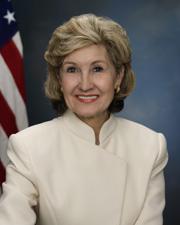
It is my humble opinion that I share the credit with 13 other members of the committee. One of them is here on the floor with me, Senator Kay Bailey Hutchison of Texas, who also served not only on the authorizing committee with me but chairs VA MilCon and has played a critical role in veterans issues. We have been diligent and active participants of the committee, and the business of this committee, in my opinion, has been extremely productive in the last 2 years.
The committee held 52 hearings during the 109th Congress. From the start, our focus was on the combat wounded, the combat deceased, and their families. We held a hearing on the difficulty that surviving spouses have in getting timely and effective, consistent information regarding their benefits following the active-duty death of their loved one.
We held several hearings on whether returned combat veterans are provided with a seamless transition--many of us have heard those words used--from active duty to civilian life. We are still working with DOD on that, to make sure it is truly seamless.
We focused on medical and vocational needs of our severely wounded. We examined the research being done within the VA to advance our understanding of various diseases and disabilities confronting veterans in the hope that advances in medical science and technology could one day improve their lives. And there is clear evidence today that that very thing is happening.
The committee was particularly active in examining VA's budget needs, and no one can argue about the high priority this Congress placed on funding the VA system.
The total VA budget will have increased from approximately $63 billion at the end of fiscal year 2004 to over $80 billion upon enactment of a fiscal year 2007 appropriations bill, an increase of 27 percent.
In addition to resources provided, this Congress has put in place a system of accountability to ensure that the appropriations provided to VA are being used to meet the needs of those who rely on the vital health care provided by VA facilities around the Nation.
By law, VA now submits quarterly reports to the Congress on its budget that contain a comparison between VA's planned expenditures and actual expenditures.
More importantly, VA is required to include quality indicators in this report, such as the percentage of primary care appointments scheduled within 30 days of a patient's desired date.
I am confident that the Congress has the mechanisms in place to know, on short order, if VA's budget needs are outpacing its resources, and is therefore equipped to take swift remedial action if necessary.
On the legislative front, the Senate has continued to do the work expected of it by the men and women we serve and represent. Let me give a quick accounting of the legislative provisions that were enacted into law during this Congress:
First S. 1234 and S. 2562. In both the first and second sessions of the Congress, cost-of-living-adjustment legislation was enacted to increase the rates of disability compensation and survivors' compensation. Benefit rates were increased by 4.1 percent for 2006 and will be increased by 3.3 percent for 2007.
Second, Traumatic Injury Protection under Servicemembers' Group Life Insurance, T-SGLI. In many instances the wives, parents, and other family members of servicemembers who are traumatically injured incur substantial financial obligations in order to spend time with their loved ones during recovery periods at military hospitals.
Under the provisions of Public Law 109-13, those traumatically wounded since the start of OIF and OEF as a result of combat wounds are eligible for financial payments which range from $25,000 to $100,000 for qualifying injuries, depending on severity. To date, more than 2.500 wounded servicemembers have received payments as a direct result of this legislation.
As of December 1, 2005, all servicemembers and Reservists insured under the Servicemembers' Group Life Insurance program are also covered under the T-SGLI benefit. The coverage extends to all qualifying injuries regardless of whether injuries are incurred as a result of combat.
Under the provisions of H.R. 3200, the maximum coverage for members of the Armed Forces and veterans of the Service Members Group Life Insurance and the Veterans Group Life Insurance benefit was increased from $250,000 to $400,000.
The bill, as enacted, also requires that spouses be notified when members insured under T-SGLI elect less than maximum coverage or designate a beneficiary other than the spouse or the children or the child.
In fiscal year 2006, the National Defense Authorization Act, H.R. 1815, under provisions of H.R. 1815 and as a result of veterans committees oversights, the Department of Defense was directed to provide customized integrated information to survivors of those killed on active duty about their future Federal benefits through an Internet Web site.
I was amazed when we started these hearings that we were still dealing with a hodgepodge of approaches of how we dealt with the surviving spouse of a lost one.
DOD was also directed to develop a uniform policy on providing casualty assistance to survivors. I would like to especially thank Senators Warner and Levin for their cooperation on that bill.
Also under H.R. 1815, a provision was adopted to prohibit military funeral honors and burial in VA national cemeteries and in Arlington National Cemetery to any person who is convicted of a Federal or State capital murder for which a sentence of death or life in prison may be imposed
We had an example of a fellow from Maryland who had killed two elderly people and was sentenced to death, died in prison, and was buried at Arlington. This provision was adopted following our committee's oversight and hearing of that double murder that I just expressed. I will speak more to my colleagues about the status of the double murder incident in a moment.
In June of 2006 President Bush signed into law S. 1235, a bill to help severely injured servicemembers in their transition from the military to their civilian lives. It authorizes VA to make grants available--ranging from $2,000 to $14,000--to assist with housing adaptations on a family member's home in which a severely disabled veteran is living.
It allows servicemembers, who have been legally determined 100 percent disabled when they separated from the military, up to 2 years from that date to apply for premium-free Servicemembers' Group Life Insurance coverage. Finally, it enables them to convert their coverage to Veterans' Group Life Insurance, or an individual plan or policy, during the same 2-year period.
As to H.R. 5037, undoubtedly most of my colleagues are aware of the fringe
group which has used its protected free speech rights to deliberately disrupt funerals of our military heroes. That is why the Senate voted unanimously to put reasonable restrictions on demonstrations at VA cemeteries and Arlington National Cemetery.
An amendment was put forward on the floor of the Senate balancing the rights of grieving families to a dignified funeral ceremony; the rights of private property owners who live near cemeteries to be free from overly intrusive Federal laws; and the rights of demonstrators to have their message heard. The amendment was accepted, the bill was passed, and it is now Federal law.
In addition to the bills already enacted into law, the House and Senate Committees on Veterans' Affairs have agreed on a comprehensive substitute amendment to S. 3421, which has cleared the House and awaits Senate action. I urge my colleagues to support this important bill.
S. 3421, the ``Veterans Benefits. Health Care, and Information Technology Act of 2006,'' contains provisions that would: enhance veterans' health, education, memorial affairs, and other benefit programs; improve VA's information technology infrastructure; authorize the construction of needed VA medical facilities; improve services for homeless veterans; remove the remains of a convicted double murderer from Arlington National Cemetery; and, I am proud to say, repeal an outdated and paternalistic law that limits the ability of veterans to hire an attorney to represent them during the VA claims process.
While a fuller accounting of the provisions of S. 3421 can be found in the Joint Explanatory Statement language accompanying the amendment text in the Congressional Record--and I ask unanimous consent that the Joint Explanatory Statement be printed in the Record along with the text of the substitute amendment to S. 3421,--I will make a few remarks about three provisions of note that I have championed.
Mr. President, currently, veterans and other claimants seeking veterans' benefits may not hire an attorney until the VA administrative proceedings have been completed--a process that often takes several years.
That law flows from a Civil War era policy intended to protect veterans from unscrupulous attorneys. That policy arose at a time-- unlike today--when attending law school was not required to become a lawyer and there was no effective professional oversight of lawyers.
In recent months, it has become abundantly clear that many veterans and their survivors want the option of hiring an attorney to help them navigate the increasingly complex VA system. In fact, the prohibition against veterans hiring attorneys is considered to be unfair and outdated by a broad spectrum of individuals and organizations, including veterans' organizations, veterans' advocates, judges, law professors, and bar associations.
For these reasons, I am very pleased that a compromise version of legislation I authored was accepted that would allow veterans to hire attorneys after a veteran files a Notice of Disagreement with VA's initial decision on their claim.
A provision of S. 3421 will enable the spouses of seriously wounded veterans to obtain educational assistance benefits sooner than they have ever been able to before.
The need for the educational assistance provision was brought to my attention by U.S. Army SFC Jeff Mittman, a young man who was blinded after an attack in Iraq and is being treated at Walter Reed Army Medical Center.
Sergeant First Class Mittman's wife would like to begin receiving educational assistance benefits from the VA while her husband undergoes treatment in order to improve her job opportunities once he is officially discharged from service, but is now prevented from doing so by law. If enacted, S. 3421 would remove that barrier.
Finally, S. 3421 would remove the cremated remains of a convicted double murderer from Arlington National Cemetery.
In the summer of 2005, we learned that the remains of a brutal murderer--Russell Wayne Wagner--were placed in the Nation's preeminent military cemetery, Arlington National Cemetery.
I was appalled to discover that the law enacted in 1997 to deny capital offenders from burial in national cemeteries did not apply to Wagner.
This was also quickly brought to my attention by the Senator from Maryland, Barbara Mikulski. We joined together in that effort. The answer was it couldn't happen, it couldn't be removed because of the law.
While we moved swiftly to close the loophole that permitted Wagner's burial in the first place, the question remained: Should his remains continue to be included among the scores of honored dead in Arlington? For me and Senator Mikulski, who joined me in this effort, the answer was ``no.''
That is why I am so pleased that S. 3421 would direct the Secretary of the Army to remove Wagner's remains from Arlington.
As I stated last summer, we must not dishonor the sacrifices made by those memorialized at our Nation's military cemeteries by including among them individuals who, through their own heinous acts, have grievously dishonored themselves because at another time in their life they were veterans.
S. 3421 is an impressive assortment of legislation. It contains the collective work of more than 44 Senators. I want to take some time to single out a few of them.
Senators Burr and Obama for their work on the homeless assistance provisions of the bill; Senators Hutchison, Feinstein, Graham, Landrieu, and Murray for their work on the construction provisions; Senators Thune, Salazar, and Burr for their work on the rural health components of the bill.
And lastly, the committee's ranking member, and a true friend of veterans, Senator Akaka.
I ask my colleagues for their vote. And I thank every Senator on the committee and in the Senate for their support in seeing this, and all of the other veterans' bills, through the Senate.
I also want to thank my House colleagues, in particular Chairman Buyer, Ranking Member Evans, and Acting Ranking Member Filner. We were able to come together in the spirit of compromise in the final hour on some key provisions, and it is a fitting way to end this Congress.
As we head into a new Congress, I want to extend my best wishes to my friend, and soon-to-be chairman, Senator Akaka. It has been a pleasure working with a Senator of his quality, and I pledge that as ranking member I will strive to emulate the kindness, cooperation, and ``aloha'' that he showed me during my time as chairman of this great committee.
I yield the floor.