Mr. Speaker, I yield myself such time as I may consume. (Ms. SLAUGHTER asked and was given permission to revise and extend her remarks.) Mr. Speaker, I appreciate my Republican colleagues for…
Mr. Speaker, I yield myself such time as I may consume.
(Ms. SLAUGHTER asked and was given permission to revise and extend her remarks.)
Mr. Speaker, I appreciate my Republican colleagues for providing the American people with
the clearest possible demonstration of just how stark the differences are between the priorities of our Nation's two major parties.
We have before us a bill whose sole purpose, the sole purpose is to funnel as much as $1 trillion over the next decade to a mere handful of our Nation's richest families.
It is telling that Republican leadership is so committed and so determined to see this legislation through that it called an emergency meeting of the Rules Committee last night to make sure it reached the floor this morning, even though it will not take effect for 4 years.
Now, let me tell you a bill that will expire is the Voting Rights Act, but we could not deal with that. This is the Republican definition of a national emergency, to get as much money as we can to the richest among us. It is not unprecedented national debt. That does not bother them. The struggling middle class? No. Or the fact that tens of millions of Americans scrape by from paycheck to paycheck, scrape by without health insurance, without help and, in many cases, without hope.
To get this bill to where it is today, the Republicans had to ignore the needs of virtually every American citizen. The repeal of the estate tax will benefit less than 1 percent of the people in this country, but those few individuals that it helps will profit handsomely.
Take Lee Raymond, the former CEO of ExxonMobil, who recently secured a retirement package worth almost $400 million, and who last year made more in a single day, probably in a single hour, than the average American family makes in an entire year. Lee stands to gain up to $211 million from this legislation that he will not pay taxes on.
President Bush, Vice President Cheney and the officers of the Cabinet will not do so badly either. Together they will pocket anywhere from $91 million to $344 million. Just the Cabinet.
People like these are among the three-tenths of 1 percent of superrich Americans who pay an estate tax, and that is it. The other 99.7 percent do not see a dime. Such an astonishingly lopsided outcome is to be expected when we realize who is actually behind this bill.
A recent report from the group Public Citizenry revealed that 18 of the richest families in America, families worth a combined total of $185 billion, have been conducting a concerted and clandestine campaign on its behalf for a decade. We are talking about families that are heirs to the fortunes of families like Wal-Mart, Campbell's Soup and Mars, Incorporated. These 18 families, Mr. Speaker, have spent $490 million in the last decade in their effort to pass this bill. Imagine that, $490 million to lobbyists, and if it does pass, their investment will certainly have been worth it because over $70 billion will be headed their way.
For years, supporters of a repeal of the estate tax have claimed that the people they really want to help are America's small businesses and farmers. Well, as is so often the case, that is a lie. Small business families rarely, if ever, pay estate taxes, and the American Farm Bureau, one of the leading proponents of this repeal, has failed to provide even one legitimate example of a family that lost its farm because of estate tax requirements.
This is the kind of government Republicans have used their time and power to give us, Mr. Speaker. Multibillionaires say, jump, and the majority says, how high?
Bills like this are so outlandish and so entirely justifiable, they would be comical if they were not an assault on the strength of our Union, which is, I might remind everyone, at war.
Consider the opportunity cost of this bill. For the up to $1 trillion Federal that this leadership plans to give away, we could fully insure every single American who does not have health insurance, all 44 million of them. Think of that. We could fully fund the Medicare part D prescription plan. We could pay for all military operations in Iraq and Afghanistan, and then we could use the money left over from that to fully fund No Child Left Behind, and, finally, give every child in America the education the President promised when he took office.
The sad thing is that what we have today is exactly the kind of legislation Americans should expect the majority, whose leader has bragged about never having voted for an increase in the minimum in his 25 years in politics, that is what we should expect from a party that would not allow the Congress to adjust the minimum wage for inflation, a party that would have, over the decades, permitted it to remain at the pathetic $3.35 an hour.
I would challenge my friends on the other side of the aisle to try surviving on that one for a month, Mr. Speaker, and think about the trillionaires who are going to say this is chump change to them, and they do not care. But the notion that they would say if taking away the taxes of the very rich would stimulate the economy, while increasing the pay of the weakest among us, the people who are least paid, will hurt the economy, is an absurdity on its face.
Mr. Speaker, this is a telling moment for this country. It is a moment in which this leadership clearly demonstrates once and for all what its priorities are. It is making the decision that educating our children is not worth the investment, that ensuring our parents and grandparents receive the prescription drugs they need is not worth the investment; that fixing our broken health insurance system is not worth the investment; that curbing our crushing national debt is not worth the investment; but investing in the ultrarich is worth every single dime that can be squeezed out of the Federal Treasury.
The bill embodies the very definition of ``America for Sale.'' Today's Republicans are alone in this belief, Mr. Speaker. Great leaders throughout the history of our Nation have understood that our collective strength lies in our support for the working and the middle class. They have understood that the extreme polarization of wealth this majority is ushering in is fundamentally bad for America, and among those who believe that are Bill Gates and Warren Buffett.
I implore my friends on the other side of the aisle, for the sake of our children, for the sake of our future, for the sake of our military, for the sake of common decency, defeat this bill and begin again to work for the people of this Nation and not against them.
Mr. Speaker, I reserve the balance of my time.
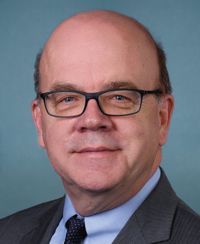
Mr. Speaker, I am pleased to yield 3 minutes to the gentleman from Massachusetts, a member of the Rules Committee, Mr. McGovern.
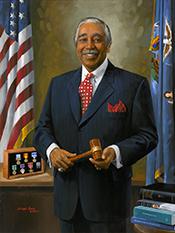
Mr. Speaker, I yield 3 minutes to the gentleman from New York, the ranking member of the Ways and Means Committee, Mr. Rangel.
(Mr. RANGEL asked and was given permission to revise and extend his remarks.)
Mr. Speaker, I yield 2\1/2\ minutes to the gentlewoman from Connecticut (Ms. DeLauro).
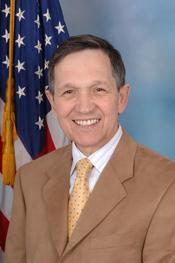
Mr. Speaker, I yield 2\1/2\ minutes to the gentleman from Ohio (Mr. Kucinich).
Mr. Speaker, I yield 3 minutes to the gentleman from North Dakota (Mr. Pomeroy), who was denied an amendment in the Rules Committee.
I too have no further requests for time, so I will close.
Mr. Speaker, I think what we ought to call this tax is the Paris Hilton tax. Paris Hilton, once this is passed, will be able to jetset again around the world buying herself more bling and more little dogs to carry around in her purse, and probably never work a day in her life.
But while we are helping Paris with her problems, I think we need to think about the poorest among us, those people working two and three minimum-wage jobs every single day simply to try to keep themselves alive and that we have turned our backs on now for over a decade.
So I urge all Members of this House to vote ``no'' on the previous question so I can amend the rule and allow the House to vote on the Miller-Owens bill to increase the Federal minimum wage for the first time in almost 10 years. The bill is identical to the minimum-wage language included in the Labor-HHS appropriations bill that was supposed to come to the floor this week, but was pulled by the leadership.
Mr. Speaker, I ask unanimous consent to insert the text of the amendment and extraneous materials immediately prior to the vote on the previous question.
Mr. Speaker, my amendment to the rule provides that immediately after the House adopts the rule for the Paris Hilton bill, it will bring H.R. 2429 to the floor for an up-or-down vote. The bill will gradually increase the minimum wage from the current level of $5.15 an hour to $7.25 an hour after 2 years.
Mr. Speaker, it is time we started to help workers, instead of making the very rich in this Nation richer. And I want us to stop this nonsense that we are doing this for poor farmers. Nobody can come up with a name of a poor farmer. And we will ask the State of Indiana to give us a list of all those people who went under because of this tax.
But we are considering another massive tax cut for our Nation's wealthiest. And to make matters worse, it is done the same week that the leadership of the House blocked legislation to increase the minimum wage for those who need the help the most.
America's low-income workers need our help, but millionaires don't. We are losing our middle class. One of the best things we can do to help the low- and moderate-income families is to increase the minimum wage. It has been, as I said, a decade since it was voted to increase, and it was signed in law in 1996 with the last increase in 1997.
After adjusting for inflation, the value of the minimum wage is at its lowest level since 1955. The purchasing power of the 1997 increase has eroded since then by 20 percent. A full-time minimum-wage earner working 40 hours a week makes $10,700 annually, an amount that is $5,000 below the poverty line for a family of three. The minimum wage now equals only 31 percent of the average wage for the private sector and the nonsupervisory workers, and that is the lowest share since the end of World War II.
Mr. Speaker, can there possibly be any doubt that we are long overdue for another increase in the minimum wage?
Leadership in this House has managed to implement numerous tax breaks for the wealthiest Americans, including this billion dollar budget buster that we are considering today, but turns its back on those who work the hardest and are paid the least, those with no lobbyists, those who struggle to make ends meet every day. They don't have any lobbyists but us on their side. And I think it is time for Congress to step up to the plate and help those who need it most, not just those with the fattest bank accounts.
And those who say an increase in the minimum wage will hurt business and economy are plain wrong, and facts argue just the opposite.
So I urge all Members of this body to vote ``no'' on the previous question so that we can help 7 million-plus American workers who will directly benefit from an increase in the minimum wage.
And let me close by saying this is a very sad day because I believe this bill will pass. And I think this Congress of the United States will go on record as saying that we don't care about those people other than those who can hire the lobbyists and do everything that they want to do.
Mr. Speaker, I yield 2 minutes to Ms. Brown.
Mr. Speaker, I yield back the balance of my time.
Mr. Speaker, on that I demand the yeas and nays.