H.R. 970House109th Congress (2005-2007)In Committee
Gang Prevention and Effective Deterrence Act of 2005
Sponsored by 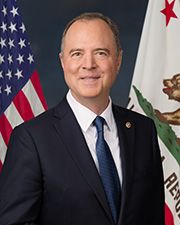 Rep. Adam B. Schiff (D-CA)
Rep. Adam B. Schiff (D-CA)Introduced February 17, 2005
Legislative Activity
Stay on top of the latest movement without scrolling through every action
HouseIntro Referral
Latest Action
Sponsor introductory remarks on measure. (CR H3136-3137)
May 11, 2005
View full timeline
HouseIntro Referral
Introduced in House
February 17, 2005
HouseIntro Referral
Referred to the House Committee on the Judiciary.
February 17, 2005
HouseCommittee
Referred to the Subcommittee on Crime, Terrorism, and Homeland Security.
April 4, 2005
HouseIntro Referral
Sponsor introductory remarks on measure. (CR H3136-3137)
May 11, 2005
Bill Text
Latest available legislative text
Introduced in HouseIssued February 17, 2005
        [Congressional Bills 109th Congress]
[From the U.S. Government Publishing Office]
[H.R. 970 Introduced in House (IH)]

109th CONGRESS
1st Session
H. R. 970

To increase and enhance law enforcement resources committed to
investigation and prosecution of violent gangs, to deter and punish
violent gang crime, to protect law-abiding citizens and communities
from violent criminals, to revise and enhance criminal penalties for
violent crimes, to reform and facilitate prosecution of juvenile gang
members who commit violent crimes, to expand and improve gang
prevention programs, and for other purposes.

_______________________________________________________________________

IN THE HOUSE OF REPRESENTATIVES

February 17, 2005

Mr. Schiff (for himself and Mrs. Bono) introduced the following bill;
which was referred to the Committee on the Judiciary

_______________________________________________________________________

A BILL

To increase and enhance law enforcement resources committed to
investigation and prosecution of violent gangs, to deter and punish
violent gang crime, to protect law-abiding citizens and communities
from violent criminals, to revise and enhance criminal penalties for
violent crimes, to reform and facilitate prosecution of juvenile gang
members who commit violent crimes, to expand and improve gang
prevention programs, and for other purposes.

Be it enacted by the Senate and House of Representatives of the
United States of America in Congress assembled,

SECTION 1. SHORT TITLE; TABLE OF CONTENTS.

(a) Short Title.--This Act may be cited as the ``Gang Prevention
and Effective Deterrence Act of 2005''.
(b) Table of Contents.--The table of contents of this Act is as
follows:

Sec. 1. Short title; table of contents.
TITLE I--CRIMINAL STREET GANG ABATEMENT ACT

Sec. 100. Findings.
Subtitle A--Criminal Law Reforms and Enhanced Penalties to Deter and
Punish Illegal Street Gang Activity

Sec. 101. Solicitation or recruitment of persons in criminal street
gang activity.
Sec. 102. Criminal street gangs.
Sec. 103. Violent crimes in furtherance or in aid of criminal street
gangs.
Sec. 104. Interstate and foreign travel or transportation in aid of
criminal street gangs.
Sec. 105. Amendments relating to violent crime in areas of exclusive
Federal jurisdiction.
Sec. 106. Increased penalties for use of interstate commerce facilities
in the commission of murder-for-hire and
other felony crimes of violence.
Sec. 107. Increased penalties for violent crimes in aid of racketeering
activity.
Sec. 108. Murder and other violent crimes committed during and in
relation to a drug trafficking crime.
Subtitle B--Increased Federal Resources to Deter and Prevent At-risk
Youth From Joining Illegal Street Gangs

Sec. 110. Designation of and assistance for ``high intensity''
interstate gang activity areas.
Sec. 111. Enhancement of project safe neighborhoods initiative to
improve enforcement of criminal laws
against violent gangs.
Sec. 112. Additional resources needed by the Federal Bureau of
Investigation to investigate and prosecute
violent criminal street gangs.
Sec. 113. Grants to State and local prosecutors to combat violent crime
and to protect witnesses and victims of
crimes.
Sec. 114. Reauthorize the gang resistance education and training
projects program.
TITLE II--VIOLENT CRIME REFORMS NEEDED TO DETER AND PREVENT ILLEGAL
GANG CRIME

Sec. 201. Multiple interstate murder.
Sec. 202. Expansion of rebuttable presumption against release of
persons charged with firearms offenses.
Sec. 203. Venue in capital cases.
Sec. 204. Statute of limitations for violent crime.
Sec. 205. Predicate crimes for authorization of interception of wire,
oral, and electronic communications.
Sec. 206. Clarification to hearsay exception for forfeiture by
wrongdoing.
Sec. 207. Clarification of venue for retaliation against a witness.
Sec. 208. Amendment of sentencing guidelines relating to certain gang
and violent crimes.
Sec. 209. Increased penalties for criminal use of firearms in crimes of
violence and drug trafficking.
Sec. 210. Possession of firearms by dangerous felons.
Sec. 211. Conforming amendment.
TITLE III--JUVENILE CRIME REFORM FOR VIOLENT OFFENDERS

Sec. 301. Treatment of Federal juvenile offenders.
Sec. 302. Notification after arrest.
Sec. 303. Release and detention prior to disposition.
Sec. 304. Speedy trial.
Sec. 305. Federal sentencing guidelines.

TITLE I--CRIMINAL STREET GANG ABATEMENT ACT

SEC. 100. FINDINGS.

Congress finds that--
(1) violent crime and drug trafficking are pervasive
problems at the national, State, and local level;
(2) the crime rate is exacerbated by the association of
persons in gangs to commit acts of violence and drug offenses;
(3) according to the most recent National Drug Threat
Assessment, criminal street gangs are responsible for the
distribution of much of the cocaine, methamphetamine, heroin,
and other illegal drugs being distributed in rural and urban
communities throughout the United States;
(4) gangs commit acts of violence or drug offenses for
numerous motives, such as membership in or loyalty to the gang,
for protecting gang territory, and for profit;
(5) gang presence has a pernicious effect on the free flow
of commerce in local businesses and directly affects the
freedom and security of communities plagued by gang activity;
(6) gangs often recruit and utilize minors to engage in
acts of violence and other serious offenses out of a belief
that the criminal justice systems are more lenient on juvenile
offenders;
(7) gangs often intimidate and threaten witnesses to
prevent successful prosecutions;
(8) gang recruitment can be deterred through increased
vigilance, strong criminal penalties, equal partnerships with
State and local law enforcement, and proactive intervention
efforts, particularly targeted at juveniles, prior to gang
involvement;
(9) State and local prosecutors, in hearings before the
Committee on the Judiciary of the Senate, enlisted the help of
Congress in the prevention, investigation, and prosecution of
gang crimes and in the protection of witnesses and victims of
gang crimes; and
(10) because State and local prosecutors and law
enforcement have the expertise, experience, and connection to
the community that is needed to combat gang violence,
consultation and coordination between Federal, State, and local
law enforcement is critical to the successful prosecutions of
criminal street gangs.

Subtitle A--Criminal Law Reforms and Enhanced Penalties to Deter and
Punish Illegal Street Gang Activity

SEC. 101. SOLICITATION OR RECRUITMENT OF PERSONS IN CRIMINAL STREET
GANG ACTIVITY.

Chapter 26 of title 18, United States Code, is amended by adding at
the end the following:
``Sec. 522. Recruitment of persons to participate in a criminal street
gang
``(a) Prohibited Acts.--It shall be unlawful for any person to
recruit, employ, solicit, induce, command, or cause another person to
be or remain as a member of a criminal street gang, or conspire to do
so, with the intent to cause that person to participate in an offense
described in section 521(a).
``(b) Definition.--In this section:
``(1) Criminal street gang.--The term `criminal street
gang' shall have the same meaning as in section 521(a) of this
title.
``(2) Minor.--The term `minor' means a person who is less
than 18 years of age.
``(c) Penalties.--Any person who violates subsection (a) shall--
``(1) be imprisoned not more than 5 years, fined under this
title, or both; or
``(2) if the person recruited, solicited, induced,
commanded, or caused to participate or remain in a criminal
street gang is under the age of 18--
``(A) be imprisoned for not more than 10 years,
fined under this title, or both; and
``(B) at the discretion of the sentencing judge, be
liable for any costs incurred by the Federal
Government, or by any State or local government, for
housing, maintaining, and treating the person until the
person attains the age of 18 years.''.

SEC. 102. CRIMINAL STREET GANGS.

(a) Criminal Street Gang Prosecutions.--Section 521 of title 18,
United States Code, is amended to read as follows:
``Sec. 521. Criminal street gang prosecutions
``(a) Definitions.--As used in this chapter:
``(1) Criminal street gang.--The term `criminal street
gang' means a formal or informal group, club, organization, or
association of 3 or more individuals, who individually,
jointly, or in combination, have committed or attempted to
commit for the direct or indirect benefit of, at the direction
of, in furtherance of, or in association with the group, club
organization, or association at least 2 separate acts, each of
which is a predicate gang crime, 1 of which occurs after the
date of enactment of the Gang Prevention and Effective
Deterrence Act of 2004, and the last of which occurs not later
than 10 years (excluding any period of imprisonment) after the
commission of a prior predicate gang crime, and 1 predicate
gang crime is a crime of violence or involves manufacturing,
importing, distributing, possessing with intent to distribute,
or otherwise dealing in a controlled substance or listed
chemicals (as those terms are defined in section 102 of the
Controlled Substances Act (21 U.S.C. 802)) provided that the
activities of the criminal street gang affect interstate or
foreign commerce, or involve the use of any facility of, or
travel in, interstate or foreign commerce.
``(2) Predicate gang crime.--The term `predicate gang
crime' means--
``(A) any act, threat, conspiracy, or attempted
act, which is chargeable under Federal or State law and
punishable by imprisonment for more than 1 year
involving--
``(i) murder;
``(ii) manslaughter;
``(iii) maiming;
``(iv) assault with a dangerous weapon;
``(v) assault resulting in serious bodily
injury;
``(vi) gambling;
``(vii) kidnapping;
``(viii) robbery;
``(ix) extortion;
``(x) arson;
``(xi) obstruction of justice;
``(xii) tampering with or retaliating
against a witness, victim, or informant;
``(xiii) burglary;
``(xiv) sexual assault (which means any
offense that involves conduct that would
violate chapter 109A if the conduct occurred in
the special maritime and territorial
jurisdiction);
``(xv) carjacking; or
``(xvi) manufacturing, importing,
distributing, possessing with intent to
distribute, or otherwise dealing in a
controlled substance or listed chemicals (as
those terms are defined in section 102 of the
Controlled Substances Act (21 U.S.C. 802));
``(B) any act punishable by imprisonment for more
than 1 year under--
``(i) section 844 (relating to explosive
materials);
``(ii) section 922(g)(1) (where the
underlying conviction is a violent felony (as
defined in section 924(e)(2)(B) of this title)
or is a serious drug offense (as defined in
section 924(e)(2)(A) of this title));
``(iii) subsection (a)(2), (b), (c), (g),
or (h) of section 924 (relating to receipt,
possession, and transfer of firearms);
``(iv) sections 1028 and 1029 (relating to
fraud and related activity in connection with
identification documents or access devices);
``(v) section 1503 (relating to obstruction
of justice);
``(vi) section 1510 (relating to
obstruction of criminal investigations);
``(vii) section 1512 (relating to tampering
with a witness, victim, or informant), or
section 1513 (relating to retaliating against a
witness, victim, or informant);
``(viii) section 1708 (relating to theft of
stolen mail matter);
``(ix) section 1951 (relating to
interference with commerce, robbery or
extortion);
``(x) section 1952 (relating to
racketeering);
``(xi) section 1956 (relating to the
laundering of monetary instruments);
``(xii) section 1957 (relating to engaging
in monetary transactions in property derived
from specified unlawful activity);
``(xiii) section 1958 (relating to use of
interstate commerce facilities in the
commission of murder-for-hire); or
``(xiv) sections 2312 through 2315
(relating to interstate transportation of
stolen motor vehicles or stolen property); or
``(C) any act involving the Immigration and
Nationality Act, section 274 (relating to bringing in
and harboring certain aliens), section 277 (relating to
aiding or assisting certain aliens to enter the United
States), or section 278 (relating to importation of
alien for immoral purpose).
``(3) State.--The term `State' means each of the several
States of the United States, the District of Columbia, and any
commonwealth, territory, or possession of the United States.
``(b) Participation in Criminal Street Gangs.--It shall be
unlawful--
``(1) to commit, or conspire or attempt to commit a
predicate crime--
``(A) in furtherance or in aid of the activities of
a criminal street gang;
``(B) for the purpose of gaining entrance to or
maintaining or increasing position in such a gang; or
``(C) for the direct or indirect benefit of the
criminal street gang, or in association with the
criminal street gang; or
``(2) to employ, use, command, counsel, persuade, induce,
entice, or coerce any individual to commit, cause to commit, or
facilitate the commission of, a predicate gang crime--
``(A) in furtherance or in aid of the activities of
a criminal street gang;
``(B) for the purpose of gaining entrance to or
maintaining or increasing position in such a gang; or
``(C) for the direct or indirect benefit or the
criminal street gang, or in association with the
criminal street gang.
``(c) Penalties.--Whoever violates paragraph (1) or (2) of
subsection (b)--
``(1) shall be fined under this title, imprisoned for not
more than 30 years, or both; and
``(2) if the violation is based on a predicate gang crime
for which the maximum penalty includes life imprisonment, shall
be fined under this title, imprisoned for any term of years or
for life, or both.
``(d) Forfeiture.--
``(1) In general.--The court, in imposing sentence on a
person who is convicted of an offense under this section, shall
order that the defendant forfeit to the United States--
``(A) any property, real or personal, constituting
or traceable to gross proceeds obtained from such
offense; and
``(B) any property used or intended to be used, in
any manner or part, to commit or to facilitate the
commission of such violation.
``(2) Criminal procedures.--The procedures set forth in
section 413 of the Controlled Substances Act (21 U.S.C. 853),
other than subsection (d) of that section, and in rule 32.2 of
the Federal Rules of Criminal Procedure, shall apply to all
stages of a criminal forfeiture proceeding under this section.
``(3) Civil procedures.--Property subject to forfeiture
under paragraph (1) may be forfeited in a civil case pursuant
to the procedures set forth in chapter 46 of this title.''.
(b) Clerical Amendment.--The table of sections at the beginning of
chapter 26 of title 18, United States Code, is amended to read as
follows:

``521. Criminal street gang prosecutions.''.

SEC. 103. VIOLENT CRIMES IN FURTHERANCE OR IN AID OF CRIMINAL STREET
GANGS.

(a) Violent Crimes and Criminal Street Gang Recruitment.--Chapter
26 of title 18, United States Code, as amended by section 101, is
amended by adding at the end the following:
``Sec. 523. Violent crimes in furtherance or in aid of a criminal
street gang
``(a) Any person who, for the purpose of gaining entrance to or
maintaining or increasing position in, or in furtherance or in aid of,
or for the direct or indirect benefit of, or in association with a
criminal street gang, or as consideration for the receipt of, or as
consideration for a promise or agreement to pay, anything of pecuniary
value to or from a criminal street gang, murders, kidnaps, sexually
assaults (which means any offense that involved conduct that would
violate chapter 109A if the conduct occurred in the special maritime
and territorial jurisdiction), maims, assaults with a dangerous weapon,
commits assault resulting in serious bodily injury upon, commits any
other crime of violence or threatens to commit a crime of violence
against any individual, or attempts or conspires to do so, shall be
punished, in addition and consecutive to the punishment provided for
any other violation of this chapter--
``(1) for murder, by death or imprisonment for any term of
years or for life, a fine under this title, or both;
``(2) for kidnapping or sexual assault, by imprisonment for
any term of years or for life, a fine under this title, or
both;
``(3) for maiming, by imprisonment for any term of years or
for life, a fine under this title, or both;
``(4) for assault with a dangerous weapon or assault
resulting in serious bodily injury, by imprisonment for not
more than 30 years, a fine under this title, or both;
``(5) for any other crime of violence, by imprisonment for
not more than 20 years, a fine under this title, or both;
``(6) for threatening to commit a crime of violence
specified in paragraphs (1) through (4), by imprisonment for
not more than 10 years, a fine under this title, or both;
``(7) for attempting or conspiring to commit murder,
kidnapping, maiming, or sexual assault, by imprisonment for not
more than 30 years, a fine under this title, or both; and
``(8) for attempting or conspiring to commit a crime
involving assault with a dangerous weapon or assault resulting
in serious bodily injury, by imprisonment for not more than 20
years, a fine under this title, or both.
``(b) Definition.--In this section, the term `criminal street gang'
has the same meaning as in section 521 of this title.''.
(b) Clerical Amendment.--The table of sections at the beginning of
chapter 26 of title 18, United States Code, is amended by adding at the
end the following:

``522. Recruitment of persons to participate in a criminal street gang.
``523. Violent crimes in furtherance of a criminal street gang.''.

SEC. 104. INTERSTATE AND FOREIGN TRAVEL OR TRANSPORTATION IN AID OF
RACKETEERING ENTERPRISES AND CRIMINAL STREET GANGS.

Section 1952 of title 18, United States Code, is amended--
(1) in subsection (a)--
(A) by striking ``and thereafter performs or
attempts to perform'' and inserting ``and thereafter
performs, or attempts or conspires to perform''; and
(B) by striking ``5 years'' and inserting ``10
years'';
(2) by redesignating subsections (b) and (c) as subsections
(c) and (d), respectively;
(3) by inserting after subsection (a) the following:
``(b) Whoever travels in interstate or foreign commerce or uses the
mail or any facility in interstate or foreign commerce, with the intent
to kill, assault, bribe, force, intimidate, or threaten any person, to
delay or influence the testimony of, or prevent from testifying, a
witness in a State criminal proceeding and thereafter performs, or
attempts or conspires to perform, an act described in this subsection,
shall--
``(1) be fined under this title, imprisoned for any term of
years, or both; and
``(2) if death results, be punished by imprisonment for any
term of years or for life.''; and
(4) in subsection (c)(2), as redesignated under
subparagraph (B), by inserting ``intimidation of, or
retaliation against, a witness, victim, juror, or informant,''
after ``extortion, bribery,''.

SEC. 105. AMENDMENTS RELATING TO VIOLENT CRIME IN AREAS OF EXCLUSIVE
FEDERAL JURISDICTION.

(a) Assault Within Maritime and Territorial Jurisdiction of United
States.--Section 113(a)(3) of title 18, United States Code, is amended
by striking ``with intent to do bodily harm, and without just cause or
excuse,''.
(b) Manslaughter.--Section 1112(b) of title 18, United States Code,
is amended by--
(1) striking ``ten years'' and inserting ``20 years''; and
(2) striking ``six years'' and inserting ``10 years''.
(c) Offenses Committed Within Indian Country.--Section 1153(a) of
title 18, United States Code, is amended by inserting ``an offense for
which the maximum statutory term of imprisonment under section 1363 is
greater than 5 years,'' after ``a felony under chapter 109A,''.
(d) Racketeer Influenced and Corrupt Organizations.--Section
1961(1) of title 18, United States Code, is amended--
(1) in subparagraph (A), by inserting ``, or would have
been so chargeable if the act or threat (other than lawful
forms of gambling) had not been committed in Indian country (as
defined in section 1151) or in any other area of exclusive
Federal jurisdiction,'' after ``chargeable under State law'';
and
(2) in subparagraph (B), by inserting ``section 1123
(relating to multiple interstate murder),'' after ``section
1084 (relating to the transmission of wagering information),''.
(e) Carjacking.--Section 2119 of title 18, United States Code, is
amended by striking ``, with the intent to cause death or serious
bodily harm''.
(f) Clarification of Illegal Gun Transfers to Commit Drug
Trafficking Crime or Crimes of Violence.--Section 924(h) of title 18,
United States Code, is amended to read as follows:
``(h) Illegal Transfers.--Whoever knowingly transfers a firearm,
knowing that the firearm will be used to commit, or possessed in
furtherance of, a crime of violence (as defined in subsection (c)(3))
or drug trafficking crime (as defined in subsection (c)(2)), shall be
imprisoned for not more than 10 years, fined under this title, or
both.''.
(g) Amendment of Special Sentencing Provision.--Section 3582(d) of
title 18, United States Code, is amended--
(1) by striking ``chapter 95 (racketeering) or 96
(racketeer influenced and corrupt organizations) of this
title'' and inserting ``section 521 (criminal street gangs) or
522 (violent crimes in furtherance or in aid of criminal street
gangs), in chapter 95 (racketeering) or 96 (racketeer
influenced and corrupt organizations),''; and
(2) by inserting ``a criminal street gang or'' before ``an
illegal enterprise''.
(h) Conforming Amendment Relating to Orders for Restitution.--
Section 3663(c)(4) of title 18, United States Code, is amended by
striking ``chapter 46 or chapter 96 of this title'' and inserting
``section 521, under chapter 46 or 96,''.
(i) Special Provision for Indian Country.--No person subject to the
criminal jurisdiction of an Indian tribal government shall be subject
to section 3559(e) of title 18, United States Code, for any offense for
which Federal jurisdiction is solely predicated on Indian country (as
defined in section 1151 of such title 18) and which occurs within the
boundaries of such Indian country unless the governing body of such
Indian tribe elects to subject the persons under the criminal
jurisdiction of the tribe to section 3559(e) of such title 18.

SEC. 106. INCREASED PENALTIES FOR USE OF INTERSTATE COMMERCE FACILITIES
IN THE COMMISSION OF MURDER-FOR-HIRE AND OTHER FELONY
CRIMES OF VIOLENCE.

Section 1958 of title 18, United States Code, is amended--
(1) by striking the header and inserting the following:
``Sec. 1958. Use of interstate commerce facilities in the Commission of
murder-for-hire and other felony crimes of violence'';
and
(2) by amending subsection (a) to read as follows:
``(a) Any person who travels in or causes another (including the
intended victim) to travel in interstate or foreign commerce, or uses
or causes another (including the intended victim) to use the mail or
any facility in interstate or foreign commerce, with intent that a
murder or other felony crime of violence be committed in violation of
the laws of any State or the United States as consideration for the
receipt of, or as consideration for a promise or agreement to pay,
anything of pecuniary value, or who conspires to do so--
``(1) may be fined under this title and shall be imprisoned
not more than 20 years;
``(2) if personal injury results, may be fined under this
title and shall be imprisoned for not more than 30 years; and
``(3) if death results, may be fined under this title, and
shall be imprisoned for any term of years or for life.''.

SEC. 107. INCREASED PENALTIES FOR VIOLENT CRIMES IN AID OF RACKETEERING
ACTIVITY.

Section 1959(a) of title 18, United States Code, is amended to read
as follows:
``(a) Any person who, as consideration for the receipt of, or as
consideration for a promise or agreement to pay, anything of pecuniary
value from an enterprise engaged in racketeering activity, or for the
purpose of gaining entrance to or maintaining or increasing position in
an enterprise engaged in racketeering activity, or in furtherance or in
aid of an enterprise engaged in racketeering activity, murders,
kidnaps, sexually assaults (which means any offense that involved
conduct that would violate chapter 109A if the conduct occurred in the
special maritime and territorial jurisdiction), maims, assaults with a
dangerous weapon, commits assault resulting in serious bodily injury
upon, or threatens to commit a crime of violence against any individual
in violation of the laws of any State or the United States, or attempts
or conspires to do so, shall be punished, in addition and consecutive
to the punishment provided for any other violation of this chapter--
``(1) for murder, by death or imprisonment for any term of
years or for life, a fine under this title, or both;
``(2) for kidnapping or sexual assault, by imprisonment for
any term of years or for life, a fine under this title, or
both;
``(3) for maiming, by imprisonment for any term of years or
for life, a fine under this title, or both;
``(4) for assault with a dangerous weapon or assault
resulting in serious bodily injury, by imprisonment for not
more than 30 years, a fine under this title, or both;
``(5) for threatening to commit a crime of violence, by
imprisonment for not more than 10 years, a fine under this
title, or both;
``(6) for attempting or conspiring to commit murder,
kidnapping, maiming, or sexual assault, by imprisonment for not
more than 30 years, a fine under this title, or both; and
``(7) for attempting or conspiring to commit assault with a
dangerous weapon or assault which would result in serious
bodily injury, by imprisonment for not more than 20 years, a
fine under this title, or both.''.

SEC. 108. MURDER AND OTHER VIOLENT CRIMES COMMITTED DURING AND IN
RELATION TO A DRUG TRAFFICKING CRIME.

(a) In General.--Part D of the Controlled Substances Act (21 U.S.C.
841 et seq.) is amended by adding at the end the following:

``murder and other violent crimes committed during and in relation to a
drug trafficking crime

``Sec. 424. (a) In General.--Any person who, during and in relation
to any drug trafficking crime, murders, kidnaps, sexually assaults
(which means any offense that involved conduct that would violate
chapter 109A if the conduct occurred in the special maritime and
territorial jurisdiction), maims, assaults with a dangerous weapon,
commits assault resulting in serious bodily injury upon, commits any
other crime of violence or threatens to commit a crime of violence
against, any individual, or attempts or conspires to do so, shall be
punished, in addition and consecutive to the punishment provided for
the drug trafficking crime--
``(1) in the case of murder, by death or imprisonment for
any term of years or for life, a fine under title 18, United
States Code, or both;
``(2) in the case of kidnapping or sexual assault by
imprisonment for any term of years or for life, a fine under
such title 18, or both;
``(3) in the case of maiming, by imprisonment for any term
of years or for life, a fine under such title 18, or both;
``(4) in the case of assault with a dangerous weapon or
assault resulting in serious bodily injury, by imprisonment not
more than 30 years, a fine under such title 18, or both;
``(5) in the case of committing any other crime of
violence, by imprisonment for not more than 20 years, a fine
under this title, or both;
``(6) in the case of threatening to commit a crime of
violence specified in paragraphs (1) through (4), by
imprisonment for not more than 10 years, a fine under such
title 18, or both;
``(7) in the case of attempting or conspiring to commit
murder, kidnapping, maiming, or sexual assault, by imprisonment
for not more than 30 years, a fine under such title 18, or
both; and
``(8) in the case of attempting or conspiring to commit a
crime involving assault with a dangerous weapon or assault
resulting in serious bodily injury, by imprisonment for not
more than 20 years, a fine under such title 18, or both.
``(b) Venue.--A prosecution for a violation of this section may be
brought in--
``(1) the judicial district in which the murder or other
crime of violence occurred; or
``(2) any judicial district in which the drug trafficking
crime may be prosecuted.
``(c) Applicable Death Penalty Procedures.--A defendant who has
been found guilty of an offense under this section for which a sentence
of death is provided shall be subject to the provisions of chapter 228
of title 18, United States Code.
``(d) Definitions.--As used in this section--
``(1) the term `crime of violence' has the meaning given
that term in section 16 of title 18, United States Code; and
``(2) the term `drug trafficking crime' has the meaning
given that term in section 924(c)(2) of title 18, United States
Code.''.
(b) Clerical Amendment.--The table of contents for the Controlled
Substances Act is amended by inserting after the item relating to
section 423, the following:

``Sec. 424. Murder and other violent crimes committed during and in
relation to a drug trafficking crime.''.

Subtitle B--Increased Federal Resources to Suppress, Deter, and Prevent
At-risk Youth From Joining Illegal Street Gangs

SEC. 110. DESIGNATION OF AND ASSISTANCE FOR ``HIGH INTENSITY''
INTERSTATE GANG ACTIVITY AREAS.

(a) Definitions.--In this section the following definitions shall
apply:
(1) Governor.--The term ``Governor'' means a Governor of a
State or the Mayor of the District of Columbia.
(2) High intensity interstate gang activity area.--The term
``high intensity interstate gang activity area'' means an area
within a State that is designated as a high intensity
interstate gang activity area under subsection (b)(1).
(3) State.--The term ``State'' means a State of the United
States, the District of Columbia, and any commonwealth,
territory, or possession of the United States. The term
``State'' shall include an ``Indian tribe'', as defined by
section 102 of the Federally Recognized Indian Tribe List Act
of 1994 (25 U.S.C. 479a).
(b) High Intensity Interstate Gang Activity Areas.--
(1) Designation.--The Attorney General, after consultation
with the Governors of appropriate States, may designate as high
intensity interstate gang activity areas, specific areas that
are located within 1 or more States. To the extent that the
goals of a high intensity interstate gang activity area
(HIIGAA) overlap with the goals of a high intensity drug
trafficking area (HIDTA), the Attorney General may merge the 2
areas to serve as a dual-purpose entity. The Attorney General
may not make the final designation of a high intensity
interstate gang activity area without first consulting with and
receiving comment from local elected officials representing
communities within the State of the proposed designation.
(2) Assistance.--In order to provide Federal assistance to
high intensity interstate gang activity areas, the Attorney
General shall--
(A) establish criminal street gang enforcement
teams, consisting of Federal, State, and local law
enforcement authorities, for the coordinated
investigation, disruption, apprehension, and
prosecution of criminal street gangs and offenders in
each high intensity interstate gang activity area;
(B) direct the reassignment or detailing from any
Federal department or agency (subject to the approval
of the head of that department or agency, in the case
of a department or agency other than the Department of
Justice) of personnel to each criminal street gang
enforcement team; and
(C) provide all necessary funding for the operation
of the criminal street gang enforcement team in each
high intensity interstate gang activity area.
(3) Composition of criminal street gang enforcement team.--
The team established pursuant to paragraph (2)(A) shall consist
of agents and officers, where feasible, from--
(A) the Bureau of Alcohol, Tobacco, Firearms, and
Explosives;
(B) the Department of Homeland Security;
(C) the Department of Housing and Urban
Development;
(D) the Drug Enforcement Administration;
(E) the Internal Revenue Service;
(F) the Federal Bureau of Investigation;
(G) the United States Marshal's Service;
(H) the United States Postal Service;
(I) State and local law enforcement; and
(J) Federal, State and local prosecutors.
(4) Criteria for designation.--In considering an area for
designation as a high intensity interstate gang activity area
under this section, the Attorney General shall consider--
(A) the current and predicted levels of gang crime
activity in the area;
(B) the extent to which violent crime in the area
appears to be related to criminal street gang activity,
such as drug trafficking, murder, robbery, assaults,
carjacking, arson, kidnapping, extortion, and other
criminal activity;
(C) the extent to which State and local law
enforcement agencies have committed resources to--
(i) respond to the gang crime problem; and
(ii) participate in a gang enforcement
team;
(D) the extent to which a significant increase in
the allocation of Federal resources would enhance local
response to the gang crime activities in the area; and
(E) any other criteria that the Attorney General
considers to be appropriate.
(c) Authorization of Appropriations.--
(1) In general.--There are authorized to be appropriated
$100,000,000 for each of the fiscal years 2005 to 2009 to carry
out this section.
(2) Use of funds.--Of amounts made available under
paragraph (1) in each fiscal year--
(A) 50 percent shall be used to carry out
subsection (b)(2); and
(B) 50 percent shall be used to make grants
available for community-based programs to provide crime
prevention, research, and intervention services that
are designed for gang members and at-risk youth in
areas designated pursuant to this section as high
intensity interstate gang activity areas.
(3) Reporting requirements.--By February 1st of each year,
the Attorney General shall provide a report to Congress which
describes, for each designated high intensity interstate gang
activity area--
(A) the specific long-term and short-term goals and
objectives;
(B) the measurements used to evaluate the
performance of the high intensity interstate gang
activity area in achieving the long-term and short-term
goals;
(C) the age, composition, and membership of
``gangs'';
(D) the number and nature of crimes committed by
``gangs''; and
(E) the definition of the term ``gang'' used to
compile this report.

SEC. 111. ENHANCEMENT OF PROJECT SAFE NEIGHBORHOODS INITIATIVE TO
IMPROVE ENFORCEMENT OF CRIMINAL LAWS AGAINST VIOLENT
GANGS.

(a) In General.--While maintaining the focus of Project Safe
Neighborhoods as a comprehensive, strategic approach to reducing gun
violence in America, the Attorney General is authorized to expand the
Project Safe Neighborhoods program to require each United States
attorney to--
(1) identify, investigate, and prosecute significant
criminal street gangs operating within their district;
(2) coordinate the identification, investigation, and
prosecution of criminal street gangs among Federal, State, and
local law enforcement agencies; and
(3) coordinate and establish criminal street gang
enforcement teams, established under section 110(b), in high
intensity interstate gang activity areas within a United States
attorney's district.
(b) Additional Staff for Project Safe Neighborhoods.--
(1) In general.--The Attorney General may hire Assistant
United States attorneys, non-attorney coordinators, or
paralegals to carry out the provisions of this section.
(2) Authorization of appropriations.--There are authorized
to be appropriated $7,500,000 for each of the fiscal years 2005
through 2009 to carry out this section.

SEC. 112. ADDITIONAL RESOURCES NEEDED BY THE FEDERAL BUREAU OF
INVESTIGATION TO INVESTIGATE AND PROSECUTE VIOLENT
CRIMINAL STREET GANGS.

(a) Responsibilities of Attorney General.--The Attorney General is
authorized to require the Federal Bureau of Investigation to--
(1) increase funding for the Safe Streets Program; and
(2) support the criminal street gang enforcement teams,
established under section 110(b), in designated high intensity
interstate gang activity areas.
(b) Authorization of Appropriations.--
(1) In general.--In addition to amounts otherwise
authorized, there are authorized to be appropriated to the
Attorney General $5,000,000 for each of the fiscal years 2005
through 2009 to carry out the Safe Streets Program.
(2) Availability.--Any amounts appropriated pursuant to
paragraph (1) shall remain available until expended.

SEC. 113. GRANTS TO PROSECUTORS AND LAW ENFORCEMENT TO COMBAT VIOLENT
CRIME AND TO PROTECT WITNESSES AND VICTIMS OF CRIMES.

(a) In General.--Section 31702 of the Violent Crime Control and Law
Enforcement Act of 1994 (42 U.S.C. 13862) is amended--
(1) in paragraph (3), by striking ``and'' at the end;
(2) in paragraph (4), by striking the period at the end and
inserting a semicolon; and
(3) by adding at the end the following:
``(5) to hire additional prosecutors to--
``(A) allow more cases to be prosecuted; and
``(B) reduce backlogs;
``(6) to fund technology, equipment, and training for
prosecutors and law enforcement in order to increase accurate
identification of gang members and violent offenders, and to
maintain databases with such information to facilitate
coordination among law enforcement and prosecutors; and
``(7) to create and expand witness and victim protection
programs to prevent threats, intimidation, and retaliation
against victims of, and witnesses to, violent crimes.''.
(b) Authorization of Appropriations.--Section 31707 of the Violent
Crime Control and Law Enforcement Act of 1994 (42 U.S.C. 13867) is
amended to read as follows:

``SEC. 31707. AUTHORIZATION OF APPROPRIATIONS.

``(a) In General.--There are authorized to be appropriated
$20,000,000 for each of the fiscal years 2005 through 2009 to carry out
this subtitle.
``(b) Use of Funds.--Of the amounts made available under subsection
(a), in each fiscal year 60 percent shall be used to carry out section
31702(7) to create and expand witness and victim protection programs to
prevent threats, intimidation, and retaliation against victims of, and
witnesses to, violent crimes.''.

SEC. 114. REAUTHORIZE THE GANG RESISTANCE EDUCATION AND TRAINING
PROJECTS PROGRAM.

Section 32401(b) of the Violent Crime Control Act of 1994 (42
U.S.C. 13921(b)) is amended by striking paragraphs (1) through (6) and
inserting the following:
``(1) $20,000,000 for fiscal year 2005;
``(2) $20,000,000 for fiscal year 2006;
``(3) $20,000,000 for fiscal year 2007;
``(4) $20,000,000 for fiscal year 2008; and
``(5) $20,000,000 for fiscal year 2009.''.

TITLE II--VIOLENT CRIME REFORMS NEEDED TO DETER AND PREVENT ILLEGAL
GANG CRIME

SEC. 201. MULTIPLE INTERSTATE MURDER.

Chapter 51 of title 18, United States Code, is amended by adding at
the end of the new section:
``Sec. 1123. Multiple murders in furtherance of common scheme of
purpose
``(a) In General.--Whoever, having committed murder in violation of
the laws of any State or the United States, moves or travels in
interstate or foreign commerce with the intent to commit one or more
murders in violation of the laws of any State or the United States, and
thereafter commits one or more murders in violation of the laws of any
State or the United States in furtherance of a common scheme or
purpose, or who conspires to do so--
``(1) shall be fined under this title, imprisoned for not
more than 30 years, or both, for each murder; and
``(2) if death results, may be fined not more than $250,000
under this title, and shall be punished by death or imprisoned
for any term of years or for life for each murder.
``(b) Definition.--The term `State' means each of the several
States of the United States, the District of Columbia, and any
commonwealth, territory, or possession of the United States.''.

SEC. 202. EXPANSION OF REBUTTABLE PRESUMPTION AGAINST RELEASE OF
PERSONS CHARGED WITH FIREARMS OFFENSES.

Section 3142 of title 18, United States Code, is amended--
(1) in subsection (e), in the matter following paragraph
(3)--
(A) by inserting ``an offense under section
922(g)(1) where the underlying conviction is a serious
drug offense as defined in section 924(e)(2)(A) of
title 18, United States Code, for which a period of not
more than 10 years has elapsed since the date of the
conviction or the release of the person from
imprisonment, whichever is later, or is a serious
violent felony as defined in section 3559(c)(2)(F) of
title 18, United States Code,'' after ``that the person
committed''; and
(B) by inserting ``or'' before ``the Maritime'';
(2) in subsection (f)(1)--
(A) in subparagraph (C), by striking ``or'' at the
end; and
(B) by adding at the end the following:
``(E) an offense under section 922(g); or''; and
(3) in subsection (g), by amending paragraph (1) to read as
follows:
``(1) the nature and circumstances of the offense charged,
including whether the offense is a crime of violence, or
involves a drug, firearm, explosive, or destructive devise;''.

SEC. 203. VENUE IN CAPITAL CASES.

Section 3235 of title 18, United States Code, is amended to read as
follows:
``Sec. 3235. Venue in capital cases
``(a) The trial for any offense punishable by death shall be held
in the district where the offense was committed or in any district in
which the offense began, continued, or was completed.
``(b) If the offense, or related conduct, under subsection (a)
involves activities which affect interstate or foreign commerce, or the
importation of an object or person into the United States, such offense
may be prosecuted in any district in which those activities
occurred.''.

SEC. 204. STATUTE OF LIMITATIONS FOR VIOLENT CRIME.

(a) In General.--Chapter 214 of title 18, United States Code, is
amended by adding at the end the following:
``Sec. 3297. Violent crime offenses
``Except as otherwise expressly provided by law, no person shall be
prosecuted, tried, or punished for any noncapital felony, crime of
violence (as defined in section 16), including any racketeering
activity or gang crime which involves any violent crime, unless the
indictment is found or the information is instituted by the later of--
``(1) 10 years after the date on which the alleged
violation occurred;
``(2) 10 years after the date on which the continuing
offense was completed; or
``(3) 8 years after the date on which the alleged violation
was first discovered.''.
(b) Clerical Amendment.--The table of sections at the beginning of
chapter 214 of title 18, United States Code, is amended by adding at
the end the following:

``3296. Violent crime offenses.''.

SEC. 205. PREDICATE CRIMES FOR AUTHORIZATION OF INTERCEPTION OF WIRE,
ORAL, AND ELECTRONIC COMMUNICATIONS.

Section 2516(1) of title 18, United States Code, is amended--
(1) in paragraph (q), by striking ``or'.'';
(2) by redesignating paragraph (r) as paragraph (u); and
(3) by inserting after paragraph (q) the following:
``(r) any violation of section 424 of the Controlled
Substances Act (relating to murder and other violent crimes in
furtherance of a drug trafficking crime);
``(s) any violation of 1123 of title 18, United States Code
(relating to multiple interstate murder);
``(t) any violation of section 521, 522, or 523 (relating
to criminal street gangs); or''.

SEC. 206. CLARIFICATION TO HEARSAY EXCEPTION FOR FORFEITURE BY
WRONGDOING.

Rule 804(b)(6) of the Federal Rules of Evidence is amended to read
as follows:
``(6) Forfeiture by wrongdoing.--A statement offered
against a party that has engaged, acquiesced, or conspired, in
wrongdoing that was intended to, and did, procure the
unavailability of the declarant as a witness.''.

SEC. 207. CLARIFICATION OF VENUE FOR RETALIATION AGAINST A WITNESS.

Section 1513 of title 18, United States Code, is amended by--
(1) redesignating subsection (e) beginning with ``Whoever
conspires'' as subsection (f); and
(2) adding at the end the following:
``(g) A prosecution under this section may be brought in the
district in which the official proceeding (whether or not pending,
about to be instituted or was completed) was intended to be affected or
was completed, or in which the conduct constituting the alleged offense
occurred.''.

SEC. 208. AMENDMENT OF SENTENCING GUIDELINES RELATING TO CERTAIN GANG
AND VIOLENT CRIMES.

(a) Directive to the United States Sentencing Commission.--Pursuant
to its authority under section 994(p) of title 28, United States Code,
and in accordance with this section, the United States Sentencing
Commission shall review and, if appropriate, amend its guidelines and
its policy statements to conform to the provisions of title I and this
title.
(b) Requirements.--In carrying out this section, the Sentencing
Commission shall--
(1) establish new guidelines and policy statements, as
warranted, in order to implement new or revised criminal
offenses created under this title;
(2) ensure that the sentencing guidelines and policy
statements reflect the serious nature of the offenses and the
penalties set forth in this title, the growing incidence of
serious gang and violent crimes, and the need to modify the
sentencing guidelines and policy statements to deter, prevent,
and punish such offenses;
(3) consider the extent to which the guidelines and policy
statements adequately address--
(A) whether the guideline offense levels and
enhancements for gang and violent crimes--
(i) are sufficient to deter and punish such
offenses; and
(ii) are adequate in view of the statutory
increases in penalties contained in the Act;
and
(B) whether any existing or new specific offense
characteristics should be added to reflect
congressional intent to increase gang and violent crime
penalties, punish offenders, and deter gang and violent
crime;
(4) assure reasonable consistency with other relevant
directives and with other sentencing guidelines;
(5) account for any additional aggravating or mitigating
circumstances that might justify exceptions to the generally
applicable sentencing ranges;
(6) make any necessary conforming changes to the sentencing
guidelines; and
(7) assure that the guidelines adequately meet the purposes
of sentencing under section 3553(a)(2) of title 18, United
States Code.

SEC. 209. INCREASED PENALTIES FOR CRIMINAL USE OF FIREARMS IN CRIMES OF
VIOLENCE AND DRUG TRAFFICKING.

(a) In General.--Section 924(c)(1)(A) of title 18, United States
Code, is amended--
(1) by striking ``shall'' and inserting ``or conspires to
commit any of the above acts, shall, for each instance in which
the firearm is used, carried, or possessed'';
(2) in clause (i), by striking ``5 years'' and inserting
``7 years''; and
(3) by striking clause (ii).
(b) Conforming Amendments.--Section 924 of title 18, United States
Code, is amended--
(1) in subsection (c), by striking paragraph (4); and
(2) by striking subsection (o).

SEC. 210. POSSESSION OF FIREARMS BY DANGEROUS FELONS.

(a) In General.--Section 924(e) of title 18, United States Code, is
amended to read as follows:
``(e)(1) In the case of a person who violates section 922(g) of
this title and has previously been convicted by any court referred to
in section 922(g)(1) for a violent felony or a serious drug offense
shall--
``(A) in the case of 1 such prior conviction, where a
period of not more than 10 years has elapsed since the date of
conviction or release of the person from imprisonment for that
conviction, be subject to imprisonment for not more than 15
years, a fine under this title, or both;
``(B) in the case of 2 such prior convictions, committed on
occasions different from one another, and where a period of not
more than 10 years has elapsed since the date of conviction or
release of the person from imprisonment for that conviction, be
subject to imprisonment for not more than 20 years, a fine
under this title, or both; and
``(C) in the case of 3 such prior convictions, committed on
occasions different from one another, be subject to
imprisonment for not less than 15 years, a fine under this
title, or both, and notwithstanding any other provision of law,
the court shall not suspend the sentence of, or grant a
probationary sentence to, such person with respect to the
conviction under section 922(g).
``(2) As used in this subsection--
``(A) the term `serious drug offense' means--
``(i) an offense under the Controlled Substances
Act (21 U.S.C. 801 et seq.), the Controlled Substances
Import and Export Act (21 U.S.C. 951 et seq.), or the
Maritime Drug Law Enforcement Act (46 U.S.C. App. 1901
et seq.), punishable by a maximum term of imprisonment
of not less than 10 years; or
``(ii) an offense under State law, involving
manufacturing, distributing, or possessing with intent
to manufacture or distribute, a controlled substance
(as defined in section 102 of the Controlled Substances
Act (21 U.S.C. 802)), punishable by a maximum term of
imprisonment of not less than 10 years;
``(B) the term `violent felony' means any crime punishable
by a term of imprisonment exceeding 1 year, or any act of
juvenile delinquency involving the use or carrying of a
firearm, knife, or destructive device that would be punishable
by a maximum term of imprisonment for such term if committed by
an adult, that--
``(i) has, as an element of the crime or act, the
use, attempted use, or threatened use of physical force
against the person of another; or
``(ii) is burglary, arson, or extortion, involves
the use of explosives, or otherwise involves conduct
that presents a serious potential risk of physical
injury to another; and
``(C) the term `conviction' includes a finding that a
person has committed an act of juvenile delinquency involving a
violent felony.''.
(b) Amendment to Sentencing Guidelines.--Pursuant to its authority
under section 994(p) of title 28, United States Code, the United States
Sentencing Commission shall amend the Federal Sentencing Guidelines to
provide for an appropriate increase in the offense level for violations
of section 922(g) of title 18, United States Code, in accordance with
section 924(e) of such title 18, as amended by subsection (a).

SEC. 211. CONFORMING AMENDMENT.

The matter before paragraph (1) in section 922(d) of title 18,
United States Code, is amended by inserting ``, transfer,'' after
``sell''.

TITLE III--JUVENILE CRIME REFORM FOR VIOLENT OFFENDERS

SEC. 301. TREATMENT OF FEDERAL JUVENILE OFFENDERS.

(a) In General.--Section 5032 of title 18, United States Code, is
amended to read as follows:
``Sec. 5032. Delinquency proceedings in district courts; juveniles
tried as adults; transfer for criminal prosecution
``(a) Delinquency Proceedings in District Courts.--
``(1) In general.--A juvenile alleged to have committed an
act of juvenile delinquency, other than a violation of law
committed within the special maritime and territorial
jurisdiction of the United States for which the maximum
authorized term of imprisonment does not exceed 6 months, shall
not be proceeded against in any court of the United States
unless the Attorney General, after investigation, certifies to
the appropriate district court of the United States that--
``(A) the juvenile court or other appropriate court
of a State does not have jurisdiction or refuses to
assume jurisdiction over that juvenile with respect to
such alleged act of juvenile delinquency;
``(B) the State does not have available programs
and services adequate for the needs of juveniles; or
``(C) the offense charged is a crime of violence
that is a felony or an offense described in section 401
of the Controlled Substances Act (21 U.S.C. 841),
section 1002(a), 1003, 1005, 1009, or 1010(b) (1), (2),
or (3) of the Controlled Substances Import and Export
Act (21 U.S.C. 952(a), 953, 955, 959, 960(b) (1), (2),
(3)), section 922(x), or section 924 (b), (g), or (h)
of this title, and there is a substantial Federal
interest in the case or the offense to warrant the
exercise of Federal jurisdiction.
``(2) Failure to certify.--If the Attorney General does not
certify under paragraph (1), the juvenile shall be surrendered
to the appropriate legal authorities of such State.
``(3) Federal proceedings.--If an alleged juvenile
delinquent is not surrendered to the authorities of a State
pursuant to this section, any proceedings against him shall be
in an appropriate district court of the United States. For such
purposes, the court may be convened at any time and place
within the district, in chambers or otherwise. The Attorney
General shall proceed by information or as authorized under
section 3401(g) of this title, and no criminal prosecution
shall be instituted for the alleged act of juvenile delinquency
except as provided below.
``(b) Transfer for Federal Criminal Prosecution.--
``(1) In general.--A juvenile who is alleged to have
committed an act of juvenile delinquency and who is not
surrendered to State authorities shall be proceeded against
under this chapter unless--
``(A) the juvenile has requested in writing upon
advice of counsel to be proceeded against as an adult;
``(B) with respect to a juvenile 15 years and older
alleged to have committed an act after his fifteenth
birthday which if committed by an adult would be a
felony that is a crime of violence or an offense
described in section 401 of the Controlled Substances
Act (21 U.S.C. 841), or section 1002(a), 1005, or 1009
of the Controlled Substances Import and Export Act (21
U.S.C. 952(a), 955, 959), or section 922(x) of this
title, or in section 924 (b), (g), or (h) of this
title, the Attorney General makes a motion to transfer
the criminal prosecution on the basis of the alleged
act in the appropriate district court of the United
States and the court finds, after hearing, such
transfer would be in the interest of justice as
provided in paragraph (2); or
``(C) with respect to a juvenile 13 years and older
alleged to have committed an act after his thirteenth
birthday which if committed by an adult would be a
felony that is the crime of violence under section 113
(a), (b), (c), 1111, 1113, or, if the juvenile
possessed a firearm during the offense, an offense
under section 2111, 2113, 2241(a), or 2241(c), the
Attorney General makes a motion to transfer the
criminal prosecution on the basis of the alleged act in
the appropriate district court of the United States and
the court finds, after hearing, such transfer would be
in the interest of justice as provided in paragraph
(2).
Notwithstanding sections 1152 and 1153, no person subject to
the criminal jurisdiction of an Indian tribal government shall
be subject to subparagraph (C) for any offense the Federal
jurisdiction for which is predicated solely on Indian country
(as defined in section 1151), and which has occurred within the
boundaries of such Indian country, unless the governing body of
the tribe has elected that the preceding sentence have effect
over land and persons subject to its criminal jurisdiction.
``(2) Factors.--
``(A) In general.--Evidence of the following
factors shall be considered, and findings with regard
to each factor shall be made in the record, in
assessing whether a transfer under subparagraph (B) or
(C) of paragraph (1), and paragraph (4) of subsection
(d), would be in the interest of justice:
``(i) The age and social background of the
juvenile.
``(ii) The nature of the alleged offense,
including the extent to which the juvenile
played a leadership role in an organization, or
otherwise influenced other persons to take part
in criminal activities.
``(iii) Whether prosecution of the juvenile
as an adult would protect public safety.
``(iv) The extent and nature of the
juvenile's prior delinquency record.
``(v) The juvenile's present intellectual
development and psychological maturity.
``(vi) The nature of past treatment efforts
and the juvenile's response to such efforts.
``(vii) The availability of programs
designed to treat the juvenile's behavioral
problems.
``(B) Nature of the offense.--In considering the
nature of the offense, as required by this paragraph,
the court shall consider the extent to which the
juvenile played a leadership role in an organization,
or otherwise influenced other persons to take part in
criminal activities, involving the use or distribution
of controlled substances or firearms. Such a factor, if
found to exist, shall weigh in favor of a transfer to
adult status, but the absence of this factor shall not
preclude such a transfer.
``(C) Notice.--Reasonable notice of the transfer
hearing under subparagraph (B) or (C) of paragraph (1)
shall be given to the juvenile, the juvenile's parents,
guardian, or custodian and to the juvenile's counsel.
The juvenile shall be assisted by counsel during the
transfer hearing, and at every other critical stage of
the proceedings.
``(c) Mandatory Transfer of Juvenile 16 or Older.--A juvenile who
is alleged to have committed an act on or after his sixteenth birthday,
which if committed by an adult would be a felony offense, that has an
element thereof the use, attempted use, or threatened use of physical
force against the person of another, or that, by its very nature,
involves a substantial risk that physical force against the person of
another, may be used in committing the offense or would be an offense
described in section 32, 81, or 2275 or subsection (d), (e), (f), (h),
or (i) of section 844 of this title, subsection (d) or (e) or
subparagraphs (A), (B), (C), (D), or (E) of subsection (b)(1) of
section 401 of the Controlled Substances Act, or section 1002(a), 1003,
or 1009, or paragraphs (1), (2), or (3) of section 1010(b) of the
Controlled Substances Import and Export Act (21 U.S.C. 952(a), 953,
959, 960(b) (1), (2), and (3)), and who has previously been found
guilty of an act which if committed by an adult would have been one of
the offenses set forth in this subsection or subsection (b), or an
offense in violation of a State felony statute that would have been
such an offense if a circumstance giving rise to Federal jurisdiction
had existed, shall be transferred, upon notification by the United
States, to the appropriate district court of the United States for
criminal prosecution.
``(d) Sixteen and Seventeen Year Olds Charged With the Most Serious
Violent Felonies.--
``(1) In general.--Notwithstanding any other provision of
law, a juvenile may be prosecuted as an adult if the juvenile
is alleged to have committed, conspired, solicited or attempted
to commit, on or after the day the juvenile attains the age of
16 any offense involving--
``(A) murder;
``(B) manslaughter;
``(C) assault with intent to commit murder;
``(D) sexual assault (which means any offense that
involves conduct that would violate chapter 109A if the
conduct occurred in the special maritime and
territorial jurisdiction);
``(E) robbery (as described in section 2111, 2113,
or 2118);
``(F) carjacking with a dangerous weapon;
``(G) extortion;
``(H) arson;
``(I) firearms use;
``(J) firearms possession (as described in section
924(c);
``(K) drive-by shooting;
``(L) kidnapping;
``(M) maiming;
``(N) assault resulting in serious bodily injury;
or
``(O) obstruction of justice (as described in
1512(a)(1)) on or after the day the juvenile attains
the age of 16.
``(2) Other offenses.--In a prosecution under this
subsection the juvenile may be prosecuted and convicted as an
adult for any other offense which is properly joined under the
Federal Rules of Criminal Procedure, and may also be convicted
as an adult of a lesser included offense.
``(3) Reviewability.--Except as otherwise provided by this
subsection, a determination to approve or not to approve, or to
institute or not to institute, a prosecution under this
subsection shall not be reviewable in any court.
``(4) Prosecution.--(A) In any prosecution of a juvenile
under this subsection, upon motion of the defendant, the court
in which the criminal charges have been filed shall after a
hearing determine whether to issue an order that the defendant
should be transferred to juvenile status.
``(B) A motion by a defendant under this paragraph shall
not be considered unless filed no later than 30 days after the
date on which the defendant initially appears through counsel
or expressly waives the right to counsel and elects to proceed
pro se.
``(C) The court shall not order the transfer of a defendant
to juvenile status under this paragraph unless the defendant
establishes by the preponderance of the evidence that removal
to juvenile status would be in the interest of justice. In
making a determination under this paragraph, the court shall
consider the factors specified in subsection (b)(2) of this
section.
``(5) Order.--An order of the court made in ruling on a
motion by a defendant to transfer a defendant to juvenile
status under this subsection shall not be a final order for the
purpose of enabling an appeal, except that an appeal by the
United States shall lie to a court of appeals pursuant to
section 3731 of this title from an order of a district court
removing a defendant to juvenile status. Upon receipt of a
notice of appeal of an order under this paragraph, a court of
appeals shall hear and determine the appeal on an expedited
basis. The court of appeals shall give due regard to the
opportunity of the district court to judge the credibility of
the witnesses, and shall accept the findings of fact of the
district court unless they are clearly erroneous, and the court
of appeals shall review de novo the district court's
application of the law to the facts.
``(e) Sixteen and Seventeen Year Olds Charged With Other Serious
Violent Felonies.--
``(1) In general.--Except as provided by subsection (d), a
juvenile may be prosecuted as an adult if the juvenile is
alleged to have committed an act on or after the day the
juvenile attains the age of 16 which is committed by an adult
would be a serious violent felony as described in paragraphs
(2) and (3) of section 3559(a).
``(2) Other offenses.--In a prosecution under this
subsection the juvenile may be prosecuted and convicted as an
adult for any other offense which is properly joined under the
Federal Rules of Criminal Procedure, and may also be convicted
as an adult of a lesser included offense.
``(3) Reviewability.--Except as otherwise provided by this
subsection, a determination to approve or not to approve, or to
institute or not to institute, a prosecution under this
subsection shall not be reviewable in any court.
``(4) Prosecution.--(A) In any prosecution of a juvenile
under this subsection, upon motion of the defendant, the court
in which the criminal charges have been filed shall after a
hearing determine whether to issue an order that the defendant
should be transferred to juvenile status.
``(B) A motion by a defendant under this paragraph shall
not be considered unless filed no later than 30 days after the
date on which the defendant initially appears through counsel
or expressly waives the right to counsel and elects to proceed
pro se.
``(C) The court shall not order the transfer of a defendant
to juvenile status under this paragraph unless the defendant
establishes by the preponderance of the evidence that removal
to juvenile status would be in the interest of justice. In
making a determination under this paragraph, the court shall
consider the factors specified in subsection (b)(2) of this
section.
``(5) Order.--An order of the court made in ruling on a
motion by a defendant to transfer a defendant to juvenile
status under this subsection shall be a final order for the
purpose of enabling an appeal. Upon receipt of a notice of
appeal of an order under this paragraph, a court of appeals
shall hear and determine the appeal on an expedited basis. The
court of appeals shall give due regard to the opportunity of
the district court to judge the credibility of the witnesses,
and shall accept the findings of fact of the district court
unless they are clearly erroneous, and the court of appeals
shall review de novo the district court's application of the
law to the facts.
``(f) Proceedings.--
``(1) Subsequent proceeding barred.--Once a juvenile has
entered a plea of guilty or the proceeding has reached the
stage that evidence has begun to be taken with respect to a
crime or an alleged act of juvenile delinquency subsequent
criminal prosecution or juvenile proceedings based upon such
alleged act of delinquency shall be barred.
``(2) Statements.--Statements made by a juvenile prior to
or during a transfer hearing under this section shall not be
admissible at subsequent criminal prosecutions except for
impeachment purposes or in a prosecution for perjury or making
a false statement.
``(3) Further proceedings.--Whenever a juvenile transferred
to district court under subsection (b) or (c) is not convicted
of the crime upon which the transfer was based or another crime
which would have warranted transfer had the juvenile been
initially charged with that crime, further proceedings
concerning the juvenile shall be conducted pursuant to the
provisions of this chapter.
``(4) Receipt of records.--A juvenile shall not be
transferred to adult prosecution under subsection (b) nor shall
a hearing be held under section 5037 (disposition after a
finding of juvenile delinquency) until any prior juvenile court
records of such juvenile have been received by the court, or
the clerk of the juvenile court has certified in writing that
the juvenile has no prior record, or that the juvenile's record
is unavailable and why it is unavailable.
``(5) Specific acts described.--Whenever a juvenile is
adjudged delinquent pursuant to the provisions of this chapter,
the specific acts which the juvenile has been found to have
committed shall be described as part of the official record of
the proceedings and part of the juvenile's official record.
``(g) State.--For purposes of this section, the term `State'
includes a State of the United States, the District of Columbia, and
any commonwealth, territory, or possession of the United States.''.
(b) Conforming Amendment.--The analysis for chapter 403 of title
18, United States Code, is amended by striking the item relating to
section 5032 and inserting the following:

``5032. Delinquency proceedings in district courts; juveniles tried as
adults; transfer for criminal
prosecution.''.

SEC. 302. NOTIFICATION AFTER ARREST.

Section 5033 of title 18, United States Code, is amended in the
first sentence, by striking ``immediately notify the Attorney General
and'' and inserting ``immediately, or as soon as practicable
thereafter, notify the Attorney General and shall promptly take
reasonable steps to notify''.

SEC. 303. RELEASE AND DETENTION PRIOR TO DISPOSITION.

(a) Duties of Magistrate Judge.--Section 5034 of title 18, United
States Code, is amended--
(1) in the first undesignated paragraph, by striking ``The
magistrate judge shall insure'' and inserting the following:
``(a) In General.--
``(1) Representation by counsel.--The magistrate judge
shall ensure'';
(2) in the second undesignated paragraph, by striking ``The
magistrate judge may appoint'' and inserting the following:
``(2) Guardian ad litem.--The magistrate judge may
appoint'';
(3) in the third undesignated paragraph, by striking ``If
the juvenile'' and inserting the following:
``(b) Release Prior to Disposition.--Except as provided in
subsection (c), if the juvenile''; and
(4) by adding at the end the following:
``(c) Release of Certain Juveniles.--
``(1) In general.--A juvenile, who is to be tried as an
adult under section 5032, shall be released pending trial in
accordance with the applicable provisions of chapter 207.
``(2) Conditions.--A release under paragraph (1) shall be
conducted in the same manner, and shall be subject to the same
terms, conditions, and sanctions for violation of a release
condition, as provided for an adult under chapter 207.
``(d) Penalty for an Offense Committed While on Release.--
``(1) In general.--A juvenile alleged to have committed,
while on release under this section, an offense that, if
committed by an adult, would be a Federal criminal offense,
shall be subject to prosecution under section 5032.
``(2) Applicability of certain penalties.--Section 3147
shall apply to a juvenile who is to be tried as an adult under
section 5032 for an offense committed while on release under
this section.''.
(b) Detention Prior to Disposition.--Section 5035 of title 18,
United States Code, is amended--
(1) by striking ``A juvenile'' and inserting the following:
``(a) In General.--Except as provided in subsection (b), a
juvenile''; and
(2) by adding at the end the following:
``(b) Detention of Certain Juveniles.--A juvenile who is to be
tried as an adult under section 5032 shall be subject to detention in
accordance with chapter 207.''.

SEC. 304. SPEEDY TRIAL.

Section 5036 of title 18, United States Code, is amended to read as
follows:
``Sec. 5036. Speedy trial
``(a) In General.--If an alleged delinquent, who is to be proceeded
against as a juvenile pursuant to section 5032 and who is in detention
pending trial, is not brought to trial within 70 days from the date
upon which such detention began, the information shall be dismissed on
motion of the alleged delinquent or at the direction of the court.
``(b) Periods of Exclusion.--The periods of exclusion under section
3161(h) shall apply to this section.
``(c) Judicial Considerations.--In determining whether an
information should be dismissed with or without prejudice, the court
shall consider--
``(1) the seriousness of the alleged act of juvenile
delinquency;
``(2) the facts and circumstances of the case that led to
the dismissal; and
``(3) the impact of a reprosecution on the administration
of justice.''.

SEC. 305. FEDERAL SENTENCING GUIDELINES.

(a) Application of Guidelines to Certain Juvenile Defendants.--
Section 994(h) of title 28, United States Code, is amended by inserting
``, or in which the defendant is a juvenile who is tried as an adult,''
after ``old or older''.
(b) Guidelines for Juvenile Cases.--Section 994 of title 28, United
States Code, is amended by adding at the end the following:
``(z) Guidelines for Juvenile Cases.--Not later than May 1, 2006,
the Commission, pursuant to its rules and regulations and consistent
with all pertinent provisions of any Federal statute, shall promulgate
and distribute, to all courts of the United States and to the United
States Probation System, guidelines, as described in this section, for
use by a sentencing court in determining the sentence to be imposed in
a criminal case if the defendant committed the offense as a juvenile,
and is tried as an adult pursuant to section 5032 of title 18.''.
<all>