Amending rule XI of the Rules of the House of Representatives with regard to the procedures of the Committee on Standards of Official Conduct.
Legislative Activity
Stay on top of the latest movement without scrolling through every action
Sponsor introductory remarks on measure. (CR H2534-2535)
April 26, 2005
View full timeline
Introduced in House
March 1, 2005
Sponsor introductory remarks on measure. (CR H830-832)
March 1, 2005
Sponsor introductory remarks on measure. (CR H1875-1876)
April 12, 2005
Sponsor introductory remarks on measure. (CR H2534-2535)
April 26, 2005
Floor Debate
4 membersWhat members said about H.Res. 131 on the floor
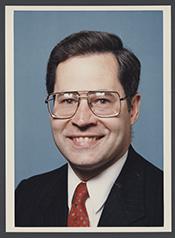
ABM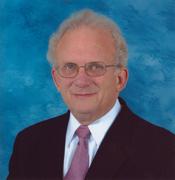 HLB
HLB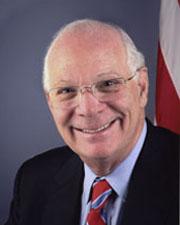 BLC
BLC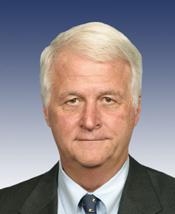 BD
BD
Floor Debate
4 membersWhat members said about H.Res. 131 on the floor
Mr. Speaker, I am joined here tonight by three distinguished colleagues. The gentleman from Maryland (Mr. Cardin) was a member of the Committee on Standards of Official Conduct in the 101st, 103rd,…
Mr. Speaker, I am joined here tonight by three distinguished colleagues.
The gentleman from Maryland (Mr. Cardin) was a member of the Committee on Standards of Official Conduct in the 101st, 103rd, and 104th Congresses. The gentleman from Maryland (Mr. Cardin) cochaired with Congressman Bob Livingston at the time the 1997 ethics bipartisan task force created to review and propose changes to the Committee on Standards of Official Conduct rules and procedures and was the ranking minority member of the subcommittee that investigated the complaint against then-Speaker Newt Gingrich.
Second, I am joined by the gentleman from California (Mr. Berman), who was ranking minority member on the Committee on Standards of Official Conduct in the 105th, the 106th, and the 107th Congresses and for the first 2 months of the 108th Congress until my appointment as ranking member. Additionally, the gentleman from California (Mr. Berman) was the ex officio member of the 1997 bipartisan task force created to review and propose changes to the Committee on Standards of Official Conduct's rules and procedures.
Finally, Mr. Speaker, I am joined by the gentleman from Massachusetts (Mr. Delahunt), who prior to coming to Congress served as the Norfolk County District Attorney for a considerable period of time, from 1975 to 1996. In the 108th Congress, he was a member of the ethics pool appointed by the minority leader and was a member of the investigative subcommittee formed to look into the allegations made by then- Representative Nick Smith arising out of the events occurring during the Medicare vote taken on November 2, 2003.
Collectively, these gentlemen have a tremendous amount of experience serving the House of Representatives on the Committee on Standards of Official Conduct over a long period of time. Not surprisingly, Mr. Speaker, that is the topic of our Special Order tonight.
The subject that we will be discussing this evening under the Special Order concerns the rules that govern the ethics process in the House of Representatives. This discussion, I think, will highlight the clear need to repeal the changes in those rules that were included in the rules package that was adopted when the House convened in January of this year, a rules package that was adopted on a strict party line vote with all Republicans voting for and all Democrats voting against.
While a discussion of the rules of this nature necessarily involves a number of technical points, Mr. Speaker, there should be no mistaking the overriding importance of what we are talking about. Because of the ethics rules changes that were included in the rules package I mentioned, the House of Representatives is now at a crossroads in its ethics process.
The issue now before the House is, in fact, whether the House will continue to have a credible ethics process that can be effective in protecting the reputation and the integrity of this institution.
Mr. Speaker, this is my 9th year as a member of the Committee on Standards of Official Conduct and my third year as ranking minority member of that committee, and I have studied the ethics process carefully during that time. My firm conclusion is that the House will not and cannot have a credible ethics process unless the rules changes that were made earlier this year are repealed.
There are at least two reasons why this is so, Mr. Speaker. First, there cannot be a credible ethics process in the House of Representatives unless changes in the ethics rules are made, as they have always been made in the House, Mr. Speaker, in the past years, in an open, thoughtful and, most importantly, in a genuinely bipartisan manner. But these rules changes were the result of a closed, secret process in which no one from this side of the aisle was ever consulted; and the votes of the rules package were, as always, strictly party line votes.
Second, the fact is that, at a minimum, these rules changes, the specific changes that are attempting to be imposed by the Committee on Rules, will seriously undermine the ability of the Committee on Standards of Official Conduct to perform its key responsibilities of investigating and making decisions on allegations of wrongdoing.
It is for these reasons that I have introduced House Resolution 131, which would entirely repeal two of the three rules changes made earlier this year and would repeal as well the objectionable provisions of the third rules change.
Mr. Speaker, let me take a moment to elaborate on each of the reasons for the resolution that I have introduced, turning first to the closed, partisan manner in which these rules changes were adopted this past January.
Mr. Speaker, the ethics process in the House of Representatives dates back to the late 1960s, nearly 40 years ago. It was recognized at the very outset that there could not be a meaningful ethics process in this body unless it is a genuinely bipartisan one. This makes perfect sense because an ethics process that is dominated by the majority party in the House will become simply another tool of partisan warfare and will have no credibility whatsoever.
So both when the committee was created and the ethics rules were established in 1968, as well as when the rules changes were made in the rules in 1989 and again in 1997, those actions, those creation of the rules, fashioning of the rules, recommending the rules to the House, that whole process was the result of a thoughtful, deliberative process that was, in fact, genuinely bipartisan in nature.
The task force, created with an equal number of Democrats, an equal number of Republicans, whether the Republicans were in control of the House at the time or whether the Democrats were in control of the House at the time, all of the rules changes and their adoption and their recommendation to the House of Representatives came out of a genuinely bipartisan process.
The process that was used earlier this year stands in stark contrast to those earlier efforts. Those rules changes were drafted in secret, and their text was publicly released literally only hours before they were to be voted on on the House floor. At no time was anyone on this side, on the minority side, of the aisle ever consulted about those changes. Likewise, the Committee on Standards of Official Conduct itself was not consulted about those rules changes; and, indeed, it is not at all clear who was consulted about them or whether their proponents really fully understood the meaning and the implications of the changes which they wrought.
It will come as no surprise to anyone that the rules changes resulting from such a closed, summary process, it will come as no surprise that they are seriously flawed; and that leads me, Mr. Speaker, to the second reason why these changes must be repealed.
As I have mentioned, the rules changes were passed by the majority earlier this year. They fall into three categories. The first rules change relates to the automatic dismissal of complaints that are filed with the committee, automatic dismissal of complaints the first rule allows; the second rule granting certain so-called due process rights to Members, a cynical characterization of due process I might add; and the third so-called right to counsel provisions are contained in the last rules change.
Mr. Speaker, let me begin with the automatic dismissal rule. The automatic dismissal rule of the complaint, it constitutes a radical and particularly destructive change in the rules. Up until now, a complaint filed with the Committee on Standards of Official Conduct, and keep in mind that under the rules no one other than a Member of the House may file a complaint before the Committee on Standards of Official Conduct, but under the old rules a complaint could be dismissed only by a majority vote of the committee.
Under the automatic dismissal rule which the majority is trying to impose upon the Committee on Standards of Official Conduct in its rules passed earlier this year, a complaint can be dismissed just by the passage of time. A
period as brief as 45 days from the date of the complaint is deemed to satisfy the procedural requirements of the rule; and if it is not disposed of any other way, the passage of that 45 days will result in automatic dismissal of the complaint. Members of the committee could have during that period sat on their hands, or they may have been engaged in the August recess because it is not legislative days, it is calendar days.
One wonders if the drafters of this rule were even aware that in 1997, the House strongly rejected an automatic dismissal rule that was far less restrictive than this one. The proposal considered at that time applied where a motion before the committee to refer a complaint to an investigative committee did not pass, and it provided in that instance for automatic dismissal of the complaint after 180 days from the date of the vote, a lot longer than 45 days under this automatic dismissal rule. But even with the 180-day automatic dismissal, this House of Representatives in the only recorded vote in the full House on a bipartisan basis rejected the idea of a complaint being automatically dismissed that is pending before the Committee on Standards of Official Conduct simply by the passage of time.
Even that proposal was defeated on a bipartisan vote because it was recognized that any automatic dismissal rule simply promotes deadlock and partisanship on the committee. It promotes inaction. It encourages members not to fulfill their responsibility. This is especially so in those controversial, high-profile complaints that come before the committee, and it is in the handling of complaints of that kind that the committee's credibility is most at stake.
Mr. Speaker, if the Committee on Standards of Official Conduct is to be worthy of its name, its members must give thoughtful, reasoned consideration to every complaint that comes before it; and any rule that would truncate that responsibility, that would provide for an automatic dismissal of the complaint based on the inaction of the members cannot be allowed to stand if our credibility is going to remain intact.
The rules changes that grant certain so-called due process rights to Members apply whether the committee or an investigative subcommittee proposes to conclude a matter by issuing a letter or other statement that references the conduct of a particular Member. While statements of that kind do not constitute and are not characterized as a sanction, the committee has been very cautious about issuing them; and, of course, like any other committee action, such a statement cannot be issued without the bipartisan support of committee members.
It is also important that statements of this kind are issued only where the conduct involved has not been the subject of a formal investigation, and a determination has been made that the issuance of such a statement in an appropriate way to resolve a complaint or other allegation of misconduct is an appropriate disposition.
Where a Member is going to be the subject of such a letter or similar statement, it is not, I agree, unreasonable to grant that Member certain rights, such as prior notice and a meaningful opportunity to respond, but the rules changes go well beyond this for they also grant such a Member the right to demand that the committee create an adjudicatory, a trial, if you will, subcommittee that is to conduct an immediate hearing, an immediate trial, on the conduct in question. Where the committee proposes to resolve the complaint by issuance of a letter, this trial would take place without any formal investigation of the matter ever having been conducted, without a single subpoena ever having been issued or a single deposition ever been taken. It gives the Member the right to jump immediately to the trial stage.
No committee that is at all serious about conducting its business would allow itself to be put in such a situation. It emasculates that part of the committee's power and ability to, in proper due process order, develop the factual basis for a disposition perhaps involving a trial.
It may well be that this immediate trial provision was included in the rules in order to force the committee, whenever a complaint is filed, to decide between two alternatives: either dismiss the complaint without having any comment whatsoever on the conduct of the respondent, or refer the complaint to an investigative subcommittee for formal investigation. But there is no valid reason to hamstring the committee in this manner.
The resolution I have proposed would repeal the right to demand an immediate trial but would substitute instead the far more reasonable right to demand that the committee commission a formal investigation of the conduct in question.
Mr. Speaker, the third rules change, the so-called right to counsel provision, is particularly mischievous, and it might be better characterized as the ``right to orchestrate testimony provision.''
This rules change prohibits the Committee on Standards of Official Conduct from requiring in any circumstances that a respondent or witness in a case retain an attorney who does not represent someone else in the case. This change is particularly egregious in that two separate investigative subcommittees of the Committee on Standards of Official Conduct had raised the concern that an attorney's representation of multiple clients in a case may impair the fact- finding process, and those investigative subcommittees recommended to the full committee the adoption of a rule or policy under which multiple representation could be barred. In short, the ethics process in the House has been seriously damaged by both the substance of these rules changes and the summary partisan manner in which these changes were adopted.
In the case of the latter rule, imagine the lawyer that is representing the accused having the absolute right to represent all of the witnesses that are going to be interviewed in the case, certainly undermining the ability of the committee to do its job.
But we are still in the early months of this Congress, and it is not too late to undo the damage that has been done. We can once again have an ethics process in the House that commands the confidence and respect of both the Members of this body and the public.
The first step, Mr. Speaker, is to repeal those rules changes and to affirm that any changes in either the substantive ethics rules or the rules governing committee procedure will be made as they have always been made in the past, only in a deliberative, open and genuinely bipartisan manner.
Mr. Speaker, at this time I yield to the gentleman from Maryland (Mr. Cardin).
I thank my friend from Maryland.
I would like to invite our colleague from California (Mr. Berman) to join this discussion.
Mr. Speaker, I want to thank the gentleman from
California and the gentleman from Maryland alike, who, based upon years of commitment to the Committee on Standards of Official Conduct process in the House and lots of experience with different cases and the fashioning of different rules, for their very insightful comments.
I now yield to the gentleman from Massachusetts (Mr. Delahunt), a Member who has a very long history, a distinguished career in law enforcement as a District Attorney in his home State of Massachusetts, who in the last Congress served extremely admirably the Committee on Standards of Official Conduct as he was called off the investigative subcommittee pool to review one of the most unusual cases that the Committee on Standards of Official Conduct has looked at. I thank the gentleman for joining us tonight.
I yield to the gentleman from Maryland.
Mr. Speaker, reclaiming my time, I think that is exactly where we are today. There, in fact, has not been such a moment, and we have this process that is offensive in and of itself, that is a serious break with all tradition with the Committee on Standards of Official Conduct when its formation was conducted in a bipartisan manner. The subsequent rules changes, as both the gentleman from Maryland (Mr. Cardin) and the gentleman from California (Mr. Berman) have described in considerable detail because they were involved, all those processes were bipartisan. They brought us bipartisan rules, and they brought us rules that were voted on by the full House of Representatives as a bipartisan package. The process was not offensive. Neither were the rules offensive.
In this case, the process breaks with that tradition. It is patently partisan. The most partisan vote we have in the House of Representative is a party-line vote, and that is a vote that attempts to impose these rules upon the Committee on Standards of Official Conduct, a party-line vote. All the Republicans voting for them; all the Democrats voting against them. So the process is tainted.
So it is no surprise that these three rules are extremely offensive. If they had been fashioned in a bipartisan process, they would have been vetted. They would have been challenged. They have would have been compromised in that task force format, and they would not have come to the body flawed as they were.
When we undertake a partisan process, we cannot create a bipartisan entity. It is definitionally impossible to do.
So now we have three rules. We have had to suffer under a partisan process established to affect a bipartisan committee. But we also have three rules that are terribly flawed.
And the bottom line here is tonight and the message that we want to get across to our colleagues and to the whole Nation is that if we are going to have a bipartisan Committee on Standards of Official Conduct, we have to have a bipartisan process to fashion the rules and to constitute the committee, and we also have to challenge these three rules that are brought to us in a partisan process.
Automatic dismissal of a complaint after 45 days is extremely mischievous to the process. As all of my colleagues have pointed out, rules should exist to
help people do the right thing. An automatic dismissal rule in 45 days incentivizes Members in a highly charged partisan institution to sit on their hands for 45 days and let this responsibility pass to have an automatic. The same sort of undermining is taking place with regard to a rule that will automatically allow an accused to get their lawyer to represent all of the witnesses that the committee is trying to investigate.
The gentleman from Massachusetts was a prosecutor for 25 years or however long it was, and the gentleman, I know, understands how mischievous that would be to an investigative process.
Mr. Speaker, the gentleman makes the point that in the case that he worked on, and it is unnecessary to mention it by name, but that his investigative subcommittee, he and his colleagues, did an excellent job. And one of the reasons they did is because they were able to keep that information between the witnesses apart. They were not able to have coordination. Their testimony was not contaminated in that way. And that is why they came up with such a clean, hard decision, which was adopted unanimously by the investigative subcommittee and was adopted unanimously by the full committee.
Mr. Speaker, I ask the gentleman, how long did it take them to come with that investigation?
Mr. Speaker, reclaiming my time, exactly. Under the new rules, to be perfectly clear about it, the 45-day period would toll once an investigative subcommittee were appointed. But the point here is that the effort of any of those who did not want to have to fulfill their responsibilities and actually consider the merits of the case, anyone, any party, any five members who had that attitude could simply avoid the question of creating an investigative subcommittee and easily do it. There are two clocks that run when a complaint is filed, a 45- day clock and a 30-day clock to answer it; and then you would have 15 days to actually dispose of the matter
Mr. Speaker, reclaiming my time, that opportunity exists with H. Res. 131, the resolution that I introduced on March 1, that is now pending before the Committee on Rules. Last week I wrote the distinguished chairman of the Committee on Rules and respectfully requested an opportunity to testify before the Committee on Rules in support of H. Res. 131, to raise some of the questions that have been so eloquently and capably discussed here tonight.
I think the gentleman's point is very well taken: the rules package was an omnibus rules package. These are three ethics rules embedded in the rules package, so it did not get the kind of visibility, the kind of attention that it would get if H. Res. 131 were brought to the floor of the House. Then we would have an opportunity to fully debate all of these issues and, more importantly, our colleagues, both Democrat and Republican, would have a chance to vote on these discrete rules, understanding how important they are to ensuring a credible ethics process and restoring it to a bipartisan basis.
Mr. Speaker, reclaiming my time, let me thank you tonight for overseeing our Special Order. I express special appreciation to
these three distinguished Members of the House, my colleagues, for their participation.
I think this has been an extremely reasoned, hopefully informative and persuasive prayer to the Republican leadership to look at this issue, to take a second look at it, be impressed by the fact that we are not operating in a bipartisan process, and we must if we are going to have a credible Committee on Standards of Official Conduct, and then to look substantively at these three rules, how they undermine, create mischief, make it impossible, really, to conduct the oversight, the ethical oversight of the House of Representatives in a way that will make the institution proud and make us credible to the American people.
Mr. Speaker, I appreciate the gentleman yielding and to the ranking member of the committee, I thank him for involving me in what I think is a very important effort. I think both he and I are not…
Mr. Speaker, I appreciate the gentleman yielding and to the ranking member of the committee, I thank him for involving me in what I think is a very important effort. I think both he and I are not prone to come to the floor on Special Orders, and I think our presence here tonight indicates just how strongly we feel about what is being done to a process that everyone participating in this Special Order has spent a great deal of time on.
If there is a member of the majority or a staff member of the majority watching this, I would hope they might sit back, get past the irritation over any particular action the committee has taken that they may not have liked and think what they have done and realize that what they have done in making these rules changes unilaterally and breaching the fundamental commitment to a bipartisan process, what that ultimately will do and how that will play out in terms of destroying the concept of an effective and meaningful bipartisan Ethics Committee process.
And that notwithstanding the constitutional mandate, we will be left with a situation where the rules of the House and the standards of conduct that we have promulgated and expect Members to adhere to will become essentially unenforceable because of the breach in the commitment to a bipartisan approach to these issues.
For me, that approach means the members of the committee throw aside the question of how the partisan implications of a particular action play out and search for the facts and apply the rules of official conduct and the appropriate standards that have been adopted by this body and apply those to those facts in a fair, objective, and independent way without focusing primarily on the political or partisan ramifications of that.
Both of the previous speakers have spent a great deal of time both talking about the process and developing the rule. When I was asked to become the ranking member of the Ethics Committee, Minority Leader Gephardt told me about this and after a little bit of depression at the thought that I would have to spend a serious amount of time doing this because, as the gentleman from Maryland mentioned, none of us relish this particular job, it is a great deal of time, its direct impact on our own constituents or on the substantive issues we care about is relatively minor. We are here and we have taken this position in the past because of our own commitment to the institution, a very important institution, the House of Representatives, and how the work of that House is going to be conducted.
But when Mr. Gephardt asked me to do it, I said, Dick, I don't want to fight
the political battles and the partisan battles in the Ethics Committee. He says, The reason I am asking you to take this position is because I want to end the Ethics Committee as a place where partisan battles will be carried out. It is my commitment to that process that causes me to ask you to take this position.
With that understanding, I did. And I had the great pleasure of working with three separate Republican chairmen, members of the majority, our former colleague Jim Hansen for the first 2 years, my friend and colleague Lamar Smith for the next 2 years, and in the last 2 years of the Congress for the recent chairman of the committee, Joel Hefley. In those 6 years with three different chairmen and a number of different members of the committee, particularly on the majority side, if I can think of two votes, two times where in a disciplinary matter there was a division of the vote, that we did not reach a consensus that was accepted initially by the chair and the ranking member and then by the entire committee, I cannot think of more than two votes.
And on the two times when I remember there being some divided votes, they were not done on partisan grounds; they were done on individual members' interpretations of the facts applying the rules of conduct to those facts.
What has happened here would have been unthinkable during those 6 years, that the majority party would decide to embed fundamental changes in the rules inside the larger House rules package, thereby forcing those rules to be addressed in a partisan fashion and then, without consultation with the minority, without showing the minority what those rules changes were for there to be any possible give-and- take or effort to achieve a consensus, ramming through those changes in the Ethics Committee rules in a way that I will try to establish, as I think both of the colleagues preceding me have, hurt the process and hurt it very fundamentally.
So apart from anything else and even the substantive provisions of these rules changes, the fact that it would be done on a partisan basis, without consultation, without an effort to reach a consensus, without coming from the bipartisan Ethics Committee was a terrible, terrible mistake and shakes all of our confidence in whether this process is even a process we want to participate in.
I say all of that preliminarily just to say that I hope calmer minds and people who put their concern for the institution above their irritation with a particular case will think again about what they have done and convene some process by which we can bring back the comity that has existed, I think, during the gentleman from West Virginia's tenure as ranking member and certainly for the 6 years preceding that when I was ranking member, because I think we will all be better served by that.
I do want to make one other point. This is the only committee in the House that is equally divided between Democrats and Republicans. It was the intention of this committee at the creation of this committee and the formation of this committee that things be done on a bipartisan basis, staff hired on a bipartisan basis, disciplinary matters dealt with on a bipartisan basis, advise and consent. When people want to know interpretations, we approach it without regard to the political and partisan implications of the Member who is requesting or the individual who is the object of the disciplinary investigation.
Going to the rules changes, when former Congressman Tauzin offered an amendment to the ethics task force report which provided automatic dismissal for 180 days, as both my colleagues who preceded me have mentioned, a far more lenient provision than the one adopted at this particular time, our friend and colleague Henry Hyde said, Why not adopt it? When juries deadlock, the case is dismissed.
But in saying so, he made our point. The judge does not tell the jury, if you don't decide in 2 days or 3 days or any number of days, if you are deadlocked at that point, the case is dismissed. You do not create incentives for people not to decide. With a rule like this in place, the respondent, the object of the complaint, knows that stonewalling ultimately leads to dismissal, that Members of the respondent's political party, be they Democrat or Republican, are now incentivized not to move ahead with the investigation because a certain result is predetermined after a certain number of days, and the kind of collaboration and coordination that takes place between the chair and the ranking member as they come to a determination of whether or not they should seek to create an investigative subcommittee or to ask the full committee to create an investigative subcommittee is over.
There can be many issues in these complaints. Some of them maybe should go forward. Some of them should not. There is a whole process by which staff and the Chair and the ranking member work together to investigate and try to come to a collaborative determination. Either one of them under the rules that have existed have a right to put the item on the agenda if they think there is no further chance at consensus. But the one thing I know is that when you set a time limit, especially a time limit as short as this one, for the automatic dismissal, you are incentivizing those who do not want the process to go forward without regard to what the facts are.
You are incentivizing them to make sure that nothing happens, because the result, the conclusion of dismissal is preordained. It is a terrible mistake. It is an assault on the collaborative process that this committee should operate under and just has to be changed if we are going to really move forward in a positive way.
The second rule that allows the demand of an immediate adjudication is also defective, because by doing so, the respondent can obviate the investigative process and it can be motivated by the same intent, to cut short the investigation, to take away the give-and-take between the parties so that they can come to an agreed-upon statement which should be sent by the full committee to the investigative subcommittee to pursue, weeding out the false complaints or the minor issues, the ones that do not raise substantial questions that the rules were violated, including the ones that do. It is just another way of undermining that process, because you cut short the whole investigation. That preliminary investigation is very important in making this whole process work.
Finally, my last comment is on the collusion rule, where you explicitly allow attorneys to represent more than one party in a matter. Not leaving it to the discretion of the committee, but saying that an attorney has a right to represent a number of the different people being investigated, you are essentially telling the Member of Congress who is the object of a complaint, Go out, hire the lawyer, pay for him to represent anybody on your staff or any of your friends who might be the subject of this investigation as well and approach a common defense which precludes the ability to really effectively ascertain the facts. It is truly a collusion rule. There may be times when it is appropriate for the attorney to represent more than one person involved in the matter, but to give it as a matter of right to the respondent in this kind of a case sets up a dynamic, again, that destroys the ability of the Ethics Committee to function effectively and efficiently.
With all of those comments, they all go to the overarching point: substantively, these rules are a mistake. The way they were done is intolerable. I do not know how one could continue to be part of a process when we have abandoned that kind of comity and bipartisanship that has been a hallmark of this process. The same leadership that decided to do this, I think, in a fit of anger and perhaps in a moment of unbridled passion has over and over again prior to this time reaffirmed their desire to have a bipartisan process as evidenced by the people they appointed and by the way those people proceeded and by the efforts to do everything on a collaborative basis.
And it worked. And it worked well. We did not go crazy going after Members on pointless grounds. We were not a runaway committee. We also, conversely, did not throw evidence of real violations into the trash can and ignore them. Why we would want to alter that fundamental process at this particular point to the damage of this institution, I do not know.
If the gentleman would yield further, a tremendous amount goes on before it ever gets to a recommendation by the Chair and the ranking member to the full committee to create the investigative subcommittee.
I think of cases where staff had to go to county courthouses to review deeds and a whole series of public records to decide if there was any basis for moving forward. It is true that the staff at that point does not have the power of subpoena and does not have the power to get records that are not in the public domain, but they do have the power to informally talk to people who would have information about this, to look at public records.
You cannot do this in 45 days. You cannot come to a serious recommendation that you are going to make to the full committee, that both the Chair and the ranking member can feel comfortable that they can go to the full committee and say we think now is the time to create the investigative subcommittee, unless you have that preliminary work. Otherwise, you just might as well send everything to an investigative subcommittee.
The flip side of an automatic dismissal is every charge gets investigated, with subpoenas and depositions and seizing of records through warrants, which would be a terrible thing for the due process rights of Members. So we are messing with something we should not be messing with here, and it is going to hurt the institution.
By the way, if this were not part of the larger rules package on an opening day, a very small part in terms of the substantive works, I believe there are Members on the other side of the aisle who would have supported the position we are now taking on the substance of these rules; and I know there were members of the committee that would have fully, both present and former, understood how dangerous these rule changes were.
If the gentleman would yield on that, the irony was at the time of the greatest anger about committee action, which was the case the gentleman participated in dealing with a sitting Speaker of the House, the response was not then to change every rule that bothered him. It was to create a bipartisan task force to look at the rules, to look at it in the context of that case, to see if anything should be changed. That is the appropriate response if you are upset with the way some particular rule seems to be working at the present time.
Mr. Speaker, I thank the gentleman from West Virginia (Mr. Mollohan) for yielding me this time. I had the opportunity to serve on the House Committee on Standards of Official Conduct for a little…
Mr. Speaker, I thank the gentleman from West Virginia (Mr. Mollohan) for yielding me this time.
I had the opportunity to serve on the House Committee on Standards of Official Conduct for a little over 6 years during some very difficult times for this institution. I remember Speaker Foley calling me and asking me to serve on the Committee on Standards of Official Conduct. It was not a request. I was being drafted to carry out a very important responsibility that we all have. Under the Constitution, we must judge the conduct of our own Members. It is a solemn responsibility. How we go about doing that will reflect on the integrity of this institution, and that is why it is so important that we do it in the right manner and in a bipartisan manner.
Mr. Speaker, we are all human and we do make mistakes, and that is why we need a Committee on Standards of Official Conduct, to give guidance to Members as well as monitor the conduct so the public has confidence that in fact we are carrying out our Constitutional responsibility to judge the conduct of our Members.
For that reason, I thank the gentleman from West Virginia (Mr. Mollohan) for his service on the Committee on Standards of Official Conduct, very distinguished service on behalf of this institution. And I also thank the gentleman from California (Mr. Berman), who has devoted much of his time to the ethics work, as has the gentleman from Massachusetts (Mr. Delahunt). I thank him for his work on ethics issues. We do not issue many press releases for this work. This is not something Members do because they want to do, it is something Members do because they have to.
Mr. Speaker, I was on the Committee on Standards of Official Conduct when
we had the charges brought against Speaker Gingrich and the so-called banking scandal. Both of those issues were highly publicized, received a lot of attention and were extremely difficult matters. I was one of the four members of this body that served on the investigative subcommittee on Speaker Gingrich. We spent hundreds of hours in deliberations and in preparations. We spent months in work, but we reached a conclusion. We reached a conclusion not because it was easy. We reached a conclusion because we were able to listen to each other. We worked not as Democrats or Republicans. We worked as Members of this body to do what we are required to do, and that is to judge the conduct of one of our own Members, and we reached a unanimous conclusion.
As a result of that particular case, this body thought that we should review the rules under which the Committee on Standards of Official Conduct operates. We thought it was appropriate to review the process that we use. So what did we do after the Gingrich investigation? The majority leader and the minority leader sat down and worked out a process that would maintain the bipartisan reputation of the ethics process and allow a fair, transparent, open process for looking at changes in our ethics rules.
I was named the co-chair of that task force along with Bob Livingston, a Republican, who was named the other co-chair, and we had an equal number of Democrats and Republicans on that task force. We held hearings, and we had witnesses who came before us. Members came before us, and we looked at the concerns that were expressed during the Gingrich investigation about trying to move in a more timely manner to give due process to each Member and looked at ways to streamline the process but still maintain the integrity of the ethics process. That was our charge. We came up with changes, and we did that in a bipartisan vote of our commission.
The only way the ethics process works is if it is bipartisan. We cannot do it just because one side has the votes in the majority. We must maintain the bipartisan manner of the ethics process, including the way we change the rules, if we are going to be able to maintain the integrity of the process and be able to look the public in the eye and say, yes, we are carrying out our constitutional responsibilities to judge conduct of our own Members.
The gentleman from West Virginia (Mr. Mollohan) has gone through the three rules changes passed at the beginning of this Congress on a partisan vote. I want to talk about one, the automatic dismissal.
It was interesting, in 1997, a Member of this body offered an amendment to our rules package and suggested after 180 days there be an automatic dismissal of a complaint, a much more modest proposal than the one ultimately brought forward by the Republican leadership and passed by the membership on the first day of this session by this Congress. That 180-day automatic dismissal was rejected by a bipartisan vote in this body in 1997. The reason was quite simple: We thought it would just add or just bring us to partisan gridlock.
Unfortunately, I think that is exactly what is happening. The first day of this session we passed a rules change that says after 45 days there is an automatic dismissal of a complaint that is brought. So inaction becomes action. There have been many serious issues that have confronted this Nation that have taken us terms of Congress to deal with. For instance, in working on the welfare reauthorization bill, we have been working on that for three Congresses, and we have not been able to pass it. It has taken time. Inaction here becomes action. That is not what it should be and obviously will not have credibility with the public.
Partisanship is rewarded with a deadlock being dismissal. Each of us belongs to a political party. The pressure on us would be immense just to do nothing for 45 days. I think that is quite obvious. And that gets rewarded.
The ethics process must be bipartisan. We should not have a basic rule that rewards partisanship. And then delay is rewarded. Inaction is rewarded, as I indicated. And the complexity of the issues that you have to deal with on the Ethics Committee would give you a practical reason to say, Well, I'm sorry, we couldn't complete it in time and now there's an automatic dismissal.
I think about the Gingrich case that I had to investigate, and I think about the complexities and the documents and the depositions and all the work that we did in that case. You could not possibly have done that in 45 days and do justice to the Member who is accused or the institution that is being challenged as to whether we can, in fact, investigate a case fairly. Yet this rule change will say, if you cannot complete it in 45 days, there can be an automatic dismissal.
So, Mr. Speaker, for all the reasons that the gentleman from West Virginia has pointed out on substance, these rules changes were wrong; but I think the underlining point, the most important point here is the process must be bipartisan. It was violated in these rules changes that were passed at the beginning of this Congress. I urge my colleagues to listen to the gentleman from West Virginia. Let us repeal those three rules changes and go back to a process that has served this institution well over many, many Congresses, a bipartisan process, a true bipartisan process to look at rules of the committee and, if changes are needed, to do that in a bipartisan manner rather than by the strict votes of the majority. I would urge us to do that for the sake of the integrity of this institution.
Mr. Speaker, will the gentleman yield?
Mr. Speaker, I appreciate the gentleman from Massachusetts' comments, and I agree completely with his point. The point that all of us who have served on the Committee on Standards of Official Conduct and have gone through investigations understand that when we meet in that investigative setting when we have a specific matter before us and when we start looking at the rules of the House and the precedence of the House, we do not get into a disagreement along party lines as to what the rules are and what the expected conduct is. We then look at the facts, and once again the facts become the facts, and we do not divide along party lines as to what the facts are and how we apply them to the rules, and generally, as the gentleman from California (Mr. Berman) pointed out, in an overwhelming number of cases we reach consensus, unanimous judgment, as to what the rules of the House applied to the facts require us to do.
And even when we reach disagreement, it is not along party lines. Sometimes there is disagreement on the interpretation of the rules or the facts, but they are not along party lines.
In every case that I can ever recall in the Committee on Standards of Official Conduct, that is exactly how we proceeded and reached judgment, because of the point that the gentleman said, the seriousness of our work and the credibility of this institution and the confidence of this institution is very much affected by it.
I think what is extremely disappointing is that we now have rules changes that were dictated in a very partisan manner that make it impossible for the committee to function. This is one of the few bastions of nonpartisan activity within the Congress. Now that is unable to operate because of the way the rules changes were made, and I just thank the gentleman for underscoring how important this matter is.
I cannot think of any case that we ever had that could have been handled in 45 days. I am just trying to think about the time period for answer, the time period for staff review, the time period just to verify basic simple facts. Even in the simplest case, I do not know of any case that we could have handled in a professional manner within a 45-day period.
Mr. Speaker, if the gentleman will yield further, just as a final comment in answer to the gentleman from Massachusetts (Mr. Delahunt), I do not know of it ever being done the way these rules changes were made. We have always had a deliberative process for the reasons the gentleman from California (Mr. Berman) and the gentleman from West Virginia (Mr. Mollohan) pointed out, so we have a chance to understand the ramifications of these changes. We have never had significant changes to the ethics rules done on the opening day by the majority without working with the minority.
Mr. Speaker, on March 1 of this year I introduced a resolution, House Resolution 131, that would repeal the ill-conceived amendment to the House ethics rules that were included in the rules package…
Mr. Speaker, on March 1 of this year I introduced a resolution, House Resolution 131, that would repeal the ill-conceived amendment to the House ethics rules that were included in the rules package adopted at the beginning of this Congress.
Although this resolution has now gained 208 co-sponsors, the Committee on Rules to which it has been referred has not yet taken any action on it. Accordingly, it now becomes necessary to begin to invoke the procedures provided by House Rule 15, to discharge a measure from the committee.
To that end, today I am introducing a resolution that provides terms for the consideration of House Resolution 131 by the full House. Under House Rule 15, a discharge petition may be filed
with regard to this resolution after 7 legislative days.
Mr. Speaker, I want to reiterate that what is at issue with House Resolution 131 is, in fact, whether the House of Representatives is going to continue to have a credible ethics process that can be effective in protecting the reputation and the integrity of this great institution. And for at least two reasons, the House will not and cannot have a credible ethics process unless the Republican-inspired rules changes made earlier this year are repealed.
First, there cannot be a credible ethics process in the House unless it is genuinely bipartisan. By definition, the Committee on Standards of Official Conduct was created as a bipartisan organization within a very partisan body, and its rules have always been fashioned through a bipartisan task force.
Until this year, the House clearly and repeatedly recognized that bipartisanship must extend to the creating of the rules under which the Committee on Standards of Official Conduct conducts its business; and in the past, changes in those rules were made in an open, in a thoughtful, and in a genuinely bipartisan manner.
But this year, Mr. Speaker, in contrast to past tradition, the rules changes were drafted solely on the recommendation of the majority, in a partisan, in a closed, in a secret process in which no one on the Democrat side of the aisle was even consulted. So the rules were adopted on a strict party line vote: all the Republicans voting for; all the Democrats voting against.
Mr. Speaker, this is the most partisan vote we cast in the House of Representatives. Never in the history of the Committee on Standards of Official Conduct has there been an attempt to impose rules in this manner on the Committee on Standards of Official Conduct.
Mr. Speaker, the second concern about these rules changes is there has been an attempt to impose them on the Committee on Standards of Official Conduct in a very partisan way, but the rules in and of themselves are extremely damaging. The fact is that, at a minimum, these rules changes will seriously undermine the ability of the Committee on Standards of Official Conduct to perform its key responsibilities of investigating and making decisions on allegations of wrongdoing.
These rules changes fall into three categories.
First, there is the so-called automatic dismissal rule under which a complaint against a Member that is filed with the committee can be dismissed solely with the passage of time, no consideration of its merits. Under this automatic dismissal rule, that period of time can be as brief as 45 days from the date that the complaint is deemed to satisfy the procedural requirements of the rules. Previously, a complaint could be dismissed only by majority vote of the committee.
The effect of this automatic dismissal rule will be to give the committee members a means by which they can avoid their responsibility to give thoughtful, reasoned consideration to every complaint and to all of the charges in every complaint. Its ultimate effect will be to provoke partisanship and deadlock among committee members as they wait for the clock to run out. Does the majority really want this result?
Another of the rules changes is that it grants certain so-called due process rights to Members. One of those rights is the right to demand that the Committee on Standards of Official Conduct conduct a trial on a matter on which it has not even conducted a formal investigation. This so-called right would place the committee in the position of having to hold a trial on a matter in which it has not issued a single subpoena. Does the majority really want this result?
The third rule change, Mr. Speaker, is the so-called right to counsel provision which might be better characterized as the right to orchestrate testimony provision or the right to allow collusion among the accused and the witnesses. It would provide that one lawyer can represent the accused and all of the witnesses. Does the majority really want this result?
Mr. Speaker, I continue to urge my colleagues to look closely at the rules changes and the partisan manner in which they were adopted. By adoption of House Resolution 131, the House can begin to undo the damage that has been done to the ethics process, and we will be able to have once again an ethics process that commands the confidence and respect of both the Members of this body, and Mr. Speaker, most importantly, the American people, who, I believe, on a bipartisan basis want a bipartisan Committee on Standards of Official Conduct.
Mr. Speaker, I thank the ranking member for yielding to me. I have to say they have all served this institution well. They provided me with a real history lesson here this evening. I am probably,…
Mr. Speaker, I thank the ranking member for yielding to me.
I have to say they have all served this institution well. They provided me with a real history lesson here this evening. I am probably, maybe with one exception, their senior in terms of age, but they carry a wealth of insight and experience in this issue.
What I found particularly interesting was that single experience I had serving on that subpanel in many ways reflected what they each individually came to a conclusion. What I discovered was that it worked. We worked hard, much harder than I anticipated. It was long hours. We brought before that subcommittee a significant number of Members of this House. They fully cooperated, each and every single one of them; and we worked in a bipartisan fashion.
The two Republicans that served on that particular panel, I knew one before and I happened to be a classmate, and the other one I never really had any contact or communication with. And I have to tell my colleagues I was extremely impressed with their concern about this institution, with their professionalism, with their standards and their willingness to work in an extremely collaborative way. It truly was a lesson that bipartisanship exists in this institution, and particularly in the rubric in the format of an ethics investigation is absolutely essential.
We talked about the House today, and we all obviously go back to our home districts, and we hear our own constituents decry what they perceive to be the strident level of partisanship that, unfortunately, does exist today within this institution. But my experience on that subpanel was really informative, that those who love the institution, those who understand that if there is a lack of confidence in the integrity of this institution by the American people that we erode the health, if you will, the viability of our democracy.
It really is a sad comment that, without consultation, in a unilateral move, these rules changes came to the floor and were adopted. Because I think the real issue here will be not just the erosion of the respect of the institution over time, but there will be demands from the outside. There will be a legitimate question posed by the American people as to whether this House can, in fact, police itself, whether we have the capacity to maintain high standards.
If we abrogate that responsibility, not only do we do damage, in my opinion, to this institution, but we chip away at the health of American democracy. People will begin to believe the worst. What is happening in that institution? Are there backroom deals going on? Or is the partisanship so absolutely venomous at this point in time that they cannot work together and there should be some sort of independent group or independent commission that polices those Members of Congress? That would indeed be unfortunate, in my judgment.
Mr. Speaker, if the gentleman will continue to yield, if I may just pose a question, again there is a wealth of history that I am looking at right here in terms of the issue of ethical standards in this particular institution. Has there ever been before a moment in terms of ethical standards where a unilateral initiative has been imposed on the body without a collaborative effort, without consultation?
Mr. Speaker, if the gentleman will continue to yield, to be perfectly candid, I think a lawyer who would take on the assignment of multiple representation could very well find him or herself in an ethical dilemma. Because, clearly, not all witnesses have the same interests. So for an attorney to do that really has ethical overtones as well. It just does not make any sense.
In fact, one of the recommendations that came out of the subpanel that I served on was for the House to consider the sequestration of witnesses so that the fact-finding process itself would not be colored by conversations among staff and Members. And, as the gentleman knows, it was a unanimous report, and it was adopted unanimously by the House.
I hear sometimes comments about lack of due process. That is a whole other issue, but I am very proud of that product, as I know my three colleagues were on the subpanel, and not once did an individual's name ever appear in print. Not once. There was not a leak because each of us understood the significance and the importance of taking this unpleasant task on in a role that reflected well on the House and reflected the integrity of this institution.
And we never could have done it, Mr. Speaker, in 45 days. Never.
I think it was in the neighborhood of 6 months, and there were multiple, multiple meetings.
Mr. Speaker, if the gentleman will continue to yield, I would say to the gentleman from Maryland (Mr. Cardin), maybe it is time for you again and the gentleman from West Virginia (Mr. Mollohan) and the gentleman from California (Mr. Berman) to serve on a bipartisan task force with that in mind.
Bill Text
Latest available legislative text
        [Congressional Bills 109th Congress]
[From the U.S. Government Publishing Office]
[H. Res. 131 Introduced in House (IH)]

109th CONGRESS
1st Session
H. RES. 131

Amending rule XI of the Rules of the House of Representatives with
regard to the procedures of the Committee on Standards of Official
Conduct.

_______________________________________________________________________

IN THE HOUSE OF REPRESENTATIVES

March 1, 2005

Mr. Mollohan submitted the following resolution; which was referred to
the Committee on Rules

_______________________________________________________________________

RESOLUTION

Amending rule XI of the Rules of the House of Representatives with
regard to the procedures of the Committee on Standards of Official
Conduct.

Resolved, That clause 3 of rule XI of the Rules of the House of
Representatives is amended as follows:
(1) In paragraph (k)(1)(B), strike ``(unless, at any time''
and all that follows through ``members of the committee)''.
(2) In paragraph (k)(1)(C), strike ``in order to make a
recommendation under subdivision (A)''.
(3) In paragraph (k)(2), strike ``and an investigative
subcommittee has not been established, then such complaint
shall be dismissed'' and insert in lieu thereof ``then they
shall establish an investigative subcommittee and forward the
complaint, or any portion thereof, to that subcommittee for its
consideration. However, if, at any time during those periods,
either the chairman or ranking minority member places on the
agenda the issue of whether to establish an investigative
subcommittee, then an investigative subcommittee may be
established only by an affirmative vote of a majority of the
members of the committee''.
(4) In paragraphs (k)(3), (k)(4), (p)(7), and
(q)(2)(B)(ii), strike ``adjudicatory'' each place it appears
and insert in lieu thereof ``investigative''.
(5) In paragraphs (k)(3), (k)(4), (p)(7), and
(q)(2)(B)(ii), strike ``an adopted statement of alleged
violation'' each place it appears and insert in lieu thereof
``a complaint meeting the requirements of the rules of the
committee for what constitutes a complaint''.
(6) In paragraph (p)(11), strike ``of his or her choice
(even if such counsel represents another respondent or a
witness)''.
(7) In paragraph (p)(12), strike ``of his or her choice
(even if such counsel represents a respondent or another
witness)''.
<all>