Providing for the consideration of the bill (H.R. 1544) to provide faster and smarter funding for first responders, and for other purposes.

Legislative Activity
Stay on top of the latest movement without scrolling through every action
Motion to reconsider laid on the table Agreed to without objection.
May 12, 2005 • 11:22 AM
View full timeline
Introduced in House
May 10, 2005
The House Committee on Rules reported an original measure, H. Rept. 109-77, by Mr. Sessions.
May 10, 2005
Rule provides for consideration of H.R. 1544 with 1 hour of general debate. Previous question shall be considered as ordered without intervening motions except motion to recommit with or without instructions. Measure will be considered read. Specified amendments are in order.
May 10, 2005 • 8:49 PM
Placed on the House Calendar, Calendar No. 37.
May 10, 2005
Considered as privileged matter. (consideration: CR H3204-3211)
May 12, 2005 • 10:27 AM
DEBATE - The House proceeded with one hour of debate on H. Res. 269.
May 12, 2005 • 10:30 AM
The previous question was ordered without objection. (consideration: CR H3211)
May 12, 2005 • 11:22 AM
Passed/agreed to in House: On agreeing to the resolution Agreed to by voice vote.(text: CR H3204-3205)
May 12, 2005 • 11:22 AM
On agreeing to the resolution Agreed to by voice vote. (text: CR H3204-3205)
May 12, 2005 • 11:22 AM
Motion to reconsider laid on the table Agreed to without objection.
May 12, 2005 • 11:22 AM
Floor Debate
23 membersWhat members said about H.Res. 269 on the floor
 CC
CC MNC
MNC BGT
BGT ADW
ADW SJL+18
Floor Debate
23 membersWhat members said about H.Res. 269 on the floor
Mr. Chairman, I yield myself such time as I may consume. I rise today in strong support of H.R. 1544, the Faster and Smarter Funding for First Responders Act. I am here on the floor today with the…
Mr. Chairman, I yield myself such time as I may consume.
I rise today in strong support of H.R. 1544, the Faster and Smarter Funding for First Responders Act. I am here on the floor today with the ranking member of the Committee on Homeland Security, the gentleman from Mississippi (Mr. Thompson). He and I are here to argue today on behalf of a bill that is strongly endorsed by every single Republican and Democratic member of the Committee on Homeland Security. More than that, this legislation is supported by the Bush administration. We have received a formal statement of administration support for this bill. It is strongly endorsed by the 9/11 Commission whose recommendation that first responder funding be placed on a risk basis this bill implements. It is endorsed by scores of first responder groups, the men and women on the front lines for whom this money is intended. They worked with us over a period of over 2 years, first to identify the problems in the current grant-making system for billions of homeland security and terrorism preparedness dollars and, second, to develop a solution.
The solution that today's bill presents is a simple one. We are going to move away from political formulas for allocating these billions of dollars and toward a system that relies on the intelligence that the American taxpayer already purchases at the price of billions of dollars every year, information about terrorist capabilities and intentions, information about our own critical infrastructure and vulnerabilities and information about the potential consequences of different kinds of terrorist attacks. In combination, this mix of threat, vulnerability and consequence is called risk. Funding for first responders in the future is going to be based upon risk. That is what this bill is all about.
And we solve the second problem. Of the over $30 billion in terrorism preparedness moneys that the Federal Government has made available to States and localities since September 11, some 60 percent of it is not yet spent. It is stuck in the administrative pipeline.
There are a number of reasons for this that our committee has discovered through field hearings across the country, hearings here in Washington, and our own investigation. But at bottom it is this: right now there is an ``ad hockery'' to the way that moneys are passed around the country. There is no predictability about when the funds might arrive, whether reimbursement will be there. And the planning, as a result, tends to take place after the money is received, slowing things down.
In our new system, the planning will be moved at the front end of the process. Every State which already has a statewide terrorism preparedness plan will ensure that when these applications for grants are made, they are directly tied to that statewide plan and also directly tied to the achievement of national objectives for first responder preparedness.
We will have clear standards for the first responders so that they will not have these kinds of questions about reimbursement that have plagued them in the past. We will know that what we are buying in the form of equipment and training will be directly tied to national terrorism preparedness goals.
In recent days, there has been a fair amount of press coverage about abuses of homeland security spending. For example, right here in Washington, D.C., we learned that $100,000 of this grant money meant for first responder terrorism preparedness was instead spent on a Dale Carnegie course for sanitation workers, another $100,000 was spent to develop a rap song purportedly to educate young people about how to be prepared in the case of a terrorist attack.
These kinds of abuses will come to an end as a result of this legislation, and our money will be directed toward keeping our first responders, who are not only first in line to protect us but first in line for the terrorists, the first to die if this system does not work right, keeping these people well trained and well equipped.
I would like to thank, in addition to the gentleman from Mississippi (Mr. Thompson), ranking member, the other members of the Committee on Homeland Security. There has been a great deal of work that has gone into this bill. The last step in bringing this to the floor was a 13- hour markup in our committee. I think what we will find today, Mr. Chairman, is that this debate will go forward in a very bipartisan fashion. We might not agree about all the details of this legislation. We may not agree when we go to conference with the Senate. And when we come back with a conference report, hopefully in just a few weeks or maybe a few months, we may not agree on every detail.
But there is a big change in this bill that we all agree on, and that is that henceforth moneys for terrorism preparedness that go from Washington to States and localities to our police, to our firefighters, to our EMS personnel, to people in hospitals who will be there in case of a biological attack or indeed to treat the wounded in case of any attack, that the people who get these moneys will be assured that, first, the moneys will arrive soon, on time, right after we want them to be available; and, second, they will know how to spend it and they will know, when they spend it in accordance with their plans, they will get reimbursed for it. This will move America in the direction that we need to go to be prepared for another terrorist attack.
A great deal of our work in the Committee on Homeland Security is focused on preventing terrorist attacks,
as well we should be focused; but I have no doubt that someday somewhere terrorists will again strike our country; and when that happens, we are going to rely on our first responders just as we did on 9/11, and next time we want to make sure they have all the training and all the equipment that they need. This bill is a strong step in that direction. It is something that I think we can all be very proud of.
I want to conclude by thanking the gentleman from Mississippi, who, as the leader of the minority, has made it possible for us to keep in mind that when the terrorists attack us, they are not going to attack Democrats or Republicans. They are going to attack Americans. And we are all Americans here, and we are all doing the right thing today.
Mr. Chairman, I submit the following exchange of letters for the Record.
House of Representatives, Committee on Transportation and
Infrastructure,
Washington, DC, April 25, 2005.
Hon. Christopher Cox,
Chairman, Committee on Homeland Security, Adams Building,
Washington, DC.
Dear Mr. Chairman: I am writing to you concerning the
jurisdictional interest of the Transportation and
Infrastructure Committee in matters being considered in H.R.
1544, the Faster and Smarter Funding for First Responders Act
of 2005.
Our Committee recognizes the importance of H.R. 1544 and
the need for the legislation to move expeditiously.
Therefore, while we have a valid claim to jurisdiction over
certain provisions of the bill, I will agree not to request a
sequential referral. This, of course, is conditional on our
mutual understanding that nothing in this legislation or my
decision to forego a sequential referral waives, reduces or
otherwise affects the jurisdiction of the Transportation and
Infrastructure Committee, and that a copy of this letter and
of your response acknowledging our valid jurisdictional
interest will be included in the Committee report and in the
Congressional Record when the bill is considered on the House
Floor.
The Committee on Transportation and Infrastructure also
asks that you support our request to be conferees on the
provisions over which we have jurisdiction during any House-
Senate conference.
Thank you for your cooperation in this matter.
Sincerely,
Don Young,
Chairman.
Mr. Chairman, I yield 4 minutes to the distinguished gentleman from the State of New York (Mr. King).
Mr. Chairman, I yield 2 minutes to the distinguished gentleman from California (Mr. Lungren), the former Attorney General of California.
Mr. Chairman, I yield 2 minutes to the distinguished gentleman from Texas (Mr. Smith).
Mr. Chairman, I yield 2 minutes to the distinguished vice chairman of the full Committee on Homeland Security, the gentleman from Pennsylvania (Mr. Weldon).
(Mr. WELDON of Pennsylvania asked and was given permission to revise and extend his remarks.)
Mr. Chairman, I yield 2 minutes to the gentleman from Connecticut (Mr. Simmons).
Mr. Chairman, I yield 2 minutes to the distinguished gentlewoman from Florida (Ms. Harris).
(Ms. HARRIS asked and was given permission to revise and extend her remarks.)
Mr. Chairman, I yield 2 minutes to the gentlewoman from Tennessee (Mrs. Blackburn).
Mr. Chairman, I yield 2 minutes to the distinguished gentleman from the State of Washington (Mr. Reichert).
Mr. Chairman, I yield 2 minutes to the distinguished gentleman from the State of Texas (Mr. McCaul).
Mr. Chairman, I yield 3 minutes to the distinguished gentleman from the State of New York (Mr. Fossella).
(Mr. FOSSELLA asked and was given permission to revise and extend his remarks.)
Mr. Chairman, will the gentleman yield?
Mr. Chairman, I would like to note that the bill before us today expressly permits grant recipients to use, with the approval of the Secretary of Homeland Security, up to 10 percent of their covered grant funds for measures to protect critical infrastructure, and this would include building barriers, fences, gates and so on. In the case of New York, that would mean that $21 million would be available for this purpose.
The question of using Federal grant funds to pay for the salaries of local law enforcement officers is a very consequential one with impacts far beyond New York. The resolution of that question and all of its complexity is beyond the scope of this bill, but I want the gentleman to know that I appreciate the gentleman's comments, and I will look forward to working with him on these issues in the future.
Mr. Chairman, I yield 2 minutes to the distinguished gentleman from the State of New Mexico (Mr. Pearce).
Mr. Chairman, I yield myself such time as I may consume.
Mr. Chairman, I want to return the compliment to the gentleman from Mississippi (Mr. Thompson). This has been a collaborative effort for several years now. I also want to pay homage to the gentleman from Mississippi's (Mr. Thompson) predecessor, Mr. Turner of Texas, who also led the minority ably on this issue.
Today we have an opportunity to establish a new grant process to provide better support to the brave men and women who are the first to rush into burning buildings, the people who place themselves in the line of fire to protect the innocent, the ones who save the sick and wounded under the most trying of circumstances.
It is no accident that this bill has been endorsed by every major first responders group in America, by the Bush administration, by the 9/11 Commission; and, indeed, I expect it will receive a strong endorsement from our colleagues on both sides of the aisle.
I encourage my colleagues to vote in favor of H.R. 1544. By passing this bill, we will take yet another important step since September 11 to help our Nation meet the urgent challenge of terrorism in our cities and hometowns.
Mr. Chairman, I yield back the balance of my time.
Mr. Chairman, I claim the time in opposition to the amendment.
Mr. Chairman, I yield myself such time as I may consume.
Mr. Chairman, even though I have claimed the time in opposition to the amendment, I actually want to speak in support of the gentleman's amendment.
Mr. Chairman, H.R. 1544, the bill that the gentleman would amend, as written requires the Department of Homeland Security to analyze risk in rural America. That is a big step forward. For example, the disruption to the agricultural and food sectors by acts of bioterrorism would result in considerable economic and health consequences.
This amendment will ensure that the grants board established by H.R. 1544 contain a member with expertise in this very area. The designee of this amendment, the administrator of APHIS, the Animal and Plant Health Inspection Service, is well versed in agro-terrorism. This is a wise choice.
As a part of the USDA, APHIS is responsible for safeguarding the agriculture and food infrastructures not only from pests and diseases but also biological threats. Indeed, APHIS currently works closely with the Department of Science and Technology directorate, that is, the Department of Homeland Security's directorate, and plays an important role in agro-terrorism preparedness.
Specifically, APHIS is already involved in the following: accelerating the development of countermeasures to agro-terrorism; bio- forensic capabilities; deploying diagnostic technologies; and research, development and training activities.
For all of these reasons, Mr. Chairman, as chairman of the Committee on Homeland Security, I strongly urge my colleagues on the committee and my colleagues in the House to vote in support of the Berry amendment.
Mr. Chairman, I reserve the balance of my time.
Mr. Chairman, I yield such time as he may consume to the gentleman from Alabama (Mr. Mike Rogers).
Mr. Chairman, I claim the time in opposition to this amendment, notwithstanding that I rise in its support.
Mr. Chairman, I yield myself such time as I may consume.
Mr. Chairman, I strongly support this Berry amendment. It is completely consistent with the intent of the Faster and Smarter Funding For First Responders Act. Indeed, H.R. 1544 contains many other provisions with the same purpose: to enhance Federal, State, local, regional and tribal government cooperation in the process of establishing the criteria for prioritizing applications for covered grants. For example, the bill directs the Secretary to establish a first responders task force.
This task force, which will advise the Secretary of Homeland Security on preparedness benchmarks, will consist of 25 members, representative of all of the first-responder disciplines and a substantive cross- section of geography from across the Nation.
The Berry amendment, in my view, will help ensure that the Grant Board's risk-based analysis adequately addresses the concerns of State, local, regional and tribal governments who, after all, have direct jurisdiction and control over the first responders who are the focal point of this legislation. This amendment will provide important comfort to covered grant applicants as the department shifts from a political, formula-driven system to one based on risk.
A dramatic programmatic shift such as the one established by this bill cannot be made in a vacuum. It must be made in close coordination with the people most affected. That is the purpose of the bill as it is written.
I think the Berry amendment clarifies that purpose in a useful way, and I strongly support it.
Mr. Chairman, I yield back the balance of my time.
Mr. Chairman, I thank the gentleman from Mississippi (Mr. Thompson) for the time.
I rise in support of the Bass-Norwood amendment. I strongly support this amendment, and I do so for several reasons.
First, since the attacks of 9/11, States and local governments are increasingly stepping up to the plate and assuming some of what have traditionally been the Federal Government's responsibilities in the area of terrorism preparedness. For example, many State and local governments have entered into agreements with the U.S. Coast Guard or with immigration and customs enforcement or other elements of the Department of Homeland Security to perform responsibilities relating to homeland security.
Second, the Bass-Norwood amendment, which would permit petitioning the Secretary for reimbursement for expenses in this regard, is fiscally responsible. It would not, for example, permit grant recipients to use covered grant funds to supplant routine State or local government expenses. It does not permit, for example, reimbursement for personnel costs.
The Bass-Norwood amendment is also properly targeted in scope. States and localities may defray the costs of their assumed homeland security duties only with the consent of the Secretary of Homeland Security, and States and localities that have assumed these kinds of duties have to have done so pursuant to an agreement with a Federal agency.
The Federal Government, in my view, should encourage States and localities to assist the Federal Government in providing security where it would otherwise be lacking, and that is what this amendment is going to help us do. To support this policy, it is incumbent upon Congress to permit State and local governments to petition the Secretary for reimbursement.
The Bass-Norwood amendment is consistent with other provisions of this bill. Specifically, H.R. 1544, the underlying bill, permits covered grant recipients to satisfy the matching requirements through in-kind contributions of goods or services, or other equipment, fuel, maintenance, personnel overtime and other costs that are associated with State and local assumption of Federal terrorism preparedness duties.
For all of these reasons, I strongly support the Bass-Norwood amendment. I congratulate its authors for presenting it before the House.
Mr. Chairman, I rise in opposition to the amendment.
Mr. Chairman, I yield 3 minutes to the gentleman from Mississippi (Mr. Thompson).
Mr. Chairman, I yield myself such time as I may consume, and I too rise in opposition to this amendment.
I agree with the intention of the author of the amendment to limit the number of grant awards under the Urban Area Security Initiative, but I do not agree with the thrust of the amendment, which is to, in essence, perpetuate a system that sends money exclusively to cities and ignores regions.
One of the important reforms made in H.R. 1544 is that we open up the process to regional grant applications. I come from the most populated State in America: California. My county, just one of 58 counties in California, has 3 million people. Los Angeles, obviously, is an enormous urban center. But the important thing to note about both Los Angeles and New York is that the L.A. region and the New York City region are bigger and geographically more relevant than the city qua city. The municipal boundaries of New York or the municipal boundaries of Los Angeles are not nearly so important, if there is a radiological attack, for example, as understanding where that plume is going to go and what are the evacuation corridors.
We have learned since 9/11 we have got to have regional collaboration. In my home county, Orange County, which as I said has 3 million people, we had two cities get Urban Area Security Initiative money. This was like the fickle finger of fate that touched those two cities and gave them all the cash and ignored the County of Orange, ignored the municipalities situated right next door to them. Happily, due to the leadership of Sheriff Mike Carona and the chairman of the Board of Supervisors Bill Campbell, and the mayor of Santa Ana, Miguel Pulido, and the mayor of Anaheim, Curt Pringle, there has been a workout, a local arrangement made to equitably distribute these urban area security initiative monies. But that is not the way the program is designed.
We have made sense of it in California despite the nonsense of the Federal program itself. Perpetuating this program, trying to focus more emphasis on it is the wrong way to go. UASI is broke, and it makes no sense to place more emphasis upon it.
Finally, let me say that only regional grants, not State grants, may be able to address certain unique terrorism preparedness needs, such as risks that cross interstate or international boundaries, for example, bioterrorism or agro-terrorism. In this respect, I agree with the comments made by the author of the amendment. I think that to the extent we emphasize a regional approach, a mutual-aid approach, we will find ourselves better prepared in the future. That is the aim, one of the chief aims of H.R. 1544, the Faster and Smarter Funding for First Responders Act, and for those reasons I counsel opposition to this amendment.
Mr. Chairman, I reserve the balance of my time.
Mr. Chairman, I appreciate the comments of the gentleman from Delaware. I would like to assure him that the bill before us today is designed to prepare every State, small, medium and large, to respond in the event of a terrorist attack.
The Department's current method for allocating terrorism preparedness grant funds has not always well served small and medium sized States, including Delaware. The current grant system takes risk into account only in a limited way by specially earmarking funds to a handful of large urban areas under the urban area security initiative. With respect to all the rest of the funding, the current system ignores the threats, vulnerabilities and consequences of acts of terrorism anywhere else in the United States. Yet
throughout America, there are populations and critical infrastructure that terrorists have within their sights.
H.R. 1544 would eliminate this anomaly by requiring a risk-based analysis that covers every part of America, urban, suburban and rural, based on objective criteria. To this end, H.R. 1544 establishes a first-responder grant board to prioritize and evaluate all applications for covered grants on the basis of risk and need.
During this evaluation and prioritization process, the grant board must consider a number of factors, including, but not limited to, various critical infrastructure sectors in all areas of the Nation, urban, suburban and rural. Indeed, the 16 critical infrastructure sectors enumerated in H.R. 1544 encompass a large number of critical infrastructure sectors, including agriculture and food, banking and finance, energy, public health and health care, government facilities, transportation systems, and water.
As Delaware's former Governor, the gentleman knows that Delaware contains a great deal of critical infrastructure, including chemical plants, banking and finance, and ports. But he and I also know that, under current law, the Department does not consider these factors in awarding grant funds to his State. Delaware has no jurisdiction that receives grant funds from the urban area security initiative. As a result, like many States under the current system, Delaware only receives grant moneys under the State homeland security grant program. But funding under that program is awarded solely on the basis of an arbitrary political formula without regard to Delaware's actual risk or need. Passage of this legislation, the Faster and Smarter Funding For First Responders Act, will remedy these problems.
Mr. Chairman, I thank the distinguished gentleman from Delaware for yielding the time but more importantly for offering this important amendment. The House has voted in support of this amendment before. During the 108th Congress, twice it passed the House. As a stand-alone measure, all by itself, on September 14, 2004, and when it was up on its own merits, the recorded vote was 397-3.
This is a commonsense amendment that is vitally important. It would provide protection to people who donate fire control or fire rescue equipment, but more importantly, it would better equip and protect our Nation's firefighters, and that is what this bill is all about. This bill is for our first responders. So is the Castle amendment. It will encourage fire departments, the private sector and other people to donate equipment that the firefighters desperately need so that they can better protect every American.
Many people incorrectly assume that all firefighters work in departments that have the latest and the best equipment. The reality, unfortunately, is far different. It is estimated that 30,000 firefighters every day risk their lives unnecessarily due to inadequate personal protective equipment, just to cite one example.
This is a fiscally prudent amendment. It is going to stretch our dollars. It serves the interests of taxpayers by extending the life of equipment they have already paid for. This is expensive equipment, and it ought to be used. And it provides poorer jurisdictions with capabilities they might not otherwise have and might not have the ability to attain.
I congratulate the gentleman for offering the amendment, I strongly support it, and I urge my colleagues to vote in support as well.
Mr. Speaker, I demand a recorded vote.
Mr. Chairman, I rise today to express my support for a fair and effective system of distributing homeland security grants to our nation's courageous first-responders. As a former Governor, I have…
Mr. Chairman, I rise today to express my support for a fair and effective system of distributing homeland security grants to our nation's courageous first-responders. As a former Governor, I have long been concerned about our government's ability to accurately assess national threats, risks, and vulnerabilities. For this reason, I have been an adamant proponent of improving and streamlining the application and distribution process for these important grant programs.
The current grant allocation system is largely population-based. While population is an essential factor, the top priority for determining the needs of our first-responders must be based on the risk of terrorism and vulnerability of a community. The 9/11 Commission predicted in their report that one of our greatest challenges would be how to allocate these limited resources, and I agree. With the tragic memories of that clear September day still fresh in our minds, it is obvious that first-responders in high-risk and high density areas, such as New York City and Washington, DC, deserve an increased per capita share of the homeland security funding.
While it is essential that we update the distribution process to better reflect an assessment of risk, it is also important that we ensure the homeland security needs of small States and rural areas do not go unnoticed. In its report, the 9/11 Commission notes that due to the overwhelming focus on specific high-risk areas, terrorists might begin turning their attention to ``softer,'' less protected targets. As representative of our nation's sixth smallest State, I am concerned that in improving the current system, we might inadvertently overlook citizens in States considered less likely to be vulnerable. In Delaware, the State Emergency Management Agency has expressed some concern that our critical infrastructure may be neglected. Such omissions could force small States like Delaware to dip into other important programs, such as disaster prevention, in order to provide the resources and personnel necessary to handle certain attacks.
While this legislation makes an important change in the distribution of homeland security funding by focusing resources on high-risk areas, the challenge to define these risks remains. In fact, the Department of Homeland Security has never undertaken a comprehensive national risk assessment, and will not complete their current study until at least 2008. A national risk evaluation is imperative for determining how to allocate first-responder grants, but obviously a thorough study will not be available for several years. Without a detailed study of our Nation's vast critical infrastructure, the Department cannot truly know what level of funding should be dedicated to large States, small States, urban areas, or rural communities.
To ensure first-responders across the country have access to effective homeland security funding, it is essential that we continue to provide each State with a fair and commonsense minimum-funding baseline. Currently, the Department's inconsistent methodology for extracting data about key critical infrastructure assets can potentially result in incomplete and frankly, inadequate vulnerability assessments. Minimum-funding baselines reinforce this evolving system and provide additional protection to the thousands of ``soft targets,'' by ensuring that all States receive sufficient funding to meet basic homeland security needs.
While I support the purpose of this legislation, I intend to remain engaged throughout conference with the Senate to ensure we reach a compromise for a State formula that is fair and refrains from cutting into States' preparedness efforts. Homeland security funding can be both efficient and effective and we should settle for no less.
Mr. Chairman, I ask unanimous consent to strike the last word to enter into a colloquy with the gentleman from California, the chairman of the Committee on Homeland Security.
Mr. Chairman, like most of my colleagues here today, I support efforts to reform our current system to ensure that more funding for our first responders is determined on the basis of risk. The 9/11 Commission noted that one of our greatest challenges would be in how to allocate these limited resources, and I agree. The gentleman from California's determination for taking on this challenge is commendable.
As the gentleman knows, I have been concerned about the Department's ability to accurately determine national threats, vulnerabilities and consequences. In its report, the 9/11 Commission also notes that, due to the overwhelming focus on specific high-risk areas, terrorists might begin turning their attention to softer, less-protected targets.
As a Member representing our Nation's sixth smallest State by population, second smallest by size, I am concerned that, in improving the current system, we might inadvertently overlook citizens in States considered less likely to be vulnerable. In Delaware, the State Emergency Management Agency has expressed some concern that our high- risk targets may be neglected. Such omissions force small States like mine to dip into other important programs, such as disaster prevention, in order to provide necessary resources and personnel to handle certain attacks.
There needs to be some balance here and recognition that real homeland security needs exist outside of metropolitan areas. To the best of my knowledge, the Department of Homeland Security has not completed a comprehensive national risk assessment. It seems that this type of national risk assessment should serve as a basis for determining how to allocate first-responder grants, but apparently, a thorough study will not be available for several years.
I would appreciate the chairman's thoughts on this.
I yield to the gentleman from California.
Reclaiming my time, Mr. Chairman, I thank the gentleman from California for his comments. The gentleman is correct in that my home State, and every other State, deserves equitable consideration. I appreciate his willingness to protect adequate grant allotments for first responders in small States. I support the gentleman's goal of getting these important funds to communities where they can be used effectively and look forward to working with him throughout this process to ensure all States receive fair and realistic homeland security funding.
Mr. Chairman, I offer an amendment.
Mr. Chairman, I yield myself such time as I may consume.
Mr. Chairman, I rise today in support of my amendment to H.R. 1544, which is identical to legislation I introduced, H.R. 1088, the Good Samaritan Volunteer Firefighter Assistance Act. This legislation overwhelmingly passed the U.S. House of Representatives last Congress, 397-3, and was also included as an amendment to H.R. 10, the 9/11 Recommendations Implementation Act. Unfortunately, it was not in the final conference report.
My amendment removes a barrier which currently prevents some organizations from donating surplus fire fighting equipment to fire departments in need. Under current law, the threat of civil liability has caused some organizations to destroy fire equipment rather than donating it to volunteer rural and other financially strapped departments. We know that, every day across the United States, firefighters respond to calls for help. We are grateful that these brave men and women work to save our lives and protect our homes and businesses. We may presume that our firefighters work in departments with the latest and best fire fighting and protective equipment when in reality there are an estimated 30,000 firefighters who risk their lives daily due to a lack of basic personal protective equipment, PPE. In both rural and urban fire departments, limited budgets make it difficult to purchase more than fuel and minimum maintenance. At the same time, certain industries are constantly improving and updating the fire protection equipment to take advantage of new, state-of-the-art innovation. Sometimes the surplus equipment has never been used to put out a single fire. Sadly, the threat of civil liability causes many organizations to destroy rather than donate millions of dollars of quality fire equipment.
Not only do volunteer fire departments provide an indispensable service, some estimates indicate that the nearly 800,000 volunteer firefighters nationwide save State and local governments $36.8 billion a year. Of the 26,000 fire departments in the United States, more than 19,000 are all volunteers and another 3,800 are mostly volunteer. Thirteen States, Alabama, Arizona, Arkansas, California, Florida, Illinois, Indiana, Missouri, Nevada, New York, Pennsylvania, South Carolina and Texas, have passed similar legislation. In the 7 years of the Texas program, more than $12 million worth of firefighter equipment has been donated and given to needy departments. This includes nearly 70 emergency vehicles and more than 1,500 pieces of communications equipment as well. In total, more than 33,000 items have been donated.
Congress can respond to the needs of fire companies by removing civil liability barriers. Equipping our Nation's first responders is essential as we fight the war on terror. I want to thank the chairman of the Committee on the Judiciary, the gentleman from Wisconsin (Mr. Sensenbrenner), for his past support of this measure, and I am hopeful the esteemed chairman of the Committee on Homeland Security and my colleagues will again join me in supporting this measure.
Mr. Chairman, I reserve the balance of my time.
Mr. Chairman, I yield such time as he may consume to the distinguished gentleman from California (Mr. Cox).
Mr. Chairman, I yield myself such time as I may consume.
I will close briefly. Let me just reiterate, this has been actually before us before. It is actually a popular amendment. People want it on their legislation for the most part. So we have had a little trouble getting it signed into law because it keeps passing and then getting dropped off for various things. But we voted on it back in September, and I do not know what has changed since then. The vote was 397 to 3. To the gentleman from Virginia's (Mr. Scott) credit, he did vote ``no'' then. I do not know if a single thing has changed in that interim time.
It is pretty simple. We have large corporations, for the most part, that have their own fire equipment. It is very modern. It is generally unused. They donate it. They are not going to donate it unless this liability provision is removed. Most big States, or at least a lot of big States, have looked at this and have made the decision to go ahead and do that. And it just seems to make sense all over this country, as we try to support our volunteer fire services, that we would give them the best equipment possible. And this simply would allow that to happen.
I would hope that every single Member of the House of Representatives this time would look carefully, if it comes to a roll call, at what is a rather simple amendment and would be in full support of it. And I hope that, as much as I enjoy presenting this amendment, that this is the last time we have to present and it becomes law sooner rather than later so that we can proceed, because even in the last year, we have, unfortunately, lost some opportunities for donation of equipment.
Mr. Chairman, I yield back the balance of my time.
Mr. Chairman, I yield myself such time as I may consume. I would like at the outset to follow the conversation, saying this committee has worked very well on this legislation. It is bipartisan. The…
Mr. Chairman, I yield myself such time as I may consume.
I would like at the outset to follow the conversation, saying this committee has worked very well on this legislation. It is bipartisan. The 14 hours we put in working on it in committee went very well. I would like to compliment the gentleman from New Jersey (Mr. Pascrell), the ranking member of the Emergency Preparedness, Science, and Technology Subcommittee, for his work on this issue.
Mr. Chairman, I support H.R. 1544, the Faster and Smarter Funding for First Responders Act. Our first responders, whether they are firefighters, law enforcement, or EMS providers, are the first line of defense. We must provide them with additional resources, training, and information they need in order to meet the challenges.
Preparing for, preventing, and responding to any large incident is primarily a local responsibility. Still, the Federal Government has a significant role. H.R. 1544 was introduced in April. It was co- sponsored by all the Democrats and Republicans on the Committee on Homeland Security, and it was approved unanimously by voice vote of that same committee. In addition, this bill is supported by every major first responder organization in the country. This version is a compromise that was reached during the 108th Congress in order to pass out of the House of Representatives at that point. The current system for distributing funding to first responders is fundamentally broken and is not getting the funding where it needs to go in a timely fashion.
Currently, funding is distributed solely on the basis of an arbitrary formula that does not consider risk in any part of the country. H.R. 1544 ensures that homeland security funding for first responders is distributed on the basis of risk regardless of community type.
As a former mayor and volunteer firefighter from Mississippi, I am very concerned that the needs of rural America are not adequately being considered when DHS allocates homeland security funding. Maintaining a State minimum of .25 percent for most States and .45 for certain border States strikes a difficult, but necessary, balance. On one hand the government must consider risk in distributing the funding. On the other hand, the government must ensure that each State will have the funding to reach a minimum level of preparedness.
H.R. 1544 does not mean that all funding will go to States and communities with a high population or high threat. For the first time, DHS will assess risk in every community regardless of whether it is urban, suburban, or rural. After all, we do not know where terrorists will strike next.
One issue that is very important to my State is the issue of flood control levees. I worked to ensure that flood control levees are included in the definition of dams on the critical infrastructure.
This bill establishes a First Responder Grant Board to prioritize grant applications using threat, vulnerability, and consequences. Mr. Chairman, H.R. 1544 also helps target funding to the essential capabilities of first responders in order to prevent, prepare for, and respond to acts of terrorism.
But this bill is not perfect, Mr. Chairman. There are personnel shortages that ought to be covered in this program. There are a number of other things that I look forward to working with the chairman on correcting in other legislation. However, for what we have before us today, I am in support of it from the outset. It is the right thing to do. We have to target the resources based on risk. This legislation does that.
Mr. Chairman, I reserve the balance of my time.
Mr. Chairman, I yield 5 minutes and 15 seconds to the gentleman from New Jersey (Mr. Pascrell), ranking Democrat on the subcommittee.
(Mr. PASCRELL asked and was given permission to revise and extend his remarks.)
Mr. Chairman, I yield 3 minutes to the gentleman from North Carolina (Mr. Etheridge).
(Mr. ETHERIDGE asked and was given permission to revise and extend his remarks.)
Mr. Chairman, I yield 2 minutes to gentleman from North Carolina (Mr. Price), a member of the Committee on Appropriations Subcommittee on Homeland Security.
(Mr. PRICE of North Carolina asked and was given permission to revise and extend his remarks.)
Mr. Chairman, I yield 2 minutes to the gentlewoman from California (Ms. Harman), a member of the Committee on Homeland Security as well as the ranking Democrat on the Permanent Select Committee on Intelligence.
Mr. Chairman, I yield 3 minutes to the gentlewoman from New York (Mrs. Lowey), who has been a constant reminder to us all about needing to do it better.
Mr. Chairman, I yield 2 minutes to the gentlewoman from the Virgin Islands (Mrs. Christensen).
Mr. Chairman, I yield 3 minutes to the gentlewoman from Texas (Ms. Jackson-Lee), a member of the committee.
Mr. Chairman, at this time we do not have another speaker, and I would like to reserve the balance of my time.
Mr. Chairman, I continue to reserve the balance of my time.
Mr. Chairman, I reserve the balance of my time.
Mr. Chairman, I yield myself such time as I may consume.
Mr. Chairman, let me again thank the chairman of the committee for working with the minority on this legislation. It has been a very bipartisan effort. It speaks well for his leadership. I compliment him on it.
I look forward to the passage of this legislation and working on other pieces of legislation of mutual agreement which we have already discussed. It appears that additional legislation will be forthcoming. I would like to thank the ranking member of the committee, the gentleman from New Jersey (Mr. Pascrell), for providing me significant leadership in this legislation.
Mr. Chairman, I yield back the balance of my time.
Mr. Chairman, I appreciate the gentleman from Arkansas (Mr. Berry) allowing me to speak on his amendment.
My district is reliant on agriculture. This amendment is very supportive of the agriculture through the APHIS program. If the administrator is allowed to participate in the grants board, it will allow us, from an agricultural standpoint, to be adequately considered. I would like to compliment the gentleman from Arkansas (Mr. Berry) for bringing this to our attention. It is timely in terms of an amendment, and it is something that I am happy to support.
Mr. Chairman, I rise in support of this amendment.
This amendment would ensure that the First Responder Grant Board would coordinate with State and local governments. Throughout this process we have sought to ensure that State, local, and tribal governments are consulted throughout this process. This amendment would make it crystal clear to DHS that we expect them to listen to State, local, and tribal governments as they make their funding decisions. I support this amendment.
Mr. Speaker, in order to speak on this amendment, I claim the time in opposition.
Mr. Chairman, I yield myself such time as I may consume. Mr. Chairman, only for the sake of discussion and procedure do I do that, as I am in absolute agreement with the author of the amendment.
This amendment adds an additional paragraph for reimbursement of costs that a State may incur for terrorism preparedness. It would allow for the reimbursement for activities that a State may perform which are traditionally Federal responsibilities. It is common sense, it is the right thing, and I support this amendment.
Mr. Chairman, I reserve the balance of my time.
Mr. Chairman, I yield such time as he may consume to the gentleman from California (Mr. Cox).
Mr. Chairman, I yield back.
Mr. Chairman, I thank the chairman of the committee for yielding me this time to speak in opposition to the amendment.
This amendment would limit the number of urban area security initiative grants to 50. I understand what the gentleman from New York (Mr. Weiner) is trying to accomplish; and he has to do it, he is from New York. However, it is unreasonable to set an arbitrary number, in this case 50, for the number of UASI or regional grants.
In the bill, we already limit the number of regions by requiring a region to have at least 1.65 million people. This would adequately limit the number of recipients in itself. So I oppose this amendment.
Mr. Chairman, I yield such time as he may consume to the gentleman from Virginia (Mr. Scott).
Mr. Chairman, I yield myself such time as I may consume.
This amendment would remove civil liability barriers from the donation of fire equipment for volunteer fire companies. As a former volunteer firefighter from a small community, I understand how important it is to have the equipment you need to protect fellow citizens. Although I am going to support this amendment, the issue needs to be studied further once we get into conference. I am concerned that there are no assurances that the equipment would perform as expected, and therefore, many of the firefighters who would use this equipment potentially could be harmed.
We must ensure that our firefighters are adequately protected.
Mr. Chairman, I yield back the balance of my time.
Mr. Chairman, I offer an amendment. Mr. Chairman, I yield myself such time as I may consume. The purpose of this amendment is simple. First of all, let me say what this amendment is not. This…
Mr. Chairman, I offer an amendment.
Mr. Chairman, I yield myself such time as I may consume.
The purpose of this amendment is simple. First of all, let me say what this amendment is not. This amendment is not an effort to litigate again the conflict that has arisen in this House between urban Members and rural Members. It is not an effort to revisit the formula question about the minimums. I think that the committee has done a fairly good job on trying to manage that situation, although it is not perfect. My belief is that there should be no minimum guarantee. Money should be allocated based on threats. That is the way I think it should be done, but I understand the efforts of the ranking member and the chairman to address that problem; and they have done so, I think, better than we have up until now.
The question still arises about whether or not we should have a portion of our homeland security funding stream that is dedicated for what we in Congress said we wanted in the 2003 omnibus, which is a pool of money that is designated to go, in the language of the legislation, to address the unique equipment, training, planning, and exercise needs of selected large high-threat urban areas.
We have now, through the course of time, expanded that not just to be cities; it is literally the areas around cities, the cities and the suburbs, and in
many cases it is also the ports authorities and the airports authorities of these major cities.
What my legislation would do would be to address a creeping problem that was not created by this Congress but has been created by the Department of Homeland Security. These high-threat urban area grants, which started out going to six cities, have expanded over time to the point that now they are over 50 cities, and there are also additional areas and airports authorities and the like that get it.
What my legislation would do would be to say, look, there are going to be times when we are going to want to take a city or an area, and they may be under less threat or we may want to add one, but we must not continue down the path for, I think, largely political reasons each year adding more and more and more cities to this pot.
Here is what it is doing. We in the Congress are expressing our views to increase the funding for that pool of money; but the Department of Homeland Security, by administrative fiat, is adding the number of cities that are available, therefore actually reducing the amount and percentage that the larger cities and areas have to contend with.
Now, for my colleagues who represent rural areas, my colleagues who represent suburban areas, my colleagues who represent areas that are not traditionally thought of as large urban areas, I want to assure you nothing in this amendment in any way limits your ability to get funds from this pot. Because under language written by the chairman and the ranking member, now areas can pool together. For example, if Kansas and Iowa and Nebraska want to get together and say we want to create a pool to protect against agro-terrorism, for example, they could be added as a group under my amendment very easily.
This simply says one thing: we have to stop adding more and more cities when that was clearly not the intention of Congress to do. We said in our actions that we wanted this to be a select number of areas. If the Department of Homeland Security is going to continue to add to that list, until we essentially have every single eligible city up to the limit that is laid out in the law, what is the purpose of having the bifurcated system? Maybe we should not.
I mean, I happen to believe that we were trying to address a legitimate concern that many have raised, including the 9/11 Commission, that said, look, there are some areas and cities that we want to have a distinct pot of money for.
Before I reserve, let me just make another point. We are talking about approximately 25 percent of the overall funding stream for homeland security. We are not talking about 75 or 80 percent. We are talking about a discrete amount of money, a discrete percentage of money which would be held for these 50 or fewer cities. Now, I happen to believe 50 is a very high number. When you start thinking about the 50 largest cities, the largest metropolitan areas, there are cities on the list presently that do not even have minor league baseball teams, yet they are considered major urban areas.
I am not saying that we should take all of the funds and just dedicate them to my hometown. I know that is not anything that we should do. We have a law here that is crafted to distribute money based on different types of threat, different types of ways. But we in the legislature here in Congress have said very clearly that we believe there should be a pot of money that is protected from the traditional political back and forth. Let us continue to protect that pot of money.
If you vote for my amendment, it does not mean any of your constituents are not eligible for this money. It does not mean that. But it does mean if you are one of these cities either now, in the past, or in the future, you are not going to be on the list of 300 or 400 cities. It is going to be limited to 50 at most.
Mr. Chairman, I reserve the balance of my time.
Mr. Chairman, I yield myself such time as I may consume.
First of all, in reaction to my good friend, the gentleman from Mississippi, he is incorrect. The bill defines the size of a region at 1.65 million, but it leaves open cities of any type. We do not know, since the bill is silent on that distinction. You can have a city of 20,000 and be eligible for this. You can have a city of 10,000 and be eligible. The gentleman from Mississippi is correct that a region has to be 1.65 million, but nowhere does it restrict the size of the city.
As for the chairman, the chairman, who has done an excellent job on this bill, regrettably is incorrect as well. There is nothing in my amendment that restricts this from going to cities
or to regions. As I read from line 4 of the bill: ``may not award any more than 50 grants for any fiscal year.'' If the Department of Homeland Security, which by the way this issue is somewhat vague in the bill as drafted, it is silent on how this program is going to be divided. If the Department of Homeland Security says grants are available to areas, which they have been in the past, fine. Limit it to 50. If they say it should be cities, limit it to 50.
If we take the chairman and the ranking member's argument to its logical extension, you could conceivably in this portion of the bill, which the language says ``shall be to exercise the needs of selected large, high-threat urban areas,'' it could be any city of any size. And I do not believe that was the intention of our legislation.
I think what we are doing, and with all due deference to the gentleman from Mississippi, I am not just offering this because I am from New York. It could be that we add the 200 cities to this, 300 cities, 400, 500 cities, and we completely undermine the intention of this Congress when we created the program to begin with. Maybe you are right. In that case, do away with the program. It is not any longer going to be a high-threat, high-density urban area grant program. Then let us eliminate it. Put it in with the other pot of money. But if we are going to have it, let us preserve its integrity.
Mr. Chairman, I reserve the balance of my time.
Mr. Chairman, I yield 2 minutes to the gentlewoman from New York (Mrs. Maloney).
Mr. Chairman, I yield myself the balance of my time.
There seems to be some misunderstanding, and I am waiting for some clarification on our side, if the majority side has clarification, because it might lead me to withdraw my amendment.
If someone will stand up and say that a city of less than 1.65 million will be ineligible to receive these grants in the future, as has been articulated by the ranking member and implied by the chairman, then we are on to something.
The language in the bill refers to the area which is this new thing that we are trying to do, I think, for good reason. The question is, will a city of 50,000 or 60,000 who does not form a coalition with four or five or six other cities or other regions, will they still be eligible? That is the problem.
I think that what we have here is a very good bill that continues a bifurcated system. On one hand, you have every single corner of the country eligible for money based on threat, based on the Weiner language that was introduced in committee, and I am glad you accepted; on the other side, we have this thing that now only limits the area to 1.65 million. What I am trying to do is not say a city can be on or off but say, let us limit it to 50.
Mr. Chairman, I demand a recorded vote.
Mr. Chairman, I thank the gentleman from California (Mr. Cox), the distinguished Chairman very much for his leadership, and the gentleman from Mississippi (Mr. Thompson), the ranking member for…
Mr. Chairman, I thank the gentleman from California (Mr. Cox), the distinguished Chairman very much for his leadership, and the gentleman from Mississippi (Mr. Thompson), the ranking member for yielding. This truly is a bipartisan bill, and it falls on the backdrop of an interesting but yet telling experience.
First of all, let me take the opportunity to thank all of the Capitol Hill staff and the Capitol Hill police, all of the Sergeant of Arms staff. Sometimes we do not share the appreciation for the work that they have to do. And I want to acknowledge them for doing it in a very difficult scenario.
I think yesterday, as I rise to support this bill, particularly, as it is focused on risk analysis, which means that we will do our very best as we support our first responders in the Faster and Smarter Funding for Our First Responders Act, that we will reach out to the most vulnerable cities and areas, but in fact, we will not rest until the entire homeland is secure. I am very gratified that we are still working on empowering what we call citizen corps and to develop what I think is very important, citizen volunteers to perform critical functions in assisting, in preventing and responding to terrorist attacks, and that they should be integrated in through this process in our State and local planning.
But as I looked at yesterday and determined that a small Cessna plane could come between or come near the no-fly area of this particular region, I know that we are in some troubling times. Yes, we survived yesterday, but we survived it because it was a mistake and because there were no intentions for terrorist acts.
This speaks to the need for this legislation, in particular, as we focus on the more troubling areas or the more vulnerable areas to terrorist attacks, but it also speaks to moving quickly to authorize our Homeland Security legislation.
More importantly, one of the concerns I have, Mr. Chairman, is the whole idea of cutting-edge technology. Technology is going to be the key to the whole focus of Homeland Security. Technology at the border, technology as it relates to cybersecurity, technology in airport screening. This is a first step. And because of the heroic efforts of our first responders on 9/11 and the acts of theirs throughout this time frame, this is an outstanding legislative initiative that will set, if you will, us on a pathway of securing our local communities. I hope that we will be smart in our legislative amendments. And I do not believe we need to move forward on the Castle amendment. If there is a certification process on the donated equipment that will come to our Fire Departments, then so be it. But on liability, even volunteer or donated equipment should not endanger our Fire Departments.
This is the right decision to make with respect to this legislation. I hope my colleagues will pass it, but I hope it will be a signal that more work needs to be done.
Mr. Chairman, I rise in strong support of the legislation we consider today, H.R. 1544, the Faster and Smarter Funding for First Responders Act of 2005. On April 21, 2005, I joined my colleagues in the Committee on Homeland Security to pass this important measure unanimously, and I urge my colleagues to do so today.
I thank Chairman Cox and Ranking Member Thompson for their tremendous efforts to make this legislation bipartisan. I am an original cosponsor of this measure just as I was for that introduced in the 108th Congress, H.R. 3266, so my overall support for this initiative is abundantly clear.
I offered an amendment in the context of H.R. 3266, the rendition of today's legislation
that was introduced in the 108th Congress that proposed to increase the scope of the terrorism exercise programs that will be administered by the Secretary of DHS to include Citizen Corps Councils. Since the creation of this committee even as a select body, I have found it increasingly important that we include local ``second responders'' as often as possible when advancing emergency preparedness legislative initiatives. This body's crafting of a first responder bill as well as an authorization bill has given us an opportunity to make our preparedness exercises more thorough and ``simulated.''
A sense of Congress provision was accepted in the bill introduced in the 108th Congress. However, I offered and withdrew this amendment at the markup of H.R. 1544 because a similar provision, paragraph (11) has been included in House Report 109-65. In addition, I intend to pursue this initiative in the context of the authorization bill that will come before the House likely next week. I hope that my colleagues will work with me to further this important goal. Section 2, paragraph (11) of this report reads:
(11) Private sector resources and citizen volunteers can
perform critical functions in assisting in preventing and
responding to terrorist attacks, and should be integrated
into State and local planning efforts to ensure that their
capabilities and roles are understood, so as to provide
enhanced State and local operational capability and surge
capacity (emphasis added).
The Citizen Corps program was launched by President George W. Bush himself during the 2002 State of the Union address as part of the USA Freedom Corps initiative to engage Americans in volunteer service.
In only 2 years, nearly 1,000 communities around the country, encompassing 40 percent of the U.S. population established Citizen Corps Councils to help inform and train citizens in emergency preparedness and to coordinate and expand opportunities for citizen volunteers to participate in homeland security efforts and make our communities safer. Fifty-two states and territories also formed State level Citizen Corps Councils to support local efforts.
Our families need to be aware of the threats that exist from abroad. Homeland security is a very important issue that we may not think about in our daily lives.
The Houston branch of the Citizen Corps Council is headquartered in my Congressional District, Harris County, which is in southeastern Texas, comprises 1,779 square miles, and encompasses the city of Houston, 32 additional smaller cities, and is the home for nearly 4 million residents. Harris County is the third most populous county in the United States and one of the most culturally diverse.
This report language that I cited above is a good step toward getting the necessary funding and support needed to implement the Citizen Corps concept. Overall, the threat-based grant provisions found in the underlying legislation will help high-density threat-laden cities such as Houston, TX.
Harris County is home to numerous potential terrorist targets:
The Port of Houston, which ranks first in the United States in foreign waterborne commerce, is the leading domestic and international center for almost every segment of the oil and gas industry, houses almost half of the Nation's petrochemicals manufacturing capacity, is the world's sixth largest seaport and the Nation's largest oil port;
The Texas Medical Center, with 42 member institutions, provides leading medical care to people from all over the world and is the world's largest medical complex serving more than 70,000 daily;
The Johnson Space Center, home of NASA's manned space program;
The fourth largest airport system in the country, with more than 43 million passengers traveling through its three area airports to domestic and international destinations;
Three national sport arenas hosting thousands of fans for popular events; and
A nuclear power plant located approximately 70 miles from the county.
Mr. Chairman, H.R. 1544 will help the Department of Homeland Security allocate the first responder grant funds more prudently and expeditiously. I support the legislation and urge my colleagues to join me.
Show 8 more
Mr. Speaker, by direction of the Committee on Rules, I call up House Resolution 269 and ask for its immediate consideration. Mr. Speaker, for the purpose of debate only, I yield the customary 30…
Mr. Speaker, by direction of the Committee on Rules, I call up House Resolution 269 and ask for its immediate consideration.
Mr. Speaker, for the purpose of debate only, I yield the customary 30 minutes to the gentlewoman from California (Ms. Matsui), pending which I yield myself such time as I may consume. During consideration of this resolution, all time yielded is for the purpose of debate only.
Mr. Speaker, I rise today in strong support of this rule and the underlying legislation, H.R. 1544, the Faster and Smarter Funding for First Responders Act of 2005. This bill sponsored by my good friend, the gentleman from California (Mr. Cox), has the support of 40 bipartisan co-sponsors and was accepted at both its subcommittee and full committee markups with unanimous consent of the majority and minority membership of the new Select Committee on Homeland Security.
The goal of this bipartisan legislation is simple: to reform the way the Department of Homeland Security issues terrorism preparedness grants to States and local governments so they can prepare for, prevent, respond to, and recover from acts of terrorism. It also expedites the delivery of Federal assistance to first responders, those brave men and women who are our first line of defense against terrorism, where it is needed most while also endorsing undisciplined spending on the homeland security front.
This legislation also reflects an agreement among policymakers here in the House: first of all, on the need to award Federal terrorism preparedness grants on the basis of risk; on the importance of ensuring that such grants are spent in a timely manner; and on the necessity of ensuring collaboration between neighboring jurisdictions.
As Members of Congress, we have seen all too clearly the problems associated with coordinating the effective and efficient allocation of these new funds to fight and defend against acts of terrorism on our shores. Since 2001, the Federal Government has made roughly $30 billion available in grant funding for this purpose, but approximately $4.1 billion awarded by the Department of Homeland Security still remains in the pipeline, unspent, along with another $2.4 billion recently added from 2005.
This bottleneck in getting our first responders the funds that they need to protect our safety is unacceptable, and this legislation will get these terrorism preparedness funds into the hands of those who need it most, by ensuring that guarantee that no State or territory falls below a certain base level of funding while also ensuring that States prioritize their own anti-terrorism spending on the basis of risk and need.
By providing financial encouragements to States that pass through their awarded funds to localities within tight timeframes, this legislation makes our funding for such programs faster. And by allocating grant awards to States and regions based on an assessment of risk and need to achieve clear and measurable preparedness goals, this legislation also makes our funding for such programs smarter.
Mr. Speaker, H.R. 1544 fulfills the recommendations included in the 9/11 Commission report, and recognizes the fundamental reality that terrorists are not arbitrary in selecting their targets, so we cannot be arbitrary in our efforts to protect our Nation. By streamlining the grant process and giving States and regions the tools that they need to develop specific flexible and measurable goals, this bill will make sure that every Federal dollar allocated for the purpose of defending our security is used effectively and efficiently.
I encourage all my colleagues to support this rule and the underlying legislation which brings a risk-based approach to addressing our country's most pressing homeland security needs.
Mr. Speaker, I reserve the balance of my time.
(Ms. MATSUI asked and was given permission to revise and extend her remarks.)
Mr. Speaker, I yield 5 minutes to the gentleman from Alabama (Mr. Rogers). Mr. Speaker, one of the advantages of having a great bipartisan bill means that we have good leadership in the Select Committee on Homeland Security, and today I am very pleased for one of our bright new young Members to be with us. He is the chairman for the Subcommittee on Management, Integration, and Oversight.
Mr. Speaker, I yield 3 minutes to the gentleman from Pennsylvania (Mr. Shuster), the subcommittee chairman of the Subcommittee on Economic Development, Public Buildings and Emergency Management for the Committee on Transportation and Infrastructure.
Mr. Speaker, I yield 3 minutes to the gentleman from New Jersey (Mr. Frelinghuysen).
(Mr. FRELINGHUYSEN asked and was given permission to revise and extend his remarks.)
Mr. Speaker, at this time I yield 3 minutes to the gentleman from Connecticut (Mr. Shays).
Mr. Speaker, I yield 3 minutes to the gentleman from Pennsylvania (Mr. Dent), one of our bright new young Members.
Mr. Speaker, I yield 3 minutes to the very distinguished gentleman from Nevada (Mr. Gibbons), a young man who was on the frontline, a captain, a pilot in the United States Air Force, who served during the Persian Gulf War and who is a Member of Congress, serving since the 104th Congress. And while this country has great respect for the men and women who are on the frontlines defending our country in the United States military today, we also remember back to those first men and women of the military during the Persian Gulf War who were standing ready not only to protect this country, but also to liberate others and to provide freedom.
Mr. Speaker, at this time I am very, very pleased to yield 3 minutes to the gentleman from California (Mr. Cox), the young chairman of the Select Committee on Homeland Security, a very distinguished Member of Congress, and a man who has worked very diligently not only on a bipartisan basis with the minority, but also with the Speaker and in particular with the Committee on Rules as we went about preparing this important piece of legislation to ensure its success. So I am very, very proud of the chairman from Orange County, California (Mr. Cox).
Mr. Speaker, I yield 1 minute to the distinguished gentleman from California (Mr. Cox).
Mr. Speaker, I yield 4 minutes to the gentleman from Georgia (Mr. Linder), chairman of the Subcommittee on Prevention of Nuclear and Biological Attack.
Mr. Speaker, I yield myself such time as I may consume.
I want to thank the gentlewoman from California for her work on this bill today. I would also like to thank the gentleman from California (Mr. Cox) and the gentleman from Mississippi (Mr. Thompson), from the Committee on Homeland Security; as well as the gentleman from New York (Mr. King), chairman of the Subcommittee on Emergency Preparedness, Science, and Technology; and the gentleman from Alaska (Mr. Young) of the Committee on Transportation and Infrastructure for all of their hard work and determination in bringing this bill forward. They worked well together. This is a bipartisan bill.
The Rules Committee met just several days ago and heard how the ranking member and Chairman Cox put a great work package together. The Rules Committee decided to help out a little bit. We have made in order with this rule three Democrat amendments and two Republican amendments that will be part of this wonderful bill that will be debated in just a few minutes here in this House. I am very proud of the work that we have accomplished together. I am very proud of the legislation.
Mr. Speaker, I yield back the balance of my time, and I move the previous question on the resolution.
The previous question was ordered.

Mr. Speaker, I yield myself such time as I may consume. Mr. Speaker, I thank the gentleman from Texas (Mr. Sessions) for yielding me time. Mr. Speaker, today we will debate bipartisan legislation…
Mr. Speaker, I yield myself such time as I may consume.
Mr. Speaker, I thank the gentleman from Texas (Mr. Sessions) for yielding me time.
Mr. Speaker, today we will debate bipartisan legislation from the Select Committee on Homeland Security to improve funding for first responders.
In this new post-9/11 era, ensuring that our country is protecting itself from attack is of prime importance. I am especially proud of the efforts of my hometown of Sacramento. Federal officials have recently highlighted Sacramento as an example to other localities of how to efficiently spend Federal anti-terrorism dollars.
Already, Sacramento's main agencies tasked for homeland security, police, sheriff, health and the city and metro fire departments, are all coordinating their efforts.
The five agencies have already agreed to share all of the homeland security dollars, a unique show of cooperation when limited funding is at stake. Not only have the agencies standardized protective suits and gas masks, but a massive 9,000 emergency personnel training effort is under way. With all of Sacramento's hard work, I am not surprised that Federal officials are singling their efforts out.
What we are doing today will help these first responders in their work. Currently, base funding for homeland security assistance programs is distributed among the States according to a strict formula. This formula has resulted in greater funding going to lower-risk States like Wyoming on a per capita basis rather than more at-risk States like New York and my home State of California.
This bill would alter the funding allocation to States based on threat and risk. However, each State would be guaranteed a minimum if its dollar amount fell below a specified level. Even the 9/11 Commission recommends that Federal dollars supplement State and local efforts that fall in higher-risk areas. This is a commonsense proposal.
I am pleased that this reform will greatly benefit California and my hometown of Sacramento. Further, this bill continues Federal support for the Urban Area Security Initiative, which Sacramento has received funding through, in addition to other Federal grant programs.
H.R. 1544 also recognizes the increased risk to our region posed by our flood control systems by specifically including dams in its list of critical infrastructure. Its inclusion will allow consideration of flood control levees and dams as a factor in determining the risk a community faces.
I would like to take this opportunity to thank the ranking member, the gentleman from Mississippi (Mr. Thompson), for highlighting this issue of great concern to both our districts. Our communities are faced with a continuing risk of flooding. Sacramento's flood risk is among the highest of
major urban areas in the country. Located at the confluence of the Sacramento and American rivers, the Sacramento floodplain is the hub of a 6-county regional economy that provides 800,000 jobs for 1.5 million people. A major flood along the American River would cripple this economy, cause between 7 and $16 billion in direct property damages, and likely result in significant loss of life.
While we typically view the levee system as our first line of defense against Mother Nature's raging storms, we must also face the reality that this critical infrastructure must be protected from terrorist attack. A major levee failure or a terrorist attack at the dam upstream would be absolutely devastating to the region.
The addition of this provision by the Select Committee on Homeland Security shows why amendments and increased discussion of this bill are so important. And I am glad to see that the Committee on Rules did make in order a few of the amendments that were brought before our committee. But I must express my disappointment that this bill will not be debated today under a more open process. I believe that there are a number of other amendments that, while we may disagree on the position, they are worth continued debate on the House floor.
For example, while the Select Committee on Homeland Security explored the issue of whether all first responder grants should be awarded strictly on the basis of risk, doing away altogether with State minimum award requirements, I think there are a number of Members that would like to see this issue debated before the full House.
Even the gentleman from California (Mr. Cox) acknowledged that while he personally would like to see all first responder funding allocated by risk, the issue of ensuring each State receives a minimum was an important compromise in his committee. An amendment addressing this exact issue was brought before the Committee on Rules, but it was not made in order.
I strongly support the underlying bill, and I am pleased it was reported out in bipartisan fashion. I commend the Select Committee on Homeland Security for their extensive debates on the best strategies to improve the funding streams for our first responders. I imagine there are many divergent opinions on this matter, and it would be excellent debate for us to have had here today. It is unfortunate the Committee on Rules did not open this rule so we could continue this full dialogue today.
Mr. Speaker, I reserve the balance of my time.
Mr. Speaker, I yield 4 minutes to the gentleman from New Jersey (Mr. Menendez).
(Mr. MENENDEZ asked and was given permission to revise and extend his remarks.)
Mr. Speaker, I yield 3 minutes to the gentlewoman from New York (Mrs. Maloney).
Mr. Speaker, I continue to reserve the balance of my time.
Mr. Speaker, I yield 3 minutes to the gentleman from New York (Mr. Nadler).
Mr. Speaker, I yield 3 minutes to the gentleman from Rhode Island (Mr. Langevin).
(Mr. LANGEVIN asked and was given permission to revise and extend his remarks.)
Mr. Speaker, I yield myself such time as I may consume.
I look forward to hearing the debate on this legislation to improve first responder funding. We all want to ensure our communities are well equipped and prepared to face any threat. I believe that the underlying bill will help accomplish exactly that.
Mr. Speaker, I yield back the balance of my time.

Mr. Chairman, first of all, to the gentleman from New York (Mr. King), chairman of the subcommittee, it is an honor to work with him. He understands the depth of concern of the American people. He…
Mr. Chairman, first of all, to the gentleman from New York (Mr. King), chairman of the subcommittee, it is an honor to work with him. He understands the depth of concern of the American people. He understands the depth of concern of our first responders, police and firefighters, EMS. And understanding their day-to-day situation in the face of terror, he fashioned legislation; and I am glad he made me part of it.
These are difficult times. The last chapter of the 9/11 Commission report, Mr. Chairman, is not just by coincidence. The subtitles of the sections in that final chapter, chapter 13, ``Unity of Effort.'' Across the foreign/domestic divide, unity of effort, as far as the intelligence community is concerned, the sharing of information. The unity of effort in the Congress, section 13.4. It was not just a coincidence that the 9/11 report finished with that unity.
If there is anything that has brought us together, it is this tragedy. We need to remember that as we battle on the floor the different issues and we forget that we are here to do the people's business.
So I applaud the gentleman from California (Chairman Cox) and I applaud the ranking member, the gentleman from Mississippi (Mr. Thompson), my very good friend, for their tireless work in navigating H.R. 1544 through the political maze that is Capitol Hill. Our men and women on the front lines applaud you.
I want to commend my good friend the gentleman from New York (Mr. King), the chairman of the Subcommittee on Emergency Preparedness, Science, and Technology for his diligent work. As the ranking member on this panel, I have seen firsthand the expertise and the passion the gentleman brings to matters affecting our Nation's first responders.
We know that homeland defense cannot be marred with reckless partisan squabbling. We know that our Nation's security cannot be sidetracked by the parochial concerns of the few. That is why every single member of the Committee on Homeland Security supports this legislation. Indeed, when was the last time we all supported anything?
Different Members representing widely varying regions and constituencies have all come together in a bipartisan manner to bring H.R. 1544 to the floor today. It is the culmination of a lot of work. A lot of staff members helped in bringing this before the Congress.
As we all know, our first responders, whether they are firefighters, law enforcement or EMS providers, are the first ones to arrive on the scene of any major incident and the last ones to leave. So it is crucial that we ensure that Federal money designed to better equip and train all of those first responders actually reaches down to where it is needed most.
Unfortunately, the system of distributing grant funding to the local level is fundamentally broken. We have a system where grant funding is distributed to a large extent on minimum funding allocations rather than risk. It is wrong, and it is counterproductive to national security, we have found out.
But you do not have to take my word for it. A wide array of sources have warned us of the dangers of dispensing terrorism preparedness money on arbitrary political formulas. On page 396 of the 9/11 Commission report, and I will conclude on this remark, states, ``Homeland security assistance should be based strictly on an assessment of risks and vulnerabilities. Federal homeland security assistance should not remain a program for general revenue sharing. It should supplement State and local resources based on the risks or vulnerabilities that merit additional support. Congress should not use this money as a pork barrel.''
Our current distribution of funding leaves a lot to be desired. This bill changes that.
I just want to conclude with this, Mr. Chairman: Too often we here in Washington are enveloped with a partisan rancor and acrimony that stunts our ability to achieve fundamental and necessary reform. Many times we have seen good policy fall victim to short-term political calculations. This cannot happen today. It will not happen today. Passing the Faster and Smarter Funding for First Responders Act will show that we take this job seriously.
Mr. Chairman, I support the Berry amendment. The gentleman from Arkansas has a tendency and a knack to present amendments on this floor that are reasonable, precise and relevant. This is a very relevant amendment, as our chairman just pointed out.
We need greater coordination between the Department of Homeland Security with State, local and tribal officers. I believe that this is wise public policy.
Secondly, State and local officials know better than anyone, they certainly know better than anybody in Washington, the risks and the vulnerabilities that they face. Washington must work outside of the Beltway for the greatest effectiveness.
We know in examining not only the 9/11 Commission report but every other report since the tragedy of 9/11 that the lack of coordination between the various levels of government is a very, very dangerous situation. This bill, in its totality, strikes at that very vulnerability, and this amendment, I think, precisely talks to the very important factor of coordination of those agencies.
I want to commend the sponsor of the amendment.
Mr. Chairman, I thank the gentleman from Mississippi for yielding me time. Let me thank the chairman and ranking member. Both of them did an extraordinary job of pulling together an important piece…
Mr. Chairman, I thank the gentleman from Mississippi for yielding me time. Let me thank the chairman and ranking member. Both of them did an extraordinary job of pulling together an important piece of legislation, a complex piece of legislation, that every Member of the House should endorse wholeheartedly. Every member of the committee was a cosponsor of the legislation, myself included. I am pleased to join them as a member of the Committee on Homeland Security and in being responsible for this legislation.
This, as has been said, is a first-responder-driven bill. I want to thank the committee for accepting my amendment on agro-terrorism, an issue important all across America for our food supply. But, equally important, to have homeland security, we must have hometown security, and the formula this bill is driven by, that is what it is about.
It is good for my home State of North Carolina, because the current formula, with North Carolina being the 13th largest State in population, we end up 49th in per capita homeland security funding. I do not think we are next to last in risk. And others can say that.
The funding formula proposed in this piece of legislation will allow Federal homeland security funds to be disbursed on a threat, risk and vulnerability basis. Let me thank all of my colleagues for that, because that is the way it ought to be.
The formula follows the recommendation, as has been said, of the 9/11 Commission. The Commission said, ``Homeland security funds should supplement State and local resources based on the risk or vulnerabilities that merit additional support.'' This bill does that.
North Carolina and its critical infrastructure have significance far beyond the borders of our State. The State is home to the Nation's largest army base, the Nation's second largest financial center, three nuclear power plants, major highways, ports and airports and an agricultural economy that supplies goods to one in ten people in this country.
I am confident that the formula in H.R. 1544 will give every State the opportunity to receive adequate and appropriate funds for terrorism and prevention and response that is necessary for our local hometown heroes.
H.R. 1544 is good public policy that will make a difference to strengthen the security and safety of communities in North Carolina and across America. By putting the resources in place to address real risk and vulnerabilities, we can fight the threat head on.
Simply put, H.R. 1544 will help save lives and secure our country. I recommend this bill to all my colleagues.
Mr. Chairman, I rise today in support of H.R. 1544, the Faster and Smarter Funding for First Responders Act. I am pleased to join all the members of the House Homeland Security Committee as a cosponsor of this legislation.
This bill is good for my State, North Carolina, and for the Nation. Under the current funding formula, North Carolina, the 13th largest State by population, is 49th in per capita homeland security funding. My State is certainly next to last in risks.
The funding formula proposed in H.R. 1544 will allow Federal homeland security funds to be distributed on the basis of threat, risk and vulnerability. This formula follows the recommendation of the 9/11 Commission. The Commission said, ``Homeland security funds should supplement State and local resources based on the risks or vulnerabilities that merit additional support.''
North Carolina and its critical infrastructures have significance far beyond its borders. The
State is home to the Nation's largest Army base, the Nation's second largest financial center, three nuclear power plants, major highways, port and airports, and an agricultural economy that supplies food to one in ten people in our country.
I am confident that the formula in H.R. 1544 will give every State the opportunity to receive adequate and appropriate funds for terrorism and prevention and response. H.R. 1544 is good public policy that will make a difference to strengthen the security and safety of communities in North Carolina and across the country. By putting the resources in place to address real risks and vulnerabilities, we confront the threat head on. Simply put, H.R. 1544 will help to save lives.
I recommend the bill to all my colleagues in the House.
Mr. Speaker, I thank the gentleman from Texas (Mr. Sessions), my older brother, for all the work that he did. Really, in all seriousness, Mr. Speaker, I want to begin by thanking the gentleman from…
Mr. Speaker, I thank the gentleman from Texas (Mr. Sessions), my older brother, for all the work that he did.
Really, in all seriousness, Mr. Speaker, I want to begin by thanking the gentleman from Texas, who, as a member of the Select Committee on Homeland Security for 2 years was instrumental in writing this legislation; who, as a Member of the Committee on Rules in the 109th Congress, has been appointed by the chairman as liaison to the Select Committee on Homeland Security and has made possible the process by which we will consider this bill on the floor today.
In fact, it really merits pointing out today that the Committee on Rules of the House of Representatives has played a special role in the establishment of the Select Committee on Homeland Security, for which this is the first major legislative effort on the floor this year.
In the last Congress, not only the gentleman from Texas (Mr. Sessions) but also the gentlewoman from New York (Ms. Slaughter); the gentleman from Florida (Mr. Lincoln Diaz-Balart), who is the chairman of the Subcommittee on Rules of the Select Committee on Homeland Security; the gentleman from California (Mr. Dreier), chairman of the full Committee on Rules; the gentleman from Georgia (Mr. Linder), who is now chairman of the Subcommittee on Prevention of Nuclear and Biological Attack of the Select Committee on Homeland Security; and Porter Goss of Florida, who is now the Director of the Central Intelligence Agency, all were Members of the Select Committee on Homeland Security in the last Congress and also Members of the Committee on Rules that worked to change the jurisdiction of the House of Representatives to make sure we would have a focus on this critical national priority that both President Bush and the leaders of this Congress have recognized as so important that we have reorganized the entire executive branch and now the legislative branch of government. That is the process by which this rule and the bill that it outlines are coming to the floor today.
Since September 11, over $30 billion in terrorism preparedness funding has gone from the Federal Government to State and local governments. In this year's budget, President Bush has added to the annual amount an incremental $2 billion more. That will mean that we have had an increase in annual spending on terrorism preparedness for States and localities since 9/11 of over 2,000 percent. The question is not whether we are putting enough money into terrorism preparedness for our first responders. The question is whether the money is making it to the frontlines. And the answer to that is, no, it is not. And the question is also whether it is being spent properly, in a way that makes us more prepared. And, unfortunately, the answer to that question is, not always.
There are opportunities for major improvement, and that is what this bill is all about. It is called the Faster and Smarter Funding for First Responder Act because it solves both those problems. It will get the money to the frontlines faster, and it will make sure that we are spending the money based on what we know from our intelligence about terrorist threats and capabilities, our own vulnerabilities, and the consequences of terrorist attacks.
I strongly support this rule and look forward to passage of the bill later today.
Mr. Speaker, following on the remarks by my colleague from New York, who has been a strong supporter of reform in this area, I just want to correct a statement that he made. He suggested that this legislation violates the recommendations of the 9/11 Commission. In fact, the 9/11 Commission has expressly endorsed this legislation in precisely the form that it is coming to the floor today and the cochairman, Lee Hamilton, of the 9/11 Commission took the time to come to the Committee on Homeland Security just a few days ago to testify in solid support of this legislation.
And so as we go forward with the bill, I just want the Members to know that this bill in its present form is strongly endorsed by the 9/ 11 Commission, and it implements their recommendation.
Mr. Chairman, I thank the chairman for yielding me this time. Mr. Chairman, I am proud to be here today to strongly urge the support of this legislation. It is absolutely vital for our Nation's…
Mr. Chairman, I thank the chairman for yielding me this time.
Mr. Chairman, I am proud to be here today to strongly urge the support of this legislation. It is absolutely vital for our Nation's interests and for the interests of first responders throughout the country that this legislation be adopted and that we do all we can to have it implemented and signed into law.
At the outset, I want to commend the gentleman from California (Chairman Cox) for the leadership he has given to the Committee on Homeland Security; the gentleman from Mississippi (Mr. Thompson), ranking member, who has demonstrated the ultimate in bipartisanship; and the gentleman from New Jersey (Mr. Pascrell), my old friend and ranking member on our subcommittee, who fully appreciates and understands just how vital this is.
He was there with President Bush and a number of us just 3 days after the attacks of September 11 at the World Trade Center, at Ground Zero. We saw the terrible devastation, and all of us promised that day and afterwards never ever to allow our first responders to be put in a position where they were not adequately equipped, adequately ready, and suitably trained and prepared to cope with such a mammoth attack as that and also that they have all the equipment and everything that has to be done to be prepared.
I think it is a tribute to the fact that our committee is now a permanent committee. The Committee on Homeland Security is now a permanent committee that will be able to marshal these resources and bring about such a bipartisan effort.
Those of us who come from the area of near Ground Zero, certainly in my district and the adjoining districts, we lost many, many hundreds of people on that day. People from the financial services community and fire service, police service, all of them lost their lives. We promised never ever to put them in that position again. Unfortunately, for the last 3\1/2\ years, we have had a situation where money has not gone where it is needed. It has been spread far and wide. And as a result, the protection that those people need was not given.
This bill we are passing today is based on threat analysis. I wish that my State was not such a high target, but it is. And so long as it is, it is important that we get the funding that is needed. But there are States around the country, there are agricultural areas, rural areas, all of whom are also high targets, and they must be compensated. And that is what this bill does. It provides a threat analysis for the entire country, for areas that need it, whether they be urban, suburban, rural, agricultural. The fact is they will get the assistance they need if they need it.
And that is what this has to be about. It has to be a question of emergency preparedness for those who are the targets, those who are in the cross hairs, those of us who are directly threatened by al Qaeda.
So in the aftermath of 9/11, we said our lives will never again be the same. Unfortunately, for 3\1/2\ years, we never really faced up to that challenge. We never stood up and did what had to be done.
We are doing it today. This is the first major step since September 11 in adequately and effectively responding to the needs of our first responders who are there to respond for us. And now we are finally responding for them the way they responded for us on 9/11.
It is not just Ground Zero. It was the Pentagon. And it could be any city or State or locality afterwards. But if we are going to be effective in coming up with defenses, it must be based on threat analysis. That is what this does. It took heroic efforts on both sides of the aisle to bring this about. Today's vote will be the culmination of that in the House, a first major step.
So I urge the adoption of H.R. 1544. I again commend both sides of the aisle and especially the gentleman from New Jersey (Mr. Pascrell), my ranking member, for the energy and the drive and dedication that was put in to bring about this legislation.
Again, I urge adoption of the legislation.

Mr. Speaker, I thank the gentlewoman for yielding me this time. Mr. Speaker, on September 11, 4 years ago, fanatic Islamic terrorists attacked our country, hijacked our planes, rammed the Pentagon,…
Mr. Speaker, I thank the gentlewoman for yielding me this time.
Mr. Speaker, on September 11, 4 years ago, fanatic Islamic terrorists attacked our country, hijacked our planes, rammed the Pentagon, and destroyed the World Trade Center that was located in my district. This is deadly serious business, and we do not have a dime to waste. This bill, while certainly an improvement over current law, still includes State-based formula funding.
I offered an amendment to eliminate the State minimum section of the bill to ensure that all homeland security funding is distributed on the basis of risk. Unfortunately, that amendment was not made in order by this restrictive rule. I am saddened that there are still people in this House who still do not get it. How many times do we have to run for our lives before we realize this is not a game? We face the serious threat of terrorism, and we should allocate the homeland security funding based on that threat.
I understand this bill is a delicate political compromise. On the whole, I support it because it is better than current law. But we can do better.
State minimums waste homeland security funding. This bill would give States money that cannot be justified on the basis of the risk, wasting precious resources that should be used to protect the American people from real dangers in other States.
In this wonderful, open, rich, free society in which we live, there are plenty of real targets that need protecting all across America. The issue of State minimums is not just about New York. If there are real threats to our food supply, our energy resources, our national monuments, they should all be protected. But we should not give more money to States who cannot demonstrate a need while we know there are other States that have needs that cannot be met. It just does not make sense.
The bipartisan 9/11 Commission recommended that anti-terrorism funding be distributed based on risk and not based on State formulas or pork-barrel spending. We should follow their excellent advice. The State minimum provision in this bill is in direct violation of the 9/11 Commission recommendations. In its report, it said that, Homeland security assistance should be based strictly on an assessment of risks and vulnerabilities.'' The commission went on to say that ``Federal homeland security assistance should not remain a program for general revenue sharing. It should supplement State and local resources based on the risks and vulnerabilities that merit additional support. Congress should not use this money as pork barrel.''
My amendment would have stricken these State minimums and distributed these grants in a manner that addresses the highest priority threats and vulnerabilities of the Nation. There are very real and known terrorist threats against specific targets in the country, and these homeland security grant programs were created specifically to address these threats. Distributing terrorism response funding without regard to risk is not wise. It is not cost effective. It is not in the best interests of our country's security. These resources should go where they are needed, where there is the greatest threat of terrorism. Period.
As noted in the 9/11 Commission's report, ``Those who would allocate money on a different basis should then defend their view of the national interest.'' I had hoped that the Rules Committee would have followed the recommendations of the 9/11 Commission and made my amendment in order.
Nevertheless, I am pleased that the State minimum section in this bill is a significant improvement over current law by being much smaller, and I hope that when we enter into conference with the other body, we remain firm and fight to keep State minimums at the lowest possible level so that the risk-based funds can be kept at the highest level to fight the real threat of terrorism in our country.
Mr. Chairman, I offer an amendment. Mr. Chairman, I yield myself such time as I may consume. Mr. Chairman, I first of all want to thank the gentleman from California (Mr. Cox) and the ranking member,…
Mr. Chairman, I offer an amendment.
Mr. Chairman, I yield myself such time as I may consume.
Mr. Chairman, I first of all want to thank the gentleman from California (Mr. Cox) and the ranking member, my good friend and the distinguished gentleman from Mississippi (Mr. Thompson), and the gentleman from New Jersey (Mr. Pascrell) for the wonderful work they have done on this bill and the very responsible way they have developed it.
It is a good thing when we come together in this House in a bipartisan way to try to make things better for the country. I compliment them on having that goal and objective.
The amendment I offer would simply add the administrator of Animal, Plant and Health Inspection Service to the first responders grant board.
Food safety is a very important thing. It was acknowledged as a serious
matter by the outgoing Secretary of DHS, Mr. Ridge. And I think what this does is makes it possible for the people that have the greatest expertise in this matter to have some say in the way that this is handled.
Mr. Chairman, I reserve the balance of my time.
Mr. Chairman, it is most appropriate that this amendment will be accepted because it will give the Department of Agriculture their rightful place at the table in representing agriculture in this country in the protection of our homeland.
Mr. Chairman, I yield such time as he may consume to the distinguished gentleman from Mississippi (Mr. Thompson).
Mr. Chairman, I have no further requests for time, and I yield back the balance of my time.
Mr. Chairman, I yield myself such time as I may consume.
Mr. Chairman, I too represent a small rural State. We always struggle to have enough resources to deal with some of the possible threats that we have, and one of the important resources that the gentleman from Mississippi (Mr. Thompson) and I share is the Mississippi River. It is an incredibly important resources to this Nation and to our national security and to our homeland security.
It is for just that reason that I offer this amendment, to draw attention to the fact that sometimes as we make public policy we tend to lose sight of the things that may be more important than the number of people involved. But most of all, when we do things in Washington, D.C., it is so very important to be in touch with the people at home.
What this amendment does is call for the Department of Homeland Security to coordinate with State, local, and tribal governments in establishing the criteria for prioritizing applications for the first responders grant. This is something that I think is critical, that we take the information and have a coordination between our local governments and the Department of Homeland Security as they make the critical decisions about where these resources will be placed.
I appreciate, again, very much the chairman and the ranking member on the subcommittee being friendly towards this amendment and receiving it well. Certainly it is something that will prevent the States from devoting significant time, resources, and funding to establish a State homeland security plan in accordance with this bill, only to find out after they apply for a grant that they have completely missed the mark on what the grant board established as its priority.
Mr. Chairman, I yield such time as he may consume to the gentleman from Mississippi (Mr. Thompson).
Mr. Chairman, I yield such time as he may consume to the gentleman from New Jersey (Mr. Pascrell), the distinguished ranking member of the Subcommittee on Emergency Preparedness, Science, and Technology.
Mr. Chairman, I have no further speakers. I thank the chairman and the ranking member of the committee for their consideration, and I yield back the balance of my time.
Show 11 more
Mr. Speaker, I thank my friend and colleague, the gentleman from Texas (Mr. Sessions), for yielding me time. Mr. Speaker, I rise today in strong support of H. Res. 269. This rule would provide for…
Mr. Speaker, I thank my friend and colleague, the gentleman from Texas (Mr. Sessions), for yielding me time.
Mr. Speaker, I rise today in strong support of H. Res. 269. This rule would provide for the consideration of H.R. 1544, the Faster and Smarter Funding for First Responders Act of 2005.
In the years since 9/11, our Nation has spent billions of dollars to strengthen our firefighters, police, and emergency personnel. These hard-working Americans known as our first responders are the frontlines of our Nation's homeland defense. They keep our communities safe, and they respond when disaster strikes.
The bill we will be debating today is a good piece of legislation and is designed with our first responders in mind. It does several things. First, it reforms the grant funding system that most States, including my home State of Alabama, believe is ineffective.
For example, a 2004 committee report found that nearly 85 percent of the grants distributed to States have not yet been utilized. And because current law requires a minimal level of funding given to States, many States receive a lump sum of money from DHS without a clear understanding of how to spend it.
Three-and-a-half years after 9/11 I find this unacceptable. Yet these facts speak to the need for a bipartisan reform which will ensure taxpayers know what they are getting.
Second, H.R. 1544 helps the Federal Government allocate first responder funding based on actual risk. Under this legislation, States like Alabama would be required to submit an annual State homeland security plan to the Federal Government. This plan would outline the State's projected risks to 16 economic sectors, such as agriculture, the number of military bases and its transportation infrastructure. States meeting these risk criteria would be eligible for a greater funding.
For our rural areas, this could mean new funding sources. For example, States like Alabama could see increased funding for agro- terror initiatives. States with a heavy military industrial base could receive additional assistance to protect communities near bases, and of course, ports like Mobile would continue to receive much-needed support for cargo security initiatives.
I do want to acknowledge that H.R. 1544 changes the minimum level of guaranteed funding to each State, and while some of my colleagues have called this a cut, I like to think of it as better use of limited homeland security dollars.
We all know of instances where the Federal Government funds State projects which, in reality, have little or nothing to do with securing our homeland. This bill will help correct that situation.
I also want to make clear what this bill does not do. Essential programs like FIRE grants, COPS, grants bulletproof vests funding, or secure school initiatives for local police are not affected. These programs have provided rural areas, like my district, with millions of dollars for new safety equipment and vehicles, and I will continue to do my part to ensure they are fully funded each year.
H.R. 1544 is bipartisan, both in spirit and intent. Every Member of the Committee on Homeland Security, both Republicans and Democrats, have signed on to this bill as original cosponsors, and the committee reported it out by a unanimous voice vote.
The bill also closely resembles the 9/11 reform legislation passed by the House during the 108th Congress and has been endorsed by the 9/11 Commission and a majority of first responder groups nationwide.
I am pleased to support this legislation and ask for support of this rule so the House can consider it today.
I want to thank the gentleman from California (Chairman Cox) for his ongoing efforts to advance this legislation.

Mr. Chairman, I rise today in support of this bill, the Faster and Smarter Funding for First Responders Act. This is a common sense bill that will address the problems in the current formula that has…
Mr. Chairman, I rise today in support of this bill, the Faster and Smarter Funding for First Responders Act.
This is a common sense bill that will address the problems in the current formula that has been used to distribute first responder funding over the past 3 years.
Since the September 11, 2001, terrorist attacks, the Homeland Security Department has provided nearly $10.5 billion directly to state and local ``first responders,'' such as emergency personnel, law enforcement and other agencies, to enhance their ability to prepare for and respond to terrorist attacks.
The USA PATRIOT Act guarantees each state, plus Puerto Rico and the District of Columbia, at least 0.75 percent of the total funding available under the formula-based program. In allocating funding over the past 3 years, the Homeland Security Department's Office of Domestic Preparedness has provided the base amount, and has then distributed the remaining funding based on population.
Under the current system in FY 2004 my home State of Texas received the second lowest amount of funding per capita, receiving only $5.35 per person, despite having the longest international border of any state, the second largest foreign port, and being home to the Johnson Space Center, as well as hundreds of energy production facilities and chemical plants. Wyoming however, which has no international borders or major metropolitan area, received $37.94 per capita.
In its report, the September 11 Commission urged that first responder grants be distributed on the basis of risk, and this bill does that by lowering the minimum guarantee for each state to 0.25 percent, or 0.45 percent for states that have an international border, and by requiring that the State Homeland Security Grant Program, the Urban Area Security Initiative and the Law Enforcement Terrorism Prevention program be distributed based on 16 threat criteria. This will ensure that Texans are not receiving $32.59 less per capita than citizens in Wyoming.
H.R. 1544 will also require states to develop 3-year homeland- security plans for enhancing their preparedness and response capabilities, and it requires all applicants, which will be expanded in this bill to also include regional organizations in addition to state agencies, to be consistent with the plan.
I strongly support these provisions because it will allow funding to go directly to the communities that need it most, rather than being funneled through the state, and it requires that applicants specify how their grant fits into the plan. Over the past several years there have been numerous reports of states spending homeland security grant dollars on items such as traffic cones in Des Moines, air-conditioned garbage trucks in Newark, NJ, and bullet-proof vests for dogs in Columbus, Ohio. A recent report about Texas found that the Texas Engineering Extension Service, the agency which distributes Homeland Security funds in Texas, was not providing proper oversight and cities and counties were spending this money on questionable items. This is not how Homeland Security dollars were intended to be spent, and this bill will cut down on the frivolous and excessive spending that has taken place with this money over the past 3 years.
Mr. Chairman, because this bill creates a formula to distribute grant money based on threat criteria, because it provides for better oversight of spending, and because it allows regional organizations as well as states to apply for grant funding, I strongly support this
bill and would urge my colleagues to do the same.
Mr. Chairman, I rise in support of H.R. 1544, the Faster and Smarter Funding For First Responders Act of 2005. This critical, bipartisan, and historic legislation implements the 9/ 11 Commission's…
Mr. Chairman, I rise in support of H.R. 1544, the Faster and Smarter Funding For First Responders Act of 2005.
This critical, bipartisan, and historic legislation implements the 9/ 11 Commission's recommendations in streamlining terrorism preparedness grants and making certain that our first responders have the resources they need when they need them.
As police officers and first responders gather in Washington to honor their fallen comrades during National Police Week, the images of September 11 remain frozen in our minds and etched into our souls.
Since fiscal year 2002, Congress has appropriated, and the Department of Homeland Security has awarded, $6.3 billion in terrorism preparedness grants. Yet shockingly, State, territorial, and local governments have spent just 31 percent of this funding. Clearly, our first responders and the communities they put their lives on the line to protect remain dangerously at risk, all due to government bureaucracy.
H.R. 1544 requires State, territorial, and local governments to assess their greatest threats, vulnerabilities, and consequences before they request the Federal funding money. Then, it holds these Governments accountable, requiring them to issue grants to first responders within 45 days.
In closing, Mr. Chairman, this legislation constitutes a long overdue dose of common sense. The gentleman from California (Chairman Cox) and the gentleman from Mississippi (Ranking Member Thompson) have already proven the wisdom in establishing the Committee on Homeland Security through their vision and leadership in producing this legislation so quickly.
We remember the valor of firemen--who rushed through an inferno to save others, without regard for their own safety.
We recall the courage of police officers--who braved falling bricks and mortar to provide those in danger with their hands and their reassurance.
After many years during which our children searched among athletes, movie stars, and other celebrities for their role models, they learned the real definition of the word ``hero'' on that awful day.
And as four hurricanes visited unprecedented devastation upon my district in southwest Florida last year, we learned once again how much we rely upon the bravery, expert training, and compassion of first responders when disaster strikes.
Since Fiscal Year 2002, Congress has appropriated and the Department of Homeland Security has awarded 6.3 billion dollars in terrorism preparedness grants. Yet--shockingly--state, territorial, and local governments have spent just 31 percent of this funding.
Clearly, our first responders and the communities they put their lives on the line to protect remain dangerously at risk--all due to government bureaucracy.
H.R. 1544 requires State, territorial, and local governments to assess their greatest threats, vulnerabilities, and consequences before they request Federal grant money. Then, it holds these governments accountable--requiring them to issue grant awards to first responders within 45 days.
H.R. 1544 also enables regional planning and coordination--allowing localities and States to jointly apply for terrorism preparedness grants, which must remain consistent with State homeland security plans.
Mr. Chairman, this legislation constitutes a long overdue dose of common sense. Chairman Cox and Ranking Member Thompson have already proven the wisdom of establishing the Homeland Security Committee through their vision and leadership in producing this legislation so quickly.

Mr. Speaker, I want to thank the gentlewoman from California for yielding me this time. On September 11, more than 700 of our friends and neighbors from my State of New Jersey never returned home…
Mr. Speaker, I want to thank the gentlewoman from California for yielding me this time.
On September 11, more than 700 of our friends and neighbors from my State of New Jersey never returned home from work and never returned to their families. The smoking ruins of the Twin Towers were visible for my entire district to see, and many of the police and emergency response personnel that responded so heroically to the attacks were from New Jersey.
Yet, here we are 3 years and 8 months later and our current homeland security funding is not based on risk and threats. That is why I rise in strong support of this important legislation which will finally direct Federal assistance to those first responders serving where the need is greatest. We know the enemy seeks to attack again. We just do not know when and where it will occur.
New Jersey faces unique terrorism threats that require a greater portion of homeland security aid due to its proximity to New York City and to its vast number of potential targets of terror, such as the largest seaport on the east coast, one of the busiest airports in the country, an area known as the ``chemical coastway,'' our four nuclear power plants, and the six tunnels and bridges that connect New Jersey to New York City.
If that were not enough, the Federal Bureau of Investigation has placed more than a dozen New Jersey sites on
the National Critical Infrastructure List and has called the area in my district between Port Newark and Newark International Airport the most dangerous 2 miles in the United States when it comes to terrorism. A recent article in the New York Times pointed out that this 2-mile area provides a ``convenient way to cripple the economy by disrupting major portions of the country's rail lines, oil storage tanks and refineries, pipelines, air traffic, communications networks and highway system.''
Yet the State's homeland security funding was cut in this fiscal year by 34 percent. In my district, two high-risk urban areas saw their funding reduced by 17 and 60 percent respectively. Mr. Speaker, the current system of allocating homeland security funds is broken and needs to be fixed immediately.
The 9/11 Commission report said that, ``Homeland security assistance should be based strictly on an assessment of risks and vulnerabilities.'' That is exactly what the Menendez substitute to the intelligence reform bill would have accomplished last October. That is exactly what I fought for in the conference report on that legislation and what I sought to accomplish earlier this year when I introduced the Risk-Based Homeland Security Funding Act with Senators Corzine and Lautenberg.
We must take every step to secure our communities from the threat of terrorism, and this bill will ensure that the first responders on the front lines of this war in both New Jersey and across the country will receive a much-needed increase in Federal homeland security funding.
The House of Representatives must pass this important piece of legislation today, and the Senate should act as quickly as possible to get it to the President's desk.
I urge all of my colleagues to support this bill. It will turn the 9/ 11 Commission's recommendation into law, while protecting those areas and targets that are at the greatest risk of a future attack.
Mr. Chairman, I thank the gentleman from New Hampshire (Mr. Bass), my friend, for the time. Mr. Chairman, this amendment the gentleman from New Hampshire (Mr. Bass) and I are offering today is about…
Mr. Chairman, I thank the gentleman from New Hampshire (Mr. Bass), my friend, for the time.
Mr. Chairman, this amendment the gentleman from New Hampshire (Mr. Bass) and I are offering today is about allowing States and localities some flexibility with their Federal homeland security funds. This flexibility is vital, especially when States and localities are doing the job of the Federal Government. Essentially, we believe that when States and localities are performing Federal homeland security functions, they should be able to tap into Federal homeland security dollars.
First, let me say and make very clear that the gentleman from California (Chairman Cox) and his committee had a tough assignment, and I very much like what they have done and respect the product that they have produced. I strongly support getting this first-responder money out of the currently clogged pipeline, and that is basically what we are trying to do here today, and my congratulations to the chairman for doing just that.
I have a major homeland security concern that I really do not think is getting nearly enough attention or funding. Additional resources are needed to help law enforcement deal with the problem of illegal aliens, a Federal issue and responsibility closely related to our security and anti-terrorism concerns. I believe our amendment would help these States and localities deal with this problem.
Last Congress, I introduced the CLEAR Act which was designed to clarify State and local law enforcement involvement in combating illegal immigration. I need not remind the body that many of the 9/11 hijackers were here illegally, that many of the World Trade Center bombers were here illegally, and many of the plotters for other terrorist acts are here illegally. Immigration and border issues are central to our homeland security and anti-terrorism efforts.
In promoting that bill, two problems were identified for law enforcement, the lack of resources and the lack of authority to do what needs to be done. While this bill does not deal with the authority part of the problem, it does deal with the resources part of the solution. Therefore, our law enforcement folks and others who are increasingly taking on anti-terror and homeland security operations should be able to access Federal funds for performing these Federal roles.
The gentleman from New Hampshire (Mr. Bass) and I have different districts, with different needs, but we agree that this language provides some flexibility to get at our individual concerns. Of course, the Department of Homeland Security has a role in oversight under the amendment so there are some checks and balances, appropriately. We are intentionally not talking about an unfettered ability to send the Feds a bill for services rendered. Neither of us have interest in that.
I urge my colleagues to support this amendment. I urge my colleagues to support the underlying bill, and I do thank the committee for working with us on this language, and I want to continue to work with the gentleman from California (Mr. Cox) in addressing this critical problem.
Mr. Chairman, just yesterday we saw the important role that first responders play in keeping our nation safe. I want to commend Police Chief Terrance Gainer and the U.S. Capitol Police for a quick,…
Mr. Chairman, just yesterday we saw the important role that first responders play in keeping our nation safe. I want to commend Police Chief Terrance Gainer and the U.S. Capitol Police for a quick, professional response that protected the Members of the House of Representatives, our employees as well as the Capitol visitors.
We live in a new day when homeland security threats can come at any time, in any form. Yesterday's events highlight how important it is that the United States stays vigilant and prepared. H.R. 1544, the Faster and Smarter Funding for First Responders Act of 2005, is a much- needed step towards that effort.
This legislation cuts the red tape and streamlines the grant system so that desperately needed preparedness funds can get to communities without delay on the part of the Federal Government. In exchange, it establishes measurable goals so that local authorities can achieve a baseline of security for their communities. And, because we all know how much can be done working together, this bill encourages States, localities and communities to pool their resources and apply jointly for these grants. Such regional cooperation can ensure a tighter net while incurring less cost.
The bill focuses on getting funds to the communities that need them, while protecting valuable taxpayer dollars from misuse. Misuse has occurred. Shortly after the September
11th attacks, we began sending money to the States, and unfortunately, some of those taxpayer dollars went towards inappropriate uses: like air-conditioned garbage trucks, plasma television monitors and a rap song to teach children about emergency preparedness. America's homeland security is paramount. We will never become safe through waste. This legislation has safeguards to ensure that the money goes to the men and women on the front lines of the war on terror in the United States, our first responders.
A number of groups representing those first responders have come out in support of this legislation, including the International Association of Fire Chiefs, the Fraternal Order of Police, the National Troopers Coalition and the National Association of Emergency Medical Technicians.
H.R. 1544 will make the homeland security grant program more effective. It fulfills the recommendations of the 9/11 Commission, which cautioned in its report last year that Congress should not use terrorism preparedness dollars as ``a pork barrel.'' And most important, this legislation will get first responders the money they need to do their jobs.
Yesterday, we saw how the United States has become more skilled in its homeland security efforts. We're doing better, but there's still room for improvement. We cannot rest until we've enacted every means possible to protect the United States from those who would cause us harm. Today's vote will go a long way towards keeping this country safe for American families.
Mr. Speaker, I thank the gentleman from Texas for yielding me time. Mr. Speaker, this is a good and fair rule that provides ample time to discuss this very, very important issue. I urge my colleagues…
Mr. Speaker, I thank the gentleman from Texas for yielding me time.
Mr. Speaker, this is a good and fair rule that provides ample time to discuss this very, very important issue. I urge my colleagues to support the rule and to support the Faster and Smarter Funding for First Responders Act.
Mr. Speaker, I would like to applaud the gentleman from California's (Chairman Cox) commitment to first responders and for developing a bill that better prepares our Nation for terrorism.
Since before the terrorist attacks of September 11, experts from across the political spectrum have urged these kinds of reforms that are in this bill. These improvements include clear preparedness standards to guide State expenditures, mutual aid agreements, interoperable equipment and better planning and coordination between first responders at all levels of government.
I also want to applaud the gentleman from California (Chairman Cox) for his willingness to carry this bill forward in an open and fair process.
As the chairman of the Committee on Transportation and Infrastructure's Subcommittee on Economic Development, Public Buildings and Emergency Management, I can say with confidence that we have a stronger bill today because of the efforts of the gentleman from California (Chairman Cox) and the gentleman from Alaska (Chairman Young).
I particularly want to thank the gentleman from California (Mr. Cox) for working with the Committee on Transportation and Infrastructure to incorporate two important principles throughout this bill: a commitment to the Nation's all hazards emergency system and minimum funding for all States.
We must remember that first responders have to deal with all kinds of disasters, regardless of the cause, and that our first responder programs must address terrorism in that context. There are no terrorism fire stations in this country. Firefighters respond to everything. The Cox bill recognizes this and ensures that terrorism preparedness is fully compatible with our existing all hazards system.
The second principle acknowledges that every State must have basic response capabilities. I come from a State with two very large metropolitan areas, but I recognize that terrorists can attack outside of these big cities.
Furthermore, if there is a catastrophic attack in a large urban area, local response agencies will be overwhelmed and will require assistance from units across this country, suburban areas as well as rural areas. These units will need proper equipment and training to effectively integrate into a large-scale disaster response.
States need a guaranteed minimum level of funding to meet both these requirements.
I would again like to commend the gentleman from California (Mr. Cox) for his hard work and leadership and urge my colleagues to support the rule and the underlying bill.
Mr. Speaker, I thank the gentleman for yielding me time. Mr. Speaker, I rise in strong support of the rule and of H.R. 1544. I commend the gentleman from California (Chairman Cox) and his committee…
Mr. Speaker, I thank the gentleman for yielding me time.
Mr. Speaker, I rise in strong support of the rule and of H.R. 1544. I commend the gentleman from California (Chairman Cox) and his committee for their great work on this essential legislation.
This legislation is an issue of great importance for our Nation, but it is also a huge priority for New Jersey, which lost, as the gentleman from New Jersey (Mr. Menendez) said, 700 residents on September 11, 2001.
The 9/11 Commission recommendations rightly stated: ``Homeland security assistance should be based strictly on an assessment of risks and vulnerabilities. Federal homeland security assistance should not remain a program for general revenue sharing. It should supplement State and local resources based on the risks or vulnerabilities that merit additional support. Congress should not use this money as a pork barrel.''
Both the President in his budget and, most recently, the Committee on Appropriations Subcommittee on Homeland Security in their bill just passed out of full committee have echoed this important recommendation.
Since September 11, 2001, U.S. intelligence reports that our New York-New Jersey region is still among the most attractive targets for terrorists. For all of our critical infrastructure of the trans-Hudson tunnels, airports, seaports, oil refineries, chemical manufacturing, population density, financial centers in both lower Manhattan and in Jersey City, our basic close relationship with New York City, anti- terrorism experts continue to acknowledge that the risk of terrorism remains.
Yet, despite the best efforts of the President, homeland security officials and Members of Congress, these security funds continue to be distributed to States based on population, rather than risk and vulnerability. That is why this bill needs to be passed in its present form.
Fortunately, the legislation addresses our concerns and follows the Commission's recommendations. We are sending more Federal homeland security to States like New Jersey and other high-threat areas where risk is greatest and critical infrastructure must be better protected against terrorism.
H.R. 1544 establishes a more rational approach to distributing homeland security funding by sending more resources to where they are needed. As we learned on September 11, terrorists do not arbitrarily select their targets. Therefore, homeland security funding cannot be arbitrarily distributed.
This legislation would ensure that homeland security grants are awarded according to an assessment of risk and vulnerability, not just population.
For these and many other reasons, Mr. Speaker, this bill and this rule needs to be supported.

Mr. Chairman, I rise in strong support of H.R. 1544, the Faster and Smarter Funding for First Responders Act of 2005. This bill will: give priority assistance to first responders facing greatest…
Mr. Chairman, I rise in strong support of H.R. 1544, the Faster and Smarter Funding for First Responders Act of 2005. This bill will: give priority assistance to first responders facing greatest risk; require input from first responders when setting criteria for grant applications; streamline terrorism preparedness grants; set specific, flexible, and measurable goals for state and local government terrorism preparedness; and for the first time authorize regional terrorism preparedness grants.
In the 108th Congress I was privileged to serve on the Select Committee on Homeland Security, the predecessor to the permanent Homeland Security Committee, which has brought this bill to the floor today.
This bill implements one of the most important recommendations of the 9/11 Commission, which stated that ``homeland security assistance should be based strictly on assessment of risks and vulnerabilities . . . [F]ederal homeland security assistance should not remain a program for general revenue sharing. It should supplement state and local resources based on the risks or vulnerabilities that merit additional support. Congress should not use this money as a pork barrel.''
Under this legislation, states for the first time must prioritize their spending among their jurisdictions based on risk, threat, vulnerability, and consequences of a terrorist attack. This legislation includes new criteria that I authored in committee which will benefit Maryland. For example, the bill requires the Department of Homeland Security (DHS) to consider, when making grants, whether the state or local government has a significant transient commuting or tourist population, such as Marylanders who commute back and forth between Washington, Baltimore, and the suburbs. The bill also authorizes DHS to consider whether the state or local government has a close proximity to specific past acts of terrorism (such as the Maryland suburbs of Washington, DC), or the known activity of any terrorist group. The bill authorizes grants to regional governments with a population of more than 1.65 million people, which would allow the Baltimore metro region, and the surrounding counties of Baltimore, Howard, and Anne Arundel to apply for regional counter-terrorism grants that will help to prevent an attack and better prepare the county governments to respond in a coordinated fashion to an attack. The bill also requires states to make timely awards to state and local government, and requires an 80 percent pass through within 45 days.
This legislation is an important improvement in our commitment to a strong homeland defense and deserves our support.
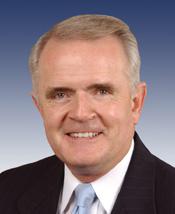
Well, Mr. Speaker, I thank the gentleman from Texas (Mr. Sessions), my friend and colleague, for that generous introduction; and I rise today, Mr. Speaker, in support of both the rule and the overall…
Well, Mr. Speaker, I thank the gentleman from Texas (Mr. Sessions), my friend and colleague, for that generous introduction; and I rise today, Mr. Speaker, in support of both the rule and the overall bill, H.R. 1544, the Faster and Smarter Funding for First Responders Act of 2005.
As a member of the Select Committee on Homeland Security, I am
proud to be an original cosponsor of this bipartisan bill; and I congratulate the chairman, the gentleman from California (Mr. Cox), and the ranking member, the gentleman from Mississippi (Mr. Thompson), for their diligent work on this act.
This bipartisan bill will help expedite the homeland security grant process and ensure that money gets to those who need it the most, our first responders. Importantly for my State, the State of Nevada, this bill will allow the Department of Homeland Security to take into account both resident and tourist populations when determining a State's funding for terrorism preparedness.
My fellow Nevadans know that tourism is a significant part of our State's industry and our population. On any given day of the year, Nevada hosts hundreds of thousands of tourists from across the country and around the world. Las Vegas Boulevard, Mr. Speaker, has more hotel rooms than any other city in the world. According to Nevada's Commission on Tourism, Nevada welcomed over 50 million tourists alone just last year.
Prior to this bill, terrorism preparedness grant funding did not take tourism into consideration in determining a State's population. Yet Nevada's first responders were and remain responsible for protecting everyone, residents and visitors, 24 hours a day, 7 days a week. To ignore the tourism population in determining a State's level of risk simply ignores a large population within a potential terrorist target.
The First Responders Act of 2005 will help States with large tourism populations, like Nevada, receive a more equitable allocation of tourism preparedness funds. H.R. 1544 is a step in the right direction and, in fact, should stand as a model for all homeland security grants. More homeland security programs beyond just the terrorism preparedness grants should also take into account tourism populations.
As we move forward in strengthening our homeland security, I look forward to achieving this goal and to providing our first responders with the critical resources they need to protect the people of this country. I urge my colleagues to support this landmark legislation, and I once again congratulate the chairman and I congratulate my friend, the gentleman from Texas (Mr. Sessions), for their hard work on this effort.
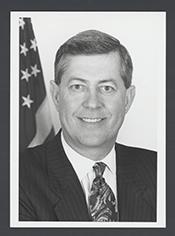
Mr. Speaker, I thank the gentleman from Texas (Mr. Sessions) for yielding me the time, and I rise in support of both the rule and the underlying legislation, H.R. 1544. In 1787, John Jay wrote,…
Mr. Speaker, I thank the gentleman from Texas (Mr. Sessions) for yielding me the time, and I rise in support of both the rule and the underlying legislation, H.R. 1544.
In 1787, John Jay wrote, ``Among the many objects to which a wise and free people find it necessary to direct their attention, that of providing for their safety seems to be the first.'' More than 215 years later, we all agree on the importance of protecting the people. However, this House today finds itself debating the question of just how best should the government protect the people.
In 2001, Congress enacted many sweeping changes to our Nation's anti- terrorism laws, including the formulas by which States would receive homeland security grants through the passage of the USA PATRIOT Act. Under the PATRIOT Act, each State is guaranteed to receive three- quarters of a percent and each territory .25 percent of the total amount appropriated each year for terrorism preparedness grants. The balance of the funds is then distributed to each State and territory based on population.
In hindsight, we can see that this system of allocation is flawed. For example, in fiscal year 2005, the minimum allocation for each State is $11.25 million. Using that total, based on current census numbers, the State of Wyoming would receive a minimum guarantee of $22.23 per person in homeland security grants while the State of California would receive a minimum guarantee of just 31 cents per person. In other words, the Federal Government would allocate approximately 7,100 percent more funding per capita at a minimum to the State of Wyoming than it would to the State of California for homeland security grants.
That is why I am a cosponsor of H.R. 1544 and voted to support the bill in committee. It is the responsibility of this government not only to ensure that we are protecting the people but also to ensure that we do so in an efficient and measured fashion.
Let us be clear about one point. H.R. 1544 does not eliminate minimum guarantees for the States. Under this legislation, each State, regardless of population, would receive a minimum of .25 percent of the total amount appropriated each year for terrorism preparedness grants.
H.R. 1544, however, does require the government to move away from its arbitrary approach to anti-terrorism funding toward a more rational approach. Rather than continuing to simply allow homeland security grant programs to become Federal cash cows for States and localities, this legislation focuses our efforts on what is truly important, namely, our Nation's vulnerabilities.
Bill Text
2 versions available
        [Congressional Bills 109th Congress]
[From the U.S. Government Publishing Office]
[H. Res. 269 Engrossed in House (EH)]

In the House of Representatives, U.S.,

May 12, 2005.
Resolved, That at any time after the adoption of this resolution the Speaker
may, pursuant to clause 2(b) of rule XVIII, declare the House resolved into the
Committee of the Whole House on the state of the Union for consideration of the
bill (H.R. 1544) to provide faster and smarter funding for first responders, and
for other purposes. The first reading of the bill shall be dispensed with. All
points of order against consideration of the bill are waived. General debate
shall be confined to the bill and shall not exceed one hour equally divided and
controlled by the chairman and ranking minority member of the Committee on
Homeland Security. After general debate the bill shall be considered for
amendment under the five-minute rule. It shall be in order to consider as an
original bill for the purpose of amendment under the five-minute rule the
amendment in the nature of a substitute recommended by the Committee on Homeland
Security now printed in the bill. The committee amendment in the nature of a
substitute shall be considered as read. All points of order against the
committee amendment in the nature of a substitute are waived. Notwithstanding
clause 11 of rule XVIII, no amendment to the committee amendment in the nature
of substitute shall be in order except those printed in the report of the
Committee on Rules accompanying this resolution. Each such amendment may be
offered only in the order printed in the report, may be offered only by a Member
designated in the report, shall be considered as read, shall be debatable for
the time specified in the report equally divided and controlled by the proponent
and an opponent, shall not be subject to amendment, and shall not be subject to
a demand for division of the question in the House or in the Committee of the
Whole. All points of order against such amendments are waived. At the conclusion
of consideration of the bill for amendment the Committee shall rise and report
the bill to the House with such amendments as may have been adopted. Any Member
may demand a separate vote in the House on any amendment adopted in the
Committee of the Whole to the bill or to the committee amendment in the nature
of a substitute. The previous question shall be considered as ordered on the
bill and amendments thereto to final passage without intervening motion except
one motion to recommit with or without instructions.
Attest:

Clerk.