Providing for consideration of the bill (H.R. 2744) making appropriations for Agriculture, Rural Development, Food and Drug Administration, and Related Agencies for the fiscal year ending September 30, 2006, and for other purposes.
Legislative Activity
Stay on top of the latest movement without scrolling through every action
Motion to reconsider laid on the table Agreed to without objection.
June 8, 2005 • 12:18 PM
View full timeline
Introduced in House
June 7, 2005
The House Committee on Rules reported an original measure, H. Rept. 109-105, by Mr. Putnam.
June 7, 2005
Rule provides for consideration of H.R. 2744 with 1 hour of general debate. Previous question shall be considered as ordered without intervening motions except motion to recommit with or without instructions. Measure will be read by section. Bill is open to amendments.
June 7, 2005 • 7:41 PM
Placed on the House Calendar, Calendar No. 46.
June 7, 2005
Considered as privileged matter. (consideration: CR H4201-4208)
June 8, 2005 • 11:23 AM
DEBATE - The House proceeded with one hour of debate on H. Res. 303.
June 8, 2005 • 11:24 AM
The previous question was ordered without objection. (consideration: CR H4208)
June 8, 2005 • 12:17 PM
Passed/agreed to in House: On agreeing to the resolution Agreed to by voice vote.(text: CR H4201)
June 8, 2005 • 12:17 PM
On agreeing to the resolution Agreed to by voice vote. (text: CR H4201)
June 8, 2005 • 12:17 PM
Motion to reconsider laid on the table Agreed to without objection.
June 8, 2005 • 12:18 PM
Floor Debate
22 membersWhat members said about H.Res. 303 on the floor
 MDH
MDH JPM
JPM RLD
RLD HBAHP+17
Floor Debate
22 membersWhat members said about H.Res. 303 on the floor
Madam Chairman, first of all, let me express my appreciation to the leader on our side on this subcommittee, the gentlewoman from Connecticut (Ms. DeLauro). This is her first year as the minority…
Madam Chairman, first of all, let me express my appreciation to the leader on our side on this subcommittee, the gentlewoman from Connecticut (Ms. DeLauro). This is her first year as the minority rank on this subcommittee, and she is doing an outstandingly good job, and we all very much appreciate the work that she is doing.
I also want to express my appreciation to my chairman. He also is doing a very good job, particularly under a very difficult set of circumstances; and those difficult set of circumstances are, particularly, the allocation that this subcommittee has been afforded. But that, of course, is universally true. All of these subcommittees have been afforded very small, ineffective allocations, ineffective to do all the things that need to be done. But, nevertheless, in spite of that, I think the chairman has done a good job.
There is one aspect of this bill, however, to which I would like to draw attention, because it is an aspect of the bill that is entirely deficient and not only deficient but, because of these deficiencies, the result is a potential for serious harm to a large number of American citizens. That is the way in which the Food and Drug Administration is treated in this legislation, and the fact that the Congress has not provided to the FDA the kinds of authority that it needs in order to protect the general public against the marketing of prescription drugs in ways that are causing serious harm to large numbers of the American people.
Now, recently we have had two experiences, that is, the Nation has had two experiences, with drugs that have been very difficult and dangerous. The first is antidepressants and the way that they have been marketed. They have been marketed largely to people who were targeted for marketing off-label. A lot of the people who they were marketed to and who used them were young folks, young people, teenagers. The effect of these antidepressants on young folks, youngsters, teenagers, people in their early 20s particularly, has been to engender in them a deep sense of depression which, in many cases, has led to suicide; and it has taken us a long time to get attention focused on that problem.
Another example is the so-called Cox-2 inhibitors, or prescriptions such as Vioxx. Vioxx has presented a major, major problem to consumers across the country. It is likely that several hundred thousand people, as a result of the use of Vioxx, have fallen into conditions where their health has been seriously injured; and it may be, and probably is, that more than 100,000 people suffered death as a result of the use of this prescription drug Vioxx.
Now, that comes about as a result of the failure of this Congress to give the FDA the kind of authority it needs to deal with the drug companies; and I later in the debate on this legislation will offer two amendments to deal with this problem.
But, right now, I want to draw the attention of the Members of this House to this issue. This is a serious issue which affects the health and safety of the American people in material and very dramatic ways. It is an issue that is causing the unnecessary death of large numbers of Americans, and it is an issue that we have not dealt with and should deal with, and if we do address it properly, it will alleviate this condition and stop placing so many of American citizens in the kind of dangerous, desperate circumstances that they have fallen into which have caused serious injury to their health and death in large numbers of people.
So what we need to do is to give the Food and Drug Administration the authority to deal with the pharmaceutical companies in the way that any regulatory agency would deal with the entity that it is regulating.
For example, in the case of Vioxx, once that drug got on the market and it became clear that people were being injured as a result of exposure to it, and the off-label marketing of that drug particularly, once that became clear, the Food and Drug Administration was not in a position to tell the drug company that they had to engage in an educational program which would ensure that people to whom the drug would be dangerous would not be using it. They could not order the pharmaceutical company to do anything with regard to the labeling on that drug. They had to negotiate with the company.
So these are some of the major issues that we are facing, one of the major deficiencies in this legislation that needs to be addressed, and I will be offering two amendments later on in the debate, and I hope that the Members of this Congress will embrace those amendments.
Mr. Chairman, I move to strike the last word.
Mr. Chairman, last night I went before the Committee on Rules to seek the ability to offer an amendment to the bill today that would have given the Food and Drug Administration, the FDA, two critically important new authorities to improve the agency's drug safety operations. It would have given FDA the authority to require drug companies to conduct post-marketing studies of FDA-approved drugs and the authority to mandate changes to the labels of FDA-approved drugs. But the Committee on Rules would not allow the amendment.
Almost every week we hear about another unsafe drug and the significant harm that those drugs are doing to millions of people. Yet Congress has done nothing. The most recent case is the cholesterol- lowering drug Crestor, which a recent study found is significantly more likely than other drugs in its class to cause muscle deterioration that can lead to kidney disease and kidney failure.
Flip through the headlines of the last few months, and we will see many more examples. Of the two most significant drug failures of the last year, they are antidepressants and Vioxx. For years, evidence was building that antidepressants seem to cause an increased rate of suicide among users,
particularly young people. The FDA, however, failed to heed this evidence and delayed taking any action for years because the agency said it did not have enough data to do anything about these reports of suicide.
The reason for this was FDA could not order the drug companies to conduct further clinical trials after a drug is approved. When the agency finally did have enough data back in 2003, it first sought to hide it but eventually told antidepressant makers that there needed to be a warning on suicide. However, it took more than 9 months before that warning was placed on any drug label because the FDA had to negotiate with the drug companies over the label's wording. Patients went 9 extra months without knowing all the risks.
Vioxx was finally removed from the market last September because it increased the risk of heart attacks and strokes. Notably, it was the drug manufacturer, Merck, that removed the drug, not the FDA. An estimated 90,000 to 140,000 Americans suffered heart attacks and strokes as a result of Vioxx. Of these, 30 to 40 percent, or as many as 60,000 people, probably died.
Dr. David Graham, a heroic doctor at the FDA, put these numbers into perspective when he testified before the Senate Finance Committee last November. He compared the number of heart attacks and strokes caused by Vioxx to plane crashes. Dr. Graham stated the Vioxx numbers are the equivalent of two to four airplane crashes every week, week in and week out, week after week, for the past 5 years. If it really were planes that were crashing, then the Congress would be doing something about it. Yet we have done nothing to empower the FDA to prevent another Vioxx.
FDA knew about the dangers of Vioxx more than 5 years ago, and in 2002 the agency decided Vioxx's label needed to have a warning about the increased risk of heart disease. Yet it took nearly 14 months before that warning was added to Vioxx's label because the FDA again had to negotiate the wording with the drug company. FDA could not simply tell Merck that its label must say Vioxx causes increased risk of heart attacks and strokes. Nor could FDA order Merck to conduct a new clinical trial about Vioxx's safety when the FDA learned of other studies indicating safety problems.
My amendment would change that. These commonsense changes are nearly universally accepted by patient safety organizations, endorsed by nearly every major medical journal, and even by a few drug companies. FDA's own director of the Office of New Drugs has said she believes it would be extremely helpful for the agency to have these powers and authorities. They are also endorsed on a bipartisan basis, including by Senators Charles Grassley and Thad Cochran, who have cosponsored a bill that would do almost exactly what I am proposing today.
These changes cannot wait to happen. They cannot wait any longer. Delay is going to cost lives, many lives, tens of thousands of lives in all probability. The amendment should have been made in order by the Committee on Rules, and I am asking the House now today to make this amendment in order. This amendment needs to be considered by the full House of Representatives, and it needs to be considered for no other reason than because by not considering it, we are placing hundreds of thousands of people across this country in dire jeopardy.
We need a Food and Drug Administration that can deal with the drug companies and with the medical manufacturing establishments that it allegedly regulates, deal with them in an effective way, so that we can have true regulation on behalf of the safety and security of the American people, which we do not have today and which this Congress has refused to bring about.
So I am taking this opportunity, Mr. Chairman, to bring this amendment to the floor of the House. I want this amendment considered, and I hope that every Member of the House will see it his or her duty to adopt this amendment today.
Amendment Offered by Mr. Hinchey
Mr. Chairman, I offer an amendment.
Mr. Chairman, I know that this issue is controversial. I know that there are Members of the House who really do not want to address it this afternoon. But we should put that aside. We should put it aside because the safety and security of the American people are at stake here.
The Food and Drug Administration was established by this Congress in order to ensure that pharmaceuticals and subsequently various forms of medical devices and other materials which are used by people who are ill, that those devices and materials can be used by people in a way that is safe and secure and sound. But the fact of the matter is that that is not happening, and we have the ocular proof in front of us every single day.
I mentioned a few moments ago the situation of antidepressants. These antidepressants came on the market without proper, careful review; and in addition to that, they began to be marketed for off-label uses. As a result, large numbers of teenagers, young people, people in their twenties, began to use them when they should not have been using them, and the usage of those antidepressants induced suicidal potential in those people, and many of them carried it out. Many, many people took their lives in direct relationship to the use of those antidepressant drugs.
When that became apparent, the Food and Drug Administration was not able to deal effectively with the drug manufacturers because they did not have the authority. They do not have the authority to tell the drug manufacturers that when a problem becomes evident after the drug is on the market that the drug company should, at the very least, change the label, put information on the label that tells people this kind of experience has been shown to happen by this group of people so that people can be warned about it and therefore not be likely to take it and so that doctors can understand that and not be likely to prescribe it.
That simple act would save the lives of tens of thousands of people. Failing to do it almost inevitably is going to cost the lives of tens of thousands of Americans, because it will not be much longer before we see another antidepressant situation or Cox-2 inhibitor situation, Vioxx situation, come on the market if we do not change the rules, if we do not give the FDA the power to deal effectively with these drug manufacturers.
The Vioxx case is a very clear, strong case in point. After a certain period of time when that drug was on the market, it became obvious that people who were taking it were suffering strokes and/or heart attacks. The FDA, when it became aware of that, was not able to do anything effectively about it. They did not even ask the drug company to take the drug off the market.
Finally, Merck came to the table and properly removed Vioxx from the market, but only after hundreds of thousands of people in this country were seriously affected, and we estimate at least 60,000 people lost their lives, and the number may be higher than that; and all of that began to get the attention of the press and people across the country began to understand it.
Now, for God's sake, what are we doing here? Are we just going to stand by idly while these circumstances continue to happen, while more and more drugs come on the market, week after week, month after month, while more and more people take them without understanding the implications and more and more people suffer, even die, as a result of that?
This Congress has the responsibility to act. We need to make that Food and Drug Administration live up to its responsibilities. And by simply saying in a technical way that, no, we cannot do it today, that does not meet the need, not by any stretch of the imagination.
This amendment needs to come to the floor, and this amendment needs to get the kind of attention that it properly deserves on behalf of the safety and security and the lives of the American people and to be adopted.
So I move the amendment, and I ask my colleagues to embrace it today. Vote for it; support it. Let us pass it this afternoon.
Point of Order
Mr. Chairman, I yield myself such time as I may consume.
Mr. Chairman, my amendment would prohibit the Food and Drug Administration from appointing scientists who have conflicts of interest to FDA advisory committees. The amendment does not change current law; it simply makes sure that the FDA is adhering to current law.
The FDA is charged with protecting the public health and, to assist with this mission, the FDA relies heavily on advisory committees composed of outside scientists to guide the agency policy on the safety and effectiveness of drugs and medical devices when questions arise regarding those products. While the FDA is not bound by the decisions of these panels, the agency itself calls advisory committees one of its most important resources for helping to regulate the over 150,000 marketed medical products that the FDA oversees.
Because of the critically important nature of these committees, there should be no question as to whether the committee members are looking out for the public health. But recent FDA actions have created serious doubts about whether committee members are serving only the public interests and, as a result, industry biases now taint many advisory panel decisions.
Over the past few years, the FDA has routinely waived conflict of interest prohibitions and appointed scientists with direct conflicts of interest to serve on these critical public panels. These appointments completely undermine the objectivity of this outside advice and bias the committee's recommendations, which are reached by a vote of the panel members, some of whom have financial ties to the products being reviewed by that very same panel.
There have been numerous high-profile examples of this over the past 18 months. Just this past April, for example, the FDA convened an advisory committee to examine whether or not to allow silicon breast implants back on the market. That committee contained a scientist who had just recently made a promotional video for a manufacturer of those implants.
Two months prior to that, the FDA convened an advisory panel to review the safety of Cox-2 inhibitors, drugs like Vioxx, which have caused tens of thousands of heart attacks and strokes. Ten of the 32 scientists on that panel had direct financial links to the manufacturers of those drugs. When it came time for the committee to make its recommendations, those ties made all the difference. Without the votes of the ten conflicted scientists, two of those three drugs and the Cox-2 inhibitor class would have been voted down by the panel, instead of receiving the very narrow support and approval they did as a result of those conflicted scientists' votes.
Last year, when there was a huge controversy around the link between antidepressants and suicide, especially among young people, the FDA convened an advisory panel to make recommendations on how the agency should handle those drugs. Three of the 11 scientists on that committee had been paid consultants to the manufacturers of those antidepressants.
These examples are just the tip of the iceberg. Advisory panels on OxyContin, oncology drugs, even over-the-counter athletes' foot creams, all had scientists with conflicts of interest. Almost every advisory committee meeting begins with an FDA statement waiving the conflicts of interest of some of the scientists on that panel.
If you think that scientists who rely on drug companies for their financial wherewithal are going to recommend that the FDA take action that will harm the company that is paying them, then you are living in a fantasy world.
The FDA claims that it cannot find enough qualified scientists without conflicts of interest to fill its advisory committees. This statement is laughable on its surface and an insult to the thousands of independent doctors across this country. It is also not accurate. As the medical journal, The Lancet, recently editorialized, ``It is hard to believe that in a country with 125 medical schools, not to mention the pool of international experts, the FDA cannot find experts who do not have financial ties with companies whose products are under review.'' Of course, the FDA can find scientists without conflicts of interest. They just do not want to do it, and they are not doing it.
Advisory committees are critical parts of the FDA's regulatory scheme, and they should be free of any direct conflict of interest. Without this, there is no way to assure the public that a panel's recommendations are fair and unbiased and in the interest of the public health.
After one of the most tumultuous years in the FDA's history, this amendment is needed to restore the public's confidence and integrity that has been lost in the FDA's advisory system. A wide range of public health groups support this amendment, and numerous recent editorials have called for this kind of reform. I urge all of my colleagues to support this amendment.
Mr. Chairman, I reserve the balance of my time.
Mr. Chairman, I yield 2 minutes to the gentlewoman from Connecticut (Ms. DeLauro).
Mr. Chairman, can I inquire as to how much time is remaining?
Mr. Chairman, is there anyone on the other side who wishes to speak on the amendment?
Mr. Chairman, I yield 2\1/2\ minutes to the gentleman from Arkansas (Mr. Berry).
Mr. Chairman, I yield 2 minutes to the gentleman from Michigan (Mr. Stupak).
Mr. Chairman, I yield myself such time as I may consume.
Mr. Chairman, I frankly find the arguments that have been presented against this amendment, in a word, incredible. They seem to me to be coming from the entities in our country, in our economy, that need regulation. It seems as if the words were written by them.
We have 125 medical schools in this country. We have a bevy of expert scientists who are capable of dealing with these kinds of issues. For anyone to stand on the floor of this House and say that you cannot construct a panel, an advisory panel to advise the Food and Drug Administration with regard to the safety and security of a particular drug without putting on that panel one-third of the members who are conflicted in their interests, who are being paid by the economic entities that are about to be regulated, or should be regulated, or who have done commercial advertisements for some of those entities, that you cannot construct a panel without having a third of the members with that kind of conflict of interest, is the most absurd statement I think I have ever heard uttered on the floor of this House.
We have scientific bodies throughout our government and throughout the private sector, throughout the National Institutes of Health, throughout any number of scientific organizations, who put together panels; and they are never obliged to include within those panels people who are conflicted in their interests with regard to the decisions that are going to be made by those panels. It is ridiculous, absurd to stipulate that you cannot construct a panel without having people with a conflict of interest.
I am just asking the Members of this body to tell the Food and Drug Administration that when you draw together a panel, do the same thing that other regulatory bodies do. Make sure that among the members of those panels, there is no one who is conflicted in their interests.
No one who is being monetarily compensated by the entity that is being regulated; in the case of the drug companies no one who is getting money from the drug companies, no one who is on the payroll of drug companies. That is all you have to do. It is a very simple thing. There are thousands of people to reach out to who are capable and qualified to come onto those panels and make those kinds of decisions.
To say that you cannot put together a panel without including in it one-third of the members who are conflicted in their interests is absolutely ridiculous.
And so, Mr. Chairman, I ask the Members of this body to do something that is in the best interests of the people of our Nation. Let us have a Food and Drug Administration that is actually carrying out its regulatory authorities as this Congress set them up to do.
Let us have an FDA that actually regulates the entities.
Mr. Chairman, I yield such time as she may consume to the gentlewoman from Connecticut (Ms. DeLauro).
Mr. Speaker, I yield myself such time as I may consume. Mr. Speaker, I want to thank the gentleman from Florida (Mr. Putnam) for yielding me the customary 30 minutes. Mr. Speaker, passage of this…
Mr. Speaker, I yield myself such time as I may consume.
Mr. Speaker, I want to thank the gentleman from Florida (Mr. Putnam) for yielding me the customary 30 minutes.
Mr. Speaker, passage of this rule will allow the House to consider the Agricultural, Rural Development, Food and Drug Administration, and Related Agencies Appropriations Bill for Fiscal Year 2006.
I want to express my appreciation to the gentleman from Texas (Chairman Bonilla) and the subcommittee's new ranking member, the gentlewoman from Connecticut (Ms. DeLauro), for working so well together on this bill which clearly deserves the support of all the membership of this House.
This important bill provides the funding for our domestic nutrition and anti-hunger programs, international food aid, the Food and Drug Administration, and food inspection. Although traditionally the bill is not controversial, it is an important appropriations bill because of the vitally important programs that are supported here.
I want to express my strong support for the Department of Agriculture programs that fight to end hunger here at home and around the world. Mr. Speaker, hunger is a political problem, one that can be solved if only we have the political will to do so. Regrettably, the Bush administration and the leadership in this House and the Senate have not made the necessary commitments to reduce poverty and end hunger in our country. Indeed, hunger and poverty are once again on the rise in the United States. More children are going to bed hungry at night right here in the United States of America, the richest and most blessed country in the world. Every year six million children in our world die of hunger-related causes. We cannot and should not stand by and watch these tragedies unfold.
Mr. Speaker, it is time we raise the bar and pledge to end hunger once and for all. It is time to really tackle the issue of poverty. In the meantime, until we make that commitment and back it up with real action and greater resources, we must at least maintain funding for the domestic and international nutrition and anti-hunger programs in this bill. That is why it is so important that this bill increases funding for mandatory programs like food stamps and other child nutrition programs like the school lunch program.
I am also pleased that discretionary programs like WIC also receive increases. These programs are among the most successful of our Federal anti-hunger programs, and they help millions of Americans get the food they could not otherwise afford to buy.
Unfortunately, important programs like the summer food service program are not fully funded. This important program provides meals to low-income children during the summer when they can not receive a school lunch because the schools are closed for summer vacation. There is no reason why a child who receives a lunch at school during the school year should be denied a lunch during the summer merely because school is out of session.
Another important program that needs to be expanded is the school breakfast program. Too many of our children begin their school days hungry. They cannot concentrate as well as children who have something to eat before class. Those children who are fortunate enough to receive a school breakfast usually have to get to school earlier than the other kids. There is a stigma that gets attached to these children because it is plain for all the students to see who cannot afford to eat breakfast at home.
We need to expand the school breakfast program so that it is a truly universal program, and we must provide school breakfast at the start of the school day and not before. These two simple actions will ensure that a nutritious meal is provided to hungry children without attaching any social stigma. The consequences of such basic changes will be measurable increases in learning and test scores, as well as improvements in health.
A third program that needs to be fully funded is the effort to end the reduced price meal. Currently, low-income children are eligible for either a free school lunch or a reduced price lunch. The reduced price lunch costs 40 cents per meal. While that may not seem like a lot to you or me, it can put a real strain on the finances of many low-income families who are struggling to make ends meet. Too often, school lunch administrators report seeing children who are able to buy lunch at the beginning of the month stop eating as the month goes on, merely because their families cannot afford to pay for that reduced price lunch as money gets tighter and tighter towards the end of the paycheck.
The Child Nutrition Reauthorization Bill, a truly bipartisan bill that was signed into law last year, phases out the reduced price meal. Last year, thousands of anti-hunger activists roamed the halls of Capitol Hill with their blue and white ERP buttons on, and Congress responded. Now it is time to back up that promise and fully fund the effort to end the reduced price meal.
Mr. Speaker, the fiscal year 2006 bill also provides funding for the International Food Aid Programs administered by the USDA. These programs provide emergency food aid to regions of the world that need help today. I am pleased that President Bush pledged to release $674 million for humanitarian relief on the Horn of Africa. However, while it is important that the United States provide the funding for humanitarian relief around the world, the Committee on Appropriations must ensure that these funds are replenished for the following year.
Unfortunately, this bill underfunds the Food for Peace Program, which is one of our most important food aid and development programs. I commend the gentleman from Texas (Chairman Bonilla) for restoring $222 million to this program above the President's request. But the program still remains $60 million below last year's level. While emergency funding was included in the tsunami relief package, we should not rely on emergency funding when we can properly fund this important program in the Agriculture Appropriations bill. Nor should we shortchange funding for the ongoing programs that are funded through the Food for Peace and other international food aid programs.
Finally, Mr. Speaker, I also want to commend the gentleman from Texas (Chairman Bonilla) and the ranking member, the gentlewoman from Connecticut (Ms. DeLauro), for increasing funding for the George McGovern-Robert Dole International Food for Education and Child Nutrition Program. This program uses American commodities to provide school meals to hungry children around the world. It is named after two men who have led the fight against child hunger while they served in the United States Senate and as private citizens.
Senator George McGovern is a dear friend of mine who has worked tirelessly on ending hunger over his decades of public service, and I cannot say enough about Senator Bob Dole's work on combating hunger here and abroad. He is a man of great integrity and someone who I respect immensely. I am very pleased, Mr. Speaker, to have the opportunity to work with his wife, Senator Elizabeth Dole, on a number of anti-hunger efforts.
The McGovern-Dole International Food for Education and Child Nutrition Program is based on our own school lunch and breakfast program. It provides a nutritious meal for hungry children in a school setting. It has resulted in not only reducing child hunger abroad but in better schools and stronger community support for education in some of the poorest communities in the world. It is a successful program that is developing the long-term support of the Bush administration, and it deserves to be expanded.
I am pleased that the Bush administration and the leadership in the House and Senate agree on the importance of the McGovern-Dole program. The President's budget has included an increase in funding for this program over each of the last 3 years; and, more importantly, the Congress has agreed in increased funding over the past 3 years.
Mr. Speaker, while I believe the funding must be restored to $300 million, the original level of the Global Food for Education Initiative, the pilot program that preceded the McGovern-Dole program, I am pleased that the gentleman from California (Chairman Lewis) and the gentleman from Texas (Chairman Bonilla) have supported the President's request for increased funding of $100 million for fiscal year 2006.
I am also encouraged by the level of commitment to the McGovern-Dole program in the Senate, and I am hopeful that funding for this program will be further increased when the Senate considers this bill later this year.
Mr. Speaker, in December of 2004, 105 of our House colleagues sent a bipartisan letter to President Bush supporting the McGovern-Dole program. That letter is as follows:
Congress of the United States,
Washington, DC, December 2, 2004.
Hon. George W. Bush,
President of the United States,
Washington, DC.
Dear Mr. President: We are writing to urge you to provide
$300 million in your Fiscal Year 2006 Budget Proposal for the
George McGovern-Robert Dole International Food for Education
and Child Nutrition Program. We believe it is urgent to
restore funding for this program at levels similar to those
of the original pilot program.
We strongly believe this funding is critical for sustaining
and expanding the McGovern-Dole Program in order to combat
terrorism and to help build and consolidate democracy in the
Middle East, southern Asia, the Near East, and in other
regions critical to U.S. national security. As you are aware,
the McGovern-Dole Program provides donations of U.S.
agricultural products, as well as financial and technical
assistance, for school feeding and maternal and child
nutrition programs in low-income countries. We note that
recommendations made by the General Accounting Office (GAO)
in February 2002 on how to strengthen and improve the
administration and implementation of school feeding programs
were fully integrated into the law establishing the McGovern-
Dole Program, enhancements that we believe have contributed
to its current success.
Both the initial plot program and the current McGovern-Dole
Program have a proven track record at reducing the incidence
of hunger among school-age children and improving literacy
and primary education, especially among girls, in areas
devastated by war, hunger, poverty, HIV/AIDS, and the
mistreatment of women and girls. School meals, teacher
training, and related support have helped boost school
enrollment and academic performance. McGovern-Dole nutrition
and school feeding programs also improve the health and
learning capacity of children both before they enter school
and during the years of primary and elementary school
In February 2003, the U.S. Department of Agriculture
evaluated the McGovern-Dole pilot program and found
significant positive results. Specifically--
``The results to date show measurable improvements in
school enrollment, including increased access by girls. In
projects involving more than 4,000 participating schools, the
WFP reports an overall enrollment increase exceeding 10
percent, with an 11.7 percent increase in enrollment by
girls. The PVO's report an overall enrollment increase of
5.75 percent in GFE-participating schools. In some projects,
increases in enrollment were as high as 32 percent compared
with enrollment rates over the previous three years.''
(USDA, The Global Food for Education Pilot Program: A Review
of Project Implementation and Impact, page 2, February 2003)
We firmly believe that these programs reduce the risk of
terrorism by helping to eliminate the hopelessness and
despair that breed terrorism. American products and
commodities are directly associated with hunger alleviation
and educational opportunity, encouraging support and good
will for the United States in these communities and
countries.
We strongly urge that you restore the capacity of this
critically important program by providing $300 million for
Fiscal Year 2006.
Sincerely,
James P. McGovern, Nancy Pelosi, James A. Leach, Hilda L.
Solis, Todd Tiahrt, Ike Skelton, Jo Ann Emerson, Frank
R. Wolf, Tom Lantos, Donald A. Manzullo, Earl Pomeroy,
Marcy Kaptur, John Shimkus, George Miller, Roger F.
Wicker, Rosa L. DeLauro, Lynn C. Woolsey, Anthony D.
Weiner, Chris Van Hollen.
Neil Abercrombie, Ron Kind, Sam Graves, Jose E. Serrano,
Albert R. Wynn, Robert Wexler, Maxine Waters, John F.
Tierney, Gary L. Ackerman, Robert E. Andrews, Earl
Blumenauer, Leonard L. Boswell, Corrine Brown, Michael
E. Capuano, Elijah E. Cummings, William D. Delahunt,
Bob Etheridge, Tammy Baldwin, Madeleine Z. Bordallo.
Rick Boucher, Sherrod Brown, Joseph Crowley, Susan A.
Davis, Michael F. Doyle, James L. Oberstar, John W.
Olver, David E. Price, Bobby L. Rush, Bernard Sanders,
Janice D. Schakowsky, Vic Snyder, Eni F. H.
Faleomavaega, Barney Frank, Donald M. Payne, Steven R.
Rothman, Martin Olav Sabo, Max Sandlin, Adam Smith,
Fortney Pete Stark.
Bob Filner, Charles A. Gonzalez, Raul M. Grijalva,
Stephanie Herseth, Tim Holden, Eddie Bernice Johnson,
Rick Larsen, Stephen Lynch, Karen McCarthy, Jim
Marshall, Alcee L. Hastings, Maurice D. Hinchey, Sheila
Jackson-Lee, Dale E. Kildee, Barbara Lee, Carolyn
McCarthy, Carolyn B. Maloney, Jim Matheson, Betty
McCollum.
Michael R. McNulty, Gregory W. Meeks, Dennis Moore,
Richard E. Neal, Jim McDermott, Sam Farr, Christopher
H. Smith, Martin T. Meehan, Juanita Millender-McDonald,
James P. Moran, Eleanor Holmes Norton, Thaddeus G.
McCotter, Major Owens, Linda T. Sanchez, Thomas H.
Allen, Doc Hastings, Patrick J. Kennedy, Edward J.
Markey, Brad Miller, and Sander M. Levin.
Mr. Speaker, the following is a letter from Secretary of Agriculture Mike Johanns expressing his support for the McGovern-Dole program:
Hon. James P. McGovern,
House of Representatives, Cannon House Office Building,
Washington, DC.
Dear Congressman McGovern: Thank you for the letter of
December 2, 2004, from you and your colleagues to President
George W. Bush, expressing your support for the McGovern-Dole
International Food for Education and Child Nutrition Program
(FFE). The White House forwarded your letter to the
Department of Agriculture (USDA) for reply. We apologize for
the delay in responding.
This Administration greatly appreciates your support for
this very successful program. USDA now has 5 years of
experience with FFE and its predecessor, the Global Food for
Education Initiative. These programs have reached over 7
million beneficiaries and provided close to 1.3 million tons
of agricultural commodities as well as other types of
assistance to schools and communities. The positive results
include increased school enrollment, especially among
girls; declines in absenteeism; improved concentration,
energy, and attitudes toward learning; and infrastructure
improvements, including classrooms, kitchens, storage
facilities, water systems, latrines, and playgrounds.
We are especially gratified that FFE has resulted in
greater local commitment to school feeding activities. In
many cases, FFE activities have been so successful that local
support for school feeding is expanding to the point that FFE
assistance can shortly be ended. Examples of these
``graduating'' countries are Kyrgyzstan, Lebanon, Moldova and
Vietnam. We will continue to allocate some FFE resources to
these countries this year as we expand the benefits of FFE by
implementing programs in additional countries. Additionally,
the success of FFE has resulted in other donors becoming
involved in school feeding programs. These other donors
include the European Union, the German Agency for Technical
Cooperation, the Japanese Development Agency, Canada, and the
World Health Organization.
We agree that funding for FFE should be expanded in fiscal
year (FY) 2006. While the Administration is making a
concerted effort to cut the budget deficit, we have requested
$100 million in appropriated funding for FFE in FY 2006,
which is double the funding for the program in FY 2004 and an
increase of 15 percent compared to FY 2005.
Thank you again for writing to support this important
program. We look forward to continuing to work with you to
improve USDA's overseas food aid programs. A similar letter
has been sent to each of your colleagues.
Sincerely,
Mike Johanns,
Secretary.
Mr. Speaker, the gentleman from Texas (Chairman Bonilla) has crafted a bill that deserves to be supported today; and while there is room for improvement, I believe that the gentleman from Texas (Chairman Bonilla) and the ranking member, the gentlewoman from Connecticut (Ms. DeLauro) and the Subcommittee on Agriculture of the Committee on Appropriations did the best they could with the limited resources they were given. Again, I thank my friend from Florida (Mr. Putnam).
Mr. Speaker, I reserve the balance of my time.
Mr. Speaker, I yield myself such time as I may consume.
Before I yield to our next speaker, I would just like to respond to something the gentleman from Florida had said in his comments on hunger.
As I should point out to the gentleman, there are 36 million people in the United States of America who are hungry, and every single one of us in this Chamber should be ashamed of that fact. We can do better.
He mentioned the problem of obesity. I should point out to the gentleman that there is a relationship, believe it or not, between malnutrition and hunger and obesity. A lot of the cases of obesity are directly related to the fact that a lot of families cannot afford to put a decent meal on the table. So these kids end up eating junk food, and it results in the obesity problem.
We have a huge problem here. We should not minimize it, and we have a long way to go.
Mr. Speaker, I yield 6\1/2\ minutes to the gentlewoman from Connecticut (Ms. DeLauro), the ranking Democrat on the subcommittee.
Mr. Speaker, I yield 6 minutes to the gentlewoman from New York (Ms. Slaughter).
(Ms. SLAUGHTER asked and was given permission to revise and extend her remarks.)
Mr. Speaker, I yield 5 minutes to the gentleman from Wisconsin (Mr. Obey).
Mr. Speaker, I yield 2 minutes to the gentleman from Oregon (Mr. Blumenauer).
Mr. Speaker, I yield myself the balance of my time.
I thank the gentleman from Texas (Mr. Bonilla) and the gentlewoman from Connecticut (Ms. DeLauro) for this bill which I think is a good bill despite an unsatisfactory allocation. I think this bill deserves support by all our colleagues. However, I would respectfully suggest that this Congress in the future focus more on alleviating hunger and poverty in this country.
Yesterday was National Hunger Awareness Day. There were thousands of people that descended on Capitol Hill from all over the country urging Congress to do more. I hope we will do more. They are right. There is much more for us to do.
Mr. Speaker, I yield back the balance of my time.
Mr. Chairman, I yield myself such time as I may consume. I thank the gentleman for his statement. I am pleased to join him for the first time in my capacity as ranking member of the agriculture…
Mr. Chairman, I yield myself such time as I may consume.
I thank the gentleman for his statement. I am pleased to join him for the first time in my capacity as ranking member of the agriculture appropriations subcommittee. It has been a pleasure working with the gentleman from Texas and his staff to put together the 2006 agriculture appropriations bill and with the gentleman from California (Mr. Lewis) and the gentleman from Wisconsin (Mr. Obey) as we worked in full committee to get here today.
I, too, would like to say thank you to the staff of the subcommittee: to Martha Foley; to my own personal staff, to Karen Wilcox, Ashley Turton and Becky Salay; the majority office, Martin Delgado, Maureen Holohan, Leslie Barrack, Tom O'Brien, Jami Burgess. I really again say thank you for your expertise and for your patience. Let me also compliment the chairman on doing the very best with limited resources in this bill. Unfortunately, we know that the budget situation means that the funding allocation for this subcommittee was simply not sufficient to meet all the needs of rural America and our Nation's farmers.
When I chose to sit on this subcommittee 9 years ago, I did so because I believed that the issues overseen by this subcommittee are core responsibilities of the Federal Government. This is the only subcommittee where farm policy, rural development and conservation, nutrition programs, food safety, drug regulations, and public health all come together. Although some might be surprised to learn, I have nearly 400 farms in my district ranging from dairy farms to horticulture and aquaculture, to orchards and vegetable cultivation. In fact, the first experiment station in the United States still does cutting-edge research in New Haven.
Another area that I have spent time on is determining how we can best secure our food supply, something in which every American has a stake. My duties as cochair and founder of the bipartisan Food Safety Caucus have informed my understanding of the importance of the responsibilities of USDA and FDA alike, giving me the opportunity to visit slaughter plants and feed lots as well as fruit and vegetable farms across the country.
I see food safety as a public health issue. I look forward to finding ways that can mutually benefit the health of our people, our farms, and our food supply. In addition, urban areas like New Haven rely on feeding programs for women, infants and children, for schools, for seniors, and for some of the disabled living on the edge of poverty.
Yesterday was National Hunger Awareness Day, and our subcommittee is certainly aware that the President's budget predicted an increase in the use of food stamps in 2006. Unfortunately, this bill does not provide enough funding to maintain current participation in the Commodity Supplemental Food Program. At least 45,000 participants, the overwhelming majority of older Americans, will have to be dropped from this program unless there are more funds provided.
Ensuring that these programs are funded is, in my opinion, among the very serious moral obligations of government. It is my belief that the bill before us today is more than a list of programs and funding levels. It is statement of values, of principles and priorities, a moral document so that when we discuss the bill and how it allocates $16.8 billion for USDA, I believe we must think of it in those terms.
We should remember that the farm programs and the international trade promotion and advocacy that help our farmers across the country and sell our products have profound implications on our Nation's overall economy and our quality of life, that research programs at USDA are critical to our efforts to protect our agricultural plant and animal products, our environment, and our public health.
Unfortunately, in some of these area this bill falls short. I believe that the President's budget failed to meet the needs of rural America, decimating rural development programs. This bill makes headway in reversing cuts made by the President. However, I am concerned that funding for water and waste grants, for example, remains below the level of last year's House bill and well below the 2004 bill.
Rural America faces serious economic development challenges: affordable housing, clean drinking water, sewerage systems, access to remote educational and medical resources. I am afraid that this funding shortfall will lead to long-term deficiencies in rural infrastructure.
Of course, this bill covers the funding of one of the most important agencies in our entire government, the Food and Drug Administration within the Department of Health and Human Services. FDA oversees some of the most critical products that our citizens rely on every single day. The vast majority are processed and fresh foods, except for meat, poultry, and egg products; our prescription and over-the-counter drugs; medical devices; our blood supply.
This agency had many problems over the last year, from the recalls of Bextra and Vioxx to hearings in which its drug safety scientists have been at odds with the senior management of FDA. It is troubling, very troubling, that the FDA's acting commissioner was not permitted to come before our subcommittee to testify this year, and that failure made it difficult for the committee to make informed decisions.
I thank the chairman for accepting the amendment that I offered in subcommittee to withhold 5 percent of the funds from the Food and Drug Administration's central offices until the head of the agency testifies regarding their budget request. This will not affect food or drug safety. It will only affect FDA's administrative offices. But I am sure that it will serve to get the administration's and the leadership of FDA's attention.
On that same topic, I thank the chairman for working with me to include funding to double the annual funding for review and direct-to- consumer ads by FDA, as well as another $5 million for drug safety at the FDA.
In 2001, the drug industry spent $2.7 billion on direct-to-consumer advertising, but the FDA office charged with ensuring that those ads are accurate was funded at less than $1 million, $884,000 to be precise. Doubling that amount is a small start toward remedying the inequitable advantage, and the $5 million will be devoted to the most critical aspects of drug safety.
I find it unfortunate the bill includes a 1-year limitation on implementation of the country of origin labeling for meat and meat products. Country of origin labeling would give people the information they need to make an informed choice to protect the safety of their families. Thirty-five other countries that we trade with, including Canada, Mexico, members of the European Union, already have a country of origin labeling system in place. I believe it is a mistake to not move forward on implementing country of origin labeling.
On International Food Aid, the subcommittee bill restores $222 million of funds under Public Law 480 that the administration sought to move to USAID, and I thank the chairman for preventing that move. However, we remain well below the funding level the past few years for that critical aid program. This law not only benefits those in dire need around the world, many of whom are starving to death, it benefits our farmers and our maritime shippers by utilizing our farm products and sources of transportation, and I hope that we can bring that funding level up before this bill becomes law.
I am pleased that the President's proposals to change formula funding for agriculture research institutions and to alter the funding stream for the Food and Safety Inspection Service through user fees were not included in the bill.
I also appreciate the chairman's working with the Democratic members of the subcommittee to begin to fund last year's Specialty Crop Competitiveness Act to enhance specialty crops such as fruits, vegetables, tree nuts, dried fruits, and nursery crops in this bill and for the Farmers Market Promotion Program, a function that can expand the farmer-consumer relationship in many areas of our country.
The programs funded through this bill directly impact the everyday lives of every American, from public health and FDA to rural development, infrastructure maintenance, environmental
conservation and preservation, to nutrition assistance at home and abroad. Failure to adequately invest in these programs will have serious long-term consequences for our Nation.
Again, I have enjoyed working with the chairman and his staff, and I believe that we can take pride in the progress we have made in significantly improving the bill over the proposals that we did receive from the President.
Mr. Chairman, I yield 2 minutes to the gentleman from California (Mr. Farr).
Mr. Chairman, I yield 5 minutes to the gentleman from Wisconsin (Mr. Obey), the ranking member of our committee.
Mr. Chairman, I yield myself 2 minutes.
Let me just say that I want to make it clear that what we tried to do with regard to the Food and Drug Administration was to call attention to the series of crises that, in fact, have been rampant over the last several months, whether it is Vioxx or whether it is Bextra or whether it is the post-marketing studies that were to occur that never did occur or the slighting, I believe, of our committee in not coming forward and having the director come before our committee.
What we tried to do is to create a balance, and that is to provide additional funding for the Office of Drug Safety to look at direct-to- consumer advertising in order to try to protect the public and to provide additional funding to create some more infrastructure.
I, too, believe that we should have made in order the amendments offered by the gentleman from New York (Mr. Hinchey). Really what should be happening is FDA should be coming to the Congress for authority in order to be able to change the labeling that, in fact, ultimately protects the public interest and that we ought to have the opportunity and they ought to come and demand from us authority in order to do post-marketing surveys about the risks of some of the products that are on the market. They should be coming to us.
Instead, we want to provide that authority but are not allowed to be able to do that. I think that it was a mistake for us not to do that, but I think we need to continue this effort about trying to provide the agency which has the regulatory power over the pharmaceutical industry to develop some spine in order to be able to protect the public interest.
Mr. Chairman, I yield 5 minutes to the gentlewoman from Ohio (Ms. Kaptur).
Madam Chairman, I yield 2\1/4\ minutes to the gentleman from Illinois (Mr. Emanuel).
Madam Chairman, I yield 5 minutes to the gentleman from New York (Mr. Hinchey), a member of the subcommittee.
Madam Chairman, I would like to inquire about how much time is remaining on both sides.
Madam Chairman, I reserve the balance of my time.
Madam Chairman, I would ask the chairman if he has any additional speakers.
Madam Chairman, I yield myself the remaining 2\1/2\ minutes to close.
Madam Chairman, as we conclude the general debate, I wanted to reiterate that it has been a pleasure to work with the gentleman from Texas (Chairman Bonilla) on the bill. Given limited resources, I think we have tried to do a good job to meet the needs of rural America, our Nation's farmers, and other accounts funded in the bill.
As we begin to move through the amendment process, I look forward to trying to address several areas in the bill that I believe could use some improvement.
I mentioned earlier the Commodity Supplemental Food Program. A majority of older Americans, nearly 45,000 participants, will have to be dropped from this vital program unless more funds are provided.
Also of concern to me is the 1-year limitation on implementation of country of origin labeling for meat and meat products. Consumers in this country need the information to make informed decisions for their safety and the safety of their families, and I hope that the House will reconsider the country of origin labeling provision in this bill.
Overall, I think that the committee can feel good about the work that it has done on this legislation thus far. I am hoping that we can look at an amendment process where we can improve the bill even more in just a few critical areas.
I would hope that with regard to the Food and Drug Administration that, in fact, we will be able to provide them with the authorities that I think the Nation would believe that they desperately need, and that is to be able to do post-marketing studies on drug products on the market and also to change labels that would need changing in order to protect the citizenry of this country.
Madam Chairman, I yield back the remainder of my time.
Madam Chairman, I move to strike the requisite number of words.
Madam Chairman, I rise in support of this amendment. Unfortunately, plant diseases are continuously emerging; and they can threaten not only our agriculture but our environment and our public health. I think that in Connecticut, for instance, I will talk about sudden oak death, which has been identified recently. We are looking at potentially massive deforestation, and we are working hard at the New Haven Experiment Station to cooperate on research on the plant disease before our forests of Connecticut are heavily impacted.
We all know the results of massive deforestation: Bad for our land conservation, bad for our environment, and it contributes to the lowering of, the actual lowering of our air quality.
Mr. Chairman, I urge a ``yes'' vote on this amendment.
Mr. Chairman, I offer an amendment.
Mr. Chairman, I thank the gentleman for accepting the amendment.
Mr. Chairman, I yield 2 minutes to the gentleman from Arkansas (Mr. Berry).
Mr. Chairman, I thank the gentleman for yielding me this time.
I hear a lot of talk about voluntary, but we have no mandatory right to recall tainted products. We have voluntary labeling of drugs, which can hurt people. We have voluntary marketing studies after a drug has been brought to market. When are we going to do something that makes sure that we are protecting people's interests?
Country-of-origin labeling is about providing people the information they need to make an informed choice to protect the safety of their families. Thirty-five other countries that we trade with, including Canada, Mexico, members of the European Union, have country-of-origin labeling. Seven out of ten people say they are willing to pay more to know where their food is coming from.
Food imports are increasing. The number of inspections of imported meat is actually decreasing. Consumers have a right to know, given the fact that we continue to have major recalls of meat products. This year we have had over 30 recalls.
This effort is about being able to trace back contaminated product in the event of a recall. Knowing the source of an outbreak is a critical part of the process so that we can quickly take action to prevent people from getting sick. It is critically important considering the 76 million sicknesses, 5,000 deaths that occur every year from food-borne illness.
Some say that if we halt the implementation of the country-of-origin labeling for meat, it will allow more time to consider the impact on the food industry. Congress has given the USDA more than 2 years to design a program that is fair to all parties including industry and consumers. Country-of-origin labeling will not violate trade agreements, lead to retaliation. It will not bankrupt the food industry. It simply says to consumers they will know where their food comes from. We owe the American people that.
I urge my colleagues to support the Rehberg-Hooley amendment.
Mr. Chairman, I reserve the balance of my time.
Mr. Chairman, I yield back the balance of my time.
Mr. Chairman, I wish to speak on the point of order.
Mr. Chairman, I want to echo my colleagues' comments, because I think that we have an obligation. In my opening comments, I said that I believed that this bill is about what the House of Representatives and Members who are part of this effort have been asked to do, and we have been asked to protect the public interest on a whole variety of measures, and, in this case, we are talking about life and death.
Mr. Chairman, it would seem to me that the regular order of the House would be to allow legislation that in fact meets the definition or the goal of the mission that we have been entrusted with. I wish that the Committee on Rules would have made this amendment in order because it is so critical to public safety.
I concur with my colleague when he says if it is not made in order, then we have to concede the point of order. But what we are conceding is the life and death of American people, and that is not the regular order.
Mr. Chairman, I thank the gentleman for yielding me this time.
I rise to speak on the Hinchey amendment to require that the FDA stop waiving conflict of interest revelations by their advisors and to start to make an affirmative search for scientists who can give unconflicted advice to this critically important agency.
Unfortunately, there is abundant evidence that scientists are being invited onto and accepted onto these committees, even when they tell the FDA that they have a conflict. They are permitted to serve, regardless of conflict. This must stop.
Other agencies, such as the NIH, have regularly found unconflicted, fully qualified professional advisors so that the agency can receive the best, unbiased advice possible.
I am mindful that there may be scientists whose expertise deserves to be presented to an advisory committee, and nothing in this amendment, as I understand it, precludes these individuals from being asked to testify before a committee.
When enacted, this amendment will also start to contribute to and rebuild the credibility of the actions of FDA. We cannot have even the aura of influence by the pharmaceutical industry or other regulated industries when it comes to the FDA.
Surely, in a country that is renowned for its scientific and medical expertise, I think we have 125 medical schools in the United States, that it is possible to find scientists without conflicts of interest to advise the FDA and to protect the public health.
I urge support for the Hinchey amendment.
Mr. Chairman, let me just ask a point of inquiry here. As I understand it, this amendment is for a year's duration?
Mr. Chairman, I yield myself such time as I may consume. Mr. Chairman, I am pleased to bring before the House today the fiscal year 2006 appropriations bill for agriculture, rural development, the…
Mr. Chairman, I yield myself such time as I may consume.
Mr. Chairman, I am pleased to bring before the House today the fiscal year 2006 appropriations bill for agriculture, rural development, the FDA and related agencies. As many people know, this bill does not just fund agriculture issues that are so important for the Nation and the world but also funds the Food and Drug Administration, the Women, Infants and Children program, and the food stamp program. There are a wide variety of issues that are very significant to this Nation and the world.
This is a bipartisan bill, Mr. Chairman. I am very proud this year to have worked for the first time with the gentlewoman from Connecticut (Ms. DeLauro), who was a great partner in putting this bill together, as are all the members of the subcommittee. This is a great subcommittee that comes to the table every day with sometimes differences of opinion, but at the end of the day want to get a bill done. As chairman of this subcommittee, it has been a very fulfilling experience to have gone through this process with this great group.
We have difficult challenges every year when we put this subcommittee mark together and when we put the bill together. We had over 2,100 individual requests from Members; so with the good staff that we have that I will get into a little more later, we have had to go through with a fine-tooth comb every request to make sure that it does not overlap with another request and then to prioritize all of these very important issues that come from Members all over the country.
I would also like to thank the staff for working on this. I want to take a moment to mention some very important names who have worked on this bill, sometimes day and night and on weekends as well: Martha Foley of the minority staff; and Maureen Holohan, Leslie Barrack, and Jamie Swafford of the majority staff. In addition, I want to thank our detailee Tom O'Brien and Walt Smith from my personal staff; and, of course, my distinguished clerk, Martin Delgado, who does a fabulous job on this bill. I also want to take a brief moment to recognize Joanne Perdue who worked on the committee for several years and retired from the committee just this past month.
Mr. Chairman, I would also like to point out just in very broad terms that this bill takes care of a lot of issues that are critical not just to agriculture producers but to consumers in terms of food safety, research projects that are going on in every State in this Nation. A lot of people go to the grocery store, Mr. Chairman, and they see that big truck pulling up in the back of the store and unloading goods that are put on shelves and in the freezers at the local grocery store and their products that are sold at a high quality for a good price. Quite frankly, most Americans do not know all of the policy and all of the research and all of the hard work that goes into putting that product on the shelf so that Americans can go into the store, use those coupons and enjoy themselves and the quality of life that it brings to Americans all across the country. Again, there is a lot of detail that goes into putting this bill together.
I am also very proud to work hand in hand with the gentleman from Virginia (Mr. Goodlatte), our authorizing chairman, who has been a partner in this process not just this year but every year. So all of these policies and all of these programs that I am talking about here have been a team effort.
Mr. Chairman, I include at this point in the Record the following tabular material related to the bill:
[GRAPHIC] [TIFF OMITTED] TH08JN05.001
[GRAPHIC] [TIFF OMITTED] TH08JN05.002
[GRAPHIC] [TIFF OMITTED] TH08JN05.003
[GRAPHIC] [TIFF OMITTED] TH08JN05.004
[GRAPHIC] [TIFF OMITTED] TH08JN05.005
[GRAPHIC] [TIFF OMITTED] TH08JN05.006
[GRAPHIC] [TIFF OMITTED] TH08JN05.007
[GRAPHIC] [TIFF OMITTED] TH08JN05.008
[GRAPHIC] [TIFF OMITTED] TH08JN05.009
Mr. Chairman, I reserve the balance of my time.
Mr. Chairman, will the gentleman yield?
Yes, Mr. Chairman. It is my understanding that there are benefits to the Organic Transition Program being managed as part of the Integrated Organic Program, and my intention is that it should continue to be managed as it was in fiscal years 2004 and 2005.
Madam Chairman, I reserve the balance of my time.
Madam Chairman, I yield 4 minutes to the distinguished gentleman from Iowa (Mr. Latham), a member of the subcommittee.
Madam Chairman, I yield such time as he may consume to the gentleman from Pennsylvania (Mr. Kanjorski).
Madam Chairman, will the gentleman yield?
Madam Chairman, the gentleman has worked very hard on this project; and at this time, as chairman, I would like to commit to trying to resolve this problem to his satisfaction between now and the conference.
Madam Chairman, we have no additional speakers at this time.
Madam Chairman, in the interest of moving forward and moving to the amendment process, I yield back the balance of my time.
Madam Chairman, I offer an amendment.
Madam Chairman, I would like to briefly explain the amendment and the purpose of the amendment.
First of all, the amendment cuts $40 million from the Common Computing Environment account and increases the value-added market development grants by $40 million. The amendment also reduces the Conservation Operations account by $20 million, and it increases the Watershed Rehabilitation account by the same amount.
I understand that Members may have some concern with these transactions that we are involved with here, but the reason that we are doing this today is to accommodate some legitimate concerns raised by the authorizing committee about some of the mandatory limitations in this bill. I have worked closely with the gentleman from Virginia (Chairman Goodlatte) over the years, and I intend to work with him closely in the future, especially as he prepares to write a new farm bill. While I would have preferred to keep the CCE account funded at the highest level possible, I am confident that when we get to the conference with the Senate that we will be able to restore funding to this account.
So let us keep this funding moving forward, and I ask for Members' support on this amendment. It is my understanding that the minority has agreed to this amendment, so we hope to expedite debate.
Madam Chairman, we are willing to accept this amendment and move forward.
Madam Chairman, the gentleman has worked very hard on this important issue, which is very important to students around the country; and we would be happy to accept the amendment and move forward and move it to a vote if the gentleman would like.
Madam Chairman, I rise to oppose the amendment.
Although I certainly understand and share the concerns that many Members have about plant, pests and diseases that devastate crops and trees, I must say that we have done our absolute best to fund eradication and control of plant pests in the bill that you see before you today.
Funding includes, among other things, for the Asian long-horn beetle, it is at $15.3 million. Also, across the country, the glassy-winged sharpshooter, 24 million; the emerald ash borer, 14 million; Citrus canker, $36 million, very important to our Members in Florida. And the list goes on.
Emerging plant pests alone are funded at over $100 million in this bill. In addition, tens of millions of dollars go to fund programs to stop Medfly, the boll weevil, brucellosis, the gypsy moth, and many others. Every Member has some interest represented. And we
have carefully balanced things out so that agriculture is best protected, and that is what we all want.
Those are the appropriated amounts, and when there is an emergency situation, the Secretary has authority to use funds from the Commodity Credit Corporation for eradication and control. For sudden oak death, an additional $9 million was approved this year, and requests are pending for 11 million for the emerald ash borer and $5 million for the glassy-winged sharpshooter.
We are watching the use of emergency funds closely. There is no way that appropriated dollars substitute for the emergency funding that these agriculture emergencies demand. I am also very concerned about the amendment due to the offset proposed to cut the common computing environment. I do oppose this amendment once again and urge a ``no'' vote.
Madam Chairman, I rise in opposition the gentleman's amendment.
This is a very important issue, and we tried our best to fund it at the appropriate level. I have had discussions with the gentleman about trying to work with him as we move to conference to attempt to increase this line item somewhat, to address the problem that the gentleman is addressing in a very sincere way here today.
I yield to the gentleman from Pennsylvania.
I thank the gentleman.
Mr. Chairman, I ask unanimous consent that title VII be considered as read, printed in the Record, and open to amendment at any point.
Mr. Chairman, I offer an amendment.
Mr. Chairman, I am offering this amendment as part of the agreement that I referred to earlier with the chairman of the Committee on Agriculture.
I am offering the amendment under the agreement that we would add $40 million back to the Environmental Quality Incentives program account. That is what the amendment does, and it is paid for by increasing the limitations on the Conservation Security program, the Wildlife Habitat Incentives program, and the Farm and Ranchlands Protection program.
Mr. Chairman, this is a good amendment that the gentleman from Arizona (Mr. Pastor) has worked very hard on for some time and the gentlewoman from Connecticut (Ms. DeLauro) is offering on his behalf, and we are happy to accept the amendment.
Mr. Chairman, I reserve a point of order on the gentleman's amendment.
Mr. Chairman, I move to strike the last word.
Mr. Chairman, is it the gentleman's intention to withdraw his amendment?
I yield to the gentleman from Kansas.
Mr. Chairman, absolutely. Let me point out that the gentleman from Kansas is not only working hard on this particular issue, but he is a key player on agricultural issues that we deal with on a daily basis here in Washington. I am not only on this issue, but whatever issue the gentleman brings forward, we are ready and willing to discuss, work with and solve problems with him. He comes to the table every day very serious about these issues and truly in his heart wants to solve issues that face agriculture across the country.
Mr. Chairman, reserving the right to object, I ask unanimous consent from this point on debate on this amendment be limited to 30 minutes with 15 minutes allotted to the gentleman from Montana (Mr. Rehberg) and 15 minutes allotted to myself who will rise to oppose this amendment.
Mr. Chairman, my unanimous consent request is to allow 15 minutes for the proponent of the amendment and 15 minutes in opposition to the amendment.
Mr. Chairman, I ask unanimous consent for the gentleman from Montana (Mr. Rehberg) to control 15 minutes and to be split between myself and the minority 7\1/2\ minutes each in opposition to the amendment.
Mr. Chairman, the gentleman's understanding is correct. In reality, there will probably be more speakers in favor of the Rehberg amendment.
No.
Mr. Chairman, I yield myself such time as I may consume.
Mr. Chairman, I rise in strong opposition to the gentleman's amendment. This is an issue that many of us have been working on for many years. The country-of-origin labeling provisions that were part of the last farm bill would present a nightmare to many producers in this country. Good, salt-of-the-earth people in agriculture know that this would impose up to $1 billion in additional costs to their already overworked people and to their budgets, which are already being taxed.
This is also an issue for anybody who believes that grocery stores and retailers are part of Americana in this country, and they would rise in strong opposition to this amendment because there is a liability in the country-of-origin labeling that would in essence make your friendly corner grocery store liable for trial lawyers to come in and say you did not put the fact that this calf may have been born in one country, processed in another country, and now on the meat counter in your local grocery store. Now the lawyers can come along and say, we are taking you to court, causing the price of beef to go up for American families. That is not something that would reflect favorably for anyone in this country, whether you are a producer, a retailer or a consumer.
This is a marketing issue. I realize there is an intent by this country-of-origin labeling provision to mandate that these labels be put on products. Nothing could be more anti free enterprise than to mandate labeling on a product. If consumers want this, they will ask their retailer to put it on the product so they can favor that product over another.
I am not sure what the origin of the country-of-origin labeling provision was in the last farm bill, but there is no doubt it would create additional costs that consumers would have to bear.
I would also want to compliment the chairman of the authorizing committee, the gentleman from Virginia (Mr. Goodlatte), for introducing a bill to make this country-of-origin labeling provision voluntary. There are dozens of cosponsors on the bill. It is a bipartisan effort. Many of us have been working on that for a long time, and we hope that this provision that I have put in this bill remains by voting no on the Rehberg amendment.
Mr. Chairman, I reserve the balance of my time.
Mr. Chairman, I yield 2 minutes to the gentleman from Virginia (Mr. Goodlatte), the distinguished chairman of the Committee on Agriculture.
Mr. Chairman, I yield 1 minute to the distinguished gentleman from Texas (Mr. Ortiz).
Mr. Chairman, I yield 1 minute to the distinguished gentleman from Iowa (Mr. King).
Mr. Chairman, I yield 1 minute to the gentleman from Texas (Mr. Conaway), a distinguished Member from the great City of Midland.
Mr. Chairman, I reserve a point of order against the gentleman's amendment.
Mr. Chairman, I make a point of order.
Mr. Chairman, I make a point of order against the amendment because it proposes to change existing law and constitutes legislation in an appropriation bill and therefore violates clause 2 of rule XXI. The rule states in pertinent part: ``An amendment to a general appropriations bill shall not be in order if changing existing law.''
This amendment directly amends existing law.
I ask for a ruling from the Chair.
Mr. Chairman, the gentleman has discussed this amendment with us and with the minority; and to forgo further debate, I would be happy to accept the amendment.
Mr. Chairman, I ask unanimous consent that debate on this amendment and any amendments thereto be limited to 30 minutes, to be equally divided and controlled by the proponent and myself, the opponent.
Mr. Speaker, by direction of the Committee on Rules, I call up House Resolution 303 and ask for its immediate consideration. Mr. Speaker, for the purpose of debate only, I yield the customary 30…
Mr. Speaker, by direction of the Committee on Rules, I call up House Resolution 303 and ask for its immediate consideration.
Mr. Speaker, for the purpose of debate only, I yield the customary 30 minutes to the gentleman from Massachusetts (Mr. McGovern), pending which I yield myself such time as I may consume. During consideration of this resolution, all time yielded is for the purpose of debate only.
(Mr. PUTNAM asked and was given permission to revise and extend his remarks.)
Mr. Speaker, House Resolution 303 is an open rule providing for consideration of H.R. 2744, making appropriations for Agriculture, Rural Development, Food and Drug Administration, and Related Agencies for the fiscal year ending September 30, 2006.
According to the rule general debate shall be confined to the bill and shall not exceed one hour equally divided and controlled by the chairman and the ranking minority member of the Committee on Appropriations.
The rule waives all points of order against consideration of the bill, and waives all points of order against provisions in the bill for failure to comply with clause 2 of rule XXI, prohibiting unauthorized appropriations or legislative provisions in an appropriations bill, except as specified in the resolution.
Under the rules of the House, the bill shall be read for amendment by paragraph. After general debate, the bill shall be considered for amendment under the 5-minute rule.
The resolution authorizes the Chair to accord priority in recognition to Members who have preprinted their amendments in the Congressional Record and provides one motion to recommit with or without instructions.
Mr. Speaker, I am very proud to present for consideration this open rule for the agriculture appropriations bill for fiscal year 2006. As with most all appropriations bills, the Committee on Rules has once again afford the entire Chamber an opportunity to offer any amendment to this legislation that complies with the rules of the House.
Members of the House are permitted to come to the floor and bring forth any idea or change they wish to see in this legislation. I am pleased that rule provides a chance for all of our Members to express their views on how our Nation should prioritize spending in this area.
Article 1, section 9 of the United States Constitution says, ``No money shall be drawn from the Treasury but in consequence of appropriations made by law.''
Our Founding Fathers established the role of the Committee on Appropriations to ensure that our Nation's spending is subject to oversight and approval by its elected representatives. The committee plays an important role in determining the wise use of taxpayer funds.
I want to commend the gentleman from Texas (Chairman Bonilla) and his subcommittee for the tremendously difficult work this year in bringing the spending bill under its budget allocation. The Congressional budget is an important tool of the Congress, allowing us to establish priorities for the coming fiscal year. It is always encouraging to see the budget and the appropriations process work together in tandem, allowing Congress to ensure that our government acts in a fiscally responsible manner.
The Subcommittee on Agriculture, Rural Development, Food and Drug Administration, and Related Agencies of the Committee on Appropriations has reported out a bill that provides important resources to ensure that our Nation's farmers and ranchers remain competitive in the 21st century. The legislation enhances our ability to safeguard our food supply and addresses the nutritional needs of women and children and the most disadvantaged in our country. The bill also works to maintain and build fiscal discipline.
H.R. 2744 continues to fund important projects at a level consistent with fiscal year 2005, allocating nearly $17 billion plus $83 billion in total mandatory spending. At the same time, it addresses needs such as the protection of health and safety. In an effort to combat harmful pests and disease that
threaten America's food supply, the Food Safety and Inspection Service funding is increased by $20 million over last year, and Animal and Plant Health Inspection Service activities are funded at $16 million above last year's level, for a total of $829 million.
In addition, the Farm Service Agency's salaries and expenses are funded at the President's request of $1 billion, allowing the continued efficient delivery of farm and disaster programs that are so critical to wide swaths of our great Nation.
To unlock much-needed advances in agricultural research and allow American farmers to have the tools necessary to produce a safe and wholesome food supply, the Agricultural Research Service is funded at over $1.1 billion.
Additionally, USDA's Conservation Operations activities are increased by $26 million over the President's request, which allows farmers and ranchers to achieve important conservation and environmental goals as our Nation's farmers and ranchers are the original environmentalists in this country.
This appropriations bill is an excellent example of how Congress can attain fiscal discipline and still fund our priorities. H.R. 2744 funds programs over the President's budget request, increasing funding in strategic areas while maintaining a funding level consistent with funding for fiscal year 2005.
I am impressed with the work of the subcommittee, and I am certain the appropriations process this year will serve as a model of how we can achieve responsible and responsive funding simultaneously.
Mr. Speaker, I represent a congressional district in Florida that is among the top in the Nation in production of certain agricultural goods. I want to personally thank the gentleman from Texas (Chairman Bonilla) and the Subcommittee on Agriculture of the Committee on Appropriations and the subcommittee staff for their continued commitment and attention to the needs of all of American agriculture and Florida in particular, especially in the aftermath of the hurricanes that devastated much of Florida's agriculture last summer and fall. The Committee on Appropriations' work is greatly appreciated.
I also wish to thank the gentleman from Texas (Chairman Bonilla) for his attention and dedication to the continued needs resulting from invasive pests and diseases that are affecting a number of crops throughout our country, including citrus canker affecting our citrus industry in Florida. I know that all of America's farmers and ranchers and consumers deeply appreciate the subcommittee's tireless efforts to assist our agricultural community.
I urge Members to support this fair and open rule and the underlying bill.
Mr. Speaker, I reserve the balance of my time.
(Mr. McGOVERN asked and was given permission to revise and extend his remarks.)
Mr. Speaker, I yield myself such time as I may consume.
Mr. Speaker, the gentleman from Massachusetts' (Mr. McGovern) comments about hunger remind me of an old proverb. ``When there is food, there are many problems. When there is no food, there is only one problem.'' The gentleman speaks very passionately about that issue. It reminds me how fortunate we are that, because of the productivity of the American farmer and rancher, that Americans spend less of their disposable income on food than any other industrialized nation and our greatest threats in terms of childhood illnesses is obesity, not hunger. And I would not trade our problem for anybody else's.
It is clearly a huge issue. I am proud of the work the appropriators have done in allocating $900 million through the emergency bill for those who were ravaged by the tsunami that struck southeast Asia.
Mr. Speaker, I am pleased to yield 5 minutes to the distinguished gentlewoman from West Virginia (Mrs. Capito).
Mr. Speaker, it is a pleasure to yield 4 minutes to the gentleman from Missouri (Mr. Blunt), our distinguished majority whip.
Mr. Speaker, I yield myself such time as I may consume.
Respecting the gentleman's right to get off his chest whatever he chooses to get off of his chest, I would point out that the appropriations process is far ahead of schedule, and we are on track to complete the program of passing the bills through the House before July 4.
I would also point out our appreciation to the gentleman for his support for the bill and recognition of the hard work the gentleman from Texas (Mr. Bonilla) and his subcommittee have put in to an outstanding agriculture appropriation bill, and appreciate the fact that, despite his misgivings about the process, he likes the work product that this committee has produced.
Mr. Speaker, I reserve the balance of my time.
Mr. Speaker, I am pleased to yield 2 minutes to the gentleman from Illinois (Mr. LaHood).
(Mr. LaHOOD asked and was given permission to revise and extend his remarks.)
Mr. Speaker, I yield myself the balance of my time.
I thank the gentleman from Massachusetts for his comments. His passion for ending hunger in this country is laudable. This is a fair rule. It is an open rule. With the exception of those amendments that are legislating on an appropriations bill, anyone can come down here and have the opportunity to make their case for changes. So while Members have been here expressing frustrations about certain policy issues, there has been widespread agreement, including from the gentleman on the Rules Committee and including from the distinguished ranking member of the Committee on Appropriations and the ranking member of the subcommittee. There has been a general agreement of support for the underlying bill that the gentleman from Texas (Mr. Bonilla) has produced. I am glad to see that type of bipartisan cooperation that has not been given the credit that is due here in Washington.
This is a great bill for America's resources and for the conservation element that America's farmers and ranchers are so vital in participating
in. It provides the necessary framework for disaster programs and commodity programs that allow us to continue to provide the safest, cheapest, most wholesome food supply in abundance in the world with a very small percentage of our population; and it allows us to continue to be in the forefront of technology and research and development, continuing to be on the cutting edge of having greater production, greater yields on fewer acres in the most environmentally conscious manner possible, in addition to dealing with our nutrition issues, our women, infant and children issues and school lunch programs and the other important issues for our underserved in this country.
It is a great bill, Mr. Speaker. I encourage this entire House to support the rule and the underlying bill.
Mr. Speaker, I yield back the balance of my time, and I move the previous question on the resolution.
The previous question was ordered.
Show 8 more
Mr. Chairman, I offer an amendment. Mr. Chairman, here we are addressing an issue we have addressed many times over the last several years. I find myself in a precarious position because I do support…
Mr. Chairman, I offer an amendment.
Mr. Chairman, here we are addressing an issue we have addressed many times over the last several years. I find myself in a precarious position because I do support the agriculture appropriations bill, and I think the gentleman from Texas (Mr. Bonilla) deserves a pat on the back for the fine work he has accomplished over the last several months in putting this piece of legislation together.
The issue I am talking about today is country-of-origin labeling. The thing we cannot kid ourselves about is that the actions that were taken within the Committee on Appropriations will effectively delay country- of-origin labeling's implementation, but, unfortunately, it probably kills it because there is that attempt that is occurring.
This was an issue supported by the House of Representatives and passed, supported by the Senate and passed, and ultimately signed by the President of the United States. What I find ironic is the opponents say this would be costly, difficult to implement, and it is not a safety issue. I brought along a number of articles today that kind of take the wind out of the sails of that argument.
I find interesting that, in the Auburn Journal in northern California, one of the areas that has been allowed to be implemented is seafood. Fruits and vegetables are shortly behind. The only ones that are not being able to be implemented are cattle. So I draw Members' attention to an article in the Auburn Journal dated May 25, 2005.
What this article says is, ``Seafood savvy now know where their meal grew up.'' It states, ``In the seafood section at Raley's supermarket, small blue containers line the shelves, filled with red and tan fish. Labels on the clear wrappers give traditional information about the seafood type and nutritional facts. In the bottom right-hand corner, however, a new label is attached: a small white rectangle with bold black print that reads `Product of Ecuador,' `Product of China,' or `Product of U.S.A.'
``Raley's has been labeling its seafood products since January, said Keith Allen, Auburn Raley's meat department manager. While the burden of labeling falls on grocers, it has not been difficult for the meat department staff to adjust to the change. `It is just a matter of putting the sticker on the package,' he said Monday.
``By naming the country of origin, the labels give savvy customers the opportunity to choose fish from countries with high sanitation standards and better growing conditions. Several customers have already commented on the change, Allen said.
``Annette Eastman, shopping at Raley's Tuesday morning, said she was glad to see the new labels. She would prefer not to buy seafood from countries such as Mexico because she worries that the quality of the water where the fish that are raised is poor.
`` `I would much rather buy something from the U.S.A.,' she said, pointing to the fish fillet labeled `Product of the U.S.A.' Another shopper, Tammieh Vernon, also said the labels would influence her seafood purchases.''
Interesting as well, I pulled this article off the Internet. The title: Country-of-origin labeling good news for Texas shrimp enthusiasts. May 15, 2005.
``Texans who are picky about where their shrimp comes from can now rest assured that they are getting exactly what they want. As of April 4, labeling of fish and shellfish for country of origin and method of production became mandatory. The announcement by the USDA requires retailers to notify their customers of the country of origin of the seafood they buy.
`` `It is a win/win situation for Texas,' said Agriculture Commissioner Susan Combs. `Texans love to buy Texas products, and this way they will know they are getting the quality they love. In turn, sales will increase, providing a boost to Texas shrimp producers and the State's economy.'
``With these new rules and regulations, more Texas consumers will have the opportunity to buy Lone Star State shrimp. This new regulation enables consumers to quickly differentiate between domestic and imported products, said D'Anne Stites, Texas Department of Agriculture's coordinator.
``Country-of-origin labeling or COOL regulations will make marketing easier as customers can see firsthand what
they are getting. Stites said, `Consumers will be able to ask for Texas shrimp with the knowledge of what is available in front of them.' ''
So it is a marketing issue, very clearly. But I think the people of America want to know where their livestock does in fact come from.
It was interesting to see that Japan shut our markets down on Christmas Eve of 2003 and still have not opened them. Unfortunately, 23 percent of our exports go to Japan. And why did they not open their markets and why did they close them in the first place? Because we could not prove that our livestock that we are exporting to Japan did not come from Canada.
So it is not a trade issue. In some ways, it is a safety issue; and that is unfortunate.
I might also point out on May 25 of this year the USDA closed its border to cattle from Durango, Mexico. Agriculture Secretary Mike Johanns on Tuesday announced that USDA Animal and Plant Health Inspection Service has closed the U.S. border to cattle from Mexico's state of Durango due to inadequate health inspection programs there.
The ACTING Chairman. The gentleman's time has expired.
Mr. Chairman, I ask unanimous consent for 2 additional minutes.
The ACTING Chairman. Is there objection to the request of the gentleman from Montana?
Mr. Chairman, point of clarification, if the intent is to split the proponents of the amendment, so I am a proponent, 15 minutes in favor of my amendment and 7\1/2\ minutes each to those that are opposed to the amendment, is that what the unanimous consent requests?
Mr. Chairman, I reserve the balance of my time.
Mr. Chairman, I yield 10 seconds to the gentleman from Wisconsin (Mr. Obey).
Mr. Chairman, I yield 3 minutes to the gentlewoman from South Dakota (Ms. Herseth).
Mr. Chairman, I yield 4 minutes to the gentlewoman from Oregon (Ms. Hooley).
Mr. Chairman, I yield 2 minutes to the gentlewoman from Wyoming (Mrs. Cubin).
Mr. Chairman, I yield 2 minutes to the gentlewoman from Connecticut (Ms. DeLauro).
Mr. Chairman, I yield myself such time as I may consume.
As my colleagues noticed, this is about marketing essentially, and it is
about the fact that an entire industry was created in places like Texas to take advantage of cheap Mexican calves, bringing them across the border, fattening them up, and selling them in our food system without any knowledge of where they come from. Born, raised, and processed means we are proud of USA agriculture, USA livestock.
There is an unintended consequence, Mr. Chairman. The unintended consequence is the gentleman from Texas's (Mr. Ortiz) very own State loves the country-of-origin labeling that was mandated by that same farm bill on fish. I will read one more time that quote: ``It's a win- win situation for Texas,'' said Agriculture Commissioner Susan Combs. ``Texans love to buy Texas products, and this way they'll know they're getting the quality they love. In turn, sales will increase, providing a boost to Texas shrimp producers and the State's economy.''
They love it when it works to their advantage. They are opposed to it when they think it might change something.
This is a good piece of legislation. It may not, it may not be a health issue to the gentleman from Texas, but it obviously is a health issue to some of our trading partners.
On December 23, when the cow was found in the State of Washington that had Mad Cow disease, it took exactly 24 hours for 60 of our trading partners to shut off our exports, 60 of them. One-third have now reopened those markets. Our largest export market has not, and that is Japan. So it is a health issue with them.
The problem that exists right now, and it was very quietly done, but on May 21, as I mentioned before, the state of Durango in Mexico can no longer send live cattle to the United States along the Texas border because they were mixing cattle between two regions within their state, one that has the ability to be exported and the other that does not. These are the trading partners that are sending us their livestock that we do not have the ability to label where it came from.
Unfortunately, bovine TB is contagious, infectious, and a communicable disease. It affects cattle, bison, deer, elk, goats, and other species, including humans, and it could be fatal.
We want to know where our livestock came from. Is it so simple that we cannot understand that we currently exempt some of the issues or some of the products like beads and ball bearings and bolts and nuts and buttons, feathers, hair nets? There are not many exceptions to the labeling laws in this country: rags, ribbons, screws, sponges, wicking, candle, and livestock. Livestock because it is about the pocketbook.
I am here to stand before the Members today and ask them to support the amendment. Give us the opportunity to show that labeling livestock will be met with the same kind of enthusiasm by the consumer and those of us who are truly cattle producers. I am a producer. I still have to deal with this. Perhaps I will have to pay for it. But I know the American consumer will want the opportunity to purchase my livestock because I know where it came from. It is a closed herd. It was born, it was raised, and it is processed in America.
That is what makes America great, is the opportunity to label. Voluntary does not work. If voluntary worked, we would be doing it now. But it does not. Why? Because the meat processors and the supermarkets will not allow us the opportunity to have it labeled. They say they can. They say they might. But we cannot make them, and when we cannot make them, we have no influence nor ability to do it.
Fruits and nuts will soon have country-of-origin labeling as well. It has been allowed to move forward, and what they did is they segregated our support for country-of-origin labeling. They let the fish go. The Texas producers love it. They let fruits and nuts go. California and the rest of the producers will like it. But they will not let livestock go for purely economic reasons.
It is time we send a message to those that are standing in the way and allow us the opportunity to tell the American consumer born, raised, and processed in America means something. Buy American.
(Mr. HAYES asked and was given permission to revise and extend his remarks at this point in the Record.)
Mr. Chairman, I yield back the balance of my time.
Mr. Chairman, I demand a recorded vote.
Mr. Chairman, I thank my colleague, the ranking member of the Subcommittee on Agriculture, Rural Development, Food and Drug Administration, and Related Agencies of the Committee on Appropriations,…
Mr. Chairman, I thank my colleague, the ranking member of the Subcommittee on Agriculture, Rural Development, Food and Drug Administration, and Related Agencies of the Committee on Appropriations, for yielding me this time in support of H.R. 2744; and I want to commend and thank the gentleman from Texas (Chairman Bonilla) and his fine staff for their work on this important bill. We know it is not easy under the budget constraints, and we appreciate all the work that has been done.
I especially want to thank and compliment our new ranking member, the gentlewoman from Connecticut (Ms. DeLauro), and her staff for her efforts to be sure our Nation's diverse needs are met, including in agriculture, in food safety, in pharmaceutical safety, and all of the responsibilities this subcommittee has. It has been a privilege for me to have served as ranking member for several years on this subcommittee, and I have full confidence that the gentlewoman from Connecticut (Ms. DeLauro) will continue to distinguish herself doing an outstanding job in this new role as demonstrated by this very impressive start.
I want to take a brief moment today to raise two issues which are part of this appropriations bill and thank the
committee for its support. Two aspects of this legislation will help rural America produce for the future, produce for the marketplace and develop expanding markets and be value-added for the benefit of both producers and consumers as well as for our Nation.
I have been a very strong supporter of bioenergy funding every year since we first added the first-ever energy title to the farm bill in the year 2001. It took us to this new century and millenium to envision a new energy future based on American agriculture. It is amazing it has been such an uphill struggle to get the Department of Agriculture to help the farmers of our country pull this new industry forward. Sadly, it is the Department of Agriculture that has been the most lax in this partnership.
Every citizen knows America cannot continue importing our fuels. We must restore energy independence here at home. No group is better situated to do it immediately than our farmers and ranchers. More ethanol and biodiesel are being produced each year. America is only beginning to realize the full potential of American agriculture to help move America toward energy independence sooner rather than later.
Just yesterday, producers from around our country displayed a broad array of bio-based products here up on Capitol Hill, ranging from everything from trash cans to lubricants to carpeting to new materials to ethanol to soy diesel, all from American agriculture, as we unlock the mystery of organic chemistry and renewable energy for our future.
The President of the United States has gone to a number of events around the country claiming he supports biofuels. He was at another one in Virginia last week. But one of the key facts that the press fails to report is that the President's budget keeps proposing cuts in the programs he claims to support. Year after year, we have seen cuts of $50 million or more proposed in the bioenergy program at the U.S. Department of Agriculture, which is a very small program. Year after year, we have to work here in this House and in this Congress to restore it.
I am very pleased that this bill includes $23 million for section 9006 renewable energy grants and loans. Given the growing support for this program, I am happy that we were able to obtain the money in the base bill without the need to offer amendments, as we have had to do over the past 2 years.
One of the real success stories in American agriculture in recent years, beyond this effort to try to convert to renewable fuels, has been the rapid rise of farmers markets and roadside stands across our country to help our small family and medium-sized farmers direct market. As cartels take over our food system, this is a way forward for independent farmers across our country.
These markets are not just in rural areas. They are in urban areas where there are no big grocery stores. They are in urban areas where ethnic markets offer great opportunities. They are in urban areas offering economic development activity that links knowledgeable consumers with appreciative vendors. They are in suburban areas. In fact, they are right here behind the U.S. Department of Agriculture, where we had to fight to get the Department to allow a farmers market to operate so the millions of tourists who come here every year could buy products grown in Virginia and Maryland and help our local producers realize some of that income directly.
We were able to secure, with the help of the gentleman from Texas (Chairman Bonilla) and the ranking member, the gentlewoman from Connecticut (Ms. DeLauro), as part of this bill to begin funding for the Farmers Market Promotion Program authorized in the farm bill several years ago. Competitive applications from across the country will be solicited to help expand the availability of fruits and vegetables to consumers who want these products but cannot get them as readily as you might believe. It will help link our farmers to the real consumer market that they deserve to connect to.
One regret I do have is we were not able to increase funding for the Seniors Farmers Market Nutrition program, which has shown that linking senior citizens with area farmers is an absolute win-win for both nutrition and for American agriculture. The $15 million provided by the farm bill is only about half of what the Nation is already saying that it needs. But there is no doubt that this program could expand greatly in the years to come, and we are going to make every effort to do that.
I look forward to working to help these programs expand to meet the true need among our Nation's seniors as well as others as we move to conference and urge support for the fiscal 2006 agriculture appropriations bill.
Again, I thank the gentleman from Texas (Chairman Bonilla) for his great composure during committee meetings and his great leadership, and also the gentlewoman from Connecticut (Ms. DeLauro) and congratulate her for the great job she has done on this bill.
Mr. Chairman, I rise in support of the Schwarz amendment emphasizing the intent of Congress that full funding for the control of Emerald Ash Borer must be provided. I had intended to offer an amendment emphasizing the need for emergency funding and thank Chairman Bonilla for his work with us on this issue, and with respect and appreciation knowing we still have much to work on will not extend floor debate today.
It is vital that we take action as quickly as possible to deal with control and containment this year. USDA, at the order of the Office of Management and Budget, has not been able to fully respond to the requests for funds from Ohio and Michigan. Ohio recently requested an additional $10.1 million that is needed immediately.
The Emerald Ash Borer was identified in Michigan in July, 2002. It has been in Michigan for perhaps five years, having come in packing material from Asia.
Since then, several counties in southeastern Michigan and now counties in northwestern Ohio have been infected with this creature. Literally billions of ash trees are at risk unless this creature is stopped. Regrettably, there is no known way to eradicate the insect without starving it from new wood sources. So as trees by the thousands are being cut down in our region.
As I said, the State of Ohio has recently asked the Department of Agriculture for an additional $10.1 million in emergency funding to
control the spread of this insect. This is in addition to the $11.6 million that was requested earlier this year, although USDA provided only $10.2 million. This is in addition to more than $50 million that has already been provided to Michigan to control the spread of the insect from its primary infestation site.
Mr. Chairman, Ohio needs more funding now to control this insect for which it bears no responsibility. Neighborhoods are being devastated in Ohio, as they already have been in Michigan. Businesses are adversely affected. Property values are being adversely affected. The longer we take the provide effective controls, the more damage will be caused, the broader the area of infestation will become, and the more it will ultimately cost to end this infestation.
I had planned to offer my own amendment calling for emergency use of funds to deal with this problem, even though I know that the bill already provides some funding for emerald ash control in the coming year--$14 million even though expert opinion suggests that we will need $55 million. Hopefully this money will come via the emergency route.
Chairman Bonilla and ranking member DeLauro, I thank you for your support. I want to work with you to secure the right level of funding to deal with this disease, as well as the many other invasive species pests that plague several states. They may be different in their makeup, but they are equally devastating to the communities they infest.
Mr. Speaker, I thank the gentleman from Massachusetts for yielding me time and for all the effort and attention the committee has paid to this important bill on agriculture and the Food and Drug…
Mr. Speaker, I thank the gentleman from Massachusetts for yielding me time and for all the effort and attention the committee has paid to this important bill on agriculture and the Food and Drug Administration.
I just might say to the gentleman from Massachusetts, I, too, want to applaud his passion and his diligence and vigilance on the issue of hunger and how it affects our children and families in the United States and internationally. I thank him for leading the way for us.
I also want to compliment the gentleman from Texas (Chairman Bonilla) on working under very difficult circumstances to deliver this bill on the floor and for working across the aisle. His staff, the gentleman from Wisconsin's (Mr. Obey) staff and mine have worked diligently to get us here today, and I thank all of them for their service and for their patience.
This bill, unfortunately, falls short in filling the needs in rural America and in fully protecting our public health. While I believe that the gentleman from Texas (Mr. Bonilla) has done his best with a difficult allocation, regrettably there are shortfalls. We have barely maintained the same
funding level as last year, $16.8 billion, in discretionary funds; and we all know that there are increased benefit costs and salary increases that need to be accounted for in that number. A stable number does not mean a stable agriculture and food and drug effort by our government.
The chairman had to make up for a huge gap in the administration's proposal when it included an unauthorized user fee of $139 million in the budget. Finding that amount of money to keep our extremely important food safety efforts for meat and poultry operating was not an easy task. It certainly forced the chairman to leave other needs unmet at USDA.
In addition, Mr. Speaker, the bill still does not include enough funding to cover the food security needs of the elderly under the Commodity Supplemental Food program. There are hundreds of millions more pending requests for building and repairing water and sewer systems and for conserving our precious soil and water resources.
The Commodity Supplemental Food program operating in 32 States and providing surplus food commodities to seniors and to families of young children who no longer qualify for any other help, but who have hungry young ones to feed, is predicted to have to stop feeding at least 45,000 people with the current level of funding in this account.
At the same time, USDA resources are essential so that our agricultural base is not harmed by outbreaks of diseases such as soybean rust or bovine spongiform encephalopathy, BSE or mad cow. United States agriculture is not isolated, and we need to remain vigilant and steady in our support of scientific research institutions in our prevention efforts and in our strategic planning and coordination for these types of challenges to our food supply and our health.
In the natural resources area, the bill is $52 million below last year. Water and waste grants, so critical to public health and economic growth for our rural communities, are funded below 2004.
The agriculture community has so many important needs, from commodity support to export promotion, from building new community facilities in rural areas to conserving farm land, and by combating animal and plant diseases and protecting human health, by enforcing our food safety laws and maintaining basic nutrition for our citizens. Rural areas are not always places with high tax bases and young working people. Rather, we know 90 percent of the country's poorest counties are in rural America, and these counties have a poverty rate that is a disturbing 14.2 percent. If we want these areas to begin to prosper again, we have to help them with infrastructure and community-building.
Some forget that another important public health agency is also funded in this bill, the Food and Drug Administration within the Department of Health and Human Services. Again, the chairman has done a good job in trying to find funding for this budget for the Food and Drug Administration.
This year, the subcommittee was deprived of the opportunity to hear from the Acting Commissioner of FDA due to what we understand was intervention from the administration. This meant that we had to work on their portion of the bill without being able to ask questions that we would ordinarily have used to learn about their current operations. Nevertheless, with the gentleman from Texas' (Mr. Bonilla) help, we have started down a road to building some additional resources for drug safety and the possibility of more effective oversight of postmarket prescription drugs, by increasing the resources of the office that performs direct-to-consumer advertising claims reviews.
FDA is an agency that has demonstrated itself to be in crisis over the last year. We had an influenza outbreak predicted, but we were surprised to learn that another government's regulatory system had found the flu vaccine supply on which we were counting to be flawed.
Drugs like Vioxx and Bextra that scientists at FDA knew were causing illness and death were permitted to remain on the market and be advertized well beyond the point that they should have been voluntarily withdrawn or forced off the market.
Companies that had promised to perform postmarket studies in return for early introduction of their products failed miserably in keeping their promises without penalty.
However, I am pleased that the subcommittee took action on this matter by fencing off 5 percent of the appropriation to the leadership offices of FDA until the head of the agency testifies before our subcommittee. This is a very important provision to maintain in this bill until we get some answers.
I am also pleased that the subcommittee adopted an amendment addressing the reimportation of FDA-approved prescription drugs from FDA-approved facilities from Canada and other developed countries so that our people can buy them at affordable prices. This House has expressed its will on this issue over and over again, most recently with a letter signed by a bipartisan majority of the House to the Speaker, and we want to be able to keep this provision in the bill through conference.
I thank the gentleman from Texas (Chairman Bonilla) for his willingness to work across the aisle to replace many of the cuts sent up by the President. We know that we cannot meet all the actual needs that are out in the country; but this bill is a valiant effort, given the budget parameters.
I know there will be several amendments offered today, especially on behalf of enhanced civil rights and solutions to regional or specific problems. I believe that debate will be a healthy one, and I look forward to it.
I thank the gentleman for yielding me the time.
Madam Chairman, first of all I want to thank the gentleman from Texas (Chairman Bonilla) for doing such a great job on this bill and for his hard work leading the subcommittee through a very…
Madam Chairman, first of all I want to thank the gentleman from Texas (Chairman Bonilla) for doing such a great job on this bill and for his hard work leading the subcommittee through a very difficult, tight allocation and really coming out with an excellent bill, and also the gentlewoman from Connecticut (Ms. DeLauro), such a great ranking Member and true professional. I appreciate that very much. I also want to express
my appreciation to the extremely professional staff that we have on the subcommittee. It really makes our job so much easier.
Like I mentioned, this was a difficult bill with a tight allocation, and I think we have a very good product in the end here because of that.
I especially want to point out something I think is very important to all livestock producers, anyone concerned about food safety, which is the final $58.8 million going to National Animal Disease Center at Ames, Iowa. This is the last of the $462 million that we have appropriated since the year 2000 for this extraordinarily important facility. I hope this year that the Senate will concur and get their number so we do not have to revisit this issue again next year with the appropriation bill.
I am very pleased that the bill includes funding for renewable energy. Obviously, this is very important for Iowa and our country as far as soy diesel, ethanol, biomass, all of those things that are critically important long term as far as gaining energy independence for the United States, but also doing it in a renewable way that is environmentally friendly. This is extraordinarily important; and because of the work we have done here, we are able to finally experience true value-added agriculture for our farmers at home, so they are able to reap the profits from renewable energy.
I am very pleased that the chairman has included funding to fight the potential problem and the very real potential problem of soybean rust that has gotten into our country, which could be absolutely devastating to a tremendous crop throughout this country, Iowa and the Midwest in particular.
I am very pleased also that the bill includes funding for continued work as far as the Animal ID System that we are trying to get in place so that we can in fact find when we have an outbreak of, say, mad cow disease, something like that, that we are able to identify where that animal came from and that we can ensure the food safety.
One issue that was of some controversy through the hearings was continued funding under the Hatch Act for agricultural research. I believe that by continuing the funding of the Hatch Act and getting the dollars to the universities where they absolutely are needed, the Hatch Act funding will allow continued vital research at our land grant universities and allow them to continue the great job that they do for agriculture, for our farmers today to ensure that the breakthroughs of the future will be in the hands of the farmers and for their benefit.
Also we have to make sure, and this bill does it, that we have a continuing, strong Risk Management Crop Insurance program. We all have concerns about how it has been administered, and we wanted to make sure that the agency reports to us on a quarterly basis so that we can in fact make sure that that vital program stays in place.
Again, in closing, I just want to say thank you once again to the chairman and the ranking member and all the committee staff. This is a tough year, and it is a great bill. I encourage all of my colleagues here in the House to support this bill.
Mr. Chairman, I yield myself such time as I may consume.
Mr. Chairman, I rise in opposition to the amendment. Let me explain what this extreme restriction on the Food and Drug Administration would do. The amendment would not allow funding to grant conflict of interest waivers for any Food and Drug Administration advisory committee. The effect would
be that the top experts in the field of vaccine research or cancer treatments or cardiac devices would not be able to advise the Federal Government about vaccines, biological products, medical devices, and drugs.
The conflict of interest waivers exist so that the most knowledgeable scientists, the ones you would want to consult if your own family was ill, can advise government agencies. These top scientists are few in number and very specialized. Most of them have worked in research sponsored by industry at some point in their careers. We in Congress devised this waiver system so that such experts could serve the government when the need for their services outweighed the potential of conflict of interest due to financial ties to the industry.
Since many fields of research are specialized and unique, the conflict of interest waivers are necessary. The granting of a waiver is not pro forma but a measured decision by an impartial party. In some cases, waivers are granted only for participation in the advisory group discussion, and the individual is not permitted to vote on the advisory committee recommendation.
I would also like to draw the attention of my colleagues to the term ``advisory.'' Advisory committees make recommendations to FDA but do not vote on product approvals. Product approval decisions are made by federally employed scientists.
I would ask my colleagues not to cripple the advisory committee system by making it impossible to recruit the appropriate level of scientific expertise. Please vote no on this amendment.
Mr. Chairman, I reserve the balance of my time.
Mr. Chairman, I continue to reserve my time.
Mr. Chairman, I yield myself such time as I may consume.
I would like to note that in response to past amendments in the same effect, the Office of Government Ethics has said the government would be depriving itself of much of the best and most relevant outside expertise in many areas.
The amendment would prohibit waivers for financial interests that are so insubstantial, remote, or inconsequential that they are typically permitted, even for regular full-time government employees.
They went on to say, existing law strikes the correct balance between protecting the government from inappropriate conflicts of interest and recognizing the need for temporary experts who may have unavoidable conflicts in relevant fields of inquiry. I think those concerns are relevant to the Hinchey amendment before us and support a ``no'' vote on this amendment.
Mr. Chairman, I reserve the balance of my time.
Madam Chairman, I offer an amendment. Madam Chairman, pictured on this chart is an Asian long- horned beetle. This is one of the many pests that are under the responsibility of APHIS, the Animal and…
Madam Chairman, I offer an amendment.
Madam Chairman, pictured on this chart is an Asian long- horned beetle. This is one of the many pests that are under the responsibility of APHIS, the Animal and Plant Health Inspection Service. This is an insect that bores its way into trees, primarily in Illinois, in the northeast, and kills them.
There is no way to stop this pest except by cutting down the tree. And we in New York and in New Jersey and Illinois have had to chop down a lot of them.
What my amendment will do is to increase the funding for APHIS, to bring it up to the level that the Bush administration proposed in their preliminary budget. It is estimated that the amendment that we are offering today with the gentleman from Michigan (Mr. McCotter) and my colleagues from New York and others around the country, by increasing by $19 million, we will wind up preventing more than $700 billion worth of damage to trees throughout the country.
This is not just a problem that will be solved for the Asian long- horned beetle. If you have the emerald ash borer in Indiana, Ohio or Michigan, or in the Pacific Coast, or suffer from sudden oak death in California or Oregon, or are dealing with the glassy-winged sharpshooter in California, or of course boll weevils throughout the South, all of these are pests which are having a dramatic impact on our economy, or is having a budget cut in this round to an unacceptable level.
First let me say of the chairman and the ranking member, they are doing a lot with less and less. The staffs of both the minority and majority side should be commended for taking a very small allocation and trying to make it as best they can. However, what my amendment will do is it will take a program that essentially does the computing and data processing part of the Agriculture Department and moves it into dealing with these pests.
Obviously, I would like not to have to cut any part of the Agriculture Department, but this is an offset that works. We found, when this House weighed into this debate in the past and increased funding through an amendment on the floor, we wound up having a substantial positive impact. When the Asian long-horn beetle was first kind of discovered in 1999 here in the east coast, there were 2,500 trees that were affected. It was down to just 66 in 2004. Unfortunately, that downward trend has recently been reversed.
This, the House bill that we are considering today, allocates $22 million less for APHIS than President Bush had requested. The Nature Conservancy, which studies the impact of pests like the Asian long-horn beetles, says that we really need a $44 million increase. We are not going to be able to get a $44 million increase in this bill.
What the amendment does is try to reach a point that we at least start to win the battle again, start to lead to a reduction in the amount of trees that are infected, not only by the Asian long-horn beetle, but by the emerald ash borer and others that I mentioned.
There is hardly a State in the Union that has not found its trees impacted by these pernicious insects. APHIS has been an effective way to reverse the course. A combination of research and remediation has proven that the dollars spent on these things turn out to be extraordinarily helpful. Whether it is the cactus moth or the gypsy moth in Washington-Oregon, I would urge my colleagues in virtually every State of the Union to look to see if you have an insect that represents a pest that is impacting not only the trees in the abstract sense of our environment, but also our economy.
There is hardly a State in the Union that would not benefit from this amendment. As I said, I believe that the ranking member, the gentlewoman from Connecticut (Ms. DeLauro), and the chairman, the gentleman from Texas (Mr. Bonilla), deserve great credit for how they have done more with less. We are making a minor change to increase the funding for APHIS by $19 million to allow even more work.
The gentleman from Michigan (Mr. McCotter), who is sponsoring this amendment with some of us in the New York and New Jersey delegation, is detained. He is expected on the floor shortly, but he represents, as so many other Members do, a bipartisan effort to make sure that insects like this are vanquished once and for all.
Madam Chairman, I demand a recorded vote.
Madam Chairman, I move to strike the last word.
Madam Chairman, I commend the gentleman for acknowledging what I think we all should in the last amendment, that we are not giving funding, sufficient funding to this APHIS account.
Now the gentleman's amendment does not speak to plum pox because that would be legislating, so I would encourage the gentleman to support my amendment which we just voted on here because it would permit plum pox. That was one of the many pests on the list that would be increased in that case.
But I commend the gentleman. He is exactly right. Just like in the gentleman's district, in the gentleman's State, just like in New York, just like in Louisiana with imported fire ants, just like in Texas with the Mexican fruit fly, just like in California with the Mediterranean fruit fly, this is an underfunded area. We will never get it what they probably should ultimately get, but at least we should give them a little more, and I think the gentleman is exactly right.
Plum pox, Asian long horn beetle, this is another reason why I hope all of my colleagues will support the amendment that we just voted down and will be having a recorded vote on later.
Madam Chairman, reserving the right to object, I would ask the author of the amendment that would increase by $1 million, does he intend to support the amendment that was just passed that would increase the account that he wants to solve the problem in by $19 million?
I yield to the gentleman from Pennsylvania.
Madam Chairman, I withdraw my reservation of objection.

Mr. Chairman, as I indicated earlier, I intend to vote for this bill because I think the gentleman from Texas has done a reasonable job, given the limitations placed on him by the budget resolution.…
Mr. Chairman, as I indicated earlier, I intend to vote for this bill because I think the gentleman from Texas has done a reasonable job, given the limitations placed on him by the budget resolution.
Having said that, I do not want anyone to think that I am enthusiastic about the result. I am not. I think that after we pass this bill today the Food and Drug Administration will still be left with inadequate authority to protect the public health from dangerous drugs. The FDA will still have a terrible time trying to provide new labels for drugs which had been initially approved but which later had been found to be, in some cases, a threat to public health. This Congress has an obligation to fix that. It is being prevented from fixing that by the rule that passed earlier today.
Secondly, I want to say that I think the bill is inadequate in a number of areas. I think that with respect to having a full-fledged animal identification program to help protect the public health against problems like Mad Cow disease, I think that the funding for that is inadequate.
I certainly think that funding for rural sewer and water is grossly inadequate. There is probably more demand in my district for rural sewer and water grants than any other program in the Federal budget. When one lives in a community in which more than 50 percent of the households are headed either by someone over 65 or by a woman who has no long work history outside of the home, that means that that community has very little tax base and very little economic ability to meet environmental standards for water and sewer, and the Congress is doing precious little to help those communities.
I think we are also very negligent with respect to rural housing, and I think that this bill is totally inadequate with respect to International Food Aid.
There are a number of other concerns I have about it. But those are the main ones that I would focus on at this moment.
I will vote for the bill because I think the major fault for the inadequacies of the bill lies with the Committee on the Budget, not with the gentleman who produced the bill. But I think Members need to understand this bill is not adequate to meet the economic development needs of rural America. It is not adequate to meet the environmental needs of rural America. It is not adequate to meet the public health requirements of the American people. I wish it were. Maybe some day it will.
Mr. Chairman, if the gentleman will yield, I have no problem with the time limit, but I would not want a time limit that boxed the minority out of control of any time.
Mr. Chairman, could the gentleman split the time in opposition to the amendment in two?
Mr. Chairman, I have no objection.
Mr. Chairman, I simply want to rise in support of the gentleman's amendment. There is no earthly reason why consumers should not know where their food is coming from, and I would hope the House would pass the amendment.
Mr. Chairman, I would like to be heard on the point of order.
Mr. Chairman, it is hard for me to believe that the rules of this House do not help ensure that the people we represent can trust their government. It is hard for me to believe that the rules of the House would mean that this House can busy itself telling other people how they should deal with end-of-life issues for dear ones, telling independent courts that they should not be quite so independent, and yet would not allow the supposedly greatest legislative body in the world to deal with a direct obligation of government, which is to ensure the public safety of the American people.
This amendment would be in order if no Member objects to it. The Committee on Rules, as I understand, when they passed out the rule from the Committee on Rules, they did not protect this amendment under the rule. That does not mean that it cannot be considered by the House. The House can only avoid dealing with this issue if a Member chooses to block the House from acting on it.
Mr. Chairman, I would urge the gentleman from Texas to withdraw his point of order so that we can vote on this most crucial issue. But if the gentleman does not withdraw his motion, then I would, reluctantly, as I am sure would the sponsor of the amendment, have to concede the point of order.
Mr. Speaker, this Congress is owned lock, stock and barrel by the pharmaceutical industry. That was made obvious on passage of the so-called Medicare drug benefit last year when the majority party…
Mr. Speaker, this Congress is owned lock, stock and barrel by the pharmaceutical industry. That was made obvious on passage of the so-called Medicare drug benefit last year when the majority party rammed through this place, after a 3-hour wait, a provision which prevented the Federal Government from negotiating with the drug industry to require lower drug prices under the Medicare program.
Another piece of evidence of the ownership of this Congress by that industry is the fact that this House will not be voting today on an amendment that would give the FDA the enhanced ability to change the label on drugs that have already been approved if later studies demonstrate that those labels need to be changed.
I had a member of my family who almost died because of Vioxx. She took that drug at the suggestion of a doctor, and it virtually ruined her liver. She does not drink alcohol, and yet when the doctor examined her he told her that she effectively had the liver of a 65-year-old chronic alcoholic because of what Vioxx had done to her.
It took 14 months for the FDA to be able to change Vioxx labeling.
Any Congress with any guts whatsoever would have had on this floor a long time ago legislation to give FDA that authority, but that is a big money lobby, and they sure pass it around. Last year, they had 500 lobbyists telling this Congress what to do on the Medicare prescription drug bill. They may as well have had a baby-sitter for every Member of Congress. That is how many lobbyists they had running around Capitol Hill.
On that bill on that issue, instead of being the greatest legislative body in the world, Capitol Hill was effectively a trash heap.
I intend to vote for this bill because I think the chairman has done a reasonable job with limited resources, but I do not intend to vote for this rule if there is a rollcall because I think this rule should have made the Hinchey amendment in order. It is about time that this institution and the President of the United States starts talking about and dealing with issues that the American people care about, rather
than issues that we care about in terms of our internal operations, such as the filibuster in the Senate or these other nonsense issues that are really inside baseball.
Mr. Speaker, I just wanted to get that off my chest so in case there is a rollcall on the rule, Members will know why I voted against it.
I also want to raise one other point. We are not starting on the bill itself until some time after 12. We had other filler on the floor here today before we got to this appropriations bill. There are 11 must-pass bills a session, all of them appropriation bills. We have been asked on the minority side of the aisle, even though we regard most of those bills as being inadequate, we have been asked to provide procedural cooperation in order to facilitate the ability of the majority to do the House's work, and we have provided that procedural cooperation. But I have to say I get very frustrated when we are told that the Committee on Appropriations has to be prepared to work until 10 or 11 tonight because you have certain Members of Congress off on a golfing tournament this morning and early this afternoon.
I resent the fact that there are not going to be any votes until after 2 so a few of our colleagues can go off and golf while we are here trying to slog through the 11 appropriation bills that have to pass before this Congress can adjourn. I do not raise that fact because I am a lousy golfer, although I am. I raise that fact simply because sooner or later it would be nice if this place puts the public's business first and puts appropriation bills first rather than dragging in other legislation that is put on the floor simply to delay the time before the Committee on Appropriations gets to the amendment stage of its bills.
So, with all due respect, I will vote for this bill, but I think the process by which we have gotten to this bill is a sorry one.
Mr. Chairman, I offer an amendment. Madam Chairman, this amendment I offer would increase funding for the Animal and Plant Health Inspection Service, APHIS, by $1.227 million for the purpose of…
Mr. Chairman, I offer an amendment.
Madam Chairman, this amendment I offer would increase funding for the Animal and Plant Health Inspection Service, APHIS, by $1.227 million for the purpose of eradicating plum pox disease. This funding effort would allow for the total amount of funding for this program at APHIS to be $3.443 million, the same level that was appropriated in fiscal year 2005.
The amendment I offer is important to the fruit growers both in Pennsylvania and across our Nation. It would help to bring an end to the most significant and destructive virus that affects our stone fruit grower, plum pox. The virus is extremely damaging to fruit production. The plum pox virus is capable of causing disease in fruits such as peaches, plums, apricots, nectarines, sweet and sour cherries. Tree yields can be severely affected. Some reports claim 80 to 100 percent premature fruit drop in some plum varieties. Infected fruit may be unsightly and difficult to sell as table fruit. Export of fruit is difficult; export of budwood and nursery stock is next to impossible.
With the discovery of plum pox virus in Pennsylvania in September of 1999, a survey and eradication program was put in place. Through 5 years of survey, research and control action, the program has been successful in both containing and almost completely eradicating the virus. In fact, in 2004, for the first time no plum pox virus was found outside of existing quarantine areas. Three years of negative data in several of these quarantine areas allowed the rescinding of those quarantines. After 5 years of testing, no plum pox virus has been found in the United States outside the remaining quarantine zone in Pennsylvania.
Although we have made considerable progress, the virus is still present. As evidence of the virus' persistence, on June 3 of this year, last week, the Pennsylvania Secretary of Agriculture announced the discovery of plum pox virus in Adams County once again. Both the Pennsylvania Department of Agriculture and the United States Department of Agriculture are currently following the standard procedures to survey and quarantine the area in question.
Level fund for the plum pox virus program at APHIS will likely eradicate this virus from both Pennsylvania and the United States, thereby being a smart Federal investment. Without adequate funding, the plum pox virus program will not be able to complete an appropriate survey and the associated procedures, which in turn will leave questions about the status of the virus. Eradication of the virus may not be completed and the possibility of virus spreading beyond the quarantine area will be left open.
Complete eradication of the plum pox virus, on the other hand, will allow U.S. stone fruits and nursery industries to continue operating without further impairment by this virus menace.
Level funding, as this amendment proposes, is critical to helping to eradicate this devastating disease once and for all.
Madam Chairman, will the gentleman yield?
Mr. Chairman, I certainly appreciate the difficult fiscal times we are in. The gentleman and his staff have done a great job of trying to balance all the concerns, and certainly I appreciate the gentleman's efforts and his staff's efforts to address this specific concern. I look forward to working with the gentleman as we go to conference with the Senate. In light of that effort, when we get to conference, I will be glad withdraw the amendment at the time and work with the gentleman and his staff in the months to come.
Madam Chairman, I ask unanimous consent to withdraw my amendment.
I will be glad to take a more in-depth look at that amendment. I think we all have a shared purpose, but we will look at the specifics of the amendment.
Show 11 more
Mr. Chairman, I thank the gentlewoman from Connecticut for yielding me this time. I certainly think that of all the discussions we have had on this floor, everyone on both sides of the aisle has…
Mr. Chairman, I thank the gentlewoman from Connecticut for yielding me this time. I certainly think that of all the discussions we have had on this floor, everyone on both sides of the aisle has nothing but the best intentions, and I respect that. I think that as we move forward in the protection of our food supply, it is important for us not to burden an industry with requirements and costs that go above and beyond what is necessary for us to protect the public health and safety. I think that this bill goes too far when it absolutely requires mandatory labeling of the products.
I think that we can do this on a voluntary basis, give our producers the right to put the label that they wish as far as the origin of their product on their product, and put it on the grocery store shelf and see what happens. We have no indication that just labeling the country of origin makes a significant difference in the marketing of these products, and I think it is an unnecessary extra layer of regulation that we are about to put on an industry that many times has a very difficult time staying in business anyway.
I rise in opposition to this amendment and recognize that everyone on both sides of the issue has nothing but the best of intentions and certainly wishes the industry well and especially our grass-roots producers. We want to do what is necessary to help them all we can. But I still would encourage a ``no'' vote on this amendment and look forward to seeing this issue at some date, maybe long after I am gone from this place, resolved, because it has been around a long time.
Mr. Chairman, I thank the gentleman from New York for yielding me this time.
As I hear this discussion move forward, I find it nothing short of absolutely amazing that anybody can rise to defend the current system.
The pharmaceutical industry in this country is corrupt from top to bottom. They have corrupted the Food and Drug Administration. They have corrupted academia to the point where they pay anybody that might ever issue an opinion about any of their products, and this continues to get worse day by day. We have evidence to all of these things, and it is absolutely and utterly ridiculous that we do not hold FDA accountable to provide a system of unbiased opinions so that the American people can get a safe product. We have seen the results of this corrupt system and the willingness of our own government to allow the pharmaceutical industry to continue to rob our own people, and it goes on and on and on. It is wrong. It does not make any sense. It puts the public health at risk.
We just had a big debate on whether or not to label meat and where it comes from. We know what these drugs will do, we have plenty of people that know what they will do, and when we put the information out there, anybody can figure it out. You do not have to be all broke out in brilliance to know when this stuff is bad. But when you are on the payroll of these companies, folks just kind of seem to have a little trouble saying, this is a terrible drug and we do not want to put it on the market. It is a bad idea.
I am the only registered pharmacist in the United States Congress, and it is astounding to me to see what has happened to this industry in the last 30 years and the willingness for them to take advantage of the American people over and over and over again.
Mr. Chairman, if this body is going to do anything to serve the public health and welfare of our people on this day, we should pass this amendment, and I thank the gentleman from New York for courageously bringing it to the floor of this House.
Mr. Chairman, I rise in complete support of this amendment, and I want to commend the strong and tenacious leadership of the gentleman from Montana (Mr. Rehberg) for his offering of the amendment…
Mr. Chairman, I rise in complete support of this amendment, and I want to commend the strong and tenacious leadership of the gentleman from Montana (Mr. Rehberg) for his offering of the amendment today. I also rise with no small measure of frustration and exasperation that this amendment is even necessary today.
The 2002 farm bill made a promise to farmers and ranchers across this country. It promised them that the Secretary of Agriculture would implement a program to inform consumers where their meat and vegetables come from. Producers in South Dakota see tremendous potential in this program and urged its inclusion in the farm bill. In fact, had this provision not been in the bill, I think that many of them would not have supported its passage. This promise was supposed to be fulfilled by September 30 of last year.
The program should already be up and running. Instead, the large meat packers have rallied to kill this program because they do not want American consumers to discover how much of the meat in the grocery case is actually imported. And these packing interests have found strong and willing allies here in this body. Two years ago in an appropriations bill, Congress voted to delay the implementation of this program until September 30 of next year.
Now we see that this 2-year delay was not enough for them. Their allies in this Chamber are at it again today, seeking to delay implementation of this important program for yet another year. This is unconscionable and it is just the tip of the iceberg. Leadership in this body is breaking faith with rural America on a host of important issues. The administration is leading the fight to reopen our border to Canadian beef despite ongoing concerns about the safety of their beef supply and over the strong objections of many U.S. ranchers and consumer groups.
Rural America is also under attack in the budget process. The 2007 budget, which recently passed this body with only Republican votes, will cut $3 billion from farm safety net programs in the coming years. The President's budget was even worse, seeking a cut of almost $6 billion in farm bill programs. Because of this budget, the farm income safety net, conservation programs and food stamps are now facing huge cuts in the coming years. I see mandatory country-of-origin legislation as a win-win situation and no more delays are justified. It is a win for consumers who get the security of knowing where their meat comes from, and it is a win for our producers who can build a stronger marketplace for their meat based on the quality of the product.
Let us not forget that American consumers have shown overwhelming support for COOL. A nationwide poll taken last year found that 82 percent of consumers think food should be labeled with country-of- origin information; 85 percent said they would be more inclined to purchase U.S. products; and 81 percent said they would be willing to pay a few cents extra for food that is grown here at home. American consumers want the ability to be as informed about their food purchase decisions as they are about virtually all of the other consumers goods they purchase. Country-of-origin labeling gives them this tool and they support it.
Let us restore our commitment to rural America. I urge my colleagues to support this amendment. A 2-year delay is long enough. Let us allow the Agriculture Secretary to fulfill the promise of the 2002 farm bill by giving producers the marketing tools that they need and consumers the information that they are seeking on the origin of the food they buy.
Madam Chairman, I rise to speak on the measure before us, providing budget authority for programming by the U.S. Department of Agriculture and others. It provides for about 20 percent of total USDA…
Madam Chairman, I rise to speak on the measure before us, providing budget authority for programming by the U.S. Department of Agriculture and others. It provides for about 20 percent of total USDA budget authority. As Chairman of the Budget Committee, I am pleased to note that this bill is consistent with the levels established in H. Con. Res. 95, the House concurrent resolution on the budget for fiscal year 2006. Overall spending in the bill is $29 million more than the 2005 enacted level and $22 million above the President's request.
department of agriculture
In most areas within USDA, appropriators ended up somewhere between the President's request and the 2005 enacted level. None of the President's initiatives to collect $178 million in new or increased user fees was taken up, making up the difference through spending reductions in some discretionary programs and through $1.4 billion in reductions in some mandatory programs authorized for the first time in the 2002 farm bill.
The bill makes changes in various mandatory programs that reduce net budget authority by $1.4 billion. Specifically, it reduces budget authority by about 25 percent for a number of mandatory conservation programs and eliminates funding for a subset of agricultural research and rural development programs. While the use of one-year savers in mandatory programs to stay within the Subcommittee's 302(b) allocation has become routine, the Agriculture Committee could change some of these same mandatory programs themselves in order to comply with the reconciliation instructions in the Fiscal Year 2006 budget resolution.
food and drug administration
H.R. 2744 provides $1.8 billion for the salaries and expenses of the Food and Drug Administration [FDA], an increase of $55.3 million, or 3.1 percent, above the 2005 enacted level and a decrease of $17.7 million below the President's request. Of the appropriated funds, $357 million is financed from on-going drug, device and animal drug user fees. Under provisions of the Prescription Drug User Fee Act, the FDA will collect $305 million as user fees to offset part of the costs of prescription drug approval. This bill provides an increase of $12.4 million for food safety and counter-terrorism activities to ensure consumers are protected against intentional and accidental risks that threaten our food supply.
H.R. 2744 does not contain any emergency-designated BA, which is exempt from budget limits. The bill does rescind $32 million in the unobligated balances of the Special Supplemental Nutrition Program for Women, Infants, and Children.
iowa concerns
I am particularly pleased that this legislation contains critical funding for ag and food safety programs in my home state of Iowa. Specifically, I would like to commend the committee for funding the completion of the National Centers for Animal Health in Ames, Iowa, where vital research to keep our nation's food supply safe is being done everyday. In addition, this bill continues funding for the Agriculture-Based Industrial Lubricants (ABIL) program at the University of Northern Iowa in my Congressional district. The ABIL program continues to promote value-added and environmentally safe agriculture products.
As we continue the appropriations season, I commend Chairman Lewis and our colleagues on the Appropriations Committee for meeting the needs of the American public within the framework established by the budget resolution. In conclusion, I express my support for H.R. 2744.

Madam Chairman, I raise a point of order. Madam Chairman, I make a point of order to the provision in title V Public Law 480 title I Direct Credit and Food for Progress Program Account, that begins…
Madam Chairman, I raise a point of order.
Madam Chairman, I make a point of order to the provision in title V Public Law 480 title I Direct Credit and Food for Progress Program Account, that begins with the colon on page 54, line 4 through ``overseas'' on line 9 of H.R. 2744, the Agricultural, Rural Development, Food and Drug Administration, and Related Agencies for the fiscal year ending September 30, 2006, and for other purposes.
I make a point of order against the provision that begins with the colon on page 54, line 4 through ``overseas'' on line 9 in that it violates House rule XXI, clause 2 by changing existing law and inserting legislative language in an appropriations bill.
Mr. Chairman, I make a point of order against section 749 that begins on page 77, line 1, and ends on page 77, line 16, in that it violates House rule XXI, clause 2, by changing existing law and inserting legislative language in an appropriation bill.
Mr. Chairman, I make a point of order against section 760 that begins on page 81, line 1 through 7 and beginning with ``and'' on page 81, line 11 through ``programs'' on line 17 in that it violates House rule XXI, clause 2, by changing existing law and inserting legislative language in an appropriation bill.
Mr. Chairman, I thank the gentleman for yielding time, and I join him in rising in strong opposition to this amendment. This amendment is foolhardy just like the underlying provision that was placed in the farm bill at the last minute. We debated this thoroughly in the House Agriculture Committee prior to the writing of that farm bill and the committee members, 51 members, all from agricultural districts, overwhelmingly rejected this amendment as not in the best interest of America's farmers and ranchers. The Senate held no hearings, insisted on this provision, and it was put into law.
What we found after it was put into law was that it does harm. It does exactly the opposite of what farmers and ranchers intended. It increases the cost an estimated $10 per head for cattle, $1.50 for hogs, a similar amount for sheep; and it has the effect, the opposite of what was intended. It will make our products less competitive with foreign meat products, not more competitive. That is wrongheaded.
Secondly, it imposes unbelievably stringent liability on the retailers, and every one of them is writing their own separate set of regulations, so that if this law is allowed to take effect, and I commend the gentleman from Texas (Mr. Bonilla) for postponing that because we need to have a voluntary system, if it goes into effect, we are going to have a separate set of regulations for each retailer that farmers and ranchers will have to comply with in order to get their products sold. Once again they will say no liability risk if we buy the foreign product, no problem complying with additional regulations, they are going to buy more foreign product, not less.
Finally, last year I offered in the Committee on Agriculture legislation to do this the right way, to make it voluntary. When we did so, again the committee members overwhelmingly voted not to do this mandatory system, but to make it voluntary. That is what we should continue to work toward today. The way to do that is to keep the provision of the gentleman from Texas in this bill and delay the implementation of this very bad legislation.
Mr. Speaker, I thank the gentleman for yielding me time, and I rise today in support of the rule and in support of the gentleman from Texas' (Chairman Bonilla) efforts on the underlying bill. I also…
Mr. Speaker, I thank the gentleman for yielding me time, and I rise today in support of the rule and in support of the gentleman from Texas' (Chairman Bonilla) efforts on the underlying bill.
I also in my remarks today want to urge my colleagues to retain the chairman's language on mandatory country-of-origin labeling, more commonly known as COOL, C-O-O-L. This is clearly a marketing issue, not a food safety issue, and puts an unnecessary burden on producers, processors, and consumers if not handled in exactly the right way.
The Agriculture Department has estimated the costs of the current mandatory country-of-origin labeling program could be as much as $4 billion in the first year alone. Assuming that producers figure out a way to pass along that $4 billion, that $4 billion is $4 billion added at grocery stores to shopping-cart prices, and then they talk about a cost of several hundred million dollars a year in the years after the first year.
With so many unanswered questions, now is not the time for this mandate. For example, when COOL goes into effect beginning on September 30, 2006, how will we treat the cattle, hogs and lambs and sheep that were born before that date? Is there any legal market for these hundreds of thousands of animals that are out there on farms and in farming facilities right now? Until we find out the answer to problems like this, there is no reason to move forward with this costly mandate that puts a disproportionate share of the cost on the producer.
A much better approach is for Congress to approve a voluntary program and place control in the hands of consumers at the marketplace. It is for this reason that I have joined the fight with the gentleman from Virginia (Mr. Goodlatte), who is our Committee on Agriculture authorizing chairman, on our voluntary country-of-origin legislation that would permanently make the country-of-origin legislation a voluntary program for meat and meat products, not, Mr. Speaker, for vegetables, for fruit, for other products, but for meat and meat products, products that have a longer life, products that are more mobile, and products that in many cases are going to be already in the hands of producers, on the farms of producers before September 30, 2006, with potentially no legal way to sell those products.
Voluntary labeling, on the other hand, would give producers added market value rather than a costly Federal mandate. Voluntary COOL would ultimately give consumers, not the Federal Government, control of country-
of-origin labeling for products. The voluntary labeling program would add value throughout the food chain, including the producer as well as the consumer.
Voluntary COOL would also create a brand for products of the United States and encourage consumers to buy American meats where they shop. The label would add value to American agricultural products. Voluntarily labeling beef, pork, lamb and other meat products is a better way to need the needs of consumers and promote American agricultural products without the enormous costs and burdens of a mandatory law.
Mr. Speaker, I appreciate the gentleman's work product, the bill which has been brought to the floor, and the hard work he has done on this issue and urge my colleagues to support the chairman's efforts.
Madam Chairman, I rise in strong support of the Butterfield-Scott-Baca-Reyes amendment. This amendment increases the funding to the 2501 Socially Disadvantaged Farmer and Rancher program by $2…
Madam Chairman, I rise in strong support of the Butterfield-Scott-Baca-Reyes amendment.
This amendment increases the funding to the 2501 Socially Disadvantaged Farmer and Rancher program by $2 million from $5.935 million to $7.935 million.
These grants are meant to provide outreach and technical assistance to encourage and assist socially disadvantaged farmers and ranchers to own and operate farms and ranches and participate in agricultural programs.
This assistance includes information on application and bidding procedures, farm managements, and other essential information to participate in agricultural programs.
These grants may also be awarded to Hispanic Serving Institutions, Tribal Colleges and Historically Black Colleges and Universities that engage in outreach to minority farmers.
This program helps to mitigate a long history of unequal treatment of minority farmers and ranchers.
The USDA has already paid over $1 billion to settle discrimination lawsuits. By investing in the 2501 program, we can improve relationships between the USDA and socially disadvantaged farmers and prevent future lawsuits.
This is a small investment that could potentially save millions in the future.
I urge my colleagues to vote ``yes'' on the Butterfield-Scott-Baca amendment.
Madam Speaker, I rise in strong support of this amendment, which I have introduced with my colleague Congressman Hinojosa.
This amendment provides an additional $855,000 in funding for grants to Hispanic Serving Institutions, which are colleges and universities with at least 25 percent Hispanic enrollment. The funding will be offset from the Common Computing Environment, which is funded at $130 million.
This account was funded at $5.6 million last year. The appropriations act for Fiscal Year 2006 funds the account at $5.645 million, only $45,000 more than last year's level. The Baca-Hinojosa amendment will bring this funding to $6.5 million, the amount requested by the Congressional Hispanic Caucus.
This funding is given out on a competitive basis to Hispanic Serving Institutions for agricultural research. These grants increase the ability of colleges and universities to serve Hispanic and low-income students. In my own district, California State University San Bernardino has benefited from these funds in the past.
Forty-one percent of all USDA research project proposals from HSIs are funded, a remarkable success rate for proposal acceptance. Clearly, this is a great resource that needs to be further funded to reach its true potential.
Other important institutions that serve minority communities each receive more than double the funding of HISs. We must ensure that HSIs are funded at the same level as other similar programs.
I commend Chairman Bonilla for his effort to gradually increase funding for Hispanic Serving Institutions. However, an inequity still remains and must be corrected.
If this Congress is going to be dedicated to providing a top-quality education for all students in America, then we need to ensure that we fully fund HSIs and other institutions that reach out to our underserved communities.
I urge my colleagues to vote ``yes'' on the Baca-Hinojosa amendment.
Mr. Speaker, I thank the gentleman from Florida for yielding me the time, and I rise in strong support of the rule and the underlying legislation. The Agriculture appropriations bill is being…
Mr. Speaker, I thank the gentleman from Florida for yielding me the time, and I rise in strong support of the rule and the underlying legislation.
The Agriculture appropriations bill is being considered under an open rule that allows all Members to offer their amendments to this important piece of legislation, and I believe that all Members should be able to support this rule.
I commend the gentleman from Texas (Chairman Bonilla) and the other members of his committee for their work on this very important legislation. I would like to highlight a few of the provisions of particular importance to my district of West Virginia.
Resource conservation and development councils across the country, including the Potomac Headwaters and Little Kanawha councils in my district, leverage very successfully Federal, State and local money with private sector dollars to support conservation and economic development activities in our rural communities. I think it is important to note that anytime a successful collaboration between all of the different governmental entities and private sector dollars is able to achieve results that we should recognize that, and I am pleased that this bill does so.
These local councils have years of experience with development and conservation issues and understand the needs of our home areas. The heartfelt letters and phone calls that I receive from constituents and community leaders across West Virginia demonstrate the good work that RC&D councils are doing. I thank the Committee on Appropriations for rejecting the plan to end the Resource Conservation and Development program and instead fully fund the local councils at last year's level.
Also, I want to thank the committee for restoring formula funds for the Hatch Act, the McIntire-Stennis program, and the Animal Health Disease program and rejecting proposals to turn these funds into competitive grants.
West Virginia University has a very successful extension service that does an outstanding job of researching problems facing farmers in my State and across the Nation. Every State has an extension service devoted to solving agriculture programs in their local areas.
Switching to a competitive grant system would have jeopardized the ability of local extension services to deal with local plant disease or animal health problems.
This appropriations bill also provides a $630 million increase for the Child Nutrition program. In West Virginia, my home State, 145,000 children received free or reduced school lunches this past year. That is more than half of our State's K through 12 total enrollment. It is important that we maintain this funding for this important program.
For these reasons and many others, I think it is extremely important that not only do we pass the rule but we also pass the good hard work of the Committee on Appropriations Subcommittee on Agriculture, Rural Development, Food and Drug Administration, and Related Agencies, and their efforts to preserve and enrich the programs that are feeding not only our country but other countries and developing the research to find other ways to maximize our resources.
Madam Chairman, I appreciate the gentleman yielding me this time, and I want to explain a problem that we discovered as the bill has been moving through. Since 1997, by Executive order, a program was…
Madam Chairman, I appreciate the gentleman yielding me this time, and I want to explain a problem that we discovered as the bill has been moving through.
Since 1997, by Executive order, a program was created known as the American Heritage Rivers Initiative. In that program, there are 14 rivers, one of which is the Hudson River in New York State and the Susquehanna in Pennsylvania. As a combined effort over the last 5 or 6 years, funding for the river navigator has come through the program of the Natural Resources Conservation Service. Either inadvertently or otherwise, even though we have had bipartisan support for the support of these two navigator positions for the Hudson River and the Susquehanna, the Susquehanna was inadvertently not included in report language on page 51 of the report, where only the Hudson River is indicated.
What I would request from the chairman is assurances that during conference that report language would be amended to include the Susquehanna River for funding the navigator.
Just as a justification for that, I want to point out that the Susquehanna River has been designated by American Rivers as one of the most polluted and endangered rivers in the country. Toward that end, the navigator presently in place has been involved in two areas: improving water quality and use, and increased economic development in the region.
To give my colleagues an example, we are now in the throes of more than $100 million in projects as a result of the effort of the navigator position: remodeling an old hotel in downtown Wilkes-Barre on the waterfront that exceeds $24 million in costs; riverfront revitalization that is between $25 million and $30 million; a program of $10 million of the GIS project to include the entire Susquehanna watershed so that we can work on water quality problems in that area of the Susquehanna River; and a project, an ongoing project presently of over $30 million to service the combined sewage overflows into the Susquehanna River. Without the key leadership of the navigator, we will lose that $100 or $150 million in projects and return to really zero.
What I am urging the chairman to indicate is his willingness to amend the report language as this bill proceeds through conference to include not only the Hudson River but also the Susquehanna River. I may assure the chairman that we have worked in a very bipartisan effort with members of the New York delegation and Governor Pataki's office that both of these river navigator positions should be funded in this bill, as the other 12 navigators are funded in other appropriations bills across the country. But to leave out the Susquehanna River, either inadvertently or by error, would be catastrophic to my congressional district.
I yield to the gentleman from Texas.
Madam Chairman, I appreciate the chairman's interest; and I will rely on the chairman's good faith to accomplish to that end. As a result, I think we can all say that we have resolved this problem.
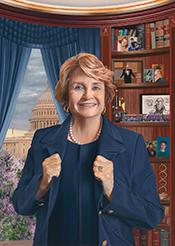
Mr. Speaker, as we debate the agriculture appropriations bill today, we will consider funding for the Food and Drug Administration. I am very disappointed that the Hinchey FDA reform amendment will…
Mr. Speaker, as we debate the agriculture appropriations bill today, we will consider funding for the Food and Drug Administration. I am very disappointed that the Hinchey FDA reform amendment will not be allowed under this rule. The amendment would give the Food and Drug Administration two new authorities that are badly needed to improve the FDA's drug safety operations and ensure that FDA has the tools to take timely action to protect Americans from unsafe drugs.
It would have empowered the FDA with the authority to require companies to conduct post-marketing studies of FDA-approved drugs and would also have given the FDA the authority to mandate changes to the labels of FDA-approved drugs. Unfortunately, efforts to include the amendment were defeated in the Committee on Rules on a party-line vote.
I am deeply concerned about the FDA's handling, or rather their mishandling, of the consideration to allow emergency contraception to be sold over the counter. For almost 100 years, the FDA has overseen the safety of food, cosmetics, drugs, and medical devices consumed by the American public, but we cannot trust them unconditionally any more.
The agency defines itself as a scientific, regulatory and public health agency. But for what appears to be the first time in the agency's history, the FDA has jettisoned the rigorous standards of science and health in evaluating emergency contraception and has instead taken the counsel of religious and political extremists in its consideration of this important pregnancy-preventive drug.
And the results of such counsel have been predictable. Despite the fact that 23 of 27 members of the FDA's advisory panel voted in favor of allowing over-the-counter sales of Barr Laboratories' Plan B emergency contraceptive and despite the overwhelming scientific evidence in support of the application, the FDA made the unusual decision to disregard its own advisory panel's recommendation and reject the application.
One of the dissenting panelists was evangelical conservative Dr. W. David Hager. In October of 2002, I sent a letter to President Bush expressing my deep reservations about appointing Dr. Hager as Chair of the Advisory Committee for Reproductive Health Drugs at the FDA. Based on Dr. Hager's past conduct, I believed he would not be impartial in his decisions. On numerous occasions, Dr. Hager had already displayed a willingness to substitute his personal beliefs for science. My request, unfortunately, went unheeded by the administration.
Now recent reports have alleged that the FDA, while considering allowing over-the-counter sales of emergency contraceptive, requested a minority opinion by Dr. Hager to justify a politically motivated decision to Barr Laboratories' application, a truly outrageous request which, if true, has further jeopardized the scientific integrity of the
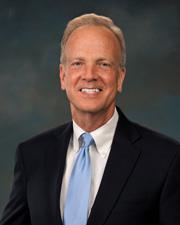
Mr. Chairman, I offer an amendment. Mr. Chairman, today I offer an amendment to appropriate funds for the eradication of noxious weeds. I first would like to thank the gentleman from Texas (Mr.…
Mr. Chairman, I offer an amendment.
Mr. Chairman, today I offer an amendment to appropriate funds for the eradication of noxious weeds.
I first would like to thank the gentleman from Texas (Mr. Bonilla), the chairman of the Subcommittee on Agriculture, Rural Development, Food and Drug Administration, and Related Agencies, as well as the gentlewoman from Connecticut (Ms. DeLauro), for their leadership in what I know is a very difficult task of allocating funds within the budgetary restraints that we find ourselves. I would also like to thank their staff for their hard work and their efforts to accommodate my amendment.
This amendment would allocate within the Animal and Plant Health Inspection Service $15 million to fund the Noxious Weed Control and Eradication Act of 2004. This legislation, the act, was authorized for the past 2 years, but no funding has yet been appropriated to carry out the purpose of the program.
The Noxious Weed Control and Eradication Act passed the House in October of 2004 and allows the Secretary of the Department of Agriculture to establish a grant program to control and eradicate noxious weeds.
This legislation gives local weed management entities the ability to control local weed problems and provides the funding necessary for them to meet a very serious need in many places across the country.
This legislation has broad bipartisan support and will benefit the entire Nation.
Noxious weeds are a significant environmental and economic concern. I know from my own experiences in Kansas, we have a difficult time controlling the very difficult and noxious weeds. Sericea lespedeza is a weed that has invaded many acres of the foothills region of Kansas, which contain some of the few remaining acres of native tall grass prairie.
Sericea lespedeza is just one example of many invasive species that create economic hardship across the country; and by finally providing these funds, we can help in the battle to eradicate this and prevent a major outbreak of noxious weeds.
This is a matter in which timing is critical; and we need to give our communities, our local entities, and our farmers, landowners, the tools they need to manage our natural landscapes.
Mr. Chairman, I thank my colleagues for the offering of this amendment.
Mr. Chairman, will the gentleman yield?
Mr. Chairman, based upon previous conversations with the gentleman from Texas and the staff of the agriculture subcommittee, I am willing to withdraw my amendment under the understanding that we have reached in regard to cooperation on this issue in the future.
Mr. Chairman, I ask unanimous consent to withdraw my amendment and look forward to working with the gentleman from Texas (Mr. Bonilla) in regard to this issue being considered in the future.
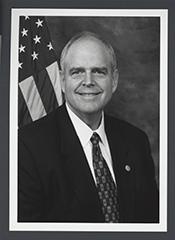
Mr. Chairman, I rise today in opposition to the amendment offered by Mr. Rehberg and Ms. Hooley, I applaud Chairman Bonilla for including a provision in the agriculture appropriations bill that would…
Mr. Chairman, I rise today in opposition to the amendment offered by Mr. Rehberg and Ms. Hooley, I applaud Chairman Bonilla for including a provision in the agriculture appropriations bill that would limit USDA's funding for implementing the mandatory country-of-origin labeling law for meat and meat products. The country-of-origin labeling laws as currently written clearly requires more Congressional attention before going into effect by September 30, 2006.
As a member of the Agriculture Committee and as Chairman of the Livestock and Horticulture Subcommittee, I have held hearings to discuss how mandatory country-of-origin labeling will affect the entire livestock industry. I have personally heard the numerous concerns of producers, processors, suppliers, and retailers in trying to implement this onerous program. These hearings raised many questions, and the livestock witnesses specifically pointed out the tremendous potential for increased costs and unintended consequences. All of the witnesses, regardless of being for or against country-of-origin labeling, unanimously stated that this is not a food safety issue but a marketing issue. Saying labeling is needed because of recent cases of BSE, for example, is bogus--especially since this particular disease does not occur in the muscle cuts we consume!
I have also heard concerns from many of my constituents in North Carolina about this issue. I can tell you that not one of them has said this law will bring them additional revenue or market advantages. They all express their deep concern that this law will instead cause significant burdens and headaches in order to be in compliance with the law.
Having participated in the hearings and listening to the worries of my constituents, I firmly believe a voluntary approach is a better solution. I am pleased to cosponsor the Meat Promotion Act introduced by Agriculture Committee Chairman Goodlatte which requires the Secretary of Agriculture to establish a voluntary program for labeling meat and meat products. I believe this legislation better fits the true intent of country-of-origin labeling--to maximize producer benefits and avoid the costs and regulatory intrusions that a government-mandated program would entail.
Unfortunately, a ``Fire, Ready, Aim'' approach led to the creation of the current mandatory country-of-origin labeling law. This issue clearly needs further attention and delaying the implementation of the law for meat and meat products is a step in the right direction. I would like to reiterate that the provision included in the agriculture appropriations bill only affects meat and meat products.
I urge my colleagues to support the appropriations bill and reject the Rehberg-Hooley amendment.
Bill Text
2 versions available
        [Congressional Bills 109th Congress]
[From the U.S. Government Publishing Office]
[H. Res. 303 Engrossed in House (EH)]

H. Res. 303

In the House of Representatives, U.S.,

June 8, 2005.
Resolved,  That at any time after the adoption of this resolution the
Speaker may, pursuant to clause 2(b) of rule XVIII, declare the House resolved
into the Committee of the Whole House on the state of the Union for
consideration of the bill (H.R. 2744) making appropriations for Agriculture,
Rural Development, Food and Drug Administration, and Related Agencies for the
fiscal year ending September 30, 2006, and for other purposes. The first reading
of the bill shall be dispensed with. All points of order against consideration
of the bill are waived. General debate shall be confined to the bill and shall
not exceed one hour equally divided and controlled by the chairman and ranking
minority member of the Committee on Appropriations. After general debate the
bill shall be considered for amendment under the five-minute rule. Points of
order against provisions in the bill for failure to comply with clause 2 of rule
XXI are waived except as follows: beginning with the colon on page 54, line 4,
through ``overseas'' on line 9; section 749; page 81, lines 1 though 7; and
beginning with ``and'' on page 81, line 11, through ``programs'' on line 17.
Where points of order are waived against part of a paragraph or section, points
of order against a provision in another part of such paragraph or section may be
made only against such provision and not against the entire paragraph or
section. During consideration of the bill for amendment, the Chairman of the
Committee of the Whole may accord priority in recognition on the basis of
whether the Member offering an amendment has caused it to be printed in the
portion of the Congressional Record designated for that purpose in clause 8 of
rule XVIII. Amendments so printed shall be considered as read. When the
committee rises and reports the bill back to the House with a recommendation
that the bill do pass, the previous question shall be considered as ordered on
the bill and amendments thereto to final passage without intervening motion
except one motion to recommit with or without instructions.
Attest:

Clerk.