Providing for consideration of the bill (H.R. 2745) to reform the United Nations, and for other purposes.
Legislative Activity
Stay on top of the latest movement without scrolling through every action
Motion to reconsider laid on the table Agreed to without objection.
June 16, 2005 • 5:28 PM
View full timeline
Introduced in House
June 15, 2005
The House Committee on Rules reported an original measure, H. Rept. 109-132, by Mr. Bishop (UT).
June 15, 2005
All points of order against consideration of the bill are waived. It shall be in order to consider as an original bill for the purpose of amendment under the five-minute rule the amendment in the nature of a substitute recommended by the Committee on International Relations now printed in the bill.
June 15, 2005 • 6:01 PM
Placed on the House Calendar, Calendar No. 51.
June 15, 2005
Considered as privileged matter. (consideration: CR H4607-4615)
June 16, 2005 • 4:11 PM
DEBATE - The House proceeded with one hour of debate on H. Res. 319.
June 16, 2005 • 4:17 PM
The previous question was ordered without objection. (consideration: CR H4615)
June 16, 2005 • 5:28 PM
Passed/agreed to in House: On agreeing to the resolution Agreed to by voice vote.(text: CR H4607-4608)
June 16, 2005 • 5:28 PM
On agreeing to the resolution Agreed to by voice vote. (text: CR H4607-4608)
June 16, 2005 • 5:28 PM
Motion to reconsider laid on the table Agreed to without objection.
June 16, 2005 • 5:28 PM
Floor Debate
21 membersWhat members said about H.Res. 319 on the floor
 DR
DR TL
TL ALHRB
ALHRB BD+16
BD+16
Floor Debate
21 membersWhat members said about H.Res. 319 on the floor
Mr. Chairman, I yield myself such time as I may consume. Mr. Chairman, I stand here with great pride next to my chairman, the gentleman from Illinois (Mr. Hyde), and recall all the great and…
Mr. Chairman, I yield myself such time as I may consume.
Mr. Chairman, I stand here with great pride next to my chairman, the gentleman from Illinois (Mr. Hyde), and recall all the great and wonderful battles that he has fought in his career, and I am so proud to be at his side at this, not the last battle that we will fight, but, as we lead into the sunset of his career, a battle that will be meaningful and remembered, and for which the American people will be grateful that we had his leadership.
Also, I might add, we are grateful for the honorable adversarial relationship that we have on the other side of the aisle, the gentleman from California (Mr. Lantos), a champion of human rights, a dear friend, and someone who I greatly respect and whose guidance, I might say, has been important to my own career.
We are here today to take up the bill named for the gentleman from Illinois (Mr. Hyde), the Henry Hyde United Nations Reform Act of 2005. This bill will reform the United Nations in a meaningful and lasting way, especially in the arena of accountability.
Reform is vital in this area. And if anyone should doubt that, they only need look at the Oil-for-Food scandal which my subcommittee, under the leadership of the gentleman from Illinois (Mr. Hyde), has been investigating. The Oil-for-Food scandal, let us remember what it was. The Oil-for-Food program was set up in order to make sure that the women and children and noncombatants of Iraq did not die of lack of food and medicines because of an oil boycott that we had put, the United Nations had placed, on Iraq under Saddam Hussein's regime as a way of pressuring Saddam Hussein to give up his chemical and biological weapons, weapons of mass destruction, and to continue, and to refrain from his hostile acts like the invasion of Kuwait.
Unfortunately, the Oil-for-Food scandal is what happened to the Oil- for-Food program. We decided to establish a program, the Oil-for-Food program, which would permit the Iraqi regime to sell a certain amount of oil under United Nations supervision and to use the resources from that sale to purchase a certain amount of humanitarian supplies to help the so-called starving women and children of Iraq so these people would not be necessarily harmed.
Right from the beginning, as the United Nations organized the program, Saddam Hussein, this vicious dictator, this mass murderer, was able to choose the buyers for Iraq's oil, as well as the suppliers of humanitarian goods, which would then be the product of the sale of that oil. What do you expect will happen when that is the way it is organized? And why was it organized that way? It was organized that way because it was a United Nations program.
Let us note that our allies, including France and Russia, who had demanded that we have an Oil-for-Food program to help those poor and starving Iraqi children, that as we put the program in place, instead of helping us, they became hindrances to our making sure that the program was run in an honest way. Saddam Hussein was able to demand kickbacks and surcharges for the sale of oil and the purchase of humanitarian goods. Our allies were all too willing to pay those kickbacks. These are the same ones who pressured us to establish the program.
Business was the driving factor, of course, in their decision. But let us note that another driving factor was the fact that we have uncovered that as part of the Oil-for-Food program bribes were being channeled to people in those very governments, and perhaps that had something to do with the decision-making process of our so-called allies.
Of the estimated $65 billion in oil sales during the time of the Oil- for-Food program, perhaps as much as $10 billion was siphoned off by Saddam Hussein, this mass murderer, and this $10 billion, which was supposed to be going to the Iraqi people to alleviate their suffering.
A United Nations-sanctioned inquiry led by Federal Reserve Bank chairman Paul Volcker has unearthed these evidences of kickbacks paid, for example, to the former director of the Oil-for-Food program in the United Nations. Thus we are saying that it was a United Nations program and the Oil-for-Food program resources were used to bribe Benon Sevan, United Nations official who oversaw the program who had been appointed by Secretary-General Kofi Annan and was a close confidant of Kofi Annan.
The Volcker Commission also published evidence detailing the destruction of documents about the Oil-for-Food program as late as last year by Annan's former chief of staff, Iqbal Riza.
The House International Relations Committee has been investigating the United Nations Oil-for-Food program since March of 2004. The oversight of the Oil-for-Food program at the United Nations itself was undercut by the weak institutional oversight management structures in the United Nations itself. The United Nations, as it was organized, as it is organized unless we act today, bears a great deal of the responsibility for the failure of these type of programs like the Oil- for-Food program.
There is not a culture of openness at the United Nations nor is the structure open, but instead a closed structure and a culture of arrogance. The United Nations Office of Internal Oversight Services, for example, was denied adequate funding and manpower needed to properly audit the Oil-for-Food program. If they were not given the proper resources, why would we expect it not to be corrupted, especially when dealing with the likes of Saddam Hussein?
Saddam provided gifts from $10,000 to $25,000 to families of Palestinian suicide bombers with the kickback money that he received from the Oil-for-Food program. And let us note something else. If you want to find out what this program did and the power it gave Saddam Hussein, and the corruption of this idea of saving innocent women and children as a program officiated over by the United Nations, let us recall a speech in this body, not too long ago.
The President of the United States gave his State of the Union message here and introduced us to a lady sitting next to his wife, the first lady. Next to her was an Iraqi woman whose father had been assassinated by Saddam Hussein because he was a human rights activist. How was the assassin paid off? We have traced back the payment of the assassin of the woman who joined us for the State of the Union, the assassin of that woman's father, we have traced back that payment to a man who received the money from Saddam Hussein, and it was channeled through this United Nations program; and the money ended up going through a United Nations program to an assassin who murdered the father of the woman who was introduced to us because he was a human rights activist.
If ever there was a travesty, it is this. Saddam Hussein was manipulating the program; and the United Nations, it seems, if not willing to go along with Saddam Hussein, was certainly not willing to go along with the reforms that would have corrected the program.
Without approval, the New York office of the Banque de Paris, or Paribas, this was the bank that oversaw the Oil-for-Food program, the U.N.'s bank for the program made unauthorized payments from the program to so-called third parties on more than 400 occasions. These third parties where the unauthorized payments were made went to people that they had no idea who they were giving the money to. We have yet to be able to trace back who actually runs the corporations who received over 400 payments from the bank that ran this Oil-for-Food program, all of this, of course, under the United Nations' direction.
Now, that is the Oil-for-Food program. We could go on about that for hours. But there are other problems at the U.N. which we need to mention, the nepotism at the United Nations. We have seen over and over again people hiring their children. We have seen situations where, for example, Benon Sevan sold his vouchers to a company in which his stepdaughter was hired,
which was in violation of U.N. job violation rules. And let us note former Secretary Boutros Boutros Ghali's nephew.
Neoptism is rampant at the U.N. Maurice Strong, a long-time U.N. official and confidant of Secretary General Annan, hired his step- daughter Kristina Mayo for a U.N. job in violation of U.N. staff regulations. Benon Sevan allegedly sold his oil vouchers to a company run by former Secretary General Boutros Boutros-Ghali's nephew. Moreover, this deal with Sevan was set up by Fred Nadler, Boutros- Ghali's brother-in-law.
Strong has also been tainted by his association with the Tongsun Park, from the Koreagate scandal, against whom a complaint was filed by the U.S. Attorney in the Southern District of New York in April. Park was attempting to illicitly influence ``a U.N. official'' through Iraqi Oil-For-Food money. Strong has confirmed that he was that U.N. official but denies wrongdoing.
The WMO in Geneva, Switzerland, a long-time WMO employee and Sudanese national was accused of skimming $3 million from accounts at the organization over a 3-4 year period. The funds were lost to this corruption and they will likely never be recovered.
He is said to have faked his death to avoid investigation. Accordingly, his wife presented a death certificate, acknowledged by Sudanese authorities to have been false, in order to claim his U.N. pension, which the U.N. has withheld pending the results of a full investigation being conducted by the Swiss authorities at the request of the WMO.
WMO authorities believe that ultimately there are 10-15 other WMO employees who could be viewed as negligent or even gross negligence.
The WMO Senior Legal Advisor reported that while bad, ``the internal procedures were not the worst seen in the U.N. family of organizations.''
At WIPO, also in Geneva, Michael Wilson, an Annan family friend, is being investigated by a Swiss judge on charges of bribing a senior official at WIPO to win a renovation contract on the agency's headquarters. The WIPO official acknowledges receiving $270,000 from Wilson. Wilson claims the money was from a private business venture.
There are also allegations of employee skimming of WIPO agency funds related to the renovation.
Prior to Operation Iraqi Freedom, the agency coordinated with international relief agencies and U.N. member states to relieve the suffering of the Iraqi people.
In January of 1998, $43,701 had to be recovered from staff members no longer at the mission as well as outstanding obligations of $328,287 in November 1997 for the UNOHCI.
The audit revealed that an inventory of physical assets in May 1998 discovered that 185 items totaling $100,994 could not be accounted for.
The United Nations Claims Commission (UNCC) processes claims for losses and damage suffered as a direct result of Iraq's unlawful invasion and occupation of Kuwait in 1990-91.
In an audit of the UNCC's awards, the OIOS viewed the present system resulted in overpayments of $2,170,951 to the claimants in the 10th installment. Furthermore, in the absence of relevant information, OIOS estimates that UNCC has overpaid by $.51 billion to date for other claims. In addition, it is estimated that UNCC would overpay future claims by $1.27 billion, under the current exchange rate procedures.''
The United Nations Population Fund and U.N. Environment Program promotes environmental and population strategies among member governments.
In a statement before a U.N. Committee in 2004, Thomas Respasch of the U.S. Mission to the U.N. explained, the following extravagant travel expenses of two programs at the U.N.: ``In the U.N. Population Fund, we were quite surprised to learn that some senior staff members who spend more than half their time in travel status are racking up travel costs of $225,000. In the U.N. Environment Program, travel advances to other persons, in the amount of $82,208, had been outstanding for more than 20 months.''
United Nations Office of Drugs and Crime (UNODC) assists member states in their struggle against illicit drugs, crime and terrorism.
In 2003, Samuel Gonzalez-Ruiz, a senior adviser to UNODC, resigned, charging that the office ``tolerates administrative and in some cases criminal violations'' such as nepotism, mismanagement and misappropriation of funds by agency staff. A U.N. probe into corruption allegations found that ``a senior official improperly gave 11 contracts to his wife.'' In 2003, an OIOS probe found mismanagement by executive director Pino Arlacchi; collapse of $250 million 10-year plan to eradicate drugs from Afghanistan. Also found evidence of lavish, excessive spending, such as purchase of a $100,000 Mercedes.
These are but a few of the signs that the U.N. is on the wrong path. But talking about problems is not enough, we must do something about it.
This bill is vital for reform of the United Nations. Chairman Hyde's bill brings real reform to an institution that is quite simply broken.
Regarding the Accountability section of the bill, there is a provision for a special investigator to be assigned to investigate further instances of corruption by high officials of the U.N., such as Benon Sevan.
This bill brings independence to the Office of Internal Oversight Services, OIOS, removing it from under the thumb of political influence at the U.N. and assures OIOS of proper funding to carry out its mission.
This bill creates a U.N. Office of Ethics--an office that after more than a year of investigation into the Oil-for-Food Program has shown-- is sorely needed.
Also, the Ethics office will be tasked in this bill with facilitating and operating a system for financial disclosure.
Finally, the bill creates an Independent Oversight Board (IOB) to review the audits of the OIOS and other audit bodies of the U.N. This office is vital to provide proper oversight of the U.N.
What we have certainly discovered about the U.N. in the hearings on the Oil-for-food program that I have held in the subcommittee on Oversight and Investigations in the International Relations Committee, is that the U.N. was corrupted by Saddam Hussein. This bill will go some distance toward repairing this corruption.
I conclude by saying that the U.N. has not been accountable, transparent and it has not been living up to the standards expected of an institution that receives hundreds of millions of dollars every year from the United States. The American taxpayers deserve more for their money. This is why Chairman Hyde wrote this bill and why we are here today: to fix the U.N. so that the problems exemplified by the Oil-for- Food program as well as others such as the horrific rapes committed by U.N. peacekeepers are never repeated.
Mr. Chairman, would the gentleman yield for one moment?
Mr. Chairman, let me just note that what measures that we have been suggesting in the bill, as you have just underscored, are very reasonable, and the fact that we have bipartisan support on the measures demanding accountability suggest that these are things that the United Nations should not be opposing. This is nothing that should raise the fur up on the back of the necks of any official at the United Nations. So I appreciate the gentleman, and also, all those ladies and gentlemen on the other side of the aisle coming at these issues of accountability in a very bipartisan fashion.
Mr. Chairman, I yield myself such time as I may consume. Mr. Chairman, I rise in strong opposition to this bill, and I urge all of my colleagues across the aisle to do so. Let me state at the outset…
Mr. Chairman, I yield myself such time as I may consume.
Mr. Chairman, I rise in strong opposition to this bill, and I urge all of my colleagues across the aisle to do so. Let me state at the outset that I fully share the passionate commitment of the gentleman from Illinois (Chairman Hyde) to meaningful and thorough reforms at the United Nations. This global institution must become more transparent and open, its employees must be held to the highest ethical and moral standards, and the abuses of the Oil-for-Food program must never be repeated.
Mr. Chairman, the United Nations must put an end to its persistent and pathological persecution of the democratic nation of Israel, which has become the whipping boy for totalitarian regimes around the globe. Serial human rights abusers, Mr. Chairman, must also be kept off U.N. institutions explicitly designed to fight for the cause of human rights and democracy.
Mr. Chairman, the crushing flow of stories of scandal at the United Nations has forced a long-overdue recognition of an essential fact about the place: it is not a real country, like Japan or Norway. It is a derivative reality reflecting its less-than-perfect member states in a deeply flawed world.
I would like to remind my colleagues that there will be no quick fix for an organization composed of 191 member states which, in varying degrees, have their own shortcomings, their own injustices, their own flaws, their own hypocrisies of all types. Because a quick fix is not to be expected, and rigid, punitive measures will not bring about a long-term fix, Mr. Chairman, I must oppose the legislation before the House today and indicate my intention to offer a substitute amendment.
Just yesterday, Mr. Chairman, our Republican administration informed Congress that it strongly opposes the automatic withholding provisions of the Hyde bill as well as its infringements upon the President's constitutional powers.
Let me repeat that, Mr. Chairman, and I want my Republican friends to listen. The Republican administration strongly opposes the Hyde bill.
This does not come as a surprise to us, Mr. Chairman. Just a few weeks ago, high-ranking officials at the Department of State told Congress that the legislation would undoubtedly create new arrears at the United Nations because not all of the U.N. reform benchmarks contained in the bill are achievable. While many of the reforms being sought in the Hyde bill are worthy goals, many require unanimous agreement by all 191 U.N. member states, including the likes of Iran, Syria, and Sudan.
Mr. Chairman, the Lord gave us Ten Commandments, but the bill before the House today gives us 39. What is worse, Mr. Chairman, is that if the United Nations achieves 38 of these benchmarks and only accomplishes half of the thirty-ninth, the Hyde bill automatically, automatically, cuts off 50 percent of the U.S. contribution to the United Nations. With this rigid and inflexible mechanism, the legislation before us will undercut, not strengthen, our ability to press for the very reforms we all seek.
Senior State Department officials argue that the bill, if enacted, would severely undermine America's national security interests by killing desperately needed U.N. peacekeeping operations, including a possible mission to deal with genocide.
The State Department is not alone in opposing the Hyde bill. Eight former
United States Ambassadors to the United Nations have expressed their strongest opposition to the bill. These Ambassadors include distinguished Republicans like Jeane Kirkpatrick, John Danforth, a former distinguished Republican Senator; and Ambassadors Richard Holbrooke, Madeleine Albright, Donald McHenry, Thomas Pickering, Bill Richardson, and Andrew Young. They argue that the bill ``threatens to undermine our leadership and effectiveness at the U.N. and the reform effort itself.''
In short, Mr. Chairman, while the Hyde bill has the best of intentions, it will cause our Nation to go back into an arrears at the United Nations without achieving the desired outcomes. Given the important role the United Nations is currently playing in Afghanistan, in Iraq, in Darfur, and scores of other places, I fail to see how going into debt at the United Nations will promote our national security interests. It will only force the United States to take on greater global responsibilities at the very moment when our troops and our diplomats are already spread thin.
I also fail to see, Mr. Chairman, how tying the hands of our distinguished Secretary of State, Dr. Condoleezza Rice, as she pursues reform at the United Nations would serve our national interest. The legislation before the Congress micromanages every possible reform at the United Nations. It creates mechanical, arbitrary, and automatic withholdings, and it gives Secretary of State Rice zero flexibility to get the job done.
For these reasons, Mr. Chairman, I will offer a substitute amendment to achieve U.N. reform which will give Secretary Rice the flexibility she asks for, she needs, and she fully deserves from the Congress.
Mr. Chairman, I urge all of my colleagues to side with our Nation's bipartisan foreign policy leaders in opposing this bill.
Mr. Chairman, I reserve the balance of my time.
Mr. Chairman, if the gentleman will yield, I deeply appreciate that, Mr. Chairman.
Mr. Chairman, I am delighted to yield 1\1/2\ minutes to the distinguished gentleman from New York (Mr. Nadler).
Mr. Chairman, I yield myself such time as I may consume.
Mr. Chairman, before yielding, let me commend the gentleman from California (Mr. Rohrabacher) for his powerful statement. And let me commend the gentleman from Illinois (Chairman Hyde) for including in his bill extremely important measures that enhance accountability. I would like to state that the Lantos-Shays substitute which we will present later contains the same measures. We are in full accord on dramatically enhancing accountability at the United Nations.
Mr. Chairman, I would be delighted to yield to the gentleman from California.
Mr. Chairman, I thank the gentleman from California (Mr. Rohrabacher) for his comments.
I am delighted to yield 3 minutes to the gentleman from Iowa (Mr. Leach), the distinguished chairman of the Asia and Pacific Affairs Subcommittee of the International Relations Committee, my distinguished Republican colleague.
Mr. Chairman, I am delighted to yield the balance of my time to the gentleman from Massachusetts (Mr. Delahunt), the ranking member of the Oversight and Investigation Subcommittee of the International Relations Committee.
Mr. Chairman, will the gentleman yield?
Mr. Chairman, I want to commend my friend from New York for offering this amendment. Our side is prepared to accept the gentleman's amendment.
The diplomatic immunity that the United Nations is granted under international law is not designed to shield its employees from the due process of law when they commit crimes. Secretary General Kofi Annan has stated on numerous occasions that he would never allow the U.N.'s diplomatic immunity to protect any employee from prosecution for a crime she or he may have committed.
The Lantos-Shays substitute has a parallel amendment, and we are happy to accept the gentleman's amendment.
Mr. Chairman, I claim time in opposition to the amendment, although I am not in opposition.
Mr. Chairman, I yield 1\1/2\ minutes to the gentleman from Massachusetts (Mr. Delahunt).
Mr. Chairman, I yield myself such time as I may consume. Our side is prepared to accept the gentleman's amendment. We have heard very disturbing reports about possible contracting scandals involving kickbacks at the World Meteorological Organization and the World Intellectual Property Organization in recent years. It will be extremely helpful to have our General Accounting Office also undertake a thorough review of these matters.
We are looking forward to working with the gentleman from Illinois (Mr. Hyde) and others to make certain that all U.N.-affiliated organizations achieve the appropriate reforms, and I thank the gentleman for offering this important amendment which will support our efforts.
Mr. Chairman, I yield back the balance of my time.
Mr. Chairman, I want to thank my friend for yielding, and I want to commend him for bringing before this body an important amendment. We strongly support his amendment, and I am very pleased to accept it.
Mr. Chairman, I thank the gentleman for yielding to me, and we are prepared to accept the gentleman's amendment. I want to commend him on bringing this matter before the body.
Mr. Chairman, I commend the gentleman from Texas (Mr. Poe) for presenting this amendment. We have no objections. We are prepared to accept it.
Mr. Chairman, I yield 5 minutes to the gentleman from California (Mr. Berman).
Mr. Chairman, I have the greatest respect for the gentleman from Indiana (Mr. Pence). The problem with this provision, as with much of the bill, is the lack of judgment that our Secretary of State could bring to bear as a new, tragic Darfur-like situation erupts someplace.
We do not question the need for improving the peacekeeping process, we are with you totally on that, but we would like to have our Secretary of State have the opportunity of exercising her judgment in a rapidly changing and evolving situation.
Mr. Chairman, I ask unanimous consent, although we do not oppose this amendment, that we have 5 minutes to explain our position.
Mr. Chairman, I yield 1 minute to the gentleman from California (Mr. Berman).
Mr. Chairman, I yield the balance of my time to the gentleman from Massachusetts (Mr. Delahunt).
Mr. Chairman, I ask unanimous consent that we be given 5 minutes to explain our position.
I am not opposed to the amendment.
Mr. Chairman, I yield such time as he may consume to the gentleman from California (Mr. Berman).
I yield to the gentleman from Massachusetts.
I yield to the gentleman from Minnesota.
I yield to the gentleman from California.
I yield for the final time, but before I do so, Mr. Chairman, let me say that we accept the gentleman's amendment.
I yield to the gentleman from Minnesota for the final time.
I yield to the gentleman from Indiana.
Mr. Chairman, if the gentleman will yield, we are pleased to accept the gentleman's amendment.
Mr. Chairman, I yield back the balance of my time.
Mr. Chairman, I yield myself such time as I may consume.
The International Atomic Energy Agency is a vital U.N.-affiliated agency that directly serves the national security interests of the United States and underpins the global nuclear nonproliferation regime.
The IAEA safeguards and inspection system is the primary means, and sometimes the only means, by which we and the rest of the world can gain information and insight into the nuclear activities of countries of concern such as Iran.
I want to take this opportunity to commend the IAEA's investigation into Iran's deceit, obfuscation and outright lies about its nuclear activities. For over 2 years now, IAEA investigators have refused to be intimidated by Iran's crude threats and tactics, and they keep confronting Tehran with facts and inconsistencies in Iran's feeble excuses and fabrications about its nuclear activities.
Even today, Mr. Chairman, an IAEA official is reporting that Iran has admitted, when confronted by IAEA investigators, to conducting plutonium processing experiments far more recently than it previously claimed and lying about when it obtained uranium centrifuge enrichment equipment.
Mr. Chairman, we must provide with all the financial and other support that we can, while pushing it, and its governing councils of member states, to give it more authority to investigate and even punish countries that have violated their safeguards agreements and their non- nuclear commitments. The provisions of the Lantos-Shays substitute amendment do just that.
Mr. Chairman, I yield back the balance of my time.
Mr. Chairman, will the gentlewoman yield?
Mr. Chairman, I want to commend my good friend from Virginia and the gentlewoman from Nevada for their outstanding amendment. We strongly support it.
Mr. Chairman, I thank my friend for yielding me this time. I want to commend him on this most important amendment.
We cannot permit countries such as Iran to profit from their exploitation of the nuclear nonproliferation regime to acquire nuclear equipment and technology that they then use to develop nuclear weapons capabilities in violation of their solemn commitments under the Nuclear Nonproliferation Treaty.
The Markey amendment is a necessary step to establish a new global requirement that violators of the Nuclear Nonproliferation Treaty must surrender all nuclear materials, equipment, and technology they acquired through the subterfuge of ``peaceful nuclear activities.''
This is a singularly significant amendment, and I urge my colleagues across the aisle to support the amendment.
Madam Speaker, I yield myself 7 minutes, and I thank the gentleman from Utah (Mr. Bishop) for yielding me the time. Let me quote, this would undermine American credibility at the United Nations. It…
Madam Speaker, I yield myself 7 minutes, and I thank the gentleman from Utah (Mr. Bishop) for yielding me the time.
Let me quote, this would undermine American credibility at the United Nations. It would undermine our effectiveness. Those are the words of the distinguished Under Secretary of State Nicholas Burns, who said of the bill that we are considering, it will call into question our reliability as the founder and host Nation and leading contributor to the United Nations and would also harm our image worldwide.
My colleague from Utah pointed to the bipartisanship. I gather that he would agree that it is bipartisan when Nicholas Burns and Alcee Hastings and other Democrats and this administration join in opposing this measure.
In my opinion, this bill takes a shortsighted approach to reforming the United Nations. There are decent, necessary and desirable provisions in this legislation, but, Madam Speaker, this bill takes well-thought-out ideas and pushes them far into the realm of demagoguery, demonstrating a contempt for the United Nations that is entirely unfounded.
The United Nations Reform Act is yet another example of the majority's willingness to bulldoze over dissension and force its will upon those who would otherwise disagree. The draconian requirements of the underlying legislation will affect everything from the promotion of human rights in the organization to the inclusion of mandatory sunset provisions for all new U.N. programs.
The most shortsighted of the bill's provisions would require a mandatory withholding of peacekeeping funds unless the requirements in this legislation are met.
Madam Speaker, simply put, prohibiting the Secretary of State from exercising discretion regarding the withholding of funds to the United Nations is counterproductive. The Secretary herself told a group here in the Capitol day before yesterday that the Bush administration is not supporting the mandatory withholdings contained in this bill. It seems clear that if even this administration, which has never been reluctant to withhold criticism of the U.N., is against this provision, then it must be bad.
It has become a cliche when Members of the House speak repeatedly about winning the hearts and minds of the world; yet our constant use of gun-barrel diplomacy continues to fail. Do my colleagues really believe that withholding millions of dollars from the United Nations will encourage the member nations to go along with what we are trying to do today?
Adlai Stevenson, that great champion of world diplomacy, said, ``The whole basis of the United Nations is the right of all nations, great or small, to have weight, to have a vote, to be attended to.'' Now, more than 40 years later, the underlying legislation seeks to eliminate the right of any country besides our own to chart the future of the United Nations.
The only way for us to reform the U.N. is to work within it rather than threatening to take our ball and go home. We will not be successful by withholding the funds that are needed to do the job.
Thanks to the Bush administration, the United States' international reputation as a peace-loving Nation is in tatters. Now my friends on the other side want to pass a bill which will withhold peacekeeping funds while conflicts rage around this world unchecked? This is irresponsible, immoral and a foreign policy disaster.
Everyone in this body realizes that the United Nations is not a perfect organization, but on balance, the United Nations has been and will continue to be good for America on a range of global issues.
Let us not forget the thousands of United Nations personnel who risked their lives in Iraq and Afghanistan to bring about successful and free elections in those countries or the role of the U.N. in effecting the withdrawal of Syrian military forces from Lebanon.
In March of 2005, Secretary-General Annan released a string of initiatives to combat terrorism, proposals that the United States Government has openly supported. And in the Sudan, the U.N. has committed aid workers, troops, police, and money to ensure the success of peace accords.
The U.N. also continues to provide a global voice and to be a powerful advocate for change around the world. How many millions of children's lives have been saved through UNICEF, Madam Speaker? How many millions of lives have been saved through disease treatment and eradication programs? How many have been made better through development assistance, cultural programs, and advances in education? Can we really justify cutting off our support for all these efforts simply because the U.N. does not implement every single one of our reform proposals?
Madam Speaker, that is the reason I will be supporting the Lantos- Shays substitute to this bill. Eleanor Roosevelt, our country's first representative to the United Nations, remarked, ``Do what you feel in your heart to be right, for you will be criticized anyway.'' It may be that the United States will still be criticized even if we adopt the substitute and these reforms are pushed through. But I would rather do the right thing and be criticized than give up and go home because things did not go 100 percent of the way that we wanted it to.
The Lantos-Shays substitute takes a realistic approach to reforming the United Nations. It includes virtually all of the reforms in H.R. 2745, with one crucial difference. The substitute gives the Secretary of State the flexibility to make decisions regarding funds based on the needs of the United States. The substitute avoids the counterproductive all-or-nothing diplomacy of this measure, while still promoting the reforms everyone agrees are needed.
Madam Speaker, legislating unrealistic ultimatums will not achieve the goal that we are seeking. I urge my colleagues to oppose this ill- advised and shortsighted legislation.
Madam Speaker, I reserve the balance of my time.
Madam Speaker, will the gentleman yield?
I thank the chairman, and I agree with him regarding our rhetoric. When I made my references I was referring to the Bush administration and not to the distinguished chairman and other Members in the body. And I stand by those statements, Mr. Chairman.
Madam Speaker, I yield 4 minutes to the distinguished gentlewoman from California (Ms. Matsui), my colleague on the Committee on Rules.
(Ms. MATSUI asked and was given permission to revise and extend her remarks.)
Madam Speaker, I am very pleased to yield 8 minutes to my very good friend, the gentleman from California (Mr. Lantos), the distinguished ranking member of the Committee on International Relations.
Madam Speaker, I am pleased to yield 5 minutes to the gentleman from Massachusetts (Mr. Delahunt).
Mr. Speaker, I am pleased and privileged to yield 3 minutes to my good friend and classmate, the gentlewoman from California (Ms. Woolsey).
Mr. Speaker, I reserve the balance of my time.
Mr. Speaker, I yield myself the balance of my time.
Mr. Speaker, I want to join in whole-hearted endorsement in echoing of all of the words of praise that have been directed toward the distinguished chairman of the Committee on International Relations. I have known the gentleman from Illinois (Chairman Hyde) to not only be gentlemanly and eloquent, but fair-minded and bipartisan in a substantial number of efforts, and I, like all of our colleagues here, deeply appreciate the work that he has done on behalf of this Nation and indeed this world throughout the course of his career, and I compliment him in that regard.
I also accept the chastisement of the distinguished Chair with reference to rhetoric, but I would urge that some of the rhetoric that I may have used is rhetoric that I learned here in the House of Representatives that has been used on both sides of the aisle much too often, in my judgment.
That said, I would like not to be an apologist for the United Nations. The United Nations needs to be reformed, and I think that it could be put better by the words of Under Secretary of State Nicholas Burns, whom I quoted when I began. I further quote him in saying that it is more important to press for structural reforms. I think Ambassador Burns is absolutely mindful of what all of us are. The gentleman from Illinois (Chairman Hyde); the gentleman from California (Mr. Lantos), my good friend, the distinguished ranking member; the gentleman from Connecticut (Mr. Shays), his colleague in filing this measure; all of the members of the Committee on International Relations, indeed all the Members of this body recognize that the United Nations has problems. But if we are in the business of using this as precedent, then we would not want to establish a precedent where using the hammer, as the gentleman from Indiana referred to the monetary withholding as being the hammer, to cause people to undertake to do what we say. Then we establish that as a precedent, and we look up next month, 2 months from now, another country comes forward. We are not the only dues payor, we are the largest dues payor to the United Nations. So someone else that decides that it should reform in a way more likely to comport with their government's understandings could use this as a precedent. I do not think that that is a good thing. I do not think that is good policymaking, and I have tried to make that clear.
Let me give the Members the analogy by way of an exact example. I happen to be the president of the Parliamentary Assembly of the Organization for Security and Cooperation in Europe. It is the first time that an American has been the president, and we are holding the Assembly's conference here in Washington, D.C., and I thank the Speaker of the House and the majority leader of the Senate for the extraordinary effort that they have put in allowing that this Assembly be undertaken in appropriate fashion in a bipartisan way. Secretary Rice is one of the featured speakers at that Assembly.
I raise it only for this reason, and I see the gentleman from New Jersey (Mr. Smith), my good friend, who is the Chair of the Helsinki House side of the same Assembly that I am talking
about. The gentleman from New Jersey (Mr. Smith) can relate to what I am about to say, and I ask the gentleman from Illinois (Chairman Hyde) to do so as well.
More than a year ago, the governing side of the OSCE was met with threats from the country Russia. And we agree even today that transparency and accountability in that organization is critical. They hold most of their undertakings behind closed doors. They operate on the consensus rule, and it primarily stagnates the mission of the OSCE. But Russia said that unless the United States paid more dues, interestingly enough in this particular instance, and that they paid less dues, and that reform measures that they were seeking were implemented, that they would withhold their dues from the OSCE. It did not stop the organization from running. It is not going to stop the Assembly from taking place here in Washington, D.C., July 1 through July 5. But what it did was that threat caused turmoil inside the organization that is in need of reform, and I think we run into the same kind of measure here in this particular proposal.
Listen, Madeleine Albright and John Danforth, Richard Holbrooke and Jeane Kirkpatrick are nobody's rookies, and they are not naive when it comes to what is needed. Thomas Pickering and Bill Richardson and Donald McHenry and Andrew Young, all eight of these individuals were people that served as our Ambassadors under Republican and Democratic administrations to the United Nations, and during that entire period of time, each of them in their own way contributed to meaningful reform. All of them have said, The need for United Nations reform is clear, but we urge that you carefully consider this legislation because it will not, it will not, do the necessary reforms at the U.N.
Madam Speaker, by direction of the Committee on Rules, I call up House Resolution 319 and ask for its immediate consideration. Mr. Speaker, for the purpose of debate only, I yield the customary 30…
Madam Speaker, by direction of the Committee on Rules, I call up House Resolution 319 and ask for its immediate consideration.
Mr. Speaker, for the purpose of debate only, I yield the customary 30 minutes to the gentleman from Florida (Mr. Hastings), pending which I yield myself such time as I may consume. During consideration of this resolution, all time yielded is for the purpose of debate only.
This resolution waives all points of order against consideration of the bill H.R. 2745, the Henry J. Hyde United Nations Reform Act of 2005, and provides a structured rule for consideration of 28 different amendments, including an amendment in the nature of a substitute offered by the minority.
The rule provides for the offering of the 28 specified amendments according to subject areas as designated in the text of the resolution, and with a cumulative total of an hour and 40 minutes of general debate to be divided equally by the chairman and ranking minority member of the Committee on International Relations.
Madam Speaker, I am pleased to stand before the House today in strong support of this rule and the underlying legislation, H.R. 2745, the Henry J. Hyde United Nations Reform Act of 2005. Madam Speaker, with 28 amendments in order, to poorly paraphrase Winston Churchill, never will so much be said by so many about so little, in this case, just a single subject act.
It is fitting, though, Madam Speaker, that this bill be named after our esteemed colleague to my right, the gentleman from Illinois (Chairman Hyde), who has served and is serving with such distinction and integrity and has been a stalwart in these halls for the past 30 years. He is to be commended for putting together a well-thought-out, comprehensive measure aimed at helping to bring about real and needed reforms within the United Nations.
I commend also the gentleman from California (Mr. Lantos), the ranking member, as well for the long-standing cooperation and dedication to bipartisanship in the area of U.S. policy and diplomacy which is evident in many important aspects of this legislation.
In fact, Madam Speaker, when these two distinguished gentlemen were testifying before the Committee on Rules on this bill, I was struck by the fact that the House, and indeed the entire Nation, is the beneficiary of decades' worth of their collective wisdom and firsthand experience.
We spent the last few weeks discussing DOD authorization and appropriations, Interior, State and Justice appropriations, and these acts have a wide range of topics and generated a multitude of amendments. This specific act has generated 28 potential amendments on a single topic, and, Madam Speaker, I know my colleagues are going to love listening to all 28 of those amendments, but let that not overshadow the reality of this bill.
This bill is unusual in the bipartisan unity of the content. When it comes to the issue of United Nations reform, I was also impressed that both gentlemen, the gentleman from Illinois (Chairman Hyde) and the gentleman from California (Ranking Member Lantos), seemed to be of one mind when it relates to the necessity for reforms in the wake of continued scandals within various United Nations functions.
There was also a unique, bipartisan unity in supporting the need for a penalty to follow failure of reform. There is a small disagreement on who should trigger that penalty, which differences I know my colleagues on the other side of the aisle will bring forward, but there can be no doubt as to the underlying need of this penalty phase. That is telling.
To put it in a nutshell, Madam Speaker, this legislation is long overdue. It would require 39 very specific reforms within the areas of U.N. budgeting, oversight, accountability, and human rights. It provides clarity and a reasonable timetable under which the U.N. must act. With the U.S. footing the largest share of dues of any Nation, a share consistent with our voice, this act should provide some real teeth and real incentives to get the job done. To not require such withholdings would only create a paper tiger.
As an old teacher, I learned that I never made a threat that I was not willing to carry out. If students ever thought I was not seriously going to follow through on my disciplinary commitments, I would lose all credibility and lose both the respect and the cooperation of the kids. It would create an atmosphere of weakness and chaos. No learning would take place. Such an atmosphere of distrust cannot be part of our foreign policy. We have seen that too often, and such a potential cannot be ignored.
There are indeed precedents for what we are trying to do both in the 1980s and 1990s when actions by Congress ensured change within the United Nations.
It is regrettable, Madam Speaker, that this bill is even necessary. It is regrettable that the United Nations would not undertake to clean up its own act in the wake of the oil-for-food scandal, irregularities in the accounting and uses of its funds, misconduct by entrenched U.N. bureaucrats, and the deplorable state of the U.N. Commission on Human Rights.
We all witnessed the appalling lack of resolve and consistency in the U.N. when it failed to live up to and enforce the 17 different resolutions condemning Saddam Hussein's murderous regime.
When I am at home in my district, some of my constituents will say to me that we ought to pull out of the United Nations entirely. It is hard to argue with many of them who say that the U.N. is merely a haven for corruption, waste and, frankly, anti-Americanism. We must do all we can to try and rectify all these problems, and to not act would indeed be irresponsible.
This act sends an unmistakably clear message that specific reforms must be enacted or face real consequences. If these reforms are not enacted, the future looks bleak and will only increase the calls to replace the United Nations with a more updated handling of international disputes.
In conclusion, Madam Speaker, this rule is a good and fair rule. It made every single amendment in order, all 28, which were filed before the Committee on Rules. In short, the only complaint that one may have with this rule is that is may be somewhat parsimonious in its general debate, and we will provide in those 28 amendments a
long and wide-ranging debate of all of these important issues.
With that, Madam Speaker, I urge adoption of this rule.
Madam Speaker, I reserve the balance of my time.
Madam Speaker, I yield 1 minute to the distinguished gentleman from Illinois (Mr. Hyde), the chairman of the Committee on International Relations.
(Mr. HYDE asked and was given permission to revise and extend his remarks.)
Madam Speaker, I am pleased to yield 3 minutes to the gentleman from Florida (Mr. Crenshaw).
Madam Speaker, I yield 4 minutes to the gentlewoman from Florida (Ms. Ros-Lehtinen), one of the leading voices on the Committee on International Relations.
Mr. Speaker, I yield myself such time as I may consume.
I love history. In fact, this is not necessarily unprecedented. The Kassebaum-Solomon amendment in 1985 asked for change, and meaningful change took place. In 1994, we insisted on an oversight committee and an oversight committee took place. And under the bipartisan Helms-Biden approach, once again we insisted on changes with the United Nations. The United Nations responded to it. This bill is keeping a tradition that is historical going back for at least 20 years in this body.
Mr. Speaker, I yield 3\1/2\ minutes to the distinguished gentleman from Indiana (Mr. Burton).
Mr. Speaker, I am pleased to yield 2 minutes to the gentlewoman from North Carolina (Ms. Foxx).
Mr. Speaker, I yield 3 minutes to the gentleman from Indiana (Mr. Pence), a member of the Committee on International Relations.
Mr. Speaker, I am pleased to yield 2 minutes to the gentleman from Pennsylvania (Mr. Pitts).
Mr. Speaker, I yield 2 minutes to the gentleman from Texas (Mr. McCaul), also a member of the Committee on International Relations.
Mr. Speaker, I yield 1 minute to the gentleman from New Jersey (Mr. Smith).
Mr. Speaker, I appreciate the kindness and flexibility of my good friend from Florida.
Mr. Speaker, I yield 1 minute to the gentleman from Texas (Mr. Gohmert).
Mr. Speaker, I yield 1 minute to the gentleman from Georgia (Mr. Gingrey).
Mr. Speaker, I yield myself the balance of my time.
Mr. Speaker, I appreciate the opportunity for having had a very quality debate here today. It is interesting to note once again that the ranking member and the chairman have said the need for reform is obvious. There is no disagreement on that point. It is seemingly the mechanism of doing that.
Once again I point out that in 1985, 1994 and 1999, this House set precedent by doing the exact same concept that is there. And it is true that maybe I have heard a new concept here that I do not need to make all Ten Commandments to get to heaven, but I also know that when I was in my classroom and I put high standards and high expectations, my kids met those standards; and if I wavered, then they wavered at the same time.
This is a good piece of legislation. It is an excellent rule, and I urge its adoption and passage of the underlying legislation.
Mr. Speaker, I yield back the balance of my time, and I move the previous question on the resolution.
The previous question was ordered.
Mr. Chairman, I think it is important that when we talk about reforming the United Nations that we have to be clear about what the United Nations is. It is not simply the Secretariat. The Secretariat…
Mr. Chairman, I think it is important that when we talk about reforming the United Nations that we have to be clear about what the United Nations is. It is not simply the Secretariat. The Secretariat is just the staff. They are the hired help. They run the day-to-day affairs of the United Nations; but it is the Member states that set policy, that make decisions that are responsible for oversight in implementation of the United Nations resolutions.
In particular, it is the function of the Security Council to carry out those responsibilities. The United States is a permanent member of the Security Council, with the power to veto any resolution.
When the Security Council does not want the United Nations to work, it will not work. The Gingrich-Mitchell report put it this way, and I am quoting, ``Too often the phrase `the United Nations failed' should actually read `members of the United Nations blocked or undermined action by the United Nations.' ''
An excellent example of this concept is the sanctions against Iraq in the Oil-for-Food program. The United States advocated for the sanctions on Iraq in the aftermath of the Gulf War and then supported the Oil- for-Food program, advocated for it, but it was the Security Council, not some amorphous United Nations somewhere up in New York, that had the responsibility to oversee the Oil-for-Food program and the sanction regime.
But when Jordan and Turkey notified the Security Council that they intended to purchase oil from Iraq, in direct violation of the sanctions regime, the Security Council simply took notice, whatever that means. I still cannot figure it out, but they did nothing else. It did not block Jordan and Turkey from this trade. It did not sanction those countries. It did not instruct the Secretariat to take any action. It did nothing.
As a result, Syria and Egypt then began to purchase oil from Iraq as well, and it is important to understand that this ended up as the largest illicit source of revenue for Saddam Hussein, and it had nothing to do with the Oil-for-Food program, nothing to do with it at all. The moneys derived from these so-called trade protocols far exceeded the money that Saddam Hussein skimmed from the Oil-for-Food program. This chart next to me shows that the so-called trade protocols generated over $8 billion in revenue for Saddam Hussein.
My friend, the chairman of the Subcommittee on Oversight and Investigations talks about $10 billion; 8 billion of that came from the Security Council's inaction while looking the other way.
Even some of the money that Saddam stole from the Oil-for-Food program could have been saved by aggressive oversight by the Security Council. It is important to note it was the Security Council that approved all prices on oil exports from Iraq, and every contract needed their approval for humanitarian goods coming into Iraq, and yet when the Secretariat brought 71 contracts to the attention of the Security Council because of concerns of pricing irregularities, the Security Council did nothing, did nothing, and Saddam profited and stayed in power as a result.
Why? Why did the Security Council not address any of these issues? Because the Security Council, including our own government, and there was two administrations involved, both the Clinton and the Bush administration, reached a political decision that it was not in their interests to fully enforce the sanctions. That has to be understood.
So when we talk about making the United Nations more effective, let us be clear that the changes that are being proposed, and that I embrace, do not fully address the problem. What is ultimately required is improving the way member states work together, and some level of transparency in the internal workings of the Security Council, not unilaterally withholding dues.
I am convinced that those eight Ambassadors who sent that letter to our congressional leadership are correct when they say withholding dues to the United Nations may sound like smart
policy, but would be counterproductive. It would create resentment, build animosity and actually strengthen the opponents of reform. It would place in jeopardy the reform initiatives that we embrace. Please understand that.
Mr. Chairman, will the gentleman yield?
Mr. Chairman, I thank the gentleman for yielding to me.
I do obviously support the acceptance by our ranking member of the amendment.
I think it is important to note for the record that there are currently investigations that are ongoing, and for the information of my friend from New York, the Secretary General has been very explicit that he will fully cooperate. We have received information back that that cooperation is, in fact, occurring, and he has publicly stated, without equivocation, that there will be no immunity for members of the United Nations.
Mr. Chairman, I thank my friend for yielding me this time.
I also read the same report that the gentleman from New Jersey referred to, but I would like to provide him an update at this point because I am sure he received his information from a newspaper report, if I am correct.
I yield to the gentleman from New Jersey.
Mr. Chairman, reclaiming my time, again, let me provide this as an update, because this is a report by the Associated Press from today, titled ``U.N. Oil-for-Food author of e-mail memo says he never discussed Oil-for-Food contract bid with Kofi Annan. The executive who wrote an e-mail suggesting that the U.N. Secretary General Kofi Annan may have known about a U.N. contract awarded to his son's company has denied ever discussing the firm's bid with Annan, a law firm said Wednesday.''
So, again, I think it is worthy of a review, clearly worthy of an investigation; but I do find it interesting that when we talk about investigations that we have not taken the opportunity to investigate the report by the Special Inspector General for Iraq Reconstruction of the report by an American official indicating that the Coalition Provisional Authority provided less than adequate controls for approximately $9 billion of development funds for Iraq funds provided to Iraq through the national budget process. We cannot find that money.
I thank the gentleman for yielding me this time.
Mr. Chairman, I would like to speak to reality, too, as the gentleman from California just did. I think it is important we not deceive ourselves. While the United Nations clearly needs our leadership, we also need the United Nations, particularly in the area of peacekeeping. There are some 16 peacekeeping missions deployed around the world today. They number at least 70,000 troops. Ten of them, 10, are American. These so-called ``blue helmets'' have saved the lives of hundreds of thousands of innocent people and some of them have been killed while doing so.
Are there problems? Clearly there are problems. Is progress being made? Yes, progress is being made. The gentleman from New Jersey (Mr. Smith) and myself recently met with Prince Zeid. There is progress being made, but this amendment does not help the cause.
Just imagine, if you will, the cost to the United States in terms of dollars and blood if Americans were required to fill those roles. This bill could very well force the U.S. military, which is as we know already stretched dangerously thin, to deploy to more and more inhospitable venues. One example that we are all familiar with, Haiti. There are 6,700 United Nations troops in Haiti today along with 1,400 U.N. police working to keep order, and more are scheduled. Without that United Nations presence, the United States would be left with the responsibility of restoring order, providing security, and rebuilding a functioning government. This is nation-building for real that hopefully will transpire in Haiti. Otherwise, we will be looking at a failed state close to our southern borders with all the consequences that that will implicate.
It is the United Nations that is keeping Haiti from total collapse into anarchy. I have no doubt that the expenses associated with that scenario, if there is a total collapse, will vastly exceed our annual commitment to the United Nations, both voluntary and assessed, for years to come. Not only would we have to commit U.S. troops to restore order; we might have to deal with a humanitarian crisis that could very well compel us to use Guantanamo for something significantly different from its current use, much like we did in the early 1990s when it was a refugee center for Haitians who were fleeing from their country in makeshift crafts and dying by the thousands. As the world's richest nation and the sole superpower, this unpleasant task would fall to us alone.
Do we really want to assume that burden? That is just one example. Multiply the potential by 16, by a factor of 16, if this particular provision should eventually become law. We put ourselves, our troops, our taxpayers at great risk.
Mr. Chairman, I do not know if the proponent of the amendment is aware of the fact that U.S. personnel are already prohibited from being under the command of another nation, and therefore would always be subject to the UCMJ.
Show 8 more
Mr. Chairman, I yield myself such time as I may consume. Mr. Chairman, I would like to announce that I am terribly flattered by the extravagant things that have been said, but I must confess I did…
Mr. Chairman, I yield myself such time as I may consume.
Mr. Chairman, I would like to announce that I am terribly flattered by the extravagant things that have been said, but I must confess I did not name this bill after myself. While I deeply appreciate the honor, I am a trifle embarrassed, not thoroughly embarrassed, but a trifle.
Mr. Chairman, most informed people agree that the U.N. is in desperate need of reform. Corruption is rampant, as evidenced by the ever-expanding Oil-for-Food scandal. U.N. peacekeepers have sexually abused children in Bosnia, the Congo, Sierra Leone and other
places; and the culture of concealment makes rudimentary oversight virtually impossible. A casual attitude towards conflict-of-interest rules undermines trust in the U.N.'s basic governance.
I could spend many hours reciting a litany of waste, fraud, and abuse that has become intolerable. So what do we do about it? What leverage do we have to bring about change in how this institution operates?
First of all, we pay 22 percent of the budget. That is $440 million. We pay 27 percent of the peacekeeping budget. Do not ask me what that is. You cannot find out. That is a secret. China pays 2.1 percent, or $36.5 million. Russia pays 1.1 percent, or $19 million.
Over the years, as we listened to the counsels for patience, the U.N.'s failings have grown worse, not lessened. Our many warnings, plans and urgings have largely come and gone, with few lasting accomplishments to mark their presence. Trust in gradual change has been interpreted as indifference, a very expensive indifference.
So the time has finally come when we must in good conscience say ``enough.'' ``Enough'' to allowing odious regimes such as Cuba, Sudan and Zimbabwe to masquerade as arbiters of human rights. ``Enough'' to peacekeepers exploiting and abusing the people they were sent to protect. ``Enough'' to unkept promises and squandering the dreams of generations.
Very few are opposed to the U.N.'s role in facilitating diplomacy, mediating disputes, monitoring the peace, and feeding the hungry. But we are opposed to the legendary bureaucratization, to political grandstanding, to billions of dollars spent on multitudes of programs with meager results, to the outright misappropriation of funds represented by the Oil-for-Food program. And we rightly bristle at the gratuitous anti-Americanism that has become ingrained over decades, even as our checks continue to be regularly cashed.
No observer, be he a passionate supporter of this legislation or dismissive critic, can pretend that the current structure and operations of the U.N. represent an acceptable standard. Even the U.N. itself has acknowledged the need for extensive measures and, to its credit, has put forward a number of useful proposals for consideration.
In the United States, the recognition of need for change is widely shared and bipartisan. Republican and Democratic administrations alike have long called for a more focused and accountable budget, one that reflects what should be the true priorities of the organization, shorn of duplicative, ineffective, and outdated programs. Members on both sides of the aisle in Congress agree that the time has come for far- reaching reform.
I have heard no arguments in favor of maintaining the status quo. Even the opponents of this legislation concede the need for deep change. The key difference, the all-important difference, between their proposals and the one we have put forward lies in the methods to be used to accomplish that universally desired goal.
We are already experiencing strenuous resistance to change from many sources, both within the U.N. and without. But admonishment will not transform sinners into saints; resolutions of disapproval will not be read; flexible deadlines and gentle proddings will be ignored.
Instead, more persuasive measures are called for. This legislation brings to bear instruments of leverage sufficient to the task, the most important being tying the U.S. financial contribution to a series of readily understandable benchmarks.
In an effort to derail this legislation, it has been proposed that we hand to the Secretary of State the power to selectively withhold funds from the U.N. as a means of inspiring a cooperative attitude in the organization. I certainly mean no disrespect for the current Secretary, whom I hold in the highest esteem, but the power of the purse belongs to Congress and is not delegable, no matter who holds that high office.
We cannot escape this burden. The task we face is an extensive one, and I have no illusions regarding the difficulties and the challenges we face. But the choice is simple: we can either seek to accomplish concrete improvements, which will require an enforcement mechanism more credible and more decisive than mere wishes, or we can pretend to do so. For there can be no doubt that any proposal resting upon discretionary decisions concedes in advance that any reform will be fragmentary at best, if there is any at all.
We are in a peculiar situation. Opponents of change cloak themselves in the robes of defenders of the U.N., when it is in fact they who would condemn it to irrelevance. Those of us who believe the U.N. can yet reclaim its mission and assume the role foreseen by the vision of its founders have no choice but to take up this task of U.N. reform.
Yes, this is radical surgery. Sometimes it is the only way to save the patient.
Mr. Chairman, I reserve the balance of my time.
Mr. Chairman, I yield myself such time as I may consume.
I just want to respond to my dear friend, and he is my dear friend. If I ever become President of the United States, I would nominate the gentleman from California (Mr. Lantos) as my Secretary of State and be guided by his advice.
Mr. Chairman, that is what I think of the gentleman from California (Mr. Lantos).
Mr. Chairman, I just want to point out that substantial compliance is accorded to the Secretary of State, so if 38 of the 39 are complied with, the 39th could have been substantially complied with and suffice.
Mr. Chairman, I yield the remaining time to the gentleman from Missouri (Mr. Blunt).
Mr. Chairman, will the gentleman yield?
Mr. Chairman, I thank the gentleman for yielding.
We, too, are very pleased to accept this excellent amendment and thank the gentleman from New York.
Mr. Chairman, I thank the ranking member for yielding me this time. Because he is not on the floor at this point, I am not going to take this opportunity, I will have many more, to express in some…
Mr. Chairman, I thank the ranking member for yielding me this time.
Because he is not on the floor at this point, I am not going to take this opportunity, I will have many more, to express in some detail my affection, my respect and my admiration for the chairman of our committee who sponsors this bill and who has announced his intent not to seek reelection to the next Congress. But once in a while in the course of both of our tenures here, I have had occasion to oppose an initiative, and in this case I do so very strongly.
On the surface this may look like a partisan conflict, but in reality it is not. The Ambassador under Ronald Reagan to the United Nations says about the bill before us, Reforming the United Nations is the right goal. Withholding our dues to the U.N. is the wrong methodology. When we last built debt to the U.N., the U.S. isolated ourselves from our allies within the U.N. and made diplomacy an impossible
task. Modernizing the United Nations to be more capable and effective must be done through engaging our allies and being a leader for creating a U.N. for a new century. That is Ambassador Jeane Kirkpatrick, no member of the United World Federalists is she.
A recent commission co-chaired by our former speaker Newt Gingrich, not a man enamored of ideological multilateralism, prepared a report on much-needed U.N. reforms and never suggests a mandatory dues cut as a way to effectively achieve those results.
The President of the United States and this administration, which I believe is a Republican administration, indicates very strongly the error of this approach and asks this body to reconsider moving ahead with this particular bill.
But the area that I want to most focus on does not deal with the dues cut, but has a provision on peacekeeping that is particularly egregious. Based on the failure to implement five reforms by the effective date of this bill, the day after this bill is signed into law, and those reforms are much needed, I think they are on the way to happening, I do not quarrel with any of them, in fact, I think they are compelling in their nature, this bill mandates the President of the United States to instruct our Ambassador to the United Nations to veto any new or the expansion of any existing peacekeeping operation.
In other words, the Congress steps in, usurps the executive branch function of formulating foreign policy in exercising its discretion on what its appointee will do in the end without regard to U.S. national interests and in direct violation of executive branch prerogatives.
For the chairman of this committee to sponsor a bill that does something like that is, I would suggest, quite out of character because there is no one in this House who has made a stronger point in his career of trying to ensure that the President's power as Commander in Chief and implementer of foreign policy is maintained.
The national interest issue compels us to say this is not the right approach. What if a new U.N. peacekeeping operation, the problems with China or Russia in the context of Darfur are overcome, and there is a consensus for a new augmented operation there involving African countries, involving European countries, perhaps with no commitment whatsoever from the United States for such an operation? Because of the failure to fully implement all five of these reforms, our Ambassador, notwithstanding the humanitarian tragedy, notwithstanding how the United States will look to the rest of the world, our Ambassador is required to veto such a peacekeeping operation?
What if a situation like East Timor comes up again, and whatever the problems have been, and whatever the failures to fully implement these reforms, there is a compelling national interest reason for us to support a peacekeeping operation once again that may not involve U.S. troops or forces? Why would we want to mandate something that is fraught with constitutional problems and does a disservice to our national interest in such legislation? This is a foolish and improper amendment.
Mr. Chairman, I thank the gentleman for yielding me this time. I just want to respond to what I think was an inadvertent misstatement by the gentleman from Indiana on what I think is an over- the-top provision of this bill, requiring a veto of any new or expanded peacekeeping operations in the Security Council. He referred to it as an ability for the U.S. to withhold its forces for it. But read the provision you have written: the President shall direct the United States permanent representative to the U.N. to use the voice, the vote and the influence of the U.S. at the U.N. to oppose the creation of a new or expansion of existing peacekeeping operations.
``Vote'' means ``veto'' at the Security Council. You veto the peacekeeping operation, it does not happen. The genocide in Darfur continues, no matter what the political will is of the body, because we have only trained 60,000 of the 68,000 peacekeepers by the day this bill passes. This has nothing to do with the debate about withholding dues as leverage. This has to do with define our own national interests in the name of I do not know what. It makes no sense, it is unconstitutional, and it should have been stricken from this bill.
Mr. Chairman, I would like to use this time, if I might, to ask the gentleman from Minnesota a question.
His amendment says that nothing in this title, this title that the gentleman from Illinois (Chairman Hyde) has brought to us, should be construed to supersede the Uniform Code of Military Justice or surrender U.S. officials to a foreign country or international tribunal.
Could the gentleman tell the body what section of the gentleman from Illinois' (Chairman Hyde) bill could be construed to require the surrender of officials, what section of the gentleman from Illinois' (Chairman Hyde) bill could be construed as requiring superseding the Uniform Code of Military Justice? I am certainly unaware of any such section, and I am certainly unaware of any desire by the gentleman from Illinois (Chairman Hyde) to present to the body such a section.
I yield to the gentleman from Minnesota.
Mr. Chairman, will the gentleman yield?
Mr. Chairman, would it be fair to say that, in effect, his effort is an effort to gild the lily?
Mr. Chairman, I thank the distinguished gentleman from California (Mr. Lantos) for yielding me the time. Mr. Chairman, the question before this House today is not whether the United Nations should be…
Mr. Chairman, I thank the distinguished gentleman from California (Mr. Lantos) for yielding me the time.
Mr. Chairman, the question before this House today is not whether the United Nations should be reformed, but how the institution must be reformed. Virtually every Member of the House agrees with this proposition. If the U.N. is going to retain its credibility, it must implement meaningful reform in areas such as budgeting, oversight, and accountability, and certainly peacekeeping and human rights.
We, of course, are not alone in this assessment. The administration agrees. The congressionally established Task Force on the United Nations, which just issued its report on reform this week, agrees. Even top officials of the United Nations agree that reform is needed, and Secretary General Kofi Annan has issued a broad reform agenda.
It is well established, Mr. Chairman, that the U.N. suffers under poor management, low staff morale, and a lack of accountability and professional ethics. Even worse, the organization has been wracked by scandal; for example, revelations of corruption in the Food-for-Oil program in Iraq, and evidence that U.N. peacekeepers sexually abused women and children that they were sent to protect.
However, administrative incompetence and even corruption pale in comparison to the United Nations's failure to act to prevent genocide, most recently in Rwanda, Bosnia and Kosovo, and, yes, even as we speak in Darfur, Sudan.
Let no one be mistaken, Mr. Chairman, I believe the United States' national security interests are served and strengthened by our active participation in international organizations, including the United Nations, but, Mr. Chairman, we must not flinch from asking, can an organization established to promote tolerance, human rights and the peaceful resolution of disputes long survive when its members cannot summon the will to stop the slaughter of innocent men, women and children, or to enforce resolutions adopted overwhelmingly to achieve international stability and security?
The answer, I think, is self-evident. Specifically, I believe the U.N. ideal is undermined when members refuse to act against an international outlaw such as Saddam Hussein, who flagrantly flouts his obligations under countless Security Council resolutions.
Frankly, Mr. Chairman, we are mired in a war in Iraq, where the United States is bearing the overwhelming burden to act against an international lawbreaker against whom the United Nations unanimously passed 17 resolutions in 12\1/2\ years saying that he was in violation of the obligations imposed upon him by the United Nations, and which they, in a united way, agreed he had not complied with. As I have stated before, the member states of the United Nations must respond to such defiance with more than mere words. They must respond with action.
Now, Mr. Chairman, I appreciate the motivation of Chairman Hyde's bill; however, I disagree with its method, an enforcement mechanism that would mandate a 50 percent cut in the United States contribution to the U.N. should the legislation's 39 proposed reforms not be implemented. As Under Secretary of State Nicholas Burns of this administration told the Washington Post, this approach would undermine American credibility at the United Nations; it would undermine our, meaning the United States' effectiveness.
In contrast, the Democratic substitute offered by Mr. Lantos is far superior. It maintains, Mr. Chairman, the link between achieving U.N. reforms and withholding a portion of the United States assessed dues; however, critically importantly, it gives the Secretary discretion to make such cuts, rather than mandating them.
As an aside, let me say, Mr. Chairman, that I believe that as long as we are a member of the U.N., we have an obligation, a duty, it is in our interest, to pay our fair share. Importantly as well, the substitute provides the Secretary with a waiver to the requirement to veto all new peacekeeping missions or to expand existing missions. To do otherwise, in my opinion, would be a significant mistake.
The Republican bill provides no waiver. In effect, it would block the United States from supporting any new peacekeeping mission, including involvement in a crisis like the one in Darfur, until peacekeeping reforms are completed.
Very frankly, the victims of genocide cannot wait for a recalcitrant United Nations to accomplish those reforms until such time as we act to save lives, prevent dislocation, and maintain the safety and human rights of the inhabitants of some country.
Finally, Mr. Chairman, this substitute directs the Secretary of State to withhold 10 percent of our contributions to the U.N.'s peacekeeping budget when the U.N. fails to suspend the membership and act against a member which is engaged in or acquiescing in genocide.
Again, Mr. Chairman, none of us questions the necessity of U.N. reform. Reform is not optional, it is imperative. The underlying bill, however, is an unproductive and harmful response to real problems.
The Democratic substitute, the substitute offered by the ranking Democrat, the gentleman from California (Mr. Lantos), gives us our best opportunity to strengthen and revitalize the U.N., and I urge my colleagues in a bipartisan way, on both sides of the aisle, liberals and conservatives, concerned about both the reform of the United Nations, but also the effective operation of an international organization, our best hope to maintain international law and order, to protect human rights and redeem the promises made when we created the organization we know as the United Nations.
And I thank my friend for yielding the time, supporting this substitute, and I urge all of my colleagues to do the same.
I thank the gentleman for yielding me this time, Madam Speaker; and I rise in strong support of this rule. I think that the underlying legislation is much needed and long overdue. I have been working…
I thank the gentleman for yielding me this time, Madam Speaker; and I rise in strong support of this rule.
I think that the underlying legislation is much needed and long overdue. I have been working to help reform the United Nations since I first came to Congress, and I have not found anybody yet that disagrees with the fact that we very, very direly need to reform the United Nations. This once-utopian organization has degenerated into an institution that is largely dysfunctional and on the verge of becoming irrelevant, and that is why we need these reforms and we need them now.
There are a lot of areas that this legislation deals with, whether it is cronyism, corruption, or financial mismanagement. But I just want to stress one that relates to budgetary reform and the way that people vote on that.
Right now, the United States contributes about 22 percent of the general budget of the United Nations and 28 percent of the peacekeeping budget. If you take the last 128 nations that contribute dues, if you put all their dues together, that adds up to less than 1 percent; yet they have the same vote. Those 128 nations have the same vote as the United States. In fact, if you take the top three countries, they contribute over half the dues, and yet everybody has the same vote on budgetary matters.
Imagine a family, if you will, where the dad goes out and works all year and provides income for his family. And at the time to decide how to spend it, the four kids get up and say, this is what we want to do, this is where we want to go on our vacation, this is what hotel we want to stay in. Well, that is the way the United Nations works, and that is why we need the Henry Hyde U.N. Reform Act we are considering today.
One of the reforms in this act would say that when you vote on budgetary matters, then you weight those votes. That would do two things: number one, it would mean that the countries that contribute the most money would have more leverage in making sure that the money gets spent where it is supposed to be spent and in making sure that they get the results they want to get. And it also would encourage some of the other countries to contribute more money to the dues of the United Nations.
One of the areas we often hear criticized is this area of cronyism. It is unbelievable, but the United Nations, if you count the full-time and the contract employees, they have over 43,000 employees. To put that in perspective, a lot of multibillion dollar corporations do not have that many employees. Ebay, people have heard of that, is a company worth $52 billion, and the United Nations has five times as many employees as they have. Anheiser Busch, which makes and sells beer around the world, the U.N. has a third more employees than they have.
So I think it is time that we got a handle on how the money that American taxpayers send off to the United Nations gets spent, and this haphazard budgetary process can be changed by weighted voting.
There is no doubt in my mind that the time is now for reform at the U.N. This organization has become a shadow of its former self and likely bears little resemblance to what its founders had envisioned. Amid charges of cronyism, corruption, and financial scandal in recent months, the relevance and reputation of the United Nations has deteriorated drastically. What's more, the U.N. appears to engage in anti-American sentiment for sport, promoting it around the globe.
This is a true slap in the face to the United States. After all, we are going to contribute 22 percent of the U.N.'s general budget and 28 percent of its peacekeeping budget this year. This means a funding request for Fiscal Year 2006 of $439 million by President Bush. The top 10 contributors of U.N. dues account for more than 76 percent of all dues paid while the 128 countries with the lowest dues account for less than 1 percent of dues paid. However, among the 192 member countries, everyone's vote is worth the same. Imagine this scenario: parents agreeing to fund the family vacation, but allowing the children to dictate where the family goes, what hotel they stay at, and what activities they do. That's what is happening at the U.N. right now and that is why we need to support the Hyde Bill.
H.R. 2745 calls for weighted voting on budgetary matters. Weighted voting on budgetary matters would give the U.N.'s biggest contributors more leverage to ensure that their money is achieving the purposes for which it is intended. Weighted voting would encourage other countries to increase their contribution to the organization.
The State Department said the U.S. paid nearly $3.9 billion in contributions to the U.N. system in 2004. And who knows where that money went? Some of it likely went to fund patronage jobs of which the U.N. has many. Between full-time employees and contract workers, the U.N. employs almost 43,000 people. Let me put that in perspective: 43,000 workers is more than five times more the total employed by eBay, a company worth almost $52 billion. Another kicker: total U.N. employment is nearly one third greater than that of Anheuser-Busch, another multi-billion dollar company.
As elected officials, we have an obligation to be good stewards of the taxpayers' money. It is our responsibility to bring reform to the U.N.'s haphazard budget practices and the Henry Hyde U.N. Reform Act of 2005 is a step toward accomplishing that goal. The American people deserve nothing less.
Madam Speaker, I urge adoption of the rule and the underlying bill.
Mr. Chairman, although I believe in the values and principles expressed in the United Nations Charter, the organization has been hijacked by some member states who have betrayed those values. The use…
Mr. Chairman, although I believe in the values and principles expressed in the United Nations Charter, the organization has been hijacked by some member states who have betrayed those values. The use of blood libels by representatives of member states in official U.N. reports and by NGOs is unacceptable.
It is time to do more to press the U.N. to reform. It is not enough to criticize the U.N. and to denounce its institutional anti-Semitism. Slandering the Jewish people, their aspirations for self-determination, and their homeland is unacceptable. Excluding Israel, a member state, from the community of nations because of ancient hatreds and slanders is unworthy of an organization founded to promote world peace and end human suffering.
No other nation would be denounced for taking steps to protect its citizens from acts of terror aimed intentionally at civilians. No nation has exercised as much restraint as Israel, yet no nation has been subjected to so much condemnation, indeed vilification and demonization, including those countries that practice slavery, torture, and genocide, some of whom have been privileged to sit on the United Nations Commission on Human Rights, a right denied to Israel in the more than half a century it has been a member.
The U.N. is capable of good and important work in the eradication of disease, in alleviating poverty, in averting genocide, in peacekeeping. It can and should do more, but it can never live up to its potential and its mission unless it sheds the stain of anti-Semitism.
For these reasons, the United Nations critically needs to be reformed. Yet, some commands for change, including several provisions in the Hyde bill, are counterproductive and unwise.
Specifically I cannot support the Hyde bill provision that mandates cutting in half U.S. payments to the U.N. unless the U.N. adopts 39 specific reforms, many of which cannot conceivably be adopted because they require unanimous consent from all 191 member states, including Syria, Iran, and North Korea.
The Hyde bill would halt funding for peacekeeping missions, endangering vital new or expanded U.N. operations in Darfur and Haiti, and ignoring the possibility of future crises that may demand international intervention is such places as Iran or Syria.
The Lantos substitute recommends reforms that will make the U.N. more fair and effective, but it avoids the rigid and draconian approach that makes the Hyde bill both unreasonable and potentially dangerous, so I urge adoption of the Lantos substitute.
Mr. Chairman, although I believe in the values and principles expressed in the United Nations Charter, the organization has been hijacked by some member states who have betrayed these values. The use of blood libels by representatives of member states, in official U.N. reports, and by NGOs, is unacceptable and clearly evidence that the United Nations needs to be reformed.
I believe it is time for the United States to do more to press the U.N. to reform. It is not enough to criticize the U.N. It is not enough to denounce the U.N.'s institutional anti-Semitism.
Slandering the Jewish people, their aspirations for self- determination, and their homeland, is unacceptable. Excluding Israel, a member state, from the community of nations because of ancient hatreds and slanders is unworthy of an organization founded to promote world peace and end human suffering.
No other nation would be denounced for taking steps to protect its citizens from acts of terror aimed intentionally at civilians. No nation has exercised as much restraint as Israel, yet no nation has been subjected to so much condemnation, indeed vilification and demonization, including those countries that practice slavery, torture, and genocide, some of whom have been privileged to sit on the United Nations Commission on Human Rights--a right denied to Israel in the more than half-century it has been a member.
The U.N. is capable of good and important work, in the eradication of disease, in alleviating poverty, in averting genocide, in peacekeeping. It can and should do more, but it can never live up to its potential and its mission unless it sheds the stain of anti-Semitism.
For these reasons, the United Nations critically needs to be reformed. Yet, some demands for change--including several provisions in the Hyde bill--are counterproductive and unwise.
Specifically, I cannot support the Hyde bill provision that mandates cutting in half United States payments to the U.N. unless the U.N.
adopts 38 specific reforms--many of which cannot conceivably be adopted because they require unanimous consent from all 191 memberstates, including Syria, Iran, and North Korea.
The Hyde bill would also halt funding for peacekeeping missions, endangering vital new or expanded U.N. operations in Darfur and Haiti, and ignoring the possibility of future crises that may demand international intervention in such places as Iran or Syria.
The Democratic substitute, offered by my colleague and good friend from California Mr. Lantos, which authorizes the Secretary of State to use her discretion in withholding funds to promote adoption of the reforms we seek, is far preferable. The Lantos substitute recommend reforms that will make the U.N. more fair and effective, but it avoids the rigid, draconian, automatic approach that makes the Hyde bill both unreasonable and dangerous.
Mr. Chairman, I thank the gentleman for yielding me this time. On behalf of the majority we are also very happy to accept this amendment. This amendment seeks to identify overspending due to possibly…
Mr. Chairman, I thank the gentleman for yielding me this time. On behalf of the majority we are also very happy to accept this amendment.
This amendment seeks to identify overspending due to possibly rigged contracts at U.N. buildings around the world. The U.S. generally pays 22 percent of those costs. The savings could be in the millions of dollars for U.S. taxpayers if other instances of building improprieties were found and, by connection, action taken to correct those improprieties.
Mr. Chairman, I want to congratulate the gentleman on his amendment, and we are accepting it again as well.
Mr. Chairman, on behalf of the majority, I want to thank the gentleman from Utah (Mr. Cannon) for offering this very, very important amendment. It will ensure that the U.N. is not using its funds to inadvertently fund terrorism or fraudulent companies. It is a very good amendment, and we accept it and support it.
Mr. Chairman, will the gentleman yield?
Mr. Chairman, I thank the gentleman for offering this amendment. One of the difficulties we had when involved with the arrearage issue some years ago was the fact that for many Americans, it was a shock to learn how much of the voluntary and in- kind contributions the United States did make, which were justified, but for which we got no credit.
I think by getting all of the information on assessed, voluntary and in-kind contributions, I think Americans will be amazed, as will international friends around the world in like manner will be amazed, how much the U.S. Government does provide.
So often in-kind contributions like airlift for military operations in no way gets on the ledger, so we do not have a thorough and a full accounting of the U.S. contribution and how the money is spent. I commend the gentleman for his amendment.
Mr. Chairman, I reserve the balance of my time.
Mr. Chairman, I ask unanimous consent to yield the balance of my time to the gentleman from Indiana (Mr. Pence) and that he may control the time.
Mr. Chairman, I offer an amendment.
Yes, I am.
Mr. Chairman, I yield myself such time as I may consume.
Mr. Chairman, by way of background, the Small Quantities Protocol frees countries from reporting the possession of up to 10 tons of uranium, up to 20 tons of depleted uranium, depending on enrichment, and up to 2.2 pounds of plutonium. Some experts suggest that 10 tons of natural uranium can be processed into sufficient material for up to two nuclear warheads. Iran has already reportedly utilized much smaller quantities of uranium or plutonium in laboratory experiments with suspected links to nuclear arms programs.
A recent IAEA internal memorandum reportedly recommended that the agency's board approve no further small quantity protocols and that it grant the IAEA chief the authority to ask that all signatories to the protocol agree to cancel them.
This amendment seeks to close the loophole from the inspections regime by, number one, calling for the IAEA to rescind the Small Quantities Protocol; secondly, to require that any nation that has signed the Small Quantities Protocol to have implemented and be in compliance with the additional protocol providing for more stringent inspections; and, third, to prohibit any IAEA members from receiving any nuclear-related material, technology, equipment, or assistance and be subjected to penalties if they do
not adhere to the higher inspection standards.
Clearly, Mr. Chairman, the protocol is out of date in an era marked by secret nuclear programs that have been discovered in Iran, Libya and North Korea, and where the bar is set much higher for suspicions of possible atomic activities. By rescinding the Small Quantities Protocol, the IAEA will have additional access to evaluate the nuclear program of an IAEA member state and to confirm that the state is in full compliance with its safeguards obligations.
Mr. Chairman, I reserve the balance of my time.
Mr. Chairman, I yield back the balance of my time.
Mr. Chairman, I ask unanimous consent to claim the time in opposition to the amendment.
Mr. Chairman, I rise in support of the amendment, and I yield myself such time as I may consume.
Let me just say to my friends and colleagues that this is a good amendment, and, on behalf of the majority, we would like to accept it.
I would say very briefly that unless states which are in noncompliance with their nuclear nonproliferation treaty obligations, or which seek to withdraw from the treaty, are forced to give up their peaceful nuclear capabilities legally acquired under the treaty, they can use these to illegally develop nuclear weapons. As was pointed out by my colleague, such states as North Korea and Iran have already used their status as nuclear nonproliferation treaty parties to develop nuclear weapons, and this closes the loophole. It is a good amendment.
Mr. Chairman, I yield the remainder of the time to the gentleman from California (Mr. Royce).
Mr. Chairman, I offer an amendment. Mr. Chairman, I yield myself such time as I may consume. Before I begin, let me just use this opportunity to extend my appreciation to the chairman for his work in…
Mr. Chairman, I offer an amendment.
Mr. Chairman, I yield myself such time as I may consume.
Before I begin, let me just use this opportunity to extend my appreciation to the chairman for his work in so many different areas important and vital to the people of this country, but right now, at the issue at hand before us, an area that is of utmost importance to the constituents in my district, as well as the citizens of this Nation and the world community as well. So I thank the chairman for his steadfast dedication to addressing these problems.
Also, let me take this opportunity to express my appreciation to the chairman's staff as well for their efficiency in bringing these matters to the floor and their cooperation in working with our offices in order to proceed along on these matters.
I rise today, Mr. Chairman, to offer an amendment regarding possible contract abuses by high-ranking U.N. officials and to hopefully make the U.N. a more accountable and transparent body.
This amendment will ask the Office of the Comptroller General to submit a report to Congress detailing the costs associated with the renovation of two U.N. buildings in Geneva, Switzerland. Let my give my colleagues a little background.
Michael Wilson, a friend of U.N. Secretary General Kofi Annan, who has referred to the Secretary General as his ``uncle,'' is being investigated by a Swiss judge of possibly bribing a top U.N. official for a $50 million renovating contract at the World Intellectual Property Organization.
It is alleged that Mr. Wilson paid $270,000 to a top official at the intellectual property agency named Khamis Suedi. In return, the construction company Mr. Wilson represented was to be awarded the construction contract for this renovation work.
Here is the interesting connection. Mr. Wilson has also been a close business partner with the Secretary General's son Kojo Annan. In fact, Mr. Wilson helped get Kojo a job at Cotecna, a Swiss-based inspection firm. Not long after hiring him, Cotecna was awarded a lucrative contract to inspect goods going to Iraq with the newly implemented Oil- for-Food program that we have heard talked about on this floor earlier.
Kofi Annan has continuously denied ever meeting with or supporting the Cotecna contract proposal. In fact, the Volcker Commission, appointed by Kofi Annan to investigate the Oil-for-Food scandal, in their second interim report that came out this spring came out and stated, ``There is no evidence that the selection of Cotecna in 1998 was subject to any affirmative or improper influence of the Secretary General in the bidding or selection process.''
However, just this week, a memo obtained from Mr. Wilson around the time that the Oil-for-Food inspection contract was being decided, stated: ``We had brief discussions with the Secretary-General. We could count on their support.''
Now, the Volcker Commission only now is hastily reevaluating its initial findings in light of this new evidence; and Kofi Annan, as suspected, is dodging questions and hiding now behind the commission. I believe that the Volcker Commission has proven to be too cozy to the Secretary-General to adequately assess the true depth of corruption. In order to provide a full accounting of any illicit dealings to the American taxpayer, the United States must continue its aggressive investigation, and my amendment will further that goal.
Even real estate magnet Donald Trump states, in speaking about the proposal in New York City about their planned expansion of their headquarters, ``The United Nations is a mess and they are spending hundreds of millions of dollars unnecessarily on this project.'' If Donald Trump says they are wasting millions of dollars, I can only imagine what the average American taxpayer's view must be on the U.N.
Investigations of the U.N. financial dealings under Kofi Annan resemble the peeling back of an onion. The more that is cut away, the greater the stench. This amendment is a bold step, I believe, in slicing away one more slice of the onion, another layer, to reveal the full account of any illicit dealings at the U.N.
Mr. Chairman, I reserve the balance of my time.
Mr. Chairman, will the gentleman yield?
I received it from different locations, actually. It began, if I may, it began with newspaper reports.
Mr. Chairman, I yield myself such time as I may consume, and I just want to say that I appreciate both gentlemen's comments and the information that they conveyed.
Mr. Chairman, I yield 30 seconds, the balance of my time, to the gentleman from New Jersey (Mr. Smith).
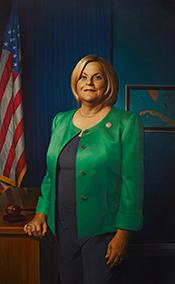
Mr. Chairman, I yield myself such time as I may consume. I rise in strong support of the Henry J. Hyde United Nations Reform Act and would like to provide some insight on the background and the…
Mr. Chairman, I yield myself such time as I may consume.
I rise in strong support of the Henry J. Hyde United Nations Reform Act and would like to provide some insight on the background and the impetus for Title III of the bill that relates, as the Chair pointed out, to the International Atomic Energy Agency.
To put it simply, the catalyst was the Iran case. For at least two decades, the Iranian regime has been pursuing a covert nuclear program. According to the November 2003 report of the IAEA, Iran's deceptions have dealt with the most sensitive aspects of the nuclear cycle. Furthermore, the International Atomic Energy Agency could not disprove that Iran's nuclear program was not for weapons development. In 2004, the IAEA reports enumerated more Iranian breaches, including work on an element that could be used for nuclear explosions. And the response from the Iranian Foreign Minister as well as the Secretary of Iran's Supreme National Security Council was that Iran had to be recognized by the international community as a member of the nuclear club and, ``This is an irreversible path,'' they said.
Fast forward to this year, and the news reports appearing in the last few months state that the Iranian regime plans to install 54,000 advanced P-2 model centrifuges at its facility in Natanz. The Director General of the IAEA has called upon Iran to allow its inspectors full access to the sites in Lavizan and Parchin.
Yet Iran has recently barred the International Atomic Energy Agency from visiting those sites, and Western intelligence sources cited by the media sources suspect that Iran may be experimenting with high explosives appropriate for nuclear weapons.
Just yesterday at the Board meeting in Vienna of the IAEA, it was revealed that Iran had conducted experiments to create plutonium for many more years beyond what it claimed.
All of this, and Iran has yet to suffer any consequences or has been held accountable by the IAEA for its flagrant and indeed dangerous violations and breaches. In fact, Iran recently served on the Board of Governors of the International Atomic Energy Agency because, under the current structure, under its policies, countries that are suspected of breaching their safeguards, they are allowed to serve in leadership positions within the Agency.
The Iran case as well as the linkage to the nuclear black market network of Pakistani scientist A.Q. Khan illustrates another grave issue, the need to deny and deprive terrorists, whether state or nonstate actors, the access to the technology, to the parts, and to the materials to develop a nuclear-related arsenal. These dangers prompted the gentleman from Illinois (Chairman Hyde) and me to take immediate steps within the context of the U.N. reform bill to strengthen the International Atomic Energy Agency in the areas of safeguard inspections and nuclear security; also, to effectively use U.S. contributions to deny rogue states and state sponsors of terrorism, such as Iran, such as Syria, the ability to pursue dangerous weapons with virtual impunity.
And title III of this bill thereby translates objectives into concrete actions to achieve U.S.
counterproliferation goals. It seeks the establishment of an Office of Compliance and enforcement within the Secretariat of the Agency to function as an independent body of technical experts that will assess the activities of member states and recommend specific penalties for those that are in breach or violation of their obligations. Also, it establishes a Special Committee on Safeguards and Verification to advise the Board of Governors on additional measures necessary to enhance the Agency's ability to detect undeclared activities by member nations. Furthermore, it seeks the suspension of privileges of member states that are under investigation or in breach or noncompliance of their obligations and the establishment of membership criteria that would keep such rogue states, such as Iran, such as Syria, from serving on the Board of Governors.
The section in this act reinforces our U.S. priorities concerning the safety of nuclear materials and counterproliferation by calling for U.S. voluntary contributions to the Agency to primarily be used to fund activities related to nuclear security.
And, Mr. Chairman, that is why, under the leadership and expertise of the gentleman from Illinois (Chairman Hyde), we understand that the bill before us and especially Title III of this bill translates these objectives into concrete actions, and we hope that the full body will recommend passage of this bill.
Show 11 more
Mr. Chairman, I offer an amendment. Mr. Chairman, I yield myself 2 minutes. Mr. Chairman, in the 35 years since the Nuclear Nonproliferation Treaty has been in force, much has changed around the…
Mr. Chairman, I offer an amendment.
Mr. Chairman, I yield myself 2 minutes.
Mr. Chairman, in the 35 years since the Nuclear Nonproliferation Treaty has been in force, much has changed around the world, but what has not changed is the danger inherent in the spread of nuclear weapons.
My amendment says that the President of the United States shall direct the United States permanent representative to the IAEA to use their influence and their vote to secure an agreement within the IAEA requiring that any member state of the NPT that is in breach of the treaty or withdraws from the treaty must return any nuclear materials or technology acquired for peaceful purposes.
Now, why is this amendment needed? Well, for the first time in the treaty's history, one country has withdrawn from the treaty. In 2002, international inspectors were asked to leave North Korea, and, in 2003, North Korea withdrew from the nonproliferation treaty. And just this year North Korea announced to the world that it has nuclear weapons; all the while, North Korea is allowed to keep any and all nuclear materials, nuclear technology, and assistance they receive as a member of the NPT.
So while considerable diplomatic activity has taken place to try to convince North Korea to reverse its action, there is actually no rule in place now at the IAEA that would require North Korea to return all of the nuclear materials it received.
My amendment would mandate that the President direct the United States permanent representative at the IAEA to secure such an agreement amongst the IAEA member states.
This type of requirement is not just important because of North Korea. Currently we have Iran declaring its rights to pursue all nuclear technology for peaceful purposes, it says. The United States and Europe are worried that Iran has a clandestine nuclear weapons program, but all the while Iran is insisting on its right to receive all nuclear materials, nuclear technology, and assistance for its peaceful program.
Mr. Chairman, I reserve the balance of my time.
Mr. Chairman, I yield 2 minutes to the gentleman from California (Mr. Lantos).
Mr. Chairman, how much time do I have remaining?
Mr. Chairman, I yield myself such time as I may consume.
I will conclude by saying this: There are no Democrats, there are no Republicans when it comes to the issue of nuclear nonproliferation. The one thing that President Bush and John Kerry agreed upon in their Presidential debates is that this is the most important issue in the world. It may have been the only thing that they agreed upon, but they did agree upon this one issue.
Now, interestingly, in the Atomic Energy Act of the United States, in 1954, it is, in fact, a requirement under our law that if another nation is in violation of the agreement, that the nuclear materials which we give to that country is not used for peaceful purposes, that all of the materials that we have sent to that country must be returned to our country.
What this amendment says is that as a member of the United Nations and the IAEA, that we now will extend this not just to the United States, but to all countries in the world; that the IAEA must enforce a requirement that if a country is in violation of its agreement to use materials only for peaceful purposes, then the IAEA must act immediately to begin the process of reclaiming all of the material that all of the countries of the world have sent to that country which is in violation of the law.
We must put teeth in this law. We must not allow the short-term diplomatic or political agenda of any President or any Secretary of State, Democrat or Republican, to interfere with the overarching goal of ensuring that nuclear weapons are not used anywhere on this planet at any time.
And so I urge all Members to support this amendment. It goes a long way in sending a message to the rest of the world that the United States intends on being the leader on the issue of nuclear nonproliferation, regardless of which other country in the world is involved and regardless of which other country in the world was the supplier of those materials. We will be the moral leader.
Mr. Chairman, I yield back the balance of my time.
I thank the gentleman from Utah (Mr. Bishop) for yielding me the time. Mr. Speaker, I rise today in support of the rule and the bill. I also want to thank the gentleman from Illinois (Mr. Hyde) for…
I thank the gentleman from Utah (Mr. Bishop) for yielding me the time.
Mr. Speaker, I rise today in support of the rule and the bill. I also want to thank the gentleman from Illinois (Mr. Hyde) for his service and this bill. I had some prepared remarks, but I have got to respond to the last speaker who talked about CEDAW. It seems to me that that is a perfect example of what is wrong with the United Nations and our funding the United Nations. What a joke CEDAW is. We are the only industrialized country that has not signed that treaty. Women do better here than anyplace in the world. There is no person who supports equal rights for women more than I do, and I think that CEDAW is a joke because of those who have supported it, look at how they treat women.
As Members of Congress, we have a duty to ensure accountability of each and every American taxpayer dollar that goes to the United Nations. From the U.N. Oil-for-Food program, to its lack of action with respect to the genocide in Darfur, to the horrendous human rights abuses by U.N. peacekeeping staff during their mission in the Congo, what did they care about CEDAW. The U.N. is rife with fraud and abuse and needs reform.
Two of the most important items this bill requires are to direct the U.S. permanent representative to aggressively pursue a definition of terrorism and to mandate that the U.N. adopt criteria for membership on any human rights body. The U.N. counts some of the world's leading human rights violators and state sponsors of terrorism among its membership and even taps many of them to be in leadership positions on its subcommittees. This is outrageous and ironic.
Let us empower our new ambassador to the U.N. and the administration with reforms that have some teeth and will effect change. The United Nations' reputation of being a credible and effective international peacekeeping body has been tarnished. It is no wonder so many Americans question the efficacy and the very necessity of the United Nations.
Mr. Speaker, I rise today in support of this rule and bill and thank Mr. Hyde for his service and this bill. The United Nations Charter includes some very laudable goals, but when the rubber meets the road, the U.N. has failed miserably to put these ideals into practice, especially in recent years.
As a founding member of the U.N. and a permanent member of the U.N. Security Council, we have a duty to insist on a higher standard. And as Members of Congress, we have a duty to ensure accountability of each and every American taxpayer dollar that goes to the U.N.
From the U.N. Oil for Food program to its lack of action with respect to the genocide in Darfur, Sudan to the horrendous human rights abuses by U.N. peacekeeping staff during their mission in the Congo, the U.N. is rife with fraud and abuse and needs reform.
This bill includes a call for certifiable reforms including: Shifting 18 programs from the regular assessed budget to voluntary funded programs so their funding would not be automatic; all new programs started by the U.N. to include sunsetting provisions; cuts and streamlining in the funding for the 15,484 conferences and scheduled meetings that occurred in 2004 and 2005, some of which cost $7-8,000 per hour; creation of an ethics office to provide oversight over the U.N. budget and financial disclosure form.
And two of the most important items this bill requires are to direct the U.S. Permanent Representative to aggressively pursue a definition of terrorism and to mandate that the U.N. adopt criteria for membership on any human rights body.
The U.N. counts some of the world's leading human rights violators and state sponsors of terrorism among its membership and even taps many of them to be in leadership positions on its subcommittees. This is completely outrageous and dangerously ironic.
Let us empower our new ambassador to the U.N. and the administration with reforms that have some teeth and will effect change. The United Nations' reputation of being a credible and effective, international peacekeeping body has been sorely tarnished. It is no wonder so many Americans question the efficacy and the very necessity of the United Nations.
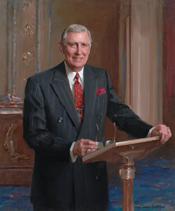
Mr. Speaker, first of all, let me echo what has been said about the gentleman from Illinois (Mr. Hyde). There has never been a finer Member of Congress in the history of the Republic than the…
Mr. Speaker, first of all, let me echo what has been said about the gentleman from Illinois (Mr. Hyde). There has never been a finer Member of Congress in the history of the Republic than the gentleman from Illinois. He was one of the most eloquent speakers I have ever known in this House. We really appreciate all his hard work on this bill.
Now, let me say to my friend from Massachusetts, I have been listening to this stuff for 20 years. You cannot do anything to put pressure on the United Nations, because if you do, the whole world is going to hate us. The sky is going to fall, Henny Penny. The State Department has been working with the United Nations for the last 20 years that I have been here and working on the Foreign Affairs Committee, International Relations now. The problems still exist. The only difference is, it is worse now than it has ever been.
We have got to do something about it. Mr. Bolton needs to be confirmed on the other side because we need a tough guy over there to force the issue. We have got an Oil-for-Food scandal that is growing daily. Kofi Annan, the head of the United Nations, the Secretary- General, said, Oh, I didn't have anything to do with it. We now are finding memos where he talked to the people in the oil industry saying that he would give them unqualified support.
A few months ago, he said, Oh, I never did that, and he said he would never resign under any circumstances. Now he is hedging his bets on that because the case against him and the Oil-for-Food scandal is growing and growing and growing. He is the head man over there. On his watch, everything has been going haywire.
We have got U.N. peacekeeping forces raping women and kids, and nothing has been done about that. We have got all kinds of problems over there and something must be done. How do you do that? We say, Well, let's follow the same course we have been following for the last 20 years. The State Department says, My gosh, we'll go over there and we'll do something about it. I have high regard for Condoleezza Rice. I think she is a dynamite lady and going to do a dynamite job. But this body needs to put the hammer by using American taxpayers' dollars on the U.N. to clean up that mess over there. We cannot go on day after day, week after week, month after month, year after year letting this thing be completely out of hand.
The gentleman talked about the Mitchell and Gingrich report. They said that it is a mess over there. How do you clean it up? You make a change from top to bottom. How do you do that when the rest of the world or much of the rest of the world says, Oh, my gosh, we don't want the United States dictating to us. I can understand that. We are the big guy on the block. They do not want us dictating to them, and we do not want to dictate to them. We want to work with them. But the fact of the matter is they are not listening in many cases and the corruption goes on and on and on, the mismanagement goes on and on and on, and nothing changes. And the United States keeps pouring in 25 percent, or almost that much, of the funds out of the taxpayers' pockets in this country for that body.
How do you change it? You take out the hammer, and the hammer is the money. You say to the world body, the United Nations, If you don't clean up that mess, we are going to withhold funds. And if we withhold funds, you are going to have a big, big problem over there.
Mr. Speaker, the gentleman from California (Mr. Lantos) is one of my dearest friends in this place and the gentleman from Massachusetts is not a bad friend, either. We have traveled together. I have high regard for him, even though he is wrong a lot of the time. But I just want to say, something has to be done. There must be something in the water in Massachusetts. I do not know. But something has to be done. And what has to be done is we have got to put pressure on the U.N. and the best way to do it is to say, either you change things over there or we are going to withdraw funds.
Madam Speaker, I thank the gentleman for yielding me this time. First, I want to thank my friend from Utah for his most gracious words at the outset of this debate, and I would like to commend my…
Madam Speaker, I thank the gentleman for yielding me this time. First, I want to thank my friend from Utah for his most gracious words at the outset of this debate, and I would like to commend my distinguished colleague, the gentleman from Florida (Mr. Hastings), for his leadership on foreign policy matters and for his invaluable assistance on the Committee on Rules.
Madam Speaker, as we embark upon today's historic debate, at the outset I would like to publicly express my respect, my admiration, my affection, and my friendship to the chairman of the House Committee on International Relations. The gentleman from Illinois (Mr. Hyde) has been a giant in this body for many years. His contributions to the work of the Congress and to the welfare of our Nation are without limits, and it has been one of the great
privileges of my congressional career to have had the opportunity of serving on his committee.
Madam Speaker, let me make it clear that there is no Member of this body who is opposed to far-reaching reforms at the United Nations. We must approve legislation to fight corruption, hypocrisy, ineffectiveness, waste, and anti-Americanism at this important global institution. There is no disagreement, Madam Speaker, between Chairman Hyde and me as to whether the U.N. must be reformed. Where we part ways is on how to accomplish this incredibly important goal.
Madam Speaker, the good Lord gave us Ten Commandments. The legislation before the House today gives us 39.
While I know there has been some inflation over time, there is no rational explanation for such an explosion of legislative commandments.
The United Nations Reform Act is truly a guillotine on autopilot. If the United Nations accomplishes 38 out of 39 commandments, but only accomplishes one-half of the last commandment, the United States will automatically cut off 50 percent of our contributions to the United Nations. Secretary of State Rice will have absolutely no choice in the matter. The President of the United States will have no choice in this matter. The Congress will have no choice in this matter.
The bill under consideration is also a death blow to United Nations peacekeeping. Upon enactment of this legislation, the United States will be forced to oppose any new or expanded peacekeeping mission until a comprehensive series of peacekeeping reforms are implemented, many of which we all know will take years to accomplish. Rwanda-style genocides could unfold before our eyes, and the United Nations would have to turn its back.
Madam Speaker, I agree that peacekeeping desperately needs reform, but it boggles the mind to think that this body would approve legislation which automatically cuts off all U.S. support for U.N. peacekeeping unless congressionally mandated commandments are immediately implemented.
We are not alone, Madam Speaker, in our deep opposition to the United Nations Reform Act in its current form. This Republican administration is strongly opposed to this legislation. Under Secretary of State Nicholas Burns said yesterday that this legislation ``would undermine American credibility at the United Nations and would call into question our reliability as the founder and host Nation and leading contributor to the United Nations.''
Eight of our former Ambassadors to the United Nations, Republicans and Democrats alike, ranging from Ambassador Jeanne Kirkpatrick to Ambassador Danforth, a former distinguished Republican Senator, all oppose this legislation.
Madam Speaker, my Republican colleague, the gentleman from Connecticut (Mr. Shays), and I will offer a substitute amendment to promote U.N. reform effectively. Our substitute, which is rational, responsible and bipartisan, does not have the rigid and arbitrary dictate that automatically cuts 50 percent of our dues. This provision makes the bill, which has many good provisions in it, a guillotine on autopilot. I urge all of my colleagues to vote for the Lantos-Shays substitute.
Madam Speaker, I also want to add to the remarks of the gentleman from Florida (Mr. Hastings) and our ranking member, the gentleman from California (Mr. Lantos), when it comes to the gentleman from…
Madam Speaker, I also want to add to the remarks of the gentleman from Florida (Mr. Hastings) and our ranking member, the gentleman from California (Mr. Lantos), when it comes to the gentleman from Illinois (Mr. Hyde). I have served with the chairman both on the Committee on the Judiciary and on the Committee on International Relations. I have profound respect and deep affection for him, but I do not like his bill.
It is clear that there is a consensus that the United Nations needs reform. We want reform. Our allies want reform. The Secretary General wants reform. Just this week a congressionally created task force chaired by the former Speaker of the House Newt Gingrich and the former majority leader Senator George Mitchell issued a report urging adoption of many of the proposals put forth by the Secretary General; but it did not recommend that Congress withhold dues to serve as a catalyst to bring about those reforms.
Presumably, they were in agreement with the eight former U.S. Ambassadors to the United Nations, both Republican and Democrat, who stated yesterday in a letter to the congressional leadership, and I would ask my
colleagues to pay close attention to this particular excerpt, ``Withholding U.S. dues to the United Nations may sound like smart policy, but would be counterproductive. It would create resentment, build animosity and actually strengthen opponents of reform. It would place in jeopardy the reform initiatives most important to U.S. interests.'' Remember, these are Americans who represented our Nation at the United Nations. They understand how the institution works. They know how to get things done.
Yes, Madam Speaker, I am optimistic that reform will occur, but it will not happen as a result of this bill, it will happen in spite of this bill.
If it were a thoughtful effort to effect change, why did the committee proceed before the Gingrich-Mitchell task force that we created and funded back in December even made its recommendations?
No, this bill will not promote U.N. reform, Madam Speaker. It is more likely to undermine those efforts. Support for this bill will reinforce a growing belief that we are not committed to strengthening the United Nations, to working with our like-minded allies to make it a more effective tool to promote our interests.
I recognize that some, a few, on the other side honestly believe we should end any participation, any U.S. participation in the United Nations. They prefer to go it alone, but they forget that without the United Nations it would fall on us to do much of what the United Nations is doing on the planet today, and that the United Nations has supported the United States in some of our critical foreign policy needs. It was the United Nations that organized and ran the elections in Iraq and in Afghanistan and played a critical role in forcing the Syrian withdrawal from Lebanon.
The Ambassadors are correct, resentment towards the United States will increase. That is because what this bill simply says is unless you do everything we want, we will cut off your funds. In other words, if you do not play the game according to our rules, we will take our ball and go home.
This take-it-or-leave-it approach does not help us, it hurts us. A recent GAO report stated, and again I am quoting, ``Recent polling data show that anti-Americanism is spreading and deepening around the world. Such anti-American sentiments can increase foreign public support for terrorism directed against the United States, impact the cost and effectiveness of military operations, weaken the United States' ability to align with other nations in pursuit of common policy objectives, and dampen foreign publics' enthusiasm for U.S. business services and products.''
That is a quote from our own GAO. This bill is bad for our national security interests, it is bad for America, and I hope it is defeated.
Mr. Chairman, I am not opposed to the amendment, and I ask unanimous consent to claim the time in opposition. Mr. Chairman, I yield myself such time as I may consume. Mr. Chairman, I would like to…
Mr. Chairman, I am not opposed to the amendment, and I ask unanimous consent to claim the time in opposition.
Mr. Chairman, I yield myself such time as I may consume.
Mr. Chairman, I would like to thank the gentleman from Illinois (Mr. Hyde) and the gentleman from California (Mr. Lantos) for their work on this issue,
and my good friend, the gentleman from Virginia (Mr. Cantor), for cosponsoring this amendment with me.
This amendment would take a strong stand against Iranian nuclear proliferation and would help to ensure that Iran ceases its weapons program. The amendment directs the permanent representative to the IAEA to use his influence to ensure that Iran does not receive any nuclear material or technological assistance from other IAEA member states. This restriction will remain in place until Iran allows full access to its nuclear-related facilities by IAEA inspectors, has fully implemented IAEA's additional protocol, and has completely ended all nuclear enrichment programs.
Tehran has relentlessly pursued a large-scale, covert nuclear weapons program for almost 2 decades. This program represents the great proliferation challenge to the United States. Iran is the most active state sponsor of terrorism. It has provided Hezbollah, Hamas, Islamic jihad, and the Popular Front For the Liberation of Palestine with funding, training, and weapons to continue their terrorist attacks throughout the world.
Unless the world community intervenes, Iran will become the first active state sponsor of terrorism to acquire the greatest instrument of terror and destruction, nuclear weapons. A nuclear-armed Iran will terrorize and destabilize the entire Middle East and pose a serious threat to Europe, Asia, Africa, as well as the United States.
Iran has already tested the Shahab-3 missile, with a range of over 1,250 miles. This not only puts Israel, the only democracy in the Middle East, in danger, but can be used to attack U.S. bases in the region. There is strong evidence that Iran would be willing to sell nuclear material to the highest bidder. Worse yet, Iran might be willing to simply give the nuclear material away. Faced with the reality of a radical Iran with nuclear weapons, other countries in the region might feel compelled to develop their own nuclear capability to maintain an awful balance of power.
Iran continues to deceive the international community and hide its actions from international observers. Iran did not acknowledge the existence of the Natanz fuel enrichment plant until after its existence was discovered. This facility can manufacture enough uranium to produce 25 to 30 nuclear weapons per year. In 2003, Iran admitted that it had a laser uranium enrichment program not previously disclosed.
We know of two facilities that manufacture and refine nuclear materials, including an enrichment facility designed for 1,000 centrifuges, and a large buried facility intended to house up to 50,000 centrifuges.
Today, a report was delivered to the IAEA's Board of Governors by the Deputy Director General of the UN. In it Iran admits to experimenting with and producing plutonium.
Recently, Moscow entered into an agreement to provide nuclear fuel for Iran's controversial Bushehr reactor. Under the agreement, Russia would control the fissile material. But there is nothing to prevent Iran from withdrawing from the agreement. If Iran did that, the Bushehr reactor could produce enough plutonium annually for 30 nuclear weapons.
The Ayatollahs of Terror must not be allowed to acquire nuclear weapons under any circumstances. A nuclear Iran threatens the entire planet. I urge adoption of this amendment.
I yield to the gentleman from California.
Mr. Chairman, I yield back the balance of my time.
Mr. Chairman, I yield myself such time as I may consume. I rise for a few brief moments to speak on behalf of title VI of this bill which calls for far-reaching reforms in the areas of planning,…
Mr. Chairman, I yield myself such time as I may consume.
I rise for a few brief moments to speak on behalf of title VI of this bill which calls for far-reaching reforms in the areas of planning, management, conduct and accountability of peacekeeping operations within the United Nations. It does, as the gentleman from California said quite accurately, it does involve some tough love and the potential for withholding support for the creation of new or expanded peacekeeping missions if the U.N. does not implement the most basic yet critically important reforms that are called for.
As I have said before, the power of the purse is the power of the American people. While title IV of the peacekeeping reforms of this bill do not cut peacekeeping funds, they do withhold the expansion of any U.S. involvement in peacekeeping operations if these reforms are not enacted.
The need for the reforms are obvious. The Congo in this last calendar year, U.N. peacekeepers and civilian personnel stand accused of widespread sexual exploitation of refugees in the Democratic Republic of Congo.
In Eritrea in 2005, U.N. peacekeeping staff ran up more than $500,000 of unpaid international calls.
In Burundi in 2004, two U.N. peacekeepers were suspended following allegations of sexual misconduct.
In Sierra Leone in 2003, U.N. peacekeepers were accused by Human Rights Watch of systematic rape of women, and the list goes on and on and on.
The need for reform is real. I am pleased to say there is broad agreement about the need for reform. In fact, the United Nations Special Committee on Peacekeeping Operations has endorsed specifically all seven of the reforms that are included in this legislation. In fact, those reforms have been endorsed by Prince Zeid of Jordan, the Secretary General's special advisor on sexual exploitation and abuse, and all but one, the signature of an oath, have already been adopted by the U.N. special committee.
According to officials at the U.N., most of these reforms are expected to be in place by the end of July 2005. Five of the peacekeeping reforms under this title are linked to immediate withholding of support for new and expanded missions. They are: the adoption of a uniform code of conduct; the training of peacekeeping personnel on that code of conduct; the signature of an oath to abide by the code of conduct; design of programs to explain prohibited acts to host populations so there would be greater accountability for the behavior of peacekeepers; and the creation of a centralized database to track these areas of misconduct.
Once again I say that officials at the U.N. believe that most of these reforms will be in place in a matter of weeks, so it is difficult to understand how requiring these reforms before any additional U.S. missions are approved under peacekeeping operations is a little hard to understand.
Two additional reforms are equally critical, but may require more time to implement: the adoption of a model memorandum of understanding; and the establishment of an independent investigative audit that functions for peacekeeping missions.
These are all part and parcel of restoring the credibility of the good work that U.N. peacekeepers have done throughout the past 60 years, and it is central to the principle of the Henry J. Hyde U.N. Reform Act that we stand, even with tough love, for the idea that we use the power of the purse, which is the power of the American people, in this case the threat of withholding additional missions to the United Nations under peacekeeping operations to demand that these necessary reforms are implemented.
I yield to the gentleman from California.

Mr. Chairman, I offer an amendment. Mr. Chairman, I yield myself such time as I may consume. Mr. Chairman, I rise today in support of this amendment to increase the ability of the United States to…
Mr. Chairman, I offer an amendment.
Mr. Chairman, I yield myself such time as I may consume.
Mr. Chairman, I rise today in support of this amendment to increase the ability of the United States to protect our world from the spread of nuclear weapons to dangerous governments.
This amendment does two things: first, it calls for the U.S. permanent representative to the International Atomic Energy Agency to do all it can to ensure that Iran be cut off from any nuclear material technology and assistance.
Secondly, the amendment provides for penalties for any country that continues to provide assistance to Iran's nuclear efforts.
Mr. Chairman, for over 35 years Iran has been a non-nuclear party to the Nuclear Nonproliferation Treaty. As such, it is bound by the treaty to open up all of its nuclear program efforts for international inspection. Despite this obligation, Iran has continued to pursue the development of nuclear capability in the dark without transparency.
Two years ago, an Iranian opposition group revealed the location of hidden facilities used for the development of a nuclear program, locations which have since been verified by the IAEA. As the gentlewoman from Florida (Chairman Ros-Lehtinen) pointed out just yesterday, Iran acknowledged working with plutonium, a possible nuclear arms component, for years longer than it admitted to the IAEA. We also found out it had received sensitive technology that can be used as parts of weapons programs earlier than it originally said it did.
Iran claims these efforts are for a peaceful purpose. But how can one really believe that Iran needs a civilian nuclear program when it sits on the world's second largest proven reserves of natural gas, not to mention its petroleum deposits? Clearly, Mr. Chairman, I posit Iran cannot be trusted.
As Iran has repeatedly lied to the world regarding the extent and sophistication of its nuclear program, Tehran serves as the world's capital for the export and sponsorship of terrorism. It has demonstrated a willingness to provoke its neighbors, as well as the United States and Israel. Past efforts to stop Iran's pursuit of nuclear weapons have obviously failed.
Mr. Chairman, this amendment makes a clear and unequivocal declaration to Iran, as well as to the nations of the world, that the United States is serious about stopping Iran's development of nuclear weapons. I urge the passage of this amendment.
Mr. Chairman, I reserve the balance of my time.
Mr. Chairman, I yield myself such time as I may consume.
Mr. Chairman, I thank the gentleman from California for his leadership and also the gentlewoman from Nevada. But I do want to take this time, Mr. Chairman, to recognize the extraordinary leadership of the gentleman from Illinois (Chairman Hyde) of the Committee on International Relations.
The gentleman from Illinois is truly a man with a backbone of steel and a heart of gold. He is an icon of this institution; and I, for one, know I am joined by every Member of this House in thanking him for his leadership on this bill and the number of other measures that he has worked on and done such a tremendous job with.
I am proud to be here in support of the Henry J. Hyde U.N. Reform bill, and I know my colleagues join me in thanking the gentleman from Illinois (Chairman Hyde) for all that he does.
In paraphrasing a well-known phrase, I would like to just say, Mr. Chairman, I sleep better every night knowing that Henry Hyde is here fighting for America.
Mr. Chairman, I yield back the balance of my time.
Mr. Chairman, I demand a recorded vote.
Madam Speaker, I thank the gentleman for yielding me this time. We are all sinners even though we have the 10 Commandments, but can Members imagine how much more sin we might be committing had those…
Madam Speaker, I thank the gentleman for yielding me this time.
We are all sinners even though we have the 10 Commandments, but can Members imagine how much more sin we might be committing had those commandments been mere suggestions? That is why the Henry Hyde U.N. Reform Act does have commandments that the U.N. should and must adhere to. I rise in strong support of this bill.
On Monday as we were preparing for the debate on reforming the United Nations, a constituent of mine was at one of the sessions of the Economic and Social Council, one of the many United Nations bodies, and he was immediately struck by the almost Orwellian and secretive nature of the proceedings, as well as by the vitriolic, anti-American attacks in which the chairman and other members of the committee were engaged.
My constituent made several observations to me that reaffirmed that lives, not just policies, are at stake in our efforts to reform the U.N. institutions. This same constituent sent me a postcard like this one that reaffirmed to me the need for this. It had a note encouraging the Congress to overhaul the United Nations, and the picture on the postcard is a sculpture of a broken world, implying that the United Nations is the means by which to fix it.
However, how can the United Nations be considered a legitimate source of stability or an instrument for the protection of the most vulnerable populations or a tool for the promotion of human rights and good governance when it is plagued with graft and corruption, when sexual predators and traffickers in human beings are part of the policing and peacekeeping mission, and when the Human Rights Commission is a country club of rogue states made up of dictators and tyrants and thugs?
Reforming the United Nations is necessary for its survival, and it is long overdue. However, reform must not be limited to rearranging the deck chairs, but instead to correcting the organization's serious institutional and systemic flaws. The U.N. has paid lip service to nominal efforts to reform itself, and the few times that those promises have been kept, it is when the United States has leveraged its financial support for the organization and its specialized agencies.
For this reason, the Henry Hyde U.N. Reform Act of 2005 mandates spending cuts in specific programs, redirects funds to priority areas, and, yes, withholds 50 percent of U.S.-assessed dues if certifications are not made in critical areas. Those commandments must be adhered to.
If we are serious about making the United Nations relevant again, and I think in a bipartisan way we are, if we are serious about restoring it to reflect its core mission, and I think in a bipartisan way we are, if we are serious about saving the United Nations from itself, then we must render our overwhelming support for the Henry Hyde U.N. Reform Act of 2005.
I would just like to close by saying that it is very fitting that this bill before us should have the name of our distinguished chairman of the Committee on International Relations, the gentleman from Illinois (Mr. Hyde), who has been the conscience of the House, the voice of the people for so many years, has had such a distinguished public service career in the House and led us through some very difficult times as chairman of the Committee on the Judiciary as well as chairman of our Committee on International Relations. I am so pleased that this bill before us, which will reform this wonderful peacekeeping institution, will have his name as part of its reform legislation.
Mr. Chairman, I offer an amendment. Mr. Chairman, I yield myself such time as I may consume. I rise today to offer an amendment that would give the United Nations greater flexibility in the…
Mr. Chairman, I offer an amendment.
Mr. Chairman, I yield myself such time as I may consume.
I rise today to offer an amendment that would give the United Nations greater flexibility in the peacekeeping operations that they are involved in by allowing voluntary military personnel to serve at the Department of Peacekeeping Operations in New York. This was the norm until early 1999. Over time, 130 experienced officers had been loaned. They had expertise in mission planning, logistics, all of the things that are so important in these types of missions. There was a lull and because of the complaint of some of the other nations that 85 percent of this group came from developed countries, it was discontinued.
As a member of the Committee on International Relations, I frequently hear of the problems that we have with peacekeeping, the atrocities in various parts of the world. Again, I think that this is a situation that would greatly remedy that.
Rotating these professionals into the U.N. on a periodic basis provides a means for introducing new ideas, techniques, and experience without having to deal with terminating contracts or moving people and positions. It allows the system to deal with unexpected demands. The U.N.'s new operational responsibilities demand a more flexible approach.
I think the other thing is that this would not cost anything. This would be a mechanism where, in fact, I think we could save a great deal of money by being much more efficient. We are asking the United Nations to be more effective with their planning and their operations. The other thing that is important is that in no way does this require our Department of Defense to assign any U.S. military personnel. It only leaves the door open.
I want to thank my chairman and thank the ranking member for their work on this and, again, our staffs.
Mr. Chairman, I reserve the balance of my time.
Mr. Chairman, I yield myself such time as I may consume.
Not too long ago, my wife came to me. She had, the night before, seen a program on television. She said, John, is it true that the U.N. peacekeepers are trading sex for peanut butter with 9- and 10-year-old kids? She could not believe it. I looked at her, and I said, Cathy, it's true. That is happening.
I talked to Chairman Smith and he subsequently held hearings. They came over and assured us that things were getting better. We were told that basically the implication was on the battlefield, these things happen, sexual abuse occurs. My response was, This isn't sexual abuse. That taking pictures of 9- and 10-year-old kids, exploiting them, was child abuse and a criminal matter.
We heard that there would be zero tolerance. A week later, another television program and the guy said, We have heard there is going to be zero tolerance. He said, What does that mean? He showed pictures of these guys sneaking out at night to a village, again to do their work and showed a picture of a guy riding around in a U.N. vehicle with a prostitute.
I think we have worked, we have held our hearings, we have coerced. I think the time now is to demand accountability. Again, I would ask all of my colleagues to vote for this amendment.
Mr. Chairman, I yield back the balance of my time.
Mr. Chairman, I rise today in strong support and appreciation really of both of our leaders on this bill, the gentleman from California (Mr. Lantos), and I am particularly pleased to see this bill…
Mr. Chairman, I rise today in strong support and appreciation really of both of our leaders on this bill, the gentleman from California (Mr. Lantos), and I am particularly pleased to see this bill named in appreciation and recognition of the great leadership of our Committee on International Relations chairman, the gentleman from Illinois (Mr. Hyde).
I think we all know on both sides of the aisle that the United Nations has not lived up to its expectations. It unfortunately has come way too close to mirroring the ineffective activities of the organization it replaced, the League of Nations.
This year, the U.N.'s budget increased to $1.8 billion. Of that $1.8 billion, we pay a substantial part of the cost of the U.N. These reforms are necessary. Moving the programs that this bill suggests be moved to voluntary programs only increases the willingness of people to support those programs, the transparency of those programs.
I strongly urge support for this bill. I strongly urge support for the penalties that it contains. I appreciate my friend, the gentleman from Illinois (Mr. Hyde), and also our great Ranking Member of this committee, the gentleman from California (Mr. Lantos).
Mr. Chairman, I thank the gentleman for yielding me this time.
I thank our friends for accepting this important amendment that the gentleman from Minnesota (Mr. Kline) has brought forward to the bill. Certainly today United States troops are deployed around the world as they defend our freedoms and as they assist others in defending their freedom.
In Iraq and Afghanistan they are working tirelessly to create a secure environment for fledgling democracies. On the Korean Peninsula, they face a brutal dictator. In Kosovo they observe an uneasy peace among old adversaries, and in Japan and Europe they stand to react to any national crisis. In addition, our naval personnel operate in dozens of bases worldwide to protect global trade routes, prevent nuclear proliferation, and many other important tasks.
And even as they perform these actions in defense of liberty in other nations, our troops serve the United States of America, not the United Nations or any other foreign power. Their mission may send them abroad, but we must never allow a foreign court to interfere in U.S. military affairs.
Examples already exist of the dangers of the International Criminal Court. During the most notable example recently, European opponents of the Iraq War suggest that senior U.S. officials including the Secretary of Defense and top military commanders should be tried by that Court.
The United States of America has a long history of fair and firm military justice. The Uniform Code of Military Justice is understood and respected by our military personnel that serves our Armed Forces well. Under no circumstances should our men and women in uniform fear retribution in the form of prosecution by a foreign court of justice.
I think the gentleman from Minnesota (Mr. Kline) understands this as well as any Member of this body. I appreciate his bringing this amendment to the floor, and I am pleased to see it included in a bill that I hope is heartily responded to by support today.
Bill Text
2 versions available
        [Congressional Bills 109th Congress]
[From the U.S. Government Publishing Office]
[H. Res. 319 Engrossed in House (EH)]

H. Res. 319

In the House of Representatives, U.S.,

June 16, 2005.
Resolved, That at any time after the adoption of this resolution the Speaker
may, pursuant to clause 2(b) of rule XVIII, declare the House resolved into the
Committee of the Whole House on the state of the Union for consideration of the
bill (H.R. 2745) to reform the United Nations, and for other purposes. The first
reading of the bill shall be dispensed with. All points of order against
consideration of the bill are waived. General debate shall be confined to the
bill and shall not exceed 20 minutes equally divided and controlled by the
chairman and ranking minority member of the Committee on International
Relations. After general debate the bill shall be considered for amendment under
the five-minute rule.
Sec. 2. (a) It shall be in order to consider as an original bill for the
purpose of amendment under the five-minute rule the amendment in the nature of a
substitute recommended by the Committee on International Relations now printed
in the bill. The committee amendment in the nature of a substitute shall be
considered as read. All points of order against the committee amendment in the
nature of a substitute are waived.
(b) Notwithstanding clause 11 of rule XVIII, no amendment to the committee
amendment in the nature of a substitute shall be in order except those printed
in the report of the Committee on Rules accompanying this resolution and
amendments en bloc described in section 3 of this resolution.
(c) Each amendment printed in the report of the Committee on Rules shall be
considered only in the order printed in the report, may be offered only by a
Member designated in the report, shall be considered as read, shall be debatable
for the time specified in the report equally divided and controlled by the
proponent and an opponent, shall not be subject to amendment, and shall not be
subject to a demand for division of the question in the House or in the
Committee of the Whole.
(d) All points of order against amendments printed in the report of the
Committee on Rules or amendments en bloc described in section 3 of this
resolution are waived.
(e)(1) Consideration of amendments printed in subpart A of part 1 of the
report of the Committee on Rules shall begin with an additional period of
general debate, which shall be confined to the subject of accountability of the
United Nations and shall not exceed 20 minutes equally divided and controlled by
the chairman and ranking minority member of the Committee on International
Relations.
(2) Consideration of amendments printed in subpart B of part 1 of the report
of the Committee on Rules shall begin with an additional period of general
debate, which shall be confined to the subject of United Nations peacekeeping
operations and shall not exceed 10 minutes equally divided and controlled by the
chairman and ranking minority member of the Committee on International
Relations.
(3) Consideration of amendments printed in subpart C of part 1 of the report
of the Committee on Rules shall begin with an additional period of general
debate, which shall be confined to the subject of the International Atomic
Energy Agency and shall not exceed 10 minutes equally divided and controlled by
the chairman and ranking minority member of the Committee on International
Relations.
(4) Consideration of amendments printed in subpart D of part 1 of the report
of the Committee on Rules shall begin with an additional period of general
debate, which shall be confined to the subject of human rights and shall not
exceed 20 minutes equally divided and controlled by the chairman and ranking
minority member of the Committee on International Relations.
(5) Consideration of amendments printed in subpart E of part 1 of the report
of the Committee on Rules shall begin with an additional period of general
debate, which shall be confined to the subject of the Oil-for-Food Program and
shall not exceed 20 minutes equally divided and controlled by the chairman and
ranking minority member of the Committee on International Relations.
Sec. 3. It shall be in order at any time for the chairman of the Committee
on International Relations or his designee to offer amendments en bloc
consisting of amendments printed in part 2 of the report of the Committee on
Rules not earlier disposed of or germane modifications of any such amendment.
Amendments en bloc offered pursuant to this section shall be considered as read
(except that modifications shall be reported), shall be debatable for 20 minutes
equally divided and controlled by the chairman and ranking minority member of
the Committee on International Relations or their designees, shall not be
subject to amendment, and shall not be subject to a demand for division of the
question in the House or in the Committee of the Whole. For the purpose of
inclusion in such amendments en bloc, an amendment printed in the form of a
motion to strike may be modified to the form of a germane perfecting amendment
to the text originally proposed to be stricken. The original proponent of an
amendment included in such amendments en bloc may insert a statement in the
Congressional Record immediately before the disposition of the amendments en
bloc.
Sec. 4. At the conclusion of consideration of the bill for amendment the
Committee shall rise and report the bill to the House with such amendments as
may have been adopted. Any Member may demand a separate vote in the House on any
amendment adopted in the Committee of the Whole to the bill or to the committee
amendment in the nature of a substitute. The previous question shall be
considered as ordered on the bill and amendments thereto to final passage
without intervening motion except one motion to recommit with or without
instructions.
Attest:

Clerk.