Providing for consideration of the conference report to accompany the bill (H.R. 3) to authorize funds for Federal-aid highways, highway safety programs, and transit programs, and for other purposes.
Legislative Activity
Stay on top of the latest movement without scrolling through every action
Motion to reconsider laid on the table Agreed to without objection.
July 29, 2005 • 10:13 AM
View full timeline
Introduced in House
July 28, 2005
The House Committee on Rules reported an original measure, H. Rept. 109-212, by Mrs. Capito.
July 29, 2005
Placed on the House Calendar, Calendar No. 79.
July 29, 2005
All points of order against the conference report and against its consideration are waived. The rule provides that the conference report shall be considered as read. The rule provides that the Clerk shall not transmit to the Senate a message that it has adopted the conference report to accompany H.R. 3 until the House has received a message that the Senate has agreed to House Concurrent Resolution 226 as adopted by the House.
July 29, 2005 • 1:07 AM
Considered as privileged matter. (consideration: CR H7570)
July 29, 2005 • 10:13 AM
Passed/agreed to in House: On agreeing to the resolution Agreed to without objection.(text: CR H7570)
July 29, 2005 • 10:13 AM
On agreeing to the resolution Agreed to without objection. (text: CR H7570)
July 29, 2005 • 10:13 AM
Motion to reconsider laid on the table Agreed to without objection.
July 29, 2005 • 10:13 AM
Floor Debate
24 membersWhat members said about H.Res. 399 on the floor
 TEP
TEP PAD
PAD EB
EB JLO
JLO ADW+19
Floor Debate
24 membersWhat members said about H.Res. 399 on the floor
Mr. Speaker, I thank the gentleman for yielding me time. I would like to reciprocate and say I appreciate working with the gentleman from Oregon (Mr. DeFazio) and his staff. It has been a pleasant…
Mr. Speaker, I thank the gentleman for yielding me time. I would like to reciprocate and say I appreciate working with the gentleman from Oregon (Mr. DeFazio) and his staff. It has been a pleasant experience at a time when people are deploring this body in some corridors for its partisanship.
I think our committee, under the leadership of the gentleman from Alaska (Chairman Young) and the gentleman from Minnesota (Mr. Oberstar), has worked in a very constructive and bipartisan way. It does not mean we always agree, but I think we have a better product because I think we are each looking at things and sharing our different perspectives and trying to work out something that is in the best interest of our country.
I obviously would be remiss if I did not acknowledge and thank very heartily Debbie Gephardt on my staff, who has spent many years on the Committee on Transportation and Infrastructure staff.
We sometimes up here do not properly acknowledge the hard-working career people, in this case at the United States Department of Transportation, who provide the analysis and, hopefully, the facts that enable us to at least have some idea of what we are trying to accomplish and whether we are succeeding in that effort. Susan Binder, Ross Kreiton, and Rita Merish in particular have been tireless and have been available 24 hours a day to do runs and to provide information and have helped the process enormously.
Mr. Speaker, today we come to the end of a 2-year odyssey as we have worked to put together a transportation reauthorization bill. We face tremendous expectations and pressures with a finite amount of money, much less than is necessary to meet the overwhelming transportation needs across our United States.
During this reauthorization effort, I and others on the committee have traveled to cities across the Nation and met with governors, mayors, business and labor interests and others, seen firsthand the many critical and necessary information projects that we as a Nation need to complete.
The report before us today is a step forward in helping to meet those needs. A total of $295 billion in contract authority and $286-plus billion in guaranteed spending over 6 years is provided for Federal highway, transit and safety programs.
The conferees were sensitive to the needs of donor States as well as donee States. Donor States will see increases in their rates of return, reaching a 92 percent rate of return in 2008 and 2009. There is a minimum growth rate of 19 percent to protect other States.
A revamped highway safety construction program has been included. Likewise, we have revised the current border program into a formula fund to meet increasing needs for States facing high infrastructure costs from increasing foreign trade growing traffic.
Environmental streamlining, planning and other administrative improvements seek to make project delivery more efficient without lessening needed environmental protections. Safety programs administered by the Federal Motor Carrier Safety Administration and the National Traffic Safety Administration will see increased funding. Important new initiatives to encourage seatbelt use, decrease drunk driving, and enhance motorcycle training and education opportunities are included in this legislation.
I am particularly pleased that this conference report contains many provisions that were included in legislation I introduced last Congress to help consumers who find themselves at the mercy of unscrupulous movers. While the overwhelming majority of household good movers are honest businesses, it has become clear that we need greater enforcement tools. In this bill we are providing authority to the States to enforce Federal regulations geared to protect consumers and supplement the efforts of the U.S. Department of Transportation in overseeing over 1.5 million interstate moves per year. New penalties are created and opportunities for consumer information will be enhanced.
The bill also looks to the future in assessing the critical issues that we must confront if we are to have a first-class infrastructure that is so necessary to remain competitive and to spur economic prosperity. The bill contains several important provisions regarding future transportation needs, in particular, freight needs and financing of the highway trust fund.
Currently, the trust fund is financed by the Federal gas taxes. With the rise of alternative fuels and greater fuel efficiency, this is just not cutting it any more. We are relying on a 20th century mechanism in a 21st century world. Future trust fund revenue projections are not encouraging, so we must confront this issue sooner rather than later.
It is perhaps appropriate that we are passing this conference report today as a tribute to the current Federal Highway Administrator, Mary Peters, who will be retiring on July 31 after more than 4 years of dedicated service at the Department of Transportation. I would like to wish Mary and her husband well as they ride their Harleys to their new life back in their home State of Arizona.
Our former colleague and chairman of the Public Works Committee, Secretary Norm Mineta, has also provided his usual reliable advice and counsel in crafting this legislation.
Mr. Speaker, one of the last items negotiated between House and Senate in this Conference Report were pending requests for exemptions from hours-of-service regulations for truck drivers in various industries. I personally believe that safety and economic realities require that there be greater flexibility in the rigid rules and regulations governing hours of service and I was disappointed that many of these exemptions did not receive more positive consideration.
One exemption that I supported, but was ultimately not accepted, would provide emergency flexibility that permits the re-rail industry to quickly respond to the true emergency needs that arise from railroad derailments and accidents. The failure to provide an emergency exemption for the Rerail Industry will result in a continuing denigration of our ability to protect the lives of citizens living along rights of way, assure highway safety and expedite interstate commerce by quickly clearing train derailments.
Today these emergency responders of the rail mode are often given the Hobson's choice of rapidly clearing wrecks that endanger lives and property and can cost millions of dollars in stacked up traffic or being penalized for violating hours of service. This is neither fair nor is it in the public interest. One of the best examples is the Weyauwega, Wisconsin derailment that took place in my own Congressional District. In this case a derailment overturned 15 cars of hazardous material and ruptured three cars of LPG and propane which ignited and threw fireballs 300 feet into the air. The derailed train was blocking a grade crossing and emergency responders could not reach a flaming feed mill and storage building. The resulting fire continued to burn and the entire town was evacuated for over 2 weeks.
According to the current rules, driver-operators may not legally be allowed to respond immediately to such an accident. But this is exactly the choice that must be made over and over again by the men and women who work in this industry. The situation these companies and their drivers are placed in is neither fair nor is it in the public interest. The issue here is balancing of hours of service flexibility against the terrible consequences of not responding quickly.
The exemption I sought was to provide rerail drivers with exactly the same treatment currently provided tow truck drivers under existing regulation during a declared emergency. As we learned in Weyauwega, consequences of a train derailment can be far more severe than your average highway accident and should be treated accordingly. I intend to continue to work with both the U.S. Department of Transportation and the U.S. Congress to provide those who respond to and rail wrecks with exactly the same treatment as tow truck operators.
Mr. Speaker, I yield myself such time as I may consume. At long last no more, well, one extension, only so we can properly celebrate the adoption of this legislation. Mr. Speaker, I want to join with…
Mr. Speaker, I yield myself such time as I may consume. At long last no more, well, one extension, only so we can properly celebrate the adoption of this legislation.
Mr. Speaker, I want to join with the gentleman from Alaska (Chairman Young). I first want to thank the gentleman and other leaders on the Republican side for their extraordinary fairness in this process and recognizing that transportation, transportation efficiency is not a partisan issue; it serves all Americans. It serves all business in blue States, red States, Democratic, Republican, Independent.
We are here today gathered to make an extraordinary investment in the future of our country. I do not think there is anything this Congress could do more definitively to put people back to work, to stimulate our economy, to increase our efficiency, our competitiveness, both nationally and internationally than this legislation.
And the wonderful thing, at this time in our Nation's history, about this legislation is we are not borrowing the money to do it. We are spending taxes paid by all Americans at the gas pump: individuals, passenger car drivers, and commercial drivers and businesses.
And we are going to take that money, and we are going to invest it in ways that benefit this Nation for decades to come. We are going to help mitigate congestion, and congestion is at the top of my list, because the gentleman from Minnesota (Mr. Oberstar) should have been here to join in this effort, but he is stuck in traffic. And hopefully by the time we finish spending the money in TEA-LU, the gentleman and other Americans will be able to get to work more readily in the future, in addition to benefiting business and other aspects of our country.
Mr. Speaker, particularly I want to thank the gentleman from Minnesota (Mr. Oberstar) for his mentorship, his leadership on our side, his friendship, his advocacy, his knowledge, his history. I learned a lot during this bill. It was an extraordinary process for me. And he has been wonderful and helpful.
The gentleman also came to my State to recognize that my State has an extraordinary problem that transcends the boundaries of our State, something I started campaigning for a couple of years ago, to recognize that Interstate 5 is the lifeline of the western United States, joining the fifth largest economy in the world, California, to Oregon and Washington, two foreign nations, Mexico and Canada, serving the busiest port in the Nation, and a number of other very busy ports, the third busiest truck route in America.
Oregon has an extraordinary problem on Interstate 5, through an accident of history, having built our interstate before other States. Our bridges are virtually reaching simultaneous failure because we used an old 1950s and pre-1950s technology, where States who built the interstate later, California and others, used a very different technology, and they do not have the bridge problems we have.
My State has raised fees and licenses and bonded a tremendous amount of money to deal with this problem, but we are still short. And this bill will go a long way toward filling that gap and completing Interstate 5 so you will not have trucks detouring up over the Cascade Mountains, down the far side and back onto I-5.
But that is probably one of the many issues this bill will deal with. Other projects of national significance, something pioneered by the chairman of this committee and the House, which the Senate only tagged onto in the end, is going to make tremendous investments in the Alameda Corridor, other critical areas in California that are suffering from huge growth, and congestion all across the Nation.
We will be making very significant investments with major projects there, and then down the Missouri River Bridge all the way to the east coast and some of the problems dealing with freight movement across New York Harbor from New Jersey into New York. This is not everything we needed, but it is a tremendous and meaningful down payment.
Mr. Speaker, I want to thank again all who joined in this effort. I want to join the chairman in thanking the Republican staff. He has done an able job of that. I would like to name a few folks on our side, and there have been a lot of sleepless nights.
First and foremost, my staff: Kathie Dedrick, who yesterday was her birthday, probably one she will never forget. She got all 24 hours out of it, because she did not sleep. So that is, I guess, one way to approach that.
I want to thank the Highway Subcommittee staff, Ken House, Art Chan, Stephanie Manning, Eric VanSchyndle, Jennifer Esposito, Jackie Schmitz, Homer Carlisle.
I particularly want to thank David Heysfeld, who brings almost as much history and knowledge to these issues as the ranking member and sometimes remembers some details that the gentleman from Minnesota (Mr. Oberstar) has forgotten.
Ward McCarragher, Kathie Zern, Jen Walsh, Dara Schlieker, an administrative assistant without whom we never would have got through to people and coordinated things.
I want to thank some folks downtown, actually, at the Federal Highway Administration, Susan Binder, Rosi Crighton, because they spent an incredible amount of time analyzing what it was we were doing, because there are times when you start moving pieces around in this formula, we are not quite sure where it is all headed and who is going to be impacted.
Sometimes at 3 or 4 in the morning, they were doing analysis that was critical to the committee completing this bill in a fair way.
So I want to thank the chairman. I want to thank the gentleman from Wisconsin (Mr. Petri) and his staff. He has just been wonderful to me as chairman. I am proud to serve under him as ranking member.
I want to thank the gentleman from California (Mr. Thomas) because he and I may disagree over a number of things, but we found common cause here in investing in the future of this country. And he played an absolutely critical role in negotiating with the Senate, which is one of the most confounding processes, I do not know if you can even call it a process, that I have ever dealt with. I do not know that it is that organized.
Mr. Speaker, I reserve the balance of my time.
Mr. Speaker, I yield 3 minutes to the gentlewoman from Texas (Ms. Eddie Bernice Johnson).
Mr. Speaker, I yield 5 minutes to the gentleman from Oregon (Mr. Blumenauer).
Mr. Speaker, I yield 2 minutes to the gentlewoman from Florida (Ms. Corrine Brown).
Mr. Speaker, will the gentlewoman yield?
Mr. Speaker, I thank the gentlewoman. She has been a very able advocate for the economic interests of her State, as have other Members of the Florida delegation. I want to assure her that at least on this side of the aisle, and I am certain on the other side of the aisle, we understand these problems and assure her we will work with her to try to reach some resolution that is fair to all.
Mr. Speaker, I appreciate the leadership. I want to acknowledge the gentleman from Illinois (Mr. Hastert). I know the gentleman has played a key role; perhaps unlike any Speaker in history, with the…
Mr. Speaker, I appreciate the leadership. I want to acknowledge the gentleman from Illinois (Mr. Hastert). I know the gentleman has played a key role; perhaps unlike any Speaker in history, with the difficult dynamic we had, he played a key role. I appreciate the committee leadership that has been acknowledged.
I would also like to express my appreciation for what people out in the country did. We have assembled the largest coalition in support of infrastructure investment in the history of the United States. Groups that ranged from the Women's Federated Garden Club of America, organized labor, environmentalists, people who move freight, people who build the facilities all came together with community activists to provide a critical push, given the political difficulties that all have acknowledged.
It was testimony also to the people who know how important these transportation investments are.
I appreciate being able to have a series of things in this legislation that I care deeply about. I have been working on small starts legislation that would help with streetcars, with commuter rail, with bus rapid transit, and I appreciate the committee having 3 years of investment that is going to help give communities more choices. And certainly with the gentleman from Minnesota (Mr. Oberstar) and the ranking committee member, the gentleman from Oregon (Mr. DeFazio), we were assured that this was going to be the best bicycle bill in the history of the United States, and we have it.
I am also appreciative that we have been able, through all of the travails, to keep the fundamental framework of the historic 1991 ISTEA legislation. This legislation produced the flexibility, it produced new tools for communities, it had a bias for being able to plan and put together the pieces right.
We have had lots of upheaval in Washington, D.C. and in the countryside since 1991. It has not been without controversy, but the basic framework is intact. And it means, even though this is not as much money as I would like to see us invest in America's infrastructure, it will be spent more efficiently in ways that communities want.
Because it has taken us 2 years to get to this point, one other thing should be reflected upon. We only have 4 years before we are doing it all over again. I hope that we take this time, learn from the experience, keep the coalition alive in Congress and in the country to make sure that when we come back here in 4 years, which is, sadly, a very short time in terms of major policy, that we are able to build on this, not get hung up over the level of funding, and that we are able to deal with critical questions that cry out for adjustment.
We need to think about what the appropriate role is for Federal oversight. There is a lot of work that is done with the Department of Transportation, frankly, that costs people money in time and energy that may no longer be necessary. I hope we are able to look at that role and gear appropriate Federal oversight in ways that add value, not take it away.
I think it is time for us to look at the match methodology, to have a uniform set of match provisions so that we are not affecting the transportation decisions based on how many dollars we give to the particular project. We need to develop more new tools like the Small Starts project. We have to critically focus on urban freight mobility.
This legislation moves us in the right direction, but we have a long way to go, and I do not think individuals have spent enough time and energy working in their own districts to craft the appropriate solutions. We need to look at the critical connections and refine the connections between rail, air, and roads. The Speaker referenced them in his presentation, but it is not just investing in each of them, it is how they fit together and enhance one another.
Mr. Speaker, there is no better Federal investment than in infrastructure that deals with the environment and transportation in communities. Spent properly, it is the best dollar spent to strengthen that community, make our families safe, healthy, and economically secure. This bill is a step in the right direction, and I look forward to working to make sure that it is implemented properly.
Mr. Speaker, when Congress passed ISTEA, it revolutionized policy and how our transportation dollars are spent. Congress said that we were not just investing in highways, we were going to fund a broader range of transportation modes that truly help to build more livable communities. Transit, bikes, pedestrian access, a greater role for planning and coordination so that we make sure that we are doing the right thing to improve neighborhoods, protect the environment, provide working families with better access to jobs--these were key elements in the original legislation. I am very happy that TEA-LU continues to move us in the right direction as a nation.
The team from Oregon, the entire Congressional delegation, played a critical role in making sure that this bill maintained the funding flexibility and innovative tools that Oregon has come to rely on. We also worked hard to maximize the impact in our State and the Portland Metropolitan area.
The most important element is making sure that Oregon gets its fair share, which has
been achieved in no small part due to heroic efforts on the part of Peter DeFazio, who played a critical role in negotiating the final elements. The Oregon Senators recently released a joint list of over $100 million of projects of statewide significance with a number in the Portland metropolitan area. We have all worked to make sure that regional highway and transit projects are able to move along in times of difficult funding at the State level.
I am particularly pleased that we were able to secure authorization of the next round of expansion for the MAX light rail system. There are streetcar provisions that will help continue Portland's growing and nationally significant streetcar, so critical to the revitalization of neighborhoods. There are also elements that deal with vital freight movement and efforts for programs of statewide significance. There's also important bike funding, including safe routes to school and work that I had done with Congressman DeFazio to create a bike route from The Dalles to Eugene along the scenic Columbia River highway and down the Willamette Valley.
Most important, the delegation's work together has enabled us to begin laying the groundwork so that we will be in a stronger position from a local level and for Federal policy when it comes time for the next reauthorization. Since the current bill has been delayed for nearly two years with eleven extensions we will be right back in this process in just a couple of years, so it is critical that we take advantage of these investments and continue an aggressive future program.
Mr. Speaker, I yield 2\1/2\ minutes to the gentleman from Illinois (Mr. Costello). Mr. Speaker, I yield 2 minutes to the gentlewoman from California (Ms. Millender-McDonald). Mr. Speaker, I yield…
Mr. Speaker, I yield 2\1/2\ minutes to the gentleman from Illinois (Mr. Costello).
Mr. Speaker, I yield 2 minutes to the gentlewoman from California (Ms. Millender-McDonald).
Mr. Speaker, I yield myself such time as I may consume.
(Mr. OBERSTAR asked and was given permission to revise and extend his remarks, and include extraneous material.)
Mr. Speaker, there is an old saying, success has a thousand fathers, failure is an orphan. We bring to this House success with at least 435 parents, starting with the Speaker of the House, who is a strong advocate for the original bill that the gentleman from Alaska (Chairman Young) and I introduced, and nearly all of the members of our committee, for $375 billion, to respond to the Nation's transportation needs over the next 6 years. We did that in 2003 at a time when gasoline was selling for $1.34 a gallon.
I appreciate the Speaker being an advocate for a robust investment, but I even more appreciate the gentleman from Alaska (Chairman Young) for advocating before his conference this level of investment that we did not pick out of the thin air, but that was recommended by the Department of Transportation as directed in TEA-21 to evaluate paving condition, bridge condition, safety needs, and congestion across the country; and they came back with their estimates, after consulting with all of the States and all of the transportation experts, what it should be, and we did what we thought should be.
When the chairman broke his pick on that number after vigorous advocacy, we agreed to scale the bill back incrementally, further down the ladder to below $300 billion, and then down to $275 billion. We brought that bill to the House floor last year, and it passed; we went to conference with the Senate and they could come to no resolution, as we quaintly say in this body.
We had a little higher threshold. We came back this year, and while TV and newspaper stories report conflict and gridlock in Congress, there is no black smoke coming out of the Committee on Transportation and Infrastructure committee room. There is no discord or disagreement on how to approach policy issues. They are resolved in a thoughtful, constructive, and positive way that brought a bill that every one of us on both sides of the aisle could support, as if there were no aisle. For that, I express my deep appreciation and admiration for the gentleman from Alaska (Chairman Young), whose patience nurtured the process along, whose impatience prodded the other body along, whose smile deflected critics, and whose scowl sent them skittering.
The gentleman from Wisconsin (Mr. Petri), the chairman of the subcommittee, whose thoughtful and deliberative approach over many years on this committee contributed enormously to our work product. The ranking member, the gentleman from Oregon (Mr. DeFazio), plunged into this subject matter, mastered the issues, and became a vigorous and constructive advocate of all of the principal features of the bill. The gentleman has been an extraordinary, constructive partner.
This bill, in the end, was a measure so loved that all who were interested came to it bearing gifts and adorned it like a tree. At the end, one by one, we took those ornaments off until there was only one remaining last night; and that one, too, has been put back in its box to await another vehicle, perhaps a future omnibus bill where that ornament will be plucked out and hung on another tree. For now we have a tree of solid oak for this century, an investment in transportation, highways and bridges and transit and safety, tripling the investment in safety that we had in TEA-21.
Most importantly, this bill will move us in the direction of reclaiming our productivity in the marketplace and in the world economy.
In 1987, logistics consumed 17 percent of our gross domestic product, that is, moving people and goods. Last year, logistics consumed 9 percent of our gross domestic product, and that is a $750 billion a year gain in productivity, meaning it is less costly to move people, less costly to move goods. Take the example of UPS for whom a 5-minute delay nationwide costs $40 million. We will make an assault upon our slipping productivity, keep momentum going, address the congestion points across America and move America forward.
This is a good bill for America. It is good for people, it is good for economic sectors, and we all ought to pass this bill this morning and move America forward. Vote for the bill.
Mr. Speaker, I yield back the balance of my time.
Mr. Speaker, I rise tonight to congratulate the conferees on completing their work to fund our nation's transportation needs for the next 5 years. Mr. Young, Mr. Oberstar, Mr. Petri and Mr. DeFazio…
Mr. Speaker, I rise tonight to congratulate the conferees on completing their work to fund our nation's transportation needs for the next 5 years. Mr. Young, Mr. Oberstar, Mr. Petri and Mr. DeFazio in particular deserve credit for clearing the final legislative hurdle to making SAFETEA-LU a reality. After 11 extensions of TEA-21 and two years of debate, I am glad to see this day come.
As a member of the Transportation and Infrastructure Committee that approved a $375 billion highway authorization bill in 2003, I supported H.R. 3 when it passed the House despite feeling that more funding was needed. I was happy to see that the total funding package in the conference report totals $286.4 billion, a 30 percent increase over the total highway funding in the last authorization bill passed in 1998. I wish the Congress had followed the Department of Transportation's own needs assessment and funded the bill at $375 billion, but I accept this compromise as a way to get much needed money to states and localities that need it now.
New York City will see a 23 percent increase in overall funding under this bill, about $8.5 billion dollars overall. In highway funds the city will benefit from about $3 billion, a 19 percent increase; and in transit funds the city will see $5.5 billion, a 30 percent increase. The 19 percent increase in New York City and state highway funding is of the utmost importance: it grows the state's federal funding stream above the rate of inflation and will allow for planned development to proceed.
On the matter of the minimum guarantee, I am a firm believer that states like New York should not be punished for having efficient transportation systems that keep fuel consumption down. I advocated for a 90.5 percent minimum guarantee in the bill. Given that some of my colleagues had called for a 95 percent minimum guarantee to favor states like Texas, I accept the conference report's 90.5 percent minimum guarantee that balloons to 92 percent by 2008.
I would also like to commend the conferees for settling on Senate language related to grants under the Intelligent Transportation Infrastructure Program. The language in the conference report will allow for new contracts to be awarded as the program expands into new cities instead of making all new projects subject to the old sole- source contract. In each case the state transportation agency will be required to consent to any grant award made. This arrangement will promote competition among vendors and place all firms capable of installing and operating traffic data collection infrastructure on a level playing field.
Mr. Speaker, I have worked hard to ensure that this bill will make significant improvements to the lives of ordinary New Yorkers. Included in this bill are a number of projects that will enhance transportation throughout New York City and in my district in particular.
At my urging, the bill includes:
$15,000,000 for the New York City Department of Transportation to build the facilities and purchase the ferry boats necessary to establish high speed ferry service between the Rockaway Peninsula and Manhattan.
$500,000 to help the New York State Department of Transportation install two permanent variable message signs that will display amber alert messages on the Belt Parkway.
$250,000 for the New York City Department of Transportation to study and implement pedestrian safety enhancements in Gerritsen Beach, Brooklyn.
$1,000,000 for the New York City Department of Transportation to study and implement traffic improvements to the area surrounding
the Stillwell Avenue train station in Coney Island, New York.
$600,000 for each of the boroughs of New York City to make improvements to pedestrian safety, allocated within each borough according to feedback collected on my website from New York City residents.
$250,000 for the areas surrounding each of 10 schools in New York City. Those funds are to be spent on efforts to improve pedestrian safety surrounding those 10 schools. Students walking to IS Q114 in Belle Harbor, PS Q200 in Electchester, PS K124 in Park Slope, PS K277 in Gerritsen Beach, Prospect Park Yeshiva in Midwood, PS X81 in Riverdale, IS X194 in Parkchester, IS R72/PS R69 in New Springville, PS Q153 in Maspeth, and St. Roberts Bellarmine in Bayside will all be better protected by improvements installed with funding provided in
Show 8 more
Mr. Speaker, today, the House of Representatives approved the conference report for H.R. 3, the six-year reauthorization of highway and transit programs. I regrettably voted against this legislation…
Mr. Speaker, today, the House of Representatives approved the conference report for H.R. 3, the six-year reauthorization of highway and transit programs. I regrettably voted against this legislation because I believe it represents a disservice to American taxpayers. With an advertised cost of over $286 billion, the bill on its face is more than $2 billion over what President Bush has threatened to veto. More importantly though, the bill contains a gimmick that disguises significant spending and undermines the integrity of the entire Congressional budget process. Several times already this year I have opposed legislation that violates either the Budget Act or spending limits established by the Congress. We agreed to these budget levels and the discipline of the Budget Act. We must learn to live by them or we will leave our children and grandchildren a huge and unfair financial burden as their inheritance.
Unless Congress breaks with decades of historical precedent and rescinds $8.5 billion in funding in 2009 (on the last day of the bill's authorization), the budget gimmick brings the true total to $295 billion. There are many worthwhile projects in this bill that are good for Texas and for the nation. We should be spending Federal highway funds on needed highways and bridges, gravel and concrete, not millions of dollars on the Henry Ford Museum in Michigan, graffiti elimination in New York City or hundreds of millions for a bridge in Alaska so the few residents of a remote island can avoid a 7 minute ferry ride.
The budget ruse and the wasteful items in this legislation are a disservice to the American people, who count on Congress to ensure we have the necessary infrastructure to sustain continued growth in our economy. We need roads to move commuters quickly, safely and efficiently and so businesses can ship goods. We do not need H.R. 3 as written. I know my position is often lonely in attempting to protect the integrity of our Budget Act and the discipline it represents. Still I believe the work is critical and I will continue to try to be a leader in this area in the House.
Mr. HONDA, Mr. Speaker, I rise today to express my support for the Disadvantaged Business Enterprise (DBE) program provisions contained in H.R. 3 the Safe, Accountable, Flexible, Efficient Transportation Equity: A Legacy for Users Act.
While we have made some progress in getting participation by minority-owned businesses in the Federal-Aid highway and transit programs, we still need the DBE program to encourage further advances in this area.
We have seen that when DBE programs end, many prime contractors return to the same exclusionary practices that deny minorities and women the chance to compete for business underscoring the continued need for the DBE program. Let me also make clear that the DBE program is not a quota program. The goals in the program represent a national target for the Department of Transportation; state and local recipients of DOT funding set their own goals for DOT participation in construction projects based on the availability of disadvantaged businesses in their markets. There is never an absolute requirement that a particular goal be met.
The DBE program is based on a simple premise of equal opportunity. It requires all contractors bidding for Federal highway projects to do so on an equal footing, regardless of gender or of race. Federal highway projects should be awarded to companies owned by individuals who for decades, for decades were effectively shut out from this industry. I believe that the DBE program in this bill is needed to open opportunities for women and minorities in the highway construction industry. It is a program important to a wide range of socially and economically disadvantaged persons.
Mr. Speaker, time has shown that the DBE program works. It is a program that meets constitutional muster. It is a program that has a rational, national compelling interest. Again, I stand here today to express my strong support for a program that has proven to be of enormous benefit to countless minority- and women-owned businesses in the country.
Mr. Speaker, I want to thank the chairman, the gentleman from Alaska (Mr. Young), the gentleman from Wisconsin (Mr. Petri), and the ranking members, the gentleman from Minnesota (Mr. Oberstar) and…
Mr. Speaker, I want to thank the chairman, the gentleman from Alaska (Mr. Young), the gentleman from Wisconsin (Mr. Petri), and the ranking members, the gentleman from Minnesota (Mr. Oberstar) and the gentleman from Oregon (Mr. DeFazio) for their leadership and hard work in finally getting TEA-LU to this point so that we can pass a bill and get a bill signed into law.
This bill is almost 2 years overdue and should certainly include more money, but this bill will be a large win for the American people. This bill will provide billions of dollars for highway infrastructure improvement, transit systems, new buses and bus stops, congestion relief programs, and safety enhancements. It will also create millions of new jobs in transportation-related industries and will save thousands of lives each year.
Transportation funding is a win-win for everyone involved. States get to improve transportation infrastructure that create economic development, put people back to work, enhance safety, and improve local communities.
Finally, I want to ask the ranking member to engage me in a colloquy to discuss an issue that did not get included in the bill but is important to the cattlemen in my home State of Florida. The current weight limitations for Florida cattlemen's shipment is 800 pounds. However, neighboring States are grandfathered in at a higher weight limit, placing Florida at a competitive disadvantage with its neighboring States.
The Florida delegation is asking that the committee make every effort to improve this unfair situation in the rulemaking process and to ensure that there is a fair playing field for Florida cattlemen.
I yield to the gentleman from Oregon.
Reclaiming my time, Mr. Speaker, I thank the gentleman for his comments; and, as I take my seat, I want to once again thank the chairman and the ranking member for their leadership.
Mr. Speaker, I would like to submit this letter from the President of the Maryland Washington Minority Contractor's Association detailing the discrimination that his members continue to face in transportation contracting.
MD. Washington Minority
Contractor's Association, Inc.,
Baltimore, MD, July 21, 2005.
Re: Reauthorization of DBE program.
U.S. Congress,
Washington, DC.
Dear Sir or Madame: I address this correspondence to you on
a matter of extreme importance. Discrimination against one's
racial, ethnic and gender make-up is still the number one
impediment for minority entrepreneurs starting and sustaining
their businesses in America today. As the leader of a
minority trade association in Baltimore, Maryland, I have
witnessed and received testimony from many who have
experienced first hand the evils of procurement
discrimination in Government and private sectors.
The findings from disparity studies conducted throughout
Maryland indicate that countless minority businesses are not
being provided opportunities to grow their businesses because
of a lack of capital, bonding and retained earnings. Upon
attending a recent public hearing at the headquarters of the
Washington Suburban Sanitary Commission (WSSC) on the subject
of its recent disparity study, I heard a disadvantaged
African American business testify that if the WSSC suspends
the DBE program, his company would be out of business. This
particular company supplies valves and manhole covers to
WSSC. The owner of the business further stated that other
water supply and treatment centers in the region who do not
have DBE programs won't buy from him because he can't get the
foundries to supply him. The foundries that do supply him do
so only to satisfy WSSC's DBE program.
If the DBE program is not reauthorized, the fate of the
majority businesses doing business under the program is
doomed. I urge the continuance of the program without haste.
Sincerely,
Wayne R. Frazier, Sr.,
President.
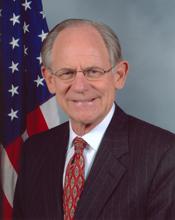
Mr. Speaker, I rise in support of H.R. 3, the House- Senate agreement on the ``Transportation Equity Act: A Legacy for Users.'' This legislation has been a long time in the making, and I applaud the…
Mr. Speaker, I rise in support of H.R. 3, the House- Senate agreement on the ``Transportation Equity Act: A Legacy for Users.'' This legislation has been a long time in the making, and I applaud the conference committee for their commitment to finding a compromise that will enhance our transportation system and make our roads safer for all Americans.
Since the last highway bill expired in October 2003, this Congress has struggled to produce effective reauthorization legislation. Along the way, I have expressed a great deal of concern with specific aspects of this process. In fact, I voted against this bill in April 2004, and again this past March, due to my concern over proposed changes to the formula Congress uses to provide transportation funds to States. Under these changes, large States like Texas and Florida would have seen their funding for highway construction and transit projects increased, at the expense of small States like Delaware.
While it is important to ensure that all States receive an adequate rate-of-return from the Highway Trust Fund, the provisions in the House version of the highway bill would have diverted funds away from aging infrastructure and heavily congested roads in the northeast. I am pleased to see that the final conference report eliminates these detrimental provisions and settles on a compromise that guarantees an increased funding authorization for all States. Under this agreement, Delaware's highly stressed transportation system is expected to see a 30 percent increase in highway funds over the next few years.
I am also very pleased to see that the conference committee has included safety standards to protect against vehicle rollover, side impact crashes, roof crush, and occupant ejection--all of which were left out of the House-passed bill. There were 42,800 highway deaths in 2004, with the largest increase in fatalities occurring in rollover crashes. In early July, I joined several of my House colleagues in requesting that conferees included this language and I believe it will do a great deal to enhance safety requirements for automobiles over the next five years.
In addition, the conference report takes steps to improve the bill's environmental regulations, which have been of some concern to me throughout this debate.
Despite these and other encouraging advancements, I remain concerned over the conference report's bulky price tag and excessive number of Member earmarks. This bill is by no means perfect, however it succeeds in finding a degree of balance and providing funding for essential programs across the Nation.
In Delaware, this funding cannot come soon enough. Our State is at the nexus of travel on the northeast corridor and our roads and bridges are suffering from increased traffic and highway congestion. H.R. 3 will provide the foundation for tremendous improvements in Delaware and it authorizes funding for much needed projects such as the Indian River Inlet Bridge and the hectic I-95/SR-1 interchange in New Castle County.
In 2003, we started out with an impractical proposal and a guaranteed veto threat from the President. Today, we have an agreement that is reasonable and will create jobs, boost our economy, and provide indispensable infrastructure improvements in places like Delaware. This bill has come a long way, and I commend the conferees for their dedication to finding an agreement that is both fair and effective.
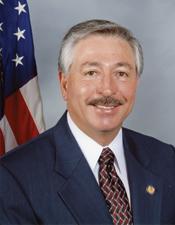
Mr. Speaker, I rise today to express my strong support for H.R. 3, the Transportation Equity Act: A Legacy for Users. This important measure represents months of hard work and coalition building. I…
Mr. Speaker, I rise today to express my strong support for H.R. 3, the Transportation Equity Act: A Legacy for Users. This important measure represents months of hard work and coalition building.
I thank Chairman Young, Ranking Member Oberstar, and Representatives Petri and DeFazio for their tremendous leadership during this time. I am proud to be a member of a committee that shows true bipartisanship and respect for one another.
As a member who represents one of the largest districts in the country, I see the immense needs across rural America. It was for this reason that I came to Congress--I want to make a difference for communities like mine, communities that don't always have a voice at the table. I intend to fight hard to make sure that rural Colorado gets its fair share of Federal funding.
I worked closely with my fellow Committee Members to craft a bill that truly represents the needs of all America. I urge my colleagues to vote for TEA-LU so we can finally put a bill on the President's desk for signature. By passing a transportation bill, localities can move forward with plans to build new roads, reinforce bridges, and invest in research and development to promote safer and cleaner technology.
Investment is the key word here--it is what this bill is all about. Infrastructure investment is the key to the free flow of trade. It is the key to connecting communities and promoting economic growth. And it is the key to stimulating jobs and industry development across the country.
This transportation report is a victory for rural Colorado. At a time when budgets are being slashed across the board, the communities in the Third Congressional District can expect a record number of federal dollars for our local highways.
The Transportation Reauthorization Conference report includes earmarks for important projects across the 3rd District of Colorado: $12 million for US-160, East of Wolf Creek Pass, $3.2 million for Dillon Drive Overpass, $6 million for US-50 State Line from Kansas to Pueblo, $5.2 million for the Glenwood Springs South Bridge, and $6 million for US-550 west side of Montrose.
By investing in our infrastructure now, we avoid problems down the line by reducing congestion and pollution, and improving safety on the roads. This funding will be a huge boost to economic development for the entire region. Nothing will make me happier than the President signing these rural development funds into law.
I am also pleased that the bill contains over $4.3 million in funding for bus and bus facilities across the third district. You don't always associate public transportation with rural areas but it is just as important in our communities as it is to larger urban areas. From Steamboat Springs to Crested Butte to Telluride, we are investing in the larger transportation system of a growing region.
Mr. Speaker, I once again would like to thank the Transportation and Infrastructure Committee leadership and their staffs for their hard work on the bill we have before us today. I urge my colleagues to vote in favor of TEA-LU. We have forced communities and state and local governments to wait too long for critical resources.

Mr. Speaker, I rise to commend Chairman Young and Ranking Member Oberstar, as well as the Subcommittee leadership for their hard work in crafting the underlying legislation. I consider the Committee…
Mr. Speaker, I rise to commend Chairman Young and Ranking Member Oberstar, as well as the Subcommittee leadership for their hard work in crafting the underlying legislation. I consider the Committee on Transportation and Infrastructure and the appointed Conferees for this bill to be a ``club'' of sorts, and it is in that vein that I commend them for the tremendous job appropriate funding for surface transportation projects and environmental mitigation projects of importance to every congressional district.
Not only am I pleased that the Conference Report contains authorization and appropriations of $12.8 million for priority infrastructure and surface transportation projects in my District of Houston, Texas, but I am happy that other provisions provide for the investment of tax dollars for the creation of jobs, economic growth, and improved productivity.
Mr. Speaker, the actions taken in this bill will be instrumental in moving forward with an expansion of transit service that is so greatly needed in the Houston area. I want to thank the entire Houston delegation and most importantly Senator Kay Bailey Hutchison for her work on the earmark for Houston METRO. It is very important that we work together in a united fashion to improve mobility for the Nation's fourth largest city. I have worked for many years to help Houston METRO and am glad we can take the next big step in implementing valuable transportation and mobility improvements because of this bill.
The Greater Houston area is subdivided into 6 counties: Chambers, Fort Bend, Liberty, Montgomery, Waller, and my District, Harris. Harris County contains the city of Houston and the largest concentration of people. In the year 2000, approximately 3.5 million people lived in Harris County alone--by far the most populous area. Over the next twenty years, the population of the Houston region will continue to grow.
The Historic Fourth Ward in Houston is long overdue for major transportation improvements that have thankfully been addressed in earmarks contained within the Conference Report. The Fourth Ward emerged as Houston's most prominent African-American neighborhood when thousands of freed slaves flooded into the city after emancipation. These newcomers settled on the fringes of the third, fifth, and fourth wards. The Freedmentown area north of San Felipe and the streets west of downtown not only attracted the largest number of the new black residents but also housed the first black churches, schools, and political organizations. Several factors combined to facilitate the subsequent growth of the Fourth Ward's black community. I thank the Conferees for their hard work in retaining important project funding such as this.
Continued improvement to Houston's and Texas' infrastructure will be the priority for me and my colleagues, and H.R. 3 represents a major advancement toward that goal. For these reasons, Mr. Speaker, I support
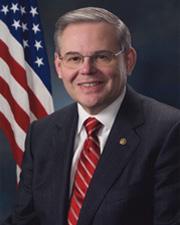
Mr. Speaker, this is a day that has been long in coming. I would first like to congratulate the distinguished chairmen and ranking members for getting near the end of this exceptionally long road to…
Mr. Speaker, this is a day that has been long in coming. I would first like to congratulate the distinguished chairmen and ranking members for getting near the end of this exceptionally long road to reauthorization, and I would like to thank them and the committee staff for the tremendous amount of work they've put in to make this conference report a reality.
For me, transportation is about far more than simply getting from one place to another. It's about creating jobs, stimulating the economy, revitalizing neighborhoods, cleaning our air, and making us more secure. And this bill is about more than just laying asphalt and pouring concrete. The tremendous increase in transit funding will help ease congestion, allowing all commuters to spend less frustrating time in gridlock, and more quality time with their families.
The conference report contains some very important language that will help advance the Trans-Hudson Midtown Corridor project, a series of improvements that includes a new set of passenger rail tunnels between New Jersey and Manhattan. When completed, this project will make it far easier for New Jerseyans to
get to New York for business or recreation, allowing the economy to grow on both sides of the river.
While the Trans-Hudson tunnel will help move people below the water, another major project in this bill will help keep things moving on the water. The Liberty Corridor leverages the strengths of the megaport of the East Coast, Port Newark and Port Elizabeth, to create an economic engine like no other in the country, where people can bring ideas, turn them into reality, and bring them to the world marketplace. As this bill recognizes, this is truly a project of national significance. The key to Liberty Corridor is transportation infrastructure, and the conference report contains a very generous amount of funding that will be used to upgrade the highways and railways in the Port region, allowing more cargo to flow, more jobs to be created, more brownfields to be returned to productive use, and a better quality of life for people throughout New Jersey.
There are a number of great provisions in this bill, but there is one that is conspicuously missing, and that is the Pay-to-Play protection amendment that New Jersey desperately needs. The House passed the Pascrell-Menendez-LoBiondo amendment that would allow New Jersey to combat corruption as it saw fit, but the amendment was stripped in Conference without even a vote. This is a sad statement to people who believe in clean government, and I will continue to fight to protect New Jersey's ability to restore the public's trust in the contracting process.
I look forward to working with the members of the committee to take these programs and projects that we worked so hard to turn into law and turn them into reality.
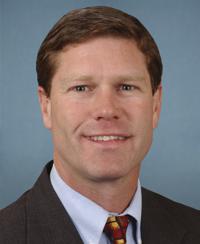
Mr. Speaker, I rise in support of the conference report for H.R. 3, the Safe, Accountable, Flexible, and Efficient Transportation Equity Act of 2005. I want to acknowledge the work of the…
Mr. Speaker, I rise in support of the conference report for H.R. 3, the Safe, Accountable, Flexible, and Efficient Transportation Equity Act of 2005. I want to acknowledge the work of the Transportation Committee on this complex bill and especially thank my friend and colleague from Wisconsin, Mr. Petri, for his leadership on the legislation; the Wisconsin delegation is lucky to have such a strong advocate for our citizens.
H.R. 3 is a significant economic development and job creation bill, and now is certainly the time that we need more jobs throughout the country. I consistently hear from constituents who are searching for work; who have sent out dozens of resumes and updated their skills but remain unemployed. Each billion dollars spent on highway funding creates not only safer and better roads, but it also creates an estimated 47,500 news jobs. An investment in highway funding is an investment for steady work for those in Wisconsin and around the nation.
In addition, I am pleased that the bill recognizes the importance of funding crucial highways and bridges in Wisconsin's Third Congressional District. Specifically, the inclusion of funding for the Stillwater Bridge, which connects Houlton, Wisconsin, and Stillwater, Minnesota, is great news for those of us who have been working on this project for years. The bridge is only one example of an important project that will provide our citizens with safer roads, shorter commutes, and better jobs.
Furthermore, I would like to recognize the important conservation provisions that are included in H.R. 3. As a hunter and fisherman, I am particularly pleased with a provision which recaptures the final 4.8 cents of the 18.3 cents per gallon tax on motorboat fuel and directs it back into the Federal Aid in Sport Fish Restoration Act's Aquatic Resources Trust Fund (ARTF). This full recovery of the motorboat fuel excise tax will provide about $110 million a year for recreational trails, new funding for signage identifying access for anglers and hunters, and vital safety programs dealing with wildlife-vehicle collisions. These important provisions make H.R. 3 the most comprehensive transportation bill for sportsmen ever created.
I am proud to have served on the conference committee to help reconcile this bill so it could reach the House and Senate for a final vote. Moreover, I would like to thank Senators Kohl and Feingold for all the work they have done with this bill to make sure that it benefits the citizens of Wisconsin. The long-awaited passage of this bill is great news for western Wisconsin. I urge my colleagues to support the bill.
Mr. Speaker, as we consider the conference report for H.R. 3, I would like to express my appreciation to the Chairman and Ranking Member for their work on this important piece of legislation, and in…
Mr. Speaker, as we consider the conference report for H.R. 3, I would like to express my appreciation to the Chairman and Ranking Member for their work on this important piece of legislation, and in particular, I would like to recognize the inclusion of measures that will reauthorize the U.S. Department of Transportation's disadvantaged business enterprise (DBE) program.
The DBE program ensures equal contracting opportunities for women- and minority-owned firms. It is an innovative program that expressly prohibits quotas, and instead seeks to enhance contracting opportunities whenever possible through race and gender neutral means. The constitutionality of the DBE program has been upheld in every court that has considered its constitutionality, including three federal circuit courts.
The DBE program has helped change the construction industry since it was first established over two decades ago. However, it continues to be a necessary tool for combating the continuing effects of discrimination in the highway construction industry and for creating a level playing field among highway construction contractors.
MGT of America, Inc., a consulting company, produced a disparity report of the North Texas Tollway Authority. This 2002 report finds underutilization of minority and women owned business entities in four of the North Texas Tollway Authority's contracting markets. It reports that minority and women owned business entities are available to supply 33 percent of the construction market; 14.3 percent of the professional services market; 9.7 percent of the consulting services market; and 6.4 percent of the goods and services procurement market for the North Texas Tollway Authority. However, in the construction market, there was substantial underutilization in prime contracts and subcontracts. With the exception of two contracts awarded in 1998, minority and women owned firms are underutilized for professional services. The disparity indices for firms providing consulting services show overall underutilization of minority and women owned firms, and the level of utilization is substantially less than the number of firms available to do business. In the analysis of goods and services procurement, the study reveals underutilization of all women and minority owned firms except for contracts awarded to one Asian-American owned firm.
It is entirely appropriate, indeed necessary, that the reauthorization of the DBE program be included in H.R. 3. I support H.R. 3 and the DBE program, and intend to vote for its passage.
Show 11 more
Mr. Speaker, I rise in strong support of the conference report for H.R. 3, the Transportation Reauthorization. The sad fact is that American transportation infrastructure is not keeping pace with…
Mr. Speaker, I rise in strong support of the conference report for H.R. 3, the Transportation Reauthorization.
The sad fact is that American transportation infrastructure is not keeping pace with population growth, traffic, the increase in the movement of goods, and the basic need to have better freeways that connect us as a Nation.
Our freeways and transit systems have been key components of American society. They enable us to exercise our fundamental freedom to travel, explore and move cross-country with ease.
Just as important, our freeways allow for the movement of goods and interstate commerce. That is why this bill is such an important federal priority, and why we should have funded it more generously.
We know that the United States of America is the single largest exporter and the single largest importer on the face of the earth. We have an $11 trillion economy.
The region I represent in California, called the Inland Empire, is growing by leaps and bounds. The Inland Empire is among the few remaining areas with affordable housing within driving distance of Los Angeles.
The Cities of Fontana, Ontario, Rialto, Colton, and San Bernardino stand to nearly double their populations by the end of the decade. The Inland Empire will grow by another 1.6 million people by 2020, bringing the population to 4.8 million.
The growth in my district outpaces that of 45 States. This growth requires a significant investment in transportation infrastructure to allow our residents to commute safely through our roads, rail and highways.
My region also has a constant flow of traffic and rail to and from the ports of Long Beach and Los Angeles, two of the busiest ports in the entire world.
Trucks from all over the nation travel Interstates 10, 15 and 215 to deliver their goods to port or to a warehouse.
Because of the high volume of movement in my region I understand the challenges we face in improving our roads and freeways to make them safer, cleaner and less congested.
This conference report includes funding for important grade separations that are badly needed in my district so we can improve the safety of rail traffic and rail crossings. Also, this conference report invests in freeway interchanges and overpasses in the fast-growing region I represent.
I am also glad that this bill contains funds to do the final upgrades to the Santa Fe Depot.
Mr. Speaker, our Nation has waited long enough for these overdue infrastructure investments. I urge my colleagues to support the conference agreement.
Mr. Speaker, I thank the gentleman for yielding me this time, and let me say that I rise in strong support of this conference report. I would like to say thank you for a job well done to the chairman…
Mr. Speaker, I thank the gentleman for yielding me this time, and let me say that I rise in strong support of this conference report. I would like to say thank you for a job well done to the chairman of the full committee and the chairman of the conference, the gentleman from Alaska (Mr. Young), who did an outstanding job working on this legislation, as well as the gentleman from Wisconsin (Mr. Petri), and the ranking member of the subcommittee, the gentleman from Oregon (Mr. DeFazio) and certainly the gentleman from Minnesota (Mr. Oberstar), who has not only worked very hard in this conference but is a champion for transportation in general in the House of Representatives. Without the strong support and leadership of Chairman Young and Ranking Member Oberstar and Subcommittee Chairman Petri and Ranking Member DeFazio, we would not be here today.
Let me say that our interstate highway system is 50 years old, and 32 percent of our major roads are either in poor or mediocre condition. Twenty-nine percent of our bridges are structurally deficient or functionally obsolete, and 36 percent of the Nation's urban rail vehicles and maintenance facilities are in substandard or poor condition. This legislation is essential, for it increases investments in our roads, our bridges, and it allows States and our local communities to not only maintain but to improve their transportation system.
Despite this long process and all of the time that it has taken, let me say that we are here today to vote on what I believe is a good 5- year conference bill. H.R. 3 provides $286.4 billion over 5 years, which is a 30.32 percent increase over the last highway bill that we passed in the Congress.
I am also pleased that we were able to retain a section in this conference report for national programs of significance, otherwise known as megaprojects, in this bill. These projects are extremely important to not only our regions but also they are important to the Nation as well, and I am grateful to the chairman of the committee and also my friend, the gentleman from Minnesota (Mr. Oberstar), the gentleman from Wisconsin (Mr. Petri), and the gentleman from Oregon (Mr. DeFazio) for including in this conference report a significant amount of money from the megaproject fund for the new Mississippi River bridge in the St. Louis region. It not only will provide relief to congestion in the region but also to the Nation.
With that, Mr. Speaker, I urge my colleagues to support and to vote for this conference report.
Mr. Speaker, I rise today to join my colleagues in celebrating the completion of the conference report on the transportation reauthorization. I thank Chairman Young and Ranking Member Oberstar for…
Mr. Speaker, I rise today to join my colleagues in celebrating the completion of the conference report on the transportation reauthorization.
I thank Chairman Young and Ranking Member Oberstar for their tireless leadership.
I also thank them for working with me to include funding in this bill for 9 studies that will expand research on critical issues in hazardous materials transportation.
In its Special Report 283, the Transportation Research Board found that perhaps ``the most notable gap'' in America's system for ensuring the safety and security of hazardous materials transportation is the lack of research that is cross-cutting and multi-modal in application.
The studies funded in SAFETEA-LU will begin to fill this gap by providing information on such issues as integrating safety and security in hazardous materials transportation, developing multi-modal emergency response guidelines, and examining hazardous materials routing. I also look forward to receiving the Department of Transportation's assessment of whether a permanent hazardous materials transportation cooperative research program is needed--as I believe it is.
I am also pleased that our conference produced a bill that includes significant provisions that support the increased development of livable communities--particularly by supporting an expansion of transit funding, transportation enhancements and the revitalization of existing roadways, and projects that significantly expand opportunities for people to hike and bike in their neighborhoods.
Finally, I want to take just a moment to reflect on how regrettable it is that the process of funding our nation's transportation system has become so acrimonious.
It has been said that even if you're on the right track, you'll get run over if you just sit there. For the past two years, we have been sitting in place. I truly hope that as we confront the significant challenges in transportation that await us in the future, we will remain focused on what must be our shared goal: adequately investing in the infrastructure needed to move our nation forward.
Thus, while I do not agree with every provision in this bill, I strongly support this bill because it will provide the investment in our nation's transportation system that is so essential to keep our economy moving forward by reducing congestion, expanding funding for our nation's transit systems, and creating good-paying jobs.
I encourage my colleagues to remain focused on the future by supporting this conference report.
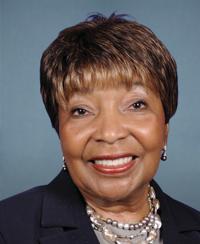
Mr. Speaker, I want to commend the Chair and ranking member for their efforts, and the subcommittee chair and the subcommittee ranking member. We are so delighted to come to this point, and I know…
Mr. Speaker, I want to commend the Chair and ranking member for their efforts, and the subcommittee chair and the subcommittee ranking member. We are so delighted to come to this point, and I know that our ranking member of the full committee is probably so worn out he cannot get here today. But I would like to commend all of that leadership for the diligence, the good works, and the good attitude, the inclusiveness, and the long overdue legislation as a result for the American people.
And, foremost, the staff; I want to associate myself with the previous speakers' recognizing and complimenting the staff because we could not have done it without them.
I thank the Senate for their quick action. I just watched the Senator get up and talk about how important it was not to hold up the bill. But today we in the House of Representatives send a clear message to the American people that investment in America's transportation system is a top priority. This
bill will help to create new, good-paying jobs, promote economic development, address congestion, air quality and highway safety problems.
Since 2003 the Nation has anxiously awaited a transportation reauthorization bill, and rightly so. Each year the American people waste 3.7 billion hours in traffic gridlock, 2.3 billion gallons of fuel, to a total cost of $63 billion. We need to address these issues.
In addition to this congestion cost, the ever-deteriorating infrastructure of this country desperately needs attention. Late last year, the Texas Section of the Civil Engineers released a 2004 report card in which the State's infrastructure received a dismal cumulative assessment of below average.
An ever-increasing population is placing enormous strain on highway capacity. The Texas Transportation Commission can fund less than 40 percent of the worthy road and highway projects; 12,000 of the State's 48,000 bridges are structural deficient, and deteriorating air quality poses an even greater risk to the health of residents, particularly seniors and children.
In closing, I am delighted the product before us is finally one step away from bringing the much-needed funding certainty to our States and communities that have sought them since the expiration of TEA 21. While I regret the investment level falls short of the Transportation Department's $375 billion estimate that they advocated, our committee responded that this investment level represents a good step in the direction of the Nation's transportation needs.
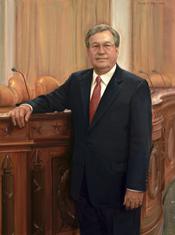
Mr. Speaker, I thank the chairman for yielding me this time. Mr. Speaker, appropriately so, a number of people have been complimented. I too want to indicate that the reason this bill was so…
Mr. Speaker, I thank the chairman for yielding me this time.
Mr. Speaker, appropriately so, a number of people have been complimented. I too want to indicate that the reason this bill was so difficult is because there was not enough money to deal with the infrastructure needs of this country. As the keeper of the purse strings, I am very conscious of the amount of money that we have available. Between now and the next time we try this, we are simply going to have to rethink the way we provide for the infrastructure in this country. We are succeeding in areas that damage us in raising revenue to improve infrastructure.
Every page of this bill, Mr. Speaker, has been built on accommodation and compromise. I want to thank the staff, who have all earned graduate degrees in bill assembly. It was an extremely difficult job. But I want to say this: When we come back in September, we are going to begin addressing legislative needs of an aging American society. There will be critics of this legislation. It has been said in various ways, and I want to underscore it, that not only is America aging but America's infrastructure in many parts of this country, bridges, tunnels, and others, are octogenarians and older. It is foolish not to make sure that we maintain the infrastructure that we have.
Ironically, in some parts of the country, it requires new construction, highways, transit and other costly infrastructure improvements. But without doing it, without doing it, it will cost us billions. It has been recited how much it costs us today. Today, we present $286.4 billion worth of cost. Society will present us on a daily basis, through congestion and failure to build the right structures, a price tag over the next 5 years far greater than the price tag that is presented today. Today, you see the dollar amount. Over the next 5 years, we will accumulate a cost of a far greater amount.
I want to compliment those who put this together. I look forward to working with you in solving the financing structure. As we get better, there is no reason why the Highway Trust Fund should grow less. We need to rethink the way in which we pay for the infrastructure in this country.
I want to thank all of you for the most pleasant experience of operating in an institutional way to make this place work. Thank you. It was a lot of fun.
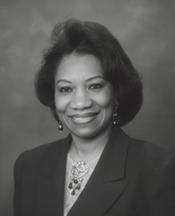
Mr. Speaker, hallelujah; finally, we have a transportation bill. I would like to thank the chairman and the ranking member for their leadership and their strong support on relieving gridlock on our…
Mr. Speaker, hallelujah; finally, we have a transportation bill. I would like to thank the chairman and the ranking member for their leadership and their strong support on relieving gridlock on our highways and mobilizing people and moving goods. That is why I rise in support of final passage of H.R. 3.
As a member of the committee and a conferee on this bill, I have been supportive throughout this process. I will be quick and to the point.
The bill is long overdue, 22 months to be exact. This has been a long process, but I want to focus on the new beginnings that passage of this bill will provide for my constituents and the many businesses across this country. The bill is not everything we wanted, but it is a start. It will provide mobility for millions of people, create jobs, reduce congestion, and improve the movement of our Nation's goods. It will benefit the country and it will certainly benefit my home State of California.
I want to thank the leadership for including my language for the Projects of National and Regional Significance in the final version of this bill. The focus of the Projects of National and Regional Significance during the conference committee has been on the funding for critical, high-cost transportation facilities, and as we know, it is an imperative for the future.
However, including the definition of this new program and listing the criteria for what constitutes a Project of National and Regional Significance in this bill is just as important. The new program will provide the framework for the ongoing funding of larger projects that contribute to the economic vitality of our national and regional economies. This program is about the future of our transportation infrastructure and the growth of our national economy.
I would like to thank my ranking member on the subcommittee, the gentleman from Oregon (Mr. DeFazio) and the chairman, the gentleman from Wisconsin (Mr. Petri), for their even and measured approach throughout this reauthorization process. Their insight, understanding and vision on what transportation infrastructure can be and should do is evident throughout this bill. I thank you all for what you have done for California and this Nation.
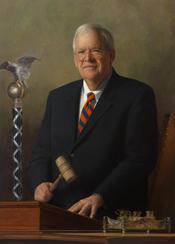
Mr. Speaker, I want to take a minute to, first of all, congratulate the people who worked for years to make this bill possible. First of all, our chairman, the gentleman from Alaska (Mr. Young) and…
Mr. Speaker, I want to take a minute to, first of all, congratulate the people who worked for years to make this bill possible. First of all, our chairman, the gentleman from Alaska (Mr. Young) and the ranking member, the gentleman from Wisconsin (Mr. Petri), the gentleman from Minnesota (Mr. Oberstar) and the ranking member, the gentleman from Oregon (Mr. DeFazio) for their hard work in getting this done, and their staffs.
As we know, in the legislative process, sometimes everything does not turn out exactly perfect the way we envision when we began. But this bill is a result of people working together on both sides of the aisle, setting goals, moving toward those goals, talking to each other, listening to each other. And it is a very good thing.
What this bill also means as we move our people and our products across this country, whether it be highway or rail or people by transit, we can do it in a better and more efficient way.
So many areas have unique needs. We have growth areas. We have huge expanses across this country with not very many people, but yet we need to move the goods and products across this Nation. We have a railroad industry that some bridges go back almost 150 years. But we need to modernize and we need to move forward because if we are going to be an economic trader in the years to come, if we are going to be able to move our products from the East Coast to the West Coast on things we manufacture and produce and buy, then we need to have the transportation to move it. This bill will make that possible.
I think of the hours of days every week that commuters sit on clogged interstates, intersections, commuter highways, and the waste of American energy and productivity; this bill will begin to help that issue. As a father, I can think of all those hours that families sit on those interstates slowly moving along, and kids say, Daddy, when are we going to get there? Maybe with this bill, we may have to answer that three or four less times in our lives.
I appreciate the great effort to get this bill done. Let us move to it.
Mr. Speaker, pursuant to House Resolution 399, I call up the conference report on the bill (H.R. 3) to authorize funds for Federal-aid highways, highway safety programs, and transit programs, and for…
Mr. Speaker, pursuant to House Resolution 399, I call up the conference report on the bill (H.R. 3) to authorize funds for Federal-aid highways, highway safety programs, and transit programs, and for other purposes.
Mr. Speaker, I yield myself such time as I may consume.
Mr. Speaker, this is truly a great day for the users of our Nation's transportation infrastructure. Today, I bring before you for consideration the Safe, Accountable, Flexible, Efficient Transportation Equity Act: A Legacy for Users, which will for the future be known as
Mr. Speaker, I yield such time as he may consume to the gentleman from Wisconsin (Mr. Petri).
Mr. Speaker, I yield such time as he may consume to the gentleman from Illinois (Mr. Hastert), the great Speaker of this House. I deeply appreciate his efforts in getting this legislation passed.
(Mr. HASTERT asked and was given permission to revise and extend his remarks.)
Mr. Speaker, I yield 3 minutes to the gentleman from California (Mr. Thomas), the chairman of the Committee on Ways and Means,
who worked very hard on this legislation.
Mr. Speaker, I yield 2 minutes to the gentleman from Tennessee (Mr. Duncan), chairman of the great Subcommittee on Water Resources and Environment.
Mr. Speaker, I yield myself such time as I may consume to acknowledge the presence of the ranking member, my good friend, the gentleman from Minnesota (Mr. Oberstar). He has been absent from the floor because he was stuck in traffic. What better thing could happen to him today as we pass this magnificent bill. As we can see, he is here. I welcome him here, and we will be discussing this a little later on. Welcome.
Mr. Speaker, I yield 1 minute to the gentleman from Arizona (Mr. Flake).
Mr. Speaker, I yield 2 minutes to the gentleman from California (Mr. Gary G. Miller), a member of the committee.
Mr. Speaker, I yield 2 minutes to the gentleman from Georgia (Mr. Gingrey).
Mr. Speaker, I urge passage of this legislation, a unanimous vote, and I yield back the balance of my time.
Mr. Speaker, on that I demand the yeas and nays.
Mr. Speaker, I thank the gentleman from Alaska for yielding me this time; and I want, first of all, to thank him for the Herculean job he has done on this legislation. My dad told me years ago, and I…
Mr. Speaker, I thank the gentleman from Alaska for yielding me this time; and I want, first of all, to thank him for the Herculean job he has done on this legislation. My dad told me years ago, and I do not remember what it was about, but he said everything looks easy from a distance. Well, I can tell you, this legislation did not look easy from a distance or from close up.
The chairman of our full committee, the gentleman from Alaska (Mr. Young), the ranking member, the gentleman from Minnesota (Mr. Oberstar), and our subcommittee chairman, the gentleman from Wisconsin (Mr. Petri), and his ranking member, the gentleman from Oregon (Mr. DeFazio), had to work with 535 Members of the House and Senate. Each time we would come within a hair of finishing this bill, some glitch would develop and some problem; and I can tell you that I cannot express strongly enough my admiration and respect for Chairman Young and Chairman Petri and ranking members Oberstar and DeFazio for the work they have done.
One national magazine, Mr. Speaker, estimated we lose $67 billion a year due to congestion costs and people being stuck in traffic. As one other Member just said a moment ago, this job will save thousands of lives over these next 5 years. We have spent several hundreds of billions of dollars each year in other countries, Mr. Speaker, through every department and agency of the Federal Government, but this is an American bill. This is a bill to do things for the people of this country and to put our own people first.
I cannot overemphasize the importance of this. This is a 6-year bill with 5 years left. It sounds like a lot of money, and it is, but when you divide it by six, it really does not cover the infrastructure needs of this Nation. I can tell you that I especially appreciate what is in this bill for my constituents in east Tennessee.
This bill is progress for America. It is one of the finest products that has come out of this Congress in a long, long time; and it was a privilege for me to be a small part of it.

Mr. Speaker, I see on the chairman's face a sigh of relief this morning. I know this has been an arduous process, dealing with some of the issues, especially in the last 2 weeks. This is very good…
Mr. Speaker, I see on the chairman's face a sigh of relief this morning. I know this has been an arduous process, dealing with some of the issues, especially in the last 2 weeks. This is very good for this country, and specifically for my State of California.
Many things that are good take time. This is one thing that took time to percolate. Everybody would have liked to have seen more money, but we are not going to break the budget. We are going to work within the dollars we have, but this is huge. The gentleman from Wisconsin (Mr. Petri) has worked very hard, along with the ranking member, the gentleman from Minnesota (Mr. Oberstar). And the gentleman from California (Chairman Thomas) worked hard trying to provide the funds.
In California, probably the most significant project, in my opinion, would be the Alameda corridor. We have the Port of San Pedro and Long Beach, which handles about 40 percent of all of the commerce shipped into this country and out of this country, and our communities are being tremendously impacted by that. We have a good amount of money coming back to California to start this project. We have been given assurances that when the moneys are needed, the funds will be provided to complete this project.
Yes, there are things we would prefer to have changed in this bill, but the bill we are bringing back to the people of our Nation, specifically California, is good. It will provide jobs. People are sitting in traffic, sitting at grade crossings watching trains go by. Our job is to provide relief and ensure that commerce can flow, people can drive to and from work, they can get their kids to school without being impacted by traffic issues.
The State of California has very few dollars, almost zero in the last few years, to provide for traffic issues and infrastructure and the needs that we have for bridges and highways in California. These dollars going back to California are tremendous. Once again, I thank the gentleman from Alaska (Mr. Young) for his leadership on this bill.
Mr. Speaker, I rise in support of H.R. 3, the Transportation Equity Act: A Legacy for Users. Specifically, I want to speak to the inclusion of the important vehicle safety provisions that fall within…
Mr. Speaker, I rise in support of H.R. 3, the Transportation Equity Act: A Legacy for Users. Specifically, I want to speak to the inclusion of the important vehicle safety provisions that fall within the jurisdiction of the Energy and Commerce Committee.
We are a country of drivers, and unfortunately when you have 204 million vehicles on the road, there will be accidents. In fact, it is a sobering statistic that over 42,000 people died in auto accidents in 2003. It's a number that staggers the imagination.
The good news is that every year more people buckle their seatbelts. And although more cars hit the road every year, and they come in all shapes and sizes, the accident rate continues to decline. Despite the advances, does anybody doubt that the cars we drive can be even safer? I don't.
Vehicle safety laws and regulations fall under the jurisdiction of the Committee I chair--the Committee on Energy and Commerce. We were happy to work with Chairman Young and the Senate to include these provisions and reauthorize the National Highway Traffic Safety Administration, NHTSA, in H.R. 3.
By passing this bill, we are ensuring that NHTSA will create rules to mitigate the chances of vehicle rollover, occupant ejection, door locks, roof strength, and side impact. This bill also gives new car buyers more helpful safety information at the point of sale by requiring that ratings for front, side, and rollover crashes be posted on new vehicle stickers. Additionally, NHTSA will be tasked with studying such important problems as tire aging, vehicle backover technologies, and data collection.
I believe these provisions will result in safer cars and trucks, and fewer deaths on our Nation's roads. I urge my colleagues to support passage of the H.R. 3 conference report.
Bill Text
2 versions available
        [Congressional Bills 109th Congress]
[From the U.S. Government Publishing Office]
[H. Res. 399 Engrossed in House (EH)]

H. Res. 399

In the House of Representatives, U.S.,

July 29, 2005.
Resolved, That upon adoption of this resolution it shall be in order to
consider the conference report to accompany the bill (H.R. 3) to authorize funds
for Federal-aid highways, highway safety programs, and transit programs, and for
other purposes. All points of order against the conference report and against
its consideration are waived. The conference report shall be considered as read.
Sec. 2. The Clerk shall not transmit to the Senate a message that it has
adopted the conference report to accompany H.R. 3 until the House has received a
message that the Senate has agreed to House Concurrent Resolution 226 as adopted
by the House or passed H.R. 3514 without amendment.
Attest:

Clerk.