Expressing the condolences of the Nation to the victims of Hurricane Katrina, commending the resiliency of the people of the States of Louisiana, Mississippi, and Alabama, and committing to stand by them in the relief and recovery effort.

Legislative Activity
Stay on top of the latest movement without scrolling through every action
Motion to reconsider laid on the table Agreed to without objection.
September 7, 2005 • 11:49 AM
View full timeline
Introduced in House
September 7, 2005
Referred to the House Committee on Transportation.
September 7, 2005
Committee on Transportation discharged.
September 7, 2005
Consideration initiated pursuant to a previous order.
September 7, 2005 • 10:51 AM
Considered pursuant to a previous order. (consideration: CR H7681-7689)
September 7, 2005 • 10:51 AM
DEBATE - Pursuant to a previous order, the House proceeded with one hour of debate on H. Res. 425.
September 7, 2005 • 10:51 AM
The previous question was ordered pursuant to a previous order of the House. (consideration: CR H7689)
September 7, 2005 • 11:49 AM
Passed/agreed to in House: On agreeing to the resolution Agreed to by voice vote.(text: CR H7681)
September 7, 2005 • 11:49 AM
On agreeing to the resolution Agreed to by voice vote. (text: CR H7681)
September 7, 2005 • 11:49 AM
Motion to reconsider laid on the table Agreed to without objection.
September 7, 2005 • 11:49 AM
Floor Debate
17 membersWhat members said about H.Res. 425 on the floor
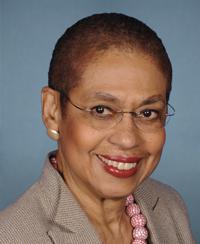 EHNCWB
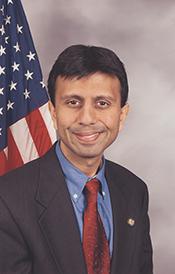 BJ
BJ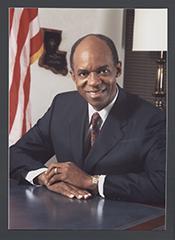 WJJ
WJJ RHB+12
Floor Debate
17 membersWhat members said about H.Res. 425 on the floor
Mr. Speaker, I yield myself such time as I may consume. Mr. Speaker, I appreciate the work of the gentleman from Louisiana (Mr. Boustany) in coming forward with this bipartisan resolution. I am going…
Mr. Speaker, I yield myself such time as I may consume.
Mr. Speaker, I appreciate the work of the gentleman from Louisiana (Mr. Boustany) in coming forward with this bipartisan resolution.
I am going to offer some formal remarks, and then I am going to say a word further about the irony of my managing this bill this morning.
Mr. Speaker, 10 days ago Hurricane Katrina slammed into America's gulf coast. The aftermath of the hurricane has prompted one of the largest response mobilizations in United States history. At the very core of all the relief effort is the overwhelming concern we all have for our fellow Americans, ordinary citizens who have become victims of this vast, unprecedented devastation.
Thousands of local State and Federal workers and volunteers are engaged in life-saving activities. Life-sustaining activities, supported by virtually all national charities, are spreading across all parts of the United States. Sheltering and housing initiatives so vital to the well-being of the victims have been activated all across the country. These efforts are aimed at providing some measure of efforts and relief to the tens of thousands of displaced Americans, many who survived with merely the clothes on their backs.
It is with a heavy heart, but with a deep sense of hope for a better future that I join all of my colleagues today in expressing my deep sense of sorrow and the condolences of the Nation to all the victims of Hurricane Katrina. I commend the resilience of all who have survived and all who are helping them to survive and am awed by their enduring vision for a better future.
For the present, I will work to fulfill our Nation's commitment to each victim that all the necessary resources and the might of the country will be used to relieve their suffering and to provide the resources they need for the brighter future characteristic of our country.
Mr. Speaker, I say the irony is, I was at an opening of an employment and training center for SOME, So Others Might Eat, and commenting there on the irony of the opening of that employment and training center at a time when just yesterday I had gone to Dulles Airport to retrieve 300 evacuees from a plane, who now reside in the Armory just a few blocks from here. And I said the symbolism of this center opening now is not lost on me, and the first moment I have to tell my colleagues about the symmetry between the opening of this center and the evacuees here, I am going to do it. Then I got a phone call saying we need someone to manage the bill expressing our condolences as a Nation and our resolve for the victims on the gulf coast.
Mr. Speaker, as I left this center, this new center where I had indicated that here in D.C. is doing very well, but certainly the poorest part of the region, surrounded by very rich counties, I was proud of my city because we had seen the need and said, Come here even though there are many unemployed here.
The man who runs this new SOME center said, We are quickly filling the 60 slots; we have 20 slots left. I am on the other side of the Anacostia in Ward 7, and Wards 7 and 8 are the high unemployment wards. So if there are only 60 slots, there are 60 times 60 people in Ward 7 alone that need it. And so he said, I think we ought to give the slots to the people who got off the plane yesterday. And I said, What a wonderful contribution that would be. We all have to find a contribution to make, and for you to contribute 20 of 60 slots from the highest unemployment pool in the city is to make the kind of sacrifice our country needs to be prepared to make now. And that is the kind of sacrifice we are seeing all over the country.
I want to say that in this House we have got to ask ourselves, what sacrifice are we prepared to make? We have assumed the best of all possible worlds, but what we cannot control is always possible and what we cannot control has happened.
I hope that in the coming weeks, as we finish the session, we will remember that it is time for us to make sacrifices. Already the Senate appears to say it is not going to bring forward the permanent repeal of the estate tax. If it took a tragedy to do it, then it has been done. The mega-rich will not get richer this time around. I just think in the spirit of trying to figure out how we can go home and say this is something we did that we would not otherwise have done but for Katrina is what we need to say.
Of course, we will go home and talk about the $20 billion and now the $40 billion. That, of course, is mandatory. That is what we are here for. The real issue for me is, what is it that we wanted to do, talking to both sides of the aisle, that we now forswear, that we now say, in the name of the greatest natural tragedy in memory, we decide that we will not do that that we most wanted to do.
Some of us wanted to do spending on some things. Some of us may want to do a little more tax cutting, but it is time for us to become introspective about being visited with the most massive natural tragedy of our time.
My heart is with the people of Mississippi, Alabama, Louisiana, and the entire gulf coast. That is true of America generally. But as people take in people in their own homes, as people send money, we have to ask ourselves, what will we do, what will we say is the sacrifice we as Members of Congress have made as a body when we go home next week?
Mr. Speaker, I reserve the balance of my time.
Mr. Speaker, I yield myself such time as I may consume.
I agree with the gentleman that we are not in an atmosphere where we can properly evaluate and investigate what has happened here. I do think it important to note that the only way to avoid making mistakes is to look at the mistakes we have made.
I do want to say this for the record. It took us a very long time to get bipartisan support for a 9/11 Commission. Is anybody in this body sorry? What would have happened if history had looked back and said there was no independent commission that looked into 9/11?
In this same way, this natural disaster is the functional equivalent of 9/11 for natural disasters. We need an independent commission to do the kind of job that the 9/11 Commission did, and I think a fair reading of that report is not that it pointed fingers at anybody, but that it did advise what it is we should do.
We should quickly get about the business of appointing a commission equal to the task of doing a credible, unbiased, independent investigation in the name of the people of the gulf coast who have suffered and in the name of the people of the United States of America.
Mr. Speaker, I am pleased to yield 4 minutes to the gentlewoman from Texas (Ms. Jackson-Lee).
Mr. Speaker, I yield 4 minutes to the gentleman from Oregon (Mr. Blumenauer).
Mr. Speaker, I yield myself such time as I may consume to comment that I appreciate what the gentleman has just said about how much of this was unpredictable. There is no question that that is the case.
But, for the record, it must be said that the levee was built to withstand a Category 3 storm. So the Corps of Engineers has been saying, yelling for decades that no one can say we will not ever surpass a Category 3 storm. People will tell you in Louisiana that they have been talking about dodging the bullet for decades because they did not go above Category 3.
I hope that when we repair the damage, and it will take billions more than we can imagine now, that we will do what we say we are going to do for the possibility of terrorism, that is to say, prepare for the worst-case scenario, not the case scenario that we wish for. And the worst-case scenario is finally what Louisiana got.
Mr. Speaker, I am pleased to yield 4 minutes to the gentleman from Ohio (Mr. Kucinich).
Mr. Speaker, I yield 5 minutes to the gentleman from New Orleans, Louisiana (Mr. Jefferson). I am sure perhaps no Member has suffered more greatly than the Member I am about to yield the floor to now.
Mr. Speaker, I yield myself the balance of my time.
I just have a few closing remarks. We all agree that the first obligation of any government is to protect its citizens. The majority often say that, and we have seen no contradiction from this side on that score. And I think there has been agreement that we have not fully honored that responsibility.
It was with a great deal of thought that I became a cosponsor of the bill today, H.R. 3659, to reestablish FEMA as an independent agency outside the control of the bureaucracy of the Department of Homeland Security. I did not do that easily. Frankly, I strongly supported and still support the establishment of a Department of Homeland Security. So I had to think about this matter. Is this a contradiction from what I generally believe, that these agencies must be brought together?
I have resolved that conflict in my mind because it is clear that FEMA is not about preventing anything. FEMA is about going in quickly and nimbly after there has been either an actual natural attack or a national attack; and there is telling evidence about how we have diverted funds from FEMA's natural disaster responsibilities to our legitimate concern with preparation for terrorism.
I believe, therefore, that we do no harm to the notion of one cohesive unit, the Homeland Security Department, to prevent attacks if we have FEMA outside. I think that FEMA simply has not done well inside the Department of Homeland Security. I cannot guarantee that taking it out will
make it whole again. I do know this: that we did not have complaints about FEMA during the 1990s, and I remember FEMA's being held to great glory for how they handled and how they were reorganized during the 1990s.
I, therefore, want to thank the gentleman from Louisiana for coming forward and to say that I know I speak for every Member on my side when I say he will have our full cooperation, more than our empathy, our full cooperation when it comes to Louisiana and the entire gulf coast. I thank him for his initiative. I am pleased to be a part of it.
Mr. Speaker, I ask unanimous consent that it shall be in order at any time to consider in the House the resolution (H. Res. 425); the resolution shall be considered as read; the previous question…
Mr. Speaker, I ask unanimous consent that it shall be in order at any time to consider in the House the resolution (H. Res. 425); the resolution shall be considered as read; the previous question shall be considered as ordered on the resolution to its adoption without intervening motion or demand for division of the question except: (1) 1 hour of debate equally divided and controlled by the chairman and ranking minority member of the Committee on Transportation and Infrastructure; and (2) one motion to recommit.
Mr. Speaker, pursuant to the order of the House of today, I call up the resolution (H. Res. 425) expressing the condolences of the Nation to the victims of Hurricane Katrina, commending the resiliency of the people of the States of Louisiana, Mississippi, and Alabama, and committing to stand by them in the relief and recovery efforts, and ask for its immediate consideration.
Mr. Speaker, I ask unanimous consent that all Members may have 5 legislative days within which to revise and extend their remarks and include extraneous material on H. Res. 425.
Mr. Speaker, I yield myself such time as I may consume.
Mr. Speaker, the House of Representatives expresses the condolences of the Nation to the victims of Hurricane Katrina, and this resolution expresses those condolences. It commends the resiliency and courage of the people of the States of Mississippi, Louisiana, and Alabama, and it commits to provide the necessary resources and to stand by the people of the States of Mississippi, Louisiana, and Alabama in the relief, recovery, and rebuilding efforts.
Mr. Speaker, the Senate approved a similar resolution last night, and bipartisan support for recognizing the work of first responders and to express congressional concern for those displaced by the hurricane and those who died is in order. My district, the Seventh Congressional District of Louisiana, did not suffer significant damage from Hurricane Katrina, but we face enormous challenges of sheltering and supporting the numerous evacuees now in my district. The rest of our State down in the New Orleans area and south, in Plaquemines Parish and St. Bernard Parish were devastated.
Mr. Speaker, we are up to the challenge. In my district, in Lake Charles, there are an estimated 25,000 evacuees, and in Lafayette, my hometown, there are an estimated 40,000 evacuees. Official tallies are much lower because many had family or friends to stay with or had funds to pay for hotel rooms, but this is going to be temporary. Almost all available housing has been rented or bought. Schools are preparing to accept thousands of new students. In fact, we are already currently enrolling many of these students.
State and local officials are concerned about being able to support evacuees for the long months of recovery. Local community organizations are stepping up to help, but have limited resources. The evacuation process continues. Much media attention has been on New Orleans, but there are other areas of Louisiana that remain under 10 feet of water or more. A number of communities in the Third District of Louisiana, represented by the gentleman from Louisiana (Mr. Melancon), have been completely destroyed. Entire towns in Mississippi have been destroyed. There are residents of these communities still waiting for aid, food, water, and health supplies.
The recovery process will be long and expensive. The Federal Government must continue to step in and bring its resources to bear in this effort.
Mr. Speaker, the visual images have been heartbreaking, and I have seen
the damage with my own eyes. I have spoken to the many victims who have been affected, and the human stories are unfathomable to hear. And, like many, I am frustrated with the delay and the bureaucracy that has interfered with getting relief and supplies to our evacuees. But this is not the time to point fingers; this is not the time for blame.
There is an enormous amount of work that still needs to be done and done in a bipartisan manner. Accountability will come, and I know Congress will look into the disaster.
I urge my colleagues to rise above the vicious rhetoric that does not provide the thousands of children in my district with school supplies or uniforms, or does not provide displaced small businesses with the help to get back on their feet, or does not provide opportunities for families to reunite or housing for seniors with care or comfort.
Mr. Speaker, this is going to take time. It is going to take a monumental effort. We must pull together to accomplish all of this.
Mr. Speaker, I reserve the balance of my time.
Mr. Speaker, I am pleased to yield 5 minutes to the gentleman from Pennsylvania (Mr. Shuster), who is the distinguished subcommittee chairman of the Subcommittee on Economic Development, Public Buildings and Emergency Management on the Committee on Transportation and Infrastructure.
Mr. Speaker, I yield 3 minutes to the gentleman from Texas (Mr. Gohmert). The State of Texas has been very, very generous in helping out, reaching out to evacuees.
Mr. Speaker, I am now pleased to yield 5 minutes to the distinguished gentleman from Louisiana (Mr. Baker), my colleague and friend who has been involved in the relief efforts.
Mr. Speaker, this is not a time to cast blame and to second-guess actions.
Mr. Speaker, I am pleased now to yield 5 minutes to my friend and colleague, the gentleman from Louisiana (Mr. Jindal), who lost his home, his district has been devastated, and he will inform us on what the facts are.
Mr. Speaker, I am pleased to yield 3 minutes to the gentleman from Georgia (Mr. Gingrey).
Mr. Speaker, I yield myself such time as I may consume.
I thank the gentlewoman for her kind remarks.
Mr. Speaker, today the House of Representatives, through this resolution, expresses its condolences to the victims of Hurricane Katrina. It commends the resiliency and the courage of all those involved in this, both the victims and the volunteers, who gave so willingly to help these victims. It also makes clear that we have a tremendous task ahead of us in Congress; and yet I know, as many others here know, that we are up to the task.
What we are going to do is we will commit the necessary resources to stand by the people of Louisiana, Mississippi, and Alabama who have been affected by this disaster. We have a tremendous task ahead in sustaining life as we continue to search for and rescue those still missing. We have a tremendous effort ahead in the recovery of the entire gulf coast, and I know this Congress is up to that task.
So I stand with my colleagues on both sides of the aisle in expressing these condolences and urge support for this resolution. It is time to move forward. It is time for action so that we can get on with recovery.
Mr. Speaker, thousands of students have been displaced as a result of Hurricane Katrina, including university students who rely on federal financial aid for their education expenses.
Several institutions have had to close for the entire semester, leaving students without schools to attend.
Fortunately, other colleges have stepped up and are accepting many of these students. The University of Louisiana at Lafayette is one example of this generosity. They have already enrolled over 835 displaced students, and the numbers are expected to increase.
But not all students will be able to attend other institutions.
Many have suffered large losses of property, jobs, and, most devastatingly, family and friends.
In the past, low-income students who were the recipient of need-base Pell grants and suffered extreme losses due to natural disasters have been forced to repay their Pell grants, further straining their financial resources.
H.R. 3169 will provide financial relief to many students displaced by Katrina by waiving the Pell Grant repayment for those students withdrawing from school as a result of the hurricane, and it will also ensure that future natural disaster victims are treated in the same manner.
I urge my colleagues to support this bipartisan measure, which will assist thousands of needy students who have been dealt an enormous blow by Hurricane Katrina.
Mr. Speaker, I yield back the balance of my time.
Mr. Speaker, I want to thank my colleague from Lafayette not only for recognizing me but also for his volunteer efforts and his community's hospitality to so many thousands of dislocated residents of…
Mr. Speaker, I want to thank my colleague from Lafayette not only for recognizing me but also for his volunteer efforts and his community's hospitality to so many thousands of dislocated residents of my own district.
Mr. Speaker, I want to share with this body that, first of all, the pictures do not do the suffering justice. I have been spending the last several days in the water, in helicopters, in boats, on land, just trying to help bring comfort
and trying to bring relief to the people of southeast Louisiana. The pictures do not do the suffering justice.
Yet there are some lessons that we have learned. Many of you have heard me share very specific frustrations about what has worked and what has not worked. Certainly we can learn from the red tape and the bureaucracy where aid could have been delivered more quickly, where relief could have been provided in a more efficient way.
But I am not here just to point out what did not work, and there are many examples where red tape and bureaucracy got in the way. I am also here to say a big thank you. I am here to offer on behalf of my district our sincere gratitude to the people of Baton Rouge and Lafayette; to the people of Texas and Arkansas; to the people across the country who literally took in thousands of evacuees, people who were forced, like myself, to leave our homes.
The State of Texas took in over 220,000 people. They did not ask how are we going to do this. They literally opened their homes, opened their wallets, opened their hearts to create temporary housing, to create health care, to create opportunities for people to find comfort.
I want to say thank you to the medical volunteers that rushed into harm's way. I want to say thank you to the first responders, the sheriffs' deputies, the law enforcement officials, the Coast Guard officials, Wildlife and Fisheries officials, those that have been working 7, 8, 9, 10 days without relief, without rest. Many of these heroes have no idea what happened to their own property. Many of these heroes have been separated from their own families. Yet they worked tirelessly to provide relief to others.
I want to say thank you to our National Guardsmen. If ever before we needed yet another reminder of the true heroism of our military, we saw tens of thousands of men and women on the ground in the most dangerous circumstances, thinking not of themselves, but of others.
I want to say thank you to the entire communities that pulled together, with the sheriffs, the mayors in my districts, who had so little, and yet reached out to their colleagues to share what they had, literally patching together impromptu communications systems, food supply systems, and other systems. Those that had the least shared the most.
I want to say thank you to all these people. We have been reminded again what a great and powerful country America really is.
I want to say thank you to the private sector. We called on Ford Motor Company to provide overnight search and rescue vehicles to first responders, and they did that. I want to say thank you to the bottling companies that sent the water, the food, the supplies, Anheuser Busch and the many other companies. I want to say thank you to Lamar for providing the tarps to cover people's homes.
I want to say thank you to all the companies like Verizon, Wal-Mart and others, the pharmaceutical companies and small businesses that opened their stores, opened their warehouses, provided during this time of need without any concern for compensation, without any concern for anything other than helping their fellow man.
I want to thank all those employers that have done so much work to find their missing employees, to set up shelters to truly meet our needs during this devastating tragedy.
I also want to comment on the amazing spontaneous effort by our faith-based community. Churches all over our State, all over our Nation literally opened their doors, made room in their pews, made room in their sanctuaries for families. One church, Healing Place in Baton Rouge, literally put up hand-lettered signs the day of and the day after the hurricane saying: ``If you need water, if you need food, if you need shelter, come here.''
We have private individuals across the State and now even outside the State that organized a network for people with extra bedrooms, extra places in their own homes to take in complete strangers.
Again, in this tragedy we have seen on TV and in national images some of the very worst behavior. And yet these are the very few, those that choose to be obstructionists to get in the way of the relief efforts, a very few who resorted to violence. They were outnumbered greatly by the tremendous number of people who opened their doors, opened their hearts, opened their wallets.
Let us not let the images of a small number of people who out of frustration or for whatever other reasons became violent, became obstructionists, let us not let them be the final story of Hurricane Katrina. Let us look to the churches, let us look to the first responders, let us look to the National Guard, let us look to the communities in Texas, in Arkansas, across the country, that have been so generous.
Now I want to say a word to this body about what comes next. We are still rescuing people from the water and off the rooftops. We have an obligation to bring people to safety. We have an obligation to cut through the red tape and bring people housing, make sure that people know where their kids will go to school, how they get their health care. We also have an obligation to rebuild. We have an obligation to rebuild southeast Louisiana.
But shame on us if we also at the same time we preserve and rebuild what was good in southeast Louisiana, we also rebuild what was bad. Shame on us if we do not use this as an opportunity to rebuild a better health care system, a better educational system, a better economy, better paying jobs for the people that are coming back. We want every single person to come back to a better city, to a better region.
We had problems in New Orleans and in southeast Louisiana before the hurricane. We had problems with education, we had problems with health care, we had problems with crime, we had problems in our economy. Things were getting better, but more can be done.
I want to say thank you to those who have been so generous; but I want to urge this body as we are generous in our response, let us keep our eye also on saving lives, but also on rebuilding a better city, a better region.
God bless Louisiana.
Mr. Speaker, I thank the gentlewoman for yielding me time. Mr. Speaker, it is indeed with a heavy heart that I rise today in this Chamber to support this resolution. I want to thank my colleague, the…
Mr. Speaker, I thank the gentlewoman for yielding me time.
Mr. Speaker, it is indeed with a heavy heart that I rise today in this Chamber to support this resolution. I want to thank my colleague, the gentleman from Louisiana (Mr. Boustany), for his work.
During my 15 years in the people's House, we have confronted many trying circumstances: runaway fires in the West, rolling blackouts across the Northeast, the extraordinary destruction of Hurricane Andrew, the horror of September 11. And the Asian tsunami. But my heart has never been as personally struck and touched as by the tragedy of a disaster as it is now.
Just over a week ago when Hurricane Katrina roared ashore, it left wide paths of destruction, unprecedented in American history. The citizens of Mississippi, Alabama, Florida, and my home State of Louisiana have suffered unspeakable tragedies. Hundreds, possibly thousands, of lives have been lost. Hundreds of thousands of homes have been destroyed and shuttered. Thousands of businesses have been closed, at the risk of perhaps never opening again.
The images in the news media shocked the American people, but they are only a pale reflection of the devastation experienced by our friends, families, and neighbors throughout the gulf coast region.
My hometown of New Orleans, my constituents, friends and family, thought they had once again dodged a bullet when Hurricane Katrina changed course at the last minute, making landfall in another place bordering the city.
But we woke Tuesday morning to a heart-wrenching discovery. The levee system that had protected New Orleans for hundreds of years had failed. Our city was inundated, 80 percent of it, with deadly water. Thousands of lives were lost, many drowned, trapped in their homes. Others were lost trying to escape the fury. Others were lost unnecessarily through neglect, and still others have now survived and are spread far and wide throughout the country, have lost their sense of place and their connection to home.
Our neighbors and families are living in shelters, staying with friends or family, benefiting from the hospitality and kindness of caring Americans. Tens of thousands of homes have been destroyed, churches and businesses at the heart of many of our beloved city's neighborhoods have been flooded and lay in ruins.
In sum, Hurricane Katrina was more than a destructive hurricane. It has dealt a death blow to the very fabric and culture of a grand American city and region. Hurricane Katrina has left most of New Orleans, known for its vibrant spirit and vitality, threadbare and melancholy.
The gentleman from Louisiana (Mr. Jindal) talked about the people of our city, and I want to say something about that too.
The spirit of the folks in my city, although beaten down, is still vibrant. If you saw the people who were standing and waiting for help, they were orderly. They were a model of orderliness in most cases. When I went down Friday to see folks at the convention center, they simply said to me, Jeff, help us get out of here. When are the buses coming?
The few scenes you have seen of some people taking advantage of people who were there in dire circumstances are few and far between. The image that we want to remember is one of people who endured unnecessary suffering and who stood strongly and in an orderly fashion and dealt with it. I am so proud of our people for having done that.
I also am proud of the outpouring of support that has come from around the country. I want to thank my colleagues for their words of encouragement, for their support, and for their prayers: from the mayor of Detroit, who told us we could bring in 500 families, to just one man from San Diego who offered his small plane to the folks in New Orleans, to pick them up and take them to safety, and one couple from Illinois who called us saying they had just sent their three kids off to college and they had three spare bedrooms for anyone who needed them.
The generosity has been overwhelming. It has reminded us that the human spirit is vibrant and that goodwill is abundant in the American people's hearts.
I want to thank all those who contacted my family, my office, to express concern, those who are now telling us they want to help to reach our constituents, to get our constituent services back together. And I want to thank all of you who have worked with us over the Labor Day weekend. I want to thank my CBC colleagues who have initiated unprecedented efforts to marshal resources to help dislocated Louisianans.
I want to tell you that the most important thing we can do right now is to make sure that people who are displaced are dealt with with dignity, that they are taken care of properly and their needs are met, and that we try as soon as we can and as well as we can to get our people back home, back to the State of Louisiana, back connected to their way of life, back connected to their culture, back connected to their people, and that we commit ourselves for the long haul to rebuild our city, to rebuild our region, and to rebuild the lives of our people. This is our mission now in the Congress.
Also, though we look at all the good things that have happened, it is not inappropriate to ask the question as to whether or not we could not have done a better job. The President himself has said that the response is unacceptable.
So I am one who believes that as we do these other things and as we congratulate each other for the work we have done, and as I congratulate the Red Cross and the FEMA workers that have given a great deal, and our responders, our mayor and our State government, our police and fire people, that we recognize there is a need to do better for our people, and in the future we would make sure that things that did not go right never ever happen again.
Mr. Speaker, I thank everyone for what they have done. We appreciate it very much.
Mr. Speaker, I thank the gentleman and doctor, for yielding me this time, and I want to express my appreciation to him for his leadership in bringing this matter to the House's attention this…
Mr. Speaker, I thank the gentleman and doctor, for yielding me this time, and I want to express my appreciation to him for his leadership in bringing this matter to the House's attention this morning.
And to the Chair and to Members I wish to express deep appreciation. I see my good friend, the gentleman from Louisiana (Mr. Jefferson), here this morning, whose district has been so adversely affected. I want to express to the Members of the House and to the Senate our appreciation for the extraordinary generosity, concern, and love that has been expressed in these preceding days.
To all Americans who have given of themselves, their time, their financial resources, their assets, it is an extraordinary thing to be on the end of people's generosity in a time of crisis, and it is a bit overwhelming. I can tell you that every dollar sent will be utilized for the highest and best purpose, that every bottle of water, every asset they choose to give us is indeed warranted and justified; and we are only in the early days of our difficulty.
I am told that there are areas in New Orleans where water may not yet be completely moved for another 80 days. So the stories will continue to unfold a day at a time, a week at a time, as the scope of this tragedy becomes fully appreciated.
To my fellow congressmen, the gentleman from South Louisiana (Mr. Melancon), whose St. Bernard Parish is at the moment 10 feet under water; to the gentleman from Mississippi (Mr. Taylor), who has lost his personal residence and all his congressional capabilities; to his staff, who have also lost their personal assets; and to Senator Lott, who lost his home, which had stood for 151 years on the coast of Mississippi and endured the 200 mile-an-hour wrath of Hurricane Camille in 1969 and had no expectation that this storm would bring the consequences it brought.
On Sunday morning, before the storm's arrival on the following Monday, we heard this from the media: The storm has been downgraded from a Category 5 to a Category 4. It has now moved on an eastward track and will likely miss the city of New Orleans, and the evacuation has proceeded in an orderly and efficient manner. People are leaving in record numbers.
All of those predictions and observations were accurate. The storm missed New Orleans. It destroyed Mississippi. What we are now seeing is the aftermath of a levee failure. And with all due respect to those who have seen flood waters come and go for many decades, no one could predict the breach of those levees. No one expected it to occur. And the devastation that occurred was amplified by people who had stayed in their homes, survived 140-mile-an-hour winds, endured the passage of a 12-hour storm, saw the sun come out and the skies clear and think, we have made it. Within 20 minutes of a phone call to a New Orleans resident who was in one of those houses that survived, he had 3 feet of water in his home. He could not even grab resources
to get out quick enough. The water rose to 10 feet. Those in single- story structures were in great peril.
The magnitude of this tragedy cannot be explained in mere words. It is 90,000 square miles of devastation, and will more than double the cost of 9/11 to American citizens. The remedy is to get resources to people, get the lights on and let us go back to work.
There is corn and grain from the Midwest. Harvest season starts in 3 weeks. Sixty percent of that product goes through the Port of Orleans to the rest of the world. That has real economic implications for this Nation. Our petroleum industry needs to get back to work. Our port needs to get opened so dock workers can have jobs.
We can build ourselves back. We want to go to work. We need tolerance and patience and hope. We do not need recriminations and accusations today. The terrible scope of this tragedy is going to extend for 3 more months. There will be lots of time next year to decide who was at fault and what did not happen when it occurred.
I will tell you this: I am so appreciative to the President and the National Guard. My word, the personal effort these guys and ladies have put into their effort is just beyond comprehension. Many Louisianans, law enforcement, got in boats day and night to pull people out.
Everybody who has been touched by this wants the same thing: We want personal suffering to go away. We want lives to be restored and to go forward. Nobody got up and said, I am going to flip the switch off on the phones. No one said, I am not going if people need me.
The National Guard had to chain-saw their way from north Mississippi after the storm occurred to the coastal areas to get help in, and then we had the incredible event of people firing on their rescuers. This is unheard of. We then mobilized 7,500 National Guard. In any case, anywhere, any time, it takes 2 days to do that. It took 2 days to do it this time. Help is now on the ground. We have got a long way to go, but circumstances are better now than ever before.
Let me close and say, thank you, just a deep heartfelt thanks to America and thanks to this Congress. You guys are great, and we cannot make it without you.
Show 8 more
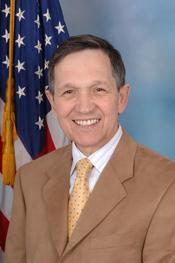
Mr. Speaker, I thank the gentlewoman from the District of Columbia (Ms. Norton) for yielding me this time and this opportunity. It is appropriate that we recognize, as this resolution does, the…
Mr. Speaker, I thank the gentlewoman from the District of Columbia (Ms. Norton) for yielding me this time and this opportunity.
It is appropriate that we recognize, as this resolution does, the courage of those who have risked their lives to save lives in the gulf coast tragedy. It is appropriate, as this resolution does, that we offer condolences for those who have suffered such great loss. It is appropriate that we do these things. I would suggest that there is another way that this House can extend itself in an appropriate fashion to offer further condolences and consolation.
We can console the people of the gulf coast with a plan for complete recovery, a new national recovery act, if you will, in that we can console the people of the gulf coast region with food, with shelter, with clothing and with health care. We need the Center for Disease Control to be tasked immediately with the responsibility of making sure that conditions that could create cholera or typhoid are met with the full resources of our government, and that we control any conditions that could create an outbreak of disease that would be even more devastating than the conditions we find right now.
We can console the people of the gulf coast with complete efforts to reconnect families. We have heard over and over again how families have been broken up. We have heard over and over again how people are desperately searching for loved ones. Only our Federal Government can be involved effectively in helping to bring about the reuniting of families.
We can use our resources and effectively console people with complete rebuilding of the infrastructure. We know and we have heard many stories of how there were many plans to repair the infrastructure or to shore it up so that people would be spared the devastation that occurred. We need to move forward from this point and commit ourselves to seeing the infrastructure and flood control programs brought forward, and also to make sure that all of the structures that have been destroyed that are public structures are rebuilt.
We can console the people of the States who have been affected by this tragedy by helping to lift people out of poverty, to make sure that the jobs that are created are jobs that are created for people who live in the area, to make sure that people are paid a living wage. The whole Nation saw the images of poverty reflected in the rising flood waters, but what we need to also show reflected is action from this Congress that would provide appropriate consolation for those who are mired in poverty.
We need to provide the resources that will rebuild the cities, that will provide jobs, and then we also can expect the cities to have responsibility then. One of the cruelest assertions that is occurring right now is certain Federal officials maintaining that local communities had the first responsibility in this regard. That is just not true. The Federal Government surely could have foreseen and taken action.
Well, now we can foresee the action that must be taken to rebuild communities. We can console the people with the health care system that would be expanded through Medicare so that people can not only receive the long-term care they are going to need but also the immediate short- term care that is vital to their survival.
We can console the people by providing appropriate environmental protections. Now we see the stories of pollution that was in New Orleans being pumped back into sources that are not polluted. We need to look at available technologies that can enable us to provide increased environmental protection in the immediate circumstances, while we are also trying to prepare for long-term environmental protection.
We can console the people by making sure their children will be educated during this time and setting up temporary schools.
We can console the people through letting them see their government finally at work and go from government inaction to seeing a government in action.
We can console the people by being there for them at once and repair the breach, not only that has occurred in a levee, but the breach of faith that people have had in their government.
This is the time for people to see their government in action, and I think that this Congress will provide effective consolation to the people when we take that position.

Mr. Speaker, I want to thank the distinguished gentleman from Louisiana for his leadership, and of course, express our sympathy and concern for the people of Louisiana, Mississippi and Alabama; and I…
Mr. Speaker, I want to thank the distinguished gentleman from Louisiana for his leadership, and of course, express our sympathy and concern for the people of Louisiana, Mississippi and Alabama; and I think the Congresswoman is an example of the outpouring of concern across the Nation, having received just recently a number of evacuees, survivors, into Washington, D.C. It is good to know that even people without votes can open their hearts and minds to this great and powerful, horrific incident that has occurred, a tragedy in our lives.
Let me first of all say to the members the families, those survivors, evacuees, and those who have lost loved ones, we are, in fact, our brothers' and sisters' keepers; and through the last 5 days I have been reminded more of the Good Samaritan parable in the Bible than at any other time in my life. We can say that Americans have certainly been the Good Samaritans, but I do want to take this time to acknowledge Houstonians and the people of Texas.
There has been such an outpouring of effort, volunteers coming from every walk of life, the mustering together of resources through the county, county judges and the mayor of the city of Houston. The pictures may not have been as pretty as we would have liked, but the immediate response of the Astrodome and the immediate response of the coming together of elected persons and now a facility in my congressional district, the George R. Brown Convention Center; and the thought that went into organizing this process was overwhelming. The local responding to the crying out of people who, as I walked through those aisles of cots and humanity, babies and elderly and the sickly and the strong, each and every one had a thank you on their lips and said that they still had hope.
As they lay there, to each of them I asked the question, were you in water? I could not imagine a 1-month-old or twins who were 1 month old or toddlers or 9-year-olds or amputees who had been in water, but each one had a sense of hope.
So to Houston, I want to give, if I could, the enormous gratitude of the American people because you had willing hands, and I might want to acknowledge that the pastors of that community, the religious community of all different faiths, they are on their job. Anyone who is asking the question where are the pastors, where are the religious leaders, they are there. We are hoping they will continue to be there at the will of the people, going in and nurturing and counseling and worshipping as they desire, not putting it on them, but as they desire. I encourage my community to allow all of the pastors into the areas where the people are desirous of them to come, but might I, as I offer sympathy, offer these points of concern.
We have to have policies today emphasizing the reunification of families, and it is necessary in the emergency supplemental to have the technology that will unite all of the shelters across America so that families can be reunited. I look forward to working on that language that gives the technology and underwrites that cost for local communities.
FEMA has to get more personnel on the ground. We cannot do it with 11 or 20. We must hire local officials, local people, and hire the victims or survivors. They can do it, and train the survivors to do the work that FEMA needs, the intake work, the counseling work or getting the information. We need to declare the area in this impact area a health crisis because we found E. coli. We have got to declare it a health crisis.
We need assistance with law enforcement, and the children have got to have special emphasis, language in the emergency supplemental, that deals with the plight of children not getting the education, health care, not because it is a desire, but we need the capacity.
Finally, might I say we are, in fact, our brothers' and sisters' keepers. We are the Good Samaritans, not by words but by deeds. An inquiry of commission is not finger-pointing; it is fact-finding so that America knows that the safety net of the Federal Government will never leave her abandoned. That is the crux of my advocacy and legislation on the inquiry; it is that America will never abandon her people.
God bless all of those who are now surviving, and God bless those who have lost their loved ones.

Mr. Speaker, I appreciate the gentlewoman's courtesy in permitting me to speak on this resolution. The devastation of Hurricane Katrina has presented us with an unprecedented opportunity to focus the…
Mr. Speaker, I appreciate the gentlewoman's courtesy in permitting me to speak on this resolution.
The devastation of Hurricane Katrina has presented us with an unprecedented opportunity to focus the spotlight of public attention and political concern on not just doing the best job possible for the victims of this tragic storm but make it less likely that others suffer needlessly in the future. I think that this is the best way to honor the memory of the thousands who have died and respect the losses of tens of thousands more who are living.
I agree that the last thing we need to do is to jump to conclusions or be satisfied by drawing up a list of suspects responsible for what went wrong. There will be plenty of time to do this as the sad tragedy continues to unfold; but after having been in Congress for a decade, the greatest danger now I fear on the floor of the House is that we, under the pressure, will adopt a quick fix so that Congress looks like it is doing something.
While we focus relentlessly on rescue and relief, it is not too early to think about how to make sure that not only the residents of the Gulf of Mexico States are better off in the long run, but that all Americans are safer and more secure.
What is frustrating for me is not that this was just so obvious. I am tempted to ask how any official could assert the failure of the levees was unforeseen. Steps could have been taken to moderate the losses. I truly believe that thousands of people were killed, injured or lost their homes unnecessarily, and we must assure that it never happens again.
As Members of Congress, we are all concerned about the administration's well-publicized problems with performance, but I also know that long-term security must also start with State and local governments who must pay careful attention to making sure that people are not put in harm's way in the first instance. Businesses and individuals are going to have to share responsibility for their actions and their policies.
I am also concerned that we here in Congress acknowledge our responsibilities, because ultimately they are our budgets. We establish the Corps of Engineers' project list. We are the ones who put FEMA into the Department of Homeland Security. It is important for us to draw the right lessons from this situation. The rushed reaction to 9/11 put FEMA in a flawed Department of Homeland Security, which haunts us today and contributed to the misery of Katrina's victims.
We should establish fundamental principles from the outset that guide reconstruction. One critical overarching principle which is obvious, but sadly has not been practiced in the past, is that there should be no Federal investment that merely puts people back in harm's way and leaves the environment the same or worse than before. Our investments and our actions must leave people and the environment better than it was before. We must make a commitment for what we do in metropolitan New Orleans and indeed throughout the tri-State region of devastation to be a model about how to do it right. We must use this specific opportunity on a broad level to do the planning correctly.
As someone who has been working on these issues since long before coming to Congress, I look forward to working with all my colleagues, for we must come forward with our suggestions to advance the serious discussions and highlight the critical elements that must be included in any final plan. We must, at the end of the day, make sure that these communities are more livable and that all these families, indeed all American families, are safer, healthier, and more economically secure.

Mr. Speaker, I thank my good friend from Louisiana for yielding this time. I join my colleagues today to convey to the people of the gulf coast a very simple message: you are not alone. Time and…
Mr. Speaker, I thank my good friend from Louisiana for yielding this time.
I join my colleagues today to convey to the people of the gulf coast a very simple message: you are not alone.
Time and again, this Nation has banded together to overcome terrible challenges it has faced, and we will do so again to overcome the challenge that is Hurricane Katrina. I, like most all of my colleagues, have been inundated with phone calls from constituents offering their support and assistance to those in need during this terrible time; and at present, we are working through the gentleman from Louisiana's (Mr. Boustany) office to get those resources from Pennsylvania down to Louisiana and the gulf coast.
The people of the gulf coast need to know also that we in Congress will do whatever it takes to help them overcome this difficult time; and more importantly, we will be there in the long run to help them recover.
Recovery from this disaster will require not just the pumping of flood water and rebuilding of homes and businesses, the reconstruction of utilities, water and sewer, roads, levees and countless other activities. Recovery will also require the restoration of civic, educational, and social institutions. We will be with you during this process as well.
We will spend whatever it takes, implement any changes that are needed, and maintain rigorous oversight to ensure the process works well.
As the chairman of the subcommittee with jurisdiction over FEMA, I wanted to also urge my colleagues to show restraint in making judgments about the response until all of the facts can be gathered. All of the facts need to be gathered, not just what we hear as the sound bite on the TV today.
This disaster is quite simply the largest humanitarian challenge the Nation has faced on its own shores. The hurricane devastated hundreds of miles of shoreline, disrupted power, water, energy sources in all of the gulf States, and displaced hundreds of thousands of people. There are just no parallels in size, scope, or impact to what has happened.
Now is the time for helping people get the food, water, and medical attention that they need. Now is the time to begin looking forward to how we will help the people of the gulf States recover and return to their homes and places of business. Now is not the time to point fingers or cast blame or, even worse, to call for the removal of key officials, especially since the response and relief effort is still ongoing.
There will be plenty of time in the coming weeks and months to evaluate what happened in the days leading up to and during the storm, to meet with responsible officials, to go over who did what and when, and, if necessary, to make policy and legislative changes. It is both unseemly and inappropriate to try and do so now, while we do not have all the facts.
I again want to express my sincere condolences to the families of those that have lost loved ones and pledge my support and the support of my constituents to do whatever is necessary to overcome this terrible challenge.
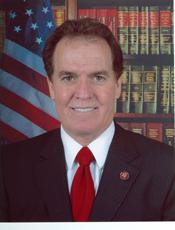
Mr. Speaker, I want to thank the gentleman from Louisiana not only for bringing forward this resolution but also for the great work that he did in the State of Louisiana in regard to organizing…
Mr. Speaker, I want to thank the gentleman from Louisiana not only for bringing forward this resolution but also for the great work that he did in the State of Louisiana in regard to organizing medical clinics and emergency health care, and I commend him for that.
This is a great resolution. It emphasizes a positive. There is no finger-pointing, name-blame game. This is exactly the kind of resolution that shows the spirit of this Congress.
I want to say, Mr. Speaker, that the gentleman from Louisiana (Mr. Jefferson), I will just tell a little story about that, what really inspired me to go to Louisiana over the Labor Day weekend in Baton Rouge and try to help out in a medical clinic.
I saw the gentleman from Louisiana (Mr. Jefferson) on television talking about Jefferson Parish and the devastation and how much they had suffered. I was fortunate enough when I went to the emergency command center in Baton Rouge to run into my friend, the gentleman from Louisiana (Mr. Jefferson); and we had a brief hug, pat on the back, sincere handshake and the spirit of cooperation that he just expressed so eloquently.
I want to echo what the gentleman said and what the gentleman from Louisiana (Mr. Jindal) and, of course, the gentleman from Louisiana (Mr. Boustany) and all of the legislative delegation Members of this Congress from the States that have been so adversely affected, especially Louisiana, Mississippi, Alabama, said.
My own state of Georgia was not unscathed.
We had a number of tornadoes that came as a result of the hurricane that touched down in the 11th Congressional District, and one life was lost and a business destroyed in Carollton, Georgia.
So, again, I commend and support, as we all do, this resolution, which is just saying it in the right way, totally nonpartisan.
When I was on the ground in Louisiana, I had an opportunity to see a lot of the evacuees and the Red Cross and the many people coming together. I saw the best of human nature, not the worst. And I think this is truly a time for the best of the human nature of the Members of this Congress, on both sides of the aisle, both bodies, to come together because this is all about uplifting people and the ones that are suffering so much.
And let us not forget that the suffering continues. It is not just the emergency response, but it is going to go on a long time, and fatigue might set in for some of the volunteers; so we need to keep a list and keep going and continue to support the gulf coast in that great part of the United States.
Again, I thank the gentleman from Louisiana (Mr. Boustany) for the resolution and thank him for yielding me time for the opportunity to join in and say a few words.

Mr. Speaker, as the waters recede in New Orleans and as the families impacted by Hurricane Katrina attempt to recover, we must now embark upon the monumental task of helping to rebuild both the…
Mr. Speaker, as the waters recede in New Orleans and as the families impacted by Hurricane Katrina attempt to recover, we must now embark upon the monumental task of helping to rebuild both the infrastructure and vitality of the Gulf Coast communities. We also have begun to reflect on the tragedy, one which many say is one of the worst disasters to strike an American city in our history. The people of Guam would like to express their condolences to the families that have lost loved ones, and to the thousands of people who are now struggling to recover from what can only be described as a humanitarian catastrophe.
Families and individuals have been uprooted, homes have been destroyed, and the process of rebuilding will be long and arduous. The communities involved depend upon support from Congress, and we must fully fund every stage of the recovery that is necessary to rebuild homes and lives.
We must also ensure that our cities and coastlines are protected as best as possible from perilous storms. The people of Guam know far too well the toll that hurricanes can have upon a population. Located in what is known as ``Typhoon Alley'' in the Pacific Ocean, our island is annually threatened and sometimes pummeled by typhoons that can have winds upwards of 180 miles per hour. These Super Typhoons have the potential for widespread devastation, but Guam is well prepared to withstand these potentially destructive storms. From tough building codes to a stratified warning system, Guam is in a state of constant readiness. In fact, at the time Hurricane Katrina was intensifying in the Gulf of Mexico, Guam was in a state of readiness as Typhoon Nabi was forecast to make a direct hit. In our case, the storm turned away, but nonetheless Guam was bracing for the worst.
There is more our island needs to do to be better prepared for Typhoons, such as burying our power lines and improving our water system. We continue to perfect our disaster preparedness plan and harden our infrastructure. Our community, as well as all communities across the Nation, are now more dependent than ever on the support of the Federal Government to help us prepare for and recover from devastating storms. It is imperative that at-risk areas be better equipped and prepared, from the Federal level to the local level, to deal with hurricanes and other natural disasters.
I support House Resolution 425 and urge its passage. Together, let us as a Congress, express the Nation's sorrow for the victims of this tragedy.

Mr. Speaker, I thank the gentleman from Louisiana, a dear friend, for the time. We have made a lot of new, dear friends in past days. There have been hundreds and thousands of people that have come…
Mr. Speaker, I thank the gentleman from Louisiana, a dear friend, for the time.
We have made a lot of new, dear friends in past days. There have been hundreds and thousands of people that have come through our east Texas area, and it has been a real privilege and honor to witness and to reach out to those folks that are staying in centers all over east Texas.
As my colleague, the gentlewoman from Houston, indicated, they have many tens of thousands in Houston; but it has been an amazing thing to watch. I have seen people on the networks, I have seen leaders in various positions accuse others of being racist in the handling of this matter. And I am telling my colleagues what: anybody that says that there is racist activity needs to come to east Texas because there Martin Luther King, Jr., I think, would be proud to see his dream taking effect, where people are judged not by the color of their skin but by the content of their character, and even one step further, beyond even character, by the depth of the pain and the hurt they are experiencing.
There are people, whites, blacks, Hispanics, different races, that have come together and embraced physically, literally, figuratively. The people all over that I have witnessed firsthand have opened their arms. They have opened their hearts. They have opened their wallets and become as one people, getting through this tragedy.
Abraham Lincoln is attributed to have said, Those who look for the good in man will surely find it. It is true. If we look for the good through this tragedy, we find incredible stories and testimonies of the goodness of man, of the hope that springs eternal in the human breast. They are all over the southern area of America as it is responding to this tragedy, and the hope continues.
I was continually asked by people who have come, many of them from New Orleans, most of them from southern Louisiana in our district, do you think we will ever rebuild? I am telling my colleagues, there will be a rebuilding. New Orleans, southern Louisiana, southern Mississippi, southern Alabama will rise again and be a testimony to the strength of character and the depth of compassion that exists in this country.
Our hearts and our prayers go out to those who have lost loved ones, who are continually reaching out trying to find their loved ones. We continue to help. The gentlewoman from Texas had a good idea, but our prayers and our efforts and our money will go to help those people.
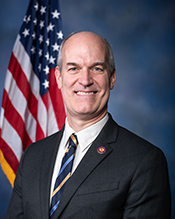
Mr. Speaker, I would like to convey my deepest condolences to the victims of Hurricane Katrina, many of whom lost loved ones, their homes and their livelihoods. Many constituents have contacted my…
Mr. Speaker, I would like to convey my deepest condolences to the victims of Hurricane Katrina, many of whom lost loved ones, their homes and their livelihoods. Many constituents have contacted my office, concerned about relatives, friends, and fellow Americans in that area. A member of my own staff has been touched by this tragedy and has dozens of family members displaced and in distress. Our thoughts and prayers are with his family and all those other families who have been affected by this disaster.
While we are devastated by this tragedy, our faith, perseverance and American spirit of generosity will ensure that we help the region and its residents recover and rebuild.
The Pacific Northwest, where my Congressional District is located, is about as far north and west of this tragedy as you can get in the continental U.S. Yet even there, Governor Gregoire is coordinating with state and Federal officials nationwide to get state employees and volunteers on the ground in the affected areas. Our state has readied 600 Washington National Guard soldiers and airmen. We have offered up our State's refueling aircraft, support personnel, helicopters, and satellite communications systems, among other assets. Washington State's residents are giving generously to aid relief efforts and victims. It is likely that we will soon provide a temporary home to thousands of displaced hurricane victims.
I would also like to extend my deepest gratitude to organizations such as the Red Cross for their significant disaster relief efforts. The Red Cross has said that this is their largest relief effort ever-- larger than after September 11, 2001, and larger than all four Florida hurricanes last year. We continue hearing heartwarming stories of American Red Cross volunteers from across the Nation, including in my Congressional District, who have already headed down to help with relief efforts.
As we respond to this tragedy, I will continue working with my colleagues to provide needed Federal assistance to the people harmed by this disaster. I know that in months ahead there will be much work to do. As Americans, we have pulled together through tragedies in the past. I am confident that we will demonstrate that same unity and perseverance in overcoming the devastating effects of Hurricane Katrina.
Show 4 more

Mr. Speaker, 10 days ago Hurricane Katrina slammed into America's Gulf Coast. The devastation we have seen is unprecedented. While the Federal Government's response to this devastation has itself…
Mr. Speaker, 10 days ago Hurricane Katrina slammed into America's Gulf Coast. The devastation we have seen is unprecedented. While the Federal Government's response to this devastation has itself been a management catastrophe, I have been heartened by the overwhelming response of our fellow Americans to the victims of Katrina. People have opened their homes and their hearts to their victims. They have donated food, clothing, and money. The goodness of our citizens to one another, especially in their time of need, should make all Americans proud.
With a heavy heart, but with confidence in a better future, I join all my colleagues today in expressing my personal deep sense of sorrow and offering the condolences of a nation to all the victims of Hurricane Katrina. All who have watched these tragic events unfold before us on TV are inspired by, and in awe of, the resilience of the New Orleanians, their courage under adversity, their extraordinary self-sacrifice in mutual assistance, their love of their city, and their determination to rebuild their lives. I pledge my enduring efforts--and I know that my colleagues on the Committee on Transportation and Infrastructure join in this pledge--to provide New Orleans and the states of Louisiana, Mississippi, and Alabama, the resources necessary for the reconstruction efforts.
Today we must remain focused on the recovery from the devastation wrought by Katrina. However, in the coming weeks and months, this Congress must investigate the Government's disastrous response to this disaster. To begin that process, Congresswoman Norton and I have introduced a bill, H.R. 3659, to reestablish FEMA as an independent agency outside of the control of the bureaucracy of the Department of Homeland Security.
The Government's first priority must be to protect its citizens. It has failed to honor that responsibility, and we must insure that such failure never happens again.
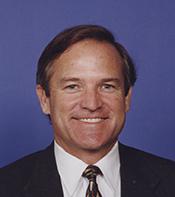
Mr. Speaker, our deepest condolences go to the victims of Hurricane Katrina, who lost their lives, their homes and their livelihoods. Our thoughts and prayers are with them and their families. While…
Mr. Speaker, our deepest condolences go to the victims of Hurricane Katrina, who lost their lives, their homes and their livelihoods. Our thoughts and prayers are with them and their families. While the devastation caused by this tragedy is vast, our faith and determination ensure that we will rebuild and we will endure.
Congress and President Bush have taken the first step in appropriating emergency funds to aid relief efforts in the aftermath of Hurricane Katrina and much more is on the way. It is vital that this emergency funding moves quickly toward rescue and relief efforts in the Gulf Coast region and throughout the Nation. Together, Federal, State and local authorities must continue to work diligently to protect and assist those in need.
In Texas, we are opening our hearts, homes, and facilities to over 75,000 victims of Hurricane Katrina. The Federal Government has a responsibility to help communities in Texas who are generously helping others during this time of national tragedy.
During this difficult time, most Americans have shown an inspirational outpouring of support for the victims of Hurricane Katrina. However, it appears that some have acted out of greed and taken advantage of our national tragedy by price gouging Americans when it comes to basic necessities like gas, food, and shelter. That is totally unacceptable and the Federal Government must act quickly to fulfill its responsibility to protect the public and hold price gougers accountable.
History will judge all of us by our response to this national tragedy and it is vital that we come together, rise above the partisanship, and do what's right for the American people in this time of crisis.
I am confident that we will and the American spirit of generosity will prevail in the days, weeks, and months ahead, as our American family from coast to coast continues to provide much needed assistance to those who have lost so much.

Mr. Speaker, I have spent much of the past week examining the aftermath of Hurricane Katrina, one of the most tragic natural disasters in our Nation's history. My heart goes out to each and every…
Mr. Speaker, I have spent much of the past week examining the aftermath of Hurricane Katrina, one of the most tragic natural disasters in our Nation's history. My heart goes out to each and every person who has suffered in the wake of this situation. I grieve for the loss of life, and I sympathize with those who have lost their livelihood as a result of this terrible tragedy.
First and foremost, it is important to give credit to countless brave men and women, both volunteer and professional, who have been working tirelessly on our recovery and rescue operations. Their heroic efforts have saved countless lives, and we need to ensure they have the support and tools they need to accomplish their jobs. In addition, it is important to recognize National Guard Units and other emergency management professionals who have been attempting to restore order under exceptionally trying circumstances.
Hurricane Katrina has proven to be one of the most damaging storms ever experienced by the people of the Gulf Coast. It will take a long time for this area of the country to regain some semblance of normalcy--a process that will depend on the collective acts of kindness, generosity, and selflessness of all Americans as much as it does the acts of government. I salute those who have already volunteered their services, donated money or goods, or opened their homes to their displaced countrymen.
In the weeks and months to come, much of our attention in Washington will be focused on the response to Katrina. There will be much to say and plenty of time to say it. But for now I want to pause to remember the victims of this storm and to grieve for their passing. For the survivors, I offer my condolences and, through the work we will pursue together, as one Nation, the prospect of hope.

Mr. Speaker, sadly, approaching the four year anniversary of the September 11, 2001 terrorist attacks, our country faces great tragedy again and a tremendous national challenge in the wake of…
Mr. Speaker, sadly, approaching the four year anniversary of the September 11, 2001 terrorist attacks, our
country faces great tragedy again and a tremendous national challenge in the wake of Hurricane Katrina.
I would like to assure the people of Louisiana, Mississippi, and Alabama that New Yorkers who lived through 9/11 understand the shock and dismay being felt deeply after Hurricane Katrina.
We are well aware that time and great effort will be needed to rebuild after Hurricane Katrina, but we know also that the recovery will advance strongly because of the great will of the people of Louisiana, Mississippi, and Alabama. I also hope that the recovery will be spurred by the strong support most assuredly coming from countless New Yorkers and Americans from all corners of the country.
I stand ready to work with Members of Congress from Louisiana, Mississippi, and Alabama to advance all Federal programs necessary for recovery operations after Katrina. My thoughts and prayers are with those affected by Hurricane Katrina and with the people now facing great recovery challenges in its wake.
Bill Text
2 versions available
        [Congressional Bills 109th Congress]
[From the U.S. Government Publishing Office]
[H. Res. 425 Engrossed in House (EH)]

H. Res. 425

In the House of Representatives, U.S.,

September 7, 2005.
Whereas, on August 28, 2005, Hurricane Katrina reached landfall devastating the
Gulf Coast states;
Whereas there has yet to be a full accounting for all our citizens whose lives
were tragically lost;
Whereas the cost in human suffering is ongoing for hundreds of thousands of
people who have lost loved ones, homes, and livelihoods;
Whereas immediate humanitarian aid is still critically needed in many of the
devastated regions;
Whereas the devastation on the Gulf Coast of Mississippi, Louisiana, and Alabama
is catastrophic;
Whereas the City of New Orleans is tragically flooded and the surrounding
communities of St. Bernard and Plaquemines parishes are devastated;
Whereas every city on the Mississippi Gulf Coast is severely damaged or
destroyed, including Waveland, Bay St. Louis, Pass Christian, Long
Beach, Gulfport, Biloxi, Ocean Springs, Moss Point, and Pascagoula;
Whereas the States of Florida, Texas, and Georgia also sustained damage;
Whereas Coast Guard search and rescue teams, police, firefighters, the National
Guard, and many ordinary citizens have risked their lives to save
others;
Whereas doctors, nurses, and medical personnel worked expeditiously to ensure
that hospitals, medical centers, and triage units provided needed care;
Whereas the American Red Cross, the Salvation Army, and other volunteer
organizations and charities are supplying hurricane victims with food,
water, and shelter;
Whereas the State of Texas and numerous other States have welcomed tens of
thousands of victims from Louisiana and provided them with aid and
comfort;
Whereas the Army Corps of Engineers has worked to reinforce levees in Louisiana;
and
Whereas thousands of volunteers and government employees from across the Nation
have committed time and resources to help with recovery efforts: Now,
therefore, be it
Resolved,  That the House of Representatives--
(1) expresses the condolences of the Nation to the victims of
Hurricane Katrina;
(2) commends the resiliency and courage of the people of the States
of Louisiana, Mississippi, and Alabama; and
(3) commits to provide the necessary resources and to stand by the
people of the States of Louisiana, Mississippi, and Alabama in the
relief, recovery, and rebuilding efforts.
Attest:

Clerk.