Providing for consideration of the bill (H.R. 250) to establish an interagency committee to coordinate Federal manufacturing research and development efforts in manufacturing, strengthen existing programs to assist manufacturing innovation and education, and expand outreach programs for small and medium-sized manufacturers, and for other purposes.
Legislative Activity
Stay on top of the latest movement without scrolling through every action
Motion to reconsider laid on the table Agreed to without objection.
September 21, 2005 • 1:53 PM
View full timeline
Introduced in House
September 20, 2005
The House Committee on Rules reported an original measure, H. Rept. 109-227, by Mr. Gingrey.
September 20, 2005
It shall be in order to consider as an original bill for the purpose of amendment under the five-minute rule the amendment in the nature of a substitute recommended by the Committee on Science now printed in the bill.
September 20, 2005 • 7:22 PM
Placed on the House Calendar, Calendar No. 90.
September 20, 2005
Considered as privileged matter. (consideration: CR H8182-8189)
September 21, 2005 • 11:35 AM
DEBATE - The House proceeded with one hour of debate on H. Res. 451.
September 21, 2005 • 11:38 AM
The previous question was ordered without objection.
September 21, 2005 • 12:31 PM
POSTPONED PROCEEDINGS - At the conclusion of debate on H. Res. 451, the Chair put the question on adoption of the resolution and by voice vote, announced that the noes had prevailed. Mr. Gingrey objected to the voice vote based upon the absence of a quorum and the Chair postponed further proceedings on the question of adoption of the resolution until later in the legislative day. The point of no quorum was considered as withdrawn.
September 21, 2005 • 12:32 PM
Considered as unfinished business. (consideration: CR H8196)
September 21, 2005 • 1:31 PM
Passed/agreed to in House: On agreeing to the resolution Agreed to by the Yeas and Nays: 222 - 198 (Roll no. 478).(text: CR H8182)
September 21, 2005 • 1:53 PM
On agreeing to the resolution Agreed to by the Yeas and Nays: 222 - 198 (Roll no. 478). (text: CR H8182)
September 21, 2005 • 1:53 PM
Motion to reconsider laid on the table Agreed to without objection.
September 21, 2005 • 1:53 PM
Voting History
1 vote recorded • Roll call available
Floor Debate
20 membersWhat members said about H.Res. 451 on the floor
 SBPG
SBPG SJL
SJL BG
BG JPM+15
Floor Debate
20 membersWhat members said about H.Res. 451 on the floor
Madam Chairman, I yield myself such time as I may consume. I rise in support of H.R. 250, and I want to congratulate the gentleman from Michigan (Mr. Ehlers) and all the members of the Committee on…
Madam Chairman, I yield myself such time as I may consume.
I rise in support of H.R. 250, and I want to congratulate the gentleman from Michigan (Mr. Ehlers) and all the members of the Committee on Science on both sides of the aisle who contributed so significantly to this bill; but before I begin to speak about the bill, let me say something about the rule because I was not available to participate in the debate.
The Committee on Rules acted reasonably, following my request, for not making the amendments on the Advanced Technology Program in order. We did debate ATP fully in committee. I suspect we will debate ATP again during a motion to recommit. This is not a subject on which anyone has been denied process.
But our goal with this bill is to improve the lot of American manufacturers. ATP is a controversial issue that will weigh down the progress on this bill. There is no reason for that to happen. We ought to debate this bill on its merits, which are not contested, and then handle ATP separately. I support ATP. I helped create the program. I will work with the appropriators to try to keep it funded. But I also support this bill, and I see no reason to kill this important bill to allow a political debate on ATP.
Now, let me turn to the bill we are actually debating. This bill passed the House by voice vote last year, and this time around we should have enough to get time to get this measure to the President's desk. I expect another strong show of support from the House today.
It is easy to see why this bill has garnered such overwhelming support. It deals with a real problem by bolstering successful programs and authorizing innovative new approaches based on those programs. The problem the bill addresses is the decline of U.S. manufacturing. Our Nation needs a diverse economy, and that economy must include manufacturing. We cannot be wholly dependent on others for the goods that enable American families and American businesses to function. Manufacturing provides high-paying jobs and helps us hone our technical edge. Yet the signs of manufacturing decline are all about us.
So what can we do? Well, for starters, we can be sure we are adequately funding programs that have already proven themselves successful at helping domestic manufacturers. This bill does that by authorizing funding for the laboratories of the National Institute of Standards and Technology, for its Manufacturing Extension Partnership, and for the Advanced Technology Education program of the National Science Foundation.
All these programs have proven track records. NIST, the Nation's oldest Federal laboratory, has long been a reliable partner of the private sector, conducting research needed to keep American industry at the cutting edge of technology. The MEP program, which provides technical assistance to small- and medium-sized manufacturers, has helped ensure that smaller businesses can apply the latest advances in technology and manufacturing know-how. Every study of this popular program has found that it has saved and created new jobs. And the ATE program has channeled critical funding to community colleges to enable the U.S. to have the technical workforce we need to retain manufacturing jobs. So this bill targets money to programs that have truly made a difference in helping American manufacturing.
But we cannot rest on our laurels, because the U.S. manufacturing sector is still not as robust as we would like. So while being mindful of fiscal constraints, and we have to be mindful of that, our bill authorizes pilot efforts to see if programs like MEP can be made even more effective. We create a program that would bring manufacturers and universities together to conduct research on specific problems of concern to manufacturers. We create fellowships to encourage more students to pursue research in areas related to manufacturing. In short, this is a targeted, practical bill that will provide real assistance to the Nation's manufacturers.
For that reason, the bill is endorsed by the National Association of Manufacturers, and I urge my colleagues to continue their overwhelming bipartisan support for this meritorious bill.
Madam Chairman, I reserve the balance of my time.
Madam Chairman, I yield 6 minutes to the gentleman from Michigan (Mr. Ehlers), the very distinguished author of this bill. And I say that with some reservations, because as is the habit of the Committee on Science, bills are reported out after very thorough and complete consultation with the minority, and so a lot of fingerprints are all over the bill. But the driving force behind this very important legislation is my distinguished colleague from Michigan.
Madam Chairman, I yield 2 minutes to the gentleman from Illinois (Mr. Manzullo), one of the most outspoken and effective advocates for manufacturing.
Madam Chairman, I yield 2 minutes to the gentlewoman from Pennsylvania (Ms. Hart), who is a leader in the manufacturing and steel caucuses, and so many other caucuses that are involved with protecting American jobs and growing American jobs.
Madam Chairman, I yield 2 minutes to the gentleman from Pennsylvania (Mr. Dent), who is one of the Members who gets it, who understands how important it is to protect our manufacturing base.
Madam Chairman, I yield myself such time as I may consume.
Before I close on a bill that we can all be proud of, Republicans and Democrats alike, I want to thank the staff on both sides of the aisle who have worked on this bill over the past several years, including, not exclusive, but including Olwen Huxley and Amy Carroll, and particularly Eric Webster of our committee staff.
I want to give special thanks to Mr. Webster, who is leaving the Hill this week, after 12 years, to join the National Oceanic and Atmospheric Administration. We are sure Mr. Webster will be just as effective at prodding NOAA from the inside as he has been for us, and that is very effective. We will sorely miss Eric Webster, who started in my office several years ago as an intern and became our top legislative assistant and also worked for the very distinguished gentleman from Maryland (Mr. Gilchrest) as legislative director before coming to the Committee on Science. He has added immeasurably to the products that we have produced in our committee, and all of us want to thank him for his efforts. And we want to wish him, his wife Natalie, and daughter Gabriella, all the best as they go forward in this new chapter in the continuing saga of ``Eric Webster Comes to Washington.''
Madam Chairman, I yield back the balance of my time.
Madam Chairman, I offer an amendment.
Madam Chairman, I yield myself such time as I may consume.
(Mr. BOEHLERT asked and was given permission to revise and extend his remarks.)
Madam Chairman, I rise in support of the amendment. Let me start by thanking the gentleman from Louisiana (Mr. Melancon) for bringing forward the proposal that led to this amendment. And let me thank him and the gentleman from Tennessee (Mr. Gordon) for working with us to craft this amendment in a way that should avoid controversy.
This amendment is designed to help the victims of Hurricane Katrina and to help save lives in future hurricanes, goals we obviously all share. The amendment would accomplish its goals in two ways.
First, it authorizes the Manufacturing Extension Partnership program to establish a special effort to help Katrina victims by drawing on all the resources of the nationwide network of MEP centers. The MEP centers have a wide variety of ways to help businesses that have had losses or have been wiped out by Hurricane Katrina. We all want to do everything possible to help gulf coast businesses and their owners and customers to get back on their feet, something that is critically important, brought to my attention once again very vividly in a meeting this morning with Governor Haley Barbour of Mississippi.
The Katrina program would also waive the usual matching requirements for assistance, as neither the States nor the businesses are in a position to provide such a matching payment now. I should add that we do not expect this program to be particularly costly as it draws on existing MEP resources, and the MEP program as a whole costs roughly $100 million, not a number that stands out in comparison to the mega numbers we are hearing about necessary hurricane relief.
The second part of the amendment draws on the expertise of the National Institute of Standards and Technology to investigate why buildings and other structures failed during the storm. This is a traditional role for NIST, and it has played it many times after building failures and has resulted in greater understanding of building performance and stronger building codes. We ought to be learning from this hurricane to prevent future losses of life and property in storms to come. A NIST investigation is the best way to do that.
This bill is silent as to what legal mechanisms NIST should use to carry out its investigation. I would prefer and I know my colleagues across the aisle would prefer that NIST invoke the National Construction Safety Team Act that was signed into law after the World Trade Center collapsed. But the bill does not mandate that NIST take that approach.
In short, this amendment instructs NIST to take reasonable, affordable steps to help the victims of Katrina and to prevent losses from future storms. I urge its adoption.
Madam Chairman, I yield back the balance of my time.
Madam Chairman, will the gentleman yield?
Madam Chairman, I think this amendment enhances the bill. It adds to the quality of an already good bill, and we are pleased to accept it.
Madam Chairman, will the gentlewoman yield?
Madam Chairman, I want to thank the gentlewoman for offering this amendment, particularly the timing of it. It is very significant. I understand the gentlewoman will be asking for a rollcall vote, and I will proudly vote ``aye.''
Mr. Chairman, I rise to reluctantly claim the time in opposition, and I yield myself such time as I may consume.
Mr. Chairman, this might have been a reasonable amendment a couple of years ago, and, guess what? We are used to expecting reasonable amendments from my distinguished colleague from Connecticut. Back then, all of us, including the gentleman from Connecticut (Mr. Larson) were calling on the administration to bring more focus on the Commerce Department to the problem of manufacturers. Quite frankly, I do not think they were paying enough attention. But guess what? The administration heeded our calls. It created a new Assistant Secretary for Manufacturing and took other steps to create a focus on manufacturers in the Department, and it did so in a streamlined way.
So I think it is really time to declare victory and go home on this issue. We have won what we were seeking: someone in that Department of Commerce to focus attention on manufacturing. The gentleman from Connecticut (Mr. Larson) wanted it, I wanted it, the gentleman from Tennessee (Mr. Gordon) wanted it, the gentleman from Michigan (Mr. Ehlers) wanted it, we all wanted it, and they listened. It is not too often that the administration listens to the Congress. The legislative branch is sometimes considered politically inconvenient for the executive branch. This time they listened.
Indeed, the Larson amendment would override or duplicate the administration's efforts, it is hard to tell which, and reorganize the Department yet again. That is a waste of time and money; it is utterly unnecessary.
Now, the gentleman from Connecticut may respond that the Assistant Secretary appointed by the President has not accomplished very much. That person certainly has his hands full, and I am not going to debate his performance here. But if the gentleman is arguing that creating a new Assistant Secretary has not done any good, how is that an argument for his amendment? Why does he think that creating the similar positions he is proposing would be a panacea?
The way to help manufacturers is not by creating more bureaucracy in downtown Washington. What we need to do is fund programs that help manufacturers. That is what this bill would do by aiding the successful programs of the National Institute of Standards and Technology.
If anything, the Larson language would actually impede this program. It would add to the bureaucracy that sits on top of NIST, when we want NIST to have as much of its own funding and latitude as possible. The gentleman from Connecticut (Mr. Larson's) new officials would be in a position to siphon money away from this and interfere with its programs. How would that help manufacturers?
Let us speed this bill along and not weigh it down with new bureaucracies who would detract from the very programs we are trying to augment.
The House soundly defeated this amendment last year. We defeated it in committee this year. That was the right decision, and it is time to dispense with this amendment again.
Having said that, let me say that does not diminish one iota the respect I have for our distinguished colleague from Connecticut, who is one of the most valued members of the Committee on Science. But, having said all of the above, I have to once again indicate how reluctant I am to oppose the gentleman from Connecticut (Mr. Larson) because of my affection and respect for him; I am not really opposing the gentleman, I am opposing his amendment, and I urge its defeat.
Mr. Chairman, I reserve the balance of my time.
Mr. Chairman, I yield 1\1/2\ minutes to the gentleman from Michigan (Mr. Ehlers).
Mr. Chairman, I yield myself such time as I may consume.
Mr. Chairman, I will make one comment. I have been here 22 years, and I go home every single weekend. I take great pride in that. I have never had a constituent say to me, I want you to create a new Under Secretary within the Department, and I want you to change the title of an Assistant Secretary.
All they want are results, and we are beginning to get results. And we have got to add to that impetus, and we are doing so with the base bill. I urge the adoption of the base bill and opposition, reluctantly, to the Larson amendment.
Mr. Chairman, I demand a recorded vote.
Mr. Chairman, I yield myself such time as I may consume.
Mr. Chairman, let me say at the outset there are some things that I love in addition to my wife and family and everybody else. I love technology education. I love our community colleges.
It is easy to understand why this amendment is being offered, and it is easy to see why it needs to be defeated. It is easy to see why it is being offered, because it provides additional support to a very good program, the Advanced Technology Education program of the National Science Foundation.
As someone who has pushed for years at NSF to do more for community colleges, and when I first came here 23 years ago, community colleges were not even on the radar screen at NSF, but, boy they have got the message, and they are doing an outstanding job; and they recognize the capabilities of community colleges. And they understand the importance of the Advanced Technology Program, and so do I. I could not agree more with the gentleman from Colorado (Mr. Udall).
But it is easy to see why this amendment needs to be opposed. Now, that may sound strange, but let me explain. We have already demonstrated our support for Advanced Technology Education quite tangibly in the base bill, H.R. 250. The bill would increase funding for ATE not by 2 percent or 5 percent or 10 or 20; it is a third over 3 years.
And the gentleman from Colorado (Mr. Udall) deserves a lot of the credit for ensuring that the additional funding was in the bill. But I will not let him claim all of that credit, because guess what, all of the members of the committee, Republicans and Democrats alike, recognized the importance of technology education and recognized the value of our community colleges in providing that education.
But now he wants to up the ante. His amendment would increase ATE funding by 70 percent. That is right: 70 percent over 3 years. Where is it going to stop? We do not have enough of this money. We cannot manufacture it fast enough. That would be an extravagant thing to do at any point, but it borders on the absurd in today's budget climate.
Such an increase is unrealistic, and it would make ATE a higher priority than other education programs at NSF, a step I am not prepared to take given our needs across the spectrum of science and math education programs.
So I would urge my colleagues to use their common sense in reviewing this amendment. Is a 33 percent increase in authorization levels not sufficient in this fiscal climate? I think it is pretty generous. I urge opposition to an amendment that I think is excessive.
Mr. Chairman, I reserve the balance of my time.
Mr. Chairman, let me just point out to the gentleman from North Carolina (Mr. Price), for whom I have the highest regard, he said if all we are going to do is fund it at about the current level, that is not good enough.
I would agree that is not good enough. That is why we are increasing it by 33 percent.
Mr. Chairman, I yield 1 minute to the gentleman from South Carolina (Mr. Inglis).
Mr. Chairman, I yield the balance of my time to the gentleman from Michigan (Mr. Ehlers).
Mr. Speaker, I rise in opposition to the motion to recommit.
Mr. Speaker, we have in this motion to recommit a textbook example of how the perfect is the enemy of the good. Personally, I support the Advanced Technology Program, although I know that many of my colleagues on this side of the aisle do not. But I support this bill, and the Members on the other side of the aisle support this bill as well.
We all want to demonstrate our support for the Manufacturing Extension Partnership which has served so well and the other programs authorized in this bill so we can facilitate assistance going to American manufacturers who desperately need it. That has been the entire tenor of the debate today.
But now, as we are on the verge of accomplishing our mutual goal of helping manufacturers, we have before us a motion that will have the effect of killing the bill. That is not speculation. We know that disputes over ATP are why this bill died in the Senate in the last Congress. We know that the administration adamantly opposes ATP and will block the progress of this bill if ATP is included.
A vote for this motion is not a vote for ATP; it is a vote to kill a bill that will help American manufacturers. And killing this bill over ATP would be especially irresponsible because the Congress will have other chances to save the ATP program. For starters, we will vote on appropriations for the program. It is not clear at all how the gamesmanship behind this motion will benefit the ATP program. It just make it more of a political football. It is very clear how that gamesmanship works to the detriment of the bill and the aid it will provide to American manufacturers, so I urge my colleagues to vote down this politically motivated amendment.
We will have other chances to debate ATP. We will not have another chance for this bill, which in its current form has widespread bipartisan support. Let us put politics aside and make some real progress. Defeat the motion and support H.R. 250.
Mr. Speaker, by direction of the Committee on Rules, I call up House Resolution 451 and ask for its immediate consideration. Mr. Speaker, for the purpose of debate only, I yield the customary 30…
Mr. Speaker, by direction of the Committee on Rules, I call up House Resolution 451 and ask for its immediate consideration.
Mr. Speaker, for the purpose of debate only, I yield the customary 30 minutes to the gentleman from Massachusetts (Mr. McGovern), pending which I yield myself such time as I may consume. During consideration of this resolution, all time yielded is for the purpose of debate only.
Mr. Speaker, House Resolution 451 is a structured rule. It provides 1 hour of general debate, equally divided and controlled by the chairman and ranking minority member of the Committee on Science. The rule waives all points of order against consideration of the bill. It provides that the amendment in the nature of a substitute recommended by the Committee on Science and now printed in the bill shall be considered as an original bill for the purpose of amendment, and shall be considered as read.
It waives all points of order against the committee amendment in the nature of a substitute. It makes in order only those amendments printed in the Committee on Rules report accompanying the resolution. It provides that the amendments printed in the report may be offered only in the order printed in the report, may be offered only by the Member designated in the report, shall be considered as read, shall be debatable for the time specified in the report equally divided and controlled by the proponent and an opponent, shall not be subject to amendment, and shall not be subject to a demand for a division of the question in the House or in the Committee of the Whole.
It waives all points of order against the amendments printed in the report, and it provides one motion to recommit, with or without instructions.
Mr. Speaker, I rise today in support of House Resolution 451 and its underlying bill, H.R. 250, the Manufacturing Technology Competitiveness Act of 2005.
Mr. Speaker, I first want to recognize the contributions of the Committee on Science chairman, the gentleman from New York (Mr. Boehlert); the gentleman from Tennessee (Ranking Member Gordon); the gentleman from Oregon (Ranking Member Wu); and the gentleman from Michigan (Subcommittee Chairman Ehlers), of course, the author of H.R. 250. I thank all of them for this timely piece of legislation.
Today, the House has an opportunity to consider legislation that will make the United States even more competitive in the global economy. Through the establishment of an interagency committee to coordinate Federal manufacturing research and development efforts, H.R. 250 provides many useful tools to keep the United States on the cutting edge of technological and manufacturing innovation.
H.R. 250 would direct the President to establish or designate an interagency committee on manufacturing, research, and development. And in order to ensure sufficient review and diverse input, the committee would also receive assistance from an advisory committee representing nongovernmental interests. This essential component ensures that government efforts are as relevant and responsive as possible to the needs of our manufacturing base.
Without question, Mr. Speaker, some of this country's greatest intellectual and innovative resources rest in the halls of our educational institutions and in the research and development departments of our businesses across the country. Therefore, this bill establishes a pilot grant program within the Department of Commerce's National Institute of Standards and Technology to fund research partnerships between firms, community colleges, universities, research institutions, State agencies, and nonprofits to develop new, cutting- edge manufacturing technologies.
Additionally, through the Manufacturing Extensive Partnerships, the MEP program, there are regional centers across the country that provide States with grants to allow the successful transfer of technology from the Federal Government to the private sector.
Obviously, there is no sense in developing new and innovative technology if it cannot be successfully passed on to the manufacturing sector of our economy, the true engine of economic growth.
H.R. 250 would refine the guidelines and the requirements established through the Manufacturing Extension Program to ensure that these regional centers are fulfilling their duty to keep innovative manufacturing technology flowing.
Mr. Speaker, I can personally speak to the successes of the Manufacturing Extension Program. The Georgia Manufacturing Extension Partnership is led by my alma mater, the Georgia Institute of Technology, Georgia Tech.
Georgia Tech's Economic Development Institute, along with the University of Georgia, Georgia Power, and others coordinate and deploy experts to advise and work with manufacturers throughout the State of Georgia, so they can be more innovative, more productive, and maximize their efficiency.
Mr. Speaker, on a couple of occasions I have had the opportunity to tour facilities in my district that have been assisted through Georgia's MEP program. Specifically, I toured A&L Shielding, Inc., in Rome, Georgia; and I was able to see concrete improvements made to their facility. These improvements enhanced their efficiency, increased their productivity, making A&L Shielding much more competitive.
So, Mr. Speaker, I do not think there is any Member of this House who does not realize the importance of education and fostering new and more efficient technology. Therefore, this act would establish a standards education program at the National Institute of Standards and Technology to award grants on a cost-shared basis to institutions of higher education.
These grants will go a long way to develop top-notch curricula related to engineering, business, science, and economic standards. This investment in educational standards is not only an investment in future development, but it also is an insurance policy for American competitives.
In closing, Mr. Speaker, H.R. 250 marks an excellent opportunity for the House to improve this country's manufacturing and technological potential for many years to come. Again, I would like to encourage each of my colleagues to support not only this rule but also the underlying bill.
Mr. Speaker, I reserve the balance of my time.
Mr. Speaker, I yield myself as much time as I may consume.
Mr. Speaker, I would like to point out that in response to some of the remarks made by my friend, the gentleman from Massachusetts (Mr. McGovern), in regard to the funding of this bill, I want to point out to my colleagues that it does create additional competitive grant programs from which the MEP centers can obtain supplemental funding for manufacturing-related projects.
H.R. 250 would also allow MEPs to accept and distribute funds from other Federal agencies without requiring matching funds, and the MEP funding would be authorized at $110 million in fiscal year 2006, including funds for a competitive grant program. The authorization would actually increase by $5 million per year to $120 million in fiscal year 2008.
I want to also, Mr. Speaker, highlight again an outstanding MEP program in my State of Georgia, as I mentioned in my opening remarks, my alma mater, Georgia Tech, and the Economic Development Initiative.
Let me just highlight Georgia's MEP partnership. It is led by Georgia Tech's Economic Development Institute, and it provides technical assistance, management training and other types of assistance intended to increase productivity and help companies become more competitive in the global market.
We know how important that is. This program comprises a team of more than 125 professionals located both at Georgia Tech and throughout regional offices across the State of Georgia. This incredible staff offers a number of vital services and programs to business and industry.
Mr. Speaker, I would like to take this opportunity to name a few of these services and programs to demonstrate the extensive range of assistance that is available: Quality and International Standards, Lean Enterprise, Energy Management, Environmental Management, Information Technology, Trade Adjustment Assistance for Firms, Government Procurement Assistance, B2B Marketing For Manufacturers, Strategic Planning, Economic Development Research, Community Services, Economic Development Training, Tourism, Facilitec, Georgia State-Wide Minority Business Development Center.
While this is not an exhaustive list, it is a long one, and I believe it clearly attests to the important impact MEPs have had on and continue to have on business and industry in Georgia.
The criticism that this administration or this leadership is not doing enough and is not concerned enough about manufacturing job losses is certainly not true. This is a good bill. As I say, I commend the chairman and the ranking member.
Mr. Speaker, I reserve the balance of my time.
I thank the gentleman from Tennessee for yielding to me.
I want to point out to him that of the amendments that were made in order, other than the manager's amendment, these were all, all four amendments made in order were Democratic amendments.
No, I think there were probably some Republican amendments that were left out as well.
If the gentleman will continue to yield, the Udall amendment is the one I particularly wanted to reference. The gentleman from Colorado (Mr. Udall) has an amendment that will be thoroughly discussed here this morning, which actually increases the authorization level of the National Science Foundation's Advanced Technology Education Program.
Let me again say the gentleman, as ranking member of the Committee on Science, knows that I was not there for subcommittee markup or whole committee markup to debate these amendments that came through committee. I am not a member of that committee, as the gentleman knows.
All I can say is in this rule we are giving the minority side an opportunity to bring this issue in the form of an amendment to the floor so we can have a fair and open debate and we can have an up-or- down vote on it. And I am not going to discuss the merits of the amendment. We will let the Member presenting the amendment, the gentleman from Colorado (Mr. Udall), do that, and then we will vote on it.
Again, in response to the gentleman from Tennessee, I am not going to stand here in presenting the rule and try to discuss the merits of the amendments that were made in order.
I would just say to the gentleman that the Committee on Rules, I think in an abundance of fairness, looked at these amendments. There were other amendments submitted, probably on both sides of the aisle, that were not made in order; but these four amendments submitted by Members of the gentleman from Tennessee's party, and that means that we felt these should be discussed and that these are reasonable amendments. They are germane to the issue. And the gentleman will have an opportunity to do that.
Mr. Speaker, I yield such time as he may consume to the gentleman from Michigan (Mr. Ehlers), the subcommittee chairman and author of the bill.
Mr. Speaker, I yield 2 minutes to the gentleman from Ohio (Mr. Gillmor), a member of the Committee on Energy and Commerce.
Mr. Speaker, I continue to reserve the balance of my time.
Mr. Speaker, I yield myself the balance of my time. I rise again in support of House Resolution 451 and the underlying bill.
I want to thank my colleagues for a very productive discussion on this very important piece of legislation. Additionally, I would again like to recognize the chairman of the Committee on Science, the gentleman from New York (Mr. Boehlert), and the subcommittee chairman, the gentleman from Michigan (Mr. Ehlers), for all of their work on the committee and the final result, H.R. 250.
Mr. Speaker, despite the fact that this economy has added over 4 million jobs in less than 2 years, we should not limit our potential growth or fail to protect against any future threats to our economic base. For this reason, H.R. 250 epitomizes innovative thinking in an ever-competitive global marketplace. From the establishment of an Interagency Committee on Manufacturing Research and Development, to the reauthorization of the Manufacturing Extension Partnership program, this bill goes a long way to ensure that our manufacturers are partnered with the resources they need to retool for more efficient production and to be innovative in the future.
I want to point out to my colleagues on the other side that this bill in the last Congress was killed in the Senate over disagreement regarding ATP, the Advanced Technology Program. One of Abraham Lincoln's famous quotes was this: ``When it is not possible to achieve the best, it is best to achieve the possible.'' And these manufacturers need this MEP program and they need this bill, and that is what we are doing here today.
Mr. Speaker, I wholeheartedly believe American manufacturers should be allowed to compete openly and fairly in this global marketplace. This Congress must ensure that our manufacturers have every tool available to grow and to sell in any and all markets. Therefore, let us pass this bill and make sure that we are untying the hands of our manufacturers so they can fight and win in a global market. Mr. Speaker, I encourage my colleagues to support the rule and the underlying bill.
Mr. Speaker, I yield back the balance of my time, and I move the previous question on the resolution.
Mr. Speaker, I object to the vote on the ground that a quorum is not present and make the point of order that a quorum is not present.
Madam Chairman, the Manufacturing Technology Competitiveness Act of 2005 represents an important piece of legislation for this Congress as it did previously in the Science Committee and it is because…
Madam Chairman, the Manufacturing Technology Competitiveness Act of 2005 represents an important piece of legislation for this Congress as it did previously in the Science Committee and it is because of that I hoped this body would have taken into account all points of view.
After 8 years I am pleased that the Science Committee has decided to move an almost complete authorization for the National Institute of Standards and Technology, NIST. H.R. 250, the Manufacturing Technology Competitiveness Act of 2005, authorizes all of NIST's programs except for the Advanced Technology Program, ATP. I have always strongly supported NIST and fully recognize the importance of all of its programs to the US industrial sector. However, H.R. 250 purports to be a bill to help the American manufacturing base. I unfortunately feel that H.R. 250 falls far short of this goal.
This is virtually the same bill that passed the Committee and House a year ago and that the Senate never took up. The U.S. manufacturing sector is facing a crisis--since 2001 we have lost 2.7 million manufacturing jobs. In the first 3 months of this year, we have lost another 24,000 manufacturing jobs. A year ago, the administration announced its Manufacturing Initiative, the creation of an Assistant Secretary for Manufacturing and Services supported by a $40 million dollar-plus bureaucracy, and established a Manufacturing Council. Since these announcements, very little has been heard from these organizations. While there is bipartisan agreement that the Federal Government needs to retain high-skill, high-pay, manufacturing jobs in the U.S., I am disappointed that this crisis has received so little attention from the Administration, the House, and the Senate.
This legislation directs the President to establish or designate an Interagency Committee to plan and coordinate Federal efforts in manufacturing research and development, with an Advisory Committee from the non-Federal sector. In addition, this bill amends the National Institute of Standards and Technology Act, NIST Act, to establish: (1) a pilot program of collaborative manufacturing research grants; (2) manufacturing sciences research fellowships; (3) manufacturing extension center competitive grants; and (4) standards education grants to develop higher education curricula on the role of standards in engineering, business, science, and economics.
Clearly, these provisions are positive in their intent, but they can be expanded without interfering with the core of the legislation. My Democratic colleagues have offered a number of good amendments which should be adopted in order to take in all points of view. Together this body can enhance the Manufacturing Technology Competitiveness Act of 2005.
Madam Chairman, I offer an amendment.
Madam Chairman, I yield myself such time as I may consume.
I thank the chairman of the full committee and the ranking member of the full committee, and if I might add my appreciation for the cooperation of both staffs and both the gentleman from New York (Chairman Boehlert) and the gentleman from Tennessee (Ranking Member Gordon) for helping with this amendment, and as well the cooperation and the timeliness of this amendment.
My amendment would ensure that minority-serving institutions, including Historically Black Colleges and Universities, have access to the National Science Foundation's Advanced Technological Education Program. The ATE program promotes improvement in technological education at the undergraduate and secondary school levels by supporting curriculum development; the preparation and professional development of college faculty and secondary schoolteachers; internships and field experiences for faculty, teachers, and students; and other activities. We have often, Madam Chairman, spoken in the Committee on Science about the broadness of opportunity, and here lies in this bill the opportunity to enhance that with this amendment.
The Manufacturing Technology Competitiveness Act of 2005 is a perfect vehicle to emphasize the involvement of a diverse community, and the focus of science and technology in our Historically Black Colleges and Hispanic-serving colleges. With an emphasis on 2-year colleges, the program focuses on the education of technicians for the high-technology fields that drive our Nation's economy. It is vitally important that this high-value program is made available to minority-serving institutions, including HBCUs.
Unfortunately, we do not have nearly enough minority representation in the fields of science and engineering. Minorities represent only a small proportion of scientists and engineers in the United States. Collectively, blacks, Hispanics, and other ethnic groups, the latter includes American Indians and Alaska natives, constituted 24 percent of the total U.S. population but only 7 percent of the total science and engineering workforce in 1999. Blacks and Hispanics each accounted for about 3 percent of scientists and engineers and other ethnic groups represented less than 0.5. Furthermore, for science and engineering graduates, there are only 835,000 scientists who are female in the United States. Meanwhile, white students number 2 million, black students account for only 121,000 scientists, and Hispanic students for only 120,000 scientists.
Madam Chairman, I want to see all Americans be engaged in the sciences because that is the wave of the future. I have always said that science is the work of the 21st century, and we are in
the 21st century. I believe it is important to offer an amendment that provides for the opportunities for minorities.
Might I say, in the backdrop of Hurricane Katrina, Mr. Chairman and Ranking Member, I want my colleagues to know that two of our Historically Black Colleges, Xavier and Dillard, are now underwater in New Orleans. We know that Dillard produced the most number of undergraduates that went into the sciences and then went on to medical school. So this amendment may be timely because of what we are going through, and prospectively what we might be going through with Hurricane Rita.
All I can say is that the opportunity for more in the sciences and more having the opportunity under this very important competitive bill, I believe makes a first step and a good step toward the improvement of the sciences and science graduates in America.
Madam Chairman, my amendment would ensure that minority serving institutions including Historically Black Colleges and Universities, HBCUs, have access to the National Science Foundation's Advanced Technological Education Program, ATE. The ATE program promotes improvement in technological education at the undergraduate and secondary school levels by supporting curriculum development; the preparation and professional development of college faculty and secondary school teachers; internships and field experiences for faculty, teachers, and students; and other activities. With an emphasis on two-year colleges, the program focuses on the education of technicians for the high-technology fields that drive our Nation's economy. It is vitally important that this high-value program is made available to minority serving institutions including HBCUs.
Unfortunately, we do not have nearly enough minority representation in the fields of science and engineering. Minorities represent only a small proportion of scientists and engineers in the United States. Collectively, Blacks, Hispanics, and other ethnic groups--the latter includes American Indian/Alaskan Natives--constituted 24 percent of the total U.S. population and only 7 percent of the total science and engineering workforce in 1999. Blacks and Hispanics each accounted for about 3 percent of scientists and engineers, and other ethnic groups represented less than 0.5 percent. Furthermore, for Science and Engineering graduates, there are only 835,000 scientists who are female in the United States, meanwhile white students number 2 million-plus, black students account for only 121,000 scientists and Hispanic students for only 120,000 scientists. This problem extends into the salaries paid to minorities in the fields of science and engineering. The median annual salaries of individuals in science and engineering show amongst individuals with less than 5 years experience, i.e. recent graduates, white individuals make an average of $61,000, while their black and Hispanic counterparts make only $53,000 and $55,000 respectively. Clearly, there is a disparity here that needs to be filled and I believe this amendment makes a positive step in that direction.
For most of America's history, African Americans who received a college education could only get it from an HBCU. Today, HBCUs remain one of the surest ways for an African American, or student of any race, to receive a high quality education. Seven of the top eleven producers of African American baccalaureates in engineering were HBCUs, including #1 North Carolina A&T State University. The top three producers of African American baccalaureates in health professions (#1 Southern University and A&M College, #2 Florida A&M University and #3 Howard University were HBCUs. The twelve top producers of African American baccalaureates in the physical sciences, including #1 Xavier University of Louisiana, were all HBCUs.
Hispanic Serving Institutions, HISs, are also instrumental in educating a growing minority population. According to the Hispanic Association of Colleges and Universities Hispanics are historically underrepresented in the areas of science, technology, engineering and mathematics. HSIs receive only half the Federal funding per student, on average, accorded to every other degree-granting institution. Indeed it seems sadly clear that HSIs are a long way from Federal funding parity with other institutions of higher learning.
I hope every Member of this Committee can agree on the importance of HBCUs and HSIs and I hope they will support my amendment to create equity in the fields of science and engineering.
I yield to the gentleman from New York.
Madam Chairman, I thank the distinguished chairman of the committee. Again, that speaks to the work we do on this committee.
Madam Chairman, I am very honored to likewise yield to the distinguished ranking member, the gentleman from Tennessee (Mr. Gordon).
Madam Chairman, I thank the distinguished ranking member and the distinguished chairman. Let me also thank my staff, Assad Akhter for his work, and the staff of the Committee on Science both on the majority and minority side.
Mr. Chairman, I yield back the balance of my time.
Mr. Chairman, I demand a recorded vote.
Madam Chairman, I yield myself such time as I may consume. Madam Chairman, the bill we have before us today is, in essence, an authorization for the National Institute of Standards and Technology.…
Madam Chairman, I yield myself such time as I may consume.
Madam Chairman, the bill we have before us today is, in essence, an authorization for the National Institute of Standards and Technology. H.R. 250 authorizes all of NIST programs, except for the Advanced Technology Program.
I strongly support NIST and realize the importance of all its programs to the U.S. industrial sector. Dollar for dollar, NIST represents an excellent return for the investment to the American taxpayer in terms of its impact on our economy. However, H.R. 250 purports to be a bill to help the U.S. manufacturing base and to stimulate innovation. Unfortunately, H.R. 250 falls far short of these goals.
U.S. manufacturing is facing a crisis. Since 2001, we have lost 2.8 million
manufacturing jobs. While there is bipartisan agreement that we need to retain our high-skill, high-wage manufacturing jobs, this crisis has received little attention from the administration or Congress.
What we have today is a missed opportunity. Even within the bill's scope, H.R. 250 does little to address education or workforce training. For example, the only NIST program not included in this legislation is, once again, the Advanced Technology Program. The ATP is one NIST program designed to bridge the gap between basic research and proof of concept. Currently, almost one-third of all ATP projects focus on some aspect of manufacturing.
Long before the National Nanotechnology Initiative, with its hundreds of millions of Federal dollars to support nanotechnology research, ATP had already supported successful nanotechnology projects. An early nanotech project resulted in one of the earliest commercial successes. Currently, 10 percent of ATP projects are in the field of nanotechnology, representing a public-private investment of over $170 million. Time and again witnesses have appeared before the Committee on Science recommending that ATP be fully funded.
Just last month, at the Committee on Science hearing on innovation, high-level business experts recommended that ATP be fully funded. As my chairman knows, the National Governors Association supports it, the National Association of Manufacturers, and the ITAA. It makes no sense that a bill whose goal it is to bolster manufacturing competitiveness and innovation does not include ATP funding.
In closing, I will vote for H.R. 250, but I am sorely disappointed that H.R. 250 does so little to rebuild the U.S. manufacturing base. And let me also conclude with this, Madam Chairman. My chairman spoke earlier about how we had already debated ATP; that we have had a chance. The committee debated ATP, but we did not have a chance on this floor. Why in the world should we not take every type of Democrat, Republican, and independent suggestion to help our manufacturing base? I would like to pose that question.
Also, and correct me if I am wrong, but I do not think a single person has come before our committee and said that the ATP program is not important, not as good, and does not create jobs. The idea that, well, let us not put it on here because it might weigh the bill down and the President may not like this, well, we know the President does not like it. But the fact of the matter is that the Senate has already appropriated money for it. Last week, the Senate voted 2 to 1 to reject taking it out, so why can the House of Representatives not stand up here also and get a majority vote, which we will get on the ATP program, which is a good program and would make H.R. 250 really a bill worth doing.
Madam Chairman, I reserve the balance of my time.
Madam Chairman, I yield 2 minutes to the gentleman from Maine (Mr. Michaud).
Madam Chairman, I yield 3 minutes to the gentleman from New Jersey (Mr. Pascrell).
Madam Chairman, I yield myself such time as I may consume.
Madam Chairman, let me sincerely say that I do not think anybody in the United States Congress serves with a better chairman than I do, with the gentleman from New York (Chairman Boehlert). I also sincerely believe that there is not a more constructive voice on the Committee on Science than the gentleman from Michigan (Mr. Ehlers), and I want to thank them for really bucking the President and helping us to work to save the MEP program. It was important.
But I still have to say I am disappointed in this bill. I am disappointed that it is a missed opportunity. I am going to have to go home this weekend, and I am going to see folks as I travel around the district, as always, that are going to tell me they have lost their job, some with tears in their eyes. They are going to say, What can you do to help us? I am going to tell them we passed H.R. 250. But I am going to do so embarrassed, embarrassed that we did not do all that we could do.
It has been said before and I will say it again. The ATP program is a proven job-creating program. It is endorsed by the National Governors Association. It is endorsed by the National Association of Manufacturing. We had not one single witness before our committee to say it is not a good bill. The only thing that we said is that we cannot add this, we cannot even vote on it because the President might veto this bill, and we
had better have a little bit than the best we can.
The fact of the matter is that the other body has already voted money for the ATP program. Last week the other body voted down, more than 2 to 1, an amendment to do away with the program. And we have a President who in almost 5 years has never vetoed a single bill. I think that is a record, an historic record. Yet we are afraid to do our best when our constituents are losing their jobs left and right because of offshoring.
I am going to vote for this bill, but I am going to do so, and be embarrassed when I go home this weekend, that we did not do the best job we could.
Madam Chairman, I yield back the balance of my time.
Madam Speaker, I ask unanimous consent to claim the time in opposition under the rule.
Madam Chairman, I yield myself such time as I may consume.
Madam Chairman, in 1969 I was a college student when Camille hit the gulf coast, and I went down to Pass Christian to try to help clean up with the National Guard. Let me say one really has to be there to fully appreciate the devastation and the despair in the victims' hearts. I know it is there this time also.
The gentleman from Louisiana (Mr. Melancon) has been there. He has worked with his constituents and folks all across that area and has brought back to us some good sense, and that is how we can make the MEP program help that area, helping the businesses come back, helping people develop jobs. And I want to compliment the gentleman from New York (Chairman Boehlert), who I think well stated the purpose of this bill, for recognizing it, agreeing to accept it. I think this is going to be a positive addition to not only the bill but also to the lives and businesses in this hard-hit area.
Madam Chairman, I yield back the balance of my time.
Madam Chairman, I offer an amendment.
Madam Chairman, I yield myself such time as I may consume.
Madam Chairman, this is a very straightforward amendment. This amendment requires the Director of the National Institute of Standards and Technology to submit to Congress a 3-year operational and planning document for the Manufacturing Extension Partnership program. The past 4 years, the administration's MEP budget request has been much less than required to maintain the existing national network of MEP centers. In fact, for 2 years the administration has proposed eliminating MEP funding altogether. Despite their meager budget requests, the administration has consistently maintained that it will maintain a fully operational MEP network. However, the administration has not consulted with the State partners or MEP centers to explain the rationale for its funding request or how they intend to maintain the current MEP center structure.
Both States and small manufacturers have been frustrated by the administration's lack of planning and cooperation. My amendment would address this issue by requiring the administration to put together a 3- year MEP operation plan that would include commitments of its State partners and the MEP National Advisory Board. This amendment has also been endorsed by the American Small Manufacturers Coalition, the umbrella operation of the MEP centers and the small manufacturers they serve.
I would urge adoption of this amendment.
I yield to the gentleman from New York.
Madam Chairman, this amendment builds upon the good work that the gentlewoman from Texas (Ms. Jackson-Lee) does in ensuring that minority-serving institutions have equal access to Federal research and education programs. Our community colleges are at the forefront of educating minorities, and this amendment highlights their importance.
This is a good amendment, and I urge its adoption.
Mr. Chairman, let me just very quickly say that my friend, the gentleman from Connecticut (Mr. Larson), has been a great champion for the manufacturing sector of our economy.
And this is a very commonsense amendment that I think is a positive addition to a bill that as I said earlier missed the opportunity to be as good as it could be.
The only argument against his amendment is that the administration is doing a good job with the manufacturing sector and promoting it, so let us do not mess it up. Well, I would just say to all of my colleagues, if you are satisfied with what the administration is doing promoting manufacturing, then vote against this amendment. If you are not satisfied with what the administration is doing and think they can do more to help our manufacturing economy, then you need to vote for this amendment.
Mr. Speaker, I thank the gentleman from Georgia (Mr. Gingrey) for yielding me the customary 30 minutes, and I yield myself such time as I may consume. (Mr. McGOVERN asked and was given permission to…
Mr. Speaker, I thank the gentleman from Georgia (Mr. Gingrey) for yielding me the customary 30 minutes, and I yield myself such time as I may consume.
(Mr. McGOVERN asked and was given permission to revise and extend his remarks.)
Mr. Speaker, the Bush administration's record on manufacturing is abysmal: 2.8 million manufacturing jobs have been lost since 2001, including 24,000 this year alone. It is clear that they either do not know or do not care about the disappearing manufacturing sector of our economy.
For example, last year the administration requested $39 million for the Manufacturing Extension Partnership Program, a severe reduction over the previous year. Fortunately, the Congress provided $106 million for this important program.
However, the administration was not done in their attempts to kill this program. They opposed efforts to extend the MEP in last year's version of the Manufacturing Technology Competitiveness Act. As if that were not bad enough, Mr. Speaker, this year's $46.8 million budget request would again have decimated the MEP and punished the small business manufacturers the Republican leadership claims they want to help.
Fortunately, the bill before us today fully authorizes the MEP. Mr. Speaker, let me give you just one MEP success story. In my district, Chase Leather Products of Fall River, Massachusetts, has been manufacturing high-quality leather and synthetic fabric products for nearly a century.
Faced with a 25 percent reduction in business over the past several years, Chase turned to the Massachusetts MEP for help. After training Chase's personnel in lean manufacturing techniques, such as value stream mapping and revising the plant layout, Chase was able to deliver 100 percent on-time delivery to their customers. This improved performance has caused one of Chase's customers, Motorola, to move a $2 million-plus contract back from India to Massachusetts.
Small improvements in technology helped this company not only make a better product but a better economy for the Fall River community.
Like other State MEPs, the Massachusetts Manufacturing Extension Partnership Program is supported by the National Institute of Standards and Technology and the U.S. Department of Commerce and the State of Massachusetts to help small and medium-sized manufacturers identify and implement advanced manufacturing and management technologies.
Through a network of resources, the MEP links client firms with local and national sources of expertise to address specific problems. By 2004, the MEP program in Massachusetts had created or retained 2,224 jobs that paid a total of $116.4 million of wages and benefits, increased economic output worth $365.1 million, and generated or retained over $46.8 million in additional tax and nontax revenues at the Federal, State and local levels.
There are success stories like this all over the country. But the Bush administration and the Republican leadership refuse to recognize them. Simply, Mr. Speaker, we are not doing what it takes to keep manufacturing jobs in the United States, and part of the problem is that the Bush administration continually drags its feet.
Earlier investments in technology, manufacturing, and education have made the United States economy the strongest in the world. We must continue investing in these important efforts. With 87,200 manufacturing jobs lost in Massachusetts, 349,000 lost in California, 67,000 lost in Georgia, we cannot continue to sit on our hands. We must make the necessary investments.
Fortunately, Mr. Speaker, the gentleman from New York (Chairman Boehlert) and the gentleman from Tennessee (Mr. Gordon) have come together to produce the Manufacturing Technology Competitiveness Act. It includes the reauthorization of the MEP as well as other important job creation programs.
They have fashioned, mostly, a good bill. However, I am extremely disappointed that this bill does not include the reauthorization of the Advanced Technology Program, a program that is widely supported. And I am disappointed that this rule does not make the Honda amendment in order.
The Honda amendment would reauthorize the Advanced Technology Program, and it deserves an up-or-down vote in this House. If it were allowed, I believe it would pass. Therefore, Mr. Speaker, because we have been denied an up-or-down vote on this important issue, and we have not been given a good reason why we cannot have an up-or-down vote on this important issue, I would urge all of my colleagues, Democrats and Republicans, to vote ``no'' on this rule.
Mr. Speaker, I reserve the balance of my time.
Mr. Speaker, I yield myself as much time as I may consume.
Mr. Speaker, let me just again say to the gentleman from Georgia (Mr. Gingrey), whom I have great respect for, I repeat my claim that this administration has an abysmal record when it comes to protecting manufacturing jobs: 2.8 million manufacturing jobs have been lost since 2001. And that number continues to grow. So they do have an abysmal record.
The gentleman from Georgia (Mr. Gingrey) mentioned all of these wonderful new programs that are going to be authorized in this bill. And it is nice to be able to say all of those things, because we all like to talk about all of these great new programs.
But it is important to note that all of these new programs you talk about, none of them are appropriated. So if they are not appropriated, they are not real. And I would also say to the gentleman from Georgia (Mr. Gingrey) that, again, I was hoping that he would answer the question as to why the advanced technology program was cut out of this bill or why the gentleman from California (Mr. Honda) cannot have his amendment.
This is about taking our manufacturing base and bringing it from 20th-century technology to 21st-century technology. It is incredibly important, and yet we do not even have the right to be able to vote up or down on it.
Mr. Speaker, I yield 8 minutes to the gentlemen from Tennessee (Mr. Gordon).
Mr. Speaker, I yield 1 minute to the gentleman from Tennessee (Mr. Gordon).
Mr. Speaker, I want to thank the gentleman for acknowledging the unfairness of the Committee on Rules.
Mr. Speaker, I yield 3 minutes to the gentleman from North Carolina (Mr. Miller).
Mr. Speaker, I yield 1 additional minute to the gentleman from Tennessee (Mr. Gordon).
Mr. Speaker, I yield 2 minutes to the gentleman from California (Mr. Honda).
(Mr. HONDA asked and was given permission to revise and extend his remarks.)
Mr. Speaker, I yield 2\1/2\ minutes to the gentleman from Ohio (Mr. Brown).
Mr. Speaker, I yield 2\1/2\ minutes to the gentleman from Massachusetts (Mr. Frank).
(Mr. FRANK of Massachusetts asked and was given permission to revise and extend his remarks, and include extraneous material.)
Mr. Speaker, I yield 2 minutes to the gentleman from Michigan (Mr. Levin).
Mr. Speaker, I yield 1 minute to the gentleman from Ohio (Mr. Kucinich).
Mr. Speaker, I yield 30 seconds to the gentleman from Tennessee (Mr. Gordon).
Mr. Speaker, I yield myself the remaining time.
Let me close by again urging all my colleagues to vote ``no'' on this rule. The Committee on Rules used to be a tool to manage debate. It is now used as a weapon to stifle debate.
There is no excuse whatsoever why the gentleman from California's (Mr. Honda) amendment was not made in order, and no one on the other side has been able to even defend the omission of the gentleman from California's (Mr. Honda) amendment.
Yesterday, when Democrats balked at an amendment to the Head Start reauthorization bill that would allow religious institutions to discriminate, the other side, the Republicans, said, no, well, let the House work its will; that is what the House of Representatives is there for. Why is it okay for the House to work its will on that amendment, but not on the gentleman from California's (Mr. Honda) amendment?
The fact of the matter is this economy under Bush has performed abysmally when it has come to manufacturing. We have lost millions and millions and millions of jobs. We need to do more. The administration needs to do more, but Congress needs to do more as well.
Another 7,000 manufacturing jobs were lost in May. The manufacturing sector in this country continues to suffer. They do not want reauthorization bills with new programs that are not funded. They want us to actually put our money where our rhetoric is.
Mr. Speaker, I urge a ``no'' vote on the rule.
Show 8 more

Madam Chairman, I thank the gentleman for yielding me this time, and I rise today in strong support of H.R. 250, the Manufacturing Technology Competitiveness Act. This bill is essentially the same…
Madam Chairman, I thank the gentleman for yielding me this time, and I rise today in strong support of H.R. 250, the Manufacturing Technology Competitiveness Act.
This bill is essentially the same bill that I authored and which the House passed in July 2004. Unfortunately, the Senate did not take up the legislation because of a dispute involving the ATP program, so the bill died in the Senate. I am hopeful that this time the bill will make it all the way through the process and be signed into law by the President.
The goal of my legislation is simple: It is to help small- and medium-sized manufacturers be more competitive in the global marketplace. However, my passion for this issue is not related or restricted just to manufacturing. For some 20 years, I have been speaking out about the need for a better technology transfer system in this country, and repeatedly throughout that time I have used an existing system as a model; that existing program is the cooperative extension service in the Department of Agriculture.
I was amazed, when I was in the State legislature in Michigan, to learn that a new discovery made in the labs of Michigan State University one year was used by the farmers in the field the next year. That is a model of tech transfer that is worth copying. That is partly what this bill attempts to do, to strengthen a manufacturing extension service. I believe it is absolutely essential for us to do this. It is even more essential for us to fund it appropriately.
For those who have objected to the money authorized in this bill, I would simply remind them that every year, without the blink of an eye or a single question, this Congress appropriates over $400 million for the agricultural extension service, which serves an industry which is very, very important but employs less than 2 percent of the people in this country. In view of that, I have always been troubled why it is so difficult for us to find $100 million to help a manufacturing industry that employs 14 to 15 percent of the workers in this country.
Grand Rapids, Michigan, my hometown, like other communities all over the U.S., has been struggling with multiple threats to its industries. Globalization is rapidly changing the way business is done, and our small-and medium-sized firms in particular are at the mercy of this process and the exposure to the increased competition that it brings. As the Congressman from Grand Rapids, I wanted to do what I could to help these small but important firms.
In talking to manufacturers in my district, one thing was clear: They said that the MEP program was a tremendously important program in helping them remain competitive. MEP has over 350 manufacturing extension offices located in all 50 States and Puerto Rico. These centers provide small manufacturers with tools and assistance in how to increase productivity and efficiency.
For example, the Michigan MEP center in Grand Rapids, known as the Right Place program, helped a struggling company, Wolverine Coil Spring, to develop more efficient packaging and auditing systems, and in this case turned it into a very successful company.
In the fiscal year 2004 appropriation, Congress cut funding from $106 million in fiscal year 2003 to $39 million in 2004. This limited funding caused many centers to lay off people and cut back their services. Fortunately, Congress has now restored their funding in the current fiscal year and the program has recovered. I am pleased that this year both House and Senate Appropriation Committees are recommending appropriate funding.
Another major concern that has been raised is the increasing technological advances being made by other countries. For our firms to compete today and in the future, we need more research and development into how to manufacture things better, faster, and cheaper, and that is also handled in this bill.
With all these thoughts in mind, I developed this bill, which will specifically:
Authorize the MEP program at $110 million to ensure all centers remain open and provide additional ways for MEP to help small- and medium-sized manufacturers by establishing a competitive grant program for the centers;
Ensure that Federal agencies will coordinate their programs related to manufacturing R&D and target them on concerns that matter most to industry; help industry improve their manufacturing processes and technology by establishing a pilot grant program that would fund joint efforts by universities and industry to solve problems in manufacturing technology;
Authorize the laboratory programs at the National Institute for Standards and Technology, better known as NIST, which provide critical research and standards for most of our industries;
And train more students and senior researchers in the manufacturing sciences, and provide technology training programs for future manufacturing workers by establishing postdoctoral and senior research fellowships at
NIST. It will also increase support for the Advanced Technological Education program (ATE) at the National Science Foundation.
This legislation has received widespread and bipartisan support. I note that the National Association of Manufacturers, the American Small Manufacturers Coalition, and the National Coalition for Advanced Manufacturing, just to name a few, all support this legislation.
I also want to thank my colleagues on the Committee on Appropriations, the gentleman from Virginia (Mr. Wolf) and the gentleman from Michigan (Mr. Knollenberg), for their help in providing the program with $106 million in the next fiscal year budget.
As I said from the beginning, my goal was to develop legislation that would help our small manufacturers better compete in the global marketplace, and H.R. 250 does just that.
I want to conclude by thanking the gentleman from Oregon (Mr. Wu), the ranking member of my subcommittee, and the gentleman from Tennessee (Mr. Gordon), the ranking member of the full committee, for their help and input throughout this process; and especially I want to thank the gentleman from New York (Chairman Boehlert) for his unwavering commitment to help move this legislation through Congress and get it signed into law.
I strongly urge all of my colleagues to support their small and medium-sized manufacturers by supporting this bill.
Mr. Chairman, I would simply like to observe a few things. First of all, the original version of this bill, which I introduced last year, did establish an Under Secretary position, as the Larson amendment did.
The administration took the hint and created the present position of an Assistant Secretary. And furthermore, I would like to comment in spite of the comments made that there is no funding and no authority, this person does have authority, this person does have funding, this person does have staff.
In addition, he has formed a council of manufacturers. It is a good committee that is actively working. They held one meeting in my district, which I attended. And things are rolling. I think it would be inappropriate at this time to pull the rug out from under that operation and start fresh with a new position.
Let us give these folks and this individual a chance to perform and then make our judgment after we have seen how their performance ranks.
Mr. Chairman, I rise to oppose the amendment.
I have to say there are very few Members of this Congress who have worked harder to improve NSF funding than I have. I have spent many, many hours at it and we are grateful to get a few percent increase every year.
In this bill that is before us now, we have given a greater than 20 percent increase to this particular item. If that ends up being appropriated, it will be the largest increase for any part of NSF that they have received for many years, and yet the amendment would increase it even more. It would result in a huge increase; much, much greater. We simply cannot afford that in NSF.
We have a great deal of research to do to keep this Nation moving. We have to improve our math and science education programs in this Nation in order to meet competition from abroad and to have a better-educated electorate. We simply cannot afford to pour all that money into this one particular item without causing detriment to the rest of the National Science Foundation. I simply do not want to see that happen. I urge a rejection of this amendment.

Madam Chairman, I rise in support of this bill even though we have missed an opportunity to improve upon it. While I am pleased that we are providing an authorization for the National Institute of…
Madam Chairman, I rise in support of this bill even though we have missed an opportunity to improve upon it.
While I am pleased that we are providing an authorization for the National Institute of Standards and Technology and supporting the vital MEP program, this bill falls short by failing to authorize the Advanced Technology Partnership, ATP.
I am also disappointed that this body did not pass my amendment increasing funding for the Advanced Technological Education program. ATE works with community colleges and industry to assure that students entering the workforce have the skills they need to be competitive. A technologically trained workforce is vital to strong manufacturing and technological industries, and ATE directly impacts the workforce.
We have heard over and over again today the need to better support our manufacturing industry. And I believe there are portions of this bill that make important strides in that direction. For example, this bill includes authorizing the Manufacturing Extension Partnership, MEP, program at $110 million for FY06. MEP provides vital support to small manufacturing companies in our country to remain successful and competitive in a global market. These small manufacturing companies make up 98 percent of the manufacturing industry in this country, yet they are continually struggling and jobs are being lost. MEP centers works directly with local manufacturers to provide expertise and services tailored to their most critical needs, which range from process improvements and worker training to business practices and information technology applications. This is a Federal, State, and private-sector partnership where every Federal dollar leverages two dollars in state and private-sector funding. A small Federal investment leverages billions of dollars in benefits for the economy in terms of jobs created and retained, investment and sales.
This bill also provides authorization numbers for the construction and maintenance of NIST facilities. The urgency of this is shown by the facilities in my district, which are 50 plus years old and in need of maintenance. These authorization levels will allow NIST to upgrade these facilities to ensure they continue to perform cutting edge research.
While this bill widely supports MEP it leaves behind another highly successful program, ATP. We have continually heard the majority express their support for this program, but time and time again they have not taken the opportunity to fund it. During the markup of this bill in the Science Committee Mr. Honda offered a similar amendment to the one he offered before the Rules Committee. His amendment had the same authorization levels that were upheld in the Senate a week ago. Unfortunately, the majority did not support it. When I offered an amendment to fund current ATP projects through completion and cover close-out costs, Chairman Boehlert indicated that my amendment would mean that we have ``given up on ATP.'' But what I see is that the Republican majority supports this important program with words, rather than deeds. I was hopeful that we would agree with the Senate and support ATP aggressively since the program has proven to be effective. Now we must look to the Senate to improve this bill.
Madam Chairman, though we face a tough budgetary future we need to realign our priorities to provide the foundation for our economy to grow. We no longer have the luxury of only competing with ourselves. Countries across the globe have the skills, knowledge, and workforce to compete in manufacturing and technological innovation. At the same time, we are witnessing in this country a decline in science and math graduates, below average test scores in math, and jobs continually being moved overseas.
While this bill does improve upon the current situation, it in no way solves enough to truly invigorate our manufacturing industry. We need to truly support research and development, science and math education, and workforce training.
So Madam Chairman, it is with disappointment that I support this bill. It is a modest and narrow effort to support this country's manufacturing base, but it is better than nothing in terms of supporting manufacturing.
Mr. Chairman, I offer an amendment.
Mr. Chairman, I yield myself such time as I may consume.
(Mr. UDALL of Colorado asked and was given permission to revise and extend his remarks.)
Mr. Chairman, we have heard repeatedly today about the importance of supporting our Nation's manufacturing industry. One of the most critical elements of our manufacturing competitiveness is a technically trained workforce.
My amendment addresses this by increasing authorization levels of the Advanced Technological Education program.
This important amendment has the support of the American Association of Community Colleges. The ATE program works with community colleges to develop curricula designed to prepare students for the local job market. This program has been highly successful with only modest funding.
This amendment would boost the authorization for ATE from the $55 million currently in H.R. 250 to $70 million. The ATE program is different from other technical and vocational programs in that it works directly with industry to identify the skill sets students will need to compete and enter the workforce.
Arguments have been made that this is too high of a budgetary increase and that this would make the ATE program the highest funded education program in the National Science Foundation.
However, if you look at this, actually the level of authorization in my amendment is well within the NSF doubling authorization levels that passed this House overwhelmingly in 2002. At the same time, there are several programs that receive greater funding in the education directorate at NSF.
In fact, authorizing the ATE at $70 million ranks the program sixth. This is a small investment that will provide long-term dividends for our manufacturing industry. I urge Members of this body to support the technological training of our workforce and to vote in favor of my amendment.
Mr. Chairman, I reserve the balance of my time.
Mr. Chairman, I yield 2 minutes to the gentleman from North Carolina (Mr. Price).
(Mr. PRICE of North Carolina asked and was given permission to revise and extend his remarks.)
Mr. Chairman, I yield myself the balance of my time.
Mr. Chairman, I want to respond to the gentleman from New York (Mr. Boehlert) as well as the gentleman from South Carolina (Mr. Inglis). The point of the authorized levels that we are proposing in this amendment is to meet the demand. This is not just a number that we pulled out of the air. It is a number that reflects the demand that the National Science Foundation is seeing for this particular area of ATE.
If we were to meet the demand that NSF typically will meet, it would be at 25 percent of the proposal that would be funded. That means 75 percent of the proposals are not funded. That number is about $68 million. So all we are trying to do is give the appropriators the flexibility to meet this important demand.
Why is this demand important? Well, if you think about the jobs that are created because of this investment, and the debate we have had today about the importance of manufacturing in our future, this makes real sense.
The students that are being funded based on the American Association of Community Colleges numbers, 47 percent are African American, 56 percent are Hispanic. These colleges play a crucial role in serving our minority communities, populations which my good friend, the gentleman from Michigan (Mr. Ehlers), knows are underrepresented in the science, technology, engineering, and math fields. There is no better way to make a real impact for a small investment on the long-term future of our economy. Please support this amendment.
Mr. Chairman, I demand a recorded vote.
Mr. Speaker, I rise today in opposition to the rule for H.R. 250, the Manufacturing Technology Competitiveness Act. I had requested the Rules Committee to allow the bill to come to the floor under an…
Mr. Speaker, I rise today in opposition to the rule for H.R. 250, the Manufacturing Technology Competitiveness Act.
I had requested the Rules Committee to allow the bill to come to the floor under an open rule. As we continue to lose manufacturing jobs, which used to be the bulk of middle-class jobs, all Members should be allowed to offer their best ideas on the floor to reverse this trend.
I am especially disappointed that the Rules Committee did not allow the gentleman from California's amendment authorizing funding for the Advanced Technology Program.
H.R. 250 is essentially a complete authorization of the programs of the National Institute of Standards and Technology except ATP. We keep saying that we need to maintain our innovative edge to remain competitive in the ever-increasing global market. The ATP is designed to do just that, to bring research results to proof of concept so they can be commercialized by industry.
The ATP program is not some experimental program or a gamble. First funded during the first Bush administration, ATP is a successful program with a proven track record. It has the stamp of approval of the National Academy of Science, it has the strong support of the business community, including the National Association of Manufacturers, the Industrial Research Institute, the Information Technology Association of America, and the National Governors Association.
All of these groups believe ATP plays an important role in maintaining our lead in innovation. Even the administration's own analysis of the program shows that it is highly successful and has generated millions of dollars and the creation of new technologies.
During the past 3 years, the Science Committee has held numerous committees on nanotechnology, innovation and technology development. The one recurring theme of the witnesses has become clear: fund the advanced technology program.
There were other amendments not allowed by this rule, which would have also improved H.R. 250. Frankly, I just do not know why we cannot openly debate the merits of any good idea that is going to help us create more jobs and be more competitive.
As China, India, and other countries increase not only the amount of scientists and engineers they graduate, but also their research and technology and development funding, we need to support proven programs and effective programs like the ATP.
Now, I would like to ask my friend from Georgia who also sits on the Committee on Science, who sits through all of these hearings, heard witness after witness, the Governors Association and others, said the ATP program is important.
Mr. Speaker, I yield to my friend to explain why the ATP amendment was not allowed in this rule.
Were all the amendments that were left out also Democratic amendments?
Reclaiming my time, I will sort of refocus the question. The question was after sitting through all the hearings, with everyone saying that the ATP program was good, and with job losses in Georgia and Tennessee and all across the country, when we could have improved this bill with a program that President Bush's father started, I would just like to ask why were we not allowed an amendment to continue this program?
Reclaiming my time, I do not want to discuss the merits right now. I want to know why the ATP program, started by the Bush administration, supported by a bipartisan group of Governors, every other manufacturing group that came before our committee, I assume these same arguments were made. As the gentleman sat through the Committee on Rules, I am sure you did not hear anyone say that the ATP program would not create jobs and be good for this country. I just want to know why we are not allowed to do that.
The gentleman said we were going to have an open debate. We do not have an open debate. This is not an open rule.
It would seem to me, and we are appreciative of three or four Democratic amendments, but I do not care if they are Democratic or Republican amendments, I want good ideas from anybody that has got them, how to create jobs in this country and be more competitive.
We ought to have an open rule. I am sure Republicans have good ideas. Let them come in here. Let us have an open rule on having more and better jobs in this country. We do not have that, obviously, which is a shame. But I would be happy to yield once again to my friend to explain to me why the ATP program, which was endorsed by all these folks, why we are not allowed to let that go forward, a program that President Bush started himself. Also, the other question is why should we not get all the good ideas possible?
Reclaiming my time, I come from a part of Tennessee where, and I do not think it is unique, that we are losing jobs every day. They are going overseas. They are going to Mexico. My constituents, and I would assume most everyone's here constituents, are saying we need more ideas, we do not like what is going on, bring us some ideas, let us have some changes.
So we are limiting ourselves now to four amendments? Four ways to try to bring jobs back into this country?
Why in the world do we not have an open rule and find all the ideas, Democrats, Republicans? We have an independent in this body. If he has some ideas, bring it on. If they are bad ones, vote them down. If they are not, then let us vote for them. We need more and better jobs in this country. This is the way to do it.
I am really shocked and, I would have to say, offended that we are not given the opportunity to try to find more and better ways to bring jobs to this country.
Mr. Speaker, my friend from Michigan (Mr. Ehlers), who does a wonderful job on our Committee on Science, I think did a very good job there in talking about a lot of good things in this bill. And there are a lot of good things in this bill. But I want to yield some additional time to him so he can explain why the ATP program, another good idea, why we cannot even have a vote on putting it in this bill today?
I yield to the gentleman from Michigan.
Mr. Speaker, I have asked a member of the Committee on Rules to explain why we did not have an opportunity to vote on the ATP program to bring more jobs to this country, and I did not get a satisfactory answer.
I asked a very informed member of the Committee on Science to explain why we could not get a vote on the ATP program, which is so important.
Now we have a member of the Committee on Energy and Commerce, the gentleman from Ohio (Mr. Gillmor) here. Before the gentleman leaves, let us give the Committee on Energy and Commerce an opportunity to explain why we should not have a vote on the ATP program to bring more and better jobs to this country.
I yield to the gentleman from Ohio (Mr. Gillmor).
Mr. Speaker, it is beyond me why we do not bring the best of ideas, Democrat, Republican, Independent, in here to try and create more and better jobs. I am really startled and shocked.
Mr. Speaker, let me just first say I do not want to offend anyone personally here today, and this is not a personal argument. It is just that because I know the Republicans here just like myself work hard, they care about their country and they go home most every weekend like I do. I want to go home again this weekend. I will meet somebody else with tears in their eyes saying I have lost my job, help me.
We have a chance to help them today. Why in the world can we not have an open rule, bring every idea, Democrat, Republican, Independent, before us and try to create more and better jobs?
I am going to vote against this rule so that we can have an open debate and bring more and better jobs to this country.
Mr. Speaker, the senior Democrat on the committee, the gentleman from Tennessee, has tried very hard to get an answer as to why a very straightforward amendment could not be voted on, and he could…
Mr. Speaker, the senior Democrat on the committee, the gentleman from Tennessee, has tried very hard to get an answer as to why a very straightforward amendment could not be voted on, and he could not get an answer.
I will tell him he could not get an answer because the real answer is embarrassing. We have got now increasing unhappiness on the conservative wing of the Republican Party, its dominant wing, about the notion that we should have democracy on the floor of the House of Representatives.
We had a bill that was voted out of the Committee on Financial Services 65 to 5. It is being held off the floor despite the urgings of the chairman of the committee and the two relevant subcommittee chairmen because the conservatives think the House might vote wrong, and they have now acknowledged this.
In the September 19 Washington Times, talking about the hate crimes amendment which was adopted because we had an open rule, here is what the gentleman from Indiana (Mr. Pence), the chairman of the Republican Study Committee, says: ``Our side lets this hate-crimes amendment get into a children's protection bill because we let it come to the floor on an open rule, a vehicle made for liberals to use.''
So that is the problem. Apparently the right wing has gotten so little confidence in its ability to win votes on the floor that they now consider openness a liberal plot.
The gentleman from North Carolina (Mr. McHenry), according to the article, says he does not know how or why the House leadership allowed the children's safety bill to come to the floor under an open rule, meaning unlimited amendments could be proposed and voted on.
To quote the gentleman from North Carolina (Mr. McHenry): ``As members of the majority party, we're asking: How could we allow this to happen? Why did we give the opposition an easy route to victory?''
Well, it used to be called democracy and open procedures. So what we have is an acknowledgment by this very conservative wing that their position could not sustain itself in open debate and vote on the floor of the House, and so they are insisting that the House Committee on Rules not let things come up.
That is the answer to the gentleman from Tennessee. His amendment was not allowed in order because it would have won. I guarantee him, if they were convinced they could have beat it, they would have let it come in.
I have to repeat, with this now open repudiation of the notion that the House should be allowed to work its will, and I know we do not address people watching on television, I will say this to my colleagues, Mr. Speaker, if there are people in the newly elected parliament of Afghanistan or the constituent assembly in Iraq are watching, as we preach to them democracy, as we tell them as members of a legislative body they should express the will of the people, if they understand this new opposition on the part of the conservatives who dominate the Republican Party, the openness on the floor of the House, please do not try this at home.
[From the Washington Times, Sept. 19, 2005]
Hate-Crime Add-On to Child Safety Bill Irks House GOP
(By Ralph Z. Hallow)
The chairman of the 100-member House Republican Study
Committee says conservative lawmakers, already angry about
what they see as out-of-control spending, are furious over
passage last week of a bill that included an amendment
expanding federal hate-crimes protections.
``House conservatives barraged me with their frustration
and concern over this bill,'' said Indiana Rep. Mike Pence,
the RSC chairman. ``Our guys are starting to spoil for a
fight after this bill.''
The bill, which passed 223-199, would federalize local
crimes if the suspected motive is animosity toward
homosexuals or ``transgender'' persons. Existing federal
hate-crimes laws already cover women and minorities.
With the help of 30 mostly liberal Republicans, Democrats
succeeded in making the measure part of a children's safety
bill in a move that took conservatives by surprise.
``First, we have $50 billion in new spending for Hurricane
Katrina relief, with no offsets in other spending,'' Mr.
Pence said, ``Next thing, our side lets this hate-crimes
amendment get into a children's protection bill because we
let it come to the floor on an open rule--a vehicle made for
liberals to use.''
North Carolina Rep. Patrick T. McHenry, another
conservative Republican, says he doesn't know how or why the
House Republican leadership allowed the children's safety
bill to come to the floor under an open rule, meaning
unlimited amendments could be proposed and voted on.
``We gave the far left a ripe opportunity for success,''
Mr. McHenry said. ``As members of the majority party, we're
asking: How could we allow this to happen? Why did we give
the opposition an easy route to victory?''
Conservatives in Congress have fought hate-crimes measures,
saying such legislation bestows on government the power to
presume to know and to punish criminal motives, rather than
the crimes themselves.
Rep. John Conyers Jr., Michigan Democrat, presented the
hate-crimes legislation in the form of an amendment to House
Judiciary Chairman F. James Sensenbrenner Jr.'s children's
safety bill, which strengthens the monitoring of child sex
offenders and increases penalties for molestation.
Co-sponsors of the hate-crimes amendment included
Massachusetts Rep. Barney Frank and Wisconsin Rep. Tammy
Baldwin, both Democrats, and Connecticut Rep. Christopher
Shays and Florida Rep. Ileana Ros-Lehtinen, both Republicans.
Mr. Pence says House Republicans voted to pass the child-
safety bill--it sailed through on a 371-52 vote--with the
Conyers hate-crimes amendment attached because they wanted
the children's protection portion and thought the Conyers
amendment would not survive joint House-Senate conference
reworking of the bill.
``I voted for [the measure] thinking it would be fixed in
conference,'' Mr. Pence said. ``I hope it will, but there are
rumblings that the Senate may take the bill as is and pass it
and send it to the president, which would be very frustrating
to a lot of us.''
``But I have enough confidence in Chairman Sensenbrenner
that he will clean this bill up.''
Mr. Speaker, I offer a motion to recommit. I am, in its current form, Mr. Speaker. Mr. Speaker, this motion to recommit with instructions would amend the bill by adding an authorization of the…
Mr. Speaker, I offer a motion to recommit.
I am, in its current form, Mr. Speaker.
Mr. Speaker, this motion to recommit with instructions would amend the bill by adding an authorization of the Advanced Technology Program within the National Institute of Standards and Technology at a level of $140 million for fiscal year 2006.
The Advanced Technology Program partners with industry by providing funds for early-stage technologies that are viewed to be too technically risky or too nascent by private funding sources.
It is one of the Federal Government's best means of promoting risk- taking and promoting the pursuit of new technology that go well beyond the limits of conventional practices.
Experts agree that these are key elements for maintaining American manufacturing competitiveness in the future. The opponents of this motion have claimed that ATP does not belong in a manufacturing bill, but the evidence shows that it does. In 43 peer reviewed ATP competitions, 39 percent of the awards have involved development of advanced manufacturing technologies.
At a June 2003 Committee on Science hearing on manufacturing R&D, the witnesses were unanimous in their belief that ATP was an important element to improving the U.S. manufacturing infrastructure and competitiveness. Supporters of H.R. 250 have mentioned that the bill is supported by the National Association of Manufacturers. But you should be aware that NAM also supports ATP, as most recently expressed in a letter to Senator Shelby, chairman of the Senate Appropriations Subcommittee on Commerce, Justice, and Science.
Other industry groups that support ATP funding include the Electronics Industries Alliance, the Alliance for Science and Technology Research in America, and the Council on Competitiveness. The Senate Committee on Science's own views and estimates on the fiscal year 2006 budget request state: ``The committee continues to support the Advanced Technology Program and is disappointed that the administration has again included no funds for the program in the budget request.''
It is the job of the Congress, not the President, to make these spending decisions. Year after year we provide funding for ATP in appropriations bills, but we fail to provide the certainty in the program that an authorization will bring. Today we have a chance to do so.
ATP has been targeted for termination because it has been tagged as corporate welfare, but this is a mischaracterization. ATP conducts peer-reviewed competitions open to all technology areas with demanding standards for awardees. Awardees receive relatively small amounts of funding that they must match with their own contributions.
Contrast this with the energy bill signed into law earlier this year that provides billions of dollars in direct spending, subsidies, loan guarantees, and tax breaks to an industry that is reaping record high profits.
While we engage in a philosophical debate about whether to fund ATP, other nations are taking even bigger steps to improve their manufacturing capabilities, and as a result advanced manufacturing work is now being done outside of the U.S.
It is essential that we do something to help American manufacturers stay at the cutting edge, ahead of foreign competitors, and keeping ATP alive is a good start.
I merely seek to authorize funding for ATP for fiscal year 2006 at the same funding level that is included in the Senate's CJS bill for fiscal year 2006, a level that was supported just last week by a vote of 68 to 29. Given this level of Senate support, the conference report on that bill is almost certain to include funding for ATP, so we might as well pass this motion and authorize that spending.
Now, I have heard claims that we cannot include ATP in this bill because the administration opposes it. Well, the administration opposed full funding for the Manufacturing Extension Partnership program, but this bill contains full funding for MEP. Congress overrode the administration when it was the right thing to do. Including ATP is the right thing to do, too. If the President has such a problem with it, he can make this bill his first veto.
In April, President Bush told the National Small Business Conference that he ``appreciates the fact that the small business entrepreneurs are some of the great innovators of our Nation'' and that he ``appreciates the fact that our small business owners are taking risks and pursuing dreams.''
But his actions show that he fails to appreciate that some of the most important advances are extremely risky, and to take those risks, businesses need a little help from the government. That is what ATP does. The most risky ventures are the ones with the greatest potential. If we fail to provide that help to American businesses, other countries are going to do it. They are already doing it, and that is why jobs are going overseas.
I urge a ``yes'' vote on my motion to recommit with instructions.
Mr. Speaker, I demand a recorded vote.

Madam Chairman, I thank the gentleman from Tennessee (Mr. Gordon), the ranking member, and the gentleman from New York (Chairman Boehlert). I rise to express my support for a comprehensive Federal…
Madam Chairman, I thank the gentleman from Tennessee (Mr. Gordon), the ranking member, and the gentleman from New York (Chairman Boehlert). I rise to express my support for a comprehensive Federal manufacturing policy. I have been calling for this for at least 10 years. This is necessary. This is important.
This bill is doing more today to stimulate the economy than anyone realizes. We have been gimmicked on both sides of the aisle about how we are going to get people back to work. This is real. This is not reality TV. I want to associate myself with the words of my good friend, the gentleman from Michigan (Mr. Ehlers). He has hit the nail on the head. If we do not deal with this now, we will be so far behind we will never be able to catch up.
Members have to admit, not here on the floor, of course, that the manufacturing czar was a joke, was an absolute joke. I am not impressed with the fact that the National Association of Manufacturers supports this bill because they were at the throttle when New Jersey lost 40 percent of its manufacturing jobs since 1990. They were there as the guardians, and they did absolutely nothing, zero.
The Larson amendment, which will be offered later, would create a meaningful Under Secretary of manufacturing and technology. I plead with Members, I think this is a good move, not a bureaucratic move. I think it is important that we send a message to the entire Congress of the United States.
I am a native of Paterson, with one T, New Jersey. The gentleman has one in New York with two T's. I deeply understand the value of working with one's hands and the value that a manufacturing base can bring to individual communities. Paterson was founded by none other than Alexander Hamilton. It is interesting, as a Democrat I became a Hamiltonian.
Looking back, we find that things have not changed so much in the past 2 centuries. In his day, Hamilton urged Congress to promote manufacturing so the United States could be independent of other nations for military and other essential supplies. Once we have lost the manufacturing apparatus, our ability even to manufacture weapons, weapons, diminishes. God forbid if we ever get to that point, but we are talking about two gentlemen here. What you are talking about is critical, very critical to the economic base of this Nation. Unfortunately, a lot of the meeting is not listening because this is not a sexy enough subject. It is only about jobs.
Hamilton also rightly foresaw the importance of a diversified economy. Remember the battle with Jefferson?
Jefferson wanted to continue this as an agrarian society for the rest of the 18th and 19th centuries. It was impossible. We need a diversified economy. We cannot rely solely on an agrarian economy, and we cannot rely on the service sector. That has not worked.
As I said, we have lost over 40 percent of our jobs. New Jersey, New England, the Midwest, the whole Nation needs a manufacturing administration to step up to the plate, to focus on the ways we can keep a thriving manufacturing sector from all angles. I think this is important to homeland security. We need to discuss that more often.
We must have an agency dedicated to addressing some of our failed trade policies and the outsourcing of American jobs. Some of that outsourcing is good. Some of it is horrible. Service jobs, such as part-timing the American working force, and even we are paying for the folks that work at Wal-Mart whether they are full-time or part-time. We are picking up their medical services. This is a cost to the taxpayers of this country never mentioned. The middle class is paying for health services for these people. The loss of manufacturing jobs is leading to an erosion of the middle class with more families seeing their salaries and quality of life decrease.
This bill does some very good things. I ask that we support the amendments that are going to be put forward and also the Larson amendment. Let us make the bill a little better, and I want to thank the chairman and the ranking member. They are ahead of their time, but we need to catch up with what has happened in the past 20 years.
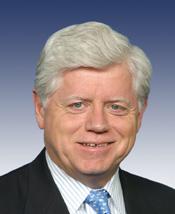
Mr. Chairman, I offer an amendment. Mr. Chairman, I yield myself such time as I may consume. Mr. Chairman, first of all, let me start by associating myself with the remarks of the distinguished…
Mr. Chairman, I offer an amendment.
Mr. Chairman, I yield myself such time as I may consume.
Mr. Chairman, first of all, let me start by associating myself with the remarks of the distinguished Democrat from Tennessee and the accolades that have been given to the gentleman from New York (Chairman Boehlert), the gentleman from Michigan (Mr. Ehlers), and the gentleman from Illinois (Mr. Manzullo) who was on the floor earlier, for the hard work and effort that they have put forward.
My amendment cuts right to the chase of a deep and abiding concern that I and a number of small manufacturers in the State of Connecticut and, I dare say, across this Nation have. We all know the statistics: 3 million Americans employed in manufacturing have lost their jobs, 110,000 in this year alone; 57,000 jobs have been lost in the State of Connecticut since 2001.
The genesis of this amendment came at a Chamber of Commerce meeting when small businessmen got up and spoke out with great alarm, wondering out loud how is it that we can have a Department of Agriculture and not a department of manufacturing that focuses on these issues. Where is the ombudsman and voice for us at the national level? They prevailed upon me to introduce this legislation. I am proud to say it is endorsed by the National Council for the Advancement of Manufacturing and the IAM, to name a few. But the focus here is to make sure that we have an individual within a department that is doing its job.
Now, the President has appointed a so-called ``manufacturing czar,'' but he has no budget and he has no resources. This amendment is straightforward and pragmatic. It redirects and reorients the already existing resources that we have in order to create a position whose sole focus becomes manufacturing and who becomes the ombudsman for the small manufacturer who is crying out as they continue to see their jobs outsourced overseas, as they see very little voice that they have in terms of the larger scale dealing with the WTO and a number of the trade agreements that come forward.
Mr. Chairman, I reserve the balance of my time.
Mr. Chairman, I appreciate the chairman not opposing me, and I appreciate and I understand his unwillingness to debate what Mr. Frink has been able to accomplish in his position to date.
The hard truth is that we have not been able to accomplish much, and the reason is, I think as everyone knows, it has become intuitively obvious to the National Coalition for the Advancement of Manufacturing, that he is located within the bowels of an administration and given no budget and no resources to carry out a goal that all of us agree needs to be accomplished.
So that is why we take and reorient existing resources to accomplish that goal; so there is no new bureaucracy that is created, it is just reoriented and refocused in a manner that will provide a voice, with resources and a budget, to speak out on behalf of manufacturers. This bill is not of my creation. It
comes out of the mouths of those people who are directly impacted: the small manufacturers all across the State of Connecticut and this great Nation of ours.
Mr. Chairman, I yield 1 minute to the distinguished gentlewoman from Connecticut (Ms. DeLauro) who understands these issues and understands what is happening in our State of Connecticut with regard to manufacturing.
Mr. Chairman, I yield the balance of my time to the gentleman from Tennessee (Mr. Gordon) whose sentiments that he expressed earlier today are mine, as well, with respect to this bill. I have the greatest admiration for my colleagues on the other side, but I have to go home and face constituents who wonder aloud why they do not have a voice, an ombudsman, and why moving at a snail's pace in this direction cannot wait.

Mr. Speaker, I also rise to oppose this rule because it does not allow this Congress to consider the amendments offered by the gentleman from California (Mr. Honda) to authorize or reauthorize the…
Mr. Speaker, I also rise to oppose this rule because it does not allow this Congress to consider the amendments offered by the gentleman from California (Mr. Honda) to authorize or reauthorize the advanced technology program.
Mr. Speaker, in the almost 3 years that I have served in the House of Representatives, I am not sure that I have heard any words spoken on this floor with which I have disagreed more strongly than with the statement of the gentleman from Georgia (Mr. Gingrey) just a few minutes ago that we were doing enough already to address the problem of manufacturing job loss. I think his exact words were it is simply not true that we are not doing enough, that Congress and the President are not doing enough to address manufacturing job loss.
If the gentleman from Georgia (Mr. Gingrey) thinks this, if any Member of Congress thinks that, I invite them to come and visit my district. I want to introduce them to some of the people who have lost their jobs. My State has lost almost 200,000 manufacturing jobs in the last 4 years. They are in industries that have been the backbone of my State's economy: tobacco, textiles, furniture. And those were jobs that people depended upon to build their lives around, to support themselves and to support their families, and they are gone.
It is not that they have laid off a shift until the economy turns around. The plants are closed. The equipment is sold. The jobs are gone forever.
What to do about that was part of the debate about CAFTA, about any kind of trade agreement that we have. And I voted against CAFTA, but I also agree that that is not the entire answer because it cannot possibly be our Nation's economic future to build our economy around low-skilled jobs and labor-intensive industries.
We have got to be the most innovative economy in the world. When I meet with the workers who have lost their jobs, they do not say, What are you going to do to make the plant reopen? They do ask, Where are the new jobs going to come from and what is Congress doing about it?
I certainly do not tell them what the gentleman from Georgia said. I do not
say we are already doing everything that can be done. I say we are doing not nearly enough, but I am working hard to do more.
We have got to be the most innovative economy in the world. We have got to be where every new research, where all the new research happens first, and where we turn that research into a commercial application to create jobs.
Mr. Speaker, the advanced technology program, ATP, works with industry in this very, very competitive world market, to work with industry to create new technologies, to get them up, to get them running, to get patents, to do a proof of concept. It is about the only source of patient capital for many high-tech small companies in areas like nanotechnology where we really need to be at the forefront.
Most of the debate about jobs, Mr. Speaker, is what are we going to do about jobs between now and the next election. The ATP should be a debate about what are we going to do about jobs for the next generation.
Mr. Speaker, I oppose this rule without the Honda amendment.
Show 11 more

Madam Chairman, I rise today to strongly support swift passage of this legislation. I thank Representative Ehlers and Chairman Boehlert for their work on this important measure. I would like to…
Madam Chairman, I rise today to strongly support swift passage of this legislation. I thank Representative Ehlers and Chairman Boehlert for their work on this important measure. I would like to highlight the success of The Delaware Manufacturing Extension Partnership, DEMEP, in its contributions to manufacturing across the First State.
The Federal funding Delaware MEP receives through the national MEP program has helped them to develop the resources necessary to contribute to the success of Delaware's small and medium-sized manufacturers in improving their global competitiveness. By identifying, transferring, and implementing appropriate best practices, Delaware MEP has helped manufacturers to substantially improve their quality, productivity, and profitability.
The manufacturing sector in Delaware is dealing with the same burdens that are affecting all U.S. manufacturers--rising costs of labor, health care, energy, and regulatory compliance. The Delaware MEP exists to strengthen local manufacturers by assisting them in dealing with these important issues. Of the 60 MEP centers in the U.S. and Puerto Rico, the Delaware MEP ranks No. 1 in impact to Client's bottom line dollars generated per Federal dollar invested, meaning $65.08 for every $1 invested in 2004; and they rank No. 2 in customer satisfaction. Additionally, the Delaware MEP helped retain or create 1,020 jobs in Delaware in 2003.
The Delaware MEP offers Delaware manufacturers a variety of public seminars and workshops, as well as confidential management assistance to help companies improve their competitiveness. Programs include: the Lean Enterprises program to support growth by enhancing work processes; the Quality Management program that ensures consistent product quality and minimizes waste; and the Driving Revenue Growth program to increase sales using marketing strategies. Programs such as these have helped Delaware companies record significant improvements in productivity and profitability while decreasing waste.
In its 11th year of service, Delaware MEP has successfully strengthened competitiveness, improved productivity, and increased profits for Delaware manufacturers by guiding them in the implementation of best practices.
The Delaware MEP will continue to work with its many local, regional, and national partners--including the United States Department of Commerce, National Institute of Standards and Technology, NIST, the Delaware Office of Economic Development, DEDO, Delaware Technical and Community College, and the Delaware State and local Chambers of Commerce--to bring innovative programs to Delaware manufacturers to serve their competitive needs and to help them compete and prosper.
Madam Chairman, these programs will continue to support manufacturing in Delaware and in the United States, contributing greatly to job creation and a stronger economy. I urge my colleagues to support this legislation.
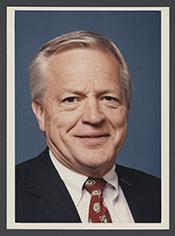
Madam Chairman, I rise in strong support of H.R. 250, the Manufacturing Technology Competitiveness Act of 2005. First allow me to congratulate my colleague from Michigan for his hard work in bringing…
Madam Chairman, I rise in strong support of H.R. 250, the Manufacturing Technology Competitiveness Act of 2005. First allow me to congratulate my colleague from Michigan for his hard work in bringing this bill to the floor of the House today. He has been an important champion for manufacturing and this bill is a great example.
American businesses and workers are the most productive in the world. However, because of massive global competition and increasing non- direct costs, our manufacturers are under severe pressure. In many cases these businesses are being forced to deliver their products at constant or even lower prices in order to get their products sold.
At the same time, the costs of inputs they cannot directly control like health care, litigation, raw materials, energy, and many others are increasing. These trends are squeezing the industry incredibly hard.
Manufacturers throughout the country are reacting to this environment by taking the steps they can to become even more efficient and competitive. And they're continually making progress.
While American manufacturers are taking the steps they need to take, it's important for the government to look at appropriate ways we can help. Technology is an area where the federal government has an enormous impact. This bill includes some important steps forward in enhancing American manufacturing technology.
H.R. 250 provides grants, encourages scholarship and strengthens the Manufacturing Extension Partnership. MEP is an important Federal program that has had a documented positive impact on our manufacturing sector, and which is particularly vital to our small and medium-sized manufacturers.
As many Members of Congress know, MEP is a Federal-State-private network of over 60 centers with 400 locations in all 50 States. These not-for-profit centers work with small and medium-sized manufacturers to help them adopt and use the latest and most efficient technologies, processes, and business practices.
The results of MEP speak for themselves. In fiscal year 2003 alone, MEP served more than 18,000 manufacturers nationwide. Those manufacturers reported an additional $2.6 billion in sales, $686 million more in cost savings, $912 million of additional investment in plant modernization, and more than 50,000 more jobs just as a result of their projects with MEP Centers that year. Additionally, an estimate of the federal return on our investment in MEP Centers is $4 in Federal tax revenue for every $1 invested in the program.
Madam Chairman, for all these reasons, it is important for Congress to pass this bill. I urge my colleagues to join me in supporting American manufacturing by supporting this bill.
Mr. Speaker, I rise today in strong support of the rule to bring up H.R. 250, the Manufacturing Technology Competitiveness Act. I believe this rule is fair and balanced. The main goal of H.R. 250 is…
Mr. Speaker, I rise today in strong support of the rule to bring up H.R. 250, the Manufacturing Technology Competitiveness Act.
I believe this rule is fair and balanced. The main goal of H.R. 250 is to authorize manufacturing programs at the National Institute of Standards and Technology that help small- and medium-sized manufacturers innovate so that they can remain competitive in the global marketplace. One of these programs is a highly successful manufacturing extension partnership program, better known as the MEP program. This program has roughly 60 centers and 350 satellite offices throughout the country. These centers provide small manufacturers with tools and assistance on how to increase productivity and efficiency. They do many things. For example, they might help to redesign a factory floor or help to train workers on how to use the latest technology or equipment.
This legislation also creates a collaborative grant pilot program to support research partnerships between academia, industry, nonprofits, and other entities to develop innovative technologies and solutions to scientific problems in manufacturing.
To truly help the manufacturers, we must have a bill that can be passed into law. Therefore, I want to keep this legislation focused on these specific programs that have strong bipartisan support. However, others have wanted to add extraneous provisions that, while well intentioned, take away from the focus of the bill. This is why I oppose some of the amendments made in order, because I believe they will detract from the bill.
This rule largely helps ensure the debate will remain on the manufacturing programs at NIST. I think that is fair and is in the best interest of our manufacturing community.
I urge my colleagues to support this fair and balanced rule.
Mr. Speaker, will the gentleman yield?
Mr. Speaker, the gentleman from Tennessee raises a valid question.
I understand the gentleman's concern about the actions of the Committee on Rules; I have served in the minority at the State and Federal level myself. But I also want to tell the gentleman that members in the majority upon occasion are also disappointed by the decisions of the Committee on Rules. I recently jested, during the famous annual ice cream socials that committee has, that my ice cream was the first thing I had received from the Committee on Rules. But I must add that they have been very kind to me.
In response to the gentleman's question, the ATP program is, by and large, a good program. But it needs improvement. And I am willing to put in the time and energy to try to improve that program and to have it be accepted by all.
Mr. Speaker, I am disappointed that despite the fact that the Manufacturing Technology Competitiveness Act of 2005 represents an important piece of legislation for this Congress as it did previously…
Mr. Speaker, I am disappointed that despite the fact that the Manufacturing Technology Competitiveness Act of 2005 represents an important piece of legislation for this Congress as it did previously in the Science Committee and it is because of that I hoped this body would have taken into account all points of view. Unfortunately, four key Democratic amendments were rejected by the Rules Committee.
Mr. Honda's amendment would have authorized $140 million for the vitally important Advanced Technology Program for Fiscal Year 2006. Mr. Stupak's amendment would have also authorized $20 million for the Advanced Technology Program to hold a competition and issue awards for research to improve energy efficient and reduce domestic dependence on gasoline and heating oil. Clearly, this kind of amendment is desperately needed at a time when people can barely afford to heat their homes and still have money left over to buy food. Mr. Costello's amendment would have required the Department of Commerce to release all staff reports done by Technology Administration staff relating to the off-shoring of American jobs, an issue that has never been fully addressed. Finally, Mr. Carnahan's amendment would have struck the current language creating an Advisory Committee and established a Presidential Council on Manufacturing. It would have directed the Council to issue reports on selected topic areas and within 18 months issue a National Manufacturing Strategy. Clearly, these four amendments would have provided a more comprehensive approach to solving our manufacturing crisis.
In essence H.R. 250 is simply an authorization bill for all of the programs at the National Institute of Standards and Technology, NIST, except for the NIST's Advanced Technology Program, ATP. H.R. 250 does authorize full funding for the Manufacturing Extension Partnership, MEP, which is also a NIST program. With the exception of ATP funding, H.R. 250 is an acceptable NIST authorization bill. However, it purports to be a manufacturing competitiveness and innovation bill--in these goals it falls far short.
Clearly, some of the provisions of this bill are positive in their intent, but they can be expanded without interfering with the core of the legislation. My Democratic colleagues have offered a number of good Amendments which should have been allowed through the Rules Committee in order to take in all points of view. Together this body could have truly enhanced the Manufacturing Technology Competitiveness Act of 2005.

Madam Chairman, I rise today to speak in support of H.R. 250, the Manufacturing Technology Competitiveness Act. Promotion of manufacturing technologies has traditionally been a key to wealth creation…
Madam Chairman, I rise today to speak in support of H.R. 250, the Manufacturing Technology Competitiveness Act. Promotion of manufacturing technologies has traditionally been a key to wealth creation in this country. Manufacturing a better product, from automobiles to chemicals to computers to airplanes, has provided the means for this country to become the wealthiest in the history of the world.
As we enter the 21st century, our challenge to remain competitive becomes even more difficult. H.R. 250 provides many tools that will help us meet this challenge. For one thing, it reauthorizes funding for MEP. This is a highly successful program which has just been discussed. It brings together businesses and consultants and provides technical expertise for manufacturing and marketing in those particular businesses. In doing this, it helps small manufacturers improve performance, productivity and helps them remain competitive.
In my congressional district, the MEP has provided assistance to the Manufacturers Resource Center located at Lehigh University, which is a State-funded program. I should also mention we have the highly successful and critically acclaimed Ben Franklin Technology Development Authority, which I served on for many years, along with the NRC board at the State level.
I can tell Members firsthand that those programs have provided tremendous support to people in my community. I can give Members specific examples that are not far from home. I can take Members to Apollo Metals in the city of Bethlehem. There are about 125 people at Apollo Metals. They have become more productive as a result of the assistance they have received through this Manufacturers Resource Center.
In fact, I will just read a testimonial. ``We will be implementing the changes recommended by the Manufacturers Resource Center and looking forward to our improved ability to add to our already excellent customer service by shortening lead times, improving the customers' ability to get information in a timely fashion, and in maintaining our cost competitiveness.'' And that is from their president.
I can also point to Solartech, another company in my district. Those solar panels we see on the road that tell us to slow down, tell us what the traffic conditions are, a small company of about 100 people in my district exports, again assisted by these particular operations.
I urge adoption of this bill.

Madam Chairman, I thank the chairman for his kind words and for recognizing me on this bill and for his continued support of manufacturing technology and advancements for our manufacturers so they…
Madam Chairman, I thank the chairman for his kind words and for recognizing me on this bill and for his continued support of manufacturing technology and advancements for our manufacturers so they can compete effectively.
I also am pleased that the ranking member and the subcommittee chairman also support this moving forward because H.R. 250 supports a number of important initiatives that will help American manufacturers be more competitive in the world economy. We live in a real world, a world economy.
One of the provisions in this bill that is most important to that competition is the reauthorization of the MEP, Manufacturing Extension Partnership.
MEP makes it possible for even the smallest firms to tap into expertise and knowledge that they could not afford on their own. Each center, such as Catalyst Connection in Pittsburgh, works directly with area manufacturers to provide expertise as well as services tailored to the most critical needs of these manufacturers. The organization provides a wide variety of assistance. Some examples are process improvements, worker training, business practices, and applications of information technology.
Many of these items are required for firms to be competitive in today's market. Small manufacturers are the driving force behind our U.S. economy, and increasing productivity and job creation in this sector is critical.
In fact, the National Institute of Standards and Technology, which manages this program, recently showed positive results nationwide. In a single year, MEP clients reported a $2.8 billion increase in sales. They have hired new workers and retained 35,000 workers; experienced $681 million in cost savings; and $941 million in plant and equipment investments have been made.
Last month I visited Sharon Custom Metal Forming in Farrell, Pennsylvania, and met with management and employees of this country. One of the issues they highlighted was how their utilization of MEP has improved their business and made them more competitive. They are not alone. That happens all over my district, and continuing to fund this program means we will continue to give our entrepreneurs and small business people a competitive edge that will help them to continue to succeed in today's global market.

Madam Chairman, I rise today in strong support of H.R. 250. I want to thank the gentleman from New York (Chairman Boehlert) for his leadership on the bill and commend the gentleman from Michigan…
Madam Chairman, I rise today in strong support of H.R. 250. I want to thank the gentleman from New York (Chairman Boehlert) for his leadership on the bill and commend the gentleman from Michigan (Chairman Ehlers) for introducing legislation that is so vital to the future of manufacturing in our country.
Recently, I met with a representative of Honeywell Federal Manufacturing & Technologies out of Kansas City. He discussed his research and development activities on micromechanical parts, such as gears and other smaller devices. This work is very similar to that performed at the EIGERlab which is also a Federal micro-manufacturing research and development facility that I recently helped establish in the district I represent.
EIGERlab has attracted a collection of scientists and researchers and has already proven to be a valuable center for advanced manufacturing R&D. H.R. 250 would help decentralize and streamline this type of manufacturing research so that efforts and duplication would be minimized, helping to ensure that American manufacturers can not only stay competitive, but thrive. The Kansas City facility uses a German process similar to an EDM wire. The EIGERlab uses a milling process, both making gears the size of Lincoln's nose on a Lincoln penny.
H.R. 250 also provides robust authorizations for numerous manufacturing initiatives, including the Manufacturing Extension Partnership, which is quite active in the area that I represent.
Steve Yagle, the president of Reliable Machine Company in Rockford, Illinois said ``the training he received from IMEC has made Reliable more profitable, higher level of quality to our customers, increased our efficiency to be competitive,'' and, ``from this will be job creation, and a plan to handle company development as we grow.''
As we can see, funding programs like MEP are vital to helping our small manufacturers. I spend 75 to 80 percent of my time in Congress working on manufacturing issues, traveling the country and looking at new machines and new manufacturing processes. The American manufacturer needs as much help as he can get. H.R. 250 goes a long way, and I would urge its passage.
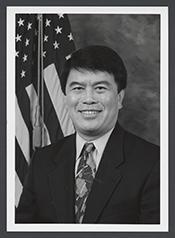
Madam Chairman, I am pleased that Congress is considering the authorization of the National Institute of Standards and Technology. There is no other federal agency that more directly supports…
Madam Chairman, I am pleased that Congress is considering the authorization of the National Institute of Standards and Technology. There is no other federal agency that more directly supports American industrial innovation and competitiveness than NIST.
NIST's standards and metrology activities support the chemical, telecommunications, and energy sectors to name a few.
The Manufacturing Extension Partnership is a successful program under NIST that helps our small manufacturing community remain competitive in the face of increasing global competition. The result: high-wage, high- skill jobs remain in the U.S. rather than moving offshore.
While I believe that H.R. 250, the Manufacturing Technology Competitiveness Act, is a good start, we must do much more to make the bill's contents live up to its title. Our manufacturing base is facing a crisis. Since 2001, we have lost 2.7 million manufacturing jobs.
However, the Advanced Technology Program, which spurs the development of broad-based technologies that can create the industries of tomorrow, is not being included in this bill. This is a terrible mistake. The future of American manufacturing lies in our ability to promote risk taking and to promote the pursuit of new technologies that go well beyond the limits of conventional practices. ATP is a logical tool to use to achieve these goals.
For all the hype given to the Nanotechnology Initiative, few recall that it was an early ATP award that fostered the development of the use of nanoparticles in the cosmetic industry. This is one of the few examples of commercially viable nanotechnology. Yet, this bill ignores the potential that can come out of ATP.
If we wish to truly strengthen the U.S. manufacturing base, we need to bring our full resources to bear on this issue--including ATP and technical education.
Unfortunately, the underlying bill does not do this. I am extremely disappointed that this bill does not include ATP and vocational education. If we are going to grow our economy in the 21st century, we have to be the most innovative country in the world. This bill will not get us there.
Mr. Speaker, I rise today in opposition to the rule for consideration of H.R. 250, the Manufacturing Technology Competitiveness Act. I oppose this rule because it does not make in order a very…
Mr. Speaker, I rise today in opposition to the rule for consideration of H.R. 250, the Manufacturing Technology Competitiveness Act.
I oppose this rule because it does not make in order a very reasonable amendment which would have added a 1-year authorization for the Advanced Technology Program at the National Institute of Standards and Technology.
There is no real logical reason for not allowing me to offer the amendment, and I think the gentleman from Tennessee (Mr. Gordon) has proven that over and over again when we provide opportunities for the other side to respond to the question. I think I have the answer.
In our subcommittee meeting, we had a conversation when we were dealing with ATP, my amendment; and when I asked the question, why has this not been supported, the chairman said a little bit hesitantly, and I think he was a little embarrassed, he said that the President does not want to see this in the bill, and I will be just straightforward; that is what he said.
It seems to me that the President proposes, as the saying goes, and Congress disposes. It is our job to put things into the bill. It is his job to either sign the bill or not sign the bill. If he does not like this, he should veto it; but at least we should have the opportunity to debate this on the floor, because we did not have that opportunity in subcommittee.
It seems to me that if we understand that small business is 70 percent of the economic machine of this country, and if the President himself has said that he adores and he embraces small business in this country, his words seem to ring very hollow if he is not willing to fund ATP.
There are no problems with ATP. It is a program that has been going for years, since the first Bush administration. It has been supported bipartisanly. What is happening is the funding is being cut slowly over and over and over again, so that what we do is end up starving the beast.
Mr. Speaker, I urge that we allow this to be heard. It is an egregious abuse of power.
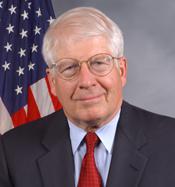
Mr. Chairman, I rise in strong support of this amendment offered by my colleague, the gentleman from Colorado (Mr. Udall). In 1992, I did author the legislation that created the Advanced Technical…
Mr. Chairman, I rise in strong support of this amendment offered by my colleague, the gentleman from Colorado (Mr. Udall).
In 1992, I did author the legislation that created the Advanced Technical Education program. And with the help of Mr. Boehlert and many others, I got it passed on this floor. Today, ATE remains the only NSF program focused primarily on our Nation's community colleges, which educate the vast majority of the three to five technicians that support each engineer, scientist, and medical doctor in this country.
Over the last 3 years, the number of proposals for ATE funding has increased by over 40 percent. Success stories abound. It is obvious the program is working. Yet over these same 3 years, the number of awards has actually gone down, and the success rate for proposals has declined from 32 percent in 2003 to a projected 20 percent in 2005.
This means that nearly 80 percent of the community colleges that develop innovative curricula, teaching methods, and partnerships with local industry are being denied ATE support.
Over the years, I have worked on the Appropriations Committee to maintain adequate funding for the ATE despite the cuts often called for in the President's budget requests. Some years we have done better than others.
But this authorization does matter. If all we are doing is authorizing ATE at about the current funding level, we will continue to deny more and more community colleges a chance to equip American workers with the skills they need to compete in the global economy.
Twenty percent is simply not a high enough approval rate. The Udall amendment would allow ATE to achieve its potential, helping us to get back on track as the global leader in innovation. There is nothing extravagant about this, Mr. Chairman. It is a good program, and it deserves to be adequately funded.
I thank the gentleman from Colorado (Mr. Udall) for sponsoring this important amendment. I urge all colleagues to give it their support.

Mr. Speaker, I thank my friend from Massachusetts for the time. H.R. 250 should have been a good idea. It makes sense to encourage ties between manufacturers and academic institutions; but as the…
Mr. Speaker, I thank my friend from Massachusetts for the time.
H.R. 250 should have been a good idea. It makes sense to encourage ties between manufacturers and academic institutions; but as the gentleman from Tennessee (Mr. Gordon) and the gentleman from California (Mr. Honda) said, the restrictive rule prevented consideration of a number of amendments that would have improved the bill, especially amendments to strengthen the Advanced Technology Program, which is especially important in manufacturing-intensive States like the gentleman from Ohio's (Mr. Gillmor) and mine, which struggles with ever-increasing energy costs.
We also missed an opportunity today to dramatically increase funding for MEP and to target increased Federal assistance to States that have suffered especially high manufacturing job-loss rates.
The story of this bill is a story of missed opportunity. This Congress has no manufacturing policy. We pass trade bill after trade bill. Our trade deficit has gone from $38 billion my first year when I ran for Congress 12 years, 13 years ago, to $617 billion, from $38 billion to $617 billion in a dozen years. Job loss has become more and more prevalent.
Whether it is Tennessee or Michigan or California or Massachusetts or my State of Ohio, we have lost almost a quarter million manufacturing jobs in the last 5 years; and as the gentleman from New York (Mr. Rangel) and the gentleman from Michigan (Mr. Levin) know, we continue passing tax legislation that gives incentives to companies, the large manufacturers that
outsource to India and China, rather than giving incentives to companies that manufacture in this country.
Mr. Speaker, we need a manufacturing policy. What the gentleman from California (Mr. Honda) and the gentleman from Tennessee (Mr. Gordon) have advocated will move us in that direction. We should defeat the rule. We should start again and do it right.
Bill Text
2 versions available
        [Congressional Bills 109th Congress]
[From the U.S. Government Publishing Office]
[H. Res. 451 Engrossed in House (EH)]

H. Res. 451

In the House of Representatives, U.S.,

September 21, 2005.
Resolved, That at any time after the adoption of this resolution the Speaker
may, pursuant to clause 2(b) of rule XVIII, declare the House resolved into the
Committee of the Whole House on the state of the Union for consideration of the
bill (H.R. 250) to establish an interagency committee to coordinate Federal
manufacturing research and development efforts in manufacturing, strengthen
existing programs to assist manufacturing innovation and education, and expand
outreach programs for small and medium-sized manufacturers, and for other
purposes. The first reading of the bill shall be dispensed with. All points of
order against consideration of the bill are waived. General debate shall be
confined to the bill and shall not exceed one hour equally divided and
controlled by the chairman and ranking minority member of the Committee on
Science. After general debate the bill shall be considered for amendment under
the five-minute rule. It shall be in order to consider as an original bill for
the purpose of amendment under the five-minute rule the amendment in the nature
of a substitute recommended by the Committee on Science now printed in the bill.
The committee amendment in the nature of a substitute shall be considered as
read. All points of order against the committee amendment in the nature of a
substitute are waived. Notwithstanding clause 11 of rule XVIII, no amendment to
the committee amendment in the nature of a substitute shall be in order except
those printed in the report of the Committee on Rules accompanying this
resolution. Each such amendment may be offered only in the order printed in the
report, may be offered only by a Member designated in the report, shall be
considered as read, shall be debatable for the time specified in the report
equally divided and controlled by the proponent and an opponent, shall not be
subject to amendment, and shall not be subject to a demand for division of the
question in the House or in the Committee of the Whole. All points of order
against such amendments are waived. At the conclusion of consideration of the
bill for amendment the Committee shall rise and report the bill to the House
with such amendments as may have been adopted. Any Member may demand a separate
vote in the House on any amendment adopted in the Committee of the Whole to the
bill or to the committee amendment in the nature of a substitute. The previous
question shall be considered as ordered on the bill and amendments thereto to
final passage without intervening motion except one motion to recommit with or
without instructions.

Attest:

Clerk.