Waiving points of order against the conference report to accompany the bill (H.R. 3057) making appropriations for foreign operations, export financing, and related programs for the fiscal year ending September 30, 2006, and for other purposes.
Legislative Activity
Stay on top of the latest movement without scrolling through every action
Motion to reconsider laid on the table Agreed to without objection.
November 4, 2005 • 9:57 AM
View full timeline
Introduced in House
November 3, 2005
The House Committee on Rules reported an original measure, H. Rept. 109-270, by Mr. Diaz-Balart, L..
November 3, 2005
The resolution waives all points of order against the conference report to accompany H.R. 3057 and against its consideration. The rule further provides that the conference report be considered as read.
November 3, 2005 • 6:33 PM
Placed on the House Calendar, Calendar No. 111.
November 3, 2005
Considered as privileged matter. (consideration: CR H9644-9650)
November 4, 2005 • 9:09 AM
DEBATE - The House proceeded with one hour of debate on H. Res. 532.
November 4, 2005 • 9:10 AM
The previous question was ordered without objection. (consideration: CR H9650)
November 4, 2005 • 9:57 AM
Passed/agreed to in House: On agreeing to the resolution Agreed to by voice vote.(text: CR H9644)
November 4, 2005 • 9:57 AM
On agreeing to the resolution Agreed to by voice vote. (text: CR H9644)
November 4, 2005 • 9:57 AM
Motion to reconsider laid on the table Agreed to without objection.
November 4, 2005 • 9:57 AM
Floor Debate
21 membersWhat members said about H.Res. 532 on the floor
LD JPM
JPM LMS
LMS NML
NML DRO+16
Floor Debate
21 membersWhat members said about H.Res. 532 on the floor
Mr. Speaker, by direction of the Committee on Rules, I call up House Resolution 532 and ask for its immediate consideration. Mr. Speaker, for the purpose of debate only, I yield the customary 30…
Mr. Speaker, by direction of the Committee on Rules, I call up House Resolution 532 and ask for its immediate consideration.
Mr. Speaker, for the purpose of debate only, I yield the customary 30 minutes to the gentlewoman from New York (Ms. Slaughter), pending which I yield myself such time as I may consume. During consideration of this resolution, all time yielded is for the purpose of debate only.
(Mr. LINCOLN DIAZ-BALART of Florida asked and was given permission to revise and extend his remarks.)
Mr. Speaker, House Resolution
532 is a traditional standard rule for consideration of the conference report for the fiscal year 2006 Foreign Operations, Export Financing and Related Programs Appropriations Act. The rule waives all points of order against the conference report and against its consideration.
Mr. Speaker, the legislation before us today appropriates almost $21 billion. It is an increase of about actually over $1 billion for operations across the globe. The bill is fiscally sound. It has grown at a small, very small rate, while at the same time I think it is responsive to the needs, not only the national security interests or the foreign policy interests of the United States, but also it is responsive to the needs of millions plagued by disease and famine and disaster throughout the world.
H.R. 3057, for example, Mr. Speaker, bolsters the President's Millennium Challenge Corporation to nearly $1.8 billion. It is about a quarter of a billion more than last year. This is an expansion of assistance meant to help bring really economic security and the rule of law to some of the world's poorest countries by insisting on American aid going to countries where there is transparency for the aid that we send, not corruption.
It is an important initiative.
The Millennium Challenge provides assistance through a competitive selection process to developing nations that are genuinely in the path of political and economic reforms in three areas: ruling justly, in other words, treating their people decently; investing in people; and fostering economic freedom. Economic development genuinely succeeds when it is linked to free market economic and democratic principles and policies and where governments are committed to implementing reform measures when they are needed to achieve such goals.
Two years ago in the State of the Union address, President Bush announced the President's emergency plan for AIDS relief. It is the largest international health initiative in history initiated by a single government to address one disease. This legislation shows Congress's continued support to the fight against HIV/AIDS. It includes $2.8 billion, an increase of over $600 million over last year to continue the fight against HIV/AIDS, as well as tuberculosis and malaria.
The resolve of this Congress to help all those across the globe to fight this disease is strong and serious, as is the commitment of the President of the United States. In addition to funding, the Federal Government enlists the expertise of agencies, including the Food and Drug Administration, which assures that the medicines we send to the areas most affected by this horrible pandemic are safe and effective to help those with HIV/AIDS.
In other foreign assistance, H.R. 3057 funds the Andean Counterdrug Initiative at the President's request, $735 million, $9 million more than in 2005. Economic growth in the area since the start of Plan Colombia, for example, is proof that the assistance that we have provided Colombia has made a difference in that country.
I visited Colombia in April of last year. It was a great honor for me to do so. I have tens of thousands of distinguished constituents, very hard-working, honorable people from Colombia.
It was a pleasure to visit that country and to witness, Mr. Speaker, the extraordinary progress that the Colombian Government and the Colombian people have made against the narcoterrorists. They constantly reiterate, they did so during my visit and they have done so since and I know they have done so to countless colleagues in this House, they reiterate their gratitude to this Congress for the important assistance that the American people, the taxpayers of this country, through their Congress have provided them and continue to do so in their fight against narcoterrorism.
Now, we must not take progress in the Andean region for granted. If the United States turns its back on the region, a scenario may very well ensue that would require greater U.S. investment at a time when we have significant responsibilities worldwide.
The underlying legislation provides also $2.5 billion for military and economic assistance to Israel. We have to continue to ensure that our friends and allies remain secure; and, of course, we have no better friend, no better ally than Israel. We are committed to doing everything we can to see that Israel is safe and secure within its borders as it continues to move in this very difficult era toward the achievement of a lasting peace with all of its neighbors.
The conference report funds the President's request to fund the foreign military financing for Egypt at $1.3 billion. It provides almost half a billion dollars for economic assistance to Egypt, including assistance set to help with political reform programs and education assistance. Of course, that is a very, very important initiative that this country has been involved in for decades now.
I would like to thank Chairman Lewis, who has worked very hard again, and Chairman Kolbe for their extraordinary leadership in moving this bill forward for our consideration today. I obviously support the conference report. I urge my colleagues to support both the rule and the underlying legislation, the conference report.
Mr. Speaker, I reserve the balance of my time.
Mr. Speaker, we are also concerned about Colombia, and we are concerned about increased assistance from the terrorist network throughout the world, the Iranians, Chavez in Venezuela, Castro's Cuba. We are concerned about their support for the narcoterrorists in Colombia, and that is why it is so important to provide assistance to the democratically elected government of Colombia.
I yield to the gentleman from Massachusetts.
Mr. Speaker, I am saying that it is a dictatorship. It is a dictatorship, a dictatorship that supports the regime in Iran publicly; a dictatorship, the regime in Caracas. The first foreign head of State to visit Saddam Hussein while Saddam Hussein was in power after the Gulf War of the 1990s was the President of Venezuela. So, yes, I am concerned about the President of Venezuela's links to terrorism and his assistance to the FARC guerillas in Colombia.
One of the reasons why we continue to help and assist the democratically elected government of Colombia, elected by an overwhelming majority of the Colombian people, is because they face multiple challenges. That is one of the reasons why, in a bipartisan fashion, this Congress continues to help the democratically elected government.
Reclaiming my time, Mr. Speaker, we have certification language. We do not condone in any way terrorism from any source in Colombia. We have consistently had safeguards in our legislation to make sure that our assistance is not used by terrorists of any sort in Colombia, but I think that we have to keep our eye on the ball here, and that is that there is a democratically elected government challenged by narcoterrorists, heavily funded because of their trade in narcotics, their narcotrafficking, and that that government, that democratically elected government, is a friend of this country and merits our continued support.
So I am honestly very pleased that, in a bipartisan fashion, this Congress continues to support the democratically elected government of Colombia; and that is one of the great foreign policy initiatives, bipartisan foreign policy initiatives, by the way, that this country is engaged in, which is very connected to the security of this country in addition to the foreign policy objectives of this country.
Mr. Speaker, I reserve the balance of my time.
Mr. Speaker, it is my privilege to yield such time as he may consume to the chairman of the Rules Committee.
(Mr. DREIER asked and was given permission to revise and extend his remarks.)
Mr. Speaker, it is my privilege to yield 3 minutes to a great leader in this House, the distinguished gentleman from Indiana (Mr. Pence).
(Mr. PENCE asked and was given permission to revise and extend his remarks.)
Mr. Speaker, I yield 2 minutes to the gentleman from Arizona (Mr. Kolbe).
Mr. Speaker, I want to thank each and every distinguished Member of the House who has spoken this morning on this legislation. Obviously, this is, appropriately so, a tremendous amount, really a consensus, which is pleasing to see support for what we are doing as a Congress and as a government, as a Nation in this legislation.
I want to take one final moment, if I may, to explain a point that I made in response to a question to the gentleman from Massachusetts (Mr. McGovern) when I said that it is my belief that the Government of Venezuela is a dictatorship.
Mr. Speaker, I would like to speak a second or a minute to explain why. Democracy, in order for it to exist, requires two fundamental pillars or legitimacies; the legitimacy of origin, which is obtained through free and fair elections, and the Government of Venezuela was elected. So it obviously had the legitimacy of origin.
But then I believe that for a government to be democratic, it has to have another form of legitimacy, which is legitimacy in its conduct in the process of governing. And if a government, even if democratically elected, represses the opposition, persecutes the opposition, represses the press, for example the free press, in my view, it loses that other legitimacy which is required, the legitimacy of conduct for a democracy to be a democracy.
Mr. Speaker, so I am convinced that the Government of Venezuela has lost its democratic legitimacy, and it is not a democracy. So I appreciate the opportunity to explain why I believe, as I stated before, that it is at this moment a dictatorship.
I thank the gentleman from Arizona (Mr. Kolbe) for his extraordinary work once again in bringing forward this legislation. He is one of the people that I greatly admire in this House.
I urge all of our colleagues to support what we are doing, the very important step we are taking for our foreign policy interests and great humanitarian causes today in this legislation.
Mr. Speaker, I yield back the balance of my time, and I move the previous question on the resolution.
The previous question was ordered.
Mr. Speaker, I want to commend Chairman Kolbe, Ranking Member Lowey, and their respective staffs for consistently working in a bipartisan fashion and trying year after year to bring before the House…
Mr. Speaker, I want to commend Chairman Kolbe, Ranking Member Lowey, and their respective staffs for consistently working in a bipartisan fashion and trying year after year to bring before the House a bill that all Members can support.
For those of us who care in particular about the contributions made by the United States in reducing global poverty and hunger, increasing educational opportunities, access to health care and food security in some of the poorest places on this Earth, we very much appreciate the time and the effort that they invest in making sure that this bill responds to these needs and priorities.
I must express, however, Mr. Speaker, my regret that the final conference report did not include the Leahy-McConnell language dealing with the paramilitary demobilization taking place in Colombia. I recognize the language in the conference report is the result of some compromise, but it appears to me that the majority of compromising had to be done on the Senate side.
Mr. Speaker, I am very concerned about news reports that demobilized paramilitary groups are regrouping into Mafia-like criminal organizations. New paramilitary groups seem to be springing up like daisies and their ranks are often made up of newly demobilized paramilitary troops.
Like all Members of Congress who follow Colombia, I want the demobilization process to work. I want it to succeed. But the process is not helped when the Congress or the administration turns a blind eye to serious failings in its implementation, as has been done over and over and over again.
For these reasons, I believe that the certification provision on Colombia's demobilization process in this bill, even though it is watered down, I think is important and needs to be faithfully implemented.
Last night during the Rules Committee hearing, I was very reassured when Chairman Kolbe told me that his committee would be vigilant in monitoring the demobilization of Colombia's paramilitary organizations and in overseeing the implementation of the certification conditions contained in the bill.
But, Mr. Speaker, I have often raised on the floor of this House my concerns about the long-standing ties between Colombia's armed forces and paramilitary forces and drug traffickers. I have constantly been told by the administration, by the Colombian Government, and even by some Members of this House, that these allegations also simply are not true.
Well, last week, on October 28, the New York Times reported how the top two directors of Colombia's intelligence agency, commonly called their secret police, have been forced to resign because the attorney general's office has finally begun an investigation into how the 7,100- member agency has been engaged in a money-making operation to sell intelligence and surveillance equipment to right-wing paramilitary groups.
Mr. Speaker, I will include the New York Times article in the Record at the conclusion of my remarks.
Mr. Speaker, I am very concerned by a new wave of threats, disappearances and murders of Colombian trade unionists, human rights defenders, legal advocates and community leaders which appears to be under way.
The violence in Colombia appears to be sharply escalating once again. I would like to mention in particular the murder of Mr. Orlando Valencia, an Afro-Colombian community leader who was forcibly captured off the street by paramilitary forces shortly after he was first briefly detained and then released by the Colombian police on October 15, which shows you the collaboration between the security forces and paramilitaries. His tortured and mutilated body was found a few days later along the side of a local road.
At the time of his disappearance, I wrote to our embassy in Bogota, asking them to do all they could to find Mr. Valencia before he was killed; and I am still waiting for a response from our embassy to that letter.
So let me say to those who continue to champion billions of dollars in additional aid to the Colombian military and security forces, please pay attention not only to the spokespeople of the Colombian government but to the realities in that country. We should be more concerned. For all that we have invested in that country, we should expect better.
I want to thank the gentlewoman from New York for allowing me the time to express these concerns. I support the rule, and I will support the bill.
[From the New York Times, Oct. 28, 2005]
Two Top Directors Leave Colombia's Secret Police as Scandal Mounts
(By Juan Forero)
Bogota, Colombia, Oct. 27.--The top two directors of
Colombia's secret police were forced out this week as the
government investigated allegations that the agency was
mounting a money-making operation to sell intelligence and
surveillance equipment to right-wing death squads.
The scandal at the agency, the Administrative Department of
Security, comes as human rights groups and some legislators
have exposed heightened paramilitary activity, including
infiltrations of Congress and the attorney general's office.
The paramilitaries also continue trafficking in cocaine,
despite disarmament talks that underpin President Alvaro
Uribe's effort to pacify Colombia with billions in American
aid.
The 7,100-member intelligence agency has long been dogged
by allegations that its
agents have worked with paramilitaries of the United Self-
Defense Forces of Colombia, an illegal antiguerrilla
organization that the State Department has branded a
terrorist group. But the latest scandal has been especially
explosive, coming amid international criticism that the
government has been overly generous with paramilitaries who
disarm by treating them leniently in prosecutions.
On Tuesday, after consultations with Mr. Uribe, Jorge
Noguera, the director of the agency, resigned and its sub-
director, Jose Miguel Narvaez, was dismissed.
The agency's internal affairs unit and the attorney
general's office are investigating whether the Special
Intelligence Group, controlled by Enrique Ariza, a close ally
of Mr. Noguera, had been planning to sell phone-tapping
equipment to Javier Montanes, one of several powerful
paramilitary commanders who could then use the system to
monitor police and military activity.
Mr. Noguera denied the accusations, calling them part of a
smear campaign.
Mr. Narvaez said in an interview that he and Mr. Noguera
were not involved in a conspiracy with the militias. But he
said there were agents at the agency ``who veered away from
their mission and may have committed crimes.''
The allegations are particularly grave because they add to
a string of revelations of paramilitary influence in
everything from local governments and the health care system
to provincial lotteries. Indeed, a former official at the
intelligence agency, Rafael Garcia, has been under
investigation for having erased computerized case files
containing information on paramilitaries and drug
traffickers.
``This is more serious because this is not just having
sources on the inside and knowing when they're coming against
you,'' said Sergio Jaramillo, a former Defense Ministry
official, referring to infiltration of the intelligence
agency. ``It is something closer, having active help.''
A political scientist who closely studies the
paramilitaries, Mauricio Romero, said the disclosures also
showed that the paramilitaries were ``not playing clean'' in
peace talks.
``It would be understandable if they were at war with the
state,'' said Mr. Romero, a professor at Rosario University
in Bogota. ``The fact that there is infiltration and that
they are mounting a parallel intelligence system is a
security problem not just for the state, but for society.''
Though the paramilitaries have demobilized thousands of
fighters, they continue to wreak havoc.
On Saturday, Hernando Cadavid, who owned a flower farm next
to Mr. Uribe's ranch in northern Colombia, was dragged from
his farm and hacked to death with machetes by former
paramilitaries. Investigators are trying to determine if the
order came from Diego Fernando Murillo, a paramilitary boss
recently jailed on Mr. Uribe's orders.
Mr. Speaker, will the gentleman yield?
Two things. Is the gentleman saying that the President of Venezuela is a terrorist?
Mr. Speaker, if the gentleman will further yield, I appreciate his concerns about the violence by the FARC. I would also just appreciate it if he would also be concerned about the fact that we are supporting the Colombian military and security forces and they continue to be linked to right-wing paramilitary forces which commit crimes.
All I am simply saying is that we have certification language, we should enforce it and not continuously waive it because we want to continue to let the money flow. If we stand for human rights, then we need to put our actions where our rhetoric is, and we have not been doing that in Colombia.
Mr. Speaker, I yield myself such time as I may consume. (Ms. SLAUGHTER asked and was given permission to revise and extend her remarks.) Mr. Speaker, lately when Americans turn on the news at night,…
Mr. Speaker, I yield myself such time as I may consume.
(Ms. SLAUGHTER asked and was given permission to revise and extend her remarks.)
Mr. Speaker, lately when Americans turn on the news at night, they do not see the government that they recognize. They hear about a war in the Middle East gone wrong, and they see suffering people left to fend for themselves in times of crisis. They learn more and more about a White House under siege, and they are forced to recognize the ugly truth that many of their congressional leaders are entangled in a web of corruption.
While the criticism is justified and the concerns are real, the failures do not define America. It is important to remember that in difficult times, especially in difficult times, we must always keep close, in spite of the challenges at home and abroad, and that no other nation has shined the light of freedom and liberty as brightly as we have here in our country. No nation in history has given so much and asked for so little in return.
That romantic and powerful notion of America as a force for good in a troubled world strikes at the very heart of what it means to be an American. It is that spirit which drives us as a Nation to create a government as good as its people, and today we take one step in helping to restore that feeling in America to embody the ideal of what we hold dear. It is a bill that will help Americans recognize their government once again.
The foreign operations bill funds a number of different foreign assistance agencies and international organizations and, as such, has become both a critical and effective tool for this democracy to spread democratic values and concern for human rights around the world. This is legislation that the American people can take great pride in.
After all, today you will generously give $2.82 billion to some of our noblest callings, such as easing the suffering of those around the world stricken by HIV/AIDS, tuberculosis, malaria, and particularly in Africa. $14 billion that Americans earned this year will be used to give foreign assistance.
These moneys will also help economic development in countries like Israel, Egypt, Afghanistan, Indonesia, Tibet, Colombia, and a number of other Eastern Bloc countries now struggling to become functioning democracies.
It further spends $1.6 billion to help fund many of the well- intentioned international financial institutions which the United States participates in, such as the World Bank, the African Development Fund, and the voluntary U.N. programs such as UNICEF and the U.N. Development Program. These American dollars will assist those struggling societies to build a better life for themselves and their families.
What we often fail to recognize is that foreign operations also help us here at home. The spending in the bill directly benefits our domestic economy. Through our many foreign assistance programs, we export American goods, American services and agricultural products all over the world. That means jobs for American families and a
brighter future for families across the world.
Of course, as with many complex pieces of legislation, I have some concerns with the conference report. Key among them is the Bush administration's insistence on maintaining a global gag rule which prevents critical family planning and health services aid from reaching the U.S. health clinics in underdeveloped and overpopulated countries where abortion counseling services are provided.
Clinics in overpopulated regions are not even allowed to take a public pro-choice position, and the United Nations fund for Population Assistance Program, which provides critical family planning services abroad, has been unfairly targeted by such administration policy.
The UNFPA does not provide abortion services, but the program has been repeatedly denied critical U.S. funding by the Bush administration under the gag rule. As a result, thousands of women in overpopulated developing nations are without the health care and family planning resources each of us takes for granted here in America.
Thankfully, this conference report provides $34 million in funding for this important program. But antichoice House and Senate conferees stripped the language which would protect the funding from the gag rule, and as a result that money will most likely never reach those it was intended to help.
Despite these attempts to politicize the considerable aid this Nation provides abroad, this legislation, on the whole, serves an unqualified good for the people all over the world.
I would submit, though, that through the money we spend here today on foreign ops, we do a better job of spreading universal values of democracy and liberty and freedom than with the hundreds of billions of dollars we have spent on the war in Iraq.
By helping to improve the quality of life for people all over the world, we export the seeds of our American Dream; and by investing in international organizations that open markets, create trade, foster economic development and promote democracy, we create a rising tide that truly lifts all boats.
This is the way America spreads its values most effectively. By serving the world community and investing as both a partner and leader in the global community, we exemplify what it truly means to be American; and as a result, we provide a living example that the America we have long known is still standing tall.
These programs effectively address global challenges at their root source and seek to overcome those challenges the right way, by fostering hope and opportunity, rather than fear and hostility. They are the best ambassadors of the American spirit that we could ever hope to export. After all, what better way is there for us to spread democracy, freedom, and social justice than through the methods that have proven time and time again to actually work.
Therefore, I urge my colleagues to vote for this bill.
Mr. Speaker, I yield 4 minutes to the gentleman from Massachusetts (Mr. McGovern).
Mr. Speaker, I am pleased to yield 2 minutes to the gentleman from Ohio (Mr. Kucinich).
Mr. Speaker, I yield 3 minutes to the gentleman from New Jersey (Mr. Pallone).
Mr. Speaker, I yield 2 minutes to the gentlewoman from New York (Mrs. Lowey).
Mr. Speaker, I yield 3 minutes to the gentleman from Oregon (Mr. Blumenauer).
Mr. Speaker, I yield 3 minutes to the gentleman from California (Mr. Farr).
Mr. Speaker, I yield 1 minute to the gentlewoman from New York (Mrs. Lowey).
Mr. Speaker, I yield back the balance of my time.
Mr. Speaker, I yield myself such time as I may consume. Mr. Speaker, I rise in strong support of this conference report; and I urge my colleagues to support it. I want to thank Chairman Kolbe and our…
Mr. Speaker, I yield myself such time as I may consume.
Mr. Speaker, I rise in strong support of this conference report; and I urge my colleagues to support it. I want to thank Chairman Kolbe and our colleagues in the Senate for working with me to craft what I believe represents a good bipartisan and bicameral compromise.
This bill demonstrates the commitment of Congress to our Nation's foreign assistance programs and puts foreign assistance where it should be, alongside diplomacy and defense as a pillar of U.S. national security strategy.
In light of our conference allocation, which cuts nearly $2 billion from the President's request, we have put together a very good bill.
While I would have liked to see us maintain the Senate's level of funding for HIV/AIDS, TB and malaria, I am pleased that we have been able to increase funding by $125 million above the House level and $268 million above the President's request, including $450 million for the Global Fund.
I am also pleased that the conference agreement provides $440 million for bilateral international family planning programs and $34 million for the UNFPA. I am disappointed, however, that we could not retain commonsense provisions passed by the Senate that would have repealed the global gag rule and modified the Kemp-Kasten restriction. These provisions would have helped our programs be more responsive to the need for family planning assistance around the world.
I appreciate that the conference report includes increases over the request, the House-passed level and the fiscal year 2005 level for Development Assistance, including a $65 million increase in funding for basic education. Since Chairman Kolbe and I began working together, we have quadrupled funding for basic education, and I am delighted that the Senate agreed to include the House-passed level for this valuable priority.
The agreement fully funds our commitments to Israel and other Middle Eastern countries and provides increases for programs designed to mitigate ongoing conflicts. I am pleased that we retained the Obey amendment earmarking assistance for democracy and education programs in Egypt. We must use every tool at our disposal to encourage the government of Egypt to make greater strides in reforming its political process, and I think this bill sends that message.
I am greatly concerned about the impact of the October 6 earthquake on the people of Pakistan, and I think it important that we stand by Pakistan in this time of need. While this bill does not contain new funds for earthquake relief, I appreciate the inclusion of language in the Statement of Managers recognizing the need for additional funds and setting forth the expectation that some of the $600 million provided in this bill may be reprogrammed to meet relief and reconstruction needs.
I do feel that the bill has a few shortcomings. One is the funding for the Global Environmental Facility. Since the GEF recently adopted the management and transparency reforms advocated by the United States, I do feel we should have done our part by fully funding the fiscal year 2006 request. However, I understand that budgetary constraints limited our contribution to $80 million, and I hope that we can strive for full funding in fiscal year 2007.
I also regret that, while we fulfilled the administration's request for Sudan, the bill does not contain funding added by Senator Corzine on the Senate floor for the African Union peacekeeping mission in Darfur. I hope that the administration will seek these funds at the earliest possible moment and any subsequent request for funding or reprogramming in this fiscal year.
Finally, I am pleased that we were able to achieve compromise language placing restrictions on military assistance for Indonesia and paramilitary demobilization assistance for Colombia. While I would have preferred the more robust Senate language on these issues, I believe the compromises we have reached address the concerns of all interested parties.
Finally, I want to thank again Chairman Kolbe for his hard work on this bill, his commitment on this bill. I really deeply appreciate the close working relationship which we have enjoyed throughout the years. It has really been a pleasure for me to work on these very important issues in this bill with him.
I also want to thank the members of my subcommittee for their commitment to the issues that we worked so hard on included in this bill.
I want to thank Chairman Lewis and Ranking Member Obey for their commitment and their cooperation in working on this bill and, of course, the staff.
Chairman Kolbe has an outstanding staff. Betsy Phillips, Alice Hogans, Rodney Bent, Rob Blair, Lori Maes, and Sean Mulvaney have been wonderful partners in this process; and we will miss a few of them who are moving on. Good luck to them.
Of course, our outstanding minority staff, it is always a pleasure for me to work with Nisha Desai and Beth Tritter. I thank them for their hard work as well.
Mr. Speaker, I reserve the balance of my time.
Mr. Speaker, I am pleased to yield 7 minutes to the gentleman from Wisconsin (Mr. Obey), the distinguished ranking member of the full Committee on Appropriations.
Mr. Speaker, I am pleased to yield 2 minutes to the gentleman from Pennsylvania (Mr. Fattah), the newest member of our subcommittee.
Mr. Speaker, I am very pleased to yield 3 minutes to the gentlewoman from California (Ms. Lee).
Mr. Speaker, I am very pleased to yield 2\1/2\ minutes to the gentlewoman from Texas (Ms. Jackson-Lee).
Mr. Speaker, I am pleased to yield 2\1/2\ minutes to the gentlewoman from California (Ms. Watson).
Mr. Speaker, I yield back the balance of my time.
Mr. Speaker, I thank the gentlewoman for the time. Mr. Speaker, I intend to vote for this bill; but I want to make a few observations, some of which I find to be quite ironic in the process. I want…
Mr. Speaker, I thank the gentlewoman for the time.
Mr. Speaker, I intend to vote for this bill; but I want to make a few observations, some of which I find to be quite ironic in the process.
I want to congratulate the chairman of the subcommittee. He has done his usual workman-like job. He is a first-rate public servant, and I appreciate the bipartisan and nonideological tone that he brings to his work. That is fully appropriate to the nature of the bill that he brings to this House.
But I must confess a sense of irony. This Congress has already voted to provide $1.2 trillion in tax cuts for millionaires over the next decade. It has voted to provide more than $250 billion in spending for the war in Iraq; and yet, there are a number of Members of this body who begrudge the fact that in this bill you would find roughly $15 billion to be spent on what I would call the tools of peace and mercy: peace because I think economic assistance to the poverty stricken parts of the world help create conditions that avoid war, and mercy because I think a good portion of this bill could be called the most important pro-life bill that we vote on each year.
Literally in the hour that it took to deal with the rule, you will have had several hundred children in this world die, and that is no accident. A lot of it occurs simply because of the negligence of the developed world, and I would like to think that that would rapidly change; but I do not expect to see it, unfortunately.
The New York Times wrote an editorial this morning suggesting that this bill be vetoed because this bill provides $2 billion or so less than the President supposedly requested to attack poverty problems in the Third World. I agree with the concerns expressed in that New York Times editorial; and I would say, imagine how different the world would be if instead of spending $250 billion on the dumbest war in American history, at least since the War of 1812, imagine how changed the world would be if we led the world and provided just 10 percent that amount each year to see that by the end of the next decade we could deliver clean drinking water to every single human being on this planet.
Imagine how the world's attitude toward the United States would change. I doubt very much that you would see some of the poll responses that we see these days where a majority of people in all too many countries consider America to be a threat, unfortunately, rather than a friend. I think the view of the United States is unjustified; but nonetheless, that is the way a lot of people think around the world, and it is in very large part because we put so much money into an action like Iraq and put so little money into helping people achieve the basic necessities of life.
But I do not think that this bill can be blamed for the fact that we fall
short of the President's budget for economic and anti-poverty help. What I do not understand is why anybody takes the President's budget seriously on this, because the President knew full well that while he was asking for this money, he knew full well that his allies in Congress would never allow that kind of an increase in foreign assistance as long as they were gleefully cutting aid to children under Medicaid, as long as they were gleefully about to take 300,000 American families off food stamps, as long as they were gleefully cutting children off the SCHIP welfare rolls in this country. They knew that public opinion would not tolerate providing large increases even for starving people around the world.
So in that sense, I think the New York Times editorial is aiming at the wrong target. It is not the fault of the gentleman from Arizona or the gentlewoman from New York. It is not the fault of this committee that these misbegotten priorities are being carried out. It is the fault of the Republican Party leadership in this country, led by President Bush and the leadership in this House.
I want to say one other thing. We saw yesterday headlines about the fact that $100 million was being surreptitiously spent by this administration to develop secret detention centers where torture is performed around the world. What is ironic is this bill contains $21.5 million in appropriations for the victims of the torture. How hypocritical it must seem for the United States to provide money for the victims of torture at the same time that we allow torture to go on in our name around the world. Do we really want to have people every time they hear the words George W. Bush, do we really want them to think in their minds George W. Pinochet? I do not; but, unfortunately, that is what you are going to trigger in people's minds around the world.
I hope that this Congress will live up to its responsibilities to end that practice by supporting the McCain amendment on the Defense bill. I hope that when that Defense bill leaves the House and goes to the White House that it contains that provision, despite the White House's threat of a veto, despite the action of the Secretary of Defense in opposing the McCain amendment. It is a moral imperative that we adopt that amendment on the Defense bill. Otherwise, the $21 million in this bill for victims of torture is a joke and a sham.
Show 8 more
Mr. Speaker, I rise in strong support of this rule and the legislation itself. I would like to begin by congratulating my very good friend from Arizona (Mr. Kolbe) and my friend from New York (Ms.…
Mr. Speaker, I rise in strong support of this rule and the legislation itself.
I would like to begin by congratulating my very good friend from Arizona (Mr. Kolbe) and my friend from New York (Ms. Lowey) for working in a bipartisan way to ensure that we could get this conference report to the floor.
I also want to congratulate, of course, the leadership of the full committee. I see the gentleman from Wisconsin here and Chairman Lewis, who I know have worked long and hard on these issues.
It is great that we are able to continue down this road of getting our work done when it comes to appropriations. That has been a high priority that Chairman Lewis has established; and, obviously, what we are going through today is evidence of that.
I want to especially, as we look at what is a multi-billion-dollar piece of legislation designed to ensure the national security of the United States of America and our interests around the world, I would like to talk about a tiny
bit of money that is in here. It is a lot of money to me, it is a lot of money to us as individuals, it is $1 million, but in the big scheme of things, if you look at a $20 billion package, the $1 million is relatively small.
It has to do with funding for something known as the House Democracy Assistance Commission. This is a very, very important initiative that was launched by Speaker Hastert and Minority Leader Pelosi to put us on the road towards assisting, from this institution, emerging parliaments around the world.
One of the things that we found in the aftermath of Iraq is that there has been really a tremendous expansion of democracy. We know that in this hemisphere, and I heard the gentleman from Massachusetts and the gentleman from Florida having an exchange about this hemisphere, and I cannot help but think about the fact that we need to herald, herald the fact that, as the Summit of the Americas is taking place in Argentina at the moment, there are 34 democratically elected leaders in this hemisphere, and that is something that is unprecedented, unprecedented. We never in the history of the world have seen this kind of expansion of pluralism in this hemisphere, but it is also taking place in other parts of the world. Hence, we put together this Democracy Assistance Commission.
I was very honored that the Speaker asked me to chair this, and I am joined by my very good friend from North Carolina (Mr. Price) who has worked on this. This is an idea that goes, frankly, all the way back to our former colleague, Doug Bereuter, who worked on this initiative.
What we are doing is, in the coming months, we are going to see members of parliaments from these new democracies, new parliaments coming to the United States and spending time in State capitals, working in congressional district offices, dealing with the wide range of issues that Members of the House of Representatives face. They are going to do that for 1 week.
Then, for a week, they are going to be coming to Washington, DC, and they are going to have an opportunity to focus attention on these very important issues of committee establishment, of budget process, oversight of the executive branch, things that we have a tendency to take for granted that these new democracies are just beginning to learn about.
One of those countries is the newest democracy on the face of the earth. It happens to be a country that just gained its independence 6 years ago from Indonesia: East Timor, a nation established in 1999. We also are going to include Indonesia. We are going to be including Kenya, the Republic of Georgia, Macedonia. Those are going to be the first five countries that we are going to include. So we will have roughly 10 parliamentarians from each of those five countries come to the United States and expend time and effort learning about this process, which we have a tendency to take for granted.
The gentleman from Arizona (Mr. Kolbe) is working very hard on this commission. We appreciate all the work that he has put into it, and we also appreciate the fact that he understands the importance of making sure that it succeeds.
This is all part of our quest to win the global war on terror. As has been pointed out time and time again, as we see the expansion, Mr. Speaker, of these democracies, we are in a position where we now have an opportunity to create a chance for people in these countries to succeed without resorting to terrible, terrible things.
So I congratulate my friends for this overall bill. I congratulate them and the bipartisan spirit in dealing with this appropriations process. I support the rule, and I look forward for voting for final passage on this very important conference report.
Mr. Speaker, I strongly support the conference report and congratulate the Chair and Ranking Member of the Subcommittee on Foreign Operations for their leadership in crafting this important…
Mr. Speaker, I strongly support the conference report and congratulate the Chair and Ranking Member of the Subcommittee on Foreign Operations for their leadership in crafting this important legislation and for their work in ensuring that crucial national security priorities are appropriately funded.
Even as our troops are still engaged in combat in Afghanistan and Iraq, new challenges to our Nation's security and diplomatic interests are emerging. This bill does a good job of meeting these challenges within the confines of an extremely tight budgetary environment.
I am particularly pleased that the conference agreement includes $75 million in assistance to Armenia and $3 million for Nagorno Karabagh. The conferees also agreed to maintain the military assistance parity between Armenia and Azerbaijan by approving $5 million in Foreign Military Financing, FMF, and $750,000 in International Military Education and Training, IMET, for both countries. Through these appropriations, the conferees have continued to advance the political and economic development of the Caucasus, while also increasing stability in the region.
I was also heartened to see that the conferees continued this country's longstanding support for our democratic ally Israel by providing $2.5 billion in assistance for Israel, including $2.3 billion for military grants, and $240 million in economic assistance.
At the same time, the Congress has wisely met the president's request for $150 million for development programs for Palestinians in the West Bank and Gaza, $75 million more than the current level. Only by helping the Palestinian people to break the cycle of poverty and hopelessness can we hope to realize the vision of a two-state solution to decades of conflict between Israel and the Palestinians. I believe that it is wise that our assistance to the Palestinians goes to private voluntary organizations (20 percent) or to contractors (80 percent), all of which are selected and monitored by USAID. While I hope that Abu Mazen will be able to end the corruption in the PA, I think that it is prudent that the U.S. forego direct transfers to the PA until there is greater transparency and accountability.
This has been a difficult year for our relationship with Egypt. Even as Cairo has proven a valuable partner in helping to facilitate the Israeli pullout from Gaza, the country's moves towards democracy have been halting. I think that this bill properly funds our priorities by appropriating $1.8 billion in aid for Egypt--$1.3 billion for military grants, and $495 million in economic assistance with $50 million of the economic assistance directed to programs that promote democracy and human rights, and $50 million be for education, including $5 million for scholarships for disadvantaged Egyptian students.
At a time when the United States is viewed with skepticism and outright hostility in many parts of the world, foreign assistance and disaster relief is one of the most effective ways to change negative views of our country. In the wake of the tsunami last December and the October 8 earthquake in Pakistan, the generosity of the American people has been a strong force for advancing our national interests abroad, even as we wrestled with the aftermath of a devastating series of hurricanes here at home.
As the Congress and the President begin to work on the Fiscal Year 2007 budget for foreign operations, I hope that we will remember that feeding the hungry, healing the sick and helping those left homeless by nature's fury can play an important role in making the United States more secure and more respected by the rest of the world.
Again, I thank my colleagues for their work on this important legislation and offer my wholehearted support.
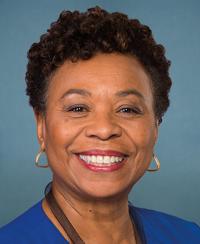
Mr. Speaker, first let me thank the gentlewoman for yielding me this time and Chairman Kolbe for his leadership. I want to thank both my colleagues for working each and every year to create a…
Mr. Speaker, first let me thank the gentlewoman for yielding me this time and Chairman Kolbe for his leadership. I want to thank both my colleagues for working each and every year to create a bipartisan bill that I think is worthy of our support.
I also would like to thank our staffs for working diligently and for their commitment to the issues which are in this bill, and especially I would like to thank Aysha and Christos on my staff who have worked tirelessly on these amendments.
I am very pleased that the Lee amendment to ban the sale and transfer of excess weapons for use by the Haitian National Police and the State Department accountability report of the police involvement in criminal activity were included in this bill. Specifically, my amendment prohibits all arms transfers and sales by the State Department for use by the Haitian National Police and requires an investigation into implications of senior and rank-and-file members in corruption, kidnappings, and narcotics trafficking, as documented by the State Department's International Narcotics Control Strategy reports.
Additionally, not later than 60 days after the enactment, the State Department will report to Congress their findings on the investigations into police abuse, including whether any United States-supplied or - provided weapons or ammunition were used during massacres perpetrated by the Haitian National Police. Now, I expect these restrictions would apply to any money designated for Haiti, including the funding in the Foreign Military Financing Program, the International Military Education and Training, and the International Narcotic Control and Law Enforcement programs.
This amendment is very necessary in the effort to restore democracy in Haiti. Haiti desperately needs humanitarian assistance; however, nonhumanitarian assistance, like weapons and arms, only exacerbates Haiti's
struggle with violence and criminal activity within the Haitian National Police Force and throughout the population.
Mr. Speaker, disarmament is impossible if we are complicit in sending arms to the country. With crime uncontrollable, human rights a distant goal, and elections on the horizon, it is unconscionable that the United States would support the sale and free transfer of arms. That is why I am pleased that the Foreign Ops conferees agreed to limiting the transfer and sale of U.S.-based arms to Haiti. It is necessary to help the curbing of growing violence and to support an environment for peaceful and free elections.
I also appreciate the efforts by Chairman Kolbe and Ranking Member Lowey to get $2.82 billion in this bill for our global HIV and AIDS programs, including $450 million for the Global Fund to fight HIV and AIDS, tuberculosis and malaria. While I believe, like many, that this number could be and should have been at least $150 million higher to match the Senate funding level, $2.8 billion is a step in the right direction.
Finally, I would like to say that I think our overall foreign aid budget should be significantly increased to alleviate poverty throughout the world.
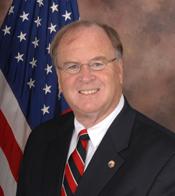
Mr. Speaker, I thank the gentlewoman for yielding me time. Mr. Speaker, I want to thank Chairman Kolbe and Ranking Member Lowey for increasing the amount of money that has been put into the…
Mr. Speaker, I thank the gentlewoman for yielding me time.
Mr. Speaker, I want to thank Chairman Kolbe and Ranking Member Lowey for increasing the amount of money that has been put into the alternative development program in Colombia. It is a program that gets people away from growing coca into growing alternative crops. And I stand in support of the rule on this bill.
I am a returned Peace Corps volunteer from Colombia and very much interested in building the capacity of local people to handle their own issues. If there is anything that we have learned from the Iraq war, it is the necessity to build local capacity for host country nationals to be able to run their own government and their own programs.
And if you have a lot of people that are displaced, meaning they have no place to live, no jobs, no schools, no infrastructure to support them, you have a lot of problems. So what you need to do is provide abilities for them to have, in the rural areas, good economic opportunity. You do that by providing a base of what we call alternative development of programs that will keep them economically viable and thus not pressured into growing illicit crops and things like that.
The committee in the House marked this with good money. The Senate raised it. And the conference committee brought it a little bit down, $5.5 million over last year's level. I really want to commend the committee for doing that.
I think, frankly, that we need to, as a Congress, really address how much money gets to these countries, rather than just gets to K Street and lobbyists that are doing reports and doing studies of countries, rather than really helping the money get down to the people. And this is one program that focuses on local issues and NGOs, nongovernmental organizations, rather than multimillion dollar contracts for U.S. contractors.
Building capacities is absolutely essential to survivability of a country. Now, one concern I have is that the report contains $20 million for demobilization activities from an unspecified account. I think it is great that we are helping with the demobilization of the paramilitaries and the FARC and other kinds of insurgents, terrorists in a sense; but I want to make sure that that demobilization money is not taken from the alternative crop money.
I would appreciate if the chairman in his remarks could, perhaps for the record, respond to what conditions have been put on that demobilization money when they decide what account to take it from.
Again, I want to thank the chairman and ranking member, and I really appreciate their efforts to look for how to make a saner and smarter world to live in, rather than just sticking to the old adage that we are going to give money to K Street and let them decide what are the priorities abroad.
Anything we can do to build the capacities of local countries to sustain themselves will make this world a much safer and saner place to live.
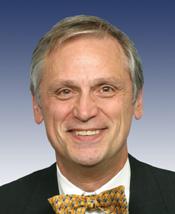
Mr. Speaker, I thank the gentlewoman for yielding me the time and permitting me to speak on this legislation. Mr. Speaker, I rise in support of the rule and of the underlying legislation. I want to…
Mr. Speaker, I thank the gentlewoman for yielding me the time and permitting me to speak on this legislation.
Mr. Speaker, I rise in support of the rule and of the underlying legislation. I want to highlight the $200 million that has been set aside for safe drinking water.
I must acknowledge not just the leadership of the gentleman from Arizona (Mr. Kolbe) and the gentlewoman from New York (Mrs. Lowey), but the special interests of the Senate majority leader, Bill Frist, with whom I have been working on efforts to increase our commitment to provide sanitation and safe drinking water around the world, a United States priority that we have undertaken together with the United Nations; but it is one where we have not yet backed that up with dollars and with an overall strategy.
Mr. Speaker, I am pleased that this bill is an important step towards meeting that obligation. I am pleased that next week it appears as we will be voting on legislation, the Paul Simon Water for the Poor Act, which will suggest that this will be a cornerstone in our foreign aid strategy.
At any given time, one-half of the people in the world who are sick are sick needlessly from waterborne diseases; and before I finish the 3 minutes that the gentlewoman has kindly allocated to me, more than 10 children will die from waterborne disease.
But the programs in this bill are more than just humanitarian efforts to reduce human suffering. As valuable as they are, they are cost- effective investments in shared prosperity, collective security, and a common future.
I hope that next year we will make it possible for the subcommittee to do its job easily and that the United States is not ranked 21st out of 22 donor countries in terms of how much we invest in ending global poverty compared to the size of our economy.
I hope, Mr. Speaker, additionally, that we are able to correct one area that is of deep concern to me, the loss of $50 million for the African Union Mission in Darfur, cut just at the point where security is getting worse, when the African Union is coming under attack, and the innocent people in Darfur are most in need of protection.
It troubles me deeply. However, overall I think the job that has been done by the subcommittee in fighting for our priorities and particularly in the renewed investment in safe drinking water and sanitation is to be commended. It will have a transformational effect, even this small amount. Bear in mind, Mr. Speaker, that if Americans would allocate just what we give each year for elective cosmetic surgery, or the Europeans would invest what they spend on perfume, we could meet the targets that the United States and the United Nations have set to reduce the scourge of unsafe drinking water and lack of sanitation.
I appreciate the work that is here. I look forward to supporting the bill.
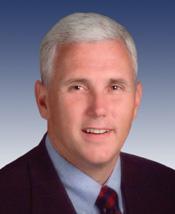
Mr. Speaker, I thank the gentleman for yielding me this time. Mr. Speaker, I rise in strong support of the rule supporting the conference report for Foreign Operations, Export Financing and Related…
Mr. Speaker, I thank the gentleman for yielding me this time.
Mr. Speaker, I rise in strong support of the rule supporting the conference report for Foreign Operations, Export Financing and Related Programs. It is an example of Congress demonstrating the ability to fund our national and international priorities in a fiscally responsible way, and I come to this floor to extol its virtues and urge all of my colleagues to support the rule and the underlying bill.
This legislation will fund the Nation's priorities in a meaningful way, addressing the AIDS pandemic, bringing innovative reforms to our foreign assistance programs and, of ultimate significance, supporting the global war on terror.
But specifically with regard to the internal mechanics of this legislation, I am particularly moved by the leadership of Chairman Jerry Lewis of the Appropriations Committee and subcommittee chairman Jim Kolbe who, in an effort to ensure that this legislation was brought to this floor not only on time but on budget, are in the midst of an extraordinary effort to amend the Budget Act to embrace a new road map that will bring not only this bill but all of the appropriations to the $843 billion level embraced by this Congress this spring.
Many of us have expressed concerns in recent days that three of the four preceding conference reports that came to the floor did not conform precisely with the details of that spring-adopted budget.
In response to that, the chairman of the Appropriations Committee shared with us and with other Members the road map to help us to achieve what will be, in a historic manner, a real cut to nonsecurity discretionary spending before Congress adjourns this year.
But in an effort to go one step further, the Appropriations Committee began the process this week of amending that road map into the Budget Act itself.
It is my understanding that the Budget Committee as well as many fiscal hawks in the Republican majority
have been moved by that leadership and see it as an example of the energetic, principled, executive renewed leadership in the Appropriations Committee under Chairman Jerry Lewis.
Mr. Speaker, I rise in support of the rule. I urge all of my colleagues to support the rule and the underlying bill. I rise to give credit where credit is due, to Chairman Jerry Lewis and Subcommittee Chairman Jim Kolbe, for a job well done, proving once again it is possible to fund the Nation's priorities on time, on budget, in a generous, but fiscally responsible, way.
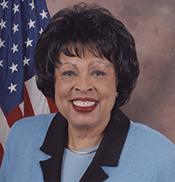
Mr. Speaker, I thank the gentlewoman from New York for yielding me this time, and I rise in support of H.R. 3057, the foreign operations appropriations legislation, and specifically I want to thank…
Mr. Speaker, I thank the gentlewoman from New York for yielding me this time, and I rise in support of H.R. 3057, the foreign operations appropriations legislation, and specifically I want to thank the conference committee for including language I authored which would authorize the appropriation of $5 million to the Department of State to combat piracy in countries that are not members of the Organization of Economic Cooperation and Development.
According to recent figures from the International Intellectual Property Association, worldwide motion picture piracy losses each year are estimated to be between $3 billion and $4 billion. More than 52 million illegal optical disks of the Motion Picture Association of America's member companies were seized worldwide during 2004, a result of 41,000 raids and more than 65,000 investigations.
Our government continues to work to secure legal protections for American-produced intellectual property. The State Department works with numerous countries to improve their legal codes and law enforcement training and to enforce intellectual property protections. However, in order for such efforts to be more effective, we must provide adequate funding and tools to engage foreign governments and convince them of the needs to enforce these laws.
That is why I am especially pleased that the final conference report has specifically included authorization language for a new program to combat piracy in non-OECD countries. It would provide equipment and training for judges and prosecutors, law enforcement officials, and assist other governments in complying with international copyright and intellectual property treaties and agreements.
Although the bill earmarks $5 million for existing appropriations for international narcotics control and law enforcement, I am hopeful that the money will enable the International
Narcotics and Law Enforcement Affairs Bureau to strengthen its existing work. Furthermore, I hope the Bureau of Economic and Business Affairs will be able to receive the funding under the newly authorized programs in future years.
In conclusion, I want to note that this sensible bipartisan language has been adopted in this House three times, and I thank the ranking member and the chair.
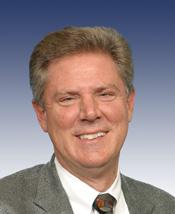
Mr. Speaker, I rise to express my strong support for the fiscal year 2006 foreign operations conference report, which provides further foreign assistance to the Republic of Armenia, including $75…
Mr. Speaker, I rise to express my strong support for the fiscal year 2006 foreign operations conference report, which provides further foreign assistance to the Republic of Armenia, including $75 million in economic assistance. I would like to thank the House Appropriations Committee for its continued support of both Armenia and resolving the humanitarian situation in Nagorna-Karabakh.
Foreign Operations Subcommittee Chairman Kolbe and Ranking Democrat Nita Lowey realize how important these funds are to Armenia and Nagorna-Karabakh, and I would like to thank them for their continued support.
I would also like to thank my friend and co-chair of the Armenian Caucus, the gentleman from Michigan (Mr. Knollenberg), for his key support as a member of the subcommittee.
Mr. Speaker, it is very important that this House continue to recognize the plight of the victims of the Nagorna-Karabakh conflict. The conference committee included $3 million in humanitarian assistance to Nagorna-Karabakh. While the United States does not officially recognize the State of Nagorna-Karabakh, this assistance shows that the United States supports Nagorna-Karabakh as an Armenian enclave that needs our continued help.
It is also important to point out that the conference report maintains military assistance parity between Armenia and Azerbaijan, providing $5 million allocated to each country. By allocating equal levels of military and security assistance to both nations, the U.S. Government will preserve its credibility as an impartial and leading mediator in the continuing sensitive peace negotiations for the Nagorna-Karabakh conflict. Given the ongoing Azerbaijani blockades and threats to renew military aggression against Armenia and Karabakh, it is critically important that the administration continue to promote balanced short- and long-term policies that elevate regional cooperation and reduce the risk of conflict in the south Caucasus region.
Again, let me thank the members of the Appropriations Committee for their continued support for Armenia.
Show 11 more
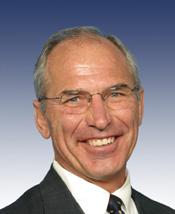
Mr. Speaker, I thank the chairman for the time, and I commend Chairman Kolbe for bringing this conference report to the floor; and I rise in full support of it. U.S. foreign aid helps promote…
Mr. Speaker, I thank the chairman for the time, and I commend Chairman Kolbe for bringing this conference report to the floor; and I rise in full support of it.
U.S. foreign aid helps promote economic development and strengthens democracy certainly around the world.
That being said, Mr. Speaker, our foreign aid and our Nation's gift to our friends around the world should not be taken for granted. We are not obliged to give foreign aid, and I believe the countries that receive that foreign aid should be held to certain standards, particularly living up to extradition agreements our country has made with them.
Included in this bill is a provision, section 581 specifically, that is going to help return cop killers to the U.S. to stand trial. For years, cop killers have been finding safe haven by fleeing the U.S. after committing their unthinkable crimes.
This problem came to my attention in May of this year when Denver Police Officer Donnie Young was allegedly executed by Raul Gomez- Garcia. After killing Detective Young and shooting and wounding his partner, Gomez-Garcia immediately fled to Mexico where he has since been tracked down and arrested.
Gomez-Garcia's extradition back to the United States is now pending, but only because Denver DA Mitch Morissey made the only choice available to him, and that is to seek a lesser plea bargain sentence. The United States should not be forced to plea bargain with other countries, nor should full justice be denied family members of assassinated cops. This appropriations bill will help us put an end to rewarding foreign nations with foreign aid that provide safe haven to cop killers.
Again, I urge its adoption and I commend Chairman Kolbe and the ranking member for bringing this to the floor, and Chairman Lewis and the full committee for the great work they have done on all our appropriations bills in this Congress.
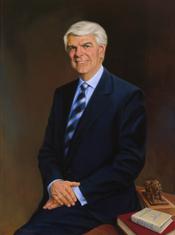
Mr. Speaker, I very much appreciate the chairman yielding me a brief amount of time. I am not rising actually to close, but rather to say to the body how much I believe both the ranking member and I…
Mr. Speaker, I very much appreciate the chairman yielding me a brief amount of time. I am not rising actually to close, but rather to say to the body how much I believe both the ranking member and I very much appreciate the tone that has been set by the leadership of the gentlewoman from New York and the gentleman from Arizona.
The bill that was passed through our process last year, the bill this year reflects absolutely the best of our work in the Appropriations Committee on a bill that is perhaps as important as any of our subcommittee reports. This bill reflects our effort by way of both Houses to support foreign policy that in the long term reflects America's interest in the world.
There is absolutely no question that the assistance that goes forward with these bills and through this effort has a huge impact upon providing a positive slant to America's voice in the world. I could not feel more strongly than I do that foreign affairs should be handled in a nonpartisan way, and this bill is the first bill in my memory that had the signature of every member of the conference committee from both bodies, Democrat and Republican alike. It is incredible to see us move in the direction of actually have the House recognize how important foreign assistance is and foreign affairs is in terms of America's interest in this complex and shrinking world.
So congratulations is long overdue for the work of this very fine staff, but most important the leadership of Mrs. Lowey and the leadership of my friend, Jim Kolbe, making a real difference on behalf of this changing and complex circumstance that we are responsible to play a leading role in.
The President should recognize just how important this tool will be as he goes forward in trying to have our voice have the impact we must have in the world.
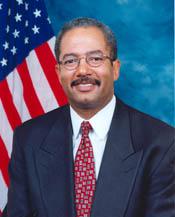
Mr. Speaker, let me thank the ranking member, the gentlewoman from New York, for her cooperation in yielding me this time. I want to rise just to say that it has been a pleasure to work on this bill.…
Mr. Speaker, let me thank the ranking member, the gentlewoman from New York, for her cooperation in yielding me this time.
I want to rise just to say that it has been a pleasure to work on this bill. There is a lot of good in it, and I want to highlight a particular part thereof and thank the ranking member and the chairman and the staffs of the two sides for working with me on an initiative to work to clean up the blood supply in sub-Saharan Africa where millions of people have contracted HIV through tainted blood transfusions.
We have an initiative in the report that accompanies the bill that would provide millions to focus in on pediatrics, transfusions first and foremost, but also to require a group of entities and agencies, including the World Health Organization, the CDC and the National Institutes of Health, to develop a nonincremental approach and plan within 180 days to clean up the blood supply throughout sub-Saharan Africa and put an appropriate emphasis on saving millions of lives that needlessly are being lost through HIV because of blood transfusions that otherwise could be safe.
So I just want to thank the leadership of the subcommittee, the chair and ranking member and staff, for their cooperation.
There are other important initiatives in the bill in terms of clean water programs in Africa, some $15 million; and there are other things that are not, I think, given appropriate notice because of some of the larger items in the bill; but I think that these are very, very important. I just want the record to be clear that I thank the ranking member and the chair for their cooperation and will continue to want to build on these efforts because we can save millions of lives.
Mr. Speaker, I thank the gentlewoman for yielding. Mr. Speaker, I rise in support of the rule and in support of the conference report, the Foreign Operations and Export Financing and Related Programs…
Mr. Speaker, I thank the gentlewoman for yielding.
Mr. Speaker, I rise in support of the rule and in support of the conference report, the Foreign Operations and Export Financing and Related Programs Appropriations Act of 2006. At this time, I want to commend the chairman of the Foreign Operations Subcommittee for the very fair and bipartisan manner in which he has brought this bill forward. I will save my comments on the substance of the conference report for the general debate.
However, I do want to make clear that we had a tough job taking this bill through conference. The very low initial allocation in the House was compounded by a low conference allocation that cut the President's request by $2 billion. I would have preferred to increase funding levels for many of the important programs contained in this bill, including refugee assistance.
However, I do think this conference report represents a fair, bipartisan, bicameral compromise. The chairman conducted this process in an inclusive manner, and I do commend him for it. I urge my colleagues to support the rule and to support the conference report on
Mr. Speaker, I just want the gentleman to know I share the concerns of the chairman. I believe that we can have far greater impact in Colombia by investing in alternative livelihoods rather than forced eradication.
Mr. Speaker, I would be very reluctant to see funding for demobilization programs come at the expense of any alternative development programs, and I look forward to working with the chairman to ensure that this just does not happen.
I want to thank the gentleman from California (Mr. Farr) for raising these concerns.
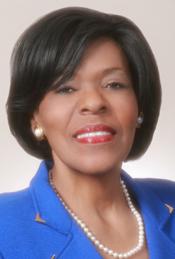
Mr. Speaker, I rise in support of H.R. 3057, the Foreign Operations Appropriations Act for 2006. I want to commend Chairman Kolbe and Ranking Member Lowey for their tireless efforts. As a conferee on…
Mr. Speaker, I rise in support of H.R. 3057, the Foreign Operations Appropriations Act for 2006. I want to commend Chairman Kolbe and Ranking Member Lowey for their tireless efforts. As a conferee on this bill, and as a member of the Subcommittee, I wanted to ensure that H.R. 3057 addressed global needs that often go unheeded or are under-funded.
I am particularly pleased with funding levels for HIV/AIDS, which include $2.8 billion in funding. The bill provides $350 million for bilateral HIV/AIDS and $243 million for Malaria and Tuberculosis programs. I am also pleased that I was able to work with Chairman Kolbe and Ranking Member Lowey to insert language that supports funding through USAID to provide medical and programmatic initiatives related to HIV/AIDS in Nigeria.
Additionally, H.R. 3057 doubles funding to support aid to the Palestinians for development programs. The bill provides funding for debt restructuring for Heavily Indebted Poor Countries, HIPC, and provides $110 million for the Middle East Partnership Initiative, MEPI, and $390 million for humanitarian efforts supported by non-governmental organization, NGOs, in Sudan.
Finally, this bill provides essential funding to two of our staunchest allies in the ongoing war against terrorism, Egypt and Jordan, both of which are countries involved in promoting economic and political reform that will lead to freer and more transparent democratic societies.
Clearly, H.R. 3057 is the best bill we could fashion within very tight budget constraints. I am pleased to offer my support to H.R. 3057 and urge my colleagues to support this bill.
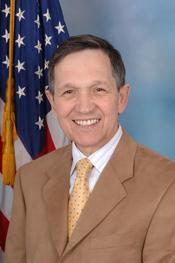
Mr. Speaker, I thank the gentlewoman for yielding me this time. Mr. Speaker, there is much in this bill to support, and I rise in support of the rule and the bill. This is a bill which demonstrates…
Mr. Speaker, I thank the gentlewoman for yielding me this time.
Mr. Speaker, there is much in this bill to support, and I rise in support of the rule and the bill. This is a bill which demonstrates America's capacity to be sensitive to the world, America's willingness to feed the hungry, to help those who are depressed and oppressed all around the world.
The heart of America is open to people everywhere. That is why it is such a tragedy that, while we simultaneously will pass this bill today, our country is involved in action in Iraq that is undermining all the goodwill that America creates with this bill. What an irony it is that we are here talking about the needs of people all over the globe and, at the same time, we are alienating people all over the globe by pursuing a war in Iraq, a country that did not attack us, based on false information from an administration that should have known better.
So, yes, we ought to support this rule and we ought to support the bill, because the word that ought to go out, far and wide, about the United States is that we care about suffering people, that we want to find a way of lifting up people everywhere, that we want to try to find a way of making this a better world. But, as we do that, we also need to be consistent. We need to remember that we are simultaneously pursuing a path in Iraq that is wrong. We need to take a new direction there so that we can bring America's aspirations to help the world in line with our policy everywhere.
Mr. Speaker, I thank the gentleman for yielding me time. Mr. Speaker, I wanted to respond to the gentleman from California (Mr. Farr) and his comments about the demobilization funds that we have in…
Mr. Speaker, I thank the gentleman for yielding me time.
Mr. Speaker, I wanted to respond to the gentleman from California (Mr. Farr) and his comments about the demobilization funds that we have in the bill for Colombia.
The legislation provides that the funds can come from any place in the Act. I cannot guarantee where the administration might ask for those funds
to come from. However, the law would require that they consult with us and notify the subcommittee. And I can assure you that if they were to ask to take funds out of a program that is working and working well, such as the alternative development program in Colombia, we would object to such a request.
So it is very broad on where the money can come from. We have no assurances, I might add to the gentleman from California (Mr. Farr), that they are even going to request this money at all. But if they do, we will be watching very carefully as to where it would come from and make sure it is the appropriate place.
Mr. Speaker, pursuant to House Resolution 532, I call up the conference report on the bill (H.R. 3057) making appropriations for foreign operations, export financing, and related programs for the…
Mr. Speaker, pursuant to House Resolution 532, I call up the conference report on the bill (H.R. 3057) making appropriations for foreign operations, export financing, and related programs for the fiscal year ending September 30, 2006, and for other purposes.
Mr. Speaker, I yield myself such time as I may consume.
Mr. Speaker, I am very pleased this morning to be able to bring before my colleagues in the House of Representatives the fiscal year 2006 Foreign Operations Appropriations Conference Report for the bill
Mr. Speaker, I reserve the balance of my time.
Mr. Speaker, I yield 2 minutes to the gentleman from Colorado (Mr. Beauprez).
Mr. Speaker, to close, I yield such time as he may consume to the chairman of the full committee.
Mr. Speaker, I thank the gentleman from California for his kind remarks, and I urge all the Members to support this conference report which has been crafted.
Mr. Speaker, I yield back the balance of my time.
Mr. Speaker, I am very pleased that the Fiscal Year 2006 Foreign Operations Conference Report includes over $131 million for alternative development and institution building in Colombia. These funds…
Mr. Speaker, I am very pleased that the Fiscal Year 2006 Foreign Operations Conference Report includes over $131 million for alternative development and institution building in Colombia. These funds will help foster both economic and social development and create more stability in Colombia.
A key element to fostering a secure Colombia is creating growth and stability in the neglected rural areas. The government of Colombia must develop and implement a comprehensive rural development policy. I would like to thank the Chairman and Ranking Member for the language in the House report that calls on USAID to report to Congress about the concrete steps the Colombian government is taking to develop a rural development strategy. This report will provide a blueprint for what the Colombian government must promote development in rural areas--and how future U.S. assistance should complement those goals.

Mr. Speaker, I missed recorded votes today in order to be with my family in California for an unexpected family emergency. I would like my intentions made known for my constituents in the 11th…
Mr. Speaker, I missed recorded votes today in order to be with my family in California for an unexpected family emergency. I would like my intentions made known for my constituents in the 11th district. Had I been present, I would have voted ``no'' on rollcall No. 569, the Conference Report on H.R. 3057--Foreign Operations, Export Financing and Related Programs Appropriations Act for Fiscal Year 2006.
Mr. Speaker, on November 4, I missed rollcall vote No. 569. Rollcall vote No. 569 was on agreeing to the conference report making appropriations for the Department of State, foreign operations, and…
Mr. Speaker, on November 4, I missed rollcall vote No. 569. Rollcall vote No. 569 was on agreeing to the conference report making appropriations for the Department of State, foreign operations, and related programs for the fiscal year ending September 30, 2006, and for other purposes. Had I been present, I would have voted ``yea.''
Bill Text
2 versions available
        [Congressional Bills 109th Congress]
[From the U.S. Government Publishing Office]
[H. Res. 532 Engrossed in House (EH)]

H. Res. 532

In the House of Representatives, U.S.,

November 4, 2005.
Resolved, That upon adoption of this resolution it shall be in order to
consider the conference report to accompany the bill (H.R. 3057) making
appropriations for foreign operations, export financing, and related programs
for the fiscal year ending September 30, 2006, and for other purposes. All
points of order against the conference report and against its consideration are
waived. The conference report shall be considered as read.

Attest:

Clerk.