Commending the Palestinian people for conducting a free and fair presidential election on January 9, 2005, and for other purposes.
Legislative Activity
Stay on top of the latest movement without scrolling through every action
Motion to reconsider laid on the table Agreed to without objection.
February 2, 2005 • 2:31 PM
View full timeline
Introduced in House
February 1, 2005
Referred to the House Committee on International Relations.
February 1, 2005
Ms. Ros-Lehtinen moved to suspend the rules and agree to the resolution.
February 2, 2005 • 10:26 AM
Considered under suspension of the rules. (consideration: CR H292-299)
February 2, 2005 • 10:26 AM
DEBATE - The House proceeded with forty minutes of debate on H. Res. 56.
February 2, 2005 • 10:26 AM
At the conclusion of debate, the Yeas and Nays were demanded and ordered. Pursuant to the provisions of clause 8, rule XX, the Chair announced that further proceedings on the motion would be postponed.
February 2, 2005 • 11:05 AM
Considered as unfinished business. (consideration: CR H325-326)
February 2, 2005 • 2:22 PM
Passed/agreed to in House: On motion to suspend the rules and agree to the resolution Agreed to by the Yeas and Nays: (2/3 required): 415 - 1 (Roll no. 17).(text: CR H292-293)
February 2, 2005 • 2:31 PM
On motion to suspend the rules and agree to the resolution Agreed to by the Yeas and Nays: (2/3 required): 415 - 1 (Roll no. 17). (text: CR H292-293)
February 2, 2005 • 2:31 PM
Motion to reconsider laid on the table Agreed to without objection.
February 2, 2005 • 2:31 PM
Voting History
1 vote recorded • Roll call available
Floor Debate
22 membersWhat members said about H.Res. 56 on the floor
 JK
JK TL
TL SJL
SJL ZL
ZL JDD+17
Floor Debate
22 membersWhat members said about H.Res. 56 on the floor
Mr. Speaker, I thank the gentleman for yielding me this time. I want to speak certainly in favor of the Solomon Amendment and remind my colleagues that it does not apply to institutions of higher…
Mr. Speaker, I thank the gentleman for yielding me this time.
I want to speak certainly in favor of the Solomon Amendment and remind my colleagues that it does not apply to institutions of higher education that have had a longstanding practice of pacificism based on historic religious grounds, and it exempts Federal student financial assistance from termination. But what it does do is allow students to look at career opportunities in the Army. And as the chairman of the Committee on Armed Services said, there are so many legal issues involved in the military today and to go beyond that, to let people look at careers in, I would say, intelligence as much as anything, homeland security, there is a great opportunity for students to go into.
But we are also seeing so much push-back really from a crowd that is basically anti-American and anti-conservative. Indeed, there are so many prejudices against everyday middle-class values on college campuses, and serving in the military and being pro-American just seems to be one of them.
Students at Wells College, for example, were ridiculed by their professors
if they supported the war in Iraq. At the University of Missouri, a professor, a science professor, offered extra credit for students to protest a speech given by conservative activist David Horowitz. At the University of Richmond, a professor called President Bush a moron in his class. And at the University of Oregon, students were labeled ``neo-Nazi'' for expressing their opinion that Trent Lott was the victim of a double standard. And examples go on and on.
Another statistic, the Foundation for Individual Rights in Education found that over 90 percent of well-known college campuses have speech codes intended to ban or punish politically incorrect, almost always conservative speech, and that campus funds are unequally distributed to left-wing groups as opposed to conservative groups by a ratio of 50 to one.
I think the judicial attack on the Solomon Amendment is just one of a series of a trend that is against, again, anything that is pro- American, pro-conservative, pro-traditional values. And so I would submit for the Record an article that was an opinion in the Wall Street Journal recently and then something on the academic bill of rights that I think also touches into this same subject.
The bill would express the continued support of Congress for the so- called ``Solomon law'' in title 10, U.S. Code, which improves DOD's ability to establish and maintain ROTC detachments and to ensure military recruiters have access to college campuses and students that is at least equal in quality and scope to that provided to other employers.
The bill would:
State Congress's resolve to achieve military personnel readiness through vigorous application of the ``Solomon law'' relating to equal access for military recruits to institutions of higher education, and express Congress's commitment to explore all options, including the use of its Constitutional power to appropriate funds, to achieve that equal access.
Express the Sense of Congress that the Executive Branch should aggressively challenge any decision impeding or prohibiting the operation of the ``Solomon law.''
Encourage the Executive Branch to follow a doctrine of non- acquiescene by not finding a judicial decision affecting one jurisdiction to be binding on other jurisdictions. The so-called ``Solomon law,'' section 983, title 10, U.S. Code, named for its original proponent Representative Gerald Solomon (R-NY), is based on the principle that if a college or university accepts federal funding it must permit military recruiters and/or ROTC access to campus and to students. Enacted first in 1994, and added to by Congress in 1996, 1999 and 2002, and 2004, the ``Solomon law'' prohibits some defense-related and other federal funding from going to colleges and universities that prevent ROTC access or military recruiting on campus.
The Solomon law: (1) does not apply to institutions of higher education that have a long-standing policy of pacifism based on historical religious grounds; and, (2) exempts federal student financial assistance from termination.
The U.S. Court of Appeals for the Third Circuit, on 29 November 2004, reversed a district court decision, which had upheld the Constitutionality of the ``Solomon law,'' by ruling that the ``Solomon law'' violated the 1st Amendment rights of free speech and association held by institutions of higher education. The Third Circuit remanded the case to the district court to enter a preliminary injunction against the enforcement of the ``Solomon law.''
The acting Solicitor General has announced his intention to petition the Supreme Court for a writ of certiorari to review the decision of the Third Circuit Court. The Government also filed a motion on 14 January 2005 with the Third Circuit Court seeking to stay the Court's mandate for a preliminary injunction against the enforcement of the ``Solomon law'' until the Supreme Court decides the Government's petition. The Third Circuit granted the stay on 19 January.
H. Con. Res. 36, in expressing continued support for equal access of military recruiters to institutions of higher education, makes the following points regarding the ``Solomon law'':
Under article I, Section 8, of the Constitution, Congress exclusively has the power to raise and support armies, provide and maintain a navy, and make rules for the government and regulation of the Armed Forces.
Military recruiting on university campuses is one of the primary means by which the Armed Forces obtain highly qualified new military personnel and is an integral, effective and necessary part of overall military recruiting. Efforts by colleges and universities to restrict or prohibit military recruiter access will have the harmful effects of increasing Federal spending to achieve desired recruiting outcomes and of compromising military readiness and performance. Such harm conflicts with Federal responsibilities to provide for the Nation's defense. Any reduction in the performance by the Armed Forces amidst the present national emergency declared by the President on September 14, 2001, operates against the national interest.
The Constitution gives Congress the power to regulate spending and in that role Congress has chosen over time to appropriate funds for a variety of Government programs to be provided to institutions of higher learning. However, these funds are not an entitlement to any college or university and can be provided subject to criteria and conditions set by Congress.
The ``Solomon law'' is a legislative safeguard that links Federal funding of educational institutions to the willingness of those institutions to abide by a rule of access by military recruiters to campuses and students that is at least equal in quality and scope that is provided to any other employer.
For the last several years, a growing number of university law schools and colleges of law have treated military recruiters in ways significantly different from the recruiters of other employers. As a result, military recruiters and the persons they seek to interview have been subjected to various degrees of official and unofficial harassment or ill treatment that is designed to make military recruiting difficult, or to frustrate its objectives. The underlying reason for this differing treatment is opposition to Federal law that prohibits military service by openly gay people--the so-called ``don't ask, don't tell'' law.
Given that opposition, it is imperative that the safeguards that the ``Solomon law'' provides not only for military recruiters, but also for ROTC, be maintained. Without such safeguards, grave harm to military recruiting will result as colleges and universities move to limit or deny access to campuses and students by representatives of the Armed Forces.
Academic Bill of Rights
background
Hiring Practices for Professors
Faculty hiring is controlled by more senior members of the
faculty itself:
As Conservative faculty forced to keep political views
quiet until they achieve tenure.
Usually hire those who agree with them,
Creates a perpetual cycle.
Creates an environment where Marxists, Post-Modernists,
etc. can still dominate in academic fields even while their
views have been discredited:
Numbers of Liberal Professors vs. Conservative Professors
The overall ratio of Democrats to Republicans at the 32
schools studied was more than 10 to 1 (1397 Democrats, 134
Republicans).
Not a single department at a single one of the 32 schools
managed to achieve a reasonable parity between the two main
political parties:
In the nation at large, registered Democrats and
Republicans are roughly equal in number.
The closest any school came to parity was Northwestern
University--Democrats outnumbered registered Republicans by a
ratio of 4-1.
Other Schools:
Brown--30-1
Bowdoin, Wellesley--23-1
Swarthmore--21-1
Amherst, Bates--18-1
Columbia, Yale--14-1
Pennsylvania, Tufts, UCLA and Berkeley--12-1
Smith--11-1
Other Schools had ZERO registered Republicans:
Williams--51 Democrats, 0 Republicans
Oberlin--19 Democrats, 0 Republicans
MIT--17 Democrats, 0 Republicans
Haverford--15 Democrats, 0 Republicans
Most students probably graduate without ever having a class
taught by a professor with a conservative viewpoint.
Not Just a Faculty Problem But A Campus-Wide Bias
For example, the University of Pennsylvania, Carnegie
Melon, and Cornell could not identify a single Republican
administrator.
In the entire Ivy League, there were only 3 Republican
administrators identified.
Impact on Students
Remarks belittling conservative ideas convey that these
views are not accepted on campus--Grading based on these
ideas reinforce this perception.
One student called a ``fascist'' for inviting Oliver North
to campus.
University of Oregon--Student labeled ``neo-Nazi'' for
expressing his opinion that Trent Lott was the victim of a
double standard.
University of Richmond--Professor called President Bush a
``moron'' in the classroom.
University of Missouri in Columbia--Professor offered extra
credit to protest a speech by David Horowitz.
Students at Wells College were ridiculed by professors for
their support on Iraq war and their views on feminism.
``It didn't take long to see how liberal it was after I
came here. The professors and the education I receive is
excellent, but the professors seem to use class as a
political soapbox,''--Kristy L. Hochenberger, a student at
Wells College.
Slogan circulated by Biology professor at Wells College--
``Lobotomies for Republicans: It's not just a good idea; it's
the law!''.
Many students conceal what they actually think in order to
protect their academic standing--a reality clearly at odds
with the educational mission of the university.
Nearly all distinguished doctoral programs rely on matching
students with professors who have compatible interests.
Preferential treatment shown to those with similar liberal
ideals.
Campus Guests, Speech Police and Commencement Speakers
Campus funds are unequally distributed to leftwing student
groups as opposed to groups with conservative agendas by a
ratio close to 50:1: These student groups are many times in
charge of hiring campus speakers.
The Foundation for Individual Rights in Education found
that over 90 percent of well-known college campuses have
speech codes intended to ban and punish politically
incorrect, almost always conservative, speech.
The ratio of commencement speakers on the left and right
was 226-15, a ratio of over 15:1: Commencement speakers are
selected through committees composed of administrative staff,
faculty, and students.
Twenty-two of the thirty-two schools surveyed did not have
a single Republican or conservative commencement speaker in
the entire ten years surveyed: Six of the remaining schools
invited only one Republican or conservative each, as compared
to 38 liberals or Democrats.
Haverford, Swarthmore and UCLA, which host multiple
speakers every year, did not feature a single Republican or
conservative speaker as balanced against 54 liberals and
Democrats.
Academic Bill of Rights
Recognizes that political partisanship by professors is an
abuse of students' academic freedom.
Designed to take politics out of the university curriculum:
Does not call for more classics in curriculum,
Reading lists should provide students with dissenting
viewpoints so they may form their own opinions.
Designed to protect the right of students to ``get an
education rather than an indoctrination'':
Should not make professors afraid of what they say,
We defend professors' right to say anything and forbids
administration from punishing them for their political
opinions,
Professors should always be open to dissenting opinions.
Unequal funding of student organizations which host guest
speakers is unacceptable: Calls for pluralism in selection of
guest speakers.
Learning environment hostile to conservatives is wrong.
There is a lack of ``intellectual diversity'' within
faculties on college campuses:
University should be ``inclusive'' to all viewpoints,
Without it, free exchange of ideas are impaired.
It is not our intention to suggest that there should be
quotas based on party affiliation in the hiring process at
universities:
We support removing all politics and political affiliation
from the hiring process,
It is our purpose to point out the gross imbalance of
liberal vs. conservative professors.
While nearly all university administrations devote
extraordinary resources to defend the principle of diversity
in regard to race and gender, none can be said to have shown
interest in the diversity of ideas.
Universities have the privilege of being separate from the
society they inhabit:
Society grants faculty protection from the influence of
outside politics,
With that privilege comes a responsibility by the faculty
to also safeguard the free exchange of ideas.
Correcting this should be the goal and an integral part of
educational policy under the Academic Bill of Rights.
[From the Wall Street Journal, Feb. 2, 2005]
Wisdom of Solomon--The Disgrace of Blocking Military Recruiters From
Campus
Don't ask. Don't tell. Having no desire to crash our e-mail
server, we'll save discussion of gays in the military for
another day. Rather, today's subject is lawyers in the
military. Surely Americans of all points of view can agree
that in an age of Guantanamo and Abu Ghraib, the military can
use the best attorneys it can get.
So it's a disgrace that some of the nation's law schools,
objecting to the Pentagon's ``discrimination policies,''
refuse to permit military recruiters to make their pitch on
campus, relegating them instead to unofficial off-campus
venues. Law students pondering their first career move can be
wined and dined by fancy firms that set up recruitment tables
at campus job fairs, but they have to stroll over to the
local Day's Inn to seek out the lonely military recruiter.
To put it another way, the same liberals who object that
the military includes too many lower-class kids won't let
military recruiters near the schools that contain students
who will soon join the upper-class elite. It's almost enough
to make us contemplate restoring the draft, starting with law
school students.
Needless to say, such scholastic shenanigans don't go down
well with Congress, which in 1994 passed the Solomon
Amendment, named for the late New York Republican, Gerald
Solomon. The law requires schools that receive federal funds
to provide equal access to military recruiters. Today, the
House is scheduled to vote on a resolution brought by Alabama
Republican Mike Rogers that would restate the House's support
for the Solomon Amendment. Something similar passed the House
and Senate by overwhelming margins last year and was
incorporated into the Defense Authorization bill.
The impetus for Mr. Rogers's move is a November ruling by
the federal appeals court in Philadelphia in favor of a group
of law schools and legal scholars that had contested the
Solomon law. The 2-1 opinion found that the Solomon Amendment
violates the schools' First Amendment rights to free speech
and association. Next stop is the Supreme Court, which is
expected to take the appeal that the Justice Department plans
to bring.
There are many peculiarities to this lawsuit, starting with
the fact that the group that brought it--the Forum for
Academic and Institutional Rights--declines to release the
names of the 26 law schools and faculties that belong to its
coalition. Some of the participants (New York University and
Georgetown, for example) have outed themselves since the suit
was brought in 2003, but others steadfastly maintain their
own don't-ask-don't-tell policy.
In any event, there should be no legal question about
Congress's right to put conditions on grants of federal funds
to universities. It does this all the time--including
requirements that colleges adhere to certain civil rights and
gender standards. With a few exceptions, universities have no
trouble going along and courts have no problem letting them.
If, as is likely, the Supreme Court overturns the appeals
court decision, that will be the end of it. Almost all
universities, public and private, take millions of dollars in
federal money that would be next to impossible to give up.
That's especially true of the elite schools, both public and
private. Still, it would be nice to think that the nation's
universities would welcome the military for reasons other
than the mercenary. Patriotism, perhaps?
Mr. Speaker, I yield myself such time as I may consume. Mr. Speaker, I rise in support of H. Res. 56, and I want to commend the bipartisan leadership for introducing this important resolution. I also…
Mr. Speaker, I yield myself such time as I may consume.
Mr. Speaker, I rise in support of H. Res. 56, and I want to commend the bipartisan leadership for introducing this important resolution. I also want to commend the gentlewoman from Florida (Ms. Ros-Lehtinen) for her leadership on this issue.
I fully endorse the message of this resolution. The Palestinian people deserve our commendation for conducting a free and fair election and for electing as their leader a man who has spoken out against the use of violence.
I salute Mahmoud Abbas for opposing the intifada. Far too few Palestinians have had the courage to do so.
The change of Palestinian leadership has had a salutary effect on peace prospects. I am encouraged by recent steps taken by both Israel and the Palestinians, steps that have reduced the level of violence. I share the optimism of many that, for the first time in years, we now may have an opportunity to make real progress toward peace.
Mr. Speaker, I think it is desirable that this body welcome and contribute to the improved atmosphere between the parties. This resolution is an entirely appropriate way to do so. But what I would not want this body to do is to contribute to unrealistically high expectations. In that regard, I would like to make two points which bear on the subject of the resolution before us.
First of all, I respect the good intentions of the new president of the Palestinian Authority. I first met with Mr. Abbas in Ramala on the eve of his becoming Prime Minister some 2 years ago, and he emphasized to me his commitment to peace. But good intentions and commitment will not be enough to assure his success as a leader. In fact, they are barely enough to get him off the starting block.
To succeed, Mahmoud Abbas will have to show backbone that, unfortunately, he has not revealed in his previous high-level positions. As the resolution correctly suggests, he will have to take immediate and significant steps to dismantle the Palestinian terrorist infrastructure. He needs to confiscate unauthorized weapons. He needs to arrest and bring to justice the terrorists who have engaged in so much violent activity. He needs to consolidate and take charge of all Palestinian security organizations, and he needs to end anti-Israeli and anti-Semitic incitement in the Palestinian media, schools, mosques, and all other institutions.
Mr. Abbas is an intelligent man, and he surely knows that, in the long run, there is no such thing as a cease-fire with terrorists. He will control and defeat the terrorists, or he will be controlled and defeated by them. I am hopeful that he will be up to the task. I think he knows that, as the leader, he does not have the option of giving in to frustration and just walking away, as he did during the Camp David negotiations in 2000 and during his brief stint as Arafat's Prime Minister.
Although the incidence of violence has declined in recent weeks, the infrastructure of terrorism has, in many ways, grown stronger and more sophisticated. Kassam rockets that threaten Israeli civilians inside and near the Gaza Strip are becoming more accurate and gaining greater distance. In my travels to the region, I have discovered that Iran and Hezbollah are increasingly engaged with Palestinian terrorists.
Mr. Speaker, I think we must also keep in mind that there is no moral equivalence in the use of violence in this struggle. The Israelis have no interest in violence for the sake of violence but, unfortunately, some Palestinians do. If the current lull in violence breaks down, I am certain it will be because Abu Mazen could not control Palestinian terrorism.
Secondly, Mr. Speaker, we need to be realistic about the current state of the peace process and Israeli-Palestinian relations. The Israeli government which, since Prime Minister Sharon's recent coalition agreement with Labor Party leader Shimon Peres, now includes Israel's two largest parties, is preparing to take an historic action. In fact, it is the boldest, most creative act in the peace process since the outbreak of the intifada in September, 2000. The government of Israel is preparing to redeploy its forces from the Gaza Strip and to dismantle all of its Gaza settlements. This unprecedented action will pave the way for the Palestinians to govern their own contiguous territory and to demonstrate their ability to establish a free and orderly society.
Mr. Speaker, I fully identify myself with the hope and belief expressed in this resolution that a lasting peace in the Middle East is achievable and that we now have an opportunity to take steps in that direction. But we must be realistic about the time frame. Israel's decision to redeploy from Gaza is politically courageous, but it is also politically dangerous and difficult. The overwhelming majority of Israelis support it, and I fully expect it to be accomplished by the latter half of this year, as scheduled. But it will not be easy.
Then, once Israel does redeploy, the onus will be on the Palestinians to prove that they have what it takes to run the equivalent of a state. If and when they do so, I am certain both sides will move with dispatch toward a final settlement. But that agreement is certainly not going to be achieved in the next few months or even in the next year. It would be unfair to the parties to place on them such a burden of expectation. For now, let us be content that both sides are taking significant steps to create a beginning, and let us remember that it is only a beginning.
With those thoughts as context, Mr. Speaker, I would like once again to congratulate the Palestinians on their ably-conducted election. I support H. Res. 56, and I call on all of my colleagues to do likewise.
Mr. Speaker, I reserve the balance of my time.
Mr. Speaker, I want to thank both of my colleagues for their extremely generous and kind remarks.
Mr. Speaker, I am very pleased to yield 3 minutes to the gentlewoman from Texas (Ms. Jackson-Lee), my good friend who has been fighting for peace in that region ever since she came to this body and before.
Mr. Speaker, I yield 3 minutes to the gentlewoman from California, (Mrs. Capps).
Mr. Speaker, I yield 1 minute to the gentleman from Maryland (Mr. Cardin), my good friend and distinguished colleague.
Mr. Speaker, how much time remains?
Mr. Speaker, I yield myself such time as I may consume.
Mr. Speaker, it is significant that within the recent past, three areas in the Middle East have succeeded in holding free and open elections, some of them under the most difficult and dangerous circumstances. We applaud the people of Afghanistan, who not long ago suffered under the horrific yoke of the Taliban, for organizing and conducting free and open elections. And I particularly want to recognize the fact that this took place with the full participation of the women of Afghanistan.
We in this resolution are commending the Palestinian people, who have lived under an undemocratic regime for too long, for organizing and conducting fair and open elections. And, of course, this past weekend we were all thrilled as we were watching our television screens seeing the courage of the Iraqi people under the most brutal and bloody threats go to the polls and exercise their right to select their own leaders. These are very encouraging signs. And it is highly appropriate for the United States to take the lead in underscoring the obvious, that just as in every other part of the globe we have led, assisted, and cleared the coming of free and open elections, at long last we are doing so in the Middle East and adjacent territories.
So, Mr. Speaker, I believe our resolution is more than appropriate.
Mr. Speaker, I yield the balance of my time to the gentleman from Maryland (Mr. Hoyer).
Mr. Speaker, on that I demand the yeas and nays.
Mr. Speaker, I thank the Ranking Member for yielding me this time. There are many accolades that we might share regarding the gentleman from California (Mr. Lantos) and, I might say, his wife and…
Mr. Speaker, I thank the Ranking Member for yielding me this time.
There are many accolades that we might share regarding the gentleman from California (Mr. Lantos) and, I might say, his wife and family, but I thank him for the steady hand and the steady interest and the persistence which has brought us to where we are today.
Mr. Speaker, I thank the chairman of the subcommittee, the gentlewoman from Florida (Ms. Ros-Lehtinen), and my colleagues for putting before this body H. Res. 56 to applaud what I consider to be the next opportunity, the next life-changing experience for those people who have worked, died, and prayed for peace in the Mid East.
I do want to acknowledge the election of Mahmoud Abbas and to say that I too had an opportunity to meet him in the West Bank just about 2 years ago with a number of my colleagues. His dream, I believe, has now come to reality where he is able to lead the region toward full peace. He can declare opposition in the war on terrorism and the terrorist acts that have been going on. And the Israeli people can embrace their dreams, as I heard from so many of them, desiring to live side by side in peace with the Palestinian people.
Mr. Speaker, let me acknowledge my friends and constituents in Houston, strong Palestinians who have come to me with both prayer and petition to ask for intervention and efforts on behalf of Palestinians in the Mid East. They too need to be applauded, as do my friends in the Jewish community who have recognized the importance of the survival of Israel and the standing
alongside of each of those two extremely productive and contributing nations.
I had about 2 years ago the opportunity to co-chair the Partners For Peace. We met in Oslo, Norway. We met with women from Israel and the PLO. And I was gratified even in the emotional charge of that session, women crying and outpouring of their hearts talking about the loss of their children, the violence, and sometimes the anger. We came away from there with one single challenge, to make sure that our voices would continue to be raised for peace in the Mid East.
This election as now allowed gives the opportunity to see the light at the end of the tunnel, to see the sun rising and not setting.
I also recognize that it will be upon us, the United States, to be able to take a sledge hammer to those crumbling refugee camps. It is now time for us to rebuild Palestine, to be able to have it look as we would want people to be able to live and to be educated and to worship. So I hope the world family will join with humanitarian aid to this new fledgling nation so we can build schools and we can build hospitals and that we can build institutions that will last, so we can build housing, that they will not have to live amidst the rubble.
This resolution on behalf of this Congress is a wonderful first step to acknowledge what has happened and also to bring about the free peaceful existence between Palestine and Israel. I hope that we will be part of the solution and not part of the problem. God bless all of those who have worked so hard for peace.
I rise as a strong supporter of H. Res. 56 which commends the Palestinian people for conducting a free and fair presidential election on January 9, 2005. The elections held in the Palestinian Territories are a historic occasion upon which we can build the specter of a comprehensive Middle East peace plan. I want to congratulate Mahmoud Abbas on his election victory in becoming the President of the Palestinian Authority. I also want to thank him for his public service at this vital and momentous time in the history of the Palestinian people.
The two state solution represents the only possible peace plan that can be acceptable and viable for the nation of Israel and the Palestinian people. The Palestinian elections of January 9, 2005 represent the first step in the process towards a comprehensive peace agreement. With this new leadership the Palestinian people will be able to find stability and build their national infrastructure. However, President Abbas's first task will be to take steps to dismantle the Palestinian terrorist infrastructure, confiscate unauthorized weapons, arrest and bring terrorists to justice, consolidate and control the many Palestinian security organizations, and end the incitement to violence and hatred in the Palestinian media, educational institutions, mosques, and other institutions as this resolution calls for. Certainly, this task will not be easy and its resolution will not come quickly, but we as a nation must support the Palestinian people as they stand determined and ready to build a free and peaceful nation.
If history in the Middle East has taught us anything, we know that the United States must be an active and honest broker between the Palestinians and the Israelis in moving towards a comprehensive peace agreement. I urge the Bush Administration to not relinquish this opportunity to achieve a lasting peace that can forever change the face of the Middle East. The War in Iraq has lowered our diplomatic and public standing around the world, but we have especially done poorly in the Middle East. People in the region do not trust our nation, nor do they trust our intentions. They may watch our television, listen to our music and eat our food, but they still have no love for our nation because of our actions in the Middle East that are being viewed as aggressive. Bringing the Israelis and the Palestinians together represents the best opportunity to show the people of the Middle East and the world that we can heal the rifts that divide us, instead of inflaming them. Militant Islamic organizations throughout the world continue to use the plight of the Palestinian people as one of their main recruiting tools to incite hatred and distrust of the United States. We have the ability to strike a blow at these terrorist organizations if this Administration can seize the opportunity.
This resolution also encourages all interested parties to take advantage of this historic opportunity to remove obstacles to achieving a lasting peace in the Middle East. On this front, I am pleased to report that Egypt has offered to host an Israeli-Palestinian summit next week, and Israeli Prime Minister Ariel Sharon has accepted the invitation. I want to thank the nation of Egypt for taking this important step towards achieving a comprehensive peace agreement. Egypt has served as a key regional ally which has long taken active steps towards achieving peace in the Middle East. This summit will give the Israelis and the Palestinians the chance to meet face to face and negotiate terms to bring relative peace and stability to their people. Once these key objectives are met then a comprehensive agreement is possible. Already, since the election of President Abbas, armed groups in the Palestinian Territories have openly talked about halting attacks on the Israeli people.
No doubt there will be setbacks on the both sides as we have already witnessed too often, but now unlike in the past we must show extra resolve to achieve a lasting peace. Again, I urge the Bush Administration to take an active role in bringing the Israeli and Palestinian people together and not losing this opportunity. As we have seen in the past, these opportunities are fleeting, but their potential for a lasting peace is too great to take for granted. We must take all necessary steps to achieve peace now not only for the Israeli and Palestinian children who will inherit the Middle East, but for our own children as well who will inherit the world that we have shaped.
Mr. Speaker, on February 19, 1942, President Franklin D. Roosevelt issued Executive Order 9066 authorizing the Secretary of War to define military areas in which ``the right of any person to enter,…
Mr. Speaker, on February 19, 1942, President Franklin D. Roosevelt issued Executive Order 9066 authorizing the Secretary of War to define military areas in which ``the right of any person to enter, remain in or leave shall be subject to whatever restrictions'' are deemed ``necessary or desirable.''
By the spring of 1942, California, Oregon, Washington, and Arizona were designated as military areas.
In May of 1942, Santa Clara Valley Japanese Americans were ordered to ``close their affairs promptly, and make their own arrangements for disposal of personal and real property.''
Official government fliers were posted around California, Arizona and Washington instructing families to report to various assembly centers with just the bare necessities, leaving behind their homes, their lives, and most personal belongings.
Because permanent camps were not yet built, large community gathering places, such as the Tanforan Racetrack in San Mateo County in Northern California and the Santa Anita Racetrack in Southern California became home to Japanese internees for several months before being moved.
San Francisco Bay Area Japanese Americans were forced to live in horse stables at the Tanforan Racetrack until a permanent camp was built for them.
Eleven thousand Japanese Americans and aliens were evacuated from their homes and incarcerated throughout the duration of the war.
Three thousand of those interned were Japanese Americans from Santa Clara Valley.
By the fall of 1942, most internees were transported to camps far away from home, to internment camps in Arizona, Northern and Central California, Wyoming, Utah, Colorado, and even as far away as Arkansas.
Most remained in internment camps until the end of the war--3 long years later.
The horror for Japanese Americans did not end upon their return to Santa Clara County in 1945 at the end of the war. Upon release, approximately 7,000 Japanese Americans moved to Santa Clara Valley.
Most had no shelter, food, money, much less a job.
Some returned to find their homes looted and destroyed.
The San Jose Buddhist Church offered what it could--shelter and hot meals for most families.
In Santa Clara County, the family of Bob Peckham (later to become Federal District Court Judge Bob Peckham) took title to the property of Japanese-American neighbors and was able to preserve property and return it at the end of the internment, so people in our area in some cases were saved the loss of their homes and businesses.
All of this happened before I was born.
But I remember very well learning about it even before it was added to the history textbooks.
My mother was a young woman in 1942. My dad was in the army and she was building airplanes at Douglas Aircraft for the war effort.
She told me about driving past the Tanforan Racetrack and how ashamed and guilty she felt. There were people locked up at the race track-- living in horse stables--who she knew had done nothing wrong. People who had been her neighbors had been rounded up suddenly and taken away.
My mother told me how helpless she felt. She knew what her government was doing was wrong but she didn't know how to change it. She felt powerless but also felt guilty and ashamed because of what the United States government had done.
She was a life long Democrat and cast her first Presidential vote for FDR . . . but she never agreed with what he did to her neighbors.
There was no apology, no financial support, no help from the Federal Government until many years later.
Finally, on February 19, 1976 President Gerald Ford formally rescinded Executive Order 9066.
And, at long last, on July 21, 1980 Congress adopted legislation establishing the Commission on Wartime Relocation and Internment of Civilians (CWRIC) to investigate the claim that the incarceration of Japanese Americans and legal resident aliens during World War II was justified by military necessity.
On August 10, 1988 the Civil Liberties Act was signed into law, authorizing payments of $20,000 to each person that suffered from internment and established the Office of Redress to identify, locate, and pay these individuals, 82,219 were paid.
By then my neighbors and my parents neighbors who had been unjustly incarcerated--Ed Kawazoe, Jimi Yamaichi, Ted and Raiko, and many others--received at long last an apology. Some lived long enough to receive the compensation provided for in the law.
These efforts were celebrated in the community of Japanese Americans. But they were also celebrated in the broader community because Americans who were not incarcerated, like my mother, felt the shame and the guilt.
And while an apology could not undo the injustice and the compensation did not fully cover the loss, it helped that our country admitted the mistake and tried to make amends.
On March 4, 2004 H. Res. 56, introduced by Congressman Mike Honda, passed the House by a unanimous vote of 404-0. The resolution supports the goals of the Japanese, German, and Italian American communities in recognizing a National Day of Remembrance on the day FDR signed the infamous Executive Order 9066--February 19, 1942. It also seeks to increase public awareness of the events surrounding the restriction, exclusion, and internment of individuals and families during World War
Mr. Speaker, last week I missed two important votes relating to elections in the troubled Middle East. H. Res. 56 commends the Palestinian people for the free election held on January 9, 2005, and H.…
Mr. Speaker, last week I missed two important votes relating to elections in the troubled Middle East. H. Res. 56 commends the Palestinian people for the free election held on January 9, 2005, and H. Res. 60 relates to the election held in Iraq on January 30, 2005. I rise today to say that I would have voted ``yes'' on both H. Res. 56 and H. Res. 60.
On Sunday, January 30, millions of Iraqis voted in a free election for the first time in their lives. Many walked great distances and nearly all risked their lives to exercise this new right. Though I opposed the war, the election that took place in Iraq is something to be celebrated. In addition to commending the people of Iraq, I would like to commend our men and women in the armed services. Without their hard work and bravery in developing and executing a complex security plan, this most successful election would not have been possible.
Now that the people of Iraq have had a free election, we need to put our efforts into helping them find ways to defeat the insurgency, involve all religious and ethnic persuasions in the political process and ensure that the rights of minorities are protected as they continue to draft a Constitution.
In addition, it is important that the United States look toward developing an exit strategy. In reality, this should have been done before we initiated military operations. We need to continue to train and equip Iraqi security forces. In order to properly do this, we need to have an accurate assessment of the capabilities of those forces now.
The free election in Iraq was an achievement that cannot be understated. That said, we have a vested interest in a secure and democratic Iraq and while the election was an important milestone, we need to look ahead to a time when our work over there is done and our troops can come home.
Now, turning to the recent elections in the Palestinian Territories. I would like to commend Dr. Mahmoud Abbas on his election as the second President of the Palestinian Authority and the Palestinian people for making their voices heard. The elections on January 9 were conducted under difficult circumstances, including ongoing violence and a limited ability for candidates to campaign. Despite these challenges, an amazing 70 percent of registered voters turned out, according to Dr. Hana Nasir, head of the Palestinian Central Election Commission. The Palestinian people, political organizations, and presidential candidates all deserve praise for this significant step forward. Moreover, although voters in East Jerusalem experienced difficulties, elsewhere in the West Bank and Gaza Israel facilitated the election process. For this Israel also deserves commendation.
International observers--including some of our colleagues here--state that the elections were free and fair. Allow me to share a few key observations of the International Observer Delegation organized by the National Democratic Institute and the Carter Center.
The election was contested vigorously and administered
fairly. Election day was orderly and generally peaceful.
The process, organized in just 60 days in accordance with
the Palestinian Basic Law and under difficult circumstances
of the ongoing conflict and occupation, represents a step
forward for Palestinian democracy.
Seven presidential candidates competed in the election,
presenting Palestinians with a choice among distinct points
of view. . . . This is a tribute to the seriousness of the
political competitors and to the Palestinian people's desire
to respect political pluralism.
Following the death of Yasser Arafat, many predicted that the Palestinian Authority would crumble into complete chaos. In fact, Palestinian institutions proved more resilient, and the Palestinian people showed greater determination for peace and self-determination than many expected. Consequently, the transition of power from President Arafat to President Abbas stands as a model for the region to emulate.
Mr. Speaker, the Palestinian elections of January 9 were clearly a proud day for Palestinians and a very positive step forward in the effort to broaden the reach peaceful, civil interaction. It is a clear mandate for President Abbas to pursue his agenda of peaceful negotiations with Israel in order to establish a viable, sovereign, and independent Palestinian state. It is now incumbent on the United States and Israel to support President Abbas in his effort to consolidate power, to generate political and economic benefits for the Palestinian people, and to engage seriously in the negotiation of a peace settlement. The recipe for a final agreement has been apparent to most of us for some time. Now all the ingredients appear to be assembled. Those interested in creating peace have no reason or excuse not to move forward.
Show 8 more

Mr. Speaker, I rise today in opposition to this resolution. In Wisconsin, our State laws provide protections from discrimination to people that go beyond what many other States and what the Federal…
Mr. Speaker, I rise today in opposition to this resolution.
In Wisconsin, our State laws provide protections from discrimination to people that go beyond what many other States and what the Federal Government have put into law. Such protections as nondiscrimination based on age, gender, marital status, membership in the National Guard and sexual orientation are a part of Wisconsin's nondiscrimination laws. Wisconsin has chosen to provide its citizens with these greater protections because we have decided that these are in the best interests of our citizens and are good public policy.
The University of Wisconsin in Madison has a history as a leader in social justice. It adheres to State laws and has tried to apply those laws appropriately across its campus. That has included the requirement that campus organizations, departments and campus recruiters adhere to State law. Yet Federal law has intervened to block enforcement of campus policy and State law in regard to military recruiters.
The Solomon amendment was passed by a previous Congress because students, like those at the University of Wisconsin, were having success in blocking recruiters from campus if they discriminate against lesbians or gays or bisexuals in violation of State law and campus policy.
Access to and use of campus facilities to recruit students for higher educational opportunities, employment or military service should be at the discretion of the institution. Of course, public institutions should not arbitrarily discriminate against any particular recruiter. Reasonable and legitimate criteria should be evenly applied to every recruiter. The Federal Government should not use Federal funding as a weapon to force noncompliance with State law or to create special rights for military recruiters.
I believe that the court made the correct decision in invalidating the Solomon amendment. I also believe that today's resolution is unnecessary. In fact, I believe that today's debate is the wrong debate. We should be looking at ways to strengthen our military and expand our resources for winning the fight against al Qaeda and other terrorist organizations.
Mr. Speaker, when will we have the debate about the harm caused by excluding so many qualified, skilled Americans from serving in our military simply because they are gay or lesbian? When will we have a debate about the waste of resources used to discharge fully trained personnel who are serving our country honorably? When will we have the debate about how much our fight against terrorism is hurt by the discharges of Arab linguists?
The resolution before us today makes vague reference to the costs to the military in having to arrange alternative recruitment strategies to meet its goals, but it does not mention the significant cost of Don't Ask, Don't Tell to our defense budget and to our national security. Since Don't Ask, Don't Tell took effect in 1993, approximately 10,000 military personnel have been discharged. That is a huge amount of training and experience that we have lost.
In a study of discharges between 1998 and 2003, University of Santa Barbara researchers found that, of 6,273 discharges, many were in critical specialties such as 88 linguists, including many Arabic speakers, 49 WMD experts, 90 nuclear power engineers, and 150 rocket and missile specialists. To compensate for some of these discharges, the Pentagon has been calling up members of the Individual Ready Reserve. The harm to our military readiness and the cost to our security caused by Don't Ask, Don't Tell is clear. Urging the administration to try to reinstate the Solomon amendment will in no way make our country safer.
Let there be no mistake. I strongly support our men and women in uniform. I want to take this opportunity to honor the men and women in our Armed Forces who have served and continue to serve in Iraq and to the many serving our country here and around the world. Their efforts allowed the Iraqi people to vote in a free election this week. Their bravery and dedication is something all Americans should admire and honor.
Mr. Speaker, there would be no clamor for a Solomon amendment if we simply allowed all qualified Americans to serve their country in uniform. Our country would be safer, our human resources would be greater, our country would be stronger if we treated all Americans equally, regardless of their sexual orientation. It is time to repeal Don't Ask, Don't Tell. It will make our military stronger and our country stronger.
Mr. Speaker, this bill is ludicrous on its face. At a time when billboards, TV ads, radio spots, neighborhood recruiting offices, and slick brochures too numerous to count, flood our consciousness,…
Mr. Speaker, this bill is ludicrous on its face.
At a time when billboards, TV ads, radio spots, neighborhood recruiting offices, and slick brochures too numerous to count, flood our consciousness, this Sense of Congress resolution asserts that recruiting on college campuses is a necessary part of military recruitment.
According to this resolution, the Pentagon cares about cost- effectiveness; but the Pentagon has lost $2.3 trillion without explanation. It's been shameful in its award of no-bid contracts to insider corporations, and now, we're told that $9 billion of Iraq money has been ``lost.''
The thrust of this resolution is that it's cost effective and patriotic for the military to recruit on college campuses. Its supporters say that military recruiters ought to have the same access as businesses and corporations. But nowhere in this resolution is the one sure way to get good quality recruits ever mentioned. It's the tried and true way that businesses and corporations employ: they pay more.
In reality, the Pentagon already has access to every 18-year-old male in our country. This resolution is totally unnecessary, unwarranted, and completely fails to make a convincing case.
I urge a ``no'' vote on this resolution.
U.S. ``Loses'' $9bn in Iraq
Washington.--The U.S. occupation authority in Iraq was
unable to keep track of nearly $9bn it transferred to
government ministries, which lacked financial controls,
security, communications and adequate staff, an inspector
general has found.
The U.S. officials relied on Iraqi audit agencies to
account for the funds but those offices were not even
functioning when the funds were transferred between October
2003 and June 2004, according to an audit by a special US
inspector general.
The findings were released on Sunday by Stuart Bowen,
special inspector general for Iraq reconstruction.
The official who led the CPA, L Paul Bremer III, submitted
a blistering, written reply to the findings, saying the
report had ``many misconceptions and inaccuracies,'' and
lacked professional judgment.
Bremer complained the report ``assumes that western-style
budgeting and accounting procedures could be immediately and
fully implemented in the midst of a war''.
The inspector general said the occupying agency disbursed
$8.8bn to Iraqi ministries ``without assurance the monies
were properly accounted for''.
U.S. officials, the report said, ``did not establish or
implement sufficient managerial, financial and contractual
controls.'' There was no way to verify that the money was
used for its intended purposes of financing humanitarian
needs, economic reconstruction, repair of facilities,
disarmament and civil administration.
Pentagon spokesperson Bryan Whitman said on Sunday the
authority was hamstrung by ``extraordinary conditions'' under
which it worked throughout it mission.
``We simply disagree with the audit's conclusion that the
CPA provided less than adequate controls,'' Whitman said.
Turning over the money ``was in keeping with the CPA's
responsibility to transfer these funds and administrative
responsibilities to the Iraqi ministries as an essential part
of restoring Iraqi governance''.
The inspector general cited an International Monetary Fund
assessment in October, 2003 on the poor state of Iraqi
government offices. The assessment found ministries suffered
from staff shortages, poor security, disruptions in
communications, damage and looting of government buildings,
and lack of financial policies.
CPA staff learned that 8,206 guards were on the payroll at
one ministry, but only 602 could be accounted for, the report
said. At another ministry, U.S. officials found 1,417 guards
on the payroll but could only confirm 642.
When staff members of the U.S. occupation government
recommended that payrolls be verified before salary payments,
CPA financial officials stated the CPA would rather overpay
salaries than risk not paying employees and inciting
violence,'' the inspector general said.
The inspector general's report rejected Bremer's criticism.
It concluded that despite the war, ``We believe the CPA
management of Iraq's national budget process and oversight of
Iraqi funds was burdened by severe inefficiencies and poor
management.''
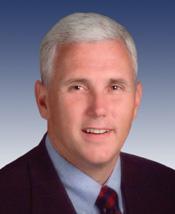
Mr. Speaker, I thank the gentlewoman from Florida for yielding me this time and, more importantly, for her extraordinary and consistent leadership as chairman of the Subcommittee on the Middle East…
Mr. Speaker, I thank the gentlewoman from Florida for yielding me this time and, more importantly, for her extraordinary and consistent leadership as chairman of the Subcommittee on the Middle East and Central Asia.
I also want to commend the leadership in the Congress of the gentleman from Missouri (Mr. Blunt) and the gentleman from Maryland (Mr. Hoyer) for bringing this measure forward. As ever, I was deeply moved by the courage and candor of the gentleman from California (Mr. Lantos) who preceded me and who continues to be the lone star for those of us in this Congress and in this country who cherish the dream that is Israel. It is a privilege to follow him in this discussion today.
I rise in strong support, Mr. Speaker, of H. Res. 56. Like millions of Bible-believing Christians, I pray for the peace of Jerusalem, and that refers specifically to all of the people of this torn region.
So, with the election of the second President of the Palestinian Authority, it is altogether fitting that this Congress commend the Palestinian people for conducting a free and fair presidential election on 9 January, 2005, and, in so doing, congratulating the new Palestinian President, Mahmoud Abbas, for his achievement and his leadership as H. Res. 56 does.
It is also altogether fitting, though, that in the same breath as this Congress, on behalf of the people of the United States, speaks a word of encouragement to the people of the Palestinian Authority and its new leader, we must also be willing to speak truth. And in this bipartisan measure, the American people, through this body, do just that, Mr. Speaker. In this resolution, the House of Representatives also will strongly condemn terrorism and urge President Mahmoud Abbas, who has happily previously disavowed terrorism, to immediately take steps to dismantle Palestinian terrorist infrastructure, to confiscate unauthorized weapons, arrest and bring terrorists to justice, consolidate and control the many Palestinian security organizations, and end the incitement of violence and hatred in the Palestinian media, educational institutions, mosques, and other institutions.
It may seem somewhat impolitic in what some may have expected from this Congress to have been a greeting card of congratulations to the new President of the Palestinian Authority to bring these matters up, but as this Congress in the very near future, I suspect, Mr. Speaker, will begin to talk about asking the American people to expand our participation in this region of the world, to expand our partnership with the Palestinian Authority, it is altogether fitting that we begin that discussion by expressing the expectations of the American people that the new leadership of the Palestinian Authority be about the rule of law and be about confronting terrorism within their own jurisdiction in the ways enumerated in H. Res. 56.
There can be no more important message that we send at such a time as this, a season of opportunity, as the gentlewoman from Florida (Chairman Ros-Lehtinen) described, a season of hope that we describe for the new leadership of the Palestinian Authority what attaches to that hope for the people of the United States who long for the peace and stability and democratic institutions of the people of Israel and the Palestinian people so richly deserve.
Mr. Speaker, the Old Testament promises, ``Weeping may endure for a night, but joy comes in the morning.'' For too many nights, Israeli and Palestinian families have wept for their loved ones who have fallen prey to the mindless violence that has sprung from terrorists within the Palestinian Authority. This resolution today is about expressing the profound hope of the American people that a morning of joy has come. With the election of President Mahmoud Abbas, the election of a new leader for the Palestinian people, we are come upon that new day of hope, and we will rise today as a Congress in bipartisan fashion to express that hope, with congratulations, but also with the truth, that there must be results and leadership that lead to peace and justice in the region for all of the people.

Mr. Speaker, I move to suspend the rules and agree to the resolution (H. Res. 56) commending the Palestinian people for conducting a free and fair presidential election on January 9, 2005, and for…
Mr. Speaker, I move to suspend the rules and agree to the resolution (H. Res. 56) commending the Palestinian people for conducting a free and fair presidential election on January 9, 2005, and for other purposes.
Mr. Speaker, I ask unanimous consent that all Members may have 5 legislative days within which to revise and extend their remarks and include extraneous material on the resolution under consideration.
Mr. Speaker, I yield myself such time as I may consume.
Today I rise in support of House Resolution 56, introduced by the House leadership, commending the Palestinian people for holding recent elections. This resolution is a reflection of our support for President Bush when he stated, ``The United States stands ready to help the Palestinian people realize their aspirations.''
The onus is on the Palestinian leadership to demonstrate that they are committed to moving peace forward by bringing an end to Palestinian terrorism. The election of Abu Mazen is a hopeful first step. Eight hundred international observers monitored the recent Palestinian presidential elections and agreed that the will of the Palestinians was adequately expressed. Palestinians from all walks of life participated in the elections, representing approximately 70 percent of eligible voters.
The Palestinian Central Election Commission has been recognized for facilitating a process whereby Palestinians could vote in a positive voting atmosphere. Commission representatives trained more than 16,000 electoral officials to staff the 2,800 polling sites throughout the West Bank and Gaza and conducted their operations in a professional way.
The Palestinian presidential election of January 9 of this year and the upcoming parliamentary elections scheduled for this July represent an opportunity for Palestinians to affirm their desire to end the violence and to forge a government that can respond to their needs.
We are guardedly optimistic about Abu Mazen's recent decision to ban the use of unregistered weapons by civilians.
We wish the new Palestinian leadership success in achieving a lasting peace and a prosperous future for both the Israeli and the Palestinian people and in building transparent institutions accountable to the Palestinian people.
Mr. Speaker, I commend the leadership for bringing this resolution to the floor today, and I ask my colleagues to support it.
Mr. Speaker, I reserve the balance of my time.
Mr. Speaker, I am so pleased to yield such time as he may consume to the gentleman from Indiana (Mr. Pence), a member of our Committee on International Relations and an original sponsor of this legislation.
Mr. Speaker, I yield myself such time as I may consume.
I thank the gentleman for his remarks, and I am so pleased that he singled out the gentleman from California (Mr. Lantos) who, as all of us know, recently led a delegation to Auschwitz where we commemorated the 60th anniversary of the liberation of Auschwitz. The gentleman from California (Mr. Lantos) is a Holocaust survivor who lost family members in this horrible tragedy, and we thank him for his leadership in the House throughout the years.
Mr. Speaker, I reserve the balance of my time.
Mr. Speaker, I yield such time as he may consume to the gentleman from Virginia (Mr. Cantor), the chief deputy whip.
Mr. Speaker, I yield 2 minutes to the gentleman from Maryland (Mr. Hoyer).
Mr. Speaker, I am proud to yield such time as he may consume to the gentleman from California (Mr. Dreier), the Chair of the Committee on Rules, our good friend.
(Mr. DREIER asked and was given permission to revise and extend his remarks.)
Mr. Speaker, I yield myself such time as I may consume.
I have no further requests for time, but I would like to take this opportunity to highlight and commend the gentleman from Missouri (Mr. Blunt), our majority whip, the gentleman from Maryland (Mr. Hoyer), the minority whip, and all of our leadership for their efforts on this resolution.
Mr. Speaker, I yield back the balance of my time.
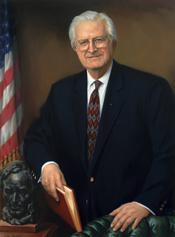
Mr. Speaker, today I rise in support of H. Res. 56, ``commending the Palestinian people for holding recent elections.'' This resolution is a reflection of our support for the Palestinian people and…
Mr. Speaker, today I rise in support of H. Res. 56, ``commending the Palestinian people for holding recent elections.'' This resolution is a reflection of our support for the Palestinian people and their determination to build a viable Palestinian State based on freedom and empowered democratic institutions.
I strongly support our President when he stated, ``The United States stands ready to help the Palestinian people realize their aspirations.'' The election of President Mahmoud Abbas is an encouraging step in that direction.
The election of new Palestinian leadership and Labor's entry into the Israeli Government have changed the circumstances and expectations surrounding the Middle East peace process. The newly elected Palestinian leadership and Israel should take advantage of this opportunity and implement concrete steps to support the emergence of a viable, credible Palestinian state.
The United States has a vital national security interest in a Middle East in which two states, Israel and Palestine, will live side by side in peace and security, based on the terms of United Nations Security Council Resolutions 242 and 338. A stable and peaceful Palestinian state is necessary to achieve the security that Israel longs for.
The Palestinian elections represent a vital part in that process. Over 800 international observers monitored the recent elections. Among them were 80 observers led by former President Jimmy Carter, who stated that,
There is no doubt that the will of the Palestinians was
adequately expressed, that Abu Mazen has the support and
respect of his people, and that he is dedicated to the
peaceful pursuit of a peace agreement. . . .
Palestinians from all walks of life participated in the Presidential elections, representing approximately 70 percent of eligible voters. Young and old, women and men, even those with serious physical disabilities, were determined to play their role in building a better future.
The Palestinian Central Election Commission should also be commended for its commitment to ensure free and fair elections and for facilitating a process whereby Palestinians could vote in a positive voting atmosphere. Commission representatives trained more than 16,000 electoral officials to staff the 2,800 polling sites throughout the West Bank and Gaza and conducted their operations in a professional way. Every election is a learning experience, and I support the Palestinian Central Election Commission in its request to apply lessons learned from the recent presidential election to the parliamentary elections scheduled later this year.
The Palestinian Presidential elections of January 9, 2005, and the upcoming parliamentary elections scheduled this July represent an historic opportunity for Palestinians to affirm their various political expressions and forge a government that can respond to their needs.
It is clear the Palestinians want institutions that are transparent and accountable. The United States, Israel, and the rest of the international community should do all they can to eradicate the sources of extremism that undermine moderate Palestinian leadership. Such actions will foster democratic development among the Palestinians and enable their elected institutions to produce constructive results for its people.
I am encouraged by Abbas' recent decision to ban the use of unregistered weapons by civilians. Such steps, matched by cooperation on the part of Israel, will assist President Abbas' determination to restore rule of law in the Occupied Territories.
I congratulate President Abbas and look forward to his success in achieving the national aspirations of the Palestinian people and his role in bringing peace to the Holy Land.
Mr. Speaker, I support this resolution and its passage.
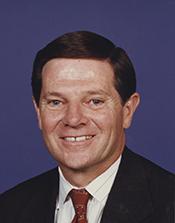
Mr. Speaker, issues like this one--first brought to our attention with a passion and eloquence only possible in a man like Jerry Solomon--provide our democracy a valuable service: They cut through…
Mr. Speaker, issues like this one--first brought to our attention with a passion and eloquence only possible in a man like Jerry Solomon--provide our democracy a valuable service: They cut through the fog of spin and force us to tell the American people exactly where we stand.
Pure and simple, this bills says our armed services--the Army, Navy, Air Force, Marines, Coast Guard, and National Guard--should have the same right to recruit at colleges and universities who receive federal funding as any other group.
Every year, thousands upon thousands of businesses, industries, non- profit groups, and even other colleges recruit underclassmen to sign up to become investment bankers and computer engineers or environmental lawyers or medical students.
And yet, some colleges--principally the elitist and elite colleges-- refuse to even allow military recruiters on their campuses.
Such policies are obnoxious in times of peace, but they are simply intolerable in times of war, and the equal access of our military recruiters to federally funded colleges and universities must be protected.
But that, Mr. Speaker, is the easy part.
The hard part is understanding why facilities and administrations of these colleges don't want military recruiters on their campuses.
Because, at bottom, their opposition to the presence of veterans at their schools is not about academic freedom, or civil liberties.
It's about them not liking the military, or the values our men and women in uniform represent.
It's about many of them preferring the company of people who blame the United States for 9/11--who compare the World Trade center victims to Nazis--to the company of a soldier or a sailor or an airman or a Marine.
It's about academia feeling more sympathy for terrorists than for the women and children they murder.
It's about a fundamental misconception about the purpose of a university--the professors are there for the students, Mr. Speaker, and not the other way around.
That our military makes our academia possible, and not the other way around.
Indeed, the right of tenured academics to be publicly insufferable exists only because of the sacrifices of our servicemen and women.
The least they could offer in return is a booth in the field house on career day.
Of course, men and women who have dodged bullets and held dying comrades in their arms don't take seriously people who live by the glib professional code ``publish or perish.''
But those elite campuses, who claim to educate our nation's best and brightest, who claim to train our leaders of the future: how can we possibly not allow military recruiters to have the right to talk to such students?
What profession, if any in our entire society, needs the opportunity to recruit the sharpest and broadest minds of every generation more than our armed forces?
America's armed services have molded great men from all walks of life, and when given brilliant men and women, they have produced legends.
How can we let such minds pass through our top colleges without even the chance that they might bump into a veteran recruiter who could change their life?
America in the future no doubt will need its brilliant businessmen and lawyers and poets, but what good can such genius do without brilliant admirals and generals to protect them?
Mr. Speaker, it's a shame this issue was ever forced on us at all, but the vote on this bill will help to clarify exactly what we each mean when we say we support the troops.
We'll finally see who among us really believes the military deserves more than just lip service from those of us they protect.
Votes like this, after all, remind us of one of the great blessings of American democracy: that unlike college professors, congressmen don't have tenure.
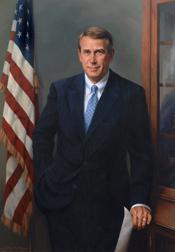
Mr. Speaker, let me thank my colleague for yielding me this time. Mr. Speaker, today I rise in strong support of this resolution, which shows our Nation's unwavering commitment to both higher…
Mr. Speaker, let me thank my colleague for yielding me this time.
Mr. Speaker, today I rise in strong support of this resolution, which shows our Nation's unwavering commitment to both higher education and providing a strong national defense. At no time in recent memory has our country placed more responsibility on the shoulders of our men and women in uniform. We are fighting a war on terrorism on multiple fronts, in Afghanistan and Iraq. And it is essential that if we are to be victorious in defending our freedom and protecting our homeland that we promote military service as an option to college students across the United States.
When this Congress passed and President Bush signed into law the No Child Left Behind Act, the bill made it easier for military recruiters to inform America's high school students about their options to serve their country, while also giving parents a choice about whether or not they want their sons and daughters to be contacted individually by military recruiters.
Now in this resolution we are reiterating the choices given to institutions of higher education. The Solomon Act, originally passed in 1995, grants the Secretary of Defense power to deny Federal funding to institutions of higher learning if they prohibit military recruitment on campus. This law recognizes the importance of having a capable, educated and well-prepared military, one that is ready to defend American liberties such as freedom of speech and higher education.
If we deny Armed Forces recruiters the opportunity to actively recruit in schools, we not only disrespect the sacrifices of military men and women who have made our freedom possible; we also rob our students of the valuable opportunities that military service can be to our Nation and what they can help provide. There is no reason not to allow the Nation's armed services to make their best case to college students and to do so in the same manner as private sector employers that colleges and universities seem to relish having on campus.
Denial of access and equality to military recruiters by colleges that receive Federal funds is an insult to the taxpayers who help subsidize higher education in this country. Many nations have mandatory military service for their citizens. We do not. The very core of our system of homeland security and national defense depends on young men and women deciding that they wish to serve our country.
Successful recruitment of the best officers in our military relies heavily on our military recruiters' access to the best and the brightest. And it seems a bit disingenuous for the elite institutions of higher education, such as Harvard, Yale, Stanford, Georgetown, and New York University, to condemn the lack of the wealthy and privileged in the ranks of our military while these schools deny their students the option of even hearing about a career in our United States military.
This resolution should not be politicized. It is a straightforward reaffirmation of our Armed Forces and our students. Congress does not force colleges and universities to accept Federal funding. If an institution of higher learning wishes to bar military recruiters from recruiting, it is free to do so. But Federal funding is not an entitlement and such institutions should not expect that decision to be endorsed and subsidized by the taxpayers of the United States. The resolution reaffirms our commitment to that principle.
And I want to commend the gentleman from California (Mr. Hunter) and I also want to thank the gentleman from Minnesota (Mr. Kline) for bringing this resolution to the floor and urge my colleagues to support it.
Mr. Speaker, I rise today in strong support of H. Con. Res. 36. This resolution expresses the continued support of Congress for the so-called Solomon Law, a critical piece of legislation originally…
Mr. Speaker, I rise today in strong support of H. Con. Res. 36. This resolution expresses the continued support of Congress for the so-called Solomon Law, a critical piece of legislation originally passed in 1994 which has helped ensure that military recruiters have equal access on our Nation's campuses.
We are debating this resolution today only because of a recent court decision that wrongfully struck down the Solomon Law. In November of last year, a closely divided U.S. Third Circuit Court of Appeals ruled that the Solomon Law violates first amendment rights to free speech and association.
The court sided with the plaintiff arguing that ``the Solomon Amendment requires law schools to express a message that is incompatible with their educational objectives, and no compelling governmental interest has been shown to deny this freedom.''
Mr. Speaker, I cannot disagree more with this assessment. In our post-9/11 world, our Nation's military deserves, at least the same access to institutions of higher education that any other major employer might enjoy. This is certainly a modest and I believe a reasonable request, especially if the college or university accepts Federal funds.
This is not about infringing free speech; it is about ensuring our military has access to our Nation's best and brightest at a time when we face enormous challenges abroad. This resolution expresses the continued support of Congress for the Solomon Law and would help ensure that military recruiters continue to have access to college campuses and students that is at least equal in quality and scope as that provided to any other employer.
This resolution would reaffirm the commitment of Congress to explore all options, including the use of its constitutional power to appropriate funds to achieve that equal access. In adopting this resolution, we would also be urging the executive branch to aggressively challenge any decision impeding or prohibiting the operation of the Solomon Law. Also, we would be encouraging the executive branch to follow a doctrine of nonacquiescence by not finding a judicial decision affecting one jurisdiction to be binding on any other jurisdiction.
Mr. Speaker, as we debate this resolution, it is important for us to remember that the Solomon Law and its legislative updates were not designed as one-size-fits-all mandates from Washington. In fact, the law is very flexible, and it fits the needs of nearly every public- funded institution in the country. For example, the Solomon Law does not apply to colleges or universities that have a long-standing policy of pacifism based on historical religious grounds, nor does it affect any Federal student aid or financial assistance.
Of course, as those of us who are here debating this issue are aware, this is not the first challenge to this law. Prior to the November circuit court decision, on repeated occasions lower courts have consistently upheld the constitutionality of the Solomon Law, arguing that it does not infringe on any institution's right to free speech or association.
While this recent court decision is unfortunate, it is not the end to the Solomon Law. A bipartisan vote here today in support of this legislation will help send a clear message to our courts that our military recruiters deserve equal access on all of our campuses. I thank the gentleman from California (Mr. Hunter) for his ongoing efforts on this issue, and I thank the gentleman from Minnesota (Mr. Kline) for managing this legislation.
Show 11 more

I thank my good friend for yielding me this time. Mr. Speaker, I rise today in support of equal campus access for our military recruiters. Recently, a group calling itself Freedom For Academic and…
I thank my good friend for yielding me this time.
Mr. Speaker, I rise today in support of equal campus access for our military recruiters.
Recently, a group calling itself Freedom For Academic and Institutional Rights, FAIR, has decided that they disagree with what our military stands for; and, because of this, they have decided that the military no longer deserves access to our Nation's institutions of higher learning. They claim that granting military recruiters equal access to campuses would promote only a pro-military viewpoint and a pro-military recruiting message.
This is simply not true. The government is not asking campuses across America to endorse the war on terror, the President's policy or anything to do with the military. All we are asking for is that the military be afforded the exact same access as other organizations to the student body. That is it. That is all. Those who argue that giving equal access somehow constitutes an endorsement of the military are just plain wrong. Does giving equal access to other groups mean that each institution agrees with every idea that that organization may have? Of course not. I really think it is ridiculous to argue that point, but FAIR is arguing just that.
It is in everyone's interest to ensure that young people receive information, including military options, so they can make informed choices about their future after they finish their education. Just because a school disagrees with a career in the military, does that give them the right to deny information about that particular career to someone who might want to sign up? Is it right to deny access because you disagree with what someone says? How is that in keeping with the first amendment to the Constitution?
The position that FAIR and others have taken is nothing more than thinly veiled hypocrisy. They are masking their obvious hatred of our Nation's military by hiding behind the first amendment. I think it is wrong. I am not going to sit idly by while this so-called FAIR group trashes our military.
The Constitution in article 1, section 8, states that Congress shall have the power to raise and support armies, provide and maintain a navy and make rules for the government and regulation of the land and naval forces. It does not say that activist judges and institutions of higher education have the right to prevent Congress from going about its duty to raise and support the Armed Forces of these United States.
Were the members of the FAIR not aware that we were at war and that a state of national emergency has existed in this country since September 11 of 2001? I am sure they are happy to enjoy the rights afforded to them by the first amendment, but who allows them those rights? Perhaps they should reread the old Poem to a Soldier:
``It is the soldier, not the reporter, who has given us freedom of the press.
``It is the soldier, not the poet, who has given us freedom of speech.
``It is the soldier, not the campus organizer, who gives us freedom to demonstrate.
``It is the soldier who salutes the flag, who serves beneath the flag and whose coffin is draped by the flag who allows the protester to burn the flag.''
I urge all my colleagues to support this resolution to ensure that the military of these United States continues to have equal access to our Nation's finest young men and women.

Mr. Speaker, I thank my colleague and friend for yielding me this time. Mr. Speaker, January 9 was an important and historic day. For many Palestinians it was a once-in-a-lifetime event. They went to…
Mr. Speaker, I thank my colleague and friend for yielding me this time.
Mr. Speaker, January 9 was an important and historic day. For many Palestinians it was a once-in-a-lifetime event. They went to the polls and elected a new president in a contested, free, and fair election. The Palestinian election was a milestone not only for the Palestinian people but for the safety of Israel and for our own national security as well.
I was privileged to witness this remarkable event with my own eyes. From 5:30 in the morning until nearly midnight I traveled in and around Bethlehem in my capacity as an election observer for the mission co- sponsored by the National Democratic Institute and the Carter Center.
Let me first take a moment and commend President Carter, Governor Christie Todd Whitman, former Swedish Prime Minister Carl Bildt, and NDI President Ken Wollack for leading our delegation and the 80 participants from 16 different nations who did a remarkable job. With a few exceptions, what I observed in Bethlehem held true across the West Bank and Gaza. The balloting process was exceptionally well organized, in part because nearly 14,000 public school teachers were deployed as election officials.
The Israeli Government did a good job facilitating freedom of movement in the territories. There was little violence. In fact, an almost reverential quiet enveloped the polling places. It was truly moving to see Palestinian people, young and old, embracing this democratic exercise with such purpose and resolve.
Mr. Speaker, Israelis and Americans should welcome the choice of the Palestinian people. Abu Mazen is a proven leader with a long track record of negotiating for peace. He is off to a decent start. Abu Mazen cannot prevent terrorism overnight, neither can we; but he has already sent a strong and successful message to Hamas and the Islamic Jihad to halt the attacks. His security forces have deployed in Gaza. He has unequivocally condemned terrorism.
Prime Minister Sharon's response to the new President has been commendable. Israeli and Palestinian security officials and top negotiators have been meeting. Sharon has praised Abu Mazen's efforts and will meet with him shortly. Despite fierce opposition from the settler movement, Sharon is sticking firmly to his plan to withdraw from Gaza and parts of the West Bank. Fragile as it may be, a new flame of hope and optimism has been kindled in the Mid East.
That is why I am pleased that the House bipartisan leadership has brought a resolution to the floor today. The bill commends the Palestinians for conducting the elections, congratulates Abu Mazen on his victory, and encourages both sides to take steps toward peace.
Mr. Speaker, last night a similar resolution was passed in the other body that I had hoped the House could adopt as well. The language of the Senate resolution is more comprehensive and
balanced and lays out a bolder diplomatic vision to achieve Israeli- Palestinian peace. Nevertheless, it is noteworthy that both Houses of Congress are on record commending the Palestinian people and their new President. Let us all commit ourselves to seizing this historic opportunity and hastening the day when Israelis and Palestinians will live side by side in peace.
Mr. Speaker, I rise in opposition to this resolution. It may seem peculiar, but, frankly, I think that the military does not need this resolution. It is not broken out there. They are having the…
Mr. Speaker, I rise in opposition to this resolution. It may seem peculiar, but, frankly, I think that the military does not need this resolution. It is not broken out there. They are having the ability to recruit. Even despite the negative news from Iraq, the recruitment numbers are up for all the services.
What this resolution does is sort of breaks this feeling in America that democracy allows divergence of opinion and that the people that own the real estate should have a voice in who can visit that real estate. We do not have any nationally owned universities, yet this resolution requires equal access for all military recruiters at institutions of higher education. I think we are getting into a really slippery area here because you are going to create within those campuses huge debates that students are going to say, we don't like this stuff being jammed down our throats. We and the faculty and the trustees of a university ought to be able to decide who can visit our campus, as they do in all other things.
For example, here in Washington, D.C., Catholic University does not allow pro-abortionist recruiters to come and talk on the campus, and here you are going to require, regardless of what the issue should be, that military recruiters have to be allowed on campus. I think it is a very slippery slope. I do not think we need to go there, because the recruitment numbers are not down. I think the military has historically stood on its own feet to do very well in recruiting without getting Congress involved mandating that they have to be on campuses. I think you are going to have a negative reaction.
I would urge Congress very carefully to think about this and to vote ``no'' until we get a better thought on how we want to mandate democracy in this country.
Mr. Speaker, I come to the floor today in strong opposition to H. Con. Res. 36.
It is a standard practice for institutions of higher learning to include a non-discrimination policy as part of their mission. These policies affirm that they do not tolerate discrimination on any number of issues: race, sex, religion, age, disability, social class, and sexual orientation. These non-discrimination policies were created so that all people in our country have the opportunity to be an equal and respected member of higher education communities.
Unfortunately the military has established a discriminatory policy, Don't Ask Don't Tell. This policy unfairly excludes homosexuals from military service on the basis of their sexual orientation alone. For example, numerous military linguists who are critically needed in the Global War on Terrorism have been discharged under Don't Ask Don't Tell. Supporters of H. Con. Res. 36 say that denying military recruiters access to college campuses is a national security threat, but they are completely missing the big picture. The real national security threat is the Don't Ask Don't Tell policy that forces our military to discharge gay servicemen and servicewomen regardless of their job performance.
I strongly believe that the non-discrimination policies of colleges and universities should be respected and I urge my colleagues to vote against this resolution.

Mr. Speaker, I wanted to join my colleagues and friend, the majority whip, the gentleman from Missouri (Mr. Blunt), who I presume has already spoken, in urging Members on both sides of the aisle in…
Mr. Speaker, I wanted to join my colleagues and friend, the majority whip, the gentleman from Missouri (Mr. Blunt), who I presume has already spoken, in urging Members on both sides of the aisle in supporting this important bipartisan resolution that we have offered.
Over the last half century, the Members of this body have seldom had occasion to commend those on the Palestinian side whose cause, in my opinion, was hijacked by a leadership that preached death and destruction rather than reconciliation and peace. But today we would be remiss if we did not do so.
Three weeks ago on January 9 an estimated 70 percent of the 1.1 million registered Palestinian voters turned out to cast their ballots in an election that was declared fair by most international observers.
This strong turnout, in my judgment, not only reflects the universal appeal of democracy but also the human heart's yearning for freedom and self-determination.
This resolution commends the Palestinian people for conducting a free and fair election and congratulates the new Palestinian President, Mahmoud Abbas, who has previously disavowed terrorist activity and recently earned the praise of Israel for deploying more Palestinian security forces in Gaza to try to halt rocket and mortar attacks on Israeli citizens.
Among other provisions, this resolution urges the new Palestinian leadership to advance democratic ideals by reforming its political structure, advancing human rights and ending corruption.
It strongly condemns terrorism and urges President Abbas to immediately take steps to dismantle the Palestinian terrorist infrastructure, to bring terrorists to justice, and to end the incitement of hatred in the Palestinian media, schools, mosques, and other institutions.
It restates our Nation's strong commitment to and support, unwavering support, for the State of Israel.
Finally, Mr. Speaker, let me say that the election of President Abbas is an important opportunity and could prove to be an historical turning point in the Israeli-Palestinian conflict.
Israel has made repeated overtures over its history in an effort to speak peace, and, today, it continues to move forward with its withdrawal plan in the Gaza strip. Tragically, over the past 5 decades its efforts were consistently rebuffed by the Arafat-led Palestinian leadership.
Without question, there are great challenges ahead, but the election of President Abbas hopefully marks a new day, a day in which the Palestinian leadership becomes a serious, committed partner, a partner for peace in the Middle East.
I urge my colleagues to vote for this resolution. I thank the gentleman from California (Mr. Lantos), a giant in the area of human rights and supporting democratic efforts throughout the world, for his leadership, and I thank the gentlewoman from Florida (Ms. Ros-Lehtinen) for her unending efforts, in concert with the rest of us, to ensure that this Nation stands by Israel but stands with those in the Palestinian population who reach out for peace and partnership and a better tomorrow for all of the people of that troubled area of the world, and I thank the gentlewoman for yielding me the additional time.
Mr. Speaker, I rise today in support of the resolution offered by the gentleman from Missouri, Mr. Blunt and the gentleman from Maryland, Mr. Hoyer. On January 9, the world witnessed the peaceful…
Mr. Speaker, I rise today in support of the resolution offered by the gentleman from Missouri, Mr. Blunt and the gentleman from Maryland, Mr. Hoyer. On January 9, the world witnessed the peaceful expression of Palestinian national aspirations. By holding the freest and fairest elections in the Arab world, it is clear that the Palestinian people, like any people, want to choose their own destiny.
I hope, we all hope, that the election of Mahmoud Abbas as President of the Palestinian Authority opens a new chapter in the pursuit of Middle East peace. But as history has taught us, hope in the Middle East can be fleeting, and so our hope is accompanied by trepidation. We hope that this election will mark the beginning of a new relationship between Israelis and Palestinians, that this change in Palestinian leadership will enable the Palestinian Authority to take the courageous steps required to achieve peace that we have long argued were necessary. We hope that the change in Palestinian government will be recognized by Israel as an opportunity to achieve for themselves the secure Jewish, democratic state that has been their goal since independence. We hope that our own government sees the opportunity to again pick up the mantle of peacemaker, and support both parties in the struggle to achieve the vision of two states, living side by side, in peace, articulated by the President in his speech 2\1/2\ years ago.
But there is much work to be done. President Abbas faces many challenges but first, foremost and absolutely, he has to stop terror and the potential for its resumption. Without this step all the other necessary reforms will be for naught. To achieve this President Abbas must reform Palestinian security services; end incitement against Israel; and deliver a government free of corruption and capable of producing the economic growth and prosperity the Palestinian people are entitled to expect. The United States can, and should, help here. I am pleased that the supplemental that we will consider in the coming weeks will have additional assistance for the Palestinian people. Now is the time for U.S. leadership in support of Abu Mazen's efforts to fight terror, reform his security services, and eliminate corruption. In the coming weeks and months we
will have time to judge his efforts, but bearing in mind the potential for failure, now is the time to act in pursuit of peace.
Mr. Speaker, I would be remiss if I did not say a word commending Israel for facilitating the recent elections. Prime Minister Sharon assured me, when I was in Jerusalem last November that he would do everything possible to ensure that Palestinians could vote, and he did. That is the kind of leader he is, and he deserves our support and our trust.
Mr. Speaker, it is not yet a new day and we have not yet ``turned the corner.'' But I am certain we will be condemned by future generations if we do not do all we can to seize this moment and the opportunity it represents. I urge my colleagues to support this resolution but more importantly to remember that in the coming months we will be asked to take additional risks for peace. We should take them.
Mr. Speaker, there is a very troubling development taking shape in the security policy of the European Union concerning arms sales to China. Briefly stated, the major European countries have already…
Mr. Speaker, there is a very troubling development taking shape in the security policy of the European Union concerning arms sales to China. Briefly stated, the major European countries have already resumed arms sales to China and now propose to terminate altogether the long-standing embargo on arms sales that they imposed in 1989 following the Tiananmen Square massacre.
This is all part of a new ``strategic partnership'' which the European Union proclaimed at its summit meeting with China last December. Also reflected in the communique for that meeting is European support for China's membership in the Missile Technology Control Regime. The contrast with the policy of the United States Government could not be greater. Just a few days later, the Department of State once again imposed sanctions on several most prominent entities in China's military industrial complex for illicit sales to Iran.
Recent public comments by European authorities seek to downplay the significance of their new policy. They maintain that their arms sales to China will not result in quantitative or qualitative increases. But, this provides little assurance since the major EU member states have already doubled their arms sales in the one year period between 2002 and 2003 to $500 million. Indeed, there are no rose-colored glasses available that can soften the impact of this dangerous course of action.
The development of democracy in China would be the first casualty. Like the United States, the European Union imposed an arms embargo on China in 1989 following the Tiananmen Square massacre. While China's economic policies since then have provided the Chinese people with greater choices about consumer goods, the Communist Party remains firmly in power and permits few choices about what can be said publicly in exercise of personal liberty. A termination of the EU arms embargo would provide the Chinese leadership with an impressive propaganda coup and demoralize the pro-democracy movement.
Even more disturbing, European security policy in this area appears to be on a collision course with our country's extensive security interests in the Asia-Pacific region. Our security posture has been the decisive factor in ensuring regional stability and prosperity since the end of World War II. Our military planners and commanders are already confronting a sustained Chinese military buildup, which includes China's deployment of some 500 short range ballistic missiles across the Taiwan Strait and intercontinental missiles that can reach American shores.
The statement we make in this Resolution is twofold: First, that European policy should support the development of democracy in China, not a military buildup, by maintaining the embargo and terminating current sales. Second, that European armament cooperation with China is fundamentally inconsistent not only with our security interests in Asia, but also with transatlantic armament cooperation, which we will be duty bound to examine in a new context given the increased risks of diversion of sensitive U.S. military technology that naturally arise from EU-Chinese arms cooperation.
Mr. Speaker, today the House of Representatives voted to commend the Palestinians for holding free elections on January 9, 2005. We should congratulate the countless Palestinians who participated…
Mr. Speaker, today the House of Representatives voted to commend the Palestinians for holding free elections on January 9, 2005. We should congratulate the countless Palestinians who participated nonviolently in the historic event.
However, we must also hold the newly elected President and the entire Palestinian Authority accountable for publicly rebuking and bringing an end to terror and incitement. Until violence has ended, the U.S. should withhold its funding. U.S. taxpayers should know that their money is being spent fighting terror, not supporting it.
During the last 4 years, the Palestinian Authority failed to halt more than 22,000 attacks that killed over 1,030 Israelis. Yet, at the same time the United States gave more than $612 million in aid to the West Bank and Gaza. That's more U.S. aid to the Palestinians than in the previous 25 years combined.
Sadly, the recent elections have not produced a true disarming of the terrorists. In the 1 week following Abbas' election, terror attacks left 8 Israelis dead and prompted Israel's Prime Minister to express his outrage at the new Palestinian leadership for ``not lifting a finger'' to stop violent attacks. Just yesterday, the Jewish residents of Gush Katif were terrorized by mortar fire and a 50 kilogram explosive device was uncovered by the Israeli army at a border crossing in the Gaza Strip.
For many, the continuing violence is no surprise given Abbas' election campaign, in which he not only referred to Israel as ``the Zionist enemy,'' but said he would protect Palestinian terror groups that use rockets and other means to attack innocent Israelis. Yesterday, Israeli intelligence chief Aharon Ze'evi confirmed that ``the preparations for terror acts continue'' among senior Hezbollah and Hamas leaders. And last week, Hamas won 77 council seats in a landslide victory in Gaza municipal elections. The terror group now controls 7 out of the 10 councils in which elections were held. In the wake of the elections, Israeli minister Natan Sharansky has unveiled a report documenting Palestinian incitement ``of virulent hatred of Jews and Israel that mandates the killing of Jews as a religious obligation.''
These recent events deserve condemnation. While the election of a Palestinian Prime Minister may be a rare experience, the historic event worth celebrating will be a true end to Palestinian terror. Since Arafat was appointed chairman of the PLO in February 1969, more than 36 years of Palestinian terror have plagued Israelis and Palestinians alike. Violence has been the one constant, and the United States should wait until Palestinian terror ends before commending or funding an apparatus of terror.

Mr. Speaker, I rise in support of this resolution, which commends the Palestinian people for holding free and fair elections on January 9. I know we all hope it will be the end of the violence that…
Mr. Speaker, I rise in support of this resolution, which commends the Palestinian people for holding free and fair elections on January 9. I know we all hope it will be the end of the violence that has devastated so many families, and the beginning of the resumption of peaceful negotiations.
The State of Israel and many, many Palestinians want this. They want peace--to safeguard their children, to encourage economic growth, to move towards the future with optimism and a sense of purpose. The United States shares this hope, and must continue to actively support these efforts. I commend President Bush for his involvement, and I hope he will remain steadfast.
But we are not naive. We have been at such hopeful moments before. As President Bush said last summer, there are a number of concrete actions the Palestinians must take before they can be viewed as legitimate partners in the path to peace.
Free elections are one step. But now newly elected Palestinian Authority Chairman Mahmoud Abbas must do more. He must disarm Palestinian terrorist groups--not just call on them to cease attacks on Israelis. Abbas must do the hard work of dismantling the terrorist organizations. He must control and consolidate the security forces that often collaborated with terror groups. He must push for true political and economic reform, and stop the rampant corruption. And finally, he must truly engage Arab leaders in supporting true peace in the region. If he does all these things, if Abbas can demonstrate by his action that he is a serious, earnest partner in the pursuit of peace, then there is truly cause for hope.
We have waited decades for a peace that will safeguard Israel's security, and will bring about regional stability and prosperity. For those who truly seek peace, who understand that there is no choice but peace to secure the future of the Middle East, the latest developments are encouraging.
The future of the Middle East--and the ultimate security and safety of Israel--is at stake. The United States will maintain its commitment to bringing the parties back to the negotiating table, but the ultimate choice of peace is theirs to make. Chairman Abbas must not squander the opportunity to bring peace and prosperity to his people. He must show his willingness to make the tough choices, and take the risky path, that separate those who truly seek peace from those who do not.
I urge unanimous adoption of this resolution. .
Mr. Speaker, I rise in support of our Armed Forces and in support of this nation's continued efforts to give it the additional strength and stability it needs to keep our men and women safe. The…
Mr. Speaker, I rise in support of our Armed Forces and in support of this nation's continued efforts to give it the additional strength and stability it needs to keep our men and women safe. The members of this House have joined their constituents in mourning the loss of life and injuries sustained in the course of America's war and subsequent occupation of Iraq for two years.
Since the beginning of the Iraq war in March 2003, 1,423 members of the U.S. military have died, which includes 1,084 as a result of hostile action and 333 of non-hostile causes. Furthermore, my District of Houston has experienced two deaths already since January; six deaths in 2004; five in 2003; and numerous injuries over the course of the nation's engagement.
No doubt, Mr. Speaker, I fully support the Armed Services. In the spirit of achieving the goal of attracting the best and brightest candidates for service, I join my colleague from California in advocating this legislation. However, we must support our troops in accordance with the U.S. Constitution and with respect for civil rights and fundamental freedoms that are the rubric of this nation.
When the House debated H.R. 3966, which would allow for the denial of federal funds for educational institutions unless military recruiters are provided access to the campuses of these institutions, I voted ``yes'' on passage of the measure with the understanding that no Constitutional contravention would result from its implementation.
The resolution that is before the House today, however, is controversial because the final disposition of underlying federal jurisprudence could play a major role clarifying the way we apply Constitutional principles to an act of Congress. The holding in Forum for Academic and Institutional Rights v. Rumsfeld tells us that we must be very careful in the way we regulate society so as not to violate fundamental rights. (390 F.3d 219 (3rd Cir. 2004)).
So, Mr. Speaker, I do support the intent of this legislation because I honor the men and women who serve in our Armed Services and who sacrifice their lives for us. However, I also support the upholding of the United States Constitution and the respect for jurisprudence, and I believe it seriously damages our commitment to the three branches of government to encourage the interference with judicial decisions before a final rendering of a final review by the U.S. Supreme Court.

Mr. Speaker, I rise in full support of this resolution and urge my colleagues to support its passage. Asking the administration to appeal the third circuit is the right thing to do. What is happening…
Mr. Speaker, I rise in full support of this resolution and urge my colleagues to support its passage. Asking the administration to appeal the third circuit is the right thing to do. What is happening on some college campuses is deja vu for those of us who attended colleges in the 1960s and the 1970s. Back then too many college administrators lacked the courage to resist pressure from then what were called left- wing student groups and other professors to ban military recruiters from their campuses. As a result, students who sought military careers were denied equal access to careers of their choice and our schools became the centers for a wide range of nonsense courses.
The student protestors of the 1960s and 1970s and those of like mind are now the administrators and professors of colleges and universities all over the country. Clearly, they have neither changed their politics nor loathing for the American military. Even at a time when our servicemen and -women are encouraged to defeat the forces of tyranny and terror, they remain the same.
In denying military recruiters equal access to campuses such as Harvard Law School, college administrators violate the most basic principles of the right to associate and free speech they so profess is precious. Despite large numbers of conservative students attending their institutions, these liberals preach tolerance; however, these liberal administrators and professors have now become the most intolerant people I know.
The following quote is from a student typical of the attitude of many of these ivory bastions: ``The day my political science department hires a Republican and I am allowed to sit in a class without a number of snickers, jeers, and/or dirty looks when President Bush's name is even mentioned is the day I will admit there is progress on today's campus.''
Mr. Speaker, Congress did not ask for special access for military recruiters. We are asking for just equal access to groups such as those seeking support for such liberal causes as abortion rights, frivolous lawsuits, same-sex marriage, elimination of the right to private property, gun control, Orwellian Big Government. Mr. Speaker, once again activist judges have clearly overstepped their authority, and it is time for the administration to stand and say that the U.S. Court of Appeals for the Third Circuit was wrong in their ruling and please seek an appeal.

Mr. Speaker, I yield 4 minutes to the gentleman from Alabama (Mr. Rogers), the sponsor of this concurrent resolution and a member of the Committee on Armed Services. Mr. Speaker, I yield 3 minutes to…
Mr. Speaker, I yield 4 minutes to the gentleman from Alabama (Mr. Rogers), the sponsor of this concurrent resolution and a member of the Committee on Armed Services.
Mr. Speaker, I yield 3 minutes to the gentleman from Texas (Mr. Conaway), a member of the Committee on Armed Services.
(Mr. CONAWAY asked and was given permission to revise and extend his remarks.)
Mr. Speaker, it gives me great pleasure to yield 4 minutes to the gentleman from Florida (Mr. Miller), my colleague on the Committee on Armed Services.
Mr. Speaker, I am pleased to yield 4 minutes to the gentleman from New York (Mr. Sweeney).
(Mr. SWEENEY asked and was given permission to revise and extend his remarks.)
Mr. Speaker, I yield 4 minutes to the gentleman from Ohio (Mr. Boehner), the chairman of the Committee on Education and the Workforce.
Mr. Speaker, I yield 2 minutes to the gentleman from California (Mr. Hunter), the distinguished chairman of the House Committee on Armed Services.
Mr. Speaker, I yield 3 minutes to the gentleman from Georgia (Mr. Kingston).
(Mr. KINGSTON asked and was given permission to revise and extend his remarks, and include extraneous material.)
Mr. Speaker, I yield 3 minutes to the distinguished gentleman from Indiana (Mr. Buyer), chairman of the Committee on Veterans' Affairs.
Mr. Speaker, I yield myself such time as I may consume.
In closing, I would just say that we have heard some discussion today about policies of the United States Armed Forces for a long time. Since its inception, there have been special policies applied to our military, the ability to impose nonjudicial punishment, the ability to restrict entry by those who are too tall or too short, the ability to order its members away from home and into combat and into harm's way. But the discussion today is not about those policies and should not be about those policies. The discussion today is about keeping our military, keeping our Armed Forces, the best trained, the best led, the best equipped in the world; and that means we need the ability to recruit the best and the brightest. This is about insisting that our military recruiters have equal access to America's universities and colleges.
I urge all of my colleagues to support this resolution.
Mr. Speaker, I yield back the balance of my time.
Mr. Speaker, on that I demand the yeas and nays.
Bill Text
2 versions available
        [Congressional Bills 109th Congress]
[From the U.S. Government Publishing Office]
[H. Res. 56 Engrossed in House (EH)]

In the House of Representatives, U.S.,

February 2, 2005.
Whereas on January 9, 2005, the Palestinian people elected Mahmoud Abbas as the
second President of the Palestinian Authority;
Whereas this election has been hailed as free and fair and is an important and
noteworthy step in advancing democracy in the Arab world;
Whereas Israel should be commended for facilitating the Palestinian election
proceedings;
Whereas the United States is hopeful that a peaceful resolution of the Israeli-
Palestinian conflict can be achieved;
Whereas the United States is strongly committed to the security of Israel and
its well-being as a Jewish state; and
Whereas on June 24, 2002, President George W. Bush expressed his vision of two
states living side by side in peace and security and that vision can
only be fully realized when terrorism is defeated, so that a new state
may be created based on the rule of law and respect for human rights:
Now, therefore, be it
Resolved,  That the House of Representatives--
(1) commends the Palestinian people for conducting a free and fair
presidential election on January 9, 2005;
(2) congratulates the new Palestinian President, Mahmoud Abbas;
(3) urges the new Palestinian leadership to continue to advance
democratic ideals by reforming the Palestinian political structure,
advancing human rights, and ending corruption;
(4) strongly condemns terrorism and urges President Mahmoud Abbas,
who has previously disavowed terrorism, to immediately take steps to
dismantle the Palestinian terrorist infrastructure, confiscate
unauthorized weapons, arrest and bring terrorists to justice,
consolidate and control the many Palestinian security organizations, and
end the incitement to violence and hatred in the Palestinian media,
educational institutions, mosques, and other institutions;
(5) urges Arab states to take active steps to encourage and assist
the Palestinian Authority in bringing an end to terrorism and an end to
anti-Israel incitement in their own media; and
(6) encourages all interested parties to take advantage of this
historic opportunity to remove obstacles to achieving a lasting peace in
the Middle East.
Attest:

Clerk.