Waiving points of order against the conference report to accompany the bill (H.R. 2528) making appropriations for military quality of life functions of the Department of Defense, military construction, the Department of Veterans Affairs, and related agencies for the fiscal year ending September 30, 2006, and for other purposes.
Legislative Activity
Stay on top of the latest movement without scrolling through every action
Motion to reconsider laid on the table Agreed to without objection.
November 18, 2005 • 9:19 AM
View full timeline
Introduced in House
November 17, 2005
The House Committee on Rules reported an original measure, H. Rept. 109-308, by Mr. Gingrey.
November 18, 2005
All points of order against the conference report and against its consideration are waived. The conference report shall be considered as read.
November 18, 2005 • 8:32 AM
Placed on the House Calendar, Calendar No. 124.
November 18, 2005
Considered as privileged matter. (consideration: CR H10912-10913)
November 18, 2005 • 9:10 AM
DEBATE - The House proceeded with one hour of debate on H. Res. 564.
November 18, 2005 • 9:10 AM
The previous question was ordered without objection. (consideration: CR H10913)
November 18, 2005 • 9:19 AM
Passed/agreed to in House: On agreeing to the resolution Agreed to by voice vote.(text: CR H10912)
November 18, 2005 • 9:19 AM
On agreeing to the resolution Agreed to by voice vote. (text: CR H10912)
November 18, 2005 • 9:19 AM
Motion to reconsider laid on the table Agreed to without objection.
November 18, 2005 • 9:19 AM
Floor Debate
8 membersWhat members said about H.Res. 564 on the floor
 CE
CE JTW
JTW DRO
DRO SF
SF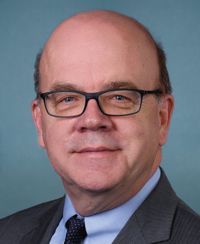 JPM+3
JPM+3
Floor Debate
8 membersWhat members said about H.Res. 564 on the floor
Mr. Speaker, I ask unanimous consent to claim the time controlled by the gentleman from Wisconsin (Mr. Obey). Mr. Speaker, I yield myself such time as I might consume. Mr. Speaker, at long last we…
Mr. Speaker, I ask unanimous consent to claim the time controlled by the gentleman from Wisconsin (Mr. Obey).
Mr. Speaker, I yield myself such time as I might consume.
Mr. Speaker, at long last we are supporting America's veterans with our deeds and not just with our words, and in that process, I want to salute the gentleman from New York (Mr. Walsh), my colleague, friend and chairman of the Veterans' Affairs, Military Quality of Life Subcommittee in that effort.
This is a good bill that takes positive steps to redress the wrongs done to veterans over the last several years when, in fact, we were cutting veterans services during a time of war, something that many of us on the floor of this House time and again said was immoral.
This bill increases VA medical services by $2.5 billion over the President's original request. I salute this committee and the House and its leadership for doing that. I also would point out that that itself suggests that the administration has woefully underfunded veterans health care needs during a time of war. Never again should our country send young Americans into war and then scrimp on supporting those who have sacrificed the most to their service during that war.
This bill specifically sets aside $2.2 billion for VA mental health care medical services, and on that particular point, the gentleman from New York (Mr. Walsh) deserves special recognition for taking the initiative to see that the VA does put more resources into helping those young Americans, men and women alike, who have paid a serious mental health care price for their love of country and service to country. The fact is that we have and the VA has been underfunding mental health care services to our veterans.
Third, this bill restores funding of $85 million for State nursing home construction. We have an aging of the veterans population. I guess I had a great difference with the administration in its original proposal to cut by as much as two-thirds the number of veterans that we provide for in long-term nursing home care. This bill corrects that mistake of the administration.
I salute the bipartisan effort in this bill to reject the administration's proposal to have a $250 enrollment fee for every veteran wanting to sign up for VA health care services. Many of us have long felt that our veterans have paid their enrollment fee when they put on our country's uniform and went into harm's way in protection of all of us. I am glad this committee rejected the administration proposal to double prescription copays for veterans, veterans who are struggling every month to make ends meet.
I think a very important part of this bill that was put together somewhat at my urging, but truly on a bipartisan basis, and that is, that no longer are we going to be just completely dependent upon the VA Secretary or OMB to tell us whether we are cutting veterans services during a time of war. This bill has some very stringent reporting requirements to be done on a quarterly basis, where the VA must provide this Congress with information about whether we are reducing staff, cutting services, underfunding health care for veterans, especially during a time of war. I think this Congress has a moral responsibility to make its own independent judgment about whether we are adequately supporting our veterans and not have to be completely dependent upon what the Director of OMB or the Secretary of the VA have said.
Having said all of that about the very positive things in this bill for veterans, I must just for a brief moment add to what the gentleman from Wisconsin (Mr. Obey) said about this process.
I hope this step forward for America's veterans in a tangible way ends what I think has been a sad chapter over the last 2 years. How ironic it is that the funding for veterans health care in this bill is equivalent to the funding called for over 2 years ago by Republican Congressman Chris Smith of New Jersey who chaired the Veterans' Affairs Committee. How did the House Republican leadership, not this committee, how did the House Republican leadership respond to the gentleman from New Jersey's call to adequately support veterans health care? Did they thank him? Did they salute him? Did they award him? No. They fired him. They took away his chairmanship of the Veterans' Affairs Committee and even took him off the committee itself. That was a sad moment in the history of this House in our service to veterans, and I hope never again will a chairman of the Veterans' Affairs Committee be fired for standing up for veterans and putting his commitment to veterans above his commitment to partisan loyalty.
I salute this bill and the chairman of this subcommittee for the step forward in military construction. It provides about $2 billion more than we spent on military construction last year. These are training ranges. These are houses and barracks and much-needed quality-of-life improvements for our service men and women.
I am proud of what this committee has done under the leadership of the chairman and on a bipartisan basis for military construction commitments and improving the quality of life for Americans who are sacrificing so very much every day for our Nation.
Finally, Mr. Speaker, I would just express two concerns, not about this committee's work, but about the future for veterans and our military. One is the VA is still grossly underestimating the net number of new veterans coming into the VA health care system. The latest numbers I saw said they projected 84,000 net new veterans this year in the VA medical system. That is in total contrast to a net increase of about 250,000 each year for the last 2, 3, or 4 years. I think it is going to be important for our subcommittee and for the full Appropriations Committee in this House to monitor every month in the months ahead whether the increase in the number of veterans into the VA medical care system makes even this substantially improved medical budget inadequate. I look forward to carrying out that responsibility on a bipartisan basis.
Finally, in terms of military construction, I am not sure we yet have from the administration or the Department of Defense a full cost accounting for the cost of construction, military construction, as a result of the base closing and realignment process and the redeployment of our troops from Germany and South Korea. My own prediction is that the administration has grossly underestimated the actual cost of military construction. So while this bill does have a very significant increase in MILCON projects, and, again, I enthusiastically support that increase, I think it is going to be important for this House to monitor what the true cost of military construction will be so that over the next 12 to 24 months, we are not cutting corners for better housing for our service men and women and their families even as they sacrifice for all of us during time of war.
This is a good bill, Mr. Speaker. I salute the chairman of the committee, Mr. Walsh; the leadership of the full Committee on Appropriations, Mr. Lewis and Mr. Obey, for asking the question of what is right for America's veterans. I think this bill is a great step in the right direction, and I urge my colleagues on a bipartisan basis to support this legislation.
Mr. Speaker, I reserve the balance of my time.
Mr. Speaker, I yield 5 minutes to the gentleman from California (Mr. Farr).
Mr. Speaker, I yield myself 3 minutes.
Mr. Speaker, I will conclude with several comments. First, I could not agree more with Mr. Lewis, the chairman of the full Appropriations Committee, that it would be a positive step for all of us to work in carrying out our responsibility for congressional oversight over VA health care programs, and I would add to that, over military construction programs. I know that is something the chairman of the subcommittee has worked on and actually started the process on, and I look forward to continuing that effort. It is important that we not only adequately fund veterans health care and other veterans programs, the quality-of-life programs for military servicemen and women and their families, we need to be sure those dollars are being spent in the way that Congress intended them to be spent.
I want to thank several groups. First, I want to thank our veterans service organizations, made up of millions of men and women who have served our country proudly in uniform during time of war and peace. And yet like so many veterans, when they take that uniform off, their love of country does not wane, and their continuing commitment to service is an inspiration to all of us.
Without the strong leadership over the last 2 years of the veterans service organizations who have never let up in saying it would be wrong, and it is wrong, to cut veterans health care services during a time of war, I am not sure we would be at this funding level today. So I salute them.
I also want to salute the incredibly able staff of this subcommittee. On the Democratic side: Tom Forhan and Bob Bonner. On the Republican side, hard-working, dedicated employees as well: Carol Murphy, the staff director of this committee; Tim Peterson; Sarah Young; Walter Hearne; and Mary Arnold. What a privilege it is for the chairman and me to be able to work with a staff that at every step of the way is simply asking one question: What is the right thing to do for our servicemen and women and their families and what is the right thing to do for our veterans?
Like so many of our veterans that are not honored with memorials in this Nation's Capitol, this subcommittee staff is working every day behind the scenes to make a positive difference for very, very deserving people, and I want to thank them for all they do, day in and day out, without any expectation of public acclaim.
My final note is left to honor a veteran. As we approach Thanksgiving and in a few minutes pass this bill, I cannot help but think, Mr. Speaker, about a young veteran, 20 years old, that I met at Walter Reed Army Hospital on Thanksgiving morning 2 years ago. He had come back from Iraq with an amputated leg, sitting in his room alone with the exception of being there with his mother. When I walked in and saw his condition, the first thing he said to me was, ``Sir, I don't want anyone to feel sorry for me. I'm proud to have served my country, and I would be proud to serve it again.''
I hope we will always remember that is what this bill is all about, standing up for those who have stood up for our Nation and the American family.
Mr. Speaker, I yield back the balance of my time.
Mr. Speaker, pursuant to House Resolution 564, I call up the conference report on the bill (H.R. 2528) making appropriations for military quality of life functions of the Department of Defense,…
Mr. Speaker, pursuant to House Resolution 564, I call up the conference report on the bill (H.R. 2528) making appropriations for military quality of life functions of the Department of Defense, military construction, the Department of Veterans Affairs, and related agencies for the fiscal year ending September 30, 2006, and for other purposes.
Mr. Speaker, I yield myself such time as I may consume. I do intend to be brief, but this is an important bill for our military and I would like to expand a little bit on some of the points within it.
But before I do that, I would like to describe the conference that we had with the Senate as successful. I would like to thank my ranking member, Mr. Edwards of Texas, who has been at my shoulder all the way through this process. We worked very, very closely together. We have had the same priorities and we have tried to work out any disagreements that we had along the way.
I would also like to thank Chairman Lewis for his leadership and his forethought in realigning the jurisdiction of this subcommittee.
The House bill included the accounts for basic allowance for housing, facilities sustainment, restoration and modernization, environmental restoration and the Defense Health Program. This was designed as a first step toward examining military quality of life as a whole, from active duty through retirement.
We have received nothing but positive feedback from the senior non- commissioned officers all the way up to the four-star service chiefs. I would hope that our colleagues in the other body would take a look at what the House has done and follow suit, but for this year, while the subcommittee retains jurisdiction over these four accounts, the conference report before the House today does not contain that funding. The funding will be included in the Defense appropriations bill and will return to the Military Quality of Life and Veterans Affairs bill next year.
The conference report provides $6.2 billion for military construction, including quality of life facilities such as child care centers, medical facilities and training facilities. It also provides $4 billion for family housing construction and maintenance. This funding will continue moving toward the goal to eliminate inadequate family housing for our military, through both the privatization program and traditional construction. In addition, the bill includes $1.7 billion to maintain readiness and transform the military through the base realignment and closure process, the Army's modularity initiative, and the global repositioning of our forces.
For the Department of Veterans Affairs, the agreement provides a total of $22.547 billion for medical services. This amount includes the original budget request, plus $1.1 billion to reverse policy proposals included in the budget request, but not endorsed by the conference. These are $496 million for long-term care; $202 million for pharmacy copays; and $454 million for enrollment fees.
In addition, the agreement provides for workload increases and corrections of errors as identified in the budget amendment submitted on July 14, 2005. A portion of these additional funds are only available upon submission of a revised budget amendment by the President which declares the funding an emergency. This is necessary for us to effectively provide these funds and still remain within our 302(a) allocation from the Budget Committee.
The conference agreement also includes a number of reporting requirements so that the committees will be fully informed about potential problems that the Department may encounter throughout the year of execution before it is too late.
Other significant changes to the budget request include:
The creation of an Information Technology Systems account to allow us to keep track of information technology programs at the Department of Veterans Affairs.
$2.2 billion of medical services funding is fenced to be used only for specialty mental health care, a priority of many members of the committee and the House. We received testimony after testimony encouraging us to make sure that a minimum amount was provided for mental health care, and that is what we have done.
$15 million for research into Gulf War Illness.
$19 million over the President's request for medical and prosthetic research.
$85 million for grants for State Extended Care facilities. This is $85 million above the President's request.
We have fully funded the cost-of-living allowance of 4.1 percent for veterans compensation.
We also provide an increase of $273 million for medical services for veterans returning from Iraq.
$200 million is included to cover workload growth in priority 1-6 veterans.
$600 million is provided to correct errors in the calculation of funding needed for long-term care.
Mr. Speaker, I will close by saying I think we have a good bill to put before the Congress. I am very grateful to our Appropriations Committee staff for their professional work and their patience as we worked through this process and for the late hours that they spent preparing the bill. I believe it is a bill everyone can support.
[GRAPHIC] [TIFF OMITTED] TH18NO05.001
[GRAPHIC] [TIFF OMITTED] TH18NO05.002
[GRAPHIC] [TIFF OMITTED] TH18NO05.003
[GRAPHIC] [TIFF OMITTED] TH18NO05.004
[GRAPHIC] [TIFF OMITTED] TH18NO05.005
Mr. Speaker, I reserve the balance of my time.
Mr. Speaker, I yield myself such time as I may consume.
I appreciate very much the kind comments of the ranking member of the Appropriations Committee regarding our work product today, and I note that the gentleman from Texas (Mr. Edwards), my colleague, has joined us, and I look forward to his comments also.
I think that the gentleman from Wisconsin made some points that I would like to give my reflection on.
First of all, we agree. Both parties and every individual Member of the
House holds our veterans in the highest regard, and the House, having the power of the purse, establishes its priorities by setting funding levels. Clearly, there is no budget within the Federal Government which has grown faster or been more plentifully supplied with funds than the Veterans' Affairs health care budget.
It is the fastest growing budget, I believe, within the entire Federal budget, and that is as it should be because we have a growing number of veterans from the Iraq War. We have a number of aging veterans whose health care becomes more and more expensive, and we have struggled every year to meet those needs.
Now, the gentleman from Wisconsin (Mr. Obey) pointed out that within the last year and a half or so there have been some disagreements about the dollar amount required to meet those needs, and he is right about that. What we found was that the model that was being used by the Veterans Administration was wrong. It was inaccurate, and the resultant changes in the budget, the funding level over that period reflect that, but I would like to add that each and every year that I have chaired this appropriations bill for veterans, we have had similar disagreements about how much money is actually needed to meet the needs of the Veterans Health Administration.
I can cite year after year when the gentleman from California (Mr. Filner) and others came to the floor and said there is just not enough money for the veterans budget, for veterans health care, and I remember saying over and over and over we are providing record increases for the Veterans Health Administration.
I think out of this 6, I believe now 7, years that I have chaired this subcommittee, we have had that debate every time, and other than this year, I think it is pretty clearly documented that we have been right, that the dollar amounts that we have provided have been sufficient, in some cases more than sufficient, to meet the needs of our veterans health care.
So while we did have a glitch in the model, we have actually put language in the bill and provided resources to try to remedy that situation so that does not happen again. That was an aberration. We have been very solid in our estimates and very supportive of it through our budgeting of the Veterans Health Administration, and that always is the key aspect of this budget because of our concern about keeping the commitments that this Nation has made to our veterans.
So, I do not think the gentleman from Wisconsin (Mr. Obey) was saying that we do not care enough about our veterans to provide those resources. I do not think he was saying that the White House does not care enough. I think he is saying, quite to the contrary, bipartisanly, bicamerally, and compared by the differences between the executive branch and legislative branch, we are all in agreement: Our veterans are our highest priority, and we have funded our veterans benefits and our veterans health care accordingly.
There have been disagreements in the past. There will be disagreements in the future, but not over our commitment to keeping our commitments to our veterans.
Mr. Speaker, I reserve the balance of my time.
Mr. Speaker, I yield such time as he may consume to the gentleman from California (Mr. Lewis), chairman of the full Appropriations Committee, a gentleman who had the great vision to assemble new jurisdiction for this committee and create this subcommittee and a personal mentor of mine.
Mr. Speaker, I yield 2 minutes to the gentleman from Colorado (Mr. Hefley), chairman of the Subcommittee on Military Construction for the Armed Services Committee.
Mr. Speaker, I yield myself the balance of my time.
In closing, I would like to associate myself with the remarks of my colleague Mr. Edwards, especially regarding our staff who have done a really great job and worked through all of the issues with us. They do so much of the detail work and just leave a few things for us to resolve. We are very grateful for that.
To the veteran service organizations, I have often said pressure is a good thing. We need that. It creates a dynamic tension within this legislative process, and it is always constructive. We may not agree on every single detail, but for the most part we are on the same page.
And lastly to our Nation's soldiers, Active Duty sailors, airmen and to our
marines, thank you for your service, God bless you, and come home safe and sound.
Mr. Speaker, I yield back the balance of my time.
Mr. Speaker, I yield myself 10 minutes. Mr. Speaker, let me say, first of all, I want to congratulate the gentleman from New York. He always does a fine job. On this bill, he has not only done a good…
Mr. Speaker, I yield myself 10 minutes.
Mr. Speaker, let me say, first of all, I want to congratulate the gentleman from New York. He always does a fine job. On this bill, he has not only done a good job on substance, he has dealt with the ranking minority member, Mr. Edwards, with fairness and openness and we appreciate it.
In contrast to the Labor-Health-Education bill which caused so much trouble yesterday, I am happy to support this bill today, and I know Mr. Edwards will be, too. But before we vote, I would simply like to recite some facts about the history of veterans health care, because I think it is important that no matter how divided we might be on any given military action, whether it be Vietnam in the past or Iraq in the present, we should not be divided on the question of what we owe to each and every person who has worn the uniform of the United States and defended the national interests of the United States, often at great risk to their own lives and at great risk to the future economic security of their own families. That is why this bill is so important.
I want to recite what has happened on veterans health care in the hopes that the divisions which we have had over the level of funding for veterans health care in the past will not be repeated in the future. Here is that history.
In March of 2003, House Republicans voted for a budget resolution that called for cutting veterans health care by $14 billion over 10 years.
In July 2003, after agreeing to reduce some of those budget cuts in the House, the GOP reneged on its promise to increase funding for VA health care and passed an appropriation bill providing $1.8 billion less than what was called for in their fiscal 2004 budget. Mr. Edwards tried to offer an amendment to that bill to add $2.2 billion for veterans health care, but he was blocked.
In October 2003, I offered a motion to recommit on the Iraqi supplemental that called for an additional $1.3 billion for veterans health care. The majority rejected it.
We continued to push for veterans in fiscal 2005. For 2005, the administration requested $18.3 billion for veterans medical services. In subcommittee, the House recommended $19.5 billion. At that time, veterans groups and many Members on this side of the aisle indicated we felt that those numbers fell far short. The Republican chairman of the Veterans Committee agreed. Unfortunately for him, a year later, he was removed from his position as chairman and he was removed from the committee by the Republican leadership because he had the temerity to agree with us and with veterans groups that more funding was needed in order to meet our obligations to veterans on the health care front.
In full committee, Mr. Edwards in July 2004 offered an amendment to try to do the right thing and bring the VA medical services account up another $1.3 billion. He was defeated on a party-line vote. Of course, the bill had so many problems that the majority could not even bring it to the House floor. It ended up getting wrapped up into the omnibus.
On September 29, 2004, I again offered a motion to recommit on the first CR, trying to add $1.3 billion for veterans health care, and that effort was rejected.
On June 23, 2005, we learned how wrong that original mark had been. The administration admitted they were a billion dollars short and even admitted that they had known about it for months. The next day, Mr. Edwards tried to offer an amendment to the Labor-Health bill on the House floor to try to use that vehicle to make up the $1 billion shortfall in VA health care, but again we were blocked by the majority.
After that failed, I offered a motion to recommit with instructions to include the $1 billion for veterans. Again, I was blocked.
On June 29, the gentleman from Texas (Mr. Edwards) was blocked again from bringing up an amendment to add to the veterans budget $1 billion. This time we tried to use the transportation appropriation bill as the vehicle. And now we come to the subject of this conference for 2006.
When the request came at the beginning of the year, the administration was only asking for $20 billion for medical services. On the other hand, veterans organizations' independent budgets said that $22.5 billion would be needed.
In May 2005, the subcommittee increased the medical care account to $21 billion, a half step in the right direction. In full committee, I offered an amendment that would have added $1.5 billion to this medical care account, plus increased funding to some other areas. That would have brought us pretty much to where we are today, except that my amendment would have been paid for because I proposed reducing somewhat the tax cut that was scheduled for the wealthiest of Americans, those making over $400,000 a year. This agreement before us uses an emergency designation so the costs will go directly to the deficit. The majority defeated my amendment.
Then, in July of this year, the administration finally admitted that the 2006 bill was short as well. They amended the VA budget request, asking for an additional $2 billion.
Some of the carryover funds from the additional $1.5 billion that was provided last summer is being used, and the conference agreement before us includes, guess what, $22.5 billion for VA medical services. I hope that number sounds familiar. I will repeat it, $22.5 billion in medical services. That is what the veterans organizations said they needed. It is what we were trying to get on this side of the aisle. I simply say ``Welcome Aboard'' to our friends on the majority side.
I want to make clear, I believe every Member of this House, regardless of party, recognizes their commitment to the veterans. The problem is that all too often in this place we wind up with pressures of party or party program getting in the way of our better judgment and making choices that really do not measure up to the facts.
I believe that was the case over the past 3 years, because I believe that fealty to the Republican budget resolution and to the Republican leadership's desire for tax cuts, especially tax cuts that were aimed at the very high-income people, I believe that that fealty prevented the House from doing what it really knew needed to be done on both sides of the aisle, or at least had a strong suspicion needed to be done, and when the numbers finally were revealed, it has become difficult for people to avoid reality, and so I think this bill reflects reality.
I will say that with one caveat. I hope that we can count on the numbers that are coming from OMB and the Veterans Administration on this bill. I hope we can count on them, because if we cannot, then we will have to be back here again asking for yet more money. It is not enough for us to applaud the troops when they are leaving to go to war, when the bands are playing, when everyone's blood is up. What we have to be willing to do is to remember our fundamental obligation to those troops when they return.
I do not believe that we are doing enough to meet our obligations to those troops, but this bill is certainly a good-faith effort, and I congratulate the gentleman from New York for the role he has played in trying to get here.
I most especially want to congratulate the gentleman from Texas (Mr. Edwards), the subcommittee ranking member. There is no one in this House who has had a more dedicated history of fighting for the needs of veterans on the health care front and on so many other fronts than has the gentleman from Texas (Mr. Edwards), and I am pleased to stand in for him temporarily this morning.
Mr. Speaker, I reserve the balance of my time.
Mr. Speaker, I thank the gentleman from Texas (Mr. Edwards) for yielding me this time. When we left here last night, we had spent the evening in bitter rancor over serious political issues, however…
Mr. Speaker, I thank the gentleman from Texas (Mr. Edwards) for yielding me this time.
When we left here last night, we had spent the evening in bitter rancor over serious political issues, however we arrived this morning, and the first thing we do is take up a bill where we all agree on something. And I think that is the beauty of the United States Congress. We can disagree and we can have partisan fights, but there is one thing we have in common, and that is that we all support the people who volunteer to serve in our United States military and support the veterans who have served in that military, and the benefits that they should receive afterwards. It is sort of promises made and promises kept.
I think, also, that the reason why we do not have any rancor on this legislation is, we have two of the finest Members of Congress, Mr. Edwards and Mr. Walsh, Mr. Edwards as ranking member and Mr. Walsh as Chair, of a committee where the divergent members come together. We still have strong political differences on either side. We have different backgrounds, life experiences that we bring to the committee. In fact, I think it is kind of ironic that Mr. Walsh and I, who are former Peace Corps volunteers, are now very active in the committee that deals with the quality of life for the military, but I think that the things we have learned in the Peace Corps about service to human beings are very important to the subject matter in this committee.
I also would like to thank the chairman of the committee, Mr. Lewis, and the ranking member, Mr. Obey, because they have given us sort of that parental consent to go ahead and do the best we can do with the money allocated.
There are a lot of good things in this bill mainly because we have added money to it, and Congress has been more supportive than the administration to our veterans, and I think that that ought to be made very clear. We are providing a second increment of $1.5 billion in addition to what Congress has already passed, $1.2 billion in emergency money. But now there is still some talk that there is going to be an across-the-board cut. We cannot provide the services that Mr. Lewis just talked about one day and then come back here later and provide a cut to those services. That is total hypocrisy, and we do not want to see that across-the-board cut affect our veterans and our active duty members of our services.
This committee has a lot of issues that we have to deal with. Are we providing enough care for our returning service members? I have been out to Bethesda and to Walter Reed Hospital, talking to the people who have been injured. We have seen a difference between the rehabilitation care that is given to spinal cord injury soldiers than that of the ones that are amputees, and we ought to try to bring coordination to one place, that they both
get the same kind of rehabilitative care.
Are we doing enough to reduce the waiting period for veterans for health care? Is there enough money to meet the staggering mental health care, something that we have never really put enough focus on? Posttraumatic syndrome, how long does it take sometimes? Veterans and active Reservists and National Guardsmen who have served in Iraq and Afghanistan may not develop their mental problems from serving for many years after they leave the service. Is there going to be adequate mental health care for them?
How about the price tag for prosthetics? Our centers for our wounded military are quality centers of excellence in trying to develop the latest technology in prosthetics. Yet we do not spend enough time looking at it and making sure that those things are funded well, because the private sector just cannot meet that responsibility. This is a responsibility of the United States Congress. And are we hiring enough people to make sure that we can serve those who need that service, whether it be in a health care clinic or whether it be at the military hospitals? These are questions that we have got to address.
We also have got to address the fact that we have closed military bases, and in those bases we have a lot of unexploded ordnance. Those are ordnances that could only be cleaned up by people that have Federal special training, a very limited specialty field, and yet it is one of the lowest priorities of the military. Obviously, their duty is to train people to defend our country, not necessarily to do environmental cleanup, but we cannot turn that real estate over for subsequent use to the community unless there are enough funds to clean it up, and we have been sorely lacking in enough funds. Fortunately, the chairman and ranking member of this committee have really worked with me in trying to get additional funds for cleanup, although we are way short of the billions of dollars that are needed.
So today is the day where we bring together the differences that we had last night and show that Congress can, indeed, unanimously support the needs of the men and women in uniform and all voluntary service.
I am very proud to have served on this committee. I am proud of its leadership, and I would urge that all my colleagues support the men and women in uniform, support the quality of life that we provide for our services, and help the veterans of the United States by approving this appropriations bill. Thank you.
Mr. Speaker, I yield myself such time as I may consume. Mr. Speaker, I want to thank my friend the gentleman from Georgia (Mr. Gingrey) for yielding me the customary 30 minutes. Mr. Speaker, this is…
Mr. Speaker, I yield myself such time as I may consume.
Mr. Speaker, I want to thank my friend the gentleman from Georgia (Mr. Gingrey) for yielding me the customary 30 minutes.
Mr. Speaker, this is the first conference report that the House will consider as a military quality of life-VA appropriations bill. As we all know, as a result of the subcommittee realignment adopted earlier this year by the Appropriations Committee, military construction, Defense Department health programs and all veterans programs are now contained in this one appropriations bill. I want to express my respect and voice my praise for the work of Chairman Walsh and Ranking Member Edwards for their work on this bipartisan-supported conference report.
This final conference report is a significant improvement over the earlier House-passed bill, especially in the areas of medical care and benefits for our veterans. Veterans medical services are funded at $22.5 billion, which has long been the position on this side of the aisle as the minimum amount of funding required to meet our veterans health needs. This total is $575 million above the President's budget request and $1.7 billion more than last year.
Mr. Speaker, over the last 2 years, the funding amount needed to meet veterans medical care has increased by 18 percent, so while I welcome this increase in veterans medical services, I remain concerned about the total amount of funds that will actually be required over the coming year. I predict that we will still need to find additional funds next year to meet the fiscal year 2006 medical needs of our veterans.
Other important actions taken by the conferees are the specific targeting of $2.2 billion for specialty mental health care for our veterans and fully funding the requested amounts for posttraumatic stress disorders. In addition, this bill creates three Centers of Excellence for mental health and PTSD medical care.
Mr. Speaker, last week I was at a forum in western Massachusetts, and I met a Massachusetts father whose son had served in Iraq. He told me about the difficulty his son had attempting to reintegrate himself back into civilian life following his tour of duty. One night during a conversation, his son broke down in tears and laid his head in his father's lap and cried. The father told me at that forum that the next time he held his son's head in his lap was a couple of weeks later when he cut the rope that his son had used to hang himself in their basement.
Mr. Speaker, we need to recognize the vast need, the urgent and increasing need, for counseling services for the men and women returning from Iraq and Afghanistan. The New England Journal of Medicine reported earlier this year that one in five of the soldiers leaving the Iraq war are suffering from posttraumatic stress disorder and other mental health problems. We have to make their ability to receive counseling and support simple and seamless. We have to make sure that they do not run into bureaucratic walls or receive the runaround just when they need help the most.
I know that this is something that the chairman and ranking member think about a great deal, and I simply want to express my support for their efforts to confront this growing crisis.
Mr. Speaker, this conference report also increases the amount of funding for military construction and housing over the President's request and over the amount in the House-passed bill. Even so, at this level of funding, if will take nearly eight decades to meet the needs currently identified by the Pentagon for military housing and modern basing and training facilities.
Mr. Speaker, everyone in this Congress talks about how we support our troops and how we honor their service and sacrifice, but year after year we fail to meet the needs of our veterans, the old and the new, and we fail to provide the funds to provide our uniformed men and women the housing and training facilities that they need in order to prepare for the deadly duties we demand of them.
This is a matter of priorities. This is a statement of values and principles about whether and how we really do believe our troops and our veterans merit the very best this Nation can provide. We just cannot stand here year after year and praise the conferees for doing the best they could within the budget allocation they were given. It is the Congress that determines the amount of that budget allocation for our veterans, for our military housing and construction, for our military's quality of life. As my good friend and colleague from Illinois Jesse Jackson, Jr., said yesterday on the floor of this House, it's like a farmer saying the summer harvest is bad when he failed to plant seeds in the spring.
Mr. Speaker, like all of my House colleagues, I will be supporting this conference report, but we simply have to do better in the future.
Mr. Speaker, I yield back the balance of my time.
Show 3 more
Mr. Speaker, by direction of the Committee on Rules, I call up House Resolution 564 and ask for its immediate consideration. Mr. Speaker, for the purpose of debate only, I yield the customary 30…
Mr. Speaker, by direction of the Committee on Rules, I call up House Resolution 564 and ask for its immediate consideration.
Mr. Speaker, for the purpose of debate only, I yield the customary 30 minutes to the gentleman from Massachusetts (Mr. McGovern), pending which I yield myself such time as I may consume. During consideration of this resolution, all time yielded is for the purpose of debate only.
House Resolution 564 waives all points of order against the conference report and against its consideration, and it provides that the conference report shall be considered as read.
Mr. Speaker, I rise today in support of House Resolution 564 and the underlying conference report for H.R. 2528, the Military Construction and Veterans Affairs and Related Agencies Appropriations Act for fiscal year 2006.
Today, this House has the opportunity to pass a conference report that will provide $45.4 billion to fund the very important needs of our servicemen and women, our veterans, and our military infrastructure.
This conference report provides an all-inclusive look at the programs that are related to the quality of life of those who currently serve America in the armed forces, their families, and those men and women who have sacrificed so much for our freedom in the past.
Mr. Speaker, by providing $45.4 billion, this conference report actually marks an increase of $3.1 billion from fiscal year 2005, and it is an increase of $300,000 from the President's request.
The bill funds the Department of Veterans Affairs at $22.5 billion, $1.7 billion above the fiscal year 2005 enacted level, and $575 million above the 2006 budget request by the President. Particularly important is the funding for veterans' medical services that includes for the very first time $2.2 billion strictly allocated for specialty mental health care on top of a doubling for funding of mental health research.
Mr. Speaker, I should note that over the past 2 years, funding for veterans medical care has increased by 18 percent. Let me repeat: Funding for veterans medical care has increased over the past 2 years by 18 percent. The conference provides a particular victory for veterans back home in northwest Georgia, my district, and across the Nation. This bill does not, and I repeat, does not, contain any new fees for veterans medical services or prescription drugs. This conference report provides $6.2 billion for military construction, $5.1 billion for Active Duty construction, and $1.1 billion for Reserve components.
Mr. Speaker, I will conclude my statement by acknowledging Subcommittee Chairman Walsh and Chairman Lewis for their overall vision and dedication to completing this bill, both here in the House and in the conference, for the sake of our servicemen and women, past and present.
Mr. Speaker, I look forward to this debate. I encourage my colleagues to support the rule and the underlying conference report.
Mr. Speaker, I reserve the balance of my time.
Mr. Speaker, I would like to close this morning by saluting those men and women who so proudly and bravely serve our country. Their sacrifices and their families' sacrifices are beyond the average American's comprehension. We must acknowledge that without these individuals, the rest of us could not enjoy the freedoms we so often discuss in this Chamber.
The appropriation conference report that will be passed today should stand as a ``thank you'' to those who have worn the uniform of our Nation. Some will say the bill does not provide enough for those who are veterans of military service. Well, in a way, Mr. Speaker, I would agree with that. I honestly do not believe we can ever do enough to support our military men and women. They deserve so much more than we will ever be able to afford to give. It is truly an unbalanced relationship. They sacrifice everything for our liberties. We can only repay a small portion of that debt.
So, Mr. Speaker, I will finish my remarks simply by saying thank you to our troops, thank you to our veterans, and may God bless you and keep you safe.
Mr. Speaker, I yield back the balance of my time, and I move the previous question on the resolution.
The previous question was ordered.
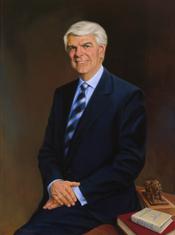
Mr. Speaker, to the chairman and to my colleague, Mr. Edwards, from beautiful downtown Texas, I want to congratulate both of them for this very fine piece of legislation. It reflects a great deal of…
Mr. Speaker, to the chairman and to my colleague, Mr. Edwards, from beautiful downtown Texas, I want to congratulate both of them for this very fine piece of legislation. It reflects a great deal of the variety of mix that we needed to be able to focus upon in a very special way in the arena that involves not just veterans, certainly our veterans, but beyond that, the families of the men and women who serve us and ofttimes put their lives on the line, questions like their housing, other kinds of benefits that are very important to their being able to have decent lives while they serve us. Focusing on all those issues within one subcommittee, I think, is going to produce real results down the line. The bipartisan spirit that is a part of this committee, and we can see it reflected in the House today, is very much a part of that.
I would like to mention just one thing to my colleagues, an item that has been of concern to me for most of my career here. In the past, Mr. Speaker, I had the privilege of chairing the subcommittee that did the funding for our veterans. One of my concerns during those years was that ofttimes within the community that is Washington, DC, we expressed great support for our veterans, raised funds to try to improve the funding flows, and then did not do very much about following the money when it went down to the communities where veterans are served.
Particularly, I have been concerned over the years with the kind of treatment that ofttimes took place at the hospitals, and I have been urging the veterans service organizations to do more than be proud of the money that is appropriated here, but rather make sure that money is used in a quality way in terms of the service at the other end of the line.
We are beginning to do some things like involving clinics in rural areas where there are open spaces and the hospitals are not close by. All of that, I think, portends well for the future here.
But I would raise just one cautionary note: It is very important that we continue to put pressure on those organizations whose design and purpose is to support our veterans, to help us follow the money down to the local communities, make sure that it is being spent well. It is great to have increased dollar flows, but throwing money at problems is not always the solution. We all know that. So in this instance, I would say to my ranking member, Mr. Obey, as well as to the chairman and ranking member of the subcommittee, together we ought to form a partnership to make certain every one of those dollars is spent well on behalf of our veterans at the local community.
With that, congratulations on your work. It is a very fine product.
Mr. Speaker, I apologize for interrupting the progress here. I know all of us want to move forward and conclude as early as possible today. I just wanted to take a moment to say thank you to Mr.…
Mr. Speaker, I apologize for interrupting the progress here. I know all of us want to move forward and conclude as early as possible today.
I just wanted to take a moment to say thank you to Mr. Walsh for working with the authorizing committee so well. For years we have established, I think, an example for this House in how the authorizers and appropriators should work together, and the gentleman has followed in that tradition.
If Members remember, when we first began to look at this early in the year, we had those early meetings together, and we thought the outcome, because of the reorganization, might be very, very different than what we have today. The outcome, I think, is a good outcome. I think we are taking care of infrastructure needs that need to be taken care of in an area where so often these kinds of things become billpayers for other things.
Particularly when we are in the midst of a war and there are all kinds of demands, it is awfully easy to say with military construction and these feel-good things for our soldiers that we just put those off another year. We can put them off another year, and then we will do it, and next year maybe we do it and maybe we do not.
In this case all of the way around you have done an excellent job. We have provided for the soldier. We have provided for the infrastructure needs, and I am very, very pleased with the kind of relationship we have had in working with this. Your staff has been just terrific. With that, I will just say thank you and let you get back to your normal schedule here.
Bill Text
2 versions available
        [Congressional Bills 109th Congress]
[From the U.S. Government Publishing Office]
[H. Res. 564 Engrossed in House (EH)]

H. Res. 564

In the House of Representatives, U.S.,

November 18, 2005.
Resolved, That upon adoption of this resolution it shall be in order to
consider the conference report to accompany the bill (H.R. 2528) making
appropriations for military quality of life functions of the Department of
Defense, military construction, the Department of Veterans Affairs, and related
agencies for the fiscal year ending September 30, 2006, and for other purposes.
All points of order against the conference report and against its consideration
are waived. The conference report shall be considered as read.
Attest:

Clerk.