Providing for consideration of the resolution (H. Res. 612) expressing the commitment of the House of Representatives to achieving victory in Iraq.

Legislative Activity
Stay on top of the latest movement without scrolling through every action
On agreeing to the resolution Agreed to by recorded vote: 217 - 202 (Roll no. 645). (text: CR H11885)
December 16, 2005 • 12:30 PM
View full timeline
Introduced in House
December 15, 2005
The House Committee on Rules reported an original measure, H. Rept. 109-348, by Mr. Cole (OK).
December 16, 2005
Sec. 2. On the first legislative day of the second session of the One Hundred Ninth Congress, the House shall not conduct organizational or legislative business
December 16, 2005 • 7:15 AM
Placed on the House Calendar, Calendar No. 133.
December 16, 2005
Considered as privileged matter. (consideration: CR H11885-11888, H11893)
December 16, 2005 • 9:13 AM
DEBATE - The House proceeded with one hour of debate on H. Res. 619.
December 16, 2005 • 9:13 AM
POSTPONED PROCEEDINGS - At the conclusion of debate the Chair put the question on ordering the previous question and by voice vote announced that the ayes had prevailed. Mr. McGoverndemanded the yeas and nays and the Chair postponed further proceedings on ordering the previous question on the resolution until later in the legislative day.
December 16, 2005 • 10:26 AM
Considered as unfinished business. (consideration: CR H11893, H11902-11903)
December 16, 2005 • 12:13 PM
On ordering the previous question Agreed to by the Yeas and Nays: 221 - 200 (Roll no. 644). (consideration: CR H11893, H11902-11903)
December 16, 2005 • 12:22 PM
Passed/agreed to in House: On agreeing to the resolution Agreed to by recorded vote: 217 - 202 (Roll no. 645).(text: CR H11885)
December 16, 2005 • 12:30 PM
Motion to reconsider laid on the table Agreed to without objection.
December 16, 2005 • 12:30 PM
On agreeing to the resolution Agreed to by recorded vote: 217 - 202 (Roll no. 645). (text: CR H11885)
December 16, 2005 • 12:30 PM
Voting History
2 votes recorded • Roll call available
Floor Debate
22 membersWhat members said about H.Res. 619 on the floor
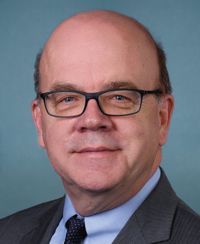 JPM
JPM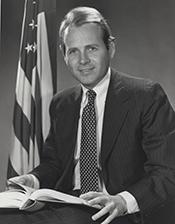 DD
DD TL
TL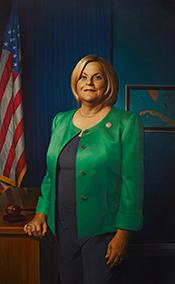 IR
IR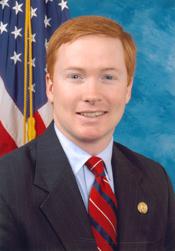 AHP+17
Floor Debate
22 membersWhat members said about H.Res. 619 on the floor
Mr. Speaker, I want to thank the gentleman from California (Mr. Dreier), the chairman of our committee, for yielding me the customary 30 minutes, and I yield myself 7\1/2\ minutes. Mr. Speaker, last…
Mr. Speaker, I want to thank the gentleman from California (Mr. Dreier), the chairman of our committee, for yielding me the customary 30 minutes, and I yield myself 7\1/2\ minutes.
Mr. Speaker, last night and this morning, like all my colleagues, I watched the news reports about the parliamentary elections in Iraq. This is a proud day for the Iraqi people, and it is fitting that this Congress, this House of Representatives, recognize the courage of the Iraqi people, their desire to take control of their own destiny, and how much they have suffered to achieve this taste of democracy.
As has been stated by so many analysts in the news media, one of the most important outcomes of this election was the significant participation for the first time of Iraqi Sunnis in this election, many of whom, according to news reports, were encouraged to vote, escorted to the polls or guarded at the polls by armed Iraqi insurgents.
Everyone in the House of Representatives is proud of the Iraqi people. Everyone in this House respects the efforts made by our uniformed men and women to help the Iraqi people get to this historic moment.
This House could have sent a strong unified message to the Iraqi people, our troops in Iraq, and to the international community in support of our troops and in support of the brave Iraqi people. But, Mr. Speaker, once again, as it has so often done in the past, this Republican leadership has chosen to include controversial language in this resolution, knowing that it will provoke sharp and divisive debate over Iraq.
Rather than choosing to send a united message to the world, the Republican leadership has cynically and deliberately decided to highlight our divisions rather than our unity.
Late last night, the ranking member of the House International Relations Committee, one of the most respected leaders in this House on human rights, Congressman Tom Lantos, came before the Rules Committee with a resolution that focused on congratulating the people of Iraq for three successful elections conducted in Iraq this year. The resolution further praises our troops
for their contributions to peace and stability in Iraq. And, Mr. Speaker, he was rejected out of hand.
Shame on the majority to treat one of the most respected Members of this body in such a fashion. Shame. Mr. Speaker, there are many points of view in this House about how the U.S. should proceed in Iraq. Even among the majority, there are differing points of view. I for one believe these successful Iraqi elections provide an opportunity for the United States to change course in Iraq and begin bringing U.S. forces home. As we pass the 1,000th day of the war in Iraq, I believe we must begin the transition to putting the Iraqis in charge.
After 3 years of war, the United States claims, for better or for worse, the elimination of Saddam Hussein from power, and that the United States has furthered the Iraqi political process, culminating in the passage of a Constitution and now the first democratic election and Iraq's first constitutional government.
At this point, plans for a full transfer of sovereignty to Iraqis demands a change in course, one that puts Iraqis in charge. Iraq can't move forward with 160,000 U.S. troops, the largest U.S. Embassy in the world, and with Iraqi public opinion behind a timetable for withdrawal.
Mr. Speaker, many years ago Vermont Senator George Aiken said of the disastrous Vietnam war that the United States should declare victory and go home. Well, the elections in Iraq and the other milestones constitute a sufficient reason for the United States to declare that it has done all it can in Iraq, and it is time to reverse the Bush administration's policies.
President Bush's unwillingness to announce a plan to remove U.S. troops within a clear time frame and his refusal to renounce the use of permanent U.S. military bases there undermines his rhetoric about Iraqi democracy and will undermine the legitimacy of the new Iraqi Government. Our occupation of Iraq complicates the transition to democracy. Former Secretary of State Madeleine Albright had it right, Mr. Speaker, when she said last month that the United States can support democracy, but we cannot impose democracy. And it is a deadly combination when democracy is equated with occupation.
While the President continues to give speeches on the war, the American people have become disenchanted with the administration's Iraq policies and its failure to disclose a plan for withdrawal. Let us be clear, Mr. Speaker. The President has a credibility gap when it comes to Iraq. According to a December 8 New York Times/CBS poll, 59 percent of Americans disapprove of the way President Bush is handling the war in Iraq, and 70 percent do not believe that he has developed a clear plan to get American troops out of Iraq.
We have lost more than 2,100 soldiers dead and over 15,000 wounded, overstretched our military, placed our homeland and those of our allies at greater risk, and still this President persists in a useless quest for, quote, victory.
But excuse me, Mr. Speaker, just what is ``victory''? Who defines it? Who decides when ``victory'' has been achieved in Iraq? Is it the Iraqi people themselves? Is it President Bush, who has already declared ``mission accomplished''? Is it next year? Or the year after that? Or 5 years or 10 years down the road? Is it when we have lost 3,000 troops in Iraq? Or 5,000? Or 10-? How many more American troops do we have to sacrifice? How many more Iraqi lives must be sacrificed before we decide that ``victory'' has been achieved?
While most Iraqis are confident in yesterday's parliamentary elections, two-thirds are opposed to the presence of U.S. troops, according to a poll released on December 12 by ABC News and Time Magazine. According to news reports, many of the Sunnis turned out in such large numbers yesterday because they see it as a means to end the U.S. occupation of their country. Arab voices through the Cairo process are helping change the dynamic in a positive way and are filling a role that the U.S. no longer needs to play.
The President must work with the United Nations and Iraq's Arab neighbors to develop an interim arrangement as American troops depart. The best way to preserve the gains made so far is to commit to long- term financing for reconstruction, working with the new Iraqi Government to set a timetable for withdrawal, and to arrange for an over-the-horizon troop presence.
The Bush administration and the Republican leadership of this House should be spending less time on spin and speeches and more time on preparing for bringing American troops home. The way out of Iraq begins by genuine respect for the will of the Iraqi people and their desire for U.S. military withdrawal from Iraq. The President can begin to demonstrate this respect by putting an end to the attempted manipulation of Iraqi public opinion with fake news written by Pentagon contractors, the unambiguous announcement that the U.S. will not maintain permanent military bases there, and the immediate initiation of a coherent plan for the withdrawal of our forces there. This will not only give the vast majority of the Iraqi people what they want, but the new Iraqi Government its strongest chance for success.
Unlike what is stated in this resolution, there is nothing ``artificial'' about this approach. Congress, too, has a responsibility to take action where the Bush administration falters. Today we should praise the Iraqi people, but tomorrow this Congress should move to must-pass legislation to force beginning to bring our forces home.
Mr. Speaker, I reserve the balance of my time.
Mr. Speaker, I yield 6 minutes to the distinguished gentleman from California (Mr. Lantos), the ranking member on the International Relations Committee, who was denied his request to offer his amendment here on the floor today.
Mr. Speaker, before I yield 1 minute to the gentleman from California (Mr. Lantos) to respond to what the chairman of the Rules Committee had said, let me make clear, nobody is talking about waving a white flag here. What we are talking about is trying to figure out a way to make a bad situation less bad. The polls have shown clearly that the majority of the Iraqi people want us out of Iraq. When a majority wants something, they usually get what they want, because that is what a democracy is about.
We don't know a lot about democracy in this House because we are routinely shut out of being able to have debates and votes on important issues. But the bottom line is that those of us who are advocating that the President set some sort of a timetable are doing so because we think that that is a way to strengthen the situation, to give the new government over there a chance to succeed. I don't believe it can succeed if it is viewed as a puppet of the United States. I don't believe it can succeed with a huge U.S. occupation over there. I don't believe it can succeed with the largest U.S. Embassy in the world over there. I don't believe it can succeed if those are the conditions.
And so having said that, let me yield 1 minute to the gentleman from California (Mr. Lantos).
Mr. Speaker, I yield 3 minutes to one of the authors of the amendment that was rejected last night in the Rules Committee, the gentleman from Florida (Mr. Hastings), my colleague on the Rules Committee.
Mr. Speaker, I yield 10 seconds to the gentleman from Florida (Mr. Hastings).
Mr. Speaker, I yield myself 2 minutes.
Mr. Speaker, to suggest that the Rules Committee respects a deliberative process in this House or that it is somehow democratic or receptive to alternative ideas, I think demonstrates to me that the chairman has pretty low standards when it comes to being inclusive.
The bottom line is, on important issues, on important matters like this one, we are routinely shut out. I mean, the chairman may be on board with what the President is doing in Iraq, but there are many of us who have great concerns. And the fact of the matter is, the section that is controversial in this bill deserves debate, not in the context of this resolution, but we should be on this floor debating this for a period of time and let everybody have their chance to present their viewpoint on what our policy should be in Iraq.
We should be debating Iraq almost every day. I mean, we are at war. We have lost 2,100 American servicemen and women; 15,000 are wounded. We have spent hundreds of billions of dollars, and we do not like to talk about it except in the context of these resolutions that kind of get dropped on us and brought to the floor; and we are supposed to praise our troops, which we all do.
We want to congratulate the democratic voting in Iraq, which we all do. But then tucked into this is a provision which some of us find objectionable.
This administration has a credibility gap, in my opinion, when it comes to Iraq. We have been misled too often, and it is time to demand the truth. It is not acceptable to embrace an open-ended U.S. policy toward Iraq that suggests that we put all our faith in the President.
He has been wrong on everything. There were no weapons of mass destruction. There was no tie to al Qaeda. There was no imminent threat to the United States from Iraq, and he rushed us into war. He said we would be greeted as liberators. Here we are approaching the third year. We are not greeted as liberators. We are stuck in a mess.
Mr. Speaker, I will also point out to the chairman of the Rules Committee that if you read the front page of today's Washington Post it says, ``Iraqi Vote Draws Big Turnout of Sunnis.'' Underneath, subheadline, ``Anti-U.S. Sentiment is Motivator for Many.''
A majority of the people in Iraq want us to begin the process of withdrawal; and what you are asking us to do is to embrace a resolution that says we will be there for as long as the President wants us, and that is unacceptable.
Mr. Speaker, I yield 2\1/2\ minutes to the gentleman from Texas (Mr. Doggett).
Mr. Speaker, I yield myself 1\1/2\ minutes.
Mr. Speaker, the resolution we are debating today is an H. Res. resolution. Basically, this is just a sense of the Congress. It is largely symbolic.
One of the complaints that many of us on this side of the aisle, and I know some of the people on the Republican side have as well, is that we kind of skirt around the real issue, which is what the policy is. Staying as long as it is going to take, that is not a policy. That is a sound bite.
The President does not know where we are going in Iraq. He has given speeches that have been heavy on rhetoric, but not particularly big on specifics.
If we want to do something helpful here, bring a binding bill to the floor here that sets out our policy, and let us have it out. Let us have the debate. Let us talk about what our policy should be in Iraq. Let us come back next week or let us come back for a week in January and have this debate. Let us discuss what, in fact, our policy should be in Iraq. We are not doing that. This is all symbolic.
Notwithstanding the fact that we have 160,000 troops over there, that over 2,100 Americans have died over there, and 15,000 Americans have been wounded, tens of thousands of Iraqis have been killed, we have yet to have a real policy debate on this House floor about what course we should take in Iraq. That is what we want. That is what we are hoping for. I do not think that is unreasonable.
To bring a largely symbolic resolution to the floor and tuck in it this kind of policy statement, give us an hour during the debate on the resolution to talk about everything, that is not the way we should be doing business around here.
Mr. Speaker, I yield 2 minutes to the gentleman from Washington (Mr. Inslee).
(Mr. INSLEE asked and was given permission to revise and extend his remarks.)
Mr. Speaker, I yield to the gentleman from Texas (Mr. Doggett) for a unanimous consent request.
Mr. Speaker, I yield myself the remaining time, and I will close for our side.
Mr. Speaker, first of all, let me remind the Members of this House, the chairman of the Rules Committee talked about how generous the Rules Committee is. This year, in the 109th Congress, we have had 43 restrictive rules, 22 closed rules, plus three additional closed rules that were included in one rule, H. Res. 351, and we have had 11 open rules as far as appropriations bills.
Let me also simply say my point was that on important matters we usually have closed rules, as we did yesterday on the pension bill.
Mr. Speaker, I will be asking for a ``no'' vote on the previous question so I could amend the rule and allow the House to consider House Resolution 613 instead of House Resolution 612. House Resolution 613 was introduced last evening by International Relations Ranking Member Lantos, the Democratic Leader Pelosi, Democratic Whip Steny Hoyer and the gentleman from Florida (Mr. Hastings), which expresses congratulations to the people of Iraq on three national elections conducted in 2005.
This amendment was offered in the Rules Committee early this morning, but unfortunately, it was rejected.
Mr. Speaker, I ask unanimous consent to insert the text of my amendment and the text of House Resolution 613 immediately prior to the vote on the previous question.
Mr. Speaker, regardless of how Members of this House feel about the war in Iraq, I think all of us want to congratulate the people of Iraq for holding these historic elections and for getting out to vote despite the significant risks. We all want to congratulate our troops, but quite frankly, there is language in this bill that some of us consider inflammatory, that some of us strongly disagree with, and I would urge my colleagues to vote ``no'' on the previous question so that we can have a unified message and not a divisive message here in the House.
Mr. Speaker, we have been in Iraq now for over 1,000 days, and I believe we must begin the transition to putting the Iraqis in charge. President Bush's unwillingness to announce a plan to remove U.S. troops within a clear time frame and his refusal to renounce the use of permanent U.S. military bases I think undermines his rhetoric and I think endangers the chance for democracy to succeed. Our occupation in Iraq complicates the transition to democracy.
People can disagree with me on this, but the fact of the matter is we should be debating this issue of how we deal with Iraq not in an H. Res. form, but in a binding resolution here on the House floor. We have time to debate Merry Christmas resolutions here in the House, but we never have the time to debate in a real way and in a meaningful way this war in Iraq.
We have sent thousands of our servicemen and -women into harm's way in Iraq. I would argue we rushed into this war. We have paid dearly for what the politicians in Washington have decided to do. We owe our troops better than just coming up and saying, stay the course. We owe them more than saying we are going to stay there until victory is achieved.
What is victory? I mean, nobody has defined what victory is. The President says we will know when we get there. Well, that is not good enough. That is not good enough for anybody in this House. That is not good enough for our soldiers.
We owe these brave men and women more than just a pat on the back and a congratulations. We owe them a real policy, and we owe the people of Iraq who have sacrificed so much the right to determine their own future. They want us to begin to extricate ourselves from Iraq. We should do that, and I would hope that my colleagues will vote ``no'' on the previous question so we can bring up a resolution that truly unites this body and not divides it.
Mr. Speaker, on that I demand the yeas and nays.
Mr. Speaker, by direction of the Committee on Rules, I call up House Resolution 619 and ask for its immediate consideration. Mr. Speaker, for the purpose of debate only, I yield the customary 30…
Mr. Speaker, by direction of the Committee on Rules, I call up House Resolution 619 and ask for its immediate consideration.
Mr. Speaker, for the purpose of debate only, I yield the customary 30 minutes to the gentleman from Massachusetts (Mr. McGovern), pending which I yield myself such time as I may consume. During consideration of this resolution, all time yielded is for the purpose of debate only.
Mr. Speaker, yesterday was an extraordinary day not only in the history of Iraq but the history of the world. We saw the third free and fair election take place in the country of Iraq, and for the first time in the history of that nation we saw the people of Iraq choose their own leaders.
On January 30 of this year, there were many people who thought it could not happen, there were many terrorist attacks, and it actually was slow in coming. As you will recall, the pictures that we saw of voting stations where early on no one voted, but ultimately 8.5 million Iraqis voted to put into place a coalition government that was charged with the task of fashioning a constitution, a constitution that would work to bring together the very disparate factions that exist within Iraq, the three that we know of, the Shia, the Sunni, and the Kurdish populations, and of course the other divisions that exist in the country.
Mid-summer, we saw the work on that constitution proceed. We saw the August date approach. There were problems, difficulties. And then we saw the October 15 election rapidly approach, and people from all over the world, including leaders of the U.S. forces there, were uncertain as to whether or not the Iraqi people would in fact ratify their constitution.
Mr. Speaker, we saw a 64 percent voter turnout, roughly 10 million Iraqis voting, and 78 percent of the people of Iraq from throughout the country among all of those three disparate factions within the country came together and overwhelmingly, with a 78 percent vote, ratified that constitution. The existence of that constitution called for parliamentary elections to take place, and for, as I said, the first time in the nation's history we yesterday saw the Iraqi people choose their own leaders, a 275-member parliamentary assembly.
Mr. Speaker, we do not know yet the exact outcome of that election, but there are a number of very important things we do know about yesterday's election. We thought that there would be wide-ranging terrorist attacks, when in fact there were very few if any difficulties with the election at all when it came to attacks. We saw something that came as a great surprise to so many people, and that was a 70 percent voter turnout.
Mr. Speaker, 11 million Iraqis voted in this election. If one looks at where it is that we are headed, it is an amazing testament to what the United States of America and our Coalition Forces have done.
We, as a body, strongly support our troops; and we, as a body, strongly support the mission of our troops.
Mr. Speaker, what I would like to do, at this point, is share with my colleagues the resolution that, if we approve this rule, will be considered. It is a resolution introduced by the very distinguished chairman of the Committee on International Relations. And I should say parenthetically that our thoughts and prayers are with Chairman Hyde right now as he is going through a very difficult situation in his family. But in his absence, I know that from the International Relations Committee our colleague from Miami (Ms. Ros-Lehtinen) came before the Rules Committee last night and testified on behalf of this resolution; and she was joined by the distinguished ranking member of the Committee on International Relations (Mr. Lantos).
Mr. Speaker, as I listen to these statements made about public opinion polls, I would like to point to my colleagues the ABC News poll about which my friend referred. Seventy-one percent of the Iraqis polled said that their lives were very good or quite good; 61 percent reported the security situation is very good or quite good in the area where they reside; 64 percent said they expect their lives to be much or somewhat better a year from now.
I know that my friend from Ohio is introducing a resolution, he spoke about it earlier today, talking about the independence and the Iraqis making a choice as far as our presence. The Iraqi President, Jalal Talabani, made it very clear in an editorial that he wrote in the Wall Street Journal. He said:
``A timetable will aid the terrorists and tell them that all they have to do is wait. Military plans must be flexible. We should have the suppleness to respond to the often-changing level of terrorist threat.''
That is not an American military leader making that statement. That is the President of Iraq.
With that, Mr. Speaker, I would like to yield 3 minutes to the very distinguished chairman of the Republican Study Committee, my friend from Columbus, Indiana (Mr. Pence).
Mr. Speaker, I yield myself such time as I may consume to respond to my very good friend from California by saying, first and foremost, there is nothing ugly and divisive about the debate that we are about to undertake, that we are in the midst of right now, number one.
Number two, I think it is important to note that while all of the recommendations that were made by the minority were rejected, I have just been given by the staff of the International Relations Committee an outline of those two recommendations that were made. They were to entirely delete the resolved No. 6 clause in the resolution, which was the language that I read which says that we cannot establish an artificial timetable for withdrawal, which is exactly what President Talabani said in his piece, number one. And, number two, it underscored the fact that there was a desire from the minority to change the goal of achieving victory to establishing stability in Iraq.
Mr. Speaker, I think it is very important for us to note that there should be, in fact, complete bipartisanship in our goal to not have an artificial timetable complying with the request of our men and women on the ground there along with President Talabani, as well as making sure that we achieve victory in Iraq. Nothing, nothing, has to be divisive about this debate. I am convinced, Mr. Speaker, that at the end of the day, an overwhelming majority of the House of Representatives will support this, because we want to do more than simply pat our men and women in uniform on the back and pat the Iraqi people on the back. We want to talk about the importance of sustaining what took place yesterday for the future of Iraq.
I will in just a moment. We have got a limited amount of time. I look forward to engaging my friend, but I promised the former Secretary of State of Michigan that I would yield 2\1/2\ minutes to her. At this point I would like to do that and then would look forward to any comments that my friend would offer.
Absolutely. I look forward to it.
Mr. Speaker, I would like to yield a minute to my friend from California as well.
Will the gentleman yield? I have yielded 2 minutes to the gentleman. I think he still has time.
I just would like to say that I believe that the resolution that has been brought forward is one which recognizes the directive, the call from the President of Iraq. It recognizes the sense of the men and women in uniform who are on the ground there. And I believe that an overwhelming majority, and I will say to my friend, there may be some Republicans who choose to vote against this measure. I don't know that every Republican is going to vote in support of this resolution, but this resolution underscores the importance of victory in Iraq.
Mr. Speaker, I reserve the balance of my time.
Mr. Speaker, I yield myself such time as I may consume to respond to my friend.
First of all, let me say that as a member of the Rules Committee, I am very proud of this democratic, small ``d,'' institution; and I am very proud of the work of the Rules Committee. I would like to say that in this session of Congress more amendments offered by Democrats have been made in order than amendments offered by Republicans.
Mr. Speaker, I would also like to say that as my friend talks about ideas
being shut out, that is a mischaracterization of what has happened here. We have come forward with a sense of the Congress resolution, a simple resolution is what it is. I would like to share with my colleagues, since we are talking about the process of democracy in Iraq and the process of democracy here in the United States of America and in the people's House, according to the Congressional Research Service, they state on simple resolutions, ``Simple resolutions express nonbinding opinions on policies or issues (the `sense' of the House or Senate) or deal with the internal affairs or prerogatives of the House. For example, they are used to establish select and special committees, appoint the members of standing committees, and amend the standing rules. In the House, the Rules Committee reports its special rules in the form of simple resolutions.''
This is a simple resolution which I believe is going to enjoy strong bipartisan support. Democrats and Republicans will, I believe, in overwhelming numbers support this resolution which simply says, Mr. Speaker, that we recognize the incredible sacrifice by our troops, we recognize the incredible sacrifice and suffering that the Iraqi people encountered under Saddam Hussein and the struggle that they have gone through over the past 3 years. And it recognizes what has been clearly stated by Iraq's President, by our men and women in uniform and by the people of Iraq, and that is establishing some artificial timetable would undermine the process of democracy.
One must look at the letter which has gotten a great deal of attention that was sent from the number two operative in al Qaeda, Mr. Zawahari to the lead operative for al Qaeda in Iraq, the center of terrorism from Zarqawi. And he has said in that letter, Democracy is coming and there will be no excuse for violence thereafter.
Mr. Speaker, it is absolutely essential that we do everything that we can for the stability of Iraq, the stability of the region, and the stability of the world, that we must maintain that path towards democracy. The coalition forces, the Iraqi security forces are making that happen.
Mr. Speaker, I yield 10 seconds to the gentleman from Florida (Mr. Hastings).
Mr. Speaker, I yield myself such time as I may consume to respond to my friend.
I will simply say that I believe we should do everything we can to pursue the deliberative process here. I believe that the Rules Committee does that. We have a management responsibility. We bring resolutions through the Rules Committee. If there is controversy, I believe that recognizing our strategy for victory in Iraq is the right thing to do. People in Iraq, our men and women on the ground, recognize that.
I believe it is the right thing to do and I look forward to a strong and overwhelming bipartisan vote in support of this resolution.
Mr. Speaker, I reserve the balance of my time.
Mr. Speaker, I yield myself such time as I may consume.
I first say to my friend from Texas (Mr. Doggett) that this notion that we are going to stay just as long as President Bush wants us to stay and not a day longer, well, actually, what President Bush has said is that we will stay as long as necessary and not a day longer. And that was part of the initial strategy that was launched on his speech on the 26th of February 2003. And it is very, very clear that the President of Iraq has said that any kind of artificial timetable would, in fact, jeopardize the prospect of democracy.
I yield to the gentleman from Texas.
Reclaiming my time, I will say that the President has said in that speech that we will remain in Iraq as long as necessary and not 1 day longer. That is very clear to me, and so it is obvious.
Mr. Speaker, I am happy to yield 2 minutes to the very, very able fighter for freedom, our great friend from Springdale, South Carolina (Mr. Wilson).
Mr. Speaker, may I inquire of the Chair how much time is remaining?
Mr. Speaker, I yield myself 30 seconds, and I do so to simply focus on the issue that is constantly raised here, and that is, the notion that we somehow impose closed rules on every piece of legislation.
There have been 113 rules considered on the House floor in the first session of the 109th Congress. With the exception of those rules which by statute or simple resolutions or appropriation continuing resolutions, 10 percent of those 113 rules have been closed rules.
We allow for a free floor in debate. More Democratic amendments than Republican amendments have been made in order. So we are enjoying democracy right here in the people's House, and the people of Iraq are enjoying the same.
Mr. Speaker, I reserve the balance of my time.
Mr. Speaker, I yield myself the balance of the time.
Mr. Speaker, I have seen these buttons that my colleagues on the other side have been wearing, although I do not see them wearing it this morning, but they wore them last night, that says, debate Iraq. I just listened to a statement by my friend from Massachusetts, and I would say what is it that we are doing right now?
We have just gone through a very rigorous debate on the Defense appropriations process. It was considered under an open amendment process. We have gone through the Defense authorization process, and we have had a full debate on that. Every single day on the House floor at least one Member stands up to outline his or her position on the issue of Iraq. We are debating it constantly here, and it is a very healthy and important debate for us to have.
Mr. Speaker, as I have been listening to this debate, which has been taking place over the past hour, a name sticks in my mind. The name is J.P. Blecksmith. J.P. Blecksmith is a young marine who was tragically killed in one of the biggest battles in Iraq a year ago last month. It was the battle of Fallujah, and since he died, I have gotten to know his family, and his parents have repeatedly said to me personally, have gone on television and said this, that in the name of their courageous son who is a marine killed in the battle of Fallujah, it would be absolutely reprehensible for the United States of America to cut and run, for us to leave Iraq on some artificial timetable.
So, Mr. Speaker, today is a day of celebration. I cannot understand why my colleagues would say that the following line is somehow contentious. It simply says, while congratulating the Iraqi people for this overwhelming success that they had yesterday, congratulating our men and women in uniform and the Iraqi security forces and the coalition forces, it says basically what President Talabani of Iraq has said in a Wall Street Journal editorial. The resolution says, Setting an artificial timetable for the withdrawal of United States Armed Forces from Iraq or immediately terminating their deployment in Iraq and redeploying them elsewhere in the region is fundamentally inconsistent with achieving victory in Iraq.
What is contentious about that? I cannot understand why anyone would believe, Mr. Speaker, that we cannot come together with a strong bipartisan vote, making sure that the success that we enjoyed on January 30 and October 15 and just yesterday in Iraq is sustained.
We know that Mr. Zarqawi has made it very, very clear that, as democracy blossoms, terrorism will come to an end.
So let us do everything within our power to support this resolution, to support our troops, to support the sustained victory of the people in Iraq. I urge support of this resolution.
Mr. Speaker, I move the previous question on the resolution.
Mr. Speaker, I yield for the purpose of making a unanimous consent request to the gentlewoman from California (Ms. Woolsey). (Ms. WOOLSEY asked and was given permission to revise and extend her…
Mr. Speaker, I yield for the purpose of making a unanimous
consent request to the gentlewoman from California (Ms. Woolsey).
(Ms. WOOLSEY asked and was given permission to revise and extend her remarks.)
Mr. Speaker, I yield for the purpose of making a unanimous consent request to the gentlewoman from California (Ms. Solis).
(Ms. SOLIS asked and was given permission to revise and extend her remarks.)
Mr. Speaker, I yield for the purpose of making a unanimous consent request to the gentleman from California (Mr. Honda).
(Mr. HONDA asked and was given permission to revise and extend his remarks.)
Mr. Speaker, I yield for the purpose of making a unanimous consent request to the gentleman from New York (Mr. Hinchey).
(Mr. HINCHEY asked and was given permission to revise and extend his remarks.)
Mr. Speaker, I yield for the purpose of making a unanimous consent request to the gentlewoman from California (Ms. Lee).
(Ms. LEE asked and was given permission to revise and extend her remarks.)
Mr. Speaker, I yield for the purpose of making a unanimous consent request to the gentlewoman from Wisconsin (Ms. Baldwin).
(Ms. BALDWIN asked and was given permission to revise and extend her remarks.)
Mr. Speaker, I yield for the purpose of making a unanimous consent request to the gentlewoman from Michigan (Ms. Kilpatrick).
(Ms. KILPATRICK of Michigan asked and was given permission to revise and extend her remarks.)
Mr. Speaker, I yield for the purpose of making a unanimous consent request to the gentlewoman from Texas (Ms. Eddie Bernice Johnson).
(Ms. EDDIE BERNICE JOHNSON of Texas asked and was given permission to revise and extend her remarks.)
Mr. Speaker, I yield for the purpose of making a unanimous consent request to the gentleman from Massachusetts (Mr. Olver).
(Mr. OLVER asked and was given permission to revise and extend his remarks.)
Mr. Speaker, I yield for the purpose of making a unanimous consent request to the gentlewoman from California (Ms. Watson).
(Ms. WATSON asked and was given permission to revise and extend her remarks.)
Mr. Speaker, I yield for the purpose of making a unanimous consent request to the gentlewoman from Wisconsin (Ms. Moore).
(Ms. MOORE of Wisconsin asked and was given permission to revise and extend her remarks.)
Mr. Speaker, I yield for the purpose of making a unanimous consent request to the gentlewoman from California (Ms. Waters).
(Ms. WATERS asked and was given permission to revise and extend her remarks.)
Announcement By the Speaker Pro Tempore
Mr. Speaker, I yield for the purpose of making a unanimous consent request to the gentlewoman from Ohio (Mrs. Jones).
(Mrs. JONES of Ohio asked and was given permission to revise and extend her remarks.)
Mr. Speaker, I yield for the purpose of making a unanimous consent request to the gentleman from Michigan (Mr. Conyers).
(Mr. CONYERS asked and was given permission to revise and extend his remarks.)
Mr. Speaker, I yield for the purpose of making a unanimous consent request to the gentleman from Illinois (Mr. Gutierrez).
(Mr. GUTIERREZ asked and was given permission to revise and extend his remarks.)
Mr. Speaker, I yield for the purpose of making a unanimous consent request to the gentlewoman from Florida (Ms. Corrine Brown).
(Ms. CORRINE BROWN of Florida asked and was given permission to revise and extend her remarks.)
Mr. Speaker, I yield for the purpose of making a unanimous consent request to the gentleman from New York (Mr. Nadler).
(Mr. NADLER asked and was given permission to revise and extend his remarks.)
Mr. Speaker, I yield for the purpose of making a unanimous consent request to the gentlewoman from Texas (Ms. Jackson- Lee).
(Ms. JACKSON-LEE of Texas asked and was given permission to revise and extend her remarks.)
Mr. Speaker, I yield myself such time as I may consume.
Mr. Speaker, today could have been a day to rejoice and to celebrate in
unity. Yesterday, the people of Iraq asserted their newly won rights, won, it must be said, at a steep cost; and they inspired us all by flocking to the polls at great risk to their lives. This was a peaceful process, an affirmation of all that has been sacrificed in nearly 3 years of valiant struggle. We should be rejoicing, Mr. Speaker.
But it is a sad day, indeed, when the Iraqi people have to teach the United States Congress a lesson in democracy. The majority leadership in this body and in the Rules Committee that acts as its legislative gatekeeper have used authoritarian tactics to bring before us the resolution that we now debate. They have eliminated any real opportunity for nearly half the Members of the House of Representatives to effect the language of this measure, a measure deliberately calculated to be divisive.
Mr. Speaker, look around at this people's House. It was not designed to be an echo chamber. We are not here merely to recycle the administration's rhetoric on Iraq. It is clear that there is a spectrum of views on my side of the aisle on how to deal with the difficult situation in Iraq in the weeks and months ahead. Why should the majority try to force the issue, politicize the war effort and polarize this body further?
This resolution came to us yesterday afternoon. We tried negotiating in good faith and that went nowhere, so last night I introduced an alternative resolution and asked the Rules Committee to make it in order.
My resolution congratulates the Iraqi people on three democratic national elections this year; it encourages all Americans to support the Iraqi people; and commends and congratulates our troops and those of our allies and the Iraqi forces protecting their people at election time. The Democratic leader, Ms. Pelosi, and the Democratic whip, Mr. Hoyer, joined me in advocating this measure.
Mr. Speaker, that is the resolution which should have come before us today. It is a measure that would have won the unanimous support of this body, or nearly so, and would have sent a message of support to the Iraqi people, to our troops, and to the whole world.
But the leadership of this body has approached this entire important matter in a rigid, unbending, and authoritarian fashion. Theirs was a take-it-or-leave-it proposal, not a comma to be changed; and that approach is inappropriate in a democratic legislative body where some of us have been attempting so hard to operate in a bipartisan fashion.
Mr. Speaker, along with several of my Democratic colleagues, I was hosted by the President at the White House 2 days ago. The President said he wanted to explore a bipartisan approach on Iraq. Unfortunately, my colleagues on the other side of the aisle have not gotten that message. Instead, they have made a mockery of it.
The election in Iraq yesterday was truly inspiring. It fills me with hope that Iraq can indeed emerge as a stable, pluralistic, and democratic society. This resolution could have been considerably improved, had there been a process of bipartisan consultation. We could have sent a united and strong message to our troops, to the Iraqi people, and to the global audience.
But whatever my thoughts on the substance of the measure, I profoundly reject the arrogant and undemocratic process that produced it, and for this reason I shall vote ``present'' on this measure.
Mr. Speaker, I reserve the balance of my time.
Mr. Speaker, I am pleased to yield 2 minutes to the gentleman from Ohio (Mr. Kucinich).
Mr. Speaker, I am pleased to yield 3 minutes to the gentleman from Massachusetts (Mr. Delahunt).
Mr. Speaker, I yield 2\1/2\ minutes to the gentleman from North Carolina (Mr. Price).
(Mr. PRICE of North Carolina asked and was given permission to revise and extend his remarks.)
Mr. Speaker, I yield 2 minutes to the gentleman from California (Mr. Schiff).
Mr. Speaker, I yield 2 minutes to the gentleman from Maryland (Mr. Hoyer), the distinguished Democratic whip.
Mr. Speaker, I yield 2\1/2\ minutes to the gentleman from Massachusetts (Mr. Lynch).
Mr. Speaker, I am delighted to yield 1 minute to the gentlewoman from California (Ms. Pelosi), the distinguished Democratic leader.
Mr. Speaker, I am pleased to yield 2 minutes to the gentlewoman from California (Ms. Waters).
Mr. Speaker, I am pleased to yield 2 minutes to the distinguished gentleman from Maryland (Mr. Cardin).
Mr. Speaker, I am delighted to yield 2 minutes to the distinguished gentleman from Texas (Mr. Doggett).
Mr. Speaker, I am very pleased to yield 2 minutes to my distinguished colleague from Texas (Mr. Edwards).
I will use the balance of my time, Mr. Speaker, to read the resolution which was disallowed by the Republican leadership, a resolution congratulating the people of Iraq on three national elections conducted in Iraq in 2005.
Whereas the people of Iraq have consistently and courageously demonstrated their commitment to democracy by participating in three elections in 2005;
Whereas on January 30, 2005, the people of Iraq participated in an election for a transitional national assembly;
Whereas Iraqi society participated in the approval of a new Iraqi constitution through a referendum held on October 15, 2005;
Whereas reports indicate that the people of Iraq voted in unprecedented and overwhelming numbers in the most recent election, held on December 15, 2005, yesterday, for a new national parliament that will serve in accordance with the Iraqi constitution for a 4-year term and that represents the first fully sovereign elected democratic assembly in the history of Iraq;
Whereas this remarkable level of participation by the people of Iraq in the face of dire threats to their very lives has won the admiration of the world;
Whereas the Iraqi elections could not have been conducted without the courage and dedication of the members of the United States Armed Forces and the armed forces of other nations in Iraq, including the members of the security forces of Iraq;
Whereas the December 15, 2005, election in Iraq inspires confidence that a robust pluralistic democracy that will bring stability to Iraqi society is emerging:
Now, therefore, be it resolved, that the House of Representatives congratulates the people of Iraq on three national elections conducted in Iraq in 2005; encourages all Americans to express support for the people of Iraq in their efforts to achieve a free, open, and democratic society; and expresses its thanks and admiration to the members of the United States Armed Forces and the armed forces of other nations in Iraq, including the members of the security forces of Iraq, whose heroism permitted the Iraqi people to vote safely.
This is the resolution that would have received unanimous approval by this body. Instead, we had an ugly, divisive, and unnecessary debate.
Mr. Speaker, I yield back the balance of my time.
Mr. Speaker, pursuant to the rule, I call up the resolution (H. Res. 612) expressing the commitment of the House of Representatives to achieving victory in Iraq, and ask for its immediate…
Mr. Speaker, pursuant to the rule, I call up the resolution (H. Res. 612) expressing the commitment of the House of Representatives to achieving victory in Iraq, and ask for its immediate consideration.
Mr. Speaker, I ask unanimous consent that all Members may have 5 legislative days within which to revise and extend their remarks on House Resolution 612.
Mr. Speaker, I yield myself such time as I may consume.
This resolution before us clearly and explicitly states that this body is committed to achieving victory in Iraq. The United States should not go back on its commitments to confront tyranny and to ``make the world safe for democracy.'' Failure is not a part of the American nature nor of our moral fiber. It is certainly not a concept that is acceptable to our men and women in the Armed Forces.
When we talk about progress in Iraq and concrete benchmarks for measuring success, we need only look back at yesterday's landmark nationwide elections in Iraq. Iraq's Independent Electoral Commission reported that at least 97.5 percent of planned voting centers were opened, monitored by up
to 120,000 observers, including 800 accredited by international observer groups.
The U.N. envoy to Iraq said that the initial signs are very positive, adding that ``anecdotal evidence shows that there has been good turnout, that it was inclusive, and that security was well maintained.''
Are we not in agreement that yesterday's vivid example of democracy taking root in Iraq was a profound victory for the Iraqi people, for our sons and daughters who continue to place themselves in harm's way, and a resounding defeat to the brutal Islamic jihadists? Are we not in agreement that this election empowers the people of the region who have toiled under brutal dictatorships for far too long and that the success of democracy yesterday in Iraq aided our efforts in the global war against terror? Are we not in agreement that these elections could not have been possible without the presence of our men and women in the Armed Forces?
If we are in agreement that these most recent Iraqi elections were a success and were met with very little violence and widespread participation due to the presence of U.S. forces in support of Iraqi security, then we should be in agreement with the totality of the text of the resolution before us. We should not leave the Iraqi people at this most critical juncture. We should not leave before they are fully capable of protecting their own nation, their people, and their incipient democracy from those who seek to destroy what they have been creating because they wish to turn Iraq into a safe haven for Islamic militants and extremist elements like Iran and Syria.
This is not in our nature, Mr. Speaker. This is not what our troops want, and it is not what the Iraqi people want.
References have been made to calls for U.S. withdrawal, but let us review some of those. Iraqi officials have not made such requests to the U.S. Government. The Arab League, for example, their statement says that it was the result of undue political pressure by rogue regimes, particularly Syria and Iran, whose foreign minister was involved in the drafting of the final communique.
We are fully aware that these pariah states have a vested interest in seeing Iraq fail and assisting the foreign fighters who are launching attacks against Iraqis and our U.S. and coalition forces in Iraq. We have achieved significant progress thus far in Iraq. The political and the psychological transformation that has taken place in Iraq will have long-term positive impact on our efforts to curtail the spread of Islamic extremists and jihadist activities.
Saddam Hussein would not be on trial today for his crimes against humanity, and most of the villainous heirs to his legacy would not be neutralized were it not for the critical role played by our U.S. Armed Forces personnel. Without the presence of our forces, the people of Iraq would not have had the opportunity to participate in the January 30, 2005, nationwide elections. They would not have returned to the polls on October 15, again to approve their Constitution and would not have been celebrating their new found democratic freedoms by participating in yesterday's yet another historic election.
Our mission, however, Mr. Speaker, remains only partially accomplished. Iraqi security forces are taking up more of the military burden, and the new coalition for strategy for ``clear, hold, and build'' is denying the insurgents many of their former sanctuaries.
The Iraqi Army and the police forces are growing larger, better trained, more effective. These forces are also becoming increasingly professional. Today, Iraqi security forces are now strong enough to garrison and control cleared areas, as recently illustrated by the resoundingly successful joint U.S. and Iraqi offensive in Tel Afar.
The Iraqi security forces are improving, but they cannot yet stand on their own. To abandon them now would be to leave them at the mercy of the brutal Islamic jihadists and would destroy the progress that we have achieved thus far.
Again, this is not in our nature. As clause 5 of this resolution states: Our presence in Iraq ``will be required only until Iraqi forces can stand up so our forces can stand down and no longer than is required for that purpose.''
Are we not in agreement on this critical point? Is it the contention of those who oppose this resolution that we abandon the Iraqi people after they have displayed immeasurable courage in the face of attacks from Islamic jihadists and their state sponsors? We should not base our strategy on artificial timelines. The criteria governing our eventual withdrawal from Iraq must be performance based, not chronologically based. Victory defined is: ``Final and complete defeat of an enemy in a military encounter. Success in a struggle against . . . an opponent, or an obstacle.''
Who is the enemy, the common enemy of Iraq and coalition forces, the enemy of the American and Iraqi people, of those who want freedom and democracy to flourish in Iraq? They are the Islamic jihadists and the militants who are seeking to destroy what we have helped the Iraqi people accomplish.
And what is our strategy for victory? One developed by our military and policy planners in coordination with our coalition partners and our Iraqi partners. Our military and policy planners track numerous indicators to map our progress and adjust our tactics as necessary to meet our strategic goals.
I would further add, Mr. Speaker, that despite some of the references made to the alleged lack of a clear path to victory, the President has, in fact, articulated our approach in the recent National Strategy for Victory in Iraq. Many of these reports with metrics on our efforts, our strategies, our goals, our accomplishments are readily available not just to us in this Chamber but to the American people. We are not just winning in Iraq, but we stand on the precipice of something far more profound: a decisive shift away from the world of brutal dictatorships which ruin their own societies through a combination of state-sponsored murder and incitement, and toward the emergence of a modern, democratic Middle East that takes its rightful place among free nations.
However, if we leave prematurely, Mr. Speaker, before the Iraqi people are able to stand on their own, we risk endangering all that we have worked so hard for and that some of our brave men and women in our Armed Forces have also sacrificed for. Let us not diminish their sacrifice by leaving their mission incomplete. Let us stand behind them as they seek to bring home a definite victory for us in this war on terror.
In closing, I would ask that we all recall the words of former President Ronald Reagan, who said: ``It is up to us . . . to work together for progress and humanity so that our grandchildren, when they look back at us, can truly say that we not only preserved the flame of freedom but cast its warmth and light further than those who came before us.''
We have prevailed in the struggle against tyranny and fascism after 40 years in a global conflict. We prevailed in the battle of ideas against communism. We will again prevail in defeating Islamic fascism if we fulfill our mission in Iraq and do not heed the nay-saying of defeatists. With freedom on our side, we cannot fail, Mr. Speaker.
I am proud of the service of my stepson, Doug Lehtinen, and his fiancee, Lindsay Nelson, who are marine officers serving in Iraq flying F-18s. They will tell us that setting an artificial deadline for withdrawal would put them in harm's way. They are fully trained military officers who understand that war is difficult; but they believe in their mission, a mission for victory in Iraq, a mission without a surrender statement.
As Joseph Lieberman, the Senator, said just a few days ago a withdrawal, a withdrawal on an artificial timeline would discourage our troops because it seems to be heading for the door. It will encourage the terrorists. It will confuse the Iraqi people.
I agree with Senator Lieberman, and I hope my colleagues do as well today.
Mr. Speaker, I reserve the balance of my time.
Mr. Speaker, I am pleased to yield 1 minute to the gentlewoman from Virginia (Mrs. Drake).
Mr. Speaker, I am pleased to yield 2 minutes to the gentleman from Kentucky (Mr. Davis).
Mr. Speaker, I am pleased to yield 1\1/2\ minutes to my friend, the gentlewoman from Texas (Ms. Granger).
Mr. Speaker, I yield 2 minutes to the gentleman from Texas (Mr. Gohmert).
Mr. Speaker, I yield 2 minutes to the gentleman from Iowa (Mr. King).
Mr. Speaker, I yield 2 minutes to the gentleman from Indiana (Mr. Chocola).
Mr. Speaker, I am pleased to yield 3 minutes to my good friend from Georgia (Mr. Kingston).
Mr. Speaker, I am pleased to yield 2\1/2\ minutes to my fellow Floridian (Mr. Young), the chairman of the Defense appropriations subcommittee.
Mr. Speaker, I am now very pleased to yield the balance of my time to the distinguished gentleman from Texas (Mr. DeLay) for the purpose of closing the debate on the resolution before us.
Mr. Speaker, on that I demand the yeas and nays.
Mr. Speaker, by direction of the Committee on Rules, I call up House Resolution 640 and ask for its immediate consideration. Mr. Speaker, for the purpose of debate only, I yield the customary 30…
Mr. Speaker, by direction of the Committee on Rules, I call up House Resolution 640 and ask for its immediate consideration.
Mr. Speaker, for the purpose of debate only, I yield the customary 30 minutes to the gentlewoman from New York (Ms. Slaughter), pending which I yield myself such time as I may consume. During consideration of this resolution, all time yielded is for the purpose of debate only.
(Mr. PUTNAM asked and was given permission to revise and extend his remarks.)
Mr. Speaker, House Resolution 640 provides for consideration of the conference report on Senate 1932, the Deficit Reduction Act of 2005. The rule waives all points of order against the conference report and against its consideration. As a member of both the Rules Committee and the Budget Committee and a conferee on this conference report, I am pleased to bring this resolution to the floor for its consideration.
This is a historic moment for the House, Mr. Speaker. Mr. Speaker, it has been a most unusual year for our Nation and for its government. It has culminated in this Congress being in session late into the year. We are here in the final hours of the First Session of the 109th Congress, working to complete the business of the people and ensure that our government provides opportunity and security for today and for future generations.
We are here at this unusual hour on this unusual day to bring to a close what has been a year of remarkable accomplishments for the 109th Congress. We passed major legislation such as the energy bill, the highway bill, and border security, to name just a few. Additionally, the House Appropriations Committee completed passage in the House of all funding bills prior to the July 4 recess. Chairman Lewis kept his promise to complete the appropriations process in regular order and avoid an omnibus bill. I am impressed by and proud of the work of this House and all that it has done this year in moving so much important legislation.
Our Nation also has endured a year of unusual natural disasters. The Gulf Coast States, including my home State of Florida, have faced not one but three major hurricanes that have caused some of the worst destruction this Nation has seen, not to mention the unprecedented destruction that our friends and neighbors in east Texas, Louisiana, Mississippi, and Alabama have faced. This Congress has stepped up to the task of providing recovery and reconstruction funds for the devastated areas. We have passed two supplemental appropriations bills thus far and are set to provide additional relief when we pass the Department of Defense appropriations bill. The unforeseen events in the gulf changed the focus of the last half of the year and will continue to have an impact on this Nation for years to come.
This change in budgetary focus brings me to the legislation we are set to consider when this rule passes. For the first time since 1997, the congressional budget resolution included deficit reduction instructions to authorizing committees to find and achieve mandatory program savings for a more accountable government. It does this by finding smarter ways to spend and slowing the rate of growth of government. This deficit reduction provides a downpayment toward hurricane recovery and reconstruction costs and, most importantly, puts us on a path toward long-term fiscal health.
The Deficit Reduction Act fights back against the out-of-control growth of mandatory programs that are set to consume 62 percent of our total budget in the next 10 years if left unchecked. The conference report will stimulate reform of entitlement programs, many of which are outdated, inefficient, and costly. I am pleased that the legislation begins a longer-term effort at slowing the growth of entitlement spending.
In another unusual occurrence this year, those on the other side of the aisle called for deficit reduction. However, their proposals increased taxes on the American family. I am pleased to say that this House has delivered deficit reduction without raising the tax burden of the working American. Our goal is to control government spending so Americans can keep more of their own money instead of sending more to the government. The authorizing committees from both Chambers have worked hard to find savings within their individual jurisdictions. They did this using their own individual expertise through regular order. And I commend the authorizing chairman and committee members for their aggressive oversight that has yielded $40 billion in efficiencies. The conference report allows programs and agencies to weed out abuse, fraud, and inefficiency so that we can channel more Federal dollars to programs that succeed and effectively serve their intended populations.
I congratulate Chairman Nussle and Senator Gregg, along with all the members and staff from the Budget Committees, for their hard worked preparing the deficit reduction package. I look forward to passing this reform bill and reaffirming sound oversight and fiscal accountability here in Washington. This conference report is a step forward towards smarter and more competent, responsive government.
I urge Members to support the rule and the underlying bill.
Mr. Speaker, I reserve the balance of my time.
Mr. Speaker, I yield 2 minutes to the gentleman from Oklahoma (Mr. Cole), my colleague on the Rules Committee.
Mr. Speaker, I yield myself such time as I may consume.
Mr. Speaker, I would remind my friends on the other side of the aisle that this is the deficit reduction package, and we will have another opportunity to consider the tax reconciliation package. But their references to the tax cuts or tax reform or tax relief, and I am very proud of the work that the Budget Committee and all the other committees have done, is not in this bill.
Mr. Speaker, I am pleased to yield 2 minutes to the gentleman from Kansas (Mr. Ryun), a colleague on the Budget Committee.
Mr. Speaker, I yield myself such time as I may consume.
Mr. Speaker, in amongst the theology you would never know that the Department of Education programs have skyrocketed since 1994, the Department of Veterans Affairs' budgets have skyrocketed since 1994, investment in our defense continues to go up, support for our troops and their training, as well as their widows and loved ones and the level of support there, continue to go up, and overall mandatory spending in this budget continues to go up.
It is the rate of growth that we are here to discuss, and the fact that it is consuming our overall budget, something that some aspects of the other side of the aisle have expressed concern about, which is getting our arms around the budget deficit. This Deficit Reduction Act offers them the opportunity to do that.
Mr. Speaker, I am pleased to yield 2 minutes to my friend, the gentleman from Mississippi (Mr. Wicker).
Mr. Speaker, I am pleased to yield 2 minutes to the gentleman from Texas (Mr. Conaway), a member of the Budget Committee.
(Mr. CONAWAY asked and was given permission to revise and extend his remarks.)
Mr. Speaker, we have run through the gospels and now we are on to Dickens. We have heard it all. We would take away the crutches, the eyeglasses, and the hearing aids from Tiny Tim. I guess the other side would just tax him.
I am pleased to yield 4 minutes to the distinguished chairman of the Education and Work Force Committee, the gentleman from Ohio (Mr. Boehner).
Mr. Speaker, I yield myself such time as I may consume.
I share the gentleman's concern about the budget deficit. That is why I am proud to announce that the deficit is $134 billion less than what was estimated a year ago, thanks to the strength of the economy.
I understand his concern about the ongoing growth of mandatory programs, which is why we have in place a deficit reduction package that helps us to get our arms around the fact that two-thirds of the Federal budget will be on auto pilot if we do not act.
Mr. Speaker, I am pleased to yield 3\1/2\ minutes to my friend from Georgia (Mr. Kingston).
Mr. Speaker, I yield myself such time as I may consume.
I noted the gentleman's lavish description of the frozen tundra that people find themselves frozen in, and I would point out to him that $1 billion will be put into LIHEAP, something that he failed to mention, that will assist all Americans who find themselves in a low-income situation and need of assistance for paying their utility bills, to make sure they have the adequate protection they need, a record amount of money, $1 billion. That has not been mentioned in amongst all the other comments about the cuts that people are facing.
Mr. Speaker, I reserve the balance of my time.
Mr. Speaker, I am pleased to yield 2\1/2\ minutes to the gentleman from Texas (Mr. Hensarling).
Mr. Speaker, I yield 1 minute to the gentleman from Texas (Mr. Gohmert).
Show 8 more
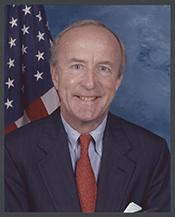
Mr. Speaker, recent newspaper articles, television news reports, debates on the floor of the U.S. House and Senate, and even dinner time conversations this holiday season have been dominated by…
Mr. Speaker, recent newspaper articles, television news reports, debates on the floor of the U.S. House and Senate, and even dinner time conversations this holiday season have been dominated by discussions about the war against terrorism in Iraq.
Two and a half years removed from the beginning of this war, the stakes for victory remain high. It is important for all Americans, whether they support the war or not, to understand the implications of why we went there; what we are there to achieve; and what the consequences would be if we agreed to an artificial timetable to withdraw our troops. Because we continue to face both great difficulties and great opportunities in Iraq, it is even more important that all Americans absolutely recognize what the future of Iraq means to our security here at home and the future of the Middle East!
My current reading of the Iraq debate is that some war critics, who originally supported the war, have lately been trying to revise or rewrite the history of how Iraq became the central front in the war on terrorism. Some of this is genuine, principled opposition to war. Some of it is personal animosity toward the President. Whatever the reason, we need to separate the two. As some have said, ``hate the war, love the warfighter.''
To understand why we are there we do not have to look much further than what some critics said before the war and what they are saying now.
In 1998, House Democratic Leader Nancy Pelosi said ``Saddam Hussein has been engaged in the development of weapons of mass destruction technology.'' Seven years later, she says Saddam's weapons were ``not an imminent threat to the United States or a cause for war.''
In 2002, Senator Hillary Clinton said Saddam ``has also given aid, comfort, and sanctuary to terrorists.'' Now she claims there were ``false assurances, faulty evidence'' for war, but still hesitates to embrace calls for immediate withdrawal.
Even former President Bill Clinton said in 1998 that Saddam's ``ability to produce and deliver weapons of mass destruction poses a grave threat.'' Yet, now he says the war was ``a big mistake,'' but, like his spouse, warns of the danger of a premature withdrawal.
Unlike what Iraqis endured under the tyranny of Saddam Hussein, Americans are afforded the right to voice their concerns and state their opinions just as these elected officials and other citizens have done. However, it is important we understand the facts before more judgments and accusations are made.
Saddam Hussein reigned through terror, sponsored terror, and massacred innocent Iraqis with chemical weapons. He invaded his Kuwaiti neighbors and violated more than a dozen U.N. resolutions. His armed forces shot at U.S. and British pilots for the ten years they patrolled the U.N.-imposed ``No Fly Zones'' as they protected the Iraqi people from his brutality. And in the words of weapons inspector Dr. David Kay: Saddam had the ``intent'' and ``capabilities'' to develop weapons of mass destruction.
I have never regretted voting to give the President the authority to go to war in Iraq and remove Saddam from power. While I agree with Senator John McCain that mistakes have been made and some pre-war intelligence was unintentionally flawed, we cannot overlook positive developments in Iraq. I am convinced, however, that the progress we have made could be lost if we prematurely withdraw our troops before the Iraqi people are fully capable of governing and securing their own country.
The War on Terrorism in Iraq and Afghanistan is the defining challenge of our generation, whether some ``war opponents'' like it or not. Osama Bin Laden's deputy Ayman Al-Zawahiri has declared Iraq to be ``the place for the greatest battle,'' where he hopes to ``expel the Americans'' and then spread ``the jihad wave to the secular countries neighboring Iraq.'' Such statements reaffirm why withdrawing our troops according to an artificial political timetable would be detrimental to the future of Iraq, our own national security, and could actually embolden those who hate our way of life.
Iraq continues to strengthen its security forces, but not all of their military battalions are ready to operate independent of coalition troops. Our troops, and those of our coalition allies, are still needed in Iraq and we need to stand firm in the face of the terrorists. If we
leave prematurely, jihadists and terrorists will interpret our withdrawal as total victory and use that opportunity to turn Iraq into a springboard for future attacks closer to our shores. We know what these terrorists are capable of. Here in New Jersey, we don't need to be reminded of 9/11, nor have we forgotten terrorist attacks in Bali, London, Madrid, Thailand, Bangladesh, Jordan, Israel, and the discovery of cells in Belgium and a host of countries around the world.
We also have a responsibility to 28 million Iraqis who, after decades of abuse and torture by Saddam, yearn to be free and deserve a chance for prosperity and stability. We pledged to guide the Iraqi people through the difficult steps of constituting a new government, strengthening the Iraqi Army, and laying the ground work for free elections. But it would be incredibly dangerous if we allowed threats from Bin Laden, Zawahiri, or any of the insurgency to influence our foreign policy and ``break our promise'' to the Iraqi people. Drawing down our forces in Iraq should be based strictly on the progress being made by the Iraqi government to fully secure their own country and the judgment of our military generals on the ground over there.
For our troops to come home safely, our strategy for victory depends significantly on more Iraqi Security Forces, ISF, being trained, equipped, and ready to ``lead the fight'' for securing their own country. American military leaders in Iraq estimate that 210,400 Iraqi forces are currently fighting to defend Iraq. More than 80 battalions are fighting alongside coalition troops while nearly 40 others, including four in Baghdad, are independently policing and controlling areas of Iraq. Despite that innocent Iraqis continue to be a target of suicide bombers, more than 50,000 Iraqi police have completed basic training courses and ISF recruitment remains high. With all due respect to media reports, most of the insurgency only exists in four of 18 provinces in Iraq, a country the size of California.
Despite continued terrorists attacks, car bombings, beheadings, and kidnappings, the terrorists have not achieved their goals. In fact, 2005 has been a watershed year for democracy in Iraq. In January, the world watched as Iraqis defied terrorist threats by going to the polls and casting their votes for self-determination. Eight million Iraqis went to the voting booth and took a stand against terror by voting for an interim National Assembly. In October, almost 10 million participated in an Iraqi referendum to approve a national constitution that--for the first time ever--guarantees them basic freedoms, rights and protections under law, regardless of their gender, religion, or ethnic origin. And on December 15 even more Iraqis cast their votes for a permanent, full-time government.
In addition to the political and security strategy in Iraq, we must also continue to focus on the economic and reconstruction effort. While at times slow, critical infrastructure in Iraq continues to be restored and rebuilt to meet the increasing demand and need of the country's growing economy. The Army Corps of Engineers and many of our soldiers and Marines, working alongside Iraqis, the USAID and other international agencies, are helping Iraq build schools, modernize water and sewage projects, and open new fire and police stations. Approximately 80,000 children are attending Iraq's 3,400 schools. After years of neglect, more than 15,000 Iraqi homes have been connected to the Baghdad water system. And more Iraqi women are receiving better health care thanks to the construction of a new 260-bed maternity hospital in Mosul.
These are strong signs of progress in Iraq--none of which would have been possible without the service, sacrifice, and strong morale of U.S. and coalition forces. Unfortunately, such stories are not always being told by the media. Iraqis want to be free, and thanks to the support of our service men and women, they are taking steps each and every day to reach their goal.
Mr. Speaker, victory will not be accomplished overnight. On the contrary, the Iraqis still need our help to meet their political and security objectives. Our work in Iraq remains dangerous and difficult but we must meet the challenges of this new kind of war. We must honor the service and sacrifice of our soldiers by doing whatever it takes to protect our nation and prevail in Iraq and Afghanistan.
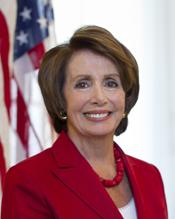
Mr. Speaker, I rise to commend the gentleman from California (Mr. Lantos), our ranking Democrat on the International Relations Committee, for his leadership to make our country safer, our military…
Mr. Speaker, I rise to commend the gentleman from California (Mr. Lantos), our ranking Democrat on the International Relations Committee, for his leadership to make our country safer, our military stronger, and to bring stability to the region. While we may not always agree on the approach to take, Mr. Lantos strove very hard for a bipartisan resolution, and I want to just read from the resolution that he would put forth in the spirit of congratulating the people of Iraq.
He said: ``Resolved, That the House of Representatives congratulates the people of Iraq on the three national elections conducted in Iraq in 2005.'' Imagine, in January, in October, and now in December, three times courageously they went to the polls, and his resolution spells that out.
His resolution would encourage ``all Americans to express support for the people of Iraq in their efforts to achieve a free, open, and democratic society,'' and again, throughout his resolution he makes that point.
And he expresses ``thanks and admiration to the members of the United States Armed Forces and the armed forces of other nations in Iraq, including the members of the security forces of Iraq, whose heroism permitted the Iraqi people to vote safely.''
That is the spirit of the resolution that we should be voting on today, one that brings us together, that is clear to the Iraqi people that their courage is an example to the world.
But, sadly, this Congress is not an example of democracy to the world when instead of using an occasion to unify, once again, the Republican majority brings to the floor a resolution rejecting the good offers of the gentleman from California (Mr. Lantos) to come together in a bipartisan way and uses what should be a cause for celebration as instead a means to denounce those who disagree, not very democratic, and also to insist that if you want to congratulate the people of Iraq, you must support the status quo.
More of the same in Iraq is not making the American people safer. More of the same in Iraq is not making our military stronger. More of the same in Iraq is not bringing stability to the region.
So I think you will see Democrats united in congratulating the people of Iraq, commending our men and women in the armed services, and supporting
that in a democracy we will have different views and that we will respect them. I have said it before and I will say it again, Senator Taft, who would become the Republican leader of the Senate during World War II, he said disagreement in time of war is essential to a governing democracy, and this was during World War II. Why do the Republicans think that we cannot have disagreement in time of war?
So as we go into this holiday season, I know that we can come together and say to our men and women in harm's way that we honor them for their service; we are grateful to them for their patriotism, their courage and the sacrifice they are willing to make for our country; and in this holiday season, we strive for peace on Earth and goodwill toward man, which would not be possible without our men and women in the armed services.
That should be the spirit in which we go forward, not in the divisive manner the Republicans have put forward. That is really quite sad, but I hope that in the vote that we have today that the Iraqi people will know that on both sides of the aisle we all see them as an example of democracy and hope that they will not be discouraged by this suppression of dissent in the United States.
Mr. Speaker, this marks the second time in a month that House Republicans have gone to extreme lengths to avoid a fair and open debate on the war in Iraq. Last month, after being stung by a resolution introduced by Mr. Murtha calling for the redeployment of U.S. forces in Iraq, Republicans brought to the floor a measure that was an act of deception and an attempt to mischaracterize the Murtha legislation.
Today, under the guise of commending the people of Iraq for yesterday's election, the Republicans present a resolution that spends more time trying to justify the continued presence of U.S. troops in Iraq than congratulating the Iraqis.
If the majority wants to debate the President's Iraq policy then let us do that. A war that is now more than 1,000 days old, has cost the lives of more than 2,150 Americans, and has not made the American people safer or the Middle East more secure, certainly merits debate in this House. But let us do so in a way that does not insult the intelligence of the American people or trivialize an issue of the utmost importance.
We should debate the war in Iraq thoroughly, with full consideration of the points of view of all Members. Sadly, the Republican leadership did not permit that debate today.
Millions of Iraqis voted in Iraq's three national elections this year, and all Americans should salute that fact. They should salute as well the courage of the 160,000 American troops and the courage of the thousands of soldiers from other nations and from Iraq itself, who made the safe conduct of these elections possible. It should appropriately be acknowledged that the elections are hopeful steps toward a more stable Iraq.
Mr. Lantos brought a resolution to the Rules Committee, which would have done those things, but the majority refused to allow it to be considered. It can only be that the majority does not want to let commending the Iraqis get in the way of a tightly controlled tribute to the President's war policies. As we lecture the Iraqis about the need to accommodate differing points of view, let us hope that they do not devote too much attention to the example provided by this Republican House.
The Lantos resolution provides well-deserved recognition to all of the Iraqis who have taken part in their country's political development this year. It recognizes the heroism of the soldiers who strive each day to bring security to Iraq.
Commending them should be our focus today, but Mr. Lantos was not allowed to offer his resolution. It would be unfortunate if the message we sent to the Iraqi people and our troops was that scoring political points is more important in this House than acknowledging their achievements this year.
I thank my friend for yielding. Mr. Speaker, I rise in sorrow, not in anger, because this morning could be a morning of unity and celebration and congratulations. Yesterday in unprecedented numbers…
I thank my friend for yielding.
Mr. Speaker, I rise in sorrow, not in anger, because this morning could be a morning of unity and celebration and congratulations. Yesterday in unprecedented numbers the people of Iraq rejected the threats and intimidation of the terrorists and chose a new permanent national Parliament, the first fully sovereign, elected democratic assembly in the history of Iraq. This should be cause for celebration for the Iraqi people, for our troops, the troops of our allies and the Iraqi security forces who bravely protected the Iraqi people who came out to vote. Unfortunately, the resolution before us does not do that, and that I deeply regret.
Mr. Speaker, we all know that there is a spectrum of views on my side of the aisle on how to deal with the difficult situation in Iraq in the weeks and months ahead. Yesterday I was asked with a number of other Democrats to go to the White House. I sat next to the President as we talked about the possibility of building a united approach to this difficult dilemma. But the leadership, in a rigid, unbending, almost ruthless fashion, refused to take one single word of change or modification in their resolution. It was a take-it-or-leave-it proposal, which is inappropriate in a democratic legislative body where some of us have been attempting to operate in a bipartisan fashion.
I introduced a resolution and asked the Rules Committee to make it in order. My resolution congratulates the Iraqi people on three democratic national elections, encourages all Americans to support the Iraqi people, and commends our troops and those of our allies and the Iraqi forces for protecting their people at election time.
That is the resolution which should be before us today. We would get a unanimous vote, and we would send a message to our troops and to the whole world that Congress is united. Instead, by rigidly demanding total adherence to the Republican formula, there will be an ugly, divisive debate in this body this morning. This is not in our national interest.
I wish to use the balance of my time to read the resolution that I believe ought to be before us, Mr. Speaker.
The text of my resolution is as follows:
H. Res. 613
Whereas the people of Iraq have consistently and
courageously demonstrated their commitment to democracy by
participating in three elections in 2005;
Whereas on January 30, 2005, the people of Iraq
participated in an election for a transitional national
assembly;
Whereas all segments of Iraqi society actively participated
in the approval of a new Iraqi Constitution through a
referendum held on October 15, 2005;
Whereas reports indicate that the people of Iraq voted in
unprecedented and overwhelming numbers in the most recent
election, held on December 15, 2005, for a new, national
parliament that will serve in accordance with the recently-
approved Iraqi Constitution for a four-year term and that
represents the first fully sovereign, elected democratic
assembly in the history of Iraq;
Whereas this remarkable level of participation by the
people of Iraq in the face of dire threats to their very
lives has won the admiration of the world;
Whereas the Iraqi elections could not have been conducted
without the courage and dedication of the members of the
United States Armed Forces and the armed forces of other
nations in Iraq, including the members of the security forces
of Iraq; and
Whereas the December 15, 2005, election in Iraq inspires
confidence that a robust, pluralistic democracy that will
bring stability to Iraqi society is emerging: Now, therefore,
be it
Resolved, That the House of Representatives--
(1) congratulates the people of Iraq on the three national
elections conducted in Iraq in 2005;
(2) encourages all Americans to express support for the
people of Iraq in their efforts to achieve a free, open, and
democratic society; and
(3) expresses its thanks and admiration to the members of
the United States Armed Forces and the armed forces of other
nations in Iraq, including the members of the security forces
of Iraq, whose heroism permitted the Iraqi people to vote
safely.
There isn't a Member in this body who could not subscribe to this. This is not the time for an ugly and divisive debate. And with its rigidity and total unwillingness to listen to half of this body, the majority has chosen to give us an ugly and divisive debate.
Will my friend yield?
I would like to comment on your observation.
Thank you for your courtesy.
Thank you.
My good friend Mr. Dreier suggested that there will not be a divisive debate this morning. That divisive debate has already begun. You need to listen to the words of what my colleagues are saying. I attempted to avoid this divisive debate this morning. I attempted at the end of this session to have this Congress go home with a unanimous vote congratulating the Iraqi people on what they have done; congratulating our military, our allies and the Iraqi forces for making it possible for them to vote.
There are divisions on policy, and it is an ostrich policy to pretend that there are no divisions. I may agree with the gentleman's view about a timetable. That is not the issue. The issue is that the last discussion of Iraq in this body will show division, bitterness and divisiveness, and that could have been avoided with a little bit of flexibility and consideration on the part of the majority for the views of almost one-half of this body.
I thank my friend for yielding.
Reclaiming my time, it is in the national interest to show the greatest degree of unity in this body, and your resolution does the opposite.

Mr. Speaker, once again, the House Republican leadership refuses to allow an honest debate over the future of the U.S. military presence in Iraq. The American people, and in particularly our men and…
Mr. Speaker, once again, the House Republican leadership refuses to allow an honest debate over the future of the U.S. military presence in Iraq. The American people, and in particularly our men and women in uniform serving honorably in difficult circumstances in Iraq, deserve more than cheerleading and sloganeering by Congress and the President. Unfortunately, empty gestures are all this Congress provides with this resolution.
Like all of my colleagues in Congress, I was heartened when millions of Iraqis, even at risk of life and limb, voted in late January to establish an interim government and constitutional assembly and again in October in support of a new Constitution. And, the early reporting on yesterday's election for a new four-year parliament in Iraq has been positive. There has been progress in Iraq. I congratulate the Iraqis on the election, and I commend our troops for helping to provide security for the election.
Unfortunately, I cannot support the resolution on the floor today because it contains the blatantly false assertion that negotiating a time line for withdrawal of U.S. forces with the Iraqi government is somehow inconsistent with achieving victory in Iraq. To the contrary, I believe that negotiating a timeline for withdrawal of U.S. forces is a prerequisite for stabilizing Iraq and bringing our troops home with honor beginning early next year.
Announcing the termination of the open-ended U.S. military commitment in Iraq and providing a concrete plan, including a timeline negotiated with the Iraqi government, for withdrawal could well undermine support for insurgents. The majority of insurgent fighters are Iraqi Sunnis who have stoked the wide variety of grievances of ordinary Iraqis arising from the U.S. military presence to generate popular support for their cause. Most importantly, establishing a withdrawal plan and timeline would remove one of the chief causes of instability in Iraq, the U.S. military presence itself, by separating nationalist Iraqi insurgents trying to end the U.S. military presence, both Sunni and Shia, from foreign elements in Iraq for their own reasons. As, the Commander of U.S. forces in Iraq, General George Casey, testified to Congress earlier this year that ``the perception of occupation in Iraq is a major driving force behind the insurgency.'' A specific withdrawal plan, with benchmarks for measuring success in stabilizing Iraq, could turn Iraqis, both Sunni and Shia, against the foreign terrorists operating in Iraq. This could be a key turning point in stabilizing the country.
A time line and withdrawal plan negotiated with the Iraqi government would also boost the Iraqi government's legitimacy and claim to self- rule, and force the Iraqi government to take responsibility for itself and its citizens. Negotiating a withdrawal timeline and strategy with the Iraqi government could, more than possibly anything else, improve the standing of the Iraqi government in the eyes of its own people, a significant achievement in a region in which the standing of rulers and governments is generally low.
Similarly, establishing a firm timeline for withdrawal could accelerate the development of Iraqi security forces and deepen their commitment to defending their own country and their own government. It would eliminate the conflict they now feel by working with what many of them see as an occupying force. It would allow them to defend a sovereign Iraqi government, rather than fight alongside U.S. forces. As long as the U.S. military remains in Iraq, Iraqi politicians and security forces will use it as a crutch and will likely fail to take the necessary steps to settle their differences and establish an effective, inclusive and independent government.
Negotiating a timeline for withdrawal with the newly elected Iraqi government would show that democracy ended the U.S. occupation of Iraq, not terrorist or insurgent violence, and would allow our troops to come home with honor.
Just as importantly, a specific plan and timeline for withdrawal would provide much needed relief to over-burdened military personnel and their families and provide some certainty to U.S. taxpayers regarding the financial burden they'll be forced to bear.
Finally, a plan for withdrawal could also help the United States in our broader fight against Islamic extremists with global ambitions, most notably al-Qaeda, by taking away a recruiting tool and training ground. Porter Goss, the Director of the Central Intelligence Agency, testified to Congress that, ``Islamic extremists are exploiting the Iraqi conflict to recruit new anti-U.S. jihadists. These jihadists who survive will leave Iraq experienced and focused on acts of urban terrorism.'' He went on to say, ``The Iraq conflict, while not a cause of extremism, has become a cause for extremists.''
The House should be debating this important issue and strategies for moving forward in Iraq instead of politically motivated misleading resolutions.

Mr. Speaker, I strongly object to the procedures under which this resolution is being debated. I voted against those procedures because the House should have been able to have a full and free debate…
Mr. Speaker, I strongly object to the procedures under which this resolution is being debated. I voted against those procedures because the House should have been able to have a full and free debate and to consider possible changes in the resolution.
For example, Representative Lantos proposed that we congratulate the Iraqi people on three national elections conducted in Iraq this year, encourage all Americans to express support for the people of Iraq, and express thanks to the members of the U.S. armed forces whose heroism permitted the Iraqi people to vote safely in yesterday's elections. That would have been something all Members of the House could support, if the Republican leadership had permitted that to be considered.
Still, I will vote for the resolution that is now before us, for several reasons.
First, the resolution calls yesterday's parliamentary elections a ``crucial victory for the Iraqi people and Iraq's new democracy.'' I couldn't agree more.
Reports are still coming in and we won't know the results for some time, but it's clear that the day was a success in terms of high turnout and low levels of violence. To the extent that increased Sunni participation means a greater political role for Sunnis in the new parliament, we could see weakened support for the insurgency. And the Iraqi people should be commended for their courage in coming out to vote--not once, but three times this year.
The resolution then goes on to call for a commitment to victory in Iraq, although it doesn't define ``victory.'' I strongly suspect this language was added, not so much to send a positive message to our soldiers or the Iraqi people so much as it was designed to bolster President Bush's recent speeches in Iraq where the word ``victory'' looms large.
Unlike American success in World War II, ``victory'' in Iraq cannot be measured by military success alone. This was achieved when our troops toppled Saddam Hussein's regime in 2003. What we can hope for in Iraq is that a responsible withdrawal of American forces can be linked to measurable benchmarks of political stability. This means that Iraqi security forces must be capable of providing for the safety of Iraqis. It means that Iraq's cities and infrastructure are rebuilt and its citizens have access to electricity and clean water. A successful withdrawal strategy means that America will no longer bear the brunt of the burden--that the U.N., other international organizations, our allies, and countries in the region will step up to assist with the nation-building mission in Iraq.
A successful outcome in Iraq is essential because failure in this part of the world could lead to wider war, greater terrorism and a disaster for our national security. To be frank, it is not so much ``victory'' that ought to concern us so much as a need to avoid ``failure.''
Unfortunately, whether we can avoid a failure in Iraq is a question that is not completely in our hands because only the Iraqis themselves can find the will necessary to live
alongside each other and to make the compromises necessary to build a functioning government based on an inclusive constitution.
For the record, I opposed the Iraq war resolution, but I have resisted supporting an artificial deadline for withdrawing troops. I believe we need a plan that is designed to bring our troops home and make clear to the Islamic world that we harbor no ambitions for permanent bases, Iraqi oil revenues or any military occupation. But how we withdraw is as important as when we withdraw. This means giving the Iraqis time to form a permanent government and establish the means for international support. We must exercise deep care in the way our country withdraws because leaving a failed state in Iraq will deeply endanger our country.
We were led into war as a divided nation and today we are even more divided. That's why I led a letter last month to Defense Authorization conferees with my colleagues Rep. Tom Osborne (R-NE), Rep. Ellen Tauscher (D-CA), and Rep. Joe Schwarz (R-MI) urging conferees to include language passed overwhelmingly in the Senate urging President Bush to outline his strategy for withdrawal from Iraq and to provide Members of Congress with quarterly reports on the progress of American operations in Iraq. We wrote this letter because we believe that a successful withdrawal from Iraq can only be helped if Congress and the Bush Administration work to bring unity at home.
It is in our national interest to show the greatest amount of unity possible to the American people, to the international community, and to the Iraqi people, who so bravely made their way to polling stations all over Iraq yesterday.
Sending a message of encouragement to the Iraqi people to build stable institutions based on democratic principles is important at this critical time. it is for this fundamental reason that I vote today in support of this resolution.

Mr. Speaker, I yield myself such time as I may consume. (Ms. SLAUGHTER asked and was given permission to revise and extend her remarks.) Mr. Speaker, I am disappointed and sad to say that the content…
Mr. Speaker, I yield myself such time as I may consume.
(Ms. SLAUGHTER asked and was given permission to revise and extend her remarks.)
Mr. Speaker, I am disappointed and sad to say that the content of the budget, and the way we are approaching it, confirms the fears of the American people instead of their hopes.
The bill the Republicans reported less than an hour ago is a bill that no one has seen, but one that will have far-reaching impact on the future of our country. We do not know everything it does, and yet we are being asked to vote on it before the ink is even dry.
Our form of government requires the trust of the people, a trust that this leadership has not earned. Being asked to take the Federal budget on faith, in a year when the majority has itself lost faith in the values that matter most to our democracy, integrity, honesty and openness, is simply asking too much.
One thing we do know about this budget is that its very foundation is fundamentally dishonest. The majority has titled it the Deficit Reduction Act when the facts clearly show that the bill, when combined with the Republican tax giveaway to the rich, will actually increase the deficit by billions of dollars. Supporters will also claim that they have addressed criticisms of the legislation, but they are not being honest either.
It is true that the leadership was shamed by the public, the Democrats, and even by Members of their own party into abandoning some of the most egregious attacks on the less fortunate. But the fact remains that the bill still takes over $1 billion from child support services. It cuts education spending by $16.2 billion so that our Nation's children will find it harder to go to college and to realize their dreams. And it slashes Medicaid by $5 billion, putting health care for those who need it further out of reach.
The budget does all this while adding to the deficit and giving away tens of billions of dollars to the rich and the super rich in tax cuts, dramatic cuts that middle-class Americans will not share in, but will be asked to pay for.
Is this really what our constituents sent us here to do, to spend the holiday season taking from the needy so that we can give even more to those who need it the least?
Mr. Speaker, this year has repeatedly shown us the consequences of poor leadership. We saw a natural disaster turn into a national tragedy because of failed government response, casting doubt on our readiness to respond to future challenges. We saw self-interest run amok, as top lawmakers violated the people's trust and were indicted
and forced to step down in the wake of scandal.
We saw our troops and the people of Iraq struggle heroically to lift not just the weight of a vicious insurgency but also the burden of poor planning and unfulfilled promises from the White House.
And here again today, the American people will be made victims of unscrupulous, disingenuous leadership.
On the opening day of the 109th Congress, almost 1 year ago, the first act of this leadership was to try to destroy the House ethics committee under the guise of ethical reform.
Unfortunately, my colleagues in the majority have committed to ending this session of Congress on the same sad note with which they began it, by employing unacceptable, unprecedented tactics and trying to deceive the American people out of pure political self-interest at the expense of this body and our shared values.
We cannot afford another year like this. We need to start investing in America's future, not letting those in power invest only in their friends at America's expense. It is time for real reform, for real integrity, for real leadership. It is time for a change, and together we can do better.
Mr. Speaker, I reserve the balance of my time.
Mr. Speaker, I yield 2 minutes to the gentlewoman from Illinois (Ms. Schakowsky).
Mr. Speaker, I yield 4 minutes to the gentleman from Texas (Mr. Edwards).
Mr. Speaker, I yield 3 minutes to the gentleman from Massachusetts (Mr. Markey).
Mr. Speaker, I yield 3 minutes to the gentleman from California (Mr. George Miller).
(Mr. GEORGE MILLER of California asked and was given permission to revise and extend his remarks.)
Mr. Speaker, I yield 3 minutes to the gentleman from Michigan (Mr. Levin).
(Mr. LEVIN asked and was given permission to revise and extend his remarks.)
Mr. Speaker, I yield 3 minutes to the gentleman from Connecticut (Mr. Larson).
Mr. Speaker, I yield 30 seconds to the gentleman from Missouri (Mr. Cleaver).
Mr. Speaker, I yield 3 minutes to gentleman from Oregon (Mr. DeFazio).
Mr. Speaker, I yield 3 minutes to the gentleman from Washington (Mr. McDermott).
(Mr. McDERMOTT asked and was given permission to revise and extend his remarks.)
Mr. Speaker, I thank the gentlewoman for the time and really wanted to stand in support of the resolution and believe that the resolution is a good one and that yesterday in this week's election…
Mr. Speaker, I thank the gentlewoman for the time and really wanted to stand in support of the resolution and believe that the resolution is a good one and that yesterday in this week's election speaks volumes for all the work that we have accomplished.
I want to speak more importantly in memory and honor of Sergeant Daniel Clay, who was killed when the marines were attacked in Fallujah on December 1. His dad, Mr. Bud Clay, wrote the President a letter and said that ``I am writing to tell you how proud and thankful we, his parents and family, are of you and what you are trying to do to protect us all. This was Dan's second tour in Iraq and he knew and said that his being there was to protect us.
``I want to encourage you. I hear in your speeches about `staying the course.' I also know that many'' of you are against this war and you must get weary of fighting to try to do what is right. ``We and many others are praying for you to see this through, as Lincoln said `that these might not have died in vain.'''
I also have the actual letter that Daniel Clay wrote his family to be opened in the event of his death, and I think it would be in his honor to read it. This is of course by a very young man:
``Mom, Dad, Kristie, Jodie, Kimberly, Robert, Katy, Richard, and my Lisa.
``Boy do I love each and every one of you. This letter being read means that I have been deemed worthy of being with Christ. With Mama Jo, Mama Clay, Jennifer, all those we have been without for our time during the race. This is not a bad thing. It is what we hope for. The secret is out. He lives and His promises are real! It is not faith that supports this but fact and I now am part of the promise. Here is notice! Wake up! All that we hope for is real. Not a hope but real.
``But here is something tangible. What we have done in Iraq is worth my sacrifice. Why? Because it was our duty. That sounds simple. But all of us have a duty. Duty is defined as a God-given task. Without duty life is worthless. It holds no type of fulfillment. The simple fact that our bodies are built for work has to lead us to the conclusion that God, who made us, put us together to do His work. His work is different for each of us. Mom, yours was to be the glue of our family, to be a pillar for those women, all women around you. Dad, yours was to train us and build us, like a platoon sergeant, to better serve Him. Kristie, Kim, Katy, you are the fire team leaders who support your squad leaders, Jodie, Robert and Richard. Lisa, you too. You are my XO and you did a hell of a job. You all have your duties. Be thankful that God in His wisdom gives us work. Mine was to ensure that you did not have to experience what it takes to protect what we have as a family. This I am so thankful for. I know what honor is. It is not a word to be thrown around. It has been our honor to protect and serve all of you. I faced death with the secure knowledge that you would not have to. This is as close to Christ-like I can be. That emulation is where all honor lies . . . I thank you for making it worthwhile.
``As a marine this is not the last chapter. I have the privilege of being one who has finished the race. I have been in the company of heroes. I now am counted among them. Never falter! Don't hesitate to honor and support those of us who have the honor of protecting that which is worth protecting.
``Now here are my final wishes. Do not cry! To do so is to not realize what we have placed all our hope and faith in. We should not fear. We should not be sad. Be thankful. Be so thankful. All we hoped for is true. Celebrate! My race is over. My time in the war zone is over. My trials are done. A short time separates all of us from His reality. So laugh. Enjoy the moments and your duty. God is wonderful.
``I love each and every one of you.
``Spread the word. Christ lives and He is real.
``Semper Fidelis.
``Sergeant Daniel Clay.''
Daniel Clay is like so many others who have fought to make yesterday possible, and yesterday is certainly not a conclusion but let us hope a beginning of a new and significant chapter in Iraq where the military sacrifices become smaller and the political engagement becomes greater.
One thing I have learned and loved about this House is the fact that we are using politics as a substitute for civil war. Let us hope that Iraq learns that lesson and that 200 years from now they will look back at yesterday as one of their first most significant days in democracy.

Mr. Speaker, I rise today to congratulate the Iraqi people on their participation in a successful election. The successful vote was a major stride for many Iraqis. Guns, bombs and violence were…
Mr. Speaker, I rise today to congratulate the Iraqi people on their participation in a successful election. The successful vote was a major stride for many Iraqis. Guns, bombs and violence were largely set aside for the day as a large majority of Iraqis went to the polls and exercised their right to vote. It is my sincere hope that with the new government in order, the bloodshed in Iraq will be replaced by an open, democratic debate.
I cannot, however, support this flawed resolution. The resolution focuses more on affirming the President's strategy for a continued military presence in Iraq than actually congratulating the Iraqis. And, while I agree with this resolution that a timeline for a U.S. Armed Forces withdrawal is not the proper course of action at this time, I strongly believe our military effort needs to be exceeded by the diplomatic effort to come. Unfortunately though, this resolution does not express that sense. It is nothing more than another political tactic by the Republican leadership meant to squash a real debate on Iraq in favor of a one-sided avowal of faith in an administration that has proved unfaithful.
We have never had a real debate on Iraq here in the House and this resolution does not offer real deliberation either. I call on my friends in the leadership to allow this House, the greatest legislative body in the world, to have a candid discussion, a full and fair debate, for at least 2 days, on this critical matter.
It is becoming increasingly clear that the United States is not doing enough to ensure that diplomacy will win out over violence. Certainly that is our objective, I do not deny that, but without a clear plan from the administration to achieve this aim I fear that our presence in Iraq could be protracted for much longer than it could or should be. This war will not turn to peace by military means alone. Diplomacy, democracy, and dialogue are the only true ways that Iraq can be a success. After four major speeches on Iraq from the President, I still have not seen an honest appraisal from this administration on the progress that has been made, and more importantly, what we are doing to ensure future progress. This is the type of discussion that we should be having here in the House, not a bogus debate on a hollow political resolution veiled as a congratulatory message to the Iraqi people.
We need a change of course in Iraq. We should hasten the shift of control to the Iraqis and move away from military conflict. Peace in Iraq can only be achieved by the Iraqis themselves. Therefore, there must be more emphasis on finding diplomatic solutions to Iraqi problems; to bringing in more nations to work with the Iraqis to rebuild and restructure their country; and there must be support for Iraqi democracy in all its forms. The Iraqi constitution clearly needs to be revisited and the administration must put pressure on the ruling parties, no matter who emerges victorious from the election, to engage in an honest, open deliberation on the amendment process to ensure that all Iraqis feel that they have a legitimate stake in the future of their country.
We have lost more than 2,000 brave men and women in Iraq. In excess of 100,000 active and reserve soldiers continue to serve in Iraq. We must honor the sacrifices and achievements of our troops, the pain borne by their families, and we must celebrate what they have been able to accomplish in spite of the incompetence and arrogance of this administration. Yesterday's elections give hope to the success of a free Iraq. Let us build on this momentum and show Iraqis and the world that the U.S. is truly committed to a stable and free Iraq achieved through diplomacy, not through military might.
Again, I congratulate the Iraqi people on a successful election yesterday. They showed the world that freedom knows no bounds. And I believe we must give our brave men and women all the support they need to achieve victory. However, I urge my colleagues to vote against this cynical, and frankly, disgracefully political, resolution, and ask that my colleagues seek a debate beyond platitudes in this House and demand more honesty and action from this administration.
Show 11 more

Mr. Speaker, I am troubled and disappointed that this particular resolution concerning Iraq is before the House today. It is intentionally divisive, and unnecessarily so. Yesterday, the Iraqi people…
Mr. Speaker, I am troubled and disappointed that this particular resolution concerning Iraq is before the House today. It is intentionally divisive, and unnecessarily so.
Yesterday, the Iraqi people engaged in the most basic civic activity of a true democracy; they voted. I congratulate the millions of Iraqi citizens who bravely went to the polls to elect their parliament. I am greatly encouraged by this significant accomplishment, and I am proud to strongly support the Iraqi people as they struggle to build their own democracy.
I also strongly support our troops on the ground in Iraq. I recognize and honor their service and tremendous sacrifice. I also honor the sacrifices that have been made by their family members over the past 4 years. They have served bravely and skillfully, even when they have not been given the equipment and strategic support they require. As they come home, their Government must live up to its promise and provide the long term support they will need.
Every member of the House would support a resolution celebrating and honoring the Iraqi people and successful elections that occurred yesterday.
Every member of the House would also support a resolution honoring the sacrifice and commitment of our service members who are serving in Iraq.
The ranking minority member of the International Relations Committee introduced a resolution that would have done those things.
Unfortunately, the majority has chosen to play politics with our troops and to use the historic Iraqi elections as an opportunity to try to split us apart.
The resolution before us today fails on two fronts. First it fails for what it is not: Not a strategy for success, no change of course, and nothing to communicate to the American People or our troops that we recognize the facts on the ground and have learned from our past mistakes.
It also fails for what it is: an empty, self-congratulatory statement that the current policy is working, without regard for the facts. There is enough good to recognize--the Iraqi elections, the service of our soldiers--that we should not be waving around our own statements of self-appreciation and manufactured on imaginary good news.
Let us discuss real, solid evidence and real, substantive plans. How do we move towards a more stable, functional Iraq?
It is worth discussing, for a moment, the meaning of victory. I would have hoped that the President and Majority would have learned 3 years ago that saying ``Mission Accomplished'' does not make it so. Giving wishful speeches in front of signs that says ``Victory'' does not make it so. And using the word ``victory'' in the titles of counterproductive resolutions like this brings us no closer to a stable and functional Iraq.
Now that the Iraqi people have a framework for a constitution and have elected a parliament, it is time for the United States to bring our troops home. This will do more to erode support for the insurgency than a continued U.S. military occupation can ever hope to accomplish.
As my colleges know, Congressman John Murtha, a respected defense expert and a decorated Marine veteran, recently introduced H.J. Res. 73, which would bring our troops home from Iraq and bring an end to an occupation that does not serve the interests of the Iraqis or America. This resolution recognizes the ground truth in Iraq and will help to end the insurgency, I am proud to support it, and not this one.
Also, publicly stating that we will not seek to build permanent bases in the country would help to reassure the population of Iraq that we mean what we say when we tell them we have no designs of occupation. That is why I have cosponsored the Iraq Sovereignty Promotion Act, H.R. 3142, which calls for America to make such a public pledge.
Unfortunately, today we are not discussing either of these bills, or any of the many other pieces of legislation that have been introduced by my colleagues on what to do in Iraq. Instead, we have wasted an opportunity to have a substantive debate in favor of yet another divisive hollow resolution.
Mr. Speaker, I can understand why this budget bill is coming up at 2:35 in the morning Washington time. If I had a bill this bad, I would want it to come up at 2:30 in the morning as well. I think…
Mr. Speaker, I can understand why this budget bill is coming up at 2:35 in the morning Washington time. If I had a bill this bad, I would want it to come up at 2:30 in the morning as well. I think the American people, those at least who are watching at this time of day, perhaps out in Hawaii, if nowhere else in America, ought to know what this does in combination with everything else Republicans are doing.
This bill, along with its tax cuts, $220,000 a year, in fact, to those making $1 million a year in dividend income, will make a sham out of the American principles of shared sacrifice during time of war. This budget bill that the House is about to vote on will actually increase the college education costs of the sons and daughters of our Iraqi war troops in combat right at this moment by up to $28,000, up to a $28,000 student tax on the backs of men and women who are this morning bearing the burden for fighting America's wars. I do
not know how you could get more unfair than that.
The fact is that the Republicans' claim of supporting compassionate conservatism now comes clear at 2:30 in the morning. They are going to provide cuts for working families and the poor and cuts for the rich. The difference is the cuts for the poor and working families are going to be cuts to the Women, Infants, and Children program that helps low- income children get prenatal care. It is going to cut funding that helps disabled children get a better education. It is going to cut funding that helps local school districts pay for working families' educations.
And, yes, in just a few weeks, they will come back and also have cuts to be fairer to the wealthy. They will cut their taxes by billions of dollars. Again, this is good news for those making $1 million a year in dividend income. You are going to get a $220,000 a year tax cut.
What is fair about that, given that we are going to have a student tax on the backs of sons and daughters of Iraqi war troops? We are going to cut special education. In fact, this is $4 billion short of what the Republicans said they wanted to do. No Child Left Behind, let us blow that out the window along with the phrase ``compassionate conservatism.''
This bill, combined with the other cuts we are going to vote on this morning, will see that 200,000 low-income children would find their tutoring assistance eliminated. This bill throws out the window help for seniors and people of all ages around the country struggling to pay their high utility bills this winter.
This bill and the Republican leadership make Scrooge look like a philanthropist. I would challenge them to show me one major religion in the world that preaches at any time of the day, whether it is 2:30 in the morning or 2:30 in the afternoon, I would challenge, Mr. Speaker, the Members of the Republican Party only the floor right now to stand up and tell me what major religion in the world asks that we take the most from those who have the least and ask nothing from those who have the most. That is what the combination of this budget bill, along with their tax cuts and their spending cuts, is going to do.
So I think what the American people, at least those that are up at this time of day, are seeing, is all the rhetoric is not matched by the record of the Republicans. Compassionate conservatism? These budgets, these bills are neither conservative nor compassionate. Leave No Child Behind, this bill is going to leave millions of children behind, along with seniors and a lot of hardworking families trying to pay their bills every month and provide a better life for their children.
As far as being strong on national defense, you know, you look at what the Republicans are doing this morning, they are going to cut $8.5 billion out of President Bush's defense bill. I wonder what Republicans would say if Democrats proposed that?
Republicans are hurting the American people, and this is wrong, at any time of the day.
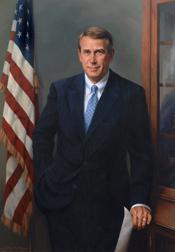
Mr. Speaker, I thank the gentleman for yielding me this time. Mr. Speaker, if this bill was anywhere near as difficult and as bad as my friends would have described, there would be no Member of the…
Mr. Speaker, I thank the gentleman for yielding me this time.
Mr. Speaker, if this bill was anywhere near as difficult and as bad as my friends would have described, there would be no Member of the House who would vote for it.
Now, I think all of us realize that our Nation is going broke. You would argue that we are not taxing enough. Most of my colleagues and I would argue that we are spending too much. And if you look at Federal revenues over the last 10 years, 20 years, you will see that there is never an increasing rise in Federal revenues.
The problem we have is we have a spending problem. We are spending money that we do not have year in and year out, and we are passing those bills on to our kids and theirs. It is not fair. We decided we are going to take a bite at the apple, and we are going to try to do something about it.
Before us we are going to have about a $41 billion deficit reduction program. It is going to reform many Federal programs to provide savings to reduce the budget deficit. In my committee we are going to take $16.2 billion of reforms to lower that deficit, about $3.6 billion of that will come in the form of strengthening the Pension Benefit Guaranty Corporation, raising the premiums on employers who pay into that system, and making some other changes that will produce those savings.
The higher education side is rather unique. We are able to increase benefits for American students while at the same time reducing and reforming those programs to save $12.6 billion. We keep the current law fixed interest rates into the foreseeable future for the loan program. The consolidation program stays at the same interest rates. We phased out origination fees for those in the Pell program from 3 percent down to 1 percent over the next 5 years. We increase loan limits for students, freshmen, up to $3,500 per year in guaranteed programs. The second year, we increase it to $4,500. We eliminate the single holder rule. We increase loan rates and loan volumes for graduate students. At the same time, we reform the programs and the fees that we pay to lenders. We eliminate the 9.5 percent loans and eliminate recycling. We eliminate floor income, we reduce the insurance rate for the lenders from 98 to 97 percent, and we give guarantors incentives for rehabilitating loans rather than to put them into the consolidation program. This is a good deal for American students.
On top of all that, there is $3.7 billion in this bill to start an academic competitive grant for Pell-eligible students who are interested in math, science, and specialized languages. We all know that we have problems with enough mathematicians and scientists in America, and this program is aimed at Pell-eligible students trying to encourage them into math and science and giving them significant grants in their junior and senior year to make sure they graduate as mathematicians and scientists.
All of this is being done on behalf of students, while saving, producing savings of $12.6 billion to help reduce the deficit.
Now, I think all of us have a job to do when it comes to reducing this deficit. Again, my colleagues want to raise taxes. I do not think that we have a revenue problem; I think we have a spending problem. And I think reforming these Federal programs, especially in a way where we can provide additional benefits for students, is a win-win for the American people. It is a good bill. We ought to vote for it.
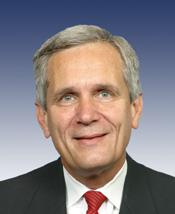
Mr. Speaker, like the President's wishful, staged declaration of ``Mission Accomplished'' on that aircraft carrier 2\1/2\ years ago, or the Vice President's declaration that the insurgency was in its…
Mr. Speaker, like the President's wishful, staged declaration of ``Mission Accomplished'' on that aircraft carrier 2\1/2\ years ago, or the Vice President's declaration that the insurgency was in its ``final throes,'' this resolution proclaims the desire of Congress for ``victory'' in Iraq.
Instead of dispatching our troops in adequate numbers, this Congress made one speech after another. Instead of covering our troops with adequate, impenetrable armor, this Congress passed one paper resolution after another like this, which provided little shield from those who would do our brave men and women harm.
Well, each day's news shows how out of touch this Administration and its congressional followers continue to be. Like the administration, this Congress has no idea what victory means other than trying to escape the morass that its bad judgment got us into.
I believe that victory in Iraq, which we all desire, begins with a commitment to championing the truth. This is an administration that cannot utter ``Iraq'' without saying ``9/11,'' even though it knows there is absolutely no connection between the two.
To win a war you have to shoot straight. Our young men and women in Iraq and Afghanistan understand that, but this administration and its congressional followers demonstrate again and again that they do not-- when they are discussing the real weakness of the Iraqi army or fail to do so, the strength of the insurgency, or the length our armed forces should be deployed.
They are so proud of the democratic choices made in Iraq this week and so very fearful for there to be any democratic choices on the resolution of the gentleman from California (Mr. Lantos) and others. They fear a democratic debate in this House because their position is one of complete weakness. They have waved the white flag themselves at the possibility of a true debate in this Congress.
What we need is a genuine debate about the best pathway for our security in Iraq. The President finally conceded over 30,000 civilians have died in this invasion. We have passed 2,000 young, brave men and women in the service of America, and we are on the way to 3,000.
This administration has begun a public relations offensive when what we need is an offensive for the protection of our families. It has abandoned that
in favor of a meaningless political victory, not a real plan for success for the security of our families.
Mr. Speaker, will the gentleman yield?
Has the President or your resolution been willing to declare that it rejects the idea of permanent bases in Iraq?
Mr. Speaker, given the stated interest in democracy here in the House, I would ask unanimous consent to amend the rule to permit for division of the question so that we could express our unanimous support for the various provisions of this resolution, except for that on which we have disagreement as to the best way to achieve success in Iraq. At this point, so that we can have the kind of democracy that occurred this week in Iraq, of which the majority seems so proud, and actually have it right here on the floor of the House, I ask unanimous consent for a division of the question on the provisions of this resolution.
Given his professed interest in democracy, I am sure he will yield for that unanimous consent.
Shocking, truly shocking, that democracy cannot exist here on the House floor.
Mr. Speaker, I rise in strong opposition to this resolution. The Republicans do not want any timetables to end the Iraq war because timetables would force the Bush administration to actually create a…
Mr. Speaker, I rise in strong opposition to this resolution.
The Republicans do not want any timetables to end the Iraq war because timetables would force the Bush administration to actually create a workable strategy to end the war. To cover for their lack of strategy and competence in Iraq, the Republicans are accusing others of creating artificial solutions to the quagmire they created. This is ironic since the Republicans have done nothing but provide artificial facts about the reasons to go to war, the progress of the war and the goals of the war.
Just about everything President Bush and congressional Republicans have said about Iraq has been proven false. Initially, President Bush and congressional Republicans justified the Iraq War on artificial grounds. Here are just a few examples: Iraq had weapons of mass destruction; Iraq bought enriched uranium from Niger; Saddam Hussein and Iraq were involved in 9/11; the intelligence about Iraq was accurate; and Congress had the same intelligence as the President about Iraq.
Then, President Bush and congressional Republicans provided artificial reasons on the progress of the war. Here are just few examples: The cost of the Iraq war would be low; the United States could use Iraq oil to pay for most of Iraq's war costs; the United States would be welcomed as liberators; the United States has enough troops to keep the peace in Iraq; and the Iraqi insurgency is in its last throes.
President Bush and congressional Republicans have consistently created equally artificial landmarks about what defines victory in Iraq. Here are the latest artificial landmarks: Over 2 years ago, President Bush declared ``mission accomplished'' in Iraq on the USS Abraham Lincoln after the defeat of the Iraqi army; the first Iraq election in January 2005; the passing of the Iraq constitution in October 2005; and the second Iraq election held yesterday.
With the passing of these events and the insurgency still going strong, President Bush
and congressional Republicans are now creating another artificial definition of victory to justify the United States continued presence in Iraq. This resolution now defines victory as the United States staying in Iraq until Iraqis can provide their own security.
After 2 years of training Iraqis, nobody can definitively tell the American people when this is going to happen. The GAO, think tanks and the military itself agree that Iraqi troop readiness is low, their loyalty and morale are questionable, there are sharp regional and ethnic divisions among the troop ranks, and their reported numbers overstate the real effectiveness of the troops. Such analysis does not exactly provide confidence that continuing U.S. training efforts will be successful or that our troops will be coming home anytime soon.
I ask my colleagues how many young American men and women have to die for a war fought for artificial reasons and artificial goals? Our soldiers should not have to be killed while President George Bush fumbles around for a face-saving strategy to end the debacle of the Iraq war.
I urge my colleagues to vote against this resolution. It is time for America to end this mistake and bring our troops safely home.
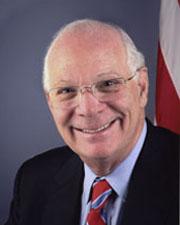
Mr. Speaker, I thank Mr. Lantos for yielding me this time to express what I think just about every speaker has said; that part of this resolution I support, and every Member of this body supports…
Mr. Speaker, I thank Mr. Lantos for yielding me this time to express what I think just about every speaker has said; that part of this resolution I support, and every Member of this body supports congratulating the Iraqis on the election. It was a critical step in developing democratic institutions in that government in its capacity to deal with its own problems. And we certainly all express our appreciation to our soldiers and their families for the sacrifices that they have made.
However, this resolution endorses the policy of this administration which got us into the war in Iraq and has prolonged our presence because of its current policy and unwillingness to change policy, and that I cannot support.
So what should we be doing? I think Mr. Lantos is 100 percent right. We should be having an open debate on this issue. Our soldiers deserve that. The American people deserve that. We should be expressing that our objective in Iraq is to make sure that the Iraqis are capable of defending themselves.
In order to accomplish that, we should be engaging international organizations that are better suited than we in helping to develop democratic institutions in Iraq and in training Iraqi soldiers and security forces so that 2006 can be a year for a substantial number of our troops coming home.
It is our responsibility to ask our President to submit such a plan to Congress and to the American people so that we can accomplish these objectives. Unfortunately, this resolution does not do that, and I regret another missed opportunity.
Mr. Speaker, we can all agree with the parts of this resolution that congratulate the Iraqis for holding a democratic election and commend the sacrifices made by our United States Armed Forces and their families. Unfortunately, this resolution also endorses a failed policy that got us into this war, and has prolonged our presence in Iraq. Therefore, I cannot support H. Res. 612.
It is our responsibility to speak out individually and collectively. I will continue to communicate with the President and urge him to change course in Iraq. In order to achieve the goal of the Iraqis taking charge of their own security needs without the presence of U.S. troops, we must engage international organizations to assume primary responsibility for building democratic institutions including the training of Iraqi security forces. We need a strategy that will permit a substantial number of our troops to return home in 2006. The President should submit a plan to Congress and the American people that carries out these objectives.
As we pass yet another resolution that expresses support for our troops and our desire to achieve ``victory'' in Iraq, I must remind my colleagues that our soldiers have paid the heaviest price in Iraq. Thousands are dead, and tens of thousands are wounded. The American taxpayer has already invested hundreds of billions of dollars. Mr. Speaker, our soldiers deserve better than the resolution we are considering today with 1 hour of debate. The American people deserve serious consideration of how we can safely bring our soldiers home.

Mr. Speaker, a lot of euphemisms on the other side, such as the cuts in the rates of growth, suggesting that that is just a neutral act when it takes place. They have cut about $40 billion out of…
Mr. Speaker, a lot of euphemisms on the other side, such as the cuts in the rates of growth, suggesting that that is just a neutral act when it takes place. They have cut about $40 billion out of this budget in this package that we are going to vote on in a little while. Twelve billion of that comes from student loan accounts, and about $7 billion, 70 percent, almost $8 billion of that, 70 percent of those cuts come off the backs of students and their parents.
They increase the cost of college education over the next few years by almost $8 billion. That means that students that are struggling to finish their college education, to acquire a college education so they can participate in this economic system, will have thousands of dollars added on to the cost of the borrowing that they must engage in. They must engage in that because the cost of education is outstripping the ability of middle income families to supply that money for that education for those children. So the Republicans' idea is to make college more expensive. At a time when we worry whether we will have enough students graduating from college to meet the needs of the economy, their idea is make it more expensive.
Yes, the Democrats do have a better idea, and that is to try to open up the access to college and lessen the cost of college.
Then, if that is not enough, if that is not enough, if you get to the other part of the program like Medicaid, they say they are going to reduce the cost of increase. Well, that cost of increase is done by increasing the premiums and the copayments to the poorest people in this country. Those premiums and copayments is about $19 billion over 5 years, $100 billion over 10 years. And if it is not enough that they increase your copayments and their premiums, then they take away the benefits. They are going to take away eyeglasses from elderly people, hearing aids from elderly people, and if Tiny Tim was here today they plan to take away his crutches. That is the Republicans at Christmastime: Take away the crutches of old people, the hearing aids of old people and eyeglasses, because those are the benefits that are listed and the benefits that they plan to cut to the poorest people who need health care.
They are going to add on billions of dollars to the States because of the changes in the work requirements, unfunded mandates. So you can talk about slowing the growth, but the growth and the costs to parents of students going to college, the growth in the costs of people who need health care who are poor, the growth in the cost of people who need those services under health care, all of those increases. Now, maybe that does not sound like a tax increase to you, but if you are poor and you are trying to pay for your health care and it costs you more, that kind of looks like a tax increase. If you are going to add on thousands of dollars to student loans, that is a tax increase.
What we have here is one cruel, one inhumane, one insensitive budget by the Republican Party.
Mr. Speaker, I rise in opposition to the resolution. I congratulate the Iraqi people on the completion of their parliamentary election and I request an open debate on Iraq. The parliamentary election…
Mr. Speaker, I rise in opposition to the resolution. I congratulate the Iraqi people on the completion of their parliamentary election and I request an open debate on Iraq.
The parliamentary election concluded yesterday in Iraq is a towering achievement and if this resolution spoke to that achievement I would be happy to vote for it.
But the votes have not even been counted and we cannot yet know whether this parliamentary election will produce elected members proportionately from the many ethnic and religious groups that make up the Iraqi people. That is necessary for the give and take and political compromises that occur in a healthy and mature democracy, to lead to a stable and unified Iraqi nation. I think every member of this House hopes this parliamentary election will lead to a stable free and democratic Iraq for the sake of the Iraqi people and especially the courageous Americans who have died or are now serving in Iraq.
What we do know is the constitution under which this parliamentary election has been held has major flaws. Under the constitution the central government powers are exercised through a weak and perilously divided executive; provisions remain that will further fracture Iraq into smaller regions drawn along religious, ethnic, and tribal lines; and incredibly, the huge revenues from oil, the greatest Iraqi natural and national resource, are reserved solely for the use of the region where the oil is produced. These factors bode extremely poorly for the establishment of a stable, free unified Iraq and the constitution will surely have to be greatly modified.
Given those problems it is at the very least premature to be trumpeting victory in Iraq whatever that victory may ultimately look like. Over a 15 year period America has engaged in two wars in Iraq. President Herbert Walker Bush, with the full support of the United Nations and a broad coalition of participating nations, followed his military commanders' advice by deploying 500,000 troops to liberate Kuwait from the Iraqi invasion. Saddam Hussein was driven out of Kuwait with only 19 American soldiers losing their lives.
In contrast, President George W. Bush, without U.N. support and only a small coalition of the so called ``willing,'' rejected his highest military commanders' advice and deployed only 140,000 troops to overthrow Saddam Hussein, occupy Iraq, and establish a free and stable Iraq. Establishing a free and stable Iraq is a noble goal. Yet after two and a half years of war, occupation, and insurgency, our casualties in this ill-conceived and incompetently managed war in Iraq have now passed 2,155 American soldiers killed.
More than 2,000 of those deaths have occurred since the President George W. Bush declared ``Mission Accomplished'' 30 months ago.
I fervently hope that this resolution, a year from now, will not show this House with as much egg on its face as that ``Mission Accomplished'' declaration produced.
Mr. Speaker, I thank the gentleman for yielding me time. I just want to say, if we look at what our budget has done in terms of Federal student aid, for student grants it has nearly doubled in 10…
Mr. Speaker, I thank the gentleman for yielding me time.
I just want to say, if we look at what our budget has done in terms of Federal student aid, for student grants it has nearly doubled in 10 years. For Federal loans, it has gone up about 30 or 40 percent. There are more tax benefits than ever before for education.
For the Medicaid that we are getting accused of slashing to death, we are debating here a difference in growth of 7.7 percent versus 7.5 percent.
The spending growth in SSI has been increasing at an annual rate of about 4.4 percent, and it has gone from $29 billion to $36 billion in the last 5 years.
The spending growth in foster care in 2000 was $5.7 billion, and today it is $6.8 billion. The spending growth in child support has gone from about $1 billion in 2000 to $4 billion today.
We keep hearing about tax cuts for the rich. Why do people with more money get more tax reductions when you look to change tax policy? That is because they are paying the taxes.
What are the results of these economic decisions which we are making sometimes and too often on a nonpartisan basis because we do not get the support that we feel we should get from both parties on this? But what are the results of this?
Gross domestic product, we have had an increase of 4.3 percent in the third quarter. Real gross domestic product has increased about 3 percent for the last 10 consecutive quarters.
For employment, 215,000 new jobs were added in November alone, and this year so far 1.8 million jobs. The unemployment rate was 5 percent in November. The unemployment rate has fallen from 6.3 percent in June of 2003 to the current 5 percent level.
Productivity has increased at a robust 4.7 percent annualized in the third quarter. Manufacturing has been expanding for 30 consecutive months. Services have been expanding for 32 consecutive months.
Business investment from its low in 2003 has been increasing for over 24 percent, and home sales, certainly the barometer of health in the United States of America, everybody's dream to own their own home, and new home sales rose to another high in October. Sales of existing homes, which account for 85 percent of all home sales, retreated in October but remain close to record levels.
The economy is robust. These policies speak for themselves. If you do not confiscate money from folks in the form of taxes, participatory taxes, and if you do not overspend and expand the Federal Government, the economy in the United States of America works miracles because the rising tide lifts all boats. There are more jobs than ever before.
There is an old expression, when the carpenter has work everybody's employed. That is what these economic policies are doing, and I support this bill. There are things in there I do not like, just like everybody else, but overall, cutting spending and cutting taxes grows the economy and creates jobs. So I stand in support of the rule and the bill.
Mr. Speaker, I rise in opposition to H. Res. 612. I honor and support our troops and request an open debate on Iraq on the House floor. Yesterday, millions of Iraqi citizens cast their ballots in…
Mr. Speaker, I rise in opposition to H. Res. 612. I honor and support our troops and request an open debate on Iraq on the House floor.
Yesterday, millions of Iraqi citizens cast their ballots in national elections to constitute the country's first full-term National Assembly since the U.S. invasion. This achievement should be recognized, and I would enthusiastically support a resolution that simply commends the Iraqi people and U.S. troops for their commitment to the democratic process under extraordinary circumstances.
Unfortunately, the Republican leadership, once again, refuses to suspend politics at the water's edge. House Resolution 612 seeks to make yesterday's elections a vindication of President Bush's misguided Iraq policies and a basis for continued military engagement in a country that overwhelmingly desires the withdrawal of U.S. troops.
Accordingly, I rise in opposition to H.R. 612, and I take this opportunity to announce my support for H.J.Res. 73, Congressman John Murtha's plan for the strategic redeployment of U.S. troops.
Those familiar with my record know that I have consistently opposed the President's decision to invade Iraq. The war was always predicated on the false premise that Iraq was in possession of weapons of mass destruction. This Congress was negligent in not demanding more proof of the President and then refusing to hold him accountable for his exaggerated and unfounded claims.
His war strategy was equally flawed. He has failed to provide the resources our men and women in uniform need to be successful, and American lives have been lost as a result. In 2002 and 2003, Army Chief of Staff General Shinseki warned that not enough boots on the ground would lead to a power vacuum that our enemies would exploit. Tragically, his premonitions--ignored by President Bush and his political appointees--have been borne out.
To date, approximately 2,150 brave Americans and an estimated 30,000 Iraqis have been killed in Iraq, and there appears to be no immediate end to the quagmire in Iraq.
As a Member of Congress, I have wrestled with whether this ``war of choice'' has become a ``war of necessity,'' but I am persuaded by developments in Iraq that the presence of U.S. troops is fueling the insurgency, compromising the readiness of our military, undermining respect for the U.S. abroad, and shortchanging domestic priorities, including homeland security.
I, therefore, am announcing my support for H.J.Res. 73, introduced by Representative Murtha, calling on President Bush to immediately redeploy U.S. troops and diplomatically pursue security and stability in Iraq. I am convinced that the withdrawal of U.S. troops will undercut the insurgency, which relies on popular opposition to the U.S. presence.
I remind my colleagues that, if experience has taught us anything, it is that democracy cannot be forced upon a nation by gunpoint.

Mr. Speaker, today the leadership of this House has failed both the American people and the people of Iraq. Today our country had a tremendous opportunity to stand united and join together in…
Mr. Speaker, today the leadership of this House has failed both the American people and the people of Iraq.
Today our country had a tremendous opportunity to stand united and join together in congratulating the Iraqi people on their elections for the first full-term National Assembly. We had a chance to send a shared message of gratitude to our troops and the families who have sacrificed so much. Instead, the Republican leadership chose the politics of division over unity of purpose. In a reprehensible act of blatant partisanship, they squandered a special opportunity to send a strong message and cynically exploited our troops for political gain.
Today, Congressman Lantos offered us an opportunity to stand together by introducing a resolution that congratulates the people of Iraq on the recent election and expresses our thanks to the men and women of our Armed Forces who are serving there. That resolution would have received a unanimous vote in this House. But the Republican leadership did not want a unanimous vote in support of our troops and the people of Iraq. They denied us the opportunity to cast a vote on the Lantos resolution. The hypocrisy of their action should not be lost on the American people. At a time when we all want to celebrate the right of the Iraqi people to vote in Iraq, the Republican leadership denied this House the right to vote on the unifying resolution offered by Mr. Lantos. And the very people who tell us each day that our Nation should speak with one voice on Iraq crafted a resolution that was deliberately designed to splinter the Members of this House.
The American people can respect genuine differences of opinion on the best way to move forward in Iraq. We should have a healthy debate about the best way to bring our troops home. Questions of war and peace are matters of conscience. When so many American and Iraqi lives hang in the balance, each of us has a responsibility to exercise our best judgment. What is so disappointing about the actions of the Republican leadership today is that it chose to turn an opportunity for bipartisanship into a political ploy. It demonstrated a smallness of mind that placed politics over the national interest.
I have never before voted ``present'' on a resolution in the House. I hope I do not feel compelled to do so again in the future. But there are times we have an obligation to send a message that we reject the politics of cynicism. The Republican resolution is less about achieving victory in Iraq than victory at the polls in 2006. We must refuse to participate in a political charade. There are few things in politics as despicable as using our troops and the democratic aspirations of the people of Iraq as pawns in a political game. Today's action by the Republican leadership has brought shame upon this House. It is time to put the national interest above political posturing.
Bill Text
2 versions available
        [Congressional Bills 109th Congress]
[From the U.S. Government Publishing Office]
[H. Res. 619 Reported in House (RH)]

House Calendar No. 133
109th CONGRESS
1st Session
H. RES. 619

[Report No. 109-348]

Providing for consideration of the resolution (H. Res. 612 expressing
the commitment of the House of Representatives to achieving victory in
Iraq.

_______________________________________________________________________

IN THE HOUSE OF REPRESENTATIVES

December 16 (legislative day, December 15), 2005

Mr. Cole, from the Committee on Rules, reported the following
resolution; which was referred to the House Calendar and ordered to be
printed

_______________________________________________________________________

RESOLUTION

Providing for consideration of the resolution (H. Res. 612 expressing
the commitment of the House of Representatives to achieving victory in
Iraq.

Resolved, That upon the adoption of this resolution it shall be in
order without intervention of any point of order to consider in the
House the resolution (H. Res. 612) expressing the commitment of the
House of Representatives to achieving victory in Iraq. The resolution
shall be considered as read. The previous question shall be considered
as ordered on the resolution and preamble to final adoption without
intervening motion or demand for division of the question except: (1)
one hour of debate equally divided and controlled by the chairman and
ranking minority member of the Committee on International Relations;
and (2) one motion to recommit which may not contain instructions.
Sec. 2. On the first legislative day of the second session of the
One Hundred Ninth Congress, the House shall not conduct organizational
or legislative business.
House Calendar No. 133

109th CONGRESS

1st Session

H. RES. 619

[Report No. 109-348]

_______________________________________________________________________

RESOLUTION

Providing for consideration of the resolution (H. Res. 612 expressing
the commitment of the House of Representatives to achieving victory in
Iraq.

_______________________________________________________________________

December 16 (legislative day, December 15), 2005

Referred to the House Calendar and ordered to be printed