Relating to consideration of the bill (S. 1932) to provide for reconciliation pursuant to section 202(a) of the concurrent resolution on the budget for fiscal year 2006 (H. Con. Res. 95).
Legislative Activity
Stay on top of the latest movement without scrolling through every action
Motion to reconsider laid on the table Agreed to without objection.
February 1, 2006 • 5:07 PM
View full timeline
Introduced in House
January 31, 2006
The House Committee on Rules reported an original measure, H. Rept. 109-366, by Mr. Putnam.
January 31, 2006
Upon adoption of the resolution, the House shall be deemed to have agreed to the Senate amendment to the House amendment to S. 1932.
January 31, 2006 • 4:28 PM
Placed on the House Calendar, Calendar No. 142.
January 31, 2006
By direction of the Committee on Rules, Mr. Putnam called up H. Res. 653 and asked for its immediate consideration.
February 1, 2006 • 1:52 PM
POINT OF ORDER AGAINST CONSIDERATION - Mr. McDermott stated that the provisions of H. Res. 653 violate the Congressional Budget Act of 1974 by imposing an unfunded mandate and made a point of order against the consideration of the resolution. Subsequently, the Chair noted that the required threshhold of identifying the specific language in question had been met, and the House proceeded with 20 minutes of debate on the question of consideration.
February 1, 2006 • 1:54 PM
On motion to consider the resolution Agreed to by the Yeas and Nays: 226 - 201 (Roll no. 2).
February 1, 2006 • 2:34 PM
Considered as privileged matter. (consideration: CR H37-60)
February 1, 2006 • 2:35 PM
DEBATE - The House proceeded with one hour of debate on H. Res. 653.
February 1, 2006 • 2:36 PM
The previous question was ordered without objection. (consideration: CR H60)
February 1, 2006 • 3:55 PM
POSTPONED PROCEEDINGS - At the conclusion of debate on H. Res. 653, the Chair put the question on adoption of the resolution and by voice vote, announced that the ayes had prevailed. Ms. Slaughter demanded the Yeas and Nays and the Chair announced that further proceedings on the question of adoption of the resolution would be postponed until later in the legislative day.
February 1, 2006 • 3:55 PM
Considered as unfinished business. (consideration: CR H68)
February 1, 2006 • 4:59 PM
Passed/agreed to in House: On agreeing to the resolution Agreed to by the Yeas and Nays: 216 - 214 (Roll no. 4).(text: CR H37)
February 1, 2006 • 5:06 PM
On agreeing to the resolution Agreed to by the Yeas and Nays: 216 - 214 (Roll no. 4). (text: CR H37)
February 1, 2006 • 5:06 PM
Motion to reconsider laid on the table Agreed to without objection.
February 1, 2006 • 5:07 PM
Voting History
2 votes recorded • Roll call available
Floor Debate
24 membersWhat members said about H.Res. 653 on the floor
 SBAHP
SBAHP JM
JM DKD
DKD LMS+19
Floor Debate
24 membersWhat members said about H.Res. 653 on the floor
Mr. Speaker, today, we have the opportunity to make significant improvements in our Federal Deposit Insurance system. We do this from a position of strength, as both the insurance fund and the…
Mr. Speaker, today, we have the opportunity to make significant improvements in our Federal Deposit Insurance system. We do this from a position of strength, as both the insurance fund and the banking industry are extremely healthy. What better time than to fine tune the system and establish a strong footing going forward.
Basic principles of reform: Fairness and Flexibility
The fundamental driving principles of reform were to provide fairness to all insured depository institutions by assessing each based on risk and provide the FDIC with greater flexibility to manage the fund to reflect different economic conditions.
Regarding fairness: The bill provides greater fairness to insured banks in many important ways. First, it authorized the FDIC to revise the risk-based formula to better reflect the risk each institution poses to the insurance fund. In providing this authority, our Committee looked to and relied upon examples provided by the FDIC regarding how the new system might work, including FDIC representations that about 42 percent of all banks would likely remain in the lowest risk category. We know that the very nature of bank loans involves risk. Therefore, we expect the FDIC to form a reasonable system that encourages appropriate risk-taking, consistent with safe and sound banking, and with premiums at a level that protect the best run banks from being overcharged and that don't inadvertently stop lending. In this bill, we make explicit that the size of the financial institution should not bar an institution from being in the lowest risk category. It is risk that matters, not size. We expect the FDIC to time assessments in such a manner that banks are able to plan for such an expense, thereby avoiding unexpected or untimely costs on the bank.
Secondly, the bill recognizes that about 10 percent of institutions have never paid a premium to the FDIC to support its operations.
This has put a burden on those institutions that fully capitalized the insurance funds in the mid-1990s. Thus, this legislation provides that those institutions that capitalized the fund with initial credits--in proportion to each institution's financial contribution to FDIC--that are intended to offset premium assessments for many years to come. Those institutions that have not financially supported the FDIC would not have these credits and would begin to pay premiums to the FDIC. Moreover, should the insurance fund grow to the upper regions of the normal operating range for the FDIC, banks would be entitled to a cash dividend in proportion to their historic financial contributions.
Regarding flexibility: The bill provides FDIC greater flexibility to manage the insurance fund. The law that our bill replaces constrained the FDIC from charging most banks when the reserve ratio remained above a certain level and would force FDIC to charge high premiums, 23 basis points, at times when it made the least sense. Our bill allows the FDIC to manage the fund within a wide range, with the idea that assessments would remain reasonably constant and predictable.
Importantly, this bill is not intended to raise more money than what the FDIC would have collected under the old law. Nor is this bill intended to encourage the FDIC to build the fund to the highest possible level. In fact, we know that each dollar sent to the FDIC means that there are fewer dollars that can support lending in our communities. And as we considered this bill, we heard testimony that suggested that each dollar sent to Washington means that eight dollars of lending is lost. We cannot afford to restrict lending in our communities just to have more money added to the nearly $50 billion already in the insurance fund.
To protect against the fund growing too quickly, the legislation provides an automatic braking system that would return as a dividend 50 percent of any excess when the reserve ratio of the fund is above 1.35 percent. It also caps the fund level, providing a 100 percent dividend when the reserve ratio exceeds the upper limit of the range at 1.50 percent. This assures that money will remain in our communities. And while we provided the FDIC some authority to suspend the 50 percent dividend under extraordinary circumstances where it expects losses over a 1-year timeframe to be significant, our expectation is that this authority be used rarely and be reviewed each year when the new designated reserve ratio is set. The intention of this exception is that it be temporary and not a regular event, and that the FDIC communicates to Congress and the industry its justifications.
Designed for the Future
Not only does the legislation provide fairness and flexibility, it also anticipates needed changes in the coverage levels over time. We know that inflation has cut in half the real value of the current insurance coverage since it was last changed in 1980. We also know that as the baby boomers move into retirement, that the current coverage level was inadequate to protect their life-long savings. Thus, this bill increased to $250,000 the insurance limit on retirement accounts.
The House has repeatedly voted overwhelmingly in favor of legislation that would automatically index coverage levels based on inflation. The other body has only recently passed deposit insurance reform. The indexing language included in the Senate reconciliation bill required the FDIC to ``determine whether'' to increase coverage based on the amount of inflation increase plus a long list of factors. The compromise language we have agreed to calls on the FDIC and NCUA to jointly consider just three narrow factors. Those factors are (1) the overall state of the Deposit Insurance Fund and economic conditions affecting insured depository institutions; (2) potential problems affecting insured depository institutions; and (3) whether the increase will cause the reserve ratio of the fund to fall below 1.15 percent of estimated insured deposits. If the FDIC and NCUA elect not to increase coverage, they must make the case based on these three narrow factors. The key language in the compromise is that the FDIC and NCUA, ``upon determining that an inflation adjustment is appropriate, shall jointly prescribe the amount by which'' coverage ``shall be increased by calculating'' the amount of inflation. This change in language, from ``determine whether'' to ``shall jointly prescribe'' is a clear statement that Congress is establishing a presumption that the agencies will increase coverage if warranted by past inflation.
Stronger than Ever
This legislation will make the insurance fund even stronger than it already is and, in combination with the extensive regulatory and supervisory authorities of the FDIC, ensures that the fund and the banking industry will remain strong for a very long time.
Mr. Speaker, I rise in strong support of the Deposit Insurance Reform legislation included in S. 1932, the Deficit Reduction Act of 2005.
I want to begin by thanking Financial Services Committee Chairman Oxley for his relentless efforts on moving this deposit insurance reform legislation. He has shown tremendous leadership in steering this complex bill through the legislative process, and I am deeply grateful that he gave me the opportunity to work on this landmark piece of legislation. I also want to thank the Ranking Member of the Committee, Mr. Frank, for his support. This was truly a bipartisan effort, and I believe we have a better legislative product because of that. In addition, I want to express my deep appreciation for Senator Shelby's work on increasing coverage for retirement accounts to $250,000.
Deposit insurance reform has been thoroughly discussed and debated over several years. During both the 107th (H.R. 3717) and 108th (H.R. 522) Congress, I introduced comprehensive deposit insurance reform legislation. The legislation was a byproduct of recommendations made by the FDIC in early 2001, a series of hearings held in my Subcommittee on proposed reforms to the Federal deposit insurance system, and broad- based bipartisan cooperation. H.R. 3717 passed the House in the 107th Congress by a vote of 408-18, and H.R. 522 passed the House in the 108th Congress by a vote of 411-11. During this Congress, Congresswoman Hooley and I introduced this same legislation--H.R. 1185--with Chairman Oxley and Ranking Member Frank. On May 4, 2005, H.R. 1185 passed the House by a vote of 413 to 10. The legislation is supported by the American Association of Retired Persons (AARP) as well as all of the banking and credit union trade associations.
Federal deposit insurance has been a hallmark of our nation's banking system for more than 70 years. The reforms made by this legislation will ensure that this system that has served America's savers and depositors so well for so long will continue to do so for future generations.
What does the legislation do? First, it merges the separate insurance funds that currently apply to deposits held by banks on the one hand and savings associations on the other, creating a stronger and more stable fund that will benefit banks and thrifts alike.
Second, the bill makes a number of changes designed to address the ``pro-cyclical'' bias of the current system, which results in sharply higher premiums being assessed at ``down'' points in the business cycle, when banks can least afford to pay them and when funds are most needed for lending to jumpstart economic growth. By giving the FDIC greater discretion to manage the insurance funds based on industry conditions and
economic trends, the legislation will ease volatility in the banking system and facilitate recovery from economic downturns.
Third, the legislation makes monumental changes to law with regard to deposit insurance coverage levels. The system has gone 25 years without such an adjustment--the longest period in its history--and the increases provided for in the legislation are critical if deposit insurance is to maintain its relevance. The legislation establishes a permanent indexation system to ensure that coverage levels keep pace with inflation by indexing coverage from its current level of $100,000 every five years. The indexation, which begins in 2010, applies to all accounts, including retirement and municipal accounts. Without these changes, deposit insurance will wither on the vine, which is an unacceptable outcome for the millions of Americans who depend upon it to protect their savings.
The legislation also immediately increases deposit insurance coverage available to retirement accounts, including IRAs and 401ks, from its current level of $100,000 to $250,000. Particularly in light of volatility on Wall Street and other developments that have shaken confidence in the markets in recent years, senior citizens and those planning for retirement need a convenient, conservative, and secure place for their retirement savings. With the higher coverage levels provided for in this bill, the American banking system will give seniors that safe haven. That is why the AARP has enthusiastically endorsed the coverage increases in this bill.
All of us have heard from community bankers in our districts about the challenges they face in competing for deposits with large money- center banks that are perceived by the market--rightly or wrongly--as being ``too big to fail.'' By strengthening the deposit insurance system, the conference report will help small, neighborhood-based financial institutions across the country, particularly in rural America, continue to play an important role in financing economic development. The deposits that community banks are able to attract through the Federal deposit insurance guarantee are cycled back into local communities in the form of consumer and small business loans, community development projects, and home mortgages. If this source of funding dries up, it will have devastating consequences for the economic vitality of small-town America.
I want to again commend Chairman Oxley for the tremendous leadership he has shown in steering this complex bill through the legislative process. I also want to thank Ranking Member Frank, Congresswoman Hooley, Senator Shelby, Senator Sarbanes, Senator Enzi, Senator Crapo, Senator Enzi, and Senator Johnson for all of their work on this legislation.
Let me also take this opportunity to thank the staff members on the House Financial Services Committee who worked on this legislation. Both Chairman Oxley and Ranking Member Frank are to be commended for assembling such a talented group of staff to work on Deposit Insurance Reform legislation. On the majority side, I would like to thank Bob Foster, Carter McDowell, Peggy Peterson, Tom Duncan, Peter Barrett and Dina Ellis who serves as my designee on the Committee. I want to give a special thanks to Jim Clinger who recently left the Committee to work at the Department of Justice. Without Jim's hard work, dedication and knowledge we would not be here today, and I am grateful for all of his efforts. I would also like to thank Larry Lavender, Warren Tryon and Kim Olive of my staff for their work on this issue. On the minority staff, I would like to thank the following staff members: Jeanne Roslanowick, Jaime Lizarraga, Erika Jeffers, Ken Swab and Matt Schumaker of Congresswoman Hooley's staff.
In closing, Mr. Speaker, let me just say that this legislation will promote the stability and soundness of the banking system. It will also provide assurance to working families, retirees, and others who place their hard-earned savings in U.S. banks, thrifts, and credit unions that their FDIC-insured deposits are safe and secure.
Mr. Speaker, by direction of the Committee on Rules, I call up House Resolution 653 and ask for its immediate consideration. Mr. Speaker, I yield myself such time as I may consume. Mr. Speaker, the…
Mr. Speaker, by direction of the Committee on Rules, I call up House Resolution 653 and ask for its immediate consideration.
Mr. Speaker, I yield myself such time as I may consume.
Mr. Speaker, the bill before us today has changed somewhat from its travels in the Senate. The rhetoric on the other side of the aisle has not. It is the same old tired class-warfare rhetoric, more befitting of a response to the State of the Union than anything at all related to a parliamentary inquiry regarding unfunded mandates.
The specific point as it relates to an unfunded mandate claim by the other side regarding the child support changes in the Deficit Reduction Act is simply not correct. According to the GAO, in 2004 the Federal Government paid 88 percent of all child support program costs. Eighty- eight percent. Ten States made money on their program from the taxpayers from the other 40 States. Ten States retained more child support collections than it cost them to operate it. They actually generated substantial profit with the Federal Government picking up 100 percent of their costs, the Federal Government obviously not being a nebulous concept, the Federal government being the other 40 States subsidizing 10 States' child support programs to the tune of a profit.
Over the next 5 years, the Federal Government will spend nearly $20 billion on child support program costs. That is after the changes that are made here in the Deficit Reduction Act, and still far more than the States are expected to spend. States continue to receive $500 million in Federal incentive funds every year, on top of $2 in Federal funds for every $1 of State funds spent for a 66 percent Federal matching rate. Not a bad deal.
Set in this context, this claim of unfunded mandates is simply not correct and not meaningful. The child support savings in the Deficit Reduction Act result from ending the practice of States claiming Federal matching funds for spending Federal child support incentive funds, double dipping, if you will.
This double dipping cannot be justified. Closing this loophole, which is what it amounts to, saves $1.6 billion over 5 years with no impact on services being provided to the clients. The change would not take effect until fiscal year 2008, giving States 2 years to adjust to the change. And States could replace every penny of expected Federal savings by increasing their own
spending modestly with the Federal Government filling in the difference. States could unlock $2 Federal dollars for every $1 spent under the program's 66 percent match rate. So if States want to increase spending by $900 million, they would have to pony up $300 million of their own. Again, not a bad deal for the States. I think it is a return that most investors would accept readily.
CBO's letter that the gentleman refers to shows it is impossible to achieve even modest savings in this open-ended entitlement program without raising an underfunded mandate objection. Unless your goal is to prevent any reduction in Federal spending, which I think it is fair to stipulate is their goal, this is not a meaningful objection.
Even with this change, CBO expects child support collections will grow each and every year and the projections bear that out, rising from $24 billion today to $28 billion in 2010 and $34 billion in 2015, clearly only a Democratic definition of a cut.
Other features of the Deficit Reduction Act would provide States significant Federal welfare funds, including $17 billion in annual TANF block grants through 2010 and $3 billion in mandatory child care through 2010, a $1 billion increase above current law.
Mr. Speaker, I reserve the balance of my time.
Mr. Speaker, I yield myself such time as I may consume.
I remind the gentleman that today we will spend $24 billion on the child support collection program to which he refers. By 2010, we will spend $28 billion on the same program; by 2015, $34 billion.
The gentleman is worried about June, July, August, September, October, and yes, even November. We are worried about 2010, 2020, and 2030, about getting our arms around an exploding entitlement program that is engorging the entire Federal budget, and your actions to stop any and all responsible budgeting to prevent entitlement spending from taking up two-thirds of the Federal budget within the decade, to prevent any meaningful Social Security reform that would guarantee that GenX-ers out there will have the same opportunities that those in their seventies have, to prevent the types of entitlement reforms that are needed to save the very programs that you are so proud of in Social Security and Medicaid and Medicare, that are worthy pillars of this domestic government, you block each and every time, including this action which is a very modest savings that still generates more money each and every year by substantial sums than the previous and still guarantees a high level of service to the young people.
I yield to the gentleman from Michigan.
Mr. Speaker, reclaiming my time, nowhere in the CBO score for this report is there any estimates that States will lose TANF funds for failure to operate satisfactory child support programs. They would score as an additional Federal savings if they did, and that is just not there.
I think I have answered the gentleman's question.
Mr. Speaker, I reserve the balance of my time.
Mr. Speaker, I yield myself the balance of my time.
This debate has devolved into a 10-minute extension of the overall concept of deficit reduction. The unfunded mandates claim does not ring true. There is more money going into these States. States have been double-dipping, and the action in this bill today will simply close that loophole and end that practice, particularly by the 10 States that have been operating on Federal dollars at a profit.
Mr. Speaker, I yield back the balance of my time.
Mr. Speaker, for the purpose of debate only, I yield the customary 30 minutes to the gentlewoman from New York (Ms. Slaughter), pending which I yield myself such time as I may consume. During consideration of this resolution, all time yielded is for the purpose of debate only.
(Mr. PUTNAM asked and was given permission to revise and extend his remarks.)
Mr. Speaker, we are dealing with the Deficit Reduction Act yet again to address some technical amendments that were made by the Senate. House Resolution 653 provides that the House agree with the Senate amendments to the House passed version of S. 1932. S. 1932 provides for reconciliation as described in the Congressional budget resolution of 2006.
As a member of both the Rules Committee and the Budget Committee and a conferee on this legislation, I am pleased to bring this legislation to the floor for what we hope will be its final, final consideration.
For the first time since 1997, the Congressional budget resolution included deficit reduction instructions to authorizing committees to find and achieve mandatory program savings for a more accountable government. It does this by finding smarter ways to spend and by slowing the rate of the growth of government, especially on the mandatory side of the ledger.
The Deficit Reduction Act seeks to curb the unsustainable growth rate of mandatory programs that are set to consume 62 percent of our total budget in the next decade if left unchecked. The agreement will stimulate reform of these entitlement programs, many of which are outdated, inefficient and excessively costly.
Mr. Speaker, I am proud of this legislation, and I am proud of the work that this House, through its authorizing
committees, through the Budget Committee process, through, in short, regular order has achieved. I am proud of that. I am proud that this legislation begins a long-term effort at slowing the growth of entitlement spending.
Our goal was to control government spending so that Americans can keep more of their own money instead of having the government seize more. The authorizing committees from both Chambers have worked very hard to find savings within their individual jurisdictions that total nearly $40 billion in efficiency. The agreement allows programs and agencies to weed out waste, fraud, abuse, duplication of effort, so that we can channel more Federal dollars to programs that succeed and to the people who are truly in need, to serve the intended populations more efficiently, more effectively, and in smarter ways.
I look forward to passing this reform bill and reaffirming sound oversight and fiscal responsibility here in Washington. This legislation is a step towards smarter, more competent government. I urge Members to support it.
Mr. Speaker, I reserve the balance of my time.
Mr. Speaker, I am pleased to yield 5 minutes to the distinguished chairman of the Energy and Commerce Committee, Mr. Barton.
(Mr. BARTON of Texas asked and was given permission to revise and extend his remarks.)
Mr. Speaker, I yield 2 minutes to another gentleman from Florida (Mr. Crenshaw), a distinguished member of the Committee on the Budget.
Mr. Speaker, I yield 2 minutes to the senior member of the Budget Committee, the gentleman from Kansas (Mr. Ryun).
Mr. Speaker, I yield 3 minutes to the gentleman from Georgia (Mr. Deal).
Mr. Speaker, I am pleased to yield 2 minutes to the gentleman from Texas (Mr. Hensarling), who also serves on the Budget Committee.
Mr. Speaker, I yield myself such time as I may consume.
I would like to correct the gentlewoman from Connecticut with regards to the Washington Post article. As is common in this media culture of get-it-fast instead of get-it-right, there was no lobby fix.
The Deficit Reduction Act establishes a timeline for phasing out overpayments to Medicare advantage plans. The Secretary of HHS had already proposed correcting those payment levels but had not set a timeline. Until the Secretary acts, Medicare is currently paying too much to those Medicare advantage plans, and the Deficit Reduction Act sets the timeline for the Secretary to fix it.
The simple explanation for the $22 billion reduction in CBO score is that the Deficit Reduction Act assumes that once the payment system is fixed over the next 5 years the Secretary will have the good sense to keep paying them at the proper level.
So it is incorrect to say that there was a $22 billion giveaway. CBO's estimate assumes that the Secretary will revert to overpaying those same people.
Mr. Speaker, I am pleased to yield 2 minutes to my good friend from Indiana (Mr. Pence).
(Mr. PENCE asked and was given permission to revise and extend his remarks.)
Mr. Speaker, I am pleased to yield 2 minutes to the gentleman from California (Mr. Royce).
Mr. Speaker, may I inquire as to the time remaining on each side.
Mr. Speaker, I continue to reserve the balance of my time.
Mr. Speaker, both of the gentlemen are very eloquent, except they miss the overall point, which is that we are debating the technical amendments to what the House passed long before the President's State of the Union speech.
The three changes that were made by the Senate, that we are dealing with today and that are different than what we have already voted on as a body, deal with a value-based purchasing report, a MedPAC report, MedPAC being the Medicare Payment Advisory Commission, and medical liability. Three items that, for technical rule reasons in the Senate, were stripped, causing the bill to be sent back over here.
The timing of this, situated as it is the day after the President's State of the Union, is irrelevant to the overall issue. We have already voted on this except for these three changes.
Mr. Speaker, I reserve the balance of my time.
Mr. Speaker, will the gentleman yield?
Under your definition, sir, people continue to get more money year after year after year and it is a cut. Under your definition.
Mr. Speaker, I am pleased to yield such time as he may consume to the gentleman from Iowa (Mr. Nussle), the distinguished chairman of the Budget Committee.
Mr. Speaker, I yield myself the balance of my time.
Mr. Speaker, once again the other side is trying to have it both ways. In alternating speaker form, we are in turn told we are awash in a sea of red ink and that this measure is not adequate to deal with the deficit, and then the next speaker says we have consistently underbudgeted for the Nation's priorities and have not spent anywhere nearly enough money for all of the things that they would like to see spent.
Their metaphors are as limitless as their desire to spend the hardworking Americans' money in the sense we have heard that we are going to throw away Tiny Tim's crutches when we did this at the end of last year, we were told that we were the Grinch, and we were quoted to extensively from literary and
historic figures, and the bottom line is this: We have an explosion of baby-boomers in this country that will create a demographic crisis and we have an explosion on the mandatory side of our budget that will consume two-thirds of it within less than a decade. Already half of the Federal budget is on autopilot. This is the first step since 1997 in beginning to get our arms around that problem.
I urge Members to support this first step towards long-term fiscal discipline and fiscal health for this Nation.
Mr. Speaker, I yield back the balance of my time, and I move the previous question on the resolution.
The previous question was ordered.
Mr. Speaker, pursuant to section 426 of the Congressional Budget Act of 1974, I make a point of order against consideration of this rule, H. Res. 653. Section 425 of that same act states that a point…
Mr. Speaker, pursuant to section 426 of the Congressional Budget Act of 1974, I make a point of order against consideration of this rule, H. Res. 653. Section 425 of that same act states that a point of order lies against legislation which imposes an unfunded mandate in excess of specified amounts against State or local governments. Section 426 of the Budget Act specifically states that a rule may not waive the application of section 425.
H. Res. 653 states that the House hereby concurs in the Senate amendment to the bill S. 1932 to provide for reconciliation. This self- executing rule effectively waives the application of section 425 to provisions in the underlying bill on child support enforcement which the Congressional Budget Office informs us impose an intergovernmental mandate as defined by the Unfunded Mandates Reform Act.
Therefore, I make a point of order that the rule may not be considered pursuant to section 426.
Mr. Speaker, I yield myself such time as I may consume.
Mr. Speaker, I have no doubt that a lot of moderate Republicans wish they were somewhere else today, anywhere where they could escape the embarrassment of voting against the American people one more time in a brand-new year just after that State of the Union last night.
Here we go again. The first legislative act of 2006 looks just like the last legislative day of 2005. Republicans call this a reconciliation, but it is really Republican resignation from meeting the needs of American people or addressing the issues that threaten our security.
This vote will occur out in the open on the House floor, but the deals were cut in secret behind closed doors with the American people locked out and the Republican Party locked in.
Until Republican leaders got what they wanted, and it is not in the best interest of the American people, we have before us today an example of the President's ownership society: you own the problem. This bill removes Federal money from child support enforcement and for caring for abused kids, requiring States to pick up the tab.
Republicans will twist arms to pass this unconscionable and unfunded mandate. If you are a middle-class student, Republican reconciliation will have you seeing red because your college education will be awash in high-priced debt. Republican leaders care so much about middle-class America that they are cutting $12 billion in student loans.
Want an education? Financial institutions give Republicans a lot more money than you do. Now you get to give the financial institutions a whole lot more money. That is some rabbit-out-of-the-hat trick. By the magic of Republican reconciliation, students will pay more, your parents will pay more when they try to help you, and America will pay more when we deny the next generation the opportunity to get a higher education.
Republicans increase the interest rate for their core corporate constituency and increase the failure rate of the Nation investing in a more important asset: our next generation. Republican reconciliation offers dollars that make no sense. That is what happens when Republican Members have to answer to their leadership before their constituents.
Republicans talk about security, but there is no security in gutting a student loan program that invests in America's future. There is no common sense either. That is no surprise, of course. Republican reconciliation sacrifices common sense for uncommon greed.
Students from solid middle-class families will suffer. So will seniors who use Medicare, because almost $7 billion in Medicare cuts are buried inside this Republican reconciliation. Seniors will pay more so that America's wealthiest can keep more.
The Republicans have squandered our commitment to America's distinguished citizens in order to trade need for greed. Part B premiums for some Medicare beneficiaries are going up because the Republicans locked themselves into a conference committee without the Democrats and locked the American people out.
On Friday, the nonpartisan Congressional Budget Office informed us that $28 billion in cuts to Medicaid in this bill would impose new costs on 13 million poor and working-poor recipients. These are the people the President said last night we are taking care of your health care. Brother, you don't want a guy like that taking care of you.
By 2015, new fees would end insurance coverage for 65,000 Medicaid enrollees, 60 percent of them children.
Meanwhile, the cost of prescription drugs will rise and the number of people helped will fall.
It all happened when Republicans gathered and locked out America. Why debate in public when you can decide it in secrecy? That is the way the Republicans like to do it. They hope no one will notice. They forgot that when middle America is floundering in a lifeboat with loss of pensions, loss of health care, loss of jobs, the Republicans capsize the boat. It is hard not to notice. Water is pouring in all around us, just like New Orleans. Remember when the President said, ``Brownie, you are doing a heck of a job.'' He sure did. Rarely have we seen so much lost over so little, dinner.
Republicans have raised the bar with reconciliation. As bad as it will be for students and as hard as it will be for seniors, Republicans saved their worst tactics for our most vulnerable and defenseless citizens: Kids in foster care, kids in single parent households, kids in low-income families, and kids in families with a disabled parent.
This reconciliation cuts almost $3 billion from programs for America's most vulnerable children. Deadbeat dads, have a great day, guys. The Republicans have given you a head start out of responsibility. Someone may find you eventually. The program to make sure that child support is paid crumbles under this Republican rule.
Today Republicans have resigned from their responsibility to take care of America's interests. They say all of these problems are up to the States to solve on their own because that is what they mean by an ownership society: States own the problems.
Republicans are now telling States to put more welfare recipients into make-work activities, but they do not provide any resources to achieve that goal. They do not even let child care funding keep pace with inflation. So States may have to cut child care assistance to pay for the new welfare requirements. It is just one more unfunded mandate for the States and one more burden for working families.
Now, cash would be nice, but they have drained the Treasury to pay for the President's economic stimulus. Now it is an addiction. Just keep giving the wealthiest Americans more and more money. There is no end to how much money the President is willing to give them, and there is no end to how much money it will take from a host of foreign governments to finance a deficit rising higher than the sky.
Reconciliation by Republicans is a one-point program: Make the rich richer. It was crafted in secret. At least now finally it is out in the open.
Mr. Speaker, I reserve the balance of my time.
Mr. Speaker, I yield 2 minutes to the distinguished gentleman from Michigan (Mr. Levin), who stopped the attempt to privatize Social Security.
(Mr. LEVIN asked and was given permission to revise and extend his remarks.)
Mr. Speaker, I yield myself the balance of my time.
Mr. Speaker, it probably does not surprise most Americans when Republicans and Democrats have different opinions on a bill, so let me highlight the opinion of a third voice, U.S. Conference of Catholic Bishops. Here is what they say about the legislation before us.
Our Bishops' Conference is deeply disappointed that the
final budget reconciliation conference agreement coming once
again before the House of Representatives includes provisions
in these areas which we believe could prove harmful to many
low-income children, families, elderly and people with
disabilities who are least able to provide for themselves.
Because of these concerns, we ask you to oppose the budget
reconciliation conference agreement.
Bishops' President Urges House To Reject Budget Agreement
Washington (January 30, 2006).--The recent budget
reconciliation bill fails to ``meet the needs of the most
vulnerable among us,'' said Bishop William S. Skylstad,
president of the United States Conference of Catholic Bishops
in a January 24 letter to the House of Representatives.
Bishop Skylstad said the greatest concerns were over:
increased Medicaid cost-sharing burdens; cuts to child
support enforcement; changes in Temporary Assistance for
Needy Families programs which underfund work programs and
childcare; and cuts to agriculture conservation programs.
``We urge you to reject the conference agreement and work
for policies that put poor children and families first,''
Bishop Skylstad said.
The text of the entire letter follows.
January 24, 2006.
House of Representatives,
Washington, DC.
Dear Representative: In December, as President of the
United States Conference of Catholic Bishops, I wrote to you
expressing serious concerns about provisions in the budget
reconciliation bill. The proposed changes in Medicaid, child
support enforcement funding, Temporary Assistance for Needy
Families (TANF), and agriculture conservation programs, in
particular, could have a negative impact upon the most
vulnerable in our nation.
Our Bishops' Conference is deeply disappointed that the
final budget reconciliation conference agreement coming once
again before the House of Representatives includes provisions
in these areas which we believe could prove harmful to many
low-income children, families, elderly and people with
disabilities who are least able to provide for themselves.
Because of these concerns, we ask you to oppose the budget
reconciliation conference agreement.
Among the areas of most concern to us are:
Increased Medicaid cost-sharing burdens and eroding federal
benefit standards which can result in low-income children,
families, pregnant women, elderly and those with disabilities
not getting the care they need.
Cuts to child support enforcement, which will mean
collecting billions less in child support for children and
families than under current law.
TANF-related provisions, including:
Immediate and significant changes in state TANF work rules
(although additional proposals to increase hours worked per
week were wisely abandoned) without providing sufficient
additional funding needed to run work programs and provide
child care. This will mean states may have to choose between
cutting child care for low-income working families, reducing
other services for low-income people, or cutting back on cash
assistance for needy families; policies that could have the
effect of disadvantaging two-parent families and married
couples; and failure to restore TANF benefit eligibility to
recently-arrived legal immigrants. Cuts to
key agriculture conservation programs, which will undermine
efforts to promote soil conservation, improve water quality,
protect wildlife, and maintain biodiversity.
We recognize that the bill also includes positive elements,
such as additional funding for victims of Hurricane Katrina
and a program to promote marriage and healthy families. We
are also grateful that cuts to the Food Stamps program were
dropped from the package. However, we believe that, overall,
the impact of this bill will be to fail to meet the needs of
the most vulnerable among us. Therefore, we urge you to
reject the conference agreement and work for policies that
put poor children and families first.
There are many challenges and much tumult in Washington
that demand the attention of our leaders. However, an
essential priority of government is to provide for the
general welfare of its people, especially ``the least among
us.''
Mr. Speaker, on that I demand the yeas and nays.
Mr. Speaker, last night, the President charged us to encourage economic progress, fight disease, and spread hope in hopeless lands. Unfortunately, this budget bill ignores the economic wellbeing,…
Mr. Speaker, last night, the President charged us to encourage economic progress, fight disease, and spread hope in hopeless lands. Unfortunately, this budget bill ignores the economic wellbeing, health, and hopes of the poor within our own nation. Just the idea of some of these draconian measures is enough to send chills up and down one's spine because we are talking about programs that provide basic assistance to vulnerable, low-income families and individuals. The proposed cuts come almost entirely from healthcare and education. We are talking about cutting programs that provide help to people with disabilities, to people who make use of the earned income tax credit, to people who use Supplemental Security Income programs, to people relying on the Temporary Assistance to Needy Families, and to the elderly. Although I do not think it is the majority's intention, these cuts effectively target low-income and minority Americans.
I am disappointed and discouraged that education bears one-third--31 percent--of the budget cuts. Education is central to developing economic progress and a successful citizenry. These education cuts impede access to education for hundreds of thousands of low-income and middle-income students. Financial barriers are the key to determining whether most low income, first generation, and minority students will successfully complete college. Indeed, only 54 percent of lowincome students obtain degrees, compared to 77 percent of high-income students. I will soon introduce legislation to help meet the needs of these students, but I fear that it will not cover the ground lost here.
The societal costs of these cuts are great, and my state and district will dramatically feel their effects. In Illinois, residents with a bachelor's degree enjoy almost double the salary of those with only a high school diploma, a 2.5 percent lower unemployment rate, and a dramatically lower likelihood of receiving public assistance. Undermining the ability of individuals to access education affects their long-term ability to be productive citizens. Moreover, 26 percent of Illinois residents have a bachelor's degree, most of whom required student loans to help them attain their degrees. In my district, I have over 40 institutions of higher education, each of which will suffer from this legislation. At the University of Illinois at Chicago alone, almost 10,000 students depend on the Direct Student Loan program to enable them to attend college. The increased fees and interest rates in this bill will burden a dependent undergraduate student at this respected university with an additional $2,500 in debt. It will burden a dental student with an additional $19,000 in debt over the life of their loan.
This bill continues its war on the poor by undermining the adequate health care, with 50 percent of the proposed cuts coming from Medicaid and Medicare. Although health care coverage continues to be an issue of great concern to many Americans, the House leadership and the Bush administration have brought before us a bill that makes drastic cuts in our nation's health care commitments. Over the next 10 years, nearly $50 billion will be squeezed out of Medicare and Medicaid--the very programs that ensure health coverage for our most vulnerable citizens, low-income seniors, and children. The non-partisan Congressional Budget Office estimates that 65,000 Americans, 60 percent of whom are children, will lose access to Medicaid coverage by 2015. Furthermore, health care costs will increase for an estimated 20 million Americans and 1.6 million will lose vital dental, vision, and mental health services. I can just imagine what this will do to the more than 20 hospitals, health centers, and private physician practices in my district. Imagine the large number of children and poor people who will not be able to access adequate health care. These provisions ignore the needs of our most vulnerable and will have a very real impact in human terms.
Further, these cuts jeopardize the well-being of our most needy-- children and families needing temporary assistance. This legislation fails to provide the funding necessary to support low-income families, especially foster care children living with grandparents and other relative providers. One of the most egregious aspects of the bill is that it rewards states for cutting caseloads rather than for successfully moving individuals from welfare to work. This reward system defines success as low-numbers without attention to whether our most vulnerable families are making it. This legislation fails to provide the financial support necessary for families to meet the new requirements, and it sets parents up for failure.
This bill also attacks relative caregivers on multiple fronts. As of 2003, 23 percent of foster children lived with relatives, and, unfortunately, these providers are much more likely than non-kin providers to live in poverty. Rather than support these families, this bill reduces financial support to children living with relatives, encourages non-relative placements, and jeopardizes the ability of states to provide safe and stable placements for children. Given that African-American grandparents serve as kinship care providers at higher rates than other racial/ethnic groups, the elimination of federally funded foster care assistance for thousands of children who live in low-income homes with relatives unfairly discriminate against relative caregivers who are most often African American. These cuts are particularly
upsetting to me because I represent a congressional district with the second highest percentage of grandparents caring for their grandchildren.
The estimated ``savings'' from cuts in the welfare provisions are clearly at the expense of the states and families, and the cuts will negatively affect a state's ability to achieve safety, permanency, and well-being for children in the foster care system, in addition to creating a disincentive to care for these children in need. While noteworthy, this is unfortunately not the only place in this bill in which our most vulnerable citizens who hold little sway in Washington are squeezed to reward the connected and the wealthy.
This legislation comes up short in terms of the needs of businesses as well. Small businesses account for 99.7 percent of America's employers, they are the economic engine that drives America because they create three-fourths of all new jobs, employ half our workers, account for half of our gross domestic product and contribute more than 55 percent of innovations. Yet, the Deficit Reduction Act provides no money for the Small Business Administration's flagship 7(a) Loan Program. It is the agency's largest and most important program in terms of number of loans and program level supported. The 7(a) Program provides loan guarantees to eligible small businesses that have been unsuccessful in obtaining private financing on reasonable terms.
One of the worst offenses of this budget bill is that it legitimizes cutting the basic rights of education, safety, and health to support $70 billion in tax cuts for the extremely wealthy. In essence and in reality, we are talking about Robin Hood in reverse; that is, take from the poor and give to the rich. We are allowing a tremendous burden to be put on working class families to cover budget irresponsibility. Ford Motor Company and General Motors announced plans to lay-off 60,000 workers; workers who have families that are already trying to make ends meet in our in our sluggish economy. I am strongly in favor of our government operating on sound fiscal policies. I am in favor of reducing the deficit to the extent prudent and possible. I am in favor of budget reconciliation, but not on the backs of the poor, needy, and most vulnerable sectors of our society.
This bill is bad for Chicago, for Illinois, and for the nation. I can do nothing less than oppose this bill. As a matter of fact, it would be a dereliction of my duty and responsibility if I were to vote for the Deficit Reduction Act that is before us. I will vote prudently and sensibly.
Mr. Speaker, I yield myself such time as I may consume. I insert in the Record two documents referring to this bill. House of Representatives, Committee on Government Reform, Washington, DC, January…
Mr. Speaker, I yield myself such time as I may consume.
I insert in the Record two documents referring to this bill.
House of Representatives,
Committee on Government Reform,
Washington, DC, January 30, 2006.
Budget Reconciliation and the Alexander Strategy Group
Vote No Until We Know
Dear Colleague: Do you know why the pending Budget
Reconciliation Conference Report contains none of the $10
billion in cuts to pharmaceutical companies that passed the
Senate?
Neither do I.
But I have a guess. On the back of this letter is the
interim disclosure for the first six months of 2005, showing:
PhRMA,
The Alexander Strategy Group,
Ed Buckham, and
Tony Rudy
all working together on ``Medicare, Medicaid, Prescription
Drug Issues, and Budget Process.'' (The final disclosure
forms are not due until February 15).
Postpone the vote on Budget Reconciliation until after an
investigation is conducted on the role of the scandal-ridden
Alexander Strategy Group in the negotiations. Ask the Speaker
to create a bipartisan investigation.
You don't want to vote in favor of a tainted bill. Vote No
until we know.
Sincerely,
Henry A. Waxman,
Ranking Minority Member.
[GRAPHIC] [TIFF OMITTED] TH01FE06.001
[GRAPHIC] [TIFF OMITTED] TH01FE06.002
[GRAPHIC] [TIFF OMITTED] TH01FE06.003
Mr. Speaker, we have heard a great deal from the Republican Party recently about its commitment to reforming the way the House does business.
Again today the Republicans have told us that they have learned from their mistakes, and they will never again allow special interests to distract them from doing the work of the American people.
Actions speak louder than words, and this budget bill before us today is proof that despite all the talk of reform nothing has changed with its leadership. This is a bill that cuts Medicare spending by $6.4 billion. It cuts child support enforcement by $1.5 billion. It cuts $343 million from foster care programs.
Last year, we knew what was behind this bill. It was tax cuts for the very rich. In order to offset the administration's unprecedented giveaway to the country's richest citizens, they are willing to cut the services to the neediest Americans. All of us, while we were home in January, heard from citizen after citizen, constituent after constituent, of the harm that this bill would do to them, begging us not to vote for it. Such an indefensible set of priorities is still the major reason why the majority gave us this bill again today, but this year things are even worse.
We are being asked to vote on a bill that more than ever before proves that the culture of corruption is alive and well in this Congress. At the behest of the drug and managed care industries, who met with the key legislators in closed, backdoor sessions, the Republican conferees have changed this legislation so that it will save these industries a total of $42 billion.
Now, how do they suggest that we pay for this new and improved giveaway to the corporate lobby? By increasing the co-payments and reducing health coverage for children, for seniors and for people with disabilities who rely on Medicaid.
This last year showed us the terrible consequences of poor leadership. We saw a national disaster turn into a national tragedy because of a failed government response. We saw self-interest run amok as top lawmakers violated the people's trust, and they were indicted and forced to step down in the wake of scandal. We saw our troops and the people of Iraq struggle heroically to lift not just the weight of a vicious insurgency, but also the burden of poor planning and unfulfilled promises from the White House.
Here again today, Republicans are acting to make the American people victims of unscrupulous, disingenuous leadership, while they talk of reform and change, and we cannot afford another year like the last one.
Remember, that as you cut the very life out of these programs, you are doing it to provide a tax cut for the richest Americans.
Every Member of this body needs to know the serious consequences of this vote today. A vote for this bill is a vote to literally take away health care from our children so we can give more money to the super- rich. A vote for this bill is a vote to weaken Medicare for our struggling seniors, who are having enough trouble with the so-called Medicare reform bill that we passed here and is giving everybody a fit trying to understand Medicare part D and that thousands are doing without their medication because of it.
It will also put college education farther out of the reach of our students, even though the President last night discussed that our competitiveness depends on what we are teaching our students today, so we can fund more tax-cut giveaways. Remember, that is what you are voting for.
A vote for this bill supports the culture of corruption, and also America can and must do better than this budget reconciliation and what this party is offering us today. I urge all of my colleagues to vote ``no'' on this bill and vote ``yes'' for a new day here in Washington.
Mr. Speaker, I reserve the balance of my time.
Mr. Speaker, I am pleased to yield 3 minutes to the gentleman from South Carolina (Mr. Spratt), the ranking member of the Budget Committee.
(Mr. SPRATT asked and was given permission to revise and extend his remarks.)
Mr. Speaker, I yield 3\1/2\ minutes to the gentleman from Maryland (Mr. Hoyer), the minority whip.
Mr. Speaker, I yield 3 minutes to the gentleman from Michigan (Mr. Dingell).
(Mr. DINGELL asked and was given permission to revise and extend his remarks.)
Mr. Speaker I yield 3 minutes to the gentleman from California (Mr. George Miller).
(Mr. GEORGE MILLER of California asked and was given permission to revise and extend his remarks.)
Mr. Speaker, I am pleased to yield 2 minutes to the gentlewoman from Connecticut (Ms. DeLauro).
Mr. Speaker, I yield 2 minutes to the gentlewoman from California (Ms. Solis).
Mr. Speaker, I yield 2 minutes to the gentleman from Alabama (Mr. Davis).
Mr. Speaker, I am pleased to yield 2\1/2\ minutes to the gentleman from Illinois (Mr. Emanuel).
Mr. Speaker, I yield 2 minutes to the gentleman from Ohio (Mr. Ryan).
Mr. Speaker, I yield 1\1/2\ minutes to the gentleman from Tennessee (Mr. Ford).
Mr. Speaker, I yield 20 seconds to the gentleman from Tennessee (Mr. Ford).
Mr. Speaker, may I inquire how much time remains on my side.
Mr. Speaker, I yield 10 seconds to the gentleman from Alabama (Mr. Davis).
Mr. Speaker, I yield the balance of my time to the gentlewoman from California (Ms. Pelosi), the distinguished minority leader.
Mr. Speaker, on that I demand the yeas and nays.
Show 8 more
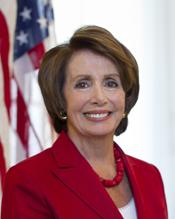
Mr. Speaker, I thank the distinguished ranking member on the Rules Committee for her leadership in fighting the fight for a budget that is a reflection of the values and priorities of the American…
Mr. Speaker, I thank the distinguished ranking member on the Rules Committee for her leadership in fighting the fight for a budget that is a reflection of the values and priorities of the American people and her leadership in opposition to what the religious community has called this immoral Republican budget.
Mr. Speaker, yesterday and later today we will continue the debate on a resolution honoring and celebrating the life and service and leadership of Coretta Scott King.
One of the stories I like best about the Kings is in the 1950s they traveled to India to learn more about nonviolence, the nonviolence practiced by Mahatma Gandhi, and they brought that back to America and it was a major part of the civil rights movement.
Why I mention it today is because in Sanskrit the name for nonviolence is also translated ``truth insistence.'' Wasn't that what the civil rights movement was about, the insistence on truth in our country? Truth insistence is exactly what is required when we talk about the Republican budget.
Last night in the State of the Union address we heard a great deal of rhetoric about investments the President was going to make in education, research and development, and you name it. But that rhetoric is a far cry from the reality of the budget that the Republicans are bringing to this floor today, which not only does not make those investments in the manner described by the President, it indeed cuts them.
Last night in the State of the Union address the President talked about the importance of educating our children to help keep America competitive. But this budget today tells a different story. The truth is the budget follows the track record of woefully underfunding No Child Left Behind. It increases the cost of student loans to America's families who are struggling to send their children to college. How can that help make America more competitive?
Every time we invest in education, we bring more revenue into the Treasury than any other initiative you can name. No tax cut, no tax credit, no anything, nothing brings more to the Treasury of the Government than investing in the education of our people. So these were not only wrong cuts in terms of competitiveness, they also increase the deficit.
Last night the President said in his State of the Union address, ``A hopeful society gives special attention to children.'' Now I would like to know what kind of attention that the President is giving to the children because the truth is this budget today slashes funding to help care for America's poorest children. It drastically cuts funding for the initiative that enforces the payment of child support. Others have talked about nutrition, and of course good nutrition has a direct impact on the education of these children.
The truth is that this budget is an exact contradiction of the rhetoric that the President presented last night.
Now let us look at the title of it. It is called the Budget Reconciliation Spending Cuts Act. Yet the truth is the policies in this budget will increase the deficit by $300 billion, heaping mountains of debt on our children, and the sad truth is all of this to pay for a tax cut for the wealthiest people in our country.
Republicans will try to say to defend these measures, as evidence of their so-called fiscal responsibility, that this is about small government. But the fact is, the truth is, that this is not about small government, this is about small-minded, petty government that does not meet the needs of the American people.
Republicans will try to defend these measures again by calling for fiscal responsibility, and I would like to talk about the $42 billion difference. It has been widely reported that this bill had a chance, there was an opportunity to reduce excessive Medicare payments that the Federal Government makes to big business HMOs because of a loophole in the law. There was bipartisan agreement that this would take place. But in a closed-door meeting the Republicans eliminated that, and they gave a $22 billion bonanza to the HMOs, and this at the expense of America's children and those in need.
We also were going to get better drug prices for Medicaid, and this relates to the children, from drug manufacturers and eliminate a Medicare slush fund for managed care. By doing those two things, we were going to save the taxpayers another $20 billion. So it was a $42 billion difference in this budget, at the expense of children and seniors to the benefit of the industries to whom the Republicans in Congress are handmaidens.
In the conference committee, without a single Democrat in the room because Democrats were not allowed in the room, this $42 billion worth of savings disappeared from the budget. The $42 billion difference, that is the difference between a closed and corrupt Congress and an open and honest Congress.
Since Democrats did not get a seat at the table in the writing of this bill, who did? America's low-income children did not get a seat at the table, and they are paying the price in their education, their health care and child support.
America's seniors did not get a seat at the table because the bill makes it harder for seniors to qualify for long-term care, and even forces some to forfeit their homes in order to pay for long-term care.
The truth is the drug manufacturers, managed care companies and HMOs clearly get a seat. They came up the big winners with the special interest driven Medicare prescription drug bill that was foisted on America's seniors, and they came up big winners in this budget bill. It would be nice if America's children and seniors had a seat at the table instead of big business.
My colleagues, the truth is that, as our friends in the religious community, almost every religious denomination in the country, has been lobbying against this legislation. They call it a budget deprived of spiritual hope and of nourishing resources. That is the truth about the Republican budget and the Democrats insist that the public know it. I am very proud that we will have 100 percent of our Democratic Members voting ``no'' on this immoral budget.

Mr. Speaker, I rise today in support of H. Res. 653, a resolution that will concur in the Senate amendment to S. 1932, the Deficit Reduction Act of 2005. In passing this resolution, the House will…
Mr. Speaker, I rise today in support of H. Res. 653, a resolution that will concur in the Senate amendment to S. 1932, the Deficit Reduction Act of 2005. In passing this resolution, the House will make important reforms in telecommunications and Medicaid, which are under the jurisdiction of the Energy and Commerce Committee.
This resolution is necessary because when the other body took up the budget reform package, or the reconciliation package, they struck three items of the conference report that had a nonfinancial impact under what is called the Byrd Rule in the other body.
The three items are a report requiring value-based purchasing for the Health and Human Services Department to report to Congress on a date certain for a hospital or for a value-based purchasing program. That was the first thing struck.
The second thing struck was a MedPAC report which would have provided a Medicare Payment Advisory Commission report to Congress on that same hospital value-based purchasing program.
The third thing that was struck was a section that would have shielded from legal liability certain hospitals and physicians who enforce cost-sharing requirements for nonemergency care in emergency rooms absent a finding of gross negligence.
Those are the only three changes from the conference report that this body, the House of Representatives, passed by a six-vote margin before we recessed for the holidays. So, substantively, with those changes, the bill before us, if this resolution passes that brings the bill up for consideration, is identical.
With regard to the issues that are in the jurisdiction of the Energy and Commerce Committee, which I chair, the legislation would effectively put us in the Digital Age on February 17, 2009. America and television sets would go all digital on that day. The analog television signals that have come into our homes over the air since the birth of TVs since the 1940s, or maybe in some cases since the 1930s, would end; and we would have the new era finally before us.
In 2004, at my first DTV hearing since becoming chairman of the Energy and Commerce Committee, I announced that expediting the DTV transition would be a top priority. I also noted that the 85 percent loophole in the current law has delayed the consumer benefits of digital television, and it has prevented the clearing of very vital broadcast spectrum for critical public safety and wireless broadband uses.
The DTV legislation in the pending bill brings needed certainty that will allow consumers, broadcasters, cable and satellite operators, manufacturers, retailers, and the government to prepare for the end of the transition. It includes a strong consumer education measure. It helps ensure that all consumers have continued access to broadcast programming, regardless of whether they use analog or digital televisions or whether they watch television signals broadcast by a local station or subscribe to cable TV.
The package also includes necessary revisions to Medicaid. Medicaid is a victim of its own success. The program has grown so expensive that it is unsustainable in its current form. The Nation's Governors on both sides of the aisle understand the grim future of Medicaid without reform. They told us over and over in hearings before the Energy and Commerce Committee that Medicaid will bankrupt the States unless some reasonable reforms are enacted. These were Democrat Governors and Republican Governors. They told us what they needed done, and we attempted to do it.
The proposal that is embedded in the pending legislation contains commonsense reforms and will help fix some of the flaws in the current Medicaid program to ensure that it will continue to be the safety net that protects our Nation's most vulnerable citizens.
Some of these reforms include allowing States to charge some basic copays to higher-income beneficiaries, reducing Medicaid overpayments for drugs, and providing the States with the flexibility to tailor their benefit package to meet the specific health care needs of the beneficiaries. We would also make it more difficult to hide assets so that wealthy clients can pretend to be poor
to qualify for long-term Medicaid coverage in nursing homes.
We were tasked in the budget resolution to reduce the growth of Federal spending in this program. Overall, the net savings over a 5- year period are a little over $4.5 billion. It is the right thing to do, regardless of the budget implication; but the budget implication is positive.
I recognize that some of my critics will say that even a modest reform will hurt the poor. I would submit to you that Medicaid in its current form is hurting the poor.
Clarifying the Treatment of Distributor Service Fees Under the New
Medicaid Pharmacy Reimbursement Reforms
I want to clarify specifically how bona fide services fees, which are negotiated between a manufacturer and pharmaceutical distributor, should be treated under the new Medicaid pharmacy reimbursement metric. Manufacturers pay bona fide service fees for specific services provided by the distributor. Service fees are a relatively new business model to the pharmaceutical distribution industry and how they should be treated under federal reimbursement programs first came into question when the new Average Sales Price (ASP) metric under the Medicare Modernization Act was being recently implemented.
I am pleased to note that Congress specifically did not include service fees as a price concession to be incorporated into the calculation of ASP and CMS subsequently confirmed that, ``Bona fide service fees that are paid by a manufacturer to an entity, that represent fair market value for bona-fide service provided by the entity, and are not passed on in whole or in part to a client or customer of the entity should not be included in the calculation of
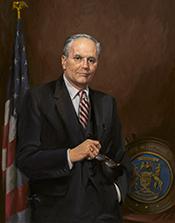
Mr. Speaker, my colleagues have recalled that there was no conference on this important legislation. Instead, my Republican colleagues met behind closed doors with a bevy of lobbyists for the health…
Mr. Speaker, my colleagues have recalled that there was no conference on this important legislation. Instead, my Republican colleagues met behind closed doors with a bevy of lobbyists for the health insurance companies and the pharmaceutical houses.
Democratic Members were entirely excluded from this. This is a product of special-interest lobbying, and the stench of special interest hangs over the Chamber as we consider it today.
The bill was brought to the floor in the dead of night; and a couple of hours later, the Members of this body voted on it without ever having seen it, or without a copy of it ever having been printed. The Congressional Budget Office now tells us what went on behind those closed doors in those secret meetings. Special interests and their lobbyists, who were well represented, won. Everybody else was excluded, and everybody else lost.
The conferees made important decisions on health care, because the House and the Senate took very different approaches to the issue. The Senate decided not to harm Medicaid beneficiaries, instead cutting overpayments to Medicare HMOs and reducing unjustified payments to drug companies.
Our Republican colleagues heard the concerns of these special interests and instead chose to raise costs and to cut services to working families, to the poor, the elderly, the disabled, and children covered by Medicaid.
Now, here are the specifics, and you can see them on this chart right here. The Senate cut $36 billion in overpayments to HMOs and Medicare. That included $26 billion in savings by more accurately calculating their payments.
The negotiators, without any help from anybody but the lobbyists, rewrote the provision to save just $4 billion, providing a $22 billion windfall to the HMOs.
The Senate also eliminated a $10 billion slush fund designed to induce HMOs to participate in the prescription drug program by overpayments. The Republican conferees dropped this provision, providing another $10 billion gift to HMOs, for a total of $32 billion.
Finally, the Senate included a provision designed to get the best prices for Medicaid by increasing rebates from drug companies for a nearly $10 billion saving. My good Republican colleagues dropped that provision too.
Instead, our colleagues on the Republican side went after the people who could not be represented in the room and who could not afford to have cuts. Through a combination of benefit reductions, increased copayments and premiums, along with rules making it harder for the elderly to gain access to nursing homes, they saved $25 billion. They sweated it out of the hides of the poor and the unfortunate.
According to the CBO, about 13 million Medicaid enrollees will pay more to see their doctor. CBO reports that 80 percent of the savings comes from the decreased use of services. Look at what they did. Vote against it. This is an outrage.
Mr. Speaker, my colleagues should recall there was no open conference on this important legislation. Instead my Republican colleagues met behind closed doors to negotiate an agreement among themselves and, apparently, lobbyist friends. It was brought to the floor in the dead of night, and a couple of hours later Members voted on it sight unseen.
The Congressional Budget Office (CBO) now confirms what went on behind those closed doors. Special interests and their lobbyists who were well represented won--everyone else was excluded and lost.
The conferees had very important decisions to make in health care because the House and Senate took very different approaches to the issue. The Senate elected not to harm Medicaid beneficiaries, instead cutting overpayments to Medicare HMOs and reducing payments to drug companies. Our House Republican colleagues instead chose to raise costs and cut services to working families, the poor, the elderly, the disabled, and children covered by Medicaid.
Here are the specifics: The Senate bill cut $36 billion in overpayments to the HMOs in Medicare. That included $26 billion in savings by more accurately calculating their payments. But the negotiators rewrote the provision to save just $4 billion, providing a $22 billion windfall to the HMOs.
The Senate bill also eliminated a $10 billion slush fund designed to entice HMOs to participate in the prescription drug program. The Republican conferees dropped this provision, providing another $10 billion gift to the HMOs for a total of $32 billion.
Finally, the Senate included a provision designed to get the best prices for Medicaid by increasing rebates from drug companies for a nearly $10 billion saving. That provision was dropped.
Instead our Republican colleagues went after the people who couldn't afford to be in that room--the Medicaid beneficiaries. Through a combination of benefit reductions, increased copayments and premiums, along with rules making it harder for the elderly to gain access to nursing homes, they saved $25 billion.
According to CBO, about 13 million Medicaid enrollees will pay more to see their doctor. CBO reports 80 percent of the savings from this provision will come from decreased use of services. So this bill will be adding to the rolls of the uninsured--contrary to the goal of expanding coverage touted by President Bush last night.
This bill is Exhibit A for special interests and lobbyists writing legislation behind closed doors at the expense of the ordinary citizen. Vote ``no.''

Mr. Speaker, I thank the gentleman for yielding me this time. It is interesting to listen to my colleagues who talk about the President's suggesting we invest in America and somehow they heard…
Mr. Speaker, I thank the gentleman for yielding me this time.
It is interesting to listen to my colleagues who talk about the President's suggesting we invest in America and somehow they heard government only invest in America. Isn't that interesting?
I can tell you that my folks that I represent in Iowa, when they hear invest in America or invest in Iowa or invest in your community, they think that means them. They think that means Americans investing in America.
Unfortunately, we actually have people, ladies and gentlemen, who believe that when somebody says invest in America, what that means is take money from Americans, take it to Washington, invent fancy programs, fill fancy white buildings full of bureaucrats, create all sorts of bureaucracy and red tape and paperwork, and have those bureaucrats, with our blessing, invest in America.
Now, I do not know about you, but I heard it a little differently last night. The President and I, and those of us who agree with the plan that we have adopted this year, believe in and trust that people make better decisions about their daily lives and the investment in their businesses and their families and their communities much better than the government can for them.
We have a plan. That plan calls for growing the economy by letting people make those decisions with their money. We talk about money out here all the time as if it is our money. It is not our money. Ladies and gentlemen, this is the taxpayers' money. They are the ones who earn it. They are the ones who sweat for it. They are the ones who are concerning themselves every day about ensuring that they can support themselves, let alone being able to send a little bit of it out here.
And the reason why we believe, and it has worked, that we believe that reducing taxes actually helps us grow the pie is because the facts are in. In the last 17 quarters, as a result of us reducing taxes, our economy has grown.
We have heard people come out here today to say when you cut taxes it means the government is going to have less money. It is exactly the opposite. I think we need some of the President's science and math education for maybe even some of us. Because every time in our history that we have reduced taxes, the math shows us that the economy grows and actually more revenue comes into the Treasury. Last year was the largest increase in revenue to our Treasury, in a year when we reduced taxes. Now, you cannot explain that unless you understand basic economics.
Our plan calls for growing the economy and reducing spending, and that is exactly what we did this last year. We held the line on nondefense, nonhomeland security spending because we wanted to protect our country, but we knew we had to reform spending in the discretionary accounts.
Mr. Speaker, today marks the opportunity to close the books on this process, reform government spending.
Let me remind you what kind of government we have got. In so many instances, we have what I believe is an ineffective Katrina bureaucracy. We saw a little bit of that down in the gulf coast, but what we all know is that same Katrina mentality and bureaucracy permeates so much of our bureaucracy here in Washington. Unless we constantly are vigilant about ensuring that we reform government at all levels, we are never going to get our arms around fiscal discipline and fiscal responsibility.
Finally, this achieves savings, not cuts, not gouging people. My goodness, the kind of rhetoric you hear out here. We are trying to make a modest reduction, giving people at the local level, our Govenors and our authorities at the State level some flexibility so they can deliver a much better product for the people that we care about and are
concerned about. These programs need our reform. You cannot assume because you have always done it one way, just continuing it without this kind of oversight and reform will continue to get good results.
These programs have gotten good results in many instances, but too many of them are not achieving the results we need. We need those results. We can achieve savings. We have a plan to accomplish it. It allows us to do so by growing the economy, and I believe it is a fiscal plan that will continue to get us the success that we have seen.
In the last 2 years, we have experienced $200 billion of deficit reduction as a result of this plan. I have no doubt we will hear from one more speaker that will second guess everything that we have done, and I will remind that speaker that the President last night, while they love to quote him about everything else, also said second guessing is not a plan, is not a strategy. If you have got a plan, if you have a strategy, we would love to see it. But thus far we have not seen it. We have a plan. It is working. We need to adopt it today, and we need to get about the business of reforming this government, achieving savings and ensuring that the taxpayers are supported in this body.

Mr. Speaker, I submit the following for the Record. Mr. Speaker, we are here once again to pass the Deficit Reduction Act. The House approved it in December, but another vote is required due to…
Mr. Speaker, I submit the following for the Record.
Mr. Speaker, we are here once again to pass the Deficit Reduction Act. The House approved it in December, but another vote is required due to technical changes made in the Senate. This bill is an important step in removing wasteful and unnecessary spending from the budget. Certainly, more can always be done, but this compromise legislation is a first step on what will be a long road of getting our mandatory spending programs under control. The Conference Report reduces the deficit by more than $35 billion over the next five years, nearly $8 billion of which falls into the Ways and Means Committee's jurisdiction.
Under this Conference Report, the Continued Dumping and Subsidy Offset Act, commonly known as the ``Byrd amendment,'' will be permanently repealed, after a brief two-year phase out. The Byrd amendment is not a trade remedy; it is corporate welfare which benefits very few companies and results in negative consequences for many domestic manufacturers--as recently identified by the Government Accountability Office. In addition, it is inconsistent with U.S. international trade obligations. Repealing the Byrd Amendment is the only way to end retaliation against U.S. exports resulting from this violation.
This legislation will reduce wasteful federal spending by eliminating a loophole that currently allows states to claim federal matching funds for spending federal child support incentive funds. The incentive payments will continue, providing states a total of $2.4 billion over the next five years. But states won't get additional federal funds when they spend these federal bonuses, thus ending this double dipping. It is also important to note that this conference agreement maintains the current generous federal matching rate of 66 percent for child support administrative expenditures.
This Conference Report would also address some of the wasteful spending in Medicare while improving quality in the program. For instance, under the legislation, Medicare will pay for service and maintenance of beneficiary-owned durable medical equipment when repairs are actually required, as opposed to current law, which pays regular service payments regardless of whether the equipment is actually serviced. The bill also allows beneficiaries to own their oxygen equipment after 36 months of rental, while still providing coverage of necessary service and maintenance of that equipment.
To improve quality, the legislation includes provisions to encourage hospitals to follow evidence-based guidelines that can reduce the incidence of preventable hospital-acquired infections.
To explore ways to improve cooperation between health care providers and achieve savings in the health care system, the legislation provides for six gain sharing demonstration projects. As a conferee, I intend that these projects be tested broadly in order to produce valid results and policy recommendations. Also, I intend that these projects not be limited to six individual hospitals and that hospital chains and associations are eligible to apply and participate.
To ensure accurate payment for Medicare Advantage plans, the legislation codifies the phase-out of the budget neutrality factor for risk adjustments for those plans. This change will ensure that traditional fee-for-service and Medicare Advantage plans are being compared and paid accurately. This provision requires adjustments for differences in coding patterns, and the intent of that section is to include adjustments for coding that is inaccurate or incomplete for the purpose of establishing risk scores that are consistent across both fee-for-service and Medicare Advantage settings, even if such coding is accurate or complete for other purposes. Other common-sense reforms in the Medicare program will add up to billions of dollars in savings, while improving quality and service for beneficiaries.
Finally, this Conference Report will extend and improve the 1996 welfare reform law for the next five years. It continues current funding for the nation's welfare to work program, despite a 60 percent welfare caseload decline since 1996. And it includes provisions encouraging more work and self-sufficiency, promoting healthy marriages and responsible fatherhood, and increasing child care funding by $1 billion over the next five years.
Mr. Speaker, I urge my colleagues, once again, to support this legislation.

Mr. Speaker, when we passed the Federal budget last year, Democrats offered an alternative that would have achieved a balanced budget in 10 years, 10 years to spread out the pain of finally paying…
Mr. Speaker, when we passed the Federal budget last year, Democrats offered an alternative that would have achieved a balanced budget in 10 years, 10 years to spread out the pain of finally paying our bills again and freeing up the future for our children. When we passed this budget last spring, we were told there was no fat in it--it was all bone. When you cut bone, you fall down. Last year, the House struck out on this bill.
Today the House is striking out again even if this bill passes today, let it forever be known as the ``3 strikes and you're out'' budget. Strike 1: It hits hard our senior citizens, currently struggling under a difficult Medicare drug benefit, strike 2: It squeezes our middle class that pays the taxes and struggles to pay the household bills, and strike 3: It hits our children and students, who represent the future of this Nation.
Three strikes, today Congress hits all 3 components of American society with these budget cuts.
But let's get to why this bill is before us today. We're not here because the hurricanes busted the budget. It's not the war, it's just that many people in this House demand that we spend the Treasury's money on tax cuts for wealthier Americans. Period. It's about nothing more than spending this money on tax cuts today which mean tax increases on our children tomorrow.
Budgets are a reflection of who we are and what we value. The budget cuts offered in the House of Representatives today--which I oppose-- simply do not represent the values that we say are important to us in this nation. We value each other, we value the rule of law, we value education and keeping our families safe. South Texans have been astounded at the depth of cuts in the Federal budget, which mean Texas students will be less likely to stay in school or go to college. Low income Texas children will be sicker with the cut in health benefits. Seniors will lose essential services.
Today's bill will increase the deficit by $17 billion, give more tax cuts to the wealthy, and hurt those who use student loans, who need health care and who benefit from rural programs. We have got to come up with a budget that represents the right priorities for students, seniors, Katrina families and rural Americans. We had an opportunity to vote for such a budget last spring, with the right priorities, that paid down the deficit--authored by John Spratt--but the House rejected it.
When the $38.8 billion in spending cuts in this package are combined with the total of $122 billion in tax cuts passed by the House in 2005, Republicans are increasing the deficit by $83 billion over the next 5 years. Plus, when an AMT fix is included over the 5-year period, Republicans are actually increasing the deficit by $321 billion. Calling this a deficit reduction bill is not truthful.
It is incumbent upon all of us in Congress to help all Americans, not just the wealthy few. We can do better than this--and we must. This package is cutting vital services upon which working families depend, including the following:
GOP conference report slashes Medicaid by $6.9 billion over 5 years and $28.3 billion over 10 years. The conference report allows states to charge Medicaid enrollees more to get the health care that they need-- allowing substantial increases in co-payments and premiums for many low-income enrollees. This increased cost-sharing achieves savings of $1.9 billion of 5 years and $9.9 billion over 10 years. Studies have shown that this increased cost-sharing will result in a decline in enrollees' use of health care services and a worsening of their health status.
Seventy percent of the GOP Raid on Student Aid falls directly on students and parents. Seventy percent of the gross savings in higher education in the conference report are achieved by increasing college loan costs for parent borrowers and by continuing the practice of forcing student and parent borrowers in many cases to pay excessive interest rates on their loans.
GOP conference report will result in $8.4 billion in reduced child support collections. CBO has estimated that the conference report will lead to $8.4 billion in reduced child support collections upon which hundreds of thousands of struggling single parents rely, pushing more children into poverty and letting deadbeat dads off the hook.

Mr. Speaker, we have before us, for the third time, the Budget Reconciliation Spending Cuts Act. Reigning in spending is an idea that everyone in this House can agree on. Many of my colleagues and I…
Mr. Speaker, we have before us, for the third time, the Budget Reconciliation Spending Cuts Act. Reigning in spending is an idea that everyone in this House can agree on. Many of my colleagues and I are deeply disturbed where this $40 billion in spending cuts is coming from, however. In a time when it is getting harder and harder for the lower class to get by in this country, the Republicans are asking the poor, the downtrodden, the disabled and the young to sacrifice on behalf of the rich. I want to emphasize that these cuts are not meant to free up money to rebuild the gulf coast, or reduce the deficit, or even help our troops in Iraq. In fact, many of these proposed cuts will actually hurt those affected by Katrina. Overall, these spending cuts, when combined with $86 billion in tax cuts for the rich, will increase the deficit and the national debt, and increase the burden placed on our neediest families.
Medicaid
In the United States, there are 45 million Americans living today without any health insurance at all. We have one of the worst records of all of the developed nations when it comes to providing health care to our citizens. This conference agreement cuts $6.9 billion over 5 years from Medicaid and State Children's Health Insurance Program, SCHIP. A large portion of the ``savings'' in Medicaid comes from language that will allow States to reduce the number of beneficiaries eligible for Medicaid, and increase the costs for others. The purported ``savings'' in the Medicaid program found in this conference agreement will be paid for directly out of the constituents' pocketbooks. This bill makes it even harder for families in need to afford healthcare.
Medicare
The conference report includes provisions that will reduce spending on Medicare by a net total of $6.4 billion over 5 years. The agreement reduces Medicare payouts for certain services, and requires beneficiaries to purchase, rather than rent certain medical equipment. In the agreement, also cut are payments to home health care providers, making it even more difficult to provide adequate care to the elderly.
Student Loans
As founder and co-chair of the Congressional Children's Caucus, as a person who understands the value of our Nation's youth, and as a mother of two, I really want to bring focus on the effect this bill will have on our Nation's children. If you have children who are in, or considering going to college, I want you to listen to this: this agreement, if passed today, will place an added burden of $12.7 billion directly on students over the next 5 years. This is accomplished through adding fees to the processing of student loans, and increasing the interest rates on paying back those loans. Students borrowing money for college will pay thousands of dollars more on their student loans. This is in the face of college costs up over 7 percent this past year alone. Voting ``yes'' for this agreement will harm one of our most precious national resources, our students.
Child Support Enforcement
This conference report cuts matching funds to child support enforcement. In other words, we are cutting $1.6 billion to fund that enforces collections on dead-beat dads. It is said that for every $1 put in to child care enforcement, $4 is collected for the families. This cut will seriously harm States' abilities to help families receive child support that is owed to them. The CBO estimates that this policy change will reduce child-support collections by $2.9 billion over 5 years and $8.4 billion over 10 years.
Child Welfare
The bill cuts $577 million from foster care programs by reducing the number of children eligible for foster care. The burden of covering the newly ineligible children is shifted to the states, who are already eye-ball deep in budget crises and will leave some children without the care they need.
Mr. Speaker, the Budget Deficit Act of 2005 has the noble goal of being a first step in a long time toward bringing fiscal sanity to the federal budget. Forty billion dollars is a small but correct…
Mr. Speaker, the Budget Deficit Act of 2005 has the noble goal of being a first step in a long time toward bringing fiscal sanity to the federal budget. Forty billion dollars is a small but correct step in regaining control of our budget, and we can not retreat and drop this burden on the backs of our citizens. For that reason it is important to pass this legislation, but like all bills with multiple titles there are some negative aspects hidden within the 700 plus pages of monetary policy.
I am very disturbed at the introduction of a certain new entitlement program with new mandatory spending in this reconciliation bill. The Academic Competitiveness Grant Program, inserted in Conference under Title VII, section 401 of S. 1932, authorizes $3.5 billion in new spending. It is wrong!
This new entitlement offers scholarships to worthy kids who have completed a ``rigorous secondary school program of study''--that part is justifiable--``established by a state or local government education agency''--that part is obvious--``and recognized as such by the Secretary.''--that part is illegal and indefensible. Current law specifically prohibits this control of state curriculum by the federal government. It reads, ``No provision of any applicable program shall be construed to authorize any department, agency, officer, or employee of the United States to exercise any direction, supervision, or control over the curriculum, program of instruction, administration, or personnel of any educational institution, school, or school system.'' (US Code, Title 20, Chapter 31, Subchapter ill, Sec. 1232a) The simple phrase, ``recognized as such by the Secretary'' will potentially extend federal intrusion into what is Constitutionally a state and local responsibility. The language does not openly insert the federal Education Secretary into education curriculum control, but opens the door for such control for the first time in history. A state not willing to subject itself to the deadening hand of federal control and regulation, will seriously harm students in that state and in their ability to finance a higher education. No state will be able to resist this type of financial extortion, and will ultimately succumb to the control of the federal Education Secretary. One can only hope this was not the subtle intent of the Senators who snuck this provision into the Conference Report, but it is the practical result.
Also frustrating is the lack of deliberation over the merits of this new program and its new spending. The Academic Competitiveness Grant Program was slipped into the Conference Report for S. 1932 after versions without the program passed both the Senate and House. This new federal program of mandatory spending was never heard by a committee in the House or Senate. It was never voted on the floor of either House or Senate. It is a clear violation of the Senate's ``Byrd Rule.'' This program managed to bypass the scrutiny, input, and deliberation of regular order and was unwisely attached to a must-pass savings bill. In a bill dedicated to limiting spending, The Academic Competitiveness Grant Program creates a new almost $4 billion spending entitlement, diminishing the savings or making even deeper reductions in other legitimate programs.
Even if the Academic Competitiveness Grant Program is the panacea for poor student scores in math and science, it is the wrong approach. It threatens to undermine the responsibility of states over education; it threatens to undermine federal law; and it threatens to undermine freedoms guaranteed in the Constitution.
Show 11 more

Mr. Speaker, Members of the House, last night the President stood before this Nation and said that it was important that we educate new math and science teachers and that we bring new people to the…
Mr. Speaker, Members of the House, last night the President stood before this Nation and said that it was important that we educate new math and science teachers and that we bring new people to the math and science fields and that America's students start to study math and science and engineering so that America can remain competitive in the world.
Today, we vote to make student loans far more expensive for those students who take up the President's challenge. We make it more expensive for those students, and we make it more expensive for their parents. Of the $12 billion, the $12 billion, the largest cuts in the history of the student loan program that this legislation takes out of the budget, almost 70 percent of those savings are generated by increasing, by continuing the practice of forcing students and parent borrowers to pay excessive interest rates, and in many cases by raising the interest rates on the parents who then borrow additional money to finance their children's higher education.
Many Members are standing up on the Republican side of the aisle and talking about the courage that they have to make these cuts. What is the courage, what is the judgment, what is the morality of making it more difficult for young people to achieve a higher education, to achieve an advanced degree, to participate to the fullest extent of their talents in the American economy, and to participate in the quest that the President had asked for, to make our economy more innovative, more competitive in a globalized world?
I do not understand it. I do not understand the message of the President saying we want more of your children to get more higher education, and then the budget cuts today that say we are going to make it $12 billion more expensive for these children to do this.
We are going to increase the fees on parents that go into debt, on students who go into debt. Most of those students are working at jobs while they are trying to get that education. But that is what happens in this legislation today.
Either the President has it right and you have it wrong, or the President was not telling us the truth about what he truly wanted to do on behalf of increasing math and science education, and advanced degrees in math, science and engineering. And yet we understand the imperative of this being done, because of the competition that we face from China, India, North Korea, Japan, and other nations of the world who now are graduating 300,000 engineers in China and the same in India, and we are graduating 70,000.
Do we understand the imperative nature of getting these degrees done? Apparently not. Because we are going to make it more expensive with this legislation. Actually, you are going to make it more expensive, because I am not voting for this bill, because I understand what parents and students go through to try to figure out how to finance that education, and how they sit around the kitchen table and figure out the sacrifices that they can make.
The better idea that the Republicans have is that they are going to make it more expensive for students to go to college, an idea that we ought to reject; and I would hope that others on the Republican side of the aisle would reject this very bad idea.
It is an idea that we ought to reject, and I would hope that others on the Republican side of the aisle would reject this very bad idea.
Mr. Speaker, if we want to talk about who won and who lost, let us talk about who did win. It was not special interests. It was those who qualify under the Family Opportunity Act who for the first…
Mr. Speaker, if we want to talk about who won and who lost, let us talk about who did win. It was not special interests. It was those who qualify under the Family Opportunity Act who for the first time for families with disabled children who may be up to 300 percent of poverty will now be able to receive services. That will be 115,000 children who are disabled that will gain Medicaid coverage by 2015, according to CBO.
The Home and Community Based Services, the estimate is that another 120,000 enrollees will be able to take advantage of this, getting services in their own home or in their community, rather than having to go to a nursing home.
With the program that is included of money following the person, instead of people having to go into a nursing home again, they will be able to have services in their own home; and it is estimated that another 100,000 people are going to qualify for that over the next 8- to 9-year period.
So those are some of the people who are certainly going to be benefited. Now let us talk about the program overall. Medicaid is a program that is out of control. Even with the reforms of slowing it down by three-tenths of 1 percent over the next 5 years, it is still going to grow at an estimated 7 percent growth rate; and over the next 10 years, we are going to be spending in State and Federal money $5.2 trillion.
Let us talk about some of the claims that have been made during the time we have been in recess that are without substance and fact. One is with regard to copays. The Governors told us they wanted to be able to put some personal responsibility back into the program and that copays were one way to do it. But we wanted to make sure that we did not hurt the most vulnerable.
As a result, there are no enforceable copays to be charged to beneficiaries and families with incomes below the Federal poverty level. In addition, copays cannot be charged to a select group of individuals in these big categories: mandatory children, individuals receiving adoption and foster care assistance, preventive care and immunizations, pregnancy-related services, hospice residents, institutional spend-down populations, emergency services, family planning services, women who qualify for Medicaid under the breast and cervical cancer eligibility.
Also one of the claims is that we would do away with the early screening of children. It is specifically included in the plan that these children must be
included in the so-called ESPDT program regardless of whether the State elects to provide services in an optional format or otherwise.
One of the other areas is with regard to the reforms we have made in asset transfers, the so-called ``millionaires on Medicaid.'' Yes, we have tightened the rules, as we should do. But we have specifically made sure that anyone who is in a legitimate hardship area will have an exclusion, and States are required to provide a review process to make sure that that happens.
So we believe overall that the reforms are needed. There are the kinds of reforms that the Governors have asked us to make so that we can keep the program solvent; otherwise, as the Governors' national representatives on a unanimous basis told us in the committee, if we do not, Medicaid over the long haul will be unsustainable.
So therefore I urge you to adopt the provisions that are included in this bill.

Mr. Speaker, it is my understanding that there has been some confusion about Congress's intent regarding the new section 1937 of the Social Security Act, as added by the Deficit Reduction Act. This…
Mr. Speaker, it is my understanding that there has been some confusion about Congress's intent regarding the new section 1937 of the Social Security Act, as added by the Deficit Reduction Act. This provision will give states the flexibility they need to provide benchmark benefit packages for Medicaid beneficiaries. Congressional intent is clear, however, that a State may not fail to provide Medicaid Early and Periodic Screening Diagnostic and Treatment (EPSDT) services for children.
To address this confusion, the Centers for Medicare & Medicaid Services (CMS) has issued a statement that clarifies section 1937 to specify that States requesting benchmark benefits will be required to provide EPSDT services for children. I submit for the Record the CMS statement to help clarify Congressional intent regarding this provision.
Statement by Mark B. McClellan, M.D., PH.D., Administrator, Centers for
Medicare & Medicaid Services
Questions have been raised about the new section 1937 of
the Social Security Act (SSA) (as added by the Deficit
Reduction Act of 2005) that permits states to provide
Medicaid benefits to children through benchmark coverage or
benchmark equivalent coverage. If a state chooses to exercise
this option, the specific issue has been raised as to whether
children under 19 will still be entitled to receive EPSDT
benefits in addition to the benefits provided by the
benchmark coverage or benchmark equivalent coverage. The
short answer is: children under 19 will receive EPSDT
benefits.
After a careful review, including consultation with the
Office of General Counsel, CMS has determined that children
under 19 will still be entitled to receive EPSDT benefits if
enrolled in benchmark coverage or benchmark equivalent
coverage under the new section 1937. CMS will review each
State plan amendment (SPA) submitted under the new section
1937 and will not approve any SPA that does not include the
provision of EPSDT services for children under 19 as defined
in section! 905(r) of the SSA.
In the case of children under the age of 19, new section]
937(a)(1) is clear that a state may exercise the option to
provide Medicaid benefits through enrollment in coverage that
at a minimum has two parts. The first part of the coverage
will be benchmark coverage or benchmark equivalent coverage,
as required by subsection (a)(1)(A)(i), and the second part
of the coverage will be wrap-around coverage of EPDST
services as defined in section I905(r) of the SSA, as
required by subsection (a)(J)(A)(ii). A State cannot exercise
the option under section 1937 with respect to children under
19 if EPSDT services are not included in the total coverage
provided to such children.
Subparagraph (C) of section 1937(a)(1) permits states to
also add wrap-around or additional benefits. In the case of
children under 19, wrap-around or additional benefits that a
state could choose to provide under subparagraph (C) must be
a benefit in addition to the benchmark coverage or benchmark
equivalent coverage and the EPSDT services that the state is
already required to provide under subparagraph (A) of that
section. Subparagraph (C) does not in any way give a state
the flexibility to fail to provide the EPSDT services
required by subparagraph (A)(ii) of section 1937(a)(1).

Mr. Speaker, I wish I had at least a half an hour to respond to my friend from Florida who just spoke. We have run up $1.58 trillion of additional deficits in the last 60 months under your…
Mr. Speaker, I wish I had at least a half an hour to respond to my friend from Florida who just spoke.
We have run up $1.58 trillion of additional deficits in the last 60 months under your leadership. Last night, the President of the United States addressed the American people from this House Chamber. He demanded that we make his tax cuts permanent. Of course, he also urged new Federal spending, among other things for energy independence, a good objective; on education, math and science, a good objective; prevention and treatment for HIV/AIDS. All worthy endeavors of our great Nation.
But President Bush and this Republican Congress, which have had complete control of our Federal Government for 5 years, continue to refuse to answer the most basic, most obvious and most necessary question: How do we pay for these plans and proposals?
The plain truth is, they do not pay for them. The plain truth is, the President and this Republican Congress have pursued the most irresponsible fiscal policies in the history of our Nation, turning a projected $5.6 trillion surplus into a $4 trillion deficit today, a $9.6 trillion turnaround in 60 months.
Now President Bush and this Republican Congress want to enact tax cuts, even as we face record budget deficits and debt brought about by their policies, even as they prepare to ask for a $780 billion increase in the debt limit, the fourth time they have done so.
Today's budget bill is part and parcel of the Republican Party's free-lunch philosophy. Our Republican friends claim that they are going to cut $40 billion to ``restore fiscal discipline.'' Now, you inherited $5.6 trillion surplus. You followed an administration that had four budget surpluses in a row.
And you want to restore fiscal discipline to the extraordinary fiscal irresponsibility you have been pursuing for 5 years. A good objective, folks.
But the reality is they plan on cutting an additional $70 billion in taxes. Cut $40 billion in spending, cut $70 billion in taxes. You do not have to be much above the sixth grade to understand that is going to add to your deficit.
No, while the President called for increased funding for education last night, this Republican majority today wants to cut funds for students going to college. While the President recognized the need to make health insurance more affordable, this majority today intends to cut funding for Medicaid to the poorest of citizens.
Meanwhile, we now know that as the Republican budget axe fell on the poor and students, powerful special interests in the dark of night in the conference got $20 billion in cuts back, back. Half of all of the cuts they got back.
I urge my colleagues, vote against this irresponsible, mean-spirited, negative proposal, which is contrary to the interests of the American people and the product of Republican fiscal irresponsibility, and a pretense of support for priorities of education and health care, while at the same time cutting our investment in education of our children and the health of our people, and imposing upon our children and our grandchildren the extraordinary costs of our fiscal profligacy.
I would hope that a number of you would in fact be fiscally responsible and vote ``no'' on this bad package.
Mr. Speaker, I rise today in support of America's working families and in opposition to the spending cuts included in the budget reconciliation conference agreement. While I am committed to restoring…
Mr. Speaker, I rise today in support of America's working families and in opposition to the spending cuts included in the budget reconciliation conference agreement.
While I am committed to restoring fiscal discipline to the House, cuts to essential social services that aid the most vulnerable in our society are not the appropriate way to achieve this goal. Indeed, none of the savings from the cuts included in this legislation will be used to pay down the deficit, but rather to help finance reconciliation tax cuts for the wealthiest in our society.
Under this bill, $39 billion over 5 years will be cut from social services programs that aid families in need. These spending cuts will negatively impact an estimated 58 million Americans who currently participate in Medicaid, student loans, child support, and Medicare.
The package includes $28 billion in cuts to Medicaid over 10 years, 75 percent of which affect provisions that will increase the number of the uninsured and under-insured by raising co-payments and premiums, cutting benefits, and tightening access to long-term care. The misplaced priorities inherent in this bill will force the neediest in our society to pay more for health care, increasing the growing ranks of the uninsured in America.
In addition to facing higher costs, Medicaid recipients will also be required to submit a passport or birth certificate to maintain or gain eligibility. This provision may prove to be a barrier for vulnerable families who participate in the Medicaid program. It will certainly result in fewer adults and children accessing Medicaid services or having to unnecessarily delay access to critical doctor visits or hospital stays.
By cutting $12 billion in student aid programs, this bill will make it more difficult for students to afford a college education. It will raise the cost of college for students and their families through increased interest rates and loan fees. This bill will be the largest student aid cut ever and shows a lack of commitment by the majority party for the education of our next generation.
Families and children who rely on child support payments and other safety net programs will also be hurt by this legislation; $2.6 billion will be cut from child support enforcement, foster care programs, and Supplemental Security Income. Regrettably, the reduction in child support enforcement funds will result in the loss of billions of dollars in potential child support payments, reducing child support collections by $2.9 billion over 5 years and $8.4 billion over 10 years. This is directly taking money out of the hands of single parents struggling to raise their children on their own.
Mr. Speaker, the bottom line is that the shameful cuts offered by the majority hurt our Nation's most vulnerable citizens in a direct effort to provide more tax cuts for wealthy Americans. I, therefore, strongly oppose this legislation.
Mr. Speaker, a number of us believe that there is no finer orator in the House than my friend from Indiana who runs the Republican Study Committee. I wish he were still here because I was struck by…
Mr. Speaker, a number of us believe that there is no finer orator in the House than my friend from Indiana who runs the Republican Study Committee. I wish he were still here because I was struck by some words he used.
He said that this was the toughest budget since Reagan. He said that we were in very tough times and this budget was laden with tough choices.
Where my good friend and my very eloquent friend from Indiana was mistaken is who are we tough on. If this was truly the toughest budget in 20 years, if it had sacrifice all across the board, there would be support for it from the more conservative Members on this side of the aisle. If this were truly a budget that made tough choices and directed those choices at all of our people and not some of our people, there would be significant support for it from the conservative side of this aisle.
There is a reason why there is not. Because it is not tough on everybody.
The average person, Mr. Speaker, earning over $1 million a year, the people who will benefit so handsomely from the President's tax cuts, will get a tax cut this April 15 of $103,000. You could lower that number to $90,000, Mr. Speaker, and recoup every single Medicaid cut that is made.
And I am sure my friends on the other side will say, well, yes, we need to cut Medicaid. Understand who goes on Medicaid. It is not the people who are sitting in this Chamber or our families. It is people who are crushed at the poverty line or near the poverty line. They are the ones whose wages have been frozen. This budget would make them, 13 million of them, pay more than they do today for the cost of Medicare. And it is projected it would put 60,000 of them off the Medicaid rolls all together.
The one word we have not heard in this debate, and it ought to inform it, is not just the word ``tough'' but the word ``fair.''
Mr. Speaker, will the gentleman yield?
Mr. Speaker, I thank my colleague for yielding to me. That cut was from $103,000 to $90,000.
It is still a tax cut, and it would yield approximately $2.6 billion, enough to recoup the Medicaid cuts.
And I make that point, Mr. Ford, simply because last night we heard the President tell us that we are all bound together in this long twilight struggle against terrorists around the world. And if we are all bound together to face terrorists around the world, it is very interesting that a day later we sever a lot of those bonds when it comes to whether we care about education or whether we care about health care.
The President had it right last night. Either we are connected to each other or we are not. And that is where this budget is so wrong.
In 10 seconds, for the 13 million families who will have to pay more money for health care, that is a cut. Because that is less money they can use on food that now they are having to use on health care. And these are the poorest people in our country, Mr. Putnam.
Mr. Speaker, last night the President said that in order to keep America competitive, we need to invest in America. So what is the first thing the Republican Congress does? It cuts $12.5 billion from…
Mr. Speaker, last night the President said that in order to keep America competitive, we need to invest in America. So what is the first thing the Republican Congress does? It cuts $12.5 billion from college assistance for kids who are trying to go to college. It is a fascinating way to invest in America's competitiveness and the future. I wonder why nobody else has thought of that.
This is the Republican Congress where the rhetoric of the President last night meets the Republican reality. We kept $14.5 billion in subsidies to big oil and big gas companies, $22 billion in subsidies to the HMO slush fund, and $49 billion for the pharmaceutical industry, all the while we cut $12.5 billion from children trying to go to college, $8 billion from child support collection, and $16 billion from Medicaid.
We increased copayments and premiums leaving thousands of children without children's health care; but we kept in place the subsidies to big oil, big energy companies and big health care interests. What has happened in America?
We have seen a 38 percent increase in college costs in the last 5 years under the Republican watch, and you guys cut $12.7 billion from kids going to college in assistance. We have seen a 78 percent increase in the cost of energy; yet you subsidize Big Oil with $14 billion in taxpayer subsidies. We have seen a 58 percent increase in health care premiums, $3,600 to the average family in America. So what do you do? You cut 6 million children from health care and give the HMOs a $22 billion additional hit for their slush fund and give pharmaceutical companies everything they need.
This budget maintains the status quo. It says of the last 6 years, if you like the economy you have, if you like the investments you have, we will give you two more years to sign on for that.
It is time for a change. It is time for a new direction. It is time to put the American people first by investing in their education, their health care, and child support collection. It is not just the poor that are being affected. This budget and these cuts affect the middle class.
As my colleague from Alabama said, we have heard the word toughness, but we have not heard the word fairness from you. It is not every American in the boat. This is a narrow budget that divides America, rather than unites America.
While Americans are struggling with wages and incomes that have been stagnant for 5 years, with rising health care costs, rising college costs, and rising energy costs, you guys cut children on college assistance, nutrition, health care, and child support. When it comes to women and children, you give a whole new meaning to women and children first. It is time to put the American people first and to set new priorities and change the direction.

Mr. Speaker, it is easy to criticize the contents of this reconciliation bill because it hurts children, single-parent families, students struggling to finance their college education, and many…
Mr. Speaker, it is easy to criticize the contents of this reconciliation bill because it hurts children, single-parent families, students struggling to finance their college education, and many others who are the most vulnerable among us. But I rise today to criticize the process because this a process known as reconciliation; and the purpose of reconciliation is that as you come to the end of a budget season, we use this to change mandatory spending and change revenues so that you reconcile the actual budget to what otherwise would occur.
Ordinarily in the past, reconciliation has led to deficit reduction. That is the purpose. That is the reason it is a priority process in the budget process. In the budget summit agreement of 1990, we saved $482 billion in budget reconciliation; in 1993, we saved $433 billion in reconciliation; in the balanced budget agreement of 1997, we saved $118 billion.
So what do we save today when you put together this spending-cut bill, $39 billion in reconciled spending cuts, with the tax bill that will follow it, the reconciliation tax bill? You add $17 billion to the deficit over that period of time. There is no deficit reduction.
Worse still, if you look back at all of the taxes we passed in this budget cycle this previous year leading up to fiscal year 2006, starting with the transportation bill and including the energy bill and including a 1-year patch, $31 billion, in the Alternative Minimum Tax, the total tax reduction comes to $122 billion. But let me remind you, I just included and we have just included, they just included in this tax bill, $31 billion, a 1-year fix in the AMT. If all of these taxes are reflected
on a 5-year basis, there is an additional $167 billion to add to that.
Here is the bottom line. Here is what you are voting for today if you vote for this bill. If you look at it over a true 5-year time period and add up all of the taxes in addition to the reconciliation tax cuts that have been passed in this budget cycle, the addition to the deficit is $380 billion after deducting the $40 billion included in this reconciliation bill. That is the net effect on the deficit.
So anybody coming here to the well of the House or going to the voting machine to register his or vote thinking that this is going to reduce the deficit has another thought coming. This bill will increase the deficit, considering the tax cuts that have been passed this past year. It will leave us with a deficit increase of $280 billion over the next 5 years. That is why the process is a sham and that is reason enough to vote against the bill.

Mr. Speaker, I would like to discuss a provision of S. 1932 that has caused great concern among hospitals throughout the State of Tennessee and in my own district. This provision relates to the…
Mr. Speaker, I would like to discuss a provision of S. 1932 that has caused great concern among hospitals throughout the State of Tennessee and in my own district. This provision relates to the calculation of Medicare disproportionate share payments for hospitals, commonly known as the DSH adjustment.
Congress created the DSH adjustment to provide appropriate funding to hospitals and other Medicare providers who care for a disproportionate share of low income inpatients. However, since its enactment into law, there has been a dispute between hospitals throughout the country and the Centers for Medicare and Medicaid Services (CMS) over how to calculate the DSH adjustment. Fifteen hospitals in Tennessee took CMS to court over this dispute in the case of Cookeville Regional Medical Center v. Thompson. At issue in Cookeville was whether CMS should include all Medicaid days related to a patient's stay in the DSH calculation, even if the patient was only eligible for Medicaid benefits through a federally approved Medicaid 1115 waiver program. CMS took the position it would exclude Medicare waiver days from the DSH calculation prior to January 20, 2000, in its discussion of an interim final rule promulgated on January 20, 2000.
On September 30, 2005, the United States District Court for the District of Columbia agreed with the Tennessee hospitals that Medicare waiver days must be included for the years 1994 to 2000. The Court determined that Congress intended to include these days in the DSH calculation when it enacted the Medicare DSH statute. CMS's interim final rule did not change that. For the Tennessee hospitals, the decision in Cookeville means up to $100 million in corrected payments covering the years 1994 to 1999. CMS appealed the District Court's September 30th decision on December 23rd.
Mr. Speaker, I thought that this resolved the matter, however I was disturbed to see language in S. 1932 that CMS might argue applies to the Cookeville case on appeal. Section 5002(b) of the Medicare Title of S. 1932 ratifies the interim final rule promulgated on January 20, 2000 by CMS and makes it effective on the date it was promulgated. In other words, CMS might attempt to accomplish legislatively what it could not accomplish in Cookeville.
I rise today to state, as a member of the House Budget Committee which has jurisdiction over S. 1932, the Deficit Reduction Act, that Sec 5002(b) should not be used to reverse the Cookeville decision and deny Tennessee its correct DSH payments as determined under the Medicare statute for the years 1994 through 1999.

Mr. Speaker, this is the third time the House has voted on this budget package and there is good reason this legislation is having such a difficult time receiving final approval from Congress. While…
Mr. Speaker, this is the third time the House has voted on this budget package and there is good reason this legislation is having such a difficult time receiving final approval from Congress. While we all agree that this Nation cannot continue to spend beyond its means at the expense of future generations, this budget package will do nothing to right our precarious fiscal situation. If you take even a cursory glance at this legislation, it is readily apparent that the Republican method of deficit reduction is to disproportionately pass the burden on to hard-working Americans and the poorest among us. It ignores the idea of shared sacrifice the American people expect and deserve.
My constituents in Sacramento are outraged--I have received hundreds of phone calls and I have stacks of letters; they are astounded that this bill would cut funding for Medicaid, student loans and child support enforcement in order to finance up to $70 billion in tax cuts. Clearly, they have good reason to be outraged. In fact, I completely agree with them.
For instance, according to the Congressional Budget Office, the budget package will cut Medicaid funding by $28 billion over the next decade and impose new co-payments on participants. The result will be that 65,000 individuals will stop participating in Medicaid over the next decade, 60 percent of whom will be children. In total, 13 million Medicaid participants--over a quarter of whom are children--will face higher financial barriers to health care coverage.
Yet, at the same time Congressional Republicans went ahead with their plans to worsen the health care crisis in this country, they modified one provision in this bill to save the health insurance industry $22 billion over 10 years, according to the Washington Post. As their profits show, this industry is not suffering from falling profits, particularly when you factor in the lavish benefits they received from the President's disastrous prescription drug plan.
Congress needs to get back to common sense budgeting that fairly distributes the burden of deficit reduction. And we need to reinstitute the pay-go budget rules that brought us fiscal surpluses during the 1990s. Congress should be protecting the vital programs that our community depends on and the safety net that protects the weakest among us, while still ensuring long-term fiscal responsibility. I urge my colleagues to vote against this legislation so we can start reducing the deficit in a way that is in the best interest of the vast majority of the American people.
Mr. Speaker, I rise today in strong opposition to this nearly $40 billion cut from programs to help poor and middle class Americans. Last night, in the State of the Union, President Bush said, ``our…
Mr. Speaker, I rise today in strong opposition to this nearly $40 billion cut from programs to help poor and middle class Americans.
Last night, in the State of the Union, President Bush said, ``our greatness is not measured in power or luxuries, but by who we are and how we treat one another. So we strive to be a compassionate, decent, hopeful society.''
Yet the Republican's first act after the President uttered those words is to take hope and help away from those who need it most.
This Republican reconciliation bill slashes $11.9 billion from student loan programs to help kids go to college.
It cuts $6.4 billion from Medicare and makes elderly beneficiaries pay higher premiums for their health care.
It cuts $1.5 billion from programs to make sure that dead beat dads take responsibility for their actions and pay their child support.
And it takes away $6.9 billion from Medicaid which helps the poorest and sickest children and families in our country get healthcare.
And all of the money that is taken away from the poor and middle class will go straight into the pockets of millionaires. The Republican Reconciliation Tax Cut bill gives the top 1 percent of Americans who are millionaires will get $32,000 extra dollars a year. The average American family will get approximately $7.00 from that bill.
While the Republicans claim that this Reconciliation process will reduce the deficit, it will have the exact opposite effect.
The Republican Reconciliation package will increase the deficit by giving more and more tax cuts to the ultra-rich.
While cutting Medicaid, Medicare and student loans will do little to offset the $122 billion dollars in tax cuts that the Republicans have passed over the past year, it will have an enormous impact on the lives of average Americans.
What does this say about who we are and how we treat one another?
It says that this Republican Congress believes that it is more important to make their fat cat friends fatter than it is to provide education, health care and child support to those who need it most.
So much for compassion and decency.
This Republican bill does not simply rob the poor of resources. The proposed cuts rob the poor of opportunity by targeting programs that work to bridge the gap between rich and poor and even the playing field for all American families.
Our country deserves better than empty promises and recycled rhetoric from our leaders.
Vote ``no'' on this irresponsible, short-sighted and immoral Republican Reconciliation package.
Bill Text
2 versions available
        [Congressional Bills 109th Congress]
[From the U.S. Government Publishing Office]
[H. Res. 653 Engrossed in House (EH)]

H. Res. 653

In the House of Representatives, U.S.,

February 1, 2006.
Resolved, That the House hereby concurs in the Senate amendment to the House
amendment to the bill (S. 1932) to provide for reconciliation pursuant to
section 202(a) of the concurrent resolution on the budget for fiscal year 2006
(H. Con. Res. 95).
Attest:

Clerk.