Encouraging all eligible Medicare beneficiaries who have not yet elected to enroll in the new Medicare Part D benefit to review the available options and to determine whether enrollment in a Medicare prescription drug plan best meets their current and future needs for prescription drug coverage.
Legislative Activity
Stay on top of the latest movement without scrolling through every action
The title of the measure was amended. Agreed to without objection.
May 11, 2006 • 4:54 PM
View full timeline
Introduced in House
May 9, 2006
Referred to the Committee on Energy and Commerce, and in addition to the Committee on Ways and Means, for a period to be subsequently determined by the Speaker, in each case for consideration of such provisions as fall within the jurisdiction of the committee concerned.
May 9, 2006
Mr. Deal (GA) moved to suspend the rules and agree to the resolution.
May 10, 2006 • 7:01 PM
Considered under suspension of the rules. (consideration: CR H2472-2479)
May 10, 2006 • 7:02 PM
DEBATE - The House proceeded with forty minutes of debate on H. Res. 802.
May 10, 2006 • 7:02 PM
At the conclusion of debate, the Yeas and Nays were demanded and ordered. Pursuant to the provisions of clause 8, rule XX, the Chair announced that further proceedings on the motion would be postponed until May 11.
May 10, 2006 • 7:54 PM
Considered as unfinished business. (consideration: CR H2552)
May 11, 2006 • 4:46 PM
Passed/agreed to in House: On motion to suspend the rules and agree to the resolution Agreed to by the Yeas and Nays: (2/3 required): 406 - 0, 4 Present (Roll no. 146).(text: CR 5/10/2006 H2472-2473)
May 11, 2006 • 4:54 PM
On motion to suspend the rules and agree to the resolution Agreed to by the Yeas and Nays: (2/3 required): 406 - 0, 4 Present (Roll no. 146). (text: CR 5/10/2006 H2472-2473)
May 11, 2006 • 4:54 PM
Motion to reconsider laid on the table Agreed to without objection.
May 11, 2006 • 4:54 PM
The title of the measure was amended. Agreed to without objection.
May 11, 2006 • 4:54 PM
Voting History
1 vote recorded • Roll call available
Floor Debate
23 membersWhat members said about H.Res. 802 on the floor
 DH
DH JFTNLJ
 MZB
MZB SR+18
SR+18
Floor Debate
23 membersWhat members said about H.Res. 802 on the floor
Mr. Chairman, I offer amendments en bloc. Mr. Chairman, Mr. Baca's amendment requires the Department of Defense to study the scope of perchlorate contamination at formerly utilized defense sites. Mr.…
Mr. Chairman, I offer amendments en bloc.
Mr. Chairman, Mr. Baca's amendment requires the Department of Defense to study the scope of perchlorate contamination at formerly utilized defense sites.
Mr. Castle's amendment implements GAO's recommendations to cut down and award an incentive fee spending waste by requiring the Department to develop a strategy for linking incentives to specific outcomes such as meeting costs, schedule and capability goals. It also establishes guidance for improving the effectiveness of award and incentive fees, and ensures that appropriate approving officials are overseeing these decisions. The Department would be required to report to Congress on the status and effectiveness of these new standards.
The amendment offered by Mr. Davis is the defense access road amendment; and this program, which is known as the DAR program, currently allows DOD to pay for road projects made necessary by DOD actions, and this amendment would allow DOD to consider transit projects as part of DAR as well.
Mr. Schiff's amendment directs the Secretary of Defense to submit to Congress a series of regular reports on the threat to American personnel posed by IEDs, improvised explosive devices, as well as action being taken to interdict IEDs and to develop more effective active and passive countermeasures. The first report would be due 30 days after enactment, the subsequent reports every 90 days thereafter. Reports would be unclassified, with a classified annex if necessary.
Mr. Chairman, the committee supports these amendments, and let me just say with respect to the last amendment, that the committee works every day on the IED issue, and we communicate with DOD every day on operations and on the development of the countermeasure systems that we are currently undertaking to rush to the battlefield. So I very much appreciate the gentleman's concern. I think that IEDs, and I am sure he shares this concern, are an instrument of choice now by terrorists, and this is probably the most compelling challenge facing us in the warfighting theaters and in the global war against terror right now.
We work this issue every single day. We have got a new package of equipment that we are moving out, and we have added $109 million to this countermeasure fund this year. We are going to try to move that up, even if we have to move money out of the various services, and we are going to work this problem every day. So I invite the gentleman to work with us and work with our staff, and I think these reports will be value added to the process. I thank the gentleman from California for his work.
Mr. Chairman, I reserve the balance of my time.
Mr. Chairman, I yield myself such time as I may consume.
I thank the gentleman for his contribution, and let me just lay out some of things that we are doing because I think this area is so important for us. Included in the base bill, the gentleman from Missouri and myself and our great members of the committee on both sides of the aisle worked out, we added $109.7 million for jammers. Jammers are very important in this IED business because these improvised explosive devices are largely detonated remotely.
As the gentleman knows, few of them, some of them, are detonated by wires that are connected to detonators, and you may have an insurgent hiding 20, 30, 40, 50 yards from the roadside or from the dismounted U.S. military unit and he detonates it with a clacker or a detonation device in the style that has been utilized by militaries up to the last several years ago.
The other detonation device, and one that is now the device of choice, is a remote detonation, and that detonation
allows a person, the insurgent, to be many yards away, far away from the particular avenue that he is ambushing. In many cases, he does not even need to have a weapon. He may be lost in a crowd, and he waits for a convoy to line up on a particular lamp post or other object, and he blows this device, which may be a 152-millimeter artillery round by using this remote detonation capability. Without getting into the classified areas, there are a number of remote detonation capabilities, and what we are trying to do is to direct our countermeasures to be able to jam those detonations.
So we have put a lot of extra money in. The administration has a lot of money in, but we have put in more. We have been working on equipment packages with them, and the key is to move this stuff through the training ranges here, the testing ranges, quickly into the field; and I can assure the gentleman we are really going to be working on this. So I thank him so much for his focus on this important area, and we will work together.
Mr. Chairman, I reserve the balance of my time.
Mr. Chairman, I just want to say to my colleague from California that he has brought an excellent amendment to the floor here, and this is certainly something that does require action, justifies action by the Federal Government, and we totally support his amendment on this side.
Mr. Chairman, I yield back the balance of our time.
Mr. Chairman, I yield myself such time as I may consume. Let me offer the description of the amendments.
Mr. Chabot's amendment expresses a sense of Congress that the spouses of armed services members who have died between October 7, 2001, and November 23, 2003, should be permitted to have the option of assigning their SBP payments, their survivor payments, to their children.
Mr. Davis' amendment is another defense access road amendment. This amendment would allow DOD to consider transit projects, as well, as part of the DAR, the Defense Access Road program.
Mr. Ryan of Ohio's amendment authorizes $5 million for the High Altitude Airship program. The HAA is designed to be an uninhabited, long-endurance, platform for carrying forward-based sensors and a wide range of other BMD payloads that will enable continuous over-horizon communication. It would also provide wide-area surveillance and protection without interruption or the risk associated with manned aircraft. The offsets are $5 million from the Space Based Space Surveillance program, and this is another tool for sensor and surveillance capability.
The amendment offered by Ms. Slaughter requires the Department of Defense to include the number of disciplinary actions as part of the annual report on sexual assault in the military.
So those are brief definitions or descriptions of these amendments.
Mr. Chairman, I reserve the balance of our time.
Mr. Chairman, I yield such time as he may consume to the gentleman from Ohio (Mr. Chabot).
Mr. Chairman, will the gentleman yield?
Mr. Chairman, I want to thank the gentleman for bringing this to our attention. There are no more important citizens than those who defend our freedom and carry our flag; and right there with them are their family members.
I think this is an excellent amendment, and the committee supports it fully.
Mr. Chairman, I yield back the balance of my time.
Mr. Chairman, it is especially appropriate to be able to follow the gentleman from El Paso, Mr. Reyes, who was in my estimation the greatest Border Patrol chief in the history of our country. He did a tremendous job under very challenging odds.
I remember working with him long before he became a Representative in the most southern areas of Texas and then ultimately up in the El Paso area. One thing that challenged him and challenged us in San Diego in more recent times was tunneling. Of course, detection of tunnels is something that the military engages in every now and
then, and that is a good example of candidate technologies for sharing of technology between DOD and the Department of Homeland Security.
Likewise, surveillance sensors, it has always been a pleasure to go down with the gentleman from El Paso, go down to his district with Joint Task Force 6 and look at that interaction. And I really appreciate Mr. Dent coming up with this amendment that will move to mesh these technologies and make sure that when the American taxpayers pay for the development of something that will accrue to the benefit of our security, that it gets shared and gets moved across what is sometimes kind of a bright line between the military and the Department of Homeland Security.
You have done a great job and thank you for bringing this amendment to our attention. We support it fully.
Mr. Chairman, I move to strike the last word.
Mr. Chairman, I have a colloquy with the gentlewoman from Colorado (Mrs. Musgrave). I would yield to the gentlewoman for purposes of the colloquy.
Mr. Chairman, will the gentlewoman yield?
Mr. Chairman, I appreciate the gentlewoman's concerns. First, I strongly believe that DOD should make every effort to acquire property through fair-market value purchases from willing sellers. The use of eminent domain or unfriendly condemnation should only be used as a measure of last resort in cases of compelling national security requirements.
So I would be very pleased to work with the gentlewoman as a representative of the farmers and ranchers surrounding Pinon Canyon to ensure that the Army does not use eminent domain before exhausting all other options.
Secondly, I would note that the defense bill before us today contains a provision that makes sure that Congress has oversight of DOD plans to use eminent domain, as its application is a matter of great concern to all of us.
Finally, I would be happy to work with the Colorado delegation to talk to the Army and ensure that they are very forthcoming in discussing plans for the expansion of Pinon Canyon. Having a good relationship with our communities is an important obligation of the armed services, and they should certainly sit down with their elected representatives and discuss their plans and any issues that will concern the community.
I will be happy to help the gentlewoman on this issue.
Mr. Chairman, I want to thank the gentleman and the gentlewoman for their contribution here, and just assure them we are very interested in making sure that this equipment, some of which has been wearing out pretty quickly in the desert sand in the warfighting theaters, is maintained in excellent condition, both with our great in- house resources and our depots and with the private sector, so we use all of our resources in the U.S. to make sure we have got good, sound platforms.
The committee has no objection to the amendment. We thank you for adding it to the base bill.
Mr. Chairman, I yield myself such time as I may consume.
Mr. Speaker, in the Schakowsky amendment, the gentlewoman from Illinois provides for additional oversight and accountability of Department of Defense contractors deployed in Iraq and Afghanistan. It would make retroactive DOD regulations for contractors issued in October 2005 on previously issued contracts upon any extension brought about by an option.
It would implement a policy for conducting comprehensive background checks on foreign nationals hired by contractors operating outside of the U.S. and would also require a DOD Inspector General report on contractor overcharges and require that there are sufficient contracting officers assigned to oversee and monitor contracts in Iraq and Afghanistan.
The amendment offered by Mr. Jindal would require the Secretary of Defense in coordination with the Secretary of Homeland Security and State governments to develop detailed operational plans regarding the use of the Armed Forces to support activities of civil authorities known as Defense Support to Civil Authorities Missions.
The amendment that is offered by Mr. Lewis of Kentucky would provide that no more than 20 percent of a uniformed servicemember's paycheck can be garnished in a single pay period to recover overpayments that have occurred through no fault of the servicemember. That was always my contention.
It would also provide a 90-day grace period before overpayment recovery can begin from servicemembers who are wounded or injured or who incur an illness in a combat operation or combat zone.
Finally, the Mica amendment offered by the gentleman from Florida expresses the sense of Congress that the Department of Defense should provide compensation to American veterans who are captured while in service to the United States Armed Forces on the peninsula of Bataan or the island of Corregidor, survived the Bataan Death March during World War II and have not received previous compensation provided to other prisoners of war.
I might just say about that amendment, Mr. Chairman, these great Americans came back and met with many of us over the last several years, these great survivors of the Bataan Death March. And many of them, according to their testimony, were taken by ship after the death march in which many of them were killed, bayoneted, decapitated, otherwise killed; they were taken to Japan and in many cases were turned over to Japanese industry, including companies that are corporate giants today like Matsui and Mitsubishi. And these Japanese corporations took the Americans as slaves from the Japanese Government. They turned them over to them as POWs. And they put them in slave labor operations, in many cases involving mines, for example, that were considered to be unsafe for Japanese workers. They would push the Americans into those mines.
I can recall some of the Americans testifying when they came back and met with us on the Hill about the brutality that took place. The time one of our great survivors of the Bataan Death March from California had a rock fall on him in a cave-in in this unsafe mine that they were working in as slaves to these corporations, and his leg was crushed by a rock. And an American doctor who was also a POW operated on that Bataan Death March survivor with a single rusty razor blade and the anesthetic was to have the biggest guy in the POW camp knock him out before they did the operation, and then they used maggots to clean the wound. And that great American was back here testifying a couple of years ago to the U.S. Congress.
Those POWs sought redress from the corporations which had used them as slaves in their operations saying we want to be paid for this work that we performed as slave labor. The corporations resisted this mightily in a series of lawsuits. And I thought it was sad that the U.S. Government intervened on the opposite side, on the other side from the American POWs, claiming that the treaty that was signed after the war essentially eliminated any rights on behalf of the POWs other than the one dollar a day that they received as compensation for their POW status.
So those great Americans did not win. They ultimately faced summary judgments in American courts and received no compensation from these massive corporations. In fact, some of the biggest corporations in the world which when they enslaved these Americans were not nationalized by the Japanese Government, but in fact remain private corporations and developed a lot of their operations or carried on a lot of their operations using American slave labor.
So the lawsuits were quashed and these Americans, those that still survive, never got any redress. So I would just say that Mr. Mica's amendment particularly struck a cord with this member of the Armed Services Committee, and I would recommend that all these amendments be supported.
Mr. Chairman, I reserve the balance of my time.
Mr. Chairman, I thank the gentleman for yielding, and I will be brief.
But I just want to say about Sonny Montgomery, I miss Sonny Montgomery. I can still see him in the House Chamber, and I can see him in the Armed Services Committee where he sat with us, and I can see him walking into the prayer breakfast.
I am not a regular, but I happened to be there that morning, and he walked in when Floyd Spence was having a double lung operation. Sonny would read the casualty roll, just like a soldier, and he said I have got news about Floyd and a hush fell over the breakfast. There were about 30 Members there, Democrat and Republicans, and we thought he would tell us that Floyd Spence had passed away.
Sonny did kind of a double-take at his notes, and he said Floyd just got married. Apparently, he had gotten married coming out of this double lung transplant operation a few minutes afterwards, and lived many happy years after that.
But Sonny Montgomery was a spark of life in this Chamber. He was a great representative for the tradition of the military, Mr. National Guard. There is no question in the world you could posit to Sonny Montgomery and no statement you could make as a witness before the Armed Services Committee that it would not evoke from Sonny Montgomery, what would this mean for the National Guard? I do not care what the issue was, he managed to turn it into a Guard question.
What a great, great American. He served in World War II and had that great feeling for our military, and he is in tough shape right now.
But I have seen the gentleman's amendment to make this the Sonny Montgomery bill. How fitting and appropriate that we do that. Sonny is
still alive, and I know that we usually do this for Members that have passed on; but Sonny is still alive and I say, good, and let us do this. And I thank the gentleman from Mississippi for bringing this up.
Mr. Chairman, I move to strike the last word.
Mr. Chairman, I want to thank the gentleman from Mississippi on two counts, first for his offering the amendment on behalf of Sonny Montgomery, and secondly, for this IED amendment.
I just want to tell the gentleman that we have just tested today a new equipment package that has great potential, that we should be able to move into theater that hopefully will be able to be used in dismounted form and mounted form and that could be used on virtually every vehicle that moves out of base camp or out of forward bases.
I think this is absolutely the number one causation of casualties in the theater in Iraq and Afghanistan. Now that the IED has become the weapon of choice for insurgents, it is going to be used in other battlefields around the world. So our ability, our agility to move new technology through the process quickly and get it fielded is paramount, and this amendment helps to do that.
I want to thank the gentleman for the value he has added to the bill by offering this amendment.
Mr. Chairman, I submit the following letters for the Congressional Record.
House of Representatives,
Committee on Energy and Commerce,
Washington, DC, May 9, 2006.
Hon. Duncan Hunter,
Chairman, Committee on Armed Services,
Washington, DC.
Dear Chairman Hunter: On May 5, 2006, the Committee on
Armed Services ordered reported H.R. 5122, the National
Defense Authorization Act for Fiscal Year 2007. As ordered
reported by the Committee on Armed Services, this legislation
contains a number of provisions that fall within the,
jurisdiction of the Committee on Energy and Commerce. These
provisions include the following:
Sec. 312. Munitions Disposal in Ocean Waters
Sec. 313. Reimbursement for Moses Lake
Sec. 314. Funding of Cooperative Agreements
Sec. 2917. [Now Sec 2822]--Restrictive Easements
Sec. 3111. Plan for transformation of National Nuclear
Security Administration nuclear weapons complex
Sec. 3112. Extension of Facilities and Infrastructure
Recapitalization Program
Sec. 3115. Two-year extension of authority for appointment
of certain scientific, engineering, and technical personnel
Sec. 3117. Consolidation of counterintelligence programs of
Department of Energy and National Nuclear Security
Administration
Recognizing your interest in bringing this legislation
before the House expeditiously, the Committee on Energy and
Commerce agrees not to seek a sequential referral of the
bill. By the being not to seek a sequential referral, the
Committee on Energy and Commerce does not waive its
jurisdiction over these provisions or any other provisions of
the bill that may fall within its jurisdiction. In addition,
the Committee on Energy and Commerce reserves its right to
seek conferees on any provisions within its jurisdiction
which are considered in the House-Senate conference, and asks
for your support in being accorded such conferees.
I request that you include this letter and your response as
part of the report on H.R. 5122 and as part of the
Congressional Record during consideration of this bill by the
House.
Sincerely,
Joe Barton,
Chairman.
Mr. Chairman, I offer an amendment. Mr. Chairman, I yield myself 3 minutes. Mr. Chairman, I have an amendment that would adopt the recommendation of the Congressional Budget Office to restructure our…
Mr. Chairman, I offer an amendment.
Mr. Chairman, I yield myself 3 minutes.
Mr. Chairman, I have an amendment that would adopt the recommendation of the Congressional Budget Office to restructure our missile defense programs, specifically, the Ground-based Midcourse Defense System. The amendment would instruct the Secretary of Defense not to deploy any Ground-based Midcourse Defense System beyond the authorized systems that are now at Fort Greeley, Alaska and, the Vandenberg Air Force Base in California or any space-based interceptors of intercontinental ballistic missiles.
It would reduce funding for the research, development, test and evaluation for the defense agencies by $4,747,000,000.
Under the Congressional Budget Office's ``evolutionary alternative,'' the Department of Defense would fund the capabilities planned for the Ground-based Midcourse Defense System through 2007.
Money would continue to be provided to pursue upgrades to the elements of the ground-based missile defense initial defense capability, would continue testing its components and would explore other missile defense concepts.
But the savings on the midcourse missile defense under the Congressional Budget Office alternative would total $29 billion on a Department of Defense-wide basis through 2007.
I commend to my colleagues no less than seven reports released in the last 2 months critical of various aspects of the ballistic missile system, and I will introduce copies for the Record. Two of them are from the General Accountability Office, two from the Department of Defense's own Inspector General's Office, one from the Congressional Research Office, one from the Congressional Budget Office and one from the Pentagon's own Director of Operational Test and Evaluation.
All of them raise doubts about the feasibility of missile defense. And as a group they offer a damning indictment of the missile defense system that supposedly, but not actually offers the United States an initial defense capability.
The Center for Defense Information states in its analysis, changes are imperative. If the Missile Defense Agency continues in the same vein it has been, the United States will see itself saddled with a missile defense system that costs tens of billions, possibly hundreds of billions of dollars, yet provides no actual defense.
What is more, by diverting that money to an unfeasible system, the United States will miss out on the protection it could be getting from weapons systems that actually work.
Mr. Chairman, the moneys are important, of course, but having a false sense of security is dangerous. And not investing these moneys in needed security systems, systems to protect our space and domestic assets and for homeland security risk is criminally negligent.
The General Accountability reports note that if the Pentagon does not move away from its spiral development or acquisition policy where a system's progress is never held to any sort of accountability, has no defined parameters, the Department of Defense will continue to start more programs for more money and create the next set of case studies for future defense reform reviews.
Fielding systems that still are in early developmental cycles, rushing them into the field where they have very serious problems with every component, that is a recipe for disaster. Immature technologies are not perfected, integration of the systems is not happening, testing in real-life scenarios is lacking, information assurance controls that were built to the network are sadly out of date.
This report shows poor quality control, unreasonable, in fact outrageous, cost growth, and schedule slips and inferior performance.
An ``F'' for Missile Defense: How Seven Government Reports in Two
Months Illustrate the Need for Missile Defense To Change Its Ways
(By Victoria Samson, CDI Research Analyst)
A certain amount of optimism is required to successfully
guide a weapon system through its development to completion.
However, at a certain point, reality needs to poke through so
that program and service officials can make relatively
objective assessments. Is it working? Is it going to work? Is
it staying on budget and schedule? If not, can it get back on
track? And finally, the most difficult question to ask of a
program: Should it continue?
The multi-faceted missile defense program, currently the
Pentagon's golden child, has effectively avoided any and all
tough questions. Over $92 billion has been spent on missile
defense systems since the Ronald Reagan administration, to
little avail. While the architecture still has not been
finalized, the Missile Defense Agency (MDA) envisions a
system of systems, where there are ground-, sea-, and air-
based interceptors supported by a yet-to-be-built satellite
system, new X-band radars that are still being put in place,
and a command and control system that is not secure to
outside interference.
President George W. Bush announced in December 2002 that,
within two years, the United States would have deployed an
initial missile defense system that could defend the United
States against a limited ICBM attack. With that pressure from
above, MDA focused its efforts on the fielding interceptors
in Alaska and California the Ground-based Midcourse Defense
(GMD) system. As of writing, 13 interceptors have been
emplaced in missile silos. As well, MDA is working on a sea-
based interceptor that is carried on the Aegis ship, a sea-
based X-band radar that is slowly floating to its home port
in Alaska, a giant command and control module based out of
Colorado, a satellite network that could track enemy missiles
as they approach the U.S. homeland, and systems that are
geared toward providing defense against shorter-range
ballistic missiles (Theater High Altitude Area Defense
system, or THAAD, and the Patriot Advanced Capability PAC-3
system). In the long run, MDA is building a modified Boeing
747 airplane that would carry lasers in its nose and kinetic
kill vehicles which theoretically could obliterate multiple
targets.
MDA has been entrusted with a great deal of responsibility.
It has not lived up to its tasks. In the past two months, no
less than seven reports have been released that were critical
of various aspects of the Ballistic Missile Defense System
(BMDS). For clarity's sake, this analysis will focus largely
on MDA's flagship program, the GMD system, whose existence is
used to falsely claim that the United States has an initial
defensive capability against ICBMs. And to head off
allegations of bias, it must be noted that these reports were
written by non-partisan government agencies. Two reports by
the Government Accountability Office (GAO), two from the
Defense Department (DOD)'s own Inspector General's office,
and reports by the Congressional Research Service (CRS),
Congressional Budgetary Office ``(CBO), and the Pentagon's
Director, Operational Test & Evaluation (DOT&E) all raise
doubts about the feasibility of missile defense. As a group,
they offer a damning indictment of the missile defense system
that supposedly offers the United States an initial defensive
capability.
overshooting cost goals, falling short of planned achievements
Missile defense programs have featured prominently in two
recent reports by the GAO. The first, ``Assessment of
Selected Major Weapons Programs,'' examines the cost growth
of many Pentagon weapon systems. It notes, ``DOD often
exceeds development cost estimates by approximately 30 to 40
percent and experiences cuts in planned quantities, missed
deadlines, and performance shortfalls.'' The GAO points out,
``Programs consistently move forward with unrealistic cost
and schedule estimates, use immature technologies in
launching product development, and fail to solidify design
and manufacturing processes at appropriate points in
development.'' The missile defense system prides itself on
its ``spiral development'' or acquisition policy that is
constantly evolving, under which a system's progress is never
held to strictly defined parameters.
``Programs consistently move forward with unrealistic cost
and schedule estimates, use immature technologies in
launching product development, and fail to solidify design
and manufacturing processes at appropriate points in
development.''
The GAO takes this type of acquisition policy to task. In
fact, David Walker, comptroller-general of the United States,
warns that if the Pentagon doesn't move away from it, DOD
``will continue to start more programs than it can finish,
produce less capability for more money, and create the next
set of case studies for future defense reform reviews.''
The Missile Defense Agency (MDA) has argued that the
missile defense program needs the flexibility of spiral
development to allow it to mold itself to future threats and
to incorporate lessons learned while testing. Why other
Pentagon programs somehow manage to hold themselves
accountable and still meet evolving threats is never
discussed by MDA officials. Instead, MDA promotes the idea
that all possible missile defense candidate technologies will
be put through their paces, and eventually testing will prove
the winners and losers. Again, MDA has never stated at which
point it will definitively decide to drop a flagging program.
The closest it has come is in giving one of its programs
(Airborne Laser) what it calls ``knowledge parameters,'' in
an attempt to prove to critics that, despite outward
appearances, there is indeed progress toward development.
Another key part of spiral development is that weapon
systems will be fielded when they are still early in their
development cycles. The intent is that they can continue to
grow and presumably advance while providing some sort of
military utility. What ends up happening is that systems--
the Ground-based Midcourse Defense (GMD) system most
noticeably--are rushed out into the field even when there
are very serious problems with their components... or
indeed, are crucial elements to their architecture still
lacking. For example, the GMD interceptor suffered a
flight test failure in February 2005 due to poor quality
control by its contractor for the arm that holds the
missile up in its silo. In testimony to the Senate Armed
Services Committee on April 4, 2006, Obering acknowledged
this problem and stated that this component would be
replaced on the interceptors that have already been
fielded. Nonetheless, the $40 million missile as
originally designed continues to be built at a rate of one
every two months or so.
The GAO notes that weapon systems development programs
progress much better and keep costs lower if technology is
allowed to mature before being brought into a developmental
or initial operating system. GAO observes that program
acquisition unit costs for programs with mature technologies
increase by less than one percent over original cost
estimates, while the program acquisition unit costs for
programs with immature technologies increase by 27 percent
over the first full estimate.
The report goes on to review various weapon systems to
assess their level of technological maturity and cost growth.
The GMD system's ``concurrent testing and fielding efforts
may lead to additional design changes,'' warns the GAO, and
the program's ``prime contract could overrun its target cost
by as much as $1.5 billion. Boeing, GMD's prime contractor,
has already overrun its budget by $600 million as a result of
quality control issues. As what seems to be the standard for
missile defense, program officials differ from outsiders
about the program: while program officials rate GMD's needed
10 technologies as mature, the GAO differs, stating that
``four have not been demonstrated in an operational
environment and we believe that they cannot be considered
fully mature.'' And since the GAO's last assessment of GMD,
the program's planned budget through fiscal year 2009 (FY 09)
has risen by $2.9 billion, or 11.2 percent.
GMD's cost growth is bad enough, but as it turns out, the
United States is paying more and getting less than
anticipated. In another GAO report, the title says it all:
``Missile Defense Agency Fields Initial Capability but Falls
Short of Original Goals.'' MDA's accelerated development of
the GMD program in order to reach an initial capability by
the end of 2004 caused the agency to run over that portion of
its budget by $1 billion. For FY 05, GMD contractors had
exceeded anticipated costs by 25 percent. The GAO also took
to task the forced reliance by MDA upon spiral development
``[I]t allowed the GMD program to concurrently mature
technology, complete design activities, and produce and field
assets before end-to-end testing of the system--all at the
expense of cost, quantity, and performance goals.''
In addition, for the initial defensive capability stated as
the goal of the rapid fielding of the overall missile defense
network, MDA fell quite short of what it had hoped to have
accomplished. ``Compared to its original goals set in 2003,
MDA fielded 10 fewer GMD interceptors than planned, two fewer
radars, 11 fewer Aegis BMD missiles, and six fewer Aegis
ships,'' lists the GAO report. The United States has
officially fielded elements of the ballistic missile defense
system architecture, but these are really token efforts. Even
if the systems had proved themselves during testing and
development--which they have not--and even if they had all
their needed components at the ready--which they do not--this
system would be a feeble shadow of what planners had hoped
for.
Spiral development ``allowed the GMD program to
concurrently mature technology, complete design activities,
and produce and field assets before end-to-end testing of the
system--all at the expense of cost, quantity, and performance
goals.''
Another result of rushing the missile defense elements out
into the field is that workmanship has been shoddy, at best.
Poor quality control has been listed time and again as an
explanation for cost growth, schedule slips, and inferior
performance. The GAO report explains, ``According to MDA's
own audits, the interceptor's design requirements were
unclear and sometimes incomplete, design changes were poorly
controlled, and the interceptor's design resulted in
uncertain reliability and service life.'' The GMD interceptor
was not tested to ensure its parts could withstand the harsh
environment in space--which could result in catastrophic
failures after launch as the interceptors are supposed to
impact their targets outside the Earth's atmosphere. Further,
the failures of two recent flight tests--1FT-10 and 1FT-14--
were due to poor quality control procedures. The development
of some parts for the GMD interceptor has been so careless
that, according to the GAO, the parts in question would
have to be replaced and thus ``the interceptors will be
removed from their silos.'' Neither GAO nor MDA, has yet to
explain at what cost such repairs will have to be made.
Unfortunately, cost growth, schedule slips, and faulty
parts are not specific to missile defense programs. One can
see that easily in every branch of the Pentagon. Where the
missile defense program differs is in the extent of autonomy
and decision-making freedom given to MDA officials managing
the various pieces of the program. Given the pressure they
were under from President George W. Bush's December 2002
announcement that an initial capability would be in place by
the end of 2004, managers decided that the development and
fielding process required a speedier schedule to meet that
deadline. As a result, the GAO recounts, ``MDA officials told
us that because the agency was directed to field a capability
earlier than planned, it accepted additional risks.''
The agency was able to accelerate fielding because MDA
officials have been given unprecedented liberties with
acquisition planning and scheduling. They are further allowed
to shift around funding from one program element to another
as they see fit, under special rules set up by DOD. According
to the GAO, ``Compared with other DOD programs, MDA has
greater latitude to make changes to the BMDS [Ballistic
Missile Defense Program] program without seeking the approval
of high-level acquisition executives outside the
program.'' Because of this flexibility, while MDA does
inform Congress and DOD of funding rearrangements,
accountability is practically nil; instead, its version of
it has ``thus become broadly applied as to mean delivering
some capability within funding allocations.''
MDA is also free of requirements that all other major DOD
acquisition programs must undertake in regards to
establishing baseline estimates of cost, performance and
schedule. If other programs slip in meeting those
predetermined requirements, Pentagon and/or service managers
must alert Congress. If any program sees cost growth up to a
certain amount in one quarter, it is considered to have
suffered a so-called Nunn-McCurdy breach, which means DOD
must alert Congress of the problem. If the cost growth is
over 25 percent in a single quarter, DOD then must overhaul
and justify the offending program. The Ballistic Missile
Defense System, however, is exempt from these requirements.
MDA officials have much more flexible baselines for their
programs. MDA can avoid having to report programs' quarterly
cost growth simply by changing cost goals and estimates.
Also, MDA has the responsibility of deciding when it will
alert Congress to schedule slips or cost growths, since
``there are no criteria to identify which variations are
significant enough to report. Instead, MDA's Director, by
statute, has the discretion to determine which variations
will be reported.''
MDA officials do not have to hold themselves accountable to
any particular standard or report if certain achievements
have not been met. And Congress has, up to now, refrained
from complaining about its lack of oversight over the $10
billion dollar a year MDA budget.
Up to now, the only ``achievements'' reported by MDA have
been the flight test failures. The MDA has even stopped
announcing when it has emplaced new interceptors at missile
silos in Alaska and California. Ostensibly, this is because
of operational security needs, but in actuality, it is more
likely a move designed to avoid bad press as testing and
deployment goes forward.
Mr. Chairman, I yield 2 minutes to the gentlemen from New Jersey (Mr. Holt).
Mr. Chairman, I demand a recorded vote.
Mr. Speaker, I thank the gentleman from Georgia for yielding time to the members of the Ways and Means Committee Health Subcommittee. Well, there you have it, folks. There it is. Almost 90 percent of…
Mr. Speaker, I thank the gentleman from Georgia for yielding time to the members of the Ways and Means Committee Health Subcommittee.
Well, there you have it, folks. There it is. Almost 90 percent of seniors have drug coverage today, more than ever before in America's history, and
thanks to Medicare part D and its 10,000 grass-roots partners who have reached into communities across our country to provide personal, face- to-face advice to millions of seniors on signing up.
In Connecticut, 75 percent of our Hispanic seniors are signed up; 69 percent of our African American seniors are signed up; 65 percent of our Asian American seniors have signed up because, for the very first time ever, Medicare has partnered with people right in their local communities to give them the help, support, advice, to make their own choice about Medicare, which Medicare part D plan helped them do.
And you know what? Poll after poll shows how seniors are happy with the benefits provided by these plans. AARP, the largest organization representing seniors, found that eight out of ten seniors enrolled in the program said that it met or exceeded their expectations. A Kaiser Family Foundation poll found that three out of four seniors enrolled in a Medicare D plan are satisfied with their plan and are not having trouble getting the drugs they need.
Seniors are signing up and they are liking it. Why? Because it saves them money. It saves them lots of money. It saves some couples $4-, $5,000 a year.
Why are they signing up? Because it protects them from dangerous, adverse drug interactions. They have never had that protection before.
Why are they signing up? Because it protects them from catastrophic drug costs. They have never had that protection before. They have never had that financial security before.
When Gail Glazewski from Cheshire, Connecticut, found out that her part D drug program was going to save her $2,000 a year, she just let out a whoop of glee and said, I am the happiest senior citizen in town. Gail is one of the millions of seniors that the New York Times reported last month as Medicare's satisfied customers. The newspaper said, They are not vocal, they are not organized, but they are saving hundreds, and in some cases, thousands of dollars for our seniors.
The only sad note has been the dedication of some to scaring our seniors. It is not uncommon to have a senior tell me how complicated the program is, how unfair it is, how wrong that I worked so hard to pass it, only to come back and tell me later, after they went to the choices counselor, as I proposed, how easy it turned out to be, and how much money they were saving.
You know, nothing has moved me more than some of the seniors who have come to me after these counseling sessions with the buses that CMS has provided, with the State counselors, with the local people, and as one said, she said, you know, I was sad when I came here. This is the difference between my staying in my home and having to give up my home.
So this is a big step forward for Medicare. It is a dramatic change. It is really exciting to see how people have come forward and signed up. We have a few more days, and the message is sign up, sign up, sign up. It not only saves you money, it gives you health protection and financial protection. You have never before had access to through Medicare.
Mr. Speaker, I rise today to offer a resolution urging seniors to sign up for a Medicare drug benefit plan before the deadline. Why? Because it will save you money on prescription drugs, protect you from harmful drug interactions, and cover 95 percent of your costs if your personal expenditures exceed $3,600. Medicare Part D will fundamentally, improve our seniors' health and financial security.
The Medicare momentum we're witnessing is undeniable. Of the 42 million seniors in Medicare, 9 million have drug coverage, either through TRICARE, FEHBP, or as active employees, and do not need to enroll. The 33 million remaining, includes 28 million seniors that are now benefiting from the program. Of the 5 million remaining another 1 million are expected to sign up before the deadline and another 2 million seniors, that qualify for extra help, can continue to sign-up throughout the year. So at this point it looks like 40 million of the 42 million seniors in Medicare will enjoy prescription drug coverage or can sign up for it at any point during the year.
A truly remarkable fact and it is due to the spectacular commitment of over 10,000 grassroots organizations that in partnership with CMS, have been conducting face-to-face enrollment of seniors. CMS and its 10,000 grassroots partners are conducting more than 1,800 enrollment events across the country each week, right up until the May 15th enrollment deadline. Additionally, CMS has increased resources to keep the wait times down and beneficiary support up at 1-800-MEDICARE and the Medicare.gov website.
And these seniors and the disabled are filling more than 93 million prescriptions a month--an average of 3 million a day. As important, once enrolled in the program seniors are happy with the benefits provided. AARP, the largest organization representing seniors found that 8 out of 10 seniors enrolled in the program said that it met or exceeded their expectations. A Kaiser Family Foundation poll finds that 3 out of 4 seniors enrolled in a Medicare drug plan are satisfied with their plan and are not having trouble getting the drugs they need. Seniors are giving this new benefit their stamp of approval!
But this is a major change in the Medicare program and it is not surprising that there have been implementation pitfalls along the way as we heard from GAO and other witnesses at our subcommittee hearing. Because CMS has aggressively taken ownership of these implementation problems, most of the problems were addressed within the first two months of the year. For some, the solutions have been agreed to and implementation is now proceeding as states submit their bills. Once the program is free to focus on the delivery of benefits to our seniors, we will, I'm sure, identify refinements that need to be made with either CMS' contracting standards or the law.
But at this point, the enrollment numbers and survey after survey attest to the tremendous value of the Medicare drug benefit. The real story is that seniors across the country are saving money!
For example, seniors like Gail Glazewski from Cheshire, CT are saving $2,000 a year who described herself with glee as ``the happiest senior citizen in town when I realized how much I was going to save!'' That is the real story of the Medicare prescription drug benefit and it is being repeated all around the country. Gail is one of the millions of seniors that the New York Times reported about last month as ``Medicare's Satisfied Customers.'' The newspaper said ``they are not vocal, they are not organized,'' but they are saving hundreds and in some cases thousands.
The only sad note has been the dedication of some to scaring our seniors. It's not uncommon to have a senior tell me how complicated the program is, how unfair, how wrong I was to work so hard to pass it-- only to admit that they haven't tried to sign-up--and only to say after we help them--that it wasn't hard and look at the money I'm saving.
When I travel around my district, I meet senior after senior who has signed up and is saving money and each day help seniors sign up and save. As we approach the end of the enrollment period, I urge every senior to sign up, save money, and protect yourself against catastrophic costs and harmful drug interactions.
There are still seniors that have questions about the program and haven't enrolled. It's natural to have questions with a change this big. But every senior--especially those without drug coverage--should assess the drugs they take and talk to a counselor at 1-800-MEDICARE, at one of the many hotlines states are operating, or at their local senior center or agency on aging. They should not let questions about this program dissuade them from saving money like so many of their friends, family and neighbors are.
This brings me to my final point. Some are urging delay of the deadline for signing up. Unfortunately, too often these are the same Members who use scare tactics to discourage beneficiaries from signing up early. All programs have deadlines. Shame on them! We must enforce the deadline so the plans can deliver! We need to let the system work so any needed refinements needed be addressed promptly.
For years Members of Congress have talked about adding prescription drug benefits to Medicare. But today--right now--a Medicare prescription drug benefit is a reality. Thirty million seniors are benefiting from it, including 8 million who had no drug coverage before. That is a great, historic achievement for both the health and financial well-being of our seniors.
I reserve the balance of my time.
Parliamentary Inquiry
I would be happy to respond. Actuaries estimate things differently. The CMS actuaries estimate that 1.1 million won't sign up if we move the deadline. In other words, they will lose the pressure they have today to sign up by May 15 and the total will be lower, not higher.
Mr. Speaker, I recognize myself for 1\1/ 2\ minutes.
I do find it really quite remarkable that my colleagues from the other side of the aisle, who spent literally months scaring seniors away from signing up for this benefit, claiming it was too complex, claiming it was this and that. I can't tell you how many seniors I had call my office saying oh, I cannot do this, it is too hard.
Then when we show them they say, oh, it is not so hard. Fifty-four percent of the people who signed up signed up themselves. The tools provided made it not so hard.
Yet colleague after colleague, and I read it in the paper and I saw it, spent their entire time and effort scaring seniors, shameful behavior for elected officials.
Of course, now we come to the end and they want to extend the deadline. They should have been out there the last few weeks saying sign up, sign up. Let me tell you, I can't tell you how many we helped. I would just like to remind you that your own bill had an earlier deadline than the bill we are dealing with. So let us pull together, get everybody to sign up. Then let us let the plans deliver the goods.
You who said this was complicated ought to be the first one who wants these plans to have some time to deliver the services to the seniors who signed up, the 90 percent, the seniors who signed up, so we can make sure that the plans will run according to Hoyle, according to their promises, that they will deliver, and that we can know whether there is any fine-tuning that needs to be done before the next round of sign-ups.
I reserve the balance of my time.
Mr. Speaker, I yield 3 minutes to the gentleman from Georgia (Mr. Kingston).
I have 30 seconds remaining. I will be the last speaker before you.
Mr. Speaker, I yield myself the balance of my time.
Mr. Speaker, let me just correct a few facts on this record, because for those watching this debate I want them to understand two things. First of all, all low income seniors can continue to enroll without penalty. That is just a fact. No low income senior has an enrollment deadline.
Secondly, this GAO report that was referred to earlier, it actually says that CMS's help line accurately and completely answered callers' questions two-thirds of the time. They go on to say that CMS provided accurate and complete responses to calls about beneficiaries' eligibility for help 90 percent of the time.
So we have worked hard. We have done well. Seniors are signing up and saving money.
Mr. Chairman, I rise today in strong support of H.R. 5122, the National Defense Authorization Act for Fiscal Year 2007. As my colleagues have stated, this bill includes so many provisions important…
Mr. Chairman, I rise today in strong support of H.R. 5122, the National Defense Authorization Act for Fiscal Year 2007. As my colleagues have stated, this bill includes so many provisions important to our national security and to the fighting men and women who serve our great nation in uniform. Many of them are deployed in combat zones around the world today. I have visited servicemembers in Iraq seven times now and my commitment, like the commitment of this Congress, remains to do everything necessary to provide the heroes sacrificing for our country with the resources they need to fight, to win, and to survive. We continue our important commitment to their quality of life including to their families with this bill.
I take this opportunity to thank Chairman Hunter and Ranking Member Skelton for the work that they and their staff members have done to include within this bill provisions important to the people of Guam and to servicemembers who serve on Guam.
For many years leaders on Guam have worked to grow the capability and capacity of the Guam Shipyard, an asset recognized to be of ``vital strategic importance'' to the Pacific Fleet. We learned over the past year that twice as many vessels in support of our Navy are repaired in foreign shipyards in the Pacific, particularly in Singapore, than are repaired in Guam. We also learned that Apra Harbor in Guam is treated as a foreign harbor although Guam and its shipyard are properly treated as a U.S. location. This bill includes important language to remedy these conflicts. I am deeply grateful to members of the committee staff who traveled to Guam and Hawaii in January of this year to review this issue. I am also grateful to the many members of this committee who have visited Guam, including our colleague from Maryland, Roscoe Bartlett, and our colleague from Mississippi, Gene Taylor. Both Members visited the Guam Shipyard in March of this year and learned first-hand of the value the facility offers to the U.S. Navy.
In rewriting Section 7310 of Title 10, the Committee on Armed Services has made clear that Guam, including Apra Harbor, is fully and properly a U.S. location, and has further made clear that foreign ship repair for reasons of cost alone is unacceptable, particularly when shipyards like the Guam Shipyard are underutilized. Our first commitment must be to sustaining and growing the ship repair industry in America even if such endeavor costs slightly more money. We cannot depend on foreign yards or harbors in time of war for safety, security, reliability and availability. We must therefore remain committed to America's ship repair industry by ensuring stable work, and by extension, the stability of skilled workforce that is the backbone of the ship repair industry. On Guam this is especially true given that the Guam Shipyard represents a particularly important asset because of its strategic forward location. This bill makes a commitment to the Guam Shipyard and its skilled workers whom the people of Guam are so proud. This is a reflection of the great value these workers offer to the Pacific Fleet and to our national security. It is also a reflection of this Congress' unwillingness to outsource our national security. Finally, the language in this bill regarding ship repair is a reflection of the recently released Quadrennial Defense Review which indicates the growing strategic importance of the Pacific with increased Naval activity in the Pacific and therefore the likelihood of increased demands on facilities like the Guam Shipyard.
Mr. Chairman, I would also like to note that this bill requires a comprehensive study on the future of the Guam Shipyard. It is important that the Navy fully evaluate, during this time of change, how best to utilize, manage and grow the asset that is the Guam Shipyard. The report required by this bill is a responsible measure that ensures that the future of the Guam Shipyard is coordinated with the future of our Navy's national security needs in the Pacific.
Also included within this bill is an important provision that makes a commitment to our active duty servicemembers and their families. I worked closely with the committee and with military advocacy groups to secure inclusion of a measure to authorize servicemembers assigned to non-foreign areas outside the continental United States, areas that include Guam and Alaska, to ship a second personally owned vehicle to and from these locations upon assignment. This measure has long been sought by our active duty servicemembers. In an era when we say that we retain the family not just the servicemember, we have now passed a provision focused on the family. With military spouses pursuing their own careers and families venturing off bases for community activities, school commitments, and so much more, one car families are simply impractical--they are a thing of the past. Servicemembers assigned to non-foreign overseas areas, unlike their CONUS counterparts, are permitted to bring only one vehicle with them to their new duty station at DOD expense. This created a situation in which many servicemembers had to hastily sell a car prior to reassignment, usually at a loss, only to buy a new car on arrival at their new duty location, again at a loss. This activity as repeated upon assignment back to a CONUS location. This practice placed an unacceptable burden on military families. I am pleased that this Congress has made a commitment to end this inequity. I know this provision is broadly supported by active duty servicemembers and further has the support of The Military Coalition. I hope that this provision will be accepted in conference and remain in the final bill.
Mr. Chairman, a third provision in this bill is important to Guam and to a recently reached agreement between the United States and Japan. This bill repeals a measure added in law some years ago to prohibit the hiring of foreign labor to work on military construction projects on Guam. Next year $209 million in military construction projects are authorized by this bill to take place on Guam. Over the next ten years $10.3 billion in military construction will be undertaken on Guam. The concern is now whether Guam can deliver the workforce necessary to accomplish these goals on this short timeline, not whether Guam's workforce is being supplanted or bypassed by foreign labor. Therefore, this authorization bill offers the opportunity to repeal this restrictive provision. Its inclusion will ensure contractors on Guam will be able to access the labor market needed for them to compete for and complete government contracts for military construction in the future. Additionally, without the ability to meet the upcoming workforce demands, there is some concern that agreements recently made with the Government of Japan for relocating Marines from Okinawa to Guam on a set timeline would not be able to be realized according to the envisioned, desired, and agreed upon schedule. Ensuring the availability of a workforce necessary to accomplish the construction required for Marines to move to Guam from Okinawa is an important part of meeting both the workforce demand on Guam and United States international commitments.
I have also worked to provide relief to military retirees residing on Guam whom have been disadvantaged by a Department of Defense interpretation of standing law. Retirees on Guam are only able to participate in TRICARE Standard due to the unavailability of TRICARE Prime on Guam. Retirees on Guam were previously reimbursed for travel they were required to make to Hawaii or elsewhere for specialty medical care otherwise available on Guam. Now, in light of a change in policy some 16 months ago and unfavorable DOD interpretation of TRICARE laws, when a retiree is referred by their TRICARE health provider off-island to receive specialty care that is unavailable on Guam a retiree must pay ``out of pocket'' for their travel expenses. Travel from Guam to Hawaii is costly and this creates a large and unfair burden on Guam's retirees. Additionally, this situation results in inequitable treatment for the veteran communities on Guam. A retiree, having served at least 20 years in the military, cannot receive reimbursement for travel necessary to receive medical care available only off of Guam. However, a veteran receiving care from the Department of Veterans Affairs referred for off-island care is reimbursed for his or her travel expenses.
I have raised this issue with the Department of Defense several times and continue to work with DOD for an equitable solution. Retirees on Guam deserve some relief. While this bill contains provisions important to the TRICARE system for members of the military community, it does not specifically address the outstanding issue for retirees on Guam. I will continue to work to resolve this issue. I filed an amendment to this bill with the Committee on Rules that would have provided some relief to retirees. This amendment was unfortunately not made in order and cannot be considered on the floor today. This amendment sought to provide an interim solution. It proposed to give retirees the ability to travel on military aircraft on a space available basis to and from the location of their referred healthcare at an increased priority level. Retirees are currently in the lowest priority category for space available travel. I will continue to work with the Department of Defense on this issue.
Finally, the island of Guam has a robust military recruiting program and many Chamorros and Guam residents join the Armed Services. In fact, Guam has a higher per capita service rate in the Guard and Reserve than any other U.S. location. However, for quite some time, these men and women have had to travel to Hawaii to process their enlistments at a Military Entrance Processing Station (MEPS). Included in this bill is language requiring the USMEPCOM to study the feasibility of establishing a MEPS station on Guam. The burden of processing each recruit through Hawaii significantly extends the time period for processing a recruit and adds additional cost for travel expenses. It is my hope that this review will lead to the re-establishment of a MEPS station on Guam responsive to Guam's Guard and Reserve and to U.S. active duty recruiters. I believe this would also reduce costs of processing a recruit and expedite enlistment.
I was pleased to work with the committee leadership to amend a current requirement in this legislation in such a way to require the Department of Defense to more closely evaluate the transformation it is undertaking of the National Guard and Reserve. It is important that the Department of Defense study closely how it will execute and fund Guard and Reserve transformation, including evaluating budgeting of the costs for equipment repair, transfer and procurement as well as an evaluation of the timeline the transformation will prove achievable. I have long advocated for full parity between active duty and Guard and Reserve forces. Transformation is an aggressive plan to achieve this parity although with significant reorganization of brigades and units within the reserve elements. The task, the cost and the risks must be fully evaluated to ensure transformation is achieved and that it is done in a way that makes our Guard and Reserve forces, who have shouldered so much of the burden in the war on terror, a better force. This transformation promise cannot be yet another in a long line of unfulfilled promises by the active duty components to their reserve counterparts.
Thank you, Mr. Chairman. I urge adoption of H.R. 5122.
Mr. Chairman, I ask unanimous consent to claim the time in opposition, even though I am not opposed to the amendment as stated. Mr. Chairman, I yield myself such time as I may consume. Mr. Chairman,…
Mr. Chairman, I ask unanimous consent to claim the time in opposition, even though I am not opposed to the amendment as stated.
Mr. Chairman, I yield myself such time as I may consume.
Mr. Chairman, as a veteran of 26\1/2\ years of working with the Border Patrol, I understand and appreciate the necessity of Mr. Dent's amendment that requires close cooperation between the Secretary of Defense and the Secretary of the Department of Homeland Security.
More than ever today, post-9/11 and with the many different challenges that we face with the potential of another strike against our country, it is critical, it is imperative that we continue to urge both the Department of Defense and the Department of Homeland Security to do as much as possible to cooperate, share information, and provide a unified front and protection for our country.
This is a way of ensuring that we codify that cooperation by expressly putting it into the legislation that this cooperation take place. It is critical. It is vital; and based on my experience where there has been a tremendous amount of cooperation traditionally between the Department of Defense and agencies such as the Border Patrol, for Border Patrol operations on the border itself, I believe that this is a good amendment.
Mr. Chairman, I reserve the balance of my time.
Mr. Chairman, I yield myself such time as I may consume.
Building on the comments of my good friend and my chairman, I can attest to all of the cooperation, having spent 26\1/2\ years in the Border Patrol, to all of the cooperation since the creation of Joint Task Force 6, which was headquartered in my district, now Joint Task Force North. The number of projects and programs that the Department of Defense provides support to both State, local, and Federal agencies, and in specific consortium projects such as building roads, building infrastructure support such as strategic fencing in certain parts of the border area, that greatly acts as a barrier and as a force multiplier for our Border Patrol agents.
So there are many, many things that the Department of Defense is doing and has done that provide that kind of support to the Department of Homeland Security, formerly Border Patrol and INS.
I know in the next amendment we are going to be debating the issue of giving the Secretary the flexibility to send troops on the border, and I just want to state here in anticipation of leading the debate on that issue, as a Member that represents a border district, we do not need troops on the border. Sufficient support is already coming from the Department of Defense. The reality of this is there are other things that I will address at that time that we could be doing and that we should have done as a result of the law that we passed in 1986.
Mr. Chairman, I appreciate the opportunity to support Mr. Dent in his amendment.
Mr. Chairman, I yield back the balance of my time.
Mr. Chairman, I rise in opposition to the Goode amendment.
Mr. Chairman, I yield myself 1\1/2\ minutes.
Mr. Chairman, this is the amendment that I rise in opposition to that I was talking about in the previous conversation. Every year we debate this issue, irrespective of the cooperation that is ongoing, has been ongoing for many, many years from the Department of Defense, that provides technical expertise, that provides construction support, that provides technical support, that provides, even on a limited basis, operational specialized support on that border.
The reality of this amendment is that it is very expensive. It provides authority to the Department of Defense that already exists with the President of the United States should an emergency come up or an emergency exist. It is a bad idea because we need trained, experienced professionals on that border. That border is way too dangerous for us to be sending troops that are trained primarily for combat into a law enforcement situation, understanding that that capability is in reserve, because the President of the United States has that authority.
So I would hope that we would stop bringing these kinds of amendments, because they really are not useful and are counterproductive to our enforcement presence on the border.
I reserve the balance of my time.
Mr. Chairman, I yield 1 minute to my friend and former sheriff, who represents a border district, Congressman Ortiz.
(Mr. ORTIZ asked and was given permission to revise and extend his remarks.)
Mr. Chairman, it is now my pleasure to yield 1 minute to my colleague from Laredo, Congressman Cuellar, also representing a border district.
Mr. Chairman, it is very clear, every year we come to the floor and we talk tough about putting troops on the border. It is expensive. The Department of Defense already has that authority. The President can direct it at any time based on whatever situation he is made aware of.
One of the things that I would like to tell my colleagues is that we are often here talking about issues and about problems and providing solutions. One of the things, an observation that I will
make about us is that oftentimes we are very hypocritical about the things that we say versus the things that we do in the people's House.
In 1986, we passed employer sanctions to address the pull factor in the issue of illegal immigration and immigration reform. This Congress failed to fund employer sanctions, failed to fund the very vehicle that would have addressed the pull factor.
For the last 10 years that I have been in Congress, we have been debating troops on the border. I would say to my good friend from West Virginia, my good friend from Arizona, my good friend from California, if we are interested in controlling the border, if we are truly interested in doing a good job for the American people, then let's fund employer sanctions. And short of that, let's fund H.R. 98, which gives us a fraud-proof Social Security card and a system where employers would be accountable. You would eliminate the pull factor. We wouldn't need to have this useless debate on troops on the border.
Vote ``no'' on the Goode amendment.
Mr. Chairman, I demand a recorded vote.
I thank the gentlemen for yielding.
Mr. Chairman, I rise in opposition to this amendment in support of the committee's efforts to obtain effective and fully tested missile defense capabilities aimed at defeating real threats.
Today is not a time to be cutting funds from this critical program. I am particularly concerned about the restrictions the amendment would impose on the Aegis and THAAD theatre defense systems, because just this morning a THAAD interceptor was successfully launched against a simulated target.
Mr. Chairman, we cannot afford to slow down this important theater defense program. I urge my colleagues to support this committee's bipartisan approach and to defeat this amendment.
Mr. Chairman, I rise in opposition to the amendment and in support of the Committee's efforts to obtain effective, fully-tested missile defense capabilities aimed at defeating real threats.
H.R. 5122 redirects missile defense funding from longer range programs--such as the multiple kill vehicle--to near term needs, such as buying upgrades for the Patriot and Aegis interceptors that can protect our service members and allies today. It also places restrictions on developing improvements to the ground-based midcourse defense system until after it successfully intercepts two operationally realistic warheads, and it prevents any development of space-based interceptors.
While we might disagree about whether further adjustments or reductions are possible, I commend the subcommittee chairman for this good-faith effort to develop a bipartisan approach to missile defense.
The amendment before us today goes too far in radically restructuring missile defense programs. It would essentially freeze our missile defense capabilities at their current level and it would terminate numerous programs before we obtain useful information about whether they can improve our defenses against missiles launched by a rogue nation.
I am particularly concerned about the restrictions the amendment would impose on the Aegis and THAAD theatre defense systems. Just this morning a THAAD interceptor was successfully launched against a simulated target. We cannot afford to slow down this important theatre defense program.
I urge my colleagues to support the Committee's bipartisan approach and to defeat this amendment.
Show 8 more

Mr. Speaker, I move to suspend the rules and agree to the resolution (H. Res. 802) encouraging all eligible Medicare beneficiaries who have not yet elected enroll in the new Medicare Part D benefit…
Mr. Speaker, I move to suspend the rules and agree to the resolution (H. Res. 802) encouraging all eligible Medicare beneficiaries who have not yet elected enroll in the new Medicare Part D benefit to review the available options and to determine whether enrollment in a Medicare prescription drug plan best meets their current and future needs for prescription drug coverage.
Mr. Speaker, I would ask unanimous consent that the gentlewoman from Connecticut (Mrs. Johnson) be allowed to control 10 minutes of my time.
Mr. Speaker, I ask unanimous consent that all Members may have 5 legislative days within which to revise and extend their remarks on this legislation and to insert extraneous material on the bill.
Mr. Speaker, I yield myself such time as I may consume.
Mr. Speaker, I rise today to discuss something of great importance to all Medicare beneficiaries. As my colleagues are no doubt aware, on January 1 of this year, prescription drug coverage for our seniors became more than just something we talked about in this body. It became a reality for every single person eligible for Medicare.
This legislation accomplished a very important thing. It helped millions of senior citizens save thousands of dollars on their prescription drugs.
For years, before enactment of this new benefit, we heard the horror stories of our seniors having to choose between groceries or their medicines, or having to cut their pills in half, all because they just couldn't afford their prescription drugs. Well, now, all those beneficiaries have the option to have good drug coverage and have the quality of life that we wish for all of our American seniors.
As of today, we have nearly 37 million Medicare beneficiaries with drug coverage. This is an outstanding number. The unparalleled effort to get this brand-new change to Medicare up and running and get people enrolled has truly been incredible. However, there are still individuals who have not yet signed up, and we want to make sure that they are aware of this new benefit and can examine the options available to them, and can and will make a decision as to whether or not to sign up.
We have to remember, though, that this is a voluntary benefit. If a beneficiary chooses not to enroll, then that is his or her choice. However, we will ensure that all seniors have the information available to them to make such an informed decision.
We are on the verge of an important date in the implementation of the new Medicare prescription drug benefit. The initial enrollment period for drug coverage ends at midnight, May 15. All beneficiaries who have not signed up for this new benefit will need to make a choice. If there is a Medicare prescription drug plan out there that will save you money on your prescriptions, I would urge these seniors to sign up before May 15 in order to avoid paying a penalty. Like Medicare part B, if a beneficiary fails to enroll in part D during their initial eligibility period, then they may have to pay a penalty.
Even if you are a Medicare beneficiary who doesn't have any prescription medicines right now, I urge you to consider signing up. You can't wait until you have had an automobile accident to buy automobile insurance. And if you are eligible today and can save money, then I urge you to sign up before the open enrollment period ends.
Local outreach efforts and enrollment events are being continued across the country, and the capacity is in place to help callers who phone to 1-800-Medicare. People with Medicare can join a Medicare drug plan through the mail, by phone or over the Web now through May 15 of 2006. All completed applications postmarked on May 15 must be processed.
I urge all my colleagues to help their constituents to examine all the options available to them. We can't afford to let the opportunity to save thousands of dollars on prescription medicines pass even one of our seniors by.
I encourage, therefore, my colleagues to adopt this resolution.
Mr. Speaker, I reserve the balance of my time.
Mr. Speaker, I yield myself such time as I may consume. Actually, Mrs. Johnson is not the author of the resolution. I believe I am. I would have the same response because I find it somewhat interesting that the gentleman from California who, according to my statistics, says 83 percent of his seniors who have signed up for the program, who I believe voted against the inception of the program to begin with, and who has repeatedly said how bad the program is, would now say we need to give more time to sign up for a program that he doesn't like to start with. There is something basically inconsistent.
If we had seen as much effort on the other side to encourage seniors to sign up as we have seen to discourage them from doing so, perhaps we would have had a higher percentage rate. He is to be commended because 83 percent is a very good rate. I commend the citizens of his congressional district for having the foresight to be able to take advantage of this great opportunity.
I reserve the balance of my time.
Mr. Speaker, I yield myself such time as I may consume.
Mr. Speaker, let me clarify a statement that Mr. McDermott attributed to me about keeping the pressure on senior citizens. I did not say that. The New York Times said that.
He said he had a 96-year-old mother who is confused. I have a 99- year-old mother. I am sure he was like me, a good son, who helped his mother figure out what is the plan that was best for her, and she signed up and she is very happy with it.
He also alluded, as did the last speaker, to low income seniors who are under a deadline. CMS has made it very clear if they are entitled to the low income subsidy, that the deadline will not apply and they will take care of that problem. So the problem is a nonexistent one.
Mr. Speaker, I yield 3 minutes to my colleague, the gentleman from Georgia (Mr. Gingrey).
Mr. Speaker, I yield myself such time as I may consume.
In spite of the doom and gloom, I am pleased to say to Ms. Schakowsky that in her State of Illinois, 72 percent of her seniors feel it is a good idea and have signed up. I think that is a good percentage.
I yield to the gentleman from Ohio.
Seventy-two percent of those eligible are on the program, yes.
Surely as our ranking member on the the Health Subcommittee, you know on dual eligibles they are signed up under the program, as the law provides. So dual eligibles are included.
Mr. Speaker, I will reclaim my time. The gentleman has more time remaining than I do. I will be glad to debate him on his time.
Mr. Speaker, I yield 2 minutes to the gentleman from Texas (Mr. Burgess).
Mr. Speaker, I believe I have 30 seconds remaining, and I would have the right to close. I would reserve it with no other speakers that I intend to use.
Mr. Speaker, I yield myself the balance of our time.
Mr. Speaker, this has indeed been an interesting debate. Here we are having people who did not vote for the bill who for 40 years controlled this House and kept saying to seniors, we are going to provide you with a drug benefit and never delivered.
The Republicans delivered. They did not like the bill. They still do not like the bill. Now they say they do not want a deadline, but the bill that they drafted had a March 1 cutoff with penalties following that.
Ours is more generous than that. The purpose of today's debate is to simply remind seniors, this is a voluntary program. If you want to sign up you should do so before May 15.
The confusion, yes, there is confusion because there are a lot of choices out there. Our friends on the other side of the aisle said this will not work and nobody will have any choices. The truth of the matter is, there probably are maybe too many choices, but it is better to have choices than none at all.
Mr. Speaker, on that I demand the yeas and nays.

Mr. Chairman, I rise in support of this bill. As a relatively new Member of the Armed Services Committee, I am grateful to Chairman Hunter and Ranking Member Skelton for working with me on a number…
Mr. Chairman, I rise in support of this bill. As a relatively new Member of the Armed Services Committee, I am grateful to Chairman Hunter and Ranking Member Skelton for working with me on a number of provisions in the bill that are important to Colorado.
The bill includes language that highlights the importance of the High Altitude Aviation Training Site (HAATS) in Eagle, CO and its need for enough aircraft to fulfill its mission. HAATS is the primary site for training military aviators on operations in hostile, high altitude, and power-limited environments under all seasonal weather conditions, such as Afghanistan.
As a result of language I had included in the Defense Authorization bill last year, the Army National Guard pledged to provide two Blackhawks to HAATS, but I'm told HAATS needs five Blackhawks in order to sustain training requirements. The language included in this bill asks for the number and type of helicopters that are needed to provide the training necessary to sustain our war strategies and asks for an evaluation of the accident rates for deployed Army helicopter pilots who received high altitude training and those who did not receive such training. I think this information will further underscore HAATS' critical mission and the reason it needs more aircraft.
Second, I worked with committee chairman Representative Duncan Hunter (R-CA) to include language in the bill to name a housing facility at Fort Carson in honor of my friend Representative Joel Hefley, who is retiring at the end of the year. In his 20 years representing Colorado's 5th Congressional district, Joel has served with integrity and honor and has been a fair and effective lawmaker. I have learned a great deal from Joel in my years in Congress, and I will miss his good company and collegiality.
I also supported an amendment offered by Representative Hefley that requires the Defense Department to report to Congress that it has made every effort to acquire property from willing sellers before using eminent domain to expand Fort Carson's maneuvering site in Pinyon Canyon. Along with other members of the Colorado delegation, I will be watching these developments carefully.
Finally, I'm pleased that the bill includes $3.1 million for the Air Sovereignty Alert Crew Quarters facility at Buckley Air Force Base. Currently, the crews are housed in modular trailers on the edge of the alert aircraft-parking apron, which do not comply with prescribed procedures identified by safety and Air Force Fire Protection instructions. These funds will enable Colorado's Air National Guard to build a facility to help aircrew perform their mission--supporting Homeland Defense capabilities throughout the United States--which was established in response to post 9/11 national strategy requirements.
I am also pleased with many other provisions in the bill. H.R. 5122 includes a provision I advocated to permanently authorize and fund the Freedom Salute Campaign and Welcome Home Warriors Program, an awards and appreciation program for troops returning from duty in Iraq and Afghanistan. This program is a small but significant way for us to show our appreciation for the service and sacrifice of our men and women in uniform and their families, and is also helpful for retaining these dedicated men and women in our Armed Forces.
There are also many broad provisions in the bill that benefit our troops. An important one extends Tricare coverage to all Reservists, something Democrats on the Committee fought for last year with limited success. So I'm very pleased that the bill expands this benefit and underscores the importance of providing the same set of services to all our servicemen and women. The bill also blocks the proposed plan to raise certain Tricare fees. It raises the end-strength of the Army and Marine Corps by 30,000 and 5,000 respectively, thereby helping to ease the strain on our troops, and fully funds end-strength of the Army National Guard. I'm also glad that the bill includes provisions to increase recruiting and retention incentives, provides a 2.7% pay raise for members of the armed forces, and increases funding for up-armed Humvees and IED jammers.
Also important--especially at this time of budget tightening--is the bill's focus on reining in costs of major procurement programs, particularly the Future Combat Systems and other programs that have relied on immature technology. The bill requires the Army to fully fund its maintenance, modular conversion and pre-positioned war stocks or face a cap of $2.85 billion on FCS. Funding in excess of the cap would be transferred to reset equipment costs and modularity. H.R. 5122 also redirects missile defense funding from longer range programs to near- term needs, such as buying upgrades for the Patriot and Aegis interceptors that can protect our service members and allies today. It also places restrictions on developing improvements to the ground-based midcourse defense system until after it successfully intercepts two operationally realistic warheads.
On a less positive note, Rules Committee Republicans denied Members of the House the opportunity to debate a number of key amendments which would have improved this bill. Among them was one offered by Ranking Member Skelton, which would lower the increased retail pharmacy co- payment fees for military families; an amendment offered by Mr. Andrews and others to increase funding for nonproliferation programs; and an amendment by Mr. Israel to require that chaplains demonstrate ``sensitivity, respect, and tolerance'' toward servicemembers of all faiths.
Another amendment not made in order was one offered by Mrs. Capps and Mr. Snyder to strike language in the bill prohibiting the National Park Service from carrying out a 1997 court-ordered settlement agreement that requires the shutdown of a private trophy hunting operation on Santa Rosa Island, part of the Channel Islands National Park. There have been no hearings on this issue, the National Park Service is opposed to it, and the Defense Department has not requested it. The Republican leadership should have allowed debate on this amendment, and I will work with my colleagues to see that conferees on the bill strike this language.
The Rules Committee Republicans also refused to allow debate on an amendment on energy security that I offered and a similar one that I offered with my colleagues Mr. Hoyer and Mr. Gordon. Even as Americans struggle to afford near-record high gas prices, Republicans rejected these amendments to increase funding for alternative fuels programs at the Department of Defense. America's addiction to oil from any source means that our security is vulnerable and will continue to be until we have the vision to look beyond the gas pump. I'm very disappointed that the Republican leadership doesn't see this as a priority.
I'm also disappointed that the leadership and the Rules Committee did not provide for any debate on the prosecution of the war in Iraq and Afghanistan.
On the whole, however, the bill we are considering today does a good job of balancing the need to sustain our current warfighting abilities with the need to prepare for the next threat to our national security. It is critical that we are able to meet the operational demands of today even as we continue to prepare our men and women in uniform to be the best trained and equipped force in the world.
Mr. Chairman, this is not a perfect bill. And the process under which it was debated on the floor was not all that it should have been. But overall, this is a good bill, a carefully drafted and bipartisan bill, and I urge its support.

Mr. Speaker, I ask unanimous consent to yield half of my time to the gentleman from California (Mr. Stark). Mr. Speaker, I yield myself 2\1/4\ minutes. Here are the facts. They aren't pretty. It is…
Mr. Speaker, I ask unanimous consent to yield half of my time to the gentleman from California (Mr. Stark).
Mr. Speaker, I yield myself 2\1/4\ minutes.
Here are the facts. They aren't pretty. It is the evening of May 10. That means there are three working days left until the part D enrollment deadline.
If you are one of the more than 5 million Medicare beneficiaries who lack coverage and you are not on Medicaid, this deadline is binding on you.
Unless you enroll by the 15th, you face a late penalty that increases each month until you do enroll. Your next enrollment opportunity isn't until November, but the penalty rises anyway.
When and if you do enroll, the accumulated penalty will be added to your monthly part D premium. Most beneficiaries who sign up in November will pay a 7 percent penalty for as long as they have coverage.
Why should seniors be tied to the original deadline when the part D program missed its own deadline?
Part D was supposed to be up and running by January 1. Unless you believe that mass confusion, major computer glitches, daily bad press, hit-or-miss consumer assistance qualifies as up and running, then part D was not up and running by January 1 or February 1 or March 1. It is barely up and running now.
Why are Medicare enrollees being pressured into a drug plan? Where is the line between pressure and coercion? And what right does the Federal Government have to let the drug industry and the insurance industry, and what right does the President have and the Republican leadership in Congress have to let the drug companies and the insurance industry write this bill, pass in the middle of the night and then penalize seniors when they are confused by this bill? If some seniors are wary of enrolling, who can blame them?
Aided by a less than hospitable Web site, a blizzard of insurance company marketing materials, an overburdened Medicare hotline, seniors are being asked to choose a drug plan that they simply can't understand, that no one can understand very well.
State and local agencies trying to help Medicare beneficiaries, including my office and the office of Mr. Green and Mr. Allen and Mr. Stark and Mr. McDermott, are doing the best we can. But navigating part D hasn't been easy for any of us.
There are 400,000 Medicare beneficiaries in my State who have not signed up. They shouldn't be pressured. They shouldn't be penalized. Seniors didn't ask the Republican majority to bypass Medicare and build a drug coverage obstacle course. Seniors didn't ask the Republican majority to let the drug companies write the bill and let the HMOs shape Medicare policy. That was this body's decision. That was the President's decision, based on huge numbers of HMO and drug company contributions. Seniors have to live with it. Giving them time is the least that we can do.
Mr. Speaker, I yield 1\1/2\ minutes to the gentleman from Texas (Mr. Gene Green), who has pointed out the problems in this program with the drug industry and all but has been a leader in trying to fix it.
Mr. Speaker, the difference may have been our legislation was written by senior advocates while theirs was written by the drug companies and the HMOs.
I yield 2 minutes to my friend from Maine (Mr. Allen), who has fought to make this program work way better than the drug companies and the insurance companies designed it to.
Mr. Speaker, I yield 3 minutes to the gentleman from Maryland (Mr. Cardin).
(Mr. CARDIN asked and was given permission to revise and extend his remarks.)
Mr. Speaker, I yield 2 minutes to the gentlewoman from Chicago, Illinois (Ms. Schakowsky), who has been fighting in her district to explain this bill and to improve it.
Mr. Speaker, will the gentleman yield?
Mr. Speaker, I am confused by that. Are you saying 72 percent chose to sign up of those eligible?
I am confused. Did they choose to sign up, or were some forced to sign up from Medicaid?
Mr. Speaker, I yield myself such time as I may consume.
Mr. Speaker, I would like to follow what Dr. Burgess says, but GAO says 60 percent of the calls to 1-800 Medicare they have given out wrong information, and I wish our government would get organized before they penalize seniors for not being organized.
Mr. Speaker, I yield 2 minutes to the gentlewoman from Madison, Wisconsin (Ms. Baldwin), who has worked hard to make this bill written by the drug companies a better bill, a better law.
Mr. Speaker, may I ask my friend their plans?
I would like to be the next to last speaker under the rules. So whichever of you wants to go.
Mr. Speaker, I yield 1 minute to the gentlewoman from Texas (Ms. Jackson-Lee).
Mr. Speaker, I yield myself the balance of my time.
Mr. Speaker, I would correct my friend from Connecticut. Not all low income seniors can enroll without penalty, only some low income seniors can enroll without penalty. I hear her bragging that two-thirds of the time, two-
thirds of the time you call 1-800 Medicare you get correct information.
That means one-third of the time you do not. So we are not penalizing the administration for not being able to get this law up and running correctly. Nobody has lost their job over that. But we are going to penalize seniors who have not made up their mind because of this confusing law, because they were getting wrong information from the 1- 800 Medicare number that we talk about on the floor.
We are going to charge seniors as much as a 7 percent penalty for the rest of their lives if they do not get this together by November.
Mr. Speaker, a Republican pharmacist in my district said to me, he said, ``President Bush might as well have handed a blank legal pad to the drug industry and said write this new Medicare law.''
Congress and the President wrote a confusing plan at the behest of the HMOs and the drug companies, and then Congress and the President are saying that seniors should have to pay a penalty, seniors in Cincinnati and Dayton and Columbus and Toledo and Mansfield and Chillicothe and all over my State and all over Connecticut and all over Georgia and all over Minnesota have to pay a penalty because the drug industry and the HMOs and those lobbyists in Washington got this Congress to write a law like that. That hardly seems fair.
Mr. Speaker, I would just ask my friends on the other side of the aisle, please ask President Bush to extend this deadline so seniors do not have to pay a penalty for this very confusing new drug law.
Mr. Chairman, I yield 2 minutes to the distinguished gentleman from Kentucky (Mr. Lewis). Mr. Chairman, parliamentary inquiry. Is it in order to ask unanimous consent for an additional 2 minutes…
Mr. Chairman, I yield 2 minutes to the distinguished gentleman from Kentucky (Mr. Lewis).
Mr. Chairman, parliamentary inquiry. Is it
in order to ask unanimous consent for an additional 2 minutes beyond what has been allotted?
Mr. Chairman, I ask unanimous consent to enlarge the debate for both sides by 4 minutes.
Mr. Chairman, I yield 2 minutes to the distinguished gentleman from Louisiana (Mr. Jindal).
Mr. Chairman, I am proud to yield 2 minutes to the distinguished gentleman from Florida (Mr. Mica).
Mr. Chairman, I yield back my time.
Mr. Chairman, I offer an amendment.
Mr. Chairman, I yield myself such time as I may consume.
Mr. Chairman, I offer this amendment out of a sense of frustration. I was the prime author of the missile defense legislation in 1998, with our friend John Spratt, that passed the House with a veto-proof margin calling for a moving forward on missile defense. At the time of that debate and leading the debate, I said to our colleagues, as I committed to the Russians, that we would do joint missile defense in cooperation so as not to create any feeling that we were trying to achieve a strategic advantage over them.
In fact, the weekend before the vote, I took Don Rumsfeld, Jim Woolsey and Bill Schneider to Moscow, along with several of my colleagues from the other side of the aisle, to reassure the Russians that this was not about scoring a strategic advantage.
Unfortunately, Mr. Chairman, 2 years ago, this administration cancelled the only remaining program with the Russians on missile defense. That program, entitled RAMOS, had been attempted to be cancelled back in the 1990s, and Senator Levin joined with us in blocking that cancellation. By canceling the RAMOS program, we have sent a terrible signal to the Russian military and to their government at a time when we need to reinforce strategic cooperation with Russia.
I would argue that there is no country that could assist us in dealing with both North Korea and Iran more than Russia at this point in time, but continuing to send mixed signals like the cancellation of our cooperation on missile defense is entirely taking us in the wrong direction.
Now, General Obering, who is in charge of our Missile Defense Agency,
agrees with me. In fact, he had negotiated a contract over a year ago with the Russian General Balyuevsky to gain joint cooperation on missile defense. It was the policy office of the Secretary of Defense that cancelled that contract that had been negotiated by General Obering. To me, that was absolutely outrageous and wrong, but yet, it has still not been corrected.
Mr. Chairman, this amendment is simply designed to lay down a marker to this administration that we do have a need to work together with our Russian counterparts. They have assets that we can use. They have large, phased radar systems that can assist us in areas of the world that we cannot cover. They have the ability to provide targeting opportunities for us. They also have very sophisticated theater systems, including the S-400, the S-500 and the S-600, that we can work on jointly with them to learn the technologies and the techniques that the Russians have employed with their missile defense systems.
So, Mr. Chairman, I offer this amendment as a signal from the Congress, hopefully with bipartisan support, to the Pentagon and to the White House to get back on track, to do what the Congress mandated when we passed the Missile Defense Act back in 1998, and to begin and renew our cooperation, as General Obering has called for, with the Russians on missile defense cooperation, both at the theater level and at the strategic level.
I would ask that our colleagues on the other side would see fit to join with us in having this amendment be included as a part of our defense authorization bill.
Mr. Chairman, will the gentleman yield?
Mr. Chairman, I thank the gentleman for yielding, and I want to thank our colleagues and particularly Mr. Taylor and the chairman and ranking member for this tribute to our good friend, Sonny Montgomery.
When I first came to Congress as a junior Member, it was Sonny Montgomery who kind of took the freshman Members under his wing from both parties and kind of taught us the ropes of how to work on the committee in a bipartisan manner.
Sonny Montgomery is, in fact, a statesman. He was the kind of leader on defense and security issues that everyone followed and rallied around.
Time and again, we had bills where leadership, under both Democrat administrations and Republican administrations, would want clean bills with no significant amendments. It was always Sonny Montgomery with his Guard and Reserve package that would ensure at least one amendment, and usually it was strong bipartisan votes because of his commitment, as Chairman Hunter has outlined, to our Guard and Reserve.
Mr. Chairman, Sonny Montgomery also was the individual who authored the Montgomery GI bill and is responsible for the education of our young people.
So many have used that bill to go on to school, and it has had such a positive impact on the men and women that have served this country that Sonny's name is known by people far and wide in this Nation, not just because of his commitment to the Guard and Reserve, but to the continuing educational needs of our young people.
I had the pleasure of accompanying Sonny on my first codel to North Korea. He led the delegation into South Korea. We drove up to the DMZ. Sonny led the official delegation to bring back the first remains of Americans from the Korean War. He handled that responsibility with a great deal of pride and responsibility, as Sonny Montgomery did on a continuing and frequent basis in representing this Nation and our President, in receiving the first remains of American prisoners that had been found by the North Korean Government.
I would just add my name to the list of all our colleagues who have such high regard for Sonny Montgomery. He is a statesman, and the gentleman has done a great job in making sure that this bill is a lasting legacy to Sonny Montgomery's leadership.
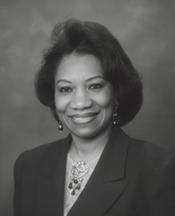
Mr. Chairman, I offer an amendment. The Acting Chairman: The Clerk will designate the amendment. Mr. Chairman, I rise today to ask support of my colleagues for this amendment that I am offering which…
Mr. Chairman, I offer an amendment.
The Acting Chairman: The Clerk will designate the amendment.
Mr. Chairman, I rise today to ask support of my colleagues for this amendment that I am offering which calls for the Secretary of Defense to include as part of the 2006 update of the Mobility Capability study, a comprehensive analysis of future air lift and sea lift mobility requirements.
This study would examine both the strategic and intratheater mobility requirements with full consideration of all aspects of the national security strategy, and will analyze low, medium, and high risk alternatives.
The new analysis will be delivered to Congress by February 4, 2007.
One would ask why this study is important. There has not been a study that examines our Nation's air lift requirements since prior to 9/11.
Contrary to past mobility studies, the most recent study analyzed only the capabilities of the current programmed airlift fleet, but it did not analyze the Nation's airlift requirements. There is a big difference between studying capabilities and studying requirements when prescribing future airlift force level recommendations.
DOD's definition of a military requirement is an established need justifying the timely allocations of resources to achieve a capability to accomplish approved military objectives, missions or tasks, all called operational requirements. Now translated into layman's terms, this means one cannot effectively allocate resources to achieve a given capability, in this case airlift resources, without first knowing what the requirement is.
In 2001, our airlift fleet requirements were at 54.5 million ton- miles per day. The question that this study asks and seeks to have answered is, what is the quantitative yardstick that describes the required airlift needs. Is 54.5 million ton-miles per day enough airlift? Do we need more? The mobility capability study alone does not give us this needed information.
As we are all aware, there have been significantly more requirements pressed upon our airlift fleet over the past 5 years. The world we live in has changed a great deal. For example, we know our Nation has been attacked by terrorists. We are engaged in an ongoing global war on terrorism. Hurricane Katrina had ravaged the gulf coast region, and we have repeatedly been summoned to help with global humanitarian efforts, particularly natural disasters such as the tsunami and earthquakes. All of these occurrences have called upon our Nation's airlift resources.
Furthermore, what concerns me the most is that there does not appear to be a comprehensive approach to addressing our Nation's future airlift demands.
Last February, the Pentagon released the Quadrennial Defense Review, QDR, the 20-year blueprint of our Defense Department needs and projections. Specifically, the QDR recommended the ability to swiftly defeat two adversaries in overlapping military campaigns with the option of overthrowing a hostile government in one.
However, in the 2001 strategy, the U.S. military was to be capable of conducting operations in four regions abroad, Europe, the Middle East, the Asian littoral and Northeast Asia. But the new plan states that the past 4 years demonstrated the need for U.S. forces to operate around the globe and not only in these four regions.
Whatever that scenario is, Mr. Chairman, clearly we need more air cargo planes, and we know this by experience too. Take the C-17, an air cargo plane, for example. This air cargo plane is being flown over 167 percent over the normal hours scheduled to deliver supplies to the war theaters where most planes cannot land, as well as the many humanitarian missions in which our country is engaged.
Since 9/11/01, the C-17 has flown 59 percent or about 358,000 additional miles more than was originally scheduled. The C-17 has been on the front line of the war in Iraq and Afghanistan. Eighty percent of our airlift missions in these battlefronts are done by the C-17.
Finally, Mr. Chairman, after only 15 years in commission, the C-17 fleet just recently reached its 1 millionth flying hour. The C-17, though, is just one example, but it is an excellent one and an excellent example of how much our Nation is relying on our airlift fleet.
This study will provide a basis for determining the future of our Nation's airlift fleet. This is about providing our military with the tools to succeed, and it is about fiscal responsibility, and most importantly, it is about national security.
I ask my colleagues to support this important amendment.
I reserve the balance of my time.
Mr. Chairman, I just want to say that this comprehensive analysis is critically needed for our military might, for our strength in doing those things that are asked of us with the airlift cargo; and it is not only fiscally responsible, but it is national security.
I ask support for the amendment.
Mr. Chairman, I yield back the remainder of my time.
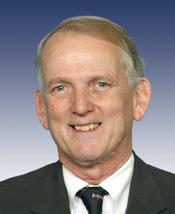
Mr. Chairman, I rise today in support of H.R. 5122, a bill to authorize appropriations for fiscal year 2007 for military activities of the Department of Defense, to prescribe military personnel…
Mr. Chairman, I rise today in support of H.R. 5122, a bill to authorize appropriations for fiscal year 2007 for military activities of the Department of Defense, to prescribe military personnel strengths for fiscal year 2007, and for other purposes. This important legislation was made possible thanks to the leadership of House Armed Services Committee Chairman Duncan Hunter of California and Projection Forces Subcommittee Chairman Roscoe G. Bartlett of Maryland. These leaders have taken a long and hard look at how best to fulfill our national security needs, and they have led the committee into action. This is nowhere more evident and important than in the House's shipbuilding budget.
This defense bill is nothing short of historic; it marks a turning point in Congress' view of the United States Submarine Force and our undersea fleet's role in the Global War on Terror and beyond. The House has validated what many of us have long known: that our submarine fleet is the backbone of our Navy's efforts in the Global War on Terror, and that it is critical to deterring aggression by potential adversaries.
H.R. 5122 accelerates production of Virginia Class submarines to help the Navy meet its stated requirement of 48 ships. Without adding funding for two submarines per year starting in 2009, the U.S. submarine fleet will eventually drop to 40 or less, presenting our fighting forces with an unacceptable level of risk. It would be irresponsible to set a force level requirement and then miss that goal by some 20 percent. That is why this bill also requires the Department of Defense to maintain a submarine fleet of 48 ships, consistent with the Navy's stated needs. Shame on Congress should it ever turn its back on our Nation's naval requirements, especially in a time of war.
Article one, section eight of the United States Constitution states that ``Congress shall provide and maintain a Navy.'' Our republic's charter document does not vest this authority with any other body--not the President, not the Department of Defense, and not special interests. Congress must ultimately take responsibility for a hollow Navy, and it is Congress that must answer to the American people if our sailors fail for lack of material support. Today, I am proud to say that this body has acted honorably and ably to execute this charge.
Mr. Chairman, history tells us that we cannot wait for danger to find us. There is a growing threat across the Pacific that we simply cannot ignore. 70 years ago, with the leadership of another House chairman, Congressman Carl Vinson, Congress funded our shipbuilding accounts at a level that prepared us for the turmoil of World War II. Had this body not taken action years before the conflict, the Untied States Navy would not have had the capability to stand up to fascism overseas. In fact, in the first 18 months after Pearl Harbor, the U.S. had barely enough carriers to hold the line, let alone project power in the Pacific. At one point in November 1942, only two carriers were operational in that vast ocean. We can only imagine the outcome had Chairman Vinson chose inaction instead of resolve.
Today, we must look forward with the lessons of our past. We must imagine our future if we let our Navy's submarine force atrophy at a time when its missions are only growing. We must try to envision what will come to pass if the U.S. Navy cannot check a near peer in the Pacific Ocean because it is overstretched and under-equipped. As we consider the current and future threats to our Nation, I am thankful that we have Members of the Armed Services Committee willing to act in the spirit of Chairman Vinson.
So, Mr. Chairman, I rise in support of the H.R. 5122 knowing that this bill represents a
giant step toward facing the threats of today and tomorrow. We have won the first battle to supply this great Nation with the Navy it requires.

Mr. Chairman, I just want to say a few words about a compromise amendment that my colleagues and I in the Oregon delegation negotiated with the leadership of the House Armed Services Committee. Our…
Mr. Chairman, I just want to say a few words about a compromise amendment that my colleagues and I in the Oregon delegation negotiated with the leadership of the House Armed Services Committee.
Our amendment requires the Army to send a report to Congress within 60 days of enactment of this bill regarding the Chinook helicopter Reset program. The Reset program repairs and restores helicopters to their pre-combat deployment condition. The report requires the Army to explain its plan to reset all active duty and reserve component helicopters, including the timeline and cost for doing so.
The reason my colleagues and I offered our original amendment is because of a dangerous situation facing the Oregon National Guard. The Oregon National Guard is authorized to have six Chinook helicopters. One was destroyed on a mission. One is too old and will be turned in to the Pentagon. The other four need to go through reset after being deployed to combat zones.
Timely repairs and rehabilitation are essential to ensuring the Oregon National Guard has the equipment necessary for responding to public safety threats, including forest fires, as well as other state emergencies, homeland defense, and proficiency training.
Unfortunately, timely repairs are not happening today. Due to the influx of aircraft returning from overseas and in need of repair, the Army depots that generally perform this work are overstretched. As I understand it, the average time to get a helicopter repaired and returned to a unit is six months or longer.
I haven't seen the speech yet, but I've been told that Major General Pillsbury of the Army Materiel Command recently gave a speech at a conference lamenting how far behind the Army is on the Chinook RESET program.
According to a letter from the Army in March 2006, the Oregon National Guard will not get its helicopters back until November 2006. During the interim period, the Oregon National Guard will have to do without, which puts Oregon residents at-risk. That is not acceptable.
Congress, the Army and the National Guard Bureau must find a solution to this problem. One logical solution is for the Army to allow the Oregon National Guard to contract with a local private sector helicopter maintenance provider in order to help alleviate the backlog that would otherwise keep its Chinooks grounded for the next several months. One company in Oregon, Columbia Helicopters, believes it could get two Chinooks through the reset process by July, several months sooner than the Army. Such private sector involvement in the reset program is not unprecedented. Last year, the Army awarded Boeing a $40 million-plus contract to refurbish Apache helicopters under the reset program. And, Columbia Helicopters has already done this type of work for the Nevada National Guard, which had some discretionary money it spent on getting its helicopters repaired.
Letters in support of this public-private concept have been sent to the Army since February from myself, the Oregon National Guard, the Nevada National Guard, Governor Kulongoski of Oregon, Governor Kenny Guinn of Nevada, Senators Smith, Wyden, Ensign and Reid, and Reps. Hooley, Wu and Walden. Yet, the Army has not taken any action to expedite the reset of the Oregon helicopters.
Our amendment today puts the Army on notice that Congress is interested in this issue and is concerned about growing repair burden and backlog. Congress needs to ensure accountability by the Army for timely repairs. This amendment is a first step. I will continue to work with my colleagues in Oregon and on the committee to try to get the Army to step up and ensure the National Guard is adequately equipped and able to carry out its missions year-round.

Mr. Chairman, I rise to offer this amendment to help States all across the Nation deal with the dynamic affects of BRAC can have on their local communities. In my district alone we will incur the…
Mr. Chairman, I rise to offer this amendment to help States all across the Nation deal with the dynamic affects of BRAC can have on their local communities. In my district alone we will incur the single largest loss and gain in the most recent round of BRAC. We will have roughly 23,000 positions vacated out of DoD leased space in Arlington, Virginia and roughly the same number of jobs added to Fort Belvoir, Virginia.
While we give warm welcome to the additional jobs coming to Fort Belvoir we must ensure that we are able to continue to observe our smart growth principles. The transportation infrastructure in the vicinity of Fort Belvoir/Southern Alexandria sector is already overburdened and inadequate. It is important that DoD has a wide array of tools at its disposal in order to work with our local community to help absorb the affects of such a massive growth.
The Defense Access Road (DAR) program currently allows DoD to pay for road projects made necessary by DoD actions. My amendment would simply allow DoD to consider transit projects as part of the Defense Access Road program as well. It does not force DoD to enforce a blanket policy because I know each community has its own specific needs and a one size fits all is simply not appropriate. Some communities could use more roads and others could use buses.
Mr. Chairman, I know my district was not the only one effected by BRAC. My amendment is important to every State across the Nation that was affected by BRAC or any other DoD action that will significantly impact their local communities. I have already received a call from the North Carolina's Governor's office supporting this effort.
Mr. Chairman, in closing I would like to thank Chairman Hunter, Senator Warner, and Jim Moran for working with me to make this amendment a reality. I urge an ``aye'' vote.
Mr. Chairman, I rise to offer this amendment in an attempt to resolve deadlocked negotiations between the State of Virginia and the Army. For years now, the completion of the Fairfax County Parkway, a major parkway in my district, has been held hostage to complications with building through the Engineering Proving Ground. The Engineering Proving Ground was a former military airfield which has environmental concerns that are inherent of its history.
Empirical data has shown the Engineering Proving Ground is suitable for road construction. My amendment simply allows the State of Virginia and the Army the authority they need to negotiate a sensible and environmentally sound solution to complete the parkway. It allows the Army to enter into a special agreement with the State of Virginia. This agreement would authorize the State of Virginia to fund projects on the Engineering Proving Ground while allowing the Army to maintain control of the project.
I was Chairman of the Fairfax County Board back when we completed the largest section of the Fairfax County Parkway and was proud to see the road come to near completion. However, a number of years have gone by since and it is truly frustrating to all northern Virginians not to have the small portion of the parkway through the Engineering Proving Ground completed at this time.
In addition, due to the most recent round of BRAC, Northern Virginia will gain over 23,000 jobs in the Fort Belvoir area. This is equivalent to gaining four major bases--was the single largest BRAC addition in the country. Completing the Fairfax County Parkway is a critical step in setting the infrastructure we need to help assuage the welcome, but massive growth.
In closing I would like to thank Chairman Hunter, Senator Warner, and Jim Moran for working with me to make this amendment a reality. I urge an aye vote.
Show 11 more
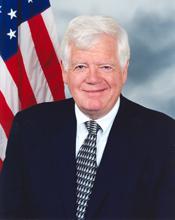
Mr. Speaker, the Medicare prescription drug benefit plan is doing a bad job, and it is doing a worse job of helping those who need the help most. I was down in the lunchroom in the Longworth…
Mr. Speaker, the Medicare prescription drug benefit plan is doing a bad job, and it is doing a worse job of helping those who need the help most. I was down in the lunchroom in the Longworth Building, and one of the cashiers stopped me and said can you explain to me how this works? She said, I figured out what it is going to cost me to join, and I can save more money by going to Costco. My drugs will cost less in Costco. If you added it all up, I am going to be better off staying out of the program and buying my drugs at Costco.
Now, this program was faulty in its inception, and of the millions of people on Medicare who still haven't signed up, 85 percent of them are poor enough to qualify for the low income subsidy. When this bill was in the Ways and Means Committee, we offered the opportunity to the chairman to sign up these poor people at the beginning, automatically, because they are low income. We know what their income is. They are not going to get rich all of a sudden. But, no, we are going to let them flop around out there trying to figure out this complicated program.
Now, how could we have let it happen? Well, haven't the Republicans been telling us that the Medicare drug benefit was intended to help those most in need, those eligible for low income subsidy?
They turned down, the author of this turned down tonight Mr. Stark's offer to rewrite this thing and get all these people in.
But that is not what really went on here. Just encouraging people or threatening or, as the gentleman from the Energy and Commerce Committee says, keeping the pressure on old people is not sufficient. That is not humane public policy. You ought to be ashamed of saying something like that. We want to pressure.
My mother is 96 years old. I don't need you pressuring my mother on this drug plan if she can't figure it out. Now the low income beneficiaries are twice as likely to have health problems, mental problems or live in a nursing home. Many have difficulty with English. You can't just stand out here and say, hey, folks, sign up, sign up. They can't figure out what to do.
You have made it so complicated so that they wouldn't sign up. That is what you did. You wanted the ones who were most needy to be unable to figure out how the plan would work so they could be left out.
Now, just to show what a warm heart you have, you slap a 7 percent penalty on them for the rest of their life. You say to them, if you don't sign up by the 15th of May, you can't sign up for 6 months, and it is going to cost you 1 percent a month for every month you don't sign up. That kind of loving treatment is, in my view, exactly what this program does not need.
It is a mess, this is a bad resolution. We will all probably, you know, vote
for it. But when you let the drug companies write the bill, it was never meant to work for ordinary people.
The program needs time to find these people and help them.
Blindly adhering to the May 15th deadline, just five days away, dramatically penalizes many seniors who have not signed up.
This program has been a mess from the start.
If Republicans are serious about helping seniors, we must extend the deadline for enrolling, remove the penalties for not signing up, and streamline the procedures, so that our most distinguished citizens can actually understand this.
Just because Republicans let big drug companies help write the legislation doesn't mean we are helpless to take action.
Republicans were wrong about the real cost of this program. Now they are wrong when they say they want to help seniors.
An artificial deadline won't help seniors. A real prescription drug benefit will.
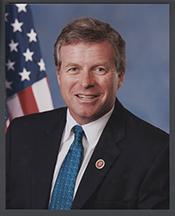
Mr. Chairman, I offer an amendment. Mr. Chairman, I yield myself such time as I may consume. First, I thank Chairman Hunter and the ranking member, Mr. Skelton, for their leadership on this very…
Mr. Chairman, I offer an amendment.
Mr. Chairman, I yield myself such time as I may consume.
First, I thank Chairman Hunter and the ranking member, Mr. Skelton, for their leadership on this very important piece of legislation.
I rise today to offer an amendment to title XIV to H.R. 5122 that would ensure that the Department of Defense and the Department of Homeland Security work together as part of a homeland defense-homeland security technology transfer consortium to facilitate the transfer of viable DOD technologies in order to enhance the homeland security capabilities of Federal, State, and local first responders.
The Department of Defense has been a leading developer of technology for years, and some of the innovations it has pioneered may have outstanding homeland security applications. These types of technologies include: unmanned aerial vehicles, UAVs; ground sensors which help authorities monitor activities over vast expanses of terrain; biometric identification technologies which can assist in the creation of tamper- proof identity cards; radiological detectors which can monitor the transport of nuclear and other potentially dangerous materials; and sophisticated surveillance equipment, examples of which include night vision goggles and microwave and infrared imaging gear.
While these technologies have been helpful to our warfighters overseas, the Federal, State and local agencies charged with protecting us here at home could also make good use of these kinds of products. Unfortunately, the process of transferring these technologies from the military to the civilian sector has been a bit slow.
As a member of the Homeland Security Committee, I would like first responders and other appropriate authorities to have quicker access to and to make good use of these technologies.
Accordingly, my amendment would provide for the creation of a homeland defense-homeland security technology transfer consortium that would facilitate this transfer. It specifically calls for the inclusion of the Department of Homeland Security, which is already in the process of developing and utilizing many of these technologies that I have just described.
Within this consortium, it also brings State and local first responders into the deliberative process. The consortium will be involved in integrating new technologies into appropriate first responder exercises, in promoting interoperability, and, of course, in identifying and developing those defense technologies that have the most promising applications for homeland security.
By facilitating these kinds of transfers, Federal, State, and local agencies can work better together and can function more efficiently and the homeland can be safer.
I thank Chairman Hunter and the ranking member, Mr. Skelton, for their leadership on this issue.
Mr. Chairman, I reserve the balance of my time.
Mr. Chairman, I yield such time as he may consume to the gentleman from California (Mr. Hunter), the distinguished chairman of the Committee on Armed Services.
Mr. Chairman, I yield myself such time as I may consume.
I thank everybody involved for their support for this amendment. Its interdisciplinary approach is most appropriate. This transfer technology consortium is long overdue. As has been stated several times already, there is so much technology coming out of the Department of Defense that needs to be shared with the homeland security. Of course, this will also make its way down to our first responders, State and local first responders.
Mr. Chairman, I yield back the balance of my time.
Mr. Chairman, I rise in opposition to this Defense Authorization Bill, H.R. 5122. Only a few months after ruthlessly slashing $40 billion in health care, education and job training benefits for…
Mr. Chairman, I rise in opposition to this Defense Authorization Bill, H.R. 5122. Only a few months after ruthlessly slashing $40 billion in health care, education and job training benefits for working Americans, the Republicans have shamelessly
brought forth a Defense Authorization bill that wastefully spends taxpayer dollars and does nothing to make this country any safer.
This bill clearly demonstrates that this Republican Congress has a habitual problem of fiscal mismanagement. This legislation spends billions on the development of ineffective or duplicative weapons systems that pad the pockets of big defense contractors. In turn, these defense contractors thank their Republican sugar daddies by filling their campaign coffers.
H.R. 5122 wastefully authorizes $9.3 billion on pie-in-the-sky Star Wars missile defense, a $184 million increase over President Bush's request and $2 billion more than the current level of spending. Rather than allocate billions for a Cold War weapon system that will never work, Republicans in Congress should address the real security threat posed by weapons that can easily be delivered or smuggled into America in a suitcase or container.
The bill provides additional funding to build ships that the Navy has not requested and does not need. The Republican legislation also allocates nearly $46 billion for 20 F/A-22 Raptors, $1.4 billion more than President Bush requested and $2.9 billion more than is currently spent. Yet these planes were initially justified as necessary to compete with a new generation of Soviet fighters that no longer exists.
Since the collapse of the Russian air force, there is no nation that has, or is planning to have, fighter jets as dominant as those the U.S. Air Force currently employs in combat. In Iraq, Kosovo and Afghanistan, the Air Force has demonstrated the superiority of existing U.S. planes. In addition, the GAO recently reported that the costs of the F/A-22 Raptors have ballooned to $1.3 billion more than was budgeted for by the Air Force. Where does accountability begin?
H.R. 5122 does not require the President to provide an exit strategy out of Iraq. Even after spending $315 billion on a misguided Iraq War, the Bush Administration has no clue on how to resolve the situation or an idea of how to get American soldiers out of the conflict.
It is time to stop giving the President a blank check to fight an aimless war. The only thing that the $50 billion outlay in this bill guarantees is that the U.S. will be in Iraq longer than is necessary and that more American soldiers and Iraqi civilians will die without just cause.
I am also very concerned that certain members of Congress have decided to support chaplains who want to push their own religious agenda rather than the military's commitment to religious tolerance. When chaplains join the military, they accept a duty to serve the military's mission in addition to their mission to God. In providing spiritual guidance to our soldiers, chaplains should never carry out their duty in a manner that divides or alienates soldiers of different faiths. Chaplains who press ahead with their own agenda ahead of the military's mission threaten the cohesiveness of military units and the effectiveness of our soldiers in carrying out their duties.
I urge my colleagues to vote against this wasteful and irresponsible bill. It is time we had a defense budget that lives within its means, stops wasting hard earned tax dollars on useless weapon systems, and accounts for what is truly required in Iraq.
Mr. Chairman, I offer an amendment. Mr. Chairman, I have a modification to my amendment at the desk. Mr. Chairman, the modification, that the majority was so kind to agree to, would name this year's…
Mr. Chairman, I offer an amendment.
Mr. Chairman, I have a modification to my amendment at the desk.
Mr. Chairman, the modification, that the majority was so kind to agree to, would name this year's defense bill after one of the finest gentlemen to ever serve in this body, a former soldier, a statesman from the State of Mississippi, Sonny Montgomery, and the author of the Montgomery GI bill.
The bill does a lot of things this year that I think Sonny would be very proud of, particularly extending the TRICARE privileges to guardsmen and reservists, and since we are told that former Congressman Montgomery is under the weather, we hope that he is aware of what we are doing today because, again, I cannot think of anyone in our Nation who has done more to advance the Guard and Reserve than Sonny Montgomery.
He caught a heck of a lot of heat from people when he used his friendship with then-President Bush to have the Guard and Reserve called up for the first Gulf War. The decision he made then, the decision President Bush made then, was absolutely the right decision, and it has led to the one-force policy that our Nation enjoys today.
So, again, I want to thank the majority for working with me on that.
I yield to the gentleman from Missouri.
I yield to the gentleman from California.
I yield to the gentleman from Pennsylvania.
Mr. Chairman, I would like to thank my colleagues for their kind words about Sonny Montgomery. I would also like to remind my colleagues that the underlying amendment calls for telling the Department of Defense that by the end of fiscal year 2007, the Secretary of Defense will develop a plan to equip every wheeled vehicle that leaves a compound in Iraq or Afghanistan with an IED jammer.
Mr. Chairman, I voted for the use of force in Iraq and therefore I share in the responsibility for the death of every young person and every not-so-young person who has been maimed over there. It is a very unfortunate tactic by our enemies to use improvised explosive devices that are remote detonated, which have resulted in over half of the casualties and injuries of Americans over there.
Technology exists to jam the signal that triggers that charge. Many of our vehicles in Iraq have these jammers, but not all. Just as we would never dream of sending a helicopter out that does not have protection from missiles, or dream of sending a C-130 to land at Baghdad or Balad that did not have an antimissile defense, we as a nation should not dream of sending one Humvee or one truck outside of a compound that does not have the technology to jam that signal and protect the troops on board.
I have been to most of the funerals of the south Mississippians who have died in this war, and I have visited most of the soldiers at Walter Reed who have been injured. In every instance they were either killed or injured by an IED, and I regret to say, in every instance the vehicle they were traveling in did not have a jammer.
We are the world's greatest nation. We are going to spend $10 billion this year on national missile defense and we have not been attacked by a missile, and yet every day we are having young Americans killed by IEDs. I think it is time we tell the Department of Defense that we as a Congress want to see that every single vehicle in Iraq is protected, every single soldier, airman, Marine, every single Navy personnel who is traveling in these vehicles is being protected.
I welcome the comments of the chairman of the committee, and I very much welcome his support of this amendment.
Mr. Speaker, I thank the gentlewoman from Connecticut for yielding and the gentleman from Georgia for his leadership on this issue. I want to tell the story about Bennie and Katheryn, real people in…
Mr. Speaker, I thank the gentlewoman from Connecticut for yielding and the gentleman from Georgia for his leadership on this issue.
I want to tell the story about Bennie and Katheryn, real people in Vidalia, Georgia. This is a couple who was paying $2,200 a month for their prescription drug bill. One of my staffers happened to be related to them and heard about it, and he went over there and sat down with them on all their drug needs and went over the website. He did not make a recommendation, but he showed them the information and they made their own choice. Now their total drug cost has gone from $2,200 a month to $104 a month, a 95 percent savings.
When they saw stuff like that, they did not believe it was possible, because they too had heard some of the rhetoric, some of the angry, some of the bitter rhetoric that comes out of Washington, D.C., and they thought, well, there is no way. But, in fact they are enjoying it now, and they need that extra income just like so many other millions of seniors do around the country.
Mr. Speaker, I heard former Secretary of Health and Human Services Tommy Thompson say that when Gladys starts talking to Mabel, this thing will really take hold. And, indeed, that is the truth. My office has had 48 workshops helping people decide which program works for them. Maybe it doesn't work for them, because I am always quick to say, it might not be the best thing for everybody. That is part of what a public offering is. Sometimes it works, sometimes it doesn't. But it works for most people. It is about a 50 percent to 60 percent savings for most people. Bennie got a 95 percent savings. Not everybody is going to get that.
But the interesting thing is that Gladys is talking to Mabel, because my friend Gil Gutknecht always quotes Ronald Reagan in saying that markets are more powerful than armies. In this case we have an army of people saying this is a horrible program that should be thrown away, thrown out; it is bad, it is wicked, it is the Republicans up to no good.
But look at the market. In my district, with my 48 workshops, our market penetration is about 70 percent right now. The interesting thing is one of my colleagues who is not in favor of this bill has about the same penetration, and he hasn't held one workshop.
That is one the ironies of it. I thought I am going to go out as a salesperson and really wave the flag and tell everybody how great it is. I am irrelevant. The market is more powerful than the army, the army for it or the army against it. The market is selling this thing, not the Republican Party, not the Democrat Party, wherever they may stand on it at the moment.
The reality is the seniors like it, and the reality is our seniors need it, because so many of them were having to choose between food on their table and prescription drugs.
My mom, who takes Tamoxifen from now on for the rest of her life, and my dad who has diabetes and their friends, they have some choices. Not everybody is going to sign up for it, but everybody is aware that the program is out there.
I will close with a quote from my good friend from Minnesota, who had voted against this bill. He said he has moved from being an atheist to an agnostic, but pretty soon he is going to be a holy roller and a believer like everybody else, because markets are stronger than armies.
Mr. Chairman, we do not oppose the amendment. Mr. Chairman, I claim the time in opposition, and I yield myself such time as I may consume. Mr. Chairman, I rise in opposition to the amendment because…
Mr. Chairman, we do not oppose the amendment.
Mr. Chairman, I claim the time in opposition, and I yield myself such time as I may consume.
Mr. Chairman, I rise in opposition to the amendment because it would have a great negative impact on national security by severely curtailing or terminating programs that protect our country against rogue nations.
Simply put, now is not the time to gut our missile defense programs by slashing the Missile Defense Agency's budget in half, given the threats posed by such countries as North Korea and Iran.
This amendment would freeze in place both ground-based and the Aegis midcourse defense capabilities prior to finishing what we started with the Fort Greeley, Alaska, GMD installation. We have had tremendous success with the Aegis program. Six of the seven last intercept tests have been hits. Why in the world would you stop this now?
In addition, this amendment would kill the Airborne Laser and Kinetic Energy Interceptor boost phase defense programs, just when both promises are approaching significant milestones in 2008.
General Cartwright, Commander of STRATCOM, has repeatedly told me how important it is to stay the course with the Airborne Laser Programs, whose directed energy capability is of a critical importance to the Department of Defense. This amendment would kill the ABL program after more than $3 billion has been invested. It would be a tremendous waste of taxpayers' money not to go ahead and follow through with the ABL program to see how well it works.
The amendment cites the Congressional Budget Office report on long- term implications of current defense plans and alternatives. Let me repeat, ``and alternatives.'' The evolutionary alternative in this CBO report is neither a recommendation nor an endorsement by CBO of cutting MDA programs. This report simply looked at the impact of future defense budgets, of alternative options to meet hypothetical, hypothetical spending targets. The CBO, and this was confirmed this today by my staff, does not endorse or support this proposal. It was merely another option as part of funding a ``what if'' drill, an academic situation, if you will.
This amendment could drastically cut the budget of our missile defense. While we all understand the missile defense architecture is complicated and costly, long term, it is crucial in today's world if we will continue our primary national defense into the future.
There will never be a time to cut investments in our Nation's protection. That is what this does. I strongly encourage my colleagues to vote against this amendment.
Mr. Chairman, I reserve the balance of my time.
Mr. Chairman, before I yield to my friends on the other side, let me say that the gentleman is probably not aware of a missile which was deployed before it was finally finished, which the Israelis used.
Mr. Chairman, I yield 45 seconds to the gentleman from Texas (Mr. Reyes) who is on the Intel Committee and also on the Strategic Forces Committee that handles missile defense.
(Mr. REYES asked and was given permission to revise and extend his remarks.)
Mr. Chairman, let me now yield any time remaining to the gentleman from Alabama (Mr. Cramer) who is also very knowledgable about missile defense and also on the Intel Committee and the Appropriations Committee.

Mr. Chairman, I thank the gentleman for yielding me time. I want to begin by thanking Chairman Hunter and Ranking Member Skelton and their Armed Service Committee staffs for working with me to bring…
Mr. Chairman, I thank the gentleman for yielding me time. I want to begin by thanking Chairman Hunter and Ranking Member Skelton and their Armed Service Committee staffs for working with me to bring this amendment dealing with private military contractors to the floor. I really appreciate your help and that of your staff.
My amendment would provide for additional oversight and accountability of the Defense Department contractors deployed in Iraq and Afghanistan. Contractors compose the second largest force in Iraq after the U.S. military. This amendment does not attempt to make any statement on the decision to use contractors or about the wars in Iraq or Afghanistan.
Now that we are more than 3 years into the war in Iraq, this amendment is intended to give Members of Congress new tools so that we can exercise our oversight responsibilities on what has become a major component of our military and to clarify the role of contractors. We can all acknowledge that military contractors should require the same stringent accountability and oversight standards as the U.S. military. After all, private contractors often served side by side with our brave troops, and these same United States troops are often tasked to protect our contractors who are paid with billions of U.S. taxpayer dollars.
This amendment would help to provide increased accountability and oversight for our Defense Department contractors by, first, implementing a policy for conducting comprehensive background checks on foreign nationals hired by our contractors. We want to know who these individuals are and what their backgrounds are and if they are suitable for that role. It also prohibits the hiring of any person that has been convicted of a violent crime or a human rights violation.
Second, this amendment makes retroactive new Department of Defense rules for contractors on contracts that are already in existence or on any contract extension. For example, it makes perfectly clear that combatant commanders are in charge. It outlines carefully that relationship between combatant commanders and contractors so that there is a structure of command or part of the chain of command. The combatant commander decides whether or not they carry a gun, what uniform they would wear and that they have to respond to the combatant commander.
It also would say that anyone that is a contractor or an employee of a contractor must obey the laws of the host country, of international law and U.S. law.
Third, it requires a Department of Defense Inspector General report on contractor overcharges, requires that there are sufficient contracting officers assigned to monitor contracts in Iraq and Afghanistan.
I hope that in the future I can continue to work with Chairman Hunter and Ranking Member Skelton to address additional oversight issues regarding the use of military contractors. I also hope we will continue to consider the impact that utilizing contractors has on our military. And I would also like to consider additional means to make it easier for Members of Congress to see Defense Department contracts so we can better monitor them for signs of waste, fraud and abuse.
Again, I thank Chairman Hunter and Ranking Member Skelton. I appreciate your support and attention to this important issue.
Mr. Chairman, I offer an amendment. Mr. Chairman, I rise to protect and defend the U.S. soldiers who protect and defend us. I urge the House to pass my amendment calling for a comprehensive study on…
Mr. Chairman, I offer an amendment.
Mr. Chairman, I rise to protect and defend the U.S. soldiers who protect and defend us. I urge the House to pass my amendment calling for a comprehensive study on possible health effects on soldiers from exposure to depleted uranium.
I am a medical doctor. Like every doctor, I took an oath to use all my knowledge and skill to heal the sick. I was trained to listen to the patient and to use science, not conjecture, to make a diagnosis. I have been listening to soldiers, and I am greatly troubled.
We need to do a study on the effects of depleted uranium. My amendment includes a comprehensive study of the effects on our soldiers from exposure to DU, and also includes the children of our soldiers born after exposure.
I recognize there have been a number of studies done on this exposure, but they do not answer all the questions. There has been no comprehensive study of cancer rates in relationship to DU exposure in gulf war veterans.
The VA has a volunteer medical DU follow-up program that has been tracking about 60 veterans who signed themselves up for the study. These veterans were all friendly fire victims who have DU imbedded in their body, and I am heartened that the VA has been keeping track of them. But 60 veterans is not enough to catch cancers that have a rate of one in 1,000. This sample is not large enough to be statistically reliable.
There are about 900 gulf war veterans who have had level one or level two exposure to DU. We should be studying all of them and keeping track of all their health. There has been no comprehensive study of the Gulf War Syndrome in relation to exposure to DU. No definitive cause has been established for Gulf War Syndrome.
Presently, between 150,000 and 200,000 soldiers who served in Gulf War I could have Gulf War Syndrome. We need to study the possible relationship between depleted uranium and Gulf War Syndrome. Any link between these two or other negative health effects has not been conclusively established or refuted.
I urge my colleagues on both sides to stand with me and protect and defend the soldiers whom we send out to protect and defend us.
For me, this is a personal, not a political, quest. My professional life turned from medicine to politics after my service in the United States Navy during the 1960s when I treated combat soldiers returning from Vietnam. Back then, the Pentagon denied that Agent Orange posed any threat to soldiers who were exposed. Decades later, the truth began to emerge. Agent Orange harmed our soldiers; it made thousands sick and some died.
During all those years of denial, we stood by and did nothing while our soldiers suffered, and for me there can be no more Agent Orange. We have to think of that in terms of this DU. If DU poses no danger, we need to prove it statistically and with independent, scientific studies. If DU harms our soldiers, we all need to know it and act quickly, as any doctor would, to use all of our power to heal the sick. We owe our soldiers a full measure of the truth, wherever that leads us.
Mr. Chairman, I urge my colleagues to pass this amendment.
Mr. Chairman, I reserve the balance of my time.
Mr. Chairman, I yield back the balance of my time.
Mr. Chairman, I rise in strong support of H.R. 5122. I would first like to thank the Chairman for including an important provision helping to provide access to health care for our Guard and Reserve…
Mr. Chairman, I rise in strong support of H.R. 5122. I would first like to thank the Chairman for including an important provision helping to provide access to health care for our Guard and Reserve members. This provision will, for the first time, allow all drilling Guard and Reserve members to purchase health coverage through TRICARE, the military's health care system. The provision will treat all of our citizen-soldiers equally, regardless of whether or not they were previously deployed.
This is an issue dear to my heart. Over a year ago, I introduced legislation in the House that provided the basis for the provision we find in the bill today. During my visits to Iraq, I had the opportunity to visit with U.S. soldiers serving there, including many Iowans. When I asked what I could do to help them, the overwhelming response I received was, `Don't worry about us, but please do something to help our families at home, who are dealing with the fact that we are separated from them every day.' In my conversations with these soldiers and my constituents in Iowa, it became clear that our Guard and Reserve soldiers wanted--and needed--access to better health care for them and their families.
We know that today, 40 percent of our enlisted Guard and Reserve soldiers and their families are uninsured. For soldiers who are deployed, family members receive temporary coverage under TRICARE. This coverage ends some time after they return, depending on the length of the deployment. Families that had health coverage prior to a deployment may be subject to waiting periods or exclusions for preexisting conditions when they try to return to civilian coverage. They are burdened with switching between TRICARE and private insurance, along with different hospital and physician networks.
This is an unacceptable situation for our Guard and Reserve soldiers, who are almost certain to be sent to serve in Iraq and Afghanistan, if they have not done so already. Guard and Reserve soldiers currently make up almost half of our forces serving in those locations. Yet they cannot purchase the same health coverage that full time soldiers access for free. The Federal Employees Benefit Program (FEHBP) covers part time civilian Federal employees if they agree to pay increased premiums. At a minimum we owe our citizen-soldiers the same access to health care with a cost sharing arrangement.
Clearly the role of our Guard and Reserve forces has been transformed to play a central part in providing for the national defense. The greater requirements for sacrifice and service placed on the Guard and Reserve must be matched with greater commitment to them on our part.
We owe it to our citizen-soldiers to provide them with access to affordable health care. Providing TRICARE access during all phases of service will provide an important tool to bolster recruitment, retention, family morale and overall readiness for the Guard and Reserve.
I strongly urge my colleagues to support this bill.

Mr. Speaker, I must tell you that I agree and have been talking to my seniors that they need to, and I quote, ``review carefully all the options that are available to them and determine whether…
Mr. Speaker, I must tell you that I agree and have been talking to my seniors that they need to, and I quote, ``review carefully all the options that are available to them and determine whether enrollment in a Medicare prescription drug plan best meets their needs.''
I have had over 30 town hall meetings since this bill has been enacted, and at these meetings I have had people from our Office on Aging to help seniors go through the different options to make a decision whether they need or they don't need to join a plan and which plan they should join.
But, Mr. Speaker, the problem is, the information that was made available to them when this bill was passed was wrong. The information is extremely confusing. In my State we have 47 or 48 different plans with deductibles that range by great numbers, and it is very difficult for my constituents to understand this bill.
I have gotten e-mails from people in Maryland who tell me the bill is very confusing, and they should at least be allowed more time to make a decision. I got e-mails saying that this one constituent is going to make a decision, but he is not sure whether it is right or wrong because he needed more time and he doesn't have that time.
So, Mr. Speaker, yes, we want our constituents to make the right decision, and we urge them to focus in on making the right decision, but it is absolutely wrong that we are not extending the May 15 deadline. Our constituents need more time, and we certainly shouldn't be imposing a lifetime penalty because a senior perhaps makes the wrong decision in part because of our failure to get the right information to our constituents.
Mr. Speaker, I would have hoped that we would be using the time now to correct this bill. This bill is structurally flawed. We need to make this a real benefit within Medicare. We need to take on the cost of prescription drugs. We need to deal with the coordination of the benefits with retiree benefits so that retirement plans don't terminate retirees' prescription drug coverage. We need to do all that.
We need to cover drugs that aren't covered today. I could tell you of a person in my district, Barbara Waters, who had her drugs for epilepsy covered before this bill was passed, and now it is not covered because it is under a class of drugs not covered under Medicare. We need to correct that. There is a whole group of organizations that are urging us to correct the bill.
So I appreciate the fact that we have a resolution on the floor urging seniors to focus on what is in their best interests under the law we passed, but what we should be doing is having a bill on the floor giving our seniors more time, eliminating this penalty and then correcting the mistakes that we made when we passed this bill.

Mr. Chairman, I thank Chairman Hunter for his hard work, not just this year but over the years working on behalf of our men and women in uniform who serve us so well all around the globe. He, of…
Mr. Chairman, I thank Chairman Hunter for his hard work, not just this year but over the years working on behalf of our men and
women in uniform who serve us so well all around the globe. He, of course, is a Vietnam veteran himself and has seen action and knows exactly what he is talking about. I commend him for his work in this area.
In November of 2003, President Bush signed into law the National Defense Authorization Act of 2004. This legislation allowed spouses of active duty personnel killed after November 23, 2003, the option of signing their military survivor benefit plan, the SBP payments, over to their child or children so they could receive the payment without being subject to SBP dependency indemnity compensation, or DIC, the offset.
Unfortunately, this option is not currently available to spouses of soldiers killed from the time period beginning October 7, 2001, which was the start of operations in Iraq and Afghanistan, until November 23, 2003, when the legislation was actually passed. There are approximately 400 families who are adversely affected by this glaring omission.
One such family who lives in my district is Shauna Moore and her 3- year-old daughter, Hannah. Their loving husband and father, Army Sergeant Benjamin Moore, was fatally shot during a rifle-training exercise at Fort Hood, Texas, in February, 2003, while preparing for deployment to Iraq. It is through these unfortunate circumstances that I have had the chance to meet and talk with Shauna Moore and hear her story.
So today I am offering an amendment that expresses the sense of Congress that the widows and widowers of these 400 brave American soldiers who gave their lives in defense of our freedoms do not remain the forgotten few.
If accepted, I am hopeful that this amendment is the start of a process by which we may allow these 400 spouses and their families to obtain the option of assigning their SBP payments to their children, just as those whose spouses died after November 23, 2003, have been given the opportunity to do.
I believe this is the least we can do for families and people like Shauna and Hannah Moore who have already had to deal with the tragedy of losing a loved one. They should not be penalized solely because their loved one made the ultimate sacrifice protecting our country after the start of the Afghanistan and Iraq wars but before November 23, 2003, when that particular legislation passed. These are 400 families that should not be forgotten. I believe my colleagues will support this.
I yield to the gentleman from California.
Bill Text
2 versions available
        [Congressional Bills 109th Congress]
[From the U.S. Government Publishing Office]
[H. Res. 802 Engrossed in House (EH)]

H. Res. 802

In the House of Representatives, U.S.,

May 11, 2006.
Whereas Medicare now offers a prescription drug benefit for its beneficiaries,
known as Medicare Part D;
Whereas more than 35,900,000 Medicare eligible individuals are receiving
prescription drug coverage, of which there are more than 27,000,000,
including a substantial number of low-income and minority beneficiaries,
receiving coverage through the new benefit;
Whereas 8,100,000 beneficiaries have enrolled in stand alone Medicare
prescription drug plans;
Whereas estimates indicate that the average beneficiary will save more than
$1,100 this year alone by enrolling in a Medicare prescription drug
plan;
Whereas the average monthly premium for enrolling in a Medicare prescription
drug plan is now just $25 per month, which is far below the initial
estimate of $37 per month;
Whereas recent surveys of Medicare beneficiaries enrolled in Medicare
prescription drug plans indicate that beneficiaries are satisfied with
their coverage;
Whereas advocacy groups including the AARP, National Alliance for Hispanic
Health, the National Medical Association, and the National Council on
Aging have all sponsored enrollment events designed to encourage
eligible beneficiaries to enroll in Medicare prescription drug plans;
Whereas Area Agencies on Aging, State Health Insurance Programs (SHIPs), and
other local and community organizations are available to provide seniors
with assistance and answer their questions about how to select the
Medicare prescription drug plan that best meets their needs;
Whereas pharmacists are on the front line in delivering prescriptions to
Medicare beneficiaries and continue to be instrumental in providing
valuable information and assistance about the new benefit;
Whereas in recent months Members of Congress have hosted hundreds of events and
the Secretary of Health and Human Services, the Administrator of the
Centers for Medicare & Medicaid Services, and other Administration
officials have sponsored thousands of outreach and enrollment events, to
educate seniors regarding the new prescription drug benefit;
Whereas the deadline for enrollment in the new prescription drug plan without
being subject to any late enrollment penalty is May 15, 2006; and
Whereas editorial writers and opinion leaders across the nation have recognized
the importance of an enrollment deadline because it encourages
beneficiaries to make a decision about enrolling: Now, therefore, be it
Resolved, That the House of Representatives encourages all Medicare
beneficiaries who are not yet enrolled in Part D to review carefully all of the
options that are available to them and to determine whether enrollment in a
Medicare prescription drug plan best meets their current and future needs for
prescription drug coverage.

Attest:

Clerk.