Providing for consideration of the bill (H.R. 4157) to amend the Social Security Act to encourage the dissemination, security, confidentiality, and usefulness of health information technology.

Legislative Activity
Stay on top of the latest movement without scrolling through every action
Motion to reconsider laid on the table Agreed to without objection.
July 27, 2006 • 12:38 PM
View full timeline
Introduced in House
July 26, 2006
The House Committee on Rules reported an original measure, H. Rept. 109-603, by Mr. Diaz-Balart, L..
July 26, 2006
Rule provides for consideration of H.R. 4157 with 1 hour of general debate. Previous question shall be considered as ordered without intervening motions except motion to recommit with or without instructions. Measure will be considered read. Specified amendments are in order.
July 26, 2006 • 11:12 PM
Placed on the House Calendar, Calendar No. 221.
July 26, 2006
Considered as privileged matter. (consideration: CR H5962-5972)
July 27, 2006 • 10:46 AM
DEBATE - The House proceeded with one hour of debate on H. Res. 952.
July 27, 2006 • 10:49 AM
POSTPONED PROCEEDINGS - At the conclusion of debate the Chair put the question on ordering the previous question and by voice vote, announced that the ayes had prevailed. Ms. Matsui demanded the yeas and nays and the Chair postponed further proceedings on ordering the previous question until later in the legislative day.
July 27, 2006 • 11:23 AM
Considered as unfinished business. (consideration: CR H5972-5973)
July 27, 2006 • 12:08 PM
On ordering the previous question Agreed to by the Yeas and Nays: 223 - 193 (Roll no. 412). (consideration: CR H5966-5972, H5972-5973; text: CR H5966-5971)
July 27, 2006 • 12:27 PM
Passed/agreed to in House: On agreeing to the resolution Agreed to by recorded vote: 224 - 188 (Roll no. 413).(text: CR H5962)
July 27, 2006 • 12:38 PM
On agreeing to the resolution Agreed to by recorded vote: 224 - 188 (Roll no. 413). (text: CR H5962)
July 27, 2006 • 12:38 PM
Motion to reconsider laid on the table Agreed to without objection.
July 27, 2006 • 12:38 PM
Voting History
2 votes recorded • Roll call available
Floor Debate
22 membersWhat members said about H.Res. 952 on the floor
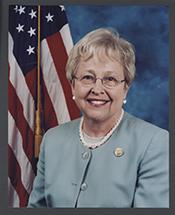 NLJLD
NLJLD DOM
DOM JB
JB TM+17
TM+17
Floor Debate
22 membersWhat members said about H.Res. 952 on the floor
Mr. Chairman, I yield myself 5 minutes. I rise in strong support of the legislation and would submit my opening statement for the Record. I would like to comment on some of the comments of my…
Mr. Chairman, I yield myself 5 minutes.
I rise in strong support of the legislation and would submit my opening statement for the Record.
I would like to comment on some of the comments of my colleagues made earlier. Before I do that, let me just take a moment to thank Chairman Barton and Representative Nathan Deal and my own chairman, Chairman Bill Thomas, for their support and effort in the development of this bill. But instead of doing my opening statement, let me comment on some of the things that have been said to this point.
First of all, on the issue of privacy, this bill sets the groundwork to improve privacy by putting in place a study of State privacy laws and Federal privacy laws so we can see what is working, what is not working, how similar are the State laws, where might their differences inhibit the security of a nationwide system. In other words, it gives us the knowledge we need to upgrade our HIPAA system if, indeed, that is necessary. It may tell us that is not necessary. But it would be absolutely irresponsible to move ahead without the information that will be developed as a result of this legislation. HIPAA already provides absolute protection of our health information.
What we want to know is when you do what this bill envisions, that is, you create a nationwide interoperable health information system to put that in place and secure personal health data, are there changes you need to make in Federal law? Are there commonalities in State laws that need to be brought closer? Are there any changes, indeed, that need to be made to absolutely secure individual personal health data as we move to this system? That is the issue on privacy.
Secondly, this bill adopts a whole new coding system, the ICD-10 system. Under today's system, you cannot tell whether a hospital has made a great leap forward in quality because they are doing a better job or simply because they have changed an operative technique from an invasive operation to a noninvasive approach to that surgical procedure. So we have to know more about what we are doing so we can talk honestly to ourselves about quality, so we can upgrade quality, and so we can pay accurately. This bill does that.
This bill sets up an Office of Technology, and we need that office to assure that the public and private sectors work together to create an environment in which great companies in America compete to provide the best possible technology, all of which becomes interoperable.
So without a Federal office involved, without standards being set, we will not have that interoperable system that we know is going to be so important to improve the quality of our health care system.
Not only do we need to have standards; we need to accelerate dissemination because the power of health information technology is not in a single provider. It is in the system-wide impact of it. So this bill helps disseminate that technology in part through its grant provision. But, realistically, the government is not going to pay for this. The system is going to do it because it creates such system efficiencies that it pays the system back. However, in addition to grants we encourage the system to be able to dissiminate technology by allowing consortium to develop, by allowing a hospital in a small town to work with the big employers in that town, the big insurers in that town, to get together to get a good deal on technology or on several technologies so that technologies are appropriate to the providers but are interoperable.
So this not only deals with the development of standards, with the dissemination of technology, with building the knowledge base we need to ensure the privacy of personal health information. It moves to a more modern coding system, and it will deliver to us a dramatic revolutionary increase in the quality of health care available in America. It will not only reduce medical errors and eliminate adverse drug interactions, saving millions of dollars, reduce administrative costs by billions, but also allow us to do chronic disease management for our seniors, care management for the severely ill, and upgrade the quality of diagnosis and
treatment and return ourselves to a patient-centered affordable health care system.
So this is an important bill that sets the foundation for the future. And I am astounded at my colleagues on the other side of the aisle opposing it because it does not do things we are not yet prepared to do.
Today the House of Representatives has the opportunity to pass legislation that will lay the foundation for a new era in health care. Systemwide adoption of health information technology will dramatically improve the quality of care. It will reduce medical errors, reduce duplication and unnecessary care, and bring cutting edge information to the service of doctors as they diagnose and treat their patients. It will also eliminate many of the administrative inefficiencies that characterize the American health system and strengthen and protect the security and confidentiality of health information systems. In short it will fundamentally advance the practice of medicine and improve the quality of care all Americans will have access to.
Unfortunately, the adoption of health information technology has been frustratingly slow. Since the full potential of this technology can only be harnessed if it is widely disseminated amongst all types and sizes of providers, it is imperative to pass H.R. 4157 to speed the adoption and diffusion of health information technology.
This legislation is modest in scope. It lays the groundwork for fundamental change by removing the barriers to private sector adoption. It provides for a national framework for the development and widespread dissemination of interoperable health information technology by creating an office to coordinate the development of a national health information system. It promotes common-sense cooperation between doctors and hospitals and other providers by allowing entities to provide physicians and others with hardware, software, training or IT support services. It updates diagnosis coding systems for the digital age and provides an expedited process for ongoing updating of technology standards. It begins a process for creating greater commonality amongst state and federal security and confidentiality laws and regulations in order to better protect and strengthen the exchange and health information. Additionally, it provides grants for the adoption of health information technology to coordinate care among the uninsured and to implement technology in small physician practices. Finally, it includes studies and reports on the expansion of telehealth services in Medicare.
Health information technology touches every aspect of the health care system. It will enable us to provide disease management for all those with chronic illnesses, care management for those with severe, complex illnesses, and provide access to preventive and appropriate care for the uninsured. It will reduce medical errors, adverse drug interactions, and decisive support to improve the quality of diagnosing and treating patients.
The role technology can play in the systems of health care will be as revolutionary as the role technology has played in health care research and treatments. H.R. 4157 removes barriers to greater adoption of information technology in the health system so the long overdue potential of technology can be realized in health care.
Mr. Chairman, I reserve the balance of my time.
Mr. Chairman, I yield 2 minutes to the gentleman from Pennsylvania (Mr. English).
Mr. Chairman, I yield myself 40 seconds.
Mr. Chairman, my colleagues on the other side of the aisle are acting as if we had technology that, if we only had the money, we could implement. That just isn't so. Secretary Levitt and Dr. Brailer have led a phenomenal aggressive, strong effort and through their effort, working with the public and private sector, they have established standards for electronic health records and for E-prescribing.
But there are a lot more standards to be set. And in this bill, we do have a date certain, but it is way off in 2009. I think we will get there before then. But, as important, we put in this bill a very progressive, accelerated way of updating those standards, because this is going to be about continuous improvement.
My colleagues on the other side of the aisle that talk about minority health are absolutely right. Unless we get health information technology implanted and we move to chronic disease management and health care management, we cannot meet the needs of care our minority population need. That is why this bill is so important.
Mr. Chairman, yield 2 minutes to the gentleman from Missouri (Mr. Hulshof).
(Mr. HULSHOF asked and was given permission to revise and extend his remarks.)
Mr. Chairman, I ask how much time is remaining.
Mr. Chairman, I yield 1 minute to the gentleman from New Jersey (Mr. Ferguson).
Mr. Chairman, I yield 30 seconds to the gentleman from Pennsylvania (Mr. Murphy).
Mr. Chairman, I yield the balance of our time to the gentleman from Illinois (Mr. Kirk).
Mr. Chairman, I claim time in opposition to the amendment. I don't intend to oppose the amendment. I am just claiming the time.
Mr. Chairman, I think the gentleman's amendment points out why health information technology is so terribly important to making the next leap forward in quality that medical science has made available to us.
It will take a lot more teaching of patients. It will take a much different relationship between nurses and medical personnel and patients to make sure that they have the guidance and support they need to prevent their disease from getting worse or to follow a regimen that will prevent their chronic illness from compromising their lives.
So this issue of communication is going to be a bigger issue in the next round of the American health care system even than it is today.
But I would like to yield to the gentleman from Pennsylvania for some questions.
Mr. Chairman, we certainly are willing to accept the gentleman's amendment. It is a very thoughtful and important one.
Mr. Chairman, I yield back the balance of my time.
I rise to support this amendment.
I claim time in opposition.
I claim time to say we accept the amendment. It is a very thoughtful amendment and an important one, and we thank the gentleman from New York (Mr. Towns).
Mr. Chairman, I rise in opposition.
First of all, the gentleman from Illinois has brought a very thoughtful amendment to this bill. The information that he wants included in electronic health record is extremely important information, and I support your amendment.
Mr. Chairman, I rise in support of the amendment. I understand there are some technical adjustments that your staff and our staff talked about that we will work on.
With that understanding, I am pleased to support the gentleman's amendment.
Yes, I claim time in opposition to the amendment. Although I do not oppose the amendment, I would like to comment.
Mr. Chairman, I yield myself such time as I may consume.
I would like to comment on the amendment. Mr. Price has been a very active and fine mind as we developed this bill, and I welcome his amendment.
I do think we need to evaluate new methodologies and procedures very carefully; and as a physician, he brings to this issue a lot of information and a lot of concern about both advances and also problems that could develop.
I will say one of the strengths of the bill that has not been talked about on the floor here today is that it does move us to the ICD 10 system from the ICD 9 system, and that will give us a great deal more ability to look at quality, to judge quality, to pay for quality, to analyze actually what series of symptoms responded best to precisely what treatment approach.
But there are also shoals in every water, and I think your study is very appropriate. The ICD 10 system is now not only more glandular, but we also think it will help us to reduce fraud and abuse. But no matter how many positive things we think it will contribute, it is also wise to know and watch for and evaluate whether or not it is creating problems that we did not anticipate.
So I welcome this study, and I thank Mr. Price for his contribution.
Mr. Chairman, I yield back the balance of my time.
Mr. Chairman, I rise in strong support of this amendment. First of all, of all the systems in America that really need this kind of attention, it is our Medicaid system because they deal mostly with elderly and poor whose health has long been neglected.
So I know this is going to give us a lot of very good insight and information into how we can both improve the quality and reduce the cost of care in our Medicaid system, and I congratulate the gentlewoman and her cosponsors for bringing this before us today.
Miss McMORRIS. Mr. Chairman. I yield back the balance of my time.
Mr. Speaker, remember, adoption of HIPAA was a multi-year process, very controversial, very difficult, 50,000 comments just on the regulations.
My legislation explicitly does not change HIPAA.
The behavior described of hacking in and revealing what would be under HIPAA is a fine of $250,000 and 10 years in jail. So HIPAA is there. It protects our privacy.
What this bill does is to put in place a study to look at what has happened in the States, what has happened between State law and Federal law, to look and see if there are things that need to be done to create greater commonality amongst all these laws so that the nationwide interoperable health information system will protect health information to the current or a higher standard. So in the bill it has to be to a higher standard. But we maintain current law. There is absolute protection.
And, remember, this specific approach was rejected by Donna Shalala and President Clinton; so do not take this vote lightly, folks. What you are voting for is a radical change in a law that is terribly important to all of us and we maintain in this bill.
Mr. Speaker, I demand a recorded vote.
Mr. Speaker, by direction of the Committee on Rules, I call up House Resolution 952 and ask for its immediate consideration. Mr. Speaker, for the purpose of debate only, I yield the customary 30…
Mr. Speaker, by direction of the Committee on Rules, I call up House Resolution 952 and ask for its immediate consideration.
Mr. Speaker, for the purpose of debate only, I yield the customary 30 minutes to the gentlewoman from California (Ms. Matsui), pending which I yield myself such time as I may consume. During consideration of this resolution, all time yielded is for the purpose of debate only.
(Mr. LINCOLN DIAZ-BALART of Florida asked and was given permission to revise and extend his remarks.)
Mr. Speaker, the rule provides 1 hour of general debate with 35 minutes equally divided and controlled by the chairman and ranking minority member of the Committee on Energy and Commerce and 25 minutes equally divided and controlled by the chairman and ranking minority member on the Committee on Ways and Means. The rule also provides one motion to recommit with or without instructions.
Mr. Speaker, the information age has greatly changed our economy by bringing about increased efficiencies in productivity. Virtually every sector of our economy benefits from the use of new information technologies.
Right here in Congress, for example, the use of technology has opened up access to the workings of our democracy like never before. Technology allows our constituents to quickly view the status of a bill or to look up our voting records.
Mr. Speaker, the health care industry has not fully embraced the advantages and benefits of information technology. According to a study by the RAND Corporation, only 15 percent of physicians and 20 percent of hospitals use computerized patient files.
Broad use of information technology in the health care system would certainly improve the quality and efficiency of health care delivery.
The use of health information technology is increasingly necessary to deliver the best care possible to individuals with chronic illnesses. The use of health care IT would also promote interoperability between providers and payers.
Efficiencies from coordinated development of health IT will accelerate and advance private and public efforts to improve quality, lower costs, reduce fraud and abuse, and promote the coordination of care. The synergy of these efficiencies will help achieve better health outcomes for patients.
The Health Information Technology Promotion Act, which we bring to the floor today, will improve the quality of care Americans receive through national adoption of electronic medical records and e- prescribing systems.
The legislation promotes the adoption and use of interoperable health information technology that prevents medical and prescription errors and costly duplicate tests, eliminates lost medical records, simplifies our administrative system, and improves medical care and the treatment of chronic illnesses.
The legislation we bring to the floor today provides grants for the use of health information technology to coordinate care among the uninsured and to implement technology in small physician practices. It also updates diagnostic coding, systems for the digital age, and provides for an expedited process to update standards.
Mr. Speaker, this legislation was introduced by Congresswoman Nancy Johnson, my dear friend, who is a true expert in the field of health care. It was reported out of the House Energy and Commerce Committee. We believe it is time that the health care industry moves to a digital future, and this legislation is an important step in seeing that to reality.
Mr. Speaker, I would like to thank Congresswoman Johnson and Chairman Barton and Chairman Thomas for
their leadership on this important issue. I urge my colleagues to support the rule that brings this legislation forth as well as the underlying legislation.
Mr. Speaker, I reserve the balance of my time.
Mr. Speaker, I reserve the balance of my time.
Mr. Speaker, I yield myself such time as I may consume.
Mr. Speaker, Yeats wrote many wonderful, beautiful things. We in the Rules Committee deal with reality. The reality of the rule that we bring to the floor today in order to bring the underlying legislation on information technology for the health care industry brings forth and authorizes six amendments, six amendments to be debated by this House.
Our function is to listen, and we listened hour after hour after hour after hour, with great respect, in the Rules Committee to our colleagues who come forth with multiple ideas. We bring forth six amendments for the consideration of this entire body today. Of the six amendments, four are authored by Members of the opposition, of the Democrat Party; one is a bipartisan amendment, Republican and Democrat; and one is a Republican amendment. We think we are being fair, Mr. Speaker.
So we seek not to bring forth the beauty of Yeats, but in dealing with reality, in dealing with listening to hours of testimony from our colleagues, in authorizing four amendments of Democrats, one of a Republican, one of a bipartisan nature, we think we have done a fair job. And that is what we have authorized for consideration, for debate by this House in the rule that brings forward this very important legislation that we will be hearing about, and we will be hearing about as the authors of the legislation explain it in detail.
I am very proud to be a supporter of the legislation. It is important that information technology reach as much of the health care industry, patients, as possible so that mistakes are avoided, and so that access to the great advances of technology are made available to the largest number of people. There are important issues that this legislation is going to be bringing forth and dealing with and that this debate will entail.
Now, obviously in order for debate to begin, we have to pass the rule which sets the terms of the debate. We are proud of those terms of debate, the extraordinarily fair nature of the terms of that debate. As I have said, Mr. Speaker, four amendments made in order are Democrat amendments, one is a Republican amendment, one is a bipartisan amendment.
Mr. Speaker, I reserve the balance of my time.
Mr. Speaker, I yield myself such time as I may consume.
I thank all of my colleagues who have participated in this very interesting debate today. Much has been made by opponents of the legislation of arguments with regard to privacy protections. I think it is relevant and should be pointed out that the very significant and extensive privacy protections contained in the Health Insurance Portability and Accountability Act of 1996 are not reduced in any way by this legislation that we bring forth to the floor today.
In fact, the American Psychiatric Association, the American Psychological Association, the National Association of Social Workers, the National Mental Health Association have said in a letter to the Energy and Commerce Committee, ``The Energy and Commerce language ensures that the current protections in the Health Insurance Portability and Accountability Act of 1996 are maintained, and we wish to commend the approach to privacy protections that the Energy and Commerce Committee proposes to take.''
I mean, it is relevant to point this out because much has been said that would seem or could be interpreted to contradict what I have just read from the American Psychiatric Association, the American Psychological Association, the National Association of Social Workers, the National Mental Health Association, very responsible entities that look out for the interests of many citizens who receive health care.
So, Mr. Speaker, urging the support of the underlying legislation, I also urge all of my colleagues to support this rule, which is very fair, makes more than twice as many amendments by Democrats than by Republicans in order. It is precisely in our interest to go the extra mile for fairness.
Mr. Speaker, I yield back the balance of my time, and I move the previous question on the resolution.
Mr. Speaker, I thank my good friend, the gentleman from Florida, for yielding me time; and I yield myself such time as I may consume. (Ms. MATSUI asked and was given permission to revise and extend…
Mr. Speaker, I thank my good friend, the gentleman from Florida, for yielding me time; and I yield myself such time as I may consume.
(Ms. MATSUI asked and was given permission to revise and extend her remarks.)
Mr. Speaker, every Member of Congress recognizes the importance of health information technology. It holds the potential to save lives by reducing medical errors, and it can make our health care system more efficient by providing better care while keeping costs down.
In short, we could revolutionize the way our health care is delivered. What exactly is the potential? Physicians could have access to every relevant part of a patient's medical history at the precise moment a life-or-death decision needs to be made.
It is the tens of thousands of lives saved because of fewer medical errors. It means the newest ``Physicians Desks Reference'' and the most cutting-edge medical research on a hand-held device that a doctor can have at the patient's bedside.
This is not pie-in-the-sky ambition. Some health care leaders have already begun to adopt these ideas with great success. In the year 2000, the Veterans Administration implemented the most advanced electronic medical records system in the United States.
A recent article in Business Week noted that ``while studies show that 3 to 8 percent of the Nation's prescriptions are filed erroneously, the VA's prescription accuracy rate is greater than 99.99 percent, a level most hospitals only dream about.''
It should not be surprising that while many patients lost their paper medical records in the terrible aftermath of Hurricane Katrina, veterans did not. Veterans living in New Orleans were able to access their medical records at other VA hospitals because of health information technology.
Another example comes from my hometown of Sacramento. The UC Davis Medical Center has a world-renowned telemedicine program which connects patients in 80 rural areas across California to an immense amount of specialty care in Sacramento.
Let me tell you the story of Levi, a child who lives on a ranch in a nine-person town 60 miles north of Sacramento. After accidentally suffering third-degree burns on his leg, his parents took him to the closest hospital. Because of UC Davis's telemedicine program, Levi was treated by one of the few pediatric burn specialists in this country remotely from Sacramento.
Information technology could make this amazing program even better. Widespread adoption of this technology would enhance this expert advice by allowing the rural doctor to send Levi's medical history to the specialists at UC Davis instantly.
UC Davis has begun to implement electronic medical records, but many of these outlying areas cannot afford this technology without seed money.
That is the goal of establishing a national health information infrastructure. But we know such a comprehensive program isn't cheap. It could cost individual hospitals several million dollars and individual physicians $20,000 or $30,000 apiece.
So the issue needs more than Federal guidelines. It needs Federal financial support, seed money in a sense. Unfortunately, the bill we will debate today falls far short. It provides only $40 million in Federal grants. In a $1.3 trillion health care system, this does not even scratch the service.
In fact, the nonpartisan Congressional Budget Office, CBO, says the bill, as written, will do almost nothing to encourage health information technology. According to their analysis, it will not significantly influence the rate at which health information technology is adopted, nor will it ensure better quality technology.
Democrats have proposed a more effective proposal, backed by Federal seed money, just like the bipartisan Senate bill does. We would also add new privacy laws to strengthen patient protections. This would prepare us for the health information age.
It would require patients to give their consent before their health information could be shared with other people. It also requires data encryption to protect these health information networks from hackers.
It sides with patients by making sure that everyone, every individual and every health entity, complies with privacy protections.
Unfortunately, late last night the Rules Committee denied the House the opportunity to debate the Democratic alternative on the floor. As a result, I will be urging my colleagues to defeat the previous question and defeat this rule.
Mr. Speaker, information technology will bring our Nation's health care system tremendous benefits, but the devil is often in the details. This technology will not install itself. It will spread only with the right kind of Federal leadership. So, I urge my colleagues to support the Democratic substitute and support the responsible approach to national health information technology.
Mr. Speaker, I reserve the balance of my time.
Mr. Speaker, I yield 2 minutes to my good friend, the gentlewoman from California (Mrs. Capps).
Mr. Speaker, I yield 3 minutes to the gentlewoman from California, my good friend (Ms. Eshoo).
Mr. Speaker, I yield 4\1/2\ minutes to my good friend the gentleman from Massachusetts (Mr. Markey).
Mr. Speaker, I yield 4 minutes to my good friend, the gentleman from Rhode Island (Mr. Kennedy).
Mr. Speaker, I yield myself such time as I may consume.
Mr. Speaker, I am asking Members to vote ``no'' on the previous question so I can amend this rule and allow the House to consider the Dingell-Rangel substitute. This substitute was offered in the Rules Committee last night, but was blocked on a straight party-line vote.
Mr. Speaker, I ask unanimous consent to print the text of the amendment and extraneous materials immediately prior to the vote on the previous question.
Mr. Speaker, I believe the Dingell-Rangel substitute offers Members a far better choice than the underlying bill.
This substitute is based on the bipartisan bill that was introduced by Senators Frist, Enzi, Kennedy and Clinton and passed unanimously by the Senate last November. This substitute also contains important privacy protections necessary in this new electronic world.
The Democratic substitute requires the Federal Government to take a leading role in the adoption of standards for technology and adopting technology that will permit providers and others to communicate to each other electronically. This substitute will provide $257 million in grants and loans for providers and regional collaboratives to buy and implement health information technology.
This substitute also provides privacy protections beyond those in current law to ensure that patients' health information is secure. It requires that all individuals and entities with access to personal health information must comply with privacy protections to maintain patient confidentiality. The substitute also requires data encryption to prevent security breaches and the notification of patients in case of a security breach. Finally, it allows patients to seek redress when their privacy is breached.
I want Members to be aware that a ``no'' vote will not stop us from considering H.R. 4157. A ``no'' vote will simply allow the Dingell- Rangel substitute to be considered by this House by an up-or-down vote.
Vote ``no'' on the previous question so we can consider this important and responsible substitute.
Mr. Speaker, I yield back the balance of my time.
Mr. Speaker, on that I demand the yeas and nays.
Mr. Chairman, I yield myself such time as I may consume. Mr. Chairman, I am pleased that the House today is going to consider H.R. 4157, the Health Information Technology Promotion Act of 2006. This…
Mr. Chairman, I yield myself such time as I may consume.
Mr. Chairman, I am pleased that the House today is going to consider H.R. 4157, the Health Information Technology Promotion Act of 2006. This legislation should help move our health care system into the modern era and the modern information age.
We all remember a time when e-mail was a dream and getting the legislative text from the House of Representatives Web site was impossible because it simply did not exist. As information systems have moved into the digital age, Congress and most of the private sector have embraced it. We have found that we could get information much more efficiently and quickly at much less cost.
The health care system, for whatever reason, has not done that. For all of its medical genius and astonishing technology in terms of surgery and orthopedics and diagnosis, American health care is still stuck back in the 19th century, with a paper record system that is inefficient, wasteful, error-prone and occasionally dangerous. The legislation before us today should change that.
With H.R. 4157, records that have been stuffed in a file cabinet and illegible prescriptions that nobody can read scrawled on pieces of paper will finally give way to digital medical records, electronic prescribing, and efficient coordination of care. Sick patients will get better and everybody should save money.
The bill before us sets out a framework for endorsing core interoperability guidelines and mandates compliance for a Federal information system within 3 years of endorsement of such guidelines. Of vital importance are provisions contained in the legislation that create safe harbors to the Stark and Anti-kickback laws for the provision of health information technology and services to better coordinate care between hospitals and providers. These changes are long overdue.
Hospitals and other health care entities that have invested in systems that are tested and work well should be able to share their experience and purchasing power with physicians. Current laws have prevented these reasonable steps to better coordinate patient care by not allowing the sharing of health information technology systems.
Also, I would like to express support for the Secretary of Health and Human Services to look at the list of entities that we make eligible for this safe harbor and to expand upon it, specifically, to include independent clinical laboratories which carry a great deal of health data that should be shared electronically.
These safe harbors will allow for economical sharing of health information technology to better coordinate care, reduce medical error, and improve patient outcomes.
Medical science in recent years has produced tremendous discoveries that have revolutionized how we treat disease and care for patients. Unfortunately, the medical record information technologies needed to take advantage of these discoveries remain locked in an era of paper and filing cabinets. We can do better, and the legislation before us today will do better.
Mr. Chairman, I reserve the balance of my time.
Parliamentary inquiry, Mr. Chairman.
Mr. Chairman, how is time going to be rotated? Do we do all the Energy and Commerce time and then the Ways and Means time; or do we rotate in sequence?
Okay. Congresswoman Johnson says the Energy and Commerce Committee goes first.
Okay. That is what Congresswoman Johnson also says. I was not informed of that.
Mr. Chairman, I yield 3 minutes to a distinguished physician member of the Committee on Energy and Commerce, Dr. Murphy of Pennsylvania.
Mr. Chairman, I yield myself 30 seconds before I yield to Mr. Castle.
Under the current law, called HIPAA, we have very strict privacy protection guidelines. Those guidelines are currently under review. There have been over 50,000 comments filed with HHS for some proposed changes in those. Nothing in the Senate bill, that is a companion bill to this bill, deals with privacy.
Privacy is an important issue, but more important is that we get a health information system technology in place, and that is what this bill does.
Mr. Chairman, I yield 2 minutes to the former Governor of the First State, the great State of Delaware (Mr. Castle).
Mr. Chairman, I yield 2 minutes to another distinguished member of the Energy and Commerce Committee, who is also a medical physician, Dr. Burgess of Texas.
Mr. Chairman, I yield 2 minutes to the Vice Chairman of the Energy and Commerce Committee, the brightest bloom to come out of Laurel, Mississippi, Chip Pickering.
Mr. Chairman, I yield 2 minutes to a distinguished congressman from the Pelican State of Louisiana, who is a cardiovascular surgeon, Dr. Boustany.
Mr. Chairman, I yield 2 minutes to a member of the committee, the distinguished majority whip from the Show-Me State of Missouri, the Honorable Mr. Blunt.
Mr. Chairman, before I yield to Congressman Clay of Missouri, let me compliment Subcommittee Chairman Deal for his efforts on this bill. He cannot be here today because his mother is ill, but he worked very hard.
Mr. Chairman, I yield 1 minute to the distinguished congressman from Missouri (Mr. Clay).
Mr. Speaker, I rise in opposition to the motion to recommit.
Mr. Speaker, I want to compliment my good friends who have spoken on this motion to recommit. I know all three of the gentlemen, and they are fine fellows and fine public servants and believe passionately in what they speak of. If I were a doctor on this debate, I believe I would have to recommend they take a Valium and just calm down. We do not get this fixed if there is a problem.
Whatever the law is today on medical record privacy, the law is going to be tomorrow on medical record privacy. Nothing in this bill changes that. This is a health information technology bill. We are actually trying to get medical records in our country, the greatest Nation the world has ever known, to use technology that many other industries and many other groups have already incorporated into their daily business routine.
Now, there is an ongoing study at HHS on privacy. They have received over 50,000 public comments so far. This bill before us, if it becomes law, has an implementation period. There is going to be adequate time to come back, if we need to, with a specific medical technology privacy bill.
In past Congresses, Mr. Markey and I have been co-chairmen of the Privacy Caucus in the House, along with Senator Shelby and Senator Dodd in the Senate. I am as strong an advocate of protecting personal privacy as anybody in this body. I would say Mr. Markey and others share the passion just as strongly as I do.
The bill before us today is not a privacy bill. This motion to recommit is a privacy amendment. We should reject it and then move the underlying bill. And if and when we need to address medical privacy as a stand-alone issue, there will be adequate time and adequate resources devoted to that.
I yield to the gentleman from Rhode Island.
Mr. Speaker, reclaiming my time, they are covered under adequate laws, and HIPAA is the medical privacy law.
Please vote against the motion to recommit.
Mr. Speaker, I yield the balance of my time to the subcommittee chairman from the Ways and Means Committee, who has worked so tirelessly on this bill, Mrs. Johnson of Connecticut.
I know the rules. I'm supposed to be standing up. I apologize.
Mr. Speaker, I yield back the balance of my time.
I thank the chairman and the Members for an opportunity to talk about this vitally important bill. Years ago, when I was working at Children's Hospital in Pittsburgh, I happened to be walking by the…
I thank the chairman and the Members for an opportunity to talk about this vitally important bill.
Years ago, when I was working at Children's Hospital in Pittsburgh, I happened to be walking by the emergency room when a resident called me urgently in on a case that was there. It was a child who was having out-of-control behavior, rapid heart rate, rapid breathing, and she merely commented that this child's behavior was out of control. That could have been a symptom of anything. Was the child having a seizure? Was the child poisoned? Was the child having a drug problem, a neurological crisis, a heart problem, or a whole host of issues?
As it was, I happened to recognize the child as a patient of mine and we quickly came to the conclusion that one of the aspects may be a medication overdose, or a bad medication reaction. The parents had not yet arrived and we had not yet accessed his medical records. Why? Because the medical records were in a file somewhere back in my office in another section of the hospital and were ones that the emergency room staff could not acquire.
Think of this, too. If one of us, any of us, any American is traveling in a town somewhere in America and a medical crisis hits them, for someone who is diabetic or perhaps has heart disease or some other problems, where do we get the records to determine what to do? It is for this reason that we recognize about $162 billion a year is lost in health care, according to the RAND Corporation, and you include all the other paperwork and problems that come with hospital care, perhaps $290 plus billion is spent on that. Why? Because of medical records.
The current medical records system is this: Room after room after room in a hospital filled with paper files. What happens if we move to electronic medical records where it is, instead of here, it is in a computer? This is what that room looks like. It is now in a computer, accessible to physicians in a hospital, with pass codes and access codes that keep it secure, because HIPAA laws say it must be secure; that people can't have that, and then it becomes records that look more like this.
Again, a doctor with clear authorization ahead of time could find a patient's name, see their status, see what is going on, and move towards that and pull these records out. Otherwise, you end up in a situation of medical crisis. Patients can carry this information in a credit card or on a zip drive they can carry on their key chain. All this is critically important because it saves lives and saves money.
The best doctors and the best hospitals in America, if they cannot get the patient information they need when they need it, it can lead to morbid consequences: Higher mortality. And that is what ultimately this bill is about. This is a huge step forward because we have to have standards and other things moving forward. Hospitals all across America are moving towards some level of electronic medical records. But if we don't find ways of making them able to talk to each other, with uniform standards, interoperability, et cetera, we are essentially creating a medical Tower of Babel. We have more information, but they can't talk to each other.
At that moment of crisis in a health care center, whatever that is, whether you are at home or far away, no matter how good your doctor and hospital is, you want them to have that information. Patients can preauthorize that information. They can carry that with them. But this is the new technology, and if we don't do this, we will see many lives lost, and that is something we cannot afford to do. That is why I urge the passage of this bill.
Mr. Chairman, for the record I would like to note that the HIPAA laws do apply to this with regard to privacy, whereby there would be fines up to $250,000 and up to 10 years in prison for disclosure or obtaining health information in many of these areas. So it does apply.
The second is the CBO report which is being taken out of context. It mentioned that there can be savings for Medicare in this. And as hospitals learn to adapt to health information technology, if they do not adapt right, that may be more costly; but overall there are many savings in this.
I thank the gentlewoman, and I have a question for the distinguished gentleman from Texas just to help clarify this, because my assumption is the amendment would be one that would help those who have problems with illiteracy or language skills, perhaps English language is not of good grasp to them and they may be in a hospital where the staff may not be aware of that, and one of the importance of an electronic medical record is the files would be there on record. So even if the person had limited abilities, the doctor would have access. But I want to just ask a clarifying question to make sure this is what you meant by this amendment.
By this, I am assuming it is not a matter that would impede in any way the doctor's ability to have information on record, that would have swift and high standards of medical care there, in no way would this impede; such as the records would have to be written in multiple languages for doctors who wouldn't necessarily understand that. I am assuming that is the case in this, that you are saying that the best interest of the patient is what you have in mind here so that the records are always available, that the doctor could understand them clearly even if the patient has difficulty communicating. Am I correct in that, sir?
I am assuming that is what you meant. It is important that hospitals not see this as something that they, for example, have to constantly rewrite records in ways that would impair understanding between physicians as well. And along those lines, I think it is an excellent idea to provide it, because it does provide access of information for the doctors.
Reclaiming my time, that makes sense, because I work with many patients who are disabled, who have literacy problems, and it is important that the medical community works to help those patients. I just want to make sure also the electronic medical records then serve both purposes, to help those patients, but certainly to make sure the primary aspects of having the medical records there electronically is to help doctors communicate quickly and swiftly with accurate data. Along those lines, I think it is an excellent idea.
Mr. Chairman, I thank the gentlewoman for putting this important amendment in.
Previously, it has been cited that the CBO report did not show a savings. Let me mention three things that chronic care management does. 300,000 asthmatic children were studied with chronic care and found that lowered rehospitalization by 34 percent. University of Pittsburgh Medical Center reduced rehospitalization of diabetics by 75 percent. Washington Hospital, Washington, PA, reduced rehospitalization of chronic heart disease by 50 percent.
I suggest the CBO look at how electronic medical records can save money in this.
I have listed a lot of these things in a report entitled, ``Critical Condition, the State of the Union's Health Care,'' which I have available at my Web site; and I urge my colleagues to look at that, and I urge the CBO to read it as well. They might learn something.
Show 8 more
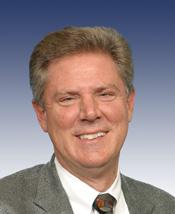
Mr. Chairman, I yield myself 3 minutes. Our Nation's health care system is arguably the most inefficient and costly system in the industrialized world. We spend approximately $1.7 billion annually on…
Mr. Chairman, I yield myself 3 minutes.
Our Nation's health care system is arguably the most inefficient and costly system in the industrialized world. We spend approximately $1.7 billion annually on health care, and yet many of our citizens are in poorer health than the citizens of countries that spend far less. That is because our Nation's health care system is wrought with
problems, including skyrocketing costs that make it difficult for Americans to afford the care that they need, inconsistent quality, and huge disparities in care and access. Clearly, the status quo is not working and something has to be done to fix these problems. Health care experts around the country agree that health information technology, or HIT, could provide a partial solution to our problems.
Now, while estimates vary, the potential savings from HIT could reach between $81 billion and $170 billion annually by improving coordination of care, patient safety, disease management, and prevention efforts. Under the Republican bill we are debating today, however, none of these savings will be realized. That is because the bill will do nothing to move our Nation forward on health information technology.
The CBO agrees with the Democrats, and I quote, ``CBO estimates that enacting H.R. 4157 would not significantly affect either the rate at which the use of health technology will grow or how well that technology will be designed and implemented.'' So I don't want anybody to be fooled here today. Don't let the Republicans sell you this lemon.
My friends on the other side of the aisle would have us believe that this bill is going to transform our health care system into a model of efficiency, and it is all a bunch of hype. Let me mention a few ways in which this bill is flawed.
First of all, there is virtually no funding, and I stress that, virtually no funding to help providers, such as physicians or hospitals, to purchase this technology. The meager amount of funding authorized in this bill will barely make a dent in advancing the use of HIT. Instead of making grants or loans available to doctors to help them purchase equipment or train employees, Republicans have decided to roll back anti-kickback and self-referral protections so that doctors will have to rely on other types of providers for this technology. Make no mistake about it, this is going to open the door for fraud and abuse to run rampant and will eventually add to our health care costs.
Secondly, this bill does nothing to improve protections for medical privacy. Electronic health information systems that make it easier to exchange medical information require new privacy protections to be implemented and strongly enforced. In spite of the privacy breaches we saw this year at the Veterans Administration, and also at CMS, Republicans don't seem to think there is a need to strengthen our Nation's privacy laws. But I have to tell you, Americans are not going to stand for this. They are not going to want their most personal information floating around cyberspace without any reasonable safeguards.
There are a number of other problems with this bill, Mr. Chairman, but let me finally talk about the process in which this bill was developed. House Republicans have taken an opportunity for all of us to work together on an important issue and they have squandered it. The Senate was able to pass a bipartisan bill that would accomplish a lot more than the bill we are debating today. They authorize grants and loans, they don't roll back fraud and abuse protections, and they ensure interoperability. But they did this all on a bipartisan basis in the Senate.
Democrats in the House tried to offer that bill as a substitute in the Rules Committee yesterday, but we were denied the substitute. And it is a shame that House Republicans couldn't follow the Senate's lead and work with Democrats to move our Nation forward on HIT and improve the health of all Americans.
I urge my colleagues to vote ``no'' on this bill, because although we think that health information technology is very important, this bill will not accomplish the goal.
Mr. Chairman, I reserve the balance of my time.
Parliamentary Inquiry
I think, Mr. Chairman, we were told in advance that we would do Energy and Commerce first, so that is the way we would prefer to proceed.
Mr. Chairman, I yield 3 minutes to the gentleman from California (Mr. Waxman).
Mr. Chairman, I yield 2 minutes to the gentleman from Texas (Mr. Green).
(Mr. GENE GREEN of Texas asked and was given permission to revise and extend his remarks.)
Mr. Chairman, I yield 4 minutes to our ranking member of the full committee, the gentleman from Michigan (Mr. Dingell).
(Mr. DINGELL asked and was given permission to revise and extend his remarks.)
Mr. Chairman, I yield 2 minutes to the gentleman from Illinois (Mr. Rush).
Mr. Chairman, I yield 2 minutes to the gentlewoman from California (Mrs. Capps).
Mr. Chairman, I yield myself the balance of my time.
Mr. Chairman, I just wanted to say, from personal experience in my home State of New Jersey over the last few months, I have visited a number of hospitals throughout the State and looked at their health IT, and I have also talked to a number of physicians. The reason that this legislation is not going to accomplish the goal of really expanding health IT, and I can tell just from my experiences with these hospitals, first of all, most of the doctors say that even for a small group practice, they probably have to invest about $50,000 or more into health IT. And given the reimbursement rates and what is happening right now, most physicians, particularly small group physicians in rural areas and in urban areas, are not able to make that kind of investment. So that is why we need a funding source.
This bill has very little funding, minimal. And the substitute, which is based on the Senate bill, on a bipartisan basis, would provide the funding to make a meaningful difference so that we would have an increase in health IT. That is what this is all about. That is why we should reject this bill and adopt something like the Senate bill.
In addition, with regard to the privacy provisions, when I visited the hospitals in New Jersey, it was very clear to me that when you start to move with a lot of these electronic and high-tech systems, there is going to be a real problem with privacy that may not exist now with traditional systems. Moving to an electronic system, you have to have additional privacy guarantees. And we feel, again, the Democratic substitute that was rejected by the Rules Committee had those privacy guarantees. I think they are going to be part of our motion to recommit.
This is the time to address the privacy issue in the context of this bill, and I would ask that we reject the legislation.
Mr. Chairman, I demand a recorded vote.

Mr. Chairman, I would like to thank the Chair of the Health Subcommittee, especially for her bold initiative and leadership on this bill, for really trying to wrestle with a very important issue and…
Mr. Chairman, I would like to thank the Chair of the Health Subcommittee, especially for her bold initiative and leadership on this bill, for really trying to wrestle with a very important issue and looking ahead and being a visionary as far as employing technology and how we can improve health care in this country. It is a good bill. I am proud to be an original cosponsor.
I would especially like to touch some the telemedicine, telehealth, provisions. I appreciate very much that Mr. Thompson of California and I have put together a bill where the bottom line, Mr. Chairman, is that with advancements in telecommunications, health care providers in small communities can now access resources that are available in the finest hospitals and academic institutions in the country.
The quality of one's health care should not be dictated by one's ZIP Code. So I am very excited about the fact that technologies like interactive video conferencing, the Internet, satellite, are already systematically changing the face of our Nation's health care.
This legislation directs the Secretary to work with the telehealth community, especially as far as services across State lines. We know that that is an issue. We want to expand the origination and consulting sites so that more of our underserved communities will have access to the best health care that the community has to offer.
I would like to brag a little bit, Mr. Chairman, because telehealth patients
from small towns throughout my district in Missouri have been receiving specialist care or services from a variety of specialists, including mental health providers. I know that is certainly a hot-button issue for many here, without having to take available time, maybe, away for caring for a loved one or from work or for school or for other parental duties.
Right now there are 2,000 patients in Missouri that are cared for using Missouri's telehealth network. It is estimated over 40,000 radiological examinations have been performed. In fact, one example: a critical-access hospital in the small town of Macon, Missouri, unexpectedly lost the only radiologist in the area. There was not another specialist within that underserved area.
Fortunately, the University of Missouri stepped in to provide coverage during this 4-month period of time so this small community could have access to a qualified radiologist. Again, there are lots of good things in this bill. But telemedicine is one piece of it. I commend the chairwoman and I urge everyone to support it.
I thank the chair of the Health Subcommittee, on which I serve, for her bold leadership on this bill and improving health information technology in this country.
H.R. 4157 will launch the American healthcare system into full capacity to take advantage of the best technology. This will give all Americans better health care, more accessible medical records, and better quality of care.
It is a good bill of which I am proud to be an original cosponsor.
I would like to touch on the telemedicine provisions of the bill.
The Health Information Technology Promotion Act includes important provisions for the advancement of telehealth services--Requires the Secretary of HHS to take steps that expedite the provision of telehealth services across State lines by taking a closer look at State licensure issues; requires the Secretary to conduct two studies: (1) a study on the use of store and forward technology in the provision of telehealth services; and (2) a study on the coverage of telehealth services provided in home health agencies, county mental health clinics and other publicly funded mental health facilities.
Advancement in telecommunications now allows health care providers in small communities to access the resources available in the finest hospitals and academic institutions. Individuals in this country should receive the health care they need regardless of where they live. A person's address should not dictate the state of their health. Technologies such as interactive videoconferencing, the Internet and satellite are already systematically changing the face of our Nation's health care.
In 2000, the Congressional Budget Office estimated that the telehealth provisions of the Medicare, Medicaid, and SCHIP Benefits Improvement and Protection Act of 2000, BIPA, would cost $150 million over 5 years. In June I asked CMS to provide me with information on how much the Federal Government has spent to date to get an idea of how close we are to CBO projections. I was astonished to find that since October 1, 2001 Medicare has only reimbursed for approximately $1.2 million total for telehealth services and originating site facility fees. This illustrates that the Federal Government has made a minor contribution compared to what we were expected to spend. And more needs to be done.
This legislation highlights the capabilities of telemedicine by directing the Secretary to work with the telehealth community to find solutions to the services across State lines issue, and expanding origination and consulting sites so more of our underserved communities will have access to the best health care this country has to offer.
I would also like to brag on how, because of telehealth, patients from small towns throughout my district are able to receive services from a variety of specialists, including mental health providers, without having to take valuable time away from work, school or parental duties.
Currently in Missouri, over 2,000 patients per year are cared for using the Missouri Telehealth Network and it is estimated that over 40,000 radiology exams have been performed. In fact, in my district, a Critical Access Hospital in the town of Macon unexpectedly lost its only radiologist, leaving the area without a specialist in this area. Fortunately, the University of Missouri stepped in to provide coverage through the telehealth network for a 4-month period until a new radiologist was hired. Without this option, Macon residents would have been forced to either commute or simply go without radiological care.
It is my hope that via this legislation, rural and underserved areas in my district and across the country will be able to find the same successes experienced with the Missouri Telehealth Network.
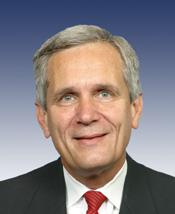
Mr. Chairman, during the 12 years that Republicans have controlled this House, they have done very little to address the real concerns of families confronted with a health care crisis. This afternoon…
Mr. Chairman, during the 12 years that Republicans have controlled this House, they have done very little to address the real concerns of families confronted with a health care crisis. This afternoon during rush hour, some family, in fact probably many families, will suffer a severe auto accident on the way home.
Perhaps a mom will be found to have breast cancer, or a child a serious childhood disease. And as these health care challenges emerge, tens of thousands of families across America will end up not only driven into despair but into bankruptcy.
And yet Republicans have not offered real solutions to address those kinds of problems. Recognizing their failures earlier this year, both Senate and House Republican leaders declared there would be a ``health care week.'' Well, the Senate took up their ``health care week,'' and every old, retread Republican proposal that they had was rejected.
So I guess too embarrassed to have ``health care week'' here in the House, even though they declared it, the Republicans canceled ``health care week,'' just like they have canceled so many of the commitments that they made back in 1994 to the American people.
And what they have left as their one new idea for the crisis that American families face in health care is this pitiful proposal. They have discovered that the answer to the problems American families face with health care is not what the American families thought was their problem about getting access to affordable, quality health care. No, it is bad handwriting. Yes. We all know the legendary bad handwriting of physicians that is the subject of cartoons and stories.
But by golly, they are solving that. All of these physicians, and the hospitals and the clinics, will be using electronic records and solve that penmanship problem. Well, that is not a bad idea. It is just that they do not put their money where their mouth is.
They tell the physicians and the clinics, you figure out how to pay for this technology. And in the process of this transformation, once again, as they have done with our library records and our phone records and our veterans records, they couldn't really care less about privacy.
Think about whether you want your psychiatric records, your prescription records on the Internet for other people to see. Because this legislation does not provide the guarantee of privacy. And so fearful are they of a true debate about protecting the privacy rights of Americans to their medical records, to their health care records, that may affect their future employment, that may affect their future family relations, that may affect their ability to get insurance.
So fearful are they of a debate about that, they refuse to let us offer even one amendment to address patient privacy.
Mr. Speaker, I have a motion to recommit at the desk.
I certainly am, Mr. Speaker.
Mr. Speaker, this is an important motion for a modest bill. It leaves this bill with an opportunity to move forward today with just one important change, and that is the addition of vital personal privacy protection of what should be genuinely personal medical records.
In my youth, there was a popular song called ``I Heard it Through the Grapevine.'' These days, it's ``I saw it on the Internet.'' In this busy world of busy bodies and identity theft and commercial snooping, I believe what a patient confides to a physician about an ailment, what a young couple tells a psychologist about their marriage, what prescription a pharmacist provides, that highly personal information should not be spread and read on the Internet.
The consequences of unwanted disclosure of personal health information is more than embarrassment or humiliation. It may mean the loss of a job or a promotion. It may mean that an individual refuses to confide necessary information to their doctor or avoids health care and critical medical tests because of fear that the information will be disclosed without her consent.
This Administration has shown little interest in personal privacy, whether it was the privacy of library records or phone conversations or veterans' records.
The Federal Government scored a D-plus on the 2005 Computer Security Report Card, with the Departments of Health and Human Services, Veterans Affairs, and Homeland Security scoring an F. And the Administration's record on health care privacy is even worse. As the Post disclosed last month, there have been 19,420 complaints during the Bush Administration about privacy violations. There have, during this Administration, been almost 20,000 complaints about invasions of privacy with medical records, and all of that has not resulted in a single civil fine anywhere in this country under the protections that are available there, and only two criminal cases out of that 20,000.
This is not an adequate performance, and that is why Dr. Deborah Peel, one of my Texas neighbors, and a host of professional and public health organizations have urged us to adopt meaningful privacy protections in this bill.
Mr. Speaker, I yield 1 minute to the gentleman from Rhode Island (Mr. Kennedy), who has been such an advocate on this.
Mr. Speaker, I thank the gentleman, and I yield the balance of my time to the gentleman from Massachusetts (Mr. Markey), who has led the way on privacy issues across this country.
Mr. Speaker, I demand a recorded vote.
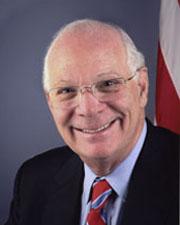
Mr. Chairman, I rise in opposition to this bill. I am disappointed that the House has missed an opportunity to promote in a meaningful way our health care system's transition from a paper-based…
Mr. Chairman, I rise in opposition to this bill. I am disappointed that the House has missed an opportunity to promote in a meaningful way our health care system's transition from a paper-based medical records system to an electronic one. Congress is in nearly unanimous agreement that this move is necessary, and that it is in the best interest of patients, providers, and health care quality over all.
But it appears that we have before us legislation that will do little to move the Nation toward that goal, and that in some respects, may be harmful. As a member of the Ways and Means Committee, which considered this bill earlier this year, I had the opportunity to vote on several amendments that would have strengthened this bill, that would have enabled our Committee to bring this bill to the floor with bipartisan support. Those amendments would have added funding so that doctors could afford to transition to electronic medical records; removed provisions that expand fraud and abuse, set a date certain for the implementation of interoperability standards, and guaranteed the confidentiality of personal health information. Unfortunately, each was defeated on a party-line vote.
So the bill before us today still contains several fundamental problems. The first is the lack of strong privacy protections. Mr. Chairman, I wonder how many breaches of supposedly secure electronic medical records must occur before we get serious about enacting strong privacy protections into law. In two weeks, we will mark the 10th anniversary of the Health Insurance Portability and Accountability Act. Privacy regulations stemming from that law were finally issued in 2001. Ten years ago, Americans' familiarity with electronic communication and electronic transfer of information was quite limited. HIPAA does not protect individuals.
The second is a lack of funding. My colleagues, Mr. Wynn, Mr. Engel, and Ms. Schakowsky and I offered an amendment that would have provided grants for community health centers and hospitals with high numbers of low-income patients. These are the facilities that already face severe financial strains. They include many community health centers in Baltimore and larger facilities such as Prince George's Hospital Center in my home state of Maryland. They do not have extra money to implement expensive health information technology systems. Our amendment would have given them needed help to take advantage of health information technology for their patients, many of whom face significant health challenges due to chronic illnesses. If adopted, our amendment would have helped these facilities leap the financial hurdles that will otherwise prevent the spread of health information technology. Unfortunately, the Rules Committee refused to allow our amendment to be made in order.
Mr. Chairman, many of my colleagues have made this point, but it bears repeating: The nonpartisan Congressional Budget Office estimates that enacting this bill in its present form ``would not significantly affect either the rate at which the use of health technology will grow or how well that technology will be designed and implemented.'' The lack of funding is one of the primary reasons why.
I am also very concerned about the exceptions to the Stark anti-self- referral and anti-kickback laws contained in the underlying bill. These provisions would serve to seriously weaken these important consumer protection
laws. In H.R. 4157 as it is being considered today, physicians could be offered free or discounted technology in exchange for referring their patients to a facility or for a particular service. According to the Congressional Budget Office, these exceptions would raise health care costs.
Mr. Chairman, I will vote for the motion to recommit, which will protect medical privacy. It will ensure that patients can keep their medical records out of electronic databases unless they first give their permission. It will require patient notification if their health information is misused, lost, or stolen. It requires the use of encryption and other safeguards against theft. Importantly, it would permit patients to limit access to particularly sensitive information, such as mental health data. Finally it would protect state privacy laws that may be more protective of patient confidentiality.
I support the provisions of the bipartisan bill passed by the Senate, and I would hope that, for the sake of improved patient care, for better access to health information technology, for better privacy standards, that is the bill that emerges from conference. I urge my colleagues to join me in opposition to H.R. 4157.

Mr. Chairman, I yield myself such time as I may consume. (Mr. STARK asked and was given permission to revise and extend his remarks.) Mr. Chairman, I am going to start with three fairy tales, I had…
Mr. Chairman, I yield myself such time as I may consume.
(Mr. STARK asked and was given permission to revise and extend his remarks.)
Mr. Chairman, I am going to start with three fairy tales, I had four, but my staff made me cut one out, fairy tales your mother would tell you.
One, if you didn't clean your ears, potatoes would grow in your ears. The second fairy tale my mother told me was if you ate too many watermelon seeds, a watermelon vine would grow out of your belly button. The third fairy tale is that this bill will do one blessed thing to help information technology.
I am not surprised that my colleagues on the other side of the aisle spin every issue in a partisan way, but it is a shame that you are now using health information technology as a pawn to advance your bankrupt ideology. The promise that information technology holds to save lives and money is vast, but H.R. 4157 forestalls that promise.
It is a lousy bill. It does nothing. H.R. 4157 doesn't provide for the development of or the adoption of interoperability standards; it does not provide funding to help providers transition to an electronic medical records system; and it does not strengthen privacy protections.
It does do one thing: It weakens Medicare's fraud and abuse laws. My colleague from Louisiana on the Ways and Means Committee acknowledged in our full committee markup that if the fraud and abuse provisions were removed from this bill, it would accomplish nothing. Zip. That is a Republican who said that.
CBO says, ``CBO estimates that enacting H.R. 4157 would not significantly affect either the rate at which the use of health technology will grow or how well that technology will be designed and implemented.''
The reason that it has no cost is it doesn't do a bloody thing.
People who I often disagree with, America's Health Insurance Plans, representing the for-profit hospitals and plans, wrote to us and said, ``The pending legislation falls short of its stated goals and will lead to serious unintended consequences for consumers. We have consistently shared these concerns, and cannot support the legislation with the following provisions as currently drafted.''
I don't know what my colleagues across the aisle think they are doing. We offered some amendments to address the serious failings of this bill and we were opposed on party line votes. Mrs. Johnson, Mr. Shaw and Mr. Hayworth voted against adding funding so that doctors could afford to transition. These same people, Mrs. Johnson, Mr. Shaw and Mr. Hayworth voted against adding provisions that contain waste, fraud and abuse. They opposed setting a date certain for the implementation of interoperability and standards. And they opposed, Mr. Shaw, Mr. Hayworth and Mrs. Johnson, an amendment to make sure that people's private medical records were protected. Unfortunately, these amendments, all rejected on party line votes, would have improved the bill somewhat.
This does not have to be a partisan issue. The Senate was able to pass unanimously a bill that is greatly better than this bad bill.
I have spent countless hours reading and discussing this issue with physicians and other experts. I spent a day at the VA to learn about their system. On numerous occasions, I have reached across the aisle in an attempt to come up with some vision about how we might move forward.
Sadly, this is just a fig leaf, a political statement for campaigns that does absolutely nothing to improve the future of information technology, which is sadly needed by our medal providers. Indeed, it does harm to that. I hope we can reject this bill, come back after the elections when there is a better climate for bipartisan work and report a bill out that will do some good.
I urge my colleagues to oppose 4157.
Mr. Chairman, I am pleased to yield 2 minutes to my colleague from the Virgin Islands, Dr. Christensen, who knows firsthand how important the issue is before us today.
Mr. Chairman I am pleased at this time to yield 2 minutes to the gentleman from Rhode Island (Mr. Kennedy), who has been a champion on the issue of information technology.
Mr. Chairman, I yield 2\1/2\ minutes to the gentleman from Texas (Mr. Doggett).
Mr. Chairman, to close debate for our side, I yield 1 minute to the gentleman from Maryland (Mr. Hoyer), the distinguished minority whip, who supports information technology, but realizes this bill does nothing to help it.
Mr. Chairman, I offer an amendment. Mr. Chairman, I yield myself such time as I may consume. Mr. Chairman, I rise today to offer an amendment to help ensure equal access to our health care system.…
Mr. Chairman, I offer an amendment.
Mr. Chairman, I yield myself such time as I may consume.
Mr. Chairman, I rise today to offer an amendment to help ensure equal access to our health care system. All too often a lack of education can limit the quality of life of an individual. This is especially true when considering issues that govern one's health and well being.
To change this fact, I am offering an amendment that would help ensure that all citizens would benefit from advances in our medical technology and new information. My amendment directs the national coordinator for the health information technology to increase information and medical resources for individuals with low literacy.
Passage of this amendment would create a new national priority for bridging the literacy gap in health care resources and assign responsibility of that goal to the new national coordinator.
The new priority is especially important in the race to cure diabetes. In my congressional district, over 100,000 individuals suffer from this disease. And while our Nation is constantly working to find new ways of combating diabetes, most of those inventions rely heavily on medical technology that requires its users to have a certain level of mathematical skills, access to the Internet, and in some cases, at a minimum, a high school level of literacy.
While at first these requirements may seem ordinary and readily available, in districts such as mine, this is all but impossible. It is impossible because a large number of citizens who suffer from diabetes are undereducated, or they are elderly and lack computer skills. In some cases they live in poverty.
Simply put, the most effective treatments for individuals with diabetes and other illnesses remain out of the reach of citizens who need it most. Due to the lack of focus and the creation of our technology, millions die each year.
Additionally, according to a study sponsored by the American Diabetes Association, an organization that has endorsed this amendment, our Nation pays over $100 billion a year in lost wages, lost productivity, emergency room visits and care.
A clear example of what is at risk if we fail to launch an aggressive effort geared at removing literacy barriers to health care information and technology can be witnessed in my own district's 41 percent diabetes mortality rate.
That means that due to health care literacy barriers, one in two citizens diagnosed with diabetes in my district will die from diabetes complications.
To help change this fact, I urge my colleagues to support this amendment.
Mr. Chairman, may I inquire how much time I have remaining.
In my opinion, if the patient gives permission that that information be released, I have no problem with that.
If the gentleman will allow me to explain. I think that the intent of my amendment is to be able to acknowledge that there are people out there who can not get one of these new machines that we use now to measure the glucose, if I am a diabetic, and be able to take it and follow the instructions if they are limited English proficient, for example. In many cases, the lower the level of education attainment, the more difficult it is to use some of this modern equipment that is available in technology. And so the intent of Congress would be to address that group, regardless of the size, the percentage of people who need that extra assistance with the training necessary to use the modern equipment.
Mr. Chairman, I would like to hear Congresswoman Nancy Johnson's thoughts on being able to work with us on this amendment, because it is very important not only in South Texas, but throughout the country.
I thank the gentlewoman for accepting this amendment and working with me to eliminate the literacy barriers from our health care system.
Mr. Chairman, I yield back the balance of my time.

I thank the gentlewoman. The great Irish poet, William Butler Yeats, used to say that, ``In dreams begins responsibility.'' There is a dream here that we can place all of the medical records of all…
I thank the gentlewoman. The great Irish poet, William Butler Yeats, used to say that, ``In dreams begins responsibility.''
There is a dream here that we can place all of the medical records of all Americans online, that can have an IT world where for the sake of patients we can move medical information across hundreds, thousands of miles to save the patient's life. And that is great. That is a great dream. But that dream will replace something that exists today, which is that when each of us goes in to visit a physician, when our family member's private medical records are inside a cabinet with a nurse that has a key that can open that drawer and pull out your family's private records, that you have confidence that that physician, that that nurse is not going to tell everyone else in town what the secrets are of your husband, of your wife, of your child, of your mother or your father, that there are protections, that privacy is sacred, that your physician is a privacy keeper and not a data mining information seeker.
As we move to this new era where information is being abrogated by medical insurance companies, HMOs, medical consultants, medical data mining companies, that we build in at the beginning of this era the privacy protections, the guarantees that each individual's family has a right to say, ``I don't want my family's psychiatric records, I don't want my child's medical records, I don't want this information, mental health, prescription drug records or other personal medical data put online without my permission. I just don't want it spread around without my permission, without my family's permission.''
So I went to the Rules Committee, and Congressmen Kennedy, Emanuel, Doggett, Capps, we requested that we have that debate here on the House floor, and the Republican leadership said no. No, we are just going to listen to the insurance industry. We are going to listen to the HMO industry. We are not going to allow a debate on medical privacy on the House floor as we move to this new era.
And I will tell you something, this is about as serious an issue as people can imagine affecting their family, and there are 84 million good reasons why we should have this debate: Because 84 million is the number of times over the last 2 years we have seen the compromise of the financial records of American people, from the ChoicePoint scandal, these you can go right down the whole line. But now we have the big enchilada, and that is the medical records of people's families.
And, by the way, this is not an issue that divides along Democrat or Republican lines, liberal or conservative lines. It polls out at over 80 percent of all Americans that want the right to be able to protect their own personal medical records.
So what has happened then? Well, what has happened is the Republican party is ignoring the fact that it polls out at 80 percent Democrat and Republican. And what they decided to do is to side with the insurance industry, side with the HMOs who want to use our personal medical records as a product, as something that allows them to go through and to identify useful information for the insurance industry, for HMOs.
William Butler Yeats once said that, ``In dreams begins responsibility.'' That should happen here on the House floor today. But the Republicans are abdicating that responsibility. They are saying, let's give the HMOs, let's give the data miners, let's give these consultants, let's give these insurance companies what they want now, and we will come back and revisit the privacy issue after there is a catastrophic compromise of privacy affecting millions of American families. That is not exercising the responsibility that should be exercised. Vote ``no'' on this rule. Vote ``no'' on this bill.

Well, Mr. Chairman, here we are again. Bad legislation, bad procedure, unfair behavior by the majority, and the inability to have a proper discussion of the matter before us or to have an honest…
Well, Mr. Chairman, here we are again. Bad legislation, bad procedure, unfair behavior by the majority, and the inability to have a proper discussion of the matter before us or to have an honest chance to amend a bad bill.
My Republican colleagues are wasting a fine opportunity to make real progress in an area in which most Members of Congress are highly supportive, health information technology. We have a chance not only to save money and time, but we also have a chance to save lives. But we won't even allow a proper discussion or fair and decent amendments.
We have a chance to help providers to transform their practices so that they could better serve the needs of their patients and so that there could be electronic communications with providers, health plans and with the government.
The Democrats sought a substitute to the committee bill under the rules. The Rules Committee, as usual, rejected it. So we are functioning under a gag rule. This alternative was identical to the bill the Senate passed unanimously last November with strong privacy protections, and with bipartisan sponsorship and support. The Senate bill, S. 1418, was jointly introduced after being negotiated between Senators Frist, Clinton, Enzi and Kennedy. But we won't be permitted to vote on it today. We must hear from our Republicans as to why it is they are afraid to allow proper debate, or why it is that they won't allow a proper vote on matters which could strongly, broadly and importantly affect their constituents and mine.
The bill before us falls short. First, it makes no progress towards protecting the privacy and security of health information. Expanded use of electronic health care systems clearly has a great potential benefit, but it also poses serious threats to patients' privacy by creating greater amounts of personal information susceptible to thieves, rascals, rogues and unauthorized users.
President Bush said something to my Republican colleagues, and I hope every once in a while they listen to their leader. He said this: ``I presume I am like most Americans. I think my medical records should be private. I don't want people prying into them. I don't want people looking at them. I don't want people opening them up unless I say it's fine for you to do so.''
Well, why is it that you won't protect, then, the records of people and share the concerns of the President?
Second, H.R. 4157 fails to include sufficient Federal funding to foster the adoption and implementation of health information technology such as electronic medical records. Start-up costs are a very significant failure and a barrier that physicians face.
Third, H.R. 4157 goes too far in undermining fraud and abuse laws as its response to needed investment. The exceptions provided in this bill to the Stark self-referral and anti-kickback statutes potentially encourage biased decision making about a patient's treatment, and it sets up a situation where a doctor may be compelled to be confined in a system run by a particular hospital or health care provider.
Fourth, the bill falls short in establishing comprehensive standards. It does little or nothing to promote the adoption of standards by providers. The fastest way to accomplish this would be to have the Federal Government to abide by the standards that it adopts for electronic communications so that others in the private sector will follow. H.R. 4157 does none of this.
The bill fails seriously on issues of patient privacy, funding for health information technology, providing and promoting electronic communications between providers, and protecting against fraud. This is a bad bill. A chance to write good law has been rejected. The bill should be rejected, and I urge my colleagues to vote ``no.''
Show 11 more
Mr. Chairman, I offer an amendment. Mr. Chairman, I yield myself such time as I may consume. (Mr. PRICE of Georgia asked and was given permission to revise and extend his remarks.) Mr. Chairman, I…
Mr. Chairman, I offer an amendment.
Mr. Chairman, I yield myself such time as I may consume.
(Mr. PRICE of Georgia asked and was given permission to revise and extend his remarks.)
Mr. Chairman, I rise to thank both the chairman of the committee and Chairman Dreier and the Rules Committee members.
As a physician, I know the importance of having appropriate information available in order to make quality health care decisions, and I am cautiously optimistic about the prospects in that portion of the bill.
My amendment addresses section 203, the area of the bill that seeks to upgrade the ICD codes.
ICD, or international classification of diseases, codes are diagnostic codes, series of letters and numbers that identify with some specificity the various diseases or conditions for which a patient is being treated.
ICD codes can be very useful in tracking various patients with similar conditions. They may be helpful in research that may aid in the future treatment of patients with the same disease.
ICD codes are diagnostic codes. They were intended to be used to identify as accurately as possible the diagnosis that a particular patient has.
ICD codes were not designed to be used for anything beyond documentation of a diagnosis.
However, they are being used, in combination with other codes, particularly CPT or billing codes, to evaluate various kinds of treatment and whether that treatment is appropriate or efficient or of quality.
There are many people who are providing health care for our citizens, who are taking care of our families, who have significant reservations regarding the use of those codes for purposes for which they were never designed.
It is possible that the use of these codes for other needs may, in fact, result in conclusions that are at best misleading, and worse, incorrect, thereby having the possible outcome of harming the treatment of future patients.
Consequently, my amendment calls for a report from the Secretary of Health and Human Services to Congress that would determine the applicability, usefulness, accuracy and completeness of the use of these codes.
It also asks for information on the capacity of the use of these codes to produce erroneous or misleading information.
Science relies on the accuracy of information in order to make correct judgments, determinations and decisions on how one should proceed. We here in Congress should do no less.
The consequences of our decisions can be significant, and it is imperative that we have accurate data upon which to make those decisions. The information that will result from this amendment will allow us to make those decisions with greater confidence in their benefit to our constituents.
I ask my colleagues for their support in assisting us in gaining greater insight into this important matter. I ask for their support on this amendment.
Mr. Chairman, I reserve the balance of my time.
Mr. Chairman, I yield myself such time as I may consume.
I appreciate those comments, and I would agree, I think it is important that we move forward with a more specific ICD coding system. ICD 10 will do that, and hopefully it will be adopted in a timely fashion.
This report will be back prior to the installation of those new codes, and so I look forward to seeing the results of this report and hopefully making some recommendation at that time, and urge my colleagues to support this amendment.
Mr. Chairman, I yield back the balance of my time.
Mr. Chairman, I thank the gentleman for yielding. Mr. Chairman, I rise today in support of H.R. 4157, the Health Information Technology Promotion Act of 2006. I believe the bill before us is a…
Mr. Chairman, I thank the gentleman for yielding.
Mr. Chairman, I rise today in support of H.R. 4157, the Health Information Technology Promotion Act of 2006. I believe the bill before us is a thoughtful and measured approach for establishing the Federal Government's role in promoting the adoption of a national health information network.
The bill before us takes the logical step of codifying the Office of the National Coordinator for Health IT at HHS. This will ensure long- term stability and continuity in the establishment of policies and programs relating to network interoperability, product certification, and adoption throughout the health care stakeholder community. It will also prove beneficial to both providers and public health agencies nationwide as vital clinical, prescribing, and laboratory information will be accessible through one integrated network.
I want to thank Congresswoman Johnson and Congressman Deal for their good work.
Mr. Chairman, I rise today in support of H.R. 4157, the Health Information Technology Promotion Act of 2006. I believe the bill before us is a thoughtful and measured approach for establishing the Federal government's role in promoting the adoption of a national health information network.
The bill before us takes the logical step of codifying the Office of the National Coordinator for Health IT at HHS. This will ensure long- term stability and continuity in the establishment of policies and programs relating to network interoperability, product certification, and adoption throughout the health care stakeholder community. It will also prove beneficial to both providers and public health agencies nationwide, as vital clinical, prescribing, and laboratory information will be accessible through one integrated network.
Just last week, the Institute of Medicine released its report on the number error rates involved with prescribing patient medications, and how the use of e-prescribing would contribute to reducing the number of annual errors in hospitals by 400,000 and save an estimated $3.5 billion this year alone. Utilizing health IT is not only economically beneficial, but will also prevent many costly and unnecessary patient injuries relating to drug interactions.
I realize the bill before us is not a perfect one, and I agree with my friends who have stated that stronger protections for the security and privacy of personal health information are desperately needed. Let me be clear that I'm very disappointed that some thoughtful amendments offered by my Democratic colleagues on security and privacy will not be considered today. I do not believe, however, that health IT platforms used for the preservation or transmission of identifiable patient information are any more vulnerable to security breaches than modern paper-based record systems.
In fact, many providers, insurers, and hospitals have already transitioned from paper based records to electronic health record systems, while taking internal steps to ensure that appropriate security and access controls are built into their IT systems and are compliant with current law. All we are doing today is taking the next step to ensure that all who choose to utilize health IT have a blueprint for system standards to ensure optimal functionality for all participants.
I thank Congresswoman Johnson and Congressman Deal for their good work.

Mr. Chairman, I thank Mr. Stark for his leadership on this issue. Mr. Chairman, we are talking today about the potential to revolutionize our health care system by means of technology that we are…
Mr. Chairman, I thank Mr. Stark for his leadership on this issue.
Mr. Chairman, we are talking today about the potential to revolutionize our health care system by means of technology that we are using in almost every other industry currently in our society except the industry that probably could benefit the most from it, and that is our health care system.
We are after this for many different reasons, but one of the reasons I am after it for is because I want to reduce the cost of health care for my constituents. My constituents, whether they be businesses that are paying exorbitant premiums for their workers, or the workers who are paying high premiums themselves, or whether it is not only the consumer, but it is even the providers that are getting shortchanged on their reimbursement, no one is happy with the current health care system.
So, Mr. Chairman, what we could do today is do what has been already outlined by the Rand report, which says we could save $162 billion in direct costs because we would now not have to duplicate care if we have care now that is tracked, so we don't have to go to four different doctors and not have each doctor repeat the same test.
We can now make sure that the best in care gets to everybody, because now the evidence base will be available to all doctors, no matter where they live in this country, so people will get the same and the best of care.
But, frankly, Mr. Chairman, this bill doesn't do it. This bill doesn't do it. Why? Because it doesn't implement the quality standards to ensure that people get that good care. It doesn't ensure that we move quickly to the adoption, because, one, it sets up the adoption date too far in the future. Why are we waiting? If we are acknowledging this is important, why are we putting this off?
Next, when it comes to making sure that there is privacy, I don't frankly understand how we can go into an electronic age in medical records and not ensure that people's personal medical privacy is protected.
For those reasons, I will be voting against this legislation.
Mr. Speaker, I want to ask a few questions to my colleagues about this privacy law.
Do you think it should be a violation of Federal health privacy law to be able to hack into an electronic database for health information? I think it should be against the law. But it is not against the law.
If a hospital employee accesses your health record, for example, for a famous movie star and sells it to a tabloid, do you think that is wrong? Well, that is not against the law now. If you can allow a hospital information to be accessible through an information network, this is now permissible.
All of these things are permissible under the HIPAA law. And if you do not like that, you are going to hate what this bill does to HIPAA, which is going to magnify it 100 times. There is going to be no protection for privacy whatsoever.
And that is why I ask all of you to join us in the motion to recommit. Your constituents will thank you for it if you vote for the motion to recommit.
Mr. Speaker, will the gentleman yield?
Companies that are in the business of storing patient health information online are not covered under HIPAA. Are not covered under HIPAA.
Mr. Chairman, I offer an amendment. Mr. Chairman, my amendment simply states that emergency contact or next-of-kin information should be included in the interoperable electronic health records. Mr.…
Mr. Chairman, I offer an amendment.
Mr. Chairman, my amendment simply states that emergency contact or next-of-kin information should be included in the interoperable electronic health records.
Mr. Chairman, in an instant, a wrong turn, a sudden fall, a missed step, someone, indeed anyone, can find themselves in a crisis and in need of emergency medical care. Nationwide, nearly 1 million people arrive in emergency rooms each year unconscious or physically unable to give informed consent for their care.
Consider the story of Elaine Sullivan. A very active 71-year-old woman, Elaine fell at home while trying to get into her bathtub. When paramedics arrived, she realized that injuries to her mouth and head made her unable to communicate and give informed consent for her own care. Although stable for the first few days, she began to slip into critical condition. The hospital failed to notify her family for 6 days, and tragically Elaine Sullivan died alone in the hospital.
In the aftermath of this tragedy, Elaine Sullivan's daughter, Jan, and granddaughter, Laura, turned their personal pain to public action. Jan and Laura Greenwald went to work to make sure that that never happened to their loved ones or anyone else's loved one again.
In Elaine Sullivan's memory and honor, I introduced H.R. 2560 so that in the future phone calls to loved ones will always be made. This amendment, Mr. Chairman, which includes a provision of H.R. 2560, is a modest step to ensure that this situation doesn't happen again.
Let me be clear. Most hospitals notify the next of kin of unconscious emergency room arrivals relatively quickly. However, emergency rooms are extremely high pressure and sometimes chaotic environments. In the hustle and bustle of the ER, despite the professionalism and the dedication of staff, there are real risks that a simple phone call may or may not be able to be made in a timely fashion.
Consider for a moment just one distressing but relevant scenario. Your loved one is out of town on a business trip. On the way they are involved in a serious head-on collision, unconscious and unable to communicate. They are rushed to the nearest hospital, and unbeknownst to you they lie comatose fighting for their life miles from home. Doctors and nurses work feverishly to provide emergency medical care to a patient who is only the name on a license, but to you they are the love of your life.
If your electronic health records contained emergency contact or next-of-kin information, this could help hospital staff quickly notify you about your loved one's condition. You could rush to be by their side and possibly share critical medical history and information. Emergency contact and next-of-kin information should be included in electronic medical records to ensure that family members are notified and informed decisions are made during a medical emergency.
Mr. Chairman, I ask for an ``aye'' vote on the Jackson amendment.
Mr. Chairman, I reserve the balance of my time.
I thank the gentlewoman for supporting our amendment, Mr. Chairman.
I yield back the balance of my time.
Mr. Speaker, I thank the gentlewoman for yielding me this time. Mr. Speaker, I have been working on this issue for several years. I have met with countless groups across this country. I have forged…
Mr. Speaker, I thank the gentlewoman for yielding me this time.
Mr. Speaker, I have been working on this issue for several years. I have met with countless groups across this country. I have forged bipartisan relationships to bring a solid piece of legislation before this House, and today I am disappointed to say that this legislation does not meet the mark.
The Congressional Budget Office itself has said this legislation, quote, would not significantly affect either the rate at which the use of health technology will grow or how well that technology will be designed and implemented.
So what is the point? If we cannot get this technology in the hands of the providers, what are we doing here? This legislation does not require us to adopt standards that are interoperability standards for all on a date certain. We need to do this within the next year and a half. We could do this within the next year.
We should be taking this opportunity and passing real health care information technology legislation; but, instead, we are passing a shadow of a bill that misses the opportunity to pass real opportunities for savings, both in people's lives and in countless dollars across this country.
Mr. Speaker, we spend twice what every other industrialized nation spends on health care. It is the worst system when it comes to employers paying incredible premiums. We see employees paying incredible premiums. We are seeing providers complain. Nobody is happy with the current health care system; and, yet, what are we doing about it? We are missing the opportunity today.
We could provide technology today that would help us implement quality standards so that when you are being treated, whether it is in Iowa or Rhode Island or New York, you get the same standard of care. But are those quality provisions in this bill? No, they are not.
We can make sure that we have provisions in this bill to have the privacy protections in place, as Mr. Markey just talked about. Are they in this bill? No, they are not.
How can we have an IT bill that does not set a date certain for technology, that does not have quality provisions in place so that we can use technology to bring the best and evidence-based medicines to the bedside? How can we not have provisions to protect privacy in an age when we are going electronic in health care records?
Mr. Speaker, this bill falls way short of our opportunities to make a fundamental change in our health care system. I am sorry I am going to have to oppose this rule. I am going to have to oppose this bill because I think it falls way short of the opportunities we have been given to make the most of this chance to get a better health care system today. We are squandering that chance. For that reason, I will oppose the rule and oppose the underlying bill.
Mr. Chairman, I am not in opposition to the amendment, but I would claim the time unless somebody is. Mr. Chairman, I yield to myself as much time as I may consume. I want to thank Representative…
Mr. Chairman, I am not in opposition to the amendment, but I would claim the time unless somebody is.
Mr. Chairman, I yield to myself as much time as I may consume.
I want to thank Representative McMorris for her leadership on this bipartisan issue.
This amendment really gets at the heart of why health care information technology is important in the first place, and there are really two big reasons. Number one, it can significantly improve the quality of care for patients; and, number two, it can significantly reduce health care inflation. Right now, if you want to do anything to improve the quality of health care in this country getting inflation under control is job one so that people can access that.
That is what health care information technology has the promise to do; and this amendment, in particular, focuses on one aspect of it where it could really reduce the costs and improve the quality of care, helping a specific class of patients get the best information possible for the best disease management possible.
All across the world, information is being developed even as we sit here on how to better deal with all kinds of different diseases. But how do we make sure that both patients and providers have real-time access to that best information and employ it? That is what this amendment aims to do. For diabetes patients with Medicaid, it can give us a real case example of how we can save money and improve the quality of care for these patients.
I think there is unbelievable potential if we have the best information possible. Too often now patients do not know what the best care is. Too often providers do not even know at the moment what the best care is; and as a consequence, they do not get it and the patients do not receive it. Health care quality goes down and costs go up, as procedures are either repeated or the wrong procedures are done.
This amendment gives us a great opportunity to do an isolated case study on how to make this work in disease management to improve the quality of care and get costs under control.
Mr. Chairman, I reserve the balance of my time.
Miss McMORRIS. Mr. Chairman, I yield 30 seconds to the gentleman from Pennsylvania (Mr. Murphy), my friend.
Mr. Chairman, I yield 1 minute to the gentlewoman from Illinois (Ms. Bean).
Mr. Chairman, may I inquire how much time I have left.
Mr. Chairman, I yield myself 15 seconds to close and to once again thank Representative McMorris and to point out how important chronic disease management is in saving money. This is an outstanding opportunity for us to use technology to do that, and I urge adoption of the amendment.
Mr. Chairman, I yield the balance of my time to Representative McMorris.
Miss McMORRIS. Mr. Chairman, I yield my good friend from South Carolina (Mr. Wilson) 1 minute.

Mr. Chairman, I rise in opposition to the Health Information Technology Promotion Act. Health IT, as we call it, has the potential to revolutionize our health care system by improving health outcomes…
Mr. Chairman, I rise in opposition to the Health Information Technology Promotion Act. Health IT, as we call it, has the potential to revolutionize our health care system by improving health outcomes through increased efficiency and accuracy. Despite the bill's title, however, this legislation would do little to actually promote the adoption of health IT among the providers who would most benefit from it.
Most importantly, the bill fails to include adequate funding to help providers invest in this promising technology. The $30 million in grant funding is only a drop in the bucket, so to speak, and will be stretched thin among the many providers who need financial assistance with health IT adoption.
Unfortunately, the Rules Committee failed to make in order either the Dingell/Rangel substitute or my amendment, which would have gone a long way to facilitating widespread health IT adoption. Specific to my amendment, which I submitted with my colleagues on our committee, Mr. Gonzalez and Mr. Rush, would authorize a Medicare add-on payment, a competitive grant and a State loan program to help providers invest in this technology.
If health IT is a priority of the Federal Government, then we need to put our money where our mouth is.
The bill is also sorely lacking in privacy protections. If patients are going to buy in to the benefits of health IT, we must ensure that personal health information is as secure as possible.
We already know from nationwide surveys that two-thirds of Americans are concerned about security of their personal health information.
The very nature of health IT is at risk of privacy breach; therefore, the proliferation of health IT must be accompanied by increased privacy protections.
Unfortunately the Rules Committee failed to allow the Markey/Capps amendment to be considered. That important amendment would have required patient consent before their health records were shared, as well as patient notification in the event of a privacy breach. This commonsense amendment would have closed a glaring loophole that we currently have in HIPAA.
In doing so, it would have given patients the privacy assurance they need to share important health information and to maximize the benefits of health IT to their personal health.
It is not often I advocate that the House should follow the Senate's lead, however, we should have better served our constituents if we take up the Senate bill.
Passed unanimously by the Senate, that bipartisan health IT bill will provide the necessary resources and pave the way for Americans to benefit from the promised health IT.
I encourage my colleagues to vote against this bill.

Mr. Chairman, we should not pass H.R. 4157 without including essential privacy protections for the health information of American consumers. Privacy protection should go hand-in-hand with efforts to…
Mr. Chairman, we should not pass H.R. 4157 without including essential privacy protections for the health information of American consumers. Privacy protection should go hand-in-hand with efforts to promote health information technology, yet the Republican leadership refused to include appropriate privacy protections or allow consideration of privacy amendments.
Our health care system will not be effective if privacy fears deter Americans from seeking appropriate treatment. Unfortunately, survey after survey demonstrates that American consumers lack confidence that the privacy of their personal health information will be protected.
Just last year, the California Health Care Foundation found that nearly two-thirds of Americans polled were concerned about the privacy of their health information, and one out of eight had taken steps that could have put their health at risk simply because of privacy concerns. Moving health records into electronic form is only likely to increase their fears unless we act to ensure appropriate privacy protections are in place.
Recent incidents involving security threats to medical information have underscored the vulnerability of electronically maintained data. In June, we learned that Medicare data on 17,000 beneficiaries enrolled in a Medicare prescription drug plan had been put at risk due to inappropriate security protections on a computer file. And then the Department of Veterans Affairs' computer that was stolen several months ago contained sensitive information that included disability ratings for some veterans and notes about some veterans' health conditions.
In fact, according to the Privacy Rights Clearinghouse, nearly 90 million electronic data records of U.S. residents have been compromised because of security breaches in just the past year and a half.
This administration's lax approach to enforcing existing medical privacy requirements has raised additional concerns. A recent Washington Post article reported that the administration has not imposed a single civil fine under the Federal medical privacy rule despite nearly 20,000 complaints of violations over the 3 years the rule has been in effect.
It is irresponsible for Congress to promote the development and use of health information technology without ensuring that necessary privacy and security for health information are in place.
I thank the gentleman from New Jersey for yielding to me so I could point out these specific concerns that I have with this legislation, and I wish we could address them.
Mr. Speaker, I rise in strong opposition to this rule. There once was a time when we considered legislation under open rules. Any Member could offer an amendment. That was the way I, as chairman of…
Mr. Speaker, I rise in strong opposition to this rule. There once was a time when we considered legislation under open rules. Any Member could offer an amendment. That was the way I, as chairman of the Committee on Energy and Commerce, brought bills to the House floor.
Eventually amendments were limited, perhaps under the guise of efficiency. But certainly the minority should be allowed to offer an alternative. Democrats brought an alternative to the Committee on Rules. It was supported by every Democrat on our committee.
It was not a radical alternative. It was identical to the bill that passed the Senate unanimously, with the addition of language to protect patient privacy. Yet this rule blocks the offering of our proposal.
If my Republican colleagues disagree with this substitute, fine--vote against it, but don't hide behind a rule that prevents us from offering it.
If we had an open rule, we could fairly debate this important issue. All of us want to improve health information technology. One hundred Senators voted for a bill to do so, but under this closed rule, if a Member of the House wanted to offer that Senate bill, which was sponsored by Republican Majority Leader Frist, along with Senator Enzi, Kennedy, and Clinton, he or she could not do so.
That's right--my rubber stamp Republican colleagues are about to pass a rule that makes sure that a bill that passed unanimously in the Senate cannot even get a vote in the House. It is a closed rule and that
means only amendments that the Republican leaders can accept will get a vote.
I have read that many of my Republican colleagues are trying to distance themselves from the policies of the House Republican leadership. Well, here is your chance. Reject a rule that prohibits Members from offering a substitute that consists of a bill passed unanimously by 100 Senators. Reject a rule that prohibits an amendment dealing with the privacy of personal medical records.
But we know the fix is in. Why else did not a single Republican Member go to the Rules Committee to ask for a rule to allow them to offer a bill supported by 100 Senators? Why else did not a single Republican Member care to offer an amendment to protect the privacy of medical records?
A vote for this closed rule is, quite simply, a vote against bipartisanship. It is a vote against privacy protections for Americans. And it is a vote against getting a bill signed into law this Congress.

I thank our distinguished member of the Rules Committee. Mr. Speaker, I rise this morning in opposition to the rule and in opposition to the bill, and I want to state very clearly why. I believe that…
I thank our distinguished member of the Rules Committee.
Mr. Speaker, I rise this morning in opposition to the rule and in opposition to the bill, and I want to state very clearly why. I believe that this bill is deeply deficient. And I am very disappointed because I had high hopes for this bill. At one time I was a cosponsor of it, but I removed my name from the bill when I saw what the deficiencies were and that the majority would not address them.
My colleague, Mrs. Capps, has just eloquently outlined the deep deficiency relative to privacy. If you ask any American about privacy and if they want it protected in their financial records and their medical records, there will be a resounding yes. This bill has no protection for the American people relative to privacy.
The second point, which is really a shame, that an HIT, health information technology bill, does not assure interoperability. My colleague from Florida mentioned this in his statement. There isn't going to be any point, it won't matter if every doctor, every hospital in our country has invested in robust IT technology if they can't communicate with one another. What this bill provides is that down the road, down the road 3 years, 5 years there may be interoperability. Does the majority not understand that in the market in terms of information technology that products change 6 months, 8 months. And so there isn't anything in the bill that assures that interoperability is going to take place.
I offered an amendment in the Rules Committee that was turned down. It ensured that purchasers and vendors in the HIT marketplace will be able to rely on representations about compliance with the interoperability standards adopted under this legislation by creating a voluntary certification process for HIT products.
Dr. David Brailer, the first national coordinator for health IT, said last month that if the government does not immediately employ interoperability standards in its purchasing, the adoption of the standards in the marketplace could take 5 to 7 years instead of 1 or 2 to implement.
So this is a wonderful vehicle, it sounds terrific, it is all shiny and waxed up. Everyone looks at it and says, doesn't this look terrific? I hate to dampen your spirits, but there isn't any gas in the engine and this dog is not going to hunt. It is an opportunity that has been squandered, and I reluctantly oppose the rule and the bill.
Mr. Chairman, I offer an amendment. Mr. Chairman, I am really concerned that, in implementing any health information technology initiative, that we will not have the best information to address the…
Mr. Chairman, I offer an amendment.
Mr. Chairman, I am really concerned that, in implementing any health information technology initiative, that we will not have the best information to address the needs of medically underserved areas. My amendment to H.R. 4157 creates a critically important study that would give us the benchmarks to use in implementing this technology in these communities, both urban and rural.
First, the proposed study will examine and determine the impact of health information technology on improving the capacity of primary care providers in medically underserved communities.
Second, the study would identify the barriers to the implementation of health information technology in these communities.
Third, the study will assess the feasibility and costs associated with implementing health information technology in these communities.
Some of the Nation's finest foundations have done tremendous work in how health information technology can be used in hard-to-reach and difficult areas to serve in our Nation. They include the Markle Foundation, the Robert Wood Johnson Foundation, and the Henry J. Kaiser Family Foundation. We want to incorporate this work and other's work done by the Agency For Health Care Research and Quality, and make sure it is applied to the development and implementation of health information technology and medically underserved areas.
For these reasons, Mr. Speaker, I believe that this study is vital to the assessment, examination, and implementation of health information, technology in medically underserved areas in this Nation. And I do believe that my amendment adds considerable value to the health information technology bill. I have worked in a bipartisan fashion on this bill with Representative Ferguson of New Jersey to present the portion of the bill related to grants in medically underserved areas.
Mr. Chairman, I do feel that this amendment strengthens this bill and is something that we really need to do if we want to reach the hard-to- reach areas and to be able to have the kind of data and have the kind of information to give them quality health care.
On that note, Mr. Chairman, I reserve the balance of my time.
I want to thank the gentlewoman from Connecticut for supporting the amendment.
Mr. Chairman, I yield back the balance of my time,
Bill Text
2 versions available
        [Congressional Bills 109th Congress]
[From the U.S. Government Publishing Office]
[H. Res. 952 Engrossed in House (EH)]

H. Res. 952

In the House of Representatives, U.S.,

July 27, 2006.
Resolved, That at any time after the adoption of this resolution the Speaker
may, pursuant to clause 2(b) of rule XVIII, declare the House resolved into the
Committee of the Whole House on the state of the Union for consideration of the
bill (H.R. 4157) to amend the Social Security Act to encourage the
dissemination, security, confidentiality, and usefulness of health information
technology. The first reading of the bill shall be dispensed with. All points of
order against consideration of the bill are waived. General debate shall be
confined to the bill and shall not exceed one hour, with 35 minutes equally
divided and controlled by the chairman and ranking minority member of the
Committee on Energy and Commerce and 25 minutes equally divided and controlled
by the chairman and ranking minority member of the Committee on Ways and Means.
After general debate the bill shall be considered for amendment under the five-
minute rule. In lieu of the amendments recommended by the Committees on Energy
and Commerce and Ways and Means now printed in the bill, the amendment in the
nature of a substitute printed in part A of the report of the Committee on Rules
accompanying this resolution, modified by the amendment printed in part B of
such report, shall be considered as adopted in the House and in the Committee of
the Whole. The bill, as amended, shall be considered as the original bill for
the purpose of further amendment under the five-minute rule and shall be
considered as read. All points of order against provisions in the bill, as
amended, are waived. Notwithstanding clause 11 of rule XVIII, no amendment to
the bill, as amended, shall be in order except those printed in part C of the
report of the Committee on Rules. Each such amendment may be offered only in the
order printed in the report, may be offered only by a Member designated in the
report, shall be considered as read, shall be debatable for the time specified
in the report equally divided and controlled by the proponent and an opponent,
shall not be subject to amendment, and shall not be subject to a demand for
division of the question in the House or in the Committee of the Whole. All
points of order against such amendments are waived. At the conclusion of
consideration of the bill for amendment the Committee shall rise and report the
bill, as amended, to the House with such further amendments as may have been
adopted. The previous question shall be considered as ordered on the bill and
amendments thereto to final passage without intervening motion except one motion
to recommit with or without instructions.
Sec. 2. After passage of H.R. 4157, it shall be in order to consider in the
House S. 1418. All points of order against the Senate bill and against its
consideration are waived. It shall be in order to move to strike all after the
enacting clause of the Senate bill and to insert in lieu thereof the provisions
of H.R. 4157 as passed by the House. All points of order against that motion are
waived. If the motion is adopted and the Senate bill, as amended, is passed,
then it shall be in order to move that the House insist on its amendments to S.
1418 and request a conference with the Senate thereon.
Sec. 3. House Resolution 924 is laid upon the table.
Attest:

Clerk.