Code Talkers Recognition Act
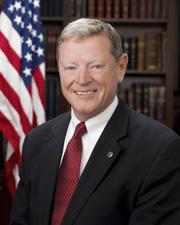 Sen. James M. Inhofe (R-OK)
Legislative Activity
Stay on top of the latest movement without scrolling through every action
Held at the desk.
September 20, 2006 • 8:49 PM
View full timeline
Introduced in Senate
May 13, 2005
Sponsor introductory remarks on measure. (CR S5190-5191, S5194)
May 13, 2005
Read twice and referred to the Committee on Banking, Housing, and Urban Affairs.
May 13, 2005
Senate Committee on Banking, Housing, and Urban Affairs discharged by Unanimous Consent.(consideration: CR S9850-9852)
September 20, 2006
Senate Committee on Banking, Housing, and Urban Affairs discharged by Unanimous Consent. (consideration: CR S9850-9852)
September 20, 2006
Passed Senate without amendment by Unanimous Consent. (text: CR S9850-9852)
September 20, 2006
Received in the House.
September 20, 2006 • 8:30 PM
Message on Senate action sent to the House.
September 20, 2006
Held at the desk.
September 20, 2006 • 8:49 PM
Floor Debate
4 membersWhat members said about S. 1035 on the floor
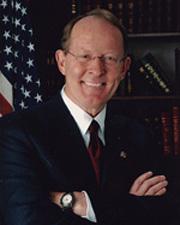
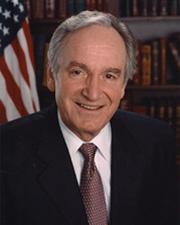
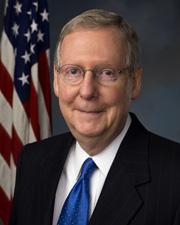
Floor Debate
4 membersWhat members said about S. 1035 on the floor
Mr. President, I am here today to introduce, along with the Senator from Virginia, Mr. Warner, the Environmentally Responsible Wind Power Act of 2005. The legislation that Senator Warner and I offer…
Mr. President, during World War I and II, Native Americans heard the call of their Country and enlisted in the United States Armed Services in unprecedented numbers. Many of these brave men performed…
Mr. President, during World War I and II, Native Americans heard the call of their Country and enlisted in the United States Armed Services in unprecedented numbers. Many of these brave men performed…
Mr. President, this is a historic day. Last night we passed S. 1035, the Code Talkers Recognition Act. As my fellow Senate colleagues may know, code talkers played a unique role in our battlefield…
Mr. President, I ask unanimous consent that the Committee on Banking, Housing, and Urban Affairs be discharged from further consideration of S. 1035 and the Senate proceed to its immediate…
Bill Text
2 versions available
        [Congressional Bills 109th Congress]
[From the U.S. Government Publishing Office]
[S. 1035 Engrossed in Senate (ES)]

109th CONGRESS
2d Session
S. 1035

_______________________________________________________________________

AN ACT

To authorize the presentation of commemorative medals on behalf of
Congress to Native Americans who served as Code Talkers during foreign
conflicts in which the United States was involved during the 20th
century in recognition of the service of those Native Americans to the
United States.

Be it enacted by the Senate and House of Representatives of the
United States of America in Congress assembled,

SECTION 1. SHORT TITLE; TABLE OF CONTENTS.

(a) Short Title.--This Act may be cited as the ``Code Talkers
Recognition Act''.
(b) Table of Contents.--The table of contents of this Act is as
follows:

Sec. 1. Short title; table of contents.
Sec. 2. Expression of recognition.
TITLE I--SIOUX CODE TALKERS

Sec. 101. Findings.
Sec. 102. Congressional commemorative medal.
TITLE II--COMANCHE CODE TALKERS

Sec. 201. Findings.
Sec. 202. Congressional commemorative medal.
TITLE III--CHOCTAW CODE TALKERS

Sec. 301. Findings.
Sec. 302. Congressional commemorative medal.
TITLE IV--SAC AND FOX CODE TALKERS

Sec. 401. Findings.
Sec. 402. Congressional commemorative medal.
TITLE V--GENERAL PROVISIONS

Sec. 501. Definition of Indian tribe.
Sec. 502. Medals for other Code Talkers.
Sec. 503. Provisions applicable to all medals under this Act.
Sec. 504. Duplicate medals.
Sec. 505. Status as national medals.
Sec. 506. Funding.

SEC. 2. EXPRESSION OF RECOGNITION.

The purpose of the medals authorized by this Act is to express
recognition by the United States and citizens of the United States of,
and to honor, the Native American Code Talkers who distinguished
themselves in performing highly successful communications operations of
a unique type that greatly assisted in saving countless lives and in
hastening the end of World War I and World War II.

TITLE I--SIOUX CODE TALKERS

SEC. 101. FINDINGS.

Congress finds that--
(1) Sioux Indians used their native languages, Dakota,
Lakota, and Dakota Sioux, as code during World War II;
(2) those individuals, who manned radio communications
networks to advise of enemy actions, became known as the Sioux
Code Talkers;
(3) under some of the heaviest combat action, the Code
Talkers worked around the clock to provide information that
saved the lives of many Americans in war theaters in the
Pacific and Europe, such as the location of enemy troops and
the number of enemy guns; and
(4) the Sioux Code Talkers were so successful that military
commanders credit the code with saving the lives of countless
American soldiers and being instrumental to the success of the
United States in many battles during World War II.

SEC. 102. CONGRESSIONAL COMMEMORATIVE MEDAL.

The President Pro Tempore of the Senate and the Speaker of the
House of Representatives shall make appropriate arrangements for the
presentation, on behalf of Congress, of a commemorative medal of
appropriate design, to each Sioux Code Talker, including--
(1) Eddie Eagle Boy;
(2) Simon Brokenleg;
(3) Iver Crow Eagle, Sr.;
(4) Edmund St. John;
(5) Walter C. John;
(6) John Bear King;
(7) Phillip ``Stoney'' LaBlanc;
(8) Baptiste Pumpkinseed;
(9) Guy Rondell;
(10) Charles Whitepipe; and
(11) Clarence Wolfguts.

TITLE II--COMANCHE CODE TALKERS

SEC. 201. FINDINGS.

Congress finds that--
(1) the Japanese Empire attacked Pearl Harbor, Hawaii, on
December 7, 1941, and Congress declared war on Japan the
following day;
(2) the military code developed by the United States for
transmitting messages had been deciphered by the Axis powers,
and United States military intelligence sought to develop a new
means to counter the enemy;
(3) the Federal Government called on the Comanche Nation to
support the military effort by recruiting and enlisting
Comanche men to serve in the United States Army to develop a
secret code based on the Comanche language;
(4) at the time, the Comanches were--
(A) considered to be second-class citizens; and
(B) discouraged from using their own language;
(5) the Comanches of the 4th Signal Division became known
as the ``Comanche Code Talkers'' and helped to develop a code
using their language to communicate military messages during
the D-Day invasion and in the European theater during World War
II;
(6) to the frustration of the enemy, the code developed by
those Native Americans--
(A) proved to be unbreakable; and
(B) was used extensively throughout the European
war theater;
(7) the Comanche language, discouraged in the past, was
instrumental in developing 1 of the most significant and
successful military codes of World War II;
(8) the efforts of the Comanche Code Talkers--
(A) contributed greatly to the Allied war effort in
Europe;
(B) were instrumental in winning the war in Europe;
and
(C) saved countless lives;
(9) only 1 of the Comanche Code Talkers of World War II
remains alive today; and
(10) the time has come for Congress to honor the Comanche
Code Talkers for their valor and service to the United States.

SEC. 202. CONGRESSIONAL COMMEMORATIVE MEDAL.

The President Pro Tempore of the Senate and the Speaker of the
House of Representatives shall make appropriate arrangements for the
presentation, on behalf of Congress, of a commemorative medal of
appropriate design to each of the following Comanche Code Talkers of
World War II, in recognition of contributions of those individuals to
the United States:
(1) Charles Chibitty.
(2) Haddon Codynah.
(3) Robert Holder.
(4) Forrest Kassanovoid.
(5) Willington Mihecoby.
(6) Perry Noyebad.
(7) Clifford Otitivo.
(8) Simmons Parker.
(9) Melvin Permansu.
(10) Dick Red Elk.
(11) Elgin Red Elk.
(12) Larry Saupitty.
(13) Morris Sunrise.
(14) Willie Yackeschi.

TITLE III--CHOCTAW CODE TALKERS

SEC. 301. FINDINGS.

Congress finds that--
(1) on April 6, 1917, the United States, after
extraordinary provocations, declared war on Germany and entered
World War I, the War to End All Wars;
(2) at the time of that declaration of war, Indian people
in the United States, including members of the Choctaw Nation,
were not accorded the status of citizens of the United States;
(3) without regard to this lack of citizenship, many
members of the Choctaw Nation joined many members of other
Indian tribes and nations in enlisting in the Armed Forces to
fight on behalf of the United States;
(4) members of the Choctaw Nation were--
(A) enlisted in the force known as the American
Expeditionary Force, which began hostile actions in
France in the fall of 1917; and
(B) incorporated in a company of Indian enlistees
serving in the 142d Infantry Company of the 36th
Division;
(5) a major impediment to Allied operations in general, and
operations of the United States in particular, was the fact
that the German forces had deciphered all codes used for
transmitting information between Allied commands, leading to
substantial loss of men and materiel during the first year in
which the military of the United States engaged in combat in
World War I;
(6) because of the proximity and static nature of the
battle lines, a method to communicate without the knowledge of
the enemy was needed;
(7) a commander of the United States realized the fact that
he had under his command a number of men who spoke a native
language;
(8) while the use of such native languages was discouraged
by the Federal Government, the commander sought out and
recruited 18 Choctaw Indians to assist in transmitting field
telephone communications during an upcoming campaign;
(9) because the language used by the Choctaw soldiers in
the transmission of information was not based on a European
language or on a mathematical progression, the Germans were
unable to understand any of the transmissions;
(10) the Choctaw soldiers were placed in different command
positions to achieve the widest practicable area for
communications;
(11) the use of the Choctaw Code Talkers was particularly
important in--
(A) the movement of American soldiers in October of
1918 (including securing forward and exposed
positions);
(B) the protection of supplies during American
action (including protecting gun emplacements from
enemy shelling); and
(C) in the preparation for the assault on German
positions in the final stages of combat operations in
the fall of 1918;
(12) in the opinion of the officers involved, the use of
Choctaw Indians to transmit information in their native
language saved men and munitions, and was highly successful;
(13) based on that successful experience, Choctaw Indians
were withdrawn from frontline units for training in
transmission of codes so as to be more widely used when the war
came to an end;
(14) the Germans never succeeded in breaking the Choctaw
code;
(15) that was the first time in modern warfare that the
transmission of messages in a Native American language was used
for the purpose of confusing the enemy;
(16) this action by members of the Choctaw Nation--
(A) is another example of the commitment of Native
Americans to the defense of the United States; and
(B) adds to the proud legacy of such service; and
(17) the Choctaw Nation has honored the actions of those 18
Choctaw Code Talkers through a memorial bearing their names
located at the entrance of the tribal complex in Durant,
Oklahoma.

SEC. 302. CONGRESSIONAL COMMEMORATIVE MEDAL.

The President Pro Tempore of the Senate and the Speaker of the
House of Representatives shall make appropriate arrangements for the
presentation, on behalf of Congress, of a commemorative medal of
appropriate design honoring the Choctaw Code Talkers.

TITLE IV--SAC AND FOX CODE TALKERS

SEC. 401. FINDINGS.

Congress finds that--
(1) Sac and Fox Indians used their native language,
Meskwaki, to transmit military code during Word War II;
(2) those individuals, who manned radio communications
networks to advise of enemy actions, became known as the Sac
and Fox Code Talkers; and
(3) under heavy combat action, the Code Talkers worked
without sleep to provide information that saved the lives of
many Americans.

SEC. 402. CONGRESSIONAL COMMEMORATIVE MEDAL.

The President Pro Tempore of the Senate and the Speaker of the
House of Representatives shall make appropriate arrangements for the
presentation, on behalf of Congress, of a commemorative medal of
appropriate design, to each of the following Sac and Fox Code Talkers
of World War II, in recognition of the contributions of those
individuals to the United States:
(1) Frank Sanache.
(2) Willard Sanache.
(3) Dewey Youngbear.
(4) Edward Benson.
(5) Judie Wayne Wabaunasee.
(6) Mike Wayne Wabaunasee.
(7) Dewey Roberts.
(8) Melvin Twin.

TITLE V--GENERAL PROVISIONS

SEC. 501. DEFINITION OF INDIAN TRIBE.

In this title, the term ``Indian tribe'' has the meaning given the
term in section 4 of the Indian Self-Determination and Education
Assistance Act (25 U.S.C. 4506).

SEC. 502. MEDALS FOR OTHER CODE TALKERS.

(a) Presentation Authorized.--In addition to the commemorative
medals authorized to be presented under sections 102, 202, 302, and
402, the President Pro Tempore of the Senate and the Speaker of the
House of Representatives shall make appropriate arrangements for the
presentation, on behalf of Congress, of a commemorative medal of
appropriate design to any other Native American Code Talker identified
by the Secretary of Defense under subsection (b) who has not previously
received a congressional commemorative medal.
(b) Identification of Other Native American Code Talkers.--
(1) In general.--Any Native American member of the United
States Armed Forces who served as a Code Talker in any foreign
conflict in which the United States was involved during the
20th Century shall be eligible for a commemorative medal under
this section.
(2) Determination.--The Secretary of Defense shall--
(A) determine eligibility under paragraph (1); and
(B) not later than 120 days after the date of
enactment of this Act, establish a list of the names of
individuals eligible to receive a medal under paragraph
(1).

SEC. 503. PROVISIONS APPLICABLE TO ALL MEDALS UNDER THIS ACT.

(a) Medals Awarded Posthumously.--A medal authorized by this Act
may be awarded posthumously on behalf of, and presented to the next of
kin or other representative of, a Native American Code Talker.
(b) Design and Striking.--
(1) In general.--For purposes of any presentation of a
commemorative medal under this Act, the Secretary of the
Treasury shall strike gold medals with suitable emblems,
devices, and inscriptions, to be determined by the Secretary of
the Treasury.
(2) Designs emblematic of tribal affiliation.--The design
of the commemorative medals struck under this Act for Native
American Code Talkers who are members of the same Indian tribe
shall be emblematic of the participation of the Code Talkers of
that Indian tribe.

SEC. 504. DUPLICATE MEDALS.

The Secretary of the Treasury may strike and sell duplicates in
bronze of the commemorative medals struck under this Act--
(1) in accordance with such regulations as the Secretary
may promulgate; and
(2) at a price sufficient to cover the costs of the medals
(including labor, materials, dies, use of machinery, and
overhead expenses, and the cost of the bronze medal).

SEC. 505. STATUS AS NATIONAL MEDALS.

Medals struck pursuant to this Act are national medals for purposes
of chapter 51 of title 31, United States Code.

SEC. 506. FUNDING.

(a) Authority To Use Fund Amounts.--There is authorized to be
charged against the United States Mint Public Enterprise Fund such
amounts as are necessary to strike and award medals authorized by this
Act.
(b) Proceeds of Sale.--All amounts received from the sale of
duplicate bronze medals under section 504 shall be deposited in the
United States Mint Public Enterprise Fund.

Passed the Senate September 20, 2006.

Attest:

Secretary.
109th CONGRESS

2d Session

S. 1035

_______________________________________________________________________

AN ACT

To authorize the presentation of commemorative medals on behalf of
Congress to Native Americans who served as Code Talkers during foreign
conflicts in which the United States was involved during the 20th
century in recognition of the service of those Native Americans to the
United States.