Mr. President, I rise as a leading co-sponsor of the Transportation Security Improvement Act of 2005 introduced today by my colleague and Chairman, Ted Stevens, along with Senators Jay Rockefeller,…
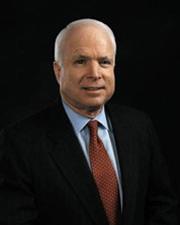
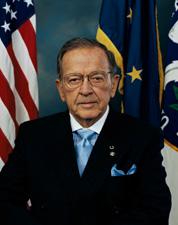
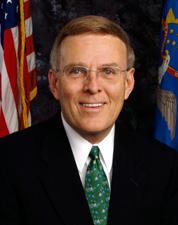
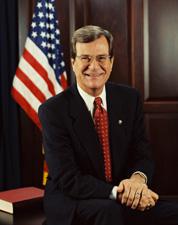
Mr. President, I rise as a leading co-sponsor of the Transportation Security Improvement Act of 2005 introduced today by my colleague and Chairman, Ted Stevens, along with Senators Jay Rockefeller, Olympia Snowe, Frank Lautenberg, Byron Dorgan, Barbara Boxer, Maria Cantwell, Mark Pryor, Hillary Clinton, and Chuck Schumer.
Nearly 4 years after the enactment of landmark aviation and maritime security laws, it is time to build upon that foundation, make needed improvements and enhancements to our transportation security efforts across all modes, and reestablish the requisite funding levels. Most importantly, we must restore the sense of urgency that is essential if we are to keep our transportation systems, and our economy, strong, vibrant, and secure. We have worked hard to develop this legislation, and we will continue to improve it with the assistance of committee members and the Department of Homeland Security as we move forward through the legislative process.
Over the past 3\1/2\ years, the administration and Congress have slowly lost the sense of immediacy that once allowed us to recognize that transportation security is a matter of national security. The administration's budget and priorities indicate that they are overlooking glaring security vulnerabilities, disregarding the continuing threats and risks that are reported almost daily, and underestimating the economic consequences that would undoubtedly result from another attack on our transportation systems. I am hopeful that the new leadership will reinvigorate transportation security.
The economic importance of those systems can hardly be overstated: 95 percent of the Nation's cargo comes through the ports; our rail system and our motor carriers move all of those goods from our coasts and borders throughout the interior U.S. to retail outlets and manufacturers that rely on on-time delivery; our aviation system carried 629.7 million domestic passengers during 2004 and averaged 1.5 million enplanements per day in January this year; approximately 24 million passengers ride Amtrak annually, and there are nearly 3.4 billion passenger and commuter rail trips in this country each year. The loss of our aviation system for just 4 days after the September 11th attacks sent shockwaves through the economy that are still being felt today. The al Qaida attack on the passenger trains in Madrid, Spain, killing nearly 200 people and injuring 1,800, unfortunately proved that railroads are vulnerable targets for terrorists. If there is an incident at any one seaport, the whole system for moving cargo into and out of the country would screech to a halt, as we scramble to ensure security at other ports. In addition to the horrible loss of life, the resulting economic damage would be widespread, catastrophic and possibly irreversible. We cannot afford to risk this kind of damage due to a lack of preparedness and forethought.
The terrorists that seek to do us harm are cunning, dynamic, and most of all, patient. While they have not successfully struck our homeland since September 11, 2001, it does not mean that they are not preparing to do so. They work 24 hours a day, studying what we do and how we do it. It is imperative that we stay ahead of them. That means we must constantly anticipate, innovate, and plan. We must continually research and implement the most effective technologies. We must recruit, train and deploy the most skilled security force. Simply put, our entire economy relies on a well-functioning, secure, transportation system. It is in our greatest economic interest to ensure that this system, and the passengers and cargo that use it, are well protected. And, in keeping with transportation security's impact on the nation's physical and economic security, it is the responsibility of the federal government to properly finance that protection.
Following passage of our new aviation security laws, the Transportation Security Administration, TSA, was assembled quickly, presented with an enormous task, and expected to produce immediate results. It has performed admirably, despite the administration's near- constant reorganization of the agency with little to no input from Congress. While we take seriously recent reports about financial mismanagement and the limits of the human capacity to detect security breaches, we cannot and must not use these inadequacies as justification to cast aside the critical work of this agency. There are some in Congress that have never been comfortable with the new Federal role in transportation security, and they look to every negative report to help usher in a return to private security screening companies. We contend, however, that transportation security must not be judged only by the bottom-line commercial pressures of the private sector. Transportation security is a unique national security function and an economic necessity, and like our national defense, it must remain a primary responsibility of the federal government.
The need for Congressional action to secure all forms of transportation infrastructure across the country remains essential, and I, along with many of my colleagues on the Senate Commerce Committee, have expressed great reservations about the direction our Nation is now headed on matters of transportation security.
As I noted during the Senate's consideration of the nomination of Michael Chertoff to be the Secretary of the Department of Homeland Security, the administration's budget demonstrates the lost sense of urgency. It shifts critical work away from the TSA. It erodes the Agency's limited focus and accountability. It undermines the effectiveness of our maritime and land security efforts. It underfunds efforts across all modes, but particularly port and rail.
The legislation we are introducing today renews the importance and commitment transportation security deserves. It identifies the numerous, lingering shortcomings that currently exist, re-dedicates our efforts on maritime and surface transportation security, and provides the guidance necessary to adequately defend the nation's infrastructure.
The TSA should not focus almost exclusively on aviation, nor should it be transformed into a glorified, security screener training and placement agency. The TSA is essential, and it possesses critical expertise that must be cultivated and put to proper use. We believe that the TSA, as outlined by our bill, can and will be the difference between a flourishing economy fueled by smooth-running transportation systems and an economy crippled by transportation systems that could fall victim to terrorist attacks.
As such, the Transportation Security Improvement Act of 2005 will authorize the TSA for the next 3 fiscal years and re-dedicate the agency to its mission of providing specialized security for all modes of transportation. It provides further direction to the agency's cargo security functions, strengthens aviation, maritime, rail, hazardous materials, and pipeline security efforts, and enhances interagency cooperation. While the proposal incorporates several Commerce Committee and Senate-passed bills or initiatives from the prior Congress, it also puts forth new ideas to enhance transportation security across all modes.
We recognize that Secretary Chertoff has had only a short time to make changes and that his comprehensive review is pending. Our legislation provides the flexibility necessary to address his findings and prerogatives. However, it is incumbent upon Congress to provide guidance and clarify the expectations.
On the matter of port security, our legislation seeks to improve interagency cooperation with the further development of joint operation command centers. It clarifies the roles and responsibilities for cargo security programs, while establishing criteria for contingency response plans to resume the flow of commerce in the event of a seaport attack. By setting a minimum floor for research and development funding related to maritime and land security, the bill further encourages the development of effective technologies that detect terrorist threats. Conversely, the administration has
continued to consolidate critical infrastructure grant programs, which we believe will effectively decrease funding for port security and eliminate the appropriate expertise necessary to review grant proposals and distribute the funds accordingly.
In addressing aviation security, we continue to be concerned that current budget proposals diminish the TSA's authority and squander its expertise. Airport directors are still struggling to receive the technological and capital improvements that would increase the efficiency and effectiveness of the current security system and lower costs considerably. Instead of addressing these shortcomings with aggressive support, the administration has chosen to place a greater burden on the airlines through increased security fees at the same moment that the carriers are facing the most difficult financial period in their history. Not only has the industry lost more than $30 billion cumulatively since 2000, the Federal government has had to bail out the carriers twice. Increasing the carriers' financial burden is ill conceived and counterproductive.
Quietly but consistently, we also hear of some of our colleagues' desire to return to the same privatized security apparatus that proved disastrously inadequate on September 11, 2001. These efforts are short- sighted, defy our experience, and will reverse much of the progress we have made since September 11. Those seeking to return to the old system, at times, claim that the system is no better than pre-September 11. We all know that is not the case. We also know that with new technology, we can improve screener performance. There is no doubt that human factors limit the capabilities of screeners, but as we fund and deploy new equipment, the security system will continue to improve. Our bill seeks to enhance the current screener workforce by directing a more appropriate use of the TSA's resources and through improved training. It would also stimulate efforts to streamline and improve collections of existing airline and passenger security fees to promote a more efficient and healthy aviation industry.
On rail security, our legislation will incorporate an updated version of the Rail Security Act of 2004, which the Senate passed by unanimous consent last year. It features new efforts to ensure the security of hazardous materials that are shipped by rail and improves security training and awareness for our railroad workers and the public. The tragic events in Madrid, Spain, demonstrated to all of us the clear threats to our rail system. We have already been warned publicly twice by the FBI that al Qaida may be directly targeting U.S. passenger trains and that their operatives may try to destroy key rail bridges and sections of track to cause derailments. The rail threat assessment required by our legislation and the grant programs and other measures designed to respond to those threats will strengthen our ability to address them. Until we pass a rail security package, this body is failing its responsibility to try to secure our national transportation system. We owe it to the American people to strengthen the security of our passenger and freight railroads.
To address the security needs of our other surface transportation modes, the proposal will include funding to improve intercity bus security, strengthen hazardous material transportation security efforts, establish new security guidelines for truck rental and leasing operations, and develop pipeline security incident recovery plans. Such action is long overdue as the administration has consistently failed to develop dedicated programs, much less financial support, for rail and other surface transportation security efforts.
We have reached a critical juncture for transportation security in the United States and the steps that we take in the coming months will impact our safety, security and one of our most essential freedoms-- movement--for years to come. We must commit ourselves to ensuring that our transportation security remains a priority and is as strong and effective as possible. I believe the Transportation Security Improvement Act of 2005 will continue to move us in that direction.