A bill to extend the aviation war risk insurance program for 3 years.

Legislative Activity
Stay on top of the latest movement without scrolling through every action
Placed on Senate Legislative Calendar under General Orders. Calendar No. 377.
March 27, 2006
View full timeline
Introduced in Senate
May 23, 2005
Sponsor introductory remarks on measure. (CR S5787)
May 23, 2005
Read twice and referred to the Committee on Commerce, Science, and Transportation. (text of measure as introduced: CR S5787)
May 23, 2005
Committee on Commerce, Science, and Transportation. Ordered to be reported without amendment favorably.
November 17, 2005
Committee on Commerce, Science, and Transportation. Reported by Senator Stevens without amendment. With written report No. 109-223.
March 27, 2006
Placed on Senate Legislative Calendar under General Orders. Calendar No. 377.
March 27, 2006
Floor Debate
10 membersWhat members said about S. 1102 on the floor
 CJD
CJD PM
PM MBE
MBE HRC
HRC WA+5
WA+5
Floor Debate
10 membersWhat members said about S. 1102 on the floor
Mr. President. I am pleased to rise today, together with my colleague Senator Lieberman, to introduce The Telecommuter Tax Fairness Act of 2005. The Telecommuter Tax Fairness Act of 2005 will put an…
Mr. President. I am pleased to rise today, together with my colleague Senator Lieberman, to introduce The Telecommuter Tax Fairness Act of 2005.
The Telecommuter Tax Fairness Act of 2005 will put an end to legal doctrine that unfairly penalizes thousands of workers in Connecticut and in other States throughout the country whose only offense is that they sometimes work from home or from a local office of their employer.
Technology has changed the way business is conducted in America. With the use of cell phones, lap-top computers, email, the Internet, mobile networking, and many other telecommunication advancements of the 21st century, Americans have a greater flexibility in where they can work, without compromising productivity. Many citizens now choose to work from home or alternative offices when their physical presence is not necessary at their primary place of work.
Telecommuting provides enormous benefits for businesses, families, and communities. It helps businesses lower costs and raise worker productivity. It reduces congestion on our roads and rails, and in so doing it lowers pollution. It helps workers better manage the demands of work and family. And last but not least, it can mean lower income taxes for working men and women.
Yet, the many benefits to workers of telecommuting are today placed in jeopardy because of current law in New York and a few other States. Today, New York State requires that workers pay income tax on income even if it is not earned in the State through their ``convenience of the employer'' rule. While there are several States that have the ``convenience of the employer'' rule, no other State applies it with the same rigor as New York.
New York's ``convenience of the employer'' rule requires that by working for a New York employer, all income earned from that employer must be declared in New York so long as the worker ``could'' perform his or her duties in New York. A worker for a New York employer who works part-time from home in Connecticut or another State is still subject to taxation by New York on 100 percent of his or her income. At the same time, the work done by that worker in a State outside New York is subject to taxation by that State.
This unfairly subjects many workers who telecommute from their homes or from satellite offices outside of New York to a double tax on that part of the income earned from home. According to Connecticut's Attorney General, thousands of Connecticut residents alone are affected by this unfair double taxation.
However, it isn't only Connecticut residents that are affected.
Thomas Huckaby is a Tennessee-based computer programmer that telecommuted for a firm in Queens, NY. In 1994 and 1995, Mr. Huckaby spent 75 percent of his time working in Tennessee and the remaining 25 percent working in the Queens office and attempted to apportion his income accordingly. New York, however, sought to tax 100 percent of his income and was successful due to it's ``convenience of employer'' rule. On March 29, 2005 the New York Court of Appeals upheld New York's rule in a 4 to 3 decision. Currently, Mr. Huckaby is in the process of petitioning the Supreme Court.
A similar story involves Arthur Gray, a New Hampshire resident who worked for the New York Company Cowen & Co. as an investment counselor from 1976 through 1996, and paid New York State income taxes during that time. In 1997, Arthur Gray, per his employer's request, opened and managed an office from his home in New Hampshire. Several times during the year, Mr. Gray worked in New York, but most of his days were spent in New Hampshire. When paying his taxes during this time, he paid New York State income taxes for the days he was in New York, but not for the days he worked in New Hampshire. New York, however, sought to tax 100 percent of his income and was successful due to this ``convenience of the employer'' rule.
These are only two examples of the far-reaching consequences of this ``convenience of employer'' rule. There are thousands of individuals across the country who are adversely impacted by this rule. Most, however, but most lack the time, money, or energy to take their case to court.
This potential for double taxation is not only unfair, it also discourages workers from telecommuting when we should be doing the opposite.
Legislation is needed to protect these honest workers who deserve fair and equitable treatment under the law. The Telecommuter Tax Fairness Act of 2005 accomplishes this by specifically preventing a State from engaging in the current fiction of deeming a nonresident to be in the taxing State when the nonresident is actually working in another State. In doing so, it will eliminate the possibility that citizens will be double-taxed when telecommuting.
Establishing a ``physical presence'' test--as this legislation would do--is the most logical basis for determining tax status. If a worker is in a State, and taking advantage of that State's infrastructure, the worker should pay taxes in that State.
Some suggest that the double-taxation quandary can easily be fixed by having other States provide a tax credit to those telecommuters. However, why should Connecticut, or any other
State, be required to allow a credit on income actually earned in the State? If a worker is working in Connecticut, he or she is benefiting from a range of Services paid for and maintained by Connecticut including roads, water, police, fire protection, and communications services. It's only fair that Connecticut ask that worker to help support the services that he or she uses.
This is not just an issue which deals with a small group of citizens from one small State. Rather, this is an issue which affects workers throughout the country. It will only grow more pressing as people and businesses continue to seek to take advantage of new technologies that affect the way we live and work.
I hope our colleagues will favorably consider this legislation.
I ask unanimous consent that the text of the bill be printed in the Record.
Mr. President, I rise today with Senators Cochran, Levin, Kennedy and Akaka to introduce The International and Foreign Language Studies Act of 2005.
In recent years, foreign language needs have significantly increased throughout the Federal Government due to the presence of a wider range of security threats, the emergence of new nation states, and the globalization of the U.S. economy. Likewise, American business increasingly needs internationally experienced employees to compete in the global economy and to manage a culturally diverse workforce.
Currently, the U.S. government requires 34,000 employees with foreign language skills across 70 Federal agencies. These agencies have stated over the last few years, that translator and interpreter shortfalls have adversely affected agency operations and hindered U.S. military, law enforcement, intelligence, and diplomatic efforts.
Despite our growing needs, the number of undergraduate foreign language degrees conferred is only one percent of all degrees. Only one third of undergraduates report that they are taking foreign language courses and only 11 percent report that they have studied abroad.
At a time when our security needs are more important than ever, at a time when our economy demands that we enter new markets, and at a time when the world requires us to engage in diplomacy in more thoughtful and considered ways, it is extremely important that we have at our disposal a multilingual, multicultural, internationally experienced workforce. The Dodd-Cochran International and Foreign Language Studies Act attempts to do this in a number of ways.
The Dodd-Cochran International and Foreign Language Studies Act will increase undergraduate study abroad as a means to enhance foreign language proficiency and deepen cultural knowledge. The bill will reinstate undergraduate eligibility for Foreign Language and Area Studies Fellowships. The bill will encourage the Department of Education to engage in the collection, analysis and dissemination of
data on international education and foreign language needs so that we know and understand exactly what our needs in this area are. Within the Institute for International and Public Policy, the bill provides scholarships and creates an ``expert track'' for doctoral students in critical areas, disciplines and languages. And, most importantly, the Dodd-Cochran bill will demonstrate our nation's commitment to increasing the foreign language proficiency and international expertise of our citizens by increasing the amount appropriated to international education, including international business education, to allow for more opportunities for more students.
The Higher Education Act authorizes the Federal Government's major activities as they relate to financial assistance for students attending colleges and universities. It provides aid to institutions of higher education, services to help students complete high school and enter and succeed in postsecondary education, and mechanisms to improve the training of our emerging workforce. This bill will help fulfill that mission.
Foreign language skills and international study are vital to secure the future economic welfare of the United States in an increasingly international economy. Foreign language skills and international study are also vital for the nation to meet 21st century security challenges properly and effectively, especially in light of the terrorist attacks on September 11, 2001.
I hope our colleagues who are not cosponsoring this bill will give it serious consideration. By working together, I believe that the Senate as a body can act to ensure that we strengthen our Nation's security and economy by capitalizing on the talents and dreams of those who wish to enter the international arena.
Mr. President, today I rise with Senator DeWine to introduce the ``Improving Head Start Access for Homeless and Foster Children Act of 2005.'' Head Start has made significant strides in providing…
Mr. President, today I rise with Senator DeWine to introduce the ``Improving Head Start Access for Homeless and Foster Children Act of 2005.''
Head Start has made significant strides in providing comprehensive services to low-income children. Since
Head Start was established in 1965, low-income preschool-aged children have received education, health, nutritional, social and developmental services they would not otherwise have access to. Unfortunately, children in greatest need of these services--homelss and foster youth-- are not receiving those services at adequate levels.
It is estimated that 1.35 million children experience homelessness each year, and the mean income of a homeless family is at 46 percent of the Federal poverty level. Due to extreme poverty and the inherent instability of homelessness, children facing these conditions have considerably higher physical, mental and emotional difficulties. It is not surprising that homeless children are reported to be twice as likely to have a learning disability and three times as likely of having an emotional or behavioral problem that interferes with their learning.
These children also face significant barriers to participation in Head Start. These children lack transportation. They lack the necessary documentation. They suffer from the invisibility of homeless families which leaves the community unaware of the need to include these children in Head Start recruitment and prioritization. As a result of these and other barriers, only 15 percent of preschool children identified as homeless are enrolled in preschool programs of any kind, compared to the 57 percent of low-income preschool children. Currently only 2 percent of the more than 900,000 students served by Head Start are children identified as homeless. States report that 60 percent of homeless students are having difficulties gaining access to Head Start.
In addition to homeless children, kids in foster care face a unique set of challenges which both increase their need for the stability and educational services provided by Head Start. Tragically, these same challenges also hinder their ability to gain access to those services. Foster children are likely to suffer from both emotional and physical instability. With more than 500,000 children in foster care and a shortage of foster parents in this country, these children often go without the attention and advocacy that preschool age children need.
More than 40 percent of the children in homeless shelters are under the age of five. The first years of a child's life significantly impact personal development and future academic achievement. That is why I once again stand with Senator DeWine to increase access to Head Start for homeless and foster children.
Our bill would ensure equal access and benefits from to early education and supportive services provided by Head Start for the Nation's poorest children. It would make all homeless children eligible for Head Start. The bill also allow homeless children to be immediately enrolled in Head Start by allowing them extra time to provided required documentation; providing that that documentation be in a reasonable time frame. And, our bill would require school, district liaisons to assist families in obtaining necessary documents. In addition, our bill increases Head Start's outreach to homeless and foster children. Further, the bill would reduce barriers by encouraging coordination between Head Start agencies and community programs that serve these vulnerable populations.
Again, I would like to thank my colleague Senator DeWine for his many efforts in supporting homeless and foster youth. I urge the Senate to ensure that all children, despite their background and socioeconomic situation receive equal access to a quality education.
I ask unanimous consent that the text of the bill be printed in the Record.
Mr. President, I rise today to introduce the Head Start Improvements for School Readiness Act with my colleague, Senator Kennedy. This legislation would reauthorize the Head Start program and make…
Mr. President, I rise today to introduce the Head Start Improvements for School Readiness Act with my colleague, Senator Kennedy.
This legislation would reauthorize the Head Start program and make important improvements to the Head Start Act and help ensure that today's children receiving services by this important program will be better prepared for success in the future. Success in life depends a great deal on the preparation for that success, which comes early in life. It is well documented in early childhood education research that students who are not reading well by the third grade will struggle with reading most of their lives. That is why the Head Start program is so important. Head Start provides early education for thousands of children each year, most of whom would not have the opportunity to attend preschool programs elsewhere.
The Head Start program is important generally, but there is some room for improvement. Earlier this year the Senate Committee on Health, Education, Labor and Pensions held a hearing on the administration of the Head Start program, and found that a number of changes might help improve the performance of the program overall.
The first change required by this program would be providing for all Head Start grantees found to have a deficiency to recompete the next time the program's grant is up for renewal. The bill would also require grantees to recompete if they have not resolved issues of noncompliance within 120 days, or a longer time specified by the Secretary of Health and Human Services. This will create an important incentive for programs to operate at their best, which is in the best interest of our children.
The bill would also shorten the timeline for programs to be terminated. In some instances, Head Start grantees have been found to be operating programs that are unsafe, or improperly using Federal funds. In these cases, the Administration has acted to terminate these programs. Unfortunately, under the law, Head Start grantees have been able to appeal these rulings. This process can be lengthy, some examples exceed 600 days, or almost two years, before a final ruling is made. In order to address this issue, and put the health and education of children first, the legislation we introduce today would limit the time available for Head Start grantees to appeal decisions made by the Secretary to terminate grants.
A third improvement is to clarify the role of the governing body and policy councils in individual Head Start programs. After careful review, the Committee found that many of the important fiscal and legal responsibilities of Head Start grantees were not explicitly assigned to either the policy council or the governing body, or in many instances, were assigned equally to both. In order to clarify the shared governance model, the bill we introduce today would clarify the responsibilities of the governing body and the policy council for each Head Start grantee. We believe this will lead to more consistent, high quality fiscal and legal management, which will ensure these programs are serving children in the best way they can.
I wish to thank my colleagues on the Committee, particularly Senator Kennedy, for their help in drafting this bipartisan legislation to reauthorize the Head Start Act. I believe the legislation we are introducing today will improve the quality and effectiveness of the Head Start program for generations of children to come.
I ask unanimous consent that a copy of the bill be printed in the Record.
Mr. President, I rise to introduce legislation that would allow States to use Federal funds to provide critical healthcare services to pregnant women and children. I want to thank Senator Chafee for…
Mr. President, I rise to introduce legislation that would allow States to use Federal funds to provide critical healthcare services to pregnant women and children. I want to thank Senator Chafee for his leadership on this important issue. I also want to recognize former Senator Bob Graham and the late Senator John Chafee, who championed this legislation for many years. Their commitment laid the groundwork for our bill introduction today.
This bill, the Immigrant Children's Health Improvement Act, is fundamentally about three things--fairness, fiscal relief, and financial savings.
I will start with fairness. All across New York and America, legal immigrants work hard, pay taxes, and exercise their civic responsibilities. I see examples of this every day in New York. They fight for our country in the military. They contribute to our Nation's competitiveness and economic growth. They help revitalize neighborhoods and small towns across the country. And most are fiercely proud to call themselves Americans.
Yet, in 1996, Congress denied safety net services to legal immigrants who had been in the country for less than 5 years. Today, Senator Chafee and I are here to introduce legislation that would take a first step towards correcting that injustice. The Immigrant Children's Health Improvement Act will allow States to use, Federal funds to make SCHIP, (the State Children's Health Improvement Program, and Medicaid available to pregnant women and children who are legal immigrants within the 5-year ban.
There is tremendous need for this legislation. An Urban Institute study found that children of immigrants are three times as likely to be in fair or poor health. While most children receive preventative medicine, such as vaccines, too often immigrant children do not. They are forced to receive their healthcare via emergency rooms--the least cost-effective place to provide care. To make matters worse, minor illnesses, which would be easily treated by a pediatrician, may snowball into life-threatening conditions.
This legislation is also a matter of good fiscal policy. Today, 19 States, including New York and Rhode Island, plus the District of Columbia, use State funds to provide healthcare services to legal immigrants within the 5-year waiting period. According to the most recent estimates from the Congressional Budget Office, at least 155,000 children and 60,000 adults are receiving these benefits. A total of 387,000 recent legal immigrants would be eligible to receive these services if their States opt to take advantage of the program.
And finally, this bill is about long-term healthcare cost savings. According to the National Bureau of Economic Research, covering uninsured children and pregnant women through Medicaid can reduce unnecessary hospitalization by 22 percent. Pregnant women who forgo prenatal care are likely to develop complications during pregnancy, which results in higher costs for postpartum care. And women without access to prenatal care are four times more likely to deliver low birth weight infants and seven times more likely to deliver prematurely than women who receive prenatal care, according to the Institute of Medicine. All of these health outcomes are costly to society and to the individuals involved.
Thank you for allotting me this time to speak on such an urgent matter. I look forward to working with you and the rest of my colleagues to enact this bill into law in the near future.
Mr. President, it is with much excitement and anticipation that I, along with Congresswoman Marilyn Musgrave in the House of Representatives, introduce legislation known as ``The Arkansas Valley…
Mr. President, it is with much excitement and anticipation that I, along with Congresswoman Marilyn Musgrave in the House of Representatives, introduce legislation known as ``The Arkansas Valley Conduit.'' This bill will ensure the expedited construction of a pipeline that will provide the small, financially strapped towns and water agencies along the Arkansas River with safe, clean, affordable water. By creating a Federal-Local cost share to help offset the costs of constructing the Conduit, this legislation will protect the future of Southeastern Colorado. First introduced during the 107th Session of Congress and subsequently in the 108th, we have redrafted the legislation for the 109th Session to create a stronger stand-alone bill. Congresswoman Musgrave and I have worked hard to craft it so that it meets the needs of a region of Colorado that has suffered from decades of inadequate drinking water supplies. On the heels of one of the worst droughts in Colorado history, the Conduit will provide a dependable source of water to communities--water that will allow these communities to grow and prosper.
By way of background, the Arkansas Valley Conduit was originally authorized by Congress forty years ago as a part of the Fryingpan- Arkansas Project. Due to the authorizing statute's lack of a cost share provision and Southeastern Colorado's depressed economic status, the Conduit was never built. Until recently, the region has been fortunate to enjoy an economical and safe alternative to pipeline-transportation of Project Water: the Arkansas River. Sadly, the water quality in the Arkansas has degraded to a point where it is no longer economical to use as a means of transport. At the same time, the Federal Government has continued to strengthen its unfunded water quality standards.
Several years ago, in an effort to resurrect the Conduit, Senator Ben Nighthorse Campbell and I worked to secure $200,000 for a Bureau of Reclamation Re-evaluation Statement on the project. Thanks to this effort, the people of the valley began to realize that the Conduit may one day be more than just a pipedream, and that Congress was serious about fulfilling the promise of the Fryingpan-Arkansas Project.
Our legislation calls for a 80/20 Federal/Local cost share. This is a sizeable sum, but is a far cry from the estimated $640 million it would take to build new treatment facilities for each of the communities if the Conduit was not built. It requires cooperation of the Department of the Interior, U.S. Army Corps of Engineers and local project participants.
The Arkansas Valley Conduit will deliver fresh, clean water to dozens of valley communities and tens-of-thousands of people along the river. Local community participants continue to explore options for financing their share of the costs, and are working hard to develop the organization that will oversee the Conduit project. I applaud those in the community who have worked so hard for the past several years to make the Conduit a reality. Upon its completion, it will stand as testament to a pioneering vision and commitment to sensible water policy.
With the help of my colleagues, the promise made by Congress forty years ago to the people of Southeastern Colorado, will finally become a reality.
I ask unanimous consent that the text of the legislation be printed in the Record.
Show 6 more
Mr. President, I rise today to introduce legislation to mandate that the Federal Aviation Administration (FAA) extend the offering of war risk insurance through August 31, 2007, to our Nation's air…
Mr. President, I rise today to introduce legislation to mandate that the Federal Aviation Administration (FAA) extend the offering of war risk insurance through August 31, 2007, to our Nation's air carriers. I am very pleased that Senator Burns, the Chairman of the Aviation Subcommittee, has agreed to co-sponsor this legislation.
Prior to September 11, 2001, war risk insurance was generally attainable and affordable for U.S. airlines. But, as we know, that day changed everything for America. No industry was more dramatically and fundamentally changed than the U.S. aviation industry. Recognizing that the commercial insurance market was not willing to provide war risk insurance to the airline industry in the immediate aftermath of September 11, Congress required the FAA provide war risk insurance to U.S. air carriers. We expected that in time U.S. air carriers would be able to obtain commercial war risk insurance. Unfortunately, the commercial war risk insurance market has priced its products beyond the means of our air carriers. According to the Air Transport Association, a return to the commercial market to obtain war risk insurance could cost U.S. airlines $600 million to $700 million a year, up from the current $140 million. Because of the lack of a vibrant competitive commercial market, last year, Congress extended its mandate that the FAA provide this insurance.
In a report to Congress, the FAA noted that even though war risk insurance is available in the private market, it is offered on terms that the industry just cannot afford. My bill would mandate the continuation of this vital program through August 31, 2008. In time, we should expect the private market to offer this coverage, but the reality is that the insurance industry continues to seek exorbitant rates for this coverage. The market has failed and it is the government's responsibility to provide this insurance as we have done in previous times of war.
The financial conditions faced by domestic airlines have seen little, if any, improvement. This legislation is supported by the low-cost carriers who are the healthiest companies in the industry, as they know that their profitability would be at risk if they were forced to go to commercial market for this insurance at this time. The current commercial market is simply unable to provide adequate war-risk coverage without unreasonable cost to airlines. For airlines, private coverage would mean annual payment increases of millions of dollars. Even with FAA insurance coverage, airlines are projected to lose $5.5 billion this year. This legislation will help the airlines weather their current financial crisis. If U.S. airlines were forced to go to the commercial market for this insurance, we would likely see more airlines in bankruptcy or cease to exist at all.
I believe that airlines remain a prime targets for terrorist acts. It is because of this threat that the commercial insurance market is unaffordable for the airlines. My legislation seeks to address a pressing problem facing one of the most critical industries in the country. My bill is one small but important measure that Congress can take to make sure our nation has a vibrant and financially secure airline industry.
Mr. President, I ask unanimous consent that the text of the bill be printed in the Record.
Mr. President, I rise today to introduce legislation to mandate that the Federal Aviation Administration (FAA) extend the offering of war risk insurance through August 31, 2007, to our Nation's air…
Mr. President, I rise today to introduce legislation to mandate that the Federal Aviation Administration (FAA) extend the offering of war risk insurance through August 31, 2007, to our Nation's air carriers. I am very pleased that Senator Burns, the Chairman of the Aviation Subcommittee, has agreed to co-sponsor this legislation.
Prior to September 11, 2001, war risk insurance was generally attainable and affordable for U.S. airlines. But, as we know, that day changed everything for America. No industry was more dramatically and fundamentally changed than the U.S. aviation industry. Recognizing that the commercial insurance market was not willing to provide war risk insurance to the airline industry in the immediate aftermath of September 11, Congress required the FAA provide war risk insurance to U.S. air carriers. We expected that in time U.S. air carriers would be able to obtain commercial war risk insurance. Unfortunately, the commercial war risk insurance market has priced its products beyond the means of our air carriers. According to the Air Transport Association, a return to the commercial market to obtain war risk insurance could cost U.S. airlines $600 million to $700 million a year, up from the current $140 million. Because of the lack of a vibrant competitive commercial market, last year, Congress extended its mandate that the FAA provide this insurance.
In a report to Congress, the FAA noted that even though war risk insurance is available in the private market, it is offered on terms that the industry just cannot afford. My bill would mandate the continuation of this vital program through August 31, 2008. In time, we should expect the private market to offer this coverage, but the reality is that the insurance industry continues to seek exorbitant rates for this coverage. The market has failed and it is the government's responsibility to provide this insurance as we have done in previous times of war.
The financial conditions faced by domestic airlines have seen little, if any, improvement. This legislation is supported by the low-cost carriers who are the healthiest companies in the industry, as they know that their profitability would be at risk if they were forced to go to commercial market for this insurance at this time. The current commercial market is simply unable to provide adequate war-risk coverage without unreasonable cost to airlines. For airlines, private coverage would mean annual payment increases of millions of dollars. Even with FAA insurance coverage, airlines are projected to lose $5.5 billion this year. This legislation will help the airlines weather their current financial crisis. If U.S. airlines were forced to go to the commercial market for this insurance, we would likely see more airlines in bankruptcy or cease to exist at all.
I believe that airlines remain a prime targets for terrorist acts. It is because of this threat that the commercial insurance market is unaffordable for the airlines. My legislation seeks to address a pressing problem facing one of the most critical industries in the country. My bill is one small but important measure that Congress can take to make sure our nation has a vibrant and financially secure airline industry.
Mr. President, I ask unanimous consent that the text of the bill be printed in the Record.
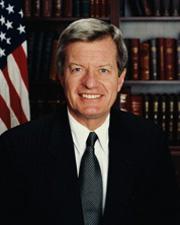
Mr. President, this weekend, millions of Americans watched in suspense as Anakin Skywalker was lured to the Dark side and became Darth Vader. What millions of those same Americans may not be aware of…
Mr. President, this weekend, millions of Americans watched in suspense as Anakin Skywalker was lured to the Dark side and became Darth Vader. What millions of those same Americans may not be aware of is another Darth Vader lurking in our tax code; that is, the Alternative Minimum Tax, or AMT.
The AMT has many of the same qualities as Anakin Skywalker. The AMT was supposed to bring order and fairness to the tax world, but it eventually got off on the wrong path and became a threat to middle- income taxpayers. Both Skywalker and the AMT started off with great intentions, but eventually they went astray. And now we have the Darth Vader of the Tax Code bearing down on millions of unsuspecting families.
That is why I am pleased to join with my friend and Chairman Chuck Grassley, and our fellow committee colleagues, Senators Wyden and Kyl, to introduce legislation today that will repeal the individual AMT. Our bill simply says that individuals beginning January 1, 2006 will owe zero, I repeat, zero dollars under the AMT. Further, our bill provides that individuals with AMT credits can continue to use those up to 90 percent of their regular tax liability.
If we do not act, CRS estimates that in 2006, the family-unfriendly AMT will hit middle-income families earning $63,000 with three children. What was once meant to ensure that a handful of millionaires did not eliminate all taxes through excessive deductions is now meaning millions of working families, including thousands in my home State of Montana, are subject to a higher stealth tax. It is truly bizarre, Mr. Chairman, that we have designed a tax deeming more children ``excessive deductions'' and duly paying your State taxes a bad thing. Already, 5,000 Montana families pay a higher tax because of the AMT. But this number could multiply many times over if we do not act soon.
Not only is the AMT unfair and poorly targeted, it is an awful mess to figure out. The Finance Committee heard testimony today from our National Taxpayer Advocate, who has singled out this item as causing the most complexity for individual taxpayers, and also from a tax practitioner who has seen first-hand how difficult this is for her clients. We heard also from other witnesses who said it is time for repeal of the AMT.
Of course, repeal does not come without cost and that cost is significant even if we assume the 2001 and 2003 tax cuts are not extended. We are committed to working together to identify reasonable offsets. Certainly, I do not think we want a tax system unfairly placing a higher tax burden on millions of middle-income families with children. But it does not serve those families either if our budget deficit is significantly worse.
Again, I look forward to working with my colleagues on this AMT repeal bill will put an end to the Darth Vader of the tax code, without any sequels.
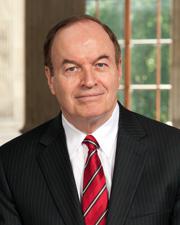
Mr. President, I rise today to once again introduce my flat tax bill, S. 1099 the ``Tax Simplification Act of 2005.'' The President has made fundamental tax reform a top priority for his second term.…
Mr. President, I rise today to once again introduce my flat tax bill, S. 1099 the ``Tax Simplification Act of 2005.'' The President has made fundamental tax reform a top priority for his second term. I believe my bill offers that fundamental tax reform and will drastically improve our Nation's economy and the way Americans go about the business of paying taxes. This bill would repeal the current Internal Revenue Code and create a single rate for all taxpayers-- seventeen percent when the tax is fully implemented--and gives tax-free treatment to all savings and investment, not just dividends.
A major reason why I support a flat tax is because it wil1 place more money into the hands of hardworking Americans. It will allow individuals--not the government--to decide how to best spend their money. Lowering taxes allows Americans to keep more of their money to keep up with monthly expenses like, insurance coverage, educational costs, and prescription drugs. Lowering taxes also makes it easier for Americans to save for their retirement through private savings plans. Although I strongly believe in the importance of private savings, my bill leaves the Social Security system intact and, in fact, provides seniors with more money by repealing the current tax on Social Security benefits.
I have said many times before that our current progressive tax system is unfair. It punishes success and stymies economic growth. The only way we can remedy this is to adopt a single tax rate for all taxpayers. Transitioning to a flat tax will not only increase the fairness of the tax code, but it will also increase the incentives to work and thus boost economic growth.
Today our tax code and its regulations total more than 60,000 pages which are complex, confusing and costly to comply with. Were a flat tax in place now, taxpayers would file a return the size of a postcard, and every American would be taxed equally and at the same rate. Rather than spending hours poring over convoluted IRS forms, or resorting to professional tax assistance, the flat tax allows taxpayers to determine their taxes quickly and easily. Everyone will fill out the same simple return, everyone will be taxed at the same rate, and everyone will pay their fare share. Paying taxes may never be a pleasant experience, but at least under a flat tax it wouldn't be mind-boggling.
I fully realize that the bill I am introducing today is a monumental shift from the current tax code, but the time is ripe for fundamental tax reform. We must not allow the enormity of the task to deter us from enacting better, more efficient tax laws. I therefore urge my colleagues to join me in support of this legislation.
I ask unanimous consent that the text of the bill be printed in the Record.
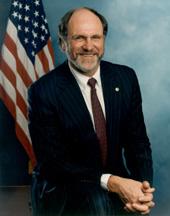
Mr. President, today, along with Senator Lautenberg, I am introducing legislation, the Musconetcong Wild and Scenic Rivers Act, to designate portions of the Musconetcong River in New Jersey as a…
Mr. President, today, along with Senator Lautenberg, I am introducing legislation, the Musconetcong Wild and Scenic Rivers Act, to designate portions of the Musconetcong River in New Jersey as a component of the National Wild and Scenic Rivers System. I am proud to be joining my New Jersey colleague, Representative Scott Garrett, who has introduced this legislation in the House of Representatives, with the support of Congressmen Robert Andrews, Michael Ferguson, Rodney Frelinghuysen, Robert Menendez, Frank Pallone, Donald Payne and James Saxton.
This is important legislation to help preserve and protect one of the most valuable natural resources in the State of New Jersey. The Musconetcong River is a 43 mile river that runs westward from Lake Musconetcong to the Delaware River. It provides many ecological, recreational and scenic benefits to the northwestern portion of our State. In addition, it is also home to a number of archeological sites and other historic areas, including one site in Warren County where scientists have discovered stone knives and other weapons dating back at least ten thousand years. Finally, it feeds acquifers that provide many residents in Hunterdon and Warren counties with quality drinking water.
Unfortunately, the beauty and value that the Musconetcong provides is at risk. The river faces pressures, for example, from the development that is occurring on or near its shores. This has caused water quality to deteriorate from increased levels of bacteria, silt and runoff from roadways. Further, many of the municipalities that lie along the river lack the financial resources to adequately protect the river for future generations.
The Musconetcong Wild and Scenic Rivers Act would help state, county and local officials begin to address these concerns, working alongside environmental and public interest groups. By including this river in the Wild and Scenic River System, it would allow New Jersey to implement a management plan for the river that has the support of three counties and 13 municipalities. In addition it would make the river eligible for financial, planning, and technical assistance to help preserve and protect it. The goal is to encourage uses and development that is compatible with the river.
The Wild and Scenic River System already includes the Maurice and Great Egg Harbor Rivers in New Jersey as well as the lower and middle portions of the Delaware River
I will work hard in the 109th Congress to see that the Musconetcong is added to this list. I hope my colleagues will support this legislation, and I ask unanimous consent that the text of the bill be printed in the Record.

Mr. President, it is a privilege to join my colleagues Senators Dodd, Cochran, Levin and Akaka in introducing the International and Foreign Languages Studies Act to increase study abroad and increase…
Mr. President, it is a privilege to join my colleagues Senators Dodd, Cochran, Levin and Akaka in introducing the International and Foreign Languages Studies Act to increase study abroad and increase foreign language study here at home for undergraduate and graduate students.
The study of foreign language and foreign cultures is more important than ever. Yet in 2003, the number of fellowships awarded for such studies was 30 percent less than the high point in 1967. Only 40 percent of undergraduates report taking any foreign language coursework and only 20 percent have studied abroad.
Learning another language is more than a desirable educational goal. It is a national security goal as well. We need more students to pursue other languages, especially the lesser taught languages like Chinese, Japanese, Farsi, Dari Persian and Arabic, which will be critical for international business as well as for national defense.
In addition to supporting language studies, the bill builds bridges with overseas universities to promote research and training abroad for American students. It supports the expansion of the Centers for International Business Education, and increases the scope of the Institute for International and Public Policy by creating an accelerated track for PhD students in key areas.
This bill is an important part of America's participation in globalization, and I urge my colleagues to strongly support it.
Bill Text
2 versions available
        [Congressional Bills 109th Congress]
[From the U.S. Government Publishing Office]
[S. 1102 Reported in Senate (RS)]

Calendar No. 377
109th CONGRESS
2d Session
S. 1102

[Report No. 109-223]

To extend the aviation war risk insurance program for 3 years.

_______________________________________________________________________

IN THE SENATE OF THE UNITED STATES

May 23, 2005

Mr. Rockefeller (for himself and Mr. Burns) introduced the following
bill; which was read twice and referred to the Committee on Commerce,
Science, and Transportation

March 27, 2006

Reported by Mr. Stevens, without amendment

_______________________________________________________________________

A BILL

To extend the aviation war risk insurance program for 3 years.

Be it enacted by the Senate and House of Representatives of the
United States of America in Congress assembled,

SECTION 1. EXTENSION OF AIRLINE WAR RISK POLICIES AND TERRORISM
COVERAGE.

(a) Extension of Policies.--Section 44302(f) of title 49, United
States Code, is amended by striking ``August 31, 2005, and shall extend
through December 31, 2005,'' in paragraph (1) and inserting ``August
31, 2008, and shall extend through December 31, 2008,''.
(b) Extension of Terrorism Coverage.--Section 44303(b) of title 49,
United States Code, is amended by striking ``December 31, 2005,'' and
inserting ``December 31, 2008,''.
Calendar No. 377

109th CONGRESS

2d Session

S. 1102

[Report No. 109-223]

_______________________________________________________________________

A BILL

To extend the aviation war risk insurance program for 3 years.

_______________________________________________________________________

March 27, 2006

Reported without amendment