A bill to designate the facility of the United States Postal Service located at 7172 North Tongass Highway, Ward Cove, Alaska, as the 'Alice R. Brusich Post Office Building'.
Legislative Activity
Stay on top of the latest movement without scrolling through every action
Became Public Law No: 109-300.
October 5, 2006
View full timeline
Introduced in Senate
June 21, 2005
Sponsor introductory remarks on measure. (CR S6917)
June 21, 2005
Read twice and referred to the Committee on Homeland Security and Governmental Affairs.
June 21, 2005
Senate Committee on Homeland Security and Governmental Affairs discharged by Unanimous Consent.(consideration: CR S7926)
July 1, 2005
Senate Committee on Homeland Security and Governmental Affairs discharged by Unanimous Consent. (consideration: CR S7926)
July 1, 2005
Passed Senate without amendment by Unanimous Consent. (text: CR S7926)
July 1, 2005
Received in the House.
July 11, 2005 • 2:01 PM
Message on Senate action sent to the House.
July 11, 2005
Referred to the House Committee on Government Reform.
July 11, 2005
Committee Consideration and Mark-up Session Held.
September 15, 2005
Ordered to be Reported by Unanimous Consent.
September 15, 2005
Mr. Davis, Tom moved to suspend the rules and pass the bill.
September 25, 2006 • 5:33 PM
Considered under suspension of the rules. (consideration: CR H6984-6985)
September 25, 2006 • 5:33 PM
DEBATE - The House proceeded with forty minutes of debate on S. 1275.
September 25, 2006 • 5:33 PM
Passed/agreed to in House: On motion to suspend the rules and pass the bill Agreed to by voice vote.(text: CR H6984)
September 25, 2006 • 5:35 PM
On motion to suspend the rules and pass the bill Agreed to by voice vote. (text: CR H6984)
September 25, 2006 • 5:35 PM
Motion to reconsider laid on the table Agreed to without objection.
September 25, 2006 • 5:35 PM
Presented to President.
September 27, 2006
Signed by President.
October 5, 2006
Became Public Law No: 109-300.
October 5, 2006
Floor Debate
15 membersWhat members said about S. 1275 on the floor
 JIL
JIL KBH
KBH BN
BN SMC
SMC MC+10
MC+10
Floor Debate
15 membersWhat members said about S. 1275 on the floor
Mr. President, I rise today to introduce legislation designed to finally address one of the most long-standing and difficult problems facing our Nation's first responders--the lack of communications…
Mr. President, I rise today to introduce legislation designed to finally address one of the most long-standing and difficult problems facing our Nation's first responders--the lack of communications interoperability.
I want to thank Chairman Collins of the Homeland Security and Governmental Affairs Committee, Senator Levin and Senator Akaka for joining me in this effort.
I don't want to be confused with the evil road captain in ``Cool Hand Luke,'' but there is only one way to say this: ``What we have here is a failure to communicate!''
By now, we all know that the inability of first responders to talk to one another when responding to emergencies costs lives during terrorist attacks or natural disasters. According to the 9/11 Commission, the lack of interoperability contributed to the deaths of more than 100 fire fighters in New York on 9/11.
However, this failure to communicate also creates problems during every day emergency operations, endangering both first responders and the public while also wasting precious resources. For example, when law enforcement officers cannot communicate effectively about a suspect fleeing across jurisdictions, criminals can escape.
It is past time we fixed this problem.
Achieving interoperability is the top priority for State homeland security advisors. It is essential for first responders to achieve the national preparedness goals that the Department of Homeland Security has established for the Nation.
However, for most States obtaining the equipment and technology to fulfill this goal remains a challenge. And a major hurdle continues to be lack of sufficient funding. A non-partisan task force of the Council on Foreign Relations recommended spending at least $6.8 billion over five years. DHS has also estimated the cost of modernizing equipment for 2.5 million public safety first responders across the country at $40 billion.
I am convinced that we can achieve interoperability for much less-- but only if strong national leadership drives cooperation and adoption of smart new technology solutions.
Achieving interoperability is difficult because some 50,000 local agencies typically make independent decisions about communications systems. The result is that first responders typically operate on different radio systems, at different frequencies, unable to communicate with one another.
Strong national leadership is necessary to ensure that different jurisdictions come together to work out the often complex issues that prevent interoperability in the first place.
The legislation we are introducing today will provide this much needed Federal leadership and provide dedicated grants, enhance technical assistance to State and local first responders, promote greater regional cooperation, and foster the research and development necessary to make achieving interoperability a realistic national goal.
The ``Improve Interoperable Communications for First Responders Act of 2005'' or the ICOM Act for short, gets us there in three distinct ways.
First, the ICOM Act will provide the Office of Interoperability and Compatibility (OIC) within DHS the resources and authorities necessary to systematically overcome the barriers to achieving interoperability.
ICOM requires OIC to conduct extensive, nationwide outreach and facilitate the creation of task forces in each State to develop interoperable solutions. It requires coordinated and extensive technical assistance through the Office of Domestic Preparedness' Interoperable Communications Technical Assistance Program. OIC will also be charged with developing a national strategy and national architecture so that we systematically move towards a truly national system of public safety communications.
This Act authorizes OIC to fund and conduct pilot programs to evaluate and validate new technology concepts needed to encourage more efficient use of spectrum and other resources and deploy less costly public safety communications systems.
Second, the ICOM Act will identify and answer the policy and technology questions necessary to achieve interoperability by requiring the Secretary to establish a comprehensive, competitive research and development program.
This research agenda will focus on: understanding the strengths and weaknesses of today's diverse public safety communications systems; examining how current and emerging technology can make public safety organizations more effective, and how local, State, and Federal agencies can utilize this technology in a coherent and cost-effective manner; evaluating and validating new technology concepts; and advancing the creation of a national strategy to promote interoperability and efficient use of spectrum.
The legislation authorizes some $126 million for each of fiscal years 2006 through 2009 for the operations of the Office for Interoperability and Compatibility so DHS can finally provide the national leadership necessary to achieve interoperability in the most cost effective manner; for research and development; and to provide enhanced technical assistance to state and local officials around the country.
Third, the ICOM Act will provide consistent, dedicated funding by authorizing $3.3 billion over five years for initiatives to achieve short-term or long-term solutions to interoperability. It authorizes grants directly to States or regional consortium within each State to be used specifically for key aspects of the communications life-cycle, including: State-wide or regional communications planning; system design and engineering; procurement and installation of equipment; training and exercises; or other activities determined by the Secretary to be integral to the achievement of this essential capability.
The bill adopts the same formula for distributing funds in S. 21, the Homeland Security Grants Enhancement Act as reported by the Homeland Security and Government Affairs Committee. Each State will receive a minimum baseline amount of 0.55 percent of the total funds appropriated under the bill. States that are larger/and or more densely populated receive a higher baseline amount, based on a formula that combines population and population density.
The remaining funds--over 60 percent of the total--will be distributed based on additional threat and risk-based factors. This will ensure that the majority of funds are distributed to those areas at highest risk, while we systematically ensure that this very basic communications capability is built in every state across our country.
The Secretary will be required to establish a panel of technical experts, first responders, and other State and local officials, to review and make recommendations on grant applications.
This legislation also promotes regional cooperation, consistent with the National Preparedness Goal, which identifies the essential capabilities States and localities need to fight the war on terrorism, rewarding those jurisdictions that join together in robust regional bodies to apply for funds.
Most importantly, this dedicated funding program for interoperability will ensure that jurisdictions can receive and rely on a consistent stream of funding for vital interoperability projects, without also being forced to neglect all of the other essential capabilities DHS has said they need to develop.
This legislation is crucial for the safety of our citizens and the men and women who go to work everyday pledged to protect them. It will ensure that, for the first time, achieving communications interoperability is an achievable national goal, a genuine national priority.
To win the war on terrorism and protect the American people, we cannot have a failure to communicate.
I ask unanimous consent that the text of the legislation be printed in the Record.
Mr. President, my friend and colleague, the senior Senator from Florida, and I are today introducing a far-reaching bill to reauthorize the National Aeronautics and Space Administration for 5 years,…
Mr. President, my friend and colleague, the senior Senator from Florida, and I are today introducing a far-reaching bill to reauthorize the National Aeronautics and Space Administration for 5 years, from fiscal year 2006 through fiscal year 2010.
This legislation is already the product of close bipartisan cooperation among Republicans and Democrats, which should be a surprise to no one, for space exploration is something that is important to all Americans, and promises and provides benefits to all of us, to all of humanity.
This bill represents an important opportunity for the Congress to play its fundamental role, in conjunction with the executive branch, in establishing the policies and principles that will guide our Nation's exploration and utilization of space.
The President has outlined an ambitious new Vision for Exploration that enables us to see where we can be 30 and 40 years ahead, with a renewed US presence on the Moon and crews and habitats on Mars, and perhaps even beyond. I support and endorse that vision and believe it describes a course America must take into the future.
This legislation expresses the sense of the Congress that such a broad, visionary goal is important and necessary to help stimulate our efforts today to develop the capabilities and the skills to reach that goal, and to reap tremendous benefits and rewards for all of us here on Earth as we do.
The bill authorizes funding for NASA for the next 5 fiscal years, from fiscal year 2006 to fiscal year 2010. The authorized levels are close to those requested in the President's budget request for 2006 and increase at a level to keep pace with estimates of inflation over the subsequent years.
Where the legislation differs from the President's request or from the plans that have been developed at NASA to begin the vision for exploration, we believe the adjustments made in this legislation will improve NASA's capability to carry out those plans and to sustain the high level of public and congressional support necessary for the long- term success of the vision for exploration.
Those differences revolve around two major areas of concern: (1) the need to ensure a sustained, continuous ability for the United States to launch crews and cargo into orbit; and (2) the need to maintain our existing commitments to both our international partners and our scientific partners in the International Space Station.
In other areas of space policy and programs, we have included language which expands on the administration proposals. We provide for the establishment, by the President, of a proposed National Policy for Aeronautics and Aeronautical Research, to provide a framework for making intelligent and far-reaching decisions about this crucial aspect of our Nation's ability to remain competitive in the global market of aeronautics. We must know what capabilities must be retained in our present aeronautics research infrastructure and what may be better served by changes that would remove the competition within NASA for limited resources in a constrained budgetary environment. Difficult choices must be made, but the first step in making informed decisions is to have a comprehensive policy framework to guide those decisions.
We endorse and expand, by repeated references in several portions of the bill, the desire to open the door for greater commercial participation in the exploration and utilization of space and space- based assets, from the development of basic launch capabilities, to crew-capable launch vehicles, to resupply and even research management of the International Space Station, and missions to the Moon and Mars, to Earth observation and remote sensing capabilities.
Commercial capabilities have experienced a dramatic upsurge in the recent past which makes this an especially important and promising aspect of this legislation. Just one year ago, on June 21, 2004, SpaceShipOne, built by the private firm of Scaled Composites, flew into the lower reaches of outer space, making pilot Mike Melvill the first civilian to fly a commercially-built spaceship out of the atmosphere and the first private pilot to earn astronaut wings.
As I said earlier, we believe the provisions of this legislation will make it easier for NASA to pursue the vision for exploration. Let me, in conclusion, expand briefly on that statement by referring to two specific areas of interest: the development of a crew exploration vehicle, and the assembly and operation of the International Space Station.
NASA has begun several efforts in the past decade, to develop a replacement vehicle for human space flight, with a view to eventually retiring the space shuttle. Each of them has failed, after considerable expense, to find the technological breakthrough that was necessary for their success. They were focused on new technologies, new systems that were largely untested, and unproven. We are now out of time, and can no longer afford the luxury of attempting to develop a dramatically new and different human space flight capability.
This legislation directs NASA, wherever practical, to use existing technology and industrial capacity, derived from our 24 years of experience with the space shuttle, in developing alternative means for launching crews and cargo into space. This approach promises not only to result in less cost to NASA and less risk of failure in development, but it will enable this nation to avoid an unacceptable--and potentially dangerous--situation where we do not have a capability to launch humans in space, especially at a time when the number of nations who have that capability is increasing, as the entry of China into that long-exclusive ``club'' has demonstrated.
NASA has said it cannot afford to continue to provide for all the research that has been planned for years to be accomplished aboard the International Space Station. It has begun the process of narrowing the scope of the use of the space station to those experiments that can contribute directly to the needs of the vision for exploration, and the support of human missions to the Moon, Mars, and beyond. This legislation states strongly that such a restriction on the range of research disciplines aboard the ISS is not in the best interests of the Nation, or of our partners.
The bill directs NASA to retain and support those ``non-vision'' science disciplines, and authorizes an additional $100 million, initially, for NASA to do that. But more importantly, the bill designates the U.S. portion of the ISS as a national laboratory facility, and directs NASA to provide a plan, by March of next year, which will enable a national laboratory, within NASA, to assume research management responsibility for that on-orbit national laboratory facility.
The potential gain for NASA is that the national laboratory will be empowered to bring other, non-NASA, resources to bear in operating the ISS, thus freeing NASA of much of that operational responsibility, while at the same time allowing it to support the specific research it needs for the vision for exploration.
The legislation provides other authorities, as requested by the administration, to facilitate NASA operations and management, and addresses other issues, such as continued monitoring of safety-related issues. While it adds some reporting requirements for NASA, it also eliminates a number of statutory reporting requirements that are no longer necessary.
This legislation to reauthorize NASA is necessary and vital to the future success of our Nation's effort in the exploration of space, and I take great satisfaction in offering it today for the Senate's consideration. I ask unanimous consent that the text of the bill be printed in the Record.
Mr. President, I am pleased to join Senator Hutchison today in sponsoring a NASA Authorization Act that provides policy guidance for keeping NASA on track to achieve their objectives; and to ensure…
Mr. President, I am pleased to join Senator Hutchison today in sponsoring a NASA Authorization Act that provides policy guidance for keeping NASA on track to achieve their objectives; and to ensure that there is a good balance between the different activities that NASA performs.
As chair and ranking member of the Commerce Committee's Subcommittee on Science and Space, Senator Hutchison and I believe that through this bill, Congress can provide constructive support to the good work being done by Administrator Michael Griffin, as they begin to implement the President's vision and prepare NASA for the challenges of the future.
This is a 5-year bill, authorizing NASA from 2006 through 2010. It authorizes NASA appropriations in excess of the President's Budget Request.
For fiscal year 2006, the President requested $16.456 billion, which is a 2.4 percent increase over the fiscal year 2005 NASA operating budget. This bill authorizes $16.556 billion for fiscal year 2006, which is a 3.0 percent increase over the fiscal year 2005 NASA operating budget. This bill authorizes increases at a level of about 3 percent each year, consistently providing more funding than the President's budget projection.
Like many of our colleagues, we believe that recent NASA budget requests have been below the levels required for NASA to perform its various missions effectively. Once this bill is enacted, we intend to work with the Appropriations Committee to ensure that adequate funds are provided for NASA to succeed.
This legislation authorizes NASA to return humans to the Moon, to explore it, and to maintain a human presence on the Moon. Consistent with the President's vision, it also requires using what we learn and develop on the Moon as a stepping-stone to future exploration of Mars.
To carry out these missions, our bill requires NASA to develop an implementation plan for the transition from shuttle to crew exploration vehicle, CEV. The plan will help NASA to make a smooth transition from retirement of the space shuttle orbiters to the replacement spacecraft systems. The implementation plan will help make sure that we can keep the skills and the focus that are needed to assure that each space shuttle flight is safe through retirement of the orbiters, and to retain those personnel needed for the CEV and heavy lift cargo spacecraft.
It is essential to our national security that we prevent any hiatus or gap in which the United States cannot send astronauts to space without relying on a foreign country. The Russians have been good partners in construction of the international space station, and the Soyuz spacecraft has been a reliable vehicle for our astronauts. But with all of the uncertainties in our relationship with Russia, we simply cannot allow ourselves the vulnerability of being totally dependent on the Soyuz. We need to maintain assured access to space by U.S. astronauts on a continuous basis. We therefore require in this legislation, that there not be a hiatus between the retirement of the space shuttle orbiters and the availability of the next generation U.S. human-rated spacecraft.
We recognize that NASA has some concerns regarding our position on a hiatus, and we are aware of Dr. Griffin's efforts to reduce the potential for a gap. We will work with NASA as this legislation moves forward to ensure that a compromise is reached that is mutually satisfying. This provision does not unduly tie the Administrator's hands, while still guaranteeing us assured access to space.
Our bill directs NASA to plan for and consider a Hubble servicing mission after the 2 space shuttle return to flight missions have been completed.
Americans are inspired by the images that Hubble produces. The new instruments to be added during the SM-4 Hubble servicing mission will produce higher quality images; enable us to see further into space; and give scientists a better understanding of our Universe's past, and perhaps of our future. The replacement gyroscopes and batteries that are planned for the mission will extend Hubble's life by 5 or more years.
This NASA authorization bill calls for utilization of the international space station for basic science as well as exploration science. It is important that we reap the benefits of our multi-billion dollar investment in the space station. The promise of some basic science research requires a microgravity or a space environment for us to better understand the problem that we are trying to solve. This bill ensures that NASA will maintain a focus on the importance of basic science.
This bill directs NASA to improve its safety culture. According to the Columbia Accident Investigation Board, CAIB, report, the safety culture at NASA was as much a cause of the Columbia tragedy as the physical cause. Low and mid-level personnel felt that you could not elevate safety concerns without reprisals, or being ignored. NASA has already taken significant steps to address these problems, but we need to assure that the safety culture improves as quickly as possible and that it continues to improve.
This legislation proposes that the Aerospace Safety Advisory Panel monitor and measure NASA's improvements to their safety culture, including employees' fear of reprisals for voicing concerns about safety.
It also contains policy regarding NASA's need to consider and implement lessons learned, in order to avoid another preventable tragedy like the Challenger and Columbia disasters.
This authorization bill addresses NASA aeronautics and America's pre- eminence in aviation. The Europeans have stated their intent to dominate the airplane market by 2020. This bill
directs the President, through the Director of the Office of Science and Technology Policy, OSTP, to work with NASA and other Federal agencies to develop a national policy for aeronautics. It also directs NASA to evaluate its core aeronautics research.
Many people do not realize that NASA does research for improving airplanes. NASA conducts research that makes airplanes safer, quieter, more fuel efficient, and less polluting. This important function of NASA needs to be continued and further developed.
Senator Hutchison and I expect to mark this bill up in the Commerce Committee later this week, and hope to have time to consider it on the floor before the August recess. I will urge all of my colleagues to support this important legislation. NASA has a new direction, and they have outstanding new leadership in Dr. Griffin.
We have an opportunity to authorize NASA for: implementing the Vision for Space Exploration; renewing our commitment to U.S. aviation and NASA aeronautics research; retaining or resurrecting very important science activities at NASA; and assuring that America has continuous human access to space.
By doing so, we will continue to advance our national security, strengthen our economy, inspire the next generation of explorers, and fulfill our destiny as explorers.
Mr. President, I am very pleased to join my good friend, the Senator from Connecticut, Senator Lieberman, in introducing the Improve Interoperable Communications for First Responders Act of 2005.…
Mr. President, I am very pleased to join my good friend, the Senator from Connecticut, Senator Lieberman, in introducing the Improve Interoperable Communications for First Responders Act of 2005. This legislation will strengthen our capabilities to prevent and respond to acts of terrorism. The bill we are introducing will improve communications among the various levels of government and will assist our State and local first responders in upgrading their communications equipment. I thank Senator Lieberman for his efforts in putting together this very important legislation and for working with me to make this bill a bipartisan effort.
According to the 9/11 Commission Report, interoperability--the ability for emergency responders to communicate with one another during an incident--was a serious problem on 9/11. On that fateful day, the NYPD Emergency Service Unit did manage to successfully convey evacuation instructions to personnel in the North Tower after the South Tower's collapse. This was accomplished by a combination of ``1. the strength of the radios, 2. the relatively small numbers of individuals using them, and 3. use of the correct channel by all.'' On the other hand, the 9/11 Commission Report pointed out that ``the same three factors worked against successful communication among FDNY personnel. First, the radios' effectiveness was drastically reduced in the high- rise environment. Second, tactical channel 1 was simply overwhelmed by the numbers of units attempting to communicate on it at 10:00 a.m. Third, some firefighters were on the wrong channel or simply lacked radios altogether.''
In addition, a Government Accountability Office report on interoperable communications released in June 2004 notes that the lives of first responders and those they are trying to assist can be lost when first responders cannot communicate effectively. That is the crux of the matter that the Lieberman-Collins bill seeks to address. A substantial barrier to effective communications, according to the GAO, is the use of incompatible wireless equipment by many agencies and levels of government when they are responding to a major emergency. From computer systems to emergency radios, the technology that should allow these different levels of government to communicate with each other too often is silenced by incompatibility. Clearly, the barrier to a truly unified effort against terrorism is a matter of both culture and equipment. This legislation will help break down that barrier.
The GAO recommends that Federal grants be used to encourage States to develop and implement plans to improve interoperable communications and that the Department of Homeland Security should establish a long-term program to coordinate these same communications upgrades throughout the Federal Government. Our legislation would do much to implement these sensible recommendations.
The National Governors Association recently released a survey of State and territorial homeland security advisors to determine their top 10 priorities and challenges facing states in the future. The number one priority was achieving interoperability in communications.
One of the most persistent messages that I hear from Maine's first responders is strong concern about the lack of compatibility in communications equipment. It remains a substantial impediment to their ability to respond effectively in the event of a terrorist attack. For a State like mine that has the largest port by tonnage in New England, two international airports, key defense installations, hundreds of miles of coastline, and a long international border, compatible communications equipment is essential. Yet it remains an illusive goal.
Maine's firefighters, police officers, and emergency medical personnel do an amazing job in providing aid when a neighboring town is in need. Fires, floods, and accidents are local matters in which they have great expertise and experience. Their work on the front lines in the war against terrorism is, however, a joint responsibility. Maine's first responders, along with first responders across the country, are doing their part, but they need and deserve Federal help.
It is vitally important that we assist the States in getting the right communications technology into the hands of their first responders. That would be accomplished by the interoperability grant program in this legislation. The grant program guarantees every state a share of interoperability funding and makes additional funding available for states with special needs and vulnerabilities. It is designed to get this vital funding to first responders quickly, in coordination with a statewide plan.
A recent study by the Council on Foreign Relations estimates the total cost of nationwide communications compatibility at $6.8 billion.
Our legislation authorizes a total of $3.3 billion over a 5 year period for grants dedicated to achieving communications interoperability. That is a reasonable and necessary contribution by the Federal Government to this important partnership.
The legislation will also help to identify and answer the policy and technology questions necessary to achieve interoperability. It directs the Secretary of Homeland Security to establish a comprehensive, competitive research and development program. This includes conducting research through the Directorate of Science and Technology Homeland Security Advanced Research Projects Agency, (HSARPA) and establishing a Center of Excellence focused on enhancing information and
communications systems for first responders.
The Intelligence Reform and Terrorism Prevention Act of 2002, P.L. 108-458, which Senator Lieberman and I authored, directs the Office for Interoperability and Compatibility (OIC) in DHS to provide overall federal leadership to achieve interoperability. Our legislative initiative builds on this current policy by providing the OIC the resources and authorities necessary to conduct extensive, nationwide outreach, develop a national strategy and national architecture, and conduct pilot programs to evaluate and validate new technology concepts.
We must all work together to achieve interoperability for all our first responders. Coordination and cooperation among all stakeholders will be imperative if the brave men and women who risk their lives on a daily basis are to be fully prepared.
I urge my colleagues to join us in supporting this legislation to build a better and stronger homeland security partnership with our first responders.
Mr. President, I am pleased to join Chairwoman Snowe to introduce the Coast Guard Authorization Act of 2005. Those of us from coastal States are especially aware of the important role of the U.S.…
Mr. President, I am pleased to join Chairwoman Snowe to introduce the Coast Guard Authorization Act of 2005.
Those of us from coastal States are especially aware of the important role of the U.S. Coast Guard in maritime security, marine safety, and search and rescue of mariners. In addition, the Coast Guard is instrumental in protecting our ocean resources through fisheries enforcement and response to oil spills.
We ask a lot of the Coast Guard, and I am grateful to the men and women of the U.S. Coast Guard for their dedication and hard work. In this bill, I believe we have provided the Coast Guard with direction and authorizations that will help them better serve the public and meet the growing demands of the future.
The bill includes authorizations for Fiscal Year 2006 and 2007 appropriations that are approximately 8 percent higher than for each preceding year. The bill also authorizes a number of important new programs including recommendations of the United States Commission on Ocean Policy, makes a number of changes sought by the Coast Guard for personnel and property management, and makes necessary technical corrections resulting from the Coast Guard's move from the Department of Transportation to the Department of Homeland Security.
I am especially pleased that the committee legislation authorizes $47,500,000 for the Coast Guard's continued operation and maintenance of the Nation's only Polar Ice Breaker fleet. The administration's budget for fiscal year 2006 proposed transferring the funding for operation and maintenance of these vessels to the National Science Foundation, while leaving operational responsibility with the Coast Guard. No other Coast Guard asset is funded in this manner. Subjecting the icebreaker program to the budgeting decisions of another federal agency would definitely lead to an uncertain future for the Coast Guard's three icebreakers, ultimately undermining the ability of the Coast Guard to maintain these assets, and threatening the ability of the United States to maintain a presence in the polar regions over the long term. Section 203 of this legislation specifically calls on the Coast Guard to take all necessary measures to maintain its current fleet of polar icebreakers, rather than transferring this responsibility to the NSF.
This bill includes important funding for additional Coast Guard capital improvement priorities including $10,000,000 for the completion of the vessel traffic system upgrade for Puget Sound, one of two regions nationwide that has not yet benefited from this important upgrade in maritime traffic management and safety. This upgraded vessel traffic system will improve vessel traffic efficiency and safety throughout Washington's coastal waters. This funding also includes $3 million for completion of a Coast Guard administrative building on Pier 36 in Seattle that was badly damaged in the Olympia earthquake in 2001. This building is the Command Center for the Coast Guard's Puget Sound search and rescue and homeland security activities and these funds will greatly improve the Coast Guard's capabilities in this area.
I am also pleased that the bill directs the Coast Guard to report to the Commerce Committee on opportunities for, the feasibility of, co- locating Coast Guard assets and personnel at facilities of other armed services branches, and entering into cooperative agreements for carrying out various Coast Guard missions. One such facility where co- location may prove beneficial to both the Coast Guard and the Navy is Naval Station Everett, which will be included in the Coast Guard's evaluation.
In addition, the bill promotes the use of alternative fuels by requiring the Coast Guard to evaluate the feasibility, costs, and potential cost savings of using bio-diesel fuel in new and existing Coast Guard vehicles and vessels, with a focus on ports such as the Port of Seattle with very high vessel traffic density. Bio-diesel and other alternative vehicle fuels are already used by the Army at Fort Lewis, King County Metro Transit, and several school districts and cities in Washington State.
We have included in the bill a provision that would extend a requirement for non-tank vessels of over 400 gross tons, operating in waters out to 12 miles from the U.S., to prepare emergency response plans for oil spills. As we have learned with unfortunate oil spills in the past, such as the recent Daleo Passage Spill, every second matters. Requiring large vessels operating in coastal waters to have an emergency response plan will help prevent oil spill disasters and, in the event of a spill, mitigate their effects through preparedness.
Finally, the bill makes several important changes to the Coast Guard's management of personnel. One of these changes modifies current Coast Guard rules regarding recalling reservists for acts of terrorism and for longer periods of time. This provision ensures that the clock for the length of the recall begins to run on the first day that a reservist reports to active duty, including for training. Another provision ensures that the director of the Boating Safety Office remains a uniformed officer at the level of captain, in response to concerns from the boating safety community that the Coast Guard was eliminating this billet.
Effective Coast Guard operations are important for the State of Washington and for the Nation. I am pleased to join Senators Snowe, Stevens, and Inouye in introducing this legislation and I look forward to working with my colleagues on the Commerce Committee and with the Coast Guard to move this legislation quickly through the Committee and the Senate.
Show 8 more
Mr. President, today I am pleased to introduce the Coast Guard Authorization Act of 2005. The Coast Guard serves as the guardian of our maritime homeland security and provides many critical services…
Mr. President, today I am pleased to introduce the Coast Guard Authorization Act of 2005.
The Coast Guard serves as the guardian of our maritime homeland security and provides many critical services for our Nation. Last year alone, the Coast Guard responded to over 32,000 calls for assistance, and saved 5,500 lives. These brave men and women risk their lives to defend our borders from drugs, illegal immigrants, acts of terror, and other national security threats. In 2004, the Coast Guard seized 376,000 pounds of illegal narcotics, preventing them from reaching our streets and playgrounds. They also stopped over 11,000 illegal migrants from reaching our shores. In addition they conducted 4,500 boardings to protect our vital fisheries stocks and they responded to 23,904 pollution incidents.
In today's post-9/11 world, the men and women of the Coast Guard have been working harder than ever securing the nation's coastline, waterways, and ports. This rapid escalation of the Coast Guard's homeland security mission catalogue continues today. Last year alone, the Coast Guard aggressively defended our homeland by conducting more than 36,000 port security patrols, boarded over 19,000 vessels, escorted over 7,200 vessels, and maintained more than 115 security zones. While our new reality requires the Coast Guard to maintain a robust homeland security posture, these new priorities must not diminish the Coast Guard's focus on its traditional missions such as marine safety, search and rescue, aids to navigation, fisheries law enforcement, and marine environmental protection.
By introducing the Coast Guard Authorization bill today, I intend to continue giving the Coast Guard my full support, and I hope my colleagues will work with me to provide the Coast Guard with the resources it needs to carry out its many critically important missions that it provides to this Nation. Unfortunately, the Coast Guard's rapid operational escalation has come on the backs of its 42,000 men and women who faithfully serve our country. Additionally, it has taken a significant toll on the ships, boats, and aircraft that the Coast Guard uses on a daily basis. I believe we need to shift this burden off our people and instead adequately provide the Coast Guard with the resources it needs, primarily through the full support of its recapitalization project known as Deepwater.
The bill I introduce today would authorize funding at $8.2 billion for Fiscal Year 2006 and $8.8 billion for Fiscal Year 2007. This represents an 8 percent annual budget increase over the levels contained in last year's authorization bill. This authorization will continue
to allow the Coast Guard to perform non-homeland security missions such as search and rescue, fisheries enforcement, and marine environmental protection, as well as fund the necessary missions related to ports, waterways, and coastal security.
This bill also includes numerous measures that would allow the Coast Guard to enforce provisions of the Maritime Transportation Security Act, an essential element in securing the Nation's ports and waterways. Additionally, it would address maritime safety issues by allowing the Coast Guard to continue training both the commercial fishing industry and the recreational boating public in issues regarding safety at sea. Joint training for foreign Nations is also addressed, which allows for nation-building and the development of bilateral agreements that allow the Coast Guard to effectively combat the trafficking of illegal narcotics into our Nation, keeping them off the streets and out of our schools.
In response to the final report of the United States Commission on Ocean Policy, this bill includes provisions that would allow the Coast Guard to work with other Federal, State, and local agencies in developing plans to assist vessels in distress, thus eliminating the potential for loss of life and environmental damage. It also directs the Coast Guard to develop steps that will allow it to better detect and interdict vessels, both American and foreign flagged, that are violating fishing regulations.
Finally, we must recognize that the United States Coast Guard is a force conducting 21st century operations with 20th century technology. To accomplish its many vital missions, the Coast Guard desperately needs to recapitalize its offshore fleet of cutters and aircraft. The Coast Guard operates the third oldest of the world's 42 similar naval fleets with several cutters dating back to World War II. These platforms are technologically obsolete, require excessive maintenance, lack essential speed, and have poor interoperability which in turn limit their overall mission effectiveness and efficiency. Unfortunately, they are reaching the end of their serviceable life just when the Coast Guard needs them the most.
The Coast Guard continues to progress with its major recapitalization program for the ships and aircraft designed to operate more than 50 miles offshore. The Integrated Deepwater System acquisition program is critical to the future viability of the Coast Guard. I wholeheartedly support this initiative and the procurement strategy the Coast Guard is utilizing. This bill would authorize full funding for this critical long-term recapitalization program.
I ask unanimous consent that the text of the bill be printed in the Record.
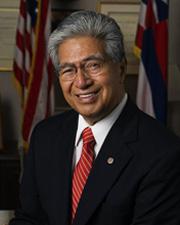
Mr. President, I rise today to join my colleagues, Senators Lieberman, Collins, and Levin, in introducing the Improve Interoperable Communications for First Responders Act of 2005 (the ICOM Act),…
Mr. President, I rise today to join my colleagues, Senators Lieberman, Collins, and Levin, in introducing the Improve Interoperable Communications for First Responders Act of 2005 (the ICOM Act), which will strengthen the interoperability of first responder communications across the country.
Since September 11, Federal, State, and local authorities have grappled with the challenge of achieving interoperable communications for emergency response personnel. This should not be a difficult task since the necessary technology exists. But as with many public policy challenges, achieving interoperability comes down to organization and funding.
The 9-11 Commission found that the inability of first responders to communicate at the three September 11 crash sites demonstrated ``that compatible and adequate communications among public safety organizations at the local, State, and Federal levels remains a important problem.'' In my home State of Hawaii, for example, first responders are unable to communicate by radio over 25 percent of the Island of Hawaii because of inadequate infrastructure and diverse geography. The Commission recommended that federal funding of local interoperability programs be given a high priority.
The Department of Homeland Security (DHS) estimated it would cost $40 billion to modernize communications equipment for the Nation's 2.5 million public safety first responders. In 2003, an independent task force sponsored by the Council on Foreign Relations recommended investing $6.8 billion over five years to ensure dependable, interoperable first responder communications, a need which they describe as ``so central to any kind of terrorist attack response.''
However, funding alone will not solve this urgent problem. The Government Accountability Office (GAO) has found that DHS leadership is critical to utilizing effectively interoperability technologies. In an April 2005 report, ``Technology Assessment: Protecting Structures and Improving Communications during Wildland Fires,'' GAO stated that even if two neighboring jurisdictions have the funding to purchase an interconnection device, such as an audio switch, organizational challenges remain. GAO stated, ``To effectively employ the device, they must also jointly decide how to share its cost, ownership, and management; agree on the operating procedures for when and how to deploy it; and train individuals to configure, maintain, and use it.'' Achieving such planning and coordination will require federal leadership.
According to GAO, the federal government has increased interoperability planning and coordination efforts in recent years. However the Wireless Public Safety Interoperable Communications Program (SAFECOM), which is run out of the Office for Interoperability and Compatibility (OIC) in DHS, has made limited progress in achieving communications interoperability among entities at all levels of government.
The ICOM Act will increase federal coordination and provide dedicated funding for interoperability. Our bill will increase the resources and authority of the OIC, which was established by the Intelligence Reform and Terrorism Prevention Act of 2004. Specifically, the OIC will be tasked with creating a national strategy and national architecture, facilitating the creation of regional task forces, and conducting pilot programs to evaluate new technology concepts. The OIC will be responsible not only for short-term solutions, but also for simultaneously pursuing a long-term interoperability
strategy, something that has been lacking from Federal efforts to date.
The ICOM Act will also create an interoperability grant program and authorize $3.3 billion over five years for the program. Recognizing that achieving interoperability is crucial to every State's emergency response capabilities, the bill gives each State a baseline amount of .55 percent of the funding.
The ICOM Act also requires the Secretary to look to at the unique geographic barriers in each State which may impede interoperability when awarding grants. This is key to States like Hawaii that may require additional transmitter towers and other types of equipment to overcome the obstacles that come with being a mountainous or island State.
Last year, I joined Senators Lieberman and Collins in introducing S. 2701, the Homeland Security Interagency and Interjurisdictional Information Sharing Act of 2004. Many of the provisions in S. 2701 were incorporated into the Intelligence Reform and Terrorism Prevention Act. However, there still continue to be problems in terms of leadership and funding in federal interoperability policy. I ask my colleagues to not wait another year to begin to fill this hole. I urge support of this important piece of legislation.

Mr. President, I am proud to reintroduce the Lifespan Respite Care Act of 2005 today with my colleague Senator John Warner. I'd like to express my sincere thanks to Senator Warner for his leadership…
Mr. President, I am proud to reintroduce the Lifespan Respite Care Act of 2005 today with my colleague Senator John Warner. I'd like to express my sincere thanks to Senator Warner for his leadership on this legislation which would make much needed quality respite care available and accessible to families and family caregivers in need.
Caregiving needs do not discriminate: they demand the time and resources of millions of American families from all socioeconomic, ethnic, and educational backgrounds.
Caregivers today provide an enormous portion of our health and long- term care for older adults and individuals with disabilities. Although much of family caregiving is unpaid, it is not without cost. In fact, it is estimated that if services provided by family caregivers were provided instead by paid professionals, they would cost over $200 billion annually. In addition, food, medicines and other caregiving necessities place added strain on already tight family budgets.
Because of their responsibilities at home, it is much more difficult for caregivers to find or maintain jobs. Many caregiving families are struggling to stay afloat. We simply cannot afford to continue to ignore their struggles.
In addition to the financial costs of family caregiving, this labor of love often results in substantial physical and psychological hardship. Research suggests that caregivers often put their own health and well being at risk while assisting loved ones. Meeting these difficult demands can lead to depression, physical illness, anxiety, and emotional strain.
One way to reduce the burden of caregiving is through respite care.
As you know, respite care is a service that temporarily relieves a family member of his or her caregiving duties.
Respite care provides some much needed relief from the daily demands of caregiving for a few hours or a few days. These welcome breaks help protect the physical and mental health of the family caregiver, making it possible for the individual in need of care to remain in the home.
Unfortunately, across our country quality respite care remains hard to find, and too many caregivers do not even know how to find information about available services. Where community respite care services do exist, there are often long waiting lists. There are more caregivers in need of respite care than there are available respite care resources.
And many caregiving families are hesitant to take advantage of these scant resources. Parents and spouses and other family caregivers are understandably hesitant to leave their loved ones with untrained staff.
In an effort to recognize and support the heroic efforts of our family caregivers, my husband signed the National Family Caregiver Support Program into law as an amendments to the reauthorization of the Older Americans Act in 2000.
Prior to the establishment of this program, there was no comprehensive Federal program that supported family caregivers.
Although the National Family Caregiver Support Program took a step in the right direction, further efforts are now necessary to meet the increasing needs of family caregivers.
That is why I am reintroducing the Lifespan Respite Care Act today with Senator John Warner. This legislation would improve efficiency and reduce duplication in respite service development and delivery. And it would make quality respite care available and accessible to families and family caregivers, regardless of their Medicaid status, disability, or age. It would assure that quality respite care is available for all caregivers who provide this labor of love to individuals across the lifespan.
My legislation picks up where the National Family Caregiver Support Program leaves off, by recognizing respite as a priority for caregivers and elevating respite as a policy priority at the Federal and State levels.
This bill would provide grants to develop a coordinated system of respite care services for family caregivers of individuals with special needs regardless of age. Funds could also be used to increase respite care services or to train respite care workers or volunteers.
There is much to do at the local, State, and Federal levels to address the growing needs of family caregivers. It is time that we make caregiving a national priority and provide the support that our family caregivers so desperately need.
I would like to thank my Senate colleagues for their support of this legislation which passed the Senate last Congress. I look forward to working with you all to improve the lives of our family caregivers, and those for whom they care.
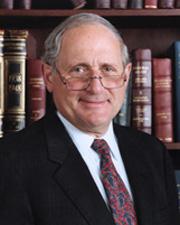
Mr. President, I join my colleagues in introducing the Improve Interoperable Communications For First Responders, or ``ICOM,'' Act of 2005. We have all heard the stories of how the first responders…
Mr. President, I join my colleagues in introducing the Improve Interoperable Communications For First Responders, or ``ICOM,'' Act of 2005. We have all heard the stories of how the first responders could not communicate on 9/11 and this lack of communication cost lives. The same situation is happening all over this country and we need to improve interoperable communications before more lives are lost. Attaining this objective will require substantial resources and a strong commitment by Congress and the Administration. This legislation takes an important first step in this effort.
We have seen how bad the problem is in Michigan. For example, on the morning of Sunday, October 26, 2003, Michigan first responders held an exercise to test the emergency communications response capabilities at Michigan's international border with Canada. As we all know, during any emergency, effective communications is an absolute requirement. However, during the exercise, in order to communicate between fire agencies, the fire commanding officer needed 3 portable radios literally hanging around his neck and hooked to his waist band to attempt scene coordination. The Incident Commander was shuffling radios up and down to his ear and mouth in an attempt to figure out ``who'' was requesting or providing information. Further, the fire commanding officer had no communication with any law enforcement or Emergency Medical Service agencies. To communicate with those agencies, 5 additional radios would be required. This is totally unacceptable.
First and foremost, the ICOM Act will provide dedicated funding for initiatives to achieve short- and long-term solutions to interoperability to States or regional consortia within each State for State-wide or regional communications planning, system design and engineering, procurement and installation of equipment, training and exercises, or other activities determined by the Secretary of Homeland Security to be integral to the achievement of communications interoperability.
This legislation will also provide the recently authorized Office for Interoperability and Compatibility the resources and authorities necessary to conduct extensive, nationwide outreach, develop a national strategy, facilitate the creation of regional task forces in each State, fund and conduct pilot programs to evaluate and validate new technology concepts, encourage more efficient use of resources, and test and deploy more reliable and less costly public safety communications systems. Finally, the ICOM Act also requires the Secretary of Homeland Security to establish a comprehensive, competitive research and development program. This includes promoting research through the Directorate of Science and Technology and Homeland Security Advanced Research Projects Agency, and considering establishing a Center of Excellence. The research agenda will focus on understanding the strengths and weaknesses of today's diverse public safety communications systems, examining how current and emerging technology can make public safety organizations more effective, and how local, State, and Federal agencies can utilize this technology in a coherent and cost-effective manner, evaluating and validating new technology concepts, and advancing the creation of a national strategy to promote interoperability and efficient use of spectrum.
I recently authored an amendment that passed the Homeland Security and Governmental Affairs Committee that would assist our first responders by creating demonstration projects at our northern and southern borders. The ICOM Act will complement that legislation by providing funding, support, research and development to improve interoperable communications on a national level.

Today I am introducing the Uniting American Families Act. This legislation would allow U.S. citizens and legal permanent residents to petition for their foreign same-sex partners to come to the…
Today I am introducing the Uniting American Families Act. This legislation would allow U.S. citizens and legal permanent residents to petition for their foreign same-sex partners to come to the United States under our family immigration system. It is nearly identical to the Permanent Partners Immigration Act that I introduced in the last Congress, and which Congressman Nadler--who is introducing this bill in the House today--has sponsored for the last four Congresses. I am pleased to have Senators Chafee, Kennedy, Corzine, Jeffords, Boxer, Feingold, Murray, Dayton, and Lautenberg as cosponsors.
Under current law, committed partners of Americans are unable to use the family immigration system, which accounts for about 75 percent of the green cards and immigrant visas granted annually by the United States. As a result, gay Americans who are in this situation must either live apart from their partners, or leave the country if they want to live legally and permanently with them.
This bill rectifies that problem while retaining strong prohibitions against fraud. To qualify as a permanent partner, petitioners must prove that they are at least 18 and are in a committed, intimate relationship with another adult in which both parties intend a lifelong commitment, and are financially interdependent with one's partner. They must also prove that they are not married to, or in a permanent partnership with, anyone other than that person, and are unable to contract with that person a marriage cognizable under the Immigration and Nationality Act. Proof could include sworn affidavits from friends and family and documentation of financial interdependence. Penalties for fraud would be the same as penalties for marriage fraud--up to five years in prison and $250,000 in fines for the U.S. citizen partner, and deportation for the alien partner.
There are Vermonters who are involved in permanent partnerships with foreign nationals and who have felt abandoned by our laws in this area. This bill would allow them--and other gay and lesbian Americans throughout our Nation who have come to feel that our immigration laws are discriminatory--to be a fuller part of our society.
The idea that immigration benefits should be extended to same-sex couples has become increasingly prevalent around the world. Indeed, sixteen nations--Australia, Belgium, Brazil, Canada, Denmark, Finland, France, Germany, Iceland, Israel, the Netherlands, New Zealand, Norway, South Africa, Sweden and the United Kingdom--recognize same-sex couples for immigration purposes.
Our immigration laws treat gays and lesbians in committed relationships as second-class citizens, and that needs to change. It is the right thing to do for the people involved, it is the sensible step to take in the interest of having a fair and consistent policy, and I hope that the Senate will act.

Mr. President, I am honored to introduce today a bill-- cosponsored by Senator Feinstein--to designate a trail in the Headwaters Forest Reserve in California after John L. Burton, one of California's…
Mr. President, I am honored to introduce today a bill-- cosponsored by Senator Feinstein--to designate a trail in the Headwaters Forest Reserve in California after John L. Burton, one of California's great public servants. The entire California Democratic delegation in the House, led by Representative George Miller, introduced the same bill last week.
John served honorably in the United States House of Representatives in the early 1980s and in the California State Assembly, before being elected to the California State Senate. There, in 1998, his colleagues elected him as the California Senate's President Pro Tem. John devoted his career to the service of all Californians, and for that, we honor him with this legislation.
Designating this particular trail is a fitting tribute because a few years ago, John was instrumental in protecting the pristine and invaluable land that is now known as the Headwaters Forest Reserve. Comprised of more than 7,000 acres of ancient redwoods, many of which are over 2,000 years old and 300 feet high, the Reserve was saved from potentially devastating logging in 1999. Numerous plant species and wildlife, including the Marbled Murrelet, dwell in this Reserve. The Reserve also protects rivers and streams that provide habitat essential for threatened salmon.
For his service to the people of California and his essential role in protecting a priceless parcel of California land, I am proud to introduce the John
L. Burton Trail Act. Through this small action, we recognize and honor a great man and his great work.

Mr. Speaker, I move to suspend the rules and pass the Senate bill (S. 1275) to designate the facility of the United States Postal Service located at 7172 North Tongass Highway, Ward Cove, Alaska, as…
Mr. Speaker, I move to suspend the rules and pass the Senate bill (S. 1275) to designate the facility of the United States Postal Service located at 7172 North Tongass Highway, Ward Cove, Alaska, as the ``Alice R. Brusich Post Office Building''.
Mr. Speaker, I ask unanimous consent that all Members may have 5 legislative days within which to revise and extend their remarks and include extraneous material on the bill under consideration.
Mr. Speaker, I yield myself such time as I may consume.
Mr. Speaker, Alice Brusich began her 31-year career with the postal service in 1954 as an assistant postmaster. Just 2 years later, she became postmaster where she was a strong advocate of improving and maintaining the postal service in Alaska. Mrs. Brusich was also a founding member of the Alaska Chapter 51 of the National Association of Postmasters in the United States.
Even after her retirement in 1985, Alice remained an active supporter of the postal service; and for this reason, I support naming the post office in Ward Cove, Alaska in her honor.
Mr. Speaker, I reserve the balance of our time.
Mr. Speaker, I yield back the balance of my time.
Mr. President, I send to the desk legislation to designate the U.S. Post Office located at 7172 North Tongass Highway in Ward Cove, AK after Alice R. Brusich. Alice Brusich started her career with…
Mr. President, I send to the desk legislation to designate the U.S. Post Office located at 7172 North Tongass Highway in Ward Cove, AK after Alice R. Brusich.
Alice Brusich started her career with the Postal Service in 1954 as an Assistant Postmaster. Through her hard work and efforts, she became Postmaster in 1956.
During her service with the Postal Service, Alice was also one of the founders of the Tongass Community Club. She was also one of the founding members and top officer of the Alaska Chapter 51 National Association of Postmasters in the United States.
Alice was also in charge of the Ketchikan Post Office in the 70's. In 1985, Alice retired after 31 years of service. She remains an active supporter of the Postal service and is dedicated to improving the services at the Ward Cove Post Office. Alice has always been a strong advocate of improving and maintaining the Postal Service in Alaska, and it is only appropriate that we honor her service by dedicating the Ward Cove Post Office after her.
Show 3 more
Mr. President, I send to the desk legislation to designate the U.S. Post Office located at 7172 North Tongass Highway in Ward Cove, AK after Alice R. Brusich. Alice Brusich started her career with…
Mr. President, I send to the desk legislation to designate the U.S. Post Office located at 7172 North Tongass Highway in Ward Cove, AK after Alice R. Brusich.
Alice Brusich started her career with the Postal Service in 1954 as an Assistant Postmaster. Through her hard work and efforts, she became Postmaster in 1956.
During her service with the Postal Service, Alice was also one of the founders of the Tongass Community Club. She was also one of the founding members and top officer of the Alaska Chapter 51 National Association of Postmasters in the United States.
Alice was also in charge of the Ketchikan Post Office in the 70's. In 1985, Alice retired after 31 years of service. She remains an active supporter of the Postal service and is dedicated to improving the services at the Ward Cove Post Office. Alice has always been a strong advocate of improving and maintaining the Postal Service in Alaska, and it is only appropriate that we honor her service by dedicating the Ward Cove Post Office after her.
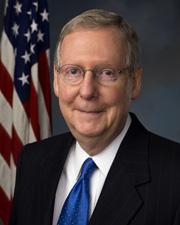
Mr. President, I ask unanimous consent that the Committee on Homeland Security and Governmental Affairs be discharged from further consideration and that the Senate proceed to immediate consideration…
Mr. President, I ask unanimous consent that the Committee on Homeland Security and Governmental Affairs be discharged from further consideration and that the Senate proceed to immediate consideration of the following postal naming bills, en bloc: S. 1275 and S. 1323.
Mr. President, I ask unanimous consent that the bills be read a third time and passed, the motions to reconsider be laid upon the table, en bloc, and that any statements relating to the bills be printed in the Record.

Mr. Speaker, I yield myself such time as I may consume. I urge my colleagues to support this resolution. I think it is fitting that we honor the service of Alice Brusich to the postal service by…
Mr. Speaker, I yield myself such time as I may consume.
I urge my colleagues to support this resolution. I think it is fitting that we honor the service of Alice Brusich to the postal service by naming this post office in her honor.
Mr. Speaker, I yield back the balance of my time.
Bill Text
5 versions available
        [Congressional Bills 109th Congress]
[From the U.S. Government Publishing Office]
[S. 1275 Enrolled Bill (ENR)]

S.1275

One Hundred Ninth Congress

of the

United States of America

AT THE SECOND SESSION

Begun and held at the City of Washington on Tuesday,
the third day of January, two thousand and six

An Act

To designate the facility of the United States Postal Service located at
7172 North Tongass Highway, Ward Cove, Alaska, as the ``Alice R. Brusich
Post Office Building''.

Be it enacted by the Senate and House of Representatives of the
United States of America in Congress assembled,

SECTION 1. ALICE R. BRUSICH POST OFFICE BUILDING.

(a) Designation.--The facility of the United States Postal Service
located at 7172 North Tongass Highway, in Ward Cove, Alaska, shall be
known and designated as the ``Alice R. Brusich Post Office Building''.
(b) References.--Any reference in a law, map, regulation, document,
paper, or other record of the United States to the facility referred to
in subsection (a) shall be deemed to be a reference to the ``Alice R.
Brusich Post Office Building''.

Speaker of the House of Representatives.

Vice President of the United States and
President of the Senate.