International Cooperation to Meet the Millennium Development Goals Act of 2005
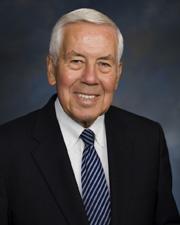 Sen. Richard G. Lugar (R-IN)
Legislative Activity
Stay on top of the latest movement without scrolling through every action
Held at the desk.
December 22, 2005 • 5:15 PM
View full timeline
Introduced in Senate
June 27, 2005
Sponsor introductory remarks on measure. (CR S7430-7431)
June 27, 2005
Read twice and referred to the Committee on Foreign Relations. (text of measure as introduced: CR S7431-7433)
June 27, 2005
Committee on Foreign Relations. Ordered to be reported with an amendment favorably.
November 1, 2005
Committee on Foreign Relations. Reported by Senator Lugar with amendments. Without written report.
November 7, 2005
Placed on Senate Legislative Calendar under General Orders. Calendar No. 281.
November 7, 2005
Measure laid before Senate by unanimous consent. (consideration: CR S14408-14410; text of measure as reported in Senate: CR S14408-14410)
December 22, 2005
Passed Senate with amendments by Unanimous Consent.
December 22, 2005
Received in the House.
December 22, 2005 • 4:03 PM
Message on Senate action sent to the House.
December 22, 2005
Held at the desk.
December 22, 2005 • 5:15 PM
Floor Debate
7 membersWhat members said about S. 1315 on the floor

 +2
+2
Floor Debate
7 membersWhat members said about S. 1315 on the floor
Mr. President, I rise today to introduce new legislation, entitled the Protection of Homes, Small Businesses, and Private Property Act of 2005. I introduce this legislation in response to a…
Mr. President, today, I am pleased to introduce ``The Bone Marrow and Cord Blood Therapy and Research Act of 2005.'' I am grateful that Senators Dodd, Burr, Reed and Ensign have joined me as sponsors…
Mr. President, I am pleased to join Senator Hatch, Senator Burr, Senator Reed, and Senator Ensign in introducing legislation that will significantly benefit some of the most gravely ill…
Mr. President, I rise today to introduce a bill that calls on the administration to assess the progress of poverty reduction efforts around the world since September 2000, when the Millennium…
Mr. President, I rise today to introduce a bill that calls on the administration to assess the progress of poverty reduction efforts around the world since September 2000, when the Millennium…
Show 3 more
Mr. President, today I am introducing legislation to address conflicts of interest and the appearance of conflicts involving former Federal officers and employees who represent Indian tribes. The…
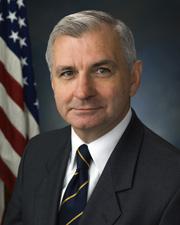
Mr. President, I join my colleagues, Senators Ensign, Dodd, Hatch, and Burr, in introducing the Bone Marrow and Cord Blood Therapy and Research Act of 2005. This bipartisan legislation represents a…
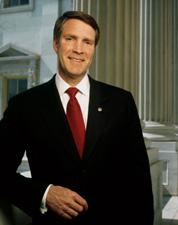
Mr. President, I ask unanimous consent that the Senate proceed to the immediate consideration of Calendar No. 281, S. 1315. Mr. President, I ask unanimous consent that the amendment at the desk be…
Bill Text
3 versions available
        [Congressional Bills 109th Congress]
[From the U.S. Government Publishing Office]
[S. 1315 Engrossed in Senate (ES)]

109th CONGRESS
1st Session
S. 1315

_______________________________________________________________________

AN ACT

To require a report on progress toward the Millennium Development
Goals, and for other purposes.

Be it enacted by the Senate and House of Representatives of the
United States of America in Congress assembled,

SECTION 1. SHORT TITLE.

This Act may be cited as the ``International Cooperation to Meet
the Millennium Development Goals Act of 2005''.

SEC. 2. FINDINGS.

Congress makes the following findings:
(1) At the United Nations Millennium Summit in 2000, the
United States joined more than 180 other countries in
committing to work toward goals to improve life for the world's
poorest people by 2015.
(2) Such goals include reducing the proportion of people
living on less than $1 per day by \1/2\, reducing child
mortality by \2/3\, and assuring basic education for all
children, while sustaining the environment upon which human
life depends.
(3) At the 2002 International Conference on Financing for
Development, the United States representative reiterated the
support of the United States for the Millennium Development
Goals and advocated, along with other international
participants, for a stronger focus on measurable outcomes
derived from a global partnership between developed and
developing countries.
(4) On March 22, 2002, President Bush stated, ``We fight
against poverty because hope is an answer to terror. We fight
against poverty because opportunity is a fundamental right to
human dignity. We fight against poverty because faith requires
it and conscience demands it. We fight against poverty with a
growing conviction that major progress is within our reach.''.
(5) The 2002 National Security Strategy of the United
States notes that ``a world where some live in comfort and
plenty, while half of the human race lives on less than $2 per
day, is neither just nor stable. Including all of the world's
poor in an expanding circle of development and opportunity is a
moral imperative and one of the top priorities of U.S.
international policy''.
(6) The National Commission on Terrorist Attacks Upon the
United States concluded that the Government of the United
States must offer an example of moral leadership in the world
and offer parents and their children a vision of the future
that emphasizes individual educational and economic opportunity
as essential to the efforts of the United States to defeat
global terrorism.
(7) The summit of the Group of Eight held during July 2005,
the United Nations summit held during September 2005, and the
Sixth Ministerial Conference of the World Trade Organization
scheduled to be held during December 2005 have provided and
will provide opportunities to measure and continue to pursue
progress on the Millennium Development Goals.
(8) The summit of the Group of Eight held July 6 through
July 8, 2005, in Gleneagles, Scotland, brought together the
countries that can make the greatest contribution to
alleviating extreme poverty in Africa, the region of the world
where extreme poverty is most prevalent.
(9) On June 11, 2005, the United States helped secure the
agreement of the Group of Eight Finance Ministers to cancel 100
percent of the debt obligations owed to the World Bank, African
Development Bank, and International Monetary Fund by countries
that are eligible for debt relief under the Highly Indebted
Poor Countries Initiative, the initiative established in 1996
by the World Bank and the International Monetary Fund for the
purpose of reducing the debt burdens of the world's poorest
countries, or under the Enhanced HIPC Initiative, as defined in
section 1625 of the International Financial Institutions Act
(22 U.S.C. 262p-8), which are poor countries that are on the
path to reform.
(10) The report prepared by the Commission for Africa and
issued by Prime Minister Tony Blair on March 11, 2005, entitled
``Our Common Interest'', called for coherence and coordination
in the development of an overarching package of actions to be
carried out by the countries of Africa and the international
community to address the complex interlocking issues that
challenge the continent, many of which have already been
addressed individually in previous summits and under the Africa
Action Plan enacted by the Group of Eight.
(11) The United States has recognized the need for
strengthened economic and trade opportunities, as well as
increased financial and technical assistance to Africa and
other countries burdened by extreme poverty, through
significant initiatives in recent years, including--
(A) the African Growth and Opportunity Act (19
U.S.C. 3701 et seq.) that has opened United States
markets to thousands of products from Africa;
(B) the President's Emergency Plan for AIDS Relief
developed under section 101 of the United States
Leadership Against HIV/AIDS, Tuberculosis, and Malaria
Act of 2003 (22 U.S.C. 7611), the major focus of which
has been on African countries;
(C) the Millennium Challenge Corporation
established under section 604 of the Millennium
Challenge Act of 2003 (22 U.S.C. 7703) that is in the
process of committing new and significant levels of
assistance to countries, including countries in Africa,
that are poor but show great promise for boosting
economic growth and bettering the lives of their
people; and
(D) the cancellation by the United States of 100
percent of the bilateral debt owed to the Untied States
by countries eligible for debt relief under the
Enhanced HIPC Initiative.
(12) The report prepared by the Commission for Africa
entitled ``Our Common Interest'' includes the following
findings:
(A) The people of Africa must demonstrate the
leadership necessary to address the governance
challenges they face, setting priorities that ensure
the development of effective civil and police services,
independent judiciaries, and strong parliaments, all of
which reinforce a stable and predictable economic
environment attractive to investment.
(B) Many leaders in Africa have pursued personal
self-interest rather than national goals, a tendency
that has been in some instances exacerbated and abetted
by the manipulation of foreign governments pursuing
their own agenda in the region to the detriment of the
people of Africa.
(C) More violent conflict has occurred in Africa
during the period between 1965 and 2005 than occurred
in any other continent during that period, and the
countries of Africa must engage on the individual,
national, and regional level to prevent and manage
conflict.
(D) The capacity to trade is constrained by a
derelict or nonexistent infrastructure in most African
countries as well as by the double-edged sword of
tariff and nontariff barriers to trade that complicate
markets and discourage investment both within and
beyond the continent.
(E) The local resources for investment in people
and the institutions necessary for good governance have
been squandered, misappropriated, and, to an
increasingly devastating effect, spent on servicing
debt to the developed world. Such resources should be
reoriented to serve the needs of the people through the
use of debt forgiveness and support for institutional
reform and internal capacity building.
(F) Failing to prevent conflict in Africa results
in incalculable costs to African development and
expense to the international community and the
investment in preventing conflict is a fraction of such
costs and expenses, in human, security, and financial
terms.
(G) Despite difficulties, there is optimism and
energy reflected in the scope of activities of
individuals such as 2004 Nobel Peace Prize recipient,
Wangari Maathai, as well as those of improved regional
organizations such as the African Union and the New
Partnership for Economic Development's Peer Review
Mechanism, and subregional entities such as the
Economic Community of West African States, the Inter-
Governmental Authority on Development, and the
potential of the Southern African Development
Community.
(H) Political reform in Africa has produced
results. For example, while in 1985 countries of sub-
Saharan Africa ruled by dictators were the norm, by
2005 dictatorships are a minority and democracy has new
life with governments chosen by the people increasing
fourfold since 1991.
(13) The report prepared by the Commission for Africa
entitled ``Our Common Interest'' includes the following
recommendations:
(A) At this vital moment when globalization and
growth, technology and trade, and mutual security
concerns allow, and common humanity demands, a
substantial tangible and coherent package of actions
should immediately be taken by the international
community, led by the most industrialized countries, in
partnership with the countries of Africa, to address
the poverty and underdevelopment of the African
continent.
(B) The people of Africa must take responsibility
and show courageous leadership in addressing problems
and taking ownership of solutions as the means for
ensuring sustainable development, while implementing
governance reform as an underlying prerequisite for
foreign assistance effectiveness.
(C) Each developed country has unique strengths and
capacity to add value to a comprehensive assistance
plan and should join their individual efforts to a
coherent whole that is more efficient and responsive to
Africa and the people of Africa.
(D) The international community must honor existing
commitments to strengthen African peacekeeping capacity
and go beyond those commitments to invest in more
effective prevention and nonmilitary means to resolve
conflict through such regional organizations as the
African Union and the subregional Economic Community
for West African States.
(E) A massive investment in physical infrastructure
should be made to support commerce, extend governance,
and provide opportunities for education, healthcare,
investment and growth.
(F) Donors and the governments of the countries of
Africa should devote substantial investment in the men
and women of Africa through the education and health
sectors, enabling and extending recent gains made to
reach far more broadly into remote regions.
(G) The public sector should actively engage the
private sector in driving growth through partnerships
by reforming the laws, bureaucracy, and infrastructure
necessary to maintain a climate that fosters investment
by developing public-private centers of excellence to
pursue such reforms.
(H) The countries of Africa must maximize the
participation of women in both business and government,
protect the rights of women, and work to increase the
number of women in leadership positions so as to
capitalize on the ability of women to deliver scarce
resources effectively and fairly.
(I) The international community must work together
to dismantle trade barriers, including the immediate
elimination of trade-distorting commodity support.
(J) International donors should strengthen
multilateral institutions in Africa to respond
appropriately to local and regional crises as well as
to promote economic development and ensure the people
of Africa are granted a stronger voice in international
forums.
(K) The international community must join in
providing creative incentives for commercial firms to
research and develop products that improve water,
sanitation, health, and the environment in ways that
would dramatically reduce suffering and increase
productive life-spans in Africa.

SEC. 3. DEFINITIONS.

In this Act:
(1) Appropriate congressional committees.--The term
``appropriate congressional committees'' means the Committee on
Foreign Relations of the Senate and the Committee on
International Relations of the House of Representatives.
(2) Group of eight.--The term ``Group of Eight'' means the
forum for addressing international economic, political, and
social issues attended by representatives of Canada, France,
Germany, Italy, Japan, Russia, the United Kingdom, and the
United States.
(3) Millennium development goals.--The term ``Millennium
Development Goals'' means the goals set out in United Nations
Millennium Declaration, resolution 55/2 adopted by the General
Assembly of the United Nations on September 8, 2000.

SEC. 4. SENSE OF CONGRESS.

It is the sense of Congress that--
(1) the President should continue to provide the leadership
shown at the summit of the Group of Eight held in July 2005 at
Gleneagles, Scotland, to continue to encourage other countries
to develop a true partnership to pursue the Millennium
Development Goals;
(2) the President should urge the Group of Eight to
consider the findings and recommendations contained in the
report prepared by the Commission for Africa entitled ``Our
Common Interest'', in partnership with the nations of Africa,
for the development of Africa;
(3) the Group of Eight, as well as governments of the
countries of Africa and regional organizations of such
governments, should reaffirm and honor the commitments made in
the Africa Action Plan enacted by the Group of Eight in
previous years; and
(4) the international community should continue to build
upon the progress made at the summit of the Group of Eight in
July 2005 and the United Nations summit in September 2005
toward achieving the Millennium Development Goals, and should
further enable such progress at the Sixth Ministerial
conference of the World Trade Organization scheduled for
December 2005.

SEC. 5. REPORT.

(a) Requirement.--Not later than 60 days after the date of the
conclusion of the Sixth Ministerial Conference of the World Trade
Organization that is scheduled to be held in Hong Kong from December 13
through December 18, 2005, the Secretary of State in consultation with
other appropriate United States and international agencies shall submit
a report to the appropriate congressional committees on the progress
the international community is making toward achieving the Millennium
Development Goals.
(b) Content.--The report required by subsection (a) shall include
the following:
(1) A review of the commitments made by the United States
and other members of the international community at the summit
of the Group of Eight in July 2005, the United Nations summit
in September 2005, and the Sixth Ministerial Conference of the
World Trade Organization scheduled for December 2005, that
pertain to the ability of the developing world to achieve the
Millennium Development Goals.
(2) A review of United States policies and progress toward
achieving the Millennium Development Goals by 2015, as well as
policies to provide continued leadership in achieving such
goals by 2015.
(3) An evaluation, to the extent possible, of the
contributions of other national and international actors in
achieving the Millennium Development Goals by 2015.
(4) An assessment of the likelihood that the Millennium
Development Goals will be achieved.

Passed the Senate December 22 (legislative day, December
21), 2005.

Attest:

Secretary.
109th CONGRESS

1st Session

S. 1315

_______________________________________________________________________

AN ACT

To require a report on progress toward the Millennium Development
Goals, and for other purposes.