Wired for Health Care Quality Act
 Sen. Michael B. Enzi (R-WY)
Legislative Activity
Stay on top of the latest movement without scrolling through every action
Referred to the Subcommittee on Health.
December 16, 2005
View full timeline
Introduced in Senate
July 18, 2005
Sponsor introductory remarks on measure. (CR S8420-8421)
July 18, 2005
Read twice and referred to the Committee on Health, Education, Labor, and Pensions. (text of measure as introduced: CR S8421-8426)
July 18, 2005
Committee on Health, Education, Labor, and Pensions. Ordered to be reported with an amendment in the nature of a substitute favorably.
July 20, 2005
Committee on Health, Education, Labor, and Pensions. Reported by Senator Enzi with an amendment in the nature of a substitute. With written report No. 109-111.
July 27, 2005
Placed on Senate Legislative Calendar under General Orders. Calendar No. 178.
July 27, 2005
Measure laid before Senate by unanimous consent. (consideration: CR 11/17/2005 S13260-13277; text of measure as reported in Senate: CR 11/17/2005 S13261-13271)
November 18, 2005
Passed Senate with an amendment by Unanimous Consent.
November 18, 2005
Received in the House.
November 18, 2005 • 10:33 AM
Message on Senate action sent to the House.
November 18, 2005
Referred to the House Committee on Energy and Commerce.
November 18, 2005
Floor Debate
21 membersWhat members said about S. 1418 on the floor


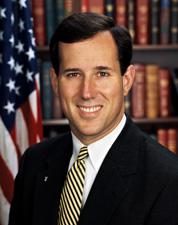
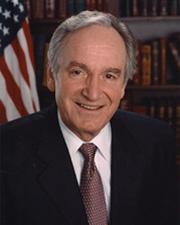
 +16
+16
Floor Debate
21 membersWhat members said about S. 1418 on the floor
Mr. President, will the Senator yield? Mr. President, I wish to ask a question of my colleague from Iowa, in support of the amendment being offered by the Senator from West Virginia. It was only a…
Mr. President, the distinguished Senator from Iowa and I have been conferring on our schedule this morning. We have a number of amendments lined up. The first amendment will be offered by Senator…
Mr. President, I call up amendment No. 2239. I ask unanimous consent the reading of the amendment be dispensed with. This is an amendment that is to instruct the Department of Health and Human…
Mr. President, I concur with my chairman in that regard. The only other observation I make, we are not encouraging a lot of amendments. We are just saying if you have amendments come over and do them…
Mr. President, I have no objection if the Senator wishes to proceed at this time. Am I recognized? I yield to the Senator, as I may, without any objections, for 10 minutes, and I retain my right to…
Show 8 more

Mr. President, I rise in opposition to the amendment of my good friend from Oklahoma. He and I were elected to the House together and we fought many battles over there, not unlike what he has brought…

Madam President, I appreciate the chairman's kindness in arranging this. As I understand, we have by unanimous consent set aside the pending amendment. Is that correct? Madam President, I send an…
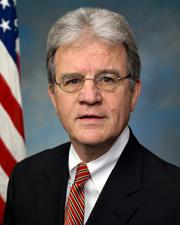
Mr. President, I will be calling up a series of amendments. Before I do that, I visited with the chairman of this subcommittee. I have four amendments to offer. I ask unanimous consent that we not…

Mr. President, it would be my purpose to introduce an amendment that would increase funding for title I to the level President Bush has recommended. I propose that we set aside the pending amendment…
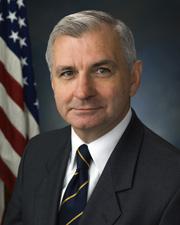
Mr. President, I ask unanimous consent to return to amendment No. 2194, as modified. Mr. President, I send a modification of this amendment to the desk. Mr. President, I ask unanimous consent that…

Mr. President, I ask unanimous consent that the order for the quorum call be rescinded. I ask unanimous consent to speak for 15 minutes in morning business. If I may, I ask the Chair to notify me…

Mr. President, I associate myself entirely with the remarks of my colleague, the senior Senator from Georgia, Mr. Chambliss. I rise for two specific reasons. The first is to correct some statements…

I announce that the Senator from New Jersey (Mr. Corzine), the Senator from Minnesota (Mr. Dayton), and the Senator from Florida (Mr. Nelson) are necessarily absent. Mr. President, I ask unanimous…
Show 11 more

Mr. President, I came here to speak on another subject, but I have to comment on the statements made by my distinguished colleague. The American people are smart enough to understand what is going on…

Mr. President, I thank our leaders on education: Senator Byrd on Title I, Senator Dodd on the Head Start program, and Senator Clinton on IDEA. As I did yesterday, I pay tribute to the chairman of the…

Mr. President, I want to take a few minutes to explain my recent action related to S. 1418, the Wired for Health Care Quality Act. Today, with great reluctance, I asked Leader Frist to consult with…

Mr. President, I thank the distinguished chairman of the committee and the distinguished ranking member for ceding me this time. I call up amendment No. 2244. Mr. President, I ask unanimous consent…

Mr. President, I rise to address possible floor consideration of S. 1418, a bill to amend the Public Health Service Act to enhance the adoption of a nationwide interoperable health information…
Mr. President, I rise today to introduce a bipartisan bill to improve the quality and efficiency of health care by harnessing the potential of information technology. I am joined in this effort by…
Mr. President, I rise today to introduce a bipartisan bill to improve the quality and efficiency of health care by harnessing the potential of information technology. I am joined in this effort by…
Mr. President, I rise today to introduce a bipartisan bill to improve the quality and efficiency of health care by harnessing the potential of information technology. I am joined in this effort by…
Mr. President, I rise today to introduce a bipartisan bill to improve the quality and efficiency of health care by harnessing the potential of information technology. I am joined in this effort by…

Mr. President, would the Senator from Pennsylvania yield just for an announcement? I thank the Senator from Pennsylvania. I have been trying for some time to get an amendment in, and it is at the…

Mr. President, I rise today as a proud cosponsor of the Byrd amendment. This amendment would increase funding for title I by $5 billion. The No Child Left Behind Act authorized $22.7 billion in…
Bill Text
4 versions available
        [Congressional Bills 109th Congress]
[From the U.S. Government Publishing Office]
[S. 1418 Engrossed in Senate (ES)]

109th CONGRESS
1st Session
S. 1418

_______________________________________________________________________

AN ACT

To enhance the adoption of a nationwide interoperable health
information technology system and to improve the quality and reduce the
costs of health care in the United States.

Be it enacted by the Senate and House of Representatives of the
United States of America in Congress assembled,

SECTION 1. SHORT TITLE.

This Act may be cited as the ``Wired for Health Care Quality Act''.

SEC. 2. IMPROVING HEALTH CARE QUALITY, SAFETY, AND EFFICIENCY.

The Public Health Service Act (42 U.S.C. 201 et seq.) is amended by
adding at the end the following:

``TITLE XXIX--HEALTH INFORMATION TECHNOLOGY AND QUALITY

``SEC. 2901. DEFINITIONS.

``In this title:
``(1) Health care provider.--The term `health care
provider' means a hospital, skilled nursing facility, home
health entity, health care clinic, federally qualified health
center, group practice (as defined in section 1877(h)(4) of the
Social Security Act), a pharmacist, a pharmacy, a laboratory, a
physician (as defined in section 1861(r) of the Social Security
Act), a practitioner (as defined in section 1842(b)(18)(CC) of
the Social Security Act), a health facility operated by or
pursuant to a contract with the Indian Health Service, a rural
health clinic, and any other category of facility or clinician
determined appropriate by the Secretary.
``(2) Health information.--The term `health information'
has the meaning given such term in section 1171(4) of the
Social Security Act.
``(3) Health insurance plan.--The term `health insurance
plan' means--
``(A) a health insurance issuer (as defined in
section 2791(b)(2));
``(B) a group health plan (as defined in section
2791(a)(1)); and
``(C) a health maintenance organization (as defined
in section 2791(b)(3)).
``(4) Individually identifiable health information.--The
term `individually identifiable health information' has the
meaning given such term in section 1171 of the Social Security
Act.
``(5) Laboratory.--The term `laboratory' has the meaning
given that term in section 353.
``(6) Pharmacist.--The term `pharmacist' has the meaning
given that term in section 804 of the Federal Food, Drug, and
Cosmetic Act.
``(7) Qualified health information technology.--The term
`qualified health information technology' means a computerized
system (including hardware and software) that--
``(A) protects the privacy and security of health
information;
``(B) maintains and provides permitted access to
health information in an electronic format;
``(C) incorporates decision support to reduce
medical errors and enhance health care quality;
``(D) complies with the standards adopted by the
Federal Government under section 2903; and
``(E) allows for the reporting of quality measures
under section 2907.
``(8) State.--The term `State' means each of the several
States, the District of Columbia, Puerto Rico, the Virgin
Islands, Guam, American Samoa, and the Northern Mariana
Islands.

``SEC. 2902. OFFICE OF THE NATIONAL COORDINATOR OF HEALTH INFORMATION
TECHNOLOGY.

``(a) Office of National Health Information Technology.--There is
established within the Office of the Secretary an Office of the
National Coordinator of Health Information Technology (referred to in
this section as the `Office'). The Office shall be headed by a National
Coordinator who shall be appointed by the Secretary and shall report
directly to the Secretary.
``(b) Purpose.--It shall be the purpose of the Office to coordinate
with relevant Federal agencies and private entities and oversee
programs and activities to develop a nationwide interoperable health
information technology infrastructure that--
``(1) ensures that patients' individually identifiable
health information is secure and protected;
``(2) improves health care quality, reduces medical errors,
and advances the delivery of patient-centered medical care;
``(3) reduces health care costs resulting from
inefficiency, medical errors, inappropriate care, and
incomplete information;
``(4) ensures that appropriate information to help guide
medical decisions is available at the time and place of care;
``(5) promotes a more effective marketplace, greater
competition, and increased choice through the wider
availability of accurate information on health care costs,
quality, and outcomes;
``(6) improves the coordination of care and information
among hospitals, laboratories, physician offices, and other
entities through an effective infrastructure for the secure and
authorized exchange of health care information;
``(7) improves public health reporting and facilitates the
early identification and rapid response to public health
threats and emergencies, including bioterror events and
infectious disease outbreaks;
``(8) facilitates health research; and
``(9) promotes prevention of chronic diseases.
``(c) Duties of the National Coordinator.--The National Coordinator
shall--
``(1) serve as the principal advisor to the Secretary
concerning the development, application, and use of health
information technology, and coordinate and oversee the health
information technology programs of the Department;
``(2) facilitate the adoption of a nationwide,
interoperable system for the electronic exchange of health
information;
``(3) ensure the adoption and implementation of standards
for the electronic exchange of health information to reduce
cost and improve health care quality;
``(4) ensure that health information technology policy and
programs of the Department are coordinated with those of
relevant executive branch agencies (including Federal
commissions) with a goal of avoiding duplication of efforts and
of helping to ensure that each agency undertakes health
information technology activities primarily within the areas of
its greatest expertise and technical capability;
``(5) to the extent permitted by law, coordinate outreach
and consultation by the relevant executive branch agencies
(including Federal commissions) with public and private parties
of interest, including consumers, payers, employers, hospitals
and other health care providers, physicians, community health
centers, laboratories, vendors and other stakeholders;
``(6) advise the President regarding specific Federal
health information technology programs; and
``(7) prepare the reports described under section 2903(i)
(excluding paragraph (4) of such section).
``(d) Detail of Federal Employees.--
``(1) In general.--Upon the request of the National
Coordinator, the head of any Federal agency is authorized to
detail, with or without reimbursement from the Office, any of
the personnel of such agency to the Office to assist it in
carrying out its duties under this section.
``(2) Effect of detail.--Any detail of personnel under
paragraph (1) shall--
``(A) not interrupt or otherwise affect the civil
service status or privileges of the Federal employee;
and
``(B) be in addition to any other staff of the
Department employed by the National Coordinator.
``(3) Acceptance of detailees.--Notwithstanding any other
provision of law, the Office may accept detailed personnel from
other Federal agencies without regard to whether the agency
described under paragraph (1) is reimbursed.
``(e) Rule of Construction.--Nothing in this section shall be
construed to require the duplication of Federal efforts with respect to
the establishment of the Office, regardless of whether such efforts
were carried out prior to or after the enactment of this title.
``(f) Authorization of Appropriations.--There are authorized to be
appropriated to carry out this section, $5,000,000 for fiscal year
2006, $5,000,000 for fiscal year 2007, and such sums as may be
necessary for each of fiscal years 2008 through 2010.

``SEC. 2903. AMERICAN HEALTH INFORMATION COLLABORATIVE.

``(a) Purpose.--The Secretary shall establish the public-private
American Health Information Collaborative (referred to in this section
as the `Collaborative') to--
``(1) advise the Secretary and recommend specific actions
to achieve a nationwide interoperable health information
technology infrastructure;
``(2) serve as a forum for the participation of a broad
range of stakeholders to provide input on achieving the
interoperability of health information technology; and
``(3) recommend standards (including content,
communication, and security standards) for the electronic
exchange of health information (including for the reporting of
quality data under section 2907) for adoption by the Federal
Government and voluntary adoption by private entities.
``(b) Composition.--
``(1) In general.--The Collaborative shall be composed of
members of the public and private sectors to be appointed by
the Secretary, including representatives from--
``(A) consumer or patient organizations;
``(B) organizations with expertise in privacy and
security;
``(C) health care providers;
``(D) health insurance plans or other third party
payors;
``(E) information technology vendors; and
``(F) purchasers or employers.
``(2) Participation.--In appointing members under paragraph
(1), and in developing the procedures for conducting the
activities of the Collaborative, the Secretary shall ensure a
balance among various sectors of the health care system so that
no single sector unduly influences the recommendations of the
Collaborative.
``(3) Terms.--Members appointed under paragraph (1) shall
serve for 2 year terms, except that any member appointed to
fill a vacancy for an unexpired term shall be appointed for the
remainder of such term. A member may serve for not to exceed
180 days after the expiration of such member's term or until a
successor has been appointed.
``(4) Outside involvement.--With respect to the functions
of the Collaborative, the Secretary shall ensure an adequate
opportunity for the participation of outside advisors,
including individuals with expertise in--
``(A) health information privacy;
``(B) health information security;
``(C) health care quality and patient safety,
including individuals with expertise in utilizing
health information technology to improve health care
quality and patient safety;
``(D) data exchange; and
``(E) developing health information technology
standards and new health information technology.
``(c) Recommendations and Policies.--Not later than 1 year after
the date of enactment of this title, and annually thereafter, the
Collaborative shall recommend to the Secretary uniform national
policies for adoption by the Federal Government and voluntary adoption
by private entities to support the widespread adoption of health
information technology, including--
``(1) protection of individually identifiable health
information through privacy and security practices;
``(2) measures to prevent unauthorized access to health
information, including unauthorized access through the use of
certain peer-to-peer file-sharing applications;
``(3) methods to notify patients if their individually
identifiable health information is wrongfully disclosed;
``(4) methods to facilitate secure patient access to health
information;
``(5) fostering the public understanding of health
information technology;
``(6) the ongoing harmonization of industry-wide health
information technology standards;
``(7) recommendations for a nationwide interoperable health
information technology infrastructure;
``(8) the identification and prioritization of specific use
cases for which health information technology is valuable,
beneficial, and feasible;
``(9) recommendations for the establishment of an entity to
ensure the continuation of the functions of the Collaborative;
and
``(10) other policies (including recommendations for
incorporating health information technology into the provision
of care and the organization of the health care workplace)
determined to be necessary by the Collaborative.
``(d) Standards.--
``(1) Existing standards.--The standards adopted by the
Consolidated Health Informatics Initiative shall be deemed to
have been recommended by the Collaborative under this section.
``(2) First year review.--Not later than 1 year after the
date of enactment of this title, the Collaborative shall--
``(A) review existing standards (including content,
communication, and security standards) for the
electronic exchange of health information;
``(B) identify deficiencies and omissions in such
existing standards; and
``(C) identify duplication and overlap in such
existing standards;
and recommend new standards and modifications to such existing
standards as necessary.
``(3) Ongoing review.--Beginning 1 year after the date of
enactment of this title, and annually thereafter, the
Collaborative shall--
``(A) review existing standards (including content,
communication, and security standards) for the
electronic exchange of health information;
``(B) identify deficiencies and omissions in such
existing standards; and
``(C) identify duplication and overlap in such
existing standards;
and recommend new standards and modifications to such existing
standards as necessary.
``(4) Limitation.--The standards and timeframe for adoption
described in this section shall be consistent with any
standards developed pursuant to the Health Insurance
Portability and Accountability Act of 1996.
``(e) Federal Action.--Not later than 90 days after the issuance of
a recommendation from the Collaborative under subsection (d)(2), the
Secretary of Health and Human Services, the Secretary of Veterans
Affairs, and the Secretary of Defense, in collaboration with
representatives of other relevant Federal agencies, as determined
appropriate by the Secretary, shall jointly review such
recommendations. If appropriate, the Secretary shall provide for the
adoption by the Federal Government of any standard or standards
contained in such recommendation.
``(f) Coordination of Federal Spending.--
``(1) In general.--Not later than 1 year after the adoption
by the Federal Government of a recommendation as provided for
in subsection (e), and in compliance with chapter 113 of title
40, United States Code, no Federal agency shall expend Federal
funds for the purchase of any new health information technology
or health information technology system for clinical care or
for the electronic retrieval, storage, or exchange of health
information that is not consistent with applicable standards
adopted by the Federal Government under subsection (e).
``(2) Rule of construction.--Nothing in paragraph (1) shall
be construed to restrict the purchase of minor (as determined
by the Secretary) hardware or software components in order to
modify, correct a deficiency in, or extend the life of existing
hardware or software.
``(g) Coordination of Federal Data Collection.--Not later than 3
years after the adoption by the Federal Government of a recommendation
as provided for in subsection (e), all Federal agencies collecting
health data for the purposes of quality reporting, surveillance,
epidemiology, adverse event reporting, research, or for other purposes
determined appropriate by the Secretary, shall comply with standards
adopted under subsection (e).
``(h) Voluntary Adoption.--
``(1) In general.--Any standards adopted by the Federal
Government under subsection (e) shall be voluntary with respect
to private entities.
``(2) Rule of construction.--Nothing in this section shall
be construed to require that a private entity that enters into
a contract with the Federal Government adopt the standards
adopted by the Federal Government under this section with
respect to activities not related to the contract.
``(3) Limitation.--Private entities that enter into a
contract with the Federal Government shall adopt the standards
adopted by the Federal Government under this section for the
purpose of activities under such Federal contract.
``(i) Reports.--The Secretary shall submit to the Committee on
Health, Education, Labor, and Pensions and the Committee on Finance of
the Senate and the Committee on Energy and Commerce and the Committee
on Ways and Means of the House of Representatives, on an annual basis,
a report that--
``(1) describes the specific actions that have been taken
by the Federal Government and private entities to facilitate
the adoption of an interoperable nationwide system for the
electronic exchange of health information;
``(2) describes barriers to the adoption of such a
nationwide system;
``(3) contains recommendations to achieve full
implementation of such a nationwide system; and
``(4) contains a plan and progress toward the establishment
of an entity to ensure the continuation of the functions of the
Collaborative.
``(j) Application of FACA.--The Federal Advisory Committee Act (5
U.S.C. App.) shall apply to the Collaborative, except that the term
provided for under section 14(a)(2) shall be 5 years.
``(k) Rule of Construction.--Nothing in this section shall be
construed to require the duplication of Federal efforts with respect to
the establishment of the Collaborative, regardless of whether such
efforts were carried out prior to or after the enactment of this title.
``(l) Authorization of Appropriations.--There are authorized to be
appropriated to carry out this section, $4,000,000 for fiscal year
2006, $4,000,000 for fiscal year 2007, and such sums as may be
necessary for each of fiscal years 2008 through 2010.

``SEC. 2904. IMPLEMENTATION AND CERTIFICATION OF HEALTH INFORMATION
STANDARDS.

``(a) Implementation.--
``(1) In general.--The Secretary, based upon the
recommendations of the Collaborative, shall develop criteria to
ensure uniform and consistent implementation of any standards
for the electronic exchange of health information voluntarily
adopted by private entities in technical conformance with such
standards adopted under this title.
``(2) Implementation assistance.--The Secretary may
recognize a private entity or entities to assist private
entities in the implementation of the standards adopted under
this title using the criteria developed by the Secretary under
this section.
``(b) Certification.--
``(1) In general.--The Secretary, based upon the
recommendations of the Collaborative, shall develop criteria to
ensure and certify that hardware and software that claim to be
in compliance with applicable standards for the electronic
exchange of health information adopted under this title have
established and maintained such compliance in technical
conformance with such standards.
``(2) Certification assistance.--The Secretary may
recognize a private entity or entities to assist in the
certification described under paragraph (1) using the criteria
developed by the Secretary under this section.
``(c) Outside Involvement.--The Secretary, through consultation
with the Collaborative, may accept recommendations on the development
of the criteria under subsections (a) and (b) from a Federal agency or
private entity.

``SEC. 2905. GRANTS TO FACILITATE THE WIDESPREAD ADOPTION OF
INTEROPERABLE HEALTH INFORMATION TECHNOLOGY.

``(a) Competitive Grants to Facilitate the Widespread Adoption of
Health Information Technology.--
``(1) In general.--The Secretary may award competitive
grants to eligible entities to facilitate the purchase and
enhance the utilization of qualified health information
technology systems to improve the quality and efficiency of
health care.
``(2) Eligibility.--To be eligible to receive a grant under
paragraph (1) an entity shall--
``(A) submit to the Secretary an application at
such time, in such manner, and containing such
information as the Secretary may require;
``(B) submit to the Secretary a strategic plan for
the implementation of data sharing and interoperability
measures;
``(C) be a--
``(i) not for profit hospital, including a
federally qualified health center (as defined
in section 1861(aa)(4) of the Social Security
Act);
``(ii) individual or group practice; or
``(iii) another health care provider not
described in clause (i) or (ii);
``(D) adopt the standards adopted by the Federal
Government under section 2903;
``(E) implement the measures adopted under section
2907 and report to the Secretary on such measures;
``(F) agree to notify patients if their
individually identifiable health information is
wrongfully disclosed;
``(G) demonstrate significant financial need; and
``(H) provide matching funds in accordance with
paragraph (4).
``(3) Use of funds.--Amounts received under a grant under
this subsection shall be used to facilitate the purchase and
enhance the utilization of qualified health information
technology systems and training personnel in the use of such
technology.
``(4) Matching requirement.--To be eligible for a grant
under this subsection an entity shall contribute non-Federal
contributions to the costs of carrying out the activities for
which the grant is awarded in an amount equal to $1 for each $3
of Federal funds provided under the grant.
``(5) Preference in awarding grants.--In awarding grants
under this subsection the Secretary shall give preference to--
``(A) eligible entities that are located in rural,
frontier, and other underserved areas as determined by
the Secretary;
``(B) eligible entities that will link, to the
extent practicable, the qualified health information
system to local or regional health information plan or
plans; and
``(C) with respect to an entity described in
subsection (a)(2)(C)(iii), a nonprofit health care
provider.
``(b) Competitive Grants to States for the Development of State
Loan Programs to Facilitate the Widespread Adoption of Health
Information Technology.--
``(1) In general.--The Secretary may award competitive
grants to States for the establishment of State programs for
loans to health care providers to facilitate the purchase and
enhance the utilization of qualified health information
technology.
``(2) Establishment of fund.--To be eligible to receive a
competitive grant under this subsection, a State shall
establish a qualified health information technology loan fund
(referred to in this subsection as a `State loan fund') and
comply with the other requirements contained in this section. A
grant to a State under this subsection shall be deposited in
the State loan fund established by the State. No funds
authorized by other provisions of this title to be used for
other purposes specified in this title shall be deposited in
any State loan fund.
``(3) Eligibility.--To be eligible to receive a grant under
paragraph (1) a State shall--
``(A) submit to the Secretary an application at
such time, in such manner, and containing such
information as the Secretary may require;
``(B) submit to the Secretary a strategic plan in
accordance with paragraph (4);
``(C) establish a qualified health information
technology loan fund in accordance with paragraph (2);
``(D) require that health care providers receiving
such loans--
``(i) link, to the extent practicable, the
qualified health information system to a local
or regional health information network;
``(ii) consult with the Health Information
Technology Resource Center established in
section 914(d) to access the knowledge and
experience of existing initiatives regarding
the successful implementation and effective use
of health information technology; and
``(iii) agree to notify patients if their
individually identifiable health information is
wrongfully disclosed;
``(E) require that health care providers receiving
such loans adopt the standards adopted by the Federal
Government under section 2903;
``(F) require that health care providers receiving
such loans implement the measures adopted under section
2907 and report to the Secretary on such measures; and
``(G) provide matching funds in accordance with
paragraph (8).
``(4) Strategic plan.--
``(A) In general.--A State that receives a grant
under this subsection shall annually prepare a
strategic plan that identifies the intended uses of
amounts available to the State loan fund of the State.
``(B) Contents.--A strategic plan under
subparagraph (A) shall include--
``(i) a list of the projects to be assisted
through the State loan fund in the first fiscal
year that begins after the date on which the
plan is submitted;
``(ii) a description of the criteria and
methods established for the distribution of
funds from the State loan fund; and
``(iii) a description of the financial
status of the State loan fund and the short-
term and long-term goals of the State loan
fund.
``(5) Use of funds.--
``(A) In general.--Amounts deposited in a State
loan fund, including loan repayments and interest
earned on such amounts, shall be used only for awarding
loans or loan guarantees, or as a source of reserve and
security for leveraged loans, the proceeds of which are
deposited in the State loan fund established under
paragraph (1). Loans under this section may be used by
a health care provider to facilitate the purchase and
enhance the utilization of qualified health information
technology and training of personnel in the use of such
technology.
``(B) Limitation.--Amounts received by a State
under this subsection may not be used--
``(i) for the purchase or other acquisition
of any health information technology system
that is not a qualified health information
technology system;
``(ii) to conduct activities for which
Federal funds are expended under this title, or
the amendments made by the Wired for Health
Care Quality Act; or
``(iii) for any purpose other than making
loans to eligible entities under this section.
``(6) Types of assistance.--Except as otherwise limited by
applicable State law, amounts deposited into a State loan fund
under this subsection may only be used for the following:
``(A) To award loans that comply with the
following:
``(i) The interest rate for each loan shall
be less than or equal to the market interest
rate.
``(ii) The principal and interest payments
on each loan shall commence not later than 1
year after the loan was awarded, and each loan
shall be fully amortized not later than 10
years after the date of the loan.
``(iii) The State loan fund shall be
credited with all payments of principal and
interest on each loan awarded from the fund.
``(B) To guarantee, or purchase insurance for, a
local obligation (all of the proceeds of which finance
a project eligible for assistance under this
subsection) if the guarantee or purchase would improve
credit market access or reduce the interest rate
applicable to the obligation involved.
``(C) As a source of revenue or security for the
payment of principal and interest on revenue or general
obligation bonds issued by the State if the proceeds of
the sale of the bonds will be deposited into the State
loan fund.
``(D) To earn interest on the amounts deposited
into the State loan fund.
``(7) Administration of state loan funds.--
``(A) Combined financial administration.--A State
may (as a convenience and to avoid unnecessary
administrative costs) combine, in accordance with State
law, the financial administration of a State loan fund
established under this subsection with the financial
administration of any other revolving fund established
by the State if otherwise not prohibited by the law
under which the State loan fund was established.
``(B) Cost of administering fund.--Each State may
annually use not to exceed 4 percent of the funds
provided to the State under a grant under this
subsection to pay the reasonable costs of the
administration of the programs under this section,
including the recovery of reasonable costs expended to
establish a State loan fund which are incurred after
the date of enactment of this title.
``(C) Guidance and regulations.--The Secretary
shall publish guidance and promulgate regulations as
may be necessary to carry out the provisions of this
subsection, including--
``(i) provisions to ensure that each State
commits and expends funds allotted to the State
under this subsection as efficiently as
possible in accordance with this title and
applicable State laws; and
``(ii) guidance to prevent waste, fraud,
and abuse.
``(D) Private sector contributions.--
``(i) In general.--A State loan fund
established under this subsection may accept
contributions from private sector entities,
except that such entities may not specify the
recipient or recipients of any loan issued
under this subsection.
``(ii) Availability of information.--A
State shall make publicly available the
identity of, and amount contributed by, any
private sector entity under clause (i) and may
issue letters of commendation or make other
awards (that have no financial value) to any
such entity.
``(8) Matching requirements.--
``(A) In general.--The Secretary may not make a
grant under paragraph (1) to a State unless the State
agrees to make available (directly or through donations
from public or private entities) non-Federal
contributions in cash toward the costs of the State
program to be implemented under the grant in an amount
equal to not less than $1 for each $1 of Federal funds
provided under the grant.
``(B) Determination of amount of non-federal
contribution.--In determining the amount of non-Federal
contributions that a State has provided pursuant to
subparagraph (A), the Secretary may not include any
amounts provided to the State by the Federal
Government.
``(9) Preference in awarding grants.--The Secretary may
give a preference in awarding grants under this subsection to
States that adopt value-based purchasing programs to improve
health care quality.
``(10) Reports.--The Secretary shall annually submit to the
Committee on Health, Education, Labor, and Pensions and the
Committee on Finance of the Senate, and the Committee on Energy
and Commerce and the Committee on Ways and Means of the House
of Representatives, a report summarizing the reports received
by the Secretary from each State that receives a grant under
this subsection.
``(c) Competitive Grants for the Implementation of Regional or
Local Health Information Technology Plans.--
``(1) In general.--The Secretary may award competitive
grants to eligible entities to implement regional or local
health information plans to improve health care quality and
efficiency through the electronic exchange of health
information pursuant to the standards, protocols, and other
requirements adopted by the Secretary under sections 2903 and
2907.
``(2) Eligibility.--To be eligible to receive a grant under
paragraph (1) an entity shall--
``(A) demonstrate financial need to the Secretary;
``(B) demonstrate that one of its principal
missions or purposes is to use information technology
to improve health care quality and efficiency;
``(C) adopt bylaws, memoranda of understanding, or
other charter documents that demonstrate that the
governance structure and decisionmaking processes of
such entity allow for participation on an ongoing basis
by multiple stakeholders within a community,
including--
``(i) physicians (as defined in section
1861(r) of the Social Security Act), including
physicians that provide services to low income
and underserved populations;
``(ii) hospitals (including hospitals that
provide services to low income and underserved
populations);
``(iii) pharmacists or pharmacies;
``(iv) health insurance plans;
``(v) health centers (as defined in section
330(b)) and Federally qualified health centers
(as defined in section 1861(aa)(4) of the
Social Security Act);
``(vi) rural health clinics (as defined in
section 1861(aa) of the Social Security Act);
``(vii) patient or consumer organizations;
``(viii) employers; and
``(ix) any other health care providers or
other entities, as determined appropriate by
the Secretary;
``(D) demonstrate the participation, to the extent
practicable, of stakeholders in the electronic exchange
of health information within the local or regional plan
pursuant to paragraph (2)(C);
``(E) adopt nondiscrimination and conflict of
interest policies that demonstrate a commitment to
open, fair, and nondiscriminatory participation in the
health information plan by all stakeholders;
``(F) adopt the standards adopted by the Secretary
under section 2903;
``(G) require that health care providers receiving
such grants implement the measures adopted under
section 2907 and report to the Secretary on such
measures;
``(H) agree to notify patients if their
individually identifiable health information is
wrongfully disclosed;
``(I) facilitate the electronic exchange of health
information within the local or regional area and among
local and regional areas;
``(J) prepare and submit to the Secretary an
application in accordance with paragraph (3); and
``(K) agree to provide matching funds in accordance
with paragraph (5).
``(3) Application.--
``(A) In general.--To be eligible to receive a
grant under paragraph (1), an entity shall submit to
the Secretary an application at such time, in such
manner, and containing such information as the
Secretary may require.
``(B) Required information.--At a minimum, an
application submitted under this paragraph shall
include--
``(i) clearly identified short-term and
long-term objectives of the regional or local
health information plan;
``(ii) a technology plan that complies with
the standards adopted under section 2903 and
that includes a descriptive and reasoned
estimate of costs of the hardware, software,
training, and consulting services necessary to
implement the regional or local health
information plan;
``(iii) a strategy that includes
initiatives to improve health care quality and
efficiency, including the use and reporting of
health care quality measures adopted under
section 2907;
``(iv) a plan that describes provisions to
encourage the implementation of the electronic
exchange of health information by all
physicians, including single physician
practices and small physician groups
participating in the health information plan;
``(v) a plan to ensure the privacy and
security of personal health information that is
consistent with Federal and State law;
``(vi) a governance plan that defines the
manner in which the stakeholders shall jointly
make policy and operational decisions on an
ongoing basis;
``(vii) a financial or business plan that
describes--
``(I) the sustainability of the
plan;
``(II) the financial costs and
benefits of the plan; and
``(III) the entities to which such
costs and benefits will accrue; and
``(viii) in the case of an applicant entity
that is unable to demonstrate the participation
of all stakeholders pursuant to paragraph
(2)(C), the justification from the entity for
any such nonparticipation.
``(4) Use of funds.--Amounts received under a grant under
paragraph (1) shall be used to establish and implement a
regional or local health information plan in accordance with
this subsection.
``(5) Matching requirement.--
``(A) In general.--The Secretary may not make a
grant under this subsection to an entity unless the
entity agrees that, with respect to the costs to be
incurred by the entity in carrying out the
infrastructure program for which the grant was awarded,
the entity will make available (directly or through
donations from public or private entities) non-Federal
contributions toward such costs in an amount equal to
not less than 50 percent of such costs ($1 for each $2
of Federal funds provided under the grant).
``(B) Determination of amount contributed.--Non-
Federal contributions required under subparagraph (A)
may be in cash or in kind, fairly evaluated, including
equipment, technology, or services. Amounts provided by
the Federal Government, or services assisted or
subsidized to any significant extent by the Federal
Government, may not be included in determining the
amount of such non-Federal contributions.
``(d) Reports.--Not later than 1 year after the date on which the
first grant is awarded under this section, and annually thereafter
during the grant period, an entity that receives a grant under this
section shall submit to the Secretary a report on the activities
carried out under the grant involved. Each such report shall include--
``(1) a description of the financial costs and benefits of
the project involved and of the entities to which such costs
and benefits accrue;
``(2) an analysis of the impact of the project on health
care quality and safety;
``(3) a description of any reduction in duplicative or
unnecessary care as a result of the project involved;
``(4) a description of the efforts of recipients under this
section to facilitate secure patient access to health
information; and
``(5) other information as required by the Secretary.
``(e) Requirement To Achieve Quality Improvement.--The Secretary
shall annually evaluate the activities conducted under this section and
shall, in awarding grants, implement the lessons learned from such
evaluation in a manner so that awards made subsequent to each such
evaluation are made in a manner that, in the determination of the
Secretary, will result in the greatest improvement in quality measures
under section 2907.
``(f) Limitation.--An eligible entity may only receive one non-
renewable grant under subsection (a), one non-renewable grant under
subsection (b), and one non-renewable grant under subsection (c).
``(g) Authorization of Appropriations.--
``(1) In general.--For the purpose of carrying out this
section, there is authorized to be appropriated $116,000,000
for fiscal year 2006, $141,000,000 for fiscal year 2007, and
such sums as may be necessary for each of fiscal years 2008
through 2010.
``(2) Availability.--Amounts appropriated under paragraph
(1) shall remain available through fiscal year 2010.

``SEC. 2906. DEMONSTRATION PROGRAM TO INTEGRATE INFORMATION TECHNOLOGY
INTO CLINICAL EDUCATION.

``(a) In General.--The Secretary may award grants under this
section to carry out demonstration projects to develop academic
curricula integrating qualified health information technology systems
in the clinical education of health professionals. Such awards shall be
made on a competitive basis and pursuant to peer review.
``(b) Eligibility.--To be eligible to receive a grant under
subsection (a), an entity shall--
``(1) submit to the Secretary an application at such time,
in such manner, and containing such information as the
Secretary may require;
``(2) submit to the Secretary a strategic plan for
integrating qualified health information technology in the
clinical education of health professionals and for ensuring the
consistent utilization of decision support software to reduce
medical errors and enhance health care quality;
``(3) be--
``(A) a health professions school;
``(B) a school of nursing; or
``(C) an institution with a graduate medical
education program;
``(4) provide for the collection of data regarding the
effectiveness of the demonstration project to be funded under
the grant in improving the safety of patients, the efficiency
of health care delivery, and in increasing the likelihood that
graduates of the grantee will adopt and incorporate health
information technology, and implement the quality measures
adopted under section 2907, in the delivery of health care
services; and
``(5) provide matching funds in accordance with subsection
(c).
``(c) Use of Funds.--
``(1) In general.--With respect to a grant under subsection
(a), an eligible entity shall--
``(A) use grant funds in collaboration with 2 or
more disciplines; and
``(B) use grant funds to integrate qualified health
information technology into community-based clinical
education.
``(2) Limitation.--An eligible entity shall not use amounts
received under a grant under subsection (a) to purchase
hardware, software, or services.
``(d) Matching Funds.--
``(1) In general.--The Secretary may award a grant to an
entity under this section only if the entity agrees to make
available non-Federal contributions toward the costs of the
program to be funded under the grant in an amount that is not
less than $1 for each $2 of Federal funds provided under the
grant.
``(2) Determination of amount contributed.--Non-Federal
contributions under paragraph (1) may be in cash or in kind,
fairly evaluated, including equipment or services. Amounts
provided by the Federal Government, or services assisted or
subsidized to any significant extent by the Federal Government,
may not be included in determining the amount of such
contributions.
``(e) Evaluation.--The Secretary shall take such action as may be
necessary to evaluate the projects funded under this section and
publish, make available, and disseminate the results of such
evaluations on as wide a basis as is practicable.
``(f) Reports.--Not later than 1 year after the date of enactment
of this title, and annually thereafter, the Secretary shall submit to
the Committee on Health, Education, Labor, and Pensions and the
Committee on Finance of the Senate, and the Committee on Energy and
Commerce and the Committee on Ways and Means of the House of
Representatives a report that--
``(1) describes the specific projects established under
this section; and
``(2) contains recommendations for Congress based on the
evaluation conducted under subsection (e).
``(g) Authorization of Appropriations.--There is authorized to be
appropriated to carry out this section, $5,000,000 for fiscal year
2007, and such sums as may be necessary for each of fiscal years 2008
through 2010.
``(h) Sunset.--This section shall not apply after September 30,
2010.

``SEC. 2907. QUALITY MEASURES.

``(a) In General.--The Secretary shall develop quality measures,
including measures to assess the effectiveness, timeliness, patient
self-management, patient centeredness, efficiency, and safety, for the
purpose of measuring the quality of care patients receive.
``(b) Requirements.--The Secretary shall ensure that the quality
measures developed under this section comply with the following:
``(1) Measures.--
``(A) Requirements.--In developing the quality
measures under this section, the Secretary shall, to
the extent feasible, ensure that--
``(i) such measures are evidence based,
reliable, and valid;
``(ii) such measures are consistent with
the purposes described in section 2902(b);
``(iii) such measures include measures of
clinical processes and outcomes, patient
experience, efficiency, and equity; and
``(iv) such measures include measures of
overuse and underuse of health care items and
services.
``(2) Priorities.--In developing the quality measures under
this section, the Secretary shall ensure that priority is given
to--
``(A) measures with the greatest potential impact
for improving the quality and efficiency of care
provided under this Act;
``(B) measures that may be rapidly implemented by
group health plans, health insurance issuers,
physicians, hospitals, nursing homes, long-term care
providers, and other providers; and
``(C) measures which may inform health care
decisions made by consumers and patients.
``(3) Risk adjustment.--The Secretary shall establish
procedures to account for differences in patient health status,
patient characteristics, and geographic location. To the extent
practicable, such procedures shall recognize existing
procedures.
``(4) Maintenance.--The Secretary shall, as determined
appropriate, but in no case more often than once during each
12-month period, update the quality measures, including through
the addition of more accurate and precise measures and the
retirement of existing outdated measures.
``(5) Relationship with programs under the social security
act.--The Secretary shall ensure that the quality measures
developed under this section--
``(A) complement quality measures developed by the
Secretary under programs administered by the Secretary
under the Social Security Act, including programs under
titles XVIII, XIX, and XXI of such Act; and
``(B) do not conflict with the needs and priorities
of the programs under titles XVIII, XIX, and XXI of
such Act, as set forth by the Administrator of the
Centers for Medicare & Medicaid Services.
``(c) Required Considerations in Developing and Updating the
Measures.--In developing and updating the quality measures under this
section, the Secretary may take into account--
``(1) any demonstration or pilot program conducted by the
Secretary relating to measuring and rewarding quality and
efficiency of care;
``(2) any existing activities conducted by the Secretary
relating to measuring and rewarding quality and efficiency;
``(3) any existing activities conducted by private
entities, including health insurance plans and payors;
``(4) the report by the Institute of Medicine of the
National Academy of Sciences under section 238(b) of the
Medicare Prescription Drug, Improvement, and Modernization Act
of 2003; and
``(5) issues of data collection and reporting, including
the feasibility of collecting and reporting data on measures.
``(d) Solicitation of Advice and Recommendations.--On and after
July 1, 2006, the Secretary shall consult with the following regarding
the development, updating, and use of quality measures developed under
this section:
``(1) Health insurance plans and health care providers,
including such plans and providers with experience in the care
of the frail elderly and individuals with multiple complex
chronic conditions, or groups representing such health
insurance plans and providers.
``(2) Groups representing patients and consumers.
``(3) Purchasers and employers or groups representing
purchasers or employers.
``(4) Organizations that focus on quality improvement as
well as the measurement and reporting of quality measures.
``(5) Organizations that certify and license health care
providers.
``(6) State government public health programs.
``(7) Individuals or entities skilled in the conduct and
interpretation of biomedical, health services, and health
economics research and with expertise in outcomes and
effectiveness research and technology assessment.
``(8) Individuals or entities involved in the development
and establishment of standards and certification for health
information technology systems and clinical data.
``(9) Individuals or entities with experience with--
``(A) urban health care issues;
``(B) safety net health care issues; and
``(C) rural and frontier health care issues.
``(e) Use of Quality Measures.--
``(1) In general.--For purposes of activities conducted or
supported by the Secretary under this Act, the Secretary shall,
to the extent practicable, adopt and utilize the quality
measures developed under this section.
``(2) Collaborative agreements.--With respect to activities
conducted or supported by the Secretary under this Act, the
Secretary may establish collaborative agreements with private
entities, including group health plans and health insurance
issuers, providers, purchasers, consumer organizations, and
entities receiving a grant under section 2905, to--
``(A) encourage the use of the quality measures
adopted by the Secretary under this section; and
``(B) foster uniformity between the health care
quality measures utilized by private entities.
``(3) Reporting.--The Secretary shall implement procedures
to enable the Department of Health and Human Services to accept
the electronic submission of data for purposes of--
``(A) quality measurement using the quality
measures developed under this section and using the
standards adopted by the Federal Government under
section 2903; and
``(B) for reporting measures used to make value-
based payments under programs under the Social Security
Act.
``(f) Dissemination of Information.--Beginning on January 1, 2008,
in order to make comparative quality information available to health
care consumers, health professionals, public health officials,
researchers, and other appropriate individuals and entities, the
Secretary shall provide for the dissemination, aggregation, and
analysis of quality measures collected under section 2905 and the
dissemination of recommendations and best practices derived in part
from such analysis.
``(g) Technical Assistance.--The Secretary shall provide technical
assistance to public and private entities to enable such entities to--
``(1) implement and use evidence-based guidelines with the
greatest potential to improve health care quality, efficiency,
and patient safety; and
``(2) establish mechanisms for the rapid dissemination of
information regarding evidence-based guidelines with the
greatest potential to improve health care quality, efficiency,
and patient safety.
``(h) Rule of Construction.--Nothing in this title shall be
construed as prohibiting the Secretary, acting through the
Administrator of the Centers for Medicare & Medicaid Services, from
developing quality measures (and timing requirements for reporting such
measures) for use under programs administered by the Secretary under
the Social Security Act, including programs under titles XVIII, XIX,
and XXI of such Act.''.

SEC. 3. LICENSURE AND THE ELECTRONIC EXCHANGE OF HEALTH INFORMATION.

(a) In General.--The Secretary of Health and Human Services shall
carry out, or contract with a private entity to carry out, a study that
examines--
(1) the variation among State laws that relate to the
licensure, registration, and certification of medical
professionals; and
(2) how such variation among State laws impacts the secure
electronic exchange of health information--
(A) among the States; and
(B) between the States and the Federal Government.
(b) Report and Recommendations.--Not later than 1 year after the
date of enactment of this Act, the Secretary of Health and Human
Services shall publish a report that--
(1) describes the results of the study carried out under
subsection (a); and
(2) makes recommendations to States regarding the
harmonization of State laws based on the results of such study.

SEC. 4. ENSURING PRIVACY AND SECURITY.

Nothing in this Act (or the amendments made by this Act) shall be
construed to affect the scope, substance, or applicability of--
(1) section 264 of the Health Insurance Portability and
Accountability Act of 1996;
(2) sections 1171 through 1179 of the Social Security Act;
and
(3) any regulation issued pursuant to any such section.

SEC. 5. GAO STUDY.

Not later than 6 months after the date of enactment of this Act,
the Comptroller General of the United States shall submit to Congress a
report on the necessity and workability of requiring health plans (as
defined in section 1171 of the Social Security Act (42 U.S.C. 1320d)),
health care clearinghouses (as defined in such section 1171), and
health care providers (as defined in such section 1171) who transmit
health information in electronic form, to notify patients if their
individually identifiable health information (as defined in such
section 1171) is wrongfully disclosed.

SEC. 6. STUDY OF REIMBURSEMENT INCENTIVES.

The Secretary of Health and Human Services shall carry out, or
contract with a private entity to carry out, a study that examines
methods to create efficient reimbursement incentives for improving
health care quality in Federally qualified health centers, rural health
clinics, and free clinics.

SEC. 7. HEALTH INFORMATION TECHNOLOGY RESOURCE CENTER.

Section 914 of the Public Health Service Act (42 U.S.C. 299b-3) is
amended by adding at the end the following:
``(d) Health Information Technology Resource Center.--
``(1) In general.--The Secretary, acting through the
Director, shall develop a Health Information Technology
Resource Center to provide technical assistance and develop
best practices to support and accelerate efforts to adopt,
implement, and effectively use interoperable health information
technology in compliance with section 2903 and 2907.
``(2) Purposes.--The purpose of the Center is to--
``(A) provide a forum for the exchange of knowledge
and experience;
``(B) accelerate the transfer of lessons learned
from existing public and private sector initiatives,
including those currently receiving Federal financial
support;
``(C) assemble, analyze, and widely disseminate
evidence and experience related to the adoption,
implementation, and effective use of interoperable
health information technology.
``(D) provide for the establishment of regional and
local health information networks to facilitate the
development of interoperability across health care
settings and improve the quality of health care;
``(E) provide for the development of solutions to
barriers to the exchange of electronic health
information; and
``(F) conduct other activities identified by the
States, local or regional health information networks,
or health care stakeholders as a focus for developing
and sharing best practices.
``(3) Support for activities.--To provide support for the
activities of the Center, the Director shall modify the
requirements, if necessary, that apply to the National Resource
Center for Health Information Technology to provide the
necessary infrastructure to support the duties and activities
of the Center and facilitate information exchange across the
public and private sectors.
``(4) Rule of construction.--Nothing in this subsection
shall be construed to require the duplication of Federal
efforts with respect to the establishment of the Center,
regardless of whether such efforts were carried out prior to or
after the enactment of this subsection.
``(e) Technical Assistance Telephone Number or Website.--The
Secretary shall establish a toll-free telephone number or Internet
website to provide health care providers and patients with a single
point of contact to--
``(1) learn about Federal grants and technical assistance
services related to interoperable health information
technology;
``(2) learn about qualified health information technology
and the quality measures adopted by the Federal Government
under sections 2903 and 2907;
``(3) learn about regional and local health information
networks for assistance with health information technology; and
``(4) disseminate additional information determined by the
Secretary.
``(f) Authorization of Appropriations.--There is authorized to be
appropriated, such sums as may be necessary for each of fiscal years
2006 and 2007 to carry out this subsection.''.

SEC. 8. REAUTHORIZATION OF INCENTIVE GRANTS REGARDING TELEMEDICINE.

Section 330L(b) of the Public Health Service Act (42 U.S.C. 254c-
18(b)) is amended by striking ``2002 through 2006'' and inserting
``2006 through 2010''.

Passed the Senate November 18 (legislative day, November
17), 2005.

Attest:

Secretary.
109th CONGRESS

1st Session

S. 1418

_______________________________________________________________________

AN ACT

To enhance the adoption of a nationwide interoperable health
information technology system and to improve the quality and reduce the
costs of health care in the United States.