


II
109th CONGRESS
1st Session
S. 1429
IN THE SENATE OF THE UNITED STATES
July 20, 2005
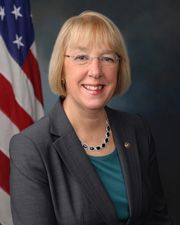
Mrs. Murray (for herself and Mr. DeWine) introduced the following bill; which was read twice and referred to the Committee on Health, Education, Labor, and Pensions
A BILL
To amend the Higher Education Act of 1965 to assist homeless students in obtaining postsecondary education, and for other purposes.
Short title
This Act may be cited as the
Improving Access to Education for
Students Who Are Homeless or in Foster Care Act
.
Findings
Congress finds the following:
According to a study of foster care children in the State of Washington, a child who enters foster care is likely to have poorer academic outcomes than a child not in foster care, even after controlling for a variety of factors such as poverty.
Youth in foster care—
are less likely to be enrolled in college preparatory classes than non-foster care youth; and
are more than twice as likely as non-foster care youth (37 percent as compared to 16 percent) to have dropped out of secondary school.
50 percent of foster youth in the United States graduate from secondary school, compared with 85 percent of youth overall.
70 percent of teens in foster care desire to go to college.
A report from Casey Family Programs indicated that, nationwide, less than 27 percent of foster youth who graduated from secondary school went on to college, as compared to 52 percent of the general population. Moreover, the college dropout rate among foster youth is far higher than the rate among other students.
A May 2002 report issued by the University of California at Berkeley found that, of more than 3,200 foster care youth who attended a community college from 1992 through 2000—
39 percent earned between 1 and 17 credits;
40 percent of the foster care youth earned no credits; and
many of the foster care youth did not attempt to take classes for credit, but rather were enrolled in remedial or other non-credit classes.
Unaccompanied youth experiencing homelessness often have left home for their own survival.
Although children and youth who experience homelessness represent the full range of academic talents and abilities, homelessness creates serious barriers to school enrollment, attendance, and success.
The McKinney-Vento Homeless Assistance Act (42 U.S.C. 11301 et seq.) requires State educational agencies and local educational agencies to ensure that homeless children and youth receive a free and appropriate public education, but these provisions do not reach beyond secondary education.
The barriers created by homelessness to kindergarten through grade 12 education (extreme poverty, residential instability, lack of documentation, and lack of awareness of programs and resources) often are also barriers to postsecondary education.
Higher education offers students experiencing homelessness the best hope for escaping poverty and homelessness as adults.
Financial assistance for students who are homeless or in foster care
Need analysis
Special circumstances
Section 479A(a)
of the Higher Education Act of 1965 (20 U.S.C. 1087tt(a)) is amended, in the
third sentence, by inserting a change in housing status that results in
homelessness,
before or other changes
.
Independent student
Section 480(d) of the Higher Education Act of 1965 (20 U.S.C. 1087vv(d)) is amended to read as follows:
Independent student
Definition
The term independent, when used with respect to a student, means any individual who—
is 24 years of age or older by December 31 of the award year;
is an orphan, in foster care, or a ward of the court, or was in foster care or a ward of the court until the individual reached the age of 18;
is an emancipated youth, as defined by the student's State of legal residence;
is in legal guardianship, as defined in section 475 of the Social Security Act (42 U.S.C. 675);
is a veteran of the Armed Forces of the United States (as defined in subsection (c)(1));
is a graduate or professional student;
is a married individual;
has legal dependents other than a spouse;
has been verified as both a homeless child or youth and an unaccompanied youth, as such terms are defined in section 725 of the McKinney-Vento Homeless Assistance Act (42 U.S.C. 11434a), during the school year in which the application for financial assistance is submitted, by—
a local educational agency liaison for homeless children and youths, as designated under section 722(g)(1)(J)(ii) of the McKinney-Vento Homeless Assistance Act (42 U.S.C. 11432(g)(1)(J)(ii));
a director of a homeless shelter, transitional shelter, or independent living program; or
a financial aid administrator; or
is a student for whom a financial aid administrator makes a documented determination of independence by reason of other unusual circumstances.
Simplifying the dependency override process
Nothing in this subsection shall be construed to prohibit a financial aid administrator from making a determination of independence under paragraph (1)(J) based upon a documented determination of independence under such paragraph that was previously made by another financial aid administrator in the same application year.
.
Tailoring electronic applications for students with special circumstances
Section 483(a) of the Higher Education Act of 1965 (20 U.S.C. 1090(a)) is amended by adding at the end the following:
Applications for students seeking a documented determination of independence
In the case of a student seeking a documented determination of independence by a financial aid administrator, as described in section 480(d)(1)(J), nothing in this section shall prohibit the Secretary from—
allowing such student to indicate the student's special circumstance on the electronic version of a form developed under paragraph (5);
collecting and processing, on a preliminary basis, data provided by such student using the electronic version of the form; or
distributing such data to States, institutions of higher education, and guaranty agencies for the purposes of processing loan applications and determining need and eligibility for institutional and State financial aid awards for such student on a preliminary basis, pending a documented determination of independence by a financial aid administrator.
.
Federal early outreach and student services programs for students who are homeless or in foster care
Federal TRIO programs
Definition of homeless children and youths
Section 402A(g) of the Higher Education Act of 1965 (20 U.S.C. 1070a–11(g)) is amended—
by redesignating paragraphs (2) and (3) as paragraphs (3) and (4); and
by inserting after paragraph (1) the following:
Homeless children and youths
The term homeless children and youths has the meaning given the term in section 725 of the McKinney-Vento Homeless Assistance Act (42 U.S.C. 11434a).
.
Talent search
Section 402B(b) of the Higher Education Act of 1965 (20 U.S.C. 1070a–12(b)) is amended by striking paragraph (10) and inserting the following:
programs and activities as described in paragraphs (1) through (9) which are specially designed for—
students of limited English proficiency;
students who are homeless children and youths; and
students who are in foster care or are aging out of the foster care system.
.
Upward Bound
Section 402C(b) of the Higher Education Act of 1965 (20 U.S.C. 1070a–13(b)) is amended by striking paragraph (12) and inserting the following:
programs and activities as described in paragraphs (1) through (11) which are specially designed for—
students of limited English proficiency;
students who are homeless children and youths; and
students who are in foster care or are aging out of the foster care system.
.
Student support services
Section 402D of the Higher Education Act of 1965 (20 U.S.C. 1070a–14) is amended—
in subsection (a)(3)—
by striking students and
and
inserting students,
; and
by inserting , students who are
homeless children and youths, and students who are in foster care or are aging
out of the foster care system
before the period; and
in subsection (b)—
in paragraph (9), by striking
and
after the semicolon;
by striking paragraph (10) and inserting the following:
programs and activities as described in paragraphs (1) through (9) which are specially designed for—
students of limited English proficiency;
students who are or who were homeless children and youths; and
students who are in foster care or are aging out of the foster care system; and
; and
by adding at the end the following:
assistance in securing temporary housing for—
students who are, or who were, homeless children and youths; or
students who are in foster care or are aging out of the foster care system.
.
Educational opportunity centers
Section 402F(b) of the Higher Education Act of 1965 (20 U.S.C. 1070a–16(b)) is amended by striking paragraph (10) and inserting the following:
programs and activities as described in paragraphs (1) through (9) which are specially designed for—
students of limited English proficiency;
students who are homeless children and youths; and
students who are in foster care or are aging out of the foster care system.
.
Staff development activities
Section 402G(b)(3)
of the Higher Education Act of 1965 (20 U.S.C. 1070a–17(b)(3)) is amended by
striking chapter.
and inserting chapter, including
strategies for recruiting and serving students who are homeless children and
youths, and students who are in foster care or are aging out of the foster care
system.
.
GEAR-UP programs
Requirements for gaining early awareness and readiness for undergraduate programs
Section 404B(c)(2) of the Higher Education
Act of 1965 (20 U.S.C. 1070a–22(c)(2)) is amended by striking
programs.
and inserting programs, including programs
under subtitle B of title VII of the McKinney-Vento Homeless Assistance Act (42
U.S.C. 11431 et seq.).
.
Early intervention use of funds
Section
404D(b)(2)(C) of the Higher Education Act of 1965 (20 U.S.C. 1070a–24(b)(2)(C))
is amended by inserting , for students who are homeless children and
youths, as defined in section 725 of the McKinney-Vento Homeless Assistance Act
(42 U.S.C. 11434a), or for students who are in foster care or are aging out of
the foster care system
before the period.
Demonstration projects to increase enrollment and success of highly mobile students in postsecondary education
Purpose
It is the purpose of this title to support demonstration projects in order to—
increase the secondary school graduation rates of highly mobile students;
increase the academic success of highly mobile students in secondary school; and
increase the enrollment and success of highly mobile students in higher education.
Definitions
In this title:
Highly mobile students
The term highly mobile students means students who are—
homeless children and youths, as such term is defined in section 725 of the McKinney-Vento Homeless Assistance Act (42 U.S.C. 11434a); or
wards of the State.
Secretary
The term Secretary
means the
Secretary of Education.
Ward of the state
The term ward of the State means a child who—
is a ward of the State, as determined by the State where the child resides; or
is in the custody of a public child welfare agency, including situations where the child is residing—
in a foster family home, group home, or other alternative residential setting; or
at home under protective supervision.
Grants authorized
Competitive grants authorized
The Secretary may award grants, contracts, and cooperative agreements, on a competitive basis, to—
partnerships consisting of—
a State educational agency;
a State department serving abused and neglected children;
a State department serving runaway, homeless, or at-risk youth;
a State department serving homeless families or youth; and
1 or more degree-granting institutions of higher education; and
partnerships consisting of—
1 or more local educational agencies;
1 or more degree-granting institutions of higher education;
a recipient of a grant under subtitle B of title IV of the McKinney-Vento Homeless Assistance Act (42 U.S.C. 11371 et seq.); and
2 or more community organizations or entities, such as businesses, community-based organizations, faith-based organizations, State agencies, or other public or private agencies or organizations.
Duration
Grants contracts, and cooperative agreements under this title shall be awarded for a period of not more than 3 years.
Applications
Each partnership desiring to receive a grant, contract, or cooperative agreement under this title shall submit an application to the Secretary at such time, in such manner, and accompanied by such information as the Secretary may require. Each application shall include—
a description of how the partnership plans to carry out the activities required under this title;
a description of how the partnership will coordinate and collaborate with transportation, education, housing, social services, and child welfare agencies to prevent and reduce school mobility;
an assurance that all State and local educational agency members of the partnership will comply with the applicable grant recipient requirements of subtitle B of title VII of the McKinney-Vento Homeless Assistance Act (42 U.S.C. 11431 et seq.) and section 1113(c)(3)(A) of the Elementary and Secondary Education Act of 1965 (20 U.S.C. 6313(c)(3)(A)); and
an assurance that the partnership will demonstrate that, to the maximum extent practicable, the partnership is—
utilizing other resources (including Federal, State, and local funds, public transportation, and other community resources) to transport highly mobile students; and
collaborating with local housing, social services, and child welfare agencies to minimize the need for such transportation.
Award considerations
In awarding grants, contracts, or cooperative agreements under this title, the Secretary shall consider the following:
The number of highly mobile students identified in the area proposed to be served by the partnership.
The extent to which each local educational agency member of the partnership has reserved appropriate funds under section 1113(c)(3)(A) of the Elementary and Secondary Education Act of 1965 (20 U.S.C. 6313(c)(3)(A)) to serve homeless children.
The extent to which the partnership has demonstrated interagency collaboration among transportation, education, housing, social services, and child welfare agencies.
Evidence of past successful operation of programs for highly mobile students.
Authorized activities
Grants, contracts, and cooperative agreements under this title shall be used to carry out 1 or more of the following activities:
Services designed to assist highly mobile students in the completion of secondary school and in increasing academic success, such as—
after-school and summer tutoring;
academic counseling;
skills assessment;
mentoring programs; and
exposure to cultural events, academic programs, and other activities not usually available to highly mobile students.
Services designed to assist highly mobile students with matriculation in an institution of higher education, such as—
academic advice and assistance in course selection;
assistance in completing college admission and financial aid applications;
assistance in preparing for college entrance examinations;
personal counseling; and
career workshops and counseling.
Services and strategies to prevent and reduce the mobility of highly mobile students, such as—
defraying the excess cost of transporting highly mobile students to their schools of origin, as required under paragraphs (1)(J)(iii) and (3)(A) of section 722(g) of the McKinney-Vento Homeless Assistance Act (42 U.S.C. 11432(g)(1)(J)(iii) and (3)(A)), except that a grant recipient may not use more than 25 percent of the total grant award received under this title for this use;
interagency coordination of services and policies, including transportation, education, housing, social services, and child welfare agencies;
family counseling, home visits, staff development, outreach, and supportive services; and
evaluation and dissemination of data, information, and promising practices.
Authorization of appropriations
There are authorized to be appropriated to carry out this title $20,000,000 for fiscal year 2006 and such sums as may be necessary for each of the 5 succeeding fiscal years.