Federal Judiciary Emergency Special Sessions Act of 2005
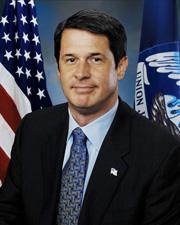 Sen. David Vitter (R-LA)
Legislative Activity
Stay on top of the latest movement without scrolling through every action
Held at the desk.
September 8, 2005 • 3:27 PM
View full timeline
Introduced in Senate
September 8, 2005
Introduced in the Senate, read twice, considered, read the third time, and passed without amendment by Unanimous Consent. (consideration: CR S9774-9776; text as passed Senate: CR S9775-9776)
September 8, 2005
Received in the House.
September 8, 2005 • 1:08 PM
Message on Senate action sent to the House.
September 8, 2005
Held at the desk.
September 8, 2005 • 3:27 PM
Floor Debate
4 membersWhat members said about S. 1634 on the floor



Floor Debate
4 membersWhat members said about S. 1634 on the floor
Mr. President, I seek recognition to support legislation that is urgently needed in light of the devastation caused by Hurricane Katrina. This legislation would authorize Federal circuit, district,…
Mr. President, I ask unanimous consent the Senate proceed to the immediate consideration of S. 1634 and H.R. 3650, en bloc. Mr. President, I ask unanimous consent the bills be read the third time and…
Mr. President, the devastation wrought by the Hurricane Katrina to New Orleans and the gulf coast is not yet fully known. As the fate of thousands of our fellow Americans remains uncertain and the…
Mr. President, this side of the aisle concurred when the majority leader offered the unanimous consent allowing the Federal court to do their business outside of their jurisdiction. It is the…
Bill Text
2 versions available
        [Congressional Bills 109th Congress]
[From the U.S. Government Publishing Office]
[S. 1634 Engrossed in Senate (ES)]

109th CONGRESS
1st Session
S. 1634

_______________________________________________________________________

AN ACT

To allow United States courts to conduct business during emergency
conditions, and for other purposes.

Be it enacted by the Senate and House of Representatives of the
United States of America in Congress assembled,

SECTION 1. SHORT TITLE.

(a) Short Title.--This Act may be cited as the ``Federal Judiciary
Emergency Special Sessions Act of 2005''.

SEC. 2. EMERGENCY AUTHORITY TO CONDUCT COURT PROCEEDINGS OUTSIDE THE
TERRITORIAL JURISDICTION OF THE COURT.

(a) Circuit Courts.--Section 48 of title 28, United States Code, is
amended by adding at the end the following:
``(e) Each court of appeals may hold special sessions at any place
within the United States outside the circuit as the nature of the
business may require and upon such notice as the court orders, upon a
finding by either the chief judge of the court of appeals (or, if the
chief judge is unavailable, the most senior available active judge of
the court of appeals) or the judicial council of the circuit that,
because of emergency conditions, no location within the circuit is
reasonably available where such special sessions could be held. The
court may transact any business at a special session outside the
circuit which it might transact at a regular session.
``(f) If a court of appeals issues an order exercising its
authority under subsection (e), the court--
``(1) through the Administrative Office of the United
States Courts, shall--
``(A) send notice of such order, including the
reasons for the issuance of such order, to the
Committee on the Judiciary of the Senate and the
Committee on the Judiciary of the House of
Representatives; and
``(B) not later than 180 days after the expiration
of such court order submit a brief report to the
Committee on the Judiciary of the Senate and the
Committee on the Judiciary of the House of
Representatives describing the impact of such order,
including--
``(i) the reasons for the issuance of such
order;
``(ii) the duration of such order;
``(iii) the impact of such order on
litigants; and
``(iv) the costs to the judiciary resulting
from such order; and
``(2) shall provide reasonable notice to the United States
Marshals Service before the commencement of any special session
held pursuant to such order.''.
(b) District Courts.--Section 141 of title 28, United States Code,
is amended--
(1) by inserting ``(a)(1)'' before ``Special'';
(2) by inserting ``(2)'' before ``Any''; and
(3) by adding at the end the following:
``(b)(1) Special sessions of the district court may be held at such
places within the United States outside the district as the nature of
the business may require and upon such notice as the court orders, upon
a finding by either the chief judge of the district court (or, if the
chief judge is unavailable, the most senior available active judge of
the district court) or the judicial council of the circuit that,
because of emergency conditions, no location within the district is
reasonably available where such special sessions could be held.
``(2) Pursuant to this subsection, any business which may be
transacted at a regular session of a district court may be transacted
at a special session conducted outside the district, except that a
criminal trial may not be conducted at a special session outside of the
State in which the crime has been committed unless the defendant
consents to such a criminal trial.
``(3) Notwithstanding any other provision of law, in any case in
which a special session is conducted pursuant to this subsection, the
district court may summon jurors--
``(A) in civil proceedings, from any part of the district
in which the court ordinarily conducts business or the district
in which the court is holding a special session; and
``(B) in criminal trials, from any part of the district in
which the crime has been committed and, if a defendant so
consents, from any district in which the court is conducting
business pursuant to this subsection.
``(4) If a district court issues an order exercising its authority
under paragraph (1), the court--
``(A) through the Administrative Office of the United
States Courts, shall--
``(i) send notice of such order, including the
reasons for the issuance of such order, to the
Committee on the Judiciary of the Senate and the
Committee on the Judiciary of the House of
Representatives; and
``(ii) not later than 180 days after the expiration
of such court order submit a brief report to the
Committee on the Judiciary of the Senate and the
Committee on the Judiciary of the House of
Representatives describing the impact of such order,
including--
``(I) the reasons for the issuance of such
order;
``(II) the duration of such order;
``(III) the impact of such order on
litigants; and
``(IV) the costs to the judiciary resulting
from such order; and
``(B) shall provide reasonable notice to the United States
Marshals Service before the commencement of any special session
held pursuant to such order.''.
(c) Bankruptcy Courts.--Section 152(c) of title 28, United States
Code, is amended--
(1) by inserting ``(1)'' after ``(c)'';
(2) by adding at the end the following:
``(2)(A) Bankruptcy judges may hold court at such places
within the United States outside the judicial district as the
nature of the business of the court may require, and upon such
notice as the court orders, upon a finding by either the chief
judge of the bankruptcy court (or, if the chief judge is
unavailable, the most senior available bankruptcy judge) or by
the judicial council of the circuit that, because of emergency
conditions, no location within the district is reasonably
available where the bankruptcy judges could hold court.
``(B) Bankruptcy judges may transact any business at
special sessions of court held outside the district pursuant to
this paragraph that might be transacted at a regular session.
``(C) If a bankruptcy court issues an order exercising its
authority under subparagraph (A), the court--
``(i) through the Administrative Office of the
United States Courts, shall--
``(I) send notice of such order, including
the reasons for the issuance of such order, to
the Committee on the Judiciary of the Senate
and the Committee on the Judiciary of the House
of Representatives; and
``(II) not later than 180 days after the
expiration of such court order submit a brief
report to the Committee on the Judiciary of the
Senate and the Committee on the Judiciary of
the House of Representatives describing the
impact of such order, including--
``(aa) the reasons for the issuance
of such order;
``(bb) the duration of such order;
``(cc) the impact of such order on
litigants; and
``(dd) the costs to the judiciary
resulting from such order; and
``(ii) shall provide reasonable notice to the
United States Marshals Service before the commencement
of any special session held pursuant to such order.''.
(d) United States Magistrate Judges.--Section 636 of title 28,
United States Code, is amended in subsection (a) by striking
``territorial jurisdiction prescribed by his appointment--'' and
inserting ``district in which sessions are held by the court that
appointed the magistrate judge, at other places where that court may
function, and elsewhere as authorized by law--''.

Passed the Senate September 8, 2005.

Attest:

Secretary.
109th CONGRESS

1st Session

S. 1634

_______________________________________________________________________

AN ACT

To allow United States courts to conduct business during emergency
conditions, and for other purposes.