


II
109th CONGRESS
1st Session
S. 1638
IN THE SENATE OF THE UNITED STATES
September 8, 2005
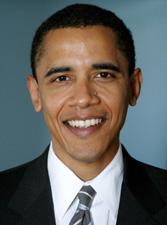
Mr. Obama introduced the following bill; which was read twice and referred to the Committee on Health, Education, Labor, and Pensions
A BILL
To provide for the establishment of programs and activities to assist in mobilizing an appropriate healthcare workforce in the event of a health emergency or natural disaster.
Short title
This Act may be cited as the
Hurricane Katrina Emergency Health
Workforce Act of 2005
.
Definitions
In this Act:
Corps
The term Corps means the National Emergency Health Professionals Volunteer Corps established under section 3.
FEMA
The term FEMA means the Federal Emergency Management Agency of the Emergency Preparedness and Response Directorate, Department of Homeland Security.
Health professional
The term health professional means a physician, nurse, mental health provider, paramedic, pharmacist, public health practitioner, veterinarian, epidemiologist, statistician, laboratorian, infectious disease specialist, and other individual provider of health-related services as designated by the Secretary.
Secretary
The term Secretary means the Secretary of Health and Human Services.
National Emergency Health Professionals Volunteer Corps
In general
Not later than 6 months after the date of enactment of this Act, the Secretary shall establish a National Emergency Health Professionals Volunteer Corps to provide for an adequate supply of health professionals in the case of a Federal, State or local emergency. The Corps shall be headed by a Director to be appointed by the Secretary.
Duties
The Director of the Corps shall conduct the following activities:
Analysis of need to determine the number and types of Corps volunteers that are needed.
Determination of minimum licensing or credentialing standards for each type of Corps volunteers.
Recruitment and retention of health professionals.
Development of the Corps volunteer certification program in accordance with subsection (d).
Development of training programs.
Development of protocols for contact and deployment of Corps volunteers.
Coordination of Corps volunteers with Medical Reserve Corps and other volunteer networks.
Composition
The Corps shall be composed of health professionals who—
have training and expertise in the areas of medicine, nursing, mental health, public health, pharmacy, dentistry, emergency medical services, veterinary science, laboratory science, and other areas as determined appropriate by the Director of the Corps;
have been certified in accordance with the certification program developed under subsection (b)(4);
are geographically diverse in residence; and
are willing to be deployed in case of emergency.
Certification
The Director of the Corps, in collaboration with the Director of FEMA and the Administrator of the Health Resources and Services Administration, shall establish a program for the periodic certification of health professionals who volunteer for the Corps which shall include, with respect to the health professional involved, an assessment of—
the professional expertise and training of the professional, including licensure and credentialing as appropriate;
the completion by the professional of the training programs developed under subsection (b)(5), as required by the Director; and
the preparedness of the professional for emergency response which may include written examination and hands-on skill assessment.
Deployment
In general
During a Federal, State, or local emergency (as designated by the Secretary or the Secretary of Homeland Security), the Secretary, in consultation with the Secretary of Homeland Security, shall have the authority to deploy members of the Corps to areas of need, based on the medical expertise required.
Limitation
State and local officials shall have no authority to deploy members of the Corps, but may request the services of such members.
Compensation, expenses, and transportation
While engaged in performing duties as a member of the Corps pursuant to an assignment by the Secretary (including periods of travel to facilitate such assignment), members of the Corps who are not otherwise employed by the Federal Government shall be—
compensated for temporary or intermittent services as experts or consultants as provided for under section 3109 of title 5, United States Code; and
allowed travel or transportation expenses, including per diem in lieu of subsistence, as provided for under section 5703 of such title.
Authorization of appropriations
There is authorized to be appropriated such sums as may be necessary to carry out this Act (and the amendments made by this Act) for each of fiscal years 2006 through 2010.
Health professional database
Establishment
Not later than 12 months after the date of
enactment of this Act, the Director of the Centers for Disease Control and
Prevention (referred to in this section as the Director
), in
collaboration with the Administrator of the Health Resources and Services
Administration, State medical and nursing licensing boards, medical and nursing
professional societies, and other relevant entities, shall establish a national
database of health professionals (including physicians, nurses, and other
health professionals determined appropriate by the Director) to increase health
preparedness for Federal emergencies.
Requirements of database
The database established under subsection (a) shall include—
With respect to each health professional listed in the database—
the name and contact information of the professional;
the State or States in which the professional is licensed or certified;
the area or areas in which the professional has specialty or subspecialty training; and
a description of the emergency response training received by the professional; and
the names of each members of the Corps, the Medical Reserve Corps, the National Disaster Medical System, the Commissioned Corps of the Public Health Services, and any other relevant federally-sponsored or administered programs.
Accessibility
The Director shall ensure that the database established under subsection (a) is electronically accessible by State and local health departments. In the case of a disaster or other emergency that results in a loss of electrical power, the Director shall ensure that the affected State or locality has access to the database through other means.
Updating of information
The Director shall, on at least a biennial basis, provide for the updating of the information contained in the database.
Protection of health professional volunteers
Section 4303(13) of title 38, United States
Code, is amended by adding at the end the following: Such term shall
include physicians or other health professionals (as defined in section 2 of
the Hurricane Katrina Emergency Health
Workforce Act of 2005) who are providing medical treatment or
services related to a major disaster as declared by the President under the
authority of the Robert T. Stafford Disaster Relief and Emergency Assistance
Act (42 U.S.C. 5121 et seq.), including members of the National Emergency
Health Professionals Volunteer Corps, health professionals who are activated by
the Federal Emergency Management Agency, and other health professionals who
provide services on a volunteer basis in a formal capacity as determined by the
Secretary of Health and Human Services or the Secretary of Homeland Security.
The Secretary shall promulgate guidelines to implement the previous
sentence.
.
Preparedness training requirements
Children's hospitals that operate graduate medical education programs
Section 340E of the Public Health Service Act (42 U.S.C. 256e) is amended by adding at the end the following:
Requirement to provide disaster preparedness training
To be eligible to receive a payment under this section, a children's hospital shall provide disaster preparedness training as part of any approved graduate medical residency training program provided by the hospital.
.
Medicare graduate medical education programs
In general
Section 1886(h) of the Social Security Act (42 U.S.C. 1395ww(h)) is amended by adding at the end the following:
Requirement for disaster preparedness training
In order to be eligible to receive a payment under this subsection, a hospital shall provide disaster preparedness training as part of any approved medical residency training program provided by the hospital.
.
Effective Date
The amendment made by paragraph (1) shall take effect on January 1, 2007.
Liability protections
Section 224 of the Public Health Service Act (42 U.S.C. 233) is amended by adding at the end the following:
Volunteer services provided by health professionals during disasters
In general
Notwithstanding any other provision of law, for purposes of this section, a volunteer health professional shall in providing a qualifying health service related to a major disaster as declared by the President under the authority of the Robert T. Stafford Disaster Relief and Emergency Assistance Act (42 U.S.C. 5121 et seq.) shall be deemed to be an employee of the Public Health Service. The preceding sentence is subject to the provisions of this subsection.
Volunteer health professional
In providing a qualifying health service to an individual, a health professional shall for purposes of this subsection be considered to a volunteer health professional if the following conditions are met:
The service is provided to the individual as a result of the occurrence of a major disaster as declared by the President under the authority of the Robert T. Stafford Disaster Relief and Emergency Assistance Act.
The service is a qualifying health service (as defined in paragraph (3)(B)).
Neither the health professional or any institution receives any compensation for the service from the individual or from any third-party payor (including reimbursement under any insurance policy or health plan, or under any Federal or State health benefits program). With respect to compliance with such condition, the health professional may receive repayment from a Federal or State agency for reasonable expenses incurred by the health professional in the provision of the service to the individual.
Definitions
Health professional
In this subsection, the term health professional means a physician, nurse, mental health provider, pharmacist, paramedic, and other individual provider as designated by the Secretary.
Qualifying health service
In this subsection, the term qualifying health service means any medical assistance provided during, and as the result of the occupancy of, a major disaster as declared by the President under the authority of the Robert T. Stafford Disaster Relief and Emergency Assistance Act.
Application of provisions
Subsection (g) (other than paragraphs (3) through (5)) and subsections (h), (i), and (l) shall apply to a volunteer health professional for purposes of this subsection to the same extent and in the same manner as such subsections apply to an officer, governing board member, employee, or contractor of an entity described in subsection (g)(4), subject to paragraph (5) and subject to the following:
The first sentence of paragraph (1) applies in lieu of the first sentence of subsection (g)(1)(A).
In the case of a health professional who is determined by the Secretary pursuant to subsection (g)(1)(E) to be a volunteer health professional, this subsection applies to the health professional (with respect to the institution or facility sponsoring the health professional for any cause of action arising from an act or omission of the health professional occurring on or after the date on which the Secretary makes such determination and until the major disaster involved has ended.
Subsection (g)(1)(F) applies to a health professional for purposes of this subsection only to the extent that, in providing health services to an individual, each of the conditions specified in paragraph (2) is met.
Authorization of appropriations
In general
For purposes of making payments for judgments against the United States (together with related fees and expenses of witnesses) pursuant to this section arising from the acts or omissions of volunteer health professionals, there is authorized such sums as may be necessary in each fiscal year.
Fund
The Secretary shall establish a fund for purposes of this subsection. Each fiscal year amounts appropriated under subparagraph (A) shall be deposited in such fund.
Estimates
Not later than May 1 of each fiscal year, the Attorney General, in consultation with the Secretary, shall submit to the Congress a report providing an estimate of the amount of claims (together with related fees and expenses of witnesses) that, by reason of the acts or omissions of volunteer health professionals, will be paid pursuant to this subsection during the calendar year that begins in the following fiscal year. Subsection (k)(1)(B) applies to the estimate under the preceding sentence regarding volunteer health professionals to the same extent and in the same manner as such subsection applies to the estimate under such subsection regarding officers, governing board members, employees, and contractors of entities described in subsection (g)(4).
Transfers
Not later than December 31 of each fiscal year, the Secretary shall transfer from the fund under subparagraph (B) to the appropriate accounts in the Treasury an amount equal to the estimate made under subparagraph (C) for the calendar year beginning in such fiscal year, subject to the extent of amounts in the fund.
Regulations
The Secretary may issue regulations for carrying out this subsection.
.
Suspension of State licensure requirements
In general
Notwithstanding any other provision of law, the Secretary shall have the authority to suspend the application of State health professional licensing and certification requirements with respect to health professionals that are operating in such State during a major disaster as declared by the President under the authority of the Robert T. Stafford Disaster Relief and Emergency Assistance Act (42 U.S.C. 5121 et seq.) pursuant to an assignment or request for services from the Secretary, the Director of FEMA, or the Director of the Corps. This subsection shall only be applicable with respect to health professionals who are licensed or certified in a State other than the State in which the disaster is occurring.
Limitation
Subsection (a) shall not apply in the case of health professionals who have had their license or certification suspended or revoked, or who are the subject of a disciplinary action at the time of the application of such subsection.
General waiver authority
Notwithstanding any other provision of law, the Secretary and the Secretary of Homeland Security shall have the authority to waive any requirement of Federal law applicable to health professions if such requirement would limit the ability of health professionals to provide volunteer medical services related to a major disaster as declared by the President under the authority of the Robert T. Stafford Disaster Relief and Emergency Assistance Act (42 U.S.C. 5121 et seq.).