Jean Lafitte National Historical Park and Preserve Boundary Adjustment Act of 2005
Legislative Activity
Stay on top of the latest movement without scrolling through every action
Referred to the Subcommittee on National Parks.
August 2, 2005
View full timeline
Introduced in Senate
January 31, 2005
Sponsor introductory remarks on measure. (CR S654-655)
January 31, 2005
Read twice and referred to the Committee on Energy and Natural Resources. (text of measure as introduced: CR S655)
January 31, 2005
Committee on Energy and Natural Resources. Ordered to be reported without amendment favorably.
February 9, 2005
Committee on Energy and Natural Resources. Reported by Senator Domenici without amendment. With written report No. 109-25.
March 9, 2005
Placed on Senate Legislative Calendar under General Orders. Calendar No. 37.
March 9, 2005
Passed Senate without amendment by Unanimous Consent. (consideration: CR S9018-9052; text as passed Senate: CR S9029)
July 26, 2005
Received in the House.
July 27, 2005 • 10:33 AM
Message on Senate action sent to the House.
July 27, 2005
Referred to the House Committee on Resources.
July 27, 2005
Referred to the Subcommittee on National Parks.
August 2, 2005
Floor Debate
22 membersWhat members said about S. 207 on the floor
 JWMLL
JWMLL JR
JR JMI
JMI JM+17
JM+17
Floor Debate
22 membersWhat members said about S. 207 on the floor
Mr. President, I am very pleased the Senate has turned to this important legislation. It was first brought up Wednesday night with activity on Thursday and again on Friday. I thank all those who…
Mr. President, I am very pleased the Senate has turned to this important legislation. It was first brought up Wednesday night with activity on Thursday and again on Friday. I thank all those who participated.
I am reminded that at 2 o'clock today, all first-degree amendments need to be filed in view of the pending cloture motion. This is a motion which the distinguished leader, Mr. Frist, and I will discuss, together with others. It ripens tomorrow morning. So as a protection, I ask Senators to consider their own interests in the context that it could be ripened, but that decision has not yet been made.
At this time, even though the distinguished ranking member is not with me, there is a matter by the Senator from Maine about which I hope she will find the opportunity at this time to address the Senate. I yield the floor.
Mr. President, before my distinguished colleague leaves the floor, she had the courtesy, as she always does, to show me the amendments. One of them relates to BRAC. The distinguished Senator from South Dakota offered a BRAC amendment the other night. I glanced at this one. It seems to be similar in form, but I have not had a chance to examine it.
The purpose of my colloquy with the Senator would be to encourage Senators who are concerned about the important issues on BRAC to take note that we had an extensive colloquy between myself and the distinguished Senator from South Dakota, with the Senator from Michigan, the ranking member joining in, the other evening on the subject. I hope that other Senators who may be cosponsors or otherwise interested in this issue will find the opportunity to examine the original amendment and this amendment and that we hopefully today can have a continuation of this important debate on the issues relating to BRAC which are of great concern to a number of colleagues.
I thank my distinguished colleague. I do bring to the attention of colleagues that today is a
good opportunity for debate such that we can have a vote on it as quickly as the proposers and others think it is appropriate.
I suggest the absence of a quorum.
Mr. President, if I might ask my distinguished colleague a question or two. We are all good, strong supporters of the CTR program. But I am informed that you are taking $50 million from the missiles. I will address that question momentarily. But I think the Senate should know this--and I ask if I am in error, if the Senator would correct me, if not now, perhaps one of your staff members, in due course, could assist. The Senate should know there is $500 million of unspent 2005 money in the CTR program. The amendment would take this program, which as you point out has some test problems, and to give it the body blow this amendment would render, for $50 million will virtually cause a very severe perturbation in the production line. The Senator is familiar with how the production lines work. There are estimates of cost up to as much as $270 million to restart the line at some point in the future. But with $500 million for 2005 unexpended in CTR, I hope, if colleagues look at this amendment fairly and practically, maybe judge it on the merits--the use of these funds, to me, is not a justification for supporting the amendment.
I agree with the Senator's premise but I wouldn't want Senators to believe that, if I am correct, the shortage of money is in CTR. I am informed there is, in the bank, $500 million of 2005 unexpended funds. Does the Senator want to address that now?
I am a big supporter of CTR. I happened to be in the room on the day CTR was born--by Sam Nunn. I will never forget it. I have followed the program. I have been a supporter. I think there is quite a bit of funding in this budget for CTR right now. I point out, if the Senator is persuaded by the fact that CTR needs the money more than the missile program--and I will argue the point strenuously that is not the case--there is quite a bit of money. We are way into the 2005 cycle. As a matter of fact, September is on the horizon.
So I hope the Senator could carefully research that point, come back, and if I am in error, I would certainly like to hear his views.
I point out the current bill is consistent with the President's program that allocated $50 million toward this next tranche of the long-lead, cumulative money for ground-based interceptors. If you take $30 million out of the $50 million, I assure you, that does considerable disruption to the production line.
Then I point out the amount available for construction of associated silos, reduced by $20 million. I wonder if you might take the chance to check on the fact that the President's budget in this bill only allocates $13.5 million to the initial construction of the associated silos, and therefore your $20 million is considerably in excess of the $13.5 million.
We will have our staffs check those figures. I thank the Senator.
Mr. President, I would like to vigorously oppose this amendment for the following reasons. The impact of the amendment would be, first and foremost, to send a message that we are not supporting, as a nation, wholeheartedly the ballistic missile defense capabilities to defend ourselves. It is clear North Korea has capabilities. This program was engendered in large measure, and accelerated in large
measure because of the threat posed by North Korea.
I noted here recently that Japan is now building its missile defense system. So it is not that the United States alone, in the world of nations, considers it a threat; other nations consider the North Korean capabilities a threat. It is correct we have had these test bans, but the failures that more or less have been in the mechanical phase-- somehow the missile is adjusted in its launch pad as opposed to the actual failure of the missile itself. And then I will address this question of the break in production which could result--assuming the program is restarted in its full measure--maybe up to $270 million is one estimate I have been given to restart it.
Again, I agree with the sponsors of the amendment that the Cooperative Threat Reduction Program is an important national security issue for the defense of our homeland against the growing threats. But asking us to choose between missile protection and CTR is a false choice. We need both. This bill funds the President's requested amount fully for both programs.
The bill before the Senate authorizes the requested amount of $415.5 million for CTR programs within the Department of Defense and $1.6 billion for other nonproliferation efforts in the Department of Energy. There is a very strong recognition in this bill before the Senate, the authorization bill, of the importance of CTR. There is no current need for extra CTR funds. That is our basic proposition. They have in the bank very substantial amounts from 2005. They are unexpended. Whether they have been committed, I will have that checked. With a backlog that large and only roughly 70 days left in the fiscal year--that is an awful lot of money if someone is going to try to commit it and expend it in that period of time.
The President's budget for missile defense, on the other hand, has already taken a considerable amount of cuts. Due to last-minute decisions made at the Department of Defense as the fiscal year 2006 budget was being finalized, the missile defense budget request was reduced by $1 billion in 2006 and $5 billion overall between 2006 and 2011.
The sponsors of this amendment argue we should not provide long-lead funding for the GBI missiles 31 to 40 because of test failures. I am mindful of the recent difficulties encountered by the GMD system test program, but it is my view and that of the Department--and, indeed, independent authorities have looked at this problem--that these difficulties do not represent serious technological hurdles by the GMD program. Indeed, such problems are to be expected during the R&D and development phase of complicated weapons systems.
To get at the root cause of the testing problems, the Director of the Missile Defense Agency, to his great credit, commissioned the Independent Review Team, called the IRT, to examine the recent GMD test failures. The IRT found, one, that no fundamental GMD system design flaws are related to the recent test failures. Moreover, this independent panel found no evidence that major modifications of the current system hardware or software will be required. In other words, it is unlikely that future testing will find some major fault in the system that will require costly retrofit to the already fielded and those in production line of the GBIs.
For those of my colleagues concerned about testing, I point out that this bill before you contains a provision--developed in a bipartisan fashion during the committee's markup--which requires the Missile Defense Agency, the service operational test agencies, and the Director of Operational Test and Evaluation to plan and conduct tests that demonstrate the operational capability of the ballistic missile defense system. The bill also reallocates $100 million from longer-term development efforts to GMD testing, consistent with the recommendations of the Independent Review Team.
The current and growing threat posed to our country by long-range ballistic missiles argues for proceeding without delay with the Department's approach of concurrent testing and fielding of ballistic missile defense capabilities for the homeland.
Some of my colleagues suggest that because the current system is not fully proven, we should not procure additional missile interceptors. To this I would respond that General Cartwright, Commander of U.S. Strategic Command--the senior military official charged with advising the Secretary of Defense and the President on missile defense matters-- has testified, with respect to the current GMD system, that ``in an emergency, we are in fact in the position that we are confident that we can operate and employ it.''
In addition, the Pentagon's chief independent weapons tester, the Director for Operational Test and Evaluation, noted in his most recent Annual Report to Congress that ``the test bed architecture is now in place and should have some limited capability to defend against a threat missile from North Korea.''
In my view, it is a good thing that we have some capability--albeit limited--to defend the homeland against long-range missiles. For as General Cartwright testified before the Senate Armed Services Committee in April, ``we have a realistic threat here; we have an imperative.''
General Cartwright is referring to CIA and DIA estimates that the North Korean Taepo-Dong 2 ballistic missile is capable of reaching the United States with a nuclear warhead--and that North Korea could resume flight testing of the Taepo-Dong 2 at any time. The Defense Intelligence Agency also estimates that Iran will have the capability to develop an intercontinental ballistic missile, ICBM, by 2015.
We simply can't wait until the threat is upon us to deploy missile defenses; we can't wait until the GMD system is fully and completely tested before we start providing some measure of protection against this threat. It is our responsibility to field what capabilities currently exist, even while we continue to test and improve the system. By continuing to field missile defenses today, we send a message to potential adversaries that we will not be deterred or coerced by their possession of long-range ballistic missiles.
In summary, I ask my colleagues to reject the amendment offered by Senator Levin. This amendment would needlessly delay the fielding of a ballistic missile defense capability to protect the homeland. As the Commander of STRATCOM warns, the threat is real. We must continue on the current path of fielding available capabilities--even while testing continues to improve the system over time.
Mr. President, may the manager of the bill address the Senate for a moment?
Mr. President, the way we run is the managers usually try to get recognition.
What we would now like to do, Mr. President, is to have the Senator from Oklahoma address his amendments--for what period of time?
I thank the Senator from Oklahoma.
The Senator from Florida desires recognition, so I would ask the Senator from Florida if he could give a rough estimate of the time he would like following the Senator from Oklahoma.
Fifteen minutes. Mr. President, I ask unanimous consent that the Senator from Oklahoma now be recognized for a period not to exceed 20 minutes, to be followed by the Senator from Florida.
Could we act on the UC request, Mr. President?
Mr. President, before the Senator brings up this matter-- and he has the floor--I wonder if I can clarify this among my colleagues, to try to accommodate others. We have Senator Dorgan to be recognized under the previous unanimous consent. I understand 10 minutes would be sufficient there.
We are anxious to get going, but we will do 15 minutes. I see the Senator from Colorado here. I know the Senator from Arizona and the Senator from South Carolina called within the hour. They need time. Can the Senator advise me as to what his desires might be?
If the Senator from Colorado could be recognized following Senator Dorgan, I would like to reserve an hour for myself and Senator McCain and Senator Lindsey Graham.
He will certainly get that time. I ask unanimous consent for that.
I ask unanimous consent that the Senator from Oklahoma continue for about 10 minutes; Senator Dorgan for 15 minutes; the Senator from Colorado for 10 minutes; and 1 hour equally divided between Senators Warner, McCain, and Graham.
He can be recognized following the hour of three of us.
I thank our colleague. It will be given careful consideration. It relates to an important subject matter.
I understand the Senator from Colorado has about 10 minutes, followed by Senators McCain, Graham, and Warner for 1 hour.
Mr. President, under the unanimous consent requirement, Senator McCain, Senator Graham, and I are now recognized for an hour. I ask our distinguished colleague from Arizona--I would like to amend that to allow Senator Salazar to go for 2 minutes. I request that unanimous consent.
Mr. President, we now turn to the three Senators. I would like to take 1 minute to address both Colorado Senators.
I followed with interest your amendments. I do hope we now have on the record a clear statement of support by the Secretary of Energy. Am I correct in that?
Yes.
I thank the Senator.
Now, Mr. President, we would like to commence the 1 hour. I yield the floor so Senator McCain can gain recognition. But I would want to say this is a subject that is enormously important. I commend Senator McCain and Senator Graham. It merits the full attention and hopefully the support of the Senate. These are issues that go far beyond just the question of detention. It goes to the perception of the great Nation of which we are privileged to be citizens, the United States of America, as it relates to how we treat those people who come into our custody in the course of defending freedom, on battle fields, and elsewhere in the world. I have such great respect for Senator McCain.
I yield the floor.
Amendment No. 1557, as Modified
Mr. President, I suggest we take up the other one--you and I have discussed it--as soon as the other one is completed because I am a cosponsor on the one that is now pending.
Mr. President, I commend Senator McCain. I have been privileged to know him ever since I was Secretary of Navy in the closing years of the war in Vietnam. I know no military family that has served our Nation with greater distinction than the McCain family. This is a subject about which my dear friend has knowledge that none of us possess. I have absolute confidence they are doing the right thing.
The two of us do have some technical differences of opinion. His amendment is predicated on the Army Field Manual which he mentioned is being revised. The current Army Field Manual basically dealt with State-sponsored conflict. I have every reason to believe that the follow-on manual, in due course, presumably in both classified and unclassified form, will be completed.
Amendment No. 1566
There is another approach here. I ask unanimous consent, if it is agreeable, to set the McCain amendment aside temporarily and ask amendment 1566 be brought up.
And in no way do I wish it to substitute for Senator McCain's amendment. This is a complicated subject.
Essentially, my amendment simply says it will be the Secretary of Defense that will establish uniform standards and procedures for two separable subjects, detention and interrogation.
While I have not had a chance to go through in detail the Army's Field Manual, I am not sure there is the emphasis placed on the detention rule in such a manner as equivalent to the detention and regulation that will be and is on the interrogation. Those responsible for detention are often quite different than those responsible for interrogation. If there is any mistreatment in the course of the detention, depending on the timing between such treatment and the follow-on interrogation, it seems to me we have a problem.
Therefore, my amendment entrusts to the Secretary of Defense the task to put together basically all of the objectives as enunciated by my distinguished friend from Arizona.
I ask unanimous consent the reading of the amendment be dispensed with.
There are considerable parallels between the two amendments, with the exception that the subject should be adjusted to the Secretary of Defense. He may well designate the Army Field Manual as his work product, but then I would need, under the amendment, the assurance that equal emphasis is put on the detention phase as well as the interrogation phase.
Recent history has shown we must have uniform standards for detention and interrogation across the Department of Defense. We cannot have different standards for different theaters.
Soldiers, as Senator McCain pointed out, have to be trained and well understand the rules and regulations as they relate to both detention and interrogation. That is the goal of the McCain amendment. I wholeheartedly support it. It is best to entrust the entire subject to the Secretary of Defense and hold him accountable, as opposed to the designation of the specific document which is in the process of being changed.
Amendment No. 1557, As Modified
Mr. President, I ask unanimous consent that the Senate return to consideration of the McCain amendment.
Mr. President, seeing our other colleague, Senator Graham, I yield the floor. But I also see Senator McCain.
Mr. President, if I could reply to my good friend, you are absolutely right. And I know that chapter as you do and have studied it. But under the law, the Secretary of Defense is still the head of the Department, and as such I suppose he can alter the field manual of the Army and make it less in the present form and in the revised form in due course. But I think it is important we have a clear chain of authority and accountability. I look up the chain, and there are the laws established by the Secretary of Defense as opposed to those who might be involved in drawing up the Army Field Manual. I presume the Secretary of the Army is at the top of that pyramid.
But that is the reason I put in this amendment. I say to my good friend from Arizona, I hope we can sort this out before final passage and possibly amend it. I will withdraw mine because I want you to take the lead in every respect on this important amendment.
If I might add, I say to my friend from Arizona, there is another important amendment you needed to get completed.
Well, whatever.
Fine.
Mr. President, I accept my good friend's critique, but I do point out, as the Army Field Manual is under revision, there will be both a classified and unclassified portion of that manual.
Mr. President, I am well aware of the efforts of my good friend from Michigan to get documents from the Department of Defense and his modest success and some lack of success.
I yield the floor.
Mr. President, I yield to the distinguished Senator from South Carolina such time as he deems necessary.
Could the Chair advise us as to the amount of time remaining under the hour that I requested?
That is the full time?
Well, we will allocate the time among the three of us in an equitable way.
I yield the floor.
Yes, Mr. President, I suggest that we have amended the present one which is referred to as the Army Field Manual, and I am a cosponsor on that. Now there is a second amendment. I submitted to the Senator a suggestion, I believe that is----
Let's bring that up now and have that pending.
Mr. President, the field manual amendment has been laid aside for the moment. This goes to a second amendment which is----
That is correct.
I believe the Senator has just come on the floor. We have been on this now for about 45 minutes covering the parameter of the issues that would be brought up. I respect his desire to speak. We will try to accommodate you at any point. I would urge that we allow the Senator from Arizona to perfect this amendment and then in due course he will speak to it. I will speak to it, and we will lay it aside. And we will find the time for the distinguished Senator from Alabama to speak.
We definitely will make that happen. But I want to inquire of the Senator from South Carolina, you also have a third amendment. I am not sure of the status. You have it at the desk. You have spoken to it.
Mr. President, I think that is a very orderly manner in which to accommodate. Then the Senator from Alabama--let's get the time remaining and I will yield some of my time to the Senator from Alabama.
Mr. President, I will assure you, working with the distinguished Senator from Michigan, we
will arrange--he has time immediately following the 1 hour being divided between three Senators and now a fourth. I want to make sure we have the time remaining to satisfy the needs of the Senator from Alabama. We now are proceeding on the second McCain amendment.
Mr. President, we would like to have the Senator from Arizona take such time as he desires to explain this. I wish to be added as a cosponsor to this amendment. Then we will yield the floor to the Senator from Alabama to speak for up to 10 minutes on the subjects of these three amendments. Then the balance of the time will be accorded to the Senator from South Carolina to bring forth his amendment.
That is correct. Would the Chair advise of the three Senators in the original order, what is the time remaining for each.
I can't hear the Chair.
I yield from my 9 minutes such time as the Senator from Arizona may need.
If the Senator will withhold, I want to endorse the McCain amendment. Essentially what he is doing is codifying what is policy now. I think it is of such importance that it would require this bill to do so.
I yield the floor.
Amendment No. 1557
We are operating under an original 1-hour agreement that was modified to give 10 minutes to the Senator from Alabama. I think under the original 1 hour the Senator from Virginia has time and the Senator from South Carolina has time. Would I be correct?
Mr. President, that is followed by a vote, is my understanding.
Reserving the right to object, and I do not wish to object, it seems to me that reality dictates that in 6 minutes we will go on the ADA; am I correct?
In effect, the Senator from South Carolina, unless he wants to take the 6 minutes and put his amendment in, we would have to come back to it at the conclusion of the ADA. Would that be acceptable?
Mr. President, I ask unanimous consent that notwithstanding the previous order, the Senate resume consideration of S. 207 at 5:15 today, with 15 minutes to debate under the control of Senator Harkin. I further ask that following the use or yielding back of the time, the Senate proceed to a rollcall vote on the resolution as under the previous order.
Mr. President, I believe that will accommodate our distinguished colleague from South Carolina to introduce his amendment beginning now, concluding at 5:10, at which time the Chair will recognize the junior Senator from Michigan for a period not to exceed 5 minutes.
I do so to accommodate Senator Levin. We have 2 minutes now for the Senator from Alabama to complete his remarks before the Chair recognizes the Senator from South Carolina; is that correct?
We certainly want to accommodate the Democratic leader. The Senator from South Carolina indicated that perhaps he would like to take up his amendment following the vote, giving him then such time as he requires, and giving the Senator from Michigan such time as he may require. So perhaps let us allocate the remaining time between now and 5:15 between the Senator from Alabama, the two colleagues on that side, and the distinguished Democratic leader.
Mr. President, following the completion of the rollcall vote, I ask unanimous consent that the Senator from South Carolina be recognized.
Mr. President, that is correct.
Mr. President, today I rise, along with Senator Vitter, to introduce a bill to establish the Atchafalaya National Heritage Area in Louisiana. This legislation has particularly special meaning to…
Mr. President, today I rise, along with Senator Vitter, to introduce a bill to establish the Atchafalaya National Heritage Area in Louisiana. This legislation has particularly special meaning to those of us from Louisiana because of the importance of the cultural and natural resources of the Atchafalaya region to the Nation. It would establish a framework to help protect, conserve, and promote these unique natural, cultural, historical, and recreational resources of the region.
This legislation, which has been passed by the full Senate 3 times, once during the 107th Congress and twice during the 108th Congress, would establish a framework to help protect, conserve, and promote these unique natural, cultural, historical, and recreational resources of the region.
Specifically, the legislation would establish a National Heritage Area in Louisiana that encompasses thirteen parishes in and around the Atchafalaya Basin swamp, America's largest river swamp. The heritage area in south-central Louisiana stretches from Concordia parish to the north, where the Mississippi River begins to partially flow into the Atchafalaya River, all the way to the Gulf of Mexico in the south. The thirteen parishes are: St. Mary, Iberia, St. Martin, St. Landry, Avoyelles, Pointe Coupee, Iberville, Assumption, Terrebonne, Lafayette, West Baton Rouge, Concordia, and East Baton Rouge. This boundary is the same area covered by the existing Atchafalaya Trace State Heritage Area.
This measure will appoint the existing Atchafalaya Trace Commission as the federally recognized ``local coordinating entity.'' The commission is composed of thirteen members with one representative appointed by each parish in the heritage area. Both the Atchafalaya Trace Commission and the Atchafalaya Trace State Heritage Area were created by the Louisiana Legislature a number of years ago. The Atchafalaya Trace State Heritage Area program currently receives some State funding, and already has staff working at the Louisiana Department of Culture, Recreation & Tourism, DCRT, under Lieutenant Governor Kathleen Blanco. State funds were used to create
the management plan for the heritage area, which followed ``feasibility analysis'' guidelines as recommended by the National Park Service. Therefore, the recently-completed management plan need only be submitted to the Secretary of the Interior for approval as this legislation would recognize an existing local coordinating entity that will oversee the implementation of this plan. We are very proud that this state heritage area has already completed the complicated planning process, with participation of local National Park Service representatives, while using a standard of planning quality equal to that of existing national heritage areas. All at no cost to the Federal Government.
Please let me also emphasize that this legislation protects existing private property rights. It will not interfere with local land use ordinances or regulations, as it is specifically prohibited from doing so. Nor does this legislation grant any powers of real property acquisition to the local coordinating entity or heritage area program. In addition, the legislation does not impose any environmental rule or process or cause any change in Federal environmental quality standards different from those already in effect.
Heritage areas are based on cooperation and collaboration at all levels. This legislation remains true to the core concept behind heritage areas. The heritage area concept has been used successfully in various parts of our Nation to promote historic preservation, natural and cultural resource protection, heritage tourism and sustainable economic revitalization for both urban and rural areas. Heritage areas provide a flexible framework for government agencies, private organizations and businesses and landowners to work together on a coordinated regional basis. The Atchafalaya National Heritage Area will join the Cane River National Heritage Area to become the second National Heritage Area in Louisiana, ultimately joining the 23 existing National Heritage Areas around the Nation.
The initiative to develop the Atchafalaya National Heritage Area is an outgrowth of a grassroots effort to achieve multiple goals of this region. Most important among these is providing opportunities for the future, while at the same time not losing anything that makes this place so special. Residents from all over the region, local tourism agencies, State agencies such as the DCRT and the Department of Natural Resources, the State legislature, Federal agencies including the National Park Service and U.S. Army Corps of Engineers, parish governments, conservation and preservation groups, local businesses and local landowners have all participated in this endeavor to make it the strong initiative it is today. These groups have been very supportive of the heritage area effort, and as time moves on, the heritage area will continue to involve more and more of the area's most important resource, its people.
I would also like to give you a brief overview of the resources that make this place significant to the entire country. Not only is it important to our Nation's history, but it is also critical to understanding America's future. The name of the place itself, Atchafalaya, comes from the American Indians and means ``long river.'' This name signifies the first settlers of the region, descendants of whom still live there today.
Other words come to mind in describing the Atchafalaya: mysterious, dynamic, multi-cultural, enchanting, bountiful, threatened and undiscovered. This region is one of the most complex and least understood places in Louisiana and the Nation. Yet, the stories of the Atchafalaya Heritage Area are emblematic of the broader American experience. Here there are opportunities to understand and witness the complicated, sometimes harmonious, sometimes adversarial interplay between nature and culture. The history of the United States has been shaped by the complex dance of its people working with, against, and for, nature. Within the Atchafalaya a penchant for adventure, adaptation, ingenuity, and exploitation has created a cultural legacy unlike anywhere else in the world.
The heart of the heritage area is the Atchafalaya Basin. It is the largest river swamp in the United States, larger than the more widely known Everglades or Okefenokee Swamp. The Atchafalaya is characterized by a maze of streams, and at one time was thickly forested with old- growth cypress and tupelo trees. The Basin provides outstanding habitat for a remarkably diverse array of wildlife, including the endangered American bald eagle and Louisiana black bear. The region's unique ecology teems with life. More than 85 species of fish; crustaceans, such as crawfish; wildlife, including alligators; an astonishing array of well over 200 species of birds, from waterfowl to songbirds; forest- dwelling mammals such as deer, squirrel, beaver and other commercially important furbearers all make their home here. Bottomland hardwood- dependent bird species breed here in some of the highest densities ever recorded in annual North American Breeding Bird Surveys. The Basin also forms part of the Mississippi Valley Flyway for migratory waterfowl and is a major wintering ground for thousands of these geese and ducks. In general, the Atchafalaya Basin has a significant proportion of North America's breeding wading birds, such as herons, egrets, ibises, and spoonbills. Some of the largest flocks of Wood Storks in North America summer here, and the southern part of the Basin has a healthy population of Bald Eagles nesting every winter.
The region's dynamic system of waterways, geology, and massive earthen guide levees reveals a landscape that is at once fragile and awesome. The geology and natural systems of the Atchafalaya Heritage Area have fueled the economy of the region for centuries. For decades the harvest of cypress, cotton, sugar cane, crawfish, salt, oil, gas, and Spanish moss, have been important sources of income for the region's residents. The crawfish industry has been particularly important to the lives of Atchafalaya residents and Louisiana has become the largest crawfish producer in the United States. Sport fishing and other forms of commercial fishing are important here, too, but unfortunately, natural resource extraction and a changing environment have drastically depleted many of these resources and forced residents to find new ways to make a living.
Over the past century, the Atchafalaya Basin has become a study of man's monumental effort to control nature. After the catastrophic Mississippi River flood of 1927 left thousands dead and millions displaced, the U.S. Congress decreed that the U.S. Army Corps of Engineers should develop an intricate system of levees to protect human settlements, particularly New Orleans. Today, the Mississippi River is caged within the walls of earthen and concrete levees and manipulated with a complex system of locks, barrages and floodgates. The Atchafalaya River runs parallel to the Mississippi and through the center of the Basin. In times of flooding the river basin serves as the key floodway in controlling floodwaters headed for the large population centers of Baton Rouge and New Orleans by diverting water from the Mississippi River to the Gulf of Mexico. This system was sorely tested in 1973 when floodwaters threatened to break through the floodgates and permanently divert the Mississippi River into the Atchafalaya. However, after this massive flood event, new land started forming off the coast. These new land formations make up the Atchafalaya Delta, and is the only significant area of new land being built in the United States. These vast amounts of Mississippi River sediment are also rapidly filling in the Basin itself, raising the level of land in certain areas of the basin and filling in lakes and waterways. And to demonstrate just how complex this ecosystem is, one only needs to realize that just to the East of the Delta, Terrebonne parish, also in the heritage area, is experiencing some of the most significant coastal land loss in the country.
Over the centuries, the ever-changing natural environment has shaped the lives of the people living in the Basin. Residents have profited from and been imperiled by nature. The popular cultural identity of the region is strongly associated with the Cajuns, descendants of the French-speaking Acadians who settled in south Louisiana after being deported by the British from Nova Scotia, formerly known as Acadia. Twenty-five hundred to three
thousand exiled Acadians repatriated in Louisiana where they proceeded to re-establish their former society. Today, in spite of complex social, cultural, and demographic transformations, Cajuns maintain a sense of group identity and continue to display a distinctive set of cultural expressions nearly 250 years after their exile from Acadia. Cajun culture has become increasingly popular outside of Louisiana. Culinary specialties adapted from France and Acadia such as etouffee, boudin, andouille, crepes, beignets and sauces thickened with roux, delight food lovers well beyond Louisiana's borders. Cajun music has also ``gone mainstream'' with its blend of French folk songs and ballads and instrumental dance music, and more recently popular country, rhythm-and-blues, and rock music influences. While the growing interest in Cajun culture has raised appreciation for its unique traditions, many of the region's residents are concerned about the growing commercialization and stereotyping that threatens to diminish the authentic Cajun ways of life.
While the Atchafalaya Heritage Area may be well known for its Cajun culture, there is an astonishing array of other cultures within these parishes. Outside of New Orleans, the Atchafalaya Heritage Area is the most racially and ethnically complex region of Louisiana, and has been so for many years. A long legacy of multiculturalism presents interesting opportunities to examine how so many distinct cultures have survived in relative harmony. There may be interesting lessons to learn from here as our Nation becomes increasingly heterogeneous. The cultural complexity of this region has created a rich tapestry of history and traditions, evidenced by the architecture, music, language, food and festivals unlike any place else. Ethnic groups of the Atchafalaya include: African-Americans, Black Creoles, Asians, Chinese, Filipinos, Vietnamese, Lebanese, Cajuns, Spanish Islenos, Italians, Scotch-Irish, and American Indian tribes such as the Attakapa, Chitimacha, Coushatta, Houma, Opelousa and Tunica-Biloxi.
This heritage area has a wealth of existing cultural, historic, natural, scenic, recreational and visitor resources on which to build. Scenic resources include numerous State Wildlife Management Areas and National Wildlife Refuges, as well as ten designated state scenic byways that fall partially or entirely within the heritage area. The Office of State Parks operates three historic sites in the heritage area, and numerous historic districts and buildings can be found in the region. There are also nine Main Street communities in the heritage area. Outdoor recreational resources include two State Parks and a multitude of waterways and bayous. Hunting, fishing, boating, and canoeing, and more recently birdwatching and cycling, are popular ways to experience the region. Various visitor attractions, interpretive centers and visitor information centers exist to help residents and tourists alike better understand and navigate many of the resources in the heritage area. Major roads link the heritage area's central visitor entrance points and large population centers, especially New Orleans. Much of the hospitality industry servicing the Atchafalaya exists around the larger cities of Baton Rouge, Lafayette and Houma. However, more and more bed and breakfasts and heritage accommodations, such as houseboat rentals, are becoming more numerous in the smaller towns and rural areas.
These are just some of the examples of the richness and significance of this region. This legislation will assist communities throughout this heritage area who are committed to the conservation and appropriate development of these assets. Furthermore, this legislation will bring a level of prestige and national and international recognition that this most special of places certainly deserves.
I ask unanimous consent that the text of this bill be printed in the Record.
Mr. President, One Hundred and Thirty Nine years ago, before the term Homeland Security was even coined, a group of men devoted themselves to securing the frontiers of this Nation. They protected Americans in their homes; they deterred hostile invaders, and they secured the blessings of liberty for a young country. Even more remarkable, they secured these blessings for others, while they could not fully enjoy them themselves.
I am referring to the Buffalo Soldiers. These brave men instituted a tradition of professional military service for African Americans that spans the greater part of American history. African American military service is as old as our nation. There were black soldiers during the revolution, a unit of free black men played a pivotal role in the Battle of New Orleans, and the exploits of African Americans during the Civil War have been captured in novels and on film. However, it was not until the Army Reorganization Act of 1866 that soldiering and service to country became a realistic option for African Americans seeking to improve their quality of life. In so doing, they raised the bar of freedom, and revealed the injustice of preventing the defenders of democracy from fully participating in it.
The City of New Orleans, and the State of Louisiana have a rich history. They have given more than their fair share of sons to the service of our Nation. Much of this history is commemorated throughout the State. Yet, these great sons of New Orleans remain unacknowledged in their home. For in Louisiana's great military tradition, surely one of its greatest military contributions were the 9th Cavalry Regiment and the 25th Infantry Regiment.
These two forces, recruited and organized in New Orleans, represent half of all the units of buffalo soldiers. The 9th Cavalry alone constituted 10% of all the American cavalry. Their list of adversaries reads like a who's who of the Old West--Geronimo, Sitting Bull, Poncho Villa. In movies, when settlers encounter Apaches, the cavalry always comes to the rescue. Yet how many times were the cavalry that rode over the horizon African American? Of course, the reality is that the Buffalo Soldiers comprised some of our nations most capable and loyal troops. Despite suffering the worst deprivations known to any American soldiers of the period, they had the lowest desertion rates in the Army. The 9th Cavalry was awarded 10 Congressional Medals of Honor, including a native Louisianan, Sgt. Emanuel Stance--a farmer from Carroll Parish.
For these reasons, I am offering legislation today along with Senator Vitter that would authorize the creation of a suitable memorial in New Orleans for these gallant soldiers. There is an excellent statue to the Buffalo Soldiers at Fort Leavenworth, KS. It commemorates the 10th Cavalry Regiment stationed there. However, I believe that these men deserve to be recognized in their home city. Furthermore, it should be in an a location where thousands of visitors will have the opportunity to come to appreciate the legacy of the Buffalo Soldiers. I believe that the City of New Orleans is the perfect location.
We have made a number of changes to this legislation after consultations with the American Battle Monuments Commission. I believe these changes should address any concerns that they have expressed. Furthermore, we have an able and dedicated organization of individuals in the state who desperately want to see this project to completion. Last year, I had the pleasure of being in New Orleans with another of this Nation's great military heroes, Senator Daniel Inouye. We addressed a group of distinguished veterans from all around the state. Among them was George Jones, President of the Greater New Orleans Chapter of the Buffalo Soldiers Association. They have been working with Eddie Dixon, the artist for the beautiful Fort Leavenworth statute, to develop an appropriate memorial in the City of New Orleans for over a decade. This bill will fulfill that noble ambition.
This Nation has sadly found the need to say thank you to its servicemen and women after the fact on more than one occasion. Unfortunately, this is another. We are fortunate to have living memories of the 9th and 10th Cavalry Regiments today. The regiments were not disbanded until the conclusion of World War Two, where they served with distinction. We should take this opportunity to honor these veterans, and in so doing, honor the principles of liberty, freedom and democracy for which they fought and sacrificed. They have given so much to their nation, we owe them this public expression of gratitude.
I ask unanimous consent that the text of the bill be printed in the Record.
Mr. President, today I rise, along with Senator Vitter, to introduce the Jean Lafitte National Historic Park and Preserve Boundary Adjustment Act of 2005. This bill was passed unanimously by the Senate during the 108th Congress.
The Jean Lafitte National Historical Park and Preserve was established in 1978 to preserve for present and future generations significant examples of the rich natural and cultural resources of Louisiana's Mississippi delta region. The park seeks to illustrate the influence of environment and history on the development of a unique regional culture. It is named for Jean Lafitte who was a pirate, or privateer as he like to be called, that fought alongside U.S. forces in the Battle of New Orleans at the end of the War of 1812. The park consists of six physically separate sites and a park headquarters located in New Orleans. The sites in Lafayette, Thibodaux and Eunice interpret the Acadian culture of the area. The Barataria Preserve, in Marrero, interprets the natural and cultural history of the uplands, swamps and marshlands of the region. Six miles southeast of New Orleans is the Chalmette Battlefield and National Cemetery, site of the 1815 Battle of New Orleans and the final resting place for soldiers from the Civil War, Spanish-American War, World Wars I and II and Vietnam. The park's visitor center, which is located in the historic French Quarter, interprets the history of New Orleans and diverse cultures of Mississippi delta region.
It is the Barataria site that is the focus of our attention today. The Bill before us would merely adjust the boundary of the Barataria preserve unit of Jean Lafitte National Historical Park and Preserve and by doing so protect a crucial component of one of the largest and most productive expanses of coastal wetlands in North America--coastal Louisiana or as they are known: America's Wetlands. The Barataria preserve is the only part of our coastal wetlands preserved in the National Park System. As we strive to find ways to stem the tide of coastal erosion in Louisiana, and bring about the restoration of wetlands already lost, it is equally important that we protect those areas that remain such as the Barataria preserve so that Americans can experience, first hand, the amazing beauty and fertility of Louisiana's bountiful coastal wetlands--the most threatened wetland ecosystem in the country--disappearing at a rate of 25 to 35 square miles a year. Located on the outskirts of New Orleans, where it is accessible not only to the people of New Orleans but also to the millions of tourists from around the world that visit New Orleans and south Louisiana, Barataria serves as an interpretive experience of this greatest of coastal wetlands.
This bill expands this national treasure without any cost to the Federal Government while preserving private property rights. It simply transfers to the Park over 3,000 acres of wetlands already in Federal ownership, already paid for by the American people. These lands, which are adjacent to the Preserve, became Federal as a result of the settlement by the Justice Department of two lawsuits brought by the landowners against Federal agencies. However, because these acres are not managed by the park, they are presently unavailable for public use. An Act of Congress is necessary to allow inclusion of these lands into a new boundary.
My bill does just that, opening these lands for canoeing, wildlife viewing, exploration, fishing, and hunting, all under the management and protection of the park service. The bill grants long-term protection to crucial resources that the Park Service has found suitable and feasible for inclusion within a new boundary through a 1996 boundary study.
The Park is immediately adjacent to the developed areas of the Westbank of Jefferson Parish along much of its boundary while the Barataria unit in particular is right next door to a hurricane levee. Making more of the park boundary contiguous with the levee
that divides developed land from undeveloped wetlands enhances opportunities for direct cooperation between these communities and the Park for management of shared concerns. These concerns include the routing of storm-water run-off; the discharge of treated sewage; estuarine water quality and its effects on fisheries and recreational uses; wetland restoration and mitigation; and a number of other problems and opportunities. The Park has worked with Jefferson Parish in seeking creative solutions to these problems and will continue to do so. The addition of these properties will only enhance their chances for success.
It is for all of these reasons that I am hopeful the Senate can approve of this measure in the near future. The expansion we seek in this Bill benefits us today as well as tomorrow.
I ask unanimous consent that the text of this bill be printed in the Record.
Mr. President, I ask unanimous consent that the order for the quorum call be rescinded. Mr. President, I call up an amendment that Senator Levin has offered, which is at the desk. Mr. President, I…
Mr. President, I ask unanimous consent that the order for the quorum call be rescinded.
Mr. President, I call up an amendment that Senator Levin has offered, which is at the desk.
Mr. President, I ask unanimous consent that the reading of the amendment be dispensed with.
Mr. President, this amendment was offered by Senator Levin and myself would do several very critical and important things. First, the amendment would increase funding for the Cooperative Threat Reduction Program by $50 million. The offset would be twofold: $30 million would be taken from the long lead procurement of ground-based interceptors as part of the National Missile Defense Program and another $20 million would be taken from the funding for initial construction for silos to house these interceptors.
Essentially what Senator Levin is doing with this provision is to recognize the fact that a more immediate threat to the United States rests with literally thousands of locations where nuclear material might be housed from the breakup of the old Soviet Union, and other locations that need attention with respect to the reduction of these materials. I believe the greatest threat we face in this country is the fact that--hopefully not, but the situation where a terrorist might gain control of these materials, bring them into this country and use them with devastating effect.
So this amendment recognizes the most immediate threat comes from these materials and therefore is putting additional resources from the National Missile Defense Program, modest changes, to approach this major effort with respect to cooperative threat reduction.
The funds would come from our ground-based midcourse defense system. The interceptors and silos where the offsets occur are now currently being deployed at Fort Greely, AK, and Vandenberg Air Force Base in California. Because of recent developments, we have an opportunity to address the critical issue of loose nukes by transferring these funds. I would argue this is a most worthy cause. The offset will not affect the missile defense system at all. In fact, as we understand it, in the last several months the missile defense system has been reevaluating itself, looking at whether the technical issues are challenging, in fact, and have not conducted tests as they thought they could over the last several months. So I think now is the opportune time to put more resources in cooperative threat reduction.
We are all aware, as I have mentioned before, that the greatest threat to us today is the possibility that terrorists will acquire nuclear weapons or nuclear material and use it with devastating effect against us. Of course, one country with enormous amounts of this nuclear material is Russia.
It is estimated that Russia has approximately 16,000 nuclear weapons stored at between 150 and 210 sites. While that is a significant reduction from the 40,000 weapons at the end of the Cold War, it is still a huge number of weapons and also a large number of storage sites.
Indeed, there is some imprecision about where all the sites might be. Of course, we have also heard reports of potential sites for, if not nuclear material, other dangerous material in former components of the Soviet Union, the newly independent states. So this is a challenging issue we have to face.
Only about 25 percent of the total number of weapons sites have received any upgrades in the past five years. Many of them still lack adequate security and safeguards. At the rate planned for in the fiscal year 2006 budget request, it would be around 2011 or 2012 before the work at only a portion of the sites would be completed to bring them up to levels of security and safety that we would feel confident this nuclear material would not be stolen, misplaced or somehow find itself in the world community.
The Defense Department only expected work to be scheduled on one or two sites in fiscal year 2006 so they budgeted approximately $60 million in the process. But then in February, when President Bush and President Putin met at the summit in Bratislava, Slovakia, the two agreed on a way to address security upgrades at 15 key nuclear weapons sites. With this agreement, we have the opportunity to accomplish in 2 years what we thought would take 10.
The issue, of course, is funding. The total cost of these upgrades is approximately $350 million. With this amendment, we are adding $50 million to this project, which is not the total needed but will allow for a good start. Again, this is a huge breakthrough that occurred after the President's budget submission. It is a major opportunity we simply must take advantage of.
As I have indicated before, the proposal of Senator Levin is to move this $50 million into cooperative threat reduction from the National Missile Defense Program. I think it is useful to look at this program to indicate where these transfers are possible, available, and even desirable.
When President Bush first took office in 2001, he made missile defense one of his highest priorities. In May 2000, President Bush said America must build effective missile defense based on the best available options at the earliest possible date. Missile defense must be designed to protect all 50 States, our friends, allies, and deployed forces overseas from missile attacks by rogue nations or accidental launches. President Bush's first major action was to significantly increase funding for missile defense.
Since fiscal year 2002, approximately $45 billion, including fiscal year 2006 requests, has been provided for missile defense. That is $45 billion and here we are talking about a transfer of $50 million from that huge program. This amount is half of what has been spent on missile defense since President Reagan launched the Strategic Defense Initiative in 1984. We have seen a huge acceleration of funding with respect to missile defense. Another aspect of President Bush's plan for missile defense was that the systems would be developed and acquired under an approach called spiral development. As the Congressional Research Service succinctly summarizes: A major consequence of the administration's proposed evolutionary acquisition strategy is that the Missile Defense Program would not feature the familiar phases and milestones of the traditional DOD acquisition system. Another consequence is the Missile Defense Agency cannot provide Congress with a description of its final missile defense architecture, the capabilities
on any near or longer term system, the specific dates by which most elements of the emerging architecture are to be tested and deployed, or an estimate of the eventual costs of the Missile Defense Program.
So President Bush's plan was to spend an enormous amount of money in a short period of time with little plan and no traditional checks and balances with respect to traditional procurement programs.
This program has, in fact, come under self-generated pressures. Tests that were proposed to be conducted over the last several months have been postponed and cancelled. There is a hard relook at the technology. There is potential here, but certainly there is not the kind of progress that would justify the robust spending to date and certainly not indicate that they need an additional $50 million to keep doing what they are doing.
In the past, we have looked very carefully at this program of national defense. Like so many others, I believe if we can produce--and I think we can ultimately--a workable system to protect this country, protect its allies, our troops in the field, we have to do that, but we have to do it with deliberate speed, and I would emphasize deliberate speed, not all-out haste, which generally means waste.
I believe we should pursue this system, but I also believe we should take the time to determine that the technology, which is extraordinarily complex, is mature and effective. So beginning in 2002, I offered amendments which I felt would improve the Missile Defense Program. In the fiscal year 2003 bill, I introduced an amendment requiring a report on flight testing of the ground-based midcourse defense, or the GMD, system. In fiscal year 2004, I offered an amendment which would direct that the Missile Defense Agency provide information on procurement, performance criteria, and operational test plans for ballistic missile defense programs. In fiscal year 2005, I introduced an amendment requiring operationally realistic testing and independent evaluation of the ballistic missile defense system.
All of these amendments were modified by the majority. Then they were passed. Indeed, it is unclear if they were not modified whether they would have passed.
Furthermore, when the Missile Defense Agency met these requirements, in many instances details and quality of reporting were lacking. For the most part, the Missile Defense Agency has been doing what it wants to do with very little detailed supervision by the Congress and it has led to a situation now where the program is being seriously looked at. We certainly have not made the kind of technological breakthrough which was anticipated. One thing is certain, we have spent a great deal of money in this pursuit.
Now, where we are today, interceptor tests are the critical tests which involve a real missile defense interceptor hitting a real target missile. These tests are the only means to truly assess whether a missile defense system has the chance of working against a real enemy missile. There is nothing elaborate or sensational in this proposition. In order to see if a system works, one has to take it out and use it. One missile has to be fired against another missile and knock down the intruding missile. If that is done with enough frequency and enough confidence, then the system is ready to go.
The first intercept flight test of the system was conducted in December 2002 and it failed. Six days after that test failure, President Bush announced the United States would deploy the missile defense system. Usually such announcements are reserved for success, not failure. In effect, it is almost like looking at a new, expensive jet fighter prototype going down the way, malfunctioning and then turning around and saying let us buy a lot of them, let us put them in the sky. That is not what most people believe is the appropriate criteria for being operational.
Over the next 2 years, seven other planned tests were cancelled. Yet, in September 2004, the system was declared nearly operational, with six interceptors at Fort Greely, AK, and two interceptors at Vandenberg Air Force Base. Three months later, in December 2004, the Missile Defense Agency then conducted the only second integrated flight test on a multibillion system. It too failed, and the system was now described as operational in the near future.
On February 14, there was another integrated flight test and it too failed. After these three consecutive failures, Lieutenant General Obering, director of the Missile Defense Agency, established an independent review team to examine test failures and recommend steps for improving the test program. The team made some very interesting observations.
First, I believe they confirmed suspicions that there was a rush to deployment, a rush not justified by the technology, its maturity, and by the operational techniques that were necessary to deploy it, but simply to get it deployed. The team report states:
There were several issues that led to the flight test
failures of the Integrated Flight Tests . . . With the focus
on rapid deployment of the Ground-based Midcourse Defense
system, there was not always adequate opportunity to fully
ground test the system prior to each flight attempt.
Again, skipping over critical steps to rush to a
deployment. The team also found:
Schedule has been the key challenge that drives daily
decision making and planning in the program.
Not the technological maturity of the system, not technical issues, but schedule was driving the technology, not the other way around.
The independent review team also took issue with the spiral development and lack of testing. Again, in their words:
Due to the lack of application of a few well-known
verification specification and standards by the GMD program,
failure evidence suggests that some problems might have been
during the launch. The team feels that considerable
opportunity exists to improve the confidence in the
reliability of hardware and software by adopting industry
best practices that exist as specification and standards.
In effect saying, we have to have requirements, we have to have standards, we have to have specifications, we have to be able to measure this program and its components before we rush to deploy it, much of it echoing comments made on this floor by myself and many others.
The team report further states:
There are not enough ground tests available to verify/
validate system operational performance and reliability. The
Joint Program office should consider redirecting some
production assets for ground tests to gain a higher
confidence in the GMD system performance.
The GMD review team would again recommend, in their words:
The Ground-based Midcourse Defense Program enter a new
phase focused on Performance and Reliability Verification, in
which Missile Defense Agencies make tests and mission success
the primary objective. The new phase should validate the
technical baseline and should be event driven rather than
schedule driven.
In effect, build on success, don't build based on schedule.
General Obering also requested Rear Admiral Kate Paige to
direct a Mission Readiness Task Force to study the review
team's recommendations and put the program on a path to
flight test and management success.
The Mission readiness task force, under the Admiral, made
the following recommendation: Four interceptors previously
planned for near-term operational deployment will be diverted
to serve as ground test missiles. There will be a significant
increase in ground testing of all systems, components, and
processes before resuming flight testing. Contractors will be
held accountable for their performance. The first flight test
will not be an intercept test and the first intercept test
will not take place for more than a year.
Let me commend General Obering and the Missile Defense Agency for implementing these recommendations. I believe they will go a long way toward improving the missile defense system, an objective we all share. However, I note these recommendations sound very familiar and one could only contemplate how much effort and money would have been saved if we had approached the system this way from the beginning--not rushing to failure, but building for success.
There are presently six ground-based interceptors in silos at Fort Greely and two in silos at Vandenberg Air Force base. The administration also requested, and the Congress has already approved, most of the funding for these 30 interceptors. As I have noted, there has yet to be a successful flight test of these interceptors, so we are already buying an additional 30 interceptors when we do not know how to make the first 6 work. I think a responsible approach is to slow the allocation of
funds for the procurement of these interceptors until they are proven operational and to use that funding for more pressing needs. This amendment does that.
The President's budget request seeks long-lead funding for 10 operational interceptors and 8 flight test interceptors, 18 missiles in all. However, the actual production rate capacity for the interceptors is 1 per month, or 12 per year. That means the Defense Department is seeking funds for more missiles than they can build in 1 year. There is no need to pay for more interceptors than can be built in 1 year.
Instead, we can provide 1 year's worth of funding for 1 year's worth of missiles--12 instead of 18. This amendment will not cause a break in the production line.
I also note the House Armed Services Committee, in its fiscal year 2006 Defense authorization bill, reduced the long-lead funding for five of the operational interceptors. The administration has not indicated that the proposed reduction would cause any serious problems for the program.
I also want to state that the President's budget request includes $53 million in long-lead funding for eight test missiles. It is essential to produce missiles for testing. This amendment would not reduce that funding for the test missiles at all. We realize we are in the test phase. The problem becomes we are attempting to buy operational missiles before we are sure the test missiles will really work. That, I think, is at the heart of much of the criticism.
Our missile defense systems are robustly funded in this bill with about $7 billion. What this amendment does is take money that cannot even be spent this year and allocate it to a new opportunity to prevent loose nukes, which is truly an imminent threat, an existential threat to this country. This amendment, which enhances security by funding one program without causing any harm to another program, is a win-win situation, and I urge my colleagues to support this amendment.
We are trying to exploit a diplomatic breakthrough that was engineered by President Bush in his meeting with President Putin that allows the expansion, rapidly, of inspection and securing of sites in the former Soviet Union and Russia. We are taking a truly modest amount of money, given about $6 or $7 billion for overall missile defense, and using that to try to prevent the proliferation of nuclear weapons and nuclear materials across the globe, which is the most serious threat that we face as a nation.
I thank the Chairman for the question. My understanding is that the production cycle for the system, these interceptors, is 12 per year. Yet the budget is asking for more than that. So I don't think taking $50 million--as I understand the amendment, $30 million taken from long-lead, ground-based interceptors--taking $30 million away I do not think would upset the production line schedule. There is no intent to do that, and I think the effect would not be to do that also.
With respect to your point, which I think is well taken, about the buildup in funds in the comprehensive threat reduction, some of that-- we will check more dutifully--but some of that to my knowledge is the result of the inability to agree on a way to deal with some of these sites. We hope that difficulty has been substantially reduced by President Bush and President Putin's discussion in Bratislava. Now that they have agreed on a framework, they can start applying this money.
Also, again, I think this money would be well spent, would not disrupt the production of the missile systems, and just the sheer scale--this is $50 million total, $30 million from the ground-based interceptors, $20 million for initial construction of silos and housing for the interceptors--again, this is truly long-lead procurement. We have, in my view, and I believe that of Senator Levin, much more of a problem in the site in Russia that contains the nuclear materials.
We have all heard the horror stories of people being able to walk in, walk around, and walk out of these sites without anybody interfering with them--no electronic equipment or sensors that would detect or report their presence to anyone's attention. So our view--my view, speaking for myself--is that this money could be much better spent, without disrupting the missile defense program, by applying it to comprehensive threat reduction.
Frankly, $500 million is an impressive amount of money that has not yet been spent, but we all recognize, if any of this material made its way outside these sites and got into the hands of irresponsible people, it would be serious.
I could say, Mr. President, we will try to determine this, but unexpended does not mean that it is not committed. Some of these funds could in fact be committed to specific sites already so that money can't be spent again elsewhere. We will try to get a number on that.
But the scale of the problem, the number of sites--it is in the order, just within Russia, of 200 sites.
Mr. President, my information indicates the fiscal year 2006 budget for expansion, there is $20.682 million. I will ask my staff to coordinate with your staff.
Fifteen minutes, I believe.
Senator Levin will need some time, also.
Would the Senator restate the UC?
Reserving the right to object, I just want to protect the ability for Senator Levin to have time.
Mr. President, I will first make a comment or two. Mr. Chairman, I would like to have a few minutes to respond to some of the substance of the two subjects discussed by the Senator from Utah. Then I…
Mr. President, I will first make a comment or two.
Mr. Chairman, I would like to have a few minutes to respond to some of the substance of the two subjects discussed by the Senator from Utah. Then I would like to describe the amendments I have offered. It will probably take me 20 minutes.
Mr. President, first of all, let me say I was listening intently while the senior Senator from Utah talked about the F/A-22. I would like to add one thing that perhaps he assumes everyone is aware of, but I keep finding people are not aware of it, and that is the Chief of the Air Force now, General Jumper, not too long ago, I think 1997, made a very courageous observation. He called to the attention of the American people that the Russians were making--at that time he was referring to the Su-30, a strike vehicle, that it was actually better than anything we had in our inventory, our F-15 or F-16.
I think a lot of people assumed automatically that when we go onto the battlefield America has the very best of equipment. That is not true. It is kind of scary when you think about a strike vehicle that is out there that has greater capability than our very best and the fact that the American people expect the United States to have the best of everything.
I have talked on this floor many times about the fact that our artillery piece is not as good as one that is made in five different countries. The old Paladin technology is World War II technology. That is something we are going to correct with our future combat system.
But I commend the Senator from Utah for his comments about the F/A- 22. When we get the joint strike fighter and the F/A-22, we will be back in a position where we will be sending our young people out there with the best of equipment. We need to get there as rapidly as possible.
I also want to make a comment about the depot funding plan amendment that is offered by Senator Hatch. It supports the important and vital work being performed by our aircraft depot facilities.
Since the Bush administration came into office, we have seen a renewed interest in the Air Force's depots. To kind of fill us in where we are right now with that, I can remember when the last Secretary of the Air Force came in, his first trip was to Tinker Air Force Base to see how creative they were, to kind of personally examine the kind of work they were doing. He recognized we have to handle the problem that has been there for many, many years; that is, we need to have an in- house capability for depot maintenance on core issues.
The problem has always been: How do you define the core issue? The core issue is not an easy thing to describe and define. But until it is properly defined, we have been using the ratio of 50-50; in other words, to have the in-house capability to handle 50 percent of the functions in the case of a war so we would not be held hostage to a single source contractor.
The key to this overall reinvigoration has been the Air Force's Depot Maintenance Strategy and Master Plan that will ensure America's air and space assets are ready to rapidly respond to any national security threat. Because of this plan we have begun a restoration and modernization of our Air Force's three depot facilities located in Oklahoma, Utah, and Georgia, which will ensure the United States is able to maintain world-class aircraft repair and overall facilities.
If we are to realize the end result of this Maintenance Strategy and Master Plan, it is incumbent upon Congress to fulfill the Air Force's commitment for allocating $150 million a year, over a 6-year period, for recapitalizing, investing, and procuring advanced facilities, equipment, and operation. This funding began in fiscal year 2004, and significant in-roads have already been made.
In one year alone, with this funding support, the Air Mobility Command reported that the rate of aircraft grounded due to parts issues decreased by 37.6 percent. It bettered its flying hour goal by 922,000 hours. The rate of aircraft incidents due to parts issues decreased by 23.4 percent. Logistics response time increased by 20.4 percent. And the level of spare parts in stock improved by 5.5 percent. Such improvements are an indication of the impact of this funding, and this was only a single 1-year period.
We have spoken frequently in this body about the advanced age and challenges of some of our most critical low-density, high-demand aircraft, such as the C-130 tactical airlifter, and the KC-135 refueling tanker. The average age of the C-130 E and H models flying today is 40 years. The average age of the KC-135 E and R models flying today is 44 years. We went through some arduous times, several years ago--about 15 years ago--getting the C-17 on line. It was a recognition that we have to modernize this fleet. I am very thankful we have increased the numbers as the years have gone by. No one would have ever believed, prior to Bosnia, Kosovo, Afghanistan, and Iraq, the need we would have on these heavy-lift vehicles.
We could go on and on, but the point we want to make is, if we are going to keep our aging fleet of aircraft flying, we must not only maintain them but we must also modify them and give them the latest technology, avionics and things, so we will provide our young people with the same advantage that some of our prospective opponents would have.
At our Air Force depots today, we require engineers and fabrication technicians to solve ever-challenging design and structural problems due to aircraft stress and fatigue that were never anticipated when the aircraft were manufactured. But because of age, we are seeing such flaws. The civilian aviation industry recapitalizes, buying new aircraft when their planes are no longer feasible to fly. Unfortunately, our Air Force does not have such a luxury. The effort the Air Force has started with the Depot Maintenance Strategy and Master Plan must be sustained, and Congress must provide the necessary resources.
In light of this, I applaud the sense of the Senate being offered by Senator Hatch. This has been a problem we have seen coming. We know it is there. We have been able to now give our depots some of the same resources, some of the same modernization. They have, on a competitive basis, proven they can do a very good job.
Amendment No. 1313
Mr. President, I have two amendments I have already filed. The second amendment is going to require a new number. The two I am going to be discussing are the ICRC amendment. I have several cosponsors of the amendment, including Senator Kyl. I ask unanimous consent that Senator Enzi be added as a cosponsor to amendment No. 1313.
The other amendment has a new number. We have talked about it before. It is the U.S.-China
Commission amendment. It is now No. 1476. It is my intention to make a few comments about these two and then to ask for the yeas and nays. We would like to get to a vote on these amendments by tonight.
First, the amendment concerning the ICRC. I simply want to clarify some people's thinking that the ICRC is not the American Red Cross. This is the International Committee on the Red Cross. It has no relationship to the American Red Cross.
My first concern is for American troops. The ICRC has been around since 1863 and has been there for American soldiers, sailors, airmen, and marines throughout two world wars. I thank them for that work. Likewise and moreover, I thank all Americans for military service to America. I did have occasion to be in the U.S. Army. It was the best thing that ever happened in my life. In my continuing preeminent concern for American troops, however, I am compelled to note some concerns and pose some questions about a drift in focus of the ICRC away from its core principles in its mission statement. Indeed, I fear the ICRC may be harming the morale of our American troops by unjustified allegations that detainees and prisoners are not being properly treated.
For example, an ICRC official visited Camp Bucca, a theater internment facility for enemy prisoners that is, as of January 2005, being operated by the 18th Military Police Brigade and Task Force 134, near Umm Qasr in southern Iraq. As of late January 2005, the facility had a holding capacity of 6,000 prisoners but only held 5,000. These prisoners were being supervised by 1,200 Army MPs and Air Force airmen. According to the Wall Street Journal, citing a Defense Department source, the ICRC official told U.S. authorities:
You people are no better than and no different than the
Nazi concentration camp guards.
I ask unanimous consent that this entire article be printed in the Record at the conclusion of my remarks about the ICRC.
Mr. President, I have been informed I will be asking for the yeas and nays for two different amendments. I will do that after explaining the second amendment.
I know the Senator from Florida, under UC, now has 15 minutes. My time is about to expire. I would ask unanimous consent that at the conclusion of the remarks of the Senator from Florida, I be recognized to present what was amendment 1312 and now is No. 1476. And at the conclusion, I will be asking for the yeas and nays.
I ask unanimous consent that I be recognized for 15 minutes, followed by the Senator from North Dakota.
Mr. President, so we can get procedurally back where we should be, I ask unanimous consent that the current amendment be set aside for the consideration of amendment No. 1313.
Mr. President, I ask for the yeas and nays on amendment No. 1313.
Mr. President, I ask that amendment No. 1313 be set aside for the consideration of amendment No. 1476, which I send to the desk.
Mr. President, I ask unanimous consent that further reading of the amendment be dispensed with.
Mr. President, this amendment is similar to one that I am not going to offer that was previously going to be offered, No. 1312. There have been several changes made, so a new number is assigned to it.
Mr. President, in October 2000, Congress established the United States-China Security Economic Review Commission to act as a bipartisan authority on how our relationship with China affects our economy, China's military and weapons proliferation, and our influence in Asia.
For the past 5 years, the Commission has been holding hearings and issuing annual reports to evaluate ``the national security implications of the bilateral trade and economic relationship with the United States and the People's Republic of China.'' Their job is to provide us in Congress with the necessary information to make decisions about the complex situation. However, I fear their reports have gone largely unnoticed.
This has been very disturbing. I have had occasion to give four rather lengthy speeches concerning the recommendations. I will not be redundant, and I certainly will not take the time I took previously, but it is something that is very significant. This was a bipartisan commission, made up of Democrats and Republicans, some Members of Congress, and some former Members of Congress. They came out with recommendations over a period of years.
I found the recommendations of the Commission's 2004 report--this is the most recent approach--objective, necessary, and urgent, and I am offering an amendment to express our support for these viable steps.
This amendment expresses the sense of the Senate that China should, first, reevaluate its manipulated currency level and allow it to float against other currencies. In the Treasury Department's recent report to Congress, China's monetary policies are described as ``highly distortionary and pose a risk to China's economy, its trading partners, and global economic growth.''
Second, the appropriate steps ought to be taken through the World Trade Organization to hold China accountable for its dubious trade practices. Major problem issues, such as intellectual property rights, have yet to be addressed.
Third, the United States should revitalize engagement in the Asian region, broaden our interaction with organizations such as ASEAN, which is the Association of Southeast Asian Nations. Our lack of influence has been demonstrated by the Shanghai Cooperation Organization recently demanding that we set a troop pullout deadline in Afghanistan. This clearly shows we do not have much influence there.
Fourth, the administration ought to hold China accountable for proliferating prohibited technologies. Chinese companies, such as NORINCO, have been sanctioned frequently and yet the Chinese Government refuses to enforce their own nonproliferation agreements.
Fifth, the U.N. should monitor nuclear, biological, and chemical treaties and either enforce these agreements or report them to the Security Council. The United States-China Commission has found that China has undercut the U.N. in many areas, undermining what pressures we have tried to apply on problematic states, such as Sudan and Zimbabwe.
Sixth, the administration ought to review the effectiveness of the one-China policy in relation to Taiwan to reflect the dynamic nature of the situation. The Defense Department's annual report to Congress, released 2 days ago, states that China's military ``sustained buildup affects the status quo in the Taiwan Strait.'' We have been watching this for a number of years. We have also been watching the growth and enhancement of China's conventional military capability. We have known about their nuclear capability for some time. Now we see, as the Senator from Utah was mentioning a few minutes ago, that countries are buying these superior strike vehicles from Russia, such as the SU-30s. China, in one purchase, I understand, bought some 240. One has to stop and think about this. It puts them in the position to have better strike vehicles than we do. Of course, we have seen the buildup, the effect on their relationship in the Taiwan Strait.
Seventh, various energy agencies should encourage China to develop its strategic oil reserve in order to avoid a disastrous economic crisis if oil availability becomes unstable. We have to understand that we have a serious problem in this country with the fact that we are relying upon foreign countries for some 65 percent of the oil we import. We are now starting to compete with China which has that great problem, too.
As one travels around and looks at countries such as Iran, Sudan, Nigeria, and other countries where they are establishing relationships--we have seen what they are doing in Venezuela right now--we have to recognize they are going to be our chief competition in becoming self-sufficient in our ability to fight a war without dependency upon foreign countries.
Eighth, the Committee on Foreign Investment in the United States, called CFIUS, should include national economic security as a criterion for evaluation and the chairmanship to be transferred to a more appropriate chair allowing for increased security precautions.
Right now CFIUS has actually reviewed some 1,500 cases of purchases by foreign countries, and they have only questioned 24. They relented on those and only stopped one. That is 1 out of 1,500. There is something wrong. We see some things that are going on right now, such as Unocal, that have received a lot of publicity. This is a very strong recommendation. In fact, I have a separate resolution that covers just this issue and this alone. It will recommend that the chairmanship be changed from the Secretary of Treasury to the Secretary of Defense.
Ninth, the administration should continue its pressure on the EU to maintain its arms embargo on China. The recent Defense Department report states the EU would not have the capability to monitor and enforce any limits if the arms embargo is lifted.
Tenth, penalties should be placed on foreign contractors who sell sensitive military use technology or weapons system to China from benefiting from U.S. defense-related research development in production programs. What is going on is sales are taking place to China on technology that has been subsidized by the United States. In other words, we are putting ourselves in a situation where our national security would be impaired by our own research for which we have paid.
Eleventh, the administration should also provide a report to Congress on the scope of foreign military sales to China.
Finally, Congress should support the recommendations of the Commission's 2004 report to Congress. Unless our relationship with China is backed up with strong action, they will never take us seriously. We will certainly see more violations of proliferation treaties. It is happening over and over. We are looking at it right now. They continue to manipulate regional global trade through currency undervaluation and other unhealthy practices. They will develop unreliable oil sources and energy alliances with countries that threaten international stability. They will continue to escalate the situation over Taiwan, raising the stakes in a game neither country can win.
In today's world, we see how the unpaid bills of the past come back to haunt us in full. Ignoring these problems is unacceptable.
The United States-China Commission was created to give us in Congress a clear picture about what is going on. They have done their job. It is time for us to do our job.
I repeat, this is a commission that has been working now for 4 years. It is a bipartisan commission. These are specific recommendations. This amendment is a sense of the Senate to follow these recommendations.
This is amendment No. 1476.
Amendment No. 1312 Withdrawn
Mr. President, I withdraw amendment No. 1312.
We are considering amendment No. 1476. I ask for the yeas and nays on amendment No. 1476.
I yield the floor.
Mr. President, I ask unanimous consent that I be allowed to modify my amendment No. 1557, which is at the desk. Mr. President, I ask the pending amendment be set aside, and I call up amendment No.…
Mr. President, I ask unanimous consent that I be allowed to modify my amendment No. 1557, which is at the desk.
Mr. President, I ask the pending amendment be set aside, and I call up amendment No. 1557, which is at the desk. I ask the clerk continue the reading of the amendment because it is short and important.
Mr. President, I asked that amendment be read because there may be various interpretations of what this amendment is and what it means. What it means to the sponsors--and I am grateful to my friend, Senator Warner, the distinguished chairman of the committee, and Senator Graham and others, including Senator Collins and others who have supported this. Basically, it says the U.S. Army Field Manual on Intelligence Interrogation shall be the document that governs interrogation of prisoners who are under Department of Defense custody.
Some of us may like to see this expanded to treatment of prisoners who are under custody of different agencies of Government. This applies to the Department of Defense.
Before I proceed further, I ask my friend from Virginia--as he knows, we have two amendments. One is this one which we have just read, and the other one concerning cruel and inhumane treatment, which we are sort of still working on. Is it the desire of the Chairman we take up both amendments at this time?
I thank the distinguished chairman. For the information of my colleagues, the second amendment, which would be before the Senate for consideration at a different time, basically says that cruel and inhumane treatment will not be inflicted upon any prisoner, and we would adhere to the Geneva Conventions as well as other international agreements concerning the treatment of prisoners.
But on this issue it says this amendment would prohibit cruel and inhumane and degrading treatment of prisoners in the detention of the U.S. Government, and it is basically fairly straightforward and simple, as I read.
The Army Field Manual and its various editions have served America well, through wars against both regular and irregular foes. The manual embodies the values Americans have embraced for generations while preserving the ability of our interrogators to extract critical intelligence from ruthless foes. Never has this been more important than today in the midst of the war on terror.
I think we all agree to fight terrorism we must obtain intelligence. But we have to ensure that it is reliable and acquired in a way that is humane. To do otherwise not only offends our national morals but undermines our efforts to protect the Nation's security.
Abuse of prisoners harms--harms, not helps--us in the war on terror because inevitably these abuses become public. When they do, the cruel actions of a few darken the reputation of our honorable country in the eyes of millions. Mistreatment of our prisoners also endangers U.S. servicemembers who might be captured by the enemy--if not in this war, then in the next.
I want to emphasize to some of my friends who say that we should do anything that is necessary to extract intelligence, No. 1, torture doesn't work; No. 2, if extraneous or extraordinary actions have to be taken--and there may be cases, and we will get into this in the next amendment, where someone has information that it is believed poses an immediate threat to the United States--then I would suppose that it would be entirely appropriate, under law, that the President of the United States could make that judgment and take whatever actions are necessary. In the meantime, the Army Field Manual authorizes interrogation techniques that are proven effective in extracting lifesaving information from the most hardened prisoners. It also recognizes that torture and cruel treatment are ineffective methods because they induce prisoners to say what their interrogators want to hear, even if it is not true.
It is consistent with our laws and, most importantly, our values. Our values are different from those of our enemies. When colleagues or others may come on this floor and say: Well, they do it, others do it, al-Qaida does it, other nations in the world do it, what differentiates us, the United States of America, from other countries is the fact that we do not. We do not abuse human rights. We do not do it. I would argue the pictures, terrible pictures from Abu Ghraib, harmed us--not only in the Arab world, which is an area of great concern but it also harmed us dramatically amongst friendly nations, the Europeans, many of our allies.
Of course, they were appalled. Of course, we were all appalled. As we go through this later on, there were interesting exchanges between the civilian general counsel in the Pentagon and the military judge advocate general's--members of the judge advocate general, who were deeply concerned about regulations that were proposed for adoption, and exhibited very serious and fundamental concerns. For a short period of time, unfortunately, those objections by the uniform lawyers in the Pentagon were overruled, and we went through a period of time--thank God only a few months--where interrogation techniques were allowed which were then repealed, I am happy to say.
Our friends in London and elsewhere find themselves confronting the same evil that we do. Preserving the common values we hold dear is more important than ever. We fight not just to preserve our lives and liberties but our morals, and we will never allow the terrorists to take those from us. In this war that we must win--that we will win--we should never fight evil with evil.
As I said, the amendment I am offering would establish the Army Field Manual as the standard for interrogation of all detainees held in Department of Defense custody. The manual has been developed by the executive branch for its own uses, with a new edition written to take into account the needs of the war on terror for the new classified annexes due to be issued soon.
The advantage of setting a standard for interrogation based on the field manual is to cut down on the significant level of confusion that still exists with respect to which interrogation techniques are allowed. Two weeks ago, the Committee on Armed Services held hearings, under the chairmanship of Senator Lindsey Graham, with a slew of high- level Defense Department officials from regional commanders to judge advocate generals from the various branches to the Department's deputy general counsel.
A chief topic of discussion was what specific interrogation techniques are permitted, in what environment, with which DOD detainees, by whom and when. The answers included a whole lot of confusion. We got a bunch of contradictory answers. Several: I would have to take a look at that. A few: Let me get back to you.
Let's think about that for a second. If at the highest level of the Pentagon they do not know what exact techniques are allowed and what aren't, what is going on in the prisons? What is going on with the soldiers, the sergeant, the corporal, those who are supposed to do the actual interrogations? What we are trying to do is make sure there are clear and exact standards set for interrogation of prisoners which have held for other wars and are now being updated to take into consideration the kind of war that we are in.
Confusion results in the kind of messes that once again could give America a black eye around the world. We need a clear, simple, and consistent standard. We will have it in the Army Field Manual on interrogation. That is not my opinion but that of many more distinguished military legal minds than mine.
I received a letter recently from a group of people, 11 former high- ranking military officers, including RADM John Hutson and RADM Don Guter, who each served as the Navy's top JAG, and Claudia Kennedy, who was Deputy Chief of Staff for Army Intelligence. These and other distinguished officers believe that the abuses took place in part because our soldiers received ambiguous instructions which, in some cases, authorized treatment that went beyond what the Field Manual allows and that had the Manual been followed across the board we could have avoided the prisoner abuse scandal.
I am not sure we could have, Mr. President, but wouldn't any of us have done whatever we could to have prevented that?
I ask unanimous consent this letter, dated July 22, 2005, be printed in the Record.
I read from the letter:
We strongly support your proposed amendments to the Defense
Department Authorization bill concerning detainee policy,
including requiring all interrogations of detainees in DOD
custody to conform to the U.S. Army's Field Manual on
Intelligence Interrogation (FM 34-52), and prohibiting the
use of torture and cruel, inhuman and degrading treatment by
any U.S. government agency.
It is now apparent that the abuse of prisoners in Abu
Ghraib, Guantanamo and elsewhere took place in part because
our men and women in uniform were given ambiguous
instructions, which in some cases authorized treatment that
went beyond what was allowed by the Army Field Manual.
Administration officials confused matters further by
declaring that U.S. personnel are not bound by longstanding
prohibitions of cruel treatment when interrogating non-U.S.
citizens on foreign soil. As a result, we suddenly had one
set of rules for interrogating prisoners of war, and another
for ``enemy combatants;'' one set for Guantanamo, and another
for Iraq; one set for our military, and another for the CIA.
Our service members were denied clear guidance, and left to
take the blame when things went wrong. They deserve better
than that.
The United States should have one standard for
interrogating enemy prisoners that is effective, lawful, and
humane. Fortunately, America already has the gold standard in
the Army Field Manual. Had the Manual been followed across
the board, we would have been spared the pain of the prisoner
abuse scandal. It should be followed consistently from now
on. And when agencies other than
DOD detain and interrogate prisoners, there should be no
legal loopholes permitting cruel or degrading treatment.
This is signed by GEN Joseph Hoar, LTG Robert Gard, LTG Claudia Kennedy, MG Melvyn Montano, RADM Don Guter, RADM John Hutson, BG David Brahms, BG James Cullen, BG Evelyn Foote, BG David Irvine, BG Richard O'Meara, et cetera, and all of these people, including General Hoar, served as Commander in Chief United States Central Command. These are very credible people. If we had chosen, we could have gotten many more signatories to this amendment.
We are Americans. We hold ourselves to humane standards of treatment no matter how terribly evil or awful they may be. To do otherwise undermines our security, and it also undermines our greatness as a nation. We are not simply any other country. We stand for a lot more than that in the world: a moral mission, one of freedom and democracy and human rights at home and abroad.
We are better than the terrorists, and we will win because we are better than they are. The enemy we fight has no respect for human life or human rights. They don't deserve our sympathy. But this is not about who they are--it is not about who they are. It is about who we are. These are values that distinguish us from our enemies.
President Bush understands that the war on terror is ultimately a battle of ideas, a battle we will win by spreading and standing firmly for the values of decency, democracy, and the rule of law. I stand with him in this commitment. By applying to ourselves the basic standards we rightly preach to others, I believe we will only increase our effectiveness as the world's ultimate champion of liberty.
I thank Senator Warner and Senator Graham and others who have shown an interest. Senator Warner has had a series of hearings for a long period of time. I believe we can do a great service for the military and for the country if we adopt this simple two-paragraph amendment that basically says that prisoners will be treated according to the Army Field Manual, which, by the way, is the tradition of treatment of prisoners for many wars.
I yield the floor.
Mr. President, I have a brief comment on the chairman's amendment. Leaving it in the hands of the Secretary of Defense is what caused the huge amount of problems we have today.
I have here--in fact, thanks to the tenacity of the Senator from South Carolina--finally, after a year and a half, 2 years, the memoranda that were submitted by the uniformed JAGS when
the rules for the treatment of prisoners were set up the first time, I say to my friend from Virginia. They all objected to it. They were overruled by the Secretary of Defense and the general counsel.
So now, if I understand it, the amendment of my dear friend from Virginia is going to return that to the Secretary of Defense. I urge him to read these memoranda which we finally got thanks to, again, the Senator from South Carolina: treating OEF detainees inconsistently with the Conventions; arguably lowers the bar for the treatment of U.S. POWs in future conflicts, even when nations agree with the President's status determination. Many would view the more extreme interrogation techniques as violative of international law, other treaties, or customary international law; perhaps violative of their own domestic law. This puts the interrogators and the chain of command at risk of criminal accusations abroad, either in foreign domestic courts or international fora, to include the ICC.
I remind my colleagues, these are the memoranda that were sent to comment on the Secretary of Defense guidelines for interrogations of prisoners, which were overruled. And then, a couple months later, they were rescinded.
So in all due respect, my friend from Virginia has a degree of confidence in the Secretary of Defense which, frankly, is not validated by what took place and many argue is one of the reasons why we had Abu Ghraib.
So I thank my colleague and yield the floor.
Mr. President, I thought my colleague wanted me to wait on the additional amendment.
But I will be glad to proceed. Why don't we let the Senator from South Carolina talk, and then maybe, if it is all right, I will offer the other amendment.
I am glad to yield.
Mr. President, I have amendment No. 1556 at the desk. I ask unanimous consent for its modification.
Mr. President, is it the desire that I call up 1556 at this time?
It is modified.
Mr. President, I ask unanimous consent that the amendment No. 1556 be considered at this time.
Could I ask, maybe we could take a maximum of 5 minutes, 3 or 4 minutes on this amendment, for which I had unanimous consent, and then go back to allow the Senator from Alabama to speak.
I ask unanimous consent that I be allowed to propose this amendment, the Senator from Alabama be allowed to speak for 10 minutes, the amendment be set aside, and the Senator from South Carolina be allowed to propose his amendment.
As modified.
Mr. President, with all due respect to the chairman, I don't think that is going to quite work because the Senator from Alabama needs 10 minutes. And if you are using your 9 and I only have 2, that doesn't get it done. I ask unanimous consent that I have 3 minutes to discuss my amendment.
That is an additional 3 minutes. I ask unanimous consent that following that, the Senator from Alabama be recognized for 10 minutes in addition to the unanimous consent agreement, and then the Senator from South Carolina be allowed to propose his amendment.
Mr. President, I ask for the yeas and nays on this amendment and the previous amendment, No. 1557.
Mr. President, I ask unanimous consent that Senator Warner, Senator Lindsey Graham, and Senator Collins be added as cosponsors. I believe we are still scheduled for a vote at 5:30.
Mr. President, this amendment would prohibit cruel, inhuman, and degrading treatment of persons in the detention of the U.S. Government. The amendment doesn't sound like anything new. That is because it isn't. The prohibition has been a longstanding principle in both law and policy in the United States. The Universal Declaration of Human Rights adopted in 1948 states simply that: No one shall be subject to torture or cruel, inhuman, or degrading treatment or punishment. The International Covenant on Civil and Political Rights, to which the U.S. is a signatory, is the same. The Binding Convention Against Torture, negotiated by the Reagan administration, ratified by the Senate, prohibits cruel, inhuman, and degrading treatment. On last year's DOD authorization bill, the Senate passed a bipartisan amendment reaffirming that no detainee in U.S. custody can be subject to torture or cruel treatment as the U.S. has long defined these terms. All of this seems to be common sense and in accordance with longstanding American values.
I will be glad to explain that amendment more if anyone wants. In the meantime, I know the Senator from Alabama is waiting.
I yield back the remainder of my time on this amendment. I ask unanimous consent we return at this time to amendment No. 1557, according to the previous unanimous consent agreement.
Show 8 more

Mr. President I express my gratitude to the distinguished chairman and other members of the Senate Committee on Armed Services for the work they do. The chairman has worked long and hard to try to…
Mr. President I express my gratitude to the distinguished chairman and other members of the Senate Committee on Armed Services for the work they do. The chairman has worked long and hard to try to bring this bill to the Senate floor and do things in the best interest of our country, and others have worked with him. I appreciate that.
Mr. President, I rise today as an ardent supporter of the F/A-22 Raptor. I am pleased that the Armed Services Committee has agreed to authorize appropriations for 24 F/A-22 Raptors. However, I am deeply troubled that the Department of Defense has made the decision to only purchase this extraordinary aircraft through fiscal year 2008, in effect, limiting the number of Raptors to 180. This is far below the 381 aircraft that the Air Force has repeatedly stated are required for that service to meet its responsibilities as outlined in the National Defense Strategy.
Over the past year and half, I have made two trips, to be briefed on the capabilities of this extraordinary aircraft. The first was to Tyndall Air Force Base, FL, where our pilots are learning to fly the Raptor and second to Langley Air Force, VA, where the first operational F/A-22 units will be based. As a result of these meetings and discussions with the pilots who are training to fly the aircraft and the ground personnel who are learning to maintain the Raptor, I have come to conclusion that purchasing sufficient numbers of Raptors is absolutely vital to our national security.
Over the past 30 years, the United States has been able to maintain air superiority in every conflict largely due to the F-15C. However, with the great advancements in technology over the past several years, the F-15 has struggled to keep pace. For example,
the F-15 is not a stealth aircraft and its computer systems are based on obsolete technology. My colleagues should remember that the F-15 first flew in the early 1970s. During the ensuing years, nations have been consistently developing new aircraft and missile systems to defeat this fighter.
Realizing that the F-15 would need a replacement, the Air Force developed the F/A-22 Raptor. The result is a truly remarkable aircraft.
The F/A-22 has greater stealth capabilities than the F-117 Nighthawk. This is a powerful attribute when one remembers that it was the Nighthawk's stealth characteristics that enabled that aircraft to penetrate the integrated air defenses of Baghdad during the first night of the 1991 gulf war.
The Raptor is also equipped with super-cruise engines. These engines do not need to go to after-burner in order to achieve supersonic flight. This provides the F/A-22 with a strategic advantage by enabling supersonic speeds to be maintained for a far greater length of time. By comparison, all other fighters require their engines and these are foreign fighters, as well--to go to after-burner to achieve supersonic speeds. This consumes a tremendous amount of fuel and greatly limits an aircraft's range.
The F/A-22 is also the most maneuverable fighter flying today. This is of particular importance when encountering newer Russian-made aircraft which boast a highly impressive maneuver capability.
Yet a further advantage resides in the F/A-22's radar and avionics. When entering hostile airspace, one F/A-22 can energize its radar system, enabling it to detect and engage enemy fighters far before an enemy's system effective range.
However, one of the most important capabilities of the Raptor is often the most misunderstood. Many critics of the program state that, since much of the design work for this aircraft was performed during the Cold War, it does not meet the requirements of the future, I believe that this criticism is misplaced. The F/A-22 is more than just a fighter, it is also a bomber. In its existing configuration it is able to carry two 1,000 pound GPS-guided JDAM bombs and the aircraft will also be able to carry the Small Diameter Bomb. In 2008, the F/A- 22's radar system will be enhanced with a ``look-down'' mode enabling the Raptor to independently hunt for targets on the ground.
All of these capabilities are necessary to fight what is quickly emerging as ``the'' threat of the future--the anti-access integrated air defense system. Integrated air defenses include both surface to air missiles and fighters deployed in such a fashion as to leverage the strengths of both systems. Such a system could pose a very real possibility of denying U.S. aircraft access to strategically important regions during future conflicts.
It should also be noted that--for a comparably cheap price--an adversary can purchase the Russian SA-20 surface-to-air missile. This system has an effective range of approximately 120 nautical miles and can engage targets at greater then 100,000 feet, much higher then the service ceiling of any existing American fighter or bomber. The Russians have also developed a family of highly maneuverable fighters, the Su-30 and 35s, which have been sold to such nations as China. Of further import, 59 other nations have fourth generation fighters.
It has also been widely reported in the aviation media that the F- 15C, our current air superiority fighter, is not as maneuverable as newer Russian aircraft, especially the Su-35. However, the F/A-22 is designed to defeat an integrated air defense system. By utilizing its stealth capability, the F/A-22 can penetrate an enemy's airspace undetected and, when modified, independently hunt for mobile surface- to-air missile systems. Once detected, the F/A-22 would then be able to drop bombs on those targets. Some, correctly state that the B-2 bomber and the F-117 could handle these assignments. However, the F/A-22 offers the additional capability of being able to engage an enemy's air superiority fighters such as the widely proficient Su-35. Therefore, the Raptor will be able to defeat, almost simultaneously, two very different threats that until now have been handled by two different types of aircraft.
I should like point out that these potential threats are not just future concerns, but they are here today. For example, last year the Air Force conducted an exercise called Cope India, as part of our effort to strengthen relations with India. The Indian Air Force has a number of Su-30 MKKs, an aircraft which is very similar to a version of aircraft sold in large quantities to the People's Republic of China. During this exercise, it has been widely reported in the aviation and defense media that the Indian Air Force's Su-30s won a number of engagements when training against our Air Force's F-15s.
So let me be clear on this point: a developing nation's air force was able to defeat the F-15. This was a stunning event and one that requires our immediate attention.
Despite the obvious advantages, and now necessity, of this aircraft, the Department of Defense has made the decision to purchase only 180 F/ A-22s.
Some argue that the cost of this aircraft is too high.
In response, the supporters of the F/A-22 devised a new procurement strategy called ``Buy to Budget.'' This strategy capped the total cost for the procurement of the aircraft and forced the Air Force and the Raptor's primary contractor, Lockheed Martin, to cut the cost of plane. These efforts have so far been successful, and two years ago an additional F/A-22 was procured solely based upon savings.
I am also pleased to state that recent articles in the media report that the ``fly-away'' price for an F/A-22 is now approximately $130 million, down from $185 million an aircraft. Officials of the manufacturer are quoted as saying that each new lot of Raptors costs on average 13 percent less than its predecessor. The manufacturer also believes that this price can be further brought down to the $110 million range. Now, of course, this is still a lot of money. However, when compared to similar aircraft such as the nonstealth Eurofighter, which cost approximately $110 million an aircraft, coupled with the estimated cost, as high as $90 million, for a new F-15, one easily conclude that the F/A-22 is much better deal then its critics contend.
I wish to reiterate a point that is deeply troubling. I have always listened very closely when our servicemembers have outlined their equipment requirements based upon the national security goals that our Government has outlined. As I have studied this issue, I have been struck by the unanimous opinion of all the members of the Air Force to whom I have spoken.
What is their expert opinion? That if the Air Force is to succeed in the tasks outlined in our National Defense Strategy that they require additional F/A-22 aircraft.
I should also add that this is not just the opinion of those stationed here in Washington but the opinion of the pilots and ground crew in the field such as those of Tyndall Air Force Base and Langley Air Force Base. They were truly excited about the F/A-22 Raptor's potential.
They understand that this aircraft will ensure American dominance of the skies for the next half century.
These young men and women stand ready to sacrifice so much for us, we owe them the best that our country has to offer. Therefore, I respectfully urge my friends in the Department of Defense to rethink their plans for this aircraft and provide our warfighters sufficient numbers of this remarkable fighter/bomber.
I ask that the pending amendment be set aside so I can call up another amendment.
I send an amendment to the desk and ask for its immediate consideration.
I ask unanimous consent that the reading of the amendment be dispensed with.
Today I rise to propose an amendment that is cosponsored by fellow members of the Senate Air Force Depot Caucus, specifically Senators Inhofe, Bennett and Chambliss. Before I proceed to discuss the merits of my amendment, I thank publicly my colleagues, and their staffs, of the depot caucus, not only for their assistance in supporting this amendment, but for the tireless work that we have all performed over the past several years to modernize and recapitalize our Nation's Air Force Depots.
Why is that important? Why do we need our Air Force Depots? Simply put, today the United States boasts the most formidable military that the world has ever known. However, history has shown, that a technologically superior force can be defeated if the weapons systems being utilized by that force cannot be maintained or repaired in a timely fashion.
Mindful of this lesson, the Department of Defense and Congress have created an infrastructure designed to meet the unique sustainment challenges faced by a nation that harnesses the advantages of technology on the battlefield. It bears remembering that one of our Nation's primary means of maintaining this advantage is through the integrated sustainment support provided by the Air Force's depots. This is true for the maintenance of tactical aircraft, such as the F-16 and A-10, which is performed in my home State of Utah at Hill Air Force Base. Tactical aircraft require this level of maintenance due to the stress caused by supersonic flight and high-g turns. Our tanker and airlift fleets also require this level of service due to corrosion and metal fatigue.
Equally impressive, this support is accomplished while simultaneously providing supply chain management for millions of components and pieces of equipment. However, what makes our depots truly vital to national security is their ability to provide immediate support during periods of conflict or urgent need. In fact, no one matches our Nation's depots in meeting the critical ``surge'' requirements of our Nation.
Unfortunately, during the 1990s, our Nation did not make the necessary investments in our depots to build and procure technologically advanced facilities and equipment technologies. Therefore, the depots were not meeting their full potential. Congress and the Air Force identified this problem and, I am proud to say, worked together to find a solution. That solution was the Air Force Depot Maintenance Strategy and Master Plan. This strategy reaffirmed our Nation's commitment to the ``essential requirement for the Air Force to maintain a ready and controlled source of organic technical competence to ensure an effective and timely response to national defense contingencies and emergency requirements.''
But more than just a piece of paper articulating lofty goals, this strategy committed the Air Force to allocating $150 million a year for 6 years in order to achieve the objectives of maintaining the depots status as ``world class'' maintenance repair and overhaul operations.
One of the most clear examples of how this money has been constructively allocated can be found in the success of the initial implementation of revolutionary lean production techniques at our Nation's depots. Lean manufacturing principles, first developed by the Toyota Corporation, aim to eliminate waste in every area of production. In practice, workers are no longer just responsible for a specific section of production. Workers are challenged to develop new skills and trades so they are responsible for more portions of the production process.
The results have been outstanding. Workflow days, the days it takes to provide maintenance to a part or system, are down. At Hill Air Force Base, the C-130 and F-16 aircraft maintenance lines have achieved and sustained 100-percent on-time delivery rates, a large extent due to the efficiencies created by lean techniques. When you tour our depots, you can sense the excitement and renewed pride the workers have, in part, because of the lean processes and the new tools and infrastructure provided by the funds allocated by the Depot Strategy which make lean possible. This has truly been a successful investment.
Another example of how the funds allocated under the Depot Strategy are assisting the war fighter while providing value to the taxpayer can be found in a project in this year's Defense authorization bill. Hill Air Force Base is home to one of only two Carnegie Mellon-rated capable maturity model level 5 software centers in the Department of Defense. A level 5 designation facility indicates that the facility is in the top 2 percent of all software development centers. In addition, Hill's Software Engineering Division affords the Air Force a $40-per-hour labor rate savings over its major industry competitors.
For these reasons, the Air Force decided to increase the amount of work performed by the division by 176,000 direct product standard hours. However, the existing building is full and unable to support the increase in personnel necessary to accomplish this new workload. The funding allocated under the Depot Maintenance Strategy provides the solution, and this bill authorizes appropriations to build a new extension to the facility. Not too bad when it has been determined that this project will pay for itself in 8.75 years.
We are only halfway through the 6-year investment plan as called for by the Depot Maintenance Strategy. I rise with my colleagues to say to the Air Force: Well done. But I must add--and this is the essential point of my amendment--the Air Force must keep going. The depots have made enormous progress in even further efficiently supporting the war fighter, which now is more important than ever. However, if we are to support our war fighters in the manner in which they deserve, this investment must continue. The first steps have been made. Completing the full 6 years of Depot Strategy modernization funding is an essential component to ensure we will always provide the best to the men and women who risk so much to keep us free.
Mr. President, I also desire at this time to thank three individuals who have been steadfast supporters of the Depot Maintenance Strategy.
First, I must recognize retiring Assistant Secretary of the Air Force Nelson Gibbs, who is one of the authors of Depot Strategy. We would not be where we are today without his support and guidance. I wish him well in his well-deserved retirement. I also wish to thank the implementers of the Strategy, GEN Lester Lyles, the former commander of Air Force Materiel Command and its present commander, and
my good friend, GEN Gregory Martin. You will not find two finer officers who have ever served. To them I say: Thank you for your leadership and guidance in modernizing our infrastructure so we can most efficiently and effectively support the war fighter. I thank them.
I thank my colleagues, all of whom support this as well.
Mr. President, I yield the floor to my colleague.

Mr. President, I rise today to introduce a bill to reauthorize the Native Hawaiian Health Care Improvement Act. Senator Akaka joins me in sponsoring this measure. The Native Hawaiian Health Care…
Mr. President, I rise today to introduce a bill to reauthorize the Native Hawaiian Health Care Improvement Act. Senator Akaka joins me in sponsoring this measure.
The Native Hawaiian Health Care Improvement Act was enacted into law in 1988, and has been reauthorized every 4 years since that time.
The Act provides authority for range of programs and services designed to improve the health care status of the Native people of Hawaii.
With the enactment of the Native Hawaiian Health Care Improvement Act and the establishment of Native Hawaiian health care systems on most of the islands that make up the State of Hawaii, we have witnessed significant improvements in the health status of Native Hawaiians, but as the findings of unmet needs and health disparities set forth in this bill make clear, we still have a long way to go.
For instance, Native Hawaiians have the highest cancer mortality rates in the State of Hawaii--rates that are 21 percent higher than the rate for the total State male population and 64 percent higher than the rate for the total State female population. Nationally, Native Hawaiians have the third highest mortality rate as a result of breast cancer.
With respect to diabetes, in 2000, Native Hawaiians had the highest mortality rate associated with diabetes in the State--a rate which is 138 percent higher than the statewide rate for all racial groups.
When it comes to heart disease, the mortality rate of Native Hawaiians associated with heart disease is 68 percent higher than the rate for the entire State, and the mortality rate for hypertension is 84 percent higher than that for the entire State.
These statistics on the health status of Native Hawaiians are but a small part of the long list of data that makes clear that our objective of assuring that the Native people of Hawaii attain some parity of good health comparable to that of the larger U.S. population has not yet been achieved.
I ask unanimous consent that the text of the bill be printed in the Record.
Mr. President, almost ten years ago, I stood before you to introduce a bill ``to provide an opportunity for the Pottawatomi Nation in Canada to have the merits of their claims against the United States determined by the United States Court of Federal Claims.''
That bill was introduced as Senate Resolution 223, which referred the Pottawatomi's claim to the Chief Judge of the U.S. Court of Federal Claims and required the Chief Judge to report back to the Senate and provide sufficient findings of fact and conclusions of law to enable the Congress to determine whether the claim of the Pottawatomi Nation in Canada is legal or equitable in nature, and the amount of damages, if any, which may be legally or equitably due from the United States.
Five years ago, the Chief Judge of the Court of Federal Claims reported back that the Pottawatomi Nation in Canada has a legitimate and credible legal claim. Thereafter, by settlement stipulation, the United States has taken the position that it would be ``fair, just and equitable'' to settle the claims of the Pottawatomi Nation in Canada for the sum of $1,830,000. This settlement amount was reached by the parties after seven years of extensive, fact-intensive litigation. Independently, the court concluded that the settlement amount is ``not a gratuity'' and that the ``settlement was predicated on a credible legal claim.'' Pottawatomi Nation in Canada, et al. v. United States, Cong. Ref. 94-1037X at 28 (Ct. Fed. Cl., September 15, 2000) (Report of Hearing Officer).
The bill I introduce today is to authorize the appropriation of those funds that the United States has concluded would be ``fair, just and equitable'' to satisfy this legal claim. If enacted, this bill will finally achieve a measure of justice for a tribal nation that has for far too long been denied.
For the information of our colleagues, this is the historical background that informs the underlying legal claim of the Canadian Pottawatomi.
The members of the Pottawatomi Nation in Canada are one of the descendant groups--successors-in-interest--of the historical Pottawatomi Nation and their claim originates in the latter part of the 18th century. The historical Pottawatomi Nation was aboriginal to the United States. They occupied and possessed a vast expanse in what is now the States of Ohio, Michigan, Indiana, llinois, and Wisconsin. From 1795 to 1833, the United States annexed most of the traditional land of the Pottawatomi Nation through a series of treaties of cession--many of these cessions were made under extreme duress and the threat of military action. In exchange, the Pottawatomis were repeatedly made promises that the remainder of their lands would be secure and, in addition, that the United States would pay certain annuities to the Pottawatomi.
In 1829, the United States formally adopted a Federal the policy of removal--an effort to remove all Indian tribes from their traditional lands east of the Mississippi River to the west. As part of that effort, the government increasingly pressured the Pottawatomis to cede the remainder of their traditional lands--some five million acres in and around the city of Chicago and remove themselves west. For years, the Pottawatomis steadfastly refused to cede the remainder of their tribal territory. Then in 1833, the United States, pressed by settlers seeking more land, sent a Treaty Commission to the Pottawatomi with orders to extract a cession of the remaining lands. The Treaty Commissioners spent 2 weeks using extraordinarily coercive tactics-- including threats of war--in an attempt to get the Pottawatomis to agree to cede their territory. Finally, those Pottawatomis who were present relented and on September 26, 1933, they ceded their remaining tribal estate through what would be known as the Treaty of Chicago. Seventy-seven members of the Pottawatomi Nation signed the Treaty of Chicago. Members of the ``Wisconsin Band'' were not present and did not assent to the cession.
In exchange for their land, the Treaty of Chicago provided that the United States would give to the Pottawatomis 5 million acres of comparable land in what is now Missouri. The Pottawatomi were familiar with the Missouri land, aware that it was similar to their homeland. But the Senate refused to ratify that negotiated agreement and unilaterally switched the land to five million acres in Iowa. The Treaty Commissioners were sent back to acquire Pottawatomi assent to the Iowa land. All but seven of the original 77 signatories refused to accept the change even with promises that if they were dissatisfied ``justice would be
done.'' Treaty of Chicago, as amended, Article 4. Nevertheless, the Treaty of Chicago was ratified as amended by the Senate in 1834. Subsequently, the Pottawatomis sent a delegation to evaluate the land in Iowa. The delegation reported back that the land was ``not fit for snakes to live on.''
While some Pottawatomis removed westward, many of the Pottawatomis-- particularly the Wisconsin Band, whose leaders never agreed to the Treaty--refused to do so. By 1836, the United States began to forcefully remove Pottawatomis who remained in the east--with devastating consequences. As is true with many other American Indian tribes, the forced removal westward came at great human cost. Many of the Pottawatomi were forcefully removed by mercenaries who were paid on a per capita basis government contract. Over one-half of the Indians removed by these means died en route. Those who reached Iowa were almost immediately removed further to inhospitable parts of Kansas against their will and without their consent.
Knowing of these conditions, many of the Pottawatomis including most of those in the Wisconsin Band vigorously resisted forced removal. To avoid Federal troops and mercenaries, much of the Wisconsin Band ultimately found it necessary to flee to Canada. They were often pursued to the border by government troops, government-paid mercenaries or both. Official files of the Canadian and United States governments disclose that many Pottawatomis were forced to leave their homes without their horses or any of their possessions other than the clothes on their backs.
By the late 1830s, the government refused payment of annuities to any Pottawatomi groups that had not removed west. In the 1860s, members of the Wisconsin Band--those still in their traditional territory and those forced to flee to Canada--petitioned Congress for the payment of their treaty annuities promised under the Treaty of Chicago and all other cession treaties. By the Act of June 25, 1864 (13 Stat. 172) the Congress declared that the Wisconsin Band did not forfeit their annuities by not removing and directed that the share of the Pottawatomi Indians who had refused to relocate to the west should be retained for their use in the United States Treasury. (H.R. Rep. No. 470, 64th Cong., p. 5, as quoted on page 3 of memo dated October 7, 1949). Nevertheless, much of the money was never paid to the Wisconsin Band.
In 1903, the Wisconsin Band--most of whom now resided in three areas, the States of Michigan and Wisconsin and the Province of Ontario-- petitioned the Senate once again to pay them their fair portion of annuities as required by the law and treaties. (Sen. Doc. No. 185, 57th Cong., 2d Sess.) By the Act of June 21, 1906 (34 Stat. 380), the Congress directed the Secretary of the Interior to investigate claims made by the Wisconsin Band and establish a roll of the Wisconsin Band Pottawatomis that still remained in the East. In addition, the Congress ordered the Secretary to determine ``the[] [Wisconsin Bands] proportionate shares of the annuities, trust funds, and other moneys paid to or expended for the tribe to which they belong in which the claimant Indians have not shared, [and] the amount of such monies retained in the Treasury of the United States to the credit of the clamant Indians as directed the provision of the Act of June 25, 1864.''
In order to carry out the 1906 Act, the Secretary of Interior directed Dr. W.M. Wooster to conduct an enumeration of Wisconsin Band Pottawatomi in both the United States and Canada. Dr. Wooster documented 2007 Wisconsin Pottawatomis: 457 in Wisconsin and Michigan and 1550 in Canada. He also concluded that the proportionate share of annuities for the Pottawatomis in Wisconsin and Michigan was $477,339 and that the proportionate share of annuities due the Pottawatomi Nation in Canada was $1,517,226. The Congress thereafter enacted a series of appropriation Acts from June 30, 1913 to May 29, 1928 to satisfy most of money owed to those Wisconsin Band Pottawatomis residing in the United States. However, the Wisconsin Band Pottawatomis who resided in Canada were never paid their share of the tribal funds.
Since that time, the Pottawatomi Nation in Canada has diligently and continuously sought to enforce their treaty rights, although until this congressional reference, they had never been provided their day in court. In 1910, the United States and Great Britain entered into an agreement for the purpose of dealing with claims between both countries, including claims of Indian tribes within their respective jurisdictions, by creating the Pecuniary Claims Tribunal. From 1910 to 1938, the Pottawatomi Nation in Canada diligently sought to have their claim heard in this international forum. Overlooked for more pressing international matters of the period, including the intervention of World War I, the Pottawatomis then came to the U.S. Congress for redress of their claim.
In 1946, the Congress waived its sovereign immunity and established the Indian Claims Commission for the purpose of granting tribes their long-delayed day in court. The Indian Claims Commission Act (ICCA) granted the Commission jurisdiction over claims such as the type involved here. In 1948, the Wisconsin Band Pottawatomis from both sides of the border--brought suit together in the Indian Claims Commission for recovery of damages. Hannahville Indian Community v. U.S., No. 28 (Ind. Cl. Comm. Filed May 4, 1948). Unfortunately, the Indian Claims Commission dismissed Pottawatomi Nation in Canada's part of the claim ruling that the Commission had no jurisdiction to consider claims of Indians living outside territorial limits of the United States. Hannahville Indian Community v. U.S., 115 Ct. Cl. 823 (1950). The claim of the Wisconsin Band residing in the United States that was filed in the Indian Claims Commission was finally decided in favor of the Wisconsin Band by the U.S. Claims Court in 1983. Hannahville Indian Community v. United States, 4 Ct. Cl. 445 (1983). The Court of Claims concluded that the Wisconsin Band was owed a member's proportionate share of unpaid annuities from 1838 through 1907 due under various treaties, including the Treaty of Chicago and entered judgment for the American Wisconsin Band Pottawatomis for any monies not paid. Still the Pottawatomi Nation in Canada was excluded because of the jurisdictional limits of the ICCA.
Undaunted, the Pottawatomi Nation in Canada came to the Senate and after careful consideration, we finally gave them their long-awaited day in court through the congressional reference process. The court has now reported back to us that their claim is meritorious and that the payment that this bill would make constitutes a ``fair, just and equitable'' resolution to this claim.
The Pottawatomi Nation in Canada has sought justice for over 150 years. They have done all that we asked in order to establish their claim. Now it is time for us to finally live up to the promise our government made so many years ago. It will not correct all the wrongs of the past, but it is a demonstration that this government is willing to admit when it has left unfulfilled an obligation and that the United States is willing to do what we can to see that justice--so long delayed is not now denied.
Finally, I would just note that the claim of the Pottawatomi Nation in Canada is supported through specific resolutions by the National Congress of American Indians (the oldest, largest and most- representative tribal organization here in the United States), the Assembly of First Nations (which includes all recognized tribal entities in Canada), and each and every of the Pottawatomi tribal groups that remain in the United States today.
I ask unanimous consent that the text of this bill be printed in the Record.
I ask unanimous consent to be recognized following the Senator from Oklahoma. Mr. President, am I now recognized for 15 minutes? Mr. President, my colleague has sought to have the yeas and nays on…
I ask unanimous consent to be recognized following the Senator from Oklahoma.
Mr. President, am I now recognized for 15 minutes?
Mr. President, my colleague has sought to have the yeas and nays on his amendment. Let me do the same. I have two amendments pending. Should there be cloture invoked on this underlying bill, as my colleague from Oklahoma has suggested, I would like my amendments to be considered prior to cloture. I have an amendment No. 1429, which is offered. I ask for the yeas and nays on both of my amendments. Then I will speak on the amendments ever so briefly.
I ask unanimous consent that the pending amendment be set aside.
Mr. President, I ask that we consider amendment 1429. I previously filed that amendment.
Mr. President, I ask for the yeas and nays on amendment No. 1429.
I ask unanimous consent that the pending amendment be set aside.
Mr. President, I ask unanimous consent that we consider amendment No. 1426, which I previously filed.
Mr. President, I ask for the yeas and nays on amendment No. 1426.
Mr. President, I will briefly describe amendment No. 1426. I thank my colleagues for their cooperation. That amendment one that I described at some length on Friday. It has to do with the joint inquiry of the two Intelligence Committees into the terrorist attacks of September 11, 2001. It has to do with the 28 pages in this joint inquiry that have been redacted and classified as top secret. The American people should see these 28 pages. The chairman and the ranking member of the Intelligence Committee at the time said they believe the American people should see these 28 pages. The Government of Saudi Arabia said the American people deserve to see these 28 pages. This book went to the White House for publication. The White House redacted it and classified it as top secret.
I have read the 28 pages. My colleagues have had an opportunity to read them. My former colleague from Florida, who was chairman of the Senate Intelligence Committee, described the question of whether the hijackers on 9/11--and 15 of the 19 were Saudi citizens--whether the hijackers received support from foreign interests and, if so, what kind of support, which foreign interests. The American people have a right to see this.
I hope the Senate will finally vote on asking the President to declassify these pages and give the American people the right to understand what is in those 28 pages.
Again, the chairman of the Intelligence Committee and the ranking member, a Republican and a Democrat, believed at the time those 28 pages should not have been classified.
I will now turn to amendment No. 1429. It deals with waste, fraud, and abuse in contracting in Iraq, and it deals especially with Halliburton, but not exclusively with Halliburton. I have offered this amendment previously as well.
It is unbelievable to me the billions and billions of dollars being spent. A substantial portion of it is being wasted. We know that, and yet no one seems to care or do much about it.
Let me show some charts, if I may. This is a chart of someone who testified before a policy committee hearing I held. This fellow--you cannot see his face--this fellow in the blue striped shirt testified. He was in Iraq when this picture was taken. This is Saran-wrapped bundles of 100-dollar bills, some millions of dollars in 100-dollar bills. He said in this particular area they often played football with these Saran-wrapped bundles of 100-dollar bills.
What was he doing with bundles of 100-dollar bills? The area where this cash was stored, subcontractors in Iraq were told: Bring a bag because we pay in cash; bring a bag. Show up here and want to get paid for whatever you are doing? Bring a bag because we pay in cash.
Let me talk for a moment about the five hearings we held. We heard about cash transactions that were unrecorded, $9 billion that was unaccounted for. ``Uncle Sam Looks into Meal Bills: Halliburton Refunds $27 Million as Result.'' A company that was a Saudi subcontractor doing business through Halliburton billed the Government for 42,000 meals a day, but they only served 14,000 meals to our troops. Let me say that again. They were charging the Government for 42,000 meals served every day to our troops; they were only serving 14,000 meals.
This was not the first time Halliburton has been questioned about this. This was in February 2004.
Also in February 2004, ``Halliburton Faces Criminal Investigation.''
They focus on efforts to solicit bids that transport fuel to Baghdad. Prices Halliburton charged for that work were substantially higher than the cost of trucking in fuel from Turkey. Pentagon launches criminal investigation for possible fraud.
``Ex-Halliburton Workers Allege Rampant Waste.'' Said one employee: They did not control costs at all. Their motto was do not worry about costs. It is cost plus.
Henry Bunting--who testified, incidentally, before one of our Policy Committee hearings--said that they spent $7,500 a month to rent ordinary vehicles, cars and trucks, when the vehicles could have been rented for less than $2,000 a month through the Internet. He also held up some towels. He said they had purchased monogrammed towels for $7.50--these are hand towels for the troops--that should have cost $2.50. Why $7.50? Because Halliburton wanted their logo on the towels.
Now it is May. In February, they talked about overcharging 42,000 meals when they only served 14,000 meals. Now it is May of last year, 4 months later, and the Pentagon says: We are suspending $159 million in meal charges to Halliburton for feeding soldiers because the fact is they were charging for meals they were not serving.
They are still engaged in the same contract, still cheating, and nobody does a thing about it.
``Millions in U.S. Property Lost.'' Halliburton lost $18.6 million in Government property in Iraq. Auditors could not account for 6,975 items on the ledgers of Halliburton's unit.
``Halliburton is Unable to Prove $1.8 Billion in Work, Pentagon Says.'' This has gone on and on. Has Congress done a thing about it, any oversight hearings? None. Nobody seems to care much.
Let me read from a hearing we held in the Policy Committee, a hearing we held because the oversight committees do not hold these hearings. Let me read what the top civilian in the Corps of Engineers, who is engaged in these contracts and approves these contracts, said. This is a woman named Bunnatine Greenhouse. She rose to the highest level in the Corps of Engineers for civilian employees, and now she is losing her job because she was honest. Here is what she said: I can unequivocally state that the abuse related to
contracts awarded to Halliburton represents the most blatant and improper contract abuse I have witnessed during the course of my professional career.
This courageous lady comes forward to testify to say these things, and now her career pays a price for it because we do not want to upset the good old boy network around here. They want to give a sweetheart deal to a company, suspend the rules, and give a sweetheart deal. They cheat you, cheat you again and again, do not worry about it. Do a little investigation down at the Pentagon, but don't anybody in Congress call attention to it. It would be uncomfortable and embarrassing to somebody.
In 1941, Harry Truman, the Senator from Missouri, served in this Chamber. He was a flinty, tough independent. A member of his own party was in the White House, Franklin Delano Roosevelt. A Democrat in the Senate took on the task of identifying the waste, abuse, and fraud that was occurring in spending on our defense. They held hearing after hearing, and they unearthed a massive amount of fraud, waste, and abuse. I am sure that was uncomfortable for the Democrat in the White House, Franklin Delano Roosevelt, because a Democrat Senator was leading the fight. He did it through the Truman Committee that took a hard look at this kind of fraud and abuse.
My amendment would reestablish a Truman-type committee, with Members of both parties on it. When we are shoving tens of billions of dollars out the door to companies such as Halliburton in sole-source contracts, somebody has to watch the cash register.
We had a fellow named Rory testify recently at the Policy Committee. Again, we are holding hearings only because there are not aggressive oversight hearings held in the rest of the Congress because the majority party worries it would embarrass somebody. So Rory comes to testify. He is running a food service unit for Halliburton in Iraq and he says: We are getting food that is in some cases over a year expired on the date stamp for the food. What do they do? They are told: Feed it to the troops.
We get food that comes in on a convoy that has been attacked. What do they do? The supervisors say go into those trucks and remove the shrapnel and remove the bullets and save the bullets as souvenirs for the Halliburton supervisors and feed the food to the troops.
Yes, this fellow ran one of those agencies. Here is what he said: When I was an employee for Halliburton and they were doing this sort of thing, we were told if a Government auditor comes around, do not dare talk to the Government auditor. If you do, one of two things will happen: You will either be sent to a fire zone in Iraq, one under attack, one with significantly more danger than where you work now, or you will be fired summarily. Do not talk to Government auditors.
The question is: When will someone care enough to begin to take a hard look at the money we are spending? Nearly $200 billion has gone out of here, all of it emergency funding, none of it paid for. A substantial portion of that goes to contractors and much of it sole- source contractors, no-bid and cost-plus contracts. The American taxpayers, in my judgment, are paying the price for very substantial abuse and very substantial waste and fraud.
The moment someone comes to the Senate floor and mentions the word ``Halliburton,'' they say: You are attacking the Vice President. I am not. The Vice President used to run Halliburton Corporation. He does not and has not since the year 2000. None of the examples I have cited have happened prior to that time, they have happened since that time. This is not the Vice President's corporation. It is not on his watch as CEO of Halliburton. But these are sweetheart contracts, sole-source contracts.
Fifty thousand pounds of nails are ordered to the country of Iraq, and they are the wrong size. So if one wants some nails, they are laying on the ground somewhere there in the sand, just another piece of waste. Seventy-five hundred dollars to rent a vehicle for a month. Buy new trucks for $85,000, get a flat tire, leave them by the roadside to be trashed. Buy new trucks for $85,000 and have a fuel pump plugged, leave them by the roadside to be trashed and looted. All of that comes from testimony from people who used to work for Halliburton. They have come before our Policy Committee and told these stories that describe outrageous amounts of waste, fraud, and abuse. The question is: Why does no one in this Congress seem to care? My hope is that this Congress would agree to create a Truman-type committee, a committee of Republicans and Democrats that would take a hardnosed, flinty look at how money is being spent.
How much time remains?
Mr. President, some of my colleagues have said they would like a vote on their amendments prior to cloture. My hope is that we will not have a cloture vote, by the way. I think the best Defense authorization bills that we have had in the Congress have been those that have been debated on the Senate floor for a week or two where we have had a substantial opportunity to think through and debate significant and difficult issues. So I would hope we will not have a cloture vote tomorrow. If in fact we do, I will join my colleague from Oklahoma and others who suggest that I would like a vote prior to cloture because his amendments and mine would fall postcloture. That is one of the dilemmas of cloture.
Clearly, my amendment deals with something that is very important, that attends to the money we are spending on defense and the money we are going to authorize to be spent on defense, but because of the way it is written and the subject, it will fall postcloture. For that reason, I hope we will not invoke cloture tomorrow.
I thank my colleagues for the time and hope they will seriously consider both amendments I have described today.

Mr. President, I rise today on behalf of myself and Senator Domenici to introduce legislation to allow a transfer of land to Rio Arriba County, NM from the Bureau of Land Management. The land is…
Mr. President, I rise today on behalf of myself and Senator Domenici to introduce legislation to allow a transfer of land to Rio Arriba County, NM from the Bureau of Land Management. The land is needed for County facilities, a cemetery for a local parish, and a new public school.
Rio Arriba County is in a difficult position; the needs of the rapidly increasing area population continue to increase but there is precious little land available to the County where they can locate necessary facilities. Fortunately, the County has worked with the BLM to find a parcel of land that each agrees will best serve the interests of the public if it is transferred to County ownership. Indeed, I am told that BLM would likely have handled this transfer administratively if they were not barred from doing so by the particular history of how this parcel came into federal ownership. I am unaware of any opposition to the transfer.
This bill will simply change the legal framework for the parcel so that the transfer can take place. I hope the Senate can act on this bill as quickly as possible so that Rio Arriba County can move forward to meet the pressing needs of the people there.
I ask unanimous consent that the text of the bill be printed in the Record.
Mr. President, on behalf of myself, Senator Domenici and Senator Kyl, I am pleased today to introduce the United States- Mexico Transboundary Aquifer Assessment Act. This legislation is intended to address the significant challenges concerning water resources that exist along the U.S-Mexico border. Recognizing the importance of these issues to the States making up that border, New Mexico, Arizona, Texas, and California, the Senate passed this bill twice during the 108th Congress. With strong bipartisan, and now bicameral support, I hope we can act quickly to pass it once again so that it can be enacted into law at the earliest opportunity.
The genesis of this bill is a field hearing I conducted over three years ago during my tenure as the Chairman of the Energy and Natural Resources Committee. The focus of that hearing was water resource issues developing along the U.S.-Mexico border. In particular, I was concerned that issues regarding the availability of future water supplies were growing, and could lead to conflict in the region. The testimony at that hearing made clear that consensus is lacking on how communities in the border region will address their future water needs. Most significant, I was struck by the lack of agreement on the long- term viability of future groundwater sources, many of which involve aquifers underlying both the United States and Mexico. Given the rapid population growth along the border, and the corresponding increase in demand for potable water, there is a strong need to gain a common and detailed understanding of our shared groundwater resources. A science- based understanding of the resource is the first step to avoid conflicts similar to the one arising in south Texas over Rio Grande water deliveries under the 1944 U.S.-Mexico treaty.
The United States-Mexico Trans-boundary Assessment Act is intended to address the lack of a binational consensus regarding water supplies along the border. It will do this by establishing a scientific program, involving the U.S. Geological Survey (USGS), Water Resources Research Institutes, and appropriate authorities and other entities on both sides of the border, to comprehensively assess priority transboundary aquifers. Ultimately, the information and scientific tools developed under the program will be extremely valuable to State and local water resource managers in the border region. Of particular note, the analysis will include a search for new sources of water such as saline aquifers. Continued development of desalination technologies may lead to significant use of this untapped resource in the near future.
I understand that establishing this scientific program and accurately assessing our shared water resources is just a step towards developing the long-term plans and solutions that will help avoid future international disputes concerning scare water supplies. This small step, however, is an important one, and one with broad policy support. In its 6th Report on the U.S.-Mexico Border Environment, the Good Neighbor Environmental Board, an independent federal advisory committee managed by the U.S. Environmental Protection Agency, recommended the initiation of a ``border-wide groundwater assessment program to systematically analyze priority trans-boundary aquifers.'' Also, the Center for Strategic and International Studies, in a January 2003 report of its U.S.-Mexico Binational Council, included as one of its recommendations that Mexico and the United States ``improve data collection, information gathering, and transparency as the first step to developing a long-term strategy for water management.''
Ultimately, an effective long-term strategy will have to be developed by the communities and other water users who reside along the border. Working with each other and their State water resource agencies, I believe successful strategies can be developed so long as the information upon which those plans are based is the most accurate possible. In that respect, the USGS, along with its State-based partners, have a strong and important role to play. The resources and criteria provided by this legislation will ensure that these organizations can fulfill that role which, in turn, will enhance the prospects of our border communities to be able to plan for their future in a manner ensuring their long-term viability and prosperity.
Thank you for the opportunity to make these remarks. I ask unanimous consent that the text of the bill be printed in the Record.
Mr. President, I rise today with 13 other Senators to introduce the bipartisan Essential Air Service Preservation Act of 2005. I am pleased to have my colleague Senator Snowe as the principal cosponsor of the bill. Senator Snowe has been a long-time champion of commercial air service in rural areas, and I appreciate her continued leadership on this important legislation. Senators Ben Nelson, Collins, Rockefeller, Harkin, Grassley, Jeffords, Schumer, Leahy, Clinton, Pryor, Levin, and Specter are also cosponsors of the bill.
Congress established the Essential Air Service Program in 1978 to ensure that communities that had commercial air service before airline deregulation could continue to receive scheduled service. Without EAS, many rural communities would have no commercial air service at all.
Our bill is very simple. It preserves Congress' intent in the Essential Air Service program by repealing a provision in the 2003 FAA reauthorization bill that would for the first time require communities to pay for their commercial air service. The legislation that imposed mandatory cost sharing on communities to retain their commercial air service had been stricken from both the House and Senate versions of the FAA reauthorization bill, but was reinserted by conferees. I believe that any program that forces communities to pay to continue to receive their commercial air service could well be the first step in the total elimination of scheduled air service for many rural communities.
Two times since mandatory cost sharing was enacted Congress has blocked it from being implemented. For fiscal years 2004 and 2005, a bipartisan group of senators included language in the Department of Transportation's appropriations act that bars the use of funds to implement any mandatory cost sharing program. This bill would simply make Congress' ongoing ban permanent.
All across America, small communities face ever-increasing hurdles to promoting their economic growth and development. Today, many rural areas lack access to interstate or even four-lane highways, railroads or broadband telecommunications. Business development in rural areas frequently hinges on the availability of scheduled air service. For small communities, commercial air service provides a critical link to the national and international transportation system.
The Essential Air Service Program currently ensures commercial air service to over 100 communities in thirty-four states. EAS supports an additional 33 communities in Alaska. Because of increasing costs and the continuing financial turndown in the aviation industry, particularly among commuter airlines, about 28 additional communities have been forced into the EAS program since the terrorist attacks in 2001.
In my State of New Mexico, five cities currently rely on EAS for their commercial air service. The communities are Clovis, Hobbs, Carlsbad, Alamogordo and my hometown of Silver City. In each case commercial service is provided to Albuquerque, the state's business center and largest city.
I believe this ill-conceived proposal requiring cities to pay to continue to have commercial air service could not come at a worse time for small communities already facing depressed economies and declining tax revenues.
As I understand it, the mandatory cost-sharing requirements in the FAA reauthorization bill could affect communities in as many as 22 states. Based on an analysis by my staff, the individual cities that could be affected are as follows:
Alabama--Muscle Shoals; Arizona--Prescott, Kingman;
Arkansas--Hot Springs, Harrison, Jonesboro; Colorado--Pueblo;
Georgia--Athens; Iowa--Fort Dodge, Burlington; Kansas--
Salina; Kentucky--Owensboro; Maine--Augusta, Rockland;
Michigan--Iron Mt.; Mississippi Laurel; Missouri--Joplin, Ft.
Leonard Wood; New Hampshire--Lebanon; New Mexico--Hobbs,
Alamogordo, Clovis; New York--Watertown, Jamestown,
Plattsburgh; Oklahoma--Ponca City, Enid; Pennsylvania--
Johnstown, Oil City, Bradford, Altoona; South Dakota--
Brookings, Watertown; Tennessee--Jackson; Texas--Victoria;
Vermont--Rutland; Washington--Moses Lake
As I see it, the choice here is clear: If we do not preserve the Essential Air Service Program today, we could soon see the end of all commercial air service in rural areas. The EAS program provides vital resources that help link rural communities to the national and global aviation system. Our bill will preserve the essential air service program and help ensure that affordable, reliable, and safe air service remains available in rural America. Congress is already on record opposing mandatory cost sharing. I hope all Senators will once again join us in opposing this attack on rural America.
I ask unanimous consent that the text of the bill be printed in the Record.
Mr. President, I think 10 minutes would be fine. I was going to make an argument on an amendment that will be presented. I don't know where it is before us. I do have a couple of amendments I would…
Mr. President, I think 10 minutes would be fine. I was going to make an argument on an amendment that will be presented. I don't know where it is before us. I do have a couple of amendments I would like to propose. I think for the debate on those two amendments and a floor statement, I probably need 10 minutes.
I thank the chairman for yielding me 10 minutes.
There are three amendments that I have offered and I would like to ask for their consideration, and then I wish to make some comments relating to one of them and then finally some comments on the Levin missile defense amendment offered earlier today.
Amendment No. 1419
I ask unanimous consent that we set aside the pending amendment, and I ask for the consideration of amendment No. 1419.
I ask for the yeas and nays on that amendment.
Mr. President, I would ask unanimous consent to lay aside that amendment, and I ask for the consideration of amendment No. 1383. That amendment has been previously filed.
Mr. President, I ask unanimous consent that the reading of the amendment be dispensed with.
Mr. President, I ask unanimous consent to lay that amendment aside, and I ask for the consideration of amendment No. 1506.
Mr. President, No. 1506 deals with the mineral rights at Rocky Flats. This basically will provide for the Secretary to purchase these mineral rights. There is money that has been provided for this in previous legislation and that is pending. This allows for the transfer of those mineral rights on Rocky Flats. It is based on the owner of the mineral rights being willing to sell.
In 2001, I successfully inserted a provision in the National Defense authorization bill that authorized the creation of the Rocky Flats National Wildlife Refuge. Under this legislation, the Department of Energy was required to transfer most of the Rocky Flats Environmental Technology Site to the Department of Interior for the purposes of creating a wildlife refuge to preserve Colorado's rare Front Range habitat.
Earlier, 2 months ago, the Departments of Energy and Interior signed a memorandum of understanding that stipulated how and when the Department of Energy would transfer the management of most of the Rocky Flats Environmental Technology Site to the Department of Interior. However, this memorandum of understanding was incomplete. It completely deferred the issue of the disruptive surface mining of privately owned mineral rights that is occurring on the site until later this year. This deferral did not meet the legislation requirement under the Rocky Flats National Wildlife Refuge Act and represented a critical impediment to the closure of Rocky Flats.
The Department of Interior contended that surface mining such as that now occurring at Rocky Flats is fundamentally contrary to its refuge management goals, and makes the achievement of refuge purposes on those lands impossible.
To better understand this issue, I requested that the Department of Energy hire an independent contractor to conduct an appraisal on the value of the mineral rights. The independent contractor determined the owners and provided a preliminary cost estimate as to the fair market value of those mineral rights containing sand and gravel.
After the appraisal was completed, my staff personally contacted each mineral rights owner. I wanted to see if they would be interested in selling if they were offered money for the fair market value of the mineral rights. I also reassured them that the owners would not be forced to sell if they didn't want to.
Shortly thereafter, it was brought to my attention that the purchase of mineral rights could be included as part of a comprehensive natural resource damage settlement. I am pleased to announce that the State of Colorado, my colleague from Colorado, Senator Salazar, and I have worked out legislation providing for such an arrangement. I am confidant that this arrangement will be acceptable to the Department of Energy and the Department of Interior.
Under the amendment I am introducing today, the Secretary of Energy will be required to purchase essential mineral rights necessary to transition Rocky Flats to a national wildlife refuge.
The Secretary can only purchase these mineral rights once the following conditions are met: (1) The owner of the minieral right is a willing seller; (2) the Secretary purchases the mineral right at fair market value; and (3) the Trustees for Rocky Flats release the Department from its natural resource damage liabilities under the Comprehensive Environmental Response, Compensation, and Liability Act of 1980, CERCLA.
Also included in this legislation is a provision that states that if the owner of the mineral right refuses to sell, the Secretary of Energy may satisfy the Department's natural resource liability obligation by paying the trustees of the site an amount equal to the fair market value of the mineral right owned by the unwilling seller.
I believe this amendment makes too much sense for us to pass up. We have winners, winners, and winners. It is certainly a win for the State of Colorado--the State mechanism that would provide more dollars for Colorado than most likely would have been gained through the normal natural resources damages settlement process. The owners of the mineral rights win because they now have an opportunity to sell their mineral rights at fair market value, a possibility that never existed before. The Department of Energy wins because it is able to pay off its natural resource damage liabilities that would have arisen under the Comprehensive Environmental Response, Compensation, and Liability Act of 1980. The Department of Interior wins because this legislation would remove the last impediment to the memorandum of understanding between Interior and the Department of Energy so that Interior can move forward with creating a wildlife refuge at Rocky Flats. Most importantly, the people of Colorado win because now they will be able to enjoy the pristine beauty and splendor of the Rocky Mountain's Front Range through the Rocky Flats National Wildlife Refuge. Hundreds of acres of rare xeric tallgrass prairie will be preserved. The natural wildlife in the refuge will be protected.
As I said, this is a win-win proposal. Everyone gains. I urge my colleagues to support my amendment.
Amendment No. 1492
I rise in opposition to the Levin missile defense amendment. This amendment eliminates $30 million--there has been $50 million requested--for long-lead funding for ground-based interceptor missiles 31-40 and $20 million for associated silo construction. The $50 million would be used to plus-up the Cooperative Threat Reduction Program which is already fully funded at $415.5 million, with an additional $1.6 billion for DOE nonproliferation programs.
The CTR currently has $500 million in unobligated funds for 2005. So I would hope we could keep these provisions in the current authorization bill.
DOD already directed a $1 billion reduction in MDA funding in fiscal year 2006 and $5 billion in 2006 through 2011. To add upon that an additional reduction in long-term funding puts this program in jeopardy. We need to have those long-term plans in place, funded, because they are very important to the security of this Nation.
This amendment would unnecessarily delay the fielding of ground-based interceptors in 2009 and 2010. We simply cannot afford such a delay because the threat is ``real and imminent,'' as General Cartwright has testified. The CIA and DIA assess North Korea as ready to flight test an ICBM that can reach the United States, and Iran may have such a capability in 2015, according to the DIA.
A production break, by the way, would cost $270 million to restart, so there is a cost in delaying these funds.
Despite recent test failures, the technology is mature enough to proceed with fielding even though we continue to test and improve reliability.
STRATCOM, the Director of Operational Tests and Evaluation, and the Independent Review Team agree that the ground-based midcourse defense test bed has some limited capability. The Independent Review Team also found no fundamental design flaws with the GMD system, and that we need to concentrate on manufacturing quality control.
I happen to be in favor of more operational testing. The MDA is pursuing a prudent approach by delaying further testing until reliability issues are addressed. Four flight tests were scheduled for 2006, starting in October and ending with an intercept next September. Also, the SASC adopted the Nelson amendment that directs increasing cooperation between independent testing agencies and MDA, and calls for more operationally realistic testing that will be evaluated by the Director of Operational Test and Evaluation.
I have been out to visit the southern parts of the test bed. I am convinced our technology is there. I am convinced the threat is real. As a result, I think we need to move forward and we need to move forward in a long-term way so the manufacturers who provide the missiles and technology for the program have some reliable source of revenue as we move forward. We should not interrupt the program. The agencies that are responsible for administering the program need to have that funding there so they can continue to plan in the future for the defense of this country.
There is an emerging threat. There is a threat that continues to emerge, I would say, from North Korea. I think we have to be concerned about Iran.
I have always been a strong proponent of missile defense. I think this particular amendment that Senator Levin has introduced tends to make it difficult for us to meet our long-range goals, to protect the borders of this country, and protect the American people from some type of missile attack. In today's environment, it is important that we have that insurance for the future of America.
I wanted to make the comments on the Levin amendment because I think it is ill-advised in light of the state of the world today.
Mr. President, how much time do I have left?
Mr. President, I yield the remainder of my time to the chairman.
As I have discussed with the Chairman's staff--I assume you are talking about the amendment on the mineral rights.
That provision is before the OMB, so I cannot publicly state their position until we get a decision back from OMB.

Mr. President, I rise in support of Senator McCain's amendment. The point that Senator Warner is making, I fully understand. But I think we are at a crossroads in the war on terror. Guantanamo Bay…
Mr. President, I rise in support of Senator McCain's amendment. The point that Senator Warner is making, I fully understand. But I think we are at a crossroads in the war on terror. Guantanamo Bay has great potential to make us safer as a nation. But one of the problems we have experienced in this war is a problem of image. It is a new kind of enemy with a lot of nuances. But one thing we cannot do as a nation is forget who we are, what got us here for 200-something years. We can fight this enemy aggressively, no-holds-barred, go after them, and not lose who we are.
Senator McCain is addressing one of the problems we have found crop up in different areas of the world when it comes to noncitizen foreign terrorists, and that is how you interrogate and stay within the boundaries of who you are as a people and not getting your own people in trouble by cutting corners.
So the reason I am supporting his amendment--and we are not just saying: Secretary of Defense, come up with a solution here--is because, after a lot of thought and study, it is clear to me that the Army Field Manual gives you everything you need to aggressively interrogate and seek good intelligence from foreign noncitizen terrorists held at GTMO and any other place under DOD control.
Mr. President, I would like to submit for the Record several memos that have just been recently declassified. They were requested on October 7 of last year by myself, Senator Levin, and Senator McCain. The first one is a 27 February 2003 memo from BG Kevin M. Sandkuhler, U.S. Marine Corps, Staff Judge Advocate to CMC. The next one is from MG Thomas J. Romig, U.S. Army, the Judge Advocate General, dated 3 March 2003. The next is from MG Jack L. Rives, Deputy Judge Advocate General of the U.S. Air Force, dated 6 February 2003. The next is from RADM Michael F. Lohr, Judge Advocate General, U.S. Navy, dated 6 February 2003. The next is Rear Admiral Lohr, dated 13 March 2002. And the final memo is from Major General Rives, Deputy Judge Advocate General, U.S. Air Force, dated 5 February 2003. I ask unanimous consent those memorandums be printed in the Record.
Now, over time, we are going to learn more about what these memos tell us, but basically these memos are telling us that the proposed interrogation techniques dealing with the war on terror, suggested by the Department of Justice, sent over to Department of Defense, were such a deviation from the normal way of doing business that it would get our own people in trouble. It was such a deviation from the normal way of doing business that we would lose the moral high ground in fighting the war on terror.
General Rives sums up:
Finally, the use of the more extreme interrogation
techniques simply is not how the U.S. armed forces have
operated in recent history. We have taken the legal and moral
``high-road'' in the conduct of our military operations
regardless of how others may operate. Our forces are trained
in this legal and moral mindset beginning the day they enter
active duty. It should be noted that [the] law of armed
conflict and code of conduct training have been mandated by
Congress and emphasized since the Viet Nam conflict when our
POWs were subjected to torture by their captors. We need to
consider the overall impact of approving extreme
interrogation techniques as giving official approval and
legal sanction to the application of interrogation techniques
that U.S. forces have consistently been trained are unlawful.
He talks about a slippery slope that we are about to embark on that will result in some of our own people being subject to being court- martialed because the Uniform Code of Military Justice has many provisions dictating how you will treat someone who is in your custody as a detainee. And they were trying to tell the Department of Justice and the Department of Defense civilian lawyers: Do not go down this road. You are going to bite off more problems than it is worth.
Admiral Lohr says that some of the techniques would violate the torture statute. I will read in more detail later what these memos are telling us the rules of the road are. But these are not from the ACLU. These are not from people who are soft on terrorism, who want to coddle foreign terrorists. These are all professional military lawyers who have dedicated their lives, with 20-plus year careers, to serving the men and women in uniform and protecting their Nation. They were giving a warning shot across the bow of the policymakers that there are certain corners you cannot afford to cut because you will wind up meeting yourself.
What Senator McCain is trying to do is build upon their advice by putting in
place an interrogation technique that this country can be proud of, that we all will understand, and that can be implemented to make us safer without having a black eye throughout the world.
I asked the question--when I went to GTMO with the chairman about a week or 2 ago--to all the interrogators there: Is there anything lacking in the Army Field Manual that would inhibit your ability to get good intelligence? And they said no. I asked: Could you live with the Army Field Manual as your guide and do your job? They said yes.
The reason the Army Field Manual is a good source is because it has been part of who we are for years. People are trained on it. What was happening is, the Department of Justice, understandably, after September 11, wanted to come up with the most aggressive techniques possible to deal with foreign terrorists. But the JAGS are telling us you cannot look at this one event in isolation. You have to understand what we have been standing for for 60 years and what the law actually says. The DOJ's interpretation of the torture statute from a lawyer's point of view was absurd. And the JAGS were telling the policymakers: If you go down this road, you are going to get your own people in trouble. You are on a slippery slope. You are going to lose the moral high ground. This was 2003. And they were absolutely right.
To Secretary Rumsfeld's credit, when he heard about the working group having problems with the DOJ's suggested interpretations of ``interrogation,'' he reconvened and the techniques changed. But as Senator McCain has said very well, we need to bring certainty to this process of interrogating foreign terrorists to make sure we can get good, reliable information. We can do it in a way that people understand, our troops will not get in trouble, and we can show the world we are truly a rule-of-law nation.
There is nothing inconsistent with interrogating people to get good information to protect our country and using the Army Field Manual. What has got us in trouble is when we try to make it up as we go, when we forget who we are, when we will not listen to people who have worn the uniform, who are in uniform, telling us: Do not go down this road, our people are trained to do it one way, you are confusing the heck out of them.
What have we learned in the last 2 years? If you know what the rules are about interrogating anybody, come tell me because I can't figure it out. I have spent 20 years as an Air Force lawyer myself. There is much confusion, and confusion in war is dangerous. Anyone who misunderstands what we are doing here in terms of our view of terrorists is playing politics. No one supporting this amendment wants a foreign noncitizen terrorist not to be aggressively detained, prosecuted, if appropriate, and interrogated to make our country safer. We can prosecute, we can detain, and we can interrogate aggressively, but we have to have rules that our people can understand and don't deviate from who we are as a Nation. That is why I am supporting this amendment.
Everyone who works at GTMO dealing with the 500 foreign noncitizen terrorist suspects, enemy combatants, has told me, because I asked the question, if you use the Army Field Manual, we have everything within that manual we need to do the job right. If you use the Army Field Manual, we will be back in a good place with the law. We will be back in a place where our people can understand what is going on. We will again capture the moral high ground which is the ultimate way to win this war.
There is no downside to this. The upside is huge. We are able to get good information, not get our people in trouble, and have a better image in the world. That is why I am supporting this amendment.
I have included these memos for the record. It would serve every Senator well to spend 5 or 10 minutes reading through them because these people were telling us in 2003, if you go down this road, the road we chose initially, you are going to get everybody involved in trouble. That is exactly what happened.
I yield the floor.
Amendment No. 1556, As Modified
I would like at this time to submit it to the desk if I may.
I don't want to stop Senator Sessions from finishing. I can come back.
That is acceptable to me.

Mr. President, I want to speak on the Defense bill to point out a major national asset with regard to our military preparation. What I am about to say actually involves some subterranean negotiations…
Mr. President, I want to speak on the Defense bill to point out a major national asset with regard to our military preparation. What I am about to say actually involves some subterranean negotiations that are going on outside of the light of day on another bill, on the Energy conference bill, but it relates directly to what we are doing here. I want to point it out.
One of the great national assets we have is off the coast of Florida called restricted airspace. As you can see, off the northeast coast of Florida from Cape Canaveral north all the way to Savannah, GA is a considerable bit of restricted airspace. You will also notice on this map of the peninsula of Florida and the Gulf of Mexico that almost the entire area of the Gulf of Mexico off of the State of Florida is restricted airspace. It is not any puzzle to understand when the Atlantic fleet, U.S. Navy training, was shut down on the island of Vieques off of Puerto Rico, that most of that training came here to northwest Florida. Not only because of the major military facilities at Pensacola, Whiting, Eglin Air Force Base, Tindale Air Force Base, where, by the way, we have been talking about the FA-22, the training for the pilots is at Tindale Air Force Base right here. The training for the pilots for all branches of Government for the new F-135, the joint fighter, is done at Eglin Air Force Base. Why? Because we have the restricted airspace in which that training can occur and where land, sea, and air exercises can be coordinated. That is a major national asset.
Alas, people, certain interests, want to come out here and drill for oil in the eastern Gulf of Mexico. You can't be conducting these military maneuvers, this training that is so essential to our mission in the Department of Defense, you can't be doing that if you have to worry about oil rigs on the surface of the Gulf of Mexico below. That is the same right over here on the east coast, a battle I had to wage 15, 20 years ago when it was proposed to drill from Cape Hatteras, NC all the way south to Fort Pierce, FL. Ultimately, we won that battle with the recognition by the DOD and NASA that you can't have oil rigs where you are dropping the solid rocket boosters from the space shuttle and where we are dropping the first stages of the expendable booster rockets coming out of the Cape Canaveral Air Force station.
We took on this fight a month or so ago when the Energy bill was here and we won this fight, thanks to the agreement of the chairman and the ranking member of the Energy Committee that they would not support any amendments that would allow drilling out here in the eastern gulf.
Speaking of that, just so you can see how dramatic it is that the eastern gulf does not have this drilling, I want you to look at this particular map of the gulf coast--Texas, Louisiana, Mississippi, Alabama, Florida. You will notice the drilling, as represented by the green, is where the oil is. The geology shows that there is no drilling in the eastern gulf. There is no oil there. But there is another reason there are not rigs there, besides the dry holes they came up with, and it is all of that area is restricted air space. Now, all well and good.
Mr. President, we have just intercepted an e-mail from the White House, and it is an e-mail sent to energy conference conferees-- something that has some significance to the occupant of the chair. Attached is the administration's proposal. The proposal would allow for new leasing activities in the eastern gulf. They define it in Louisiana waters as defined by the use of seaward lateral boundaries. They go on in this White House e-mail to say:
Interior and the Office of Management and Budget have
signed off on this language.
Well, let's sound the alarms because here is what they plan to do. We went through this drill a couple months ago when the Energy bill was here. Why? We got the chairman of the Energy Committee and the ranking member to agree to oppose these amendments--this is in the Congressional Record--because this line, which is the Florida-Alabama line, beyond which there is no leasing in any of the waters of the gulf, well, suddenly, they are going to draw the line of the State of Louisiana, which is over here, to be a line that comes out here and goes into the eastern Gulf of Mexico, under the fiction that that line would be the waters of Louisiana and, thus, giving a pretext to invade the waters off of Florida, including the waters underneath the restricted airspace, to allow oil and gas drilling.
The administration is pushing a proposal in the conference between the House and the Senate that does not have such a provision in either bill. To the contrary. The House took a position against drilling in the eastern gulf, and the Senate did likewise in the agreement of the chairman and the ranking member.
So I want to alert the Senate. I hope this is not going to be the case because we are down to a week before everybody wants to go home for the August recess and do all of their town hall meetings, and so forth. I know there is the interest in passing an energy conference bill, if they reach agreement. Clearly, I don't want to slow up the energy conference bill if they reach agreement. But, of course, if the representations and the agreements that were made in good faith are broken--in fact, that were made on the floor of the Senate and are part of the Congressional Record--if those agreements are broken, this Senator from Florida will have no choice.
This would represent a reversal of administration policy because this administration has pledged to uphold the moratorium on the Outer Continental Shelf from drilling until the year 2012. Although a portion right there is not included within the moratorium, nevertheless, the line they have drawn clearly includes other portions of the moratorium. It is a reversal of administration policy.
It would also give this area, called lease-sale 181, to the State of Louisiana. If lease-sale 181 is part of the State of Louisiana, off of the coast of Florida, then why did the administration negotiate in 2001 to cut back lease-sale 181 from 6 million acres to a million and a half acres, so it would not go over the Florida-Alabama line? There are all kinds of inconsistencies here. It is purely--call it what it is; it is an intent to drill for oil and gas off of the coast of Florida.
I can tell you that 18 million people in Florida don't want oil rigs off their shores. In the first place, the geology shows, along with many dry holes, that there is not much oil and gas. In the second place, we have an extraordinary $50 billion a year tourism industry that depends on what? It depends on what is depicted in this picture. This other picture is not what we want. This is a photograph from a month and a half ago when we had the Energy bill on this floor of 100 pelicans that were killed as a result of an oil spill off of Louisiana--that is a recent photograph--and another 400 were severely damaged. We don't want that. We want the other.
The third reason is one I had explained at the outset. This is what we want for the defense of our country. We want to continue to do our training. We want all of that training that has come from Puerto Rico to go unhampered off of the coast of Florida, where land, sea, and air military exercises can be coordinated without the threat of interference from oil rigs below.
The fourth reason is the coast of Florida has something besides our natural beauty and beaches. It has some of the most pristine and ecologically sensitive estuaries, rivers, and bays that come into the gulf. That is a very important place to keep so that the balance of nature can occur with the oceans.
For all of these reasons, I wanted to share with the Senate that I hope I don't have to be out here later this
week making these speeches again because I took it at face value and in good faith that the representations that were made here were going to stick. If they do not, then the Senator from Florida will have to judge accordingly.
I yield the floor.
Mr. President, I am re-introducing today a bill that was on the legislative calendar of the 108th Congress when it adjourned in December. The Stabilization and Reconstruction Civilian Management Act…
Mr. President, I am re-introducing today a bill that was on the legislative calendar of the 108th Congress when it adjourned in December. The Stabilization and Reconstruction Civilian Management Act is intended to build operational readiness in the civilian agencies to improve our nation's capacity to carry out post-conflict stabilization and reconstruction missions.
Until very recently, the concept of ``nation building'' was considered to be pejorative by many Members of Congress and government officials. The foreign policy orthodoxy of both parties was skeptical of missions that entailed long-term peacekeeping or stabilization commitments. If military force was necessary, most policymakers believed it should be used only for relatively brief periods followed by rapid withdrawal.
But experience has taught us that this approach rarely can be accommodated if we are serious about protecting our own security in an age of terrorism. We have seen how terrorists can exploit nations afflicted by lawlessness and desperate circumstances. They seek out such places to establish training camps, recruit new members, and tap into a global black market in weapons technology. If we are to deny sanctuaries to terrorists, we must be involved in post-conflict stabilization.
With this in mind, the Foreign Relations Committee took up the issue of how best to organize and prepare for post-conflict missions. Well over a year ago, we held our first bipartisan roundtable that brought together some of the best minds from inside and outside of government to consider this issue. From this process, we developed the Stabilization and Reconstruction Civilian Management Act of 2004. I introduced this legislation with Senators Biden and Hagel, and the Committee passed it unanimously. The purpose of our bill is to establish a more robust civilian capability to respond quickly and effectively to post-conflict situations or other complex emergencies. The bill puts the State Department at the center of the civilian reconstruction and stabilization effort, while coordination between State and Defense would continue at the NSC level.
The Defense Science Board (DSB), which recently recommended a similar strengthening of stabilization and reconstruction capacity in the Defense Department, endorsed our legislation. On January 26, I introduced S. 192, new legislation that took the DSB recommendations and provided the executive branch the necessary authorities to carry them out. It calls upon the Secretary of Defense to take immediate action to strengthen the role and capabilities of the Department of Defense for carrying out stabilization and reconstruction activities as well as to support the development of core competencies in other departments and agencies, principally the Department of State. The bill has been referred to the Senate Armed Service Committee for that Committee's consideration.
While recognizing the critical challenges that our military has undertaken with skill and courage in both Afghanistan and Iraq, we must acknowledge that certain non-security missions will be better served in the future by a more organized civilian response. Our post-conflict efforts frequently have had a higher than necessary military profile. This is not the result of a Pentagon power grab or institutional fights. Rather, the military has led post-conflict operations primarily because it is the only agency capable of mobilizing sufficient personnel and resources for these tasks. As a consequence, military resources have been stretched and deployments of military personnel have been extended beyond expectations. If we can improve the capabilities of the civilian agencies, they can take over many of the non-security missions that have burdened the military.
In re-introducing the Stabilization and Reconstruction Civilian Management Act'' in the 109th Congress, I am well aware of the impact it has already had on both the debate on this issue and developments to date. In fact, some initiatives contained in the legislation have moved forward without its having been enacted. My Senate colleagues on the Foreign Operations Appropriations Subcommittee agreed with the need to provide an emergency conflict response fund for stabilization and reconstruction crises. And the Commerce, Justice, State appropriators in both the Senate and the House agreed with the need to establish a new office at the State Department to take the lead in organizing our civilian efforts. Indeed, an Office of Reconstruction and Stabilization has now been organized and a highly capable coordinator named. At her confirmation hearings, Dr. Rice demonstrated detailed knowledge of the Office and its work. I am confidant that she has already embraced the Department's role as a core mission and will work to support the Office with appropriate funding and the kind of Department-wide backing and support from management that it will need to do its job.
So why continue to pursue the legislation? It is still important to seek enactment because the legislation provides a permanent basis in law for the established office as well as new authorities that the Department will need to be successful.
The Bush Administration's action on this issue demonstrates its ability to recalibrate policy and organization to address a changing world. We know that the President will continue to provide leadership in organizing the U.S. government for this mission. As demonstrated by the Senate Foreign Relations Committee vote of 19-0, and by actions taken by the Senate Appropriations Subcommittee on Commerce, Justice, State and the Judiciary and the Senate Subcommittee on Foreign Operations, there is significant support in the Congress for his work and for the foresight he is already demonstrating.
The new Office, headed by Carlos Pascual, is doing a government-wide inventory of the civilian assets that might be available for stabilization and reconstruction tasks. It is also pursuing an idea proposed in our bill of a Readiness Reserve to enable rapid mobilization of post-conflict stabilization personnel. It will work closely with the Secretary to assist in the coordination of policy, the preparation and management of response, and in developing cooperative arrangements with foreign countries, international and regional organizations, nongovernmental organizations, and private sector organizations.
I am hopeful that the Office also will develop the concept of a 250- person active duty Response Readiness Corps that is contained in the legislation. In Army terms, that is less than a small battalion of well-trained people--a modest but vigorous force-multiplier that would greatly improve our nation's stabilization capacity. This Corps would be composed of State Department and USAID employees who have the experience and technical skills to manage stabilization and reconstruction tasks in a hostile environment.
Secretary Rice has been one of the most enthusiastic supporters of enhancing standing civilian capacity to respond to post conflict situations. In answer to one of my questions during the confirmation process, she said: ``Creating a strong U.S. Government stabilization and reconstruction capacity is an Administration national security priority.''
She asserted that ``experience has shown that we must have the capacity to manage 2 to 3 stabilization and reconstruction operations concurrently. That means [we need] staff in Washington and in the field to manage and deliver quality programs.''
Dr. Rice is prepared to make the State Department an effective inter- agency leader as it should be--in post-conflict operations. I look forward to working closely with her on this effort. I consider this new mission to be one of the most important long-term defenses that the State Department can mount against future acts of terrorism.
Show 11 more

Reserving the right to object, I know the discussion has been going on about the field manual issue. Is the Senator now going to that amendment or are we leaving that amendment? I would like to at…
Reserving the right to object, I know the discussion has been going on about the field manual issue. Is the Senator now going to that amendment or are we leaving that amendment? I would like to at least make a few remarks about that subject.
Was there a unanimous consent request made for that?
I object at this point because I don't understand what we are doing. I want to be able to speak on the amendment dealing with the field manual.
Well, everybody has spoken for it. Nobody has spoken against it.
That would be fine. If I could have 10 minutes, if I could share a few thoughts on the previous amendment in the next 10 minutes, I would be happy.
Mr. President, I will share a little bit of the history of what has happened, as I recall it. I am sorry, I just got back from Alabama and was not able to participate earlier in the debate. We have had maybe 29 hearings involving prisoner abuse. That is a lot of hearings. I serve on the Judiciary and Armed Services Committees. Probably 20 of those have been in those 2 committees of which I have been a member and tried to participate as much as I could in each one of them. I remember that the U.S. military announced they had problems in Abu Ghraib with prisoner abuse. They indicated they were conducting an investigation of it. Members of the Senate, like dogs that chase a car down the road, sometimes I thought they thought they were making the car go because they were chasing it.
The military commenced, on its own accord, an investigation that has culminated in the conviction of a number of people who have gone to jail for rather substantial periods of time for
violating the policies of the Department of Defense and the laws of war on those prisoners in Abu Ghraib. It took place on a midnight shift and was not justified. It was beyond the law, and they have been punished for it. That has been morphed into allegations about what happened at Guantanamo.
We apprehended 17,000 prisoners in Afghanistan and Iraq. We brought 700 to Guantanamo. There are only 500 left. Some of those are the worst of the worst. Allegations were made that they were being abused. A thorough investigation has been conducted of that. Once again, we had a committee hearing to rehear the report. General Schmidt said there were 24,000 investigations. He found three areas in which he felt things had gone awry at Guantanamo. All happened right quickly after 9/11, not going on now, because I was there at Guantanamo Friday a week ago and they absolutely assured us, Senator Graham and others who were with us, Chairman Warner, that nothing like that is going on today.
But what were the three complaints? Mr. Khatani, the 20th hijacker, he found, had been abused cumulatively, three different things happened. He was interrogated for 20 hours. He was made to listen to loud music. And at certain times he had been put in shackles. The general found that was not torture under the definition of torture. It was not inhuman. But together, they violated the standards the U.S. military adheres to, and he felt that was in error.
One individual was screaming loudly repeatedly and would not stop. Someone said he should be stopped. They found some duct tape, and Americans, I guess, are good with that. They put it around his mouth. He took it off, and they did it again. He took it off, and they did it again. So they put it all the way around his head. He felt that was an abuse. A woman interviewer-interrogator, perhaps losing her temper, or whatever, issued a threat to one of the prisoners and their family. There were 3 out of 24,000 matters in Guantanamo.
So, first, I reject the idea that this Defense Department and our Army and our military is out of control, is confused about what their powers and duties and responsibilities are. I reject that. I don't believe that is accurate.
Now, the field manual is good. We had a number of witnesses before the committee. In one of the many hearings, General Taguba and several others, when asked, or they just volunteered that the current rules of interrogation under the field manual aren't appropriately applicable to all the kinds of new threats we face today and the kind of prisoners we deal with today. These prisoners today are not under the Geneva Conventions and aren't prisoners of war. They are unlawful combatants. They sneak into countries. They don't wear a uniform. They don't carry their arms openly. They make bombs. They direct them not at military targets but at men, women, and children who are going about their peaceful business. So it is indisputable that the Geneva Conventions don't apply to them.
We have a statute in this country that prohibits torture of anybody in our control, and that statute stands firm and clear, and that is certainly a basis for a criminal prosecution for anybody who goes too far in interrogating witnesses.
Now, you are limited in what you can do when you interrogate a prisoner of war. We are told to give only name, rank, and serial number, and others have similar instructions from their countries. You are limited as to how much you can interrogate them and how much you can expect them to say. These people are not prisoners of war. They are terrorists, unlawful combatants, determined to savage the peaceful people of Spain and their railroad, the people of London, or the people of New York City. Thank God that because we have been aggressive and been after them and obtained intelligence from interviews and interrogation and techniques within the rules of warfare, we have been able to prevent another attack on this country--Lord be praised--for almost 4 years now. It can happen again at any time.
I am proud of what our men and women are doing. I was at one of the committee hearings when a young lieutenant commander in the Navy testified that the prosecutor blocked him from interviewing a witness. He told him what to do. He told him he could only plead guilty.
I said: Sir, you are a lieutenant commander in the U.S. Navy--I was in a JAG officer slot. Unlike Senator Graham, I was not trained at the JAG officer school. But I had some training in it and taught the laws of warfare to our soldiers in the Army Reserve. At any rate, this guy said he was ordered by the prosecutor.
I said: I never heard of a defense counsel saying a prosecutor could order them around.
He said: Well, he told me I could not see the prisoner.
I said: You could not see the prisoner?
He said: Except at limited times.
It was out of this that he came up with this bizarre allegation that he was somehow defending the terrorist. He was given a letter, and he said he could only represent him to plead guilty. The letter that appointed him to defend the guy said he was to represent him in all categories. I was disappointed in the quality of his complaints. I don't think they held up to be nearly what he was saying publicly. Whatever got into people's craw about how these matters were handled is a bit out of whack.
Let's say this: The field manual is the manual that controls our handling of a lot of things in the Army, including interrogation. But the President of the United States is Commander in Chief of the military, and these kinds of prisoners, as the witnesses told us in committee, were not contemplated when the field manual was written. Different techniques could be legitimate against them that would not be legitimate against lawful combatants--the kinds of people we have seen so many times in the history of warfare. It is a weird thing. We should not treat them inhumanely. It is an order of the President that we cannot. We cannot torture them. We have a criminal statute that defines that and says you cannot do it. You can go to jail if you do.
I ask unanimous consent for 2 more minutes.
Mr. President, can we include my 2 minutes?
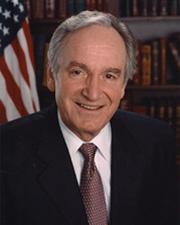
Mr. President, I am here to introduce legislation and to talk about an issue that my colleagues have heard me speak about on numerous occasions during the course of the past two years, frequently at…
Mr. President, I am here to introduce legislation and to talk about an issue that my colleagues have heard me speak about on numerous occasions during the course of the past two years, frequently at some length. That issue is overtime pay for American workers.
It is a subject I feel deeply about. It has become very clear to me that Iowans feel very deeply about it, as well. Working families across the country feel deeply about it.
I know that is true because people approach me and tell me what overtime pay means to them and their families. I have become associated with this fight here in Congress over protecting overtime pay, so when people recognize me, they very often will approach me and tell me a little bit about themselves and why they support my efforts on this issue. Many of them even become emotional about it.
Why is that? Why do people feel so strongly? For some, it is a simple matter of fairness and valuing work. They believe that receiving time- and-a-half pay when they put in more than 40 hours of work in a week is fair because if they are going to give up their premium time--hours beyond a normal workweek--then their employer should provide them with premium pay. It is simple fairness. Of course, they might also rely on that premium pay as a substantial part of their income. That is a benefit of valuing work fairly. They make more money.
Most people making overtime pay are not extremely affluent, so they are probably spending a lot of that extra income, putting it right into the local economy. That is therefore a further benefit to the economy.
Other people, to tell the truth, would rather not work a lot of overtime hours. They believe a 40-hour workweek is a full workweek.
That is what the Fair Labor Standards Act, FLSA, did when we passed it in 1938. It established the principle of a 40-hour workweek in law by saying that employers need to pay extra when they work their employees longer than that. The time-and-a-half rule tends to discourage employers from requiring their employees to work longer than 40 hours, and many people value the law for that reason. They want to keep their premium time for themselves. They want to spend their premium time doing leisure activities or performing important family duties.
In 1938, our government decided that the 40-hour workweek was important to Americans. Look in any economic history book. It is treated as a fundamental and valuable principle in our economy. Overtime pay rewards work, and it reduces exploitation. It protects ``premium time'' for working men and women.
The 40-hour workweek says: Human beings are more than just the work they do. It says, the progress of technology can allow us to enjoy a good standard of living and quality of life without spending all of our hours toiling and laboring.
The 40-hour workweek also creates jobs. Requiring time-and-a half pay for overtime work encourages employers to hire more workers, rather than requiring additional hours of work from existing employees. Franklin Roosevelt cited this as a rationale when he signed the FLSA into law.
In 1933, probably for all the reasons I have just mentioned, the United States Senate voted 53 to 30 to set a cap for hours in a workweek. The number of hours was 30. The Senate voted to cap the workweek in the United States at 30 hours. Those were extremely difficult times economically, but the Senate of 70 years ago nonetheless placed a greater value on quality time spent off the job than they did increasing productivity with longer workweeks.
The Bush rules are deeply flawed. They make millions of modest-income and moderate-income American workers vulnerable to losing their eligibility for overtime pay, broadening the categories of workers that are ineligible for overtime protections--often in response to specific requests from industries.
If overtime is free to the employer, it is going to be overused. A study done by the Center for Women and Work at Rutgers University showed that only 20 percent of the workers eligible for overtime work more than 40 hours a week, but 44 percent of workers who are exempt from overtime pay work overtime.
Several months ago, three former career DoL officials released a report after having done an in-depth review of these rule changes. Their analysis should be read by all to whom the issue of overtime is important.
These were not just any three former DoL officials. These were the top three people who administered these regulations over the course of the last two decades. They speak with enormous credibility on this issue.
These career employees have said that ``in every instance where DoL has made substantive changes to the existing rules, it has weakened the criteria for overtime exemptions and thereby expanded the reach and scope of the exemptions.'' This comes from people who were elevated to their high positions within DoL during the Reagan administration. The fact that they say these new rules are bad for the American worker in all ways but one ought to tell us something.
All of my colleagues are well aware that I led fights on the Senate floor during the last Congress to block or repeal the Department of Labor's FLSA overtime rule changes. Despite the fact that Congress voted 6 times during that period to protect workers' overtime by blocking the new rules, the administration insisted on ignoring the will of Congress. The new rules went into effect on August 23 of last year.
The bill I am introducing today would simply allow any workers who were entitled to overtime before the new rules took effect last August to retain their overtime rights. It makes ineffective those portions of the new rules that allow employers to take overtime eligibility away from workers who were eligible before the new rules took effect.
Secondly, my bill would also increase the minimum salary threshold. The minimum salary threshold that helps define overtime eligibility had not been raised since 1975 before the Bush administration raised it to $23,660. The administration did not raise it high enough, and millions of workers who should be covered are not covered due to this inadequacy. This bill will increase the number of workers covered by overtime protections by raising the minimum salary threshold to $30,712--to correspond with the increase in workers' wages since 1975. The bill also contains language that requires the salary threshold be adjusted annually to reflect and keep pace with increases in inflation.
American workers deserve an iron-clad guarantee that their overtime rights are safe. That is what the bipartisan bill I am introducing today accomplishes. It repeals any provisions of the new rules that took effect last August that weaken overtime protections, and it indexes the minimum salary threshold annually to avoid future loss of overtime protections due to inflation. I thank the 13 of my colleagues who have agreed to cosponsor this for their support, and I look forward to adding more.
I ask unanimous consent that the text of the bill be printed in the Record.

Mr. President, I ask unanimous consent that the Committee on Energy and Natural Resources be authorized to meet during the session of the Senate, on Wednesday, February 9 at 11:30 a.m. to consider…
Mr. President, I ask unanimous consent that the Committee on Energy and Natural Resources be authorized to meet during the session of the Senate, on Wednesday, February 9 at 11:30 a.m. to consider pending calendar business.
Agenda:
Agenda Item 1: S. 47--A bill to provide for the exchange of certain Federal land in the Santa Fe National Forest and certain non-Federal land in the Pecos National Historical Park in the State of New Mexico.
Agenda Item 8: S. 63--A bill to establish the Northern Rio Grande National Heritage Area in the State of New Mexico, and for other purposes.
Agenda Item 9: S. 74--A bill to designate a portion of the White Salmon River as a component of the National Wild and Scenic Rivers System.
Agenda Item 14: S. 134--A bill to adjust the boundary of Redwood National Park in the State of California.
Agenda Item 17: S. 153--A bill to direct the Secretary of the Interior to conduct a resource study of the Rim of the Valley Corridor in the State of California to evaluate alternatives for protecting the resources of the Corridor, and for other purposes.
Agenda Item 18: S. 156--A bill to designate the Ojito Wilderness Study Area as wilderness, to take certain land into trust for the Pueblo of Zia, and for other purposes.
Agenda Item 20: S. 163--A bill to establish the National Mormon Pioneer Heritage Area in the State of Utah, and for other purposes.
Agenda Item 22: S. 176--A bill to extend the deadline for commencement of construction of a hydroelectric project in the State of Alaska.
Agenda Item 23: S. 177--A bill to further the purpose of the Reclamation Projects Authorization and Adjustment Act of 1992 by directing the Secretary of the Interior, acting through the Commissioner of Reclamation, to carry out an assessment of demonstration programs to control salt cedar and Russian olive, and for other purposes.
Agenda Item 24: S. 178--A bill to provide assistance to the State of New Mexico for the development of comprehensive State water plans, and for other purposes.
Agenda Item 26: S. 200--A bill to establish the Arabia Mountain National Heritage Area in the State of Georgia, and for other purposes.
Agenda Item 27: S. 203--A bill to reduce temporarily the royalty required to be paid for sodium produced on Federal lands, and for other purposes.
Agenda Item 28: S. 204--A bill to establish the Atchafalaya National Heritage Area in the State of Louisiana.
Agenda Item 29: S. 205--A bill to authorize the American Battle Monuments Commission to establish in the State of Louisiana a memorial to honor the Buffalo Soldiers.
Agenda Item 30: S. 207--A bill to adjust the boundary of the Barataria Preserve Unit of the Jean Lafitte National Historical Park and Preserve in the State of Louisiana, and for other purposes.
Agenda Item 31: S. 212--A bill to amend the Valles Caldera Preservation Act to improve the preservation of the Valles Caldera, and for other purposes, to the Committee on Foreign Relations.
Agenda Item 32: S. 214--A bill to authorize the Secretary of the Interior to cooperate with the States on the border with Mexico and other appropriate entities in conducting a hydrogeologic characterization, mapping, and modeling program for priority transboundary aquifers, and for other purposes.
Agenda Item 33: S. 225--A bill to direct the Secretary of the Interior to undertake a program to reduce the risks from and mitigate the effects of avalanches on recreational users of public land.
Agenda Item 34: S. 229--A bill to clear title to certain real property in New Mexico associated with the Middle Rio Grande Project, and for other purposes.
Agenda Item 35: S. 231--Mr. Smith, et al.--a bill to authorize the Bureau of Reclamation to participate in the rehabilitation of the Wallowa Lake Dam in Oregon, and for other purposes.
Agenda Item 36: S. 232--A bill to authorize the Secretary of the Interior, acting through the Bureau of Reclamation, to assist in the implementation of fish passage and screening facilities at non-Federal water projects, and for other purposes.
Agenda Item 37: S. 243--A bill to establish a program and criteria for National Heritage Areas in the United States, and for other purposes.
Agenda Item 38: S. 244--Mr. Thomas--a bill to extend the deadline for commencement of construction of a hydroelectric project in the State of Wyoming.
Agenda Item 39: S. 249--Mr. Reid, et al.--a bill to establish the Great Basin National Heritage Route in the States of Nevada and Utah.
Agenda Item 40: S. 252--A bill to direct the Secretary of the Interior to convey certain land in Washoe County, Nevada, to the Board of Regents of the University and Community College System of Nevada.
Agenda Item 41: S. 253--A bill to direct the Secretary of the Interior to convey certain land to the land to the Edward H. McDaniel American Legion Post No. 22 in Pahrump, Nevada, for the construction of a post building and memorial park for use by the American Legion, other veterans' groups, and the local community. '
Agenda Item 42: S. 254--A bill to direct the Secretary of the Interior to convey certain land to Lander County, Nevada, and the Secretary of the Interior to convey certain land to Eureka.
Agenda Item 43: S. 263--A bill to provide for the protection of paleontological resources on Federal lands, and for other purposes.
Agenda Item 44: S. 264--A bill to amend the Reclamation Wastewater and Groundwater Study and Facilities Act to authorize certain projects in the State of Hawaii.
In addition, the Committee may turn to any other measures that are ready for consideration.
Mr. President, I ask unanimous consent that the Committee on Environment and Public Works be authorized to meet on Wednesday, February 9, 2005 at 2:30 p.m. to conduct a hearing to receive testimony on EPA's proposed budget for fiscal year 2006.
The hearing will be held in SD 406.
Mr. President, I ask unanimous consent that the Committee on Foreign Relations be authorized to meet during the session of the
Senate on Wednesday, February 9, 2004 at 11 a.m. to hold a Members' Briefing.
Mr. President, I ask unanimous consent that the Committee on Health, Education, Labor, and Pensions meet in executive session during the session of the Senate on Wednesday, February 9, 2005 at 10 a.m. in SD-430.
Mr. President, I ask unanimous consent that the Select Committee on Intelligence be authorized to meet during the session of the Senate on February 9, 2005 at 2:30 p.m. to hold a closed meeting.

Mr. President, I rise today to introduce the calling for a 2-1-1 Act with my colleague Senator Elizabeth Dole. This bill will make an invaluable difference for the citizens of New York and the…
Mr. President, I rise today to introduce the calling for a 2-1-1 Act with my colleague Senator Elizabeth Dole. This bill will make an invaluable difference for the citizens of New York and the country.
Just last week I was in Rochester helping to launch a 2-1-1 call center that will serve the citizens of the Finger Lakes region of New York. This call center will provide a simple, efficient, and convenient way for individuals to obtain vital information about government services. It is the first step in an ambitious plan to provide 365 day, 24 hour 2-1-1 service throughout all of New York, and ultimately, the entire country.
The Calling for 2-1-1 Act, which I am introducing today, will create at least one 2-1-1 call center just like the one in Rochester in every state in the country, and will link every regional call center together to ensure Statewide coverage. Last Congress, 31 members of the Senate and 149 members of the House of Representatives co-sponsored the Calling for 2-1-1 Act. In the 109th, we are working to appeal to even more.
The best part of the 2-1-1 system is that it is equally available to everyone. From the mother whose child is about to go off to war, to the veteran returning from service, 2-1-1 will help people access the information they need when they need it. It helps teens who are in crisis and young mothers who have nowhere else to turn. Single mothers trying to find a job in a tough economy, frail senior citizens who need help with transportation but have no family or friends to call, and substance-abusing teens who in a moment of lucidity decide to seek a way out can all find what they need by dialing 2-1-1.
This number also helps people who want to give back to their communities. 2-1-1 provides lots of information about volunteer opportunities and helps direct people who want to give donations. At times of disaster, like the recent tsunami, 2-1-1 will be there to help get everyone the information they need to make sure their donations are directed effectively.
2-1-1 is not only good for New Yorkers; it is also good for our Nation's bottom line. 2-1-1 saves money because it eliminates duplicative services. The service will replace the existing maze of individual numbers for individual services: hotlines for shelter from abusive spouses, vaccinations for children, or information about where to obtain hospice services for ailing parents or loved ones. 2-1-1 will be a ``one-stop shop'' for all of these services. According to a recent study by the Ray Marshall Center for the Study of Human Resources at the University of Texas' Lyndon B. Johnson School of Public Affairs, 2- 1-1 call centers can save as much as $130 million in the first year of operation and as much as $1.1 billion over ten years.
I would add that 2-1-1 saves lives. Every time someone calls 9-1-1 with a non-emergency call, the operators spend time with that caller that they could be spending dealing with a true emergency. 2-1-1 will replace 9-1-1 as the non-emergency point of reference because it is so easy to recall.
We learned on September 11th how important 2-1-1 can be. In the immediate aftermath of the disaster, most people did not know where to turn for information about their loved ones. Fortunately for those who knew about it, 2-1-1 was already operating in Connecticut during September 11th, and it was critical in helping identify the whereabouts of victims, connecting frightened children with their parents, providing information on terrorist suspects, and linking ready volunteers with coordinated efforts and victims with necessary mental and physical health services. 2-1-1 provided locations of vigils and support groups, and information on bioterrorism for those concerned about future attacks.
As time went by, many people needed help getting back on their feet. More than 100,000 people lost their jobs. Close to 2,000 families applied for housing assistance because they couldn't pay their rent or mortgage. 90,000 people developed symptoms of post-traumatic stress disorder or clinical depression within eight weeks of the attacks. Another 34,000 people met the criteria for both diagnoses. And 2-1-1 was there to help in Connecticut.
It wasn't available in far too many other areas, however. In fact, a Brookings Institution and Urban Institute study of the aftermath of September 11th found that many dislocated workers struggled to obtain available assistance. People ``found it difficult to connect with resources due to a social-services infrastructure that does not support a simple and efficient method for people to learn about and access services and for agencies to coordinate their activities.''
And that is what 2-1-1 is all about. It provides a single, efficient, coordinated way for people who need help to connect with those who can provide it.
The Federal Communications Commission laid the groundwork for a 2-1-1 number in 2000 when it directed that telephone number to be reserved for information and referral to social and human-services agencies. The 2-1-1 system opens the way to a user-friendly social-services network, by providing an easy-to-remember and universally available phone number that links individuals and families in need to the appropriate non- profit and government agencies.
In Rochester, New York and throughout the Finger Lakes, 2-1-1 will do just that. Whatever the need, 2-1-1 can help point you in the right direction. That is why I am so pleased to be introducing this legislation today, and why I am so optimistic that this will be an important first step in the road to bringing 2-1-1 to communities throughout the Empire State and the entire U.S.A. Thank you.
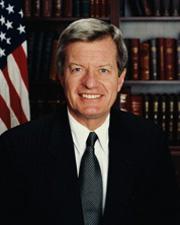
Mr. President, I am pleased to join my good friend Senator Grassley, the Chairman of the Senate Finance Committee, in introducing the National Employee Savings and Trust Equity Guarantee Act. Senator…
Mr. President, I am pleased to join my good friend Senator Grassley, the Chairman of the Senate Finance Committee, in introducing the National Employee Savings and Trust Equity Guarantee Act.
Senator Grassley and I have attempted put together a bipartisan bill to improve the security of the pension plans that cover America's workers. The Finance Committee approved similar legislation in the last Congress. Some of the provisions in this bill that provide participant protections were in a bill we introduced in the 107th Congress--a bill designed to help us avoid another Enron retirement plan debacle.
We all remember Enron. Thousands of workers lost their jobs. Because their 401(k) accounts were heavily invested in company stock, these workers lost most of their retirement savings as well. While the story of Enron's employees is no longer new, others companies unfortunately have risen up, or fallen down, to take Enron's place.
This country is in the middle of a discussion about retirement security. The administration is recommending that we introduce investment risk into the Social Security system--a system that is the sole source of retirement income for one-fifth of our senior citizens, and the primary source for almost two-thirds of seniors. Before we introduce risk into Social Security, the bedrock of our retirement system, we need to take a hard look at how we can reduce risk to participants in the private retirement system. That is what this bill is about.
Pension legislation is challenging. Companies offer plans voluntarily. If we value employer-sponsored retirement plans--and I do--we need to be careful not to make them so burdensome that companies will stop offering them. At the same time, workers have the right to basic protections to make sure that the money that they are counting on for retirement is really there when the time comes.
I believe that this bill strikes that balance. It phases out the ability companies have to keep workers locked into company stock in their retirement plans. But it does not limit those workers' ability to invest in that stock if they decide that doing so is best for them.
To help make that decision, we give workers tools to make good decisions, and really understand the consequences of their actions. We require the issuance of benefit statements so workers know how much their accounts are worth and how much company stock they already own. And we provide a safe harbor to make it easier for employers to make independent investment advice available if they want to.
The challenge inherent in legislating for a voluntary pension system is particularly sensitive when the subject is defined benefit plan funding. When we discuss and debate funding proposals, we need to consider the health of PBGC, the participants who are counting on defined benefit pensions and the employers who have been willing to promise these benefits.
The Pension Benefit Guaranty Corporation insures defined benefit plans covering forty-four million Americans. As recently as 2001, PBGC had a projected surplus. Now PBGC has a projected deficit of $23 billion. And this deficit represents unfunded guaranteed benefits. Sadly, many participants were promised benefits in excess of those guaranteed by PBGC. These participants planned their retirement around a benefit promise, only to have the rug pulled out from under them. We must strengthen the funding of defined benefit pension plans so promises made can be kept. This bill takes some important steps toward this goal.
First, this bill provides a permanent replacement for the 30-year Treasury rate used to calculate minimum funding requirements for defined benefit plans. Congress passed a temporary substitute last year, but our temporary fix expires at the end of this year. This bill would extend the current corporate bond rate for an additional year, and then begin phasing in the yield curve--a set of rates that recognizes that you will get a different interest rate on a 5-year loan than on a 15-year loan.
This bill increases the deductible limit on company contributions to defined benefit pension plans. This is so critical. We must allow companies to contribute more in good times, to build a cushion for bad times.
Under this bill, plans of financially-distressed companies that are less than 50 percent funded would not be allowed to continue promising additional benefits until either the funding improves, or the company's financial footing is more solid. This is a tough provision. But we have to make sure that employees receive benefits that they have earned. We have to do our best to make companies pay for promises they have made. But when a company cannot pay for more promises, we must be willing to step in and say ``No more promises.''
This bill has a number of other provisions that will make it easier for a worker to move retirement plans from employer to employer, or from an employer plan to an IRA. There are also provisions that make it easier to administer retirement programs.
I look forward to continuing to work with the Chairman of the Finance Committee, Senator Grassley, to see the National Employee Savings and Trust Equity Guarantee Act through to enactment. I urge my colleagues to join us in working toward a more secure retirement for millions of Americans.
Mr. President, today I rise, along with Senator Vitter, to introduce the Jean Lafitte National Historic Park and Preserve Boundary Adjustment Act of 2005. This bill was passed unanimously by the…
Mr. President, today I rise, along with Senator Vitter, to introduce the Jean Lafitte National Historic Park and Preserve Boundary Adjustment Act of 2005. This bill was passed unanimously by the Senate during the 108th Congress.
The Jean Lafitte National Historical Park and Preserve was established in 1978 to preserve for present and future generations significant examples of the rich natural and cultural resources of Louisiana's Mississippi delta region. The park seeks to illustrate the influence of environment and history on the development of a unique regional culture. It is named for Jean Lafitte who was a pirate, or privateer as he like to be called, that fought alongside U.S. forces in the Battle of New Orleans at the end of the War of 1812. The park consists of six physically separate sites and a park headquarters located in New Orleans. The sites in Lafayette, Thibodaux and Eunice interpret the Acadian culture of the area. The Barataria Preserve, in Marrero, interprets the natural and cultural history of the uplands, swamps and marshlands of the region. Six miles southeast of New Orleans is the Chalmette Battlefield and National Cemetery, site of the 1815 Battle of New Orleans and the final resting place for soldiers from the Civil War, Spanish-American War, World Wars I and II and Vietnam. The park's visitor center, which is located in the historic French Quarter, interprets the history of New Orleans and diverse cultures of Mississippi delta region.
It is the Barataria site that is the focus of our attention today. The Bill before us would merely adjust the boundary of the Barataria preserve unit of Jean Lafitte National Historical Park and Preserve and by doing so protect a crucial component of one of the largest and most productive expanses of coastal wetlands in North America--coastal Louisiana or as they are known: America's Wetlands. The Barataria preserve is the only part of our coastal wetlands preserved in the National Park System. As we strive to find ways to stem the tide of coastal erosion in Louisiana, and bring about the restoration of wetlands already lost, it is equally important that we protect those areas that remain such as the Barataria preserve so that Americans can experience, first hand, the amazing beauty and fertility of Louisiana's bountiful coastal wetlands--the most threatened wetland ecosystem in the country--disappearing at a rate of 25 to 35 square miles a year. Located on the outskirts of New Orleans, where it is accessible not only to the people of New Orleans but also to the millions of tourists from around the world that visit New Orleans and south Louisiana, Barataria serves as an interpretive experience of this greatest of coastal wetlands.
This bill expands this national treasure without any cost to the Federal Government while preserving private property rights. It simply transfers to the Park over 3,000 acres of wetlands already in Federal ownership, already paid for by the American people. These lands, which are adjacent to the Preserve, became Federal as a result of the settlement by the Justice Department of two lawsuits brought by the landowners against Federal agencies. However, because these acres are not managed by the park, they are presently unavailable for public use. An Act of Congress is necessary to allow inclusion of these lands into a new boundary.
My bill does just that, opening these lands for canoeing, wildlife viewing, exploration, fishing, and hunting, all under the management and protection of the park service. The bill grants long-term protection to crucial resources that the Park Service has found suitable and feasible for inclusion within a new boundary through a 1996 boundary study.
The Park is immediately adjacent to the developed areas of the Westbank of Jefferson Parish along much of its boundary while the Barataria unit in particular is right next door to a hurricane levee. Making more of the park boundary contiguous with the levee
that divides developed land from undeveloped wetlands enhances opportunities for direct cooperation between these communities and the Park for management of shared concerns. These concerns include the routing of storm-water run-off; the discharge of treated sewage; estuarine water quality and its effects on fisheries and recreational uses; wetland restoration and mitigation; and a number of other problems and opportunities. The Park has worked with Jefferson Parish in seeking creative solutions to these problems and will continue to do so. The addition of these properties will only enhance their chances for success.
It is for all of these reasons that I am hopeful the Senate can approve of this measure in the near future. The expansion we seek in this Bill benefits us today as well as tomorrow.
I ask unanimous consent that the text of this bill be printed in the Record.

Mr. President, I commend Senator Harkin for introducing the Overtime Rights Protection Act to restore overtime protections for the more than 6 million Americans denied overtime pay and denied the…
Mr. President, I commend Senator Harkin for introducing the Overtime Rights Protection Act to restore overtime protections for the more than 6 million Americans denied overtime pay and denied the guarantee of a 40-hour work week by the Republican anti-overtime regulation adopted in 2004. The bill will also provide overtime protections for additional deserving workers.
In the last Congress, the Senate voted four times to block the Administration's overtime rule, and the House voted twice to block it. Yet, the Republican leadership refused to accept the will of Congress and the will of the American people. Instead, it blocked the enactment of this legislation and continued the unfair assault on America's workers and their right to overtime pay.
In today's economy, workers are concerned about losing their jobs, their pay, their health benefits, and their retirement benefits. Now more than six million employees also have to worry about losing higher pay they've always earned for working overtime.
These men and women are nurses. They are school teachers. They are long-term care workers. They are assistants in mental health facilities. They are countless men and women in many other fields.
Make no mistake--overtime cuts are pay cuts. When workers lose their overtime pay, they still work longer hours. But they get no extra pay for doing so, even though they've had the right to time-and-a-half pay for overtime work ever since the 1930's.
Clearly, we need a policy to create more jobs, not eliminate jobs. By taking away workers' right to overtime, the Administration's rule undermines job creation, since it allows businesses to require employees to work longer hours for no extra pay, rather than hire new workers to do the extra work.
Denying overtime pay is a thinly veiled scheme to reduce workers' pay and raise employers' profits. In this troubled economy, it makes no sense to ask any workers anywhere in America to give up their overtime pay.
Instead of making hard-working men and women work longer hours for less pay, businesses should create new jobs by hiring more employees to do the work.
We know that employees across America are already struggling hard to balance their family needs and their work responsibilities. Requiring them to work longer hours for less pay will impose an even greater burden in this daily struggle.
According to the Families and Work Institute, two of the most important things that children would most like to change about their parents are that they wish their parents were less stressed out by their work, and they wish they could spend more time with their parents.
The Government Accountability Office says that employees without overtime protection are twice as likely to work overtime as employees covered by the protection. In other words, businesses don't hesitate to demand longer hours, as long as they don't have to pay higher wages for the extra work.
Protecting the 40-hour work week is vital to protecting the work- family balance for millions of Americans in communities in all parts of the nation. The last thing Congress should be doing is to allow the new anti-overtime rule to make the balance worse for workers than it already is.
Under the overtime law, low-income workers are supposed to be automatically included. But today, millions who should be included are left out, since wages have increased, but the maximum earnings level for automatic coverage has remained the same for 30 years. The Bush Administration raised it to $23,660 in their new rule, but this level is still too low. The Harkin bill will cover more workers by raising the threshold to $30,712, and index it to keep pace with wage growth. This change will bring it to the level it would be if we'd made annual adjustments for wage inflation over the last 30 years.
Congress cannot look the other way while more and more Americans lose their jobs, their livelihoods, their homes, and their dignity. Denying overtime pay rubs salt in the wounds of this troubled economy. Enacting the Overtime Rights Protection Act will end this injustice, and I urge my colleagues to support it.

Mr. President, I rise today along with my colleague, Senator Baucus, the Ranking Member of the Finance Committee, to re- introduce the National Employee Savings and Trust Equity Guarantee Act--or the…
Mr. President, I rise today along with my colleague, Senator Baucus, the Ranking Member of the Finance Committee, to re- introduce the National Employee Savings and Trust Equity Guarantee Act--or the NESTEG bill as we call it in the Finance Committee. The NESTEG bill would reform our pension and retirement savings laws in several important ways. For example, NESTEG would require companies to allow their employees to diversify out of company stock, a provision that the Committee adopted in response to the events at Enron which saw employees' retirement plans vanish almost over night. The NESTEG bill also includes other important participant protections, including enhanced disclosure requirements, new rules governing so-called blackout periods, and faster vesting of employer contributions. In addition, NESTEG expands the portability of retirement plan assets so that workers can keep money saved for retirement, and simplifies pension laws and regulation. The NESTEG bill also responds to the uncertainty in the rules governing defined benefit pensions by permanently adopting the yield curve as a replacement for the 30-year Treasury rate.
Last year, the Finance Committee unanimously approved the NESTEG bill. This year, I am looking forward to seeing it signed into law. This bill first began in the wake of the outrageous events that went on in the wake of the collapse of Enron and corporate scandals at other companies. Over the past few years, the Finance Committee has worked diligently to enact reforms in a number of areas of the law to make sure that events like that don't happen again.
The important pension protections in the NESTEG bill are one remaining area for reform. The headlines have died down, but workers' pensions are still too vulnerable to company failures. Thus, a central piece of this bill would allow employees to diversify their retirement plans so that they are not overly concentrated in company stock. Diversification is one of the hallmark principles of sound investment strategy, and promoting diversification should be a hallmark of our pension laws.
But the NESTEG bill is not just a bill that responds to Enron-like situations. The NESTEG bill includes other important improvements to 401(k) and other defined contribution plans as well. The bill makes it easier for employees to transfer amounts from one plan to another, thereby making sure that plan assets remain saved for retirement. And the bill includes provisions designed to make it easier and more cost effective for small businesses to sponsor a retirement plan. Small businesses are vital to our economy, and we need to encourage a level playing field so that workers at small businesses throughout our country have the same access to retirement plans as workers at Fortune 500 companies.
The NESTEG bill also would remove a major source of uncertainty plaguing our pension system by enacting the yield curve as a permanent replacement to the 30-year Treasury rate for pension funding. Workers need reliable pension funding, and employers need a reliable basis on which to calculate pension payments. The NESTEG bill
also gives plan sponsors more flexibility to fund their plans well in good times, and restricts the ability of companies with severely underfunded plans to promise more benefits to work. The Administration has recently come forward with additional pension funding reform proposals, and I look forward to examining those reforms as the Finance Committee considers legislation in this area this year.
Retirement security is a topic that is going to get a great deal of attention this year. We know we need to increase long-term savings in America, and we know that there are ways that we can improve our private retirement system. The reforms in the NESTEG bill that I am introducing today with Senator Baucus represent an important step forward in improving Americans' retirement security. As we debate retirement security issues this year, I look forward to working with my colleagues to achieve the goal of ensuring that all Americans achieve a secure retirement.
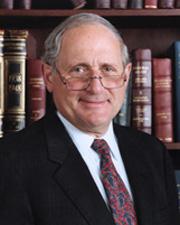
Mr. President, my colleagues Senators DeWine and Voinovich of Ohio, Senator Stabenow of Michigan, and I are pleased to introduce the Great Lakes Water Quality Indicators and Monitoring Act. The bill…
Mr. President, my colleagues Senators DeWine and Voinovich of Ohio, Senator Stabenow of Michigan, and I are pleased to introduce the Great Lakes Water Quality Indicators and Monitoring Act. The bill directs the Environmental Protection Agency to develop indicators of Great Lakes water quality and related environmental factors and a comprehensive network to monitor those indicators. This bill will result in science-based assessments of the health of the Great Lakes.
The Great Lakes are a treasured natural resource. The Great Lakes contain almost 20% of the world's fresh water, and millions of people in the Great Lakes basin rely on the lakes for drinking water, for economic livelihoods such as fishing and shipping, and for recreational opportunities, including swimming and boating. Unfortunately, the Great Lakes have suffered from decades of toxic discharges, urban and agricultural runoff, and other environmental challenges. We've made some progress in improving water quality, but we know we have a long way to go.
The stewards of the lakes--at the Federal, State, and local levels-- use a variety of methods to determine the health of the Great Lakes and whether they are improving. For example, the EPA and the Fish and Wildlife Service monitor the accumulation of chemicals in Great Lakes fish. The National Oceanic and Atmospheric Administration detects changes in the ecosystem from space-based satellites and waterborne buoys. The U.S. Geological Survey samples stream flow and quality, and the States inspect for compliance with water quality standards. These efforts to collect scientific data are largely voluntary and suffer from a lack of funding and coordination. Additionally, they use inconsistent methods that often produce incompatible results.
In 2004, the General Accounting Office released a report entitled Great Lakes: An Overall Strategy and Indicators for Measuring Progress are Needed to Better Achieve Restoration Goals. The GAO looked at almost 200 Federal and State programs and found that a lack of coordination, poorly defined goals, and insufficient data make it difficult to evaluate the success of these programs. The GAO found that there are no data collected regularly throughout the Great Lakes, and that the existing data are inadequate to determine whether water quality and other environmental conditions are improving.
In 1990, I authored the Great Lakes Critical Programs Act, which strengthened the water quality standards in the Great Lakes region. In 2002, Congress passed the Great Lakes Legacy Act, to speed the cleanup of contaminated bottom sediment. Today, we need to establish a way to evaluate the impact of these and similar measures. To show results, we need science-based indicators of water quality and related environmental factors, and we need to monitor those indicators regularly throughout the ecosystem.
GAO recommends that EPA's Great Lakes National Program Office lead an
effort to develop indicators and a monitoring network. Our bill gives that office the mandate to work with other Federal agencies and Canada to identify and measure water quality and other environmental factors on a regular basis. The initial set of data collected through this network will serve as a benchmark against which to measure future improvements. Those measurements will help us make decisions on how to steer future restoration efforts. With a clear picture of how the Great Lakes are changing, we can change course when needed and spend public funds on the most effective measures to meet the most pressing demands.
This bill serves a second purpose--it provides EPA with dedicated funding to make sure that data collection can begin in a timely manner and be carried out consistently and comprehensively.
I encourage my colleagues to support this bill and help speed its passage.
Mr. President, will the Senator yield for a question? Mr. President, I have a unanimous consent request. I ask unanimous consent that I be added as a cosponsor to amendment No. 1557, which is the…
Mr. President, will the Senator yield for a question?
Mr. President, I have a unanimous consent request. I ask unanimous consent that I be added as a cosponsor to amendment No. 1557, which is the field manual amendment to which they have been referring.
Mr. President, if I could be recognized just for 1 minute to comment on this amendment, and then I will yield the floor.
Mr. President, first of all, I congratulate Senator McCain. I do not think there is anybody in this body who speaks with greater authority on the subject matter he has spoken to in this amendment. I commend him for the distinction he is making. It is a critical distinction. In addition to the fact that the field manual is there for everybody to see and has historic meaning, the difference between the McCain amendment and the one which was offered by the Senator from Virginia--another difference--is that the field manual is a public document. You can read what is in the field manual. The Secretary of Defense memoranda too often have been classified ``unavailable.'' We have been spending sometimes months and years trying to just find out what is in those memoranda.
So there is a very important difference between these two amendments in a number of regards. I very much believe that the first amendment, amendment No. 1557, is the way which is most consistent with our values. It makes it very clear, in public, what the authorities are and what the standards and criteria are. The contrast between that and something amorphous, which gives the Secretary of Defense a power he already has anyway, which is to issue regulations but to do so in secret and in a classified way, leads to more vagueness, more uncertainty, more conflict, more inability of Congress to perform oversight.
So I commend the Senator from Arizona for this amendment. I believe the differences between these two amendments are significant.
Mr. President, if I could just comment briefly on that, at least with the unclassified portion, we have access to it, unlike the documents that are issued by the Secretary of Defense memoranda. They are classified, but they are also, too often, unavailable to Congress. They just use one excuse after another not to make those memoranda available to Congress. So there may be a classified version of the field manual, but at least Congress has access to that unclassified version.
Mr. President, reserving the right to object, I wonder if we can line up some time at this point. I will not object, but after he is recognized, I believe then the majority has additional time for another amendment going up to what time?
Mr. President, I ask unanimous consent that immediately following the completion of those three time periods on the Republican side, I be allocated 10 minutes on this side, which I will provide equally between the junior Senator from Michigan, the Senator from Washington, and myself, so that four amendments can be introduced and laid aside.
Reserving the right to object, we have not had any time prior to the ADA matter, and it was intended that we have some time. There is a prepared UC that would perhaps assist us, which has been handed to us. I wonder if the manager will read this.
Reserving the right to object, I ask that that be modified to allow 10 minutes between 5:15 and 5:30 to be granted to this side for the introduction of those amendments. They will be introduced, with a minute on each, and then set aside.
The junior Senator from Michigan, 2 minutes; the Senator from Washington, 2 minutes; and me for 1 minute.
Reserving the right to object, does that include the UC which the Senator from Virginia read?
Reserving the right to object, the Democratic leader is going to want 2 minutes prior to the vote on leadership time, or prior to 5:15. You all figure it out.
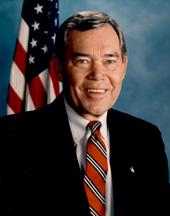
Mr. President, I rise today to introduce the ``Soda Ash Royalty Reduction Act of 2005,'' a bill to limit the Federal royalty on soda ash. This legislation, if passed, will put people back to work in…
Mr. President, I rise today to introduce the ``Soda Ash Royalty Reduction Act of 2005,'' a bill to limit the Federal royalty on soda ash. This legislation, if passed, will put people back to work in my State and address the important issue of maintaining a strong and financially sound manufacturing base in this country. It will keep jobs in America and give workers a fighting chance to compete globally.
The State of Wyoming accounts for 85 percent of the natural soda ash produced in the United States. The health of the domestic soda ash industry is now at issue. This legislation goes a long way towards assisting the domestic industry to be competitive on a global basis.
The bill reduces an excessive tax on natural American soda ash; a tax that is significantly impairing the ability of U.S. exported soda ash to compete in important global markets; a tax that has helped create 30 percent decline in employment in this industry in Wyoming since 1997. The current 6 percent royalty on each ton of domestically produced soda ash was imposed in 1995 at a time when our exports of this important commodity, primarily used in the manufacture of glass were rising to record levels. It was a windfall tax that recognized the industry's significant expansion.
Over the last decade, export growth has been severely impacted, as several trading partners erected various barriers to U.S. soda ash, often to protect their own less efficient domestic producers. One of the most aggressive countries has been China. As recently as 1990, China imported over one million tons of soda ash annually from the U.S. Today, China exports two million tons from plants that produce a synthetic grade of this important commodity.
The Chinese produce soda ash in far less efficient factories with limited attention to environmental or safety concerns. The average wage of a Chinese worker in these plants is less than $5 a day. By contrast Wyoming soda ash workers can earn on average $35 an hour. Chinese soda ash producers, which are largely state owned, also benefit from direct and indirect forms of state support, as well as the benefits of a fixed exchange rate. As a result of these actions, China has supplanted the United States as the world's largest exporter of soda ash.
Wyoming soda ash producers remain the most efficient in the world and have been constantly improving their productivity over the last several years. It is an industry that is reinventing itself to meet the demands of fierce global competition.
My legislation restores the original royalty the Federal Government imposed on soda ash in the Mineral Leasing Act of 1920. That act set a 2 percent royalty on soda ash mined on Federal leases. We would temporarily resume that royalty rate consistent with the Federal Land Policy and Management Act of 1976 that requires the Secretary of the Interior to receive ``fair market value'' for the use of public lands and their resources. In other words, the legislation simply adjusts what was a windfall tax back to its original level.
The legislation is overdue and keeps our Nation's commitment to U.S. based manufacturing and jobs. The U.S. soda ash industry has been a good partner with the Federal Government, providing additional revenue when business was flourishing. Now that the industry is fighting for its survival, the Federal Government has the opportunity to be a responsible partner and ease its tax burden so it can survive and provide the thousands of jobs that are so important to my State.
Bill Text
4 versions available
        [Congressional Bills 109th Congress]
[From the U.S. Government Publishing Office]
[S. 207 Referred in House (RFH)]

109th CONGRESS
1st Session
S. 207

_______________________________________________________________________

IN THE HOUSE OF REPRESENTATIVES

July 27, 2005

Referred to the Committee on Resources

_______________________________________________________________________

AN ACT

To adjust the boundary of the Barataria Preserve Unit of the Jean
Lafitte National Historical Park and Preserve in the State of
Louisiana, and for other purposes.

Be it enacted by the Senate and House of Representatives of the
United States of America in Congress assembled,

SECTION 1. SHORT TITLE.

This Act may be cited as the ``Jean Lafitte National Historical
Park and Preserve Boundary Adjustment Act of 2005''.

SEC. 2. JEAN LAFITTE NATIONAL HISTORICAL PARK AND PRESERVE BOUNDARY
ADJUSTMENT.

(a) In General.--Section 901 of the National Parks and Recreation
Act of 1978 (16 U.S.C. 230) is amended in the second sentence by
striking ``twenty thousand acres generally depicted on the map entitled
`Barataria Marsh Unit-Jean Lafitte National Historical Park and
Preserve' numbered 90,000B and dated April 1978,'' and inserting
``23,000 acres generally depicted on the map entitled `Boundary Map,
Barataria Preserve Unit, Jean Lafitte National Historical Park and
Preserve', numbered 467/80100, and dated August 2002,''.
(b) Acquisition of Land.--Section 902 of the National Parks and
Recreation Act of 1978 (16 U.S.C. 230a) is amended--
(1) in subsection (a)--
(A) by striking ``(a) Within the'' and all that
follows through the first sentence and inserting the
following:
``(a) In General.--
``(1) Barataria preserve unit.--
``(A) In general.--The Secretary may acquire any
land, water, and interests in land and water within the
boundary of the Barataria Preserve Unit, as depicted on
the map described in section 901, by donation, purchase
with donated or appropriated funds, transfer from any
other Federal agency, or exchange.
``(B) Limitations.--
``(i) In general.--With respect to the
areas on the map identified as `Bayou aux
Carpes Addition' and `CIT Tract Addition'--
``(I) any Federal land acquired in
the areas shall be transferred without
consideration to the administrative
jurisdiction of the National Park
Service; and
``(II) any private land in the
areas may be acquired by the Secretary
only with the consent of the owner of
the land.
``(ii) Easements.--Any Federal land in the
area identified on the map as `CIT Tract
Addition' that is transferred under clause
(i)(I) shall be subject to any easements that
have been agreed to by the Secretary and the
Secretary of the Army.'';
(B) in the second sentence, by striking ``The
Secretary may also'' and inserting the following:
``(2) French quarter.--The Secretary may'';
(C) in the third sentence, by striking ``Lands,
waters, and interests therein'' and inserting the
following:
``(3) Acquisition of state land.--Land, water, and
interests in land and water''; and
(D) in the fourth sentence, by striking ``In
acquiring'' and inserting the following:
``(4) Acquisition of oil and gas rights.--In acquiring'';
(2) by striking subsections (b) through (f) and inserting
the following:
``(b) Resource Protection.--With respect to the land, water, and
interests in land and water of the Barataria Preserve Unit, the
Secretary shall preserve and protect--
``(1) fresh water drainage patterns;
``(2) vegetative cover;
``(3) the integrity of ecological and biological systems;
and
``(4) water and air quality.''; and
(3) by redesignating subsection (g) as subsection (c).
(c) Hunting, Fishing, and Trapping.--Section 905 of the National
Parks and Recreation Act of 1978 (16 U.S.C. 230d) is amended in the
first sentence by striking ``within the core area and on those lands
acquired by the Secretary pursuant to section 902(c) of this title,
he'' and inserting ``the Secretary''.
(d) Administration.--Section 906 of the National Parks and
Recreation Act of 1978 (16 U.S.C. 230e) is amended--
(1) by striking the first sentence; and
(2) in the second sentence, by striking ``Pending such
establishment and thereafter the'' and inserting ``The''.

SEC. 3. REFERENCES IN LAW.

(a) In General.--Any reference in a law (including regulations),
map, document, paper, or other record of the United States--
(1) to the Barataria Marsh Unit shall be considered to be a
reference to the Barataria Preserve Unit; or
(2) to the Jean Lafitte National Historical Park shall be
considered to be a reference to the Jean Lafitte National
Historical Park and Preserve.
(b) Conforming Amendments.--Title IX of the National Parks and
Recreation Act of 1978 (16 U.S.C. 230 et seq.) is amended--
(1) by striking ``Barataria Marsh Unit'' each place it
appears and inserting ``Barataria Preserve Unit''; and
(2) by striking ``Jean Lafitte National Historical Park''
each place it appears and inserting ``Jean Lafitte National
Historical Park and Preserve''.

Passed the Senate July 26, 2005.

Attest:

EMILY J. REYNOLDS,

Secretary.