Honor Our Fallen Prisoners of War Act

Legislative Activity
Stay on top of the latest movement without scrolling through every action
Read twice and referred to the Committee on Armed Services.
December 21, 2005
View full timeline
Introduced in Senate
December 21, 2005
Sponsor introductory remarks on measure. (CR 12/22/2005 S14318-14319)
December 21, 2005
Read twice and referred to the Committee on Armed Services.
December 21, 2005
Floor Debate
12 membersWhat members said about S. 2157 on the floor
 OJS
OJS MLL
MLL JIL
JIL JFK
JFK HRC+7
HRC+7
Floor Debate
12 membersWhat members said about S. 2157 on the floor
Mr. President, I rise today to introduce the ``Local Development Business Loan Program Act of 2005.'' This bill will improve the Small Business Administration's (SBA) Certified Development Company…
Mr. President, I rise today to introduce the ``Local Development Business Loan Program Act of 2005.'' This bill will improve the Small Business Administration's (SBA) Certified Development Company Loan Program, also known as the ``504 Loan Program,'' by streamlining the lending process and providing small businesses with greater opportunities to obtain affordable financing. The 504 Loan Program provides small businesses with long-term, fixed-rate financing for real estate and machinery.
As Chair of the Senate Committee on Small Business and Entrepreneurship, one of my primary responsibilities is to ensure small businesses are afforded the best possible environment to grow and flourish. The fundamental purpose of the SBA is to maintain and strengthen the nation's economy by aiding, counseling, assisting, and protecting the interests of small business concerns. This bill would strengthen the SBA's ability to pursue those goals.
The legislation responds to one of the primary needs of small businesses: access to affordable capital. For many small businesses, expansion plans face constraints imposed by facilities that are too small, or equipment that has insufficient capacity or outdated features. These small businesses often lack capital to remedy these needs, and without the SBA they would be limited to obtaining short- term financing with higher, often variable, rates. As a result, the 504 loan program is a key element of these small businesses' eventual success, because the program provides long-term capital, at fixed rates, that allows businesses to obtain new facilities, expand existing facilities, and update their machinery.
In Fiscal Year 2004, the SBA's financing programs, combined, supported over $20 billion in loans and venture capital for small businesses. In the 504 program alone, small businesses obtained 8,357 loans in 2004. Through those loans the SBA guaranteed over $4 billion in financing. The SBA portion of each 504 program loan is only 40 percent of the total loan size. This program thus produced approximately $10 billion in financing for small businesses in 2004! That financing allowed small businesses to create or retain 140,000 jobs in 2004.
Although the 504 program is already assisting entrepreneurial small businesses throughout the nation, it can be improved. The program works by combining in each financing package provided to a small business a loan from a Certified Development Company (CDC) that is guaranteed by the SBA, this is 40 percent of the total package; a non-guaranteed loan provided by a private ``first-mortgage'' lender, 50 percent of the total package; and a 10 percent down-payment provided by the small business. This bill offers improvements to all three aspects of the program, to increase the program's efficiency and impact. If approved by the Congress and signed into law, this bill will increase the number of small businesses that can utilize the program to grow and succeed.
Job creation and retention is a bedrock element of local development efforts throughout the country. One of the statutory purposes of the 504 loan program is to create new jobs and to help small businesses retain existing jobs. This bill's purpose is to further strengthen the local development impact of the 504 loan program. To reflect that, the bill re-names the 504 loan program as the ``Local Development Business Loan Program'' (Local Development Program). This new name will also help borrowers to understand the intent of the program; many small business owners had commented to the Committee that the name ``504 program'' was neither clear nor indicative of the program's purposes. The bill will not require the SBA to waste money by discarding existing program materials that refer to the previous name; the SBA may continue to use those materials, but it will use the new name on any new materials produced after the bill's enactment.
If the Local Development Program continues to grow at its recent pace, it may exceed $6 billion in guaranteed loans during 2006. The bill would authorize a maximum program level of $8 billion in guaranteed loans in fiscal year 2007, and $8.5 billion for fiscal year 2008.
This legislation will also reduce regulatory barriers that have constrained CDCs from expanding their operations into new areas. By increasing competitive opportunities for CDCs, the bill seeks to increase the number and qualify of financing options available to small businesses. For instance, existing SBA regulations require CDCs to have a separate loan committee for each State and to account for all revenue and expenses separately for each state. Regulations of this type have made compliance both costly and difficult and have deterred many CDCs from expanding into new areas. Simplifying these regulations will result in increased access to capital for small business.
The bill allows borrowers to provide more than the required minimum amount of equity when initiating their loan, and to use the excess equity to reduce the amount of the first-lien mortgage made by a private lender in the program. By contributing a larger down-payment at the onset of the loan, this provision will provide an opportunity for these borrowers to reduce their periodic payment obligations.
This legislation would also designate Local Development Program loans that qualify under the New Markets Tax Credit Program as a public policy goal under the Local Development Program, and thus make them eligible for larger financing packages. The New Market Tax Credit Program permits taxpayers to receive a credit against Federal income taxes for making qualified equity investments in designated Community Development Entities.
The Act will also permit the ownership interest of two or more small business owners to be combined to determine whether the small business is 51 percent owned by minorities, women, or veterans in order to qualify as a business eligible for a public policy loan. The Act's goal of improving access to capital for small businesses is also furthered by another provision that permits Local Development Program borrowers to obtain financing in the maximum amount permitted under this program and also under the SBA's ``7(a) loan program.''
This legislation would also allow a borrower to refinance a limited amount of existing debt. The amount that could be refinanced could not exceed 50 percent of the expansion project funded by the loan, and would be limited to certain situations. By giving these small businesses the opportunity to refinance and obtain lower-cost capital, the bill would provide them a greater chance to succeed.
The bill would also eliminate a fee now imposed on the first mortgage lenders, private banks, in a Local Development Program financing package. The lender's fee is a one-time fee equal to 0.5 percent of the first mortgage loan. Currently, the first mortgage lenders pass this fee on to CDCs and to borrowers. The bill will not increase the total fees paid by the CDCs or the borrowers, but clarifies that the CDC's stipulated annual fee would be increased by 0.06 percent, 6/100ths of one percent, and the borrower's stipulated fee would increase by approximately 0.06 percent, to replace the fees currently imposed on CDCs and borrowers by private lenders. In other words, instead of a fee imposed on CDCs and borrowers by the private lenders, which is not always clearly identifiable to those outside the program, this provision will specify the fee be paid directly by the CDCs and borrowers. It is hoped that this provision will clarify the fee obligations owed within the program, and will clearly identify to banks the total costs of participating in the program.
The SBA's current 504 Program provides our Nation's small businesses with low-cost, long-term financing that is absolutely critical to starting and developing a successful business. In turn, small businesses create the majority of new jobs created in the United States. This program, re-named as the Local Development Business Loan Program, will continue to help small businesses create jobs and support their local communities. In fact, the provisions in this bill will improve those efforts significantly.
Mr. President, I ask unanimous consent that the text of the bill be printed in the Record.
Mr. President, I rise today to introduce the Medicare Drug Benefit Protections Act of 2005 with my colleague, Senator Bill Nelson. Our bill provides additional protections for Medicare beneficiaries enrolling in the new Medicare Part D prescription drug benefit, protections which we believe are essential. Our bill extends the initial enrollment period for the new benefit until the end of 2006, provides more flexibility for beneficiaries to change plans, and adds crucial protections for those enrolled in a plan.
We are now in the midst of the rollout of the new Medicare drug benefit, and, as of November 15, seniors and individuals with disabilities on Medicare have begun enrolling in various plans. Unfortunately, many seniors are confused and angry, frustrated and concerned that they do not have adequate information about the plans being offered. Seniors may ultimately decide not to enroll in a plan if they do not have enough expert assistance--readily available and accessible--to help them choose an appropriate plan. To make matters worse, many say the information available from the Centers for Medicare and Medicaid Services, CMS, the agency overseeing the plan, is either not helpful or simply overwhelming.
Beneficiaries are worried they could make a poor choice in selecting a plan and that, once enrolled, the drugs offered by the plan they choose may not be the drugs they need. We must assure them that they will not be saddled with monthly premiums for plans which, in the end, do not adequately cover their prescription drug needs.
Our bill would address these concerns in several ways. The bill includes two provisions from Senator Nelson's bill, the Medicare Informed Choice Act of 2005, which give beneficiaries additional protection. The bill extends the initial six-month period for enrolling in a plan from May 15, 2006, to December 31, 2006, thus delaying late enrollment penalties until 2007 and giving beneficiaries the rest of this year and all of next year to decide whether to enroll in a plan. Once beneficiaries have enrolled in a plan, the bill provides a one- time opportunity during 2006 to change to another plan without penalty, should they wish to do so.
The Medicare Drug Benefit Protections Act includes additional safeguards, as well. Seniors are getting misinformation from the CMS website, especially in regard to the cost of drugs being offered by certain plans. Seniors in my home State of Maine have experienced serious problems with inaccurate drug pricing information being provided by the CMS website devoted to the new Medicare Part D plans, www.medicare.gov. In one instance, the CMS website quoted one price for a senior's drug costs for 2006 but the plan itself quoted a cost of approximately $2,000 more than the CMS website. Under our bill, beneficiaries could change plans without penalty if they relied on misinformation from CMS to their detriment.
Beneficiaries would also be allowed to change plans without penalty should their circumstances change significantly, due to medical reasons, for example. Beneficiaries who meet these criteria would have an extended period of time to change plans, a minimum of four months rather than the current 90 days. The bill would also extend the annual open season, as of 2007, from November 15th through December 31st, to a full two months, from November 1st through December 31st, in order to allow all beneficiaries more time outside the busy and travel-filled holiday season to study and compare plans should they wish to make a change.
Finally, our bill authorizes $25 million in funding for grants to States, non-profit organizations, and other entities to conduct additional education and outreach efforts on the drug benefit during fiscal years 2007 and 2008.
Our goal is to ensure that beneficiaries have sufficient time, comfort, and peace of mind to understand the new drug benefit and enroll in a plan well-suited to their needs so they can derive the much-needed assistance with their prescription drugs offered by these plans. We must provide flexibility, safeguards, and outreach efforts beyond what currently exists to reduce the anxiety and frustration that too many seniors are experiencing today.
The new Medicare drug benefit is the first comprehensive outpatient prescription drug benefit in the 40-year history of Medicare. The benefit is not perfect by any means, but rather a beginning. I will continue working to improve this benefit so that it will truly deliver the assistance that our seniors so desperately need and deserve to have.
Mr. President, I will speak just for a moment about each of these important measures. Before I do, I know today has been a long day, and it has been complicated by many procedural votes and a series…
Mr. President, I will speak just for a moment about each of these important measures. Before I do, I know today has been a long day, and it has been complicated by many procedural votes and a series of bills that we just passed out of here, many important bills. Of course, the Defense appropriations, Defense authorization bill, two of the major bills that Congress works on throughout the year, and it is important we get them through.
On the Defense appropriations bill, as it was amended, there was a very important piece for the gulf coast, $29 billion direct relief package. I will speak just for a moment about that because it has bearing on what we are going to do in the future when we are faced with catastrophic events.
Senator Vitter and I, my colleague from Louisiana, returned to the Congress over 4 months ago to try to describe to our colleagues the devastation that occurred with not one but two hurricanes and then multiple levee breaks which have devastated a major American city and a region, the southern part of Louisiana and Mississippi.
I have said now on many occasions that FEMA, on its best day, is not adequate to address the emergency and enormous needs of the people who have been affected: their need for housing, their need for employment, their need for capital, their need for emotional security, their need for public infrastructure, their need for police, their need for firefighters, their need for health care, their need for education.
I cannot even describe the tremendous angst, anxiety, and despair setting in on many communities in the gulf coast region because help has been slow in coming. And when it has been offered, it has been inadequate to address the situation we find ourselves in.
I do not know if we have ever considered what needs to be done when we have a catastrophic incident such as we had. So we are going to come back after the recess and I hope talk about how FEMA can be restructured, how it can be made to be more efficient, how it can be made to be more accountable, how it can be made to act more quickly. But we are also going to need some additional tools.
That is what the two bills address I have introduced tonight as a companion to a House bill that was introduced and has been worked on very diligently by my colleague Congressman Richard Baker from Baton Rouge, who is the ranking member on the Banking Committee in the House. He has done some excellent work on this bill and has moved it out of the House committee. It establishes a brand new corporation that can step in. It would be established by appointment by the President and by the Governor, with seven members, to establish a corporation that could then access the capital markets by issuing bonds, to step up and into the gulf coast area to work with our local officials, to work with the officials at the city level, at the parish level, to provide opportunities, to provide equity for homeowners who find themselves with homes that are uninhabitable, with mortgages that need to be paid and no possible way to sell their property because it is of questionable value, given the situation.
We are very fortunate in America that we have not had to face these tragedies very often, and this is the first time we faced a tragedy of this magnitude. Mr. President, 275,000 homes destroyed, 10 times the amount of homes destroyed by Hurricane Andrew in 1992. Mr. President, 28,000 homes were destroyed in the worst disaster before we faced Rita and Katrina. But with 275,000 homes destroyed, clearly, we have to do more than send money through FEMA.
Money is not the only answer for the challenges before us. So we need new tools. That is why I have come to the Senate tonight to introduce, after a long day, a bill that was crafted in the House by Congressman Baker, amended through input from a variety of his colleagues in the House, input from myself and some Senators in anticipation of the bill moving over here, and have had a verbal commitment from Senator Shelby, the chairman of the Banking Committee, and very positive comments from Democrats on the Banking Committee that we could have an expedited hearing on this bill when we return.
Because even with the $29 billion in direct aid that is included in the Defense appropriations bill, I can promise my colleagues, to stand up the great city of New Orleans and the region and the gulf coast is going to take more than FEMA, more than direct aid through community development block grants and aid to our schools and universities and hospitals. It is going to take some new tools we are going to have to invent, we are going to have to place into a toolbox and then give out to local elected officials, to business leaders, to community organizations, to rebuild this great community.
But the great opportunity is, if we can invent these tools, and we can design them appropriately, they will then be available for us in the event a catastrophe such as this or something similar strikes again, whether it is an earthquake in San Francisco, massive tornadoes in the Midwest or, God forbid, a terror strike that would decimate or destroy a population or vast area such as we are experiencing from a hurricane and levee breaks in New Orleans.
There is all this work we can do on this housing corporation bill when we get back. I urge my colleagues' involvement because of the extraordinary need, as outlined and expressed so beautifully by Senator Stevens' remarks toward the end of this evening about how he was so emotionally taken aback by what he saw in New Orleans. I can most certainly understand it. Senator Vitter and I have been living that as we have moved through New Orleans and the region and all through south Louisiana, and share his view that more has to be done.
So these two bills that I introduce--one is a companion bill to Congressman Baker's bill with some important, I think, improvements or important amendments. One is to ensure a strong local input through local advisory committees, appointed by parish governments and municipalities. Also there is an underlining or emphasis, if you will, that the corporation must comply with State and local planning ordinances and direction.
This Senate version will also increase the potential equity recovery from 60 percent to 80 percent and will increase the potential cap of recovery from $500,000 to $750,000. We also put something in this bill to try to give corporate or commercial property owners some relief.
So between the Baker bill in the House, which needs to continue to move through the process, and this bill which will get, hopefully, some expedited hearings when we return, hopefully, we can quickly put into the hands of our communities, our large cities, our suburban areas, our rural areas, and individual property owners--who have seen in the last 4 months everything they have worked for in their life, perhaps even a little bit they were able to inherit, and all they hoped to pass on to their children or their grandchildren gone, without a whole lot of options for recovery--assistance.
We have every intention to rebuild our city and to rebuild our region. Just as if there were an earthquake in San Francisco, I don't think Congress would suggest that the millions of people who live there should simply pick up and move to New York and abandon the city of San Francisco, we have no intention of abandoning the city of New Orleans. We may lie 5 feet below sea level, but let me assure you, there are places in this world that are as or more productive than this region that lie 20 feet below sea level and manage their water properly and invest in their civil works properly in a way we could model ourselves after and do very well.
The city of New Orleans and the State of Louisiana have contributed billions of dollars to the economy of this Nation and to the general fund of
this Nation, and we want to continue to do so. We are not asking for a handout but a hand up. We are not asking for charity. We are asking for a portion of the taxes we pay, a portion of the money we send to the national Government, to be redirected, to give us the security for our coast and our hurricane protection that we warrant and the industries this infrastructure protects warrant for the benefit of not just the 4.5 million people who live in the State of Louisiana, and the 3 million-plus people who live in Mississippi, but which protect and support the almost 300 million people who live in the United States of America.
So these two bills are very important. I look forward to working on them when we get back.
The second bill is a bill where we picked up an idea from the New York situation, 9/11--a terrible situation that is still seared into our memory and our collective conscience.
There were some real problems with housing following the destruction of that neighborhood. This second bill I have introduced would allow FEMA to extend some of their rental and housing programs to give some immediate help to families who find themselves unable to recover their equity for whatever reason out of the houses they have that are uninhabitable but who have to find a decent place to live so they can rebuild and regroup. That bill will address that situation.
Mr. President, I am pleased to introduce today the National Homeland Security Academy Act of 2005. I am delighted that Chairman Collins has joined me in sponsoring this legislation. Shortly after the…
Mr. President, I am pleased to introduce today the National Homeland Security Academy Act of 2005. I am delighted that Chairman Collins has joined me in sponsoring this legislation.
Shortly after the Homeland Security Department was formed in 2003, I laid out my vision for what the country needed to do to protect against another terrorist attack, or major natural disaster, in a speech at George Washington University. Among the areas I identified as in need of additional work was the training of those who agreed to commit themselves to the protection of Americans here at home. At the time, I said we needed to make sure homeland security professionals were given the full range of skills necessary to make this country as safe as it should be and I proposed a National Homeland Security Academy to educate and train the best and brightest of our future leaders.
The bill Senator Collins and I are introducing today, the National Homeland Security Academy Act of 2005, is the fulfillment of that idea.
It was clear to me as I was working to create a Department of Homeland Security that we would need to find a way to make sure Department professionals, as well as the State and local officials with whom they work, understand the full scope and range of responsibilities entrusted to the Department--not just the details of their own particular jobs. This academy would accomplish that. It would cultivate leaders, teach the full range of skills necessary for robust homeland security, and provide cross-disciplinary and joint education and training to government officials at the Federal, State and local levels so that they can develop the bonds and relationships that will make their work more efficient and effective.
The National Homeland Security Academy Act of 2005 is the product of my work with the Chairman of the Homeland Security and Governmental Affairs Committee, Senator Collins, as well as homeland security experts, scholars, and education and professional development experts. Together, we have refined the concept of homeland security education and training to meet the Department's needs today and into the future.
The academy I envision would be a professional development institution, much like the War College created by the Department of Defense to provide its leaders with a deep and thorough understanding of military and defense matters. The National Homeland Security Academy would ensure that new and mid-level executive employees at the Department of Homeland Security--as well as other Federal, State, and local leaders with homeland security responsibilities--have a thorough understanding of the strategic missions of the Department, as well access to hands-on training exercises, and real-time simulation.
Four months ago, Hurricane Katrina reminded us in no uncertain terms that our homeland security workers at all levels still have much to learn. How and when to share critical information? What does it mean to activate the National Response Plan? Who is responsible for which emergency response mission? These are the types of questions we on the Homeland Security and Governmental Affairs Committee have been hearing as we investigate why the preparedness for and response to the hurricane was so lacking. The National Homeland Security Academy would provide answers to these and many more questions and ensure homeland security officials are better equipped to respond to the next disaster.
The centerpiece of the Academy would be the National Homeland Security Education and Strategy Center, where Federal homeland security officials would receive initial and continuing homeland security education. The Academy would also incorporate the Center for Homeland Defense and Security run by the Naval Postgraduate School at the Direction of the Office of State and Local Government Coordination and Preparedness. In addition, the bill establishes a National Homeland Security Education Network comprised of the academies and training centers within the jurisdiction of DHS--like the Federal Law Enforcement Training Center--as well as a communications network capable of providing distance learning opportunities.
It also creates a new State and Local Education and Training Coordinator within the Office of State and Local Government Coordination and Preparedness to address one of the most frequent criticisms local first responders have with the Department of Homeland Security, and that is the fact that many people in the Department seem to be unaware of or unwilling to make use of excellent state and local education and training programs. A liaison officer would rectify that.
This bill does not change the system for first responder training. Local first responders will continue to work with the Office of State and Local Government Coordination and Preparedness to ensure they have the necessary training to deal with the situations they face everyday. But we believe that bringing people together from all levels of government to study homeland security issues from different perspectives would be healthy. And we do think that homeland security will benefit overall from the relationships that would inevitably form between officials at every level and from every corner of the country.
The National Homeland Security Act of 2005 addresses a deficiency in the education and training of our homeland security professionals by helping to foster connected, experienced, and knowledgeable homeland security leaders who will be able to provide the best possible protection for the American people. I look forward to working with Chairman Collins in the next session to mark up this bill and make it law.
I ask unanimous consent that the text of the bill be printed in the Record.
Mr. President, the original GI Bill of 1944 was intended to help veterans readjust to civilian life, and to recognize the service they provided to their country. Subsequent GI Bills, including the…
Mr. President, the original GI Bill of 1944 was intended to help veterans readjust to civilian life, and to recognize the service they provided to their country. Subsequent GI Bills, including the one in force today, have been important tools to recruit the world's best troops.
The GI Bill is meant ``to help meet, in part, the expenses of such individual's subsistence, tuition, fees, supplies, books, equipment, and other educational costs.'' At certain points historically the payment has met over 100 percent of these costs.
Yet, today's troops, performing with such distinction in Iraq, Afghanistan, and other locations around the world, are returning home to a GI Bill that covers only 63 percent of the average price of a public four-year secondary education.
Veterans are struggling to make up the difference in the price of their education.
We have heard of a 28-year-old Navy veteran who served two deployments in the Persian Gulf between 1996 and 2002. When he went to school he had to supplement his GI Bill benefits by working part-time as a bartender and taking out tens of thousands of dollars in emergency loans.
We've heard of a veteran who served 4 years in the airborne infantry prior to enrolling in a local community college in California under the GI Bill. He has been able to make ends meet at the community college by subsidizing his GI Bill benefits through part time work, but he worries that he will be unable to fulfill his dream of finishing up at UC Davis because his benefits and part time job will not cover the higher costs at the 4-year public secondary institution.
But not all veterans are in a position where they can worry only about their education. Almost 60 percent of enlisted men and women are married today, compared with 40 percent in 1973. These veterans are faced with choosing to borrow in order to invest for the future or take care of their family now.
We know of veterans who have lost that fight. One was unable to come up with the remaining third of the cost of his education and support his wife and baby daughter. His wife had convinced him to use his GI Bill benefits, but for this young veteran, ``the benefit just didn't match up to the cost of living'' and he dropped out of school after only one semester.
Over the past 10 years, less than 10 percent of eligible veterans who signed up for the GI Bill from 1985 to 1994 used their entire educational benefit, although 70 percent have used some portion of it.
The legislation I introduce today is the start of an effort to help veterans meet the everincreasing costs of education. It is only a start. I recognize that the cost of this proposal has to be addressed for the legislation to advance. Toward this end, Senator Ensign and I have written to the Veterans' Affairs Committee seeking reauthorization of a reporting requirement that will inform this process. And I plan to work with my colleagues in the coming months to find a solution that meets the needs of America's veterans.
We know that improving GI Bill benefits isn't just about saying thank you. It is critical to recruiting the world's finest military. As recently as 2004, a survey of active duty service members found that GI Bill education benefits were the primary reason individuals chose to enlist. We recently increased sign-up and reenlistment bonuses for members of the military. The GI Bill must increase too.
This legislation, the Armed Forces Education Benefits Improvement Act, would increase GI Bill educational benefits to cover the average price of a 4-year secondary education. According to the most recent report by the U.S. Department of Education, an average public 4-year education cost $14,260 in 2004-05, compared with the $9,036 provided under the current GI Bill for the same time period.
The Armed Forces Education Benefits Improvement Act would also provide for real growth in future benefits that keep paces with the ever increasing cost of education. The bill would index the increased benefit to the ``college tuition and fees'' component of the Consumer Price Index. Currently, the increasing cost of education is out-pacing growth in GI Bill benefits, which are indexed to the less rapidly growing overall inflation.
This legislation would also increase the base amount provided for members of the Selected Reserve by approximately 59 percent. And it maintains the same ratio in the FY05 Defense Authorization Act for those members of the Selected Reserve called up to active duty for at least 90 days.
Finally, the Armed Forces Education Benefits Improvement Act would open' enrollment for updated Montgomery GI bill benefits to certain active duty service members who declined to accept the Veterans Education Assistance Program, VEAP, offered between January 1, 1977 and June 30, 1985. These veterans are the only group of active duty service members--other than service academy graduates and recipients of certain ROTC scholarships--who have not been able to sign up for GI Bill educational benefits.
I am pleased that this legislation has been endorsed by the Military Officers Association of America and the Reserve Enlisted Association.
I know my colleagues are as inspired as I am by the dedication, courage, and honor of the soldiers, sailors, airmen, and Marines we meet around the world. They serve with a selfless devotion to their country and their mission--and we are all so very proud of them. The least that we can do is ensure the GI Bill education benefits keep pace with the cost of education in this country. I look forward to working with my colleagues over the coming months to bring this legislation to fruition.
I ask unanimous consent that the text of the bill be printed in the Record.
Mr. President, I rise today to introduce legislation that will help ensure beneficiaries who are eligible for both Medicare and Medicaid, the so-called ``dual-eligibles,'' make a smooth and…
Mr. President, I rise today to introduce legislation that will help ensure beneficiaries who are eligible for both Medicare and Medicaid, the so-called ``dual-eligibles,'' make a smooth and successful transition from Medicaid prescription drug coverage to Medicare Part D.
The 6.4 million seniors and disabled Americans who are dually eligible are the most vulnerable members of an already vulnerable population. They are the poorest of the elderly, with incomes of less than $10,000 per year. And they are the sickest of the elderly, with approximately 25 percent residing in a long-term care facility. They have significant health care needs, have often been diagnosed with multiple chronic conditions, and are in greatest danger of being affected by poor implementation of Medicare's new prescription drug benefit.
On November 15, beneficiaries began signing up for Medicare Part D prescription drug plans, and on January 1, the drug benefit actually begins. But this date does not only mark the beginning of a new Medicare drug benefit. For the 6.4 million dual eligibles, January 1 is also the day that they stop receiving a Medicaid drug benefit.
I voted against the Medicare bill when it was before the Senate in 2003 and we are all well aware of the many flaws and shortcomings: the insurance company slush fund, the ``donut hole,'' the prohibition on the Government negotiating for lower drug costs and on the safe importation of prescription medications, among others.
But the short timeframe in which dual eligibles have to complete this transition is one of the most worrisome.
There are only 6 weeks between the time when seniors began signing up for the new drug plans, and the date when Medicaid coverage ceases. That means that dual eligibles--the poorest and sickest portion of the Medicare population--have very little time in which to accurately balance the benefits and drawbacks of their prescription drug plan choices.
We're giving most seniors 6 months to consider their options of a prescription drug plan, but we're giving the most vulnerable only 6 weeks.
While it would be my preference that the existence of a Medicaid drug benefit be extended beyond January 1 to provide adequate time for the transition, Republicans in Congress have blocked legislation that would do this, leaving these individuals without coverage if their transition from Medicaid to Medicare doesn't happen before the end of the year.
In response to the concern over the short implementation period, CMS announced that it will automatically enroll dual eligibles in a randomly chosen prescription drug plan by January 1, 2006.
CMS reports that at the end of November they had automatically enrolled over 5 million of the 6.4 million dually eligible beneficiaries in a Medicare Part D plan. But this leaves more than 1 million of our poorest and sickest vulnerable to falling through the cracks if they are not enrolled in a Medicare Part D plan in the next several weeks.
CMS Administrator Mark McClellan has himself said that some dual eligibles may not be auto-enrolled before January 1, when their Medicaid drug benefit ceases to exist. In fact, if CMS is able to auto- enroll 95 percent of all dual eligibles, more than 300,000 would still be left without prescription drug coverage and access to critical medications. At 98 percent enrollment, almost 130,000 would be left without coverage. These are unacceptable numbers.
In light of growing concern that some dual eligible beneficiaries will arrive at their pharmacy counter on January 1 without coverage, CMS has announced a procedure to allow pharmacies to fill the prescription and a contractor to follow up with the beneficiary to facilitate enrollment in a Part D plan.
While I am glad that CMS has taken this step, I am concerned that pharmacies will not be aware of this option and some beneficiaries will still fall through the cracks.
In addition, pharmacies will be charged a transaction fee if they use this procedure and electronically inquire about the status of a beneficiary that comes to their pharmacy counter and isn't sure what coverage they have or if they have coverage at all.
The legislation I am introducing today aims to address this problem. The Medicare Dual Eligible Identification and Enrollment Facilitation Act would require outreach and education to pharmacies, particularly independent pharmacies, and a hold harmless provision for transaction fees that pharmacies incur when they use this procedure.
It is critical that we do everything we can to ensure that our most vulnerable seniors do not fall through the cracks and the pharmacies across the country are now our last line of defense. Helping them help these beneficiaries and eliminating fees they incur for doing so are simple but critical steps we should take to ensure that not a single dual eligible beneficiary is left without prescription drug coverage.
I urge speedy passage of the Medicare Dual Eligible Identification and Enrollment Facilitation Act.
Show 8 more
Mr. President, I rise today to introduce the Hurricane Election Relief Act of 2005. I thank my friend Senator Dodd--the ranking member of the committee I chair, the Senate Committee on Rules and…
Mr. President, I rise today to introduce the Hurricane Election Relief Act of 2005. I thank my friend Senator Dodd--the ranking member of the committee I chair, the Senate Committee on Rules and Administration--for joining me in sponsoring this important legislation.
It has now been over three months since Hurricanes Katrina and Rita wreaked havoc throughout the gulf coast region, leaving almost unimaginable wreckage and destruction in their wakes. The good people in the region have suffered a terrible toll in terms of lives lost and property destroyed. Though their plight no longer dominates the headlines, the difficulties and hardships that these individuals continue to confront on a daily basis remain formidable. However, one thing that gulf coast residents should not have to face in the aftermath of the hurricanes is an impediment to their ability to fully participate in our Nation's democracy. The right to vote must not become a further casualty of Hurricanes Katrina and Rita.
The hurricane-related damage to election infrastructure was extensive throughout my home State of Mississippi as well as Louisiana and other gulf States. Voting equipment was destroyed; voter records were lost; polling places were leveled. If this infrastructure is not restored in a timely manner, the voting rights of thousands of citizens in the region will be substantially impaired. This is not acceptable.
But replacing damaged and destroyed election equipment and technology is not the only election-related challenge these States face. Thousands and thousands of individuals were forced to evacuate their homes and their communities and relocate to other areas and, in some instances, other States. Large numbers of these displaced individuals will not be able to return to their homes anytime soon. Consequently, if these citizens are going to participate in the upcoming elections that will shape the rebuilding efforts in their communities, they will have to do so largely by means of absentee ballots. This increased demand for absentee ballots will, in turn, present significant logistical challenges for localities that are already cash-strapped and struggling to recover in the aftermath of Hurricanes Katrina and Rita. Therefore, to ensure that gulf coast residents remain fully enfranchised, it is essential that the impacted States receive sufficient resources to restore their election infrastructure to pre-hurricane levels.
For this reason, I am proud to introduce today the Hurricane Election Relief Act of 2005, which provides much needed funds to the States that bore the brunt of Hurricanes Katrina and Rita to aid them in rebuilding election infrastructure that was damaged or destroyed. Specifically, the Hurricane Election Relief Act authorizes $50 million in grants to be distributed by the Election Assistance Commission, EAC, to assist affected States in restoring and replacing supplies, materials, records, equipment, and technology used in administering Federal elections that were damaged, destroyed, or dislocated as a result of the hurricanes. The act also permits the authorized funds to be used to ensure the full electoral participation of displaced individuals. Thus, State and local election officials could use monies furnished by the act to offset the costs associated with printing and processing voter registration and absentee ballot materials for displaced voters. Finally, the use of the funds provided under this act would have to be consistent with the requirements of Title III of the Help America Vote Act of 2002.
Much work remains to be done to help the communities impacted by Hurricanes Katrina and Rita get back on their feet. I realize this fact more than most. Thus, it is my hope that my fellow Senators will enthusiastically support this important legislation, which will ensure that those individuals in my home State as well as those in the surrounding States whose lives were thrown into such turmoil as a result of the hurricanes will retain their ability to fully exercise their right to vote.
I ask unanimous consent that the text of the bill be printed in the Record.

Mr. President, nearly three months have passed since Hurricanes Katrina and Rita ravaged the lives of the good people of our Gulf Coast region. Congress has taken great efforts to address the…
Mr. President, nearly three months have passed since Hurricanes Katrina and Rita ravaged the lives of the good people of our Gulf Coast region. Congress has taken great efforts to address the immediate needs of those affected by the hurricanes and continues to consider how we can assist the long-term needs of these communities. I previously came to the floor with the distinguished Chairman of the Senate Rules Committee, Senator Lott, to discuss the needs for
funding to restore the elections infrastructure of the impacted States, including not just those directly hit by the storms but also States that welcomed and provided shelter to those displaced by the storms.
As the ranking member of the Rules Committee, I rise today to introduce with Senator Lott, the Hurricane Election Relief Act of 2005, a bill that authorizes the necessary funding to impacted States for the purpose of ensuring that they will be capable of conducting the up- coming Federal elections next year, consistent with the Help America Vote Act ("HAVA'). This bill will ensure that impacted States will be able to strengthen the foundation of our democracy and the process by which we build communities. Specifically, this bill provides funding to States to restore and replace supplies, materials, records, equipment and technology that were damaged, destroyed, or dislocated as result of the storms. The Election Assistance Commission (EAC) is charged with distribution of the appropriate funding to the States.
Earlier this month, Louisiana Secretary of State Al Ater postponed for up to eight months the elections for mayor and City Council in New Orleans from the scheduled February 4, 2006 date, after explaining that the infrastructure to hold an election is simply absent. Secretary of State Alter noted that polling places must be rebuilt, voting systems must be repaired, poll workers must be located, and a system to process the anticipated increase in absentee ballots must be developed. Following the storms, Ater requested $2 million from the Federal Emergency Management Agency (FEMA) solely to repair voting machines. To date, he has not received any of the requested funds and there does not yet appear to be a projected FEMA disbursement date for such funds.
Mississippi Secretary of State Eric Clark surveyed the 43 counties affected by the storms in his State and announced that in order to facilitate elections without long lines, Mississippi needs $3.3 million to replace 966 voting machines as well as additional funding to assure that the counties meet the HAVA requirements effective January 1, 2006.
In light of the above, it is essential that we rise and join together to ensure that all States, including those States impacted by the hurricanes, may conduct timely Federal elections that enable every eligible voter to cast a vote and have that vote counted, regardless of race, ethnicity, language, age, disability or community resources. The health of our democracy depends upon it.
As we approach the end of the first session of the 109th Congress and prepare to return to the comfort of our families and constituents, let us give thanks for the well-being of our communities and provide the authority to allocate funding to those States which are rebuilding their communities in the aftermath of these devastating natural disasters.
Mr. President, I am pleased to introduce legislation today to provide for the Purple Heart to be awarded to all prisoners of war who die in captivity, regardless of the cause of death. The ``Honor…
Mr. President, I am pleased to introduce legislation today to provide for the Purple Heart to be awarded to all prisoners of war who die in captivity, regardless of the cause of death. The ``Honor Our Fallen Prisoners of War Act'' was previously introduced by Representative Bob Filner in the House of Representatives. I am proud to join him in this effort.
The ``Honor Our Fallen Prisoners of War Act'' would make members of the Armed Forces who die in captivity of any circumstance eligible for the Purple Heart. Currently, only prisoners of war who die during their imprisonment of wounds inflicted by an instrument of war are eligible for posthumous Purple Heart recognition. Those who die of starvation, disease, abuse, or other causes during captivity are not.
I believe this is an injustice to the thousands of POWs who paid the ultimate price in service to our Nation. The purpose of the Purple Heart is to honor those who are killed or wounded in action as the result of an act of an enemy of the United States. It makes no sense that prisoner of war camps--where thousands of Americans have been held against their will and have endured great suffering at the hands of enemy forces--are not considered a battlefield.
The legislation is retro-active to December 7, 1941 and would therefore include all POWs who have died in captivity since World War
Mr. President, each year Congress appropriates millions of dollars to institutions of higher learning that serve minority students. Currently, funds go to historically Black colleges and universities, Hispanic-serving institutions, tribally controlled colleges and universities, and Alaska Native and Native Hawaiian- serving institutions. These funds--which exceeded $890 million in fiscal year 2005--
help institutions provide more higher education opportunities for low- income minority students.
For schools that serve a large number of low-income Asian Americans and Pacific Islanders, however, Federal assistance is not available. A need is not being served.
Over 42 percent of Cambodian Americans, almost 35 percent of Laotian Americans and 25 percent of Vietnamese Americans live in poverty. And the graduation rates among these populations are low. Only 13.8 percent of Vietnamese Americans, 5.8 percent of Laotian Americans, 6.1 percent of Cambodian Americans, and 5.1 percent of Hmong have college degrees.
So, today, I am introducing the Asian Americans and Pacific Islanders Higher Education Enhancement Act. I am pleased to be joined in this effort by Senator Akaka.
This legislation creates a new Federal grant program for institutions where Asian and Pacific Islander students make up at least 10 percent of the undergraduate student body. Priority will be given based on the number of low-income students.
The grants--authorized at $30 million in the first year, and such sums as necessary for the next 4 years--could be used for a variety of purposes, including outreach to secondary and elementary school students, curriculum development, tutoring, counseling, and student support services.
Mr. President, we need to make college accessible for low-income Asian American students as we do for with other minority students. This bill is an important step toward this goal.

Mr. President, I rise today to introduce The Small System Drinking Water Act of 2005 to assist water systems throughout the country comply with the numerous Federal drinking water standards. My bill…
Mr. President, I rise today to introduce The Small System Drinking Water Act of 2005 to assist water systems throughout the country comply with the numerous Federal drinking water standards. My bill will require the Federal Government to live up to its obligations and require the EPA to use all of the tools given the Agency in the 1996 Safe Drinking Water Act amendments (SDWA).
In Oklahoma we continue to have municipalities struggling with the arsenic rule. Further nearly 80 percent of our small systems, those serving less than 10,000 people, are not in compliance with the Disinfection Byproducts (DBP) Stage I rule. In EPA's most recent drinking water needs survey, Oklahoma identified $4.5 billion in infrastructure needs over the next 20 years. $40 million a year of that need is to meet Federal drinking water standards. This does not include costs imposed by Oklahoma communities to meet Federal clean water requirements.
The EPA on December 15th finalized the Disinfection Byproducts Stage II rule and the Long Term 2 Enhanced Surface Water Treatment Rule. The costs of complying with these two rules are not included in the $40 million a year need recently identified by the State. At current funding rates, the State receives $8.5 million dollars for its drinking water revolving loan fund.
My bill proposes a few simple steps to help systems comply with the rules. First, it reauthorizes the technical assistance program in the SDWA. The DBP Stage I rule is very complex and involves a lot of monitoring and testing. The other rules are equally complex in nature and many small systems simply do not have the expertise needed to implement them. If we are going to impose complicated requirements on systems, we need to provide them with help to implement those requirements. Therefore, my legislation also requires that each system receive the help it needs to come into compliance before an enforcement action can be taken.
The bill also creates a pilot program to demonstrate new technologies and approaches for systems of all sizes to comply with these complicated rules. It requires the EPA to convene a working group to examine the science behind the rules compared to new developments since their publication.
Section 1412(b)(4)(E) of the SDWA Amendments of 1996 authorizes the use of point of entry treatment, point of use treatment and package plants to economically meet the requirements of the Act. However, to date, these approaches are not widely used by small water systems. My legislation directs the EPA to convene a working group to identify barriers to the use of these approaches. The EPA will then use the recommendations of the working group to draft a model guidance document that states can use to create their own programs.
This legislation seeks to provide communities with more tools in order to comply with these Federal requirements while also requiring EPA to use the tools it has been provided, including the identification of variance technologies.
Mr. President, as a member of the Congressional Asian Pacific American Caucus, the only Chinese American in the U.S. Senate, and sole native Hawaiian in the U.S. Congress, I thank my colleague from…
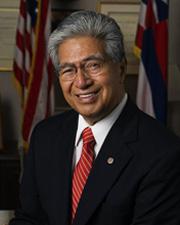
Mr. President, as a member of the Congressional Asian Pacific American Caucus, the only Chinese American in the U.S. Senate, and sole native Hawaiian in the U.S. Congress, I thank my colleague from California, Senator Boxer, for introducing a bill to establish Asian American and Pacific Islander, AAPI, Serving Institutions which will improve the educational opportunities available to Asian Americans and Pacific Islanders throughout our Nation. I am proud to stand with her as a cosponsor of her bill. I also commend my colleagues, Congressmen David Wu and Mike Honda, in the other body for working to advance an AAPI Serving Institution bill.
This legislation would authorize the Department of Education to establish an Asian American and Pacific Islander Serving Institution designation under the Higher Education Act. A higher education institution with an AAPI undergraduate enrollment of at least 10 percent would be eligible for grants to address and improve the institution's capacity to serve the AAPI community. In the Higher Education Act, titles III and V were established to provide aid for colleges and universities to expand educational opportunities for historically under represented and financially disadvantaged students. However, we need a program specifically for Asian American and Pacific Islander Americans. This legislation would assist in providing AAPI students with the equal opportunity to pursue a quality education.
The AAPI community has made many significant contributions to our country, and is known as having the highest percentage of undergraduate and advanced degrees when compared to other racial or ethnic groups according to the College Board. However, as one of the most ethnically, culturally, and linguistically diverse groups in America, the success of the community as a whole masks the needs of its disparate groups who may not be doing so well. This is the ``model minority'' myth. In fact, serious challenges face Cambodian, Hmong, and Pacific Islander students, particularly in the acquisition of the English language.
The AAPI population is one of the fastest growing populations in this country, including nearly 12 million Asian Americans and 1 million Pacific Islanders. Census projections show the AAPI population more than doubling by 2050 and comprising about 9 percent of the total U.S. population. As a significant part of our society, AAPIs and their higher education needs should be better understood and addressed, and the establishment of AAPI Serving Institutions would be a major step in the right direction for this multifaceted population.
I urge my colleagues to join me in supporting Senator Boxer's legislation to enhance educational opportunities for Asian Americans and Pacific Islanders.

Mr. President, I ask unanimous consent that the text of the bill be printed in the Record. Mr. President, today I am pleased to introduce legislation to designate the U.S. Post Office at 332 South…
Mr. President, I ask unanimous consent that the text of the bill be printed in the Record.
Mr. President, today I am pleased to introduce legislation to designate the U.S. Post Office at 332 South Main Street in Flora, Illinois as the ``Robert T. Ferguson Post Office Building''.
Mr. Ferguson was a distinguished public servant who began his postal career at the Harvey, Illinois Post Office, where he worked as a city carrier from 1954 to 1957. He then moved to the Flora, Illinois Post Office where he worked his way up from clerk/carrier to Assistant Postmaster to Postmaster in 1986. During the final three years of his career before he retired in 1988, Robert Ferguson served as Postmaster in Collinsville, Illinois.
In recognition of his hard work and dedication, Mr. Ferguson received five Outstanding Superior Accomplishment Awards and qualified as a Postmaster Trainer on October 1, 1976. He worked tirelessly on behalf of postal workers and traveled throughout Southern Illinois training newly appointed Postmasters. He was well liked by his colleagues who knew they had a leader they could trust.
In addition to his active professional life, Robert Ferguson found time to serve his community. As President of the Clay County Shrine Club in 1992, he organized events to raise thousands of dollars for the Shriner's Hospital for Children. In 1996, he raised money to assist a local family after a storm destroyed their mobile home. In 2002, Mr. Ferguson created a Hospital Directory for Southern Illinois, which aid local citizens by providing phone numbers and addresses of local hospitals.
In 1996, the Flora Chamber of Commerce named Robert Ferguson the ``Outstanding Citizen of Flora''.
Mr. President, post offices are often designated in honor of individuals who have made valuable contributions to their community, State, and country. I can think of no more fitting way to permanently and publicly recognize Robert Ferguson's work than to name the Flora, Illinois post office in his honor. It would be a most appropriate way to commemorate his exemplary service to the Flora community and to postal workers and patrons throughout Southern Illinois.
Mr. President, I am pleased to introduce legislation today to provide for the Purple Heart to be awarded to all prisoners of war who die in captivity, regardless of the cause of death. The ``Honor…
Mr. President, I am pleased to introduce legislation today to provide for the Purple Heart to be awarded to all prisoners of war who die in captivity, regardless of the cause of death. The ``Honor Our Fallen Prisoners of War Act'' was previously introduced by Representative Bob Filner in the House of Representatives. I am proud to join him in this effort.
The ``Honor Our Fallen Prisoners of War Act'' would make members of the Armed Forces who die in captivity of any circumstance eligible for the Purple Heart. Currently, only prisoners of war who die during their imprisonment of wounds inflicted by an instrument of war are eligible for posthumous Purple Heart recognition. Those who die of starvation, disease, abuse, or other causes during captivity are not.
I believe this is an injustice to the thousands of POWs who paid the ultimate price in service to our Nation. The purpose of the Purple Heart is to honor those who are killed or wounded in action as the result of an act of an enemy of the United States. It makes no sense that prisoner of war camps--where thousands of Americans have been held against their will and have endured great suffering at the hands of enemy forces--are not considered a battlefield.
The legislation is retro-active to December 7, 1941 and would therefore include all POWs who have died in captivity since World War
Mr. President, I ask unanimous consent that the text of the bill be printed in the Record.
Mr. President, I ask unanimous consent that the text of the bill be printed in the Record.
Bill Text
Latest available legislative text
        [Congressional Bills 109th Congress]
[From the U.S. Government Publishing Office]
[S. 2157 Introduced in Senate (IS)]

109th CONGRESS
1st Session
S. 2157

To amend title 10, United States Code, to provide for the Purple Heart
to be awarded to prisoners of war who die in captivity under
circumstances not otherwise establishing eligibility for the Purple
Heart.

_______________________________________________________________________

IN THE SENATE OF THE UNITED STATES

December 21, 2005

Mrs. Boxer introduced the following bill; which was read twice and
referred to the Committee on Armed Services

_______________________________________________________________________

A BILL

To amend title 10, United States Code, to provide for the Purple Heart
to be awarded to prisoners of war who die in captivity under
circumstances not otherwise establishing eligibility for the Purple
Heart.

Be it enacted by the Senate and House of Representatives of the
United States of America in Congress assembled,

SECTION 1. SHORT TITLE.

This Act may be cited as the ``Honor Our Fallen Prisoners of War
Act''.

SEC. 2. AWARD OF PURPLE HEART FOR PRISONERS OF WAR WHO DIE IN
CAPTIVITY.

(a) Persons not Otherwise Eligible for the Purple Heart.--Chapter
57 of title 10, United States Code, is amended by adding at the end the
following new section:
``Sec. 1135. Purple Heart: members who die while prisoners of war that
are not otherwise eligible under the circumstances
causing death
``(a) For purposes of the award of the Purple Heart, the Secretary
concerned shall treat a member of the armed forces described in
subsection (b) in the same manner as a member who is killed or wounded
in action as the result of an act of an enemy of the United States.
``(b) A member described in this subsection is a member who dies in
captivity under circumstances establishing eligibility for the
prisoner-of-war medal under section 1128 of this title but not under
circumstances establishing eligibility for the Purple Heart.
``(c) This section applies to members of the armed forces who die
on or after December 7, 1941. In the case of a member who dies as
described in subsection (b) on or after December 7, 1941, and before
the date of the enactment of this section, the Secretary concerned
shall award the Purple Heart under subsection (a) in each case which is
known to the Secretary before the date of the enactment of this section
or for which an application is made to the Secretary in such manner as
the Secretary requires.''.
(b) Clerical Amendment.--The table of sections at the beginning of
such chapter is amended by adding at the end the following new item:

``1135. Purple Heart: members who die while prisoners of war that are
not otherwise eligible under the
circumstances causing death.''.
<all>