Legislative Transparency and Accountability Act of 2006
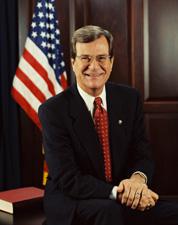 Sen. Trent Lott (R-MS)
Legislative Activity
Stay on top of the latest movement without scrolling through every action
Message on Senate action sent to the House.
May 23, 2006
View full timeline
Committee on Rules and Administration ordered to be reported an original measure.
February 28, 2006
Introduced in Senate
March 1, 2006
Committee on Rules and Administration. Original measure reported to Senate by Senator Lott. Without written report.
March 1, 2006
Placed on Senate Legislative Calendar under General Orders. Calendar No. 367.
March 1, 2006
Measure laid before Senate by unanimous consent. (consideration: CR S1762-1775, S1781)
March 6, 2006
Considered by Senate. (consideration: CR S1861-1881)
March 8, 2006
Cloture motion on the bill presented in Senate. (consideration: CR S1881; text: CR S1881)
March 8, 2006
Considered by Senate. (consideration: CR S1944-1945)
March 9, 2006
Cloture on the bill not invoked in Senate by Yea-Nay Vote. 51 - 47. Record Vote Number: 36. (consideration: CR S1944)
March 9, 2006
Motion by Senator Frist to reconsider the vote by which cloture was not invoked [Record Vote Number 36] entered in Senate. (consideration: CR S1944)
March 9, 2006
Considered by Senate. (consideration: CR S2439-2440, S2441-2460)
March 28, 2006
Upon reconsideration, cloture invoked in Senate by Yea-Nay Vote. 81 - 16. Record Vote Number: 79. (consideration: CR S2460; text: CR S2460)
March 28, 2006
Considered by Senate. (consideration: CR S2490-2511)
March 29, 2006
Passed Senate with amendments by Yea-Nay Vote. 90 - 8. Record Vote Number: 82.
March 29, 2006
Received in the House.
March 30, 2006 • 2:45 PM
Message on Senate action sent to the House.
March 30, 2006
Held at the desk.
March 30, 2006 • 5:37 PM
Mr. Hastings (WA) asked unanimous consent to take from the Speaker's table and consider.
May 23, 2006 • 11:58 AM
Considered by unanimous consent. (consideration: CR H3032-3039)
May 23, 2006 • 11:58 AM
The House struck all after the enacting clause and inserted in lieu thereof the provisions of a similar measure H.R. 4975. Agreed to without objection.
May 23, 2006 • 11:59 AM
Passed/agreed to in House: On passage Passed without objection.(text: CR H3033-3038)
May 23, 2006 • 11:59 AM
On passage Passed without objection. (text: CR H3033-3038)
May 23, 2006 • 11:59 AM
Motion to reconsider laid on the table Agreed to without objection.
May 23, 2006 • 11:59 AM
The title of the measure was amended. Agreed to without objection.
May 23, 2006 • 11:59 AM
A similar measure H.R. 4975 was laid on the table without objection.
May 23, 2006 • 11:59 AM
Message on House action received in Senate and at desk: House amendments to Senate bill.
May 23, 2006
Senate disagreed to House amendments, requested a conference, and appointed conferees. Lott; Stevens; McConnell; Dodd; Inouye. (consideration: CR S5027)
May 23, 2006
Message on Senate action sent to the House.
May 23, 2006
Voting History
3 votes recorded • Roll call available
SENATE
Roll Call AvailableMarch 29, 2006 at 4:19 PM
On Passage of the Bill S. 2349
Majority required: 1/2 (50%)
90 - 8
SENATE
Roll Call AvailableMarch 28, 2006 at 5:55 PM
On the Cloture Motion S. 2349
Majority required: 2/3 (66.7%)
81 - 16
SENATE
Roll Call AvailableMarch 9, 2006 at 2:03 PM
On the Cloture Motion S. 2349
Majority required: 2/3 (66.7%)
51 - 47
Floor Debate
16 membersWhat members said about S. 2349 on the floor

 +11
+11
Floor Debate
16 membersWhat members said about S. 2349 on the floor
Mr. President, I ask unanimous consent that the Senate begin consideration of Calendar No. 367, S. 2349, the lobbying reform legislation. I further ask consent that following the reporting of the…
Mr. President, let me begin these comments by thanking, first of all, my colleague from Mississippi, Senator Lott, who chairs the Rules Committee, and the other members of the committee, Democrats…
Mr. President, I rise to express my strong support for the bipartisan Lobbying Transparency and Accountability Act which was reported out of the Homeland Security and Governmental Affairs Committee…
Mr. President, I wish to spend a couple of minutes this morning commenting on the provisions offered by the Democratic leader, Senator Reid of Nevada, which is a comprehensive amendment that covers a…
Mr. President, after conferring with our colleagues on this side of the aisle, I ask unanimous consent that the vote in relation to the Reid amendment No. 2932 occur at 11:30 a.m., with no second…
Show 8 more
Mr. President, we have been trying to go back and forth. The last speaker was Senator Boxer. I think we have been trying to alternate back and forth. Mr. President, I am going to talk about the bill,…
Mr. President, I thank the chairman of the committee, the Senator from Maine, for her leadership generally on this bill and to say and it may be repetitious, what a pleasure it is to work with her…
Mr. President, let me begin by applauding both Senator Dodd and Senator Lott for their work on the membership part of this bill, and for the outstanding statements explaining the provisions and…
Mr. President, I thank Senator Collins, not only for her accommodation but also for her leadership on this issue. I also thank Senator Lieberman for his outstanding work on this issue. I rise today…

I send an amendment to the desk. I ask unanimous consent the reading of the amendment be dispensed with. Mr. President, when we returned from the winter recess, this Democratic minority acted…
Mr. President, would the Presiding Officer review the time agreement that we are about to embark on for consideration of the Collins-Lieberman-McCain amendment? Thank you, Mr. President. I was aware…

Mr. President, if it is all right with Senator Dodd, I wish to be heard on the Reid amendment for not longer than 15 minutes. Mr. President, I am very pleased the Senate has now taken up this…
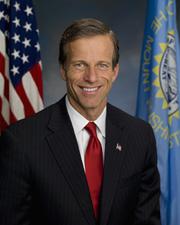
Mr. President, the economy, as has been noted, has been performing extremely well of late with 10 consecutive quarters of economic growth, with job creation at 4.5 million jobs created in the last…
Show 11 more
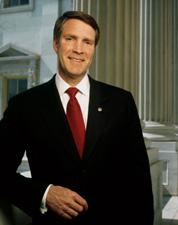
Mr. President, today the Senate is taking another step forward to make our Government more transparent and more accountable. It will be a very important debate on very substantive issues, issues that…

Mr. President, it is my understanding there is a unanimous consent we are operating under, but my only request is if the Senator from Delaware goes next, I be recognized after the Senator from…
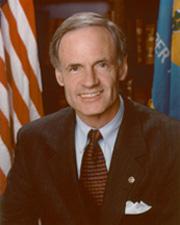
I do. Can I ask for 5 minutes? Mr. President, my thanks to Senator Dodd and Senator Lott. My thanks to Senator Lieberman and Senator Collins as well. By working together, they have speeded along…

Mr. President, I filed an amendment to the bill on Tuesday and look forward to an opportunity to offer that amendment and have it considered by the Senate. My amendment is the honest services…

Mr. President, I rise today to pay tribute to the legendary playwright Arthur Miller, who passed away on February 10, 2005 at the age of 89. Anyone who has experienced ``Death of a Salesman,'' ``A…
Mr. President, let me add to what the distinguished Senator from New York just said. First of all, I thank him, through the Chair, for his cooperation on an issue which is constantly evolving, but it…
Mr. President, I rise briefly to support the amendment offered by Senator Reid. I also support the amendment that was introduced by Senator Dodd and Senator Santorum, of which I am a cosponsor. But…
Mr. President, I rise today to address the Dubai Ports World acquisition and the subsequent announcement to transfer operation of U.S. port terminals to a U.S. entity. Last week, my colleague from…
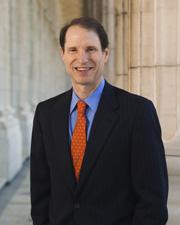
Mr. President, I wish to be recognized for the purpose of having a colloquy with the chairman and ranking minority member, Senator Lott and Senator Dodd. I thank the Chair. As the distinguished…
Mr. President, reserving the right to object to the unanimous consent request, I believe that Senator Collins had offered an amendment and that she would be scheduled to be recognized first. Mr.…
Mr. President, since I offered the amendment on the Dubai Ports World, a lot has happened. In fact, Dubai Ports World has agreed to sell its U.S. operations, and so it will have no control over them.…
Bill Text
3 versions available
        [Congressional Bills 109th Congress]
[From the U.S. Government Publishing Office]
[S. 2349 Engrossed Amendment House (EAH)]

In the House of Representatives, U. S.,

May 23, 2006.

Resolved, That the bill from the Senate (S. 2349) entitled ``An Act to
provide greater transparency in the legislative process'', do pass with the
following

AMENDMENTS:

Strike out all after the enacting clause and insert:

SECTION 1. SHORT TITLE; TABLE OF CONTENTS.

(a) Short Title.--This Act may be cited as the ``Lobbying
Accountability and Transparency Act of 2006'' and ``527 Reform Act of
2006''.
(b) Table of Contents.--The table of contents for this Act is as
follows:

Sec. 1. Short title; table of contents.

TITLE I--ENHANCING LOBBYING DISCLOSURE

Sec. 101. Quarterly filing of lobbying disclosure reports.
Sec. 102. Electronic filing of lobbying registrations and disclosure
reports.
Sec. 103. Public database of lobbying disclosure information.
Sec. 104. Disclosure by registered lobbyists of past executive branch
and congressional employment.
Sec. 105. Disclosure of lobbyist contributions and gifts.
Sec. 106. Increased penalty for failure to comply with lobbying
disclosure requirements.
Sec. 107. Penalties for offering gifts.

TITLE II--SLOWING THE REVOLVING DOOR

Sec. 201. Notification of post-employment restrictions.
Sec. 202. Disclosure by Members of the House of Representatives of
employment negotiations.
Sec. 203. Wrongfully influencing, on a partisan basis, an entity's
employment decisions or practices.

TITLE III--SUSPENSION OF PRIVATELY-FUNDED TRAVEL; CURBING LOBBYIST
GIFTS

Sec. 301. Pre-certification of privately funded travel.
Sec. 302. Recommendations from the Committee on Standards of Official
Conduct on gifts.
Sec. 303. Prohibiting registered lobbyists on corporate flights.
Sec. 304. Valuation of tickets to sporting and entertainment events.

TITLE IV--OVERSIGHT OF LOBBYING AND ENFORCEMENT

Sec. 401. Audits of lobbying reports by House Inspector General.
Sec. 402. House Inspector General review and annual reports.

TITLE V--INSTITUTIONAL REFORMS

Sec. 501. Earmarking reform.
Sec. 502. Mandatory ethics training for House employees.
Sec. 503. Biennial publication of ethics manual.

TITLE VI--FORFEITURE OF RETIREMENT BENEFITS

Sec. 601. Loss of pensions accrued during service as a Member of
Congress for abusing the public trust.

TITLE VII--LEADERSHIP PACS

Sec. 701. Restrictions on disposition of funds by leadership PACS.

TITLE VIII--ETHICS TRAINING FOR LOBBYISTS

Sec. 801. Ethics training for lobbyists.

TITLE IX--MISCELLANEOUS PROVISIONS

Sec. 901. Bribery.

TITLE X--527 REFORM ACT OF 2006

Sec. 1001. Short title.
Sec. 1002. Treatment of section 527 organizations.
Sec. 1003. Rules for allocation of expenses between Federal and non-
Federal activities.
Sec. 1004. Repeal of limit on amount of party expenditures on behalf of
candidates in general elections.
Sec. 1005. Construction.
Sec. 1006. Judicial review.
Sec. 1007. Effective date.

TITLE I--ENHANCING LOBBYING DISCLOSURE

SEC. 101. QUARTERLY FILING OF LOBBYING DISCLOSURE REPORTS.

(a) Quarterly Filing Required.--Section 5 of the Lobbying
Disclosure Act of 1995 (in this title referred to as the ``Act'') (2
U.S.C. 1604) is amended--
(1) in subsection (a)--
(A) in the heading, by striking ``Semiannual'' and
inserting ``Quarterly'';
(B) by striking ``45'' and inserting ``20'';
(C) by striking ``the semiannual period'' and all
that follows through ``July of each year'' and insert
``the quarterly period beginning on the first day of
January, April, July, and October of each year''; and
(D) by striking ``such semiannual period'' and
insert ``such quarterly period''; and
(2) in subsection (b)--
(A) in the matter preceding paragraph (1), by
striking ``semiannual report'' and inserting
``quarterly report'';
(B) in paragraph (2), by striking ``semiannual
filing period'' and inserting ``quarterly period'';
(C) in paragraph (3), by striking ``semiannual
period'' and inserting ``quarterly period''; and
(D) in paragraph (4), by striking ``semiannual
filing period'' and inserting ``quarterly period''.
(b) Conforming Amendments.--
(1) Definition.--Section 3(10) of the Act (2 U.S.C.
1602(10)) is amended by striking ``six month period'' and
inserting ``3-month period''.
(2) Registration.--Section 4 of the Act (2 U.S.C. 1603) is
amended--
(A) in subsection (a)(3)(A), by striking
``semiannual period'' and inserting ``quarterly
period''; and
(B) in subsection (b)(3)(A), by striking
``semiannual period'' and inserting ``quarterly
period''.
(3) Enforcement.--Section 6(6) of the Act (2 U.S.C.
1605(6)) is amended by striking ``semiannual period'' and
inserting ``quarterly period''.
(4) Estimates.--Section 15 of the Act (2 U.S.C. 1610) is
amended--
(A) in subsection (a)(1), by striking ``semiannual
period'' and inserting ``quarterly period''; and
(B) in subsection (b)(1), by striking ``semiannual
period'' and inserting ``quarterly period''.
(5) Dollar amounts.--
(A) Registration.--Section 4 of the Act (2 U.S.C.
1603) is amended--
(i) in subsection (a)(3)(A)(i), by striking
``$5,000'' and inserting ``$2,500'';
(ii) in subsection (a)(3)(A)(ii), by
striking ``$20,000'' and inserting ``$10,000'';
(iii) in subsection (b)(3)(A), by striking
``$10,000'' and inserting ``$5,000''; and
(iv) in subsection (b)(4), by striking
``$10,000'' and inserting ``$5,000''.
(B) Reports.--Section 5(c) of the Act (2 U.S.C.
1604(c)) is amended--
(i) in paragraph (1), by striking
``$10,000'' and ``$20,000'' and inserting
``$5,000'' and ``$1,000'', respectively; and
(ii) in paragraph (2), by striking
``$10,000'' both places such term appears and
inserting ``$5,000''.

SEC. 102. ELECTRONIC FILING OF LOBBYING REGISTRATIONS AND DISCLOSURE
REPORTS.

(a) Registrations.--Section 4 of the Act (2 U.S.C. 1603) is
amended--
(1) by redesignating subsection (d) as subsection (e); and
(2) by inserting after subsection (c) the following:
``(d) Electronic Filing Required.--A registration required to be
filed under this section on or after the date of enactment of the
Lobbying Accountability and Transparency Act of 2006 shall be filed in
electronic form, in addition to any other form that may be required by
the Secretary of the Senate or the Clerk of the House of
Representatives. The due date for a registration filed in electronic
form shall be no later than the due date for a registration filed in
any other form.''.
(b) Reports.--Section 5 of the Act (2 U.S.C. 1604) is amended by
adding at the end the following:
``(d) Electronic Filing Required.--
``(1) In general.--A report required to be filed under this
section shall be filed in electronic form, in addition to any
other form that may be required by the Secretary of the Senate
or the Clerk of the House of Representatives. The due date for
a report filed in electronic form shall be no later than the
due date for a report filed in any other form, except as
provided in paragraph (2).
``(2) Extension of time to file in electronic form.--The
Secretary of the Senate or the Clerk of the House of
Representatives may establish a later due date for the filing
of a report in electronic form by a registrant, if and only
if--
``(A) on or before the original due date, the
registrant--
``(i) timely files the report in every form
required, other than electronic form; and
``(ii) makes a request for such a later due
date to the Secretary or the Clerk, as the case
may be; and
``(B) the request is supported by good cause
shown.''.

SEC. 103. PUBLIC DATABASE OF LOBBYING DISCLOSURE INFORMATION.

(a) Database Required.--Section 6 of the Act (2 U.S.C. 1605) is
amended--
(1) in paragraph (7), by striking ``and'' at the end;
(2) in paragraph (8), by striking the period and inserting
``; and''; and
(3) by adding at the end the following:
``(9) maintain, and make available to the public over the
Internet, without a fee or other access charge, in a
searchable, sortable, and downloadable manner, an electronic
database that--
``(A) includes the information contained in
registrations and reports filed under this Act;
``(B) directly links the information it contains to
the information disclosed in reports filed with the
Federal Election Commission under section 304 of the
Federal Election Campaign Act of 1971 (2 U.S.C. 434);
and
``(C) is searchable and sortable, at a minimum, by
each of the categories of information described in
sections 4(b) and 5(b).''.
(b) Availability of Reports.--Section 6(4) of the Act is amended by
inserting before the semicolon the following: ``and, in the case of a
registration filed in electronic form pursuant to section 4(d) or a
report filed in electronic form pursuant to section 5(d), shall make
such registration or report (as the case may be) available for public
inspection over the Internet not more than 48 hours after the
registration or report (as the case may be) is approved as received by
the Secretary of the Senate or the Clerk of the House of
Representatives (as the case may be)''.
(c) Authorization of Appropriations.--There are authorized to be
appropriated such sums as may be necessary to carry out paragraph (9)
of section 6 of the Act, as added by subsection (a) of this section.

SEC. 104. DISCLOSURE BY REGISTERED LOBBYISTS OF PAST EXECUTIVE BRANCH
AND CONGRESSIONAL EMPLOYMENT.

Section 4(b)(6) of the Act (2 U.S.C. 1603(b)(6)) is amended by
striking ``2 years'' and inserting ``7 years''.

SEC. 105. DISCLOSURE OF LOBBYIST CONTRIBUTIONS AND GIFTS.

(a) In General.--Section 5(b) of the Act (2 U.S.C. 1604(b)) is
amended--
(1) in paragraph (3), by striking ``and'' after the
semicolon;
(2) in paragraph (4), by striking the period and inserting
a semicolon; and
(3) by adding at the end the following:
``(5) for each registrant (and for any political committee,
as defined in 301(4) of the Federal Election Campaign Act of
1971 (2 U.S.C. 431(4)), affiliated with the registrant), and
for each employee listed as a lobbyist by the registrant under
paragraph (2)(C), the name of each Federal candidate or
officeholder, and of each leadership PAC, political party
committee, or other political committee to whom a contribution
was made which is required to be reported to the Federal
Election Commission by the recipient, and the date and amount
of such contribution;
``(6) the date, recipient, and amount of any gift that
under the Rules of the House of Representatives counts towards
the cumulative annual limit described in such rules and is
given to a covered legislative branch official by the
registrant or an employee listed as a lobbyist by the
registrant under paragraph (2)(C); and
``(7) the date, recipient, and amount of funds contributed
by the registrant or an employee listed as a lobbyist by the
registrant under paragraph (2)(C)--
``(A) to, or on behalf of, an entity that is named
for a covered legislative branch official, or to a
person or entity in recognition of such official; or
``(B) to an entity established, financed,
maintained, or controlled by a covered legislative
branch official;
except that this paragraph shall not apply to any payment or
reimbursement made from funds required to be reported under
section 304 of the Federal Election Campaign Act of 1971 (2
U.S.C. 434).''.
(b) Factors to be Considered to Determine Relationship Between
Officials and Other Entities.--Section 5 of the Act (2 U.S.C. 1604), as
amended by section 102(b) of this Act, is amended by adding at the end
the following new subsection:
``(e) Factors to Determine Relationship Between Officials and Other
Entities.--
``(1) In general.--In determining under subsection
(b)(7)(B) whether a covered legislative branch official
directly or indirectly established, finances, maintains, or
controls an entity, the factors described in paragraph (2)
shall be examined in the context of the overall relationship
between that covered official and the entity to determine
whether the presence of any such factor or factors is evidence
that the covered official directly or indirectly established,
finances, maintains, or controls the entity.
``(2) Factors.--The factors referred to in paragraph (1)
include, but are not limited to, the following:
``(A) Whether the covered official, directly or
through its agent, owns a controlling interest in the
voting stock or securities of the entity.
``(B) Whether the covered official, directly or
through its agent, has the authority or ability to
direct or participate in the governance of the entity
through provisions of constitutions, bylaws, contracts,
or other rules, or through formal or informal practices
or procedures.
``(C) Whether the covered official, directly or
through its agent, has the authority or ability to
hire, appoint, demote, or otherwise control the
officers or other decisionmaking employees or members
of the entity.
``(D) Whether the covered official has a common or
overlapping membership with the entity that indicates a
formal or ongoing relationship between the covered
official and the entity.
``(E) Whether the covered official has common or
overlapping officers or employees with the entity that
indicates a formal or ongoing relationship between the
covered official and the entity.
``(F) Whether the covered official has any members,
officers, or employees who were members, officers, or
employees of the entity that indicates a formal or
ongoing relationship between the covered official and
the entity, or that indicates the creation of a
successor entity.
``(G) Whether the covered official, directly or
through its agent, provides funds or goods in a
significant amount or on an ongoing basis to the
entity, such as through direct or indirect payments for
administrative, fundraising, or other costs.
``(H) Whether the covered official, directly or
through its agent, causes or arranges for funds in a
significant amount or on an ongoing basis to be
provided to the entity.
``(I) Whether the covered official, directly or
through its agent, had an active or significant role in
the formation of the entity.
``(J) Whether the covered official and the entity
have similar patterns of receipts or disbursements that
indicate a formal or ongoing relationship between the
covered official and the entity.''.
(c) Conforming Amendment.--Section 3 of the Act (2 U.S.C. 1602) is
amended by adding at the end the following new paragraphs:
``(17) Gift.--The term `gift' means a gratuity, favor,
discount, entertainment, hospitality, loan, forbearance, or
other item having monetary value. The term includes gifts of
services, training, and meals, whether provided in kind, by
purchase of a ticket, payment in advance, or reimbursement
after the expense has been incurred.
``(18) Leadership PAC.--The term `leadership PAC' means,
with respect to an individual holding Federal office, an
unauthorized political committee (as defined in the Federal
Election Campaign Act of 1971) which is associated with such
individual.''.

SEC. 106. INCREASED PENALTY FOR FAILURE TO COMPLY WITH LOBBYING
DISCLOSURE REQUIREMENTS.

Section 7 of the Act (2 U.S.C. 1606) is amended--
(1) by striking ``Whoever'' and inserting ``(a) Civil
Penalty.--Whoever'';
(2) by striking ``$50,000'' and inserting ``$100,000''; and
(3) by adding at the end the following:
``(b) Criminal Penalty.--
``(1) In general.--Whoever knowingly and willfully fails to
comply with any provision of this Act shall be imprisoned not
more than 3 years, or fined under title 18, United States Code,
or both.
``(2) Corruptly.--Whoever knowingly, willfully, and
corruptly fails to comply with any provision of this Act shall
be imprisoned not more than 5 years, or fined under title 18,
United States Code, or both.''.

SEC. 107. PENALTIES FOR OFFERING GIFTS.

Section 7 of the Act (2 U.S.C. 1606), as amended by section 106, is
amended by adding at the end the following:
``(c) Penalties for Offering Gifts.--
``(1) In general.--Any person who is--
``(A) a lobbyist registered under this Act,
``(B) a lobbyist who is an employee of an
organization registered under this Act, or
``(C) the client of any such lobbyist or
organization,
and who offers to a covered legislative branch official of the
House of Representatives any gift, knowing that such gift
violates the rules of the House of Representatives, shall, upon
proof thereof by a preponderance of the evidence, be subject to
a civil fine of not more than $50,000.
``(2) Definition.--In this subsection, the term `covered
legislative branch official of the House of Representatives'
means--
``(A) a Representative in, or Delegate or Resident
Commissioner to, the Congress; and
``(B) an employee of, or any other individual
functioning in the capacity of an employee of--
``(i) an individual described in
subparagraph (A);
``(ii) a committee of the House of
Representatives;
``(iii) the leadership staff of the House
of Representatives;
``(iv) a joint committee of Congress; or
``(v) a working group or caucus organized
to provide legislative services to individuals
described in subparagraph (A).''.

TITLE II--SLOWING THE REVOLVING DOOR

SEC. 201. NOTIFICATION OF POST-EMPLOYMENT RESTRICTIONS.

Section 207(e) of title 18, United States Code, is amended by
adding at the end the following new paragraph:
``(8) Notification of post-employment restrictions.--After
a Member of the House of Representatives or an elected officer
of the House of Representatives leaves office, or after the
termination of employment with the House of Representatives of
an employee of the House of Representatives covered under
paragraph (2), (3), or (4), the Clerk of the House of
Representatives, after consultation with the Committee on
Standards of Official Conduct, shall inform the Member,
officer, or employee of the beginning and ending date of the
prohibitions that apply to the Member, officer, or employee
under this subsection, and also inform each office of the House
of Representatives with respect to which such prohibitions
apply of those dates.''.

SEC. 202. DISCLOSURE BY MEMBERS OF THE HOUSE OF REPRESENTATIVES OF
EMPLOYMENT NEGOTIATIONS.

The Code of Official Conduct set forth in rule XXIII of the Rules
of the House of Representatives is amended by redesignating clause 14
as clause 15 and by inserting after clause 13 the following new clause:
``14. (a) A Member, Delegate, or Resident Commissioner
shall file with the Committee on Standards of Official Conduct
a statement that he or she is negotiating compensation for
prospective employment or has any arrangement concerning
prospective employment if a conflict of interest or the
appearance of a conflict of interest may exist. Such statement
shall be made within 5 days (other than Saturdays, Sundays, or
public holidays) after commencing the negotiation for
compensation or entering into the arrangement.
``(b) A Member, Delegate, or Resident Commissioner should
refrain from voting on any legislative measure pending before
the House or any committee thereof if the negotiation described
in subparagraph (a) may create a conflict of interest.''.

SEC. 203. WRONGFULLY INFLUENCING, ON A PARTISAN BASIS, AN ENTITY'S
EMPLOYMENT DECISIONS OR PRACTICES.

The Code of Official Conduct set forth in rule XXIII of the Rules
of the House of Representatives (as amended by section 202) is further
amended by redesignating clause 15 as clause 16 and by inserting after
clause 14 the following new clause:
``15. A Member, Delegate, Resident Commissioner, officer,
or employee of the House may not, with the intent to influence
on the basis of political party affiliation an employment
decision or employment practice of any private or public entity
(except for the Congress)--
``(a) take or withhold, or offer or threaten to
take or withhold, an official act; or
``(b) influence, or offer or threaten to influence,
the official act of another.''.

TITLE III--SUSPENSION OF PRIVATELY-FUNDED TRAVEL; CURBING LOBBYIST
GIFTS

SEC. 301 PRE-CERTIFICATION OF PRIVATELY FUNDED TRAVEL.

(a) Acceptance of Privately Funded Travel.--Notwithstanding clause
5 of rule XXV of the Rules of the House of Representatives, no Member,
Delegate, Resident Commissioner, officer, or employee of the House may
accept a gift of travel related to his official duties (including any
transportation, lodging, and meals during such travel) from any private
source unless the private source first obtains a certification in
writing from the Committee on Standards of Official Conduct that the
gift of travel complies with all House rules and standards of conduct.
(b) Review and Recommendations.--(1) The Committee on Standards of
Official Conduct may not issue any such certification until it reports
its recommendations on changes to rule XXV to the Committee on Rules
unless two-thirds of the Members of the Committee, present and voting
in the affirmative, vote to issue such certification. The Committee on
Standards of Official Conduct shall report its recommendations to the
Committee on Rules not later than June 15, 2006.
(2) In developing such recommendations, the Committee on Standards
of Official Conduct shall--
(A) survey public reports of registered lobbyist and
registered foreign agent-related private travel, as well as
public reports of late or inaccurate disclosure of private
travel; and
(B) consider--
(i) The ability of the current provisions of rule
XXV regarding travel to protect the House, its Members,
officers, and employees, from the appearance of
impropriety.
(ii) With respect to the allowance for privately-
funded travel contained in clause 5(b) of rule XXV--
(I) the degree to which the privately-
funded travel meets the representational needs
of the House, its Members, officers, and
employees;
(II) whether certain entities should or
should not be permitted to fund the travel of
the Members, officers, and employees of the
House, what sources of funding may be
permissible, and what other individuals may
participate in that travel; and
(III) the adequacy of the current system of
approval and disclosure of such travel.

SEC. 302 RECOMMENDATIONS FROM THE COMMITTEE ON STANDARDS OF OFFICIAL
CONDUCT ON GIFTS.

The Committee on Standards of Official Conduct shall report its
recommendations on changes to rule XXV of the Rules of the House of
Representatives regarding the exceptions to the limitation on the
acceptance of gifts contained in clause 5(a) of that rule to the
Committee on Rules. In developing its recommendations, the Committee on
Standards of Official Conduct shall consider the following:

SEC. 303. PROHIBITING REGISTERED LOBBYISTS ON CORPORATE FLIGHTS.

The Lobbying Disclosure Act of 1995 is amended by inserting after
section 5 the following new section:

``SEC. 5A. PROHIBITING REGISTERED LOBBYISTS ON CORPORATE FLIGHTS.

``If a Representative in, or Delegate or Resident Commissioner to,
the Congress, or an officer or employee of the House of
Representatives, is a passenger or crew member on a flight of an
aircraft that is not licensed by the Federal Aviation Administration to
operate for compensation or hire and that is owned or operated by a
person who is the client of a lobbyist or a lobbying firm, then such
lobbyist may not be a passenger or crew member on that flight.''.

SEC. 304. VALUATION OF TICKETS TO SPORTING AND ENTERTAINMENT EVENTS.

Clause 5(a)(2)(A) of rule XXV of the Rules of the House of
Representatives is amended by--
(1) inserting ``(i)'' after ``(A)''; and
(2) adding at the end the following:
``(ii) A gift of a ticket to a sporting or entertainment event
shall be valued at the face value of the ticket, provided that in the
case of a ticket without a face value, the ticket shall be valued at
the highest cost of a ticket with a face value for the event.''.

TITLE IV--OVERSIGHT OF LOBBYING AND ENFORCEMENT

SEC. 401. AUDITS OF LOBBYING REPORTS BY HOUSE INSPECTOR GENERAL.

(a) Access to Lobbying Reports.--The Office of Inspector General of
the House of Representatives shall have access to all lobbyists'
disclosure information received by the Clerk of the House of
Representatives under the Lobbying Disclosure Act of 1995 and shall
conduct random audits of lobbyists' disclosure information as necessary
to ensure compliance with that Act.
(b) Referral Authority.--The Office of the Inspector General of the
House of Representatives may refer potential violations by lobbyists of
the Lobbying Disclosure Act of 1995 to the Department of Justice for
disciplinary action.

SEC. 402. HOUSE INSPECTOR GENERAL REVIEW AND ANNUAL REPORTS.

(a) Ongoing Review Required.--The Inspector General of the House of
Representatives shall review on an ongoing basis the activities carried
out by the Clerk of the House of Representatives under section 6 of the
Lobbying Disclosure Act of 1995 (2 U.S.C. 1605). The review shall
emphasize--
(1) the effectiveness of those activities in securing the
compliance by lobbyists with the requirements of that Act; and
(2) whether the Clerk has the resources and authorities
needed for effective oversight and enforcement of that Act.
(b) Annual Reports.--Not later than December 31 of each year, the
Inspector General of the House of Representatives shall submit to the
House of Representatives a report on the review required by subsection
(a). The report shall include the Inspector General's assessment of the
matters required to be emphasized by that subsection and any
recommendations of the Inspector General to--
(1) improve the compliance by lobbyists with the
requirements of the Lobbying Disclosure Act of 1995; and
(2) provide the Clerk of the House of Representatives with
the resources and authorities needed for effective oversight
and enforcement of that Act.

TITLE V--INSTITUTIONAL REFORMS

SEC. 501. EARMARKING REFORM.

(a) In the House of Representatives, it shall not be in order to
consider--
(1) a general appropriation bill reported by the Committee
on Appropriations unless the report includes a list of earmarks
in the bill or in the report (and the names of Members who
submitted requests to the Committee on Appropriations for
earmarks included in such list); or
(2) a conference report to accompany a general
appropriation bill unless the joint explanatory statement
prepared by the managers on the part of the House and the
managers on the part of the Senate includes a list of earmarks
in the conference report or joint statement (and the names of
Members who submitted requests to the Committee on
Appropriations for earmarks included in such list) that were--
(A) not committed to the conference committee by
either House;
(B) not in the report specified in paragraph (1);
and
(C) not in a report of a committee of the Senate on
a companion measure.
(b) In the House of Representatives, it shall not be in order to
consider a rule or order that waives the application of subsection
(a)(2).
(c)(1) A point of order raised under subsection (a)(1) may be based
only on the failure of a report of the Committee on Appropriations to
include the list required by subsection (a)(1).
(2) As disposition of a point of order under subsection
(a), the Chair shall put the question of consideration with
respect to the proposition that is the subject of the point of
order.
(3) As disposition of a point of order under subsection (b)
with respect to a rule or order relating to a conference
report, the Chair shall put the question of consideration as
follows: ``Shall the House now consider the resolution
notwithstanding the assertion of [the maker of the point of
order] that the object of the resolution introduces a new
earmark or new earmarks?''.
(4) The question of consideration under this subsection
shall be debatable for 15 minutes by the Member initiating the
point of order and for 15 minutes by an opponent, but shall
otherwise be decided without intervening motion except one that
the House adjourn.
(d)(1) For the purpose of this resolution, the term ``earmark''
means a provision in a bill or conference report, or language in an
accompanying committee report or joint statement of managers, providing
or recommending a specific amount of discretionary budget authority to
a non-Federal entity, if such entity is specifically identified in the
report or bill; or if the discretionary budget authority is allocated
outside of the normal formula-driven or competitive bidding process and
is targeted or directed to an identifiable person, specific State, or
congressional district.
(2) For the purpose of subsection (a), government-sponsored
enterprises, Federal facilities, and Federal lands shall be considered
Federal entities.
(3) For the purpose of subsection (a), to the extent that the non-
Federal entity is a State or territory, an Indian tribe, a foreign
government or an intergovernmental international organization, the
provision or language shall not be considered an earmark unless the
provision or language also specifies the specific purpose for which the
designated budget authority is to be expended.

SEC. 502. MANDATORY ETHICS TRAINING FOR HOUSE EMPLOYEES.

(a) Mandatory Ethics Training for House Employees.--
(1) Chief administrative officer.--Clause 4 of rule II of
the Rules of the House of Representatives is amended by
inserting the following new paragraph at the end:
``(d) The Chief Administrative Officer may not pay any compensation
to any employee of the House with respect to any pay period during
which the employee, as determined by the Committee on Standards of
Official Conduct, is not in compliance with the applicable requirements
of regulations promulgated pursuant to clause 3(r) of Rule XI.''.
(2) Mandatory ethics training program.--Clause 3 of rule XI
of the Rules of the House of Representatives is amended by
adding at the end the following:
``(r) The committee shall establish a program of regular ethics
training for employees of the House and promulgate regulations
providing for the following:
``(1)(A) Except as otherwise provided, all employees of the
House are required to complete ethics training offered by the
committee at least once during each congress. Any employee who
is hired after the date of adoption of such rules is required
to complete such training within 30 days of being hired.
``(B) Any employee of the House who works in a Member's
district office shall not be required to complete such ethics
training until 30 days after the district office has received a
notice from the Committee on Standards of Official Conduct that
the required ethics training program is available on the
Internet.
``(2) After any employee of the House completes such ethics
training, that employee shall file a written certification with
the committee that he is familiar with the contents of any
pertinent publications that are so designated by the committee
and has completed the required ethics training.
``(3) As used in this paragraph, the term `employee of the
House' refers to any individual whose compensation is disbursed
by the Chief Administrative Officer, including any staff
assigned to a Member's personal office, any staff of a
committee or leadership office, or any employee of the Office
of the Clerk, of the Office of the Chief Administrative
Officer, or of the Sergeant-at-Arms, but does not include a
Member, Delegate, or Resident Commissioner.''.
(b) Ethics Training for Members, Delegates, and the Resident
Commissioner.--Clause 3 of rule XI of the Rules of the House of
Representatives is amended by inserting at the end:
``(s)(1) The committee shall establish a program of regular ethics
training for Members, Delegates, and the Resident Commissioner similar
to the program established in paragraph (r).
``(2) The committee shall publish a list of Members who have and
have not completed such ethics training within the first one hundred
calendar days after being sworn-in during each Congress. The committee
shall update this list with the names of Members who complete the
training after the deadline with the date on which the training was
completed.
``(3) Publication of the list of Members who have and have not
completed the ethics training shall be made available on the official
website of the committee and published in the Congressional Record.''.

SEC. 503. BIENNIAL PUBLICATION OF ETHICS MANUAL.

Within 120 days after the date of enactment of this Act and during
each Congress thereafter, the Committee on Standards of Official
Conduct shall publish an up-to-date ethics manual for Members,
officers, and employees of the House of Representatives and make such
manual available to all such individuals. The committee has a duty to
keep all Members, Delegates, the Resident Commissioner, officers, and
employees of the House of Representatives apprised of current rulings
or advisory opinions when potentially constituting changes to or
interpretations of existing policies.

TITLE VI--FORFEITURE OF RETIREMENT BENEFITS

SEC. 601. LOSS OF PENSIONS ACCRUED DURING SERVICE AS A MEMBER OF
CONGRESS FOR ABUSING THE PUBLIC TRUST.

(a) Civil Service Retirement System.--Section 8332 of title 5,
United States Code, is amended by adding at the end the following:
``(o)(1) Notwithstanding any other provision of this subchapter,
the service of an individual finally convicted of an offense described
in paragraph (2) shall not be taken into account for purposes of this
subchapter, except that this sentence applies only to service rendered
as a Member (irrespective of when rendered). Any such individual (or
other person determined under section 8342(c), if applicable) shall be
entitled to be paid so much of such individual's lump-sum credit as is
attributable to service to which the preceding sentence applies.
``(2)(A) An offense described in this paragraph is any offense
described in subparagraph (B) for which the following apply:
``(i) Every act or omission of the individual (referred to
in paragraph (1)) that is needed to satisfy the elements of the
offense occurs while the individual is a Member.
``(ii) Every act or omission of the individual that is
needed to satisfy the elements of the offense directly relates
to the performance of the individual's official duties as a
Member.
``(iii) The offense is committed after the date of
enactment of this subsection.
``(B) An offense described in this subparagraph is only the
following, and only to the extent that the offense is a felony under
title 18:
``(i) An offense under section 201 of title 18 (bribery of
public officials and witnesses).
``(ii) An offense under section 219 of title 18 (officers
and employees acting as agents of foreign principals).
``(iii) An offense under section 371 of title 18
(conspiracy to commit offense or to defraud United States) to
the extent of any conspiracy to commit an act which constitutes
an offense under clause (i) or (ii).
``(3) An individual convicted of an offense described in paragraph
(2) shall not, after the date of the final conviction, be eligible to
participate in the retirement system under this subchapter or chapter
84 while serving as a Member.
``(4) The Office of Personnel Management shall prescribe any
regulations necessary to carry out this subsection. Such regulations
shall include--
``(A) provisions under which interest on any lump-sum
payment under the second sentence of paragraph (1) shall be
limited in a manner similar to that specified in the last
sentence of section 8316(b); and
``(B) provisions under which the Office may provide for--
``(i) the payment, to the spouse or children of any
individual referred to in the first sentence of
paragraph (1), of any amounts which (but for this
clause) would otherwise have been nonpayable by reason
of such first sentence, but only to the extent that the
application of this clause is considered necessary
given the totality of the circumstances; and
``(ii) an appropriate adjustment in the amount of
any lump-sum payment under the second sentence of
paragraph (1) to reflect the application of clause (i).
``(5) For purposes of this subsection--
``(A) the term `Member' has the meaning given such term by
section 2106, notwithstanding section 8331(2); and
``(B) the term `child' has the meaning given such term by
section 8341.''.
(b) Federal Employees' Retirement System.--Section 8411 of title 5,
United States Code, is amended by adding at the end the following:
``(l)(1) Notwithstanding any other provision of this chapter, the
service of an individual finally convicted of an offense described in
paragraph (2) shall not be taken into account for purposes of this
chapter, except that this sentence applies only to service rendered as
a Member (irrespective of when rendered). Any such individual (or other
person determined under section 8424(d), if applicable) shall be
entitled to be paid so much of such individual's lump-sum credit as is
attributable to service to which the preceding sentence applies.
``(2) An offense described in this paragraph is any offense
described in section 8332(o)(2)(B) for which the following apply:
``(A) Every act or omission of the individual (referred to
in paragraph (1)) that is needed to satisfy the elements of the
offense occurs while the individual is a Member.
``(B) Every act or omission of the individual that is
needed to satisfy the elements of the offense directly relates
to the performance of the individual's official duties as a
Member.
``(C) The offense is committed after the date of enactment
of this subsection.
``(3) An individual finally convicted of an offense described in
paragraph (2) shall not, after the date of the conviction, be eligible
to participate in the retirement system under this chapter while
serving as a Member.
``(4) The Office of Personnel Management shall prescribe any
regulations necessary to carry out this subsection. Such regulations
shall include--
``(A) provisions under which interest on any lump-sum
payment under the second sentence of paragraph (1) shall be
limited in a manner similar to that specified in the last
sentence of section 8316(b); and
``(B) provisions under which the Office may provide for--
``(i) the payment, to the spouse or children of any
individual referred to in the first sentence of
paragraph (1), of any amounts which (but for this
clause) would otherwise have been nonpayable by reason
of such first sentence, but only to the extent that the
application of this clause is considered necessary
given the totality of the circumstances; and
``(ii) an appropriate adjustment in the amount of
any lump-sum payment under the second sentence of
paragraph (1) to reflect the application of clause (i).
``(5) For purposes of this subsection--
``(A) the term `Member' has the meaning given such term by
section 2106, notwithstanding section 8401(20); and
``(B) the term `child' has the meaning given such term by
section 8341.''.

TITLE VII--LEADERSHIP PACS

SEC. 701. RESTRICTIONS ON DISPOSITION OF FUNDS BY LEADERSHIP PACS.

(a) Restrictions.--Section 313 of the Federal Election Campaign Act
of 1971 (2 U.S.C. 439a) is amended--
(1) by redesignating subsection (b) as subsection (c); and
(2) by inserting after subsection (a) the following new
subsection:
``(b) Use of Funds by Leadership PACs.--
``(1) Uses permitted.--The funds of a leadership PAC may be
used by the leadership PAC--
``(A) for otherwise authorized expenditures in
connection with campaigns for election for Federal
office;
``(B) for charitable contributions described in
section 170(c) of the Internal Revenue Code of 1986; or
``(C) for transfers to a national, State, or local
committee of a political party (subject to the
applicable limitations of this Act).
``(2) Leadership pac defined.--In this subsection, the term
`leadership PAC' means a political committee which is directly
or indirectly established, maintained, or controlled by a
candidate for election for Federal office or an individual
holding Federal office but is not an authorized committee of
the candidate or individual, except that such term does not
include any political committee of a political party.''.
(b) Conforming Amendment Regarding Conversion of Funds to Personal
Use.--Section 313(c) of such Act (2 U.S.C. 439a(c)), as redesignated by
subsection (a), is amended by inserting after ``subsection (a)'' the
following: ``or funds of a leadership PAC described in subsection
(b)''.
(c) Effective Date.--The amendments made by this section shall
apply with respect to elections occurring after December 2006.

TITLE VIII--ETHICS TRAINING FOR LOBBYISTS

SEC. 801. ETHICS TRAINING FOR LOBBYISTS.

(a) Training Course.--During each Congress, the Committee on
Standards of Official Conduct of the House of Representatives shall
provide an 8-hour ethics training course to persons registered as
lobbyists under the Lobbying Disclosure Act of 1995.
(b) Contents of Course.--Training under subsection (a) shall cover
information on the code of conduct and disclosure requirements
applicable to Members, officers, and employees of the House of
Representatives, including rules relating to acceptance of gifts
(including travel and meals), and financial disclosure requirements
under the Ethics in Government Act of 1978.
(c) Penalties for Failure to Complete Training.--Any person who is
registered or required to register as a lobbyist under the Lobbying
Disclosure Act of 1995 and who fails to complete the training course
under subsection (a) at least once during each Congress shall be
subject to the penalties under section 7 of that Act to the same extent
as a failure to comply with any provision of that Act.

TITLE IX--MISCELLANEOUS PROVISIONS

SEC. 901. BRIBERY.

Section 201(a)(3) of title 18, United States Code, is amended by
inserting ``including an earmark as defined in section 501(d) of the
Lobbying Accountability and Transparency Act of 2006,'' after
``controversy,''.

TITLE X--527 REFORM ACT OF 2006

SEC. 1001. SHORT TITLE.

This title may be cited as the ``527 Reform Act of 2006''.

SEC. 1002. TREATMENT OF SECTION 527 ORGANIZATIONS.

(a) Definition of Political Committee.--Section 301(4) of the
Federal Election Campaign Act of 1971 (2 U.S.C. 431(4)) is amended--
(1) by striking the period at the end of subparagraph (C)
and inserting ``; or''; and
(2) by adding at the end the following:
``(D) any applicable 527 organization.''.
(b) Definition of Applicable 527 Organization.--Section 301 of such
Act (2 U.S.C. 431) is amended by adding at the end the following new
paragraph:
``(27) Applicable 527 Organization.--
``(A) In general.--For purposes of paragraph (4)(D), the
term `applicable 527 organization' means a committee, club,
association, or group of persons that--
``(i) has given notice to the Secretary of the
Treasury under section 527(i) of the Internal Revenue
Code of 1986 that it is to be treated as an
organization described in section 527 of such Code; and
``(ii) is not described in subparagraph (B).
``(B) Excepted organizations.--A committee, club,
association, or other group of persons described in this
subparagraph is--
``(i) an organization described in section
527(i)(5) of the Internal Revenue Code of 1986;
``(ii) an organization which is a committee, club,
association or other group of persons that is
organized, operated, and makes disbursements
exclusively for paying expenses described in the last
sentence of section 527(e)(2) of the Internal Revenue
Code of 1986 or expenses of a newsletter fund described
in section 527(g) of such Code;
``(iii) an organization which is a committee, club,
association, or other group that consists solely of
candidates for State or local office, individuals
holding State or local office, or any combination of
either, but only if the organization refers only to one
or more non-Federal candidates or applicable State or
local issues in all of its voter drive activities and
does not refer to a Federal candidate or a political
party in any of its voter drive activities; or
``(iv) an organization described in subparagraph
(C).
``(C) Applicable organization.--For purposes of
subparagraph (B)(iv), an organization described in this
subparagraph is a committee, club, association, or other group
of persons whose election or nomination activities relate
exclusively to--
``(i) elections where no candidate for Federal
office appears on the ballot; or
``(ii) one or more of the following purposes:
``(I) Influencing the selection,
nomination, election, or appointment of one or
more candidates to non-Federal offices.
``(II) Influencing one or more applicable
State or local issues.
``(III) Influencing the selection,
appointment, nomination, or confirmation of one
or more individuals to non-elected offices.
``(D) Exclusivity test.--A committee, club, association, or
other group of persons shall not be treated as meeting the
exclusivity requirement of subparagraph (C) if it makes
disbursements aggregating more than $1,000 for any of the
following:
``(i) A public communication that promotes,
supports, attacks, or opposes a clearly identified
candidate for Federal office during the 1-year period
ending on the date of the general election for the
office sought by the clearly identified candidate (or,
if a runoff election is held with respect to such
general election, on the date of the runoff election).
``(ii) Any voter drive activity during a calendar
year, except that no disbursements for any voter drive
activity shall be taken into account under this
subparagraph if the committee, club, association, or
other group of persons during such calendar year--
``(I) makes disbursements for voter drive
activities with respect to elections in only 1
State and complies with all applicable election
laws of that State, including laws related to
registration and reporting requirements and
contribution limitations;
``(II) refers to one or more non-Federal
candidates or applicable State or local issues
in all of its voter drive activities and does
not refer to any Federal candidate or any
political party in any of its voter drive
activities;
``(III) does not have a candidate for
Federal office, an individual who holds any
Federal office, a national political party, or
an agent of any of the foregoing, control or
materially participate in the direction of the
organization, solicit contributions to the
organization (other than funds which are
described under clauses (i) and (ii) of section
323(e)(1)(B)), or direct disbursements, in
whole or in part, by the organization; and
``(IV) makes no contributions to Federal
candidates.
``(E) Certain references to federal candidates not taken
into account.--For purposes of subparagraphs (B)(iii) and
(D)(ii)(II), a voter drive activity shall not be treated as
referring to a clearly identified Federal candidate if the only
reference to the candidate in the activity is--
``(i) a reference in connection with an election
for a non-Federal office in which such Federal
candidate is also a candidate for such non-Federal
office; or
``(ii) a reference to the fact that the candidate
has endorsed a non-Federal candidate or has taken a
position on an applicable State or local issue,
including a reference that constitutes the endorsement
or position itself.
``(F) Certain references to political parties not taken
into account.--For purposes of subparagraphs (B)(iii) and
(D)(ii)(II), a voter drive activity shall not be treated as
referring to a political party if the only reference to the
party in the activity is--
``(i) a reference for the purpose of identifying a
non-Federal candidate;
``(ii) a reference for the purpose of identifying
the entity making the public communication or carrying
out the voter drive activity; or
``(iii) a reference in a manner or context that
does not reflect support for or opposition to a Federal
candidate or candidates and does reflect support for or
opposition to a State or local candidate or candidates
or an applicable State or local issue.
``(G) Applicable state or local issue.--For purposes of
this paragraph, the term `applicable State or local issue'
means any State or local ballot initiative, State or local
referendum, State or local constitutional amendment, State or
local bond issue, or other State or local ballot issue.''.
(c) Definition of Voter Drive Activity.--Section 301 of such Act (2
U.S.C. 431), as amended by subsection (b), is further amended by adding
at the end the following new paragraph:
``(28) Voter Drive Activity.--The term `voter drive activity' means
any of the following activities conducted in connection with an
election in which a candidate for Federal office appears on the ballot
(regardless of whether a candidate for State or local office also
appears on the ballot):
``(A) Voter registration activity.
``(B) Voter identification.
``(C) Get-out-the-vote activity.
``(D) Generic campaign activity.
``(E) Any public communication related to activities
described in subparagraphs (A) through (D).
Such term shall not include any activity described in subparagraph (A)
or (B) of section 316(b)(2).''.

SEC. 1003. RULES FOR ALLOCATION OF EXPENSES BETWEEN FEDERAL AND NON-
FEDERAL ACTIVITIES.

(a) In General.--Title III of the Federal Election Campaign Act of
1971 (2 U.S.C. 431 et seq.) is amended by adding at the end the
following:

``SEC. 325. ALLOCATION AND FUNDING RULES FOR CERTAIN EXPENSES RELATING
TO FEDERAL AND NON-FEDERAL ACTIVITIES.

``(a) In General.--In the case of any disbursements by any
political committee that is a separate segregated fund or nonconnected
committee for which allocation rules are provided under subsection
(b)--
``(1) the disbursements shall be allocated between Federal
and non-Federal accounts in accordance with this section and
regulations prescribed by the Commission; and
``(2) in the case of disbursements allocated to non-Federal
accounts, may be paid only from a qualified non-Federal
account.
``(b) Costs to Be Allocated and Allocation Rules.--
``(1) In general.--Disbursements by any separate segregated
fund or nonconnected committee, other than an organization
described in section 323(b)(1), for any of the following
categories of activity shall be allocated as follows:
``(A) 100 percent of the expenses for public
communications or voter drive activities that refer to
one or more clearly identified Federal candidates, but
do not refer to any clearly identified non-Federal
candidates, shall be paid with funds from a Federal
account, without regard to whether the communication
refers to a political party.
``(B) At least 50 percent, or a greater percentage
if the Commission so determines by regulation, of the
expenses for public communications and voter drive
activities that refer to one or more clearly identified
candidates for Federal office and one or more clearly
identified non-Federal candidates shall be paid with
funds from a Federal account, without regard to whether
the communication refers to a political party.
``(C) At least 50 percent, or a greater percentage
if the Commission so determines by regulation, of the
expenses for public communications or voter drive
activities that refer to a political party, but do not
refer to any clearly identified Federal or non-Federal
candidate, shall be paid with funds from a Federal
account, except that this paragraph shall not apply to
communications or activities that relate exclusively to
elections where no candidate for Federal office appears
on the ballot.
``(D) At least 50 percent, or a greater percentage
if the Commission so determines by regulation, of the
expenses for public communications or voter drive
activities that refer to a political party and refer to
one or more clearly identified non-Federal candidates,
but do not refer to any clearly identified Federal
candidates, shall be paid with funds from a Federal
account, except that this paragraph shall not apply to
communications or activities that relate exclusively to
elections where no candidate for Federal office appears
on the ballot.
``(E) Unless otherwise determined by the Commission
in its regulations, at least 50 percent of any
administrative expenses, including rent, utilities,
office supplies, and salaries not attributable to a
clearly identified candidate, shall be paid with funds
from a Federal account, except that for a separate
segregated fund such expenses may be paid instead by
its connected organization.
``(F) At least 50 percent, or a greater percentage
if the Commission so determines by regulation, of the
direct costs of a fundraising program or event,
including disbursements for solicitation of funds and
for planning and administration of actual fundraising
events, where Federal and non-Federal funds are
collected through such program or event shall be paid
with funds from a Federal account, except that for a
separate segregated fund such costs may be paid instead
by its connected organization. This paragraph shall not
apply to any fundraising solicitations or any other
activity that constitutes a public communication.
``(2) Certain references to federal candidates not taken
into account.--For purposes of paragraph (1), a public
communication or voter drive activity shall not be treated as
referring to a clearly identified Federal candidate if the only
reference to the candidate in the communication or activity
is--
``(A) a reference in connection with an election
for a non-Federal office in which such Federal
candidate is also a candidate for such non-Federal
office; or
``(B) a reference to the fact that the candidate
has endorsed a non-Federal candidate or has taken a
position on an applicable State or local issue (as
defined in section 301(27)(G)), including a reference
that constitutes the endorsement or position itself.
``(3) Certain references to political parties not taken
into account.--For purposes of paragraph (1), a public
communication or voter drive activity shall not be treated as
referring to a political party if the only reference to the
party in the communication or activity is--
``(A) a reference for the purpose of identifying a
non-Federal candidate;
``(B) a reference for the purpose of identifying
the entity making the public communication or carrying
out the voter drive activity; or
``(C) a reference in a manner or context that does
not reflect support for or opposition to a Federal
candidate or candidates and does reflect support for or
opposition to a State or local candidate or candidates
or an applicable State or local issue.
``(c) Qualified Non-Federal Account.--
``(1) In general.--For purposes of this section, the term
`qualified non-Federal account' means an account which consists
solely of amounts--
``(A) that, subject to the limitations of
paragraphs (2) and (3), are raised by the separate
segregated fund or nonconnected committee only from
individuals, and
``(B) with respect to which all requirements of
Federal, State, or local law (including any law
relating to contribution limits) are met.
``(2) Limitation on individual donations.--
``(A) In general.--A separate segregated fund or
nonconnected committee may not accept more than $25,000
in funds for its qualified non-Federal account from any
one individual in any calendar year.
``(B) Affiliation.--For purposes of this paragraph,
all qualified non-Federal accounts of separate
segregated funds or nonconnected committees which are
directly or indirectly established, financed,
maintained, or controlled by the same person or persons
shall be treated as one account.
``(3) Fundraising limitation.--
``(A) In general.--No donation to a qualified non-
Federal account may be solicited, received, directed,
transferred, or spent by or in the name of any person
described in subsection (a) or (e) of section 323.
``(B) Funds not treated as subject to act.--Except
as provided in subsection (a)(2) and this subsection,
any funds raised for a qualified non-Federal account in
accordance with the requirements of this section shall
not be considered funds subject to the limitations,
prohibitions, and reporting requirements of this Act
for any purpose (including for purposes of subsection
(a) or (e) of section 323 or subsection (d)(1) of this
section).
``(d) Definitions.--
``(1) Federal account.--The term `Federal account' means an
account which consists solely of contributions subject to the
limitations, prohibitions, and reporting requirements of this
Act. Nothing in this section or in section 323(b)(2)(B)(iii)
shall be construed to infer that a limit other than the limit
under section 315(a)(1)(C) applies to contributions to the
account.
``(2) Nonconnected committee.--The term `nonconnected
committee' shall not include a political committee of a
political party.
``(3) Voter drive activity.--The term `voter drive
activity' has the meaning given such term in section
301(28).''.
(b) Reporting Requirements.--Section 304(e) of the Federal Election
Campaign Act of 1971 (2 U.S.C. 434(e)) is amended--
(1) by redesignating paragraphs (3) and (4) as paragraphs
(4) and (5); and
(2) by inserting after paragraph (2) the following new
paragraph:
``(3) Receipts and disbursements from qualified non-federal
accounts.--In addition to any other reporting requirement
applicable under this Act, a political committee to which
section 325(a) applies shall report all receipts and
disbursements from a qualified non-Federal account (as defined
in section 325(c)).''.

SEC. 1004. REPEAL OF LIMIT ON AMOUNT OF PARTY EXPENDITURES ON BEHALF OF
CANDIDATES IN GENERAL ELECTIONS.

(a) Repeal of Limit.--Section 315(d) of the Federal Election
Campaign Act of 1971 (2 U.S.C. 441a(d)) is amended--
(1) in paragraph (1)--
(A) by striking ``(1) Notwithstanding any other
provision of law with respect to limitations on
expenditures or limitations on contributions, the
national committee'' and inserting ``Notwithstanding
any other provision of law with respect to limitations
on amounts of expenditures or contributions, a national
committee'',
(B) by striking ``the general'' and inserting
``any'', and
(C) by striking ``Federal office, subject to the
limitations contained in paragraphs (2), (3), and (4)
of this subsection'' and inserting ``Federal office in
any amount''; and
(2) by striking paragraphs (2), (3), and (4).
(b) Conforming Amendments.--
(1) Indexing.--Section 315(c) of such Act (2 U.S.C.
441a(c)) is amended--
(A) in paragraph (1)(B)(i), by striking ``(d),'';
and
(B) in paragraph (2)(B)(i), by striking
``subsections (b) and (d)'' and inserting ``subsection
(b)''.
(2) Increase in limits for senate candidates facing wealthy
opponents.--Section 315(i) of such Act (2 U.S.C. 441a(i)(1)) is
amended--
(A) in paragraph (1)(C)(iii)--
(i) by adding ``and'' at the end of
subclause (I),
(ii) in subclause (II), by striking ``;
and'' and inserting a period, and
(iii) by striking subclause (III);
(B) in paragraph (2)(A) in the matter preceding
clause (i), by striking ``, and a party committee shall
not make any expenditure,'';
(C) in paragraph (2)(A)(ii), by striking ``and
party expenditures previously made''; and
(D) in paragraph (2)(B), by striking ``and a party
shall not make any expenditure''.
(3) Increase in limits for house candidates facing wealthy
opponents.--Section 315A(a) of such Act (2 U.S.C. 441a-1(a)) is
amended--
(A) in paragraph (1)--
(i) by adding ``and'' at the end of
subparagraph (A),
(ii) in subparagraph (B), by striking ``;
and'' and inserting a period, and
(iii) by striking subparagraph (C);
(B) in paragraph (3)(A) in the matter preceding
clause (i), by striking ``, and a party committee shall
not make any expenditure,'';
(C) in paragraph (3)(A)(ii), by striking ``and
party expenditures previously made''; and
(D) in paragraph (3)(B), by striking ``and a party
shall not make any expenditure''.

SEC. 1005. CONSTRUCTION.

No provision of this title, or amendment made by this title, shall
be construed--
(1) as approving, ratifying, or endorsing a regulation
promulgated by the Federal Election Commission;
(2) as establishing, modifying, or otherwise affecting the
definition of political organization for purposes of the
Internal Revenue Code of 1986; or
(3) as affecting the determination of whether a group
organized under section 501(c) of the Internal Revenue Code of
1986 is a political committee under section 301(4) of the
Federal Election Campaign Act of 1971.

SEC. 1006. JUDICIAL REVIEW.

(a) Special Rules for Actions Brought on Constitutional Grounds.--
If any action is brought for declaratory or injunctive relief to
challenge the constitutionality of any provision of this title or any
amendment made by this title, the following rules shall apply:
(1) The action shall be filed in the United States District
Court for the District of Columbia and shall be heard by a 3-
judge court convened pursuant to section 2284 of title 28,
United States Code.
(2) A copy of the complaint shall be delivered promptly to
the Clerk of the House of Representatives and the Secretary of
the Senate.
(3) A final decision in the action shall be reviewable only
by appeal directly to the Supreme Court of the United States.
Such appeal shall be taken by the filing of a notice of appeal
within 10 days, and the filing of a jurisdictional statement
within 30 days, of the entry of the final decision.
(4) It shall be the duty of the United States District
Court for the District of Columbia and the Supreme Court of the
United States to advance on the docket and to expedite to the
greatest possible extent the disposition of the action and
appeal.
(b) Intervention by Members of Congress.--In any action in which
the constitutionality of any provision of this title or any amendment
made by this title is raised (including but not limited to an action
described in subsection (a)), any Member of the House of
Representatives (including a Delegate or Resident Commissioner to
Congress) or Senate shall have the right to intervene either in support
of or opposition to the position of a party to the case regarding the
constitutionality of the provision or amendment. To avoid duplication
of efforts and reduce the burdens placed on the parties to the action,
the court in any such action may make such orders as it considers
necessary, including orders to require intervenors taking similar
positions to file joint papers or to be represented by a single
attorney at oral argument.
(c) Challenge by Members of Congress.--Any Member of Congress may
bring an action, subject to the special rules described in subsection
(a), for declaratory or injunctive relief to challenge the
constitutionality of any provision of this title or any amendment made
by this title.
(d) Applicability.--
(1) Initial claims.--With respect to any action initially
filed on or before December 31, 2008, the provisions of
subsection (a) shall apply with respect to each action
described in such subsection.
(2) Subsequent actions.--With respect to any action
initially filed after December 31, 2008, the provisions of
subsection (a) shall not apply to any action described in such
subsection unless the person filing such action elects such
provisions to apply to the action.

SEC. 1007. EFFECTIVE DATE.

The amendments made by this title shall take effect on the date of
the enactment of this Act.

Amend the title so as to read ``An Act to provide greater
transparency with respect to lobbying activities, to amend the
Federal Election Campaign Act of 1971 to clarify when
organizations described in section 527 of the Internal Revenue
Code of 1986 must register as political committees, and for
other purposes.''.
Attest:

Clerk.
109th CONGRESS

2d Session

S. 2349

_______________________________________________________________________

AMENDMENTS