A bill to designate the facility of the United States Postal Service located at 2633 11th Street in Rock Island, Illinois, as the "Lane Evans Post Office Building".

Legislative Activity
Stay on top of the latest movement without scrolling through every action
Held at the desk.
September 6, 2006 • 9:13 PM
View full timeline
Introduced in Senate
April 5, 2006
Sponsor introductory remarks on measure. (CR S2915)
April 5, 2006
Read twice and referred to the Committee on Homeland Security and Governmental Affairs. (text of measure as introduced: CR S2915)
April 5, 2006
Committee on Homeland Security and Governmental Affairs. Ordered to be reported without amendment favorably.
July 27, 2006
Committee on Homeland Security and Governmental Affairs. Reported by Senator Collins without amendment. Without written report.
August 1, 2006
Placed on Senate Legislative Calendar under General Orders. Calendar No. 566.
August 1, 2006
Passed Senate without amendment by Unanimous Consent. (consideration: CR S8667-8668; text as passed Senate: CR S8667)
August 2, 2006
Message on Senate action sent to the House.
August 3, 2006
Received in the House.
September 6, 2006 • 2:20 PM
Held at the desk.
September 6, 2006 • 9:13 PM
Floor Debate
10 membersWhat members said about S. 2555 on the floor
 JD
JD RM
RM MD
MD DSRJD+5
Floor Debate
10 membersWhat members said about S. 2555 on the floor
Mr. President, I ask unanimous consent that the Subcommittee on Forestry, Conservation, and Rural Revitalization of the Committee on Agriculture, Nutrition and Forestry be authorized to conduct a…
Mr. President, I ask unanimous consent that the Subcommittee on Forestry, Conservation, and Rural Revitalization of the Committee on Agriculture, Nutrition and Forestry be authorized to conduct a hearing during the session of the Senate on July 27, 2006, at 10 a.m. in SR-328A, Russell Senate Office Building. The purpose of this subcommittee hearing will be to conduct an oversight hearing on the U.S. Department of Agriculture use of technical service providers.
Mr. President, I ask unanimous consent that the Committee on Armed Services be authorized to meet during the session of the Senate on July 27, 2006, at 10 a.m., in open session to consider the following nomination: Lieutenant General James T. Conway, USMC, for appointment to the grade of General and to be Commandant of the Marine Corps.
Mr. President, I ask unanimous consent that the Senate Committee on Commerce, Science, and Transportation meet to consider the following nominations on Thursday, July 27, 2006, at 11 a.m.:
Charles Nottingham to be a Member of the Surface Transportation Board; Robert Sumwalt to be a Member of the National Transportation Safety Board; Nathaniel Wienecke to be Assistant Secretary for Legislative and Intergovernmental Affairs, Department of Commerce; Jay Cohen to be Under Secretary for Science and Technology, Department of Homeland Security; and Sean Connaughton to be Administrator of the Maritime Administration, Department of Transportation.
Mr. President, I ask unanimous consent that on Thursday, July 27th, 2006, at 9:30 a.m. the Committee on Environment and Public
Works be authorized to hold a hearing to discuss the Stafford Act: A Path Forward for the Nation's Emergency Preparedness and Response System.
Mr. President, I ask unanimous consent that the Committee on Finance be authorized to meet during the session on Thursday, July 27, 2006, at 10 a.m. in 215 Dirksen Senate Office Building, to review and make recommendations on proposed legislation implementing the U.S.- Peru Trade Promotion Agreement, and to consider favorably reporting S. 3495, to authorize the extension of nondiscriminatory treatment (normal trade relations treatment) to the products of Vietnam.
Mr. President, I ask unanimous consent that the Committee on Foreign Relations be authorized to meet during the session of the Senate on Thursday, July 27, 2006, at 9:30 a.m. to hold a nominations hearing.
Mr. President, I ask unanimous consent that the Committee on Foreign Relations be authorized to meet during the session of the Senate on Thursday, July 27, 2006, at 2:30 p.m. to hold a nominations hearing.
Mr. President, I ask unanimous consent that the Committee on Health, Education, Labor, and Pensions be authorized to hold a hearing during the session of the Senate on Thursday, July 27, 2006, at 10 a.m. in SD-430.
Mr. President, I ask unanimous consent that the Committee on Homeland Security and Governmental Affairs be authorized to meet on Thursday, July 27, 2006, at 10 a.m. for a business meeting to consider pending committee business.
Agenda
Legislation
1. S. 2590, Federal Funding Accountability and Transparency Act of 2006;
2. S. , Post-Katrina Emergency Management Reform Act of 2006;
3. S. 1838, Federal and District of Columbia Government Real Property Act of 2005;
4. S. 3492, Federal Workforce Performance Appraisal and Management Improvement Act of 2006;
5. S. 3584, Federal Supervisor Training Act of 2006.
Post Office Naming Bills
1. S. 3613, to designate the facility of the USPS located at 2951 New York Highway 43 in Averill Park, New York, as the ``Major George Quamo Post Office Building;''
2. H.R. 4246, to designate the facility of the USPS located at 8135 Forest Lane in Dallas, Texas, as the ``Dr. Robert E. Price Post Office Building;''
3. H.R. 5104, to designate the facility of the USPS located at 1750 16th Street South in St. Petersburg, Florida, as the ``Morris W. Milton Post Office;''
4. H.R. 5169, to designate the facility of the USPS located at 1310 Highway 64 NW in Ramsey, Indiana, as the ``Wilfred Edward `Cousin Willie' Sieg, Sr. Post Office;''
5. H.R. 5540, to designate the facility of the USPS located at 217 Southeast 2nd Street in Dimmitt, Texas, as the ``Sergeant Jacob Dan Dones Post Office.''
Post Office Naming Bills--Tentative
1. H.R. 4646, to designate the facility of the U.S. Postal Service located at 7320 Reseda Boulevard in Reseda, California, as the ``Coach John Wooden Post Office Building;''
2. S. 2555, to designate the facility of the U.S. Postal Service located at 2633 11th Street in Rock Island, Illinois, as the ``Lane Evans Post Office Building;''
3. S. 2719/H.R. 5107, to designate the facility of the U.S. Postal Service located at 1400 West Jordan Street in Pensacola, Florida, as the ``Earl D. Hutto Post Office Building.''
Nominations
1. Paul A. Denett to be Administrator for Federal Procurement Policy, Office of Management and Budget;
2. The Honorable Anna Blackburne-Rigsby to be Associate Judge, District of Columbia Court of Appeals;
3. Phyllis D. Thompson to be Associate Judge, District of Columbia Court of Appeals;
4. Jennifer M. Anderson to be Associate Judge, Superior Court of the District of Columbia;
5. The Honorable Mickey D. Barnett to be Governor, U.S. Postal Service;
6. Katherine C. Tobin to be Governor, U.S. Postal Service;
7. Ellen C. Williams to be Governor, U.S. Postal Service.
Mr. President, I ask unanimous consent that the Committee on the Judiciary be authorized to meet to conduct a markup on Thursday, July 27, 2006, at 10:45 a.m. in Senate Dirksen Building Room 226.
Tentative Agenda
I. Nominations
Kimberly Ann Moore, to be U.S. Circuit Judge for the Federal Circuit; Frances M. Tydingco-Gatewood, to be Judge for the District Court of Guam; Steven G. Bradbury, to be an Assistant Attorney General for the Office of Legal Counsel; R. Alexander Acosta, to be U.S. Attorney for the Southern District of Florida.
II. Bills
S. 2453, National Security Surveillance Act of 2006, Specter;
S. 2455, Terrorist Surveillance Act of 2006, DeWine, Graham;
S. 2468, A bill to provide standing for civil actions for declaratory and injunctive relief to persons who refrain from electronic communications through fear of being subject to warrantless electronic surveillance for foreign intelligence purposes, and for other purposes, Schumer;
S. 3001, Foreign Intelligence Surveillance Improvement and Enhancement Act of 2006, Specter, Feinstein;
S. 2831, Free Flow of Information Act of 2006, Lugar, Specter, Graham, Schumer, Biden, Grassley;
S. 155, Gang Prevention and Effective Deterrence Act of 2005, Feinstein, Hatch, Grassley, Cornyn, Kyl, Specter;
S. 1845, Circuit Court of Appeals Restructuring and Modernization Act of 2005, Ensign, Kyl;
S. 2679, Unsolved Civil Rights Crime Act, Talent, DeWine, Cornyn.
III. Matters
Subpoenas Relating to ABA Reports.
Mr. President, I ask unanimous consent that the Committee on Small Business and Entrepreneurship be authorized to meet during the session of the Senate for a markup on ``The Small Business Reauthorization and Improvements Act of 2006,'' on Thursday, July 27, 2006, beginning at 10 a.m., in room 428A of the Russell Senate Office Building.
Mr. President, I ask unanimous consent that the Committee on Veterans' Affairs be authorized to meet during the session of the Senate on Thursday, July 27, 2006, to hold a hearing to consider the nominations of Patrick W. Dunne to be Assistant Secretary for Policy & Planning and Thomas E. Harvey to be Assistant Secretary for Congressional Affairs, Department of Veterans' Affairs. The hearing will take place in room 418 of the Russell Senate Office Building at 10 a.m.
Mr. President, I ask unanimous consent that the Committee on Veterans' Affairs be authorized to meet during the session of the Senate on Thursday, July 27, 2006, to hold a markup to consider the nominations of Patrick W. Dunne to be Assistant Secretary for Policy & Planning and Thomas E. Harvey to be Assistant
Secretary for Congressional Affairs, Department of Veterans' Affairs.
The meeting will take place in the Reception Room off the Senate floor in the Capitol following the first rollcall of the Senate after 1 p.m.
Mr. President, I ask unanimous consent that the Select Committee on Intelligence be authorized to meet during the session of the Senate on July 27, 2006, at 2:30 p.m., to hold a closed meeting.
Mr. President, I ask unanimous consent that the Special Committee on Aging be authorized to meet tomorrow, July 27, 2006, from 10 a.m.-1 p.m. in Dirksen 106 for the purpose of conducting a hearing.
Mr. President, I ask unanimous consent that the Committee on Homeland Security and Governmental Affairs' Subcommittee on Federal Financial Management, Government Information, and International Security be authorized to meet on Thursday, July 27, 2006, at 2:30 p.m., for a hearing regarding ``Responsible Resource Management at the Nation's Health Access Agency''.
Mr. President, I ask unanimous consent that the Committee on the Judiciary Subcommittee on Terrorism, Technology and Homeland Security be authorized to meet to conduct a hearing on ``Detecting Smuggled Nuclear Weapons'' on Thursday, July 27, 2006, at 2:30 p.m. in Dirksen 226. The witness list will be provided when it becomes available.
Mr. President, I ask unanimous consent that the Subcommittee on Water and Power of the Committee on Energy and Natural Resources be authorized to meet during the session of the Senate on Thursday, July 27, 2006, at 2:30 p.m.
The purpose of the hearing is to receive testimony on S. 3638, to encourage the Secretary of the Interior to participate in projects to plan, design, and construct water supply projects and to amend the Reclamation Wastewater and Groundwater Study and Facilities Act to encourage the design, planning, and construction of projects to treat impaired surface water, reclaim, and reuse impaired groundwater, and provide brine disposal in the State of California; S. 3639, to amend the Reclamation Wastewater and Groundwater Study and Facilities Act to authorize the Secretary of the Interior to participate in the Prado Basin Natural Treatment System Project, to authorize the Secretary to carry out a program to assist agencies in projects to construct regional brine lines in California, to authorize the Secretary to participate in the Lower Chino Dairy Area Desalination Demonstration and Reclamations Project, and for other purposes; H.R. 2341, to amend the Reclamation Wastewater and Goundwater Study and Facilities Act to authorize the Secretary of the Interior to participate in the design, planning, and construction of a project to reclaim and reuse wastewater within and outside of the service area of the City of Austin Water and Wastewater Utility, Texas; and H.R. 3418, to amend the Reclamation Wastewater and Groundwater Study and Facilities Act to authorize the Secretary of the Interior to participate in the central Texas water recycling and reuse project, and for other purposes.
Mr. President, as we approach May, the National Month to Prevent Teen Pregnancy, I rise to introduce the Teen Pregnancy Prevention, Responsibility and Opportunity Act. This legislation will establish…
Mr. President, as we approach May, the National Month to Prevent Teen Pregnancy, I rise to introduce the Teen Pregnancy Prevention, Responsibility and Opportunity Act. This legislation will establish a comprehensive program for reducing adolescent pregnancy through education and information programs, as well as positive activities and role models both in and out of school.
As parents, there is nothing more important than protecting our children and giving them a future filled with hope and opportunity. As leaders, we also have a responsibility to our young people--to provide resources for communities, parents, and children to help them achieve those goals. There are many ways we can provide parents with the tools they need to help kids make responsible decisions and avoid destructive behavior such as drug and alcohol abuse or sexual activity which can lead to unintended pregnancies.
The U.S. continues to have the highest teen pregnancy rate and teen birth rate in the Western industrialized world. In a fiscal context, it costs the U.S. at least $7 billion annually, and in a human context, this impacts one third of all teenage girls. It is time to do something about it.
Whi1e we have done a good job of progressively decreasing teen pregnancy, we can do much better.
With the sons of teen mothers more likely to end up in prison, and the daughters of teen mothers more likely to end up teen mothers themselves, we must act now to break this problematic cycle.
Our schools, community and faith-based organizations need access to funds to teach age-appropriate, factually and medically accurate, and scientifically-based family life education.
We need programs that encourage teens to delay sexual activity.
We need to provide services and interventions for sexually active teens.
We need to educate both young men and women about the responsibilities and pressures that come along with parenting.
We need to help parents communicate with teens about sexuality.
We need to teach young people responsible decision making.
And, we need to fund after school programs that will enrich their education, replace destructive behavior time with constructive activities, and offer character and counseling services.
We know that after-school programs reduce risky adolescent behavior by involving teens in positive activities that also provide positive life skills. Teenage girls who play sports, for instance, are more likely to wait to become sexually active, and to have fewer partners. They are consequently less likely to become pregnant.
Let us join together to recommit ourselves to continuing to decrease the incidence of teen pregnancy, and recommit ourselves to offering family life education and positive after school programs that will foster responsible young adults.
The time is now to invest in our teens. As all parents know, we place overwhelming pressure on ourselves to make sure we raise our children well. Decisions we make--and they make--will affect them for the rest of their lives. We cannot afford to let the doors close on them. Instead we must continue to open the door of opportunity. I urge my colleagues to join me in supporting this important legislation.
I ask unanimous consent that the text of the bill be printed in the Record, as follows:
Mr. President, I rise today to introduce legislation, along with my colleague, Senator Lautenberg, to preserve seniors' and all patients' access to local pharmacies, doctors and hospitals. Since these providers are on the front lines of our communities' health care systems and often find themselves squeezed by insurance copies on the one hand and their obligation to take care of patients on the other, this bill aims to relieve their burden by requiring prescription drug managers, managed care plans and other private health insurers to pay health care claims in a timely fashion.
The Prompt Payment of Health Benefits Claims Act bill seeks to address the financial strains being faced by hospitals and physicians in my State of New Jersey and across the country. In addition, this legislation would address the new financial crisis pharmacies are facing in light of the new Medicare Prescription Drug benefit. Specifically, the legislation requires prescription drug managers, private health plans and other private health insurers to pay manually filed claims within 30 days and electronically filed claims within 14 days. Insurers that fail to meet these timeframes would be required to pay interest for every day the claims goes unpaid. Insurers that knowingly violate these prompt payment requirements would be subject to monetary penalties.
A Federal prompt pay law is critical to ensuring that our pharmacies and health care providers maintain adequate cash flows and are able to continue functioning. Seniors and all patients depend on their local pharmacists and preferred physicians. They are the providers that know their patients best and ensure that they receive the important care they need and deserve. The threat of local pharmacies, physicians and hospitals going out of business has serious consequences with regards to the kind of care the community will receive.
The need for this legislation cannot be understated. In my State of New Jersey, local pharmacies have never had a more challenging financial situation. They are encountering lower reimbursement rates from the prescription drug managers and a 60-90 day lag time in reimbursements, which are putting many on the brink of going out of business. Almost half of all hospitals are operating in the red, and that number is growing. Physicians and hospitals are experiencing rising health care operating costs and tight Federal and State budgets. Untimely payment of claims has only compounded these problems.
The problem of late payments has reached such a crisis that the majority of States, including New Jersey, have enacted ``prompt pay'' laws to require insurers to pay their bills within a specific timeframe. Unfortunately, New Jersey's law, like most similar State laws, is largely ineffective because it
lacks strong enforcement provisions and offers no incentives for private insurers to comply. Furthermore, State prompt-pay laws apply only to State-regulated plans, which only cover approximately half of New Jerseyans that are insured.
The bottom line is that pharmacies, physicians, hospitals and other health care providers should not have to shoulder the burden of unpaid claims. These local providers have fulfilled their commitment to care for patients, and my legislation will ensure that private insurers assume the financial responsibilities for the health coverage they are being paid to provide.
I ask unanimous consent that the text of the legislation be printed in the Record.
Mr. President, today I am proud to introduce the Great Lakes Collaboration Implementation Act with my colleague, Senator Levin. I would like to thank him for all of his hard work on this legislation…
Mr. President, today I am proud to introduce the Great Lakes Collaboration Implementation Act with my colleague, Senator Levin. I would like to thank him for all of his hard work on this legislation and the Great Lakes.
The Great Lakes are a unique natural resource that need to be protected for future generations. The Great Lakes hold one-fifth of the world's surface freshwater, cover more than 94,000 square miles, and drain more than twice as much land. Over thirty of the basin's biological communities--and over 100 species--are globally rare or found only in the Great Lakes basin. The 637 State parks in the region accommodate more than 250 million visitors each year. The Great Lakes are significant to the eight States and two Canadian provinces that border them, as well as to the millions of other people around the country who fish, visit the surrounding parks, or use products that are affordably shipped to them via the lakes.
Unfortunately, the Great Lakes remain in a degraded state. A 2003 GAO
report said, ``Despite early success in improving conditions in the Great Lakes Basin, significant environmental challenges remain, including increased threats from invasive species and cleanup of areas contaminated with toxic substances that pose human health threats.'' Many scientists affirm that the Great Lakes are exhibiting signs of stress due to a combination of sources, including toxic contaminants, invasive species, nutrient loading, shoreline and upland land use changes, and hydrologic modifications. A 2005 report from a group of Great Lakes scientific experts states that ``historical sources of stress have combined with new ones to reach a tipping point, the point at which ecosystem-level changes occur rapidly and unexpectedly, confounding the traditional relationships between sources of stress and the expected ecosystem response.''
One cannot see the many threats to the Lakes simply by looking at them. The zebra mussel, an aquatic invasive species, causes $500 million per year in economic and environmental damage to the Great Lakes. One study found that since 1990--the year that zebra mussels really began to make an impact--Lake Michigan's yellow perch population has decreased by about 80 percent. In 2000, seven people died after pathogens entered the Walkerton, Ontario drinking water supply from the lakes. In May of 2004, more than ten billion gallons of raw sewage and storm water were dumped into the Great Lakes. In that same year, over 1,850 beaches in the Great Lakes were closed. Each summer, Lake Erie develops a 6,300 square mile dead zone. There is no appreciable natural reproduction of lake trout in the lower four lakes. More than half of the Great Lakes region's original wetlands have been lost, along with 60 percent of the forests. Wildlife habitat has been destroyed, thus diminishing opportunities necessary for fishing, hunting and other forms of outdoor recreation.
For several years, I have been calling for a plan to restore the Lakes and have been urging governors, mayors, environmental community and other regional interests to agree on a vision for the Great Lakes-- not just immediately, but for the long-term future.
Last year, over 1,500 people worked to draft a plan through a process called Great Lakes Regional Collaboration. The Collaboration strategy includes dozens of recommendations for action at the federal, state, local, and tribal actions that will help restore the Great Lakes. Senator Carl Levin and I--as well as our colleagues in the House--have crafted a bill to implement these recommendations.
This bill would reduce the threat of non-native species invading the Great Lakes through ballast water and other pathways. The bill targets the Asian carp by authorizing the Corps of Engineers to improve the dispersal barrier project and prohibiting the importation or interstate commerce of live Asian carp.
The bill addresses threats to fish and wildlife habitat by reauthorizing the Great Lakes Fish & Wildlife Restoration Act, a current program that provides grants to states and tribes.
The bill reauthorizes the State Revolving Loan Fund and provides $20 billion over five years to assist communities with the critical task of upgrading and improving their wastewater infrastructure.
The bill authorizes $150 million per year for contaminated sediment cleanup at Areas of Concern under the Great Lakes Legacy program. It also provides the EPA with greater flexibility in implementing the program by allowing the Great Lakes National Program Office to disburse funds to the non-federal sponsor of a Legacy Act project.
The bill establishes a new grant program within EPA, called the Great Lakes Mercury Product Stewardship Strategy Grant Program, to phase out mercury in products.
The bill improves existing research programs and fills the gap where work is needed. We need baseline data to understand how the lakes are changing and where improvements are succeeding.
The bill authorizes NOAA to restore and remediate waterfront areas. Projects will require a non-federal partner who will provide at least a 35% cost-share. Individual projects may not cost more than $5 million.
Lastly, the bill establishes the Great Lakes Interagency Task Force and the Great Lakes Regional Collaboration process in order to coordinate and improve Great Lakes programs.
Restoring the Great Lakes to a healthy ecosystem is not something that will happen overnight. This is a long-term process, but Congress needs to act now. Our bill is a major step in the right direction. We need to continue to refocus and improve our efforts in order to reverse the trend of degradation of the Great Lakes. They are a unique natural resource for Ohio, the entire region, and the country--a resource that must be protected for future generations. I ask my colleagues to join me in support of this bill and in our efforts to help preserve and protect the long-term viability of our Great Lakes.
Mr. President, I rise today to join my colleagues, Senator Levin an Senator DeWine, in offering the Great Lakes Collaboration Implementation Act of 2006. I am a cosponsor of this bipartisan bill,…
Mr. President, I rise today to join my colleagues, Senator Levin an Senator DeWine, in offering the Great Lakes Collaboration Implementation Act of 2006. I am a cosponsor of this bipartisan bill, introduced on behalf of the Great Lakes Senators by the co-chairs of our Great Lakes Task Force. Our bill is also cosponsored by Senator Clinton, Senator Voinovich, and Senator Schumer.
The health and sustainability of the Great Lakes are something I feel passionately about. There is no more important issue to Michigan and our region of the country than the Great Lakes.
I want to take just a moment to recognize someone else who is equally passionate about Great Lakes protection and restoration. No single person has devoted more time, energy, and personal resources to the Great Lakes than Peter Wege of Grand Rapids, Michigan.
Peter Wege has been a leader and visionary for Great Lakes restoration for decades. Through the Wege Foundation, which he founded in 1967, he has made generous gifts to the people of Grand Rapids and communities all over Western Michigan for community development. I believe that part of the reason we are standing here today with a comprehensive bill to restore the Lakes is due to the work of Peter Wege. In 2005, a gift from the Wege Foundation created the Healing Our Waters Coalition, a coalition of grassroots groups dedicated to securing a sustainable restoration plan and Federal and State funding to carry it out. The Healing Our Waters Coalition and Peter Wege have been instrumental in bringing Great Lakes restoration to the forefront of national policy.
For the people of Michigan the Great Lakes are more than just one- fifth of the world's fresh water and a unique ecosystem--they are part of our identity. The Lakes are where we spend summers with our families, where we boat and swim, and where we fish and hunt. The Lakes also sustain our State and local economies by providing a
major route for intrastate and international commerce. The health and future of Michigan is directly linked to the health and future of the Great Lakes.
We in Michigan are blessed with a beautiful State full of lakes, rivers, forests, and streams. We have more public access to waterways than all of the other 49 States combined. We are surrounded by four of the five Great Lakes and more than 40,000 interior lakes, streams, and trails. This rich abundance of natural resources has made the outdoors a critical part of Michigan's economy and our way-of-life. The Great Lakes are key in this. Consider that the total revenue from Michigan's fishing, hunting and wildlife watching is nearly $5 billion every year. Fishing brings $2 billion annually to our State economy. Michigan has the most registered boaters of any State, nearly one million, and recreational boating brings $2 billion annually to the state. It's easy to see what restoring the Great Lakes is so important to us.
There are currently between 140 and 200 separate Great Lakes environmental programs administered by 10 Federal agencies. Each of these is important and has helped us significantly improve the health of the Great Lakes over the past 35 years. That said true restoration will take local, regional, and national coordination on projects that address all of the critical challenges facing the health of the Great Lakes.
In May 2004, President Bush signed a Presidential Executive Order creating the Great Lakes Regional Collaboration, also called the GLRC. The group is composed of Federal agencies, Great Lakes governors and mayors, local communities, Native American Tribes, and other stakeholders from the Great Lakes Basin. In December of last year the GLRC released a report outlining comprehensive and collaborative restoration of the Great Lakes ecosystem--the Great Lakes Regional Collaboration Strategy. The report calls for $20 billion in Federal, State, and local funding to clean up toxic hot-spots, restore wetlands, prevent the introduction of new invasive species, and modernizing water treatment systems.
The GLRC Strategy has been endorsed through the Great Lakes Regional Collaboration Resolution by Great Lakes mayors, governors, tribes, the Congressional delegation, and the Interagency Task Force.
The bill that I am introducing today with my colleagues takes the next critical step and turns the strategy document into an on-the- ground reality.
Our commitment is strong. We have the will and the way, all we need now is the support of Congress to ensure the future of the Great Lakes--a magnificent natural resource that has been entrusted to our care.
Mr. President. I ask unanimous consent that the text of the bill be printed in the Record. Mr. President, today I am pleased to introduce legislation to designate the U.S. Post Office at 2633 11th…
Mr. President. I ask unanimous consent that the text of the bill be printed in the Record.
Mr. President, today I am pleased to introduce legislation to designate the U.S. Post Office at 2633 11th Street in Rock Island, Illinois, as the ``Lane Evans Post Office Building.''
This legislation honors my friend and fellow Illinoisan Lane Evans who has decided to retire instead of seeking re-election to the House of Representatives in November. Congressman Lane Evans, born and raised in Rock Island, represents Illinois' 17th Congressional District. He was first elected in 1982 and is serving his eleventh term in the U.S. House of Representatives. From the Quad Cities to Quincy, from Springfield to Decatur and Carlinville, in cities and towns throughout his district, Lane Evans is deeply respected. His service will be greatly missed.
Congressman Evans was a Vietnam-era veteran of the U.S. Marine Corps and rose to the position of Ranking Democratic Member of the House Veterans' Affairs Committee. He is recognized as a leading advocate of veterans in Congress. He successfully led legislative efforts to pass Agent Orange compensation and health and compensation benefits for children of veterans exposed to Agent Orange who were born with spina bifida, a crippling birth defect. Congressman Evans also led the effort to secure benefits for Persian Gulf veterans and to provide full disclosure about their possible exposure to toxins during their service. He has also worked to expand services to women veterans, pushed for increased help for veterans suffering from post-traumatic stress disorder, and established important new programs to assist in the rehabilitation and health care treatment of thousands of homeless veterans.
Congressman Evans is also a member of the House Armed Services Committee and is Chairman of the Vietnam Veterans in Congress Caucus. He is also Co-Chairman of the Alcohol Fuels Caucus, the Congressional Working Group on Parkinson's Disease, and the International Workers Rights Caucus. Congressman Evans has been named an ``Environmental Hero'' for his pro-environment voting record by the League of Conservation Voters and awarded the Conservationist of the Year Award for 1995 by the Heart of Illinois Sierra Club, the first time the organization gave the honor to a non-volunteer.
Congressman Evans was born in Rock Island on August 4, 1951. He attended grade school and high school in Rock Island. Following graduation from high school, he joined the Marine Corps and was stationed in Okinawa. He received an honorable discharge in 1971. Congressman Evans received a B.A. (magna cum laude) in 1974 from Augustana College in Rock Island, Illinois. He also attended Black Hawk College in Moline, Illinois. He is a 1978 graduate of Georgetown University Law Center in Washington, D.C. Following his graduation from law school, he practiced law in Rock Island where he served children, the poor and working families.
For over 20 years, Lane Evans has been my closest friend in the Illinois Congressional Delegation. We came to the House of Representatives together and he proved to be an indomitable force. Time and again, Lane Evans has shown extraordinary political courage fighting for the values that brought him to public service. But his greatest show of courage has been over the last 10 years as he battled Parkinson's disease and those who tried to exploit his physical weakness. His determination to serve the 17th Congressional District he loves pushed him to work harder as Parkinson's became a heavier burden each day. His dignity and perseverance in the face of this relentless and cruel disease is an inspiration to everyone who knows Lane Evans.
I am pleased to offer this legislation to permanently and publicly recognize Lane Evans and his service to his Congressional District, our State of Illinois, and the entire United States by naming the Rock Island Post Office in his honor. It would be a most appropriate way for us to express our appreciation to Congressman Evans and to commemorate his public life and work.
Mr. President, I ask unanimous consent that the text of the bill be printed in the Record.
Show 6 more
Mr. President, today I am pleased to introduce legislation to designate the U.S. Post Office at 2633 11th Street in Rock Island, Illinois, as the ``Lane Evans Post Office Building.'' This legislation…
Mr. President, today I am pleased to introduce legislation to designate the U.S. Post Office at 2633 11th Street in Rock Island, Illinois, as the ``Lane Evans Post Office Building.''
This legislation honors my friend and fellow Illinoisan Lane Evans who has decided to retire instead of seeking re-election to the House of Representatives in November. Congressman Lane Evans, born and raised in Rock Island, represents Illinois' 17th Congressional District. He was first elected in 1982 and is serving his eleventh term in the U.S. House of Representatives. From the Quad Cities to Quincy, from Springfield to Decatur and Carlinville, in cities and towns throughout his district, Lane Evans is deeply respected. His service will be greatly missed.
Congressman Evans was a Vietnam-era veteran of the U.S. Marine Corps and rose to the position of Ranking Democratic Member of the House Veterans' Affairs Committee. He is recognized as a leading advocate of veterans in Congress. He successfully led legislative efforts to pass Agent Orange compensation and health and compensation benefits for children of veterans exposed to Agent Orange who were born with spina bifida, a crippling birth defect. Congressman Evans also led the effort to secure benefits for Persian Gulf veterans and to provide full disclosure about their possible exposure to toxins during their service. He has also worked to expand services to women veterans, pushed for increased help for veterans suffering from post-traumatic stress disorder, and established important new programs to assist in the rehabilitation and health care treatment of thousands of homeless veterans.
Congressman Evans is also a member of the House Armed Services Committee and is Chairman of the Vietnam Veterans in Congress Caucus. He is also Co-Chairman of the Alcohol Fuels Caucus, the Congressional Working Group on Parkinson's Disease, and the International Workers Rights Caucus. Congressman Evans has been named an ``Environmental Hero'' for his pro-environment voting record by the League of Conservation Voters and awarded the Conservationist of the Year Award for 1995 by the Heart of Illinois Sierra Club, the first time the organization gave the honor to a non-volunteer.
Congressman Evans was born in Rock Island on August 4, 1951. He attended grade school and high school in Rock Island. Following graduation from high school, he joined the Marine Corps and was stationed in Okinawa. He received an honorable discharge in 1971. Congressman Evans received a B.A. (magna cum laude) in 1974 from Augustana College in Rock Island, Illinois. He also attended Black Hawk College in Moline, Illinois. He is a 1978 graduate of Georgetown University Law Center in Washington, D.C. Following his graduation from law school, he practiced law in Rock Island where he served children, the poor and working families.
For over 20 years, Lane Evans has been my closest friend in the Illinois Congressional Delegation. We came to the House of Representatives together and he proved to be an indomitable force. Time and again, Lane Evans has shown extraordinary political courage fighting for the values that brought him to public service. But his greatest show of courage has been over the last 10 years as he battled Parkinson's disease and those who tried to exploit his physical weakness. His determination to serve the 17th Congressional District he loves pushed him to work harder as Parkinson's became a heavier burden each day. His dignity and perseverance in the face of this relentless and cruel disease is an inspiration to everyone who knows Lane Evans.
I am pleased to offer this legislation to permanently and publicly recognize Lane Evans and his service to his Congressional District, our State of Illinois, and the entire United States by naming the Rock Island Post Office in his honor. It would be a most appropriate way for us to express our appreciation to Congressman Evans and to commemorate his public life and work.
Mr. President, I ask unanimous consent that the text of the bill be printed in the Record.
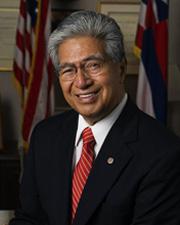
Mr. President. As the tax filing deadline approaches, I am delighted to introduce the Free Internet Filing Act. The bill requires the Internal Revenue Service (IRS) to provide universal access to…
Mr. President. As the tax filing deadline approaches, I am delighted to introduce the Free Internet Filing Act. The bill requires the Internal Revenue Service (IRS) to provide universal access to individual taxpayers filing their tax returns directly through the IRS Web site. I thank Senator Bingaman for cosponsoring this bill and working with me on so many issues that are important to taxpayers.
It is frustrating that individual taxpayers completing their own returns are not able to file directly with the IRS. Taxpayers are dependent on commercial preparers to electronically file their taxes. If a taxpayer takes the time necessary to prepare their returns by themselves, they must be provided with the option of electronically filing directly with the IRS. My legislation would make this direct filing possible.
The current system that provides a select group of taxpayers with the ability to file electronically for free using third party intermediaries, called the Free File Alliance, is a failure. In testimony before the Finance Committee yesterday, The National Taxpayer Advocate, Ms. Nina Olson, testified that ``As currently structured, Free File amounts to a Wild, Wild West of differing eligibility requirements, differing capabilities, differing availability of and fees for add-on products, and many sites that are difficult to use.'' Ms. Olson also stated that the ``IRS should place a basic, fill-in template on its website to allow any taxpayer who wants to self-prepare his or her return to do so and file directly with the IRS for free.'' I completely agree.
The current Free File Alliance agreement leaves out too many taxpayers. Taxpayers that make more than $50,000 are not eligible. In addition, tax preparation companies try to sell additional products and services, such as refund anticipation loans, to consumers that utilize their free file services that are accessed via the IRS Web site. Taxpayers should not be forced to access online filing through companies that peddle services and products to them. Taxpayers are directed to these companies via the IRS Web site. This should not happen. While paying their taxes
and fulfilling their obligations, taxpayers should be allowed to file directly without being subjected to sales pitches or ads. Taxpayers should not have the additional worry associated with sharing their private financial information with a tax preparation company. In the current environment where there have been so many electronic breeches of financial information, taxpayers should not be forced to hand over their private information if they want to electronically file their return with the IRS. Taxpayers should not lose out on the benefits of electronic filing simply because they are worried about sending their data to third parties.
My legislation will help increase the number of electronically filed returns. As Ms. Olson pointed out, nearly 45 million returns prepared using software are mailed in rather than electronically filed. With universal access to free e-file, this number could be substantially reduced. Electronic returns help taxpayers receive their refunds faster than mailing them in. This would also save the IRS resources and reduce possible errors that can occur when the mailed in returns are transcribed.
I want to take a moment to express my appreciation for all of the tremendous work that Ms. Olson has done in an attempt to improve the lives of taxpayers. It is a pleasure to work with Ms. Olson and her staff both in Washington and Hawaii. I look forward to continuing to work with the National Taxpayer Advocate, other Treasury officials, and my colleagues to expand access to Internet filing.
I ask unanimous consent that the full text of the bill be printed in the Record. I also ask unanimous consent that a letter of support from the Hawaii Alliance for Community-Based Economic Development be printed in the Record.

Mr. President, I am pleased to introduce the ``Great Lakes Restoration Implementation Act'' with Senator Mike DeWine and our co- sponsors, Senators Debbie Stabenow, George Voinovich, and Hillary…
Mr. President, I am pleased to introduce the ``Great Lakes Restoration Implementation Act'' with Senator Mike DeWine and our co- sponsors, Senators Debbie Stabenow, George Voinovich, and Hillary Rodham Clinton. I also want to thank Representatives Vern Ehlers and Rahm Emanuel for introducing similar Great Lakes restoration legislation in the House today.
The Great Lakes are vital not only to Michigan but to the Nation. Roughly one-tenth of the U.S. population lives in the Great Lakes basin and depends daily on the lakes. The Great Lakes provide drinking water to 33 million people. They provide the largest recreational resource for their neighboring States. They form the largest body of freshwater in the world, containing roughly 18 percent of the world's total; only the polar ice caps contain more freshwater. They are critical for our economy by helping move natural resources to the factory and to move products to market.
While the environmental protections that were put in place in the early 1970s have helped the Great Lakes make strides toward recovery, a 2003 GAO report made clear that there is much work still to do. That report stated: ``Despite early success in improving conditions in the Great Lakes Basin, significant environmental challenges remain, including increased threats from invasive species and cleanup of areas contaminated with toxic substances that pose human health threats.''
The Great Lakes problems have been well-known for several years, and, for the past year, 1,500 people through the Great Lakes region have worked together to compile recommendations for restoring the lakes. These recommendations were released last December, and, today, I am introducing this legislation to implement those recommendations.
This bill would reduce the threat of new invasive species by enacting comprehensive invasive species legislation and put ballast technology on board ships; it specifically targets Asian carp by authorizing the operation and maintenance of the dispersal barrier. The bill would restore fish and wildlife habitat by reauthorizing the Great Lakes Fish and Wildlife Restoration Act. It would provide additional resources to States and cities for their water infrastructure. It would provide additional funding for contaminated sediment cleanup and would give the EPA additional tools under the Great Lakes Legacy Act to move projects along faster. The bill would create a new grant program to phase-out mercury in products. It would authorize additional research through existing Federal programs as well as our non-Federal research institutions. And it would authorize coordination of federal programs.
The Great Lakes are a unique American treasure. We must recognize that we are only their temporary stewards. If Congress does not act to keep pace with the needs of the lakes, and the tens of millions of Americans dependent upon them and affected by their condition, the current problems will continue to build, and we may start to undo some of the good work that has already been done. We must be good stewards by ensuring that the federal government meets its ongoing obligation to protect and restore the Great Lakes. This legislation will help us meet that great responsibility to future generations.
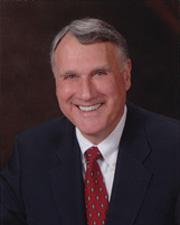
Mr. President, I understand that the senior Senator from Oregon, Mr. Wyden, spoke yesterday regarding the reauthorization of the USA PATRIOT Act. I look forward to the Senate acting later this year…
Mr. President, I understand that the senior Senator from Oregon, Mr. Wyden, spoke yesterday regarding the reauthorization of the USA PATRIOT Act. I look forward to the Senate acting later this year on PATRIOT Act reauthorization, but today I just want to address one aspect of the Senator's speech, his opposition to administrative subpoena power.
In his speech, the Senator argued that any reauthorization should not extend those subpoena powers to FBI terrorism investigators. He correctly noted that Intelligence Committee Chairman Roberts has held hearings about extending this authority, which is common within the Government, to FBI agents investigating terrorism. I was happy to see Chairman Roberts do this because last year I cosponsored S. 2555, the Judicially Enforceable Terrorism Subpoenas Act. On June 22, 2004, I chaired a hearing in the Judiciary Subcommittee on Terrorism, Technology, and Homeland Security that examined this subpoena power and heard testimony regarding how the subpoenas work and how the government protects civil liberties when using them.
One of the things that struck me as I learned about administrative subpoena power was how widespread it is in our Government and how unremarkable a law enforcement tool it really is. It was for that reason that I asked the Senate Republican Policy Committee, which I chair, to examine this issue in greater detail, to study the constitutional and civil liberties questions that critics have raised, and to identify the other contexts where the Federal Government has this power. The resulting report was consistent with my previous research and the testimony that I had heard during my subcommittee hearings. We give this subpoena power to postal investigators and Small Business Administration bank loan auditors and IRS agents, and we do not have a problem with Government abuse or deprivation of civil liberties. Shouldn't we also give it to those who are charged with rooting out terrorism before it strikes our neighborhoods?
I look forward to the upcoming debate on PATRIOT Act reauthorization, and I certainly intend to support it. At the same time, I commend Chairman Roberts for his efforts and hope that we will have the opportunity to ensure that our FBI terrorism investigators are not hamstrung as they continue to work to protect our Nation.
I ask unanimous consent that this policy paper, dated September 9, 2004, be printed in the Record.
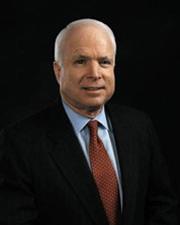
Mr. President, I am joined today by Senators Dorgan and Cantwell in introducing a bill to amend the recently passed PATRIOT Act reauthorization to ensure that Indian tribes are eligible for Federal…
Mr. President, I am joined today by Senators Dorgan and Cantwell in introducing a bill to amend the recently passed PATRIOT Act reauthorization to ensure that Indian tribes are eligible for Federal methamphetamine-related grants. The legislation would allow tribes, like States, to receive grants to reduce the availability of meth in hot spot areas; grants for programs for drug-endangered children; and grants to address methamphetamine use by pregnant and parenting women offenders.
The scourge of methamphetamine has afflicted much of our Nation, and it has had particularly devastating effects on Indian reservations. The problem of meth in Indian country, which the National Congress of American Indians identified this year as its top priority, is ubiquitous, and has strained already overburdened law enforcement, health, social welfare, housing, and child protective and placement services on Indian reservations. Last week a former tribal judge on the Wind River Reservation in Wyoming pled guilty to conspiracy to distribute methamphetamine and other drugs. The day before, the Navajo Nation police arrested an 81 year old grandmother, her daughter, and her granddaughter, for selling meth. One tribe in Arizona had over 60 babies born last year with meth in their systems. At a hearing in the Senate Indian Affairs Committee last month on child abuse, witnesses testified that methamphetamine is a significant cause of abuse and neglect of Indian children. Last year, the National Indian Housing Council expanded its training for dealing with meth in tribal housing: the average cost of decontaminating a single residence that has been used a meth lab is $10,000. Meth is affecting every aspect of tribal life and something must be done.
The measure I am introducing today takes but a small step on the long journey toward ridding Indian country of the blight of methamphetamine. I encourage my colleagues to support it. I ask unanimous consent that the text of the bill be printed in the Record.

Mr. President, I rise to submit a concurrent resolution to honor the fallen soldiers we have lost in Operation Enduring Freedom (OEF) and Operation Iraqi Freedom (OIF). My resolution, which…
Mr. President, I rise to submit a concurrent resolution to honor the fallen soldiers we have lost in Operation Enduring Freedom (OEF) and Operation Iraqi Freedom (OIF). My resolution, which Congressman Rahm Emanuel is introducing in the House of Representatives, directs the Architect of the Capitol to display an exhibit to honor the memory of these brave men and women in the Rotunda of the Capitol building during the period beginning on May 29, 2006, and ending on July 4, 2006. The exhibit will display the name, photograph, and biographical information of each individual member of the United States Armed Forces who has been killed in Afghanistan and Iraq. Visitors will also have the opportunity to write messages of support and sympathy to the families of the fallen.
On March 20, 2006, we observed the third anniversary of the war of Iraq. Since the start of the war, more than 2,500 American soldiers have been killed serving their country. As we continue our efforts in Iraq and Afghanistan, we must recognize the ultimate sacrifice made by these troops. This temporary display will show the families of these heroes that they will always be remembered by a grateful nation.
I want to thank Senators Clinton, Bingaman, Kennedy, Johnson, Boxer, Menendez, Landrieu, Kerry, and Feinstein for co-sponsoring this important resolution. I hope that the rest of the Senate will support its passage, too.
Bill Text
3 versions available
        [Congressional Bills 109th Congress]
[From the U.S. Government Publishing Office]
[S. 2555 Engrossed in Senate (ES)]

109th CONGRESS
2d Session
S. 2555

_______________________________________________________________________

AN ACT

To designate the facility of the United States Postal Service located
at 2633 11th Street in Rock Island, Illinois, as the ``Lane Evans Post
Office Building''.

Be it enacted by the Senate and House of Representatives of the
United States of America in Congress assembled,

SECTION 1. LANE EVANS POST OFFICE BUILDING.

(a) Designation.--The facility of the United States Postal Service
located at 2633 11th Street in Rock Island, Illinois, shall be known
and designated as the ``Lane Evans Post Office Building''.
(b) References.--Any reference in a law, map, regulation, document,
paper, or other record of the United States to the facility referred to
in subsection (a) shall be deemed to be a reference to the ``Lane Evans
Post Office Building''.

Passed the Senate August 2, 2006.

Attest:

Secretary.
109th CONGRESS

2d Session

S. 2555

_______________________________________________________________________

AN ACT

To designate the facility of the United States Postal Service located
at 2633 11th Street in Rock Island, Illinois, as the ``Lane Evans Post
Office Building''.