Trauma Care Systems Planning and Development Act of 2005
Legislative Activity
Stay on top of the latest movement without scrolling through every action
Placed on Senate Legislative Calendar under General Orders. Calendar No. 359.
February 2, 2006
View full timeline
Introduced in Senate
February 2, 2005
Sponsor introductory remarks on measure. (CR S894)
February 2, 2005
Read twice and referred to the Committee on Health, Education, Labor, and Pensions. (text of measure as introduced: CR S894-895)
February 2, 2005
Committee on Health, Education, Labor, and Pensions. Ordered to be reported without amendment favorably.
February 9, 2005
Committee on Health, Education, Labor, and Pensions. Reported by Senator Enzi without amendment. With written report No. 109-215.
February 2, 2006
Placed on Senate Legislative Calendar under General Orders. Calendar No. 359.
February 2, 2006
Floor Debate
22 membersWhat members said about S. 265 on the floor
 MBE
MBE RJD
RJD LA
LA DKA
DKA JT+17
JT+17
Floor Debate
22 membersWhat members said about S. 265 on the floor
Mr. President, I ask unanimous consent that the order for the quorum call be rescinded. Mr. President, in a moment I will request unanimous consent that the Senate pass S. 2823, the Ryan White…
Mr. President, I ask unanimous consent that the order for the quorum call be rescinded.
Mr. President, in a moment I will request unanimous consent that the Senate pass S. 2823, the Ryan White HIV/AIDS Treatment Modernization Act.
Just last week, we made a unanimous consent request to pass this bipartisan, bicameral legislation. That means Members from both sides of the aisle and both ends of the building have agreed to the language in this reauthorization. It passed out of the House Committee on Energy and Commerce last week. However, Senators from three States are blocking the vote that would speed reauthorization programs that provide life-sparing treatment to individuals suffering from HIV and
I am sorry to hear we have an objection. We need to find a way to work through this objection. I have been working desperately across the aisle with Senator Kennedy, who has been joining me in this effort to help get it out of committee. We have been trying to find a way that the formula would work. One of the ways was to include in the bill 3 years of hold harmless for them to finish updating their system to the point where if they truly have the HIV numbers, they will truly get the money. If they don't have the HIV numbers, yes, they will lose the money.
Now, I don't know if the Senator from Minnesota is aware that our Ryan White reauthorization bill increases the funding for Minneapolis by $2 million and $2.5 million for the whole State. It is a net benefactor. There have been increases in HIV and AIDS cases in Minnesota, and this would move money to where the cases are. That is where the numbers show that his city and State would be significant beneficiaries.
I have a lot of statistics I can go through, but I wonder if the Senator is also aware that these increases are due to the inclusion of HIV/AIDS in the funding formula and that Minnesota has more HIV cases.
Mr. President, I appreciate that clarification.
I will ask the Senator for his help. He said he would vote for the bill. Anything we can do to move this forward. We have put a 3-year hold harmless in there for everyone.
On September 30, the world falls apart for a number of people. California, for one, will lose $18.5 million of their funding. There are a number of big losers. There are no big losers if we pass the bill, provided the numbers back up what they have.
I yield the floor.
Mr. President, I thank the Senator for his words. The increase in knowledge that I am sure he has created across the country--and also the
comments of the Senator from Oklahoma--both of them have made an excellent case for why we need to do this. We need to do it immediately. We need to do it for people who have HIV/AIDS. I would note that the person who raised the objection to us adopting the bill is not from one of the three States that have a hold on the bill. I would hope those people would take a look at the situation in their State, and take a look at the fact they are getting more than the average number of funds being expended on patients across the rest of the country, and see that the surpluses their States are running at the end of the year greatly exceed the rather minute loss they would have, and that they would agree for us to move forward on this bill and get it in place before that September 30 deadline that is going to be devastating to 13 States that will lose money for having done the right thing.
Now, having said that, I know there will be people who will say the Republicans cannot get anything done. Well, that particular issue, and many others are not Republican issues. They are issues of the United States. And that is one on which we worked across the aisle and had a great deal of agreement on. And I have to thank Senator Kennedy, the ranking member on my committee, for the extreme work he did to help us find, among the thousands of formulas we looked at, the one that was the most fair so it would follow the patients. I do appreciate the work he has helped us do in the committee during the year.
Accomplishments of the Help Committee
Mr. President, I want to take just a few minutes to talk about what the Health, Education, Labor, and Pensions Committee has done this year. This Ryan White reauthorization is extremely important, but it is not the only bill we have been working on. Because of the way we have done our work, some people may not be aware of what has been done. In fact, I know that to be the case.
This is a committee that has worked across the aisle. When you work across the aisle, a lot of times you can work out many of the difficulties, and when you work out the difficulties, there is not a big floor debate. And when there is not a big floor debate, there is nothing for the media to write up about the blood; consequently, it does not get coverage. So I want to correct that here today, and I would like to discuss the Senate Health, Education, Labor, and Pensions Committee's accomplishments for the 109th Congress.
We have heard some claims that this is a do-nothing Congress. Well, I am here to assure American workers, retirees, students, and parents that the Health, Education, Labor, and Pensions Committee has done a great deal to help you live more secure, productive, and healthy lives. Of course, we have more to do, but I am proud that during a time of intense partisanship on Capitol Hill, the HELP Committee has produced a lengthy list of legislative accomplishments.
Looking back over the past 2 years, most of these victories materialized when Senators were willing to work across party lines and across the Capitol to put finding a solution in front of exploiting an issue.
Mr. President, I ask unanimous consent that a list of bills and reports filed by the HELP Committee in the 109th Congress be printed in the Record
Mr. President, I joined the HELP Committee when I was first elected to the Senate in 1997. It was natural for me because of my small business background as an owner of family shoe stores. I had firsthand experience with burdensome government regulations, inadequate health care coverage for my workers, and adversarial workplace safety laws. I was energized about finding common sense solutions rather than more Washington bureaucracy.
Now, another reason I joined the HELP Committee is because its broad jurisdiction touches nearly every American.
Now, there were a lot of vacancies on the committee when I signed up. I asked why there were so many vacancies, and I was told, well, that is a contentious committee. I thought I knew what contentious committees were because I served on the labor committee in Wyoming. I found out that there is another level of contentious. I wanted to work with my colleagues to find smart solutions that would address some of the most important challenges faced by my constituents in Wyoming and, of course, other people across the country. I came from Wyoming as a firm believer in my 80-20 rule. The way that rule works is that we can usually find agreement on 80 percent of any issue. We agree across the aisle on about 80 percent the issues that comes up. Now, we are probably never going to reach agreement on the remaining 20 percent.
Unfortunately, for America, what they get to watch on any bill is the debate on the 20 percent we don't agree on, and probably will never compromise on. That is what makes this body seem so contentious--the 20 percent that we don't agree on, even though 80 percent can get done. The committee process will enable us to find that 80 percent, and that has been a principle that has guided my chairmanship.
I was honored and humbled when my colleagues selected me to chair the HELP Committee nearly 2 years ago. Since my chairmanship began, the vision for both the full committee and the subcommittees is to craft legislation that provides lifelong opportunities for people to be healthier, more competitive, and to be more secure at school, work, and in retirement.
Because we have such a broad jurisdiction, the HELP Committee has had an aggressive legislative schedule in the 109th Congress. Over the past 2 years, together with the subcommittees, we have held 57 hearings and reported 36 bills out of committee; 21 of these proposals were approved by the Senate and 12 were signed by the President and became public law. We also reviewed and approved 352 nominations that require Senate confirmation. I thank my colleagues, including their staffs, for doing the work needed to maintain this aggressive pace.
In this Congress, the HELP Committee has been privileged to have in its ranks active subcommittee chairmen and engaged members. This is largely the reason the committee has had legislative success. I thank them for their dedication, and I applaud them for the joint success as a committee. Our ranking member, Senator Kennedy, and I may disagree on a number of issues, but we have worked hard to find common ground and we share a commitment to improving the health, education, work, and retirement security of Americans.
The number of bills acted upon by the HELP Committee is certainly impressive. However, the numbers alone don't begin to tell the story of how the committee's activity will improve the lives of Americans now and in the years to come. One of the committee's most significant accomplishments came on August 17 of this year when President Bush signed into law the Pension Protection Act. That act marks the most comprehensive change to pension law since 1974. The Pension Protection Act is a real victory for working Americans who spend a lifetime working hard and saving for retirement. It dramatically strengthens pension funding rules and helps curb record pension failures. In doing so, the act better protects the retirement dreams of 45 million Americans. Not only were single employer fund rules significantly overhauled, but the rules regarding hybrid pension plans were finally clarified, and multi-employer funding rules were changed as well. The proposal strengthens current law and will better help Americans prepare and plan for retirement. It provides workers the security of knowing that moneys earned for retirement will be there when they are ready to retire.
It also secures the Pension Benefit Guaranty Corporation and secures that corporation without picking the pockets of taxpayers to keep the agency solvent. This legislation was no small undertaking. It took a year and a half of hearings, 5 months of deliberations in conference, and countless hours of negotiations on each provision of the bill.
Fortunately, pension issues are almost always handled in tag team fashion, involving both the HELP Committee and the Senate Finance Committee, which has jurisdiction over the Internal Revenue Code. While this tag team approach is a great asset and helped us get the bill through the Senate, it meant a complicated and extraordinarily large conference involving four committees in the House and Senate and 27 conferees.
Together with my ranking member, Senator Kennedy, Finance Committee Chairman Grassley, ranking member Senator Baucus, as well as HELP's Retirement Security and Aging Subcommittee Chairman DeWine, and Ranking Member Mikulski, our committees collaborated with House counterparts to make this sweeping reform happen. Because of this teamwork, the law passed the Senate 93 to 5. The result was a policy and a process that was truly bipartisan. Total floor time for the bill--Senate debate and conference report debate--totaled about one hour and fifteen minutes equally divided.
Some may think the conference took a long time to conclude, but history proves that it was ended in record time. The last big pension conference occurred in 1994. The conference was appointed in March of that year, but did not conclude until December. Prior to that, the most recent conference took place in 1987 and operated in the context of budget reconciliation. Again, that conference commenced in March but didn't end until December.
This year, our conference began in March and ended in July--just 5 months compared to a 10-month conference for earlier bills. Comparatively speaking, the Pension Protection Act conference finished quickly, but the impact will be felt for generations.
Another major accomplishment of the HELP Committee was the enactment of the Mine Improvement and New Emergency Response Act, MINER. From the tragic loss of life in the coal mines of West Virginia and Kentucky came the first reforms of mine safety laws in 28 years. These tragedies brought together leaders from the mining industry, from government, and from the labor unions, and helped to forge a commitment to improve mine safety. I traveled to the Sago mine with Senators Kennedy, Rockefeller, and Isakson. We met with the families of the miners who lost their lives. We met with other miners who worked there, and we met with people in the union. I felt a commitment to those families and miners in this country to try to ensure that this would never happen again.
The committee approved the MINER Act on May 17, and the President signed the bill in June. That has to be one of the fastest, most comprehensive changes to any safety law. I can't emphasize enough the cooperation of unions and company executives, and Republicans and Democrats.
Protecting the health and safety of those who work in the mining industry need not be a partisan issue. Mining, and coal mining in particular, is vital to our national and local economies, and to national energy security. Ensuring the safety of our miners is essential to protecting and preserving the industry and protecting the workers. I especially thank Senators Kennedy, Isakson, Byrd, Rockefeller, and McConnell for the tireless effort they extended. Their efforts contributed in large part to this proposal becoming law.
I should mention that the debate on the Senate floor was 1 hour equally divided with two votes. So nobody saw that. Nobody saw that debate, but it makes a significant difference for all the people in the country--the mining bill. You never saw any debate on the floor. It passed unanimously without debate. It passed in the House under suspension with limited debate--the same bill.
Sometimes the things that get done by unanimous consent that everybody agrees on nobody ever finds out about, except the people it does benefit; they know. That is why it is worth doing it that way. For a bill that has objections around here, there are ways to overcome it if you get 60 votes for it. But that is usually about a 3-week process. A unanimous consent doesn't use up much time, but it gets things done.
The committee has also made tremendous strides related to education and job training. This session the
HELP Committee initiated a comprehensive effort to authorize legislation that enhances knowledge and skills and helps American workers become leaders in the global economy. Some estimates suggest that 60 percent of the jobs created in the next decade will require skills that only 20 percent of the workers today currently possess, and 80 percent of the jobs will require education or training beyond high school. Eighty percent of the jobs will require education or training beyond high school. That is where the world is going. It is changing fast.
One important component of this effort is the reauthorization of the Carl Perkins Career and Technical Education Act. It was signed by the President in August, and it will help close the gap that threatens America's long-term competitiveness. The act addresses the needs of the Nation's changing workforce and prepares Americans for highly technical, higher-paying jobs. The reauthorization also made changes that will increase accountability at the State and local levels and will establish stronger links with businesses to build partnerships with high schools and colleges so they can better meet the needs of the changing workforce.
For many people, participation in these programs can mean the difference between a job with no possibility of advancement and a successful career. Passage of this legislation was a significant accomplishment. Again, limited floor debate, no debate on the conference report; unanimous consent across the aisle.
Another piece of this comprehensive effort is the reauthorization of the Higher Education Act. As my colleagues know, the mandatory portions of the higher education law were reauthorized in February under the Deficit Reduction Act of 2006. Before I elaborate, I want to stress that it is critical to reauthorize the remaining discretionary programs under the act, which I intend to make a top priority for 2007. We have the bill out of committee but haven't had the floor time to do the debate on it. I am making that a top priority for 2007 because postsecondary education is the key to the future success of our students, our communities, and our economy.
As I stated earlier, we reauthorized the mandatory components of the Higher Education Act through the budget reconciliation process. We found over $20 billion in savings by eliminating corporate subsidies for lenders and reworking the interest rate structure for many borrowers, among other revisions. A portion of the savings was used to pay for over $9 billion in enhanced students benefits. The law makes higher education more affordable for students who finance part of their education through loans by reducing borrow origination fees and increasing loan limits.
Another benefit is a $4 billion grant program for postsecondary students who major in science, math, and certain national-security- related foreign languages. These funds are dubbed ``SMART grants'' and are an important part of making higher education more affordable for low- and middle-income families. We invested resources where we need them the most, which will help ensure we have a workforce that can compete globally.
I was in India earlier this year and saw firsthand what Thomas Friedman discusses in his book, ``The World Is Flat.'' It doesn't take long to figure out that by sheer numbers alone, India has only to educate 25 percent of its population to have more literate and educated people than the total population of the United States.
By using the reconciliation process for these higher education reforms, the HELP Committee was able to produce meaningful deficit reduction. In fact, I am proud the HELP Committee led the entire Congress in deficit reduction and produced $15.5 billion in savings over five years. That is 40 percent of the entire Deficit Reduction Act of 2006. It is not right to overspend now and pass the bill on to our children and grandchildren to pay later.
I thank Chairman Gregg for his leadership on the Budget Committee and for his contribution on the authorizing committee that helped make the meaningful deficit reduction a reality.
Enactment of the Perkins reauthorization and the mandatory revisions of the Higher Education Act were critical components of a comprehensive effort to strengthen knowledge and skills. However, this effort also includes the reauthorization of the Workforce Investment Act. The reauthorization is essential because it will help train American workers to fill the good jobs being created so we can continue to be leaders in the global economy.
The reauthorization of the Workforce Investment Act has been a priority of mine since I chaired the Subcommittee on Employment and Workplace Safety in the previous Congress. Last Congress, I worked tirelessly to report the legislation from the committee, only to be held up on the Senate floor when it came time to appoint conferees. Now, that means the bill made it out of committee and cleared the Senate floor. The House passed a different version, so we need a conference committee to resolve the differences. However, we weren't allowed to appoint a conference committee. That was 2 years ago. Mr. President, 900,000 new jobs could be trained under that program. This year, once again, I have been procedurally hamstrung in my efforts to move to conference. The bill must be completed. It made it out of the committee unanimously. It made it through the floor of the Senate, again unanimously. That means everybody agreed with what is in the bill. Now the only problem left is we have to reconcile that with what the House passed.
America is facing an economic challenge that threatens our ability as a nation to compete on the world stage. This bill sends a clear message that we are serious about helping our workers and our employers remain competitive and about closing the skills gap that is putting America's long-term competitiveness in jeopardy.
Our commitment to lifelong learning never ends. It begins with giving our children the proper tools for a start down the pathway that leads to their education. The committee approved improvements to Head Start this last year, and the completion of this process is one of my top priorities.
On the health front, eight committee bills were signed into law by President Bush. One of the most significant new health care laws is the Patient Safety and Quality Improvement Act. The new law is a culmination of 6 years of work in response to the Institute of Medicine's 1999 report that found that nearly 100,000 Americans die needlessly every year due to medical errors.
The Patient Safety and Quality Improvement Act creates a protected legal environment in which patient safety organizations can analyze why medical errors happen and develop strategies to stop those errors from happening again. The law provides critical legal protection for doctors, nurses, and other health care workers who might fear coming forward with information about mistakes because the information could be used in a lawsuit against them.
This new law is the first important step toward creating a new culture of safety and continuous quality improvement in health care.
This new law is one of just several important pieces of legislation the HELP Committee produced in this Congress. I would mention again that this too took zero debate time on the floor. Another one is the Patient Navigator Outreach and Chronic Disease Prevention Act of 2005, which will help patients with chronic diseases team up with health care experts who can help them find their way through the maze to the best treatment offered in this often complex health care system. Again, no floor debate time.
The Stem Cell Therapeutic and Research Act of 2005 supports the creation and maintenance of cord blood stem cells. Stem cells obtained from umbilical cord blood have already shown great promise in treating cancers, leukemia, and other diseases, and this law will accelerate our work in those areas. I have already had people who have reported back to me that their life may have been saved by that particular act already. I think we had 5 minutes of debate time on that bill.
The National All Schedules Prescription Electronic Reporting Act of 2005 enables physicians and other prescribers to find out whether patients are abusing and diverting narcotics and other dangerous drugs. Instead of enabling these patients and their self-destructive habits, physicians will now be able to identify them and treat them.
The State High Risk Pool Funding Extension Act of 2005 renewed a key law that funds State high-risk health insurance pools. These pools create access to health insurance for otherwise medically uninsurable individuals and are an important part of our strategy to make health insurance available to more Americans. The President also signed a bill to amend the Public Health Service Act and strengthen the National Foundation for the Centers for Disease Control and Prevention.
Finally, we passed two key laws to preserve access to medical technology. The Medical Device User Fee Stabilization Act of 2005 prevented the FDA's medical device user fee program from expiring. Without this law, patients' access to the latest medical innovations would have been compromised. Congress also acted to protect children from dangerous, unregulated cosmetic lenses, often used as part of costumes, by providing for the regulation of these lenses as medical devices.
The HELP Committee members worked together with our House counterparts in a bipartisan, bicameral way to complete action on these laws. I personally thank all of the committee members on both ends of the building for their active participation in this process.
We also scored a victory on the Senate floor this summer related to health insurance. Together with Senators Nelson and Burns, I introduced legislation that would allow business and trade associations to band their members together in small business health plans and offer group health coverage on a national or statewide basis. It would give small businesses the capability to group together across State lines to effectively negotiate against big insurance companies. It would bring down insurance rate significantly, particularly in the area of administrative costs.
This legislation, the Health Insurance Marketplace and Modernization and Affordability Act, is a direct response to the runaway costs that are driving Americans and businesses away from the health insurance marketplace. In May, this legislation received 55 votes on the Senate floor--a clear majority. Unfortunately, obstructionists used arcane Senate rules requiring 60 votes for passage to defeat consideration of the bill. I count this as a victory for the HELP Committee because the policy is supported by the majority of the Senate. This will not be a victory for Americans until it is signed by the President.
Enacting the Health Insurance Marketplace Modernization and Affordability Act will be a top priority for the HELP Committee and me personally in the 110th Congress. I intend to act on this legislation early next year and continue to work across party lines to find the solution that produces 60 votes in the Senate. The HELP Committee has a role to play in making employer-sponsored health care more accessible and affordable. Employer-provided health insurance is voluntary, and it is in critical condition. Sixty percent of the country's employers offer insurance today. That is down 9 percent from just 5 years ago. And the cost of health insurance for companies has nearly doubled in that same period, with employers expected to pay an average of $8,167 per employee family versus $4,248 5 years ago. My proposal would provide health care coverage to over 1 million small businesses and their working families.
This fall, I am also hopeful the committee can add two more victories to our list of accomplishments. That would be the Health Information Technology conference agreement and the reauthorization of the Ryan White Care Act.
Right now, my staff is working aggressively with the House to complete action on the Wired For Health Care Quality Act conference agreement. This legislation will enhance the adoption of a nationwide interoperable health information technology system, improve the quality of health care, and contain costs. Primarily, it will allow each individual to own their own health care record and to carry it around with them easily. They will have the permanent record to carry with them and release, to the degree they want to, to any health care provider. This will contain costs: just between Medicare, Medicaid and Veterans, this is expected to save $160 billion a year. The cost to implement: $40 billion, one time. A good investment anywhere.
The committee has also been working in a bipartisan, bicameral fashion to complete the reauthorization of the Ryan White Care Act. The measure was approved by the HELP Committee in May, and I am hopeful that we can swiftly clear compromise legislation through both Chambers by December--I was hoping we could pass it today, but I see it has been stopped. It is absolutely essential that this clear by September 30.
The reauthorization of the Older Americans Act will also have a significant impact on the everyday lives of Americans. The HELP Committee approved this legislation in June, and I am hopeful we can complete action on it this year as well. This reauthorization is important because it ensures that our Nation's older Americans, including 78 million aging baby boomers, are healthy, fed, housed, able to get where they need to go, and safe from abuse and scams. We have been in bicameral, bipartisan deliberations for several months. Again, there is a little hangup on the funding formula. Money has to follow the people in all of these programs.
The committee also conducted various investigations and held several oversight hearings that exposed waste, fraud, and abuse in Federal programs and used the findings to craft legislation to increase accountability. Our first oversight hearing last year focused on how an asset management company, Capital Consultants, defrauded workers out of approximately $500 million in retirement assets. The findings from this oversight effort were addressed in the new pension law.
The committee also held the first oversight hearing in almost 70 years on the Randolph Sheppard Act and the Javits Wagner O'Day Act. Both programs are supposed to find employment opportunities for people with disabilities. The committee's investigation and hearing established that some executives were using the programs for their own enrichment--making millions while exploiting people with disabilities. Following the hearing, Federal law enforcement took action against the worst actors, and we have collaborated across party lines to systematically overhaul both programs. My goal is to address these programs with legislation next year.
I thank my ranking member, Senator Kennedy, and his staff for their hard work these past 2 years. His assistance and cooperation are the main reasons we have been able to accomplish many of these priorities. We didn't always agree, but we were able to identify common ground to advance our mutual priorities.
I also thank each of our committee members. As I stated earlier, we have kept a full schedule. Many of the legislative victories were initiatives brought to my attention by our subcommittee chairs or individual committee members. Senators were also especially diligent about attending the committee hearings and particularly patient when we sometimes waited for a quorum during executive session. For the remainder of the year, I will be reaching out to each of our members to seek feedback on the 2007 agenda, which will serve as the blueprint for the year.
Finally, in closing, I would like to recognize two departing members of the committee: Majority Leader Frist and Senator Jeffords. We are fortunate they chose to serve, and we are grateful for their contributions. Senator Jeffords is a past chairman of the committee, and, of course, Majority Leade Frist has been the doctor on the committee and provided a perspective no one else could. I am proud of the work we have done here on the committee these past 2 years. By working together, we have established a track record of success.
I also wish to compliment the subcommittee chairmen for their extremely hard work. We gave them a lot of independence, and they didn't disappoint me. They took hold of programs. The competitiveness program is one of them that has reached a point where it can now be debated and pursued. The Senator from Tennessee, Mr. Alexander, did a tremendous job of working that bill, along with Senator Ensign, collaborating with three different committees on one piece of farsighted legislation.
Senators DeWine and Mikulski have done a marvelous job with the Elder Fall Act and Older Americans Act and have worked well together for a number of years across the aisle to make sure older Americans are taken care of.
I could go on and mention all of the subcommittees and the work they have done. Senator Burr has done some fantastic work on bioterrorism. He has put together a fantastic bill that contains new concepts which will allow better preparation for any of the possible terrorism acts that could happen on our own soil. Senator Isakson, of course, has been extremely active in handling labor issues. As I mentioned, he was a key player in the miner safety bill.
It has been an interesting year. I look forward to another interesting year. I am looking for suggestions from my colleagues on what needs to be done, and looking for that 80 percent that can be accomplished.
Our record of accomplishment is proof that we are a can-do Congress. Far from being a do-nothing Congress, we have shown our colleagues and our constituents that Congress can and is working hard to improve the lives of Americans.
One of the reasons America doesn't know more about this is because of the cooperation that has taken place. We didn't have to debate the 20 percent we didn't agree on here on the floor of the Senate, and consequently there was not a lot of coverage. But just the pensions bill and the miner safety bill, either of those, would be a major accomplishment for any committee during a 2-year period.
I am proud of the 12 bills the President signed and the 21 bills we got through this body. I think that is a record of accomplishment, and I thank all those who participated.
I yield the floor and suggest the absence of a quorum.
I thank the chair. Mental Health Parity Act Mr. President, in just a few weeks while we are in recess, we will mark the fourth anniversary of the untimely death of our former colleague from…
I thank the chair.
Mental Health Parity Act
Mr. President, in just a few weeks while we are in recess, we will mark the fourth anniversary of the untimely death of our former colleague from Minnesota, Paul Wellstone. Paul Wellstone died at the age of 58 in an airplane crash about 4 years ago. Paul and his wife Sheila and daughter Marcia were on their way to a campaign event in Eveleth, MN on October 25, 2002 when their plane crashed in a wooded field 2 miles short of the airport. We mourn for the surviving children Mark and David and for the families of the campaign staffers, Will McLaughlin, Tom Lapic, and Mary McEvoy, and for the families of the pilots flying that fated aircraft.
Paul's tragic and premature death silenced one of the leading voices in America on the issue of mental illness. Paul Wellstone understood the devastation that mental illness can bring: the stigma, the alienation, the broken families and, sadly, even broken lives.
In 1992, together with Senator Pete Domenici of New Mexico, Paul introduced legislation to require insurance companies to offer the same coverage for treating mental illness as for physical illness. The Mental Health Parity Act was passed and signed into law in 1996. The final version of the bill sadly was watered down and fell short of Paul's earliest goals.
A new bill to eliminate these disparities in insurance coverage was introduced in the last Congress. The Paul Wellstone Treatment Act attracted widespread bipartisan support: 69 Members of this Chamber and 245 Members of the House--a clear majority supporting Paul Wellstone's legacy. But unfortunately, during the past 2 years, this bill was not called for passage and did not pass.
Today I am honored to be joined by Senator Norm Coleman of Minnesota, Senator Ted Kennedy, Senator Tom Harkin, and Senator Mark Dayton of Minnesota in submitting a sense-of-the-Senate resolution, first to remember Paul Wellstone and honor his legacy, but also to publicly commit to finishing his work on mental health equity legislation.
Mental health disorders are the leading cause of disability. Without treatment, the consequences of mental illness for the individual and for all of us are staggering: disability, unemployment, substance abuse, homelessness, inappropriate incarceration, suicide, and wasted lives. The economic costs of untreated mental illness is more than $100 billion each year in the United States. In my home State of Illinois, close to 4 million people, or 30 percent of the population, are affected by some form of mental illness each year, including depression. Suicide is the third leading cause of death among young people 15 to 24. Seventy-seven percent of adults with severe mental illness are unemployed.
Now, the good news is this: Mental illness is treatable but only for the people who have access to sound diagnosis and care. We have a good start, thanks to the Mental Health Parity law that Senators Wellstone and Domenici led to enactment in 1996. Our next challenge is to build on the work Paul Wellstone left behind.
Current law requires insurers offer mental health care and offer comparable benefit caps for mental health and physical health, but it does not require group health plans and their health insurance issuers to include mental health coverage in their benefits package. It doesn't prevent insurers from setting higher deductibles, higher copays, and fewer services covered for mental health illness. I commend Senators Kennedy and Domenici for their work in this Congress on working toward a consensus for reaching mental health parity for Americans.
I called Senator Domenici last week to tell him I was submitting this resolution and to cheer him on so that during the next session of Congress we can give the right tribute to Paul Wellstone and, more importantly, as Paul would see it and I see it as well, hope to millions of Americans.
This resolution honors Paul Wellstone. It commits us to continuing his work to ensure equity for people with mental illness. Paul fought against discrimination in any form. His life work was dedicated to creating a world in which everyone, regardless of race, religion, economic status, or health or mental health status, would be treated fairly and equally. I urge my colleagues to support this resolution and renew our commitment to ensuring mental health parity.
Paul Wellstone was often quoted as saying:
I don't think politics has anything to do with left, right,
or center. It has to do with trying to do right by the
people.
That was what Paul Wellstone said. And now we will have our chance in the next session of Congress to honor that commitment.
Mr. President, I yield the floor.
Mr. President, I at the outset thank my colleague from Minnesota who was quick to join with his colleague Senator Dayton as a cosponsor of this resolution.
Many times politics divides us, but when it comes to an issue such as mental illness, we are all in this together. I know my colleague from Minnesota has probably had the same experience I had, of raising this issue at a town meeting or a public meeting, and then I almost guarantee you that before you leave that hall, someone will come up to you and ask if they can speak to you privately to tell you the story of a child or a spouse who has bipolar disorder or schizophrenia or who has committed suicide. It touches so many of us. What Paul Wellstone was trying to remind us of is that mental illness is not a curse, it is an illness, and an illness that can be treated. Why shouldn't we include it in our health insurance for Americans so that every family can be spared the suffering that comes with mental illness today.
I thank my colleague from Minnesota for joining me on this resolution.
Mr. President, if the Senator will yield for a question, I would like to say by way of question through the Chair that I thank my colleague from Minnesota. I can recall when he first came to the Senate serving with our mutual friend, Paul Wellstone. It must have been tough to be that close to a dynamo. The man had boundless energy and committed to so many good causes.
The Senator from Minnesota has carried on the fine tradition for your State. I thank the Senator for joining us in this resolution.
Hope springs eternal, and maybe during the lame duck session Senator Kennedy and Senator Domenici will be able to give us some good news that will make us proud on this important issue.
I thank the Senator for his words today.
Mr. President, this morning one of my Republican colleagues came to the floor to talk about what appears to be the favorite topic of most Republican Senators: the estate tax. No matter what we are talking about on the floor, whether it is immigration reform, making America safe from terrorism, dealing with issues involving the funding for our troops, port security, without fail, you can count on one of my colleagues on the other side of the aisle trying to wedge in to this queue with what many of them consider to be at least equally important: the issue of the estate tax.
So my colleague came to the floor and mentioned my name over and over again as if I were his opponent. I would say to my colleague there are many Senators who disagree with his position, but I will be happy to address it for a moment or two.
The simple fact is this: If an American and a spouse have assets valued at less than $2 million at the time of their death, they will never pay one penny in estate taxes--not one. So if you ask who benefits from this repeal of the estate tax, well, sadly it turns out to be some of the wealthiest people in America. If you took 1 percent-- that is 1 out of 100--estates in America, people who die each year, only one-fourth of those will ever pay any estate tax. It is a very small number of people who have done very well in their lives in America who may end up paying estate tax.
I want my position to be clear. There is an exemption under the estate tax, an exempt amount that you can leave to your heirs, that will not be taxed. I think we need to increase that and regularly increase it to reflect reality. It is true, the real estate we own has gone up in value while we have lived there, businesses have increased in value, farms have increased in value, and I think the exemption should be increased as well.
Where I have a problem is where we have people who are very well off--multimillionaires--who end up owing the Government--in fact, owing their country--something for their success, and they will be left in a position with the proposal from the other side of the aisle where they may have no estate tax liability whatsoever.
The majority leader of the Senate, Senator Frist, has said he is for total repeal of the estate tax--total repeal so that Mr. Bill Gates of Microsoft, who has done so well and made so much money, would pay nothing back to America by way of estate tax when he passes away. Well, Mr. Gates is not asking for that. Many people who are well off are not asking for that. They understand this country has been very good to them, and they are also prepared to pay back so that future generations have a chance to succeed as well.
My colleague came to the floor and talked about farmers and is concerned about farmers. I am from downstate Illinois. A few years ago, after hearing all of the debate about estate taxes, I wrote to the Illinois Farm Bureau, the Illinois Farmers Union, and asked them: Tell me of any farm that you know of where the farmer's survivors had to sell the farm because of paying Federal estate tax. There was not one single instance in my State. They couldn't find one. Now, I understand some of those farmers may have to sell off a portion of their land or some of their acreage to pay their taxes at the time that the spouse finally passes away. But as far as losing farms, that is something that is said over and over again, but neither the Illinois Farm Bureau, the Farmers Union and, in fact, the American Farm Bureau could find a single example of a family being forced to sell its farm because of estate tax liability.
According to the Congressional Budget Office, only 123 family-owned farms and 135 family-owned businesses would pay any estate tax at all with a $2 million family exemption level.
So we often have to stop and wonder why are we dwelling on this or why are some Members of the Senate continuing to dwell on this. If their sympathy is for those who are struggling to survive in America, they should focus their spotlight not on the wealthiest among us but those who are struggling at lower levels.
Let's take a look at some of the realities, the economic realities in America today. This chart shows what has happened over the last 6 years. The minimum wage has been frozen under President Bush and this Republican Congress for 9 years. During that 9-year period of time, the President's pay has been increased substantially, pay for Members of Congress increased $31,600, and the $5.15 an hour minimum wage has not gone up.
It is always interesting to me that my colleagues on the other side of the aisle seem to think that it is fine for those making the lowest wages in America, some of them working very hard each day, to have no increase in their pay for 9 straight years, while they are struggling to make ends meet. They come to the floor and talk to us about those who have made millions of dollars in their lives and whether they will have to pay any taxes. I think it is a misplaced priority.
If we take a look at some of the real household income of Americans across the board, you can see what has happened from 2000 to 2005. Real household income has declined by $1,273. It means the average family, working hard, paying off the costs of living--utilities and mortgages, energy costs, education costs--is working harder and falling behind each and every year.
Our economic policies in this country really are not focused where they should be. We should be focusing on this middle-income American family that is struggling to make ends meet in a very difficult time.
The distribution of wealth in America has changed substantially over the last several years. The distribution of earnings has become even more unequal. When you look at this situation, you see the years between 1995 and 2000 with a violet color, 2000 to 2005 with the red. So in the year 1995 to 2000, the last term of President Clinton, you can see there was an increase in earnings, weekly earnings for full- time workers, across the board. All of these violet bars above show, for example, a 9.6-percent increase, a 7.4-percent increase. So in that 4-year period of time, we had the distribution of earnings increasing.
Now look at the period of time under President Bush. During that time period, in each of these categories of income in America, we have seen that earnings have been declining or rising very slowly, as they are at the highest levels of income in America
Take a look at the wealth as well under the tax breaks given under this administration the last several years. This is the Bush economic record: a $38,000 tax break for people who are making $1 million a year, but for middle-income families making $50,000 to $100,000, their tax break under the Bush administration has been $55, and for those in the lowest income categories a tax break of $6.
You can see where the priorities have been when it comes to taxes. But ask the average family making about $100,000 a year--let's take that as an example. Let's take someone who is a teacher and whose spouse may work part time, bringing in some income to the family, and together they make $100,000 a year. They have raised their kids and spent good money sending them to school. Then the kids apply to college. The families are inundated with a stack of forms--most families have seen them--to apply for student loans and students grants. Those making about $100,000 a year will find it difficult to apply for any financial assistance. So the students, their sons and daughters who finally got into the school of their dreams, may face an unconscionable debt.
Some students put off their education. Some give up on the best schools. Some go on to school and graduate with a mountain of debt, a mountain of debt which was made worse this year when, on July 1, a law signed by President Bush increased the interest rates on student loan debts by 2 percent. It doesn't sound like much, except it means the payback for that student loan has now been increased by 20 percent over the life of the loan. It means these students, borrowing money to go to school, deeper in debt, will now be paying off their student loan debt into their 50s. Imagine that student graduating today--23, 24 years
old, maybe--looking ahead to 20 or 30 years of paying off student loan debt. Finally, in their early 50s, they have paid it all off, and now they have a few years to contemplate their retirement.
What is wrong with that picture? What is wrong is students and families in middle-income circumstances are bearing this burden, and this burden is increasing, as I will show, as the cost of college education increases. So instead of talking about a $38,000 tax break for someone who makes $1 million a year, we believe on this side of the aisle that we should allow the deductibility of college education expenses. If you can deduct the amount of interest you pay on your home to encourage home ownership, why shouldn't a family be able to deduct some of the costs of college education from their tax expenses so we can encourage students to go on, further their education, and make this a better country? It is a question of tax priorities: on one side of the aisle, estate tax relief for those in the highest income categories; on this side of the aisle, we are talking about relief when it comes to tax deduction for the real cost of college education expenses.
Most of the families I represent in Illinois were quick to tell me, during the August break, how bad gasoline prices were. We know in the last 5 years they have increased 104 percent. They started coming down in the Midwest, but I think there is a false sense of security here. A lot of people were sacrificing to put more gasoline in the car, but we still don't have a national energy policy, and there is no guarantee that a few weeks from now those gasoline prices will not go back up again because we have no bargaining power.
We are so dependent on foreign oil today that we can't say to those who gouge us and those who want to really charge us the most that there is anything we will do about it. And this administration has not really called the oil company executives in, Exxon and others, to explain the absolutely unprecedented level of profits they took as the gasoline prices went up. That industry made more money more quickly than any industry in America, and they reached higher profit levels than any industry had recorded previously. Yet this administration sat back and said w can do nothing about it as Americans and families and businesses and farmers paid the price. As the cost of gasoline goes up, as prices have in the last several months, families have faced that sacrifice. Now comes the heating oil season for many, and that may again increase the cost of expenses for these families.
Take a look at what has happened as well when it comes to family health insurance premiums under this administration. Family health insurance premiums have increased 71 percent in the last 5 years. That means the average premium for family health insurance went from $6,348 when President Bush took office to $10,880. Is it any wonder families are feeling the squeeze? These premium increases, of course, translate into another $300 or $400 each month that a family has to come up with just to have the same health insurance as last year and maybe less coverage.
Have we discussed expanding health insurance or making it more affordable on the floor of the Senate? Only once and just for a few days. I salute Senator Enzi, Republican from Wyoming, chairman of the HELP Committee, for bringing a health insurance proposal to the floor. We had another proposal here. We tried, if we could, to work out something ahead of time to have a bipartisan approach. We didn't get it done. I hope that in the next Congress, we can find a way to bring real relief on a bipartisan basis to families that are struggling with these health insurance premiums.
I mentioned earlier the cost of education and student loans. This graph shows what has happened under this administration since the President took office with regard to the increased costs of college. They have gone up
$3,688, the average annual cost of a public 4-year college, tuition, fees, room, and board. So there was a 44-percent increase in just this 5-year period of time under this administration, increase in college cost. Again, wouldn't our Tax Code be more sensible if we helped families pay this difference, if we helped them put their kids through college to get a good degree and a good life and contribute to this country? Wouldn't that be a higher priority in terms of our Tax Code than whether Bill Gates is going to end up being excused from paying an estate tax when he passes away?
There is also a concern as well with retirement plans. Take a look at what has happened in the last 5 years. In the last 5 years, 3.7 million fewer Americans have retirement plans. The number of workers with employer-sponsored retirement plans has gone down from 56.2 million to 52.5 million, which means more vulnerability.
A lot of people who had paid into a retirement plan through the course of their work experience believed that they had paid their dues, taken the money out of their check every week, and that the day would come and they would see it, that they would finally get to retire and relax. Then came mergers and consolidations and corporate sleight of hand and legal work, and the next thing you know a lot of these pensions started disappearing. So many families are concerned, concerned about when or if they can retire.
You read the stories in the paper all the time in Illinois and every other State about those who had their future plans wrecked when they lost their pension benefits. It has happened at the airlines. It has happened in so many industries across our country. We know it makes a real difference in life. A lot of people who thought they would be spending their time worrying about where to go fishing now are acting as greeters at stores around America and trying to find part-time jobs just to keep it together.
We need to do something about retirement in this country, and one thing we do not need to do is privatize Social Security. Privatizing Social Security is, of course, supported by the President but not by the American people. They know the math doesn't work. Taking money out of the Social Security trust fund for people to experiment with their investments is going to weaken that fund unfortunately. They will be unable to make the payments our Social Security retirees need. If there is ever a time when we need Social Security to be strong, it is now, as we see fewer and fewer Americans with retirement plans.
The number of Americans without health insurance has gone up dramatically under this administration, from 39.8 million Americans with no health insurance to 46.6 million Americans. Those who are insured will tell you many times that their health insurance is not very good. They come up to me at town meetings in Illinois and talk about frightening scenarios where someone in their family had a serious illness, a diagnosis, and then when they tried to pay off the medical bills, it turns out the health insurance fought them all the way. These health insurance companies are spending a lot less on care and a lot more on battles with the people who have the health insurance, denying coverage whenever they can. So we have to really get back to this issue as part of the priorities of this Congress. I am sorry that this Republican Congress has not really come up with assistance that many of these Americans need with health insurance
Overall, as we go through this litany, you can understand as you go through this litany why this next chart is where it is today. In the last 5 years, under this administration, household debt has gone up over $26,000. Because Americans are struggling to make ends meet, because the cost of college and health care and gasoline and heating your home has gone up dramatically, Americans have had to borrow more and more just to keep up. They are right on the edge, trying to pay off very expensive credit card debt.
There has been a 35-percent increase in household debt in the last 5 years for the reasons I mentioned earlier, from an average inflation- adjusted debt per household of $75,000 to over $101,000. This debt is hanging over the heads of many Americans, and if there is any rock in the road that Americans families trip over--if someone gets sick, loses a job, a divorce, something unforeseen--they are going to find themselves then facing default on their debt and even higher interest rates.
While this has been going on for the average American, employee compensation has gone down some 4.6 percent. So while all the debts have been
piling up, the compensation that is being given to individuals has been going down. Meanwhile, corporate profits are up 8 percentage points. So we can see that the share of corporate income going to profits and employee compensation has gone in opposite directions, and those directions do not benefit those families that are struggling to get by.
Those who run the corporations are doing quite well, thank you. In the last 5 years, the pay for the chief executive officers of major corporations in America has gone up over $1.6 million individually. This average pay here of $5.2 million when the President took office is now up to $6.8 million. So while the pay for employees is going down and expenses are going up, in the boardrooms the median CEO compensation has gone up substantially.
When you take a look at the tax cuts under this administration, their economic record, tax cuts are over 150 times larger for millionaires than they are for most households in America. So we gave the tax cuts of $103,000 for those in the highest income levels and $684 for those making less than $100,000 a year. So the so-called tax cut program has not really helped those families struggling the hardest.
What has happened to employment, creation of jobs in America, is illustrated by this chart. We have seen the average annual growth rate of nonfarm employment in America under every President. You have to go back to Herbert Hoover and the Great Depression to see a decline of 6 percent in employment in America. You will see the lowest number of any President since Herbert Hoover has been registered by this administration, in the creation of jobs. That is the average annual growth rate of nonfarm employment. It is the slowest job growth in America in over 70 years.
The other sad reality is, while all of these things have taken place, this represents the famous wall of debt which Senator Conrad of North Dakota has brought to our attention over and over again. When President Bush took office, our national debt was $5.8 trillion. Today, it is over $8.5 trillion--a dramatic increase in America's debt in a 6-year period of time. With policies which this administration supports and many on the other side have been arguing for, we can see America's debt reaching $11.6 trillion in 2011. So in a 10-year period of time, we will have virtually doubled--not quite but almost doubled--the debt of America, which means we are leaving a burden for our children, a burden with which they will have to deal--a burden with which they will have to deal as we see more and more baby boomers in Social Security and Medicare. As we see fewer people working, those who remain in the workforce will not only have to face their own personal challenges economically, but they will have to deal with the debt that we are leaving behind.
If this is fiscal conservatism, I don't understand the meaning of the term.
Why is it that we have reached this point? Sadly, the economy is not going as planned. We are facing a war which costs between $1.5 billion and $3 billion every week, and the other side continues to come to the floor and ask for something that no administration has ever asked for in the history of the United States--a tax cut in the midst of a war. That is what the Senator from this morning was suggesting. He wants to cut the estate tax. By cutting the estate tax there will be less revenue for our Government, the war will continue, and our debt will grow. These numbers will have to be adjusted upwards for the debt we are going to leave our children.
Yesterday we had a hearing with the Democratic Policy Conference to discuss the war in Iraq. We had two generals and a Marine Corps colonel who spoke to us. They spoke on a lot of things that we need to do to make America safer and make sure we win this war in Iraq. But one thing that MG John Batiste said I really thought was important. He said--and I think we all believe--that America can rise to a challenge. America can meet a challenge. We have done it so many times in our history. We have won wars when we were not expected to. We put a man on the Moon when a lot of people scoffed at that possibility. We developed medical breakthroughs which no one would have dreamed of. We led the world in computer technology development and in so many areas one by one. Whether it was in agricultural production or in industrial development or innovation we have led the world. We have led the world because leaders have stepped forward--a President has stepped forward and challenged us and said we need to stick together, we need to work together to reach the goal.
General Batiste said yesterday--and I paraphrase his actual testimony, but I believe what he said. He said that what we need to be reminded of is we can meet any challenge as a nation. We need to be reminded, as well, if we are challenged and work together, we can win this war on terrorism. And he said it is going to involve sacrifice. It is not the first time Americans have been asked to sacrifice. They have done that many times. I believe that spirit of sacrifice is what is needed to make sure we keep America safe from terrorism and safe from other threats.
I see that Senator Ensign has come to the floor. I don't know whether he wishes to take the floor at this time. But I mentioned his name earlier. I commended him for bringing the health insurance issue to the floor. I hope in the next session that we can work together to try to find some bipartisan compromise to deal with this health insurance challenge. It is still out there and getting more challenging every day. Senator Enzi of Wyoming, as Republican chair of the committee, may have been the first one to bring the health issue to the floor of the Senate in the 10 years I have been here. I commend him for that.
Although we didn't see eye to eye on all of that, I hope we come back together and sit down and try to find some common bipartisan approach no matter who is in charge of the Senate in the next session.
I yield the floor. I suggest the absence of a quorum.
I ask unanimous consent to speak as in morning business. Mr. President, I thank the Senator from New Mexico. He is overly generous. I learned as a staff aide in the Senate that if an idea has many…
I ask unanimous consent to speak as in morning business.
Mr. President, I thank the Senator from New Mexico. He is overly generous. I learned as a staff aide in the Senate that if an idea has many fathers and many mothers, it has a much better chance of moving along than if it just has one.
Senator Domenici is being overly modest about his own role. This would not have gotten to first base--by ``this,'' I mean the competitiveness legislation--had not Senator Domenici created the environment in which it could succeed, and if he and Senator Bingaman had not had such a good partnership and been able to work together, set a good example and have been willing to step back and allow other good ideas that were progressing through the Commerce Committee and the HELP Committee.
It has been a remarkable exercise in restraint for many distinguished Senators, some among the most senior Members of the Senate, and at a time when politics is at a pretty high level.
I thank the Senator for what he said. It means a lot to me.
Mr. President, I ask unanimous consent to have printed in the Record a summary of the National Competitiveness Investment Act.
Mr. President, although most cannot hear it right now, I want to say how much all in the Senate appreciate the extra hours and the skill with which the staffs met and worked through August and over the last several weeks to bring the three committees together. Senator Ensign played a major role, and his staff did. There were many staffs. This was not a bill that Republicans wrote and Democrats looked at or vice versa. We did it together.
Future of Higher Education
Mr. President, today the Secretary of Education, Margaret Spellings, made an important speech at the National Press Club. In her remarks, she discussed the report from her Commission on the Future of Higher Education. This commission was chaired by Charles Miller, who was the former chairman of the board of regents of the University of Texas system and a leader in education reform at all levels.
I am very impressed with Secretary Spellings. I know her job. I once had it. I do not think we have had a more effective Secretary of Education. I am very impressed with Mr. Miller. I know about his work in Texas as part of a group of business leaders over the last 20 years who have led the country in terms of helping to set accountability standards in elementary and secondary education.
Mr. President, I encourage my colleagues to read Secretary Spellings' speech from today.
Secretary Spellings is the first U.S. Secretary of Education to assume the role of lead adviser to coordinate all of higher education. I am glad she is doing that because almost every Department of the Federal Government has something to do with higher education. Currently, no one is the lead person for that. It ought to be the Secretary of Education. She stepped up to do it. I applaud her, and I applaud President Bush for asking her to do that.
The Secretary's recommendations in her speech today are sensible and respect the prerogative of Congress to make major changes in higher education policy. In plain English, she laid out some very good recommendations, but she recognized that is one branch of Government, we are the Article I branch of Government, and if there are major changes in policy, we will make them here, and then it is their job to implement it.
But among the strong recommendations in her report are the following: Simplify the financial aid system. We are already doing that, having worked with the Secretary on a commission, and it is included in the higher education bill that has not passed. That is a very good recommendation. Another recommendation is expanding more access to more students. The initial cost estimates of her commission's report suggest its recommendations might cost $9 billion or $10 billion more in terms of Pell grants. That is a lot of money, but it is an important goal.
Another recommendation is increased competitiveness. The Secretary's commission spent quite a bit of time urging the Congress and the country to adopt the recommendations of the Augustine commission, to adopt the recommendations of the Council on Competitiveness, and to adopt the President's recommendations on competitiveness. That was a help in getting us come to the point in this body where tonight Senator Frist and Senator Reid will introduce the National Competitiveness Investment Act.
The Secretary's committee recommended less regulation for higher education, which is something I want to talk a little bit more about in a moment. I thoroughly agree with that. And, of course, another recommendation is to find ways to reduce costs, which every family who has a student headed toward higher education thinks about. In our own family, where we have two new grandchildren who are less than 1 year of age, the parents--our children--are already thinking about it: How in the world are we going to pay for college out of our budgets in 18 years? That is at the top of almost everyone's concern.
I want to wave one bright, yellow flag, a cautionary flag, at one troubling aspect of the report of the Secretary's commission. That is best captured by the following sentence on page 13 of the commission's report, and I quote: ``Our complex, decentralized post-secondary education system has no comprehensive strategy, particularly for undergraduate programs, to provide either adequate internal accountability systems or effective public information.''
``Our complex, decentralized post-secondary education system has no comprehensive strategy. . . .'' The commission apparently believes that is a weakness. I believe that is a strength. I believe that is the greatest strength of our higher education system. The key to the quality of the American higher education system is that it is not one system, but that it is a marketplace of over 6,000 autonomous systems, independent systems.
These autonomous or independent institutions--such as the University of Tennessee, or Fisk University, or the Nashville Auto Diesel College, or Yeshiva University--these institutions are regulated primarily by competition--competition for students, for faculty, and for research dollars--and by consumer choice, which is fueled by generous Federal dollars that follow more than one-half of American college students to the institutions of their choice.
There is, in addition, a system of independent accreditation to help regulate these independent and autonomous institutions. To be sure, there is still plenty of the traditional kind of command-and-control Government regulation. That is very hard to get away from. Every State has a regulatory body, such as the Tennessee Higher Education Commission. And each of the 6,000 institutions I described that accepts students with Federal grants or loans must wade through over 7,000 Federal regulations and notices. Those regulations exist today.
The president of Stanford University has said that 7 cents of every tuition dollar is spent on compliance with Government regulations. The last thing American higher education needs is a barrage of new Federal regulations requiring sending new data to Washington so someone here can try to figure out how to improve the Harvard Classics Department or the Nashville Auto Diesel College, both of whose students are eligible for Federal grants and loans.
I believe the overregulation of higher education is the greatest deterrent to maintaining the quality of American higher education, and that autonomy, competition, and choice are the greatest incentives to excellence.
I would, therefore, wish to lead the bandwagon or be on the bandwagon or
push the bandwagon for more deregulation and to increase the autonomy of institutions of higher education and to preserve competition for research dollars and to give students the broadest array of education choices possible.
Today in America we are doing that much better than any other country in the world. It is instructive that China and several European countries are deregulating their overly bureaucratized colleges and universities to try to catch up with the quality of ours. Of course, better information informs choices. And, of course, easier transfer policies between or among institutions could increase opportunities. Much is to be gained from research that will help institutions measure what value their classes add to students.
But I do not want rules about transfer policies to diminish institutional autonomy. I do not want to see rules from Washington substitute for choice and competition as the principal regulators of the quality of our colleges and universities. I do not want to see even more tuition dollars go to pay for complying with costly Government regulations instead of to improving research and teaching in the classroom.
By design or luck, the United States has created a magnificent marketplace environment that has resulted in, by far, the best higher education system in the world with remarkable access for students of all incomes. Our goal should be to improve that system, not to replace it with some command-and-control structure.
Mr. President, I spoke before the Secretary's Commission on December 9 of 2005, and I hope that those remarks were useful to the Commission.
Mr. President, I want to comment that it is important to keep all of this discussion in some perspective. For example, there is a great concern about the rising cost of tuition. Secretary Spellings, in her remarks, says she wants to know why. Well, I know why it has gone up. It has gone up because State funding for higher education has been flat. It has actually gone down in many cases. As State funding of colleges and universities in Minnesota or Tennessee or South Dakota has gone down, colleges and universities have had to raise their tuition to have enough funds to maintain quality.
Now, of course, there are plenty of ways to reduce costs, and we need to push that and encourage that. And the Secretary has many suggestions for that. She is right about that. But let's not overlook the fact that Federal spending for higher education has gone way up in the last several years, but State spending has been flat. If anyone wants to know why your tuition bills are higher, it is because your Governors and your legislatures have not been paying their fair share of what it takes to have a quality system of higher education in America. I talked about that in my testimony to the Commission, and I hope they listened to that. I hope the Administration and my colleagues understand that as well.
For example, during the 5-year period from 2000 to 2004, State spending for Medicaid, which is where the Governors have to put most of their extra money, was up 36 percent; State spending for higher education was up barely 7 percent. As a result, tuition went up 38 percent.
There is another way I think about it. When I left the Governor's office nearly 20 years ago in Tennessee, Tennessee was spending 51 cents of every State tax dollar on education and 16 cents on health care--mainly Medicaid. Today, instead of 51 cents on education, it is 40 cents on education. And instead of 16 cents on health care, it is 26 cents on health care. So if we do not get control of Medicaid spending here in this Chamber, and in the other Chamber, one of the unintended consequences will be that we will drive down the quality of higher education all across America because it will not have appropriate State funding and we will not create the new jobs that will help us compete with China and India.
On the question of cost, two other things: One is, I ask unanimous consent, Mr. President, to have printed in the Record a short column by the president of the University of Maryland, William E. Kirwan, who discusses State funding that I have just talked about, and talks about what some colleges and universities are doing to reduce costs to help control the rise of tuition.
Sometimes we talk so much about the high cost of higher education where families hear that and think no one can go to college. I was president of the University of Tennessee. Tuition has gone up there for the reasons I just talked about. But today tuition at the University of Tennessee, which is one of the leading research institutions in this country--the manager of the Oak Ridge National Laboratory--is $5,300 a year. It is $5,300 a year for tuition at the University of Tennessee. That is more than a lot of people have, but that is a very good bargain in today's marketplace.
Volunteer State Community College, a public 2-year college--we encourage many people to go to community colleges, and then to our research universities--the tuition there is $2,383 a year.
At Tennessee State University, in Nashville--an excellent institution--it is $4,300. It is the same story in many other States. At the University of North Carolina at Chapel Hill, for North Carolina students--one of the best universities in the world--it is $4,500 a year. At the University of Phoenix--a different kind of university, but I had a distinguished scientist from the University of Texas tell me he looked at colleges of education all over America, and he thought the college of education at the University of Phoenix was as good as any to get your teacher's degrees--the comparable cost there for a year's tuition is about $6,669. They do things a little differently, but they provide an education and a service that many people are asking for, and I think that reflects the strength of our autonomous system of higher education.
Now, if you want to go to Harvard, it is a lot more. If you want to go to Vanderbilt, it is a lot more. But the rest of that story is, if you show up at Harvard, or if you are admitted to Vanderbilt, and you do not have the money, they are going to do their best to help you pay for that.
So I would hope as we talk about the cost of higher education that we recognize that many of the State institutions are reasonably priced, that the failure of State funding over the last several years is the principal culprit in the rising increase for public schools, and that we do not get carried away up here in Washington by thinking if we pass some more regulations here, somehow we are going to solve the problem, and we are going to make our higher education system better.
My main point is this: Our greatest threat to quality higher education is overregulation. And our greatest incentive for it is deregulation, choice, and competition. Those are the incentives I would like to preserve.
Mr. President, I yield the floor.
Mr. President, I rise today to introduce the Paleontological Resources Preservation Act to protect and preserve the Nation's important fossil record for the benefit of our citizens. I am pleased to…
Mr. President, I rise today to introduce the Paleontological Resources Preservation Act to protect and preserve the Nation's important fossil record for the benefit of our citizens. I am pleased to have Senators Baucus, Feinstein, Durbin, Roberts, and Inouye join me as original cosponsors on this significant legislation.
This bill was reported favorably by the Senate Committee on Energy and Natural Resources, and approved by unanimous consent during the 108th Congress. A similar bill was introduced in the other body by Representative James R. McGovern, with 15 cosponsors, but was not reported by the Resources Committee. I hope we can pass this again quickly in the Senate and move the bill in the House of Representatives.
You may remember that in 1999, Congress requested that the Secretary of the Interior review and report on the Federal policy concerning paleontological resources on Federal lands. In its request, Congress noted that no unified Federal policy existed regarding the--treatment of fossils by Federal land management agencies, and emphasized Congress's concerns that a lack of appropriate standards would lead to the deterioration or loss of fossils, which are valuable scientific resources. Unfortunately, that situation remains the case today.
In the past year alone, there have been compelling finds of fossils that are helping us unlock the mysteries of the past from the earth, whether violent tectonic cataclysms or depletion of oxygen in the oceans and consequent drastic changes in species. The National Parks Conservation Association NPCA, a bipartisan non-profit organization dedicated to protecting and enhancing National Parks, recently called for ``stronger laws, better enforcement, and better education programs . . . to more fully protect these valuable [fossil] relics.'' In its Fall 2004 issue of National Parks, the article described the discovery at Wind Cave National Park, South Dakota, in July 2003, of fossilized remains of a 5-foot tall hornless rhinoceros, a collie-sized horse, and a foot-tall, deer-like mammal.
National Parks are the home of many extraordinary fossil discoveries already, such as the graveyards of 20-million-year old camels and rhinos at Agate Fossil Beds National Monument in Nebraska, the only pygmy island-dwelling mammoth at Channel Islands National Park in California; and tropical dinosaurs in what are now the arid lands of the Painted Desert of southern Arizona.
Besides the National Park Service, other Federal land management agencies have a number of regulations and directives on paleontological resources, but they are not consistent and there is no clear statutory language providing direction in protecting and curating fossils. I would like to commend to my colleagues two reports recently published by the Congressional Research Service, CRS, which we know as an impartial, non-partisan legislative research service that provides analysis for Congress. The CRS American Law Division published two reports entitled ``Federal Management and Protection of Fossil Resources on Federal Lands'' and, ``Paleontological Resources Protection Act: Proposal for the Management and Protection of Fossil Resources Located on Federal Lands.''
These two reports analyze the status and activities of Federal agencies with paleontological responsibilities, the statutory authorities for fossils, the case law supporting them, and the bills recently introduced on fossils such as S. 546 in the 108th Congress. The reports point out that several Federal agencies have management authority for the protection of fossil resources on the lands under their jurisdiction--the Department of the Interior's Bureau of Land Management, Bureau of Reclamation, Fish and Wildlife Service, and National Park Service, and the U.S. Department of Agriculture's U.S. Forest Service. The report also points out that the U.S. Geological Survey, Department of Defense, and Smithsonian Institution have some fossil responsibilities. The reports further find that agency enforcement and prosecution policies differ greatly and there is only limited and scattered authority for Federal management and protection of fossil resources on Federal lands.
The report concludes that the scattered authorities result in case law on fossil protection that is not well developed and not necessarily consistent. The cases do not provide clear case precedent and are not necessarily applicable to broader protection, regulation, management, and marketing issues.
Both reports conclude that there is an absence of uniform regulations for paleontological resources on Federal lands--as shown by an absence of precise uniform definitions of key terms--and that there is no comprehensive statute or management policy for the protection and management of fossils on Federal lands.
The Paleontological Resources Preservation Act embodies the principles recommended by an interagency group in a 2000 report to Congress entitled ``Assessment of Fossil Management on Federal and Indian Lands.'' The bill provides the paleontological equivalent of protections found in the Archaeological Resources Preservation Act. The bill finds that fossil resources on Federal lands are an irreplaceable part of the heritage of the United States and affirms that reasonable access to fossil resources should be provided for scientific, educational, and recreational purposes. The bill acknowledges the value of amateur collecting and provides an exception for casual collecting of invertebrate fossils, but protects vertebrate fossils found on Federal lands under a system of permits. The fossil bill does not restrict access of the interested public to fossils on public lands but rather will help create opportunities for involvement. For example, there are many amateur paleontologists volunteering to assist in the excavation and curation of fossils on national park lands already.
Finally, I would like to emphasize that this bill in no way affects archaeological or cultural resources under the Archaeological Resources Protection Act of 1979 or the Native American Graves Protection and Rehabilitation Act. They are exempted because they are very different types of resources This bill covers only paleontological remains-- fossils on Federal lands.
As we look toward the future, public access to fossil resources will take on a new meaning, as digital images of fossils become available worldwide. Discoveries in paleontology are made
more frequently than we realize. They shape how we learn about the world around us. In January of this year, Science Express, the on-line version of the journal Science, reported two studies using paleontological data to understand the causes of the ``Great Dying,'' or mass extinctions that occurred about 250 million years ago in the Permian-Triassic period. The Paleontological Resources Preservation Act would create a legacy for the production of scientific knowledge for future generations.
The protections offered in this act are not new. Federal land management agencies already have individual regulations prohibiting theft of government property. However, the reality is that U.S. attorneys are reluctant to prosecute cases involving fossil theft because they are difficult. The National Park Service reported 721 incidents of vandalism; and visitors annually take up to 12 tons of petrified wood from Petrified Forest National Park, a fact that has lead the NPCA to place the Petrified National Forest on its ``Ten Most Endangered National Parks'' lists in 2000 and 2001.
Congress has not provided a clear statute stating the value of paleontological resources to our Nation, as has been provided for archaeological resources. Fossils are too valuable to be left within the general theft provisions that are difficult to prosecute, and they are too valuable to the education of our children not to ensure public access. We need to work together to make sure that we fulfill our responsibility as stewards of public lands, and as protectors of our Nation's natural resources.
I ask unanimous consent that the text of the bill be printed in the Record.
Mr. President, I rise today with the senior Senator from Hawaii to introduce legislation to authorize three important water reclamation projects in the State of Hawaii. This legislation, the Hawaii Water Resources Act of 2005, is identical to legislation considered in the 108th Congress that passed the Senate by unanimous consent on May 19, 2004.
Although one usually does not readily associate the State of Hawaii as a place with drought problems, Hawaii has been experiencing drought conditions since 1998. The Hawaii Water Resources Act of 2005 builds upon the Hawaii Water Resources Act of 2000 P.L. 106-566 that authorized the Bureau of Reclamation to survey irrigation and water delivery systems in Hawaii and
identify new opportunities for reclamation and reuse of water and wastewater for agriculture and non-agricultural purposes. While the Act resulted in the development of the initial Hawaii Drought Plan in 2000, which was updated this past year to incorporate comments and recommendations made by the Bureau of Reclamation, more needs to be done.
Although Hawaii is just beginning to recover from a multi-year drought, the National Weather Service has indicated that due to a mild El Nino effect in the Pacific Ocean, Hawaii may again experience another period of drought. It is imperative for Hawaii to improve its ways to reduce consumption of drinking water. The legislation that I am introducing today, the Hawaii Water Resources Act of 2005, will help the State of Hawaii to be proactive by authorizing projects that will address the demand on our freshwater supply, especially on the islands of Oahu, Maui, and Hawaii.
The legislation authorizes three projects. The first project, in Honolulu, will provide reliable potable water through resource diversification to meet existing and future demands, particularly in the Ewa area of Oahu where water demands are outpacing the availability of drinking water. The second project, in North Kona, will address the issue of effluent being discharged into a temporary disposal sump from the Kealakehe Wastewater Treatment Plant. The project would utilize subsurface wetlands to naturally clean the effluent and convey the recycled water to a number of users. The third project, in Lahaina, will reduce the use of potable water by extending the County of Maui's main recycled water pipeline.
The Hawaii Water Resources Act of 2005 will begin the next phase of ensuring that the State of Hawaii will continue to have a supply of fresh drinking water. It is vitally important for the State to begin working on these water reclamation projects and I urge my colleagues to support this legislation which is important to communities in Hawaii.
Mr. President, I suggest the absence of a quorum. Mr. President, I ask unanimous consent that the order for the quorum call be rescinded. Mr. President, as we wind down this legislative session in…
Mr. President, I suggest the absence of a quorum.
Mr. President, I ask unanimous consent that the order for the quorum call be rescinded.
Mr. President, as we wind down this legislative session in this last week, we have a lot of work to do on the agenda. We have bills dealing with port security, Homeland Security appropriations, Defense appropriations, and border security, which is the subject of discussion right now, the Secure Fence Act of 2006, and those are probably going to be the things on which we can find consensus. We can add to that the issue of how we deal with detainees and continue to acquire high-value intelligence that will enable us to prevent future terrorist attacks. That legislation is coming down the pike, too. So we have a lot of things to vote on in the last few days before the election. And the assumption, of course, is that we will probably come back in after the election to wrap up some of the outstanding issues.
There are other pieces of legislation that could be dealt with in this period--legislation that is without controversy, legislation that has been acted on by the House of Representatives and on which there is broad bipartisan agreement. It seems to me, at least at this point in the legislative session, that in order to get these bills through, it is going to take considerable agreement on both sides of the political aisle, with enough critical mass behind them to get them through.
I have a bill that fits into that category. I have come to the Senate floor on a couple occasions to speak about it. It has been cleared by the House of Representatives by a vote of 355 to 9. Now it is sitting here, and Senator Salazar from Colorado and I have a substitute amendment to that, and as soon as it is picked up and the Senate passes it, it goes back to the House. The House has indicated that if we send it back, they will pass it. Then we can put it on the President's desk.
The bill has to do with an issue that I think is on the minds of a lot of Americans--energy independence. It is a fairly straightforward issue. As I have explained previously on the floor, it has to do with closing the gap in the distribution system between the production of ethanol, the supply of renewable energy in this country, and the demand for it, the ultimate consumer of renewable energy.
Right now, as you know, in the last year we passed an energy bill which required, for the first time ever, certain use of ethanol in this country--7.5 billion gallons by 2012. We are ramping up to that level now. In South Dakota, we already have 11 ethanol plants. We have three under construction, and in a short period we will be at a billion gallons a year--just in South Dakota. If you add to that the production underway in the Chair's home State of Minnesota and other States in the Midwest, there is a tremendous amount of ethanol that is in the pipeline. We have now a requirement that States around the country have to meet that 7.5 billion. I think we also have a ver robust demand for it because people in this country realize that if we are going to get serious about energy independence, we have to begin shifting away from some of the types of energy that we get from other places around the world. This is American energy, homegrown energy, renewable energy. We can raise it every year. We have a corn crop every year that can be converted into gallons of ethanol. We have other types of biomass materials that, raised in places such as the Midwest, are on the cusp in terms of the technology that will soon be available. One is switch grass. There is a research project at South Dakota State University right now looking at the probability in the near future of having the essential ingredients and processes that will enable us to make ethanol out of switch grass, something that is in abundance in the upper Midwest.
This movement toward renewable energy, American-grown energy, is long overdue. People are demanding that we begin to move in that direction. We have a renewable fuel standard, as a result of the Energy bill that passed, which is a great success for moving in that direction. We have, as I said, a lot of production now that is currently on line, with additional plants under construction. What we are missing is the method by which that ethanol or other renewable fuels--bioenergy--is distributed to consumers in this country.
Right now, we have about 180,000 filling stations in America, and only about 800 of those make available E85 or other alternative fuels. If you do the math on that, that is 1 filling station for every 10,000 cars that are currently capable of using E85 or some other form of alternative energy. The Auto Alliance--and probably Members of this Chamber have seen them--has run ads in some of the publications in town saying that today there are 9\1/2\ million cars on the road that can use alternative sources of energy. ``Flex-fuel vehicles'' is how we refer to them in most cases. If you look at the 9\1/2\ million cars already on the road and those currently in production, the car manufacturers are gearing up to come up with more vehicles that can run on alternative sources of energy, primarily 85.
We have an enormous opportunity out there, a great potential for increasing usage of ethanol and renewable fuels, thereby lessening our dependence upon foreign sources of energy, which has implications for our economy, for our national security, and foreign policy.
This is a win-win. This is flatout a no-brainer for America and for the Senate. Yet we have a hold--a secret hold--by someone on the Democratic side that is preventing this bill from moving forward.
Mr. President, I understand the traditions and the rules of the Senate allow for that sort of thing to happen, but whoever it is--and I have my suspicions about who it is--who has a hold on the bill, I wish they would come forward and defend that hold. This is a noncontroversial piece of legislation which has broad bipartisan support, has passed the House with a 355-to-9 vote, and is ready for action in the Senate. But as of right now, it is being held up by someone on the other side. Again, I don't know who that is. I would like to know who that is and have the opportunity to visit with them to find out what their objection is.
The reality is that this is a piece of legislation which makes so much sense for our economy and, as I said, for our need for energy independence, to have American energy so we can get away from our dependence on foreign sources of energy. It is good for the environment. There are so many benefits to moving this legislation forward. Again, it is heading in a direction that gets us away from dependence upon foreign energy and more energy independence in this country.
I come to the floor to urge my colleagues--it has been cleared on the Republican side. It is ready for action in the House. It is teed up to go there; we have talked with our colleagues in the House. It passed once there.
The amendment Senator Salazar and I have offered, the substitute amendment, is a modification of that bill, but it keeps in place the basic concept of the bill. Very simply, in terms of explanation, it provides up to a $30,000 cash incentive for fuel retailers to install pumps that would provide E85 or other types of energy. The average cost to install that pump is somewhere between $40,000 and $200,000, depending on where you are in the country. We believe the convenience stores and the gas stations across this country would take advantage of this if it were in place. It would do something about this ratio I just mentioned where we have 1 filling station for every 10,000 cars in this country that are capable of running on E85 or some other form of alternative energy.
Again, I commend this to my colleagues in the hopes that we can move ahead. We have a few days left this week before everybody heads home for the elections. We don't know what will happen with the elections. This is legislation which, as I said, is broadly supported on a bipartisan, bicameral basis and has the support of the auto manufacturers across the country and the National Association of Convenience Stores. I submitted letters previously for the Record expressing the support of the entire ethanol industry and environmental groups. I think it has been cleared on the Republican side, and I hope that whoever on the Democratic side who has placed a hold on the bill will make that known so we can discuss what the objection is and, hopefully, clear it for action so we can get something meaningful done about the issue of energy security before Congress goes home for the elections.
Mr. President, I raise the issue again, and I urge and ask and request that my colleagues work together to accomplish what I think is a very important objective before we leave for the election; that is, moving America in the direction of lessening our dependence upon foreign energy, becoming energy independent, and helping to address the issue of high gas prices in this country. This bill would do that. I simply ask my colleagues to work with me to get that done.
I yield the floor.
Show 8 more

Mr. President, this is, plain and simple, about whether this Senate is going to allow legislation to go forward to reauthorize Ryan White, that allows the funding to follow the patients. What an…
Mr. President, this is, plain and simple, about whether this Senate is going to allow legislation to go forward to reauthorize Ryan White, that allows the funding to follow the patients. What an incredible thought, that we would be here at a stalemate over whether health dollars follow the individual HIV-positive and AIDS patients.
In North Carolina, we have gone on an aggressive program for volunteer
testing. The amazing thing we found out is that of those individuals now tested, 30 percent have full-blown aids, meaning that the options we have, that the health community has, are minimal from a standpoint of how we stop that disease in its tracks and give them any quality of life.
We are making the steps in North Carolina to try to identify the individuals who should be on a regimen of drugs. But by not allowing this bill to come to the floor for debate, we are denying the Senate the ability to bring the bill up and to consider the merits of it, and, yes, to amend it if we want to, to live with the majority of this body as to whether we change the funding formulas from what the committee has decided; which is, the funding should follow the patient.
My colleague from Oklahoma is an OB/GYN by profession. He has the medical degree. He understands the specifics of it. And the one thing that Tom Coburn has drilled in me over and over and over again is that to deny these individuals the ability to have the regimen of drugs that are available is to give them a death sentence. To deny this legislation to come up on this floor is to give a death sentence to somebody in America.
The likelihood is that some of those individuals with that death sentence live in North Carolina. Seventy-two percent of new North Carolina cases reported in 2005 were minority clients. Women of color in the South are 26 times more likely to be HIV positive than White females. In 2004, 66.7 percent of people living with AIDS in North Carolina were African American--the fifth highest rate in the Nation. The national average was 39.9 percent.
What is unique about this challenge of the demographic shift in where HIV and AIDS is affecting the U.S. population is that, for example, in North Carolina, in many cases, it is in rural North Carolina. The challenge is not only how you match the dollars for drugs with the patient, it is how you supply the transportation to the patient to get to the clinic where, in fact, they get their drugs. To deny the ability of the Senate to come to the floor and debate this bill, to bring it up and to address the merits of this formula change, to suggest that there is something wrong with allowing the funding to follow the patient--I am not sure I get it. I thought that is why America sent us here.
In 2004, North Carolina's contribution of $11.2 million a year represented the seventh highest among all States for ADAP programs in absolute dollars, and the second highest contribution as a State in percentage. Nobody can look at North Carolina and say we are not doing our share and more for the people who live in North Carolina.
But what we are denied by our inability to debate this legislation, to amend it, if some want to amend it, is to say that North Carolina will have to continue to make a bigger investment on the part of our State because certain States do not want to give up their Federal dollars, even though they no longer have the pool of HIV and AIDS patients.
In 2004--one comparison I will draw for this body--in Massachusetts, there were 8,254 individuals living with AIDS; in North Carolina, we had 7,245. Total Federal spending in Massachusetts for individuals living with AIDS was $18.6 million. In North Carolina, it was $8.1 million--$10 million shy of Massachusetts, with an affected AIDS population 1,000 less than Massachusetts. That one statistic shows the inequity that exists in the formula that we currently have within Ryan White.
One simple change means that funds will now follow the patients. That the concentration of dollars will go into the communities that affect the individuals who are infected with this disease.
I am not sure that many of us have stopped to focus on the fact that when the Federal Government makes an investment or the State government makes an investment to make sure that AIDS patients have the medications they need, we eliminate two hospital visits a year. A person living with AIDS today untreated will likely visit the hospital twice in any given year, for a week's stay each, once for a retinal infection, the second time for pneumonia. The average of those two stays is about $33,000
For an investment of slightly over $10,000 a year--part by the Federal Government, part by the State government, part by private entities--we can eliminate those two hospital visits.
So the inability to bring up this legislation, the inability to debate a change in Ryan White, an inability to let the money follow the patients means not only will New York keep their pot of money or California keep their pot of money, but it means North Carolina is going to pick up, in unrecoverable hospital expenses, about $22,000 per year per patient for whom we could not provide the medicine. So not only are we not investing the Federal money wisely because it is being invested in communities that do not have the patient population anymore, we are turning around, and the Federal Government is picking up, in the case of North Carolina, 60-plus percent of the Medicaid expense, or of the disproportionate share of the hospital expense in DSH payments, or, in fact, the hospital is sitting there with a $33,000 bill and somebody unable to pay for it, and potentially it gives them a collection problem.
This is an opportunity for us to fix something that is broken, for us to do something that every person, every Member of the Senate understands the equity and the fairness of; and that is, if we are going to make a Federal investment, let's make sure the dollars follow the individuals who are affected with HIV and AIDS.
This is an opportunity for us to understand that AIDS does not recognize State borders, that it does not recognize the difference between sexes or ethnic backgrounds, that it has now infiltrated rural areas the same way it did urban areas years ago when we were reluctant to come to this floor and talk about it.
This is a health problem in America. It deserves our attention today. It demands that we change the formula to make sure as many Americans as possible who are infected with AIDS are, in fact, treated, in part with the money we devote out of the taxpayers' pockets to do it. The inability to bring this legislation up--to stand up and suggest that we would like to bring it up, and there is an objection--is to say, no, we do not want to debate it. Why? Because they do not want to fix it. They would rather allow a death sentence to be applied to somebody, to many people, across this country.
So as Dr. Coburn said, dogs can be watched, midnight dinners can be had, but the fact is, this legislation is focused on how we get lifesaving drugs to individuals who are infected with HIV and AIDS. My hope today is that Members who are scared to have this debate will come to the floor and lift their hold, will agree to the unanimous consent request, and come down and have a debate on this and try to defend--try to defend--these numbers, try to tell me that having $18 million for 1,000 more HIV/AIDS patients is fair. In fact, it is not fair.
We are obligated--we are obligated--as Members of this body to change the formula so it represents where the best investment can be made, and to where the American people look at it and know we have responded in a fair and equitable way.
I thank the chairman for the committee's commitment to do this legislation, for the work of the chairman and his leadership in, quite frankly, coming up with a very difficult bill to address the input of many different regions of the country and many different States. But the same population--a population that was infected with HIV/AIDS, regardless of where they live, regardless of where they grew up, regardless of what their skin color is, regardless of whether they are male or female--they ought to be equitably treated as it relates to the distribution of Federal funds available for them to access lifesaving treatments and drugs for their disease.
My hope is that at the end of this day the Chair, the committee, but more importantly the individuals who are infected across this country, will, in fact, win and we will pass this legislation and change this unfair funding formula
I yield the floor.
Mr. President, I ask unanimous consent that the order for the quorum call be dispensed with. Mr. President, earlier today, my colleague, Senator Durbin of Illinois, took the floor to describe a…
Mr. President, I ask unanimous consent that the order for the quorum call be dispensed with.
Mr. President, earlier today, my colleague, Senator Durbin of Illinois, took the floor to describe a resolution he and I submitted and a number of others cosponsored with him to both recognize the contributions of our former colleague, Senator Paul Wellstone, and to, in that resolution which has now been submitted in the Senate, commit ourselves to making a mental health parity bill a high priority in the next Congress, the 110th Congress.
I want to join with Senator Durbin, Senator Coleman, and Senator Dayton, who also spoke on this topic today, in recognizing the contribution of our former colleague, Paul Wellstone, and to rededicating ourselves in his memory to trying to get this mental health parity bill passed once and for all.
It almost seems impossible that it was almost 4 years ago this next month when we tragically lost our friend and colleague, Paul Wellstone, and some others--his wife and others--in that tragic plane crash in Minnesota.
He was a very special individual to all of us. He was one of the best friends I ever had. Of course, I think he was to millions of other people around America. They thought he was one their best friends also because of what he stood for and what he fought for. He was always sticking up for the kind of little person--people who didn't have much voice or power around here.
Paul had one burning goal during his all-too-short tenure in the Senate, and that was to get mental health put on the same parity as physical health. He struggled mightily to get that done.
After his tragic death in October of 2002, many here talked about the need to pass in his memory the Paul Wellstone mental health parity bill. We still have not gotten it done. Four years later, we remember that political science professor who came to the Senate. He had a great impact.
Paul once said, politics is about what we create by what we do and what we hope for and what we dare to imagine. He dared to imagine and to fight for the end of neglect and denial surrounding issues of mental health, especially access to mental health services.
Right now, over 41 million persons suffer from moderate or serious mental disorders each year. Less than half receive any needed treatment. However, 80 to 90 percent of mental disorders are treatable by therapies and medications. Paul fought hard with his characteristic passion for the Mental Health Parity Act, to end this absurd practice of dividing mental health from physical health and putting them into different categories under health insurance.
Mental disorders account for 4 of the 10 leading causes of disability for persons age 5 and older. In fact, depression is the leading cause of disability in the United States. Tragically, mental disorders are also major contributors to mortality. Some 30,000 Americans die by suicide each year.
According to the Substance Abuse and Mental Health Services Administration, undertreated and untreated mental disorders cost the Nation in excess of $200 billion annually, hurting the economy, the profitability of businesses, and, of course, our Government budgets.
For example, a report released earlier this month by the Department of Justice found that more than half of all prison and jail inmates, including 56 percent of State prisoners, 45 percent of Federal prisoners, and 64 percent of local jail inmates were found to have a mental health problem.
We do not treat the mental health; we hire more police. People with mental health problems cause problems in society, and they turn, perhaps, to crime or illicit drugs to somehow treat themselves and their mental disorders and they wind up in our jails. And we pay and we pay and we pay for this as a society. More than half of all of the people in jails and prison in America have mental health problems.
A lot of opponents of mental health parity claim it will drive up the cost of health care. However, an interesting study released on March 30, 2006, in the New England Journal of Medicine released results of a study that evaluated the Federal Employees Health Benefits Program, the one we are under, to which we all belong. This has provided insurance parity for mental health since 2001. The researchers found that when the care was managed, the cost of coverage for mental health problems attributable to parity did not increase the cost, and the quality of the care remained constant.
Interesting. In our own health benefits program since 2001 we have had mental health parity. And guess what. The costs have not gone up, and the quality of care has remained constant. The Wellstone Mental Health Parity Act is modeled after the mental health benefits provided through the Federal program.
Many cost studies miss something that is very important: they fail to calculate and quantify the benefits and savings that will result from parity. They fail to weigh the offsetting cost-benefits to employers from increased productivity, reduced sick leave, reduced disability costs. Indeed, a true comprehensive assessment of the costs of parity must take into account the costs of not providing parity, including the economic costs in the workplace, the cost to taxpayers of shifting of burden to public systems--as I mentioned earlier, our prisons and jails--the cost of care of homeless persons, the cost of care of our public mental health systems, the increased cost in emergency room visits. Add up all that and the cost of not treating people with mental illnesses comes to around $79 billion a year.
When workers suffering from depression receive treatment, many of the medical costs decline by $882 per employee per year. Absenteeism drops by 9 days. Again, if we provide that care, we are saving money and increasing productivity.
Also, the good news is that millions of people with mental illness can recover. I don't know why so many people think once you have a mental illness, that person is doomed for life. That is like saying if I have a physical illness, forget it, I have to have it for the rest of my life. Not true. It is the same for mental health. People have problems; they need help; they get it; they get over it. They can reclaim their lives if they are provided treatment and support in a timely fashion.
To that end, it is time to do away with the discriminatory practice of treating mental and physical illnesses as two different categories under insurance. It is time to do away with the barriers to mental health treatment and coverage. It is time to pass mental health parity.
I might remind the Senate, we did pass it once on the 2002 appropriations bill. I happened to be chairman that year on the health appropriations bill. We passed mental health parity in the Senate. It got voiced-voted. No one even objected. Imagine that. We passed it. It went to conference. We kept it in on the Senate side, but we went to conference with the House and we lost it because the House objected to it, by two or three votes. By two or three votes in conference we lost it. We came that close in 2002 to getting mental health parity.
What has happened since? Why have we fallen so far backward? Why hasn't the Senate, since that time, brought it up? As I said, in 2002, we did it. Since 2003, it has not even been brought up. Hopefully, in the next Congress, we will bring it up again, we will pass it again, like we did before.
For those who had the privilege of serving with Paul Wellstone, his spirit is still very much with us. He still inspires us and he still calls us to conscience. Each day that we fail to pass this legislation, as we have for years, we are cheating millions of Americans. Each day that we do not step up to the plate and provide adequate mental health coverage to our citizens, we cheat them from reclaiming their health and well-being, and we starve society of the talent, contributions, and productivity they have to offer. It is a disservice to society to sweep mental illness under the rug and to deny people access and coverage of adequate treatment.
Congress should make the Wellstone Mental Health Equitable Treatment Act a priority for the 110th Congress. With widespread support and widespread need, passage of this legislation is long overdue.
Mr. President, I rise to introduce the Sanctions Policy Reform Act. The fundamental purpose of my bill is to promote good governance through thoughtful deliberation on those proposals involving…
Mr. President, I rise to introduce the Sanctions Policy Reform Act.
The fundamental purpose of my bill is to promote good governance through thoughtful deliberation on those proposals involving unilateral economic sanctions directed against other countries. My bill lays out a set of guidelines and requirements for a careful and deliberative process in both branches of government when considering new unilateral sanctions. It does not preclude the use of economic sanctions nor does it change those sanctions already in force. It is based on the principle that if we improve the quality of our policy process and public discourse, we can improve the quality of the policy itself.
Numerous studies have shown that unilateral sanctions rarely succeed and often harm the United States more than the target country. Sanctions can jeopardize billions of dollars in U.S. export earnings and hundreds of thousands of American jobs. They frequently weaken our international competitiveness by yielding to other countries those markets and opportunities that we abandon. They also can undermine our ability to provide humanitarian assistance abroad.
Unilateral sanctions often appear to be cost-free, but they have many unintended victims--the poor in the target countries, American companies, American labor, American consumers and, quite frankly, American foreign policy. Sanctions can weaken our international competitiveness, lower our global market share, abandon our established market to others and jeopardize billions in export earnings--the key to our economic growth. They may also impair our ability to provide humanitarian assistance. They sometimes anger our friends and call our international leadership into question. In many cases, unilateral sanctions are well-intentioned, but impotent, serving only to create the illusion of U.S. action. In the worst cases, unilateral sanctions are actually undermining our own interests in the world.
Unilateral sanctions do have a place in our foreign policy. There will always be situations in which the actions of other countries are so egregious or so threatening to the United States that some response by the United States, short of the use of military force, is needed and justified. In these instances, sanctions can be helpful in getting the attention of another country, in showing U.S. determination to change behaviors we find objectionable, or in stimulating a search for creative solutions to difficult foreign policy problems.
But decisions to impose them must be fully considered and debated. Too frequently, this does not happen. Unilateral sanctions are often the result of a knee-jerk impulse to take action, combined with a timid desire to avoid the risks and commitments involved in more potent foreign policy steps that have greater potential to protect American interests. We must avoid putting U.S. national security in a straight- jacket, and we must have a clear idea of the consequences of sanctions on our own security and prosperity before we enact them.
To this end, I am offering this bill to reform the U.S. sanctions decision-making process. The bill will establish procedural guidelines and informational requirements that must be met prior to the imposition of unilateral economic sanctions. For example, before imposing unilateral sanctions, Congress would be required to consider findings by executive branch officials that evaluate the impact of the proposed sanctions on American agriculture, energy requirements, and capital markets. The bill mandates that we be better informed about the prospects that our sanctions will succeed, about the economic costs to the United States, and about the sanctions' impact on other American objectives.
In addition, this sanctions policy reform bill provides for more active consultation between the Congress and the President and for Presidential waiver authority if the President determines it is in our national security interests. It also establishes an executive branch Sanctions Review Committee, which will be tasked with evaluating the effect of any proposed sanctions and providing appropriate recommendations to the President prior to the imposition of such sanctions.
The bill would have no effect on existing sanctions. It would apply only to new sanctions that are enacted after this bill became law. It also would apply only to sanctions that are unilateral and that are intended to achieve foreign policy goals. As such, it excludes trade remedies or trade sanctions imposed because of market access restrictions, unfair trade practices, or violations of U.S. commercial or trade laws.
Let me suggest a number of fundamental principles that I believe should
shape our approach to unilateral economic sanctions: unilateral economic sanctions should not be the policy of first resort (to the extent possible, other means of persuasion ought to be exhausted first); if harm is to be done or is intended, we must follow the cardinal principle that we plan to harm our adversary more than we harm ourselves; when possible, multilateral economic sanctions and international cooperation are preferable to unilateral sanctions and are more likely to succeed, even though they may be more difficult to obtain; we ought to avoid double standards and be as consistent as possible in the application of our sanctions policy; to the extent possible, we ought to avoid disproportionate harm to the civilian population (we should avoid the use of food as a weapon of foreign policy and we should permit humanitarian assistance programs to function); our foreign policy goals ought to be clear, specific and achievable within a reasonable period of time; we ought to keep to a minimum the adverse affects of our sanctions on our friends and allies; we should keep in mind that unilateral sanctions can cause adverse consequences that may be more problematic than the actions that prompted the sanctions--a regime collapse, a humanitarian disaster, a mass exodus of people, or more repression and isolation in the target country, for example; we should explore options for solving problems through dialogue, public diplomacy, and positive inducements or rewards; the President of the United States should always have options that include both sticks and carrots that can be adjusted according to circumstance and nuance (the Congress should be vigilant by ensuring that his options are consistent with Congressional intent and the law); and in those cases where we do impose sanctions unilaterally, our actions must be part of a coherent and coordinated foreign policy that is coupled with diplomacy and consistent with our international obligations and objectives.
An unexamined reliance on unilateral sanctions may be appropriate for a third-rate power whose foreign policy interests lie primarily in satisfying domestic constituencies or cultivating a self-righteous posture. But the United States is the world's only superpower. Our own prosperity and security, as well as the future of the world, depend on a vigorous and effective assertion of our international interests.
The United States should never abandon its leadership role in the world, nor forsake the basic values we cherish. We must ask, however, whether we are always able to change the actions of other countries whose behavior we find disagreeable or threatening. If we are able to influence those actions, we need to ponder how best to proceed. In my judgment, unilateral economic sanctions will not always be the best answer. But, if they are the answer, they should be structured so that they do as little harm as possible to our global interests. By improving upon our procedures and the quality and timeliness of our information when considering new sanctions, I believe U.S. foreign policy will be more effective.
Mr. President, I am pleased to be joined by my good friends and colleagues Senators Feingold from Wisconsin, and Lott from Mississippi, and our good friends who lead the campaign finance reform fight…
Mr. President, I am pleased to be joined by my good friends and colleagues Senators Feingold from Wisconsin, and Lott from Mississippi, and our good friends who lead the campaign finance reform fight in the House, Representatives Shays and Meehan, in introducing a bill to end the illegal practice of 527 groups spending soft money on ads and other activities to influence Federal elections.
As my colleagues know, a number of 527 groups raised and spent a substantial amount of soft money in a blatant effort to influence the outcome of last year's Presidential election. These activities are illegal under existing laws, and yet once again, the Federal Election Commission, FEC, has failed to do its job and has refused to do anything to stop these illegal activities. Therefore, we must pursue all possible steps to overturn the FEC's misinterpretation of the campaign finance laws, which is improperly allowing 527 groups whose purpose is to influence Federal elections to spend soft money on these efforts.
According to an analysis by campaign finance scholar Tony Corrado, Federally oriented 527s spent $423 million on the 2004 elections. The same analysis shows that ten donors gave at least $4 million each to 527s involved in the 2004 elections and two donors each contributed over $20 million.
In September, we filed a lawsuit to overturn the FEC's failure to issue regulations to stop these illegal practices by 527 groups. President Bush and his campaign filed a similar lawsuit against the FEC as well, and I also appreciate President Bush's support for the legislative effort we begin today on 527s. Today, we are introducing legislation that will accomplish the same result. We are going to follow every possible avenue to stop 527 groups from effectively breaking the law, and doing what they are already prohibited from doing by longstanding laws.
The bill we introduce today is simple. It would require that all 527s register as political committees and comply with Federal campaign finance laws, including Federal limits on the contributions they receive, unless the money they raise and spend is only in connection with non-Federal candidate elections, State or local ballot initiatives, or the nomination or confirmation of individuals to non- elected offices.
Additionally, this legislation would set new rules for Federal political committees that spend funds on voter mobilization efforts effecting both Federal and local races and, therefore, use both a Federal and a non-Federal account under FEC regulations. The new rules would prevent unlimited soft money from being channeled into Federal election activities by these Federal political committees.
Under the new rules, at least half of the funds spent on these voter mobilization activities by Federal political committees would have to be hard money from their Federal account. More importantly, the funds raised for their non-Federal account would have to come from individuals and would be limited to no more than $25,000 per year per donor. Corporations and labor unions could not contribute to these non- Federal accounts. To put it in simple terms, a George Soros could give $25,000 per year as opposed to $10 million to finance these activities.
Let me be perfectly clear on one point here. Our proposal will not shut down 527s, it will simply require them to abide by the same Federal regulations every other Federal political committee must abide by in spending money to influence Federal elections.
It is unfortunate that we even need to be here introducing this bill today. This legislation would not be necessary if it weren't for the abject failure of the FEC to enforce existing law. As my colleagues well know, some organizations, registered under section 527 of the Internal Revenue Code, had a major impact on last year's presidential election by raising and spending illegal soft money to run ads attacking both President Bush and Senator Kerry. The use of soft money to finance these activities is clearly illegal under current statute, and the fact that they have been allowed to continue unchecked is unconscionable.
The blame for this lack of enforcement does not lie with the Congress, nor with the Administration. The blame for this continuing illegal activity lies squarely with the FEC. This agency has a duty to issue regulations to properly implement and enforce the Nation's campaign laws--and the FEC has failed, and it has failed miserably to carry out that responsibility. The Supreme Court found that to be the case in its McConnell decision, and Judge Kollar-Kotelly found that to be the case in her decision overturning 15 regulations incorrectly adopted by the FEC to implement the Bipartisan Campaign Reform Act of 2002, BCRA. That is why a Los Angeles Times editorial stated that, ``her decision would make a fitting obituary for an agency that deserves to die.'' We are not going to allow the destructive FEC to continue
to undermine the Nation's campaign finance laws as it has been consistently doing for the past two decades.
Opponents of campaign reform like to point out that the activities of these 527s serve as proof that BCRA has failed in its stated purpose to eliminate the corrupting influence of soft money in our political campaigns. Let me be perfectly clear on this. The 527 issue has nothing to do with BCRA, it has everything to do with the 1974 law and the failure of the FEC to do its job and properly regulate the activities of these groups.
As further evidence of the FEC's lack of capability, let me quote from a couple of court decisions which highlight this agency's shortcomings. First, in its decision upholding the constitutionality of BCRA in McConnell v. FEC, the U.S. Supreme Court stated that the FEC had ``subverted'' the law, issued regulations that ``permitted more than Congress had ever intended,'' and ``invited widespread circumvention'' of FECA's limits on contributions. Additionally, in September, a Federal district court judge threw out 15 of the FEC's regulations implementing BCRA. Among the reasons for her actions were that one provision ``severely undermines FECA'' and would ``foster corruption'', another ``runs completely afoul'' of current law, another would ``render the statute largely meaningless'' and, finally, that another had ``no rational basis.''
The track record of the FEC is clear and, by their continued stonewalling, the Commission has proven itself to be nothing more than a bureaucratic nightmare, and the time has come to put an end to its destructive tactics. The FEC has had ample, and well documented, opportunities to address the issue of the 527's illegal activities, and each time they have taken a pass, choosing instead to delay, postpone, and refuse to act.
Enough is enough. It is time to stop wasting taxpayer's dollars on an agency that runs roughshod over the will of the Congress, the Supreme Court, the American people, and the Constitution. We've fought too long and too hard to sit back and allow this worthless agency to undermine the law.
So, here is the bottom line: If the FEC won't do its job, and its commissioners have proven time and time again that they won't, then we'll do it for them. The bill Senators Feingold, Lott and I introduce today will put an end to the abusive, illegal practices of these 527s.
I urge my colleagues to support swift passage of this bill and put an end to this problem once and for all.
Mr. President, I rise today to join my very dear friend and colleague, Senator Craig of Idaho, as his principal cosponsor on legislation to reauthorize a law that has spawned a revolution in forest…
Mr. President, I rise today to join my very dear friend and colleague, Senator Craig of Idaho, as his principal cosponsor on legislation to reauthorize a law that has spawned a revolution in forest dependent communities in 42 States and in over 700 counties across the country. Our bill will reauthorize the Secure Rural Schools and Community Self Determination Act of 2000.
This bill is short and simple but also extraordinary: it renews the original law and its programs for 8 more years. It also makes some technical and grammatical corrections to the original law and adds an oversight report on some of the projects done under this Act. As we introduce this bill today in the Senate, our friends and colleagues in the House are introducing the exact same bill with the same, bi- partisan spirit.
The reason we can pursue reauthorization of such a far reaching law with such little language is because the folks that it affects, the forest dependent communities, as well as the educators, the county leaders and the environmentalists in those communities, have made this law work. The reason we want to reauthorize this legislation is because these same folks want to continue the work this law allows
them to do together, on federal and private lands, and in rural communities.
The Secure Rural Schools and Community Self Determination Act of2000 is sustaining rural communities as well as encouraging industry and creating jobs based on natural resources. If I may paraphrase a famous commercial to describe this legislation, I'd say:
Stabilization of payments to counties for roads and schools--millions of dollars; Additional investments and the creation of new jobs through forest related projects--thousands of projects; Improving cooperative relationships among the people that use and care for federal lands: Priceless.
Title I of the Act stabilizes funding for public education in rural communities. It also fortifies local government budgets that provide health and safety services in rural America, as well as maintains the transportation corridors that move people and material to and from forest communities.
Title II of the Act provides resources for community-based stewardship for local federal lands. By establishing Resource Advisory Committees, RACs, tasked with reviewing and recommending to the Forest Service and Bureau of Land Management projects to be completed on Federal lands that benefit the community and the federal lands associated with that RAC, this Act has resulted in over a thousand projects making Federal lands more environmentally healthy today than before this Act passed in 2000. RACs enlist community members representing environmental interests, recreations users, farmers, local officials and forest products industry. This collaborative planning of management of local Federal lands has put people to work building fish- friendly culverts; reducing hazardous fuel loads; enhancing picnic, camping and hiking facilities; and removing debris and noxious plant species.
The kinds of projects the RACs have supported are varied: watershed restoration and maintenance; wild life habitat restoration; native fisheries habitat enhancement; forest health improvements; wild land fire hazard reduction; control of noxious weeds; removal of trash and illegal dumps; road maintenance and obliteration; trail maintenance and obliteration; and campground maintenance.
Title III of the Act supports activities protecting federal infrastructure and the forest ecosystem. Fire Planning, emergency response, law enforcement and search and rescue services make federa1lands safe. They reinforce county government's commitment to the partnership between the Federal Government and local communities. These funds are being used to respond to forest fires conduct search and rescue missions and improve forest health while teaching at-risk children and rehabilitating prisoners in prison-work camp programs. Title III projects, like Title II projects, are also helping to develop cooperative projects between counties, local, State and Federal officials and agencies.
The Act's greatest financial footprint is felt in the West, but financial benefits flow to counties nationwide. Significant investment in Federal lands has taken or will take place: $121 million from Title II and $124 million from Title III. At least 1,168 Title II projects were approved during the Act's first two years.
Under the reauthorization we are sponsoring the payment amount will continue to be based on the average of timber receipts for the three top federal land timber production years: FY 1985 through FY 2000. Currently, on lands where there is no harvest and no safety net, the communities get no money. For those lands, funds will be provided from the general treasury. For others, there would be funds available, first from receipts but then from the general treasury. Still, for counties where the status quo is their best source of funds, they could stay with the status quo until they feel the need to use the safety net. No longer will there be an absolute a reliance on receipts, thus decreasing pressure on land managers to produce timber harvest for schools and counties. While there is widespread application of the Act, 86 percent of counties nationwide have opted for the ``stable payment;'' under the reauthorization bill, if a county that has been part of this Act would like to opt out it may do so. It is only fair to allow this, given that the county may have opted in by assuming the law would only last through 2006.
Very strong support exists across the nation from stakeholders for renewal of the Act past fiscal year 2006.
I urge my colleagues to work with me and my colleague across the aisle on this bi-partisan, bi-cameral effort to renew a law that is actually working on the ground.
Mr. President, I thank and commend my friend and colleague, the assistant Democratic leader from Illinois, Senator Durbin, for submitting the Senate resolution honoring the memory of the late Senator…
Mr. President, I thank and commend my friend and colleague, the assistant Democratic leader from Illinois, Senator Durbin, for submitting the Senate resolution honoring the memory of the late Senator Paul Wellstone from Minnesota, my friend of 22 years, my colleague and mentor for my first 2 years in the Senate.
I also thank Senator Coleman, my present colleague, for his cosponsorship of this resolution and making it a bipartisan statement. I am proud to join as a cosponsor of the resolution.
It is hard to believe that it has been almost 4 years--it will be on October 25, 2006, when we will not be in session--since the terrible plane crash occurred that took the lives of Paul Wellstone, U.S. Senator from Minnesota, his wife and partner of 39 years, Sheila Wellstone, his daughter Marcia; the Democratic Party associate chair from Minnesota, Mary McEvoy; one of Paul's longtime valued Senate staffers here in Washington, Tom Lapic; and a young Minnesota aide, Will McLaughlin, as well as two pilots.
One of Paul's most important causes was that of mental health parity. The illness of a family member made this a very personal cause for him, as well as his compassion for those throughout this country who suffer from some form of mental illness and are unable to get the treatment they deserve and which is medically available because insurance companies will not pay for and treat mental illness with the same parity they do other physical health problems.
Senator Wellstone found a valuable partner in the distinguished Senator from New Mexico, Mr. Domenici. Together they worked on a bipartisan basis for several years against the fervent opposition of the medical insurance industry to pass mental health parity legislation.
In the aftermath of Senator Wellstone's death, then-majority leader of the Senate Tom Daschle succeeded in getting through the Senate the Wellstone-Domenici legislation, which passed the Senate but unfortunately hit opposition by the House of Representatives. And once again the medical insurance industry prevented one of Paul's legislative dreams from becoming law in 2002.
Despite assurances beginning in January of 2003 from the new Senate majority leadership that the Senate would act on successor legislation in honor of Senator Wellstone and pass mental health parity, despite the best efforts of Senator Domenici, who was then joined on our side of the aisle by Senator Kennedy and our own caucus leaders, Senator Reid and Senator Durbin, the Senate has neither considered as a body nor passed mental health parity in either the 108th Congress or the 109th Congress.
In other words, during the last 4 years following Senator Wellstone's terrible tragedy, the Senate has not acted to pass this legislation.
That is why Senator Durbin's resolution today is so timely and so important in these final days of the 109th session. It states that Senator Wellstone should be remembered for his compassion and leadership on social issues, and the Congress should act to end discrimination against citizens of the United States who live with a illness by passing legislation relating to mental health parity as a priority for the 110th Congress.
One of Paul's favorite quotes was that of a rabbi many years ago who concluded by saying: If not now, when? If not now, unfortunately, then at least in the 110th Congress, over the next 2 years, it is my fervent hope, although I will not be here, and even though my colleague, Senator Paul Wellstone, will not be here, his spirit will continue to carry this legislation forward, and with the leadership of Senator Durbin and others who have championed this cause in the Senate and with greater understanding perhaps on the other side of Capitol Hill in the House about the importance of this legislation to millions and millions of Americans, this would be one of Senator Wellstone's proudest moments. It would be one of the Senate's and Congress's great accomplishments, if mental health parity were to be made the law of this country for the millions of those who would benefit from it.
I again thank Senator Durbin.
I yield the floor.
I thank the Senator from Illinois. Senator Wellstone was an eternal optimist. I share the Senator's hope that something might be possible this year. If not, this resolution passing on that responsibility to the 110th Congress is very timely and appropriate. I am glad to cosponsor it.
Estate Tax
Mr. President, I object, not on my account but on behalf of some of my Senate colleagues who, I stress, want to join with the program.
I commend the chairman for his leadership on behalf of this legislation and the support of the reauthorization, but they object to the permanent reduction in funding for their respective States which would occur under the formula the chairman referenced. They share my hope, along with the chairman, that this issue can be satisfactorily resolved for all concerned before the expiration, September 30, so that this--I think we all agree--very important and valuable program benefiting all of our States can continue uninterrupted.
I do object on their behalf.
Mr. President, again, to make the record clear, I am not objecting on my own account but on behalf of my other Senate colleagues. I thank the chairman for that improvement in the funds that are going to Minnesota. I strongly support the program and intend to vote for it.
I thank the chairman again for his leadership and his continuing efforts to get this important legislation reauthorized.

Mr. President, I rise today to introduce the Angel Island Immigration Station Restoration and Preservation Act, with Senator Boxer as an original cosponsor. This legislation authorizes the use of up…
Mr. President, I rise today to introduce the Angel Island Immigration Station Restoration and Preservation Act, with Senator Boxer as an original cosponsor.
This legislation authorizes the use of up to $15 million in Federal funds for ongoing efforts to restore and preserve the Angel Island Immigration Station located on Angel Island in San Francisco Bay.
I understand that Congresswoman Lynn Woolsey is introducing similar legislation in the House. In the 108th Congress, Congresswoman Woolsey's Angel Island bill passed the House.
The Angel Island Immigration Station is an important piece of American history, especially to our Nation's Asian American and immigrant communities.
From the mid 19th to early 20th century, millions of people came to America in pursuit of the American dream. Most people are familiar with Ellis Island and the stories of immigrants coming to America and seeing the Statue of Liberty in New York Harbor, but often forgotten are the experiences of those who made it to America through the West Coast by way of Angel Island. Just like those who came through Ellis Island, there are many stories of triumph and tribulation associated with Angel Island.
However, for the Chinese and those from other Asian countries who came through Angel Island Immigration Station the story goes a bit further.
The economic downturn in the 1870s brought political pressures to deal with the increasing population of Chinese who risked everything to travel to ``Gold Mountain'' in search of a better life. Amongst the harshest of measures taken was the passage of the Chinese Exclusion Act of 1882, the only legislation enacted by Congress to ban a specific ethnic population from entry into the United States.
To enforce this new law and subsequent legislation which excluded most Asian immigrants to this country, the Angel Island Immigration Station was established in 1910.
After a difficult journey across the Pacific Ocean, many new arrivals were brought to the Station where they faced separation from their family, embarrassing medical examinations, grueling interrogations and long detainments that lasted months, even years, in living deplorable conditions.
Testaments to these experiences can be found today on the wooden walls of the barracks. Many of the detainees told their stories through poems that they carved on the barrack walls. Using allegories and historical references, they described their aspirations for coming to America as well as expressed their anger and sadness at the treatment they received. However, this experience did not break the spirit of these new courageous immigrants. They endured and established new roots and made immeasurable contributions to this nation.
The Station was closed in 1940 and three years later Congress repealed the Chinese Exclusion Act. For the next 20 years the Station remained mostly unused except for a short term during World War II, when it was used as a prisoner of war camp.
In 1963, Angel Island became a State park and the California Department of Parks and Recreation assumed stewardship of the Immigration Station.
In the late 1990's, the Station was a declared a National Historic Landmark and named on ``America's 11 Most Endangered Historic Places.'' In 1998, Congress approved $300,000 to conduct a study to determine the feasibility and desirability of preserving sites within the Golden Gate National Recreation Area (GGNRA) which includes the Immigration Station. As a result, a historic three-party agreement was created between the National Park Service, California Department of Parks and the Angel Island Immigration Station Foundation to conduct this study. In 2000, Save America's Treasures named the Angel Island Immigration Station one of its Official Projects and provided $500,000 for the preservation of poems carved into the walls.
The Station is supported by the people of California as well as numerous private interests. The voters of California voted in 2000 to set aside $15 million for restoration of the Station through Proposition 12 and in addition approximately $1.1 million in private funds has been raised so far. Most recently, in December 2004, the California Cultural and Historical Endowment Board voted to reserve $3 million pending further staff findings for the Immigration Station.
The legislation limits Federal funding to 50 percent the total funds from all sources spent to restore the Angel Island Immigration Station. The remaining money will be provided through State bond funding and raised through private means, making this a true public private partnership.
Today, approximately 200,000 visits are made each year to Angel Island by ferry from San Francisco, Tiburon and Alameda. In addition, 60,000 visits are made to the Immigration Station, about half of which are students on guided tours.
The resources secured so far have set in motion designing, planning and initial restoration efforts of the Immigration Station but much more is needed, particularly to save the Immigration Station Hospital building, which is deteriorating.
The bill I am introducing today will authorize $15 million in Federal funding to complete the restoration of the Angel Island Immigration Station so the stories of these early Americans who courageously endured the experience at the Angel Island Immigration Station will be preserved for future generations.
I urge my colleagues to support this bill. I ask unanimous consent that the text of the bill be printed in the Record.

Mr. President, tonight the President will deliver his fifth State of the Union address. It is expected that he will, in that address, talk about his plan to expand the ownership of businesses, as he…
Mr. President, tonight the President will deliver his fifth State of the Union address. It is expected that he will, in that address, talk about his plan to expand the ownership of businesses, as he did in his Inaugural Address. As a long-time member of the Senate Committee on Small Business & Entrepreneurship, I hope that the administration will also tend to the needs of small businesses that already exist, in particular those struggling to make ends meet with the record high cost of heating fuels. It could be done very easily by making those small businesses eligible to apply for low-cost disaster loans through the Small Business Administration's Economic Injury Disaster Loan Program. And by making small farms and agricultural businesses eligible for loans through a similar loan program at the Department of Agriculture.
There has been a bipartisan push for this assistance in Congress twice in the past few years, most recently in November during the consideration of the mega funding bill, the FY2005 Omnibus Appropriations Conference Report. It makes no sense that out of 3,000 pages of legislation and almost $400 billion in spending, the White House and the Republican leadership, opposing members in their own party, refused to help the little guy. While it would have been most helpful to these businesses--from small heating oil dealers to small manufacturers--to enact the legislation in November when the prices were at an all-time high, we can still be helpful now.
In that spirit, together with Senator Reed and 17 of my colleagues, I am re-introducing the Small Business and Farm Energy Emergency Relief Act. I thank Senators Reed, Dodd, Bingaman, Kohl, Jeffords, Cantwell, Johnson, Pryor, Leahy, Levin, Schumer, Lieberman, Clinton, Harkin, Kennedy, Bayh and Obama. In the past, this assistance has been supported by many Republicans, and I hope they will again cosponsor the legislation. I have reached out to them in hopes that they will once again work in a bipartisan way to help our small businesses. I know the heating oil issue is important to Senator Snowe, my colleague and chairman of the Committee on Small Business & Entrepreneurship, and I look forward to working with her. I am hopeful that she will cosponsor this bill and agree to take action on it in Committee as soon as possible.
We have built a very clear record over the years on how this legislation would work and why it is needed. Let me take a few minutes to summarize those conclusions. The Small Business and Farm Energy Emergency Relief Act of 2005 would provide emergency relief, through affordable, low-interest SBA and USDA Disaster loans, to small businesses adversely affected by, or likely to be adversely affected by, significant increases in the prices of four heating fuels--heating oil, propane, kerosene, and natural gas. This would be helpful, because for those businesses in danger of or already suffering from significant economic injury caused by crippling increases in the costs of heating fuel, they need access to capital to mitigate or avoid serious losses. However, commercial lenders typically won't make loans to these small businesses because they often don't have the increased cash flow to demonstrate the ability to repay the loan.
Economic injury disaster loans give affected small businesses necessary working capital until normal operations resume, or until they can restructure or change the business to address the market changes. These are direct loans, made through the SBA, with interest rates of 4 percent or less. The SBA tailors the repayment of each economic injury disaster loan to each borrower's financial capability, enabling them to avoid the robbing Peter to pay Paul syndrome, as they juggle bills.
In practical terms, SBA considers economic injury to be when a small business is unable, or likely to be unable, to meet its obligations as they mature or to pay its ordinary and necessary operating expenses. To be eligible to apply for an economic injury loan,
you must be a small business that has been the victim of some kind of disaster,
you must have used all reasonably available funds,
and you must be unable to obtain credit elsewhere.
Under this program, the disaster must be declared by the President, the SBA Administrator, or a governor at the discretion of the Administrator. Small businesses will have nine months to apply from October 1, 2004 or, for future disasters, from the day a disaster is declared.
This bill differs from the legislation we put forward in 2001 in that it uses a different trigger to define a disaster. For this legislation, Senator Reed worked closely with the Department of Energy to identify what would be considered extreme price jumps in the heating fuels of heating oil, natural gas, and propane. Therefore, the assistance under this bill would become available when the price jumps 40 percent, when compared to the same period for the two previous years, when absorbing the cost becomes nearly impossible.
Mr. President, I again ask that my colleagues get behind this bill and make it law as soon as possible. I ask unanimous consent that a copy of a bipartisan letter of support, a copy of the cosponsors from the 107th Congress, and a copy of the bill be printed in the Record.
Show 11 more

Mr. President, I rise today to join my colleagues and friends, Senator Wyden of Oregon and Senator Feinstein of California, to reauthorize a law that has stabilized payments to rural forest counties…
Mr. President, I rise today to join my colleagues and friends, Senator Wyden of Oregon and Senator Feinstein of California, to reauthorize a law that has stabilized payments to rural forest counties and, more important, has brought communities together to accomplish projects on the ground that improve watersheds and enhance habitat.
It should be remembered that the National Forest System was formed in 1905 from the Forest Reserves, which were established between 1891 and 1905 by Presidential proclamation. During that time, 153 million acres of forestlands were set aside in Forest Reserves and removed from future settlement and economic development. This imposed great hardships on those counties that were in and adjacent to these new reserves. In many cases, 65 to 90 percent of the land in a county was sequestered in the new forest reserves, leaving little land for economic development and diminishing the potential tax base to support essential community infrastructure such as roads and schools. There was considerable opposition in the forest counties to establishing these reserves.
In 1908, in response to the mounting opposition to the reserves in the West, Congress passed a bill which created a revenue sharing mechanism to offset for forest counties the effects of removing these lands from economic development. The 1908 act specified that 10 percent of all revenues generated from the multiple-use management of our National Forests would be shared with the counties to support public roads and public schools. Several years later that percentage was increased to 25 percent. People in our forest counties refer to this as the ``Compact with the People of Rural Counties'' which was part of the foundation for establishing our National Forest System.
It was the intent of Congress in establishing our National Forests, that they would be managed in a sustained multiple-use manner in perpetuity, and that they would provide revenues for local counties and the Federal treasury in perpetuity as well. And, from 1908 until about 1993, this revenue sharing mechanism worked extremely well. However, from 1986 to the present, we have, for a variety of reasons, reduced our sustained active multiple-use management of the National Forests and the revenues have declined precipitously. Most counties have seen a decline of more than 85 percent in actual revenues generated on our National Forests and therefore an 85 percent reduction in 25 percent payments to counties which are used to help fund schools and county road departments.
And more important, they have seen a 60-percent reduction in the economic activity that the federal timber sale programs generated in these counties. The Forest Service in its 1997 TSPIRS report estimates the total economic activity in these rural counties to be more than $2.1 billion, compared to more than $5.5 billion as recently as 1991.
In 2000, Congress passed the Secure Rural Schools and Community Self Determination Act to address the needs of the National Forest counties and to focus on creating a new cooperative partnership between citizens in forest counties and our Federal land management agencies to develop forest health improvement projects on public lands and simultaneously stimulate job development and community economic stability.
This Act restored the 1908 compact between the people of rural America and the Federal Government, and it has been an enormous success in achieving and even surpassing the goals of Congress.
This is a remarkable success story for rural forest communities. These funds have restored and sustained essential infrastructure such as county schools and county roads through title I. Essential forest improvement projects have been completed through title II projects funded by forest counties, and planned by diverse stakeholder resource advisory committees. In Idaho, resource advisory committees are partnering with the Forest Service and other organizations to fight the spread of weeds on the Nez Perce National Forest, make road improvements in Hells Canyon National Recreation Area, and repair culverts and improve fish habitat on the Caribou-Targhee National Forest.
These groups are reducing management gridlock and building collaborative public lands decisionmaking capacity in counties across America. These resource advisory committees are a real and working compact between the Federal land management agencies and rural communities that includes all interest groups; they represent a true coupling of community with land managers that is good for the land and good for the communities.
Finally, essential services are being supported and developed in forest counties by investing title III funds. In Idaho, counties are using the funding as directed for search and rescue operations and youth employment and educational opportunities.
The impact of this act over the last few years is positive and substantial. This law should be extended so it can continue to benefit the forest counties and their schools, and continue to contribute to improving the health of our National Forests.
I ask unanimous consent that the text of the bill be printed in the Record.

Mr. President, I rise along with Senator Dodd to introduce the Training and Research in Urology Act--also known as the TRU Act. During my career in the U.S. Senate, I have supported the successful…
Mr. President, I rise along with Senator Dodd to introduce the Training and Research in Urology Act--also known as the TRU Act. During my career in the U.S. Senate, I have supported the successful effort to double National Institutes of Health (NIH) research funding and have provided a strong voice for our children. This bill complements these past and continued efforts. It helps provide urologic scientists with the tools they need to find new cures for the many debilitating urologic diseases impacting men, women, and children. This legislation is important to my home state of Ohio and would impact many families in Ohio and nationwide who are afflicted with urologic diseases.
Ohio is a leader in urologic research. Researchers at the Children's Hospital of Cincinnati, the Cleveland Clinic, Case Western Reserve, and Ohio State University have made great strides toward achieving treatments. The fact is that urologic conditions affect millions of children and adults. Urology is a physiological system distinct from other body systems. Urologic conditions include incontinence, infertility, and impotence--all of which are extremely common, yet serious and debilitating. As many as 10 million children--more than 30,000 in Ohio--are affected by urinary tract problems, and some forms of these problems can be deadly. At least half of all diabetics have bladder dysfunctions, which can include urinary retention, changes in bladder compliance, and incontinence. Interstitial Cystitis (IC), a painful bladder syndrome, affects 200,000 people, mostly women. There are no known causes or cures, and few minimally effective treatments. Additionally, there are 7 million urinary tract infections in the United States each year.
Incontinence costs the healthcare system $25 billion each year and is a leading reason people are forced to enter nursing homes, impacting Medicare and Medicaid costs. Urinary tract infection treatment costs total more than $1 billion each year. Many urologic diseases, incontinence, erectile dysfunction, and cancer, increase in aging populations. Prostate cancer is the most common cancer in American men, and African-American men are at a greater risk for the disease. Medicare beneficiaries suffer from benign prostatic hyperplasia (BPH), which results in bladder dysfunction and urinary frequency. Fifty percent of men at age 60 have BPH. Treatment and surgery cost $2 billion per year.
Research for urologic disorders has failed to keep pace. Further delay translates into increased costs--in dollars, in needless suffering, and in the loss of human dignity. Incontinence costs the healthcare system $23 billion each year, yet only 90 cents per patient is spent on research--little more than the cost of a single adult undergarment. In 2002, only $5 million of the $88 million in new initiatives from the National Institute of Diabetes and Digestive and Kidney Diseases (NIDDK) was designated to urologic diseases and conditions. Of that $5 million, no new initiatives were announced for women's urologic health problems. In 2001, we spent less than five cents per child on research into pediatric urologic problems. The medications currently used are very expensive and have unknown, long- term side effects.
The TRU Act establishes a Division of Urology at the NIDDK--the home of the urology basic science program--and expands existing research mechanisms, like the successful George O'Brien Urology Research Centers. This will give NIH new opportunities for investment in efforts to combat and vanquish these diseases.
This legislation is necessary to elevate leadership in urology research at the NIDDK. When the Institute was created in its current form nearly 20 years ago, Congress specifically provided for three separate Division Directors. Regrettably, the current statute fails to provide the NIDDK with the flexibility to create additional Division Directors when necessary to better respond to current scientific opportunities. This prescriptive statutory language is unique to the NIDDK. For example, the National Cancer Institute and the National Heart, Lung, and Blood Institute do not have any statutory language regarding Division Directors.
Mr. President, the basic science breakthroughs of the last decade are literally passing urology by. A greater focus on urological diseases is needed at the NIDDK and will be best accomplished with senior leadership with expertise in urology as provided in the TRU Act. This legislation is supported by the Coalition for Urologic Research & Education (CURE)--a group representing tens of thousands of patients, researchers and healthcare providers. I urge my colleagues to join me as co-sponsors of the TRU Act.
Mr. President, I ask unanimous consent that the text of the bill be printed in the Record.
Mr. President, I ask unanimous consent that the text of the bill be printed in the Record.
Mr. President, I rise to introduce legislation to put an end to the spate of propaganda we are seeing across our government. In my view, it is a practice that is inconsistent with democracy, and we…
Mr. President, I rise to introduce legislation to put an end to the spate of propaganda we are seeing across our government. In my view, it is a practice that is inconsistent with democracy, and we have to put a stop to it.
That is why Senator Kennedy and I have drafted the ``Stop Government Propaganda Act'' which we are introducing today, along with our cosponsors, Senators Durbin, Corzine, Clinton, Dorgan, Murray, Johnson, Jack Reed, Lieberman and Leahy.
Our bill will shut down the Administration's propaganda mill once and for all.
Propaganda had its place in Saddam's Iraq. Propaganda was a staple of the old Soviet Union. But covert government propaganda has no place in the United States Government.
In the last few weeks, we have seen revelations that a number of conservative columnists are actually on the Bush Administration's payroll to push the President's agenda.
Armstrong Williams was paid to improve the image of President Bush's education programs, and the columnists Maggie Gallagher and Mike McManus were paid to promote the President's ``marriage initiative.''
Some have called it the ``pundit payola'' scandal. But this scandal goes well beyond these particular payments to journalists.
In fact, these secret payments are only the latest in a series of covert propaganda activities conducted by this Administration.
Last year, we discovered that the Administration was paying a public relations firm to creat fake television news stories. These fake news stories touting the new Medicare law made their way onto local news shows on forty television stations across the country.
These fake news stories even featured a fake reporter--Karen Ryan ``reporting from Washington.'' While Karen Ryan does exist, she's not a reporter. She is a public relations consultant based here in Washington.
Worse, the viewers who watched these fake news stories thought they were hearing real news. But what they were watching was Government- produced propaganda.
The Government Accountability Office investigated the legality of these fake news stories and came back with a clear decision: it was illegal propaganda. The GAO also said that the Administration must officially report the misspent funds to Congress.
But the Bush Administration simply ignored GAO's legal ruling. The Administration said that because of the separation of powers, the GAO can't tell them what to do.
So, in other words, the Administration has said that they will ignore the current law on the books. That is why we are introducing new legislation today that will put real teeth in the anti-propaganda law.
Our bill, the Stop Government Propaganda Act, does two major things:
First, it makes the Anti-Propaganda law permanent.
Right now, the anti-propaganda law is passed year to year as a ``rider'' in our appropriations bills. Making the law permanent will show that we are serious about it and want it obeyed.
Also, our bill has real consequences for violations by the Administration. The current law is enforced by GAO, and the Administration is obviously ignoring their rulings. That has to change.
Our bill calls for the Justice Department to pursue these violations. But in cases where DOJ fails to act, our bill authorizes citizen lawsuits to enforce the law.
And we also give added power to the GAO. Right now, the Administration ignores the GAO's legal decisions. But our bill will make it downright painful for the Administration to ignore the GAO.
When the GAO finds that taxpayer funds are misspent for propaganda purposes, and the agency fails to follow the GAO's ordered actions, our bill would call for the head of that agency's salary to be withheld.
Our bill establishes a point of order against any appropriations bill that fails to enforce the salary reduction.
Last week, President Bush said he agrees that it is wrong to pay journalists and that the practice must stop. But at the same time, the Bush Administration continues to ignore GAO's rulings on their propaganda violations.
And while the attention was on Armstrong Williams, the Administration has been ramping up propaganda efforts at the Social Security Administration. In fact, last week, the Democratic Policy Committee heard testimony from two Social Security employees who revealed how they are being forced to push the White House agenda on the public.
Rather than concentrate on getting benefits out or servicing people on Social Security, the White House is using SSA employees to spread its false propaganda message of a ``crisis'' in Social Security.
That is why we must act now to put a stop to all of these practices. I urge my colleagues to support our bill, the Stop Government Propaganda Act.
As we seek to establish democracy in Iraq, let's first remove this taint from our own democracy.
I ask unanimous consent that the text of the bill be printed in the Record.
Mr. President, today I am introducing legislation, the Training for Realtime Writers Act of 2005, on behalf of myself and my colleagues, Senators Clinton, Cochran, Kohl, Lautenberg, Leahy, Lugar,…
Mr. President, today I am introducing legislation, the Training for Realtime Writers Act of 2005, on behalf of myself and my colleagues, Senators Clinton, Cochran, Kohl, Lautenberg, Leahy, Lugar, Rockefeller, and Wyden.
The 1996 Telecom Act required that all television broadcasts were to be captioned by 2006 and all Spanish language programming was to be captioned by 2010. This was a much needed reform that has helped millions of deaf and hard-of-hearing Americans to be able to take full advantage of television programming. Sadly, we have yet to meet that demand. It has been estimated that 3,000 captioners are needed to fulfill the 2006 mandate, and that number continues to increase as more and more broadband stations come online. Unfortunately, the United States has fallen behind in training these individuals. We must jump start training programs to get students in the pipeline and begin to address the need for Spanish language broadcasting.
This is an issue that I feel very strongly about because my late brother, Frank, was deaf. I know personally that access to culture, news, and other media was important to him and to others in achieving a better quality of life. More than 28 million Americans, or 8 percent of the population, are considered deaf or hard of hearing and many require captioning services to participate in mainstream activities. In 1990, I authored legislation that required all television sets to be equipped with a computer chip to decode closed captioning. This bill completes the promise of that technology, affording deaf and hard of hearing Americans the same equality and access that captioning provides.
But let me emphasize that the deaf and hard of hearing population is only one of a number of groups that will benefit from the legislation. The audience for captioning also includes individuals seeking to acquire or improve literacy skills, including approximately 27 million functionally illiterate adults, 3 to 4 million immigrants learning English as a second language, and 18 million children learning to read in grades kindergarten through 3. I see people using closed captioning to stay informed everywhere--from the gym to the airport. Here in the Senate, I would wager that many individuals on our staff have the captioning turned on right now to follow what is happening on the Senate floor while they go about conducting the meetings and phone calls that advance legislation. Captioning helps people educate themselves and helps all of us stay informed and entertained when audio isn't the most appropriate medium.
Although the 2006 deadline is only 23 months away, our nation is facing a serious shortage of captioners. Over the past decade, student enrollment in programs that train court reporters to become realtime writers has decreased by 50 percent causing such programs to close on many campuses. Yet the need for these skills continues to rise. In fact, the rate of job placement upon graduation nears 100 percent. In addition, the majority of closed captioners are independent contractors. They are the small businesses that run the American economy and we should do everything we can to promote the creation and support of those businesses.
That is why my colleagues and I are introducing this vital piece of legislation. The Training for Realtime Writers Act of 2005 would establish competitive grants to be used toward training real time captioners. This is necessary to ensure that we meet our goal set by the 1996 Telecom Act.
The Senate Commerce Committee reported this bill unanimously last session, the full Senate has passed this Act without objection twice now, and we stand here today, once again at the beginning of the process. I ask my colleagues to join us once again in support of this legislation and join us in our effort to win its passage into law. I ask unanimous consent that the text of the bill be printed in the Record.
Mr. President, by objecting to moving this bill, we need to look at the real lives that are getting ready to be harmed. Not only is the funding for the program going to be cut to the poorest of the…
Mr. President, by objecting to moving this bill, we need to look at the real lives that are getting ready to be harmed. Not only is the funding for the program going to be cut to the poorest of the poor by the formula in the preexisting Ryan White Act, but also the money for New York and California is going to be cut. The New York delegation, for example, argues that updating the formulas is devastating their State's infrastructure. A closer look reveals that the impact on New York, like other States with large urban areas, is not so great.
The national average funding per AIDS case in 2006 was $1,613. New York's average was $2,122--33 percent more than the national average. Under the corrected funding formulas, the national average in 2007 would be $1,793; New York's would still be higher at $2,107, just 5 percent less than the State currently has, so people who are getting no treatment now, especially minority women where this disease has ravaged and is growing at a larger proportion, do not have access to any care.
What we are really saying is to avoid a 5-percent cut, we are going to eliminate access for large numbers of minority women in this country who are infected with this virus and have no access to drugs, have no access to treatment today because the dollars have not followed the epidemic.
The political response to this, even though it might be parochial, is wrong for this country. It is wrong for those who have no benefit today to continue to be denied benefits because some group might lose a small percentage when, in fact, a very large number of people are going to be benefited by the new Ryan White fund.
We need to be very careful. The last Ryan White law was very specific in what is getting ready to happen. The number of people waiting for drugs is going to shoot through the ceiling if we do not pass the bill because of the funding formula that was in there to force us to pass a bill.
What we have said is we are going to object on parochial interests, a 4- or 5-percent cut, but the reason we are going to object, we do not care that other people are going to have no care, no treatment, no drugs, no access, so what we are really doing is we are not taking away any significant care, but we are markedly reducing an opportunity for life for those who are the least able to care for themselves.
Just a couple of other examples. The New York Times noted that out of this $2,107, we have dog-walking paid for through AIDS funds, we have candlelight dinners paid for for AIDS recipients--this at the same time an African-American woman in Atlanta, in Greensboro, or in Tulsa cannot get the lifesaving drugs she needs for tomorrow, the drugs that will save her life, allowing her to continue to be a mother.
There have been a lot of people who have worked very hard to get Ryan White reauthorized. I thank them personally for that. It diminishes the Senate when we think of the parochial and not the whole.
The long-term former funding for Ryan White was based on AIDS cases. The new funding is based on HIV and AIDS cases. This new funding in this new bill says that 75 percent of the money has to go to treatment--we have never had that before--to really make a difference in people's lives.
I am disappointed that we are not going to be able to do this bill, but my disappointment is nothing compared to the people who aren't going to get care, who aren't going to have a future, who aren't going to have a life if this is not changed. I thank the chairman for his hard work. I thank the Senator from North Carolina for his work and Senator Jeff Sessions, as well. This is a disease which is moving hard and heavy to minority communities, to the South. If we do not recognize that they ought to have equal rights for treatment and care, there is something wrong with us.
I yield the floor.
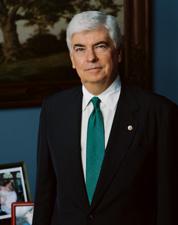
Mr. President, I am pleased today to join my colleague, Senator Mike DeWine, in introducing the Training and Research in Urology Act--the ``TRU'' Act. Each day, millions of American men, women and…
Mr. President, I am pleased today to join my colleague, Senator Mike DeWine, in introducing the Training and Research in Urology Act--the ``TRU'' Act. Each day, millions of American men, women and children suffer with urologic conditions--children suffering from urological abnormalities, women living with painful urologic illnesses, the elderly for whom urologic conditions can present a wide variety of very serious health problems. The silent struggle of patients with urologic diseases has gone on too long. The legislation we introduce today seeks to ease the burden of millions of Americans suffering from urologic illnesses.
The amazing breakthroughs of the last decade in basic science have resulted in new treatments and even cures for some urologic conditions. Unfortunately, these exciting advancements often fail to reach many who suffer from urologic diseases. It is time to change the way we think and deal with urologic disease.
The TRU Act will create a new urology-specific division at the National Institute of Diabetes & Digestive & Kidney Diseases, NIDDK. Senior urology leadership at NIDDK will assure that urology receives adequate attention and will allow science to drive the research agenda. Federal legislation is necessary because more than 20 years ago Congress established the current three divisions within NIDDK. Unlike the other institutes at NIH, the director does not have the authority to establish new divisions when warranted. Urologic discoveries have advanced the science over the past two decades and I believe a urology division at NIDDK will assure continued progress in urology research.
I was surprised to learn that the most frequently occurring birth defects are related to urologic conditions. In fact, Spina Bifida alone affects approximately 4,000 newborns in the United States each year. The Spina Bifida Association of America informed me that those living ``with Spina Bifida often refer to the complications associated with neurogenic bowel and bladder as the most difficult for them both physically and socially. ``
The TRU Act would also charge NIDDK with creating a national urologic research plan and create an additional 10 centers for the study of urologic diseases, as well as recruit and retain talented investigators through a loan repayment program.
In Connecticut, as in many states, there is important urologic research being conducted currently. Researchers at Yale University have made great strides toward achieving treatments of benefit to all Americans. For example, Benign Prostatic Hyperplasia, BPH, commonly referred as an enlarged prostate, impacts more than 125,000 men in Connecticut and more than 50 percent of men 60 years of age and older. BPH is the second most common kidney or urologic condition requiring hospitalization and the fifth leading reason for physician visits. Yale University's Dr. Harris Foster, Jr. is studying the use of phytotherapy to relieve lower urinary tract symptoms, particularly BPH. The research supported by the TRU Act will support this and other important urologic research initiatives nationwide.
The TRU Act is supported by the Spina Bifida Association of America and the Urology Section of the American Academy of Pediatrics, as well as the Coalition for Urologic Research and Education, CURE, a group representing hundreds of thousands of patients, researchers and healthcare providers, including the Men's Health Network and the Society for Women's Health Research.
The TRU Act will lead urology research and training into the 21st century, and more important, it will lead to better the lives of millions of patients, young and old, struggling to live with urologic diseases. Therefore, I join my colleague in supporting this worthy measure and urge all of my colleagues to support this important legislation.
Mr. President, each year, nearly 1 of every 10 Americans is injured and requires medical attention. Injuries are the fifth leading cause of death in the United States. Trauma kills more people…
Mr. President, each year, nearly 1 of every 10 Americans is injured and requires medical attention. Injuries are the fifth leading cause of death in the United States. Trauma kills more people between the ages of one and 44 than any other disease or illness.
While injury prevention programs have greatly reduced death and disability, severe injuries will continue. Given the mass trauma events of September 11, 2001 and our Nation's renewed focus on enhancing disaster preparedness, it is critical that the Federal Government increase its commitment to strengthening programs governing trauma care system planning and development.
The direct and indirect cost of injury is estimated to be about $224 billion a year, according to the Centers for Disease Control and Prevention. The death rate from unintentional injury is more than 50 percent higher in rural areas than in urban areas. Only one fourth of the U.S. population lives in an area served by a trauma care system. Studies of conventional trauma care show that as many as 35 percent of trauma patient deaths could have been prevented if optimal acute care had been available. It is essential that all Americans have access to a trauma system that provides needed care as quickly as possible.
Since 1990, Congress has sought to improve care through the Trauma Care Systems Planning and Development Act. This Act provides grants for planning, implementing, and developing statewide trauma care systems. This critical program must be reauthorized. Therefore, I am introducing bipartisan legislation today, along with Senators Kennedy, Roberts, Jeffords, Talent, Clinton, and Murray to reauthorize this program.
Despite our past investments, one half of the States in the country are still without a statewide trauma care system. Clearly we can do better. We must respond to the goals put forth by the Institute of Medicine in 1999--that Congress ``support a greater national commitment to, and support of, trauma care systems at the federal, state, and local levels.''
The ``Trauma Care Systems Planning and Development Act of 2005'', reauthorizes this program with several improvements: first, it improves the collection and analysis of trauma patient data with the goal of improving the overall system of care for these patients; second, the bill reduces the amount of matching funds that states will have to provide to participate in the program so that we can extend quality trauma care systems across the nation; third, the legislation provides a self-evaluation mechanism to assist states in assessing and improving their trauma care systems; fourth, it authorizes the Institute of Medicine to study the state of trauma care and trauma research; and finally, it doubles the funding available for this program to allow additional states to participate.
I appreciate the support of my co-sponsors. I look forward to working with them, and with Senator Enzi, the Chairman of the Senate Health, Education, Labor, and Pensions Committee, to see this bill passed this year.
I ask unanimous consent that the text of the bill be printed in the Record.
Mr. President, each year, nearly 1 of every 10 Americans is injured and requires medical attention. Injuries are the fifth leading cause of death in the United States. Trauma kills more people…
Mr. President, each year, nearly 1 of every 10 Americans is injured and requires medical attention. Injuries are the fifth leading cause of death in the United States. Trauma kills more people between the ages of one and 44 than any other disease or illness.
While injury prevention programs have greatly reduced death and disability, severe injuries will continue. Given the mass trauma events of September 11, 2001 and our Nation's renewed focus on enhancing disaster preparedness, it is critical that the Federal Government increase its commitment to strengthening programs governing trauma care system planning and development.
The direct and indirect cost of injury is estimated to be about $224 billion a year, according to the Centers for Disease Control and Prevention. The death rate from unintentional injury is more than 50 percent higher in rural areas than in urban areas. Only one fourth of the U.S. population lives in an area served by a trauma care system. Studies of conventional trauma care show that as many as 35 percent of trauma patient deaths could have been prevented if optimal acute care had been available. It is essential that all Americans have access to a trauma system that provides needed care as quickly as possible.
Since 1990, Congress has sought to improve care through the Trauma Care Systems Planning and Development Act. This Act provides grants for planning, implementing, and developing statewide trauma care systems. This critical program must be reauthorized. Therefore, I am introducing bipartisan legislation today, along with Senators Kennedy, Roberts, Jeffords, Talent, Clinton, and Murray to reauthorize this program.
Despite our past investments, one half of the States in the country are still without a statewide trauma care system. Clearly we can do better. We must respond to the goals put forth by the Institute of Medicine in 1999--that Congress ``support a greater national commitment to, and support of, trauma care systems at the federal, state, and local levels.''
The ``Trauma Care Systems Planning and Development Act of 2005'', reauthorizes this program with several improvements: first, it improves the collection and analysis of trauma patient data with the goal of improving the overall system of care for these patients; second, the bill reduces the amount of matching funds that states will have to provide to participate in the program so that we can extend quality trauma care systems across the nation; third, the legislation provides a self-evaluation mechanism to assist states in assessing and improving their trauma care systems; fourth, it authorizes the Institute of Medicine to study the state of trauma care and trauma research; and finally, it doubles the funding available for this program to allow additional states to participate.
I appreciate the support of my co-sponsors. I look forward to working with them, and with Senator Enzi, the Chairman of the Senate Health, Education, Labor, and Pensions Committee, to see this bill passed this year.
I ask unanimous consent that the text of the bill be printed in the Record.
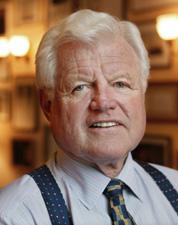
Mr. President, we have to stop right now all the taxpayer-financed propaganda put out by our government to influence the American people. We need to expedite the investigations, begin congressional…
Mr. President, we have to stop right now all the taxpayer-financed propaganda put out by our government to influence the American people. We need to expedite the investigations, begin congressional hearings, and pass specific new legislation to prevent the administration from using persons paid to pose as legitimate journalists to push for the Bush political agenda.
Last week, we found out, according to the Washington Post, that another commentator, Maggie Gallagher, was paid $21,500 by the Department of Health and Human Services to promote the Bush administration's marriage agenda--a fact she didn't disclose to her readers while writing on the issue.
As most of us now know, thanks to USA Today, the outgoing leadership of the Education Department secretly, and still unapologetically, paid $241,000 to commentator Armstrong Williams to influence his broadcasts. Mr. Williams was paid to comment favorably on the President's No Child Left Behind Act education reform plan, to conduct phony ``interviews'' with administration officials, and to encourage his colleagues in the media to do the same.
The Gallagher and Williams payments were part of a multimillion dollar, taxpayer-funded public relations scheme to influence and undermine America's free press. Journalists were ranked on the favorability of their news coverage of President Bush on education. Phony video reports and interviews about the President's Medicare prescription drug law were broadcast as independent news on local television.
All parties agree that this type of secret government paid journalism is wrong. Yet Ms. Gallagher and Mr. Williams continue to retain their $21,500 and $241,000 bribes.
I am pleased to join Senator Lautenberg, who has been our leader on this issue, in introducing legislation to permanently prohibit the use of taxpayer funds for the type of manipulative payments that Ms. Gallagher and Mr. Williams received. Our legislation will prohibit agencies from issuing news releases, video news releases, and internet messages that do not clearly identify the government as financially responsible for the information.
It will enforce these prohibitions by creating a mechanism to dock the pay of any Cabinet Secretary or agency head responsible, and by authorizing private citizens to bring a court action to recover taxpayer funds.
Propaganda by the Department of Health and Human Services, the Department of Education, and the Office of Drug Control and Policy has to stop now, before the infection spreads. We cannot sit still in Congress while the administration corrupts the first amendment and freedom of the press.

Mr. President, today I am introducing the Partners for Fish and Wildlife Act. On August 26, 2004, President Bush signed Executive Order 13352 promoting a new approach to conservation within the…
Mr. President, today I am introducing the Partners for Fish and Wildlife Act.
On August 26, 2004, President Bush signed Executive Order 13352 promoting a new approach to conservation within the Federal government's conservation and environmental departments. This Executive Order was offered to ensure that Federal agencies pursue cooperative conservation actions designed to involve private landowners rather than simply making mandates which private landowners must fulfill.
An example of this new cooperative conservation is the Partners for Fish and Wildlife Program. Since 1987, the Partners Program has been a successful voluntary partnership program that helps private landowners restore fish and wildlife habitat on their own lands.
Through 33,103 agreements with private landowners, the Partners Program has accomplished the restoration of 677,000 acres of wetlands, 1,253,700 acres of prairies and native grasslands, and 5,560 miles of riparian and in-stream habitat. Partners Program agreements are funded through contributions from the U.S. Fish and Wildlife Service along with cash and in-kind contributions from participating private landowners. Since 1990, the U.S. Fish and Wildlife Service has provided $3,511,121 to restore habitat in Oklahoma through the Partners Program, to which private landowners have contributed $12,638,272.
In Oklahoma, 97 percent of land is held in private ownership. Since 1990, a total of 124,285 acres in Oklahoma has been restored through 700 individual Partners Program voluntary agreements with private landowners. The U.S. Fish and Wildlife Service District Office in Tulsa currently reports that at least another 100 private landowners are waiting to enter into Partner's projects as soon as funds become available.
As chairman of the Senate Environment and Public Works Committee, a new approach to conservation is especially important to me. All conservation programs should create positive incentives to protect species and, above all, should hold sacred the rights of private landowners. A positive step toward those aims is authorization of the Partners for Fish and Wildlife Program which has already proven to be an effective habitat conservation program that leverages federal funds and utilizes voluntary private landowner participation. To date, the Partners Program has received little attention. My bill will build on this successful program to provide additional funding and added stability.
I am pleased to author legislation to authorize a program with a proven record in positive and actual conservation.
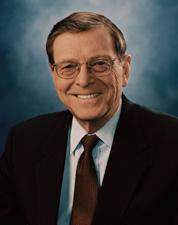
Mr. President, I ask unanimous consent I have 2 minutes as in morning business. Mr. President, I note that the distinguished Senator from Tennessee, Senator Lamar Alexander, is in the Chamber. I am…
Mr. President, I ask unanimous consent I have 2 minutes as in morning business.
Mr. President, I note that the distinguished Senator from Tennessee, Senator Lamar Alexander, is in the Chamber. I am sure he has already spoken this afternoon, but I was not present because I was attending another meeting.
Senator, if you do not feel good this afternoon, I don't know what we are going to do in the Senate in terms of qualifying you to be happy. I don't know what else we will do to make you happier than what we are going to do tonight or during the next week or so on this competiveness measure.
Senator Alexander came to the Senate, and before his first term has expired he has taken the lead, without anyone wanting to run around and try to figure out who should get the lead, on this mammoth piece of legislation. It falls automatically that Lamar Alexander deserves the credit for getting it started. It was his idea. He recruited the junior Senator from New Mexico.
They asked me, as members of my committee, if they could take the proposition of what we could do to better America's position in a competitive world, if they could take that to the Academy of Sciences to get a report so we could adopt a report during this calendar year.
Believe it or not, they did that. As a result, 71 Senators cosponsored the legislation. As a result, we will have introduced a bill today that almost takes care of every recommendation that committee made to the Congress. We are having it introduced officially by the leadership this evening. It will be held and passed by this Senate before we adjourn this year.
Imagine that, for a Senator who has just come to the Senate. If he cannot say and put up whatever he puts up, matters of high esteem, completed by him, something that he can be proud of, that is this legislation.
There will be a day when it passes that he can be happier, but he will be overjoyed today when he sits down and thinks for a moment of what is accomplished for America to get moving to develop our brain power where we could, where we can, as we can, and as we should, without any doubt.
I compliment the Senator.
I yield the floor.
I thank the Senator.
Bill Text
2 versions available
        [Congressional Bills 109th Congress]
[From the U.S. Government Publishing Office]
[S. 265 Reported in Senate (RS)]

Calendar No. 359
109th CONGRESS
2d Session
S. 265

[Report No. 109-215]

To amend the Public Health Service Act to add requirements regarding
trauma care, and for other purposes.

_______________________________________________________________________

IN THE SENATE OF THE UNITED STATES

February 2, 2005

Mr. Frist (for himself, Mr. Kennedy, Mr. Roberts, Mr. Jeffords, Mr.
Talent, Mrs. Murray, Mrs. Clinton, Mr. Bingaman, Mr. Sessions, and Mr.
Dayton) introduced the following bill; which was read twice and
referred to the Committee on Health, Education, Labor, and Pensions

February 2, 2006

Reported by Mr. Enzi, without amendment

_______________________________________________________________________

A BILL

To amend the Public Health Service Act to add requirements regarding
trauma care, and for other purposes.

Be it enacted by the Senate and House of Representatives of the
United States of America in Congress assembled,

SECTION 1. SHORT TITLE.

This Act may be cited as the ``Trauma Care Systems Planning and
Development Act of 2005''.

SEC. 2. FINDINGS.

Congress makes the following findings:
(1) The Federal Government and State governments have
established a history of cooperation in the development,
implementation, and monitoring of integrated, comprehensive
systems for the provision of emergency medical services.
(2) Trauma is the leading cause of death of Americans
between the ages of 1 and 44 years and is the third leading
cause of death in the general population of the United States.
(3) In 1995, the total direct and indirect cost of
traumatic injury in the United States was estimated at
$260,000,000,000.
(4) There are 40,000 fatalities and 5,000,000 nonfatal
injuries each year from motor vehicle-related trauma, resulting
in an aggregate annual cost of $230,000,000,000 in medical
expenses, insurance, lost wages, and property damage.
(5) Barriers to the receipt of prompt and appropriate
emergency medical services exist in many areas of the United
States.
(6) The number of deaths from trauma can be reduced by
improving the systems for the provision of emergency medical
services in the United States.
(7) Trauma care systems are an important part of the
emergency preparedness system needed for homeland defense.

SEC. 3. AMENDMENTS.

(a) Establishment.--Section 1201 of the Public Health Service Act
(42 U.S.C. 300d) is amended--
(1) in subsection (a)--
(A) in the matter preceding paragraph (1), by
inserting ``, acting through the Administrator of the
Health Resources and Services Administration,'' after
``Secretary'';
(B) by redesignating paragraphs (3) and (4) as
paragraphs (4) and (5), respectively;
(C) by inserting after paragraph (2) the following:
``(3) collect, compile, and disseminate information on the
achievements of, and problems experienced by, State and local
agencies and private entities in providing trauma care and
emergency medical services and, in so doing, give special
consideration to the unique needs of rural areas;'';
(D) in paragraph (4), as redesignated by
subparagraph (B)--
(i) by inserting ``to enhance each State's
capability to develop, implement, and sustain
the trauma care component of each State's plan
for the provision of emergency medical
services'' after ``assistance''; and
(ii) by striking ``and'' after the
semicolon;
(E) in paragraph (5), as redesignated by
subparagraph (B), by striking the period at the end and
inserting ``; and''; and
(F) by adding at the end the following:
``(6) promote the collection and categorization of trauma
data in a consistent and standardized manner.'';
(2) in subsection (b), by inserting ``, acting through the
Administrator of the Health Resources and Services
Administration,'' after ``Secretary''; and
(3) by striking subsection (c).
(b) Clearinghouse on Trauma Care and Emergency Medical Services.--
The Public Health Service Act (42 U.S.C. 201 et seq.) is amended--
(1) by striking section 1202; and
(2) by redesignating section 1203 as section 1202.
(c) Establishment of Programs for Improving Trauma Care in Rural
Areas.--Section 1202(a) of the Public Health Service Act, as such
section was redesignated by subsection (b), is amended--
(1) in paragraph (2), in the matter preceding subparagraph
(A), by inserting ``, such as advanced trauma life support,''
after ``model curricula'';
(2) in paragraph (4), by striking ``and'' after the
semicolon;
(3) in paragraph (5), by striking the period and inserting
``; and''; and
(4) by adding at the end the following:
``(6) by increasing communication and coordination with
State trauma systems.''.
(d) Requirement of Matching Funds for Fiscal Years Subsequent to
First Fiscal Year of Payments.--Section 1212 of the Public Health
Service Act (42 U.S.C. 300d-12) is amended--
(1) in subsection (a)(1)--
(A) in subparagraph (A), by striking ``and'' after
the semicolon; and
(B) by striking subparagraph (B) and inserting the
following:
``(B) for the third fiscal year of such payments to
the State, not less than $1 for each $1 of Federal
funds provided in such payments for such fiscal year;
``(C) for the fourth fiscal year of such payments
to the State, not less than $2 for each $1 of Federal
funds provided in such payments for such fiscal year; and
``(D) for the fifth fiscal year of such payments to
the State, not less than $2 for each $1 of Federal
funds provided in such payments for such fiscal
year.''; and
(2) in subsection (b)--
(A) in paragraph (1), by adding ``and'' after the
semicolon;
(B) in paragraph (2), by striking ``; and'' and
inserting a period; and
(C) by striking paragraph (3).
(e) Requirements With Respect To Carrying Out Purpose of
Allotments.--Section 1213 of the Public Health Service Act (42 U.S.C.
300d-13) is amended--
(1) in subsection (a)--
(A) in paragraph (3), in the matter preceding
subparagraph (A), by inserting ``nationally
recognized'' after ``contains'';
(B) in paragraph (5), by inserting ``nationally
recognized'' after ``contains'';
(C) in paragraph (6), by striking ``specifies
procedures for the evaluation of designated'' and
inserting ``utilizes a program with procedures for the
evaluation of'';
(D) in paragraph (7)--
(i) in the matter preceding subparagraph
(A), by inserting ``in accordance with data
collection requirements developed in
consultation with surgical, medical, and
nursing specialty groups, State and local
emergency medical services directors, and other
trained professionals in trauma care'' after
``collection of data'';
(ii) in subparagraph (A), by inserting
``and the number of deaths from trauma'' after
``trauma patients''; and
(iii) in subparagraph (F), by inserting
``and the outcomes of such patients'' after
``for such transfer'';
(E) by redesignating paragraphs (10) and (11) as
paragraphs (11) and (12), respectively; and
(F) by inserting after paragraph (9) the following:
``(10) coordinates planning for trauma systems with State
disaster emergency planning and bioterrorism hospital
preparedness planning;'';
(2) in subsection (b)--
(A) in paragraph (1)--
(i) in subparagraph (A), by striking
``concerning such'' and inserting ``that
outline resources for optimal care of the
injured patient''; and
(ii) in subparagraph (D), by striking
``1992'' and inserting ``2005''; and
(B) in paragraph (3)--
(i) in subparagraph (A), by striking
``1991'' and inserting ``2005''; and
(ii) in subparagraph (B), by striking
``1992'' and inserting ``2005''; and
(3) in subsection (c), by striking ``1990, the Secretary
shall develop a model plan'' and inserting ``2005, the
Secretary shall update the model plan''.
(f) Requirement of Submission to Secretary of Trauma Plan and
Certain Information.--Section 1214(a) of the Public Health Service Act
(42 U.S.C. 300d-14(a)) is amended--
(1) in paragraph (1)--
(A) by striking ``1991'' and inserting ``2005'';
and
(B) by inserting ``that includes changes and
improvements made and plans to address deficiencies
identified'' after ``medical services''; and
(2) in paragraph (2), by striking ``1991'' and inserting
``2005''.
(g) Restrictions on Use of Payments.--Section 1215(a)(1) of the
Public Health Service Act (42 U.S.C. 300d-15(a)(1)) is amended by
striking the period at the end and inserting a semicolon.
(h) Requirements of Reports by States.--The Public Health Service
Act (42 U.S.C. 201 et seq.) is amended by striking section 1216 and
inserting the following:

``SEC. 1216. [RESERVED].''.

(i) Report by the Secretary.--Section 1222 of the Public Health
Service Act (42 U.S.C. 300d-22) is amended by striking ``1995'' and
inserting ``2007''.
(j) Funding.--Section 1232(a) of the Public Health Service Act (42
U.S.C. 300d-32(a)) is amended to read as follows:
``(a) Authorization of Appropriations.--For the purpose of carrying
out parts A and B, there are authorized to be appropriated $12,000,000
for fiscal year 2005, and such sums as may be necessary for each of the
fiscal years 2006 through 2009.''.
(k) Conforming Amendment.--Section 1232(b)(2) of the Public Health
Service Act (42 U.S.C. 300d-32(b)(2)) is amended by striking ``1204''
and inserting ``1202''.
(l) Institute of Medicine Study.--Part E of title XII of the Public
Health Service Act (20 U.S.C. 300d-51 et seq.) is amended--
(1) by striking the part heading and inserting the
following:

``Part E--Miscellaneous Programs'';

and
(2) by adding at the end the following:

``SEC. 1254. INSTITUTE OF MEDICINE STUDY.

``(a) In General.--The Secretary shall enter into a contract with
the Institute of Medicine of the National Academy of Sciences, or
another appropriate entity, to conduct a study on the state of trauma
care and trauma research.
``(b) Content.--The study conducted under subsection (a) shall--
``(1) examine and evaluate the state of trauma care and
trauma systems research (including the role of Federal entities
in trauma research) on the date of enactment of this section,
and identify trauma research priorities;
``(2) examine and evaluate the clinical effectiveness of
trauma care and the impact of trauma care on patient outcomes,
with special attention to high-risk groups, such as children,
the elderly, and individuals in rural areas;
``(3) examine and evaluate trauma systems development and
identify obstacles that prevent or hinder the effectiveness of
trauma systems and trauma systems development;
``(4) examine and evaluate alternative strategies for the
organization, financing, and delivery of trauma care within an
overall systems approach; and
``(5) examine and evaluate the role of trauma systems and
trauma centers in preparedness for mass casualties.
``(c) Report.--Not later than 2 years after the date of enactment
of this section, the Secretary shall submit to the appropriate
committees of Congress a report containing the results of the study
conducted under this section.
``(d) Authorization of Appropriations.--There is authorized to be
appropriated to carry out this section $750,000 for each of fiscal
years 2005 and 2006.''.
(m) Residency Training Programs in Emergency Medicine.--Section
1251(c) of the Public Health Service Act (42 U.S.C. 300d-51(c)) is
amended by striking ``1993 through 1995'' and inserting ``2005 through
2009''.
(n) State Grants for Projects Regarding Traumatic Brain Injury.--
Section 1252 of the Public Health Service Act (42 U.S.C. 300d-52) is
amended in the section heading by striking ``demonstration''.
(o) Interagency Program for Trauma Research.--Section 1261 of the
Public Health Service Act (42 U.S.C. 300d-61) is amended--
(1) in subsection (a), by striking ``conducting basic'' and
all that follows through the period at the end of the second
sentence and inserting ``basic and clinical research on trauma
(in this section referred to as the `Program'), including the
prevention, diagnosis, treatment, and rehabilitation of trauma-
related injuries.'';
(2) by striking subsection (b) and inserting the following:
``(b) Plan for Program.--The Director shall establish and implement
a plan for carrying out the activities of the Program, taking into
consideration the recommendations contained within the report of the
NIH Trauma Research Task Force. The plan shall be periodically
reviewed, and revised as appropriate.'';
(3) in subsection (d)--
(A) in paragraph (4)(B), by striking ``acute head
injury'' and inserting ``traumatic brain injury''; and
(B) in subparagraph (D), by striking ``head'' and
inserting ``traumatic'';
(4) by striking subsection (g);
(5) by redesignating subsections (h) and (i) as subsections
(g) and (h), respectively; and
(6) in subsection (h), as redesignated by paragraph (5), by
striking ``2001 through 2005'' and inserting ``2005 through
2009''.
Calendar No. 359

109th CONGRESS

2d Session

S. 265

[Report No. 109-215]

_______________________________________________________________________

A BILL

To amend the Public Health Service Act to add requirements regarding
trauma care, and for other purposes.

_______________________________________________________________________

February 2, 2006

Reported without amendment