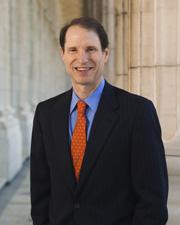
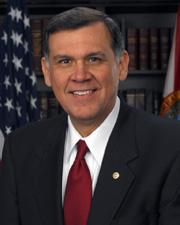
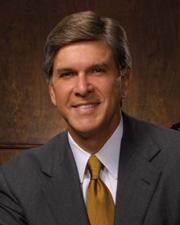
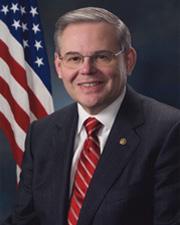
Mr. President, today I rise with my colleagues, Senators Feinstein, Nelson of Florida, Hutchison, and Bingaman, on the 37th anniversary of the lunar landing when American astronauts Neil Armstrong…
Mr. President, today I rise with my colleagues, Senators Feinstein, Nelson of Florida, Hutchison, and Bingaman, on the 37th anniversary of the lunar landing when American astronauts Neil Armstrong and Edwin Aldrin set foot on the Moon, to introduce the Spaceport Equity Act of 2006--a bill to help bring additional investment to the space transportation industry.
On June 18th, the Washington Post reported on the launching of Kazakhstan's first satellite and their catapult into the space transportation industry. Home to the world's largest space center, the Baikonur Consmodrome, this ex-Soviet state is joining the list of rivals to the U.S. space industry. America's competitive edge is declining and will continue to do so unless we act now. My colleagues and I recognize this, and that is why we are introducing this most important legislation.
U.S. satellite manufacturers face increasing pressure to consider the use of foreign launch vehicles and launch sites, due to the lack of a sufficient domestic launch capability. The United States once dominated the commercial satellite-manufacturing field with an average market share of 83 percent;
however, that market share has since declined to 50 percent. An even smaller share of U.S.-manufactured satellites is actually launched from U.S. spaceports. This comes at an estimated loss of $1.5 to $3.0 billion to the U.S. economy.
The space economy is made up infrastructure of manufacturers, service providers, and technologists in both the Government and private sector that deploy and operate launch vehicles, satellites, and space platforms. Many everyday goods and services rely on space infrastructure, including broadcast, cable, and satellite television, global internet services, satellite radio, cellular and international phone calls, etc.
Satellites are also used for global positioning systems, known as GPS, which enable us to have hands-on directions in our cars and vehicles. GPS is also influential in the trucking, aviation, and maritime industries for day-to-day operations and for our Nation's military operations. Thousands of gas stations use inexpensive small satellite dishes to connect to credit card networks so customers can pay instantly at the pump. Satellites also generate 90 percent of the weather forecasting data in the United States and are used to track hurricanes, tsunamis, and other weather phenomenon.
These satellites are launched vertically atop of rockets, propelling them into orbit in space. Because most U.S. space-launch facilities are operated by NASA, priority for launches at these facilities is given to Government projects. This means our commercial satellite needs take a back seat to Government operations. This often leaves U.S. commercial satellite ventures without reliable launch availability. This in turn has forced many companies seeking manufacturing and launch services toward our international competitors.
Spaceports are subdivisions of State governments that provide additional launch infrastructure than that available at Federal facilities. They attract and promote the U.S. commercial space transportation industry. Spaceport authorities function much like airport and port authorities by providing economic and transportation incentives to the industry, which in turn benefits the surrounding communities. Many States are forming space authorities to pursue ways of developing space transportation infrastructure.
The Florida Space Authority was the first such entity, which was created as a subdivision of the Florida State government by Florida's Governor and State legislature in 1989. Florida Space Authority is focused on leading the State's space industry in new directions through partnering with the commercial space industry to improve space transportation and provide innovative, forward-thinking solutions to the challenges facing this evolving industry.
The last few years have begun a new phase in space exploration. Spaceports presently operate in Florida, California, Virginia, and Alaska, but efforts are underway to establish 13 additional commercial spaceports in Alabama, California, Montana, Nevada, Oklahoma, South Dakota, Texas, Utah, Washington, and Wisconsin.
The commercial space transportation industry includes not only spaceports themselves but also companies that develop the needed infrastructure for testing and servicing launch vehicles. When including these industry partners with spaceports, at least 23 States are directly impacted by the commercial space transportation industry. Both spaceports and industry partners face increasing pressure from government-sponsored or subsidized competitors in Europe, China, Japan, India, Australia, Russia, and now Kazakhstan.
Commercial space transportation is a growing part of the U.S. economy. In 2004, this industry alone generated a total of nearly $98.1 billion dollars in economic activity, over $25 billion in earnings, and over 550,000 jobs; and $56.5 billion, more than half of this economic activity, was from satellite services. A 2004 Gallup poll shows overwhelming public support for space exploration. Roughly 80 percent of Americans agree that ``America's space program helps give America the scientific and technological edge it needs to compete in the international marketplace.'' And 76 percent agree that our space program ``benefits the nation's economy'' and inspires ``students to pursue careers in technical fields.''
The space industry has also led to a number of ``spin-off'' technologies--those influenced by space technology research and development. Home roof insulation and air filtration, antilock brakes, athletic shoes, vehicle protective airbags, cellular phones, and lasik surgery all owe thanks to NASA and space-based research. The list of space ``spin-off' technologies is estimated to exceed 40,000. These related technologies have helped employ tens of millions of Americans. Encouraging commercial investment in the space industry and increasing U.S. marketshare in this industry will certainly lead to additional innovation and technology that will impact other fields.
As you can see, this once government-dominated industry is now becoming a diverse mix of government and commercial entities--also leading way into future avenues of commercial space transportation, such as space tourism.
The increase in recent commercial launches includes the debut of the first commercial crewed suborbital launches of SpaceShipOne--leading the way to public space travel. ``Space tourism,'' as public space travel is now referred, has the potential to become a major growth industry. Recent market studies have shown space tourism has the potential to become a billion-dollar industry within 20 years.
Even though the average American may not be able to participate in public space travel, its potential impact on our economy and international competitiveness is something to be appreciated. Space tourism industry players expect there to be a market demand of at least 15,000 Americans per year to travel into suborbit and orbital flights. This would require an estimated 665 launches per year by 2010. If the United States continues as is, we will only be able to capture 10 percent market share, at best, of this emerging industry. If needed infrastructure is added, however, the United States is expected to pick up 60 to 70 percent of space flight demand by 2010. Every launch that we do not provide for in the United States means a loss to our economy and a gain for our international competitors. The Federal Aviation Administration's Commercial Space Transportation Division expects a $3 billion dollar loss to our economy if we do not meet the rising demand for space tourism.
Currently, U.S. launch facilities are few and most are owned and operated by the Federal Government, putting commercial users in direct competition with the U.S. military, NASA, and other Government entities, which get priority over commercial projects. If the United States is to remain competitive in the commercial space industry, added and improved infrastructure will be needed to support this growing industry.
On a more local note, my own State of Florida could stand to gain much by way of economic development from increased investment in spaceport infrastructure. According to recent studies by the Florida Space Authority, increase spaceport infrastructure and activity in Florida could mean as much as $29.7 million in additional economic activity by the year 2015--this does not include the economic activity generated from impacted tourism, secondary contracts, and spinoff technologies.
Other modes of transportation--highways, airports, and seaports-- currently enjoy a tax incentive for meeting their infrastructure needs, so why not spaceports?
This Spaceport Equity Act of 2006 would provide spaceports with the same treatment provided for airports, seaports, rail, and other transit projects under the exempt facility bond rules. With international competition on the rise, our Nation's spaceports are a vital component of the infrastructure needed to expand and enhance the U.S. role in the international space arena. The Spaceport Equity Act is an important step to increasing our competitiveness in this field because it will stimulate investment in expanding and modernizing our space launch facilities and lower the costs of financing spaceport projects.
Since 1968, tax-exempt bonds have played a crucial role in meeting airport investment needs, with 50 percent or more of major airport projects being financed through municipal tax-exempt
bonds. By extending this favorable tax treatment to spaceports, this bill will help meet spaceport needs and increase our Nation's ability to compete with expanded international interests in space exploration and technology. Similar legislation has been considered since the 1980s, and we cannot afford to wait any longer to address the needs of this important sector.
This proposal does not provide direct Federal spending for our commercial space transportation industry but, rather, creates the conditions necessary to stimulate private capital investment in industry infrastructure. By issuing tax-free bonds to finance spaceport infrastructure, space authorities could provide site-specific and vehicle-specific tailoring to promote the competition and innovation necessary to maintain the U.S. competitive edge in the space transportation industry.
This is an efficient means for achieving our space transportation needs, and I urge my colleagues in the Senate to join us in this most important effort by cosponsoring this bill.
Mr. President, I ask unanimous consent that the text of this bill be printed in the Record.