American Innovation and Competitiveness Act of 2006
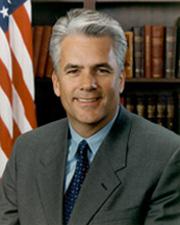 Sen. John Ensign (R-NV)
Legislative Activity
Stay on top of the latest movement without scrolling through every action
Placed on Senate Legislative Calendar under General Orders. Calendar No. 524.
July 19, 2006
View full timeline
Introduced in Senate
May 15, 2006
Read twice and referred to the Committee on Commerce, Science, and Transportation.
May 15, 2006
Committee on Commerce, Science, and Transportation. Ordered to be reported with amendments favorably.
May 18, 2006
Committee on Commerce, Science, and Transportation. Reported by Senator Stevens with amendments. With written report No. 109-285.
July 19, 2006
Placed on Senate Legislative Calendar under General Orders. Calendar No. 524.
July 19, 2006
Floor Debate
12 membersWhat members said about S. 2802 on the floor


 +7
+7
Floor Debate
12 membersWhat members said about S. 2802 on the floor
Mr. President, I ask unanimous consent that the order for the quorum call be rescinded. Mr. President, in a moment I will request unanimous consent that the Senate pass S. 2823, the Ryan White…
I thank the chair. Mental Health Parity Act Mr. President, in just a few weeks while we are in recess, we will mark the fourth anniversary of the untimely death of our former colleague from…
I ask unanimous consent to speak as in morning business. Mr. President, I thank the Senator from New Mexico. He is overly generous. I learned as a staff aide in the Senate that if an idea has many…
Mr. President, I suggest the absence of a quorum. Mr. President, I ask unanimous consent that the order for the quorum call be rescinded. Mr. President, as we wind down this legislative session in…
Mr. President, this is, plain and simple, about whether this Senate is going to allow legislation to go forward to reauthorize Ryan White, that allows the funding to follow the patients. What an…
Show 7 more
Mr. President, I ask unanimous consent that the order for the quorum call be dispensed with. Mr. President, earlier today, my colleague, Senator Durbin of Illinois, took the floor to describe a…
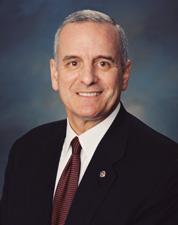
Mr. President, I thank and commend my friend and colleague, the assistant Democratic leader from Illinois, Senator Durbin, for submitting the Senate resolution honoring the memory of the late Senator…
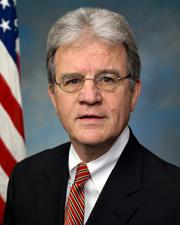
Mr. President, by objecting to moving this bill, we need to look at the real lives that are getting ready to be harmed. Not only is the funding for the program going to be cut to the poorest of the…

Mr. President, the Child Custody Protection Act prohibits taking a minor child across State lines for an abortion in circumvention of a State law requiring parental notification or consent in that…

Mr. President, I ask unanimous consent I have 2 minutes as in morning business. Mr. President, I note that the distinguished Senator from Tennessee, Senator Lamar Alexander, is in the Chamber. I am…
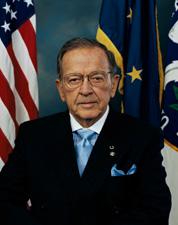
Mr. President, I come to the floor to join more than 35 of our colleagues in support of the National Competitiveness Investment Act. Our country's success is the direct result of our advancements in…
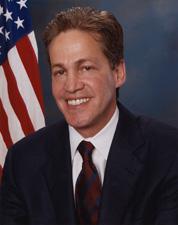
Mr. President, I thank my colleague from Illinois for submitting this resolution both on the legacy of Paul Wellstone and, in particular, focusing on this issue of mental health parity. Paul…
Bill Text
2 versions available
        [Congressional Bills 109th Congress]
[From the U.S. Government Publishing Office]
[S. 2802 Reported in Senate (RS)]

Calendar No. 524
109th CONGRESS
2d Session
S. 2802

[Report No. 109-285]

To improve American innovation and competitiveness in the global
economy.

_______________________________________________________________________

IN THE SENATE OF THE UNITED STATES

May 15, 2006

Mr. Ensign (for himself, Mr. Stevens, Mrs. Hutchison, Mr. Inouye, Mr.
Smith, Mr. Allen, Mr. Burns, Mr. Kerry, Mr. Lieberman, Mr. Nelson of
Florida, and Mr. Pryor) introduced the following bill; which was read
twice and referred to the Committee on Commerce, Science, and
Transportation

July 19, 2006

Reported by Mr. Stevens, with amendments
[Omit the part struck through and insert the part printed in italic]

_______________________________________________________________________

A BILL

To improve American innovation and competitiveness in the global
economy.

Be it enacted by the Senate and House of Representatives of the
United States of America in Congress assembled,

SECTION 1. SHORT TITLE; TABLE OF CONTENTS.

(a) Short Title.--This Act may be cited as the ``American
Innovation and Competitiveness Act of 2006''.
(b) Table of Contents.--The table of contents for this Act is as
follows:

Sec. 1. Short title; table of contents.
TITLE I--OFFICE OF SCIENCE AND TECHNOLOGY POLICY; GOVERNMENT-WIDE
SCIENCE

Sec. 101. National science and technology summit.
Sec. 102. Study on barriers to innovation.
Sec. 103. National innovation medal.
Sec. 104. Release of scientific research results.
Sec. 105. Semiannual math and science days.
Sec. 106. Study of service science.
Sec. 107. Review and report by director of the Office of Science and
Technology Policy.
Sec. 108. Report by director of the Office of Science and Technology
Policy.
TITLE II--INNOVATION PROMOTION

Sec. 201. President's Council on Innovation and Competitiveness.
Sec. 202. Innovation acceleration grants.
<DELETED>Sec. 203. Regional economic development.
</DELETED>TITLE III--NATIONAL SCIENCE FOUNDATION

Sec. 301. Authorization of appropriations.
<DELETED>Sec. 302. Innovation-based experiential learning.
</DELETED>Sec. <DELETED>303. </DELETED>302. Graduate fellowships and
graduate traineeships.
Sec. <DELETED>304. </DELETED>303. Professional science masters degree
programs.
Sec. <DELETED>305. </DELETED>304. Increased support for science
education through the National Science
Foundation.
<DELETED>Sec. 306. Study of service science.
</DELETED>Sec. <DELETED>307. </DELETED>305. Meeting critical national
science needs.
Sec. <DELETED>308. </DELETED>306. Experimental program to stimulate
competitive research.
Sec. 307. Encouraging participation.
Sec. 308. Cyberinfrastructure.
Sec. 309. Reaffirmation of the merit-review process of the National
Science Foundation.
TITLE IV--NATIONAL AERONAUTICS AND SPACE ADMINISTRATION

Sec. 401. NASA's contribution to innovation.
Sec. 402. Aeronautics Institute for Research.
Sec. 403. Basic research enhancement.
Sec. 404. Aging workforce issues program.
Sec. 405. Conforming amendments.
Sec. 406. Direct NASA participation in American competitiveness
initiative.
TITLE V--NATIONAL INSTITUTE OF STANDARDS AND TECHNOLOGY

Sec. 501. Authorization of appropriations.
Sec. 502. Amendments to the Stevenson-Wydler Technology Innovation Act
of 1980.
Sec. 503. Innovation acceleration.
<DELETED>Sec. 504. Development of advanced manufacturing systems.
<DELETED>Sec. 505. Collaborative manufacturing research pilot grants.
</DELETED>Sec. <DELETED>506. </DELETED>504. Manufacturing extension.
Sec. <DELETED>507. </DELETED>505. Experimental program to stimulate
competitive technology.
Sec. <DELETED>508. </DELETED>506. Technical amendments to the National
Institute of Standards and Technology Act
and other technical amendments.

TITLE VI--OCEAN AND ATMOSPHERIC PROGRAMS

Sec. 601. Ocean and atmospheric research and development program.
Sec. 602. NOAA ocean and atmospheric science education programs.

TITLE I--OFFICE OF SCIENCE AND TECHNOLOGY POLICY; GOVERNMENT-WIDE
SCIENCE

SEC. 101. NATIONAL SCIENCE AND TECHNOLOGY SUMMIT.

<DELETED>    (a) In General.--Within 180 days after the date of
enactment of this act, the President shall convene a National Science
and Technology Summit. The Summit shall include representatives of
industry, small business, academia, State government, and Federal
research and development agencies. The summit shall examine the health
and direction of the United States' science and technology
enterprise.</DELETED>
(a) In General.--Within 180 days after the date of enactment of
this Act, the President shall convene a National Science and Technology
Summit to examine the health and direction of the United States'
science and technology enterprises. The Summit shall include
representatives of industry, small business, academia, State
government, Federal research and development agencies, non-profit
environmental and energy policy groups concerned with science and
technology issues, and other nongovernmental organizations.
(b) Report.--Within 90 days after the end of the Summit, the
President shall issue a report on the results of the Summit. The report
shall identify key research and technology challenges and
recommendations for areas of investment for Federal research and
technology programs over the next 5 years beginning after the report is
issued.
(c) Annual Evaluation.--Beginning with the first year ending after
the date of enactment of this Act, the Director of the Office of
Science and Technology Policy shall publish an annual report containing
recommendations for areas of investment for Federal research and
technology programs, together with a justification for each area
identified in the report. For the first 5 years after the Summit, the
report shall take into account recommendations of the Summit.

SEC. 102. STUDY ON BARRIERS TO INNOVATION.

(a) In General.--The National Academy of Sciences shall conduct and
complete a study to identify, and to review methods to mitigate, new
forms of risk for businesses beyond conventional operational and
financial risk that affect the ability to innovate, including studying
and reviewing--
(1) incentive and compensation structures that could
effectively encourage long-term value creation and innovation;
(2) methods of voluntary and supplemental disclosure by
industry of intellectual capital, innovation performance, and
indicators of future valuation;
(3) means by which government could work with industry to
enhance the legal and regulatory framework to encourage the
disclosures described in paragraph (2);
(4) practices that may be significant deterrents to United
States businesses engaging in innovation risk-taking compared
to foreign competitors, including tort litigation, the nature
and extent of any resulting defensive management practices, and
recommendations on practices to restore innovation risk-taking
and to overcome defensive practices;
(5) costs faced by United States businesses engaging in
innovation compared to foreign competitors, including the
burden placed on businesses by high and rising health care
costs;
<DELETED>(5) </DELETED>(6) means by which industry, trade
associations, and universities could collaborate to support
research on management practices and methodologies for
assessing the value and risks of longer term innovation
strategies; <DELETED>and
</DELETED>    (6) </DELETED>(7) means to encourage new, open,
and collaborative dialogue between industry associations,
regulatory authorities, management, shareholders, and other
concerned interests to encourage appropriate approaches to
innovation <DELETED>risk-taking. </DELETED>risk-taking; and
(8) incentives to encourage participation among
institutions of higher education, especially those in rural and
underserved areas, to engage in innovation.
(b) Report Required.--The National Academy of Sciences shall, not
later than 1 year after the date of enactment of this Act and every 4
years thereafter, submit to Congress a report on the study conducted
under subsection (a).
(c) Authorization of Appropriations.--There are authorized to be
appropriated to the National Academy of Sciences $1,000,000 for fiscal
year 2007 for the purpose of carrying out the study required under this
section.

SEC. 103. NATIONAL INNOVATION MEDAL.

Section 16 of the Stevenson-Wydler Technology Innovation Act of
1980 (15 U.S.C. 3711) is amended--
(1) by striking the section heading and inserting ``SEC.
16. NATIONAL TECHNOLOGY <DELETED>MEDAL; NATIONAL INNOVATION
</DELETED>AND INNOVATION MEDAL.''; and
<DELETED>    (2) by striking ``is'' in subsection (a) and
inserting ``are'';</DELETED>
<DELETED>    (3) by striking ``Medal,'' in subsection (a) and
inserting ``Medal and a National Innovation Medal'';</DELETED>
<DELETED>    (4) by striking ``medal,'' in subsection (b) and
inserting ``medals,'';</DELETED>
<DELETED>    (5) by striking ``States.'' in subsection (b) and
inserting ``States or by reason of their unique scientific and
engineering innovations in the National interest at the time
such innovation occurs.''; and</DELETED>
<DELETED>    (6) by striking ``presentation of the award'' in
subsection (c) and inserting ``presentations of the
awards''.</DELETED>
(2) in subsection (a), by striking ``Technology Medal'' and
inserting ``Technology and Innovation Medal''.

SEC. 104. RELEASE OF SCIENTIFIC RESEARCH RESULTS.

(a) Principles.--Within 90 days after the date of enactment of this
Act, the Director of the Office of Science and Technology Policy, in
consultation with the Director of the Office of Management and Budget,
shall develop and issue an overarching set of principles for the
communication of scientific information by government scientists,
policy makers, and managers to the public. The principles shall
encourage the open exchange of data and results of research by Federal
agency scientists.
(b) Implementation.--The Director shall ensure that all civilian
Federal agencies that conduct scientific research develop specific
policies and procedures regarding the public release of scientific
information consistent with the principles established under subsection
(a) within 180 days after the date of enactment of this Act. These
agency-specific policies shall be uniformly applied across the agency,
widely communicated, and readily accessible to all employees and the
public. They shall specifically address what is and what is not
permitted or recommended.

SEC. 105. SEMIANNUAL MATH AND SCIENCE DAYS.

It is the sense of Congress that the Office of Science and
Technology Policy should--
(1) encourage all elementary and middle schools to observe
a Math and Science Day twice in every school year for the
purpose of bringing in math and science mentors to provide
hands-on lessons to excite and inspire students to pursue the
math and science fields (continuing education and career
paths);
(2) initiate a program, in consultation with Federal
agencies and departments, to provide support systems, tools
(from existing outreach offices), and mechanisms to allow and
encourage Federal employees with scientific, technological,
engineering, or mathematical responsibilities to reach out to
local classrooms on such Math and Science Days to instruct and
inspire school children, focusing on real life math and
science-related applicable experiences along with hands-on
demonstrations in order to demonstrate the advantages and
direct applications of studying the math and science fields;
and
(3) promote Math and Science Days involvement by private
sector and institutions of higher learning employees in a
manner similar to the Federal employee involvement described in
paragraph (2).

SEC. 106. STUDY OF SERVICE SCIENCE.

(a) Sense of Congress.--It is the sense of Congress that, in order
to strengthen the competitiveness of United States enterprises and
institutions and to prepare the people of the United States for high-
wage, high-skill employment, the Federal Government should better
understand and respond strategically to the emerging vocation and
learning discipline known as service science.
(b) Study.--Not later than 270 days after the date of the enactment
of this Act, the Director of the Office of Science and Technology
Policy, through the National Academy of Sciences, shall conduct a study
and report to Congress regarding how the Federal Government should
support, through research, education, and training, the new discipline
of service science.
(c) Outside Resources.--In conducting the study under subsection
(b), the National Academy of Sciences shall consult with leaders from
2- and 4-year institutions of higher education, as defined in section
101 of the Higher Education Act of 1965 (20 U.S.C. 1001), leaders from
corporations, and other relevant parties.
(d) Service Science Defined.--In this section:
(1) In general.--The term ``service science'' means
curricula, research programs, and training regimens, including
service sciences, management, and engineering programs, to
teach individuals to apply technology, organizational process
management, and industry-specific knowledge to solve complex
problems.
(2) Service sciences, management, and engineering
programs.--The term ``service sciences, management, and
engineering programs'' means the discipline known as service
sciences, management, and engineering that--
(A) applies scientific, engineering, and management
disciplines to tasks that one organization performs
beneficial for others, generally as part of the
services sector of the economy; and
(B) integrates computer science, operations
research, industrial engineering, business strategy,
management sciences, and social and legal sciences, in
order to encourage innovation in how organizations
create value for customers and shareholders that could
not be achieved through such disciplines working in
isolation.

SEC. 107. REVIEW AND REPORT BY DIRECTOR OF THE OFFICE OF SCIENCE AND
TECHNOLOGY POLICY.

Within 180 days after the date of enactment of this Act, the
Director of the Office of Science and Technology Policy shall review
all provisions of the Internal Revenue Code of 1986, including tax
provisions, compliance costs, and reporting requirements, and submit a
report to the Congress and the President on any provisions thereof that
discourage or encourage innovation.

SEC. 108. REPORT BY DIRECTOR OF THE OFFICE OF SCIENCE AND TECHNOLOGY
POLICY.

Within 180 days after the date of enactment of this Act, the
Director of the Office of Science and Technology Policy shall conduct a
comprehensive review of all Federal regulations and submit a report to
the Congress and the President on any regulations that discourage or
encourage innovation.

TITLE II--INNOVATION PROMOTION

SEC. 201. PRESIDENT'S COUNCIL ON INNOVATION AND COMPETITIVENESS.

(a) In General.--The President shall establish a President's
Council on Innovation and Competitiveness.
(b) Duties.--The Council's duties shall include--
(1) monitoring implementation of public laws and
initiatives for promoting innovation, including policies
related to research funding, taxation, immigration, trade, and
education that are proposed in this and other Acts;
(2) in consultation with the Director of the Office of
Management and Budget, developing a process for using metrics
to assess the impact of existing and proposed policies and
rules that affect innovation capabilities in the United States;
(3) identifying opportunities and making recommendations
for the heads of executive agencies to improve innovation,
monitoring, and reporting on the implementation of such
recommendations;
(4) developing metrics for measuring the progress of the
Federal Government with respect to improving conditions for
innovation, including through talent development, investment,
and infrastructure improvements; and
(5) submitting an annual report to the President and
Congress on such progress.
(c) Membership and Coordination.--
(1) Membership.--The Council shall be composed of the
Secretary or head of each of the following:
(A) The Department of Commerce.
(B) The Department of Defense.
(C) The Department of Education.
(D) The Department of Energy.
(E) The Department of Health and Human Services.
(F) The Department of Homeland Security.
(G) The Department of Labor.
(H) The Department of the Treasury.
(I) The National Aeronautics and Space
Administration.
(J) The Securities and Exchange Commission.
(K) The National Science Foundation.
(L) The Office of the United States Trade
Representative.
(M) The Office of Management and Budget.
(N) The Office of Science and Technology Policy.
(O) The Environmental Protection Agency.
<DELETED>(O) </DELETED>(P) Any other department or
agency designated by the President.
(2) Chairperson.--The Secretary of Commerce shall serve as
chairperson of the Council.
(3) Coordination.--The chairperson of the Council shall
ensure appropriate coordination between the Council and the
National Economic Council, the National Security Council, and
the National Science and Technology Council.
(d) Development of Innovation Agenda.--
(1) In general.--The Council shall develop a comprehensive
agenda for strengthening the innovation and competitiveness
capabilities of the Federal Government and State governments,
academia, and the private sector in the United States.
(2) Consultation.--The comprehensive agenda required by
paragraph (1) shall be developed in consultation with
appropriate representatives of the private sector, scientific
organizations, <DELETED>and academic organizations.
</DELETED>academic organizations, and other nongovernmental
organizations working in the area of science or technology.
(e) Technical Amendment.--Section 101(b) of the High-Performance
Computing Act of 1991 (15 U.S.C. 5511(b)) is amended by striking ``an''
in the first sentence and inserting ``a distinct''.
(f) Optional Assignment.--Notwithstanding subsection (a) and
paragraphs (1) and (2) of subsection (c), the President may designate
an existing council or advisory panel to perform the duties and
functions of this section.

SEC. 202. INNOVATION ACCELERATION GRANTS.

(a) Grant Program.--The President, through the head of each Federal
research agency, shall establish a grant program, to be known as the
``Innovation Acceleration Grants Program'', to support and promote
innovation in the United States. Priority in the awarding of grants
shall be given to projects that--
(1) meet fundamental technology challenges;
(2) involve multidisciplinary work and a high degree of
novelty;
(3) have the potential for yielding results with far-
ranging or wide-ranging implications but are considered too
novel or span too diverse a range of disciplines to fare well
in the traditional peer review process.
(b) Awarding of Grants Through Departments and Agencies.--
(1) Funding goals.--The President shall ensure that it is
the goal of each Executive agency (as defined in section 105 of
title 5, United States Code) that finances research in science,
mathematics, engineering, and technology to allocate
approximately 8 percent of the agency's total annual research
and development budget to funding grants under the Innovation
Acceleration Grants Program.
(2) Administration.--
(A) In general.--Each head of an Executive agency
awarding grants under paragraph (1) shall submit a plan
for implementing the grant program within such
Executive agency to the Director of the Office of
Science and Technology Policy and the Director of the
Office of Management and Budget. The implementation
plan shall be submitted not later than 90 days after
the date of enactment of this Act. The implementation
plan may incorporate existing initiatives of the
Executive agencies that promote research in innovation
as described in subsection (a).
(B) Required metrics.--The head of each Executive
agency submitting an implementation plan pursuant to
this section shall include metrics upon which grant
funding decisions will be made and metrics for
assessing the success of the grants awarded.
(C) Grant duration and renewals.--
(i) In general.--Any grants issued by an
Executive agency under this section shall be
for a period not to exceed 3 years.
(ii) Evaluation.--Not later than 90 days
prior to the expiration of a grant issued under
this section, the Executive agency that
approved the grant shall complete an evaluation
of the effectiveness of the grant based on the
metrics established pursuant to subparagraph
(B). In its evaluation, the Executive agency
shall consider the extent to which the program
funded by the grant met the goals of quality
improvement and job creation.
(iii) Publication of review.--The Executive
agency shall publish and make available to the
public the review of each grant approved
pursuant to this section.
(iv) Failure to meet metrics.--Any grant
that the Executive agency awarding the grant
determines has failed to satisfy any of the
metrics developed pursuant to subparagraph (B),
shall not be eligible for a renewal.
(v) Waiver.--The head of the Executive
agency may authorize a waiver of the metric-
meeting requirement of clauses (iv) and (vi) if
he or she determines that the grant failed to
meet a small number of metrics and the failure
was not significant for the overall performance
of the grant.
<DELETED>(v) </DELETED>(vi) Renewal.--A
grant issued under this section that satisfies
all of the metrics developed pursuant to
subparagraph (B), may be renewed once for a
period not to exceed 3 years. Additional
renewals may be considered only if the head of
the Executive agency makes a specific finding
that the program being funded involves a
significant technology advance that requires a
longer timeframe to complete critical research,
and the research satisfies all the metrics
developed pursuant to subparagraph (B).
(c) Definitions.--
(1) Federal research agency defined.--In this section, the
term ``Federal research agency'' means a major organizational
component of a department or agency of the Federal Government,
or other establishment of the Federal Government operating with
appropriated funds, that has as its primary purpose the
performance of scientific research.
(2) Major organizational component.--The term ``major
organizational component'', with respect to a department,
agency, or other establishment of the Federal Government, means
a component of the department, agency, or other establishment
that is administered by an individual whose rate of basic pay
is not less than the rate of basic pay payable under level V of
the Executive Schedule under section 5316 of title 5, United
States Code.

<DELETED>SEC. 203. REGIONAL ECONOMIC DEVELOPMENT.</DELETED>

<DELETED>    (a) Development of Funding Strategy.--</DELETED>
<DELETED>    (1) In general.--The Assistant Secretary for
Economic Development of the Department of Commerce shall review
Federal programs that support local economic development and
prepare and implement a strategy to focus greater funding on
initiatives that improve the ability of communities to
participate successfully in the modern economy through
innovation. In preparing the strategy, priority should be given
to projects that--</DELETED>
<DELETED>    (A) emphasize private sector cooperation
with State and local governments and nonprofit
organizations focused on regional economic development
as the means of achieving specific objectives related
to the support and promotion of innovation;
and</DELETED>
<DELETED>    (B) are the most successful in meeting the
metrics established under subsection (b).</DELETED>
<DELETED>    (2) Coordination.--The Assistant Secretary shall
coordinate the development and implementation of the strategy
with the activities carried out by the Secretary of Commerce
under subsection (d).</DELETED>
<DELETED>    (b) Evaluation of Programs.--The Assistant Secretary for
Economic Development of the Department of Commerce shall develop
metrics to measure the success of Federal programs in supporting and
promoting innovation at the local community level while minimizing
bureaucracy and overhead expenses.</DELETED>
<DELETED>    (c) Promotion of Economic Development Opportunities.--The
Assistant Secretary for Economic Development of the Department of
Commerce should work with organizations focused on economic development
to highlight opportunities for such organizations to serve local
communities through grants focused on economic development and
investment in companies pursuing innovation.</DELETED>
<DELETED>    (d) Regional Innovation Hot Spots.--</DELETED>
<DELETED>    (1) Promotion of regional innovation hot spots.--
The Secretary of Commerce shall coordinate activities focused
on promoting innovation through the development of regional
innovation hot spots.</DELETED>
<DELETED>    (2) Guide to developing successful regional
innovation hot spots.--</DELETED>
<DELETED>    (A) In general.--Not later than 1 year
after the date of enactment of this Act, the Secretary
of Commerce, in consultation with representatives of
regional innovation hot spots, shall publish a report,
to be titled the ``Guide to Developing Successful
Regional Innovation Hot Spots'', that examines
successful regional innovation hot spots and includes
recommendations for establishing and fostering regional
innovation hot spots.</DELETED>
<DELETED>    (B) Content.--The report required under
subparagraph (A) shall--</DELETED>
<DELETED>    (i) include information on the
evaluation of human capital;</DELETED>
<DELETED>    (ii) include information on the
role of sponsoring institutions, such as
universities, nonprofit organizations, and
laboratories, in establishing and fostering
regional innovation hot spots;</DELETED>
<DELETED>    (iii) include information on the
role of State and local government leaders,
leaders in the research and business
communities, and community organizations in
establishing and fostering regional innovation
hot spots;</DELETED>
<DELETED>    (iv) discuss the importance of
collaboration by public and private sector
leaders;</DELETED>
<DELETED>    (v) identify sources of funding
for these activities within Federal, State, and
local governments and the private sector;
and</DELETED>
<DELETED>    (vi) include recommendations for
developing strategic plans to stimulate
innovation, including recommendations relating
to knowledge transfer and commercialization,
the support of regional entrepreneurship and
increased innovation within existing regional
firms, and the linking of primary institutions
engaged in the innovation process.</DELETED>
<DELETED>    (3) Regional innovation hot spot metrics.--
</DELETED>
<DELETED>    (A) Development of metrics.--In
conjunction with publishing the report required under
paragraph (2), the Secretary of Commerce shall develop
the following sets of metrics:</DELETED>
<DELETED>    (i) Metrics to be considered for
identifying potential regional innovation hot
spots (in this subsection referred to as
``identifying metrics'').</DELETED>
<DELETED>    (ii) Metrics to be considered for
evaluating the impact and effectiveness of
established regional innovation hot spots (in
this subsection referred to as ``evaluation
metrics'').</DELETED>
<DELETED>    (B) Use of metrics.--The Secretary of
Commerce shall use the identifying metrics to conduct
biannual assessments of potential regional clusters and
shall use the evaluation metrics to assess the impact
and effectiveness of established regional innovation
hot spots in improving the regional economy and
regional job market. The Secretary shall also assess
the cost effectiveness of operating within each
regional hot spot. The Secretary shall report the
biannual assessments to Congress.</DELETED>
<DELETED>    (e) Regional Innovation Hot Spots.--In this section, the
term ``regional innovation hot spots'' means regions that are defined
by a high degree of innovation and the availability of talent,
investment, and infrastructure necessary to create and sustain such
innovation.</DELETED>

TITLE III--NATIONAL SCIENCE FOUNDATION

SEC. 301. AUTHORIZATION OF APPROPRIATIONS.

(a) In General.--There are authorized to be appropriated to the
National Science Foundation--
(1) $6,440,000,000 for fiscal year 2007;
(2) $7,433,000,000 for fiscal year 2008;
(3) $8,577,000,000 for fiscal year 2009;
(4) $9,898,000,000 for fiscal year 2010; and
(5) $11,422,000,000 for fiscal year 2011.
(b) Plan for Increased Research.--
(1) In general.--Not later than 180 days after the date of
the enactment of this Act, the Director of the National Science
Foundation shall submit a comprehensive, multiyear plan that
describes how the funds authorized in subsection (a) would be
used, if appropriated, to the Senate Committee on Commerce,
Science, and Transportation, the Senate Committee on Health,
Education, Labor, and Pensions and the House of Representatives
Committee on Science.
(2) Plan requirements.--The Director shall--
(A) develop the plan with a focus on strengthening
the Nation's lead in physical science and technology,
increasing overall workforce skills in physical
science, technology, engineering, and mathematics at
all levels, and strengthening innovation by expanding
the focus of competitiveness and innovation policy at
the regional and local level; and
(B) emphasize spending increased research funds
appropriated pursuant to subsection (a) in areas of
investment for Federal research and technology programs
identified under section 101(c) of this Act.

<DELETED>SEC. 302. INNOVATION-BASED EXPERIENTIAL LEARNING.</DELETED>

<DELETED>    (a) In General.--The Director of the National Science
Foundation shall establish a grant program under which grants are
provided to local educational agencies to enable the local educational
agencies to implement innovation-based experiential learning in a total
of up to 500 secondary schools and up to 500 elementary or middle
schools in the United States.</DELETED>
<DELETED>    (b) Applications.--A local educational agency desiring a
grant under this section shall submit an application at such time, in
such manner, and accompanied by such information as the Director of the
National Science Foundation may require.</DELETED>
<DELETED>    (c) Experiential Learning Defined.--In this section, the
term ``experiential learning'' means a teaching model that--</DELETED>
<DELETED>    (1) begins with a relevant, real-world
problem;</DELETED>
<DELETED>    (2) requires a student to research and plan a
solution to the problem, and experiment with that solution;
and</DELETED>
<DELETED>    (3) follows the experiment with analysis,
reflection, discussion, and a redesign of the
solution.</DELETED>

SEC. <DELETED>303. </DELETED>302. GRADUATE FELLOWSHIPS AND GRADUATE
TRAINEESHIPS.

(a) Graduate Research Fellowship Program.--
(1) In general.--During the 5-year period beginning on the
date of the enactment of this Act, the Director of the National
Science Foundation shall expand the Graduate Research
Fellowship Program of the Foundation so that an additional
1,250 fellowships are awarded to United States citizens under
the Program during that period.
(2) Extension of fellowship period.--The Director is
authorized to award fellowships under the Graduate Research
Fellowship Program for a period of up to 5 years.
(3) Authorization of appropriations.--Within the amounts
authorized to be appropriated by section 301, there are
authorized to be appropriated $34,000,000 for each of the
fiscal years 2007 through 2011 to provide an additional 250
fellowships under the Graduate Research Fellowship Program
during each such fiscal year.
(b) Integrative Graduate Education and Research Traineeship
Program.--
(1) In general.--During the 5-year period beginning on the
date of the enactment of this Act, the Director shall expand
the Integrative Graduate Education and Research Traineeship
program of the Foundation so that an additional 1,250 United
States citizens are awarded grants under the program during
that period.
(2) Authorization of appropriations.--Within the amounts
authorized to be appropriated by section 301, there are
authorized to be appropriated $57,000,000 for each of the
fiscal years 2007 through 2011 to provide grants to an
additional 250 individuals under the Integrative Graduate
Education and Research Traineeship program during each such
fiscal year.

SEC. <DELETED>304. </DELETED>303.  PROFESSIONAL SCIENCE MASTERS DEGREE
PROGRAMS.

(a) Clearinghouse.--
(1) Development.--The Director of the National Science
Foundation shall establish a clearinghouse, in collaboration
with 4-year institutions of higher education, including
applicable graduate schools and academic departments,
industries, and Federal agencies that employ science-trained
personnel, to share program elements used in successful
professional science masters degree programs and other advanced
degree programs related to science, mathematics, technology,
and engineering.
(2) Availability.--The Director shall make the
clearinghouse of program elements developed under paragraph (1)
available to institutions of higher education that are
developing professional science masters degree programs.
(b) Pilot Programs.--
(1) Program authorized.--The Director shall award grants
for pilot programs to 4-year institutions of higher education
to facilitate the institutions' creation or improvement of
professional science <DELETED>master's </DELETED>masters degree
programs.
(2) Application.--A 4-year institution of higher education
desiring a grant under this section shall submit an application
at such time, in such manner, and accompanied by such
information as the Director may require. The application shall
include--
(A) a description of the professional science
masters degree program that the institution of higher
education will implement;
(B) the amount of funding from non-Federal sources,
including from private industries, that the institution
of higher education shall use to support the
professional masters degree program; and
(C) an assurance that the institution of higher
education shall encourage students in the professional
science <DELETED>master's </DELETED>masters degree
program to apply for all forms of Federal assistance
available to such students, including applicable
graduate fellowships and student financial assistance
under title IV of the Higher Education Act of 1965 (20
U.S.C. 1070 et seq.).
(3) Preference for alternative funding sources.--The
Director shall give preference in making awards to 4-year
institutions of higher education seeking Federal funding to
support pilot professional science <DELETED>master's
</DELETED>masters degree programs, to those applicants that
secure more than \2/3\ of the funding for such professional
science masters degree programs from sources other than the
Federal Government.
(4) Number of grants; time period of grants.--
(A) Number of grants.--Subject to the availability
of appropriated funds, the Director shall award grants
under paragraph (1) to a maximum of 200 4-year
institutions of higher education.
(B) Time period of grants.--Grants awarded under
this section shall be for one 3-year term. Grants may
be renewed only once for a maximum of 2 additional
years.
(5) Evaluation and reports.--
(A) Development of performance benchmarks.--Prior
to the start of the grant program, the National Science
Foundation, in collaboration with 4-year institutions
of higher education, shall develop performance
benchmarks to evaluate the pilot programs assisted by
grants under this section.
(B) Evaluation.--For each year of the grant period,
the Director, in consultation with 4-year institutions
of higher education, and Federal agencies that employ
science-trained personnel, shall complete an evaluation
of each pilot program assisted by grants under this
section. Any pilot program that fails to satisfy the
performance benchmarks developed under subparagraph (A)
shall not be eligible for further funding.
(C) Report.--Not later than 180 days after the
completion of an evaluation described in subparagraph
(A), the Director, in consultation with industries and
Federal agencies that employ science-trained personnel,
shall submit a report to Congress that includes--
(i) the results of the evaluation described
in subparagraph (A); and
(ii) recommendations for administrative and
legislative action that could optimize the
effectiveness of the pilot programs, as the
Director determines to be appropriate.
(c) Institution of Higher Education Defined.--In this section, the
term ``institution of higher education'' has the meaning given that
term in section 101(a) of the Higher Education Act of 1965.
(d) Authorization of Appropriations.--Within the amounts authorized
to be appropriated by section 301, there are authorized to be
appropriated to carry out this section $20,000,000 for fiscal year 2007
and such sums as may be necessary for each succeeding fiscal year.

SEC. <DELETED>305. </DELETED>304. INCREASED SUPPORT FOR SCIENCE
EDUCATION THROUGH THE NATIONAL SCIENCE FOUNDATION.

(a) In General.--Within the amounts authorized to be appropriated
by section 301, there are authorized to be appropriated to carry out
the physical science, mathematics, engineering, and technology talent
expansion program under section 8(7) of the National Science Foundation
Authorization Act of 2002 (Public Law 107-368, 116 Stat. 3042)--
(1) $35,000,000 for fiscal year 2007;
(2) $50,000,000 for fiscal year 2008;
(3) $60,000,000 for fiscal year 2009; and
(4) $70,000,000 for fiscal year 2010.
(b) Outreach Programs.--Section 8(7)(C) of the National Science
Foundation Authorization Act of 2002 (Public Law 107-368, 116 Stat.
3042) is amended--
(1) by striking ``and'' after the semicolon in clause (v);
(2) by striking ``students.'' in clause (vi) and inserting
``students; and''; and
(3) by adding at the end the following:
``(vii) outreach programs that provide
middle and secondary school students and their
science and math teachers opportunities to
increase their exposure to engineering and
technology.''.

<DELETED>SEC. 306. STUDY OF SERVICE SCIENCE.</DELETED>

<DELETED>    (a) Sense of Congress.--It is the sense of the Congress
that, in order to strengthen the competitiveness of United States
enterprises and institutions and to prepare the people of the United
States for high-wage, high-skill employment, the Federal Government
should better understand and respond strategically to the emerging
vocation and learning discipline known as service science.</DELETED>
<DELETED>    (b) Study.--Not later than 270 days after the date of the
enactment of this Act, the Director of the National Science Foundation,
through the National Academy of Sciences, shall conduct a study and
report to Congress regarding how the Federal Government should support,
through research, education, and training, the new discipline of
service science.</DELETED>
<DELETED>    (c) Outside Resources.--In conducting the study under
subsection (b), the Director of the National Science Foundation shall
consult with leaders from 2- and 4-year institutions of higher
education, as defined in section 101 of the Higher Education Act of
1965 (20 U.S.C. 1001), leaders from corporations, and other relevant
parties.</DELETED>
<DELETED>    (d) Service Science Defined.--In this section:</DELETED>
<DELETED>    (1) In general.--The term ``service science''
means curricula, research programs, and training regimens,
including service sciences, management, and engineering
programs, to teach individuals to apply technology,
organizational process management, and industry-specific
knowledge to solve complex problems.</DELETED>
<DELETED>    (2) Service sciences, management, and engineering
programs.--The term ``service sciences, management, and
engineering programs'' means the discipline known as service
sciences, management, and engineering that--</DELETED>
<DELETED>    (A) applies scientific, engineering, and
management disciplines to tasks that one organization
performs beneficially for others, generally as part of
the services sector of the economy; and</DELETED>
<DELETED>    (B) integrates computer science,
operations research, industrial engineering, business
strategy, management sciences, and social and legal
sciences, in order to encourage innovation in how
organizations create value for customers and
shareholders that could not be achieved through such
disciplines working in isolation.</DELETED>

SEC. <DELETED>307. </DELETED>305. MEETING CRITICAL NATIONAL SCIENCE
NEEDS.

<DELETED>    (a) In General.--In addition to assessing the degree to
which research award and grant proposals submitted to the Foundation,
and research activities initiated by the Foundation, sustain and
strengthen the nation's traditional commitment to long-term basic
research that have the potential to be transformational to maintain the
flow of new ideas that fuel the economy, provide security, and enhance
the quality of life, to developing and sustaining a world class
scientific workforce. and to fostering the scientific literacy of its
citizens, the Director of the National Science Foundation shall include
consideration of the degree to which such awards and such research
activities may assist in meeting critical national needs in the
physical sciences, technology, engineering, and mathematics.</DELETED>
<DELETED>    (b) Priority Treatment.--Proposed research activities, and
grants funded under the Foundation's Research and Related Activities
Account, which can be expected to make contributions in physical and
natural sciences, technology, engineering, and mathematics, and other
research that underpins these areas, shall be given priority in the
selection of awards and in the allocation of Foundation
resources.</DELETED>
<DELETED>    (c) Application of Priority Treatment to Other Programs.--
This requirement shall be applied to other fellowship, grant or award
programs authorized in this title.</DELETED>
(a) In General.--In addition to any other criteria, the Director of
the National Science Foundation shall include consideration of the
degree to which awards and research activities may assist in meeting
critical national needs in innovation, competitiveness, the physical
and natural sciences, technology, engineering, and mathematics.
(b) Priority Treatment.--The Director shall give priority in the
selection of awards and the allocation of Foundation resources to
proposed research activities, and grants funded under the Foundation's
Research and Related Activities Account, that can be expected to make
contributions in physical or natural science, technology, engineering,
or mathematics, or that enhance competitiveness or innovation in the
United States.
(c) Application of Priority Treatment to Other Programs.--The
priority treatment described in subsection (b) shall be applied to
other fellowship, grant, or award programs authorized by this title.
(d) Limitation.--Nothing in this section shall be construed to
restrict or bias the grant selection process against funding other
areas of research deemed by the Foundation to be consistent with its
mandate nor to change the core mission of the Foundation.

SEC. <DELETED>308. </DELETED>306. EXPERIMENTAL PROGRAM TO STIMULATE
COMPETITIVE RESEARCH.

Within the amounts authorized to be appropriated by section 301,
there are authorized to be appropriated to the National Science
Foundation for the Experimental Program to Stimulate Competitive
Research authorized under section 113 of the National Science
Foundation Authorization Act of 1988 (42 U.S.C. 1862g)--
(1) $125,000,000 for fiscal year 2007; and
(2) for each of fiscal years 2008 through 2011, an amount
equal to $125,000,000 increased for each such year by an amount
equal to the percentage increase of the National Science
Foundation's budget request above the total amount appropriated
to the Foundation for fiscal year 2007.

SEC. 307. ENCOURAGING PARTICIPATION.

(a) Mentoring Program.--The Director of the National Science
Foundation shall establish a program to provide mentors for women who
are interested in careers in science, technology, engineering, and
mathematics by pairing such women who are in science, technology,
engineering, or mathematics programs of study in high school, community
college, undergraduate or graduate school with mentors who are working
in industry.
(b) Apprenticeship Program.--The Director shall also establish a
program to provide grants to community colleges to provide
apprenticeships and other appropriate training to allow women to enter
higher-paying technical jobs in fields related to science, technology,
engineering, or mathematics.
(c) Applications.--An institution of higher education, including a
community college, desiring a grant under this section shall submit an
application at such time, in such manner, and accompanied by such
information as the Director may require.
(d) Program Evaluation.--The Director shall establish metrics to
evaluate the success of the programs established under subsections (a)
and (b) annually and report the findings and conclusions of the
evaluations annually to the Congress.

SEC. 308. CYBERINFRASTRUCTURE

In order to continue and expand efforts to ensure that research
institutions throughout the nation can fully participate in research
programs of the National Science Foundation and collaborate with
colleagues throughout the nation, the Director, within 180 days after
enactment of this Act, shall develop and publish a plan that describes
the current status of broadband access for scientific research purposes
in States located in EPSCoR-eligible jurisdictions and outlines actions
which can be taken to ensure that such connections are available to
enable participation in those National Science Foundation programs
which rely heavily on high-speed networking and collaborations across
institutions and regions.

SEC. 309. REAFFIRMATION OF THE MERIT-REVIEW PROCESS OF THE NATIONAL
SCIENCE FOUNDATION.

Nothing in this Act, or the amendments made by this Act, shall be
interpreted to require or recommend that the National Science
Foundation--
(1) alter or modify its merit-review system or peer-review
process; or
(2) exclude the awarding of any proposal by means of the
merit-review or peer-review process.

TITLE IV--NATIONAL AERONAUTICS AND SPACE ADMINISTRATION

SEC. 401. NASA'S CONTRIBUTION TO INNOVATION.

(a) Sense of the Congress.--It is the sense of the Congress that--
(1) since its establishment the National Aeronautics and
Space Administration has played an important role in
stimulating excellence in the advancement of physical science
and engineering disciplines and in providing opportunities and
incentives for the pursuit of academinc studies in science,
technology, engineering, and mathematics;
(2) a balanced science program as authorized by section
101(d) of the National Aeronautics and Space Administration Act
2005 (Public Law 109-155) contributes significantly to
innovation in and the economic competitiveness of the United
States; and
(3) a robust National Aeronautics and Space Administration,
funded at the levels authorized under sections 202 and 203 of
that Act would offer a fair balance among science, aeronautics,
exploration, and human space flight programs, all of which can
attract and employ scientists, engineers, and technicians
across a broad range of fields in science, technology,
mathematics, and engineering.
(b) Participation in Innovation and Competitiveness Programs.--The
Administrator shall fully participate in any interagency efforts to
promote innovation and economic competitiveness through scientific
research and development.

SEC. 402. AERONAUTICS INSTITUTE FOR RESEARCH.

(a) Establishment.--The Administrator of the National Aeronautics
and Space Administration shall establish within the Administration an
Aeronautics Institute for Research to manage the Aeronautics research
of the Administration. The Institute shall be headed by a director with
appropriate experience in aeronautics research and development.
(b) Duties.--The Institute shall implement the programs authorized
under Title IV of the National Aeronautics and Space Administration
Authorization Act of 2005 (Public Law 109-155).
(c) Cooperation with Other Agencies.--The Institute shall operate
in conjunction with relevant programs in the Department of
Transportation, the Department of Defense, the Department of Commerce,
and the Department of Homeland Security, including the activities of
the Joint Planning and Development Office established under the VISION
100--Century of Aviation Reauthorization Act (Public Law 108-176). The
Director of the Institute may accept assistance, staff, and funding
from those Departments and other Federal agencies. Such funding shall
be in addition to funds authorized for aeronautics under the National
Aeronautics and Space Administration Authorization Act of 2005 (Public
Law 109-155). The Director of the Institute may utilize the Next
Generation Air Transportation Senior Policy Committee established under
section 710 of under the VISION 100--Century of Aviation
Reauthorization Act (Public Law 108-176) to coordinate its programs
with other Departments and agencies.
(d) Partnerships.--In developing and carrying out its plans, the
Institute shall consult with the public and ensure the participation of
experts from the private sector including representatives of commercial
aviation, general aviation, aviation labor groups, aviation research
and development entities, aircraft and air traffic control suppliers,
and the space industry.

SEC. 403. BASIC RESEARCH ENHANCEMENT.

(a) In General.--The Administrator of the National Aeronautics and
Space Administration, the Director of the National Science Foundation,
the Secretary of Energy, the Secretary of Defense, and Secretary of
Commerce shall, to the extent practicable, coordinate basic and
fundamental research activities related to physical sciences,
technology, engineering and mathematics.
(b) Establishment of Basic Research Executive Council.--In order to
ensure effective application of resources to basic science activity and
to facilitate cooperative basic and fundamental research activities
with other governmental organizations, the Administrator of the
National Aeronautics and Space Administration shall establish within
the Administration a Basic Research Executive Council to oversee the
distribution and management of programs and resources engaged in
support of basic research activity.
(c) Membership.--The membership of the Basic Research Executive
Council shall consist of the most senior agency official representing
each of the following areas of research:
(1) Space Science.
(2) Earth Science.
(3) Life and Microgravity Sciences.
(4) Aeronautical Research.
(d) Leadership.--The Council shall be chaired by an individual
appointed for that purpose who shall have, as a minimum, a appropriate
graduate degree in a recognizable discipline in the physical sciences,
and appropriate experience in the conduct and management of basic
research activity. The Chairman of the Council shall report directly to
the Administrator of the National Aeronautics and Space Administration.
(e) Supporting Resources and Personnel.--The Chairman of the
Council shall be provided with adequate administrative staff support to
conduct the activity and functions of the Council.
(f) Duties.--The Basic Research Executive Council shall have, at
minimum, the following duties:
(1) To establish criteria for the identification of
research activity as basic in nature.
(2) To establish, in consultation with the Office of
Science and Technology Policy, the National Science Foundation,
the National Academy of Sciences, the National Institutes of
Health, and other appropriate external organizations, a
prioritization of fundamental research activity to be conducted
by the National Aeronautics and Space Administration, to be
reviewed and updated on an annual basis, taking into
consideration evolving national research priorities.
(3) To monitor, review, and evaluate all basic research
activity of the National Aeronautics and Space Administration
for compliance with basic research priorities established under
paragraph (2).
(4) To make recommendations to the Administrator regarding
adjustments in the basic research activities of the
Administration to ensure consistency with the research
priorities established under this section.
(5) To provide an annual report to the Senate Committee on
Commerce, Science, and Transportation and the House of
Representatives Committee on Science outlining the activities
of the Council during the preceding year and the status of
basic research activity within the Administration. The initial
such report, to serve as a baseline document, shall be provided
within 90 days after the establishment and initial operations
of the Council.

SEC. 404. AGING WORKFORCE ISSUES PROGRAM.

It is the sense of the Congress that the Administrator of the
National Aeronautics and Space Administration should implement a
program to address aging work force issues in aerospace that--
(1) documents technical and management experiences before
senior people leave the Administration, including--
(A) documenting lessons learned;
(B) briefing organizations;
(C) providing opportunities for archiving lessons
in a database; and
(D) providing opportunities for near-term retirees
to transition out early from their primary assignment
in order to document their career lessons learned and
brief new employees prior to their separation from the
Administration;
(2) provides incentives for retirees to return and teach
new employees about their career lessons and experiences; and
(3) provides for the development of an award to recognize
and reward outstanding senior employees for their contributions
to knowledge sharing.

SEC. 405. CONFORMING AMENDMENTS.

Section 101(d) of the National Aeronautics and Space Administration
Authorization Act of 2005 (42 U.S.C. 16611(d)) is amended--
(1) by striking ``and'' after the semicolon in paragraph
(2)(B);
(2) by striking ``Act.'' in paragraph (2)(C) and inserting
``Act; and'';
(3) by adding at the end of paragraph (2) the following:
``(D) the number and content of science activities
which are undertaken in support of science missions
described in subparagraph (A), and the number and
content of science activities which may be considered
as fundamental, or basic research, whether incorporated
within specific missions or conducted independently of
any specific mission.''; and
(4) by adding at the end of paragraph (3) the following:
``(H) How NASA science activities can best be
structured to ensure that basic and fundamental
research can be effectively maintained and coordinated
in response to national goals in competitiveness and
innovation, and in contributing to national scientific,
technology, engineering and mathematics leadership.''.

SEC. 406. DIRECT NASA PARTICIPATION IN AMERICAN COMPETITIVENESS
INITIATIVE.

Notwithstanding any other provision of law, the Administrator of
the National Aeronautics and Space Administration shall increase
funding for basic science and research, including for the Explorer
Program, for fiscal year 2007 by $160,000,000 by transferring such
amount for such purpose from accounts of the National Aeronautics and
Space Administration. The transfer shall be contingent upon the
availability of unobligated balances to the National Aeronautics and
Space Administration.

TITLE V--NATIONAL INSTITUTE OF STANDARDS AND TECHNOLOGY

SEC. 501. AUTHORIZATION OF APPROPRIATIONS.

There are authorized to be appropriated to the Secretary of
Commerce for the use of the National Institute of Standards and
Technology--
(1) for fiscal year 2007, $639,646,000, of which
<DELETED>$106,000,000 </DELETED>$110,000,000 shall be used for
the Hollings Manufacturing Extension Partnership Program;
(2) for fiscal year 2008, $703,611,000, of which
<DELETED>$106,000,000 </DELETED>$115,000,000 shall be used for
the Hollings Manufacturing Extension Partnership Program;
(3) for fiscal year 2009, $773,972,000, of which
<DELETED>$106,000,000 </DELETED>$120,000,000 shall be used for
the Hollings Manufacturing Extension Partnership Program;
(4) for fiscal year 2010, $851,369,000, of which
<DELETED>$106,000,000 </DELETED>$125,000,000 shall be used for
the Hollings Manufacturing Extension Partnership Program; and
(5) for fiscal year 2011, $936,506,000, of which
<DELETED>$106,000,000 </DELETED>$130,000,000 shall be used for
the Hollings Manufacturing Extension Partnership Program.

SEC. 502. AMENDMENTS TO THE STEVENSON-WYDLER TECHNOLOGY INNOVATION ACT
OF 1980.

(a) In General.--Section 5 of the Stevenson-Wydler Technology
Innovation Act of 1980 (15 U.S.C. 3704) is repealed.
(b) Conforming Amendments.--
(1) Section 5314 of title 5, United States Code, is amended
by striking ``Under Secretary of Commerce for Technology''.
(2) Section 4 of the Stevenson-Wydler Technology Innovation
Act of 1980 (15 U.S.C. 3703) is amended--
(A) by striking paragraphs (1) and (3); and
(B) by redesignating paragraphs (2) through (13) as
paragraphs (1) through (11), respectively.
(3) Section 21(a) of the Stevenson-Wydler Technology
Innovation Act of 1980 (15 U.S.C. 3713(a)) is amended--
(A) by striking out ``sections 5, 11(g), and 16''
in paragraph (1) and inserting ``sections 11(g) and
16'';
(B) by striking ``$500,000 is authorized only for
the purpose of carrying out the requirements of the
Japanese technical literature program established under
section 5(d) of this Act;''.
(4) Section 208 of the High-Performance Computing Act of
1991 (15 U.S.C. 5528 is amended by striking subsection (c) and
redesignating subsection (d) as subsection (c).
(5) Section 6(b)(4)(B)(v) of the Assistive Technology Act
of 1998 (29 U.S.C. 3005(b)(4)(B)(v)) is amended by striking
``the Technology Administration of the Department of
Commerce,'' and inserting ``the National Institute of Standards
and Technology,''.

SEC. 503. INNOVATION ACCELERATION.

(a) Grant Program.--In order to implement section 202 of this Act,
the Director of the National Institute of Standards and Technology
shall--
(1) establish a program linked to the measurement
laboratories, to be known as the ``Standards and Technology
Acceleration Research Program'', to support and promote
innovation in the United States through high-risk, high-reward
research; and
(2) set aside not less than 8 percent of the funds
available to the Institute each fiscal year for the program.
(b) External Funding.--The Director shall ensure that at least 80
percent of the funds available for the program shall be used to award
competitive, merit-reviewed grants, cooperative agreements or contracts
to public or private entities, including businesses and universities.
In selecting these projects, the Director shall ensure that all
projects have scientific and technical merit and that any resulting
intellectual property shall vest in a company or companies incorporated
in the United States. Each external project shall involve at least one
small or medium-sized business and the Director shall give priority to
joint ventures between small or medium-sized businesses and educational
institutions. Any grant shall be for a period not to exceed 3 years.
(c) Competitions.--The Director shall solicit proposals annually to
address areas of national need for high-risk, high-reward research, as
identified by the Director.
(d) Annual Report.--Each year the Director shall issue an annual
report describing the program's activities, including include a
description of the metrics upon which grant funding decisions were made
in the previous fiscal year, any proposed changes to those metrics,
metrics for evaluating the success of ongoing and completed grants, and
an evaluation of ongoing and completed grants. The first annual report
shall include best practices for management of programs to stimulate
high-risk, high-reward research.
(e) Administrative Expenses.--No more than 5 percent of the finding
available to the program may be used for administrative expenses.
(f) High-Risk, High-Reward Research Defined.--In this section, the
term ``high-risk, high-reward research'' means research that--
(1) has the potential for yielding results with far-ranging
or wide-ranging implications; and
(2) addresses critical national needs related to
measurement standards and technology; but
(3) is too novel or spans too diverse a range of
disciplines to fare well in the traditional peer review
process.

<DELETED>SEC. 504. DEVELOPMENT OF ADVANCED MANUFACTURING
SYSTEMS.</DELETED>

<DELETED>    (a) Research and Development.--The Director of the
National Institute of Standards and Technology shall support research
and development in collaboration with entities and organizations from
the industrial sector to supplement and support work in the private
sector on advanced manufacturing systems designed to increase
productivity and efficiency and to create competitive advantages for
United States businesses. These research and development activities
should focus on the following activities:</DELETED>
<DELETED>    (1) Supporting industry efforts to develop
innovative, state-of-the-art manufacturing processes, advanced
technologies through interoperable standards, and related
concepts, including--</DELETED>
<DELETED>    (A) advanced distributed and desktop
manufacturing linked to and made compatible with the
extended production enterprise system described in
paragraph (2);</DELETED>
<DELETED>    (B) non-contact quality inspection
processes linked to and made compatible with the
extended production enterprise system;</DELETED>
<DELETED>    (C) small lot manufacturing processes that
are--</DELETED>
<DELETED>    (i) as cost-effective as mass
production processes; and</DELETED>
<DELETED>    (ii) linked to and compatible with
the extended production enterprise system;
and</DELETED>
<DELETED>    (D) the use of state-of-the-art materials
and processes at the nanotechnological level.</DELETED>
<DELETED>    (2) Supporting industry efforts to develop an
extended production enterprise system that integrates key
entities, including entities engaged in product design and
development, manufacturing, sourcing, distribution, and user
entities, including through the development of--</DELETED>
<DELETED>    (A) interoperable software and standards
designed to maximize the compatibility of the design,
modeling, and manufacturing stages of the manufacturing
process; and</DELETED>
<DELETED>    (B) supply chain software.</DELETED>
<DELETED>    (b) Coordination of Activities.--The Director shall
coordinate activities under subsection (a) with activities under--
</DELETED>
<DELETED>    (1) the Small Business Innovation Research Program
(as defined in section 2500(11) of title 10, United States
Code);</DELETED>
<DELETED>    (2) the Small Business Technology Transfer Program
(as defined in section 2500(12) of title 10, United States
Code); and</DELETED>
<DELETED>    (3) the Manufacturing Technology Program
established under section 2521 of title 10, United States
Code.</DELETED>
<DELETED>    (c) Testing.--The Director shall support the work of
entities and organizations from the industrial sector in developing
prototypes and testing areas for testing and refining, in actual
production conditions, the processes, technologies, and extended
production enterprise system described in subsection (a)(2) in order to
maximize productivity gains and cost efficiencies.</DELETED>
<DELETED>    (d) Development of Standards.--The Director, in
coordination with entities and organizations from the industrial sector
and the Manufacturing Technology Program, shall support standards to be
used as manufacturing performance criteria to accelerate the adoption
of improvements and innovative processes and protocols developed under
subsection (a).</DELETED>
<DELETED>    (e) Pilot Test Beds of Excellence.--</DELETED>
<DELETED>    (1) Establishment.--The Director shall, in
collaboration with entities and organizations from the
industrial sector, support not more than 3 pilot testbeds of
excellence in manufacturing fields important to advanced
technologies developed under subsection (a), such as
nanotechnology or fuel cell technology, to be used by the
public and private sector. The testbeds of excellence shall
focus on production development, particularly the invention,
prototyping, and engineering development stages of the
manufacturing process.</DELETED>
<DELETED>    (2) Competition.--The Director shall conduct a
competition to select the pilot testbeds of excellence based on
criteria and metrics established by the Secretary prior to the
competition.</DELETED>
<DELETED>    (3) Funding.--The Director may provide the pilot
testbeds of excellence selected pursuant to the competition set
forth in paragraph (2) with an appropriate level of funding if
and only if the following conditions are satisfied:</DELETED>
<DELETED>    (A) No more than </DELETED>\<DELETED>1/
3</DELETED>\ <DELETED>of the funding of each testbed of
excellence is provided by the Federal
Government.</DELETED>
<DELETED>    (B) At least </DELETED>\<DELETED>1/
3</DELETED>\ <DELETED>of the cost of each testbed of
excellence is provided by participants from the private
sector.</DELETED>
<DELETED>    (C) At least </DELETED>\<DELETED>1/
3</DELETED>\ <DELETED>of the cost of each testbed of
excellence is provided by State or local
governments.</DELETED>
<DELETED>    (4) Review of funded testbeds.--Within 3 years of
the start of Federal funding for any testbed of excellence
pursuant to this section, the Director shall use the metrics
established pursuant to paragraph (2) and any additional review
metrics that the Director determines appropriate to assess the
performance of the federally funded testbeds of excellence. Any
testbed of excellence that fails to satisfy any of the
performance metrics will be ineligible for additional Federal
funding.</DELETED>
<DELETED>    (5) Sunset provision.--Federal funding of any
testbed of excellence shall cease 5 years after the date of
enactment of this Act.</DELETED>
<DELETED>    (f) Hollings Manufacturing Extension Partnership Focus on
Innovation.--The Director of the National Institute of Standards and
Technology shall ensure that the Hollings Manufacturing Extension
Partnership program develops a focus on innovation, including through
technology diffusion, supply and distribution chain integration, and
the dissemination of the processes, technologies, and extended
production enterprise systems developed under this section.</DELETED>
<DELETED>    (g) Extended Production Enterprise.--In this section the
term ``extended production enterprise'' means a system in which key
entities in the manufacturing chain, including entities engaged in
product design and development, manufacturing, sourcing, distribution,
and user entities, are linked together through information technology
and other means to promote efficiency and productivity.</DELETED>

<DELETED>SEC. 505. COLLABORATIVE MANUFACTURING RESEARCH PILOT
GRANTS.</DELETED>

<DELETED>    The National Institute of Standards and Technology Act is
amended--</DELETED>
<DELETED>    (1) by redesignating the first section 32 (15
U.S.C. 271 note) as section 34 and moving it to the end of the
Act; and</DELETED>
<DELETED>    (2) by inserting before the section moved by
paragraph (1) the following new section:</DELETED>

<DELETED>``SEC. 33. COLLABORATIVE MANUFACTURING RESEARCH PILOT
GRANTS.</DELETED>

<DELETED>    ``(a) Authority.--</DELETED>
<DELETED>    ``(1) Establishment.--The Director shall establish
a pilot program of awards to partnerships among participants
described in paragraph (2) for the purposes described in
paragraph (3). Awards shall be made on a peer-reviewed,
competitive basis.</DELETED>
<DELETED>    ``(2) Participants.--Such partnerships shall
include at least--</DELETED>
<DELETED>    ``(A) 1 manufacturing industry partner;
and</DELETED>
<DELETED>    ``(B) 1 nonindustry partner.</DELETED>
<DELETED>    ``(3) Purpose.--The purpose of the program under
this section is to foster cost-shared collaborations among
firms, educational institutions, research institutions, State
agencies, and nonprofit organizations to encourage the
development of innovative, multidisciplinary manufacturing
technologies. Partnerships receiving awards under this section
shall conduct applied research to develop new manufacturing
processes, techniques, or materials that would contribute to
improved performance, productivity, and competitiveness of
United States manufacturing, and build lasting alliances among
collaborators.</DELETED>
<DELETED>    ``(b) Program Contribution.--Awards under this section
shall provide for not more than one-third of the costs of a
partnership.</DELETED>
<DELETED>    ``(c) Applications.--Applications for awards under this
section shall be submitted in such manner, at such time, and containing
such information as the Director shall require. Such applications shall
describe at a minimum--</DELETED>
<DELETED>    ``(1) how each partner will participate in
developing and carrying out the research agenda of the
partnership;</DELETED>
<DELETED>    ``(2) the research that the grant would fund;
and</DELETED>
<DELETED>    ``(3) how the research to be funded with the award
would contribute to improved performance, productivity, and
competitiveness of the United States manufacturing
industry.</DELETED>
<DELETED>    ``(d) Selection Criteria.--In selecting applications for
awards under this section, the Director shall consider at a minimum--
</DELETED>
<DELETED>    ``(1) the degree to which projects will have a
broad impact on manufacturing;</DELETED>
<DELETED>    ``(2) the novelty and scientific and technical
merit of the proposed projects; and</DELETED>
<DELETED>    ``(3) the demonstrated capabilities of the
applicants to successfully carry out the proposed
research.</DELETED>
<DELETED>    ``(e) Distribution.--In selecting applications under this
section the Director shall ensure, to the extent practicable, a
distribution of overall awards among a variety of manufacturing
industry sectors and a range of firm sizes.</DELETED>
<DELETED>    ``(f) Duration.--In carrying out this section, the
Director shall run a single pilot competition to solicit and make
awards. Each award shall be for a 3-year period.''.</DELETED>

SEC. <DELETED>506. </DELETED>504. MANUFACTURING EXTENSION.

(a) Manufacturing Center Evaluation.--Section 25(c)(5) of the
National Institute of Standards and Technology Act (15 U.S.C.
278k(c)(5)) is amended by inserting ``A Center that has not received a
positive evaluation by the evaluation panel shall be notified by the
panel of the deficiencies in its performance and shall be placed on
probation for one year, after which time the panel shall reevaluate the
Center. If the Center has not addressed the deficiencies identified by
the panel, or shown a significant improvement in its performance, the
Director shall conduct a new competition to select an operator for the
Center or may close the Center.'' after ``at declining levels.''.
(b) Federal Share.--Strike section 25(d) of the National Institute
of Standards and Technology Act (15 U.S.C. 278k(d)) and insert the
following:
``(d) Acceptance of Funds.--In addition to such sums as may be
appropriated to the Secretary and Director to operate the Centers
program, the Secretary and Director also may accept funds from other
Federal departments and agencies and under section 2(c)(7) from the
private sector for the purpose of strengthening United States
manufacturing. Such funds from the private sector, if allocated to a
Center or Centers, shall not be considered in the calculation of the
Federal share of capital and annual operating and maintenance costs
under subsection (c).''.
<DELETED>    (c) Hollings Manufacturing Extension Center Competitive
Grant Program.--Section 25 of the National Institute of Standards and
Technology Act (15 U.S.C. 278k) is amended by adding at the end the
following new subsections:</DELETED>
<DELETED>    ``(e) Competitive Grant Program.--</DELETED>
<DELETED>    ``(1) Establishment.--The Director shall
establish, within the Hollings Manufacturing Extension
Partnership program under this section and section 26 of this
Act, a program of competitive awards among participants
described in paragraph (2) for the purposes described in
paragraph (3).</DELETED>
<DELETED>    ``(2) Participants.--Participants receiving awards
under this subsection shall be the Centers, or a consortium of
such Centers.</DELETED>
<DELETED>    ``(3) Purpose.--The purpose of the program under
this subsection is to develop projects to solve new or emerging
manufacturing problems as determined by the Director, in
consultation with the Director of the Hollings Manufacturing
Extension Partnership program, the Hollings Manufacturing
Extension Partnership National Advisory Board, and small and
medium-sized manufacturers. One or more themes for the
competition may be identified, which may vary from year to
year, depending on the needs of manufacturers and the success
of previous competitions. These themes shall be related to
projects associated with manufacturing extension activities,
including supply chain integration and quality management, or
extend beyond these traditional areas.</DELETED>
<DELETED>    ``(4) Applications.--Applications for awards under
this subsection shall be submitted in such manner, at such
time, and containing such information as the Director shall
require, in consultation with the Hollings Manufacturing
Extension Partnership National Advisory Board.</DELETED>
<DELETED>    ``(5) Selection.--Awards under this subsection
shall be peer reviewed and competitively awarded. The Director
shall select proposals to receive awards--</DELETED>
<DELETED>    ``(A) that utilize innovative or
collaborative approaches to solving the problem
described in the competition;</DELETED>
<DELETED>    ``(B) that will improve the
competitiveness of industries in the region in which
the Center or Centers are located; and</DELETED>
<DELETED>    ``(C) that will contribute to the long-
term economic stability of that region.</DELETED>
<DELETED>    ``(6) Program contribution.--Recipients of awards
under this subsection may be required to provide a matching
contribution.</DELETED>
<DELETED>    ``(f) Audits.--A center that receives assistance under
this section shall submit annual audits to the Secretary in accordance
with Office of Management and Budget Circular A-133 and shall make such
audits available to the public on request.''.</DELETED>
<DELETED>    (d) Programmatic and Operational Plan.--Not later than 120
days after the date of enactment of this Act, the Director of the
National Institute of Standards and Technology shall transmit to the
Committee on Science of the House of Representatives and the Committee
on Commerce, Science, and Transportation of the Senate a 3-year
programmatic and operational plan for the Hollings Manufacturing
Extension Partnership program under sections 25 and 26 of the National
Institute of Standards and Technology Act (15 U.S.C. 278k and 278l).
The plan shall include comments on the plan from the Hollings
Manufacturing Extension Partnership State partners and the Hollings
Manufacturing Extension Partnership National Advisory Board.</DELETED>

SEC. <DELETED>507. </DELETED>505. EXPERIMENTAL PROGRAM TO STIMULATE
COMPETITIVE TECHNOLOGY.

(a) In General.--The Director of the National Institutes of
Standards and Technology shall re-establish the Experimental Program to
Stimulate Competitive Technology. The purpose of the program shall be
to strengthen the technological competitiveness of those States that
have historically received less Federal research and development funds
than a majority of the States have received.
(b) Arrangements.--In carrying out the program, the Director shall
cooperate with State, regional, or local science and technology-based
economic development organization and with representatives of small
business firms and other appropriate technology-based businesses.
(c) Grants and Cooperative Agreements.--In carrying out the
program, the Director may make grants or enter into cooperative
agreements to provide for--
(1) technology research and development;
(2) technology transfer from university research;
(3) technology deployment and diffusion; and
(4) the strengthening of technological and innovation
capabilities through consortia comprised of--
(A) technology-based small business firms;
(B) industries and emerging companies;
(C) institutions of higher education including
community colleges; and
(D) State and local development agencies and
entities.
(d) Requirements for Making Awards.--
(1) In general.--In making awards under this section, the
Director shall ensure that the awards are awarded on a
competitive basis that includes a review of the merits of the
activities that are the subject of the award, giving special
emphasis to those projects which will increase the
participation of <DELETED>women </DELETED>women, Native
Americans (including Native Hawaiians and Alaska Natives), and
underrepresented groups in science and technology.
(2) Matching requirement.--The non-Federal share of the
activities (other than planning activities) carried out under
an award under this subsection shall be not less than 50
percent of the cost of those activities.
(e) Criteria for States.--The Director shall establish criteria for
achievement by each State that participates in the program. Upon the
achievement of all such criteria, a State shall cease to be eligible to
participate in the program.
(f) Coordination.--To the extent practicable, in carrying out this
subsection, the Director shall coordinate the program with other
programs of the Department of Commerce.
(g) Report.--
(1) In general.--Not later than 90 days after the enactment
of this act, the Director shall prepare and submit a report
that meets the requirements of this paragraph to the Senate
Committee on Commerce, Science, and Transportation and the
House of Representatives Committee on Science.
(2) Requirements for report.--The report prepared under
this paragraph shall contain--
(A) a description of the structure and procedures
of the program;
(B) a management plan for the program;
(C) a description of the merit-based review process
to be used in the program;
(D) milestones for the evaluation of activities to
be assisted under the program in fiscal year 2008;
(E) an assessment of the eligibility of each State
that participates in the Experimental Program to
Stimulate Competitive Research of the National Science
Foundation to participate in the program under this
subsection; and
(F) the evaluation criteria with respect to which
the overall management and effectiveness of the program
will be evaluated.

SEC. <DELETED>508. </DELETED>506. TECHNICAL AMENDMENTS TO THE NATIONAL
INSTITUTE OF STANDARDS AND TECHNOLOGY ACT AND OTHER
TECHNICAL AMENDMENTS.

(a) Research Fellowships.--Section 18 of the National Institute of
Standards and Technology Act (15 U.S.C. 278g-1) is amended by striking
``up to 1 per centum of the'' in the first sentence.
(b) Financial Agreements.--
(1) Clarification.--Section 2(b)(4) of the National
Institute of Standards and Technology Act (15 U.S.C. 272(b)(4))
is amended by inserting ``and grants and cooperative
agreements,'' after ``arrangements,''.
(2) Memberships.--Section 2(c) of the National Institute of
Standards and Technology Act (15 U.S.C. 272(c)) is amended--
(A) by striking ``and'' after the semicolon in
paragraph (21);
(B) by redesignating paragraph (22) as paragraph
(23); and
(C) by inserting after paragraph (21) the
following:
``(22) notwithstanding subsection (b)(4) of this section,
the Grants and Cooperative Agreements Act (31 U.S.C. 6301-
6308), the Competition in Contracting Act (31 U.S.C. 3551-
3556), and the Federal Acquisition Regulations set forth in
title 48, Code of Federal Regulations, to expend appropriated
funds for National Institute of Standards and Technology
memberships in scientific organizations, registration fees for
attendance at conferences, and sponsorship of conferences in
furtherance of technology transfer; and''.
(c) Working Capital Fund.--Section 12 of the National Institute of
Standards and Development Act (15 U.S.C. 278b) is amended by adding at
the end the following:
``(g) Amount and Source of Transfers.--Not to exceed one-quarter
per centum of the amounts appropriated to the Institute for any fiscal
year may be transferred to the fund, in addition to any other transfer
authority. In addition, funds provided to the Institute from other
Federal agencies for the purpose of production of Standard Reference
Materials may be transferred to the fund.''.
(d) Outdated Specifications.--
(1) Redefinition of metric system.--<DELETED>The Metric
System Act of 1866 (15 U.S.C. 205; 14 Stat. 339, 340) is
amended by striking the text of section 2 and inserting the
following:</DELETED> Section 2 of the Act of July 28, 1866,
entitled ``An Act to authorize the Use of the Metric System of
Weights and Measures'' (15 U.S.C. 205; 14 Stat. 339, 340) is
amended to read as follows:

``SEC. 2. METRIC SYSTEM DEFINED.

``The metric system of measurement shall be defined as the
International System of Units as established in 1960, and subsequently
maintained, by the General Conference of Weights and Measures, and as
interpreted or modified for the United States by the Secretary of
Commerce.''.
(2) Repeal of redundant and obsolete authority.--The Act of
July 21, 1950, entitled, ``An Act To redefine the units and
establish the standards of electrical and photometric
measurements of 1950'' (15 U.S.C. 223, 224) is hereby repealed.
(3) Standard time.--The first section of the Act of March
19, 1918, (15 U.S.C 261; commonly known as the Calder Act) is
amended--
(A) by inserting ``(a) In General.--'' before ``For
the purpose'';
(B) by striking the second sentence and the extra
period after it and inserting ``Except as provided in
section 3(a) of the Uniform Time Act of 1966, the
standard time of the first zone shall be Coordinated
Universal Time retarded by 4 hours; that of the second
zone retarded by 5 hours; that of the third zone
retarded by 6 hours; that of the fourth zone retarded
by 7 hours; that of the fifth zone retarded 8 hours;
that of the sixth zone retarded by 9 hours; that of the
seventh zone retarded by 10 hours; that of the eighth
zone retarded by 11 hours; and that of the ninth zone
shall be Coordinated Universal Time advanced by 10
hours.''; and
(C) adding at the end the following:
``(b) Coordinated Universal Time Defined.--In this section, the
term `Coordinated Universal Time' means the time scale maintained
through the General Conference of Weights and Measures and interpreted
or modified for the United States by the Secretary of Commerce.'.
(e) Retention of Depreciation Surcharge.--Section 14 of the
National Institute of Standards and Technology Act (15 U.S.C. 278d) is
amended--
(1) by inserting ``(a) In General.--'' before ``Within'';
and
(2) adding at the end the following:
``(b) Retention of Fees.--The Director is authorized to retain all
building use and depreciation surcharge fees collected pursuant to OMB
Circular A-25. Such fees shall be collected and credited to the
Construction of Research Facilities Appropriation Account for use in
maintenance and repair of National Institute of Standards and
Technology's existing facilities.''.
(f) Non-Energy Inventions Program.--Section 28 of the National
Institute of Standards and Technology Act, as redesignated by section
202 of this Act (formerly 15 U.S.C. 278m), is repealed.

TITLE VI--OCEAN AND ATMOSPHERIC PROGRAMS.

SEC. 601. OCEAN AND ATMOSPHERIC RESEARCH AND DEVELOPMENT PROGRAM.

The Administrator of the National Oceanic and Atmospheric
Administration, in consultation with the Director of the National
Science Foundation and the Administrator of the National Aeronautics
and Space Administration, shall establish a coordinated program of
ocean and atmospheric research and development, in collaboration with
academic institutions and other nongovernmental entities, that shall
focus on the development of advanced technologies and analytical
methods that will promote United States leadership in ocean and
atmospheric science and competitiveness in the applied uses of such
knowledge.

SEC. 602. NOAA OCEAN AND ATMOSPHERIC SCIENCE EDUCATION PROGRAMS.

(a) In General.--The Administrator of the National Oceanic and
Atmospheric Administration shall conduct, develop, support, promote,
and coordinate formal and informal educational activities at all levels
to enhance public awareness and understanding of ocean, coastal, and
atmospheric science and stewardship by the general public and other
coastal stakeholders, including underrepresented groups in ocean and
atmospheric science and policy careers. In conducting those activities,
the Administrator shall build upon the educational programs and
activities of the agency.
(b) NOAA Science Education Plan.--The Administrator, appropriate
National Oceanic and Atmospheric Administration programs, ocean
atmospheric science and education experts, and interested members of
the public shall develop a science education plan setting forth
education goals and strategies for the Administration, as well as
programmatic actions to carry out such goals and priorities over the
next 20 years, and evaluate and update such plan every 5 years.D23/
Calendar No. 524

109th CONGRESS

2d Session

S. 2802

[Report No. 109-285]

_______________________________________________________________________

A BILL

To improve American innovation and competitiveness in the global
economy.

_______________________________________________________________________

July 19, 2006

Reported with amendments